

翻訳
過去
過去分詞
三人称単数
動名詞
意味
例文
例文の翻訳
同義語
対義語
コロケーション
ニーモニック


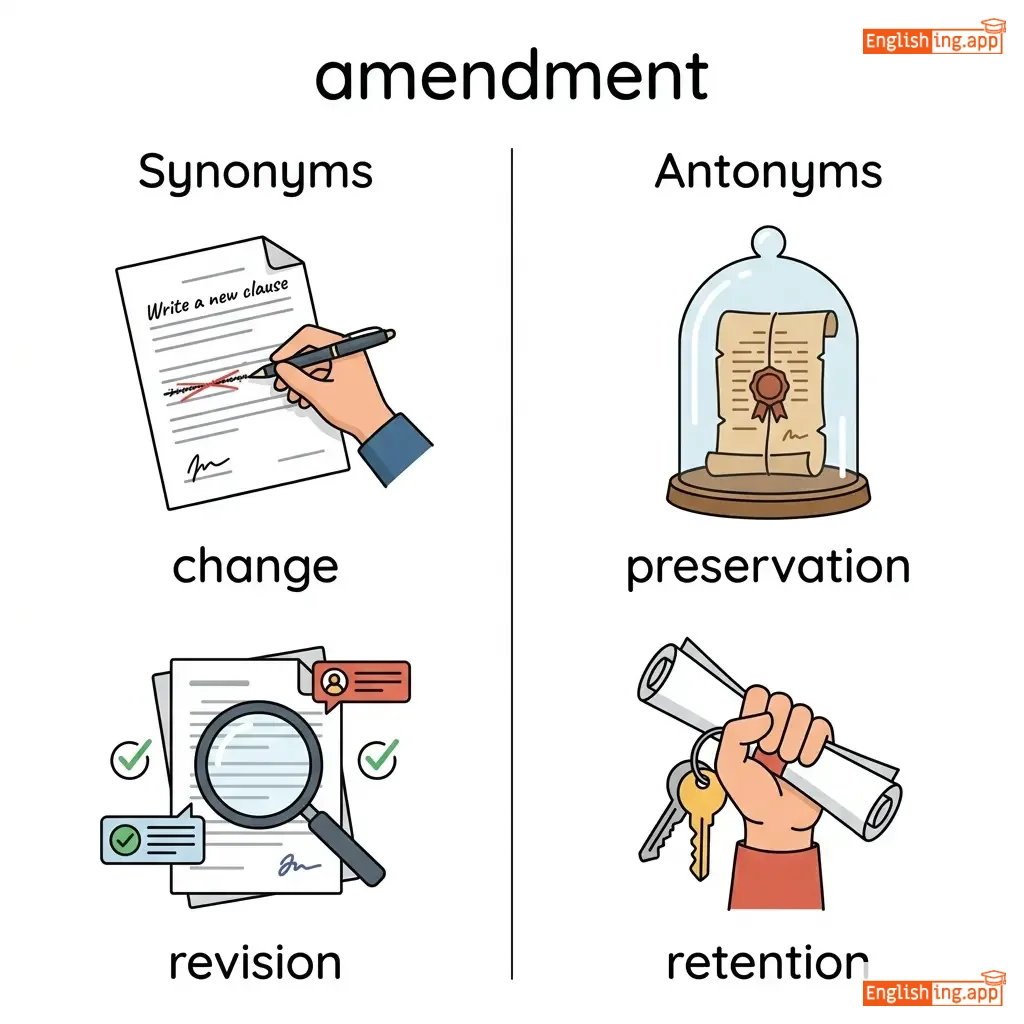

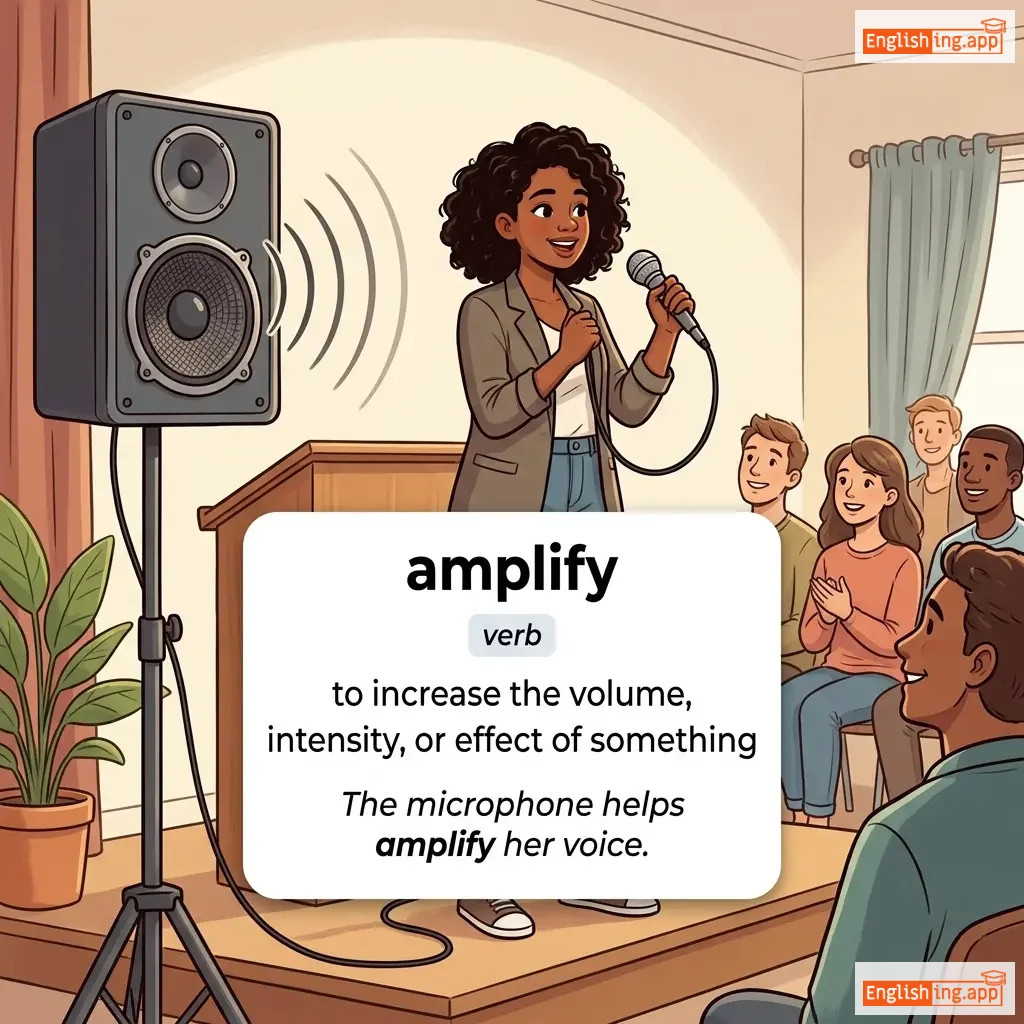
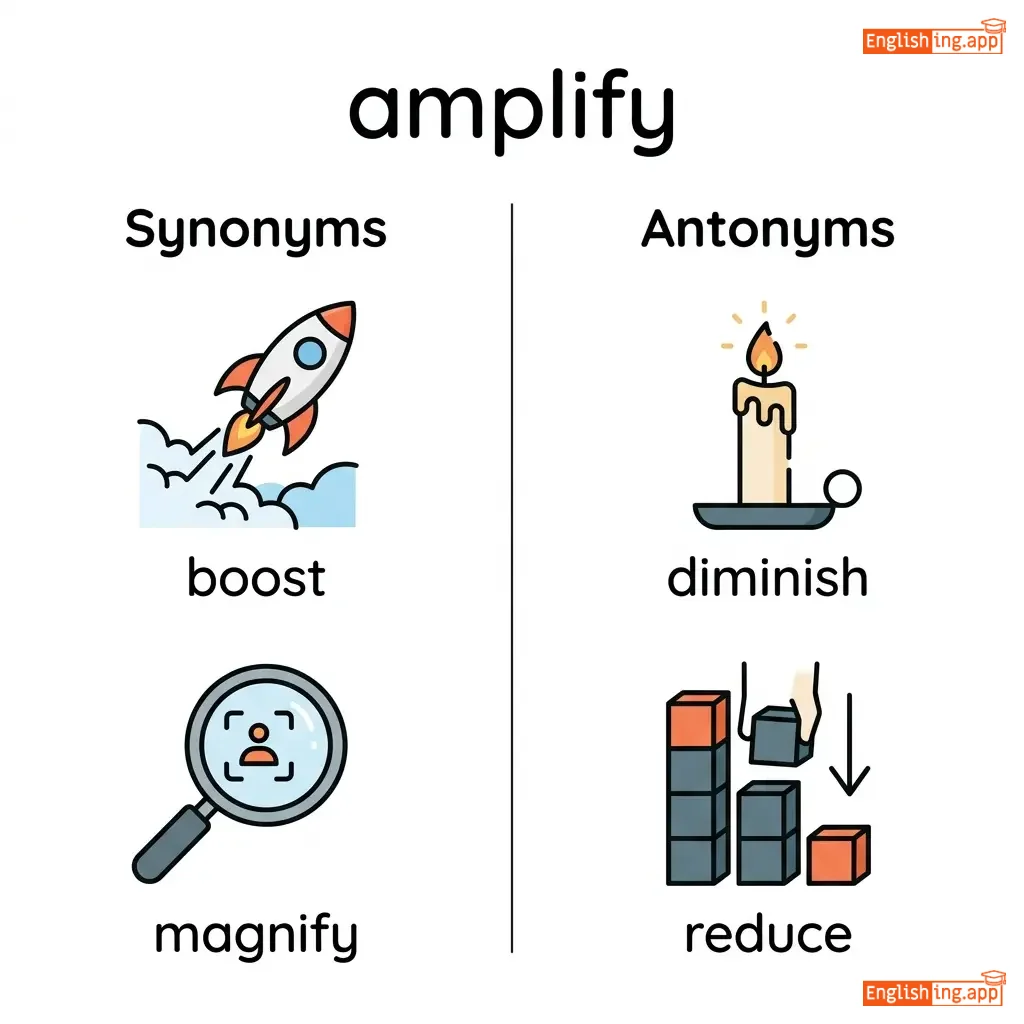
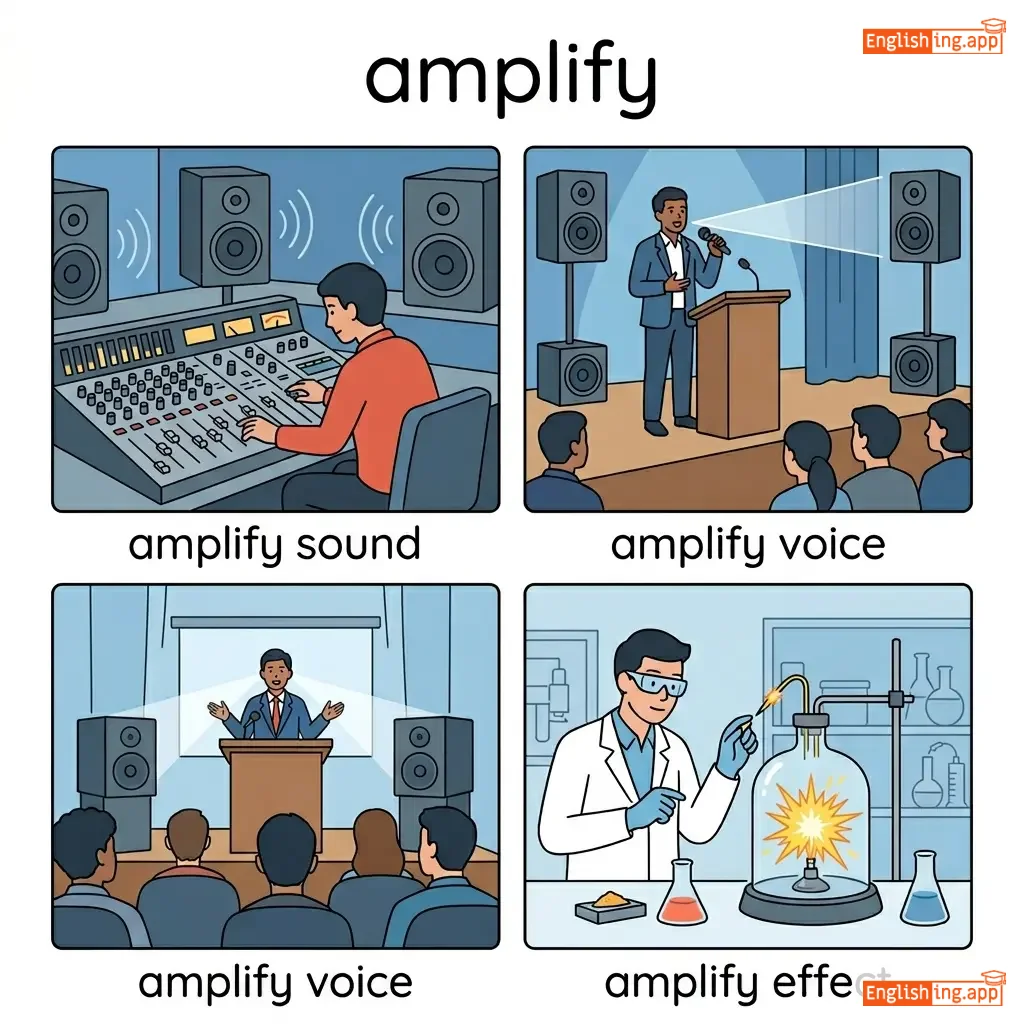
Swipe left or right, or use the buttons. Tap image to zoom.
例文の翻訳
単語
Lesson 6Lesson 6 - マスクトグル
|
絵文字
|
単語 | Images | 翻訳 | 過去 | 過去分詞 | 三人称単数 | 動名詞 | 意味 | 例文 | 例文の翻訳 | 表現例 | 表現例の意味 | 表現例の翻訳 | 同義語 | 対義語 | コロケーション | ニーモニック |
|---|---|---|---|---|---|---|---|---|---|---|---|---|---|---|---|---|---|
|
#250
🌧️
|
/ɔːlˈðoʊ/
conjunction
(ɔːlˈðoʊ)
••••••
|
- •••••• |
しかし
shikashi
••••••
|
- •••••• | - •••••• | - •••••• | - •••••• |
in spite of the fact that; even though
••••••
|
Although it was raining, they went for a walk. |
しかし、雨が降っていたが、彼らは散歩に出かけた。
Shikashi, ame ga futte ita ga, karera wa sanpo ni dekaketa.
••••••
|
- •••••• | - •••••• | - •••••• |
though, even though, while, albeit
••••••
|
because, since
••••••
|
although true, although difficult, although unlikely
••••••
|
しかし all 日雨が降っていたが、それでも散歩に出かけた - Although it rained all day, they still went out.
••••••
|
|
#251
🥫
|
/ˌæljuˈmɪniəm/
noun
(アルミニウム)
••••••
|
- •••••• |
アルミニウム
aruminiumu
••••••
|
- •••••• | - •••••• | - •••••• | - •••••• |
a lightweight, silvery-white metal used widely in manufacturing and packaging
••••••
|
Aluminium is commonly used to make cans and aircraft parts.
アルミニウムは缶や飛行機の部品に使われます。
••••••
|
アルミニウムは缶や飛行機の部品に使われます。
aruminiumu wa kan ya hikouki no buhin ni tsukawaremasu
••••••
|
aluminium foil
アルミホイル
••••••
|
thin sheets of aluminium used for wrapping or covering food
••••••
|
アルミホイル
arumi hoiru
••••••
|
aluminum, Al, light metal, metallic element
••••••
|
nonmetal, plastic
••••••
|
aluminium foil, aluminium alloy, aluminium can, aluminium sheet
••••••
|
アルミは軽い—飛行機が飛ぶ!
••••••
|
|
#252
♾️
|
/ˈɔːlweɪz/
adverb
(オールウェイズ)
••••••
|
- •••••• |
いつも
itsumo
••••••
|
- •••••• | - •••••• | - •••••• | - •••••• |
at all times; on every occasion
••••••
|
She always wakes up early in the morning.
彼女はいつも朝早く起きます。
••••••
|
彼女はいつも朝早く起きます。
Kanojo wa itsumo asa hayaku okimasu.
••••••
|
as always
いつも通り
••••••
|
as is usual or expected
••••••
|
いつも通り
Itsumo dōri
••••••
|
forever, constantly, perpetually, continually
••••••
|
never, rarely, seldom
••••••
|
always ready, always happy, always late, always available
••••••
|
Always = いつも, いつも (itsumo)。
••••••
|
|
#253
🔗
|
/əˈmælɡəmeɪt/
verb
(アマルガメイト)
••••••
|
|
合併する
gappei suru
••••••
|
amalgamated
アマルガメイテッド
••••••
|
amalgamated
アマルガメイテッド
••••••
|
amalgamates
アマルガメイツ
••••••
|
amalgamating
アマルガメイティング
••••••
|
to combine or unite to form one organization or structure; to merge
••••••
|
The two companies decided to amalgamate their operations.
二つの会社は運営を合併することを決定しました。
••••••
|
二つの会社は運営を合併することを決定しました。
Futatsu no kaisha wa un'ei o gappei suru koto o kettei shimashita.
••••••
|
- •••••• | - •••••• | - •••••• |
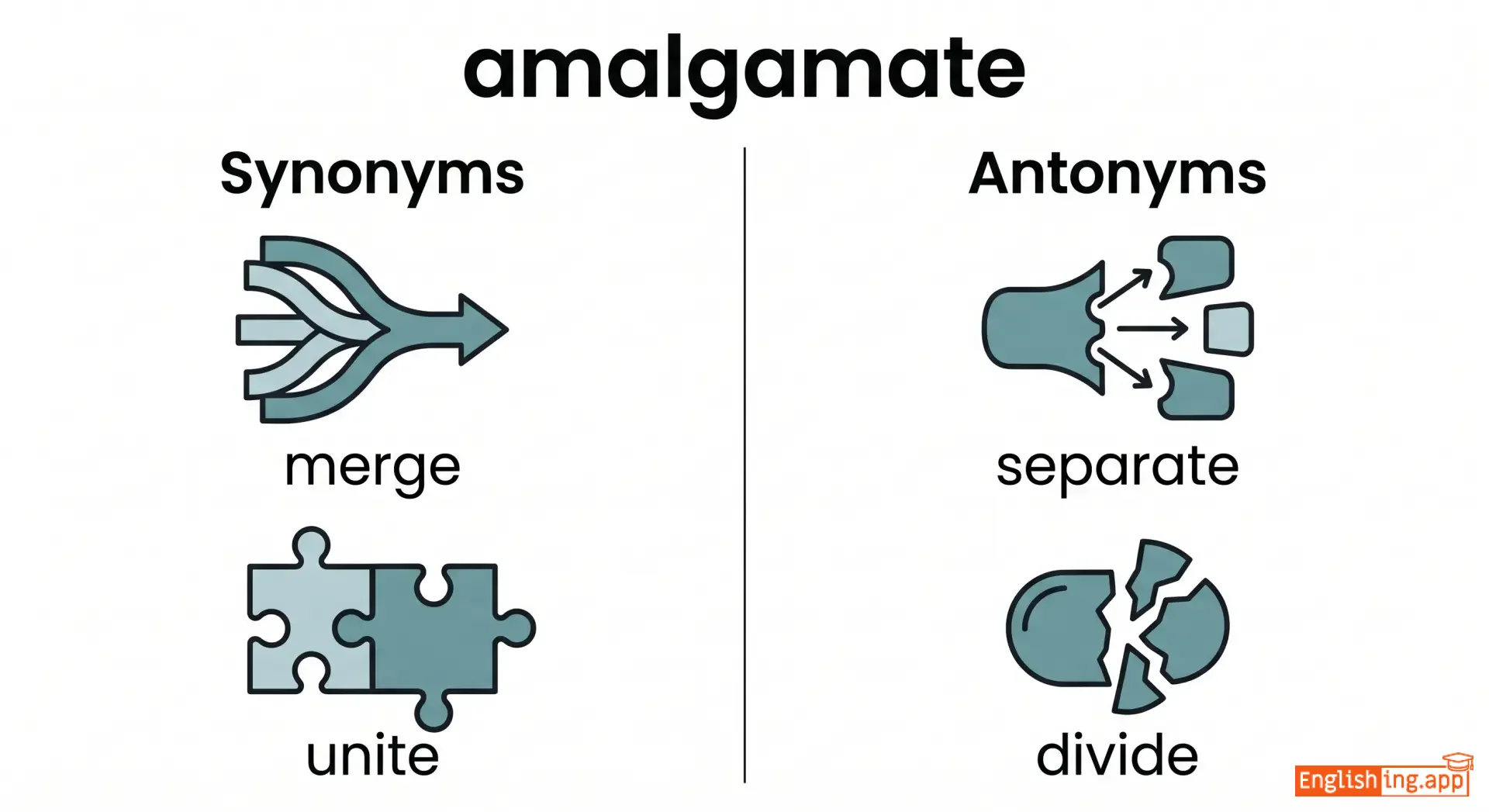
merge, combine, unite, blend
••••••
|
separate, divide, split, isolate
••••••
|
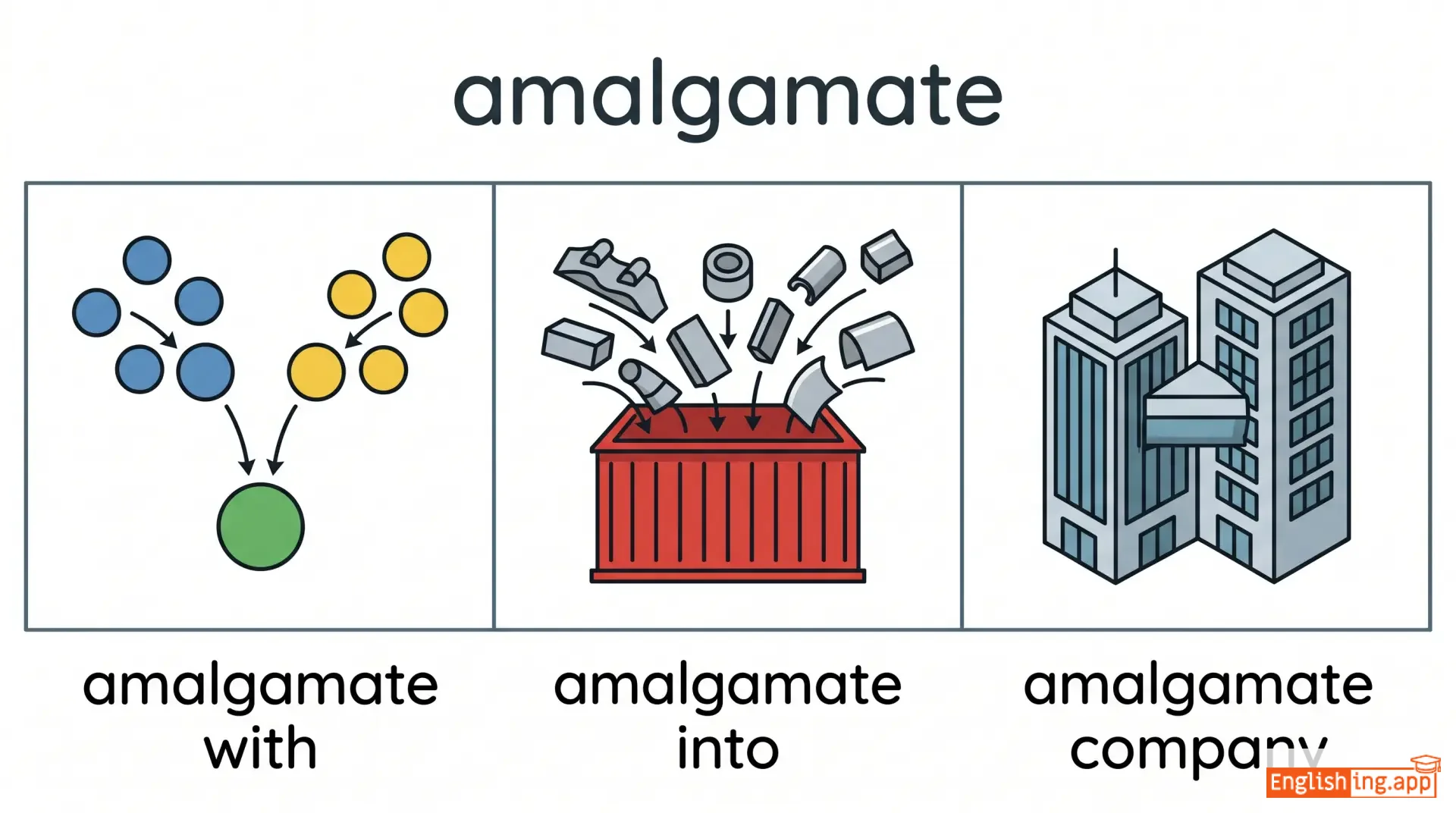
amalgamate companies, amalgamate operations, successfully amalgamate, amalgamate resources, amalgamate efforts
••••••
|
合併する = merge to combine
••••••
|
|
#254
💰
|
/əˈmæs/
verb
(アマス)
••••••
|
- •••••• |
積み上げる
tsumiageru
••••••
|
amassed
アマステッド
••••••
|
amassed
アマステッド
••••••
|
amasses
アマセス
••••••
|
amassing
アマシング
••••••
|
to gather together or accumulate over a period of time
••••••
|
He managed to amass a fortune through wise investments.
彼は賢い投資を通じて財産を積み上げることができました。
••••••
|
彼は賢い投資を通じて財産を積み上げることができました。
Kare wa kashikoi tōshi o tōjite zaisan o tsumiageru koto ga dekimashita.
••••••
|
- •••••• | - •••••• | - •••••• |
accumulate, collect, gather, hoard, assemble
••••••
|
disperse, squander, scatter
••••••
|
amass wealth, amass fortune, amass power, amass collection
••••••
|
Amass とは積み上げること – 物を積み上げるように。
••••••
|
|
#255
🎨
|
/ˈæmətər/
noun
(アマチュア)
••••••
|
- •••••• |
アマチュア
amachua
••••••
|
- •••••• | - •••••• | - •••••• | - •••••• |
A person who engages in a pursuit, especially a sport or art, on an unpaid basis.
••••••
|
The painting looked impressive, even though it was done by an amateur.
その絵画は印象的に見えましたが、アマチュアによって描かれました。
••••••
|
その絵画は印象的に見えましたが、アマチュアによって描かれました。
Sono kaiga wa inshō-teki ni miemashita ga, amachua ni yotte kakaremashita.
••••••
|
amateur hour
アマチュアの時間
••••••
|
A display of ineptitude or lack of professionalism.
••••••
|
アマチュアの時間
amachua no jikan
••••••
|
novice, beginner, nonprofessional, layman, hobbyist
••••••
|
professional, expert, specialist
••••••
|
amateur photographer, amateur player, amateur performance, amateur competition
••••••
|
Amateur という意味はアマチュア - つまり、彼は楽しみのためにやっているだけで、プロフェッショナルではありません。
••••••
|
|
#256
😲
|
/əˈmeɪz/
verb
(アメイズ)
••••••
|
- •••••• |
驚かせる
odorokaseru
••••••
|
amazed
アメイズド
••••••
|
amazed
アメイズド
••••••
|
amazes
アメイゼズ
••••••
|
amazing
アメイジング
••••••
|
to fill someone with great surprise or wonder
••••••
|
The magician’s final trick amazed the audience.
ザ マジシャンズ ファイナル トリック アメイズド ジ オーディエンス。
••••••
|
魔術師の最後のトリックは観客を驚かせた。
majutsushi no saigo no torikku wa kyakkyaku o odorokaseta
••••••
|
- •••••• | - •••••• | - •••••• |
astonish, astound, surprise, impress, stun
••••••
|
bore, disappoint, unimpress
••••••
|
amaze someone, truly amazed, amazed by, amazed at
••••••
|
amaze = アメイズ = 驚く
••••••
|
|
#257
🌟
|
/əˈmeɪzɪŋ/
adjective
(アメージング)
••••••
|
- •••••• |
驚くべき
odorokubeki
••••••
|
- •••••• | - •••••• | - •••••• | - •••••• |
causing great surprise or wonder; astonishing
••••••
|
The magician performed an amazing trick. |
マジシャンは驚くべきトリックを見せた。
Majishan wa odorokubeki torikku o miseta.
••••••
|
truly amazing |
something that is very impressive or extraordinary
••••••
|
本当に驚くべき
Hontōni odorokubeki
••••••
|
astonishing, wonderful, incredible, marvelous, impressive
••••••
|
ordinary, boring, dull
••••••
|
amazing experience, amazing story, amazing talent, amazing place
••••••
|
Amazing = 驚くべき = すごい!
••••••
|
|
#258
🎖️
|
/æmˈbæsədər/
noun
(アンバサダー)
••••••
|
- •••••• |
大使
taishi
••••••
|
- •••••• | - •••••• | - •••••• | - •••••• |
a person who represents their country in another country
••••••
|
The ambassador attended the international peace conference.
ジ アンバサダー アテンデッド ジ インターナショナル ピース コンファレンス。
••••••
|
大使は国際平和会議に出席しました。
taishi wa kokusai heiwa kaigi ni shusseki shimashita
••••••
|
goodwill ambassador
グッドウィル アンバサダー
••••••
|
a person who promotes goodwill or positive image of an organization or country
••••••
|
親善大使
shinzen taishi
••••••
|
envoy, diplomat, representative, emissary, delegate
••••••
|
enemy, opponent
••••••
|
ambassador to France, cultural ambassador, goodwill ambassador, UN ambassador
••••••
|
Taishi = Japanese ambassador spreading peace 🇯🇵✨
••••••
|
|
#259
🔥
|
/æmˈbɪʃən/
noun
(æmˈbɪʃən)
••••••
|
|
野望
yabou
••••••
|
- •••••• | - •••••• | - •••••• | - •••••• |
a strong desire to achieve something, typically requiring determination and hard work
••••••
|
Her ambition is to become a successful entrepreneur. |
彼女の野望は成功した起業家になることです。
Kanojo no yabou wa seikou shita kigyouka ni naru koto desu.
••••••
|
burning ambition |
a very strong desire to achieve something
••••••
|
燃えるような野望
moeru you na yabou
••••••
|
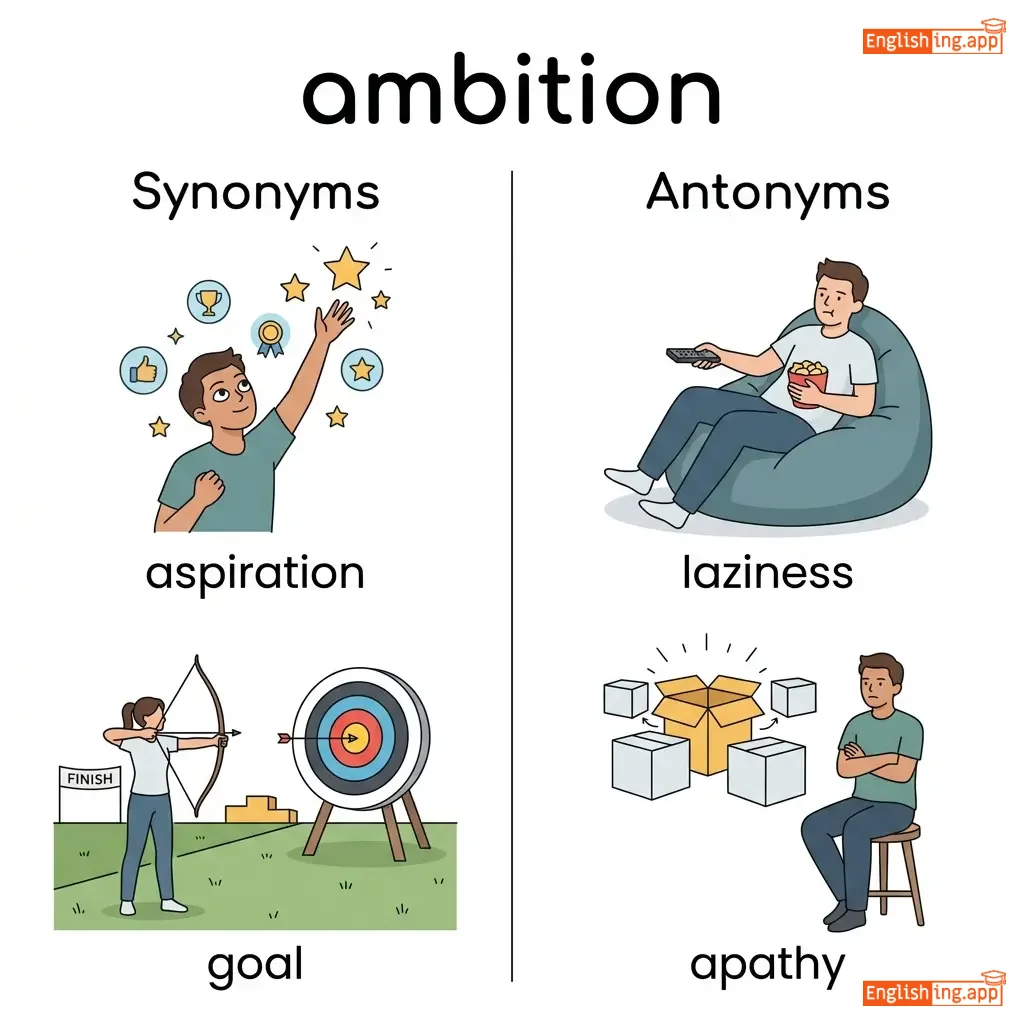
aspiration, goal, desire, drive, dream
••••••
|
laziness, apathy
••••••
|
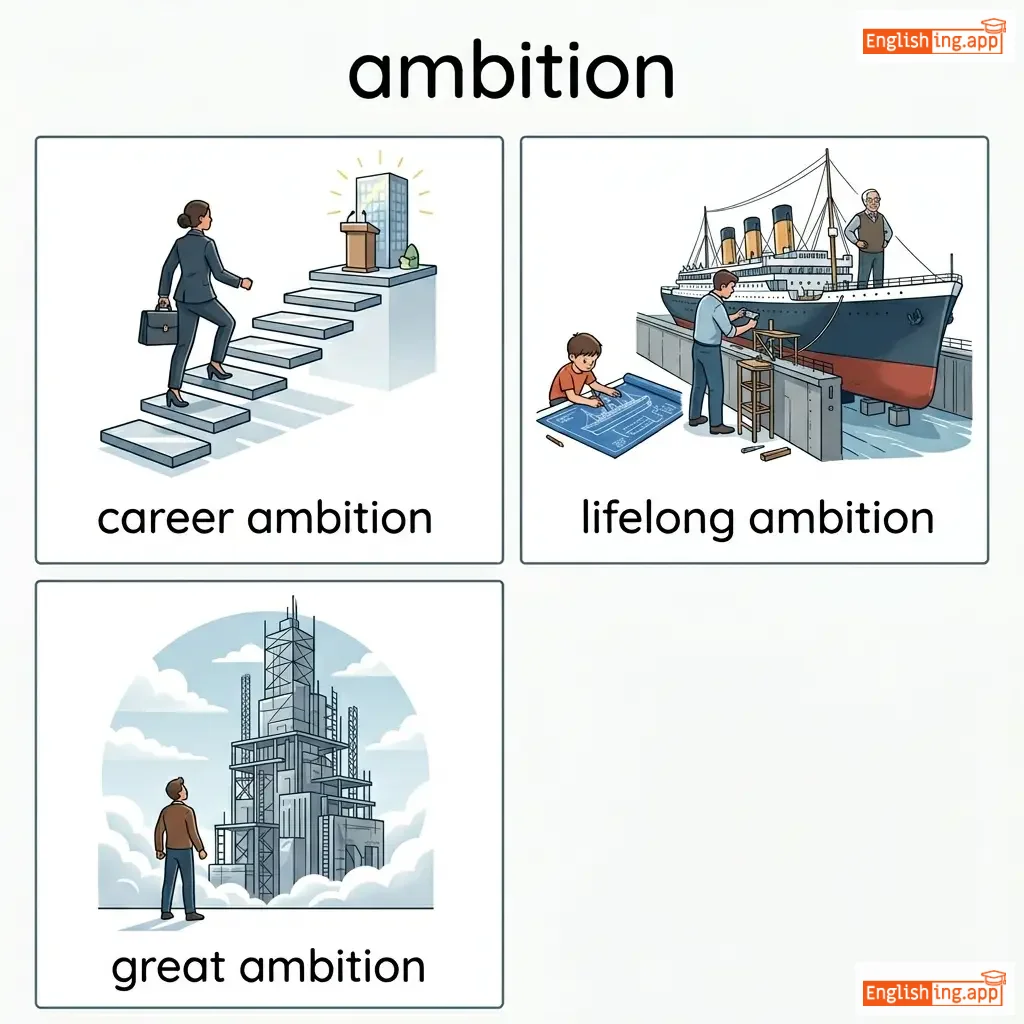
career ambition, lifelong ambition, great ambition, achieve ambition
••••••
|
Ambitionは '私は成功の虫にかまれた'という意味です — 成功する強い欲望!
••••••
|
|
#260
🚀
|
/æmˈbɪʃəs/
adjective
(æmbɪʃəs)
••••••
|
- •••••• |
野心的
yashinteki
••••••
|
- •••••• | - •••••• | - •••••• | - •••••• |
Having a strong desire to succeed or achieve something.
••••••
|
She is very ambitious and wants to become a doctor.
彼女は非常に野心的で、医者になりたいと考えています。
••••••
|
彼女は非常に野心的で、医者になりたいと考えています。
Kanojo wa hijō ni yashinteki de, isha ni naritai to kangaeteimasu.
••••••
|
ambitious goal
野心的な目標
••••••
|
a challenging or high-reaching objective
••••••
|
野心的な目標
yashinteki na mokuhyō
••••••
|
aspiring, determined, motivated, driven, enterprising
••••••
|
unmotivated, lazy, indifferent
••••••
|
ambitious plan, ambitious project, ambitious goal, ambitious person
••••••
|
野心的な人は大きな目標を持つ—野心的に生きて成功を目指せ。
••••••
|
|
#261
🚑
|
/ˈæmbjʊləns/
noun
(救急車)
••••••
|
- •••••• |
救急車
kyūkyūsha
••••••
|
- •••••• | - •••••• | - •••••• | - •••••• |
A specially equipped vehicle used to transport sick or injured people to the hospital.
••••••
|
The ambulance rushed to the accident site within minutes.
救急車は数分で事故現場に到着しました。
••••••
|
救急車は数分で事故現場に到着しました。
Kyūkyūsha wa sū-fun de jiko genba ni tōchaku shimashita.
••••••
|
- •••••• | - •••••• | - •••••• |
emergency vehicle, rescue van, paramedic vehicle
••••••
|
none, null
••••••
|
call an ambulance, ambulance service, ambulance siren, ambulance driver
••••••
|
救急車 🚑 緊急対応—'事故が起きた時、救急車がすぐに来ます。'
••••••
|
|
#262
🎯
|
/ˈæmbʊʃ/
verb
(アンブッシュ)
••••••
|
- •••••• |
待ち伏せする
machibusesuru
••••••
|
ambushed
アンブッシュド
••••••
|
ambushed
アンブッシュド
••••••
|
ambushes
アンブッシズ
••••••
|
ambushing
アンブッシング
••••••
|
To attack suddenly and unexpectedly from a hidden position.
••••••
|
The soldiers planned to ambush the enemy at dawn.
兵士たちは夜明けに敵を待ち伏せする計画を立てた。
••••••
|
兵士たちは夜明けに敵を待ち伏せする計画を立てた。
heishitachi wa yoake ni teki o machibusesuru keikaku o tateta.
••••••
|
lie in ambush
待ち伏せする
••••••
|
to wait in a hidden position to make a surprise attack
••••••
|
待ち伏せする
machibusesuru
••••••
|
attack, surprise, trap, assault, ambuscade
••••••
|
defend, protect, guard
••••••
|
ambush attack, lie in ambush, ambush tactics, ambush site
••••••
|
Ambush = 待ち伏せする — imagine samurai hiding to attack suddenly!
••••••
|
|
#263
✍️
|
/əˈmɛnd/
verb
••••••
|
|
- •••••• |
amended
••••••
|
amended
••••••
|
amends
••••••
|
amending
••••••
|
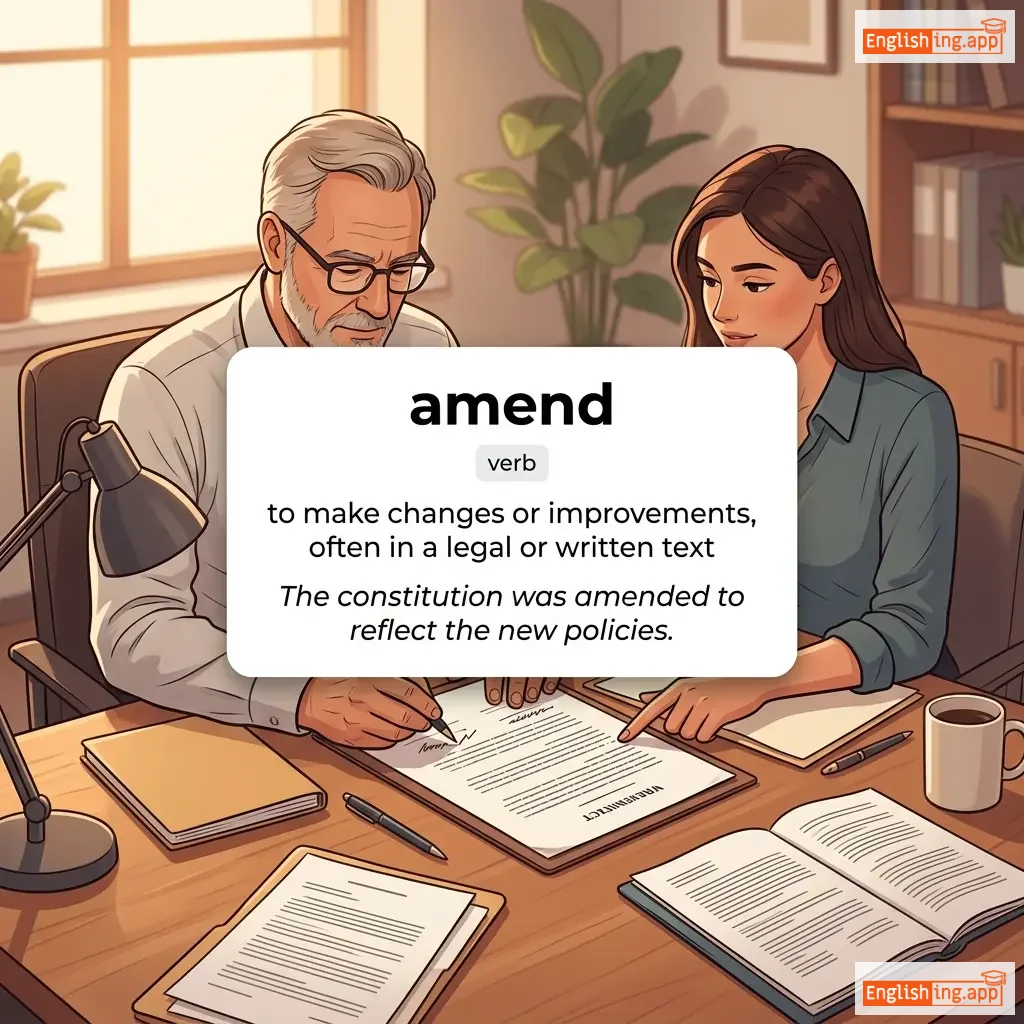
to make changes or improvements, often in a legal or written text
••••••
|
The constitution was amended to reflect the new policies. |
- •••••• |
make amends |
to do something to show you are sorry for a wrong you have done
••••••
|
- •••••• |
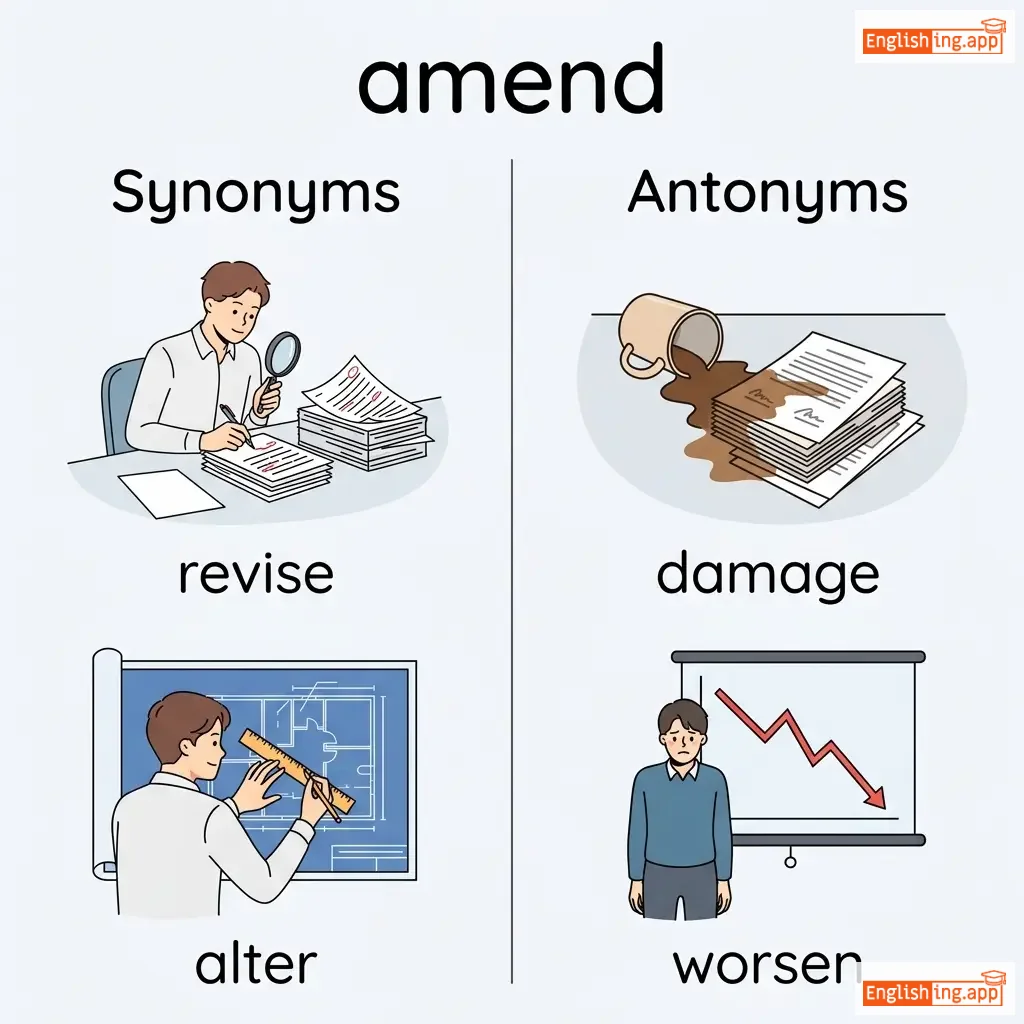
revise, alter, modify, adjust, improve
••••••
|
damage, worsen, harm
••••••
|
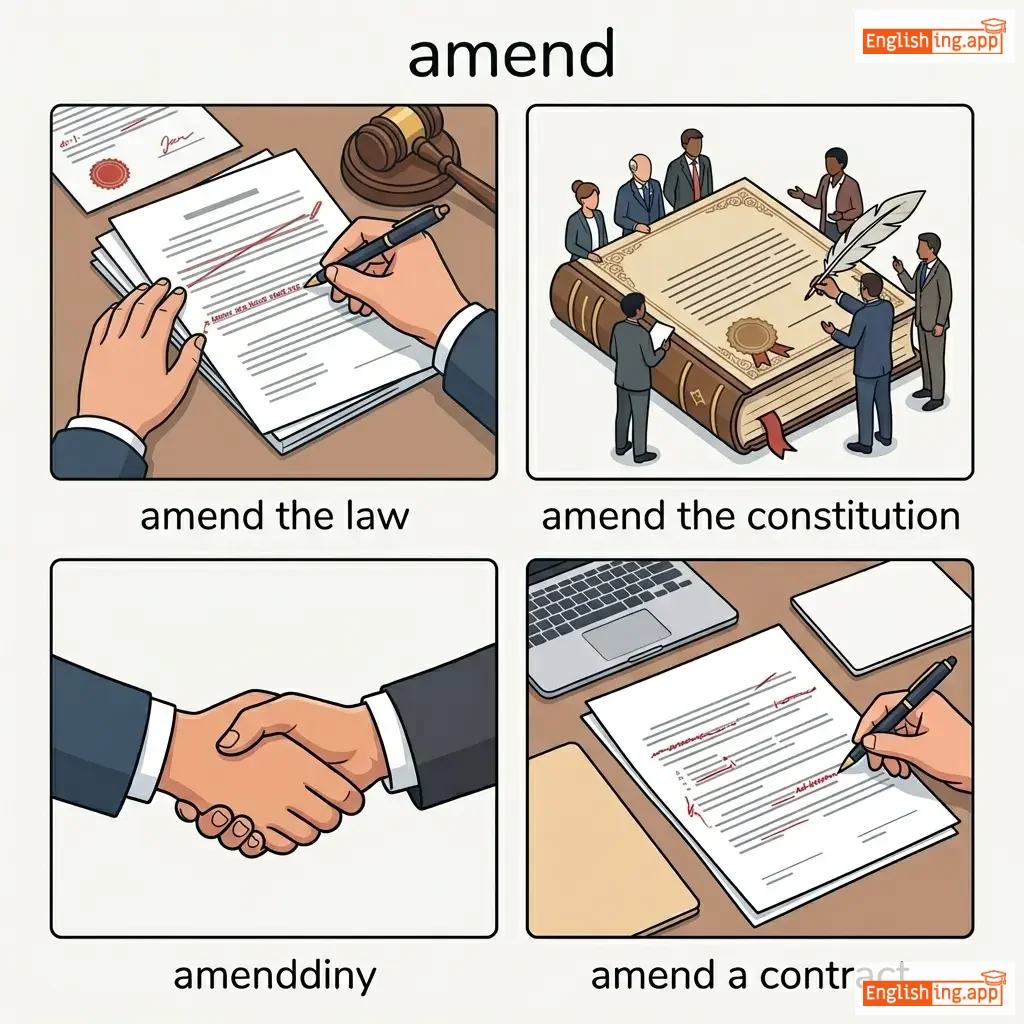
amend the law, amend the constitution, amend a contract
••••••
|
No •••••• |
|
#264
📜
|
/əˈmɛndmənt/
noun
(ハピネス)
••••••
|
|
幸せ
shiawase
••••••
|
- •••••• | - •••••• | - •••••• | - •••••• |
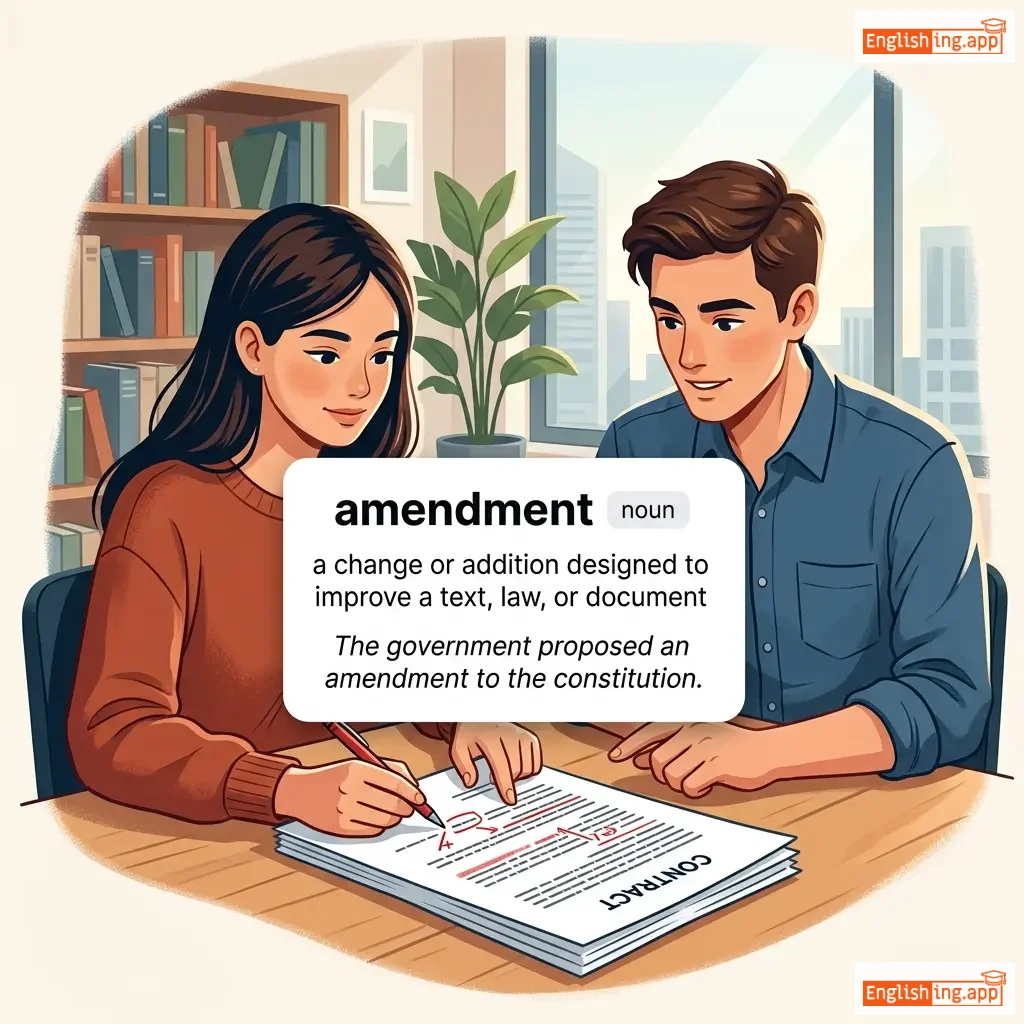
a change or addition designed to improve a text, law, or document
••••••
|
The government proposed an amendment to the constitution. |
彼女は賞を受け取ったとき、自分の幸せを隠せませんでした。
Kanojo wa shou wo uketotta toki, jibun no shiawase wo kakusemasendeshita.
••••••
|
make an amendment |
to officially change or correct a document or law
••••••
|
幸せを追求する
shiawase wo tsuikyuu suru
••••••
|
change, revision, modification, correction, adjustment
••••••
|
preservation, retention
••••••
|
constitutional amendment, proposed amendment, make an amendment, amendment bill
••••••
|
幸せ = 幸せを見つける喜び
••••••
|
|
#265
🌪️
|
/əˈmɪd/
preposition
(アミッド)
••••••
|
- •••••• |
中で
naka de
••••••
|
- •••••• | - •••••• | - •••••• | - •••••• |
in the middle of or surrounded by something
••••••
|
The team stayed calm amid the chaos.
チームはアミッドケオスの中で冷静を保った。
••••••
|
チームは混乱の中で冷静を保った。
Chīmu wa konran no naka de reisei o tamotta.
••••••
|
- •••••• | - •••••• | - •••••• |
among, amidst, surrounded by, within, amidst
••••••
|
outside, beyond, apart
••••••
|
amid the noise, amid confusion, amid controversy, amid tensions
••••••
|
Amidは中で意味 — 混乱の中でも冷静を保って!
••••••
|
|
#266
👥
|
/əˈmʌŋ/
preposition
(アモング)
••••••
|
- •••••• |
の中で
no naka de
••••••
|
- •••••• | - •••••• | - •••••• | - •••••• |
surrounded by; in the middle of a group
••••••
|
He was sitting among his friends. |
彼は友達の中に座っていた。
Kare wa tomodachi no naka ni suwatte ita.
••••••
|
- •••••• | - •••••• | - •••••• |
amid, amidst, between, surrounded by
••••••
|
outside, away from
••••••
|
among people, among friends, among the crowd
••••••
|
Amongは...の中で、友達の中にいるようなものです。
••••••
|
|
#267
💰
|
/əˈmaʊnt/
noun/verb
(アマウント)
••••••
|
- •••••• |
金額
kingaku
••••••
|
amounted
アマウンテッド
••••••
|
amounted
アマウンテッド
••••••
|
amounts
アマウントス
••••••
|
amounting
アマウティング
••••••
|
a quantity of something, typically the total of a thing or things in number, size, value, or extent
••••••
|
The total amount of money is not enough.
お金の合計額は十分ではありません。
••••••
|
お金の合計額は十分ではありません。
Okane no goukei-gaku wa juubun de wa arimasen.
••••••
|
amount to nothing
amount to nothing
••••••
|
to have no significant result or value
••••••
|
何も意味しない
nanimo imi shinai
••••••
|
quantity, sum, total, volume, measure
••••••
|
lack, zero, nothing
••••••
|
large amount, small amount, total amount
••••••
|
Amount は金額と関連があり、お金の額
••••••
|
|
#268
🔊
|
/ˌæmplɪfɪˈkeɪʃən/
noun
(アンプリフィケーション)
••••••
|
- •••••• |
増幅
zoufuku
••••••
|
- •••••• | - •••••• | - •••••• | - •••••• |
the act or process of making something stronger, louder, or more intense; an expansion or elaboration of details
••••••
|
The microphone provides amplification of the speaker’s voice.
ザ マイクロフォン プロバイズ アンプリフィケーション オブ ザ スピーカーズ ボイス。
••••••
|
マイクは話者の声を増幅する。
maiku wa washa no koe o zoufuku suru
••••••
|
- •••••• | - •••••• | - •••••• |
enhancement, increase, expansion, magnification, intensification
••••••
|
reduction, weakening, attenuation
••••••
|
signal amplification, sound amplification, amplification factor, data amplification
••••••
|
アンプで音を増やす=増幅
••••••
|
|
#269
🔊
|
/ˈæmplɪˌfaɪ/
verb
(アンプリファイ)
••••••
|
|
増幅する
zōfuku suru
••••••
|
amplified
アンプリファイド
••••••
|
amplified
アンプリファイド
••••••
|
amplifies
アンプリファイズ
••••••
|
amplifying
アンプリファイング
••••••
|
to make sounds louder; to make something larger or more significant
••••••
|
The microphone amplifies her voice.
マイクロフォンは彼女の声を増幅させます。
••••••
|
マイクロフォンは彼女の声を増幅させます。
Maikurofon wa kanojo no koe o zōfuku sasemasu.
••••••
|
- •••••• | - •••••• | - •••••• |
increase, boost, enhance, magnify
••••••
|
reduce, diminish, quiet
••••••
|
amplify sound, amplify signal, amplify voice, amplify effect, amplify message
••••••
|
音を増幅して、より大きくする。
••••••
|
|
#270
😂
|
/əˈmjuːz/
verb
(アミューズ)
••••••
|
- •••••• |
楽しませる
tanoshimaseru
••••••
|
amused
アミューズド
••••••
|
amused
アミューズド
••••••
|
amuses
アミューズズ
••••••
|
amusing
アミューズィング
••••••
|
to entertain or make someone laugh or smile; to occupy pleasantly
••••••
|
The clown amused the children at the party.
ザ クラウン アミューズド ザ チルドレン アット ザ パーティー。
••••••
|
道化師はパーティーで子供たちを楽しませた。
doukeshi wa paatii de kodomotachi o tanoshimaseta
••••••
|
amuse oneself
アミューズ ワンセルフ
••••••
|
to enjoy oneself by doing something pleasant
••••••
|
自分で楽しむ
jibun de tanoshimu
••••••
|
entertain, delight, divert, please, charm
••••••
|
bore, annoy, displease
••••••
|
amuse someone, amuse oneself, highly amusing, mildly amusing
••••••
|
アミューズ=遊園地のアミューズメントで楽しい
••••••
|
|
#271
😄
|
/əˈmjuː.zɪŋ/
adjective
(アミューズィング)
••••••
|
- •••••• |
面白い; おかしい; 楽しい
omoshiroi; okashii; tanoshii
••••••
|
- •••••• | - •••••• | - •••••• | - •••••• |
causing laughter or providing entertainment; funny; enjoyable
••••••
|
The children found the clown's performance very amusing.
子供たちはピエロのパフォーマンスがとても面白いと感じました。
••••••
|
子供たちはピエロのパフォーマンスがとても面白いと感じました。
Kodomotachi wa piero no pafōmansu ga totemo omoshiroi to kanjimashita.
••••••
|
- •••••• | - •••••• | - •••••• |
entertaining, funny, humorous, delightful
••••••
|
boring, dull, serious, tedious
••••••
|
amusing story, amusing anecdote, amusing incident, amusing character
••••••
|
いつも笑わせるピエロを思い出してみてください。
••••••
|
|
#272
🅰️
|
/æn/
article
(アン)
••••••
|
- •••••• |
一つの(不定冠詞)
hitotsu no (futei kanshi)
••••••
|
- •••••• | - •••••• | - •••••• | - •••••• |
used before a noun to refer to a non-specific item that begins with a vowel sound
••••••
|
She ate an apple for breakfast.
シー エイト アン アップル フォー ブレックファスト。
••••••
|
彼女は朝食にリンゴを一つ食べた。
kanojo wa choshoku ni ringo o hitotsu tabeta
••••••
|
- •••••• | - •••••• | - •••••• |
a, one
••••••
|
the
••••••
|
an apple, an hour, an idea, an example
••••••
|
‘an’ = 「一つの」イメージ
••••••
|
|
#273
📖
|
/əˈnælədʒi/
noun
(アナロジー)
••••••
|
- •••••• |
類推
ruisui
••••••
|
- •••••• | - •••••• | - •••••• | - •••••• |
A comparison between two things for the purpose of explanation or clarification.
••••••
|
The teacher used the analogy of a tree to explain the structure of an essay. |
先生はエッセイの構造を説明するために木の類推を使いました。
Sensei wa essei no kōzō o setsumei suru tame ni ki no ruisui o tsukaimashita.
••••••
|
- •••••• | - •••••• | - •••••• |
comparison, parallel, resemblance, similarity
••••••
|
difference, contrast
••••••
|
draw an analogy, use an analogy, apt analogy
••••••
|
アナロジーは比較、英語の類推を使って説明する日本語の言葉です。
••••••
|
|
#274
🔬
|
/əˈnæləsɪs/
noun
(アナリシス)
••••••
|
|
分析
bunseki
••••••
|
- •••••• | - •••••• | - •••••• | - •••••• |
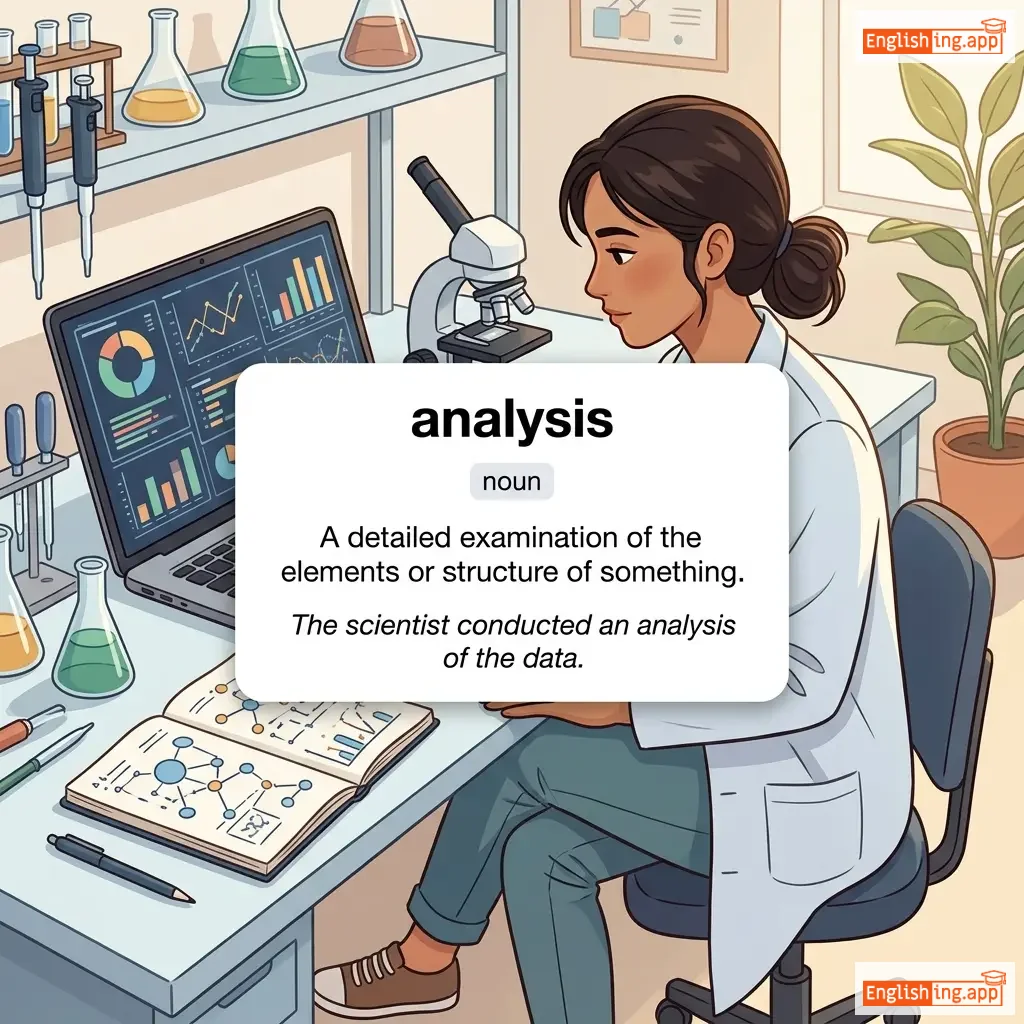
A detailed examination of the elements or structure of something.
••••••
|
The scientist conducted an analysis of the data. |
科学者はデータの分析を行った。
Kagakusha wa dēta no bunseki o okonatta.
••••••
|
in-depth analysis |
a very detailed and thorough examination of something
••••••
|
詳細な分析
shōsai na bunseki
••••••
|
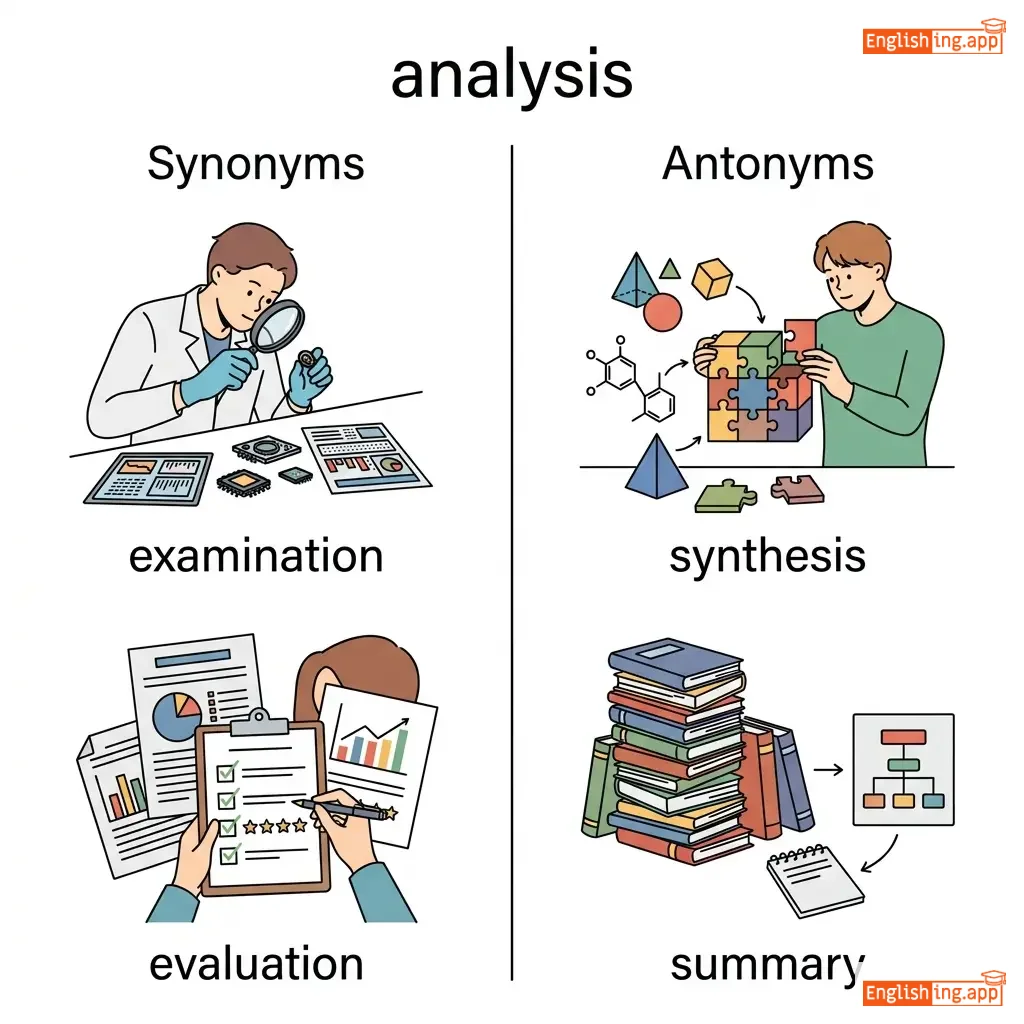
examination, evaluation, study, review, assessment
••••••
|
synthesis, summary
••••••
|
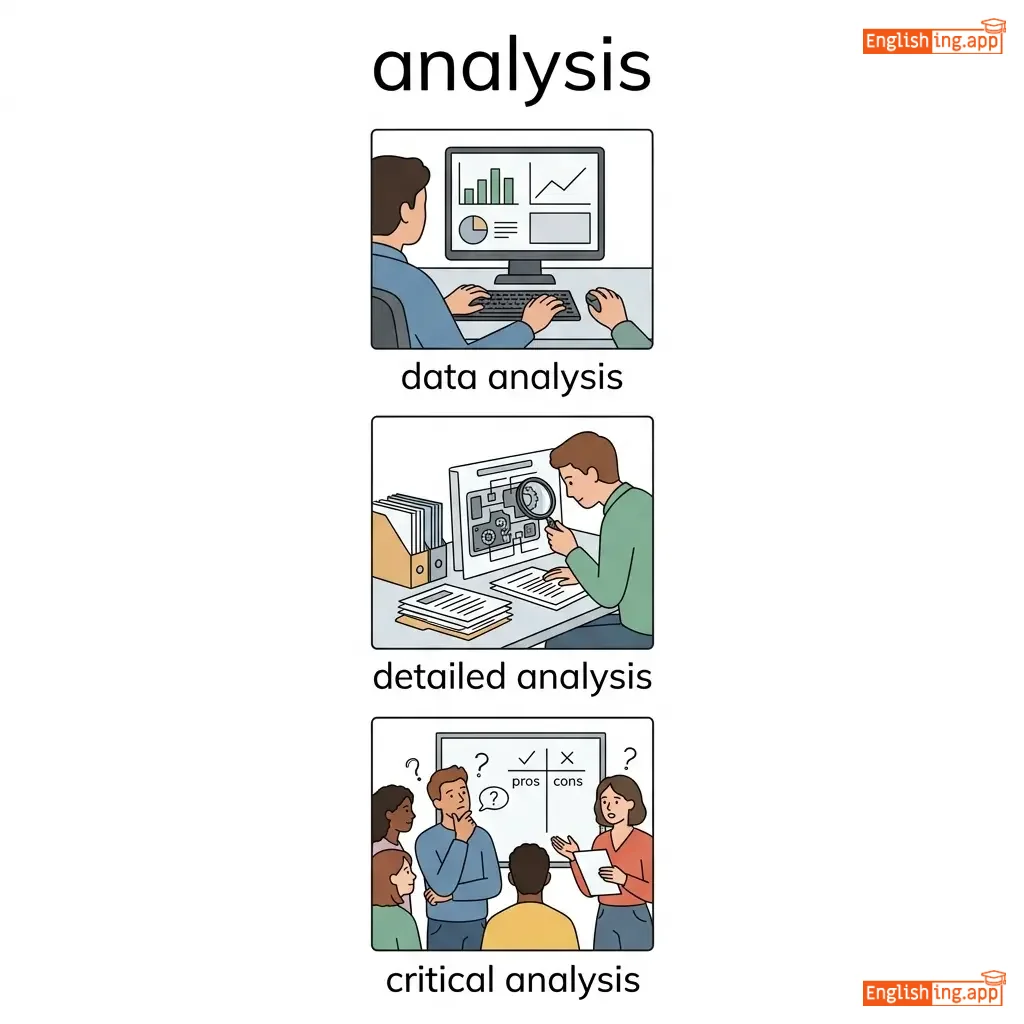
data analysis, detailed analysis, critical analysis, market analysis
••••••
|
Analysis は分析のことです、データを詳しく分析して結果を出す。
••••••
|
|
#275
📊
|
/ˈænəlɪst/
noun
(アナリスト)
••••••
|
- •••••• |
アナリスト
anaristo
••••••
|
- •••••• | - •••••• | - •••••• | - •••••• |
a person who studies or examines something carefully to understand it or make decisions
••••••
|
The financial analyst predicted a rise in the stock market.
金融アナリストは株式市場の上昇を予測しました。
••••••
|
金融アナリストは株式市場の上昇を予測しました。
Kinyuu anaristo wa kabushiki shijou no joushou wo yosoku shimashita.
••••••
|
- •••••• | - •••••• | - •••••• |
examiner, evaluator, expert, researcher, consultant
••••••
|
novice, layman, amateur
••••••
|
financial analyst, political analyst, market analyst, data analyst
••••••
|
アナリストはデータを分析して予測する専門家です
••••••
|
|
#276
🔍
|
/ˈænəlaɪz/
verb
(アナライズ)
••••••
|
- •••••• |
分析する
bunseki suru
••••••
|
analyzed
アナライズド
••••••
|
analyzed
アナライズド
••••••
|
analyzes
アナライズズ
••••••
|
analyzing
アナライズイング
••••••
|
to examine something in detail to understand it better or draw conclusions
••••••
|
Scientists analyze data to discover new patterns.
科学者たちは新しいパターンを発見するためにデータを分析しています。
••••••
|
科学者たちは新しいパターンを発見するためにデータを分析しています。
Kagakusha-tachi wa atarashii patān wo hakken suru tame ni dēta wo bunseki shiteimasu.
••••••
|
analyze the situation
状況を分析する
••••••
|
to carefully study the circumstances before making a decision
••••••
|
状況を分析する
Jōkyō wo bunseki suru
••••••
|
examine, study, investigate, evaluate, interpret
••••••
|
ignore, neglect, overlook
••••••
|
analyze data, analyze results, analyze information, analyze the problem
••••••
|
Analyzeは分析する意味—'アナライズ'と言うと、データを分析することを思い出す
••••••
|
|
#277
👴
|
/ˈænsestər/
noun
(エンセスター)
••••••
|
- •••••• |
先祖
senzo
••••••
|
- •••••• | - •••••• | - •••••• | - •••••• |
a person, typically one more remote than a grandparent, from whom one is descended
••••••
|
She researched her family tree to learn about her ancestors.
彼女は家系図を調べて、先祖について学びました。
••••••
|
彼女は家系図を調べて、先祖について学びました。
Kanojo wa kakeizu o shirabete, senzo ni tsuite manabimashita.
••••••
|
- •••••• | - •••••• | - •••••• |
forefather, foremother, predecessor, forebear
••••••
|
descendant, offspring, progeny
••••••
|
ancient ancestor, common ancestor, trace ancestors
••••••
|
先祖 (senzo) は家族のルーツです。
••••••
|
|
#278
👵
|
/ˈænsɛstrɪs/
noun
(アンセストレス)
••••••
|
- •••••• |
女性の祖先
josei no sosen
••••••
|
- •••••• | - •••••• | - •••••• | - •••••• |
a female ancestor; a woman from whom one is descended
••••••
|
She discovered that her ancestress came from a small village in Bengal.
シー ディスカヴァード ザット ハー アンセストレス ケイム フロム ア スモール ビレッジ イン ベンガル。
••••••
|
彼女は自分の女性の祖先がベンガルの小さな村出身だと知った。
kanojo wa jibun no josei no sosen ga Bengaru no chiisana mura shusshin da to shitta
••••••
|
- •••••• | - •••••• | - •••••• |
female ancestor, foremother, progenitress, matriarch
••••••
|
descendant, offspring
••••••
|
royal ancestress, distant ancestress, maternal ancestress
••••••
|
Ancestor の女性版が ancestress
••••••
|
|
#279
⚓
|
/ˈæŋkər/
noun, verb
(アンカー)
••••••
|
- •••••• |
アンカー
ankā
••••••
|
anchored
アンカード
••••••
|
anchored
アンカード
••••••
|
anchors
アンカーズ
••••••
|
anchoring
アンカリング
••••••
|
a heavy object used to hold a ship in place; also to secure firmly
••••••
|
The ship dropped its anchor near the shore.
船は岸近くにアンカーを投げた。
••••••
|
船は岸近くにアンカーを投げた。
Fune wa kishi chikaku ni ankā o nageta.
••••••
|
anchor of hope
希望のアンカー
••••••
|
something that provides stability and confidence
••••••
|
希望のアンカー
Kibou no ankā
••••••
|
mooring, fastener, stabilizer, support, mainstay
••••••
|
drift, release, instability
••••••
|
drop anchor, lift anchor, anchor point, news anchor
••••••
|
アンカーは船を固定します。希望のアンカー:人生の安定性。
••••••
|
|
#280
⚓
|
ˈæŋkərɪdʒ
noun
(アンカレッジ)
••••••
|
|
停泊地
teibakuchi
••••••
|
- •••••• | - •••••• | - •••••• | - •••••• |
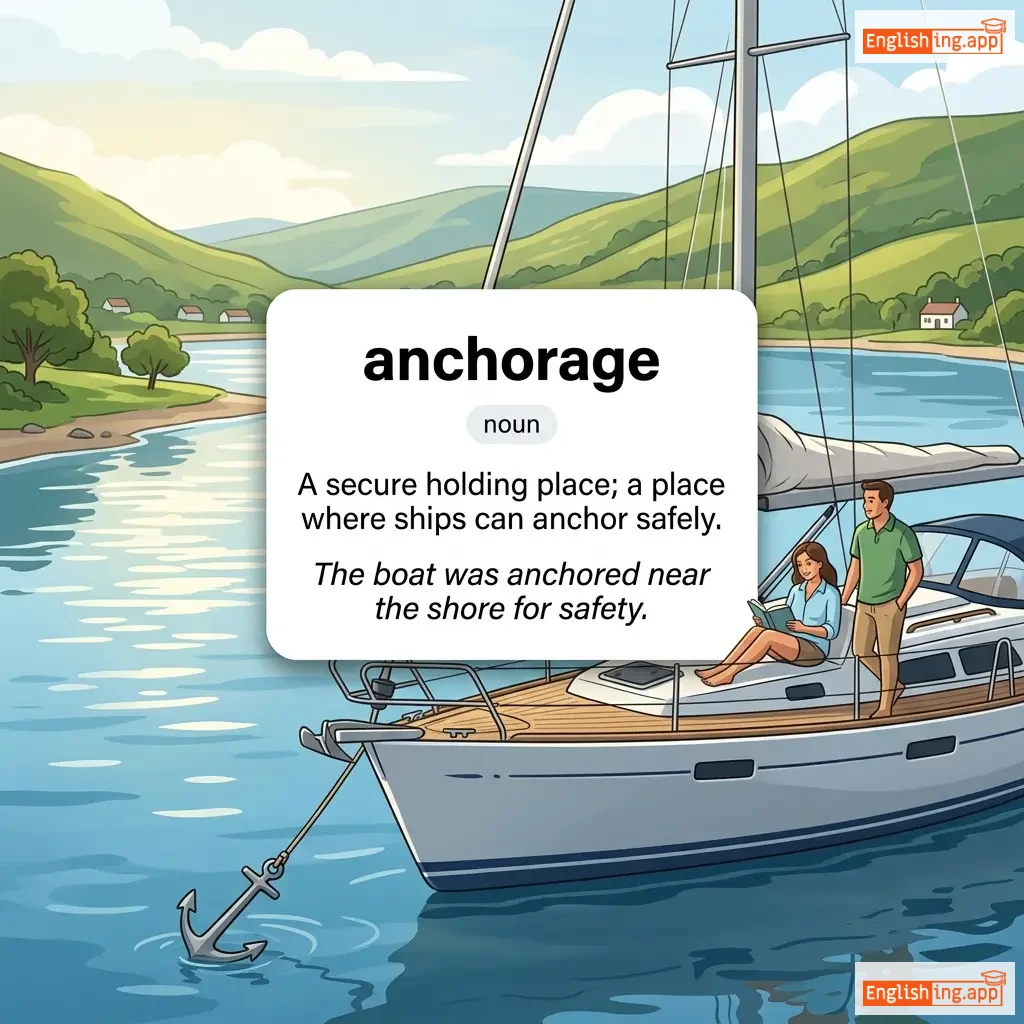
A secure holding place; a place where ships can anchor safely.
••••••
|
The boat was anchored near the shore for safety. |
ボートは安全のために岸辺に停泊されました。
Bōto wa anzen no tame ni kishibe ni teibaku saremashita.
••••••
|
- •••••• | - •••••• | - •••••• |
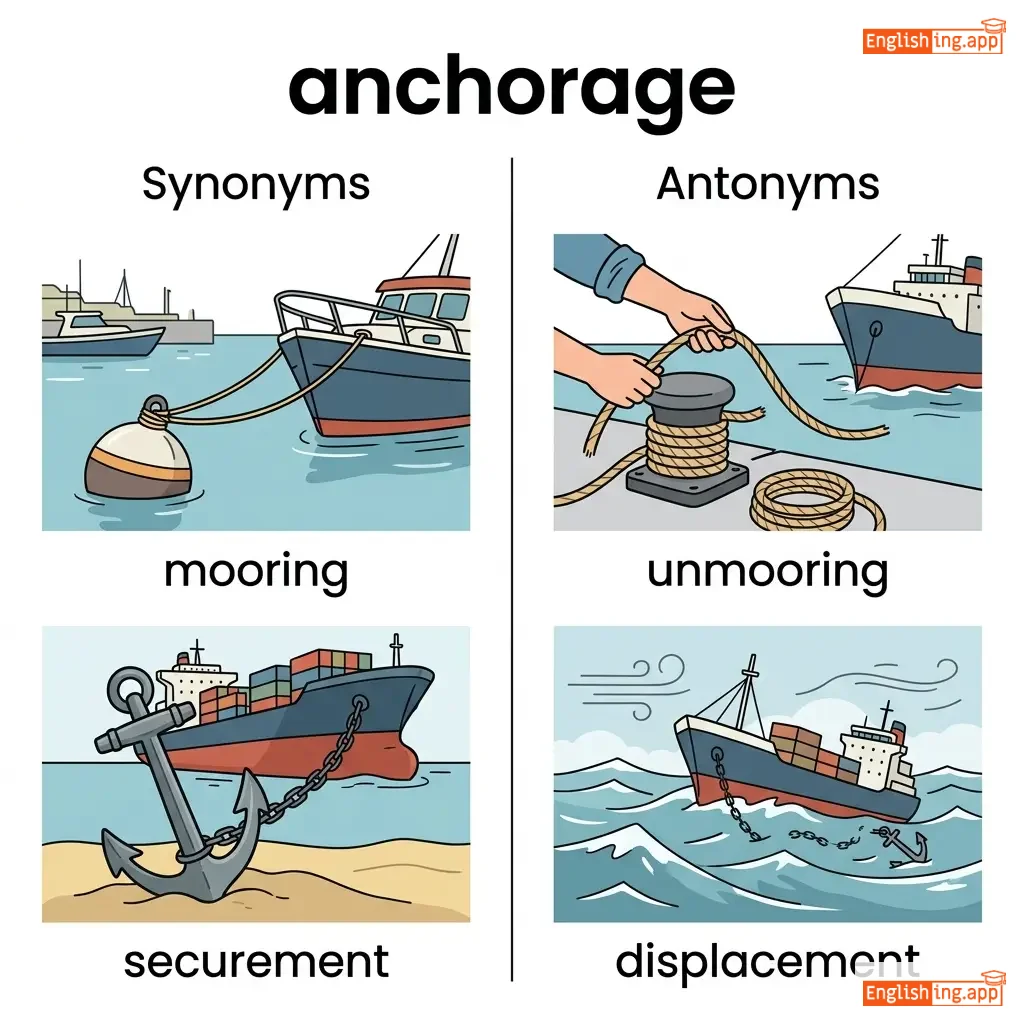
mooring, securement
••••••
|
unmooring, displacement
••••••
|
- •••••• |
海の中で船を守るための停泊地、あなたの安全な場所。
••••••
|
|
#281
🏛️
|
/ˈeɪnʃənt/
adjective
(エインシェント)
••••••
|
- •••••• |
古代の
kodai no
••••••
|
- •••••• | - •••••• | - •••••• | - •••••• |
Belonging to the very distant past; very old.
••••••
|
They visited the ruins of an ancient city.
彼らは古代都市の遺跡を訪れました。
••••••
|
彼らは古代都市の遺跡を訪れました。
Karera wa kodai toshi no iseki o otozuremashita.
••••••
|
ancient history
古代の歴史
••••••
|
something that happened a long time ago and is no longer important
••••••
|
古代の歴史
Kodai no rekishi
••••••
|
old, antique, archaic, prehistoric, classical
••••••
|
modern, recent
••••••
|
ancient civilization, ancient ruins, ancient culture, ancient temple
••••••
|
古代のは 'Ancient' の意味、古代の神殿や城をイメージしよう。
••••••
|
|
#282
➕
|
/ænd/
conjunction
(アンド)
••••••
|
- •••••• |
と
to
••••••
|
- •••••• | - •••••• | - •••••• | - •••••• |
Used to connect words or sentences that are to be taken jointly.
••••••
|
She bought apples and oranges. |
彼女はリンゴとオレンジを買いました。
Kanojo wa ringo to orenji o kaimashita.
••••••
|
- •••••• | - •••••• | - •••••• |
plus, along with, together with, as well as
••••••
|
or, but
••••••
|
and so, and then, and finally, and also
••••••
|
And はと意味です - リンゴ と オレンジ 一緒に。
••••••
|
|
#283
😇
|
/ˈeɪndʒəl/
noun
(エンジェル)
••••••
|
- •••••• |
天使
tenshi
••••••
|
- •••••• | - •••••• | - •••••• | - •••••• |
a spiritual being believed to act as a messenger or servant of God
••••••
|
She believed her mother was watching over her like an angel. |
彼女は母親が天使のように彼女を見守っていると信じていました。
Kanojo wa hahaoya ga tenshi no yō ni kanojo o mimamotte iru to shinjite imashita.
••••••
|
guardian angel |
a person who helps and protects someone in trouble
••••••
|
守護天使
shugo tenshi
••••••
|
spirit, saint, cherub, guardian, protector
••••••
|
devil, demon, fiend
••••••
|
guardian angel, fallen angel, like an angel, angel investor
••••••
|
天使は守護者 — もしあなたの友達が助けてくれるなら、『あなたは私の天使です!』と言いましょう。
••••••
|
|
#284
😡
|
/ˈæŋɡər/
noun
(エンガー)
••••••
|
- •••••• |
怒り
ikari
••••••
|
- •••••• | - •••••• | - •••••• | - •••••• |
A strong feeling of displeasure or hostility.
••••••
|
He couldn't control his anger after the argument. |
彼は議論の後、自分の怒りを制御できなかった。
Kare wa giron no ato, jibun no ikari o seiryō dekinakatta.
••••••
|
fit of anger |
a sudden, intense outburst of anger
••••••
|
怒りの爆発
ikari no bakuhatsu
••••••
|
rage, fury, irritation, resentment, wrath
••••••
|
calm, peace, happiness
••••••
|
express anger, control anger, suppress anger, anger management
••••••
|
Angerは怒り - エンガーが怒りに変わる。
••••••
|
|
#285
📐
|
/ˈæŋɡl/
noun
(エイングル)
••••••
|
- •••••• |
角度
kakudo
••••••
|
- •••••• | - •••••• | - •••••• | - •••••• |
The space between two intersecting lines or surfaces at the point where they meet.
••••••
|
The teacher explained how to measure an angle in geometry. |
先生は数学で角度を測る方法を説明しました。
Sensei wa sūgaku de kakudo o hakaru hōhō o setsumei shimashita.
••••••
|
different angle |
a new or alternative way of looking at something
••••••
|
異なる角度
kotonaru kakudo
••••••
|
corner, viewpoint, perspective, slant
••••••
|
straight line, alignment
••••••
|
right angle, sharp angle, wide angle, camera angle
••••••
|
角度は二つの線が交わる場所です。角度定規を使って測りましょう!
••••••
|
|
#286
😠
|
/ˈæŋɡrɪli/
adverb
(アングリリー)
••••••
|
- •••••• |
怒って
okotte
••••••
|
- •••••• | - •••••• | - •••••• | - •••••• |
in a manner showing anger or strong displeasure
••••••
|
She spoke angrily when she heard the news.
シー スポーク アングリリー ウェン シー ハード ザ ニュース。
••••••
|
彼女はその知らせを聞いて怒って話した。
kanojo wa sono shirasem o kiite okotte hanashita
••••••
|
- •••••• | - •••••• | - •••••• |
furiously, irritably, madly, crossly, wrathfully
••••••
|
calmly, peacefully, gently
••••••
|
speak angrily, reply angrily, shout angrily, glare angrily
••••••
|
angry = 怒る → angrily = 怒って
••••••
|
|
#287
😡
|
/ˈæŋɡri/
adjective
(エングリ)
••••••
|
- •••••• |
怒っている
okotteiru
••••••
|
- •••••• | - •••••• | - •••••• | - •••••• |
feeling or showing strong displeasure or hostility
••••••
|
She was angry when she found out the truth. |
彼女は真実を知って怒っていた。
Kanojo wa shinjitsu o shitte okotte ita.
••••••
|
angry with someone |
to feel or show anger towards a person
••••••
|
誰かに怒っている
dareka ni okotteiru
••••••
|
mad, furious, upset, irritated, annoyed
••••••
|
calm, happy, pleased
••••••
|
angry face, angry voice, angry crowd, angry response
••••••
|
Angry は怒っている—怒ると顔が赤くなる 🔥
••••••
|
|
#288
🐅
|
/ˈænɪməl/
noun
(アニマル)
••••••
|
- •••••• |
動物
doubutsu
••••••
|
- •••••• | - •••••• | - •••••• | - •••••• |
a living organism that feeds on organic matter and usually has senses and mobility
••••••
|
The tiger is a wild animal. |
虎は野生の動物です。
Tora wa yasei no dōbutsu desu.
••••••
|
party animal |
someone who enjoys going to parties a lot
••••••
|
パーティーアニマル
pātī animaru
••••••
|
creature, beast, living being, organism
••••••
|
plant, human
••••••
|
wild animal, domestic animal, animal rights, animal kingdom
••••••
|
Animal は動物—動物園にはたくさんの動物がいます 🦁
••••••
|
|
#289
🎬
|
/ˌæn.ɪˈmeɪ.ʃən/
noun
(アニメーション)
••••••
|
- •••••• |
アニメーション
animēshon
••••••
|
- •••••• | - •••••• | - •••••• | - •••••• |
the technique of making inanimate objects appear to move; liveliness and enthusiasm
••••••
|
The animation in this movie is incredibly detailed.
この映画のアニメーションは信じられないほど詳細です。
••••••
|
この映画のアニメーションは信じられないほど詳細です。
Kono eiga no animēshon wa shinjirarenai hodo shōsai desu.
••••••
|
- •••••• | - •••••• | - •••••• |
cartoon, motion picture, liveliness
••••••
|
stillness, lifelessness, inertia
••••••
|
computer animation, stop-motion animation, animated film
••••••
|
アニメーションは日本語でも'animation'と書きます、映画での動きと生命感を示します。
••••••
|
|
#290
🦶
|
/ˈæŋkəl/
noun
(アンクル)
••••••
|
- •••••• |
足首
ashikubi
••••••
|
- •••••• | - •••••• | - •••••• | - •••••• |
the joint connecting the foot with the leg
••••••
|
He twisted his ankle while playing football. |
彼はサッカーをしているときに足首を捻った。
Kare wa sakkaa o shiteiru toki ni asikubi o netta.
••••••
|
weak ankles |
a tendency to easily injure one's ankles
••••••
|
弱い足首
yowai asikubi
••••••
|
joint, heel, articulation, pivot
••••••
|
none
••••••
|
twist an ankle, sprained ankle, broken ankle, ankle pain
••••••
|
Ankle は足首 — サッカーをすると足首に怪我をする!
••••••
|
|
#291
🏴
|
/ˈæn.ɛks/
verb
(アネックス)
••••••
|
- •••••• |
併合する
heigou suru
••••••
|
annexed
アネックスド
••••••
|
annexed
アネックスド
••••••
|
annexes
アネックスェス
••••••
|
annexing
アネックスィング
••••••
|
To take control of a territory and add it to one's own.
••••••
|
The empire annexed the neighboring kingdom after the war.
帝国は戦争後、隣国を併合した。
••••••
|
帝国は戦争後、隣国を併合した。
Teikoku wa sensōgo, ringoku o heigō shita.
••••••
|
annex territory
領土を併合する
••••••
|
To claim and occupy land
••••••
|
領土を併合する
ryōdo o heigō suru
••••••
|
seize, occupy, capture, appropriate, attach
••••••
|
surrender, relinquish
••••••
|
annex territory, annex land, annex building
••••••
|
Annexは土地を自分のものに加えること
••••••
|
|
#292
🗺️
|
/ˌænɛkˈseɪʃən/
noun
(アネクセーション)
••••••
|
- •••••• |
併合
heigou
••••••
|
- •••••• | - •••••• | - •••••• | - •••••• |
the act of adding or taking control of territory or property, especially by a state
••••••
|
The annexation of the region led to international condemnation.
その地域のアネクセーションは国際的な非難を招いた。
••••••
|
その地域の併合は国際的な非難を招いた。
sono chiiki no heigou wa kokusaiteki na hinan o manaita
••••••
|
- •••••• | - •••••• | - •••••• |
acquisition, incorporation, takeover, absorption
••••••
|
independence, separation, relinquishment
••••••
|
territorial annexation, illegal annexation, annexation of land, political annexation
••••••
|
Annexation = 併合(heigou)
••••••
|
|
#293
💥
|
/əˈnaɪ.ə.leɪt/
verb
(アニヒレイト)
••••••
|
|
壊滅させる
kaimetsu saseru
••••••
|
annihilated
アニヒレイテッド
••••••
|
annihilated
アニヒレイテッド
••••••
|
annihilates
アニヒレイツ
••••••
|
annihilating
アニヒレイティング
••••••
|
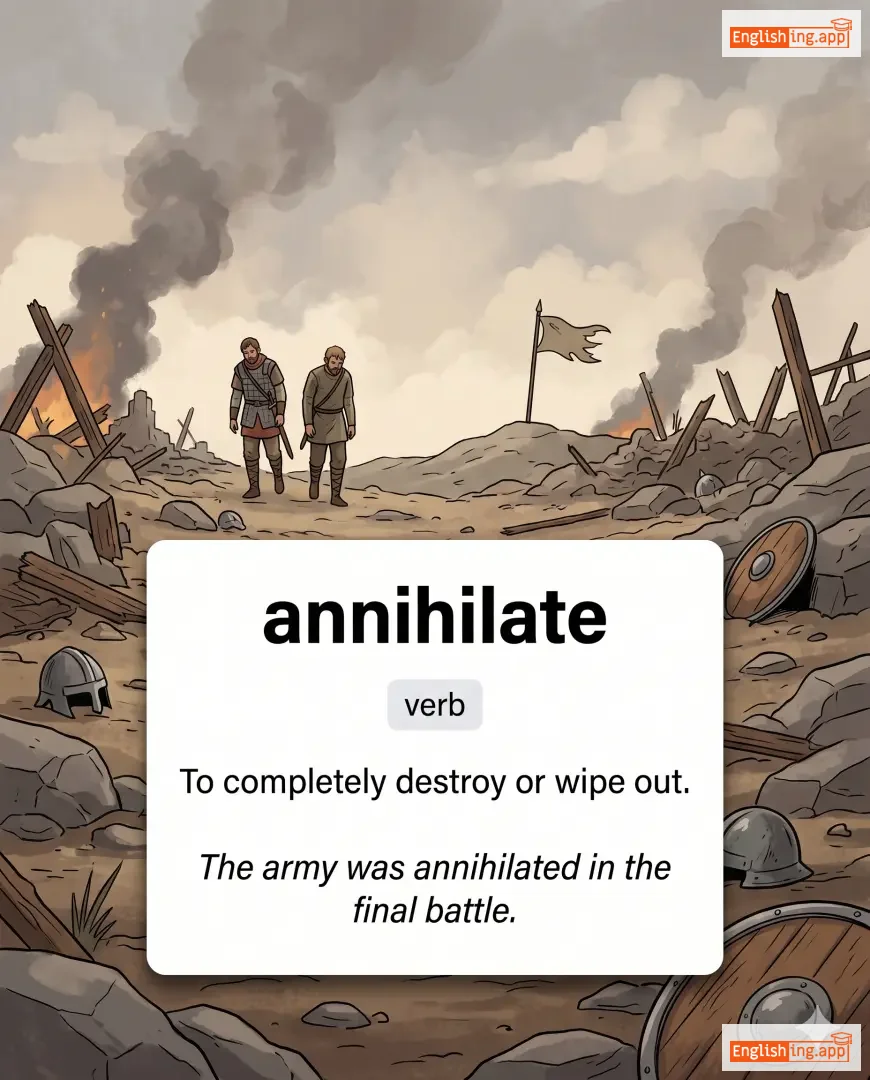
To completely destroy or wipe out.
••••••
|
The army was annihilated in the final battle.
軍隊は最後の戦いで壊滅しました。
••••••
|
軍隊は最後の戦いで壊滅しました。
Guntai wa saigo no tatakai de kaimetsu shimashita.
••••••
|
annihilate the competition
競争を壊滅させる
••••••
|
To defeat rivals completely
••••••
|
競争を壊滅させる
kyōsō o kaimetsu saseru
••••••
|
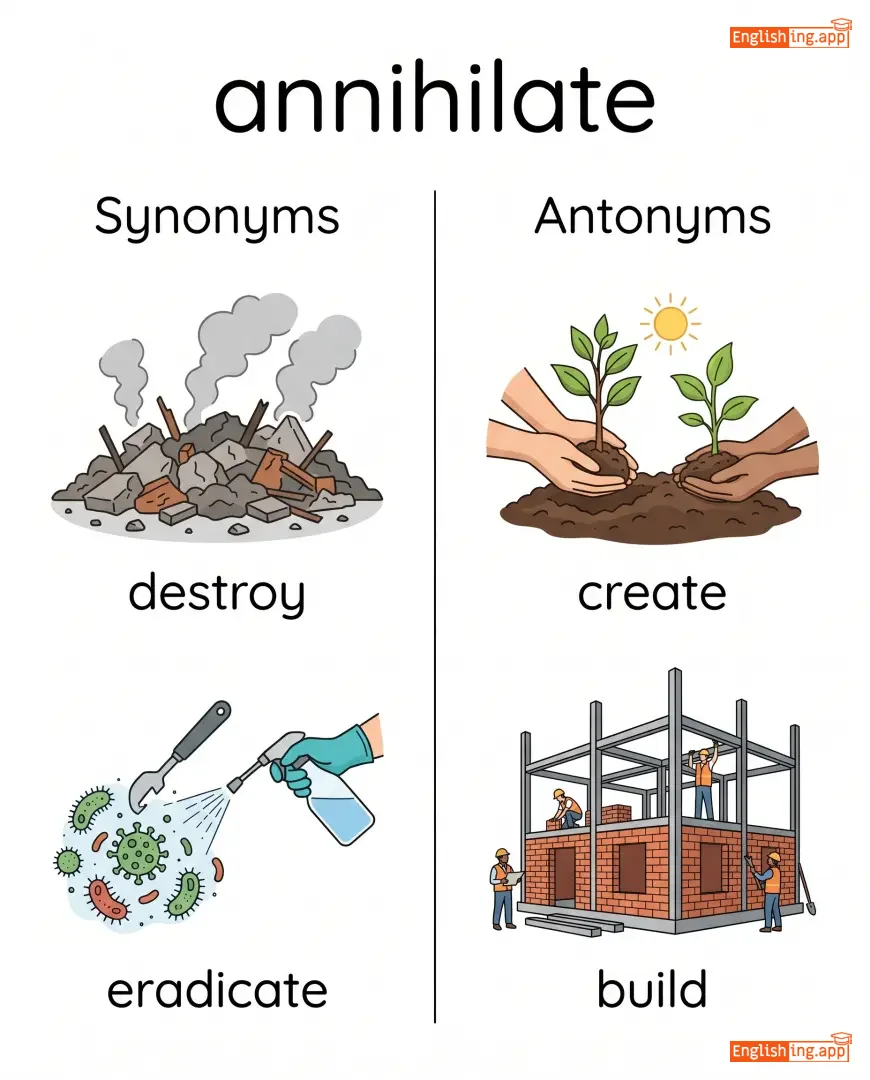
destroy, eradicate, obliterate, demolish, crush
••••••
|
create, build, construct
••••••
|
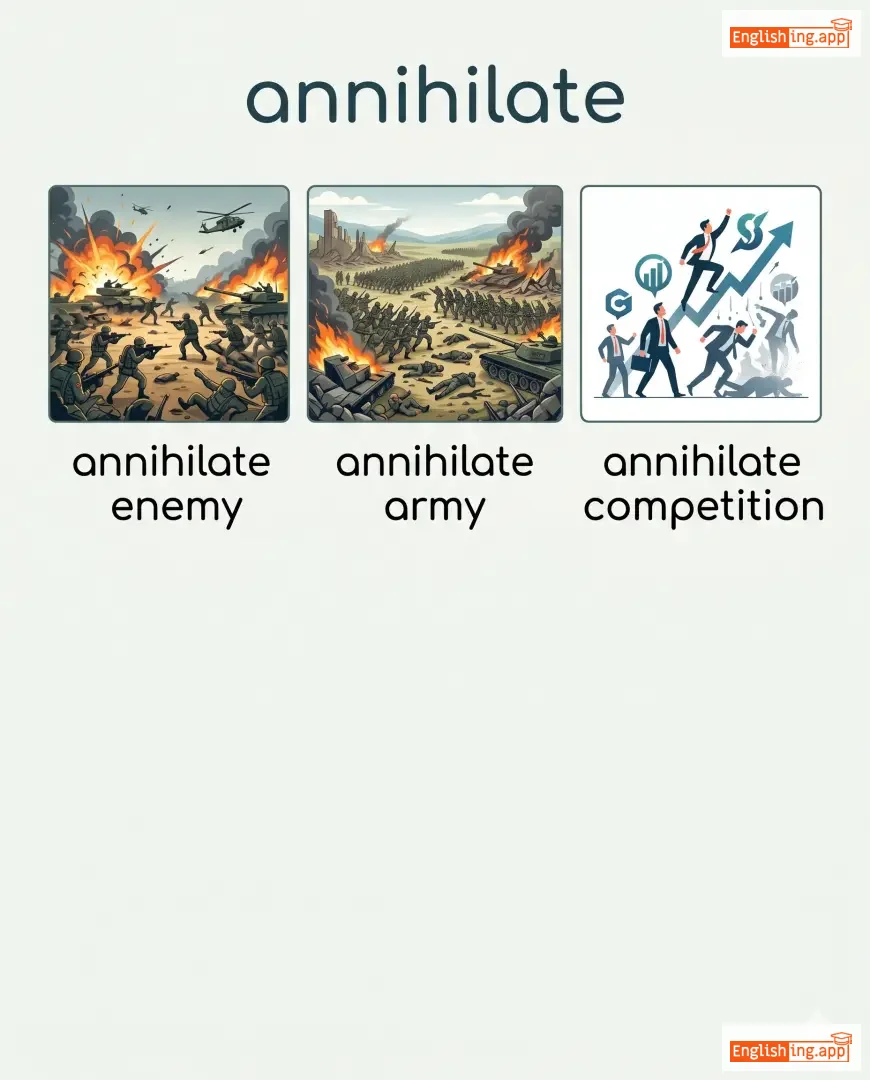
annihilate enemy, annihilate army, annihilate competition
••••••
|
Annihilateは壊滅させること—すべてが消え去る。
••••••
|
|
#294
🎉
|
/ˌænɪˈvɜːrsəri/
noun
(アニバーサリー)
••••••
|
- •••••• |
記念日
kinenbi
••••••
|
- •••••• | - •••••• | - •••••• | - •••••• |
the yearly recurrence of a date marking a past event
••••••
|
They celebrated their wedding anniversary with a dinner. |
彼らは結婚記念日をディナーで祝いました。
Karera wa kekkon kinenbi o dinā de iwaimashita.
••••••
|
anniversary celebration |
a festivity or event to mark an anniversary
••••••
|
記念日のお祝い
kinenbi no oiwai
••••••
|
commemoration, remembrance, jubilee, observance
••••••
|
forgetfulness, neglect
••••••
|
wedding anniversary, annual anniversary, silver anniversary, golden anniversary
••••••
|
Anniversary は記念日—Anni は年、Versary は繰り返し 🔄
••••••
|
|
#295
📢
|
/əˈnaʊns/
verb
(アナウンス)
••••••
|
- •••••• |
発表する
happyou suru
••••••
|
announced
アナウンスド
••••••
|
announced
アナウンスド
••••••
|
announces
アナウンスィズ
••••••
|
announcing
アナウンシング
••••••
|
to make a formal public statement about something
••••••
|
The company will announce the new product tomorrow.
会社は明日新しい製品をアナウンスします。
••••••
|
会社は明日新しい製品をアナウンスします。
Kaisha wa ashita atarashī seihin o anōnsu shimasu.
••••••
|
announce decision
決定をアナウンスする
••••••
|
to declare or make a decision public
••••••
|
決定を発表する
Kettei o happyou suru
••••••
|
declare, proclaim, state, notify, publish
••••••
|
conceal, withhold, hide
••••••
|
announce results, announce plans, announce officially, announce publicly
••••••
|
アナウンスは公に発表すること—マイクでみんなに知らせる!
••••••
|
|
#296
📢
|
/əˈnaʊnsmənt/
noun
(アナウンスメント)
••••••
|
- •••••• |
発表
happyo
••••••
|
- •••••• | - •••••• | - •••••• | - •••••• |
a public or formal statement giving information
••••••
|
The principal made an important announcement about the new schedule. |
校長は新しいスケジュールについて重要な発表をしました。
Kouchou wa atarashii sukeju-ru ni tsuite juuyou na happyou wo shimashita.
••••••
|
public announcement |
a formal declaration made to the general public
••••••
|
公的発表
kouteki happyou
••••••
|
declaration, statement, proclamation, notice, notification
••••••
|
secret, silence, concealment
••••••
|
official announcement, public announcement, make an announcement, important announcement
••••••
|
発表は、マイクを使って大切な情報を伝えることです!
••••••
|
|
#297
😠
|
/əˈnɔɪ/
verb
(アノイ)
••••••
|
- •••••• |
イライラさせる
iraira saseru
••••••
|
annoyed
アノイド
••••••
|
annoyed
アノイド
••••••
|
annoys
アノイズ
••••••
|
annoying
アノイング
••••••
|
to irritate or bother someone and make them feel a little angry or uncomfortable
••••••
|
His constant humming started to annoy everyone in the room.
彼の絶え間ないハミングが部屋の中でみんなをイライラさせ始めた。
••••••
|
彼の絶え間ないハミングが部屋の中でみんなをイライラさせ始めた。
Kare no taezu nai hamingu ga heya no naka de minna wo iraira sase hajimeta.
••••••
|
annoy the hell out of
アノイ ザ ヘル アウト オブ
••••••
|
to irritate someone extremely
••••••
|
イライラさせる
iraira saseru
••••••
|
irritate, bother, disturb, anger, provoke
••••••
|
please, delight, soothe
••••••
|
annoy someone, really annoy, slightly annoy, annoy deeply
••••••
|
アノイ — イライラさせるなら、アノイがあるから、注意しよう。
••••••
|
|
#298
😒
|
/əˈnɔɪd/
adjective
(アノイド)
••••••
|
- •••••• |
いらいらした
iraira shita
••••••
|
- •••••• | - •••••• | - •••••• | - •••••• |
feeling slightly angry or irritated
••••••
|
She felt annoyed by the constant noise.
シー フェルト アノイド バイ ザ コンスタント ノイズ。
••••••
|
彼女は絶え間ない騒音にいらいらした。
kanojo wa taemanai souon ni iraira shita
••••••
|
annoyed at someone
annoyed at someone
••••••
|
to feel irritation or displeasure toward a person
••••••
|
誰かにいらいらする
dareka ni iraira suru
••••••
|
irritated, bothered, displeased, vexed, frustrated
••••••
|
pleased, satisfied, calm
••••••
|
feel annoyed, get annoyed, slightly annoyed, visibly annoyed
••••••
|
Annoyed → ‘イライラ’な気分を思い出そう
••••••
|
Vocabulary Quiz
Test your vocabulary by matching words with their translations or meanings.
Login to take the quiz
Comments (0)
Share your thoughts and join the discussion.
Join the discussion by logging in
Login to CommentNo comments yet
Be the first to share your thoughts!