

翻訳
過去
過去分詞
三人称単数
動名詞
意味
例文
例文の翻訳
同義語
対義語
コロケーション
ニーモニック
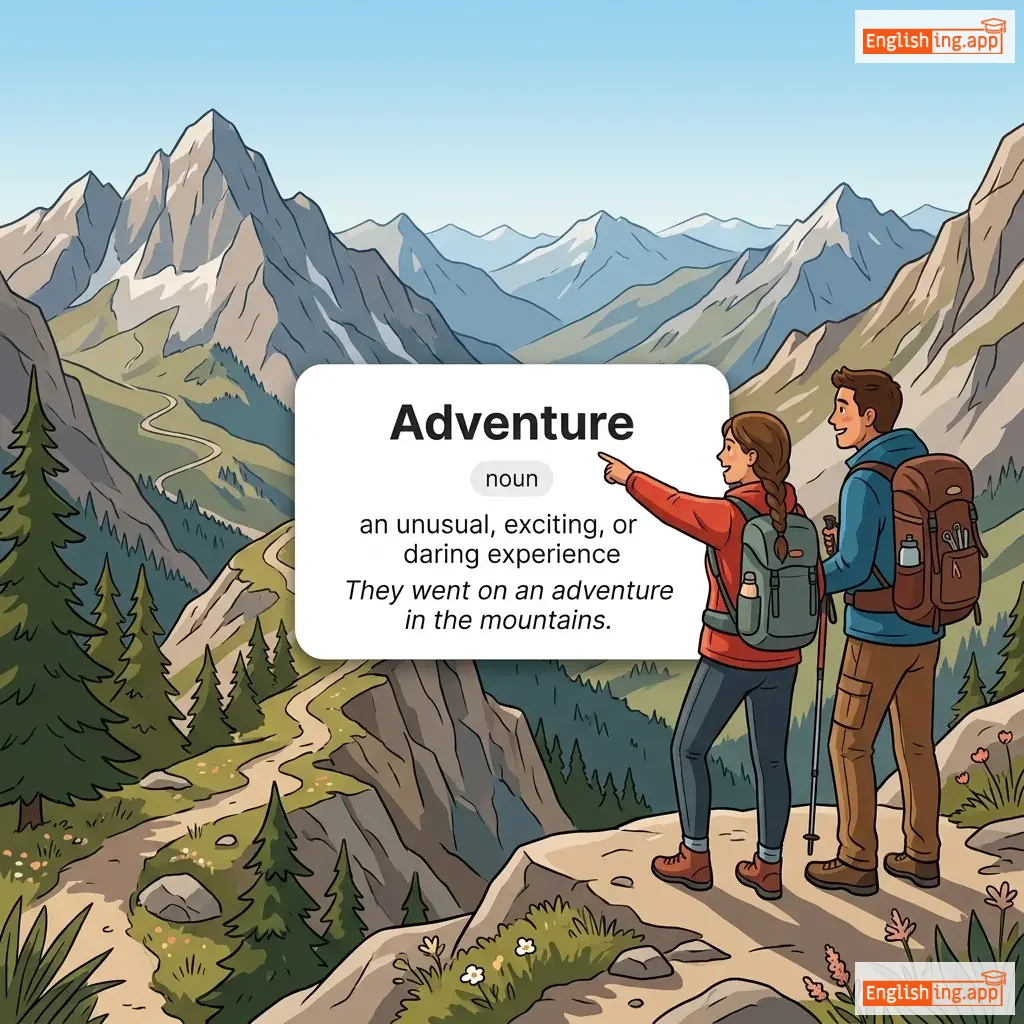
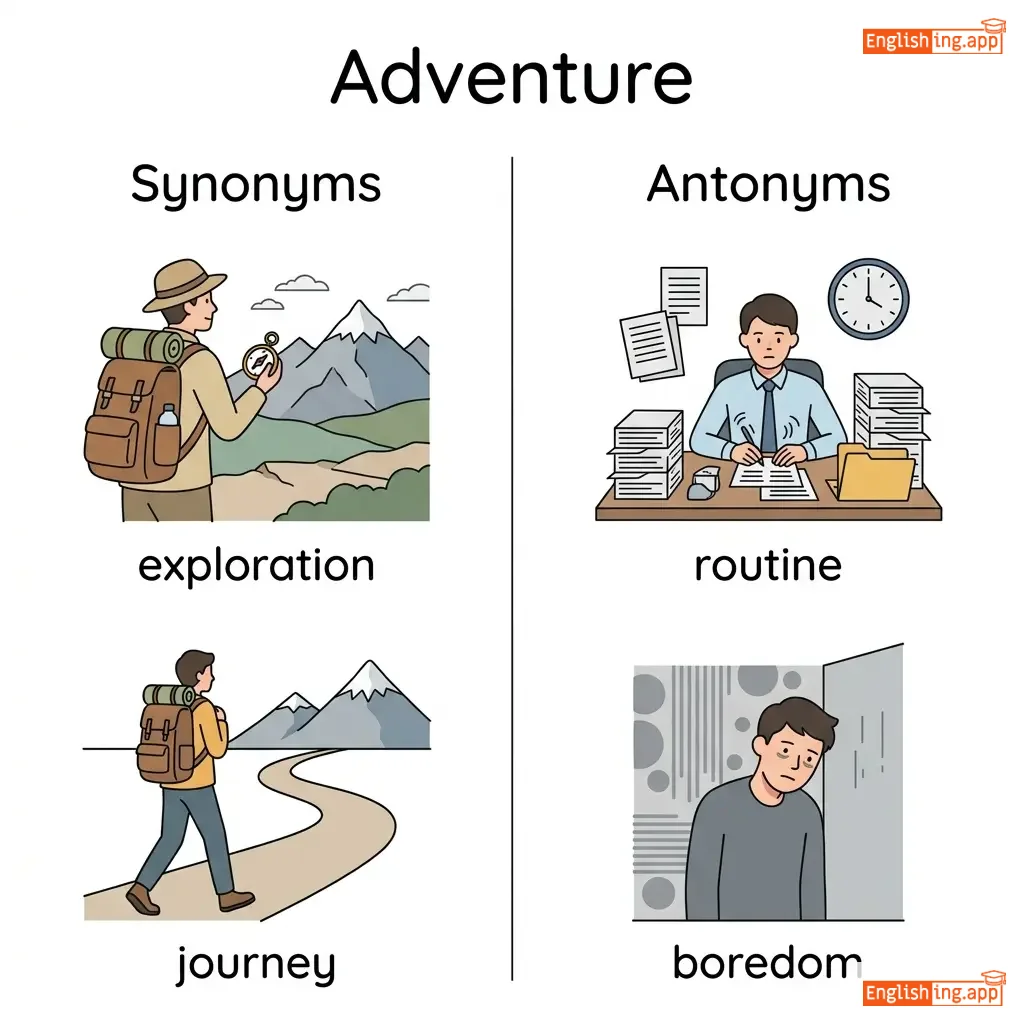
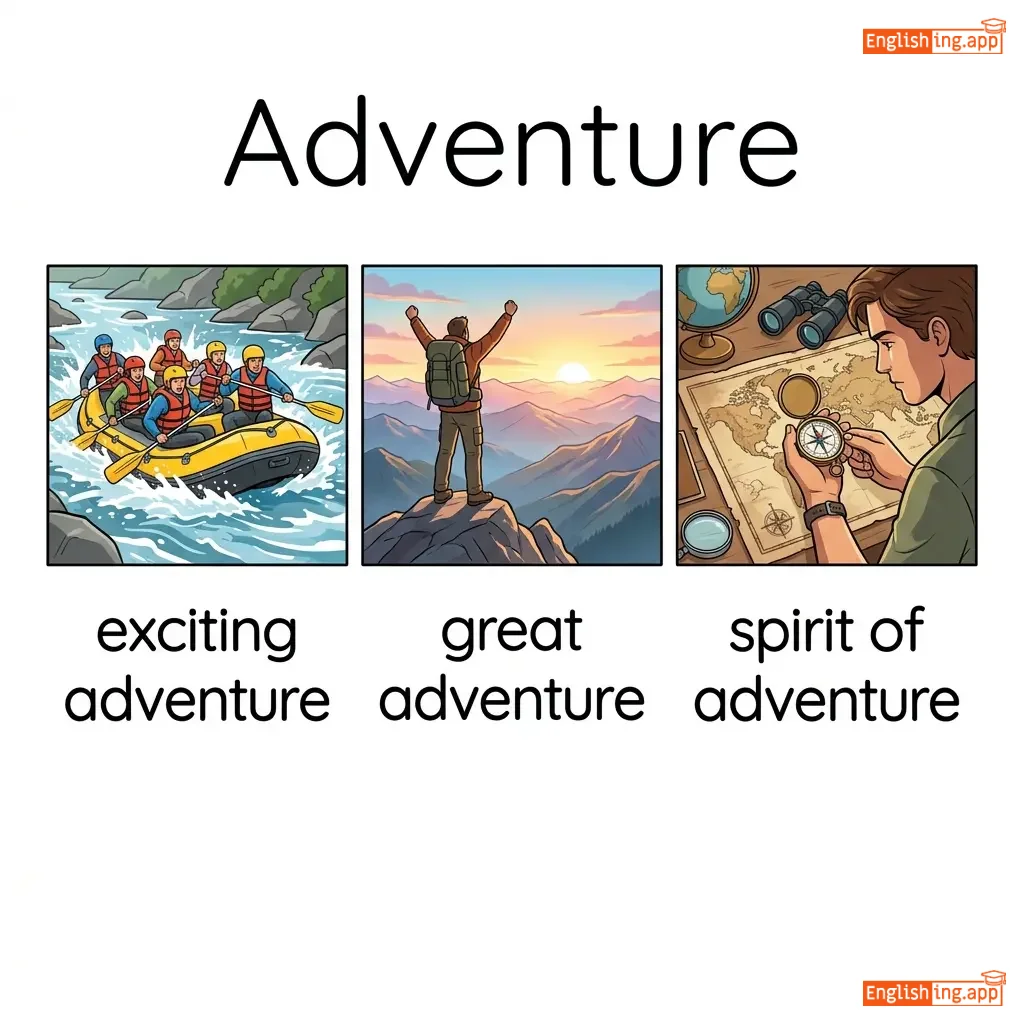
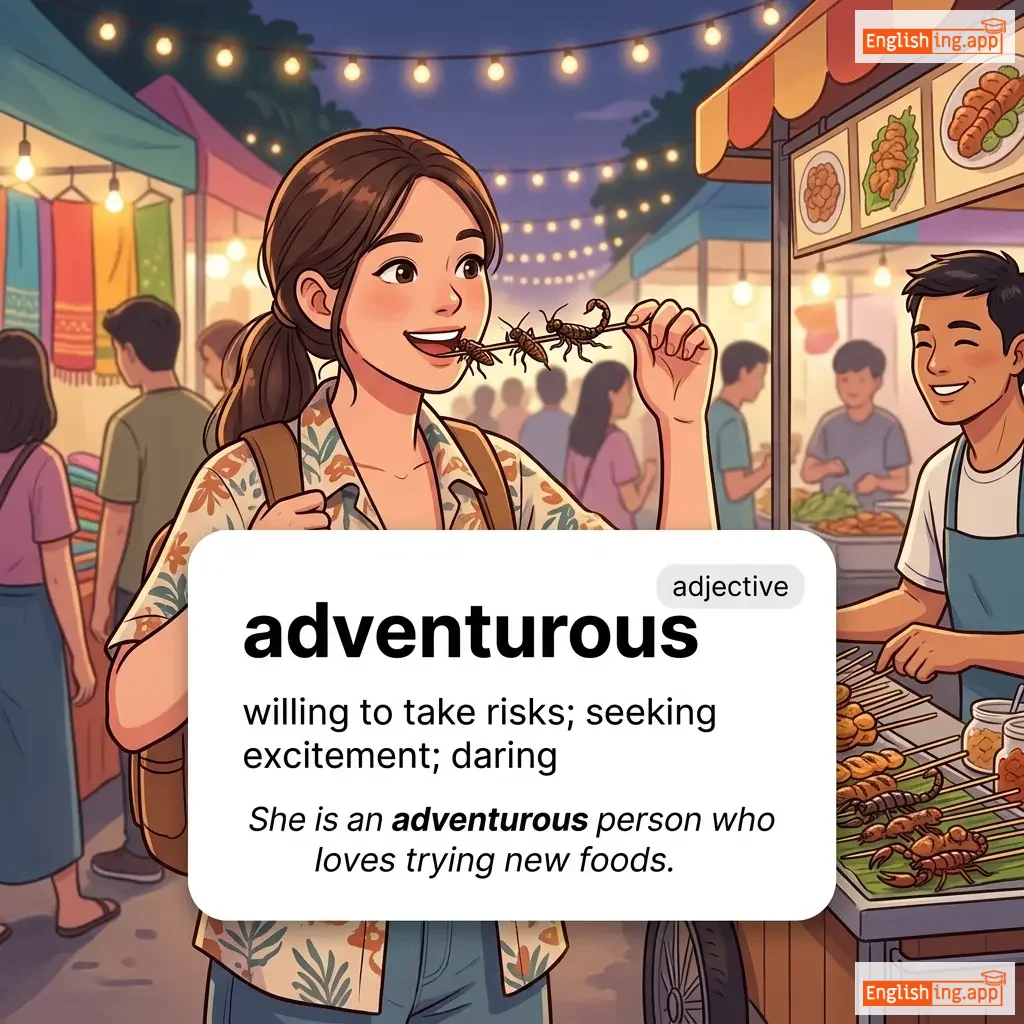







Swipe left or right, or use the buttons. Tap image to zoom.
例文の翻訳
単語
Lesson 4Lesson 4 - マスクトグル
|
絵文字
|
単語 | Images | 翻訳 | 過去 | 過去分詞 | 三人称単数 | 動名詞 | 意味 | 例文 | 例文の翻訳 | 表現例 | 表現例の意味 | 表現例の翻訳 | 同義語 | 対義語 | コロケーション | ニーモニック |
|---|---|---|---|---|---|---|---|---|---|---|---|---|---|---|---|---|---|
|
#151
🏔️
|
/ədˈvɛntʃər/
noun
(アドベンチャー)
••••••
|
|
冒険
bōken
••••••
|
- •••••• | - •••••• | - •••••• | - •••••• |
an unusual, exciting, or daring experience
••••••
|
They went on an adventure in the mountains. |
彼らは山で冒険をしました。
Karera wa yama de bōken o shimashita.
••••••
|
spirit of adventure |
the willingness to try exciting or risky things
••••••
|
冒険心
bōkenshin
••••••
|
exploration, journey, quest, expedition
••••••
|
routine, boredom, safety
••••••
|
exciting adventure, great adventure, spirit of adventure, adventure story
••••••
|
Adventure は冒険、'Ad vent' で温かい風、楽しくてワクワクすることが始まる!
••••••
|
|
#152
🧭
|
/ədˈvɛntʃərər/
noun
(アドベンチャラー)
••••••
|
- •••••• |
冒険家
boukenka
••••••
|
- •••••• | - •••••• | - •••••• | - •••••• |
a person who seeks exciting, risky, or unusual experiences; someone who explores new or unknown places
••••••
|
The adventurer traveled deep into the jungle in search of ancient ruins.
ザ・アドベンチャラー・トラベルト・ディープ・イントゥ・ザ・ジャングル・イン・サーチ・オブ・エンシェント・ルーインズ。
••••••
|
その冒険家は古代遺跡を探してジャングルの奥深くへ旅した。
sono boukenka wa kodai iseki o sagashite janguru no okobukaku e tabi shita
••••••
|
spirit of adventure
スピリット・オブ・アドベンチャー
••••••
|
a strong desire to explore, take risks, and try new experiences
••••••
|
冒険心
bouken shin
••••••
|
explorer, risk-taker, wanderer, pioneer, daredevil
••••••
|
coward, homebody, conformist
••••••
|
brave adventurer, fearless adventurer, young adventurer, adventurer spirit, bold adventurer
••••••
|
冒険家は adventure が大好き
••••••
|
|
#153
🎢
|
/ədˈventʃərəs/
adjective
(アドベンチャラス)
••••••
|
|
冒険的な; リスクを取る
bōkenteki na; risuku o toru
••••••
|
- •••••• | - •••••• | - •••••• | - •••••• |
willing to take risks; seeking excitement; daring
••••••
|
She is an adventurous person who loves trying new foods. |
彼女は新しい料理を試すのが大好きな冒険心のある人です。
Kanojo wa atarashī ryōri o tamesu no ga daisuki na bōken-shin no aru hito desu.
••••••
|
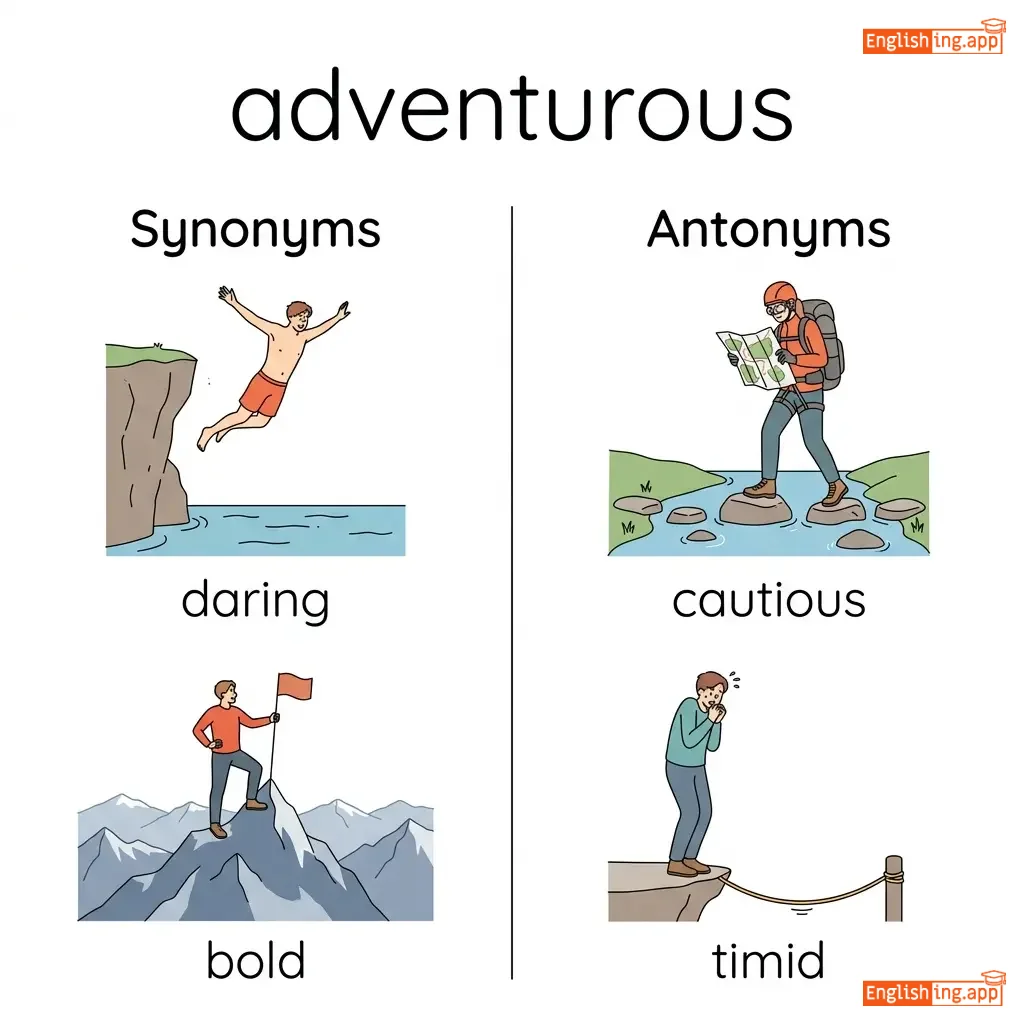
- •••••• | - •••••• | - •••••• |
daring, bold, brave, fearless
••••••
|
cautious, timid, careful, conservative
••••••
|
adventurous spirit, adventurous traveler, adventurous eater
••••••
|
冒険的な人生を送り、どんどん新しい経験を試してみよう!
••••••
|
|
#154
🌩️
|
/ˈæd.vɜːs/
adjective
••••••
|
- •••••• | - •••••• | - •••••• | - •••••• | - •••••• | - •••••• |
Preventing success or development; harmful or unfavorable.
••••••
|
The project was delayed due to adverse weather conditions. |
- •••••• |
adverse effect |
a harmful or negative impact
••••••
|
- •••••• |
unfavorable, harmful, negative, detrimental, hostile
••••••
|
favorable, beneficial, positive
••••••
|
adverse conditions, adverse effect, adverse impact, adverse reaction
••••••
|
No •••••• |
|
#155
📣
|
/ˈædvərtaɪz/
verb
(ædvərtaɪz)
••••••
|
|
宣伝する
senden suru
••••••
|
advertised
ædvərtaɪzd
••••••
|
advertised
ædvərtaɪzd
••••••
|
advertises
ædvərtaɪziz
••••••
|
advertising
ædvərtaɪzɪŋ
••••••
|
to describe or draw attention to a product, service, or event in a public medium in order to promote sales or attendance
••••••
|
They advertise their products on social media platforms.
彼らはソーシャルメディアプラットフォームで製品を宣伝しています。
••••••
|
彼らはソーシャルメディアプラットフォームで製品を宣伝しています。
Karera wa sōsharu media purattofōmu de seihin o senden shiteimasu.
••••••
|
advertise for something
何かを宣伝する
••••••
|
to announce publicly that you need something or someone
••••••
|
何かを宣伝する
nanika wo senden suru
••••••
|
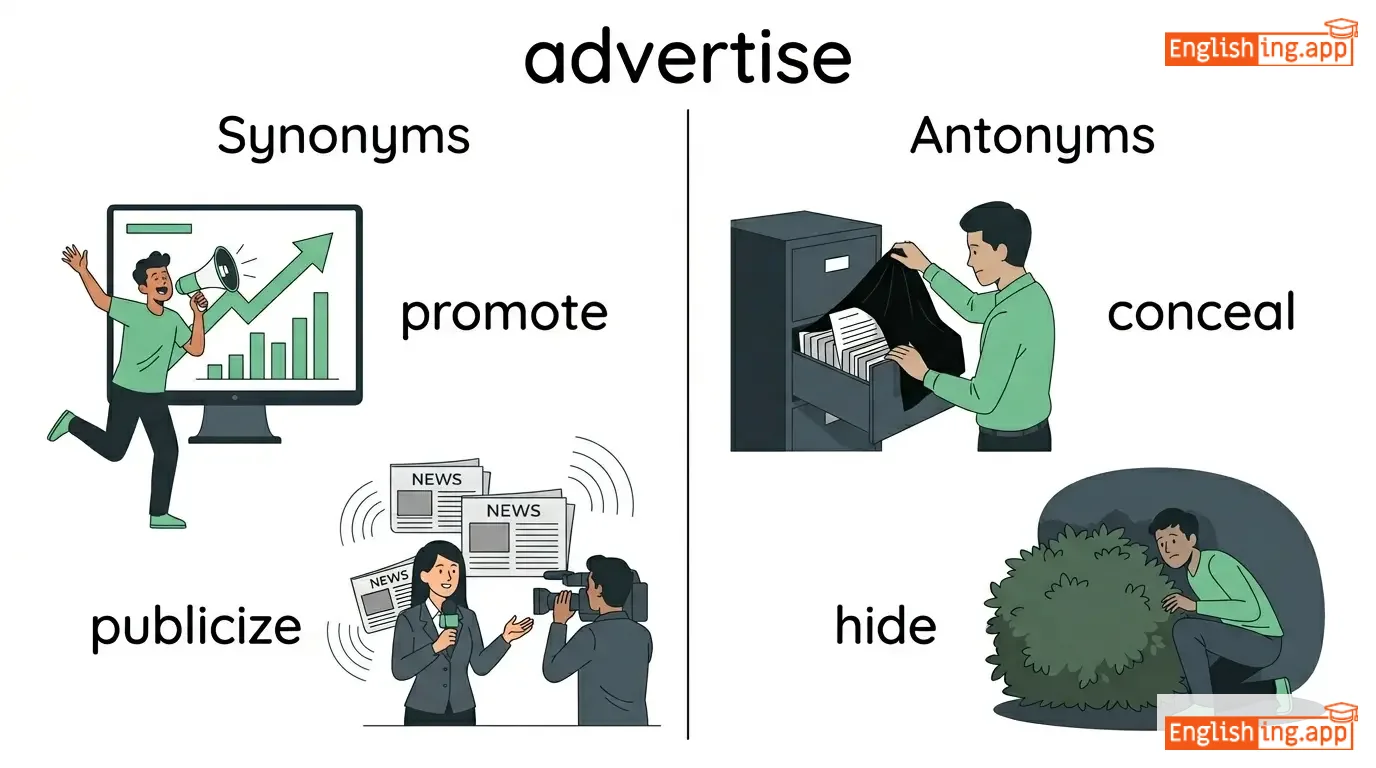
promote, publicize, market, broadcast, announce
••••••
|
conceal, hide, suppress
••••••
|
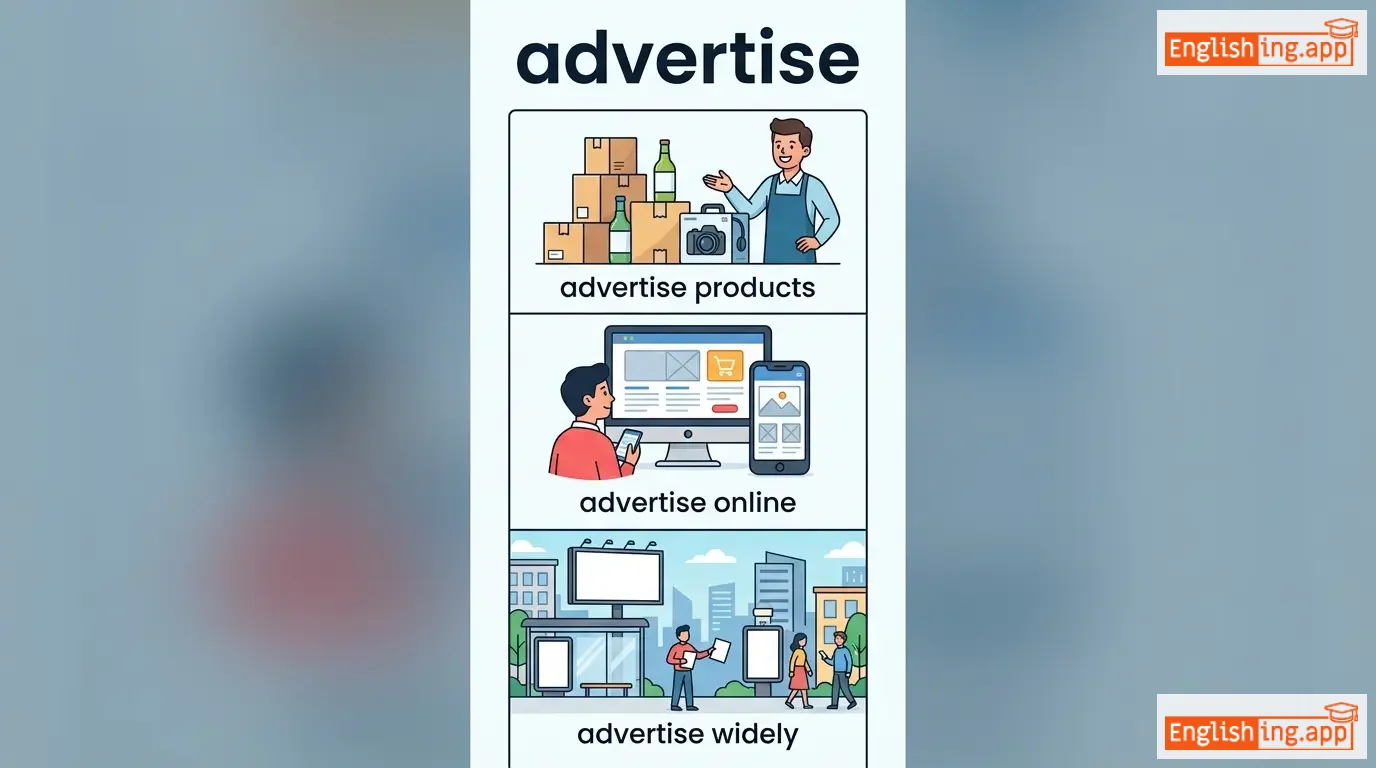
advertise products, advertise online, advertise widely, advertise for staff
••••••
|
目を追加するADD-VERT-EYES!みんなに見せるために宣伝しよう!
••••••
|
|
#156
📢
|
/ədˈvɜːrtɪsmənt/
noun
(アドバタイズメント)
••••••
|
- •••••• |
広告
kokoku
••••••
|
- •••••• | - •••••• | - •••••• | - •••••• |
a public notice or announcement promoting a product, service, or event
••••••
|
The advertisement attracted many new customers.
ジ アドバタイズメント アトラクテッド メニー ニュー カスタマーズ。
••••••
|
その広告は多くの新しい顧客を引きつけた。
sono kokoku wa ooku no atarashii kokyaku o hikitsuketa
••••••
|
- •••••• | - •••••• | - •••••• |
ad, commercial, promotion, announcement, publicity
••••••
|
concealment, silence
••••••
|
online advertisement, print advertisement, television advertisement, advertisement campaign
••••••
|
Advertisement = 広告、アド(ad)が見えたら広告と覚える。
••••••
|
|
#157
📢
|
/ˈædvərˌtaɪzɪŋ/
noun
(ædvərˈtaɪzɪŋ)
••••••
|
- •••••• |
広告
kōkoku
••••••
|
- •••••• | - •••••• | - •••••• | - •••••• |
the activity of producing advertisements for products or services
••••••
|
The company spends millions on advertising every year. |
その会社は毎年広告に何百万も費やしています。
Sono kaisha wa mainen kōkoku ni nanbyakuman mo tsuiyashiteimasu.
••••••
|
false advertising |
misleading or deceptive promotion of a product
••••••
|
虚偽広告
kyogi kōkoku
••••••
|
promotion, marketing, publicity, propaganda
••••••
|
concealment, secrecy
••••••
|
advertising campaign, advertising industry, online advertising, false advertising
••••••
|
Advertising は広告です—'Ad!みんな広告が好き!'
••••••
|
|
#158
💡
|
/ədˈvaɪs/
noun
••••••
|
|
- •••••• | - •••••• | - •••••• | - •••••• | - •••••• |
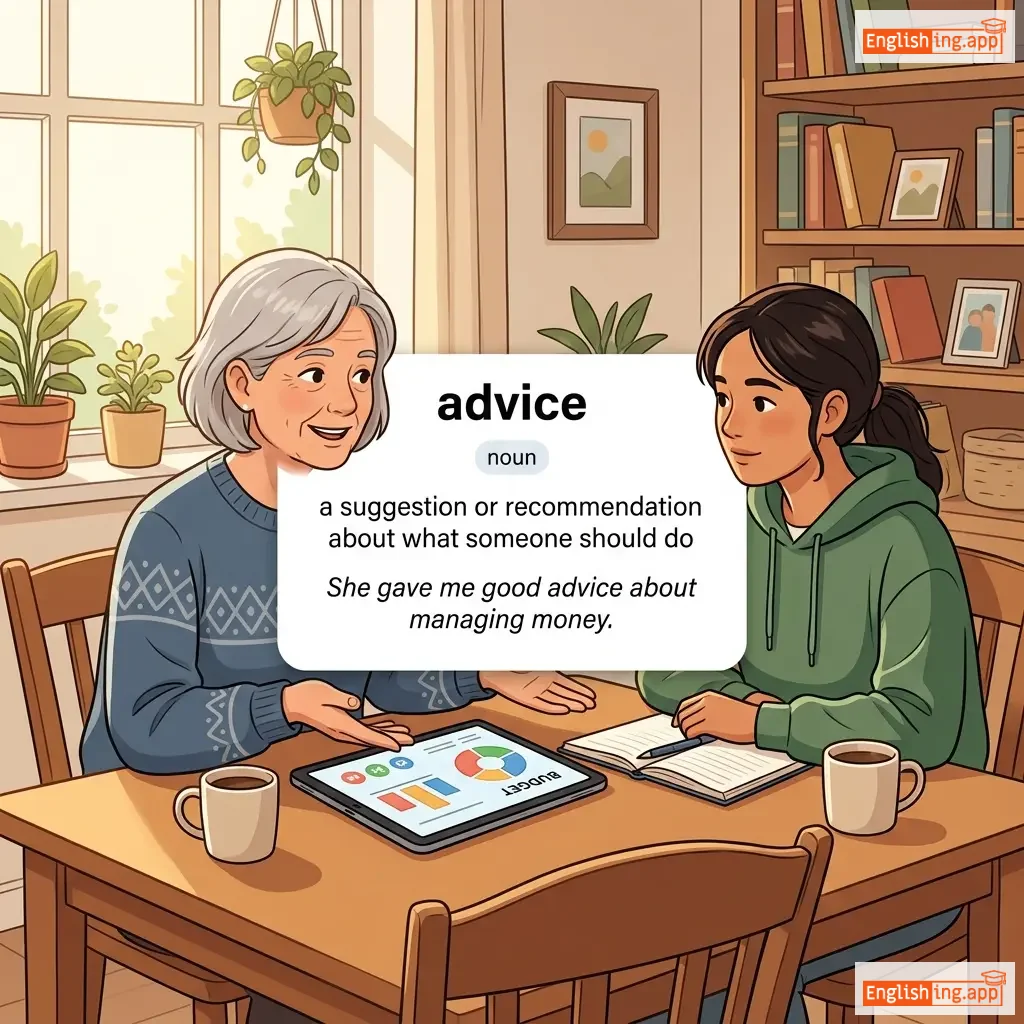
a suggestion or recommendation about what someone should do
••••••
|
She gave me good advice about managing money. |
- •••••• |
take someone's advice |
to follow the suggestion or recommendation given by someone
••••••
|
- •••••• |
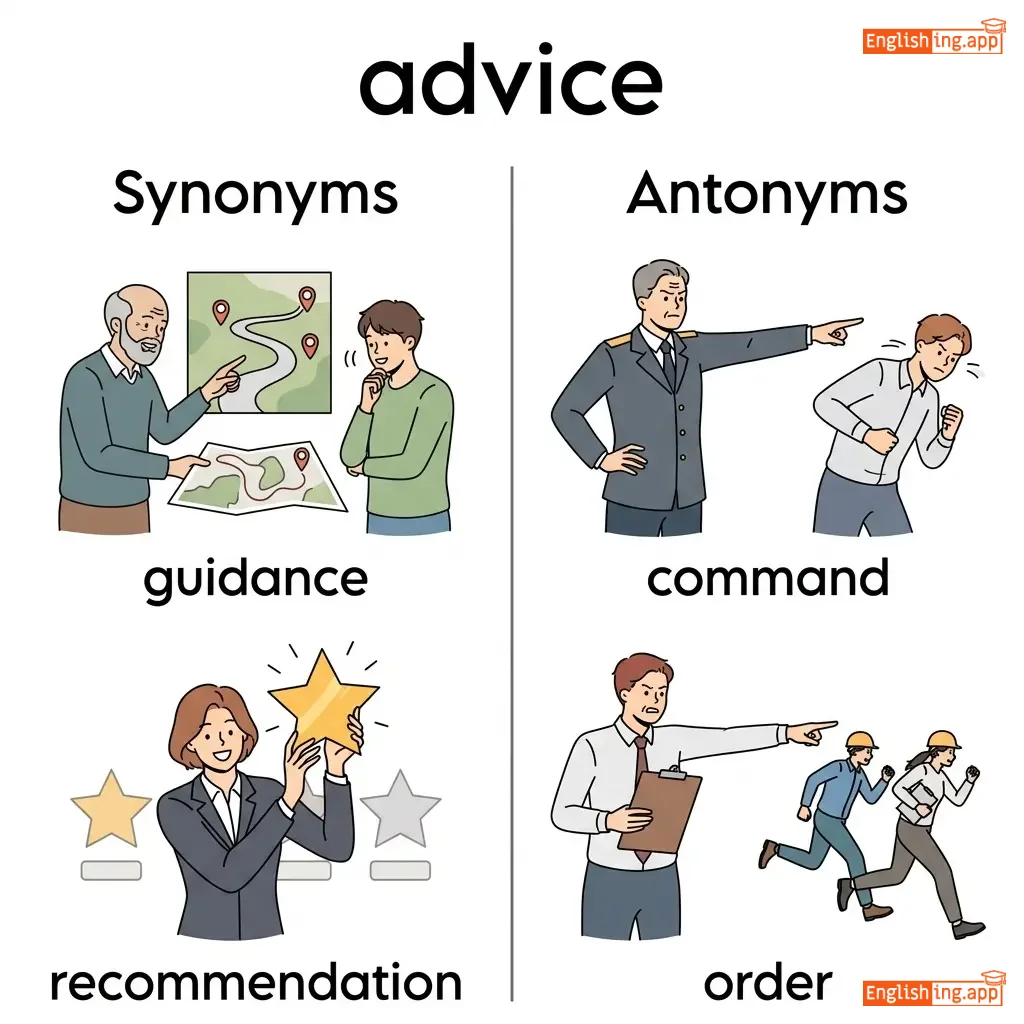
guidance, recommendation, counsel, tip, suggestion
••••••
|
command, order
••••••
|
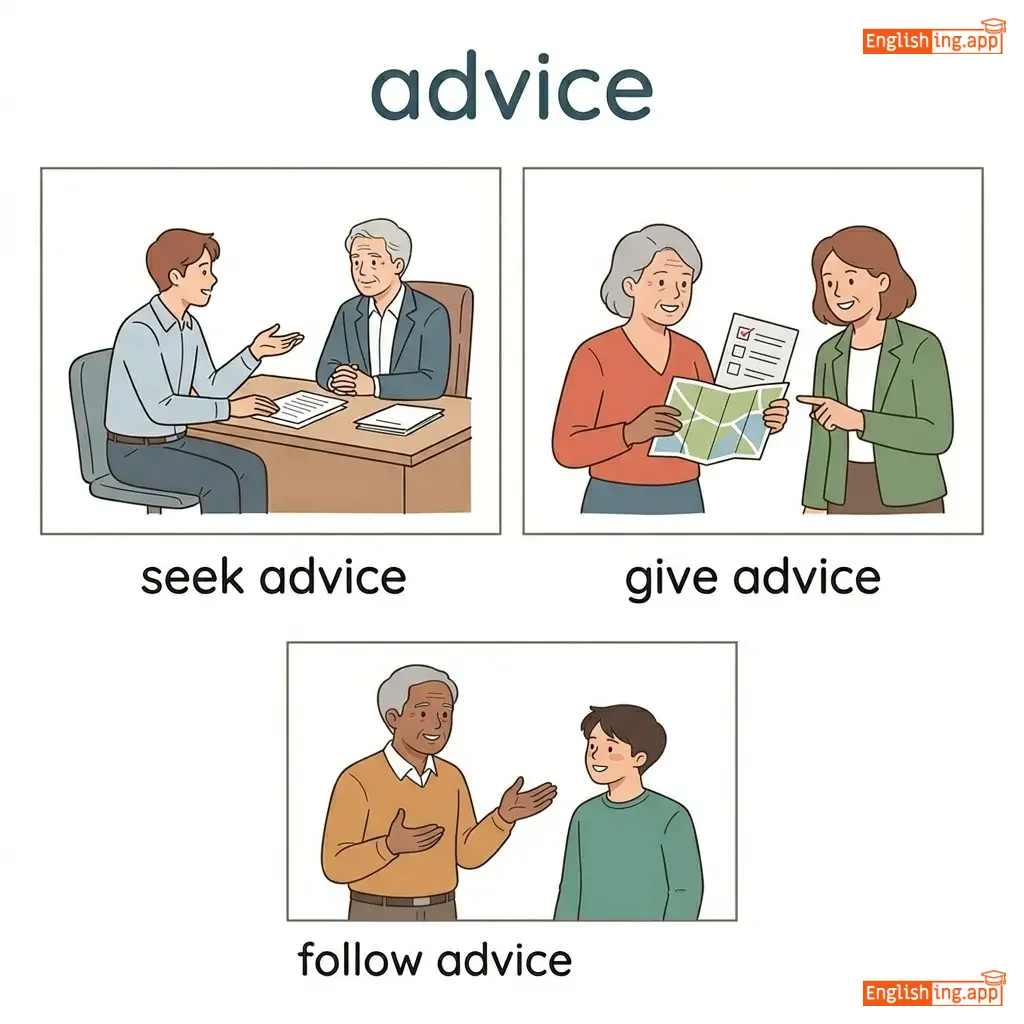
seek advice, give advice, follow advice, professional advice
••••••
|
No •••••• |
|
#159
🗣️
|
/ədˈvaɪz/
verb
(アドバイズ)
••••••
|
- •••••• |
アドバイスする
adobaisu suru
••••••
|
advised
アドバイズド
••••••
|
advised
アドバイズド
••••••
|
advises
アドバイゼズ
••••••
|
advising
アドバイジング
••••••
|
to recommend what should be done; to give advice
••••••
|
The doctor advised him to rest for a week.
医者は彼に1週間休むようにアドバイスした。
••••••
|
医者は彼に1週間休むようにアドバイスした。
Isha wa kare ni 1-shūkan yasumu yō ni adobaisu shita.
••••••
|
advise against
アドバイスアゲインスト
••••••
|
to recommend not doing something
••••••
|
何かをしないようにアドバイスする
nanika o shinai yō ni adobaisu suru
••••••
|
recommend, suggest, counsel, urge
••••••
|
discourage, forbid
••••••
|
strongly advise, advise caution, advise against, legally advise
••••••
|
Advise は「アドバイスする」と言う意味で、助言をすることです。
••••••
|
|
#160
👨🏫
|
/ədˈvaɪzər/
noun
(アドバイザー)
••••••
|
- •••••• |
アドバイザー
adobaizā
••••••
|
- •••••• | - •••••• | - •••••• | - •••••• |
a person who gives advice, especially in a professional or official role
••••••
|
He works as a financial adviser at a bank. |
彼は銀行で金融アドバイザーとして働いています。
Kare wa ginkō de kin'yū adobaizā toshite hataraiteimasu.
••••••
|
- •••••• | - •••••• | - •••••• |
counselor, consultant, mentor, guide
••••••
|
opponent, detractor
••••••
|
financial adviser, legal adviser, personal adviser, senior adviser
••••••
|
AdviserはAdvisorと似ている — アドバイスを与える人(adobaizā)。
••••••
|
|
#161
📢
|
/ˈædvəˌkeɪt/ (noun), /ˈædvəˌkeɪt/ or /ˈædvəˌkət/ (verb)
noun, verb
(アドボケイト)
••••••
|
- •••••• |
支持者 / 弁護士
shijisha / bengoshi
••••••
|
advocated
アドボケイテッド
••••••
|
advocated
アドボケイテッド
••••••
|
advocates
アドボケイツ
••••••
|
advocating
アドボケイティング
••••••
|
As a noun: a person who publicly supports or recommends a cause. As a verb: to publicly recommend or support.
••••••
|
She is an advocate for women's rights and often advocates for equal opportunities.
彼女は女性の権利を擁護し、しばしば平等な機会のために擁護活動を行っています。
••••••
|
彼女は女性の権利を擁護し、しばしば平等な機会のために擁護活動を行っています。
Kanojo wa josei no kenri o yōgo shi, shibashiba byōdō na kikai no tame ni yōgo katsudō o okonatteimasu.
••••••
|
devil's advocate
悪魔の代弁者
••••••
|
a person who argues against a position for the sake of debate
••••••
|
議論のために立場に反対する人
Giron no tame ni tachiba ni hantai suru hito
••••••
|
supporter, promoter, defender, champion, proponent
••••••
|
opponent, critic, adversary
••••••
|
advocate strongly, advocate change, human rights advocate, advocate for reform
••••••
|
Advocateは弁護士のように誰かのために話す人を意味します。
••••••
|
|
#162
🎨
|
/ɛsˈθɛtɪk/
adjective
(エステティック)
••••••
|
|
美的
biteki
••••••
|
- •••••• | - •••••• | - •••••• | - •••••• |
concerned with beauty or the appreciation of beauty
••••••
|
The room was decorated in an aesthetic style that pleased everyone.
部屋はエステティックなスタイルで装飾され、全員が喜びました。
••••••
|
部屋は美的なスタイルで装飾され、全員が喜びました。
Heya wa biteki na sutairu de sōshoku sare, zen'in ga yorokobimashita.
••••••
|
aesthetic appeal
エステティックな魅力
••••••
|
the quality of being visually attractive
••••••
|
美的魅力
biteki miryoku
••••••
|
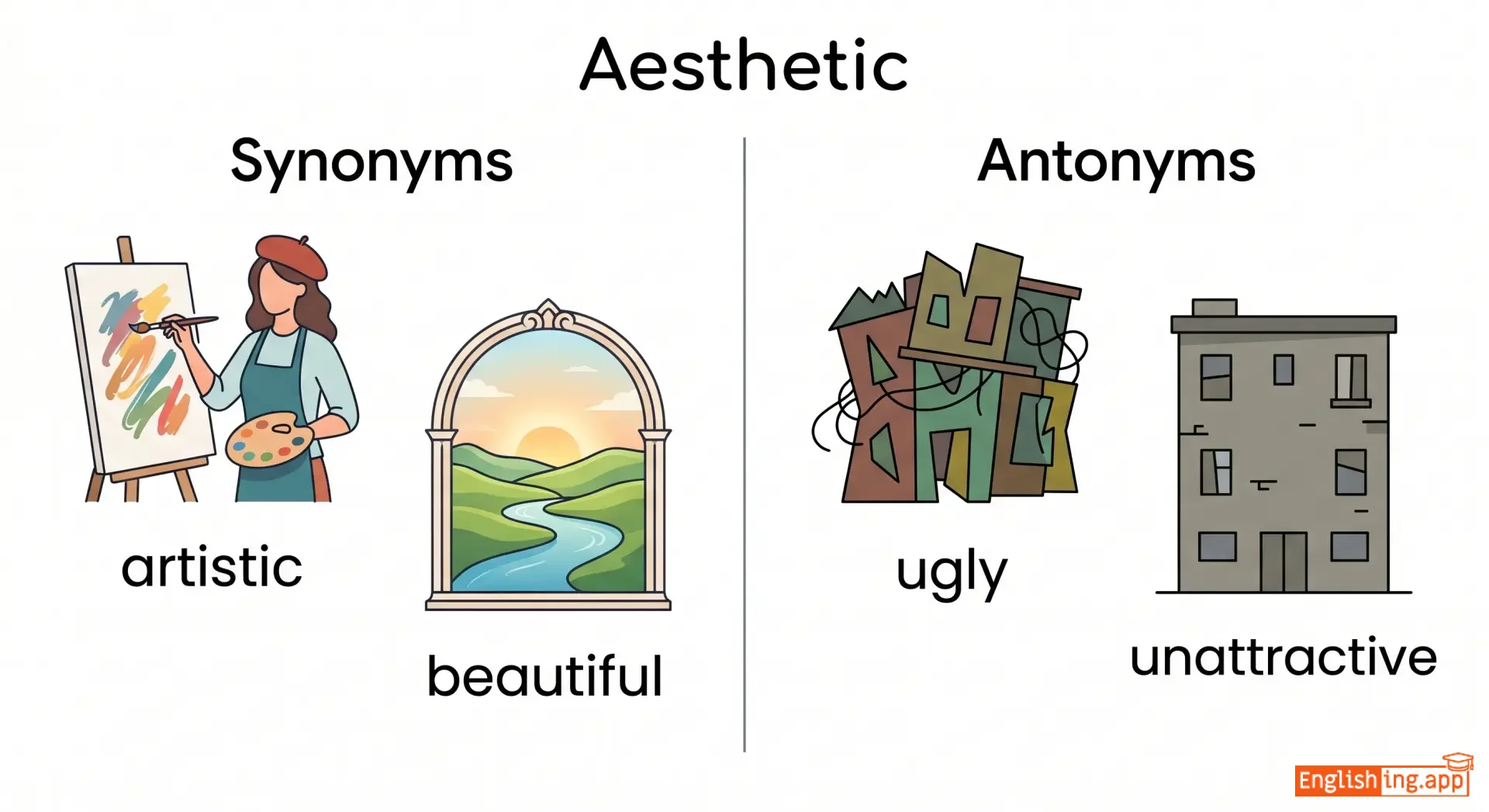
artistic, beautiful, elegant, tasteful
••••••
|
ugly, unattractive, plain
••••••
|
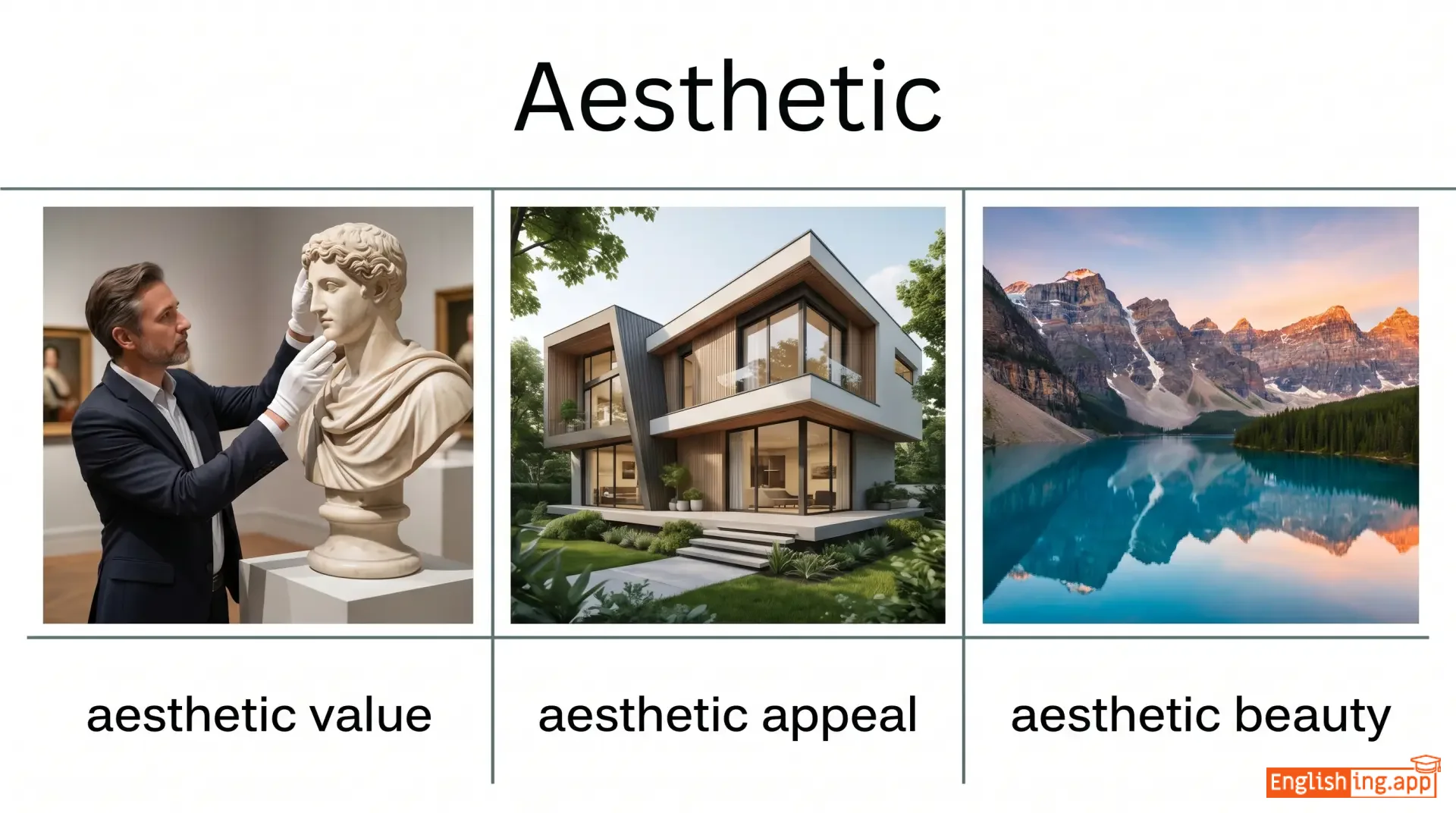
aesthetic value, aesthetic appeal, aesthetic beauty, aesthetic design
••••••
|
Aestheticは美しさを意味しますので、美的も美しさに関連しています。
••••••
|
|
#163
🎨
|
/iːsˈθɛθɪkəl/
adjective
(エスセティカル)
••••••
|
- •••••• |
美的な
biteki na
••••••
|
- •••••• | - •••••• | - •••••• | - •••••• |
concerned with beauty or the appreciation of beauty; related to artistic taste or appearance
••••••
|
The architect focused on the aesthetical balance of the building.
ジ アーキテクト フォーカスト オン ジ エスセティカル バランス オブ ザ ビルディング。
••••••
|
建築家は建物の美的なバランスに注目した。
Kenchikuka wa tatemono no biteki na baransu ni chuumoku shita
••••••
|
- •••••• | - •••••• | - •••••• |
aesthetic, artistic, visual, decorative, stylistic
••••••
|
unaesthetic, ugly, plain
••••••
|
aesthetical value, aesthetical sense, aesthetical appeal, aesthetical design
••••••
|
美的 = aesthetic
••••••
|
|
#164
🎨
|
/iːsˈθetɪkli/
adverb
(エステティカリー)
••••••
|
- •••••• |
美的に
biteki ni
••••••
|
- •••••• | - •••••• | - •••••• | - •••••• |
in a way that is concerned with beauty or visual appeal
••••••
|
The building is aesthetically pleasing despite its simple design.
その建物はシンプルなデザインにもかかわらず美的に魅力的です。
••••••
|
その建物はシンプルなデザインにもかかわらず美的に魅力的です。
sono tatemono wa shinpuru na dezain ni mo kakawarazu biteki ni miryokuteki desu
••••••
|
- •••••• | - •••••• | - •••••• |
beautifully, attractively, visually, artistically, tastefully
••••••
|
ugly, unattractively, poorly
••••••
|
aesthetically pleasing, aesthetically designed, aesthetically appealing, aesthetically improved
••••••
|
美的 = aesthetic → 美的に
••••••
|
|
#165
💌
|
/əˈfɛər/
noun
(アフェア)
••••••
|
- •••••• |
事件 / 関係
jiken / kankei
••••••
|
- •••••• | - •••••• | - •••••• | - •••••• |
an event, situation, or relationship, often one that is private or romantic
••••••
|
The scandal became the most talked-about affair of the year.
そのスキャンダルはその年で最も話題になったアフェアになった。
••••••
|
そのスキャンダルはその年で最も話題になった事件になった。
Sono sukyandaru wa sono toshi de mottomo wadai ni natta jiken ni natta.
••••••
|
love affair
恋愛アフェア
••••••
|
a romantic or sexual relationship, often secret
••••••
|
恋愛関係
renai kankei
••••••
|
incident, matter, event, relationship
••••••
|
certainty, indifference
••••••
|
family affairs, political affairs, love affair, personal affair
••••••
|
Affairは事件を意味します – 恋愛のaffairは恋愛の事件を意味します。
••••••
|
|
#166
🌦️
|
/əˈfɛkt/
verb
(アフェクト)
••••••
|
- •••••• |
影響する
eikyo suru
••••••
|
affected
アフェクトされた
••••••
|
affected
アフェクトされた
••••••
|
affects
アフェクトする
••••••
|
affecting
アフェクトしている
••••••
|
to influence or make a difference to something
••••••
|
The weather can greatly affect our mood.
天気は私たちの気分に大きな影響を与えることがある。
••••••
|
天気は私たちの気分に大きな影響を与えることがある。
Tenki wa watashitachi no kibun ni ookina eikyo o ataeru koto ga aru.
••••••
|
affect deeply
深く影響する
••••••
|
to have a strong emotional impact
••••••
|
深く影響する
fukaku eikyo suru
••••••
|
influence, impact, change, alter, sway
••••••
|
ignore, neglect
••••••
|
affect mood, affect decision, affect performance, affect outcome
••••••
|
Affectは私たちの気持ちに影響を与える、まるで風のように。
••••••
|
|
#167
❤️
|
/əˈfɛkʃən/
noun
••••••
|
- •••••• | - •••••• | - •••••• | - •••••• | - •••••• | - •••••• |
a gentle feeling of fondness or liking
••••••
|
She showed great affection for her younger brother. |
- •••••• |
public display of affection |
an act of showing love or fondness openly in public
••••••
|
- •••••• |
fondness, love, tenderness, warmth, attachment
••••••
|
hatred, dislike, indifference
••••••
|
deep affection, show affection, affection for, affection toward
••••••
|
No •••••• |
|
#168
💍
|
/əˈfaɪəns/
verb
(アファイアンス)
••••••
|
- •••••• |
婚約する
konyaku suru
••••••
|
affianced
アファイアンスド
••••••
|
affianced
アファイアンスド
••••••
|
affiances
アファイアンスズ
••••••
|
affiancing
アファイアンスィング
••••••
|
to promise or pledge marriage; to formally engage
••••••
|
They decided to affiance after years of friendship.
ゼイ ディサイディド トゥ アファイアンス アフター イヤーズ オブ フレンドシップ
••••••
|
長年の友情の後、彼らは婚約することを決めた。
naganen no yuujou no ato karera wa konyaku suru koto o kimeta
••••••
|
- •••••• | - •••••• | - •••••• |
betroth, engage, pledge, promise, espouse
••••••
|
separate, divorce, break off
••••••
|
affiance a couple, formally affiance, affiance in marriage
••••••
|
Affiance = fiancé → 婚約
••••••
|
|
#169
🤝
|
/əˈfɪliˌeɪt/
verb
(アフィリエイト)
••••••
|
- •••••• |
提携する
teikei suru
••••••
|
affiliated
アフィリエイテッド
••••••
|
affiliated
アフィリエイテッド
••••••
|
affiliates
アフィリエイツ
••••••
|
affiliating
アフィリエイティング
••••••
|
to officially attach or connect (a group or organization) to a larger body
••••••
|
The school is affiliated with the local university.
その学校は地元の大学と提携しています。
••••••
|
その学校は地元の大学と提携しています。
Sono gakkō wa jimoto no daigaku to teikei shiteimasu.
••••••
|
affiliate program
アフィリエイトプログラム
••••••
|
a system where a person earns commission by promoting another company's products or services
••••••
|
アフィリエイトプログラム
afirieito puroguramu
••••••
|
associate, ally, partner, join
••••••
|
separate, detach
••••••
|
affiliate with, affiliate organization, affiliate program
••••••
|
Affiliateは大きな組織に参加することを意味する
••••••
|
|
#170
🤕
|
/əˈflɪkt/
verb
(アフリクト)
••••••
|
- •••••• |
苦しめる
kurushimeru
••••••
|
afflicted
アフリクテッド
••••••
|
afflicted
アフリクテッド
••••••
|
afflicts
アフリクツ
••••••
|
afflicting
アフリクティング
••••••
|
to cause pain, suffering, or distress to someone or something
••••••
|
Many people are afflicted by seasonal allergies.
多くの人々が季節性アレルギーに悩まされています。
••••••
|
多くの人々が季節性アレルギーに悩まされています。
Ōku no hitobito ga kisetsusei arerugī ni nayama sarete imasu.
••••••
|
afflict with
アフリクト・ウィズ
••••••
|
to be affected or troubled by something harmful
••••••
|
苦しめる
kurushimeru
••••••
|
torment, trouble, plague, burden, distress
••••••
|
comfort, soothe, relieve
••••••
|
afflict with disease, afflict by poverty, afflict deeply, afflict severely
••••••
|
Afflictは苦しみを引き起こすことを意味します。あなたが誰かを 'afflict' していると考えてください。
••••••
|
|
#171
💳
|
/əˈfɔːrd/
verb
(アフォード)
••••••
|
|
余裕がある
yoyū ga aru
••••••
|
afforded
アフォーデッド
••••••
|
afforded
アフォーデッド
••••••
|
affords
アフォーズ
••••••
|
affording
アフォーディング
••••••
|
to have enough money or resources to buy or do something
••••••
|
We can’t afford to buy a new car right now.
今は新しい車を買う余裕がありません。
••••••
|
今は新しい車を買う余裕がありません。
Ima wa atarashī kuruma o kau yoyū ga arimasen.
••••••
|
afford to lose
失う余裕がある
••••••
|
to be in a position where one can risk or bear the loss
••••••
|
失う余裕がある
ushinau yoyū ga aru
••••••
|
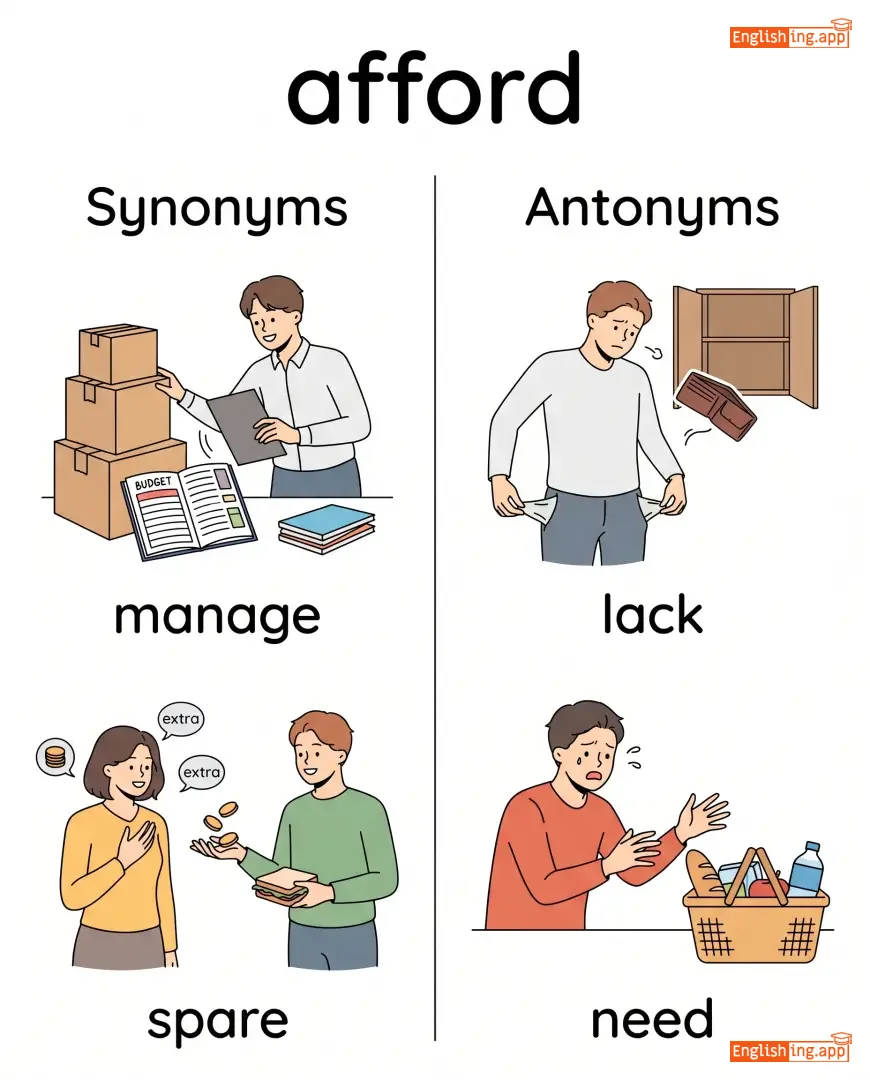
manage, spare, provide, allow
••••••
|
lack, need, require
••••••
|
can afford, afford to buy, afford the cost, afford a house
••••••
|
Afford 日本語で—もし車を買う余裕があれば、すべてのものを afford できます。
••••••
|
|
#172
💸
|
/əˈfɔːdəbl/
adjective
(アフォーダブル)
••••••
|
- •••••• |
手頃な
tegorona
••••••
|
- •••••• | - •••••• | - •••••• | - •••••• |
inexpensive and within one's financial means
••••••
|
This restaurant offers affordable meals for families. |
このレストランは家族向けに手頃な価格の食事を提供しています。
Kono resutoran wa kazoku-muke ni tegorona kakaku no shokuji o teikyō shiteimasu.
••••••
|
- •••••• | - •••••• | - •••••• |
inexpensive, reasonable, budget-friendly
••••••
|
expensive, overpriced
••••••
|
affordable price, affordable solution, affordable rate
••••••
|
Affordable means you can ‘afford’ it without worry!
••••••
|
|
#173
😨
|
/əˈfreɪd/
adjective
(afureido)
••••••
|
- •••••• |
怖がっている
kowagatteiru
••••••
|
- •••••• | - •••••• | - •••••• | - •••••• |
feeling fear or anxiety; worried that something undesirable will happen
••••••
|
She was afraid of the dark. |
彼女は暗闇を怖がっていた。
Kanojo wa kurayami o kowagatteita.
••••••
|
afraid of one's own shadow |
extremely timid or nervous
••••••
|
自分の影を恐れる
jibun no kage o osoreru
••••••
|
fearful, scared, frightened, anxious, nervous
••••••
|
brave, confident, fearless
••••••
|
afraid of, terribly afraid, afraid to ask, afraid that
••••••
|
Afraidは怖がっているという意味—暗闇の中で怖がっているところを想像してください。
••••••
|
|
#174
➡️
|
/ˈæftər/
preposition, conjunction, adverb
(アフター)
••••••
|
- •••••• |
後
ato
••••••
|
- •••••• | - •••••• | - •••••• | - •••••• |
in the time following an event or another action
••••••
|
We went for ice cream after the movie. |
映画の後にアイスクリームを食べに行った。
Eiga no ato ni aisukurīmu o tabe ni itta.
••••••
|
after all |
despite everything; in the end
••••••
|
結局
kekkyoku
••••••
|
following, later, afterward, subsequent
••••••
|
before, prior
••••••
|
after school, after work, after the party, soon after
••••••
|
After は後— 映画の後にアイスクリーム。
••••••
|
|
#175
🌪️
|
/ˈɑːftərmɑːθ/
noun
(アフターマス)
••••••
|
- •••••• |
影響
eikyo
••••••
|
- •••••• | - •••••• | - •••••• | - •••••• |
the consequences or aftereffects of an event or situation, especially a disastrous one
••••••
|
The aftermath of the earthquake was devastating. |
地震の影響は壊滅的でした。
Jishin no eikyō wa kaimetsu-teki deshita.
••••••
|
- •••••• | - •••••• | - •••••• |
consequence, result, outcome, repercussion
••••••
|
cause, origin
••••••
|
aftermath of disaster, in the aftermath, deal with the aftermath
••••••
|
Aftermath is the effect after an event like the result after a storm
••••••
|
|
#176
🌞
|
/ˌæftərˈnuːn/
noun
(アフタヌーン)
••••••
|
- •••••• |
午後
gogo
••••••
|
- •••••• | - •••••• | - •••••• | - •••••• |
The part of the day between noon and evening.
••••••
|
We met in the afternoon for coffee. |
私たちは午後にコーヒーを飲みに会いました。
Watashitachi wa gogo ni kōhī o nomi ni aimashita.
••••••
|
Good afternoon |
A polite greeting used in the afternoon.
••••••
|
こんにちは
konnichiwa
••••••
|
midday, daytime, p.m., after lunch
••••••
|
morning, evening
••••••
|
in the afternoon, sunny afternoon, afternoon tea, afternoon meeting
••••••
|
After + Noon = 正午後の時間 = 午後.
••••••
|
|
#177
⏰
|
/ˈɑːf.tə.wərdz/
adverb
(æftərwərdz)
••••••
|
- •••••• |
その後; 後で; 次に
sono ato; ato de; tsugi ni
••••••
|
- •••••• | - •••••• | - •••••• | - •••••• |
at a later time; after an event or time that has already been mentioned
••••••
|
We had dinner and afterwards we watched a movie.
私たちは夕食をとり、その後映画を見ました。
••••••
|
私たちは夕食をとり、その後映画を見ました。
Watashitachi wa yūshoku o tori, sono ato eiga o mimashita.
••••••
|
- •••••• | - •••••• | - •••••• |
later, subsequently, then, next
••••••
|
before, previously, earlier
••••••
|
shortly afterwards, soon afterwards, long afterwards
••••••
|
In Japanese, 'その後' can be remembered as 'afterwards'.
••••••
|
|
#178
🔁
|
/əˈɡɛn/ or /əˈɡeɪn/
adverb
(アゲイン)
••••••
|
- •••••• |
再び
futatabi
••••••
|
- •••••• | - •••••• | - •••••• | - •••••• |
Once more; another time.
••••••
|
She read the book again to understand it better. |
彼女はその本を再び読んで、よりよく理解しました。
Kanojo wa sono hon o futatabi yonde, yori yoku rikai shimashita.
••••••
|
time and again |
Repeatedly, very often.
••••••
|
何度も
nando mo
••••••
|
once more, anew, repeatedly, over again
••••••
|
never, once
••••••
|
again and again, once again, try again, over again
••••••
|
再びは繰り返し読むこと—本を再び読んで学ぶ!
••••••
|
|
#179
🚫
|
/əˈɡɛnst/ or /əˈɡeɪnst/
preposition
••••••
|
- •••••• | - •••••• | - •••••• | - •••••• | - •••••• | - •••••• |
In opposition to; contrary to; touching or resting on.
••••••
|
They voted against the proposal. |
- •••••• |
stand against |
To oppose or resist something.
••••••
|
- •••••• |
opposed to, contrary to, versus, counter to
••••••
|
for, in favor of
••••••
|
against the law, against the wall, fight against, argue against
••••••
|
No •••••• |
|
#180
🎂
|
/eɪdʒ/
noun/verb
(エイジ)
••••••
|
- •••••• |
年齢
nenrei
••••••
|
aged
エイジド
••••••
|
aged
エイジド
••••••
|
ages
エイジズ
••••••
|
aging
エイジング
••••••
|
The length of time that a person has lived; to grow older.
••••••
|
She asked his age politely.
シー アスケッド ヒズ エイジ ポライトリー。
••••••
|
彼女は彼の年齢を丁寧に尋ねました。
Kanojo wa kare no nenrei o teinei ni tazunemashita.
••••••
|
come of age
カム オブ エイジ
••••••
|
To reach adulthood or maturity.
••••••
|
成人になる
seijin ni naru
••••••
|
years, lifetime, era, grow older
••••••
|
youth, infancy
••••••
|
old age, average age, age group, age limit
••••••
|
Age という言葉は年齢を意味します。誕生日で年齢を知るのに役立ちます。
••••••
|
|
#181
🏢
|
/ˈeɪ.dʒən.si/
noun
(エージェンシー)
••••••
|
- •••••• |
エージェンシー
e-jenshī
••••••
|
- •••••• | - •••••• | - •••••• | - •••••• |
An organization or business that provides a particular service.
••••••
|
She works at a travel agency. |
彼女は旅行代理店で働いています。
Kanojo wa ryokō dairi-ten de hataraiteimasu.
••••••
|
advertising agency |
A company that creates and manages advertisements for clients.
••••••
|
広告代理店
kōkoku dairi-ten
••••••
|
organization, firm, bureau, office, service
••••••
|
individual, client, customer
••••••
|
government agency, real estate agency, news agency, travel agency
••••••
|
Agencyは'組織'を意味します—'エージェンシーでサービスが提供される'と覚えましょう
••••••
|
|
#182
📋
|
/əˈdʒɛndə/
noun
••••••
|
- •••••• | - •••••• | - •••••• | - •••••• | - •••••• | - •••••• |
A list of items to be discussed or acted upon in a meeting or plan.
••••••
|
The manager reviewed the agenda before the meeting began. |
- •••••• |
hidden agenda |
A secret motive or plan behind someone's actions.
••••••
|
- •••••• |
schedule, plan, program, timetable, itinerary
••••••
|
disorganization, randomness
••••••
|
meeting agenda, set the agenda, hidden agenda
••••••
|
No •••••• |
|
#183
🕵️
|
/ˈeɪ.dʒənt/
noun
(エージェント)
••••••
|
- •••••• |
エージェント
ējento
••••••
|
- •••••• | - •••••• | - •••••• | - •••••• |
A person who acts on behalf of another person or organization.
••••••
|
The real estate agent showed us several houses.
不動産エージェントは私たちにいくつかの家を見せてくれました。
••••••
|
不動産エージェントは私たちにいくつかの家を見せてくれました。
Fudōsan ējento wa watashitachi ni ikutsuka no ie o misete kuremashita.
••••••
|
secret agent
秘密のエージェント
••••••
|
A spy working for a government or organization.
••••••
|
秘密のエージェント
Himitsu no ējento
••••••
|
representative, delegate, envoy, broker, spy
••••••
|
principal, client, customer
••••••
|
travel agent, real estate agent, sports agent, insurance agent
••••••
|
エージェントは他のために働く、秘密のエージェントもその一つです。
••••••
|
|
#184
⚠️
|
/ˈæɡ.rə.veɪt/
verb
(アグレヴェイト)
••••••
|
- •••••• |
悪化させる
akka saseru
••••••
|
aggravated
アグレヴェイテッド
••••••
|
aggravated
アグレヴェイテッド
••••••
|
aggravates
アグレヴェイツ
••••••
|
aggravating
アグレヴェイティング
••••••
|
To make a situation worse or more serious.
••••••
|
Scratching the rash will only aggravate the condition.
発疹をかくことは、状態を悪化させるだけです。
••••••
|
発疹をかくことは、状態を悪化させるだけです。
Hasshin wo kaku koto wa, joutai wo akka saseru dake desu.
••••••
|
- •••••• | - •••••• | - •••••• |
worsen, intensify, exacerbate, inflame
••••••
|
relieve, ease, alleviate
••••••
|
aggravate pain, aggravate situation, aggravate condition
••••••
|
Aggravateは悪化させる意味がある。悪い状態をさらに悪化させる。
••••••
|
|
#185
➕
|
/ˈæɡ.rɪ.ɡət/ (noun/adjective), /ˈæɡ.rɪ.ɡeɪt/ (verb)
noun, verb, adjective
(アグリゲート)
••••••
|
|
集合体, 総体
shūgōtai, sōtai
••••••
|
aggregated
アグリゲイテッド
••••••
|
aggregated
アグリゲイテッド
••••••
|
aggregates
アグリゲイツ
••••••
|
aggregating
アグリゲイティング
••••••
|
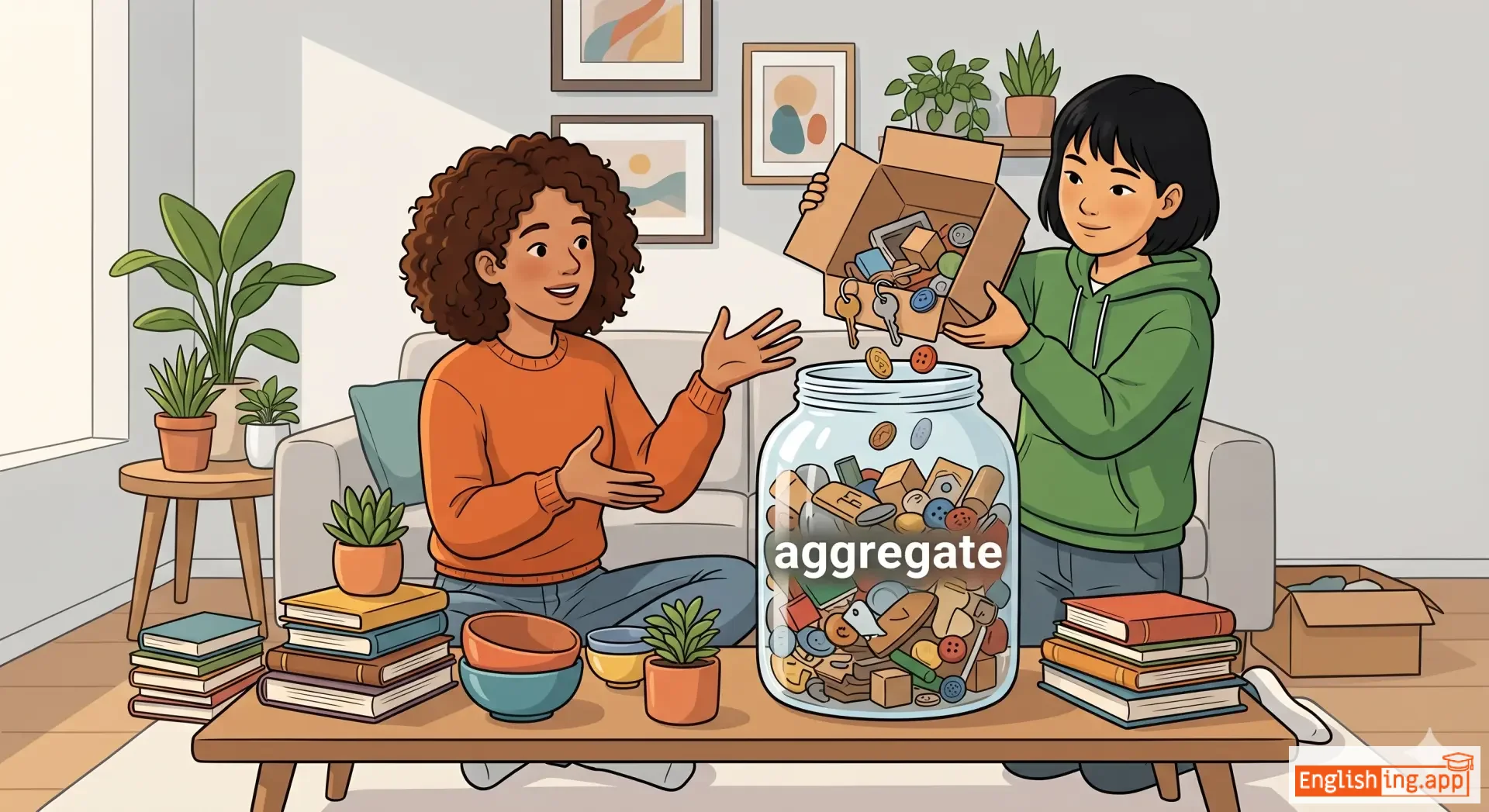
A whole formed by combining several elements; to combine into a total.
••••••
|
The data was aggregated to provide a clearer picture of the market.
データは市場のより明確な画像を提供するために集約されました。
••••••
|
データは市場のより明確な画像を提供するために集約されました。
Dēta wa shijō no yori meikaku na gazō o teikyō suru tame ni shūyaku saremashita.
••••••
|
- •••••• | - •••••• | - •••••• |
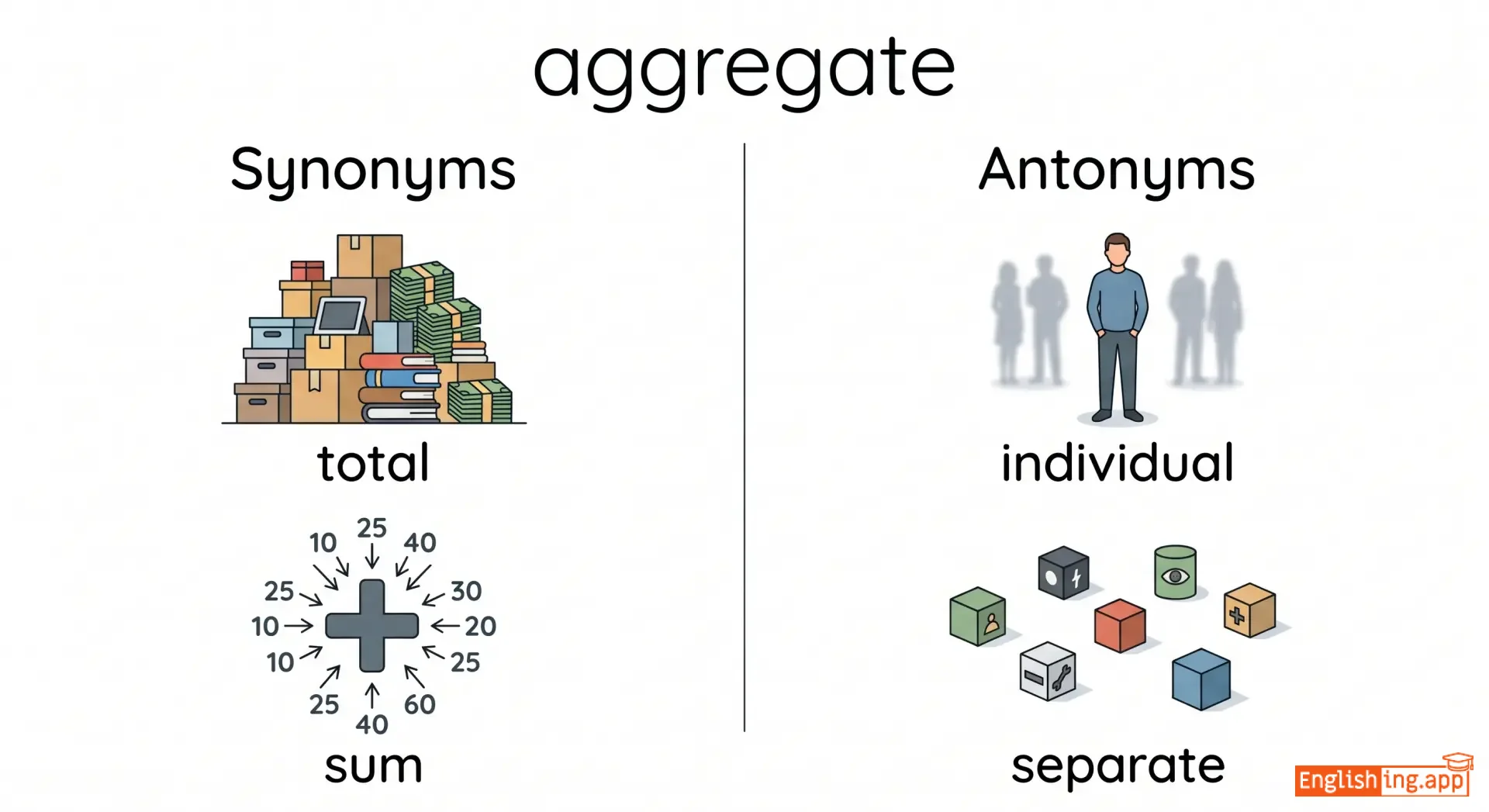
total, sum, collection, accumulate
••••••
|
individual, separate, divide
••••••
|
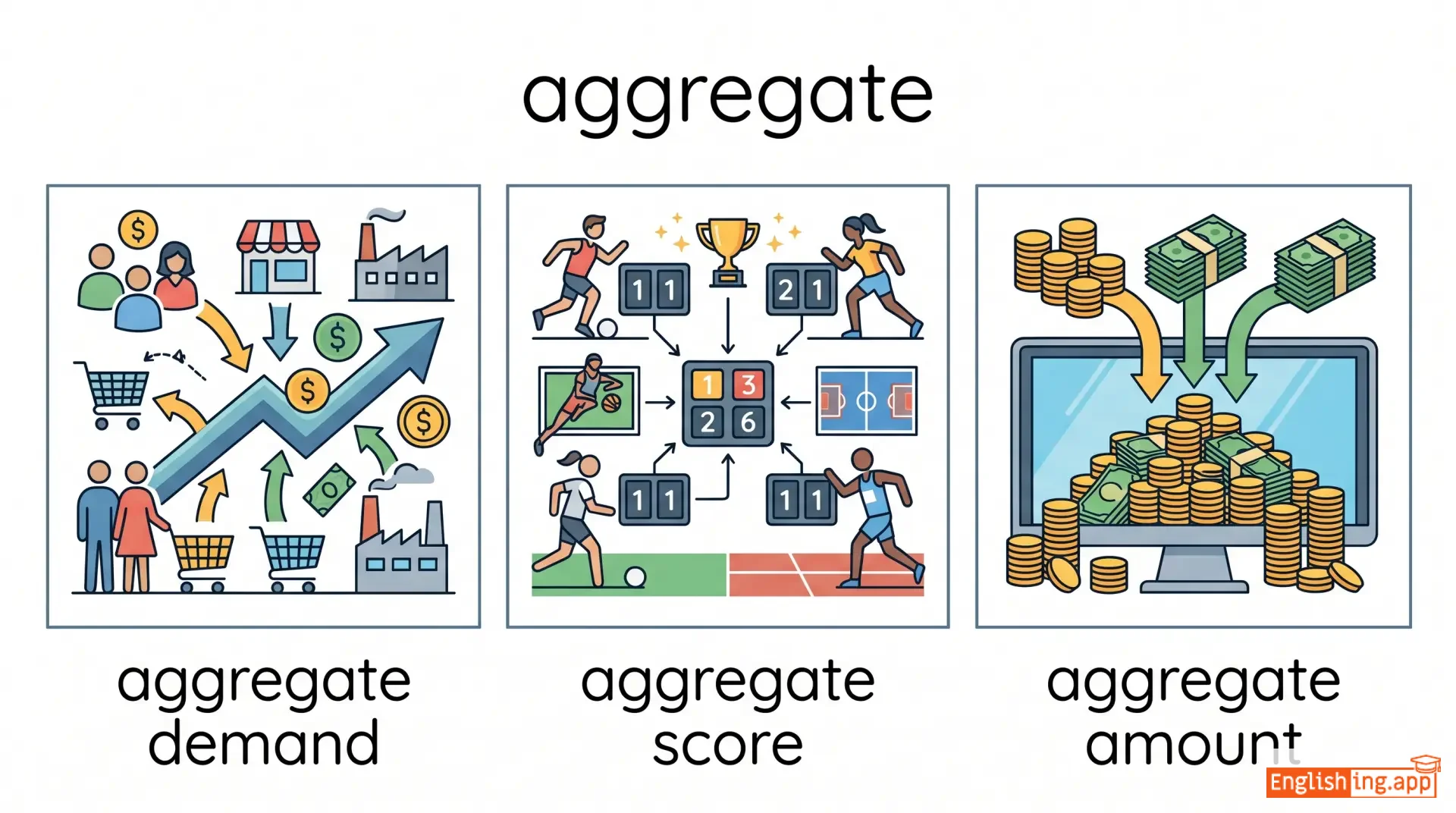
aggregate demand, aggregate score, aggregate amount, aggregate data
••••••
|
Aggregateはすべてを一緒にして大きな集合体を作ることです。
••••••
|
|
#186
💥
|
/əˈɡrɛʃən/
noun
(アグレッション)
••••••
|
- •••••• |
攻撃性
kougekisei
••••••
|
- •••••• | - •••••• | - •••••• | - •••••• |
hostile or violent behavior towards others
••••••
|
His sudden aggression surprised everyone in the meeting. |
彼の突然の攻撃性は会議で誰もが驚いた。
Kare no totsuzen no kougekisei wa kaigi de dare mo ga odoroita.
••••••
|
acts of aggression |
hostile actions or attacks
••••••
|
攻撃行動
kougeki koudou
••••••
|
hostility, attack, violence, assault
••••••
|
peace, calm, friendliness
••••••
|
show aggression, physical aggression, military aggression, acts of aggression
••••••
|
Aggression 覚えておいて AGain GREssy (怒りっぽい) は攻撃性を意味します
••••••
|
|
#187
🔥
|
/əˈɡrɛsɪv/
adjective
(アグレッシブ)
••••••
|
- •••••• |
攻撃的
kōgeki-teki
••••••
|
- •••••• | - •••••• | - •••••• | - •••••• |
ready or likely to attack or confront; forceful
••••••
|
The salesman used an aggressive strategy to close the deal. |
営業マンは契約を結ぶために攻撃的な戦略を使用しました。
Eigyō-man wa keiyaku o musubu tame ni kōgeki-teki na senryaku o shiyō shimashita.
••••••
|
aggressive marketing |
forceful and energetic marketing approach
••••••
|
攻撃的なマーケティング
kōgeki-teki na mākettingu
••••••
|
hostile, forceful, pushy, combative, assertive
••••••
|
gentle, passive, calm
••••••
|
aggressive behavior, aggressive strategy, aggressive attitude, aggressive marketing
••••••
|
Aggressive は虎のように強い (🐯)、覚えやすい
••••••
|
|
#188
😔
|
/əˈɡriːv/
verb
(アグリーブ)
••••••
|
- •••••• |
傷つける
kizutsukeru
••••••
|
aggrieved
アグリーブド
••••••
|
aggrieved
アグリーブド
••••••
|
aggrieves
アグリーブス
••••••
|
aggrieving
アグリーヴィング
••••••
|
to cause distress or make someone feel resentful
••••••
|
She felt aggrieved by the unfair decision.
彼女は不公平な決定に心を痛めていた。
••••••
|
彼女は不公平な決定に心を痛めていた。
Kanojo wa fukōhei na kettei ni kokoro o itamete ita.
••••••
|
- •••••• | - •••••• | - •••••• |
distress, upset, offend, wrong
••••••
|
please, comfort, satisfy
••••••
|
feel aggrieved, deeply aggrieved, aggrieved party
••••••
|
Aggrieve = Grief (悲しみ) を与える
••••••
|
|
#189
✊
|
/ˈædʒ.ɪ.teɪt/
verb
(エイジテイト)
••••••
|
- •••••• |
扇動する, 激しくする
sendou suru, hageshiku suru
••••••
|
agitated
エイジテイテッド
••••••
|
agitated
エイジテイテッド
••••••
|
agitates
エイジテイツ
••••••
|
agitating
エイジテイティング
••••••
|
to stir up feelings or disturb; to campaign for change
••••••
|
The protesters agitated for better working conditions.
抗議者たちはより良い労働条件を求めて活動した。
••••••
|
抗議者たちはより良い労働条件を求めて活動した。
Kougi-shatachi wa yori yoi roudou jouken wo motomete katsudou shita.
••••••
|
agitate for
活動するために
••••••
|
to campaign or push strongly for something
••••••
|
変化のために活動する
henka no tame ni katsudou suru
••••••
|
provoke, disturb, excite, campaign, stir
••••••
|
calm, soothe, pacify
••••••
|
agitate for rights, agitate strongly, agitate against
••••••
|
Agitate – 変化のための活動
••••••
|
|
#190
⏳
|
/əˈɡoʊ/
adverb
(アゴ)
••••••
|
- •••••• |
以前
izen
••••••
|
- •••••• | - •••••• | - •••••• | - •••••• |
Used to indicate how long before the present something happened.
••••••
|
I met her two years ago. |
私は2年前に彼女に会いました。
Watashi wa 2-nen mae ni kanojo ni aimashita.
••••••
|
- •••••• | - •••••• | - •••••• |
earlier, previously, before, back
••••••
|
later, after, upcoming
••••••
|
long ago, years ago, days ago, a while ago
••••••
|
'Ago' は '以前' を意味します — 過去を振り返る時に使います。
••••••
|
|
#191
😣
|
/ˈæɡənaɪz/
verb
(エゴナイズ)
••••••
|
- •••••• |
苦しむ
kurushimu
••••••
|
agonized
エゴナイズド
••••••
|
agonized
エゴナイズド
••••••
|
agonizes
エゴナイゼス
••••••
|
agonizing
エゴナイジング
••••••
|
To suffer extreme physical or mental pain; to spend time worrying.
••••••
|
She agonized for days over whether she had made the right decision.
彼女は自分が正しい決断を下したかどうかを何日も悩んでいました。
••••••
|
彼女は自分が正しい決断を下したかどうかを何日も悩んでいました。
Kanojo wa jibun ga tadashī ketsudan o kudashita ka dō ka o nannichi mo nayande imashita.
••••••
|
agonize over
悩む
••••••
|
To worry greatly about something.
••••••
|
悩む
nayamu
••••••
|
suffer, worry, struggle, torment, fret
••••••
|
relax, ease, comfort
••••••
|
agonize over decision, agonize for days, agonize endlessly
••••••
|
苦しむは、決断に悩むような苦しさを感じること。
••••••
|
|
#192
👍
|
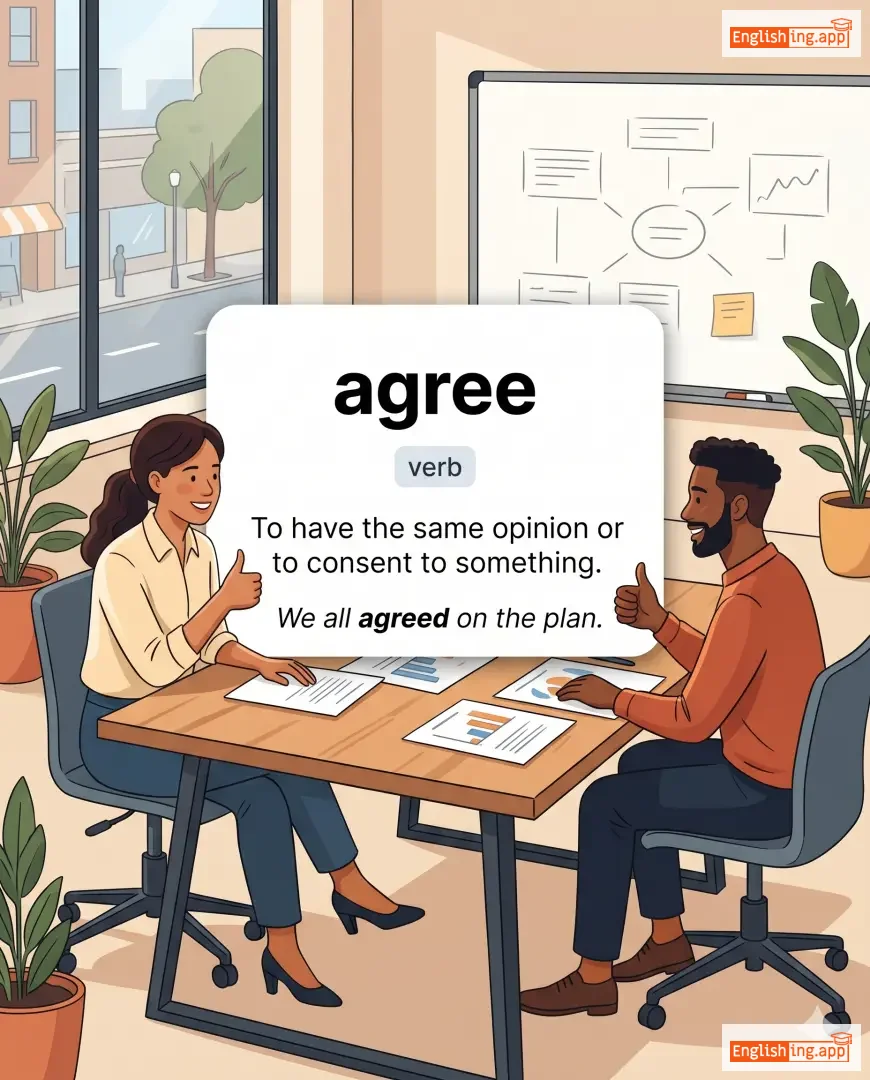
/əˈɡriː/
verb
(アグリー)
••••••
|
|
同意する
dōi suru
••••••
|
agreed
アグリード
••••••
|
agreed
アグリード
••••••
|
agrees
アグリーズ
••••••
|
agreeing
アグリーイング
••••••
|
To have the same opinion or to consent to something.
••••••
|
We all agreed on the plan.
私たちは皆、計画に同意しました。
••••••
|
私たちは皆、計画に同意しました。
Watashitachi wa mina, keikaku ni dōi shimashita.
••••••
|
agree to disagree
同意して同意しない
••••••
|
To accept different opinions without conflict.
••••••
|
同意して同意しない
Dōi shite dōi shinai
••••••
|
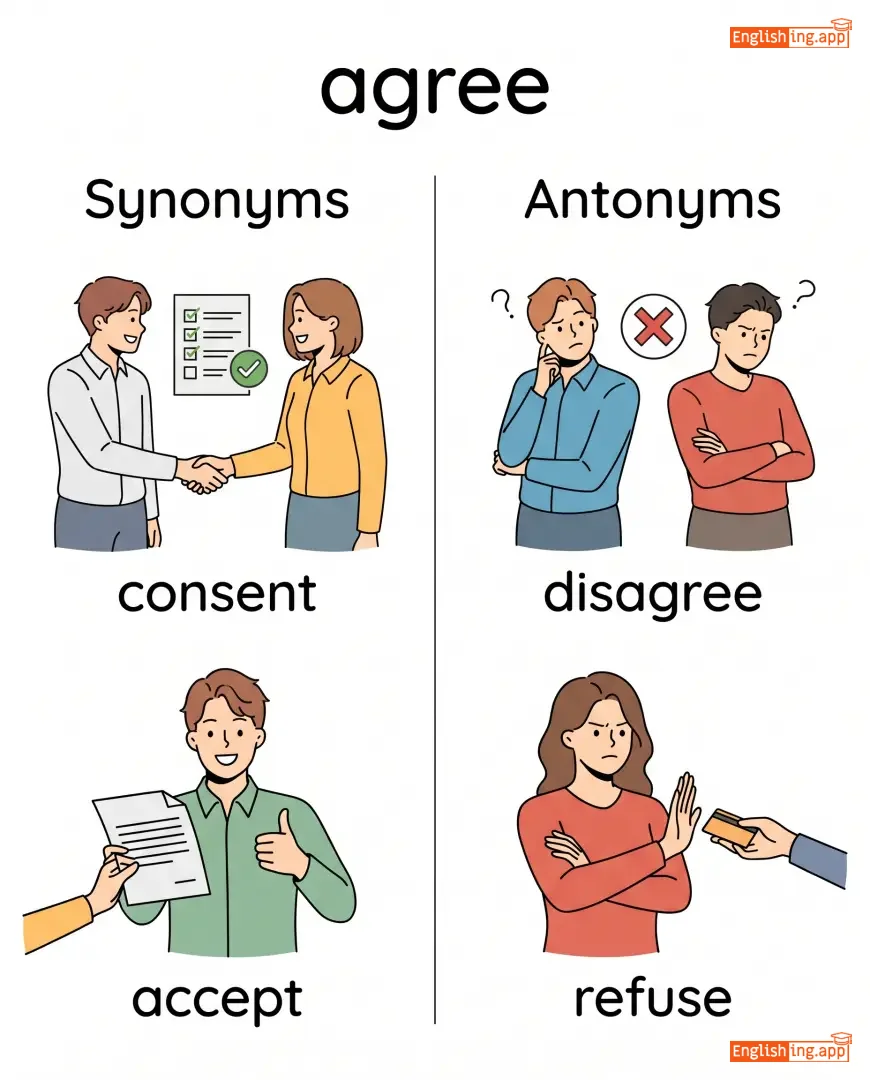
consent, accept, approve, concur, assent
••••••
|
disagree, refuse, oppose
••••••
|
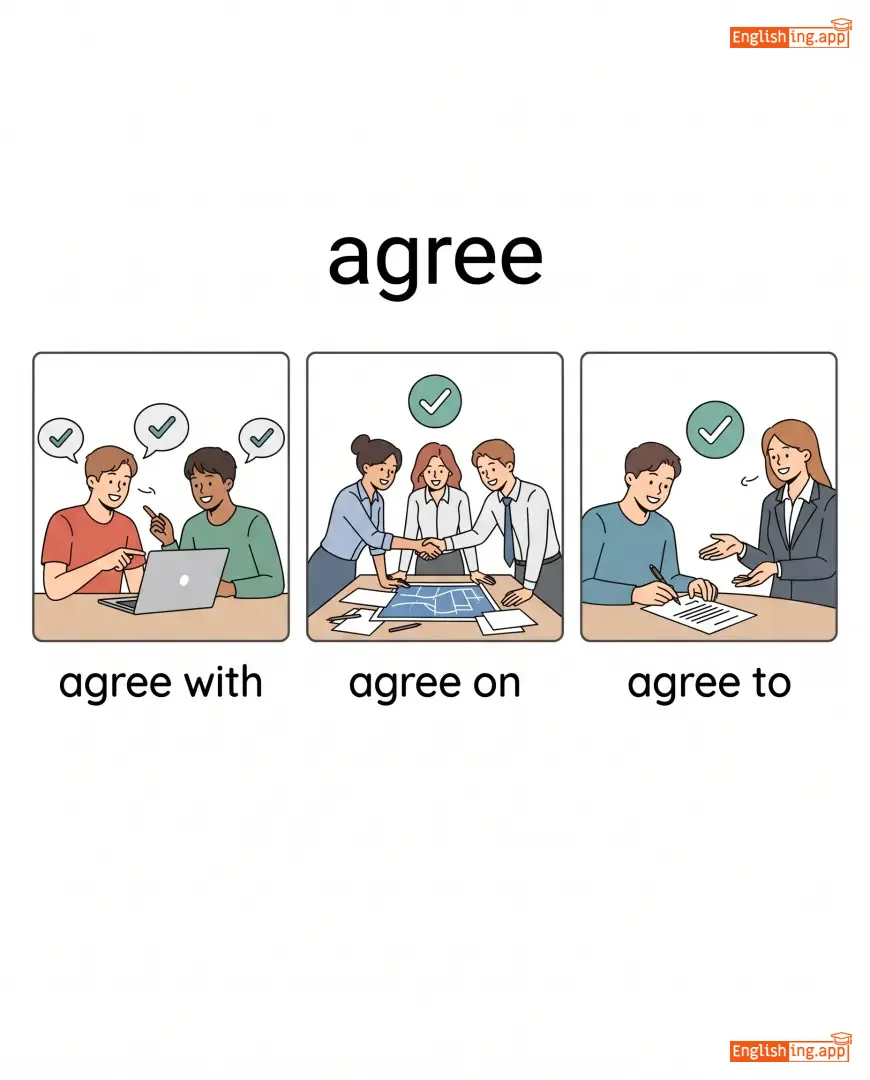
agree with, agree on, agree to, strongly agree
••••••
|
'Agree' は同意するという意味です — みんなでうなずいて同意するときのように。
••••••
|
|
#193
✍️
|
/əˈɡriː.mənt/
noun
(アグリーメント)
••••••
|
|
契約
keiyaku
••••••
|
- •••••• | - •••••• | - •••••• | - •••••• |
A mutual understanding or arrangement between two or more parties.
••••••
|
They signed an agreement to work together.
彼らは一緒に働くための契約に署名しました。
••••••
|
彼らは一緒に働くための契約に署名しました。
Karera wa issho ni hataraku tame no keiyaku ni shomei shimashita.
••••••
|
gentlemen's agreement
紳士協定
••••••
|
An informal and non-binding agreement based on trust.
••••••
|
紳士協定
Shinshi kyoutei
••••••
|
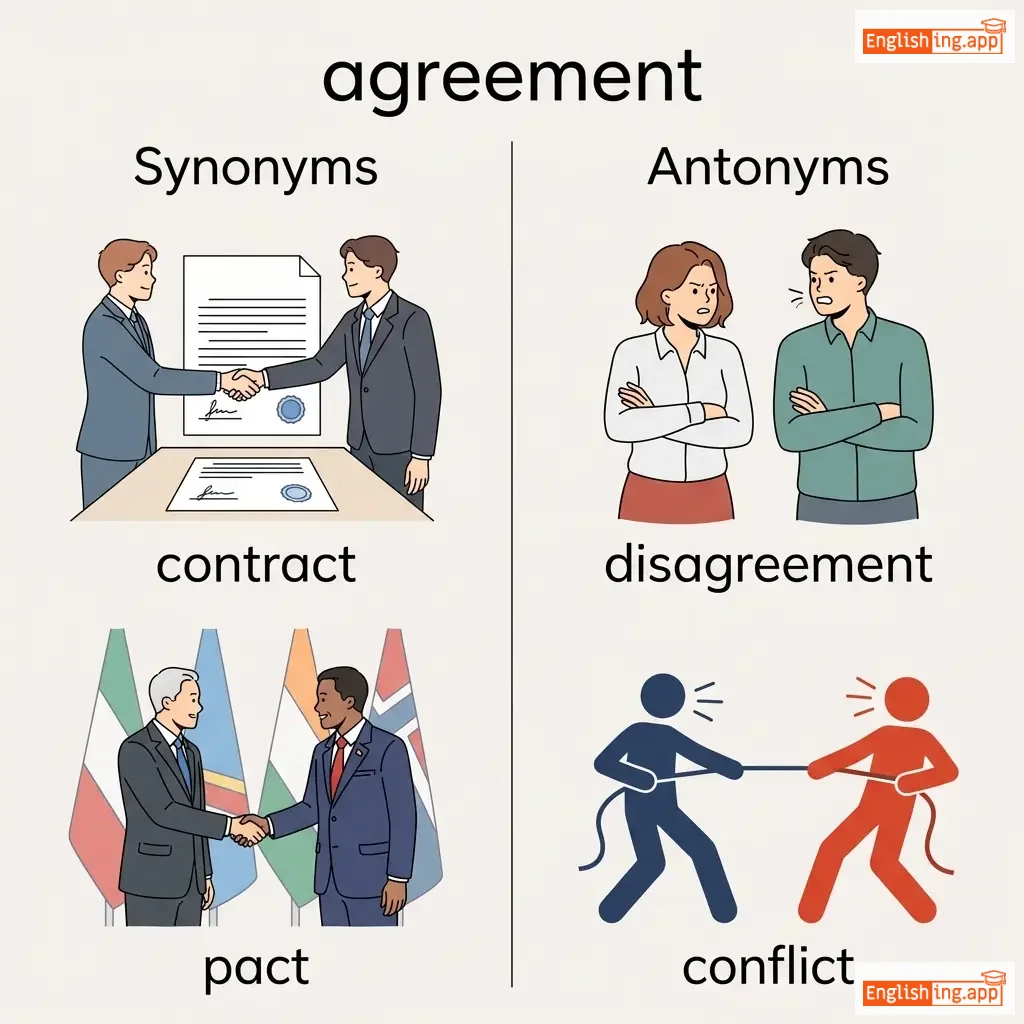
contract, pact, deal, settlement, accord
••••••
|
disagreement, conflict, dispute
••••••
|
reach an agreement, sign an agreement, mutual agreement, agreement between
••••••
|
'Agreement' は契約という意味 — 二人で契約にサインすれば完了!
••••••
|
|
#194
🌾
|
/ˌæɡ.rɪˈkʌl.tʃər.əl/
adjective
(アグリカルチャル)
••••••
|
|
農業の
nougyou no
••••••
|
- •••••• | - •••••• | - •••••• | - •••••• |
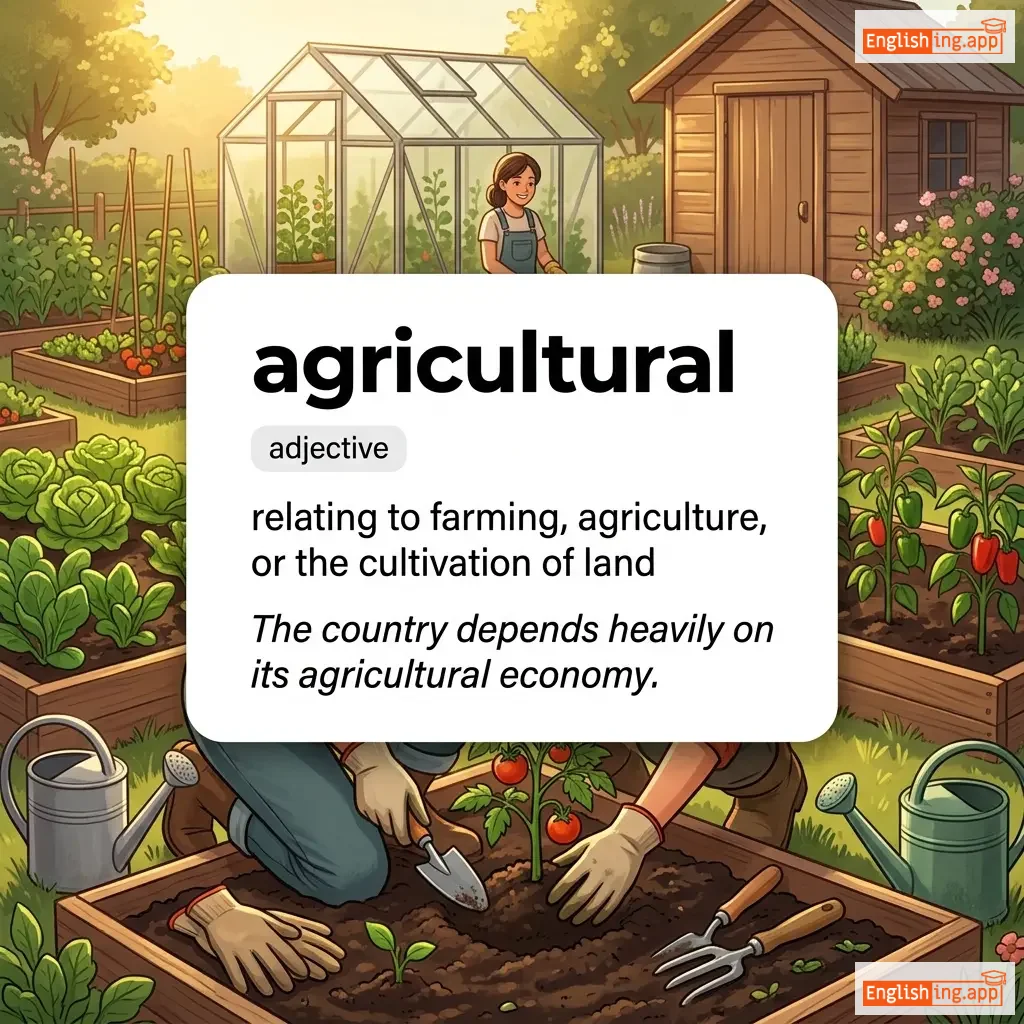
relating to farming, agriculture, or the cultivation of land
••••••
|
The country depends heavily on its agricultural economy. |
その国は農業経済に大きく依存しています。
Sono kuni wa nougyou keizai ni ookiku izon shiteimasu.
••••••
|
agricultural sector |
the part of the economy related to farming and food production
••••••
|
農業部門
nougyou bumon
••••••
|
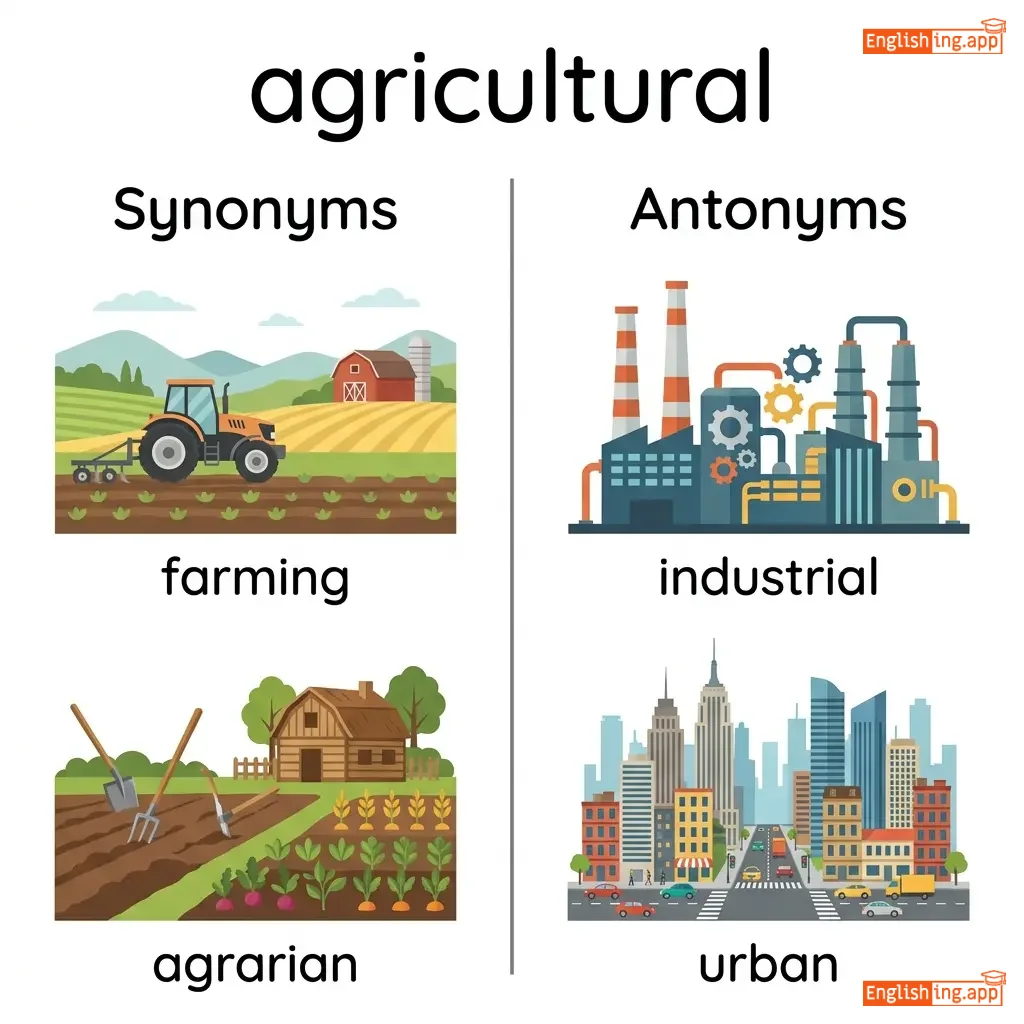
farming, agrarian, cultivation-related, rural, horticultural
••••••
|
industrial, urban, nonagricultural
••••••
|
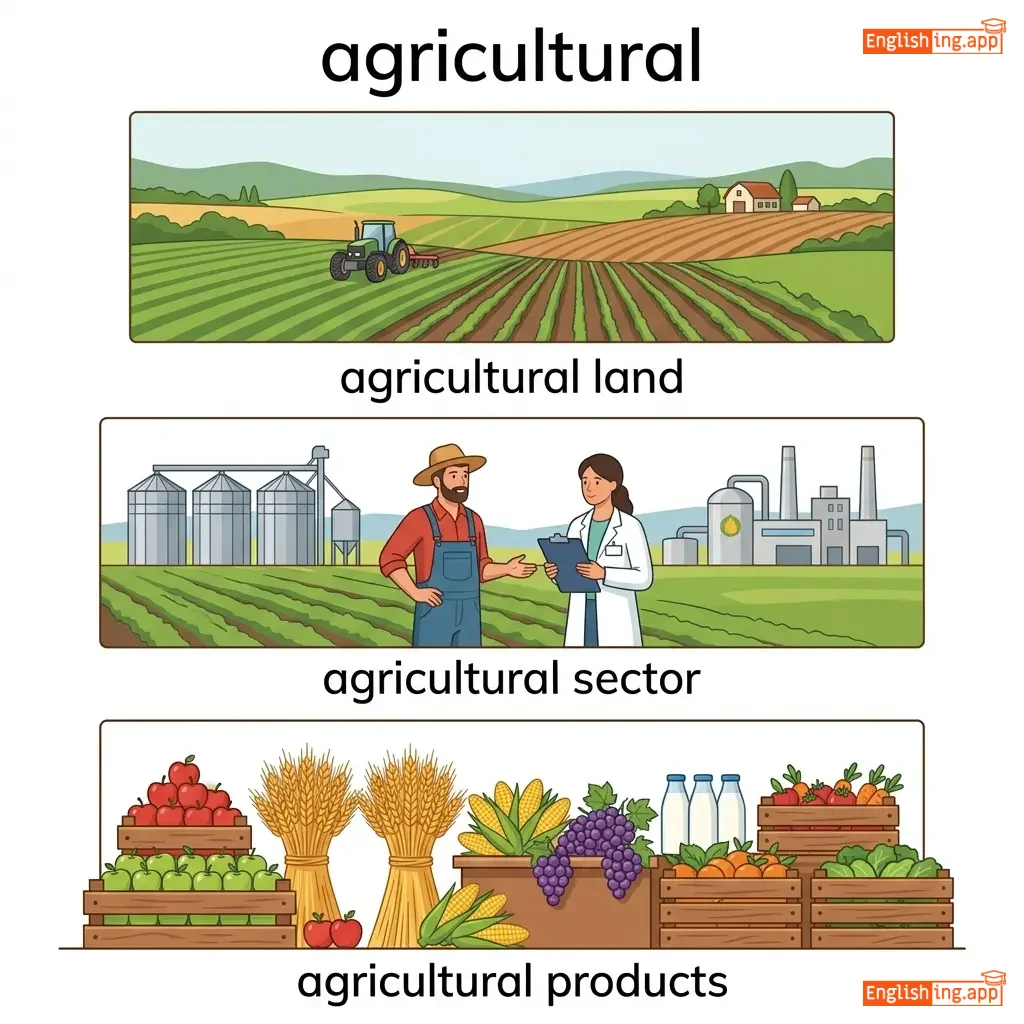
agricultural land, agricultural sector, agricultural products, agricultural development
••••••
|
Agricultural は '農業' (nougyou) から来ています。
••••••
|
|
#195
🌾
|
/ˈæɡrɪˌkʌltʃər/
noun
(アグリカルチャー)
••••••
|
|
農業
nougyou
••••••
|
- •••••• | - •••••• | - •••••• | - •••••• |
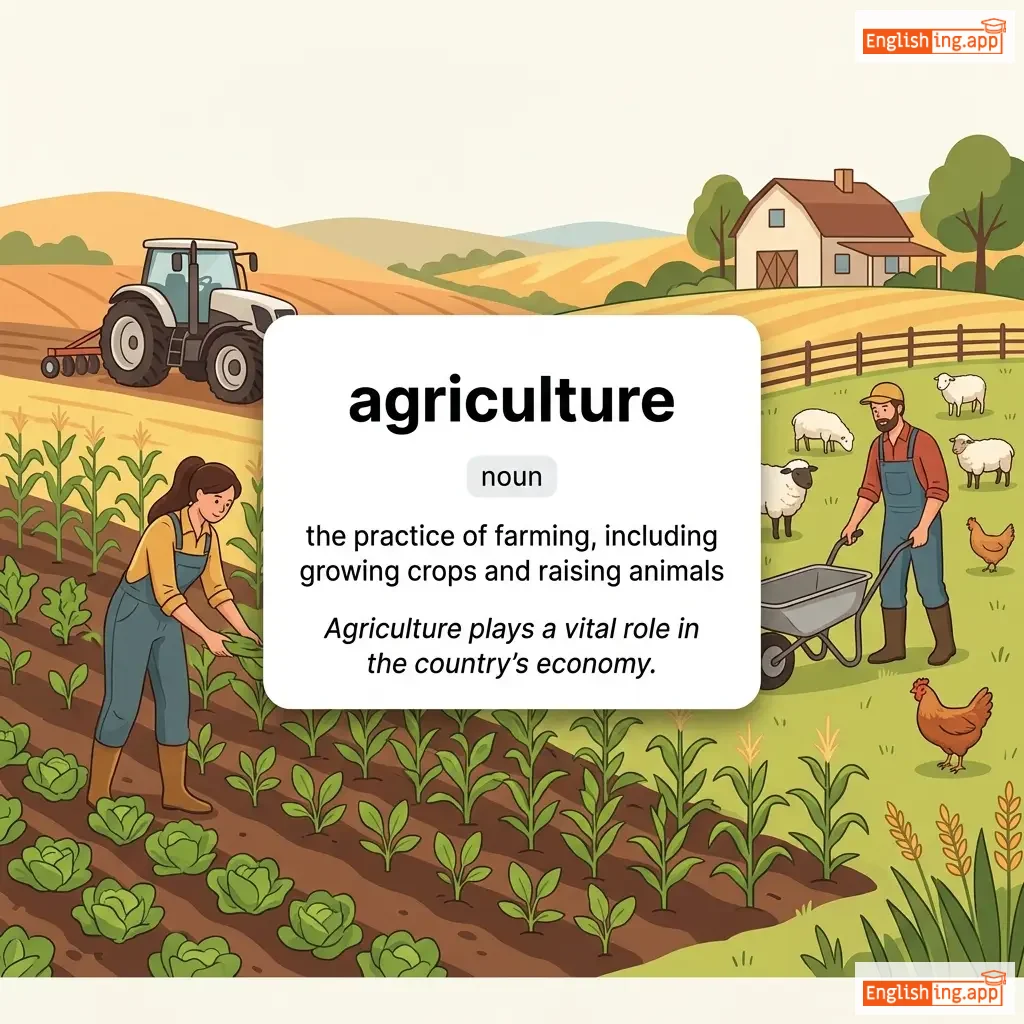
the practice of farming, including growing crops and raising animals
••••••
|
Agriculture plays a vital role in the country's economy. |
農業は国の経済において重要な役割を果たしています。
Nougyou wa kuni no keizai ni oite juuyou na yakuwari wo hatashiteimasu.
••••••
|
subsistence agriculture |
farming mainly to feed oneself and family rather than for sale
••••••
|
自給自足農業
jikyuu jisoku nougyou
••••••
|
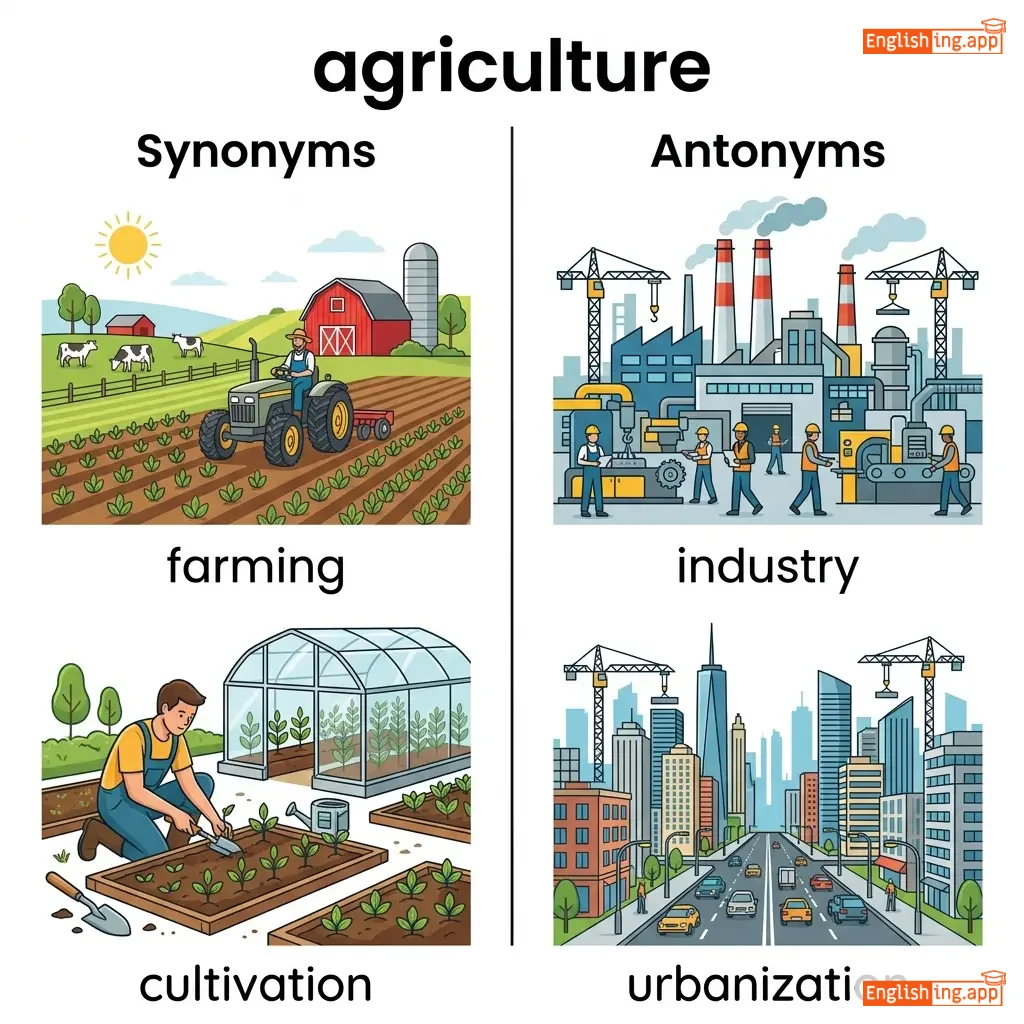
farming, cultivation, horticulture, agronomy, husbandry
••••••
|
industry, urbanization, manufacturing
••••••
|
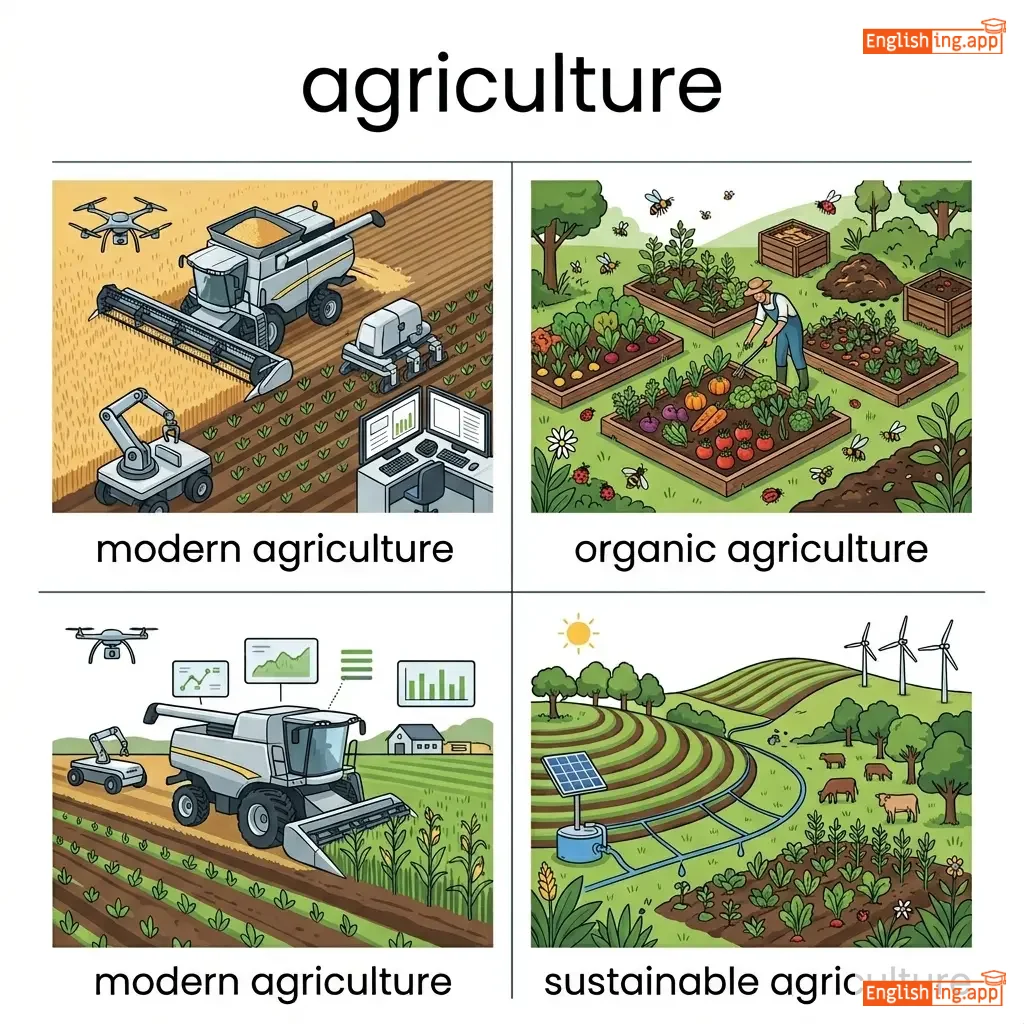
modern agriculture, organic agriculture, sustainable agriculture, agriculture sector
••••••
|
Agriculture = 土地 + 文化 — 農業が本当の文化です 🌿
••••••
|
|
#196
➡️
|
/əˈhɛd/
adverb
(アヘッド)
••••••
|
- •••••• |
前に
mae ni
••••••
|
- •••••• | - •••••• | - •••••• | - •••••• |
in front; in advance; before someone or something in position or progress
••••••
|
She walked ahead of the group. |
彼女はグループの前に歩いていた。
Kanojo wa guruupu no mae ni aruite ita.
••••••
|
go ahead |
to proceed or continue
••••••
|
進んで
susunde
••••••
|
forward, forth, onward, in front
••••••
|
behind, backward
••••••
|
ahead of time, go ahead, plan ahead, look ahead
••••••
|
前に (ahead) は '進んで ➡️'
••••••
|
|
#197
🩹
|
/eɪd/
noun, verb
(エイド)
••••••
|
- •••••• |
援助
enjo
••••••
|
aided
エイデッド
••••••
|
aided
エイデッド
••••••
|
aids
エイデス
••••••
|
aiding
エイディング
••••••
|
help or support, typically of a practical nature
••••••
|
The volunteers provided aid to the flood victims.
ボランティアは洪水の被害者に援助を提供しました。
••••••
|
ボランティアは洪水の被害者に援助を提供しました。
Borantia wa kōzui no higaisha ni enjo o teikyō shimashita.
••••••
|
first aid
応急処置
••••••
|
emergency medical treatment given immediately
••••••
|
応急処置
ōkyū shochi
••••••
|
help, support, assistance, relief, guidance
••••••
|
hindrance, obstruction
••••••
|
foreign aid, financial aid, medical aid, aid in
••••••
|
援助はすぐに手助けすること。
••••••
|
|
#198
🧑💼
|
/eɪd/
noun
(エイド)
••••••
|
- •••••• |
アシスタント
ashisutanto
••••••
|
- •••••• | - •••••• | - •••••• | - •••••• |
An assistant or helper, especially to an important person.
••••••
|
The senator’s aide organized the meeting with journalists. |
上院議員のアシスタントがジャーナリストとの会議を組織しました。
Jōin giin no ashisutanto ga jānarisuto to no kaigi o soshiki shimashita.
••••••
|
- •••••• | - •••••• | - •••••• |
assistant, helper, deputy, supporter
••••••
|
leader, boss
••••••
|
presidential aide, close aide, trusted aide
••••••
|
Aide (アシスタント) は会議を手配する手助けをします。
••••••
|
|
#199
🧬
|
/eɪdz/
noun
(エイズ)
••••••
|
- •••••• |
エイズ病
eizu byō
••••••
|
- •••••• | - •••••• | - •••••• | - •••••• |
Acquired Immune Deficiency Syndrome, a disease of the immune system caused by HIV
••••••
|
AIDS is a major global health concern. |
エイズは世界的な健康問題です。
Eizu wa sekaiteki na kenko mondai desu.
••••••
|
fight against AIDS |
efforts to combat the disease caused by HIV
••••••
|
エイズとの戦い
Eizu to no tatakai
••••••
|
HIV disease, immune deficiency, syndrome
••••••
|
health, wellness
••••••
|
AIDS patient, HIV/AIDS, AIDS treatment, fight against AIDS
••••••
|
エイズを覚えておいて 🧬 これは深刻な病気で、同じ名前が日本語でも使われています。
••••••
|
Vocabulary Quiz
Test your vocabulary by matching words with their translations or meanings.
Login to take the quiz
Comments (0)
Share your thoughts and join the discussion.
Join the discussion by logging in
Login to CommentNo comments yet
Be the first to share your thoughts!