

翻訳
過去
過去分詞
三人称単数
動名詞
意味
例文
例文の翻訳
同義語
対義語
コロケーション
ニーモニック


Swipe left or right, or use the buttons. Tap image to zoom.
例文の翻訳
単語
Lesson 14Lesson 14 - マスクトグル
|
絵文字
|
単語 | Images | 翻訳 | 過去 | 過去分詞 | 三人称単数 | 動名詞 | 意味 | 例文 | 例文の翻訳 | 表現例 | 表現例の意味 | 表現例の翻訳 | 同義語 | 対義語 | コロケーション | ニーモニック |
|---|---|---|---|---|---|---|---|---|---|---|---|---|---|---|---|---|---|
|
#629
🎁
|
/bɪˈstoʊ/
verb
(ベストウ)
••••••
|
- •••••• |
授与する
juyo suru
••••••
|
bestowed
ベストウド
••••••
|
bestowed
ベストウド
••••••
|
bestows
ベストウズ
••••••
|
bestowing
ベストウイング
••••••
|
To give or present something as a gift or honor.
••••••
|
The king bestowed honors upon the brave soldiers.
王は勇敢な兵士に栄誉を授けました。
••••••
|
王は勇敢な兵士に栄誉を授けました。
Ō wa yūkan na heishi ni eiyo o sazukemashita.
••••••
|
bestow upon
ベストウ アポン
••••••
|
to grant or give something to someone
••••••
|
授与する
juyo suru
••••••
|
grant, confer, present, donate, award
••••••
|
withhold, deny, refuse
••••••
|
bestow honor, bestow gift, bestow blessing, bestow title
••••••
|
Best + Owe = 最良のものを授与する
••••••
|
|
#630
🎲
|
/bɛt/
verb, noun
(ベット)
••••••
|
|
賭ける
kakeru
••••••
|
bet
ベット
••••••
|
bet
ベット
••••••
|
bets
ベッツ
••••••
|
betting
ベッティング
••••••
|
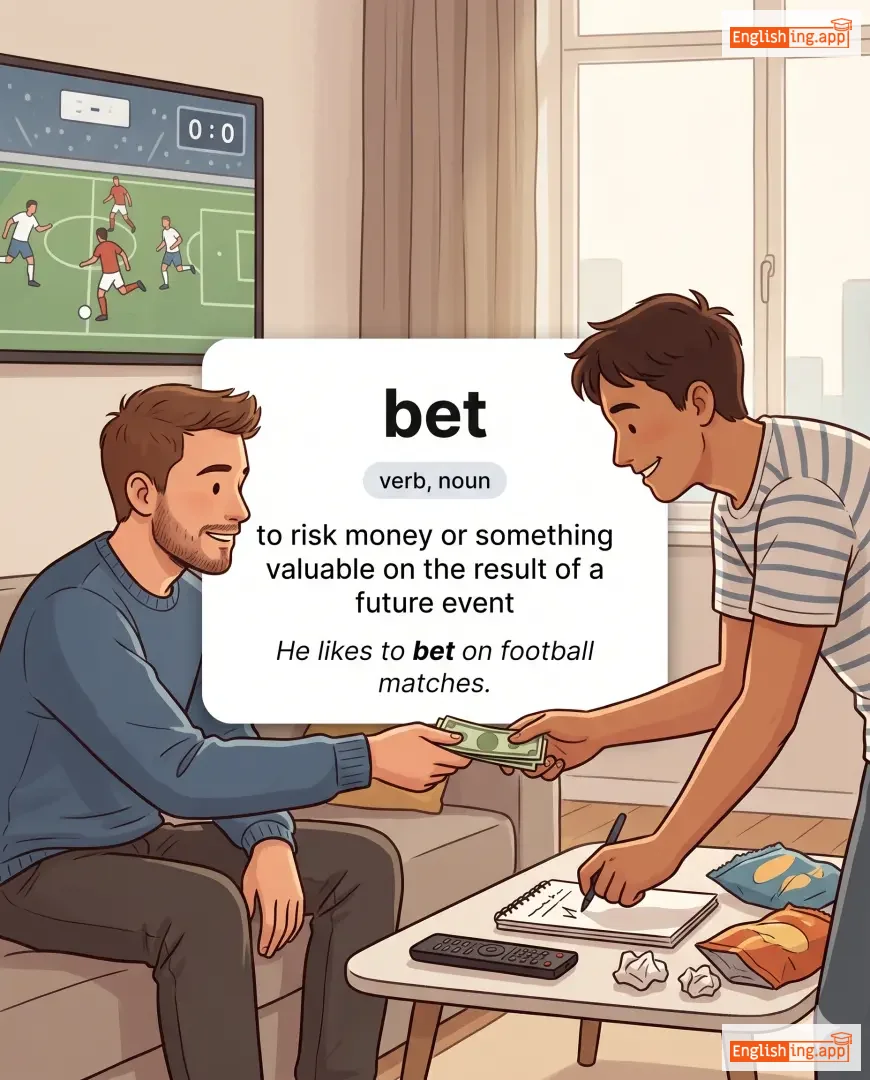
to risk money or something valuable on the result of a future event
••••••
|
He likes to bet on football matches.
彼はサッカーの試合にベットするのが好きです。
••••••
|
彼はサッカーの試合にベットするのが好きです。
Kare wa sakkā no shiai ni betto suru no ga suki desu.
••••••
|
you can bet on it
それにベットできます
••••••
|
something is certain to happen
••••••
|
それに賭けてもいい
Sore ni kakete mo ii
••••••
|
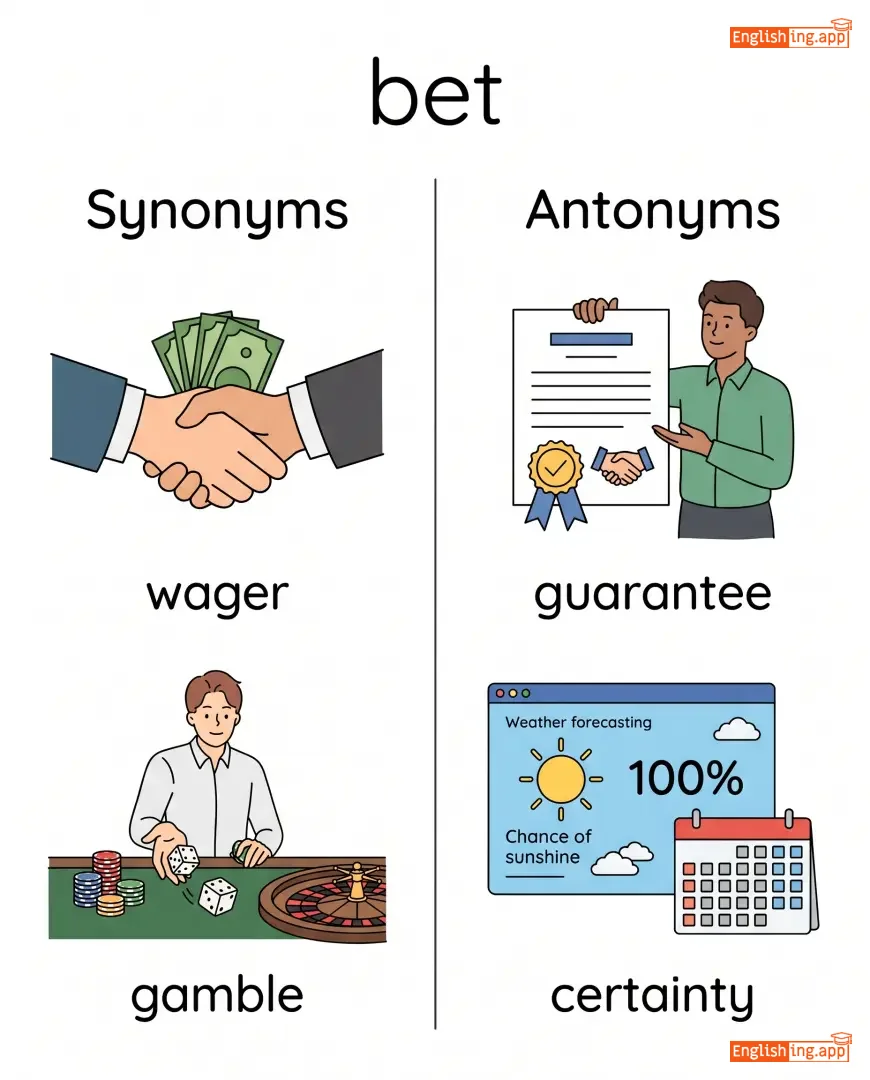
wager, gamble, stake, risk
••••••
|
guarantee, certainty
••••••
|
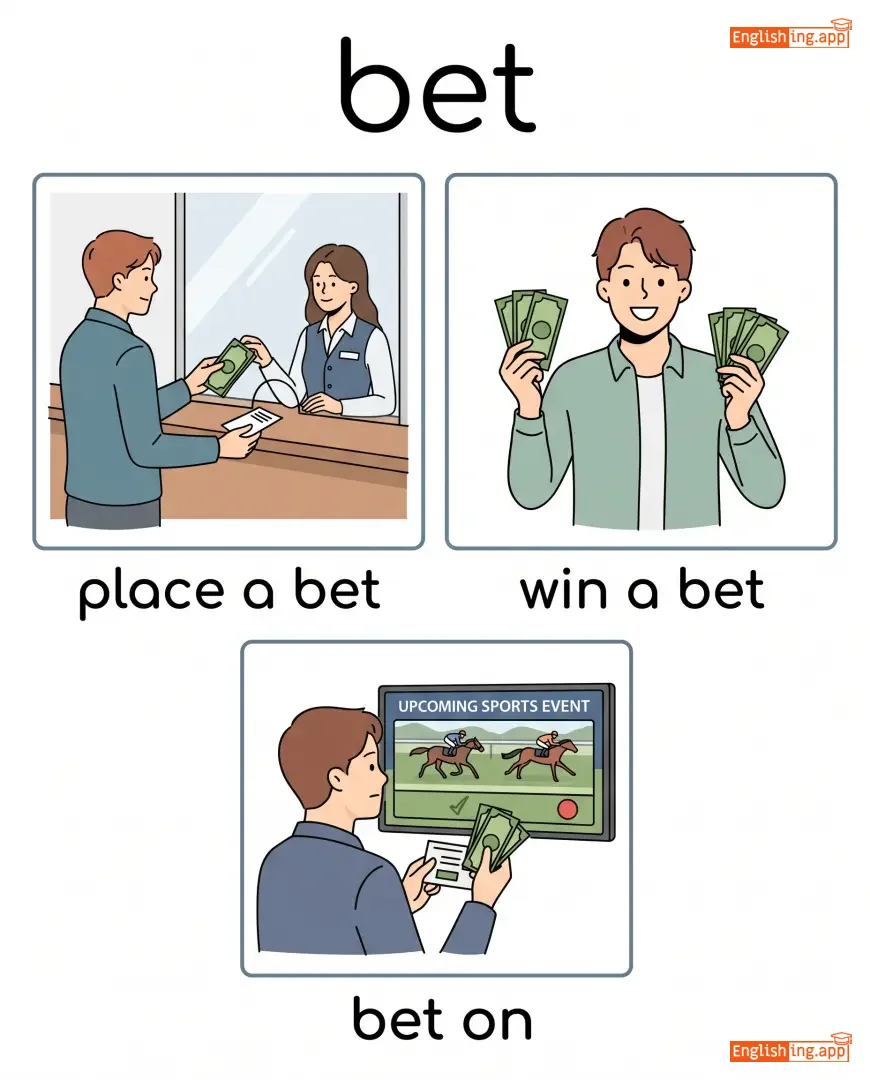
place a bet, win a bet, bet on, bet against
••••••
|
Bet は賭けるという意味 - 試合でベットする
••••••
|
|
#631
🚶
|
/bɪˈteɪk/
verb
(ビテイク)
••••••
|
- •••••• |
向かう;取りかかる
mukau; torikakaru
••••••
|
betook
ビトゥック
••••••
|
betaken
ビテイクン
••••••
|
betakes
ビテイクス
••••••
|
betaking
ビテイキング
••••••
|
to go or resort to a place or course of action, especially as a response; to apply oneself
••••••
|
After dinner, she betook herself to her room to read.
アフター ディナー、シー ビトゥック ハーセルフ トゥ ハー ルーム トゥ リード。
••••••
|
夕食後、彼女は読書のため自分の部屋へ向かった。
yushoku go kanojo wa dokusho no tame jibun no heya e mukatta
••••••
|
betake oneself to
ビテイク ワンセルフ トゥ
••••••
|
to go to or turn to a particular place or activity
••••••
|
向かう
mukau
••••••
|
go, resort, turn, proceed, repair
••••••
|
avoid, abandon
••••••
|
betake oneself to bed, betake oneself to study, betake to prayer
••••••
|
Betake = 目的地へ take して向かう
••••••
|
|
#632
🗡️
|
/bɪˈtreɪ/
verb
••••••
|
|
- •••••• |
betrayed
••••••
|
betrayed
••••••
|
betrays
••••••
|
betraying
••••••
|
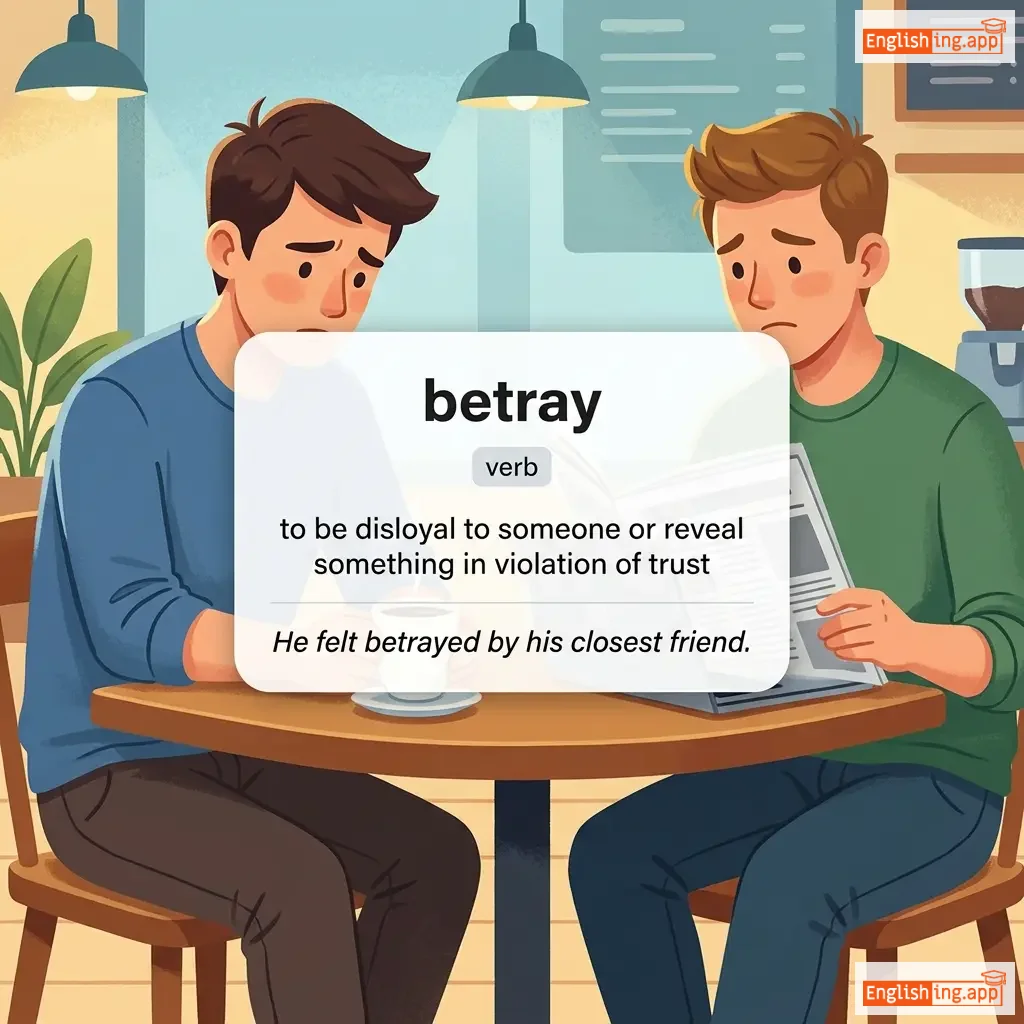
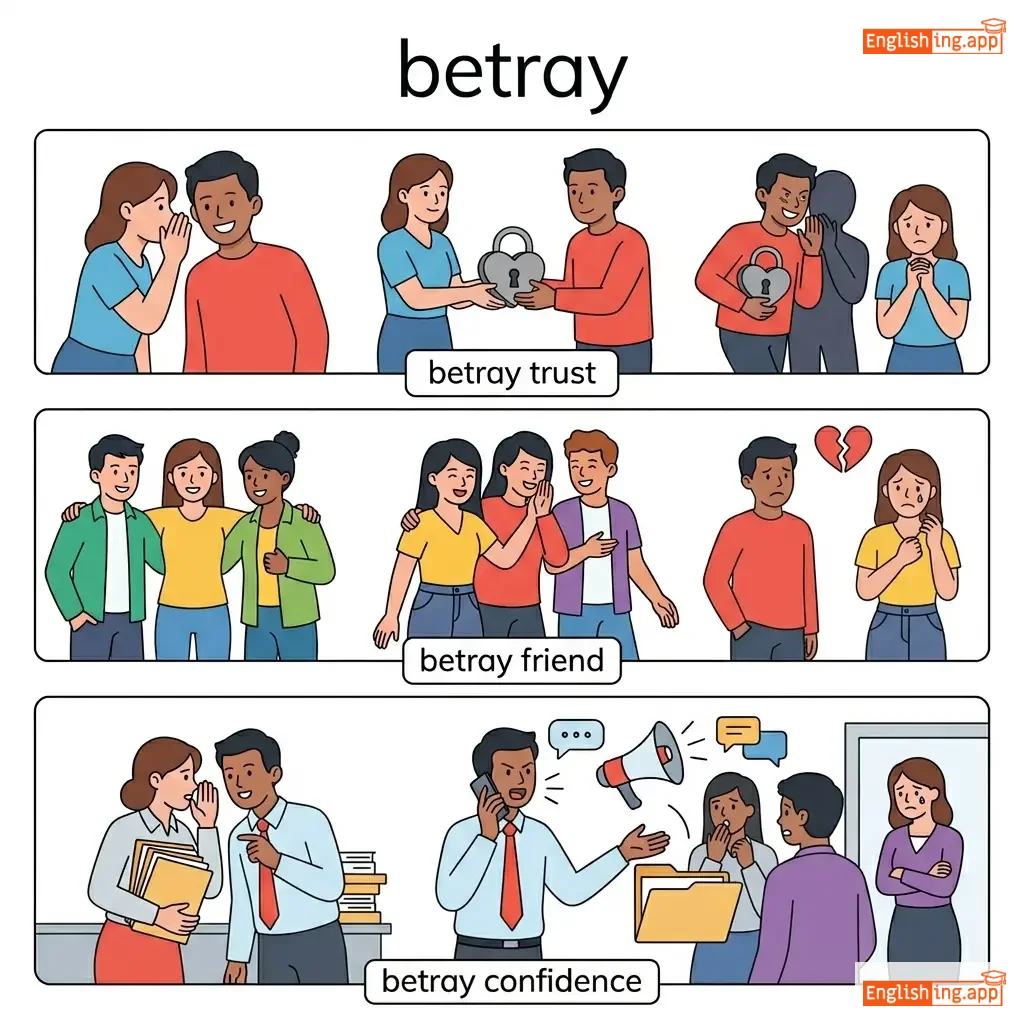
to be disloyal to someone or reveal something in violation of trust
••••••
|
He felt betrayed by his closest friend. |
- •••••• |
betray someone's trust |
to reveal secrets or act against someone's confidence
••••••
|
- •••••• |
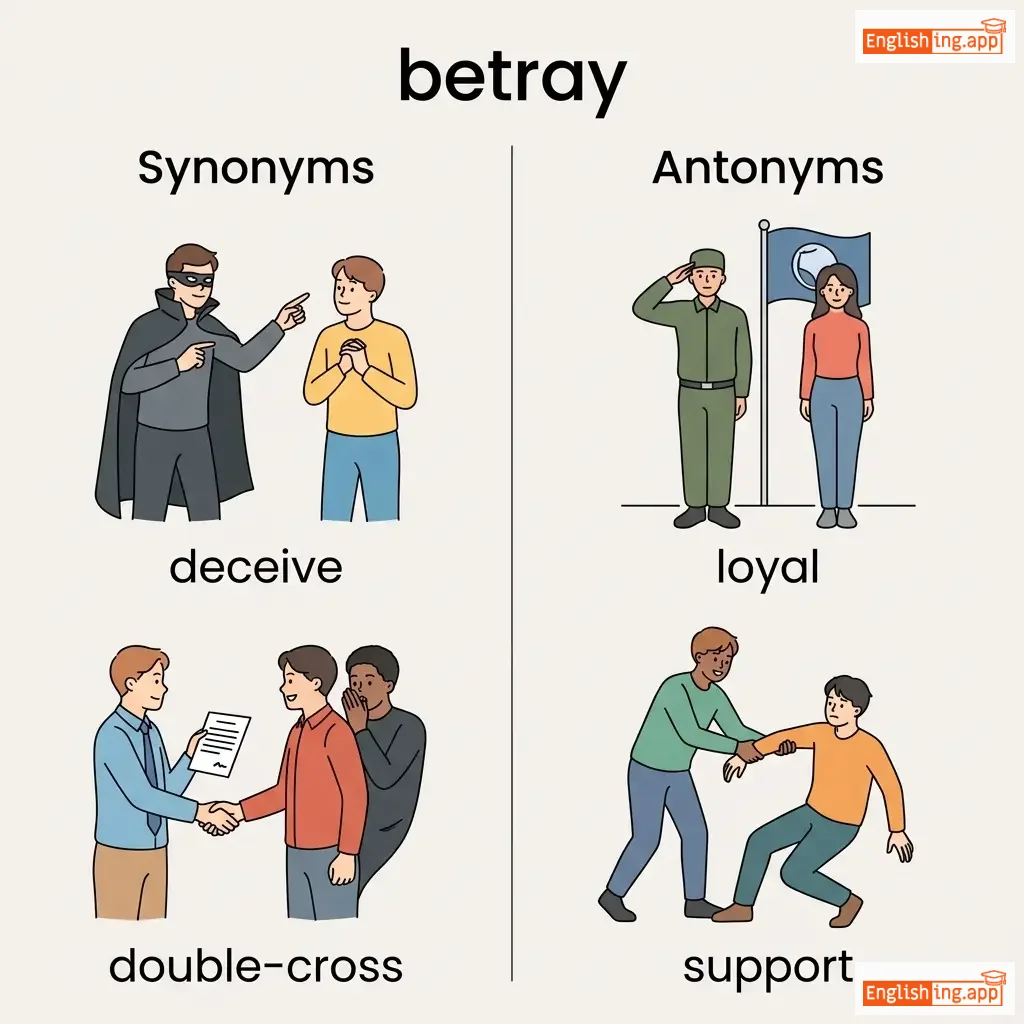
deceive, double-cross, expose, reveal, backstab
••••••
|
loyal, support, protect
••••••
|
betray trust, betray friend, betray confidence
••••••
|
No •••••• |
|
#633
💍
|
/bɪˈtroʊð/
verb
(ベトロス)
••••••
|
- •••••• |
婚約する
kon'yaku suru
••••••
|
betrothed
ベトロスド
••••••
|
betrothed
ベトロスド
••••••
|
betroths
ベトロスス
••••••
|
betrothing
ベトロスイング
••••••
|
To formally promise to marry someone; to engage.
••••••
|
He was betrothed to the princess at a young age.
彼は若い頃、王女と婚約していた。
••••••
|
彼は若い頃、王女と婚約していた。
Kare wa wakai koro, ōjo to kon'yaku shite ita.
••••••
|
- •••••• | - •••••• | - •••••• |
engage, promise, pledge, commit, vow
••••••
|
break off, separate, divorce
••••••
|
betroth to, betroth her, formally betroth
••••••
|
Betroth は '婚約する' という意味で、結婚前の約束です。
••••••
|
|
#634
👍
|
/ˈbɛtər/
adjective, adverb, verb
••••••
|
- •••••• | - •••••• |
bettered
••••••
|
bettered
••••••
|
betters
••••••
|
bettering
••••••
|
of a more excellent or effective type or quality; to surpass or improve
••••••
|
He felt better after taking the medicine. |
- •••••• |
better late than never |
It is better to do something late than not do it at all.
••••••
|
- •••••• |
improved, superior, greater, finer, enhanced
••••••
|
worse, inferior, poorer
••••••
|
better chance, better understanding, better option, feel better
••••••
|
No •••••• |
|
#635
↔️
|
/bɪˈtwiːn/
preposition, adverb
(ビトウィーン)
••••••
|
- •••••• |
間
aida
••••••
|
- •••••• | - •••••• | - •••••• | - •••••• |
at, into, or across the space separating two objects or regions
••••••
|
She sat between her two friends. |
彼女は二人の友達の間に座っていた。
Kanojo wa futari no tomodachi no aida ni suwatte ita.
••••••
|
between a rock and a hard place |
To be faced with two difficult choices.
••••••
|
八方塞がり
happōfusagari
••••••
|
amid, among, in the middle of, betwixt
••••••
|
outside, beyond
••••••
|
between people, between countries, between lines
••••••
|
Betweenは間を意味します。be + tween(間)を覚えておいてください。= between.
••••••
|
|
#636
😢
|
/bɪˈweɪl/
verb
(ビウェイル)
••••••
|
- •••••• |
嘆き悲しむ
nageki kanashimu
••••••
|
bewailed
ビウェイルド
••••••
|
bewailed
ビウェイルド
••••••
|
bewails
ビウェイルズ
••••••
|
bewailing
ビウェイリング
••••••
|
to express deep sorrow or regret over something; to mourn openly
••••••
|
She bewailed the loss of her childhood home.
シー ビウェイルド ザ ロス オブ ハー チャイルドフッド ホーム
••••••
|
彼女は子どもの頃の家を失ったことを嘆き悲しんだ。
Kanojo wa kodomo no koro no ie o ushinatta koto o nageki kanashinda
••••••
|
- •••••• | - •••••• | - •••••• |
lament, mourn, grieve over, deplore, bemoan
••••••
|
celebrate, rejoice, praise
••••••
|
bewail the loss, bewail one’s fate, bewail the death, bewail the situation
••••••
|
bewail = ビウェイル、悲しみをウェーと嘆く
••••••
|
|
#637
😕
|
/bɪˈwɪldər/
verb
(ビウィルダー)
••••••
|
- •••••• |
困惑させる
konwaku saseru
••••••
|
bewildered
ビウィルダード
••••••
|
bewildered
ビウィルダード
••••••
|
bewilders
ビウィルダーズ
••••••
|
bewildering
ビウィルダーリング
••••••
|
to cause someone to be confused or puzzled
••••••
|
The complex instructions bewildered the students.
複雑な指示は学生を困惑させました。
••••••
|
複雑な指示は学生を困惑させました。
Fukuzatsu na shiji wa gakusei o konwaku sasemashita.
••••••
|
- •••••• | - •••••• | - •••••• |
confuse, perplex, baffle, puzzle, mystify
••••••
|
clarify, explain, enlighten
••••••
|
bewilder completely, bewilder the mind, utterly bewildered
••••••
|
Bewilderは日本語で「困惑させる」と似ている → 困惑していると、迷子のような気持ちになります。
••••••
|
|
#638
✨
|
/bɪˈwɪtʃ/
verb
(ビウィッチ)
••••••
|
- •••••• |
魅了する
miryō suru
••••••
|
bewitched
ビウィッチド
••••••
|
bewitched
ビウィッチド
••••••
|
bewitches
ビウィッチズ
••••••
|
bewitching
ビウィッチング
••••••
|
to enchant or fascinate someone as if by magic
••••••
|
The dancer's performance bewitched the audience.
ダンサーのパフォーマンスは観客を魅了した。
••••••
|
ダンサーのパフォーマンスは観客を魅了した。
Dansā no pafōmansu wa kankyaku o miryō shita.
••••••
|
- •••••• | - •••••• | - •••••• |
enchant, captivate, charm, mesmerize, spellbind
••••••
|
repel, bore, disgust
••••••
|
bewitch the audience, bewitched by, utterly bewitched
••••••
|
Bewitch とは魔女のように魅了すること → 魅了する
••••••
|
|
#639
🌌
|
/bɪˈjɒnd/
preposition, adverb
(ビヨンド)
••••••
|
- •••••• |
向こう側
mukougawa
••••••
|
- •••••• | - •••••• | - •••••• | - •••••• |
at or to the further side of; more than
••••••
|
The village lies beyond the river. |
村は川の向こう側にあります。
Mura wa kawa no mukougawa ni arimasu.
••••••
|
beyond belief |
Too extreme to be believed.
••••••
|
信じられないほど
shinjirarenai hodo
••••••
|
past, outside, over, farther
••••••
|
within, inside
••••••
|
beyond reach, beyond control, beyond doubt
••••••
|
向こう側は限界を超えるという意味、'向こう側'は川の向こうに覚えて!
••••••
|
|
#640
⚖️
|
/ˈbaɪəs/
noun
(バイアス)
••••••
|
|
偏見
henken
••••••
|
- •••••• | - •••••• |
biases
バイアセス
••••••
|
biasing
バイアシング
••••••
|
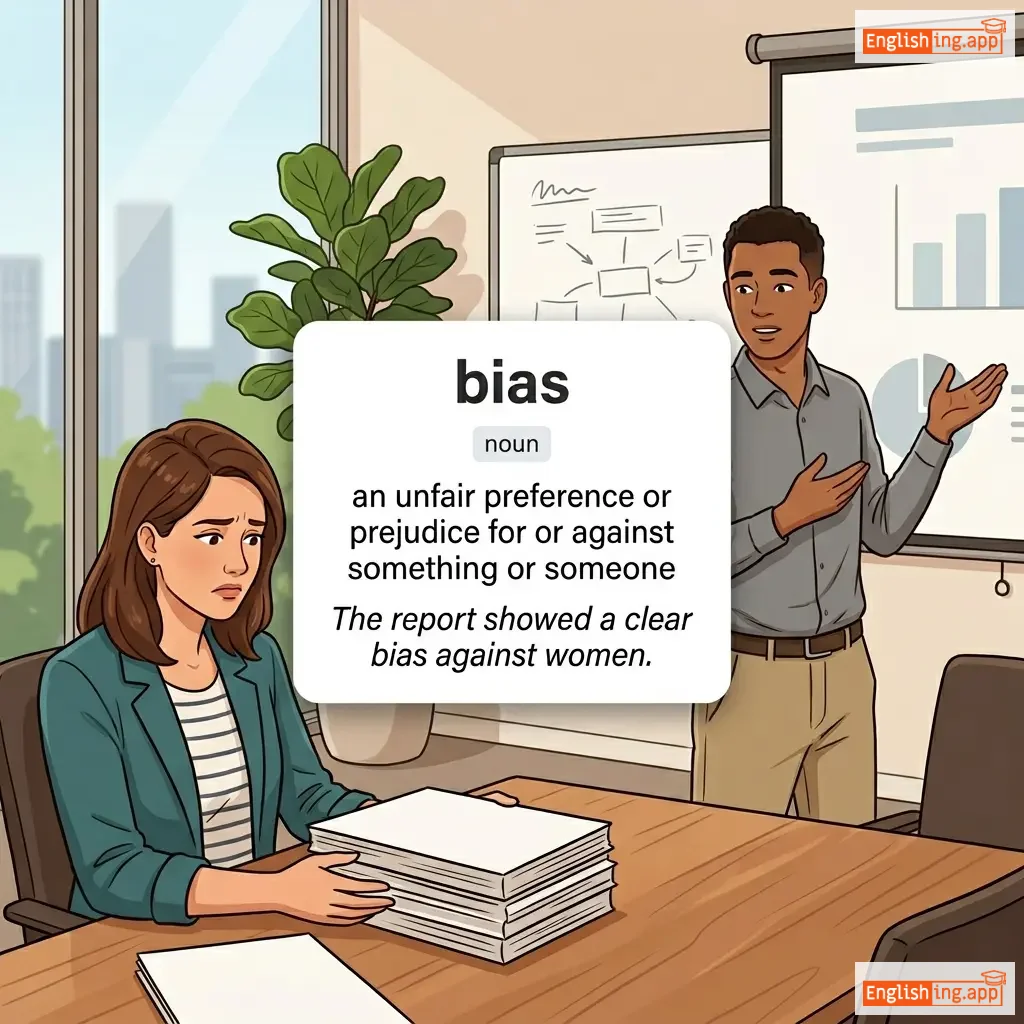
an unfair preference or prejudice for or against something or someone
••••••
|
The report showed a clear bias against women.
報告書は女性に対する明確な偏見を示しました。
••••••
|
報告書は女性に対する明確な偏見を示しました。
Hōkokusho wa josei ni taisuru meikaku na henken o shimeshimashita.
••••••
|
unconscious bias
無意識の偏見
••••••
|
prejudice that a person is unaware of having
••••••
|
無意識の偏見
Muishiki no henken
••••••
|
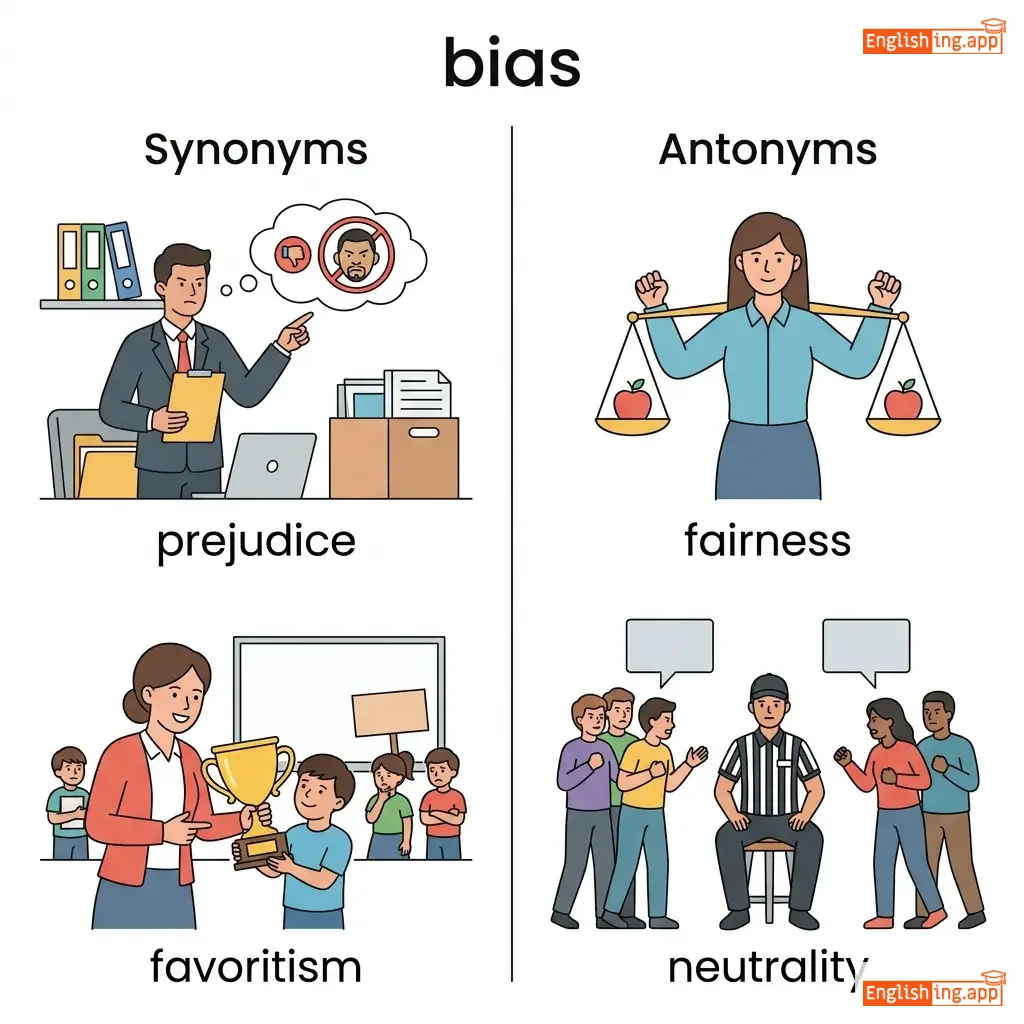
prejudice, favoritism, partiality, inclination, tendency
••••••
|
fairness, neutrality, objectivity
••••••
|
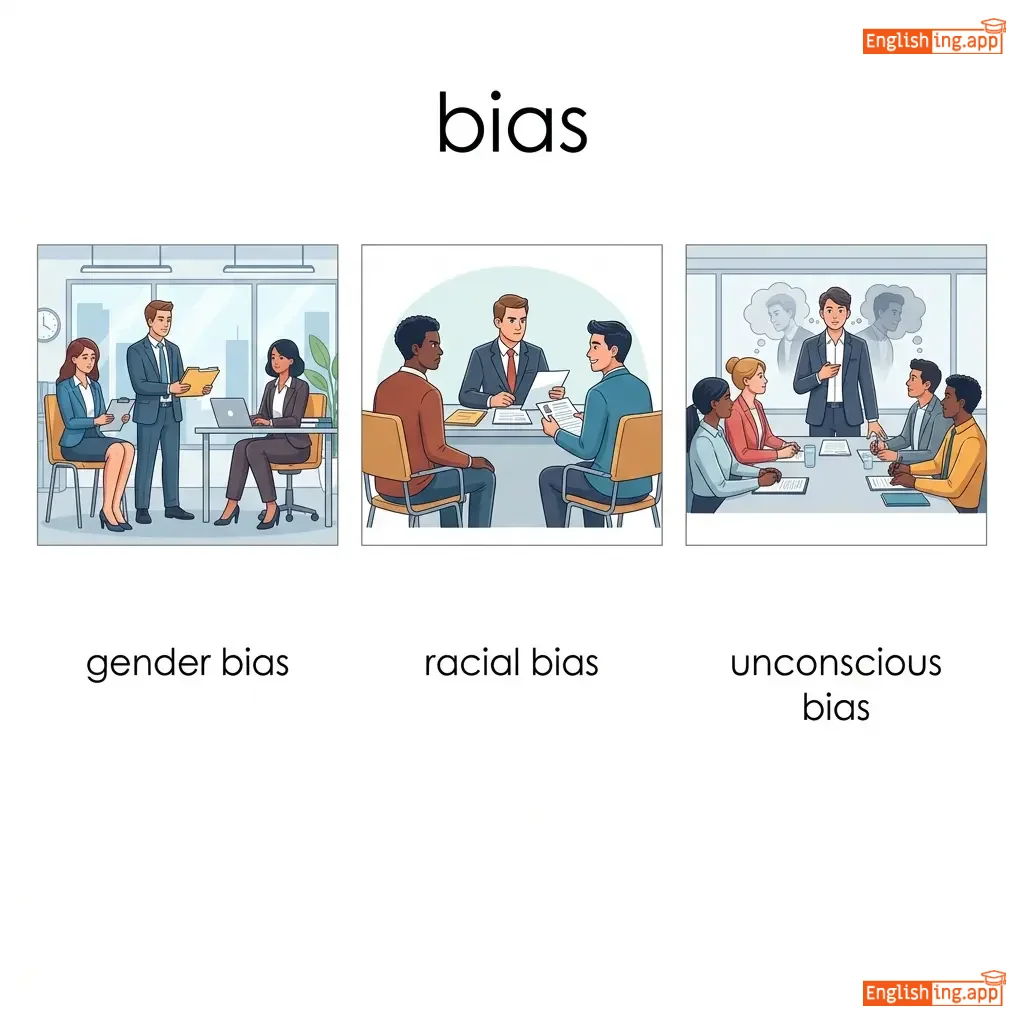
gender bias, racial bias, unconscious bias, bias towards
••••••
|
偏見は不公平なことを意味します — 覚えておいて、‘バイアス’は‘自分に有利な方向に’です!
••••••
|
|
#641
📖
|
/ˈbaɪbəl/
noun
(バイブル)
••••••
|
- •••••• |
聖書
seisho
••••••
|
- •••••• | - •••••• | - •••••• | - •••••• |
the Christian scriptures consisting of the Old and New Testaments; also used for any authoritative book
••••••
|
She reads the Bible every morning. |
彼女は毎朝聖書を読みます。
Kanojo wa mai asa seisho o yomimasu.
••••••
|
- •••••• | - •••••• | - •••••• |
scripture, holy book, testament, gospel
••••••
|
none
••••••
|
Bible study, Bible verse, Bible story
••••••
|
Bible = 聖書, 聖書は神聖な本であることを覚えておきましょう。
••••••
|
|
#642
🚴♂️
|
/ˈbaɪsɪkl/
noun
(ハピネス)
••••••
|
- •••••• |
幸福
kōfuku
••••••
|
- •••••• | - •••••• | - •••••• | - •••••• |
a vehicle with two wheels that you ride by pedaling
••••••
|
He rides his bicycle to school every day. |
彼女は賞を受け取ったとき、幸せを隠すことができませんでした。
Kanojo wa shō o uketotta toki, kōfuku o kakusu koto ga dekimasen deshita.
••••••
|
ride a bicycle |
to travel by bicycle
••••••
|
幸福を追求する
kōfuku o tsuikyū suru
••••••
|
bike, cycle, two-wheeler, pedal bike
••••••
|
car, motorcycle
••••••
|
ride a bicycle, mountain bicycle, bicycle lane, bicycle helmet
••••••
|
幸せは毎日の小さな喜びを大切にすること。
••••••
|
|
#643
💸
|
/bɪd/
verb
••••••
|
- •••••• | - •••••• |
bid
••••••
|
bid
••••••
|
bids
••••••
|
bidding
••••••
|
to offer a certain amount of money for something, especially at an auction
••••••
|
She bid $200 for the antique vase. |
- •••••• |
bid farewell |
to say goodbye formally
••••••
|
- •••••• |
offer, propose, tender, submit, quote
••••••
|
withdraw, retract
••••••
|
bid price, bid farewell, bid high, bid low
••••••
|
No •••••• |
|
#644
📏
|
/bɪɡ/
adjective
(ビッグ)
••••••
|
- •••••• |
大きい
ookii
••••••
|
- •••••• | - •••••• | - •••••• | - •••••• |
large in size, extent, or importance
••••••
|
They moved into a big house with plenty of space. |
彼らは広いスペースのある大きな家に引っ越しました。
Karera wa hiroi supēsu no aru ōkina ie ni hikkoshimashita.
••••••
|
think big |
to have ambitious or grand ideas
••••••
|
大きく考える
ookiku kangaeru
••••••
|
large, huge, massive, enormous, vast
••••••
|
small, tiny, little
••••••
|
big house, big city, big problem, big chance
••••••
|
Big は日本語で大きいという意味です – Big = Ookii.
••••••
|
|
#645
📏
|
/ˈbɪɡɪst/
adjective
(ビゲスト)
••••••
|
- •••••• |
最も大きい
mottomo ookii
••••••
|
- •••••• | - •••••• | - •••••• | - •••••• |
largest in size, amount, degree, or importance; superlative form of big
••••••
|
This is the biggest challenge we have ever faced.
ディス イズ ザ ビゲスト チャレンジ
••••••
|
これは私たちが直面した中で最も大きな挑戦です。
kore wa watashitachi ga chokumen shita naka de mottomo ookina chosen desu
••••••
|
the biggest fish in the pond
ザ ビゲスト フィッシュ イン ザ ポンド
••••••
|
the most powerful or important person in a small group
••••••
|
小さな集団で一番重要な人
chiisana shudan de ichiban juuyou na hito
••••••
|
largest, greatest, hugest, vastest, maximum
••••••
|
smallest, tiniest, least
••••••
|
biggest mistake, biggest city, biggest problem, biggest opportunity
••••••
|
Biggest = ビゲスト → 最も大きい
••••••
|
|
#646
🚲
|
/baɪk/
noun, verb
(バイク)
••••••
|
- •••••• |
自転車
jitensha
••••••
|
biked
バイクド
••••••
|
biked
バイクド
••••••
|
bikes
バイクス
••••••
|
biking
バイキング
••••••
|
a bicycle or motorcycle; to ride a bicycle
••••••
|
He biked to school every day.
彼は毎日自転車で学校に行きました。
••••••
|
彼は毎日自転車で学校に行きました。
Kare wa mainichi jitensha de gakkou ni ikimashita.
••••••
|
bike ride
自転車の旅
••••••
|
An outing or trip on a bicycle.
••••••
|
自転車の旅
jitensha no tabi
••••••
|
bicycle, cycle, motorcycle, two-wheeler
••••••
|
car, bus
••••••
|
ride a bike, mountain bike, bike helmet, bike path
••••••
|
Bikeは英語で自転車、'自転車で'を想像しよう!
••••••
|
|
#647
🧾
|
/bɪl/
noun
••••••
|
- •••••• | - •••••• | - •••••• | - •••••• | - •••••• | - •••••• |
a written statement of money owed for goods or services; also a proposed law presented to a legislature
••••••
|
He received the electricity bill yesterday. |
- •••••• |
foot the bill |
to pay for something, especially something expensive
••••••
|
- •••••• |
invoice, statement, charge, account, draft
••••••
|
credit, receipt
••••••
|
pay a bill, receive a bill, pass a bill, utility bill
••••••
|
No •••••• |
|
#648
💰
|
/ˈbɪljən/
noun
••••••
|
- •••••• | - •••••• | - •••••• | - •••••• | - •••••• | - •••••• |
the number 1,000,000,000 (one thousand million)
••••••
|
The company is worth more than a billion dollars. |
- •••••• | - •••••• | - •••••• | - •••••• |
thousand million, giga, large number
••••••
|
one, few
••••••
|
a billion dollars, reach a billion, billion people
••••••
|
No •••••• |
|
#649
🪢
|
/baɪnd/
verb
(baind)
••••••
|
|
結びつける
musubitsukeru
••••••
|
bound
baund
••••••
|
bound
baund
••••••
|
binds
bainds
••••••
|
binding
bainding
••••••
|
to tie or fasten tightly; to unite or restrict
••••••
|
The contract will bind both parties to the agreement.
契約は両方の当事者を契約に縛ります。
••••••
|
契約は両方の当事者を契約に縛ります。
Keiyaku wa ryōhō no tōjisha o keiyaku ni shibarimasu.
••••••
|
in a bind
困った状況
••••••
|
in a difficult situation
••••••
|
困った状況
komatta joukyou
••••••
|
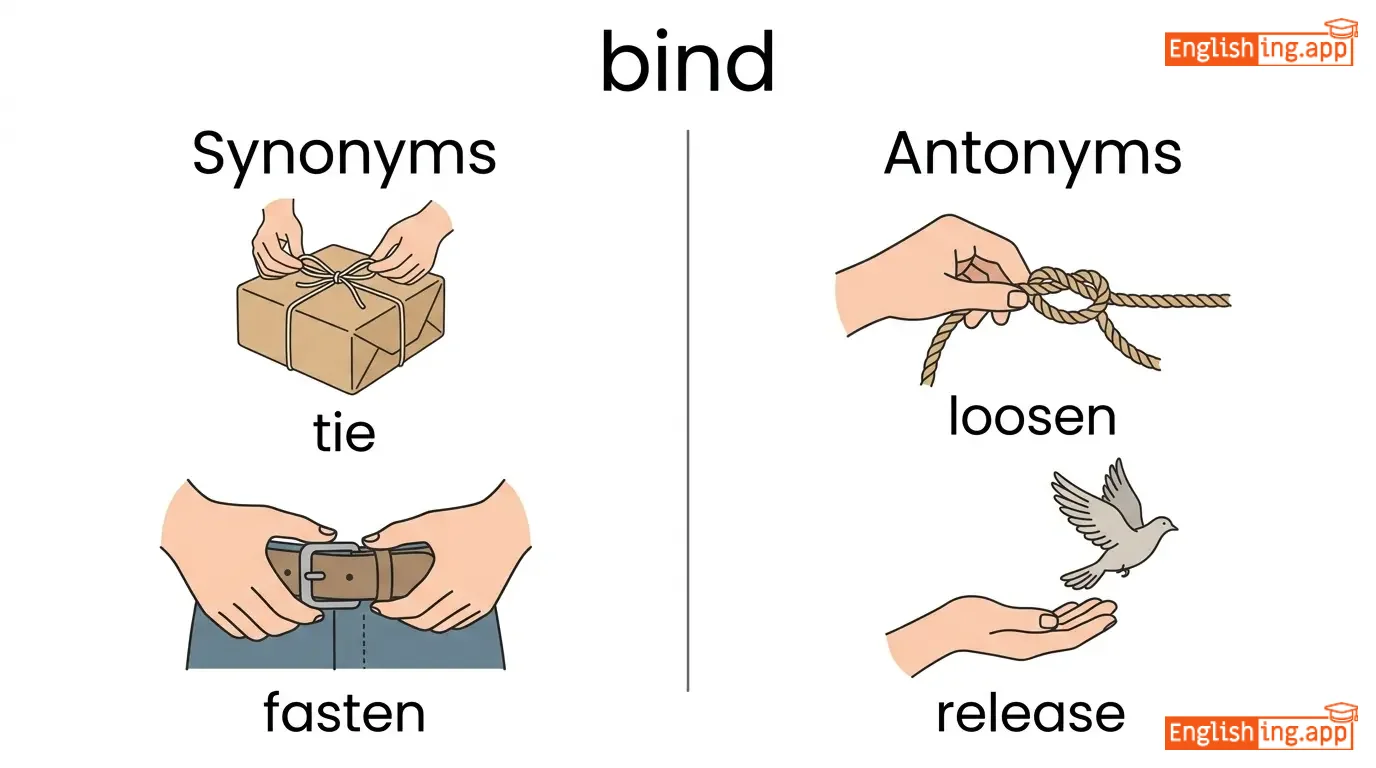
tie, fasten, connect, unite, secure
••••••
|
loosen, release, free
••••••
|
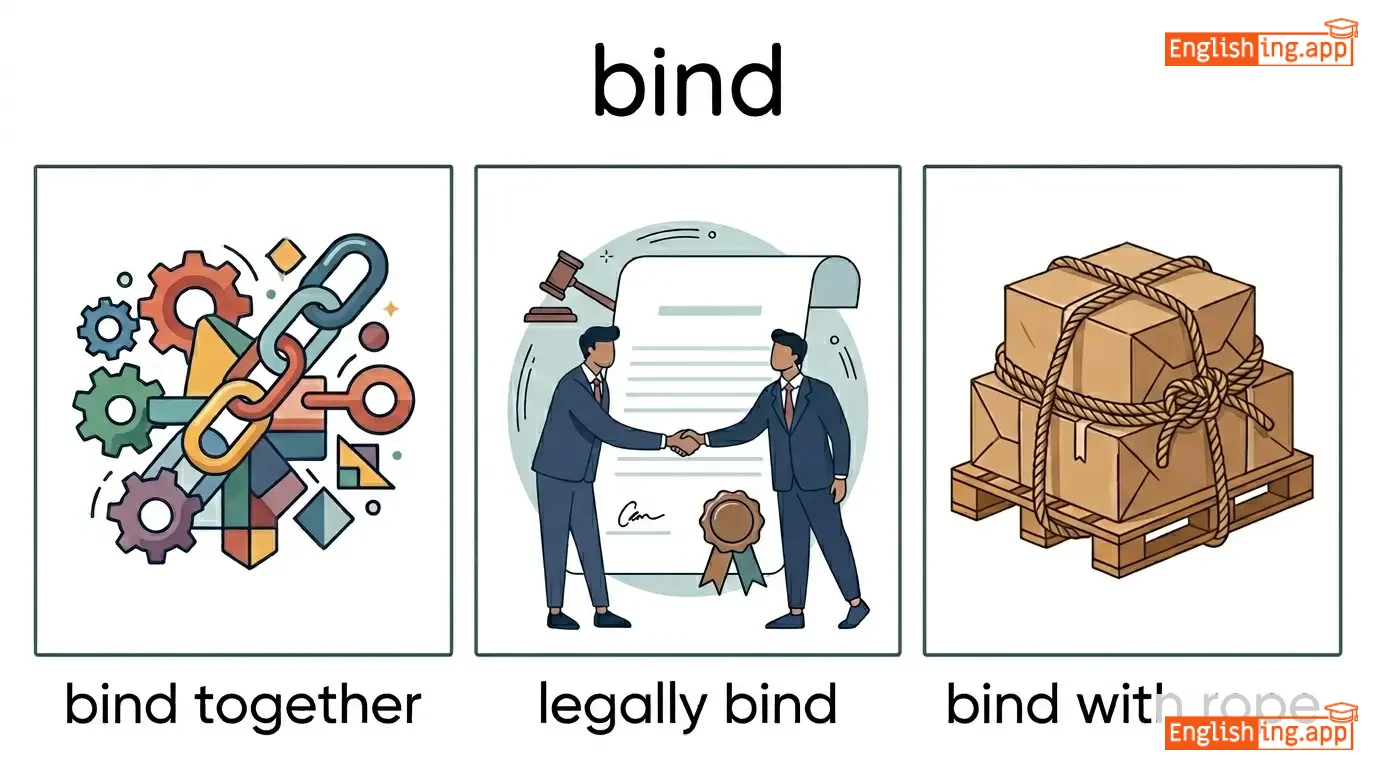
bind together, legally bind, bind with rope, bind tightly
••••••
|
結びつけるは物を結び合わせること、物を結ぶように覚えましょう。
••••••
|
|
#650
📖
|
/baɪˈɒɡrəfi/
noun
(バイオグラフィー)
••••••
|
- •••••• |
伝記
denki
••••••
|
- •••••• | - •••••• | - •••••• | - •••••• |
an account of someone's life written by someone else; the story of a person's life
••••••
|
I'm reading a fascinating biography of Albert Einstein. |
私はアルバート・アインシュタインの魅力的な伝記を読んでいます。
Watashi wa Arubāto Ainsutain no miryokuteki na denki o yondeimasu.
••••••
|
- •••••• | - •••••• | - •••••• |
life story, memoir, profile
••••••
|
fiction, novel
••••••
|
write a biography, read biography, authorized biography
••••••
|
伝記 (denki) in Japanese and Biography in English both refer to the life story of a person.
••••••
|
|
#651
🧬
|
/ˌbaɪəˈlɒdʒɪkl̩/
adjective
(バイオロジカル)
••••••
|
- •••••• |
生物学的
seibutsugakuteki
••••••
|
- •••••• | - •••••• | - •••••• | - •••••• |
relating to the science of biology or to life and living organisms
••••••
|
She is studying biological sciences at university. |
彼女は大学で生物学的な科学を学んでいます。
Kanojo wa daigaku de seibutsugakuteki na kagaku o manandeimasu.
••••••
|
biological clock |
the natural timing mechanism in the body that influences processes like sleep and fertility
••••••
|
生物学的な時計
seibutsugakuteki na tokei
••••••
|
organic, natural, life-related, physiological
••••••
|
artificial, synthetic
••••••
|
biological science, biological research, biological process, biological parents
••••••
|
Biological = BIO (生命) + Logical (論理) = 生命の論理
••••••
|
|
#652
🧬
|
/baɪˈɒlədʒi/
noun
(バイオロジー)
••••••
|
- •••••• |
生物学
seibutsugaku
••••••
|
- •••••• | - •••••• | - •••••• | - •••••• |
The scientific study of living organisms.
••••••
|
Biology explains how plants and animals function. |
生物学は植物や動物がどのように機能するかを説明します。
Seibutsugaku wa shokubutsu ya doubutsu ga dono you ni kinou suru ka wo setsumei shimasu.
••••••
|
- •••••• | - •••••• | - •••••• |
life science, natural science, zoology, botany
••••••
|
inanimate science, nonliving study
••••••
|
study biology, biology class, molecular biology, marine biology
••••••
|
Bio (生命) + logy (学問) = 生命の学問 = 生物学.
••••••
|
|
#653
🐦
|
/bɜːrd/
noun
(バード)
••••••
|
- •••••• |
鳥
tori
••••••
|
- •••••• | - •••••• | - •••••• | - •••••• |
a warm-blooded animal with feathers and wings that usually lays eggs and can often fly
••••••
|
A bird was singing on the tree branch. |
鳥が木の枝で歌っていました。
Tori ga ki no eda de utatte imashita.
••••••
|
a little bird told me |
used to indicate that the speaker has heard a secret from someone unnamed
••••••
|
小さな鳥が私に言った
Chīsana tori ga watashi ni itta
••••••
|
avian, fowl, feathered creature
••••••
|
mammal, reptile
••••••
|
bird song, bird watching, migratory bird, bird species
••••••
|
Bird は鳥 🐦 - '鳥'を聞くと、空を飛ぶ自由な鳥を思い浮かべる
••••••
|
|
#654
👶
|
/bɜːrθ/
noun
(バース)
••••••
|
- •••••• |
誕生
tanshō
••••••
|
- •••••• | - •••••• | - •••••• | - •••••• |
the process of being born; the start of life
••••••
|
The birth of a child brings joy to the whole family. |
子供の誕生は家族全体に喜びをもたらします。
Kodomo no tanshō wa kazoku zentai ni yorokobi o motarashimasu.
••••••
|
give birth |
to have a baby
••••••
|
出産する
shussan suru
••••••
|
delivery, arrival, nativity, beginning
••••••
|
death, end
••••••
|
birth of a child, birth certificate, give birth, birth anniversary
••••••
|
誕生とBirthは同じ意味です、まるで誕生日ケーキのように!
••••••
|
|
#655
🎂
|
/ˈbɜːrθ.deɪ/
noun
••••••
|
- •••••• | - •••••• | - •••••• | - •••••• | - •••••• | - •••••• |
the anniversary of the day on which a person was born, typically celebrated annually
••••••
|
We are planning a surprise birthday party for her. |
- •••••• |
happy birthday |
a greeting used to wish someone well on the anniversary of their birth
••••••
|
- •••••• |
anniversary, natal day, birth anniversary
••••••
|
deathday
••••••
|
birthday cake, birthday party, birthday gift, birthday wish
••••••
|
No •••••• |
|
#656
⛪
|
/ˈbɪʃəp/
noun
(ビショップ)
••••••
|
- •••••• |
司教
shikyō
••••••
|
- •••••• | - •••••• | - •••••• | - •••••• |
a senior member of the Christian clergy, usually in charge of a diocese and empowered to confer holy orders.
••••••
|
The bishop delivered a powerful sermon during Sunday service. |
司教は日曜日の礼拝で力強い説教をしました。
Shikyō wa nichiyōbi no reihai de chikara tsuyoi sekkyō o shimashita.
••••••
|
move diagonally like a bishop |
to act or move in a way that avoids direct confrontation, like the bishop piece in chess.
••••••
|
ビショップのように斜めに動く
Bishoppu no yō ni naname ni ugoku
••••••
|
clergyman, priest, pastor, archbishop, prelate
••••••
|
layman, civilian
••••••
|
Catholic bishop, Anglican bishop, bishop's palace, ordained bishop
••••••
|
司教は教会のリーダーです。覚えておいてください、‘⛪ 司教が祈りを導く’。
••••••
|
|
#657
🧩
|
/bɪt/
noun
(ビット)
••••••
|
- •••••• |
一片
ippen
••••••
|
- •••••• | - •••••• | - •••••• | - •••••• |
a small piece, amount, or portion of something
••••••
|
She ate a bit of the cake before leaving. |
彼女は出かける前にケーキの一片を食べました。
Kanojo wa dekakeru mae ni keeki no ippen wo tabemashita.
••••••
|
every bit |
completely or fully
••••••
|
すべての部分
subete no bubun
••••••
|
piece, fragment, portion, part, scrap
••••••
|
whole, entirety
••••••
|
a bit of, every bit, quite a bit, bit by bit
••••••
|
Bit は小さな一片、ケーキの一片のように。
••••••
|
|
#658
🐕🦺
|
/bɪtʃ/
noun
(ビッチ)
••••••
|
- •••••• |
雌犬;
meinu
••••••
|
- •••••• | - •••••• | - •••••• | - •••••• |
a female dog; an unpleasant or spiteful woman (offensive)
••••••
|
The bitch gave birth to five puppies.
その雌犬は5匹の子犬を産んだ。
••••••
|
その雌犬は5匹の子犬を産んだ。
Sono meinu wa gohiki no koinu o sanda.
••••••
|
- •••••• | - •••••• | - •••••• |
female dog
••••••
|
male dog, dog
••••••
|
breeding bitch, guard bitch
••••••
|
雌犬が子犬を産んでいる、そしてそれは侮辱的。
••••••
|
|
#659
🦷
|
/baɪt/
verb
(バイト)
••••••
|
|
噛む
kamu
••••••
|
bit
ビット
••••••
|
bitten
ビトン
••••••
|
bites
バイツ
••••••
|
biting
バイティング
••••••
|
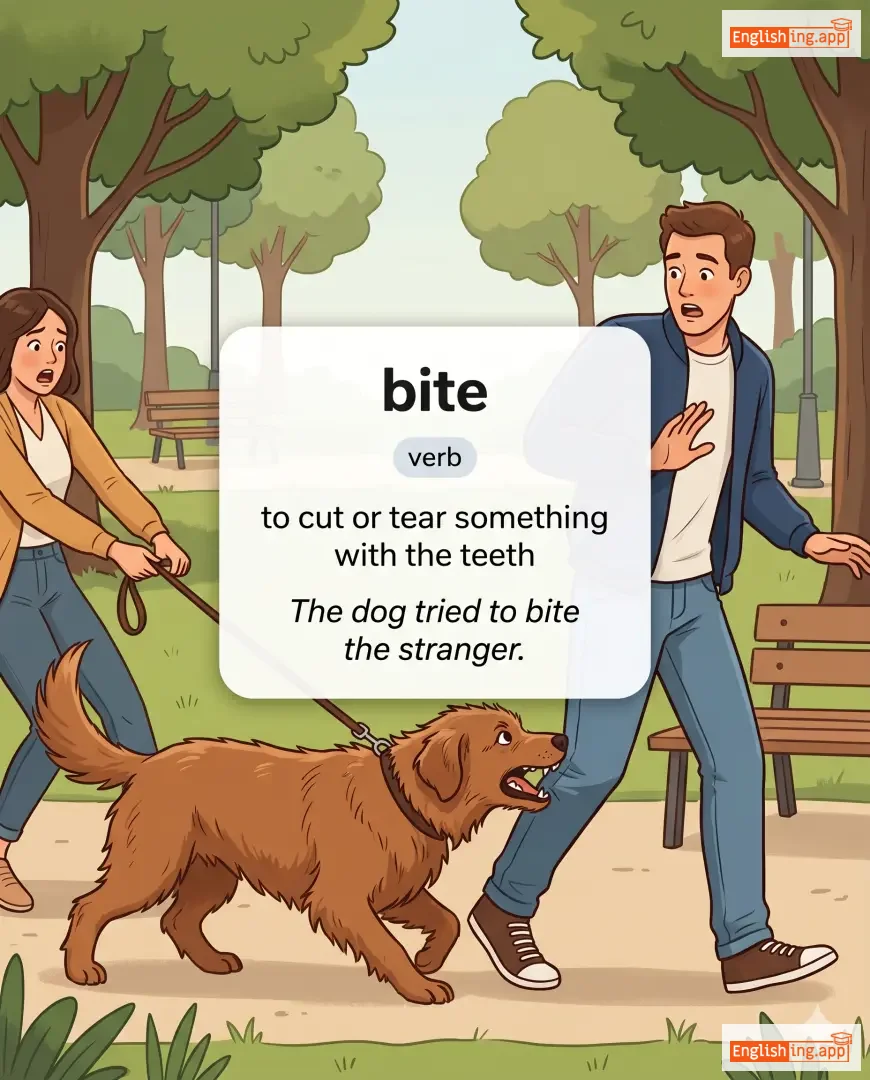
to cut or tear something with the teeth
••••••
|
The dog tried to bite the stranger.
犬は見知らぬ人を噛もうとした。
••••••
|
犬は見知らぬ人を噛もうとした。
Inu wa mishiranu hito o kamou to shita.
••••••
|
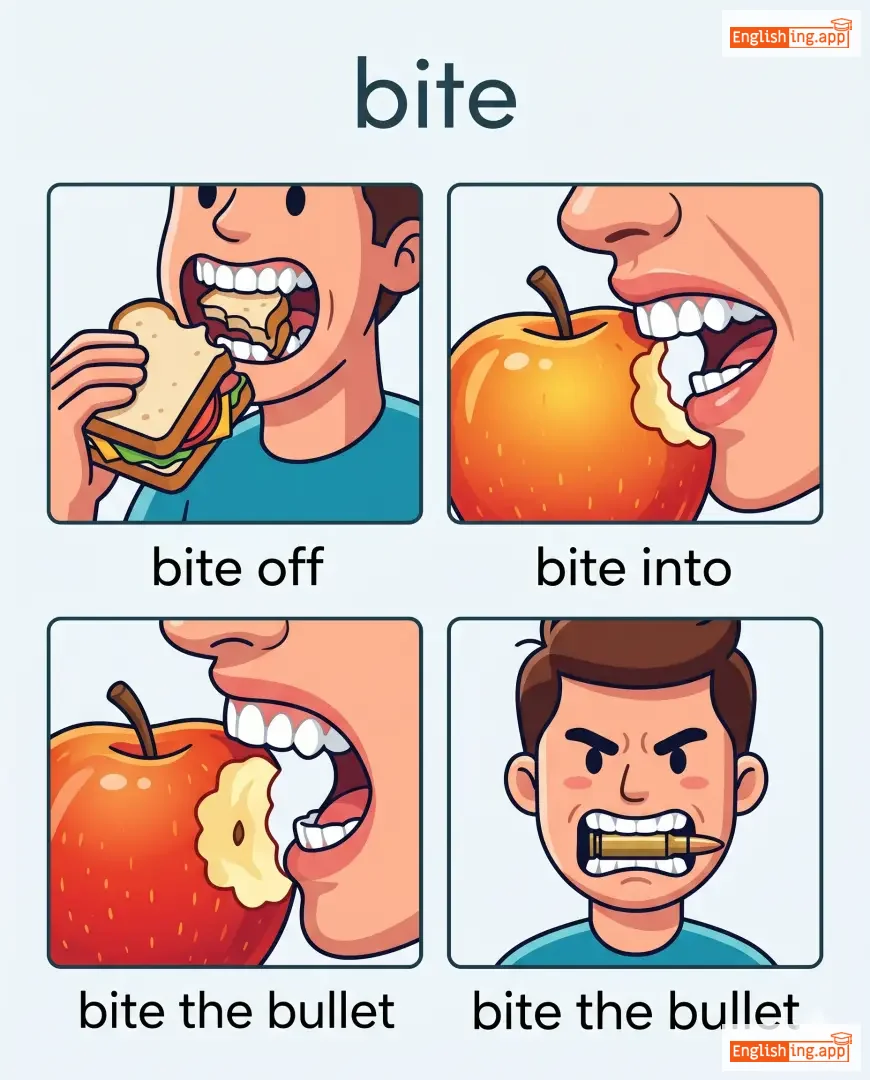
bite the bullet
bite the bullet
••••••
|
to face a painful or difficult situation with courage
••••••
|
困難な状況を勇気を持って直面する
konnan na joukyou o yuuki o motte chokumen suru
••••••
|
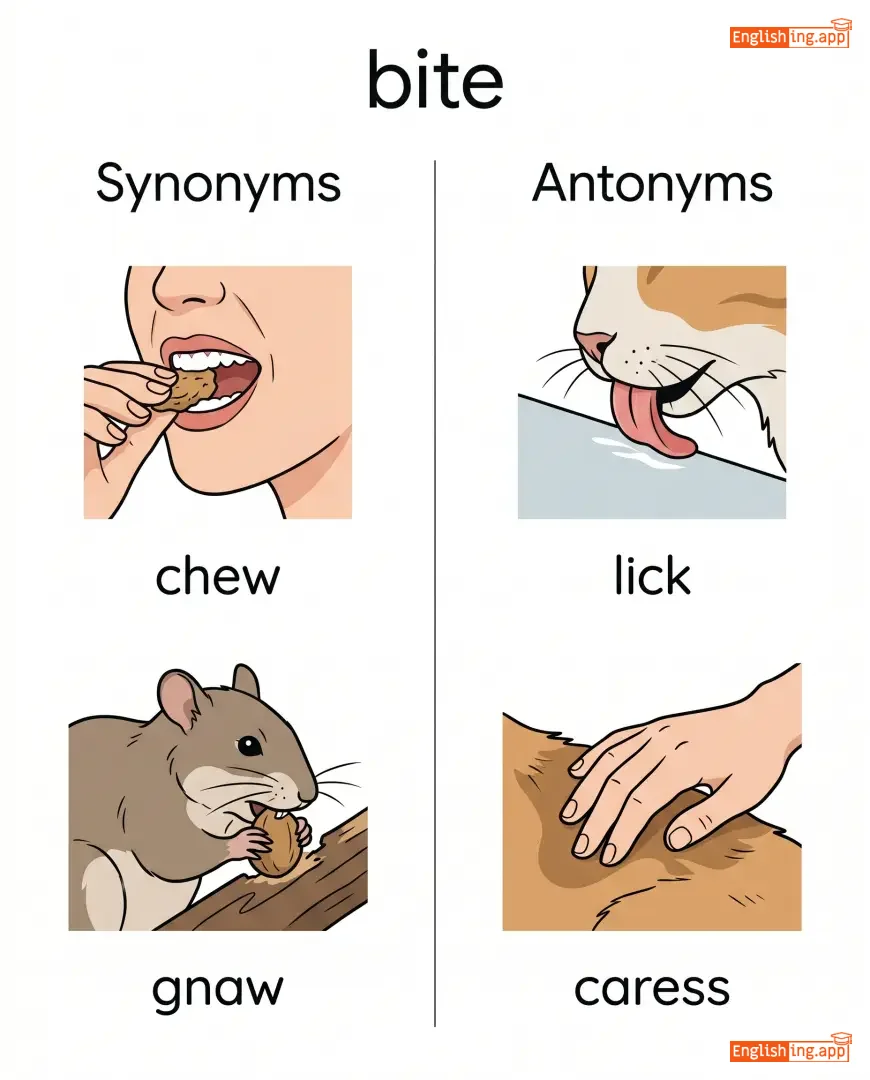
chew, gnaw, snap, nip
••••••
|
lick, caress
••••••
|
bite off, bite into, bite the bullet, bite back
••••••
|
Bite(噛む)- それはまるで犬が噛むようなものです!
••••••
|
|
#660
🍋
|
/ˈbɪtər/
adjective
(ビター)
••••••
|
- •••••• |
苦い
nigai
••••••
|
- •••••• | - •••••• | - •••••• | - •••••• |
having a sharp, unpleasant taste or showing strong hostility or resentment
••••••
|
She felt bitter about losing the competition. |
彼女は競争に負けた後、苦い気持ちを抱えました。
Kanojo wa kyousou ni maketa ato, nigai kimochi wo kakaemashita.
••••••
|
bitter pill to swallow |
an unpleasant fact or situation that must be accepted
••••••
|
飲み込みにくい苦い薬
nomikomi nikui nigai kusuri
••••••
|
harsh, resentful, sour, acrid, severe
••••••
|
sweet, pleasant, delightful
••••••
|
bitter taste, bitter truth, bitter experience, bitter rival
••••••
|
苦い経験、人生の苦い瞬間
••••••
|
|
#661
🤯
|
/bɪˈzɑːr/
adjective
(ビザール)
••••••
|
- •••••• |
奇妙な
kimyouna
••••••
|
- •••••• | - •••••• | - •••••• | - •••••• |
very strange or unusual, especially so as to cause interest or amusement
••••••
|
He told a bizarre story that no one could believe. |
彼は誰も信じられないような奇妙な話をした。
Kare wa dare mo shinjirarenai you na kimyou na hanashi wo shita.
••••••
|
- •••••• | - •••••• | - •••••• |
strange, odd, peculiar, unusual, weird
••••••
|
normal, ordinary, usual
••••••
|
bizarre incident, bizarre behavior, bizarre story, bizarre outfit
••••••
|
Bizarreは日本語で‘奇妙’と同じ意味!
••••••
|
|
#662
🗣️
|
/blæb/
verb, noun
(ブラブ)
••••••
|
- •••••• |
ぺらぺら話す;秘密を漏らす
pera pera hanasu; himitsu o morasu
••••••
|
blabbed
ブラブド
••••••
|
blabbed
ブラブド
••••••
|
blabs
ブラブス
••••••
|
blabbing
ブラビング
••••••
|
to talk too much or reveal secrets carelessly; excessive or foolish talk
••••••
|
He accidentally blabbed the surprise to everyone.
カレハ ウッカリ サプライズヲ ブラブシタ。
••••••
|
彼はうっかりサプライズをみんなに話してしまった。
kare wa ukkari sapuraizu o minna ni hanashite shimatta
••••••
|
blab it out
ブラブ イット アウト
••••••
|
to reveal something without thinking
••••••
|
口を滑らす
kuchi o suberasu
••••••
|
babble, chatter, prattle, gossip, tattle
••••••
|
keep quiet, conceal, hush
••••••
|
blab secrets, blab on, blab about, blab away
••••••
|
blab=ブラブラ話すイメージ
••••••
|
|
#663
⚫
|
/blæk/
adjective
(ブラック)
••••••
|
- •••••• |
黒
kuro
••••••
|
- •••••• | - •••••• | - •••••• | - •••••• |
of the very darkest color due to the absence of light
••••••
|
She wore a black dress to the party. |
彼女はパーティーに黒いドレスを着ていった。
Kanojo wa pātī ni kuroi doresu o kite itta.
••••••
|
black and white |
clear and straightforward
••••••
|
明確で直接的
meikaku de chokusetsuteki
••••••
|
dark, ebony, jet, inky
••••••
|
white, bright
••••••
|
black dress, black coffee, pitch black, black hole
••••••
|
Blackは黒を意味する—'Black coffee'はミルクなしのコーヒーを意味する。
••••••
|
|
#664
⚫
|
/ˈblækən/
verb
(ブラックン)
••••••
|
- •••••• |
黒くする
kuroku suru
••••••
|
blackened
ブラックンド
••••••
|
blackened
ブラックンド
••••••
|
blackens
ブラックンズ
••••••
|
blackening
ブラックニング
••••••
|
to make something black or darker; to stain, soil, or tarnish
••••••
|
Smoke from the fire began to blacken the walls.
スモーク フロム ザ ファイア ビガン トゥ ブラックン ザ ウォールズ。
••••••
|
火事の煙が壁を黒くし始めた。
kaji no kemuri ga kabe o kuroku shi hajimeta
••••••
|
blacken someone's name
ブラックン サムワンズ ネーム
••••••
|
to damage someone's reputation
••••••
|
名誉を汚す
meiyo o yogosu
••••••
|
darken, soil, stain, tarnish, smudge
••••••
|
whiten, brighten, clean
••••••
|
blacken the sky, blacken walls, blacken reputation, blacken surface
••••••
|
Black = 黒 → 黒くする = blacken
••••••
|
|
#665
🕵️
|
/ˈblækmeɪl/
noun, verb
(ブラックメール)
••••••
|
- •••••• |
脅迫する
kyohaku suru
••••••
|
blackmailed
ブラックメールド
••••••
|
blackmailed
ブラックメールド
••••••
|
blackmails
ブラックメールズ
••••••
|
blackmailing
ブラックメールリング
••••••
|
the act of demanding money or advantage by threatening to reveal secrets; to force someone to act by using such threats
••••••
|
He tried to blackmail her by threatening to reveal the documents.
ヒー トライド トゥ ブラックメール ハー バイ スレトニング トゥ リビール ザ ドキュメンツ。
••••••
|
彼は書類を公表すると脅して彼女を脅迫しようとした。
kare wa shorui o kohyo suru to odoshite kanojo o kyohaku shiyo to shita
••••••
|
blackmail someone into doing something
ブラックメール サムワン イントゥ ドゥーイング サムシング
••••••
|
to force someone to do something through threats
••••••
|
誰かを脅迫して何かをさせる
dareka o kyohaku shite nanika o saseru
••••••
|
extort, coerce, pressure, intimidate, threaten
••••••
|
persuade, appeal, encourage
••••••
|
blackmail attempt, blackmail scheme, blackmail money, emotional blackmail
••••••
|
ブラックな脅し = ブラックメール
••••••
|
|
#666
🔪
|
/bleɪd/
noun
(bureido)
••••••
|
- •••••• |
刃
ha
••••••
|
- •••••• | - •••••• | - •••••• | - •••••• |
the flat cutting edge of a tool, knife, or weapon
••••••
|
The blade of the knife was very sharp.
ナイフの刃はとても鋭かった。
••••••
|
ナイフの刃はとても鋭かった。
Naifu no ha wa totemo surudakatta.
••••••
|
on the blade's edge
刃の端で
••••••
|
in a very risky or dangerous position
••••••
|
非常に危険な位置にいる
hijou ni kiken na ichi ni iru
••••••
|
edge, sword, cutter, razor
••••••
|
handle, blunt side
••••••
|
knife blade, razor blade, sharp blade, blade of grass
••••••
|
刃はbladeの意味—'刃が切る'覚えておいて。
••••••
|
|
#667
☝️
|
/bleɪm/
verb
(bureimu)
••••••
|
|
非難する
hinan suru
••••••
|
blamed
bureimudo
••••••
|
blamed
bureimudo
••••••
|
blames
bureimus
••••••
|
blaming
bureimingu
••••••
|
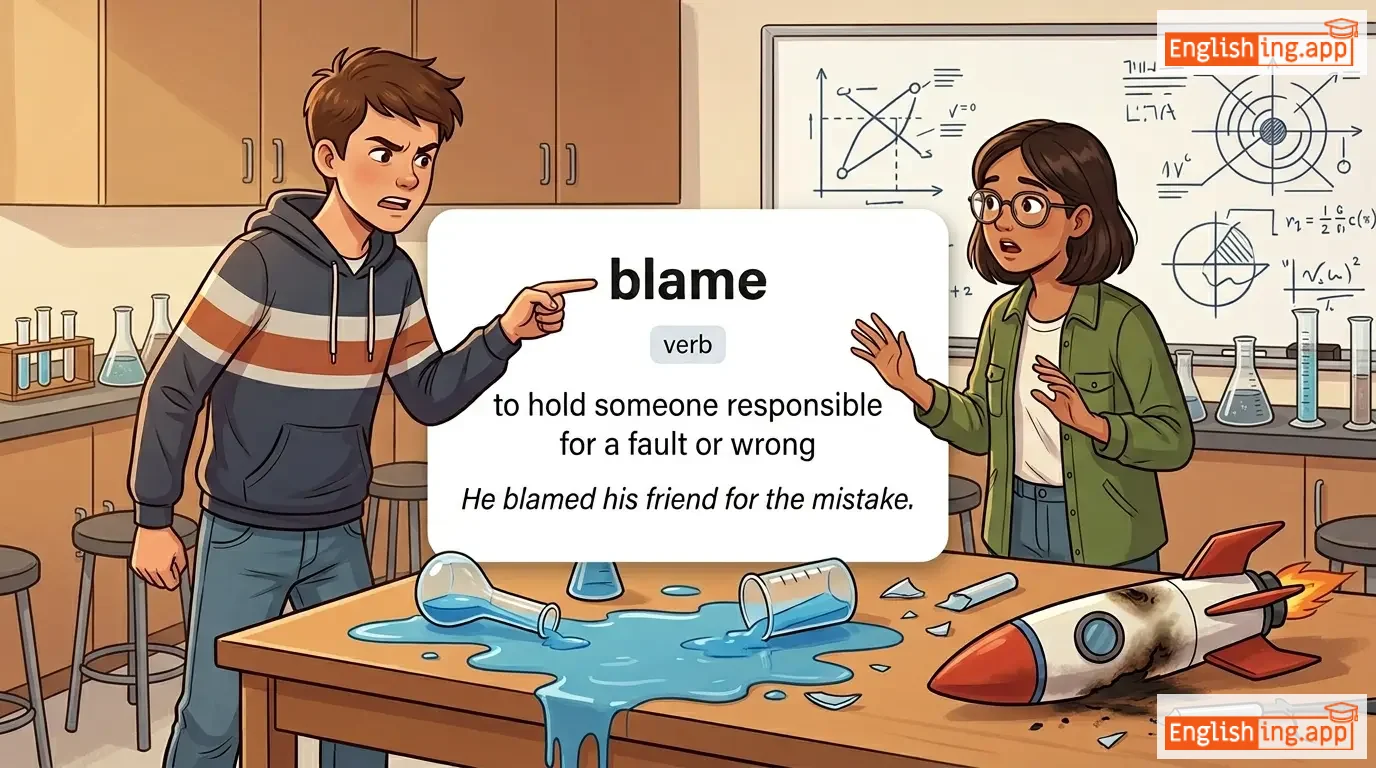
to hold someone responsible for a fault or wrong
••••••
|
He blamed his friend for the mistake.
彼はその間違いについて友人を非難しました。
••••••
|
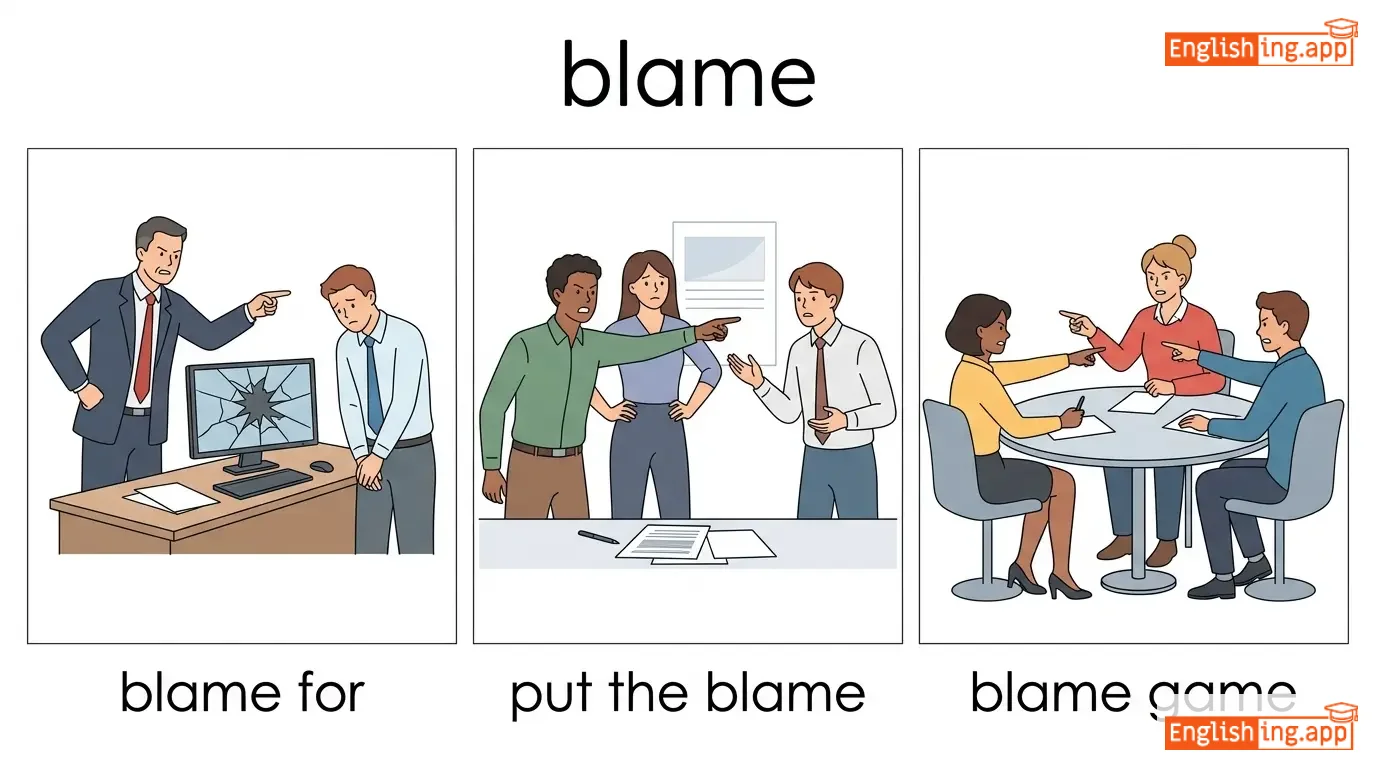
彼はその間違いについて友人を非難しました。
Kare wa sono machigai ni tsuite yūjin wo hinan shimashita.
••••••
|
put the blame on
責任を負わせる
••••••
|
to make someone responsible for something bad
••••••
|
責任を負わせる
Sekinin wo owaseru
••••••
|
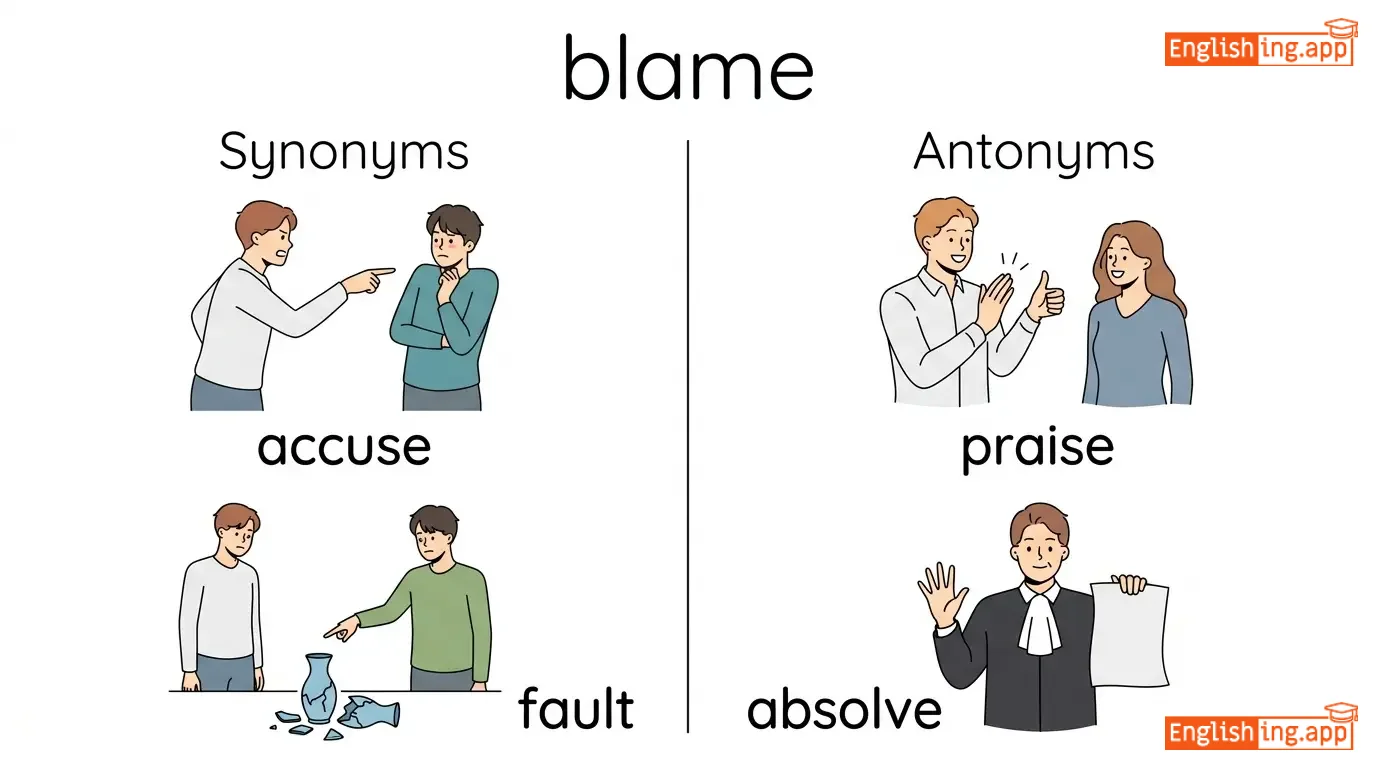
accuse, fault, charge, condemn
••••••
|
praise, absolve, forgive
••••••
|
blame for, put the blame, blame game, blame others
••••••
|
Blame は非難するという意味—'Blame game' は非難し合うゲーム。
••••••
|
|
#668
😌
|
/ˈblændɪʃ/
verb
(ブランディッシュ)
••••••
|
- •••••• |
お世辞を言う
oseji o iu
••••••
|
blandished
ブランディッシュド
••••••
|
blandished
ブランディッシュド
••••••
|
blandishes
ブランディッシュズ
••••••
|
blandishing
ブランディッシング
••••••
|
to flatter or coax someone with kind words or praise in order to influence them
••••••
|
He blandished the officials with compliments to gain their support.
彼は褒め言葉で役人をブランディッシュした。
••••••
|
彼は支持を得るために役人にお世辞を言った。
kare wa shiji o eru tame ni yakunin ni oseji o itta
••••••
|
- •••••• | - •••••• | - •••••• |
flatter, coax, cajole, sweet-talk, wheedle
••••••
|
criticize, insult, rebuke
••••••
|
blandish someone with praise, blandish into agreement, blandishing words
••••••
|
blandish = ブランドのように褒めて心をつかむ
••••••
|
|
#669
📄
|
/blæŋk/
adjective
(ブランク)
••••••
|
- •••••• |
空白
kuhaku
••••••
|
- •••••• | - •••••• | - •••••• | - •••••• |
showing no expression or containing nothing written, printed, or recorded.
••••••
|
Her face went blank when she heard the bad news. |
悪いニュースを聞いたとき、彼女の顔は空白になった。
Warui nyuusu o kiita toki, kanojo no kao wa kuhaku ni natta.
••••••
|
a blank slate |
a fresh start with no previous record or experience.
••••••
|
白紙の状態
hakushi no joutai
••••••
|
empty, vacant, expressionless, plain, void
••••••
|
filled, expressive, occupied
••••••
|
blank page, blank look, blank screen, blank form
••••••
|
Blankは空白を意味します — 試験で空白の用紙を提出すると、落ちます!
••••••
|
|
#670
🛏️
|
/ˈblæŋ.kɪt/
noun
(ブランケット)
••••••
|
- •••••• |
毛布
moufu
••••••
|
- •••••• | - •••••• | - •••••• | - •••••• |
A large piece of cloth used for warmth, typically on a bed.
••••••
|
She pulled the blanket over her shoulders to stay warm.
彼女は温かく保つために肩にブランケットをかけた。
••••••
|
彼女は温かく保つために肩にブランケットをかけた。
Kanojo wa atatakai ho-motsu tame ni kata ni buranketto o kaketa.
••••••
|
a blanket statement
一般的な声明
••••••
|
A general statement that covers all cases but may not be accurate in detail.
••••••
|
一般的な声明
ippanteki na seimei
••••••
|
cover, quilt, throw, spread, comforter
••••••
|
sheet, exposure
••••••
|
warm blanket, electric blanket, wool blanket, heavy blanket
••••••
|
毛布 = Blanket、一般的な声明を覆うようにすべてを覆う。
••••••
|
|
#671
💥
|
/blæst/
noun, verb
(ブラスト)
••••••
|
- •••••• |
爆発、強い衝撃
bakuhatsu, tsuyoi shougeki
••••••
|
blasted
ブラステッド
••••••
|
blasted
ブラステッド
••••••
|
blasts
ブラストス
••••••
|
blasting
ブラスティング
••••••
|
a strong gust of wind, an explosion, or a loud sound; to destroy or shatter by explosion
••••••
|
The explosion sent a powerful blast through the building.
爆発は建物を通して強力な爆風を送った。
••••••
|
爆発は建物を通して強力な爆風を送った。
Bakuhatsu wa tatemono o tōshite kyōryoku na bakufū o okutta.
••••••
|
have a blast
楽しんで
••••••
|
to have a very enjoyable time
••••••
|
楽しんで
tanoshinde
••••••
|
explosion, burst, boom, gust, detonation
••••••
|
silence, calm, stillness
••••••
|
blast wave, blast furnace, blast off, blasting sound
••••••
|
Blastは爆発を意味し、'Have a blast'は楽しい時間を過ごすこと、爆発のように楽しい
••••••
|
|
#672
🩸
|
/bliːd/
verb
(ブリード)
••••••
|
- •••••• |
出血する
shukketsu suru
••••••
|
bled
ブレッド
••••••
|
bled
ブレッド
••••••
|
bleeds
ブリードス
••••••
|
bleeding
ブリーディング
••••••
|
to lose blood from the body, especially due to injury
••••••
|
She began to bleed from the cut on her arm.
彼女は腕の切り傷から血を流し始めた。
••••••
|
彼女は腕の切り傷から血を流し始めた。
Kanojo wa ude no kirikizu kara chi wo nagashihajimeta.
••••••
|
- •••••• | - •••••• | - •••••• |
hemorrhage, ooze, drip, seep
••••••
|
heal, stop
••••••
|
bleed heavily, bleed profusely, bleed out, bleed internally
••••••
|
Blee(d) は日本語で出血するという意味です。覚えておいて:切ると血が出る!
••••••
|
|
#673
🥤
|
/blɛnd/
verb
(ブレンド)
••••••
|
|
混ぜる
mazeru
••••••
|
blended
ブレンドされた
••••••
|
blended
ブレンドされた
••••••
|
blends
ブレンズ
••••••
|
blending
ブレンディング
••••••
|
to mix different substances or elements together so that they form a smooth combination
••••••
|
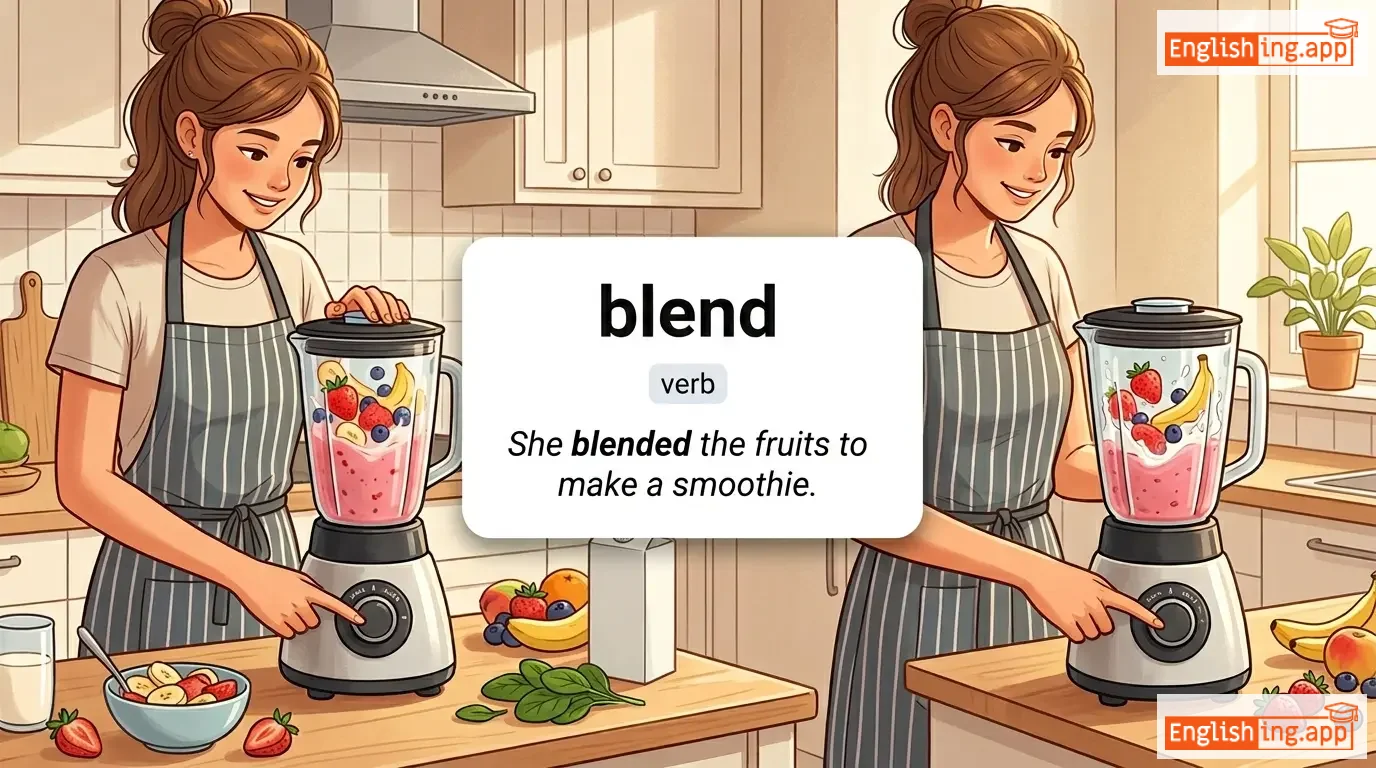
She blended the fruits to make a smoothie.
彼女はスムージーを作るために果物をブレンドしました。
••••••
|
彼女はスムージーを作るために果物をブレンドしました。
Kanojo wa sumūjī o tsukuru tame ni kudamono o burendo shimashita.
••••••
|
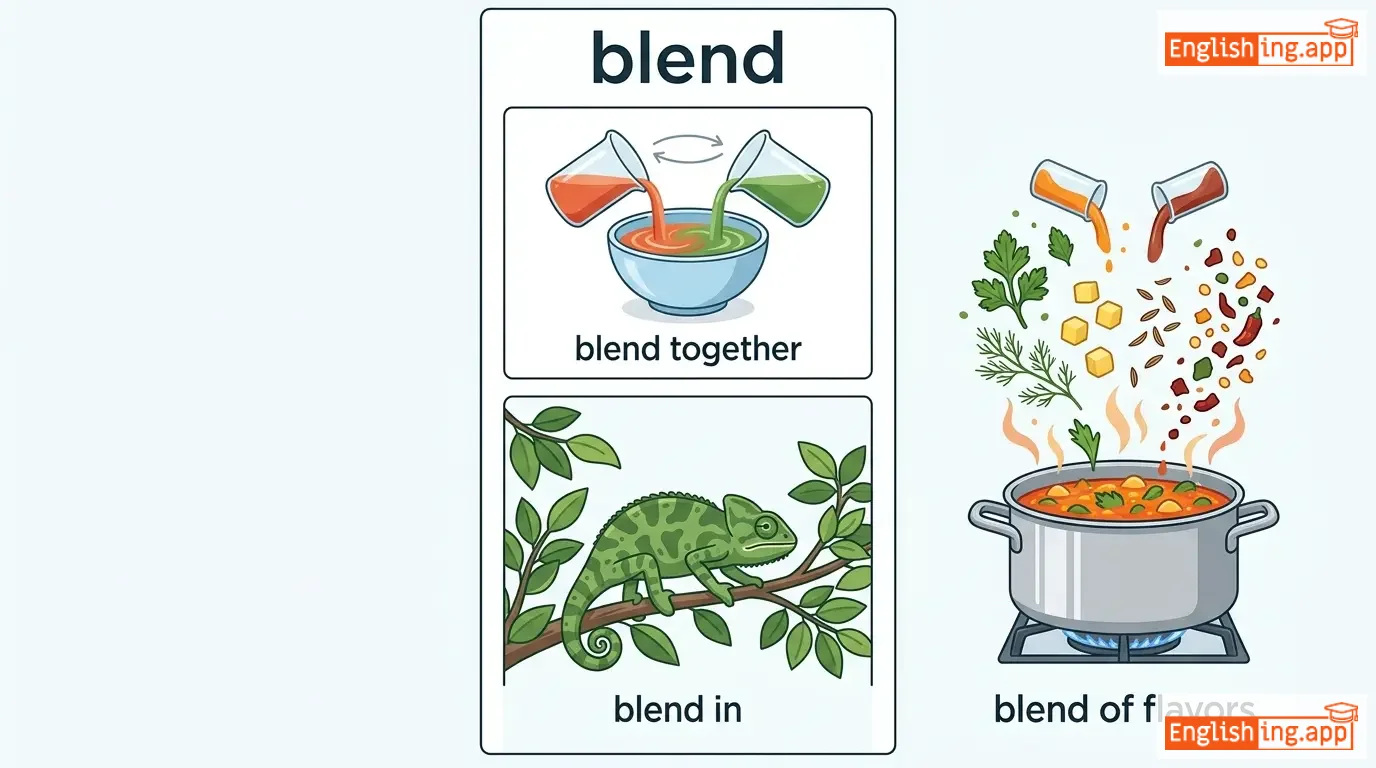
blend in
溶け込む
••••••
|
to look or seem the same as the surrounding people or things
••••••
|
溶け込む
tokekomu
••••••
|
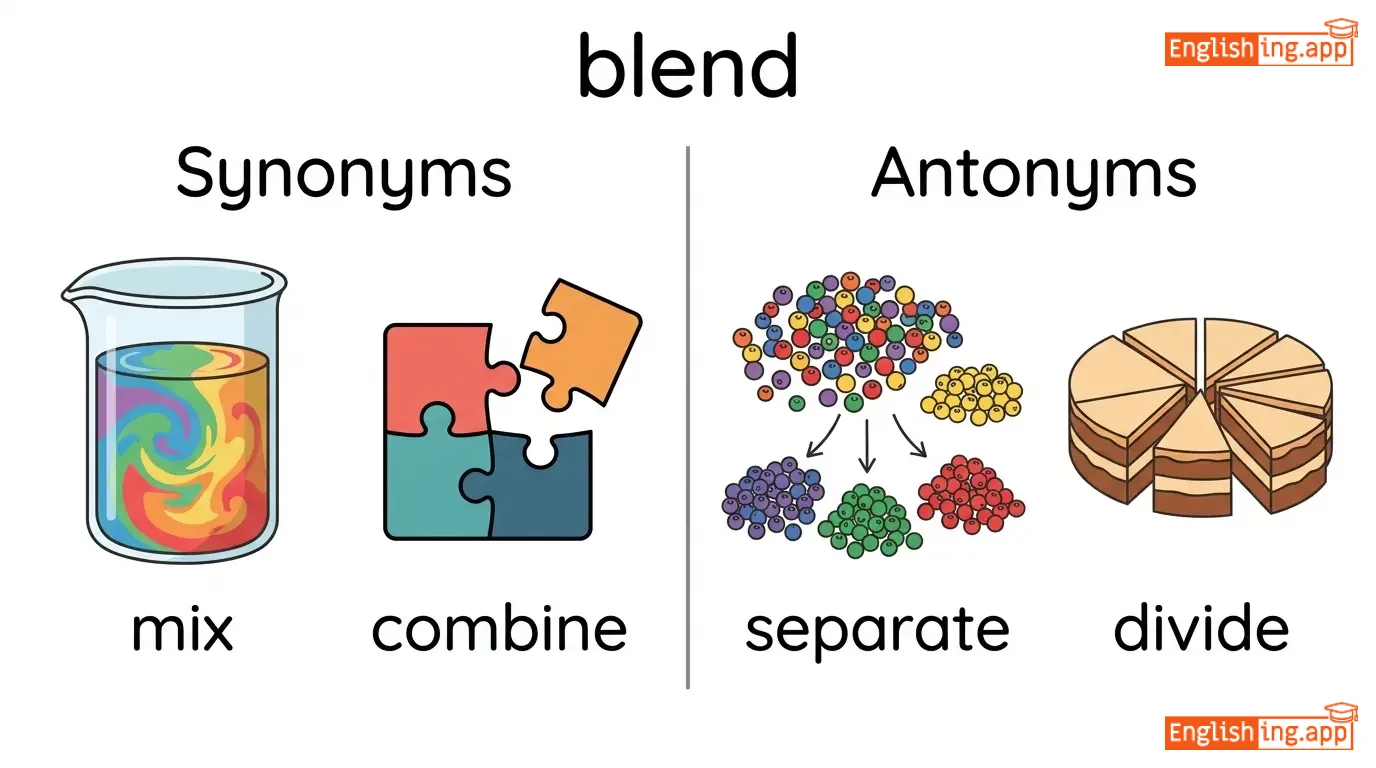
mix, combine, merge, fuse, integrate
••••••
|
separate, divide, detach
••••••
|
blend together, blend in, blend of flavors, blend smoothly
••••••
|
Blendは混ぜるという意味です、果物をブレンダーに入れてスムージーを作るような感じです。
••••••
|
|
#674
🙏
|
/blɛs/
verb
(ブレス)
••••••
|
|
祝福する
shukufuku suru
••••••
|
blessed
ブレスド
••••••
|
blessed
ブレスド
••••••
|
blesses
ブレスズ
••••••
|
blessing
ブレッシング
••••••
|
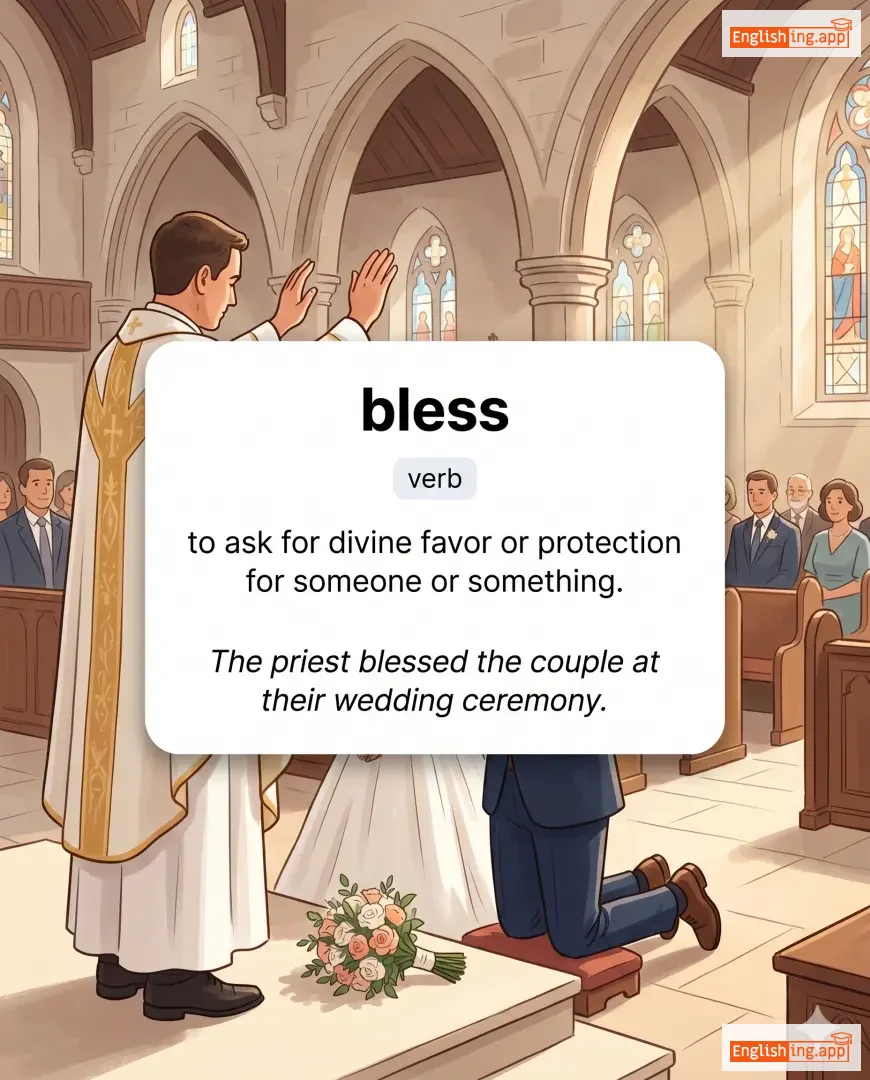
to ask for divine favor or protection for someone or something.
••••••
|
The priest blessed the couple at their wedding ceremony.
司祭は結婚式でカップルを祝福しました。
••••••
|
司祭は結婚式でカップルを祝福しました。
Shisai wa kekkonshiki de kappuru o shukufuku shimashita.
••••••
|
count your blessings
自分の祝福を数えなさい
••••••
|
to be thankful for the good things you have.
••••••
|
自分の祝福を数えなさい
Jibun no shukufuku o kazoenasai
••••••
|
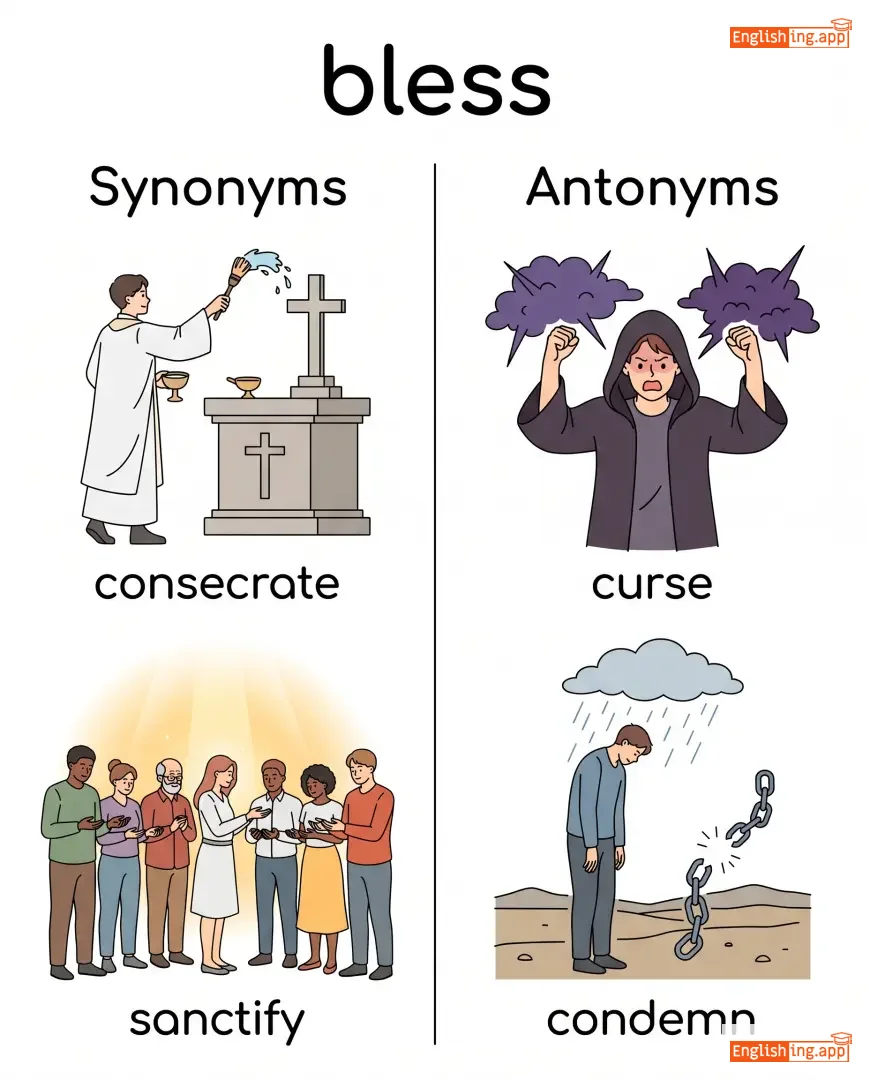
consecrate, sanctify, praise, thank, favor
••••••
|
curse, condemn
••••••
|
bless someone, bless you, God bless, bless the day
••••••
|
Blessingは祝福、神からの良いエネルギー!
••••••
|
|
#675
🌸
|
/ˈblɛsɪŋ/
noun
(ブレッシング)
••••••
|
- •••••• |
祝福
shukufuku
••••••
|
- •••••• | - •••••• | - •••••• | - •••••• |
a prayer asking for divine favor; something that brings happiness or benefit.
••••••
|
Good health is a blessing we often take for granted. |
健康は私たちが当然のように見過ごす祝福です。
Kenkou wa watashitachi ga touzen no you ni misugosu shukufuku desu.
••••••
|
a mixed blessing |
something that has both advantages and disadvantages.
••••••
|
混合された祝福
kongou sareta shukufuku
••••••
|
favor, gift, boon, grace, benefit
••••••
|
curse, misfortune, bane
••••••
|
divine blessing, family blessing, count your blessings, a true blessing
••••••
|
Blessingは祝福を意味します — 忘れないで、健康は祝福です!
••••••
|
|
#676
🌱
|
/blaɪt/
noun
(buraito)
••••••
|
- •••••• |
枯れ病
karebyō
••••••
|
- •••••• | - •••••• | - •••••• | - •••••• |
A disease or condition that causes plants to wither; something that spoils or damages.
••••••
|
The drought was a blight on the farmer’s crops. |
干ばつは農家の作物にとって枯れ病でした。
Kambatsu wa nōka no sakumotsu ni totte karebyō deshita.
••••••
|
cast a blight on |
To have a damaging or harmful effect on something.
••••••
|
~に枯れ病をもたらす
〜ni karebyō o motarasu
••••••
|
disease, plague, curse, scourge, ruin
••••••
|
blessing, benefit, boon
••••••
|
urban blight, potato blight, economic blight, cast a blight
••••••
|
枯れ病、枯れるという意味で、農作物を壊すもの。
••••••
|
Vocabulary Quiz
Test your vocabulary by matching words with their translations or meanings.
Login to take the quiz
Comments (0)
Share your thoughts and join the discussion.
Join the discussion by logging in
Login to CommentNo comments yet
Be the first to share your thoughts!