

翻訳
過去
過去分詞
三人称単数
動名詞
意味
例文
例文の翻訳
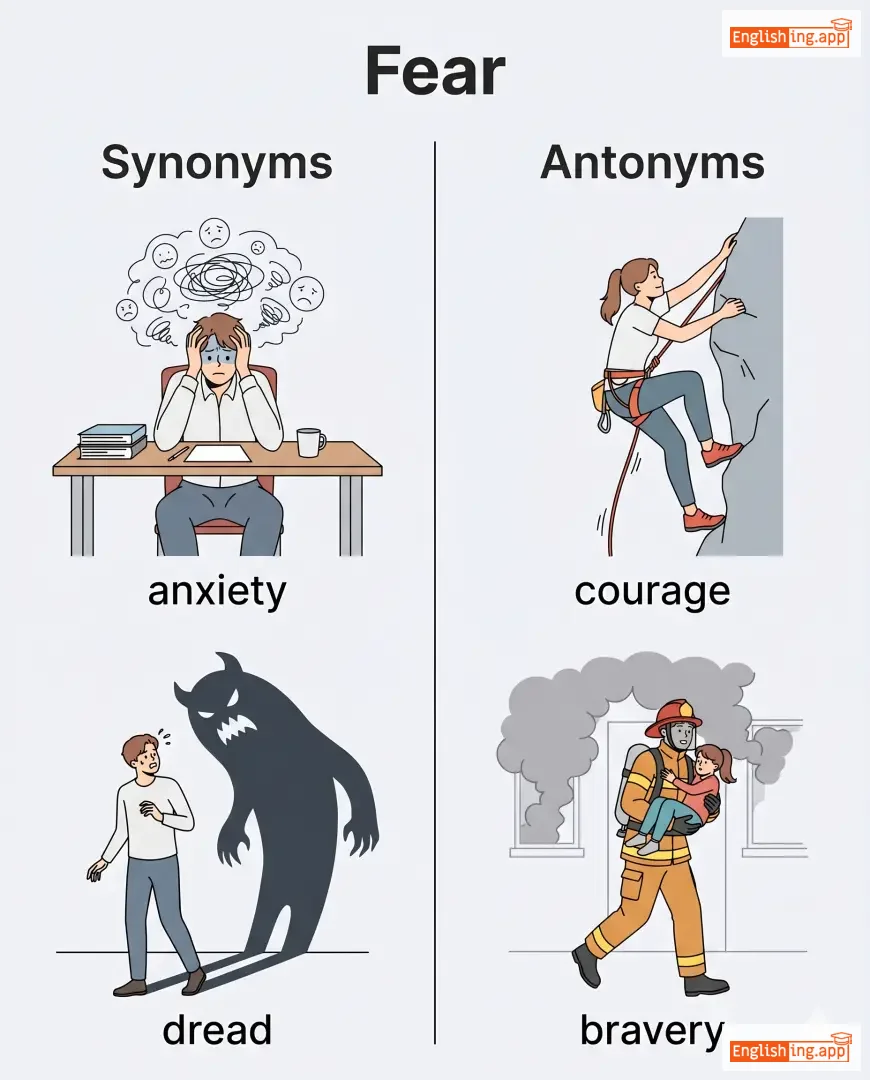
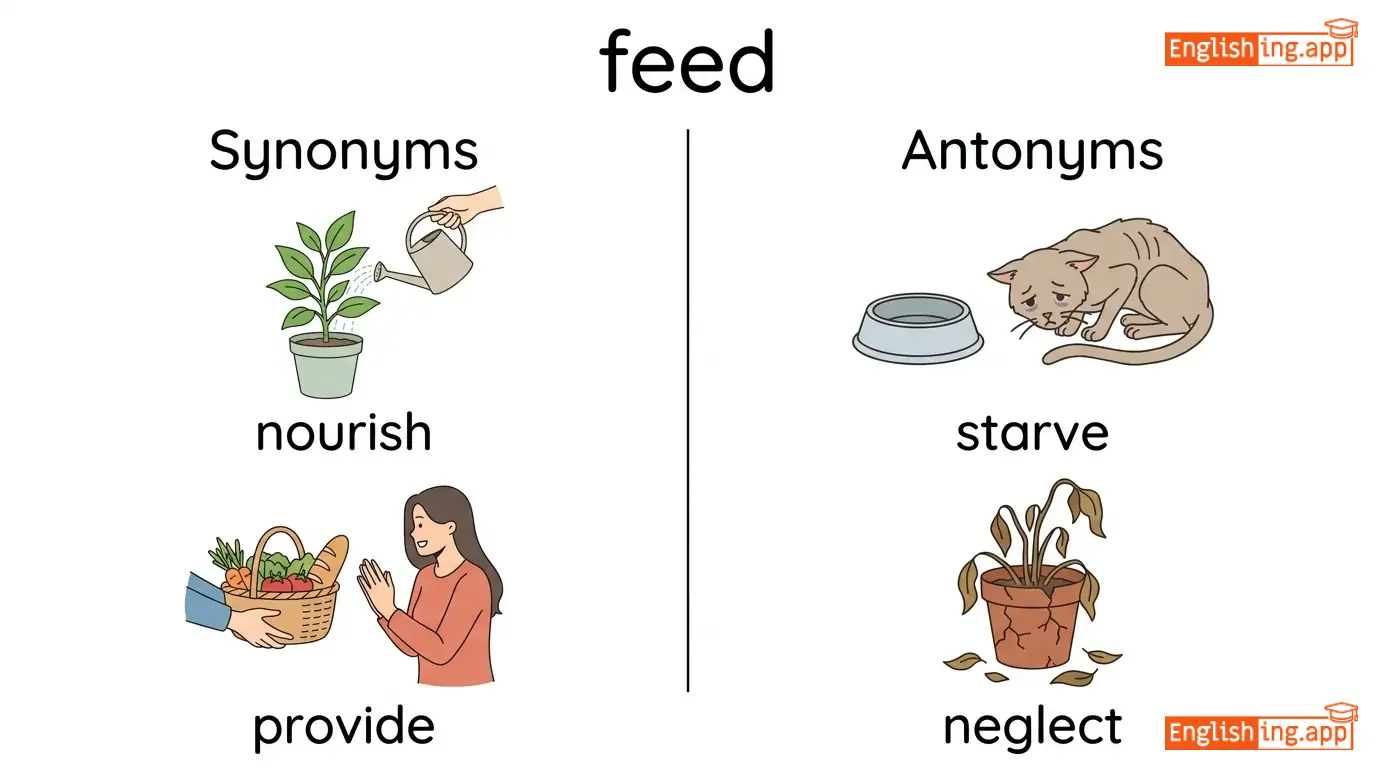
同義語
対義語
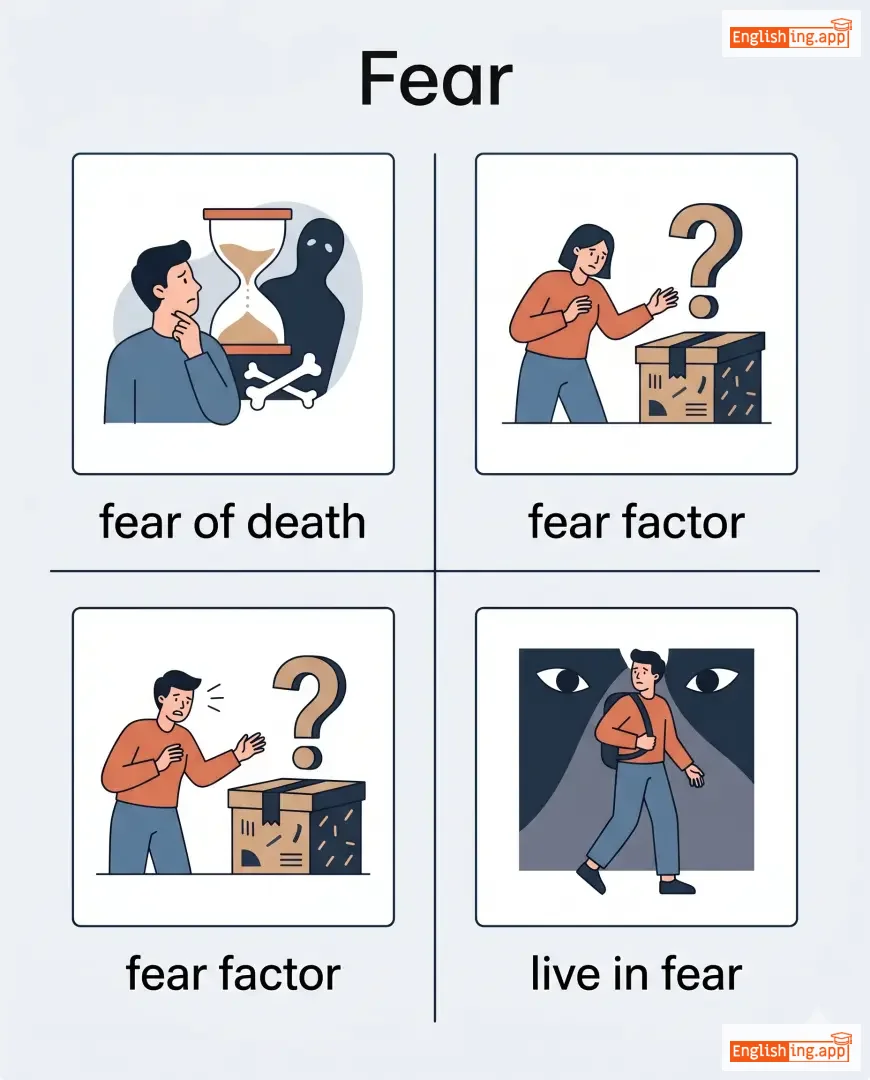
コロケーション
ニーモニック


Swipe left or right, or use the buttons. Tap image to zoom.
例文の翻訳
単語
Lesson 43Lesson 43 - マスクトグル
|
絵文字
|
単語 | Images | 翻訳 | 過去 | 過去分詞 | 三人称単数 | 動名詞 | 意味 | 例文 | 例文の翻訳 | 表現例 | 表現例の意味 | 表現例の翻訳 | 同義語 | 対義語 | コロケーション | ニーモニック |
|---|---|---|---|---|---|---|---|---|---|---|---|---|---|---|---|---|---|
|
#2043
⚡
|
/fɔːlt/
noun
(フォルト)
••••••
|
- •••••• |
過失
kashitsu
••••••
|
- •••••• | - •••••• | - •••••• | - •••••• |
A mistake, error, or responsibility for a problem.
••••••
|
It was not her fault that the train was late. |
列車が遅れたのは彼女の過失ではありませんでした。
Ressha ga okureta no wa kanojo no kashitsu de wa arimasen deshita.
••••••
|
at fault |
Responsible for a mistake or wrongdoing.
••••••
|
責任がある
sekinin ga aru
••••••
|
mistake, flaw, defect, error, responsibility
••••••
|
perfection, merit
••••••
|
take the fault, find fault, fault line, at fault
••••••
|
Fault = 過失、責任を持って修正しましょう。
••••••
|
|
#2044
⚠️
|
/ˈfɔːlti/
adjective
(フォールティ)
••••••
|
- •••••• |
欠陥のある
kekkan no aru
••••••
|
- •••••• | - •••••• | - •••••• | - •••••• |
Having defects or imperfections; not working properly
••••••
|
The device stopped working because it was faulty.
その装置はフォールティだったので動作を停止しました。
••••••
|
その装置は欠陥のあるため動作を停止しました。
sono souchi wa kekkan no aru tame dousa o teishi shimashita
••••••
|
faulty logic
フォールティな論理
••••••
|
Reasoning that is incorrect or flawed
••••••
|
欠陥のある論理
kekkan no aru ronri
••••••
|
defective, flawed, imperfect, broken, malfunctioning
••••••
|
perfect, flawless, sound
••••••
|
faulty wiring, faulty equipment, faulty design, faulty logic
••••••
|
フォールティ = 欠陥のある, 'fault'を思い出す
••••••
|
|
#2045
🙏
|
/ˈfeɪvər/
noun
(フェイヴァー)
••••••
|
- •••••• |
お願い
onegai
••••••
|
- •••••• | - •••••• | - •••••• | - •••••• |
An act of kindness or approval.
••••••
|
She asked him for a small favor.
彼女は彼に小さなお願いをした。
••••••
|
彼女は彼に小さなお願いをした。
Kanojo wa kare ni chiisana onegai o shita.
••••••
|
do someone a favor
誰かにお願いをする
••••••
|
To do something to help someone.
••••••
|
誰かにお願いをする
Dareka ni onegai o suru
••••••
|
kindness, support, approval, help
••••••
|
disfavor, rejection
••••••
|
ask a favor, return a favor, in favor of, do a favor
••••••
|
お願いは助けを意味する — 友達にお願いをして喜ばれる。
••••••
|
|
#2046
⭐
|
/ˈfeɪvərɪt/
adjective, noun
(フェイヴァリット)
••••••
|
- •••••• |
お気に入り
okiniiri
••••••
|
- •••••• | - •••••• | - •••••• | - •••••• |
Preferred over all others; something or someone especially liked.
••••••
|
Chocolate is my favorite ice cream flavor. |
チョコレートは私のお気に入りのアイスクリームのフレーバーです。
Chokorēto wa watashi no okiniiri no aisukurīmu no furēbā desu.
••••••
|
play favorites |
To give unfair advantage to one person over others.
••••••
|
お気に入りを作る
okiniiri o tsukuru
••••••
|
preferred, beloved, liked, best, choice
••••••
|
hated, disliked
••••••
|
favorite song, favorite color, all-time favorite, crowd favorite
••••••
|
お気に入りはあなたが最も好きなもの、例えばお気に入りの映画。
••••••
|
|
#2047
👍
|
/ˈfeɪvərəbl/
adjective
(フェイバラブル)
••••••
|
- •••••• |
好都合な
koutsugou na
••••••
|
- •••••• | - •••••• | - •••••• | - •••••• |
Expressing approval, support, or positivity; advantageous or beneficial
••••••
|
The weather conditions were favourable for the outdoor event.
屋外イベントの天候はフェイバラブルでした。
••••••
|
屋外イベントの天候は好都合でした。
Okugai ibento no tenkou wa koutsugou deshita.
••••••
|
- •••••• | - •••••• | - •••••• |
advantageous, beneficial, positive, supportive, encouraging
••••••
|
unfavourable, disadvantageous, negative
••••••
|
favourable conditions, favourable outcome, favourable opinion, favourable terms
••••••
|
フェイバラブルは '好都合' と覚えて利益や支持を意味する
••••••
|
|
#2048
😨
|
/fɪr/
noun, verb
(フィアー)
••••••
|
|
恐怖
kyōfu
••••••
|
feared
フィアード
••••••
|
feared
フィアード
••••••
|
fears
フィアーズ
••••••
|
fearing
フィアリング
••••••
|
An unpleasant emotion caused by the belief that someone or something is dangerous.
••••••
|
She has a fear of flying.
彼女は飛行機恐怖症です。
••••••
|
彼女は飛行機恐怖症です。
kanojo wa hikōki kyōfushō desu.
••••••
|
face your fears
自分の恐怖と向き合う
••••••
|
Confront something that scares you.
••••••
|
自分の恐怖と向き合う
jibun no kyōfu to mukiau
••••••
|
anxiety, dread, terror, worry, concern
••••••
|
courage, bravery, confidence
••••••
|
fear of death, fear factor, live in fear, fear something
••••••
|
Fearは恐怖 — 恐れを知らぬ者は恐れる。
••••••
|
|
#2049
😨
|
/ˈfɪr.fəl/
adjective
(フィアフル)
••••••
|
- •••••• |
恐ろしい
osoroshii
••••••
|
- •••••• | - •••••• | - •••••• | - •••••• |
feeling afraid or showing fear
••••••
|
She was fearful of walking alone at night.
彼女は夜に一人で歩くのを恐れていた。
••••••
|
彼女は夜に一人で歩くのを恐れていた。
Kanojo wa yoru ni hitori de aruku no o osoreteita.
••••••
|
fearful of one's own shadow
自分の影を怖がる
••••••
|
extremely timid or easily frightened
••••••
|
自分の影を怖がる
Jibun no kage o kowagaru
••••••
|
afraid, scared, anxious, apprehensive, timid
••••••
|
brave, confident, fearless
••••••
|
fearful glance, fearful expression, fearful situation
••••••
|
Osoroshii = 'oh so scary'.
••••••
|
|
#2050
🏅
|
/fiːt/
noun
(フィート)
••••••
|
- •••••• |
偉業
igyō
••••••
|
- •••••• | - •••••• | - •••••• | - •••••• |
an achievement that requires great courage, skill, or strength
••••••
|
Climbing Mount Everest was a remarkable feat.
エベレスト山の登頂は素晴らしい偉業でした。
••••••
|
エベレスト山の登頂は素晴らしい偉業でした。
Eberesuto-san no tōchō wa subarashī igyō deshita.
••••••
|
- •••••• | - •••••• | - •••••• |
achievement, accomplishment, triumph, success
••••••
|
failure, defeat, loss
••••••
|
great feat, remarkable feat, impressive feat
••••••
|
偉業 (feat) のように山を登る
••••••
|
|
#2051
📱
|
/ˈfiːtʃər/
noun
(fīchā)
••••••
|
- •••••• |
特徴
tokuchō
••••••
|
- •••••• | - •••••• | - •••••• | - •••••• |
a distinctive attribute or aspect of something; a characteristic
••••••
|
The new phone has a unique camera feature.
新しい電話にはユニークなカメラの特徴があります。
••••••
|
新しい電話にはユニークなカメラの特徴があります。
Atarashī denwa ni wa yunikuna kamera no tokuchō ga arimasu.
••••••
|
- •••••• | - •••••• | - •••••• |
attribute, aspect, characteristic, trait
••••••
|
flaw, defect
••••••
|
key feature, special feature, highlight feature
••••••
|
Featureは日本語で電話のカメラの特徴を意味します。
••••••
|
|
#2052
❄️
|
/ˈfɛb.ruˌɛr.i/
noun
(2月)
••••••
|
- •••••• |
2月
nigatsu
••••••
|
- •••••• | - •••••• | - •••••• | - •••••• |
The second month of the year in the Gregorian calendar, typically having 28 days, or 29 in a leap year.
••••••
|
My birthday is in February, so I always look forward to this month.
私の誕生日は2月なので、いつもこの月を楽しみにしています。
••••••
|
私の誕生日は2月なので、いつもこの月を楽しみにしています。
watashi no tanjobi wa nigatsu nanode, itsumo kono tsuki o tanoshimi ni shiteimasu
••••••
|
- •••••• | - •••••• | - •••••• |
2nd month, Feb, month of love, shortest month
••••••
|
July, August
••••••
|
February holidays, February weather, February birth, February events
••••••
|
2月 = 短くて寒い月, remember short cold month!
••••••
|
|
#2053
🏛️
|
/ˈfɛdərəl/
adjective
(フェデラル)
••••••
|
- •••••• |
フェデラル
federal
••••••
|
- •••••• | - •••••• | - •••••• | - •••••• |
Relating to the central government of a federation.
••••••
|
The federal government passed a new law on healthcare. |
連邦政府は医療制度に関する新しい法律を通過させました。
Renpō seifu wa iryō seido ni kansuru atarashī hōritsu o tsūka sasemashita.
••••••
|
- •••••• | - •••••• | - •••••• |
national, central, governmental, administrative
••••••
|
local, regional
••••••
|
federal law, federal court, federal government, federal system
••••••
|
フェデラルは連邦政府に関連することを意味します。
••••••
|
|
#2054
💵
|
/fiː/
noun
(フィ)
••••••
|
- •••••• |
料金
ryoukin
••••••
|
- •••••• | - •••••• | - •••••• | - •••••• |
A payment made for a service or privilege.
••••••
|
The lawyer charged a high fee for his services. |
弁護士は彼のサービスに高い料金を請求した。
Bengoshi wa kare no sābisu ni takai ryōkin o seikyū shita.
••••••
|
service fee |
An amount charged for providing a service
••••••
|
サービス料
Sābisu ryō
••••••
|
charge, cost, payment, price
••••••
|
free, gift
••••••
|
pay a fee, membership fee, tuition fee, service fee
••••••
|
Feeは料金 - レストランではよくサービス料を払います
••••••
|
|
#2055
🍽️
|
/fiːd/
verb
(フィード)
••••••
|
|
与える
ataeru
••••••
|
fed
フェッド
••••••
|
fed
フェッド
••••••
|
feeds
フィッズ
••••••
|
feeding
フィーディング
••••••
|
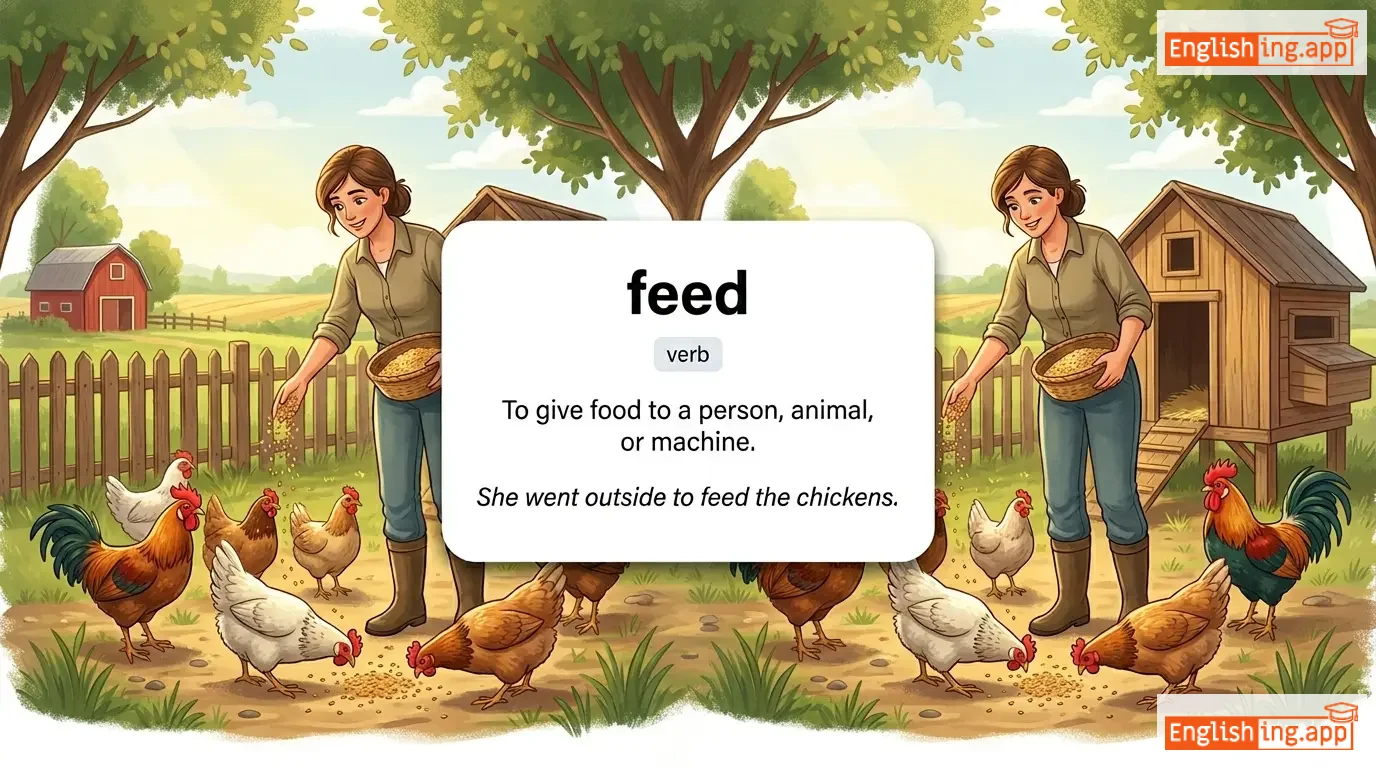
To give food to a person, animal, or machine.
••••••
|
She went outside to feed the chickens.
彼女は鶏に餌をやりに外に出た。
••••••
|
彼女は鶏に餌をやりに外に出た。
kanojo wa niwatori ni esa o yari ni soto ni deta.
••••••
|
feed the fire
火をつける
••••••
|
To add fuel to something or make it stronger
••••••
|
火をつける
hi o tsukeru
••••••
|
nourish, provide, supply, sustain
••••••
|
starve, neglect
••••••
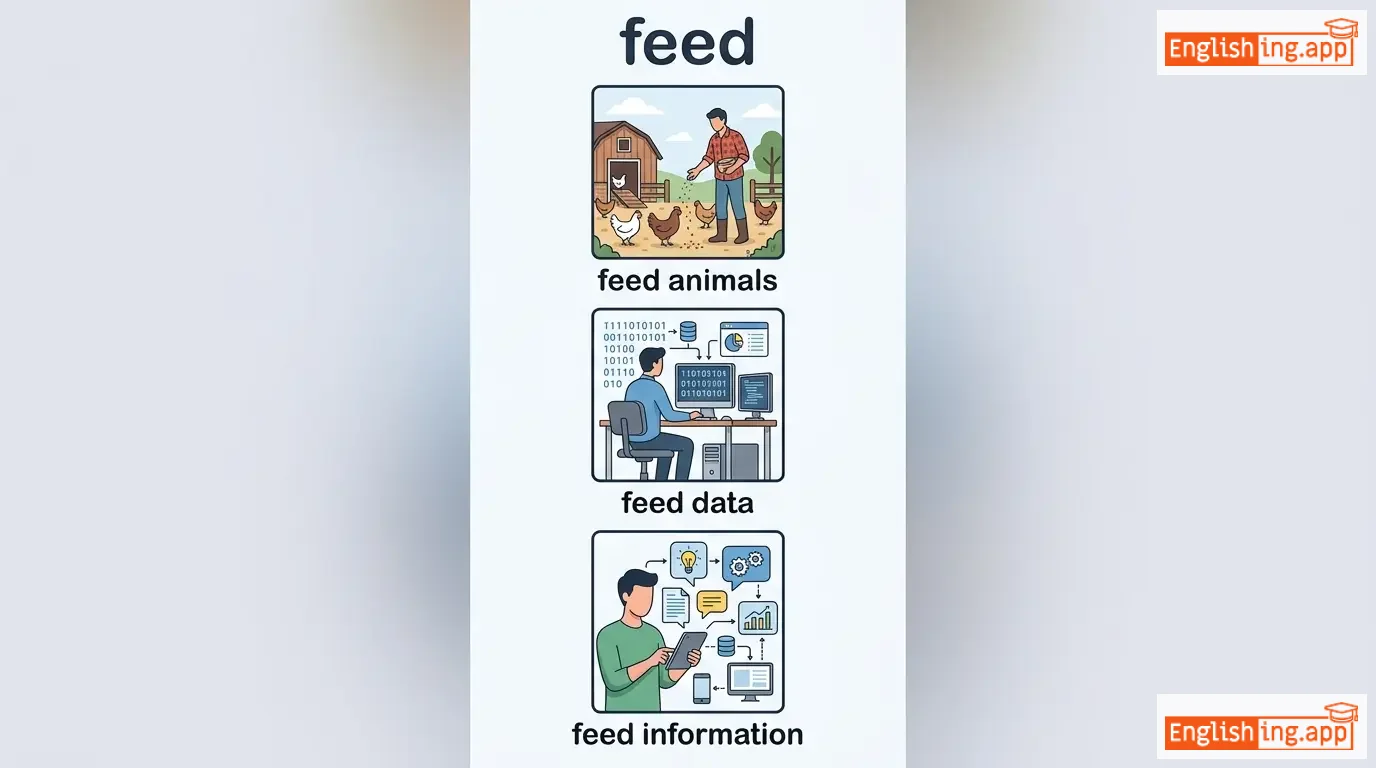
|
feed animals, feed data, feed information, feed on
••••••
|
Feed は与えること - Facebook のフィードのように、新しい内容が常に追加されます。
••••••
|
|
#2056
😊
|
/fiːl/
verb
(フィール)
••••••
|
|
感じる
kanjiru
••••••
|
felt
フェルト
••••••
|
felt
フェルト
••••••
|
feels
フィールズ
••••••
|
feeling
フィーリング
••••••
|
To experience an emotion or physical sensation.
••••••
|
I feel happy when I listen to music.
私は音楽を聴くと幸せを感じます。
••••••
|
音楽を聴くと幸せを感じます。
ongaku wo kiku to shiawase wo kanjimasu.
••••••
|
feel at home
家にいるように感じる
••••••
|
To be comfortable and relaxed
••••••
|
家にいるように感じる
ie ni iru you ni kanjiru
••••••
|
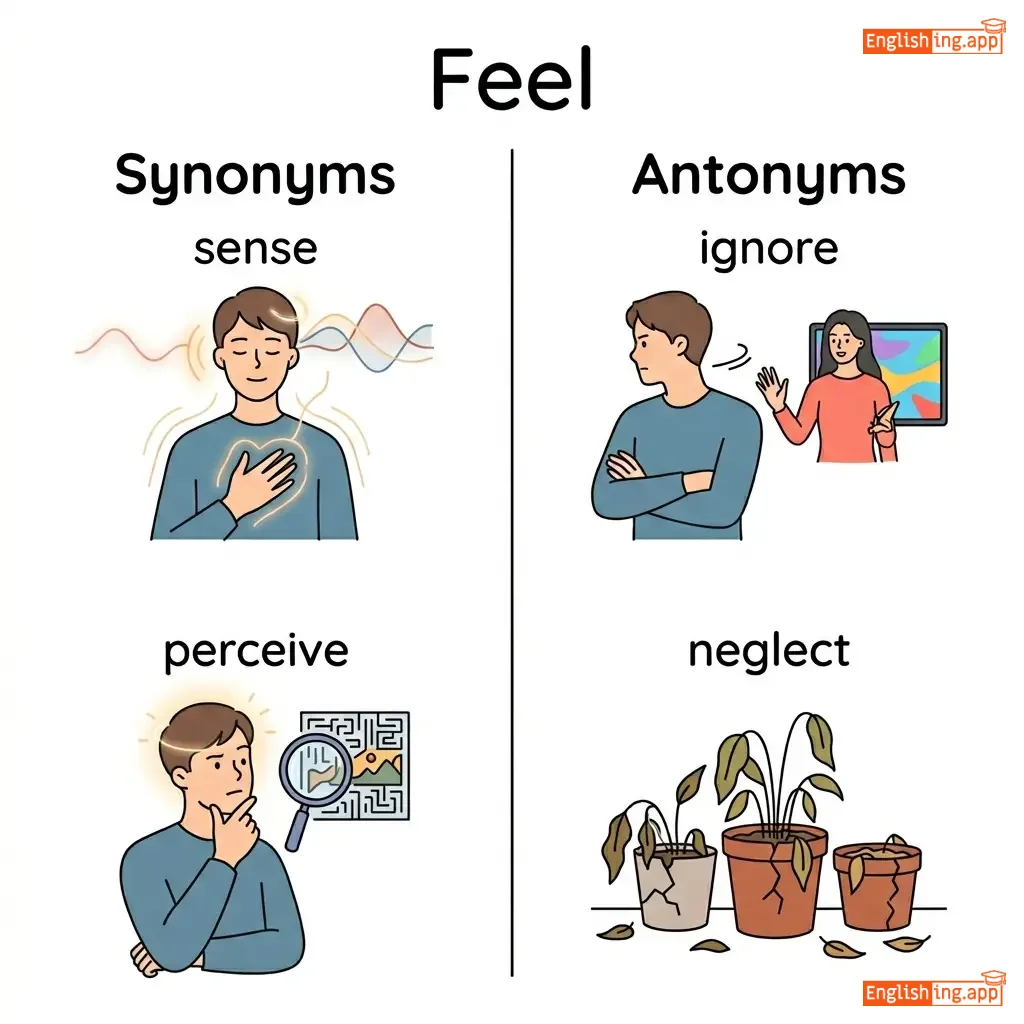
sense, perceive, experience, touch
••••••
|
ignore, neglect
••••••
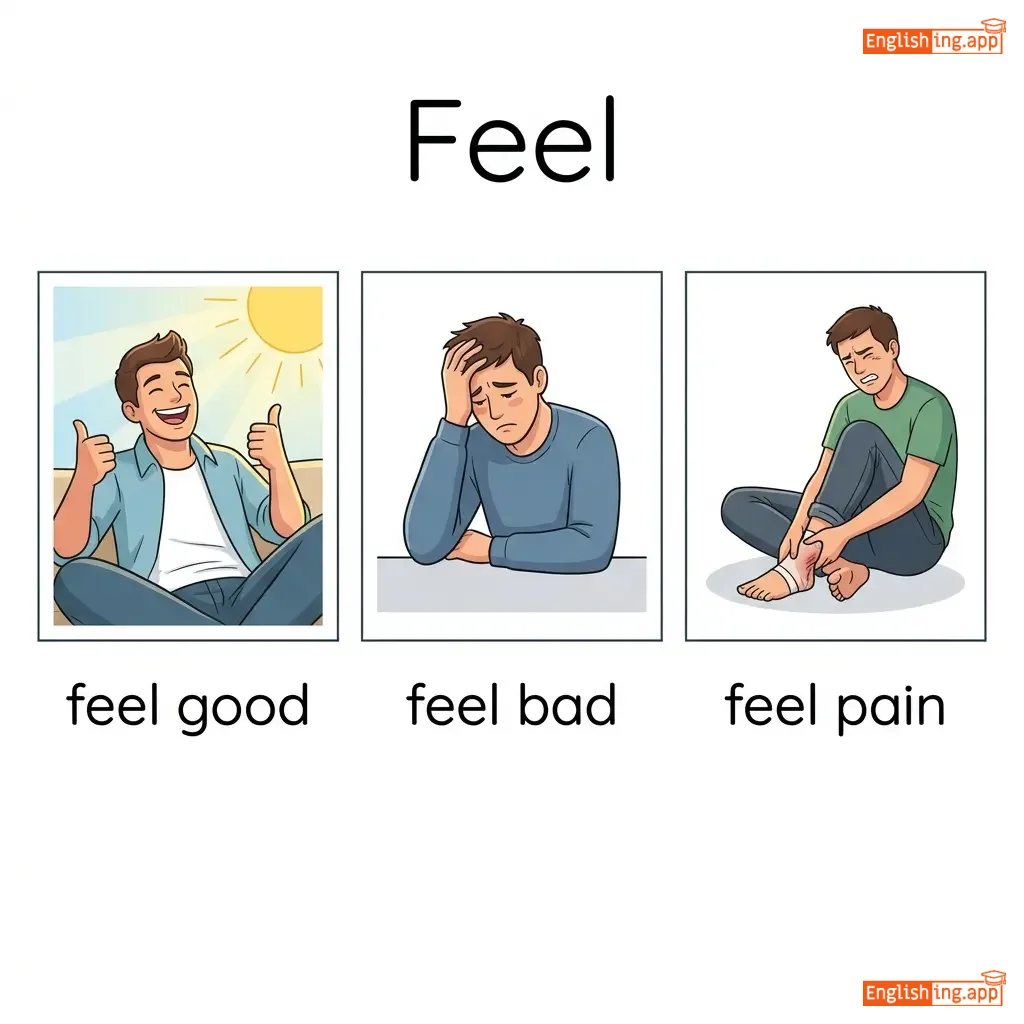
|
feel good, feel bad, feel pain, feel pressure
••••••
|
感じるは感情や感覚を体験すること、家にいるように感じるときにリラックスする。
••••••
|
|
#2057
💓
|
/ˈfiːlɪŋ/
noun
(フィーリング)
••••••
|
- •••••• |
感情
kanjou
••••••
|
- •••••• | - •••••• | - •••••• | - •••••• |
An emotional state or physical sensation.
••••••
|
She had a strange feeling about the place. |
彼女はその場所について奇妙な感情を抱いていた。
Kanojo wa sono basho ni tsuite kimyō na kanjō o daite ita.
••••••
|
mixed feelings |
Having both positive and negative emotions about something
••••••
|
複雑な感情
fukuzatsu na kanjō
••••••
|
emotion, sensation, sentiment, mood
••••••
|
numbness, indifference
••••••
|
strong feeling, bad feeling, good feeling, mixed feelings
••••••
|
Feelingは感情です、あなたの心の中にあるもの
••••••
|
|
#2058
👥
|
/ˈfɛloʊ/
noun
(フェロー)
••••••
|
- •••••• |
仲間
nakama
••••••
|
- •••••• | - •••••• | - •••••• | - •••••• |
a person who shares a common situation, interest, or activity with another
••••••
|
He is a fellow student in my class. |
彼は私のクラスの仲間です。
Kare wa watashi no kurasu no nakama desu.
••••••
|
fellow traveler |
someone who shares similar beliefs or interests, often political
••••••
|
同伴者
dōhansha
••••••
|
companion, colleague, peer, comrade, associate
••••••
|
opponent, stranger, rival
••••••
|
fellow student, fellow worker, fellow citizen, fellow traveler
••••••
|
Fellowは仲間を意味します - Fellow studentはクラスの仲間を意味します
••••••
|
|
#2059
👩
|
/ˈfiːmeɪl/
noun/adjective
(フィーメイル)
••••••
|
- •••••• |
雌
mesu
••••••
|
- •••••• | - •••••• | - •••••• | - •••••• |
a person or animal of the sex that can bear offspring; relating to women or girls
••••••
|
The female lion protects her cubs fiercely.
メスライオンは自分の子供たちを必死に守ります。
••••••
|
メスライオンは自分の子供たちを必死に守ります。
Mesu raion wa jibun no kodomotachi o hisshi ni mamorimasu.
••••••
|
female intuition
女性の直感
••••••
|
a woman's natural ability to understand or sense something instinctively
••••••
|
女性の直感
josei no chokkan
••••••
|
woman, lady, girl, feminine
••••••
|
male, man
••••••
|
female student, female worker, female voice, female lead
••••••
|
Fe + male = Female, でも Fe は鉄ではなく、ここでは女性を意味します
••••••
|
|
#2060
♀️
|
/ˈfɛmənɪst/
noun
(フェミニスト)
••••••
|
- •••••• |
フェミニスト
feministo
••••••
|
- •••••• | - •••••• | - •••••• | - •••••• |
a person who supports equal rights and opportunities for women and men
••••••
|
She proudly calls herself a feminist and fights for gender equality. |
彼女は誇りを持って自分をフェミニストだと言い、ジェンダー平等のために戦っています。
Kanojo wa hokori o motte jibun o feminisuto da to ii, jendā byōdō no tame ni tatakatteimasu.
••••••
|
feminist movement |
a social campaign for women's rights and equality
••••••
|
フェミニスト運動
feminisuto undō
••••••
|
activist, advocate, campaigner, reformer
••••••
|
sexist, chauvinist
••••••
|
feminist movement, feminist theory, feminist perspective, feminist writer
••••••
|
フェミニスト = 女性の権利を支持する活動家 — ‘フェミ’ + ‘ニスト’ でフェミニスト!
••••••
|
|
#2061
🚧
|
/fɛns/
noun/verb
(fens)
••••••
|
- •••••• |
フェンス
fensu
••••••
|
fenced
fenced
••••••
|
fenced
fenced
••••••
|
fences
fences
••••••
|
fencing
fencing
••••••
|
a barrier, usually made of wood or wire, that surrounds an area; to enclose with a barrier
••••••
|
They built a fence around the garden.
彼らは庭の周りにフェンスを作った。
••••••
|
彼らは庭の周りにフェンスを作った。
Karera wa niwa no mawari ni fensu o tsukutta.
••••••
|
sit on the fence
フェンスに座る
••••••
|
to avoid making a decision or choosing a side
••••••
|
決定を避ける
kettei o sakeru
••••••
|
barrier, wall, enclosure, hedge
••••••
|
opening, gap
••••••
|
wooden fence, garden fence, high fence, electric fence
••••••
|
フェンスは境界線、エリアを囲む壁のようなものです。
••••••
|
|
#2062
🎉
|
/ˈfɛstəvəl/
noun
(フェスティバル)
••••••
|
- •••••• |
祭り
matsuri
••••••
|
- •••••• | - •••••• | - •••••• | - •••••• |
a day or period of celebration, often for cultural or religious reasons
••••••
|
The city was decorated with lights for the annual music festival. |
その都市は毎年の音楽祭のためにライトで飾られていました。
Sono toshi wa maitoshi no ongakumatsuri no tame ni raito de kazararete imashita.
••••••
|
festival of lights |
a celebration marked by illumination and joy, such as Diwali
••••••
|
光の祭り
hikari no matsuri
••••••
|
celebration, carnival, fair, feast, gala
••••••
|
mourning, sorrow
••••••
|
music festival, religious festival, film festival, annual festival
••••••
|
祭りは楽しいお祝い — すべてが光で満ちている!
••••••
|
|
#2063
🤒
|
/ˈfiːvər/
noun
(フィーバー)
••••••
|
- •••••• |
熱
netsu
••••••
|
- •••••• | - •••••• | - •••••• | - •••••• |
a medical condition in which the body temperature is higher than normal
••••••
|
He couldn’t go to work because he had a high fever. |
高熱のため、彼は仕事に行けませんでした。
Kounetsu no tame, kare wa shigoto ni ikemasen deshita.
••••••
|
football fever |
a strong excitement or enthusiasm for football
••••••
|
サッカーフィーバー
sakkā fībā
••••••
|
temperature, illness, sickness, infection
••••••
|
health, wellness
••••••
|
high fever, dengue fever, fever patient, fever medicine
••••••
|
フィーバーは熱です — フィーバーで体温が上がる様子を想像してみてください。
••••••
|
|
#2064
✋
|
/fjuː/
adjective
(フュー)
••••••
|
- •••••• |
少数
shousuu
••••••
|
- •••••• | - •••••• | - •••••• | - •••••• |
A small number of; not many.
••••••
|
Only a few students attended the class.
ほんの少しの学生がクラスに出席しました。
••••••
|
ほんの少しの学生がクラスに出席しました。
Honno sukoshi no gakusei ga kurasu ni shusseki shimashita.
••••••
|
a lucky few
幸運な少数
••••••
|
A small number of fortunate people.
••••••
|
幸運な少数
kouun na shousuu
••••••
|
some, several, a handful, a small number
••••••
|
many, numerous, plenty
••••••
|
a few days, very few, few people, quite a few
••••••
|
Fewは少ない、'幸運な少数' という意味で、ほんの少しのラッキーな人たち。
••••••
|
|
#2065
➖
|
/ˈfjuːər/
determiner/adjective
(フィューア)
••••••
|
- •••••• |
より少ない
yori sukunai
••••••
|
- •••••• | - •••••• | - •••••• | - •••••• |
a smaller number of; not as many
••••••
|
Fewer people attended the meeting than expected. |
予想より少ない人々が会議に出席した。
Yosō yori sukunai hitobito ga kaigi ni shusseki shita.
••••••
|
- •••••• | - •••••• | - •••••• |
less, reduced, diminished, smaller number
••••••
|
more, greater
••••••
|
fewer people, fewer problems, fewer opportunities, fewer hours
••••••
|
Fewerはより少ない、Few + er = より少ない
••••••
|
|
#2066
🧵
|
/ˈfaɪbər/
noun
(ファイバー)
••••••
|
- •••••• |
繊維
sen'i
••••••
|
- •••••• | - •••••• | - •••••• | - •••••• |
a thread or filament from which a textile is formed; dietary substance from plants that aids digestion
••••••
|
Fruits and vegetables are high in fiber. |
果物と野菜は繊維が豊富です。
Kudamono to yasai wa sen'i ga hōfu desu.
••••••
|
moral fiber |
strength of character and ability to do what is right
••••••
|
道徳的強さ
dōtokuteki kyōsa
••••••
|
thread, strand, filament, roughage
••••••
|
fluid, liquid
••••••
|
fiber optic, fiber diet, fiber content, natural fiber
••••••
|
繊維は繊維、繊維を食べると消化が良くなる
••••••
|
|
#2067
🌾
|
/ˈfaɪ.bər/
noun
(ファイバー)
••••••
|
- •••••• |
繊維
sen'i
••••••
|
- •••••• | - •••••• | - •••••• | - •••••• |
A thread or filament from which a vegetable tissue, mineral substance, or textile is formed; dietary material that aids digestion.
••••••
|
Eating foods rich in fibre can improve your digestion.
食物繊維が豊富な食べ物を食べると消化が良くなります。
••••••
|
食物繊維が豊富な食べ物を食べると消化が良くなります。
Shokumotsu sen'i ga houfu na tabemono wo taberu to shouka ga yoku narimasu.
••••••
|
- •••••• | - •••••• | - •••••• |
thread, filament, strand, dietary roughage
••••••
|
sugar, starch
••••••
|
dietary fibre, natural fibre, plant fibre, fibre content
••••••
|
ファイバー = 消化を助ける細い糸。
••••••
|
|
#2068
📚
|
/ˈfɪkʃən/
noun
(フィクション)
••••••
|
- •••••• |
フィクション
fikushon
••••••
|
- •••••• | - •••••• | - •••••• | - •••••• |
Literature created from the imagination, not presented as fact.
••••••
|
She enjoys reading science fiction novels.
彼女はサイエンスフィクション小説を読むのが好きです。
••••••
|
彼女はサイエンスフィクション小説を読むのが好きです。
Kanojo wa saiensu fikushon shousetsu wo yomu no ga suki desu.
••••••
|
stranger than fiction
フィクションよりも奇妙
••••••
|
Something unbelievable but true.
••••••
|
フィクションよりも奇妙
Fikushon yori mo kimyou
••••••
|
story, novel, tale, narrative, myth
••••••
|
fact, reality, truth
••••••
|
science fiction, historical fiction, fiction writer, work of fiction
••••••
|
フィクションは英語の'fiction'と同じ - 'フィクションで非現実的な世界を冒険しよう!'
••••••
|
|
#2069
🌾
|
/fiːld/
noun
(fīld)
••••••
|
- •••••• |
フィールド
fīrudo
••••••
|
- •••••• | - •••••• | - •••••• | - •••••• |
an area of open land, often used for farming, sports, or scientific study
••••••
|
The children played football in the field. |
子供たちはフィールドでサッカーをしました。
Kodomotachi wa fīrudo de sakkā o shimashita.
••••••
|
field of expertise |
a particular area of knowledge or skill
••••••
|
専門分野
senmon bunya
••••••
|
meadow, ground, area, domain, sphere
••••••
|
city, indoors, building
••••••
|
open field, sports field, field trip, field study, field of research
••••••
|
フィールドは日本語でもそのまま使われるので、覚えやすいです。
••••••
|
|
#2070
🔥
|
/fɪəs/
adjective
(フィアース)
••••••
|
- •••••• |
激しい, 凶暴
hageshī, kyōbō
••••••
|
- •••••• | - •••••• | - •••••• | - •••••• |
showing strong, intense, or aggressive feelings; powerful and violent
••••••
|
The fierce storm damaged several houses in the village. |
激しい嵐が村のいくつかの家を壊しました。
Hageshī arashi ga mura no ikutsuka no ie o kowashimashita.
••••••
|
fierce competition |
very strong or intense competition
••••••
|
激しい競争
hageshī kyōsō
••••••
|
intense, ferocious, strong, violent, brutal
••••••
|
gentle, calm, mild
••••••
|
fierce storm, fierce competition, fierce debate, fierce animal
••••••
|
Fierce は火のように激しく 🔥 — 火が燃えるように、fierceな人や嵐も強力です。
••••••
|
|
#2071
🥊
|
/faɪt/
verb
(fait)
••••••
|
- •••••• |
戦う
tatakau
••••••
|
fought
fot
••••••
|
fought
fot
••••••
|
fights
fai-tsu
••••••
|
fighting
faitingu
••••••
|
to take part in a violent struggle or to try hard to achieve something
••••••
|
They had to fight for their rights.
彼らは権利のために戦わなければならなかった。
••••••
|
彼らは権利のために戦わなければならなかった。
Karera wa kenri no tame ni tatakawanakereba naranakatta.
••••••
|
fight tooth and nail
歯を食いしばって戦う
••••••
|
to fight or argue with great determination
••••••
|
歯を食いしばって戦う
Ha wo kuishibatte tatakau
••••••
|
battle, combat, struggle, conflict, clash
••••••
|
peace, surrender, agreement
••••••
|
fight back, fight against, fight for, fight with, fight hard
••••••
|
Fightは戦う意味 – 🥊 戦うことによって権利 (kenri) が得られる
••••••
|
|
#2072
🥊
|
/ˈfaɪtər/
noun
(ファイター)
••••••
|
- •••••• |
戦士
senshi
••••••
|
- •••••• | - •••••• | - •••••• | - •••••• |
a person who fights, especially in combat or sports like boxing
••••••
|
The fighter won the championship after a tough battle. |
その戦士は厳しい戦いの後でチャンピオンになった。
Sono senshi wa kibishī tatakai no ato de chanpion ni natta.
••••••
|
freedom fighter |
a person who takes part in a resistance movement against an oppressive regime
••••••
|
自由の戦士
jiyū no senshi
••••••
|
warrior, combatant, soldier, boxer, contender
••••••
|
peacemaker, pacifist, civilian
••••••
|
brave fighter, freedom fighter, skilled fighter, fighter plane
••••••
|
Fighter は戦士 - 自由の戦士を覚えておいて、自由の戦士は freedom fighter です
••••••
|
|
#2073
🔢
|
/ˈfɪɡjər/
noun
(フィギュア)
••••••
|
- •••••• |
数字、形、重要な人物
sūji, katachi, jūyō na jinbutsu
••••••
|
- •••••• | - •••••• | - •••••• | - •••••• |
a number, shape, or person of importance; also a representation in drawing or sculpture
••••••
|
The report included several important figures.
レポートにはいくつかの重要なフィギュアが含まれていました。
••••••
|
レポートにはいくつかの重要なフィギュアが含まれていました。
Repōto ni wa ikutsuka no jūyō na figyua ga fukuma rete imashita.
••••••
|
figure out
解決する
••••••
|
to understand or solve something
••••••
|
解決する
kaiketsu suru
••••••
|
number, shape, person, digit, form
••••••
|
text, word
••••••
|
key figure, public figure, important figure, figure prominently
••••••
|
Figure は数字や形かもしれません - Remember, figures are numbers or shapes
••••••
|
|
#2074
📂
|
/faɪl/
noun/verb
••••••
|
- •••••• | - •••••• |
filed
••••••
|
filed
••••••
|
files
••••••
|
filing
••••••
|
a collection of documents stored together; or to submit an official document
••••••
|
She saved the report in a new file on her computer. |
- •••••• |
file a complaint |
to officially register a complaint with an authority
••••••
|
- •••••• |
document, folder, record, archive, submit
••••••
|
discard, erase, delete
••••••
|
open file, save file, file cabinet, file a lawsuit
••••••
|
No •••••• |
|
#2075
🫗
|
/fɪl/
verb
(フィル)
••••••
|
|
満たす
mitasu
••••••
|
filled
フィルド
••••••
|
filled
フィルド
••••••
|
fills
フィルス
••••••
|
filling
フィリング
••••••
|
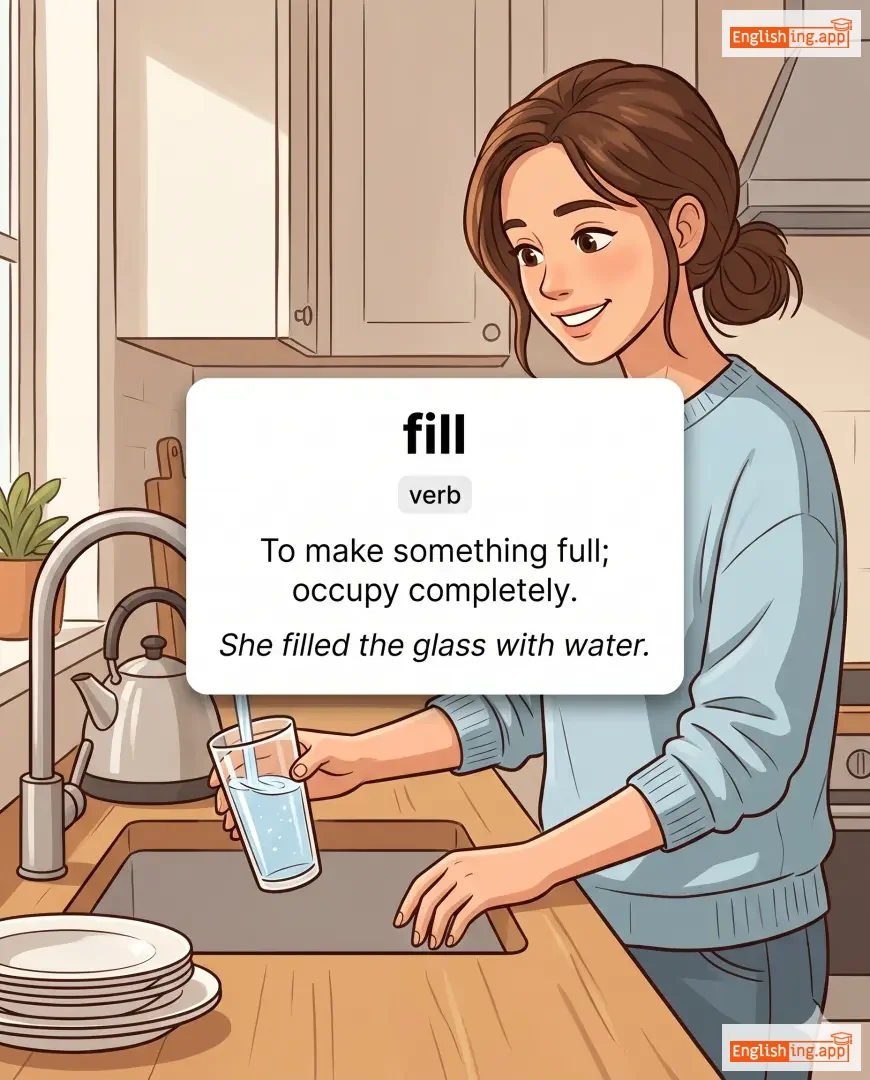
To make something full; occupy completely.
••••••
|
She filled the glass with water.
彼女はグラスに水を満たしました。
••••••
|
彼女はグラスに水を満たしました。
Kanojo wa gurasu ni mizu o mitashimashita.
••••••
|
fill the gap
隙間を埋める
••••••
|
To supply something missing.
••••••
|
隙間を埋める
sukima o umeru
••••••
|
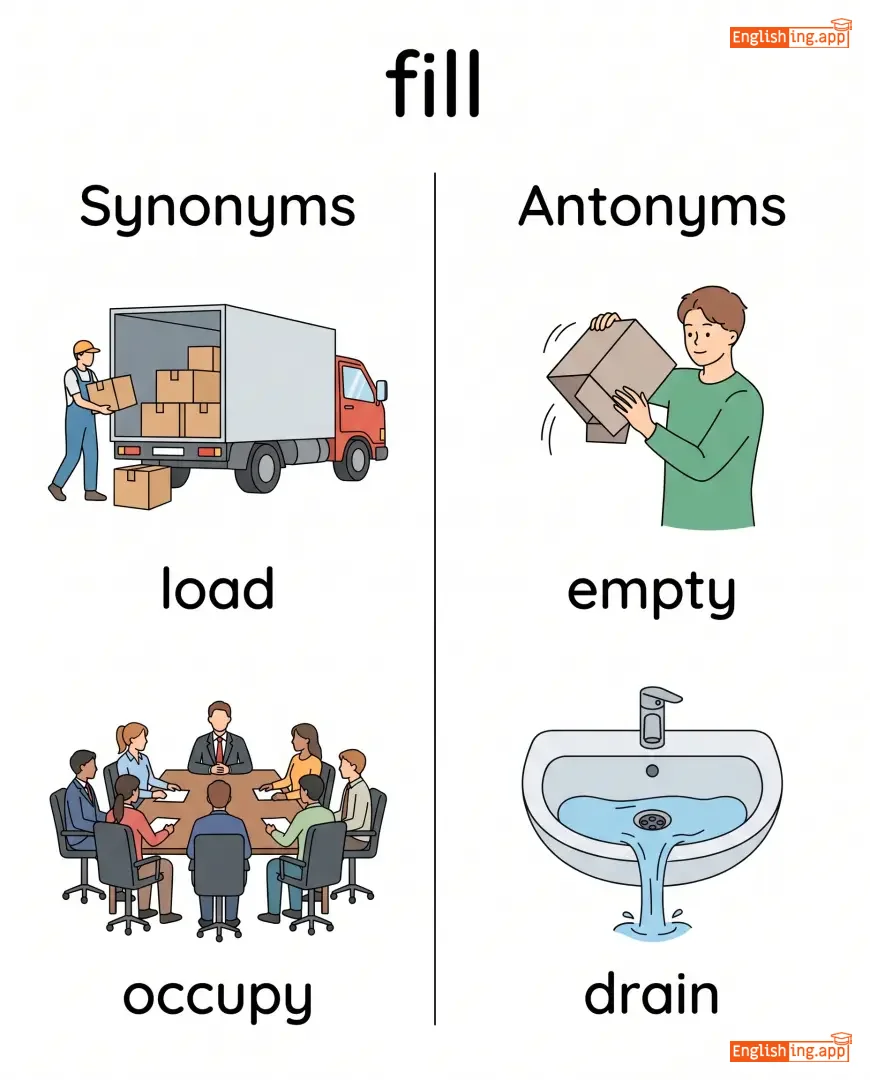
load, occupy, replenish, stuff, supply
••••••
|
empty, drain, vacate
••••••
|
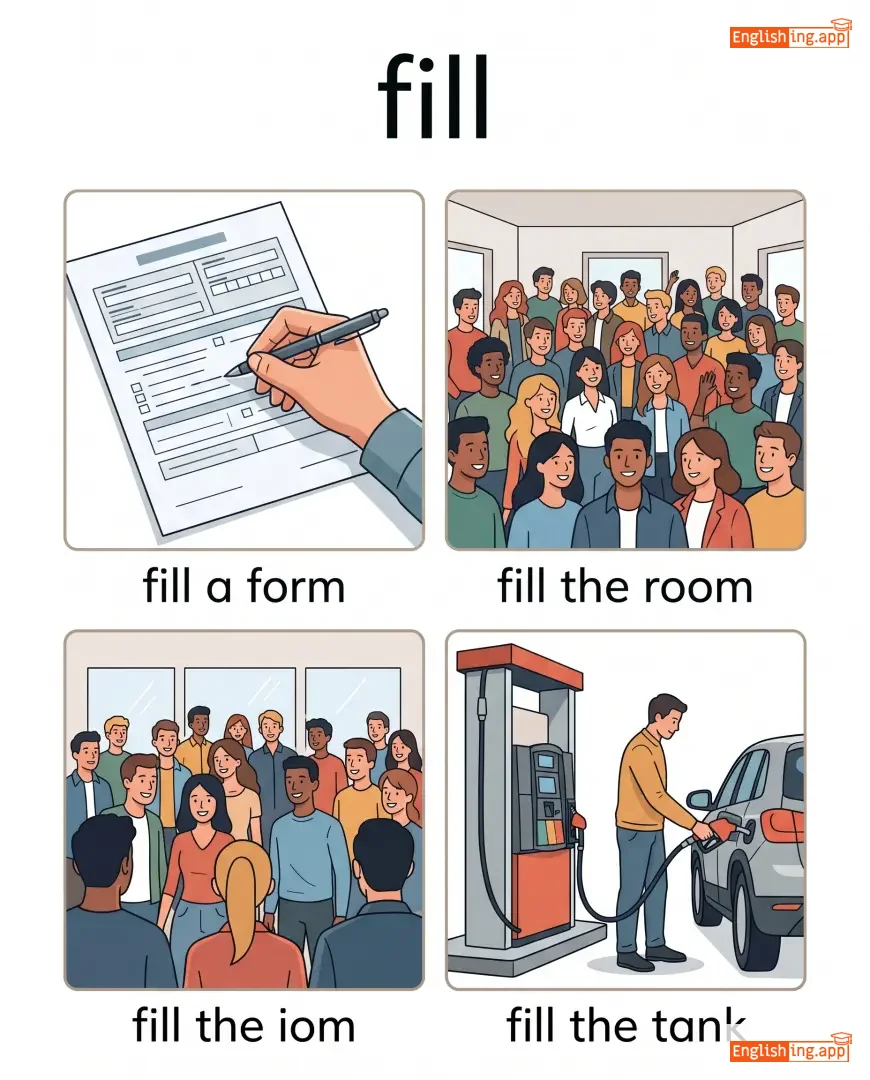
fill a form, fill the room, fill the tank, fill the position
••••••
|
満たすは、グラスを水で満たすように満たすことを意味します。
••••••
|
|
#2076
🎬
|
/fɪlm/
noun/verb
(フィルム)
••••••
|
- •••••• |
映画
eiga
••••••
|
filmed
フィルムド
••••••
|
filmed
フィルムド
••••••
|
films
フィルムス
••••••
|
filming
フィルミング
••••••
|
a motion picture or movie; or to record on camera
••••••
|
They watched a film together on the weekend.
彼らは週末に一緒に映画を見ました。
••••••
|
彼らは週末に一緒に映画を見ました。
Karera wa shuumatsu ni issho ni eiga o mimashita.
••••••
|
short film
短編映画
••••••
|
a motion picture of brief duration
••••••
|
短編映画
tanpen eiga
••••••
|
movie, motion picture, cinema, video, documentary
••••••
|
reality, stage, live show
••••••
|
watch a film, film industry, film festival, film director
••••••
|
映画の発音は英語のフィルムに似ている
••••••
|
|
#2077
🎬
|
/fɪlm ˈæktər/
noun
(映画俳優)
••••••
|
- •••••• |
映画俳優
eiga haiyuu
••••••
|
- •••••• | - •••••• | - •••••• | - •••••• |
A person who performs roles in movies or films.
••••••
|
The film actor received widespread acclaim for his performance.
その映画俳優は演技で広く称賛されました。
••••••
|
その映画俳優は演技で広く称賛されました。
Sono eiga haiyuu wa engi de hiroku shousan saremashita
••••••
|
- •••••• | - •••••• | - •••••• |
movie actor, screen actor, cinema actor, performer
••••••
|
audience, spectator
••••••
|
famous film actor, leading film actor, award-winning film actor
••••••
|
'映画' means movie and '俳優' means actor
••••••
|
|
#2078
🎬
|
/ˈfɪlmˌmeɪkər/
noun
(フィルム-メーカー)
••••••
|
- •••••• |
映画製作者
eiga seisakusha
••••••
|
- •••••• | - •••••• | - •••••• | - •••••• |
A person who directs or produces films
••••••
|
The film-maker received an award for his latest documentary.
フィルムメーカーは最新のドキュメンタリーで賞を受賞しました。
••••••
|
映画製作者は最新のドキュメンタリーで賞を受賞しました。
Eiga seisakusha wa saishin no documentary de shou o jushou shimashita.
••••••
|
- •••••• | - •••••• | - •••••• |
director, producer, cinematographer, auteur
••••••
|
viewer, audience
••••••
|
independent film-maker, award-winning film-maker, famous film-maker
••••••
|
Film + Seisakusha = 映画製作者
••••••
|
|
#2079
☕
|
/ˈfɪltər/
verb
(フィルター)
••••••
|
- •••••• |
フィルター
firutā
••••••
|
filtered
フィルタード
••••••
|
filtered
フィルタード
••••••
|
filters
フィルターズ
••••••
|
filtering
フィルタリング
••••••
|
to pass a substance through a device to remove unwanted material or to selectively pass certain items
••••••
|
She used a coffee filter to separate the grounds from the liquid.
彼女は液体から粉を分けるためにコーヒーフィルターを使った。
••••••
|
彼女は液体から粉を分けるためにコーヒーフィルターを使った。
Kanojo wa ekitai kara kona o wakeru tame ni kōhī firutā o tsukatta.
••••••
|
- •••••• | - •••••• | - •••••• |
strain, sift, purify, refine
••••••
|
mix, combine
••••••
|
filter water, filter information, filter results, filter emails
••••••
|
フィルターを使えば、不要なものが取り除かれる。
••••••
|
|
#2080
🏁
|
/ˈfaɪnəl/
adjective/noun
(fainaru)
••••••
|
- •••••• |
最終
saishuu
••••••
|
- •••••• | - •••••• | - •••••• | - •••••• |
coming at the end; the last part of something
••••••
|
The final exam will be held next week. |
最終試験は来週行われます。
Saishuu shiken wa raishuu okonawaremasu.
••••••
|
final decision |
a conclusive and irreversible choice
••••••
|
最終決定
saishuu kettei
••••••
|
last, ultimate, concluding, terminal, decisive
••••••
|
initial, first, beginning
••••••
|
final exam, final round, final result, final decision
••••••
|
Final = 最終 – 最終試験は常に最後にあります
••••••
|
|
#2081
🏁
|
/ˈfaɪ.nəl.i/
adverb
(fainari)
••••••
|
- •••••• |
ついに
tsuini
••••••
|
- •••••• | - •••••• | - •••••• | - •••••• |
at last; after a long time; in the end; as the last point
••••••
|
After years of hard work, she finally achieved her goal.
長年の努力の後、彼女はついに目標を達成しました。
••••••
|
長年の努力の後、彼女はついに目標を達成しました。
Naganen no doryoku no ato, kanojo wa tsuini mokuhyō o tassei shimashita.
••••••
|
- •••••• | - •••••• | - •••••• |
lastly, eventually, ultimately, at last
••••••
|
initially, firstly, originally
••••••
|
finally arrive, finally understand, finally decide
••••••
|
ついに、長年の努力で目標を達成した!
••••••
|
|
#2082
💰
|
/ˈfaɪ.næns/ or /fəˈnæns/
noun, verb
(ファイナンス)
••••••
|
- •••••• |
ファイナンス
fainansu
••••••
|
financed
ファイナンスド
••••••
|
financed
ファイナンスド
••••••
|
finances
ファイナンセス
••••••
|
financing
ファイナンシング
••••••
|
the management of money and investments, or to provide funds for something
••••••
|
The company secured finance from a major bank.
その会社は大手銀行から資金を調達しました。
••••••
|
その会社は大手銀行から資金を調達しました。
Sono kaisha wa oote ginkou kara shikin wo choutatsu shimashita.
••••••
|
in finance
ファイナンスで
••••••
|
working in the field of financial services
••••••
|
ファイナンスで
fainansu de
••••••
|
funding, money, capital, investment, resources
••••••
|
debt, loss, poverty
••••••
|
finance department, finance company, personal finance, public finance, finance minister
••••••
|
ファイナンスはお金を管理することです。ファイナンスで (fin) ならすぐにお金の問題が解決!
••••••
|
|
#2083
💰
|
/faɪˈnænʃəl/
adjective
(ファイナンシャル)
••••••
|
- •••••• |
財務的
zaimuteki
••••••
|
- •••••• | - •••••• | - •••••• | - •••••• |
relating to money, banking, or finance
••••••
|
He made a sound financial decision by investing wisely. |
彼は賢明に投資して、健全な財務的決定を下しました。
Kare wa kenmei ni toshi shite, kenzen na zaimuteki kettei o oroshimashita.
••••••
|
- •••••• | - •••••• | - •••••• |
monetary, economic, fiscal, banking
••••••
|
nonfinancial
••••••
|
financial planning, financial crisis, financial institution, financial report
••••••
|
財務的は英語の 'financial' に似ており、金銭に関連しています。
••••••
|
|
#2084
🔍
|
/faɪnd/
verb
(faindo)
••••••
|
|
見つける
mitsukeru
••••••
|
found
faundo
••••••
|
found
faundo
••••••
|
finds
faindzu
••••••
|
finding
faindoing
••••••
|
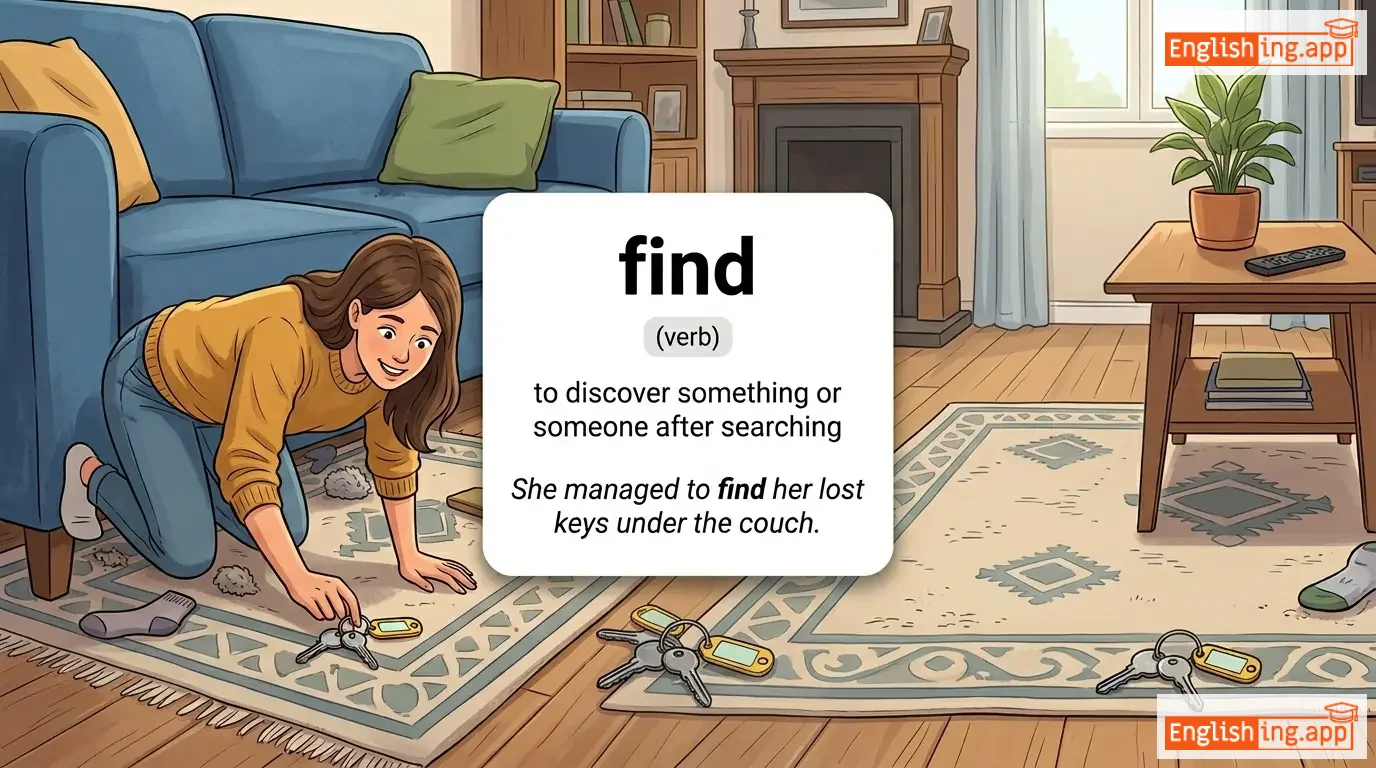
to discover something or someone after searching
••••••
|
She managed to find her lost keys under the couch.
Shī manejido tū faindo hā rosuto kīzu andā de kōchi.
••••••
|
彼女はソファの下で失くした鍵を見つけました。
Kanojo wa sofa no shita de nakushita kagi o mitsukemashita.
••••••
|
find out
faindo auto
••••••
|
to discover information
••••••
|
見つけ出す
mitsukedasu
••••••
|
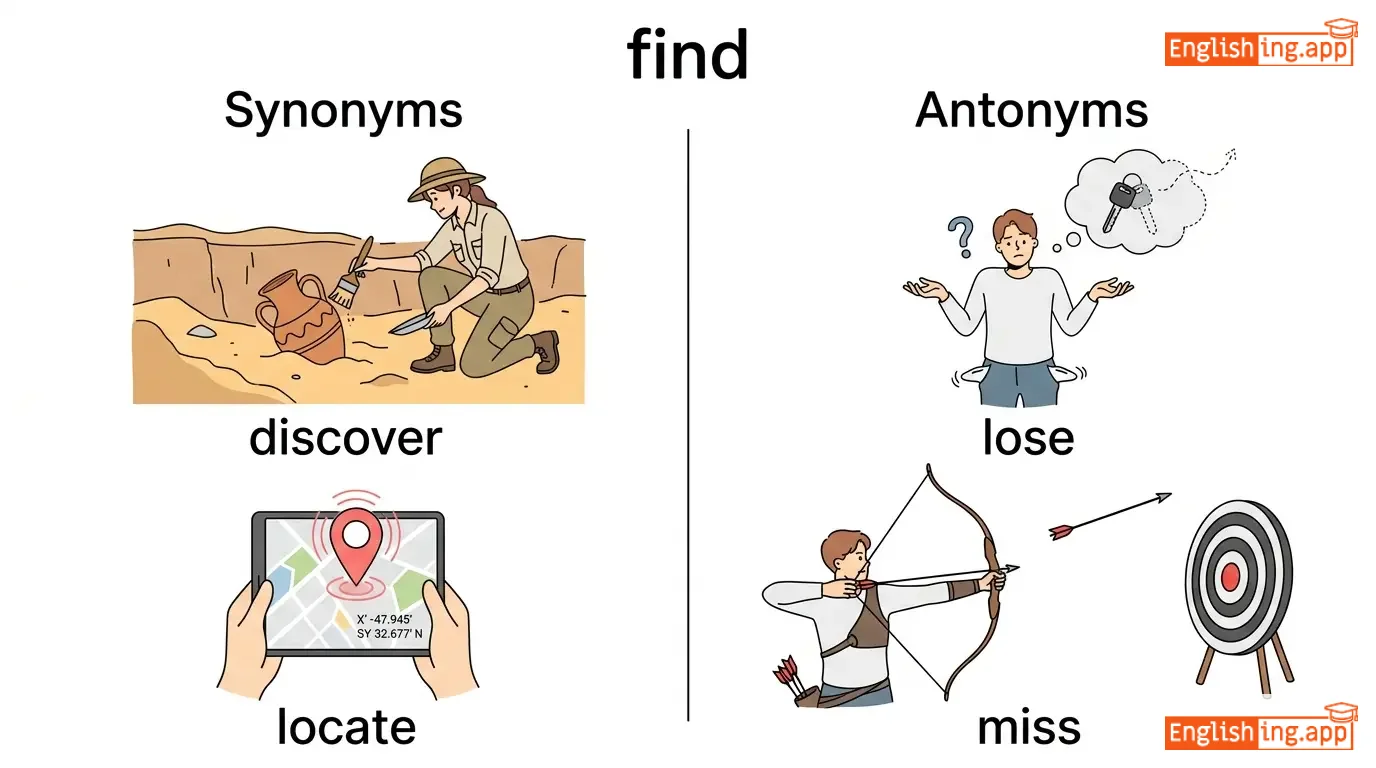
discover, locate, identify, detect, uncover
••••••
|
lose, miss, overlook
••••••
|
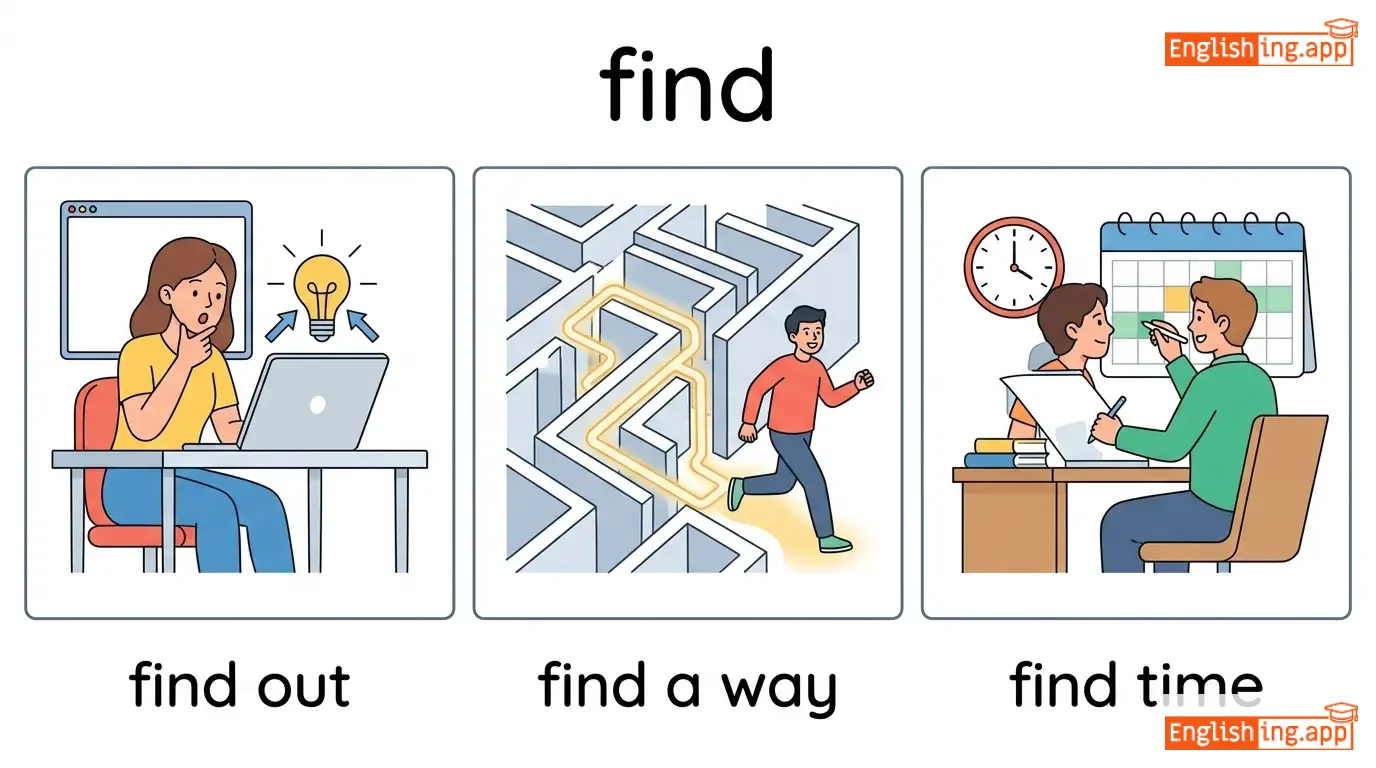
find out, find a way, find time, find fault
••••••
|
Findは見つけること—失ったものを見つけよう!
••••••
|
|
#2085
📑
|
/ˈfaɪn.dɪŋ/
noun
(ファインディング)
••••••
|
- •••••• |
発見、調査後に得られた結論または結果
hakken, chousa go ni erareta ketsuron matawa kekka
••••••
|
- •••••• | - •••••• | - •••••• | - •••••• |
a discovery, conclusion, or result reached after investigation
••••••
|
The scientist published her findings in a leading journal. |
科学者は彼女の発見を主要なジャーナルに発表しました。
Kagakusha wa kanojo no hakken wo shuyou na jaanaru ni happyou shimashita.
••••••
|
- •••••• | - •••••• | - •••••• |
discovery, result, conclusion, outcome, observation
••••••
|
ignorance, loss
••••••
|
research finding, important finding, surprising finding
••••••
|
Finding とは調査後に得られる発見や結果です!
••••••
|
|
#2086
👌
|
/faɪn/
adjective, noun, verb
(ハピネス)
••••••
|
|
幸せ
shiawase
••••••
|
fined
••••••
|
fined
••••••
|
fines
••••••
|
fining
••••••
|
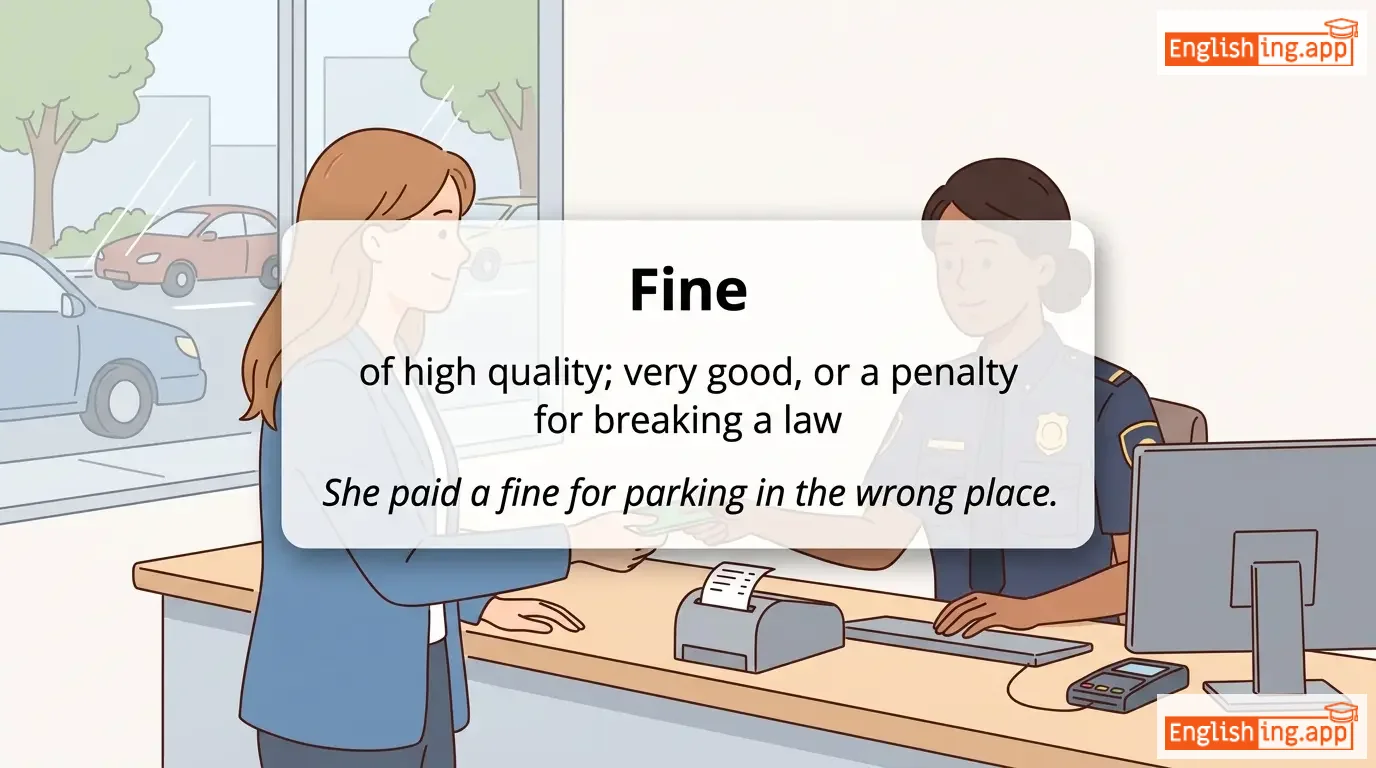
of high quality; very good, or a penalty for breaking a law
••••••
|
She paid a fine for parking in the wrong place.
彼女は賞を受け取ったとき、幸せを隠すことができなかった。
••••••
|
彼女は賞を受け取ったとき、幸せを隠すことができなかった。
Kanojo wa shō o uketotta toki, shiawase o kakusu koto ga dekinakatta.
••••••
|
cut it fine
幸福を追求する
••••••
|
to allow very little time for something
••••••
|
幸福を追求する
kōfuku o tsuikyū suru
••••••
|
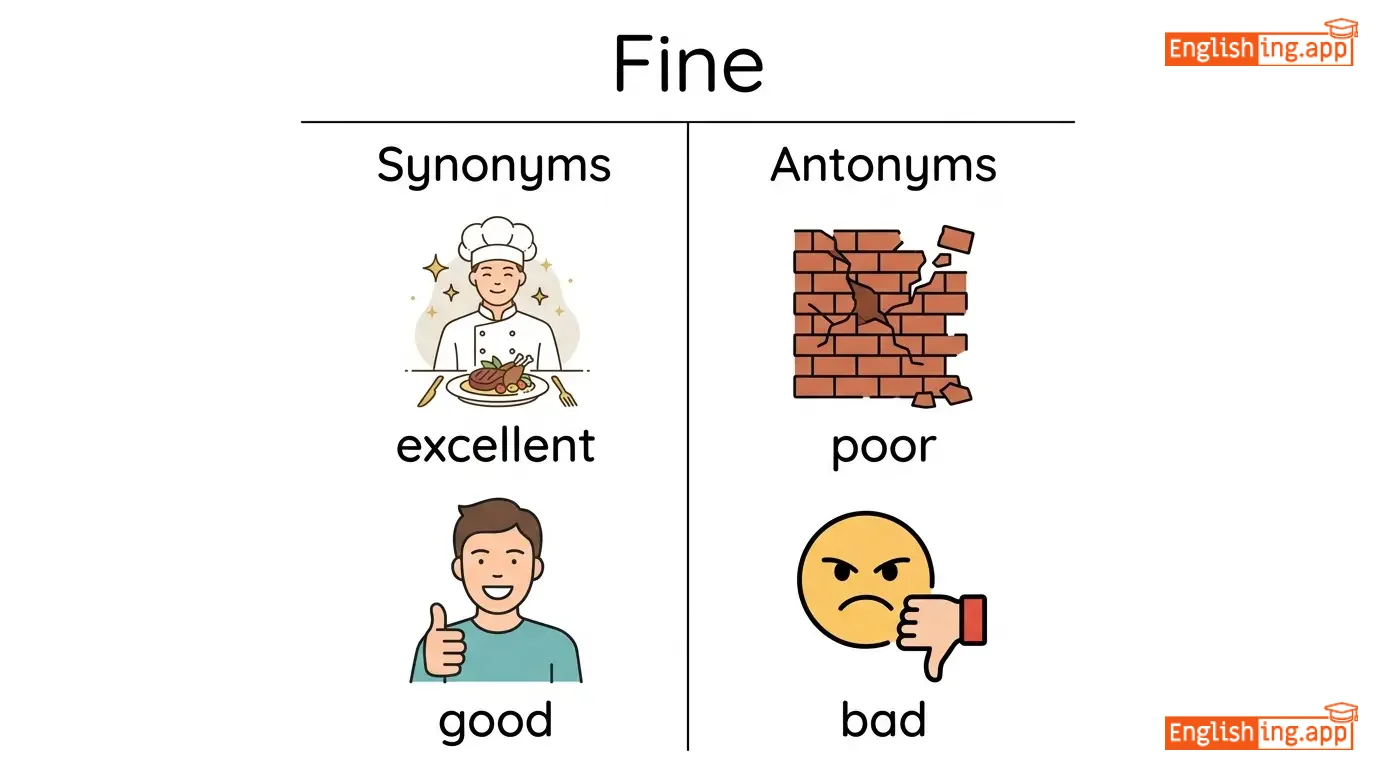
excellent, good, penalty, fee, delicate
••••••
|
poor, bad, coarse
••••••
|
pay a fine, fine art, fine weather, fine line
••••••
|
幸せは心の中にあり、それを見つけることで人生が輝く。
••••••
|
|
#2087
☝️
|
/ˈfɪŋ.ɡər/
noun
(フィンガー)
••••••
|
- •••••• |
指
yubi
••••••
|
- •••••• | - •••••• | - •••••• | - •••••• |
one of the five long parts of the hand
••••••
|
He wore a gold ring on his finger. |
彼は指に金の指輪をしていた。
Kare wa yubi ni kin no yubiwa o shite ita.
••••••
|
keep your fingers crossed |
hope for good luck
••••••
|
指をクロスする
yubi o kurosu suru
••••••
|
digit, thumb, hand, knuckle, pointer
••••••
|
palm, fist
••••••
|
finger print, point a finger, ring finger, finger food
••••••
|
Fingerは指を意味し、指輪は指に着けて幸運をもたらします。
••••••
|
|
#2088
🔍
|
/ˈfɪŋ.ɡər.prɪnt/
noun
(フィンガープリント)
••••••
|
- •••••• |
指紋
shimon
••••••
|
- •••••• | - •••••• | - •••••• | - •••••• |
an impression or mark made on a surface by a person's fingertip; unique identification pattern
••••••
|
The police found his fingerprints on the door handle at the crime scene.
警察は犯罪現場でドアの取っ手に彼の指紋を見つけました。
••••••
|
警察は犯罪現場でドアの取っ手に彼の指紋を見つけました。
Keisatsu wa hanzai genba de doa no totte ni kare no shimon o mitsukemashita.
••••••
|
- •••••• | - •••••• | - •••••• |
thumbprint, impression, mark, trace
••••••
|
erasure, clean surface, unmarked, blank
••••••
|
take fingerprints, fingerprint scanner, unique fingerprint
••••••
|
指紋 – Fingerprint – すべての指紋は一意です。
••••••
|
Vocabulary Quiz
Test your vocabulary by matching words with their translations or meanings.
Login to take the quiz
Comments (0)
Share your thoughts and join the discussion.
Join the discussion by logging in
Login to CommentNo comments yet
Be the first to share your thoughts!