

翻訳
過去
過去分詞
三人称単数
動名詞
意味
例文
例文の翻訳
同義語
対義語
コロケーション
ニーモニック

Swipe left or right, or use the buttons. Tap image to zoom.
例文の翻訳
単語
Lesson 75Lesson 75 - マスクトグル
|
絵文字
|
単語 | Images | 翻訳 | 過去 | 過去分詞 | 三人称単数 | 動名詞 | 意味 | 例文 | 例文の翻訳 | 表現例 | 表現例の意味 | 表現例の翻訳 | 同義語 | 対義語 | コロケーション | ニーモニック |
|---|---|---|---|---|---|---|---|---|---|---|---|---|---|---|---|---|---|
|
#3557
👌
|
/oʊˈkeɪ/
adjective
(オーケー)
••••••
|
- •••••• |
わかった
wakatta
••••••
|
- •••••• | - •••••• | - •••••• | - •••••• |
used to indicate agreement, approval, or understanding
••••••
|
Okay, let's go to the park. |
わかった、じゃあ公園に行こう。
Wakatta, jyaa kouen ni ikou.
••••••
|
- •••••• | - •••••• | - •••••• |
alright, fine, agreed, acceptable
••••••
|
no, disagree, unacceptable
••••••
|
okay with, okay to, okay about, okay for
••••••
|
オーケー、わかった (Okee, wakatta)
••••••
|
|
#3558
👌
|
/əʊˈkeɪ/
adjective
(オーケー)
••••••
|
- •••••• |
大丈夫
daijoubu
••••••
|
- •••••• | - •••••• | - •••••• | - •••••• |
used to express agreement or acceptance
••••••
|
It's okay to leave early today. |
今日は早く帰るのは大丈夫です。
Kyou wa hayaku kaeru no wa daijoubu desu.
••••••
|
- •••••• | - •••••• | - •••••• |
alright, fine, acceptable, good
••••••
|
bad, unacceptable
••••••
|
feel okay, seem okay, okay with, okay to
••••••
|
オーケー - 言うとみんなすぐに同意する。
••••••
|
|
#3559
👴
|
/oʊld/
adjective
(オールド)
••••••
|
- •••••• |
古い
furui
••••••
|
- •••••• | - •••••• | - •••••• | - •••••• |
having lived for a long time; not new or young
••••••
|
He still drives his old car. |
彼は今でも古い車を運転しています。
Kare wa imademo furui kuruma o unten shiteimasu.
••••••
|
old habits die hard |
It is difficult to stop doing things you have been doing for a long time
••••••
|
古い習慣はなかなか変わらない
Furui shūkan wa nakanaka kawaranai
••••••
|
aged, elderly, ancient, worn, mature
••••••
|
young, new, fresh
••••••
|
old man, old friend, old building, old story
••••••
|
古いものが大切だと感じること
••••••
|
|
#3560
🏅
|
/əˈlɪmpɪk/
adjective
(オリンピック)
••••••
|
- •••••• |
オリンピック
orimpikku
••••••
|
- •••••• | - •••••• | - •••••• | - •••••• |
related to the Olympic Games, a major international sporting event
••••••
|
She trained hard to compete in the Olympic Games. |
彼女はオリンピックに出場するために一生懸命トレーニングをしました。
Kanojo wa orimpikku ni shutsujō suru tame ni isshōkenmei torēningu o shimashita.
••••••
|
- •••••• | - •••••• | - •••••• |
worldwide, international, competitive
••••••
|
local, amateur
••••••
|
Olympic Games, Olympic athlete, Olympic gold, Olympic champion
••••••
|
オリンピック - 世界中の最高のアスリートが競い合う場所。
••••••
|
|
#3561
📖
|
/ɒn/
preposition
(オン)
••••••
|
- •••••• |
上
ue
••••••
|
- •••••• | - •••••• | - •••••• | - •••••• |
physically in contact with and supported by a surface
••••••
|
The book is on the table. |
本はテーブルの上にあります。
Hon wa tēburu no ue ni arimasu.
••••••
|
on time |
punctual; not late
••••••
|
時間通り
jikan dōri
••••••
|
upon, atop, over, above
••••••
|
off, away
••••••
|
on the table, on the way, on purpose, on duty
••••••
|
本はテーブルの上にあります 📖 — 'on' は '上' を意味します
••••••
|
|
#3562
1️⃣⏰
|
/wʌns/
adverb
(wans)
••••••
|
- •••••• |
一度; 過去に
ichido; kako ni
••••••
|
- •••••• | - •••••• | - •••••• | - •••••• |
one time only; at some time in the past; formerly
••••••
|
I have been to Paris once in my life. |
私は一度だけパリに行ったことがあります。
Watashi wa ichido dake Pari ni itta koto ga arimasu.
••••••
|
- •••••• | - •••••• | - •••••• |
one time, formerly, previously, at one time
••••••
|
never, always, repeatedly, frequently
••••••
|
once upon a time, once again, once more, at once
••••••
|
No •••••• |
|
#3563
1️⃣
|
/wʌn/
pronoun, noun, adjective
(ワン)
••••••
|
- •••••• |
一
ichi
••••••
|
- •••••• | - •••••• | - •••••• | - •••••• |
the number equivalent to the sum of zero and one; a single person or thing
••••••
|
Only one student answered the question.
ただ一人の学生が質問に答えました。
••••••
|
ただ一人の学生が質問に答えました。
Tada hitori no gakusei ga shitsumon ni kotaemashita.
••••••
|
one of a kind
一種類の
••••••
|
unique; very special
••••••
|
一種類の
isshurui no
••••••
|
single, individual, sole, unique
••••••
|
many, multiple
••••••
|
one day, one time, one person, one chance
••••••
|
ONEは一の意味 1️⃣ — 'isshurui no' 覚えてください
••••••
|
|
#3564
🔄
|
/ˈɒnɡəʊɪŋ/
adjective
(オンゴーイング)
••••••
|
- •••••• |
進行中
shinkouchuu
••••••
|
- •••••• | - •••••• | - •••••• | - •••••• |
continuing; still in progress
••••••
|
The ongoing project will finish next month. |
進行中のプロジェクトは来月終了します。
Shinkouchuu no purojekuto wa raigetsu shūryō shimasu.
••••••
|
- •••••• | - •••••• | - •••••• |
continuing, in progress, underway, persistent
••••••
|
finished, completed
••••••
|
ongoing process, ongoing work, ongoing issue
••••••
|
進行中 - 進行中のプロジェクトが完了するように!
••••••
|
|
#3565
🧅
|
/ˈʌnjən/
noun
(オニオン)
••••••
|
- •••••• |
玉ねぎ
tamanegi
••••••
|
- •••••• | - •••••• | - •••••• | - •••••• |
a round vegetable with a strong smell and flavor, usually used in cooking
••••••
|
I chopped an onion to make the soup. |
私はスープを作るために玉ねぎを切りました。
Watashi wa sūpu o tsukuru tame ni tamanegi o kirimashita.
••••••
|
- •••••• | - •••••• | - •••••• |
bulb, leek, shallot
••••••
|
garlic, herb
••••••
|
chop an onion, onion soup, onion ring
••••••
|
玉ねぎ - 玉ねぎを切ると涙が出る!
••••••
|
|
#3566
💻
|
/ˈɒnˌlaɪn/
adjective/adverb
(オンライン)
••••••
|
- •••••• |
オンライン
onrain
••••••
|
- •••••• | - •••••• | - •••••• | - •••••• |
connected to or available through the internet
••••••
|
I prefer shopping online rather than going to stores.
私はお店に行くよりもオンラインで買い物をする方が好きです。
••••••
|
私はお店に行くよりもオンラインで買い物をする方が好きです。
Watashi wa omise ni iku yori mo onrain de kaimono wo suru hou ga suki desu.
••••••
|
- •••••• | - •••••• | - •••••• |
internet-based, digital, connected, virtual
••••••
|
offline, disconnected
••••••
|
online shopping, online services, online education, online access
••••••
|
Onrain sounds like online with a Japanese twist!
••••••
|
|
#3567
⚪
|
/ˈoʊnli/
adjective/adverb
(オンリー)
••••••
|
- •••••• |
唯一
yuiitsu
••••••
|
- •••••• | - •••••• | - •••••• | - •••••• |
without others; solely
••••••
|
He is the only person who knows the secret.
彼はその秘密を知っている唯一の人です。
••••••
|
彼はその秘密を知っている唯一の人です。
Kare wa sono himitsu o shitte iru yuiitsu no hito desu.
••••••
|
- •••••• | - •••••• | - •••••• |
sole, exclusive, unique, solitary
••••••
|
multiple, many
••••••
|
only one, only person, only choice, only option
••••••
|
あなたは唯一最高です! - You are only the best!
••••••
|
|
#3568
🔜
|
/ˈɒntu/
preposition
(オン・ト)
••••••
|
- •••••• |
上に
ue ni
••••••
|
- •••••• | - •••••• | - •••••• | - •••••• |
moving to a position on the surface of something
••••••
|
She jumped onto the table to get the book. |
彼女は本を取るためにテーブルの上に飛び乗った。
Kanojo wa hon o toru tame ni teeburu no ue ni tobinotta.
••••••
|
- •••••• | - •••••• | - •••••• |
upon, on top of, over
••••••
|
off, away from
••••••
|
onto the surface, onto the floor, onto the roof
••••••
|
テーブルの上に何かを置いて! - Place something onto the table!
••••••
|
|
#3569
🔓
|
/ˈoʊ.pən/
verb, adjective
••••••
|
- •••••• | - •••••• |
opened
••••••
|
opened
••••••
|
opens
••••••
|
opening
••••••
|
to move something so that it is no longer closed; not closed
••••••
|
She opened the window to let in fresh air. |
- •••••• |
open secret |
something widely known but not officially acknowledged
••••••
|
- •••••• |
uncover, unlock, reveal, accessible, available
••••••
|
close, shut, lock
••••••
|
open door, open window, open opportunity, open mind
••••••
|
No •••••• |
|
#3570
🔓
|
/ˈoʊpənɪŋ/
noun
(オープニング)
••••••
|
- •••••• |
開店
kaiten
••••••
|
- •••••• | - •••••• | - •••••• | - •••••• |
an act or instance of beginning something
••••••
|
The opening of the new store was a huge success.
新しい店のオープニングは大成功でした。
••••••
|
新しい店のオープニングは大成功でした。
Atarashī mise no ōpuningu wa daiseikō deshita.
••••••
|
- •••••• | - •••••• | - •••••• |
start, beginning, initiation, launch
••••••
|
closing, ending
••••••
|
grand opening, store opening, job opening, opening ceremony
••••••
|
何かが新しく始まるとき、それは開店です。 - When something starts new, it’s an opening.
••••••
|
|
#3571
🗣️
|
/ˈəʊpənli/
adverb
(オープンリー)
••••••
|
- •••••• |
率直に
sotchoku ni
••••••
|
- •••••• | - •••••• | - •••••• | - •••••• |
in a way that is not secret or hidden
••••••
|
He spoke openly about his past mistakes. |
彼は自分の過去の過ちについて率直に話した。
Kare wa jibun no kako no ayamachi ni tsuite sotchoku ni hanashita.
••••••
|
openly admit |
to confess something without hesitation or secrecy
••••••
|
率直に認める
sotchoku ni mitomeru
••••••
|
frankly, honestly, publicly, freely, visibly
••••••
|
secretly, privately, covertly
••••••
|
speak openly, discuss openly, act openly
••••••
|
Openlyとは率直に言うことで、隠すことなく話すことです。
••••••
|
|
#3572
🎭
|
/ˈɒpərə/
noun
(オペラ)
••••••
|
- •••••• |
オペラ
opera
••••••
|
- •••••• | - •••••• | - •••••• | - •••••• |
a dramatic performance in which the actors sing most of their lines
••••••
|
We watched a beautiful opera at the theater last night. |
昨晩、劇場で美しいオペラを観ました。
Sakuban, gekijō de utsukushī opera o mimashita.
••••••
|
soap opera |
a television or radio drama series that deals with daily life and emotions
••••••
|
日常生活と感情を扱ったテレビやラジオのドラマシリーズ
Nichijō seikatsu to kanjō o atsukatta terebi ya rajio no dorama shirīzu
••••••
|
musical, performance, drama, production
••••••
|
speech, silence
••••••
|
opera singer, opera house, attend an opera, classical opera
••••••
|
オペラは音楽とドラマが一緒になった大きなステージのようです!
••••••
|
|
#3573
⚙️
|
/ˈɑːpəˌreɪt/
verb
(オペレート)
••••••
|
|
操作する
sousa suru
••••••
|
operated
オペレーテッド
••••••
|
operated
オペレーテッド
••••••
|
operates
オペレーツ
••••••
|
operating
オペレーティング
••••••
|
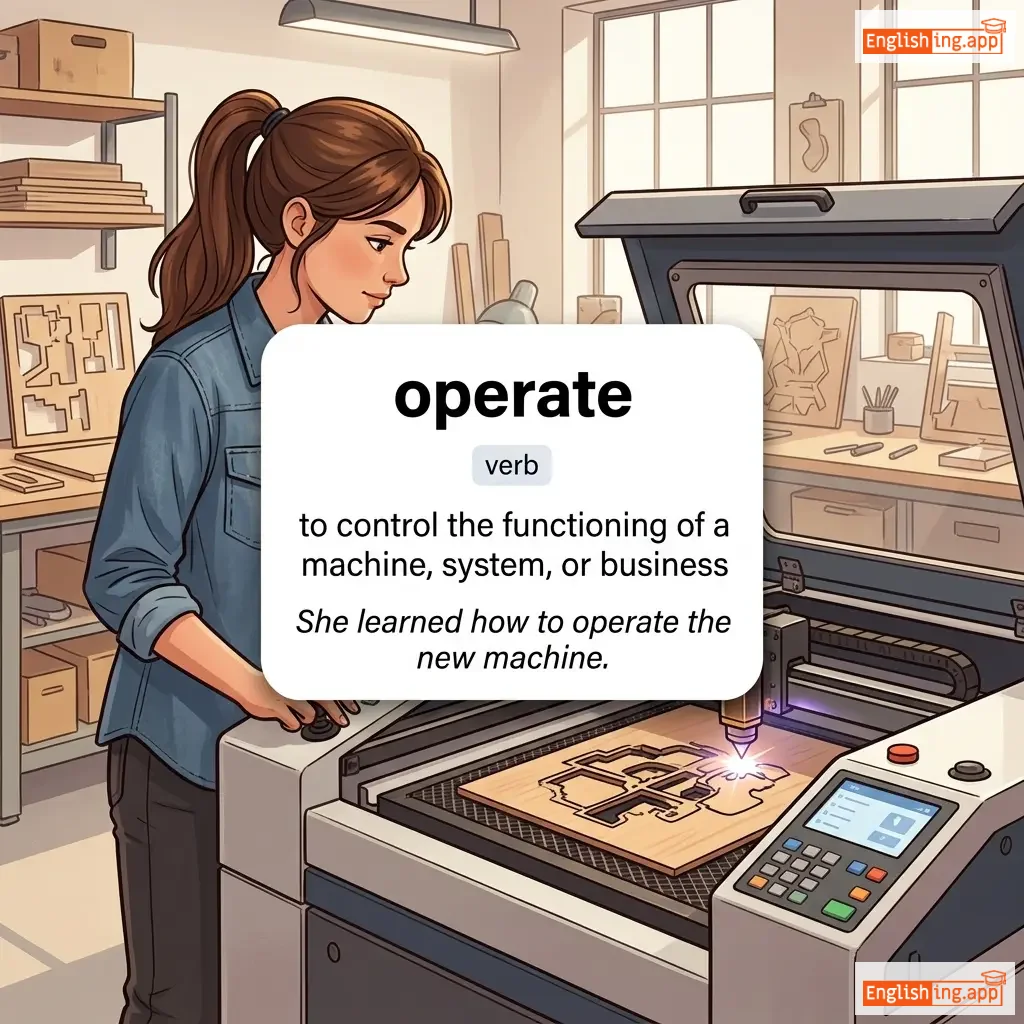
to control the functioning of a machine, system, or business
••••••
|
She learned how to operate the new machine.
彼女は新しい機械を操作する方法を学びました。
••••••
|
彼女は新しい機械を操作する方法を学びました。
Kanojo wa atarashii kikai wo sousa suru houhou wo manabimashita.
••••••
|
operate on
オペレーションする
••••••
|
to perform surgery on someone
••••••
|
手術を行う
shujutsu wo okonau
••••••
|
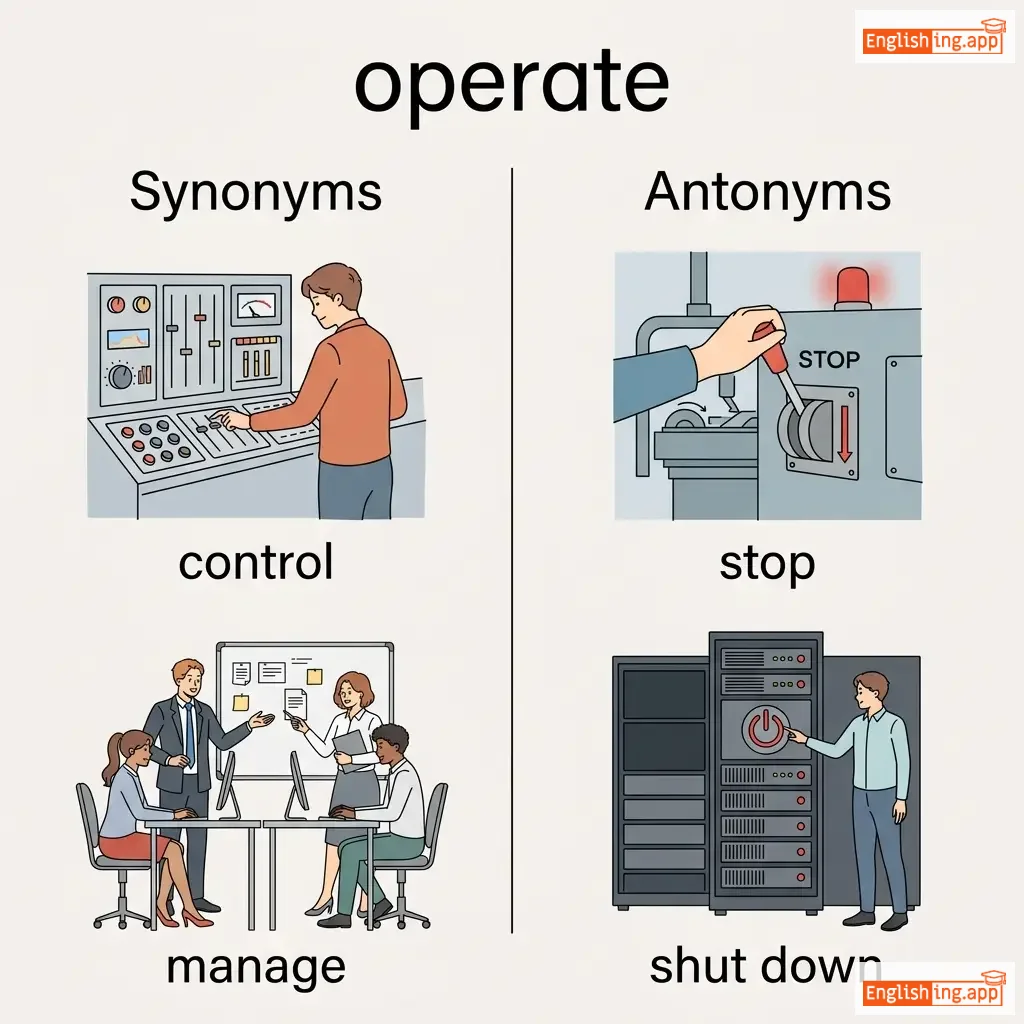
control, manage, run, handle, conduct
••••••
|
stop, shut down
••••••
|
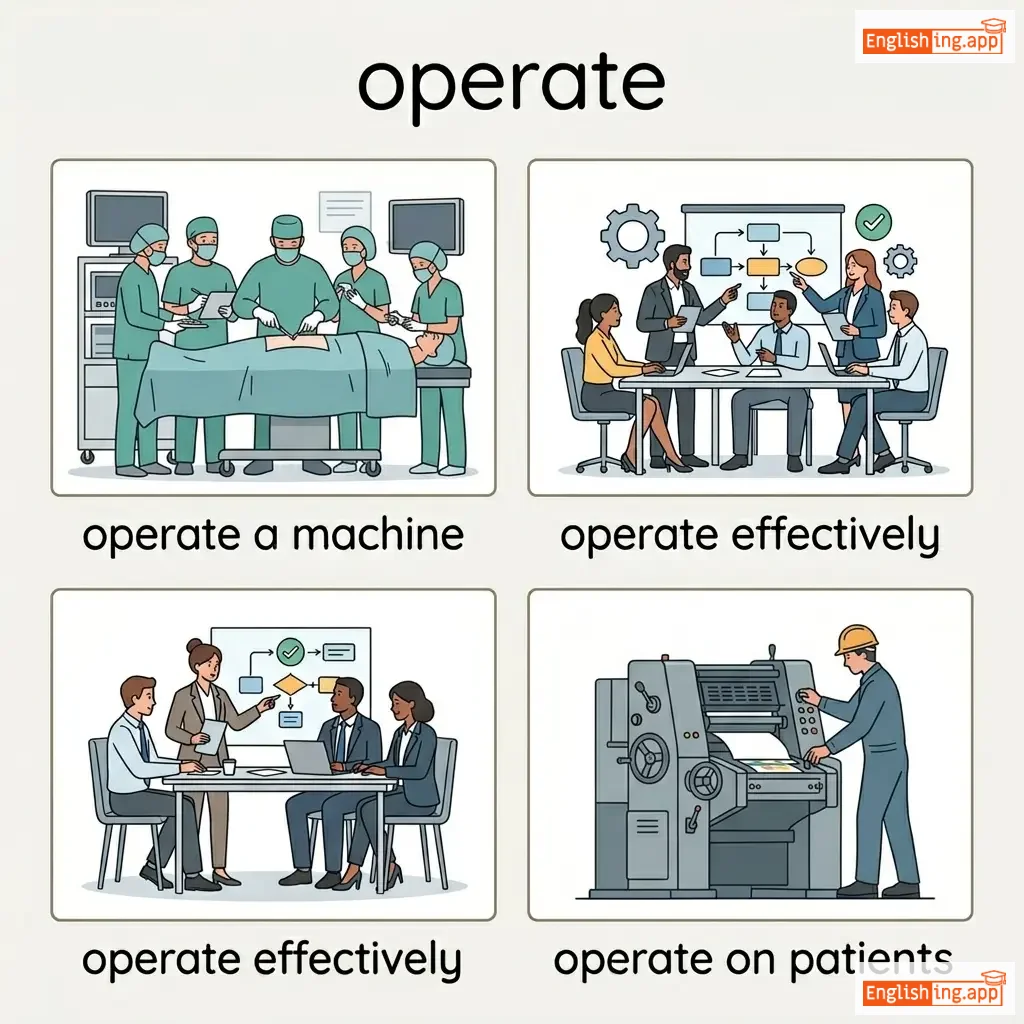
operate a machine, operate effectively, operate on patients, operate smoothly
••••••
|
Operate は操作する意味、例えば医者が患者に手術をするのと同じです。
••••••
|
|
#3574
⚙️
|
/ˈɒpəreɪtɪŋ/
verb
(オペレーティング)
••••••
|
- •••••• |
運営する
un'ei suru
••••••
|
operated
オペレートした
••••••
|
operated
オペレートした
••••••
|
operates
オペレートする
••••••
|
operating
オペレーティング
••••••
|
to control or manage the functioning of something
••••••
|
The company has been operating in this market for five years.
その会社はこの市場で5年間運営されています。
••••••
|
その会社はこの市場で5年間運営されています。
Sono kaisha wa kono shijou de go-nenkan un'ei sareteimasu.
••••••
|
- •••••• | - •••••• | - •••••• |
managing, controlling, running, working
••••••
|
stopping, halting
••••••
|
operating system, operating room, operating procedure
••••••
|
車を運転しているときは、オペレーティングしていると考えよう! - Think of operating when driving a car!
••••••
|
|
#3575
⚙️
|
/ˌɒpəˈreɪʃən/
noun
(オペレーション)
••••••
|
- •••••• |
手術
shujutsu
••••••
|
- •••••• | - •••••• | - •••••• | - •••••• |
an act or process of functioning or operating
••••••
|
The hospital performed a successful operation.
病院は成功した手術を行いました。
••••••
|
病院は成功した手術を行いました。
Byouin wa seikou shita shujutsu o okonai mashita.
••••••
|
- •••••• | - •••••• | - •••••• |
procedure, surgery, process, action
••••••
|
inactivity, stagnation
••••••
|
military operation, surgical operation, operation room, operation procedure
••••••
|
オペレーションを行うにはオペレーター(operator)が必要です。
••••••
|
|
#3576
⚙️
|
/ˌɒpəˈreɪʃənl/
adjective
(オペレーショナル)
••••••
|
|
オペレーショナル
operational
••••••
|
- •••••• | - •••••• | - •••••• | - •••••• |
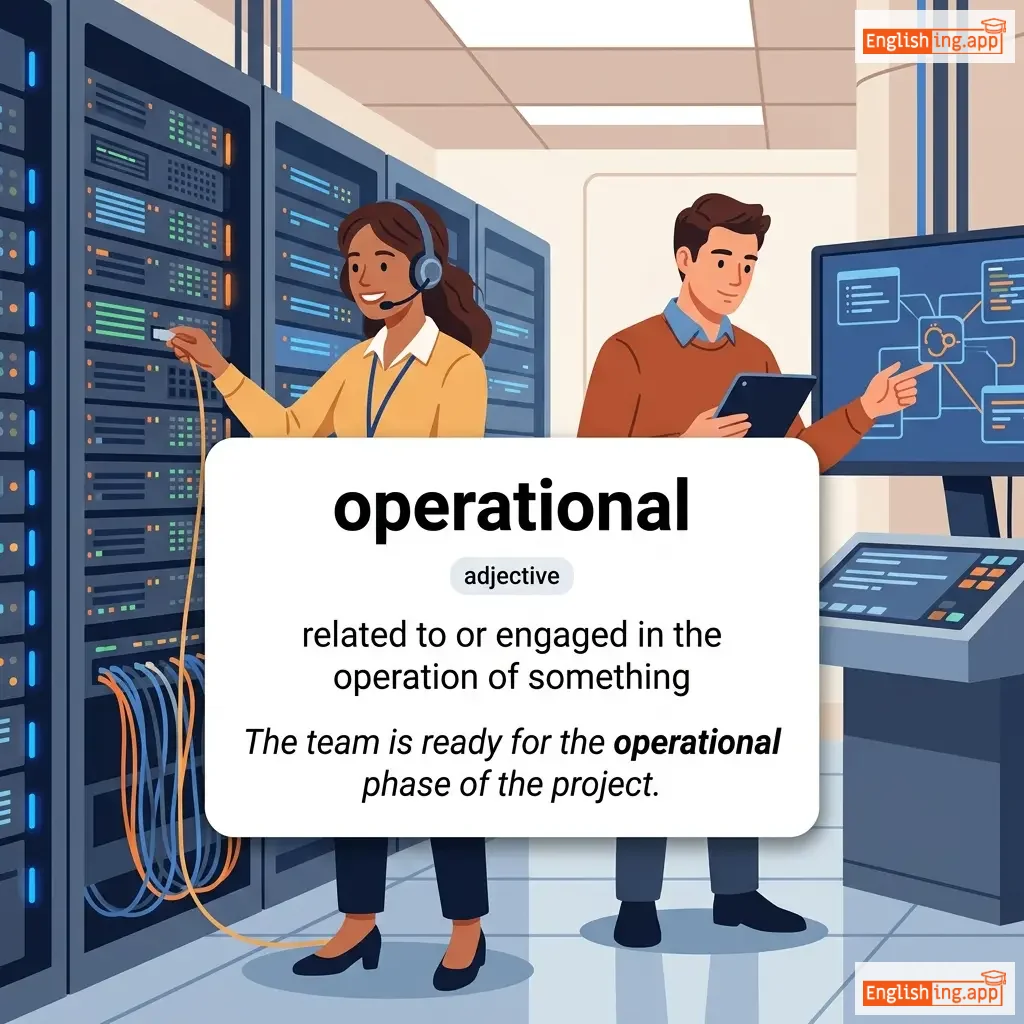
related to or engaged in the operation of something
••••••
|
The team is ready for the operational phase of the project. |
チームはプロジェクトのオペレーショナルフェーズの準備ができています。
Chīmu wa purojekuto no operēshonaru fēzu no junbi ga dekiteimasu.
••••••
|
- •••••• | - •••••• | - •••••• |
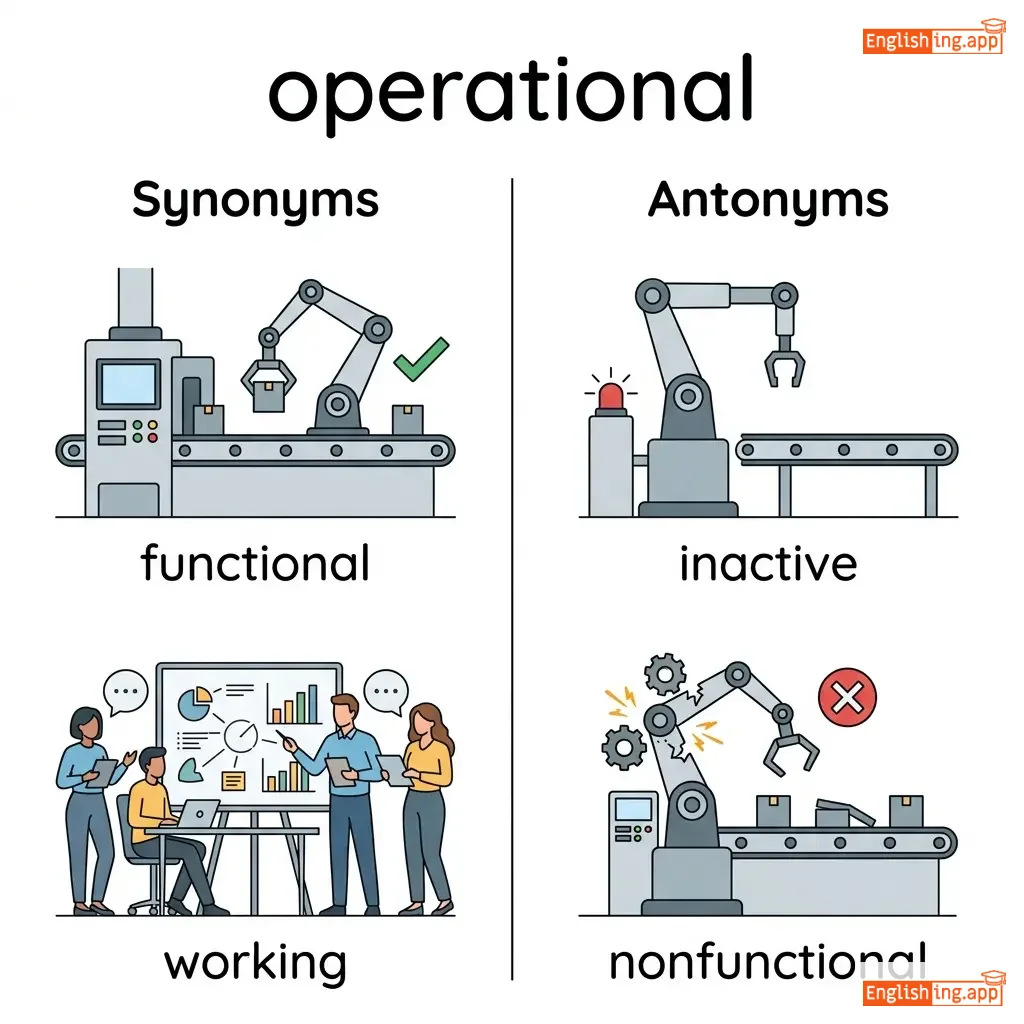
functional, working, active, in operation
••••••
|
inactive, nonfunctional, idle
••••••
|
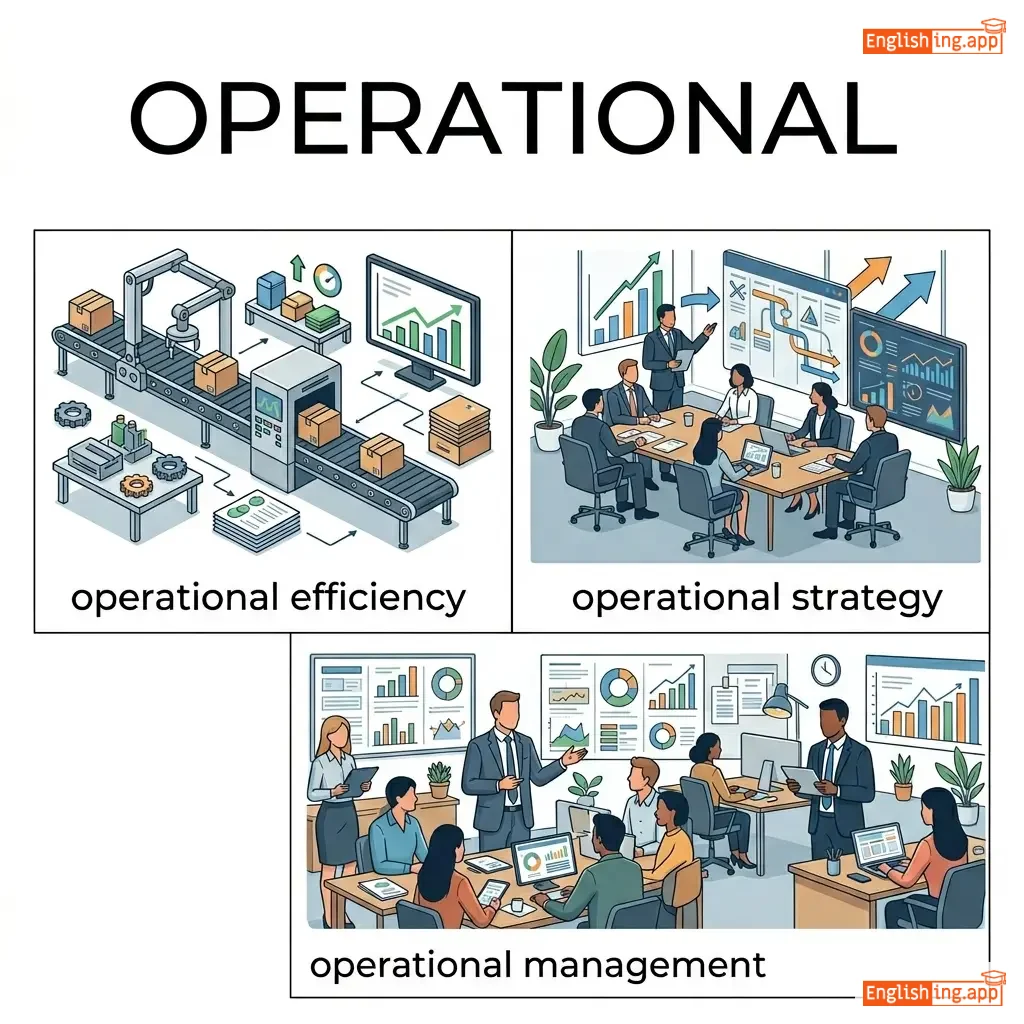
operational efficiency, operational strategy, operational management
••••••
|
オペレーショナルは作業に関連していることを意味します。プロセスを実行するなど。
••••••
|
|
#3577
👷
|
/ˈɒpəreɪtər/
noun
(オペレーター)
••••••
|
- •••••• |
オペレーター
operetā
••••••
|
- •••••• | - •••••• | - •••••• | - •••••• |
a person who operates equipment, a business, or controls something
••••••
|
The machine operator ensured that everything ran smoothly. |
機械オペレーターは、すべてがスムーズに動作することを確認しました。
Kikai operetā wa, subete ga sumūzu ni dōsa suru koto o kakunin shimashita.
••••••
|
smooth operator |
a person who is skilled at handling situations or people
••••••
|
スムーズなオペレーター
Sumūzu na operetā
••••••
|
controller, handler, machinist, agent, technician
••••••
|
novice, amateur, beginner
••••••
|
machine operator, telephone operator, skilled operator, smooth operator
••••••
|
オペレーター: すべてを操作する人
••••••
|
|
#3578
💭
|
/əˈpɪnjən/
noun
(オピニオン)
••••••
|
- •••••• |
意見
iken
••••••
|
- •••••• | - •••••• | - •••••• | - •••••• |
A belief, judgment, or viewpoint about something, not necessarily based on fact.
••••••
|
Everyone is entitled to their own opinion. |
誰もが自分の意見を持つ権利を持っています。
dare mo ga jibun no iken o motsu kenri o motteimasu.
••••••
|
in my opinion |
used to express one's personal view or belief
••••••
|
私の意見では
watashi no iken dewa
••••••
|
view, belief, perspective, judgment, sentiment
••••••
|
fact, truth, certainty
••••••
|
public opinion, express an opinion, personal opinion, strong opinion
••••••
|
Opinion: ‘オープンイン’ でアイデアを開く — みんな自分の意見を持っている。
••••••
|
|
#3579
🤼
|
/əˈpoʊnənt/
noun
(幸せ)
••••••
|
- •••••• |
幸せ
shiawase
••••••
|
- •••••• | - •••••• | - •••••• | - •••••• |
A person who competes against or disagrees with another.
••••••
|
The boxer defeated his opponent in the final round. |
彼女は賞を受け取ったとき、幸せを隠すことができませんでした。
kanojo wa shō o uketotta toki, shiawase o kakusu koto ga dekimasen deshita.
••••••
|
worthy opponent |
a rival who is strong and deserves respect
••••••
|
幸せを追い求める
shiawase o oimotomeru
••••••
|
rival, adversary, competitor, challenger
••••••
|
ally, supporter, partner
••••••
|
political opponent, main opponent, worthy opponent, face an opponent
••••••
|
幸せ — 幸せは自分で作るもの、笑顔を忘れずに!
••••••
|
|
#3580
🌟
|
/ˌɒp.əˈtjuː.nə.ti/
noun
(オポチュニティ)
••••••
|
- •••••• |
チャンス
chansu
••••••
|
- •••••• | - •••••• | - •••••• | - •••••• |
A favorable chance or set of circumstances that makes it possible to do something.
••••••
|
She seized the opportunity to study abroad. |
彼女は海外で勉強するチャンスをつかんだ。
Kanojo wa kaigai de benkyō suru chansu o tsukanda.
••••••
|
once in a lifetime opportunity |
A very rare and unique chance that may never happen again.
••••••
|
人生で一度のチャンス
Jinsei de ichido no chansu
••••••
|
chance, prospect, possibility, option, occasion
••••••
|
misfortune, disadvantage, obstacle
••••••
|
golden opportunity, missed opportunity, career opportunity, business opportunity
••••••
|
チャンスは逃さずに、しっかり掴もう!
••••••
|
|
#3581
✊
|
/əˈpoʊz/
verb
(オポーズ)
••••••
|
|
反対する
hantai suru
••••••
|
opposed
オポーズド
••••••
|
opposed
オポーズド
••••••
|
opposes
オポーズズ
••••••
|
opposing
オポージング
••••••
|
to disagree with or resist; to act against
••••••
|
Many citizens oppose the new tax policy.
多くの市民が新しい税制政策に反対しています。
••••••
|
多くの市民が新しい税制政策に反対しています。
Ōku no shimin ga atarashī zeisei seisaku ni hantai shiteimasu.
••••••
|
- •••••• | - •••••• | - •••••• |
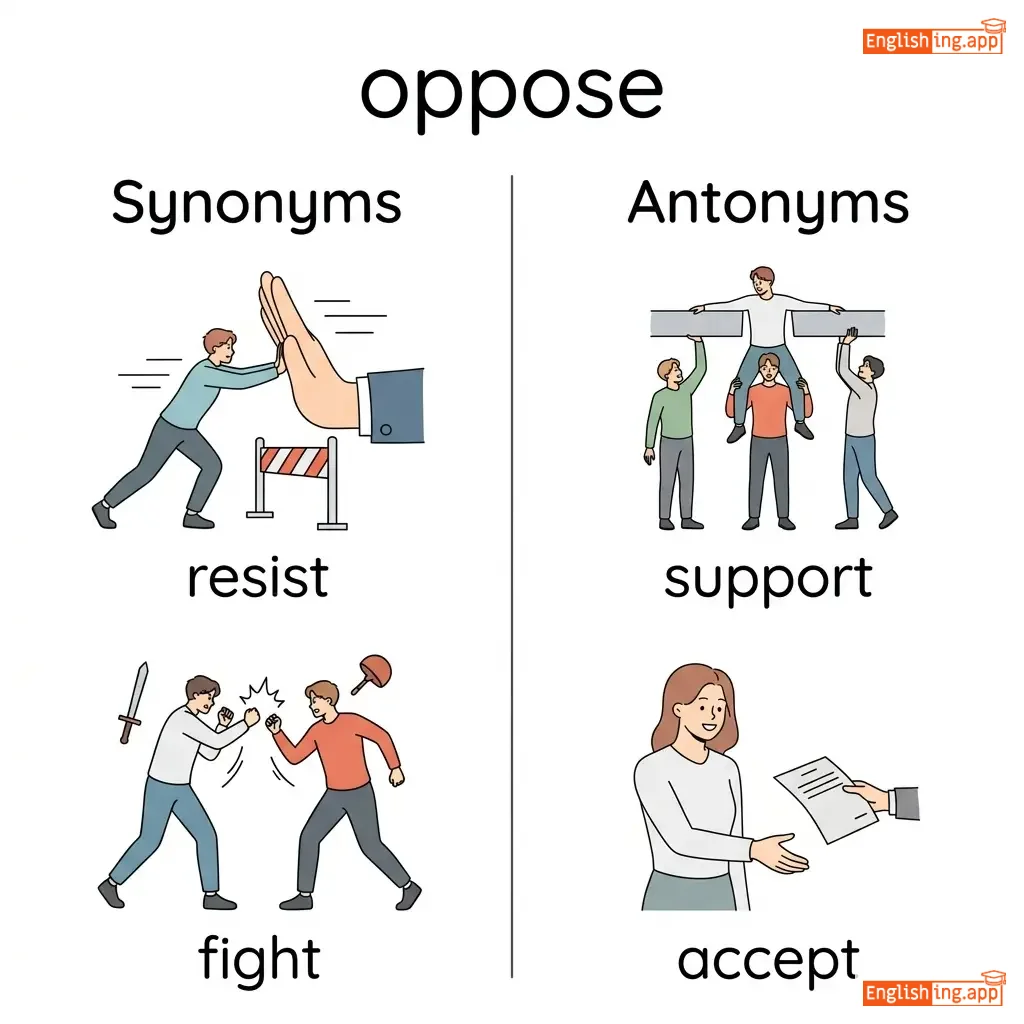
resist, object, counter, protest
••••••
|
support, agree, approve, endorse
••••••
|
strongly oppose, actively oppose, oppose plans, oppose changes, oppose policy
••••••
|
反対 (hantai) = oppose, '反' means 'against'
••••••
|
|
#3582
↔️
|
/ˈɒp.əz.ɪt/
adjective
(オポジット)
••••••
|
- •••••• |
反対
hantai
••••••
|
- •••••• | - •••••• | - •••••• | - •••••• |
Completely different; on the other side or facing something.
••••••
|
The two houses are on opposite sides of the street. |
その2つの家は通りの反対側にあります。
Sono futatsu no ie wa toori no hantai-gawa ni arimasu.
••••••
|
polar opposite |
Something or someone that is completely different from another.
••••••
|
極端な反対
kyokutan na hantai
••••••
|
contrary, reverse, contrasting, antithetical
••••••
|
similar, same, identical
••••••
|
opposite direction, opposite side, exact opposite, complete opposite
••••••
|
反対は完全に異なる意味で、極端な反対のようなものです。
••••••
|
|
#3583
✊
|
/ˌɒpəˈzɪʃən/
noun
(オポジション)
••••••
|
- •••••• |
反対
hantai
••••••
|
- •••••• | - •••••• | - •••••• | - •••••• |
the action of opposing or resisting something
••••••
|
The opposition to the new law was strong. |
新しい法律に対する反対は強かった。
Atarashī hōritsu ni taisuru hantai wa tsuyokatta.
••••••
|
- •••••• | - •••••• | - •••••• |
resistance, defiance, objection, protest
••••••
|
support, cooperation
••••••
|
political opposition, strong opposition, fierce opposition, lead the opposition
••••••
|
‘反対’を覚えるために反抗のイメージを使おう!
••••••
|
|
#3584
🫴
|
/ɒpt/
verb
(オプト)
••••••
|
- •••••• |
選ぶ
erabu
••••••
|
opted
オプテッド
••••••
|
opted
オプテッド
••••••
|
opts
オプツ
••••••
|
opting
オプティング
••••••
|
to choose or decide to do something instead of something else
••••••
|
Many students opt to study abroad for better opportunities.
多くの学生がより良い機会のために海外で学ぶことを選択します。
••••••
|
多くの学生がより良い機会のために海外で学ぶことを選択します。
Ooku no gakusei ga yori yoi kikai no tame ni kaigai de manabu koto o sentaku shimasu.
••••••
|
opt for
オプト フォー
••••••
|
to choose one thing instead of another
••••••
|
選ぶ
erabu
••••••
|
choose, select, decide, pick, prefer
••••••
|
reject, decline, refuse
••••••
|
opt for, opt out, opt in, opt against
••••••
|
Optからオプト — 選ぶことがoptにあたる。
••••••
|
|
#3585
👁️
|
/ˈɒptɪkəl/
adjective
(オプティカル)
••••••
|
- •••••• |
光学的
kōgakuteki
••••••
|
- •••••• | - •••••• | - •••••• | - •••••• |
related to or used in seeing or sight
••••••
|
The optical illusion fooled everyone at the exhibition. |
その光学的錯覚は展示会で皆を騙した。
Sono kōgakuteki sakaku wa tenjikai de mina o damashita.
••••••
|
- •••••• | - •••••• | - •••••• |
visual, sight, eye-related, optical
••••••
|
non-visual, invisible
••••••
|
optical illusion, optical lens, optical device
••••••
|
光学的は目や視覚に関連している意味で、光学メガネのようなものです。
••••••
|
|
#3586
🌞
|
/ˈɒptɪmɪzəm/
noun
(オプティミズム)
••••••
|
|
楽観主義
rakkan shugi
••••••
|
- •••••• | - •••••• | - •••••• | - •••••• |
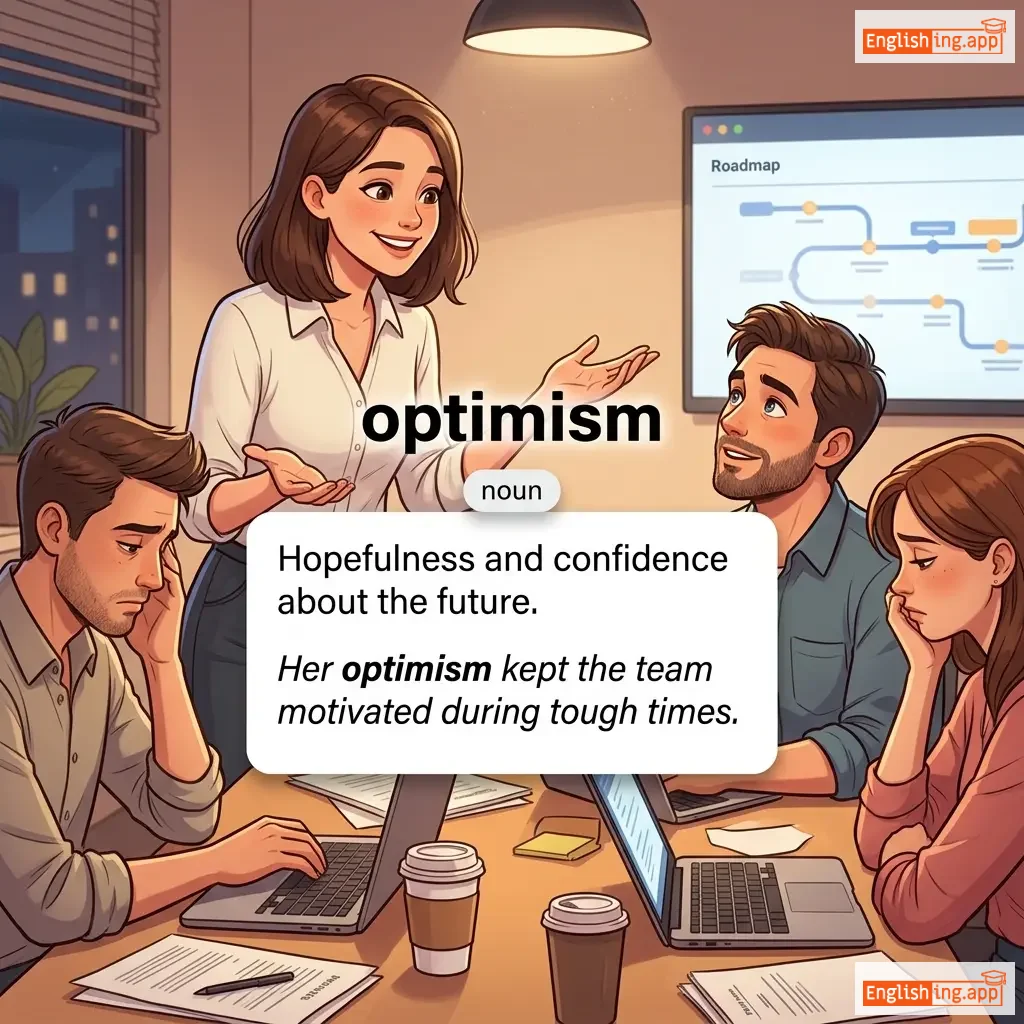
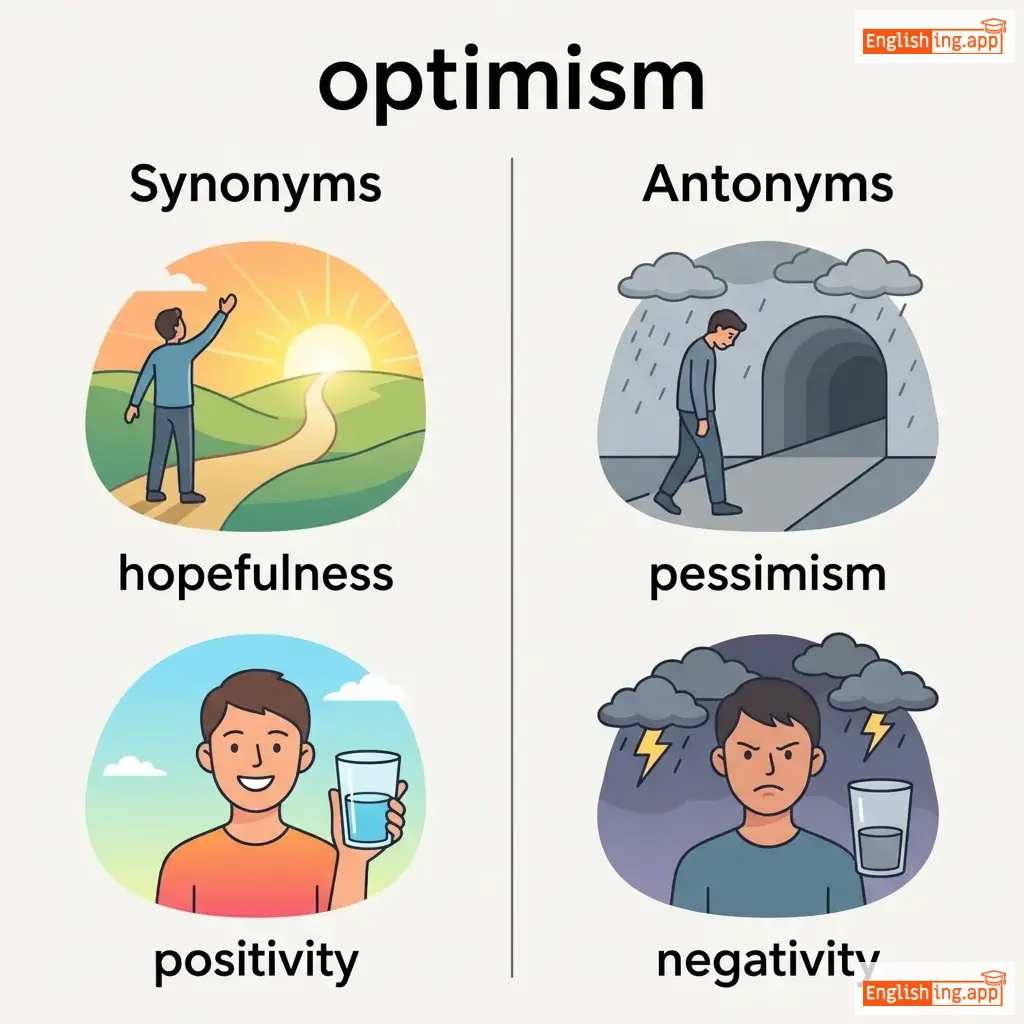
Hopefulness and confidence about the future.
••••••
|
Her optimism kept the team motivated during tough times. |
彼女の楽観主義は困難な時期にチームを励ましました。
Kanojo no rakkan shugi wa konnan na jiki ni chiimu wo hagemashita.
••••••
|
glass half full |
an optimistic way of looking at things
••••••
|
半分のグラス
hanbun no gurasu
••••••
|
hopefulness, positivity, confidence, cheerfulness
••••••
|
pessimism, negativity
••••••
|
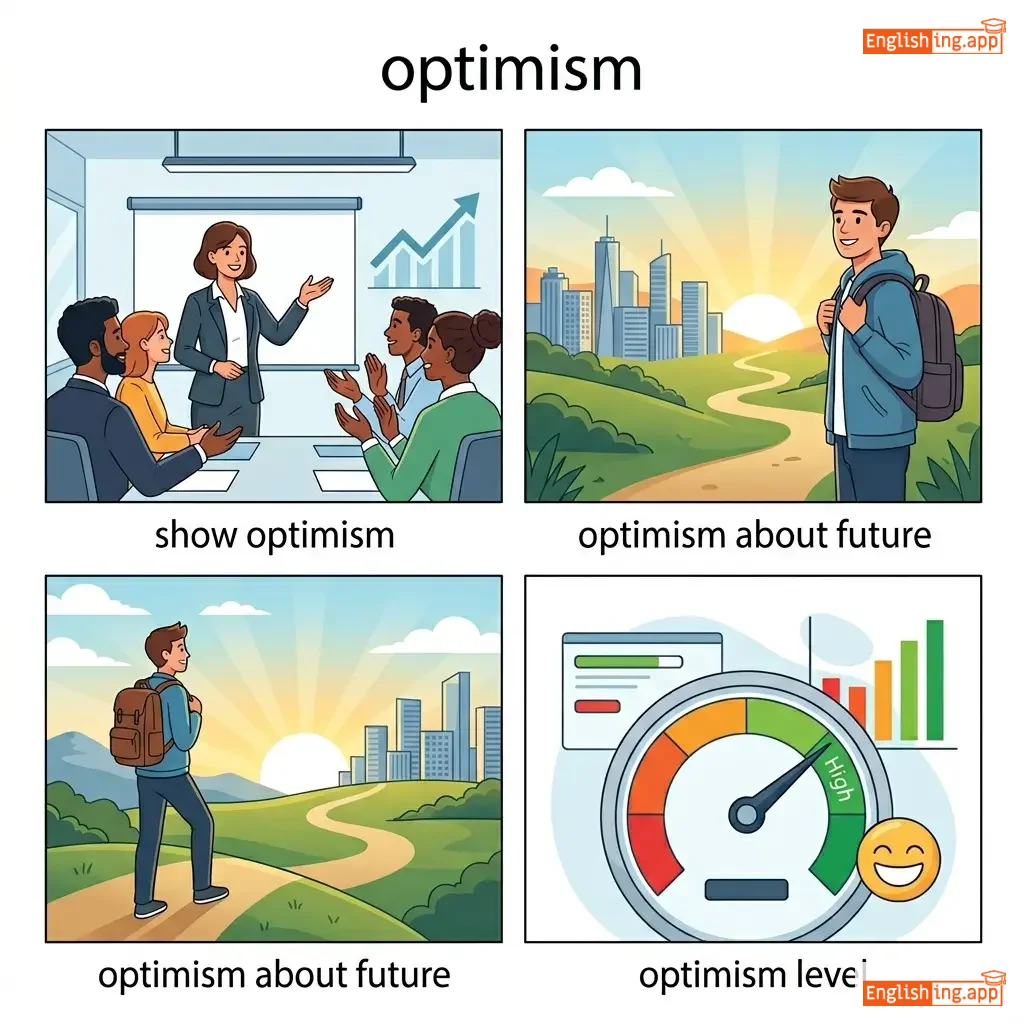
show optimism, optimism about future, optimism level, optimism grows
••••••
|
楽観主義は常に前向きに考えること 🌞
••••••
|
|
#3587
🌞
|
/ˌɑːp.təˈmɪs.tɪk/
adjective
(オプティミスティック)
••••••
|
- •••••• |
楽観的
rakkan-teki
••••••
|
- •••••• | - •••••• | - •••••• | - •••••• |
hopeful and confident about the future
••••••
|
She is optimistic about the success of her new project. |
彼女は新しいプロジェクトの成功に楽観的です。
Kanojo wa atarashī purojekuto no seikō ni rakkan-teki desu.
••••••
|
glass half full |
viewing a situation positively
••••••
|
半分のグラス
hanbun no gurasu
••••••
|
hopeful, positive, confident, cheerful, upbeat
••••••
|
pessimistic, doubtful, hopeless
••••••
|
optimistic view, optimistic outlook, optimistic about, remain optimistic
••••••
|
楽観的は '希望に満ちている' 🌞 — 覚えておいて、'optimistic' は英語で楽観的と同じ意味です。
••••••
|
|
#3588
⚖️
|
/ˈɒpʃən/
noun
(オプション)
••••••
|
- •••••• |
選択肢
sentakushi
••••••
|
- •••••• | - •••••• | - •••••• | - •••••• |
A choice or possibility available among alternatives.
••••••
|
You have the option to pay by card or cash. |
カードまたは現金で支払うオプションがあります。
Kaado mata wa genkin de shiharau opushon ga arimasu.
••••••
|
keep your options open |
Avoid committing to one choice too early.
••••••
|
選択肢を開いておく
Sentakushi wo hiraita oku
••••••
|
choice, alternative, possibility, selection, preference
••••••
|
obligation, compulsion, necessity
••••••
|
have option, choose option, better option
••••••
|
オプションは複数の選択肢から選ぶことを意味します。
••••••
|
|
#3589
❓
|
/ɔːr/
conjunction
(オア)
••••••
|
- •••••• |
または
mata wa
••••••
|
- •••••• | - •••••• | - •••••• | - •••••• |
used to link alternatives
••••••
|
You can have tea or coffee.
お茶かコーヒーをお選びいただけます。
••••••
|
お茶かコーヒーをお選びいただけます。
Ocha ka kōhī o o-erabi itadakemasu.
••••••
|
- •••••• | - •••••• | - •••••• |
either, alternatively
••••••
|
neither
••••••
|
tea or coffee, this or that, yes or no
••••••
|
または (mata wa) は、選択肢の間で選ぶことを意味します。お茶またはコーヒーのように。
••••••
|
|
#3590
🗣️
|
/ˈɔːrəl/
adjective
(オーラル)
••••••
|
- •••••• |
口頭
kōtō
••••••
|
- •••••• | - •••••• | - •••••• | - •••••• |
Spoken rather than written; relating to the mouth
••••••
|
The student had to give an oral presentation. |
学生は口頭でプレゼンテーションをしなければなりませんでした。
Gakusei wa kōtō de purezentēshon o shinakereba narimasen deshita.
••••••
|
oral tradition |
Cultural knowledge and stories passed down by word of mouth
••••••
|
口頭伝統
Kōtō dentō
••••••
|
spoken, verbal, vocal, articulated
••••••
|
written, documented, recorded
••••••
|
oral presentation, oral exam, oral tradition, oral hygiene
••••••
|
Oralは口に関連する、口頭試験=口で行うプレゼンテーション。
••••••
|
|
#3591
🎻
|
/ˈɔːkɪstrə/
noun
(オーケストラ)
••••••
|
- •••••• |
オーケストラ
ōkesutora
••••••
|
- •••••• | - •••••• | - •••••• | - •••••• |
a large group of musicians playing different instruments together
••••••
|
The orchestra performed beautifully at the concert. |
オーケストラはコンサートで素晴らしい演奏をしました。
Ōkesutora wa konsāto de subarashī ensō o shimashita.
••••••
|
- •••••• | - •••••• | - •••••• |
ensemble, band, symphony, musical group
••••••
|
solo, individual performance
••••••
|
orchestra performance, orchestra conductor, orchestra pit
••••••
|
オーケストラは、楽器を持つすべてのミュージシャンが一緒に素晴らしい音楽を作り出す場所です。
••••••
|
|
#3592
📋
|
/ˈɔːrdər/
verb
(オーダー)
••••••
|
|
命令する
meirei suru
••••••
|
ordered
オーダード
••••••
|
ordered
オーダード
••••••
|
orders
オーダーズ
••••••
|
ordering
オーダリング
••••••
|
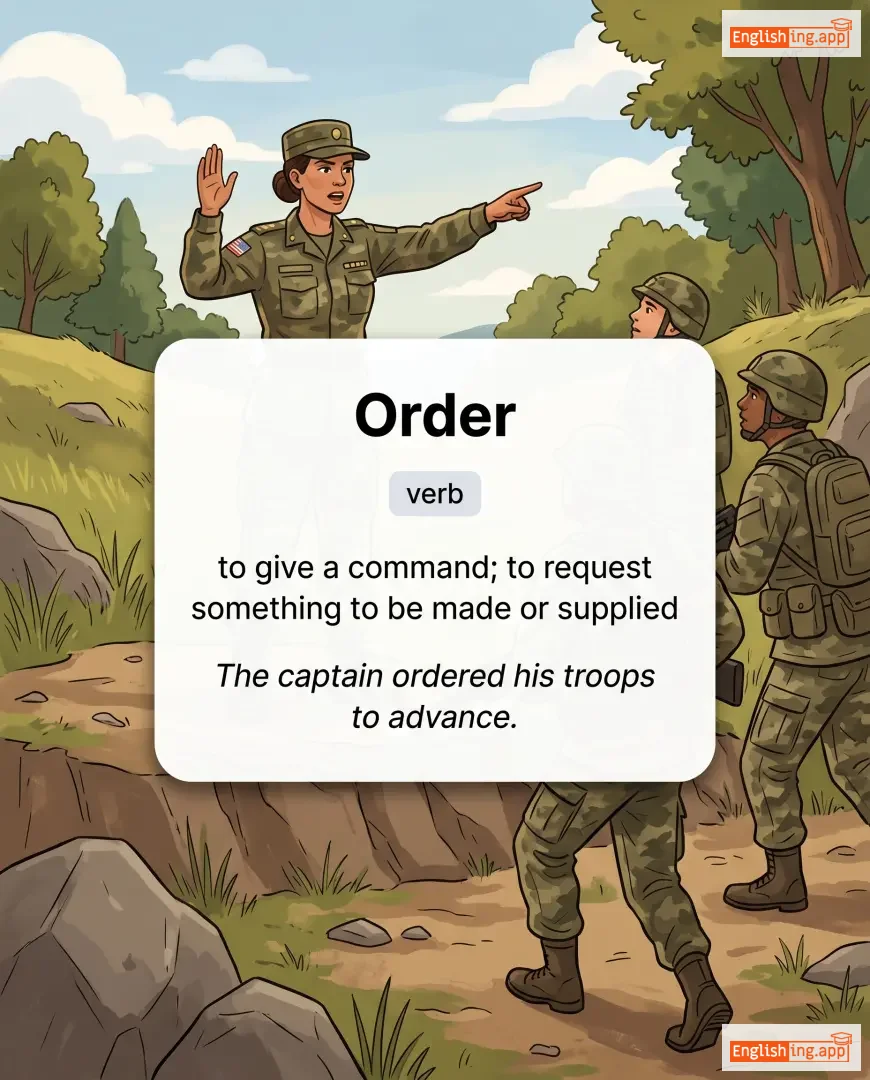
to give a command; to request something to be made or supplied
••••••
|
The captain ordered his troops to advance.
キャプテンは部隊に前進するよう命じた。
••••••
|
キャプテンは部隊に前進するよう命じた。
Kyaputen wa butai ni zenshin suru yō meijita
••••••
|
- •••••• | - •••••• | - •••••• |
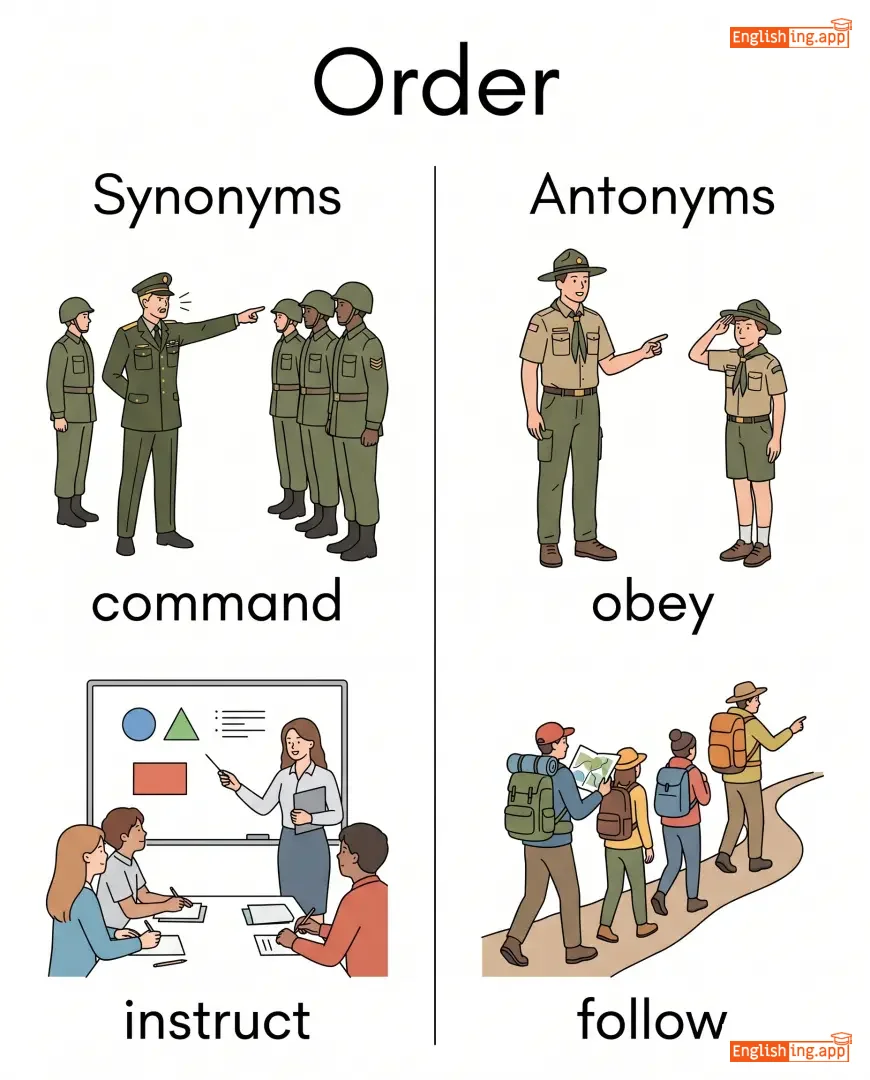
command, instruct, direct, request
••••••
|
obey, follow, comply, submit
••••••
|
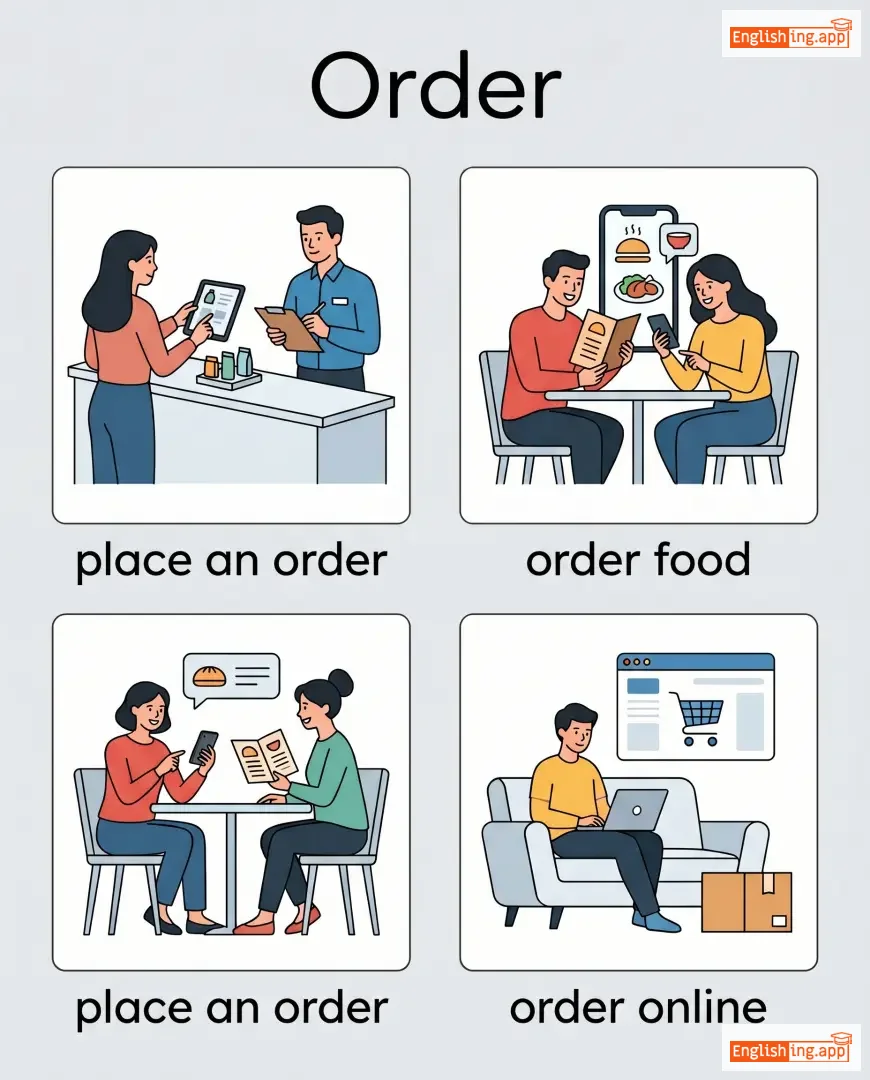
place an order, order food, order online, standing order, order of business
••••••
|
Japanese '命令する' sounds like giving orders, just like commanding a group.
••••••
|
|
#3593
📘
|
/ˈɔːrdəˌnɛri/
adjective
(オーディナリー)
••••••
|
- •••••• |
普通の
futsuu no
••••••
|
- •••••• | - •••••• | - •••••• | - •••••• |
Common, usual, or not special; something that happens regularly.
••••••
|
She wore an ordinary dress to the party. |
彼女はパーティーに普通のドレスを着て行った。
Kanojo wa paatii ni futsuu no doresu o kite itta.
••••••
|
out of the ordinary |
Something unusual or different from what is normal.
••••••
|
普通ではない
futsuu de wa nai
••••••
|
common, usual, regular, normal, typical
••••••
|
extraordinary, exceptional, unusual
••••••
|
ordinary life, ordinary people, ordinary day, ordinary circumstances
••••••
|
‘Ordinary’ は‘秩序’を意味する—すべてが秩序通り、すべてが普通です。
••••••
|
|
#3594
🥦
|
/ɔːrˈɡænɪk/
adjective
(ɔːrˈɡænɪk)
••••••
|
|
オーガニック
ōganikku
••••••
|
- •••••• | - •••••• | - •••••• | - •••••• |
Relating to or derived from living matter; produced without artificial chemicals.
••••••
|
They prefer to eat organic fruits and vegetables. |
彼らはオーガニックな果物と野菜を食べるのを好みます。
Karera wa ōganikku na kudamono to yasai o taberu no o konomimasu.
••••••
|
organic growth |
Natural, gradual development without external force.
••••••
|
オーガニック成長
ōganikku seichō
••••••
|
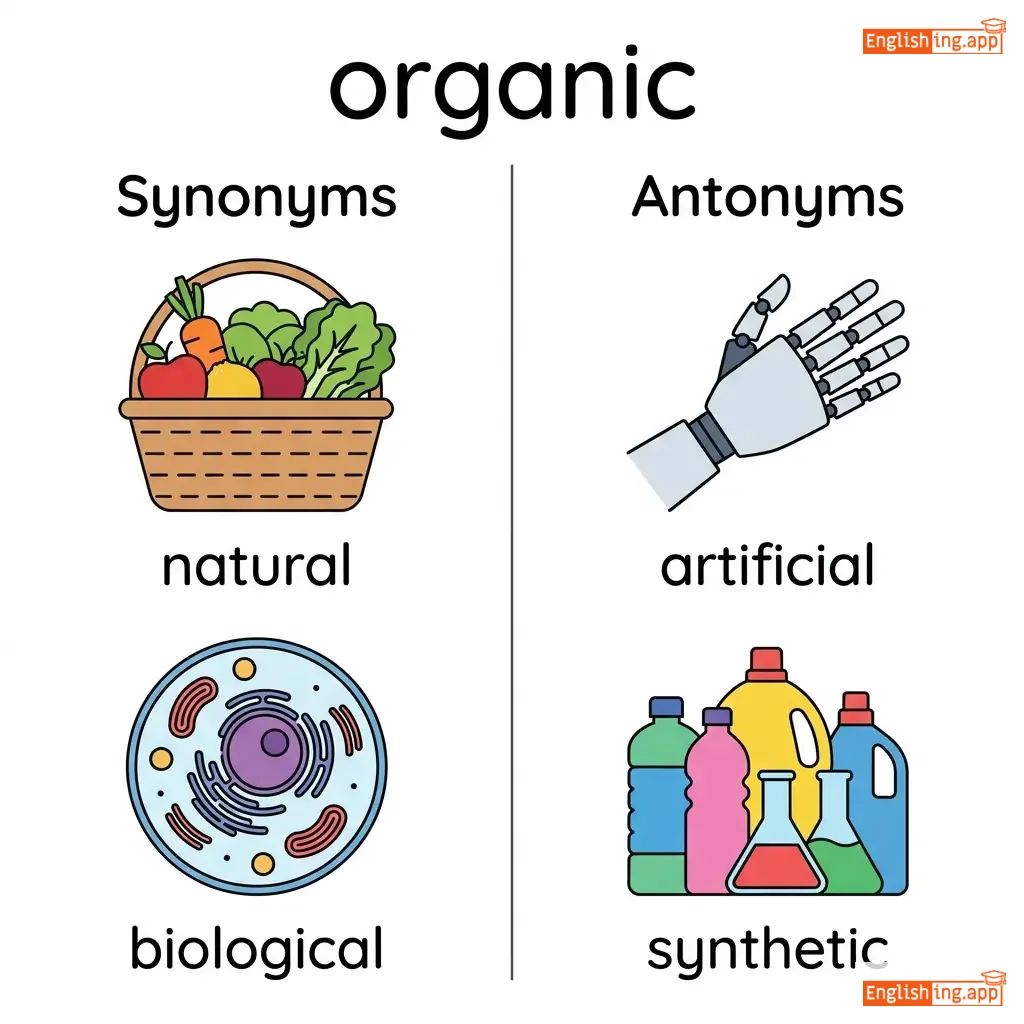
natural, biological, ecological, pure
••••••
|
artificial, synthetic, chemical
••••••
|
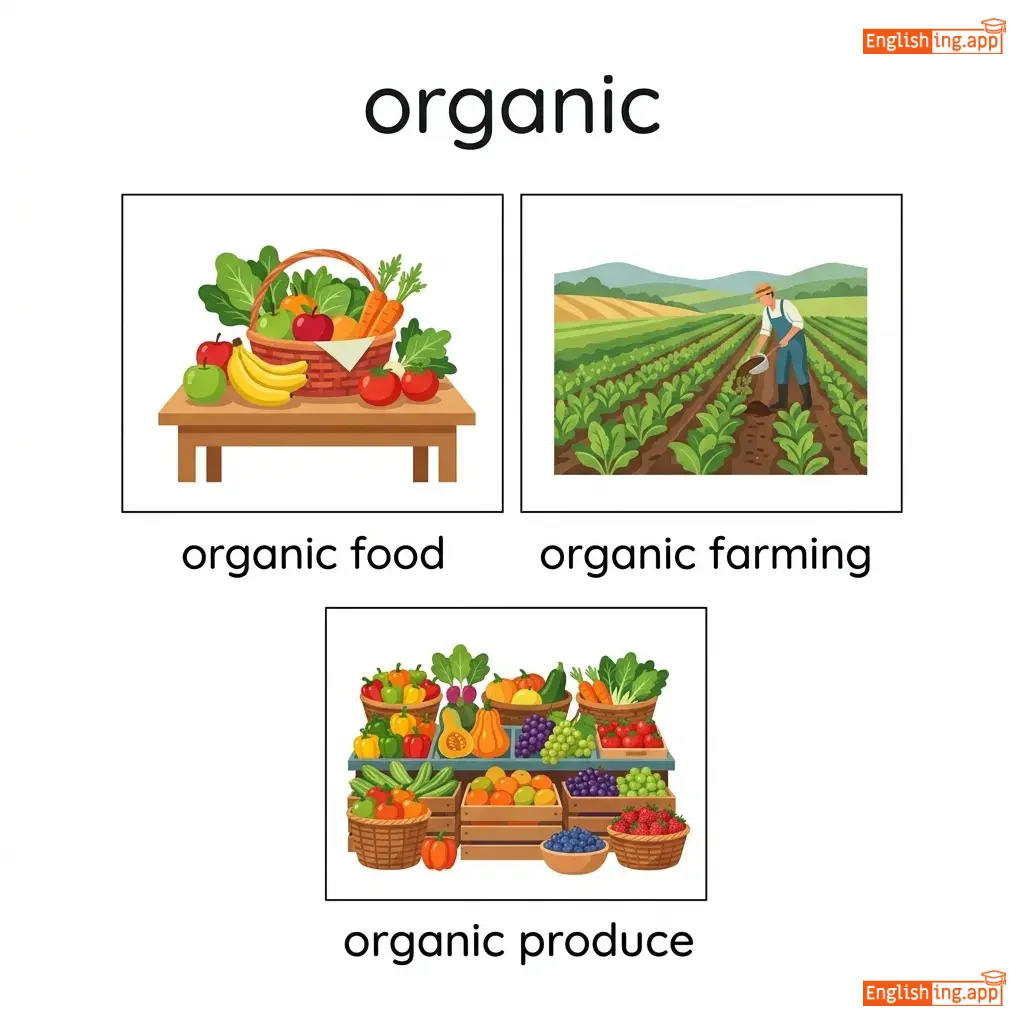
organic food, organic farming, organic produce, organic material
••••••
|
オーガニック = 自然から来る、オーガニックフードのように。
••••••
|
|
#3595
🏢
|
/ˌɔːɡənaɪˈzeɪʃn/
noun
(オーガナイゼーション)
••••••
|
|
組織
soshiki
••••••
|
- •••••• | - •••••• | - •••••• | - •••••• |
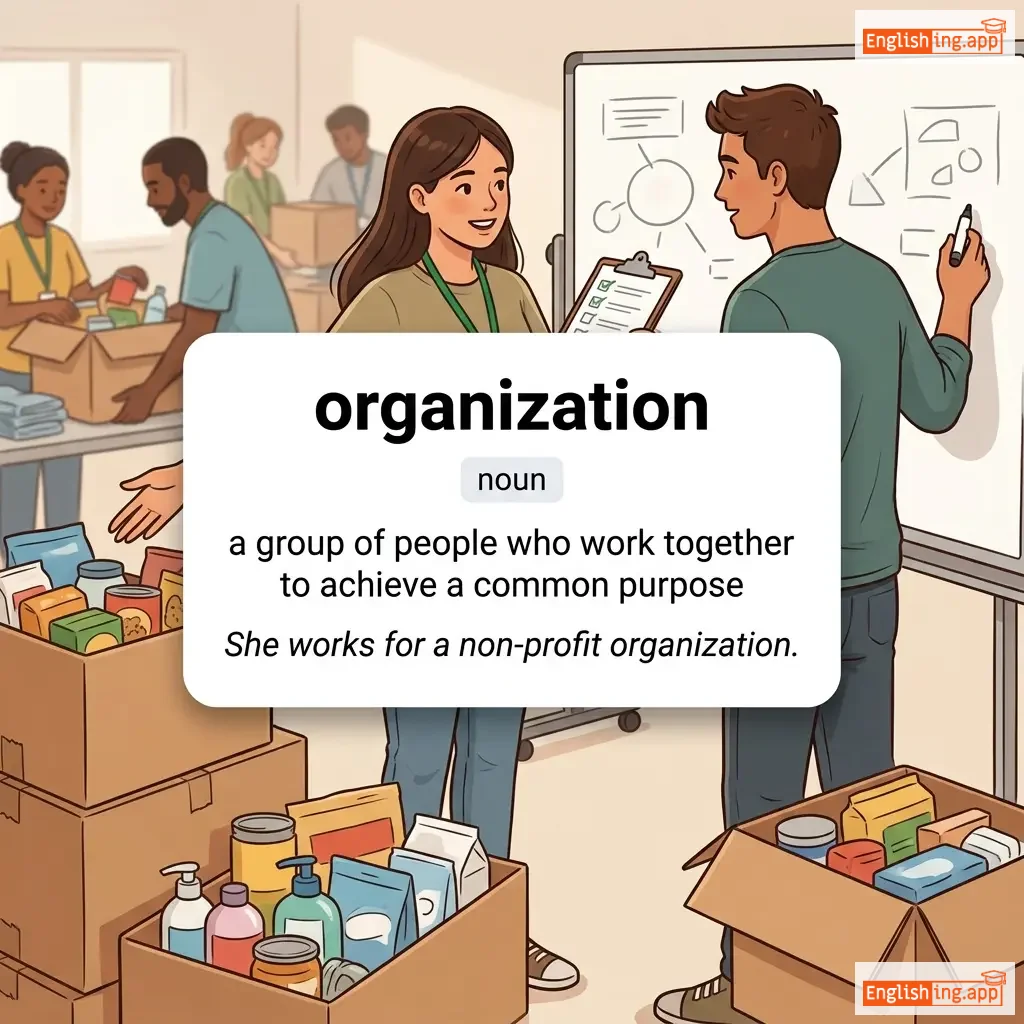
a group of people who work together to achieve a common purpose
••••••
|
She works for a non-profit organization. |
彼女は非営利団体で働いています。
Kanojo wa hieiri dantai de hataraiteimasu.
••••••
|
- •••••• | - •••••• | - •••••• |
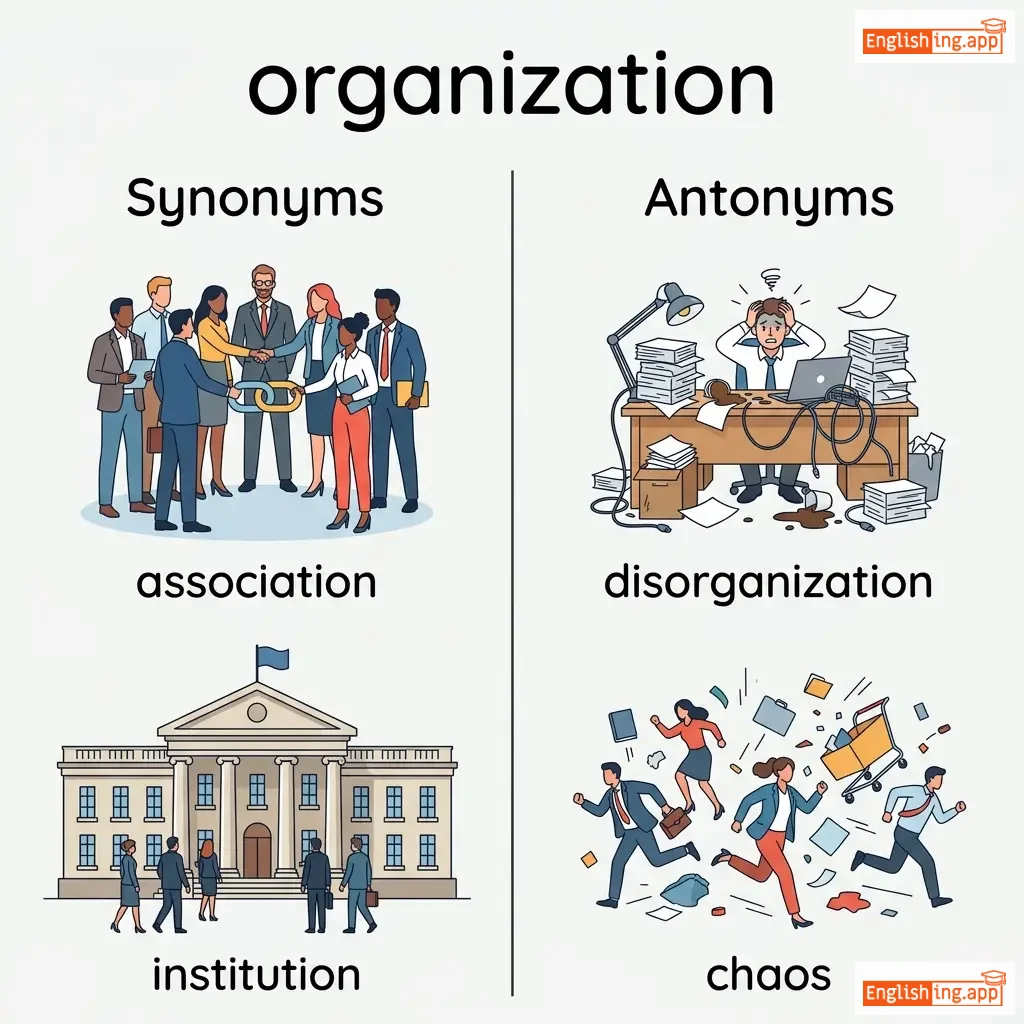
association, institution, group, establishment
••••••
|
disorganization, chaos
••••••
|
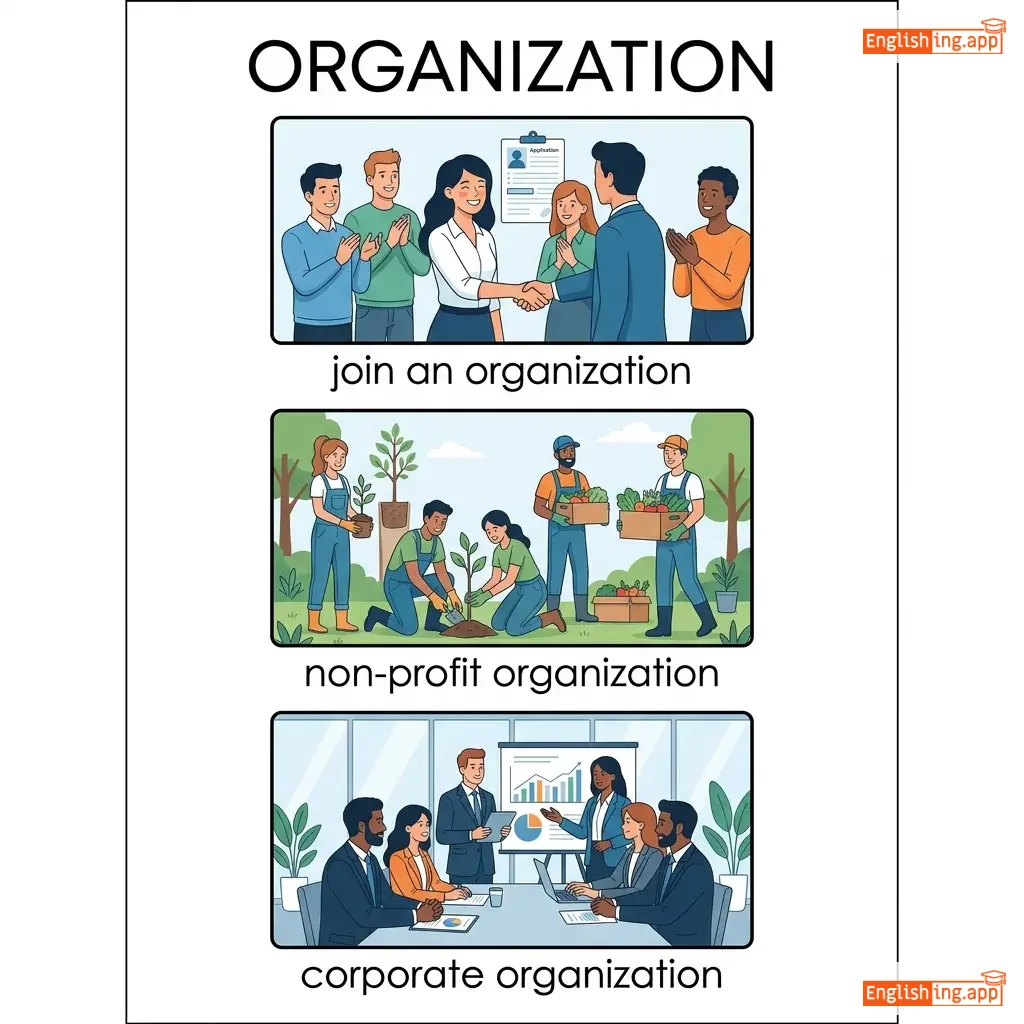
join an organization, non-profit organization, corporate organization
••••••
|
組織とはみんなで一緒に働く場所です!
••••••
|
|
#3596
🏢
|
/ˌɔːɡənaɪˈzeɪʃənəl/
adjective
(オーガニゼーショナル)
••••••
|
- •••••• |
組織的
soshitekina
••••••
|
- •••••• | - •••••• | - •••••• | - •••••• |
relating to the structure or arrangement of a company or group
••••••
|
He works on improving the organizational structure of the company. |
彼は会社の組織構造を改善するために働いています。
Kare wa kaisha no soshikikōzō o kaizen suru tame ni hataraiteimasu.
••••••
|
- •••••• | - •••••• | - •••••• |
administrative, structural, managerial, corporate
••••••
|
disorganized, chaotic
••••••
|
organizational skills, organizational structure, organizational change, organizational behavior
••••••
|
Organizationは構造を意味し、組織的はその構造に関連していることを意味します。
••••••
|
|
#3597
📅
|
/ˈɔːrɡənaɪz/
verb
(オーガナイズ)
••••••
|
|
整理する
seiri suru
••••••
|
organized
オーガナイズド
••••••
|
organized
オーガナイズド
••••••
|
organizes
オーガナイズズ
••••••
|
organizing
オーガナイジング
••••••
|
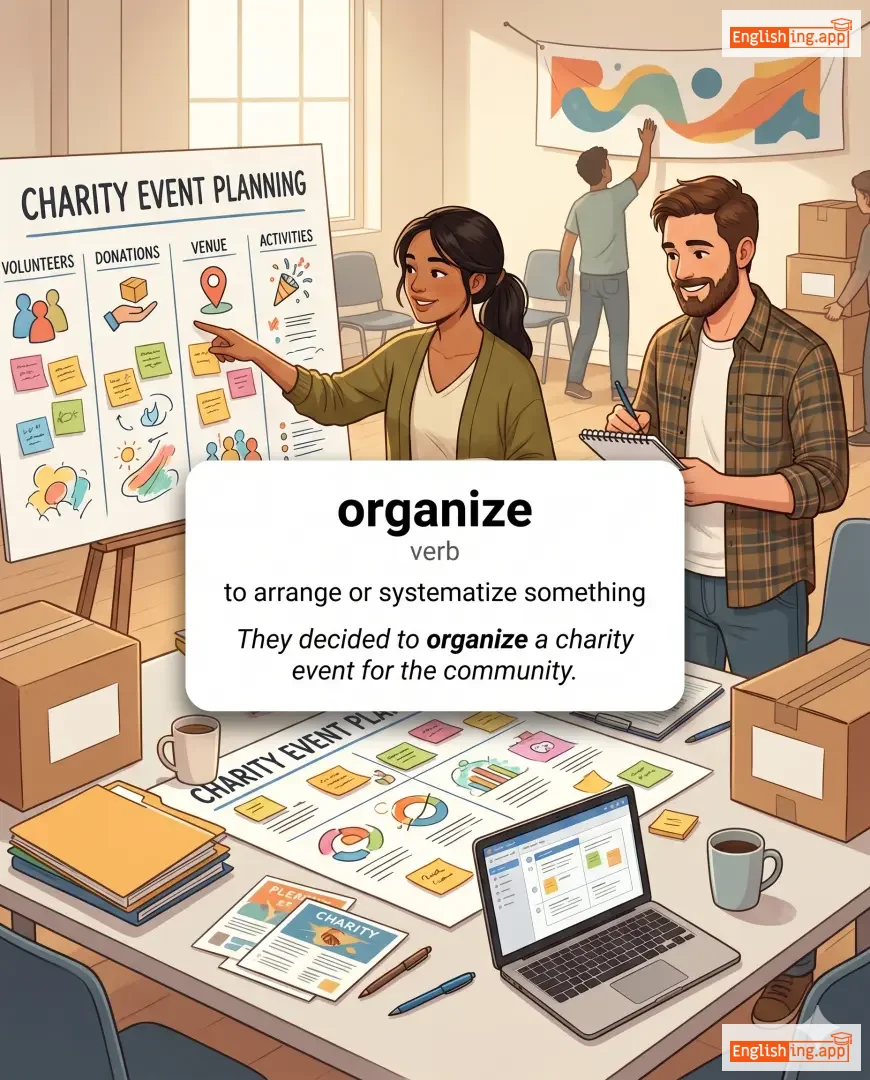
to arrange systematically; to plan and coordinate
••••••
|
She organized a surprise party for her friend.
シー オーガナイズド ア サプライズ パーティー フォー ハー フレンド
••••••
|
彼女は友達のためにサプライズパーティーを企画した。
Kanojo wa tomodachi no tame ni sapuraizu paatii o kikaku shita
••••••
|
- •••••• | - •••••• | - •••••• |
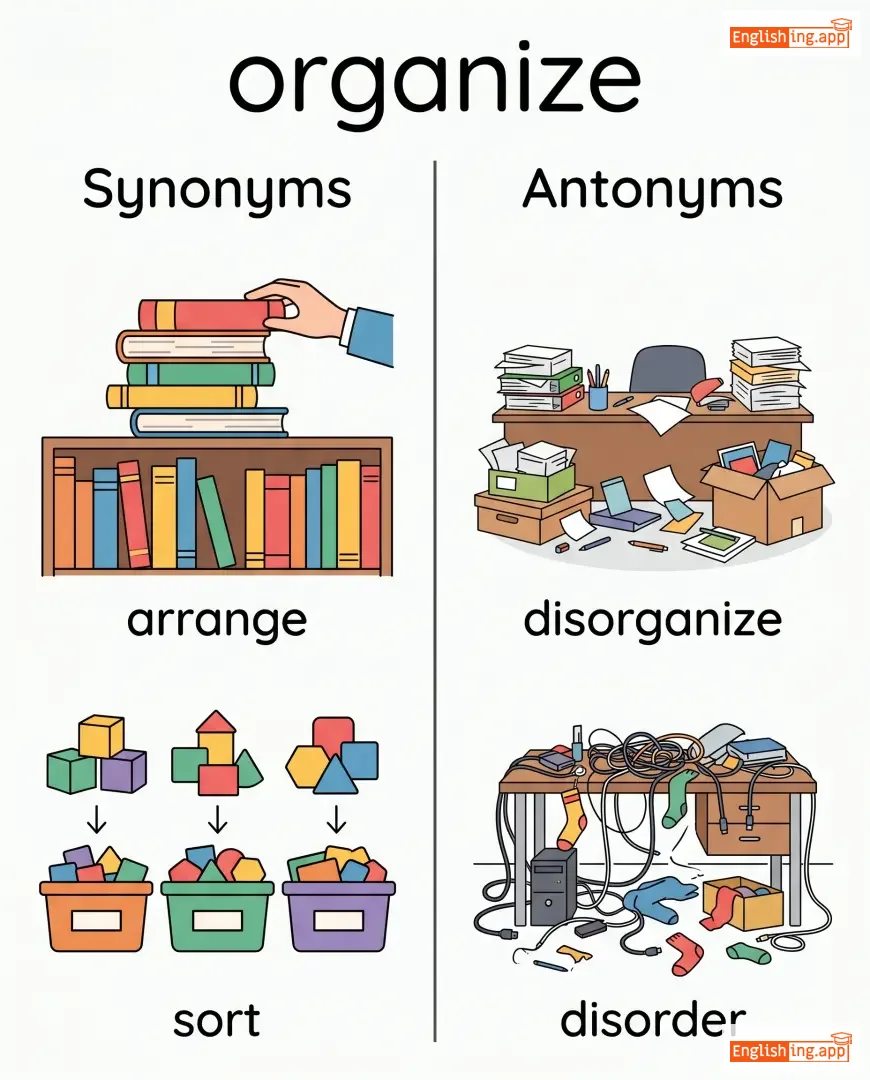
arrange, plan, coordinate, structure
••••••
|
disorganize, scatter, disorder, confuse
••••••
|
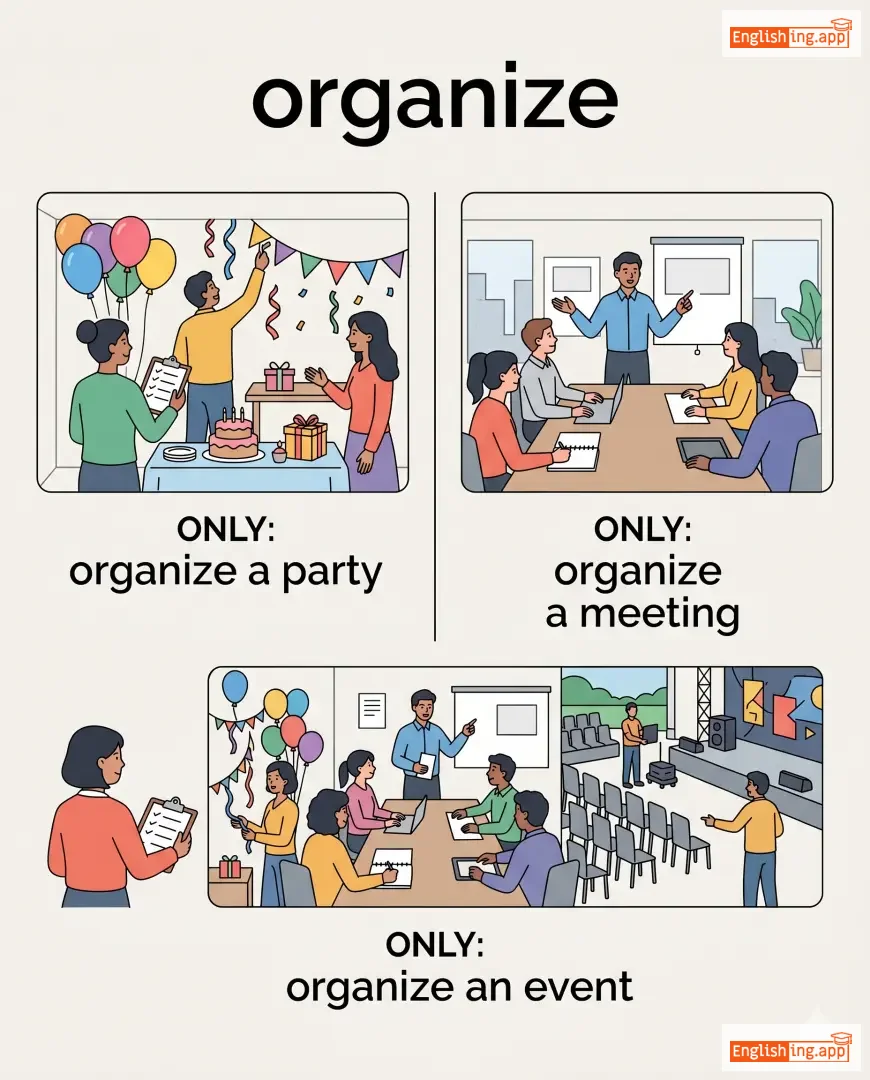
organize event, organize files, organize thoughts, well organized
••••••
|
オーガナイズ = organize; 整理する Seiri suru の shelf を想像しておく: an O shaped mascot shouting Organize!
••••••
|
|
#3598
📋
|
/ˈɔːrɡənaɪzd/
adjective
(オーガナイズド)
••••••
|
|
整理された
seiri sareta
••••••
|
- •••••• | - •••••• | - •••••• | - •••••• |
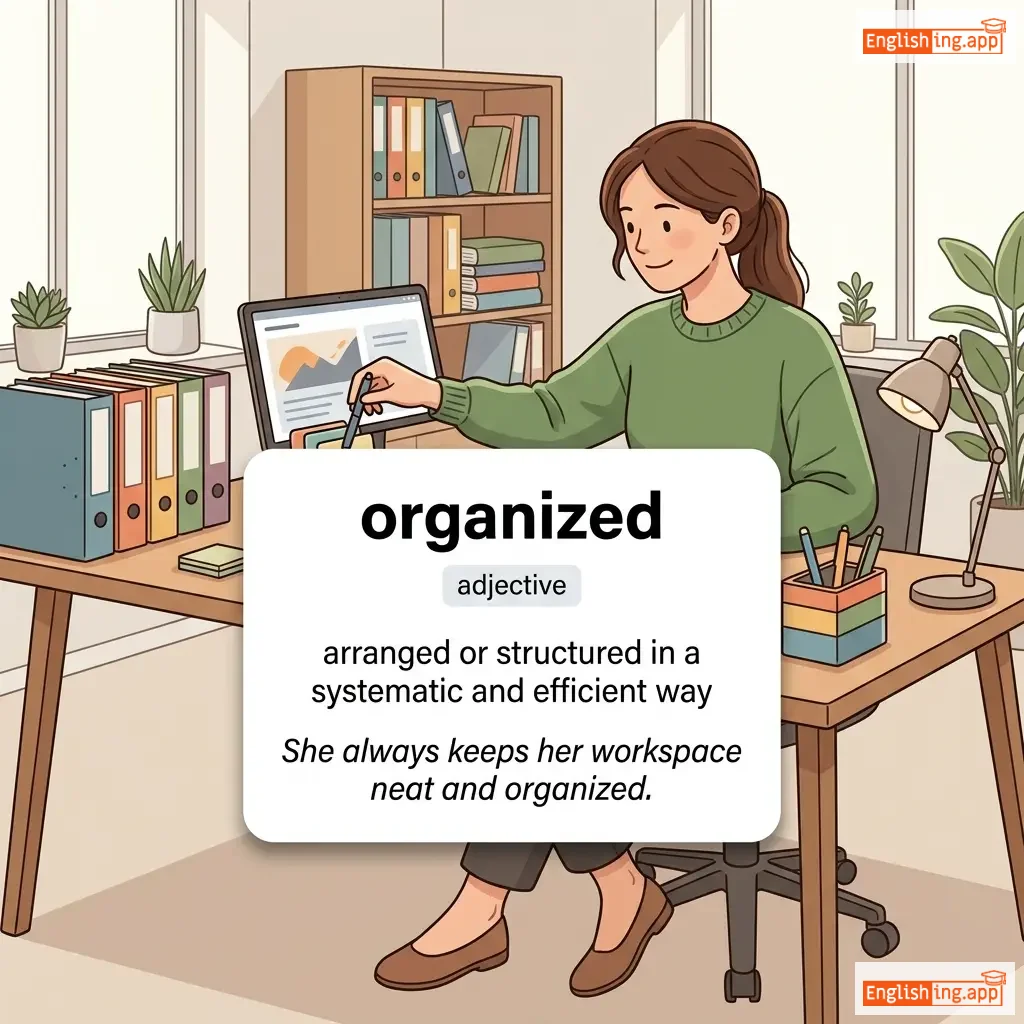
arranged or structured in a systematic and efficient way
••••••
|
She always keeps her workspace neat and organized. |
彼女はいつも自分の作業スペースを整理して整頓している。
Kanojo wa itsumo jibun no sagyō supēsu o seiri shite seiton shite iru.
••••••
|
organized chaos |
a situation that seems messy but actually functions efficiently
••••••
|
整理された混乱
seiri sareta konran
••••••
|
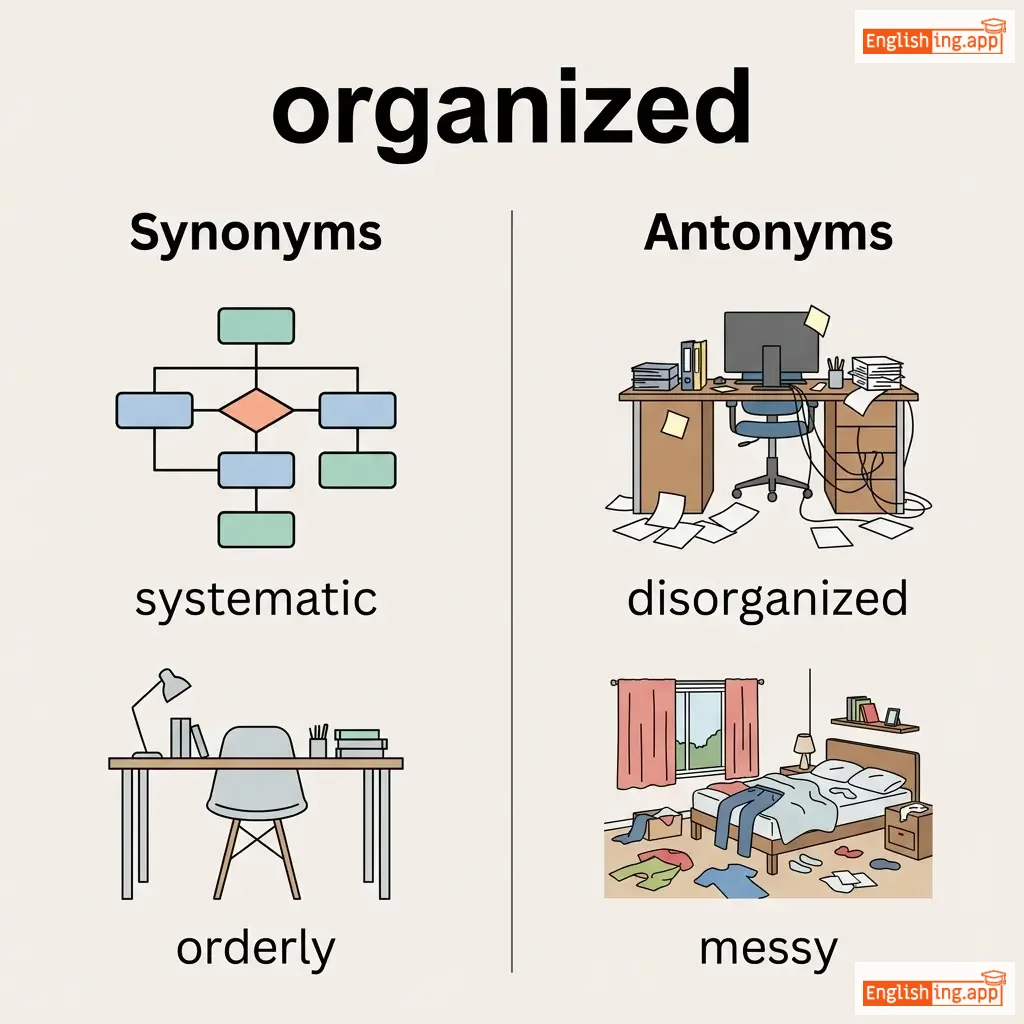
systematic, orderly, structured, methodical, disciplined
••••••
|
disorganized, messy, chaotic
••••••
|
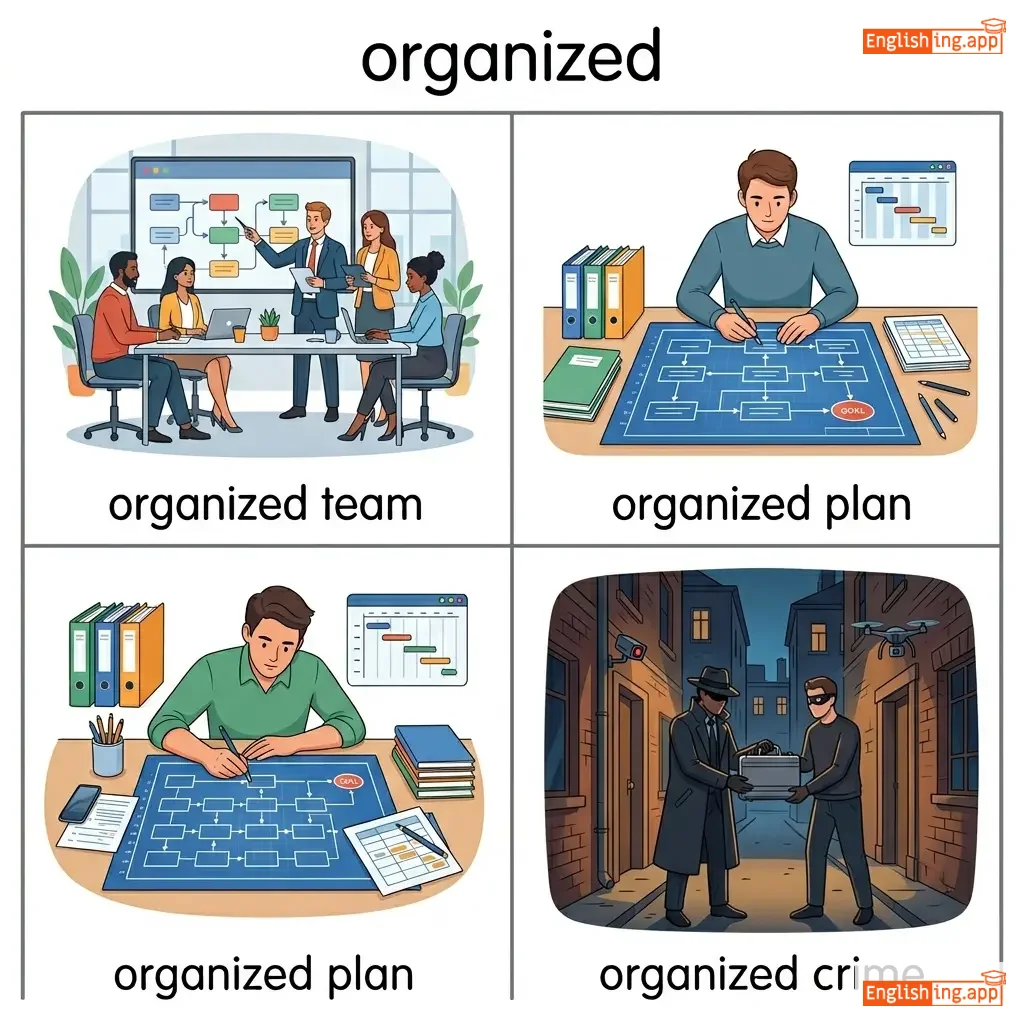
organized team, organized plan, organized crime, well-organized
••••••
|
整理されたものは効率的に動く
••••••
|
|
#3599
📋
|
/ˈɔːrɡənaɪzər/
noun
(オーガナイザー)
••••••
|
- •••••• |
主催者
shusaisha
••••••
|
- •••••• | - •••••• | - •••••• | - •••••• |
a person who arranges or coordinates activities, events, or groups; a tool or item used to keep things in order
••••••
|
She worked as the main organizer of the international conference.
彼女は国際会議の主要なオーガナイザーだった。
••••••
|
彼女は国際会議の主要な主催者だった。
Kanojo wa kokusai kaigi no shuyo na shusaisha datta
••••••
|
- •••••• | - •••••• | - •••••• |
coordinator, planner, arranger, manager, administrator
••••••
|
disorganizer, disruptor, mess-maker
••••••
|
event organizer, community organizer, professional organizer, meeting organizer
••••••
|
オーガナイザー=主催者、イベントをまとめる人
••••••
|
|
#3600
📘
|
/ˌɔː.ri.enˈteɪ.ʃən/
noun
(オリエンテーション)
••••••
|
- •••••• |
オリエンテーション
orientēshon
••••••
|
- •••••• | - •••••• | - •••••• | - •••••• |
the process of becoming familiar with a new situation or environment
••••••
|
The company provides an orientation for all new employees. |
会社はすべての新しい従業員にオリエンテーションを提供します。
Kaisha wa subete no atarashī jūgyōin ni orientēshon o teikyō shimasu.
••••••
|
new employee orientation |
a training session to introduce new workers to an organization
••••••
|
新しい従業員のオリエンテーション
atarashī jūgyōin no orientēshon
••••••
|
introduction, initiation, training, induction, adjustment
••••••
|
confusion, disorientation
••••••
|
orientation session, orientation program, student orientation, cultural orientation
••••••
|
Orientation はオリエンテーションです - 会社に入ったとき、オリエンテーションを受けます 📘。
••••••
|
|
#3601
🌄
|
/ˈɒr.ɪ.dʒɪn/
noun
(オリジン)
••••••
|
- •••••• |
起源
kigen
••••••
|
- •••••• | - •••••• | - •••••• | - •••••• |
the point or place where something begins or is created
••••••
|
The river has its origin in the mountains.
その川は山々に起源を持っています。
••••••
|
その川は山々に起源を持っています。
Sono kawa wa yamayama ni kigen o motteimasu.
••••••
|
point of origin
起源点
••••••
|
the place where something starts
••••••
|
起源点
kigendian
••••••
|
beginning, source, root, start, genesis
••••••
|
end, conclusion
••••••
|
country of origin, place of origin, origin story, unknown origin
••••••
|
Origin は起源を意味します 🌄 — 川の起源を覚えることで、言葉を覚えるのが簡単になります。
••••••
|
|
#3602
✨
|
/əˈrɪdʒ.ɪ.nəl/
adjective
(オリジナル)
••••••
|
- •••••• |
オリジナル
orijinaru
••••••
|
- •••••• | - •••••• | - •••••• | - •••••• |
existing from the beginning; not a copy or imitation
••••••
|
This is the original manuscript of the novel. |
これは小説のオリジナルの原稿です。
Kore wa shōsetsu no orijinaru no genkō desu.
••••••
|
original idea |
a new and creative thought that has not been copied
••••••
|
オリジナルのアイデア
orijinaru no aidea
••••••
|
authentic, genuine, innovative, unique, creative
••••••
|
fake, imitation, duplicate
••••••
|
original idea, original design, original version, original work
••••••
|
Originalはオリジナル✨ — オリジナル映画にはコピーはない。
••••••
|
|
#3603
⏳
|
/əˈrɪdʒɪnəli/
adverb
(オリジナリー)
••••••
|
- •••••• |
元々
motomoto
••••••
|
- •••••• | - •••••• | - •••••• | - •••••• |
in the beginning, at first
••••••
|
Originally, she wanted to be a doctor. |
元々、彼女は医者になりたかった。
Motomoto, kanojo wa isha ni naritakatta.
••••••
|
- •••••• | - •••••• | - •••••• |
initially, at first, at the outset, in the beginning
••••••
|
finally, ultimately
••••••
|
originally from, originally intended, originally planned
••••••
|
オリジナリー、すべては最初から始まる。
••••••
|
|
#3604
🌱
|
/əˈrɪdʒɪneɪt/
verb
(オリジネイト)
••••••
|
- •••••• |
起源する
kigen suru
••••••
|
originated
オリジネイテッド
••••••
|
originated
オリジネイテッド
••••••
|
originates
オリジネイツ
••••••
|
originating
オリジネイティング
••••••
|
to come into existence; to begin; to create or produce
••••••
|
The tradition originated in ancient times.
その伝統は古代の時代に起源を持っています。
••••••
|
その伝統は古代の時代に起源を持っています。
Sono dentō wa kodai no jidai ni kigen o motteimasu.
••••••
|
originate from
から起源する
••••••
|
to come from a particular place or source
••••••
|
から起源する
kara kigen suru
••••••
|
begin, arise, emerge, derive, start
••••••
|
end, finish, conclude
••••••
|
originate idea, originate from, originate request, originate concept
••••••
|
Origin は始まりを意味し、originate は起源を意味します 🌱
••••••
|
|
#3605
🔄
|
/ˈʌðər/
adjective
(アザー)
••••••
|
- •••••• |
他の
hoka no
••••••
|
- •••••• | - •••••• | - •••••• | - •••••• |
used to refer to something different from the one already mentioned or known
••••••
|
I don't want this one, I will take the other one. |
これを欲しくない、他のを取るつもりだ。
Kore o hoshikunai, hoka no o toru tsumori da.
••••••
|
the other side of the coin |
the opposite aspect of a situation
••••••
|
コインの裏面
Koin no uramen
••••••
|
alternative, different, another, else
••••••
|
same, identical
••••••
|
the other side, the other person, the other day
••••••
|
Other、何か新しい、でも違うものを選べ!
••••••
|
Vocabulary Quiz
Test your vocabulary by matching words with their translations or meanings.
Login to take the quiz
Comments (0)
Share your thoughts and join the discussion.
Join the discussion by logging in
Login to CommentNo comments yet
Be the first to share your thoughts!