

翻訳
過去
過去分詞
三人称単数
動名詞
意味
例文
例文の翻訳
同義語
対義語
コロケーション
ニーモニック



Swipe left or right, or use the buttons. Tap image to zoom.
例文の翻訳
単語
Lesson 52Lesson 52 - マスクトグル
|
絵文字
|
単語 | Images | 翻訳 | 過去 | 過去分詞 | 三人称単数 | 動名詞 | 意味 | 例文 | 例文の翻訳 | 表現例 | 表現例の意味 | 表現例の翻訳 | 同義語 | 対義語 | コロケーション | ニーモニック |
|---|---|---|---|---|---|---|---|---|---|---|---|---|---|---|---|---|---|
|
#2469
👦
|
/hɪz/
pronoun
(ヒズ)
••••••
|
- •••••• |
彼の
kare no
••••••
|
- •••••• | - •••••• | - •••••• | - •••••• |
belonging to or associated with a male person previously mentioned
••••••
|
This is his book on the table. |
これは彼の本です、テーブルの上にあります。
Kore wa kare no hon desu, tēburu no ue ni arimasu.
••••••
|
- •••••• | - •••••• | - •••••• |
belonging to him, owned by him
••••••
|
her, their
••••••
|
his book, his car, his house, his idea
••••••
|
Hisは彼のという意味です、覚えておいてください—He + is = His もの
••••••
|
|
#2470
📚
|
/hɪˈstɔːriən/
noun
(ヒストリアン)
••••••
|
- •••••• |
歴史学者
rekishigakusha
••••••
|
- •••••• | - •••••• | - •••••• | - •••••• |
a person who studies or writes about history
••••••
|
The historian gave a lecture on ancient civilizations. |
歴史学者は古代文明について講義を行いました。
Rekishigakusha wa kodai bunmei ni tsuite kōgi o okonaimashita.
••••••
|
- •••••• | - •••••• | - •••••• |
scholar, researcher, chronicler, analyst
••••••
|
layman, amateur
••••••
|
famous historian, professional historian, military historian
••••••
|
Historian は history + 学者 → 歴史を学んでいる人
••••••
|
|
#2471
🏛️
|
/hɪˈstɔːrɪk/
adjective
(ヒストリック)
••••••
|
|
歴史的
rekishiteki
••••••
|
- •••••• | - •••••• | - •••••• | - •••••• |
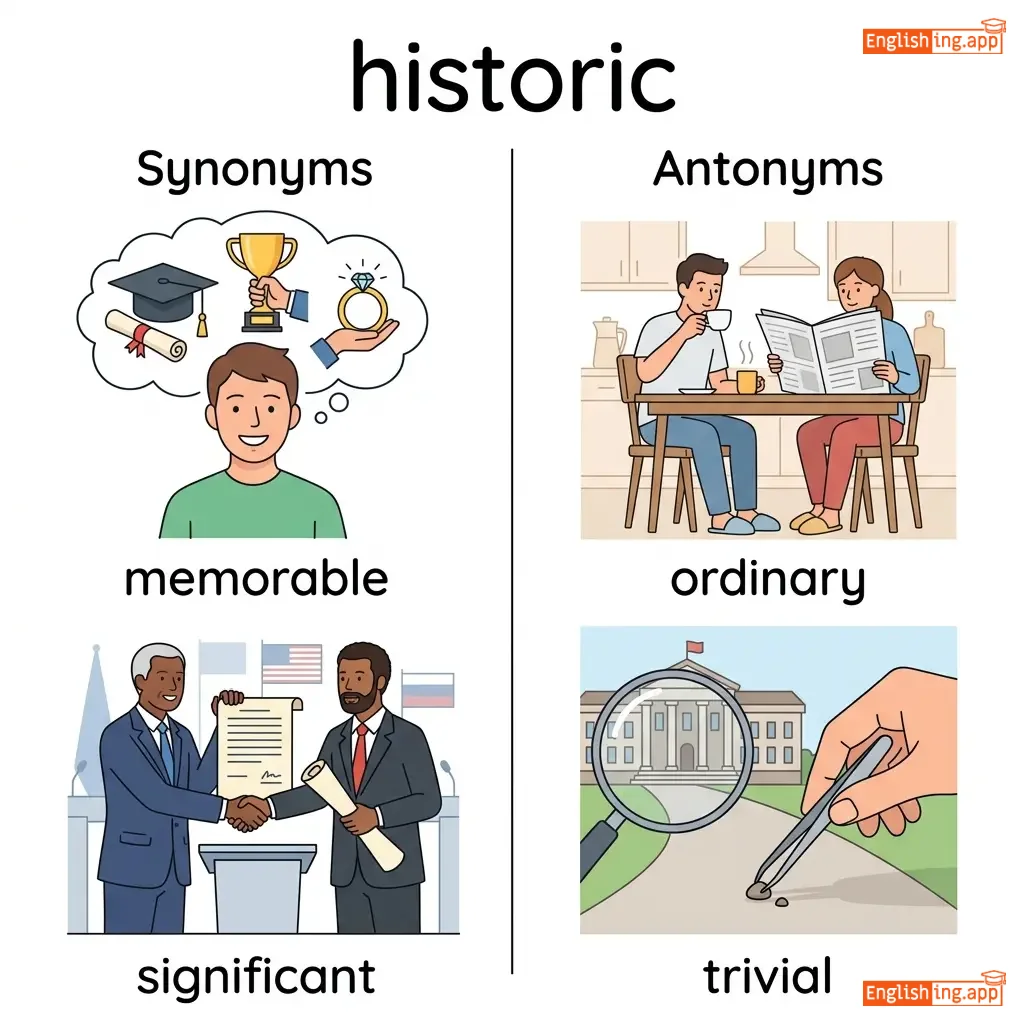
Famous or important in history; likely to be remembered in history.
••••••
|
The historic agreement changed the course of the nation. |
その歴史的な合意は国の進路を変えました。
Sono rekishiteki na gōi wa kuni no shinro o kaemashita.
••••••
|
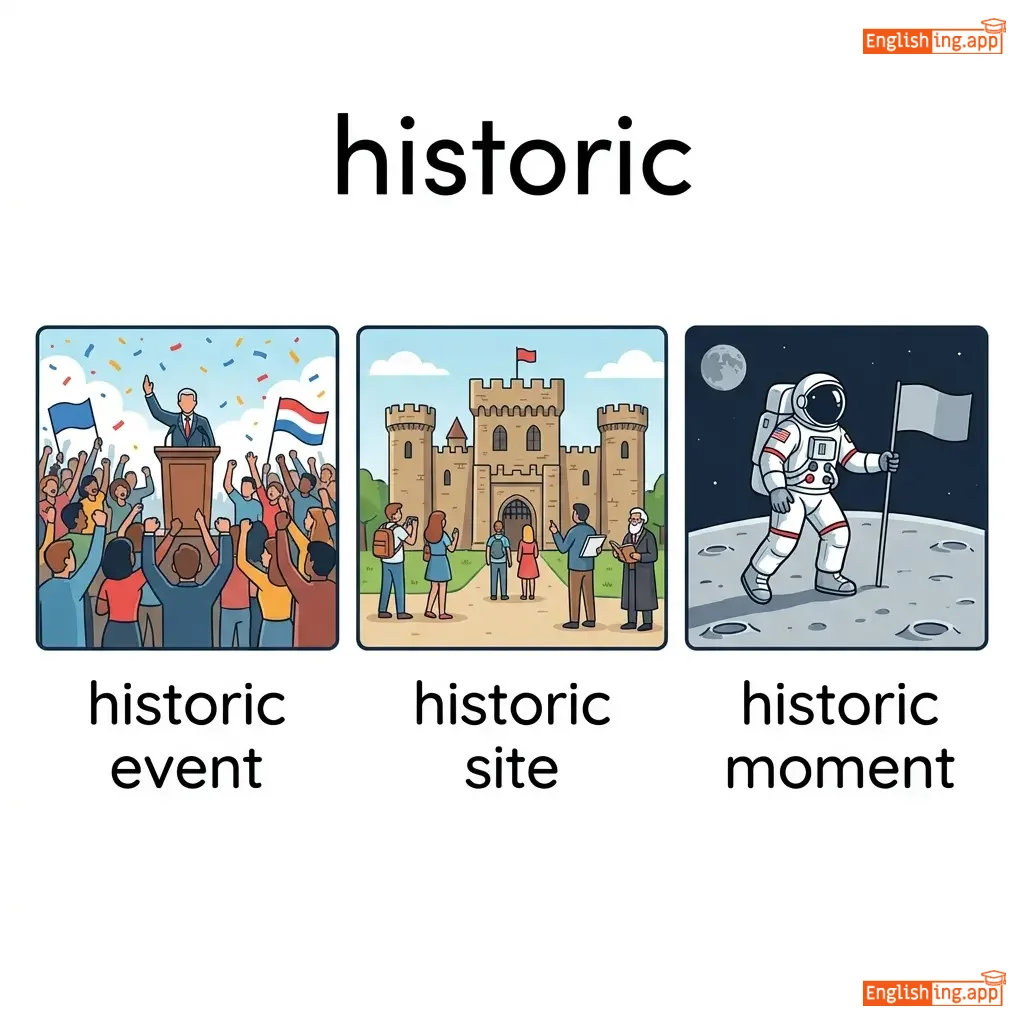
historic moment |
An event of great importance in history
••••••
|
歴史的瞬間
Rekishiteki shunkan
••••••
|
memorable, significant, important, monumental, notable
••••••
|
ordinary, trivial, forgettable
••••••
|
historic event, historic site, historic moment, historic decision
••••••
|
Historic = 歴史と関係があるので、歴史の中で重要な出来事。
••••••
|
|
#2472
📜
|
/hɪˈstɔːrɪkəl/
adjective
(ヒストリカル)
••••••
|
- •••••• |
歴史的
rekishiteki
••••••
|
- •••••• | - •••••• | - •••••• | - •••••• |
Related to history or past events.
••••••
|
The museum has a large collection of historical documents. |
博物館には多くの歴史的な文書が収蔵されています。
Hakubutsukan ni wa ooku no rekishiteki na bunsho ga shūzō sareteimasu.
••••••
|
historical record |
An account of past events
••••••
|
歴史的記録
rekishiteki kiroku
••••••
|
past, archival, recorded, ancient, traditional
••••••
|
modern, contemporary, current
••••••
|
historical documents, historical records, historical evidence, historical site
••••••
|
Historical = History + related, つまり歴史に関係がある。
••••••
|
|
#2473
📜
|
/hɪˈstɒrɪkli/
adverb
(ヒストリカリー)
••••••
|
- •••••• |
歴史的に
rekishiteki ni
••••••
|
- •••••• | - •••••• | - •••••• | - •••••• |
in a way that relates to history or past events
••••••
|
Historically, this city was a major trade center. |
歴史的に、この都市は主要な貿易の中心地でした。
Rekishiteki ni, kono toshi wa shuyou na boueki no chuushinchi deshita.
••••••
|
- •••••• | - •••••• | - •••••• |
traditionally, formerly, ancestrally, in the past, over time
••••••
|
currently, presently, now
••••••
|
historically significant, historically accurate, historically important, historically low
••••••
|
History + 的に = 過去に関連する、つまり‘歴史的に’
••••••
|
|
#2474
🏛️
|
/ˈhɪstəri/
noun
(ヒストリー)
••••••
|
|
歴史
rekishi
••••••
|
- •••••• | - •••••• | - •••••• | - •••••• |
the study of past events
••••••
|
She is studying the history of medieval Europe. |
彼女は中世ヨーロッパの歴史を学んでいます。
Kanojo wa chuusei Yooroppa no rekishi o manandeimasu.
••••••
|
make history |
to do something very important that will be remembered
••••••
|
歴史を作る
rekishi o tsukuru
••••••
|
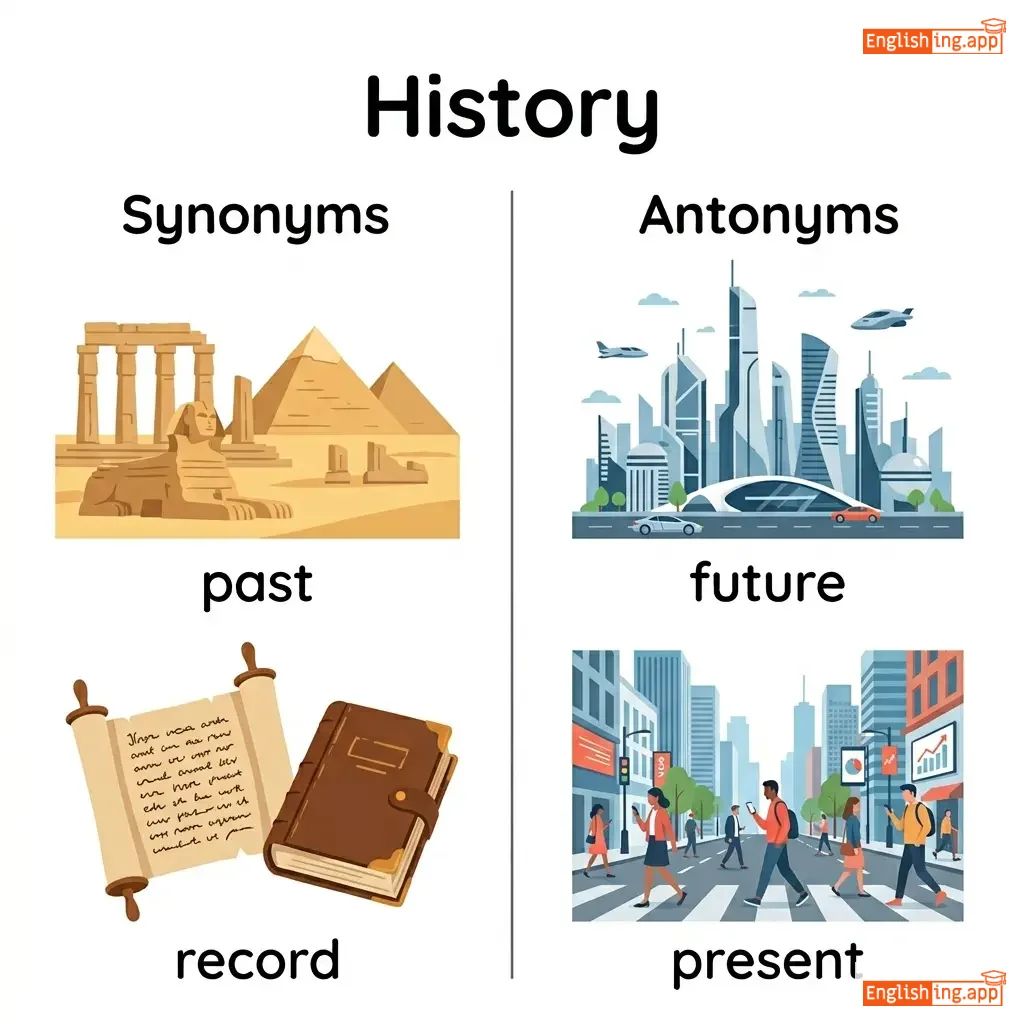
past, record, chronicle, heritage
••••••
|
future, present
••••••
|
world history, history book, history lesson, history of art
••••••
|
Historyは日本語で歴史、考えてみて—His Storyは歴史
••••••
|
|
#2475
💥
|
/hɪt/
verb
(ヒット)
••••••
|
- •••••• |
打つ
utsu
••••••
|
hit
ヒット
••••••
|
hit
ヒット
••••••
|
hits
ヒットス
••••••
|
hitting
ヒッティング
••••••
|
to strike someone or something with force
••••••
|
He accidentally hit the ball into the window.
彼は偶然ボールを窓に打ちました。
••••••
|
彼は偶然ボールを窓に打ちました。
Kare wa guuzen booru wo mado ni uchimashita.
••••••
|
hit the nail on the head
的を射る
••••••
|
to describe a situation or problem exactly
••••••
|
的を射る
Mato wo iru
••••••
|
strike, smack, beat, punch, knock
••••••
|
miss, avoid, dodge
••••••
|
hit hard, hit the target, hit the road, hit record
••••••
|
Hitは打つという意味です。ゴルフでボールを打ってホールインワンを目指しましょう!
••••••
|
|
#2476
🎨
|
/ˈhɑː.bi/
noun
(ホビー)
••••••
|
- •••••• |
趣味; お楽しみ; 遊び
shumi, o-tanoshimi, asobi
••••••
|
- •••••• | - •••••• | - •••••• | - •••••• |
an activity done regularly in one's leisure time for pleasure; a pastime or recreation
••••••
|
Photography became her favorite hobby after she received a camera for her birthday. |
写真は彼女のお気に入りの趣味になりました、彼女の誕生日にカメラをもらった後で。
Shashin wa kanojo no okiniiri no shumi ni narimashita, kanojo no tanjōbi ni kamera o moratta ato de.
••••••
|
- •••••• | - •••••• | - •••••• |
pastime, interest, pursuit, recreation
••••••
|
work, job, profession, obligation
••••••
|
favorite hobby, hobby horse, pursue hobby
••••••
|
趣味は楽しみを与える活動、写真のように
••••••
|
|
#2477
✋
|
/hoʊld/
verb
(ホールド)
••••••
|
|
持つ
motsu
••••••
|
held
ヘルド
••••••
|
held
ヘルド
••••••
|
holds
ホールズ
••••••
|
holding
ホールディング
••••••
|
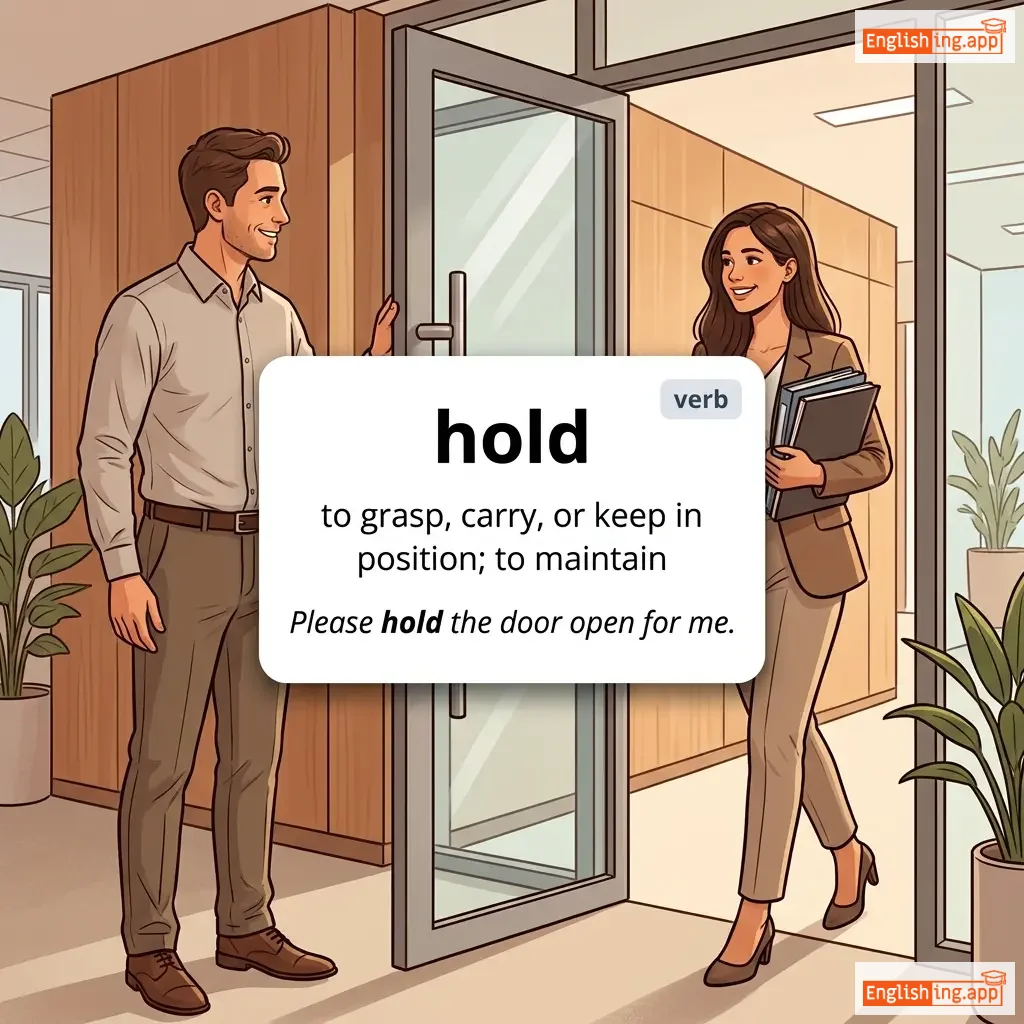
to grasp, carry, or keep in position; to maintain
••••••
|
Please hold the door open for me.
プリーズ ホールド ザ ドア オープン フォー ミ。
••••••
|
私のためにドアを開けたままにしておいてください。
Watashi no tame ni doa o aketa mama ni shite oite kudasai.
••••••
|
hold on
ホールド オン
••••••
|
to wait or pause briefly
••••••
|
待って
matte
••••••
|
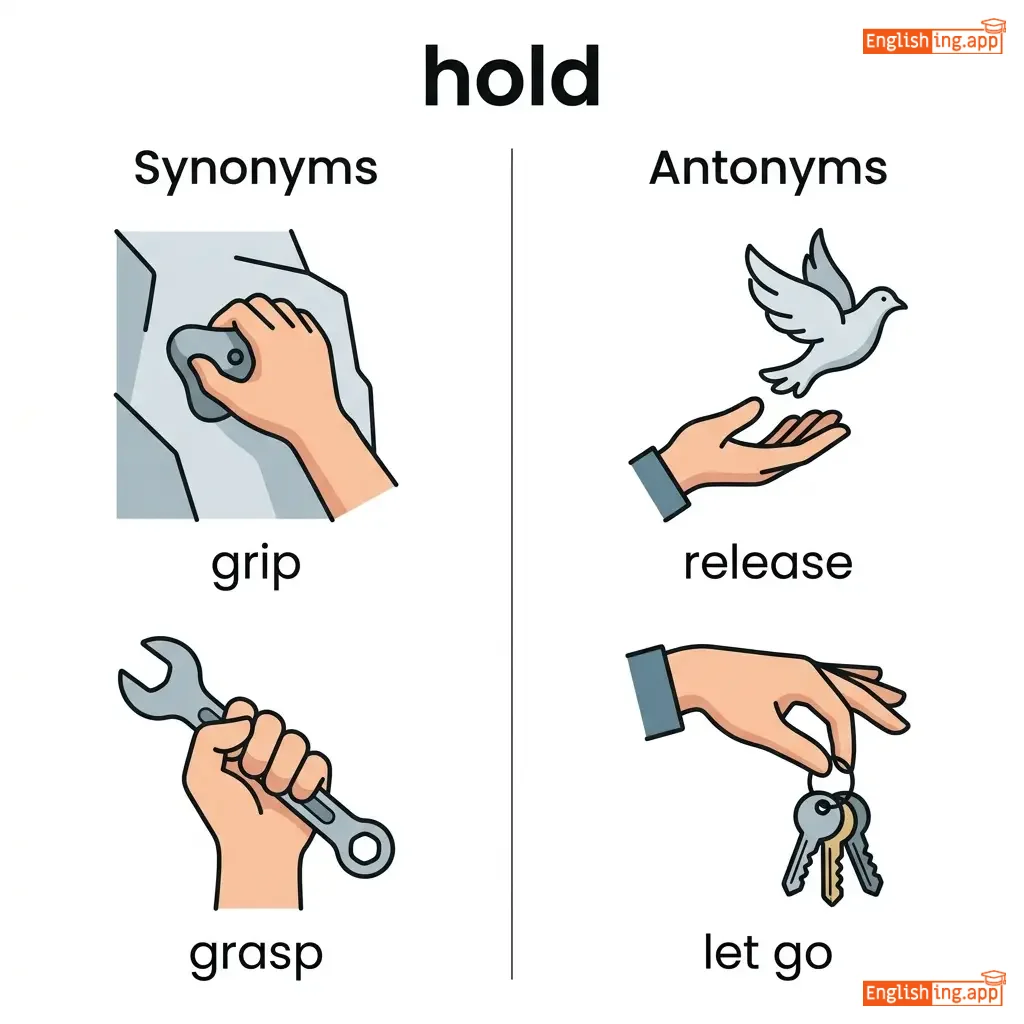
grip, grasp, keep, maintain, support
••••••
|
release, let go
••••••
|
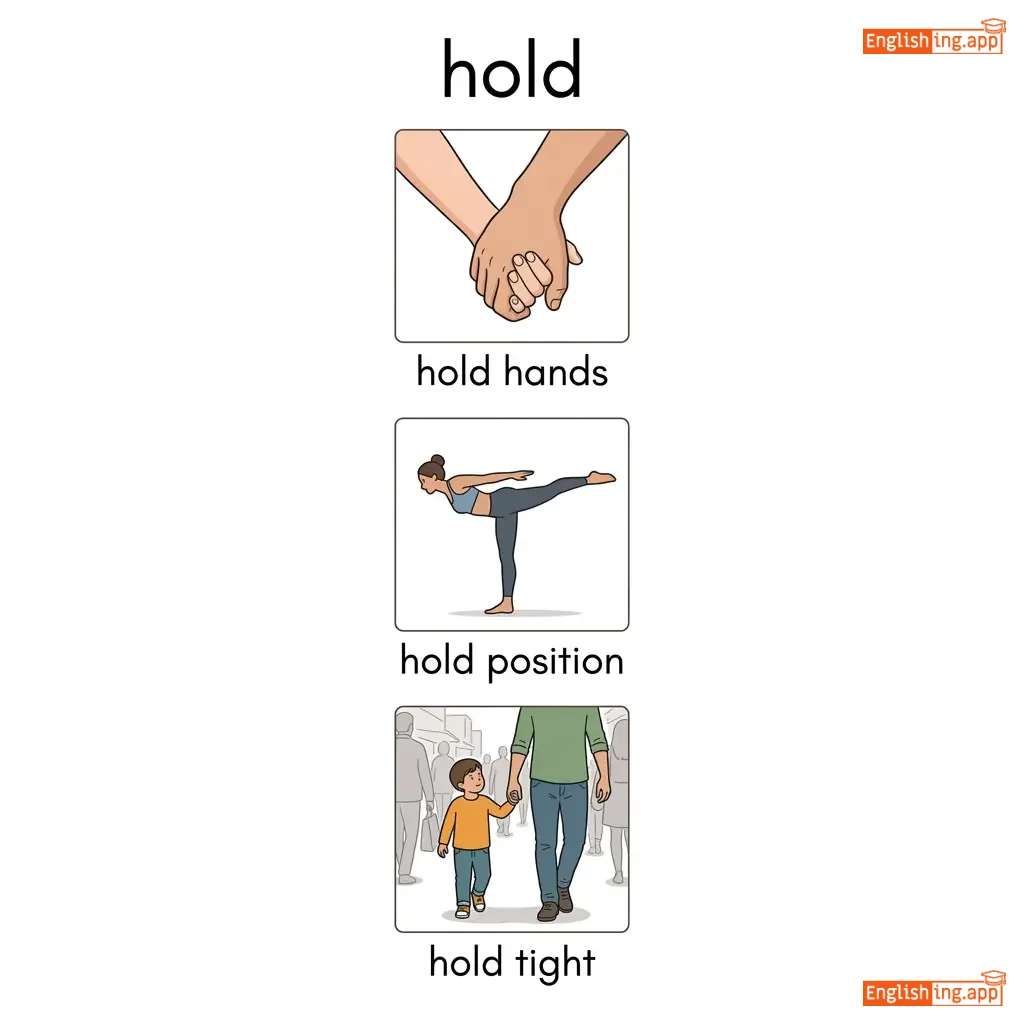
hold hands, hold position, hold tight, hold meeting
••••••
|
Hold は持つという意味です。電話を持つように。
••••••
|
|
#2478
🕳️
|
/hoʊl/
noun
(ホール)
••••••
|
- •••••• |
穴
ana
••••••
|
- •••••• | - •••••• | - •••••• | - •••••• |
an opening, gap, or hollow place in a solid surface
••••••
|
There is a hole in my shirt. |
シャツに穴があります。
Shatsu ni ana ga arimasu.
••••••
|
in a hole |
in a difficult or troublesome situation
••••••
|
穴に入る
ana ni hairu
••••••
|
gap, opening, cavity, pit, hollow
••••••
|
solid, whole
••••••
|
dig a hole, small hole, deep hole, in a hole
••••••
|
Hole = 穴, 覚えておいて hole = シャツの穴
••••••
|
|
#2479
🏖️
|
/ˈhɒlɪdeɪ/
noun
(ホリデー)
••••••
|
- •••••• |
休暇
kyūka
••••••
|
- •••••• | - •••••• | - •••••• | - •••••• |
A day of celebration or rest when most people do not work.
••••••
|
We are planning a trip during the summer holiday. |
私たちは夏休みの間に旅行を計画しています。
watashitachi wa natsu yasumi no aida ni ryokō o keikaku shiteimasu.
••••••
|
holiday spirit |
The cheerful mood that people often feel during holiday seasons.
••••••
|
休日の気分
kyūjitsu no kibun
••••••
|
vacation, break, leave, recess, festival
••••••
|
workday, duty
••••••
|
public holiday, summer holiday, holiday season, national holiday
••••••
|
休暇はリラックスと楽しみの時間、休日の気分が最高!
••••••
|
|
#2480
🕳️
|
/ˈhɑlːoʊ/
adjective
(ハロウ)
••••••
|
- •••••• |
空洞; 中身がない;
kudou; nakami ga nai;
••••••
|
- •••••• | - •••••• | - •••••• | - •••••• |
having an empty space inside; lacking substance or meaning; insincere
••••••
|
The hollow tree trunk provided shelter for small animals.
ハロウツリーの幹は小さな動物に避難場所を提供しました。
••••••
|
空洞の木の幹は小さな動物に避難場所を提供しました。
Kudou no ki no mi wa chiisana doubutsu ni hinan basho o teikyō shimashita.
••••••
|
- •••••• | - •••••• | - •••••• |
empty, vacant, void, concave
••••••
|
solid, full, dense, compact
••••••
|
hollow tree, hollow sound, hollow promise, hollow victory
••••••
|
空洞という意味は、物が空っぽのようなものです。
••••••
|
|
#2481
🙏
|
/ˈhoʊli/
adjective
(ホーリー)
••••••
|
- •••••• |
聖なる
seinaru
••••••
|
- •••••• | - •••••• | - •••••• | - •••••• |
Dedicated to God or a religious purpose; sacred.
••••••
|
This temple is considered a holy place. |
この寺院は聖なる場所と見なされています。
Kono jiin wa seinaru basho to minasa reteimasu.
••••••
|
holy cow |
An expression of surprise or astonishment.
••••••
|
神聖な牛
Shinsei na ushi
••••••
|
sacred, divine, blessed, saintly
••••••
|
profane, unholy
••••••
|
holy book, holy man, holy place, holy spirit
••••••
|
Holy は '聖なる' を意味します - みんな '聖なる場所' と言います。
••••••
|
|
#2482
🏠
|
/hoʊm/
noun
(ホム)
••••••
|
- •••••• |
家
ie
••••••
|
- •••••• | - •••••• | - •••••• | - •••••• |
the place where one lives, especially with family; a residence
••••••
|
She finally returned home after a long journey. |
彼女は長い旅の後、やっと家に帰りました。
Kanojo wa nagai tabi no ato, yatto ie ni kaerimashita.
••••••
|
home sweet home |
used to express pleasure at returning to one's home
••••••
|
家、スイートホーム
Ie, suīto hōmu
••••••
|
house, residence, dwelling, abode, household
••••••
|
office, workplace, street
••••••
|
go home, come home, home address, home town, home life
••••••
|
Homeは家、心が永遠に感じる場所です。
••••••
|
|
#2483
🏡
|
/hoʊm ˈdɪstrɪkt/
noun
(ホーム・ディストリクト)
••••••
|
- •••••• |
出身地区
shusshin chiku
••••••
|
- •••••• | - •••••• | - •••••• | - •••••• |
the district where a person was born or originally comes from
••••••
|
He returned to his home district after many years abroad.
ヒー リターンド トゥ ヒズ ホーム ディストリクト アフター メニー イヤーズ アブロード
••••••
|
彼は長年の海外生活の後、出身地区に戻った。
kare wa naganen no kaigai seikatsu no ato shusshin chiku ni modotta
••••••
|
- •••••• | - •••••• | - •••••• |
native district, hometown area, place of origin, home region
••••••
|
foreign district, adopted area
••••••
|
return to home district, visit home district, people of the home district
••••••
|
出身(shusshin) = where you come from → home district
••••••
|
|
#2484
🏠
|
/ˈhoʊmlænd/
noun
(ホームランド)
••••••
|
- •••••• |
故郷
furusato
••••••
|
- •••••• | - •••••• | - •••••• | - •••••• |
a person's native country or region
••••••
|
She returned to her homeland after ten years abroad.
彼女は10年間海外に住んだ後、母国に帰国した。
••••••
|
彼女は10年間海外に住んだ後、故郷に帰国した。
Kanojo wa 10 nenkan kaigai ni sunda ato, furusato ni kikoku shita.
••••••
|
- •••••• | - •••••• | - •••••• |
native land, motherland, fatherland, birthplace, country
••••••
|
foreign land, abroad, exile
••••••
|
defend the homeland, homeland security, homeland territory, homeland pride
••••••
|
Home は家を意味し + land は国を意味する — 自分の家がある国 = 故郷
••••••
|
|
#2485
🏚️
|
/ˈhoʊmləs/
adjective
(ホームレス)
••••••
|
- •••••• |
ホームレス
hōmuresu
••••••
|
- •••••• | - •••••• | - •••••• | - •••••• |
Without a home, and therefore typically living on the streets.
••••••
|
The organization helps homeless people find shelter.
その組織はホームレスの人々が避難所を見つけるのを助けています。
••••••
|
その組織はホームレスの人々が避難所を見つけるのを助けています。
Sono soshiki wa hōmuresu no hitobito ga hinanjo o mitsukeru no o tasuketeimasu.
••••••
|
- •••••• | - •••••• | - •••••• |
destitute, vagrant, displaced, houseless
••••••
|
settled, housed
••••••
|
homeless person, homeless shelter, homeless community
••••••
|
家がないからホームレス
••••••
|
|
#2486
📚
|
/ˈhoʊmwɜːrk/
noun
(ホームワーク)
••••••
|
- •••••• |
宿題
shukudai
••••••
|
- •••••• | - •••••• | - •••••• | - •••••• |
schoolwork that a student does at home
••••••
|
I need to finish my math homework before dinner. |
夕食前に数学の宿題を終わらせなければなりません。
Yūshoku mae ni sūgaku no shukudai o owarasenakereba narimasen.
••••••
|
do your homework |
to prepare properly for something by learning or researching beforehand
••••••
|
宿題をする
shukudai o suru
••••••
|
assignment, task, exercise, study, project
••••••
|
classwork, neglect, inattention
••••••
|
do homework, finish homework, math homework, too much homework
••••••
|
家でする課題 (homework)
••••••
|
|
#2487
🤲
|
/ˈɑːnɪst/
adjective
(オネスト)
••••••
|
- •••••• |
正直
shoujiki
••••••
|
- •••••• | - •••••• | - •••••• | - •••••• |
free of deceit and untruthfulness; sincere
••••••
|
She is known as an honest and trustworthy person.
彼女は誠実で信頼できる人物として知られています。
••••••
|
彼女は誠実で信頼できる人物として知られています。
Kanojo wa seijitsu de shinrai dekiru jinbutsu toshite shirareteimasu.
••••••
|
to be honest
正直でいる
••••••
|
used to emphasize that what is being said is true
••••••
|
正直でいる
shoujiki de iru
••••••
|
truthful, sincere, genuine, trustworthy, fair
••••••
|
dishonest, deceitful, untruthful
••••••
|
honest opinion, honest mistake, honest man, be honest
••••••
|
正直は正直、'正義と誠実'で覚えよう
••••••
|
|
#2488
🤍
|
/ˈɒnɪstli/
adverb
(オンエストリー)
••••••
|
- •••••• |
正直に
shoujiki ni
••••••
|
- •••••• | - •••••• | - •••••• | - •••••• |
in a truthful, sincere, or fair way
••••••
|
She spoke honestly about her mistakes. |
彼女は自分の間違いについて正直に話しました。
Kanojo wa jibun no machigai ni tsuite shoujiki ni hanashimashita.
••••••
|
to be honest |
used to emphasize the truth or sincerity of what one is saying
••••••
|
正直に言うと
shoujiki ni iu to
••••••
|
truthfully, sincerely, genuinely, frankly, openly
••••••
|
dishonestly, falsely, deceitfully
••••••
|
speak honestly, act honestly, honestly believe, honestly admit
••••••
|
Honest + ly = 正直に: いつも正直に話すこと
••••••
|
|
#2489
🤥
|
/ˈɒnɪsti/
noun
(正直)
••••••
|
- •••••• |
正直
shoujiki
••••••
|
- •••••• | - •••••• | - •••••• | - •••••• |
the quality of being truthful and sincere
••••••
|
Honesty is the best policy in all situations.
正直はすべての状況で最良の方針です。
••••••
|
正直はすべての状況で最良の方針です。
Shoujiki wa subete no joukyou de sairyō no hōshin desu.
••••••
|
- •••••• | - •••••• | - •••••• |
integrity, truthfulness, sincerity, fairness
••••••
|
dishonesty, deceit, falsehood
••••••
|
honesty is the best policy, complete honesty, brutal honesty
••••••
|
Honesty = 正直 = 正直は信頼の礎です。
••••••
|
|
#2490
🍯
|
/ˈhʌni/
noun
(ハニー)
••••••
|
- •••••• |
蜂蜜
hachimitsu
••••••
|
- •••••• | - •••••• | - •••••• | - •••••• |
A sweet, sticky substance made by bees from nectar.
••••••
|
She likes to put honey in her tea. |
彼女はお茶に蜂蜜を入れるのが好きです。
Kanojo wa ocha ni hachimitsu o ireru no ga suki desu.
••••••
|
sweet as honey |
Extremely kind or pleasant.
••••••
|
蜂蜜のように甘い
hachimitsu no yō ni amai
••••••
|
nectar, syrup, sweetness, darling
••••••
|
bitterness, sourness
••••••
|
honey bee, honey jar, honeycomb, honey production
••••••
|
蜂蜜 = 甘い、蜂が作った甘い蜂蜜のように。
••••••
|
|
#2491
🏅
|
/ˈɑːnər/
noun
(オナー)
••••••
|
- •••••• |
名誉
meiyo
••••••
|
- •••••• | - •••••• | - •••••• | - •••••• |
high respect; great esteem
••••••
|
He received an award in honor of his achievements. |
彼は業績を讃えて名誉を受け取った。
Kare wa gyōseki o tataete meiyo o uketotta.
••••••
|
do someone the honor |
to respectfully accept or recognize someone
••••••
|
誰かに名誉を授ける
dareka ni meiyo o sasugeru
••••••
|
respect, esteem, recognition, dignity, admiration
••••••
|
dishonor, disgrace, shame
••••••
|
in honor of, bring honor, great honor, honor code
••••••
|
名誉は尊敬を意味し、'名誉ある人'は常に名誉を受け取ります。
••••••
|
|
#2492
🏆
|
/ˈɒnər/
verb
(オナー)
••••••
|
|
敬う
uyamau
••••••
|
honoured
オナード
••••••
|
honoured
オナード
••••••
|
honours
オナーズ
••••••
|
honouring
オナーリング
••••••
|
to show respect; to keep a promise
••••••
|
We honour our veterans for their service.
私たちは退役軍人をその奉仕のために敬意を表します。
••••••
|
私たちは退役軍人をその奉仕のために敬意を表します。
Watashitachi wa taieki gunjin wo sono hōshi no tame ni keii wo hyōshimasu.
••••••
|
- •••••• | - •••••• | - •••••• |
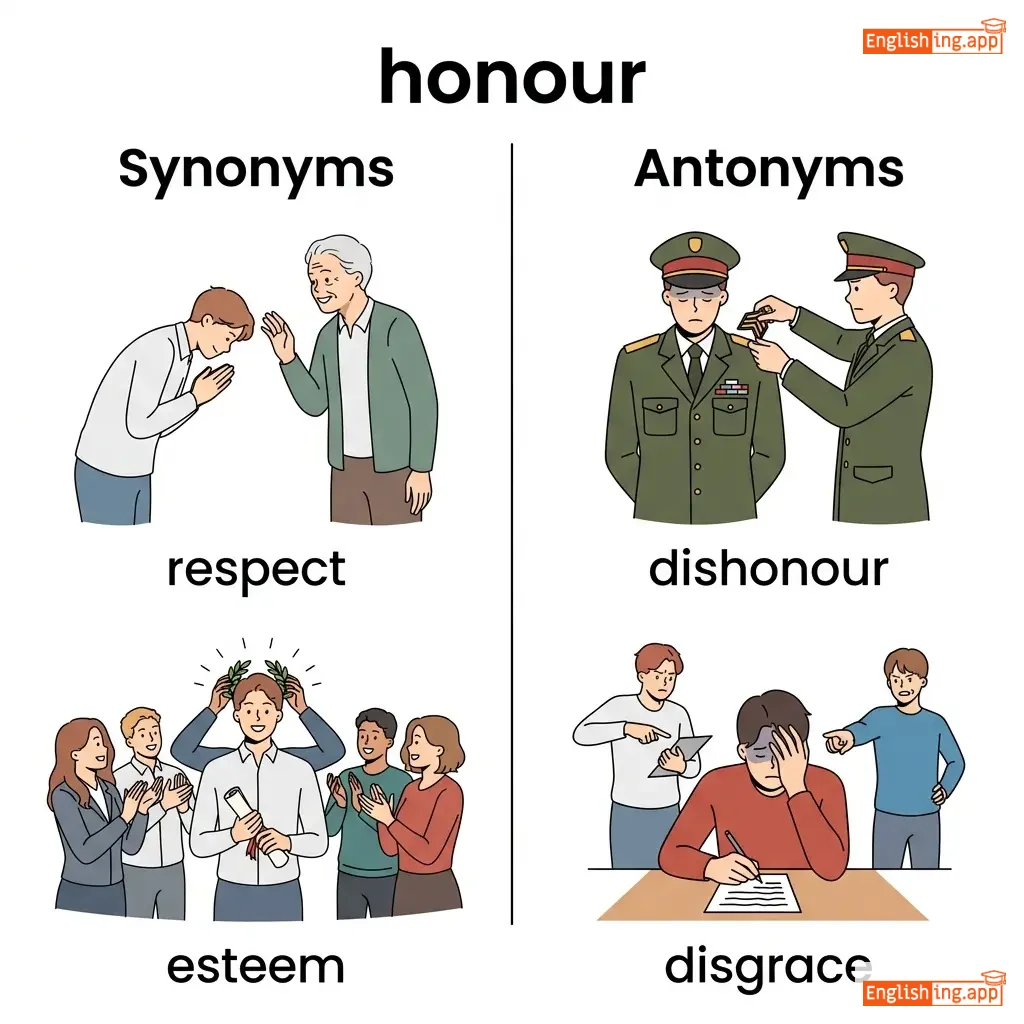
respect, esteem, revere, glorify
••••••
|
dishonour, disgrace, shame, humiliate
••••••
|
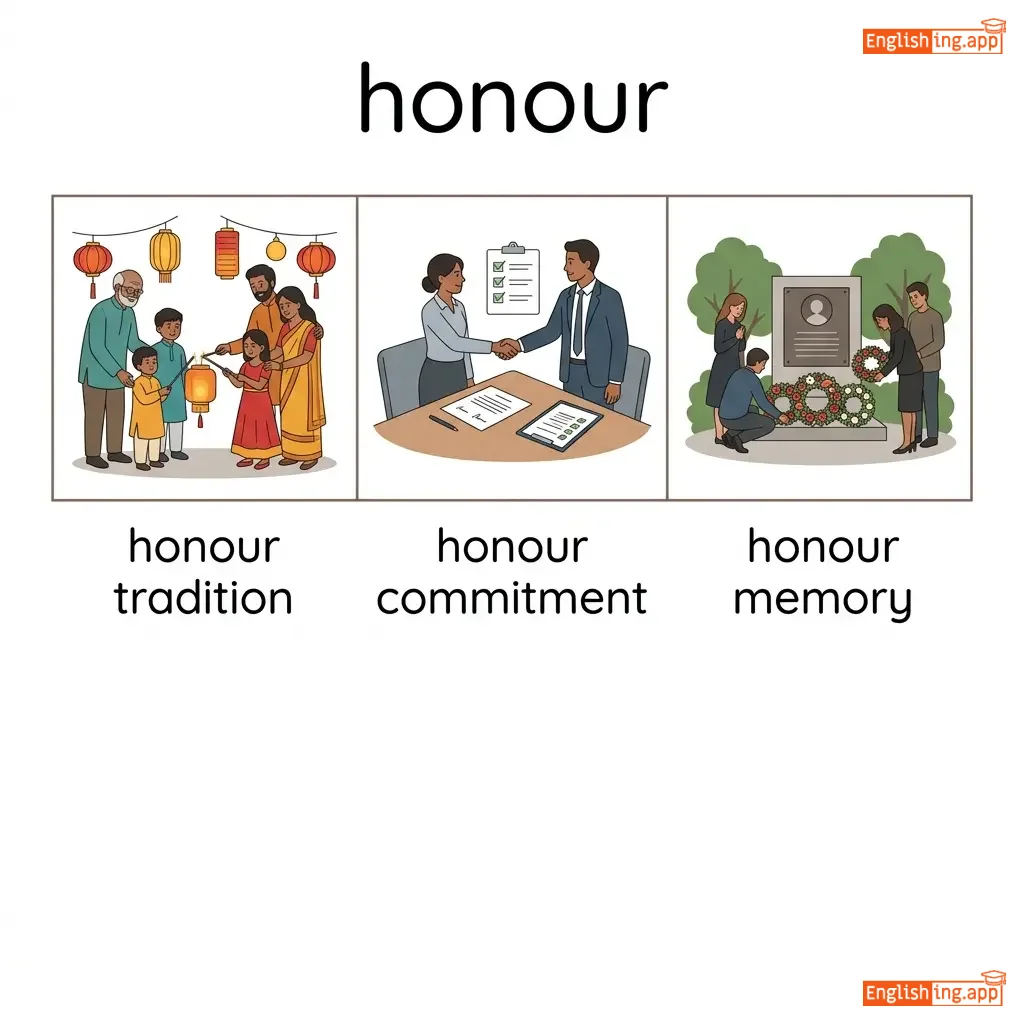
honour tradition, honour commitment, honour memory, honour request, honour agreement
••••••
|
敬う = 尊敬.
••••••
|
|
#2493
🏅
|
/ˈɒnərəbəl/
adjective
(オナラブル)
••••••
|
- •••••• |
名誉ある
meiyo aru
••••••
|
- •••••• | - •••••• | - •••••• | - •••••• |
deserving respect or admiration because of moral integrity; showing honesty and fairness
••••••
|
She is known as an honourable leader who always keeps her promises.
シー・イズ・ノウン・アズ・アン・オナラブル・リーダー・フー・オールウェイズ・キープス・ハー・プロミセス。
••••••
|
彼女は常に約束を守る名誉ある指導者として知られている。
kanojo wa tsuneni yakusoku o mamoru meiyo aru shidosha toshite shirarete iru
••••••
|
honourable mention
オナラブル・メンション
••••••
|
special recognition given without a prize
••••••
|
名誉ある言及
meiyo aru genkyu
••••••
|
ethical, respectable, upright, principled, noble
••••••
|
dishonourable, corrupt, disgraceful
••••••
|
honourable person, honourable conduct, honourable duty, honourable intention
••••••
|
名誉ある = honour がある人
••••••
|
|
#2494
🏅
|
/ˈɒnəd/
adjective; past participle
(オナード)
••••••
|
- •••••• |
光栄に思う
koei ni omou
••••••
|
- •••••• | - •••••• | - •••••• | - •••••• |
treated with respect or distinction; feeling proud and privileged
••••••
|
She felt deeply honoured to receive the award.
シー フェルト ディープリー オナード トゥ リシーブ ザ アワード。
••••••
|
彼女は賞を受け取って光栄に思った。
Kanojo wa sho o uketotte koei ni omotta
••••••
|
honoured guest
オナード ゲスト
••••••
|
a person who is given special respect or importance
••••••
|
名誉ある客
meiyo aru kyaku
••••••
|
respected, esteemed, privileged, celebrated, revered
••••••
|
dishonoured, disrespected, ignored
••••••
|
honoured guest, honoured to be, honoured position, feel honoured
••••••
|
honoured = 光栄 (honor)
••••••
|
|
#2495
🎣
|
/hʊk/
noun, verb
(フック)
••••••
|
|
フックまたは吊るす道具
fukku mata wa tsurusu dōgu
••••••
|
hooked
フックド
••••••
|
hooked
フックド
••••••
|
hooks
フックス
••••••
|
hooking
フッキング
••••••
|
a curved piece of metal or other material used for catching, holding, or pulling something; to catch or attach with a hook
••••••
|
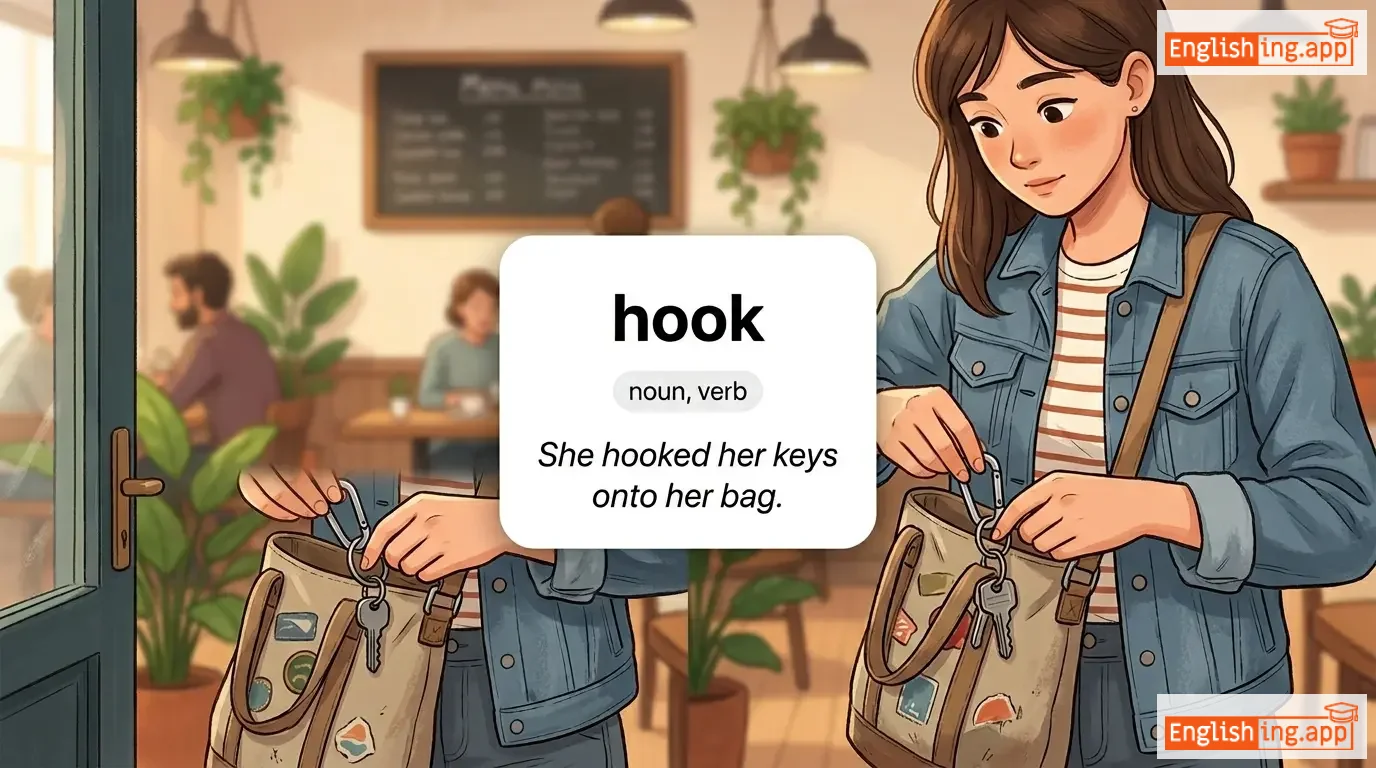
She hooked her keys onto her bag.
彼女は鍵をバッグに掛けた。
••••••
|
彼女は鍵をバッグに掛けた。
Kanojo wa kagi o baggu ni kaketa.
••••••
|
get hooked on
何かに夢中になる
••••••
|
to become addicted or very interested in something
••••••
|
何かに夢中になる
nanika ni muchū ni naru
••••••
|
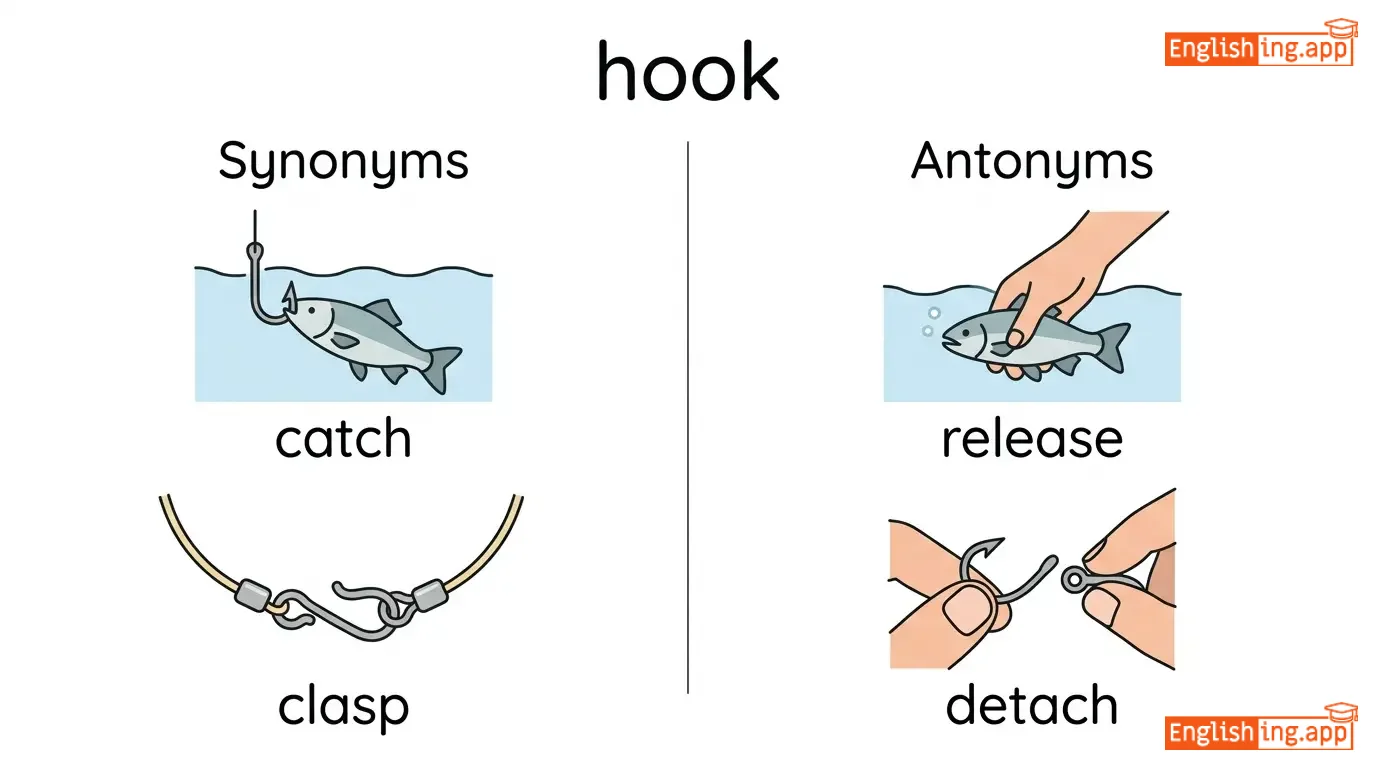
catch, clasp, fasten, attach, snag
••••••
|
release, detach, unhook
••••••
|
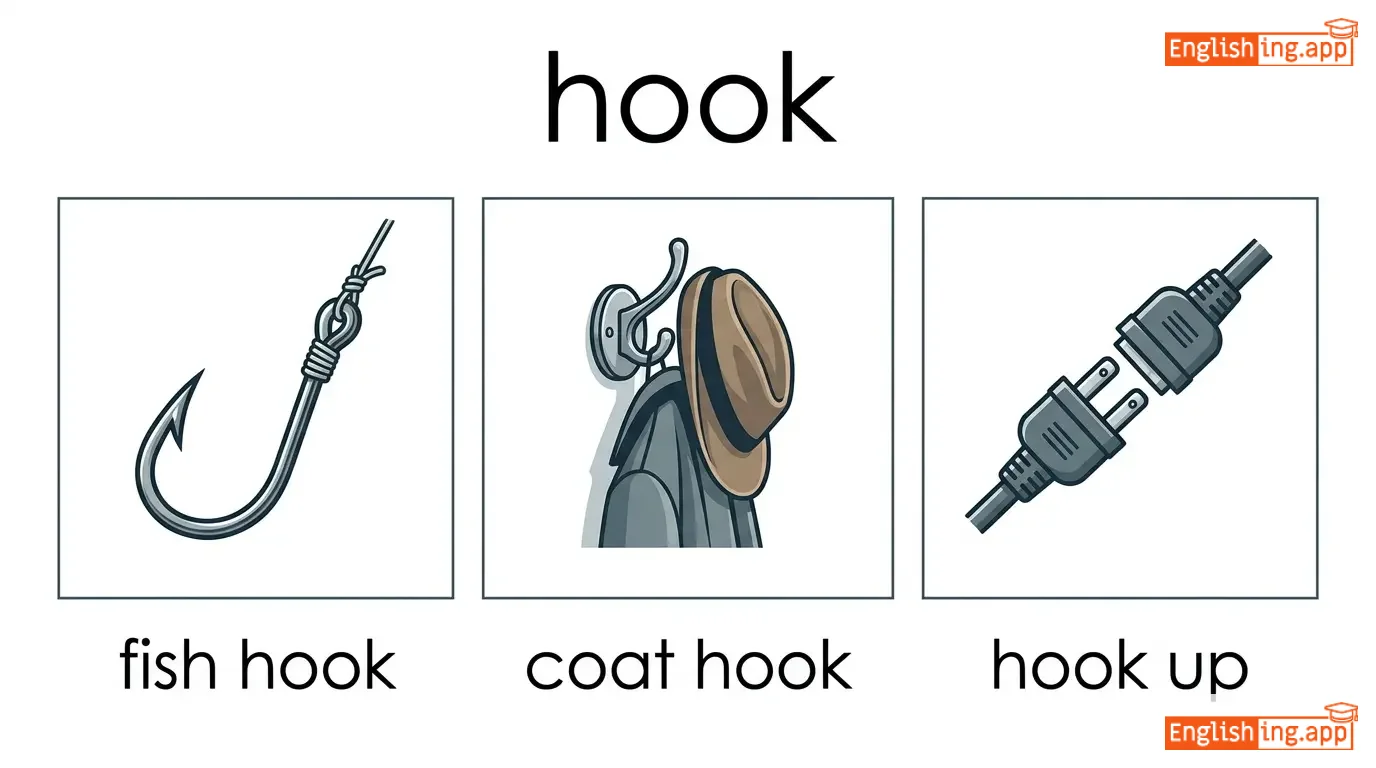
fish hook, coat hook, hook up, hook on
••••••
|
フックは物を引っ掛けるので 'hook' と覚えましょう!
••••••
|
|
#2496
🌟
|
/hoʊp/
verb
••••••
|
- •••••• | - •••••• |
hoped
••••••
|
hoped
••••••
|
hopes
••••••
|
hoping
••••••
|
To want something to happen or be true and think it is possible.
••••••
|
I hope everything goes well with your exam. |
- •••••• |
hope against hope |
To continue to hope even when the situation seems hopeless.
••••••
|
- •••••• |
wish, desire, expect, trust, optimism
••••••
|
despair, doubt
••••••
|
hope for, hope that, lose hope, give hope
••••••
|
No •••••• |
|
#2497
🌟😊
|
/ˈhoʊpfəl/
adjective
(ホープフル)
••••••
|
- •••••• |
希望に満ちた
kibou ni michita
••••••
|
- •••••• | - •••••• | - •••••• | - •••••• |
feeling or inspiring optimism about a future event; confident; optimistic
••••••
|
He remained hopeful despite the challenges.
彼は挑戦にもかかわらず希望を持ち続けました。
••••••
|
彼は挑戦にもかかわらず希望を持ち続けました。
Kare wa chōsen ni mo kakawarazu kibou o mochitsuzukemashita.
••••••
|
- •••••• | - •••••• | - •••••• |
optimistic, positive, confident
••••••
|
hopeless, pessimistic, despairing
••••••
|
hopeful sign, remain hopeful, hopeful outlook
••••••
|
希望の力で前に進む
••••••
|
|
#2498
🤞
|
/ˈhoʊpfəli/
adverb
(ホープフリー)
••••••
|
- •••••• |
希望的に
kibou-teki ni
••••••
|
- •••••• | - •••••• | - •••••• | - •••••• |
in a hopeful manner; expressing hope or optimism
••••••
|
Hopefully, the weather will be nice tomorrow.
明日、天気が良いことを願っています。
••••••
|
明日、天気が良いことを願っています。
Ashita, tenki ga yoi koto o negatteimasu.
••••••
|
- •••••• | - •••••• | - •••••• |
optimistically, confidently, expectantly, positively
••••••
|
hopelessly, pessimistically
••••••
|
say hopefully, look hopefully, hopefully waiting
••••••
|
Hopefullyは ‘希望的に’ — 🤞 覚えておいて、希望を持っていればすべてうまくいく!
••••••
|
|
#2499
🌅
|
/həˈraɪ.zən/
noun
(ホライゾン)
••••••
|
- •••••• |
地平線
chiheisen
••••••
|
- •••••• | - •••••• | - •••••• | - •••••• |
the line where the earth seems to meet the sky; the limit of one's knowledge, experience, or interest
••••••
|
The sun disappeared below the horizon. |
太陽は地平線の下に消えました。
Taiyou wa chiheisen no shita ni kiemashita.
••••••
|
broaden your horizons |
to expand one's experiences or knowledge
••••••
|
視野を広げる
Shiya wo hirogeru
••••••
|
skyline, boundary, limit, vista, outlook
••••••
|
sky, zenith
••••••
|
on the horizon, broaden horizons, new horizon
••••••
|
Horizonは地平線を意味し、太陽が沈む場所です。
••••••
|
|
#2500
↔️
|
/ˌhɒrɪˈzɒntəl/
adjective
(ホリゾンタル)
••••••
|
- •••••• |
水平な
suihei na
••••••
|
- •••••• | - •••••• | - •••••• | - •••••• |
parallel to the horizon; flat and level from side to side
••••••
|
The table must be perfectly horizontal to keep the glass from sliding.
テーブルは完全にホリゾンタルでなければなりません。
••••••
|
グラスが滑らないように、テーブルは水平である必要があります。
Gurasu ga suberanai you ni teeburu wa suihei de aru hitsuyou ga arimasu
••••••
|
horizontal line
水平線
••••••
|
a line that runs from left to right and is parallel to the horizon
••••••
|
水平線
suihei sen
••••••
|
level, flat, even, lateral
••••••
|
vertical, upright
••••••
|
horizontal line, horizontal surface, horizontal position, horizontal axis
••••••
|
Horizontal=ホリゾン(地平線)→水平
••••••
|
|
#2501
📯
|
/hɔːrn/
noun
(ホーン)
••••••
|
- •••••• |
角, ホーン
kaku, hōn
••••••
|
- •••••• | - •••••• | - •••••• | - •••••• |
a hard, pointed part growing from the head of some animals; a device that makes a loud sound as a warning
••••••
|
The driver pressed the horn to warn the pedestrians. |
運転手は歩行者に警告するためにホーンを鳴らしました。
Untenshu wa hokōsha ni keikoku suru tame ni hōn o narashimashita.
••••••
|
toot your own horn |
to boast or brag about oneself
••••••
|
自分を自慢する
jibun o jiman suru
••••••
|
trumpet, alarm, antler, signal
••••••
|
silence, mute
••••••
|
car horn, blow horn, honk horn, horn sound
••••••
|
ホーンを鳴らす 📯 – 注意を引く、動物の角のように!
••••••
|
|
#2502
😱
|
/ˈhɒr.ər/
noun
(ホラー)
••••••
|
- •••••• |
恐怖
kyōfu
••••••
|
- •••••• | - •••••• | - •••••• | - •••••• |
an intense feeling of fear, shock, or disgust
••••••
|
She screamed in horror when she saw the accident. |
彼女は事故を見て恐怖で叫んだ。
Kanojo wa jiko o mite kyōfu de sakenda.
••••••
|
a horror story |
a frightening or shocking tale
••••••
|
ホラー話
horā hanashi
••••••
|
fear, dread, terror, shock, fright
••••••
|
delight, joy
••••••
|
horror movie, scream in horror, sheer horror
••••••
|
Horrorは恐怖を意味します、恐怖映画を見て心臓がドキドキします。
••••••
|
|
#2503
🐎
|
/hɔːrs/
noun
(ホース)
••••••
|
- •••••• |
馬
uma
••••••
|
- •••••• | - •••••• | - •••••• | - •••••• |
a large, strong animal used for riding, racing, or carrying loads
••••••
|
The horse ran across the field.
ホースランアクロスフィールド
••••••
|
馬は野原を駆け抜けました。
Uma wa nohara o kakenukemashita.
••••••
|
hold your horses
hold your horses
••••••
|
wait or be patient
••••••
|
ちょっと待って
Chotto matte
••••••
|
stallion, mare, pony, steed, nag
••••••
|
donkey, mule
••••••
|
ride a horse, wild horse, horse racing
••••••
|
馬: 馬に乗って草原を駆け抜ける姿を思い浮かべてください。
••••••
|
|
#2504
🏥
|
/ˈhɒs.pɪ.təl/
noun
(ホスピタル)
••••••
|
- •••••• |
病院
byouin
••••••
|
- •••••• | - •••••• | - •••••• | - •••••• |
an institution where sick or injured people are given medical treatment
••••••
|
He was taken to the hospital after the accident. |
彼は事故の後、病院に運ばれました。
Kare wa jiko no ato, byouin ni hakobaremashita.
••••••
|
- •••••• | - •••••• | - •••••• |
clinic, infirmary, medical center, healthcare facility
••••••
|
home, outdoors
••••••
|
go to hospital, hospital bed, hospital staff
••••••
|
病院は日本語で病院、治療を受ける場所です。
••••••
|
|
#2505
🎤
|
/hoʊst/
noun, verb
(ホスト)
••••••
|
- •••••• |
ホスト
hosuto
••••••
|
hosted
ホステッド
••••••
|
hosted
ホステッド
••••••
|
hosts
ホスツ
••••••
|
hosting
ホスティング
••••••
|
a person who receives or entertains guests; to organize and provide for an event
••••••
|
She will host the conference next week.
彼女は来週、会議を開催します。
••••••
|
彼女は来週、会議を開催します。
Kanojo wa raishū, kaigi o kaisai shimasu.
••••••
|
play host
ホスト役を務める
••••••
|
to act as the host for an event or occasion
••••••
|
ホスト役を務める
hosuto yaku o tsutomeru
••••••
|
presenter, entertainer, emcee, organizer, moderator
••••••
|
guest, visitor
••••••
|
host a party, host an event, web host
••••••
|
ホスト: ホテルのホストのように、イベントを主催する人。
••••••
|
|
#2506
⛓️
|
/ˈhɑːstɪdʒ/
noun
(ホステージ)
••••••
|
- •••••• |
人質
hitojichi
••••••
|
- •••••• | - •••••• | - •••••• | - •••••• |
A person seized or held as security for the fulfillment of a condition.
••••••
|
The rebels took several people as hostages. |
反乱者たちは何人かを人質として取った。
Hanranshatachi wa nan-nin ka wo hitojichi to shite totta.
••••••
|
held hostage |
Kept under control against one’s will
••••••
|
人質に取る
Hitojichi ni toru
••••••
|
captive, prisoner, detainee, pawn
••••••
|
liberated, free
••••••
|
take hostage, release hostage, held hostage
••••••
|
Hostage = Hitojichi, 'Host'のように人質を取る
••••••
|
|
#2507
😠
|
/ˈhɒstaɪl/
adjective
(ホスタイル)
••••••
|
- •••••• |
敵対的
tekitai-teki
••••••
|
- •••••• | - •••••• | - •••••• | - •••••• |
showing or feeling opposition, dislike, or hatred
••••••
|
The soldiers entered a hostile territory. |
兵士たちは敵対的な領土に入った。
Heishitachi wa tekitai-teki na ryōdo ni haitta.
••••••
|
hostile takeover |
an acquisition of a company opposed by the company's management
••••••
|
敵対的買収
tekitai-teki baishū
••••••
|
aggressive, antagonistic, unfriendly, opposed, bitter
••••••
|
friendly, peaceful, supportive
••••••
|
hostile environment, hostile forces, hostile attitude, hostile takeover
••••••
|
敵対的 – 敵のようなホスト
••••••
|
|
#2508
😠
|
/hɒˈstɪləti/
noun
(ホスティリティ)
••••••
|
- •••••• |
敵意
teki i
••••••
|
- •••••• | - •••••• | - •••••• | - •••••• |
hostile behavior; unfriendliness or opposition
••••••
|
The negotiations ended in an atmosphere of hostility. |
交渉は敵意の雰囲気で終わった。
Koushou wa teki no fun'iki de owatta.
••••••
|
open hostility |
a clear and obvious display of unfriendly feelings
••••••
|
公然の敵意
kouzen no teki i
••••••
|
animosity, antagonism, enmity, resentment, bitterness
••••••
|
friendliness, goodwill, harmony
••••••
|
open hostility, mutual hostility, hostility towards, hostility between
••••••
|
Hostility means unfriendly feelings, in Japanese 敵意 = hostility.
••••••
|
|
#2509
🔥
|
/hɒt/
adjective
(hotto)
••••••
|
- •••••• |
熱い
atsui
••••••
|
- •••••• | - •••••• | - •••••• | - •••••• |
Having a high degree of heat or a high temperature.
••••••
|
The soup is too hot to eat right now.
スープは今食べるには熱すぎる。
••••••
|
スープは今食べるには熱すぎる。
Sūpu wa ima taberu ni wa atsusugiru.
••••••
|
hot topic
ホットな話題
••••••
|
a subject that is currently popular or controversial
••••••
|
ホットな話題
hotto na wadai
••••••
|
warm, heated, scorching, burning, fiery
••••••
|
cold, cool, chilly
••••••
|
hot weather, hot drink, hot meal, hot summer, hot topic
••••••
|
Hot は熱い、'Hot tea' は熱いお茶の意味。
••••••
|
|
#2510
🏨
|
/hoʊˈtɛl/
noun
(ホテル)
••••••
|
- •••••• |
ホテル
hoteru
••••••
|
- •••••• | - •••••• | - •••••• | - •••••• |
A building where people pay to stay and sleep, usually for short periods.
••••••
|
We stayed at a hotel near the beach. |
私たちはビーチの近くのホテルに泊まりました。
Watashitachi wa bīchi no chikaku no hoteru ni tomarimashita.
••••••
|
check into a hotel |
to register and begin staying in a hotel
••••••
|
ホテルにチェックインする
hoteru ni chekku in suru
••••••
|
inn, lodge, hostel, resort, guesthouse
••••••
|
home, house
••••••
|
luxury hotel, hotel room, hotel staff, book a hotel, check into hotel
••••••
|
ホテルはホテルを意味します、'ホテルで休んだり食事したり'を覚えておいてください。
••••••
|
|
#2511
⏰
|
/ˈaʊər/
noun
••••••
|
- •••••• | - •••••• | - •••••• | - •••••• | - •••••• | - •••••• |
A period of time equal to 60 minutes.
••••••
|
The meeting lasted for two hours. |
- •••••• |
rush hour |
the busy part of the day when traffic is heavy
••••••
|
- •••••• |
sixty minutes, time period, duration, interval
••••••
|
moment, instant
••••••
|
spend an hour, half an hour, working hours, rush hour
••••••
|
No •••••• |
|
#2512
🏠
|
/haʊs/
noun
(ハウス)
••••••
|
- •••••• |
家
ie
••••••
|
- •••••• | - •••••• | - •••••• | - •••••• |
A building for people to live in, usually with rooms and a roof.
••••••
|
They bought a new house in the city.
彼らは市内に新しい家を買いました。
••••••
|
彼らは市内に新しい家を買いました。
Karera wa shinai ni atarashī ie o kaimashita.
••••••
|
bring the house down
家を倒す
••••••
|
to make the audience laugh or applaud loudly
••••••
|
観客を笑わせるか拍手をもらう
kankyaku o warawaseru ka hakushu o morau
••••••
|
home, residence, dwelling, shelter, abode
••••••
|
outside, open space
••••••
|
buy a house, build a house, rent a house, move into a house
••••••
|
家は日本語でie、家の形を思い出すと覚えやすい。
••••••
|
Vocabulary Quiz
Test your vocabulary by matching words with their translations or meanings.
Login to take the quiz
Comments (0)
Share your thoughts and join the discussion.
Join the discussion by logging in
Login to CommentNo comments yet
Be the first to share your thoughts!