

翻訳
過去
過去分詞
三人称単数
動名詞
意味
例文
例文の翻訳
同義語
対義語
コロケーション
ニーモニック
Swipe left or right, or use the buttons. Tap image to zoom.
例文の翻訳
単語
Lesson 70Lesson 70 - マスクトグル
|
絵文字
|
単語 | Images | 翻訳 | 過去 | 過去分詞 | 三人称単数 | 動名詞 | 意味 | 例文 | 例文の翻訳 | 表現例 | 表現例の意味 | 表現例の翻訳 | 同義語 | 対義語 | コロケーション | ニーモニック |
|---|---|---|---|---|---|---|---|---|---|---|---|---|---|---|---|---|---|
|
#3323
🛠️
|
/ˌmɒdɪfɪˈkeɪʃən/
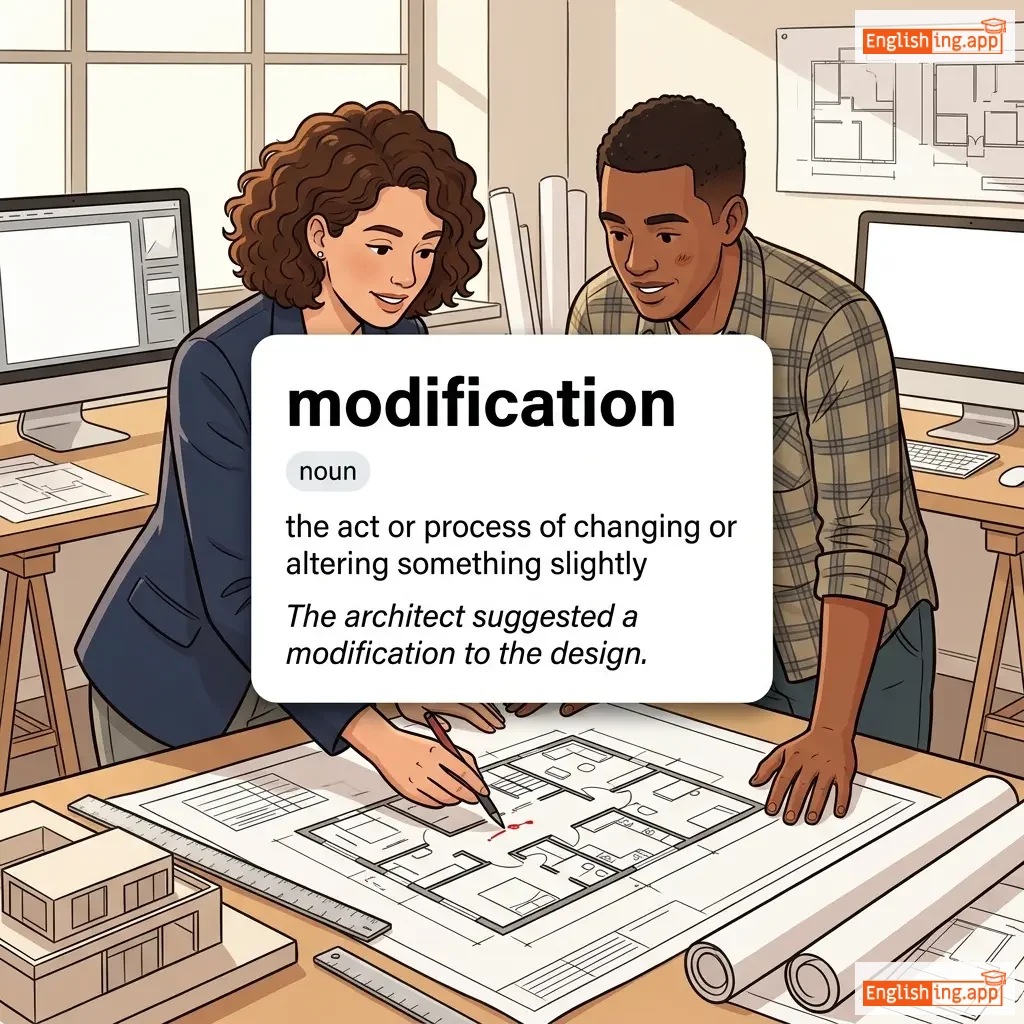
noun
(モディフィケーション)
••••••
|
|
修正
shūsei
••••••
|
- •••••• | - •••••• | - •••••• | - •••••• |
the act or process of changing or altering something slightly
••••••
|
The architect suggested a modification to the design. |
建築家はデザインの修正を提案しました。
Kenchikuka wa dezain no shūsei o teian shimashita.
••••••
|
- •••••• | - •••••• | - •••••• |
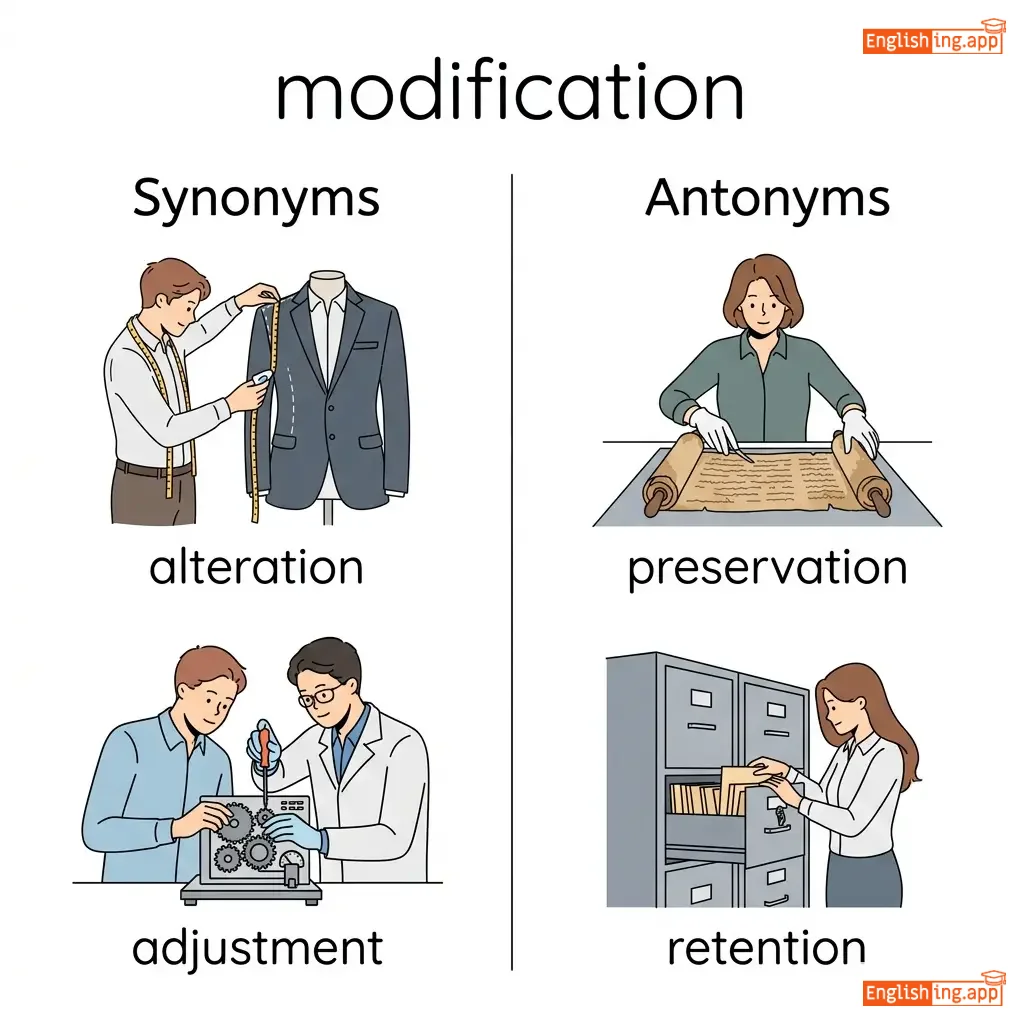
alteration, adjustment, amendment, variation, revision
••••••
|
preservation, retention
••••••
|
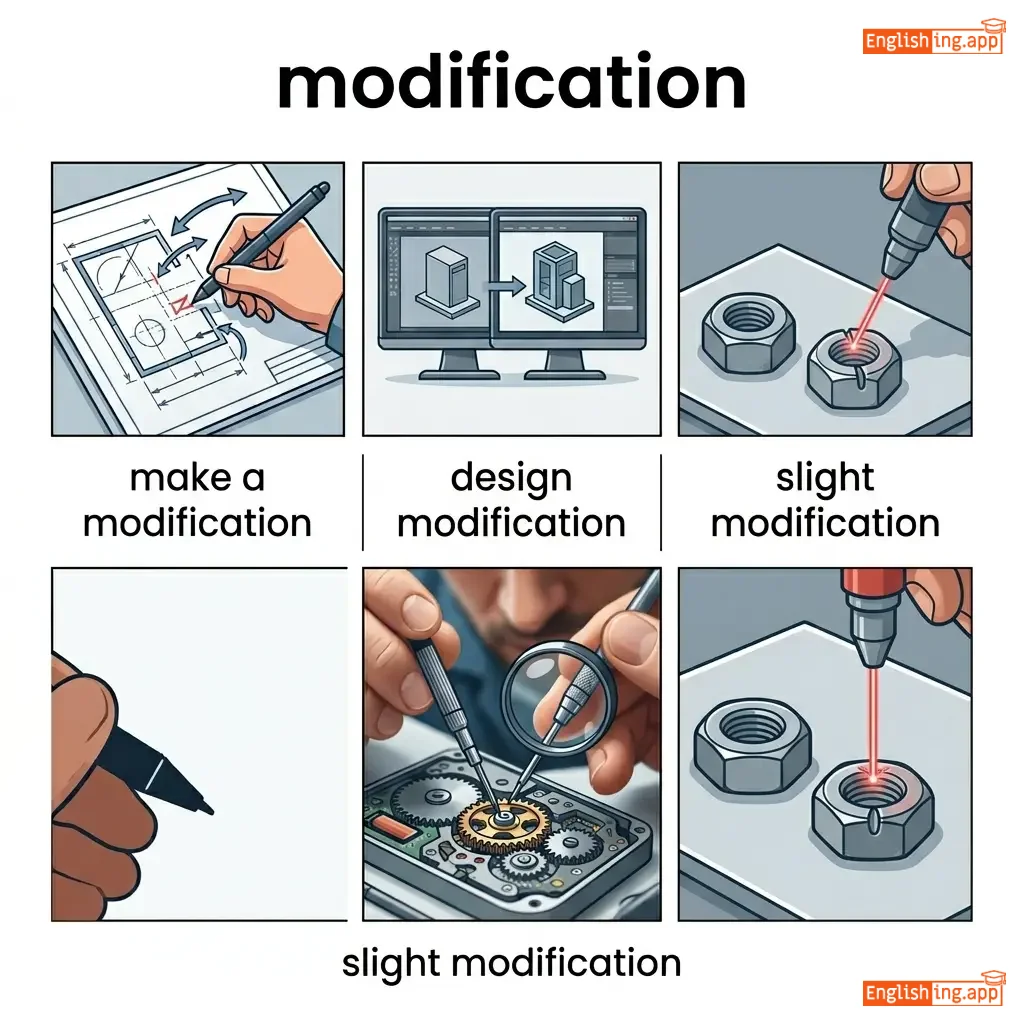
make a modification, design modification, slight modification
••••••
|
Modificationはモデルを少し変更すること – 修正
••••••
|
|
#3324
✏️
|
/ˈmɒdɪfaɪər/
noun
(モディファイア)
••••••
|
- •••••• |
修飾語
shuushokugo
••••••
|
- •••••• | - •••••• | - •••••• | - •••••• |
a word or element that changes, limits, or describes the meaning of another word; something that alters or adjusts
••••••
|
In the phrase 'very cold', 'very' is a modifier of 'cold'.
フレーズ very cold では、very は cold の modifier です。
••••••
|
「very cold」という句では、「very」は「cold」を修飾する語です。
very cold to iu ku dewa very wa cold o shuushoku suru go desu
••••••
|
- •••••• | - •••••• | - •••••• |
alterer, adapter, qualifier, modulator, adjuster
••••••
|
head, base, core
••••••
|
adjective modifier, noun modifier, degree modifier, grammatical modifier
••••••
|
Modify する語 → 修飾語。
••••••
|
|
#3325
🔧
|
/ˈmɑːdɪfaɪ/
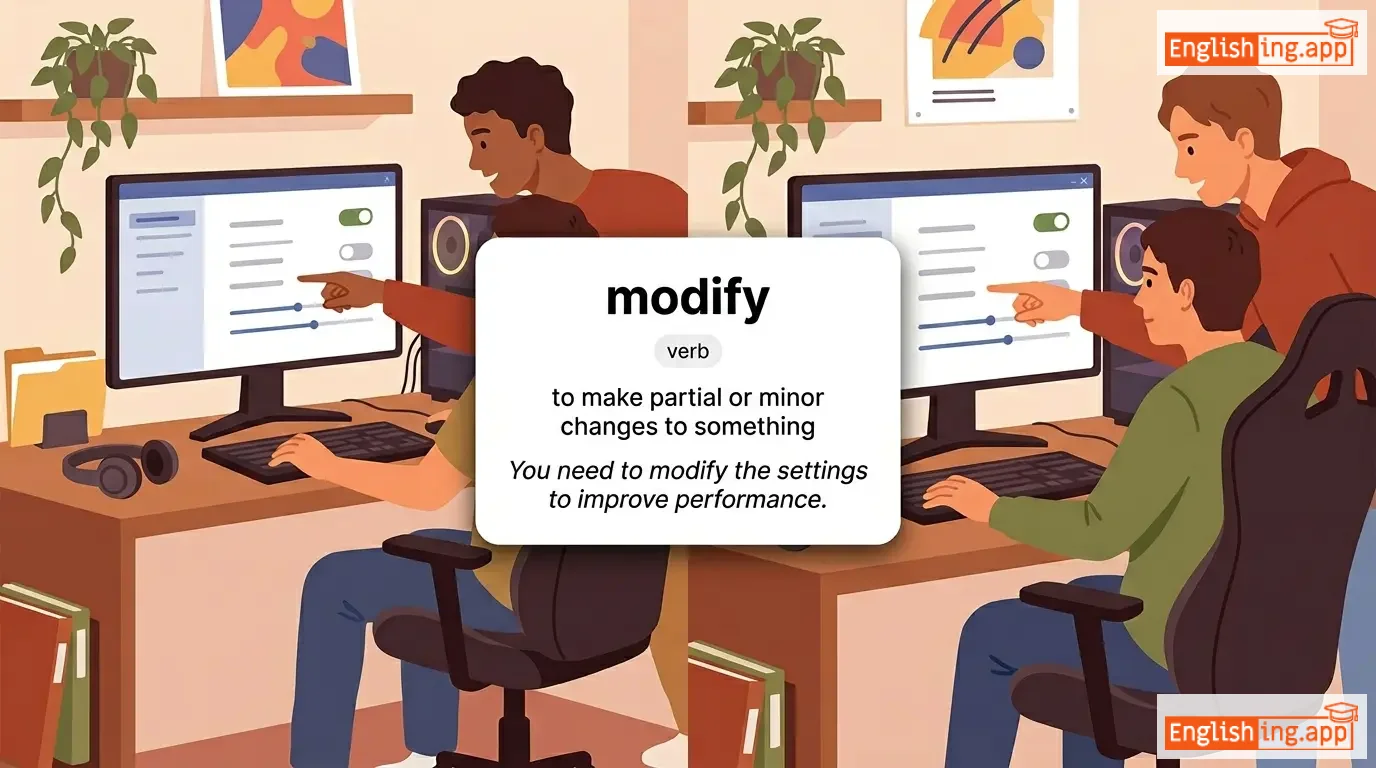
verb
(モディファイ)
••••••
|
|
変更する
henkou suru
••••••
|
modified
モディファイド
••••••
|
modified
モディファイド
••••••
|
modifies
モディファイズ
••••••
|
modifying
モディファイング
••••••
|
to change or alter something; to make partial changes
••••••
|
We need to modify the plan to include more details.
計画を変更して、詳細を追加する必要があります。
••••••
|
計画を変更して、詳細を追加する必要があります。
Keikaku o henkou shite, shousai o tsuika suru hitsuyou ga arimasu.
••••••
|
- •••••• | - •••••• | - •••••• |
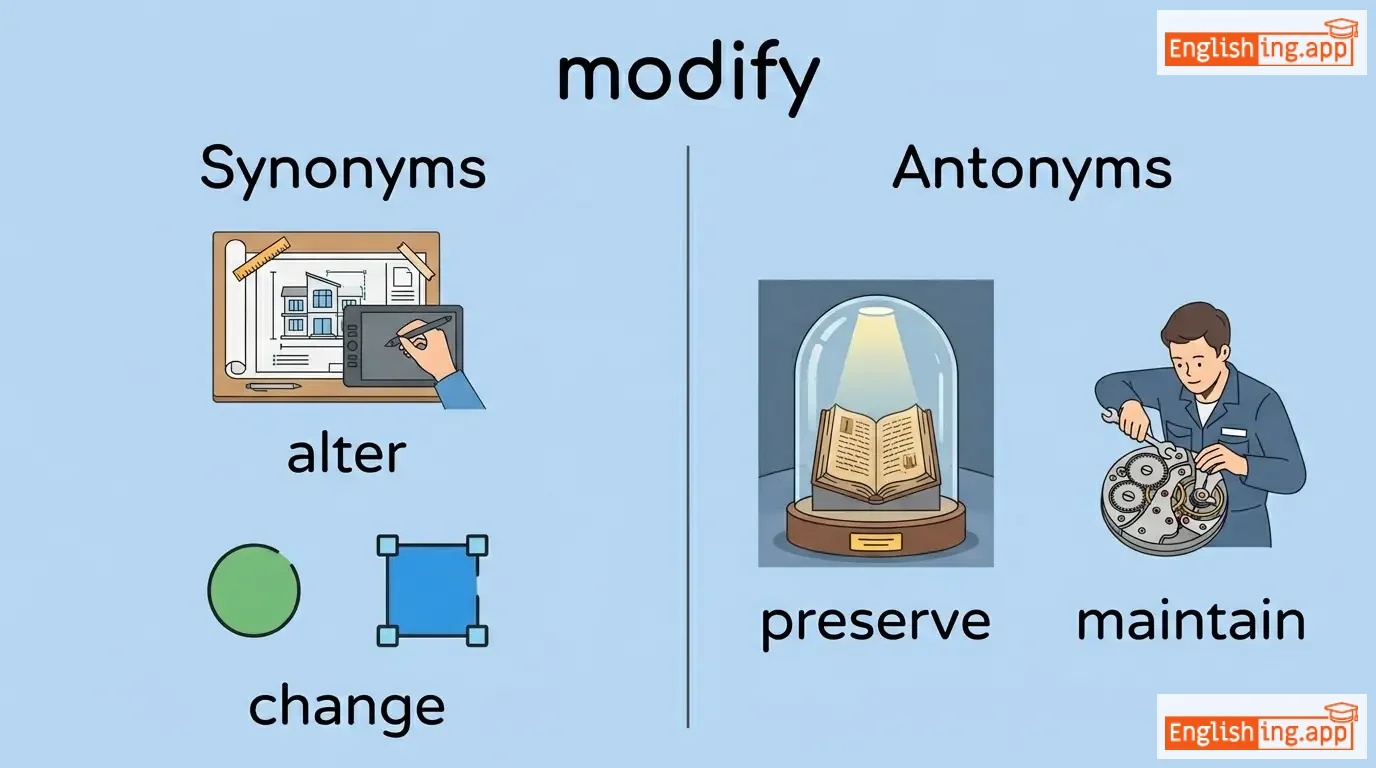
change, alter, adjust, revise, update
••••••
|
maintain, preserve, keep unchanged
••••••
|
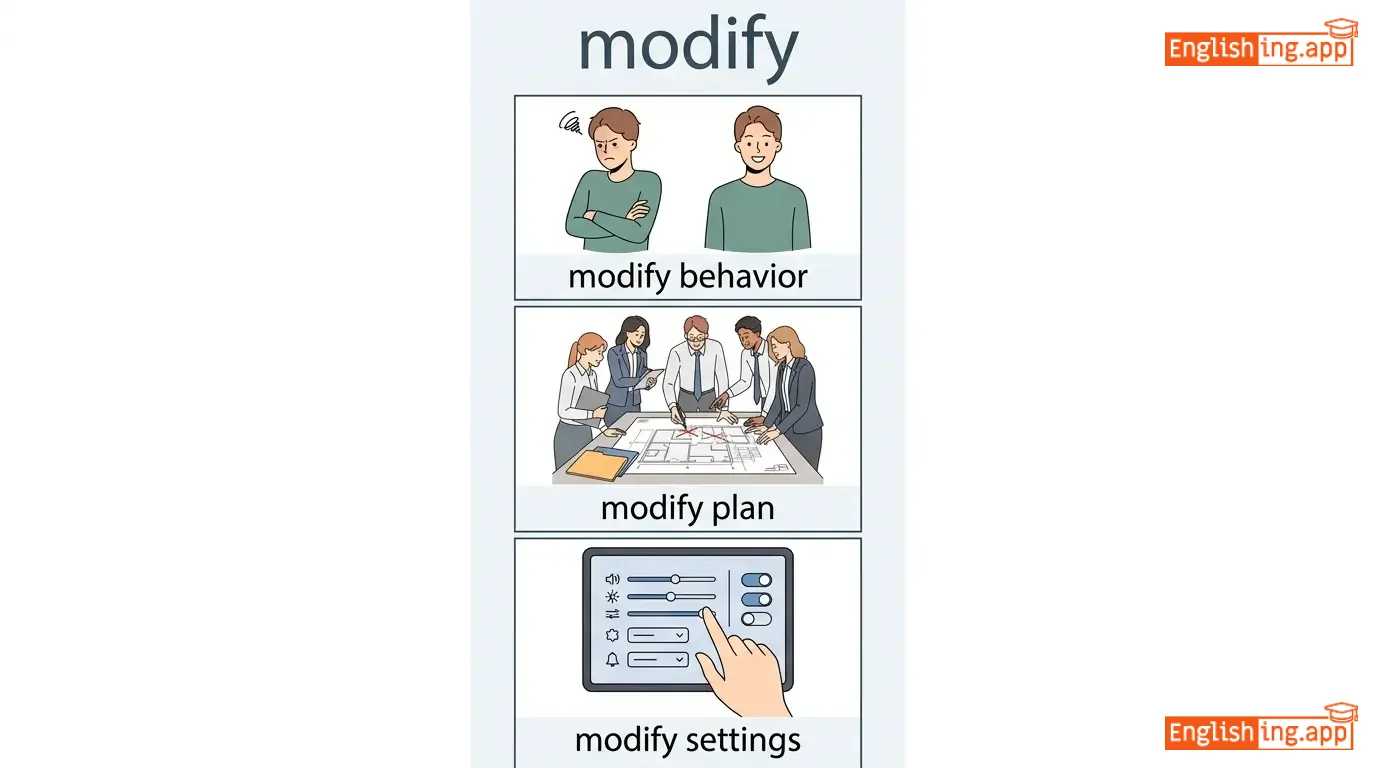
modify slightly, modify plans, modify behavior, modify settings, heavily modified
••••••
|
Japanese-English mnemonic: '計画を変更して詳細を追加' ('modify the plan to add details')
••••••
|
|
#3326
👩👧
|
/mɑːm/
noun
(ママ)
••••••
|
- •••••• |
ママ
mama
••••••
|
- •••••• | - •••••• | - •••••• | - •••••• |
an informal word for mother
••••••
|
My mom makes the best homemade food. |
私のママは一番美味しい手作り料理を作る。
Watashi no mama wa ichiban oishii tezukuri ryouri wo tsukuru.
••••••
|
mom and pop |
a small family-owned business
••••••
|
ママとパパ
mama to papa
••••••
|
mother, mama, mum, mommy, ma
••••••
|
father, dad
••••••
|
mom said, new mom, working mom, mom and dad
••••••
|
ママ = いつも優しい、心温まる存在。
••••••
|
|
#3327
⏳
|
/ˈmoʊmənt/
noun
(モーメント)
••••••
|
- •••••• |
瞬間
shunkan
••••••
|
- •••••• | - •••••• | - •••••• | - •••••• |
A very short period of time; a particular point in time.
••••••
|
She paused for a moment before answering.
彼女は答える前に一瞬止まった。
••••••
|
彼女は答える前に一瞬止まった。
Kanojo wa kotaeru mae ni isshun tomatta.
••••••
|
in the moment
その瞬間に
••••••
|
Focusing entirely on the present situation.
••••••
|
その瞬間に
Sono shunkan ni
••••••
|
instant, second, minute, occasion, time
••••••
|
eternity, forever
••••••
|
at the moment, right moment, special moment, memorable moment
••••••
|
Momentは瞬間 – すべての瞬間が大切だ。
••••••
|
|
#3328
🏃
|
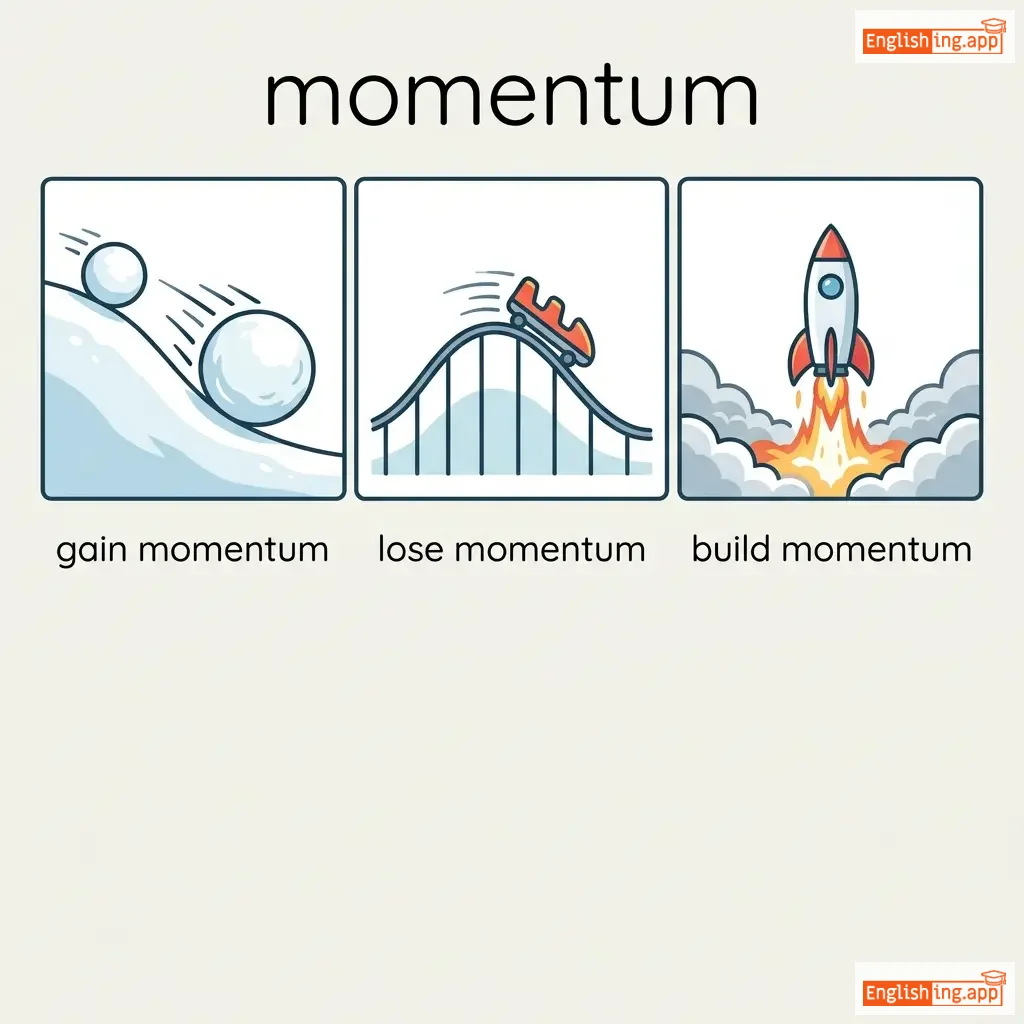
/moʊˈmɛntəm/
noun
••••••
|
|
- •••••• | - •••••• | - •••••• | - •••••• | - •••••• |
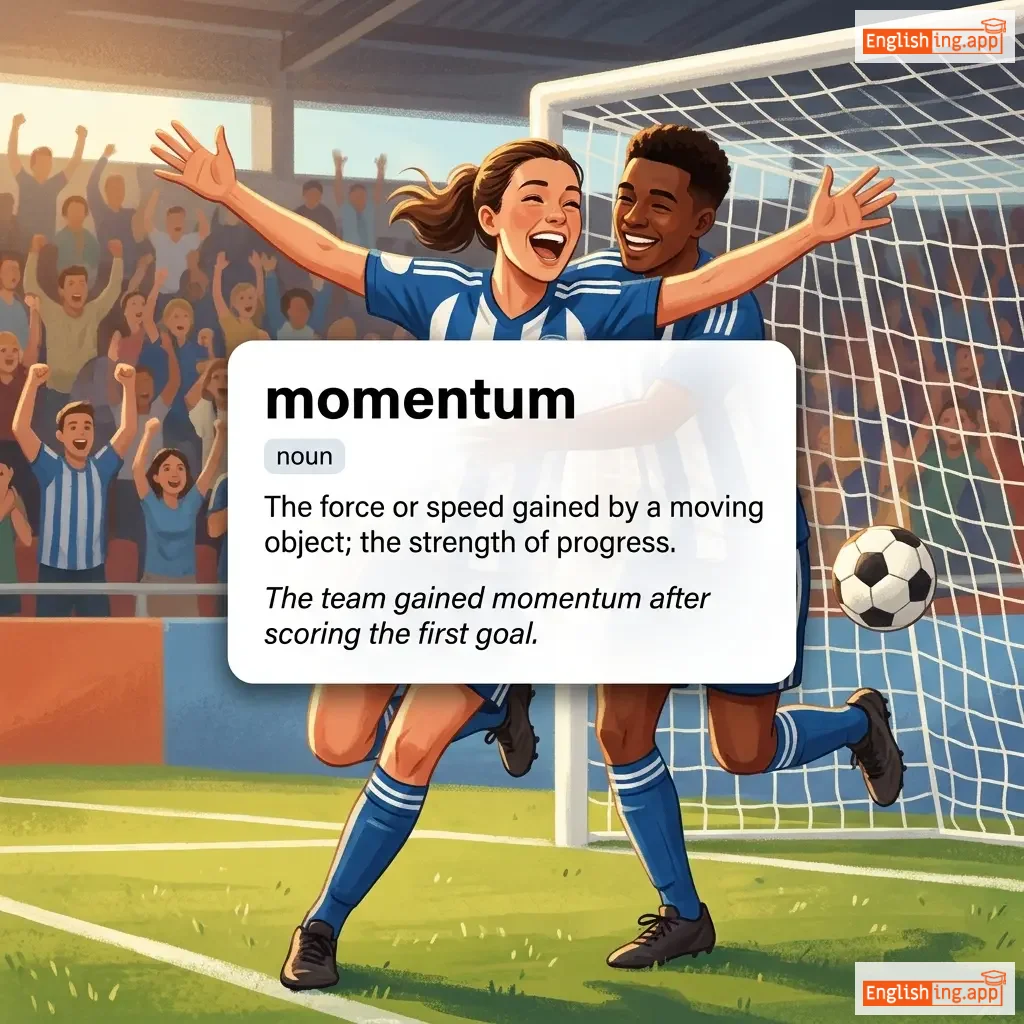
The force or speed gained by a moving object; the strength of progress.
••••••
|
The team gained momentum after scoring the first goal. |
- •••••• |
gain momentum |
To gather speed, strength, or progress.
••••••
|
- •••••• |
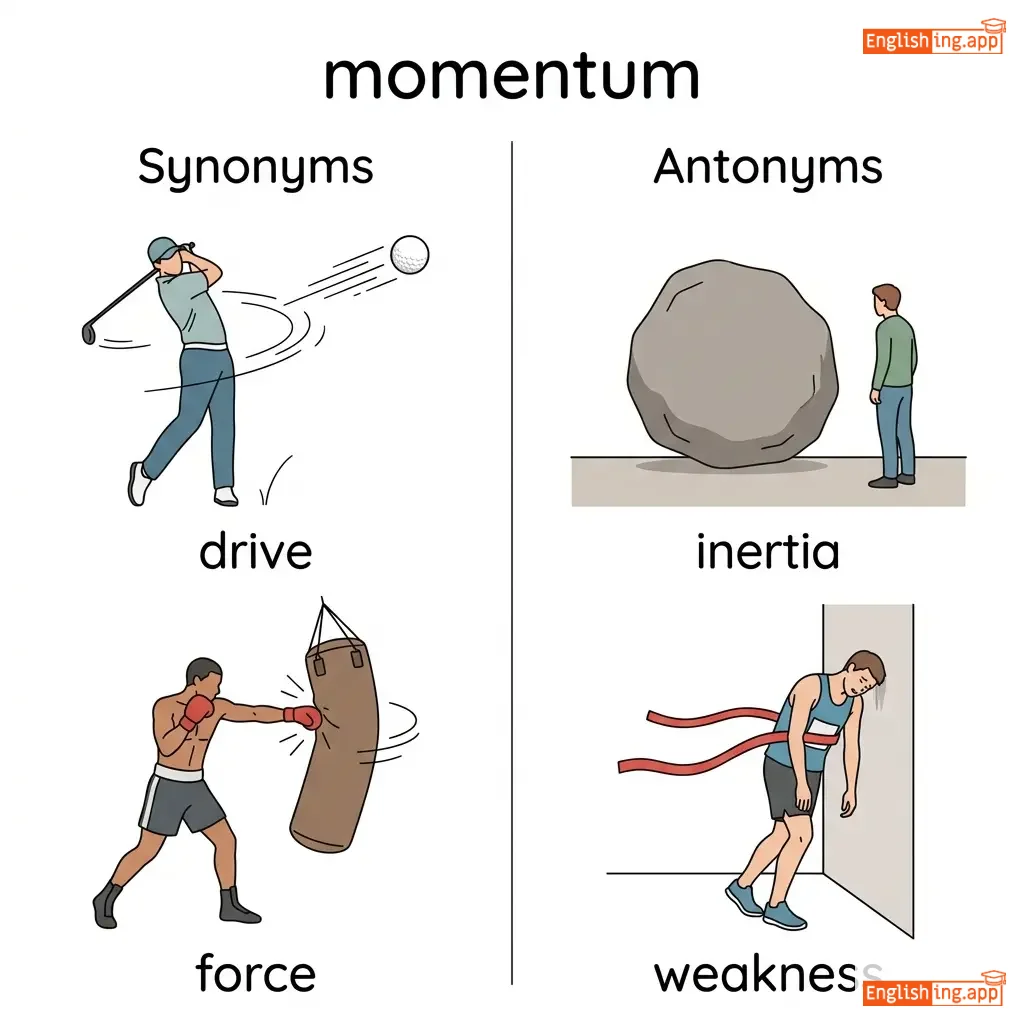
drive, force, power, impetus, thrust
••••••
|
inertia, weakness
••••••
|
gain momentum, lose momentum, build momentum, maintain momentum
••••••
|
No •••••• |
|
#3329
📅
|
/ˈmʌn.deɪ/
noun
(マンデー)
••••••
|
- •••••• |
月曜日
getsuyoubi
••••••
|
- •••••• | - •••••• | - •••••• | - •••••• |
the first day of the working week following Sunday
••••••
|
I start my new job on Monday.
アイ スタート マイ ニュー ジョブ オン マンデー。
••••••
|
私は月曜日に新しい仕事を始めます。
watashi wa getsuyoubi ni atarashii shigoto o hajimemasu
••••••
|
Monday blues
マンデー・ブルーズ
••••••
|
a feeling of sadness or lack of energy at the start of the work week
••••••
|
月曜の憂鬱
getsuyou no yuuutsu
••••••
|
weekday start, first workday, week opener, start of the week
••••••
|
Sunday, weekend
••••••
|
next Monday, last Monday, Monday morning, on Monday
••••••
|
月曜日 = Moon day start
••••••
|
|
#3330
💰
|
/ˈmʌni/
noun
(happiness)
••••••
|
- •••••• |
幸福
koufuku
••••••
|
- •••••• | - •••••• | - •••••• | - •••••• |
A medium of exchange in the form of coins and banknotes; wealth or financial resources.
••••••
|
He saved enough money to buy a new car. |
彼女は賞を受け取ったとき、幸せを隠せなかった。
Kanojo wa shou o uketotta toki, koufuku o kakusenakatta.
••••••
|
money talks |
Wealth has great influence or power.
••••••
|
幸福の追求
koufuku no tsuikyuu
••••••
|
cash, currency, funds, capital, wealth
••••••
|
poverty, debt
••••••
|
make money, save money, spend money, invest money
••••••
|
幸福は心の中で咲く花のようなものです。
••••••
|
|
#3331
🖥️
|
/ˈmɒnɪtər/
noun, verb
(モニター)
••••••
|
- •••••• |
モニター、監視する
monitā, kanshi suru
••••••
|
monitored
モニタード
••••••
|
monitored
モニタード
••••••
|
monitors
モニターズ
••••••
|
monitoring
モニタリング
••••••
|
to observe and check the progress or quality of something; also a device that displays information
••••••
|
The teacher monitors the students during the exam.
先生は試験中に生徒を監視します。
••••••
|
先生は試験中に生徒を監視します。
Sensei wa shiken-chū ni seito o kanshi shimasu.
••••••
|
keep a close monitor
密接な監視を維持する
••••••
|
to watch carefully
••••••
|
注意深く監視する
chūi-bukaku kanshi suru
••••••
|
observe, watch, track, oversee, supervise
••••••
|
ignore, neglect
••••••
|
monitor progress, monitor performance, monitor screen, monitor activity
••••••
|
モニターは監視することなので、注意深く見守る
••••••
|
|
#3332
🧘♂️
|
/mʌŋk/
noun
(マンク)
••••••
|
- •••••• |
僧侶
sōryo
••••••
|
- •••••• | - •••••• | - •••••• | - •••••• |
a man who is a member of a religious community living under vows
••••••
|
The monk spent hours in meditation each day.
その僧侶は毎日数時間を瞑想に費やしました。
••••••
|
その僧侶は毎日数時間を瞑想に費やしました。
Sono sōryo wa mainichi suū jikan o meisō ni tsuiyashimashita.
••••••
|
- •••••• | - •••••• | - •••••• |
friar, religious, ascetic, hermit
••••••
|
layperson, secular person
••••••
|
Buddhist monk, Christian monk, monastery monk
••••••
|
僧侶 (Sōryo) =瞑想 (Meditation)と誓い (Vow)
••••••
|
|
#3333
🏦
|
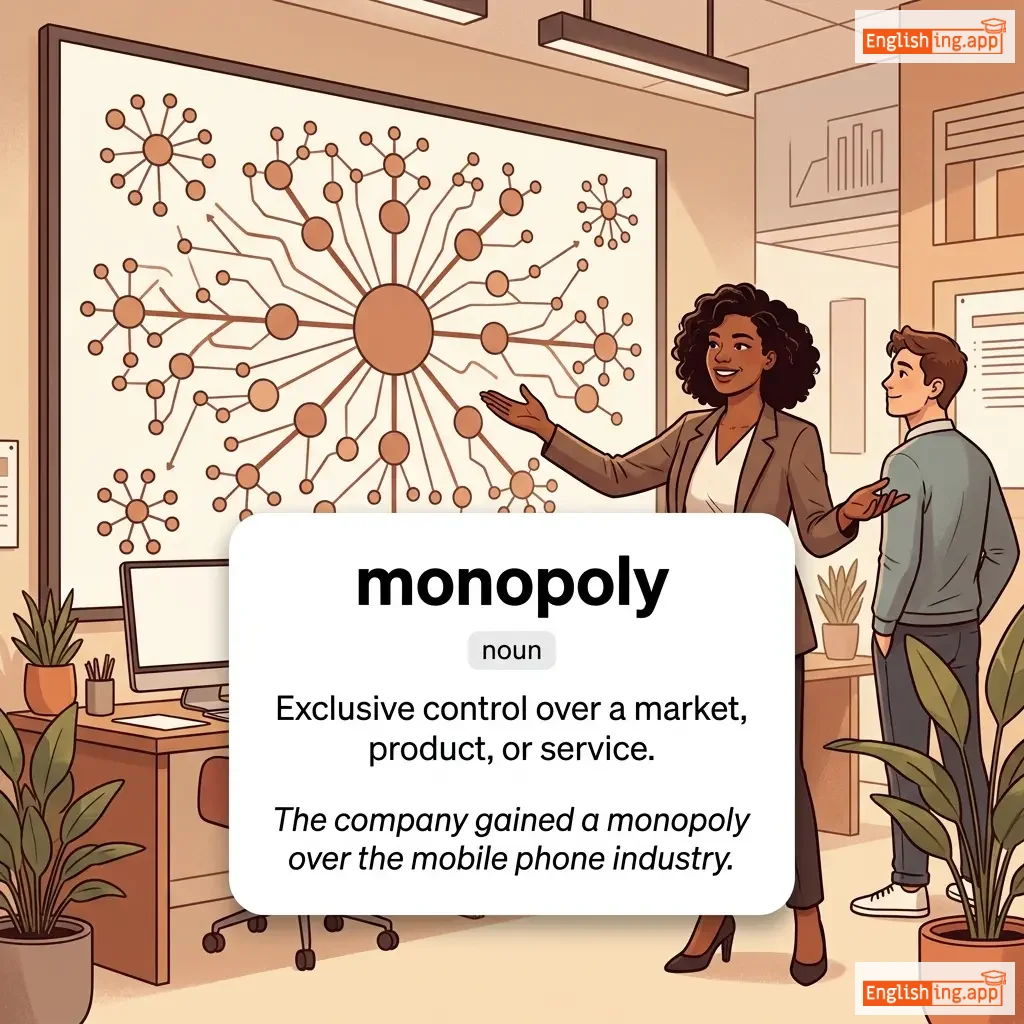
/məˈnɒpəli/
noun
••••••
|
|
- •••••• | - •••••• | - •••••• | - •••••• | - •••••• |
Exclusive control over a market, product, or service.
••••••
|
The company gained a monopoly over the mobile phone industry. |
- •••••• |
hold a monopoly |
To have complete control over a product, service, or market.
••••••
|
- •••••• |
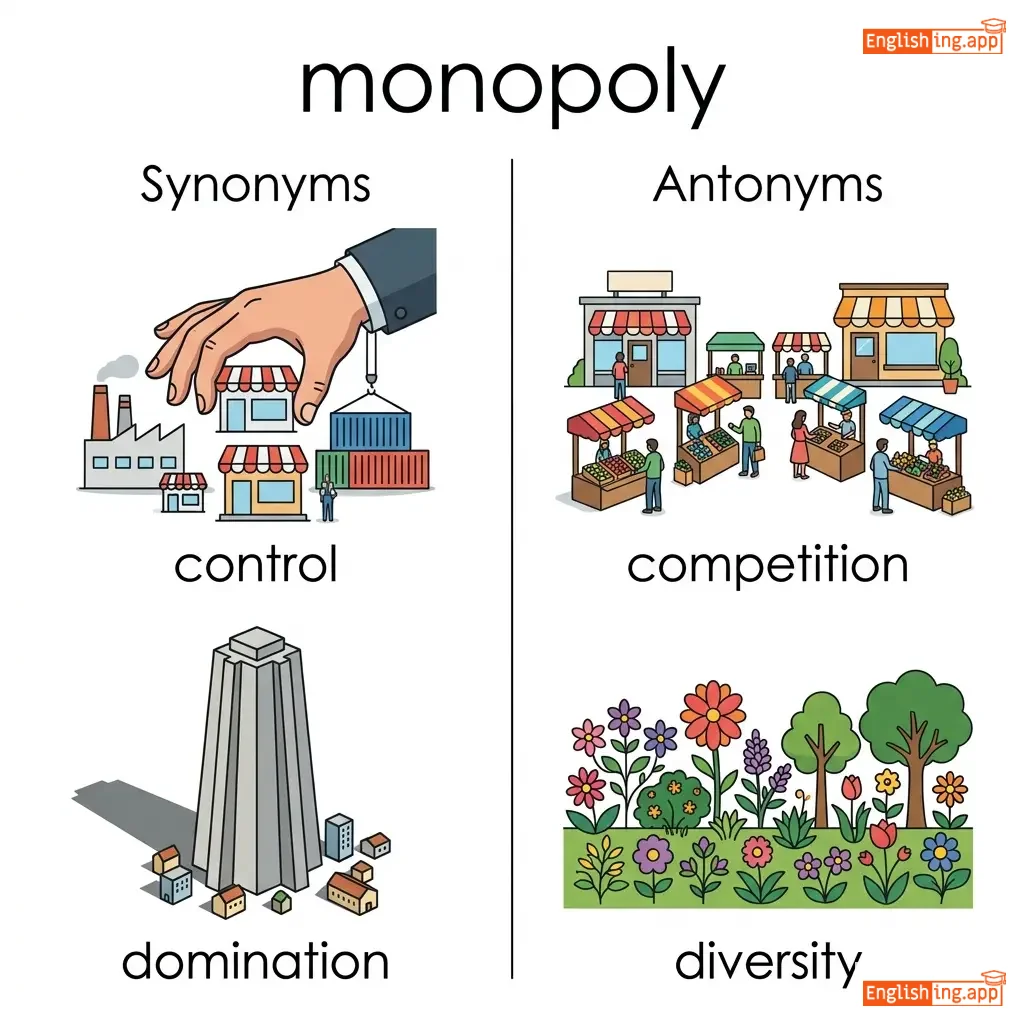
control, domination, exclusivity, cartel, ownership
••••••
|
competition, diversity
••••••
|
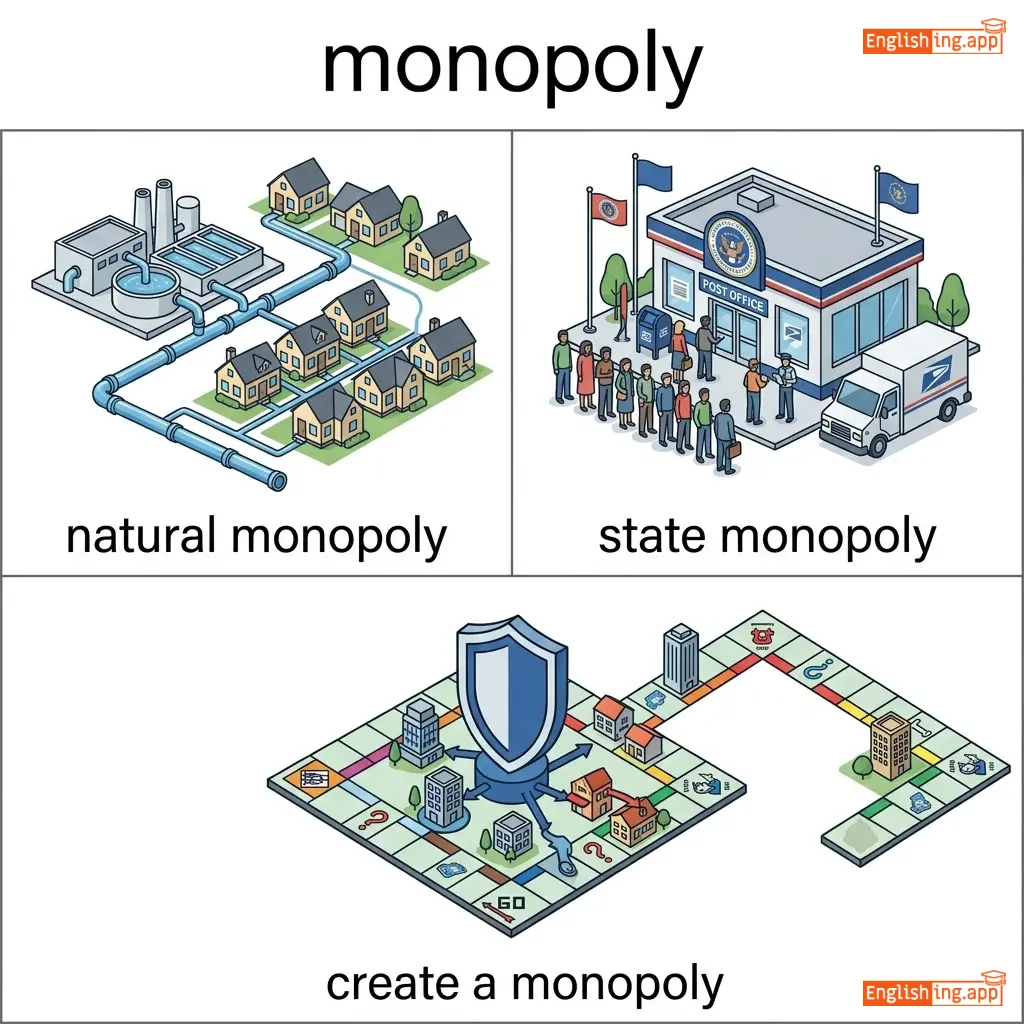
natural monopoly, state monopoly, create a monopoly
••••••
|
No •••••• |
|
#3334
👹
|
/ˈmɒnstər/
noun
(ハピネス)
••••••
|
- •••••• |
幸せ
shiawase
••••••
|
- •••••• | - •••••• | - •••••• | - •••••• |
an imaginary or large frightening creature
••••••
|
The child was afraid that a monster was hiding under the bed.
彼女は賞を受け取ったとき、自分の幸せを隠せなかった。
••••••
|
彼女は賞を受け取ったとき、自分の幸せを隠せなかった。
Kanojo wa shō o uketotta toki, jibun no shiawase o kakusenakatta.
••••••
|
monster hit
幸福の追求
••••••
|
a very successful or popular product or show
••••••
|
幸福の追求
kōfuku no suikyu
••••••
|
beast, creature, giant, demon, ogre
••••••
|
angel, human, friend
••••••
|
monster movie, sea monster, create a monster, monster hit
••••••
|
幸せ = Happiness — 幸せを求めて、いつも歩き続けよう!
••••••
|
|
#3335
🗓️
|
/mʌnθ/
noun
(月)
••••••
|
- •••••• |
月
tsuki
••••••
|
- •••••• | - •••••• | - •••••• | - •••••• |
a period of about four weeks or one-twelfth of a year
••••••
|
She visits her grandparents once a month. |
彼女は毎月一度、祖父母を訪れます。
Kanojo wa maitsuki ichido, sofubo o otozuremasu.
••••••
|
flavor of the month |
something that is temporarily popular
••••••
|
今月のフレーバー
kongetsu no fureebaa
••••••
|
thirty days, period, lunar month
••••••
|
year, day
••••••
|
next month, this month, per month, monthly payment
••••••
|
月は月 - 毎月、同じ月
••••••
|
|
#3336
📅
|
/ˈmʌnθli/
adjective
(マンスリー)
••••••
|
- •••••• |
月次
getsuki
••••••
|
- •••••• | - •••••• | - •••••• | - •••••• |
happening, done, or published once a month
••••••
|
Employees receive their salary on a monthly basis. |
従業員は毎月給料を受け取ります。
Jūgyōin wa maitsuki kyūryō o ukemashimasu.
••••••
|
monthly report |
a report produced every month
••••••
|
月次報告書
getsuki hōkokusho
••••••
|
every month, periodic, regular, monthly-based
••••••
|
daily, weekly, yearly
••••••
|
monthly payment, monthly report, monthly meeting, monthly subscription
••••••
|
月次は毎月 — '月'を思い出せ!
••••••
|
|
#3337
🗿
|
/ˈmɒnjumənt/
noun
••••••
|
|
- •••••• | - •••••• | - •••••• | - •••••• | - •••••• |
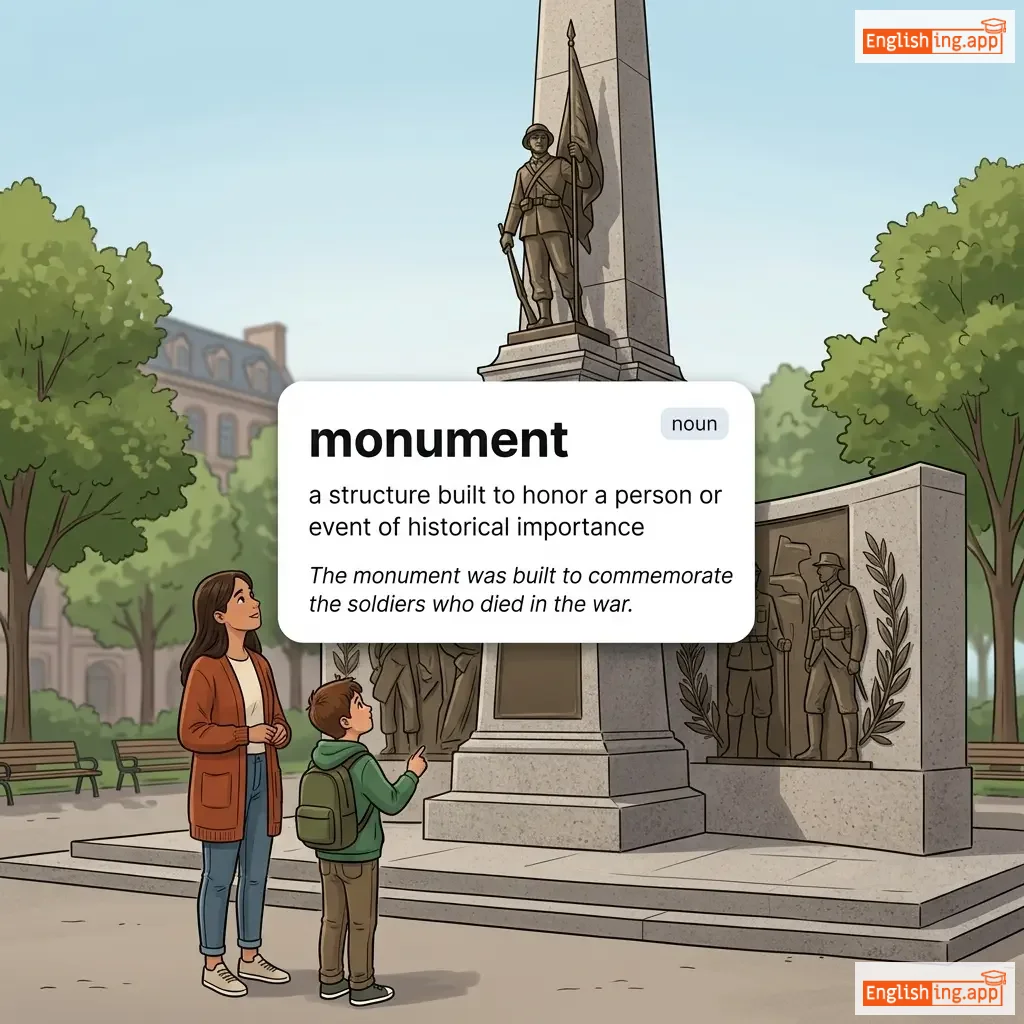
a structure built to honor a person or event of historical importance
••••••
|
The monument was built to commemorate the soldiers who died in the war. |
- •••••• |
stand as a monument to |
to serve as a lasting reminder or tribute to someone or something
••••••
|
- •••••• |
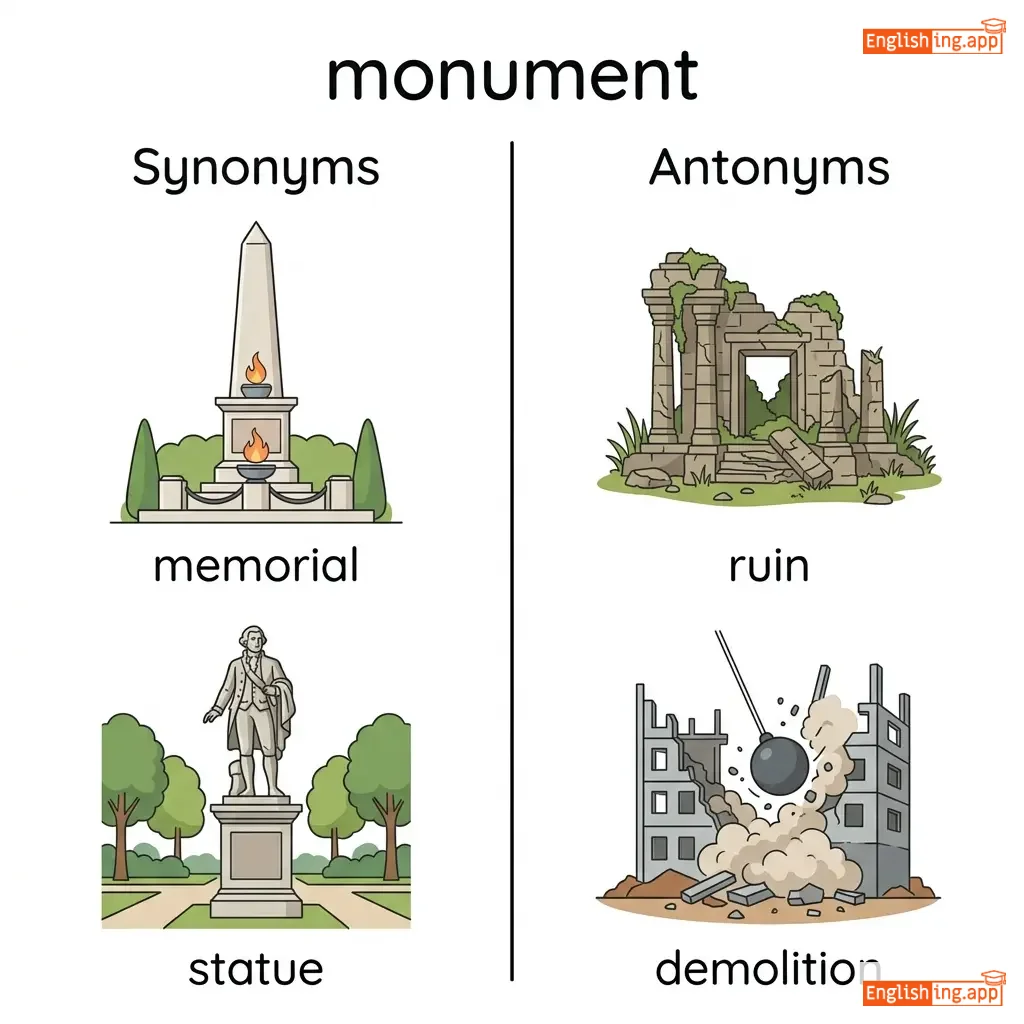
memorial, statue, shrine, landmark, pillar
••••••
|
ruin, demolition, destruction
••••••
|
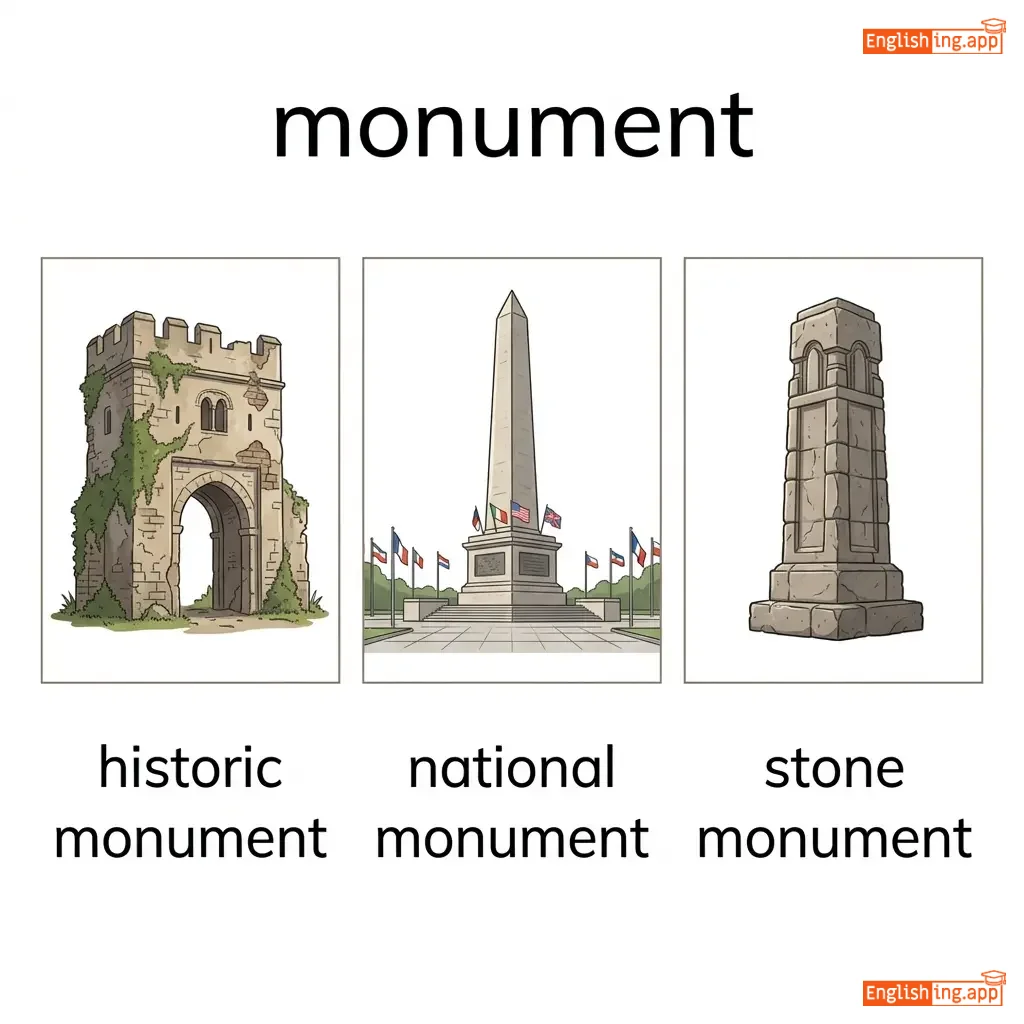
historic monument, national monument, stone monument, ancient monument
••••••
|
No •••••• |
|
#3338
😊
|
/muːd/
noun
(ムード)
••••••
|
- •••••• |
ムード
mood
••••••
|
- •••••• | - •••••• | - •••••• | - •••••• |
a temporary state of mind or feeling
••••••
|
He was in a good mood after getting the job.
彼は仕事を得た後、良いムードでした。
••••••
|
彼は仕事を得た後、良いムードでした。
Kare wa shigoto o eta ato, yoi mood deshita.
••••••
|
in the mood
ムードにいる
••••••
|
ready or willing to do something
••••••
|
ムードにいる
mood ni iru
••••••
|
feeling, temperament, emotion, attitude, spirit
••••••
|
apathy, indifference
••••••
|
good mood, bad mood, mood swing, change mood
••••••
|
ムード、時々嬉しい時や怒っている時!
••••••
|
|
#3339
🌕
|
/muːn/
noun
(ムーン)
••••••
|
- •••••• |
月
tsuki
••••••
|
- •••••• | - •••••• | - •••••• | - •••••• |
the natural satellite of the earth, visible mainly at night by reflected light from the sun
••••••
|
The moon shines brightly in the night sky.
月は夜空で明るく輝いています。
••••••
|
月は夜空で明るく輝いています。
Tsuki wa yozora de akaruku kagayaiteimasu.
••••••
|
once in a blue moon
青い月に一度
••••••
|
something that happens very rarely
••••••
|
青い月に一度
aoi tsuki ni ichido
••••••
|
satellite, orb, crescent, full moon
••••••
|
sun, darkness
••••••
|
full moon, new moon, moonlight, moon surface
••••••
|
月 = Moon - 夜空で輝く月、まるで鏡のように
••••••
|
|
#3340
📖
|
/ˈmɔːrəl/
adjective, noun
(モラル)
••••••
|
- •••••• |
道徳
dōtoku
••••••
|
- •••••• | - •••••• | - •••••• | - •••••• |
Adjective: concerned with principles of right and wrong. Noun: a lesson about right and wrong from a story or experience.
••••••
|
The moral of the story is that honesty is the best policy. |
物語の教訓は、正直が最良の政策であることです。
Monogatari no kyōkun wa, shōjiki ga sairyō no seisaku de aru koto desu.
••••••
|
moral of the story |
The lesson that can be learned from an event or tale.
••••••
|
物語の教訓
Monogatari no kyōkun
••••••
|
ethical, virtuous, lesson, righteous
••••••
|
immoral, unethical
••••••
|
moral values, moral lesson, moral obligation
••••••
|
Moralは道徳的な教訓を意味します - 物語の中の教訓のように。
••••••
|
|
#3341
⚖️
|
/məˈrælɪti/
noun
(モラリティ)
••••••
|
- •••••• |
道徳
doutoku
••••••
|
- •••••• | - •••••• | - •••••• | - •••••• |
Principles concerning the distinction between right and wrong or good and bad behavior.
••••••
|
Society's sense of morality changes over time. |
社会の道徳観は時とともに変化します。
Shakai no doutoku kan wa toki to tomo ni henka shimasu.
••••••
|
high morality |
strong sense of right and wrong
••••••
|
高い道徳
takai doutoku
••••••
|
ethics, principles, integrity, virtue, righteousness
••••••
|
immorality, corruption, wickedness
••••••
|
public morality, personal morality, code of morality, morality issues
••••••
|
道徳はモラルの基盤です。
••••••
|
|
#3342
⚖️
|
/ˈmɔːrəli/
adverb
(モラル)
••••••
|
- •••••• |
道徳的に
dōtoku-teki ni
••••••
|
- •••••• | - •••••• | - •••••• | - •••••• |
in accordance with principles of right and wrong behavior; ethically
••••••
|
She felt morally obligated to help the refugees.
彼女は難民を助けるために道義的に義務を感じていた。
••••••
|
彼女は難民を助けるために道義的に義務を感じていた。
Kanojo wa nanmin o tasukeru tame ni dōtoku-teki ni gimu o kanjite ita.
••••••
|
- •••••• | - •••••• | - •••••• |
ethically, righteously, virtuously, properly
••••••
|
immorally, unethically, wrongly
••••••
|
morally right, morally wrong, morally obligated, morally responsible
••••••
|
道徳的に = Morally; 倫理的に行動すること
••••••
|
|
#3343
➕
|
/mɔːr/
adjective, adverb, pronoun
(モア)
••••••
|
- •••••• |
もっと
motto
••••••
|
- •••••• | - •••••• | - •••••• | - •••••• |
A greater or additional amount or degree.
••••••
|
She wanted more time to finish the project. |
彼女はプロジェクトを終わらせるためにもっと時間が欲しかった。
Kanojo wa purojekuto o owaraseru tame ni motto jikan ga hoshikatta.
••••••
|
more or less |
Approximately, almost.
••••••
|
多かれ少なかれ
ōkare sukunakare
••••••
|
additional, extra, further, greater
••••••
|
less, fewer
••••••
|
more than, much more, more time, more money
••••••
|
More は 'もっと' という意味—時間や労力をもっと求める。
••••••
|
|
#3344
➕
|
/mɔːrˈoʊvər/
adverb
(モアローバー)
••••••
|
- •••••• |
その上
sono ue
••••••
|
- •••••• | - •••••• | - •••••• | - •••••• |
Used to add information that supports or emphasizes what has already been said.
••••••
|
The job is challenging; moreover, it requires excellent communication skills. |
その仕事は挑戦的です。その上、優れたコミュニケーションスキルが必要です。
Sono shigoto wa chōsenteki desu. Sono ue, sugureta komyunikeishon sukiru ga hitsuyō desu.
••••••
|
- •••••• | - •••••• | - •••••• |
besides, furthermore, also, additionally
••••••
|
however, but
••••••
|
moreover, it is..., challenging and moreover, moreover, he said
••••••
|
MOREOVERは何かを追加することを意味します - 'more'はもっと、'over'は追加→その上
••••••
|
|
#3345
🌅
|
/ˈmɔːrnɪŋ/
noun
(ハピネス)
••••••
|
- •••••• |
幸福
kōfuku
••••••
|
- •••••• | - •••••• | - •••••• | - •••••• |
the early part of the day, typically from sunrise until noon
••••••
|
I like to go for a run in the morning. |
彼女は賞を受け取ったとき、自分の幸福を隠すことができませんでした。
Kanojo wa shō o uketotta toki, jibun no kōfuku o kakusu koto ga dekimasen deshita.
••••••
|
Good morning |
a greeting used in the early part of the day
••••••
|
幸福の追求
kōfuku no tsuikyū
••••••
|
dawn, sunrise, forenoon, daybreak, early hours
••••••
|
evening, night, dusk
••••••
|
early morning, good morning, morning coffee, morning routine
••••••
|
幸福は '幸' から—手に入れるために求め続けよう。
••••••
|
|
#3346
🏠
|
/ˈmɔːrɡɪdʒ/
noun
(モーゲージ)
••••••
|
- •••••• |
住宅ローン
jutaku rōn
••••••
|
- •••••• | - •••••• | - •••••• | - •••••• |
a legal agreement where a person borrows money to buy property and pays it back over time
••••••
|
They applied for a mortgage to buy their new house.
彼らは新しい家を買うためにモーゲージの申し込みをしました。
••••••
|
彼らは新しい家を買うために住宅ローンの申し込みをしました。
Karera wa atarashī ie o kau tame ni jutaku rōn no mōshikomi o shimashita.
••••••
|
mortgage loan
モーゲージローン
••••••
|
a loan taken against property
••••••
|
住宅ローン
jutaku rōn
••••••
|
loan, home loan, property loan, debt, finance
••••••
|
repayment, ownership, clearance
••••••
|
mortgage loan, mortgage interest, mortgage payment, pay off mortgage
••••••
|
モーゲージは 'モー' + 'ゲージ'、家を 'ゲージ' にしたままローンを借りる感じ
••••••
|
|
#3347
🕌
|
/mɒsk/
noun
(モスク)
••••••
|
- •••••• |
モスク
mosuku
••••••
|
- •••••• | - •••••• | - •••••• | - •••••• |
A Muslim place of worship.
••••••
|
They gathered at the mosque for the Friday prayer. |
彼らは金曜日の祈りのためにモスクに集まりました。
Karera wa kin'yōbi no inori no tame ni mosuku ni atsumarimashita.
••••••
|
- •••••• | - •••••• | - •••••• |
masjid, place of worship, Islamic temple
••••••
|
church, temple, synagogue
••••••
|
grand mosque, local mosque, mosque prayer, mosque visit
••••••
|
Mosque はモスクを意味します — ここでムスリムは祈りを捧げます。
••••••
|
|
#3348
📊
|
/moʊst/
adjective, adverb, pronoun
(モスト)
••••••
|
- •••••• |
ほとんど
hotondo
••••••
|
- •••••• | - •••••• | - •••••• | - •••••• |
the greatest in amount, degree, or number
••••••
|
Most people like to relax on weekends. |
ほとんどの人々は週末にリラックスすることを好む。
Hotondo no hitobito wa shūmatsu ni rirakkusu suru koto o konomu.
••••••
|
for the most part |
generally; in most cases
••••••
|
ほとんどの場合
hotondo no baai
••••••
|
majority, maximum, greatest, bulk, largest
••••••
|
least, fewest, minor
••••••
|
most people, most important, most of the time, most cases
••••••
|
Most = ほとんどの人々
••••••
|
|
#3349
📊
|
/ˈmoʊstli/
adverb
(モーストリー)
••••••
|
- •••••• |
主に; ほとんど; 通常
omoni; hotondo; tsūjō
••••••
|
- •••••• | - •••••• | - •••••• | - •••••• |
mainly; for the most part; usually
••••••
|
The students are mostly from local schools. |
学生たちは主に地元の学校から来ています。
Gakusei-tachi wa omoni jimoto no gakkō kara kiteimasu.
••••••
|
- •••••• | - •••••• | - •••••• |
mainly, primarily, chiefly, largely, generally
••••••
|
rarely, seldom, minority
••••••
|
mostly used, mostly made, mostly because, mostly from
••••••
|
In Japanese, '主に' will help you remember 'mostly'.
••••••
|
|
#3350
👩👧
|
/ˈmʌðər/
noun
(マザー)
••••••
|
- •••••• |
母
haha
••••••
|
- •••••• | - •••••• | - •••••• | - •••••• |
a female parent
••••••
|
Her mother is a kind and caring person.
彼女の母親は親切で思いやりのある人です。
••••••
|
彼女の母親は親切で思いやりのある人です。
Kanojo no hahaoya wa shinsetsu de omoiyari no aru hito desu.
••••••
|
mother tongue
母国語
••••••
|
the first language a person learns at home in childhood
••••••
|
母国語
bokokugo
••••••
|
mom, mama, parent, mum, ma
••••••
|
father, orphan
••••••
|
mother tongue, mother nature, single mother, mother love
••••••
|
Motherは母 ❤️— 母を決して忘れない
••••••
|
|
#3351
🗣️
|
/ˈmʌðər ˈlæŋɡwɪdʒ/
noun
(マザー ラングウィッジ)
••••••
|
- •••••• |
母語
bogo
••••••
|
- •••••• | - •••••• | - •••••• | - •••••• |
the first language a person learns from childhood; native language
••••••
|
Children learn best when they are taught in their mother language.
チルドレン ラーン ベスト ウェン ゼイ アー トート イン ゼア マザー ラングウィッジ。
••••••
|
子どもは母語で学ぶと最もよく理解する。
kodomo wa bogo de manabu to mottomo yoku rikai suru
••••••
|
- •••••• | - •••••• | - •••••• |
native language, first language, mother tongue, home language
••••••
|
foreign language, second language
••••••
|
mother language education, mother language instruction, preserve mother language, speak mother language
••••••
|
母 = mother
••••••
|
|
#3352
👩👶
|
/ˈmʌð.ər.hʊd/
noun
(マザーフッド)
••••••
|
- •••••• |
母性
bosei
••••••
|
- •••••• | - •••••• | - •••••• | - •••••• |
the state of being a mother; the qualities of a mother
••••••
|
She embraced the joys and challenges of motherhood.
彼女は母性の喜びと挑戦を受け入れました。
••••••
|
彼女は母性の喜びと挑戦を受け入れました。
Kanojo wa bosei no yorokobi to chousen o ukeiremashita.
••••••
|
- •••••• | - •••••• | - •••••• |
maternity, parenting, maternal role
••••••
|
childlessness, non-motherhood
••••••
|
embrace motherhood, early motherhood, single motherhood
••••••
|
母 (haha) + 生命 (seimei) = 母性
••••••
|
|
#3353
🏴
|
/ˈmʌð.ər.lænd/
noun
(マザーランド)
••••••
|
- •••••• |
母国; 出身地
bokoku
••••••
|
- •••••• | - •••••• | - •••••• | - •••••• |
the country where one was born or has citizenship; homeland
••••••
|
He always spoke fondly of his motherland.
彼はいつも自分の母国について愛情を込めて話していました。
••••••
|
彼はいつも自分の母国について愛情を込めて話していました。
Kare wa itsumo jibun no bokoku ni tsuite aijou o komete hanashite imashita.
••••••
|
- •••••• | - •••••• | - •••••• |
homeland, fatherland, native country, birthplace
••••••
|
foreign land, adopted country
••••••
|
love motherland, defend motherland, return to motherland
••••••
|
Bokoku = Homeland, Think of 'Bo' (Mother) and 'Koku' (Country)
••••••
|
|
#3354
🏃
|
/ˈmoʊʃən/
noun
(モーション)
••••••
|
- •••••• |
動き
ugoki
••••••
|
- •••••• | - •••••• | - •••••• | - •••••• |
the act or process of moving; a change of place or position
••••••
|
The motion of the car made her sleepy.
車の動きが彼女を眠くさせた。
••••••
|
車の動きが彼女を眠くさせた。
Kuruma no ugoki ga kanojo wo nemuku saseta.
••••••
|
set in motion
動かす
••••••
|
to start something happening
••••••
|
動かす
ugokasu
••••••
|
movement, gesture, action, shift, change
••••••
|
stillness, rest, immobility
••••••
|
in motion, slow motion, motion picture, set in motion
••••••
|
Motionは動き、‘電車が動いている’と覚えておこう。
••••••
|
|
#3355
🔥
|
/ˈmoʊtɪveɪt/
verb
••••••
|
- •••••• | - •••••• |
motivated
••••••
|
motivated
••••••
|
motivates
••••••
|
motivating
••••••
|
To provide someone with a reason or incentive to do something.
••••••
|
The coach motivated the players to give their best performance. |
- •••••• |
self-motivate |
To inspire oneself to take action or improve.
••••••
|
- •••••• |
encourage, inspire, stimulate, urge, drive
••••••
|
discourage, demotivate
••••••
|
motivate people, motivate employees, motivate to succeed, motivated by
••••••
|
No •••••• |
|
#3356
🔥
|
/ˌmoʊtɪˈveɪʃən/
noun
(モチベーション)
••••••
|
- •••••• |
モチベーション
mochibeeshon
••••••
|
- •••••• | - •••••• | - •••••• | - •••••• |
the reason or drive for acting or behaving in a particular way
••••••
|
She lost her motivation to continue the project. |
彼女はプロジェクトを続けるモチベーションを失いました。
Kanojo wa purojekuto o tsudzukeru mochibeeshon o ushinai mashita.
••••••
|
self-motivation |
the ability to find reasons within oneself to act
••••••
|
自己動機付け
jiko doukizuke
••••••
|
drive, incentive, inspiration, determination, enthusiasm
••••••
|
discouragement, apathy, disinterest
••••••
|
motivation level, source of motivation, lack of motivation, motivation to succeed
••••••
|
モチベーションは動機付けを意味します — 'Mo-ti-Vation' を思い出してください '仕事の中で火 (火) を灯す'。
••••••
|
|
#3357
💭
|
/ˈmoʊtɪv/
noun
(モーティヴ)
••••••
|
- •••••• |
動機
dōki
••••••
|
- •••••• | - •••••• | - •••••• | - •••••• |
a reason for doing something, especially one that is hidden or not obvious
••••••
|
The police could not determine the motive behind the crime.
警察は犯罪の背後にある動機を特定できませんでした。
••••••
|
警察は犯罪の背後にある動機を特定できませんでした。
Keisatsu wa hanzai no haigo ni aru dōki o tokutei dekimasen deshita.
••••••
|
hidden motive
隠れた動機
••••••
|
a secret or not openly stated reason for an action
••••••
|
隠れた動機
kakureta dōki
••••••
|
reason, intention, purpose, drive, incentive
••••••
|
disinterest, apathy, indifference
••••••
|
strong motive, criminal motive, political motive, underlying motive
••••••
|
Motive は '動く' の理由 — なぜ動くか、それが動機!
••••••
|
|
#3358
🚗
|
/ˈmoʊtər/
noun
(モーター)
••••••
|
- •••••• |
モーター
mōtā
••••••
|
- •••••• | - •••••• | - •••••• | - •••••• |
a machine that produces motion or power to make something work
••••••
|
The car’s motor stopped suddenly. |
車のモーターは突然止まりました。
kuruma no mōtā wa totsuzen tomarimashita.
••••••
|
motor skills |
the ability to use muscles for movement and coordination
••••••
|
運動能力
undō nōryoku
••••••
|
engine, machine, generator, mechanism
••••••
|
stillness, immobility
••••••
|
electric motor, motor vehicle, motor skills, motorbike
••••••
|
モーターは車を動かすエネルギーを生み出すもの — バイクもモーターがあるよ。
••••••
|
|
#3359
🏍️
|
/ˈmoʊtərˌsaɪkəl/
noun
(モーターサイクル)
••••••
|
- •••••• |
オートバイ
ootobai
••••••
|
- •••••• | - •••••• | - •••••• | - •••••• |
a two-wheeled motor-powered vehicle designed for transportation
••••••
|
He rides his motorcycle to work every morning.
ヒー ライズ ヒズ モーターサイクル トゥ ワーク エブリー モーニング。
••••••
|
彼は毎朝オートバイで仕事に行きます。
Kare wa maiasa ootobai de shigoto ni ikimasu
••••••
|
- •••••• | - •••••• | - •••••• |
motorbike, bike, two-wheeler, machine
••••••
|
car, truck
••••••
|
ride a motorcycle, motorcycle helmet, motorcycle engine, motorcycle rider
••••••
|
オート(auto) + バイ(bike) = オートバイ
••••••
|
|
#3360
🚗
|
/ˈməʊtərɪst/
noun
(モータリスト)
••••••
|
- •••••• |
自動車運転者
jidousha untensha
••••••
|
- •••••• | - •••••• | - •••••• | - •••••• |
a person who drives a motor vehicle, especially a car or motorcycle
••••••
|
The motorist stopped to help after seeing the accident on the highway.
モータリストは事故を見て車を止め、助けました。
••••••
|
自動車運転者は事故を見て車を止め、助けました。
Jidousha untensha wa jiko o mite kuruma o tome tasukemashita
••••••
|
- •••••• | - •••••• | - •••••• |
driver, car driver, vehicle operator, road user
••••••
|
pedestrian, non-driver
••••••
|
careful motorist, fellow motorist, motorist safety, motorist insurance, motorist rights
••••••
|
モーター + 人 = モータリスト
••••••
|
|
#3361
🧗
|
/maʊnt/
verb
(マウント)
••••••
|
- •••••• |
取り付ける
toritsukeru
••••••
|
mounted
マウンテッド
••••••
|
mounted
マウンテッド
••••••
|
mounts
マウンツ
••••••
|
mounting
マウンティング
••••••
|
to climb up, rise, or fix something in place
••••••
|
They plan to mount a camera on the wall.
ゼイ プラン トゥ マウント ア カメラ オン ザ ウォール。
••••••
|
彼らは壁にカメラを取り付ける予定です。
Karera wa kabe ni kamera wo toritsukeru yotei desu.
••••••
|
mount an attack
マウント アン アタック
••••••
|
to launch or initiate an attack
••••••
|
攻撃を仕掛ける
kougeki wo shikakeru
••••••
|
climb, rise, ascend, fix, install
••••••
|
dismount, descend, remove
••••••
|
mount a horse, mount a camera, mount pressure, mount an attack
••••••
|
Mount は マウント と似ていて、どちらも取り付ける意味がある。
••••••
|
|
#3362
⛰️
|
/ˈmaʊntən/
noun
(マウンテン)
••••••
|
- •••••• |
山
yama
••••••
|
- •••••• | - •••••• | - •••••• | - •••••• |
a large natural elevation of the earth’s surface
••••••
|
They climbed the highest mountain in the region. |
彼らはその地域で最も高い山に登りました。
Karera wa sono chiiki de mottomo takai yama ni noborimashita.
••••••
|
make a mountain out of a molehill |
to exaggerate a small problem
••••••
|
小さな問題を大げさにする
chīsana mondai o ōgesa ni suru
••••••
|
hill, peak, summit, ridge, highland
••••••
|
valley, plain
••••••
|
mountain range, mountain peak, climb a mountain, mountain trail
••••••
|
Mountain は山を意味します — 覚えておいて、小さな問題を大げさにするとは、小さな問題を山のように大きくすることです。
••••••
|
|
#3363
⛰️
|
/ˌmaʊntəˈnɪə/
noun
(マウンテンイア)
••••••
|
- •••••• |
登山者
tozan-sha
••••••
|
- •••••• | - •••••• | - •••••• | - •••••• |
A person who climbs mountains as a sport or profession.
••••••
|
The mountaineer reached the summit after a long climb. |
登山者は長い登山の後、頂上に到達しました。
Tozan-sha wa nagai tozan no ato, chōjō ni tōtatsu shimashita.
••••••
|
- •••••• | - •••••• | - •••••• |
climber, alpinist, adventurer, explorer
••••••
|
settler, resident
••••••
|
skilled mountaineer, famous mountaineer, experienced mountaineer
••••••
|
Mountaineer = Mountain + Near - 登山者は常に山の近くにいます。
••••••
|
|
#3364
😢
|
/mɔːrn/
verb
(モーン)
••••••
|
- •••••• |
哀悼する
aitō suru
••••••
|
mourned
モーンド
••••••
|
mourned
モーンド
••••••
|
mourns
モーンズ
••••••
|
mourning
モーニング
••••••
|
To feel or express deep sadness or grief, especially because of someone's death.
••••••
|
They gathered to mourn the loss of their friend.
彼らは友人の死を悼むために集まりました。
••••••
|
彼らは友人の死を悼むために集まりました。
Karera wa yūjin no shi o aitō suru tame ni atsumarimashita.
••••••
|
mourn one's loss
誰かの損失を悼む
••••••
|
To grieve for the death of someone close.
••••••
|
誰かの損失を悼む
Dareka no sonshitsu o aitō suru
••••••
|
lament, grieve, sorrow, weep
••••••
|
celebrate, rejoice
••••••
|
mourn deeply, mourn a death, mourn publicly
••••••
|
Mourn は日本語で '哀悼する' です。
••••••
|
|
#3365
🕯️
|
/ˈmɔːr.nɪŋ/
noun
(モーニング)
••••••
|
- •••••• |
喪
sō
••••••
|
- •••••• | - •••••• | - •••••• | - •••••• |
the expression of deep sorrow for someone who has died
••••••
|
The family is in mourning for their grandmother. |
家族は祖母を喪に服している。
Kazoku wa sobo o sō ni fukushite iru.
••••••
|
- •••••• | - •••••• | - •••••• |
grief, sorrow, bereavement, lamenting
••••••
|
celebration, joy, festivity
••••••
|
in mourning, period of mourning, mourning clothes
••••••
|
喪 (sō) represents mourning in Japanese, a sign of respect and grief for the departed.
••••••
|
|
#3366
🖱️
|
/maʊs/
noun
(マウス)
••••••
|
- •••••• |
ネズミ / コンピューターマウス
nezumi / konpyuutaa mausu
••••••
|
- •••••• | - •••••• | - •••••• | - •••••• |
a small rodent with a pointed nose and long tail; also a computer input device
••••••
|
The cat chased the mouse across the room. |
猫は部屋の中でネズミを追いかけました。
Neko wa heya no naka de nezumi wo oikakemashita.
••••••
|
quiet as a mouse |
very silent and timid
••••••
|
ネズミのように静か
nezumi no you ni shizuka
••••••
|
rodent, pointer, cursor, mammal
••••••
|
cat, predator
••••••
|
computer mouse, mouse pad, field mouse, mouse trap
••••••
|
マウスはネズミのように静かで、猫が近づくと速く動きます。
••••••
|
|
#3367
👄
|
/maʊθ/
noun
(maʊθ)
••••••
|
- •••••• |
口
kuchi
••••••
|
- •••••• | - •••••• | - •••••• | - •••••• |
the opening in the face used for eating, speaking, and breathing
••••••
|
She covered her mouth when she yawned. |
彼女はあくびをしたとき、口を覆った。
Kanojo wa akubi o shita toki, kuchi o ōtta.
••••••
|
word of mouth |
information spread through verbal communication
••••••
|
口から口へ
kuchi kara kuchi e
••••••
|
opening, lips, cavity, jaw
••••••
|
silence, closure
••••••
|
open mouth, shut mouth, mouth of a river, mouth full
••••••
|
口は口、食べることも話すことも呼吸することも口から。
••••••
|
|
#3368
🚶
|
/muːv/
verb
(ムーヴ)
••••••
|
|
動かす
ugokasu
••••••
|
moved
ムーヴド
••••••
|
moved
ムーヴド
••••••
|
moves
ムーヴス
••••••
|
moving
ムービング
••••••
|
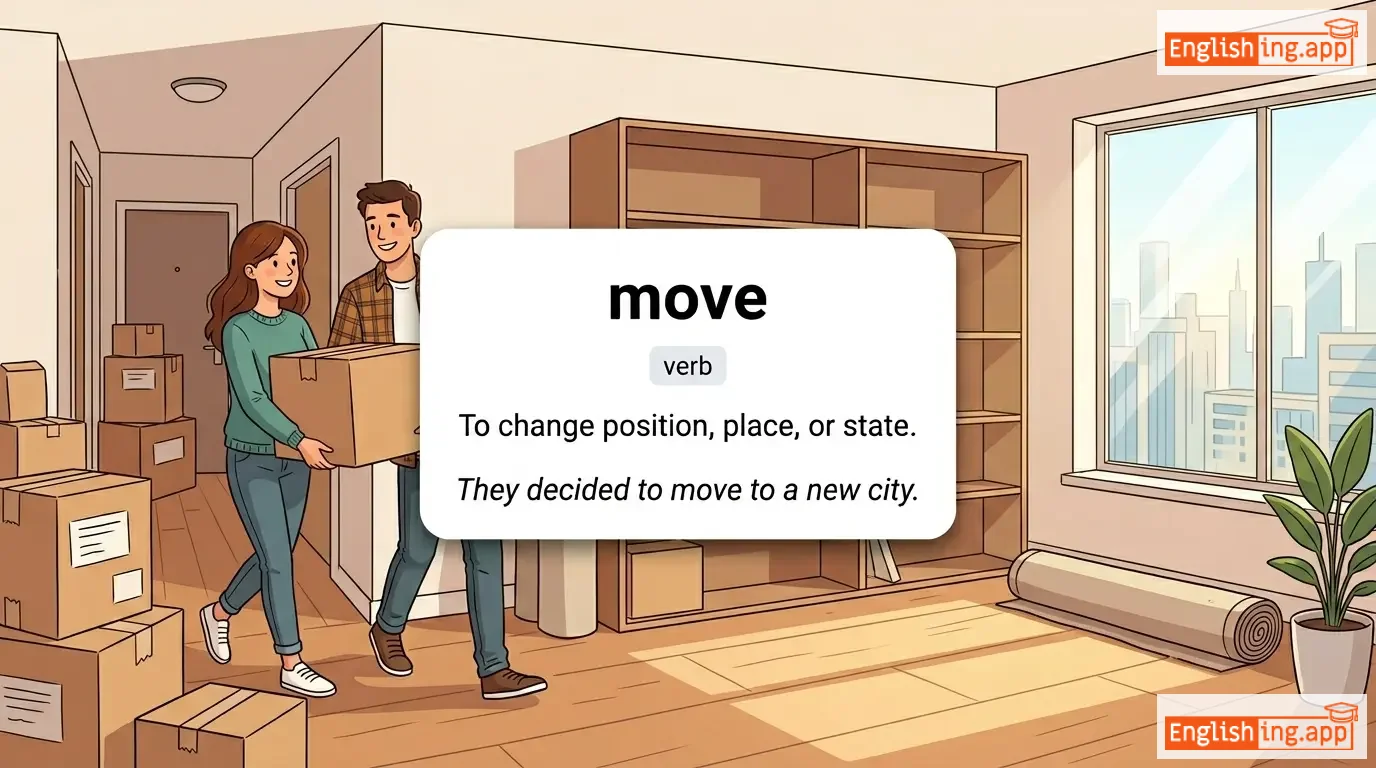
To change position, place, or state.
••••••
|
They decided to move to a new city.
彼らは新しい都市に引っ越すことを決めました。
••••••
|
彼らは新しい都市に引っ越すことを決めました。
Karera wa atarashī toshi ni hikkosu koto o kimemashita.
••••••
|
make a move
動きを作る
••••••
|
To take action or begin doing something.
••••••
|
動きを作る
Ugoki o tsukuru
••••••
|
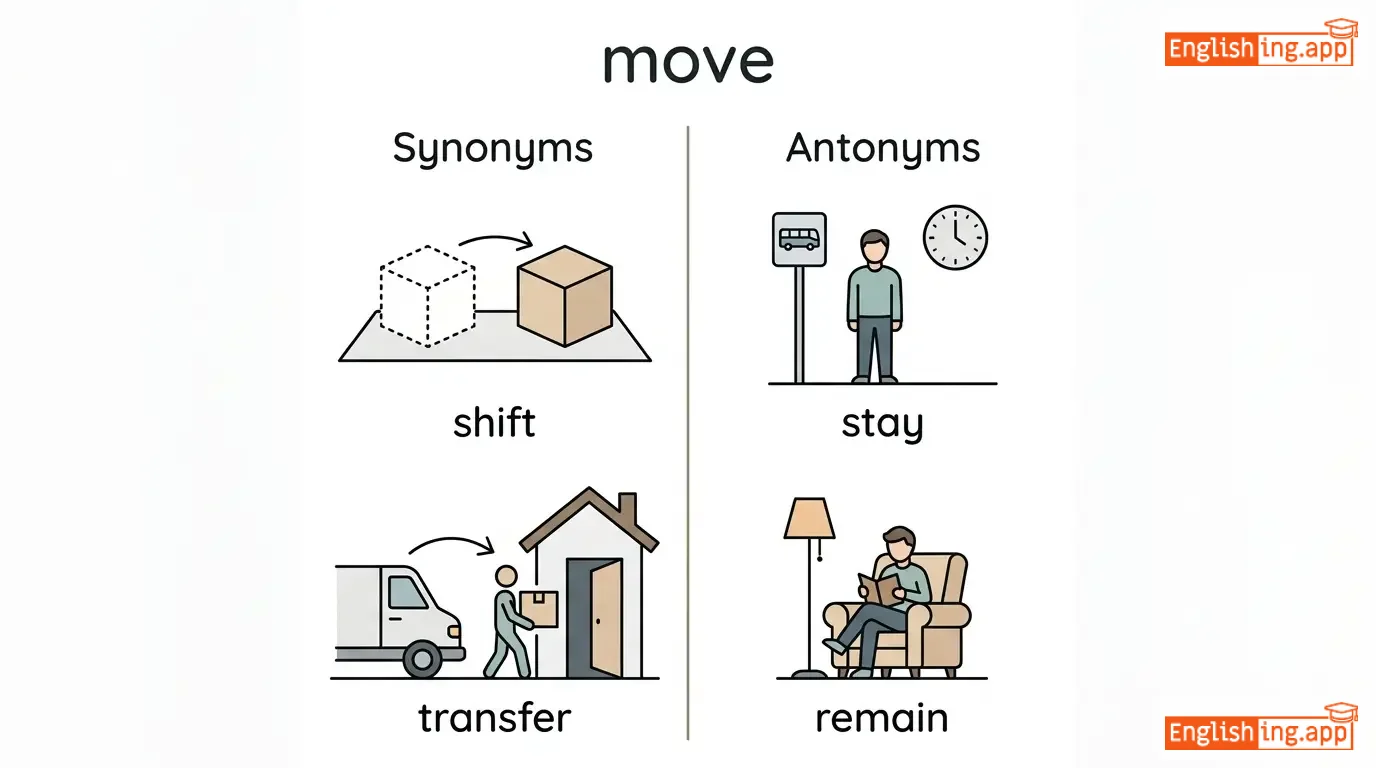
shift, transfer, relocate, progress
••••••
|
stay, remain
••••••
|
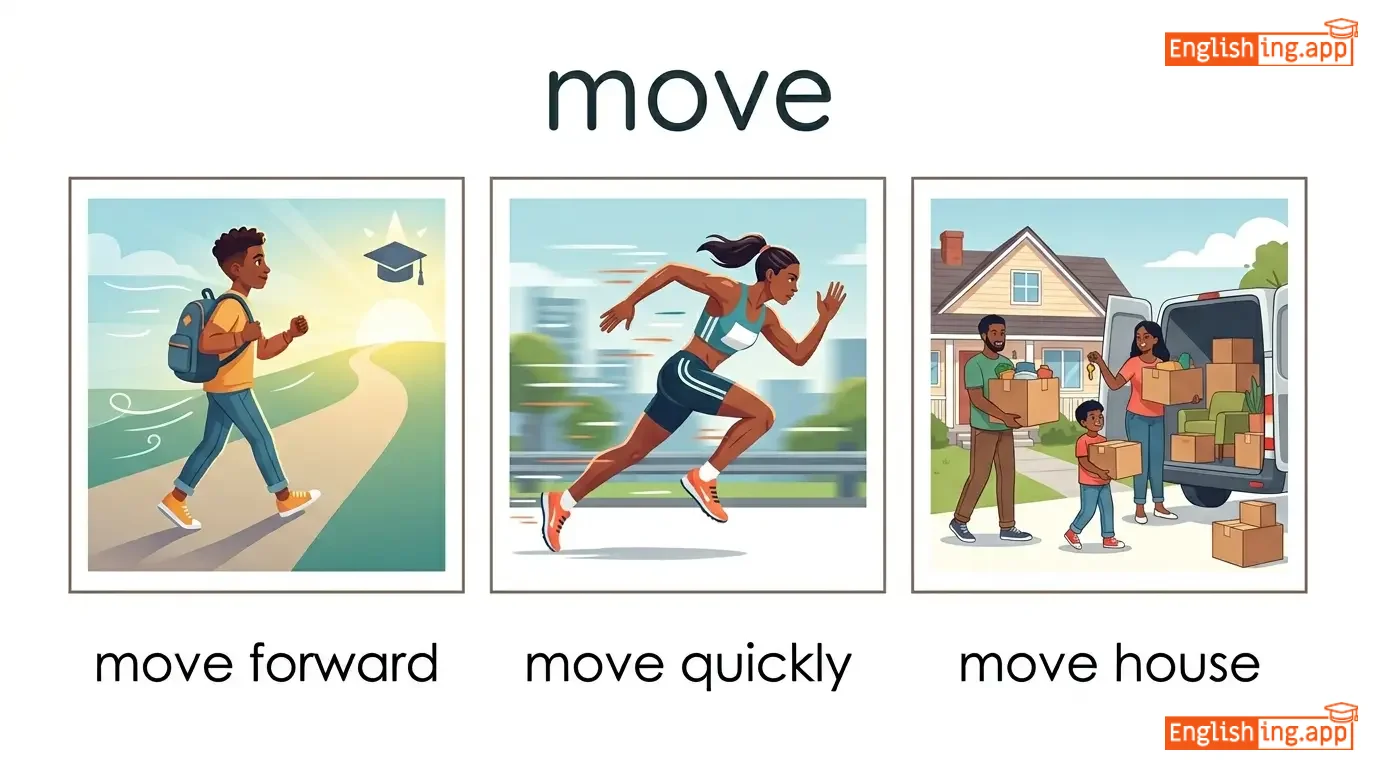
move forward, move quickly, move house, move away
••••••
|
動かすとは前進すること—一歩一歩進んでいこう。
••••••
|
|
#3369
🏃
|
/ˈmuːv.mənt/
noun
(ムーブメント)
••••••
|
|
運動
undou
••••••
|
- •••••• | - •••••• | - •••••• | - •••••• |
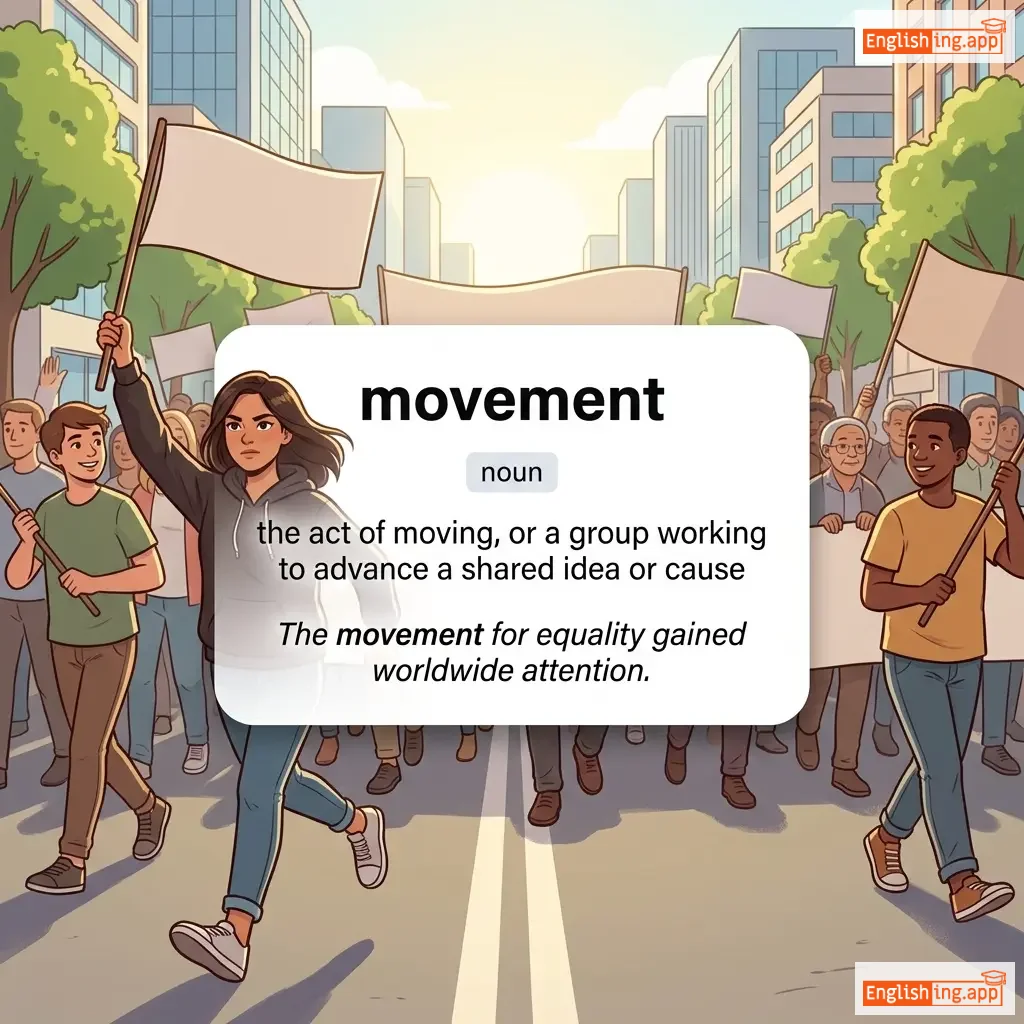
the act of moving, or a group working to advance a shared idea or cause
••••••
|
The movement for equality gained worldwide attention. |
平等のための運動は世界的な注目を集めました。
Byoudou no tame no undou wa sekaiteki na chuumoku wo atsume mashita.
••••••
|
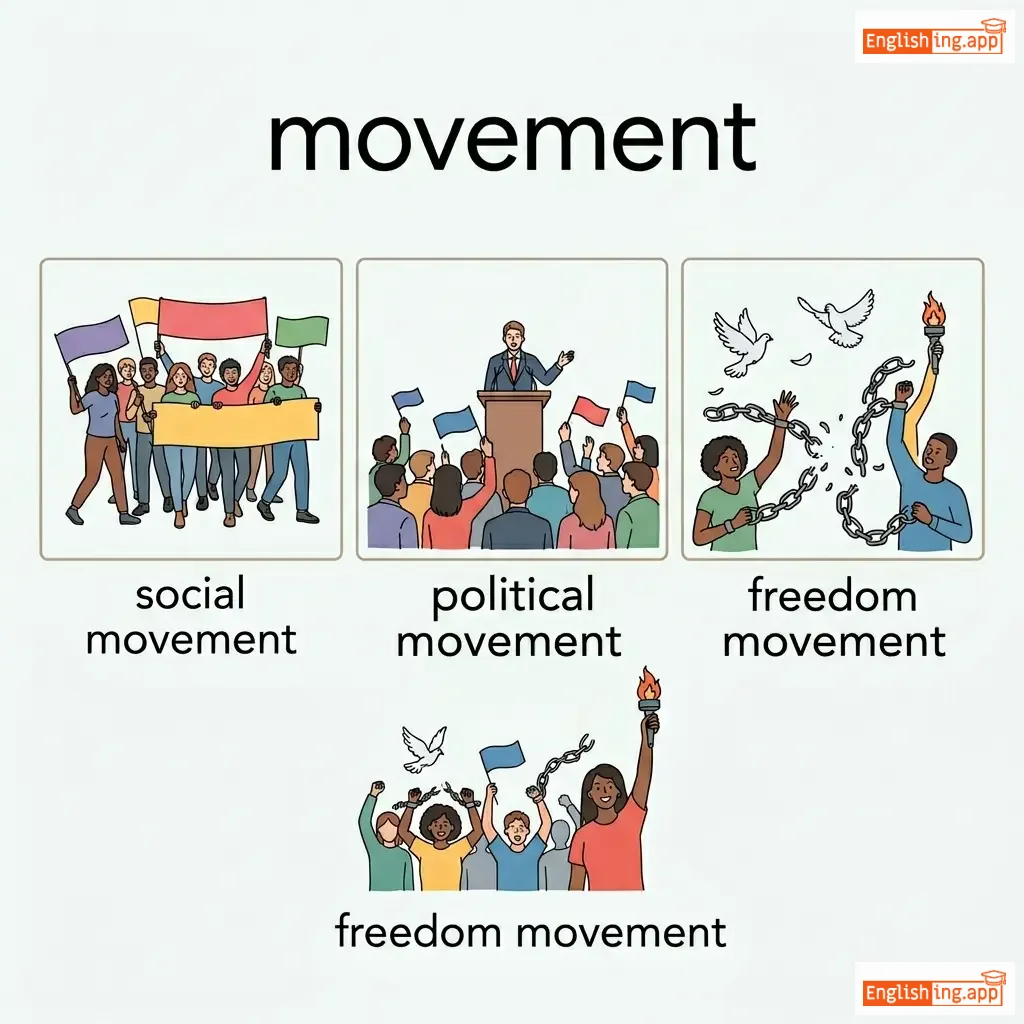
freedom movement |
a struggle or campaign to achieve liberty or independence
••••••
|
自由運動
jiyuu undou
••••••
|
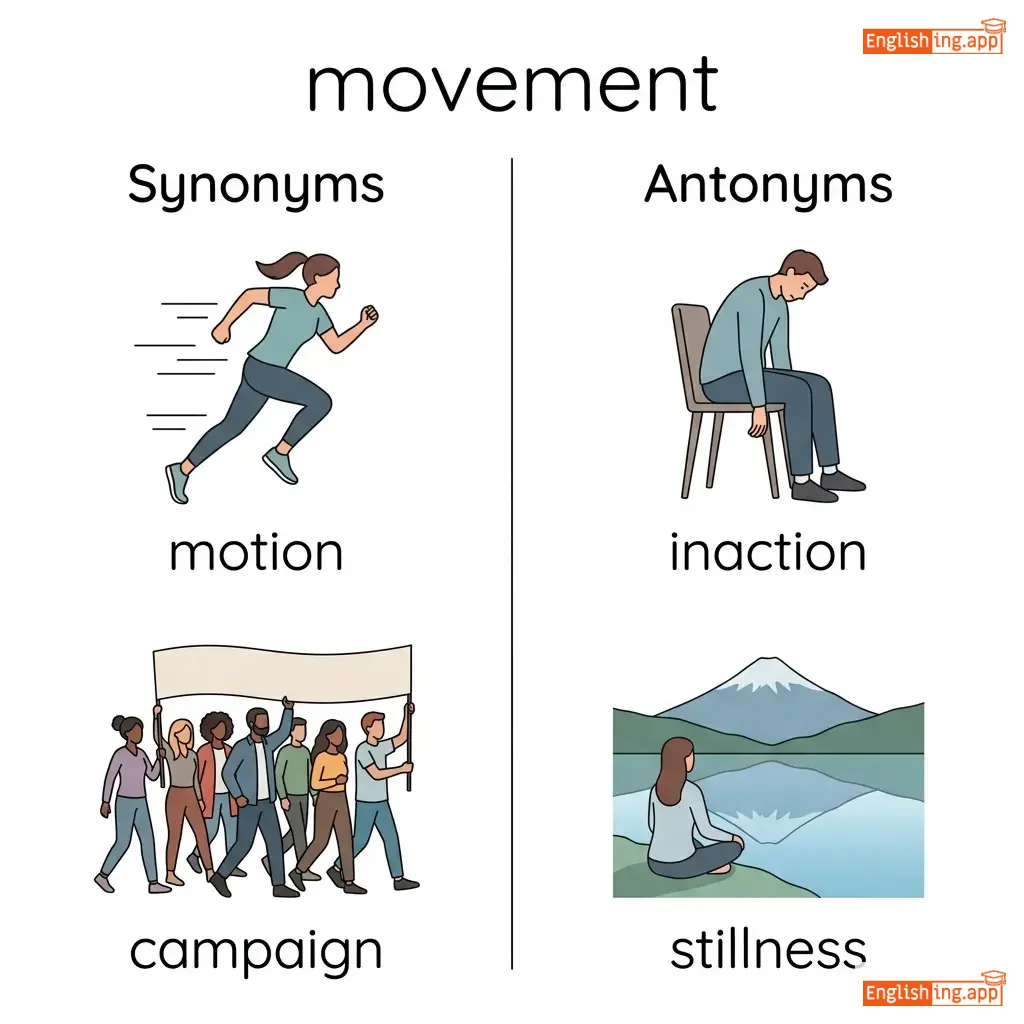
motion, campaign, progress, action, drive
••••••
|
inaction, stillness, stagnation
••••••
|
social movement, political movement, freedom movement, rapid movement
••••••
|
Movementは動くこと、運動は前進を意味します
••••••
|
Vocabulary Quiz
Test your vocabulary by matching words with their translations or meanings.
Login to take the quiz
Comments (0)
Share your thoughts and join the discussion.
Join the discussion by logging in
Login to CommentNo comments yet
Be the first to share your thoughts!