

翻訳
過去
過去分詞
三人称単数
動名詞
意味
例文
例文の翻訳
同義語
対義語
コロケーション
ニーモニック
Swipe left or right, or use the buttons. Tap image to zoom.
例文の翻訳
単語
Lesson 73Lesson 73 - マスクトグル
|
絵文字
|
単語 | Images | 翻訳 | 過去 | 過去分詞 | 三人称単数 | 動名詞 | 意味 | 例文 | 例文の翻訳 | 表現例 | 表現例の意味 | 表現例の翻訳 | 同義語 | 対義語 | コロケーション | ニーモニック |
|---|---|---|---|---|---|---|---|---|---|---|---|---|---|---|---|---|---|
|
#3464
👑
|
/ˈnoʊbəl/
adjective
(ノーブル)
••••••
|
- •••••• |
高貴な性格や高い道徳的原則を示す、または高い社会的地位を持つ
Kōkina seikaku ya takai dōtoku-teki gensoku o shimesu, mata wa takai shakai-teki chii o motsu
••••••
|
- •••••• | - •••••• | - •••••• | - •••••• |
Having or showing fine personal qualities, high moral principles, or being of high social rank.
••••••
|
He is admired for his noble character and generosity. |
彼はその高貴な性格と寛大さで賞賛されています。
Kare wa sono kōkina seikaku to kandaisa de shōsan sareteimasu.
••••••
|
noble cause |
A morally good or worthwhile reason or objective
••••••
|
高貴な目的
Kōkina mokuteki
••••••
|
honorable, dignified, virtuous, aristocratic
••••••
|
dishonorable, ignoble, base
••••••
|
noble cause, noble family, noble effort, noble character
••••••
|
Nobleはnoble-人を意味する — 王様のように。
••••••
|
|
#3465
🙅♂️
|
/ˈnoʊˌbɑːdi/
pronoun
(ノーボディ)
••••••
|
- •••••• |
誰もいない
dare mo inai
••••••
|
- •••••• | - •••••• | - •••••• | - •••••• |
no person; not anyone
••••••
|
Nobody came to the party.
誰もパーティに来なかった。
••••••
|
誰もパーティに来なかった。
Dare mo pāti ni konakatta.
••••••
|
- •••••• | - •••••• | - •••••• |
no one, none, not a soul
••••••
|
someone, anybody
••••••
|
nobody knows, nobody cares, nobody else
••••••
|
誰も来ない、もし誰も聞いていないなら - Nobody comes if nobody listens
••••••
|
|
#3466
👍
|
/nɒd/
verb
(ノッド)
••••••
|
|
うなずく
unazuku
••••••
|
nodded
ノッデッド
••••••
|
nodded
ノッデッド
••••••
|
nods
ノッズ
••••••
|
nodding
ノッディング
••••••
|
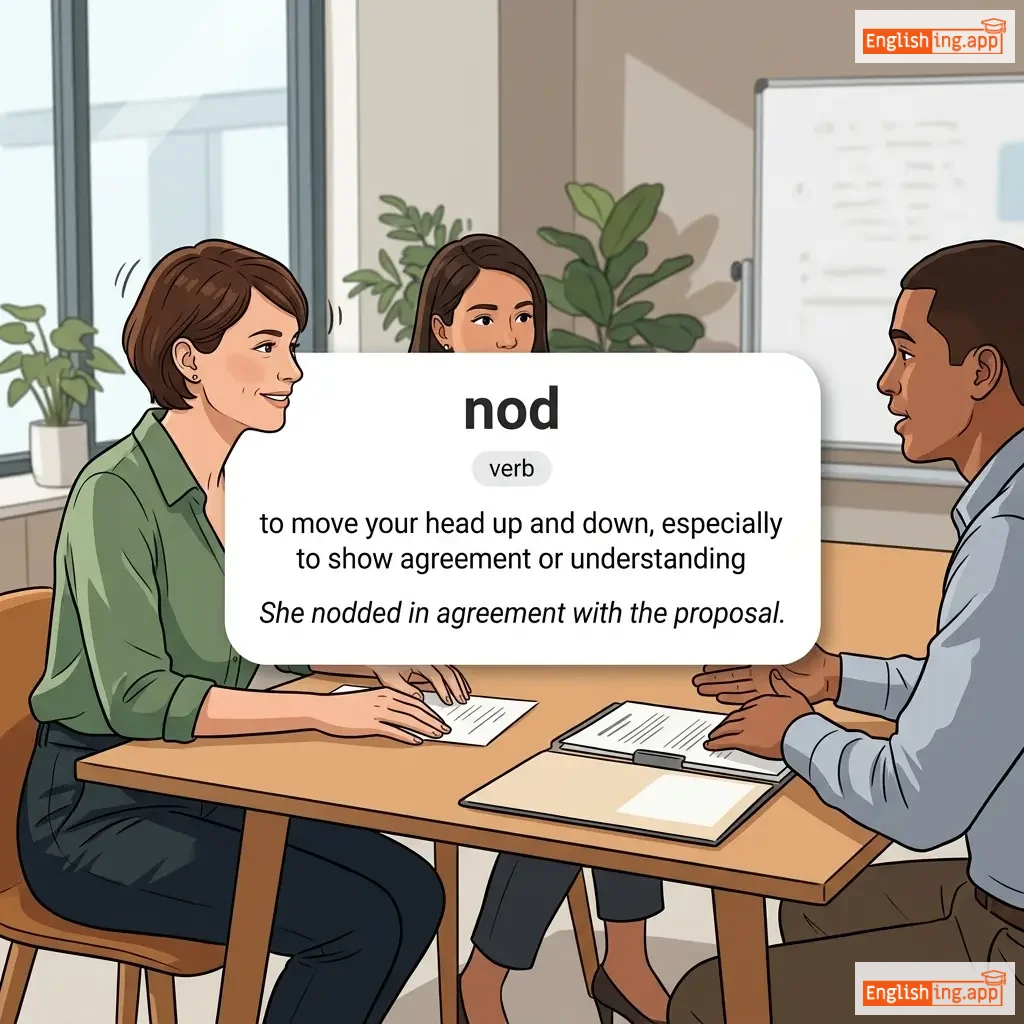
to move one's head down and up to show agreement or acknowledgment
••••••
|
She nodded in agreement with the proposal.
彼女は提案に同意してうなずいた。
••••••
|
彼女は提案に同意してうなずいた。
Kanojo wa teian ni dōi shite unazuita.
••••••
|
- •••••• | - •••••• | - •••••• |
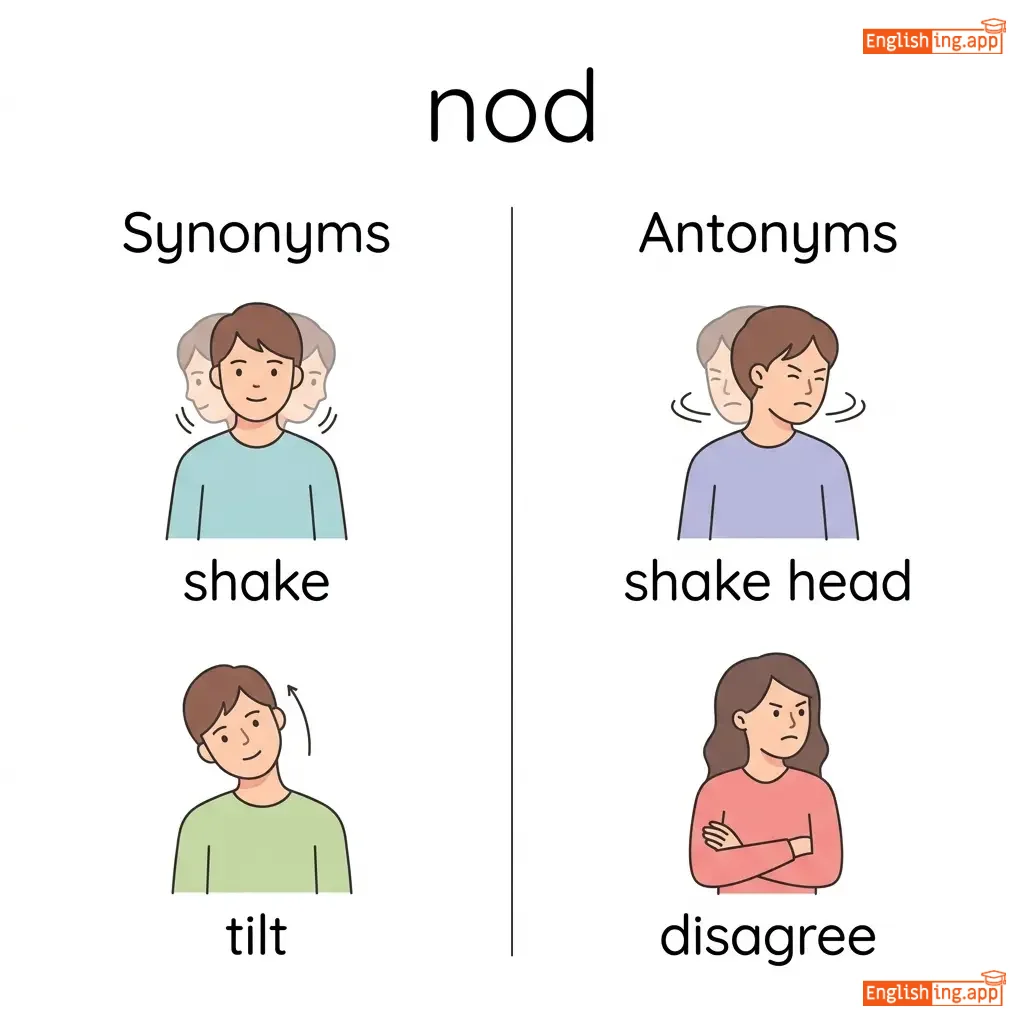
agree, acknowledge, approve, confirm
••••••
|
shake, disagree, deny
••••••
|
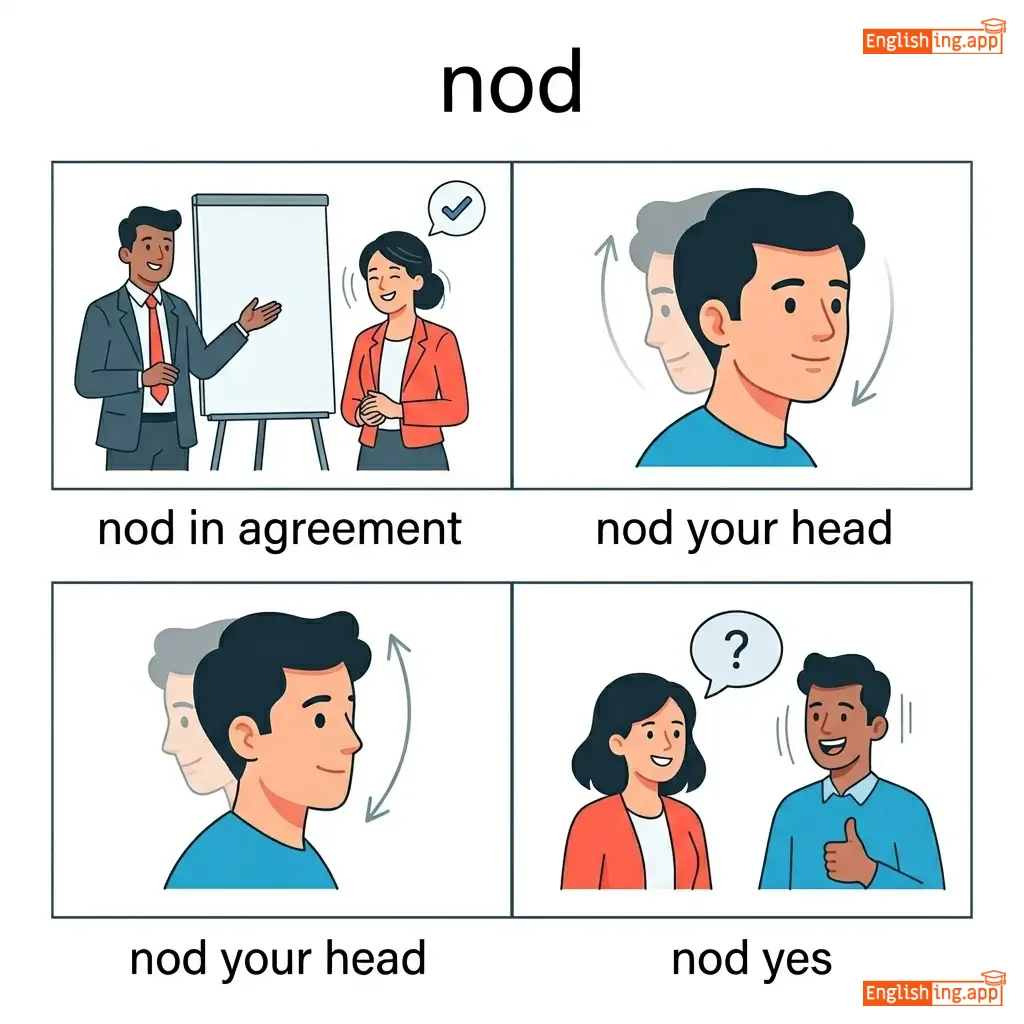
nod agreement, nod slowly, nod approvingly, nod politely, nod understanding
••••••
|
うなずいて、同意のサイン
••••••
|
|
#3467
🔊
|
/nɔɪz/
noun
(noizu)
••••••
|
- •••••• |
騒音
souon
••••••
|
- •••••• | - •••••• | - •••••• | - •••••• |
a sound, especially one that is loud or unpleasant
••••••
|
The noise from the construction site was very disturbing.
建設現場からの騒音は非常に迷惑でした。
••••••
|
建設現場からの騒音は非常に迷惑でした。
Kensetsu genba kara no souon wa hijou ni meiwaku deshita.
••••••
|
- •••••• | - •••••• | - •••••• |
sound, din, racket, clamor
••••••
|
silence, quiet, peace, stillness
••••••
|
loud noise, background noise, noise pollution
••••••
|
騒音はnoiseと同じように迷惑です。
••••••
|
|
#3468
🔊
|
/ˈnɔɪzi/
adjective
(noizi)
••••••
|
- •••••• |
うるさい
urusai
••••••
|
- •••••• | - •••••• | - •••••• | - •••••• |
Making a lot of loud sounds; full of noise.
••••••
|
The children were noisy during the party. |
子供たちはパーティーの間うるさかった。
Kodomotachi wa pātī no aida urusakatta.
••••••
|
noisy as a market |
Extremely loud and chaotic.
••••••
|
市場のようにうるさい
Ichiba no yō ni urusai
••••••
|
loud, boisterous, rowdy, clamorous, raucous
••••••
|
quiet, silent, calm
••••••
|
noisy children, noisy street, noisy crowd
••••••
|
Noisy は騒音で満たされている - うるさい。
••••••
|
|
#3469
🏆
|
/ˈnɒmɪneɪt/
verb
(ノミネート)
••••••
|
|
ノミネートする
nominēto suru
••••••
|
nominated
ノミネーテッド
••••••
|
nominated
ノミネーテッド
••••••
|
nominates
ノミネーツ
••••••
|
nominating
ノミネーティング
••••••
|
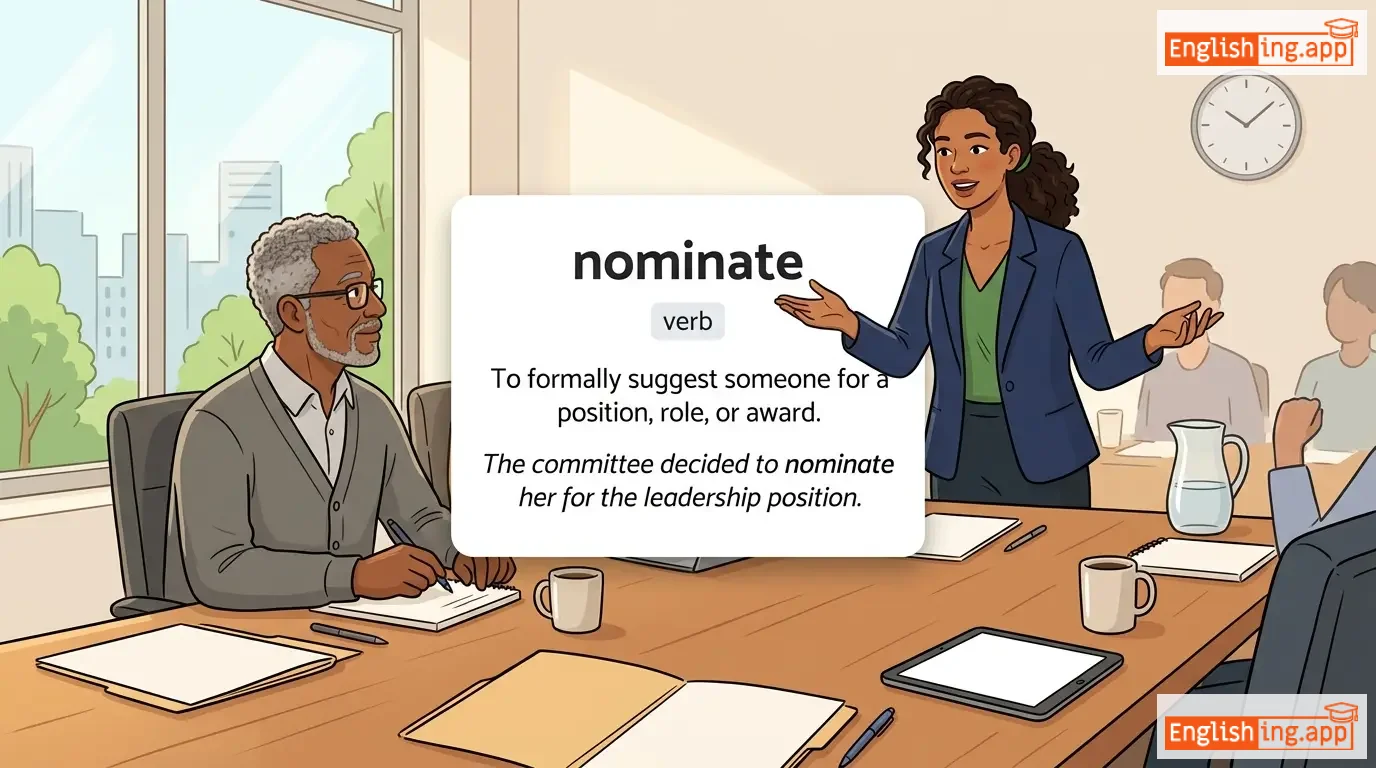
to propose someone for a position or award
••••••
|
The committee decided to nominate her for the award.
委員会は彼女を賞にノミネートすることに決めました。
••••••
|
委員会は彼女を賞にノミネートすることに決めました。
Iinkai wa kanojo o shō ni nominēto suru koto ni kimemashita.
••••••
|
- •••••• | - •••••• | - •••••• |
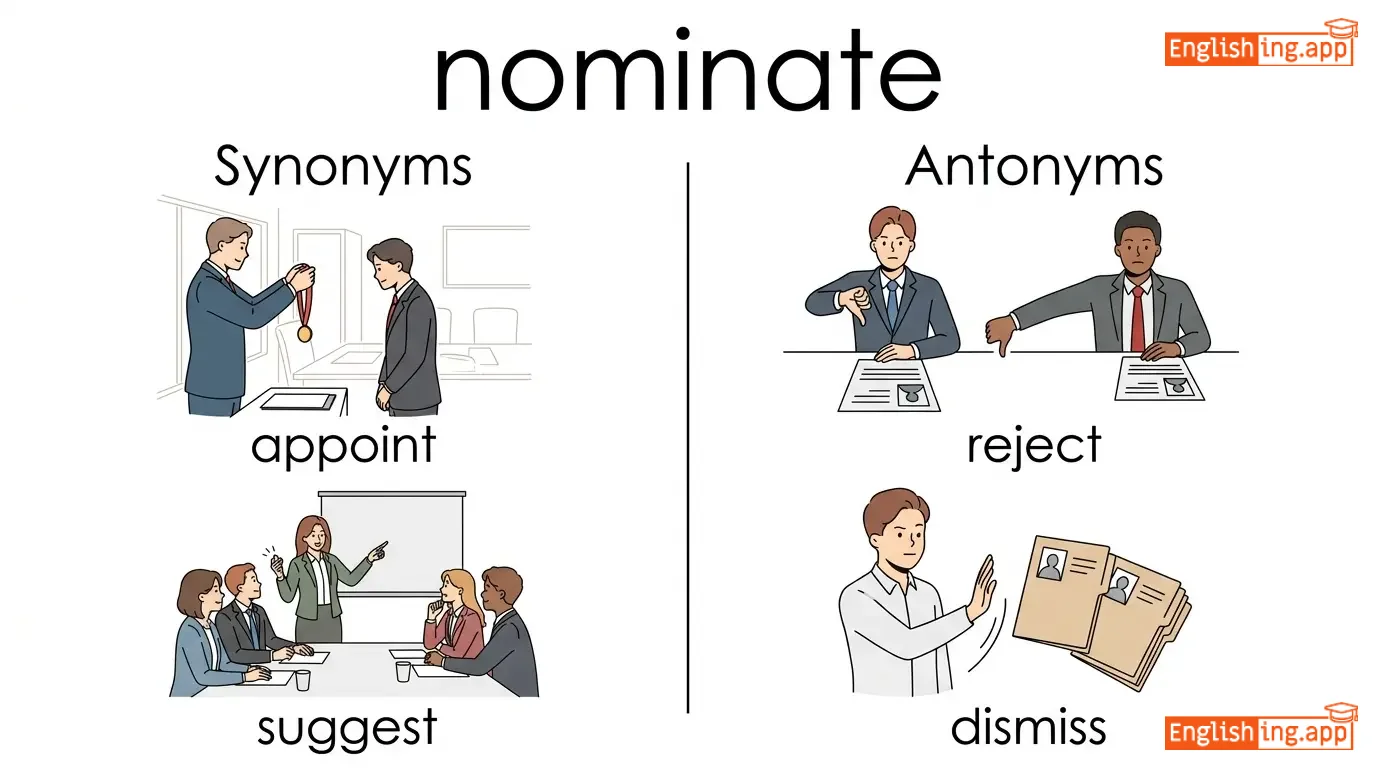
propose, suggest, recommend, appoint
••••••
|
reject, dismiss, withdraw
••••••
|
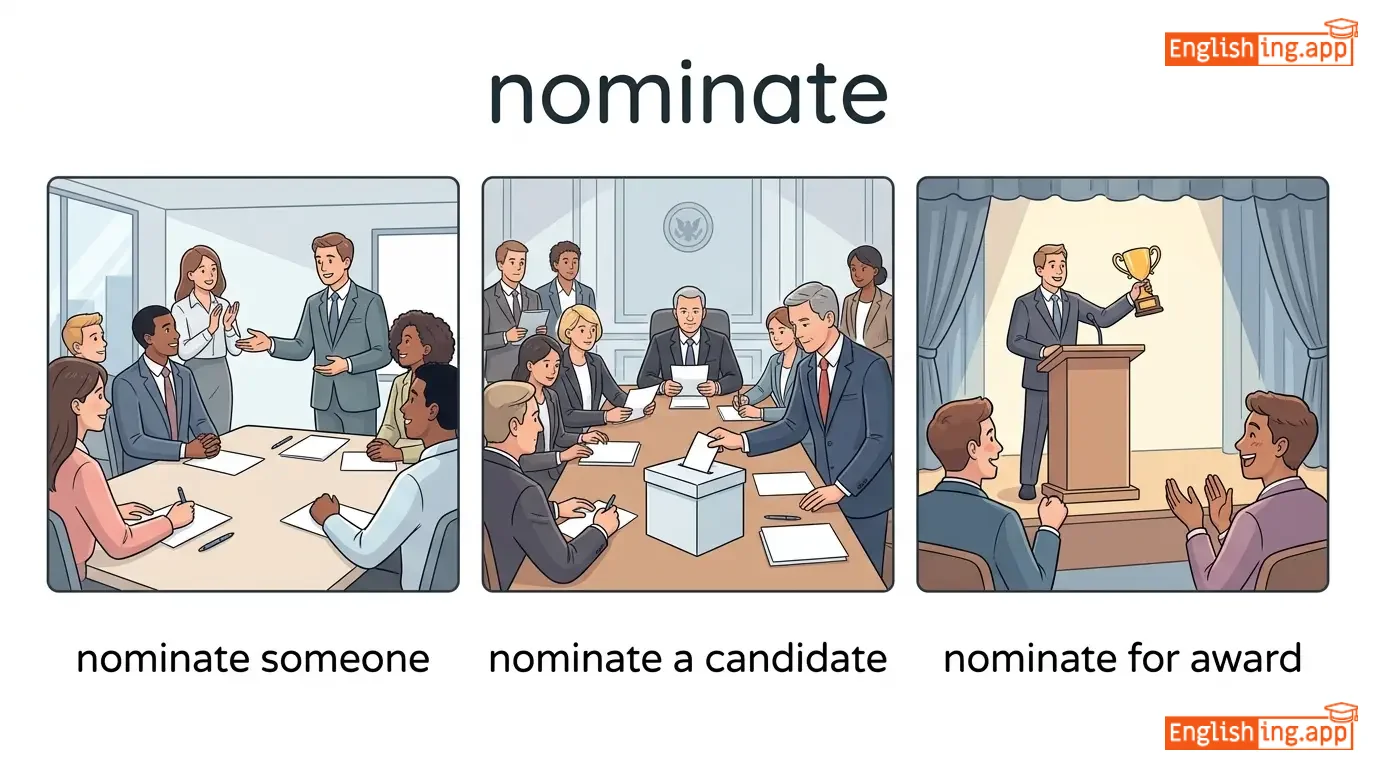
nominate candidates, nominate for award, officially nominate, nominate someone, nominate unanimously
••••••
|
Nominate = ノミネートする (Nominēto suru) - The word is almost identical in both Japanese and English.
••••••
|
|
#3470
📜
|
/ˌnɒməˈneɪʃən/
noun
(ノミネーション)
••••••
|
- •••••• |
ノミネーション
nominēshon
••••••
|
- •••••• | - •••••• | - •••••• | - •••••• |
The act of formally proposing someone for a role, position, or award.
••••••
|
Her nomination for the award surprised everyone. |
彼女の賞へのノミネーションは、皆を驚かせました。
Kanojo no shō e no nomineeshon wa, mina o odorokasemashita.
••••••
|
- •••••• | - •••••• | - •••••• |
appointment, proposal, suggestion, designation
••••••
|
rejection, dismissal, exclusion
••••••
|
receive nomination, award nomination, political nomination, official nomination
••••••
|
ノミネーションは、重要な役職や賞に名前を挙げることです。
••••••
|
|
#3471
💼
|
/ˌnɑm.əˈni/
noun
(ノミニー)
••••••
|
- •••••• |
ノミネートされた人
nominēto sareta hito
••••••
|
- •••••• | - •••••• | - •••••• | - •••••• |
a person who is nominated for an office, award, or honor
••••••
|
She was the nominee for the Best Actress award. |
彼女は最優秀女優賞のノミネートされた人でした。
Kanojo wa sai yūshū joyū shō no nominēto sareta hito deshita.
••••••
|
- •••••• | - •••••• | - •••••• |
candidate, contender, designee
••••••
|
disqualified person, rejected candidate
••••••
|
presidential nominee, award nominee, party nominee
••••••
|
ノミネートされた人は大きな賞に選ばれた人です。
••••••
|
|
#3472
🤝
|
/ˌnɒnˈprɒfɪt/
noun; adjective
(ノンプロフィット)
••••••
|
- •••••• |
非営利の
hieiri no
••••••
|
- •••••• | - •••••• | - •••••• | - •••••• |
an organization that does not operate for profit and reinvests surplus to achieve social goals; not intended to make financial profit
••••••
|
She works for a non-profit that provides free education to underprivileged children.
シー ワークス フォー ア ノンプロフィット ザット プロバイズ フリー エデュケーション。
••••••
|
彼女は無料教育を提供する非営利団体で働いています。
kanojo wa muryo kyoiku o teikyo suru hieiri dantai de hataraite imasu
••••••
|
non-profit organization
非営利団体
••••••
|
an organization that uses its income to pursue social or charitable objectives rather than profit
••••••
|
非営利団体
hieiri dantai
••••••
|
charitable, not-for-profit, voluntary, philanthropic, altruistic
••••••
|
for-profit, commercial, profit-making
••••••
|
non-profit organization, non-profit sector, non-profit work, non-profit foundation, non-profit charity
••••••
|
Non-profit = ノンプロフィット、profit なし、社会貢献あり。
••••••
|
|
#3473
🚫
|
/nʌn/
pronoun
(ナン)
••••••
|
- •••••• |
誰もいない
dare mo inai
••••••
|
- •••••• | - •••••• | - •••••• | - •••••• |
not any; no one; not one
••••••
|
None of the students passed the exam. |
誰もその試験に合格しませんでした。
Dare mo sono shiken ni goukaku shimasen deshita.
••••••
|
- •••••• | - •••••• | - •••••• |
nothing, nobody, nil
••••••
|
all, some, everyone
••••••
|
none of, none left, none at all
••••••
|
None sounds like 'dare mo inai'.
••••••
|
|
#3474
🌧️➡️🏞️
|
/ˌnʌnðəˈlɛs/
adverb
(ノンゼレス)
••••••
|
- •••••• |
それにもかかわらず
sore ni mo kakawarazu
••••••
|
- •••••• | - •••••• | - •••••• | - •••••• |
in spite of that; nevertheless
••••••
|
It was raining, but nonetheless, they went hiking. |
雨が降っていましたが、それにもかかわらず、彼らはハイキングに行きました。
Ame ga futte imashita ga, sore ni mo kakawarazu, karera wa haikingu ni ikimashita.
••••••
|
- •••••• | - •••••• | - •••••• |
nevertheless, however, still, yet
••••••
|
therefore, hence
••••••
|
nonetheless important, nonetheless true, nonetheless, despite that
••••••
|
Noneth- like 'none-the-less' means despite.
••••••
|
|
#3475
🙃
|
/ˈnɒnsəns/
noun
(ノンセンス)
••••••
|
- •••••• |
ナンセンス
nansensu
••••••
|
- •••••• | - •••••• | - •••••• | - •••••• |
Words or ideas that have no meaning or make no sense.
••••••
|
His explanation was pure nonsense. |
彼の説明は完全にナンセンスだった。
kare no setsumei wa kanzen ni nansensu datta.
••••••
|
talk nonsense |
to say things that are not true or make no sense
••••••
|
ナンセンスを言う
nansensu o iu
••••••
|
rubbish, absurdity, foolishness, drivel, gibberish
••••••
|
truth, sense, logic
••••••
|
utter nonsense, talk nonsense, complete nonsense, pure nonsense
••••••
|
Nonsense = NO SENSE → 意味がない → ナンセンス
••••••
|
|
#3476
🍜
|
/ˈnuːdəlz/
noun (plural)
(ヌードルズ)
••••••
|
- •••••• |
麺
men
••••••
|
- •••••• | - •••••• | - •••••• | - •••••• |
long, thin strips of dough made from flour, water, or eggs, cooked and eaten as food
••••••
|
She cooked noodles with vegetables for dinner.
彼女は夕食に野菜入りのヌードルを作った。
••••••
|
彼女は夕食に野菜入りの麺を作った。
kanojo wa yuushoku ni yasai iri no men o tsukutta
••••••
|
use your noodle
ユーズ・ユア・ヌードル
••••••
|
to think carefully; to use your brain
••••••
|
頭を使え
atama o tsukae
••••••
|
pasta, ramen, vermicelli, spaghetti, soba
••••••
|
rice, bread
••••••
|
instant noodles, rice noodles, fried noodles, noodle soup, bowl of noodles
••••••
|
麺 = noodles, ラーメンを思い出す
••••••
|
|
#3477
☀️
|
/nuːn/
noun
(ヌーン)
••••••
|
- •••••• |
正午
shōgo
••••••
|
- •••••• | - •••••• | - •••••• | - •••••• |
12 o'clock in the daytime; midday
••••••
|
The meeting will start at noon. |
会議は正午に始まります。
Kaigi wa shōgo ni hajimarimasu.
••••••
|
high noon |
exactly midday; sometimes used to describe a decisive confrontation
••••••
|
正午
shōgo
••••••
|
midday, twelve o'clock, middaytime
••••••
|
midnight
••••••
|
at noon, by noon, until noon, high noon
••••••
|
Noonは正午を意味し、太陽 ☀️ は真上にあります
••••••
|
|
#3478
🚫➡️🚫
|
/nɔːr/
conjunction
(ノア)
••••••
|
- •••••• |
またはない
mata wa nai
••••••
|
- •••••• | - •••••• | - •••••• | - •••••• |
used to introduce a negative clause after a negative statement
••••••
|
He didn't call, nor did he send a message. |
彼は電話をかけなかったし、メッセージも送らなかった。
Kare wa denwa o kakenakatta shi, messeeji mo okurakanakatta.
••••••
|
- •••••• | - •••••• | - •••••• |
and not, neither
••••••
|
and, or
••••••
|
nor did, nor have
••••••
|
Nor - 'Not' after a negative statement.
••••••
|
|
#3479
📏
|
/nɔːrm/
noun
(ノーム)
••••••
|
- •••••• |
規範
kihan
••••••
|
- •••••• | - •••••• | - •••••• | - •••••• |
An accepted standard or a usual practice.
••••••
|
Wearing uniforms is the norm in many schools. |
多くの学校で制服を着ることが規範です。
Ooku no gakkou de seifuku o kiru koto ga kihan desu.
••••••
|
against the norm |
not typical or standard
••••••
|
規範に反して
Kihan ni hanshite
••••••
|
standard, rule, custom, practice, convention
••••••
|
exception, deviation, anomaly
••••••
|
social norm, cultural norm, become the norm, accepted norm
••••••
|
ノームは規範や通常の習慣を意味します。
••••••
|
|
#3480
📏
|
/ˈnɔː.məl/
adjective
(ノーマル)
••••••
|
- •••••• |
正常
seijou
••••••
|
- •••••• | - •••••• | - •••••• | - •••••• |
conforming to a standard; usual, typical, or expected
••••••
|
It is normal to feel nervous before an interview. |
面接前に緊張するのは正常です。
Mensetsu mae ni kinchou suru no wa seijou desu.
••••••
|
back to normal |
returning to a usual or typical state
••••••
|
正常に戻る
seijou ni modoru
••••••
|
usual, ordinary, typical, standard, regular
••••••
|
abnormal, unusual, strange
••••••
|
normal life, normal situation, normal condition, back to normal
••••••
|
Normal = 正常, すべてが正常📏
••••••
|
|
#3481
⚖️
|
/ˈnɔːrməlaɪz/
verb
(ノーマライズ)
••••••
|
- •••••• |
正常化する
seijouka suru
••••••
|
normalized
ノーマライズド
••••••
|
normalized
ノーマライズド
••••••
|
normalizes
ノーマライズズ
••••••
|
normalizing
ノーマライズイング
••••••
|
to bring something back to a normal or standard condition; to make something conform to a standard
••••••
|
The government took steps to normalize relations with neighboring countries.
ザ ガバメント トゥック ステップス トゥ ノーマライズ リレーションズ。
••••••
|
政府は関係を正常化するための措置を取った。
seifu wa kankei o seijouka suru tame no sochi o totta
••••••
|
normalize relations
ノーマライズ リレーションズ
••••••
|
to restore normal diplomatic or social relations
••••••
|
関係を正常化する
kankei o seijouka suru
••••••
|
standardize, regularize, stabilize, harmonize, adjust
••••••
|
disrupt, destabilize, abnormalize
••••••
|
normalize data, normalize relations, normalize behavior, normalize process
••••••
|
Normal = ノーマル → 正常化
••••••
|
|
#3482
📅
|
/ˈnɔːməli/
adverb
(ノーマリー)
••••••
|
- •••••• |
通常
tsūjō
••••••
|
- •••••• | - •••••• | - •••••• | - •••••• |
in the usual way; under normal circumstances
••••••
|
I normally wake up at 7 AM every day. |
私は通常毎日午前7時に起きます。
watashi wa tsūjō mainichi gozen 7-ji ni okimasu
••••••
|
- •••••• | - •••••• | - •••••• |
usually, typically, generally
••••••
|
abnormally, unusually, rarely
••••••
|
normally do, normally happen, normally work
••••••
|
In Japanese, 'tsūjō' is similar to 'normally', and both imply regular or expected behavior.
••••••
|
|
#3483
🧭
|
/nɔːrθ/
noun
(ノース)
••••••
|
- •••••• |
北
kita
••••••
|
- •••••• | - •••••• | - •••••• | - •••••• |
the direction toward the top of a map or the opposite of south
••••••
|
We traveled north to reach the mountains. |
私たちは山に到達するために北へ向かって旅しました。
Watashitachi wa yama ni tōtatsu suru tame ni kita e mukatte tabimashita.
••••••
|
- •••••• | - •••••• | - •••••• |
up, northern direction
••••••
|
south, downward
••••••
|
north pole, north wind, go north, head north
••••••
|
North is UP on a map, just like 'Kita' (北) is UP in Japanese!
••••••
|
|
#3484
🌨️
|
/ˈnɔːðərn/
adjective
(ノースダーン)
••••••
|
- •••••• |
北部の
hokubu no
••••••
|
- •••••• | - •••••• | - •••••• | - •••••• |
relating to the north or situated in the north
••••••
|
The northern part of the country is known for its cold climate. |
その国の北部は寒冷な気候で知られています。
Sono kuni no hokubu wa kanrei na kikō de shirareteimasu.
••••••
|
- •••••• | - •••••• | - •••••• |
northerly, northernmost
••••••
|
southern
••••••
|
northern lights, northern regions, northern hemisphere
••••••
|
Imagine the cold northern winds – 'hokubu' means northern in Japanese!
••••••
|
|
#3485
👃
|
/noʊz/
noun
(noʊz)
••••••
|
- •••••• |
鼻
hana
••••••
|
- •••••• | - •••••• | - •••••• | - •••••• |
the part of the face that contains the nostrils and is used for breathing and smelling
••••••
|
He has a sharp nose and can smell things from far away. |
彼は鋭い鼻を持っており、遠くから物の匂いを嗅ぐことができる。
Kare wa surudoi hana o motte ori, tōku kara mono no nioi o kagu koto ga dekiru.
••••••
|
- •••••• | - •••••• | - •••••• |
nostrils, snout
••••••
|
mouth
••••••
|
runny nose, pick your nose, nose ring
••••••
|
Nose (鼻) – Japanese 'hana' is a short form for 'nose' in everyday conversation!
••••••
|
|
#3486
🚫
|
/nɒt/
adverb
(ノット)
••••••
|
- •••••• |
いいえ
iie
••••••
|
- •••••• | - •••••• | - •••••• | - •••••• |
used to make a word or phrase negative
••••••
|
I do not like spicy food. |
私は辛い食べ物が好きではありません。
Watashi wa karai tabemono ga suki de wa arimasen.
••••••
|
- •••••• | - •••••• | - •••••• |
no, never
••••••
|
yes
••••••
|
not sure, not at all, not yet, not going
••••••
|
Not (いいえ) – 'Iie' means saying no or denying.
••••••
|
|
#3487
⭐
|
/ˈnoʊtəbl/
adjective
(ノータブル)
••••••
|
- •••••• |
顕著な
kenchona
••••••
|
- •••••• | - •••••• | - •••••• | - •••••• |
worthy of attention or notice; remarkable
••••••
|
She made a notable contribution to the project.
彼女はプロジェクトに顕著な貢献をしました。
••••••
|
彼女はプロジェクトに顕著な貢献をしました。
Kanojo wa purojekuto ni kenchona kouken o shimashita.
••••••
|
- •••••• | - •••••• | - •••••• |
remarkable, significant, outstanding, important, noteworthy
••••••
|
ordinary, insignificant, unremarkable
••••••
|
notable achievement, notable figure, notable difference, notable contribution
••••••
|
Notable は日本語で顕著な、注目に値することを意味します。
••••••
|
|
#3488
⭐
|
/ˈnoʊtəbli/
adverb
(ノータブリー)
••••••
|
- •••••• |
目立って
medatte
••••••
|
- •••••• | - •••••• | - •••••• | - •••••• |
used to indicate something worthy of attention or significant
••••••
|
She is notably talented in painting.
彼女は絵画で際立って才能があります。
••••••
|
彼女は絵画で際立って才能があります。
Kanojo wa kaiga de medatte sainou ga arimasu.
••••••
|
- •••••• | - •••••• | - •••••• |
particularly, especially, significantly, remarkably
••••••
|
insignificantly, unremarkably
••••••
|
notably skilled, notably successful, notably different
••••••
|
目立っては、特別で重要なものを強調する言葉です。
••••••
|
|
#3489
📝
|
/noʊt/
noun, verb
(ノート)
••••••
|
|
メモ
memo
••••••
|
noted
ノーテッド
••••••
|
noted
ノーテッド
••••••
|
notes
ノーツ
••••••
|
noting
ノーティング
••••••
|
a brief record of facts, topics, or thoughts written down; to observe or remark upon something
••••••
|
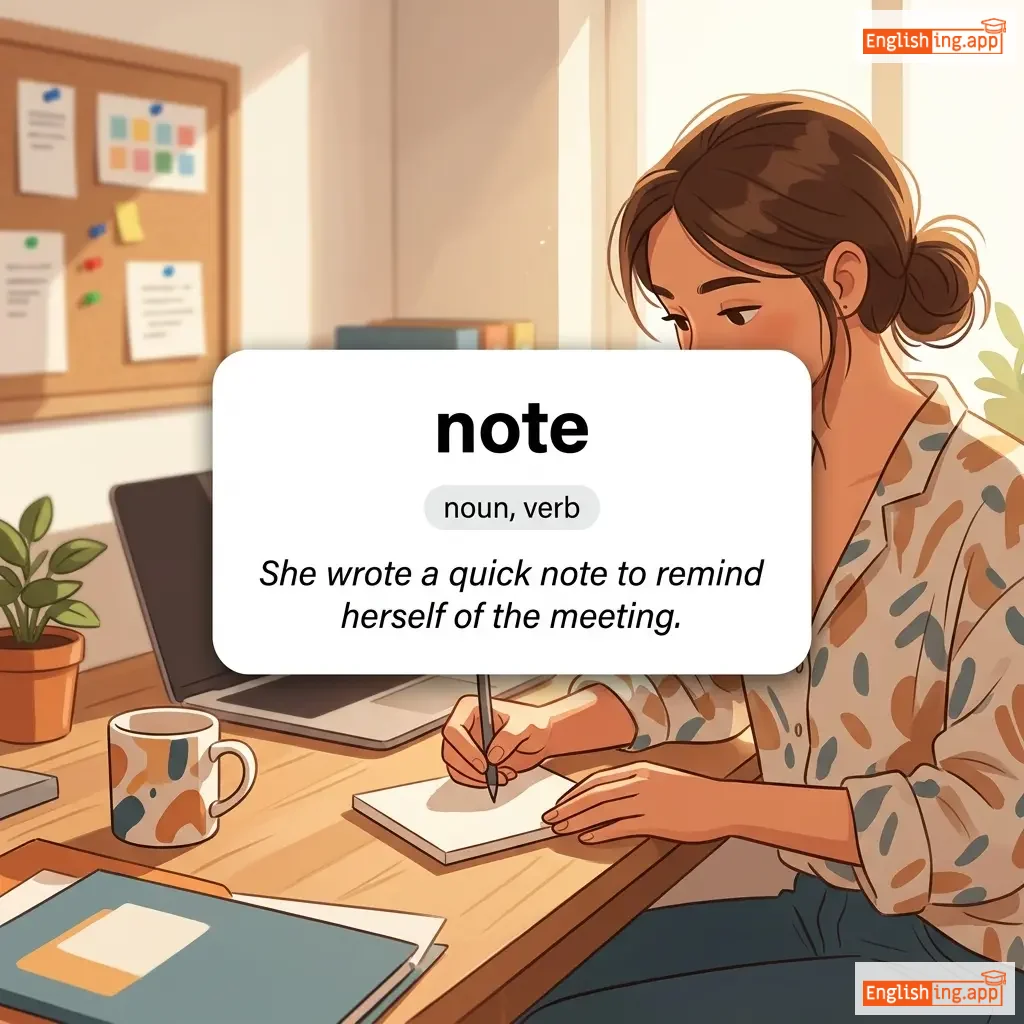
She wrote a quick note to remind herself of the meeting.
彼女は会議を思い出すために迅速なノートを書いた。
••••••
|
彼女は会議を思い出すために迅速なノートを書いた。
Kanojo wa kaigi o omoi dasu tame ni jinsoku na nōto o kaita.
••••••
|
take note
メモを取る
••••••
|
to pay attention or give special consideration
••••••
|
注意を払う
chūi o harau
••••••
|
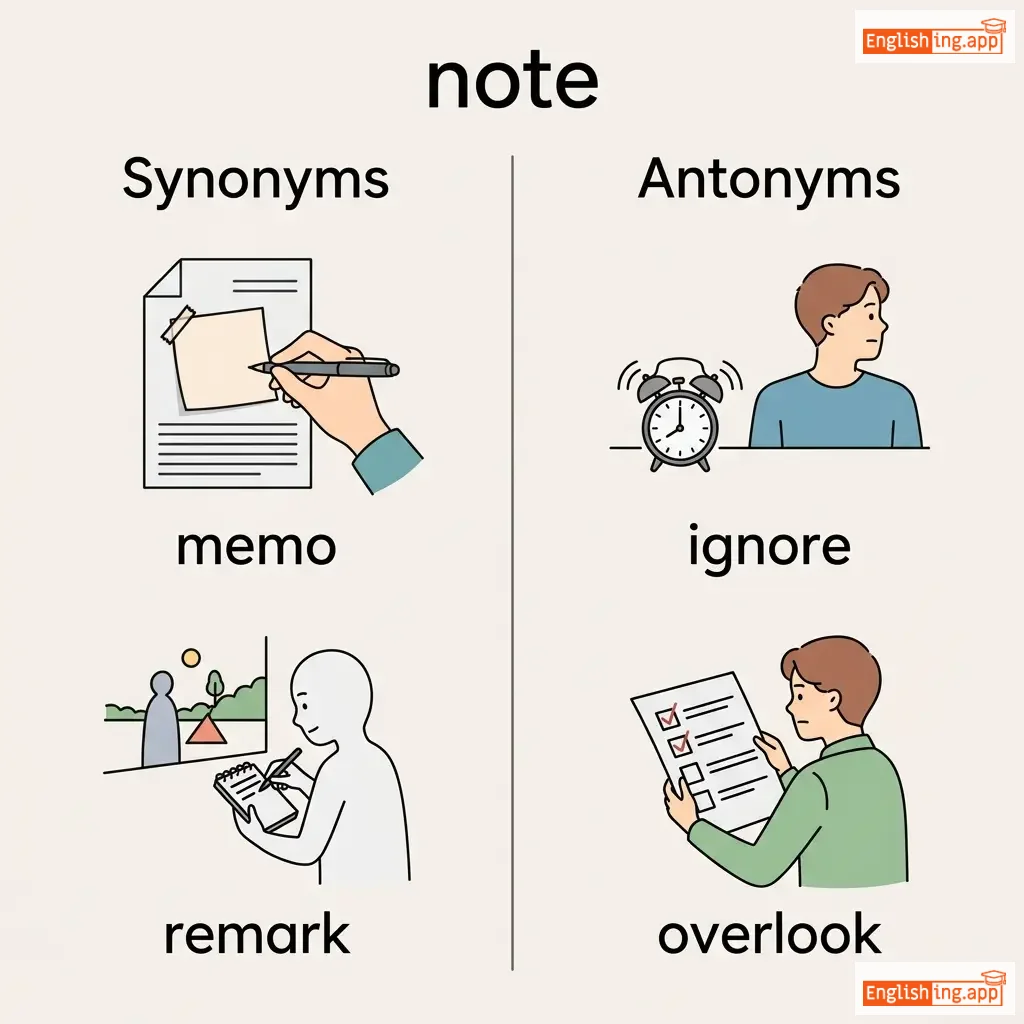
memo, remark, message, record, observation
••••••
|
ignore, overlook
••••••
|
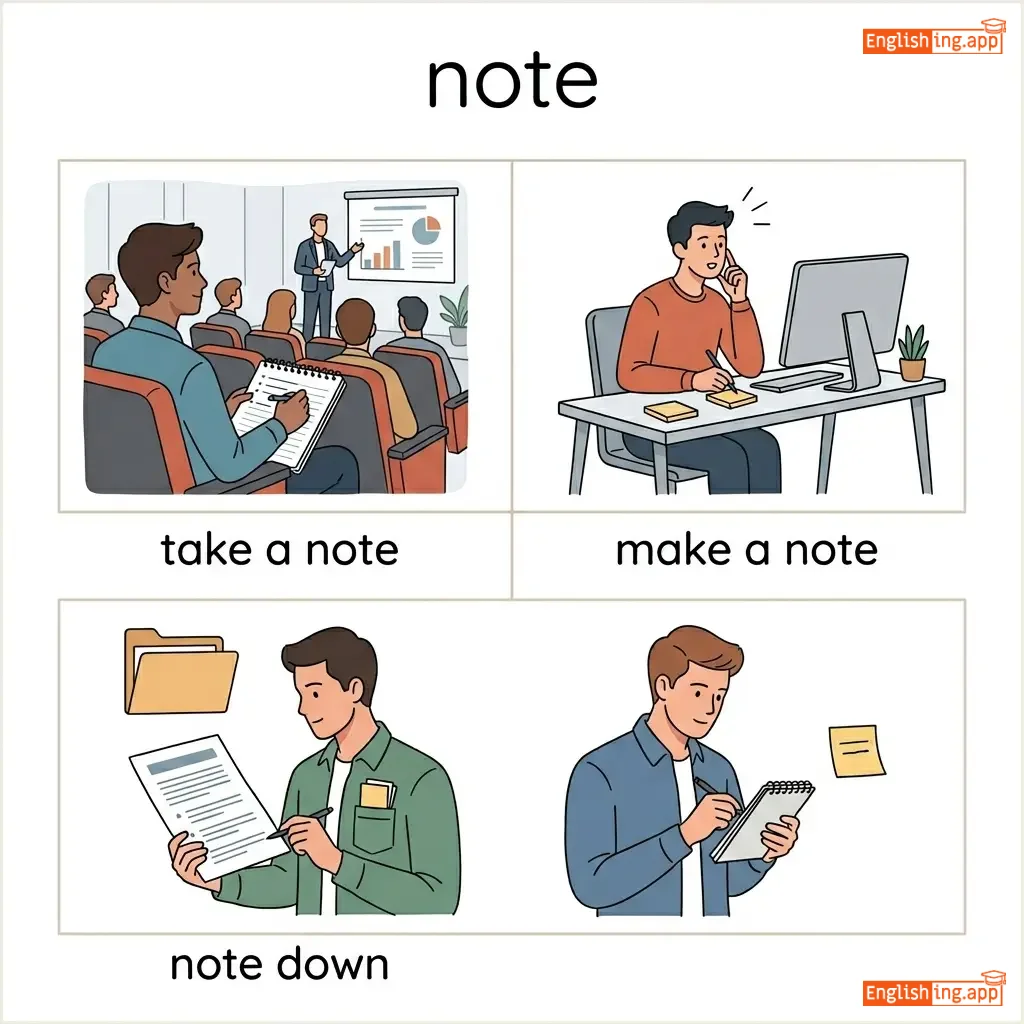
take a note, make a note, note down, note carefully
••••••
|
ノートは重要なことを書き留めるために使う。
••••••
|
|
#3490
📒
|
/ˈnoʊtbʊk/
noun
••••••
|
- •••••• | - •••••• | - •••••• | - •••••• | - •••••• | - •••••• |
a small book with blank or ruled pages for writing notes; also a portable computer
••••••
|
She opened her notebook to jot down some ideas. |
- •••••• |
open your notebook |
to prepare to take notes or start writing
••••••
|
- •••••• |
journal, pad, diary, laptop, logbook
••••••
|
none, emptiness, blankness
••••••
|
open notebook, write in notebook, spiral notebook, leather notebook, notebook computer
••••••
|
No •••••• |
|
#3491
❌
|
/ˈnʌθɪŋ/
pronoun
(ナッシング)
••••••
|
- •••••• |
何もない
nanimo nai
••••••
|
- •••••• | - •••••• | - •••••• | - •••••• |
not anything; no thing
••••••
|
She has nothing to worry about. |
彼女は心配することは何もない。
Kanojo wa shinpai suru koto wa nanimo nai.
••••••
|
- •••••• | - •••••• | - •••••• |
zero, nil, nought
••••••
|
everything
••••••
|
nothing to do, nothing at all, nothing left
••••••
|
Nothing (何もない) – Imagine having nothing left to worry about!
••••••
|
|
#3492
👀
|
/ˈnoʊtɪs/
verb
(ノーティス)
••••••
|
|
気づく
kidzuku
••••••
|
noticed
ノーティスド
••••••
|
noticed
ノーティスド
••••••
|
notices
ノーティセス
••••••
|
noticing
ノーティシング
••••••
|
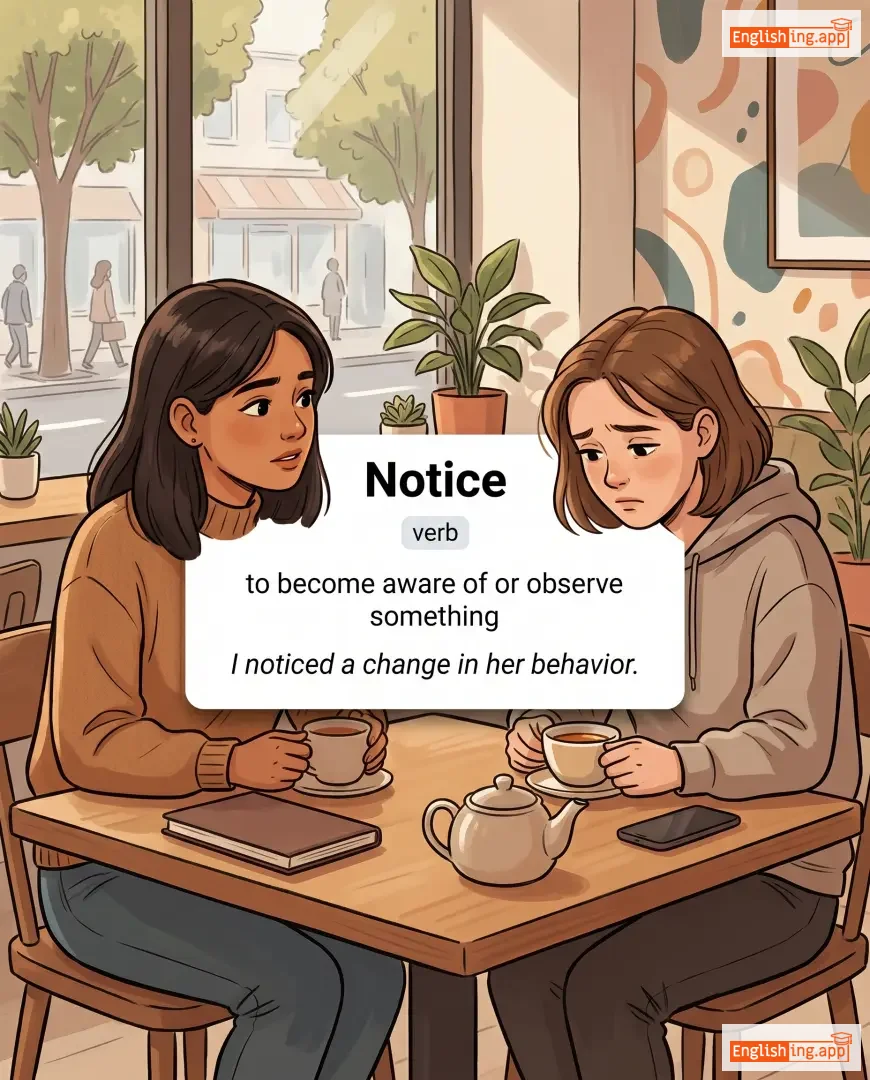
to become aware of or observe something
••••••
|
I noticed a change in her behavior.
私は彼女の行動の変化に気づきました。
••••••
|
私は彼女の行動の変化に気づきました。
Watashi wa kanojo no koudou no henka ni kidzukimashita.
••••••
|
- •••••• | - •••••• | - •••••• |
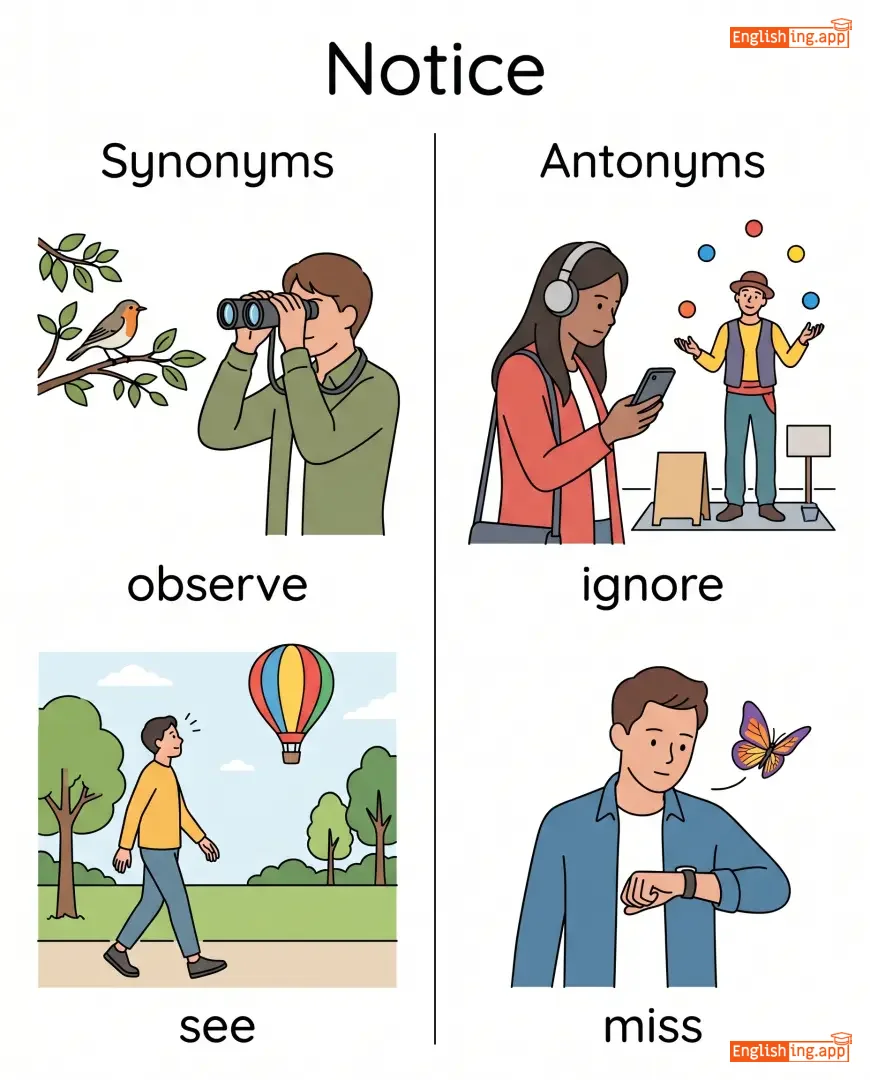
observe, see, spot, detect
••••••
|
ignore, miss, overlook
••••••
|
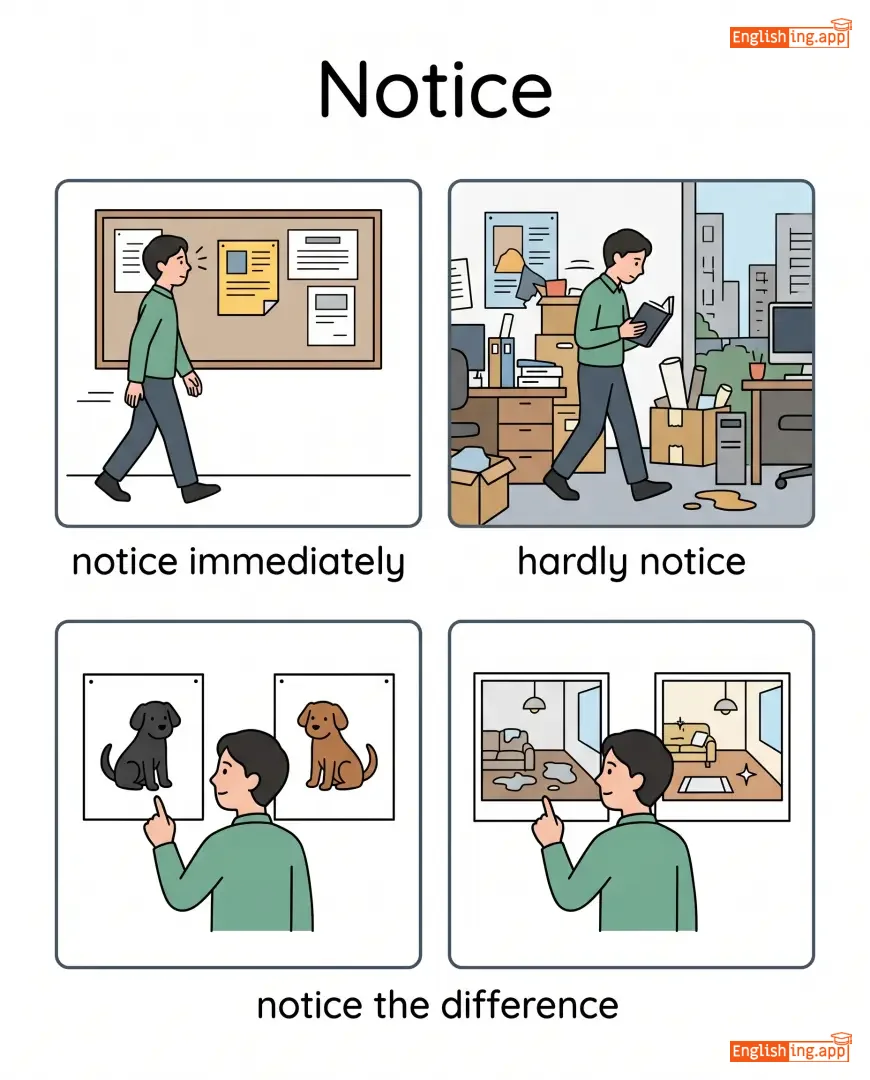
notice immediately, hardly notice, notice the difference, take notice, advance notice
••••••
|
Noticing something is like 'kidzuku' in Japanese, realizing things in an instant!
••••••
|
|
#3493
👀
|
/ˈnoʊtɪsəbl/
adjective
(ノーティザブル)
••••••
|
- •••••• |
顕著な
kenchona
••••••
|
- •••••• | - •••••• | - •••••• | - •••••• |
Easily seen, observed, or recognized.
••••••
|
There was a noticeable improvement in her performance.
彼女のパフォーマンスには顕著な改善がありました。
••••••
|
彼女のパフォーマンスには顕著な改善がありました。
Kanojo no pafōmansu ni wa kenchona kaizen ga arimashita.
••••••
|
- •••••• | - •••••• | - •••••• |
obvious, visible, evident, clear, apparent
••••••
|
hidden, invisible, unnoticeable
••••••
|
noticeable change, noticeable difference, noticeable improvement, become noticeable
••••••
|
Notice + able は簡単に目立つもの、つまり顕著なことを意味します。
••••••
|
|
#3494
🔔
|
/ˌnəʊtɪfɪˈkeɪʃən/
noun
(ノーティフィケーション)
••••••
|
- •••••• |
通知
tsuchi
••••••
|
- •••••• | - •••••• | - •••••• | - •••••• |
an official or formal notice or message informing someone of something; an alert delivered by a system or device
••••••
|
You will receive a notification when your application is approved.
ユー ウィル リシーブ ア ノーティフィケーション ウェン ユア アプリケーション イズ アプルーブド
••••••
|
申請が承認されると通知が届きます。
shinsei ga shonin sareru to tsuchi ga todokimasu
••••••
|
push notification
プッシュ ノーティフィケーション
••••••
|
an automatic alert sent to a device from an app or service
••••••
|
プッシュ通知
push tsuchi
••••••
|
alert, notice, message, announcement, advisory
••••••
|
silence, concealment
••••••
|
send a notification, receive a notification, system notification, official notification, push notification
••••••
|
Notification は カタカナでノーティフィケーション → 通知と覚える
••••••
|
|
#3495
📢
|
/ˈnoʊtɪfaɪ/
verb
(ノーティファイ)
••••••
|
- •••••• |
通知する
tsuuchisuru
••••••
|
notified
ノーティファイド
••••••
|
notified
ノーティファイド
••••••
|
notifies
ノーティファイズ
••••••
|
notifying
ノーティファイング
••••••
|
to inform someone officially about something
••••••
|
The manager will notify the staff about the schedule change.
マネージャーはスタッフにスケジュールの変更について通知します。
••••••
|
マネージャーはスタッフにスケジュールの変更について通知します。
Maneejaa wa sutaffu ni sukejuuru no henko ni tsuuchi shimasu.
••••••
|
notify of
通知する
••••••
|
to inform about something specific
••••••
|
通知する
tsuuchisuru
••••••
|
inform, alert, announce, communicate
••••••
|
hide, conceal
••••••
|
notify immediately, notify customers, notify authorities, notify in writing
••••••
|
Notify とは知らせること — 通知が来ると誰でもわかります。
••••••
|
|
#3496
💡
|
/ˈnoʊʃən/
noun
(ノーション)
••••••
|
- •••••• |
概念
gainen
••••••
|
- •••••• | - •••••• | - •••••• | - •••••• |
An idea, belief, or concept about something.
••••••
|
He had a vague notion of what she wanted. |
彼は彼女が何を望んでいるのかについて漠然とした概念を持っていました。
Kare wa kanojo ga nani o nozonde iru no ka ni tsuite bakuzento shita gainen o motte imashita.
••••••
|
fancy notion |
An unrealistic or fanciful idea.
••••••
|
幻想的な概念
gensoteki na gainen
••••••
|
idea, concept, belief, impression, thought
••••••
|
reality, fact
••••••
|
notion of, vague notion, challenge the notion, false notion
••••••
|
Notion = ノートに書いたアイデアは概念です。
••••••
|
|
#3497
😈
|
/nəˈtɔːriəs/
adjective
(ノトリアス)
••••••
|
- •••••• |
悪名高い
akumei takai
••••••
|
- •••••• | - •••••• | - •••••• | - •••••• |
Famous or well-known for something bad or undesirable
••••••
|
The area is notorious for its high crime rate. |
その地域は高い犯罪率で悪名高いです。
Sono chiiki wa takai hanzairitsu de akumei takai desu.
••••••
|
notorious for |
well-known because of a negative reason
••••••
|
悪名高いで
akumei takai de
••••••
|
infamous, disreputable, scandalous, dishonorable, ill-famed
••••••
|
respectable, reputable, honorable
••••••
|
notorious criminal, notorious case, notorious gang, notorious history
••••••
|
Notorious = 'No Torii Ous' = 鳥がいない、悪い場所 = 悪名高い
••••••
|
|
#3498
📖
|
/ˈnɒvəl/
noun/adjective
(ノヴェル)
••••••
|
- •••••• |
小説 / 新しい
shousetsu / atarashii
••••••
|
- •••••• | - •••••• | - •••••• | - •••••• |
A long fictional narrative; also something new or unusual.
••••••
|
She spent the weekend reading a historical novel. |
彼女は週末に歴史小説を読んで過ごしました。
Kanojo wa shuumatsu ni rekishi shousetsu o yonde sugoshimashita.
••••••
|
novel idea |
A new and original thought or plan.
••••••
|
新しいアイデア
atarashii aidea
••••••
|
book, story, narrative, tale, fiction
••••••
|
fact, reality, history
••••••
|
write a novel, bestselling novel, novel approach, novel idea
••••••
|
Novel は小説、そして novel idea は新しいアイデア、どちらも新しいこと!
••••••
|
|
#3499
📚
|
/ˈnɒvəlɪst/
noun
(ノヴェリスト)
••••••
|
- •••••• |
小説家
shousetsuka
••••••
|
- •••••• | - •••••• | - •••••• | - •••••• |
a person who writes novels
••••••
|
The novelist spent years writing his new book. |
その小説家は新しい本を書くために何年も費やしました。
Sono shousetsuka wa atarashī hon o kaku tame ni nannen mo tsuiyashimashita.
••••••
|
- •••••• | - •••••• | - •••••• |
author, writer, fiction writer, storyteller
••••••
|
non-writer, reader
••••••
|
famous novelist, best-selling novelist, contemporary novelist
••••••
|
小説家 (shousetsuka), 彼らは言葉で世界を創り出す魔法使いです。
••••••
|
|
#3500
🍂
|
/noʊˈvɛmbər/
noun
(ノーヴェンバー)
••••••
|
- •••••• |
11月
juuichigatsu
••••••
|
- •••••• | - •••••• | - •••••• | - •••••• |
the eleventh month of the year in the Gregorian calendar
••••••
|
November is often cool and quiet before winter begins.
ノーヴェンバー イズ オーフン クール アンド クワイエット ビフォー ウィンター ビギンズ
••••••
|
11月は冬が始まる前で、涼しく静かなことが多い。
juuichigatsu wa fuyu ga hajimaru mae de suzushiku shizuka na koto ga ooi
••••••
|
November rain
ノーヴェンバー レイン
••••••
|
rainy or gloomy weather associated with late autumn
••••••
|
11月の雨
juuichigatsu no ame
••••••
|
Nov., eleventh month, late autumn month
••••••
|
May, June, July
••••••
|
early November, late November, November weather, November rain
••••••
|
No-vember = のんびり前の冬
••••••
|
|
#3501
⏰
|
/naʊ/
adverb
(ナウ)
••••••
|
- •••••• |
今
ima
••••••
|
- •••••• | - •••••• | - •••••• | - •••••• |
at the present moment or time
••••••
|
I am studying now. |
私は今勉強しています。
Watashi wa ima benkyou shiteimasu.
••••••
|
- •••••• | - •••••• | - •••••• |
currently, at present, at this moment
••••••
|
later, then
••••••
|
right now, as of now, now or never
••••••
|
Now is like ‘Naa oo!’ – It’s NOW or never!
••••••
|
|
#3502
🕒
|
/ˈnaʊədeɪz/
adverb
(ナウアデイズ)
••••••
|
- •••••• |
最近
saikin
••••••
|
- •••••• | - •••••• | - •••••• | - •••••• |
At the present time; in contrast with the past.
••••••
|
Nowadays, many people prefer shopping online. |
最近、多くの人々がオンラインショッピングを好むようになった。
Saikin, ooku no hitobito ga onrain shoppingu o konomu you ni natta.
••••••
|
- •••••• | - •••••• | - •••••• |
currently, presently, these days, today
••••••
|
formerly, previously, once
••••••
|
nowadays people, nowadays it is common, nowadays trend
••••••
|
Nowadaysは最近という意味—Nowは現在、daysは日々を示す。
••••••
|
|
#3503
🚫
|
/ˈnoʊˌwɛr/
adverb
(ノウウェア)
••••••
|
- •••••• |
どこにも
doko nimo
••••••
|
- •••••• | - •••••• | - •••••• | - •••••• |
in or to no place; not anywhere
••••••
|
The missing keys were nowhere to be found.
失われた鍵はどこにも見つかりませんでした。
••••••
|
失われた鍵はどこにも見つかりませんでした。
Ushinawareta kagi wa doko ni mo mitsukarimasen deshita.
••••••
|
going nowhere
どこにも行っていない
••••••
|
making no progress or achieving nothing
••••••
|
進展なし
shinten nashi
••••••
|
not anywhere, absent, missing, lost
••••••
|
everywhere, somewhere
••••••
|
nowhere else, lead nowhere, from nowhere, go nowhere
••••••
|
ここにない, あそこにない, どこにもない (nowhere)
••••••
|
|
#3504
☢️
|
/ˈnuːkliər/
adjective
(ニュークリア)
••••••
|
- •••••• |
原子力
genshiryoku
••••••
|
- •••••• | - •••••• | - •••••• | - •••••• |
relating to the nucleus of an atom or to nuclear energy
••••••
|
The country is developing nuclear energy. |
その国は原子力エネルギーを開発しています。
Sono kuni wa genshiryoku enerugī o kaihatsu shiteimasu.
••••••
|
- •••••• | - •••••• | - •••••• |
atomic, radioactive
••••••
|
non-nuclear
••••••
|
nuclear energy, nuclear power, nuclear weapon
••••••
|
Nuclear = New Clear! Imagine new, clear energy coming from atoms!
••••••
|
|
#3505
🔢
|
/ˈnʌmbər/
noun
(ナンバー)
••••••
|
- •••••• |
番号
bangou
••••••
|
- •••••• | - •••••• | - •••••• | - •••••• |
a mathematical value used to count, measure, or label
••••••
|
She gave me her phone number.
彼女は私に自分の電話番号を教えてくれました。
••••••
|
彼女は私に自分の電話番号を教えてくれました。
Kanojo wa watashi ni jibun no denwa bangou o oshiete kuremashita.
••••••
|
- •••••• | - •••••• | - •••••• |
digit, figure, numeral
••••••
|
letter, word
••••••
|
phone number, lucky number, large number
••••••
|
Number is a sequence – Imagine numbering all the steps in your life!
••••••
|
|
#3506
🔢
|
/ˈnjuː.mər.əs/
adjective
(ニューメラス)
••••••
|
- •••••• |
多数の; たくさんの; 豊富な
tasuu no; takusan no; hōfuna
••••••
|
- •••••• | - •••••• | - •••••• | - •••••• |
existing in large numbers; many; abundant
••••••
|
There are numerous benefits to exercising regularly.
定期的な運動には数多くの利点があります。
••••••
|
定期的な運動には数多くの利点があります。
Teikiteki na undō ni wa kazu ōku no riten ga arimasu.
••••••
|
- •••••• | - •••••• | - •••••• |
many, countless, abundant, plentiful
••••••
|
few, scarce, limited
••••••
|
numerous occasions, numerous benefits, numerous examples
••••••
|
運動は多くの利点をもたらす
••••••
|
|
#3507
👩⚕️
|
/nɜːrs/
noun, verb
••••••
|
|
- •••••• |
nursed
••••••
|
nursed
••••••
|
nurses
••••••
|
nursing
••••••
|
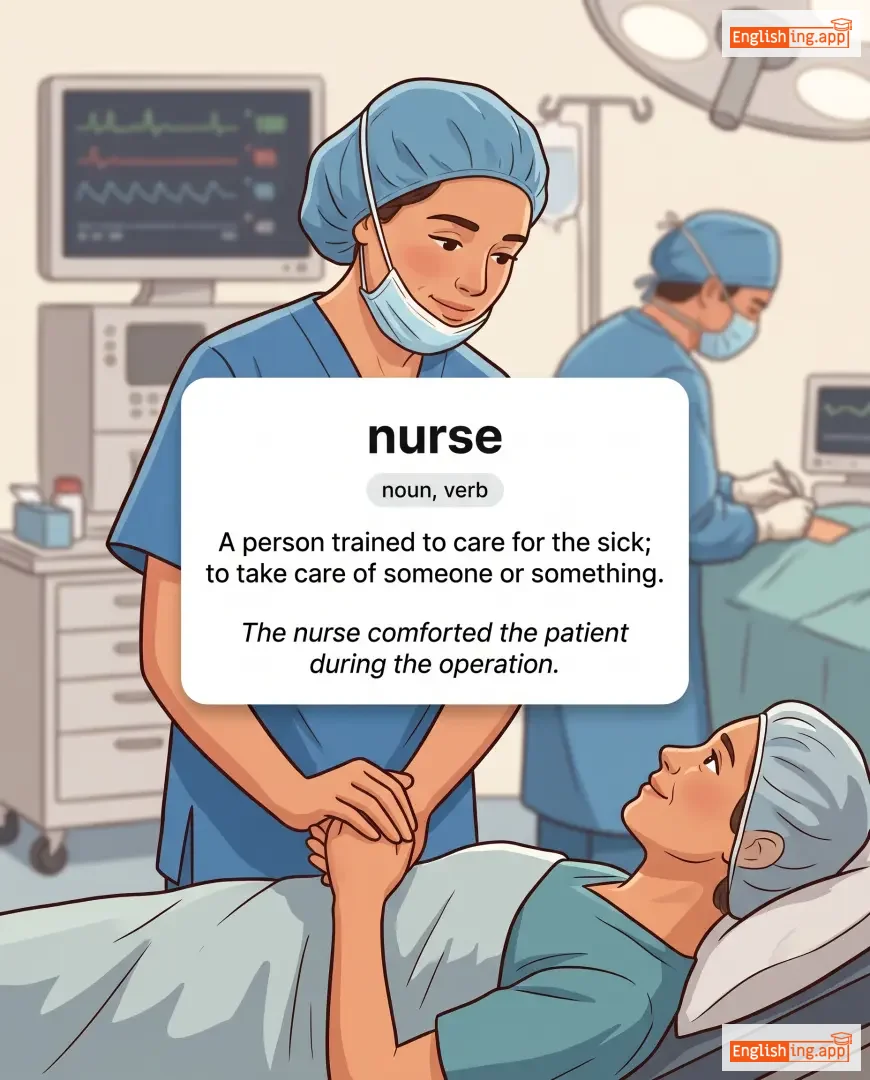
A person trained to care for the sick; to take care of someone or something.
••••••
|
The nurse comforted the patient during the operation. |
- •••••• |
nurse a grudge |
to keep resentment or anger in mind for a long time
••••••
|
- •••••• |
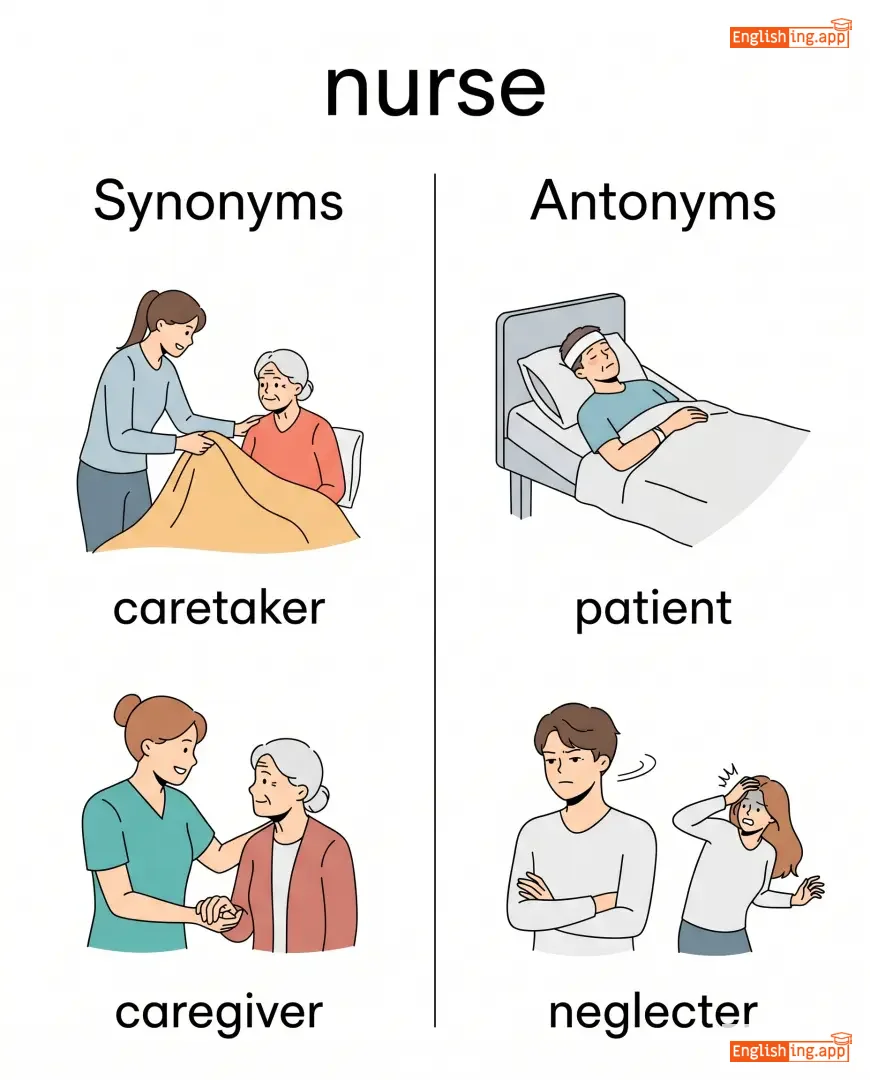
caretaker, caregiver, attendant, healer, medic
••••••
|
patient, neglecter
••••••
|
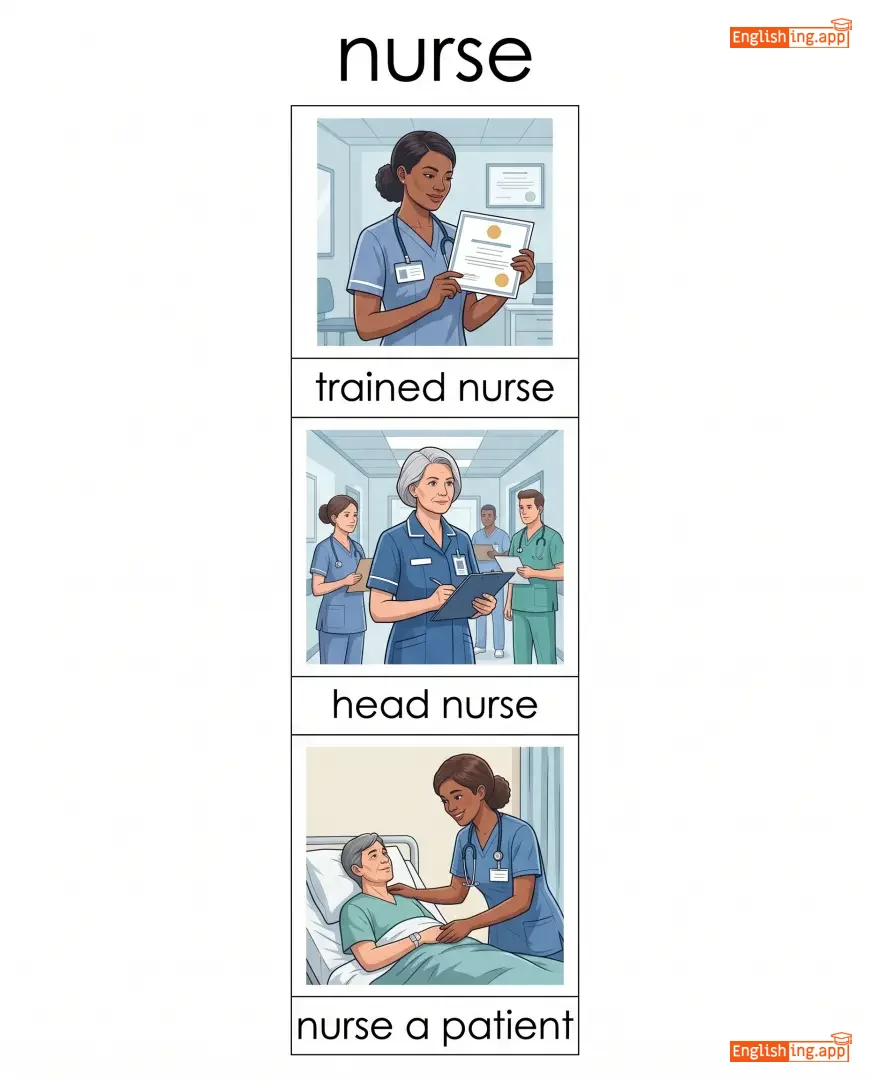
trained nurse, head nurse, nurse a patient, nurse back to health
••••••
|
No •••••• |
|
#3508
🍼
|
/ˈnɜːrsəri/
noun
(ナーサリー)
••••••
|
- •••••• |
保育園
hoikuen
••••••
|
- •••••• | - •••••• | - •••••• | - •••••• |
a room or place where young children are cared for
••••••
|
She works in a nursery, taking care of infants. |
彼女は保育園で働いており、赤ちゃんの世話をしています。
Kanojo wa hoikuen de hataraite ori, akachan no sewa o shiteimasu.
••••••
|
- •••••• | - •••••• | - •••••• |
daycare, preschool, kindergarten
••••••
|
school, home
••••••
|
nursery school, nursery teacher, nursery care
••••••
|
保育園 (hoikuen): 子供の世話をする場所
••••••
|
|
#3509
👩⚕️
|
/ˈnɜːrsɪŋ/
noun
(ナーシング)
••••••
|
- •••••• |
看護
kango
••••••
|
- •••••• | - •••••• | - •••••• | - •••••• |
the profession or practice of caring for the sick or injured
••••••
|
She is studying nursing to become a healthcare professional.
彼女は医療専門職になるために看護学を学んでいます。
••••••
|
彼女は医療専門職になるために看護学を学んでいます。
Kanojo wa iryou senmon-shoku ni naru tame ni kangogaku o manandeimasu.
••••••
|
- •••••• | - •••••• | - •••••• |
healthcare, caregiving, medical care
••••••
|
neglect, abandonment
••••••
|
nursing home, nursing career, nursing profession
••••••
|
看護 (kango) は病気の人を助けるための職業です。
••••••
|
Vocabulary Quiz
Test your vocabulary by matching words with their translations or meanings.
Login to take the quiz
Comments (0)
Share your thoughts and join the discussion.
Join the discussion by logging in
Login to CommentNo comments yet
Be the first to share your thoughts!