

翻訳
過去
過去分詞
三人称単数
動名詞
意味
例文
例文の翻訳
同義語
対義語
コロケーション
ニーモニック


Swipe left or right, or use the buttons. Tap image to zoom.
例文の翻訳
単語
Lesson 112Lesson 112 - マスクトグル
|
絵文字
|
単語 | Images | 翻訳 | 過去 | 過去分詞 | 三人称単数 | 動名詞 | 意味 | 例文 | 例文の翻訳 | 表現例 | 表現例の意味 | 表現例の翻訳 | 同義語 | 対義語 | コロケーション | ニーモニック |
|---|---|---|---|---|---|---|---|---|---|---|---|---|---|---|---|---|---|
|
#5325
❄️
|
/ʌnˈjuːʒuəli/
adverb
(アンユージュアリー)
••••••
|
- •••••• |
異常に
ijo ni
••••••
|
- •••••• | - •••••• | - •••••• | - •••••• |
in a way that is not typical or expected; to an uncommon degree
••••••
|
It was unusually cold for this time of year.
イット ワズ アンユージュアリー コールド フォー ディス タイム オブ イヤー
••••••
|
この時期にしては異常に寒かった。
kono jiki ni shite wa ijo ni samukatta
••••••
|
unusually for someone/something
アンユージュアリー フォー
••••••
|
in a way that is not typical of a particular person or thing
••••••
|
~にしては異常に
ni shite wa ijo ni
••••••
|
atypically, exceptionally, remarkably, unusually enough, uncommonly
••••••
|
normally, typically, ordinarily
••••••
|
unusually cold, unusually quiet, unusually high, unusually low, unusually strong
••••••
|
異常 = unusual → unusually
••••••
|
|
#5326
🎉
|
/ʌnˈveɪl/
verb
(アンヴェイル)
••••••
|
- •••••• |
発表する
happyo suru
••••••
|
unveiled
アンヴェイルド
••••••
|
unveiled
アンヴェイルド
••••••
|
unveils
アンヴェイルズ
••••••
|
unveiling
アンヴェイリング
••••••
|
to reveal or disclose something, especially in a formal manner
••••••
|
The company will unveil a new product next week.
会社は来週新製品を発表します。
••••••
|
会社は来週新製品を発表します。
Kaisha wa raishū shin seihin o happyō shimasu.
••••••
|
- •••••• | - •••••• | - •••••• |
reveal, disclose, unveil, disclose
••••••
|
conceal, hide, cover
••••••
|
unveil a product, unveil a plan, unveil the truth
••••••
|
Unveil – 'Veil'は隠すことを意味し、'unveil'はベールを取り除いて示すことを意味します!
••••••
|
|
#5327
😤
|
/ʌnˈwɪl.ɪŋ/
adjective
(アンウィリング)
••••••
|
- •••••• |
嫌がる; したくない;
iyagaru; shitakunai
••••••
|
- •••••• | - •••••• | - •••••• | - •••••• |
not ready to do something; reluctant; not wanting to do
••••••
|
He was unwilling to share his secret with anyone.
彼は誰にも自分の秘密を共有することを望まなかった。
••••••
|
彼は誰にも自分の秘密を共有することを望まなかった。
Kare wa dare ni mo jibun no himitsu o kyōyū suru koto o nozomanakatta.
••••••
|
- •••••• | - •••••• | - •••••• |
reluctant, hesitant, resistant, disinclined
••••••
|
willing, eager, ready, keen
••••••
|
unwilling participant, unwilling to help, unwilling witness
••••••
|
Think of being unwilling to share a secret in Japanese, like not wanting to do something.
••••••
|
|
#5328
🙅♂️
|
/ʌnˈwɪlɪŋli/
adverb
(アンウィリングリー)
••••••
|
- •••••• |
不本意に
fuhoni ni
••••••
|
- •••••• | - •••••• | - •••••• | - •••••• |
in a way that shows reluctance or lack of desire; not willingly
••••••
|
She unwillingly agreed to attend the meeting.
シー アンウィリングリー アグリード トゥ アテンド ザ ミーティング
••••••
|
彼女は不本意に会議に出席することに同意した。
kanojo wa fuhoni ni kaigi ni shusseki suru koto ni doi shita
••••••
|
drag someone unwillingly
ドラッグ サムワン アンウィリングリー
••••••
|
to force someone to do something against their will
••••••
|
不本意に引きずる
fuhoni ni hikizuru
••••••
|
reluctantly, hesitantly, grudgingly, involuntarily
••••••
|
willingly, eagerly, gladly
••••••
|
unwillingly agreed, unwillingly accepted, unwillingly complied, unwillingly admitted
••••••
|
不本意 = 本当の気持ちじゃない → unwillingly
••••••
|
|
#5329
🤦
|
/ʌnˈwaɪz/
adjective
(アンワイズ)
••••••
|
- •••••• |
賢明でない
kenmei denai
••••••
|
- •••••• | - •••••• | - •••••• | - •••••• |
Showing poor judgment; not sensible or prudent.
••••••
|
It would be unwise to invest all your money in one company. |
すべてのお金を1つの会社に投資するのは賢明でないことです。
Subete no okane o hitotsu no kaisha ni tōshi suru no wa kenmei denai koto desu.
••••••
|
- •••••• | - •••••• | - •••••• |
foolish, imprudent, reckless, careless
••••••
|
wise, prudent, sensible
••••••
|
unwise decision, unwise choice, unwise investment, unwise action
••••••
|
Unwise = 賢明でない、つまり判断が悪いということです。
••••••
|
|
#5330
👎
|
/ʌnˈwɜːrði/
adjective
(アンワーシー)
••••••
|
- •••••• |
値しない; 価値がない
ataishinai; kachi ga nai
••••••
|
- •••••• | - •••••• | - •••••• | - •••••• |
not deserving respect or attention; lacking worth or merit
••••••
|
He felt unworthy of such praise and recognition.
彼はそのような賞賛と認識を受けるには値しないと感じた。
••••••
|
彼はそのような賞賛と認識を受けるには値しないと感じた。
Kare wa sono yōna shōsan to ninshiki o ukeru ni wa atai shinai to kanjita.
••••••
|
- •••••• | - •••••• | - •••••• |
undeserving, inadequate, inferior, worthless
••••••
|
worthy, deserving, adequate, valuable
••••••
|
unworthy of praise, feel unworthy, unworthy candidate
••••••
|
アンワーシー – Unworthy in Japanese, someone unworthy of respect.
••••••
|
|
#5331
🎁
|
/ʌnˈræp/
verb
(アンラップ)
••••••
|
- •••••• |
包みを開ける
tsutsumi o akeru
••••••
|
unwrapped
アンラップト
••••••
|
unwrapped
アンラップト
••••••
|
unwraps
アンラップス
••••••
|
unwrapping
アンラッピング
••••••
|
remove wrapping or covering from something; reveal something gradually or clearly
••••••
|
She carefully unwrapped the gift with excitement.
シー ケアフリー アンラップト ザ ギフト ウィズ エキサイトメント。
••••••
|
彼女は興奮しながら慎重に贈り物の包みを開けた。
Kanojo wa koufun shinagara shinchou ni okurimono no tsutsumi o aketa
••••••
|
- •••••• | - •••••• | - •••••• |
open, uncover, reveal, expose, strip
••••••
|
wrap, cover, conceal
••••••
|
unwrap a gift, unwrap a package, unwrap slowly, unwrap carefully
••••••
|
unwrap=包みを開けるとサプライズ
••••••
|
|
#5332
🔜
|
/ˈʌpˌkʌmɪŋ/
adjective
(アップカミング)
••••••
|
- •••••• |
今後の
kongo no
••••••
|
- •••••• | - •••••• | - •••••• | - •••••• |
about to happen or appear
••••••
|
The upcoming event will be held next week. |
今後のイベントは来週行われます。
Kongo no ibento wa raishuu okonawaremasu.
••••••
|
- •••••• | - •••••• | - •••••• |
forthcoming, approaching, imminent, near
••••••
|
past, previous, distant
••••••
|
upcoming event, upcoming week, upcoming project
••••••
|
Upcoming sounds like 'upcoming' and '今後の', easy to remember!
••••••
|
|
#5333
🔄
|
/ˈʌpdeɪt/
verb
••••••
|
|
- •••••• |
updated
••••••
|
updated
••••••
|
updates
••••••
|
updating
••••••
|
to make something more modern or accurate by adding new information or changing it
••••••
|
Please update your profile information regularly. |
- •••••• |
keep someone updated |
to inform someone of new developments
••••••
|
- •••••• |
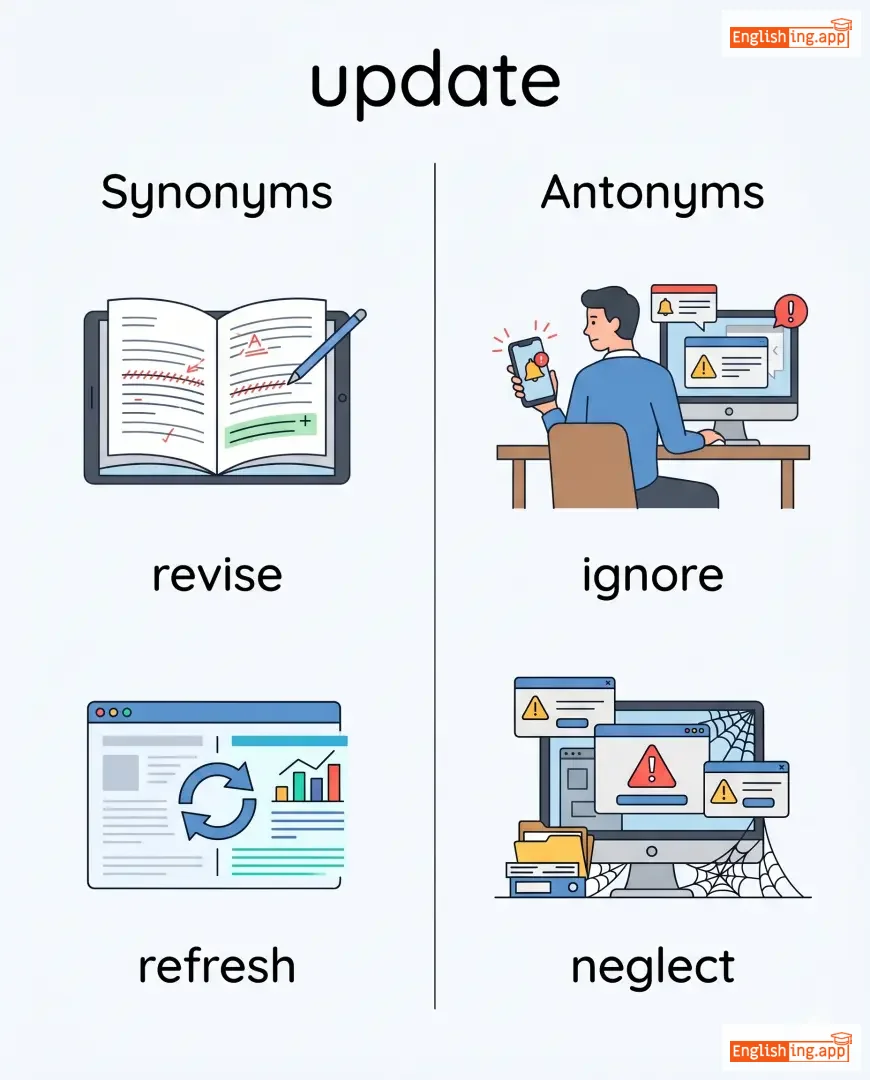
revise, refresh, modify, modernize, amend
••••••
|
ignore, neglect, retain
••••••
|
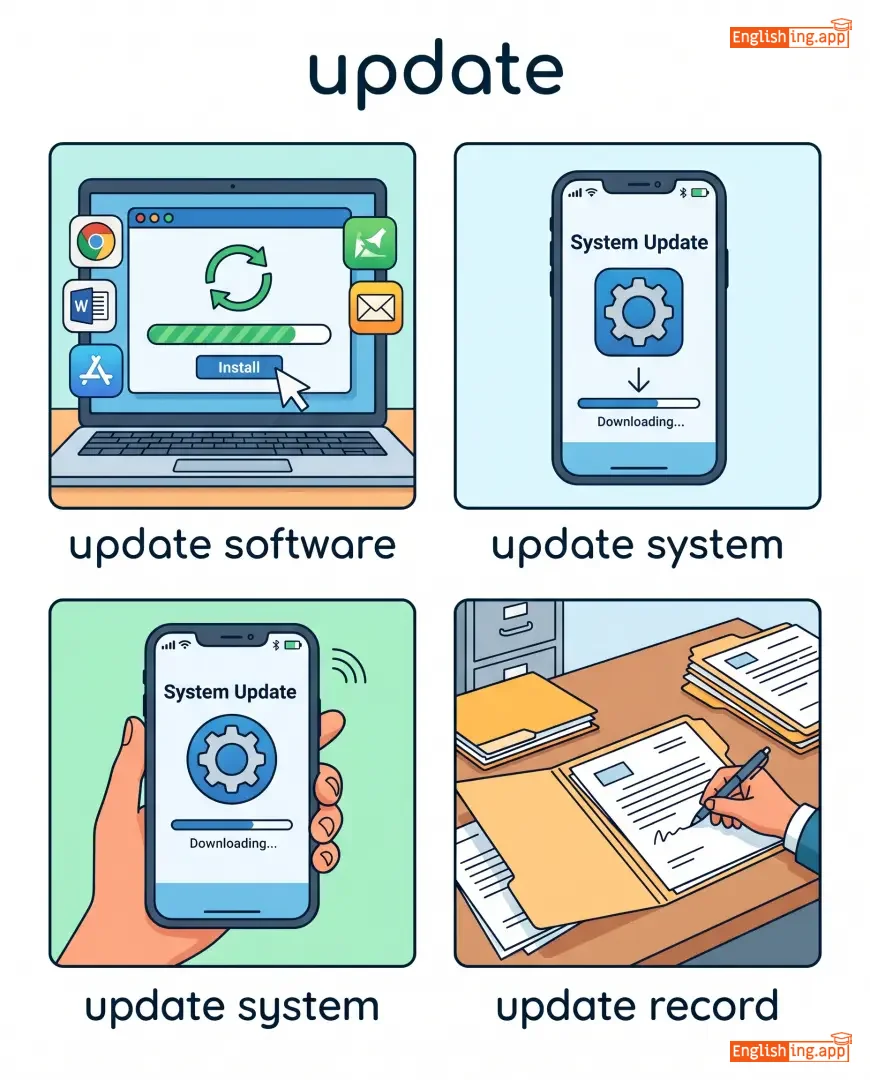
update software, update system, update record, latest update
••••••
|
No •••••• |
|
#5334
⬆️
|
/ˈʌpˌɡreɪd/
verb
(apugureido)
••••••
|
- •••••• |
アップグレード
appugureedo
••••••
|
upgraded
apugureido
••••••
|
upgraded
apugureido
••••••
|
upgrades
apugureidsu
••••••
|
upgrading
apugureidingu
••••••
|
to raise something to a higher standard, improve
••••••
|
We decided to upgrade the software to the latest version.
私たちはソフトウェアを最新バージョンにアップグレードすることに決めました。
••••••
|
私たちはソフトウェアを最新バージョンにアップグレードすることに決めました。
Watashitachi wa sofuto wea o saishin baajon ni appugureedo suru koto ni kimemashita.
••••••
|
- •••••• | - •••••• | - •••••• |
improve, enhance, elevate, boost
••••••
|
downgrade, reduce, worsen
••••••
|
upgrade software, upgrade system, upgrade device
••••••
|
Upgrade your system for a better tomorrow.
••••••
|
|
#5335
⚖️
|
/ʌpˈhoʊld/
verb
(apohōrudo)
••••••
|
- •••••• |
維持する
ijisuru
••••••
|
upheld
apherudo
••••••
|
upheld
apherudo
••••••
|
upholds
apohōrudosu
••••••
|
upholding
apohōrudoingu
••••••
|
to maintain or support a principle, law, or decision
••••••
|
The judge promised to uphold justice at all costs.
裁判官は、どんな犠牲を払っても正義を守ると約束しました。
••••••
|
裁判官は、どんな犠牲を払っても正義を守ると約束しました。
Saibankan wa, donna gisei o hatatte mo seigi o mamoru to yakusoku shimashita.
••••••
|
uphold the law
法律を守る
••••••
|
to support and enforce legal rules
••••••
|
法律を守る
hōritsu o mamoru
••••••
|
support, maintain, defend, sustain, endorse
••••••
|
reject, overturn
••••••
|
uphold justice, uphold the law, uphold a decision, uphold rights
••••••
|
UP 維持するは「法律や原則を守ること」
••••••
|
|
#5336
🕒
|
/əˈpɒn/
preposition
(アポン)
••••••
|
- •••••• |
の上で
no ue de
••••••
|
- •••••• | - •••••• | - •••••• | - •••••• |
on or immediately after
••••••
|
Upon hearing the news, he rushed to the hospital. |
ニュースを聞いた後、彼は病院に急いだ。
Nyūsu o kiita ato, kare wa byōin ni isoida.
••••••
|
- •••••• | - •••••• | - •••••• |
on, following
••••••
|
before
••••••
|
upon arrival, upon hearing, upon request
••••••
|
Upon - no ue de, after hearing something, acting immediately!
••••••
|
|
#5337
⬆️
|
/ˈʌpər/
adjective
(アッパー)
••••••
|
- •••••• |
上部
joubu
••••••
|
- •••••• | - •••••• | - •••••• | - •••••• |
higher in position or rank
••••••
|
The upper floor of the building is under renovation.
建物の上の階は改装中です。
••••••
|
建物の上の階は改装中です。
Tatemono no ue no kai wa kaisouchuu desu.
••••••
|
- •••••• | - •••••• | - •••••• |
higher, top, superior
••••••
|
lower, bottom
••••••
|
upper floor, upper limit, upper part
••••••
|
Upper - 上部を考えて、位置が高い!
••••••
|
|
#5338
😔
|
/ʌpˈsɛt/
verb
(ʌpˈsɛt)
••••••
|
|
動揺させる
douyou saseru
••••••
|
upset
ʌpˈsɛt
••••••
|
upset
ʌpˈsɛt
••••••
|
upsets
ʌpˈsɛts
••••••
|
upsetting
ʌpˈsɛtɪŋ
••••••
|
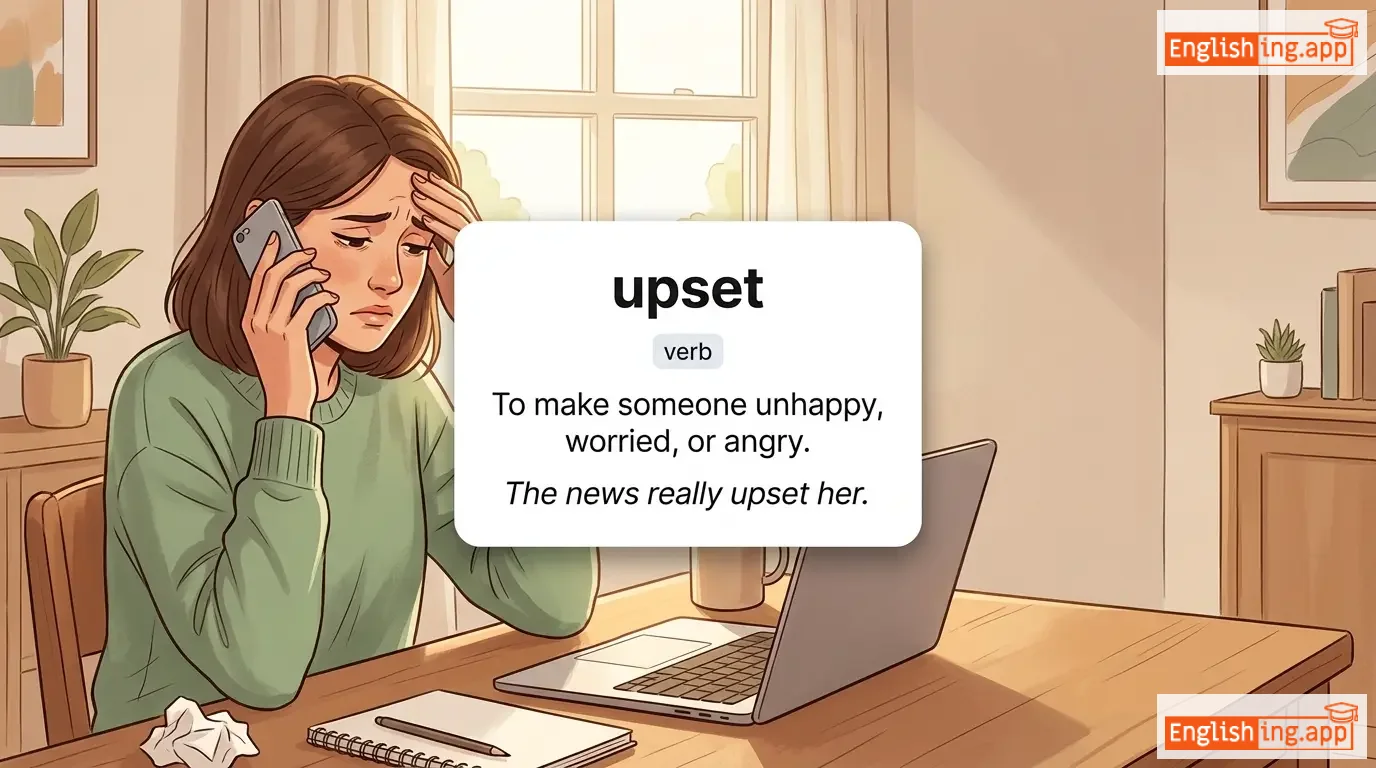
To make someone unhappy, worried, or angry.
••••••
|
The news really upset her.
ðə nuːz rɪəli ʌpˈsɛt hɜːr.
••••••
|
そのニュースは彼女を本当に動揺させました。
Sono nyu-su wa kanojo o hontou ni douyou sasemashita.
••••••
|
upset the apple cart
ʌpˈsɛt ði ˈæpl kɑːt
••••••
|
To spoil or ruin a plan or arrangement.
••••••
|
計画を台無しにする
keikaku o dainashi ni suru
••••••
|
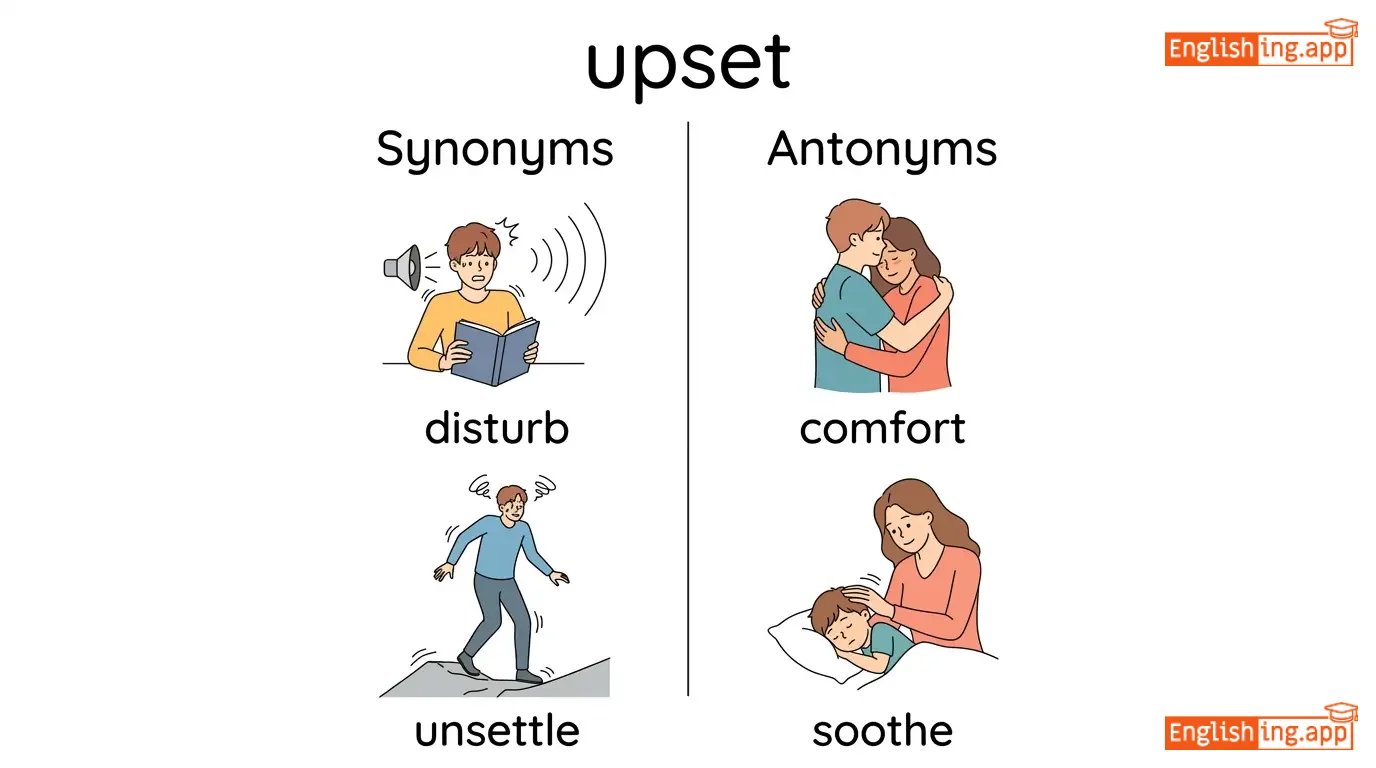
disturb, unsettle, trouble, sadden, anger
••••••
|
comfort, soothe, calm
••••••
|
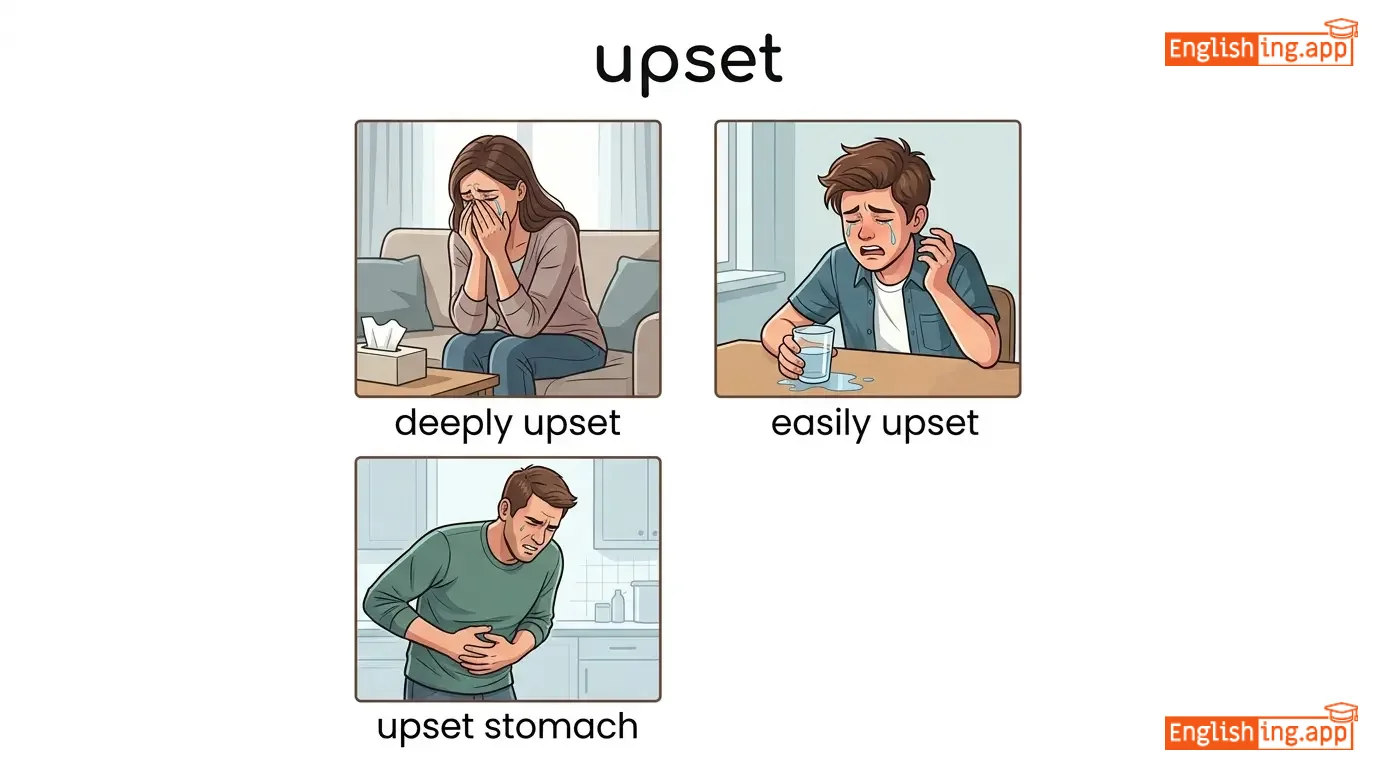
deeply upset, easily upset, upset stomach, upset feelings
••••••
|
Upset は日本語で動揺させるです。
••••••
|
|
#5339
🏠⬆️
|
/ˌʌpˈstɛərz/
adverb
••••••
|
- •••••• | - •••••• | - •••••• | - •••••• | - •••••• | - •••••• |
on or to a higher floor of a building
••••••
|
She went upstairs to her bedroom. |
- •••••• |
the people upstairs |
neighbors who live on the floor above
••••••
|
- •••••• |
above, overhead, aloft, upper floor, higher level
••••••
|
downstairs, below, beneath
••••••
|
go upstairs, walk upstairs, upstairs room, upstairs neighbor
••••••
|
No •••••• |
|
#5340
🏙️
|
/ˈɜːrbən/
adjective
(アーバン)
••••••
|
- •••••• |
都市的な
toshiteki na
••••••
|
- •••••• | - •••••• | - •••••• | - •••••• |
related to, characteristic of, or situated in a city or town
••••••
|
Urban areas often have higher population density than rural areas. |
都市部は、農村部よりも人口密度が高いことがよくあります。
Toshi-bu wa, nouson-bu yori mo jinkou mitsudo ga takai koto ga yoku arimasu.
••••••
|
urban jungle |
a way of describing a city as crowded, dangerous, or chaotic
••••••
|
都市ジャングル
toshi janguru
••••••
|
city, metropolitan, municipal, civic
••••••
|
rural, rustic, countryside
••••••
|
urban development, urban planning, urban life, urban population
••••••
|
Urban = 都市的な – 'Urban'は'都市'を意味する!
••••••
|
|
#5341
📢
|
/ɜːrdʒ/
verb
(アージ)
••••••
|
- •••••• |
促す
unagasu
••••••
|
urged
アージド
••••••
|
urged
アージド
••••••
|
urges
アージェス
••••••
|
urging
アージング
••••••
|
to strongly encourage or try to persuade someone to do something
••••••
|
Doctors urge patients to exercise regularly.
医者は患者に定期的に運動するように促します。
••••••
|
医者は患者に定期的に運動するように促します。
Isha wa kanja ni teikiteki ni undō suru yō ni unagashimasu.
••••••
|
urge on
促進する
••••••
|
to encourage someone to continue or do something with more effort
••••••
|
続けて励ます
tsudzukete hagemasu
••••••
|
encourage, persuade, push, prompt, exhort
••••••
|
dissuade, discourage, prevent
••••••
|
urge someone, urge action, urge caution, strong urge
••••••
|
Urge は促すことを意味します – 医者は患者に運動をするようにいつも促します。
••••••
|
|
#5342
🚨
|
/ˈɜːrdʒənt/
adjective
(ʊʁʒənt)
••••••
|
- •••••• |
緊急
kinkyuu
••••••
|
- •••••• | - •••••• | - •••••• | - •••••• |
Requiring immediate action or attention.
••••••
|
She sent an urgent message to her manager.
彼女はマネージャーに緊急のメッセージを送った。
••••••
|
彼女はマネージャーに緊急のメッセージを送った。
Kanojo wa manejā ni kinkyū no messeeji o okutta.
••••••
|
urgent need
緊急の必要
••••••
|
a strong necessity that must be addressed immediately
••••••
|
緊急の必要
kinkyū no hitsuyō
••••••
|
critical, pressing, immediate, essential
••••••
|
nonessential, trivial, minor
••••••
|
urgent request, urgent matter, urgent care, urgent meeting
••••••
|
緊急はすぐに対応が必要な状況を示す言葉です。
••••••
|
|
#5343
🚨
|
/ˈɜːrdʒəntli/
adverb
(アージェントリー)
••••••
|
- •••••• |
緊急に
kinkyu ni
••••••
|
- •••••• | - •••••• | - •••••• | - •••••• |
in a way that requires immediate attention or action
••••••
|
The patient urgently needs medical attention.
ザ ペイシェント アージェントリー ニーズ メディカル アテンション。
••••••
|
患者は緊急に医療処置が必要です。
kanja wa kinkyu ni iryo shochi ga hitsuyo desu
••••••
|
- •••••• | - •••••• | - •••••• |
immediately, pressingly, desperately, critically
••••••
|
slowly, casually, unhurriedly
••••••
|
urgently needed, urgently required, urgently request, urgently seek help
••••••
|
urgent = 緊急、だから urgently = 緊急に
••••••
|
|
#5344
👫
|
/ʌs/
pronoun
(アス)
••••••
|
- •••••• |
私たち
watashitachi
••••••
|
- •••••• | - •••••• | - •••••• | - •••••• |
used to refer to the speaker and one or more other people as the object of a verb or preposition
••••••
|
She gave us a gift. |
彼女は私たちに贈り物をくれました。
Kanojo wa watashitachi ni okurimono o kuremashita.
••••••
|
- •••••• | - •••••• | - •••••• |
we, ourselves, our group
••••••
|
them, you
••••••
|
help us, give us, show us
••••••
|
私たち (watashitachi) と他の人々、私たちは US、一緒に!
••••••
|
|
#5345
📘
|
/ˈjuːsɪdʒ/
noun
(ユージ)
••••••
|
- •••••• |
使用
shiyou
••••••
|
- •••••• | - •••••• | - •••••• | - •••••• |
The action of using something; the way in which a word or phrase is normally used.
••••••
|
The book explains the proper usage of technical terms. |
その本は技術的な用語の正しい使用法を説明しています。
Sono hon wa gijutsuteki na yougo no tadashii shiyouhou o setsumei shiteimasu.
••••••
|
common usage |
the way something is usually used or understood
••••••
|
一般的な使用
ippanteki na shiyou
••••••
|
practice, use, custom, convention
••••••
|
misuse, error, disuse
••••••
|
word usage, proper usage, language usage, common usage
••••••
|
Usageは使用を意味します - '使うことは楽しい。'
••••••
|
|
#5346
🛠️
|
/juːz/ (verb), /juːs/ (noun)
verb
(yūzu)
••••••
|
|
使う
tsukau
••••••
|
used
yūzudo
••••••
|
used
yūzudo
••••••
|
uses
yūzesu
••••••
|
using
yūzingu
••••••
|
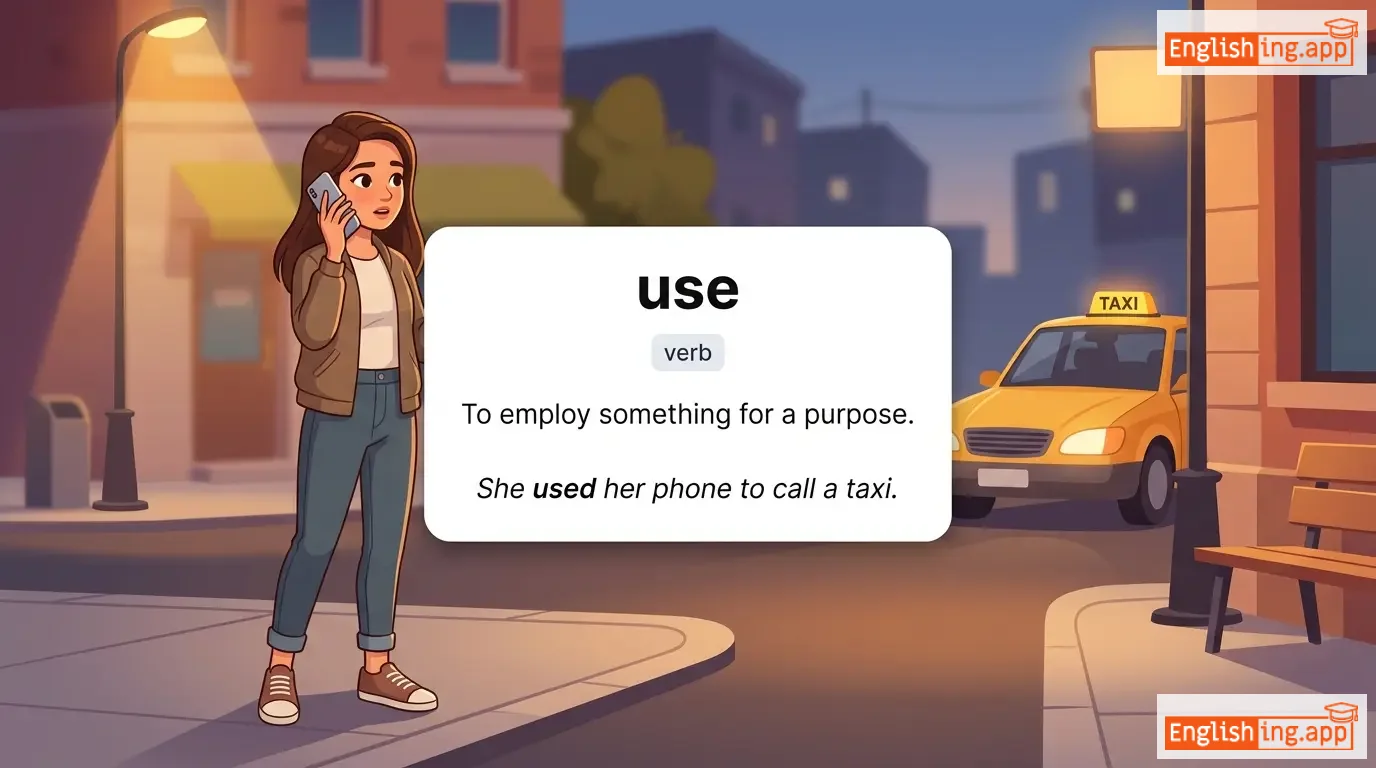
To employ something for a purpose.
••••••
|
She used her phone to call a taxi.
彼女はタクシーを呼ぶために電話を使いました。
••••••
|
彼女はタクシーを呼ぶために電話を使いました。
Kanojo wa takushī o yobu tame ni denwa o tsukaimashita.
••••••
|
make use of
使う
••••••
|
To take advantage of or utilize something.
••••••
|
使う
tsukau
••••••
|
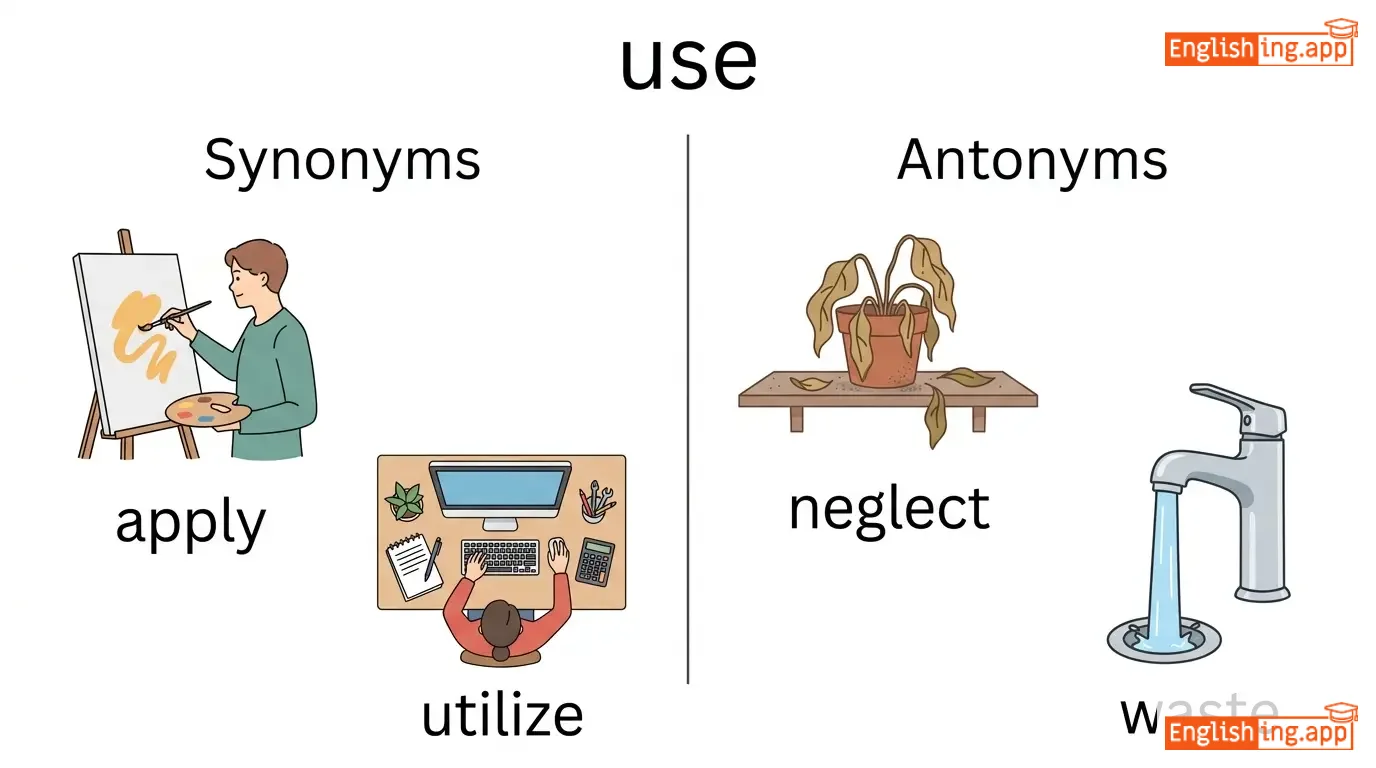
apply, utilize, employ, exploit, handle
••••••
|
neglect, waste, ignore
••••••
|
use time, use opportunity, use resources, use effectively
••••••
|
使うは使うことで、何かを有効に活用すること。
••••••
|
|
#5347
🚗
|
/juːzd/
adjective
(yūzudo)
••••••
|
- •••••• |
中古
chūko
••••••
|
- •••••• | - •••••• | - •••••• | - •••••• |
having already been used
••••••
|
This is a used car. |
これは中古車です。
Kore wa chūko-sha desu.
••••••
|
- •••••• | - •••••• | - •••••• |
pre-owned, secondhand, recycled
••••••
|
new, unused
••••••
|
used car, used clothes, used book
••••••
|
USED - You Should Expect Damage!
••••••
|
|
#5348
🔧
|
/ˈjuːs.fəl/
adjective
(yūsu-furu)
••••••
|
- •••••• |
役に立つ; 実用的な
yaku ni tatsu; jitsuyō-teki na
••••••
|
- •••••• | - •••••• | - •••••• | - •••••• |
having a beneficial purpose; practical
••••••
|
This tool is very useful for fixing problems.
このツールは問題を解決するために非常に役立ちます。
••••••
|
このツールは問題を解決するために非常に役立ちます。
kono tsūru wa mondai o kaiketsu suru tame ni hijō ni yaku datchimasu.
••••••
|
- •••••• | - •••••• | - •••••• |
helpful, beneficial, practical, handy, valuable
••••••
|
useless, harmful, worthless, ineffective
••••••
|
useful tool, useful information, very useful, quite useful
••••••
|
Usefulのように役に立つツール、問題を解決するために役立ちます
••••••
|
|
#5349
🔧
|
/ˈjuːs.fəl.nəs/
noun
(yūsufulunesu)
••••••
|
- •••••• |
有用性
yūyōsei
••••••
|
- •••••• | - •••••• | - •••••• | - •••••• |
the quality of being useful; practical value or helpfulness
••••••
|
The usefulness of this tool became apparent during the project. |
このツールの有用性はプロジェクト中に明らかになりました。
Kono tsūru no yūyōsei wa purojekuto chū ni akiraka ni narimashita.
••••••
|
- •••••• | - •••••• | - •••••• |
utility, value, benefit, practicality
••••••
|
uselessness, worthlessness, futility
••••••
|
practical usefulness, usefulness of tool, question usefulness
••••••
|
有用性 = 有用 + 性 (meaning state of being useful)
••••••
|
|
#5350
🗑️
|
/ˈjuːs.ləs/
adjective
(yūsuresu)
••••••
|
- •••••• |
無駄
muda
••••••
|
- •••••• | - •••••• | - •••••• | - •••••• |
having no beneficial purpose; not useful
••••••
|
This broken computer is completely useless.
この壊れたコンピュータは完全に役に立たない。
••••••
|
この壊れたコンピュータは完全に役に立たない。
Kono kowareta konpyūta wa kanzen ni yaku ni tatanai.
••••••
|
- •••••• | - •••••• | - •••••• |
worthless, ineffective, pointless, futile, unhelpful
••••••
|
useful, helpful, valuable, effective, beneficial
••••••
|
completely useless, totally useless, useless information, useless attempt
••••••
|
In Japanese, '無駄' (muda) means useless, similar to 'useless' in English.
••••••
|
|
#5351
👤
|
/ˈjuːzər/
noun
(ユーザー)
••••••
|
- •••••• |
ユーザー
yūzā
••••••
|
- •••••• | - •••••• | - •••••• | - •••••• |
a person who uses or operates something
••••••
|
He is a frequent user of this app. |
彼はこのアプリの頻繁なユーザーです。
Kare wa kono apuri no hinpan na yūzā desu.
••••••
|
- •••••• | - •••••• | - •••••• |
consumer, customer, client
••••••
|
provider, seller
••••••
|
user interface, end user, registered user
••••••
|
User - よく使って、ユーザーになろう!
••••••
|
|
#5352
📅
|
/ˈjuːʒəl/
adjective
(ユージュアル)
••••••
|
- •••••• |
通常
tsūjō
••••••
|
- •••••• | - •••••• | - •••••• | - •••••• |
habitually or typically occurring or done
••••••
|
It’s our usual meeting spot. |
これは私たちの通常の会議場所です。
Kore wa watashitachi no tsūjō no kaigi basho desu.
••••••
|
- •••••• | - •••••• | - •••••• |
customary, normal, regular
••••••
|
unusual, rare
••••••
|
usual routine, usual time, usual place
••••••
|
Usual - 通常は最良です!
••••••
|
|
#5353
🔄
|
/ˈjuː.ʒu.ə.li/
adverb
(yūzhūarī)
••••••
|
- •••••• |
通常; 一般的に
tsūjō; ippan teki ni
••••••
|
- •••••• | - •••••• | - •••••• | - •••••• |
in most cases; generally; as a rule
••••••
|
I usually wake up at 7 AM every morning. |
私は通常、毎朝7時に起きます。
Watashi wa tsūjō, mai asa 7-ji ni okimasu.
••••••
|
- •••••• | - •••••• | - •••••• |
generally, typically, normally, commonly, ordinarily
••••••
|
rarely, seldom, never, unusually
••••••
|
usually do, usually happens, usually takes, usually go
••••••
|
毎朝7時に起きるのが私の通常です。
••••••
|
|
#5354
🔌
|
/juːˈtɪləti/
noun
(ユーティリティ)
••••••
|
- •••••• |
有用性
yūyōsei
••••••
|
- •••••• | - •••••• | - •••••• | - •••••• |
The state of being useful, profitable, or beneficial.
••••••
|
The utility of smartphones in daily life is undeniable. |
スマートフォンの有用性は日常生活で否定できません。
Sumātofon no yūyōsei wa nichijō seikatsu de hitei dekimasen.
••••••
|
utility bill |
A bill for essential public services like water, electricity, or gas.
••••••
|
公共料金の請求書
kōkyō ryōkin no seikyū-sho
••••••
|
usefulness, benefit, practicality, service, advantage
••••••
|
uselessness, disadvantage
••••••
|
utility bill, utility company, utility service, utility value
••••••
|
Utilityは使う能力 - だから有用性は使えるという意味です。
••••••
|
|
#5355
⚙️
|
/ˈjuːtɪlaɪz/
verb
(yutilaizu)
••••••
|
- •••••• |
利用する
riyousuru
••••••
|
utilized
yutilaizudo
••••••
|
utilized
yutilaizudo
••••••
|
utilizes
yutilaizusu
••••••
|
utilizing
yutilaizingu
••••••
|
to make practical or effective use of something
••••••
|
The company aims to utilize solar energy for production.
その会社は生産のために太陽光エネルギーを活用することを目指しています。
••••••
|
その会社は生産のために太陽光エネルギーを活用することを目指しています。
Sono kaisha wa seisan no tame ni taiyōkō enerugī o katsuyō suru koto o mezashiteimasu.
••••••
|
- •••••• | - •••••• | - •••••• |
use, employ, apply, exploit, harness
••••••
|
waste, neglect, misuse
••••••
|
utilize resources, utilize time, utilize data, utilize opportunity
••••••
|
You till eyes 活用する — Utilize は何かを活用することです
••••••
|
|
#5356
😲
|
/ˈʌtərli/
adverb
(アタリー)
••••••
|
- •••••• |
完全に
kanzen ni
••••••
|
- •••••• | - •••••• | - •••••• | - •••••• |
completely or absolutely
••••••
|
She was utterly surprised by the news. |
彼女はそのニュースに完全に驚いていた。
Kanojo wa sono nyūsu ni kanzen ni odoroite ita.
••••••
|
utterly ridiculous |
completely absurd or unreasonable
••••••
|
完全に馬鹿げている
kanzen ni bakagete iru
••••••
|
completely, absolutely, totally, entirely, fully
••••••
|
partially, somewhat, slightly
••••••
|
utterly amazed, utterly destroyed, utterly wrong, utterly impossible
••••••
|
Utterlyは完全に—完全に馬鹿げているという意味です。
••••••
|
|
#5357
🏖️
|
/veɪˈkeɪ.ʃən/
noun
(veikeishon)
••••••
|
- •••••• |
休暇
kyuuka
••••••
|
- •••••• | - •••••• | - •••••• | - •••••• |
a period of time when someone does not go to work or school but is free to do what they want, such as travel or relax
••••••
|
I'm planning a vacation to the beach next summer.
来年の夏にビーチで休暇を計画しています。
••••••
|
来年の夏にビーチで休暇を計画しています。
Rainen no natsu ni biichi de kyuuka wo keikaku shiteimasu.
••••••
|
- •••••• | - •••••• | - •••••• |
holiday, break, leave, trip
••••••
|
work, duty, obligation
••••••
|
summer vacation, family vacation, vacation time, go on vacation
••••••
|
休暇はリラックスと楽しむための完璧な時間です!
••••••
|
|
#5358
✅
|
/ˈvælɪd/
adjective
••••••
|
- •••••• | - •••••• | - •••••• | - •••••• | - •••••• | - •••••• |
Having a sound basis in logic or fact; legally or officially acceptable.
••••••
|
Her argument was valid and convincing. |
- •••••• |
valid reason |
a good or acceptable reason
••••••
|
- •••••• |
legitimate, sound, reasonable, genuine
••••••
|
invalid, false, illegitimate
••••••
|
valid reason, valid point, valid argument, valid passport
••••••
|
No •••••• |
|
#5359
✅
|
/vəˈlɪd.ə.ti/
noun
(バリディティ)
••••••
|
- •••••• |
有効性
yūkō-sei
••••••
|
- •••••• | - •••••• | - •••••• | - •••••• |
the quality of being logically or factually sound; legal acceptability
••••••
|
The lawyer questioned the validity of the contract. |
弁護士は契約の有効性に疑問を呈しました。
Bengoshi wa keiyaku no yūkō-sei ni gimon o teishimashita.
••••••
|
validate a claim |
to prove that a claim is true or acceptable
••••••
|
請求を確認する
seikyū o kakunin suru
••••••
|
legitimacy, soundness, authenticity, accuracy
••••••
|
invalidity, falseness, illegitimacy
••••••
|
validity period, test validity, question the validity, ensure validity
••••••
|
有効性 = 試験IDが有効でなければ、試験を受けられない!
••••••
|
|
#5360
✅
|
/ˈvælɪdli/
adverb
(ヴァリドリー)
••••••
|
- •••••• |
有効に
yuukou ni
••••••
|
- •••••• | - •••••• | - •••••• | - •••••• |
in a legally, logically, or officially acceptable manner
••••••
|
The contract was validly signed by both parties.
ザ コントラクト ワズ ヴァリドリー サインド バイ ボース パーティーズ。
••••••
|
契約は両当事者によって有効に署名されました。
keiyaku wa ryou toujisha ni yotte yuukou ni shomei saremashita
••••••
|
- •••••• | - •••••• | - •••••• |
legitimately, lawfully, properly, correctly, rightfully
••••••
|
invalidly, illegally, improperly
••••••
|
validly signed, validly issued, validly executed, validly formed
••••••
|
valid = 有効、validly = 有効に
••••••
|
|
#5361
🏞️
|
/ˈvæl.i/
noun
(ヴェイリー)
••••••
|
- •••••• |
谷
tani
••••••
|
- •••••• | - •••••• | - •••••• | - •••••• |
a low area of land between hills or mountains
••••••
|
The green valley stretched for miles between the mountains. |
緑の谷は山々の間に何マイルも広がっていた。
Midori no tani wa yamayama no aida ni nan mairu mo hirogatte ita.
••••••
|
- •••••• | - •••••• | - •••••• |
dale, glen, hollow
••••••
|
mountain, hill, peak
••••••
|
river valley, mountain valley, fertile valley, deep valley
••••••
|
谷は水流が広がり、緑の草が育つ場所です。
••••••
|
|
#5362
💎
|
/ˈvæljʊəbl/
adjective
(ˈvæljʊəbl)
••••••
|
- •••••• |
価値がある; 重要な
kachi ga aru; jūyōna
••••••
|
- •••••• | - •••••• | - •••••• | - •••••• |
worth a great deal of money; extremely useful or important
••••••
|
The painting is very valuable and worth millions.
その絵画は非常に価値があり、何百万ドルもの価値がある。
••••••
|
その絵画は非常に価値があり、何百万ドルもの価値がある。
Sono kaiga wa hijō ni kachi ga ari, nanbyakuman doru mono kachi ga aru.
••••••
|
- •••••• | - •••••• | - •••••• |
precious, expensive, costly, priceless
••••••
|
worthless, cheap, valueless, insignificant
••••••
|
valuable asset, valuable experience, valuable time, valuable information
••••••
|
V – 価値がある (kachi ga aru) ものは重要です
••••••
|
|
#5363
💎
|
/ˈvæl.juː/
noun
(ヴァリュー)
••••••
|
- •••••• |
価値; 価格; 重要性
kachi; kakaku; jūyō-sei
••••••
|
- •••••• | - •••••• | - •••••• | - •••••• |
the importance or worth of something; the amount of money that something is worth
••••••
|
This antique vase has great sentimental value to our family.
このアンティークの花瓶は私たちの家族にとって大きな感情的価値があります。
••••••
|
このアンティークの花瓶は私たちの家族にとって大きな感情的価値があります。
Kono antīku no kabin wa watashitachi no kazoku ni totte ōkina kanjō-teki kachi ga arimasu.
••••••
|
- •••••• | - •••••• | - •••••• |
worth, importance, significance, price
••••••
|
worthlessness, insignificance
••••••
|
market value, face value, family values, good value
••••••
|
物の価値は、価格だけでなく、それが家族にとってどれだけ意味があるかにもある。
••••••
|
|
#5364
🚐
|
/væn/
noun
(バン)
••••••
|
- •••••• |
バン
ban
••••••
|
- •••••• | - •••••• | - •••••• | - •••••• |
a large vehicle used for transporting goods or people
••••••
|
The delivery van stopped in front of our house. |
配送バンが私たちの家の前で止まりました。
Haisou ban ga watashitachi no ie no mae de tomarimashita.
••••••
|
moving van |
a large vehicle used for transporting furniture when moving
••••••
|
引っ越しバン
hikkoshi ban
••••••
|
truck, vehicle, transporter, carrier
••••••
|
car, bike
••••••
|
delivery van, police van, moving van, camper van
••••••
|
バン — 大きな車、引っ越しや家具を運ぶのに使う。
••••••
|
|
#5365
✨
|
/ˈvæn.ɪʃ/
verb
(バニッシュ)
••••••
|
|
消える
kieru
••••••
|
vanished
バニッシュド
••••••
|
vanished
バニッシュド
••••••
|
vanishes
バニッシズ
••••••
|
vanishing
バニッシング
••••••
|
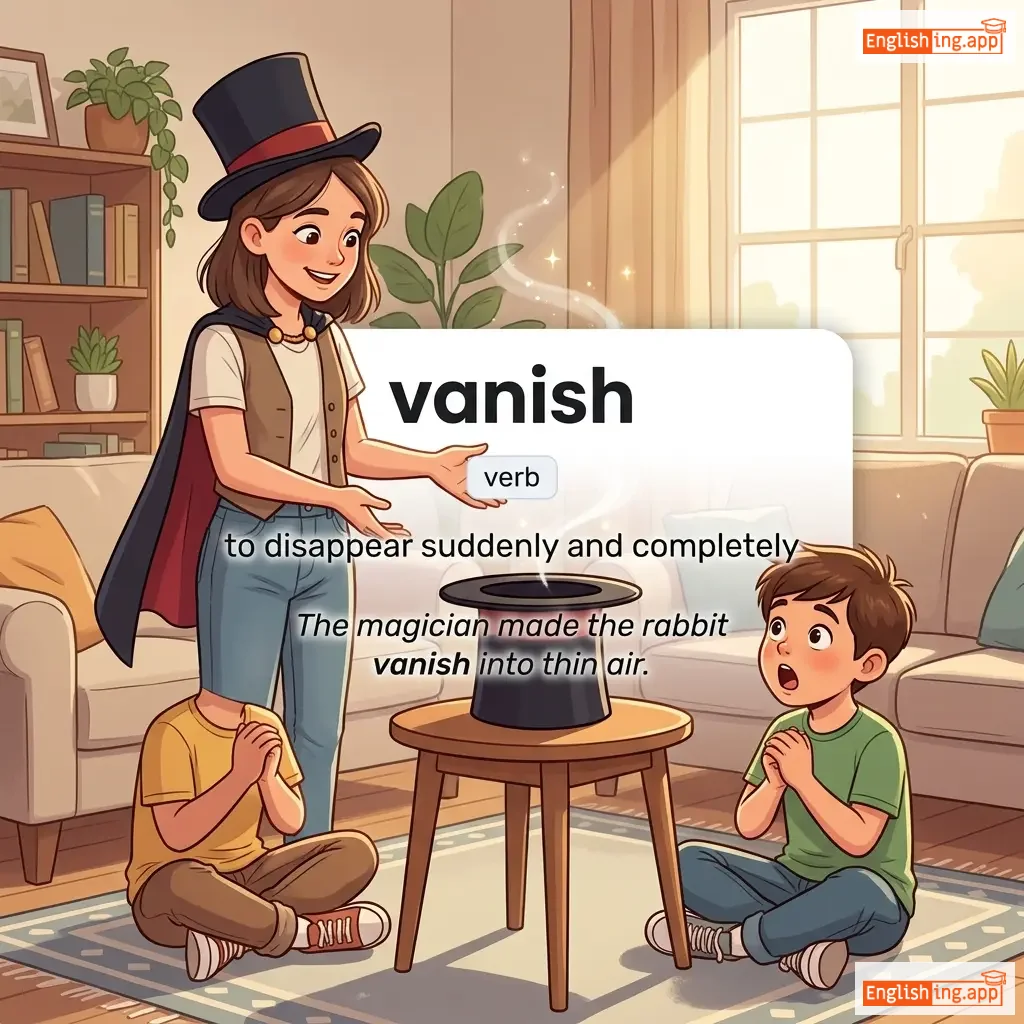
to disappear suddenly and completely
••••••
|
The magician made the rabbit vanish into thin air.
魔法使いはウサギを空中で消しました。
••••••
|
魔法使いはウサギを空中で消しました。
Mahoutsukai wa usagi o kuuchuu de keshimashita.
••••••
|
vanish into thin air
空中で消える
••••••
|
to disappear suddenly without a trace
••••••
|
空中で消える
kuuchuu de kieru
••••••
|
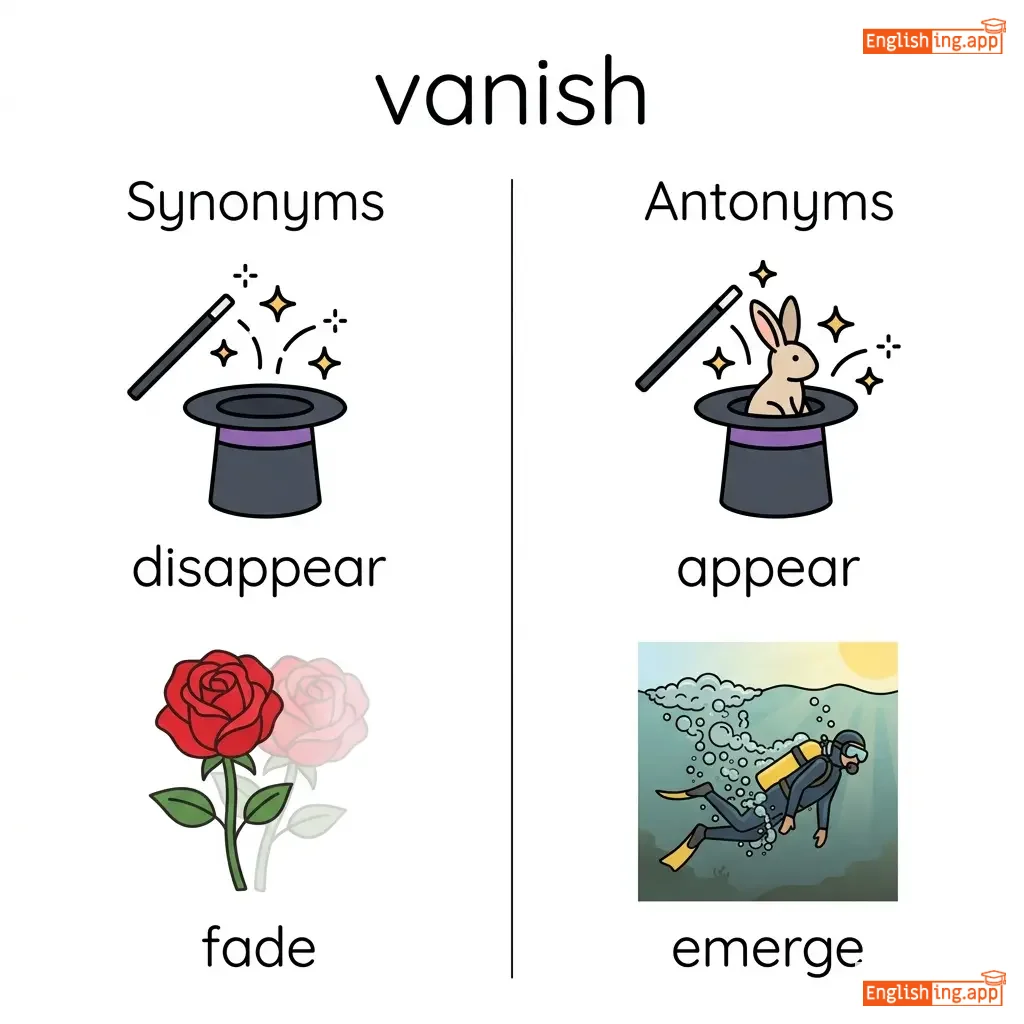
disappear, fade, evaporate, melt away
••••••
|
appear, emerge
••••••
|
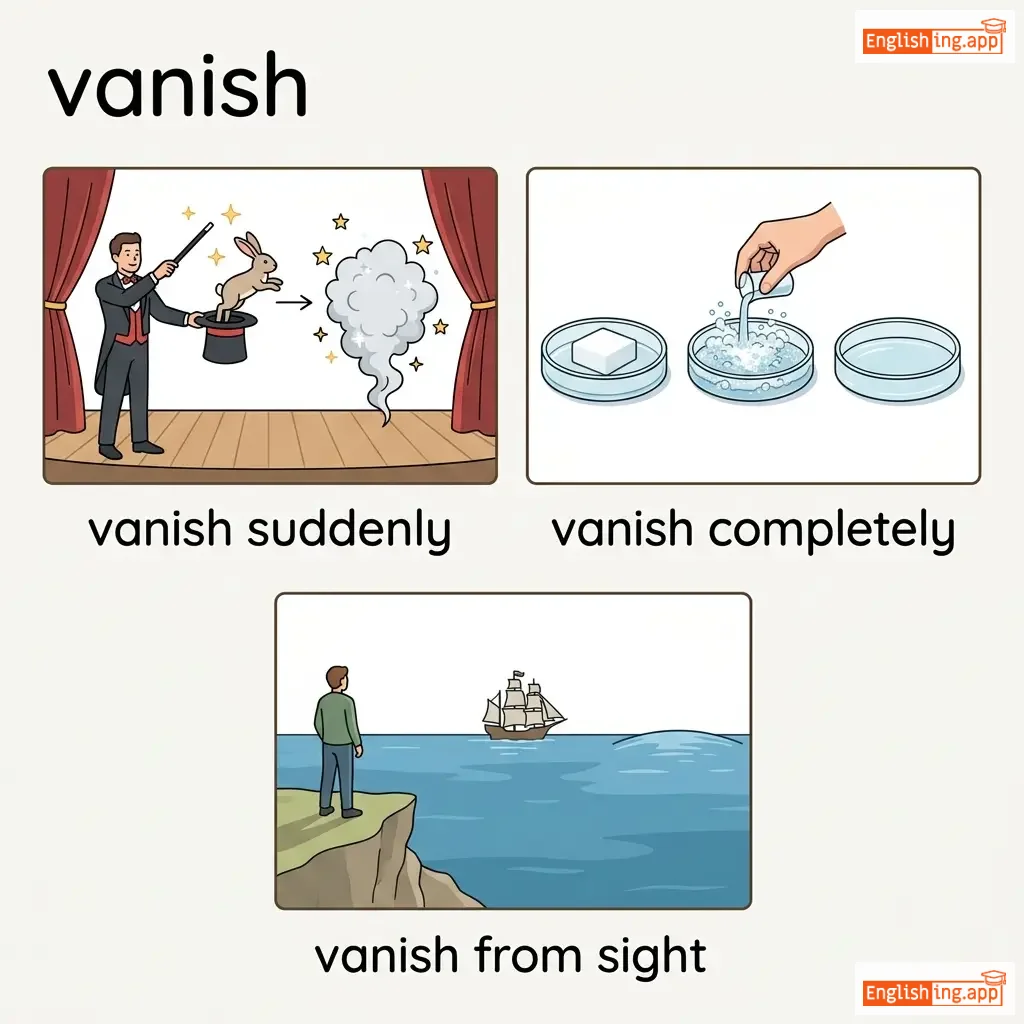
vanish suddenly, vanish completely, vanish from sight, vanish overnight
••••••
|
Vanishは消えるという意味です — 魔法使いが‘Vanish!’と言うと、ウサギが消えます。
••••••
|
|
#5366
🔄
|
/ˈvɛriəbl/
adjective
(ベリアブル)
••••••
|
- •••••• |
変動可能な
hendō kanōna
••••••
|
- •••••• | - •••••• | - •••••• | - •••••• |
able to change; not consistent or having a fixed pattern
••••••
|
The weather has been very variable this week.
今週の天気は非常に変わりやすかったです。
••••••
|
今週の天気は非常に変わりやすかったです。
konshū no tenki wa hijō ni kawariyasukatta desu
••••••
|
- •••••• | - •••••• | - •••••• |
changeable, fluctuating, unstable, inconsistent
••••••
|
constant, fixed, stable, unchanging
••••••
|
variable weather, variable rate, variable cost, variable speed
••••••
|
Variable = 変わる = 天気が変わる
••••••
|
|
#5367
⚖️
|
/ˌvɛəriˈeɪʃən/
noun
(ベリヤション)
••••••
|
- •••••• |
変化
henka
••••••
|
- •••••• | - •••••• | - •••••• | - •••••• |
A change or slight difference in condition, amount, or level.
••••••
|
There is a wide variation in climate across the country. |
国全体で気候に大きな変化があります。
koku zentai de kikou ni ookina henka ga arimasu.
••••••
|
without variation |
always the same; without change
••••••
|
変化なし
henka nashi
••••••
|
difference, diversity, alteration, change, modification
••••••
|
uniformity, sameness, consistency
••••••
|
climate variation, price variation, genetic variation, significant variation
••••••
|
Variationは変化を意味します; 歌に少し変化を加えると、もっと楽しくなります。
••••••
|
|
#5368
🌈
|
/vəˈraɪəti/
noun
(ヴァラエティ)
••••••
|
- •••••• |
多様性; 種類
tayousei; shurui
••••••
|
- •••••• | - •••••• | - •••••• | - •••••• |
the quality of being different or diverse; a number of things of the same general class that are distinct in character or quality
••••••
|
The restaurant offers a wide variety of international dishes.
レストランは多彩な国際料理を提供しています。
••••••
|
レストランは多彩な国際料理を提供しています。
Resutoran wa tasai na kokusai ryouri wo teikyou shiteimasu.
••••••
|
- •••••• | - •••••• | - •••••• |
diversity, range, assortment, selection
••••••
|
monotony, uniformity, sameness
••••••
|
wide variety, variety show, variety pack
••••••
|
多様性はレストランのメニューにある様々な料理のようです。
••••••
|
|
#5369
🔀
|
/ˈvɛəriəs/
adjective
(ヴァリアス)
••••••
|
- •••••• |
さまざまな; 多様な種類の
samazamana; tayōna shurui no
••••••
|
- •••••• | - •••••• | - •••••• | - •••••• |
several different; many different types of
••••••
|
She has lived in various countries around the world.
彼女は世界中の様々な国で生活していました。
••••••
|
彼女は世界中の様々な国で生活していました。
Kanojo wa sekaijū no samazamana kuni de seikatsu shite imashita.
••••••
|
- •••••• | - •••••• | - •••••• |
different, several, numerous, many
••••••
|
single, one, same, identical
••••••
|
various reasons, various methods, various sources, various options
••••••
|
In Japanese, 'さまざまな' means 'various', helping recall the idea of diversity.
••••••
|
|
#5370
🔄
|
/ˈveəri/
verb
(ヴェアリー)
••••••
|
|
異なる
kotonaru
••••••
|
varied
ヴェアリッド
••••••
|
varied
ヴェアリッド
••••••
|
varies
ヴェアリズ
••••••
|
varying
ヴェアリング
••••••
|
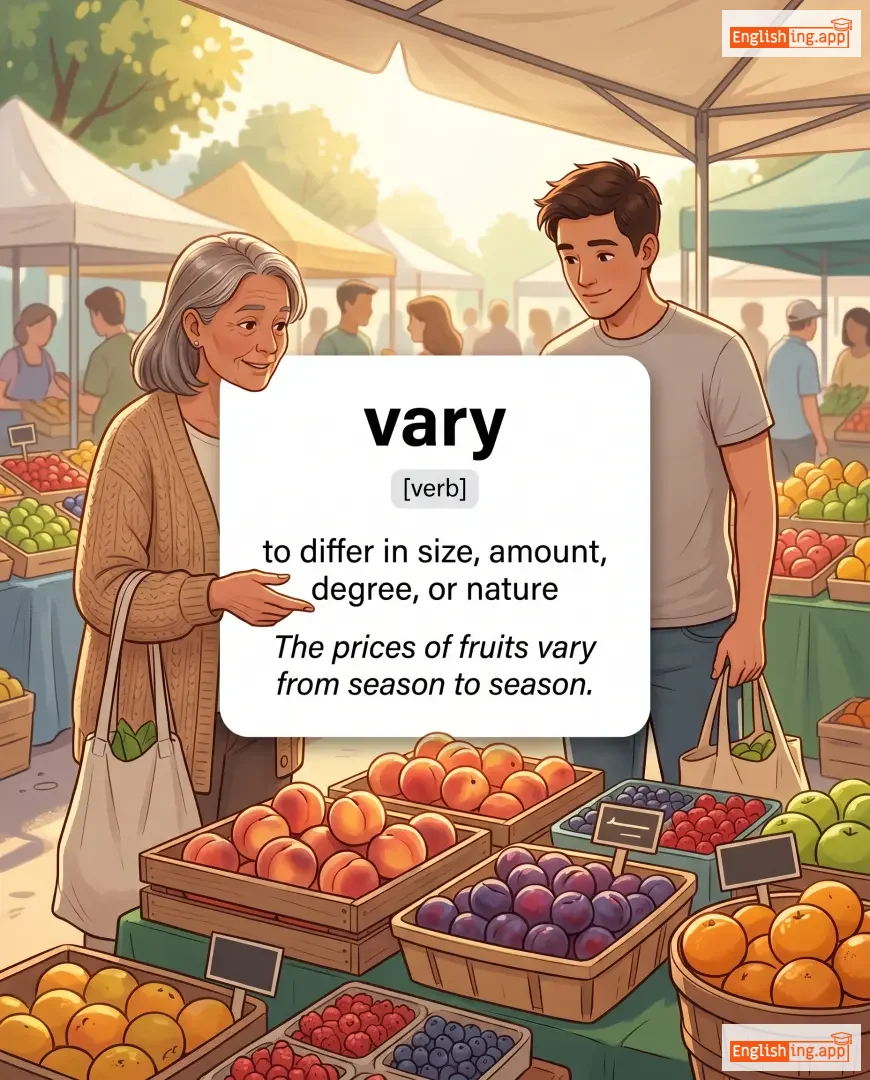
to differ in size, amount, degree, or nature
••••••
|
The prices of fruits vary from season to season.
フルーツの価格は季節ごとに異なります。
••••••
|
フルーツの価格は季節ごとに異なります。
Furūtsu no kakaku wa kisetsu goto ni kotonaru masu.
••••••
|
vary widely
広く異なる
••••••
|
to differ significantly
••••••
|
広く異なる
hiroku kotonaru
••••••
|
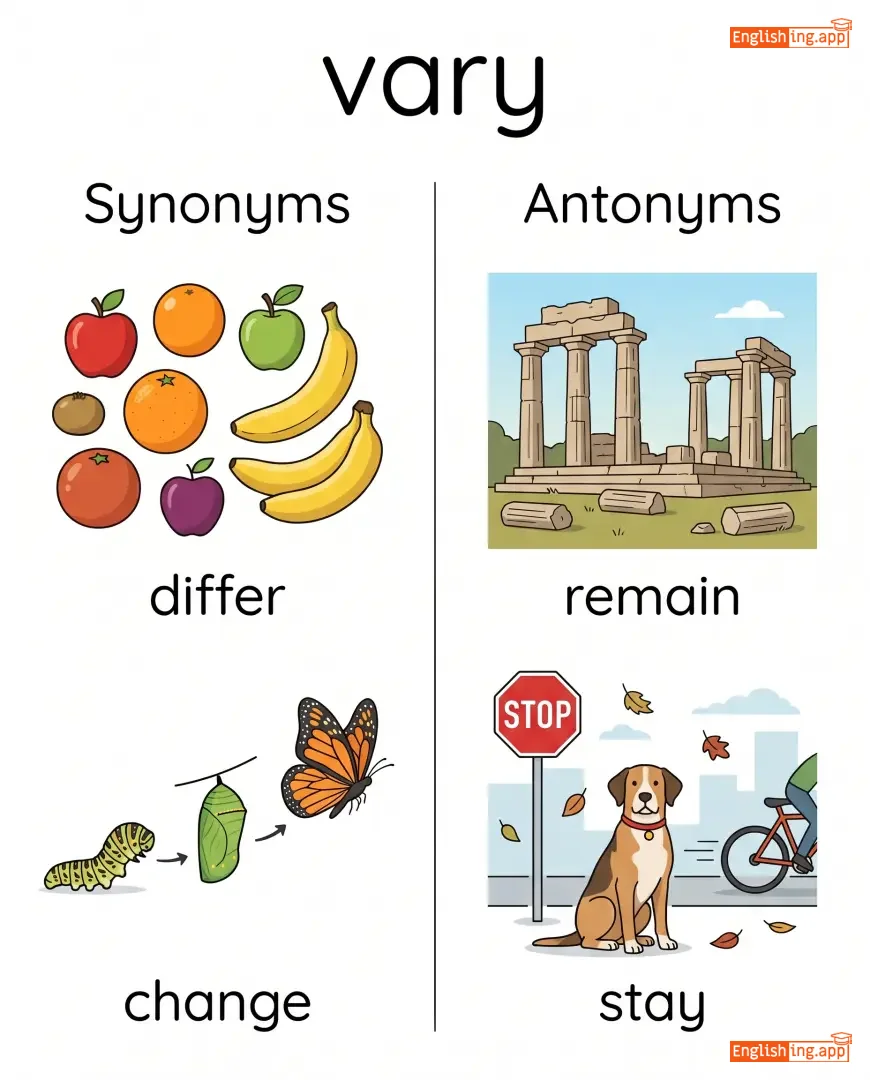
differ, change, alter, fluctuate, diversify
••••••
|
remain, stay, continue
••••••
|
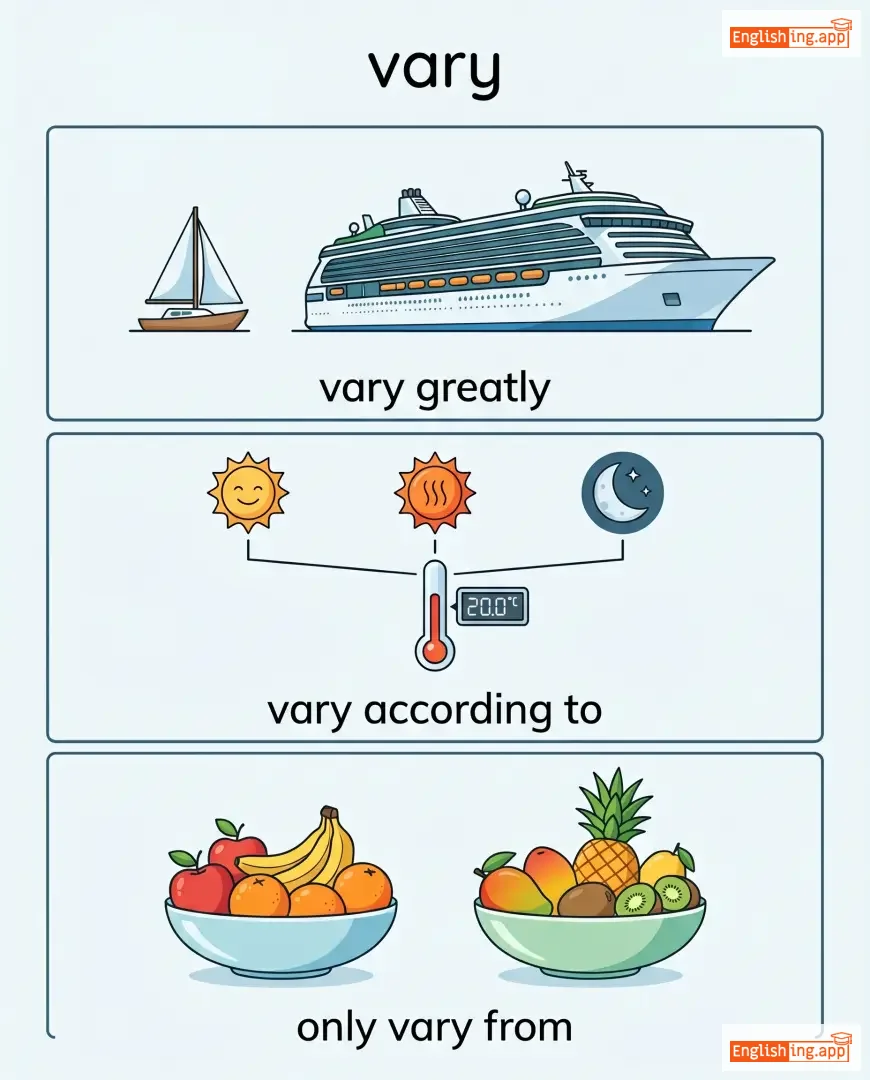
vary greatly, vary according to, vary from, vary in size
••••••
|
Varyは異なる、季節ごとに変わる果物のように。
••••••
|
|
#5371
🌌
|
/vɑːst/
adjective
••••••
|
- •••••• | - •••••• | - •••••• | - •••••• | - •••••• | - •••••• |
extremely large in size, amount, or extent
••••••
|
The desert stretches across a vast area of land. |
- •••••• |
vast majority |
a very large number of people or things compared to the rest
••••••
|
- •••••• |
immense, huge, enormous, massive, expansive
••••••
|
small, tiny, limited
••••••
|
vast amount, vast majority, vast area, vast distance
••••••
|
No •••••• |
|
#5372
🛢️
|
/væt/
noun
(væt)
••••••
|
- •••••• |
大きな容器
ookina youki
••••••
|
- •••••• | - •••••• | - •••••• | - •••••• |
A large container used for holding liquids such as dye or wine.
••••••
|
The workers filled the vat with freshly pressed grape juice. |
作業員たちは新しく絞ったぶどうジュースを大きな容器に入れました。
Sagyouin-tachi wa atarashiku shibotta budou juusu o ookina youki ni iremashita.
••••••
|
- •••••• | - •••••• | - •••••• |
container, tank, tub, cask
••••••
|
bottle, flask
••••••
|
wine vat, fermentation vat, large vat, dye vat
••••••
|
Vatは大きな容器、VAT(消費税)のように大きくて重い!
••••••
|
|
#5373
🥦
|
/ˈvɛdʒ.tə.bəl/
noun
(ハピネス)
••••••
|
- •••••• |
幸福
kōfuku
••••••
|
- •••••• | - •••••• | - •••••• | - •••••• |
a plant or part of a plant used as food
••••••
|
I eat vegetables every day for health. |
彼女は賞を受け取ったとき、幸せを隠すことができませんでした。
Kanojo wa shō o uketotta toki, kōfuku o kakusu koto ga dekimasen deshita.
••••••
|
- •••••• | - •••••• | - •••••• |
greens, produce, plant food, veggie
••••••
|
meat, animal products
••••••
|
eat vegetables, grow vegetables, fresh vegetables
••••••
|
幸福は喜びと満足感を感じる状態です。
••••••
|
|
#5374
🚗
|
/ˈviːɪkəl/
noun
(vīkeru)
••••••
|
- •••••• |
車両; 自動車; 手段
sharyou; jidousha; shudan
••••••
|
- •••••• | - •••••• | - •••••• | - •••••• |
a thing used for transporting people or goods, especially on land; a means of expressing or displaying something
••••••
|
The electric vehicle is becoming more popular these days.
電気自動車は最近ますます人気が高くなっています。
••••••
|
電気自動車は最近ますます人気が高くなっています。
Denki jidousha wa saikin masumasu ninki ga takaku natte imasu.
••••••
|
- •••••• | - •••••• | - •••••• |
transport, conveyance, automobile, car
••••••
|
obstacle, hindrance
••••••
|
motor vehicle, emergency vehicle, commercial vehicle
••••••
|
車両で人々を運ぶ – 乗り物として車を使う。
••••••
|
Vocabulary Quiz
Test your vocabulary by matching words with their translations or meanings.
Login to take the quiz
Comments (0)
Share your thoughts and join the discussion.
Join the discussion by logging in
Login to CommentNo comments yet
Be the first to share your thoughts!