

翻訳
過去
過去分詞
三人称単数
動名詞
意味
例文
例文の翻訳
同義語
対義語
コロケーション
ニーモニック


Swipe left or right, or use the buttons. Tap image to zoom.
例文の翻訳
単語
Lesson 94Lesson 94 - マスクトグル
|
絵文字
|
単語 | Images | 翻訳 | 過去 | 過去分詞 | 三人称単数 | 動名詞 | 意味 | 例文 | 例文の翻訳 | 表現例 | 表現例の意味 | 表現例の翻訳 | 同義語 | 対義語 | コロケーション | ニーモニック |
|---|---|---|---|---|---|---|---|---|---|---|---|---|---|---|---|---|---|
|
#4451
✅
|
/sɪˈlɛkt/
verb
(セレクト)
••••••
|
|
選択する
sentaku suru
••••••
|
selected
セレクテッド
••••••
|
selected
セレクテッド
••••••
|
selects
セレクツ
••••••
|
selecting
セレクティング
••••••
|
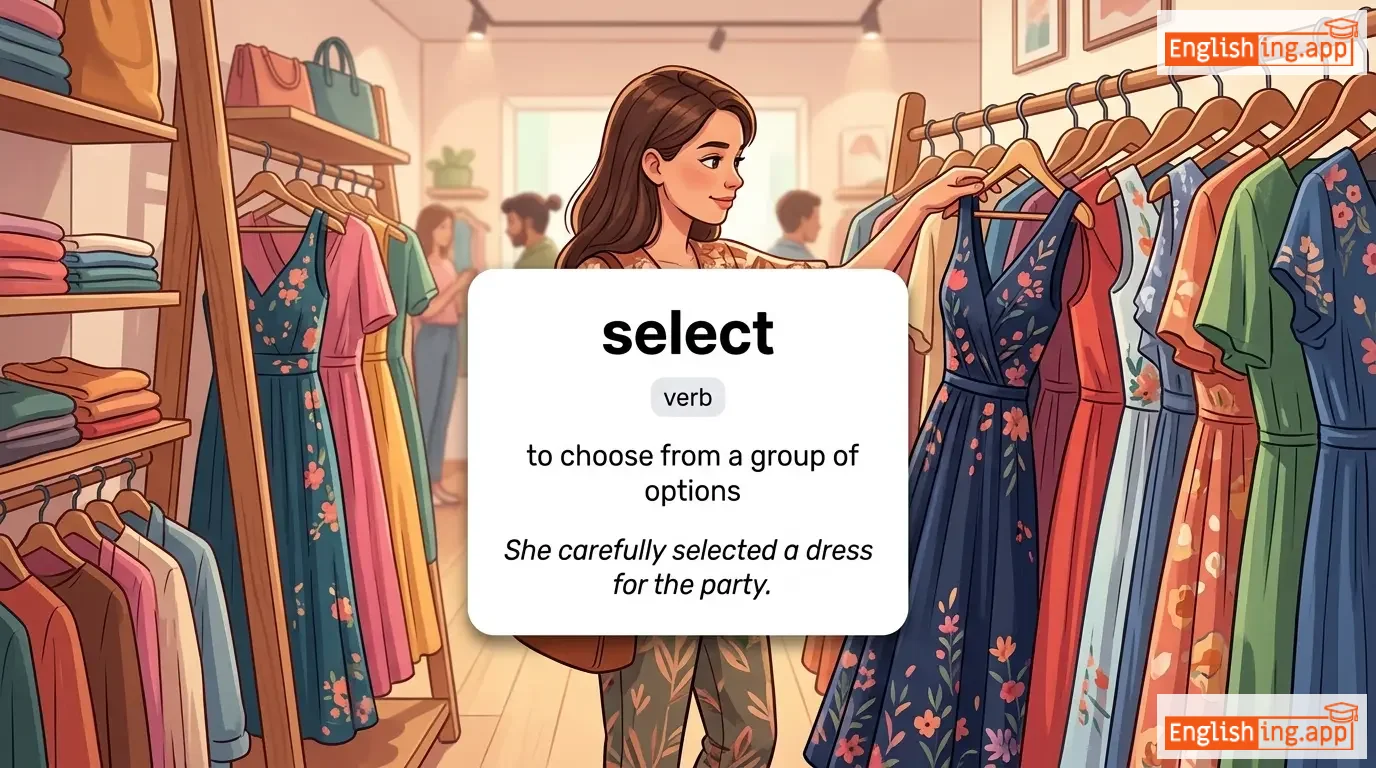
to choose from a group of options
••••••
|
She carefully selected a dress for the party.
彼女はパーティーのために慎重にドレスを選びました。
••••••
|
彼女はパーティーのために慎重にドレスを選びました。
Kanojo wa pātī no tame ni shinchō ni doresu o erabimashita.
••••••
|
select few
select few
••••••
|
a small, special group of people or things
••••••
|
select few
select few
••••••
|
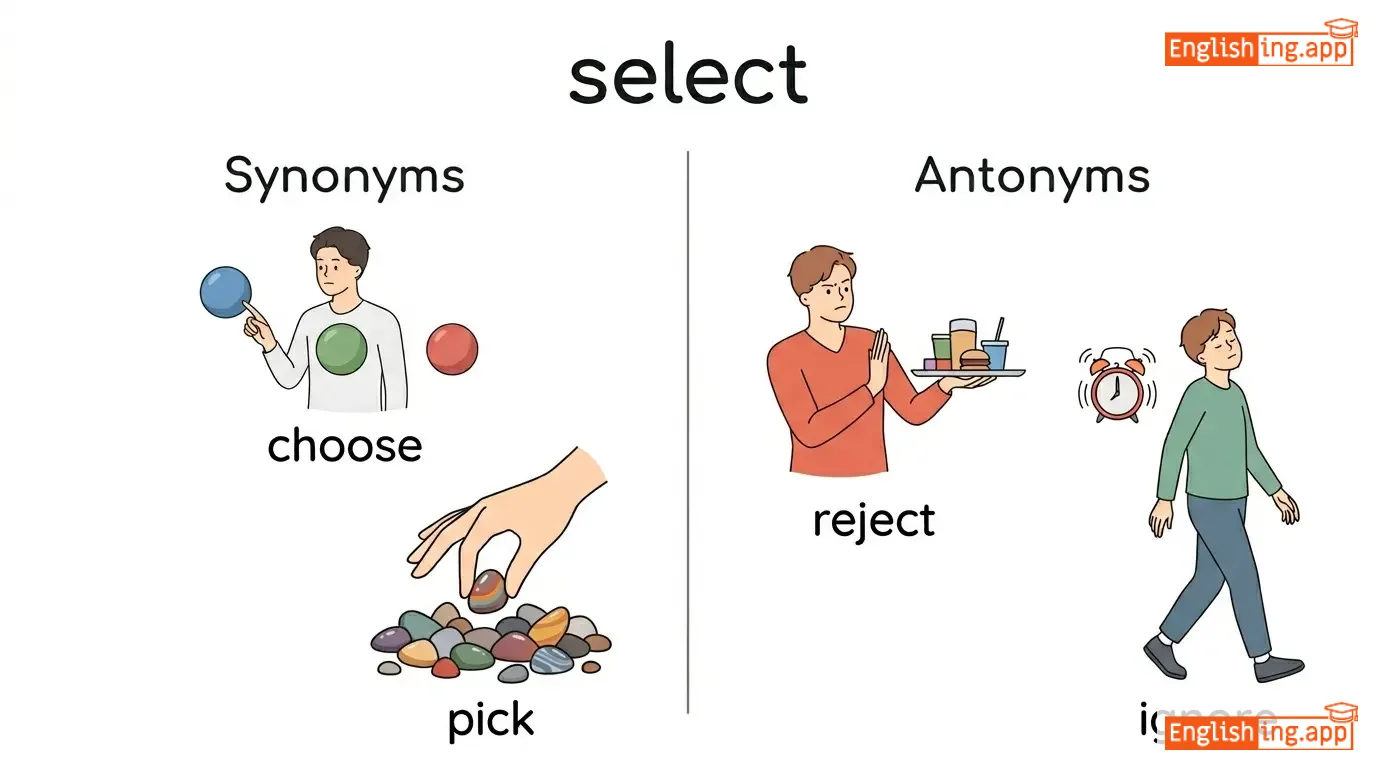
choose, pick, opt, elect, decide
••••••
|
reject, ignore, refuse
••••••
|
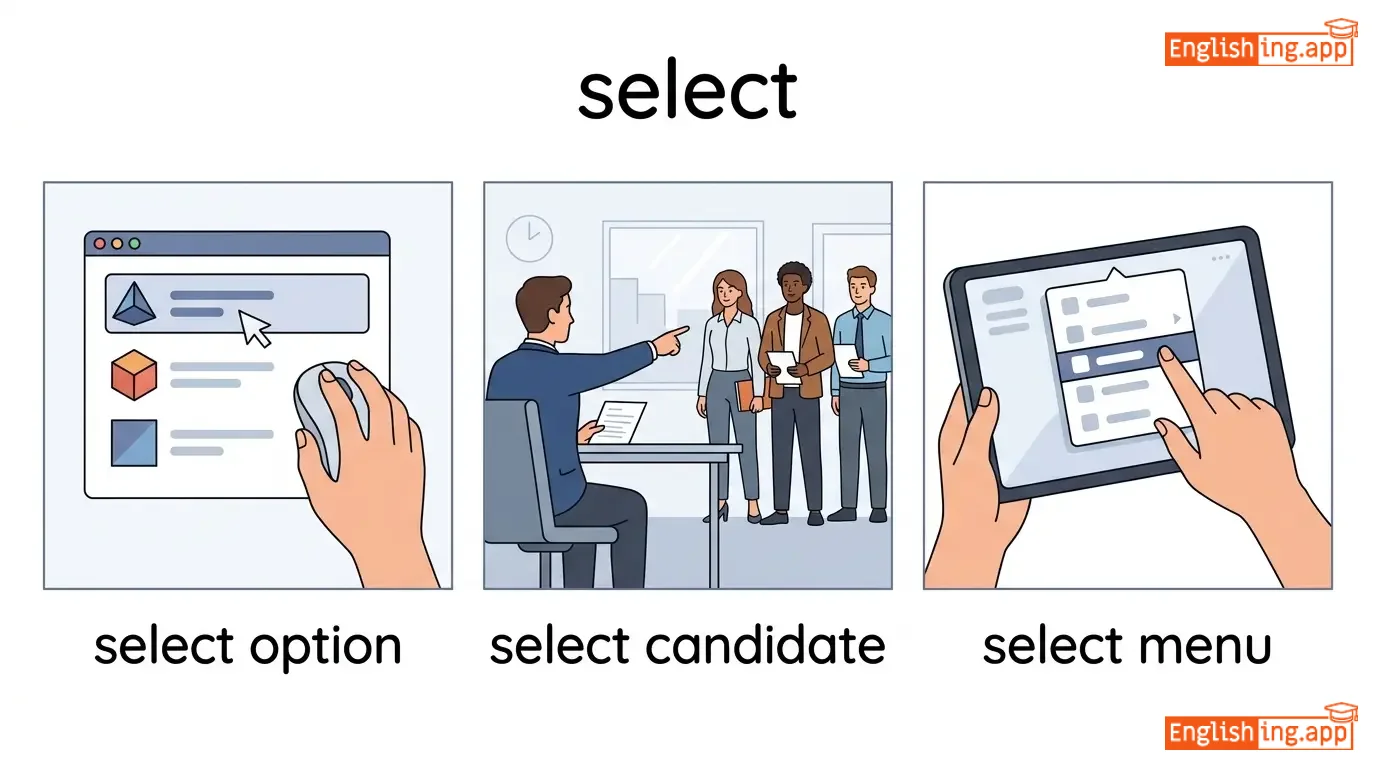
select option, select candidate, select menu, select group
••••••
|
Selectは選択すること:テストで正しい答えを選ぶようなものです
••••••
|
|
#4452
🗂️
|
/sɪˈlɛkʃən/
noun
(セレクション)
••••••
|
|
選択
sentaku
••••••
|
- •••••• | - •••••• | - •••••• | - •••••• |
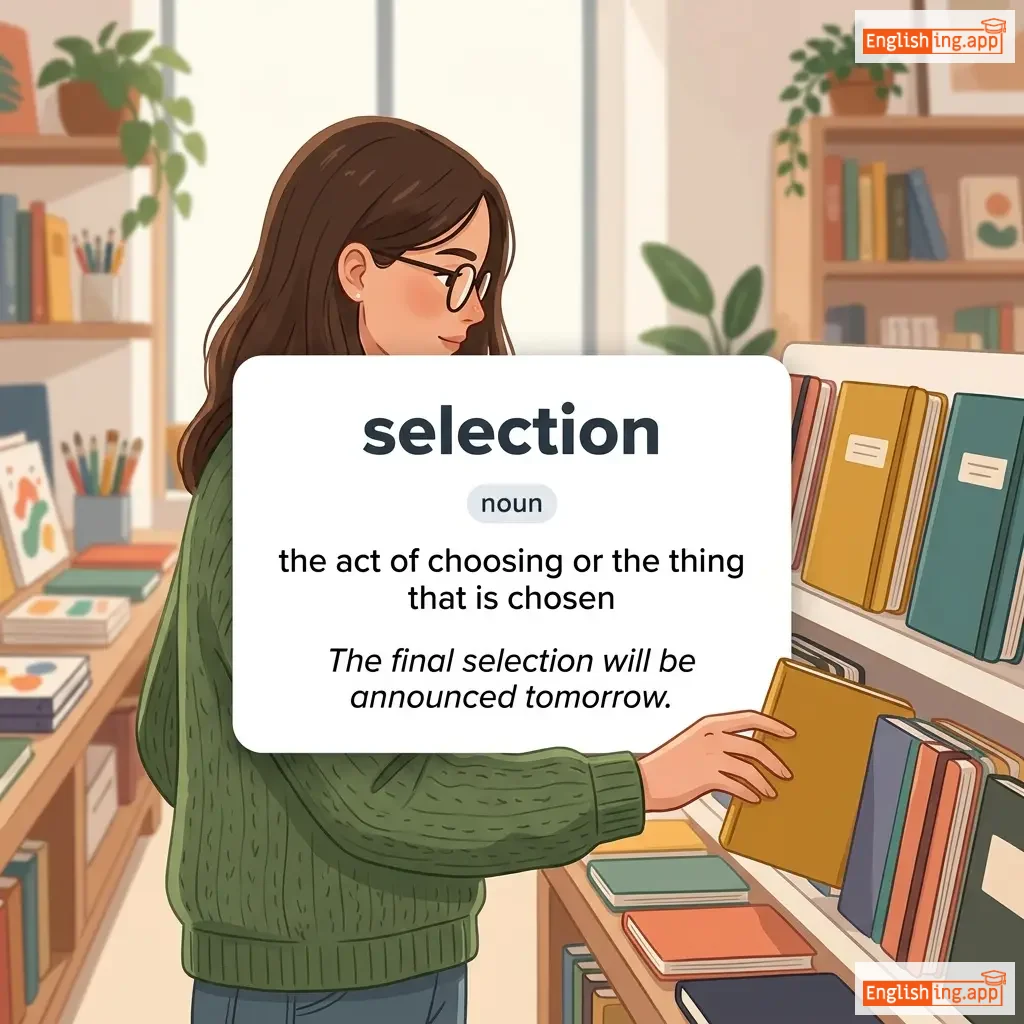
the act of choosing or the thing that is chosen
••••••
|
The final selection will be announced tomorrow. |
最終選択は明日発表されます。
Saishū sentaku wa ashita happyō saremasu.
••••••
|
natural selection |
the process by which organisms better adapted to their environment survive
••••••
|
自然選択
shizen sentaku
••••••
|
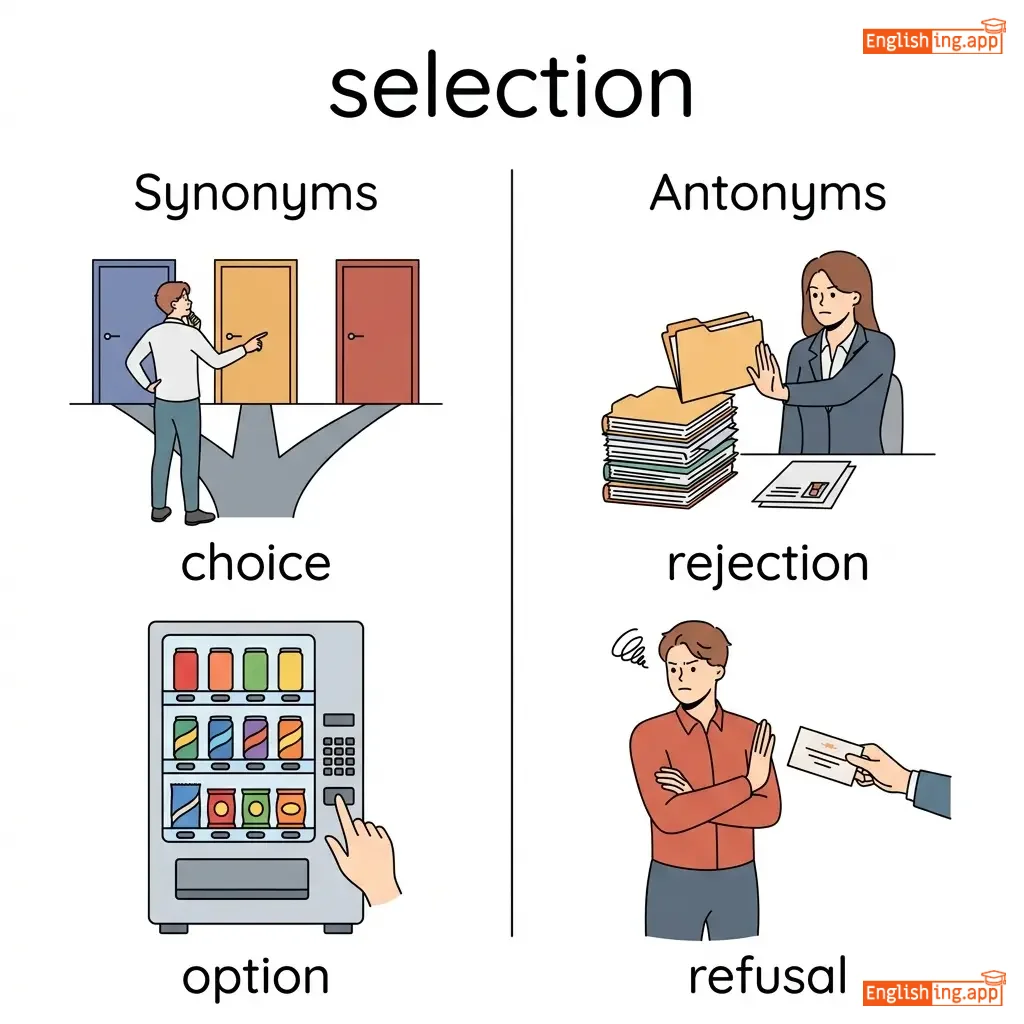
choice, option, pick, assortment, range
••••••
|
rejection, refusal
••••••
|
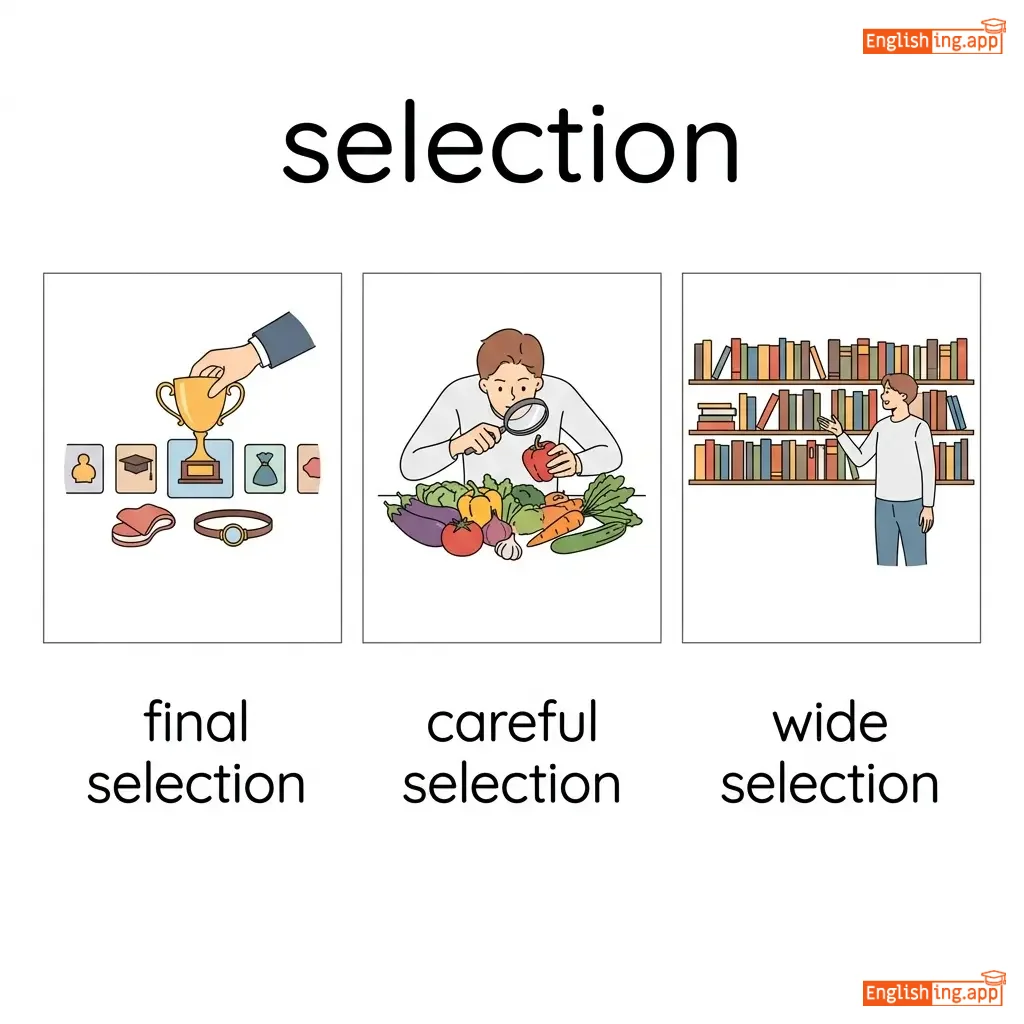
final selection, careful selection, wide selection, random selection
••••••
|
Selection は選択を意味します - 選挙のように、みんなが選ぶのです。
••••••
|
|
#4453
🎯
|
/sɪˈlek.tɪv/
adjective
(セレクティブ)
••••••
|
- •••••• |
選択的
sentakuteki
••••••
|
- •••••• | - •••••• | - •••••• | - •••••• |
relating to or involving careful selection; choosy about what to accept
••••••
|
The university has a selective admission process for new students.
大学には新入生のための選択的な入学プロセスがあります。
••••••
|
大学には新入生のための選択的な入学プロセスがあります。
Daigaku ni wa shinnyuusei no tame no sentakuteki na nyuugaku purosesu ga arimasu.
••••••
|
- •••••• | - •••••• | - •••••• |
choosy, particular, discriminating, exclusive
••••••
|
indiscriminate, random, inclusive, accepting
••••••
|
selective admission, selective memory, selective breeding, selective service
••••••
|
選択する (sentaku) という意味
••••••
|
|
#4454
🧑💼
|
/sɛlf/
noun
(セルフ)
••••••
|
- •••••• |
自己
jiko
••••••
|
- •••••• | - •••••• | - •••••• | - •••••• |
a person's essential being that distinguishes them from others, especially considered as the object of introspection or reflexive action
••••••
|
She has a strong sense of self.
彼女は強い自己認識を持っています。
••••••
|
彼女は強い自己認識を持っています。
Kanojo wa tsuyoi jiko ninshiki o motteimasu.
••••••
|
- •••••• | - •••••• | - •••••• |
identity, individuality, personality
••••••
|
other, others
••••••
|
sense of self, true self, self-awareness
••••••
|
Self = 自己, 自分を知って!
••••••
|
|
#4455
😤
|
/ˈselfɪʃ/
adjective
(selfish)
••••••
|
- •••••• |
利己的
rikoteki
••••••
|
- •••••• | - •••••• | - •••••• | - •••••• |
caring only about oneself rather than others
••••••
|
He was too selfish to share his food with others.
彼は他の人と食べ物を共有するにはあまりにも自己中心的だった。
••••••
|
彼は他の人と食べ物を共有するにはあまりにも自己中心的だった。
Kare wa hoka no hito to tabemono o kyōyū suru ni wa amari ni mo jikochūshinteki datta.
••••••
|
- •••••• | - •••••• | - •••••• |
self-centered, egotistic, greedy, inconsiderate
••••••
|
selfless, generous, altruistic, considerate
••••••
|
selfish behavior, selfish person, selfish motives
••••••
|
利己的な人は、他人よりも自分のことを優先し、絶対に分け合おうとしません。
••••••
|
|
#4456
💰
|
/sel/
verb
(セル)
••••••
|
|
売る
uru
••••••
|
sold
ソールド
••••••
|
sold
ソールド
••••••
|
sells
セルズ
••••••
|
selling
セリング
••••••
|
to give something to someone in exchange for money
••••••
|
They sell fresh fruits at the market.
彼らは市場で新鮮な果物を売っています。
••••••
|
彼らは市場で新鮮な果物を売っています。
Karera wa ichiba de shinsen na kudamono o utteimasu.
••••••
|
- •••••• | - •••••• | - •••••• |
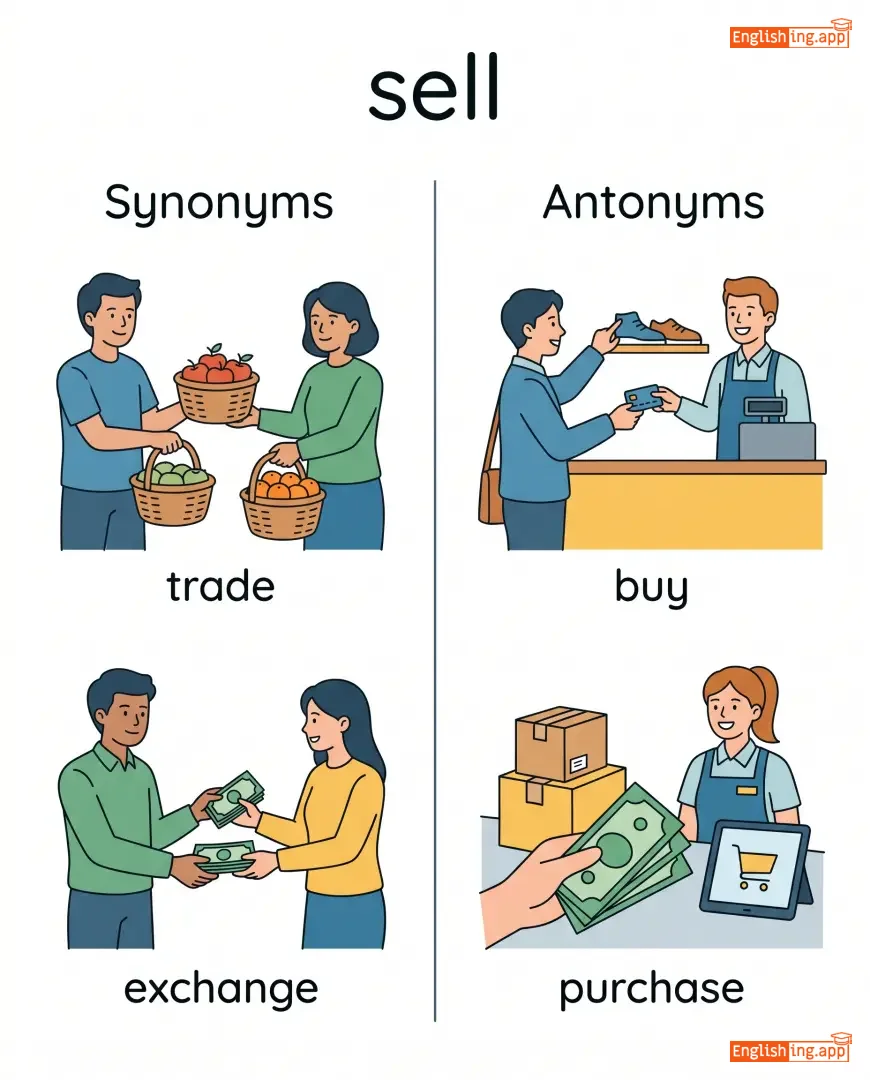
market, trade, vend, dispose
••••••
|
buy, purchase, acquire, keep
••••••
|
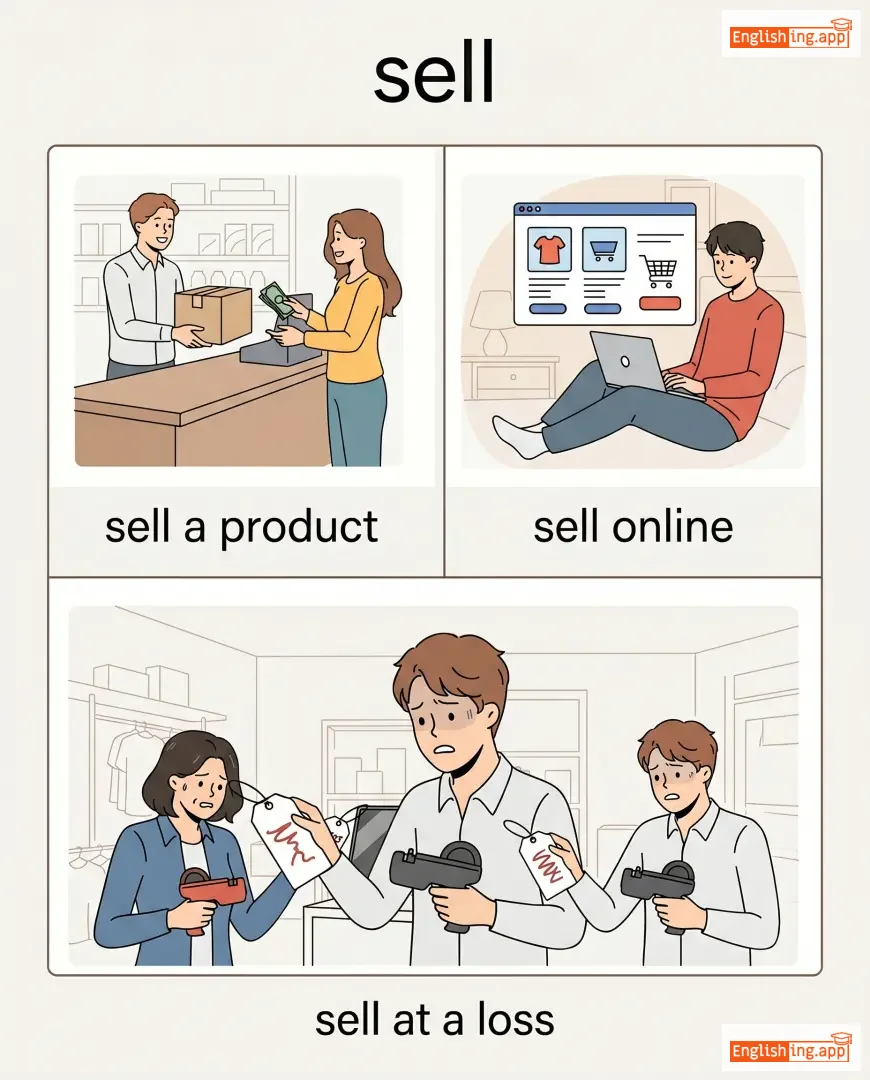
sell products, sell well, sell for, hard sell, sell out
••••••
|
新鮮な果物を売ることでお金を得る。
••••••
|
|
#4457
🛒
|
/ˈsɛlər/
noun
(ハピネス)
••••••
|
- •••••• |
幸せ
shiawase
••••••
|
- •••••• | - •••••• | - •••••• | - •••••• |
a person who sells something
••••••
|
The seller offered a discount on bulk purchases. |
彼女は賞を受け取ったとき、幸せを隠せませんでした。
Kanojo wa shou wo uketotta toki, shiawase wo kakusemasen deshita.
••••••
|
best-seller |
a product, especially a book, that sells in very large numbers
••••••
|
幸せの追求
shiawase no tsuikyuu
••••••
|
vendor, merchant, dealer, retailer, trader
••••••
|
buyer, customer, purchaser
••••••
|
online seller, street seller, property seller, car seller
••••••
|
ハピネスと幸せ — 言葉は異なるけど意味は同じ!
••••••
|
|
#4458
🎓
|
/ˈsɛm.ɪ.nɑːr/
noun
(セミナー)
••••••
|
- •••••• |
セミナー
seminā
••••••
|
- •••••• | - •••••• | - •••••• | - •••••• |
A meeting for discussion or training, especially in an academic setting.
••••••
|
The professor invited all students to attend the seminar on climate change.
教授はすべての学生を気候変動に関するセミナーに招待しました。
••••••
|
教授はすべての学生を気候変動に関するセミナーに招待しました。
Kyōju wa subete no gakusei o kikō hendō ni kansuru seminā ni shōtai shimashita.
••••••
|
seminar series
セミナーシリーズ
••••••
|
A sequence of related seminars on a particular subject.
••••••
|
セミナーシリーズ
seminā shirīzu
••••••
|
workshop, symposium, conference, lecture, tutorial
••••••
|
silence, self-study
••••••
|
attend seminar, seminar series, seminar hall, seminar discussion
••••••
|
セミナー - 学びの場 📚
••••••
|
|
#4459
🏛️
|
/ˈsɛnət/
noun
(セナト)
••••••
|
- •••••• |
セナト
senato
••••••
|
- •••••• | - •••••• | - •••••• | - •••••• |
a legislative or governing body, typically the upper chamber in a bicameral legislature
••••••
|
The senate voted in favor of the new healthcare bill.
セナトは新しい医療保険法案に賛成票を投じました。
••••••
|
セナトは新しい医療保険法案に賛成票を投じました。
Senato wa atarashī iryō hoken hōan ni sansei-hyō o tōjishimashita.
••••••
|
- •••••• | - •••••• | - •••••• |
congress, legislature, council, assembly
••••••
|
executive, judiciary
••••••
|
senate vote, senate bill, senate session, senate committee
••••••
|
セナトは法律を決めるところ、まるで法律の裁判所のようだ。
••••••
|
|
#4460
👨⚖️
|
/ˈsɛnətər/
noun
(セネター)
••••••
|
- •••••• |
上院議員
jōin giin
••••••
|
- •••••• | - •••••• | - •••••• | - •••••• |
a member of a senate, especially in a legislative body
••••••
|
The senator spoke passionately about environmental policies.
そのセネターは環境政策について情熱的に話しました。
••••••
|
そのセネターは環境政策について情熱的に話しました。
Sono senetā wa kankyō seisaku ni tsuite jōnetsuteki ni hanashimashita.
••••••
|
- •••••• | - •••••• | - •••••• |
legislator, lawmaker, representative, congressman
••••••
|
citizen, elector
••••••
|
senator speech, senator election, senior senator, senator's office
••••••
|
セネター、社会の未来を守る戦士!
••••••
|
|
#4461
📤
|
/sɛnd/
verb
(send)
••••••
|
- •••••• |
送る
okuru
••••••
|
sent
sent
••••••
|
sent
sent
••••••
|
sends
sends
••••••
|
sending
sending
••••••
|
to cause something to go or be taken to a destination
••••••
|
Please send the report by tomorrow morning.
明日の朝までにレポートを送ってください。
••••••
|
明日の朝までにレポートを送ってください。
Ashita no asa made ni repōto o okutte kudasai.
••••••
|
send off
送る
••••••
|
to send someone off or away, often with farewell
••••••
|
誰かを送る
dareka o okuru
••••••
|
dispatch, deliver, forward, transmit
••••••
|
receive, collect
••••••
|
send a message, send an email, send a letter, send money
••••••
|
Send the レポート (repōto) by okuru!
••••••
|
|
#4462
👴
|
/ˈsɪniər/
adjective
(シニア)
••••••
|
- •••••• |
シニア
shinia
••••••
|
- •••••• | - •••••• | - •••••• | - •••••• |
having a higher rank or status; older or more experienced
••••••
|
He is the senior manager in the department. |
彼は部門のシニアマネージャーです。
Kare wa bumon no shinia manējā desu.
••••••
|
- •••••• | - •••••• | - •••••• |
elder, superior, experienced, advanced
••••••
|
junior, inferior
••••••
|
senior position, senior executive, senior staff, senior year
••••••
|
Senior people are more experienced and hold higher positions!
••••••
|
|
#4463
✨
|
/sɛnˈseɪʃən/
noun
(センセーション)
••••••
|
- •••••• |
センセーション
sensēshon
••••••
|
- •••••• | - •••••• | - •••••• | - •••••• |
A physical feeling or a strong reaction of excitement and interest.
••••••
|
The singer became a sensation overnight. |
歌手は一晩でセンセーションになった。
Kashu wa hitobanje sensēshon ni natta.
••••••
|
cause a sensation |
to create a great deal of excitement and interest
••••••
|
センセーションを引き起こす
sensēshon o hikiokosu
••••••
|
feeling, perception, excitement, thrill, buzz
••••••
|
numbness, apathy, indifference
••••••
|
create a sensation, public sensation, sensation in the media, sensation of pain
••••••
|
Sensation = Scene + action、感覚を引き起こす場面。
••••••
|
|
#4464
🧠
|
/sɛns/
noun/verb
(センス)
••••••
|
- •••••• |
センス
sensu
••••••
|
sensed
センスド
••••••
|
sensed
センスド
••••••
|
senses
センスズ
••••••
|
sensing
センシング
••••••
|
A faculty by which the body perceives external stimuli; or to perceive something without being told.
••••••
|
She had a strong sense of responsibility.
彼女は責任感が強かった。
••••••
|
彼女は責任感が強かった。
Kanojo wa sekininkan ga tsuyokatta.
••••••
|
common sense
常識
••••••
|
sound practical judgment that is independent of specialized knowledge
••••••
|
常識
jōshiki
••••••
|
feeling, perception, awareness, intuition, judgment
••••••
|
nonsense, folly, ignorance
••••••
|
sense of humor, sense of duty, sense danger, make sense
••••••
|
Sense = Japanese 'Sense' 文化的な直感
••••••
|
|
#4465
🧐
|
/ˈsensəbəl/
adjective
(センスィブル)
••••••
|
- •••••• |
賢明な; 実用的な; 理にかなった
kenmei na; jitsuyōteki na; ri ni kanatta
••••••
|
- •••••• | - •••••• | - •••••• | - •••••• |
having or showing good sense; practical and reasonable
••••••
|
It would be sensible to take an umbrella because it might rain. |
雨が降るかもしれないので、傘を持っていくのは賢明です。
Ame ga furu kamoshirenai node, kasa o motte iku no wa kenmei desu.
••••••
|
- •••••• | - •••••• | - •••••• |
practical, reasonable, logical, wise
••••••
|
foolish, impractical, unreasonable, senseless
••••••
|
sensible decision, sensible choice, sensible person
••••••
|
賢明な選択は、雨を避けることです。
••••••
|
|
#4466
🌸
|
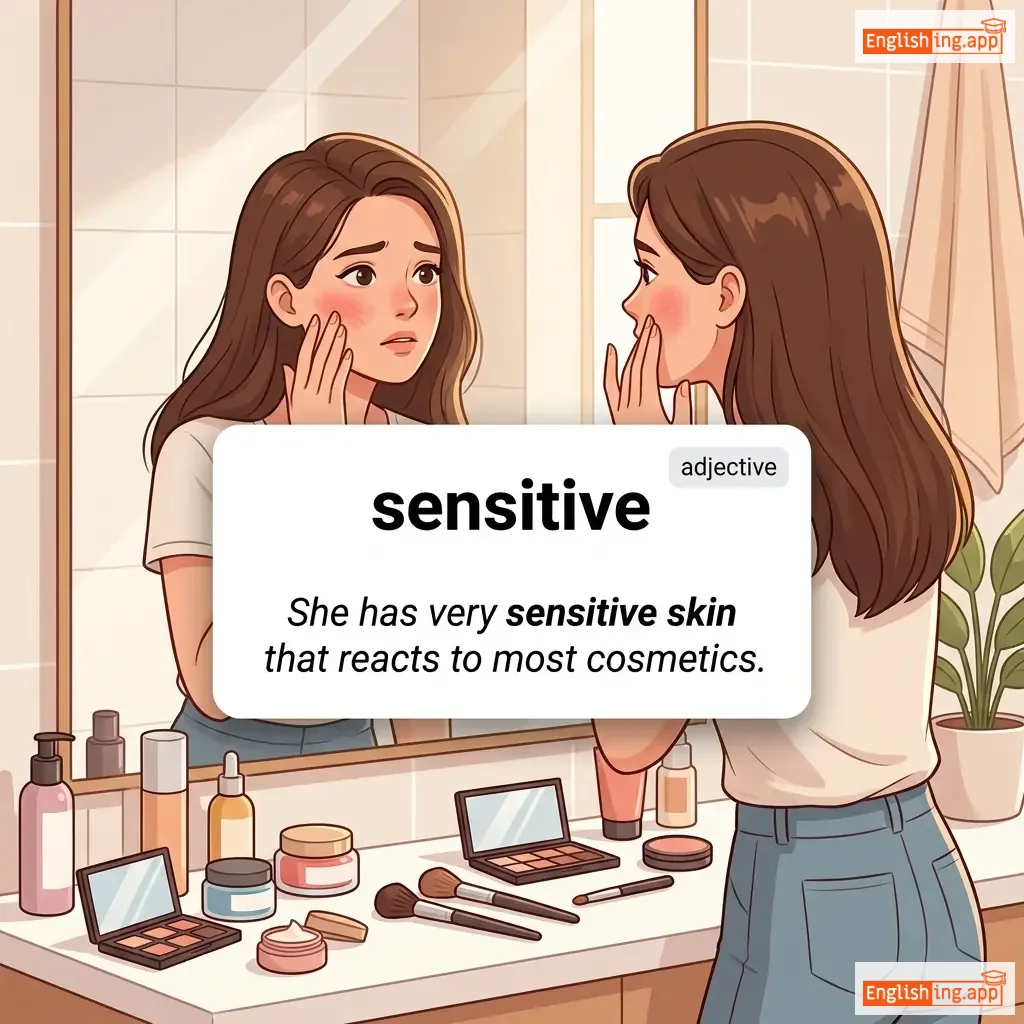
/ˈsɛnsɪtɪv/
adjective
(センシティブ)
••••••
|
|
敏感な
binkan na
••••••
|
- •••••• | - •••••• | - •••••• | - •••••• |
Quick to detect or respond to slight changes, signals, or influences; easily affected emotionally or physically.
••••••
|
She has very sensitive skin that reacts to most cosmetics. |
彼女は非常に敏感な肌を持っており、ほとんどの化粧品に反応します。
kanojo wa hijō ni binkan na hada o motte ori, hotondo no keshōhin ni hannō shimasu.
••••••
|
a sensitive issue |
a topic that is delicate or difficult to discuss
••••••
|
敏感な問題
binkan na mondai
••••••
|
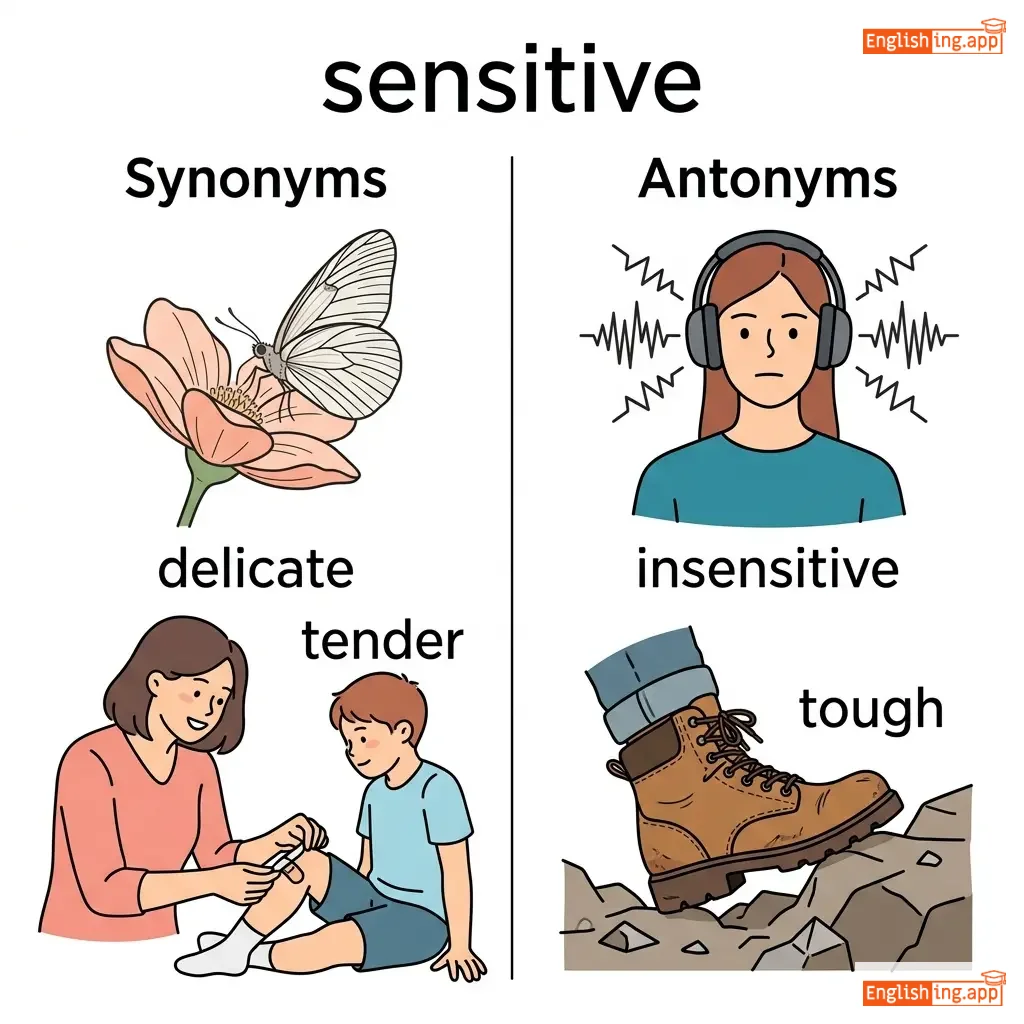
delicate, tender, responsive, emotional, fragile
••••••
|
insensitive, tough, unfeeling
••••••
|
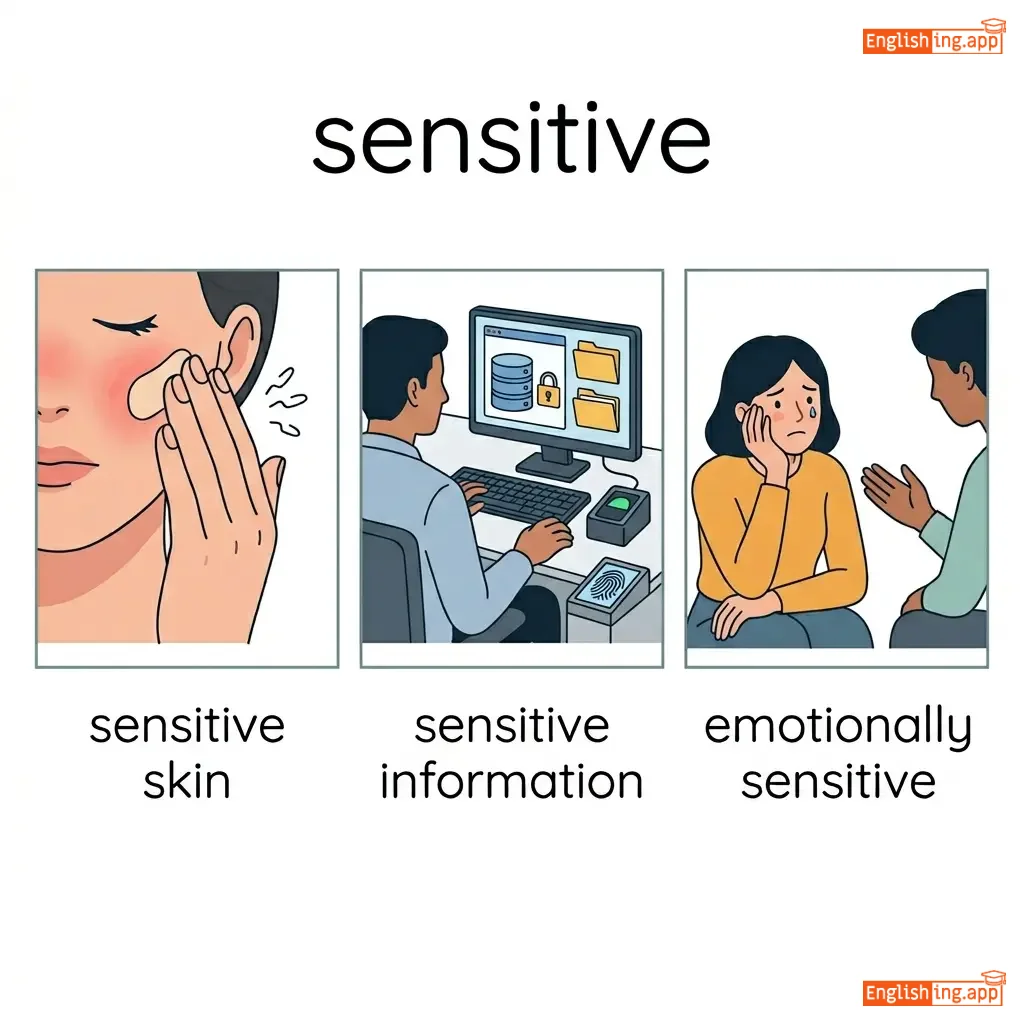
sensitive skin, sensitive information, emotionally sensitive, highly sensitive, sensitive issue
••••••
|
敏感な心で、細かい変化に気づくように。
••••••
|
|
#4467
💗
|
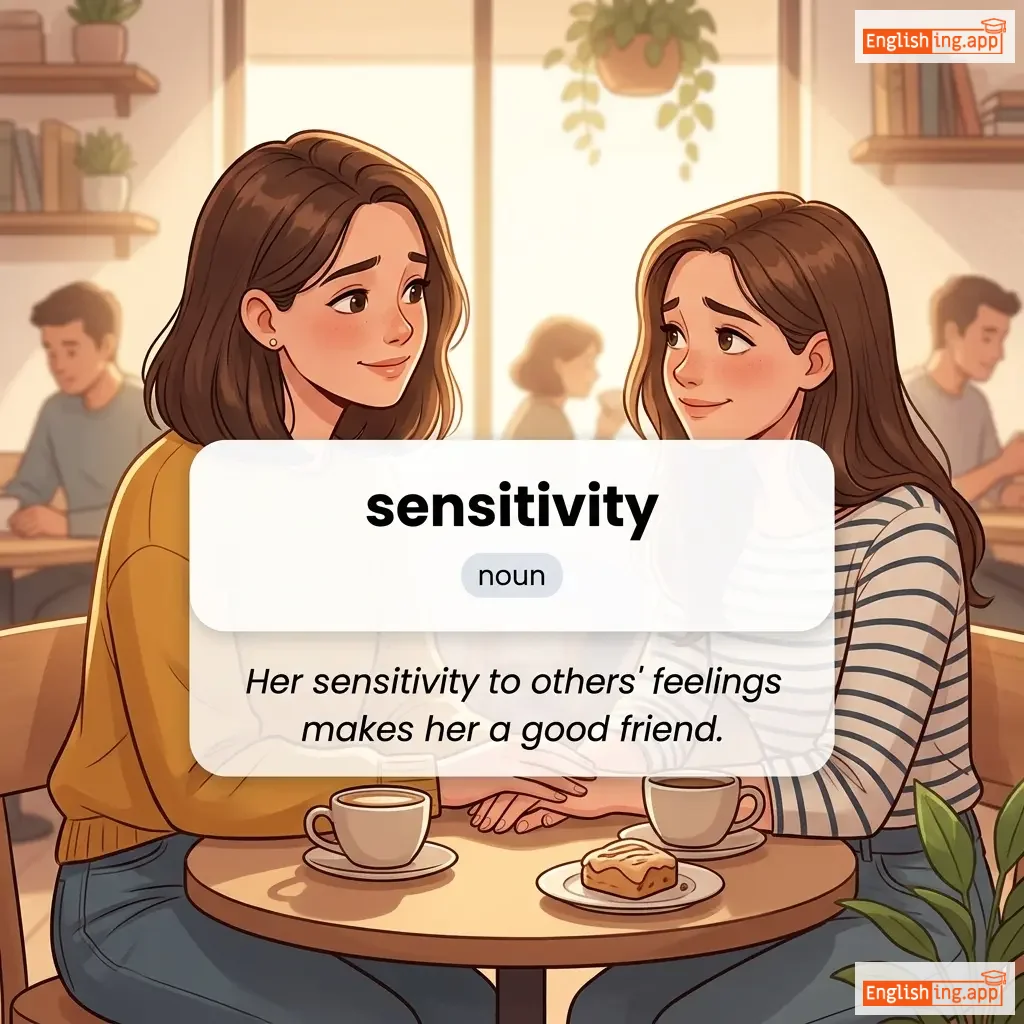
/ˌsɛnsɪˈtɪvɪti/
noun
(センシティビティ)
••••••
|
|
感受性
kanjusei
••••••
|
- •••••• | - •••••• | - •••••• | - •••••• |
the quality of being sensitive; ability to detect or respond to slight changes or emotions
••••••
|
Her sensitivity to others' feelings makes her a good friend.
他人の感情に対する彼女の感受性は、彼女を良い友人にします。
••••••
|
他人の感情に対する彼女の感受性は、彼女を良い友人にします。
Tanin no kanjō ni taisuru kanojo no kanjusei wa, kanojo o yoi yūjin ni shimasu.
••••••
|
cultural sensitivity
文化的感受性
••••••
|
awareness and respect for cultural differences
••••••
|
文化的感受性
bunkateki kanjusei
••••••
|
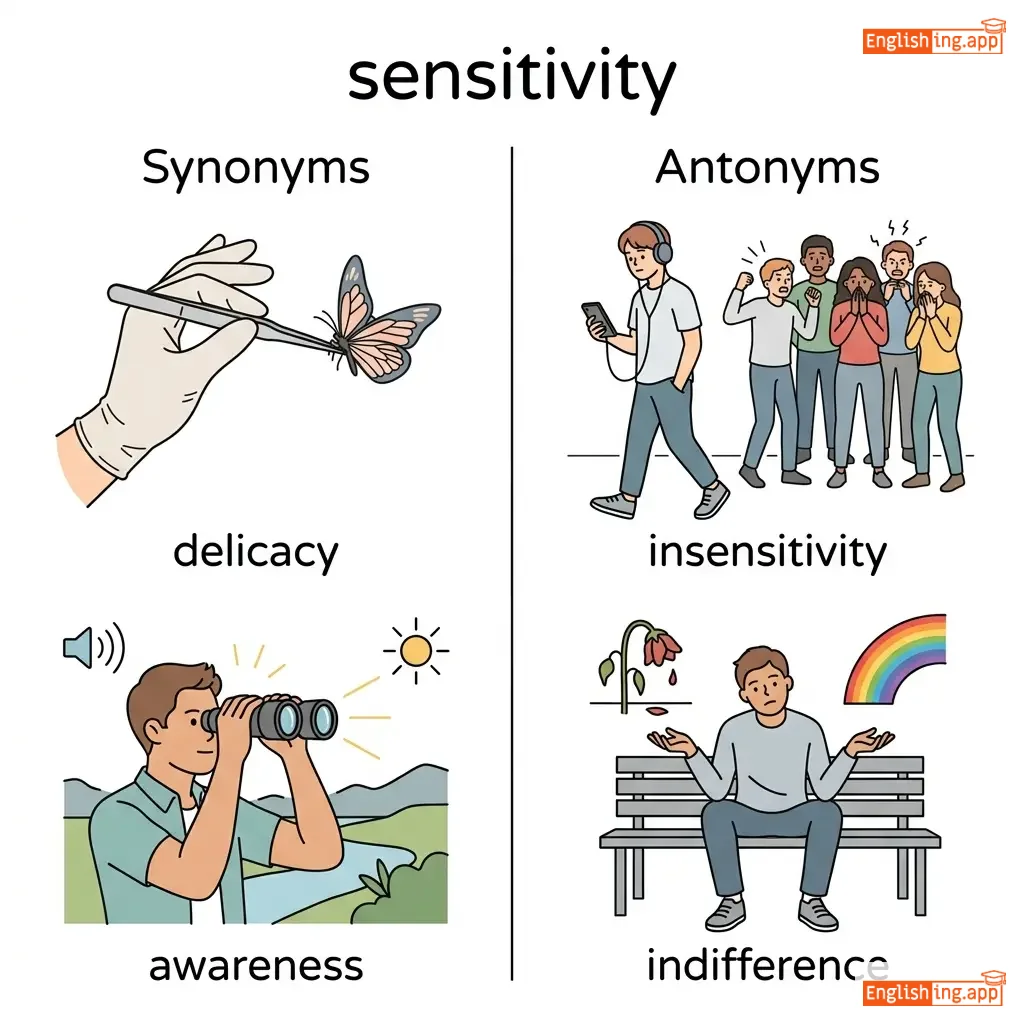
delicacy, awareness, responsiveness, empathy, receptivity
••••••
|
insensitivity, indifference, numbness
••••••
|
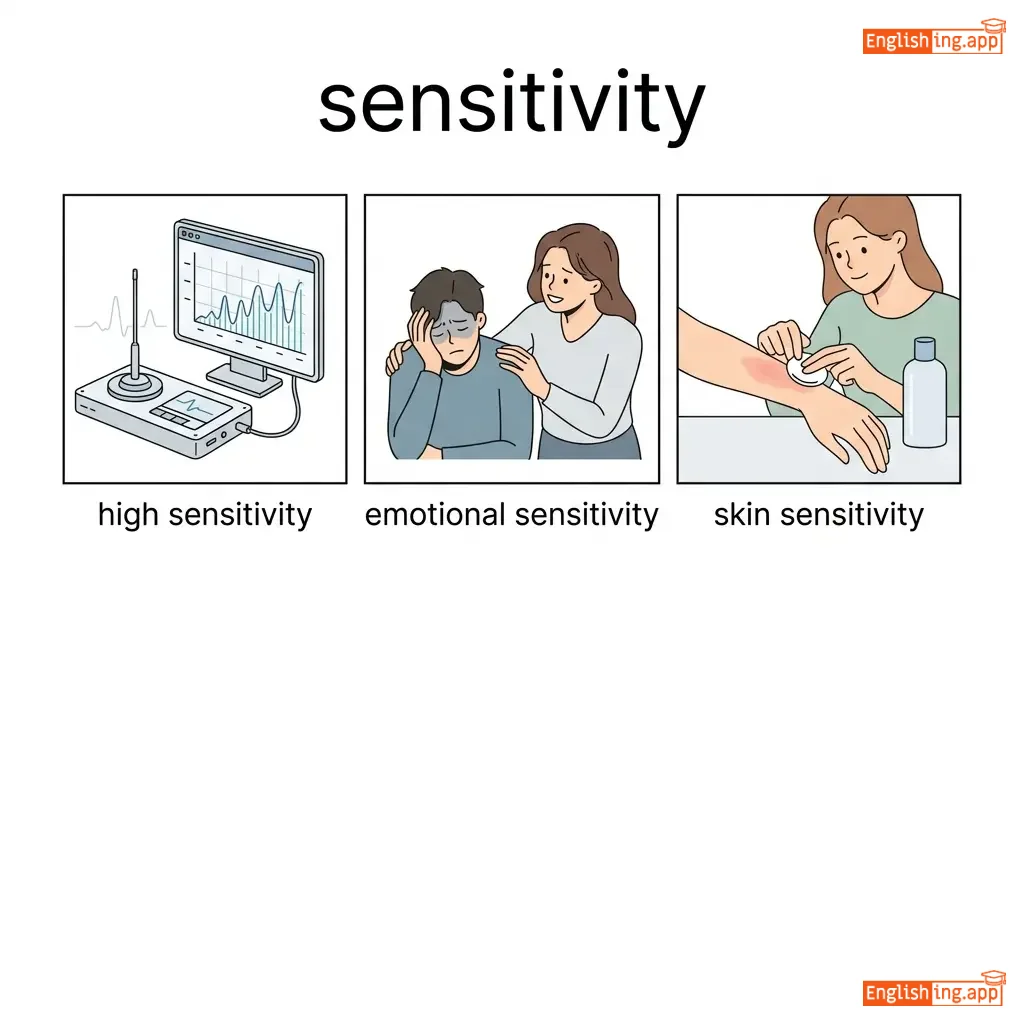
high sensitivity, emotional sensitivity, skin sensitivity, cultural sensitivity
••••••
|
感受性 = 感じる + 性, 微細な感情を感じる力
••••••
|
|
#4468
📜
|
/ˈsɛntəns/
noun, verb
(センテンス)
••••••
|
- •••••• |
文; 刑期
bun; keiki
••••••
|
sentenced
センテンスド
••••••
|
sentenced
センテンスド
••••••
|
sentences
センテンスズ
••••••
|
sentencing
センテンスイング
••••••
|
A set of words that expresses a complete thought; or a punishment given by a court of law.
••••••
|
The judge gave him a five-year prison sentence.
裁判官は彼に5年間の刑期を与えました。
••••••
|
裁判官は彼に5年間の刑期を与えました。
Saibankan wa kare ni go-nenkan no keiki o ataemashita.
••••••
|
serve a sentence
刑期を終える
••••••
|
to spend time in prison as ordered by a court
••••••
|
刑期を終える
keiki o oeru
••••••
|
judgment, ruling, phrase, clause, punishment
••••••
|
acquittal, freedom
••••••
|
long sentence, short sentence, prison sentence, death sentence
••••••
|
Sentence は文や刑期を意味します。どちらも最後にピリオドがつきます!
••••••
|
|
#4469
💭
|
/ˈsɛntɪmənt/
noun
(センチメント)
••••••
|
- •••••• |
感情
kanjou
••••••
|
- •••••• | - •••••• | - •••••• | - •••••• |
a view or opinion that is based on emotion rather than reason
••••••
|
Public sentiment was against the new law. |
公共の感情は新しい法律に反対でした。
Koukyou no kanjou wa atarashii houritsu ni hantai deshita.
••••••
|
public sentiment |
the general feeling or opinion of the people
••••••
|
公共感情
koukyou kanjou
••••••
|
emotion, feeling, attitude, opinion, view
••••••
|
indifference, apathy
••••••
|
public sentiment, market sentiment, patriotic sentiment, emotional sentiment
••••••
|
Sentiment = 感情 — 感じることでSentimentを覚えて!
••••••
|
|
#4470
↔️
|
/ˈsɛpəˌreɪt/
verb
(セパレート)
••••••
|
- •••••• |
分ける
wakeru
••••••
|
separated
セパレーテッド
••••••
|
separated
セパレーテッド
••••••
|
separates
セパレーツ
••••••
|
separating
セパレーティング
••••••
|
To cause to move or be apart; to divide into distinct elements.
••••••
|
The teacher separated the students into groups.
教師は学生をグループに分けました。
••••••
|
教師は学生をグループに分けました。
Kyoushi wa gakusei wo guruupu ni wakemashita.
••••••
|
separate the wheat from the chaff
穀物とわらを分ける
••••••
|
To distinguish what is valuable or useful from what is worthless.
••••••
|
価値のあるものと価値のないものを分ける
Kachi no aru mono to kachi no nai mono wo wakeru
••••••
|
divide, split, detach, isolate, disconnect
••••••
|
unite, combine, connect
••••••
|
separate rooms, separate ways, separate from, separate into groups
••••••
|
分ける = '分ける', 'We care' = 分ける。
••••••
|
|
#4471
🔹
|
/ˈsɛpəreɪtɪd/
adjective
(セパレーテッド)
••••••
|
- •••••• |
分かれた
wakareta
••••••
|
- •••••• | - •••••• | - •••••• | - •••••• |
divided or disconnected from something else; not together
••••••
|
They have been living in separated houses since the divorce.
離婚以来、彼らは別々の家に住んでいます。
••••••
|
離婚以来、彼らは別々の家に住んでいます。
Rikon irai, karera wa betsubetsu no ie ni sunde imasu.
••••••
|
- •••••• | - •••••• | - •••••• |
divided, detached, isolated, apart, disconnected
••••••
|
joined, united, connected
••••••
|
separated by distance, separated from, legally separated, emotionally separated
••••••
|
Wakareta = separated; think of 'wakaru' (to split)
••••••
|
|
#4472
↔️
|
/ˈsɛp.ər.ət.li/
adverb
(セパレトリ)
••••••
|
- •••••• |
別々に
betsubetsu ni
••••••
|
- •••••• | - •••••• | - •••••• | - •••••• |
in a way that is apart or individually; not together
••••••
|
They decided to travel separately to the conference.
彼らは会議に別々に行くことに決めた。
••••••
|
彼らは会議に別々に行くことに決めた。
Karera wa kaigi ni betsubetsu ni iku koto ni kimeta.
••••••
|
- •••••• | - •••••• | - •••••• |
individually, independently, apart, alone
••••••
|
together, jointly
••••••
|
handled separately, treated separately, arranged separately
••••••
|
別々に = separately (think '別れる' = to separate)
••••••
|
|
#4473
💔
|
/ˌsɛpəˈreɪʃən/
noun
(セパレーション)
••••••
|
- •••••• |
分離
bunri
••••••
|
- •••••• | - •••••• | - •••••• | - •••••• |
the act of moving or being moved apart; a division or disconnection
••••••
|
The separation of the two friends was difficult for both of them. |
二人の友達の分離は、二人にとって難しかった。
Futari no tomodachi no bunri wa, futari ni totte muzukashikatta.
••••••
|
separation anxiety |
a feeling of distress when separated from someone or something one is attached to
••••••
|
分離不安
bunri fuan
••••••
|
division, detachment, split, disconnection, segregation
••••••
|
union, connection, unity
••••••
|
separation anxiety, legal separation, physical separation, emotional separation
••••••
|
分離=セパレーション、これが不安を引き起こすかもしれません。
••••••
|
|
#4474
🍂
|
/sɛpˈtɛmbər/
noun
(セプテンバー)
••••••
|
- •••••• |
9月
kugatsu
••••••
|
- •••••• | - •••••• | - •••••• | - •••••• |
The ninth month of the year in the Gregorian calendar
••••••
|
My birthday is in September, and I always celebrate it with friends.
私の誕生日は9月で、いつも友達と一緒に祝います。
••••••
|
私の誕生日は9月で、いつも友達と一緒に祝います。
Watashi no tanjoubi wa kugatsu de, itsumo tomodachi to issho ni iwaimasu.
••••••
|
- •••••• | - •••••• | - •••••• |
ninth month, autumn month, fall month
••••••
|
January, February
••••••
|
September weather, September festival, September holidays, September meeting
••••••
|
9月 = month 9, 'seven plus two'
••••••
|
|
#4475
🔢
|
/ˈsiːkwəns/
noun
(シークエンス)
••••••
|
- •••••• |
順番
junban
••••••
|
- •••••• | - •••••• | - •••••• | - •••••• |
A particular order in which related things follow each other.
••••••
|
The magician asked us to remember the sequence of cards.
魔法使いは私たちにカードのシークエンスを覚えておくように頼んだ。
••••••
|
魔法使いは私たちにカードの順番を覚えておくように頼んだ。
Mahōtsukai wa watashitachi ni kādo no junban o oboete oku yō ni tanonda.
••••••
|
in sequence
シークエンスで
••••••
|
in the correct or logical order
••••••
|
順番で
Junban de
••••••
|
order, arrangement, series, progression, succession
••••••
|
chaos, disorder, randomness
••••••
|
logical sequence, sequence of events, number sequence, genetic sequence
••••••
|
順番 = 映画のシーンのように、出来事が順番に起こる。
••••••
|
|
#4476
🔢
|
/ˈsɪr.i.əl/
adjective
(シリアル)
••••••
|
- •••••• |
連続した; シリアル
renzokushita; shiriaru
••••••
|
- •••••• | - •••••• | - •••••• | - •••••• |
happening in a series; consecutive; arranged in order
••••••
|
The serial killer was finally caught after years of investigation.
シリアルキラーは長年の調査の後、ついに捕まった。
••••••
|
連続した殺人者は、長年の調査の後、ついに捕まった。
Renzokushita satsujin-sha wa, naganen no chosa no ato, tsuini tsukamatta.
••••••
|
- •••••• | - •••••• | - •••••• |
consecutive, sequential, successive, continuous, ordered
••••••
|
random, scattered, disconnected, sporadic, isolated
••••••
|
serial number, serial killer, serial publication, serial drama
••••••
|
Serial killer caught after a series of events.
••••••
|
|
#4477
📺
|
/ˈsɪriz/
noun
(シリーズ)
••••••
|
- •••••• |
シリーズ
shirizu
••••••
|
- •••••• | - •••••• | - •••••• | - •••••• |
a number of events, objects, or people of a similar or related kind coming one after another; a set of related television or radio programmes
••••••
|
The detective series ran for five successful seasons.
その探偵シリーズは5シーズンにわたり放送され、成功を収めた。
••••••
|
その探偵シリーズは5シーズンにわたり放送され、成功を収めた。
Sono tantei shirizu wa go shiizun ni watari housou sare, seikou o osameta.
••••••
|
- •••••• | - •••••• | - •••••• |
succession, sequence, chain, string
••••••
|
individual, single, standalone
••••••
|
TV series, book series, lecture series
••••••
|
Series = シリーズ, imagine a TV shelf with shi ri zu lined up as an ichiren (一連) of related bangumi
••••••
|
|
#4478
😐
|
/ˈsɪəriəs/
adjective
(シリアス)
••••••
|
- •••••• |
真剣
shinken
••••••
|
- •••••• | - •••••• | - •••••• | - •••••• |
showing deep thought, sincerity, or importance; not joking
••••••
|
She gave me a serious look before making her decision. |
彼女は決定を下す前に真剣な目で私を見ました。
Kanojo wa kettei o kudasu mae ni shinken na me de watashi o mimashita.
••••••
|
dead serious |
completely serious and not joking
••••••
|
本気で真剣
honki de shinken
••••••
|
grave, earnest, important, solemn, severe
••••••
|
trivial, playful, lighthearted
••••••
|
serious problem, serious matter, serious illness, serious mistake
••••••
|
真剣は真面目な態度 – 映画の真剣なシーンのように。
••••••
|
|
#4479
😐
|
/ˈsɪə.ri.əs.li/
adverb
(シリアスリー)
••••••
|
- •••••• |
真剣に
shinken ni
••••••
|
- •••••• | - •••••• | - •••••• | - •••••• |
in a solemn or thoughtful manner
••••••
|
She took the matter very seriously. |
彼女はその問題を非常に真剣に取り扱った。
Kanojo wa sono mondai o hijō ni shinken ni toriatsukatta.
••••••
|
- •••••• | - •••••• | - •••••• |
earnestly, sincerely, thoughtfully, profoundly
••••••
|
lightly, casually, humorously
••••••
|
take seriously, treat seriously, speak seriously
••••••
|
Serious people always take matters 'seriously' in Japan!
••••••
|
|
#4480
🛎️
|
/ˈsɜːrvɪs/
noun
(サーヴィス)
••••••
|
|
サービス
sābisu
••••••
|
- •••••• | - •••••• | - •••••• | - •••••• |
the action of helping or doing work for someone; a system providing a public need
••••••
|
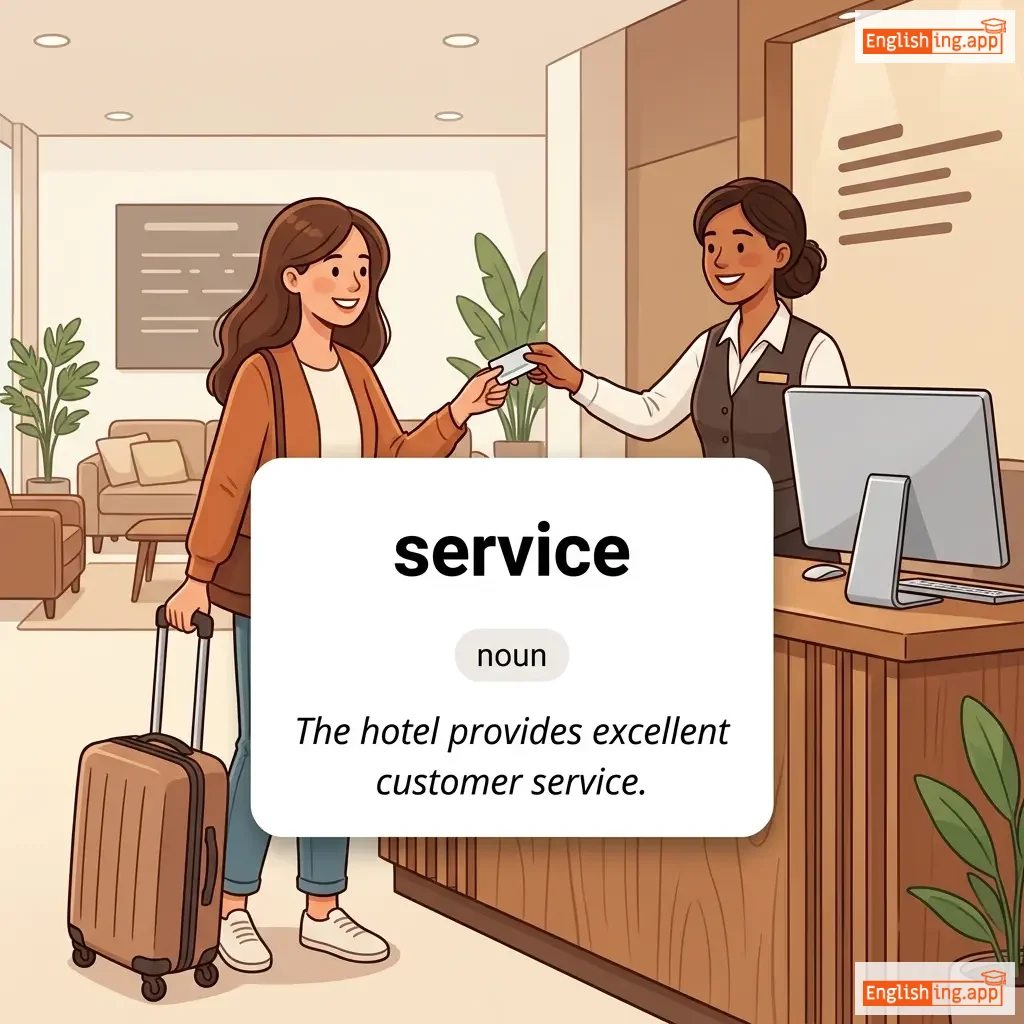
The hotel provides excellent customer service. |
ホテルは優れた顧客サービスを提供しています。
Hoteru wa sugureta kokyaku sābisu o teikyō shiteimasu.
••••••
|
in service |
currently working or functioning
••••••
|
サービス中
sābisu-chū
••••••
|
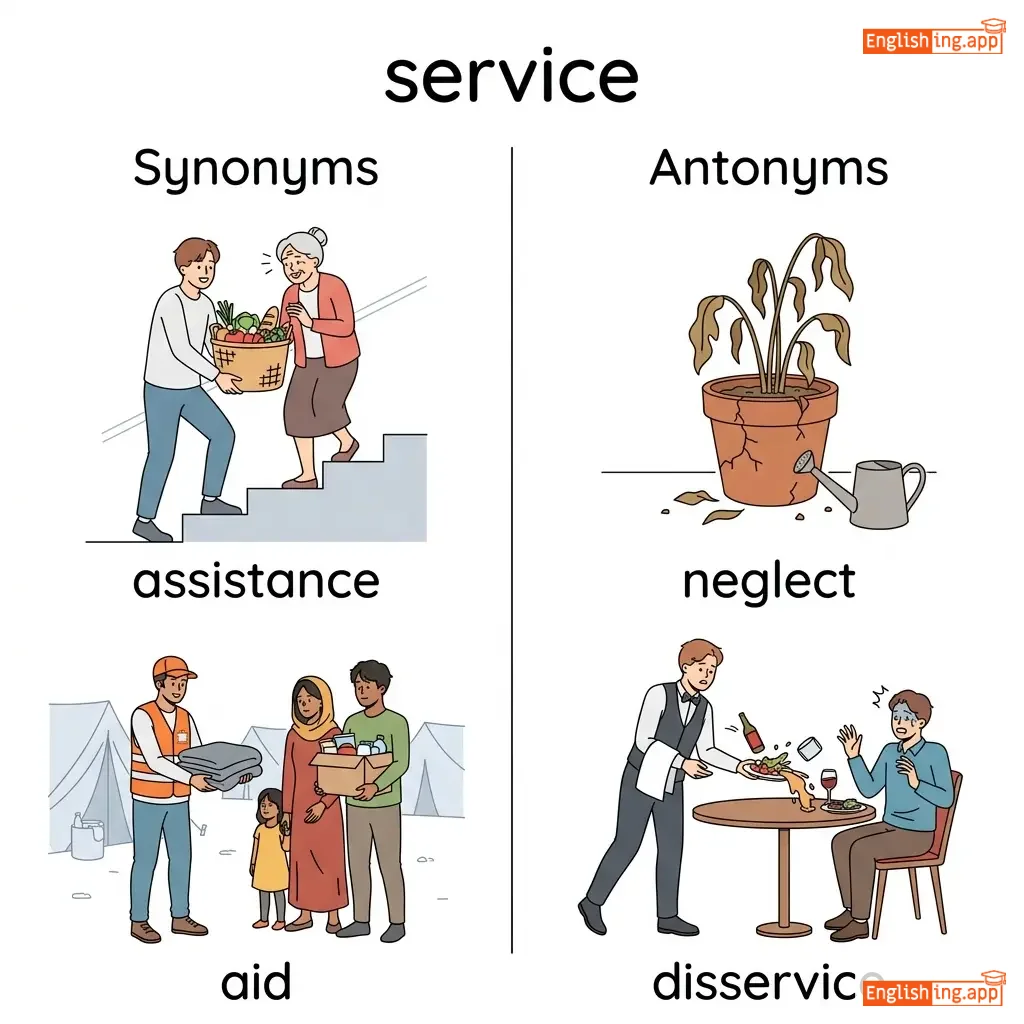
assistance, aid, duty, work
••••••
|
neglect, disservice
••••••
|
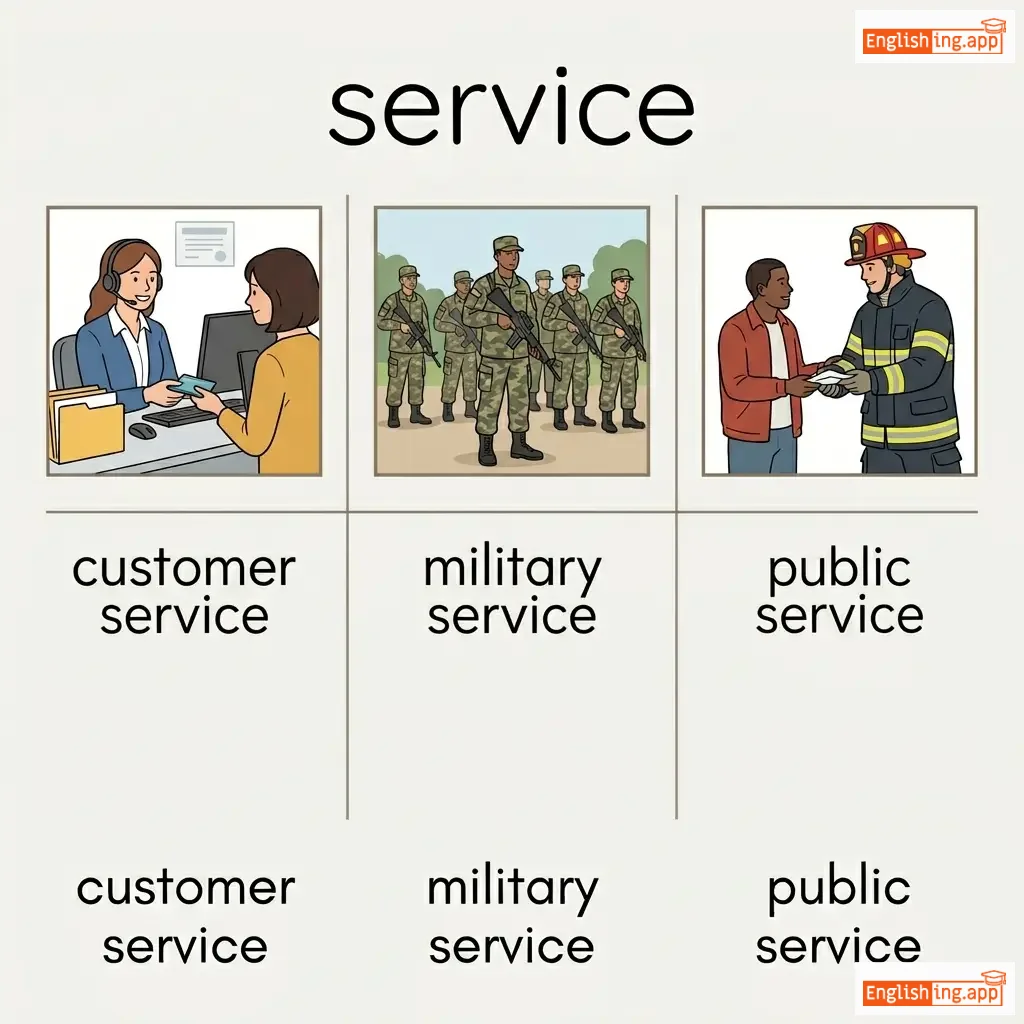
customer service, military service, public service, service industry
••••••
|
サービスは援助を意味し、レストランでのサービスは食事を提供することです。
••••••
|
|
#4481
📅
|
/ˈsɛʃ.ən/
noun
(セッション)
••••••
|
|
セッション
sesshon
••••••
|
- •••••• | - •••••• | - •••••• | - •••••• |
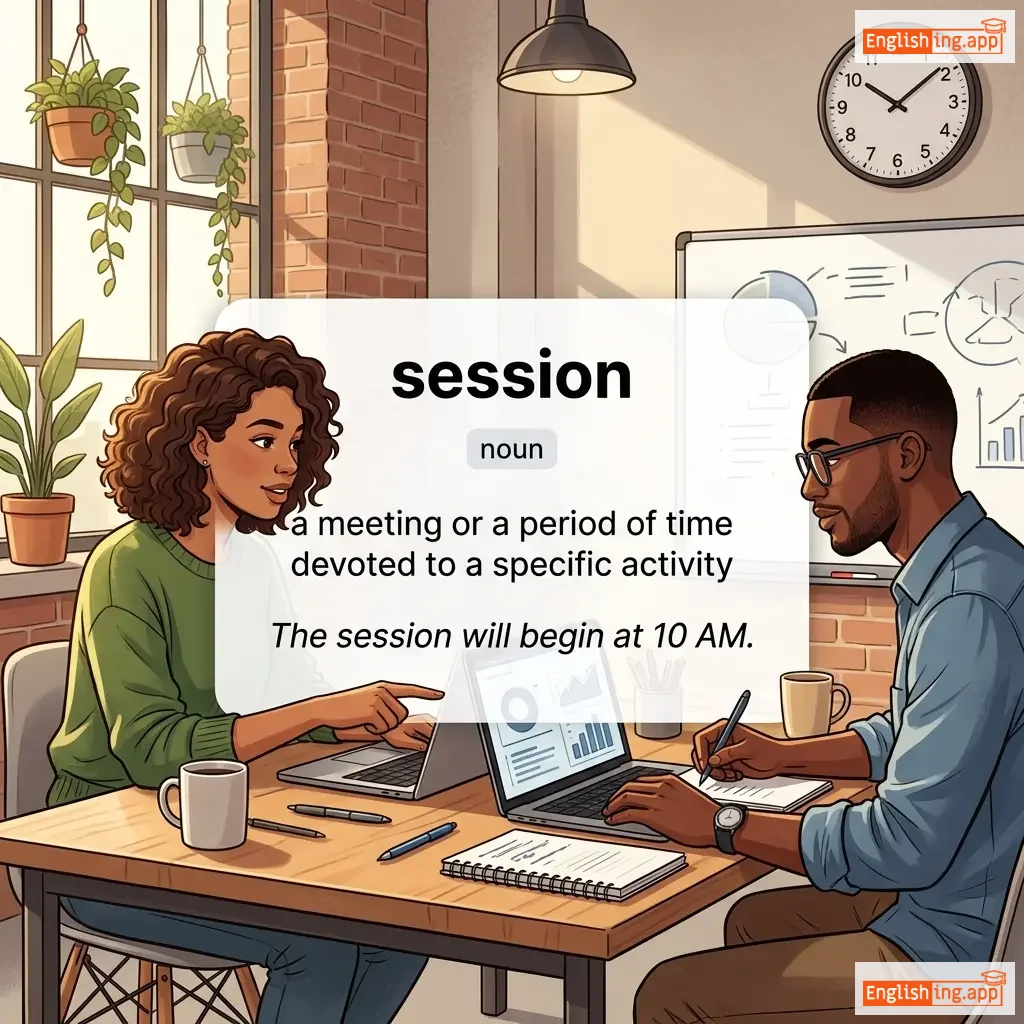
a meeting or a period of time devoted to a specific activity
••••••
|
The session will begin at 10 AM.
セッションは午前10時に開始します。
••••••
|
セッションは午前10時に開始します。
Sesshon wa gozen 10-ji ni kaishi shimasu.
••••••
|
- •••••• | - •••••• | - •••••• |
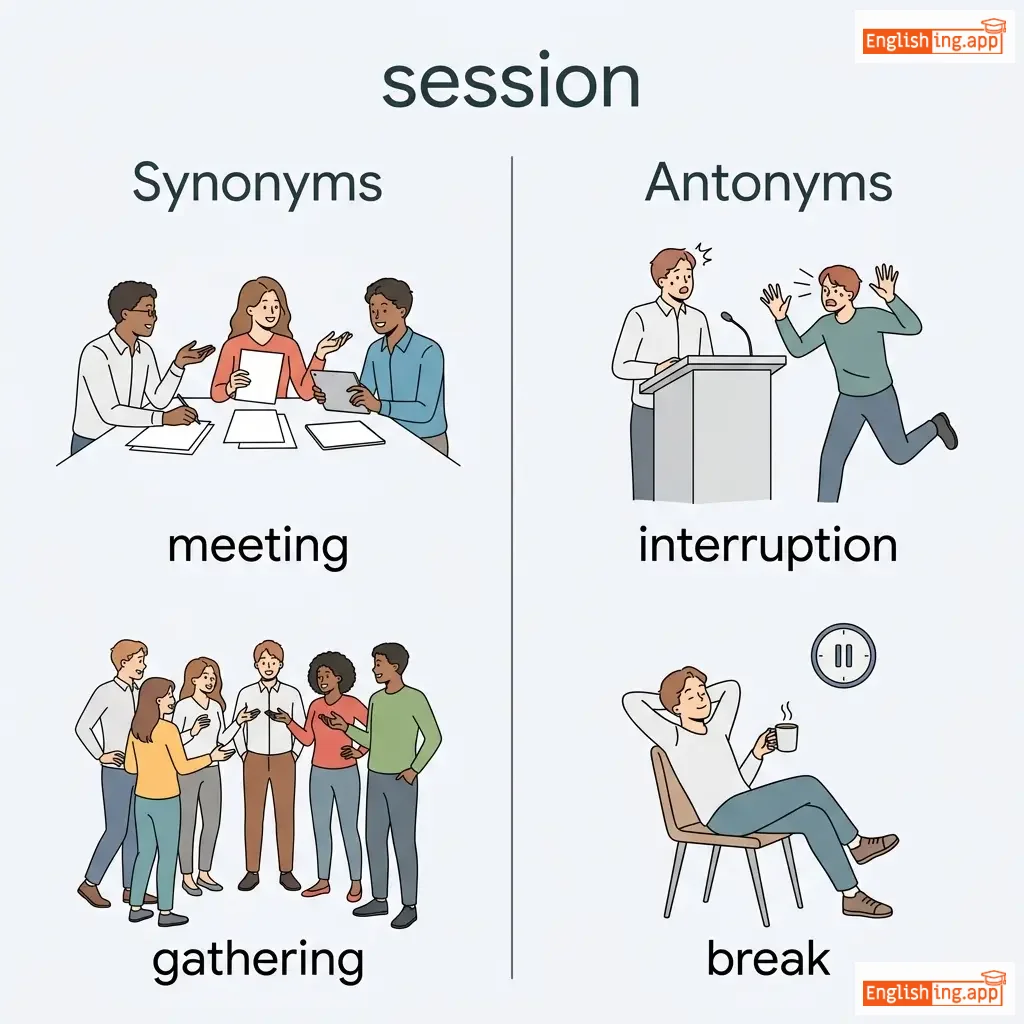
meeting, gathering, conference, seminar
••••••
|
interruption, break
••••••
|
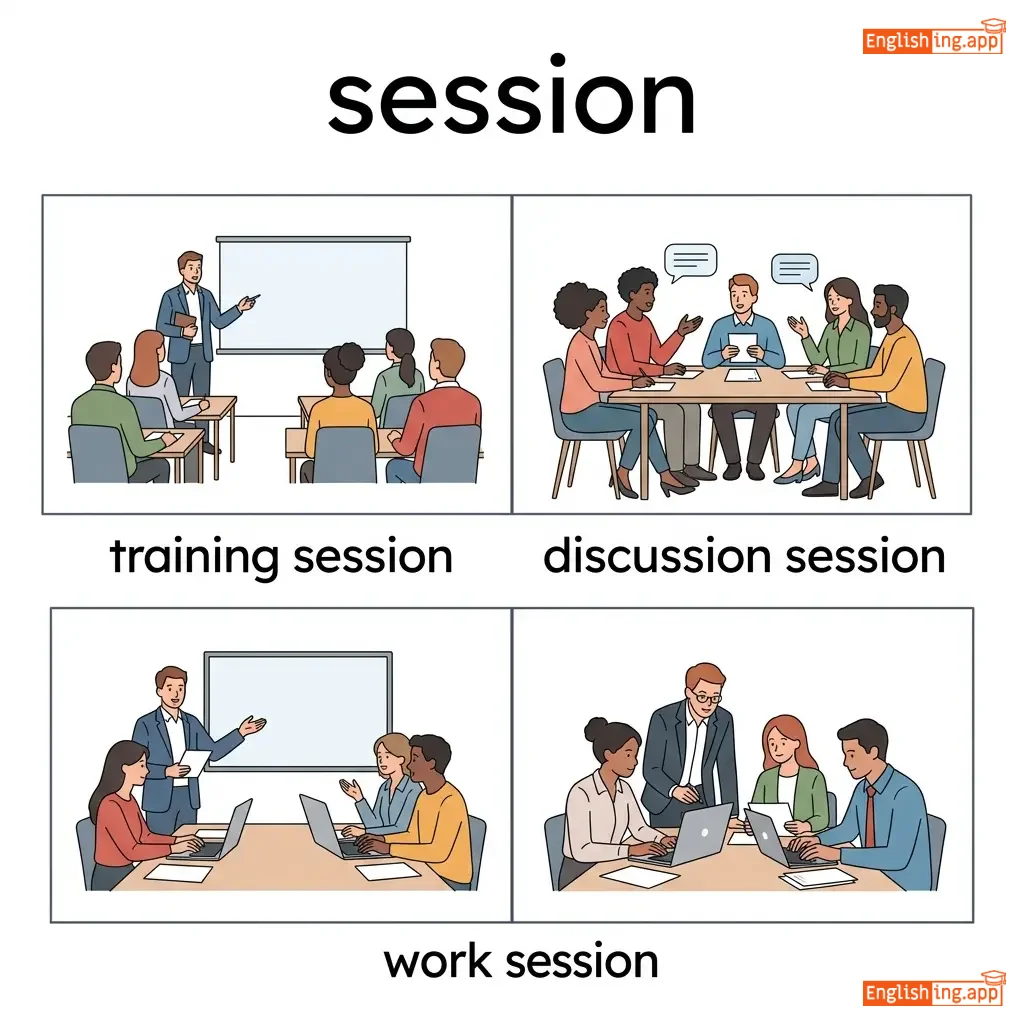
training session, discussion session, work session
••••••
|
Session = アクションのための時間を設定する – セッションをスケジュールすることを考えて!
••••••
|
|
#4482
📍
|
/set/
verb
(セット)
••••••
|
|
設置する
secchi suru
••••••
|
set
セット
••••••
|
set
セット
••••••
|
sets
セッツ
••••••
|
setting
セッティング
••••••
|
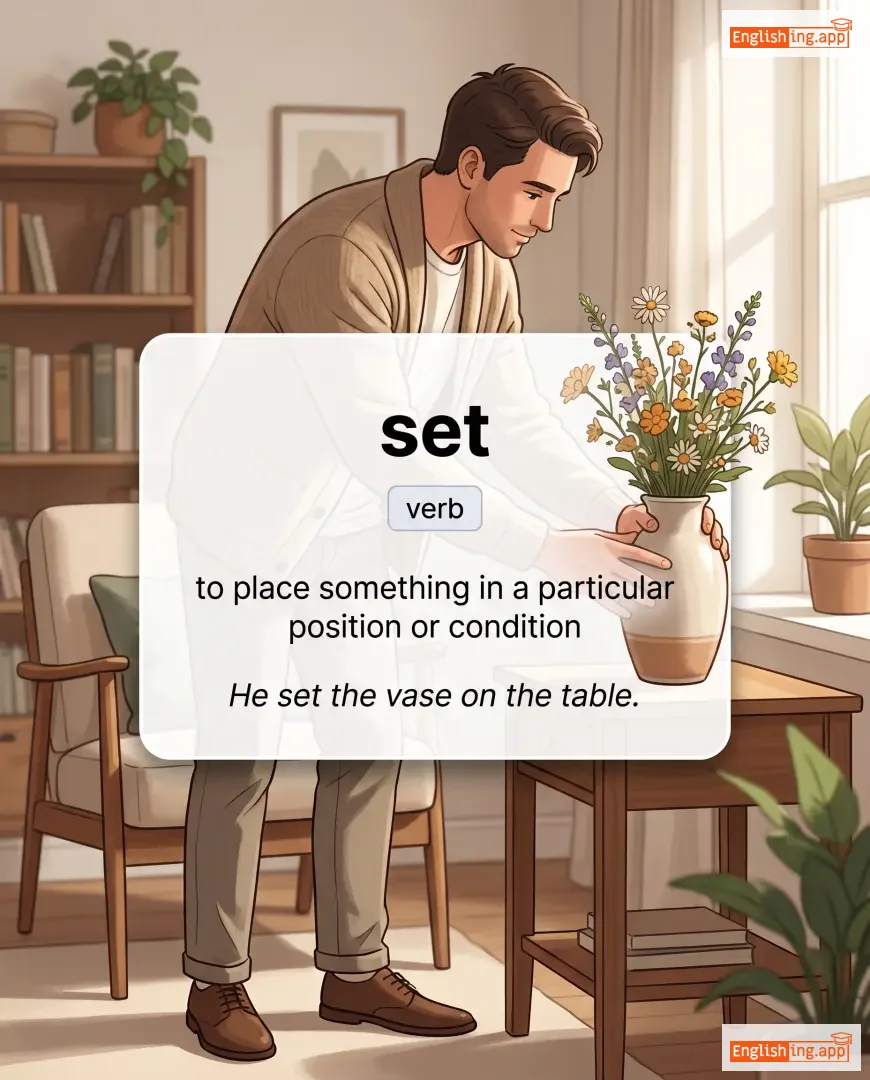
to put or place something in a position; to establish
••••••
|
She set the book on the table.
彼女は本をテーブルに置いた。
••••••
|
彼女は本をテーブルに置いた。
Kanojo wa hon o tēburu ni oita.
••••••
|
- •••••• | - •••••• | - •••••• |
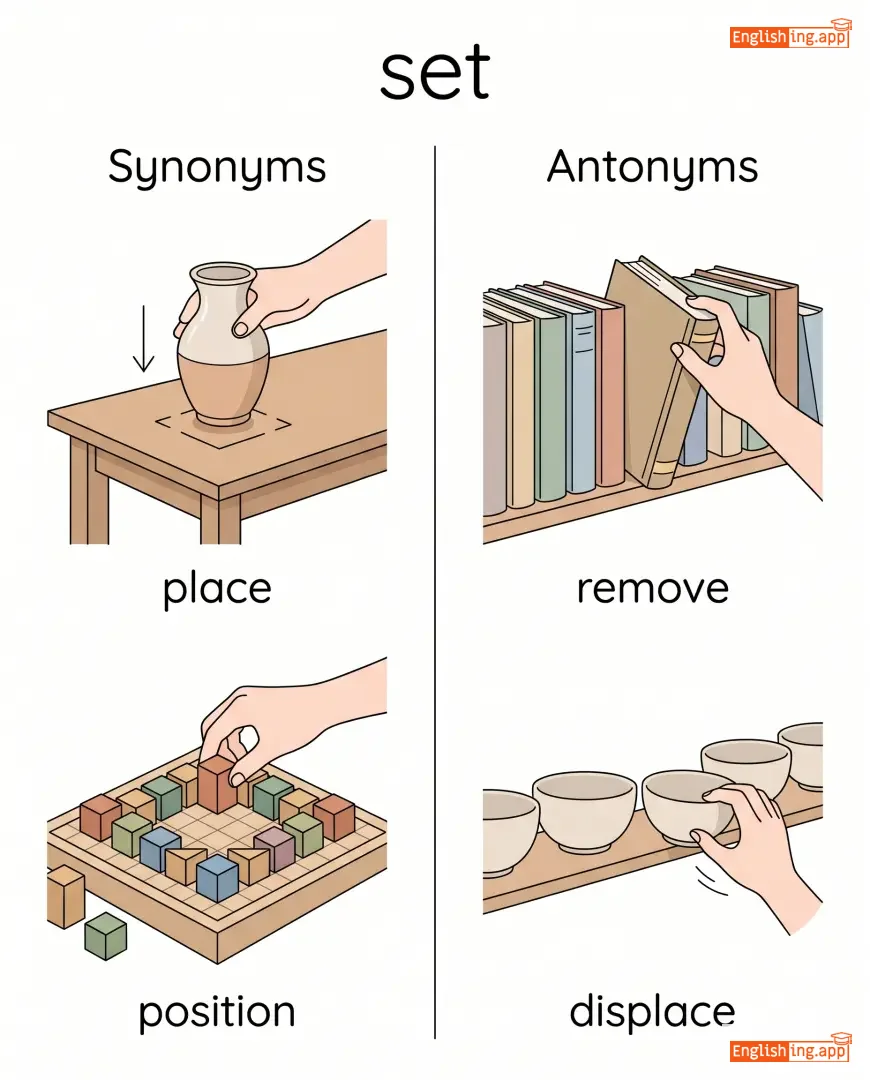
place, put, position, establish
••••••
|
remove, displace, unset, disturb
••••••
|
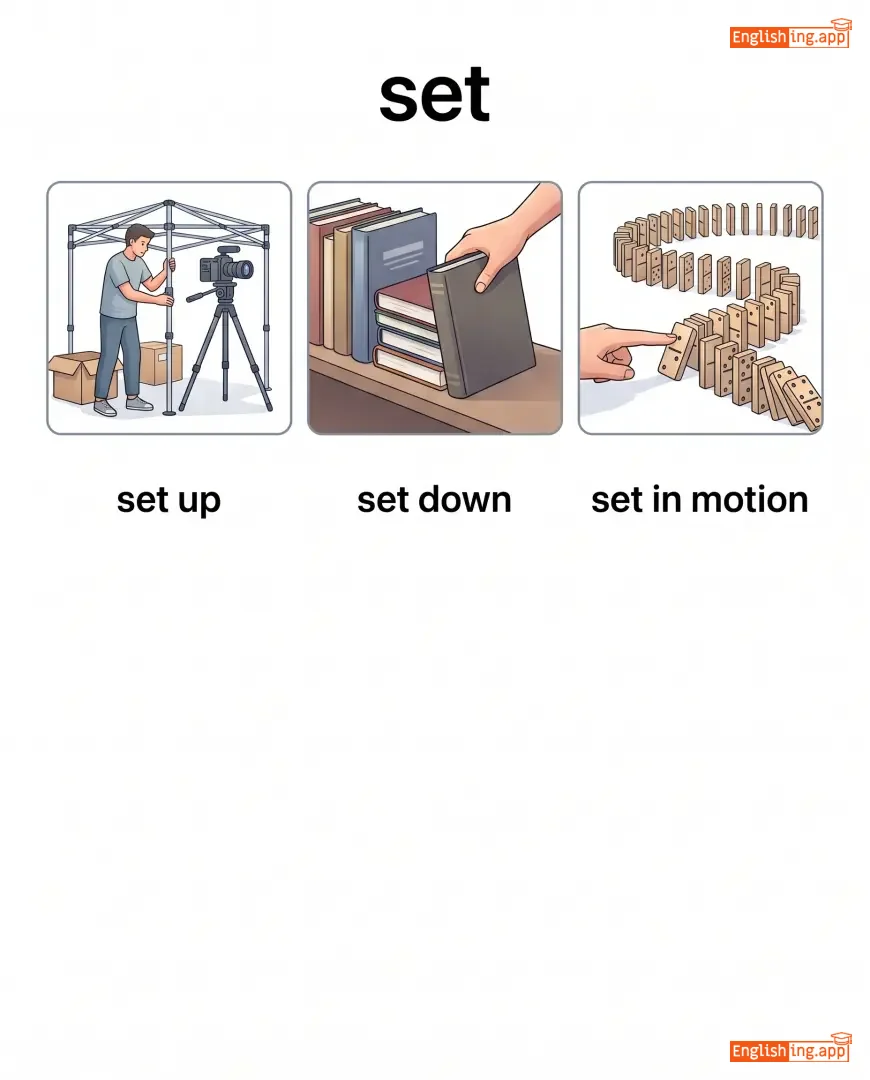
set aside, set up, set down, set off, set the table
••••••
|
Set the book on the table, as this is where it belongs.
••••••
|
|
#4483
⚙️
|
/ˈsɛt ʌp/
noun
(セットアップ)
••••••
|
- •••••• |
構成
kousei
••••••
|
- •••••• | - •••••• | - •••••• | - •••••• |
The arrangement or organization of something; a planned structure or scheme
••••••
|
The company presented a new set-up for the office layout.
会社はオフィスレイアウトのために新しいセットアップを発表した。
••••••
|
会社はオフィスレイアウトのために新しいセットアップを発表した。
Kaisha wa ofisu reiauto no tame ni atarashii settoappu o happyou shita.
••••••
|
- •••••• | - •••••• | - •••••• |
arrangement, organization, layout, configuration
••••••
|
disorganization, chaos
••••••
|
office set-up, set-up process, technical set-up
••••••
|
Set-up = 構成; イメージして全て整える
••••••
|
|
#4484
🌅
|
/ˈsɛtɪŋ/
noun
(セットイング)
••••••
|
- •••••• |
セット
setto
••••••
|
- •••••• | - •••••• | - •••••• | - •••••• |
the environment or place where something happens
••••••
|
The setting of the movie was a beautiful beach.
映画の舞台は美しいビーチでした。
••••••
|
映画の舞台は美しいビーチでした。
Eiga no butai wa utsukushī bīchi deshita.
••••••
|
- •••••• | - •••••• | - •••••• |
environment, backdrop, surroundings, scene
••••••
|
dismantling, disruption
••••••
|
movie setting, setting sun, setting time
••••••
|
Setting the scene – 映画のシーンを思い浮かべて、すべてがそこに展開します!
••••••
|
|
#4485
🏠
|
/ˈsetəl/
verb
(セトル)
••••••
|
|
定住する
teijū suru
••••••
|
settled
セトルド
••••••
|
settled
セトルド
••••••
|
settles
セトルズ
••••••
|
settling
セトリング
••••••
|
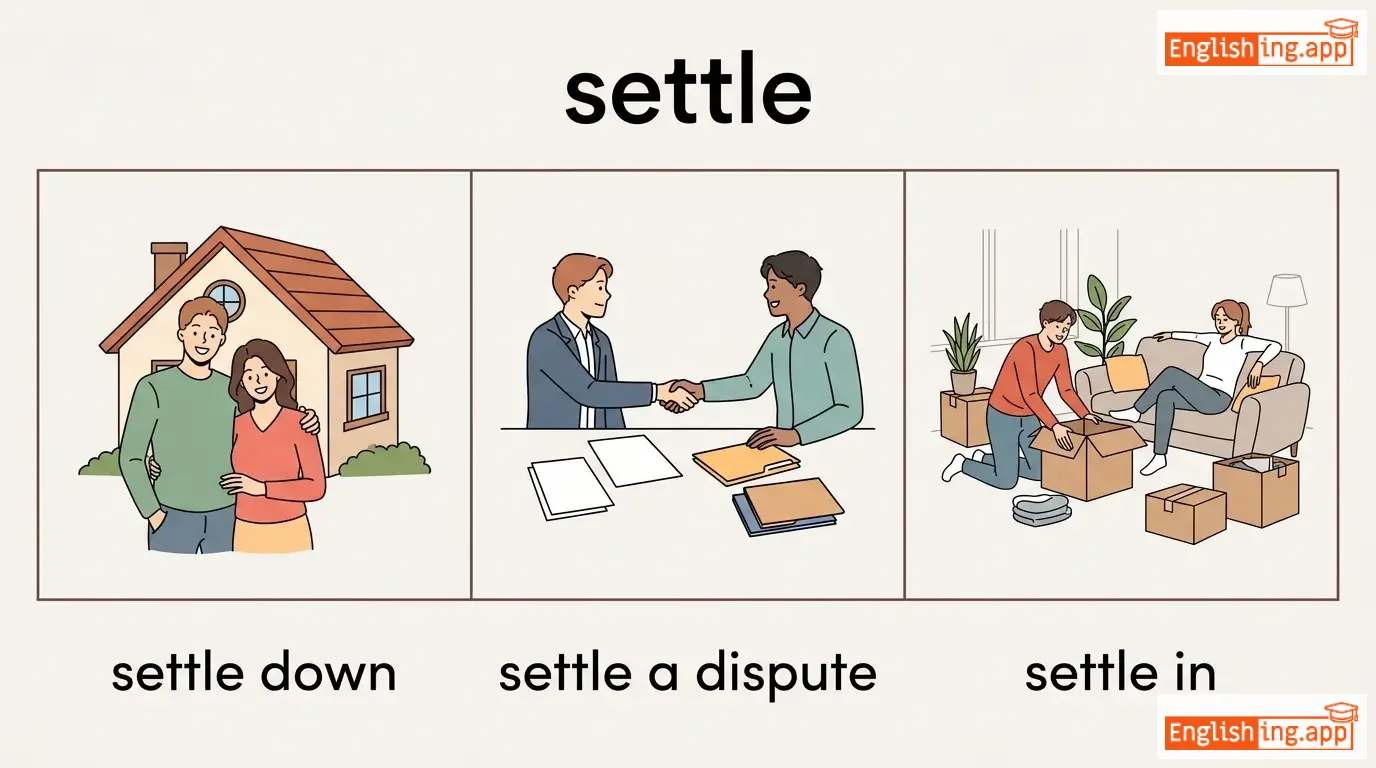
to resolve; to establish residence; to calm down
••••••
|
They decided to settle in a quiet village.
彼らは静かな村に定住することに決めました。
••••••
|
彼らは静かな村に定住することに決めました。
Karera wa shizuka na mura ni teijū suru koto ni kimemashita.
••••••
|
- •••••• | - •••••• | - •••••• |
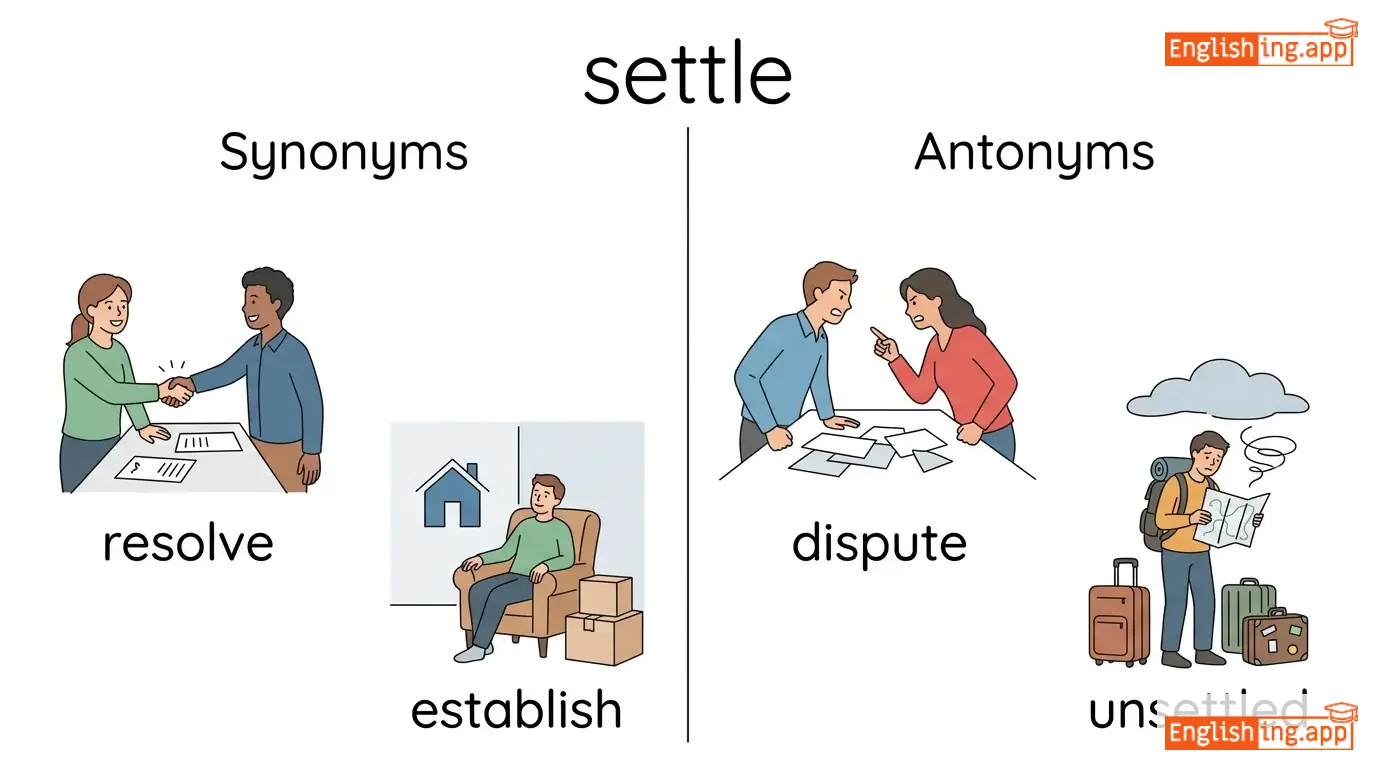
resolve, establish, arrange, decide
••••••
|
disturb, unsettle, move, relocate
••••••
|
settle down, settle in, settle for, settle matters
••••••
|
定住する Settler のように
••••••
|
|
#4486
🏘️
|
/ˈset.əl.mənt/
noun
(setoramento)
••••••
|
- •••••• |
定住; 合意
teijuu; goi
••••••
|
- •••••• | - •••••• | - •••••• | - •••••• |
a place where people establish a community; an agreement that ends a dispute
••••••
|
The early settlement was built near the river for easy access to water. |
初期の定住地は川の近くに建設され、水を簡単に取り入れるようにされていました。
shoki no teijūchi wa kawa no chikaku ni kensetsu sarete, mizu o kantan ni toriireru yō ni sarete imashita.
••••••
|
- •••••• | - •••••• | - •••••• |
colony, community, village, agreement
••••••
|
departure, evacuation, conflict, dispute
••••••
|
early settlement, peaceful settlement, reach a settlement
••••••
|
Settlement in Japanese: '定住', think of a peaceful community by the river.
••••••
|
|
#4487
🏡
|
/ˈsɛtlər/
noun
(ˈsɛtlər)
••••••
|
- •••••• |
入植者
nyūshokusha
••••••
|
- •••••• | - •••••• | - •••••• | - •••••• |
a person who settles in a new area or land
••••••
|
The settlers arrived in the new town and started building homes. |
入植者たちは新しい町に到着し、家を建て始めました。
Nyūshokusha-tachi wa atarashī machi ni tōchaku shi, ie o tatehajimemashita.
••••••
|
- •••••• | - •••••• | - •••••• |
colonist, immigrant, pioneer, homesteader
••••••
|
migrant, nomad, transient
••••••
|
early settlers, land settlers, settlers of the new world
••••••
|
Settlers in Japan build new lives by establishing homes in new lands.
••••••
|
|
#4488
7️⃣
|
/ˈsɛvən/
noun
••••••
|
- •••••• | - •••••• | - •••••• | - •••••• | - •••••• | - •••••• |
the number following six and preceding eight
••••••
|
She has seven apples in her basket. |
- •••••• | - •••••• | - •••••• | - •••••• |
7, septuple
••••••
|
none
••••••
|
seven days, seven years, lucky seven
••••••
|
No •••••• |
|
#4489
🔢
|
/ˈsɛvrəl/
adjective
(セヴェラル)
••••••
|
- •••••• |
いくつか
ikutsuka
••••••
|
- •••••• | - •••••• | - •••••• | - •••••• |
more than one but not many; a few
••••••
|
Several people attended the meeting yesterday. |
数人が昨日の会議に出席した。
Sūnin ga kinō no kaigi ni shusseki shita.
••••••
|
- •••••• | - •••••• | - •••••• |
few, numerous, multiple, various
••••••
|
few, none
••••••
|
several items, several years, several attempts
••••••
|
Seven is several, not too many, not too few!
••••••
|
|
#4490
⚠️
|
/sɪˈvɪər/
adjective
(セヴィア)
••••••
|
|
深刻な
shinkokuna
••••••
|
- •••••• | - •••••• | - •••••• | - •••••• |
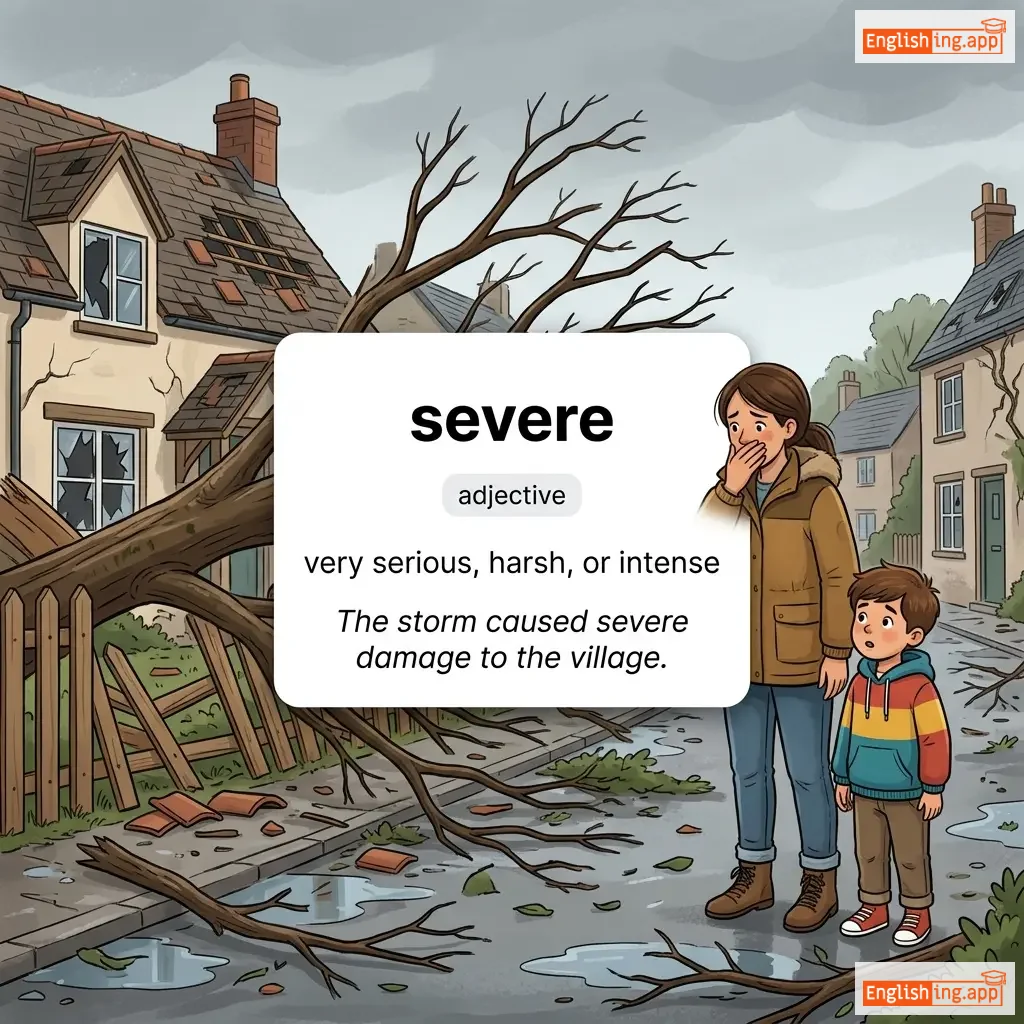
very serious, harsh, or intense
••••••
|
The storm caused severe damage to the village. |
嵐は村に深刻な被害を与えました。
Arashi wa mura ni shinkokuna higai o ataemashita.
••••••
|
severe weather |
harsh or extreme weather conditions
••••••
|
激しい天気
hageshī tenki
••••••
|
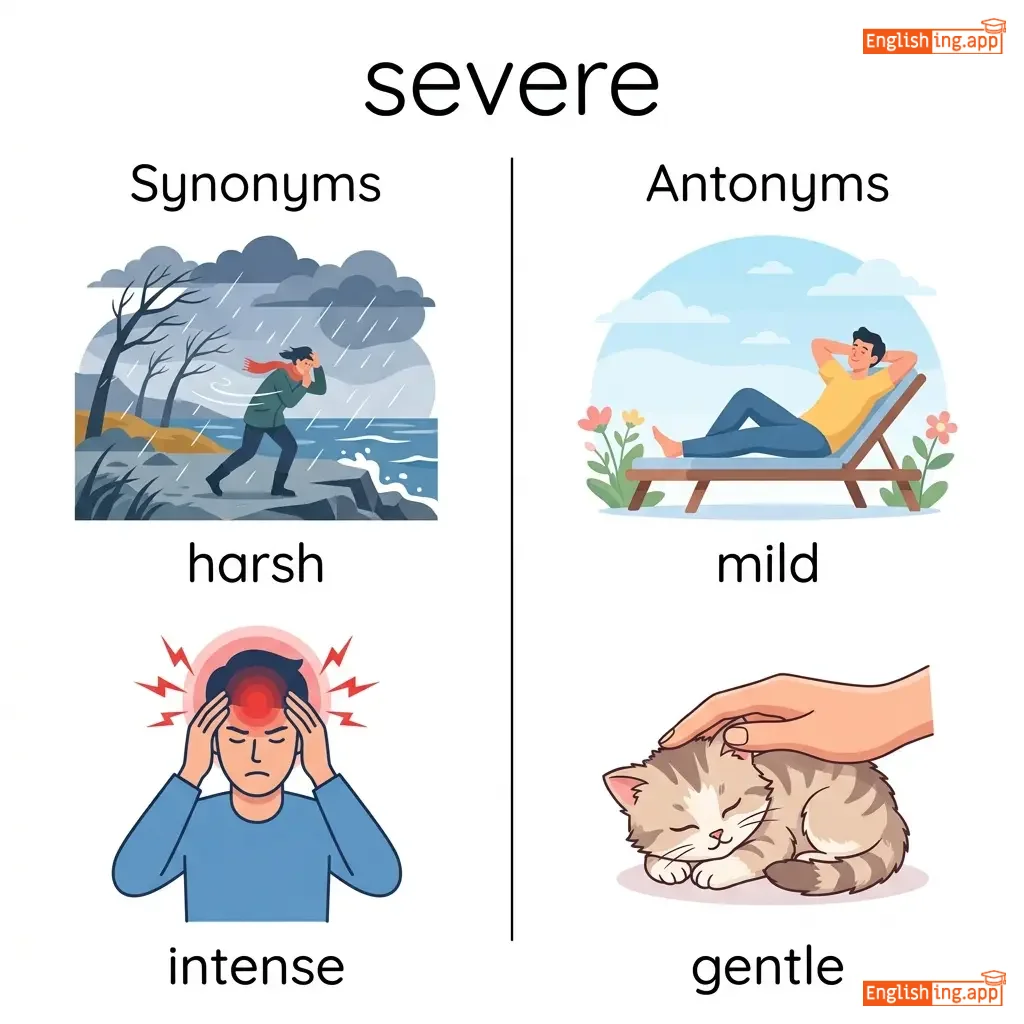
harsh, intense, serious, grave, extreme
••••••
|
mild, gentle, light
••••••
|
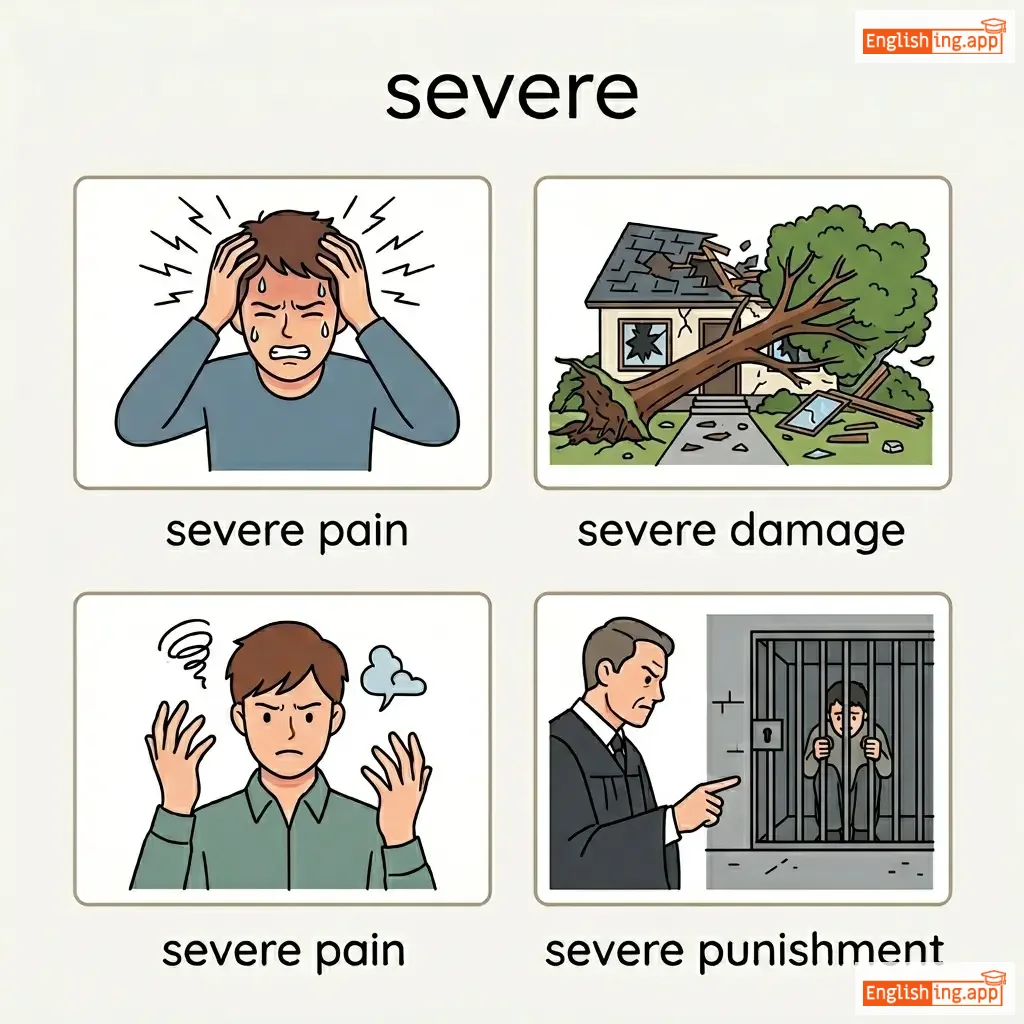
severe pain, severe damage, severe punishment, severe problem
••••••
|
Severeは深刻なを意味します ⚠️ - 嵐が深刻な被害を与える
••••••
|
|
#4491
🚑
|
/sɪˈvɪərli/
adverb
(セヴィアリー)
••••••
|
- •••••• |
ひどく
hidoku
••••••
|
- •••••• | - •••••• | - •••••• | - •••••• |
to a great degree; very seriously or harshly
••••••
|
The patient was severely injured in the accident. |
患者は事故でひどく負傷しました。
Kanja wa jiko de hidoku fushou shimashita.
••••••
|
- •••••• | - •••••• | - •••••• |
seriously, harshly, gravely, intensely
••••••
|
mildly, lightly, gently
••••••
|
severely injured, severely punished, severely damaged, severely limited
••••••
|
Severely injured はひどく負傷したという意味です
••••••
|
|
#4492
🪡
|
/səʊ/
verb
(ハピネス)
••••••
|
- •••••• |
幸せ
shiawase
••••••
|
sewed
••••••
|
sewn
••••••
|
sews
••••••
|
sewing
••••••
|
to join pieces of fabric or material together using a needle and thread
••••••
|
She learned to sew her own clothes at an early age.
彼女は賞を受け取ったとき、自分の幸せを隠すことができませんでした。
••••••
|
彼女は賞を受け取ったとき、自分の幸せを隠すことができませんでした。
Kanojo wa shō o uketotta toki, jibun no shiawase o kakusu koto ga dekimasen deshita.
••••••
|
sew something up
幸せを追い求める
••••••
|
to complete or finish something successfully
••••••
|
幸せを追い求める
shiawase o oi motomeru
••••••
|
stitch, mend, hem, tailor
••••••
|
tear, rip, unpick
••••••
|
sew clothes, sew a dress, sew by hand, sew together
••••••
|
幸せはhappinessと同じ意味、両方とも心からの平和!
••••••
|
|
#4493
🪡
|
/ˈsoʊ.ɪŋ/
noun/verb
(ソーイング)
••••••
|
- •••••• |
裁縫
saihō
••••••
|
sewed
ソウド
••••••
|
sewn
ソウン
••••••
|
sews
ソウズ
••••••
|
sewing
ソーイング
••••••
|
The activity or skill of joining fabric using a needle and thread
••••••
|
She enjoys sewing her own clothes on weekends.
彼女は週末に自分の服をソーイングするのを楽しみます。
••••••
|
彼女は週末に自分の服を裁縫するのを楽しみます。
Kanojo wa shūmatsu ni jibun no fuku o saihō suru no o tanoshimimasu.
••••••
|
needle and thread
needle and thread
••••••
|
Tools used for sewing; often refers to sewing in general
••••••
|
針と糸
hari to ito
••••••
|
stitching, mending, tailoring, embroidery, quilting
••••••
|
ripping, tearing
••••••
|
sewing machine, sewing kit, hand sewing, sewing pattern
••••••
|
Saihō keeps your kimono stitched perfectly!
••••••
|
|
#4494
💋
|
/sɛks/
noun
(セックス)
••••••
|
- •••••• |
性別
seibetsu
••••••
|
- •••••• | - •••••• | - •••••• | - •••••• |
the biological distinction between male and female; sexual activity
••••••
|
He was asked about his sex at the doctor's office. |
彼は医者のオフィスで自分の性別について尋ねられました。
Kare wa isha no ofisu de jibun no seibetsu ni tsuite tazuneraremashita.
••••••
|
- •••••• | - •••••• | - •••••• |
gender, sexuality, reproduction
••••••
|
none
••••••
|
sexual activity, sex education, sex drive
••••••
|
Sexuality can be SEXy, but it's also biology!
••••••
|
Vocabulary Quiz
Test your vocabulary by matching words with their translations or meanings.
Login to take the quiz
Comments (0)
Share your thoughts and join the discussion.
Join the discussion by logging in
Login to CommentNo comments yet
Be the first to share your thoughts!