

翻訳
過去
過去分詞
三人称単数
動名詞
意味
例文
例文の翻訳
同義語
対義語
コロケーション
ニーモニック


Swipe left or right, or use the buttons. Tap image to zoom.
例文の翻訳
単語
Lesson 21Lesson 21 - マスクトグル
|
絵文字
|
単語 | Images | 翻訳 | 過去 | 過去分詞 | 三人称単数 | 動名詞 | 意味 | 例文 | 例文の翻訳 | 表現例 | 表現例の意味 | 表現例の翻訳 | 同義語 | 対義語 | コロケーション | ニーモニック |
|---|---|---|---|---|---|---|---|---|---|---|---|---|---|---|---|---|---|
|
#954
🧪
|
/ˈkemɪst/
noun
(ケミスト)
••••••
|
- •••••• |
化学者; 薬剤師
kagakusha; yakuzai-shi
••••••
|
- •••••• | - •••••• | - •••••• | - •••••• |
a scientist who studies chemistry; a person trained to prepare and dispense medicines
••••••
|
The chemist analyzed the sample to determine its composition.
ザ ケミスト アナライズド ザ サンプル トゥ ディターミン イッツ コンポジション。
••••••
|
化学者は成分を特定するために試料を分析した。
kagakusha wa seibun o tokutei suru tame ni shiryou o bunseki shita
••••••
|
- •••••• | - •••••• | - •••••• |
pharmacist, chemical scientist, analyst, apothecary, druggist
••••••
|
layperson, non-scientist
••••••
|
analytical chemist, organic chemist, research chemist, chemist shop
••••••
|
ケミストは chemistry の人—化学者と覚える
••••••
|
|
#955
⚗️
|
/ˈkɛmɪstri/
noun
(キミストリー)
••••••
|
- •••••• |
化学
kagaku
••••••
|
- •••••• | - •••••• | - •••••• | - •••••• |
the branch of science that studies substances and their interactions; also the emotional connection between people
••••••
|
They have great chemistry and work well together. |
彼らは素晴らしい化学反応を持ち、一緒にうまく働いています。
Karera wa subarashī kagaku hannō o mochi, issho ni umaku hataraiteimasu.
••••••
|
good chemistry |
a natural connection or attraction between people
••••••
|
良い化学反応
yoi kagaku hannō
••••••
|
science, interaction, reaction, bond, connection
••••••
|
disconnection, separation
••••••
|
study chemistry, chemistry lab, good chemistry, organic chemistry
••••••
|
化学はすべてをつなげる力、良い化学で関係も強くなる!
••••••
|
|
#956
💪
|
/tʃɛst/
noun
(chest)
••••••
|
- •••••• |
胸部
kyōbu
••••••
|
- •••••• | - •••••• | - •••••• | - •••••• |
the front part of the human body between the neck and the stomach
••••••
|
He felt a pain in his chest after running. |
走った後、彼は胸部に痛みを感じました。
Hashitta ato, kare wa kyōbu ni itami o kanjimashita.
••••••
|
off your chest |
to talk about something that has been worrying you
••••••
|
胸の内を打ち明ける
mune no uchi o uchiakeru
••••••
|
thorax, breast, trunk, ribcage, torso
••••••
|
back, rear
••••••
|
chest pain, broad chest, chest muscles, chest infection
••••••
|
Chestは胸部、'Get it off your chest'は胸の内を打ち明けるという意味です。
••••••
|
|
#957
🦷
|
/tʃuː/
verb
(ハピネス)
••••••
|
- •••••• |
幸せ
shiawase
••••••
|
chewed
••••••
|
chewed
••••••
|
chews
••••••
|
chewing
••••••
|
to bite food into smaller pieces with your teeth before swallowing it
••••••
|
You should chew your food properly to help with digestion. |
彼女は賞を受け取ったとき、自分の幸せを隠せませんでした。
Kanojo wa shō o uketotta toki, jibun no shiawase o kakusemasen deshita.
••••••
|
chew the fat |
to chat or talk in a friendly and informal way
••••••
|
幸せを追い求める
shiawase o oimotomeru
••••••
|
munch, bite, gnaw, chomp, grind
••••••
|
swallow, gulp
••••••
|
chew gum, chew slowly, chew food, chew thoroughly
••••••
|
幸せは太陽のように、隠すことはできません!
••••••
|
|
#958
🐔
|
/ˈtʃɪkɪn/
noun
(チキン)
••••••
|
- •••••• |
鶏肉
toriniku
••••••
|
- •••••• | - •••••• | - •••••• | - •••••• |
a domestic bird kept for its eggs or meat
••••••
|
We had fried chicken for dinner.
夕食にフライドチキンを食べました。
••••••
|
夕食にフライドチキンを食べました。
Yushoku ni furaido chikin o tabemashita.
••••••
|
chicken out
怖がって何かをやめる
••••••
|
to decide not to do something because of fear
••••••
|
怖がって何かをやめる
kowagatte nanika o yameru
••••••
|
hen, fowl, poultry, rooster, chick
••••••
|
bravery, courage
••••••
|
fried chicken, roast chicken, chicken soup, chicken farm
••••••
|
Chickenは鶏肉を意味し、'chicken out'は怖がって何かをやめることを意味します。
••••••
|
|
#959
👑
|
/tʃiːf/
noun
(チーフ)
••••••
|
- •••••• |
首長
shuchou
••••••
|
- •••••• | - •••••• | - •••••• | - •••••• |
a leader or person in charge of a group or organization
••••••
|
The chief of the village made an important decision.
村のチーフは重要な決定を下しました。
••••••
|
村の首長は重要な決定を下しました。
Mura no shuchou wa juuyou na kettei wo kudashimashita.
••••••
|
chief among
チーフの中で
••••••
|
the most important or significant among a group
••••••
|
最も重要
mottomo juuyou
••••••
|
leader, head, boss, commander, captain
••••••
|
follower, subordinate
••••••
|
chief executive, tribal chief, chief complaint, chief reason
••••••
|
Chiefは首長を意味し、👑 グループ内で最も重要です。
••••••
|
|
#960
👶
|
/tʃaɪld/
noun
(チャイルド)
••••••
|
- •••••• |
子供
kodomo
••••••
|
- •••••• | - •••••• | - •••••• | - •••••• |
a young human being below the age of puberty or below the legal age of majority
••••••
|
The child played happily in the park.
その子供は公園で楽しそうに遊んでいました。
••••••
|
その子供は公園で楽しそうに遊んでいました。
Sono kodomo wa kouen de tanoshisou ni asonde imashita.
••••••
|
child's play
子供の遊び
••••••
|
something that is very easy to do
••••••
|
子供の遊び
Kodomo no asobi
••••••
|
kid, youngster, minor, juvenile, toddler
••••••
|
adult, grown-up
••••••
|
child care, child development, child protection, child labor
••••••
|
Child は子供 👶, '子供の遊び' のように、簡単に遊べること。
••••••
|
|
#961
🧒
|
/ˈtʃaɪldhʊd/
noun
(チャイルドフッド)
••••••
|
- •••••• |
子供時代
kodomojidai
••••••
|
- •••••• | - •••••• | - •••••• | - •••••• |
the period of being a child
••••••
|
She spent her childhood in a small village.
彼女は小さな村で子供時代を過ごしました。
••••••
|
彼女は小さな村で子供時代を過ごしました。
Kanojo wa chiisana mura de kodomojidai o sugoshimashita.
••••••
|
childhood friend
子供時代の友達
••••••
|
a friend someone has had since they were children
••••••
|
子供時代の友達
kodomojidai no tomodachi
••••••
|
infancy, youth, boyhood, girlhood
••••••
|
adulthood, maturity
••••••
|
happy childhood, early childhood, childhood memory, childhood friend
••••••
|
Child + hood = 子供時代 (状態)
••••••
|
|
#962
❄️
|
/tʃɪl/
verb
••••••
|
- •••••• | - •••••• |
chilled
••••••
|
chilled
••••••
|
chills
••••••
|
chilling
••••••
|
to make something cold or to relax and take it easy
••••••
|
We decided to chill at home after a long day. |
- •••••• |
chill out |
to relax completely or calm down
••••••
|
- •••••• |
relax, cool, freeze, unwind, calm
••••••
|
heat, stress
••••••
|
chill out, chill weather, chill drinks, chill vibe
••••••
|
No •••••• |
|
#963
🙂
|
/tʃɪn/
noun
(チン)
••••••
|
- •••••• |
あご
ago
••••••
|
- •••••• | - •••••• | - •••••• | - •••••• |
the part of the face below the mouth
••••••
|
He rested his chin on his hand while thinking. |
彼は考えながらあごを手に乗せていた。
Kare wa kangae nagara ago o te ni nosete ita.
••••••
|
keep your chin up |
to remain cheerful in a difficult situation
••••••
|
あごを上げて
ago o agete
••••••
|
jaw, face, cheekbone
••••••
|
n/a
••••••
|
double chin, chin up, strong chin, square chin
••••••
|
あごは口の下にあります、簡単に覚えられます!
••••••
|
|
#964
🥢
|
/tʃaɪˈniːz/
adjective, noun
(チャイニーズ)
••••••
|
- •••••• |
中国の
chūgoku no
••••••
|
- •••••• | - •••••• | - •••••• | - •••••• |
relating to China, its people, or its language
••••••
|
We went to a Chinese restaurant last night. |
昨晩、私たちは中国のレストランに行きました。
sakuban, watashitachi wa chūgoku no resutoran ni ikimashita.
••••••
|
Chinese whispers |
a game where a message is passed along and distorted
••••••
|
チャイニーズ・ウィスパー
chāinīzu uisupā
••••••
|
Mandarin, Cantonese, Asian, Oriental
••••••
|
non-Chinese, Western
••••••
|
Chinese culture, Chinese language, Chinese food, Chinese history
••••••
|
中国の食事 = 箸 🥢 忘れないで!
••••••
|
|
#965
🍟
|
/tʃɪp/
noun, verb
••••••
|
- •••••• | - •••••• |
chipped
••••••
|
chipped
••••••
|
chips
••••••
|
chipping
••••••
|
A small piece broken off from something; or to cut or break a small piece from something.
••••••
|
He accidentally chipped the edge of the table. |
- •••••• |
a chip on one’s shoulder |
Holding a grudge or feeling resentment about something.
••••••
|
- •••••• |
fragment, splinter, shard, flake, sliver
••••••
|
whole, intact, complete
••••••
|
potato chip, wood chip, chip away, chip in
••••••
|
No •••••• |
|
#966
🍫
|
/ˈtʃɒklət/
noun
(チョコレート)
••••••
|
- •••••• |
チョコレート
chokoreeto
••••••
|
- •••••• | - •••••• | - •••••• | - •••••• |
a sweet, brown food made from roasted cocoa beans
••••••
|
She bought a bar of chocolate from the store.
彼女は店でチョコレートバーを買った。
••••••
|
彼女は店でチョコレートバーを買った。
kanojo wa mise de chokoreeto baa o katta.
••••••
|
like a kid in a candy store
キャンディーショップの子供のように
••••••
|
very excited or happy about something
••••••
|
何かについて非常に興奮したり幸せであったりする
nanika ni tsuite hijō ni kōfun shitari shiawase de attari suru
••••••
|
cocoa, candy, sweet, confectionery
••••••
|
bitter, unsweetened
••••••
|
chocolate cake, chocolate bar, dark chocolate, hot chocolate
••••••
|
チョコレートはいつもおいしい 🍫、一口食べると幸せな気分になれる。
••••••
|
|
#967
✅
|
/tʃɔɪs/
noun
(チョイス)
••••••
|
|
選択
sentaku
••••••
|
- •••••• | - •••••• | - •••••• | - •••••• |
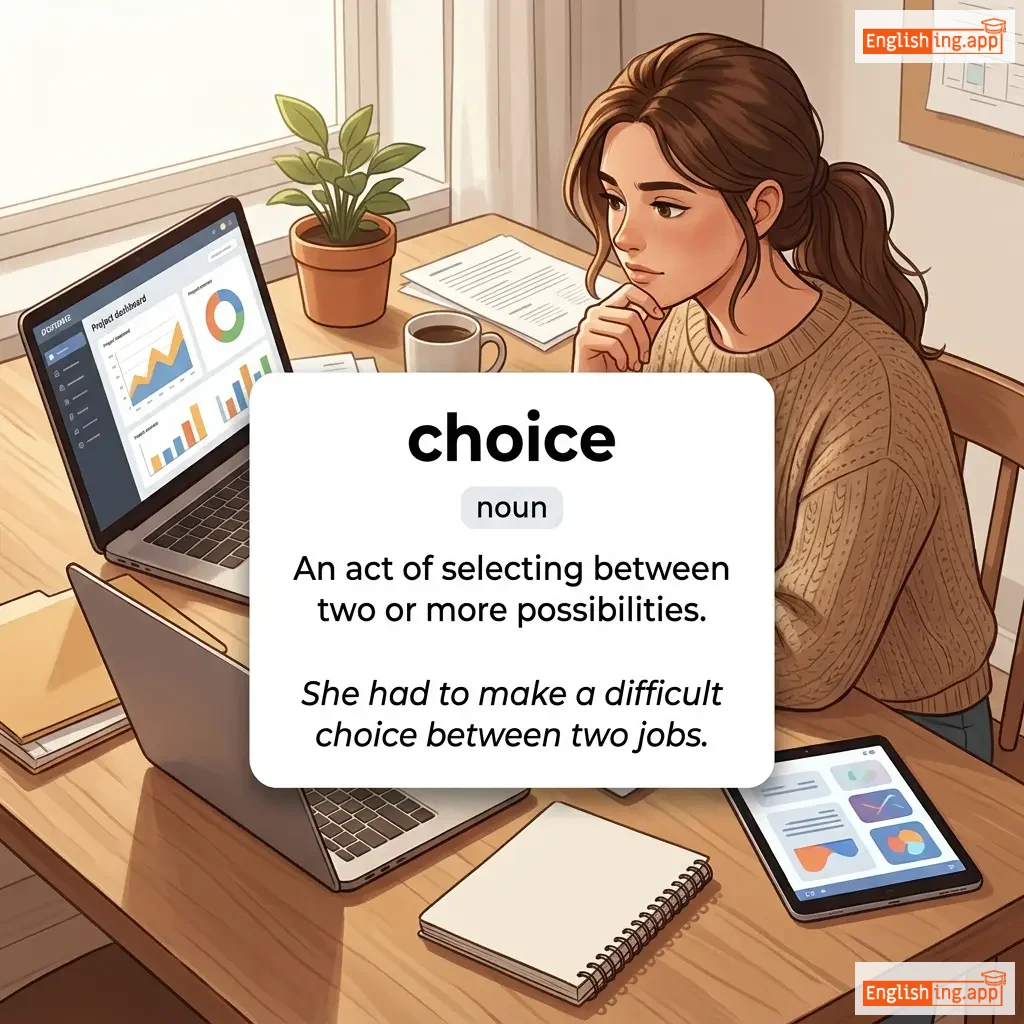
An act of selecting between two or more possibilities.
••••••
|
She had to make a difficult choice between two jobs. |
彼女は二つの仕事の間で難しい選択をしなければならなかった。
Kanojo wa futatsu no shigoto no aida de muzukashii sentaku o shinakereba naranakatta.
••••••
|
by choice |
Voluntarily or willingly.
••••••
|
選択によって
sentaku ni yotte
••••••
|
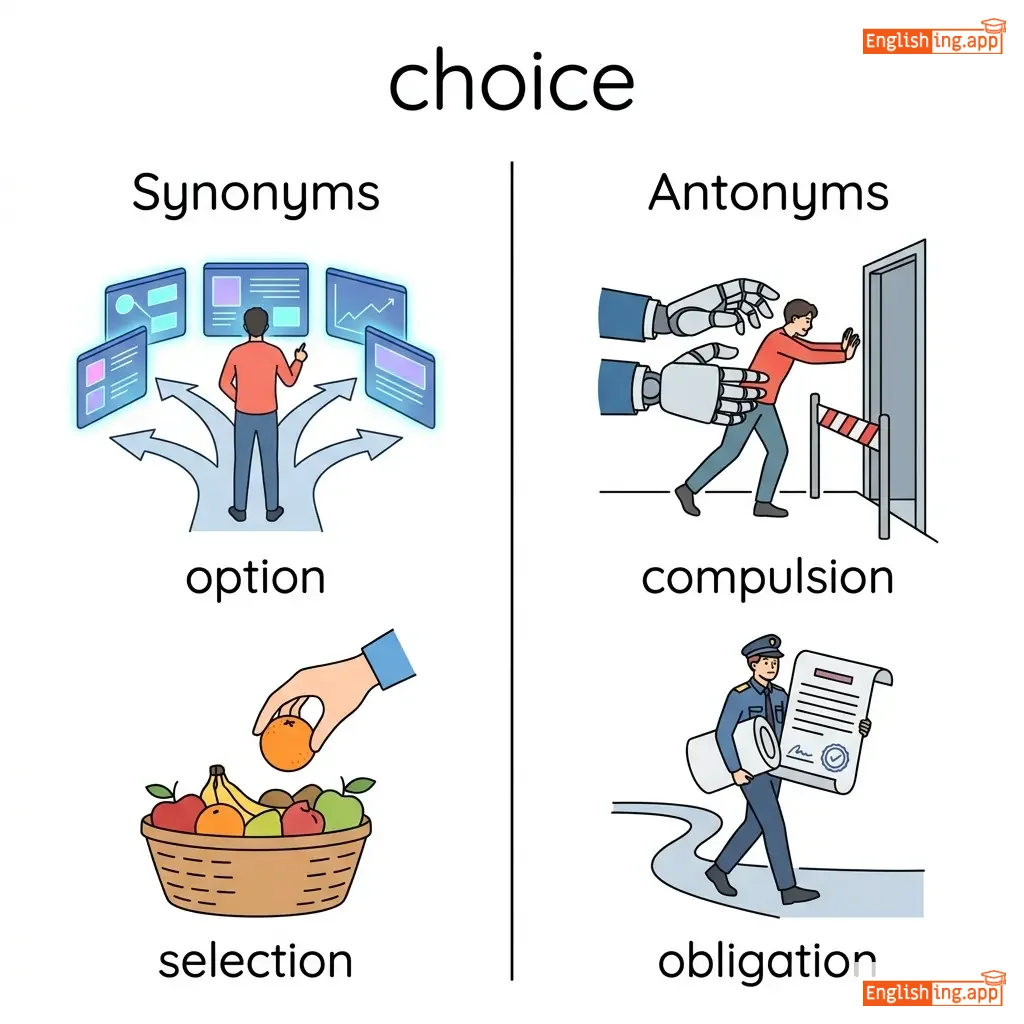
option, selection, decision, preference, alternative
••••••
|
compulsion, obligation, necessity
••••••
|
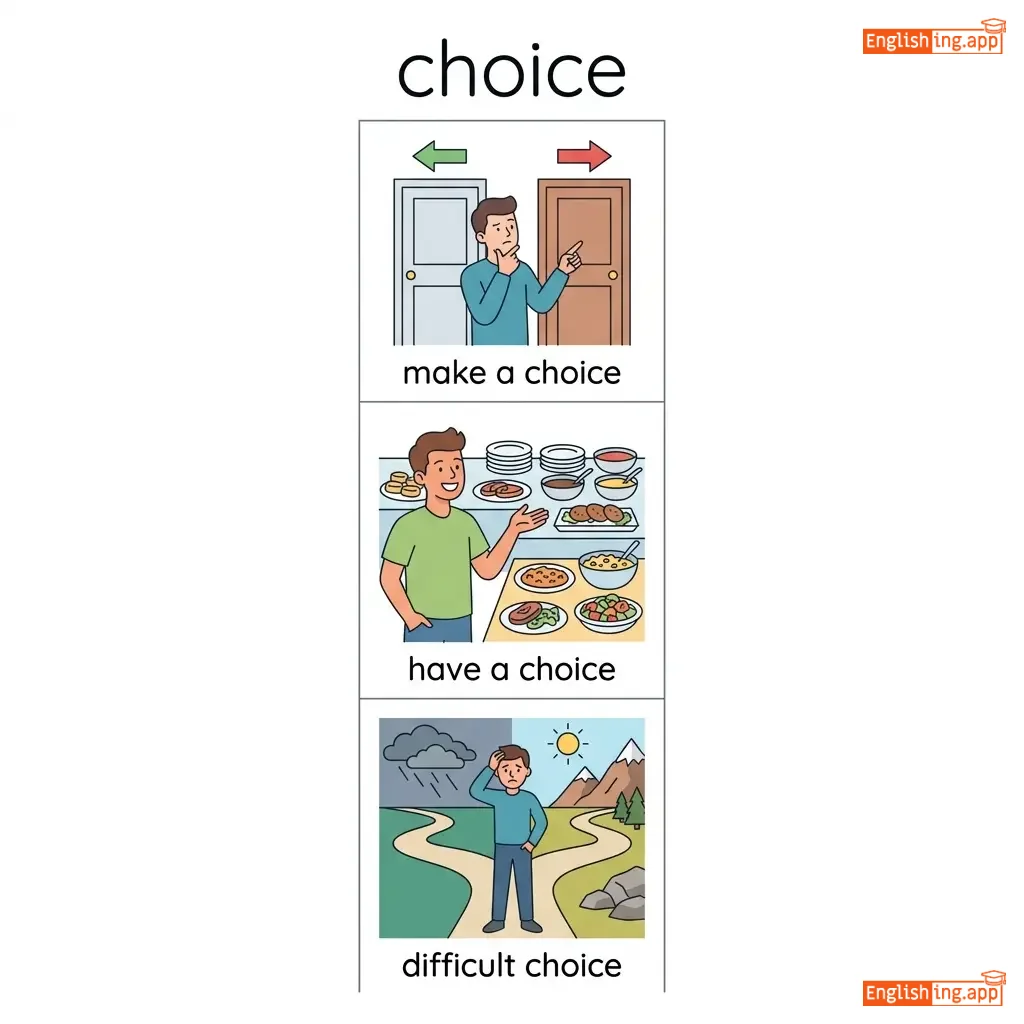
make a choice, have a choice, difficult choice, free choice
••••••
|
Choice は選択。選択肢の中から自分で選ぶことが大事。
••••••
|
|
#968
🎶
|
/ˈkwaɪər/
noun
(クワイア)
••••••
|
- •••••• |
合唱団
gasshoudan
••••••
|
- •••••• | - •••••• | - •••••• | - •••••• |
An organized group of singers, typically performing in church services or concerts.
••••••
|
The choir sang beautifully during the ceremony. |
式典中、合唱団は美しく歌いました。
Shikiten-chū, gasshoudan wa utsukushiku utaimashita.
••••••
|
angelic choir |
A choir whose singing is compared to the sound of angels.
••••••
|
天使の合唱団
Tenshi no gasshoudan
••••••
|
chorus, ensemble, singers, vocal group
••••••
|
solo, silence
••••••
|
church choir, school choir, join a choir, choir practice
••••••
|
Choir は教会で歌う合唱団のようなものです。
••••••
|
|
#969
✅
|
/tʃuːz/
verb
••••••
|
|
- •••••• |
chose
••••••
|
chosen
••••••
|
chooses
••••••
|
choosing
••••••
|
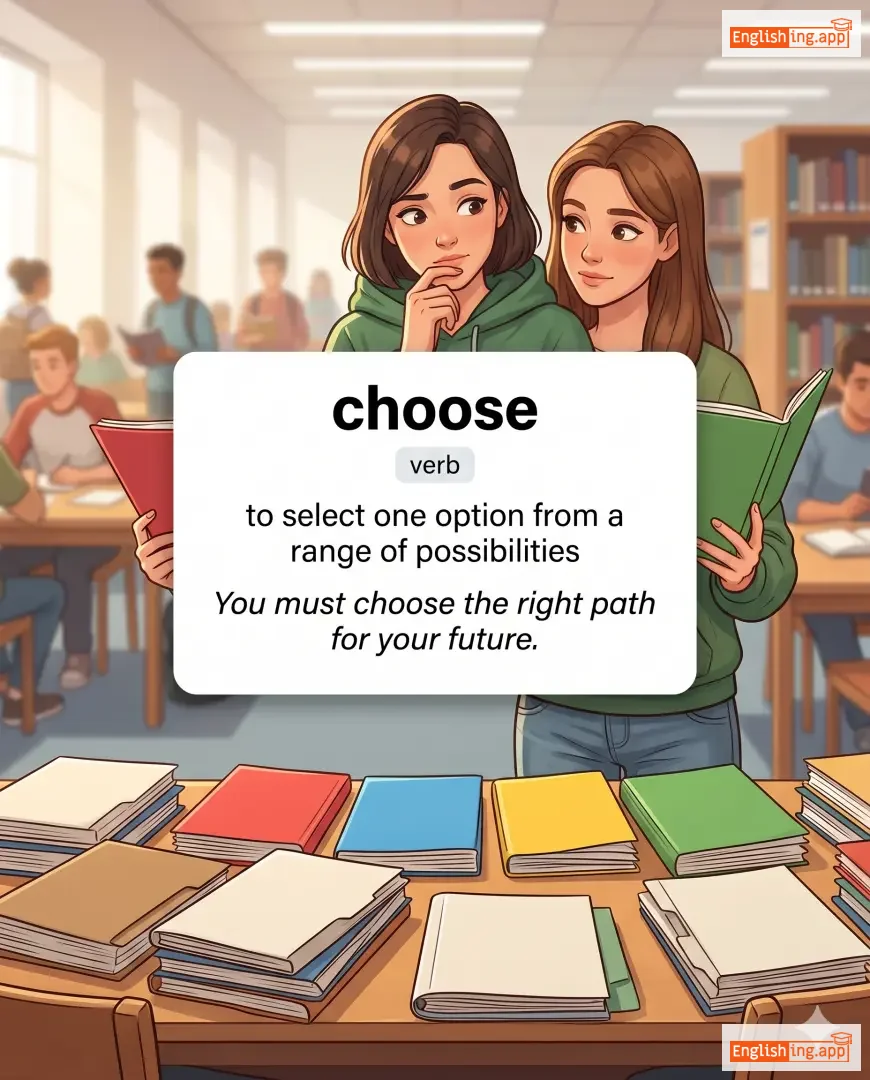
to select one option from a range of possibilities
••••••
|
You must choose the right path for your future. |
- •••••• |
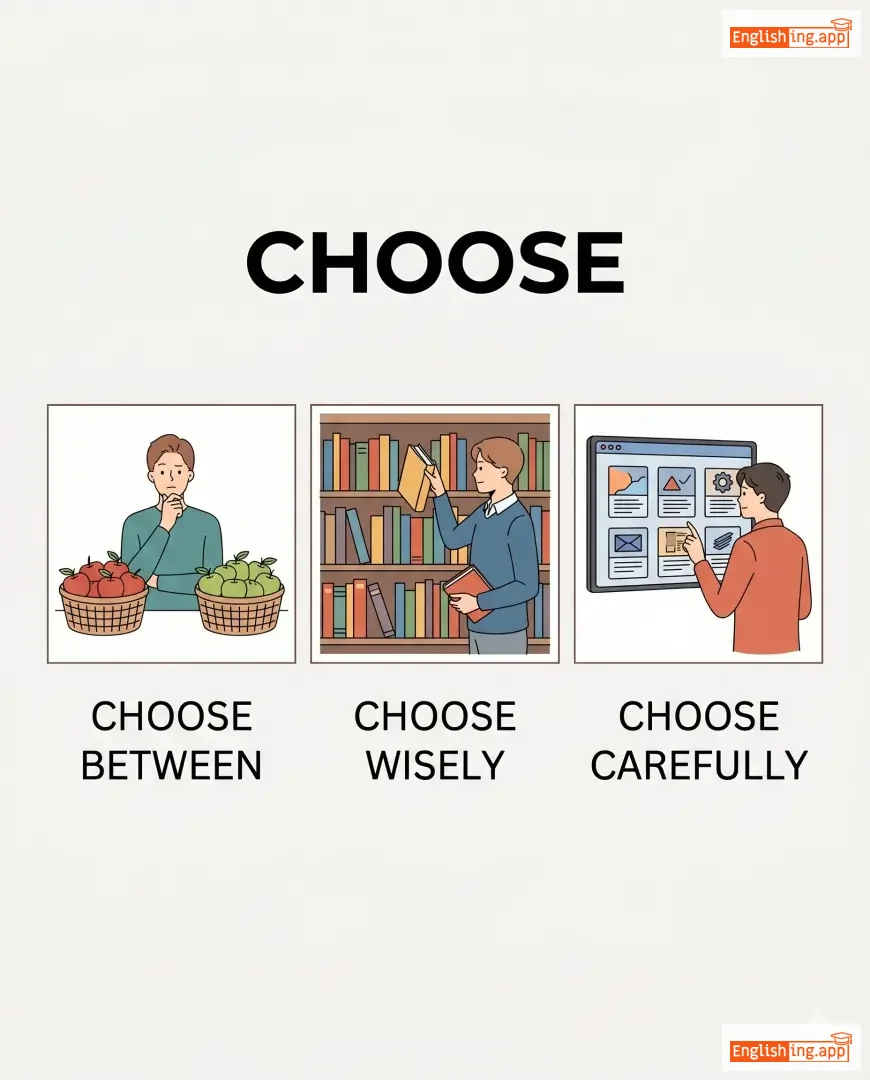
choose wisely |
make a decision carefully and thoughtfully
••••••
|
- •••••• |
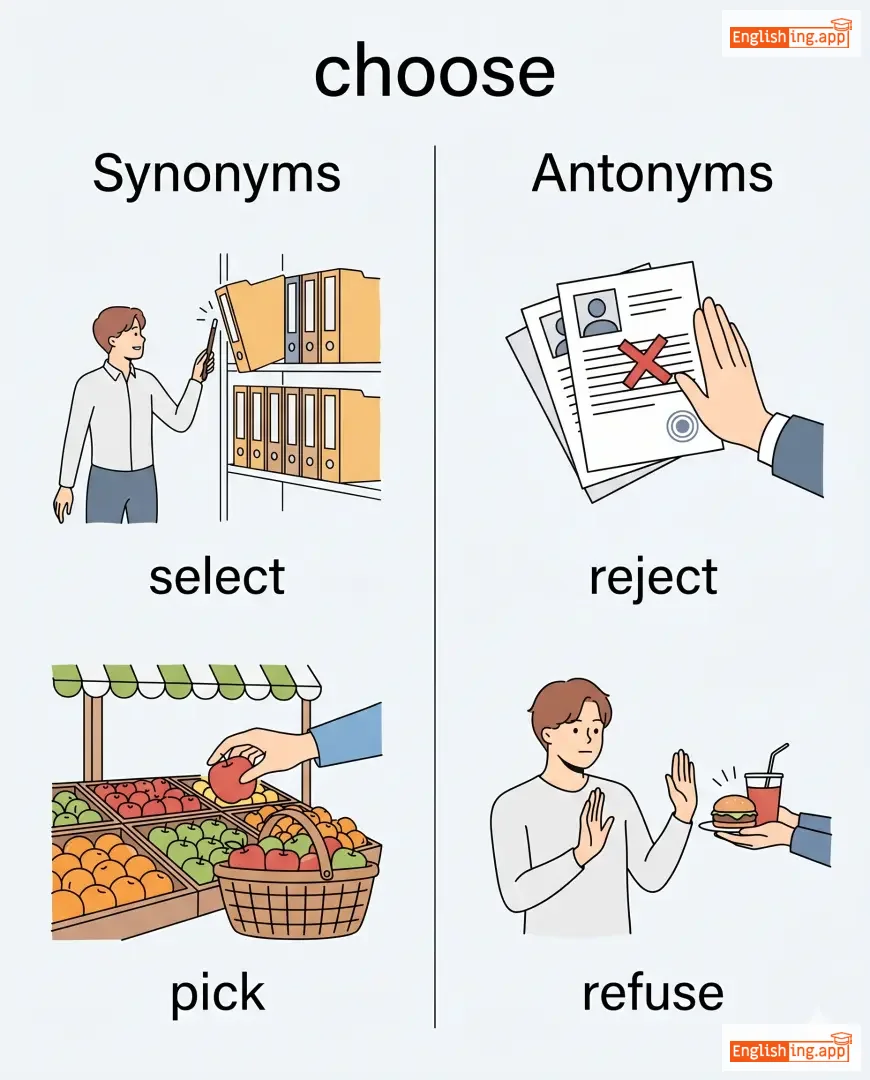
select, pick, decide, opt, elect
••••••
|
reject, refuse, ignore
••••••
|
choose between, choose wisely, choose carefully, choose from
••••••
|
No •••••• |
|
#970
🔪
|
/tʃɒp/
verb
(チョップ)
••••••
|
|
切る
kiru
••••••
|
chopped
••••••
|
chopped
••••••
|
chops
••••••
|
chopping
••••••
|
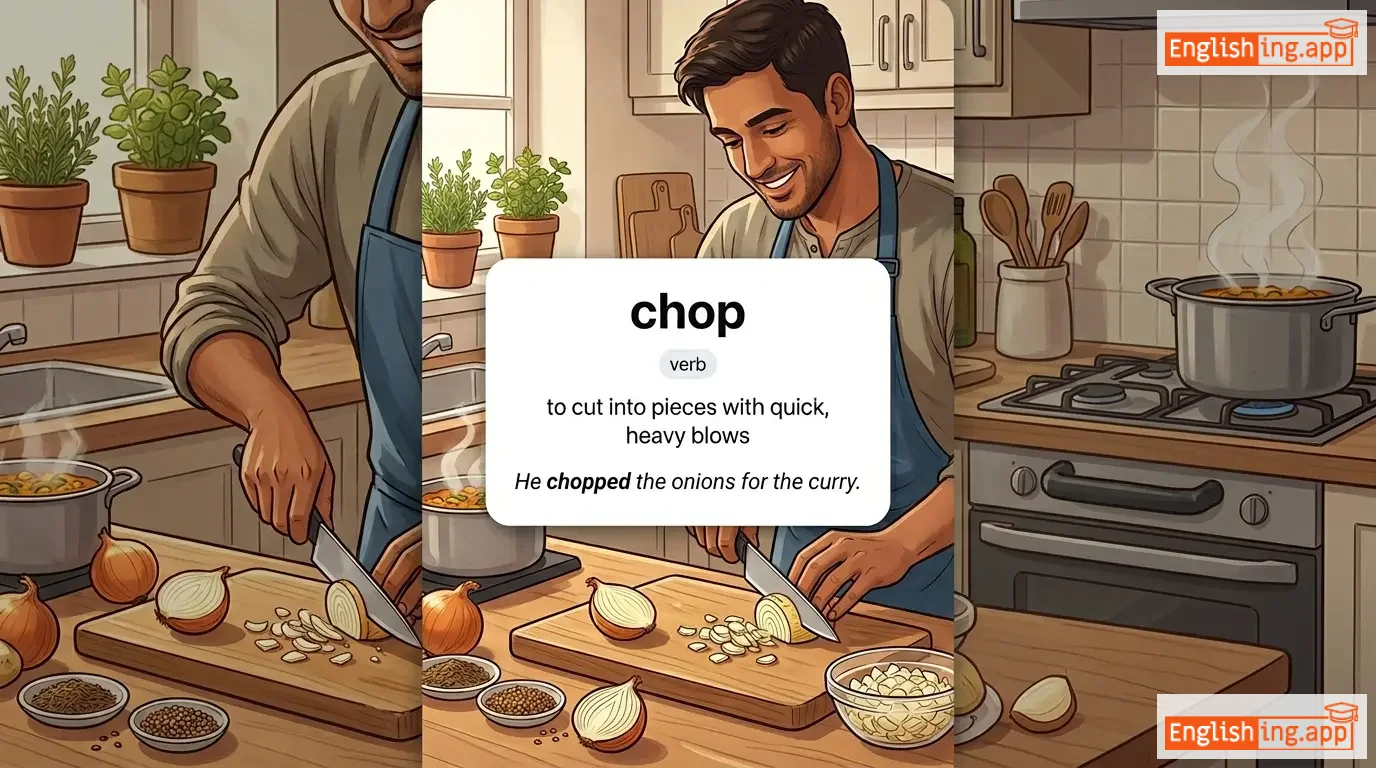
to cut into pieces with quick, heavy blows
••••••
|
He chopped the onions for the curry. |
彼はカレーのために玉ねぎを切った。
Kare wa karē no tame ni tamanegi o kitta.
••••••
|
chop and change |
to keep changing one's mind or decisions
••••••
|
意見を変える
iken o kaeru
••••••
|
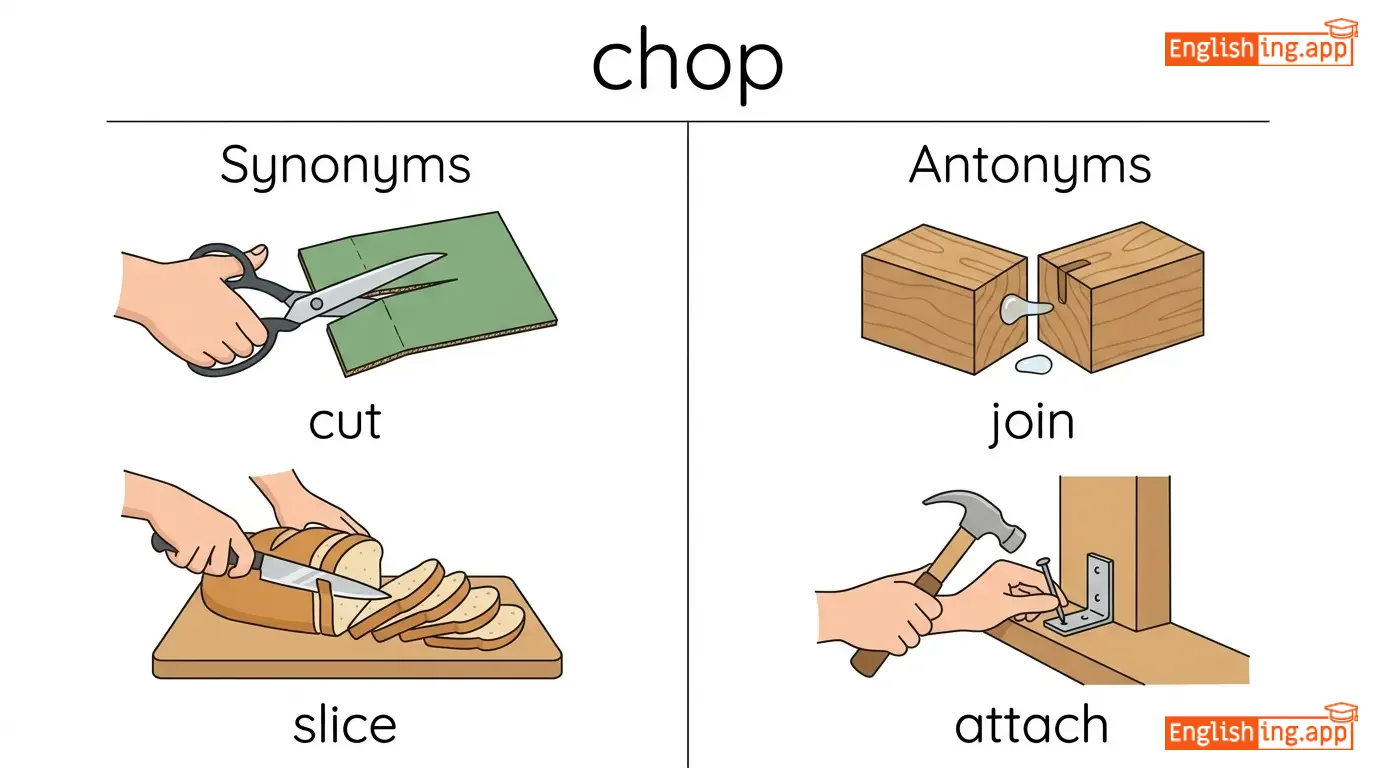
cut, slice, hack, cleave, dice
••••••
|
join, attach, connect
••••••
|
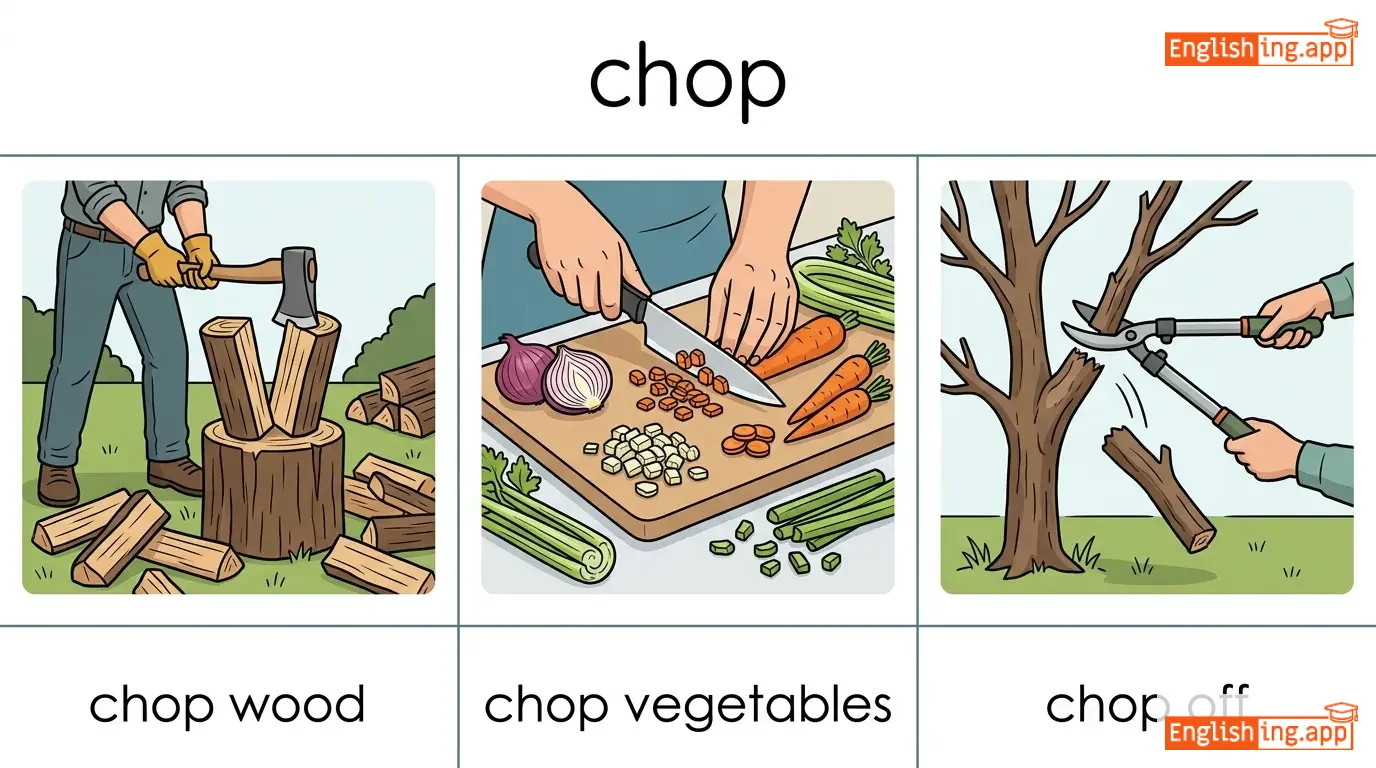
chop wood, chop vegetables, chop off, chop into pieces
••••••
|
Chopは切ること、または意見を変えることです。
••••••
|
|
#971
✝️
|
/ˈkrɪstʃən/
noun, adjective
(kuri-shi-an)
••••••
|
- •••••• |
クリスチャン
kurisuchan
••••••
|
- •••••• | - •••••• | - •••••• | - •••••• |
a person who follows the religion based on the teachings of Jesus Christ
••••••
|
She is a devoted Christian who attends church every Sunday. |
彼女は毎週日曜日に教会に行く献身的なクリスチャンです。
Kanojo wa maishū nichiyōbi ni kyōkai ni iku kenshin-teki na kurisuchan desu.
••••••
|
- •••••• | - •••••• | - •••••• |
believer, follower, disciple, worshipper
••••••
|
atheist, nonbeliever
••••••
|
Christian faith, Christian values, Christian community, Christian church
••••••
|
Christian = クリスチャン ✝️, イエス・キリストの教えを守る人はクリスチャン。
••••••
|
|
#972
🎄
|
/ˈkrɪsməs/
noun
(kurisumasu)
••••••
|
- •••••• |
クリスマス
Kurisumasu
••••••
|
- •••••• | - •••••• | - •••••• | - •••••• |
an annual festival celebrating the birth of Jesus Christ, observed on December 25
••••••
|
Families gather to celebrate Christmas with joy and love. |
家族は喜びと愛を持ってクリスマスを祝うために集まります。
Kazoku wa yorokobi to ai o motte kurisumasu o iwau tame ni atsumarimasu.
••••••
|
Christmas spirit |
the joyful and generous attitude people often have during Christmas
••••••
|
クリスマスの精神
Kurisumasu no seishin
••••••
|
holiday, festival, yuletide, Noel
••••••
|
ordinary day
••••••
|
Christmas tree, Christmas Eve, Christmas gifts, Christmas party
••••••
|
クリスマス = 🎄 喜びと愛の祝福
••••••
|
|
#973
⏳
|
/ˈkrɒnɪk/
adjective
(クロニック)
••••••
|
- •••••• |
慢性的
manseiteki
••••••
|
- •••••• | - •••••• | - •••••• | - •••••• |
Lasting for a long time or constantly recurring, often describing illness.
••••••
|
She suffers from chronic back pain.
彼女は慢性的な背中の痛みに悩まされています。
••••••
|
彼女は慢性的な背中の痛みに悩まされています。
Kanojo wa manseiteki na senaka no itami ni nayama sareteimasu.
••••••
|
chronic condition
慢性の状態
••••••
|
A long-lasting medical issue that persists over time.
••••••
|
慢性の状態
mansei no joutai
••••••
|
persistent, long-term, continual, constant, habitual
••••••
|
acute, temporary, short-term
••••••
|
chronic disease, chronic pain, chronic illness, chronic stress
••••••
|
Chronicは永続的、例えば消えない痛みのようなものです。
••••••
|
|
#974
🍰
|
/tʃʌŋk/
noun
(チャンク)
••••••
|
- •••••• |
塊 / 断片
katamari / danpen
••••••
|
- •••••• | - •••••• | - •••••• | - •••••• |
a thick or solid piece of something
••••••
|
She cut the cake into large chunks. |
彼女はケーキを大きな塊に切った。
Kanojo wa keeki o ookina katamari ni kitta.
••••••
|
a chunk of time |
a considerable amount of time
••••••
|
時間の一部
jikan no ichibu
••••••
|
piece, block, lump, portion, segment
••••••
|
fragment, bit
••••••
|
chunk of meat, chunk of cake, big chunk, data chunk
••••••
|
Chunkは大きな塊を意味します。ケーキの塊みたいですね!
••••••
|
|
#975
⛪
|
/tʃɜːrtʃ/
noun
(チャーチ)
••••••
|
- •••••• |
教会
kyoukai
••••••
|
- •••••• | - •••••• | - •••••• | - •••••• |
a building used for public Christian worship
••••••
|
The old church in the village was built in the 18th century. |
村の古い教会は18世紀に建てられました。
Mura no furui kyoukai wa 18 seiki ni tateraremashita.
••••••
|
go to church |
to attend Christian worship services
••••••
|
教会に行く
kyoukai ni iku
••••••
|
chapel, cathedral, sanctuary, basilica
••••••
|
mosque, temple
••••••
|
church service, church building, church bell, church members
••••••
|
教会は Church ⛪ — キリスト教徒が祈る場所です。
••••••
|
|
#976
🚬
|
/ˈsɪɡəˌrɛt/
noun
(タバコ)
••••••
|
- •••••• |
タバコ
tabako
••••••
|
- •••••• | - •••••• | - •••••• | - •••••• |
a small roll of finely cut tobacco wrapped in paper for smoking
••••••
|
He lit a cigarette after dinner.
彼は夕食後にタバコを吸った。
••••••
|
彼は夕食後にタバコを吸った。
Kare wa yuushoku go ni tabako o sutta.
••••••
|
chain smoker
チェーンスモーカー
••••••
|
a person who smokes cigarettes continuously, one after another
••••••
|
チェーンスモーカー
cheen sumookaa
••••••
|
smoke, tobacco, fag, stick
••••••
|
fresh air, nonsmoking
••••••
|
smoke a cigarette, light a cigarette, cigarette packet, cigarette smoke
••••••
|
タバコ = 🚬 タバコ — 食後にみんな吸います。
••••••
|
|
#977
🎬
|
/ˈsɪnəmə/
noun
(シネマ)
••••••
|
- •••••• |
映画館
eigakan
••••••
|
- •••••• | - •••••• | - •••••• | - •••••• |
a place where films are shown to the public; the art or industry of making and showing films
••••••
|
We went to the cinema to watch a new movie.
ウィー ウェント トゥ ザ シネマ トゥ ウォッチ ア ニュー ムービー。
••••••
|
私たちは新しい映画を見るために映画館へ行った。
watashitachi wa atarashii eiga o miru tame ni eigakan e itta
••••••
|
go to the cinema
ゴー トゥ ザ シネマ
••••••
|
to visit a movie theater to watch a film
••••••
|
映画館に行く
eigakan ni iku
••••••
|
movie theater, film theater, picture house, multiplex
••••••
|
television, home video
••••••
|
go to the cinema, cinema hall, art cinema, local cinema
••••••
|
Cinema は シネマ—映画館で映画!
••••••
|
|
#978
⭕
|
/ˈsɜːrkəl/
noun/verb
(sākuru)
••••••
|
- •••••• |
円
en
••••••
|
circled
sākurudo
••••••
|
circled
sākurudo
••••••
|
circles
sākuruzu
••••••
|
circling
sākuringu
••••••
|
a round shape; to move all the way around something
••••••
|
The children sat in a circle.
子供たちは円形に座っていました。
••••••
|
子供たちは円形に座っていました。
Kodomotachi wa enkei ni suwatte imashita.
••••••
|
come full circle
円を完成させる
••••••
|
to return to the original position or situation
••••••
|
元に戻る
moto ni modoru
••••••
|
ring, loop, cycle, orbit
••••••
|
line, straight
••••••
|
circle of friends, draw a circle, circle around, social circle
••••••
|
Circleは円形を意味します - 子供たちが円形に座るのを思い出して、覚えやすい。
••••••
|
|
#979
🔄
|
/ˈsɜːrkɪt/
noun
(回路)
••••••
|
- •••••• |
回路 / 電気回路
kairo / denki kairo
••••••
|
- •••••• | - •••••• | - •••••• | - •••••• |
A roughly circular line, route, or movement that starts and ends at the same place; also an electrical pathway.
••••••
|
The runners completed the circuit around the park. |
ランナーは公園の周りの回路を完了しました。
Rannā wa kōen no mawari no kairo o kanryō shimashita.
••••••
|
short-circuit |
an electrical failure caused by unintended contact or connection
••••••
|
ショート回路
shōto kairo
••••••
|
route, loop, pathway, track, course
••••••
|
line, shortcut
••••••
|
electrical circuit, racing circuit, complete circuit
••••••
|
回路は円を意味する → 回路は始まりに戻ることを意味します
••••••
|
|
#980
🔄
|
/ˈsɜːrkjəˌleɪt/
verb
(サーキュレイト)
••••••
|
- •••••• |
循環する, 動く
junkansuru, ugoku
••••••
|
circulated
サーキュレイティッド
••••••
|
circulated
サーキュレイティッド
••••••
|
circulates
サーキュレイツ
••••••
|
circulating
サーキュレイティング
••••••
|
to move continuously or freely through a closed system or area
••••••
|
Air circulated freely in the open hall.
空気は開かれたホールで自由に循環していました。
••••••
|
空気は開かれたホールで自由に循環していました。
Kūki wa hirakareta hōru de jiyū ni junkan shite imashita.
••••••
|
circulate the news
ニュースを広める
••••••
|
to spread information among people
••••••
|
ニュースを広める
Nyūsu o hiromeru
••••••
|
flow, move, spread, distribute, diffuse
••••••
|
stagnate, stop, block
••••••
|
circulate blood, circulate air, circulate information, circulate money
••••••
|
循環は、空気やニュースが広がっていくように、回っているようなものです。
••••••
|
|
#981
🔄
|
/ˌsɜːr.kjʊˈleɪ.ʃən/
noun
(サーキュレーション)
••••••
|
|
循環
junkann
••••••
|
- •••••• | - •••••• | - •••••• | - •••••• |
the movement of something (like blood, air, or information) through a system or area.
••••••
|
The circulation of blood is essential for a healthy body. |
血液の循環は健康な体にとって不可欠です。
Ketsueki no junkan wa kenkou na karada ni totte fukaketsu desu.
••••••
|
- •••••• | - •••••• | - •••••• |
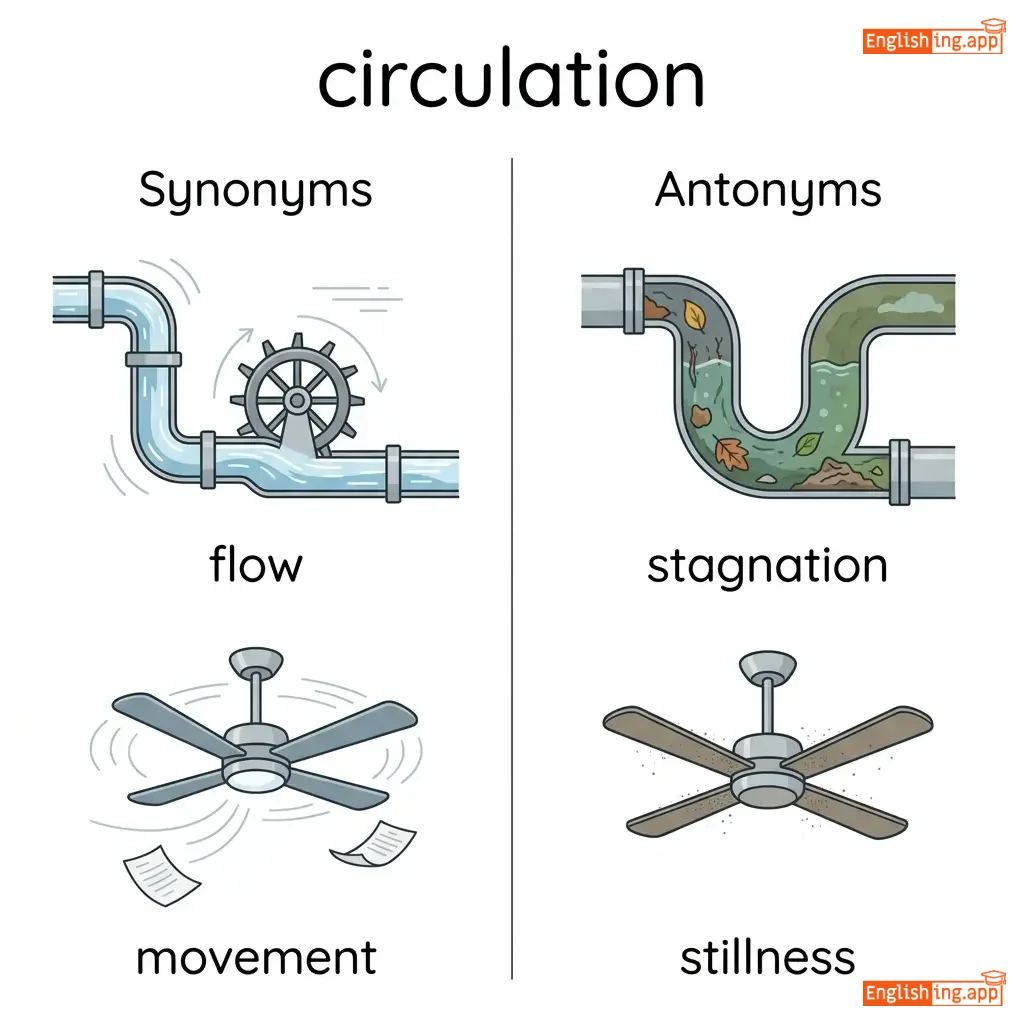
flow, movement, transfer, distribution
••••••
|
stagnation, stillness
••••••
|
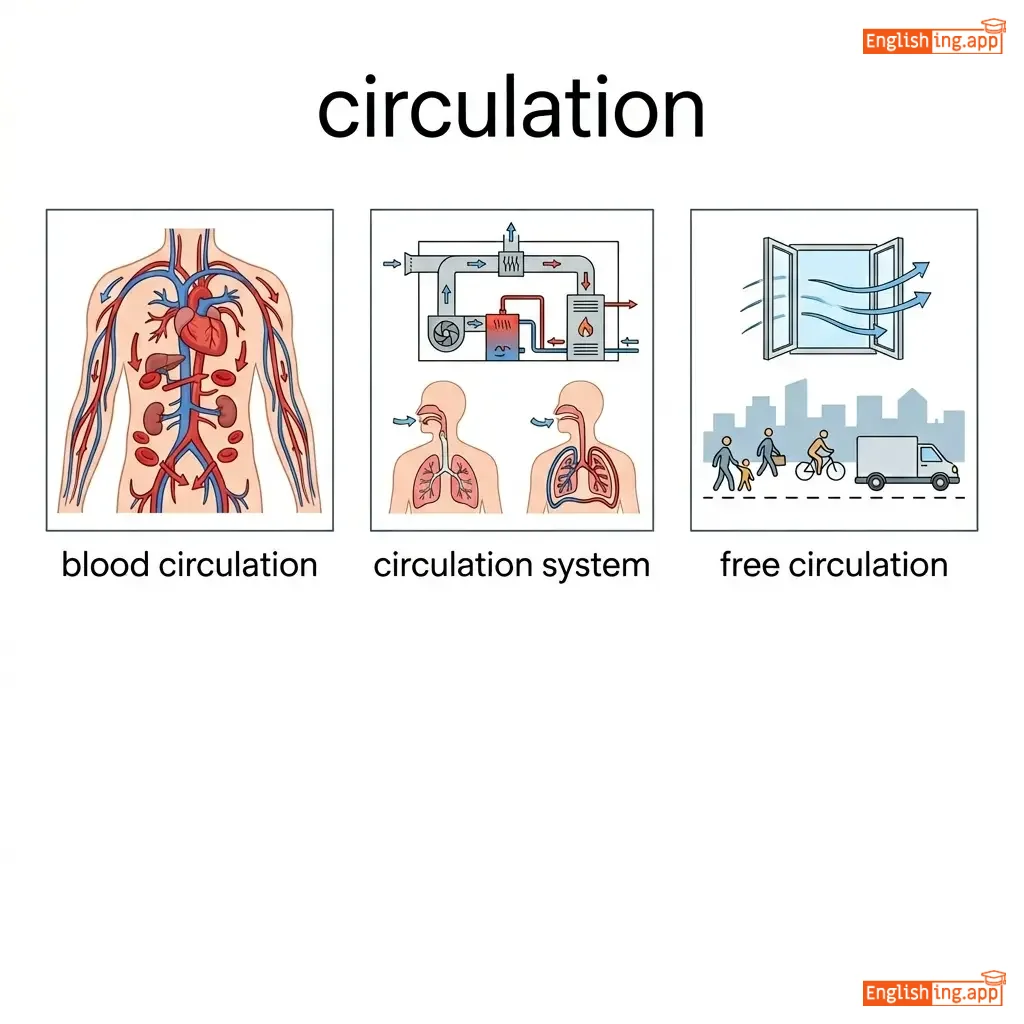
blood circulation, circulation system, free circulation, improve circulation
••••••
|
循環の流れをイメージして、体の健康を維持しよう。
••••••
|
|
#982
📌
|
/ˈsɜːrkəmstæns/
noun
(サーカムスタンス)
••••••
|
- •••••• |
状況
joukyou
••••••
|
- •••••• | - •••••• | - •••••• | - •••••• |
a fact or condition connected with an event or action
••••••
|
She handled the difficult circumstances bravely. |
彼女は困難な状況に勇敢に対処しました。
Kanojo wa konnan na joukyou ni yuukan ni taisho shimashita.
••••••
|
under the circumstances |
considering the current situation
••••••
|
その状況下で
sono joukyou ka de
••••••
|
situation, condition, context, factor, state
••••••
|
certainty, plan
••••••
|
in difficult circumstances, under the circumstances, favorable circumstances
••••••
|
Circumstance は状況を意味します - 状況を囲んでcircumstanceを覚える。
••••••
|
|
#983
📖
|
/saɪt/
verb
(サイト)
••••••
|
|
引用する
in'yō suru
••••••
|
cited
サイトされた
••••••
|
cited
サイトされた
••••••
|
cites
サイトする
••••••
|
citing
サイトする
••••••
|
To refer to or quote a source as evidence or justification.
••••••
|
She cited several studies to support her argument.
彼女は論点をサポートするためにいくつかの研究を引用した。
••••••
|
彼女は論点をサポートするためにいくつかの研究を引用した。
Kanojo wa ronten o sapōto suru tame ni ikutsu ka no kenkyū o in'yō shita.
••••••
|
cite chapter and verse
章と節を引用する
••••••
|
to give exact details or precise references
••••••
|
章と節を引用する
Shō to fuku o in'yō suru
••••••
|
quote, reference, mention, allude, invoke
••••••
|
ignore, overlook, suppress
••••••
|
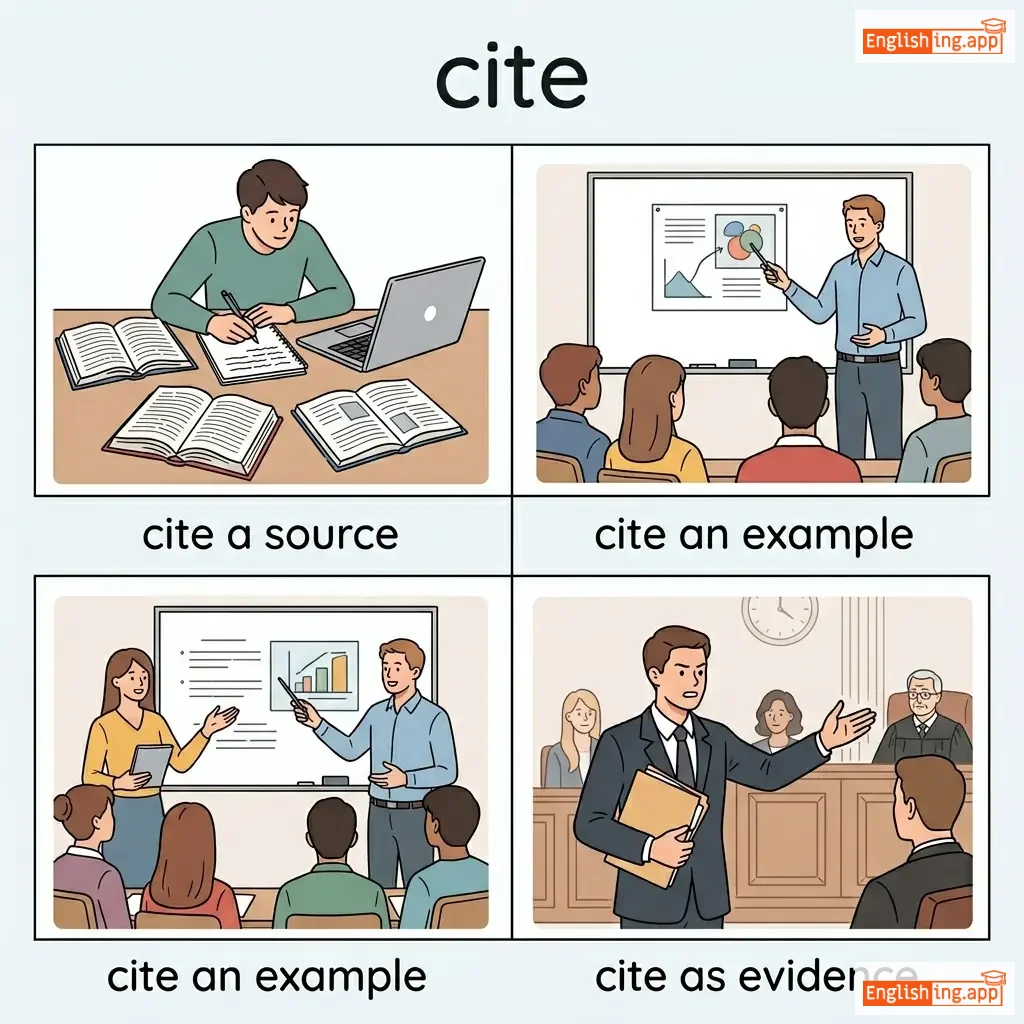
cite a source, cite an example, cite as evidence, cite authority
••••••
|
Cite はサイトを引用することを意味します
••••••
|
|
#984
🧑🤝🧑
|
/ˈsɪtɪzən/
noun
(シティズン)
••••••
|
- •••••• |
市民
shimin
••••••
|
- •••••• | - •••••• | - •••••• | - •••••• |
a legally recognized subject or national of a state
••••••
|
Every citizen has the right to vote. |
すべての市民は投票する権利を持っています。
Subete no shimin wa tōhyo suru kenri o motteimasu.
••••••
|
model citizen |
an exemplary or ideal member of society
••••••
|
模範市民
mohan shimin
••••••
|
inhabitant, resident, national, dweller
••••••
|
foreigner, alien
••••••
|
citizen rights, responsible citizen, active citizen, citizen of a country
••••••
|
Citizen = 市民 – City + 民 = 市民。
••••••
|
|
#985
🪪
|
/ˈsɪtɪzənʃɪp/
noun
(シチズンシップ)
••••••
|
- •••••• |
市民権
shimin-ken
••••••
|
- •••••• | - •••••• | - •••••• | - •••••• |
the status of being a recognized member of a state or country, with rights and duties
••••••
|
He applied for American citizenship after living there for ten years.
彼はアメリカに10年間住んだ後、アメリカ市民権を申請しました。
••••••
|
彼はアメリカに10年間住んだ後、アメリカ市民権を申請しました。
Kare wa Amerika ni 10-nenkan sunda ato, Amerika shimin-ken o shinsei shimashita.
••••••
|
- •••••• | - •••••• | - •••••• |
nationality, allegiance, belonging, membership, residency
••••••
|
alienage, statelessness
••••••
|
dual citizenship, citizenship rights, grant citizenship, revoke citizenship
••••••
|
Citizen は市民、そして Citizenship は市民権 — このつながりを覚えて!
••••••
|
|
#986
🏙️
|
/ˈsɪti/
noun
(siti)
••••••
|
- •••••• |
都市
toshi
••••••
|
- •••••• | - •••••• | - •••••• | - •••••• |
a large town or an urban area with its own government
••••••
|
Dhaka is the largest city in Bangladesh. |
東京は日本で最も大きな都市です。
Tōkyō wa Nihon de mottomo ōkina toshi desu.
••••••
|
city that never sleeps |
a city that is always busy, like New York
••••••
|
眠らない都市
nemuranai toshi
••••••
|
metropolis, town, municipality, capital
••••••
|
village, countryside
••••••
|
big city, city life, city center, city council
••••••
|
City は都市です。都市は常に活気に満ちています。
••••••
|
|
#987
🏛️
|
/ˈsɪvɪk/
adjective
(シビック)
••••••
|
- •••••• |
市民の
shimin no
••••••
|
- •••••• | - •••••• | - •••••• | - •••••• |
relating to a city, town, or the duties of its citizens
••••••
|
The mayor encouraged people to take part in civic activities. |
市長は人々に市民活動に参加するように促しました。
Shichou wa hitobito ni shimin katsudou ni sanka suru you ni unagashimashita.
••••••
|
civic duty |
the responsibility of a citizen to contribute to their community or government
••••••
|
市民の義務
shimin no gimu
••••••
|
municipal, public, community, urban
••••••
|
private, rural
••••••
|
civic duty, civic engagement, civic pride, civic education
••••••
|
Civicは市民に関連する、つまり市民の義務です!
••••••
|
|
#988
🏛️
|
/ˈsɪvɪks/
noun
(シビックス)
••••••
|
- •••••• |
公民
koumin
••••••
|
- •••••• | - •••••• | - •••••• | - •••••• |
the study of the rights and duties of citizens and how government works
••••••
|
Civics helps students understand their responsibilities as citizens.
シビックスは市民としての責任を理解するのに役立つ。
••••••
|
公民は市民としての責任を理解するのに役立つ。
koumin wa shimin to shite no sekinin o rikai suru no ni yakudatsu
••••••
|
- •••••• | - •••••• | - •••••• |
citizenship education, public affairs, government studies, social studies
••••••
|
ignorance, apathy
••••••
|
civics class, civics education, civics textbook, basic civics
••••••
|
CIVICS = シビル(市民)の学び → 公民
••••••
|
|
#989
🤝
|
/ˈsɪvəl/
adjective
(シビル)
••••••
|
- •••••• |
市民の
shimin no
••••••
|
- •••••• | - •••••• | - •••••• | - •••••• |
Relating to ordinary citizens and their concerns, or being polite and courteous.
••••••
|
They settled the matter through civil discussion. |
彼らは市民的な議論を通じて問題を解決しました。
Karera wa shimin-teki na giron o tsūjite mondai o kaiketsu shimashita.
••••••
|
civil war |
a war between groups within the same country
••••••
|
内戦
naisen
••••••
|
polite, courteous, civilian, domestic, respectful
••••••
|
rude, military, uncivil
••••••
|
civil rights, civil society, civil service, civil war
••••••
|
Civilは礼儀正しいことを意味し、シビルな人 = 礼儀正しい人
••••••
|
|
#990
🧑
|
/səˈvɪliən/
noun/adjective
(シビリアン)
••••••
|
- •••••• |
市民
shimin
••••••
|
- •••••• | - •••••• | - •••••• | - •••••• |
a person not in the armed forces or police
••••••
|
The area was evacuated to protect the civilians. |
その地域は市民を守るために避難されました。
Sono chiiki wa shimin o mamoru tame ni hinan saremashita.
••••••
|
- •••••• | - •••••• | - •••••• |
noncombatant, ordinary person, nonmilitary, commoner
••••••
|
soldier, officer
••••••
|
civilian life, civilian population, civilian clothes
••••••
|
シビリアン (shibian) から市民 (shimin) へ – 市民は軍に属さない人々。
••••••
|
|
#991
🏺
|
/ˌsɪvɪlaɪˈzeɪʃən/
noun
(sivilaiˈzeɪʃən)
••••••
|
- •••••• |
文明
bunmei
••••••
|
- •••••• | - •••••• | - •••••• | - •••••• |
the stage of human social and cultural development and organization considered most advanced
••••••
|
Ancient Egypt is known for its remarkable civilization.
古代エジプトはその優れた文明で知られています。
••••••
|
古代エジプトはその優れた文明で知られています。
Kodai Ejiputo wa sono sugureta bunmei de shirareteimasu.
••••••
|
modern civilization
現代文明
••••••
|
the advanced state of contemporary human society
••••••
|
現代文明
gendai bunmei
••••••
|
culture, society, advancement, progress, refinement
••••••
|
barbarism, savagery
••••••
|
ancient civilization, modern civilization, lost civilization, human civilization
••••••
|
Civilは文明を意味するので、Civilizationは文明を意味する — 簡単で賢い連想法!
••••••
|
|
#992
🏛️
|
/ˈsɪvɪlaɪz/
verb
(シヴィライズ)
••••••
|
- •••••• |
文明化する
bunmeika suru
••••••
|
civilized
シヴィライズド
••••••
|
civilized
シヴィライズド
••••••
|
civilizes
シヴィライズズ
••••••
|
civilizing
シヴィライズイング
••••••
|
to bring a society or group to a more developed, organized, or socially acceptable state; to educate and refine behavior
••••••
|
Education can help civilize communities by promoting shared values and respect.
エデュケーション・キャン・ヘルプ・シヴィライズ・コミュニティーズ・バイ・プロモーティング・シェアード・バリューズ・アンド・リスペクト。
••••••
|
教育は共有された価値観と尊重を促進することで、地域社会を文明化する助けになります。
Kyoiku wa kyoyu sareta kachikan to soncho o sokushin suru koto de, chiiki shakai o bunmeika suru tasuke ni narimasu
••••••
|
- •••••• | - •••••• | - •••••• |
refine, educate, cultivate, humanize, enlighten
••••••
|
barbarize, degrade, brutalize
••••••
|
civilize society, civilize behavior, civilize a nation, efforts to civilize
••••••
|
文明化 = civilize
••••••
|
|
#993
📢
|
/kleɪm/
verb
(クレイム)
••••••
|
|
主張する
shuchou suru
••••••
|
claimed
クレイムド
••••••
|
claimed
クレイムド
••••••
|
claims
クレイムス
••••••
|
claiming
クレイミング
••••••
|
to state something as true, often without proof; to demand ownership or right
••••••
|
He claimed the prize after winning the competition.
彼は競技会に勝った後、賞金を主張しました。
••••••
|
彼は競技会に勝った後、賞金を主張しました。
Kare wa kyougikai ni katta ato, shoukin o shuchou shimashita.
••••••
|
claim to fame
名声の主張
••••••
|
the thing that makes someone famous or notable
••••••
|
名声の主張
meisei no shuchou
••••••
|
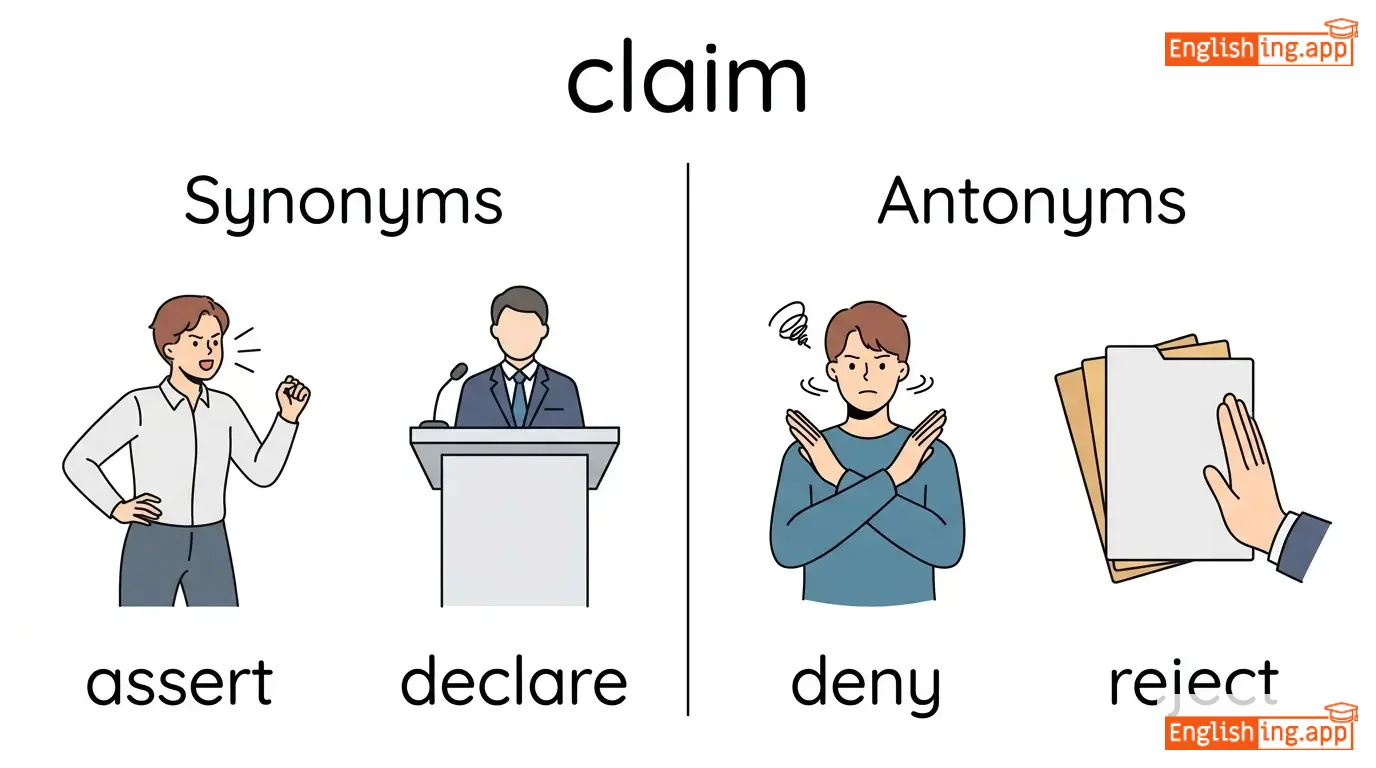
assert, declare, allege, demand, request
••••••
|
deny, reject, disclaim
••••••
|
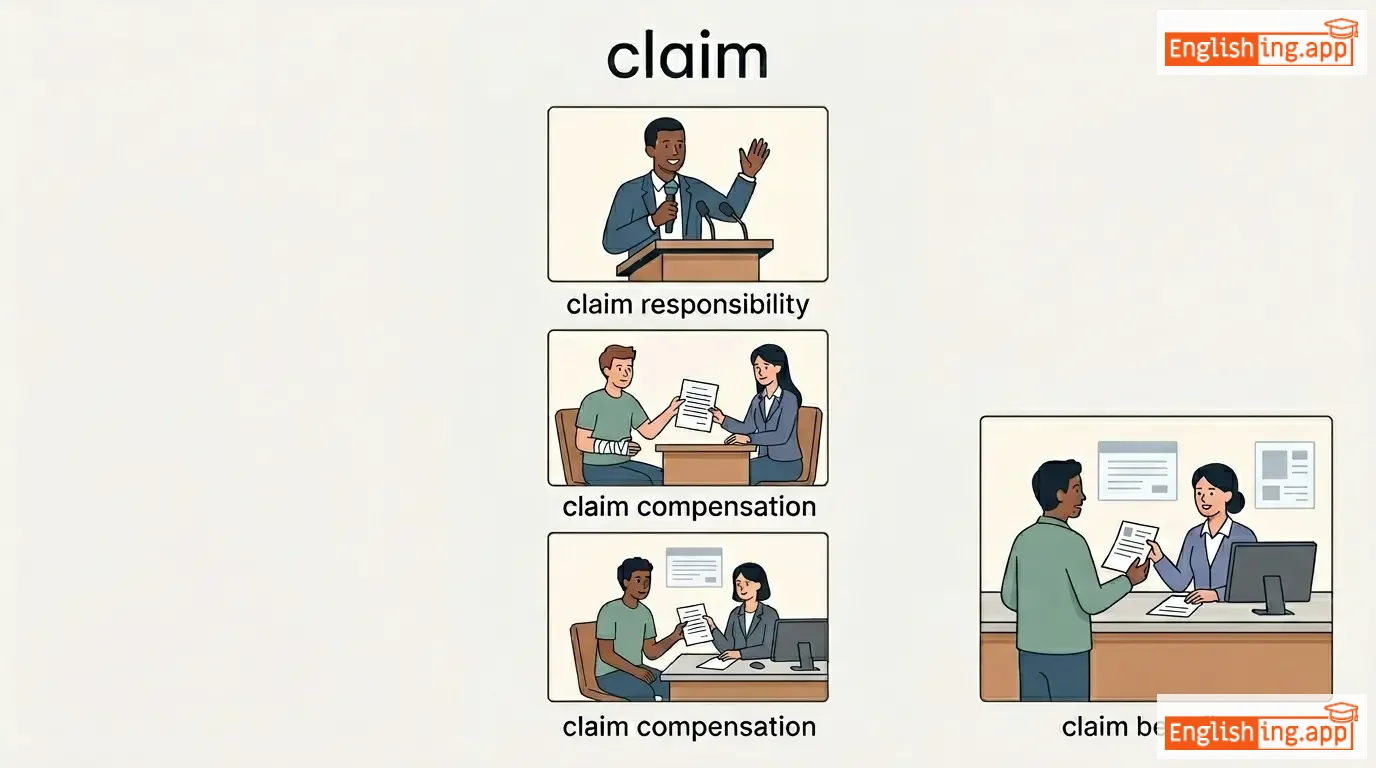
claim responsibility, claim compensation, claim benefits, claim ownership
••••••
|
Claimは主張すること: 保険の請求のように
••••••
|
|
#994
👏
|
/klæp/
verb
••••••
|
- •••••• | - •••••• |
clapped
••••••
|
clapped
••••••
|
claps
••••••
|
clapping
••••••
|
To strike the palms of the hands together, usually to express approval or create a sharp sound.
••••••
|
The audience began to clap loudly after the performance. |
- •••••• |
clap your hands |
to show approval or enjoyment by striking your hands together
••••••
|
- •••••• |
applaud, cheer, smack, slap
••••••
|
boo, jeer
••••••
|
clap loudly, clap hands, clap along, clap for someone
••••••
|
No •••••• |
|
#995
💡
|
/ˈklærɪfaɪ/
verb
••••••
|
|
- •••••• |
clarified
••••••
|
clarified
••••••
|
clarifies
••••••
|
clarifying
••••••
|
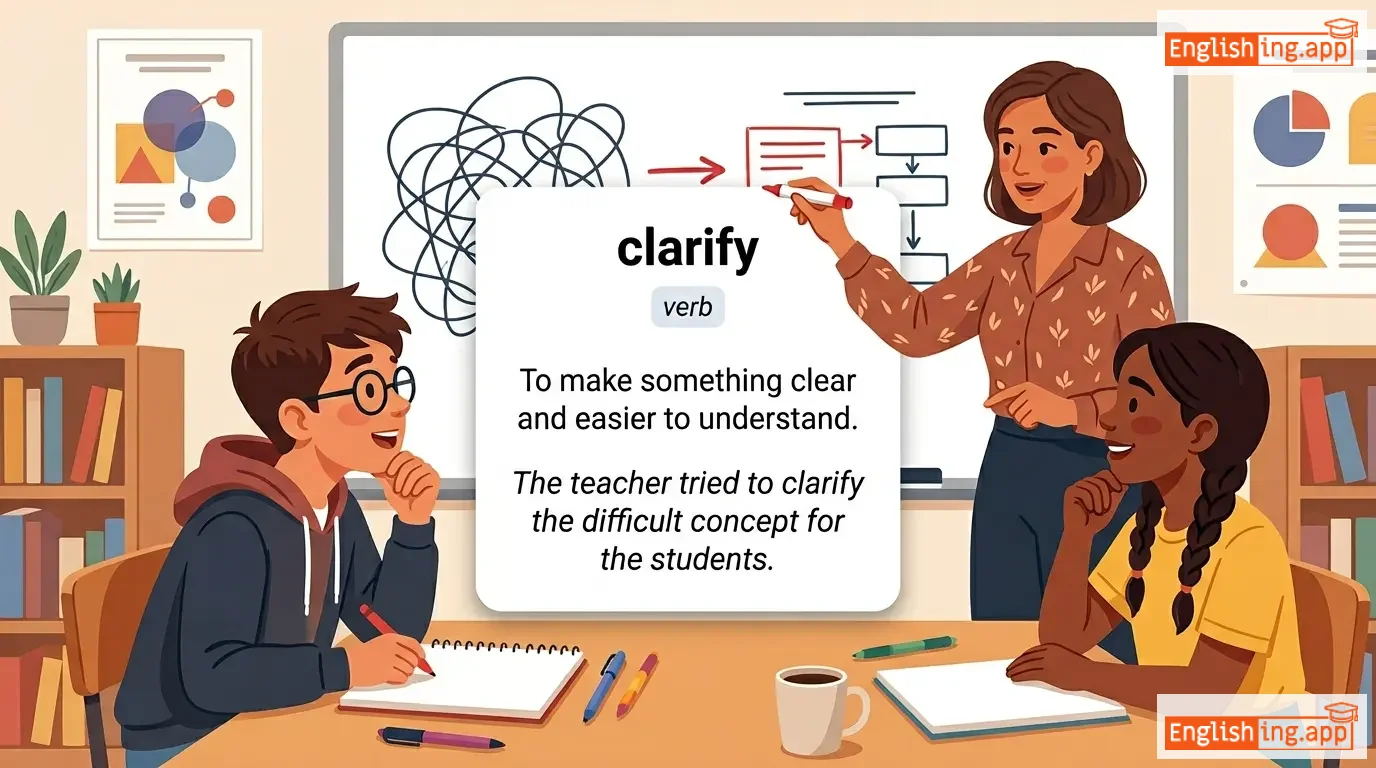
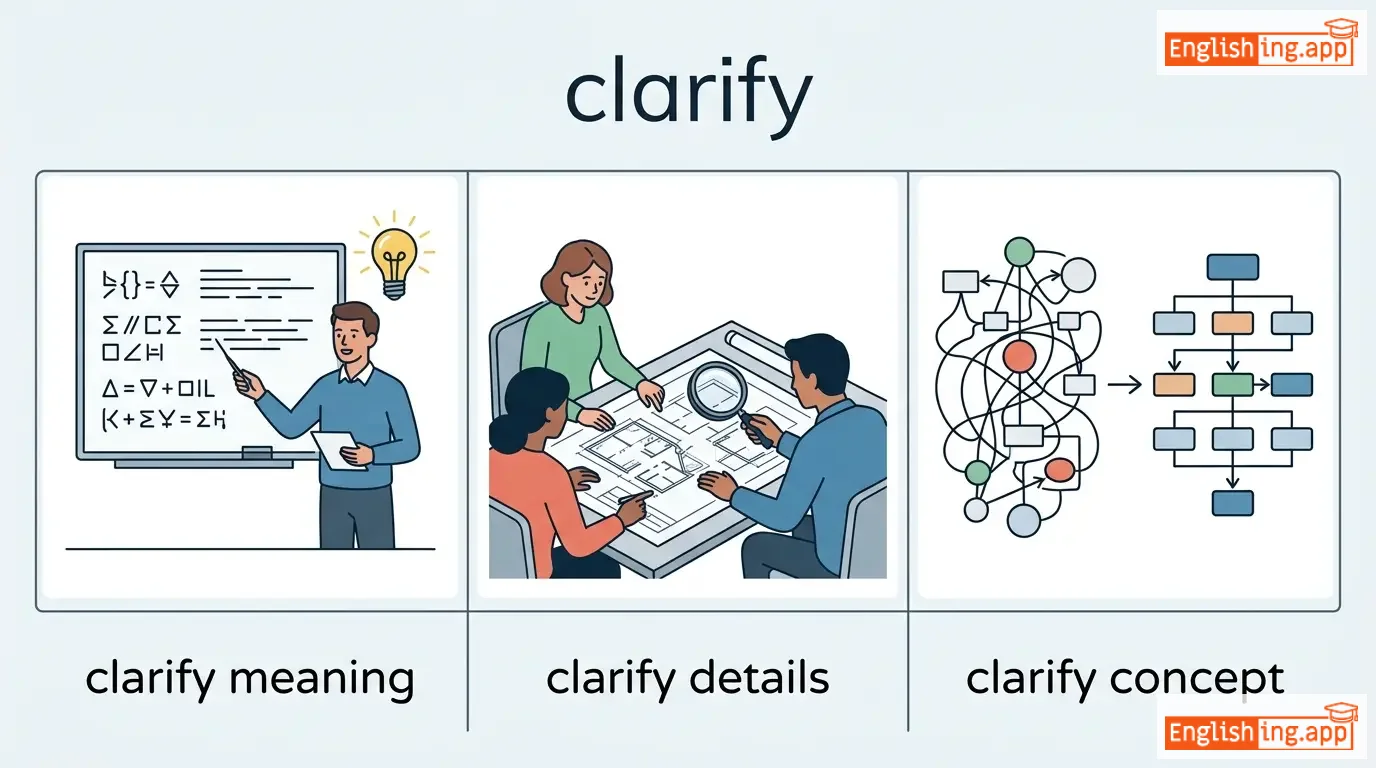
To make something clear and easier to understand.
••••••
|
The teacher tried to clarify the difficult concept for the students. |
- •••••• |
clarify the situation |
to explain or resolve something confusing
••••••
|
- •••••• |
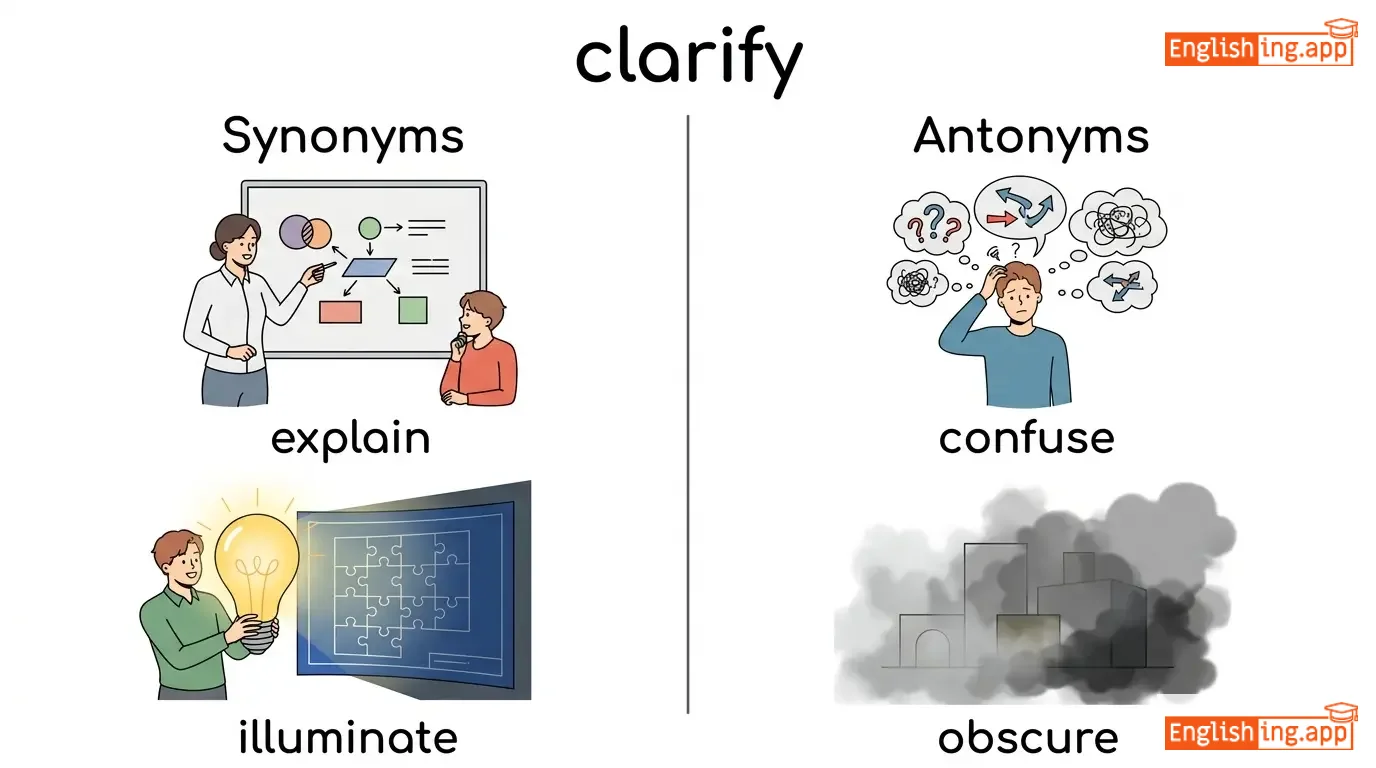
explain, illuminate, simplify, resolve, interpret
••••••
|
confuse, obscure, complicate
••••••
|
clarify meaning, clarify details, clarify concept, clarify question
••••••
|
No •••••• |
|
#996
🔍
|
/ˈklærəti/
noun
(クレアリティ)
••••••
|
|
明確さ
meikakusa
••••••
|
- •••••• | - •••••• | - •••••• | - •••••• |
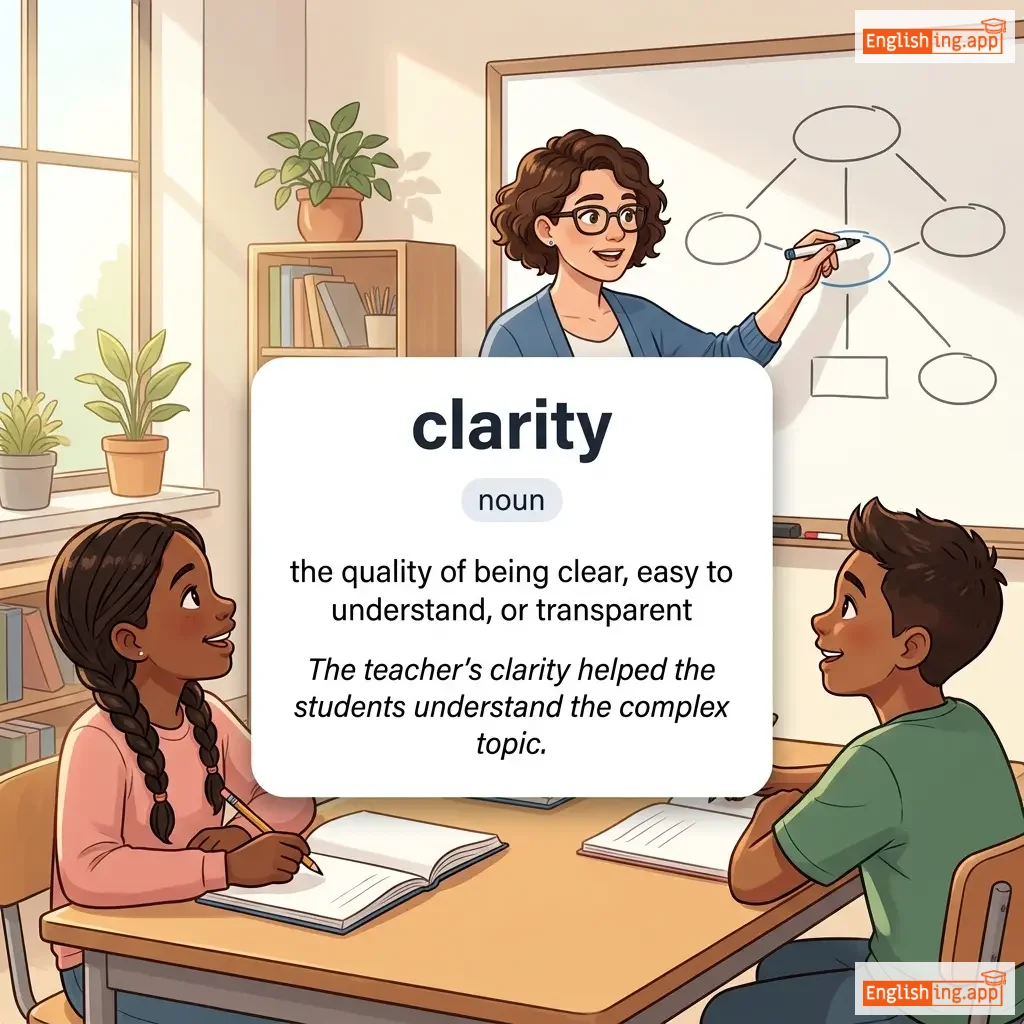
the quality of being clear, easy to understand, or transparent
••••••
|
The teacher's clarity helped the students understand the complex topic. |
先生の明確さは、生徒たちが複雑なテーマを理解するのを助けました。
Sensei no meikakusa wa, seito-tachi ga fukuzatsu na tēma o rikai suru no o tasukemashita.
••••••
|
crystal clarity |
complete and perfect clearness
••••••
|
クリスタルの明確さ
kurisutaru no meikakusa
••••••
|
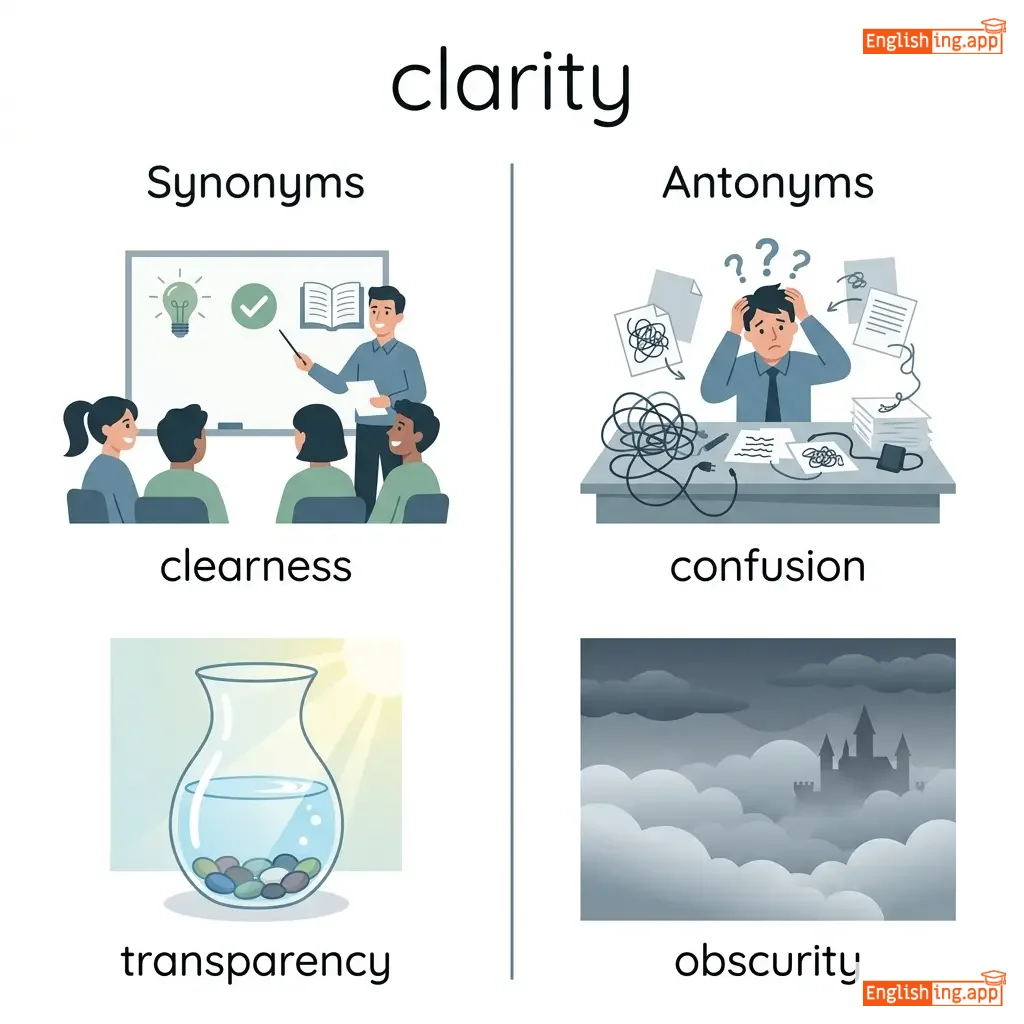
clearness, transparency, precision, lucidity, simplicity
••••••
|
confusion, obscurity, vagueness
••••••
|
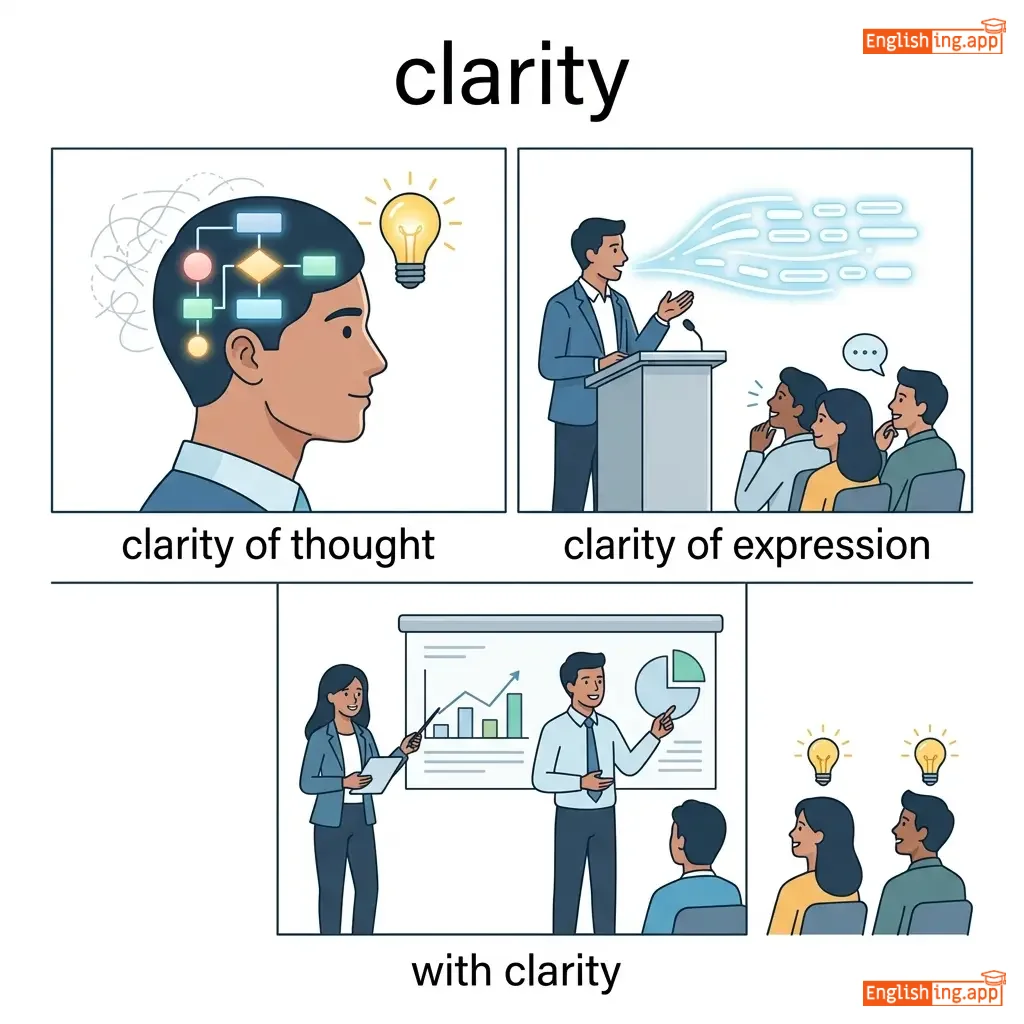
clarity of thought, clarity of expression, with clarity, lack of clarity
••••••
|
Clarity = clear + ity → 明確または透明
••••••
|
|
#997
💥
|
/klæʃ/
verb
(クラッシュ)
••••••
|
- •••••• |
衝突
shōtotsu
••••••
|
clashed
クラッシュド
••••••
|
clashed
クラッシュド
••••••
|
clashes
クラッシュズ
••••••
|
clashing
クラッシング
••••••
|
to come into conflict or collision with something or someone.
••••••
|
The two cars clashed in the intersection.
2台の車が交差点で衝突しました。
••••••
|
2台の車が交差点で衝突しました。
2-dai no kuruma ga kōsaten de shōtotsu shimashita.
••••••
|
- •••••• | - •••••• | - •••••• |
collide, confront, clash, conflict
••••••
|
reconcile, cooperate, agree
••••••
|
clash of interests, cultural clash, clash of opinions
••••••
|
Clash sounds like crash—まるで2台の車が衝突するように
••••••
|
|
#998
🏫
|
/klɑːs/
noun
(kurasu)
••••••
|
- •••••• |
クラス
kurasu
••••••
|
- •••••• | - •••••• | - •••••• | - •••••• |
a group of students taught together or a category of people or things with shared characteristics
••••••
|
Our class meets every morning at nine. |
私たちのクラスは毎朝9時に会います。
Watashitachi no kurasu wa mai asa kuji ni aimasu.
••••••
|
class act |
a person who is admired for their good qualities or behavior
••••••
|
模範的な人物
mohantekina jinbutsu
••••••
|
category, group, grade, division
••••••
|
individual, disorganization
••••••
|
class room, class teacher, social class, upper class, class test
••••••
|
クラスは学校で学ぶグループ、社会における共通性もあります。
••••••
|
|
#999
📚
|
/ˈklæsɪk/
adjective
(クラシック)
••••••
|
- •••••• |
クラシック, 優れた
kurashikku, sugureta
••••••
|
- •••••• | - •••••• | - •••••• | - •••••• |
Judged over a period of time to be of the highest quality and outstanding of its kind.
••••••
|
That movie is a classic example of 90s comedy. |
その映画は90年代のコメディのクラシックな例です。
Sono eiga wa 90 nendai no komedi no kurashikku na rei desu.
••••••
|
instant classic |
Something that becomes iconic or highly regarded immediately after its release.
••••••
|
インスタントクラシック
insutanto kurashikku
••••••
|
timeless, traditional, iconic, standard, vintage
••••••
|
modern, trendy, contemporary
••••••
|
classic example, classic case, classic design, classic novel
••••••
|
クラシック=時代を超えて愛される名作
••••••
|
|
#1000
📊
|
/ˌklæsɪfɪˈkeɪʃən/
noun
(クラシフィケーション)
••••••
|
- •••••• |
分類
bunrui
••••••
|
- •••••• | - •••••• | - •••••• | - •••••• |
the action or process of classifying something into groups based on shared characteristics.
••••••
|
The classification of animals helps in understanding their biology. |
動物の分類は、彼らの生物学を理解するのに役立ちます。
Dōbutsu no bunrui wa, karera no seibutsugaku o rikai suru no ni yakudachimasu.
••••••
|
- •••••• | - •••••• | - •••••• |
categorization, sorting, organization, classification
••••••
|
disorganization, confusion
••••••
|
classification system, scientific classification, animal classification
••••••
|
Classify for clarity—分類のために明確に
••••••
|
|
#1001
🔒
|
/ˈklæsɪfaɪd/
adjective
(クラシファイド)
••••••
|
- •••••• |
機密の;分類された
kimitsu no; bunrui sareta
••••••
|
- •••••• | - •••••• | - •••••• | - •••••• |
arranged into categories; officially secret or restricted
••••••
|
The report contains classified information and cannot be shared publicly.
ザ レポート コンテインズ クラシファイド インフォメーション
••••••
|
その報告書には機密情報が含まれている。
sono houkokusho niwa kimitsu jouhou ga fukumarete iru
••••••
|
classified information
クラシファイド インフォメーション
••••••
|
information that is officially secret or restricted
••••••
|
機密情報
kimitsu jouhou
••••••
|
secret, confidential, categorized, restricted, top-secret
••••••
|
public, unclassified, open
••••••
|
classified information, classified document, classified data, highly classified
••••••
|
クラシ(class)+秘密=classified
••••••
|
|
#1002
🗂️
|
/ˈklæsɪfaɪ/
verb
••••••
|
- •••••• | - •••••• |
classified
••••••
|
classified
••••••
|
classifies
••••••
|
classifying
••••••
|
to arrange or organize into categories or groups
••••••
|
The librarian classified the books by subject. |
- •••••• |
classify information |
to categorize data, often in terms of security or confidentiality
••••••
|
- •••••• |
categorize, sort, organize, group, arrange
••••••
|
confuse, mix, disorder
••••••
|
classify data, classify books, classify animals, classify documents
••••••
|
No •••••• |
Vocabulary Quiz
Test your vocabulary by matching words with their translations or meanings.
Login to take the quiz
Comments (0)
Share your thoughts and join the discussion.
Join the discussion by logging in
Login to CommentNo comments yet
Be the first to share your thoughts!