




Swipe left or right, or use the buttons. Tap image to zoom.
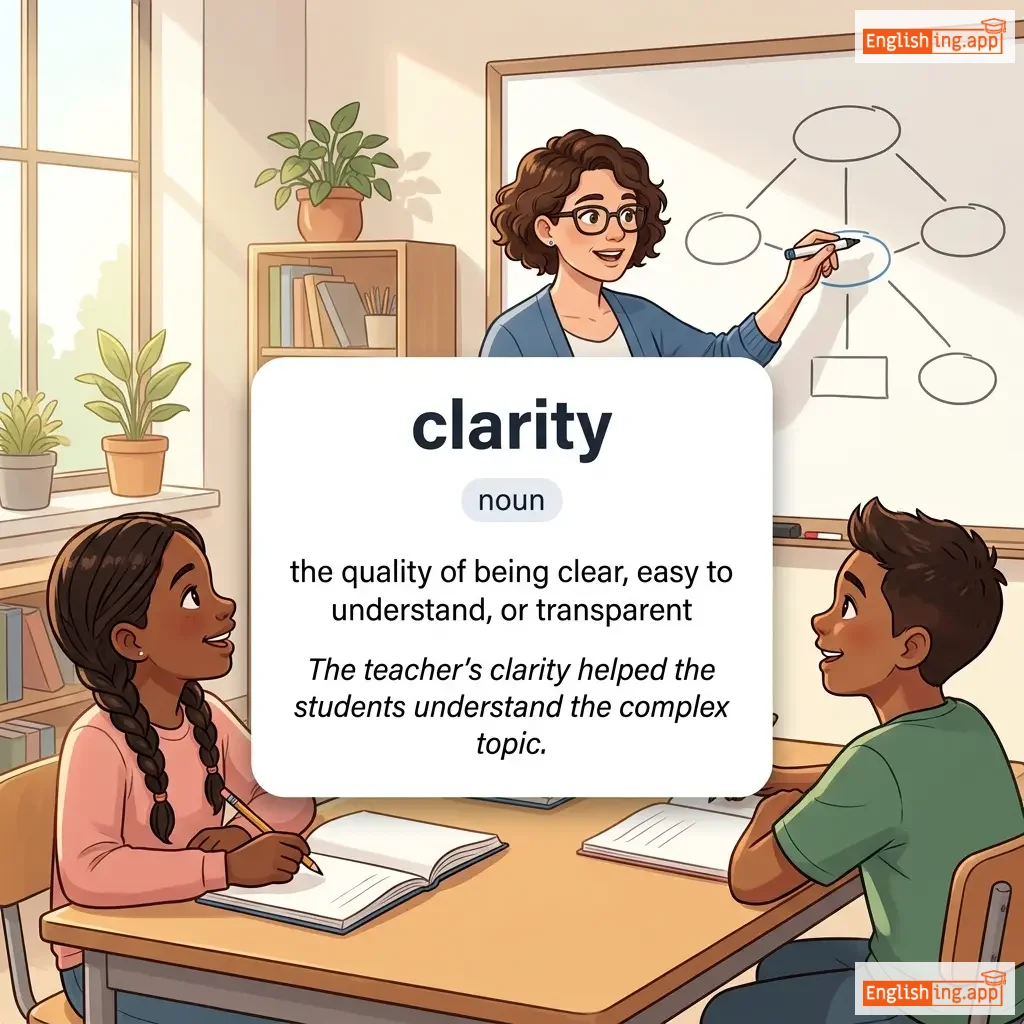
例句翻译
单词
Lesson 21Lesson 21 - 遮罩切换
|
表情符号
|
单词 | Images | 翻译 | 过去时 | 过去分词 | 第三人称单数 | 动名词 | 含义 | 例句 | 例句翻译 | 示例表达 | 示例表达含义 | 示例表达翻译 | 同义词 | 反义词 | 搭配词 | 助记符 |
|---|---|---|---|---|---|---|---|---|---|---|---|---|---|---|---|---|---|
|
#954
🧪
|
/ˈkemɪst/
noun
(凯米斯特)
••••••
|
- •••••• |
化学家; 药剂师
huaxuejia; yaojishi
••••••
|
- •••••• | - •••••• | - •••••• | - •••••• |
a scientist who studies chemistry; a person trained to prepare and dispense medicines
••••••
|
The chemist analyzed the sample to determine its composition.
泽 凯米斯特 安纳莱兹德 泽 桑普尔 图 迪特米恩 伊茨 康波兹申。
••••••
|
化学家分析了样品以确定其成分。
huaxuejia fenxi le yangpin yi queding qi chengfen
••••••
|
- •••••• | - •••••• | - •••••• |
pharmacist, chemical scientist, analyst, apothecary, druggist
••••••
|
layperson, non-scientist
••••••
|
analytical chemist, organic chemist, research chemist, chemist shop
••••••
|
Chemist 听起来像 chemistry—化学家研究化学
••••••
|
|
#955
⚗️
|
/ˈkɛmɪstri/
noun
(kuī mì)
••••••
|
- •••••• |
化学
huàxué
••••••
|
- •••••• | - •••••• | - •••••• | - •••••• |
the branch of science that studies substances and their interactions; also the emotional connection between people
••••••
|
They have great chemistry and work well together. |
他们之间有很好的化学反应,工作默契。
Tāmen zhī jiān yǒu hěn hǎo de huàxué fǎnyìng, gōngzuò mòqì.
••••••
|
good chemistry |
a natural connection or attraction between people
••••••
|
良好的化学反应
liánghǎo de huàxué fǎnyìng
••••••
|
science, interaction, reaction, bond, connection
••••••
|
disconnection, separation
••••••
|
study chemistry, chemistry lab, good chemistry, organic chemistry
••••••
|
化学不仅仅是科学,它连接了所有事物,尤其是关系!
••••••
|
|
#956
💪
|
/tʃɛst/
noun
(chest)
••••••
|
- •••••• |
胸部
xiōngbù
••••••
|
- •••••• | - •••••• | - •••••• | - •••••• |
the front part of the human body between the neck and the stomach
••••••
|
He felt a pain in his chest after running. |
跑步后,他感到胸部有痛感。
Pǎobù hòu, tā gǎndào xiōngbù yǒu tòng gǎn.
••••••
|
off your chest |
to talk about something that has been worrying you
••••••
|
倾诉心事
qīngsù xīnshì
••••••
|
thorax, breast, trunk, ribcage, torso
••••••
|
back, rear
••••••
|
chest pain, broad chest, chest muscles, chest infection
••••••
|
Chest 意思是胸部,'Get it off your chest' 意思是倾诉心事。
••••••
|
|
#957
🦷
|
/tʃuː/
verb
(海皮尼斯)
••••••
|
- •••••• |
幸福
xìngfú
••••••
|
chewed
••••••
|
chewed
••••••
|
chews
••••••
|
chewing
••••••
|
to bite food into smaller pieces with your teeth before swallowing it
••••••
|
You should chew your food properly to help with digestion. |
当她获得奖项时,她无法掩饰自己的幸福。
Dāng tā huòqǔ jiǎngxiàng shí, tā wúfǎ yǎnshì zìjǐ de xìngfú.
••••••
|
chew the fat |
to chat or talk in a friendly and informal way
••••••
|
追寻幸福
zhuīxún xìngfú
••••••
|
munch, bite, gnaw, chomp, grind
••••••
|
swallow, gulp
••••••
|
chew gum, chew slowly, chew food, chew thoroughly
••••••
|
幸福就像阳光,无法隐藏!
••••••
|
|
#958
🐔
|
/ˈtʃɪkɪn/
noun
(鸡)
••••••
|
- •••••• |
鸡
ji
••••••
|
- •••••• | - •••••• | - •••••• | - •••••• |
a domestic bird kept for its eggs or meat
••••••
|
We had fried chicken for dinner.
我们晚餐吃了炸鸡。
••••••
|
我们晚餐吃了炸鸡。
Wo men wan can chi le zha ji.
••••••
|
chicken out
害怕做某事
••••••
|
to decide not to do something because of fear
••••••
|
害怕做某事
hai pa zuo mou shi
••••••
|
hen, fowl, poultry, rooster, chick
••••••
|
bravery, courage
••••••
|
fried chicken, roast chicken, chicken soup, chicken farm
••••••
|
Chicken 是鸡,但 'chicken out' 是害怕做某事。
••••••
|
|
#959
👑
|
/tʃiːf/
noun
(chīfū)
••••••
|
- •••••• |
首领
shouling
••••••
|
- •••••• | - •••••• | - •••••• | - •••••• |
a leader or person in charge of a group or organization
••••••
|
The chief of the village made an important decision.
村庄的首领做出了一个重要的决定。
••••••
|
村庄的首领做出了一个重要的决定。
Cun zhuang de shouling zuo chu le yi ge zhongyao de jueding.
••••••
|
chief among
首领中
••••••
|
the most important or significant among a group
••••••
|
最重要
zui zhongyao
••••••
|
leader, head, boss, commander, captain
••••••
|
follower, subordinate
••••••
|
chief executive, tribal chief, chief complaint, chief reason
••••••
|
Chief意味着首领,👑 最重要的人。
••••••
|
|
#960
👶
|
/tʃaɪld/
noun
(chaild)
••••••
|
- •••••• |
孩子
haizi
••••••
|
- •••••• | - •••••• | - •••••• | - •••••• |
a young human being below the age of puberty or below the legal age of majority
••••••
|
The child played happily in the park.
孩子在公园里快乐地玩耍。
••••••
|
孩子在公园里快乐地玩耍。
Haizi zai gongyuan li kuaile de wanshua.
••••••
|
child's play
孩子的游戏
••••••
|
something that is very easy to do
••••••
|
孩子的游戏
Haizi de youxi
••••••
|
kid, youngster, minor, juvenile, toddler
••••••
|
adult, grown-up
••••••
|
child care, child development, child protection, child labor
••••••
|
Child 意味着孩子 👶, 在 '孩子的游戏' 中记住,孩子的游戏是最容易的。
••••••
|
|
#961
🧒
|
/ˈtʃaɪldhʊd/
noun
(chaildhud)
••••••
|
- •••••• |
童年
tongnian
••••••
|
- •••••• | - •••••• | - •••••• | - •••••• |
the period of being a child
••••••
|
She spent her childhood in a small village.
她在一个小村庄度过了她的童年。
••••••
|
她在一个小村庄度过了她的童年。
Ta zai yige xiao cunzhuang duguo le ta de tongnian.
••••••
|
childhood friend
童年朋友
••••••
|
a friend someone has had since they were children
••••••
|
童年朋友
tongnian pengyou
••••••
|
infancy, youth, boyhood, girlhood
••••••
|
adulthood, maturity
••••••
|
happy childhood, early childhood, childhood memory, childhood friend
••••••
|
Child + hood = 童年 (阶段)
••••••
|
|
#962
❄️
|
/tʃɪl/
verb
••••••
|
- •••••• | - •••••• |
chilled
••••••
|
chilled
••••••
|
chills
••••••
|
chilling
••••••
|
to make something cold or to relax and take it easy
••••••
|
We decided to chill at home after a long day. |
- •••••• |
chill out |
to relax completely or calm down
••••••
|
- •••••• |
relax, cool, freeze, unwind, calm
••••••
|
heat, stress
••••••
|
chill out, chill weather, chill drinks, chill vibe
••••••
|
No •••••• |
|
#963
🙂
|
/tʃɪn/
noun
(chin)
••••••
|
- •••••• |
下巴
xiàba
••••••
|
- •••••• | - •••••• | - •••••• | - •••••• |
the part of the face below the mouth
••••••
|
He rested his chin on his hand while thinking. |
他在思考时把下巴靠在手上。
Tā zài sīkǎo shí bǎ xiàba kào zài shǒu shàng.
••••••
|
keep your chin up |
to remain cheerful in a difficult situation
••••••
|
抬起下巴
tái qǐ xiàba
••••••
|
jaw, face, cheekbone
••••••
|
n/a
••••••
|
double chin, chin up, strong chin, square chin
••••••
|
下巴在嘴巴下,非常容易记住!
••••••
|
|
#964
🥢
|
/tʃaɪˈniːz/
adjective, noun
(chāi ní zī)
••••••
|
- •••••• |
中国的
zhōngguó de
••••••
|
- •••••• | - •••••• | - •••••• | - •••••• |
relating to China, its people, or its language
••••••
|
We went to a Chinese restaurant last night. |
我们昨晚去了一个中国餐厅。
wǒmen zuó wǎn qù le yí gè zhōngguó cāntīng.
••••••
|
Chinese whispers |
a game where a message is passed along and distorted
••••••
|
中国耳语
zhōngguó ěr yǔ
••••••
|
Mandarin, Cantonese, Asian, Oriental
••••••
|
non-Chinese, Western
••••••
|
Chinese culture, Chinese language, Chinese food, Chinese history
••••••
|
中国餐 = 筷子 🥢 永远不会忘记!
••••••
|
|
#965
🍟
|
/tʃɪp/
noun, verb
••••••
|
- •••••• | - •••••• |
chipped
••••••
|
chipped
••••••
|
chips
••••••
|
chipping
••••••
|
A small piece broken off from something; or to cut or break a small piece from something.
••••••
|
He accidentally chipped the edge of the table. |
- •••••• |
a chip on one’s shoulder |
Holding a grudge or feeling resentment about something.
••••••
|
- •••••• |
fragment, splinter, shard, flake, sliver
••••••
|
whole, intact, complete
••••••
|
potato chip, wood chip, chip away, chip in
••••••
|
No •••••• |
|
#966
🍫
|
/ˈtʃɒklət/
noun
(巧克力)
••••••
|
- •••••• |
巧克力
qiaokeli
••••••
|
- •••••• | - •••••• | - •••••• | - •••••• |
a sweet, brown food made from roasted cocoa beans
••••••
|
She bought a bar of chocolate from the store.
她从商店买了一块巧克力。
••••••
|
她从商店买了一块巧克力。
tā cóng shāngdiàn mǎile yī kuài qiǎokèlì.
••••••
|
like a kid in a candy store
像糖果店里的小孩一样
••••••
|
very excited or happy about something
••••••
|
对某事感到非常兴奋或开心
duì mǒu shì gǎndào fēicháng xīngfèn huò kāixīn
••••••
|
cocoa, candy, sweet, confectionery
••••••
|
bitter, unsweetened
••••••
|
chocolate cake, chocolate bar, dark chocolate, hot chocolate
••••••
|
巧克力是甜蜜的 🍫,让你感到幸福的味道。
••••••
|
|
#967
✅
|
/tʃɔɪs/
noun
(chɔɪs)
••••••
|
|
选择
xuǎnzé
••••••
|
- •••••• | - •••••• | - •••••• | - •••••• |
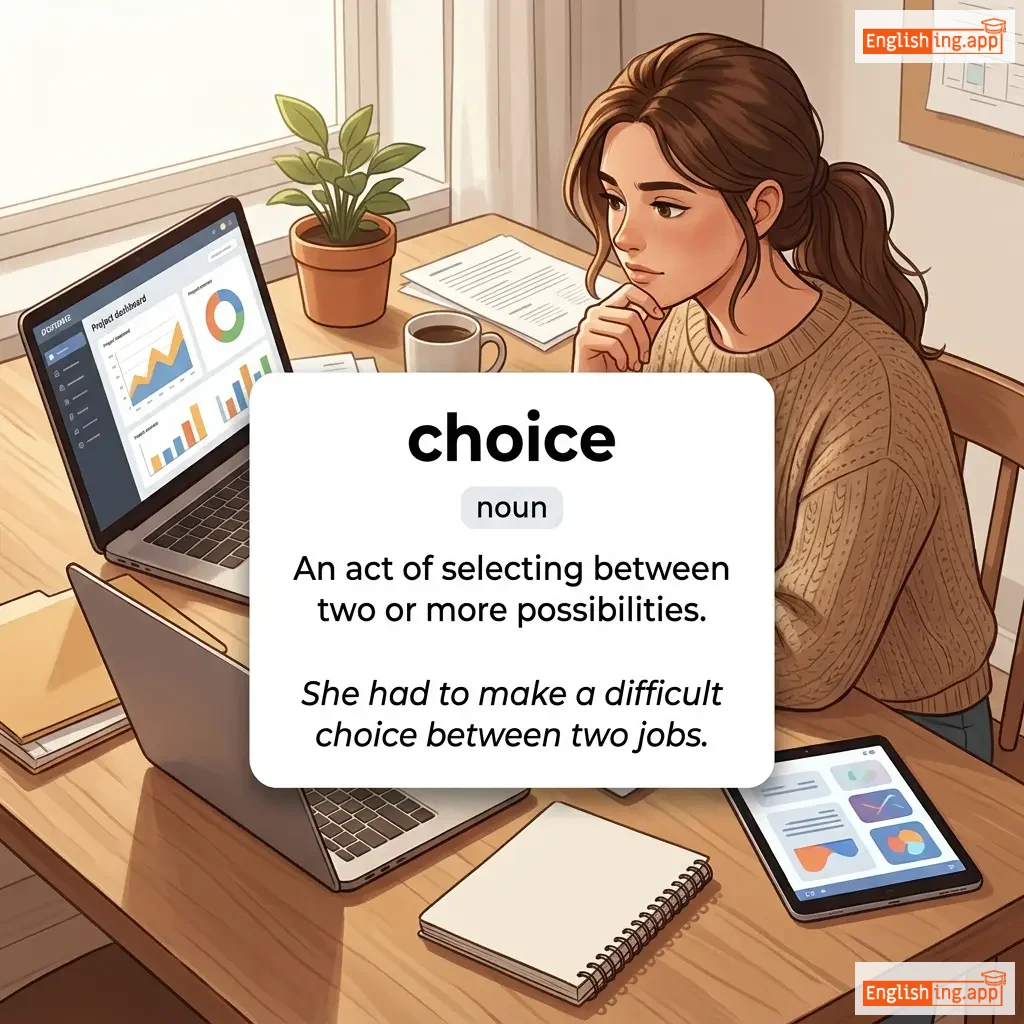
An act of selecting between two or more possibilities.
••••••
|
She had to make a difficult choice between two jobs. |
她不得不在两份工作之间做出一个艰难的选择。
Tā bùdébù zài liǎng fèn gōngzuò zhī jiān zuò chū yīgè jiānnán de xuǎnzé.
••••••
|
by choice |
Voluntarily or willingly.
••••••
|
根据选择
gēnjù xuǎnzé
••••••
|
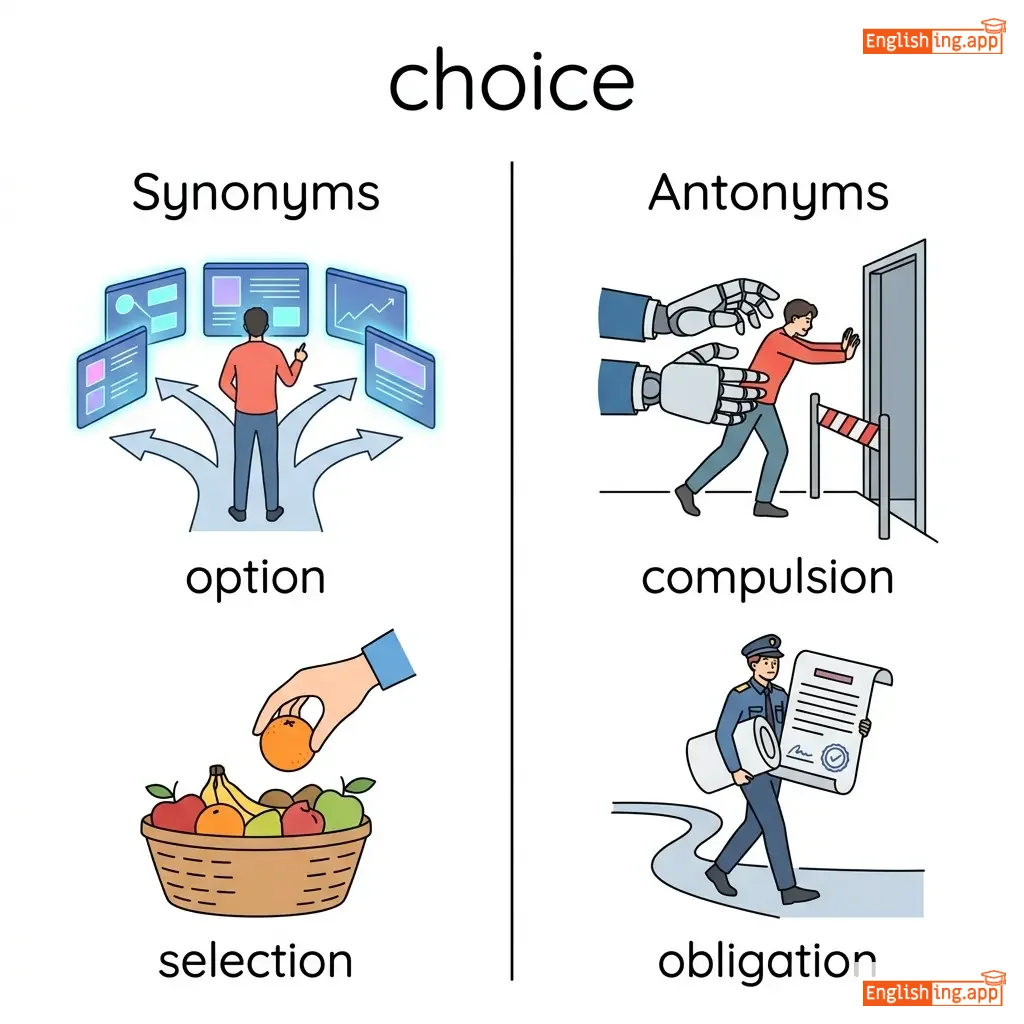
option, selection, decision, preference, alternative
••••••
|
compulsion, obligation, necessity
••••••
|
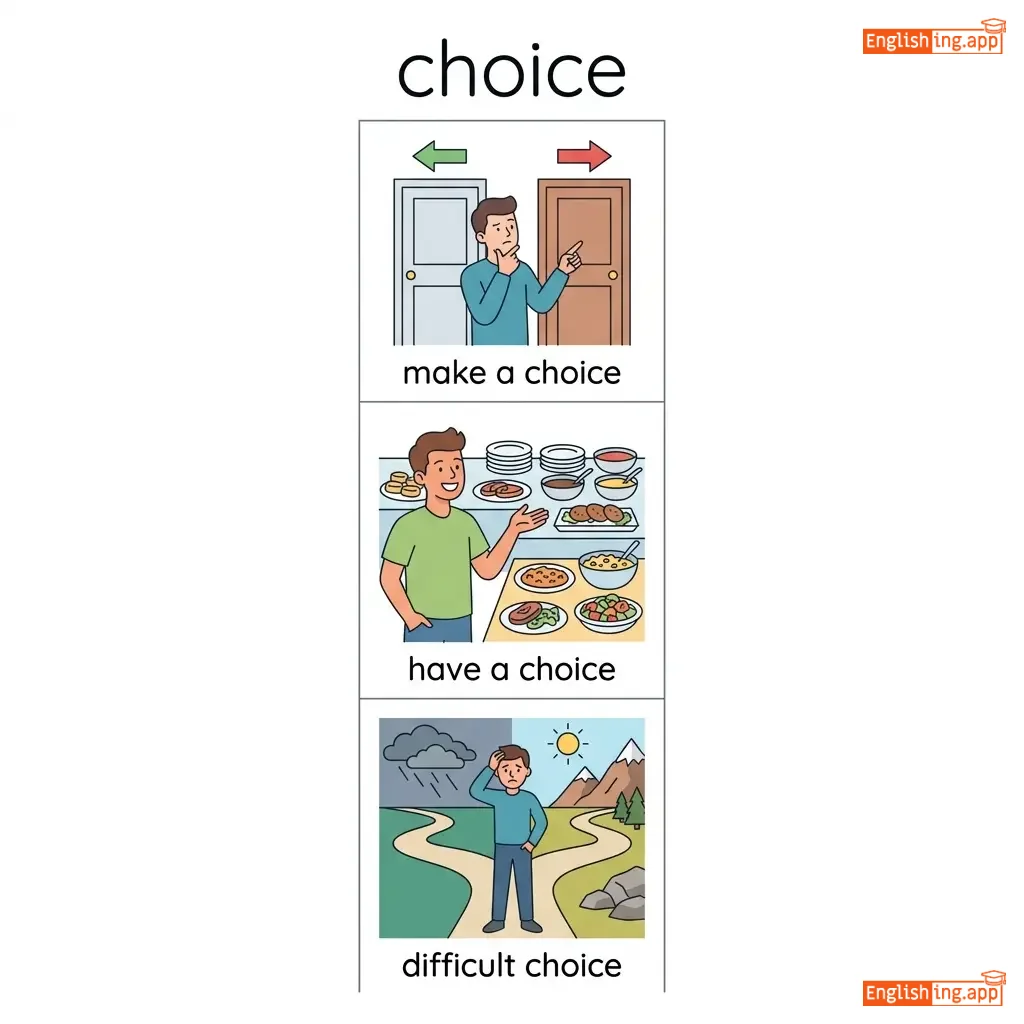
make a choice, have a choice, difficult choice, free choice
••••••
|
Choice 是选择。当你有选择时,你要自己选择,完全是自愿的。
••••••
|
|
#968
🎶
|
/ˈkwaɪər/
noun
(kuái'ěr)
••••••
|
- •••••• |
合唱团
hechangtuan
••••••
|
- •••••• | - •••••• | - •••••• | - •••••• |
An organized group of singers, typically performing in church services or concerts.
••••••
|
The choir sang beautifully during the ceremony. |
合唱团在仪式中唱得非常美丽。
Hechangtuan zai yishi zhong chang de feichang meili.
••••••
|
angelic choir |
A choir whose singing is compared to the sound of angels.
••••••
|
天使合唱团
Tianshi hechangtuan
••••••
|
chorus, ensemble, singers, vocal group
••••••
|
solo, silence
••••••
|
church choir, school choir, join a choir, choir practice
••••••
|
Choir是指合唱团,就像教堂里的合唱团,大家一起唱歌。
••••••
|
|
#969
✅
|
/tʃuːz/
verb
••••••
|
|
- •••••• |
chose
••••••
|
chosen
••••••
|
chooses
••••••
|
choosing
••••••
|
to select one option from a range of possibilities
••••••
|
You must choose the right path for your future. |
- •••••• |
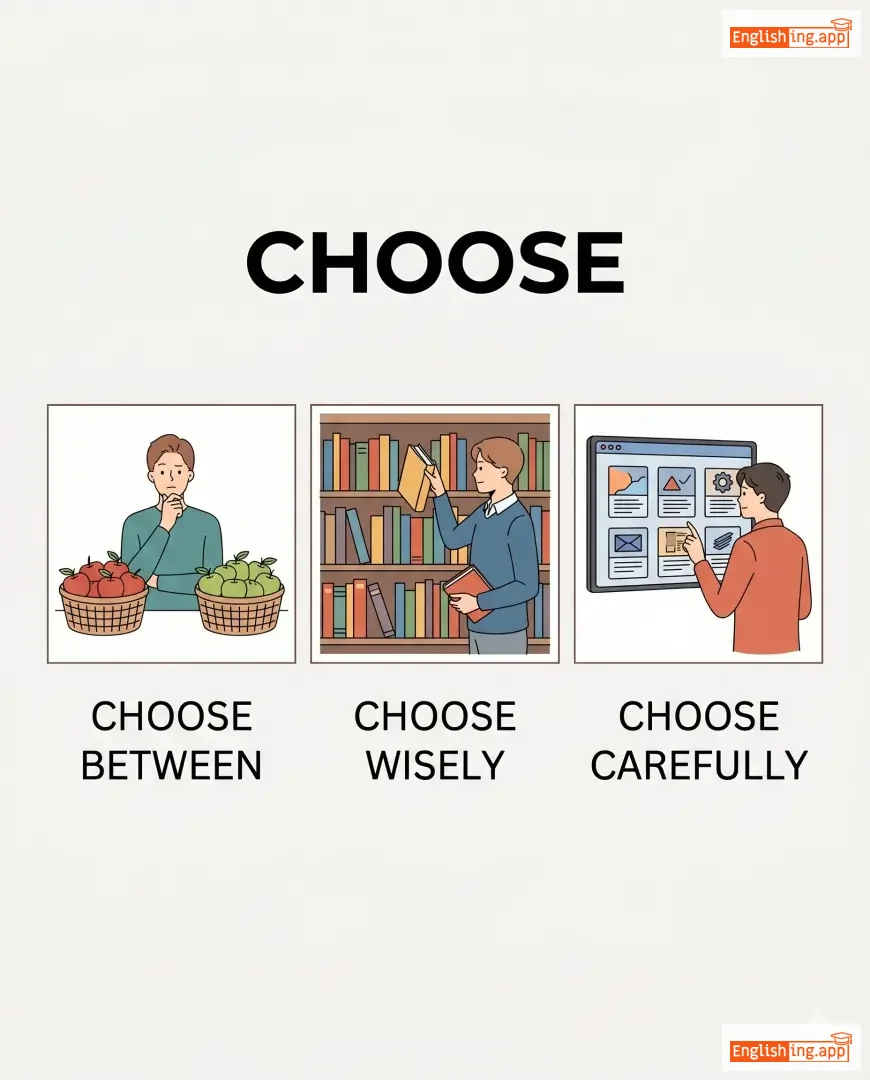
choose wisely |
make a decision carefully and thoughtfully
••••••
|
- •••••• |
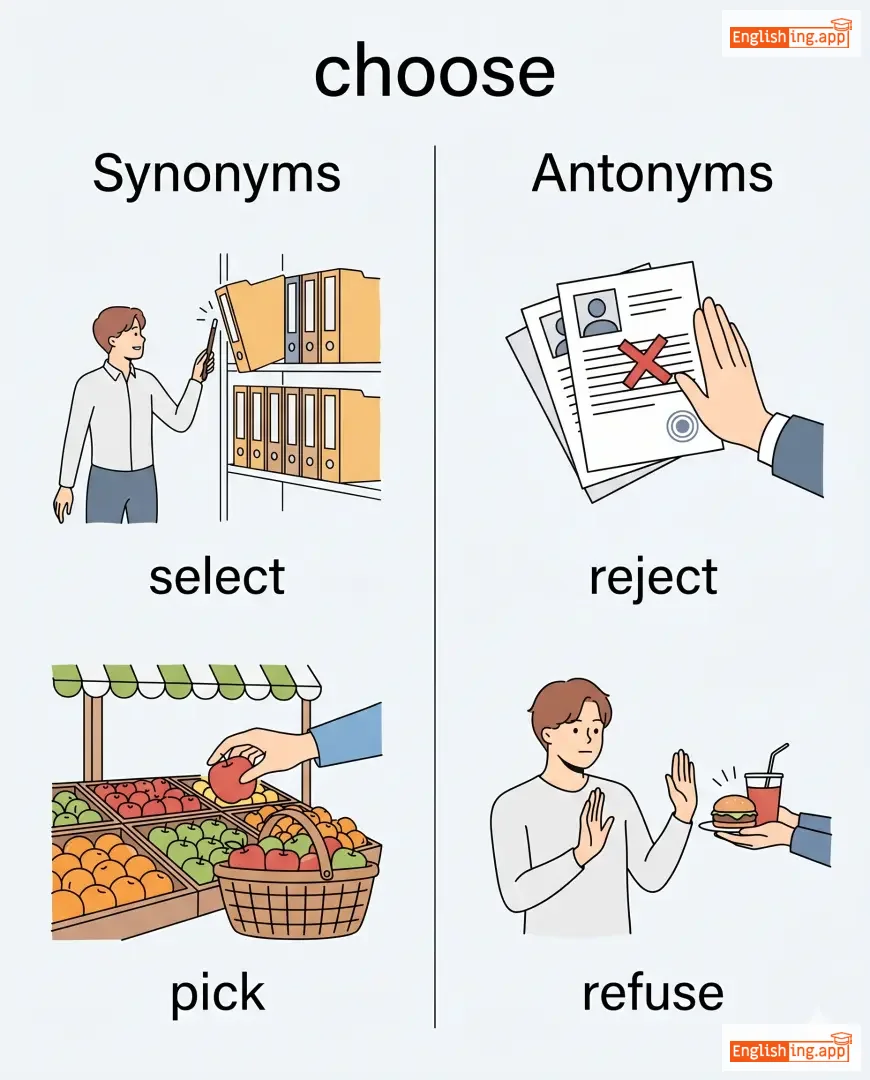
select, pick, decide, opt, elect
••••••
|
reject, refuse, ignore
••••••
|
choose between, choose wisely, choose carefully, choose from
••••••
|
No •••••• |
|
#970
🔪
|
/tʃɒp/
verb
(chop)
••••••
|
|
砍
kan
••••••
|
chopped
••••••
|
chopped
••••••
|
chops
••••••
|
chopping
••••••
|
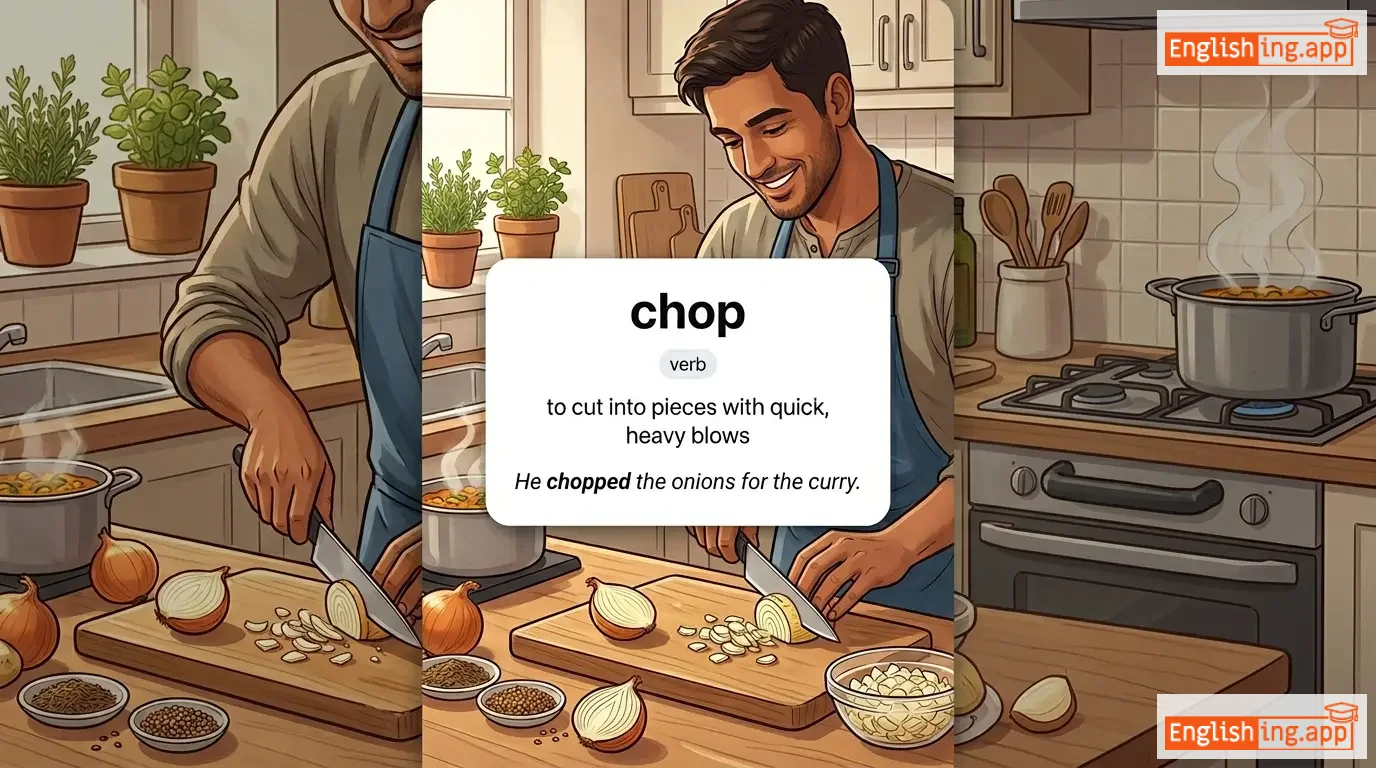
to cut into pieces with quick, heavy blows
••••••
|
He chopped the onions for the curry. |
他为咖喱切了洋葱。
Tā wèi gālí qiēle yángcōng.
••••••
|
chop and change |
to keep changing one's mind or decisions
••••••
|
反复改变意见
fǎn fù gǎi biàn yìjiàn
••••••
|
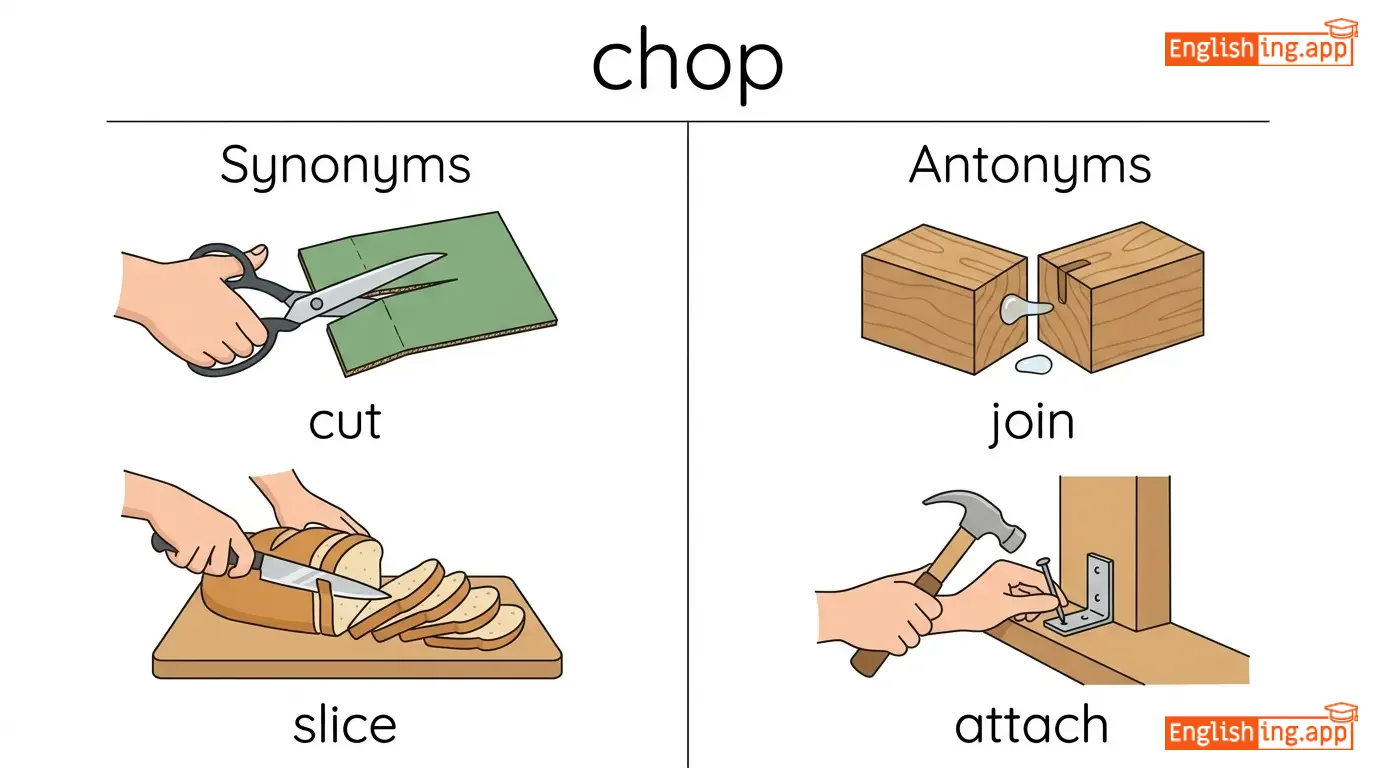
cut, slice, hack, cleave, dice
••••••
|
join, attach, connect
••••••
|
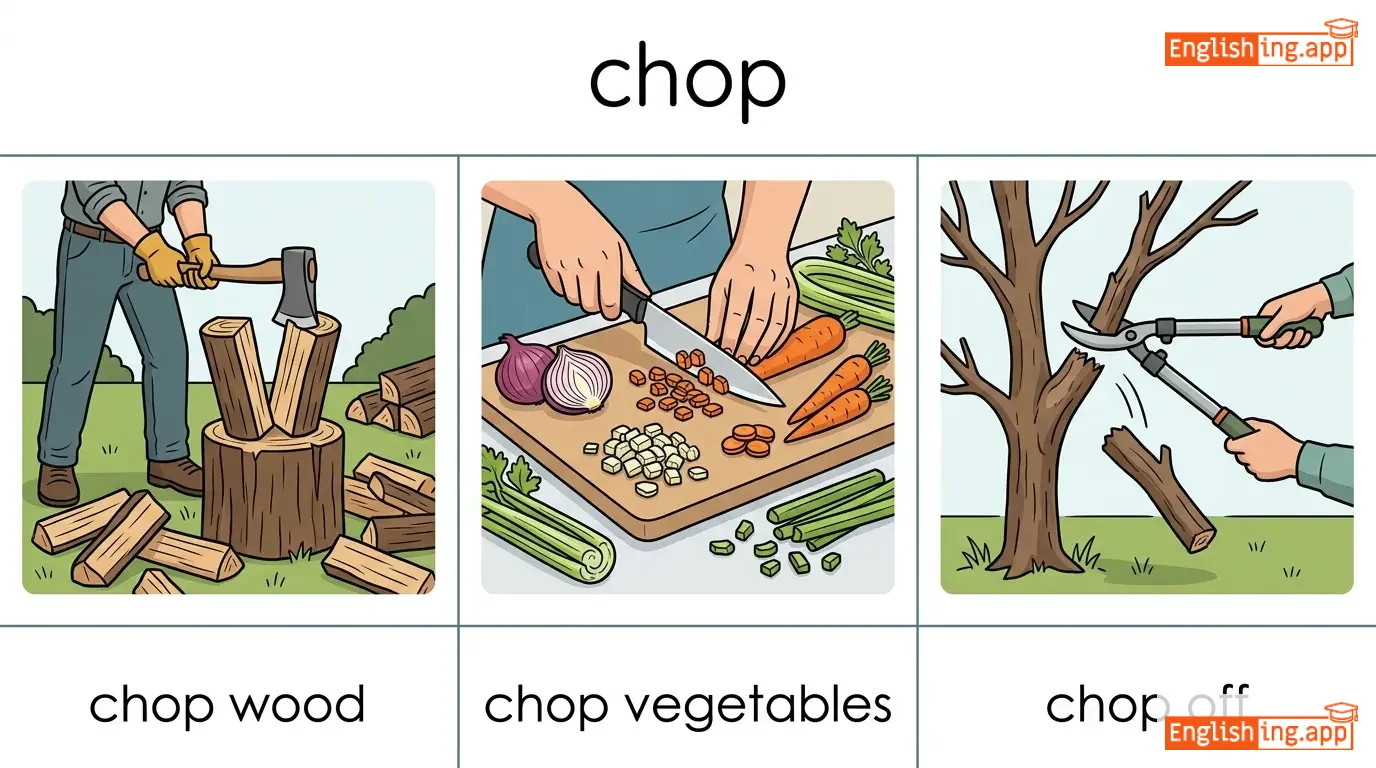
chop wood, chop vegetables, chop off, chop into pieces
••••••
|
Chop意味着砍或反复改变决定。
••••••
|
|
#971
✝️
|
/ˈkrɪstʃən/
noun, adjective
(kuh-ree-shee-uhn)
••••••
|
- •••••• |
基督徒
jīdū tú
••••••
|
- •••••• | - •••••• | - •••••• | - •••••• |
a person who follows the religion based on the teachings of Jesus Christ
••••••
|
She is a devoted Christian who attends church every Sunday. |
她是一个虔诚的基督徒,每个星期天都会去教堂。
Tā shì yī gè qiánchéng de jīdū tú, měi gè xīngqītiān dōu huì qù jiàotáng.
••••••
|
- •••••• | - •••••• | - •••••• |
believer, follower, disciple, worshipper
••••••
|
atheist, nonbeliever
••••••
|
Christian faith, Christian values, Christian community, Christian church
••••••
|
Christian = 基督徒 ✝️, 跟随耶稣基督的人是基督徒。
••••••
|
|
#972
🎄
|
/ˈkrɪsməs/
noun
(krismas)
••••••
|
- •••••• |
圣诞节
Shèngdàn Jié
••••••
|
- •••••• | - •••••• | - •••••• | - •••••• |
an annual festival celebrating the birth of Jesus Christ, observed on December 25
••••••
|
Families gather to celebrate Christmas with joy and love. |
家庭聚在一起庆祝圣诞节,带着欢乐和爱。
Jiātíng jù zài yīqǐ qìngzhù Shèngdàn Jié, dàizhe huānlè hé ài.
••••••
|
Christmas spirit |
the joyful and generous attitude people often have during Christmas
••••••
|
圣诞节精神
Shèngdàn Jié jīngshén
••••••
|
holiday, festival, yuletide, Noel
••••••
|
ordinary day
••••••
|
Christmas tree, Christmas Eve, Christmas gifts, Christmas party
••••••
|
圣诞节 = 🎄 快乐与爱
••••••
|
|
#973
⏳
|
/ˈkrɒnɪk/
adjective
(克罗尼克)
••••••
|
- •••••• |
慢性
manxing
••••••
|
- •••••• | - •••••• | - •••••• | - •••••• |
Lasting for a long time or constantly recurring, often describing illness.
••••••
|
She suffers from chronic back pain.
她患有慢性的背痛。
••••••
|
她患有慢性的背痛。
Ta huan you manxing de bei tong.
••••••
|
chronic condition
慢性病
••••••
|
A long-lasting medical issue that persists over time.
••••••
|
慢性病
manxing bing
••••••
|
persistent, long-term, continual, constant, habitual
••••••
|
acute, temporary, short-term
••••••
|
chronic disease, chronic pain, chronic illness, chronic stress
••••••
|
Chronic意味着持久,像一个永远不消失的疼痛。
••••••
|
|
#974
🍰
|
/tʃʌŋk/
noun
(chāngkè)
••••••
|
- •••••• |
块 / 大块
kuai / da kuai
••••••
|
- •••••• | - •••••• | - •••••• | - •••••• |
a thick or solid piece of something
••••••
|
She cut the cake into large chunks. |
她把蛋糕切成大块。
Ta ba dangao qie cheng da kuai.
••••••
|
a chunk of time |
a considerable amount of time
••••••
|
一段时间
yi duan shi jian
••••••
|
piece, block, lump, portion, segment
••••••
|
fragment, bit
••••••
|
chunk of meat, chunk of cake, big chunk, data chunk
••••••
|
Chunk代表大块,就像一个大块蛋糕
••••••
|
|
#975
⛪
|
/tʃɜːrtʃ/
noun
(教堂)
••••••
|
- •••••• |
教堂
jiaotang
••••••
|
- •••••• | - •••••• | - •••••• | - •••••• |
a building used for public Christian worship
••••••
|
The old church in the village was built in the 18th century. |
村里的古老教堂建于18世纪。
Cun li de gulao jiaotang jian yu 18 shiji.
••••••
|
go to church |
to attend Christian worship services
••••••
|
去教堂
qu jiaotang
••••••
|
chapel, cathedral, sanctuary, basilica
••••••
|
mosque, temple
••••••
|
church service, church building, church bell, church members
••••••
|
教堂即 Church ⛪ — 基督徒祈祷的地方。
••••••
|
|
#976
🚬
|
/ˈsɪɡəˌrɛt/
noun
(香烟)
••••••
|
- •••••• |
香烟
xiangyan
••••••
|
- •••••• | - •••••• | - •••••• | - •••••• |
a small roll of finely cut tobacco wrapped in paper for smoking
••••••
|
He lit a cigarette after dinner.
他在晚餐后点燃了一支香烟。
••••••
|
他在晚餐后点燃了一支香烟。
Ta zai wancan hou dianran le yi zhi xiangyan.
••••••
|
chain smoker
连环烟民
••••••
|
a person who smokes cigarettes continuously, one after another
••••••
|
连环烟民
lianhuan yānmín
••••••
|
smoke, tobacco, fag, stick
••••••
|
fresh air, nonsmoking
••••••
|
smoke a cigarette, light a cigarette, cigarette packet, cigarette smoke
••••••
|
香烟 = 🚬 香烟 — 晚餐后有些人会点燃一支。
••••••
|
|
#977
🎬
|
/ˈsɪnəmə/
noun
(西内玛)
••••••
|
- •••••• |
电影院
dianyingyuan
••••••
|
- •••••• | - •••••• | - •••••• | - •••••• |
a place where films are shown to the public; the art or industry of making and showing films
••••••
|
We went to the cinema to watch a new movie.
维 温 特 图 德 西内玛 图 沃奇 阿 纽 穆维。
••••••
|
我们去电影院看了一部新电影。
women qu dianyingyuan kan le yi bu xin dianying
••••••
|
go to the cinema
够 图 德 西内玛
••••••
|
to visit a movie theater to watch a film
••••••
|
去电影院
qu dianyingyuan
••••••
|
movie theater, film theater, picture house, multiplex
••••••
|
television, home video
••••••
|
go to the cinema, cinema hall, art cinema, local cinema
••••••
|
Cinema 听起来像 西内玛,在电影院看电影。
••••••
|
|
#978
⭕
|
/ˈsɜːrkəl/
noun/verb
(sàkè)
••••••
|
- •••••• |
圆圈
yuánquān
••••••
|
circled
sàkèd
••••••
|
circled
sàkèd
••••••
|
circles
sàkèls
••••••
|
circling
sàkèlíng
••••••
|
a round shape; to move all the way around something
••••••
|
The children sat in a circle.
孩子们坐成了一个圈。
••••••
|
孩子们坐成了一个圈。
Háizimen zuò chéngle yīgè quān.
••••••
|
come full circle
回到原点
••••••
|
to return to the original position or situation
••••••
|
回到原点
huí dào yuándiǎn
••••••
|
ring, loop, cycle, orbit
••••••
|
line, straight
••••••
|
circle of friends, draw a circle, circle around, social circle
••••••
|
Circle 意思是圆圈 - 容易记住,孩子们通常围坐成一个圈。
••••••
|
|
#979
🔄
|
/ˈsɜːrkɪt/
noun
(电路)
••••••
|
- •••••• |
电路 / 电气通路
dianlu / dianqi tonglu
••••••
|
- •••••• | - •••••• | - •••••• | - •••••• |
A roughly circular line, route, or movement that starts and ends at the same place; also an electrical pathway.
••••••
|
The runners completed the circuit around the park. |
跑步者完成了环绕公园的电路。
Paobu zhe wancheng le huanrao gongyuan de dianlu.
••••••
|
short-circuit |
an electrical failure caused by unintended contact or connection
••••••
|
短路
duanlu
••••••
|
route, loop, pathway, track, course
••••••
|
line, shortcut
••••••
|
electrical circuit, racing circuit, complete circuit
••••••
|
电路就像一个圆圈 → 电路意味着回到起点
••••••
|
|
#980
🔄
|
/ˈsɜːrkjəˌleɪt/
verb
(sā kē léi tè)
••••••
|
- •••••• |
循环, 流通
xúnhuán, liútōng
••••••
|
circulated
sā kē léi tè dé
••••••
|
circulated
sā kē léi tè dé
••••••
|
circulates
sā kē léi tè sī
••••••
|
circulating
sā kē léi tè yīng
••••••
|
to move continuously or freely through a closed system or area
••••••
|
Air circulated freely in the open hall.
空气在开放的大厅自由流通。
••••••
|
空气在开放的大厅自由流通。
Kōngqì zài kāifàng de dàtīng zìyóu liútōng.
••••••
|
circulate the news
传播新闻
••••••
|
to spread information among people
••••••
|
传播新闻
Chuánbò xīnwén
••••••
|
flow, move, spread, distribute, diffuse
••••••
|
stagnate, stop, block
••••••
|
circulate blood, circulate air, circulate information, circulate money
••••••
|
循环就像是空气或新闻在不断传播,绕圈子。
••••••
|
|
#981
🔄
|
/ˌsɜːr.kjʊˈleɪ.ʃən/
noun
(sɪr.kjʊˈleɪ.ʃən)
••••••
|
|
循环
xunhuan
••••••
|
- •••••• | - •••••• | - •••••• | - •••••• |
the movement of something (like blood, air, or information) through a system or area.
••••••
|
The circulation of blood is essential for a healthy body. |
血液循环对健康的身体至关重要。
Xueye xunhuan dui jiankang de shenti zhiguang zhongyao.
••••••
|
- •••••• | - •••••• | - •••••• |
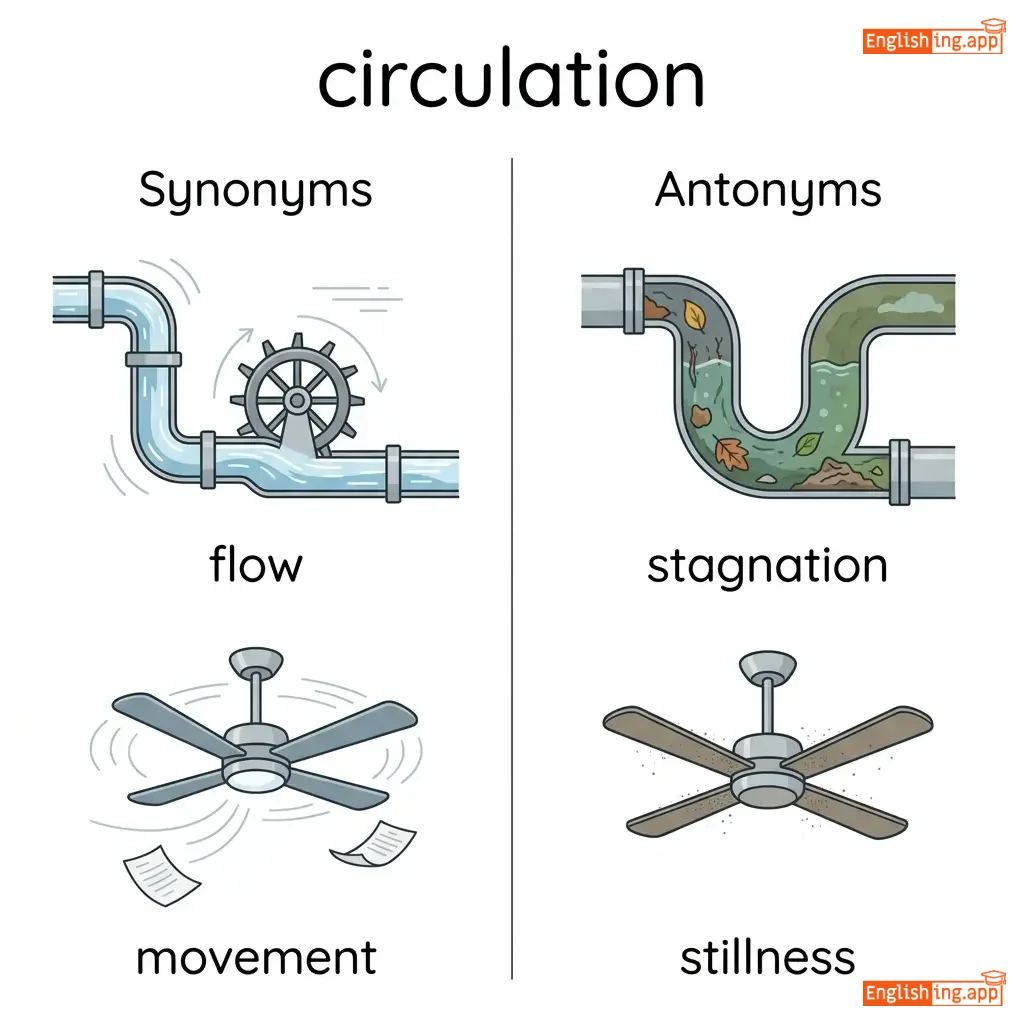
flow, movement, transfer, distribution
••••••
|
stagnation, stillness
••••••
|
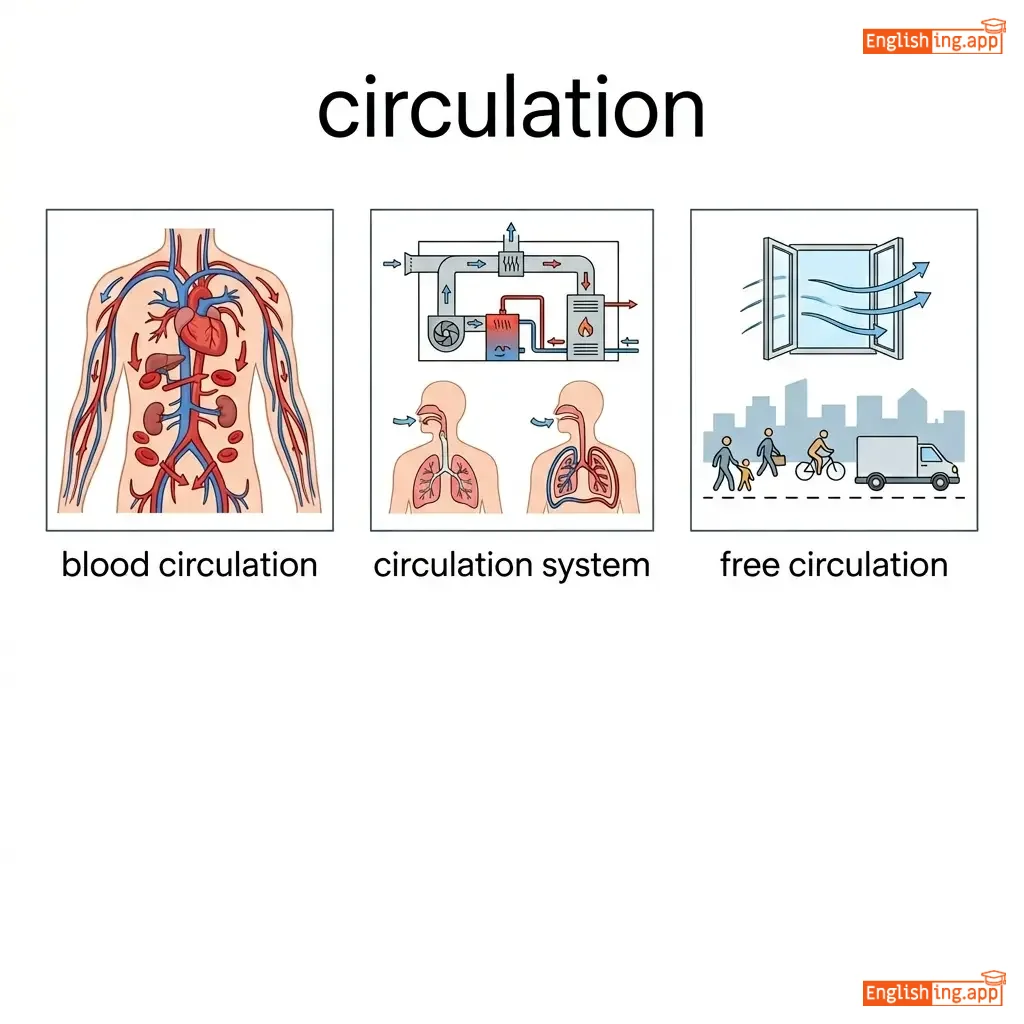
blood circulation, circulation system, free circulation, improve circulation
••••••
|
想象血液在身体中的循环,就像维持健康的血液流动一样。
••••••
|
|
#982
📌
|
/ˈsɜːrkəmstæns/
noun
(sɜːrkəmstæns)
••••••
|
- •••••• |
情况
qingkuang
••••••
|
- •••••• | - •••••• | - •••••• | - •••••• |
a fact or condition connected with an event or action
••••••
|
She handled the difficult circumstances bravely. |
她勇敢地应对了困难的情况。
Ta yonggan de yingdui le kunnan de qingkuang.
••••••
|
under the circumstances |
considering the current situation
••••••
|
在这种情况下
zai zhe zhong qingkuang xia
••••••
|
situation, condition, context, factor, state
••••••
|
certainty, plan
••••••
|
in difficult circumstances, under the circumstances, favorable circumstances
••••••
|
Circumstance 意味着情况 - 将情况环绕以记住circumstance。
••••••
|
|
#983
📖
|
/saɪt/
verb
(sàit)
••••••
|
|
引用
yǐn yòng
••••••
|
cited
sàited
••••••
|
cited
sàited
••••••
|
cites
sàits
••••••
|
citing
sàiting
••••••
|
To refer to or quote a source as evidence or justification.
••••••
|
She cited several studies to support her argument.
shī sàited sèverál stúdíes tú supòrt hèr àrgùmént
••••••
|
她引用了几项研究来支持她的论点。
Tā yǐn yòng le jǐ xiàng yán jiū lái zhīchí tā de lùn diǎn.
••••••
|
cite chapter and verse
sàit chàptèr ànd vèrs
••••••
|
to give exact details or precise references
••••••
|
引用章节和经文
yǐn yòng zhāng jié hé jīng wén
••••••
|
quote, reference, mention, allude, invoke
••••••
|
ignore, overlook, suppress
••••••
|
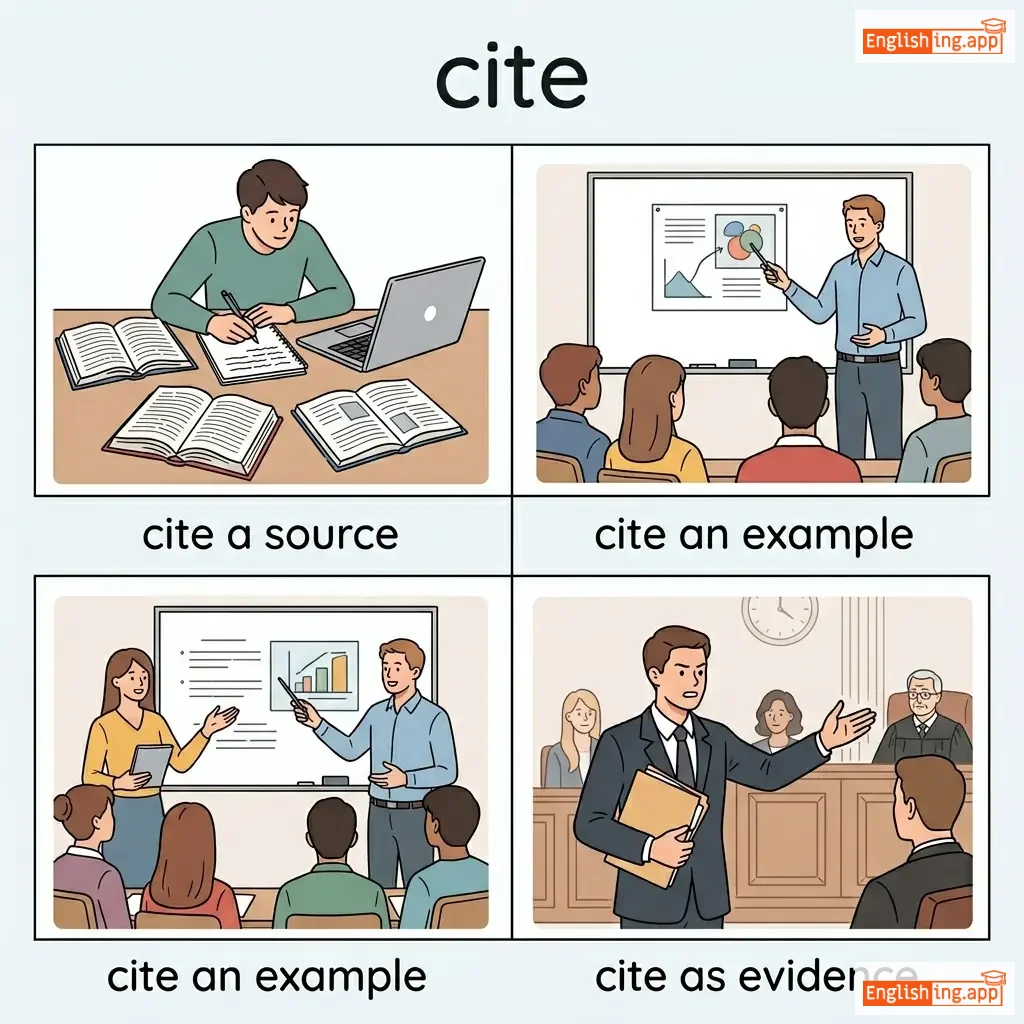
cite a source, cite an example, cite as evidence, cite authority
••••••
|
Cite就像引用网页
••••••
|
|
#984
🧑🤝🧑
|
/ˈsɪtɪzən/
noun
(sìtízhèn)
••••••
|
- •••••• |
公民
gongmin
••••••
|
- •••••• | - •••••• | - •••••• | - •••••• |
a legally recognized subject or national of a state
••••••
|
Every citizen has the right to vote. |
每个公民都有投票权。
Měi gè gōngmín dōu yǒu tóupiào quán.
••••••
|
model citizen |
an exemplary or ideal member of society
••••••
|
模范公民
mófàn gōngmín
••••••
|
inhabitant, resident, national, dweller
••••••
|
foreigner, alien
••••••
|
citizen rights, responsible citizen, active citizen, citizen of a country
••••••
|
Citizen = 公民 – 公民 = 城市的居民
••••••
|
|
#985
🪪
|
/ˈsɪtɪzənʃɪp/
noun
(公民身份)
••••••
|
- •••••• |
国籍
guójí
••••••
|
- •••••• | - •••••• | - •••••• | - •••••• |
the status of being a recognized member of a state or country, with rights and duties
••••••
|
He applied for American citizenship after living there for ten years.
他在美国生活了十年后申请了美国国籍。
••••••
|
他在美国生活了十年后申请了美国国籍。
Tā zài Měiguó shēnghuóle shí nián hòu shēnqǐngle Měiguó guójí.
••••••
|
- •••••• | - •••••• | - •••••• |
nationality, allegiance, belonging, membership, residency
••••••
|
alienage, statelessness
••••••
|
dual citizenship, citizenship rights, grant citizenship, revoke citizenship
••••••
|
Citizen 意味着公民,而 Citizenship 意味着国籍 — 记住这个联系!
••••••
|
|
#986
🏙️
|
/ˈsɪti/
noun
(sìtí)
••••••
|
- •••••• |
城市
chengshi
••••••
|
- •••••• | - •••••• | - •••••• | - •••••• |
a large town or an urban area with its own government
••••••
|
Dhaka is the largest city in Bangladesh. |
北京是中国最大的城市。
Běijīng shì zhōngguó zuì dà de chéngshì.
••••••
|
city that never sleeps |
a city that is always busy, like New York
••••••
|
永不入睡的城市
yǒng bù rù shuì de chéng shì
••••••
|
metropolis, town, municipality, capital
••••••
|
village, countryside
••••••
|
big city, city life, city center, city council
••••••
|
City 是城市,城市总是充满活力的。
••••••
|
|
#987
🏛️
|
/ˈsɪvɪk/
adjective
(市民)
••••••
|
- •••••• |
市民
shìmín
••••••
|
- •••••• | - •••••• | - •••••• | - •••••• |
relating to a city, town, or the duties of its citizens
••••••
|
The mayor encouraged people to take part in civic activities. |
市长鼓励人们参与市民活动。
Shìzhǎng gǔlì rénmen cānyù shìmín huódòng.
••••••
|
civic duty |
the responsibility of a citizen to contribute to their community or government
••••••
|
市民责任
shìmín zérèn
••••••
|
municipal, public, community, urban
••••••
|
private, rural
••••••
|
civic duty, civic engagement, civic pride, civic education
••••••
|
Civic意味着与城市和市民相关的责任,如市民责任。
••••••
|
|
#988
🏛️
|
/ˈsɪvɪks/
noun
(西维克斯)
••••••
|
- •••••• |
公民教育
gongmin jiaoyu
••••••
|
- •••••• | - •••••• | - •••••• | - •••••• |
the study of the rights and duties of citizens and how government works
••••••
|
Civics helps students understand their responsibilities as citizens.
公民教育帮助学生理解作为公民的责任。
••••••
|
公民教育帮助学生理解作为公民的责任。
gongmin jiaoyu bangzhu xuesheng lijie zuowei gongmin de zeren
••••••
|
- •••••• | - •••••• | - •••••• |
citizenship education, public affairs, government studies, social studies
••••••
|
ignorance, apathy
••••••
|
civics class, civics education, civics textbook, basic civics
••••••
|
CIVICS 听起来像 citizen,意思是公民教育
••••••
|
|
#989
🤝
|
/ˈsɪvəl/
adjective
(sīwēi'ěr)
••••••
|
- •••••• |
公民的
gongmin de
••••••
|
- •••••• | - •••••• | - •••••• | - •••••• |
Relating to ordinary citizens and their concerns, or being polite and courteous.
••••••
|
They settled the matter through civil discussion. |
他们通过公民的讨论解决了这个问题。
Tāmen tōngguò gōngmín de tǎolùn jiějuéle zhège wèntí.
••••••
|
civil war |
a war between groups within the same country
••••••
|
内战
nèi zhàn
••••••
|
polite, courteous, civilian, domestic, respectful
••••••
|
rude, military, uncivil
••••••
|
civil rights, civil society, civil service, civil war
••••••
|
Civil意味着有礼,像公民 = 有礼的人
••••••
|
|
#990
🧑
|
/səˈvɪliən/
noun/adjective
(sivilian)
••••••
|
- •••••• |
平民
pingmin
••••••
|
- •••••• | - •••••• | - •••••• | - •••••• |
a person not in the armed forces or police
••••••
|
The area was evacuated to protect the civilians. |
该区域已被疏散以保护平民。
Gai quyu yi bei shuxian yi baohu pingmin.
••••••
|
- •••••• | - •••••• | - •••••• |
noncombatant, ordinary person, nonmilitary, commoner
••••••
|
soldier, officer
••••••
|
civilian life, civilian population, civilian clothes
••••••
|
Civilian sounds like 平民 (pingmin) in Chinese.
••••••
|
|
#991
🏺
|
/ˌsɪvɪlaɪˈzeɪʃən/
noun
(sivilaiˈzeɪʃən)
••••••
|
- •••••• |
文明
wenming
••••••
|
- •••••• | - •••••• | - •••••• | - •••••• |
the stage of human social and cultural development and organization considered most advanced
••••••
|
Ancient Egypt is known for its remarkable civilization.
古埃及因其卓越的文明而闻名。
••••••
|
古埃及因其卓越的文明而闻名。
Gu Aiji yin qi zhuoyue de wenming er wenming.
••••••
|
modern civilization
现代文明
••••••
|
the advanced state of contemporary human society
••••••
|
现代文明
xiandai wenming
••••••
|
culture, society, advancement, progress, refinement
••••••
|
barbarism, savagery
••••••
|
ancient civilization, modern civilization, lost civilization, human civilization
••••••
|
Civil 代表文明, Civilization 代表文明 — 一个简单而聪明的联想。
••••••
|
|
#992
🏛️
|
/ˈsɪvɪlaɪz/
verb
(西维莱兹)
••••••
|
- •••••• |
使文明
shi wenming
••••••
|
civilized
西维莱兹德
••••••
|
civilized
西维莱兹德
••••••
|
civilizes
西维莱兹兹
••••••
|
civilizing
西维莱兹英
••••••
|
to bring a society or group to a more developed, organized, or socially acceptable state; to educate and refine behavior
••••••
|
Education can help civilize communities by promoting shared values and respect.
教育可以通过促进共同价值和尊重来帮助西维莱兹社区。
••••••
|
教育可以通过促进共同价值观和尊重来使社区更加文明。
Jiaoyu keyi tongguo cujin gongtong jiazhiguan he zunzhong lai shi shequ gengjia wenming
••••••
|
- •••••• | - •••••• | - •••••• |
refine, educate, cultivate, humanize, enlighten
••••••
|
barbarize, degrade, brutalize
••••••
|
civilize society, civilize behavior, civilize a nation, efforts to civilize
••••••
|
文明 = civil
••••••
|
|
#993
📢
|
/kleɪm/
verb
(克莱姆)
••••••
|
|
声称
shengcheng
••••••
|
claimed
克莱姆德
••••••
|
claimed
克莱姆德
••••••
|
claims
克莱姆斯
••••••
|
claiming
克莱明
••••••
|
to state something as true, often without proof; to demand ownership or right
••••••
|
He claimed the prize after winning the competition.
他在赢得比赛后声称获得了奖金。
••••••
|
他在赢得比赛后声称获得了奖金。
Ta zai yingde bisai hou shengcheng huode le jiangjin.
••••••
|
claim to fame
成名的主张
••••••
|
the thing that makes someone famous or notable
••••••
|
成名的主张
chengming de zhuzhang
••••••
|
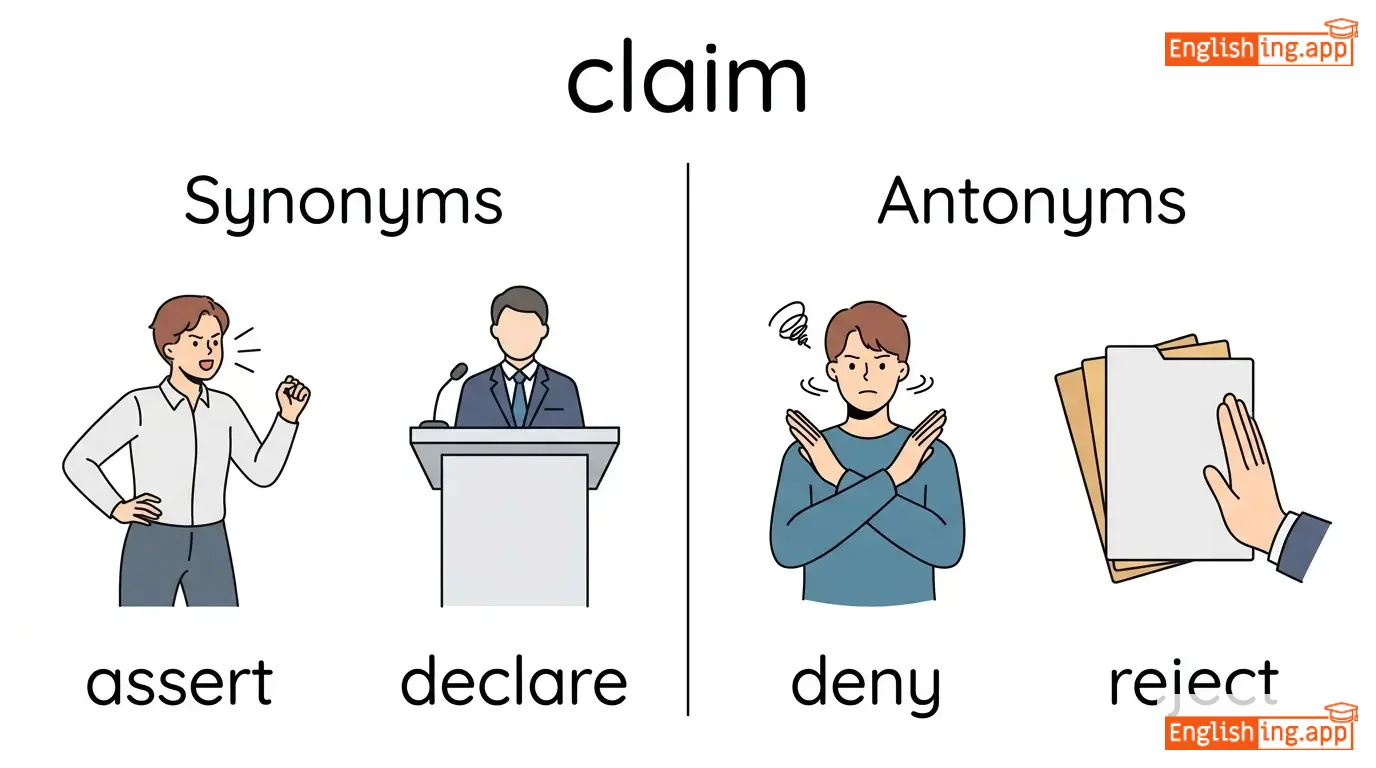
assert, declare, allege, demand, request
••••••
|
deny, reject, disclaim
••••••
|
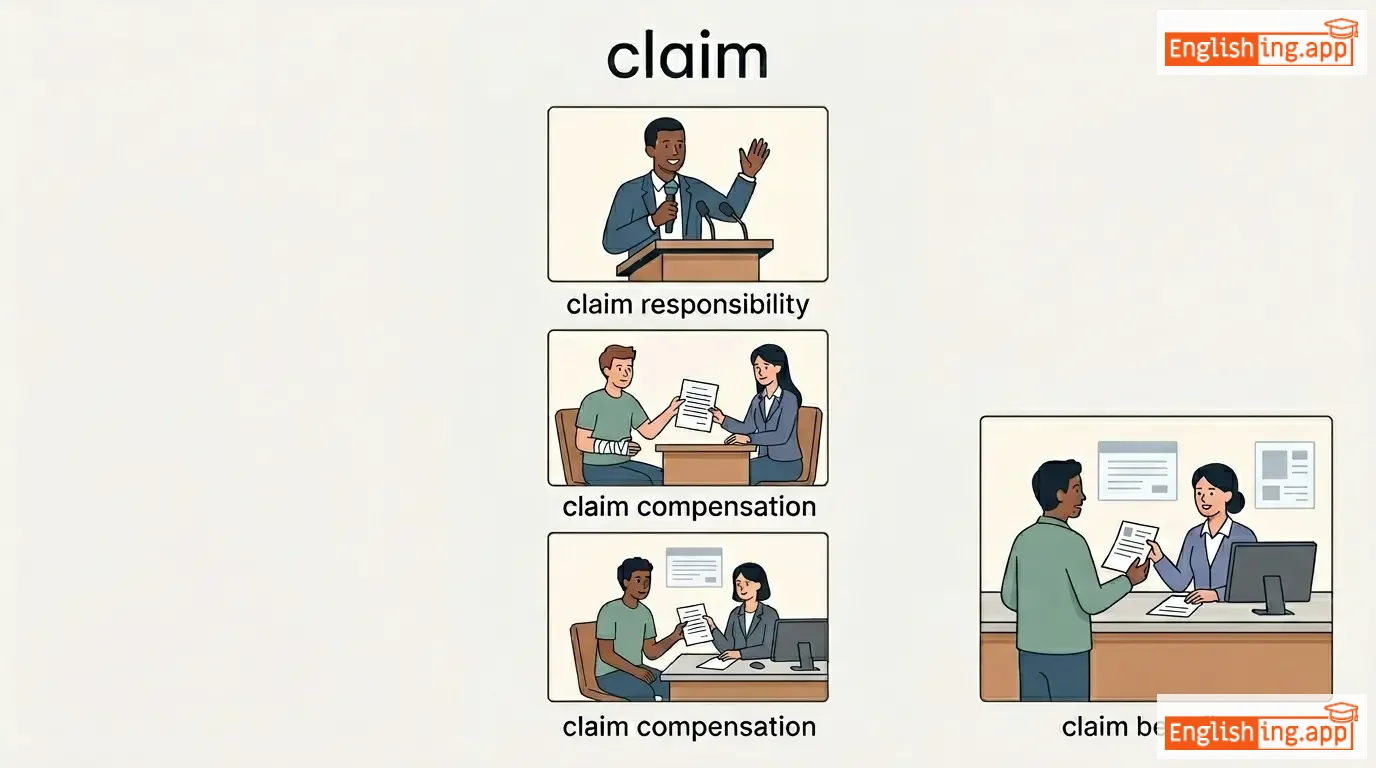
claim responsibility, claim compensation, claim benefits, claim ownership
••••••
|
Claim意味着声称:像保险索赔
••••••
|
|
#994
👏
|
/klæp/
verb
••••••
|
- •••••• | - •••••• |
clapped
••••••
|
clapped
••••••
|
claps
••••••
|
clapping
••••••
|
To strike the palms of the hands together, usually to express approval or create a sharp sound.
••••••
|
The audience began to clap loudly after the performance. |
- •••••• |
clap your hands |
to show approval or enjoyment by striking your hands together
••••••
|
- •••••• |
applaud, cheer, smack, slap
••••••
|
boo, jeer
••••••
|
clap loudly, clap hands, clap along, clap for someone
••••••
|
No •••••• |
|
#995
💡
|
/ˈklærɪfaɪ/
verb
••••••
|
|
- •••••• |
clarified
••••••
|
clarified
••••••
|
clarifies
••••••
|
clarifying
••••••
|
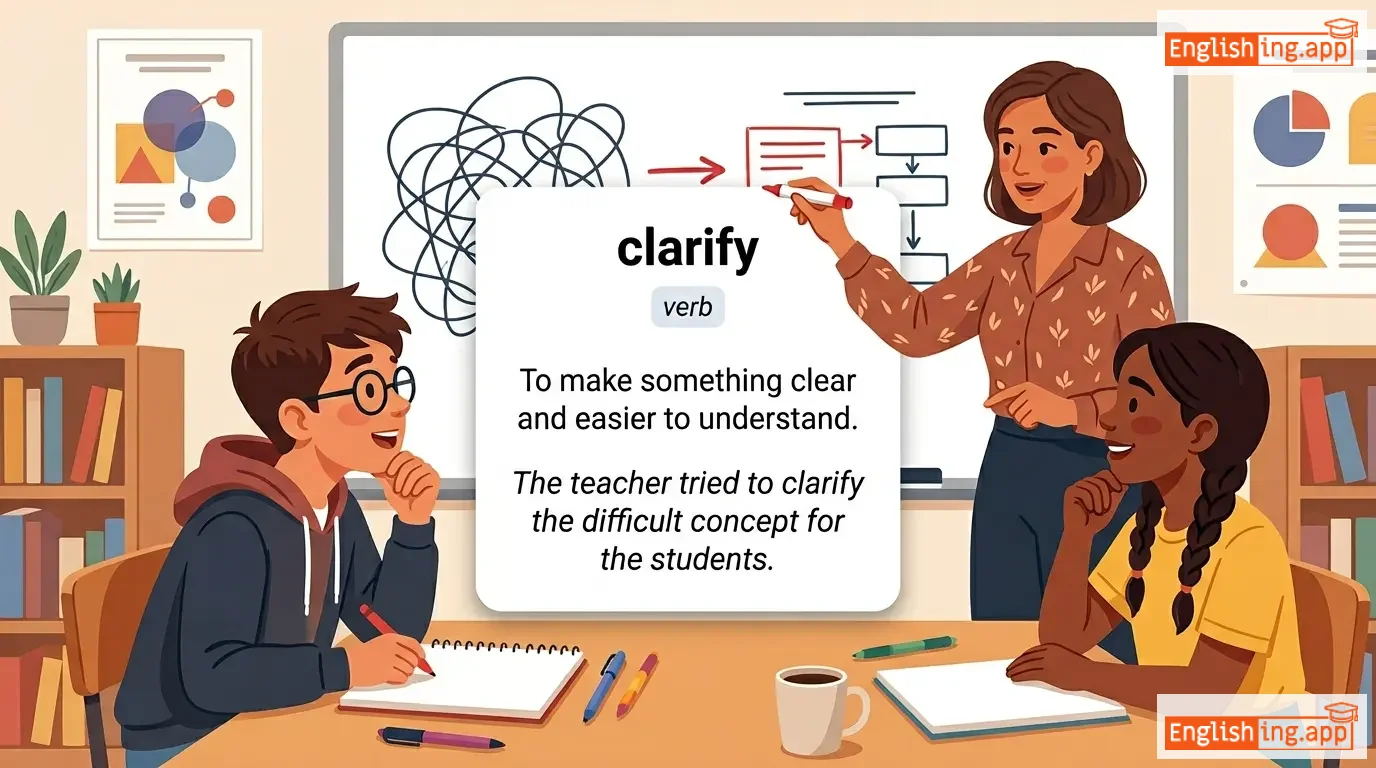
To make something clear and easier to understand.
••••••
|
The teacher tried to clarify the difficult concept for the students. |
- •••••• |
clarify the situation |
to explain or resolve something confusing
••••••
|
- •••••• |
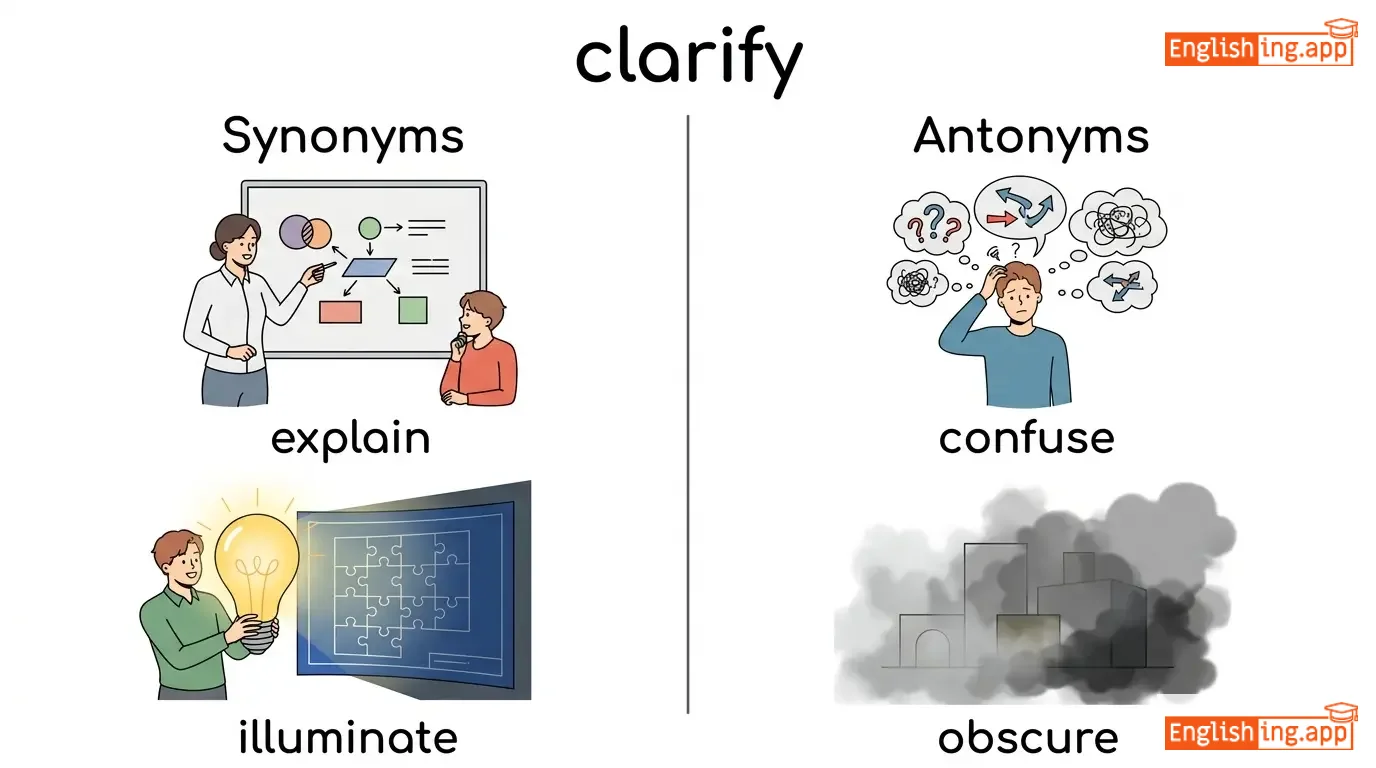
explain, illuminate, simplify, resolve, interpret
••••••
|
confuse, obscure, complicate
••••••
|
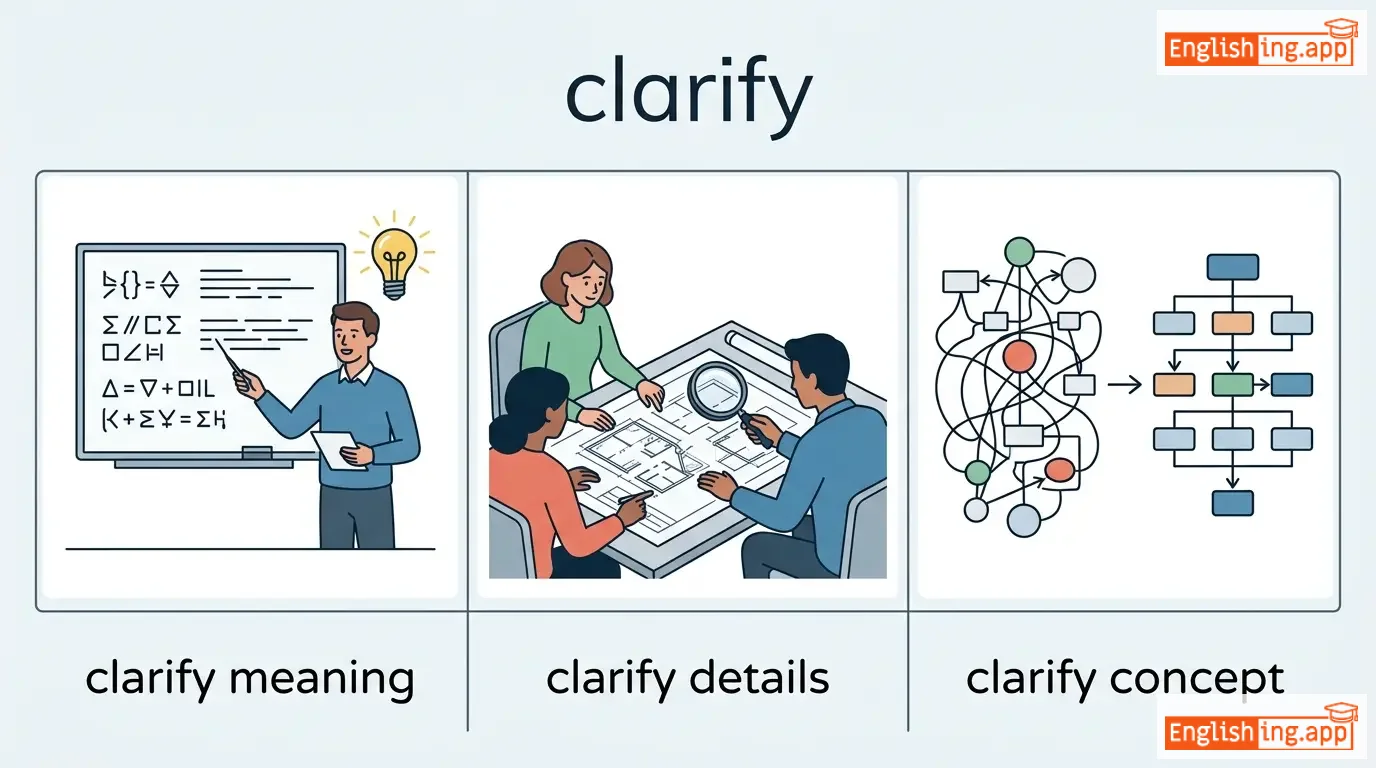
clarify meaning, clarify details, clarify concept, clarify question
••••••
|
No •••••• |
|
#996
🔍
|
/ˈklærəti/
noun
(klɛrɪti)
••••••
|
|
清晰
qīngxī
••••••
|
- •••••• | - •••••• | - •••••• | - •••••• |
the quality of being clear, easy to understand, or transparent
••••••
|
The teacher's clarity helped the students understand the complex topic. |
老师的清晰帮助学生理解了复杂的主题。
Lǎoshī de qīngxī bāngzhù xuéshēng lǐjiěle fùzá de zhǔtí.
••••••
|
crystal clarity |
complete and perfect clearness
••••••
|
水晶清晰
shuǐjīng qīngxī
••••••
|
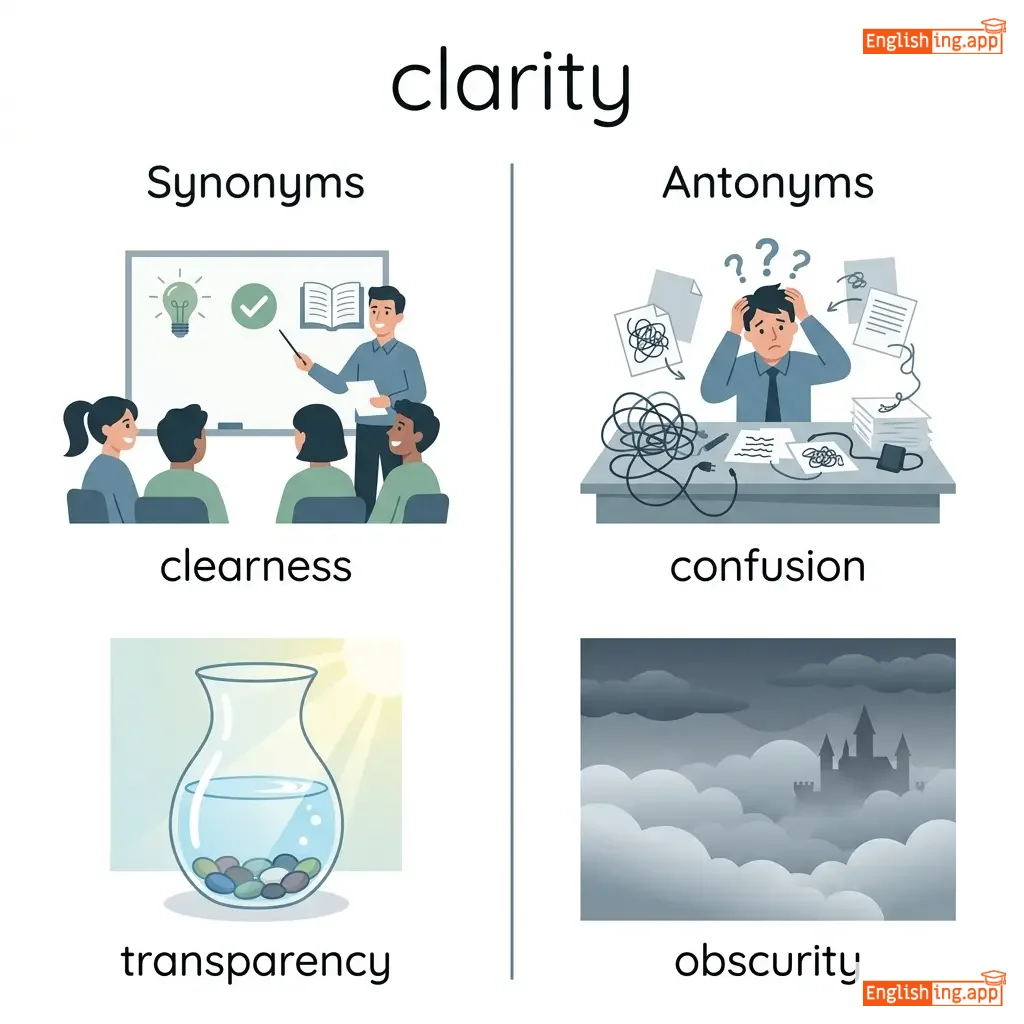
clearness, transparency, precision, lucidity, simplicity
••••••
|
confusion, obscurity, vagueness
••••••
|
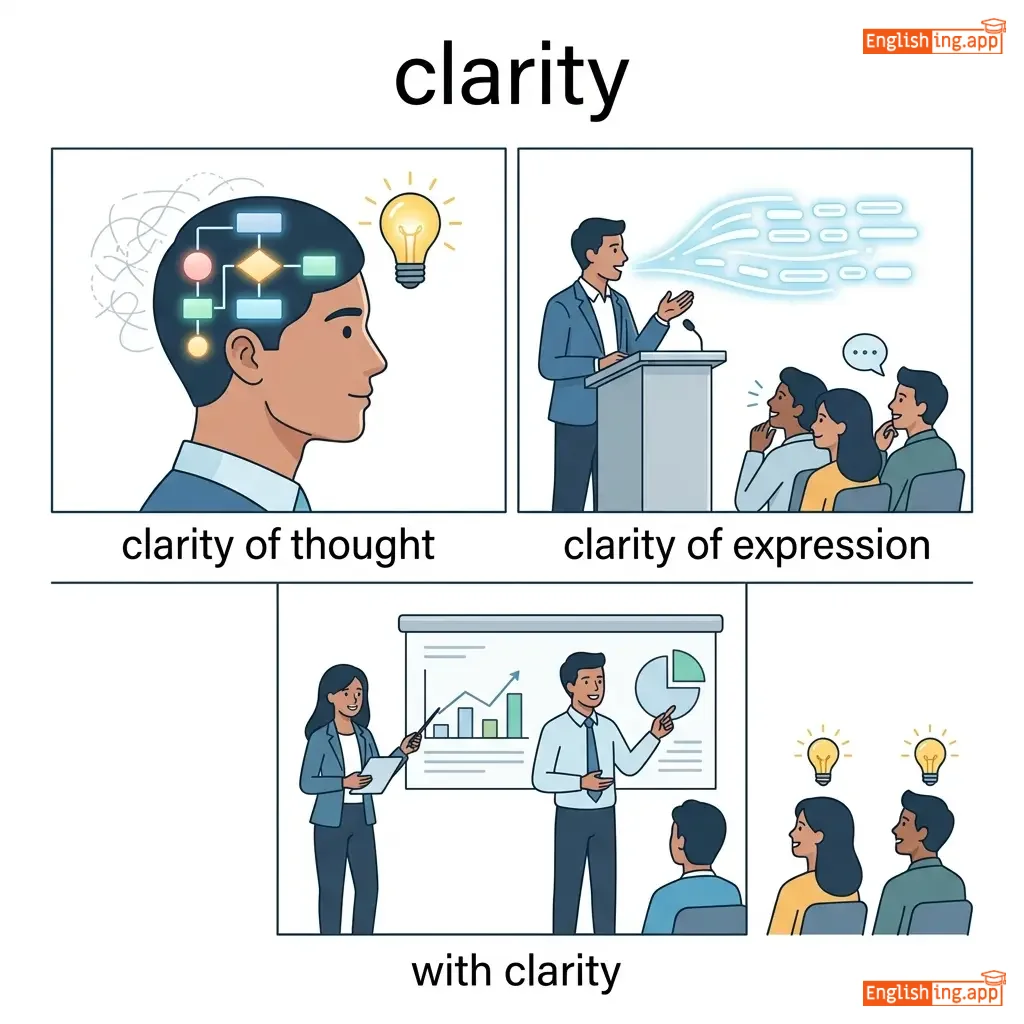
clarity of thought, clarity of expression, with clarity, lack of clarity
••••••
|
Clarity = clear + ity → 清楚或透明
••••••
|
|
#997
💥
|
/klæʃ/
verb
(klæʃ)
••••••
|
- •••••• |
碰撞
pengzhuang
••••••
|
clashed
klæʃd
••••••
|
clashed
klæʃd
••••••
|
clashes
klæʃɪz
••••••
|
clashing
klæʃɪŋ
••••••
|
to come into conflict or collision with something or someone.
••••••
|
The two cars clashed in the intersection.
两辆车在交叉路口发生了碰撞。
••••••
|
两辆车在交叉路口发生了碰撞。
Liang liang che zai jiaochalu kou fasheng le pengzhuang.
••••••
|
- •••••• | - •••••• | - •••••• |
collide, confront, clash, conflict
••••••
|
reconcile, cooperate, agree
••••••
|
clash of interests, cultural clash, clash of opinions
••••••
|
Clash sounds like crash—就像两辆车发生碰撞
••••••
|
|
#998
🏫
|
/klɑːs/
noun
(kè lá sī)
••••••
|
- •••••• |
班级
banji
••••••
|
- •••••• | - •••••• | - •••••• | - •••••• |
a group of students taught together or a category of people or things with shared characteristics
••••••
|
Our class meets every morning at nine. |
我们的班级每天早上九点见面。
wo men de ban ji mei tian zao shang jiu dian jian mian.
••••••
|
class act |
a person who is admired for their good qualities or behavior
••••••
|
楷模人物
kai mo ren wu
••••••
|
category, group, grade, division
••••••
|
individual, disorganization
••••••
|
class room, class teacher, social class, upper class, class test
••••••
|
班级是学校里的学习小组,像是我们生活中的小社会。
••••••
|
|
#999
📚
|
/ˈklæsɪk/
adjective
(klàsī kè)
••••••
|
- •••••• |
经典,杰出
jingdian, jiechu
••••••
|
- •••••• | - •••••• | - •••••• | - •••••• |
Judged over a period of time to be of the highest quality and outstanding of its kind.
••••••
|
That movie is a classic example of 90s comedy. |
那部电影是90年代喜剧的经典范例。
Nà bù diànyǐng shì 90 niándài xǐjù de jīngdiǎn fànlì.
••••••
|
instant classic |
Something that becomes iconic or highly regarded immediately after its release.
••••••
|
即时经典
jíshí jīngdiǎn
••••••
|
timeless, traditional, iconic, standard, vintage
••••••
|
modern, trendy, contemporary
••••••
|
classic example, classic case, classic design, classic novel
••••••
|
经典 = 超越时光的作品,永远流传
••••••
|
|
#1000
📊
|
/ˌklæsɪfɪˈkeɪʃən/
noun
(分类)
••••••
|
- •••••• |
分类
fenlei
••••••
|
- •••••• | - •••••• | - •••••• | - •••••• |
the action or process of classifying something into groups based on shared characteristics.
••••••
|
The classification of animals helps in understanding their biology. |
动物的分类有助于理解它们的生物学。
Dòngwù de fēnlèi yǒuzhù yú lǐjiě tāmen de shēngwùxué.
••••••
|
- •••••• | - •••••• | - •••••• |
categorization, sorting, organization, classification
••••••
|
disorganization, confusion
••••••
|
classification system, scientific classification, animal classification
••••••
|
Classify for clarity—分类以清晰
••••••
|
|
#1001
🔒
|
/ˈklæsɪfaɪd/
adjective
(克拉西法艾德)
••••••
|
- •••••• |
机密的;分类的
jimi de; fenlei de
••••••
|
- •••••• | - •••••• | - •••••• | - •••••• |
arranged into categories; officially secret or restricted
••••••
|
The report contains classified information and cannot be shared publicly.
泽 报告 康泰恩兹 克拉西法艾德 信息
••••••
|
这份报告包含机密信息。
Zhe fen baogao baohan jimi xinxi
••••••
|
classified information
克拉西法艾德 信息
••••••
|
information that is officially secret or restricted
••••••
|
机密信息
jimi xinxi
••••••
|
secret, confidential, categorized, restricted, top-secret
••••••
|
public, unclassified, open
••••••
|
classified information, classified document, classified data, highly classified
••••••
|
classified = 分类后变成机密
••••••
|
|
#1002
🗂️
|
/ˈklæsɪfaɪ/
verb
••••••
|
- •••••• | - •••••• |
classified
••••••
|
classified
••••••
|
classifies
••••••
|
classifying
••••••
|
to arrange or organize into categories or groups
••••••
|
The librarian classified the books by subject. |
- •••••• |
classify information |
to categorize data, often in terms of security or confidentiality
••••••
|
- •••••• |
categorize, sort, organize, group, arrange
••••••
|
confuse, mix, disorder
••••••
|
classify data, classify books, classify animals, classify documents
••••••
|
No •••••• |
Vocabulary Quiz
Test your vocabulary by matching words with their translations or meanings.
Login to take the quiz
Comments (0)
Share your thoughts and join the discussion.
Join the discussion by logging in
Login to CommentNo comments yet
Be the first to share your thoughts!