




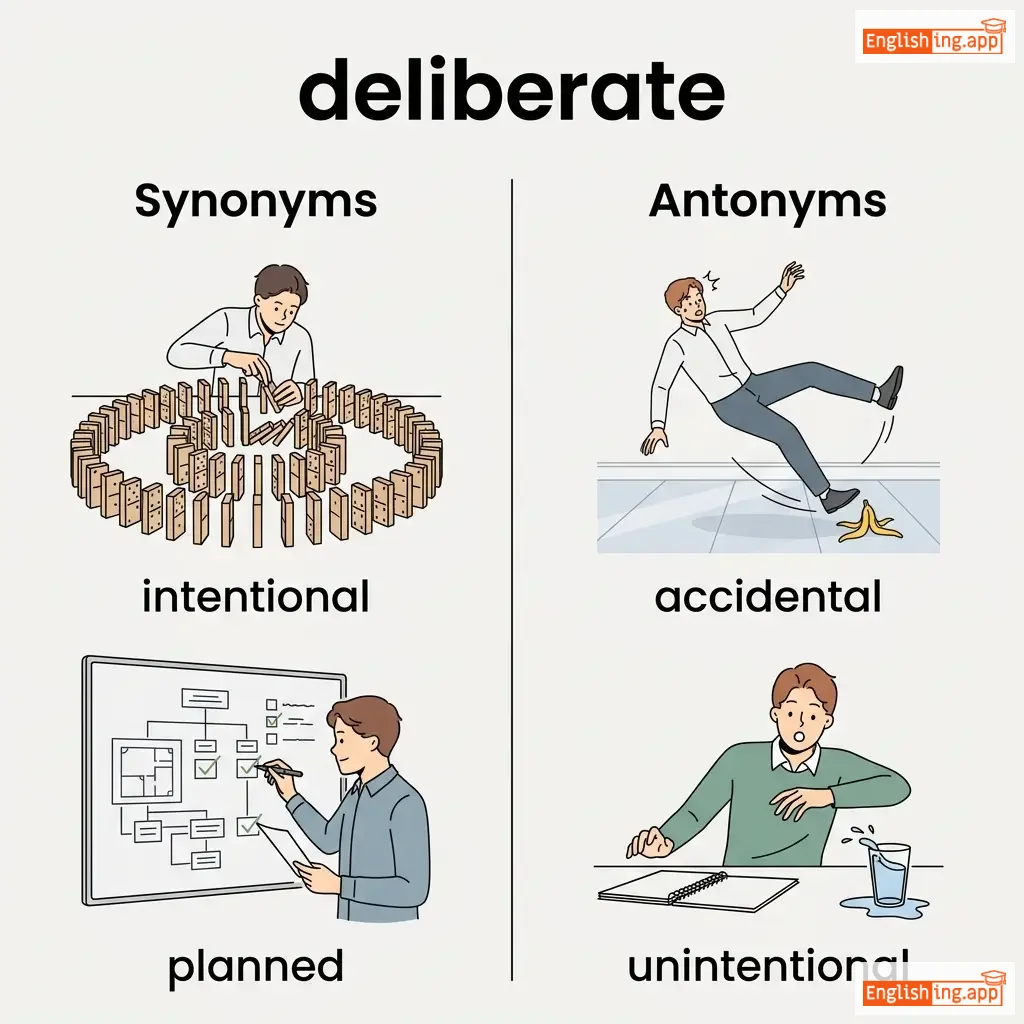
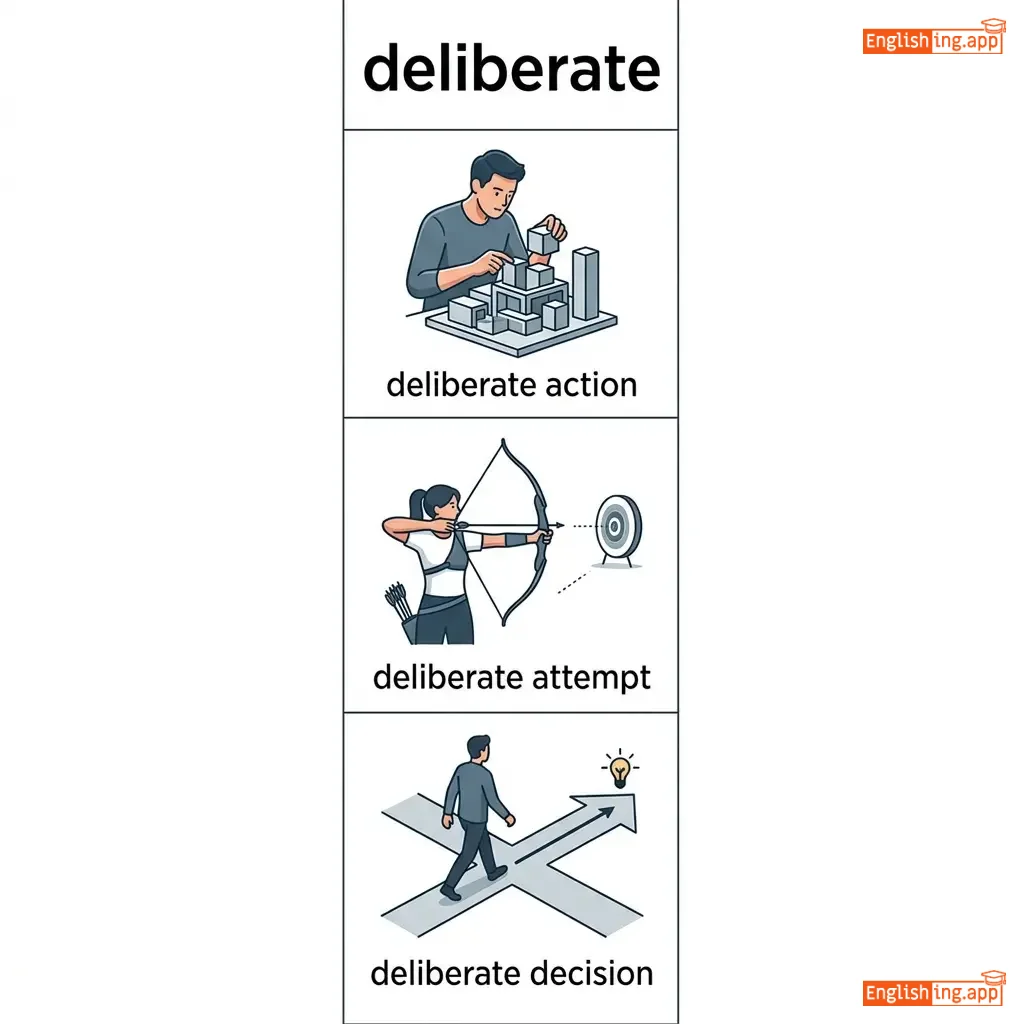

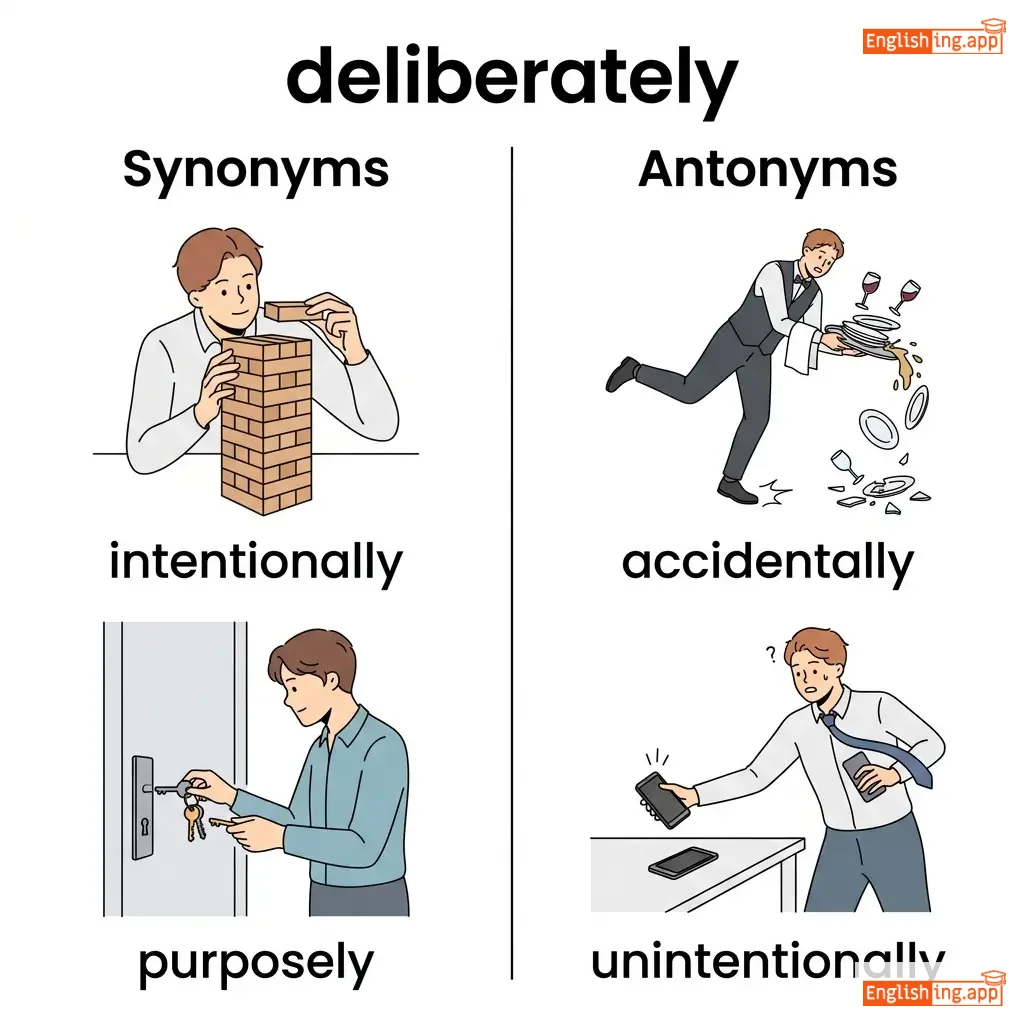
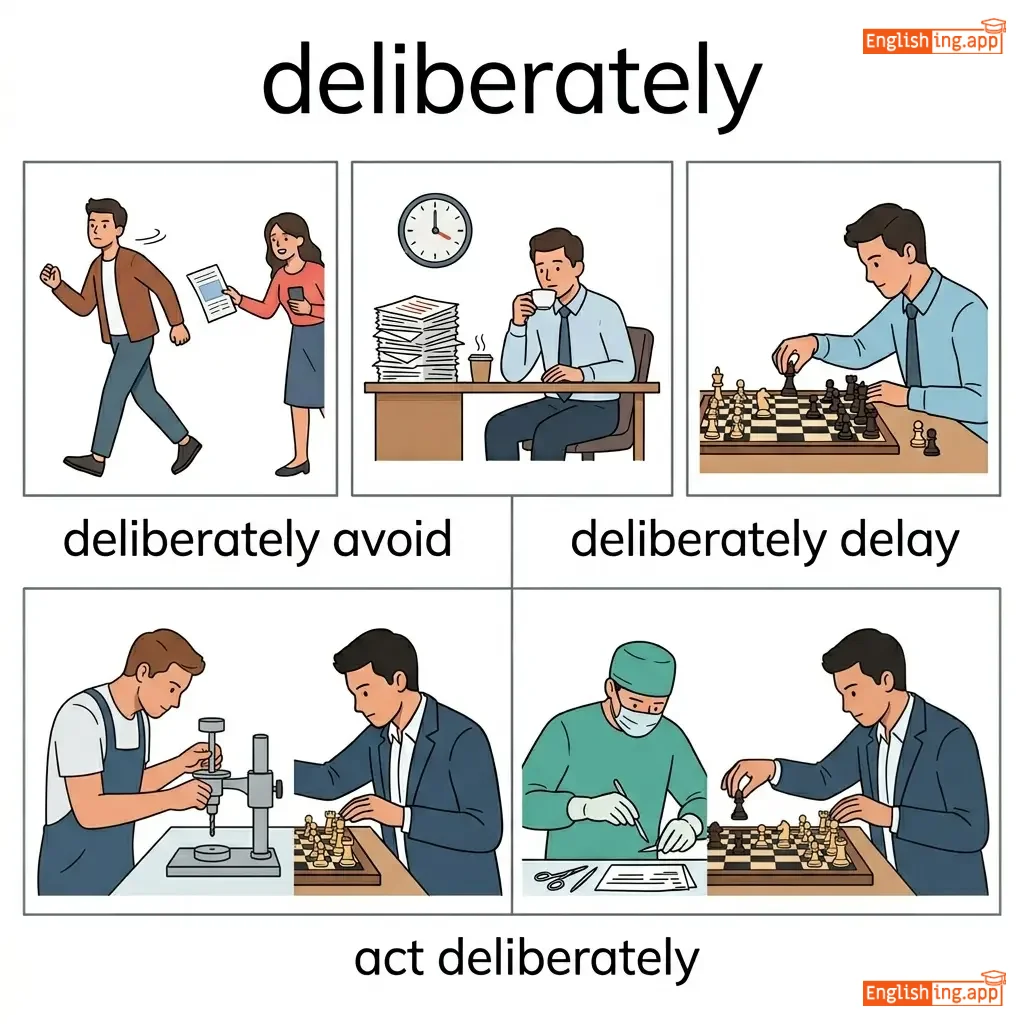




Swipe left or right, or use the buttons. Tap image to zoom.
例句翻译
单词
Lesson 31Lesson 31 - 遮罩切换
|
表情符号
|
单词 | Images | 翻译 | 过去时 | 过去分词 | 第三人称单数 | 动名词 | 含义 | 例句 | 例句翻译 | 示例表达 | 示例表达含义 | 示例表达翻译 | 同义词 | 反义词 | 搭配词 | 助记符 |
|---|---|---|---|---|---|---|---|---|---|---|---|---|---|---|---|---|---|
|
#1448
📉
|
/ˈdɛfɪsɪt/
noun
(赤字)
••••••
|
- •••••• |
赤字
chìzì
••••••
|
- •••••• | - •••••• | - •••••• | - •••••• |
The amount by which something, especially money, is too small or lacking.
••••••
|
The government is trying to reduce the budget deficit. |
政府正在努力减少预算赤字。
Zhèngfǔ zhèngzài nǔlì jiǎnshǎo yùsuàn chìzì.
••••••
|
trade deficit |
The amount by which a country’s imports exceed its exports.
••••••
|
贸易赤字
màoyì chìzì
••••••
|
shortfall, shortage, lack, loss, gap
••••••
|
surplus, excess, profit
••••••
|
budget deficit, trade deficit, current deficit
••••••
|
赤字 📉 - 赤字意味着缺少东西,例如资金不足。
••••••
|
|
#1449
📖
|
/dɪˈfaɪn/
verb
(定义)
••••••
|
- •••••• |
定义
dingyi
••••••
|
defined
定义过
••••••
|
defined
定义过
••••••
|
defines
定义
••••••
|
defining
定义中
••••••
|
to explain the meaning of a word, phrase, or concept clearly
••••••
|
The teacher asked the student to define the word 'democracy'.
老师要求学生定义'民主'一词。
••••••
|
老师要求学生定义'民主'一词。
Laoshi yaoqiu xuesheng dingyi 'minzhu' yici.
••••••
|
define the terms
定义术语
••••••
|
to explain or set the exact meaning of words or conditions
••••••
|
定义术语
dingyi shuyu
••••••
|
explain, describe, clarify, interpret, specify
••••••
|
confuse, obscure
••••••
|
define clearly, define precisely, define role, define meaning
••••••
|
Define 意味着'定义' — 就像中文中定义一个词语的意思。
••••••
|
|
#1450
✔️
|
/ˈdef.ən.ɪt/
adjective
(德芬尼特)
••••••
|
- •••••• |
明确
mingque
••••••
|
- •••••• | - •••••• | - •••••• | - •••••• |
clearly stated or decided; not vague or doubtful
••••••
|
We need a definite plan before starting the project.
我们在开始项目之前需要一个明确的计划。
••••••
|
我们在开始项目之前需要一个明确的计划。
Wo men zai kai shi xiangmu zhi qian xu yao yi ge mingque de jihua.
••••••
|
definite answer
明确答复
••••••
|
a clear and certain reply
••••••
|
明确答复
mingque dafu
••••••
|
certain, clear, explicit, precise, fixed
••••••
|
indefinite, vague, uncertain
••••••
|
definite plan, definite answer, definite shape
••••••
|
明确,像'定义'一样,意味着清楚地决定或表达。
••••••
|
|
#1451
✅
|
/ˈdɛfɪnɪtli/
adverb
(definitli)
••••••
|
- •••••• |
毫无疑问
háo wú yí wèn
••••••
|
- •••••• | - •••••• | - •••••• | - •••••• |
without any doubt; certainly
••••••
|
I will definitely call you tomorrow. |
我明天一定会给你打电话。
Wǒ míngtiān yídìng huì gěi nǐ dǎ diànhuà.
••••••
|
most definitely |
used to strongly agree or emphasize certainty
••••••
|
最肯定
zuì kěn dìng
••••••
|
certainly, surely, undoubtedly, clearly, absolutely
••••••
|
doubtfully, uncertainly
••••••
|
definitely true, definitely not, definitely agree, definitely going
••••••
|
Definitively 的意思是 '毫无疑问' – 就像 '我一定去'。
••••••
|
|
#1452
📝
|
/ˌdɛfɪˈnɪʃən/
noun
(定义)
••••••
|
- •••••• |
定义
dingyi
••••••
|
- •••••• | - •••••• | - •••••• | - •••••• |
a statement that explains the meaning of a word or concept
••••••
|
The dictionary gives a clear definition of the word. |
字典给出了这个词的明确定义。
Zidian gei chule zhege ci de mingque dingyi.
••••••
|
by definition |
something that is true by its very nature or meaning
••••••
|
按定义
an dingyi
••••••
|
explanation, description, meaning, interpretation
••••••
|
ambiguity, vagueness
••••••
|
clear definition, dictionary definition, precise definition, definition of success
••••••
|
定义意味着定义,就像字典给出的定义。
••••••
|
|
#1453
✊
|
/dɪˈfaɪ/
verb
••••••
|
|
- •••••• |
defied
••••••
|
defied
••••••
|
defies
••••••
|
defying
••••••
|
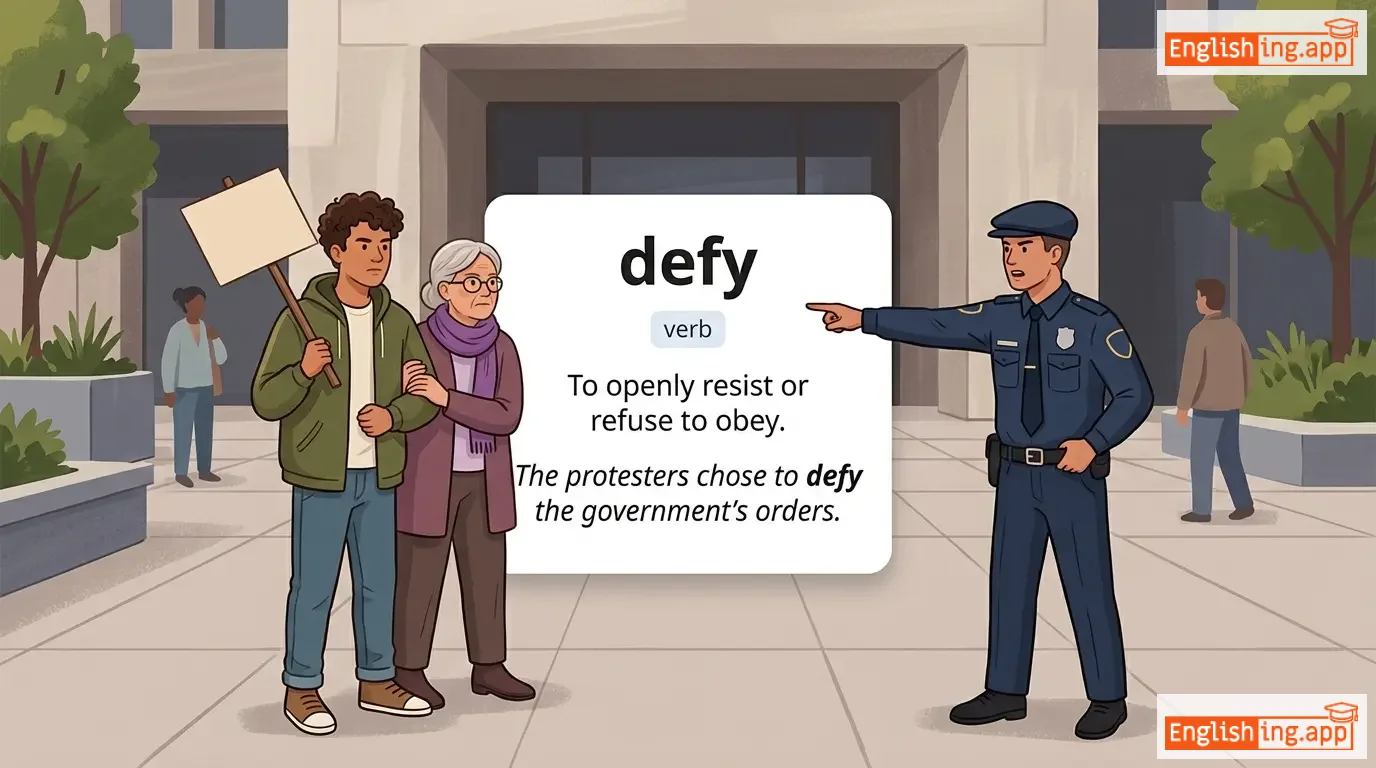
To openly resist or refuse to obey.
••••••
|
The protesters chose to defy the government's orders. |
- •••••• |
defy the odds |
To succeed despite being very unlikely or facing great difficulties.
••••••
|
- •••••• |
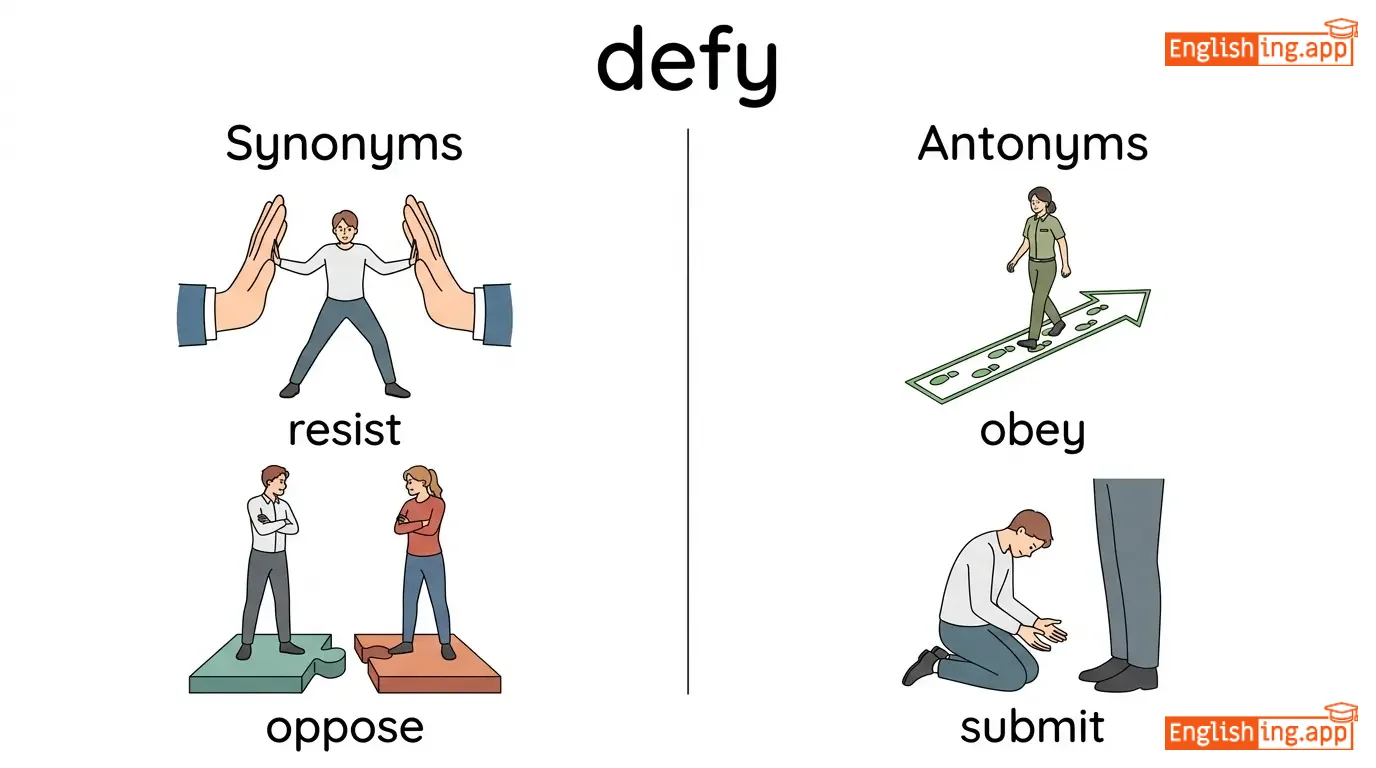
resist, oppose, confront, challenge
••••••
|
obey, submit, yield
••••••
|
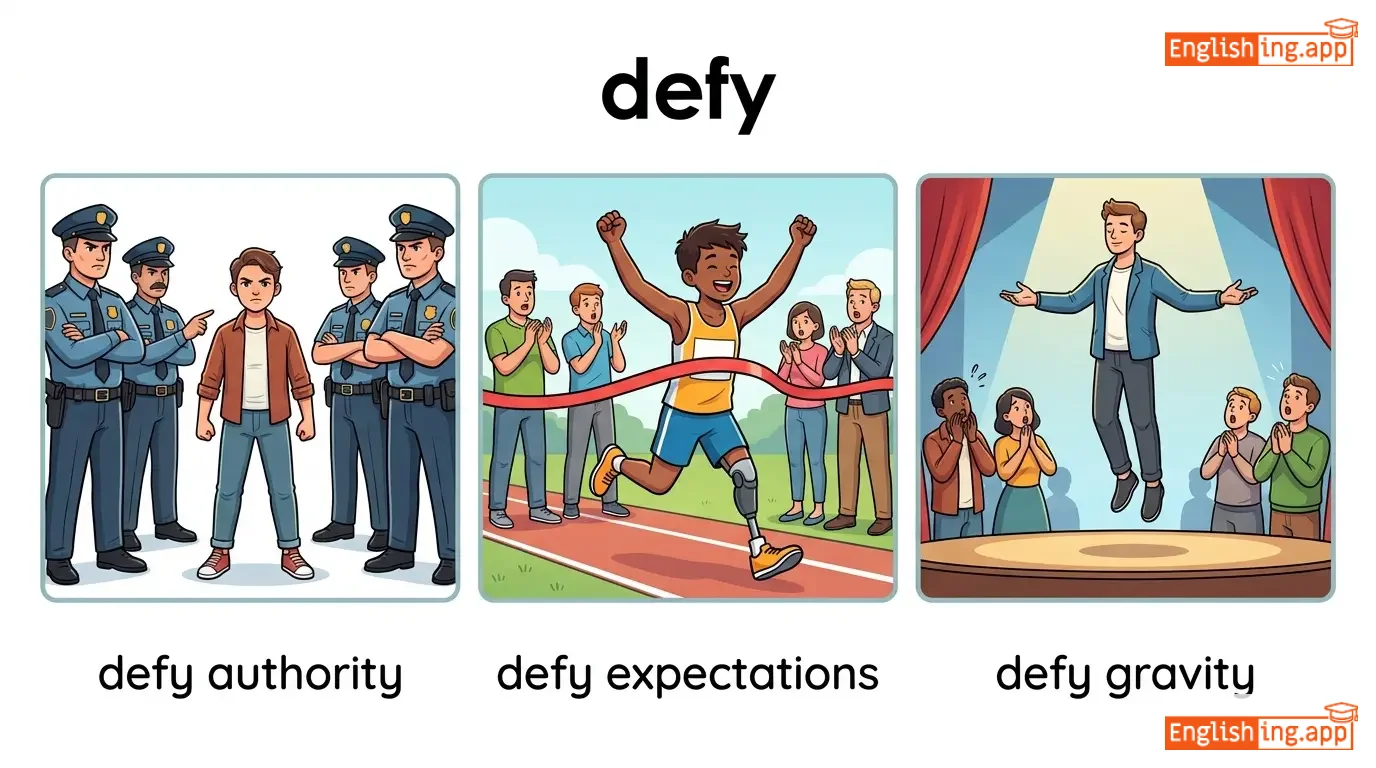
defy authority, defy expectations, defy gravity
••••••
|
No •••••• |
|
#1454
🎓
|
/dɪˈɡriː/
noun
(dì ɡlì)
••••••
|
- •••••• |
学位 / 程度
xuéwèi / chéngdù
••••••
|
- •••••• | - •••••• | - •••••• | - •••••• |
an amount or level of something; an academic qualification
••••••
|
She earned a degree in engineering. |
她获得了工程学位。
Tā huò dé le gōngchéng xuéwèi.
••••••
|
to some degree |
partly, to a certain extent
••••••
|
在某种程度上
zài mǒu zhǒng chéngdù shàng
••••••
|
level, extent, rank, diploma, qualification
••••••
|
whole, total
••••••
|
high degree, to a degree, academic degree, temperature degree
••••••
|
学位意味着学位,比如温度的学位和学术学位。
••••••
|
|
#1455
⏳
|
/dɪˈleɪ/
verb
(dìlèi)
••••••
|
- •••••• |
延迟
yánchí
••••••
|
delayed
dìlèi de
••••••
|
delayed
dìlèi de
••••••
|
delays
dìlèi
••••••
|
delaying
dìlèi yíng
••••••
|
to make something happen later than planned
••••••
|
The flight was delayed due to bad weather.
航班因天气原因被延误。
••••••
|
航班因恶劣天气被延误。
Hángbān yīn èliè tiānqì bèi yánwù.
••••••
|
without delay
不延迟
••••••
|
immediately, without waiting
••••••
|
不延迟
bù yánchí
••••••
|
postpone, defer, stall, hinder, procrastinate
••••••
|
advance, expedite, hasten
••••••
|
cause delay, long delay, delay in delivery, unexpected delay
••••••
|
Delay意味着延迟,像飞机晚点一样。
••••••
|
|
#1456
📋
|
/ˈdɛlɪɡət/ (noun), /ˈdɛlɪɡeɪt/ (verb)
noun, verb
(代利盖特)
••••••
|
- •••••• |
代表 / 委托
dàibiǎo / wěituō
••••••
|
delegated
委托
••••••
|
delegated
委托
••••••
|
delegates
委托
••••••
|
delegating
委托中
••••••
|
as a noun: a person appointed to represent others; as a verb: to entrust a task or responsibility to another
••••••
|
The manager decided to delegate tasks to his team members.
经理决定将任务委托给他的团队成员。
••••••
|
经理决定将任务委托给他的团队成员。
Jīnglǐ juédìng jiāng rènwù wěituō gěi tā de tuánduì chéngyuán.
••••••
|
delegate authority
授权委托
••••••
|
to give power or responsibility to someone else
••••••
|
授权委托
shòuquán wěituō
••••••
|
assign, entrust, representative, envoy
••••••
|
retain, keep, withhold
••••••
|
delegate responsibility, delegate authority, delegate tasks
••••••
|
Delegate = Delivery + Gate - 将责任委托给他人
••••••
|
|
#1457
👥
|
/ˌdɛlɪˈɡeɪʃən/
noun
(代表团)
••••••
|
|
委托
wěituō
••••••
|
- •••••• | - •••••• | - •••••• | - •••••• |
the act of giving someone else responsibility for something
••••••
|
The manager made a delegation of tasks to the team. |
经理将任务委托给了团队。
Jīnglǐ jiāng rènwù wěituō gěile tuánduì.
••••••
|
- •••••• | - •••••• | - •••••• |
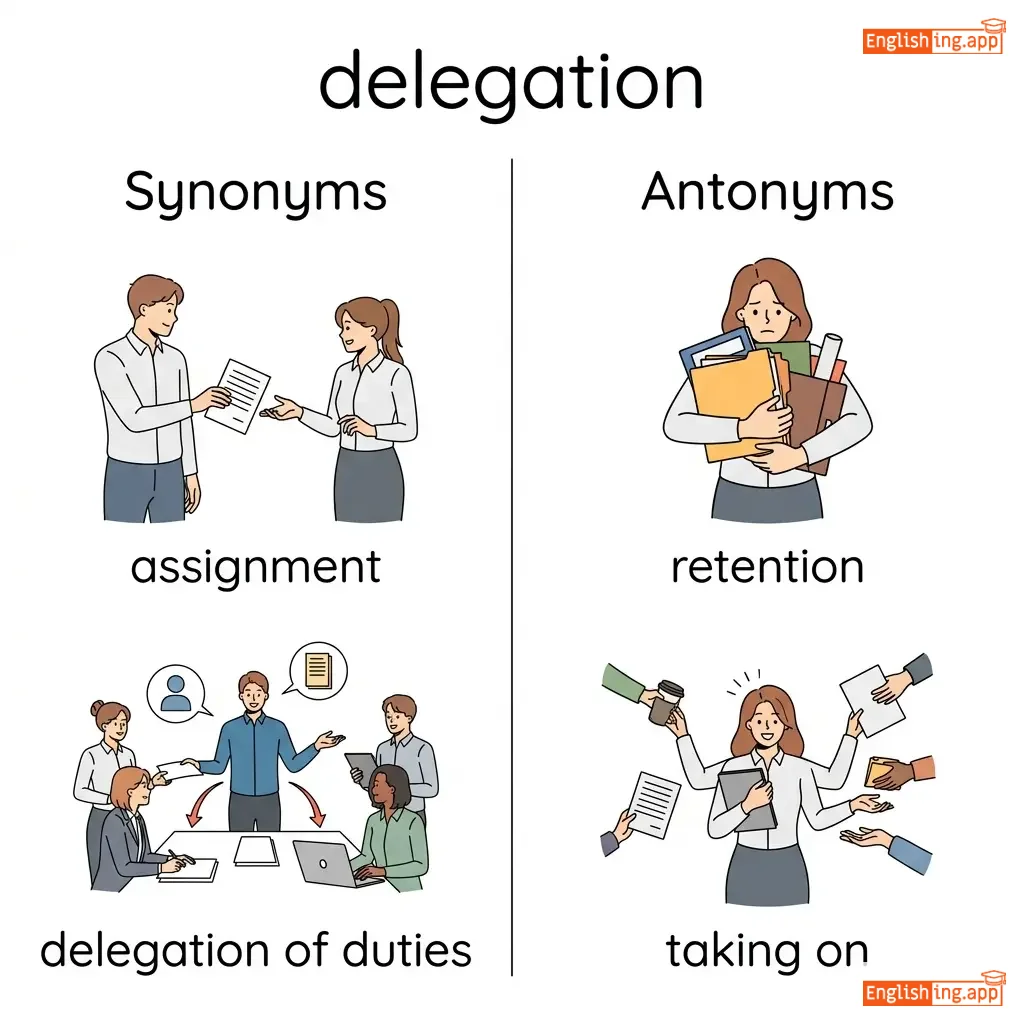
assignment, delegation of duties, responsibility, transfer
••••••
|
retention, taking on, holding
••••••
|
delegation of authority, delegation of tasks, formal delegation
••••••
|
A **delegation (代表团)** is when you **delegate (委托)** your tasks to others.
••••••
|
|
#1458
🗑️
|
/dɪˈliːt/
verb
••••••
|
- •••••• | - •••••• |
deleted
••••••
|
deleted
••••••
|
deletes
••••••
|
deleting
••••••
|
to remove or erase something, especially written or recorded information
••••••
|
He accidentally deleted all the files from his computer. |
- •••••• |
delete from memory |
to try to forget something unpleasant or unnecessary
••••••
|
- •••••• |
erase, remove, wipe, cancel, discard
••••••
|
restore, save, keep
••••••
|
delete a file, delete permanently, delete message, delete account
••••••
|
No •••••• |
|
#1459
🧠
|
/dɪˈlɪbərət/ (adj), /dɪˈlɪbəreɪt/ (verb)
adjective, verb
••••••
|
|
- •••••• |
deliberated
••••••
|
deliberated
••••••
|
deliberates
••••••
|
deliberating
••••••
|
done consciously and intentionally; to consider or discuss something carefully
••••••
|
The committee will deliberate on the proposal tomorrow. |
- •••••• |
deliberate attempt |
an intentional or planned effort
••••••
|
- •••••• |
intentional, planned, thoughtful, consider
••••••
|
accidental, unintentional, careless
••••••
|
deliberate action, deliberate attempt, deliberate decision, deliberate over
••••••
|
No •••••• |
|
#1460
🎯
|
/dɪˈlɪb.ər.ət.li/
adverb
(dɪˈlɪbərətli)
••••••
|
|
故意地;有意地;经过深思熟虑
gùyì de; yǒuyì de; jīngguò shēnsī shúlǜ
••••••
|
- •••••• | - •••••• | - •••••• | - •••••• |
intentionally; on purpose; with careful consideration
••••••
|
He deliberately chose not to answer the question.
他故意选择不回答问题。
••••••
|
他故意选择不回答问题。
Tā gùyì xuǎnzé bù huídá wèntí.
••••••
|
- •••••• | - •••••• | - •••••• |
intentionally, purposely, consciously
••••••
|
accidentally, unintentionally, carelessly
••••••
|
deliberately avoid, deliberately choose, deliberately ignore
••••••
|
选择好决定时,你得故意去做,像选电影一样
••••••
|
|
#1461
🌸
|
/ˈdɛlɪkət/
adjective
(dé lì kèt)
••••••
|
- •••••• |
脆弱
cuìruò
••••••
|
- •••••• | - •••••• | - •••••• | - •••••• |
Easily broken or damaged; requiring careful handling.
••••••
|
The vase is very delicate, so handle it with care. |
这个花瓶非常脆弱,所以请小心拿。
Zhège huāpíng fēicháng cuìruò, suǒyǐ qǐng xiǎoxīn ná.
••••••
|
delicate balance |
A situation where small changes can cause serious consequences.
••••••
|
脆弱的平衡
cuìruò de pínghéng
••••••
|
fragile, fine, sensitive, subtle, tender
••••••
|
strong, tough, durable
••••••
|
delicate issue, delicate flower, delicate situation
••••••
|
Delicate 🌸的意思是脆弱 – 'Delicate 花' 意味着很容易破损的花
••••••
|
|
#1462
😋
|
/dɪˈlɪʃəs/
adjective
(happiness)
••••••
|
- •••••• |
幸福
xìngfú
••••••
|
- •••••• | - •••••• | - •••••• | - •••••• |
having a very pleasant taste or smell
••••••
|
The cake was so delicious that everyone asked for a second slice.
当她获得奖项时,她无法掩饰她的快乐。
••••••
|
当她获得奖项时,她无法掩饰她的快乐。
Dāng tā huòde jiǎngxiàng shí, tā wúfǎ yǎnshì tā de kuàilè.
••••••
|
look delicious
追求幸福
••••••
|
to appear very tasty or appealing
••••••
|
追求幸福
zhuīqiú xìngfú
••••••
|
tasty, appetizing, savory, delightful, yummy
••••••
|
bland, tasteless, unappetizing
••••••
|
delicious meal, delicious cake, delicious smell, look delicious
••••••
|
幸福是每一个朝阳下的追求,每一步都充满希望。
••••••
|
|
#1463
😊
|
/dɪˈlaɪt/
noun, verb
(海皮奈特)
••••••
|
- •••••• |
喜悦
xiyue
••••••
|
delighted
海皮奈特德
••••••
|
delighted
海皮奈特德
••••••
|
delights
海皮奈特斯
••••••
|
delighting
海皮奈特英
••••••
|
great pleasure or joy; to give someone great pleasure
••••••
|
The children were filled with delight when they saw the gifts.
孩子们看到礼物时充满了海皮奈特。
••••••
|
孩子们看到礼物时充满了喜悦。
Haizimen kandao liwu shi chongman le xiyue.
••••••
|
to one's delight
图万斯海皮奈特
••••••
|
to one's great pleasure or happiness
••••••
|
令某人喜悦
ling mouren xiyue
••••••
|
joy, pleasure, happiness, bliss, satisfaction
••••••
|
sorrow, disappointment, sadness
••••••
|
great delight, pure delight, delight in, take delight
••••••
|
Delight 就是带来 ‘喜悦’ 的 light。
••••••
|
|
#1464
📦
|
/dɪˈlɪvər/
verb
(de-li-ver)
••••••
|
- •••••• |
交付
jiaofu
••••••
|
delivered
de-li-vérd
••••••
|
delivered
de-li-vérd
••••••
|
delivers
de-li-vérs
••••••
|
delivering
de-li-vér-ing
••••••
|
to bring or hand over something to the intended recipient
••••••
|
The courier will deliver the package tomorrow.
快递员明天会送包裹。
••••••
|
快递员明天会送包裹。
kuaidi yuan ming tian hui song bao guo.
••••••
|
deliver the goods
交货
••••••
|
to do what is promised or expected
••••••
|
履行承诺
lv xing cheng nuo
••••••
|
bring, hand over, distribute, convey, supply
••••••
|
withhold, keep, retain
••••••
|
deliver a package, deliver results, deliver a speech, deliver justice
••••••
|
交付是带东西到目标地点,就像快递员送包裹。
••••••
|
|
#1465
🚚
|
/dɪˈlɪvəri/
noun
(dɪˈlɪvəri)
••••••
|
- •••••• |
递送
dìsòng
••••••
|
- •••••• | - •••••• | - •••••• | - •••••• |
the act of taking goods, letters, or packages to people's houses or places of work
••••••
|
The delivery of fresh vegetables arrives every morning. |
新鲜蔬菜的递送每天早上都会到达。
Xīnxiān shūcài de dìsòng měitiān zǎoshang dōu huì dàodá.
••••••
|
special delivery |
a postal service that ensures faster delivery than usual
••••••
|
特别递送
tèbié dìsòng
••••••
|
distribution, dispatch, shipment, transport, conveyance
••••••
|
non-delivery, retention, withholding
••••••
|
fast delivery, food delivery, delivery service, home delivery
••••••
|
外卖配送非常快 - 递送就是delivery的意思。
••••••
|
|
#1466
📈
|
/dɪˈmænd/
noun, verb
(demand)
••••••
|
- •••••• |
需求
xuqiu
••••••
|
demanded
demanded
••••••
|
demanded
demanded
••••••
|
demands
demands
••••••
|
demanding
demanding
••••••
|
to ask for something forcefully; the need or desire for goods or services
••••••
|
Workers demanded better wages from the company.
工人要求公司提高工资。
••••••
|
工人要求公司提高工资。
Gōngrén yāoqiú gōngsī tígāo gōngzī.
••••••
|
in demand
需求中
••••••
|
popular or widely desired
••••••
|
在需求中
zài xūqiú zhōng
••••••
|
request, ask, require, call for, claim
••••••
|
supply, offer, give
••••••
|
high demand, demand for, meet demand, supply and demand
••••••
|
需求大的东西,价格就会更高
••••••
|
|
#1467
🗳️
|
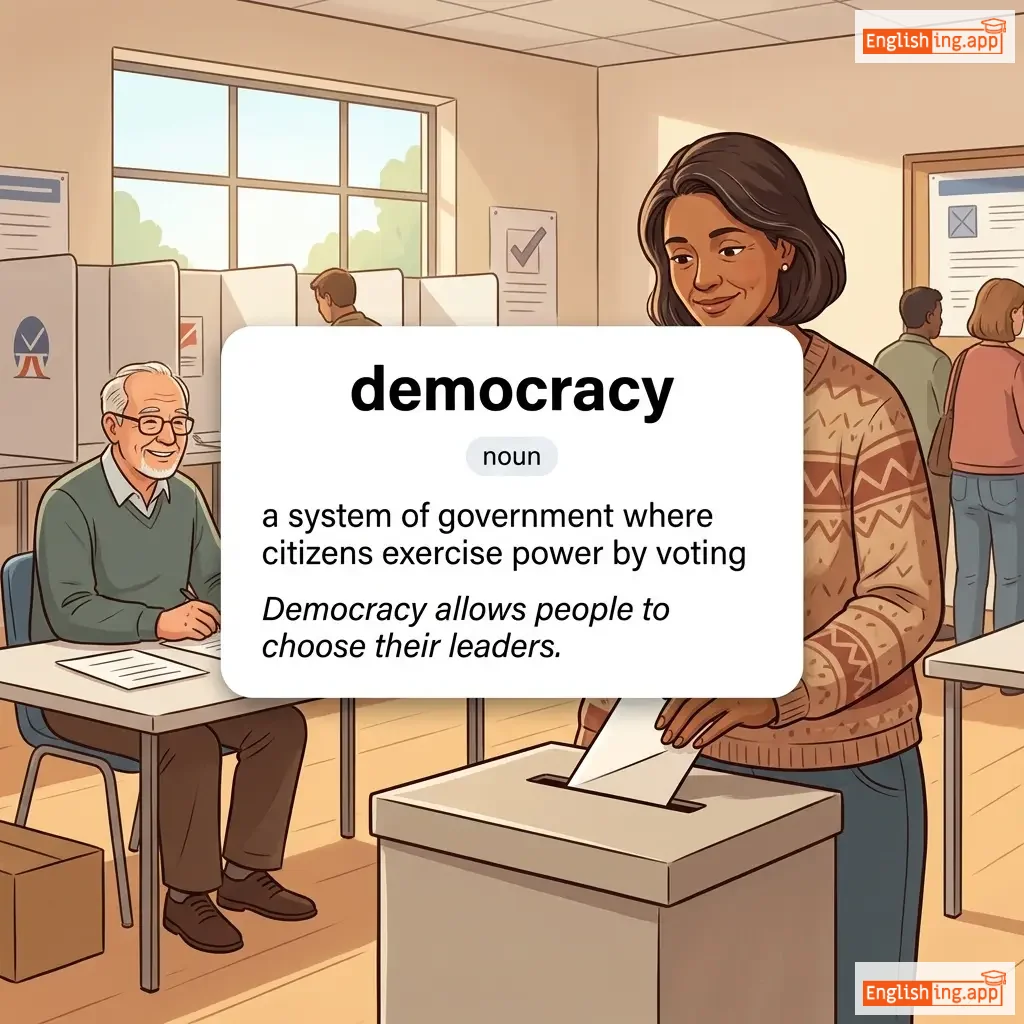
/dɪˈmɑːkrəsi/
noun
(民主)
••••••
|
|
民主
minzhu
••••••
|
- •••••• | - •••••• | - •••••• | - •••••• |
a system of government where citizens exercise power by voting
••••••
|
Democracy allows people to choose their leaders. |
民主允许人民选择他们的领导人。
mínzhǔ yǔnxǔ rénmín xuǎnzé tāmen de lǐngdǎo rén.
••••••
|
true democracy |
a genuine practice of democratic values
••••••
|
真正的民主
zhēnzhèng de mínzhǔ
••••••
|
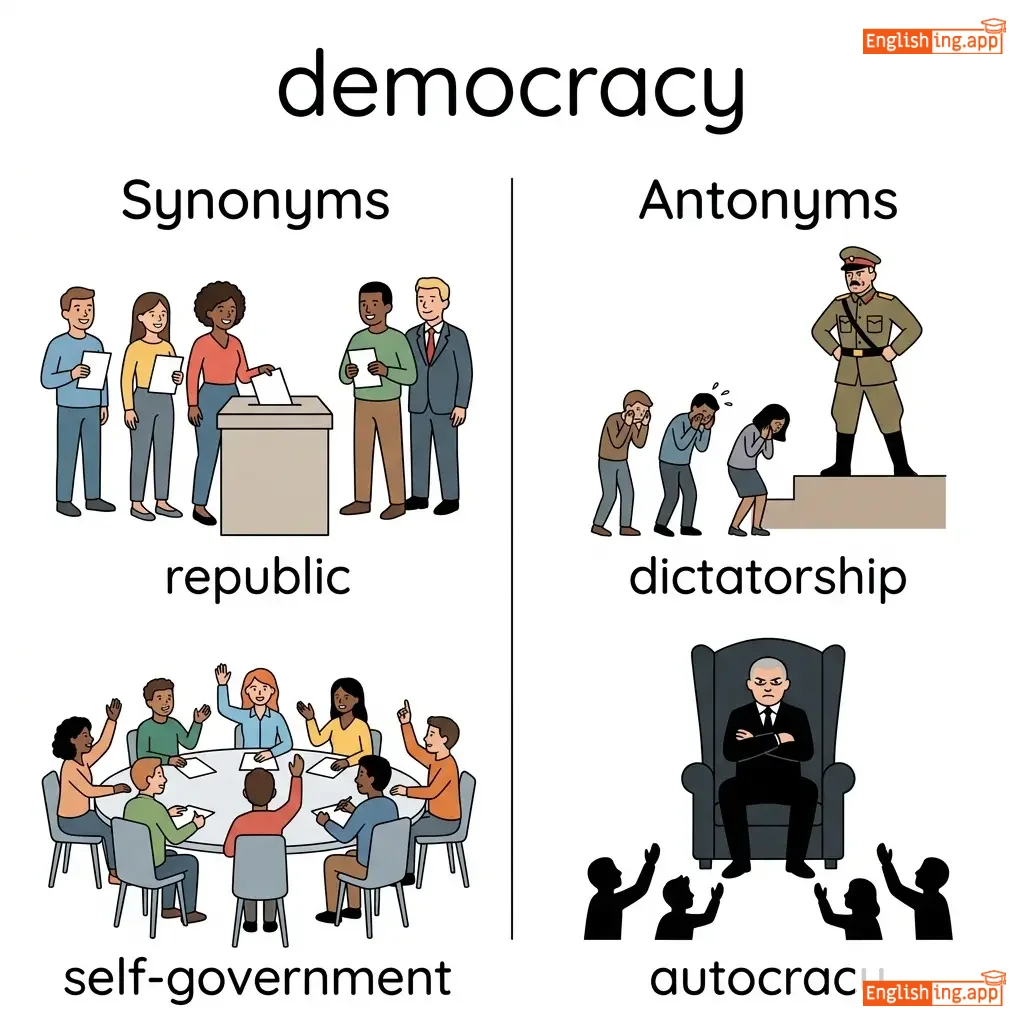
republic, self-government, representative government, popular government
••••••
|
dictatorship, autocracy, monarchy
••••••
|
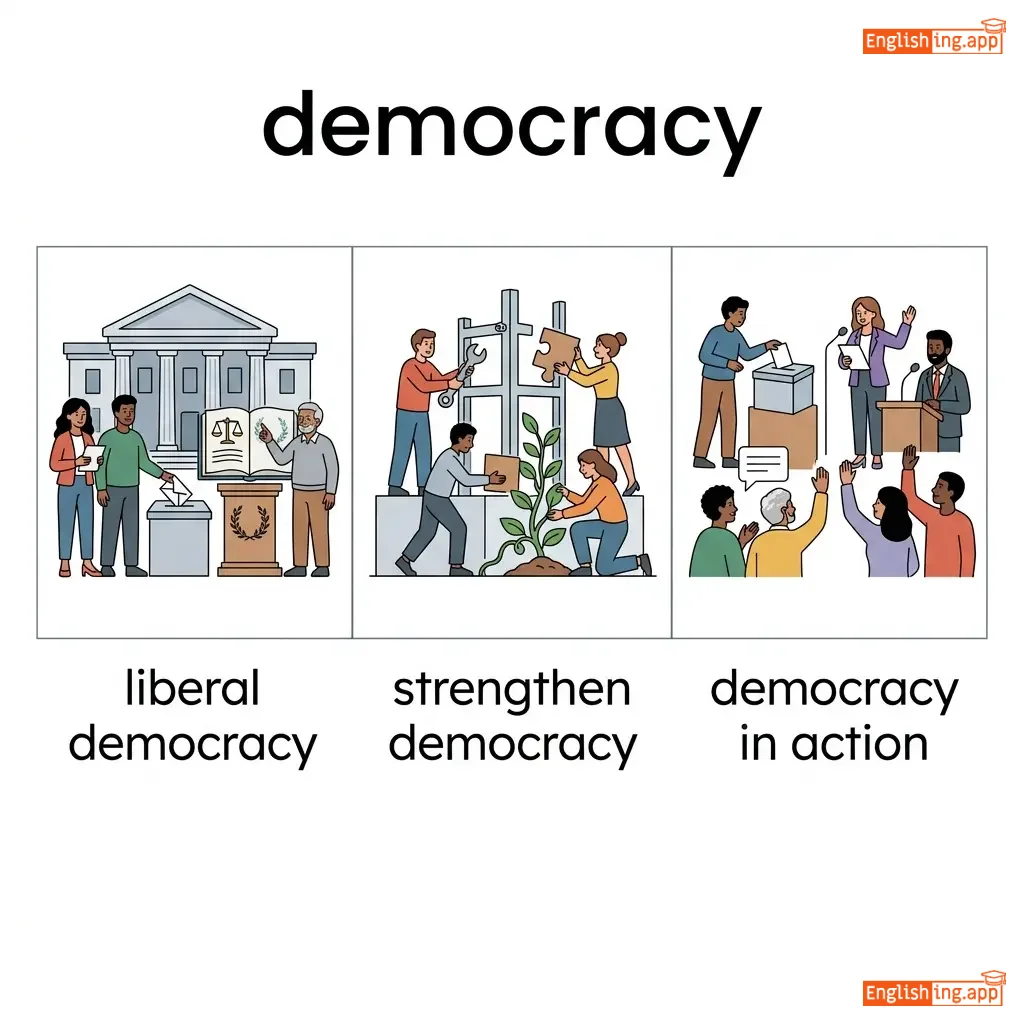
liberal democracy, strengthen democracy, democracy in action, democracy movement
••••••
|
Demo 意味着人民,cracy 意味着统治 - 民主 = 人民的统治
••••••
|
|
#1468
🕊️
|
/ˈdɛməˌkræt/
noun
(民主党人)
••••••
|
- •••••• |
民主党人
minzhudang ren
••••••
|
- •••••• | - •••••• | - •••••• | - •••••• |
a supporter of democracy or a member of the Democratic Party in the US
••••••
|
He is a strong democrat who believes in equal rights. |
他是一个坚强的民主党人,相信平等的权利。
Ta shi yige jianqiang de minzhudang ren, xiangxin pingdeng de quanli.
••••••
|
- •••••• | - •••••• | - •••••• |
supporter, liberal, reformer, egalitarian
••••••
|
dictator, autocrat
••••••
|
loyal democrat, leading democrat, democrat leader, true democrat
••••••
|
Democrat是民主党人的意思
••••••
|
|
#1469
🗳️
|
/ˌdɛməˈkrætɪk/
adjective
(民主的)
••••••
|
|
民主的
minzhu de
••••••
|
- •••••• | - •••••• | - •••••• | - •••••• |
relating to or supporting democracy or its principles; characterized by equality and freedom
••••••
|
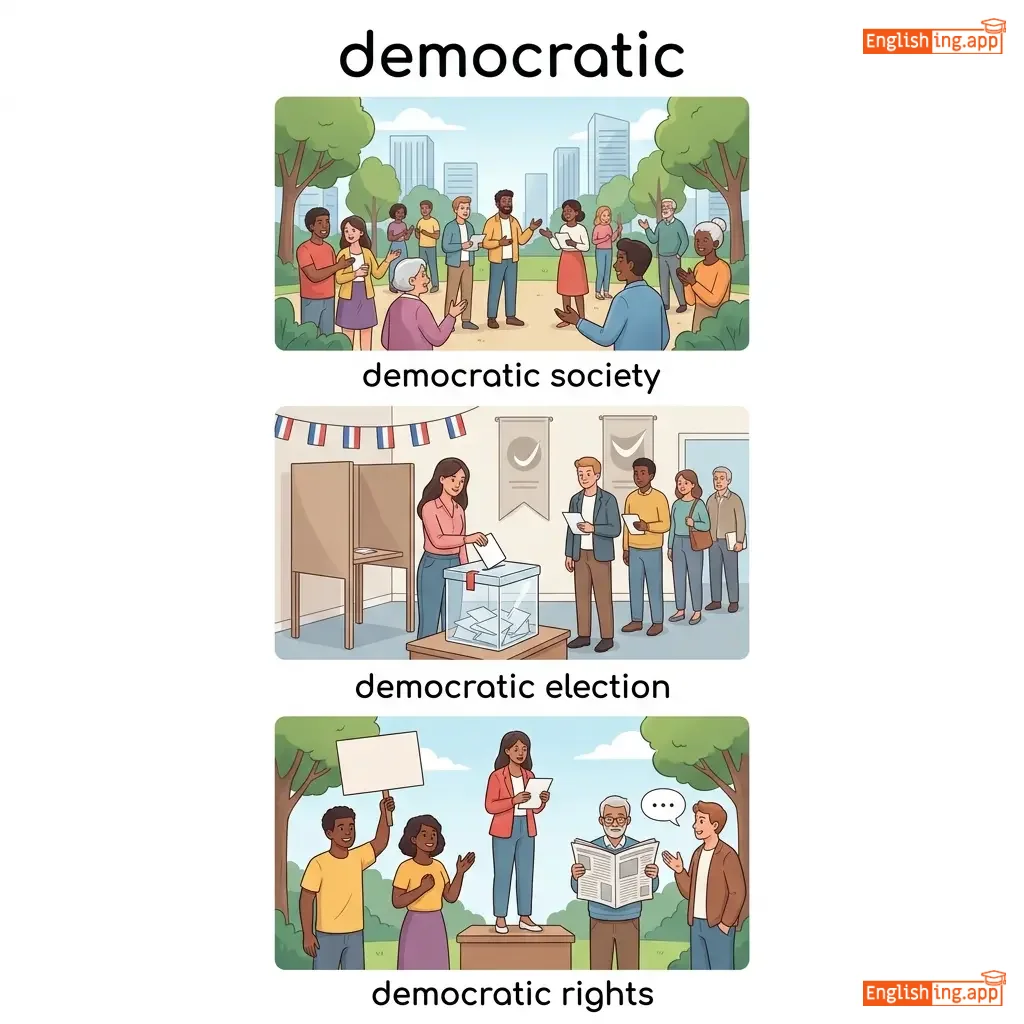
The country has a democratic system of government. |
该国有一个民主的政府体系。
Gai guo you yi ge minzhu de zhengfu tixi.
••••••
|
democratic values |
principles of equality, freedom, and representation in governance
••••••
|
民主价值观
minzhu jiazhi guan
••••••
|
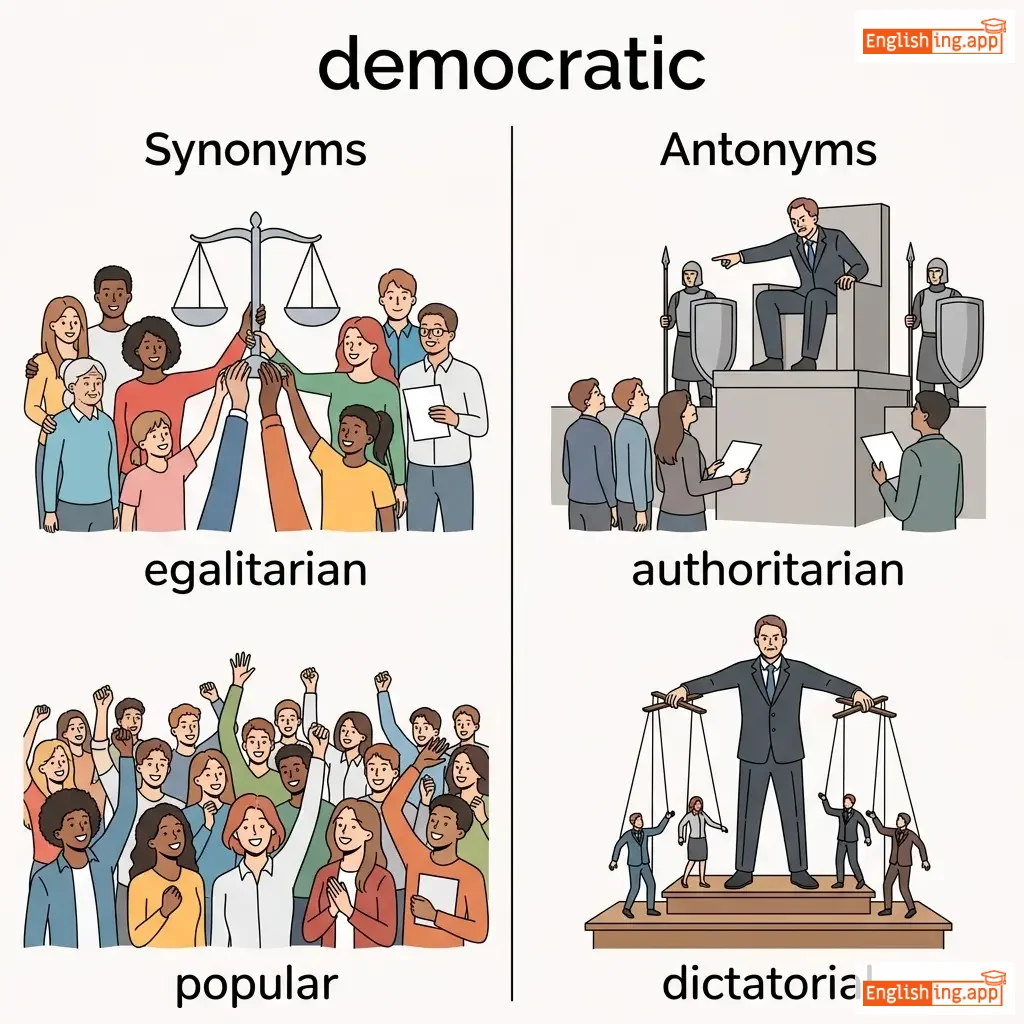
egalitarian, popular, representative, self-governing
••••••
|
authoritarian, dictatorial, autocratic
••••••
|
democratic society, democratic election, democratic rights, democratic values
••••••
|
Democratic 代表民主 + cratic → 民主是一种每个人投票的政府。
••••••
|
|
#1470
👹
|
/ˈdiːmən/
noun
(恶魔)
••••••
|
- •••••• |
恶魔
emó
••••••
|
- •••••• | - •••••• | - •••••• | - •••••• |
an evil spirit or devil
••••••
|
The story was about a demon who haunted the village.
这个故事是关于一个困扰村庄的恶魔。
••••••
|
这个故事是关于一个困扰村庄的恶魔。
Zhège gùshì shì guānyú yī gè kùnrǎo cūnzhuāng de èmó.
••••••
|
- •••••• | - •••••• | - •••••• |
devil, fiend, evil spirit, monster
••••••
|
angel, saint, good spirit
••••••
|
demon possession, demon spirit, evil demon
••••••
|
恶魔 sounds like 'Evil' - Evil spirit
••••••
|
|
#1471
🧑🏫
|
/ˈdɛmənˌstreɪt/
verb
(dēmónstèit)
••••••
|
- •••••• |
展示
zhǎnshì
••••••
|
demonstrated
démónstèitèd
••••••
|
demonstrated
démónstèitèd
••••••
|
demonstrates
démónstèits
••••••
|
demonstrating
démónstrèitīng
••••••
|
to clearly show or prove something through evidence, explanation, or action
••••••
|
The teacher demonstrated the experiment to the class.
老师向班级展示了实验。
••••••
|
老师向班级展示了实验。
Lǎoshī xiàng bānjí zhǎnshìle shíyàn.
••••••
|
demonstrate one's skills
展示自己的技能
••••••
|
to show one's abilities through action or performance
••••••
|
展示自己的技能
zhǎnshì zìjǐ de jìnéng
••••••
|
show, exhibit, display, illustrate, prove
••••••
|
hide, conceal, obscure
••••••
|
demonstrate ability, demonstrate skill, demonstrate interest, demonstrate clearly
••••••
|
展示 + 示范 = 为我展示 (démonstrating)
••••••
|
|
#1472
✊
|
/ˌdɛmənˈstreɪʃən/
noun
(示威)
••••••
|
- •••••• |
示威, 示范
shìwēi, shìfàn
••••••
|
- •••••• | - •••••• | - •••••• | - •••••• |
the act of showing something clearly, or a public protest
••••••
|
The workers organized a demonstration for better wages. |
工人们组织了一场争取更高工资的示威。
Gōngrén men zǔzhīle yī chǎng zhēngqǔ gèng gāo gōngzī de shìwēi.
••••••
|
peaceful demonstration |
a non-violent public protest
••••••
|
和平示威
hépíng shìwēi
••••••
|
protest, rally, march, display, presentation
••••••
|
silence, inaction
••••••
|
street demonstration, public demonstration, demonstration of power, demonstration of skills
••••••
|
Demonstration意味着展示或抗议
••••••
|
|
#1473
🙅♂️
|
/dɪˈnaɪəl/
noun
(di-nai-er)
••••••
|
- •••••• |
否认
fǒurèn
••••••
|
- •••••• | - •••••• | - •••••• | - •••••• |
a statement that something is not true; the refusal to accept or believe something
••••••
|
His denial of the accusations surprised everyone. |
他对指控的否认让大家都很惊讶。
ta dui zhikong de fouren rang dadao dou hen jingya.
••••••
|
in denial |
refusing to accept reality or truth
••••••
|
处于否认中
chuyu fouren zhong
••••••
|
refusal, rejection, contradiction, repudiation
••••••
|
acceptance, confirmation, admission
••••••
|
strong denial, official denial, denial of reality, denial of responsibility
••••••
|
Denial 就是 '否认' — 'deny' 是拒绝,'denial' 是拒绝的状态。
••••••
|
|
#1474
🔴
|
/dɪˈnəʊt/
verb
(dɪˈnəʊt)
••••••
|
- •••••• |
表示
biaoshi
••••••
|
denoted
denoted
••••••
|
denoted
denoted
••••••
|
denotes
denotes
••••••
|
denoting
denoting
••••••
|
To be a sign of; to indicate or mean something.
••••••
|
A red flag denotes danger.
红旗表示危险。
••••••
|
红旗表示危险。
Hong qi biaoshi wei xian.
••••••
|
- •••••• | - •••••• | - •••••• |
indicate, signify, represent, express, stand for
••••••
|
conceal, obscure
••••••
|
clearly denote, usually denotes, symbol denotes, denotes importance
••••••
|
表示意味着标志,就像红旗表示危险。
••••••
|
|
#1475
📢
|
/dɪˈnaʊns/
verb
(dīnaǒns)
••••••
|
- •••••• |
谴责
qiǎnzé
••••••
|
denounced
dīnaǒnsd
••••••
|
denounced
dīnaǒnsd
••••••
|
denounces
dīnaǒnces
••••••
|
denouncing
dīnaǒnsing
••••••
|
To publicly declare something to be wrong, evil, or condemn strongly.
••••••
|
The leader denounced corruption in his speech.
领导人在他的演讲中谴责了腐败。
••••••
|
领导人在他的演讲中谴责了腐败。
Lǐngdǎo rén zài tā de yǎnjiǎng zhōng qiǎnzéle fǔbài.
••••••
|
denounce in no uncertain terms
以明确的术语谴责
••••••
|
To condemn very strongly and clearly.
••••••
|
以明确的术语谴责
Yǐ míngquè de shùyǔ qiǎnzé
••••••
|
condemn, criticize, censure, blame, accuse
••••••
|
praise, approve, endorse
••••••
|
publicly denounce, strongly denounce, denounce corruption, denounce violence
••••••
|
Denounce听起来像 'announce', 但是意思是公开强烈谴责,比如谴责腐败。
••••••
|
|
#1476
🌲
|
/dɛns/
adjective
(dēnsī)
••••••
|
- •••••• |
密集的
mìjí de
••••••
|
- •••••• | - •••••• | - •••••• | - •••••• |
Closely compacted in substance; having parts crowded together.
••••••
|
The forest was so dense that little sunlight reached the ground. |
森林是如此密集,以至于只有很少的阳光照射到地面。
Sēnlín shì rúcǐ mìjí, yǐzhì zhǐ yǒu hěn shǎo de yángguāng zhàoshè dào dìmiàn.
••••••
|
dense fog |
Thick fog that reduces visibility.
••••••
|
浓雾
nóng wù
••••••
|
thick, compact, crowded, heavy, solid
••••••
|
thin, sparse, light
••••••
|
dense forest, dense fog, dense population, dense crowd
••••••
|
Dense 意味着密集 - 记住 dense forest 意味着密集森林。
••••••
|
|
#1477
⚖️
|
/ˈdɛnsɪti/
noun
(dɛnsɪti)
••••••
|
- •••••• |
密度
mìdù
••••••
|
- •••••• | - •••••• | - •••••• | - •••••• |
the degree of compactness or thickness of a substance or object
••••••
|
The density of water is higher than that of air.
水的密度高于空气的密度。
••••••
|
水的密度高于空气的密度。
Shuǐ de mìdù gāo yú kōngqì de mìdù.
••••••
|
population density
人口密度
••••••
|
the number of people living per unit area of land
••••••
|
人口密度
rénkǒu mìdù
••••••
|
thickness, concentration, solidity, compactness, mass
••••••
|
thinness, rarity, emptiness
••••••
|
high density, low density, population density, energy density
••••••
|
密度像密集,所以density是密度。
••••••
|
|
#1478
🦷
|
/ˈdɛntəl/
adjective
(登特尔)
••••••
|
- •••••• |
牙科的
yake de
••••••
|
- •••••• | - •••••• | - •••••• | - •••••• |
relating to teeth or dentistry
••••••
|
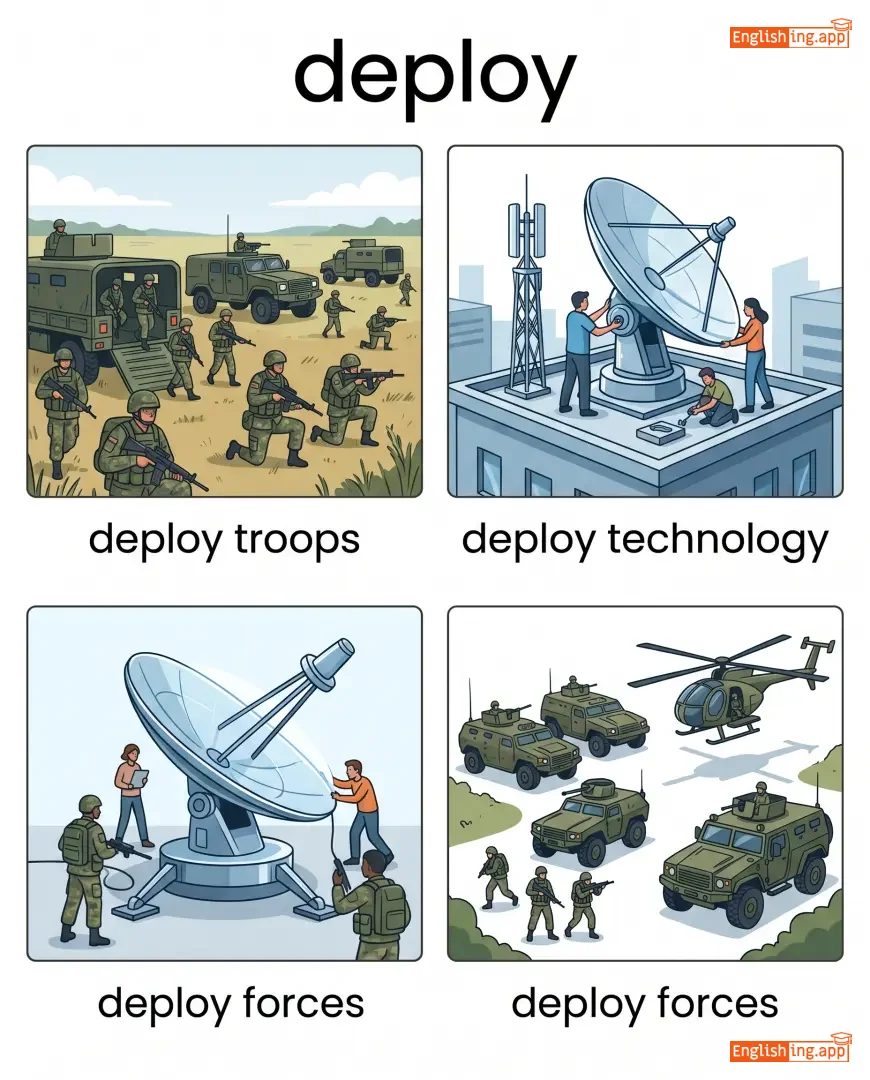
She goes for a dental checkup every six months.
她每六个月进行一次牙科检查。
••••••
|
她每六个月进行一次牙科检查。
ta mei liu ge yue jinxing yi ci yake jiancha
••••••
|
- •••••• | - •••••• | - •••••• |
oral, odontic, tooth-related, stomatological
••••••
|
non-dental, general
••••••
|
dental care, dental clinic, dental hygiene, dental surgery, dental checkup
••••••
|
Dental 听起来像 牙科,想到牙齿
••••••
|
|
#1479
🦷
|
/ˈden.tɪst/
noun
(牙医)
••••••
|
- •••••• |
牙科医生
yá kē yī shēng
••••••
|
- •••••• | - •••••• | - •••••• | - •••••• |
a medical professional who treats teeth and oral health
••••••
|
I need to visit the dentist for a regular checkup. |
我需要去看牙医进行定期检查。
wǒ xū yào qù kàn yá yī jìn xíng dìng qī jiǎn chá
••••••
|
- •••••• | - •••••• | - •••••• |
dental surgeon, orthodontist, oral surgeon
••••••
|
- •••••• |
visit the dentist, dentist appointment, family dentist, dental clinic
••••••
|
牙科医生负责牙齿治疗
••••••
|
|
#1480
🚆
|
/dɪˈpɑːrt/
verb
••••••
|
- •••••• | - •••••• |
departed
••••••
|
departed
••••••
|
departs
••••••
|
departing
••••••
|
to leave, especially to start a journey
••••••
|
The train will depart at 9 a.m. |
- •••••• |
depart this life |
a formal or euphemistic way to say 'die'
••••••
|
- •••••• |
leave, exit, go, withdraw, set off
••••••
|
arrive, stay, remain
••••••
|
depart early, depart station, flight departs, depart suddenly
••••••
|
No •••••• |
|
#1481
🏢
|
/dɪˈpɑːrtmənt/
noun
(部门)
••••••
|
- •••••• |
部门
bumen
••••••
|
- •••••• | - •••••• | - •••••• | - •••••• |
a division of a large organization such as a government, university, or company
••••••
|
She works in the marketing department. |
她在市场部门工作。
Ta zai shichang bumen gongzuo.
••••••
|
department store |
a large retail store selling various goods in separate sections
••••••
|
百货商店
baihuo shangdian
••••••
|
division, section, branch, bureau
••••••
|
whole, entirety
••••••
|
government department, police department, sales department, university department
••••••
|
部门 = 组织的组成部分
••••••
|
|
#1482
✈️
|
/dɪˈpɑːrtʃər/
noun
(dɪˈpɑːrtʃər)
••••••
|
- •••••• |
出发, 离开
chūfā, líkāi
••••••
|
- •••••• | - •••••• | - •••••• | - •••••• |
the act of leaving a place, especially to start a journey
••••••
|
The plane’s departure was delayed due to fog. |
由于雾霾,飞机的出发被延迟了。
Yóuyú wùmái, fēijī de chūfā bèi yánchí le.
••••••
|
a sudden departure |
an unexpected or quick exit
••••••
|
突然离开
túrán líkāi
••••••
|
exit, leave, withdrawal, flight, going
••••••
|
arrival, entry, return
••••••
|
flight departure, departure time, sudden departure, scheduled departure
••••••
|
Departure 在中文中意味着出发或离开,旅程从此开始。
••••••
|
|
#1483
🤲
|
/dɪˈpɛnd/
verb
(依赖)
••••••
|
|
依赖
yīlài
••••••
|
depended
••••••
|
depended
••••••
|
depends
••••••
|
depending
••••••
|
to rely on or be controlled by someone or something else
••••••
|
Children depend on their parents for support.
孩子们依赖父母来提供支持。
••••••
|
孩子们依赖父母来提供支持。
Háizimen yīlài fùmǔ lái tígōng zhīchí.
••••••
|
depend on
依赖于
••••••
|
to rely on someone or something
••••••
|
依赖于
yīlài yú
••••••
|
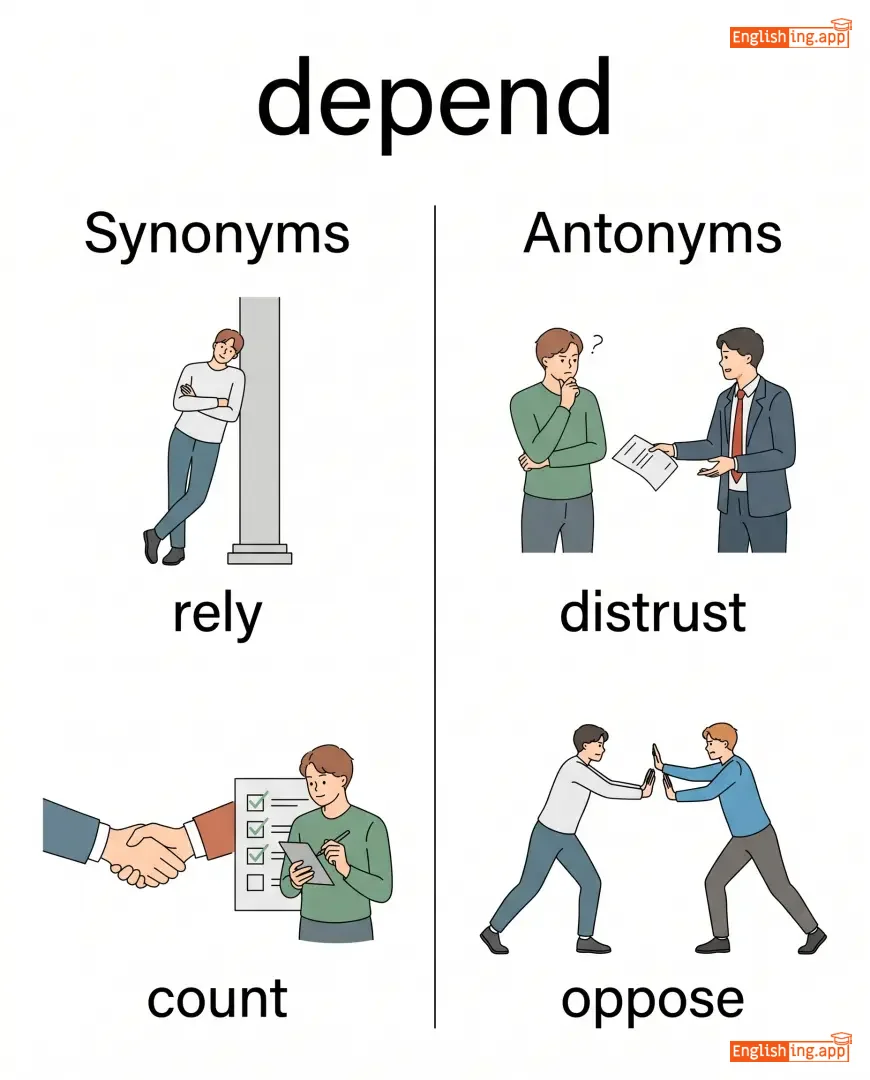
rely, count, trust, hinge
••••••
|
distrust, oppose
••••••
|
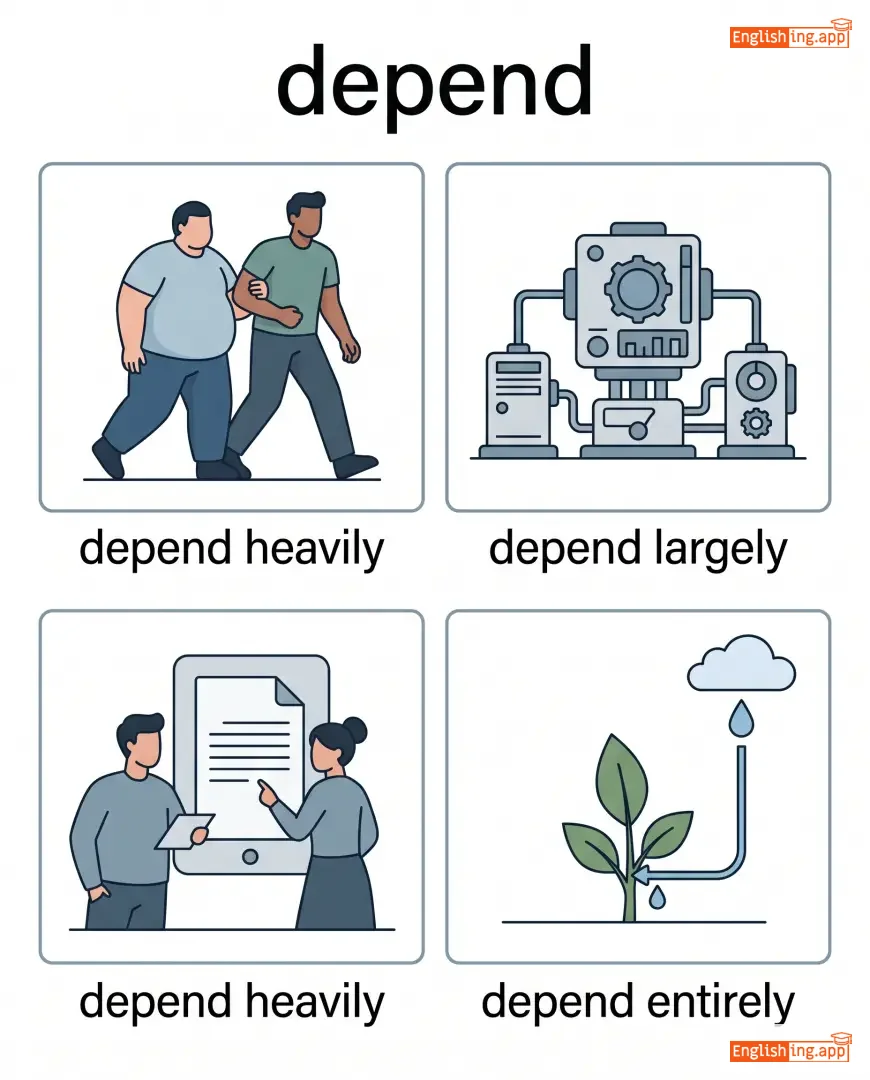
depend heavily, depend largely, depend entirely, depend directly
••••••
|
Depend = De (德) + pend (佩恩) → 我依赖你,我依靠你。
••••••
|
|
#1484
🛡️
|
/dɪˈpɛndəbl/
adjective
(迪彭德布尔)
••••••
|
- •••••• |
可靠的
kekao de
••••••
|
- •••••• | - •••••• | - •••••• | - •••••• |
able to be trusted or relied on; consistently reliable
••••••
|
She is a dependable colleague who always meets deadlines.
希 伊兹 阿 迪彭德布尔 科利格 胡 奥维兹 米茨 戴德莱恩斯。
••••••
|
她是一位可靠的同事,总是按时完成任务。
ta shi yi wei kekao de tongshi zongshi anshi wancheng renwu
••••••
|
dependable as clockwork
迪彭德布尔 阿兹 克洛克沃克
••••••
|
extremely reliable and punctual
••••••
|
像钟表一样可靠
xiang zhongbiao yiyang kekao
••••••
|
reliable, trustworthy, consistent, steady, faithful
••••••
|
unreliable, untrustworthy, inconsistent
••••••
|
dependable person, dependable service, dependable source, dependable worker
••••••
|
Dependable = 可以 depend 的人 = 可靠的
••••••
|
|
#1485
🤝
|
/dɪˈpen.dəns/
noun
(dɪˈpendəns)
••••••
|
- •••••• |
依赖
yīlài
••••••
|
- •••••• | - •••••• | - •••••• | - •••••• |
the state of relying on or needing someone or something for support; addiction
••••••
|
His dependence on technology made it difficult for him to work without internet. |
他对科技的依赖使得他在没有互联网的情况下很难工作。
Tā duì kējì de yīlài shǐdé tā zài méiyǒu hùliánwǎng de qíngkuàng xià hěn nán gōngzuò.
••••••
|
- •••••• | - •••••• | - •••••• |
reliance, addiction, need, dependency
••••••
|
independence, self-reliance, autonomy
••••••
|
drug dependence, economic dependence, complete dependence
••••••
|
依赖就像一根拐杖,帮助你站立
••••••
|
|
#1486
🧒
|
/dɪˈpɛndənt/
adjective
(dɪˈpɛndənt)
••••••
|
- •••••• |
依赖
yīlài
••••••
|
- •••••• | - •••••• | - •••••• | - •••••• |
Relying on someone or something else for support or help.
••••••
|
Children are dependent on their parents for care. |
孩子们依赖父母的照顾。
Háizimen yīlài fùmǔ de zhàogù.
••••••
|
dependent on |
Relying on someone or something.
••••••
|
依赖于
yīlài yú
••••••
|
reliant, needy, subordinate, conditional, subject
••••••
|
independent, self-sufficient, autonomous
••••••
|
dependent on, financially dependent, emotionally dependent
••••••
|
依赖意味着依靠,就像孩子们依赖父母一样。
••••••
|
|
#1487
🎨
|
/dɪˈpɪkt/
verb
••••••
|
- •••••• | - •••••• |
depicted
••••••
|
depicted
••••••
|
depicts
••••••
|
depicting
••••••
|
to represent or show something in a picture, story, or other art form
••••••
|
The painting depicts a beautiful sunset over the sea. |
- •••••• |
depict in a bad light |
to represent someone or something negatively
••••••
|
- •••••• |
portray, illustrate, describe, represent, delineate
••••••
|
conceal, hide, distort
••••••
|
depict accurately, depict vividly, depict clearly, depict scene
••••••
|
No •••••• |
|
#1488
🎖️
|
/dɪˈplɔɪ/
verb
(dī plòi)
••••••
|
|
部署
bùshǔ
••••••
|
deployed
dī plòi d
••••••
|
deployed
dī plòi d
••••••
|
deploys
dī plòis
••••••
|
deploying
dī plòi yīng
••••••
|
to move into position for action, especially troops or resources
••••••
|
The general decided to deploy more soldiers to the border.
将更多的士兵部署到边境是将军的决定。
••••••
|
将更多的士兵部署到边境是将军的决定。
Jiāng gèng duō de shìbīng bùshǔ dào biānjìng shì jiāngjūn de juédìng.
••••••
|
deploy resources
部署资源
••••••
|
to effectively use available resources
••••••
|
部署资源
bùshǔ zīyuán
••••••
|
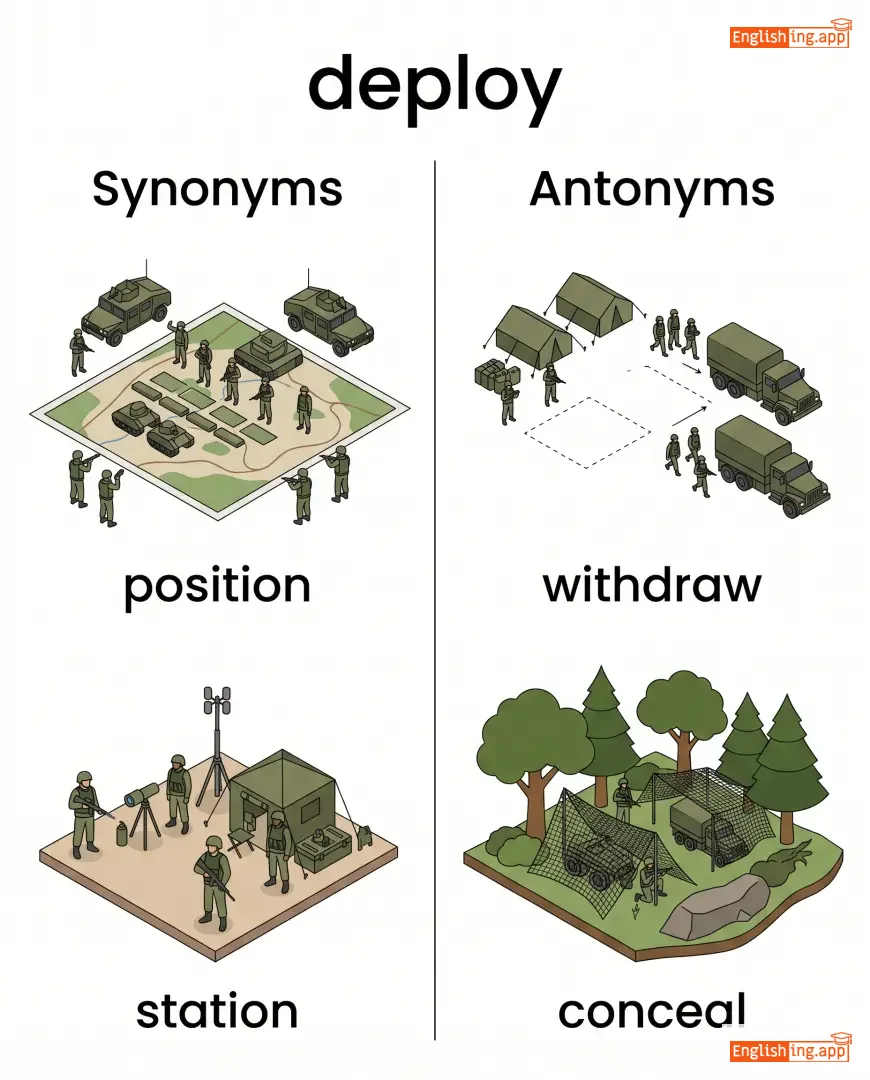
position, station, utilize, employ, arrange
••••••
|
withdraw, conceal
••••••
|
deploy troops, deploy technology, deploy forces, deploy strategy
••••••
|
部署就像放置士兵,准备好资源。
••••••
|
|
#1489
📦
|
/dɪˈplɔɪmənt/
noun
(dɪˈplɔɪmənt)
••••••
|
|
部署
bùshǔ
••••••
|
- •••••• | - •••••• | - •••••• | - •••••• |
the action of moving or positioning something into place for use
••••••
|
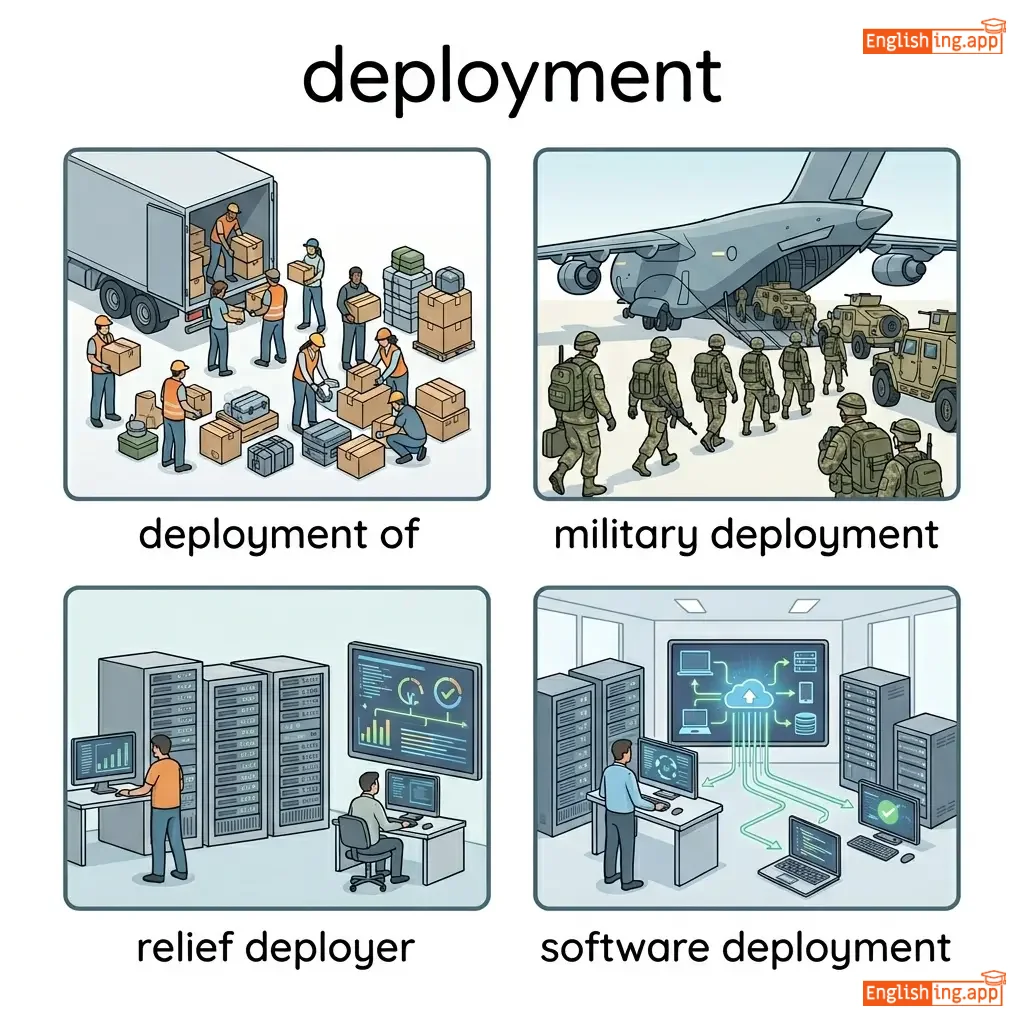
The deployment of the new software was completed successfully. |
新软件的部署已成功完成。
Xīn ruǎnjiàn de bùshǔ yǐ chénggōng wánchéng.
••••••
|
- •••••• | - •••••• | - •••••• |
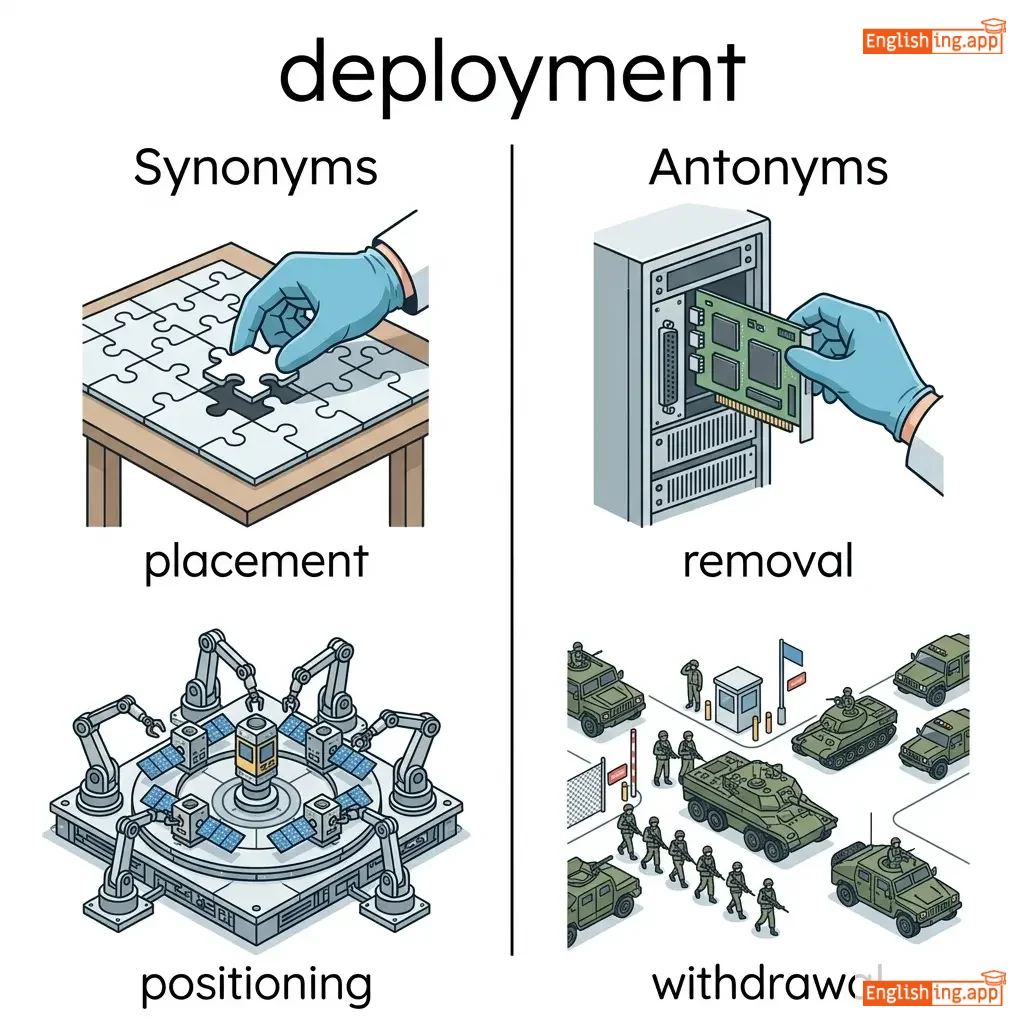
placement, positioning, arrangement, setup
••••••
|
removal, withdrawal
••••••
|
deployment of, military deployment, software deployment
••••••
|
安装软件 (deployment)
••••••
|
|
#1490
🏦
|
/dɪˈpɑːzɪt/
noun/verb
(存款)
••••••
|
- •••••• |
存款, 预付款
cún kuǎn, yù fù kuǎn
••••••
|
deposited
存入
••••••
|
deposited
存入
••••••
|
deposits
存款
••••••
|
depositing
存储
••••••
|
to place money in a bank account, or a sum paid in advance as security; a layer of material left naturally
••••••
|
She deposited $500 into her savings account.
她向她的储蓄账户存入了500美元。
••••••
|
她向她的储蓄账户存入了500美元。
Tā xiàng tā de chǔxù zhànghù cún rù le 500 měiyuán.
••••••
|
security deposit
保证金
••••••
|
a sum of money held as a guarantee against damage or loss
••••••
|
保证金
bǎo zhèng jīn
••••••
|
payment, down payment, savings, pledge, lodgment
••••••
|
withdrawal, debt
••••••
|
make a deposit, deposit money, deposit account, security deposit
••••••
|
Deposit意味着把钱放进银行账户,就像一个预付款或保证金
••••••
|
|
#1491
😞
|
/dɪˈprɛs/
verb
(抑郁)
••••••
|
- •••••• |
压抑
yāyì
••••••
|
depressed
抑郁
••••••
|
depressed
抑郁
••••••
|
depresses
抑郁
••••••
|
depressing
抑郁
••••••
|
To make someone feel sad or without hope; to reduce the level or strength of something.
••••••
|
The gloomy weather tends to depress people.
阴郁的天气常常使人感到抑郁。
••••••
|
阴郁的天气常常使人感到抑郁。
Yīnyù de tiānqì chángcháng shǐ rén gǎndào yāyì.
••••••
|
press down
压下来
••••••
|
To push something down physically or emotionally.
••••••
|
压下来
yā xiàlái
••••••
|
sadden, discourage, lower, weaken, deject
••••••
|
encourage, uplift, inspire
••••••
|
depress the economy, depress the price, deeply depress, depress mood
••••••
|
Depress就是压下来 - 抑郁也让人感觉压抑。
••••••
|
|
#1492
😔
|
/dɪˈprɛst/
adjective
(dɪˈprɛst)
••••••
|
- •••••• |
沮喪
jǔsàng
••••••
|
- •••••• | - •••••• | - •••••• | - •••••• |
Feeling very sad and without hope; in a state of unhappiness.
••••••
|
She felt depressed after losing her job. |
失去工作後,她感到沮喪。
Shīqù gōngzuò hòu, tā gǎndào jǔsàng.
••••••
|
feeling blue |
Feeling sad or unhappy.
••••••
|
感到憂鬱
gǎndào yōuyù
••••••
|
sad, downcast, gloomy, unhappy, melancholic
••••••
|
happy, cheerful, joyful
••••••
|
deeply depressed, clinically depressed, depressed mood
••••••
|
沮喪是失去工作後的感覺,就像感到憂鬱一樣。
••••••
|
|
#1493
😔
|
/dɪˈprɛʃən/
noun
(抑郁症)
••••••
|
- •••••• |
抑郁症
yiyuzheng
••••••
|
- •••••• | - •••••• | - •••••• | - •••••• |
A state of severe sadness or hopelessness; also a prolonged downturn in economic activity.
••••••
|
She has been battling depression for several months. |
她已经与抑郁症斗争了几个月。
Ta yijing yu yiyuzheng douzheng le ji ge yue.
••••••
|
economic depression |
A long-term downturn in economic activity.
••••••
|
经济萧条
jingji xiaotiao
••••••
|
melancholy, sadness, gloom, slump, recession
••••••
|
happiness, joy, boom
••••••
|
suffer from depression, clinical depression, deep depression, economic depression
••••••
|
抑郁症 = deep + pressure = 内心沉重的压迫感。
••••••
|
|
#1494
🚫
|
/dɪˈpraɪv/
verb
••••••
|
- •••••• | - •••••• |
deprived
••••••
|
deprived
••••••
|
deprives
••••••
|
depriving
••••••
|
to take something away from someone, or prevent them from having it
••••••
|
The new law may deprive people of their rights. |
- •••••• |
sleep-deprived |
lacking enough sleep
••••••
|
- •••••• |
deny, strip, remove, dispossess, rob
••••••
|
grant, give, provide
••••••
|
deprive of rights, deprive someone of, deprive freedom, sleep deprived
••••••
|
No •••••• |
|
#1495
🌊
|
/dɛpθ/
noun
(深度)
••••••
|
- •••••• |
深度
shendu
••••••
|
- •••••• | - •••••• | - •••••• | - •••••• |
The distance from the top to the bottom of something; the intensity or complexity of a subject.
••••••
|
The diver measured the depth of the ocean trench. |
潜水员测量了海洋沟壑的深度。
Qiánshuǐyuán cèliàngle hǎiyáng gōu hè de shēndù.
••••••
|
in depth |
In great detail or thoroughly.
••••••
|
深入
shēnrù
••••••
|
deepness, intensity, profoundness, extent, complexity
••••••
|
shallowness, surface, height
••••••
|
great depth, depth of knowledge, emotional depth, depth perception
••••••
|
Depth = 深度 = 去更深的地方。
••••••
|
|
#1496
👮
|
/ˈdɛpjʊti/
noun
(迪普蒂)
••••••
|
- •••••• |
代理人
dàilǐrén
••••••
|
- •••••• | - •••••• | - •••••• | - •••••• |
A person appointed as a substitute with power to act.
••••••
|
The deputy will lead the meeting in the manager’s absence.
代理人在经理缺席时将主持会议。
••••••
|
代理人在经理缺席时将主持会议。
Dàilǐrén zài jīnglǐ quēxí shí jiāng zhǔchí huìyì.
••••••
|
- •••••• | - •••••• | - •••••• |
assistant, representative, delegate, subordinate, second-in-command
••••••
|
chief, leader, head
••••••
|
deputy manager, deputy minister, deputy director
••••••
|
Deputy表示代理人,像是Deputy Manager(副经理)。
••••••
|
|
#1497
📜
|
/dɪˈraɪv/
verb
(得赖夫)
••••••
|
- •••••• |
派生
paisheng
••••••
|
derived
得赖夫德
••••••
|
derived
得赖夫德
••••••
|
derives
得赖夫斯
••••••
|
deriving
得赖夫英
••••••
|
To obtain something from a source.
••••••
|
Many English words derive from Latin.
许多英语词汇源自拉丁语。
••••••
|
许多英语词汇源自拉丁语。
xuduo yingyu ci hui yuanci latin yu.
••••••
|
derive benefit
得赖受益
••••••
|
to gain an advantage from something
••••••
|
获得利益
huode liyi
••••••
|
obtain, acquire, originate, extract, gain
••••••
|
lose, give, surrender
••••••
|
derive from, derive meaning, derive benefit
••••••
|
Derive意味着从某个来源获得东西 — '派生'像是从源头获得东西。
••••••
|
Vocabulary Quiz
Test your vocabulary by matching words with their translations or meanings.
Login to take the quiz
Comments (0)
Share your thoughts and join the discussion.
Join the discussion by logging in
Login to CommentNo comments yet
Be the first to share your thoughts!