





Swipe left or right, or use the buttons. Tap image to zoom.
例句翻译
单词
Lesson 42Lesson 42 - 遮罩切换
|
表情符号
|
单词 | Images | 翻译 | 过去时 | 过去分词 | 第三人称单数 | 动名词 | 含义 | 例句 | 例句翻译 | 示例表达 | 示例表达含义 | 示例表达翻译 | 同义词 | 反义词 | 搭配词 | 助记符 |
|---|---|---|---|---|---|---|---|---|---|---|---|---|---|---|---|---|---|
|
#1997
👁️
|
/ˈaɪ.bɔːl/
noun
(áibó'ěr)
••••••
|
- •••••• |
眼球
yǎnqiú
••••••
|
- •••••• | - •••••• | - •••••• | - •••••• |
the round part of the eye within the eyelids and socket
••••••
|
The doctor examined his eyeball carefully.
医生仔细检查了他的眼球。
••••••
|
医生仔细检查了他的眼球。
Yīshēng zǐxì jiǎnchále tā de yǎnqiú.
••••••
|
- •••••• | - •••••• | - •••••• |
eye globe, ocular globe
••••••
|
- •••••• |
eyeball movement, eyeball pressure, bulging eyeball
••••••
|
记住'眼球',让你更容易记住 'eyeball' 这个词。
••••••
|
|
#1998
🧵
|
/ˈfæbrɪk/
noun
(fābùlíkè)
••••••
|
- •••••• |
布料
bùliào
••••••
|
- •••••• | - •••••• | - •••••• | - •••••• |
Cloth or material produced by weaving or knitting fibers.
••••••
|
The tailor used silk fabric to make the dress. |
裁缝用丝绸布料做了这件衣服。
Cáifeng yòng sīchóu bùliào zuòle zhè jiàn yīfú.
••••••
|
the fabric of society |
the basic structure or foundation of society
••••••
|
社会的结构
Shèhuì de jiégòu
••••••
|
cloth, textile, material, fiber, weave
••••••
|
metal, stone, plastic
••••••
|
cotton fabric, woven fabric, fabric softener, fabric design
••••••
|
Fabric 是布料,做衣服时需要布料,像做衣服一样重要。
••••••
|
|
#1999
✨
|
/ˈfæbjələs/
adjective
(法比尤洛斯)
••••••
|
- •••••• |
极好的
jí hǎo de
••••••
|
- •••••• | - •••••• | - •••••• | - •••••• |
Extremely good or wonderful; almost unbelievable
••••••
|
She looked fabulous in her new dress. |
她穿着新裙子看起来极好。
Tā chuānzhuó xīn qúnzi kàn qǐlái jí hǎo.
••••••
|
fabulous fortune |
an extremely large amount of wealth
••••••
|
极大的财富
jí dà de cáifù
••••••
|
marvelous, amazing, incredible, astonishing, wonderful
••••••
|
ordinary, mediocre, dull
••••••
|
fabulous job, fabulous idea, fabulous wealth, look fabulous
••••••
|
极好的意味着令人惊叹,就像极大的财富一样。
••••••
|
|
#2000
🙂
|
/feɪs/
noun/verb
••••••
|
|
- •••••• |
faced
••••••
|
faced
••••••
|
faces
••••••
|
facing
••••••
|
The front part of a person's head; to confront or deal with a situation
••••••
|
She had to face many challenges in her career. |
- •••••• |
face the music |
to accept the unpleasant consequences of one's actions
••••••
|
- •••••• |
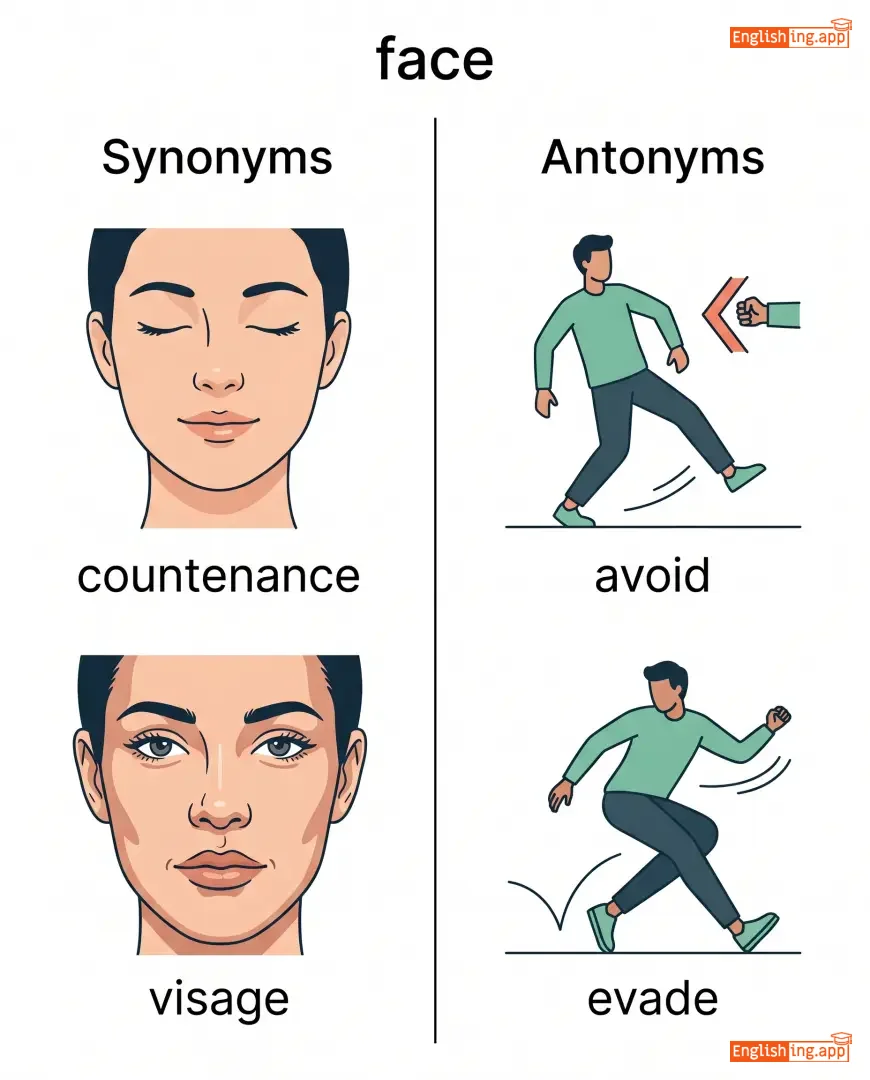
countenance, visage, confront, encounter
••••••
|
avoid, evade
••••••
|
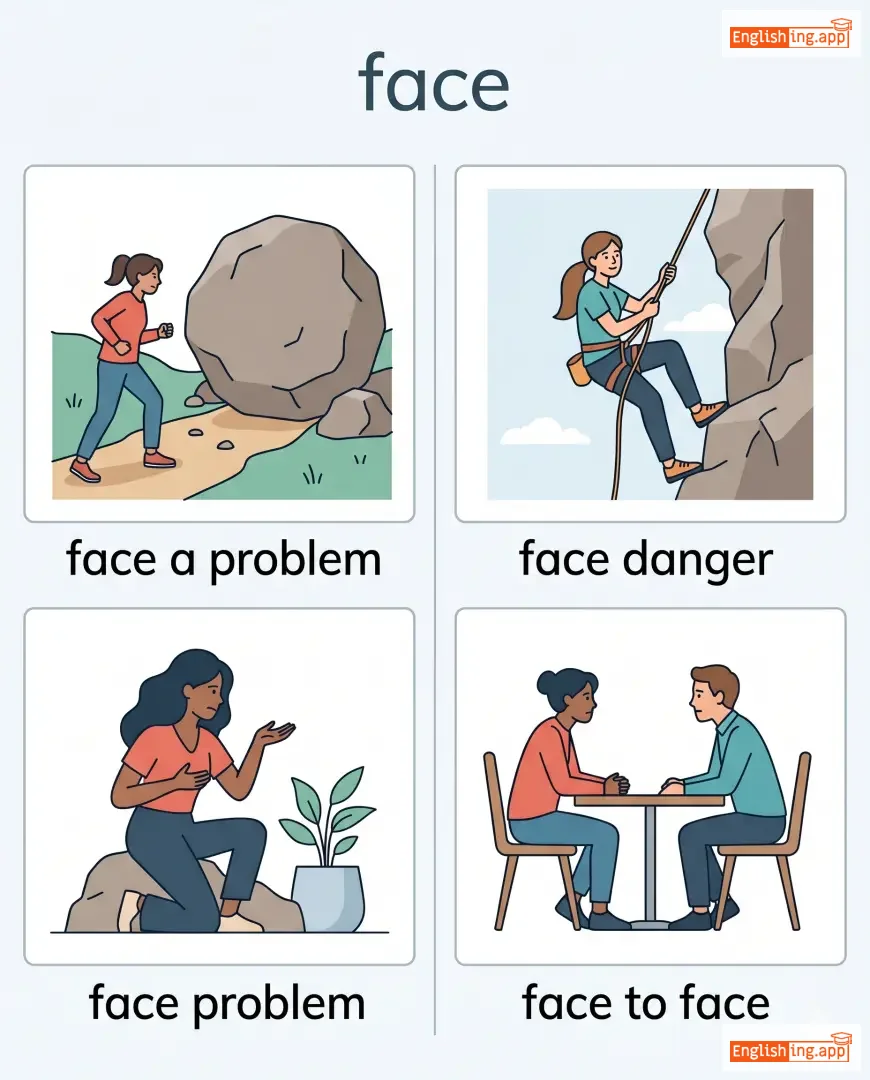
face a problem, face danger, face to face, face reality
••••••
|
No •••••• |
|
#2001
⚙️
|
/fəˈsɪlɪteɪt/
verb
(促进)
••••••
|
|
促进,使变得更容易
cùjìn, shǐ biàn dé gèng róngyì
••••••
|
facilitated
促进了
••••••
|
facilitated
促进了
••••••
|
facilitates
促进
••••••
|
facilitating
促进中
••••••
|
to make an action or process easier or smoother
••••••
|
The new software will facilitate communication between departments.
新软件将促进部门之间的沟通。
••••••
|
新软件将促进部门之间的沟通。
Xīn ruǎnjiàn jiāng cùjìn bùmén zhī jiān de gōutōng.
••••••
|
- •••••• | - •••••• | - •••••• |
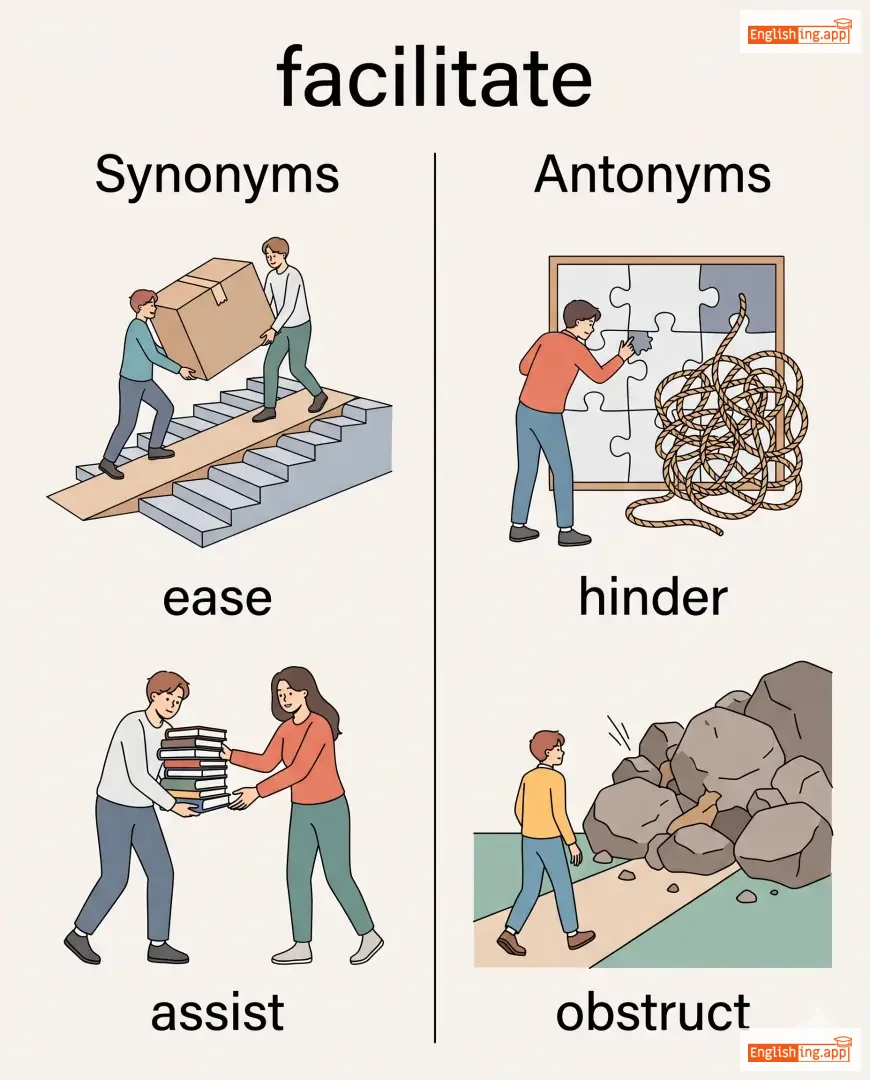
ease, assist, simplify, aid
••••••
|
hinder, obstruct, complicate
••••••
|
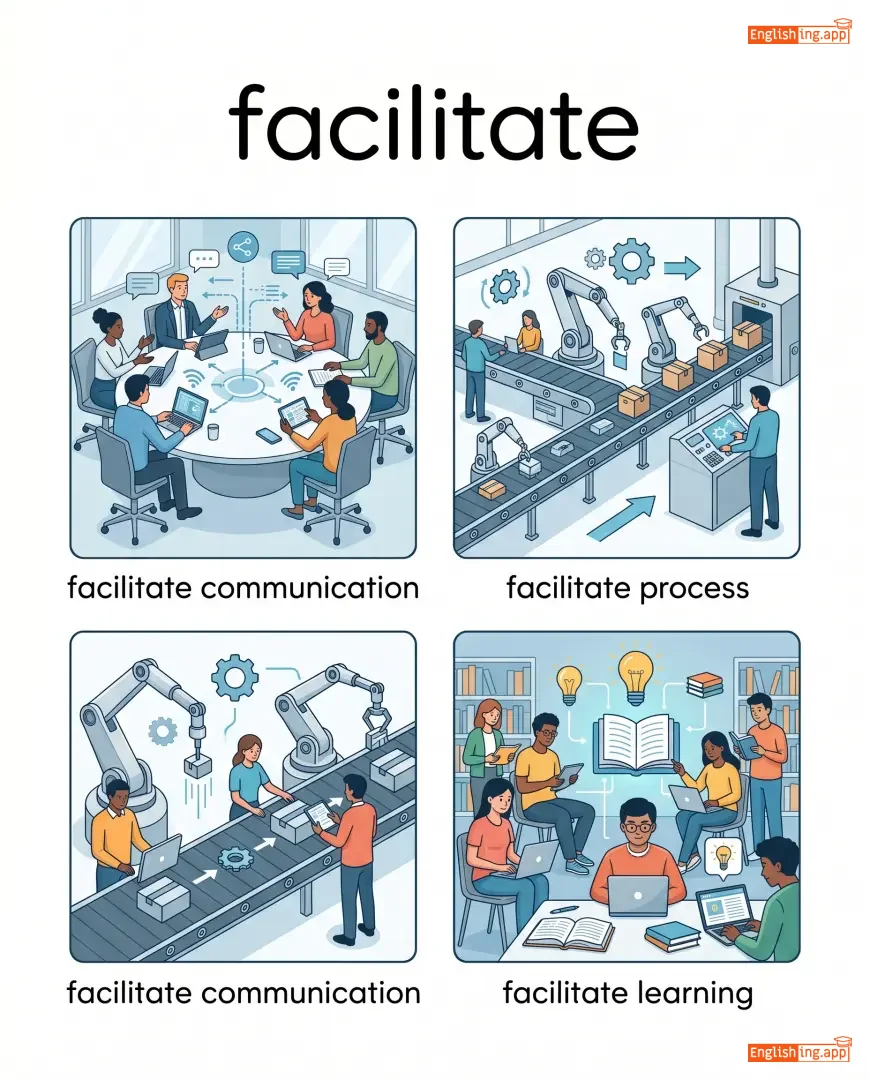
facilitate communication, facilitate process, facilitate learning, facilitate discussion
••••••
|
Facilitate - 'Face ill' 使事情更简单
••••••
|
|
#2002
🏢
|
/fəˈsɪl.ə.ti/
noun
(设施)
••••••
|
|
设施; 便利
shèshī; biànlì
••••••
|
- •••••• | - •••••• | - •••••• | - •••••• |
a building, service, or piece of equipment provided for a particular purpose
••••••
|
The new sports facility includes a swimming pool and gymnasium.
新的体育设施包括游泳池和健身房。
••••••
|
新的体育设施包括游泳池和健身房。
xīn de tǐyù shèshī bāokuò yóuyǒngchí hé jiànshēnfáng.
••••••
|
- •••••• | - •••••• | - •••••• |
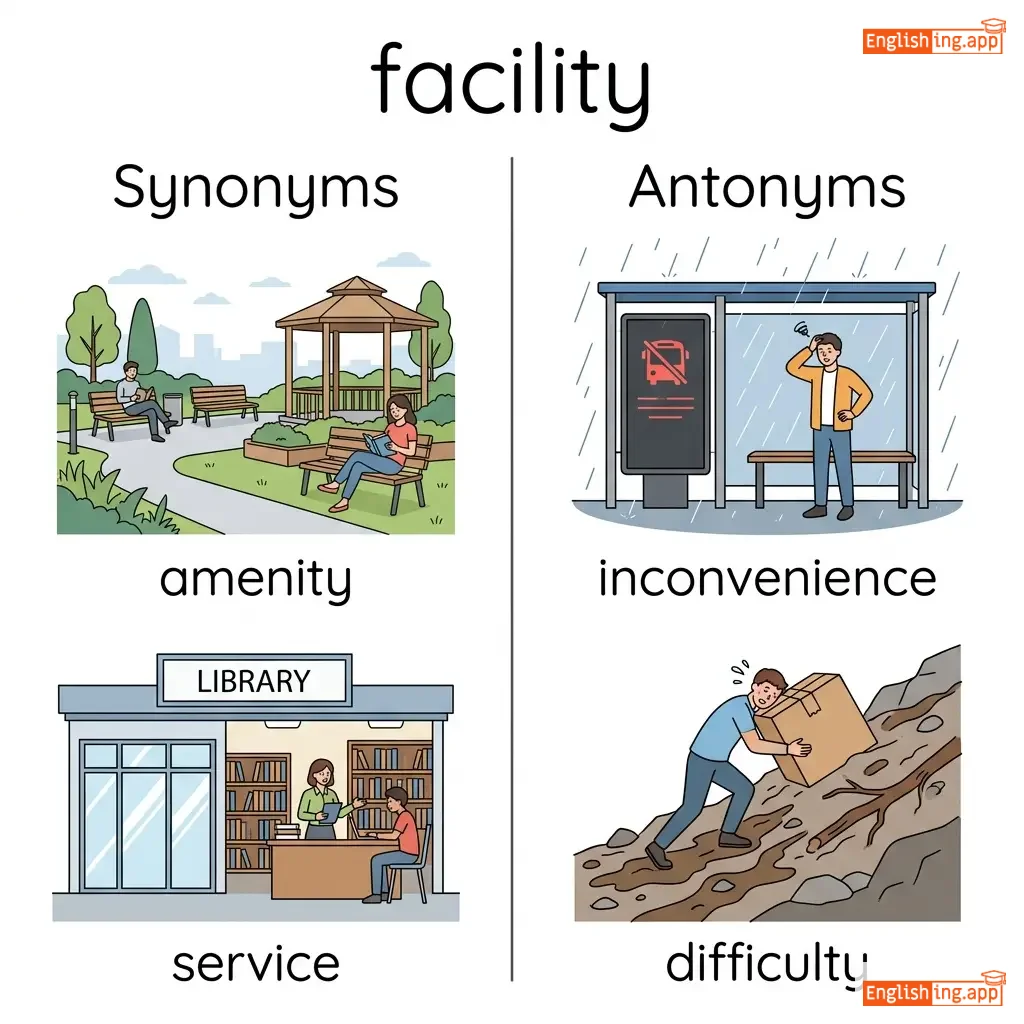
amenity, service, installation, resource
••••••
|
inconvenience, difficulty, obstacle, hindrance
••••••
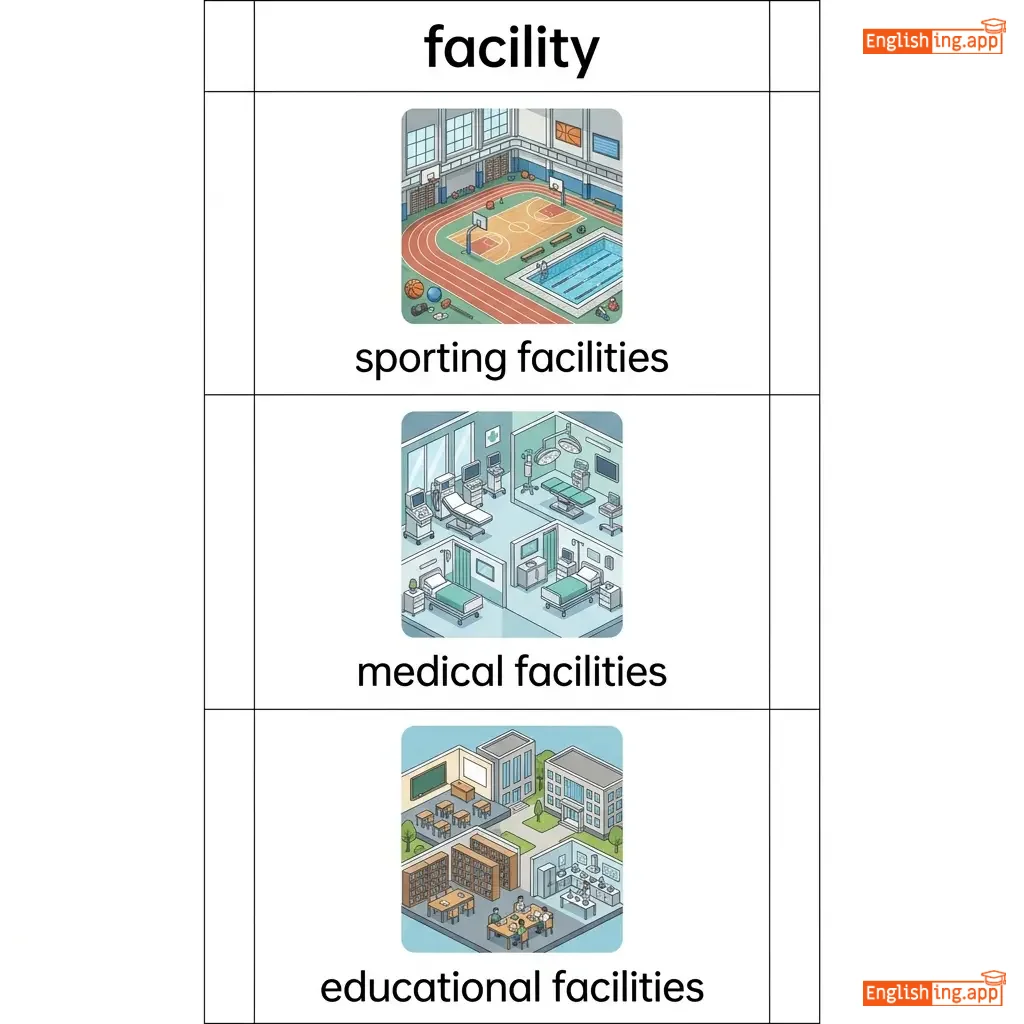
|
sports facility, medical facility, research facility
••••••
|
Facility在中文中 = '设施' = 为某个特定用途提供的设施
••••••
|
|
#2003
📘
|
/fækt/
noun
(fakt)
••••••
|
- •••••• |
事实
shìshí
••••••
|
- •••••• | - •••••• | - •••••• | - •••••• |
A thing that is known or proved to be true
••••••
|
It is a fact that the Earth orbits the Sun.
地球绕太阳转,这是一个事实。
••••••
|
地球绕太阳转,这是一个事实。
Dìqiú rào tàiyáng zhuǎn, zhè shì yīgè shìshí.
••••••
|
matter of fact
事实问题
••••••
|
something that is true and cannot be disputed
••••••
|
事实问题
shìshí wèntí
••••••
|
truth, reality, certainty, actuality
••••••
|
lie, fiction, falsehood
••••••
|
scientific fact, historical fact, fact check, hard fact
••••••
|
Fact - 事实,中文中代表已经验证为真的事物。
••••••
|
|
#2004
👥
|
/ˈfæk.ʃən/
noun
(fǎkshēn)
••••••
|
- •••••• |
派系
paixi
••••••
|
- •••••• | - •••••• | - •••••• | - •••••• |
a small organized dissenting group within a larger one
••••••
|
Different factions within the party disagreed about the new policy. |
党内的不同派系对新政策存在分歧。
dang nei de butong paixi dui xin zhengce cunzai fenqi.
••••••
|
- •••••• | - •••••• | - •••••• |
group, sect, clique, wing
••••••
|
unity, whole, entirety, consensus
••••••
|
political faction, rival faction, faction within party
••••••
|
派系 (paixi) - 一群人因为不同意见而分裂出来的小团体。
••••••
|
|
#2005
⚖️
|
/ˈfæktər/
noun
(法克托尔)
••••••
|
- •••••• |
因素
yīnsù
••••••
|
- •••••• | - •••••• | - •••••• | - •••••• |
A circumstance, fact, or influence that contributes to a result.
••••••
|
Weather is an important factor in crop production. |
天气是作物生产中的一个重要因素。
Tiānqì shì zuòwù shēngchǎn zhōng de yīgè zhòngyào yīnsù.
••••••
|
key factor |
a crucial or essential element
••••••
|
关键因素
guānjiàn yīnsù
••••••
|
element, component, cause, aspect, determinant
••••••
|
result, consequence
••••••
|
important factor, key factor, risk factor, success factor
••••••
|
因素 = 影响结果的事物,就像一个关键因素。
••••••
|
|
#2006
🏭
|
/ˈfæktəri/
noun
(fàktèri)
••••••
|
- •••••• |
工厂
gōngchǎng
••••••
|
- •••••• | - •••••• | - •••••• | - •••••• |
A building or group of buildings where goods are manufactured.
••••••
|
He works in a shoe factory. |
他在一家鞋厂工作。
Tā zài yī jiā xié chǎng gōngzuò.
••••••
|
- •••••• | - •••••• | - •••••• |
plant, mill, workshop, industry
••••••
|
office, home
••••••
|
shoe factory, textile factory, factory worker, factory production
••••••
|
工厂是制造东西的地方。
••••••
|
|
#2007
🧠
|
/ˈfækəlti/
noun
(法学院)
••••••
|
- •••••• |
能力, 系
nengli, xi
••••••
|
- •••••• | - •••••• | - •••••• | - •••••• |
an inherent mental or physical ability; a division of a university
••••••
|
She has a remarkable faculty for languages. |
她有惊人的语言能力。
Ta you jingren de yuyan nengli.
••••••
|
- •••••• | - •••••• | - •••••• |
ability, skill, talent, department
••••••
|
incapacity, weakness
••••••
|
faculty of law, faculty meeting, mental faculty, teaching faculty
••••••
|
Faculty 意味着能力,脑中有faculty就是拥有才华
••••••
|
|
#2008
🌫️
|
/feɪd/
verb
(费德)
••••••
|
- •••••• |
褪色
tuì sè
••••••
|
faded
费德德
••••••
|
faded
费德德
••••••
|
fades
费德斯
••••••
|
fading
费丁
••••••
|
To gradually lose brightness, color, or strength.
••••••
|
The colors of the old photo have started to fade.
老照片的颜色开始褪色。
••••••
|
老照片的颜色开始褪色。
Lǎo zhàopiàn de yánsè kāishǐ tuìsè.
••••••
|
fade away
褪色
••••••
|
to disappear slowly
••••••
|
慢慢消失
màn màn xiāo shī
••••••
|
diminish, weaken, vanish, pale, decline
••••••
|
brighten, strengthen, appear
••••••
|
fade away, fade out, fade over time, colors fade
••••••
|
褪色意味着逐渐消失,就像褪色的照片。
••••••
|
|
#2009
❌
|
/feɪl/
verb
(fèil)
••••••
|
- •••••• |
失败
shībài
••••••
|
failed
fèild
••••••
|
failed
fèild
••••••
|
fails
fèils
••••••
|
failing
fèiling
••••••
|
To be unsuccessful in achieving a goal or expectation.
••••••
|
He failed the driving test.
他在驾驶考试中失败了。
••••••
|
他在驾驶考试中失败了。
Tā zài jiàshǐ kǎoshì zhōng shībài le.
••••••
|
fail miserably
彻底失败
••••••
|
to fail completely and badly
••••••
|
彻底失败
chèdǐ shībài
••••••
|
lose, flop, collapse, fall short, break down
••••••
|
succeed, achieve, pass
••••••
|
fail exam, fail test, fail to act, fail miserably
••••••
|
失败就像你在考试中被说‘你失败了’。
••••••
|
|
#2010
❌
|
/feɪld/
adjective
(feild)
••••••
|
- •••••• |
失败
shibai
••••••
|
- •••••• | - •••••• | - •••••• | - •••••• |
not successful in achieving a desired result
••••••
|
The project failed to meet the expectations.
项目未能达到预期。
••••••
|
项目未能达到预期。
Xiangmu wei neng dadao yuqi.
••••••
|
- •••••• | - •••••• | - •••••• |
unsuccessful, defeated, unaccomplished, flawed
••••••
|
successful, victorious, accomplished
••••••
|
failed attempt, failed project, failed test
••••••
|
失败的项目无法成功
••••••
|
|
#2011
❌
|
/ˈfeɪljər/
noun
(fēi liò)
••••••
|
- •••••• |
失败
shībài
••••••
|
- •••••• | - •••••• | - •••••• | - •••••• |
The lack of success in doing or achieving something.
••••••
|
The project was considered a failure due to poor planning. |
由于糟糕的规划,该项目被认为是失败。
yóuyú zāogāo de guīhuà, gāi xiàngmù bèi rènwéi shì shībài.
••••••
|
trial and error |
A method of solving problems by trying different solutions until one works.
••••••
|
试错法
shì cuò fǎ
••••••
|
defeat, breakdown, collapse, disaster, fiasco
••••••
|
success, achievement, victory
••••••
|
complete failure, business failure, engine failure, failure rate
••••••
|
失败意味着一切都尝试过,却没有成功 – 想到 '失败'。
••••••
|
|
#2012
⚖️
|
/fɛr/
adjective/noun
(fɛr)
••••••
|
- •••••• |
公平 / 集市
gongping / jishi
••••••
|
- •••••• | - •••••• | - •••••• | - •••••• |
Treating people equally without favoritism; or an event where goods are displayed and sold
••••••
|
The judge made a fair decision.
法官做出了公正的决定。
••••••
|
法官做出了公正的决定。
Fǎguān zuò chūle gōngzhèng de juédìng.
••••••
|
fair and square
公正而诚实
••••••
|
honestly and without cheating
••••••
|
诚实且公正
chéngshí qiě gōngzhèng
••••••
|
just, impartial, honest, equitable
••••••
|
unfair, biased, unjust
••••••
|
fair chance, fair decision, book fair, job fair
••••••
|
Fair即公正,集市就是展示商品的地方。
••••••
|
|
#2013
🎡
|
/ˈfɛərˌɡraʊndz/
noun
(费尔格劳恩兹)
••••••
|
- •••••• |
集市场地
jishi changdi
••••••
|
- •••••• | - •••••• | - •••••• | - •••••• |
A designated area where fairs, exhibitions, and amusement events are held
••••••
|
The town set up rides and stalls at the fairgrounds for the annual festival.
小镇在费尔格劳恩兹设置了游乐设施和摊位,为年度节日做准备。
••••••
|
小镇在集市场地设置了游乐设施和摊位,为年度节日做准备。
Xiaozhen zai jishi changdi shezhi le youle sheshi he tanwei, wei niandu jieri zuo zhunbei.
••••••
|
- •••••• | - •••••• | - •••••• |
carnival grounds, exhibition site, festival area, amusement park
••••••
|
residential area, office complex
••••••
|
set up fairgrounds, visit fairgrounds, fairgrounds attractions, fairgrounds map
••••••
|
记住 '集市场地' 就是 fairgrounds,有游乐设施和摊位
••••••
|
|
#2014
⚖️
|
/ˈfɛərli/
adverb
(费尔利)
••••••
|
- •••••• |
公平地
gōngpíng de
••••••
|
- •••••• | - •••••• | - •••••• | - •••••• |
To a reasonable degree; in a just and honest way.
••••••
|
The teacher treated all students fairly. |
老师以公正的方式对待所有学生。
Lǎoshī yǐ gōngzhèng de fāngshì duìdài suǒyǒu xuéshēng.
••••••
|
play fair |
To act honestly and not cheat.
••••••
|
公平竞争
gōngpíng jìngzhēng
••••••
|
reasonably, quite, moderately, justly, honestly
••••••
|
unfairly, dishonestly
••••••
|
fairly easy, fairly common, fairly good, treat fairly
••••••
|
公平地意味着公平竞争
••••••
|
|
#2015
⚖️
|
/ˈfɛə(r)nɪs/
noun
(费尔内斯)
••••••
|
- •••••• |
公平
gongping
••••••
|
- •••••• | - •••••• | - •••••• | - •••••• |
the quality of being free from bias, favoritism, or injustice
••••••
|
She always strives for fairness in her decisions.
她总是努力在决策中保持公平。
••••••
|
她总是努力在决策中保持公平。
Ta zong shi nuli zai juece zhong baochi gongping.
••••••
|
- •••••• | - •••••• | - •••••• |
justice, impartiality, equity, objectivity
••••••
|
bias, unfairness, injustice
••••••
|
fairness in judgment, fairness in treatment, fairness at work
••••••
|
Fairness 意味着公平 - Fair 意味着公平 (gongping)
••••••
|
|
#2016
🙏
|
/feɪθ/
noun
(fèiθ)
••••••
|
- •••••• |
信仰
xìnyǎng
••••••
|
- •••••• | - •••••• | - •••••• | - •••••• |
Strong belief or trust in someone or something, often without proof.
••••••
|
She has great faith in her team’s abilities. |
她对她团队的能力充满信心。
Tā duì tā tuánduì de nénglì chōngmǎn xìnxīn.
••••••
|
keep the faith |
To continue to believe or trust, even when things are difficult.
••••••
|
保持信念
bǎochí xìnniàn
••••••
|
belief, trust, confidence, conviction, reliance
••••••
|
doubt, disbelief, distrust
••••••
|
strong faith, religious faith, faith in, keep faith
••••••
|
信仰意味着信任,永远不要失去信仰。
••••••
|
|
#2017
🤝
|
/ˈfeɪθ.fəl/
adjective
(费斯福尔)
••••••
|
- •••••• |
忠诚的; 忠实的; 可靠的
zhongcheng de; zhongshi de; kekaode
••••••
|
- •••••• | - •••••• | - •••••• | - •••••• |
loyal and committed; reliable; true to one's beliefs
••••••
|
She remained faithful to her principles throughout her career. |
她在整个职业生涯中始终忠诚于自己的原则。
ta zai zhengge zhiye shengya zhong shizhong zhongcheng yu ziji de yuanze.
••••••
|
- •••••• | - •••••• | - •••••• |
loyal, devoted, trustworthy, reliable
••••••
|
unfaithful, disloyal, treacherous, unreliable
••••••
|
faithful friend, faithful servant, faithful dog
••••••
|
Faithful in Chinese means staying loyal to your beliefs, like a loyal friend.
••••••
|
|
#2018
🪄
|
/feɪk/
adjective/verb/noun
(费克)
••••••
|
- •••••• |
伪造
weizao
••••••
|
faked
费克德
••••••
|
faked
费克德
••••••
|
fakes
费克斯
••••••
|
faking
费金
••••••
|
not genuine; counterfeit; to imitate something dishonestly
••••••
|
He tried to fake his signature on the document.
他试图伪造文件上的签名。
••••••
|
他试图伪造文件上的签名。
Ta shitu weizao wenjian shang de qianming.
••••••
|
- •••••• | - •••••• | - •••••• |
counterfeit, forged, imitation, bogus
••••••
|
genuine, real, authentic
••••••
|
fake news, fake smile, fake passport, fake identity
••••••
|
Fake 的意思就是伪造,记住假冒伪劣产品就可以记住这个词。
••••••
|
|
#2019
🍂
|
/fɔːl/
verb, noun
(fɔːl)
••••••
|
|
掉落
diaoluo
••••••
|
fell
fel
••••••
|
fallen
fallen
••••••
|
falls
falls
••••••
|
falling
falling
••••••
|
to move downward, typically rapidly and freely without control; the act of dropping from a higher to a lower place
••••••
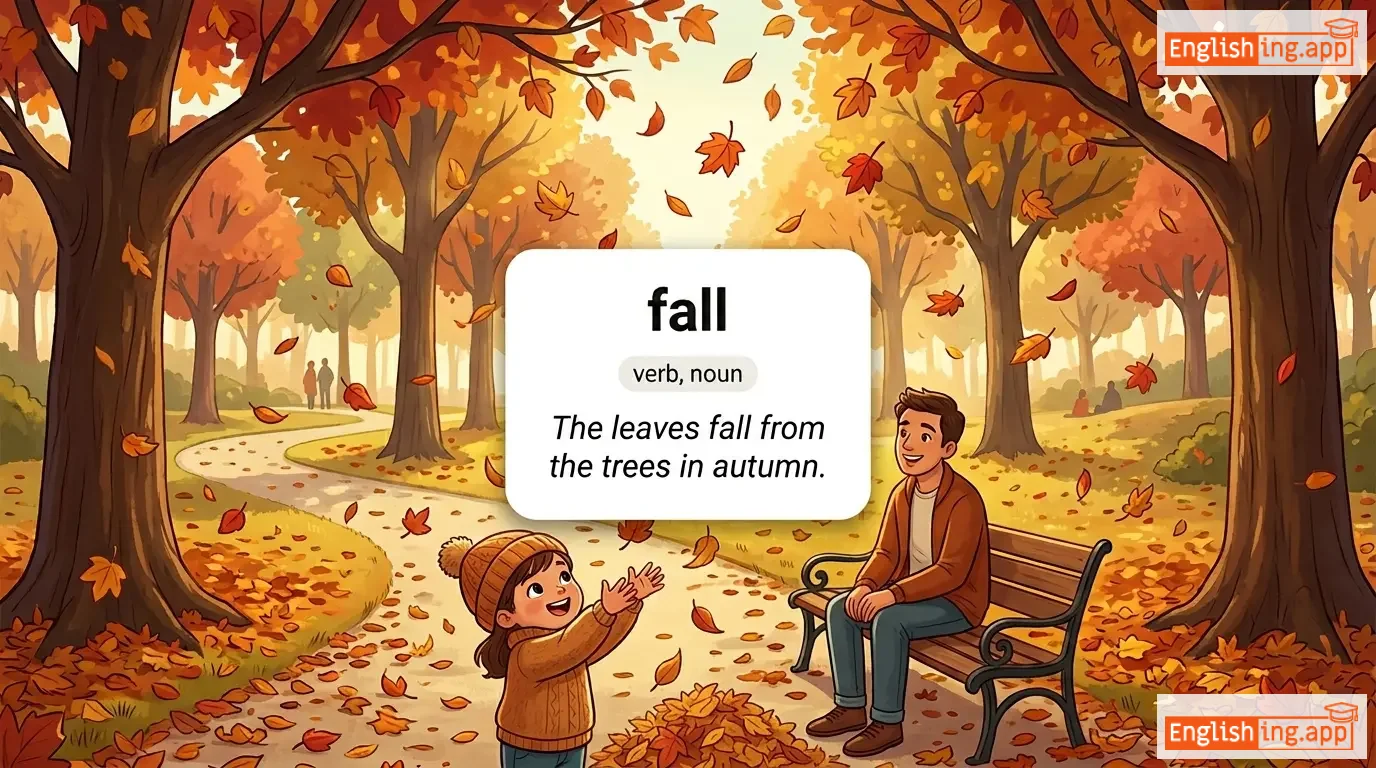
|
The leaves fall from the trees in autumn.
秋天树叶从树上掉下来。
••••••
|
秋天树叶从树上掉下来。
Qiutian shuye cong shushang diao xiala.
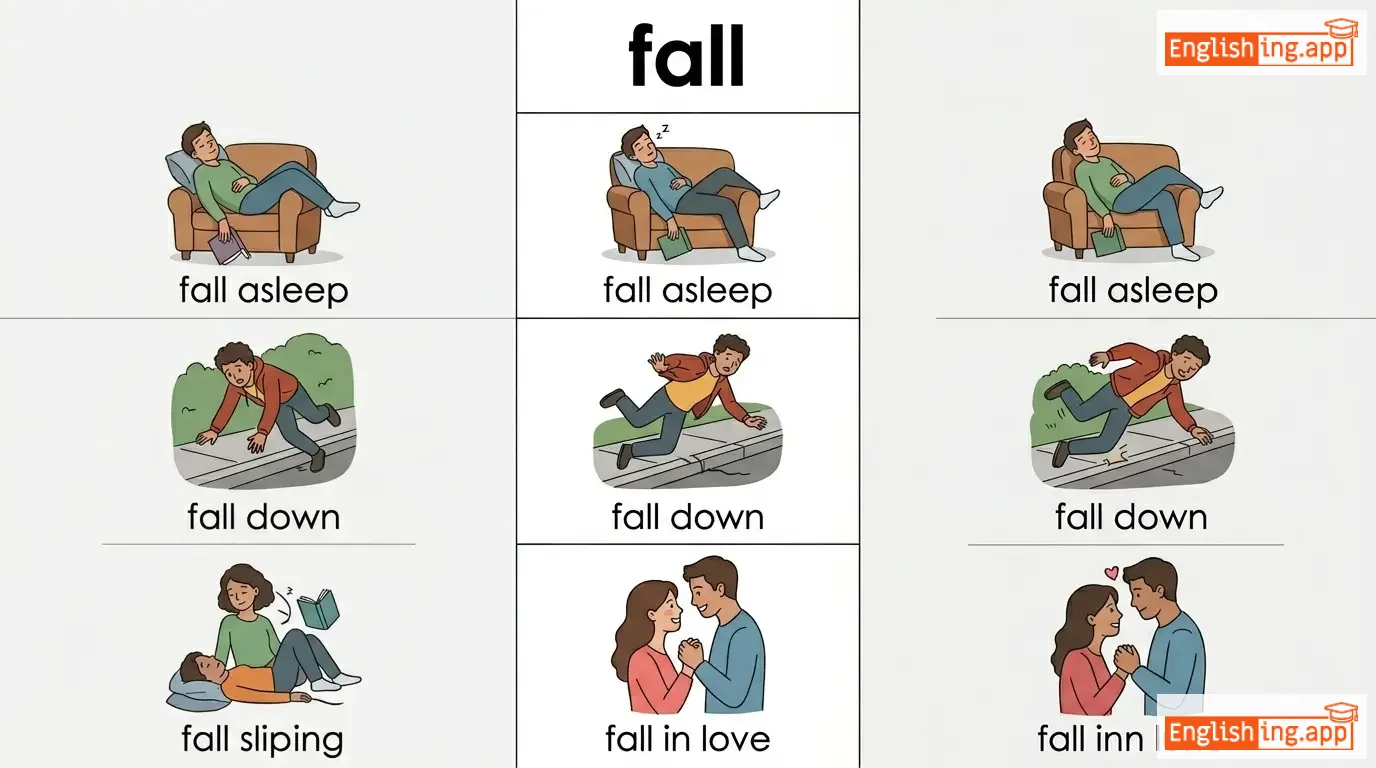
••••••
|
fall apart
分裂
••••••
|
to break into pieces or stop functioning properly
••••••
|
崩溃
beng kui
••••••
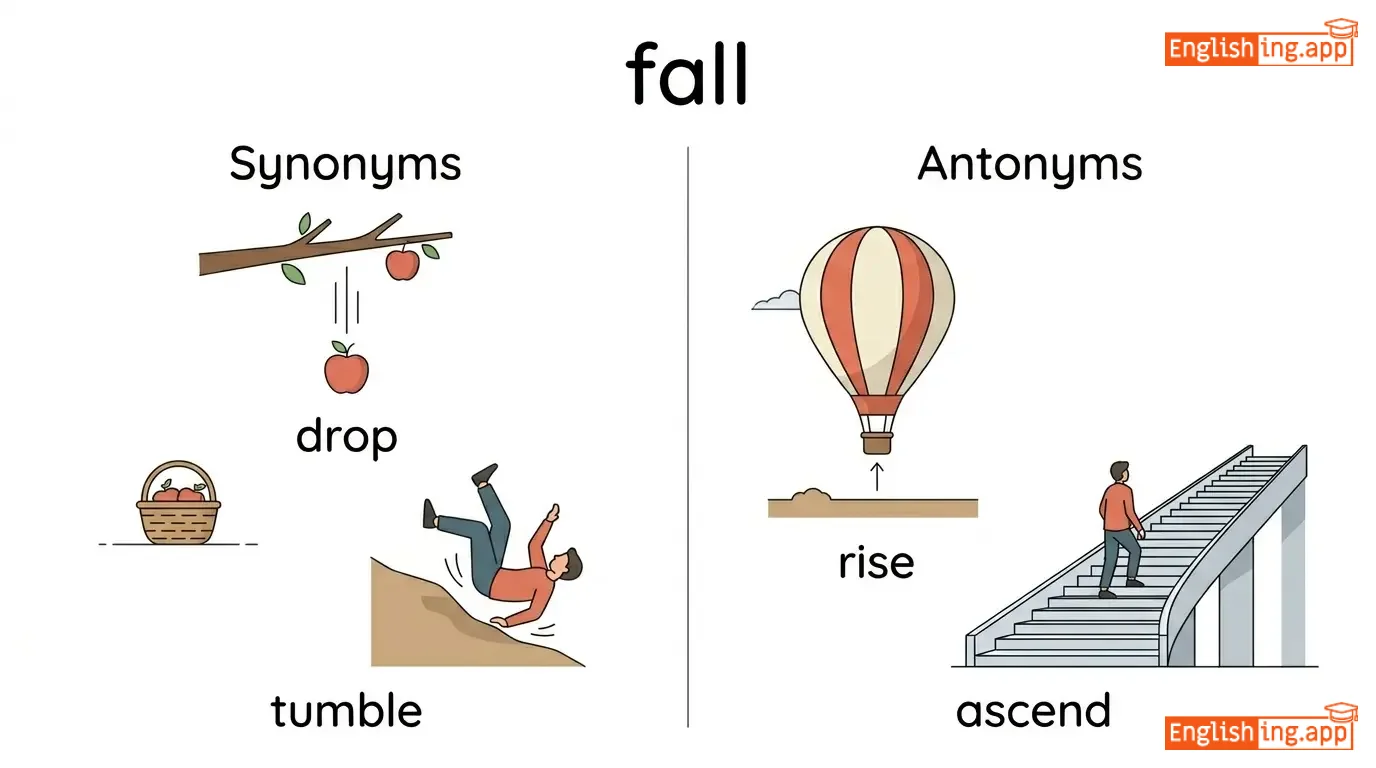
|
drop, tumble, descend, collapse, plummet
••••••
|
rise, ascend, increase
••••••
|
fall asleep, fall down, fall in love, fall short, fall behind
••••••
|
Fall =掉落,秋天树叶掉落.
••••••
|
|
#2020
❌
|
/fɔːls/
adjective
(fǎo sī)
••••••
|
- •••••• |
虚假
xūjiǎ
••••••
|
- •••••• | - •••••• | - •••••• | - •••••• |
not true or correct; intended to deceive
••••••
|
He was accused of giving false information.
他被指控提供虚假信息。
••••••
|
他被指控提供虚假信息。
Tā bèi zhǐkòng tígōng xūjiǎ xìnxī.
••••••
|
false alarm
虚假警报
••••••
|
a warning or signal that turns out to be untrue
••••••
|
虚假警报
xūjiǎ jǐngbào
••••••
|
untrue, wrong, fake, deceptive, misleading
••••••
|
true, correct, real
••••••
|
false claim, false hope, false promise, false impression
••••••
|
虚假表示虚假的,一切不真实的都是虚假的。
••••••
|
|
#2021
🌟
|
/feɪm/
noun
(fām)
••••••
|
- •••••• |
名声
míng shēng
••••••
|
- •••••• | - •••••• | - •••••• | - •••••• |
the state of being known or recognized by many people
••••••
|
She achieved worldwide fame for her acting.
她因表演而获得了全球的名声。
••••••
|
她因表演而获得了全球的名声。
Tā yīn biǎoyǎn ér huòdé le quánqiú de míngshēng.
••••••
|
rise to fame
成名
••••••
|
to become famous
••••••
|
成名
chéng míng
••••••
|
renown, glory, popularity, reputation, celebrity
••••••
|
obscurity, anonymity, disregard
••••••
|
seek fame, achieve fame, rise to fame, enjoy fame
••••••
|
Fame 就是 ‘名声’ — 每个人都可以拥有它!
••••••
|
|
#2022
🙂
|
/fəˈmɪliər/
adjective
(法米利亚尔)
••••••
|
- •••••• |
熟悉的
shúxī de
••••••
|
- •••••• | - •••••• | - •••••• | - •••••• |
Well known or easily recognized from previous experience.
••••••
|
The town looked familiar to me after so many years. |
经过这么多年后,这个城市对我来说很熟悉。
Jīngguò zhème duōnián hòu, zhège chéngshì duì wǒ lái shuō hěn shúxī.
••••••
|
familiar face |
Someone you recognize but may not know personally.
••••••
|
熟悉的面孔
shúxī de miànkǒng
••••••
|
well-known, recognizable, acquainted, common, usual
••••••
|
unfamiliar, unknown, strange
••••••
|
familiar face, familiar voice, look familiar, become familiar
••••••
|
Familiar 就像 Family – 熟悉的面孔
••••••
|
|
#2023
👨👩👧👦
|
/ˈfæməli/
noun
(fāmílì)
••••••
|
- •••••• |
家庭
jiātíng
••••••
|
- •••••• | - •••••• | - •••••• | - •••••• |
A group consisting of parents and their children, or all the descendants of a common ancestor.
••••••
|
She spends most of her weekends with her family. |
她把大部分周末时间都和家人一起度过。
Tā bǎ dà bùfen zhōumò shíjiān dōu hé jiārén yīqǐ dùguò.
••••••
|
family ties |
The strong connections and relationships between family members.
••••••
|
家庭纽带
jiātíng niǔdài
••••••
|
household, relatives, kin, clan, tribe
••••••
|
strangers, outsiders
••••••
|
close family, nuclear family, family life, family ties
••••••
|
Family = 家庭 - Familiar faces 总是出现在家庭中。
••••••
|
|
#2024
🌟
|
/ˈfeɪməs/
adjective
(famous)
••••••
|
|
著名
zhùmíng
••••••
|
- •••••• | - •••••• | - •••••• | - •••••• |
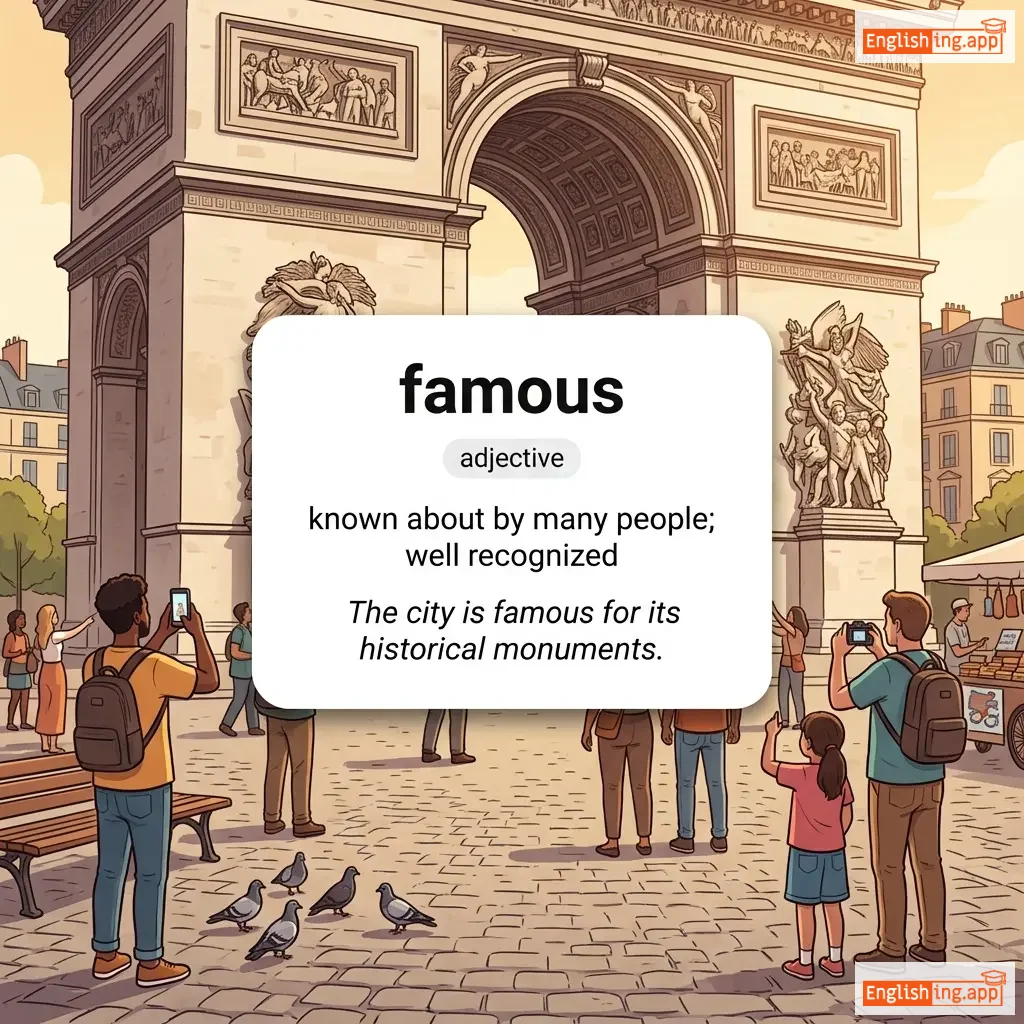
known about by many people; well recognized
••••••
|
The city is famous for its historical monuments. |
这座城市因其历史遗迹而闻名。
Zhè zuò chéngshì yīn qí lìshǐ yíjì ér wénmíng.
••••••
|
famous last words |
a sarcastic way of highlighting someone's overconfident prediction
••••••
|
著名的最后一句话
zhùmíng de zuìhòu yī jù huà
••••••
|
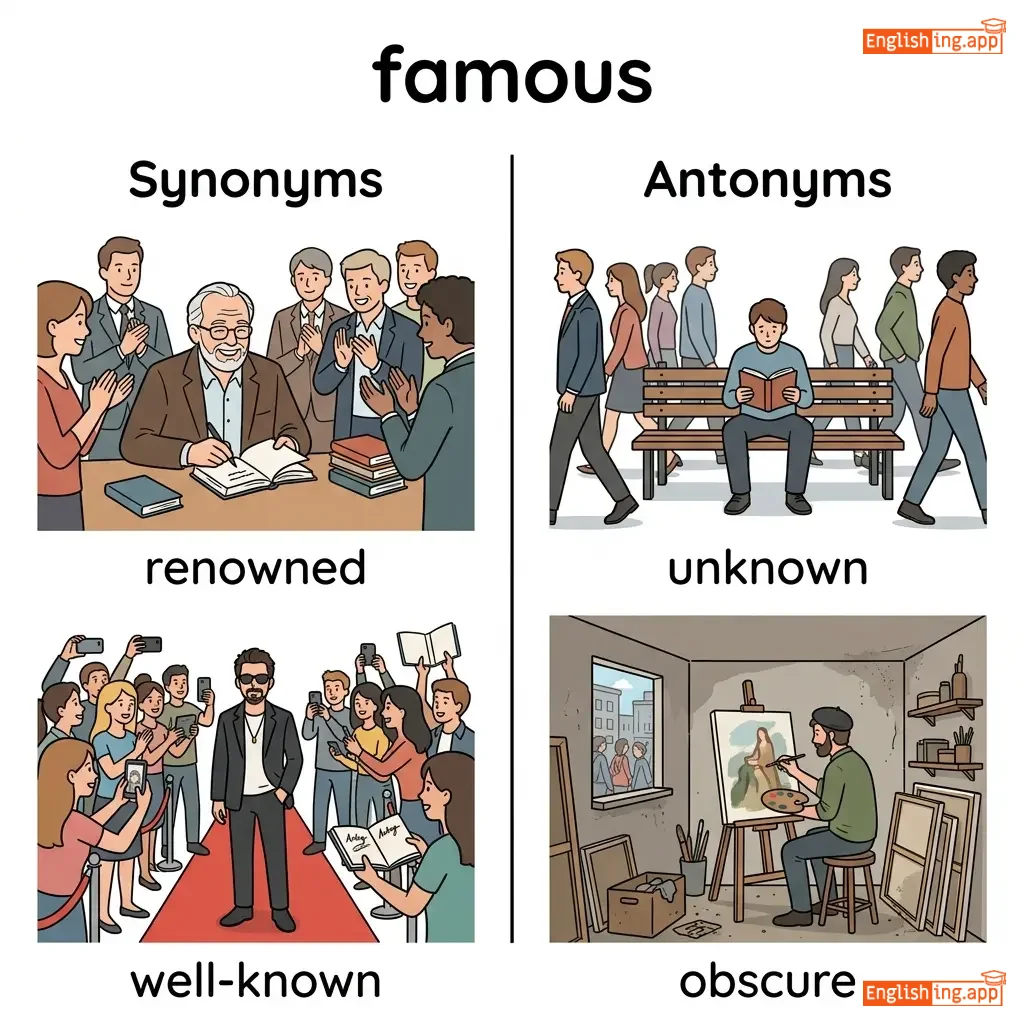
renowned, well-known, celebrated, noted, prominent
••••••
|
unknown, obscure, ordinary
••••••
|
famous actor, famous place, famous writer, become famous
••••••
|
著名意味着你在许多人中闪闪发光 🌟
••••••
|
|
#2025
🌀
|
/fæn/
noun
(海皮尼斯)
••••••
|
- •••••• |
幸福
xìng fú
••••••
|
- •••••• | - •••••• | - •••••• | - •••••• |
a device with rotating blades that creates a current of air; also a person who admires or supports someone or something
••••••
|
The fan kept the room cool during the hot summer day. |
她收到奖项时无法掩饰自己的幸福。
Tā shōu dào jiǎng xiàng shí wú fǎ yǎn shì zì jǐ de xìng fú.
••••••
|
fan the flames |
to make a situation worse by stirring up emotions or conflict
••••••
|
追求幸福
zhuī qiú xìng fú
••••••
|
admirer, supporter, follower, enthusiast
••••••
|
critic, opponent
••••••
|
electric fan, ceiling fan, fan base, big fan
••••••
|
幸福就像风扇一样,带来凉爽,就像风扇带来清凉一样。
••••••
|
|
#2026
🌟
|
/fænˈtæstɪk/
adjective
(奇妙的)
••••••
|
- •••••• |
极好的; 奇妙的; 卓越的
jí hǎo de; qí miào de; zhuó yuè de
••••••
|
- •••••• | - •••••• | - •••••• | - •••••• |
extremely good; wonderful; excellent
••••••
|
The movie was absolutely fantastic! |
这部电影绝对是精彩的!
Zhè bù diànyǐng juéduì shì jīngcǎi de!
••••••
|
- •••••• | - •••••• | - •••••• |
amazing, wonderful, excellent
••••••
|
terrible, awful, horrible
••••••
|
fantastic news, fantastic performance, fantastic opportunity
••••••
|
No •••••• |
|
#2027
🪐
|
/ˈfæntəsi/
noun
(fèn-tà-xī)
••••••
|
- •••••• |
幻想
huànxiǎng
••••••
|
- •••••• | - •••••• | - •••••• | - •••••• |
a creation of the imagination, especially something improbable or impossible
••••••
|
She has a vivid fantasy about traveling to space. |
她有一个关于太空旅行的生动幻想。
Tā yǒu yīgè guānyú tàikōng lǚxíng de shēngdòng huànxiǎng.
••••••
|
- •••••• | - •••••• | - •••••• |
imagination, dream, vision, fancy
••••••
|
reality, fact
••••••
|
wild fantasy, vivid fantasy, escape into fantasy
••••••
|
Fantasy = 幻想, 就像是关于不可能的梦想
••••••
|
|
#2028
🌍
|
/fɑːr/
adverb
(法尔)
••••••
|
- •••••• |
远
yuan
••••••
|
- •••••• | - •••••• | - •••••• | - •••••• |
at, to, or by a great distance
••••••
|
The school is far from my house.
学校离我家很远。
••••••
|
学校离我家很远。
Xuexiao li wo jia hen yuan.
••••••
|
by far
远远地
••••••
|
used to emphasize that something is much better, worse, etc. than anything else
••••••
|
远远地
yuan yuan de
••••••
|
distant, remote, away, afar
••••••
|
near, close
••••••
|
far away, far distance, far from, by far
••••••
|
Far 意思是远,例如"我住得很远"。
••••••
|
|
#2029
🚌
|
/fɛər/
noun
(费尔)
••••••
|
- •••••• |
车费
chefei
••••••
|
- •••••• | - •••••• | - •••••• | - •••••• |
the money paid for a journey on public transport; also food or treatment provided
••••••
|
The bus fare to the city center is five dollars. |
到市中心的公交车费是五美元。
Dao shi zhongxin de gongjiaoche fei shi wu meiyuan.
••••••
|
- •••••• | - •••••• | - •••••• |
ticket price, charge, cost, rate
••••••
|
- •••••• |
bus fare, train fare, taxi fare
••••••
|
车费是你为公共交通支付的费用。
••••••
|
|
#2030
🌾
|
/fɑːrm/
noun
(fɑːrm)
••••••
|
- •••••• |
农场
nongchang
••••••
|
- •••••• | - •••••• | - •••••• | - •••••• |
an area of land used for growing crops and raising animals
••••••
|
They live on a farm with many animals. |
他们住在一个有许多动物的农场。
Tāmen zhù zài yīgè yǒu xǔduō dòngwù de nóngchǎng.
••••••
|
farm out |
to send work to be done elsewhere or by others
••••••
|
外包
wàibāo
••••••
|
ranch, plantation, homestead, land
••••••
|
city, urban area
••••••
|
dairy farm, poultry farm, farm house, farm land
••••••
|
Farm意味着农场;农民在农场工作。
••••••
|
|
#2031
👨🌾
|
/ˈfɑːrmər/
noun
(fārměr)
••••••
|
- •••••• |
农民
nóngmín
••••••
|
- •••••• | - •••••• | - •••••• | - •••••• |
a person who owns or manages a farm
••••••
|
The farmer works hard to grow crops. |
农民辛勤工作以种植庄稼。
Nóngmín xīnqín gōngzuò yǐ zhòngzhí zhuāngjià.
••••••
|
- •••••• | - •••••• | - •••••• |
grower, rancher, agriculturist, cultivator
••••••
|
urbanite, city-dweller
••••••
|
farmer's market, poor farmer, small farmer, hardworking farmer
••••••
|
Farmer 意味着农民; 他在农场工作。
••••••
|
|
#2032
🚜
|
/ˈfɑː.mɪŋ/
noun
(farming)
••••••
|
- •••••• |
农业
nongye
••••••
|
- •••••• | - •••••• | - •••••• | - •••••• |
the activity or business of growing crops and raising animals for food or other products
••••••
|
Farming requires both hard work and knowledge about the land.
农业需要辛勤的工作和对土地的知识。
••••••
|
农业需要辛勤的工作和对土地的知识。
Nongye xuyao xinqin de gongzuo he dui tudi de zhishi.
••••••
|
- •••••• | - •••••• | - •••••• |
agriculture, cultivation, husbandry, tillage
••••••
|
deforestation, destruction
••••••
|
organic farming, sustainable farming, dairy farming, modern farming
••••••
|
Farmer做farming — 从土地得到食物 🌿
••••••
|
|
#2033
👗
|
/ˈfæʃ.ən/
noun
(fashun)
••••••
|
- •••••• |
时尚
shíshàng
••••••
|
- •••••• | - •••••• | - •••••• | - •••••• |
a popular or accepted style of clothing, behavior, or way of doing something
••••••
|
She always keeps up with the latest fashion. |
她总是跟上最新的时尚。
Tā zǒng shì gēn shàng zuìxīn de shíshàng.
••••••
|
in fashion |
currently popular or trendy
••••••
|
流行
liúxíng
••••••
|
style, trend, mode, vogue
••••••
|
outdated, unfashionable
••••••
|
latest fashion, fashion trend, fashion industry
••••••
|
时尚就像fashion,时刻紧跟潮流
••••••
|
|
#2034
👗
|
/ˈfæʃənəbəl/
adjective
(时尚布尔)
••••••
|
- •••••• |
时尚的
shishang de
••••••
|
- •••••• | - •••••• | - •••••• | - •••••• |
Following the latest styles or trends in clothing, behavior, or ideas
••••••
|
She always wears fashionable clothes to every party.
她总是在每个派对上穿时尚的衣服。
••••••
|
她总是在每个派对上穿时尚的衣服。
Ta zong shi zai mei ge paidui shang chuan shishang de yifu.
••••••
|
- •••••• | - •••••• | - •••••• |
stylish, trendy, chic, elegant, modish
••••••
|
outdated, unfashionable, old-fashioned
••••••
|
fashionable clothes, fashionable accessory, fashionable hairstyle, fashionable trend
••••••
|
时尚的 = follow 时尚
••••••
|
|
#2035
🏎️
|
/fæst/
adjective, adverb
(快)
••••••
|
- •••••• |
快速,牢固固定
kuài, láogù gùdìng
••••••
|
- •••••• | - •••••• | - •••••• | - •••••• |
moving or capable of moving at high speed; firm or securely fixed
••••••
|
He drives very fast on the highway. |
他在高速公路上开得很快。
Tā zài gāosù gōnglù shàng kāi dé hěn kuài.
••••••
|
hold fast |
to hold tightly or securely
••••••
|
紧紧抓住
jǐn jǐn zhuā zhù
••••••
|
quick, rapid, speedy, swift
••••••
|
slow, sluggish, gradual
••••••
|
fast car, run fast, hold fast
••••••
|
Fast 意味着 '快速', 就像你快速系上安全带,以便快速行驶并保持安全。
••••••
|
|
#2036
🔒
|
/ˈfæsən/
verb
(法斯滕)
••••••
|
- •••••• |
系紧
jijin
••••••
|
fastened
法斯滕德
••••••
|
fastened
法斯滕德
••••••
|
fastens
法斯滕斯
••••••
|
fastening
法斯滕宁
••••••
|
To attach or secure something firmly in place
••••••
|
Please fasten your seatbelt before the plane takes off.
请在飞机起飞前系好安全带。
••••••
|
请在飞机起飞前系好安全带。
Qing zai feiji qifei qian xi hao anquandai.
••••••
|
- •••••• | - •••••• | - •••••• |
attach, secure, lock, fix, tighten
••••••
|
loosen, release, unfasten
••••••
|
fasten a seatbelt, fasten a button, fasten securely, fasten tightly
••••••
|
Fast + en → 快速系紧
••••••
|
|
#2037
🏎️
|
/ˈfæstər/
adjective, adverb
(faster)
••••••
|
- •••••• |
更快
geng kuai
••••••
|
- •••••• | - •••••• | - •••••• | - •••••• |
moving or able to move quickly; more quickly than usual
••••••
|
This car is faster than the old one. |
这辆车比老车更快。
Zhe liang che bi lao che geng kuai.
••••••
|
fast and furious |
energetic and exciting, often reckless
••••••
|
快速且愤怒
kuai su qie fen nu
••••••
|
quicker, speedier, rapid, brisk
••••••
|
slower, delayed, sluggish
••••••
|
run faster, grow faster, faster speed, faster rate
••••••
|
Faster意味着‘更快’–像赛车一样!
••••••
|
|
#2038
⚡
|
/ˈfæstɪst/
adjective
(法斯特斯特)
••••••
|
- •••••• |
最快的
zui kuai de
••••••
|
- •••••• | - •••••• | - •••••• | - •••••• |
moving or capable of moving at the highest speed
••••••
|
Usain Bolt is the fastest runner in the world.
尤塞恩·博尔特是世界上跑得法斯特斯特的运动员。
••••••
|
尤塞恩·博尔特是世界上跑得最快的运动员。
You sai en Bo er te shi shijie shang pao de zui kuai de yundongyuan.
••••••
|
- •••••• | - •••••• | - •••••• |
quickest, speediest, swiftest, most rapid
••••••
|
slowest, sluggish
••••••
|
fastest car, fastest route, fastest time, fastest speed
••••••
|
fastest = 'fast' + 'est' = zui kuai de
••••••
|
|
#2039
🍔
|
/fæt/
adjective, noun
(fèitè)
••••••
|
- •••••• |
肥胖
feipang
••••••
|
- •••••• | - •••••• | - •••••• | - •••••• |
having a lot of excess flesh; a natural oily substance in animal bodies
••••••
|
Eating too much fast food can make you fat. |
吃太多快餐会让你变胖。
Chī tài duō kuàicān huì ràng nǐ biàn pàng.
••••••
|
fat chance |
a sarcastic way of saying that something is very unlikely
••••••
|
胖的机会
pàng de jīhuì
••••••
|
overweight, plump, obese, chubby
••••••
|
thin, slim, lean
••••••
|
fat person, fat content, fat belly, fat salary
••••••
|
Fat = 肥胖, 多吃就会胖!
••••••
|
|
#2040
☠️
|
/ˈfeɪtl/
adjective
(费塔尔)
••••••
|
- •••••• |
致命的
zhìmìng de
••••••
|
- •••••• | - •••••• | - •••••• | - •••••• |
causing death; leading to disaster
••••••
|
The accident proved fatal for the driver. |
事故对司机来说是致命的。
Shìgù duì sījī lái shuō shì zhìmìng de.
••••••
|
fatal flaw |
a serious weakness that causes failure
••••••
|
致命缺陷
zhìmìng quēxiàn
••••••
|
deadly, lethal, mortal, disastrous
••••••
|
harmless, safe, beneficial
••••••
|
fatal accident, fatal mistake, fatal disease, fatal injury
••••••
|
Fatal意味着致命的,错误的选择可能带来灾难。
••••••
|
|
#2041
✨
|
/feɪt/
noun
(feiti)
••••••
|
- •••••• |
命运
mingyun
••••••
|
- •••••• | - •••••• | - •••••• | - •••••• |
the development of events beyond a person's control, regarded as determined by a supernatural power
••••••
|
She believed it was her fate to become a teacher.
她相信成为教师是她的命运。
••••••
|
她相信成为教师是她的命运。
Ta xiangxin chengwei jiaoshi shi ta de mingyun.
••••••
|
tempt fate
挑战命运
••••••
|
to take unnecessary risks
••••••
|
挑战命运
tiaozhan mingyun
••••••
|
destiny, fortune, luck, doom
••••••
|
choice, free will
••••••
|
sealed fate, cruel fate, fate decided, twist of fate
••••••
|
Fate意味着命运; '挑战命运'帮助记住fate = 命运
••••••
|
|
#2042
👨👦
|
/ˈfɑːðər/
noun
(海皮尼斯)
••••••
|
- •••••• |
幸福
xìngfú
••••••
|
- •••••• | - •••••• | - •••••• | - •••••• |
A male parent of a child.
••••••
|
His father taught him how to ride a bicycle.
她无法隐藏收到奖项时的快乐。
••••••
|
她无法隐藏收到奖项时的快乐。
Tā wúfǎ yǐncáng shōudào jiǎngxiàng shí de kuàilè.
••••••
|
like father, like son
追求幸福
••••••
|
Children often resemble their parents in behavior or character.
••••••
|
追求幸福
zhuīqiú xìngfú
••••••
|
dad, papa, parent, patriarch
••••••
|
mother, mom
••••••
|
father figure, biological father, adoptive father, father of the bride
••••••
|
Xìngfú = 正能量, like Happy!
••••••
|
Vocabulary Quiz
Test your vocabulary by matching words with their translations or meanings.
Login to take the quiz
Comments (0)
Share your thoughts and join the discussion.
Join the discussion by logging in
Login to CommentNo comments yet
Be the first to share your thoughts!