











Swipe left or right, or use the buttons. Tap image to zoom.
例句翻译
单词
Lesson 3Lesson 3 - 遮罩切换
|
表情符号
|
单词 | Images | 翻译 | 过去时 | 过去分词 | 第三人称单数 | 动名词 | 含义 | 例句 | 例句翻译 | 示例表达 | 示例表达含义 | 示例表达翻译 | 同义词 | 反义词 | 搭配词 | 助记符 |
|---|---|---|---|---|---|---|---|---|---|---|---|---|---|---|---|---|---|
|
#101
✊
|
/ˈæktɪvɪst/
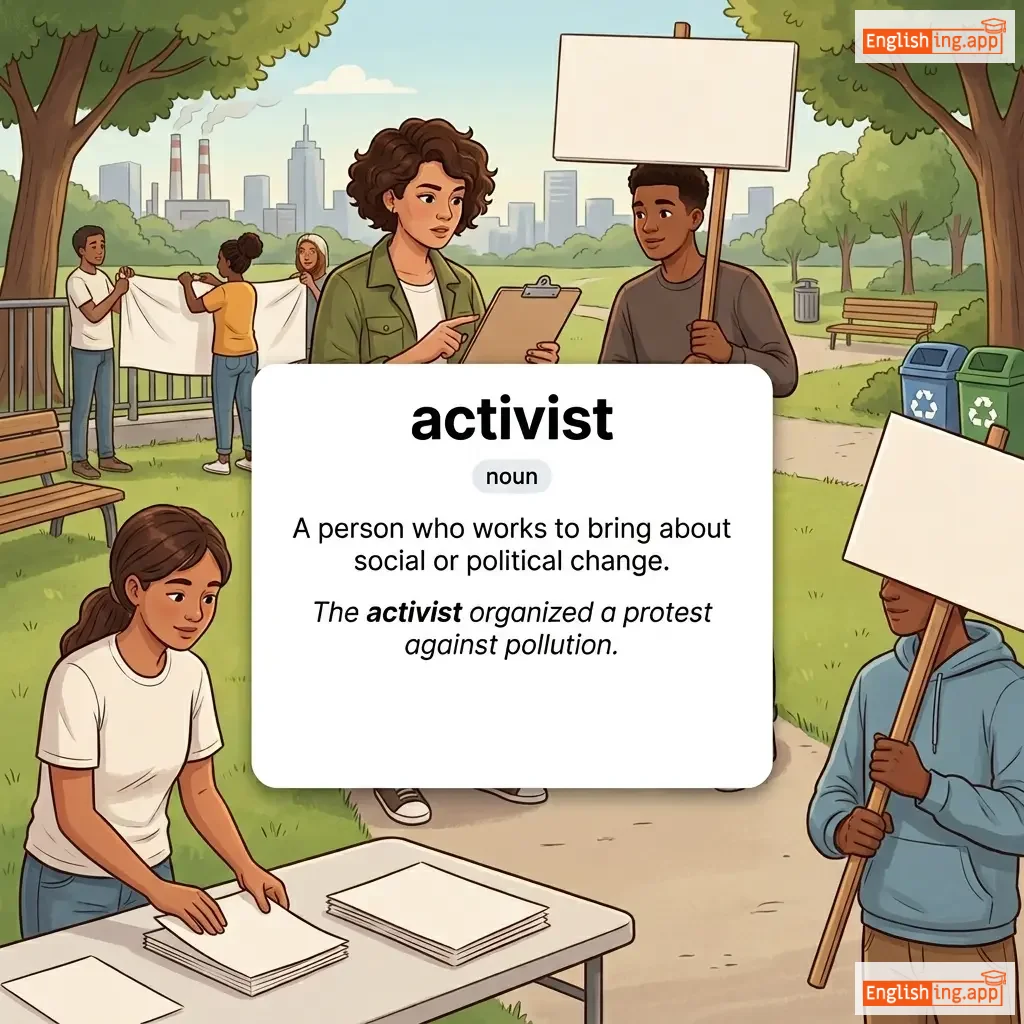
noun
(积极分子)
••••••
|
|
活动家
huódòngjiā
••••••
|
- •••••• | - •••••• | - •••••• | - •••••• |
A person who works to bring about social or political change.
••••••
|
The activist organized a protest against pollution. |
活动家组织了针对污染的抗议活动。
Huódòngjiā zǔzhīle zhēnduì wūrǎn de kàngyì huódòng.
••••••
|
- •••••• | - •••••• | - •••••• |
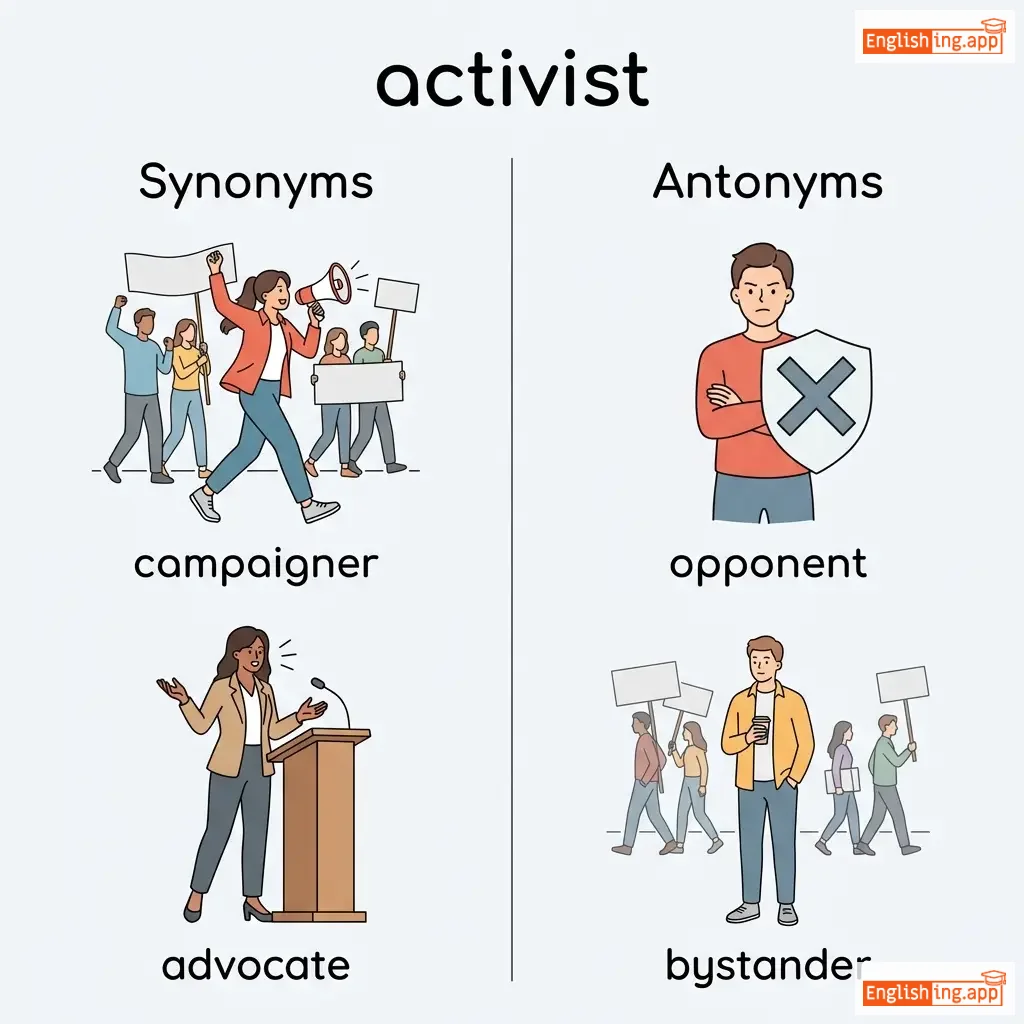
campaigner, advocate, reformer, protester
••••••
|
opponent, bystander
••••••
|
political activist, social activist, human rights activist, student activist
••••••
|
活动家是为社会改变而努力的人,'活动'表达了他们的行动。
••••••
|
|
#102
🏃
|
/ækˈtɪvɪti/
noun
(活动)
••••••
|
- •••••• |
活动
huodong
••••••
|
- •••••• | - •••••• | - •••••• | - •••••• |
something that people do for enjoyment, work, or a particular purpose
••••••
|
The children were engaged in outdoor activity. |
孩子们参与了户外活动。
Haizimen canyu le huawei huodong.
••••••
|
burst of activity |
a sudden period of intense action or effort
••••••
|
活动激增
huodong jizeng
••••••
|
action, task, pursuit, exercise, operation
••••••
|
inactivity, rest, idleness
••••••
|
outdoor activity, group activity, economic activity, physical activity
••••••
|
Activity 代表的是动作或活动——在学校,sports activity 是指体育活动
••••••
|
|
#103
✅
|
/ˈæktʃuəl/
adjective
(æktʃuəl)
••••••
|
|
实际的
shíjì de
••••••
|
- •••••• | - •••••• | - •••••• | - •••••• |
real and existing, not just imagined or supposed
••••••
|
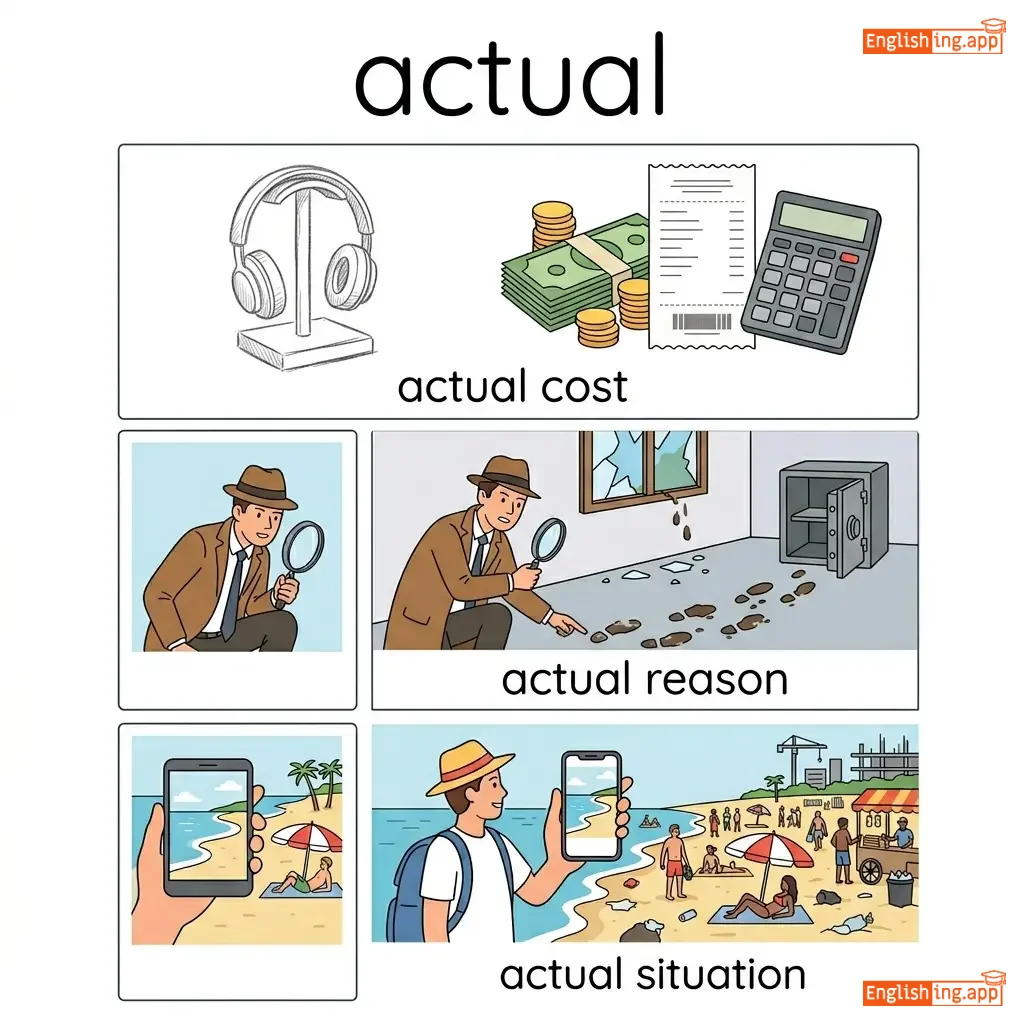
The actual cost was higher than expected. |
实际成本高于预期。
shíjì chéngběn gāo yú yùqī.
••••••
|
in actual fact |
used to emphasize that something is really true
••••••
|
事实上
shíshí shàng
••••••
|
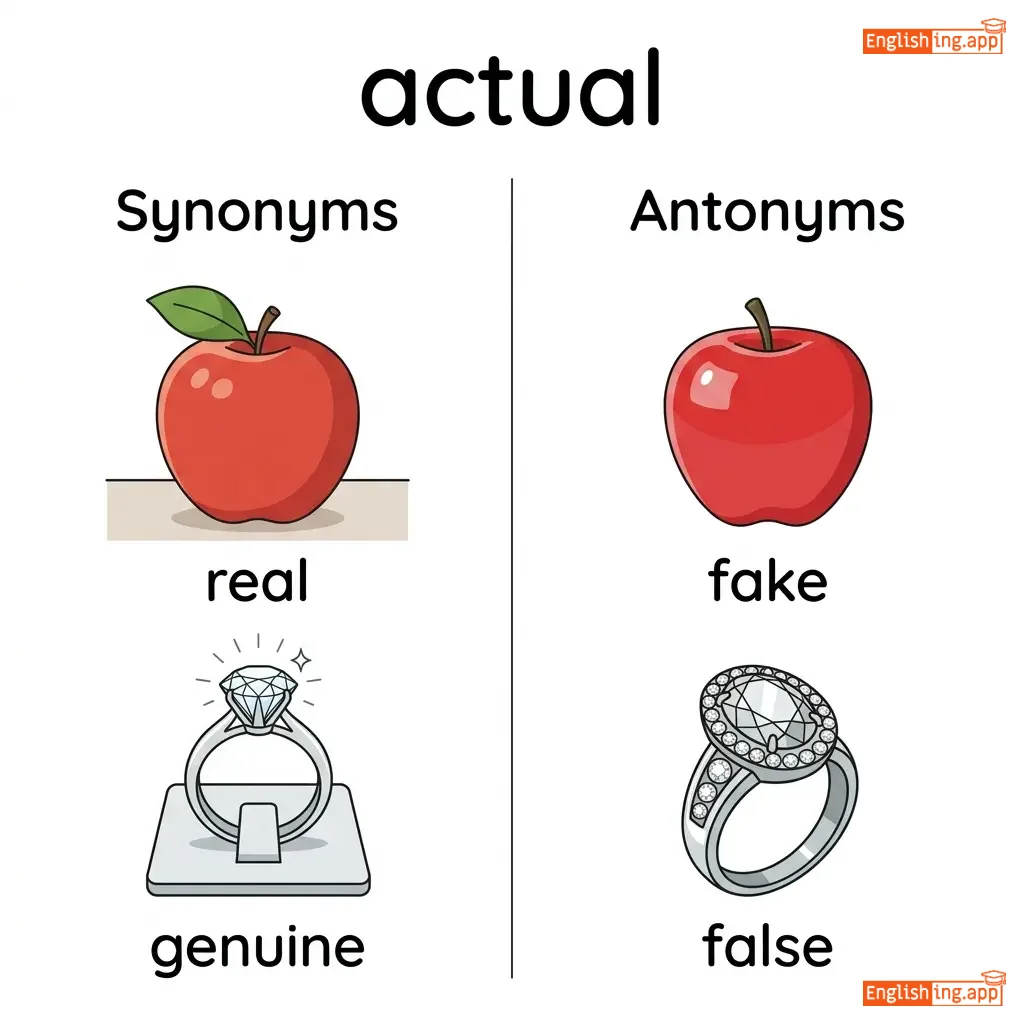
real, genuine, factual, true, authentic
••••••
|
fake, false, imaginary
••••••
|
actual cost, actual reason, actual situation, actual fact
••••••
|
Actual 意味着实际的—事实上就是强调真实的
••••••
|
|
#104
🔎
|
/ˈæktʃuəli/
adverb
(àikèzhùlì)
••••••
|
- •••••• |
实际上
shíjì shang
••••••
|
- •••••• | - •••••• | - •••••• | - •••••• |
used to emphasize that something is true, especially when surprising
••••••
|
She actually completed the project ahead of schedule. |
她实际上提前完成了这个项目。
Tā shíjì shàng tíqián wánchéngle zhège xiàngmù.
••••••
|
actually speaking |
used to emphasize the truth when expressing an opinion
••••••
|
实际上说
shíjì shàng shuō
••••••
|
really, indeed, truly, genuinely
••••••
|
supposedly, allegedly
••••••
|
actually true, actually happen, actually mean, actually exist
••••••
|
Actually 意味着 '实际上',就像 'Actually, I did it' 就是 '实际上,我做到了'。
••••••
|
|
#105
📐
|
/əˈkjuːt/
adjective
(akut)
••••••
|
- •••••• |
急性
jixing
••••••
|
- •••••• | - •••••• | - •••••• | - •••••• |
present or experienced to a severe or intense degree; having sharp perception
••••••
|
The patient suffered from acute pain after the surgery. |
手术后,病人感到剧烈的疼痛。
Shǒushù hòu, bìngrén gǎndào jùliè de téngtòng.
••••••
|
acute angle |
an angle less than 90 degrees
••••••
|
锐角
ruìjiǎo
••••••
|
severe, sharp, intense, critical, keen
••••••
|
chronic, mild, dull
••••••
|
acute pain, acute illness, acute awareness
••••••
|
Acute 意味着 Cute,但很尖锐 — 剧烈的疼痛或锐角
••••••
|
|
#106
⚡
|
/əˈkjuːtli/
adverb
(阿丘特利)
••••••
|
- •••••• |
敏锐地
minrui de
••••••
|
- •••••• | - •••••• | - •••••• | - •••••• |
in a sharp, intense, or severe way; with keen awareness
••••••
|
She was acutely aware of the risks involved.
希 沃兹 阿丘特利 阿维尔 奥夫 泽 瑞斯克斯
••••••
|
她敏锐地意识到其中的风险。
Ta minrui de yishi dao qizhong de fengxian
••••••
|
acutely aware
阿丘特利 阿维尔
••••••
|
having a very strong or sharp awareness of something
••••••
|
敏锐地意识到
minrui de yishi dao
••••••
|
sharply, intensely, keenly, severely, profoundly
••••••
|
dully, mildly, weakly
••••••
|
acutely aware, acutely painful, acutely conscious, acutely sensitive
••••••
|
敏锐 = acute,敏锐地 = acutely
••••••
|
|
#107
🧠
|
/əˈkjuːtnəs/
noun
(阿丘特尼斯)
••••••
|
- •••••• |
敏锐性;严重程度
minrui xing; yanzhong chengdu
••••••
|
- •••••• | - •••••• | - •••••• | - •••••• |
sharpness of mind or senses; severity or intensity of a condition
••••••
|
Her acuteness allowed her to notice details others missed.
她的阿丘特尼斯让她注意到别人忽略的细节。
••••••
|
她的敏锐性让她注意到别人忽略的细节。
ta de minrui xing rang ta zhuyi dao bieren hulue de xijie
••••••
|
- •••••• | - •••••• | - •••••• |
sharpness, keenness, perceptiveness, intensity, severity
••••••
|
dullness, bluntness, mildness
••••••
|
mental acuteness, visual acuteness, sensory acuteness, intellectual acuteness
••••••
|
acute 听起来像 a-cute → 思维很敏锐
••••••
|
|
#108
🔄
|
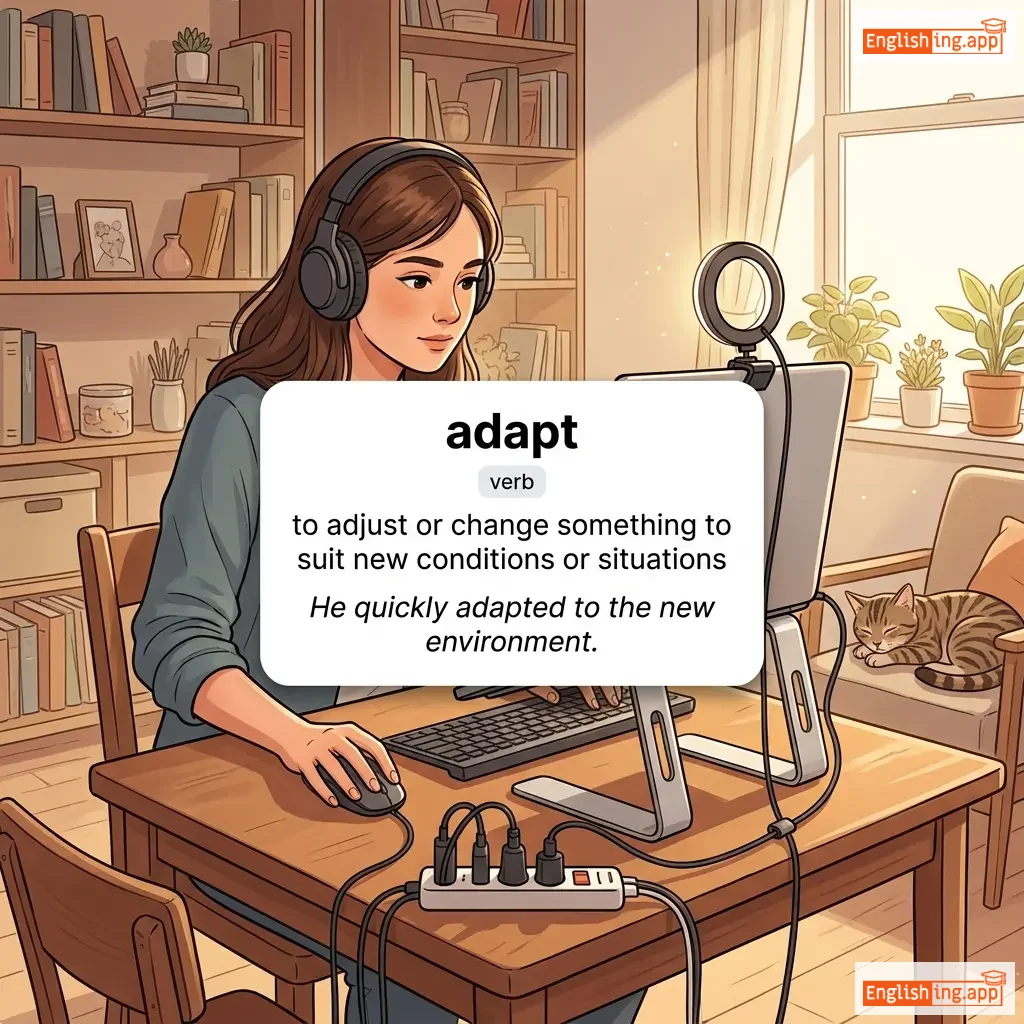
/əˈdæpt/
verb
(适应)
••••••
|
|
适应
shìyìng
••••••
|
adapted
适应了
••••••
|
adapted
适应了
••••••
|
adapts
适应
••••••
|
adapting
适应
••••••
|
to adjust or change something to suit new conditions or situations
••••••
|
He quickly adapted to the new environment.
他很快适应了新环境。
••••••
|
他很快适应了新环境。
Tā hěn kuài shìyìngle xīn huánjìng.
••••••
|
adapt to change
适应变化
••••••
|
to adjust oneself according to new circumstances
••••••
|
适应变化
Shìyìng biànhuà
••••••
|
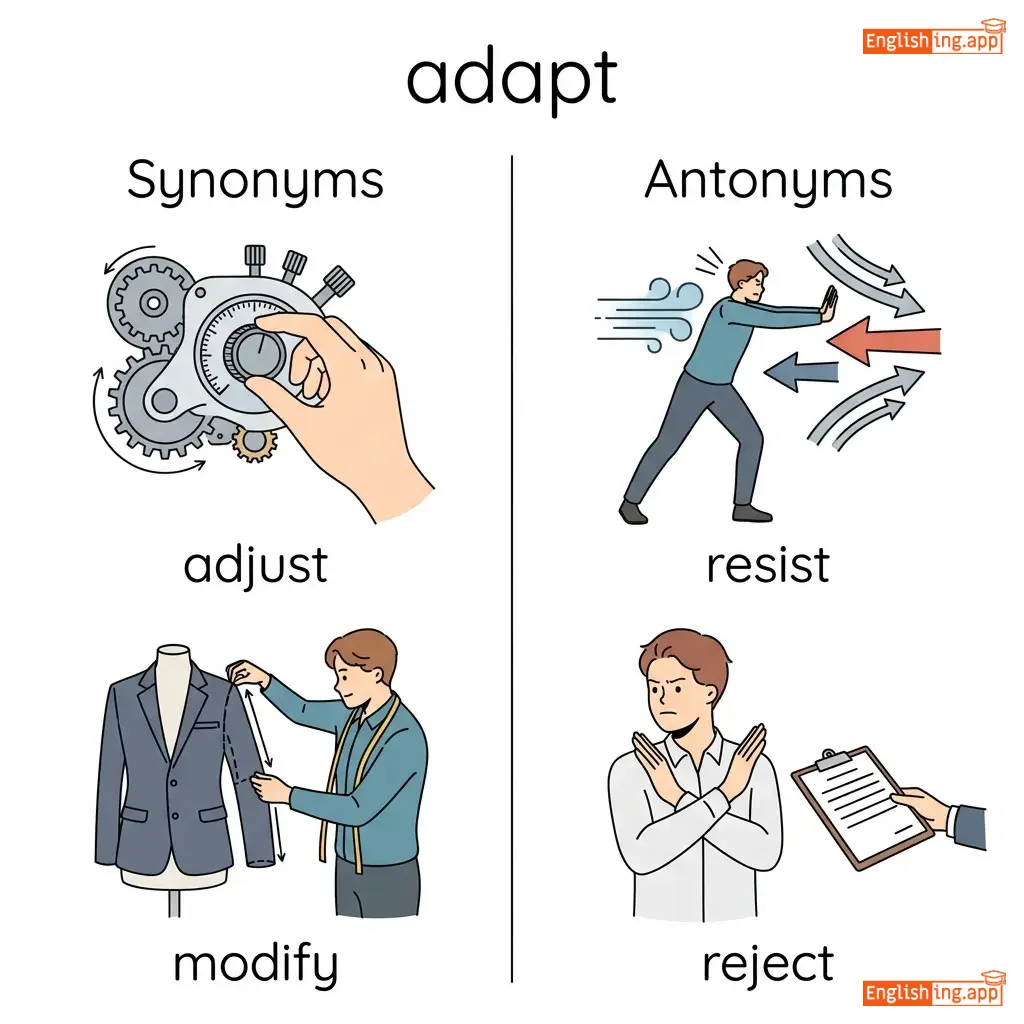
adjust, modify, alter, accommodate
••••••
|
resist, reject
••••••
|
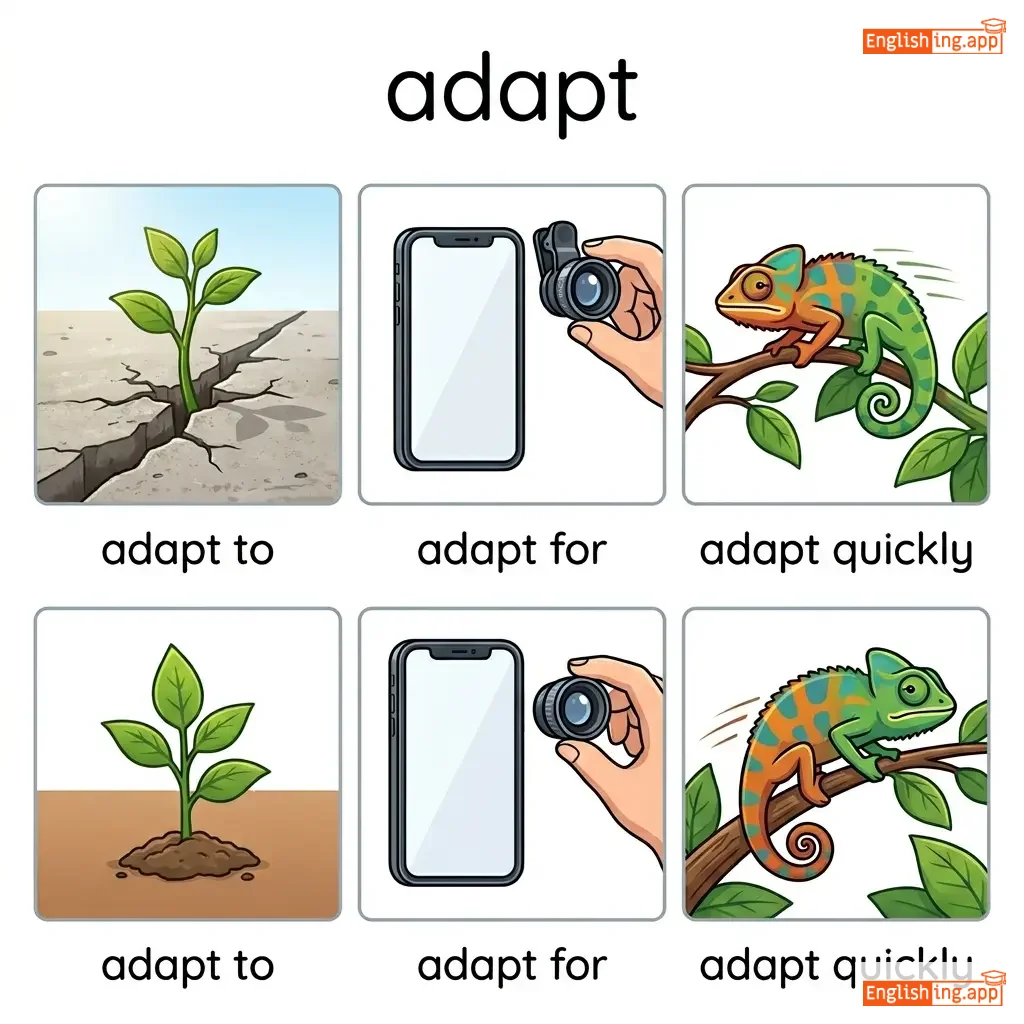
adapt to, adapt for, adapt quickly, adapt easily
••••••
|
适应意味着调整。记住 'A Dress' 适应 = 适应
••••••
|
|
#109
🔄
|
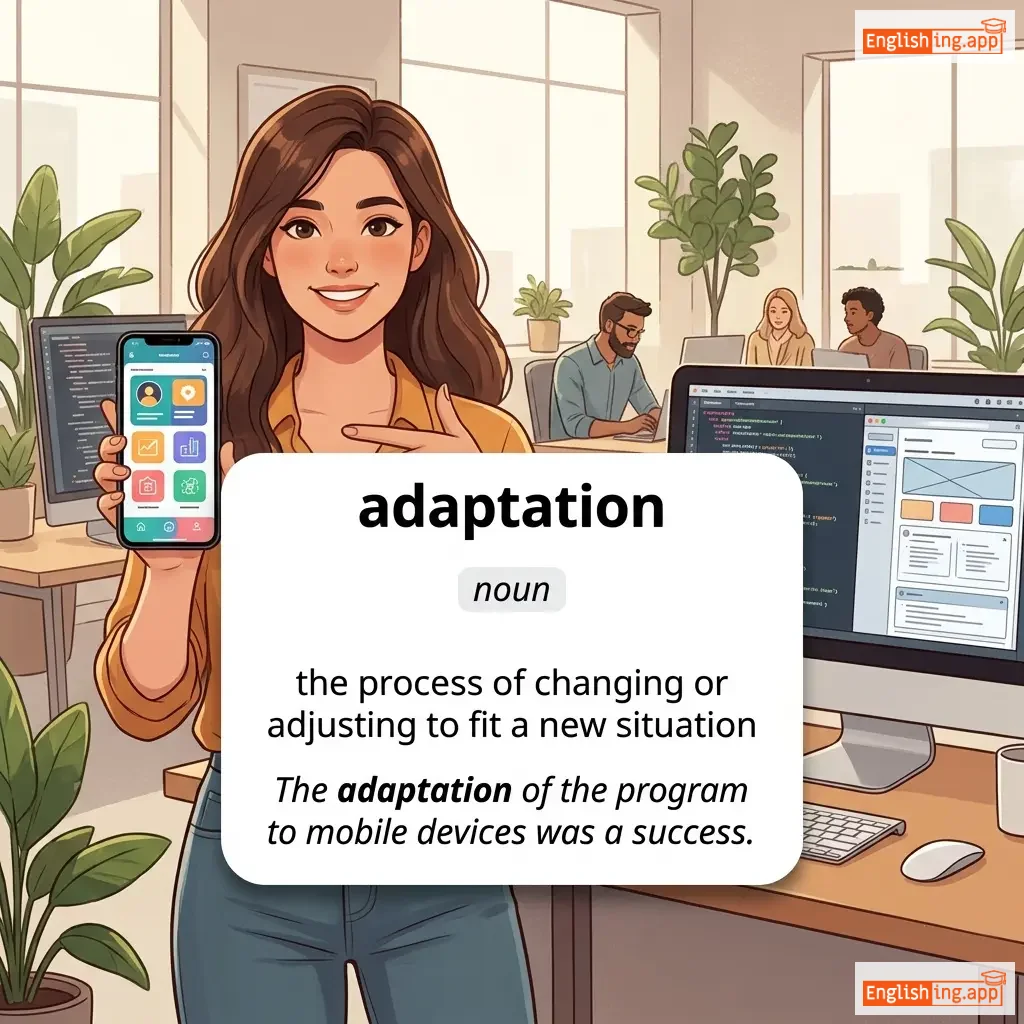
/ˌædæpˈteɪʃən/
noun
(ā dá pái shēn)
••••••
|
|
适应
shiying
••••••
|
- •••••• | - •••••• | - •••••• | - •••••• |
the process of changing or adjusting to fit a new situation
••••••
|
The adaptation of the program to mobile devices was a success. |
将程序适配到移动设备取得了成功。
Jiang chengxu shipei dao yidong shebei qudela chenggong.
••••••
|
- •••••• | - •••••• | - •••••• |
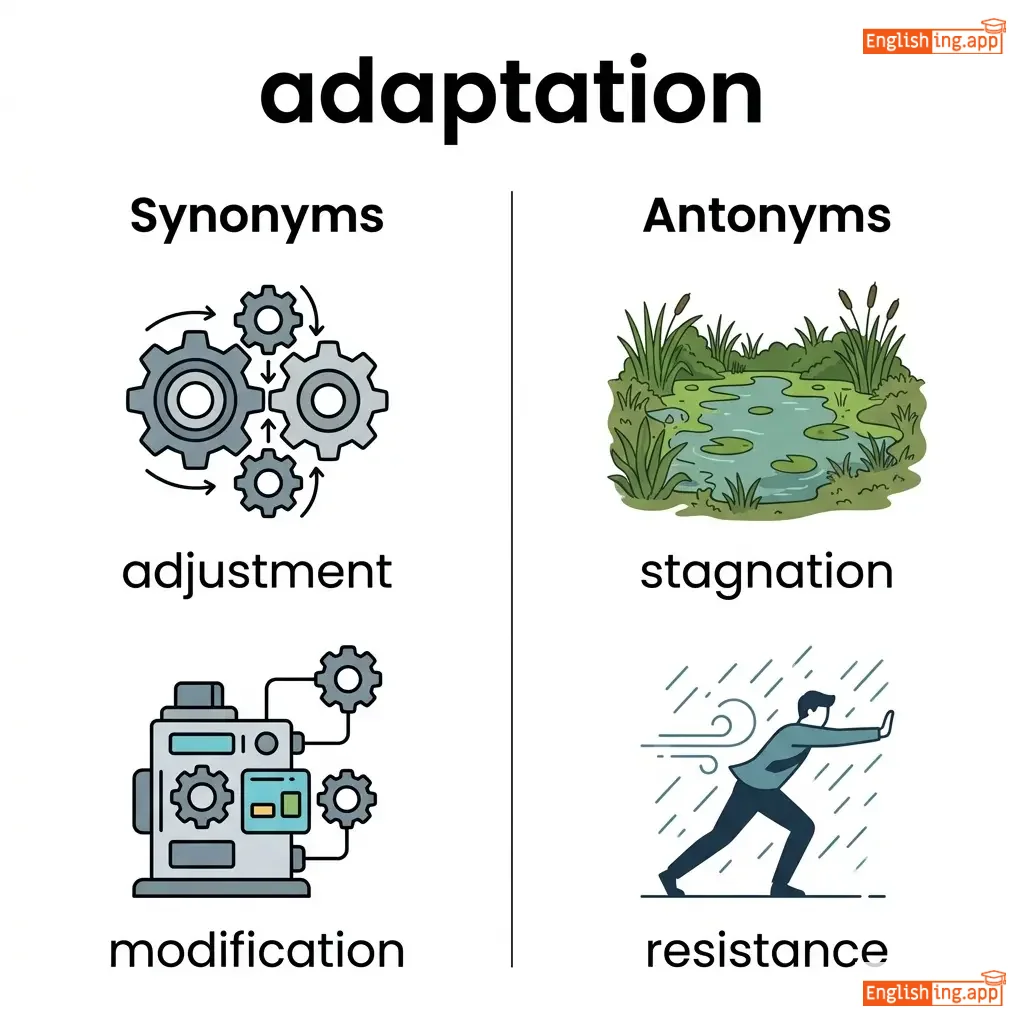
adjustment, modification, alteration, change
••••••
|
stagnation, resistance, inflexibility
••••••
|
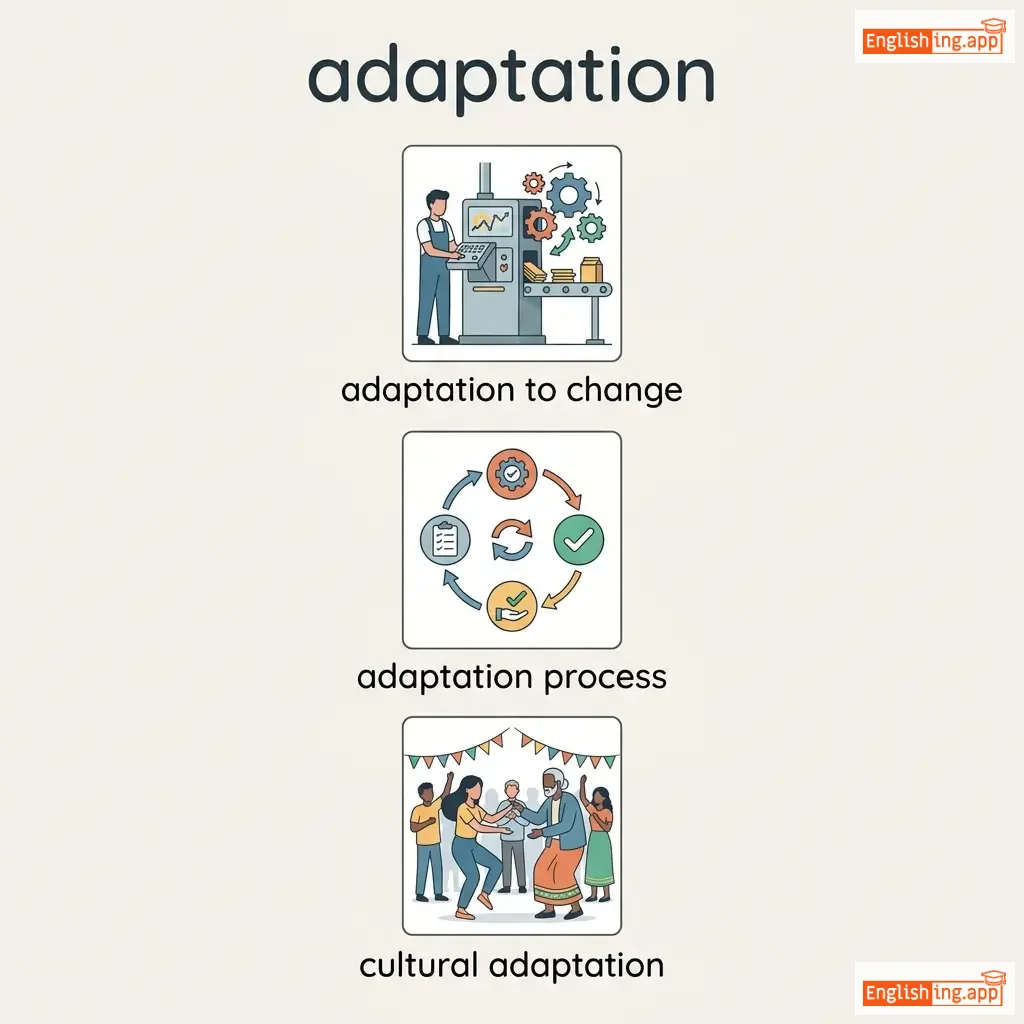
adaptation to change, adaptation process, cultural adaptation
••••••
|
Adaptation is like adjusting your clothes to fit the weather!
••••••
|
|
#110
➕
|
/æd/
verb
(æd)
••••••
|
|
添加
tianjia
••••••
|
added
添加了
••••••
|
added
添加了
••••••
|
adds
添加
••••••
|
adding
添加中
••••••
|
To put together or combine with something else; to increase the number, amount, or value.
••••••
|
He decided to add more details to the report.
他决定在报告中添加更多细节。
••••••
|
他决定在报告中添加更多细节。
Ta jueding zai baogao zhong tianjia geng duo xijie.
••••••
|
add fuel to the fire
火上加油
••••••
|
To make a bad situation worse.
••••••
|
火上加油
Huo shang jiayou
••••••
|
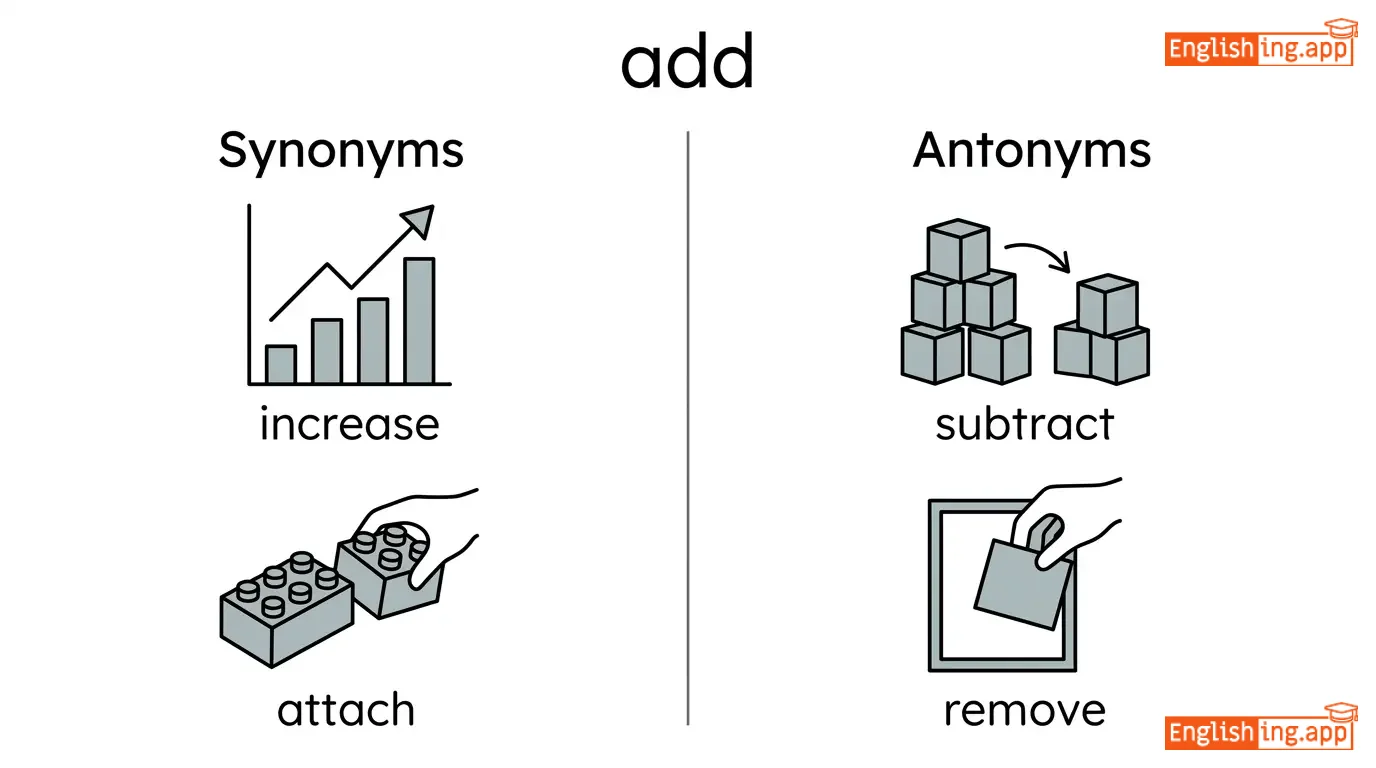
increase, attach, include, combine, augment
••••••
|
subtract, remove, deduct
••••••
|
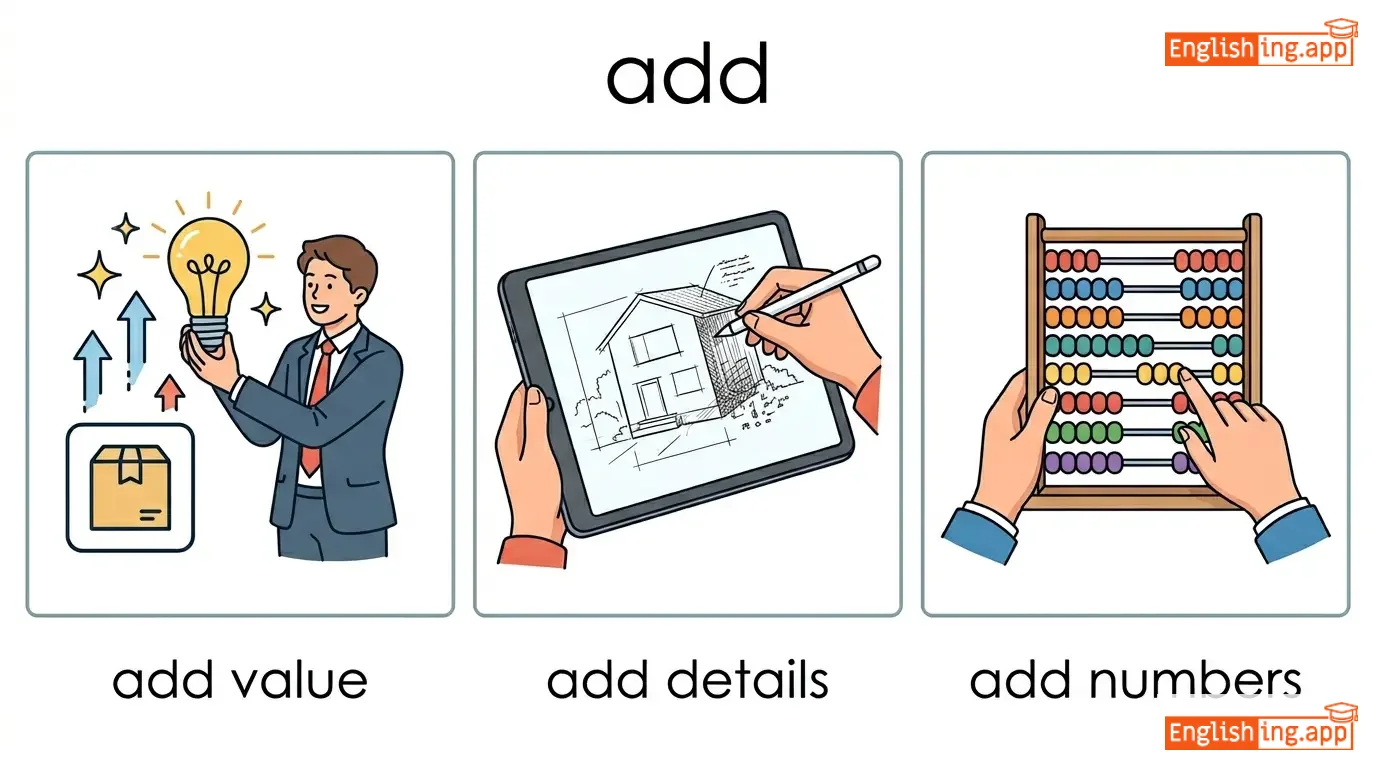
add value, add details, add numbers, add weight
••••••
|
添加就像在汤中加入更多调味料,让味道更丰富。
••••••
|
|
#111
⚠️
|
/ˈædɪkt/ (noun), /əˈdɪkt/ (verb)
noun, verb
(艾迪克特)
••••••
|
- •••••• |
成瘾者
chengyinzhe
••••••
|
addicted
上瘾
••••••
|
addicted
上瘾
••••••
|
addicts
艾迪克特
••••••
|
addicting
艾迪克特
••••••
|
a person who is unable to stop using a harmful substance or doing something harmful; to cause someone to become dependent on something
••••••
|
He is a video game addict who spends hours playing every day.
他是一个视频游戏上瘾者,每天花几个小时玩游戏。
••••••
|
他是一个视频游戏上瘾者,每天花几个小时玩游戏。
Ta shi yi ge shipin youxi shangyin zhe, meitian hua ji ge xiaoshi wan youxi.
••••••
|
addicted to
沉迷于
••••••
|
being unable to stop doing or using something
••••••
|
沉迷于
chenmi yu
••••••
|
user, abuser, dependent, fanatic
••••••
|
nonuser, free, independent
••••••
|
drug addict, video game addict, addicted to, hopeless addict
••••••
|
Addict 在中文是成瘾者 — 沉迷游戏就像上瘾一样!
••••••
|
|
#112
⚠️
|
/əˈdɪkʃən/
noun
(上瘾)
••••••
|
- •••••• |
上瘾
shangyin
••••••
|
- •••••• | - •••••• | - •••••• | - •••••• |
A strong and harmful need to regularly have or do something, such as drugs, alcohol, or habits.
••••••
|
His addiction to video games affected his studies. |
他对视频游戏的上瘾影响了他的学习。
Ta dui shipin youxi de shangyin yingxiangle tade xuexi.
••••••
|
fight an addiction |
to struggle against a harmful habit
••••••
|
与上瘾作斗争
Yu shangyin zuo douzheng
••••••
|
dependence, craving, obsession, compulsion, habit
••••••
|
freedom, independence, control
••••••
|
drug addiction, gambling addiction, addiction recovery, overcome addiction
••••••
|
Addiction是指陷入坏习惯—上瘾
••••••
|
|
#113
➕
|
/əˈdɪʃən/
noun
••••••
|
- •••••• | - •••••• | - •••••• | - •••••• | - •••••• | - •••••• |
the process of adding something to something else
••••••
|
The addition of solar panels made the house more energy-efficient. |
- •••••• |
in addition |
used to introduce an extra piece of information
••••••
|
- •••••• |
inclusion, increase, supplement, augmentation
••••••
|
removal, subtraction, elimination
••••••
|
addition to, make an addition, new addition, addition of features
••••••
|
No •••••• |
|
#114
➕
|
/əˈdɪʃənəl/
adjective
(额外)
••••••
|
- •••••• |
额外的
éwài de
••••••
|
- •••••• | - •••••• | - •••••• | - •••••• |
added, extra, or supplementary to what already exists
••••••
|
The teacher gave the students additional homework. |
老师给学生布置了额外的作业。
Lǎoshī gěi xuéshēng bùzhìle éwài de zuòyè.
••••••
|
additional cost |
extra expense beyond the basic cost
••••••
|
额外费用
éwài fèiyòng
••••••
|
extra, further, supplementary, added
••••••
|
basic, minimal, primary
••••••
|
additional information, additional charge, additional support, additional effort
••••••
|
Additional 意味着加 + 额外 - 多出来的东西
••••••
|
|
#115
➕
|
/əˈdɪʃənəli/
adverb
(额外)
••••••
|
- •••••• |
此外
cihou
••••••
|
- •••••• | - •••••• | - •••••• | - •••••• |
in addition to what has been said or done
••••••
|
Additionally, we offer discounts for early bookings.
此外,我们为提前预订提供折扣。
••••••
|
此外,我们为提前预订提供折扣。
Cihou, women wei tiqian yuding tigong zhekou.
••••••
|
- •••••• | - •••••• | - •••••• |
furthermore, moreover, also, as well
••••••
|
however, nevertheless
••••••
|
additionally, additionally offer, additionally provide
••••••
|
Adding a plus sign ➕ shows more details (additionally)
••••••
|
|
#116
📢
|
/əˈdrɛs/
verb
(adresu)
••••••
|
|
dānrèn, jiějué
danren, jiejué
••••••
|
addressed
zhíxíng
••••••
|
addressed
zhíxíng
••••••
|
addresses
zhíxíng
••••••
|
addressing
zhíxíng zhōng
••••••
|
To speak to someone directly or to deal with an issue.
••••••
|
The manager will address the employees about the new policy.
Jīnglǐ huì zhíxíng yuángōngmen duì xīn zhèngcè de jiǎngjiù.
••••••
|
Jīnglǐ huì zhíxíng yuángōngmen duì xīn zhèngcè de jiǎngjiù.
Jingli hui zhixing yuangongmen dui xin zhengce de jiangjiu.
••••••
|
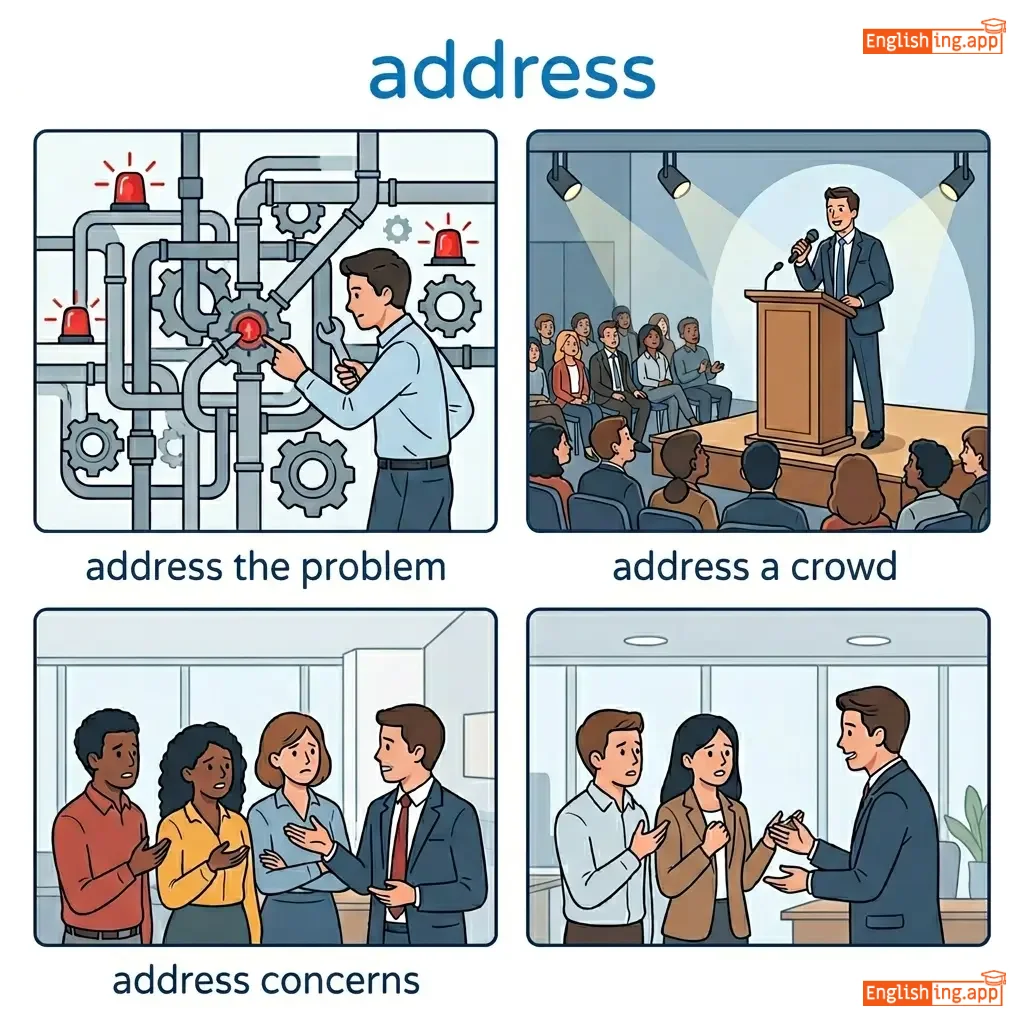
address the issue
jiějué wèntí
••••••
|
to deal with or solve a problem
••••••
|
jiějué wèntí
jiejue wenti
••••••
|
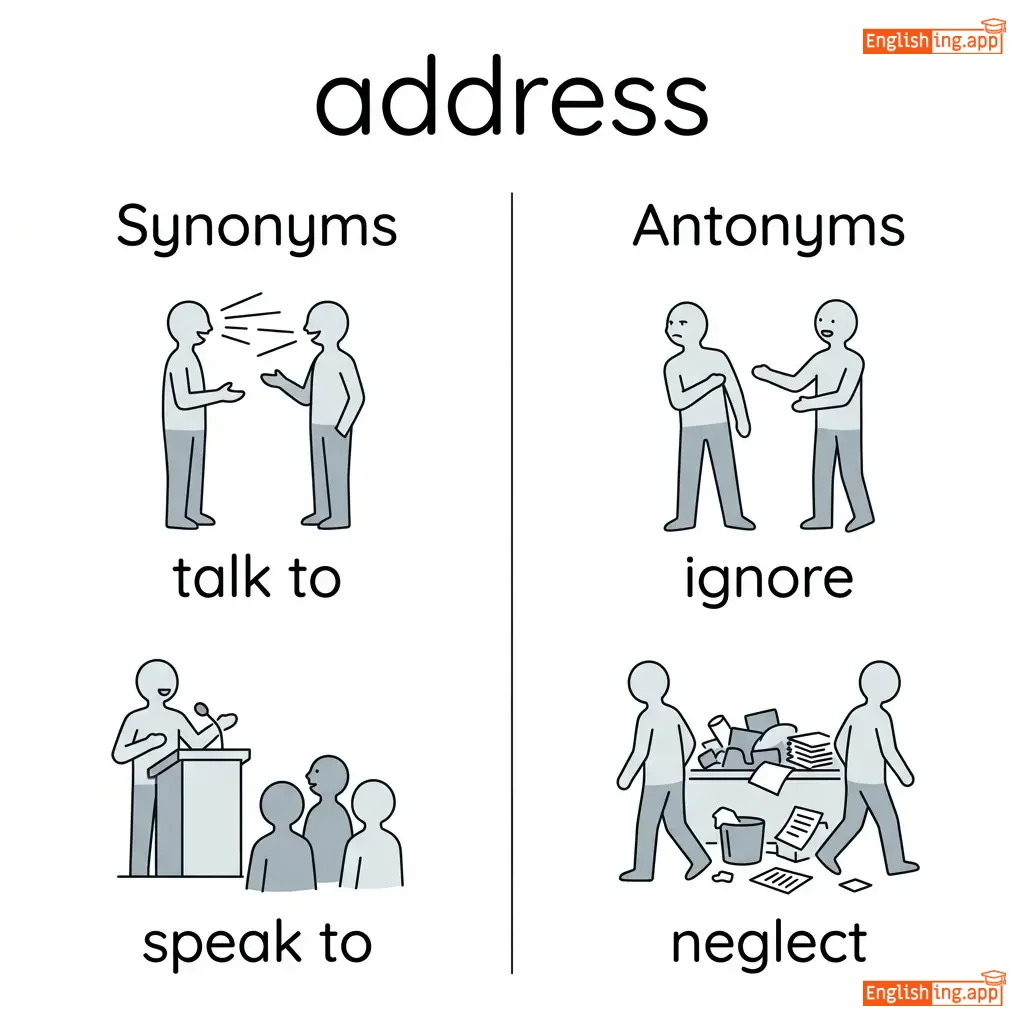
talk to, speak to, deal with, handle
••••••
|
ignore, neglect, avoid
••••••
|
address the problem, address a crowd, address concerns, address formally
••••••
|
Address bù jǐn shì dìzhǐ, hái shì wèntí de jiějué.
••••••
|
|
#117
📑
|
/əˈdjuːs/
verb
(艾杜斯)
••••••
|
- •••••• |
提供证据或理由
tigong zhengju huo liyi
••••••
|
adduced
艾杜斯德
••••••
|
adduced
艾杜斯德
••••••
|
adduces
艾杜塞斯
••••••
|
adducing
艾杜辛
••••••
|
To provide evidence or reasons to support an argument or idea.
••••••
|
The lawyer adduced several examples to support his case.
律师引用了几个例子来支持他的案件。
••••••
|
律师引用了几个例子来支持他的案件。
Lüshi yinyongle jige lixu lai zhichi tade anjian.
••••••
|
- •••••• | - •••••• | - •••••• |
cite, present, offer, advance, produce
••••••
|
conceal, withhold, suppress
••••••
|
adduce evidence, adduce reasons, adduce examples
••••••
|
Adduce意味着提供证据来支持一个观点。
••••••
|
|
#118
✔️
|
/ˈædɪkwət/
adjective
(āndíkwèt)
••••••
|
- •••••• |
足够
zúgòu
••••••
|
- •••••• | - •••••• | - •••••• | - •••••• |
sufficient or acceptable in quality or quantity
••••••
|
The food was adequate for the small group. |
食物足够适合小组。
Shíwù zúgòu shìhé xiǎozǔ.
••••••
|
adequate to the task |
sufficiently capable of completing a responsibility
••••••
|
足够胜任任务
zúgòu shèngrèn rènwù
••••••
|
sufficient, enough, satisfactory, suitable, ample
••••••
|
inadequate, insufficient, lacking
••••••
|
adequate supply, adequate amount, adequate support, adequate protection
••••••
|
足够就像adequate一样足够,足够食物就意味着足够的食物
••••••
|
|
#119
✔️
|
/ˈædɪkwətli/
adverb
(艾迪奎特利)
••••••
|
- •••••• |
恰当地
qià dāng de
••••••
|
- •••••• | - •••••• | - •••••• | - •••••• |
in a satisfactory manner
••••••
|
He completed the task adequately, but could improve next time. |
他适当地完成了任务,但下次可以改进。
Tā shì dàng de wán chéng le rèn wu, dàn xià cì kě yǐ gǎi jìn.
••••••
|
- •••••• | - •••••• | - •••••• |
sufficiently, properly, acceptably
••••••
|
inadequately, insufficiently
••••••
|
adequately prepared, adequately equipped, adequately addressed
••••••
|
恰当意味着做得足够好,不要做得更少。
••••••
|
|
#120
🧷
|
/ədˈhɪər/
verb
(adhier)
••••••
|
|
粘附, 遵守
zhānfù, zūnshǒu
••••••
|
adhered
adhiered
••••••
|
adhered
adhiered
••••••
|
adheres
adhieres
••••••
|
adhering
adhiering
••••••
|
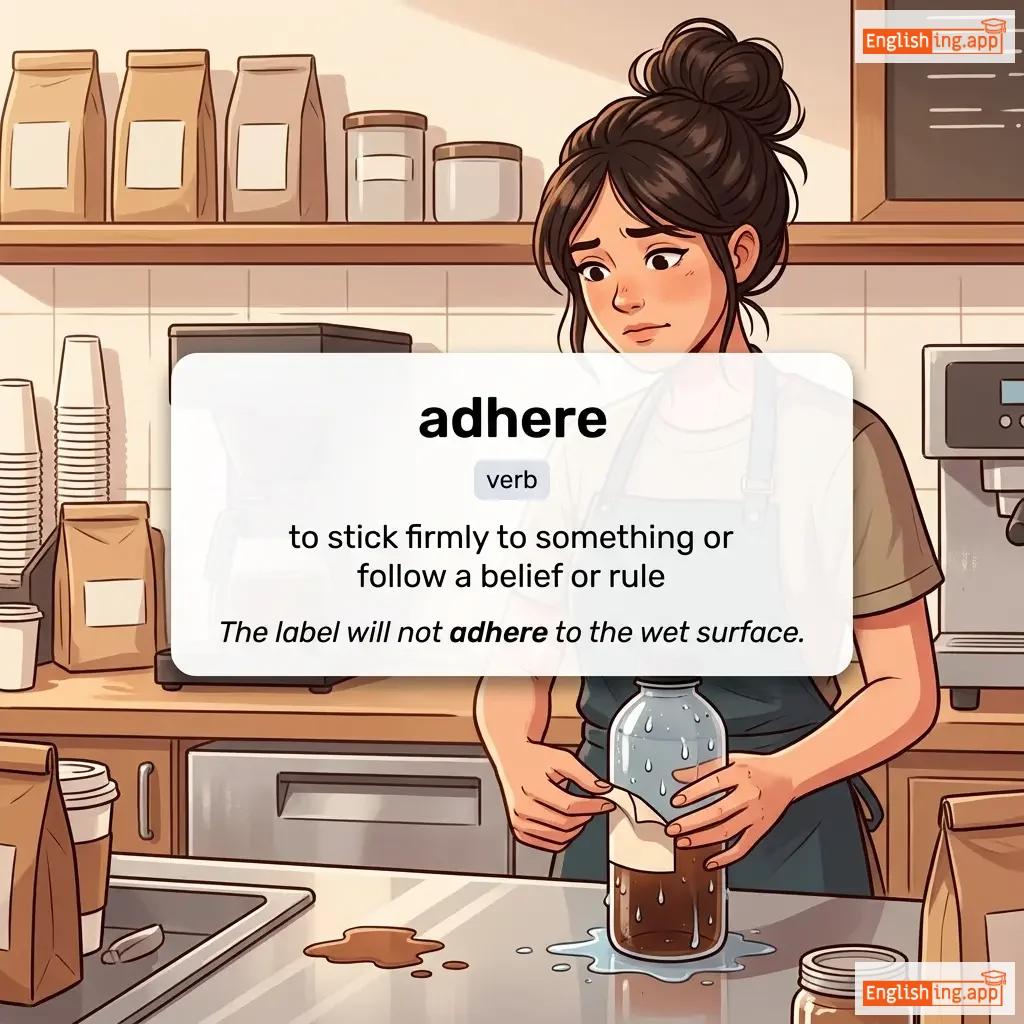
to stick firmly to something or follow a belief or rule
••••••
|
The label will not adhere to the wet surface.
标签不会粘在湿表面。
••••••
|
标签不会粘在湿表面。
Biāoqiān bù huì zhān zài shī biǎomiàn.
••••••
|
adhere to rules
遵守规则
••••••
|
to strictly follow rules or principles
••••••
|
遵守规则
zūnshǒu guīzé
••••••
|
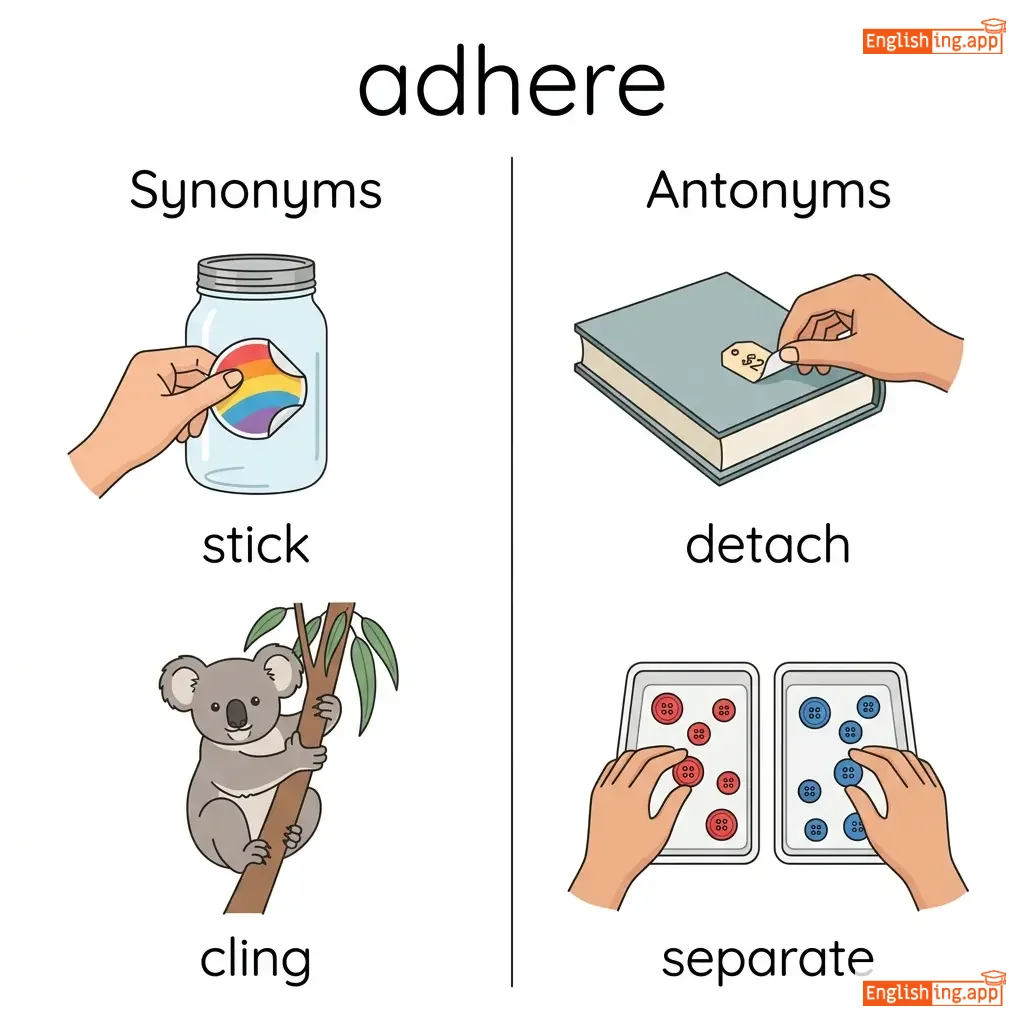
stick, cling, attach, comply, follow
••••••
|
detach, separate, ignore
••••••
|
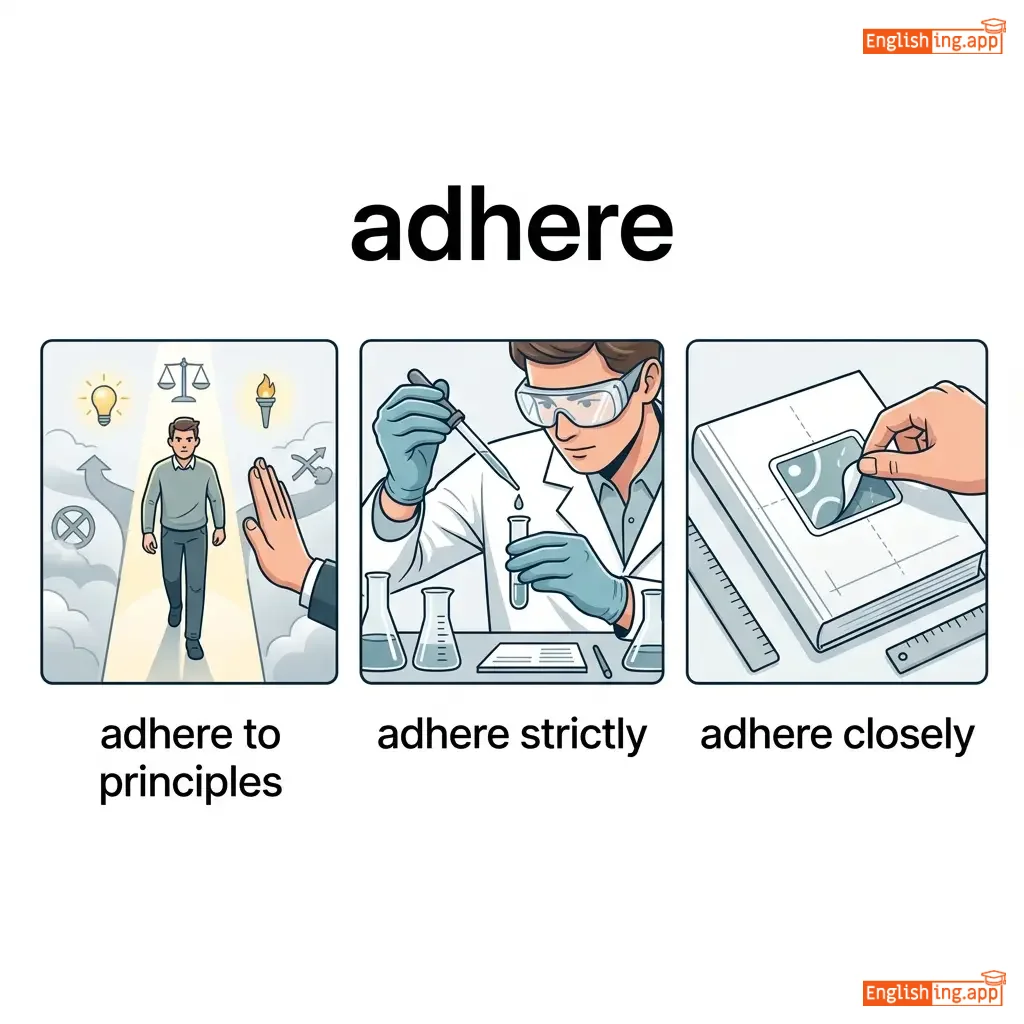
adhere to principles, adhere strictly, adhere closely, adhere firmly
••••••
|
Adhere 就像粘贴一样,像胶水一样粘在表面。
••••••
|
|
#121
📜
|
/ədˈhɪərəns/
noun
(ædˈhɪərəns)
••••••
|
|
遵守
zunshou
••••••
|
- •••••• | - •••••• | - •••••• | - •••••• |
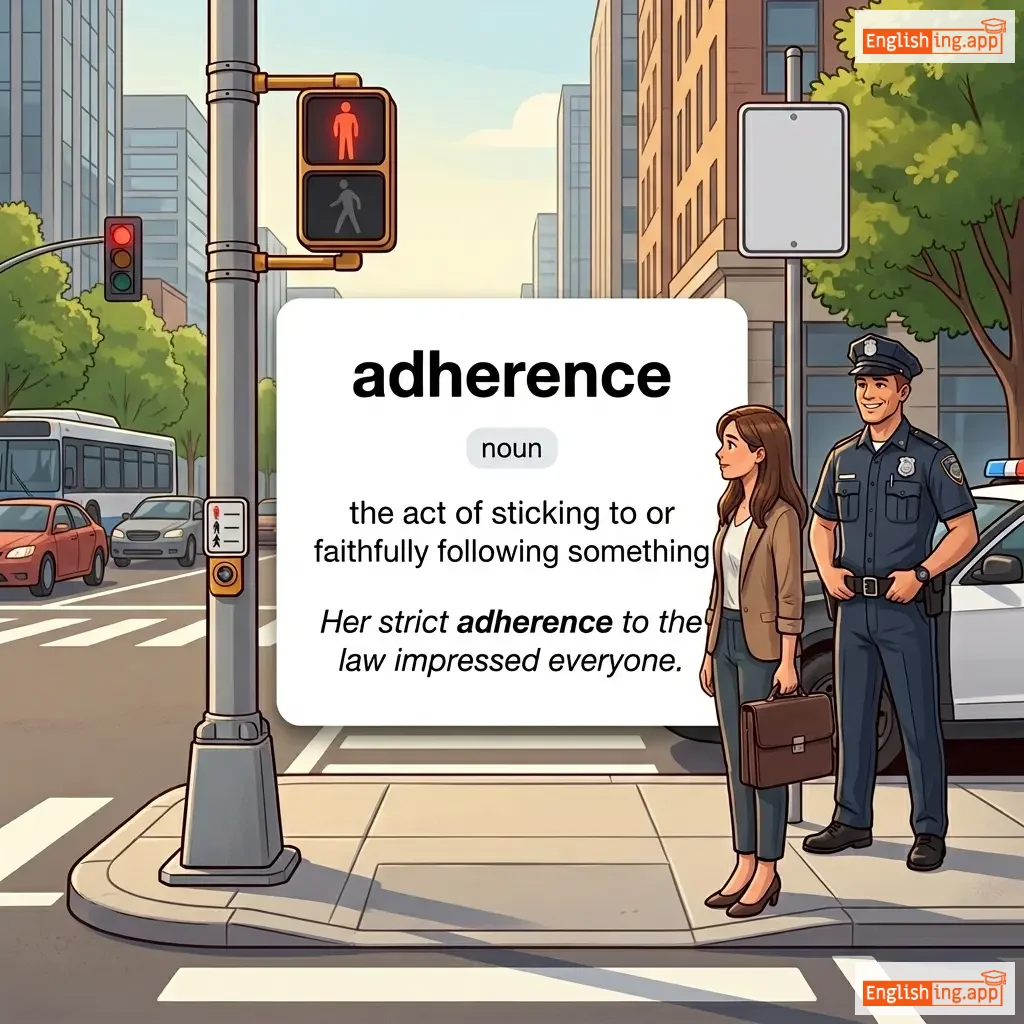
the act of sticking to or faithfully following something
••••••
|
Her strict adherence to the law impressed everyone.
她对法律的严格遵守给大家留下了深刻的印象。
••••••
|
她对法律的严格遵守给大家留下了深刻的印象。
Tā duì fǎlǜ de yángé zūnshǒu gěi dàjiā liúxiàle shēn kè de yìnxiàng.
••••••
|
adherence to tradition
对传统的遵守
••••••
|
faithfully following traditional practices
••••••
|
对传统的遵守
Duì chuántǒng de zūnshǒu
••••••
|
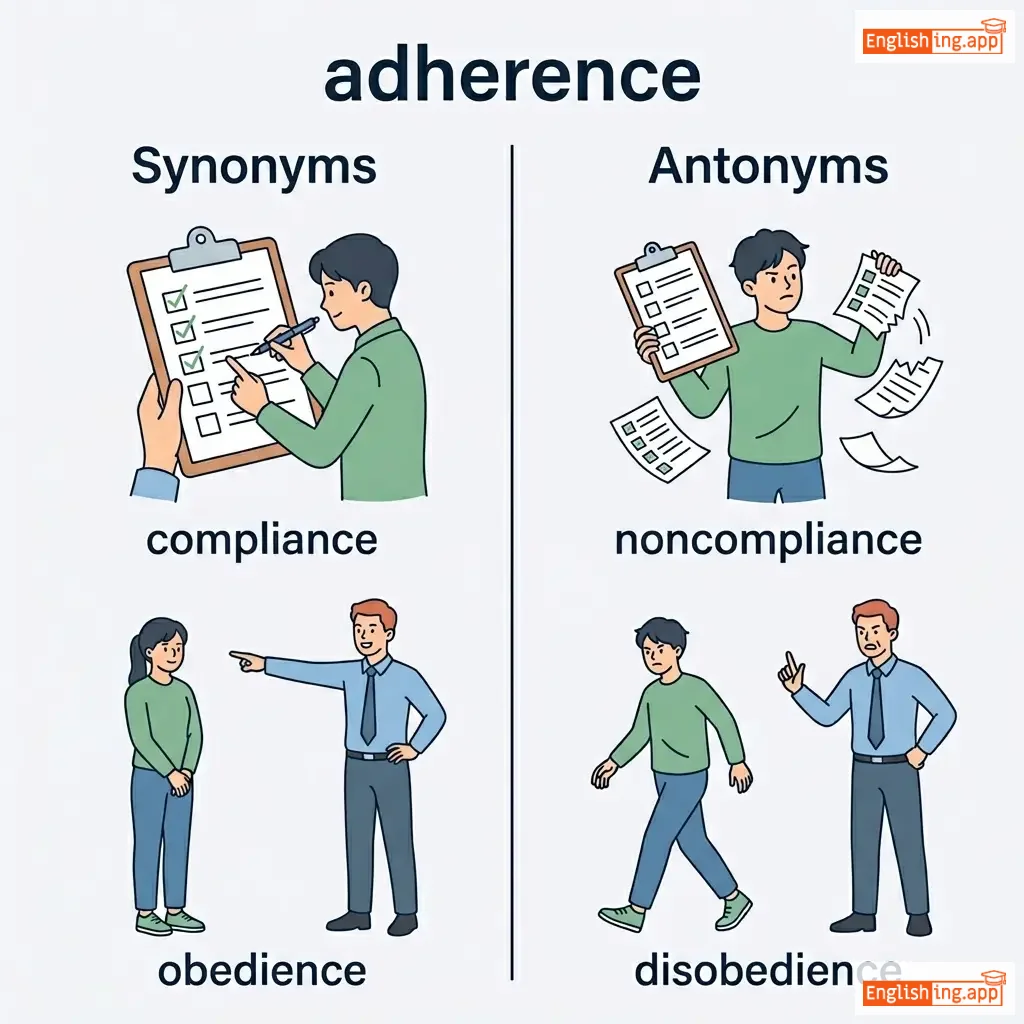
compliance, obedience, loyalty, attachment, devotion
••••••
|
noncompliance, disobedience, defiance
••••••
|
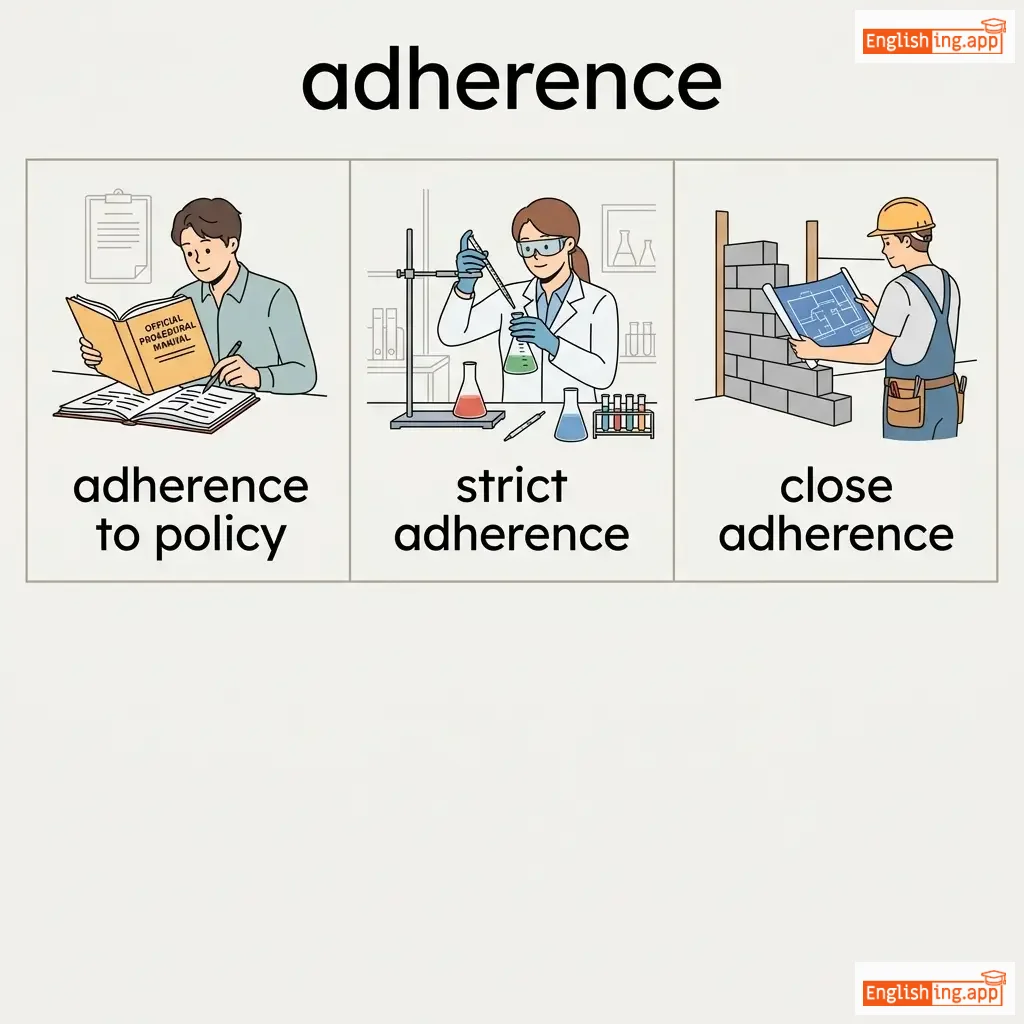
adherence to policy, strict adherence, close adherence, adherence standards
••••••
|
Adherence 意为遵守,Adhere + ence = 遵守
••••••
|
|
#122
🏠🏠
|
/əˈdʒeɪsənt/
adjective
(ā jí sēnt)
••••••
|
- •••••• |
邻近的
lin jin de
••••••
|
- •••••• | - •••••• | - •••••• | - •••••• |
পার্শ্ববর্তী; সংলগ্ন; নিকটবর্তী;
••••••
|
The hotel is adjacent to the shopping mall. |
酒店与购物中心相邻。
Jiudian yu gouwu zhongxin xianglin.
••••••
|
- •••••• | - •••••• | - •••••• |
neighboring, adjoining, bordering, next to
••••••
|
distant, remote, separate, far
••••••
|
adjacent rooms, adjacent buildings, adjacent areas
••••••
|
Adjacent: 想象两个物体紧紧相连,‘邻近’就是这样。
••••••
|
|
#123
📝
|
/ˈædʒɪktɪv/
noun
(阿杰克提夫)
••••••
|
- •••••• |
形容词
xingrongci
••••••
|
- •••••• | - •••••• | - •••••• | - •••••• |
a word that describes or modifies a noun by giving more information about its quality, quantity, or state
••••••
|
The adjective in the sentence adds more detail to the noun.
阿杰克提夫 用来 描述 名词。
••••••
|
形容词为名词提供更多信息。
xingrongci wei mingci tigong geng duo xinxi
••••••
|
descriptive adjective
描述性形容词
••••••
|
an adjective that vividly describes a noun
••••••
|
描述性形容词
miaoshuxing xingrongci
••••••
|
descriptor, modifier, qualifier, describing word
••••••
|
noun, verb
••••••
|
descriptive adjective, comparative adjective, adjective clause, adjective phrase
••••••
|
Adjective 听起来像 add 形容,形容词
••••••
|
|
#124
🏡
|
/əˈdʒɔɪn/
verb
(ædʒɔɪn)
••••••
|
- •••••• |
毗邻
pílín
••••••
|
adjoined
ædʒɔɪnd
••••••
|
adjoined
ædʒɔɪnd
••••••
|
adjoins
ædʒɔɪns
••••••
|
adjoining
ædʒɔɪnɪŋ
••••••
|
To be next to and joined with something.
••••••
|
Their house adjoins the park.
他们的房子毗邻公园。
••••••
|
他们的房子毗邻公园。
Tāmen de fángzi pílín gōngyuán.
••••••
|
- •••••• | - •••••• | - •••••• |
border, connect, neighbor, join, touch
••••••
|
separate, detach, divide
••••••
|
adjoin property, adjoin land, houses adjoin
••••••
|
Adjoin 意味着毗邻 – 想象'Add + join'意味着接近并连接。
••••••
|
|
#125
⏸️
|
/əˈdʒɜrn/
verb
(阿焦恩)
••••••
|
- •••••• |
推迟
tuīchí
••••••
|
adjourned
阿焦恩德
••••••
|
adjourned
阿焦恩德
••••••
|
adjourns
阿焦恩斯
••••••
|
adjourning
阿焦宁
••••••
|
to suspend a meeting or session to another time or place
••••••
|
The judge decided to adjourn the hearing until next week.
法官决定将听证会推迟到下周。
••••••
|
法官决定将听证会推迟到下周。
Fǎguān juédìng jiāng tīngzhènghuì tuīchí dào xià zhōu.
••••••
|
motion to adjourn
动议推迟
••••••
|
a formal proposal to end a meeting or session
••••••
|
动议推迟
dòngyì tuīchí
••••••
|
suspend, postpone, delay, recess, discontinue
••••••
|
resume, continue, proceed
••••••
|
adjourn a meeting, adjourn the session, adjourn temporarily, motion to adjourn
••••••
|
Adjourn 就像 '推迟',会议被推到更晚的时间或另一个地方。
••••••
|
|
#126
👨⚖️
|
/əˈdʒuːdɪˌkeɪt/
verb
(裁定)
••••••
|
- •••••• |
裁定
cáidìng
••••••
|
adjudicated
裁定
••••••
|
adjudicated
裁定
••••••
|
adjudicates
裁定
••••••
|
adjudicating
裁定
••••••
|
to make a formal judgment or decision about a problem or dispute
••••••
|
The committee was formed to adjudicate disputes between the parties.
委员会的成立是为了裁定各方之间的争议。
••••••
|
委员会的成立是为了裁定各方之间的争议。
Wěiyuánhuì de chénglì shì wèile cáidìng gè fāng zhījiān de zhēngyì.
••••••
|
adjudicate a dispute
裁定争议
••••••
|
to settle a conflict officially
••••••
|
裁定争议
cáidìng zhēngyì
••••••
|
arbitrate, judge, decide, settle, resolve
••••••
|
ignore, delay, neglect
••••••
|
adjudicate disputes, adjudicate cases, adjudicate claims
••••••
|
Adjudicate = A Judge + Indicate = 法官做出裁决。
••••••
|
|
#127
⚙️
|
/əˈdʒʌst/
verb
(ā jiǎsī té)
••••••
|
|
调整
tiaozheng
••••••
|
adjusted
ā jiǎsī tèd
••••••
|
adjusted
ā jiǎsī tèd
••••••
|
adjusts
ā jiǎsī zī
••••••
|
adjusting
ā jiǎsī tīng
••••••
|
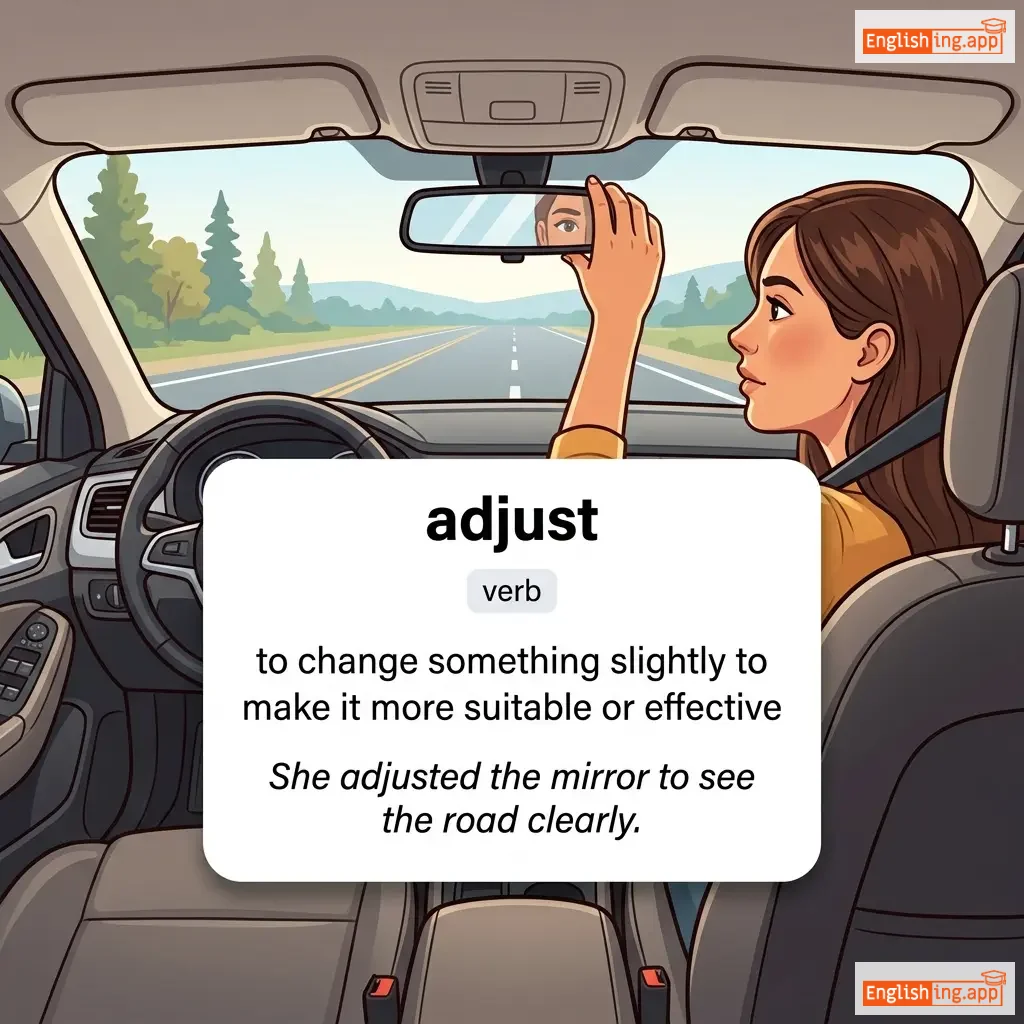
to change something slightly to make it more suitable or effective
••••••
|
She adjusted the mirror to see the road clearly.
她调整了镜子以清晰地看见路。
••••••
|
她调整了镜子以清晰地看见路。
Ta tiaozheng le jingzi yi qingxi de kanjian lu.
••••••
|
adjust to
适应于
••••••
|
to get used to a new situation
••••••
|
适应于
shiying yu
••••••
|
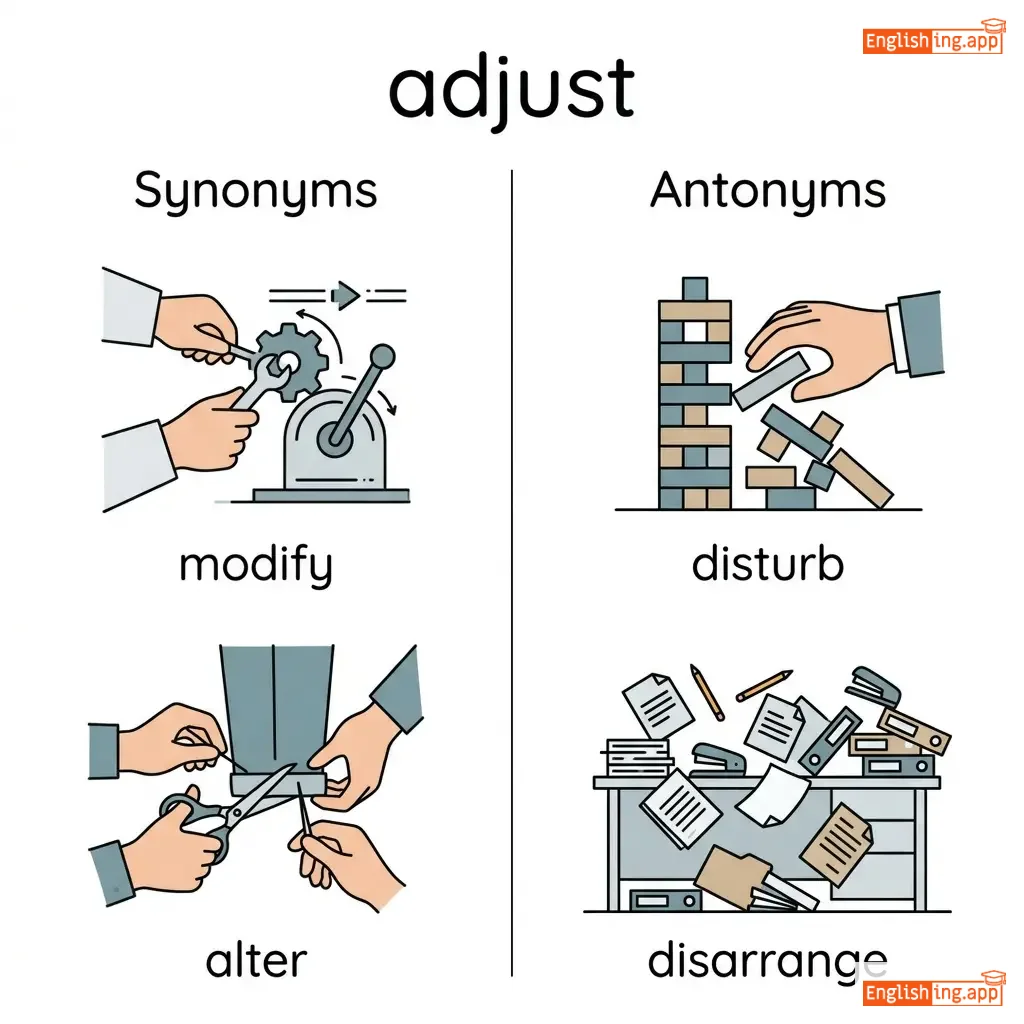
modify, alter, adapt, regulate
••••••
|
disturb, disarrange, upset
••••••
|
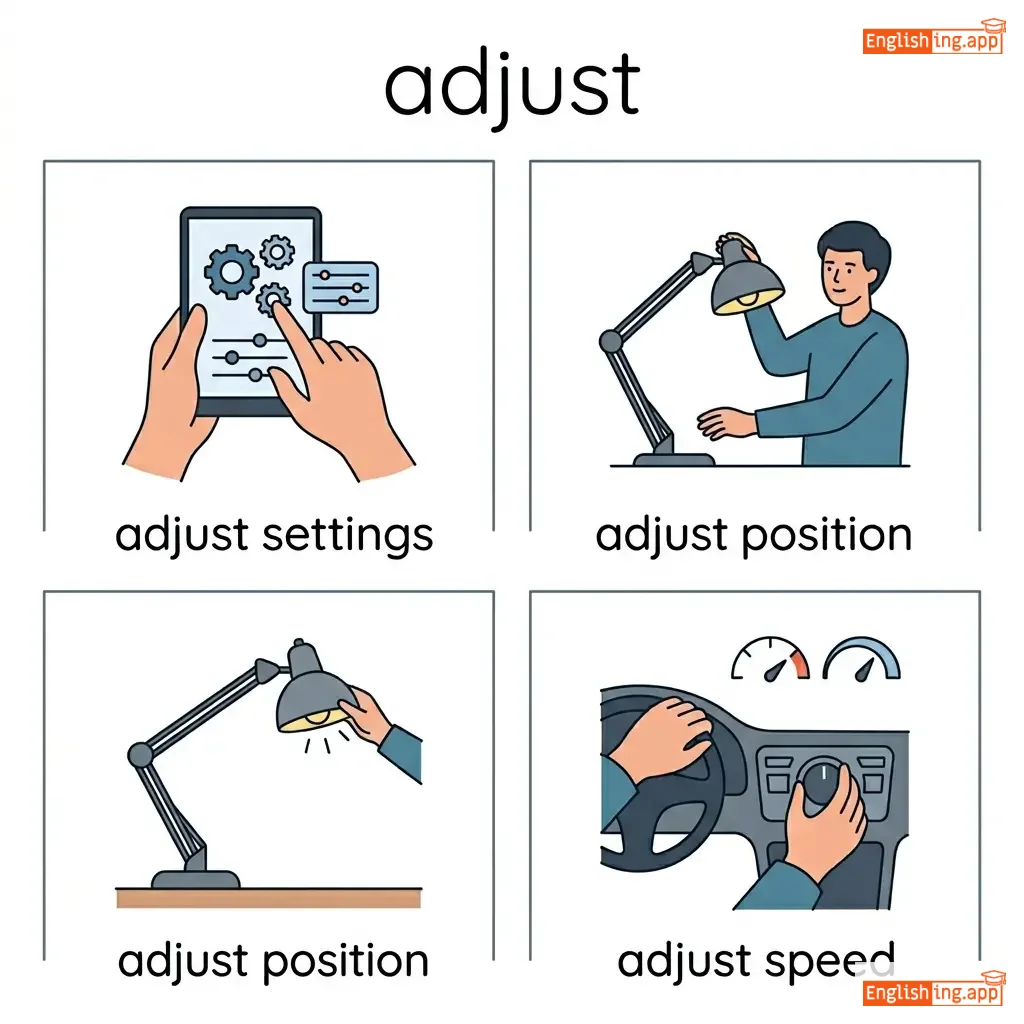
adjust settings, adjust position, adjust speed, adjust focus
••••••
|
调整=微调以便更好适应
••••••
|
|
#128
🔧
|
/əˈdʒʌstmənt/
noun
••••••
|
- •••••• | - •••••• | - •••••• | - •••••• | - •••••• | - •••••• |
a small change made to improve something or make it work better
••••••
|
The doctor made an adjustment to the patient’s medication. |
- •••••• |
make an adjustment |
to change something slightly to improve it
••••••
|
- •••••• |
modification, alteration, correction, change
••••••
|
rigidity, stagnation
••••••
|
adjustment to, minor adjustment, adjustment period, policy adjustment
••••••
|
No •••••• |
|
#129
💊
|
/ədˈmɪnɪstər/
verb
(行政)
••••••
|
|
管理 / 应用
guanli / yingyong
••••••
|
administered
行政过
••••••
|
administered
行政过
••••••
|
administers
行政
••••••
|
administering
行政
••••••
|
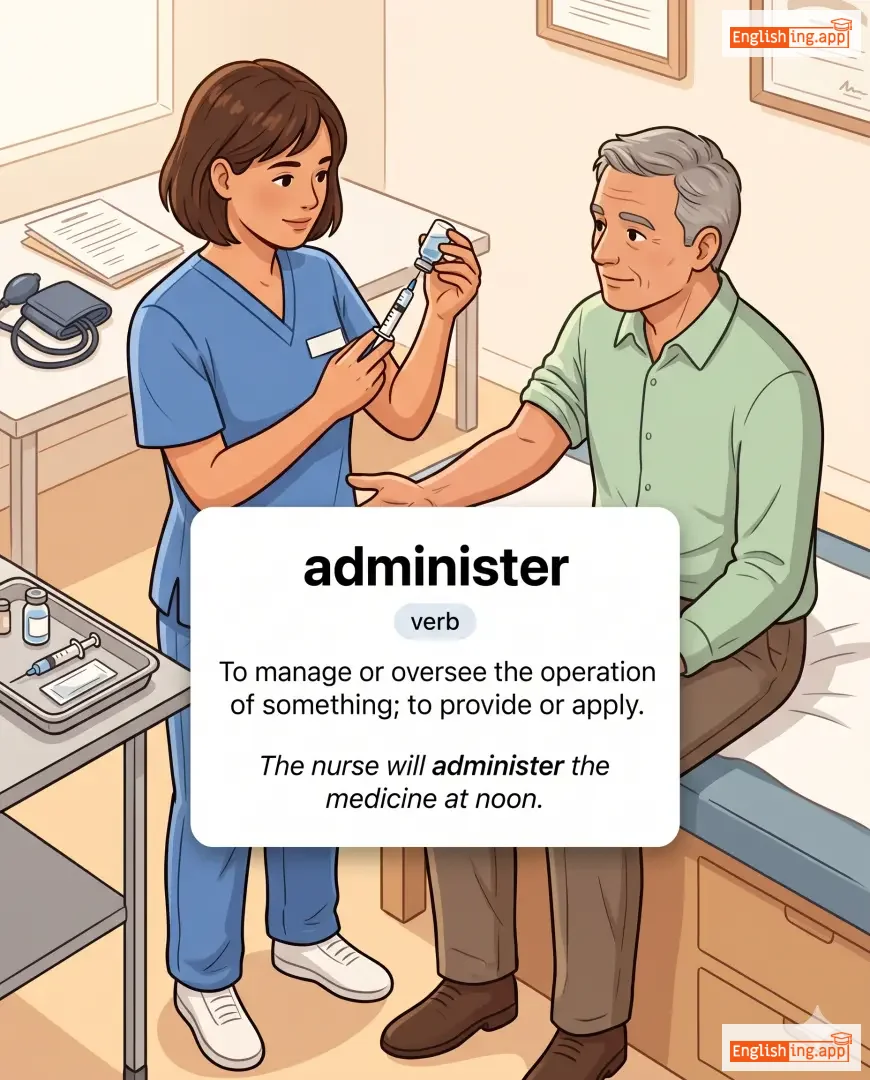
To manage or oversee the operation of something; to provide or apply.
••••••
|
The nurse will administer the medicine at noon.
护士将在中午施用药物。
••••••
|
护士将在中午施用药物。
Hushi jiang zai zhongwu shiyong yaowu.
••••••
|
administer justice
执行司法
••••••
|
To ensure that laws and fairness are upheld.
••••••
|
执行司法
Zhixing sifa
••••••
|
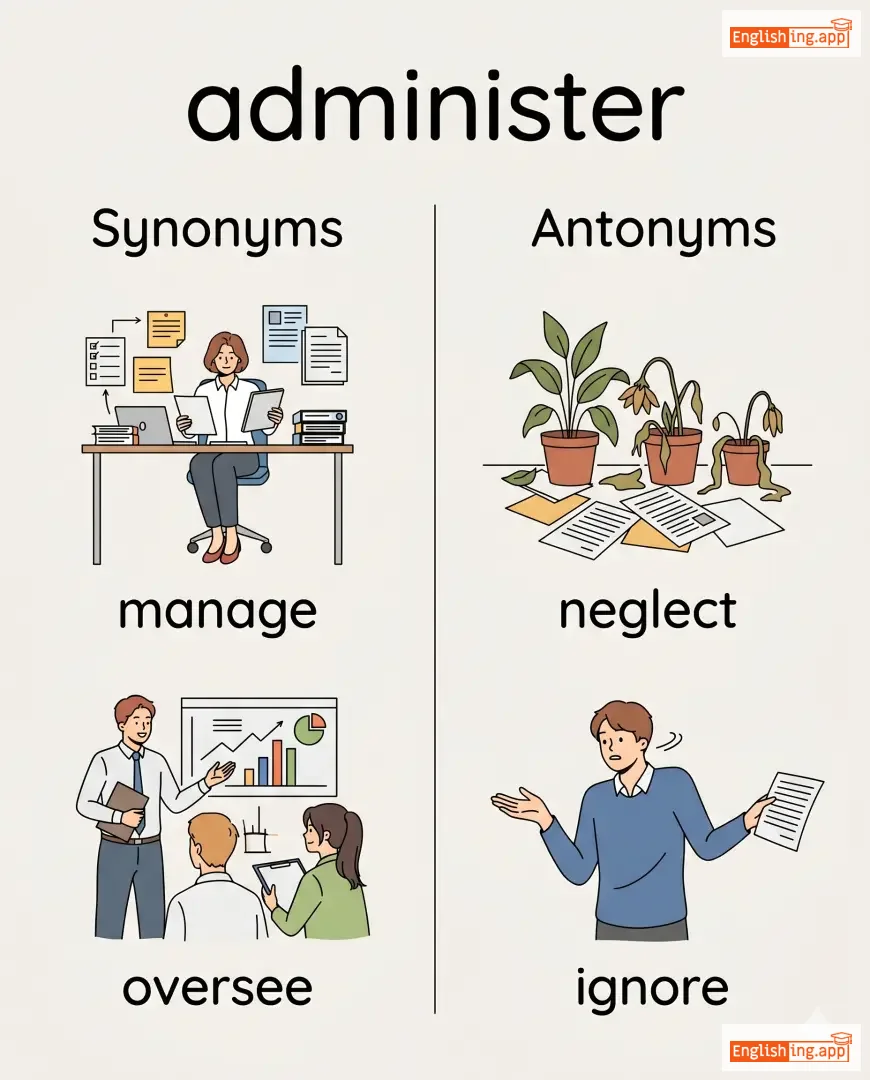
manage, oversee, control, execute, apply
••••••
|
neglect, ignore
••••••
|
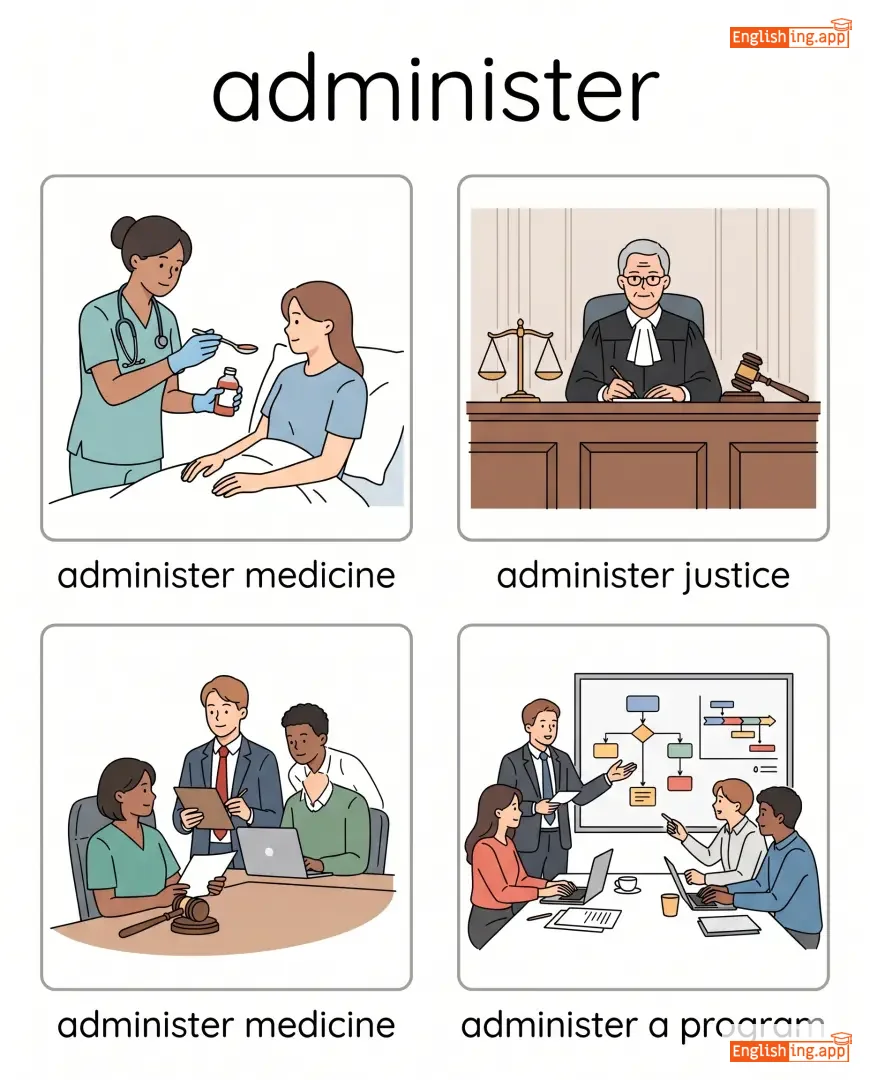
administer medicine, administer justice, administer a program, administer funds
••••••
|
Administer 就是行政,就像管理员管理一切。
••••••
|
|
#130
🗂️
|
/ədˈmɪnɪstreɪt/
verb
(阿德米尼斯特瑞特)
••••••
|
- •••••• |
管理
guanli
••••••
|
administrated
阿德米尼斯特瑞特德
••••••
|
administrated
阿德米尼斯特瑞特德
••••••
|
administrates
阿德米尼斯特瑞特斯
••••••
|
administrating
阿德米尼斯特瑞廷
••••••
|
to manage or supervise the execution of duties, laws, or resources; to formally give or apply something such as a test or medicine
••••••
|
The committee will administrate the new policy across all departments.
泽 康米提 威尔 阿德米尼斯特瑞特 泽 纽 波利西。
••••••
|
委员会将在所有部门管理这项新政策。
weiyuanhui jiang zai suoyou bumen guanli zhe xiang xin zhengce
••••••
|
administrate justice
阿德米尼斯特瑞特 正义
••••••
|
to carry out or enforce justice in a fair and lawful manner
••••••
|
执行正义
zhixing zhengyi
••••••
|
manage, administer, supervise, govern, oversee
••••••
|
neglect, mismanage
••••••
|
administrate a program, administrate duties, administrate resources, administrate policy
••••••
|
Administrate 就是 管理 guanli
••••••
|
|
#131
🏛️
|
/ədˌmɪnɪˈstreɪʃən/
noun
(行政管理)
••••••
|
- •••••• |
行政管理
xingzheng guanli
••••••
|
- •••••• | - •••••• | - •••••• | - •••••• |
The management or organization of a business, institution, or government.
••••••
|
The new administration introduced several reforms. |
新政府推出了若干改革。
xin zhengfu tuichu le ruogan gaige.
••••••
|
public administration |
The management of government affairs and policies.
••••••
|
公共行政
gonggong xingzheng
••••••
|
management, governance, supervision, leadership, control
••••••
|
mismanagement, neglect, chaos
••••••
|
school administration, government administration, business administration, administration office
••••••
|
行政管理,政府有序安排,所有事务井井有条!
••••••
|
|
#132
🏢
|
/ədˈmɪnɪstrətɪv/
adjective
(行政的)
••••••
|
|
行政的
xingzheng de
••••••
|
- •••••• | - •••••• | - •••••• | - •••••• |
relating to the management or organization of an institution or business
••••••
|
She handles all the administrative tasks in the office. |
她处理办公室的所有行政工作。
Ta chuli bangongshi de suoyou xingzheng gongzuo.
••••••
|
- •••••• | - •••••• | - •••••• |
managerial, executive, organizational, supervisory
••••••
|
non-managerial, subordinate
••••••
|
administrative staff, administrative work, administrative office, administrative system
••••••
|
Admin代表办公室,所以行政的意思是与办公室的管理相关 🏢
••••••
|
|
#133
🧑💼
|
/ədˈmɪnɪstreɪtər/
noun
••••••
|
- •••••• | - •••••• | - •••••• | - •••••• | - •••••• | - •••••• |
a person responsible for running or managing an organization or system
••••••
|
The school administrator implemented new policies for students. |
- •••••• | - •••••• | - •••••• | - •••••• |
manager, director, supervisor, executive, controller
••••••
|
employee, worker, subordinate
••••••
|
system administrator, school administrator, database administrator, network administrator
••••••
|
No •••••• |
|
#134
👏
|
/ˈædmərəbəl/
adjective
(艾德米勒)
••••••
|
- •••••• |
值得钦佩的
zhí dé qīn pèi de
••••••
|
- •••••• | - •••••• | - •••••• | - •••••• |
প্রশংসনীয়; চমৎকার;
••••••
|
Her dedication to helping others is truly admirable.
她帮助他人的奉献精神真是令人钦佩。
••••••
|
她帮助他人的奉献精神真是令人钦佩。
Tā bāngzhù tārén de fèngxiàn jīngshén zhēn shì lìng rén qīnpèi.
••••••
|
- •••••• | - •••••• | - •••••• |
praiseworthy, commendable, laudable, excellent
••••••
|
deplorable, despicable, contemptible, shameful
••••••
|
admirable qualities, admirable effort, admirable courage
••••••
|
钦佩来自那些做得非常出色的人。
••••••
|
|
#135
👏
|
/ˌædməˈreɪʃən/
noun
(阿德米雷申)
••••••
|
- •••••• |
钦佩
qinpei
••••••
|
- •••••• | - •••••• | - •••••• | - •••••• |
a feeling of respect, pleasure, or approval for someone or something
••••••
|
She felt great admiration for her teacher’s dedication.
她对老师的奉献充满了阿德米雷申。
••••••
|
她对老师的奉献充满了钦佩。
ta dui laoshi de fengxian chongman le qinpei
••••••
|
look at someone with admiration
带着钦佩地看
••••••
|
to view someone with respect and approval
••••••
|
带着钦佩地看
daizhe qinpei de kan
••••••
|
respect, esteem, appreciation, regard, praise
••••••
|
disdain, contempt, disapproval
••••••
|
deep admiration, mutual admiration, admiration for, express admiration
••••••
|
Admiration = 钦佩,心里佩服
••••••
|
|
#136
😍
|
/ədˈmaɪər/
verb
(艾德迈尔)
••••••
|
|
欣赏
xīnshǎng
••••••
|
admired
艾德迈尔德
••••••
|
admired
艾德迈尔德
••••••
|
admires
艾德迈尔斯
••••••
|
admiring
艾德迈林
••••••
|
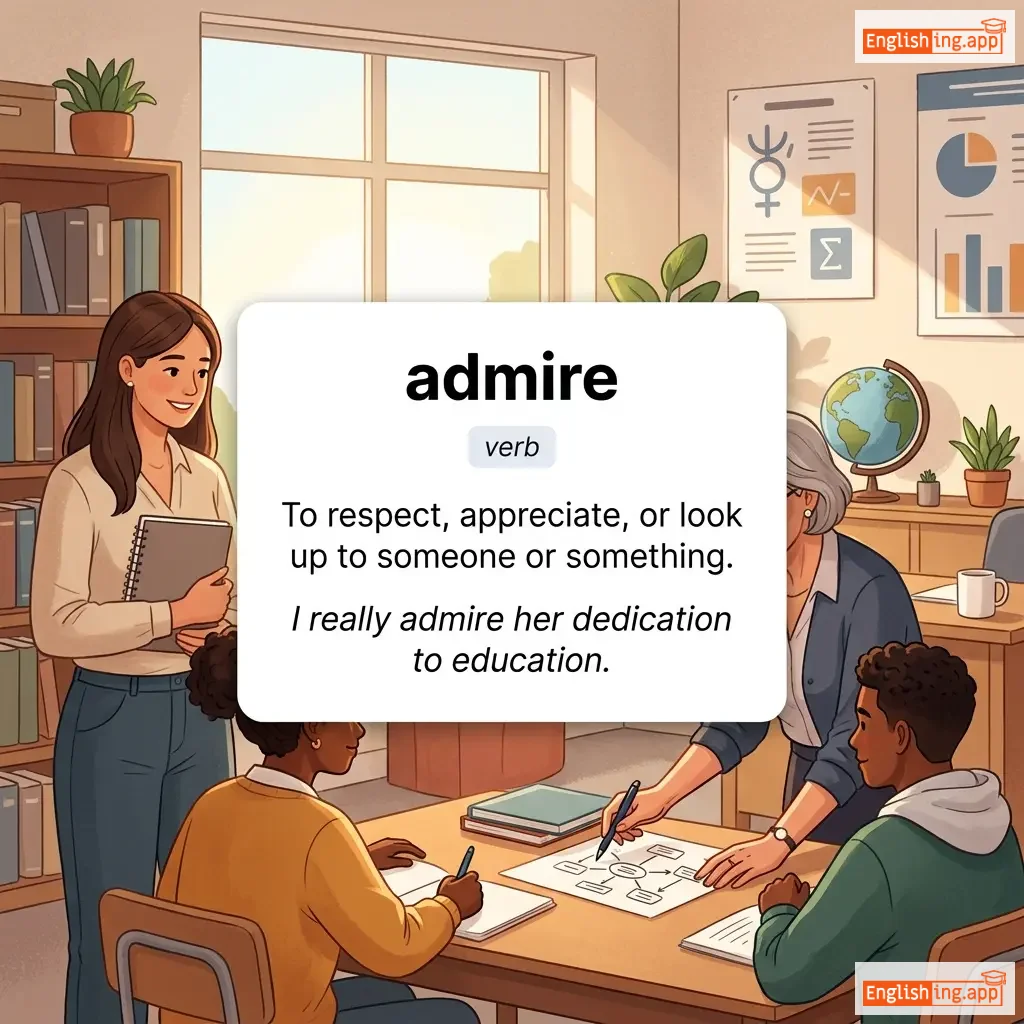
To respect, appreciate, or look up to someone or something.
••••••
|
I really admire her dedication to education.
我真的很欣赏她对教育的奉献。
••••••
|
我真的很欣赏她对教育的奉献。
Wǒ zhēn de hěn xīnshǎng tā duì jiàoyù de fèngxiàn.
••••••
|
admire from afar
远距离欣赏
••••••
|
To respect or like someone without approaching them directly.
••••••
|
远距离欣赏
yuǎn jùlí xīnshǎng
••••••
|
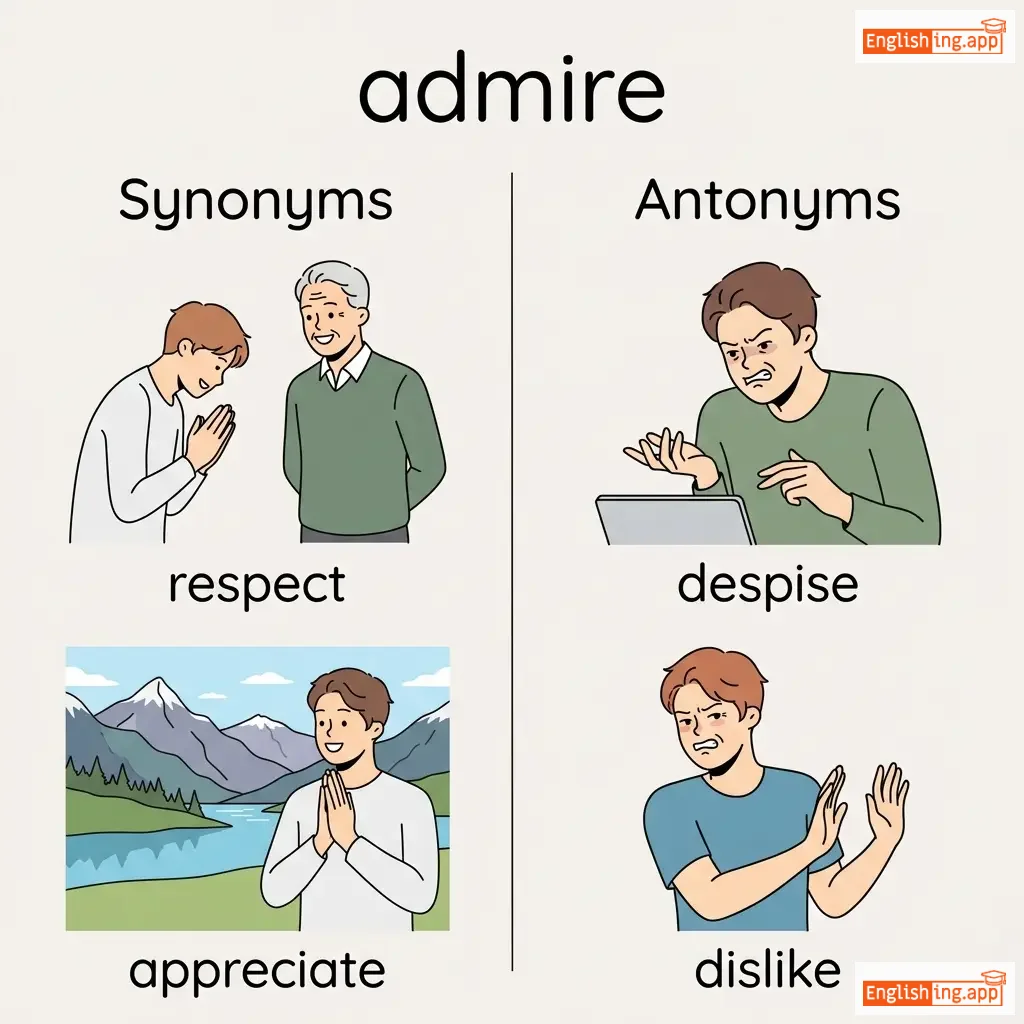
respect, appreciate, praise, value, esteem
••••••
|
despise, dislike, scorn
••••••
|
admire greatly, admire deeply, admire the beauty, admire courage
••••••
|
欣赏意味着 admire – 我欣赏她从远处的奉献。
••••••
|
|
#137
🎟️
|
/ədˈmɪʃən/
noun
(入场)
••••••
|
- •••••• |
入场
rùchǎng
••••••
|
- •••••• | - •••••• | - •••••• | - •••••• |
The process or fact of being allowed to enter a place or join an organization.
••••••
|
The admission fee to the museum is five dollars.
博物馆的入场费是五美元。
••••••
|
博物馆的入场费是五美元。
Bówùguǎn de rùchǎng fèi shì wǔ měiyuán.
••••••
|
free admission
免费入场
••••••
|
Entry without cost.
••••••
|
免费入场
miǎnfèi rùchǎng
••••••
|
entry, access, acceptance, enrollment
••••••
|
exclusion, denial, rejection
••••••
|
admission fee, admission test, admission process, admission ticket
••••••
|
Admission = 入场, 允许进入场所。
••••••
|
|
#138
🙋
|
/ədˈmɪt/
verb
(承认)
••••••
|
|
承认
chengren
••••••
|
admitted
承认过
••••••
|
admitted
承认过
••••••
|
admits
承认
••••••
|
admitting
承认中
••••••
|
To confess or acknowledge something as true; to allow entry.
••••••
|
He admitted that he had made a mistake.
他承认他犯了一个错误。
••••••
|
他承认他犯了一个错误。
Tā chéngrèn tā fànle yīgè cuòwù.
••••••
|
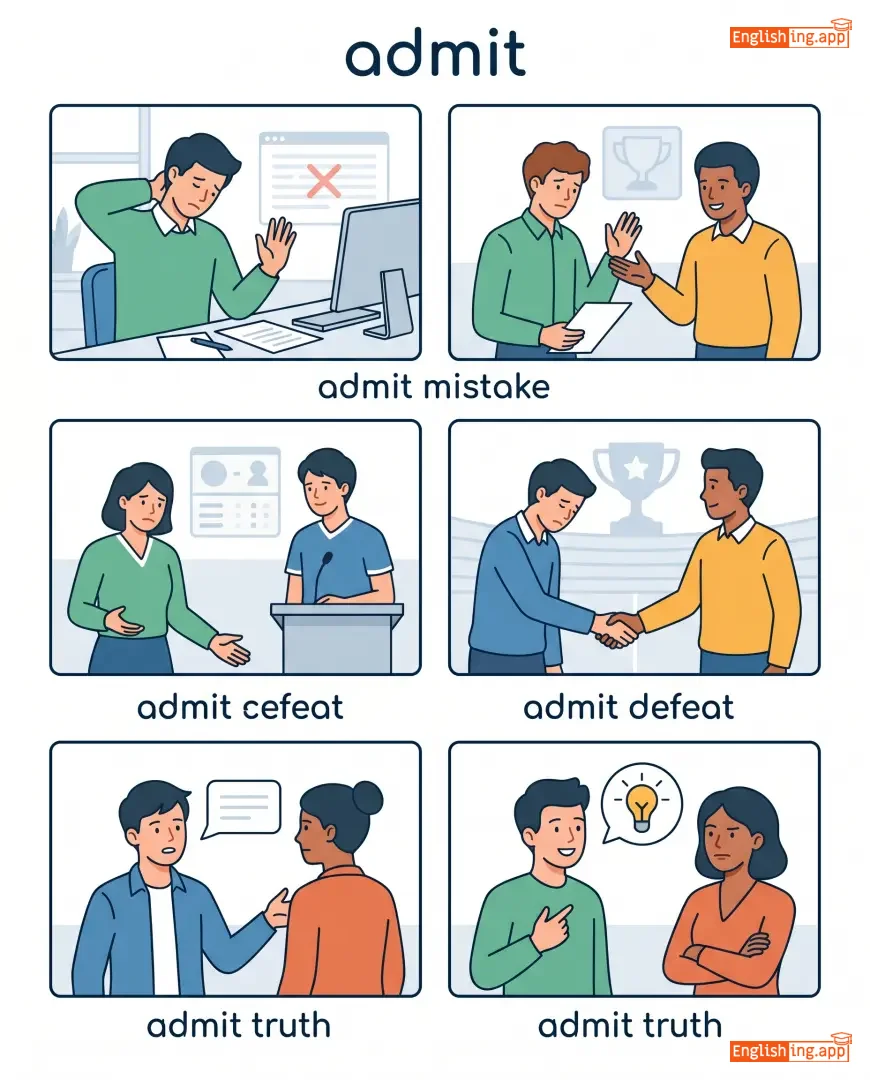
admit defeat
承认失败
••••••
|
To accept that you have failed.
••••••
|
承认失败
Chéngrèn shībài
••••••
|
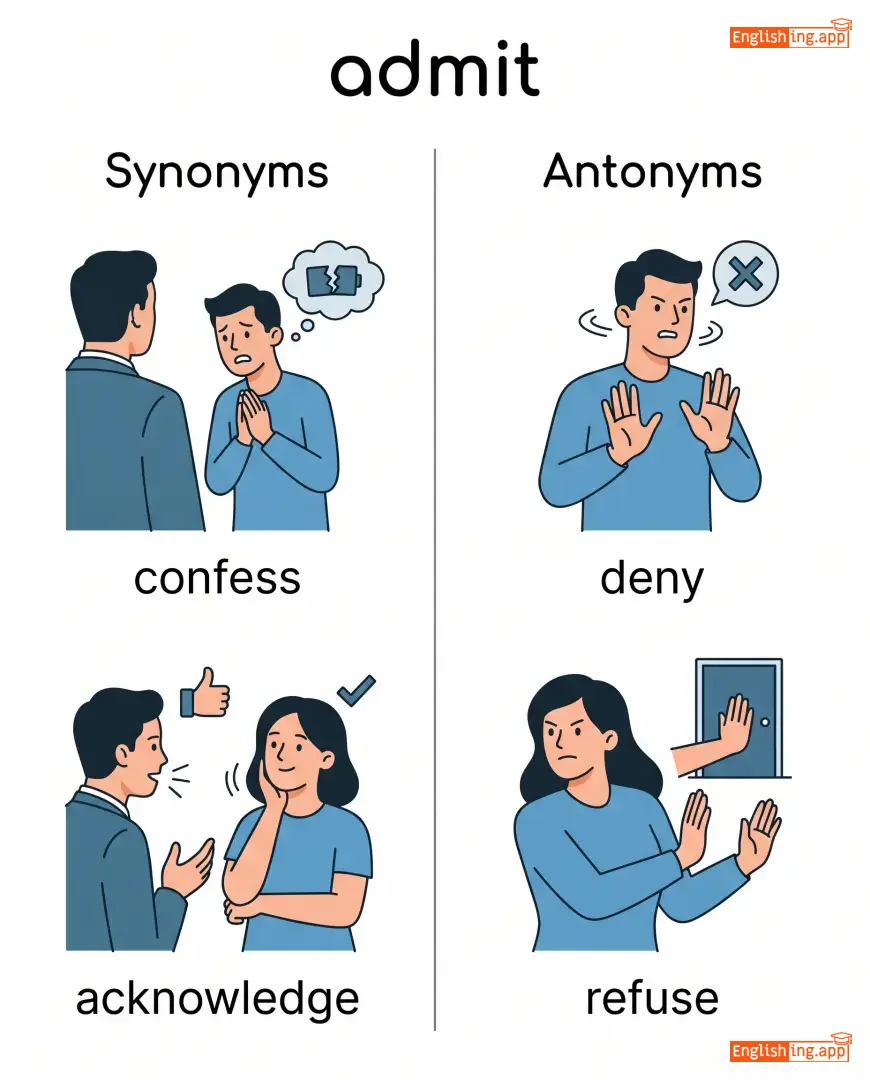
confess, acknowledge, accept, allow, grant
••••••
|
deny, refuse, reject
••••••
|
admit mistake, admit defeat, admit truth, admit into
••••••
|
承认就是接受或者允许,像是承认错误一样。
••••••
|
|
#139
🧑🎓
|
/ˌædəˈlɛsənt/
noun/adjective
(青少年)
••••••
|
- •••••• |
青少年
qīngshàonián
••••••
|
- •••••• | - •••••• | - •••••• | - •••••• |
A young person in the process of developing from a child into an adult.
••••••
|
Adolescents often experience rapid physical and emotional changes. |
青少年常常经历快速的身体和情感变化。
qīngshàonián chángcháng jīnglì kuàisù de shēntǐ hé qínggǎn biànhuà.
••••••
|
- •••••• | - •••••• | - •••••• |
teenager, youth, minor, juvenile
••••••
|
adult, mature
••••••
|
adolescent behavior, adolescent years, adolescent development, adolescent health
••••••
|
Adolescent = 青少年,正在从儿童变成成年人。
••••••
|
|
#140
👨👩👧
|
/əˈdɒpt/
verb
(领养)
••••••
|
|
收养
shouyang
••••••
|
adopted
领养了
••••••
|
adopted
领养了
••••••
|
adopts
领养
••••••
|
adopting
领养中
••••••
|
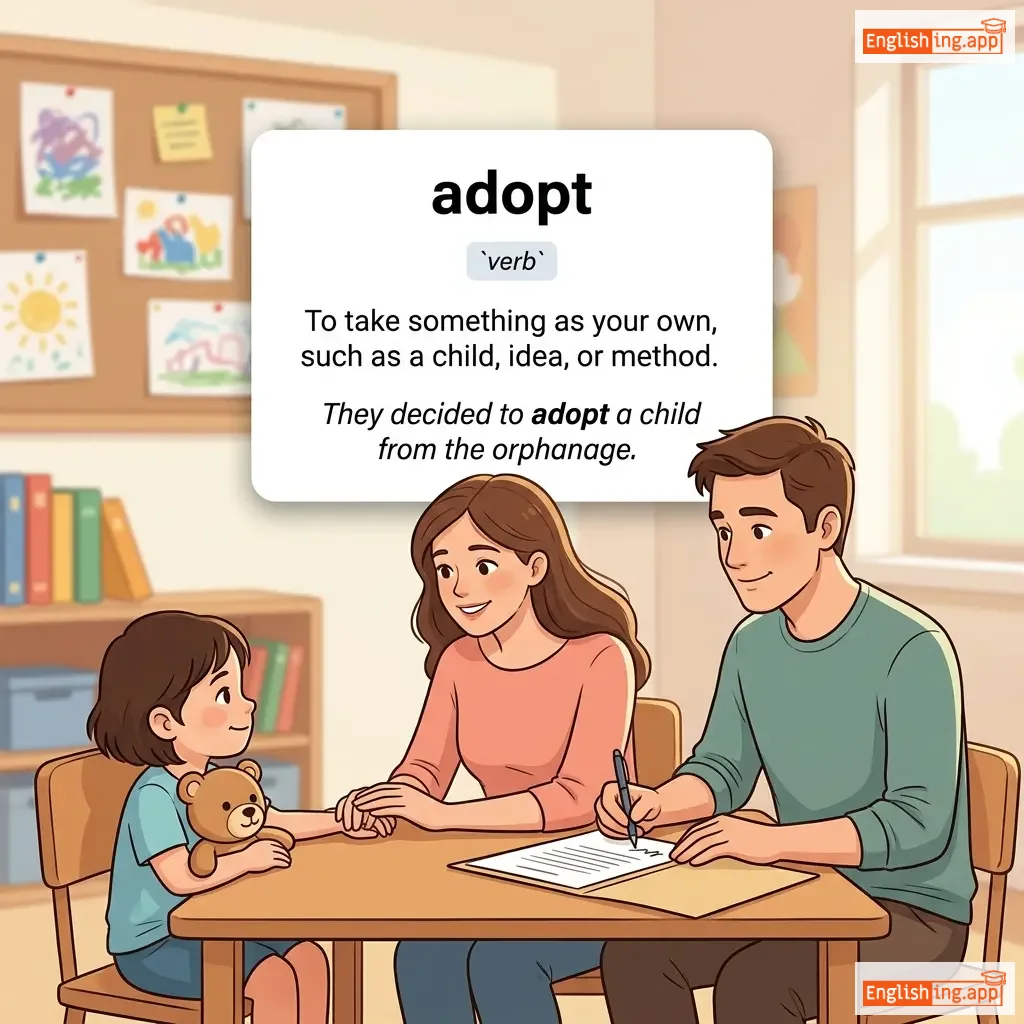
To take something as your own, such as a child, idea, or method.
••••••
|
They decided to adopt a child from the orphanage.
他们决定从孤儿院收养一个孩子。
••••••
|
他们决定从孤儿院收养一个孩子。
Tāmen juédìng cóng gū'ér yuàn shōuyǎng yīgè háizi.
••••••
|
adopt a policy
采纳政策
••••••
|
To formally accept and begin to use a policy.
••••••
|
采纳政策
cainà zhèngcè
••••••
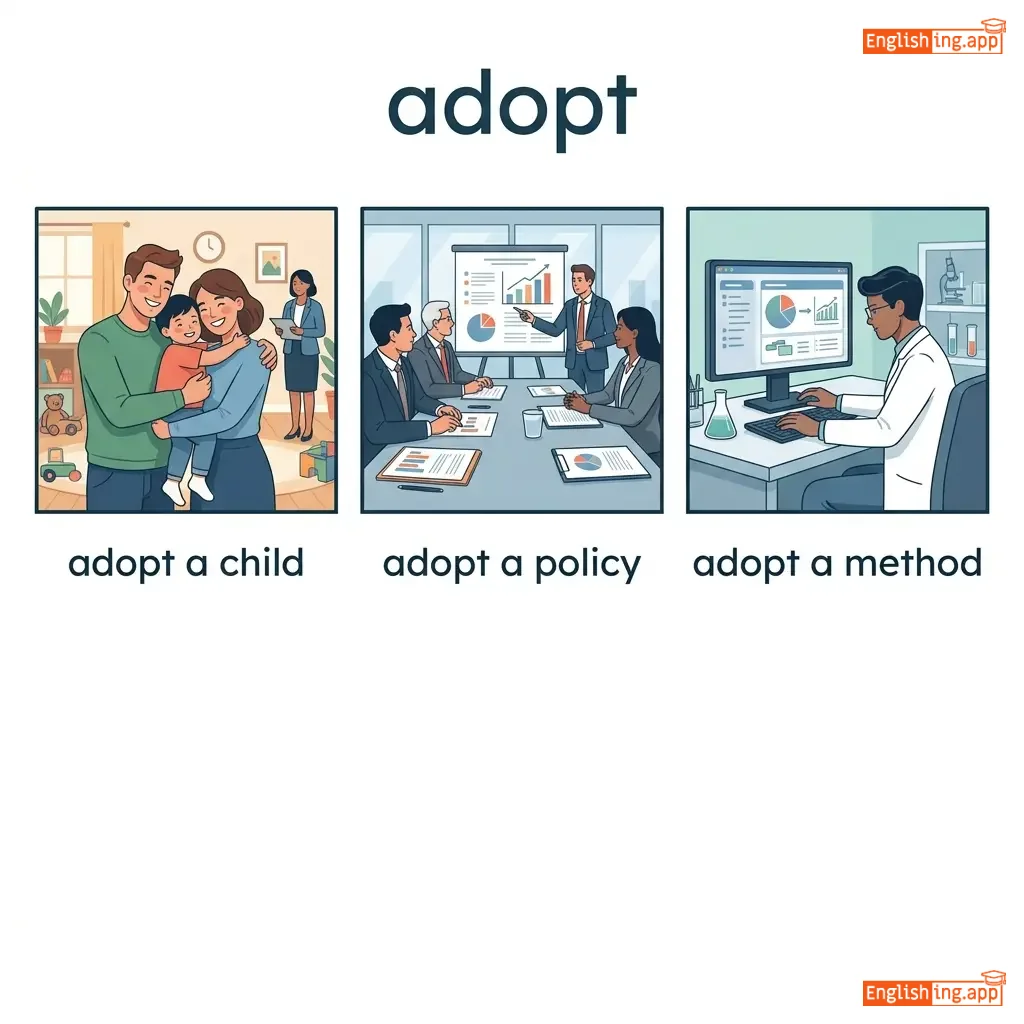
|
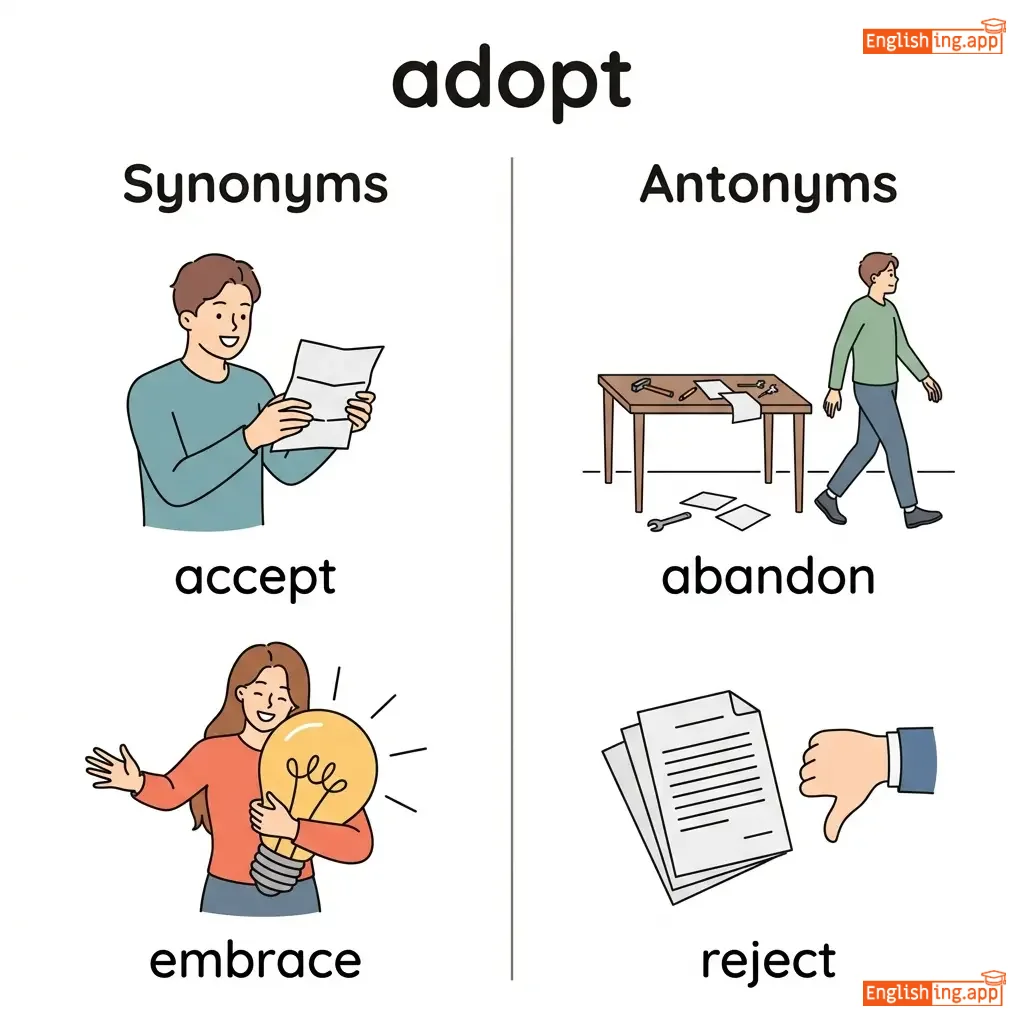
accept, embrace, foster, implement, take on
••••••
|
abandon, reject, refuse
••••••
|
adopt a child, adopt a policy, adopt a method, adopt a strategy
••••••
|
Adopt 是收养的意思 – A dopt (A adopt) 一家人.
••••••
|
|
#141
👶
|
/əˈdɒpʃən/
noun
(收养)
••••••
|
|
收养
shouyang
••••••
|
- •••••• | - •••••• | - •••••• | - •••••• |
the act of legally taking another's child and bringing it up as one's own, or accepting and starting to use something new
••••••
|
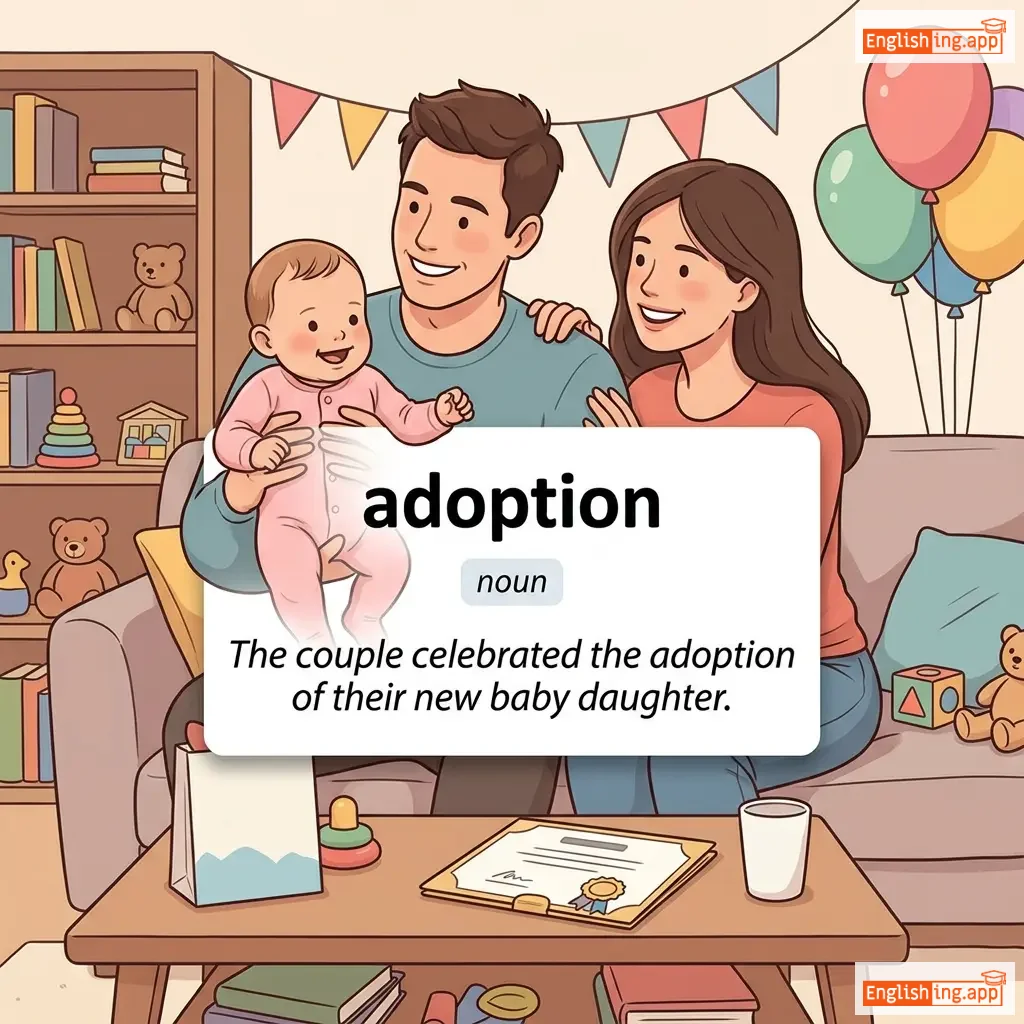
The couple celebrated the adoption of their new baby daughter.
这对夫妇庆祝了他们的新女儿的收养。
••••••
|
这对夫妇庆祝了他们的新女儿的收养。
Zhe dui fu fu qing zhu le ta men de xin nv er de shou yang.
••••••
|
put up for adoption
交给别人收养
••••••
|
to make a child available to be adopted by someone else
••••••
|
交给别人收养
Jiao gei bie ren shou yang
••••••
|
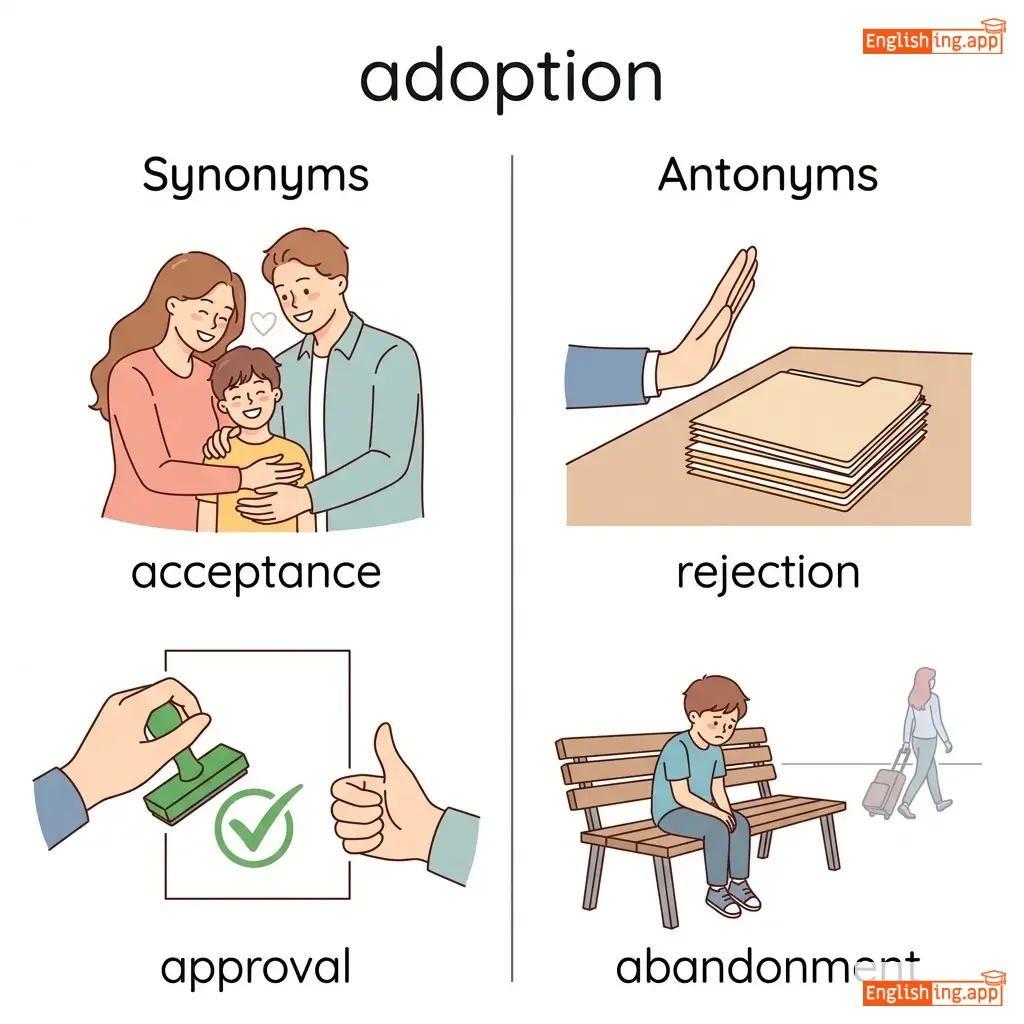
acceptance, approval, embrace, fostering, implementation
••••••
|
rejection, abandonment, refusal
••••••
|
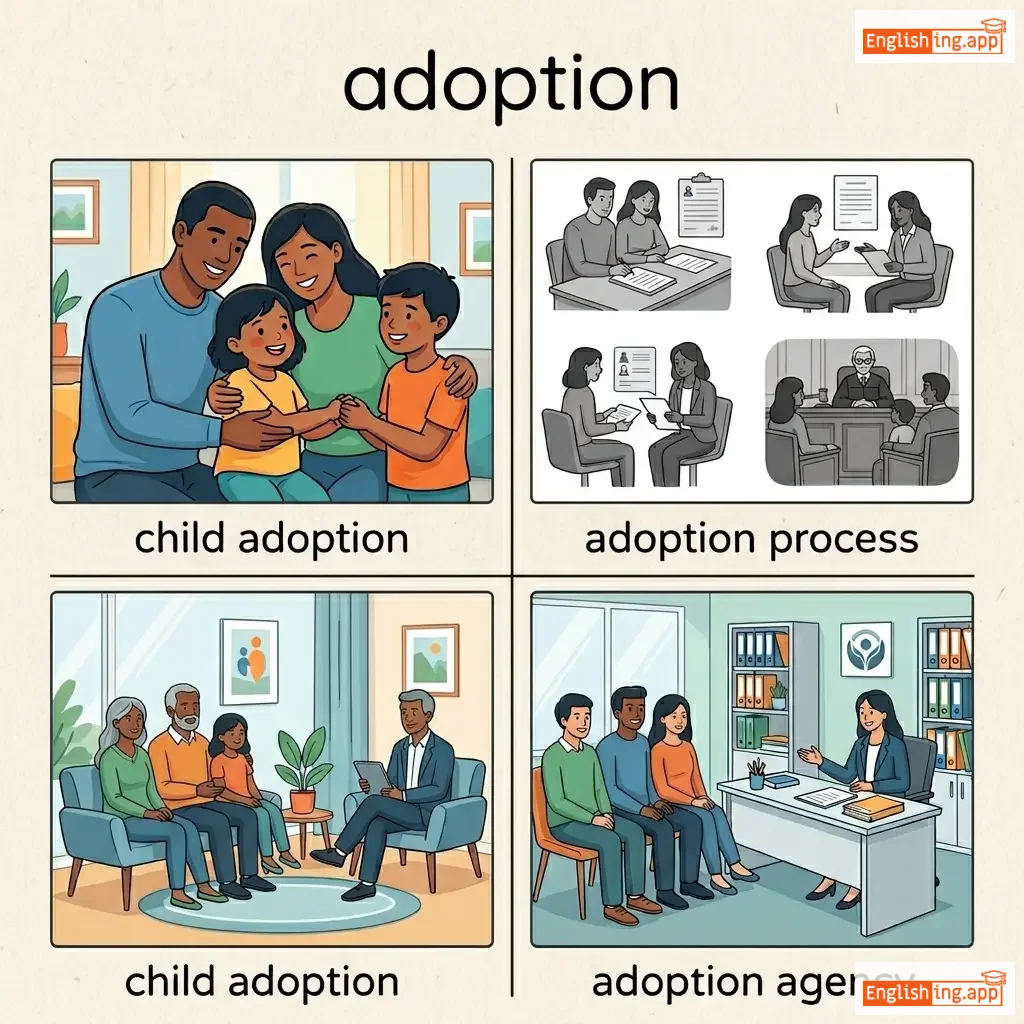
child adoption, adoption process, adoption agency, international adoption
••••••
|
Adoption = Add a new option — 收养一个孩子到你的家庭里。
••••••
|
|
#142
👨👩👧
|
/əˈdɒptɪv/
adjective
(阿多普提夫)
••••••
|
- •••••• |
收养的
shouyang de
••••••
|
- •••••• | - •••••• | - •••••• | - •••••• |
relating to the adoption of a child or the act of taking something as one’s own
••••••
|
She grew up in a loving adoptive family.
西 格鲁 阿普 因 阿 拉文 阿多普提夫 发米里
••••••
|
她在一个充满爱的收养家庭中长大。
ta zai yi ge chongman ai de shouyang jiating zhong zhangda
••••••
|
- •••••• | - •••••• | - •••••• |
foster, adoptable, surrogate, substitute, non-biological
••••••
|
biological, natural, birth
••••••
|
adoptive parents, adoptive family, adoptive child, adoptive mother, adoptive father
••••••
|
Adoptive = 收养的,收养孩子
••••••
|
|
#143
❤️
|
/əˈdɔːr/
verb
(阿多尔)
••••••
|
- •••••• |
崇拜
chóngbài
••••••
|
adored
阿多尔德
••••••
|
adored
阿多尔德
••••••
|
adores
阿多尔斯
••••••
|
adoring
阿多尔英
••••••
|
to love deeply and respect highly
••••••
|
She adores her little sister.
她非常爱她的小妹妹。
••••••
|
她非常爱她的小妹妹。
Tā fēicháng ài tā de xiǎo mèimei.
••••••
|
adore the ground someone walks on
崇拜某人走过的地方
••••••
|
to idolize or love someone deeply
••••••
|
崇拜某人走过的地方
chóngbài mǒu rén zǒu guò de dìfāng
••••••
|
love, cherish, admire, idolize, treasure
••••••
|
hate, despise, detest
••••••
|
adore someone, adore the way, absolutely adore, adore the idea
••••••
|
崇拜就像你爱得如此深,就像他们走过的每一步都值得你崇拜。
••••••
|
|
#144
📢
|
/ædz/
noun (plural)
(艾兹)
••••••
|
- •••••• |
广告
guanggao
••••••
|
- •••••• | - •••••• | - •••••• | - •••••• |
short for advertisements; promotional messages intended to sell products or services
••••••
|
I often skip ads when watching videos online.
我在线看视频时经常跳过艾兹。
••••••
|
我在线看视频时经常跳过广告。
wo zai xian kan shipin shi jingchang tiaoguo guanggao
••••••
|
targeted ads
定向艾兹
••••••
|
advertisements shown to people based on their interests or behavior
••••••
|
定向广告
dingxiang guanggao
••••••
|
advertisements, commercials, promos, publicity
••••••
|
editorial content, information
••••••
|
online ads, TV ads, display ads, targeted ads, paid ads
••••••
|
Ads 就是 广告,视频前常见
••••••
|
|
#145
🙌
|
/ˈædjʊˌleɪt/
verb
(艾久雷特)
••••••
|
- •••••• |
过度奉承
guòdù fèngchéng
••••••
|
adulated
艾久雷特德
••••••
|
adulated
艾久雷特德
••••••
|
adulates
艾久雷特斯
••••••
|
adulating
艾久雷特英
••••••
|
to praise or flatter excessively
••••••
|
The fans adulated the actor after his performance.
粉丝们在演员的表演后赞美了他。
••••••
|
粉丝们在演员的表演后赞美了他。
Fěnsīmen zài yǎnyuán de biǎoyǎn hòu zànměi le tā.
••••••
|
- •••••• | - •••••• | - •••••• |
flatter, praise, idolize, glorify
••••••
|
criticize, insult, scorn
••••••
|
adulate endlessly, adulate someone, constantly adulate
••••••
|
Adulate = Add + ultra = 过度奉承
••••••
|
|
#146
🧑
|
/ˈædʌlt/ or /əˈdʌlt/
noun
(成人)
••••••
|
- •••••• |
成人
chéngrén
••••••
|
- •••••• | - •••••• | - •••••• | - •••••• |
A fully grown or developed person; mature.
••••••
|
Children must be accompanied by an adult. |
儿童必须由成年人陪同。
Értóng bìxū yóu chéngrén péitóng.
••••••
|
young adult |
A person in their late teens or early twenties.
••••••
|
年轻成年人
niánqīng chéngrén
••••••
|
grown-up, mature person, elder, senior
••••••
|
child, minor, infant
••••••
|
adult education, adult content, adult life, adult supervision
••••••
|
成人意味着完全成熟,就像电影中的成人票。
••••••
|
|
#147
🥛
|
/əˈdʌltəreɪt/
verb
(篡改)
••••••
|
|
掺假
chānjiǎ
••••••
|
adulterated
篡改过
••••••
|
adulterated
篡改过
••••••
|
adulterates
篡改
••••••
|
adulterating
篡改中
••••••
|
to make something poorer in quality by adding another substance, usually of lower quality
••••••
|
The company was fined for adulterating its products with cheap chemicals.
该公司因将其产品篡改成便宜的化学品而被罚款。
••••••
|
该公司因将其产品篡改成便宜的化学品而被罚款。
Gāi gōngsī yīn jiāng qí chǎnpǐn cuàngǎi chéng piányí de huàxué pǐn ér bèi fákuǎn.
••••••
|
- •••••• | - •••••• | - •••••• |
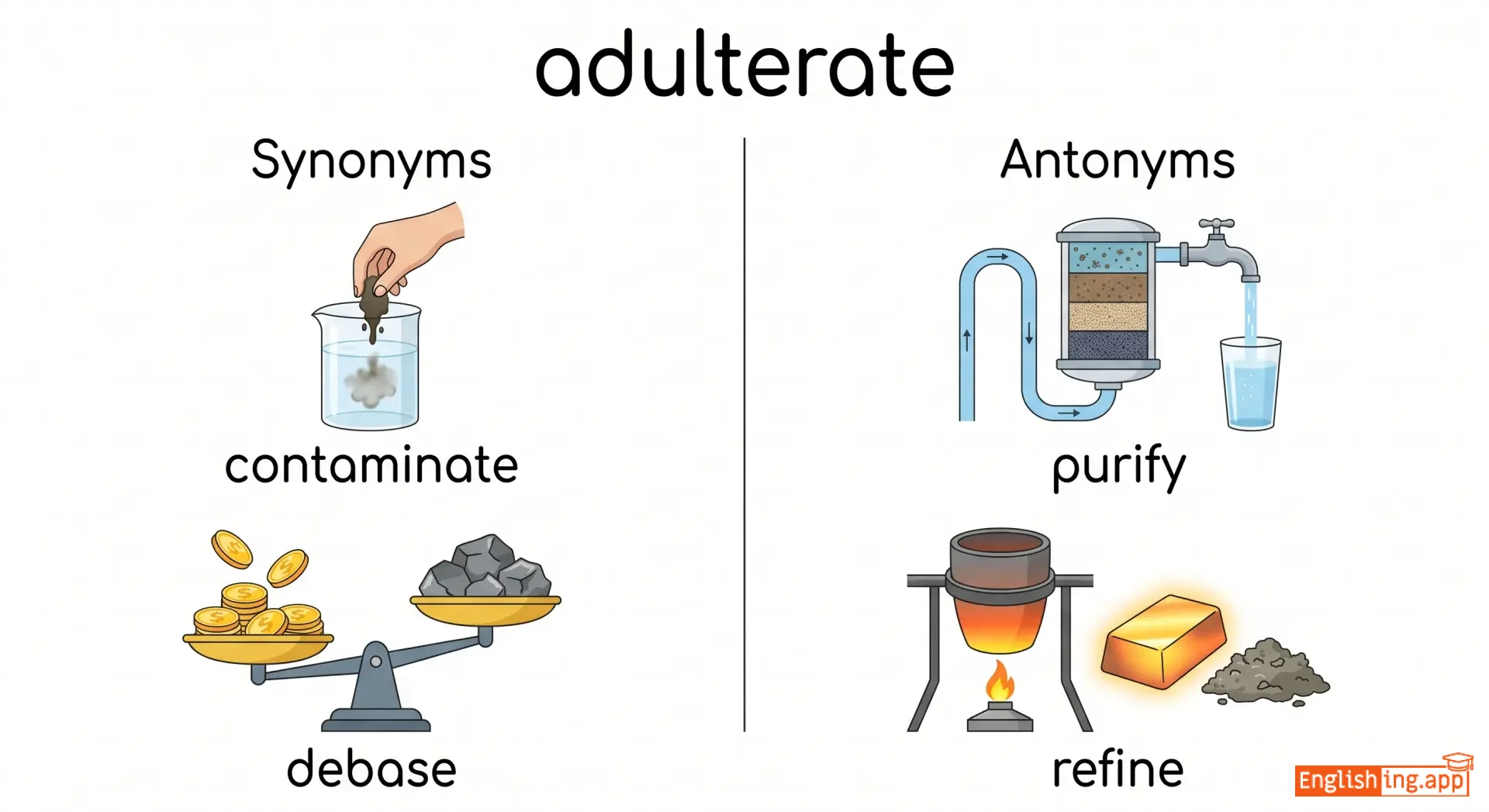
contaminate, debase, dilute, taint, spoil
••••••
|
purify, refine, cleanse
••••••
|
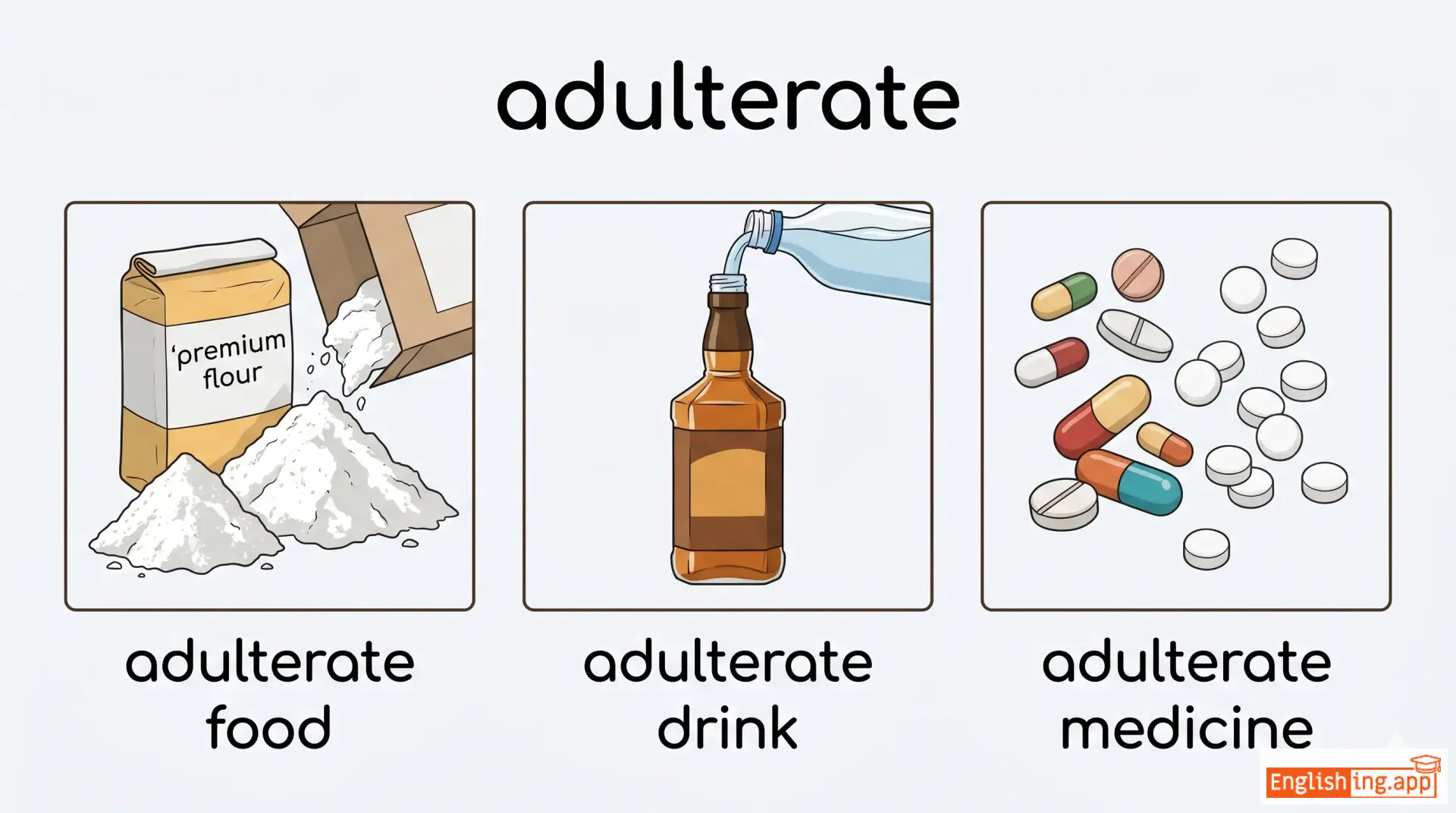
adulterate food, adulterate drink, adulterate medicine
••••••
|
篡改加上便宜的化学品 - adulterate就是掺假
••••••
|
|
#148
⏩
|
/ədˈvæns/
verb
(ædvæns)
••••••
|
|
前进
qianjin
••••••
|
advanced
ædvænst
••••••
|
advanced
ædvænst
••••••
|
advances
ædvænsəz
••••••
|
advancing
ædvænsɪŋ
••••••
|
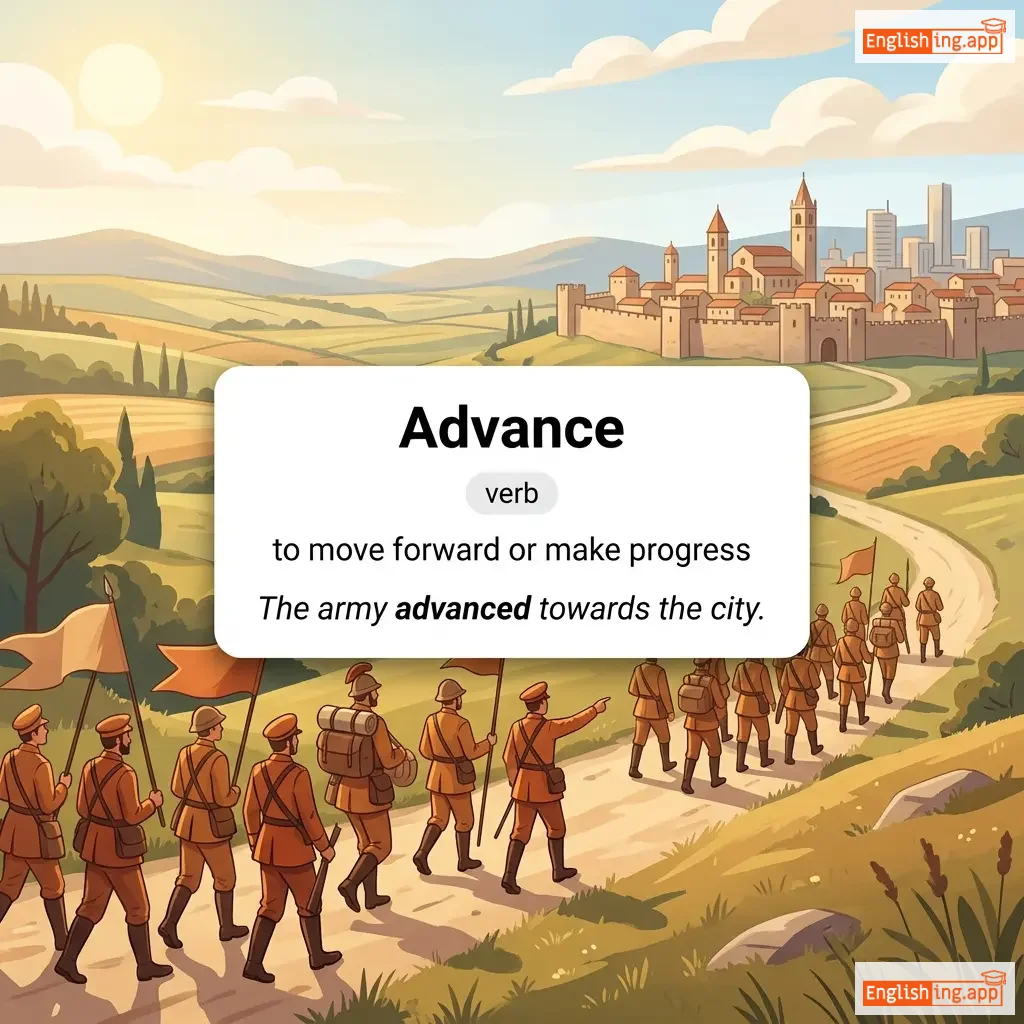
to move forward or make progress
••••••
|
The army advanced towards the city.
军队向城市前进。
••••••
|
军队向城市前进。
Jundui xiang chengshi qianjin.
••••••
|
advance notice
提前通知
••••••
|
prior information given before an event happens
••••••
|
提前通知
tiqian tongzhi
••••••
|
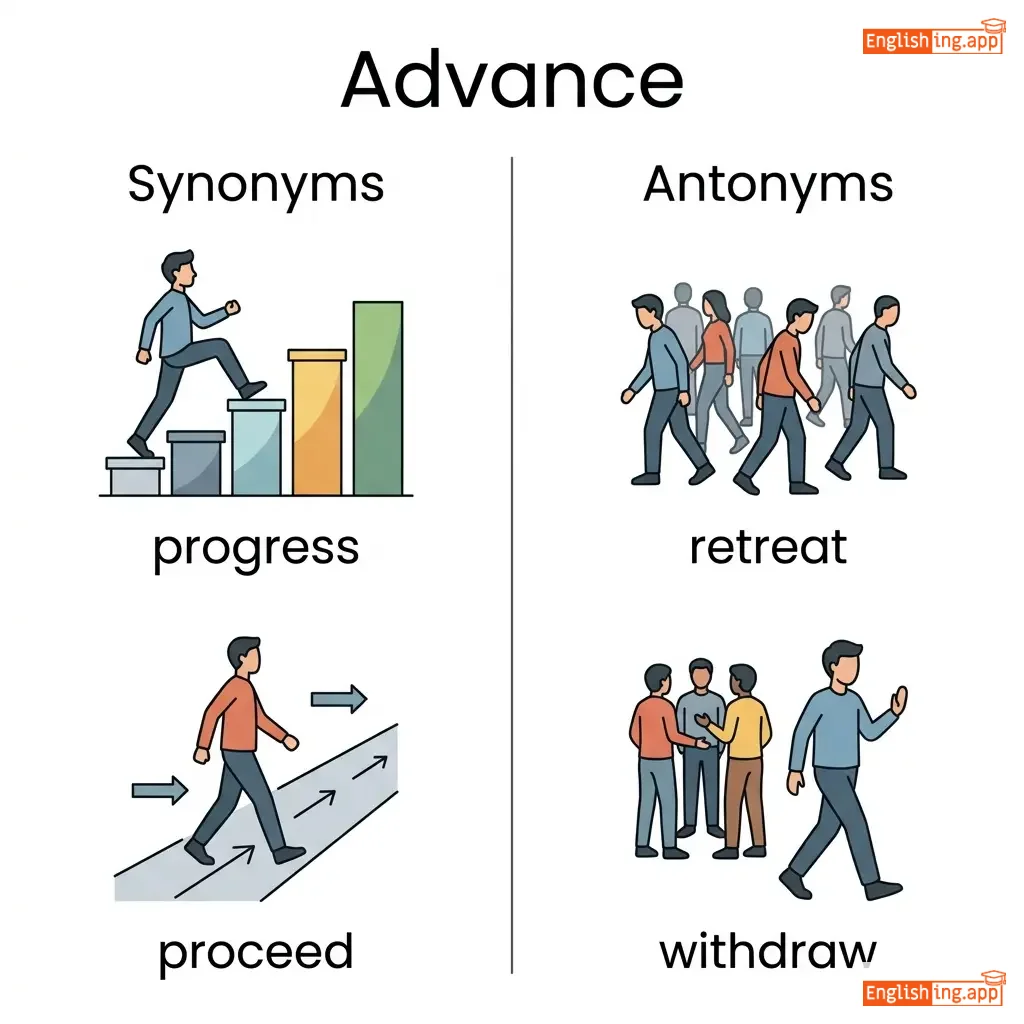
progress, proceed, promote, improve, forward
••••••
|
retreat, withdraw, regress
••••••
|
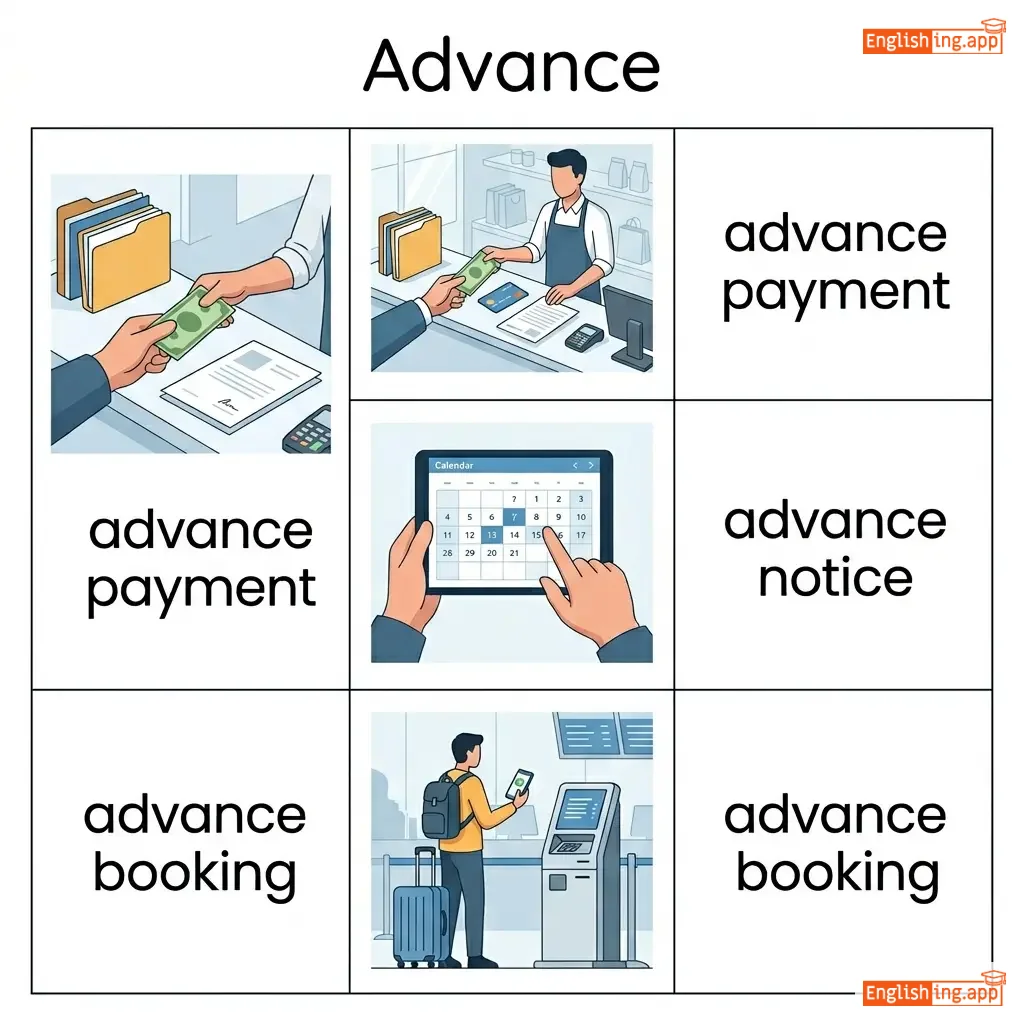
advance payment, advance notice, advance booking, technological advance
••••••
|
Advance 代表前进—想象“提前一步”的进展。
••••••
|
|
#149
🚀
|
/ədˈvænst/
adjective
(ādvānsd)
••••••
|
- •••••• |
先进
xianjin
••••••
|
- •••••• | - •••••• | - •••••• | - •••••• |
highly developed or complex
••••••
|
He is studying an advanced level of mathematics. |
他正在学习高级数学。
Tā zhèngzài xuéxí gāojí shùxué.
••••••
|
advanced technology |
highly developed and modern technology
••••••
|
先进技术
xiānjìn jìshù
••••••
|
sophisticated, developed, progressive, modern
••••••
|
basic, simple, primitive
••••••
|
advanced level, advanced stage, advanced degree, advanced course
••••••
|
Advanced = 先进。想想 'Advanced course' 是比较难且复杂的课程。
••••••
|
|
#150
💡
|
/ədˈvæntɪdʒ/
noun
(āi dé wán tè)
••••••
|
- •••••• |
优势
you shi
••••••
|
- •••••• | - •••••• | - •••••• | - •••••• |
a condition or circumstance that puts one in a favorable position
••••••
|
Having strong communication skills is a great advantage in business. |
拥有强大的沟通技巧是商业中的一大优势。
Yong you qiang da de gou tong ji qiao shi shang ye zhong de yi da you shi.
••••••
|
take advantage of |
to make good use of something
••••••
|
利用优势
li yong you shi
••••••
|
benefit, edge, asset, gain, upper hand
••••••
|
disadvantage, drawback, handicap
••••••
|
competitive advantage, great advantage, take advantage, clear advantage
••••••
|
Advantage 在中文里是'优势'—'Ad van' 让你领先,绝对是优势!
••••••
|
Vocabulary Quiz
Test your vocabulary by matching words with their translations or meanings.
Login to take the quiz
Comments (0)
Share your thoughts and join the discussion.
Join the discussion by logging in
Login to CommentNo comments yet
Be the first to share your thoughts!