







Swipe left or right, or use the buttons. Tap image to zoom.
例句翻译
单词
Lesson 109Lesson 109 - 遮罩切换
|
表情符号
|
单词 | Images | 翻译 | 过去时 | 过去分词 | 第三人称单数 | 动名词 | 含义 | 例句 | 例句翻译 | 示例表达 | 示例表达含义 | 示例表达翻译 | 同义词 | 反义词 | 搭配词 | 助记符 |
|---|---|---|---|---|---|---|---|---|---|---|---|---|---|---|---|---|---|
|
#5175
⚖️
|
/ˈtraɪ.əl/
noun
(审判)
••••••
|
- •••••• |
审判; 测试
shenpan; ceshi
••••••
|
- •••••• | - •••••• | - •••••• | - •••••• |
a formal examination of evidence in a court; a test of performance or quality
••••••
|
The murder trial lasted for three weeks in the county courthouse. |
谋杀审判在县法院持续了三周。
mousha shenpan zai xian fayuan chixu le san zhou.
••••••
|
- •••••• | - •••••• | - •••••• |
hearing, case, lawsuit, test, examination
••••••
|
acquittal, dismissal, settlement
••••••
|
criminal trial, fair trial, trial period, trial run
••••••
|
审判 (court trial) 和测试 (test)
••••••
|
|
#5176
🏹
|
/ˈtraɪbəl/
adjective
(tribal)
••••••
|
- •••••• |
部落的
bùluò de
••••••
|
- •••••• | - •••••• | - •••••• | - •••••• |
relating to a tribe or tribes, especially indigenous people
••••••
|
The tribal community has preserved its culture for centuries. |
部落社区已经保存了他们的文化几个世纪。
Bùluò shèqū yǐjīng bǎocúnle tāmen de wénhuà jǐ gè shìjì.
••••••
|
tribal conflict |
fighting or disagreement between tribes
••••••
|
部落冲突
Bùluò chōngtú
••••••
|
ethnic, native, cultural, aboriginal, communal
••••••
|
urban, modern
••••••
|
tribal community, tribal leader, tribal area, tribal rights
••••••
|
Tribe 到 Tribal – 部落相关 🌿
••••••
|
|
#5177
👥
|
/traɪb/
noun
(chuái bù)
••••••
|
- •••••• |
部落
bùluò
••••••
|
- •••••• | - •••••• | - •••••• | - •••••• |
a social group consisting of people with common customs, language, and culture
••••••
|
The tribe lived in harmony with nature. |
部落与大自然和谐共处。
Bùluò yǔ dà zìrán héxié gòngchǔ.
••••••
|
- •••••• | - •••••• | - •••••• |
clan, ethnic group, people, nation
••••••
|
individual, outsider
••••••
|
tribal community, indigenous tribe, tribal leader
••••••
|
部落是一个由共同文化和传统组成的大家庭,彼此紧密相连。
••••••
|
|
#5178
🎖️
|
/ˈtrɪbjuːt/
noun
(tribyut)
••••••
|
|
致敬
zhìjìng
••••••
|
- •••••• | - •••••• | - •••••• | - •••••• |
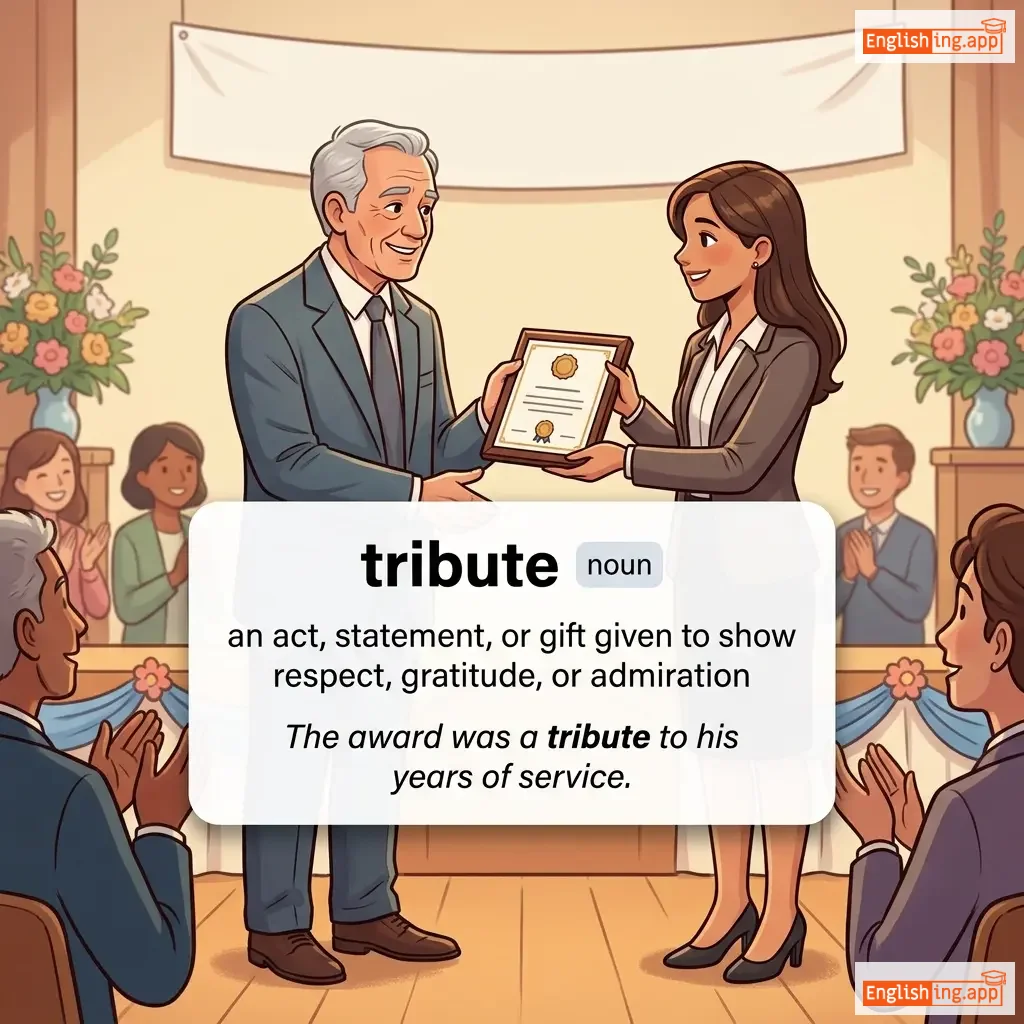
an act, statement, or gift given to show respect, gratitude, or admiration
••••••
|
The award was a tribute to his years of service. |
奖项是对他多年服务的致敬。
Jiǎngxiàng shì duì tā duōnián fúwù de zhìjìng.
••••••
|
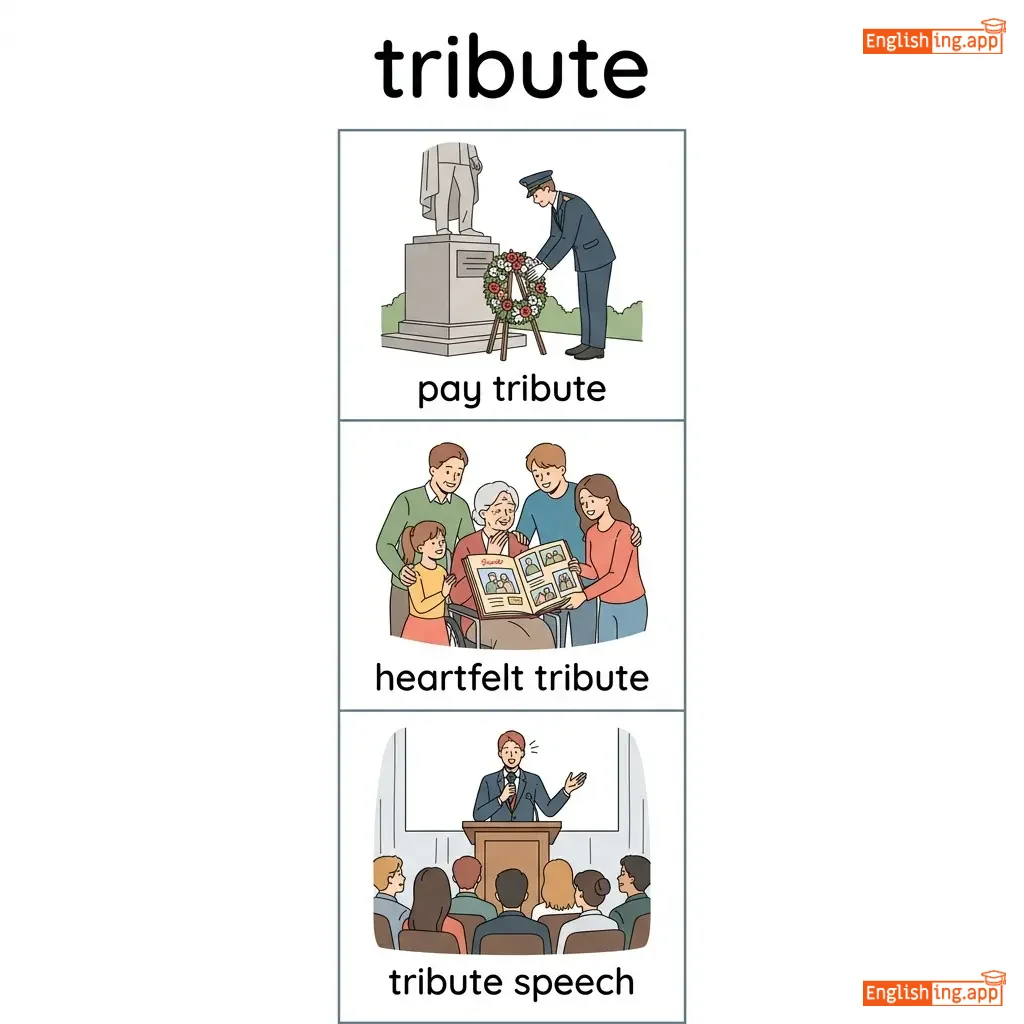
pay tribute |
to show respect or admiration
••••••
|
致敬
zhìjìng
••••••
|
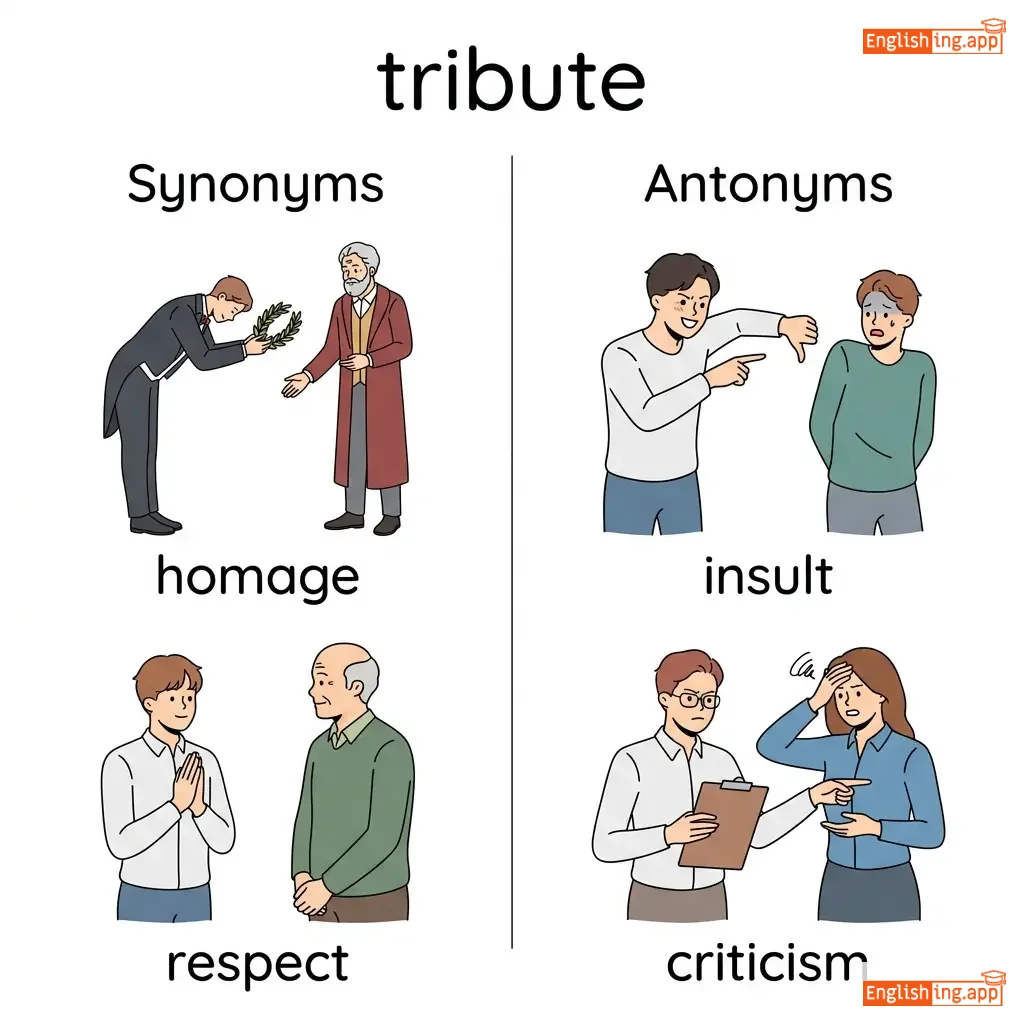
homage, respect, salute, honor, recognition
••••••
|
insult, criticism
••••••
|
pay tribute, heartfelt tribute, tribute speech, floral tribute
••••••
|
致敬意味着‘Tree-boot’——想象你在树下表示致敬。
••••••
|
|
#5179
🎩
|
/trɪk/
noun
(trik)
••••••
|
- •••••• |
把戏
bǎxì
••••••
|
- •••••• | - •••••• | - •••••• | - •••••• |
a cunning or deceitful action or plan intended to mislead or deceive someone
••••••
|
She pulled a trick to win the game. |
她用了一个把戏来赢得游戏
Tā yòngle yī ge bǎxì lái yíngdé yóuxì
••••••
|
pull a trick |
to deceive someone cleverly
••••••
|
耍把戏
Shuǎ bǎxì
••••••
|
deception, hoax, ruse, scam
••••••
|
honesty, sincerity
••••••
|
trick or treat, play a trick, magic trick
••••••
|
Trick 在中文里是把戏,表示一个巧妙的计谋
••••••
|
|
#5180
🔫
|
/ˈtrɪɡər/
verb
(触发)
••••••
|
- •••••• |
触发
chufa
••••••
|
triggered
触发了
••••••
|
triggered
触发了
••••••
|
triggers
触发
••••••
|
triggering
触发
••••••
|
To cause something to happen or start, often suddenly.
••••••
|
The loud noise triggered the alarm system.
大声的噪音触发了警报系统。
••••••
|
大声的噪音触发了警报系统。
Dàshēng de zàoyīn chùfāle jǐngbào xìtǒng.
••••••
|
trigger a reaction
引发反应
••••••
|
To provoke a response, often emotional.
••••••
|
引发反应
Yǐn fà fǎnyìng
••••••
|
cause, provoke, spark, activate, initiate
••••••
|
prevent, stop, halt
••••••
|
trigger event, trigger alarm, trigger reaction, trigger mechanism
••••••
|
触发就像按下按钮,开始一切。
••••••
|
|
#5181
💰
|
/ˈtrɪl.jən/
noun
(万亿)
••••••
|
- •••••• |
万亿
wanyi
••••••
|
- •••••• | - •••••• | - •••••• | - •••••• |
a number equal to 1,000 billion, or 10^12
••••••
|
The company's worth has risen to over a trillion dollars. |
公司的价值已经超过了一万亿美元。
Gongsi de jiazhi yijing chao guo le yi wanyi meiyuan.
••••••
|
- •••••• | - •••••• | - •••••• |
billion, thousand billion, 10^12
••••••
|
million, billion
••••••
|
trillion dollars, trillion dollar industry
••••••
|
想象一下拥有一万亿美元的亿万富翁!
••••••
|
|
#5182
🎶
|
/ˈtriː.oʊ/
noun
(三人组)
••••••
|
- •••••• |
三人组
san ren zu
••••••
|
- •••••• | - •••••• | - •••••• | - •••••• |
A group of three people or things, especially in music or performance.
••••••
|
The jazz trio played beautifully at the concert.
爵士三重奏在音乐会中演奏得非常精彩。
••••••
|
爵士三重奏在音乐会中演奏得非常精彩。
Jue shi san chong zou zai yin yue hui zhong yan zou de fei chang jing cai.
••••••
|
- •••••• | - •••••• | - •••••• |
threesome, triad, trio group, triplet, threesome band
••••••
|
solo, duo
••••••
|
jazz trio, musical trio, famous trio, comedy trio
••••••
|
TRIO表示由三个人组成的组合,像三位朋友组成一个三重奏。
••••••
|
|
#5183
🛣️
|
/trɪp/
noun
(trɪp)
••••••
|
- •••••• |
旅行
lvxing
••••••
|
- •••••• | - •••••• | - •••••• | - •••••• |
a journey or excursion, especially for pleasure
••••••
|
They took a trip to the mountains last summer. |
他们去年夏天去了山里旅行。
Tamen qunian xiatian qule shanli lvxing.
••••••
|
- •••••• | - •••••• | - •••••• |
journey, excursion, tour, voyage
••••••
|
stay, halt
••••••
|
take a trip, go on a trip, trip to the mountains
••••••
|
Trip意味着一段愉快的旅行,通常是在假期里进行的
••••••
|
|
#5184
🏆
|
/ˈtraɪʌmf/
noun
(trāyùmf)
••••••
|
|
胜利
shengli
••••••
|
- •••••• | - •••••• | - •••••• | - •••••• |
a great victory or achievement
••••••
|
Winning the championship was a moment of triumph for the team. |
赢得冠军是球队的一次胜利时刻。
Yíng dé guànjūn shì qiú duì de yī cì shèng lì shíkè.
••••••
|
crowning triumph |
the greatest achievement of someone's career or life
••••••
|
至高胜利
zhì gāo shèng lì
••••••
|
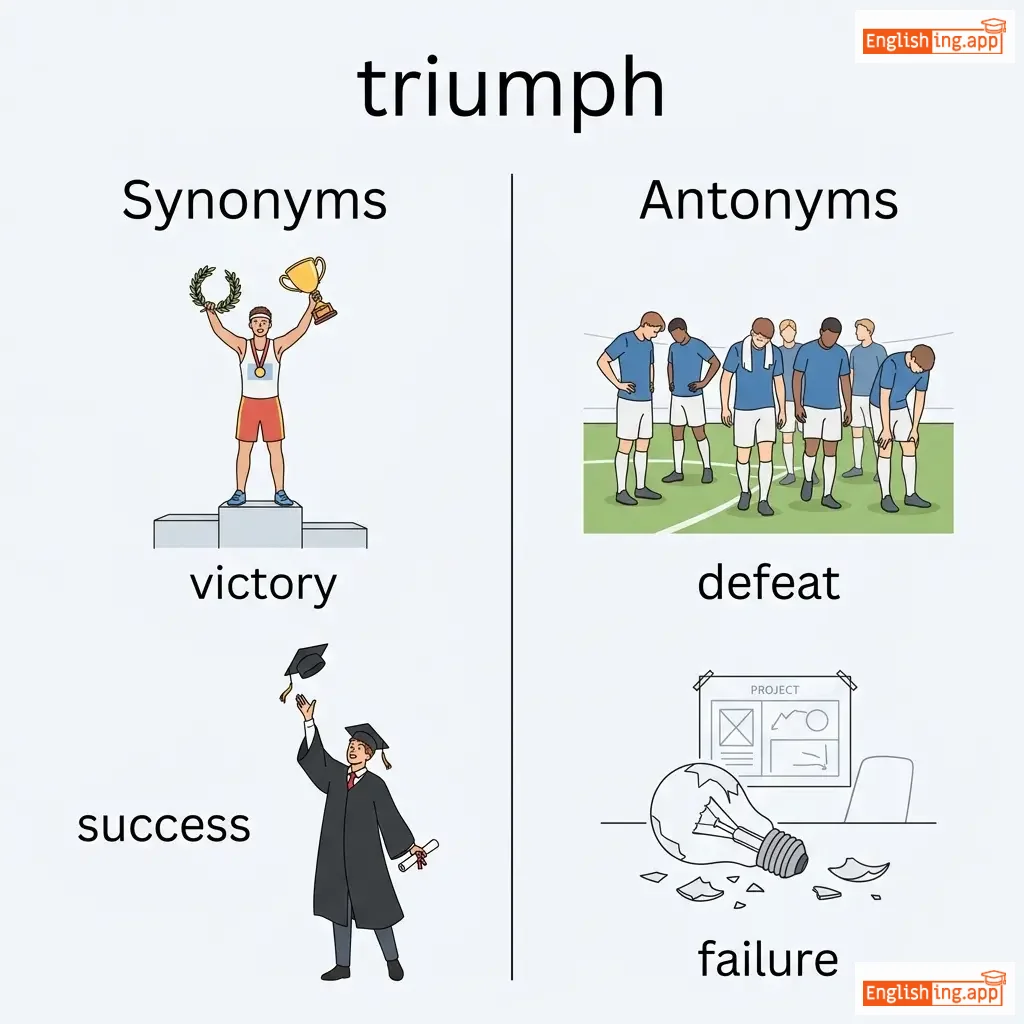
victory, success, achievement, win, conquest
••••••
|
defeat, failure, loss
••••••
|
great triumph, celebrate triumph, moment of triumph, triumph over adversity
••••••
|
Triumph 意味着三次胜利 - 三重胜利!
••••••
|
|
#5185
👥⚔️
|
/truːp/
noun
(trúp)
••••••
|
- •••••• |
队伍
duì wǔ
••••••
|
- •••••• | - •••••• | - •••••• | - •••••• |
a group of soldiers; military personnel organized as a unit
••••••
|
The troop marched in formation across the parade ground.
队伍在游行场上列队行进。
••••••
|
队伍在游行场上列队行进。
Duì wǔ zài yóuxíng chǎng shàng liè duì xíng jìn.
••••••
|
- •••••• | - •••••• | - •••••• |
soldiers, battalion, regiment, squad
••••••
|
civilians, non-combatants
••••••
|
elite troop, troop movement, troop deployment, special forces troop
••••••
|
队伍就像一群士兵,他们一起走路。
••••••
|
|
#5186
🏆
|
/ˈtroʊfi/
noun
(tè lù fēi)
••••••
|
- •••••• |
奖杯
jiangbei
••••••
|
- •••••• | - •••••• | - •••••• | - •••••• |
An object awarded as a prize for a victory or achievement.
••••••
|
She proudly displayed the trophy she won in the competition. |
她骄傲地展示了她在比赛中赢得的奖杯。
Tā jiāo'ào de zhǎnshìle tā zài bǐsài zhōng yíngdé de jiǎngbēi.
••••••
|
trophy wife |
A young attractive wife regarded as a status symbol for her husband.
••••••
|
奖杯妻子
jiǎngbēi qīzi
••••••
|
award, prize, cup, medal, reward
••••••
|
loss, failure
••••••
|
win a trophy, display a trophy, trophy winner, trophy cabinet
••••••
|
奖杯 = 奖杯 🏆, 胜利和成就的象征
••••••
|
|
#5187
😟
|
/ˈtrʌbəl/
noun
(trouble)
••••••
|
- •••••• |
问题
wenti
••••••
|
- •••••• | - •••••• | - •••••• | - •••••• |
difficulty or problems that cause distress or inconvenience
••••••
|
She had a lot of trouble finding her keys. |
她在找钥匙时遇到了很多问题。
Ta zai zhao yaoshi shi yudao le henduo wenti.
••••••
|
trouble in paradise |
problems in a situation that was previously thought to be perfect
••••••
|
天堂中的问题
tiantang zhong de wenti
••••••
|
difficulty, problem, hardship, issue
••••••
|
ease, comfort, solution
••••••
|
cause trouble, get into trouble, have trouble, trouble with
••••••
|
没有问题,就没有平安。
••••••
|
|
#5188
😟
|
/ˈtrʌbəld/
adjective
(trɑbləd)
••••••
|
- •••••• |
困扰
kùnrǎo
••••••
|
- •••••• | - •••••• | - •••••• | - •••••• |
experiencing or showing distress, anxiety, or worry
••••••
|
He looked deeply troubled after hearing the bad news. |
听到坏消息后,他看起来非常困扰。
Tīngdào huài xiāoxī hòu, tā kàn qǐlái fēicháng kùnrǎo.
••••••
|
troubled mind |
a mind filled with worry or anxiety
••••••
|
困扰的心情
kùnrǎo de xīnqíng
••••••
|
worried, upset, anxious, distressed, uneasy
••••••
|
calm, relaxed, peaceful
••••••
|
troubled times, troubled relationship, deeply troubled, emotionally troubled
••••••
|
Troubled就是困扰 – 满是忧虑
••••••
|
|
#5189
🚚
|
/trʌk/
noun
(卡车)
••••••
|
- •••••• |
卡车
kǎchē
••••••
|
- •••••• | - •••••• | - •••••• | - •••••• |
a large motor vehicle for transporting goods
••••••
|
The truck was loaded with boxes for the warehouse.
卡车装满了仓库的箱子。
••••••
|
卡车装满了仓库的箱子。
Kǎchē zhuāng mǎnle cāngkù de xiāngzi.
••••••
|
- •••••• | - •••••• | - •••••• |
lorry, freight truck, delivery truck
••••••
|
car, van, motorcycle
••••••
|
load a truck, drive a truck, truck driver
••••••
|
卡车用来运输货物,送到仓库
••••••
|
|
#5190
✔️
|
/truː/
adjective
(tru)
••••••
|
- •••••• |
真实
zhen shi
••••••
|
- •••••• | - •••••• | - •••••• | - •••••• |
in accordance with fact or reality; correct
••••••
|
His story was true, and everyone believed him. |
他的故事是真的,大家都相信他。
Tā de gùshì shì zhēn de, dàjiā dōu xiāngxìn tā.
••••••
|
true to oneself |
being loyal to one's own beliefs or values
••••••
|
忠于自己
zhōng yú zìjǐ
••••••
|
genuine, real, accurate, correct
••••••
|
false, incorrect, wrong
••••••
|
true story, true to yourself, true love, true meaning
••••••
|
True 代表真实,它是我们生活中的真理。
••••••
|
|
#5191
✅
|
/ˈtruːli/
adverb
(truːli)
••••••
|
- •••••• |
真的
zhēn de
••••••
|
- •••••• | - •••••• | - •••••• | - •••••• |
in accordance with fact or reality; genuinely
••••••
|
She truly loves her family. |
她真的爱她的家人。
Tā zhēn de ài tā de jiārén.
••••••
|
- •••••• | - •••••• | - •••••• |
really, genuinely, honestly, sincerely
••••••
|
falsely, dishonestly, insincerely
••••••
|
truly believe, truly amazing, truly grateful
••••••
|
'真的' 在中文中意味着完全的真实性,像现实一样真切。
••••••
|
|
#5192
🤝
|
/trʌst/
verb
••••••
|
|
- •••••• |
trusted
••••••
|
trusted
••••••
|
trusts
••••••
|
trusting
••••••
|
to believe in the reliability, truth, ability, or strength of someone or something
••••••
|
I trust you to handle this situation carefully. |
- •••••• |
trust your instincts |
to rely on your natural intuition or feeling about something
••••••
|
- •••••• |
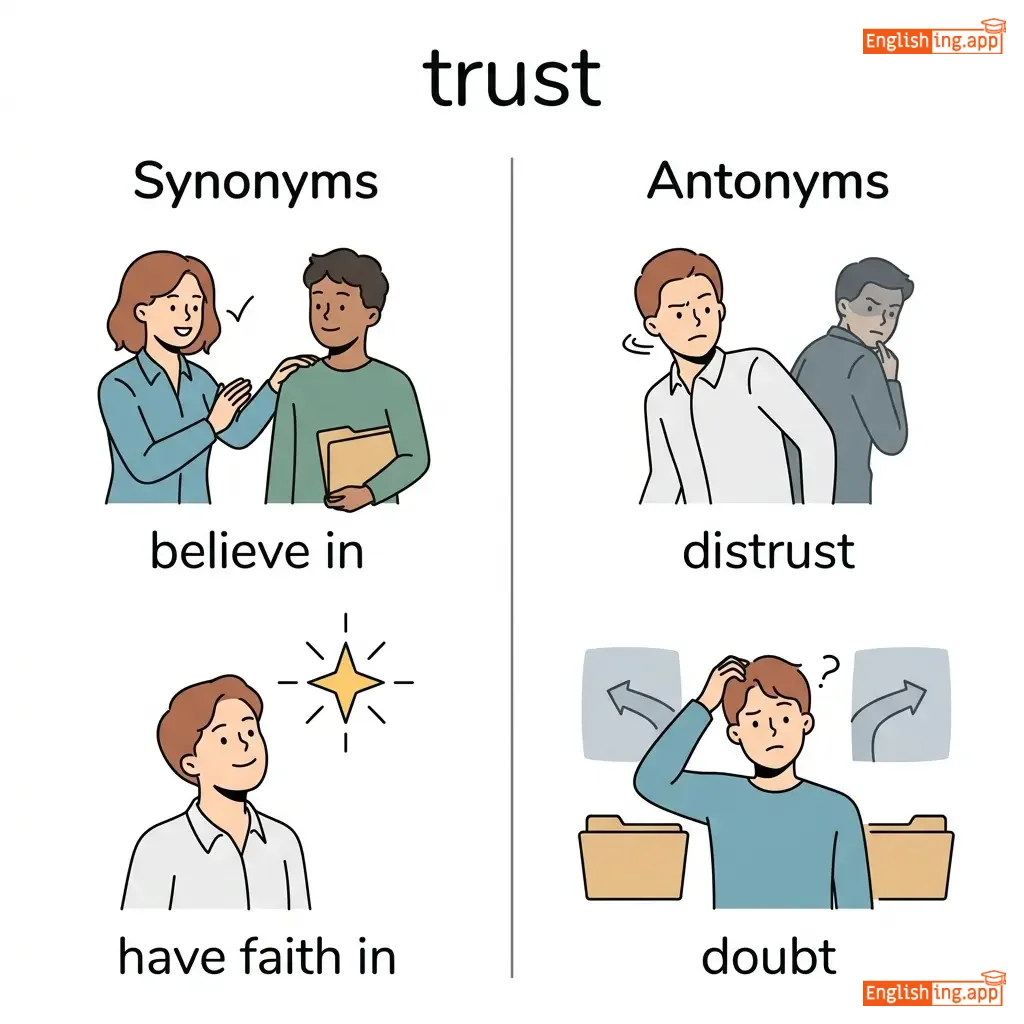
believe in, have faith in, rely on, confide in
••••••
|
distrust, doubt, mistrust
••••••
|
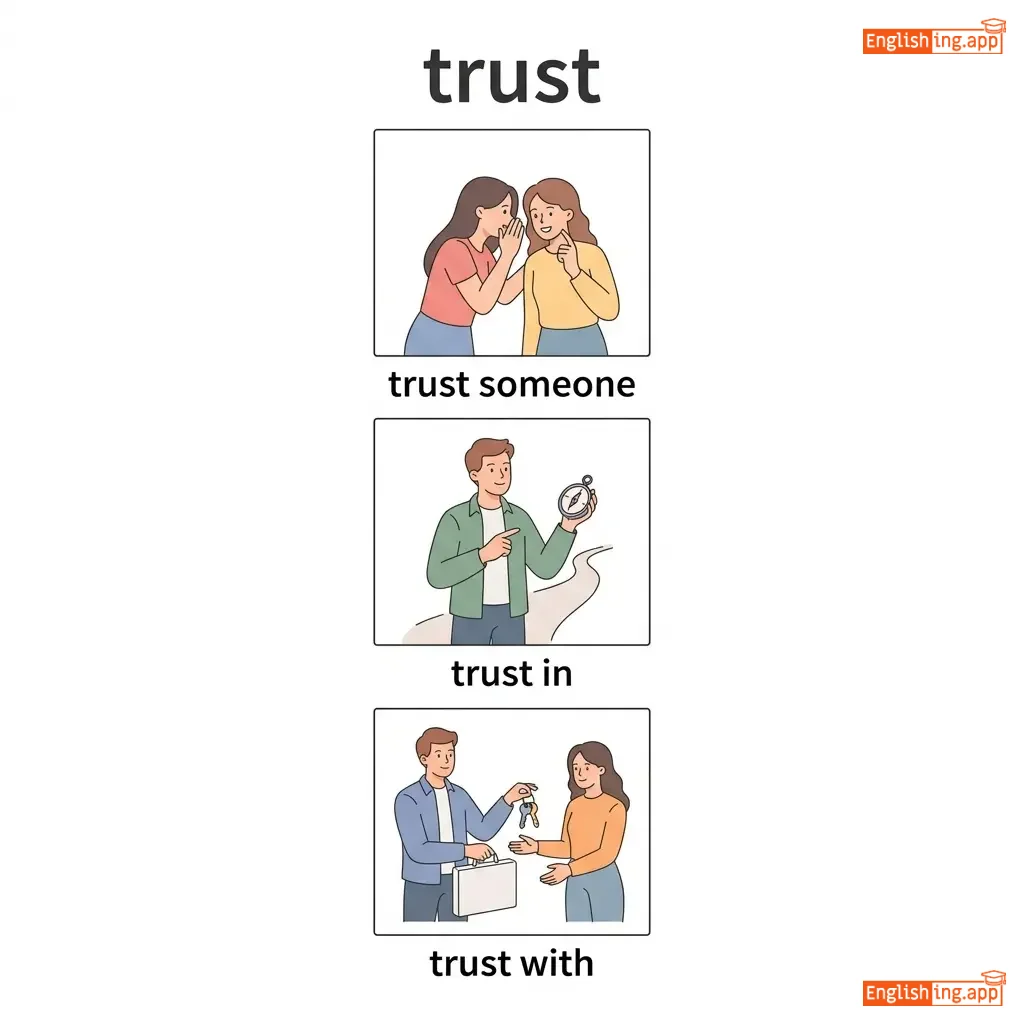
trust someone, trust in, trust with, earn trust
••••••
|
No •••••• |
|
#5193
🛡️
|
/trʌsˈtiː/
noun
(特鲁斯蒂)
••••••
|
- •••••• |
受托人
shòutuōrén
••••••
|
- •••••• | - •••••• | - •••••• | - •••••• |
a person who holds or manages property or assets for the benefit of others
••••••
|
She was appointed as the trustee of the family estate. |
她被任命为家庭财产的受托人。
Tā bèi rènmìng wéi jiātíng cáichǎn de shòutuōrén.
••••••
|
- •••••• | - •••••• | - •••••• |
administrator, custodian, guardian
••••••
|
beneficiary, heir
••••••
|
trustee of a will, appointed trustee, charitable trustee
••••••
|
A TRUSTee manages TRUSTED assets for others.
••••••
|
|
#5194
✅
|
/truːθ/
noun
(truθ)
••••••
|
- •••••• |
真理; 诚实;
zhenli
••••••
|
- •••••• | - •••••• | - •••••• | - •••••• |
the quality or state of being true; that which is true or in accordance with fact or reality
••••••
|
The witness promised to tell the truth during the court hearing.
证人在法庭听证会上承诺说出真相。
••••••
|
证人在法庭听证会上承诺说出真相。
zhengren zai fating tingzhenghui shang chengnuo shuochu zhenxiang.
••••••
|
- •••••• | - •••••• | - •••••• |
fact, reality, honesty, veracity
••••••
|
lie, falsehood, deception, untruth
••••••
|
tell the truth, absolute truth, truth serum, moment of truth
••••••
|
真理像证人说的真话一样明确,无法争辩。
••••••
|
|
#5195
💪
|
/traɪ/
verb
(trái)
••••••
|
|
尝试
chángshì
••••••
|
tried
tráid
••••••
|
tried
tráid
••••••
|
tries
tráis
••••••
|
trying
tráing
••••••
|
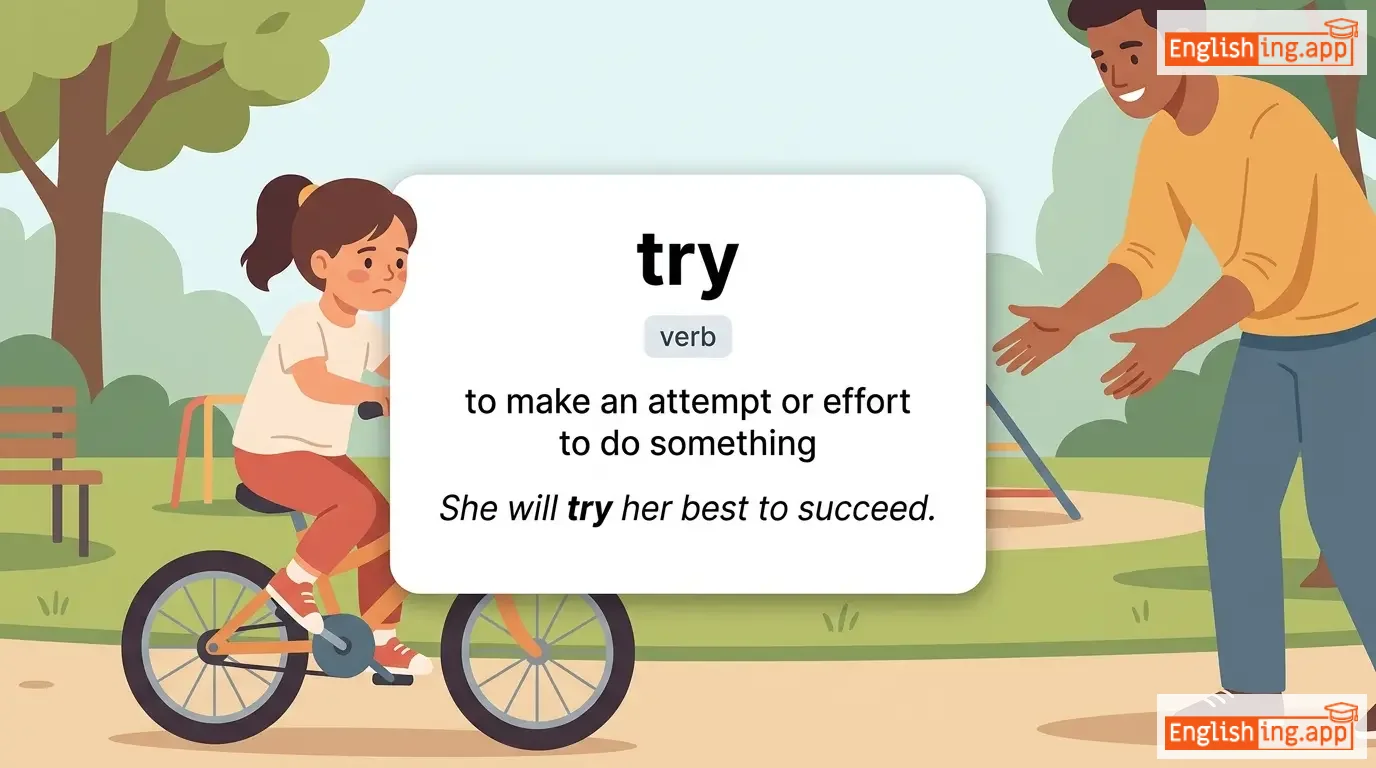
to make an attempt or effort to do something
••••••
|
She will try her best to succeed.
她会尽全力去成功。
••••••
|
她会尽全力去成功。
Tā huì jìn quánlì qù chénggōng.
••••••
|
Try your best
尽全力
••••••
|
Make the best effort possible
••••••
|
尽全力
Jìn quánlì
••••••
|
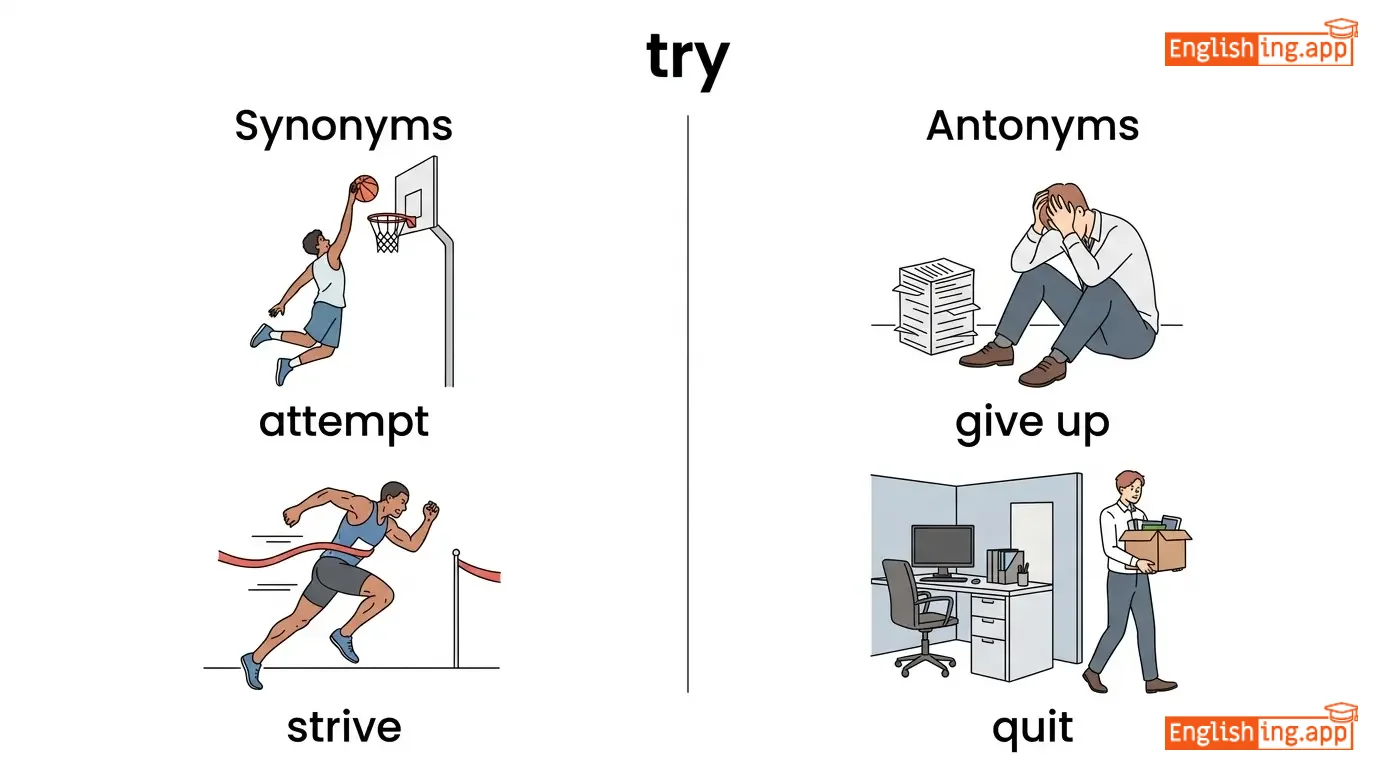
attempt, strive, endeavor, seek
••••••
|
give up, quit, abandon
••••••
|
try to, try hard, try out, try again
••••••
|
尝试 (try) - 给自己最大的机会!
••••••
|
|
#5196
🌊
|
/tsuːˈnɑː.mi/
noun
(海啸)
••••••
|
- •••••• |
海啸
hai xiao
••••••
|
- •••••• | - •••••• | - •••••• | - •••••• |
a large sea wave caused by an underwater earthquake or volcanic eruption
••••••
|
The tsunami devastated the coastal town, leaving thousands homeless. |
海啸摧毁了沿海城市,导致成千上万的人无家可归。
Hai xiao cuihui le yanhai chengshi, daozhi chengqian shangwan de ren wu jia ke gui.
••••••
|
- •••••• | - •••••• | - •••••• |
tidal wave, sea surge
••••••
|
calm, tranquility
••••••
|
tsunami warning, tsunami waves, deadly tsunami
••••••
|
TSUNAMI - 一道巨浪把你带到海里的SWAMI。
••••••
|
|
#5197
🧪
|
/tjuːb/
noun
(túbù)
••••••
|
- •••••• |
管子
guǎnzi
••••••
|
- •••••• | - •••••• | - •••••• | - •••••• |
a hollow cylinder used to convey something, typically fluid
••••••
|
He used a tube to measure the liquid.
他使用管子来测量液体。
••••••
|
他使用管子来测量液体。
Tā shǐyòng guǎnzi lái cèliàng yètǐ.
••••••
|
- •••••• | - •••••• | - •••••• |
pipe, cylinder, conduit
••••••
|
block, obstruction
••••••
|
vacuum tube, test tube, rubber tube
••••••
|
记住管子 - 管子可以传输所有东西!
••••••
|
|
#5198
📅
|
/ˈtjuːzdeɪ/
noun
(星期二)
••••••
|
- •••••• |
星期二
xingqi er
••••••
|
- •••••• | - •••••• | - •••••• | - •••••• |
The second day of the week, following Monday and preceding Wednesday.
••••••
|
We have a meeting scheduled for Tuesday.
我们定于星期二开会。
••••••
|
我们定于星期二开会。
Wo men ding yu xingqi er kai hui.
••••••
|
- •••••• | - •••••• | - •••••• |
second day, weekday, midweek
••••••
|
Sunday, Monday
••••••
|
Tuesday morning, next Tuesday, every Tuesday, this Tuesday
••••••
|
Xingqi er = second day; 'er' = two in Chinese.
••••••
|
|
#5199
💸
|
/tʃuˈɪʃ.ən/
noun
(twiˈʃən)
••••••
|
- •••••• |
学费
xué fèi
••••••
|
- •••••• | - •••••• | - •••••• | - •••••• |
the fee for instruction or teaching, typically at a school or university
••••••
|
The tuition for the college has increased this year.
今年大学的学费上涨了。
••••••
|
今年大学的学费上涨了。
Jīnnián dàxué de xuéfèi shàngzhǎng le.
••••••
|
- •••••• | - •••••• | - •••••• |
fees, charges, payment, cost
••••••
|
scholarship, grant
••••••
|
tuition fee, pay tuition, tuition increase
••••••
|
把学费想象成你为学习支付的费用,就像为一门课程付费一样。
••••••
|
|
#5200
🧬
|
/ˈtjuːmər/
noun
(肿瘤)
••••••
|
- •••••• |
肿瘤
zhǒng liú
••••••
|
- •••••• | - •••••• | - •••••• | - •••••• |
an abnormal mass of tissue caused by excessive cell growth
••••••
|
The doctor found a benign tumor during the medical check-up.
医生在体检过程中发现了一个良性肿瘤。
••••••
|
医生在体检过程中发现了一个良性肿瘤。
Yīshēng zài tǐjiǎn guòchéng zhōng fāxiànle yīgè liángxìng zhǒngliú.
••••••
|
- •••••• | - •••••• | - •••••• |
growth, lump, swelling, neoplasm, mass
••••••
|
healthy tissue, normal cell
••••••
|
brain tumor, benign tumor, malignant tumor, tumor cells
••••••
|
肿瘤:细胞生长过快形成的异常组织。
••••••
|
|
#5201
🎵
|
/tjuːn/
noun
(tjun)
••••••
|
- •••••• |
旋律
xuanlu
••••••
|
- •••••• | - •••••• | - •••••• | - •••••• |
a sequence of musical notes that are pleasant to listen to; a melody
••••••
|
She hummed a cheerful tune while cooking dinner.
她在做晚餐的时候哼着一首愉快的旋律。
••••••
|
她在做晚餐的时候哼着一首愉快的旋律。
Ta zai zuo wancan de shihou hengzhe yi shou yukuai de xuanlu.
••••••
|
in tune
调子合适
••••••
|
playing or singing with correct musical pitch
••••••
|
调子合适
tiaozi heshi
••••••
|
melody, song, harmony, air, jingle
••••••
|
noise, discord
••••••
|
catchy tune, musical tune, tune in, out of tune
••••••
|
Tune的意思是旋律 – 调整电台时我们会听到旋律 🎶
••••••
|
|
#5202
🌌
|
/ˈtʌnəl/
noun
(隧道)
••••••
|
- •••••• |
隧道
suìdào
••••••
|
- •••••• | - •••••• | - •••••• | - •••••• |
an underground passage or shaft
••••••
|
They dug a tunnel under the river.
他们在河底挖了一个隧道。
••••••
|
他们在河底挖了一个隧道。
Tāmen zài hédǐ wāle yīgè suìdào.
••••••
|
- •••••• | - •••••• | - •••••• |
passage, shaft, corridor
••••••
|
open space, above ground
••••••
|
tunnel vision, tunnel construction, tunnel system
••••••
|
隧道 - 地下通道,像一个神秘的地下道路!
••••••
|
|
#5203
🔄
|
/tɜːrn/
verb
(tɜːrn)
••••••
|
|
转动
zhuandong
••••••
|
turned
tɜːrnd
••••••
|
turned
tɜːrnd
••••••
|
turns
tɜːrns
••••••
|
turning
tɜːrning
••••••
|
to change direction or position
••••••
|
Turn right at the next intersection.
在下一个路口右转。
••••••
|
在下一个路口右转。
Zai xia yige lukou you zhuan.
••••••
|
Turn a blind eye
睁一只眼闭一只眼
••••••
|
To ignore something deliberately
••••••
|
睁一只眼闭一只眼
Zheng yi zhi yan bi yi zhi yan
••••••
|
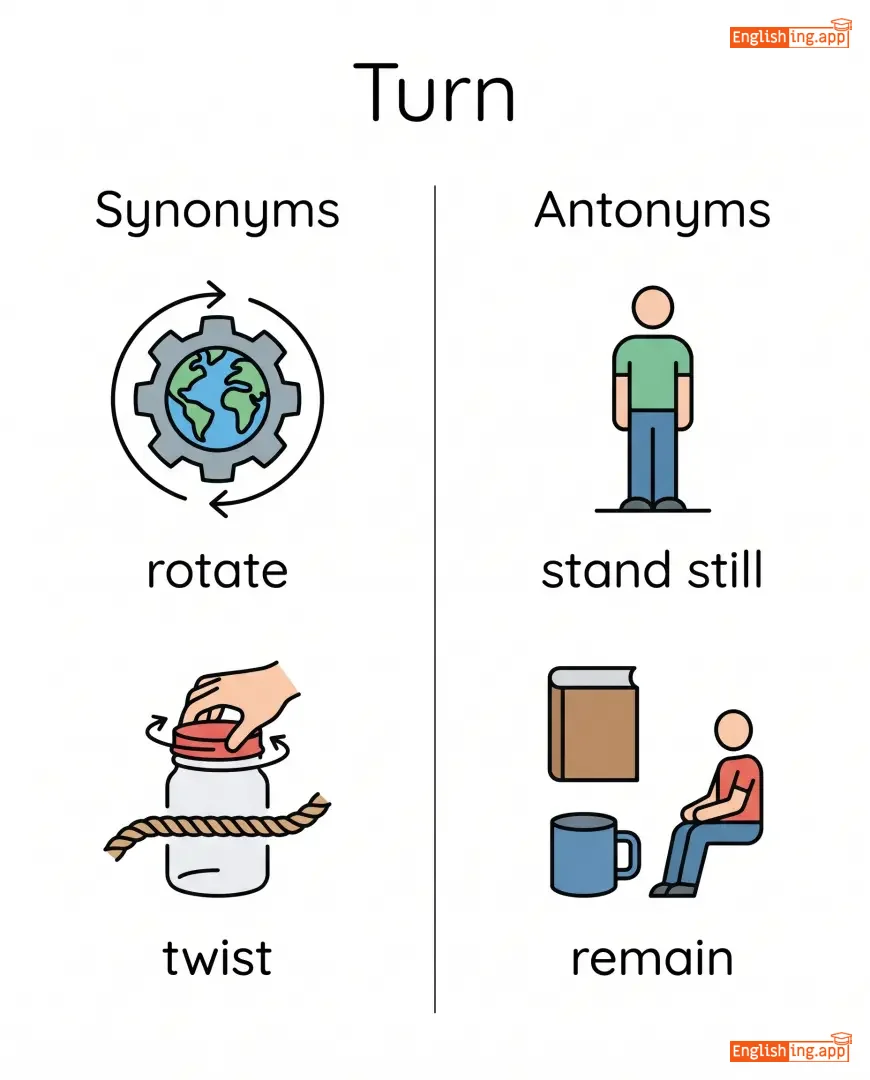
rotate, twist, spin, flip
••••••
|
stand still, remain
••••••
|
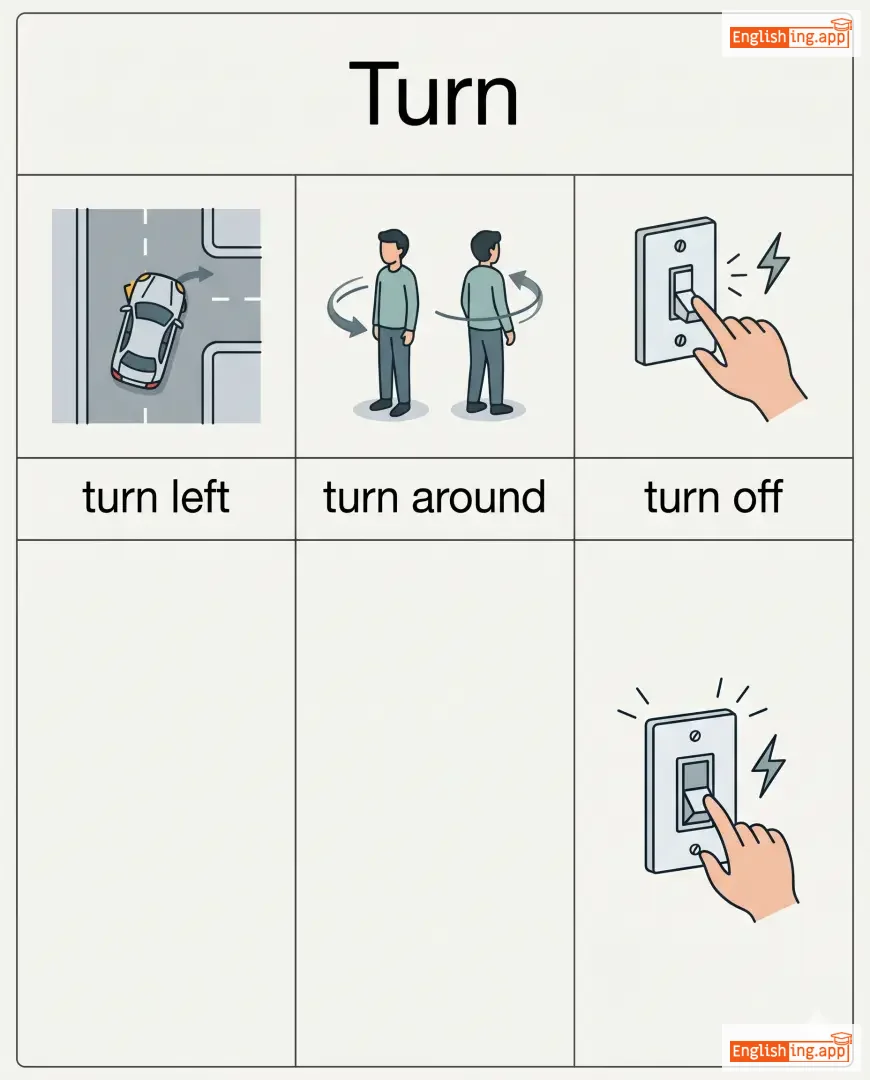
turn left, turn around, turn off, turn on
••••••
|
转动!记住 - 改变方向就是转动。
••••••
|
|
#5204
👥
|
/ˈtɜːr.naʊt/
noun
(塔尔诺特)
••••••
|
- •••••• |
出席人数
chuxi renshu
••••••
|
- •••••• | - •••••• | - •••••• | - •••••• |
the number of people who attend or participate in an event or activity
••••••
|
The turnout at the rally was impressive, with thousands showing up. |
集会的出席人数令人印象深刻,成千上万的人到场。
Jihui de chuxi renshu lingren yinxiang shenke, chengqian shangwan de ren dao chang.
••••••
|
- •••••• | - •••••• | - •••••• |
attendance, participation, presence
••••••
|
absence, nonattendance
••••••
|
high turnout, low turnout, voter turnout
••••••
|
At a TURNOUT event, everyone TURNS UP to participate!
••••••
|
|
#5205
💼
|
/ˈtɜːnˌəʊvə/
noun
(塔恩欧弗)
••••••
|
- •••••• |
营业额
yíngyèé
••••••
|
- •••••• | - •••••• | - •••••• | - •••••• |
the amount of business conducted during a particular period, or the rate at which employees leave a company
••••••
|
The company reported a high turnover in its sales department. |
公司报告了其销售部门的高营业额。
Gōngsī bàogào le qí xiāoshòu bùmén de gāo yíngyèé.
••••••
|
- •••••• | - •••••• | - •••••• |
revenue, sales, business, output
••••••
|
retention, stability
••••••
|
high turnover, staff turnover, turnover rate, annual turnover
••••••
|
转动营业额 (turnover) — 想象企业营业额像翻开一本书
••••••
|
|
#5206
🐢
|
/ˈtɜːrtl/
noun
(特特尔)
••••••
|
- •••••• |
乌龟
wugui
••••••
|
- •••••• | - •••••• | - •••••• | - •••••• |
A slow-moving reptile with a hard shell that lives in water or on land
••••••
|
The turtle slowly crossed the sandy beach.
乌龟慢慢地穿过沙滩。
••••••
|
乌龟慢慢地穿过沙滩。
Wugui manman de chuanguo shatan
••••••
|
as slow as a turtle
像乌龟一样慢
••••••
|
extremely slow
••••••
|
像乌龟一样慢
xiang wugui yiyang man
••••••
|
terrapin, tortoise, chelonian, sea turtle
••••••
|
hare, rabbit
••••••
|
sea turtle, snapping turtle, turtle shell, turtle habitat
••••••
|
Picture a 'wugui' slowly crawling across a Chinese beach 🐢
••••••
|
|
#5207
📺
|
/ˈtiːˈviː/
noun
(téi wéi)
••••••
|
- •••••• |
电视
diànshì
••••••
|
- •••••• | - •••••• | - •••••• | - •••••• |
a device used to receive television broadcasts
••••••
|
I watch my favorite shows on TV every evening. |
我每天晚上都在电视上看我最喜欢的节目。
Wǒ měitiān wǎnshàng dōu zài diànshì shàng kàn wǒ zuì xǐhuān de jiémù.
••••••
|
- •••••• | - •••••• | - •••••• |
television, screen, tube
••••••
|
- •••••• |
watch TV, turn on the TV, TV show, TV channel
••••••
|
电视 – 娱乐就在眼前
••••••
|
|
#5208
12️⃣
|
/twɛlv/
adjective
(十二)
••••••
|
- •••••• |
十二
shi er
••••••
|
- •••••• | - •••••• | - •••••• | - •••••• |
the number equivalent to 12
••••••
|
There are twelve months in a year. |
一年有十二个月。
Yi nian you shi er ge yue.
••••••
|
- •••••• | - •••••• | - •••••• |
dozen
••••••
|
- •••••• |
twelve months, twelve o'clock, twelve years
••••••
|
Shi er, 12 ge yue de nian
••••••
|
|
#5209
2️⃣0️⃣
|
/ˈtwɛnti/
adjective
(èrshí)
••••••
|
- •••••• |
二十
èrshí
••••••
|
- •••••• | - •••••• | - •••••• | - •••••• |
the number equivalent to 20
••••••
|
He is twenty years old.
他二十岁。
••••••
|
他二十岁。
Tā èrshí suì.
••••••
|
- •••••• | - •••••• | - •••••• |
twentieth, score
••••••
|
- •••••• |
twenty years, twenty dollars, twenty people
••••••
|
二十岁,二十年,二十的意思
••••••
|
|
#5210
2️⃣
|
/twaɪs/
adverb
(twáisī)
••••••
|
- •••••• |
两次
liǎng cì
••••••
|
- •••••• | - •••••• | - •••••• | - •••••• |
two times
••••••
|
I have seen that movie twice. |
我看过那部电影两次。
Wǒ kànguò nà bù diànyǐng liǎng cì.
••••••
|
- •••••• | - •••••• | - •••••• |
double, two times
••••••
|
- •••••• |
twice as much, twice a day, twice a week
••••••
|
Liǎng cì, twice li
••••••
|
|
#5211
👯♂️
|
/twɪn/
noun
(双胞胎)
••••••
|
- •••••• |
双胞胎
shuāngbāotāi
••••••
|
- •••••• | - •••••• | - •••••• | - •••••• |
either of two children born at the same time to the same mother
••••••
|
They have twin girls. |
他们有一对双胞胎女孩。
Tāmen yǒu yī duì shuāngbāotāi nǚhái.
••••••
|
- •••••• | - •••••• | - •••••• |
pair, duo, double
••••••
|
single
••••••
|
twin brothers, twin sisters, twin babies
••••••
|
双胞胎意味着双胞胎
••••••
|
|
#5212
🌀
|
/twɪst/
verb
(twist)
••••••
|
- •••••• |
扭曲, 旋转
niǔqū, xuánzhuǎn
••••••
|
twisted
twisted
••••••
|
twisted
twisted
••••••
|
twists
twists
••••••
|
twisting
twisting
••••••
|
to bend or turn something into a coil or spiral shape; to distort.
••••••
|
He twisted the rope tightly around the pole.
他把绳子紧紧地缠绕在杆子上。
••••••
|
他把绳子紧紧地缠绕在杆子上。
Tā bǎ shéngzi jǐn jǐn de chánrào zài gǎnzi shàng.
••••••
|
plot twist
情节转折
••••••
|
an unexpected change in the story or situation
••••••
|
故事中的意外转折
gùshì zhōng de yìwài zhuǎnzhé
••••••
|
bend, turn, curl, spin, distort
••••••
|
straighten, flatten
••••••
|
twist the rope, twist around, twist ankle, plot twist
••••••
|
Twist 就像快速地旋转或扭曲某物!
••••••
|
|
#5213
2️⃣
|
/tuː/
noun
(tū)
••••••
|
- •••••• |
二
èr
••••••
|
- •••••• | - •••••• | - •••••• | - •••••• |
the number following one
••••••
|
She has two children.
她有两个孩子。
••••••
|
她有两个孩子。
Tā yǒu liǎng gè háizi.
••••••
|
- •••••• | - •••••• | - •••••• |
pair, couple, duet
••••••
|
one, single
••••••
|
two weeks, two days, two people
••••••
|
二人同行,两倍乐趣
••••••
|
|
#5214
⌨️
|
/taɪp/
verb
(海皮尼斯)
••••••
|
|
打字
dǎ zì
••••••
|
typed
••••••
|
typed
••••••
|
types
••••••
|
typing
••••••
|
to write using a keyboard or typewriter
••••••
|
She can type very fast on the computer.
她可以在电脑上非常快地打字。
••••••
|
她可以在电脑上非常快地打字。
Tā kě yǐ zài diàn nǎo shàng fēi cháng kuài dì dǎ zì.
••••••
|
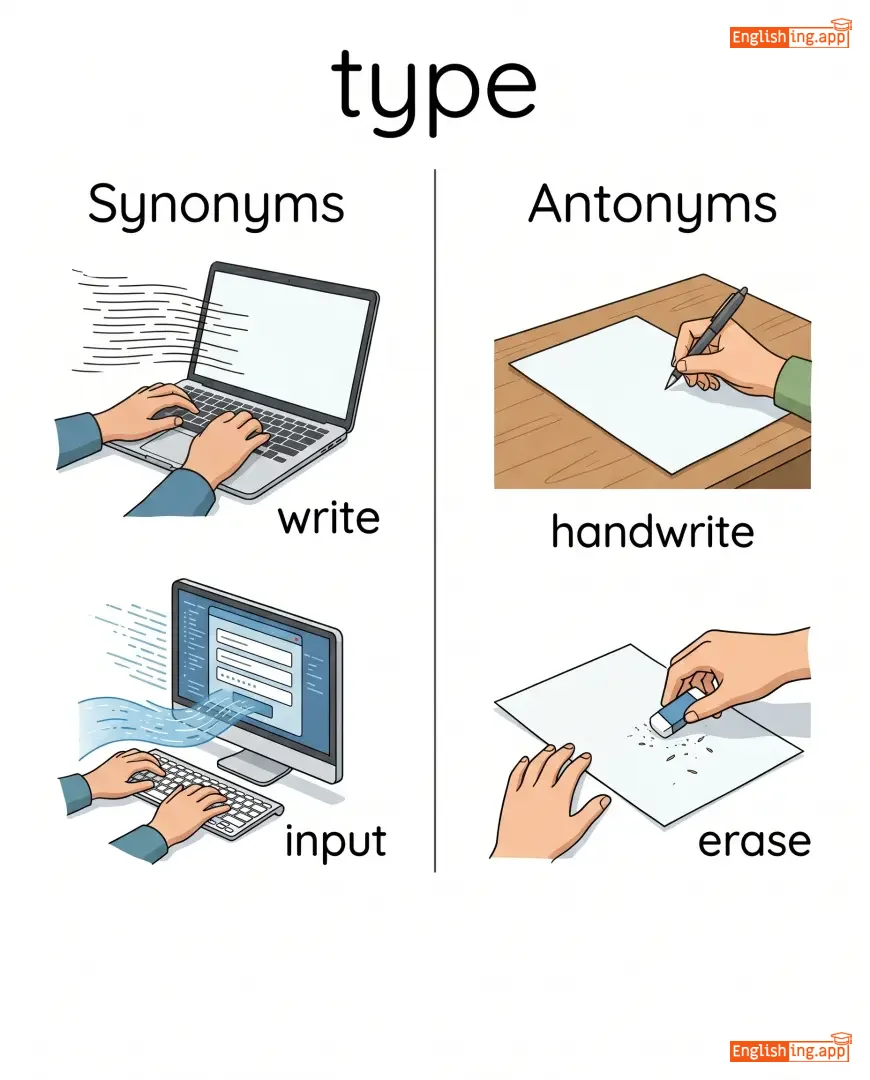
- •••••• | - •••••• | - •••••• |
write, input, keyboard
••••••
|
handwrite, erase
••••••
|
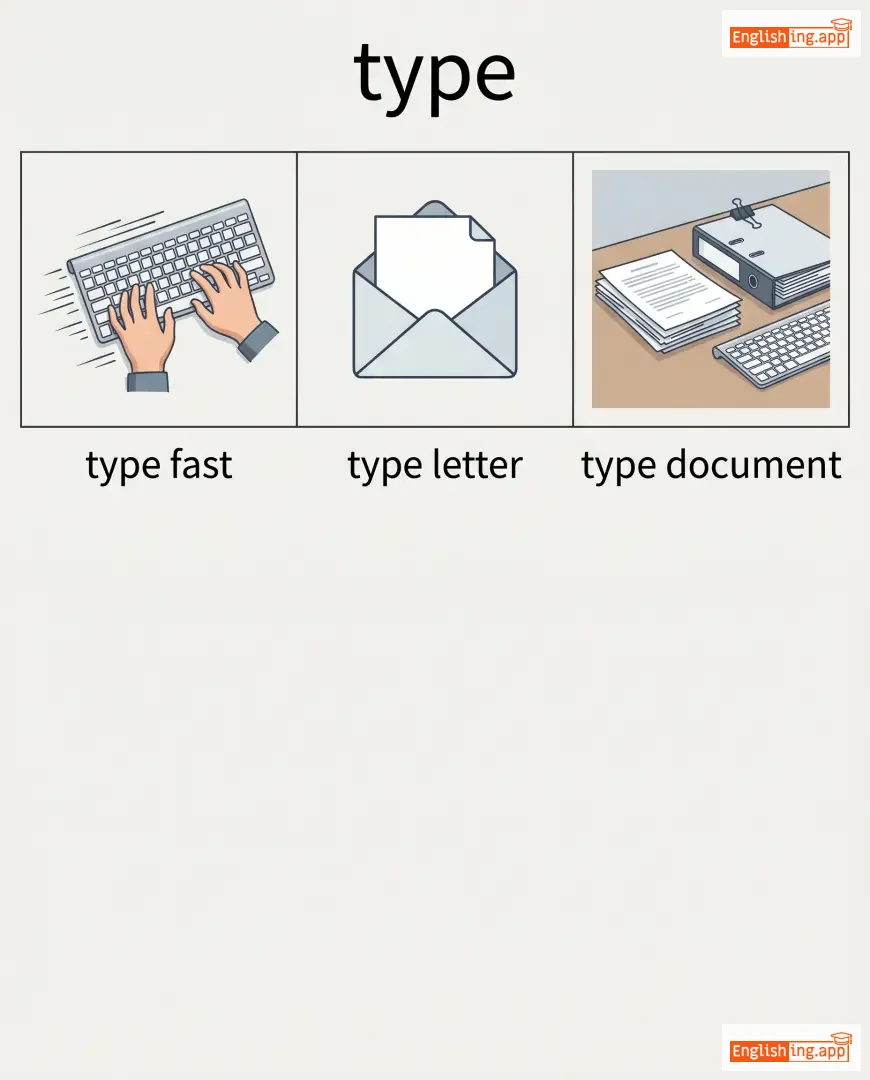
type fast, type letter, type document, type message, type carefully
••••••
|
快速打字像专家一样无比流畅。
••••••
|
|
#5215
📋
|
/ˈtɪpɪkəl/
adjective
(典型)
••••••
|
- •••••• |
具有某一特定类型的人或事物的常见特征
jùyǒu mǒu yī tèdìng lèixíng de rén huò shìwù de chángjiàn tèzhēng
••••••
|
- •••••• | - •••••• | - •••••• | - •••••• |
having the usual qualities of a particular type of person or thing
••••••
|
It was a typical summer day, hot and humid. |
这是一个典型的夏日炎热而潮湿的日子。
Zhè shì yīgè diǎnxíng de xiàrì yánrè ér cháoshī de rìzi.
••••••
|
typical of |
characteristic of; representative of
••••••
|
典型的
diǎnxíng de
••••••
|
normal, usual, standard, representative, characteristic
••••••
|
atypical, unusual, rare
••••••
|
typical example, typical case, typical feature, typical behavior
••••••
|
Typical意味着常见的特征 — 就像炎热潮湿的夏天一样。
••••••
|
|
#5216
⏰
|
/ˈtɪpɪkli/
adverb
(典型地)
••••••
|
- •••••• |
通常
tōngcháng
••••••
|
- •••••• | - •••••• | - •••••• | - •••••• |
in a way that is typical of a particular person, thing, or group
••••••
|
She typically arrives at work at 9 AM.
她通常在早上9点到达工作。
••••••
|
她通常在早上9点到达工作。
Tā tōngcháng zài zǎoshang 9 diǎn dào dá gōngzuò.
••••••
|
- •••••• | - •••••• | - •••••• |
usually, ordinarily, commonly, customarily
••••••
|
unusually, rarely
••••••
|
typically on time, typically works, typically performs
••••••
|
典型的:总是按时到达。
••••••
|
|
#5217
😰
|
/ˈʌɡ.li/
adjective
(ʌɡli)
••••••
|
- •••••• |
丑陋的; 可憎的; 可怕的
chǒulòu de; kě zēng de; kěpà de
••••••
|
- •••••• | - •••••• | - •••••• | - •••••• |
unpleasant or repulsive in appearance; morally reprehensible
••••••
|
The old building looked ugly after years of neglect. |
这座老建筑在多年疏忽之后看起来很丑。
zhè zuò lǎo jiànzhú zài duō nián shūhū zhīhòu kàn qǐlái hěn chǒu.
••••••
|
- •••••• | - •••••• | - •••••• |
hideous, unsightly, repulsive, unattractive
••••••
|
beautiful, attractive, pretty, lovely
••••••
|
ugly duckling, ugly truth, ugly situation
••••••
|
Ugly in Chinese means exactly how it sounds: unpleasant and repulsive.
••••••
|
|
#5218
🏆
|
/ˈʌltɪmət/
adjective
(ˈʌltɪmət)
••••••
|
- •••••• |
终极
zhongji
••••••
|
- •••••• | - •••••• | - •••••• | - •••••• |
being the best, final, or most extreme
••••••
|
Success is the ultimate goal of hard work. |
成功是辛勤工作中的终极目标。
Chenggong shi xinqin gongzuo zhong de zhongji mubiao.
••••••
|
ultimate goal |
the most important or final aim
••••••
|
终极目标
zhongji mubiao
••••••
|
final, supreme, absolute, utmost, greatest
••••••
|
initial, basic, ordinary
••••••
|
ultimate goal, ultimate decision, ultimate choice
••••••
|
Ultimate 就是终极目标,像游戏中的最终关卡。
••••••
|
|
#5219
🏁
|
/ˈʌltəmətli/
adverb
(最终)
••••••
|
- •••••• |
最终
zuì zhōng
••••••
|
- •••••• | - •••••• | - •••••• | - •••••• |
in the end, after everything else
••••••
|
Ultimately, we decided to go ahead with the project. |
最终,我们决定继续推进该项目。
Zuì zhōng, wǒmen juédìng jìxù tuījin gāi xiàngmù.
••••••
|
- •••••• | - •••••• | - •••••• |
finally, eventually, in the end, conclusively
••••••
|
initially, prematurely
••••••
|
ultimately decide, ultimately succeed, ultimately fail
••••••
|
最终的一步,万事俱备!
••••••
|
|
#5220
☂️
|
/ʌmˈbrɛlə/
noun
(安布雷拉)
••••••
|
- •••••• |
伞
san
••••••
|
- •••••• | - •••••• | - •••••• | - •••••• |
A device used for protection against rain or sun, typically consisting of a collapsible canopy mounted on a central rod.
••••••
|
She opened her umbrella as it started to rain.
下雨时她打开了她的安布雷拉。
••••••
|
下雨时她打开了她的伞。
Xia yu shi ta dakai le ta de san.
••••••
|
under the umbrella of
在……的保护伞下
••••••
|
within the protection, scope, or coverage of something
••••••
|
在……的保护伞下
zai...de baohu san xia
••••••
|
parasol, sunshade, rainshade, brolly
••••••
|
exposure, openness
••••••
|
folding umbrella, large umbrella, carry an umbrella, open an umbrella, umbrella stand
••••••
|
Imagine holding a 'san' under Chinese rain.
••••••
|
|
#5221
🚫
|
/ʌnəˈbɪləti/
noun
(安纳比利提)
••••••
|
- •••••• |
无能
wuneng
••••••
|
- •••••• | - •••••• | - •••••• | - •••••• |
the state of being unable to do something; incapacity
••••••
|
His unability to solve the problem caused delays in the project.
His 安纳比利提 to solve the problem caused delays in the project.
••••••
|
他解决问题的无能导致了项目的延误。
Ta jiejue wenti de wuneng daozhule xiangmu de yanwu
••••••
|
- •••••• | - •••••• | - •••••• |
inability, incapacity, helplessness, incompetence
••••••
|
ability, competence, capability
••••••
|
unability to act, unability to speak, unability to concentrate
••••••
|
无能 (wuneng) – 'no ability', remember inability.
••••••
|
|
#5222
❌
|
/ʌnˈeɪ.bəl/
adjective
(ʌnˈeɪbəl)
••••••
|
- •••••• |
无法
wúfǎ
••••••
|
- •••••• | - •••••• | - •••••• | - •••••• |
lacking the power, skill, or means to do something
••••••
|
He was unable to attend the meeting. |
他无法参加会议。
Tā wúfǎ cānjiā huìyì.
••••••
|
- •••••• | - •••••• | - •••••• |
incapable, powerless, helpless
••••••
|
able, capable, competent
••••••
|
unable to help, unable to understand, unable to cope
••••••
|
Unable = 无法 (wúfǎ sounds like 'without ability', directly translates to unable)
••••••
|
|
#5223
🚫
|
/ˌʌn.əkˈsep.tə.bəl/
adjective
(ànèksèptàbù)
••••••
|
- •••••• |
不可接受
bùkě jiēshòu
••••••
|
- •••••• | - •••••• | - •••••• | - •••••• |
not satisfactory or allowable; not acceptable
••••••
|
The quality of work was completely unacceptable.
工作质量完全不可接受。
••••••
|
工作质量完全不可接受。
Gōngzuò zhìliàng wánquán bù kě jiēshòu.
••••••
|
- •••••• | - •••••• | - •••••• |
intolerable, unsatisfactory, inadmissible
••••••
|
acceptable, satisfactory, adequate
••••••
|
unacceptable behavior, unacceptable conditions, completely unacceptable
••••••
|
Chinese: '不可接受' = '不' (not) + '可接受' (acceptable)
••••••
|
|
#5224
🙈
|
/ˌʌnəkˈnɒlɪdʒd/
adjective
(安諾利奇德)
••••••
|
- •••••• |
未承认的
wei chengren de
••••••
|
- •••••• | - •••••• | - •••••• | - •••••• |
Not recognized, admitted, or accepted; ignored or unnoticed
••••••
|
Her contributions to the project went unacknowledged.
她对项目的贡献未被承认。
••••••
|
她对项目的贡献未被承认。
Ta dui xiangmu de gongxian wei bei chengren.
••••••
|
- •••••• | - •••••• | - •••••• |
ignored, overlooked, unnoticed, unrecognized, disregarded
••••••
|
recognized, acknowledged, appreciated
••••••
|
unacknowledged efforts, unacknowledged contribution, unacknowledged presence
••••••
|
Un-acknowledged = 未承认的
••••••
|
Vocabulary Quiz
Test your vocabulary by matching words with their translations or meanings.
Login to take the quiz
Comments (0)
Share your thoughts and join the discussion.
Join the discussion by logging in
Login to CommentNo comments yet
Be the first to share your thoughts!