





Swipe left or right, or use the buttons. Tap image to zoom.
例句翻译
单词
Lesson 14Lesson 14 - 遮罩切换
|
表情符号
|
单词 | Images | 翻译 | 过去时 | 过去分词 | 第三人称单数 | 动名词 | 含义 | 例句 | 例句翻译 | 示例表达 | 示例表达含义 | 示例表达翻译 | 同义词 | 反义词 | 搭配词 | 助记符 |
|---|---|---|---|---|---|---|---|---|---|---|---|---|---|---|---|---|---|
|
#629
🎁
|
/bɪˈstoʊ/
verb
(bēi sī tōu)
••••••
|
- •••••• |
授予
shòu yǔ
••••••
|
bestowed
bēi sī tōu dé
••••••
|
bestowed
bēi sī tōu dé
••••••
|
bestows
bēi sī tōu zī
••••••
|
bestowing
bēi sī tōu yíng
••••••
|
To give or present something as a gift or honor.
••••••
|
The king bestowed honors upon the brave soldiers.
国王授予勇敢的士兵荣誉。
••••••
|
国王授予勇敢的士兵荣誉。
Guówáng shòuyǔ yǒnggǎn de shìbīng róngyù.
••••••
|
bestow upon
授予
••••••
|
to grant or give something to someone
••••••
|
授予某人
shòuyǔ mǒu rén
••••••
|
grant, confer, present, donate, award
••••••
|
withhold, deny, refuse
••••••
|
bestow honor, bestow gift, bestow blessing, bestow title
••••••
|
Best + Owe = 将最好赠送给某人
••••••
|
|
#630
🎲
|
/bɛt/
verb, noun
(贝特)
••••••
|
|
下注
xià zhù
••••••
|
bet
贝特
••••••
|
bet
贝特
••••••
|
bets
贝茨
••••••
|
betting
贝廷
••••••
|
to risk money or something valuable on the result of a future event
••••••
|
He likes to bet on football matches.
他喜欢在足球比赛中下注。
••••••
|
他喜欢在足球比赛中下注。
Tā xǐhuān zài zúqiú bǐsài zhōng xià zhù.
••••••
|
you can bet on it
你可以赌这个
••••••
|
something is certain to happen
••••••
|
你可以打赌这件事
Nǐ kěyǐ dǎdǔ zhè jiàn shì
••••••
|
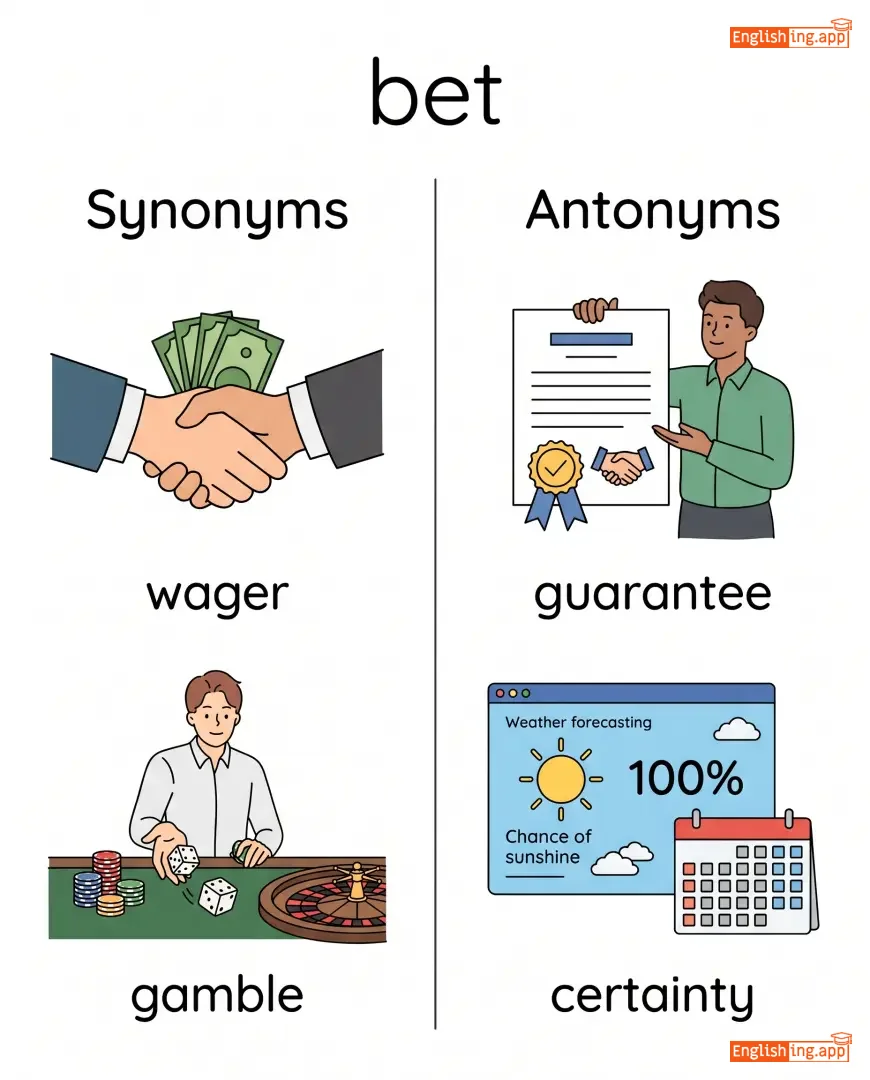
wager, gamble, stake, risk
••••••
|
guarantee, certainty
••••••
|
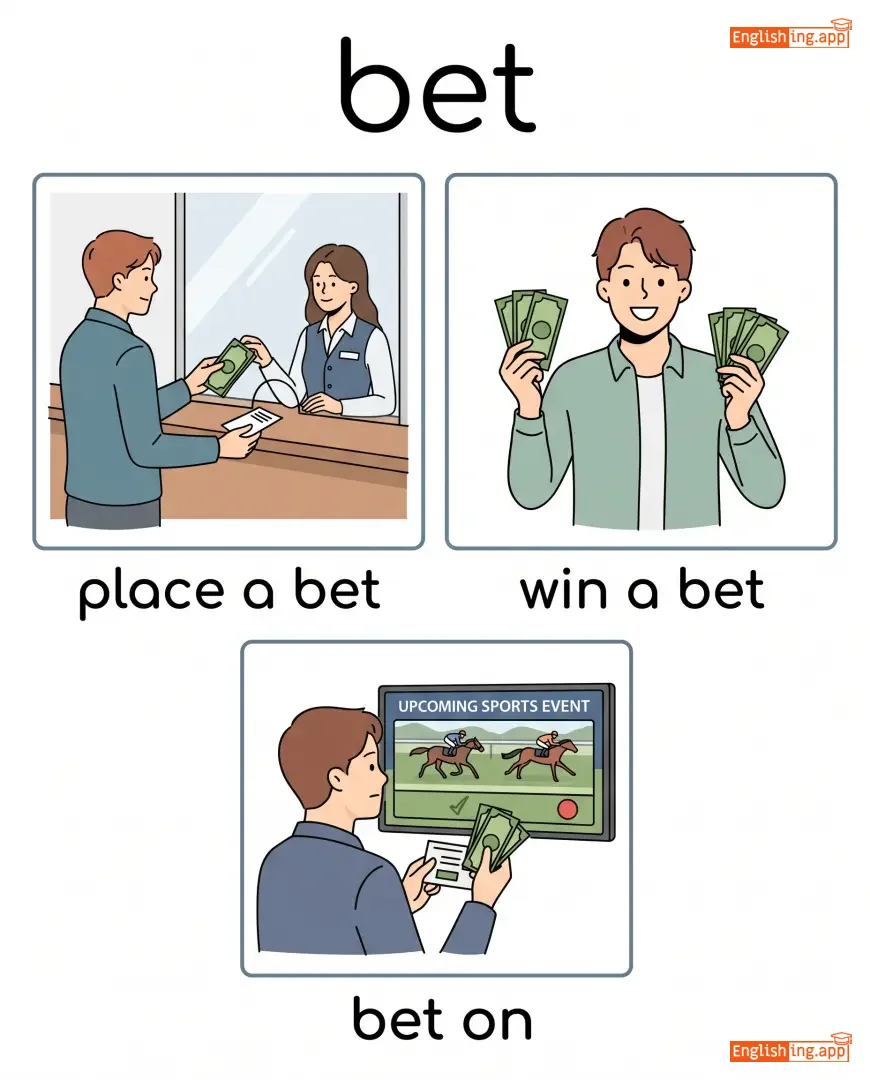
place a bet, win a bet, bet on, bet against
••••••
|
Bet 代表下注, 就像在比赛中下注
••••••
|
|
#631
🚶
|
/bɪˈteɪk/
verb
(比泰克)
••••••
|
- •••••• |
前往;转而从事
qianwang; zhuaner congshi
••••••
|
betook
比图克
••••••
|
betaken
比泰肯
••••••
|
betakes
比泰克斯
••••••
|
betaking
比泰克英
••••••
|
to go or resort to a place or course of action, especially as a response; to apply oneself
••••••
|
After dinner, she betook herself to her room to read.
阿夫特迪纳,她比图克赫塞尔夫图赫尔如姆图瑞德。
••••••
|
晚饭后,她去自己的房间读书。
wanfan hou ta qu ziji de fangjian dushu
••••••
|
betake oneself to
比泰克 oneself 图
••••••
|
to go to or turn to a particular place or activity
••••••
|
转向
zhuanxiang
••••••
|
go, resort, turn, proceed, repair
••••••
|
avoid, abandon
••••••
|
betake oneself to bed, betake oneself to study, betake to prayer
••••••
|
Betake = 去 take 一个地方
••••••
|
|
#632
🗡️
|
/bɪˈtreɪ/
verb
••••••
|
|
- •••••• |
betrayed
••••••
|
betrayed
••••••
|
betrays
••••••
|
betraying
••••••
|
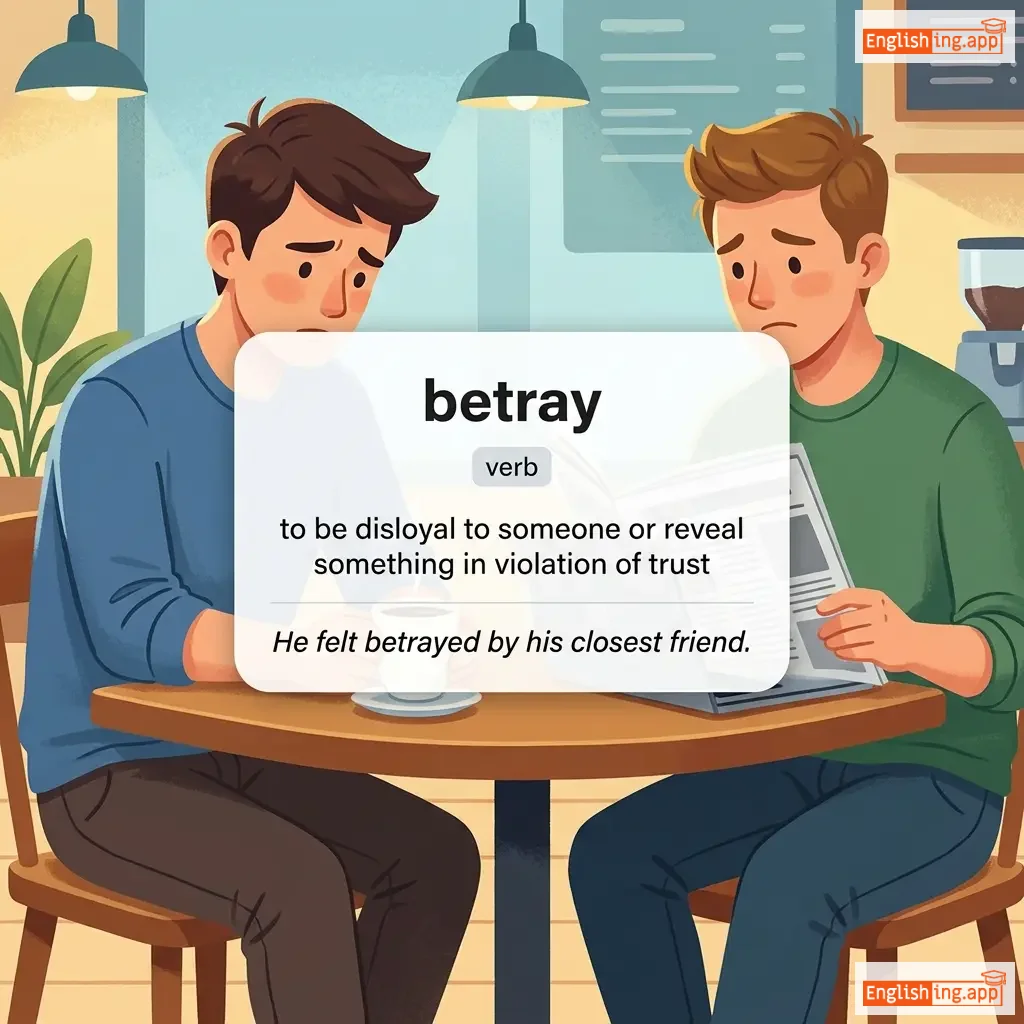
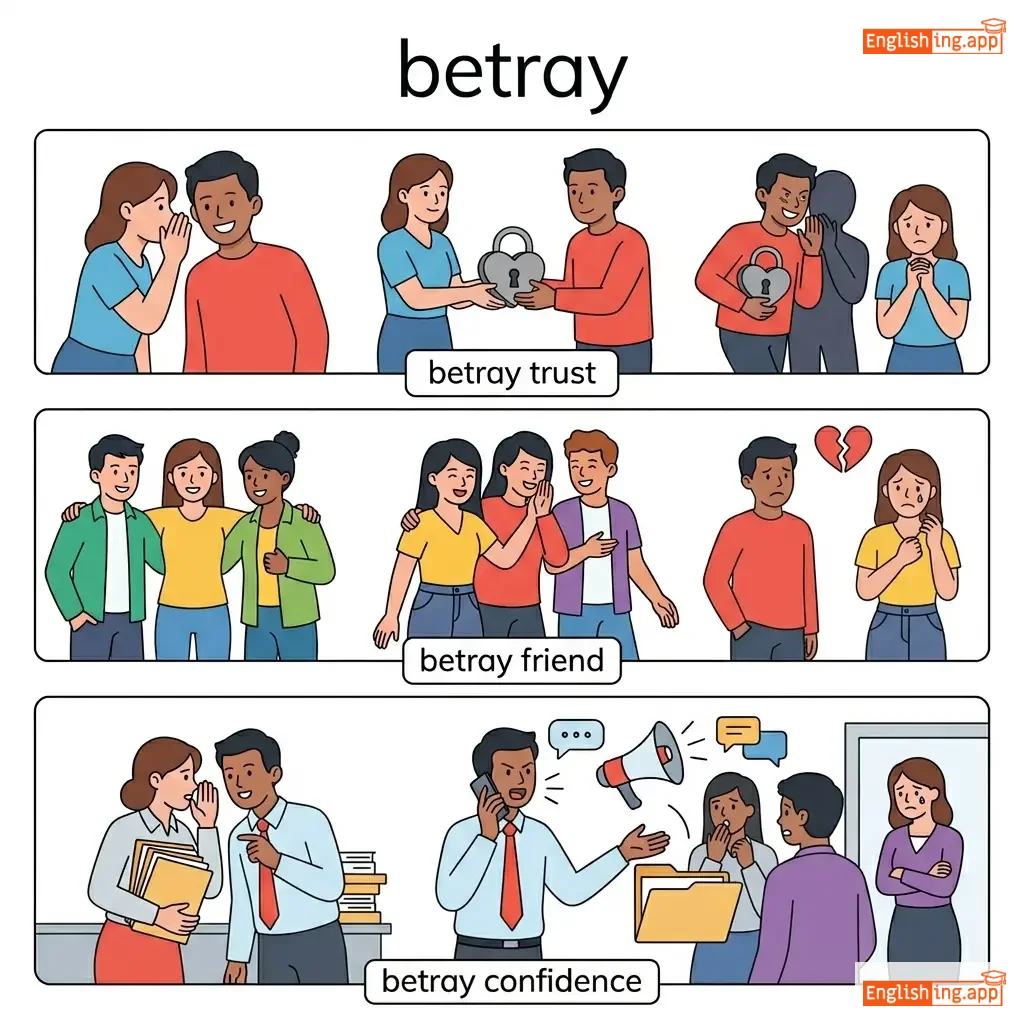
to be disloyal to someone or reveal something in violation of trust
••••••
|
He felt betrayed by his closest friend. |
- •••••• |
betray someone's trust |
to reveal secrets or act against someone's confidence
••••••
|
- •••••• |
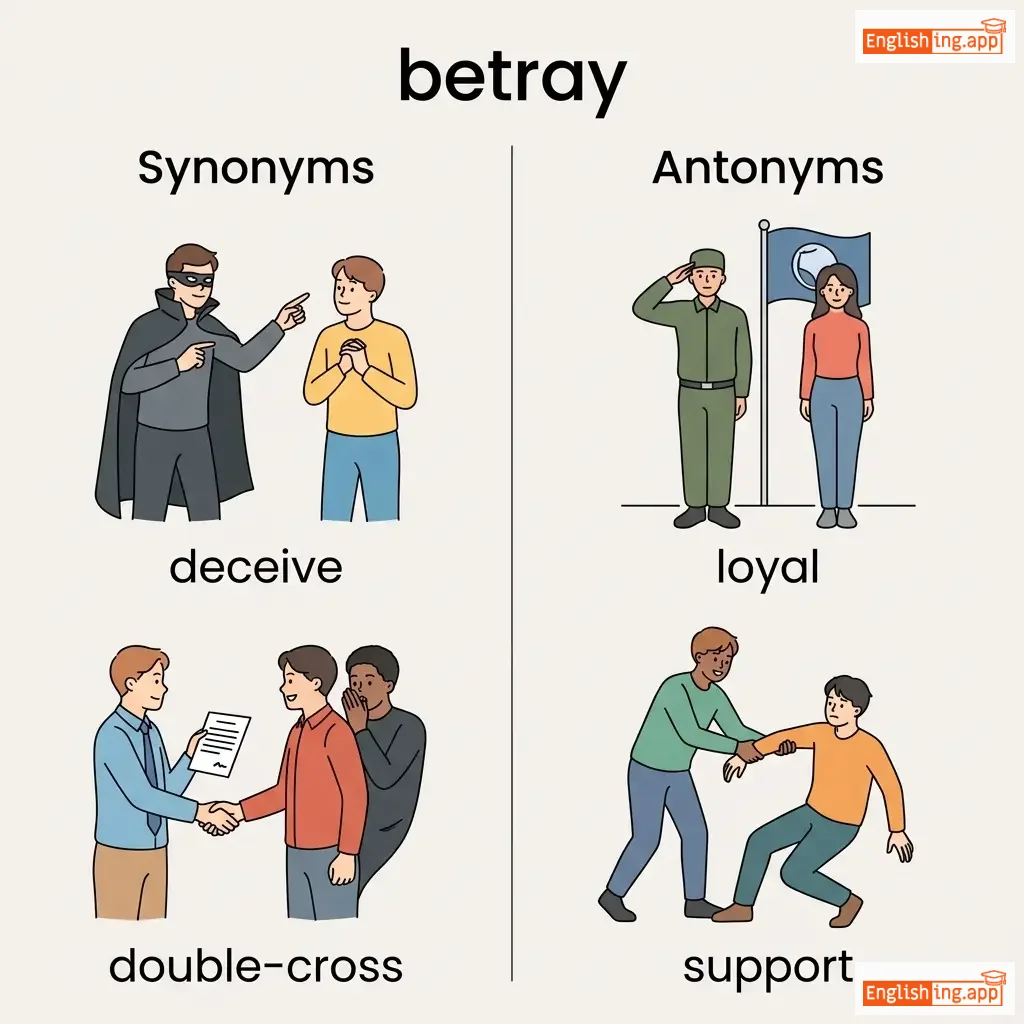
deceive, double-cross, expose, reveal, backstab
••••••
|
loyal, support, protect
••••••
|
betray trust, betray friend, betray confidence
••••••
|
No •••••• |
|
#633
💍
|
/bɪˈtroʊð/
verb
(贝特罗斯)
••••••
|
- •••••• |
订婚
dìnghūn
••••••
|
betrothed
贝特罗斯德
••••••
|
betrothed
贝特罗斯德
••••••
|
betroths
贝特罗斯斯
••••••
|
betrothing
贝特罗斯英
••••••
|
To formally promise to marry someone; to engage.
••••••
|
He was betrothed to the princess at a young age.
他在年轻时就与公主订婚了。
••••••
|
他在年轻时就与公主订婚了。
Tā zài niánqīng shí jiù yǔ gōngzhǔ dìnghūn le.
••••••
|
- •••••• | - •••••• | - •••••• |
engage, promise, pledge, commit, vow
••••••
|
break off, separate, divorce
••••••
|
betroth to, betroth her, formally betroth
••••••
|
Betroth 是 '订婚', 就像是婚前的承诺。
••••••
|
|
#634
👍
|
/ˈbɛtər/
adjective, adverb, verb
••••••
|
- •••••• | - •••••• |
bettered
••••••
|
bettered
••••••
|
betters
••••••
|
bettering
••••••
|
of a more excellent or effective type or quality; to surpass or improve
••••••
|
He felt better after taking the medicine. |
- •••••• |
better late than never |
It is better to do something late than not do it at all.
••••••
|
- •••••• |
improved, superior, greater, finer, enhanced
••••••
|
worse, inferior, poorer
••••••
|
better chance, better understanding, better option, feel better
••••••
|
No •••••• |
|
#635
↔️
|
/bɪˈtwiːn/
preposition, adverb
(比特温)
••••••
|
- •••••• |
之间
zhījiān
••••••
|
- •••••• | - •••••• | - •••••• | - •••••• |
at, into, or across the space separating two objects or regions
••••••
|
She sat between her two friends. |
她坐在两个朋友之间。
Tā zuò zài liǎng gè péngyǒu zhījiān.
••••••
|
between a rock and a hard place |
To be faced with two difficult choices.
••••••
|
进退两难
jìntuì liǎng nán
••••••
|
amid, among, in the middle of, betwixt
••••••
|
outside, beyond
••••••
|
between people, between countries, between lines
••••••
|
Between表示之间,记住be + tween (两个之间) = between.
••••••
|
|
#636
😢
|
/bɪˈweɪl/
verb
(比韦尔)
••••••
|
- •••••• |
哀叹
aitan
••••••
|
bewailed
比韦尔德
••••••
|
bewailed
比韦尔德
••••••
|
bewails
比韦尔兹
••••••
|
bewailing
比韦尔英
••••••
|
to express deep sorrow or regret over something; to mourn openly
••••••
|
She bewailed the loss of her childhood home.
西 比韦尔德 德 洛斯 奥夫 赫 儿 童 年 之家
••••••
|
她哀叹失去了童年的家。
Ta aitan shiqule tongnian de jia
••••••
|
- •••••• | - •••••• | - •••••• |
lament, mourn, grieve over, deplore, bemoan
••••••
|
celebrate, rejoice, praise
••••••
|
bewail the loss, bewail one’s fate, bewail the death, bewail the situation
••••••
|
bewail = 哀叹,想到哀伤地叹气
••••••
|
|
#637
😕
|
/bɪˈwɪldər/
verb
(bī-wīl-děr)
••••••
|
- •••••• |
使困惑
shǐ kùnhuò
••••••
|
bewildered
bī-wīl-dèr-d
••••••
|
bewildered
bī-wīl-dèr-d
••••••
|
bewilders
bī-wīl-dèrs
••••••
|
bewildering
bī-wīl-dèr-ìng
••••••
|
to cause someone to be confused or puzzled
••••••
|
The complex instructions bewildered the students.
复杂的指令使学生感到困惑。
••••••
|
复杂的指令使学生感到困惑。
Fùzá de zhǐlìng shǐ xuéshēng gǎndào kùnhuò.
••••••
|
- •••••• | - •••••• | - •••••• |
confuse, perplex, baffle, puzzle, mystify
••••••
|
clarify, explain, enlighten
••••••
|
bewilder completely, bewilder the mind, utterly bewildered
••••••
|
Bewilder 听起来像 '使困惑' → 当你困惑时,你感到迷失。
••••••
|
|
#638
✨
|
/bɪˈwɪtʃ/
verb
(比乌伊奇)
••••••
|
- •••••• |
迷住
mīzhù
••••••
|
bewitched
比乌伊奇德
••••••
|
bewitched
比乌伊奇德
••••••
|
bewitches
比乌伊奇斯
••••••
|
bewitching
比乌伊奇英
••••••
|
to enchant or fascinate someone as if by magic
••••••
|
The dancer's performance bewitched the audience.
舞蹈家的表演迷住了观众。
••••••
|
舞蹈家的表演迷住了观众。
Wǔdǎo jiā de biǎoyǎn mí zhù le guānzhòng.
••••••
|
- •••••• | - •••••• | - •••••• |
enchant, captivate, charm, mesmerize, spellbind
••••••
|
repel, bore, disgust
••••••
|
bewitch the audience, bewitched by, utterly bewitched
••••••
|
Bewitch 意思是像巫婆那样迷住 → 迷住
••••••
|
|
#639
🌌
|
/bɪˈjɒnd/
preposition, adverb
(比永德)
••••••
|
- •••••• |
超出
chaochu
••••••
|
- •••••• | - •••••• | - •••••• | - •••••• |
at or to the further side of; more than
••••••
|
The village lies beyond the river. |
这个村庄位于河的另一边。
Zhe ge cunzhuang weiyu he de ling yi bian.
••••••
|
beyond belief |
Too extreme to be believed.
••••••
|
超出信仰
chao chu xin yang
••••••
|
past, outside, over, farther
••••••
|
within, inside
••••••
|
beyond reach, beyond control, beyond doubt
••••••
|
超出意味着超出界限,记住'超出'河的另一边!
••••••
|
|
#640
⚖️
|
/ˈbaɪəs/
noun
(bāi-ās)
••••••
|
|
偏见
pianjian
••••••
|
- •••••• | - •••••• |
biases
bāi-ās-es
••••••
|
biasing
bāi-ās-ing
••••••
|
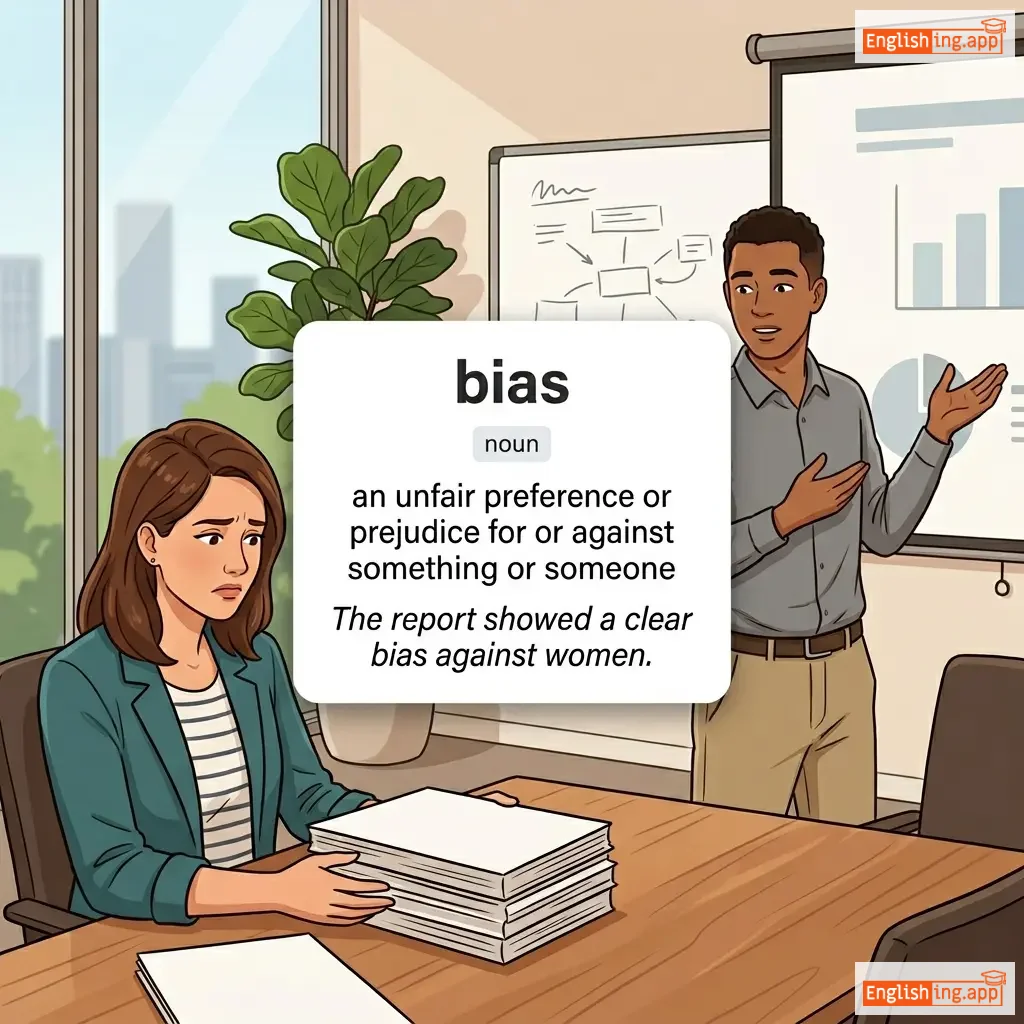
an unfair preference or prejudice for or against something or someone
••••••
|
The report showed a clear bias against women.
报告显示了明显的性别偏见。
••••••
|
报告显示了明显的性别偏见。
Baogao xianshi le mingxian de xingbie pianjian.
••••••
|
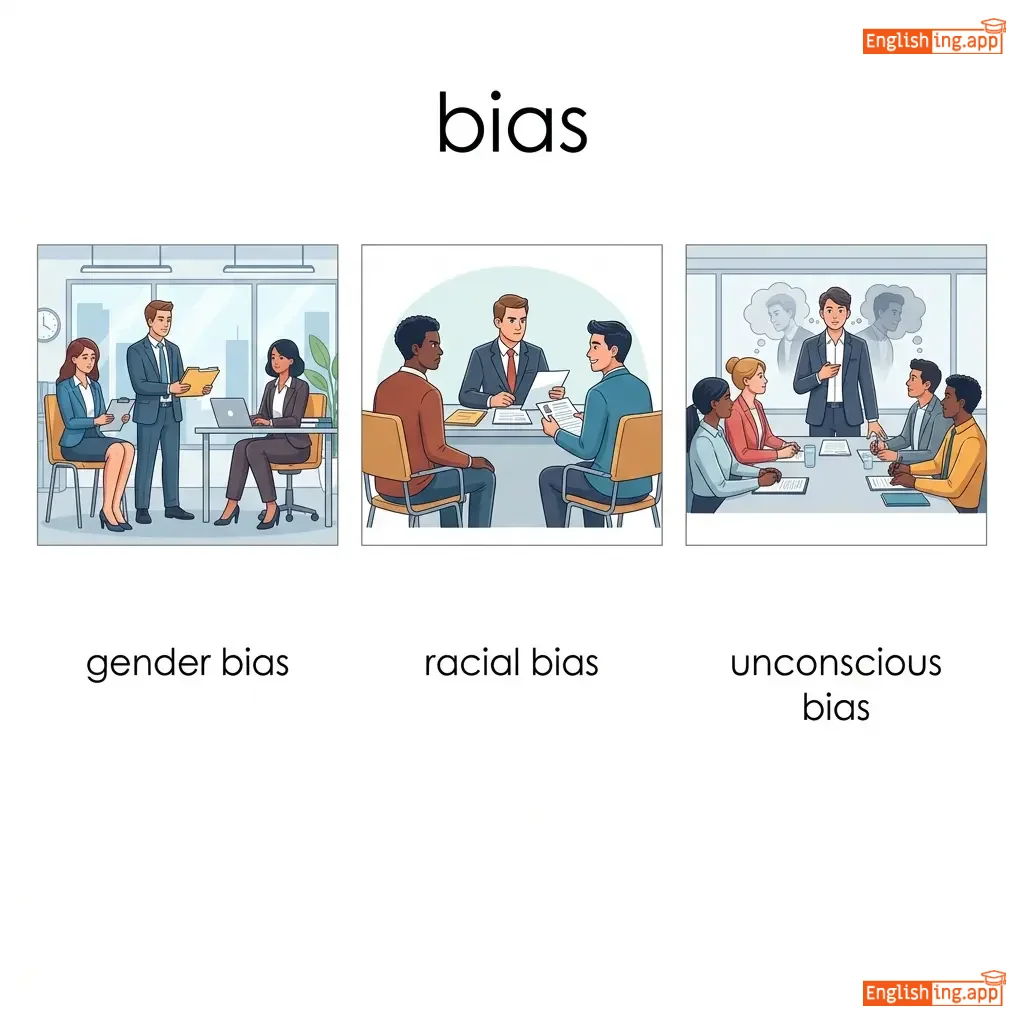
unconscious bias
无意识的偏见
••••••
|
prejudice that a person is unaware of having
••••••
|
无意识的偏见
Wu yishi de pianjian
••••••
|
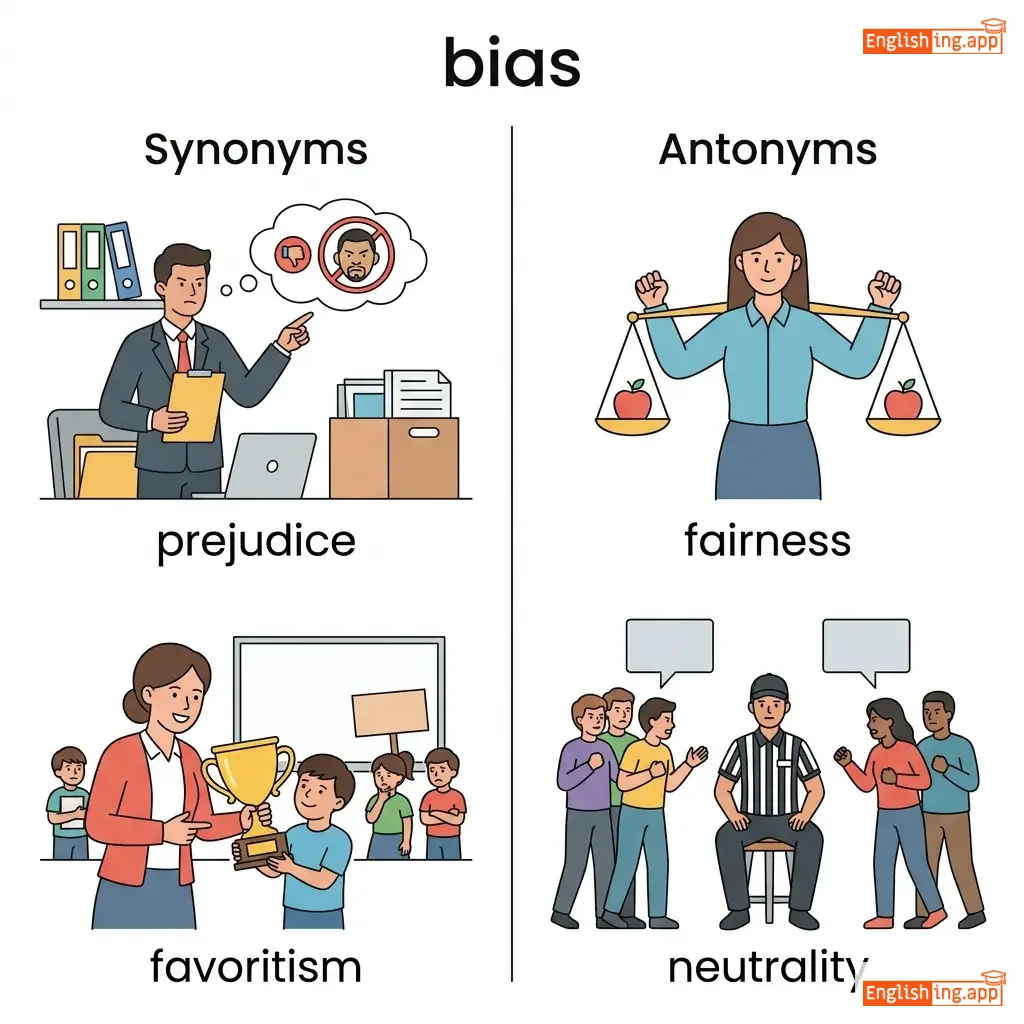
prejudice, favoritism, partiality, inclination, tendency
••••••
|
fairness, neutrality, objectivity
••••••
|
gender bias, racial bias, unconscious bias, bias towards
••••••
|
偏见意味着不公正 — 记住,‘Bi-Us’ 是‘偏向我们’的意思!
••••••
|
|
#641
📖
|
/ˈbaɪbəl/
noun
(bǎibó)
••••••
|
- •••••• |
圣经
shengjing
••••••
|
- •••••• | - •••••• | - •••••• | - •••••• |
the Christian scriptures consisting of the Old and New Testaments; also used for any authoritative book
••••••
|
She reads the Bible every morning. |
她每天早晨读圣经。
Tā měitiān zǎochén dú shèngjīng.
••••••
|
- •••••• | - •••••• | - •••••• |
scripture, holy book, testament, gospel
••••••
|
none
••••••
|
Bible study, Bible verse, Bible story
••••••
|
Bible = 圣经, 记住圣经是神圣的书籍。
••••••
|
|
#642
🚴♂️
|
/ˈbaɪsɪkl/
noun
(海皮尼斯)
••••••
|
- •••••• |
幸福
xìngfú
••••••
|
- •••••• | - •••••• | - •••••• | - •••••• |
a vehicle with two wheels that you ride by pedaling
••••••
|
He rides his bicycle to school every day. |
当她获得奖项时,她无法掩饰她的幸福。
Dāng tā huòdé jiǎngxiàng shí, tā wúfǎ yǎnshì tā de xìngfú.
••••••
|
ride a bicycle |
to travel by bicycle
••••••
|
追求幸福
zhuīqiú xìngfú
••••••
|
bike, cycle, two-wheeler, pedal bike
••••••
|
car, motorcycle
••••••
|
ride a bicycle, mountain bicycle, bicycle lane, bicycle helmet
••••••
|
幸福就是找到了自己想要的一切。
••••••
|
|
#643
💸
|
/bɪd/
verb
••••••
|
- •••••• | - •••••• |
bid
••••••
|
bid
••••••
|
bids
••••••
|
bidding
••••••
|
to offer a certain amount of money for something, especially at an auction
••••••
|
She bid $200 for the antique vase. |
- •••••• |
bid farewell |
to say goodbye formally
••••••
|
- •••••• |
offer, propose, tender, submit, quote
••••••
|
withdraw, retract
••••••
|
bid price, bid farewell, bid high, bid low
••••••
|
No •••••• |
|
#644
📏
|
/bɪɡ/
adjective
(比格)
••••••
|
- •••••• |
大
da
••••••
|
- •••••• | - •••••• | - •••••• | - •••••• |
large in size, extent, or importance
••••••
|
They moved into a big house with plenty of space. |
他们搬进了一座大房子,那里有很多空间。
Tāmen bān jìnle yīzuò dà fángzi, nàlǐ yǒu hěn duō kōngjiān.
••••••
|
think big |
to have ambitious or grand ideas
••••••
|
敢于梦想
gǎn yú mèngxiǎng
••••••
|
large, huge, massive, enormous, vast
••••••
|
small, tiny, little
••••••
|
big house, big city, big problem, big chance
••••••
|
Big 在中文中是大的意思 – Big = Da.
••••••
|
|
#645
📏
|
/ˈbɪɡɪst/
adjective
(比格斯特)
••••••
|
- •••••• |
最大的
zui da de
••••••
|
- •••••• | - •••••• | - •••••• | - •••••• |
largest in size, amount, degree, or importance; superlative form of big
••••••
|
This is the biggest challenge we have ever faced.
迪斯 伊兹 德 比格斯特 挑战
••••••
|
这是我们面临过的最大挑战。
zhe shi women mianlin guo de zui da tiaozhan
••••••
|
the biggest fish in the pond
比格斯特 鱼 在 池塘 里
••••••
|
the most powerful or important person in a small group
••••••
|
小圈子里最有权势的人
xiao quanzi li zui you quanshi de ren
••••••
|
largest, greatest, hugest, vastest, maximum
••••••
|
smallest, tiniest, least
••••••
|
biggest mistake, biggest city, biggest problem, biggest opportunity
••••••
|
Biggest = 最大的,记住 zui da
••••••
|
|
#646
🚲
|
/baɪk/
noun, verb
(bái kè)
••••••
|
- •••••• |
自行车
zìxíngchē
••••••
|
biked
bái kè dé
••••••
|
biked
bái kè dé
••••••
|
bikes
bái kè sī
••••••
|
biking
bái kè yīng
••••••
|
a bicycle or motorcycle; to ride a bicycle
••••••
|
He biked to school every day.
他每天骑自行车去学校。
••••••
|
他每天骑自行车去学校。
Tā měitiān qí zìxíngchē qù xuéxiào.
••••••
|
bike ride
骑行
••••••
|
An outing or trip on a bicycle.
••••••
|
骑行
qíxíng
••••••
|
bicycle, cycle, motorcycle, two-wheeler
••••••
|
car, bus
••••••
|
ride a bike, mountain bike, bike helmet, bike path
••••••
|
Bike的意思是自行车,想象'骑行'!
••••••
|
|
#647
🧾
|
/bɪl/
noun
••••••
|
- •••••• | - •••••• | - •••••• | - •••••• | - •••••• | - •••••• |
a written statement of money owed for goods or services; also a proposed law presented to a legislature
••••••
|
He received the electricity bill yesterday. |
- •••••• |
foot the bill |
to pay for something, especially something expensive
••••••
|
- •••••• |
invoice, statement, charge, account, draft
••••••
|
credit, receipt
••••••
|
pay a bill, receive a bill, pass a bill, utility bill
••••••
|
No •••••• |
|
#648
💰
|
/ˈbɪljən/
noun
••••••
|
- •••••• | - •••••• | - •••••• | - •••••• | - •••••• | - •••••• |
the number 1,000,000,000 (one thousand million)
••••••
|
The company is worth more than a billion dollars. |
- •••••• | - •••••• | - •••••• | - •••••• |
thousand million, giga, large number
••••••
|
one, few
••••••
|
a billion dollars, reach a billion, billion people
••••••
|
No •••••• |
|
#649
🪢
|
/baɪnd/
verb
(bai-nd)
••••••
|
|
捆绑
kunbang
••••••
|
bound
bao-nd
••••••
|
bound
bao-nd
••••••
|
binds
bai-nds
••••••
|
binding
bai-nding
••••••
|
to tie or fasten tightly; to unite or restrict
••••••
|
The contract will bind both parties to the agreement.
合同将使双方受协议约束。
••••••
|
合同将使双方受协议约束。
Hetong jiang shi shuangfang shou xieyi yueshu.
••••••
|
in a bind
在困境中
••••••
|
in a difficult situation
••••••
|
在困境中
zai kunjing zhong
••••••
|
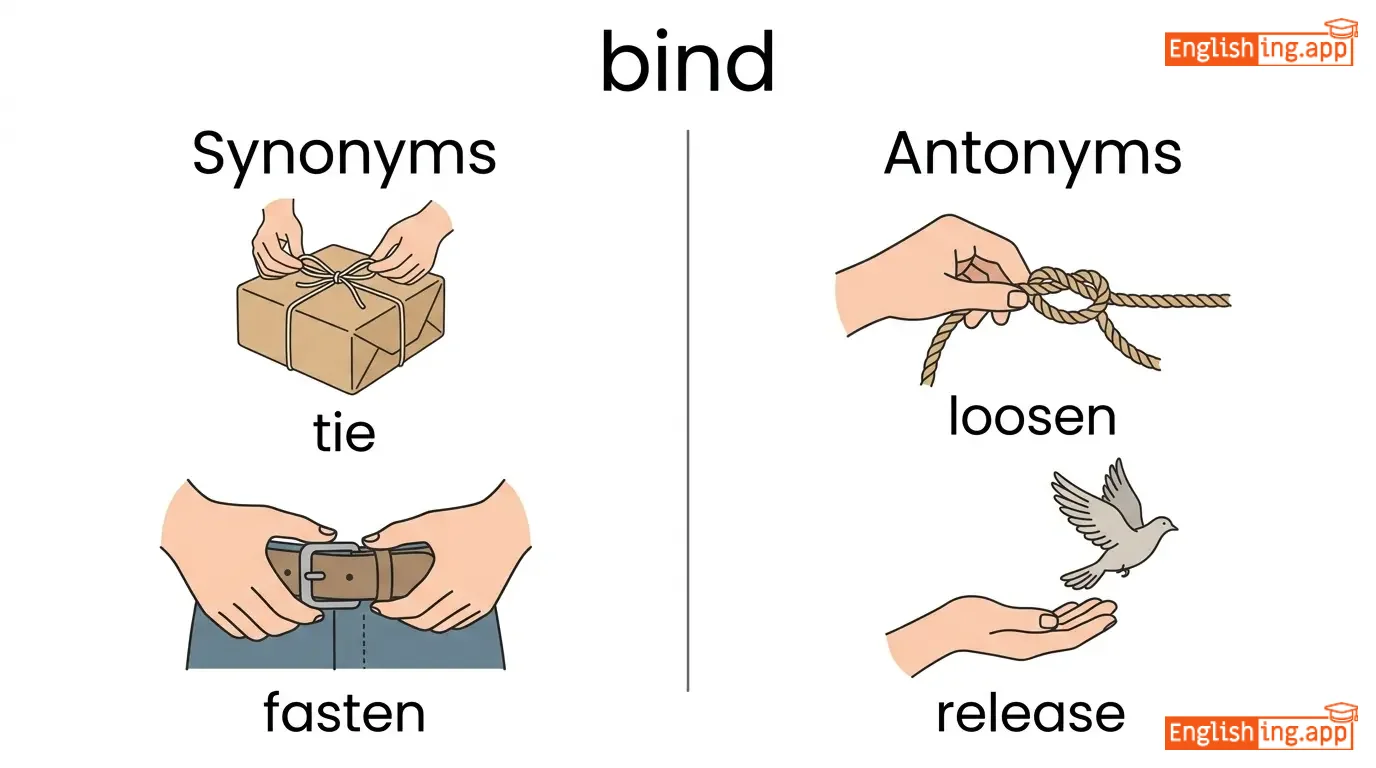
tie, fasten, connect, unite, secure
••••••
|
loosen, release, free
••••••
|
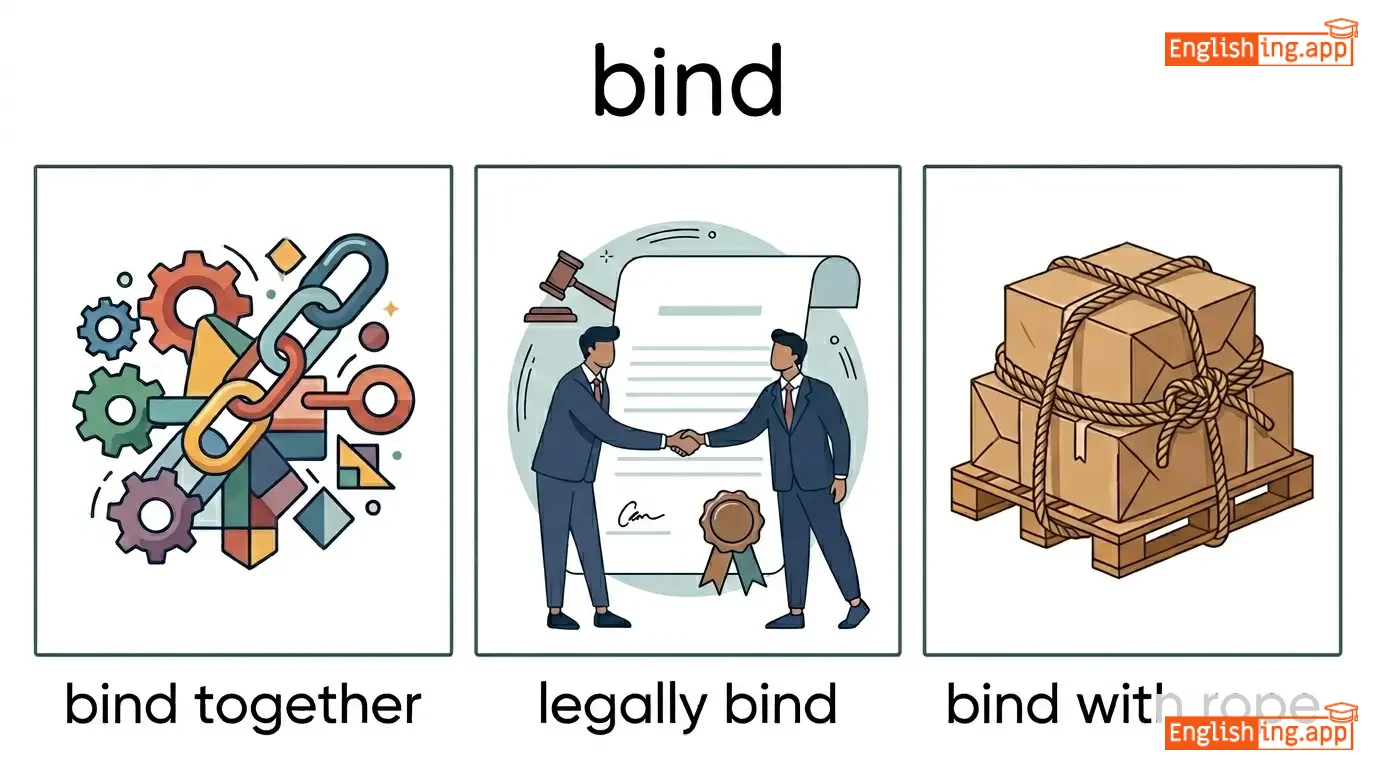
bind together, legally bind, bind with rope, bind tightly
••••••
|
捆绑就像捆住物体,表示把事物捆在一起。
••••••
|
|
#650
📖
|
/baɪˈɒɡrəfi/
noun
(bàiógélì)
••••••
|
- •••••• |
传记
zhuanji
••••••
|
- •••••• | - •••••• | - •••••• | - •••••• |
an account of someone's life written by someone else; the story of a person's life
••••••
|
I'm reading a fascinating biography of Albert Einstein. |
我正在阅读一部关于阿尔伯特·爱因斯坦的迷人传记。
Wo zhengzai yuedu yi bu guanyu A'erbote Aiyinsitan de miren zhuanji.
••••••
|
- •••••• | - •••••• | - •••••• |
life story, memoir, profile
••••••
|
fiction, novel
••••••
|
write a biography, read biography, authorized biography
••••••
|
The word '传记' in Chinese shares a similar meaning to 'Biography' in English, referring to someone's life.
••••••
|
|
#651
🧬
|
/ˌbaɪəˈlɒdʒɪkl̩/
adjective
(baiyolodzhikal)
••••••
|
- •••••• |
生物学的
shengwuxuede
••••••
|
- •••••• | - •••••• | - •••••• | - •••••• |
relating to the science of biology or to life and living organisms
••••••
|
She is studying biological sciences at university. |
她在大学学习生物科学。
Ta zai daxue xuexi shengwu kexue.
••••••
|
biological clock |
the natural timing mechanism in the body that influences processes like sleep and fertility
••••••
|
生物钟
shengwuzhong
••••••
|
organic, natural, life-related, physiological
••••••
|
artificial, synthetic
••••••
|
biological science, biological research, biological process, biological parents
••••••
|
Biological = BIO (生命) + Logical (逻辑) = 生命的逻辑
••••••
|
|
#652
🧬
|
/baɪˈɒlədʒi/
noun
(生物学)
••••••
|
- •••••• |
生物学
shengwuxue
••••••
|
- •••••• | - •••••• | - •••••• | - •••••• |
The scientific study of living organisms.
••••••
|
Biology explains how plants and animals function. |
生物学解释了植物和动物是如何运作的。
Shengwuxue jieshi le zhiwu he dongwu shi ruhe yunzuo de.
••••••
|
- •••••• | - •••••• | - •••••• |
life science, natural science, zoology, botany
••••••
|
inanimate science, nonliving study
••••••
|
study biology, biology class, molecular biology, marine biology
••••••
|
Bio (生命) + logy (学科) = 生命的学科 = 生物学.
••••••
|
|
#653
🐦
|
/bɜːrd/
noun
(bɜːrd)
••••••
|
- •••••• |
鸟
niao
••••••
|
- •••••• | - •••••• | - •••••• | - •••••• |
a warm-blooded animal with feathers and wings that usually lays eggs and can often fly
••••••
|
A bird was singing on the tree branch. |
一只鸟在树枝上唱歌。
Yi zhi niao zai shuzhi shang changge.
••••••
|
a little bird told me |
used to indicate that the speaker has heard a secret from someone unnamed
••••••
|
一只小鸟告诉我
Yi zhi xiao niao gaosu wo
••••••
|
avian, fowl, feathered creature
••••••
|
mammal, reptile
••••••
|
bird song, bird watching, migratory bird, bird species
••••••
|
Bird 代表鸟 🐦 - '鸟' 让你想到自由飞翔的天空
••••••
|
|
#654
👶
|
/bɜːrθ/
noun
(bɜːrθ)
••••••
|
- •••••• |
出生
chūshēng
••••••
|
- •••••• | - •••••• | - •••••• | - •••••• |
the process of being born; the start of life
••••••
|
The birth of a child brings joy to the whole family. |
孩子的出生给整个家庭带来喜悦。
Háizi de chūshēng gěi zhěnggè jiātíng dàilái xǐyuè.
••••••
|
give birth |
to have a baby
••••••
|
分娩
fēnmiǎn
••••••
|
delivery, arrival, nativity, beginning
••••••
|
death, end
••••••
|
birth of a child, birth certificate, give birth, birth anniversary
••••••
|
Birth和出生是同样的含义,就像生日蛋糕一样!
••••••
|
|
#655
🎂
|
/ˈbɜːrθ.deɪ/
noun
••••••
|
- •••••• | - •••••• | - •••••• | - •••••• | - •••••• | - •••••• |
the anniversary of the day on which a person was born, typically celebrated annually
••••••
|
We are planning a surprise birthday party for her. |
- •••••• |
happy birthday |
a greeting used to wish someone well on the anniversary of their birth
••••••
|
- •••••• |
anniversary, natal day, birth anniversary
••••••
|
deathday
••••••
|
birthday cake, birthday party, birthday gift, birthday wish
••••••
|
No •••••• |
|
#656
⛪
|
/ˈbɪʃəp/
noun
(主教)
••••••
|
- •••••• |
主教
zhǔjiào
••••••
|
- •••••• | - •••••• | - •••••• | - •••••• |
a senior member of the Christian clergy, usually in charge of a diocese and empowered to confer holy orders.
••••••
|
The bishop delivered a powerful sermon during Sunday service. |
主教在星期天的礼拜中做了一个有力的布道。
Zhǔjiào zài xīngqītiān de lǐbài zhōng zuòle yīgè yǒulì de bùdào.
••••••
|
move diagonally like a bishop |
to act or move in a way that avoids direct confrontation, like the bishop piece in chess.
••••••
|
像主教一样对角移动
Xiàng zhǔjiào yīyàng duìjiǎo yídòng
••••••
|
clergyman, priest, pastor, archbishop, prelate
••••••
|
layman, civilian
••••••
|
Catholic bishop, Anglican bishop, bishop's palace, ordained bishop
••••••
|
主教是教会的领导者,记住,‘⛪ 主教带领祈祷’。
••••••
|
|
#657
🧩
|
/bɪt/
noun
(比特)
••••••
|
- •••••• |
一小块
yi xiao kuai
••••••
|
- •••••• | - •••••• | - •••••• | - •••••• |
a small piece, amount, or portion of something
••••••
|
She ate a bit of the cake before leaving. |
她在离开之前吃了一小块蛋糕。
Ta zai likai zhi qian chi le yi xiao kuai dangao.
••••••
|
every bit |
completely or fully
••••••
|
每一块
mei yi kuai
••••••
|
piece, fragment, portion, part, scrap
••••••
|
whole, entirety
••••••
|
a bit of, every bit, quite a bit, bit by bit
••••••
|
Bit 就是一小块,就像蛋糕的一小块。
••••••
|
|
#658
🐕🦺
|
/bɪtʃ/
noun
(bich)
••••••
|
- •••••• |
母狗;
mǔ gǒu
••••••
|
- •••••• | - •••••• | - •••••• | - •••••• |
a female dog; an unpleasant or spiteful woman (offensive)
••••••
|
The bitch gave birth to five puppies.
那只母狗生下了五只小狗。
••••••
|
那只母狗生下了五只小狗。
Nà zhī mǔ gǒu shēng xiàle wǔ zhī xiǎo gǒu.
••••••
|
- •••••• | - •••••• | - •••••• |
female dog
••••••
|
male dog, dog
••••••
|
breeding bitch, guard bitch
••••••
|
母狗生下小狗,令人厌烦。
••••••
|
|
#659
🦷
|
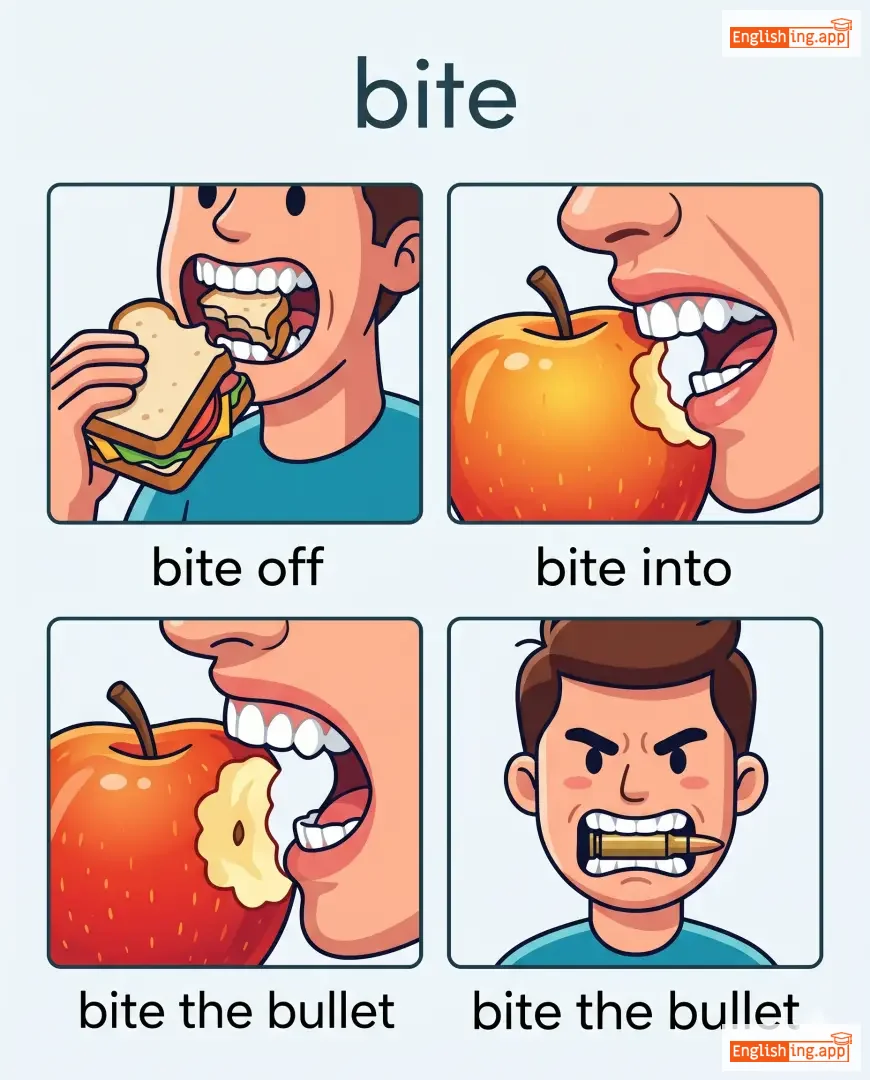
/baɪt/
verb
(bài)
••••••
|
|
咬
yǎo
••••••
|
bit
bìt
••••••
|
bitten
bìtēn
••••••
|
bites
bài sī
••••••
|
biting
bài tīng
••••••
|
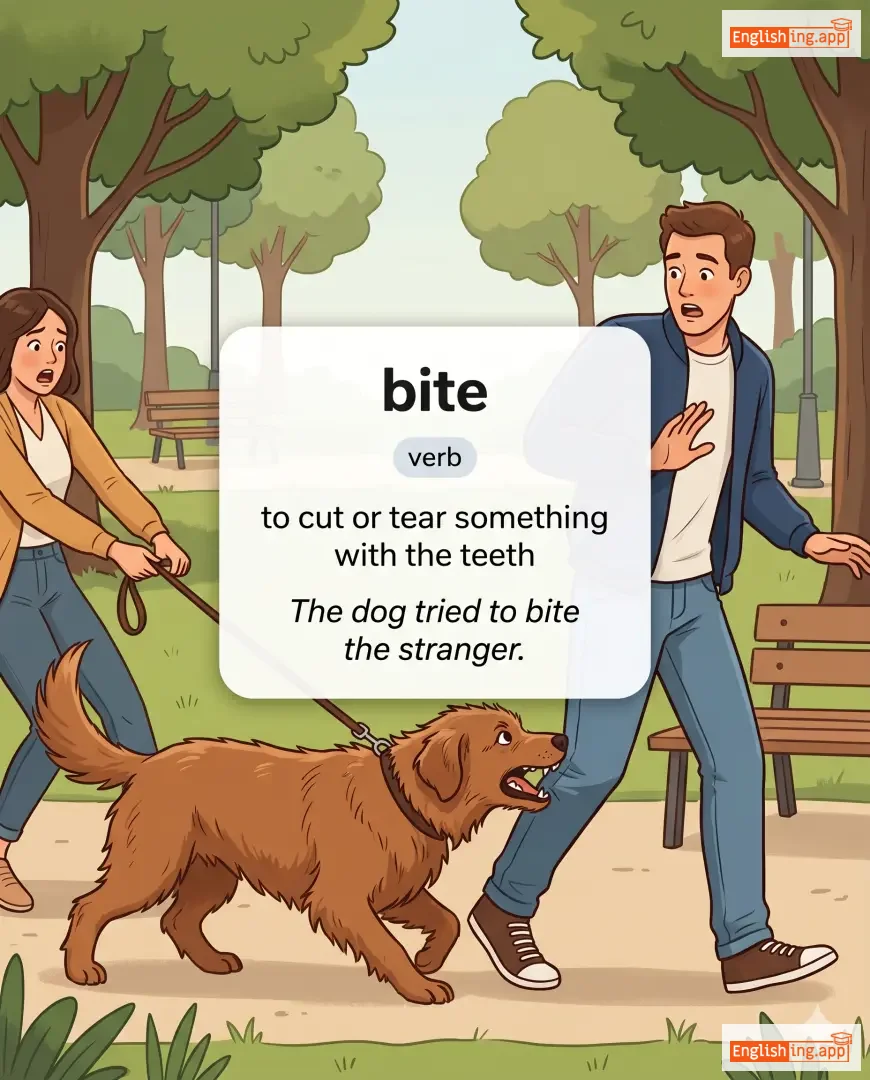
to cut or tear something with the teeth
••••••
|
The dog tried to bite the stranger.
狗试图咬陌生人。
••••••
|
狗试图咬陌生人。
Gǒu shìtú yǎo mòshēngrén.
••••••
|
bite the bullet
bite the bullet
••••••
|
to face a painful or difficult situation with courage
••••••
|
勇敢面对困难的情形
yǒnggǎn miànduì kùnnán de qíngxíng
••••••
|
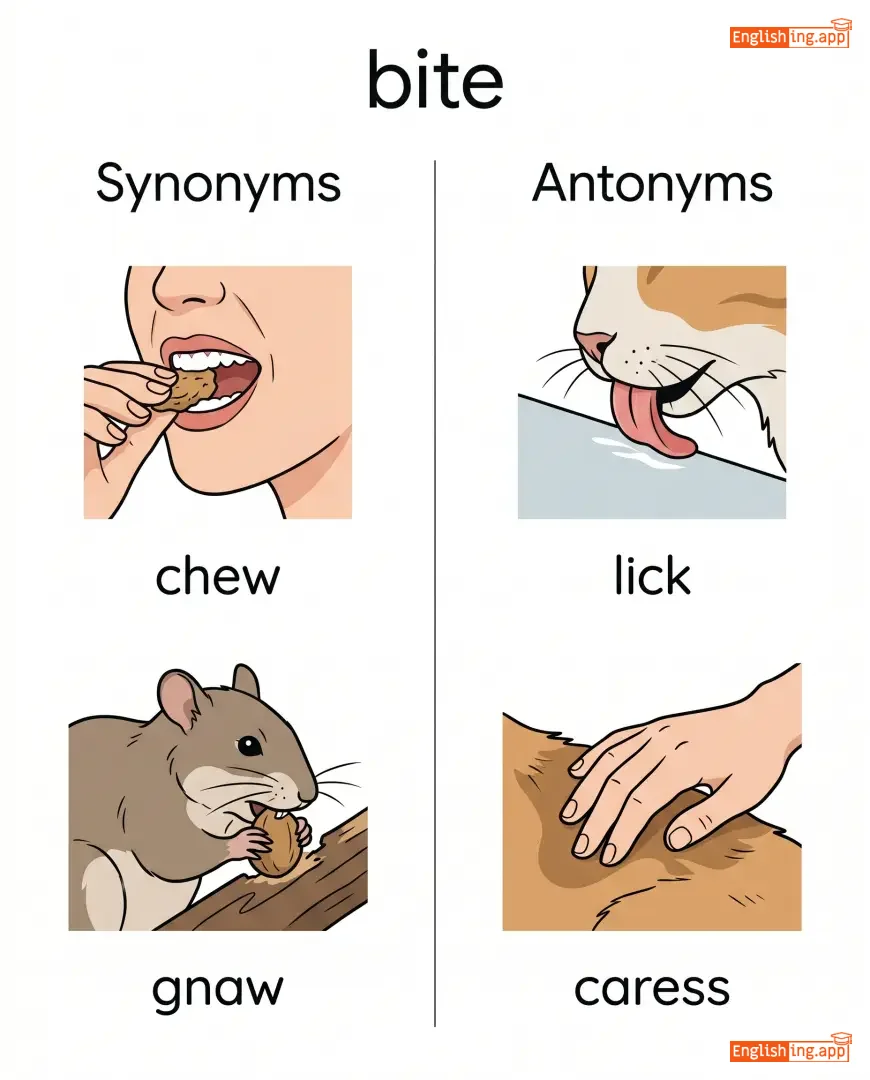
chew, gnaw, snap, nip
••••••
|
lick, caress
••••••
|
bite off, bite into, bite the bullet, bite back
••••••
|
Bite - 咬,想象你正在咬苹果!
••••••
|
|
#660
🍋
|
/ˈbɪtər/
adjective
(bitter)
••••••
|
- •••••• |
苦涩
kuse
••••••
|
- •••••• | - •••••• | - •••••• | - •••••• |
having a sharp, unpleasant taste or showing strong hostility or resentment
••••••
|
She felt bitter about losing the competition. |
她在失去比赛后感到苦涩。
Tā zài shīqù bǐsài hòu gǎndào kǔsè.
••••••
|
bitter pill to swallow |
an unpleasant fact or situation that must be accepted
••••••
|
难以吞咽的苦果
nán yǐ tūn yàn de kǔ guǒ
••••••
|
harsh, resentful, sour, acrid, severe
••••••
|
sweet, pleasant, delightful
••••••
|
bitter taste, bitter truth, bitter experience, bitter rival
••••••
|
苦涩如人生,面对那些不易的时刻
••••••
|
|
#661
🤯
|
/bɪˈzɑːr/
adjective
(bizarre)
••••••
|
- •••••• |
离奇
liqi
••••••
|
- •••••• | - •••••• | - •••••• | - •••••• |
very strange or unusual, especially so as to cause interest or amusement
••••••
|
He told a bizarre story that no one could believe. |
他讲了一个离奇的故事,没有人能相信。
Ta jiangle yige liqi de gushi, meiyou ren neng xiangxin.
••••••
|
- •••••• | - •••••• | - •••••• |
strange, odd, peculiar, unusual, weird
••••••
|
normal, ordinary, usual
••••••
|
bizarre incident, bizarre behavior, bizarre story, bizarre outfit
••••••
|
Bizarre像‘离奇’一样奇怪!
••••••
|
|
#662
🗣️
|
/blæb/
verb, noun
(布拉布)
••••••
|
- •••••• |
胡说;泄露秘密
hu shuo; xielu mimi
••••••
|
blabbed
布拉布德
••••••
|
blabbed
布拉布德
••••••
|
blabs
布拉布斯
••••••
|
blabbing
布拉布英
••••••
|
to talk too much or reveal secrets carelessly; excessive or foolish talk
••••••
|
He accidentally blabbed the surprise to everyone.
他不小心把惊喜布拉布给了大家。
••••••
|
他不小心把惊喜告诉了大家。
ta bu xiaoxin ba jingxi gaosu le dajia
••••••
|
blab it out
布拉布出来
••••••
|
to reveal something without thinking
••••••
|
说漏嘴
shuo lou zui
••••••
|
babble, chatter, prattle, gossip, tattle
••••••
|
keep quiet, conceal, hush
••••••
|
blab secrets, blab on, blab about, blab away
••••••
|
blab 像‘吧啦吧啦’—一直说
••••••
|
|
#663
⚫
|
/blæk/
adjective
(黑色)
••••••
|
- •••••• |
黑色
heise
••••••
|
- •••••• | - •••••• | - •••••• | - •••••• |
of the very darkest color due to the absence of light
••••••
|
She wore a black dress to the party. |
她穿着一件黑色的裙子参加派对。
Tā chuān zhe yī jiàn hēi sè de qúnzi cānjiā pàiduì.
••••••
|
black and white |
clear and straightforward
••••••
|
清晰直接
qīngxī zhíjiē
••••••
|
dark, ebony, jet, inky
••••••
|
white, bright
••••••
|
black dress, black coffee, pitch black, black hole
••••••
|
Black意味着黑色—'Black coffee'意味着没有牛奶的咖啡。
••••••
|
|
#664
⚫
|
/ˈblækən/
verb
(布莱肯)
••••••
|
- •••••• |
使变黑
shi bian hei
••••••
|
blackened
布莱肯德
••••••
|
blackened
布莱肯德
••••••
|
blackens
布莱肯兹
••••••
|
blackening
布莱肯宁
••••••
|
to make something black or darker; to stain, soil, or tarnish
••••••
|
Smoke from the fire began to blacken the walls.
斯莫克 弗罗姆 泽 法尔 比甘 图 布莱肯 泽 沃尔兹。
••••••
|
火灾的烟开始把墙壁熏黑了。
huozai de yan kaishi ba qiangbi xun hei le
••••••
|
blacken someone's name
布莱肯 萨姆万 兹 内姆
••••••
|
to damage someone's reputation
••••••
|
玷污某人的名声
dianwu mouren de mingsheng
••••••
|
darken, soil, stain, tarnish, smudge
••••••
|
whiten, brighten, clean
••••••
|
blacken the sky, blacken walls, blacken reputation, blacken surface
••••••
|
Black = 黑 hei → 变黑 = blacken
••••••
|
|
#665
🕵️
|
/ˈblækmeɪl/
noun, verb
(布莱克梅尔)
••••••
|
- •••••• |
敲诈
qiaozha
••••••
|
blackmailed
布莱克梅尔德
••••••
|
blackmailed
布莱克梅尔德
••••••
|
blackmails
布莱克梅尔兹
••••••
|
blackmailing
布莱克梅尔英
••••••
|
the act of demanding money or advantage by threatening to reveal secrets; to force someone to act by using such threats
••••••
|
He tried to blackmail her by threatening to reveal the documents.
他 试图 用 威胁 公布 文件 来 布莱克梅尔 她。
••••••
|
他试图用威胁公布文件来敲诈她。
ta shitu yong weixie gongbu wenjian lai qiaozha ta
••••••
|
blackmail someone into doing something
blackmail someone into doing something
••••••
|
to force someone to do something through threats
••••••
|
敲诈某人去做某事
qiaozha mouren qu zuo moushi
••••••
|
extort, coerce, pressure, intimidate, threaten
••••••
|
persuade, appeal, encourage
••••••
|
blackmail attempt, blackmail scheme, blackmail money, emotional blackmail
••••••
|
敲诈像敲门要钱 = blackmail
••••••
|
|
#666
🔪
|
/bleɪd/
noun
(buleide)
••••••
|
- •••••• |
刀片
daopian
••••••
|
- •••••• | - •••••• | - •••••• | - •••••• |
the flat cutting edge of a tool, knife, or weapon
••••••
|
The blade of the knife was very sharp.
刀片非常锋利。
••••••
|
刀片非常锋利。
Daopian feichang fengli.
••••••
|
on the blade's edge
刀片的边缘
••••••
|
in a very risky or dangerous position
••••••
|
处于非常危险的位置
chuyu feichang weixian de weizhi
••••••
|
edge, sword, cutter, razor
••••••
|
handle, blunt side
••••••
|
knife blade, razor blade, sharp blade, blade of grass
••••••
|
刀片是blade的意思—'刀片切割'记住。
••••••
|
|
#667
☝️
|
/bleɪm/
verb
(bleim)
••••••
|
|
责怪
zeguai
••••••
|
blamed
bleimd
••••••
|
blamed
bleimd
••••••
|
blames
bleims
••••••
|
blaming
bleiming
••••••
|
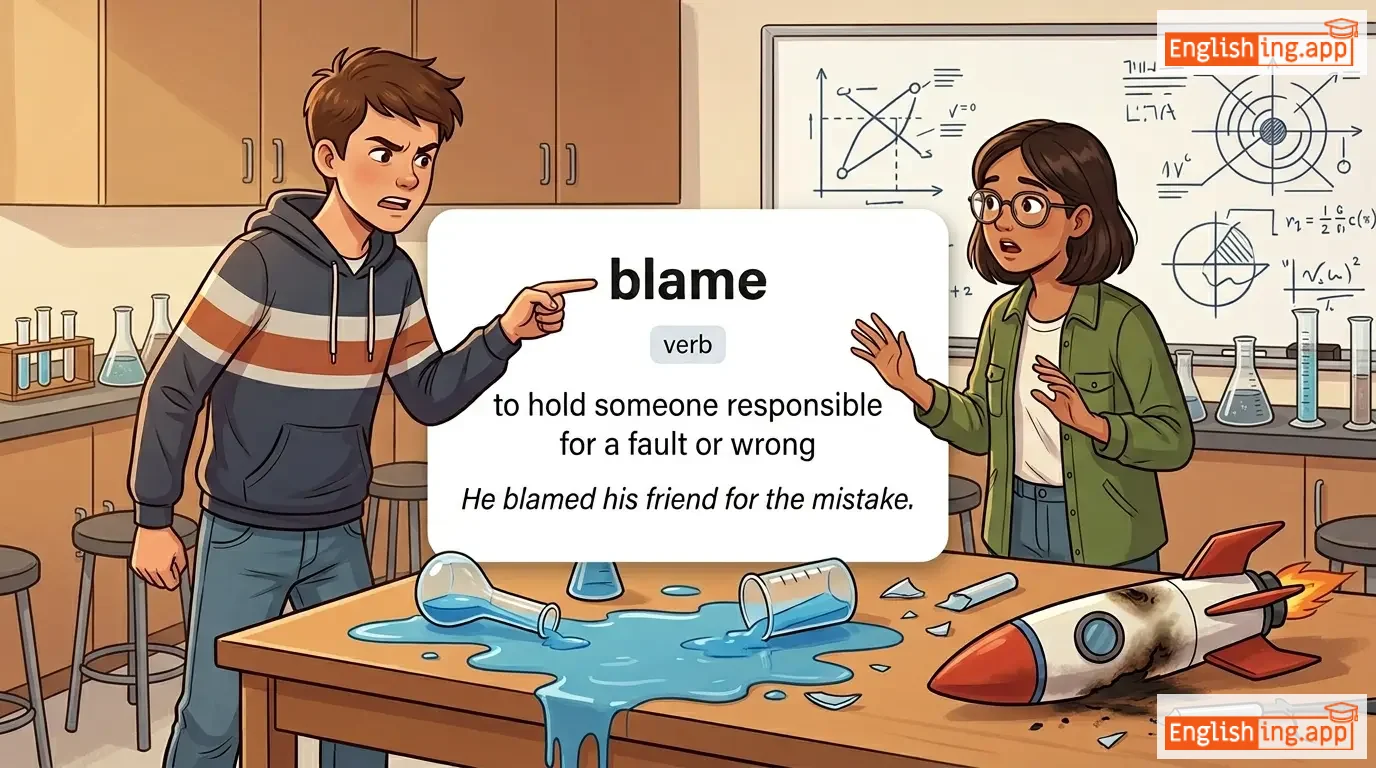
to hold someone responsible for a fault or wrong
••••••
|
He blamed his friend for the mistake.
他把错误归咎于他的朋友。
••••••
|
他把错误归咎于他的朋友。
Ta ba cuowu guijiu yu tade pengyou.
••••••
|
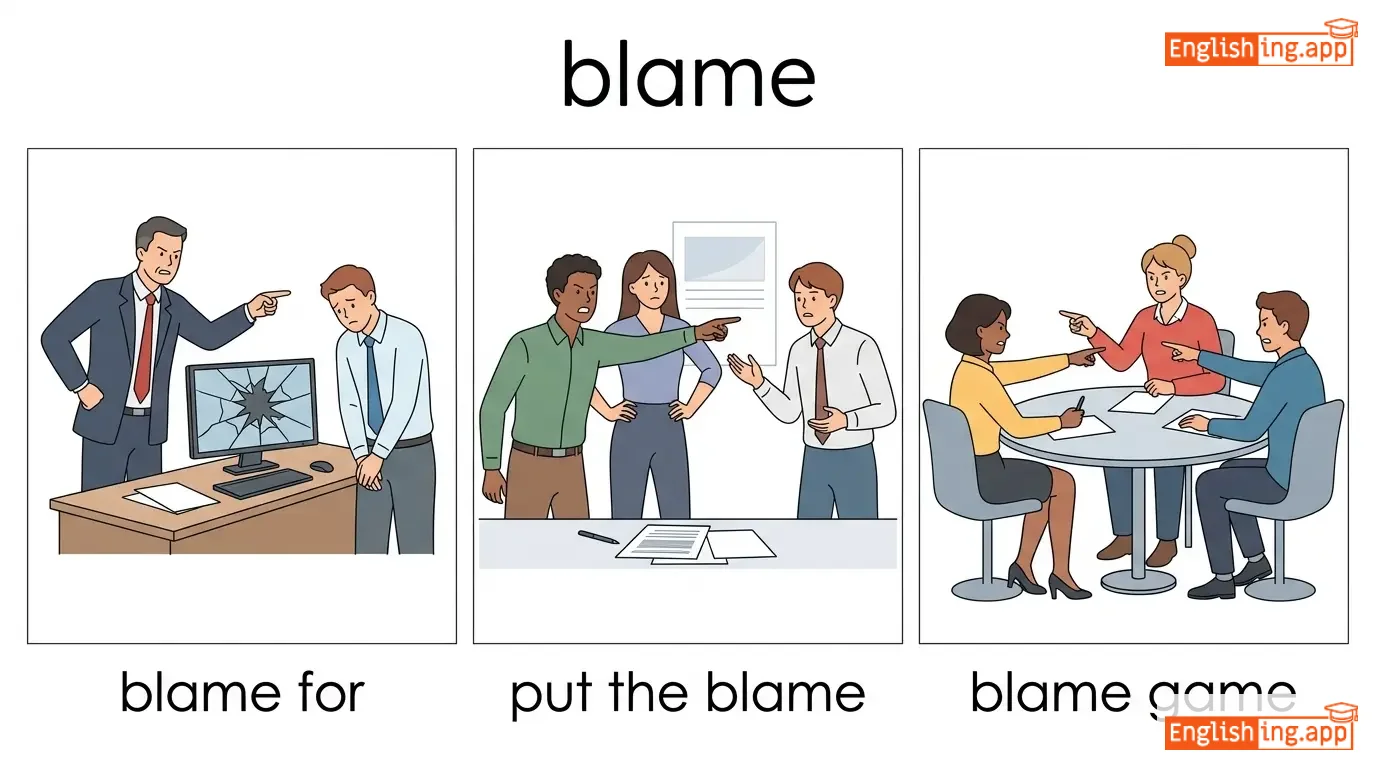
put the blame on
把责任推到
••••••
|
to make someone responsible for something bad
••••••
|
把责任推到
Ba zeren tuidao
••••••
|
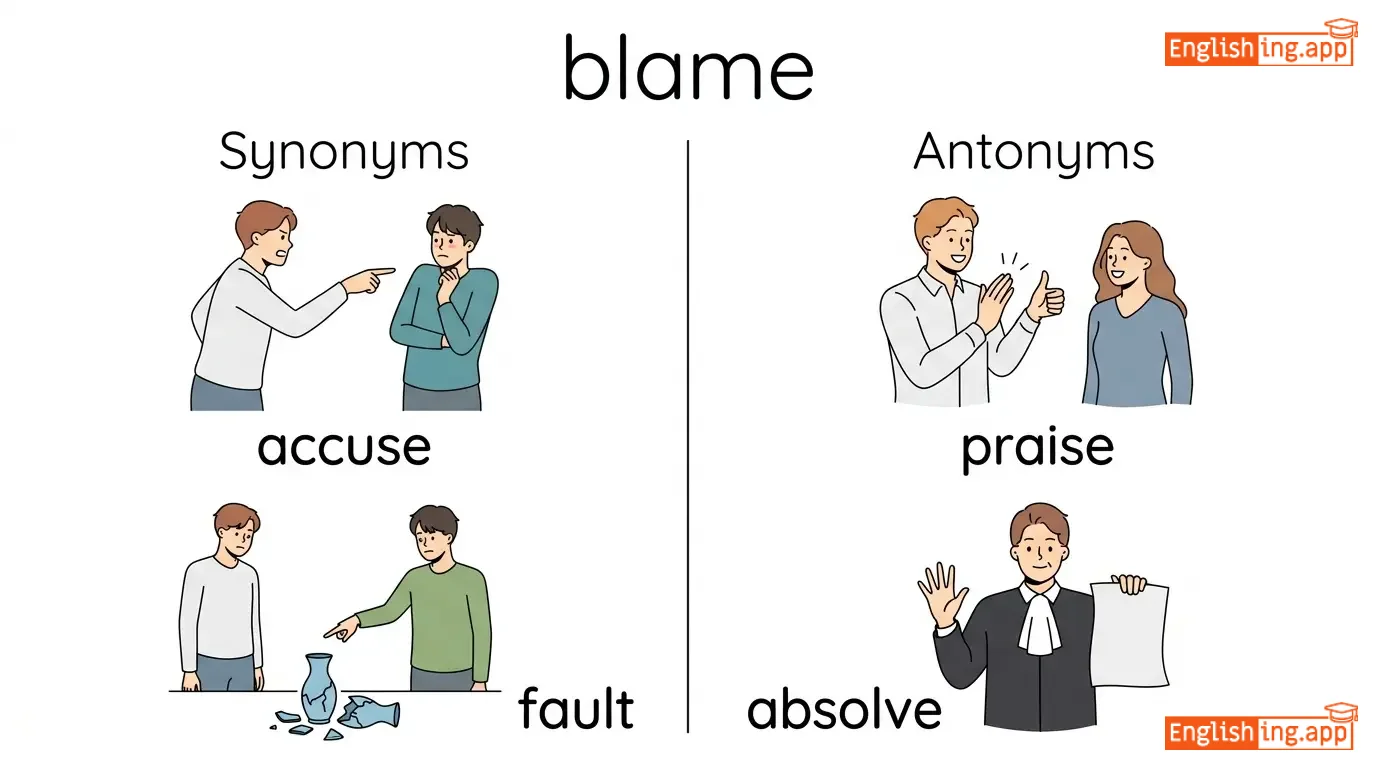
accuse, fault, charge, condemn
••••••
|
praise, absolve, forgive
••••••
|
blame for, put the blame, blame game, blame others
••••••
|
Blame 意思是责怪—'Blame game' 意思是推卸责任的游戏。
••••••
|
|
#668
😌
|
/ˈblændɪʃ/
verb
(布兰迪什)
••••••
|
- •••••• |
奉承
fengcheng
••••••
|
blandished
布兰迪什德
••••••
|
blandished
布兰迪什德
••••••
|
blandishes
布兰迪什兹
••••••
|
blandishing
布兰迪什英
••••••
|
to flatter or coax someone with kind words or praise in order to influence them
••••••
|
He blandished the officials with compliments to gain their support.
他用恭维话布兰迪什官员。
••••••
|
他为了得到支持而奉承官员。
ta weile dedao zhichi er fengcheng guanyuan
••••••
|
- •••••• | - •••••• | - •••••• |
flatter, coax, cajole, sweet-talk, wheedle
••••••
|
criticize, insult, rebuke
••••••
|
blandish someone with praise, blandish into agreement, blandishing words
••••••
|
blandish 听起来像 不难的事 → 甜言蜜语奉承
••••••
|
|
#669
📄
|
/blæŋk/
adjective
(blæŋk)
••••••
|
- •••••• |
空白
kongbai
••••••
|
- •••••• | - •••••• | - •••••• | - •••••• |
showing no expression or containing nothing written, printed, or recorded.
••••••
|
Her face went blank when she heard the bad news. |
当她听到坏消息时,她的脸变得空白。
dang ta tingdao huai xiaoxi shi, ta de lian biande kongbai.
••••••
|
a blank slate |
a fresh start with no previous record or experience.
••••••
|
一张空白的白板
yi zhang kongbai de baiban
••••••
|
empty, vacant, expressionless, plain, void
••••••
|
filled, expressive, occupied
••••••
|
blank page, blank look, blank screen, blank form
••••••
|
Blank 意味着空白 — 如果考试中交空白纸,你就挂了!
••••••
|
|
#670
🛏️
|
/ˈblæŋ.kɪt/
noun
(布蘭凱特)
••••••
|
- •••••• |
毯子
tǎnzi
••••••
|
- •••••• | - •••••• | - •••••• | - •••••• |
A large piece of cloth used for warmth, typically on a bed.
••••••
|
She pulled the blanket over her shoulders to stay warm.
她把毯子拉到肩膀上,以保持温暖。
••••••
|
她把毯子拉到肩膀上,以保持温暖。
Tā bǎ tǎnzi lā dào jiānbǎng shàng, yǐ bǎochí wēnnuǎn.
••••••
|
a blanket statement
泛泛而谈的陈述
••••••
|
A general statement that covers all cases but may not be accurate in detail.
••••••
|
泛泛而谈的陈述
fànfàn'értán de chénshù
••••••
|
cover, quilt, throw, spread, comforter
••••••
|
sheet, exposure
••••••
|
warm blanket, electric blanket, wool blanket, heavy blanket
••••••
|
毯子 = Blanket,像一个泛泛而谈的陈述一样覆盖一切。
••••••
|
|
#671
💥
|
/blæst/
noun, verb
(爆炸)
••••••
|
- •••••• |
爆炸, 强烈撞击
baozha, qianglie zhuangji
••••••
|
blasted
爆炸的
••••••
|
blasted
爆炸的
••••••
|
blasts
爆炸
••••••
|
blasting
爆炸
••••••
|
a strong gust of wind, an explosion, or a loud sound; to destroy or shatter by explosion
••••••
|
The explosion sent a powerful blast through the building.
爆炸通过大楼发送了一股强劲的爆风。
••••••
|
爆炸通过大楼发送了一股强劲的爆风。
Baozha tongguo dalou faxian le yi gu qiang jin de baofeng.
••••••
|
have a blast
玩得开心
••••••
|
to have a very enjoyable time
••••••
|
玩得开心
wan de kaixin
••••••
|
explosion, burst, boom, gust, detonation
••••••
|
silence, calm, stillness
••••••
|
blast wave, blast furnace, blast off, blasting sound
••••••
|
Blast意味着爆炸,而'Have a blast'意味着度过愉快的时光,像爆炸般的乐趣
••••••
|
|
#672
🩸
|
/bliːd/
verb
(blid)
••••••
|
- •••••• |
流血
liuxue
••••••
|
bled
bled
••••••
|
bled
bled
••••••
|
bleeds
blids
••••••
|
bleeding
bliding
••••••
|
to lose blood from the body, especially due to injury
••••••
|
She began to bleed from the cut on her arm.
她开始从她手臂上的割伤出血。
••••••
|
她开始从她手臂上的割伤出血。
Ta kaishi cong ta shoubi shang de ge shang chuxue.
••••••
|
- •••••• | - •••••• | - •••••• |
hemorrhage, ooze, drip, seep
••••••
|
heal, stop
••••••
|
bleed heavily, bleed profusely, bleed out, bleed internally
••••••
|
Blee(d) 听起来像流血,记住:如果割伤了,就会流血!
••••••
|
|
#673
🥤
|
/blɛnd/
verb
(blɛnd)
••••••
|
|
混合
hunhe
••••••
|
blended
blended
••••••
|
blended
blended
••••••
|
blends
blends
••••••
|
blending
blending
••••••
|
to mix different substances or elements together so that they form a smooth combination
••••••
|
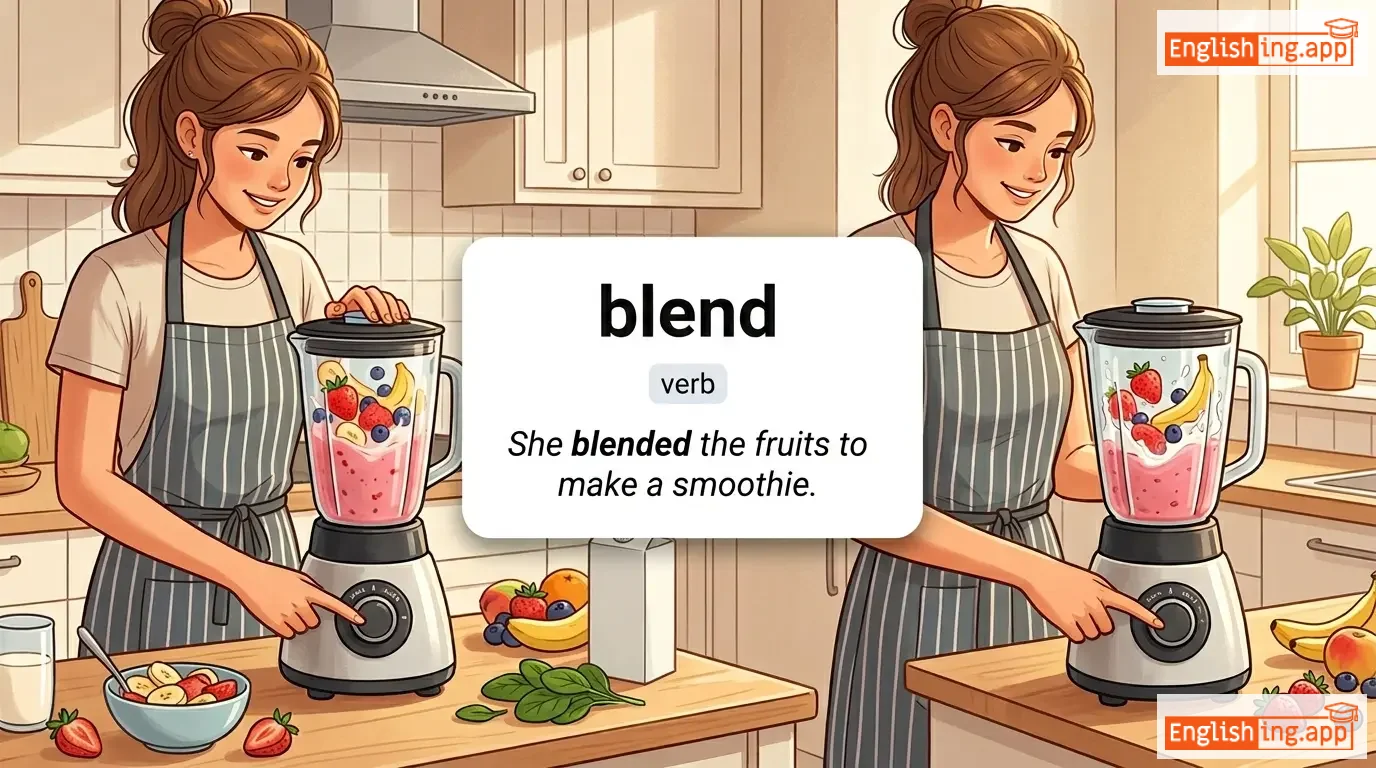
She blended the fruits to make a smoothie.
她把水果混合做成了冰沙。
••••••
|
她把水果混合做成了冰沙。
Ta ba shuiguo hunhe zuo cheng le bingsha.
••••••
|
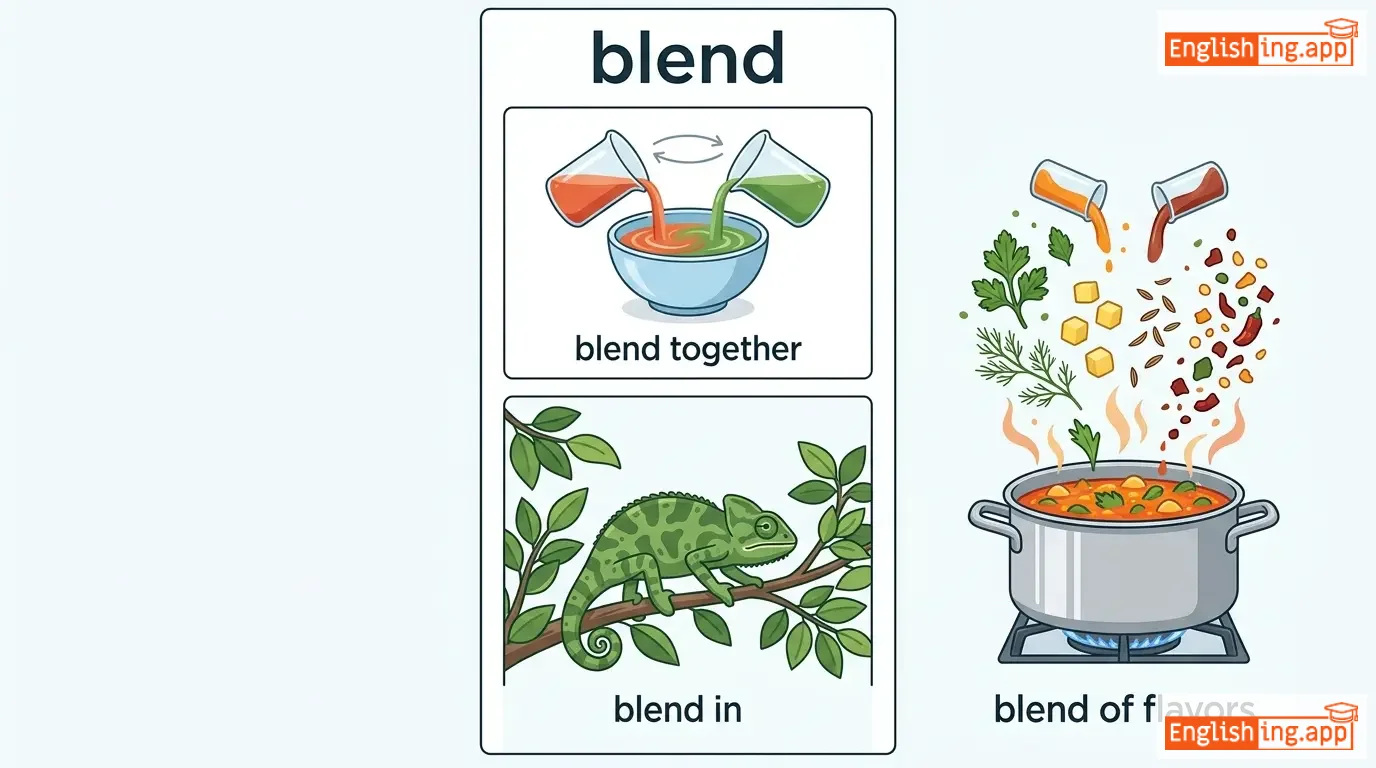
blend in
融入
••••••
|
to look or seem the same as the surrounding people or things
••••••
|
融入
rongru
••••••
|
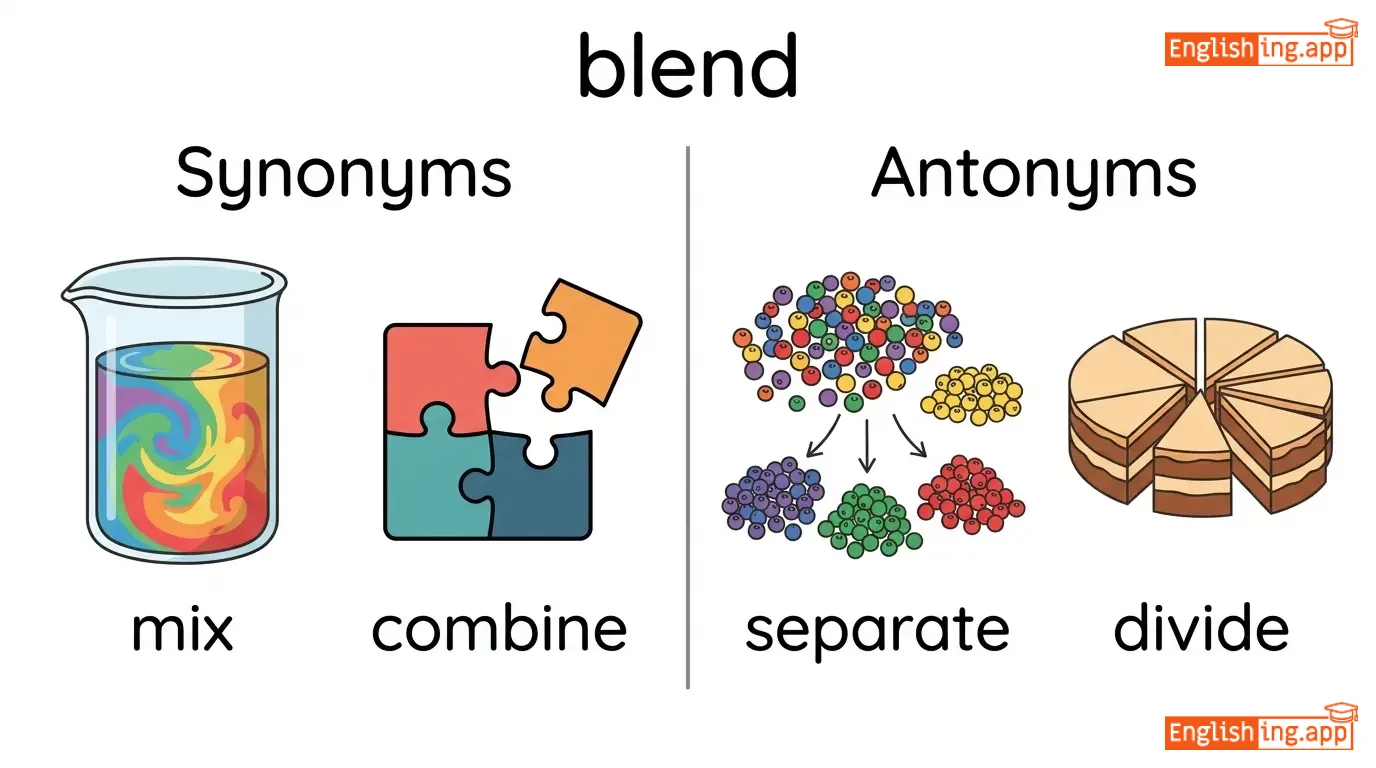
mix, combine, merge, fuse, integrate
••••••
|
separate, divide, detach
••••••
|
blend together, blend in, blend of flavors, blend smoothly
••••••
|
Blend意味着混合,就像把水果放进搅拌机里做冰沙。
••••••
|
|
#674
🙏
|
/blɛs/
verb
(布莱斯)
••••••
|
|
祝福
zhufu
••••••
|
blessed
布莱斯德
••••••
|
blessed
布莱斯德
••••••
|
blesses
布莱塞斯
••••••
|
blessing
布莱辛
••••••
|
to ask for divine favor or protection for someone or something.
••••••
|
The priest blessed the couple at their wedding ceremony.
牧师在他们的婚礼仪式上祝福了这对新人。
••••••
|
牧师在他们的婚礼仪式上祝福了这对新人。
Mùshī zài tāmen de hūnlǐ yíshì shàng zhùfúle zhè duì xīnrén.
••••••
|
count your blessings
数一数你的祝福
••••••
|
to be thankful for the good things you have.
••••••
|
数一数你的祝福
Shǔ yī shǔ nǐ de zhùfú
••••••
|
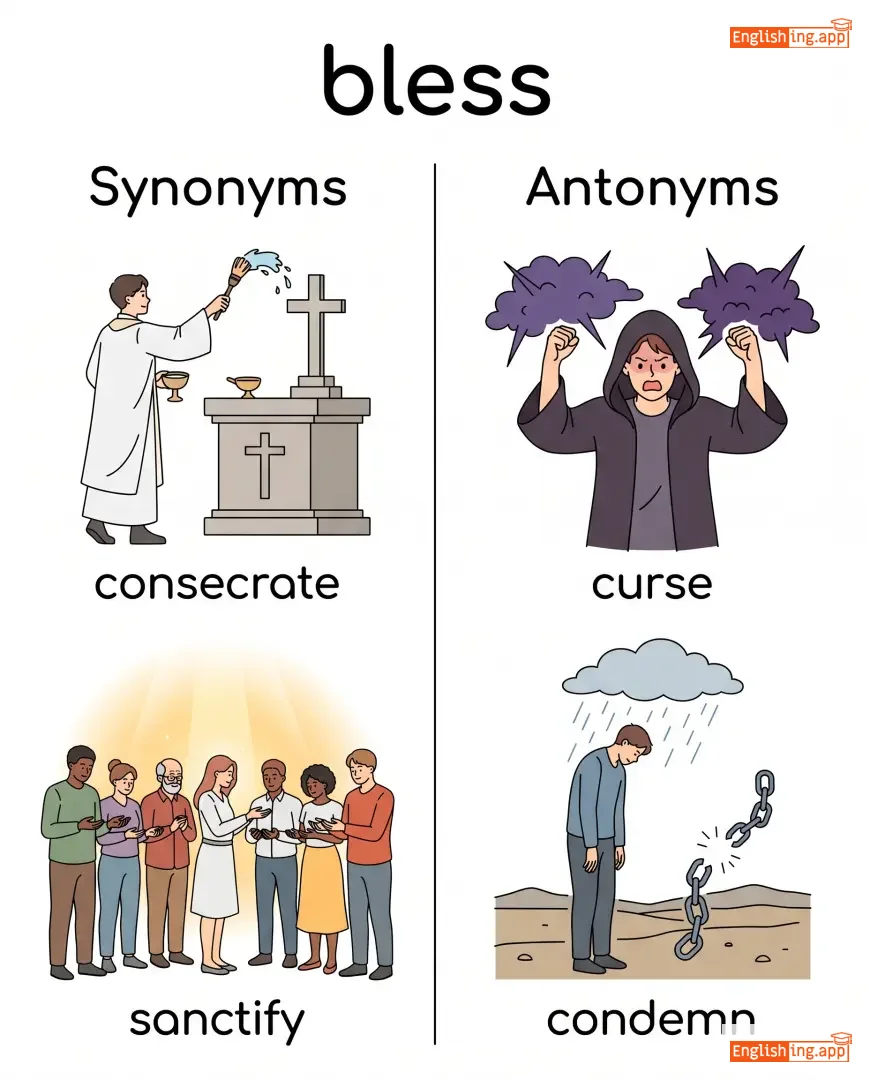
consecrate, sanctify, praise, thank, favor
••••••
|
curse, condemn
••••••
|
bless someone, bless you, God bless, bless the day
••••••
|
祝福即'Blessing'。祝福别人也是祝福自己。
••••••
|
|
#675
🌸
|
/ˈblɛsɪŋ/
noun
(布莱辛)
••••••
|
- •••••• |
祝福
zhufú
••••••
|
- •••••• | - •••••• | - •••••• | - •••••• |
a prayer asking for divine favor; something that brings happiness or benefit.
••••••
|
Good health is a blessing we often take for granted. |
健康是我们常常视为理所当然的祝福。
Jiànkāng shì wǒmen chángcháng shìwéi lǐsuǒdāngrán de zhùfú.
••••••
|
a mixed blessing |
something that has both advantages and disadvantages.
••••••
|
一种混合的祝福
yī zhǒng hùn hé de zhùfú
••••••
|
favor, gift, boon, grace, benefit
••••••
|
curse, misfortune, bane
••••••
|
divine blessing, family blessing, count your blessings, a true blessing
••••••
|
Blessing意味着祝福 — 记住,健康是祝福!
••••••
|
|
#676
🌱
|
/blaɪt/
noun
(bǔlài)
••••••
|
- •••••• |
枯萎病
kūwěibìng
••••••
|
- •••••• | - •••••• | - •••••• | - •••••• |
A disease or condition that causes plants to wither; something that spoils or damages.
••••••
|
The drought was a blight on the farmer’s crops. |
干旱是农民作物的枯萎病。
Gānhàn shì nóngmín zuòwù de kūwěibìng.
••••••
|
cast a blight on |
To have a damaging or harmful effect on something.
••••••
|
给…带来枯萎病
gěi…dàilái kūwěibìng
••••••
|
disease, plague, curse, scourge, ruin
••••••
|
blessing, benefit, boon
••••••
|
urban blight, potato blight, economic blight, cast a blight
••••••
|
枯萎病让所有植物都枯死,就像它毁掉了所有的收成!
••••••
|
Vocabulary Quiz
Test your vocabulary by matching words with their translations or meanings.
Login to take the quiz
Comments (0)
Share your thoughts and join the discussion.
Join the discussion by logging in
Login to CommentNo comments yet
Be the first to share your thoughts!