





Swipe left or right, or use the buttons. Tap image to zoom.
例句翻译
单词
Lesson 114Lesson 114 - 遮罩切换
|
表情符号
|
单词 | Images | 翻译 | 过去时 | 过去分词 | 第三人称单数 | 动名词 | 含义 | 例句 | 例句翻译 | 示例表达 | 示例表达含义 | 示例表达翻译 | 同义词 | 反义词 | 搭配词 | 助记符 |
|---|---|---|---|---|---|---|---|---|---|---|---|---|---|---|---|---|---|
|
#5425
🧍♂️
|
/weɪst/
noun
(wéist)
••••••
|
- •••••• |
腰部
yaobu
••••••
|
- •••••• | - •••••• | - •••••• | - •••••• |
the part of the human body between the ribs and the hips
••••••
|
He tied a belt around his waist. |
他在腰部系上了一条皮带。
Ta zai yaobu xishang le yitiaopidai.
••••••
|
waist of time |
a pun meaning something or someone that wastes time
••••••
|
浪费时间
langfei shijian
••••••
|
midsection, torso, abdomen, stomach
••••••
|
head, foot
••••••
|
slim waist, narrow waist, waist belt, around the waist
••••••
|
Waist是腰部,记住‘waist belt’是系在腰部的!
••••••
|
|
#5426
⏳
|
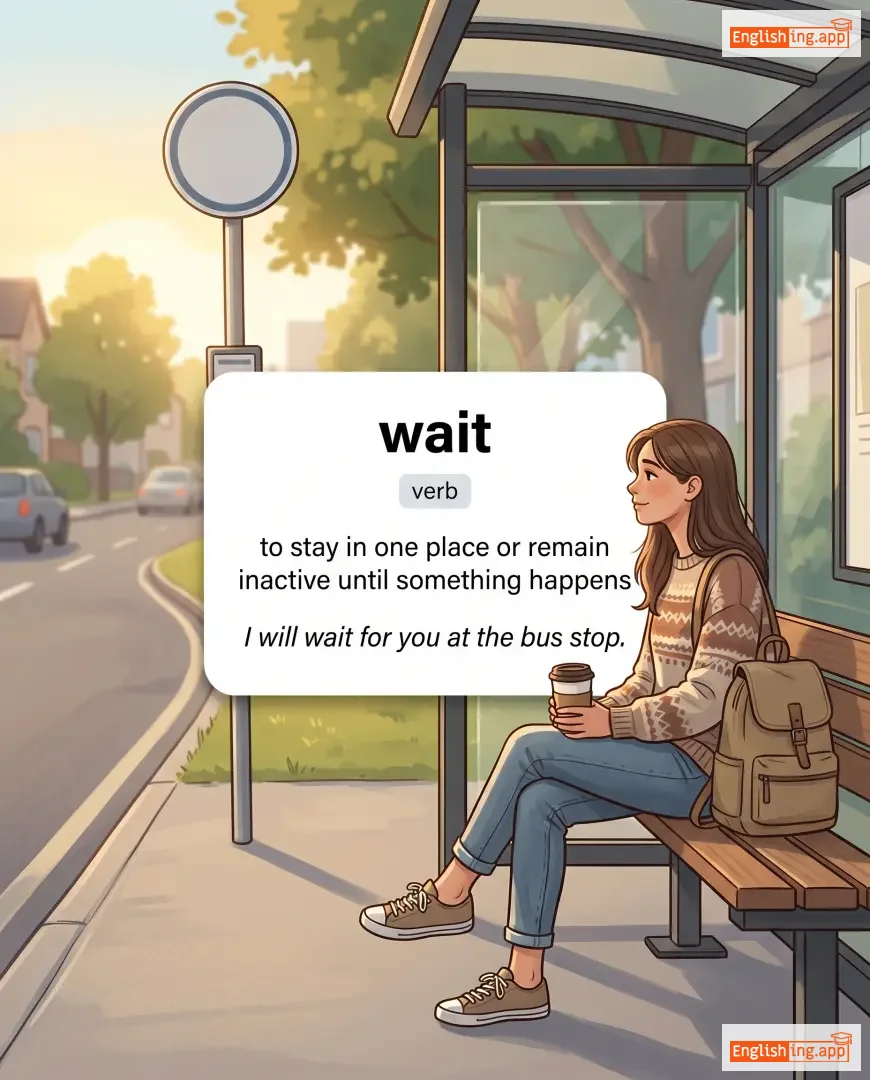
/weɪt/
verb
(wɛɪt)
••••••
|
|
等待
deng dai
••••••
|
waited
weɪtɪd
••••••
|
waited
weɪtɪd
••••••
|
waits
weɪts
••••••
|
waiting
weɪtɪŋ
••••••
|
to stay in expectation; to delay action until something happens
••••••
|
Please wait here while I get the documents.
请在这里等待,我去拿文件。
••••••
|
请在这里等待,我去拿文件。
Qing zai zheli dengdai, wo qu na wenjian.
••••••
|
- •••••• | - •••••• | - •••••• |
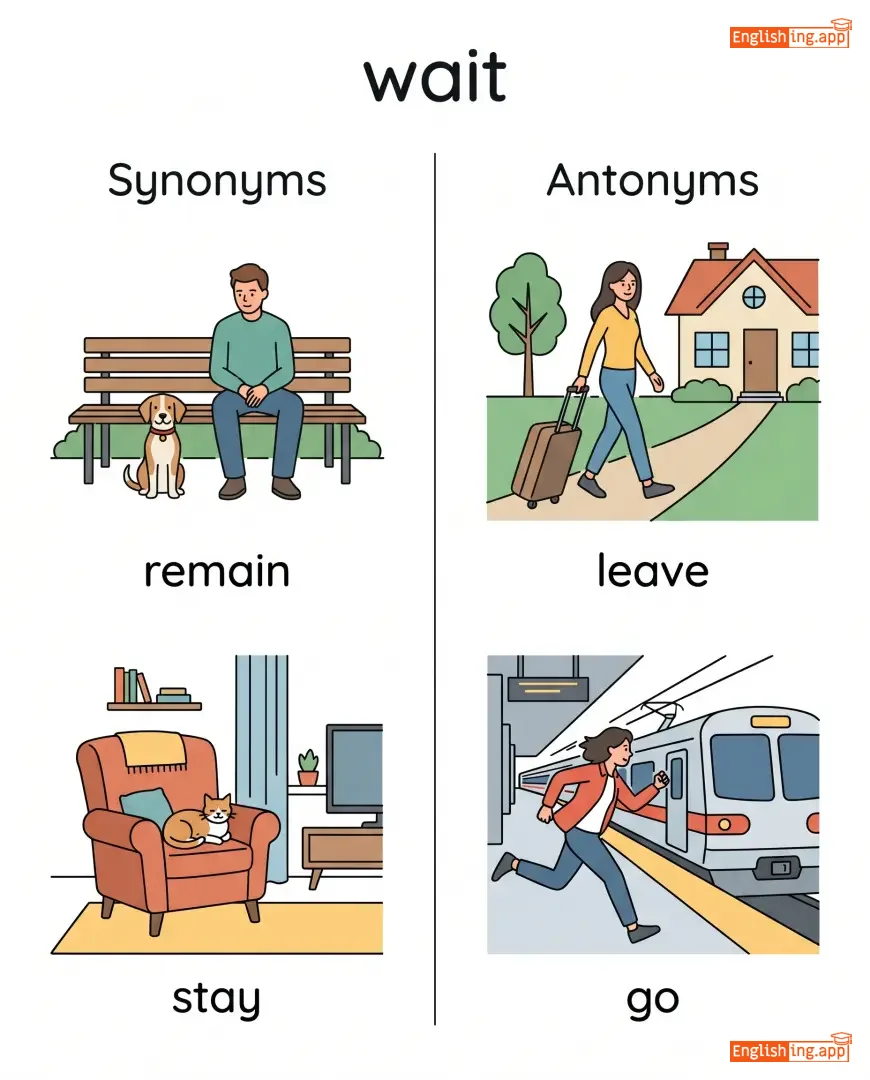
stay, remain, pause, hold, delay
••••••
|
leave, go, proceed, rush, hurry
••••••
|
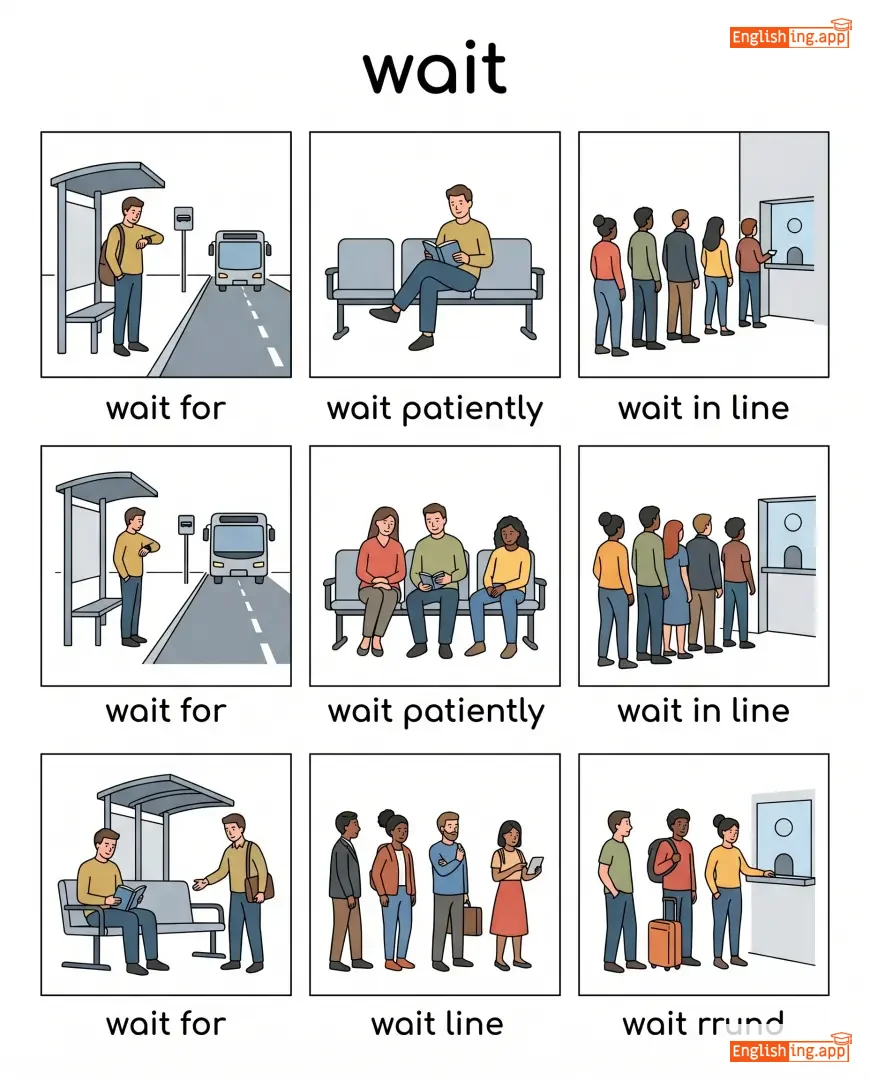
wait for, wait patiently, wait in line, wait up, long wait
••••••
|
等待就像等公交车。
••••••
|
|
#5427
🍽️
|
/ˈweɪtər/
noun
(维特)
••••••
|
- •••••• |
服务员
fuwuyuan
••••••
|
- •••••• | - •••••• | - •••••• | - •••••• |
a person whose job is to serve food and drinks to customers in a restaurant or café
••••••
|
The waiter brought the menu and took our order politely.
维特拿来了菜单。
••••••
|
服务员礼貌地拿来菜单并记录了订单。
fuwuyuan limaode nalai caidan bing jilule dingdan
••••••
|
call the waiter
叫服务员
••••••
|
to get the attention of a waiter for service
••••••
|
叫服务员
jiao fuwuyuan
••••••
|
server, attendant, steward, waitperson
••••••
|
customer, guest
••••••
|
restaurant waiter, polite waiter, call the waiter, tip the waiter
••••••
|
服务员提供服务
••••••
|
|
#5428
🍽️
|
/ˈweɪtrəs/
noun
(维特瑞斯)
••••••
|
- •••••• |
女服务员
nv fuwuyuan
••••••
|
- •••••• | - •••••• | - •••••• | - •••••• |
a woman who serves food and drinks to customers in a restaurant or café
••••••
|
The waitress took our order with a friendly smile.
维特瑞斯 带着 友好的 微笑 接受了 我们的 点单。
••••••
|
女服务员微笑着接了我们的点单。
Nv fuwuyuan weixiao zhe jie le women de diandan
••••••
|
- •••••• | - •••••• | - •••••• |
server, food server, attendant, waitstaff member
••••••
|
customer, diner
••••••
|
restaurant waitress, friendly waitress, call the waitress, waitress uniform
••••••
|
服务员=服务+人,女服务员
••••••
|
|
#5429
⏰
|
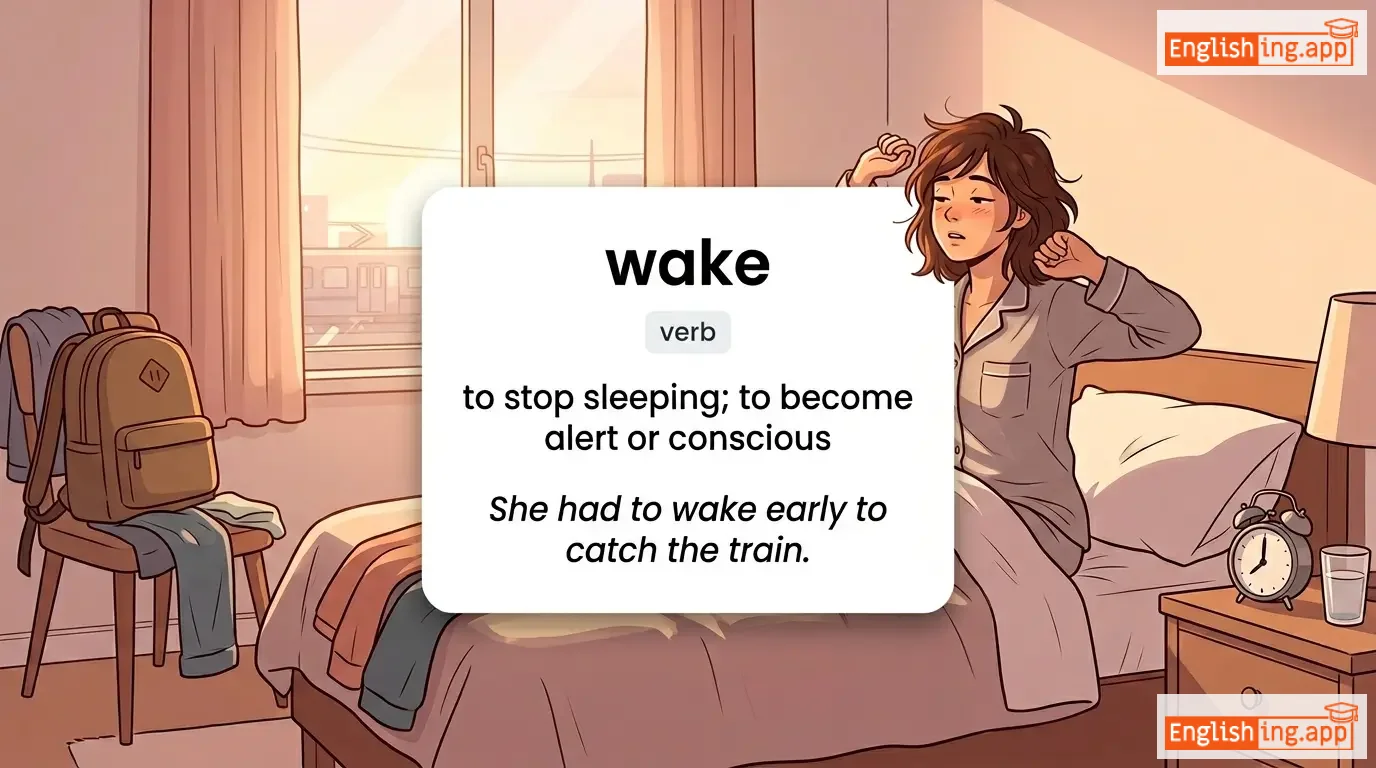
/weɪk/
verb
(海皮尼斯)
••••••
|
|
幸福
xingfu
••••••
|
woke
••••••
|
woken
••••••
|
wakes
••••••
|
waking
••••••
|
to stop sleeping; to become alert or conscious
••••••
|
She had to wake early to catch the train. |
她在收到奖项时,无法掩饰自己的幸福。
Tā zài shōu dào jiǎngxiàng shí, wúfǎ yǎnshì zìjǐ de xìngfú.
••••••
|
wake up call |
a warning or reminder that causes someone to take action
••••••
|
追求幸福
zhuīqiú xìngfú
••••••
|
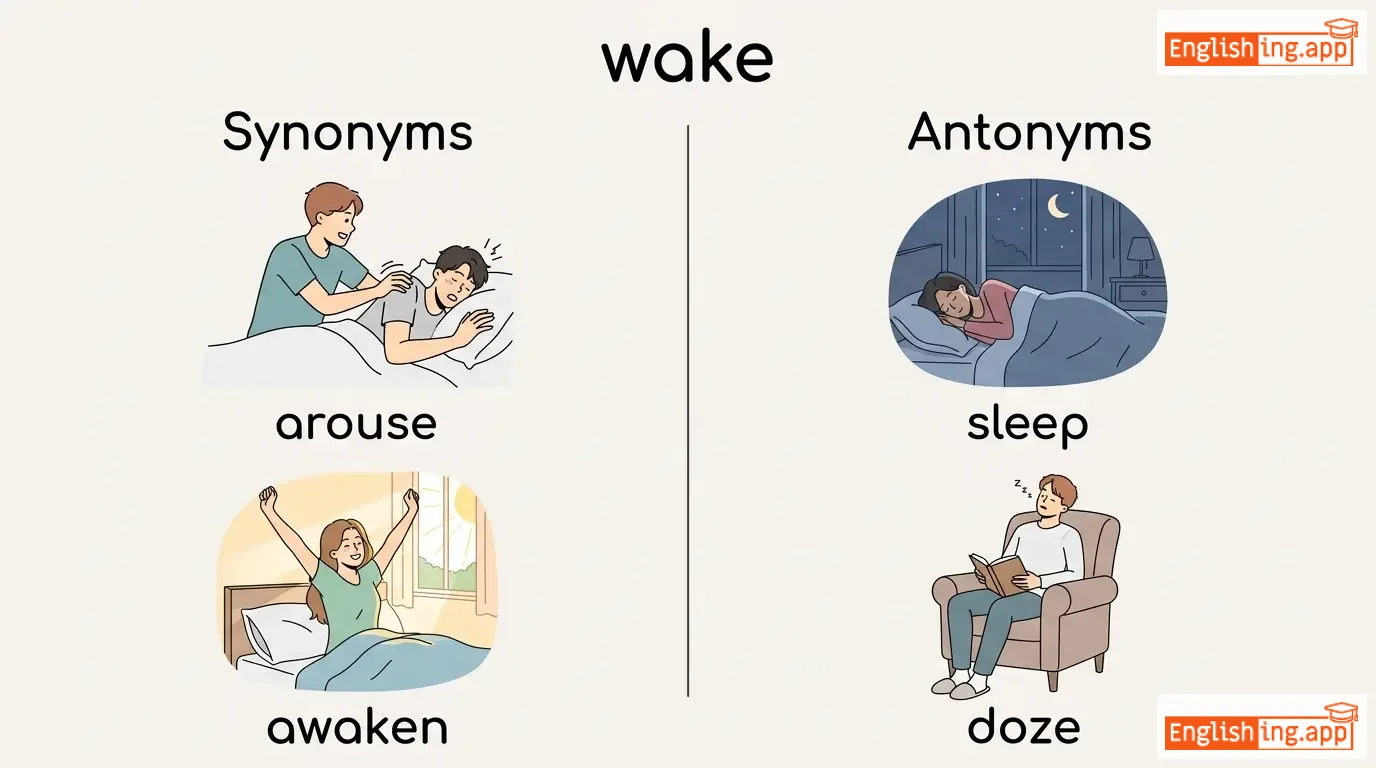
arouse, awaken, stir, rouse, alert
••••••
|
sleep, doze, slumber
••••••
|
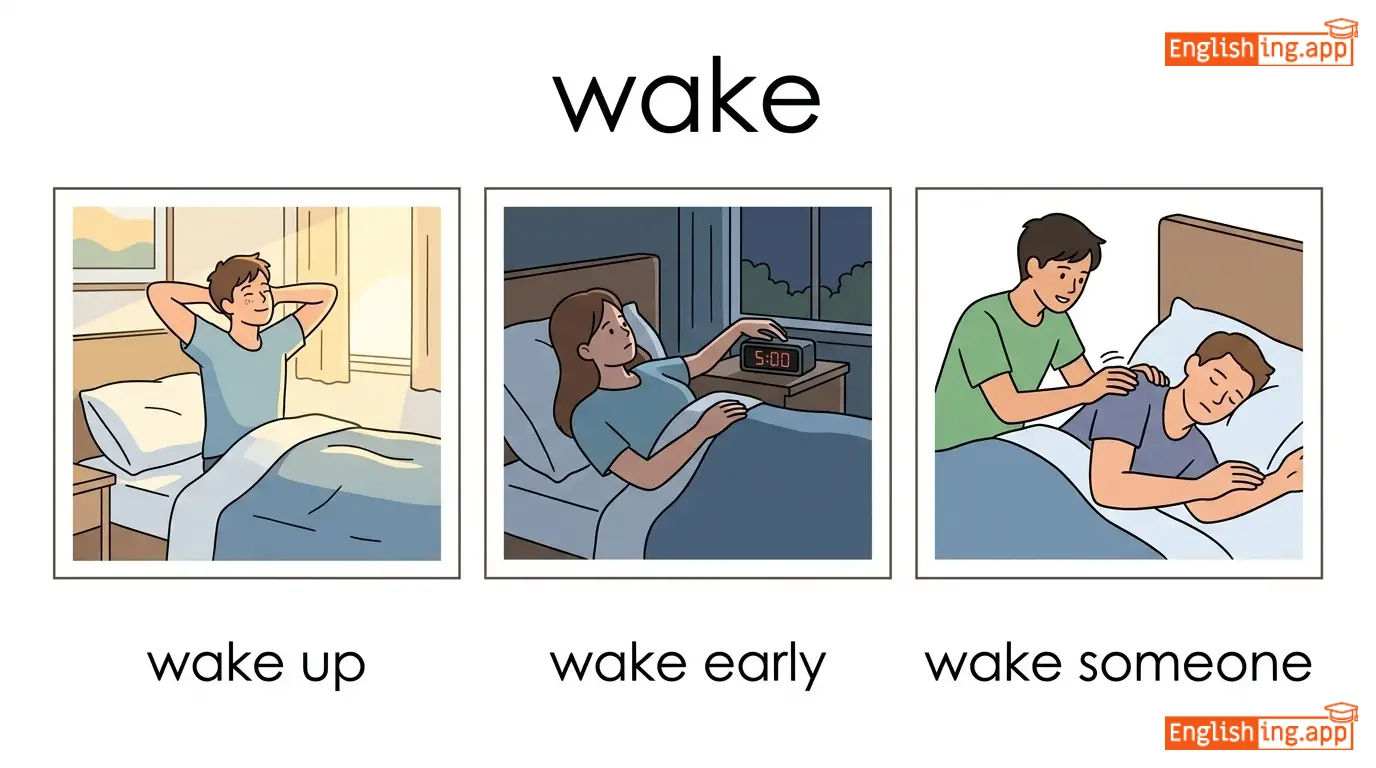
wake up, wake early, wake someone, wake call
••••••
|
幸福 (xingfu) 就是快乐的生活。
••••••
|
|
#5430
🚶
|
/wɔːk/
verb
(沃克)
••••••
|
|
走
zou
••••••
|
walked
沃克德
••••••
|
walked
沃克德
••••••
|
walks
沃克斯
••••••
|
walking
沃金
••••••
|
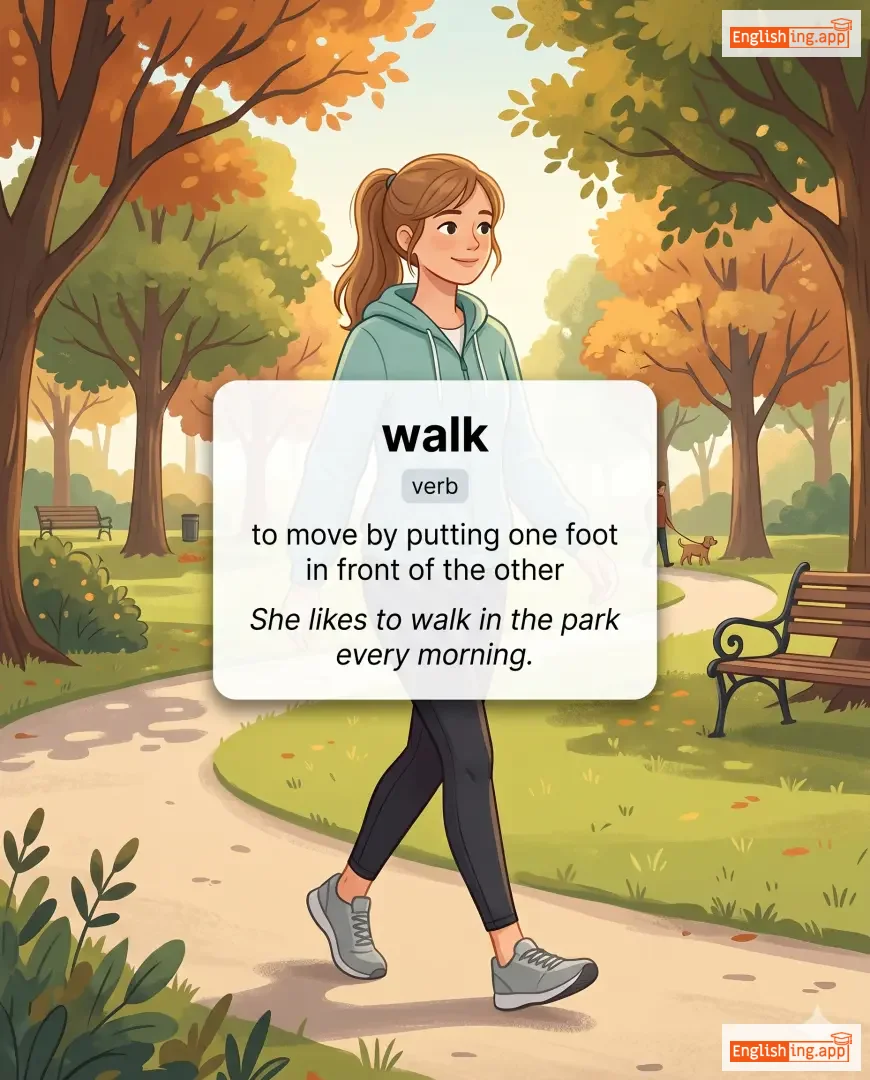
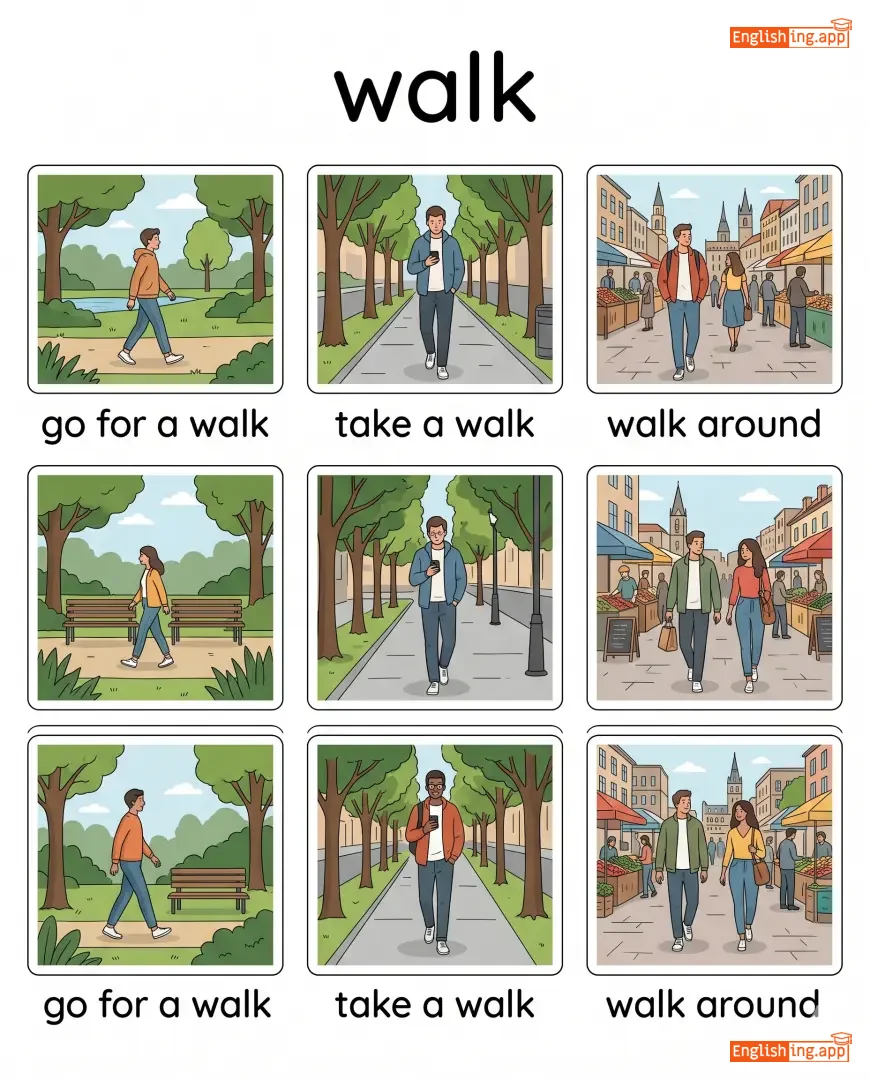
to move forward by putting one foot in front of the other
••••••
|
I walk to school every morning.
我每天早晨步行去学校。
••••••
|
我每天早晨步行去学校。
Wo meitian zaocheng buxing qu xuexiao.
••••••
|
- •••••• | - •••••• | - •••••• |
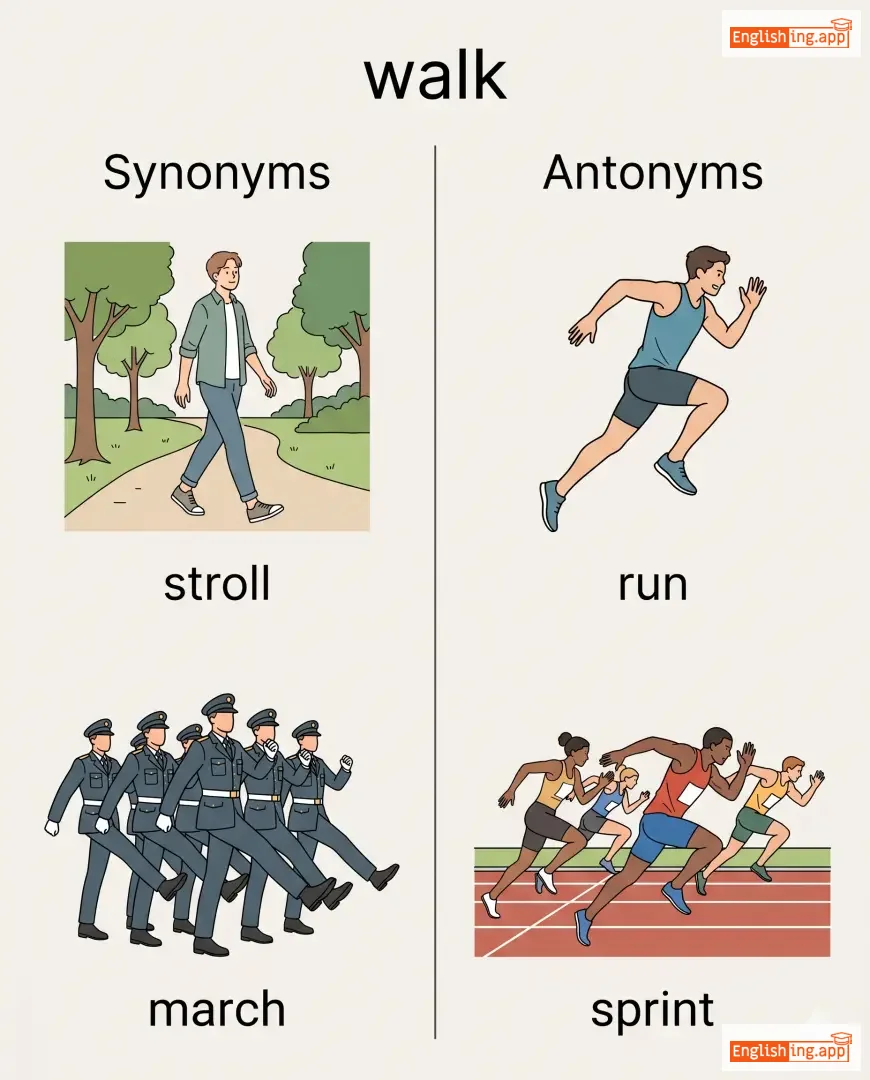
stroll, march, stride, step
••••••
|
run, fly, drive, ride
••••••
|
walk slowly, walk together, walk alone, walk home
••••••
|
走路就像在生活中前行!
••••••
|
|
#5431
🧱
|
/wɔːl/
noun
(wɔːl)
••••••
|
- •••••• |
墙
qiáng
••••••
|
- •••••• | - •••••• | - •••••• | - •••••• |
a vertical structure that encloses or divides an area
••••••
|
The wall in our living room is painted blue. |
我们客厅的墙壁被涂成了蓝色。
Wǒmen kètīng de qiángbì bèi tú chéngle lán sè.
••••••
|
- •••••• | - •••••• | - •••••• |
barrier, partition, fence, divider
••••••
|
open, doorway
••••••
|
wall of bricks, brick wall, wall art
••••••
|
WALL your dreams - 墙壁上的梦想
••••••
|
|
#5432
👛
|
/ˈwɒlɪt/
noun
(wǒlè)
••••••
|
- •••••• |
钱包
qianbao
••••••
|
- •••••• | - •••••• | - •••••• | - •••••• |
a small folding case for carrying money, credit cards, and identification
••••••
|
He pulled out his wallet to pay for the coffee. |
他拿出钱包付了咖啡的钱。
Ta nachu qianbao fu le kafei de qian.
••••••
|
- •••••• | - •••••• | - •••••• |
purse, billfold, pocketbook
••••••
|
safe, vault, treasury
••••••
|
leather wallet, digital wallet, wallet chain, lost wallet
••••••
|
钱包是放钱和卡的地方
••••••
|
|
#5433
🚶
|
/ˈwɒndər/
verb
(wāndé)
••••••
|
|
徘徊
páihuái
••••••
|
wandered
wāndèrd
••••••
|
wandered
wāndèrd
••••••
|
wanders
wāndéres
••••••
|
wandering
wāndèring
••••••
|
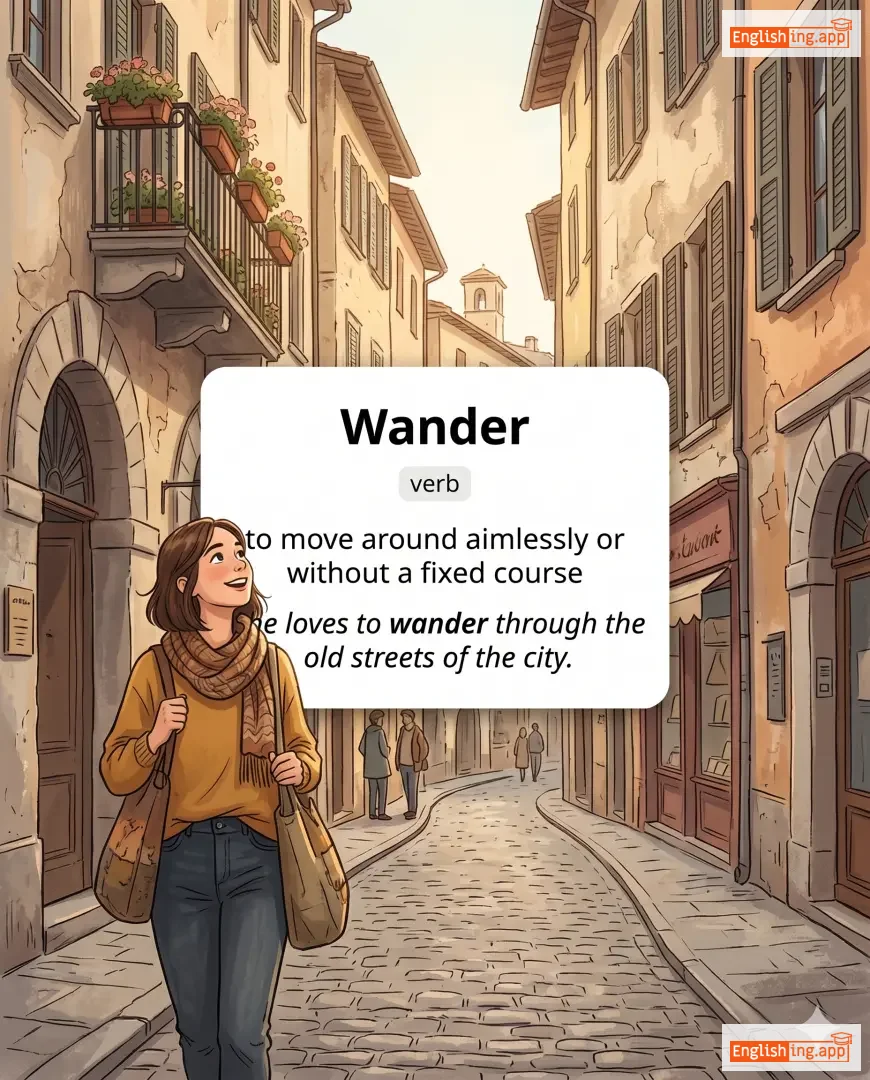
to move around aimlessly or without a fixed course
••••••
|
She loves to wander through the old streets of the city.
她喜欢在城市的老街上漫步。
••••••
|
她喜欢在城市的老街上漫步。
Tā xǐhuān zài chéngshì de lǎo jiē shàng mànbù.
••••••
|
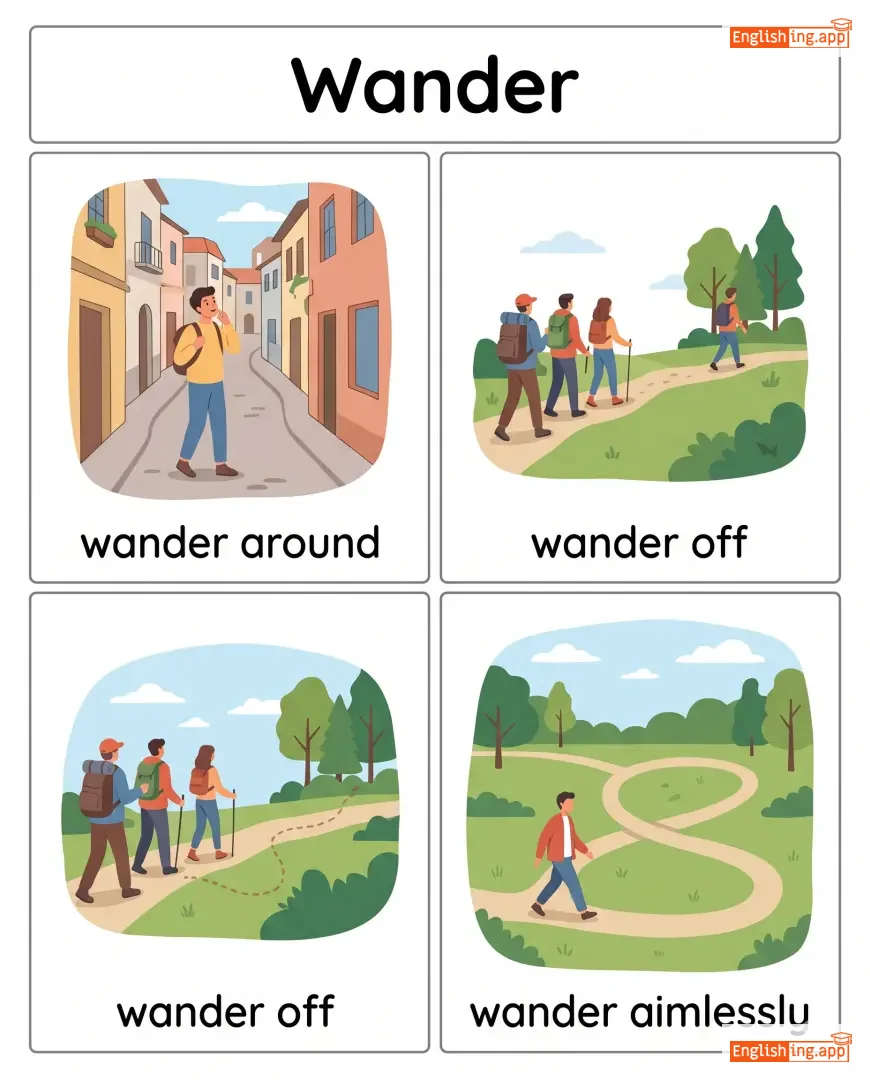
wander off
走远
••••••
|
to leave a place or group without telling anyone
••••••
|
走开
zǒu kāi
••••••
|
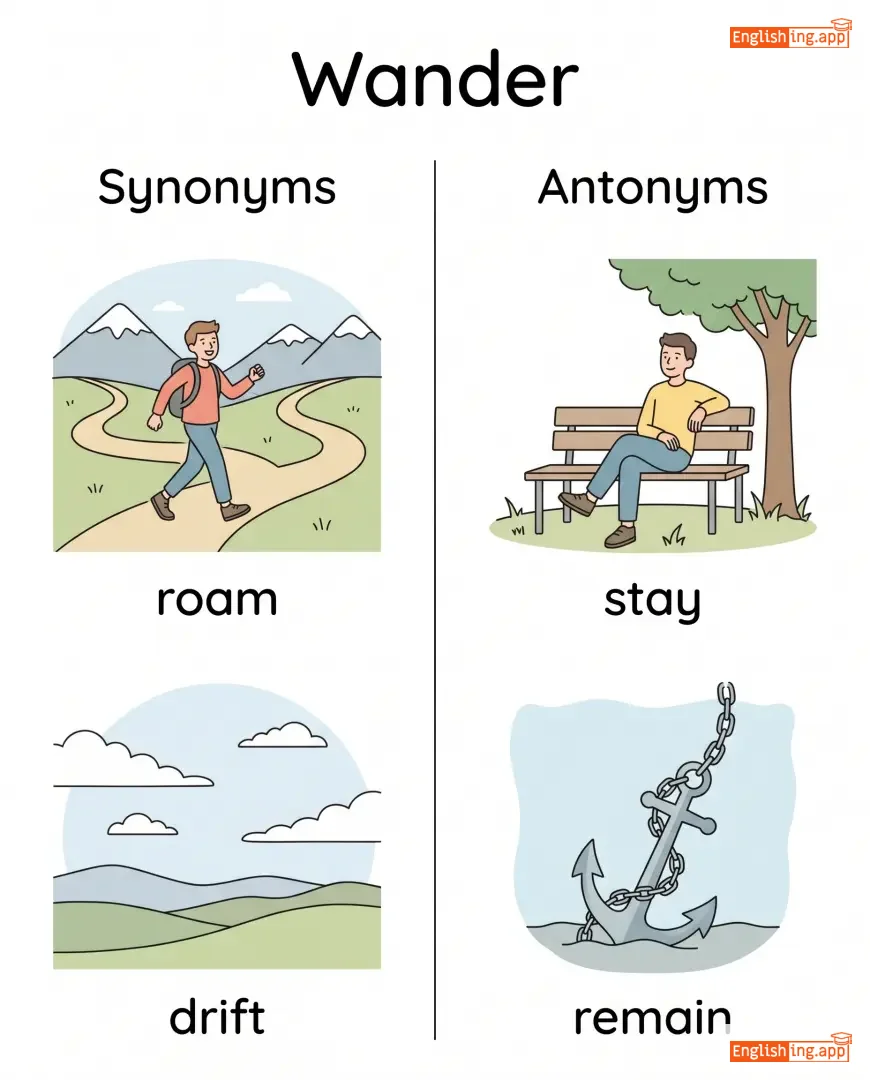
roam, drift, meander, stray, stroll
••••••
|
stay, remain, settle
••••••
|
wander around, wander off, wander aimlessly, wander through
••••••
|
Wander意味着徘徊,就像window shopping一样。
••••••
|
|
#5434
☕
|
/wɒnt/
verb
(wont)
••••••
|
|
想要
xiang yao
••••••
|
wanted
wonted
••••••
|
wanted
wonted
••••••
|
wants
wants
••••••
|
wanting
wanting
••••••
|
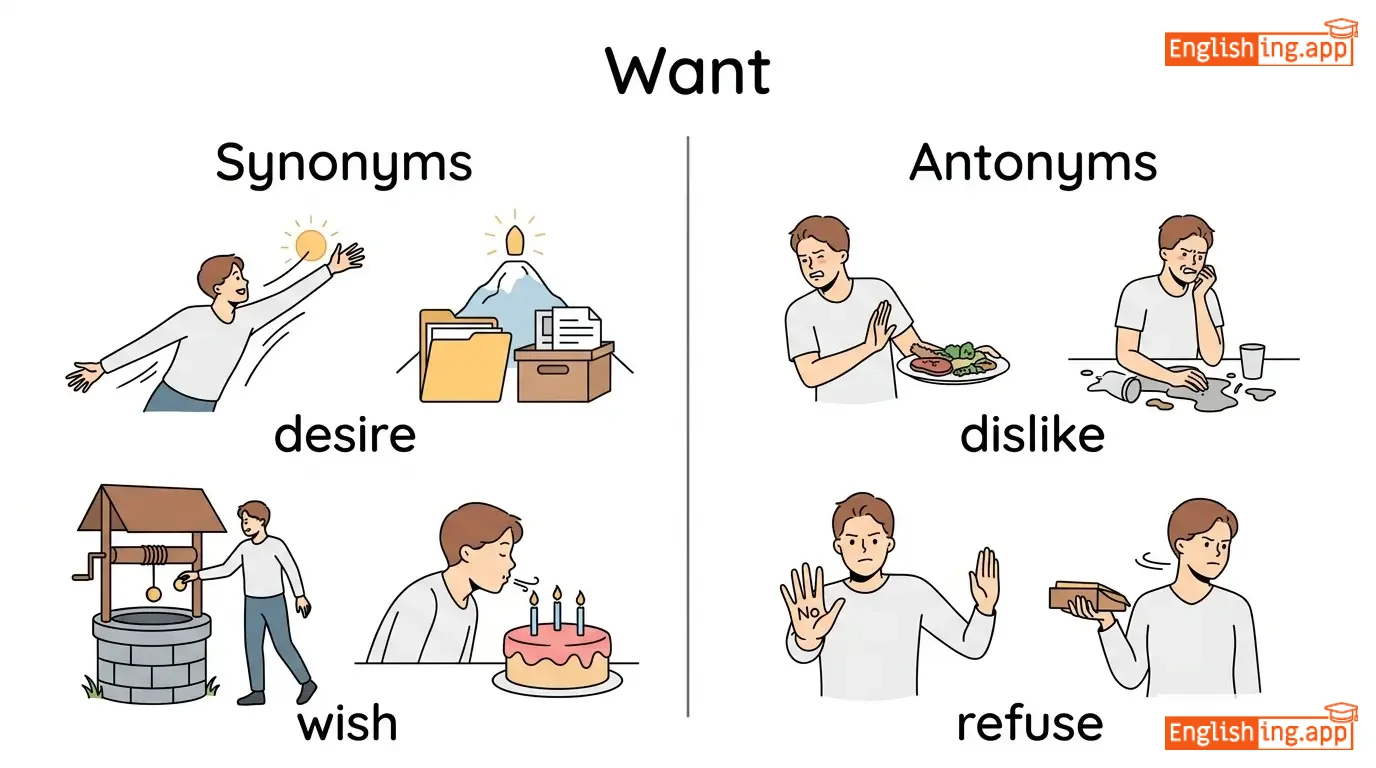
To desire to have or do something.
••••••
|
I want a cup of coffee before the meeting.
我在会议之前想要一杯咖啡。
••••••
|
我在会议之前想要一杯咖啡。
Wo zai huiyi zhiqian xiang yao yi bei kafei.
••••••
|
for want of
缺乏
••••••
|
due to the lack of something
••••••
|
缺乏
que fa
••••••
|
desire, wish, crave, need, long-for
••••••
|
dislike, refuse, reject
••••••
|
want something, want to do, want badly
••••••
|
想要 = 'want' 在中文
••••••
|
|
#5435
⚔️
|
/wɔːr/
noun
(wā)
••••••
|
- •••••• |
战争
zhànzhēng
••••••
|
- •••••• | - •••••• | - •••••• | - •••••• |
a state of armed conflict between different countries or different groups within a country
••••••
|
The war lasted for five years and caused great destruction.
战争持续了五年,并造成了巨大的破坏。
••••••
|
战争持续了五年,并造成了巨大的破坏。
Zhànzhēng chíxùle wǔ nián, bìng zàochéngle jùdà de pòhuài.
••••••
|
- •••••• | - •••••• | - •••••• |
conflict, battle, combat, warfare
••••••
|
peace, harmony, ceasefire
••••••
|
civil war, world war, war zone, declare war
••••••
|
In Chinese, '战争' directly translates to 'war,' symbolizing destruction and conflict.
••••••
|
|
#5436
🏥
|
/wɔːrd/
noun
(wā dé)
••••••
|
- •••••• |
病房
bing fang
••••••
|
- •••••• | - •••••• | - •••••• | - •••••• |
A separate room in a hospital for patients; also a division of a city or a person under guardianship.
••••••
|
She was admitted to the children's ward. |
她被接收进了儿童病房。
Tā bèi jiēshōu jìnle értóng bìngfáng.
••••••
|
under someone's ward |
being under the guardianship or protection of someone
••••••
|
在某人的监护下
zài mǒu rén de jiānhù xià
••••••
|
unit, section, division, department
••••••
|
freedom, independence
••••••
|
hospital ward, children's ward, surgical ward, ward off
••••••
|
Ward = 病房 → 孩子们在病房中被照顾
••••••
|
|
#5437
🏭
|
/ˈweə(r)haʊs/
noun
(wēi'āo sī)
••••••
|
- •••••• |
仓库
cangku
••••••
|
- •••••• | - •••••• | - •••••• | - •••••• |
a large building where goods are stored before being sold or distributed
••••••
|
The company stores all its products in a big warehouse. |
公司将所有产品存储在一个大仓库里。
Gōngsī jiāng suǒyǒu chǎnpǐn cúnchǔ zài yí gè dà cāngkù lǐ.
••••••
|
warehouse sale |
a sale held directly from a warehouse at discounted prices
••••••
|
仓库销售
cāngkù xiāoshòu
••••••
|
depot, storage, storehouse, repository, stockroom
••••••
|
shop, outlet
••••••
|
warehouse worker, warehouse storage, in the warehouse, warehouse manager
••••••
|
Warehouse 就是存放商品的仓库 — 储存商品的地方!
••••••
|
|
#5438
⚔️
|
/ˈwɔːfeər/
noun
(战争)
••••••
|
- •••••• |
战争
zhànzhēng
••••••
|
- •••••• | - •••••• | - •••••• | - •••••• |
armed conflict between different countries or groups; the activity of fighting a war
••••••
|
Modern warfare involves advanced technology and strategic planning. |
现代战争涉及先进的技术和战略规划。
xiàndài zhànzhēng shèjí xiānjìn de jìshù hé zhànlüè guīhuà.
••••••
|
- •••••• | - •••••• | - •••••• |
combat, battle, conflict, fighting
••••••
|
peace, harmony, truce, ceasefire
••••••
|
modern warfare, guerrilla warfare, chemical warfare, psychological warfare
••••••
|
战争意味着对抗和精密的战略
••••••
|
|
#5439
☀️
|
/wɔːrm/
verb
(wɔrm)
••••••
|
- •••••• |
加热
jiārè
••••••
|
Warmed
wɔrmd
••••••
|
Warmed
wɔrmd
••••••
|
Warms
wɔrmz
••••••
|
Warming
wɔrmɪŋ
••••••
|
to make or become warm; to heat something gently
••••••
|
The sun warms the earth during the day.
ðə sʌn wɑːrmz ðə ɜːrθ dʊərɪŋ ðə deɪ
••••••
|
太阳在白天加热地球。
Tàiyáng zài báitiān jiārè dìqiú.
••••••
|
- •••••• | - •••••• | - •••••• |
heat, comfort, soothe, embrace
••••••
|
cool, chill, freeze, cold
••••••
|
warm up, warm gently, warm quickly, keep warm
••••••
|
寒冷时,加热你的一杯咖啡。
••••••
|
|
#5440
🌡️
|
/ˈwɔːmɪŋ/
noun, verb
(wòrmíng)
••••••
|
|
温度升高
wendu shenggao
••••••
|
- •••••• | - •••••• |
warms
wǒrms
••••••
|
warming
wòrmíng
••••••
|
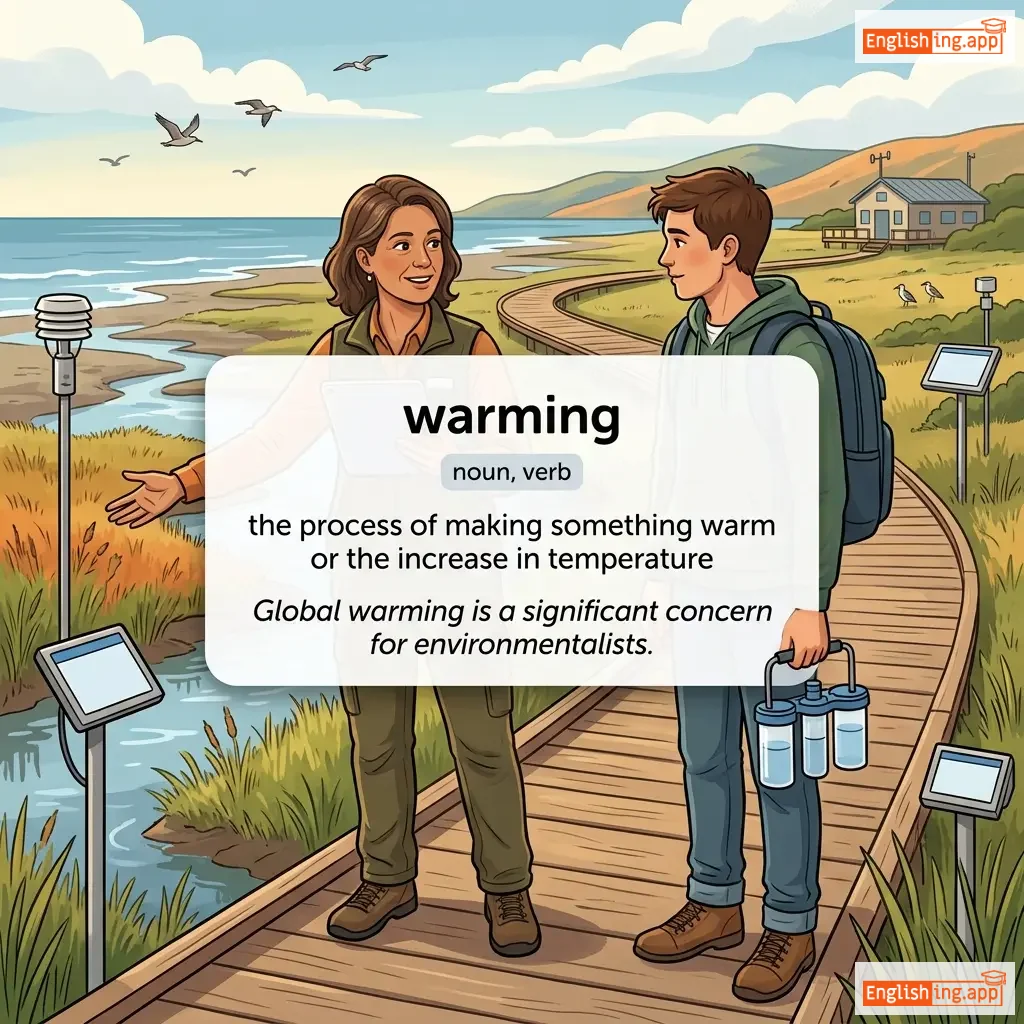
the process of making something warm or the increase in temperature
••••••
|
Global warming is a significant concern for environmentalists.
全球变暖是环境学者关心的重要问题。
••••••
|
全球变暖是环境学者关心的重要问题。
Quanqiu bian nuan shi huanjing xue zhe guanxin de zhongyao wenti.
••••••
|
- •••••• | - •••••• | - •••••• |
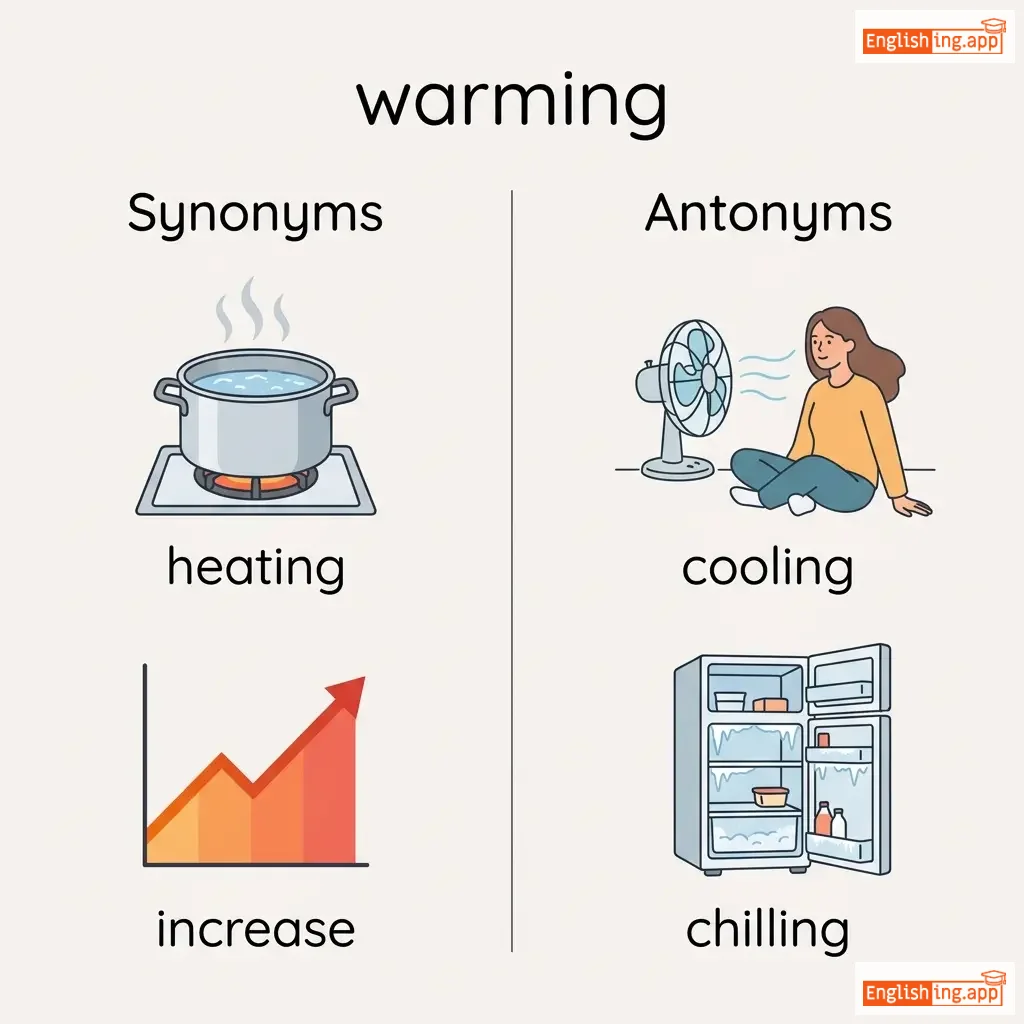
heating, increase, raising, elevating
••••••
|
cooling, chilling
••••••
|
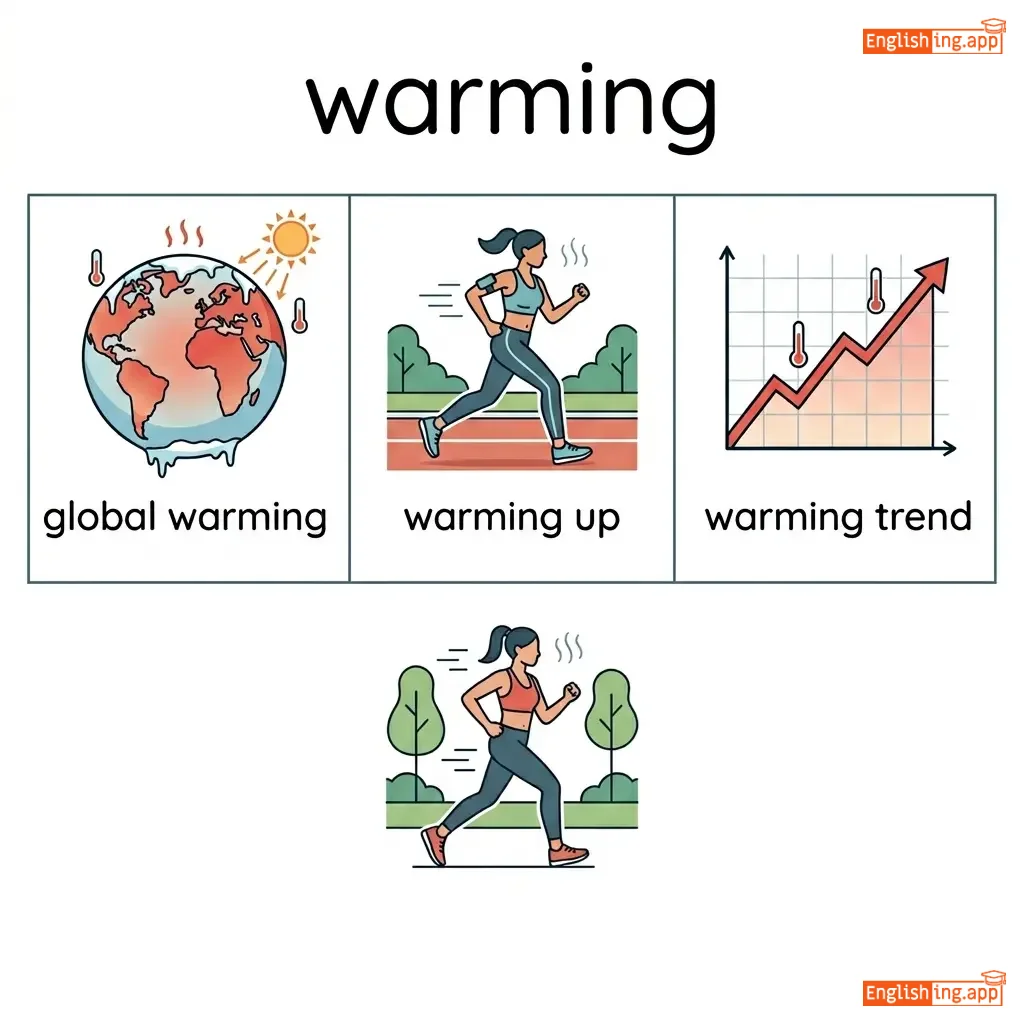
global warming, warming up, warming trend
••••••
|
Warming sounds like 'wòrmíng', which is similar to '温度升高' meaning the increase in temperature.
••••••
|
|
#5441
🤗
|
/ˈwɔːm.li/
adverb
(wā mǔ lǐ)
••••••
|
- •••••• |
热情地; 亲切地
rèqíng de; qīnqiè de
••••••
|
- •••••• | - •••••• | - •••••• | - •••••• |
in a warm manner; with warmth; cordially; affectionately
••••••
|
She welcomed the guests warmly at the door. |
她在门口热情地欢迎客人。
Tā zài ménkǒu rèqíng de huānyíng kèrén.
••••••
|
- •••••• | - •••••• | - •••••• |
cordially, affectionately, kindly, heartily, enthusiastically
••••••
|
coldly, harshly, rudely, unfriendly
••••••
|
warmly welcome, warmly received, warmly greet, warmly embrace
••••••
|
热情的招待总能让每个访客感到温暖。
••••••
|
|
#5442
☀️
|
/wɔːmθ/
noun
(wɔːmθ)
••••••
|
- •••••• |
温暖
wēnnuǎn
••••••
|
- •••••• | - •••••• | - •••••• | - •••••• |
the quality or state of being warm in temperature or feeling
••••••
|
She felt the warmth of the sun on her face.
她感受到了阳光照在脸上的温暖。
••••••
|
她感受到了阳光照在脸上的温暖。
Tā gǎnshòu dào le yángguāng zhào zài liǎn shàng de wēnnuǎn.
••••••
|
warmth of heart
内心的温暖
••••••
|
kindness and affection
••••••
|
内心的温暖
nèi xīn de wēn nuǎn
••••••
|
heat, coziness, affection, kindness, friendliness
••••••
|
coldness, chill, indifference
••••••
|
emotional warmth, inner warmth, warmth and love, warmth of the sun
••••••
|
Warmth意味着温暖 — ‘warm th’不仅仅是温度,还是内心的温暖与爱。
••••••
|
|
#5443
⚠️
|
/wɔːrn/
verb
(wɔːrn)
••••••
|
|
警告
jinggao
••••••
|
warned
wɔːrnd
••••••
|
warned
wɔːrnd
••••••
|
warns
wɔːrnz
••••••
|
warning
wɔːrɪŋ
••••••
|
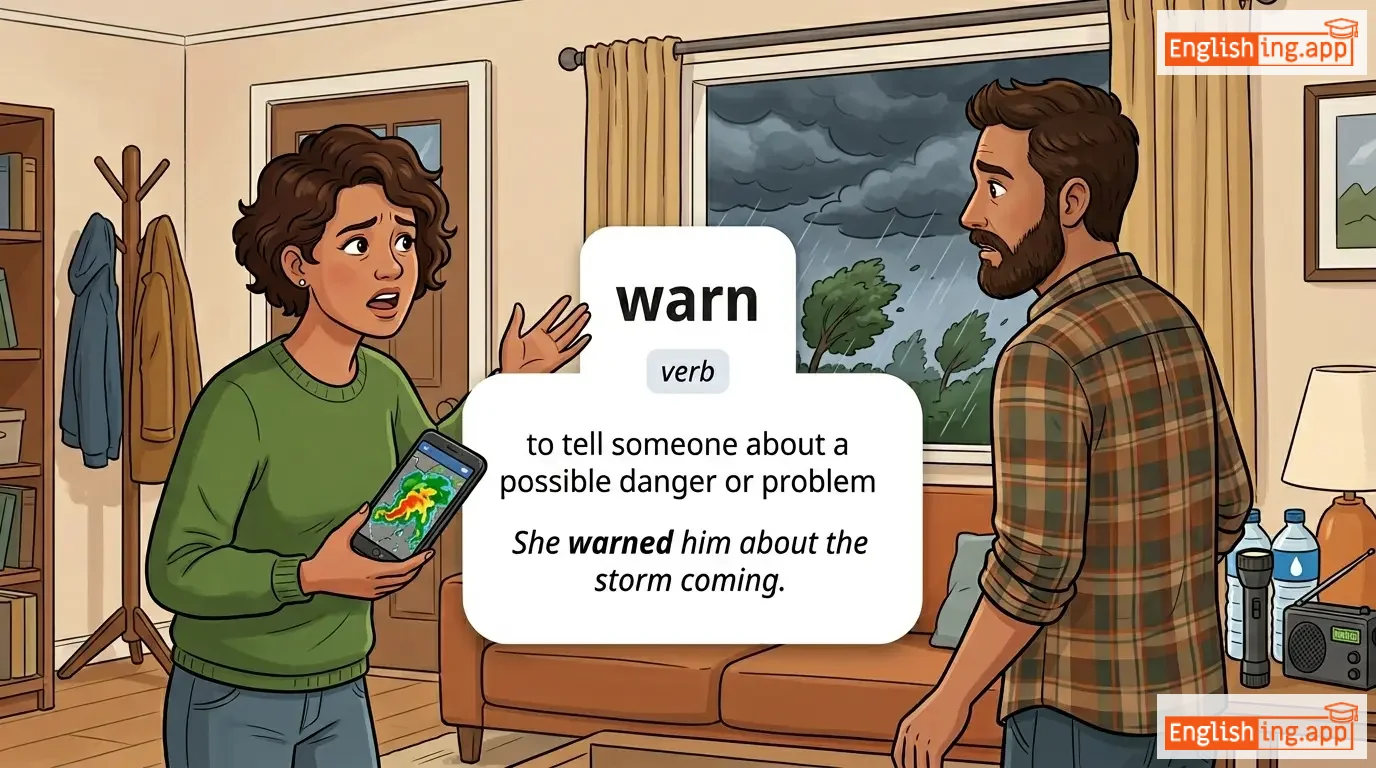
to alert about danger; to give notice of risk
••••••
|
The weather service warns of heavy rain tonight.
气象服务警告今晚有暴雨。
••••••
|
气象服务警告今晚有暴雨。
Qixiang fuwu jinggao jinwan you baoyu.
••••••
|
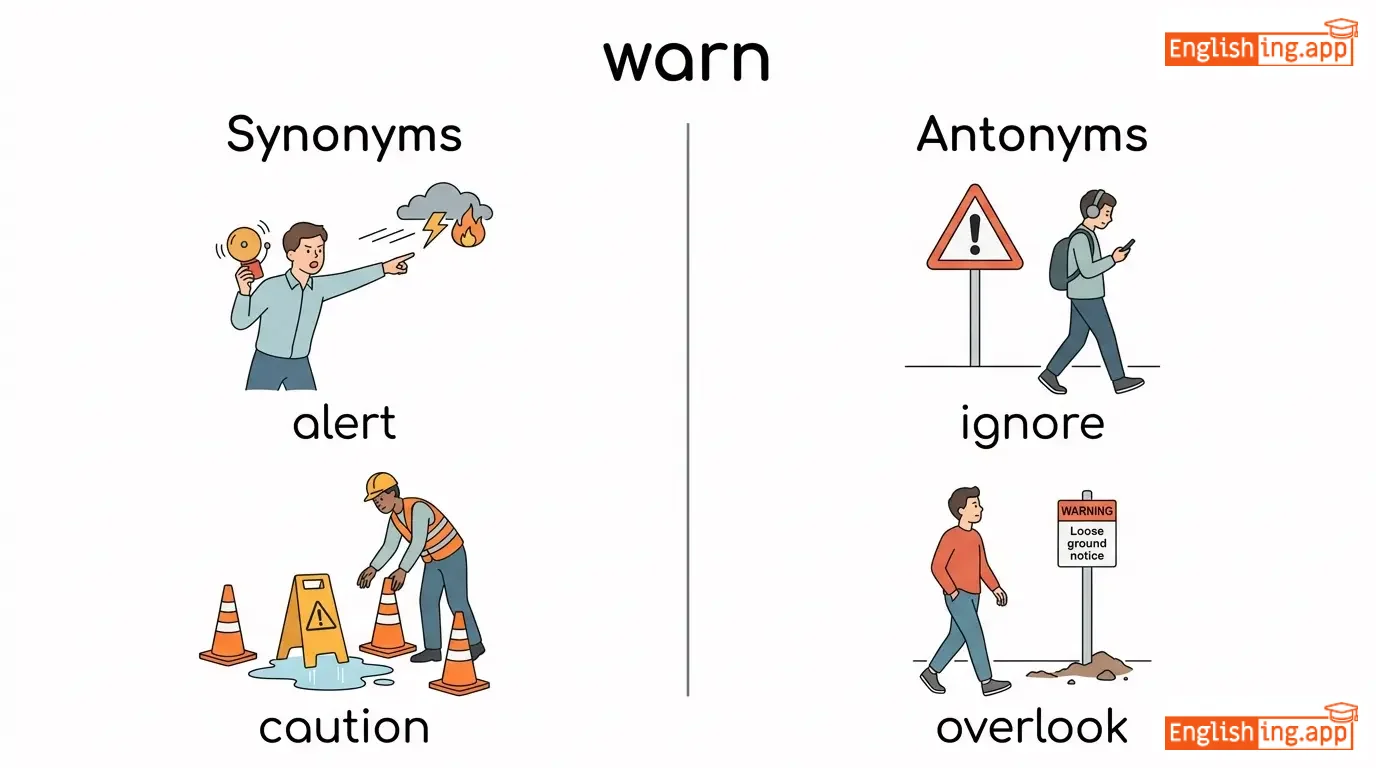
- •••••• | - •••••• | - •••••• |
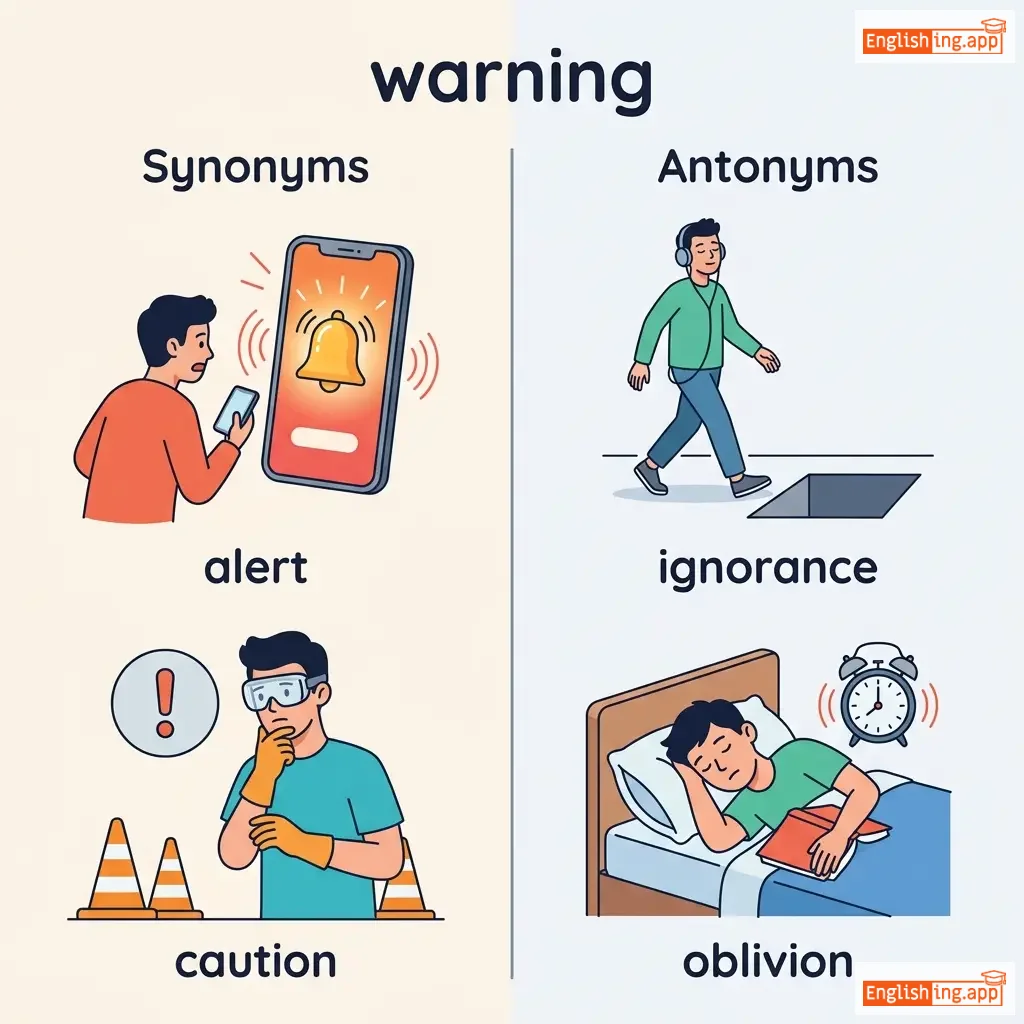
alert, caution, advise, notify, inform
••••••
|
mislead, deceive, ignore, conceal
••••••
|
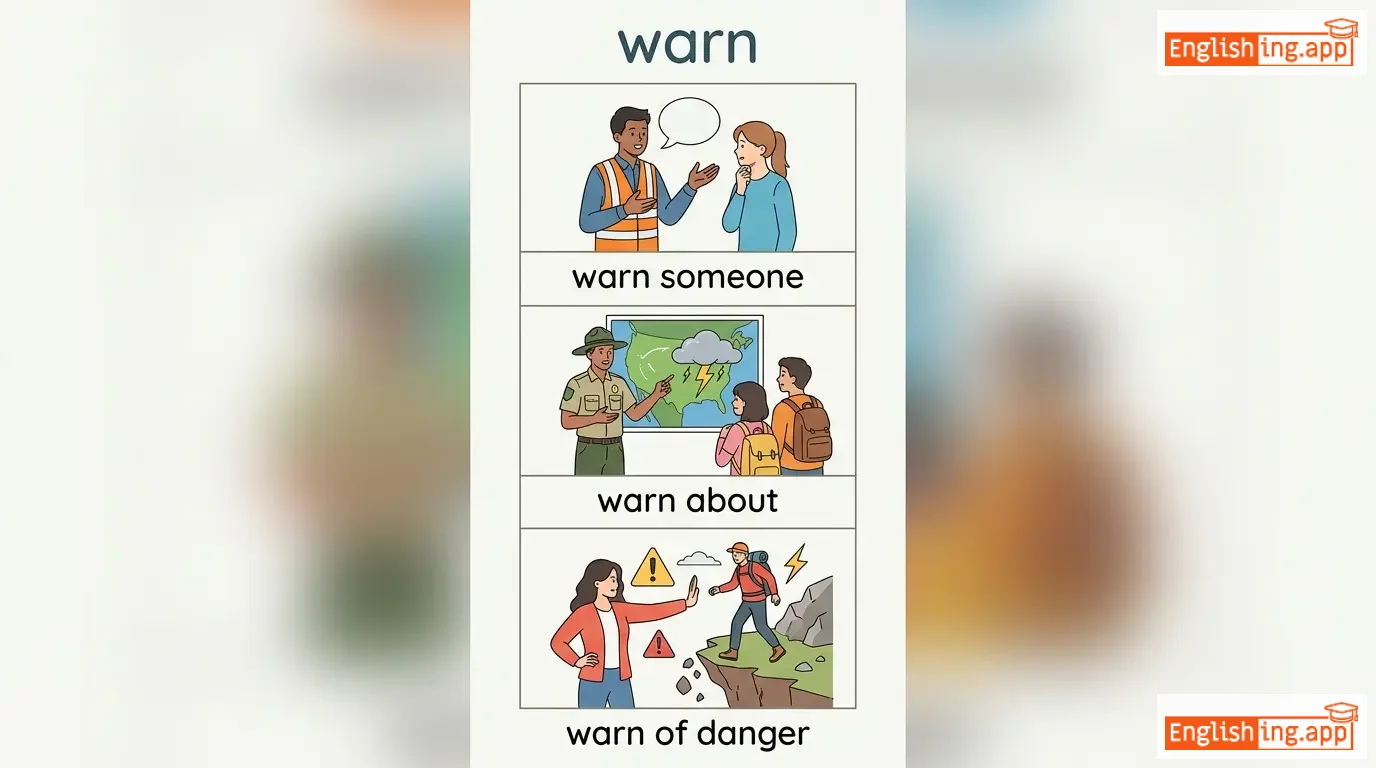
warn against, warn about, warn of danger, warn someone, early warning
••••••
|
No •••••• |
|
#5444
⚠️
|
/ˈwɔːnɪŋ/
noun
(wórning)
••••••
|
|
警告
jinggao
••••••
|
- •••••• | - •••••• | - •••••• | - •••••• |
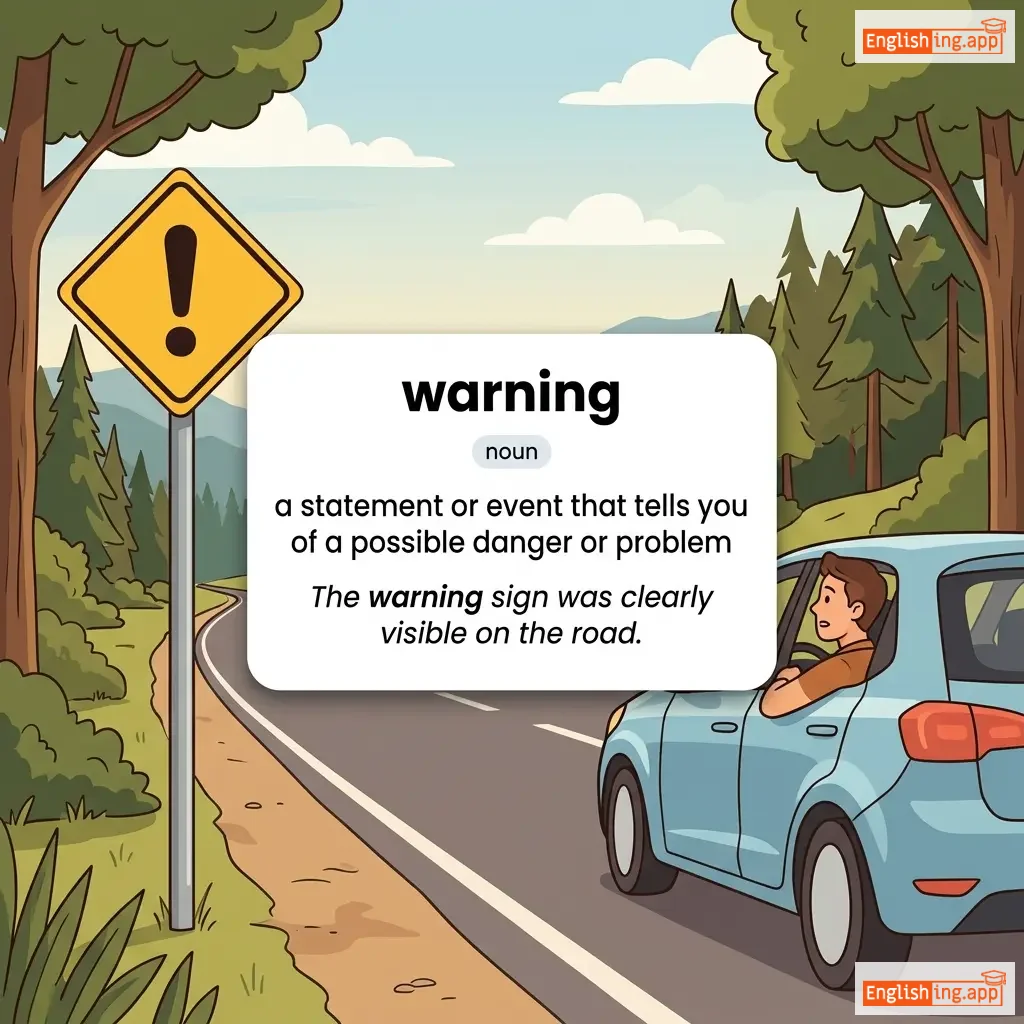
a statement or event that indicates a possible or impending danger, problem, or other unpleasant situation
••••••
|
The weather service issued a severe storm warning.
气象局发布了严重风暴警告。
••••••
|
气象局发布了严重风暴警告。
Qixiang ju fābùle yánzhòng fēngbào jǐnggào.
••••••
|
- •••••• | - •••••• | - •••••• |
alert, caution, notice, alarm
••••••
|
assurance, guarantee, safety, security
••••••
|
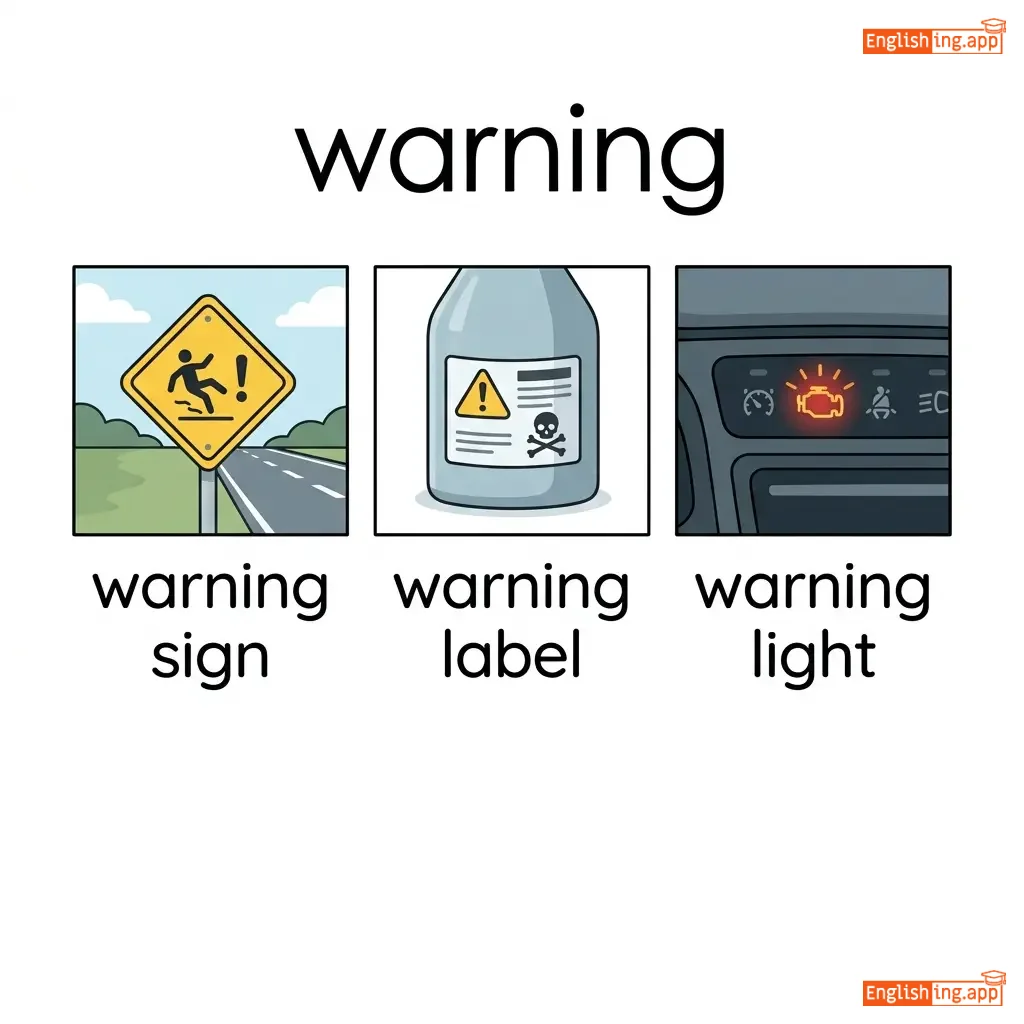
warning sign, early warning, final warning, health warning
••••••
|
Jinggao is like warning, used to signal a possible danger in the future.
••••••
|
|
#5445
📜
|
/ˈwɒrənt/
noun/verb
(warrant)
••••••
|
- •••••• |
逮捕令
dàibǔ lìng
••••••
|
warranted
warranted
••••••
|
warranted
warranted
••••••
|
warrants
warrants
••••••
|
warranting
warranting
••••••
|
As a noun: An official authorization or order. As a verb: To justify or make something necessary.
••••••
|
The judge issued a warrant for his arrest.
法官签发了他的逮捕令。
••••••
|
法官签发了他的逮捕令。
Fǎguān qiānfāle tā de dàibǔ lìng.
••••••
|
search warrant
搜查令
••••••
|
a legal document authorizing the police to search a place
••••••
|
搜查令
sōuchá lìng
••••••
|
authorization, permit, justification, license
••••••
|
ban, prohibition, denial
••••••
|
arrest warrant, search warrant, warrant issued, warrant action
••••••
|
警方使用逮捕令来进行搜查 🔍
••••••
|
|
#5446
⚔️
|
/ˈwɒriər/
noun
(wā lí ér)
••••••
|
- •••••• |
战士
zhànshì
••••••
|
- •••••• | - •••••• | - •••••• | - •••••• |
a person engaged or experienced in warfare; a brave or experienced fighter
••••••
|
The ancient warrior fought fearlessly to protect his land. |
古老的战士英勇地战斗以保护他的土地。
gǔlǎo de zhànshì yīngyǒng de zhàndòu yǐ bǎohù tā de tǔdì.
••••••
|
spiritual warrior |
a person who battles against inner weaknesses or strives for personal growth and enlightenment
••••••
|
精神战士
jīngshén zhànshì
••••••
|
fighter, soldier, combatant, champion, hero
••••••
|
coward, pacifist
••••••
|
brave warrior, ancient warrior, warrior spirit, skilled warrior
••••••
|
战士代表勇敢无畏的战斗者,保护自己的土地和荣耀。
••••••
|
|
#5447
🧼
|
/wɒʃ/
verb
(wosh)
••••••
|
|
洗
xi
••••••
|
washed
woshed
••••••
|
washed
woshed
••••••
|
washes
washes
••••••
|
washing
washing
••••••
|
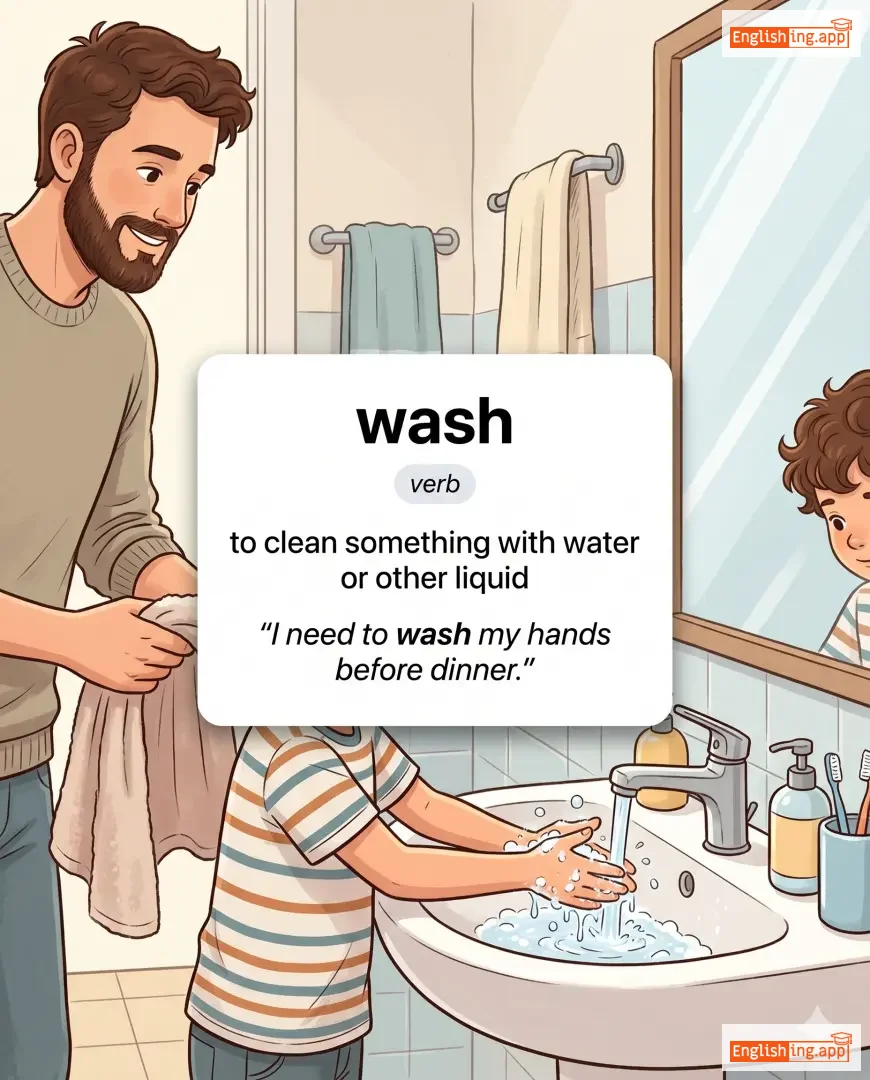
to clean with water; to remove dirt
••••••
|
Please wash your hands before eating.
请在吃饭前洗手。
••••••
|
请在吃饭前洗手。
Qing zai chifan qian xishou.
••••••
|
- •••••• | - •••••• | - •••••• |
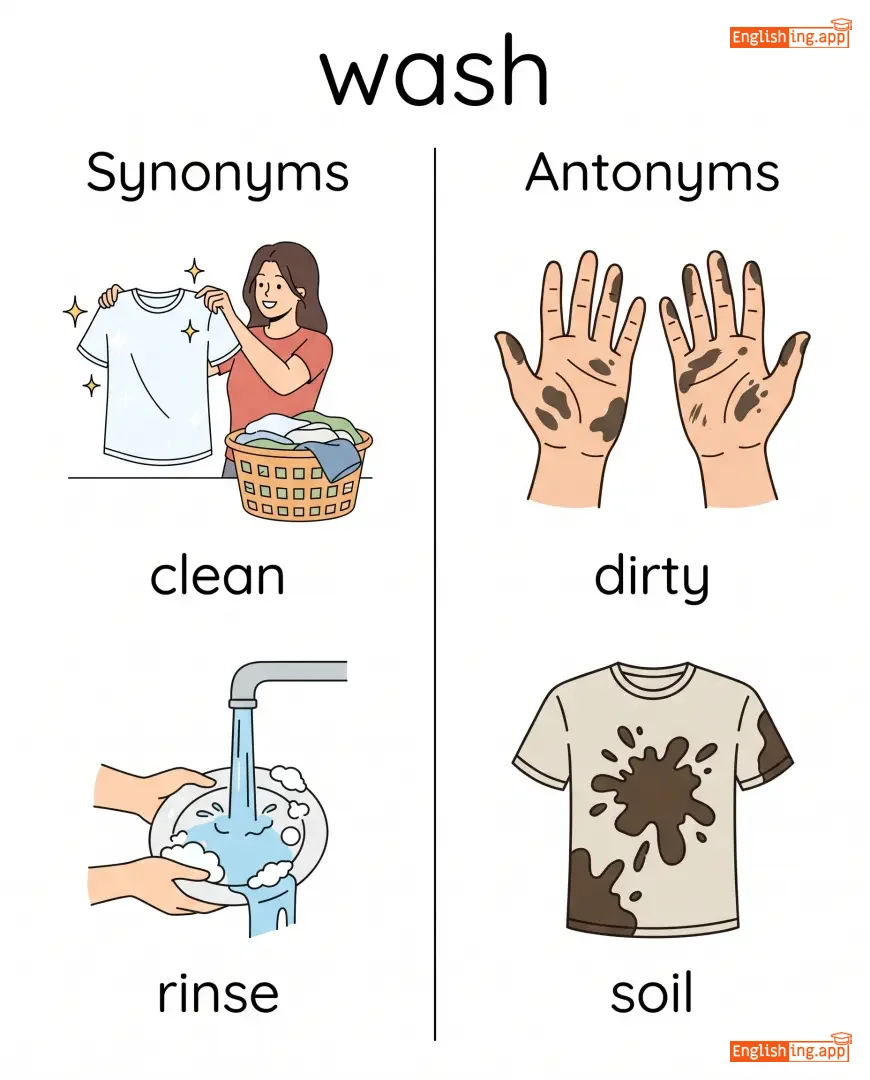
clean, rinse, scrub, bathe, cleanse
••••••
|
dirty, soil, stain, contaminate
••••••
|
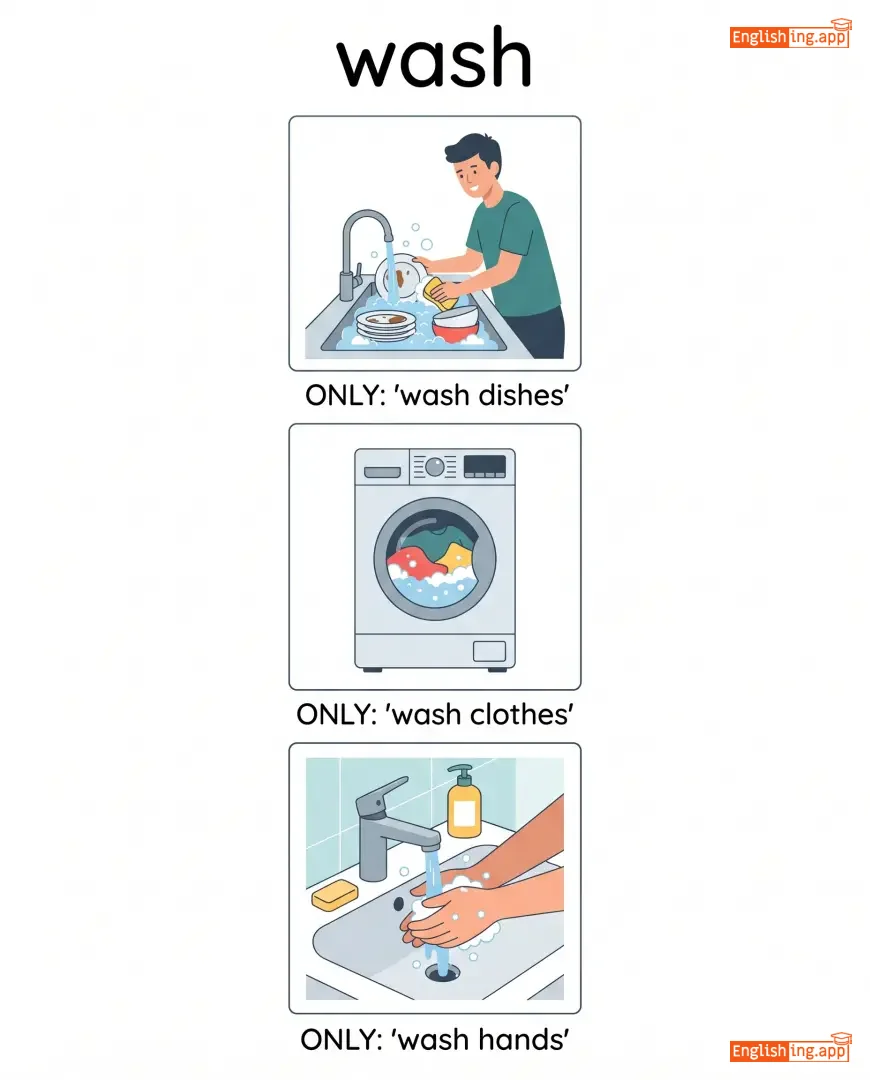
wash hands, wash clothes, wash dishes, thoroughly wash
••••••
|
Think of '洗' (xi) as washing your hands in a 'Xiao' (small) bowl.
••••••
|
|
#5448
🧼
|
/ˈwɒʃɪŋ/
noun; gerund
(沃兴)
••••••
|
- •••••• |
清洗
qingxi
••••••
|
washed
沃什德
••••••
|
washed
沃什德
••••••
|
washes
沃什兹
••••••
|
washing
沃兴
••••••
|
the act of cleaning with water or other liquid; clothes or items that are being washed
••••••
|
Washing clothes regularly helps maintain hygiene.
沃兴 克洛兹 瑞格勒里 海尔普斯 维恩泰因 海吉因。
••••••
|
经常清洗衣服有助于保持卫生。
jingchang qingxi yifu youzhu yu baochi weisheng
••••••
|
washing one's hands of
沃兴 万兹 汉兹 奥夫
••••••
|
to refuse responsibility for something
••••••
|
洗手不管
xishou bugan
••••••
|
cleaning, laundering, rinsing, scrubbing, cleansing
••••••
|
dirtying, soiling, staining
••••••
|
washing clothes, washing machine, hand washing, car washing, daily washing
••••••
|
washing = qingxi, wash 就是清洗
••••••
|
|
#5449
🗑️
|
/weɪst/
verb
(ウェイスト)
••••••
|
|
浪费
làngfèi
••••••
|
wasted
ウェイステッド
••••••
|
wasted
ウェイステッド
••••••
|
wastes
ウェイストス
••••••
|
wasting
ウェイスティング
••••••
|
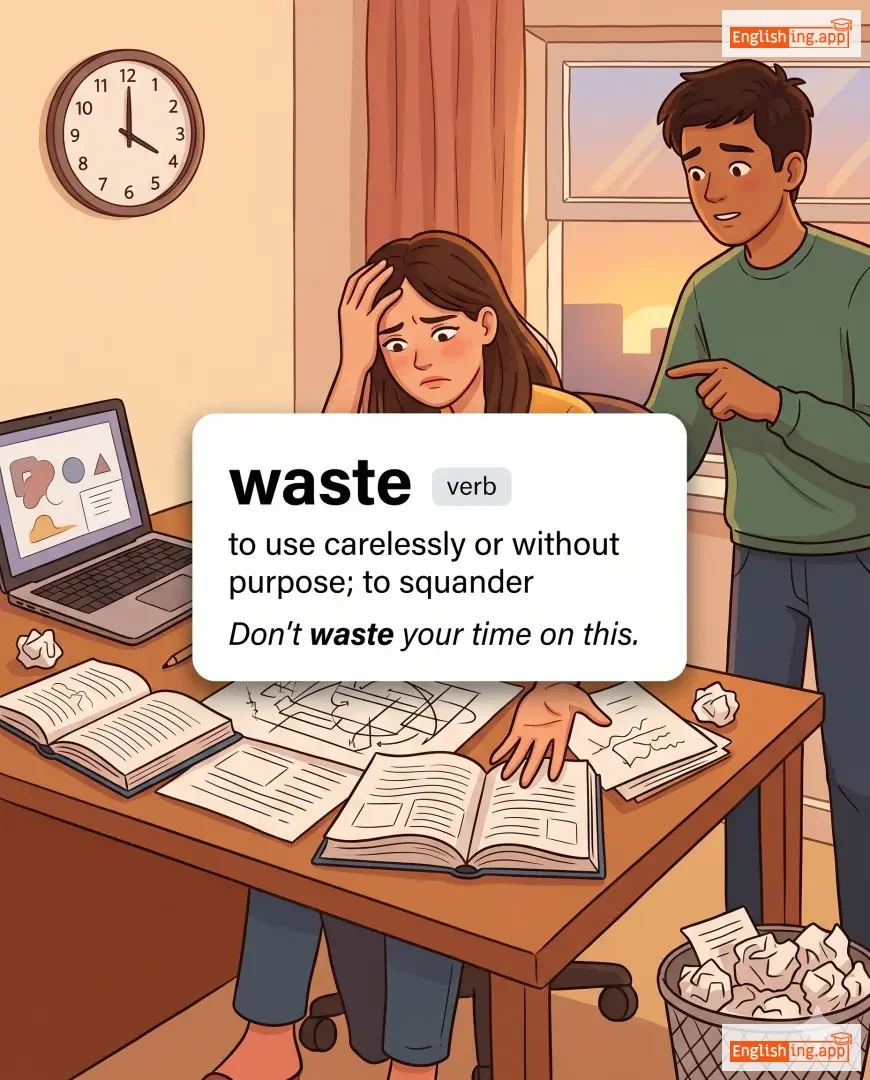
to use carelessly or without purpose; to squander
••••••
|
Don't waste your time on this.
ドント ウェイスト ヨア タイム オン ディス。
••••••
|
不要浪费你的时间在这个上面。
Bù yào làngfèi nǐ de shíjiān zài zhège shàngmiàn.
••••••
|
- •••••• | - •••••• | - •••••• |
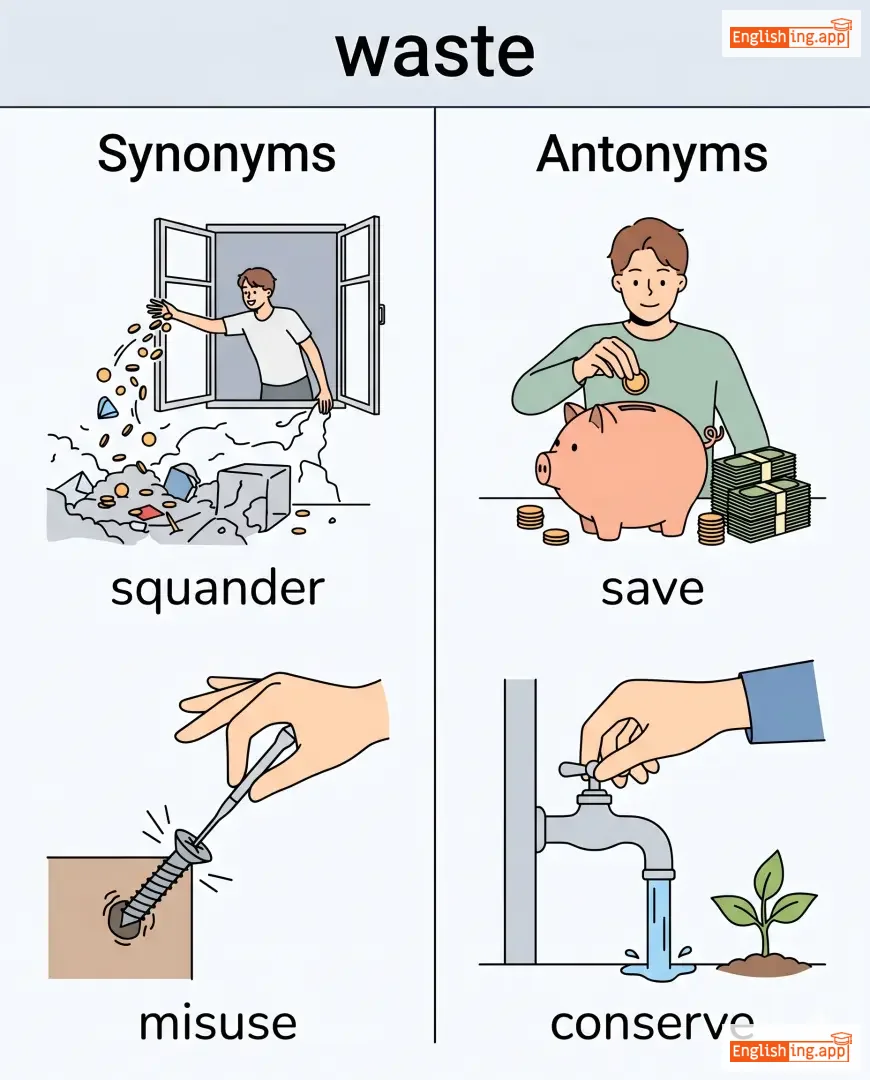
squander, misuse, fritter, throw away
••••••
|
save, conserve, preserve, use wisely
••••••
|
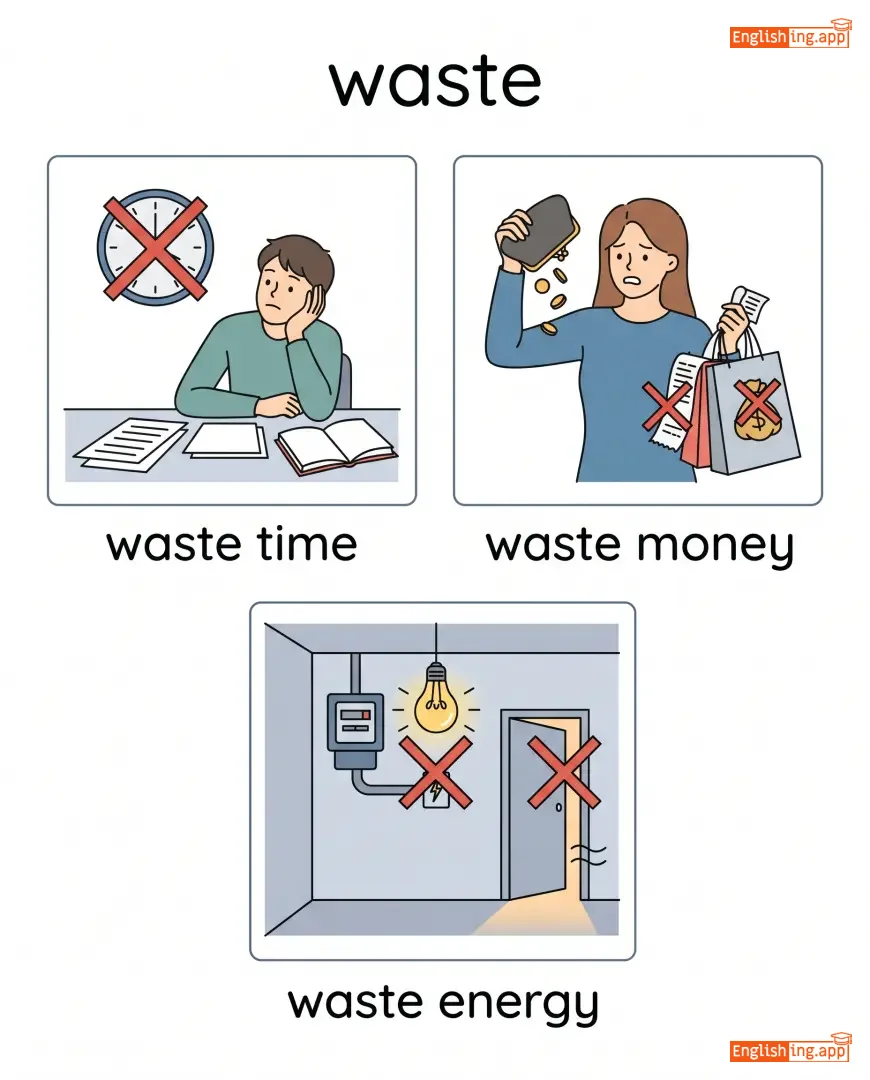
waste time, waste money, waste energy, waste resources, waste opportunity
••••••
|
浪费是指不顾后果的使用,像浪费食物或水一样。
••••••
|
|
#5450
👀
|
/wɒtʃ/
verb
(wòch)
••••••
|
|
看
kàn
••••••
|
watched
wòchd
••••••
|
watched
wòchd
••••••
|
watches
wòchés
••••••
|
watching
watching
••••••
|
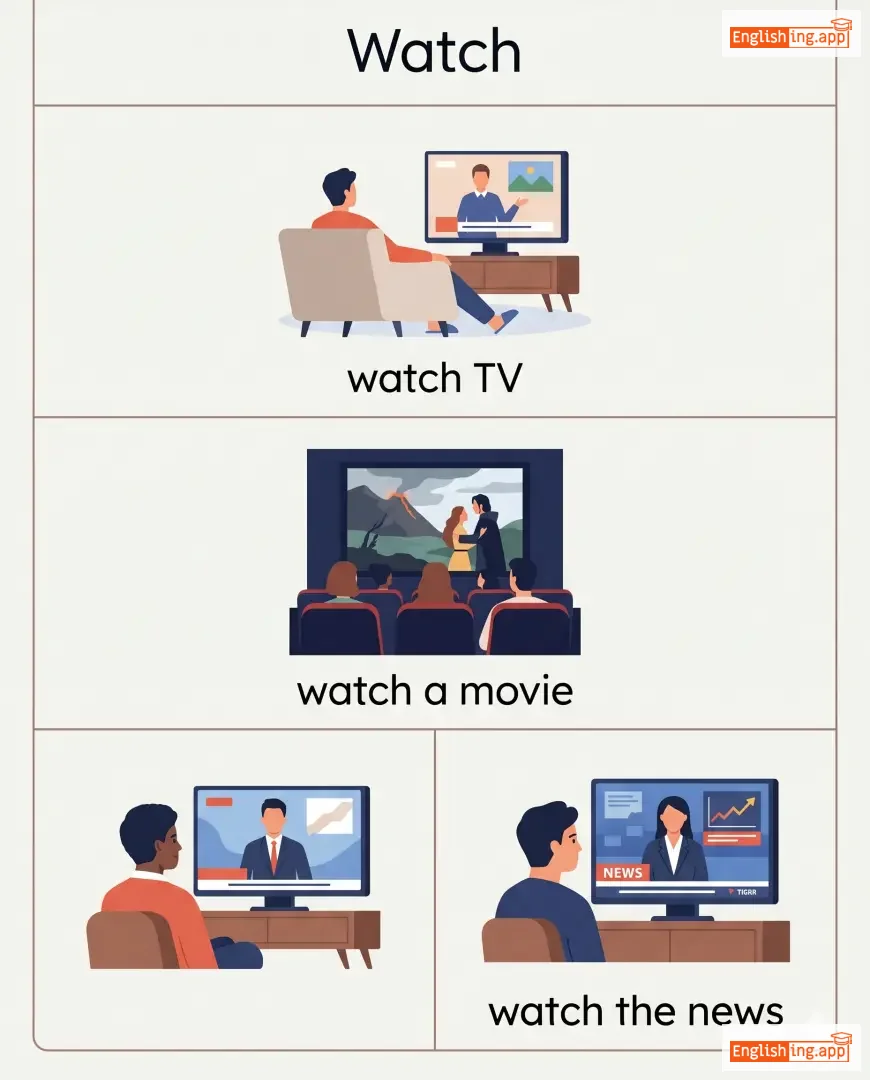
to look at or observe attentively; to keep under surveillance
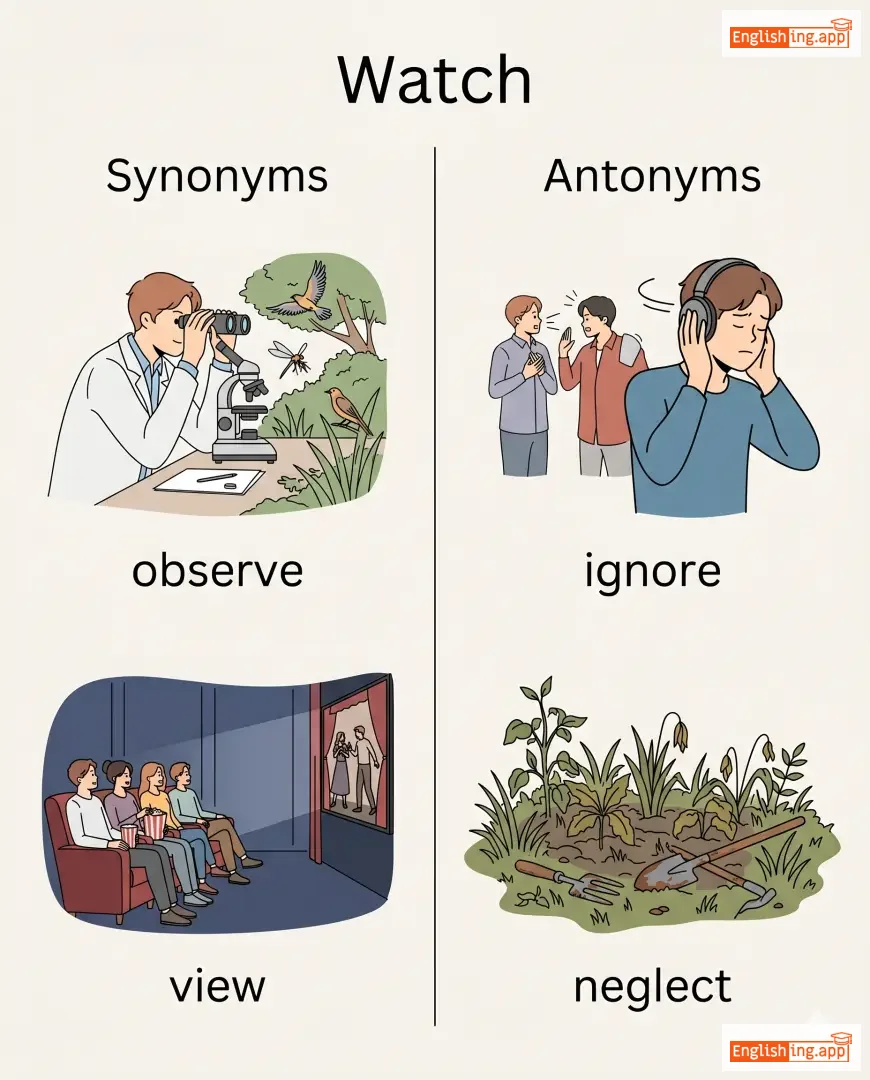
••••••
|
I watch television every evening.
我每天晚上看电视。
••••••
|
我每天晚上看电视。
Wǒ měitiān wǎnshàng kàn diànshì
••••••
|
- •••••• | - •••••• | - •••••• |
observe, monitor, view, see
••••••
|
ignore, overlook, neglect
••••••
|
watch TV, watch movies, closely watch, carefully watch, constantly watch
••••••
|
看和观察都涉及视觉,但观察是更有意图地查看。
••••••
|
|
#5451
💧
|
/ˈwɔːtər/
verb
(水)
••••••
|
|
浇水
jiaoshui
••••••
|
watered
水过
••••••
|
watered
水过
••••••
|
waters
水滴
••••••
|
watering
浇水
••••••
|
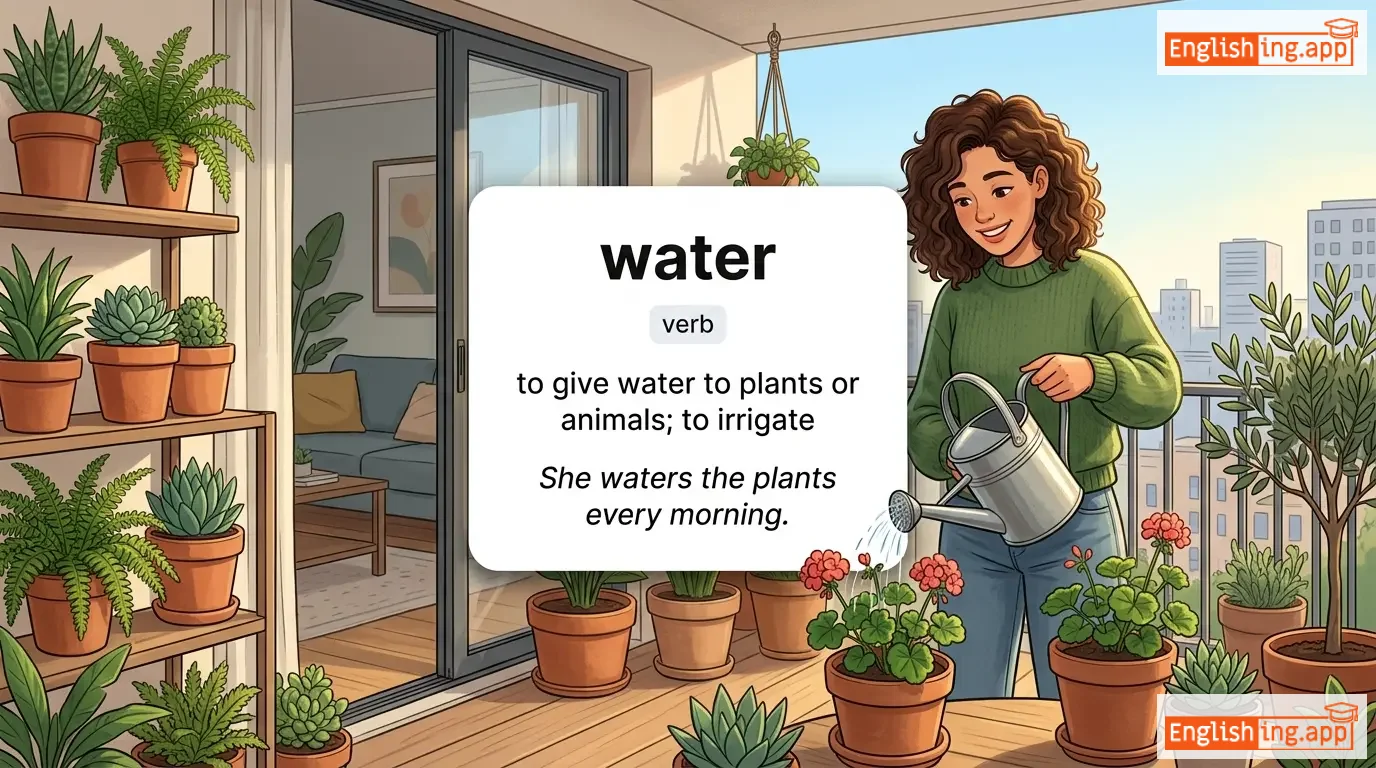
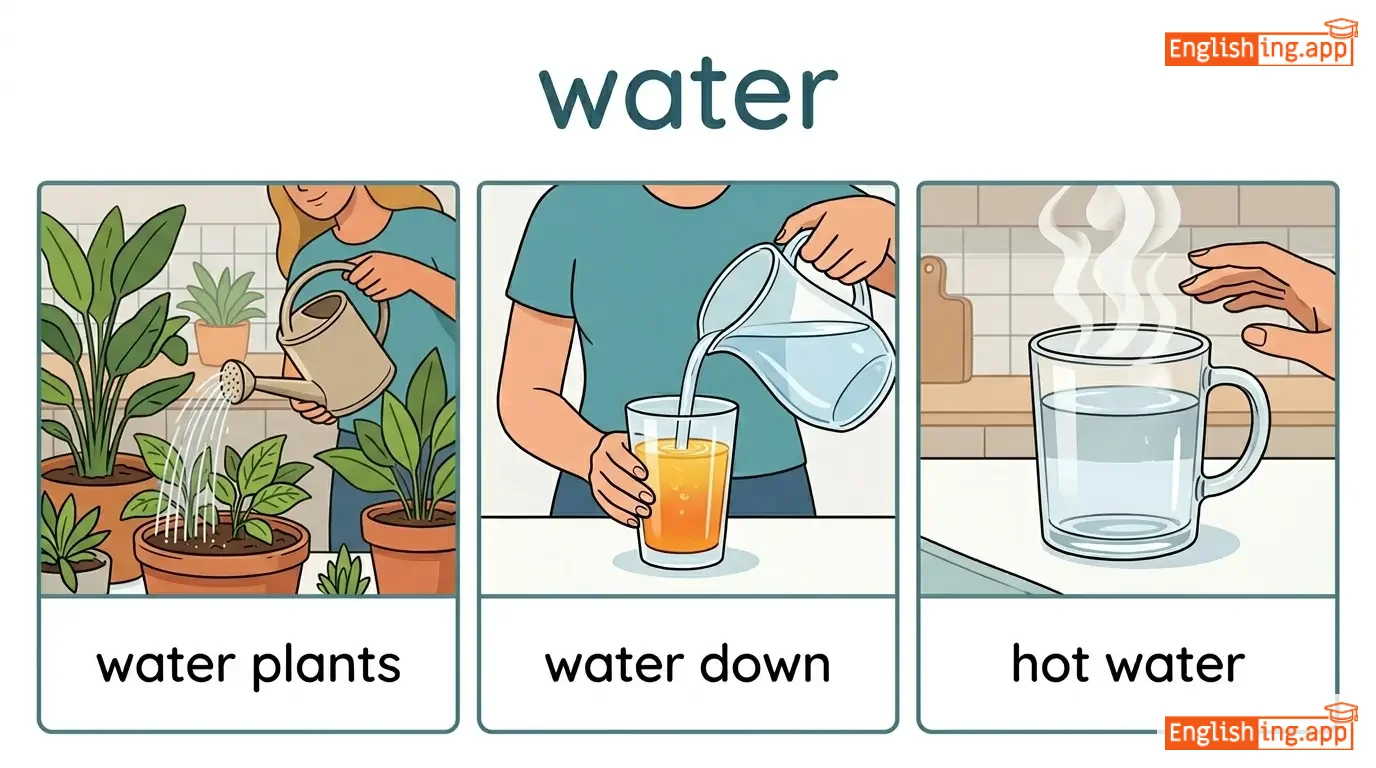
to give water to plants or animals; to irrigate
••••••
|
She waters the plants every morning.
她每天早上给植物浇水。
••••••
|
她每天早上给植物浇水。
Ta mei tian zao shang gei zhiwu jiaoshui
••••••
|
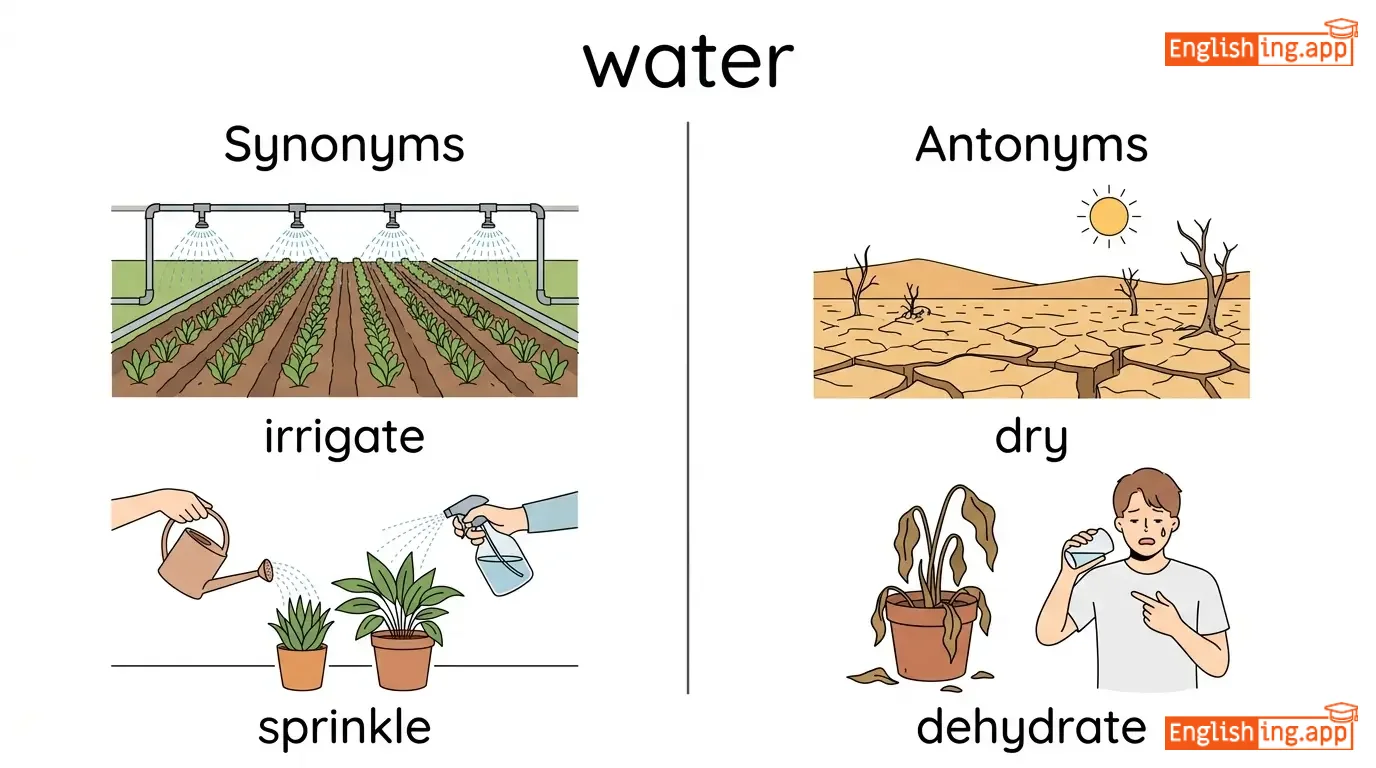
- •••••• | - •••••• | - •••••• |
irrigate, sprinkle, drench, moisten
••••••
|
dry, dehydrate, parch
••••••
|
water plants, water down, hot water, cold water, drinking water, water supply
••••••
|
浇水就是给植物喂水
••••••
|
|
#5452
🏞️
|
/ˈwɔːtərfɔːl/
noun
••••••
|
- •••••• | - •••••• | - •••••• | - •••••• | - •••••• | - •••••• |
a cascade of water falling from a height, formed when a river or stream flows over a precipice or steep incline
••••••
|
The magnificent waterfall attracts thousands of tourists every year. |
- •••••• | - •••••• | - •••••• | - •••••• |
cascade, cataract, falls
••••••
|
drought, dry land, desert
••••••
|
magnificent waterfall, spectacular waterfall, waterfall view
••••••
|
No •••••• |
|
#5453
👋
|
/weɪv/
verb
(wēi wú)
••••••
|
|
挥手
huī shǒu
••••••
|
Waved
wēi wúd
••••••
|
Waved
wēi wúd
••••••
|
Waves
wēi wú sī
••••••
|
Waving
wēi wíng
••••••
|
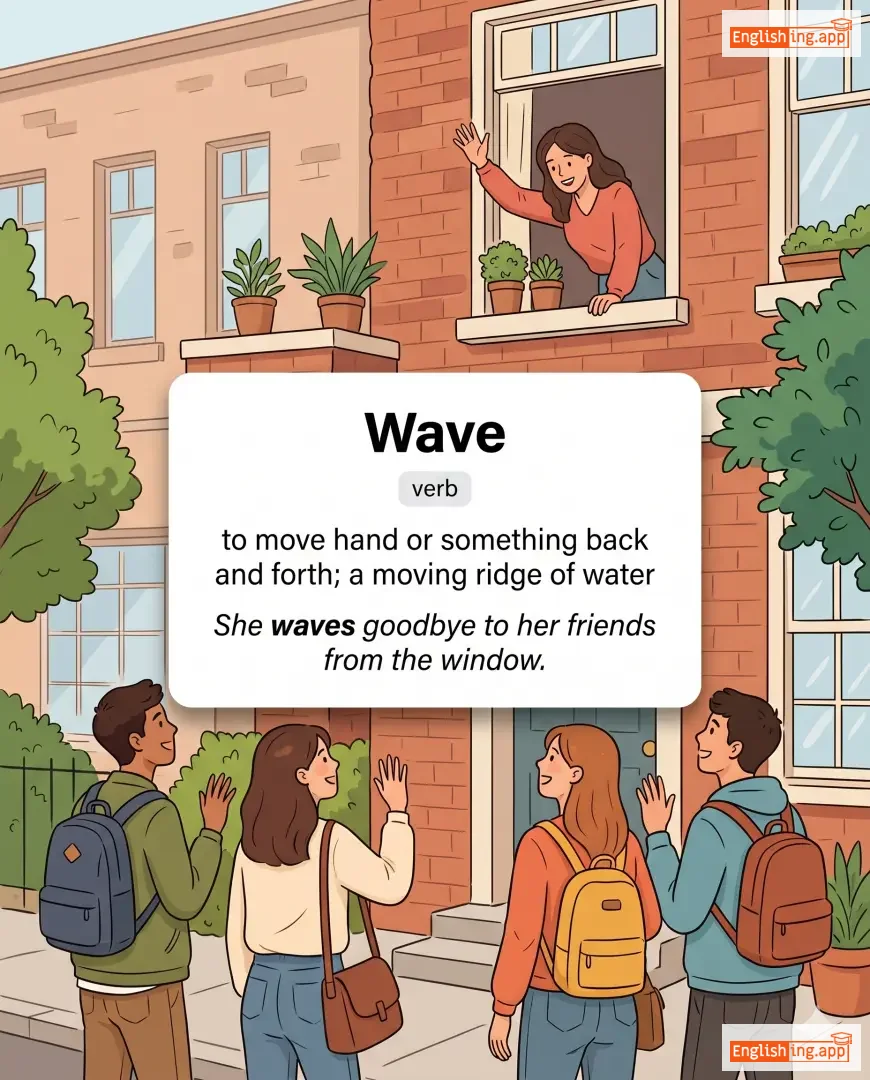
to move hand or something back and forth; a moving ridge of water
••••••
|
She waves goodbye to her friends from the window.
她从窗户向她的朋友挥手告别。
••••••
|
她从窗户向她的朋友挥手告别。
Tā cóng chuānghù xiàng tā de péngyǒu huī shǒu gàobié.
••••••
|
- •••••• | - •••••• | - •••••• |
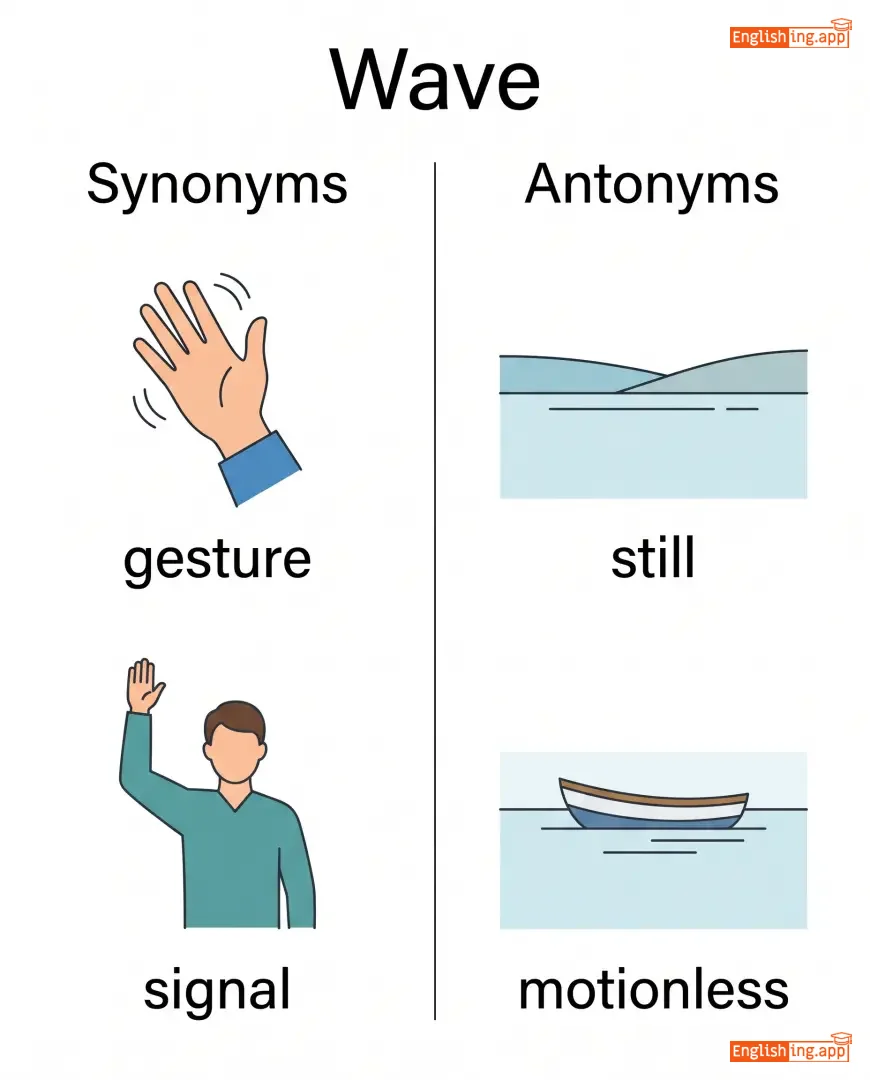
gesture, signal, greet, undulate
••••••
|
still, motionless, steady, calm
••••••
|
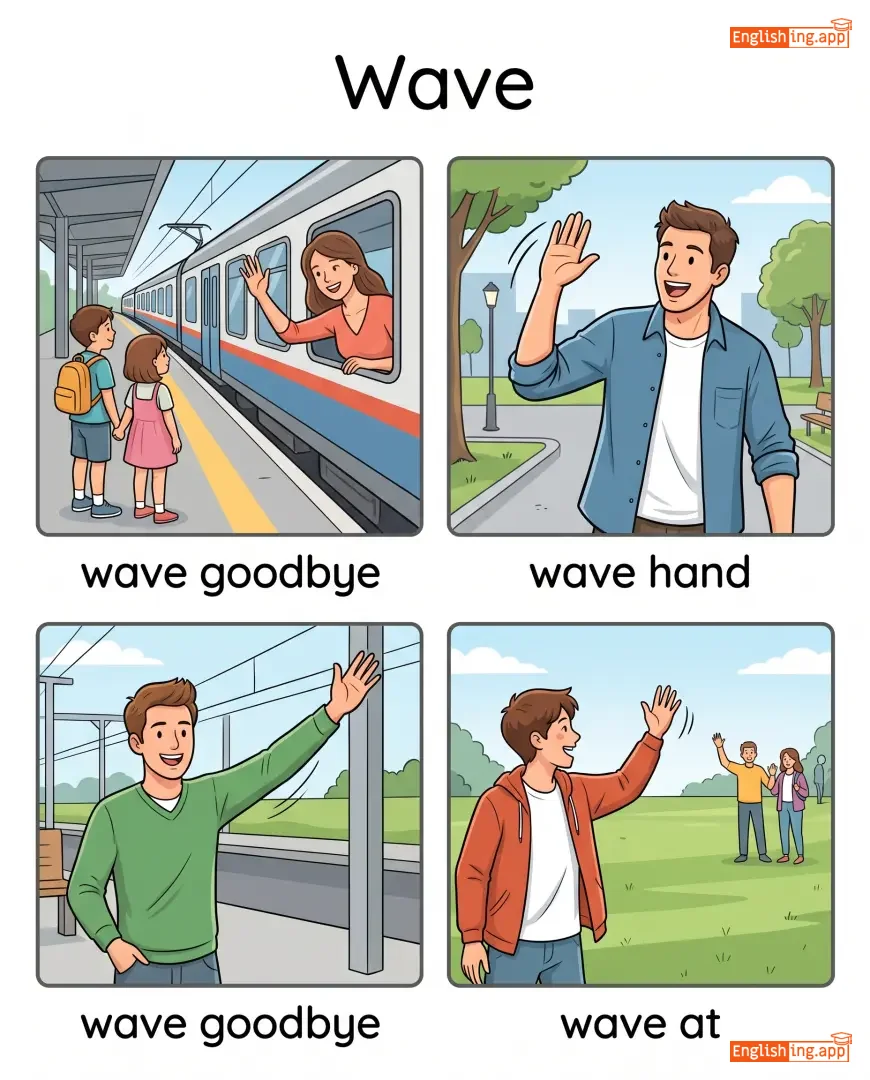
wave goodbye, wave hand, wave at, wave frantically
••••••
|
想象挥手像海浪一样波动。
••••••
|
|
#5454
🛣️
|
/weɪ/
noun
(wēi)
••••••
|
- •••••• |
道路 / 方法
dàolù / fāngfǎ
••••••
|
- •••••• | - •••••• | - •••••• | - •••••• |
a path, direction, or method of doing something
••••••
|
He found a new way to solve the problem. |
他找到了一个解决问题的新方法。
Tā zhǎodào le yī gè jiějué wèntí de xīn fāngfǎ.
••••••
|
by the way |
used to introduce a new or additional topic
••••••
|
顺便说一下
shùnbiàn shuō yīxià
••••••
|
path, route, road, method, manner
••••••
|
blockage, obstacle, impasse
••••••
|
find a way, make way, on the way, by the way
••••••
|
Way 意味着道路 — 记住'高速公路'意味着一条大路。
••••••
|
|
#5455
👥
|
/wi/
pronoun
(wēi)
••••••
|
- •••••• |
我们
women
••••••
|
- •••••• | - •••••• | - •••••• | - •••••• |
used by a speaker to refer to himself or herself and one or more other people
••••••
|
We are going to the park this afternoon.
我们今天下午要去公园。
••••••
|
我们今天下午要去公园。
Wǒmen jīntiān xiàwǔ yào qù gōngyuán.
••••••
|
- •••••• | - •••••• | - •••••• |
us, ourselves, we two, we three
••••••
|
I, you
••••••
|
we are, we need, we can, we love
••••••
|
We are always ‘Wǒmen’ in Chinese!
••••••
|
|
#5456
💪❌
|
/wiːk/
adjective
(wēk)
••••••
|
- •••••• |
虚弱; 脆弱
xūruò; cuìruò
••••••
|
- •••••• | - •••••• | - •••••• | - •••••• |
lacking physical strength; not strong; fragile
••••••
|
After the illness, he felt weak and tired.
生病后,他感到虚弱和疲惫。
••••••
|
生病后,他感到虚弱和疲惫。
Shēngbìng hòu, tā gǎndào xūruò hé píbèi.
••••••
|
- •••••• | - •••••• | - •••••• |
feeble, frail, fragile, powerless
••••••
|
strong, powerful, robust, sturdy
••••••
|
weak point, weak signal, feel weak, grow weak
••••••
|
Weak in English sounds like 'wēk' in Chinese, both meaning '虚弱'.
••••••
|
|
#5457
💤
|
/ˈwiːkən/
verb
(wīken)
••••••
|
|
削弱
xuēruò
••••••
|
weakened
wīkend
••••••
|
weakened
wīkend
••••••
|
weakens
wīkens
••••••
|
weakening
wīkening
••••••
|
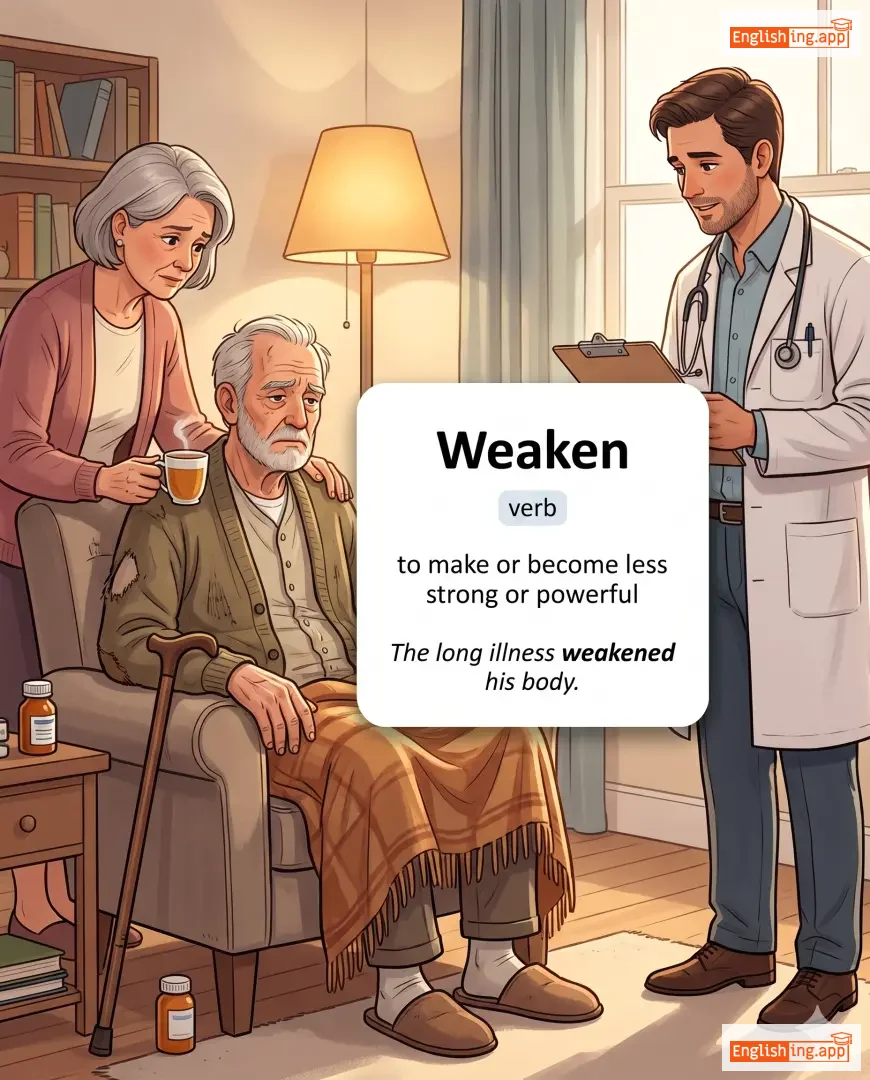
to make or become less strong or powerful
••••••
|
The long illness weakened his body.
De long illness wīkend his body.
••••••
|
长期的病痛削弱了他的身体。
Chángqī de bìngtòng xuēruòle tā de shēntǐ.
••••••
|
weaken someone's resolve
wīken someone's resolve
••••••
|
to make someone less determined or confident
••••••
|
削弱某人的决心
xuēruò mǒu rén de juéxīn
••••••
|
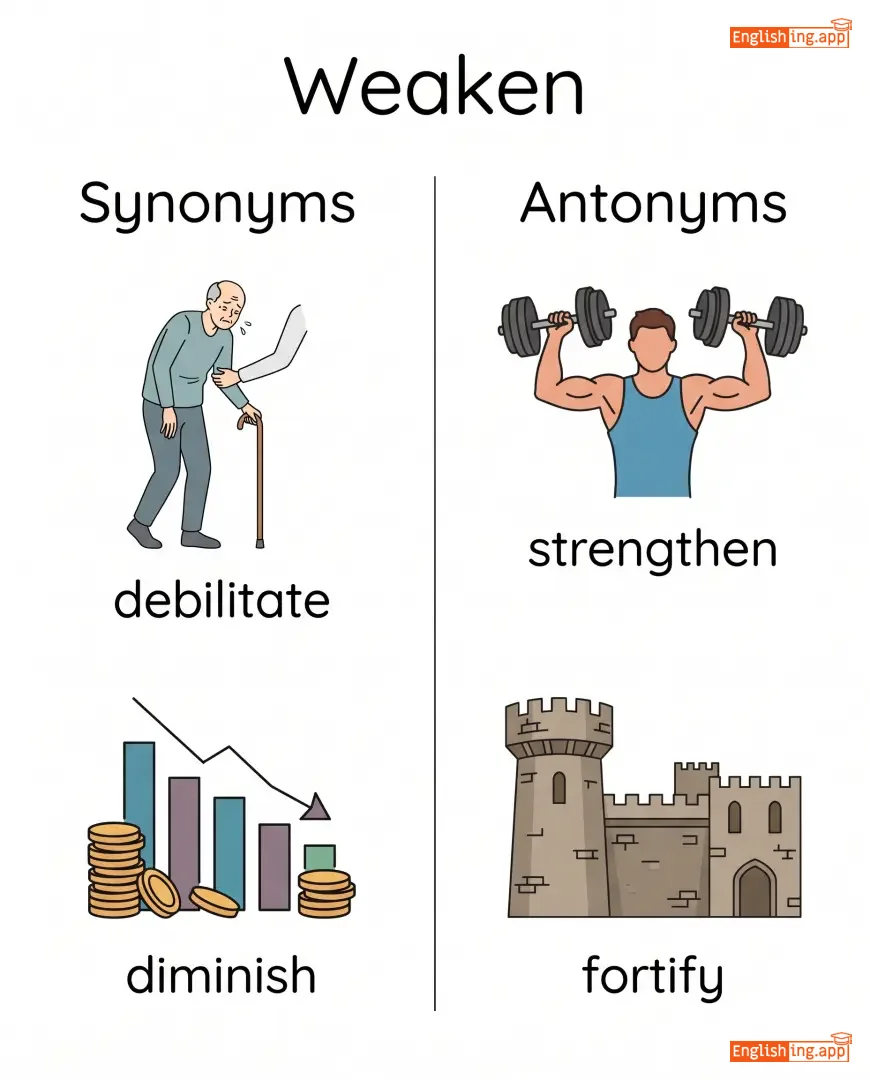
debilitate, diminish, reduce, impair, lessen
••••••
|
strengthen, fortify, empower
••••••
|
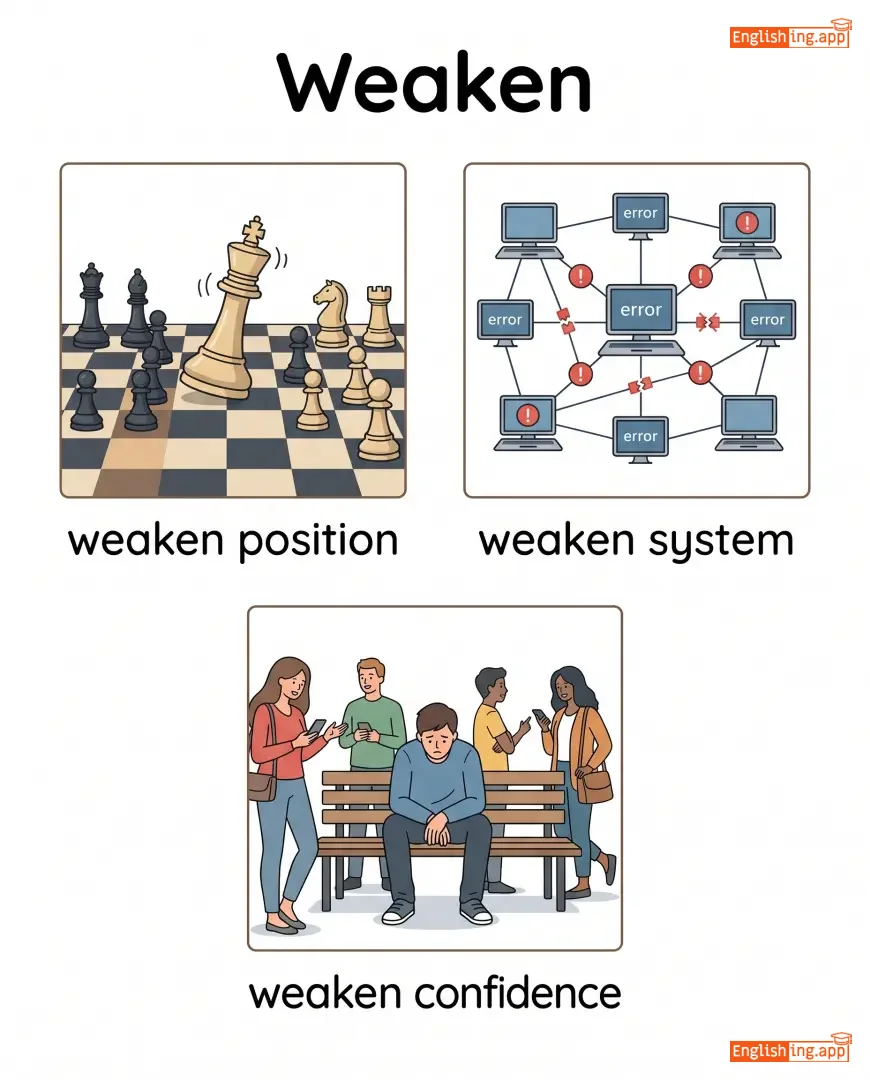
weaken position, weaken system, weaken confidence, weaken economy
••••••
|
Weaken意思是削弱,就像疾病使你变弱。
••••••
|
|
#5458
💧
|
/ˈwiːknəs/
noun
(wīknes)
••••••
|
- •••••• |
弱点
ruòdiǎn
••••••
|
- •••••• | - •••••• | - •••••• | - •••••• |
a state of being weak; a flaw or shortcoming in character or structure
••••••
|
His main weakness is his lack of patience. |
他最大的弱点是缺乏耐心。
Tā zuìdà de ruòdiǎn shì quēfá nàixīn.
••••••
|
achilles' heel |
a person's principal weakness or vulnerability
••••••
|
- •••••• |
frailty, flaw, vulnerability, defect, shortcoming
••••••
|
strength, power, resilience
••••••
|
mental weakness, show weakness, personal weakness, weakness for sweets
••••••
|
Weak表示虚弱,weakness表示弱点——‘ness’表示状态。
••••••
|
|
#5459
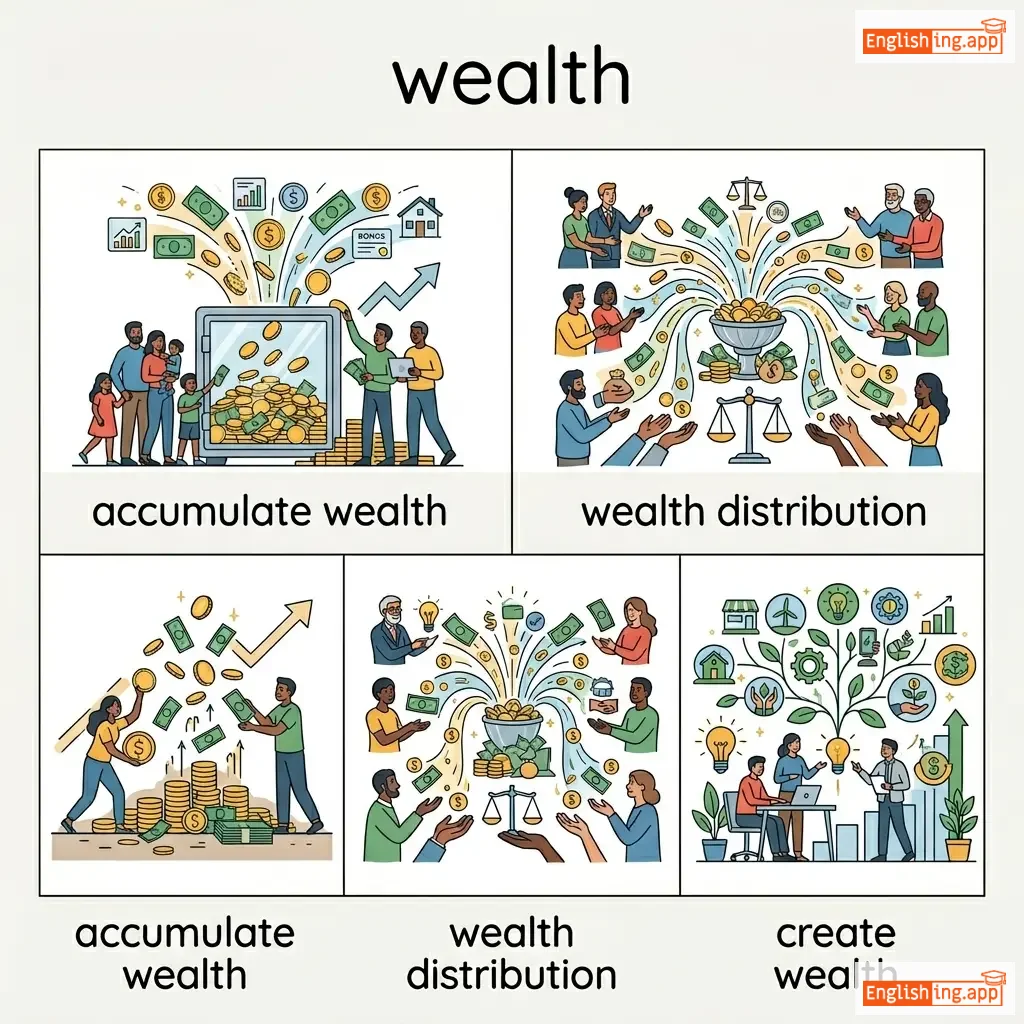
💰
|
/wɛlθ/
noun
(wɛlθ)
••••••
|
|
财富
caifu
••••••
|
- •••••• | - •••••• | - •••••• | - •••••• |
an abundance of valuable possessions or money; prosperity
••••••
|
The businessman built his wealth through hard work and smart investments. |
商人通过努力工作和聪明的投资积累了他的财富。
Shāngrén tōngguò nǔlì gōngzuò hé cōngmíng de tóuzī jīlěi le tā de cáifù.
••••••
|
wealth of experience |
a large amount of knowledge or skill gained through practice or time
••••••
|
经验的财富
jīngyàn de cáifù
••••••
|
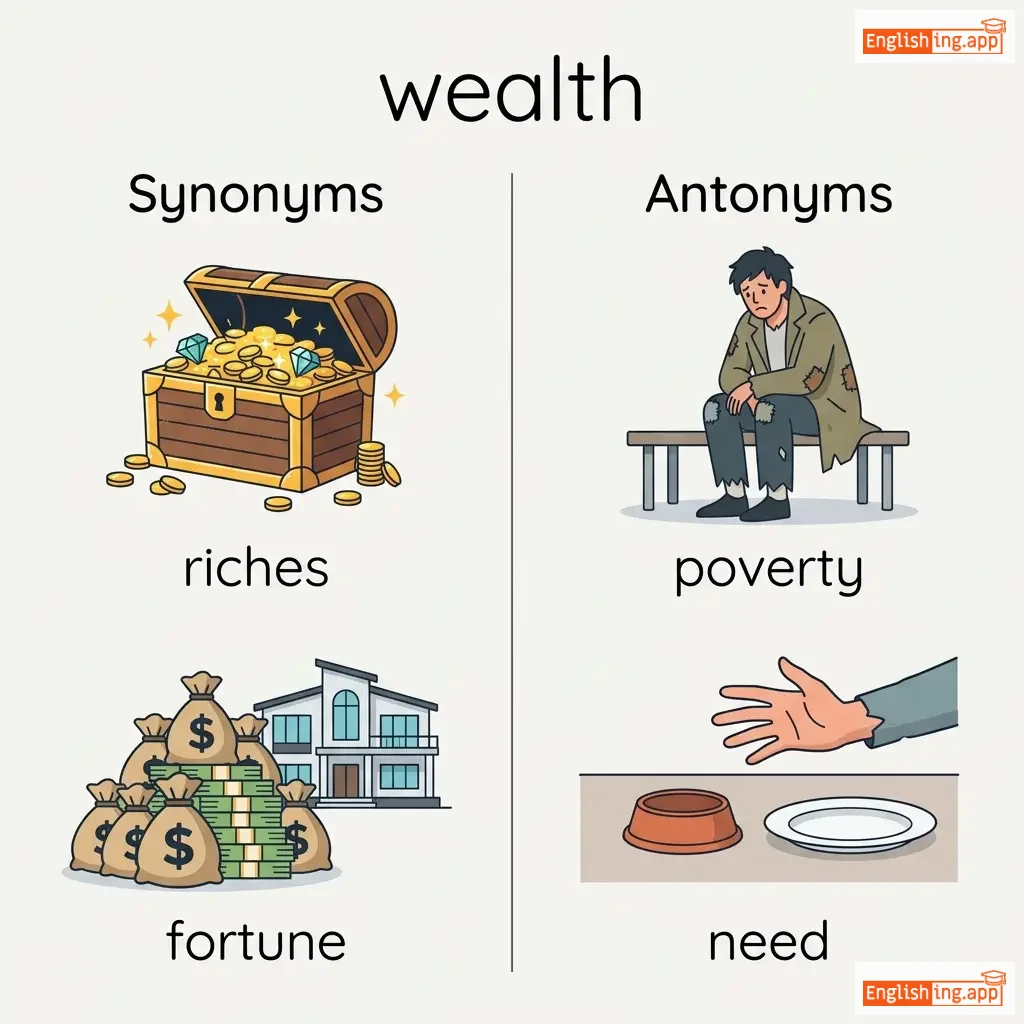
riches, fortune, prosperity, affluence
••••••
|
poverty, need, scarcity
••••••
|
accumulate wealth, wealth distribution, create wealth, family wealth
••••••
|
WEALTH意味着'财富' - 'We Earn And Live Through Hardwork' 💰
••••••
|
|
#5460
💰
|
/ˈwel.θi/
adjective
(wēi'ěrthī)
••••••
|
- •••••• |
富有的; 有钱的; 繁荣的
fùyǒu de; yǒu qián de; fánróng de
••••••
|
- •••••• | - •••••• | - •••••• | - •••••• |
having a great deal of money; rich; prosperous
••••••
|
The wealthy businessman donated millions to charity. |
富有的商人捐赠了数百万美元给慈善事业。
Fùyǒu de shāngrén juānzèngle shù bǎi wàn měiyuán gěi císhàn shìyè.
••••••
|
- •••••• | - •••••• | - •••••• |
rich, affluent, prosperous, well-off
••••••
|
poor, impoverished, destitute, needy
••••••
|
wealthy family, wealthy individual, become wealthy, extremely wealthy
••••••
|
富有的人总是为他人带来繁荣。
••••••
|
|
#5461
🗡️
|
/ˈwep.ən/
noun
(wéipén)
••••••
|
- •••••• |
武器
wǔqì
••••••
|
- •••••• | - •••••• | - •••••• | - •••••• |
a thing designed or used for inflicting bodily harm or physical damage
••••••
|
The police found a dangerous weapon at the crime scene.
警方在犯罪现场找到了危险的武器。
••••••
|
警方在犯罪现场找到了危险的武器。
Jǐngfāng zài fànzuì xiànchǎng zhǎodào le wéixiǎn de wǔqì.
••••••
|
- •••••• | - •••••• | - •••••• |
arm, armament, firearm, tool of violence
••••••
|
shield, protection, defense, peace
••••••
|
deadly weapon, nuclear weapon, weapon of mass destruction, concealed weapon
••••••
|
武器是用来防守或者攻击的物品,可以用来保护自己或者伤害别人。
••••••
|
|
#5462
👕
|
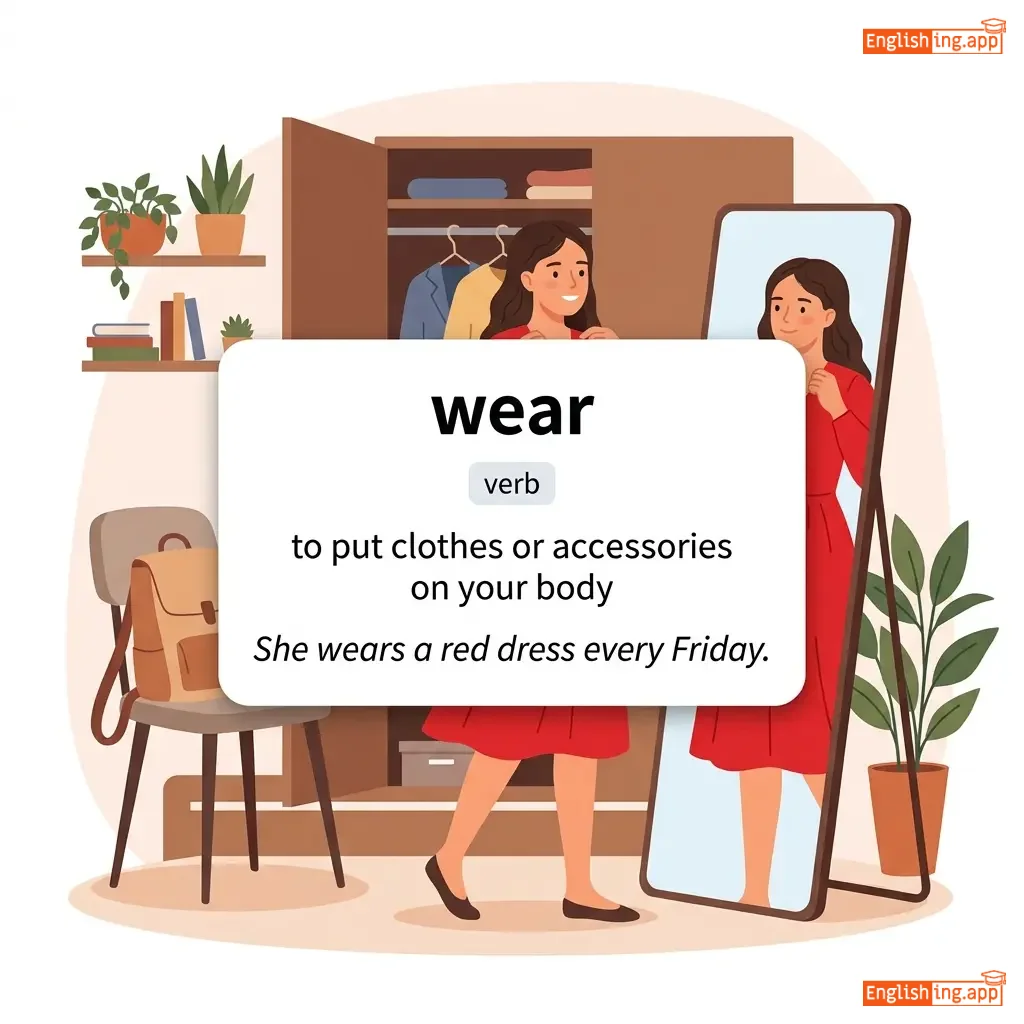
/wɛr/
verb
(wɛr)
••••••
|
|
穿戴
chuān dài
••••••
|
wore
wɔr
••••••
|
worn
wɔrn
••••••
|
wears
wɛrz
••••••
|
wearing
wɛrɪŋ
••••••
|
to have clothing or accessories on one's body
••••••
|
She likes to wear bright colors.
shi laɪks tu wɛr braɪt kʌlɚz
••••••
|
她喜欢穿亮色的衣服。
Tā xǐ huān chuān liàng sè de yī fú.
••••••
|
- •••••• | - •••••• | - •••••• |
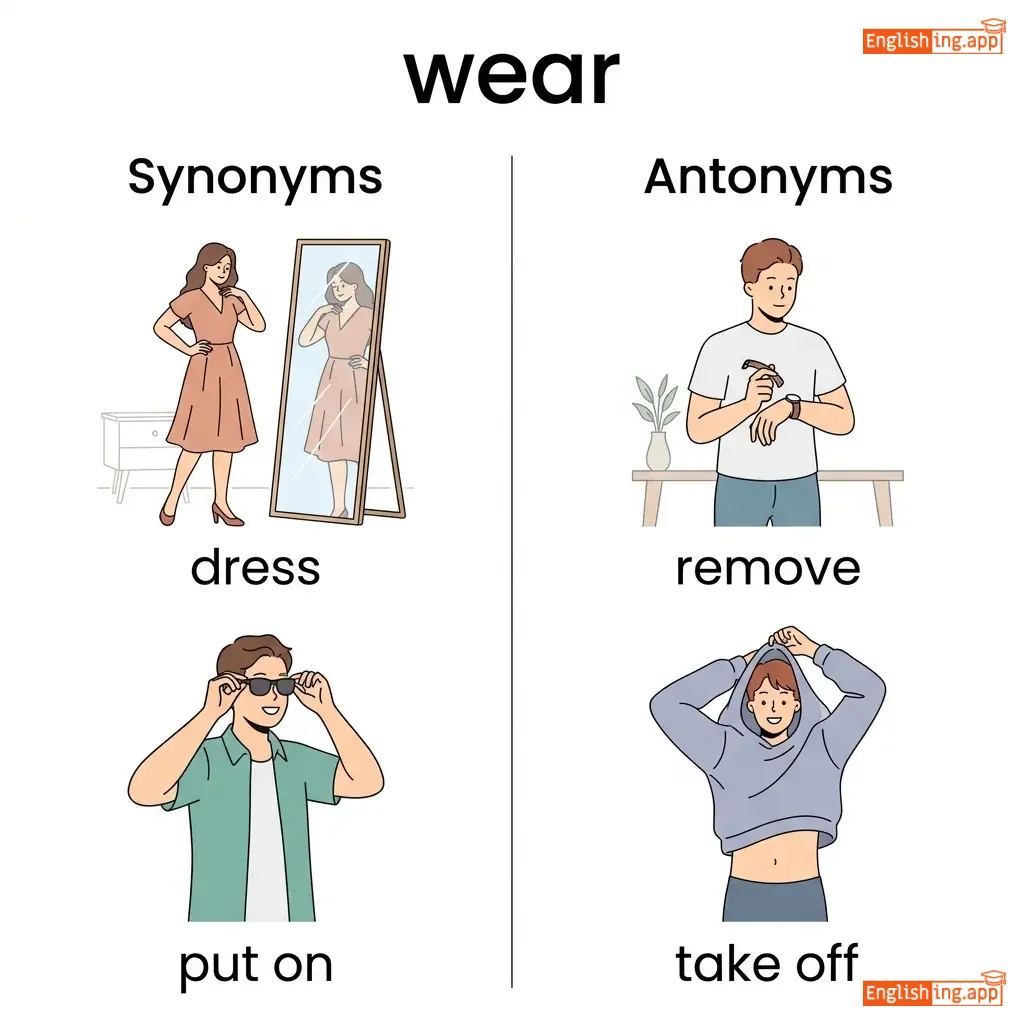
don, put on, sport, carry
••••••
|
remove, take off, undress
••••••
|
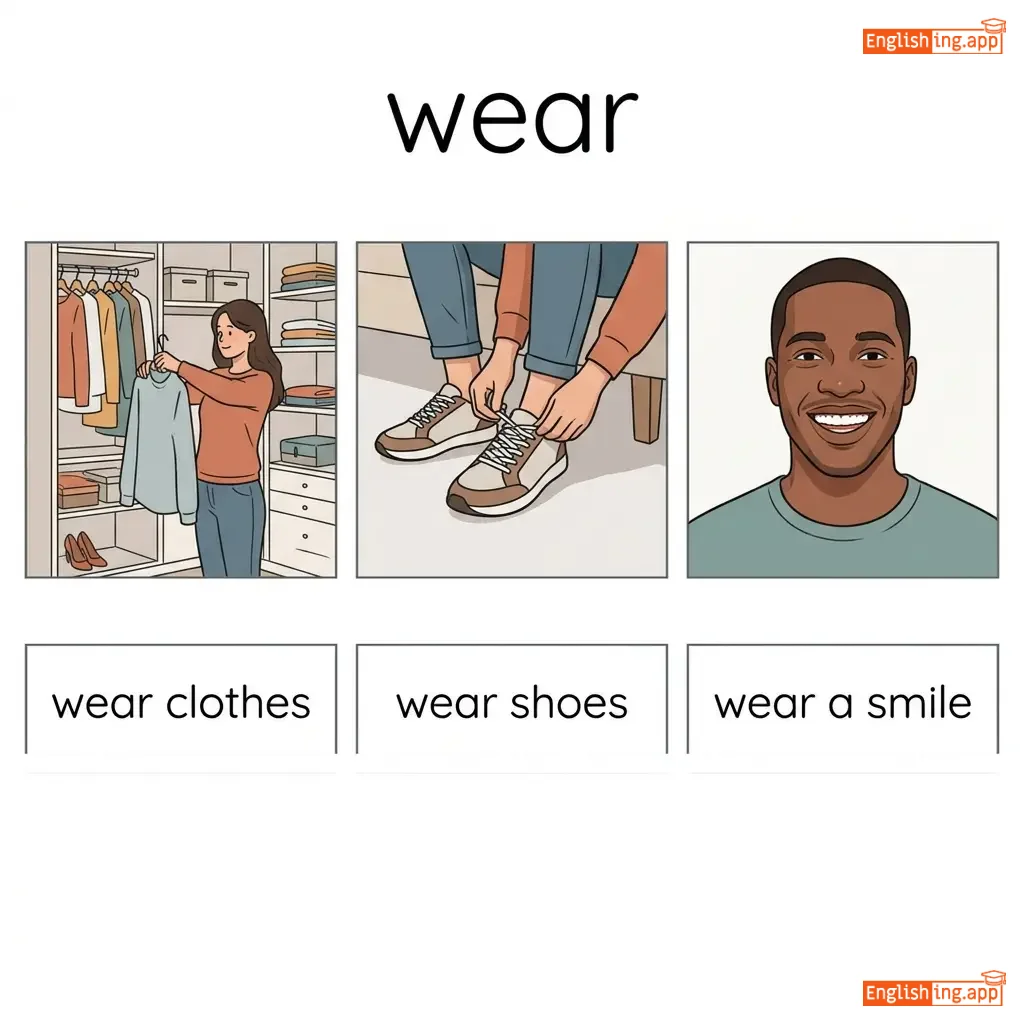
wear clothes, wear jewelry, wear shoes, wear uniform, wear makeup, wear expression
••••••
|
No •••••• |
|
#5463
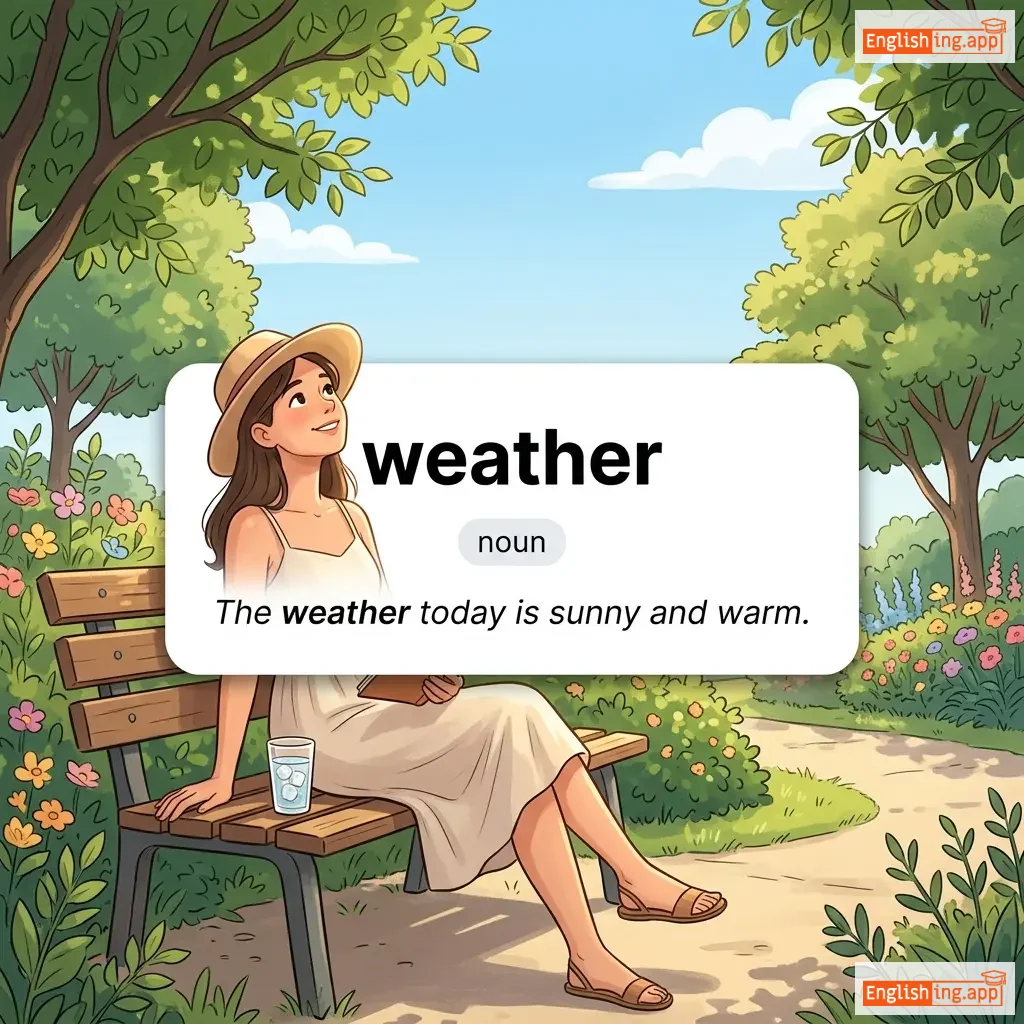
⛅
|
/ˈwɛðər/
noun
(wɛðər)
••••••
|
|
天气
tianqi
••••••
|
- •••••• | - •••••• | - •••••• | - •••••• |
the state of the atmosphere at a particular place and time in terms of heat, cloudiness, dryness, sunshine, wind, rain, etc.
••••••
|
The weather today is sunny and warm. |
今天的天气晴朗而温暖。
Jintian de tianqi qinglang er wenruan.
••••••
|
under the weather |
feeling unwell or sick
••••••
|
感觉不适
gǎnjué bù shì
••••••
|
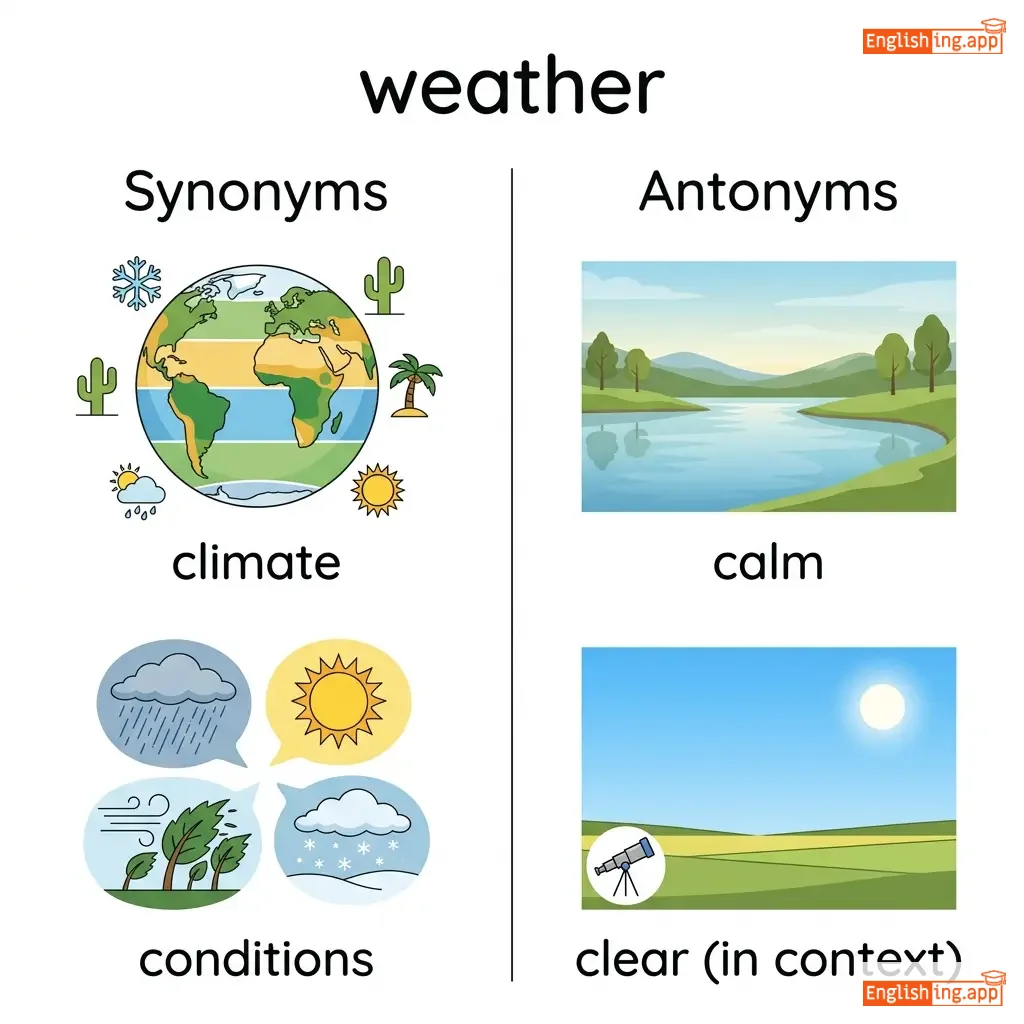
climate, conditions, atmosphere, forecast
••••••
|
calm, clear (in context)
••••••
|
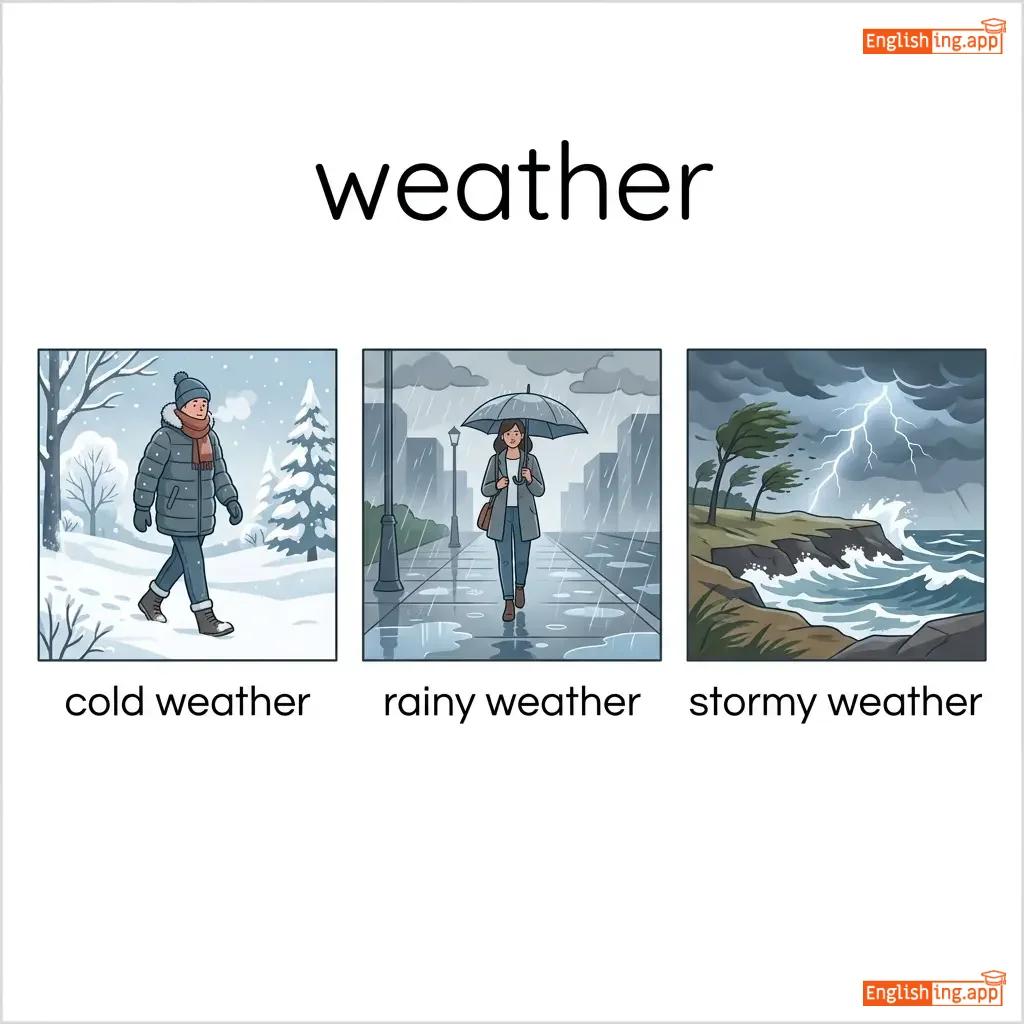
cold weather, rainy weather, stormy weather, fine weather
••••••
|
天气就像weather,它影响我们的一天。
••••••
|
|
#5464
🧶
|
/wiːv/
verb
(wéiv)
••••••
|
- •••••• |
编织
bianzhi
••••••
|
wove
wov
••••••
|
woven
wóvén
••••••
|
weaves
wéivz
••••••
|
weaving
wéivīng
••••••
|
to make cloth by interlacing threads or to combine elements into a whole
••••••
|
She weaves beautiful patterns on her loom.
她在织布机上编织美丽的图案。
••••••
|
她在织布机上编织美丽的图案。
Ta zai zhi bu ji shang bianzhi mei li de tuan.
••••••
|
weave a story
编织一个故事
••••••
|
to create a complex or imaginative story
••••••
|
编织一个故事
Bianzhi yige gushi
••••••
|
interlace, intertwine, knit, braid, spin
••••••
|
unravel, untangle
••••••
|
weave fabric, weave basket, weave pattern, weave story
••••••
|
Weave 就像编织网一样 — 你可以编织布料或故事。
••••••
|
|
#5465
💍
|
/wɛd/
verb
(wèd)
••••••
|
- •••••• |
结婚
jiehun
••••••
|
wed
wèd
••••••
|
wed
wèd
••••••
|
weds
wèdz
••••••
|
wedding
wedding
••••••
|
to marry someone; to enter into a marriage
••••••
|
They decided to wed in a small ceremony by the beach.
他们决定在海滩举行一个小型婚礼。
••••••
|
他们决定在海滩举行一个小型婚礼。
Tāmen juédìng zài hǎitān jǔxíng yīgè xiǎoxíng hūnlǐ.
••••••
|
newly wed
新婚夫妇
••••••
|
someone who has recently married
••••••
|
新婚夫妇
xīnhūn fūfù
••••••
|
marry, unite, join, espouse
••••••
|
divorce, separate
••••••
|
wed someone, plan to wed, wed in church, wed soon
••••••
|
WED 意味着结婚 - Wedding 意味着 WED day 💍
••••••
|
|
#5466
💍
|
/ˈwɛdɪŋ/
noun
(wedding)
••••••
|
- •••••• |
婚礼
hūn lǐ
••••••
|
- •••••• | - •••••• | - •••••• | - •••••• |
a marriage ceremony, especially considered as including the associated celebrations
••••••
|
They are planning a wedding in the summer. |
他们正在计划一个夏季婚礼。
Tāmen zhèngzài jìhuà yīgè xiàjì hūn lǐ.
••••••
|
- •••••• | - •••••• | - •••••• |
marriage, nuptials, ceremony, union
••••••
|
divorce, separation
••••••
|
attend a wedding, wedding ceremony, wedding dress, wedding reception
••••••
|
Wedding – Think of a joyful 'hūn lǐ' celebration!
••••••
|
|
#5467
📅
|
/ˈwɛnzdeɪ/
noun
(温兹戴)
••••••
|
- •••••• |
星期三
xingqisan
••••••
|
- •••••• | - •••••• | - •••••• | - •••••• |
the fourth day of the week, following Tuesday and preceding Thursday
••••••
|
The meeting has been scheduled for Wednesday afternoon.
德 米廷 哈兹 宾 斯凯朱尔德 佛 温兹戴 阿夫特努恩。
••••••
|
会议安排在星期三下午。
huiyi anpai zai xingqisan xiawu
••••••
|
Hump Day
汉普 戴
••••••
|
Wednesday, viewed as the midpoint of the workweek
••••••
|
一周的中点
yi zhou de zhongdian
••••••
|
midweek, hump day, weekday
••••••
|
Monday, Friday
••••••
|
next Wednesday, last Wednesday, on Wednesday, Wednesday morning
••••••
|
星期三在中间—Wednesday 是一周中点
••••••
|
|
#5468
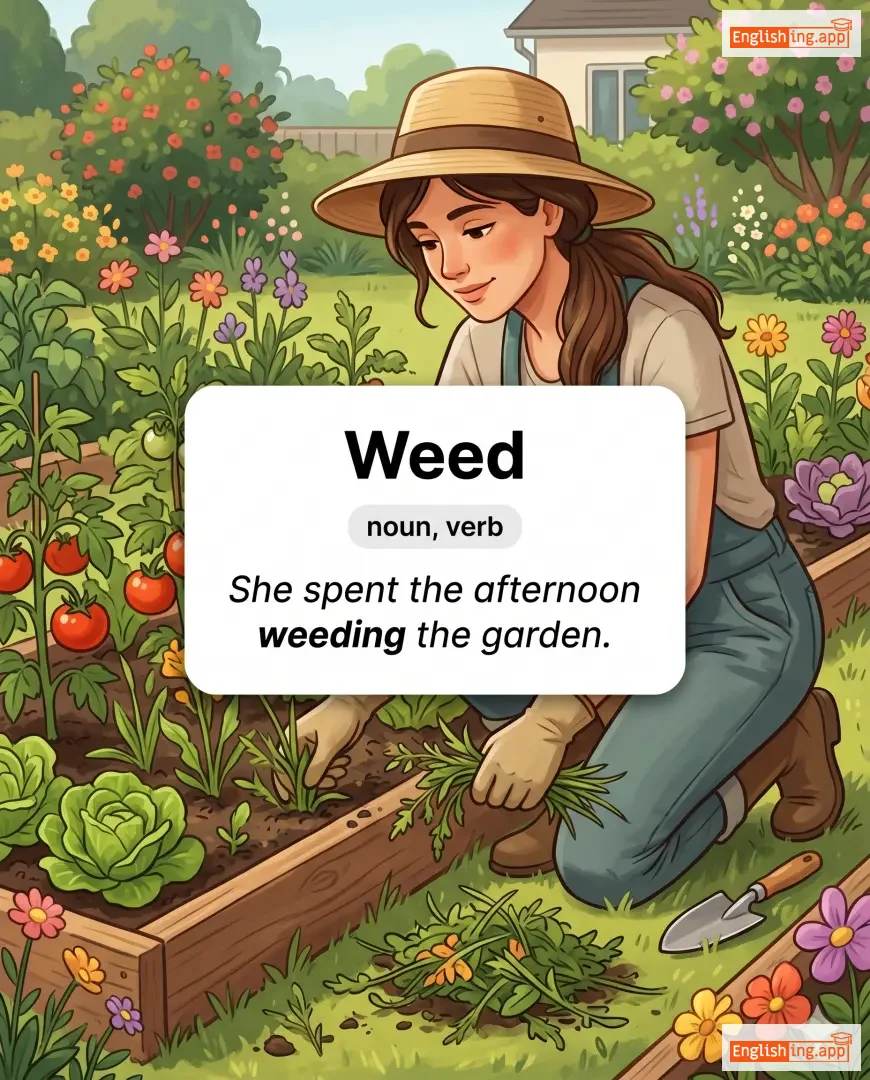
🌿
|
/wiːd/
noun, verb
(wīd)
••••••
|
|
杂草
zácǎo
••••••
|
weeded
wīded
••••••
|
weeded
wīded
••••••
|
weeds
wīds
••••••
|
weeding
wīdɪŋ
••••••
|
a wild plant growing where it is not wanted, especially among crops; to remove such plants
••••••
|
She spent the afternoon weeding the garden.
她花了下午的时间除草。
••••••
|
她花了下午的时间除草。
Tā huāle xiàwǔ de shíjiān chúcǎo.
••••••
|
weed out
清除
••••••
|
to remove unwanted or less effective people or things
••••••
|
清除不需要或效果较差的人或事物
qīngchú bù xūyào huò xiàoguǒ jiào chà de rén huò shìwù
••••••
|
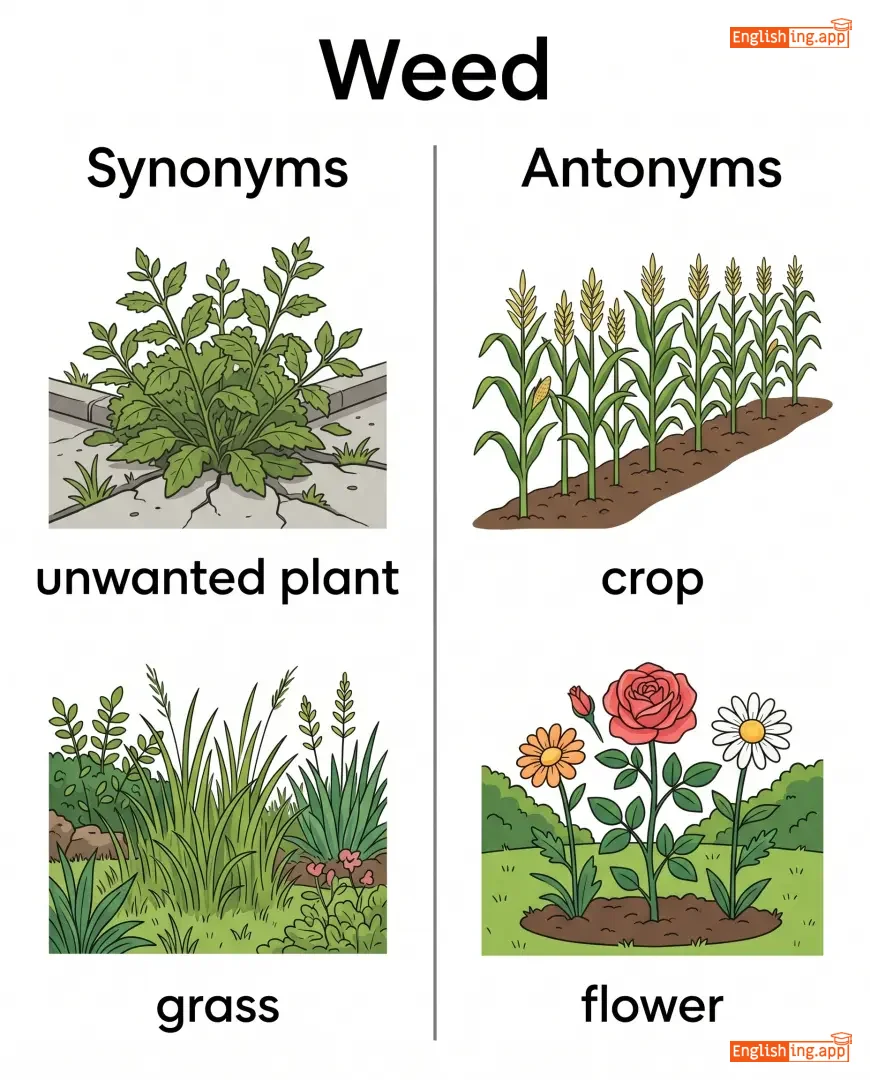
unwanted plant, grass, wild plant, pest plant, herb
••••••
|
crop, flower, plant
••••••
|
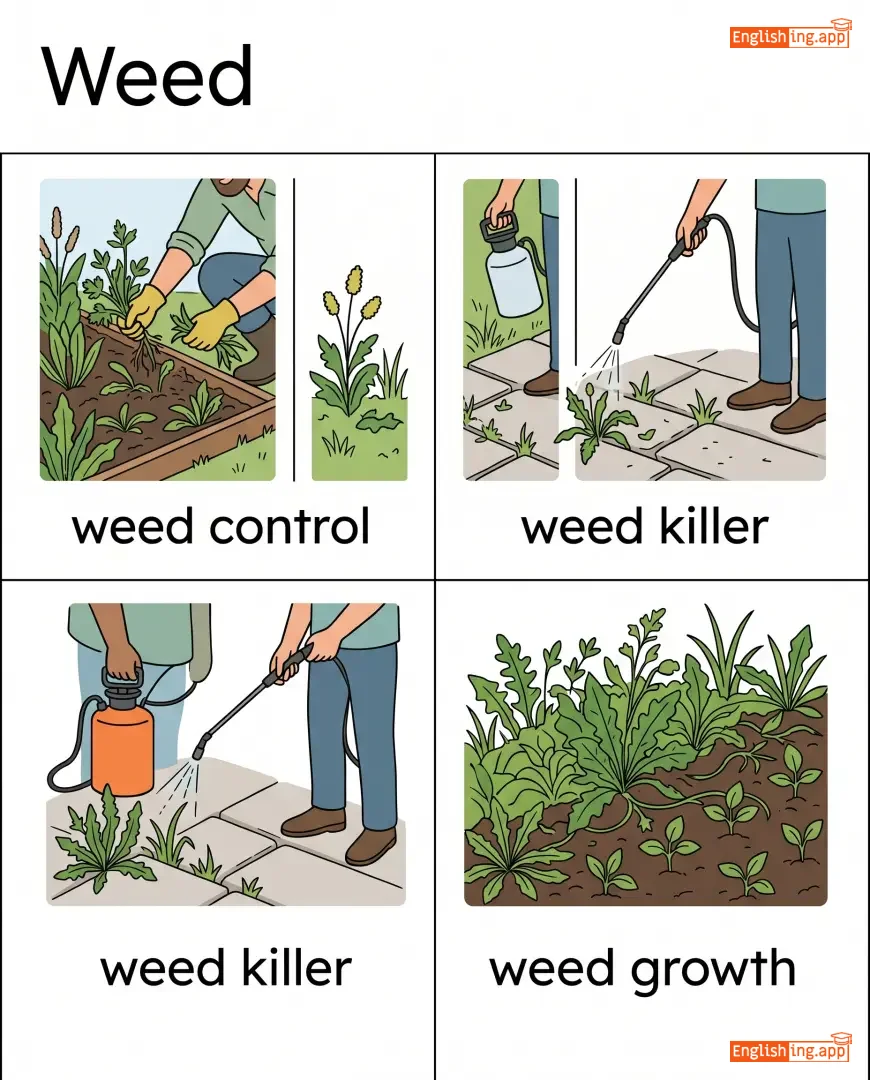
weed control, weed killer, weed growth, pull weeds, weed out
••••••
|
weed = 杂草, 清除 = 除去杂草 🌱
••••••
|
|
#5469
📅
|
/wiːk/
noun
(wīkè)
••••••
|
- •••••• |
星期
xīngqī
••••••
|
- •••••• | - •••••• | - •••••• | - •••••• |
a period of seven days
••••••
|
I will finish the project by the end of the week. |
我将在本周末之前完成项目。
Wǒ jiāng zài běn zhōumò zhīqián wánchéng xiàngmù.
••••••
|
- •••••• | - •••••• | - •••••• |
seven days, workweek, time span
••••••
|
day, month
••••••
|
work week, start of the week, end of the week
••••••
|
Week – 'We' work 'every' week!
••••••
|
|
#5470
🌴
|
/ˈwiːkˌɛnd/
noun
(周末)
••••••
|
- •••••• |
周末
zhōumò
••••••
|
- •••••• | - •••••• | - •••••• | - •••••• |
the end of the week, typically regarded as Saturday and Sunday
••••••
|
They are planning a trip for the weekend. |
他们计划在周末去旅行。
Tāmen jìhuà zài zhōumò qù lǚxíng.
••••••
|
- •••••• | - •••••• | - •••••• |
rest days, holiday, break
••••••
|
workday
••••••
|
spend the weekend, weekend trip, weekend getaway
••••••
|
Weekend – 'We' rest at the 'end' of the week!
••••••
|
|
#5471
📅
|
/ˈwiːkli/
adverb
(威克利)
••••••
|
- •••••• |
每周
mei zhou
••••••
|
- •••••• | - •••••• | - •••••• | - •••••• |
happening or done once every week; every week
••••••
|
I visit my grandmother weekly on Sundays.
我每个周日都去看望我的祖母。
••••••
|
我每个周日都去看望我的祖母。
Wo mei ge zhou ri dou qu kan wang wo de zumu
••••••
|
- •••••• | - •••••• | - •••••• |
every week, once a week, hebdomadally
••••••
|
daily, monthly, annually
••••••
|
weekly meeting, weekly report, weekly basis
••••••
|
Weekly = 每周, 想象一个时钟写着 WEekLY, 周日去看望 Grandma 的画面帮助记住每周的意思
••••••
|
|
#5472
⚖️
|
/weɪ/
verb
(wèi)
••••••
|
|
称重
chēngzhòng
••••••
|
weighed
wěid
••••••
|
weighed
wěid
••••••
|
weighs
wèiz
••••••
|
weighing
wèiyīng
••••••
|
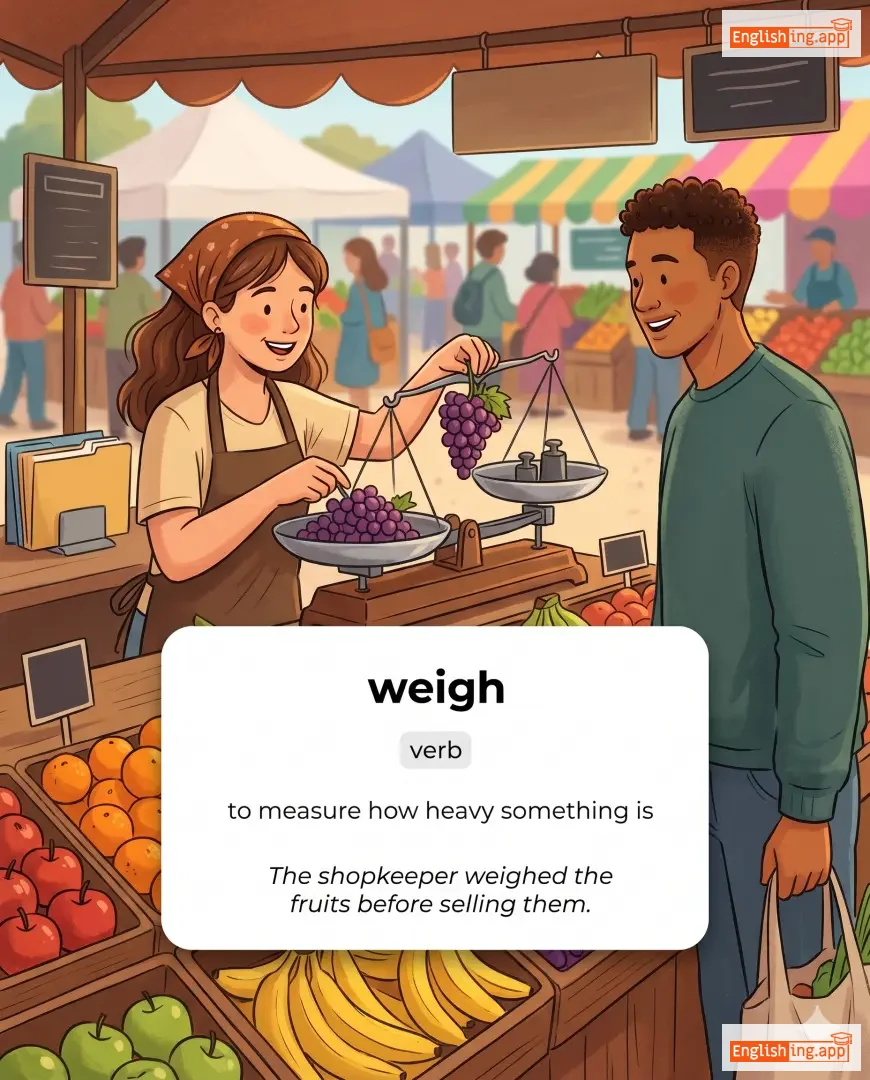
to measure how heavy something is
••••••
|
The shopkeeper weighed the fruits before selling them.
店主在卖水果前称重。
••••••
|
店主在卖水果前称重。
Diànzhǔ zài mài shuǐguǒ qián chēngzhòng.
••••••
|
weigh on someone's mind
让某人烦恼
••••••
|
to make someone worried or anxious
••••••
|
让某人烦恼
ràng mǒu rén fánnǎo
••••••
|
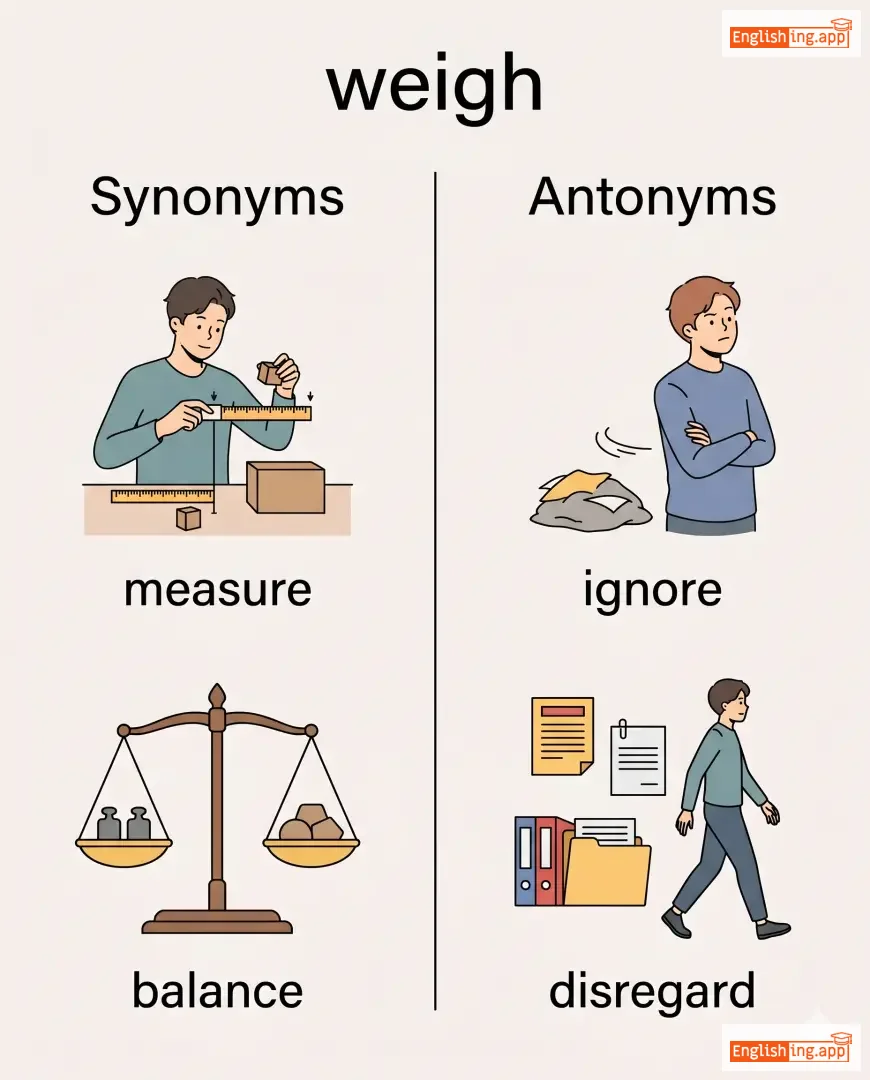
measure, balance, evaluate, calculate
••••••
|
ignore, disregard
••••••
|
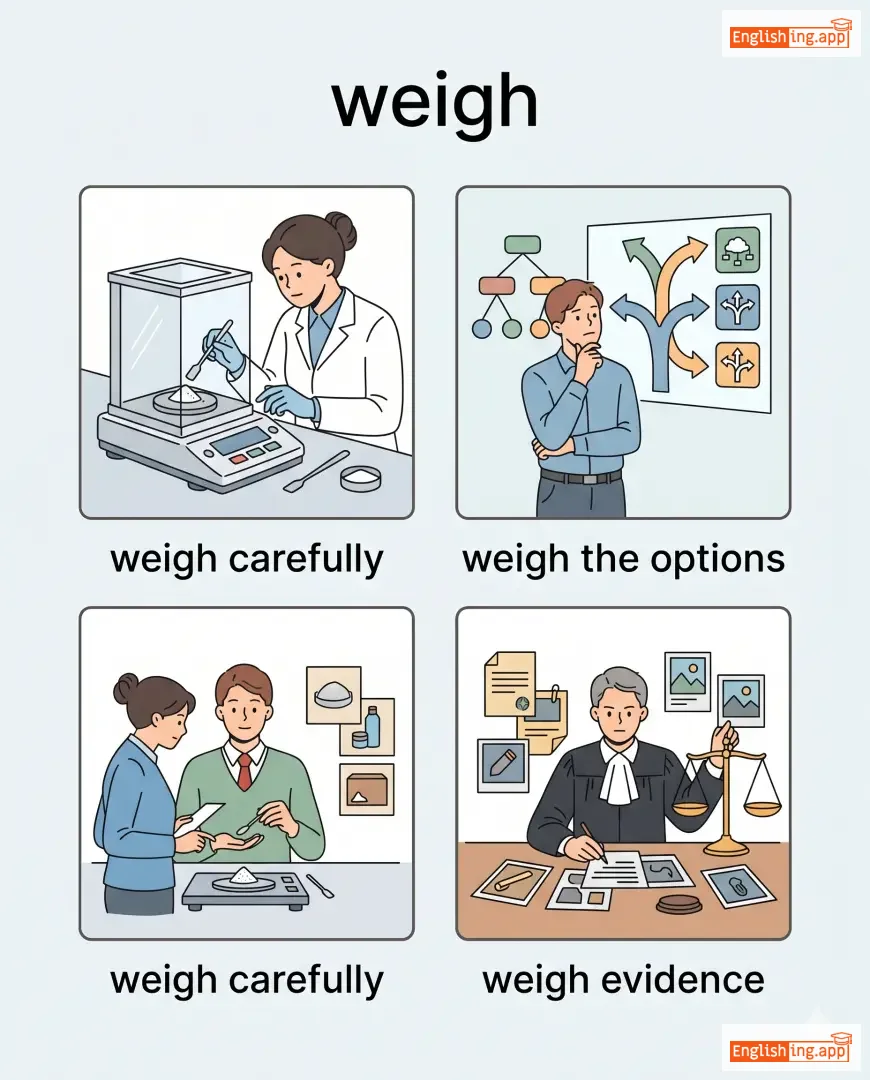
weigh carefully, weigh the options, weigh evidence, weigh anchor
••••••
|
Weigh意味着称重,就像在天平上称重物品一样。
••••••
|
|
#5473
⚖️
|
/weɪt/
noun
(wèi tì)
••••••
|
- •••••• |
重量
zhòng liàng
••••••
|
- •••••• | - •••••• | - •••••• | - •••••• |
a measure of how heavy something is
••••••
|
The weight of the package was 10 kilograms. |
包裹的重量是10公斤。
Bāoguǒ de zhòng liàng shì 10 gōngjīn.
••••••
|
- •••••• | - •••••• | - •••••• |
mass, heaviness, load
••••••
|
lightness
••••••
|
body weight, weight lifting, weight loss
••••••
|
包裹的重量用千克来衡量。
••••••
|
|
#5474
🏋️
|
/ˈweɪtˌlɪftɪŋ/
noun
(维特举重)
••••••
|
- •••••• |
举重
ju zhong
••••••
|
- •••••• | - •••••• | - •••••• | - •••••• |
the sport or activity of lifting heavy weights to build strength and muscle
••••••
|
Weightlifting requires discipline, proper technique, and consistent training.
维特举重需要纪律和正确的技术。
••••••
|
举重需要自律和正确的技术。
ju zhong xuyao zilu he zhengque de jishu
••••••
|
- •••••• | - •••••• | - •••••• |
powerlifting, strength training, resistance training, lifting weights
••••••
|
inactivity, weakness
••••••
|
Olympic weightlifting, competitive weightlifting, weightlifting training, weightlifting competition
••••••
|
举 (lift) + 重 (weight) = 举重
••••••
|
Vocabulary Quiz
Test your vocabulary by matching words with their translations or meanings.
Login to take the quiz
Comments (0)
Share your thoughts and join the discussion.
Join the discussion by logging in
Login to CommentNo comments yet
Be the first to share your thoughts!