



Swipe left or right, or use the buttons. Tap image to zoom.
例句翻译
单词
Lesson 12Lesson 12 - 遮罩切换
|
表情符号
|
单词 | Images | 翻译 | 过去时 | 过去分词 | 第三人称单数 | 动名词 | 含义 | 例句 | 例句翻译 | 示例表达 | 示例表达含义 | 示例表达翻译 | 同义词 | 反义词 | 搭配词 | 助记符 |
|---|---|---|---|---|---|---|---|---|---|---|---|---|---|---|---|---|---|
|
#535
🌿
|
/beər/
adjective
(贝尔)
••••••
|
- •••••• |
裸
luo
••••••
|
- •••••• | - •••••• | - •••••• | - •••••• |
not covered by any clothing or decoration; simple and without addition
••••••
|
He walked on the beach with bare feet. |
他赤脚走在沙滩上。
Tā chìjiǎo zǒu zài shātān shàng.
••••••
|
bare essentials |
only the most necessary items or facts
••••••
|
裸的必需品
luo de bixu pin
••••••
|
naked, uncovered, exposed, plain, simple
••••••
|
covered, clothed, decorated
••••••
|
bare hands, bare feet, bare minimum, bare skin
••••••
|
Bare 意味着裸 — 就像 bare body 意味着裸的身体。记住:Bear 不能赤脚走路!
••••••
|
|
#536
😅
|
/ˈber.li/
adverb
(贝尔里)
••••••
|
- •••••• |
勉强; 刚好; 几乎没有
mianqiang, ganghao, jihu meiyou
••••••
|
- •••••• | - •••••• | - •••••• | - •••••• |
scarcely; only just; almost not
••••••
|
I barely passed the exam.
我勉强通过了考试。
••••••
|
我勉强通过了考试。
Wǒ miǎnqiǎng tōngguòle kǎoshì.
••••••
|
- •••••• | - •••••• | - •••••• |
scarcely, hardly, just, merely
••••••
|
abundantly, completely, fully, entirely
••••••
|
barely visible, barely audible, barely survive, barely enough
••••••
|
Think of 'barely' as passing just enough, in Chinese.
••••••
|
|
#537
🪶
|
/ˈbɛərnəs/
noun
(贝尔内斯)
••••••
|
- •••••• |
赤裸
chilu
••••••
|
- •••••• | - •••••• | - •••••• | - •••••• |
the state of being bare or uncovered; lack of decoration, warmth, or concealment
••••••
|
The bareness of the room made it feel cold and unwelcoming.
泽 贝尔内斯 奥夫 泽 如姆 梅德 伊特 菲尔 科尔德 安德 安威尔卡明。
••••••
|
房间的赤裸感让人觉得寒冷而不友好。
fangjian de chilu gan rang ren juede hanleng er bu youhao
••••••
|
in all its bareness
因 奥 伊次 贝尔内斯
••••••
|
without any attempt to hide or decorate; in its plain, exposed state
••••••
|
完全赤裸地
wanquan chilu de
••••••
|
nakedness, emptiness, starkness, simplicity, exposure
••••••
|
richness, fullness, ornamentation
••••••
|
sheer bareness, stark bareness, bareness of the land, emotional bareness
••••••
|
Bare = 赤裸,bareness 就是 赤裸状态。
••••••
|
|
#538
🤝
|
/ˈbɑːrɡən/
noun, verb
(巴尔根)
••••••
|
|
交易 / 便宜货
jiaoyi / pianyi huo
••••••
|
bargained
巴尔根德
••••••
|
bargained
巴尔根德
••••••
|
bargains
巴尔根斯
••••••
|
bargaining
巴尔根宁
••••••
|
an agreement between two or more parties; something bought at a good price
••••••
|
We managed to get the car at a real bargain.
我们设法以真正的便宜价格买到了车。
••••••
|
我们设法以真正的便宜价格买到了车。
Women shefa yi zhenzheng de pianyi jiage mai dao le che.
••••••
|
strike a bargain
达成交易
••••••
|
to reach an agreement
••••••
|
达成交易
dachen jiaoyi
••••••
|
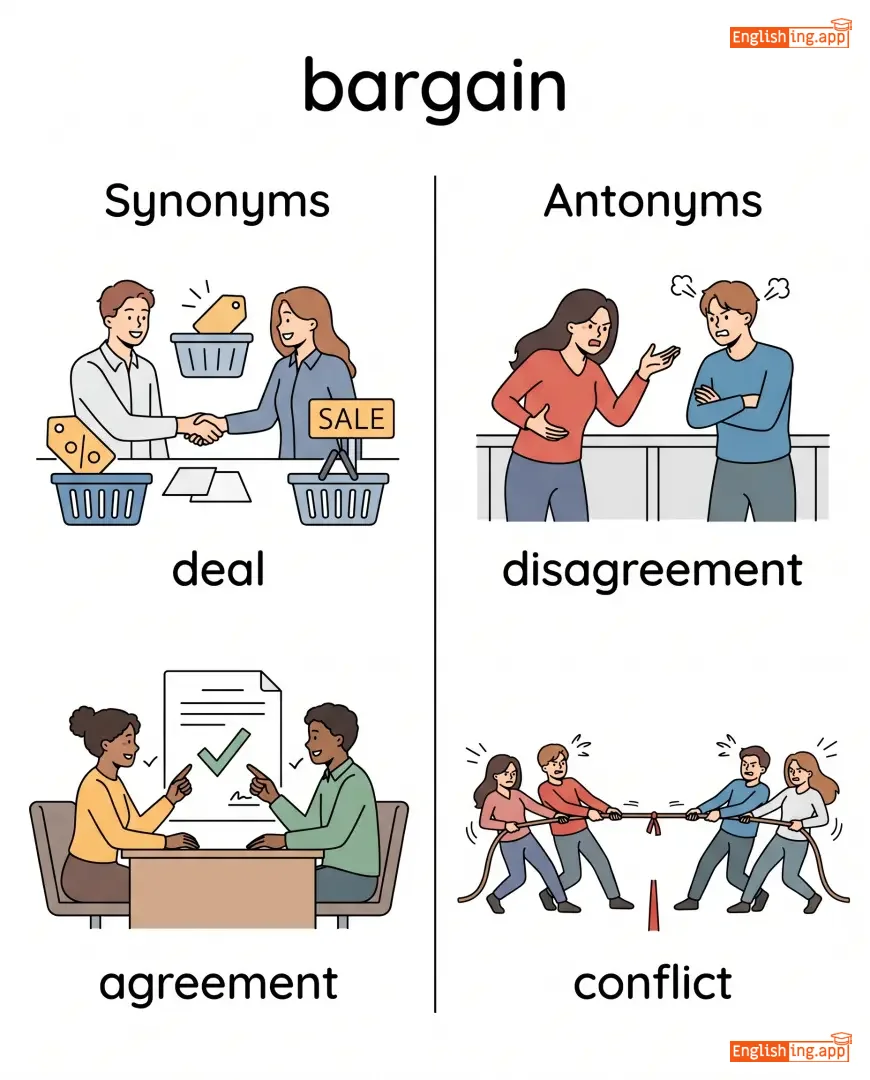
deal, agreement, contract, negotiation, offer
••••••
|
disagreement, conflict, refusal
••••••
|
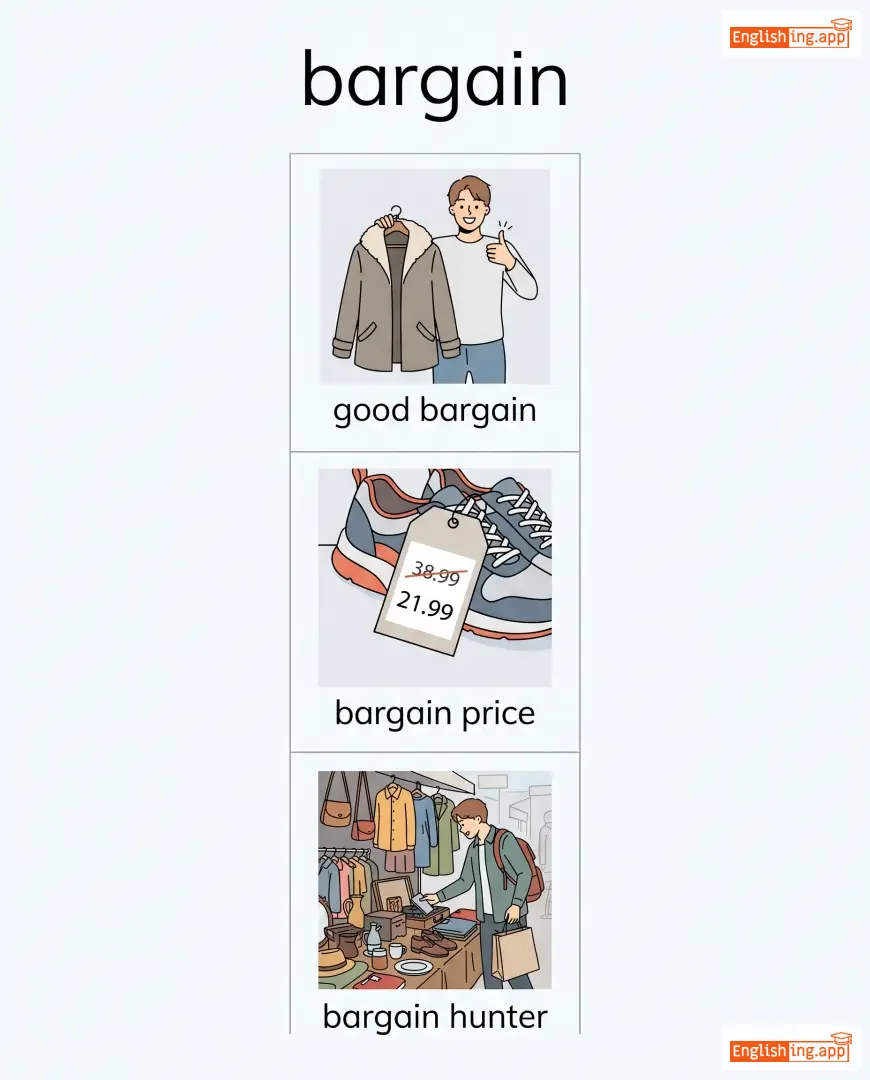
good bargain, bargain price, bargain hunter, strike a bargain
••••••
|
Bargain — 就是买便宜货,获得大的收益。
••••••
|
|
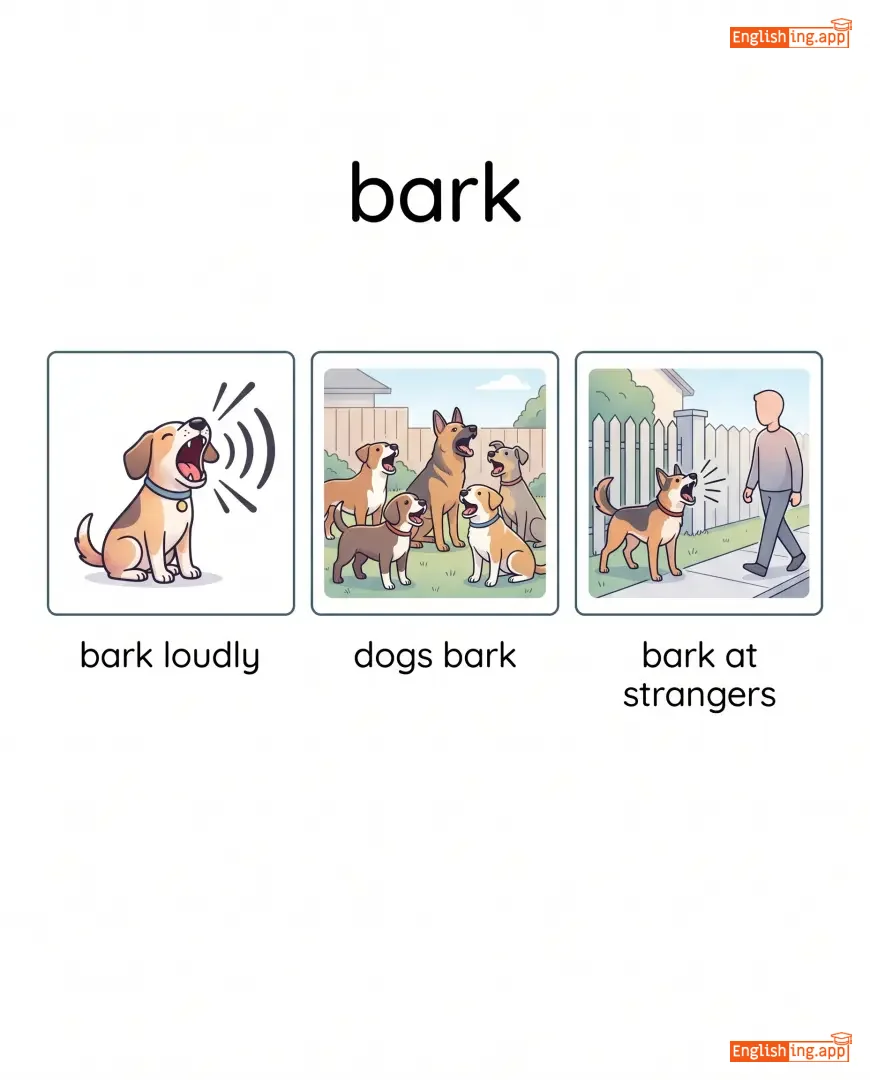
#539
🐕
|
/bɑːrk/
verb
(bark)
••••••
|
|
吠叫
feijiao
••••••
|
barked
barked
••••••
|
barked
barked
••••••
|
barks
barks
••••••
|
barking
barking
••••••
|
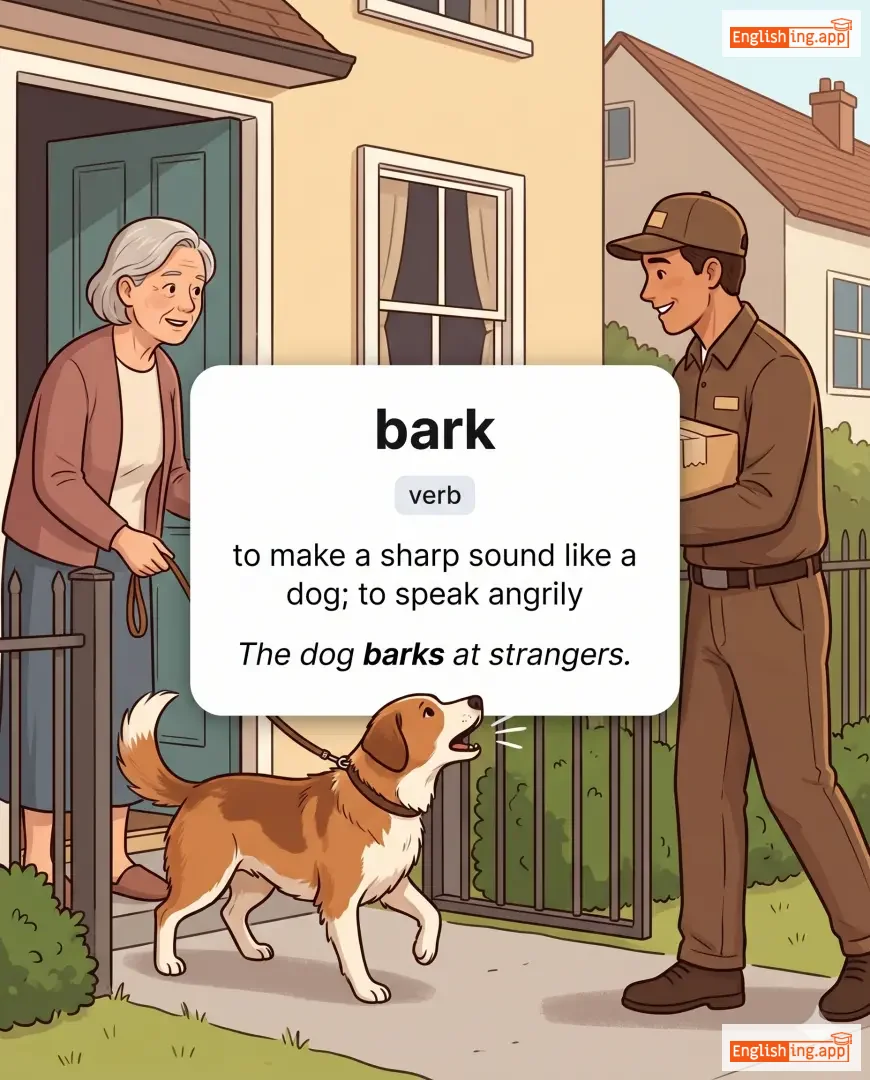
to make a sharp sound like a dog; to speak angrily
••••••
|
The dog barks at strangers.
The dog barks at strangers.
••••••
|
狗对陌生人大叫。
Gǒu duì mòshēngrén dàjiào.
••••••
|
- •••••• | - •••••• | - •••••• |
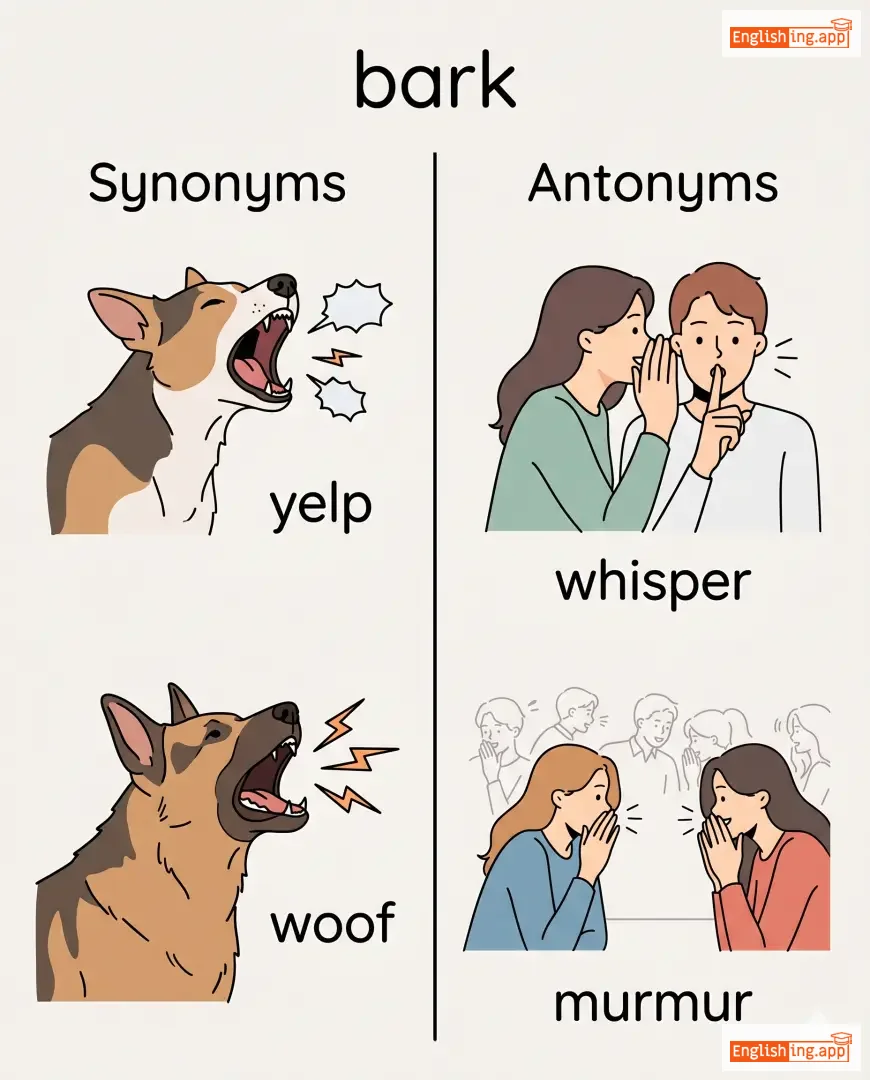
yelp, woof, snap, shout
••••••
|
whisper, murmur, silence
••••••
|
bark loudly, dogs bark, bark at strangers, bark orders
••••••
|
狗叫是因为生气
••••••
|
|
#540
🛢️
|
/ˈbærəl/
noun
(贝瑞尔)
••••••
|
- •••••• |
大桶
da tong
••••••
|
- •••••• | - •••••• | - •••••• | - •••••• |
a large cylindrical container used to hold liquids
••••••
|
The wine was stored in a wooden barrel. |
酒被储存在一个木制的大桶中。
Jiu bei chu cun zai yi ge mu zhi de da tong zhong.
••••••
|
over a barrel |
in a helpless or difficult situation
••••••
|
在困难的情况下
zai kunnan de qingkuang xia
••••••
|
cask, drum, keg, container
••••••
|
bottle, flask
••••••
|
oil barrel, wooden barrel, barrel of wine, barrel full
••••••
|
Barrel 意思是大桶,想象一个木制的大桶装酒。
••••••
|
|
#541
🚧
|
/ˌbærɪˈkeɪd/
noun/verb
(障碍物)
••••••
|
- •••••• |
障碍物
zhàng ài wù
••••••
|
barricaded
障碍物了
••••••
|
barricaded
障碍物了
••••••
|
barricades
障碍物
••••••
|
barricading
障碍物化
••••••
|
a barrier erected to block or defend against movement; to block a passage with obstacles
••••••
|
Protesters built a barricade across the street.
抗议者在街道上建造了一个障碍物。
••••••
|
抗议者在街道上建造了一个障碍物。
Kàngyì zhě zài jiēdào shàng jiànzào le yīgè zhàng ài wù.
••••••
|
- •••••• | - •••••• | - •••••• |
barrier, blockade, obstacle, obstruction, fortification
••••••
|
opening, passage, clearance
••••••
|
erect a barricade, block with a barricade, barricade the street
••••••
|
障碍物 = 障碍 + Cade, 阻止通行
••••••
|
|
#542
🚧
|
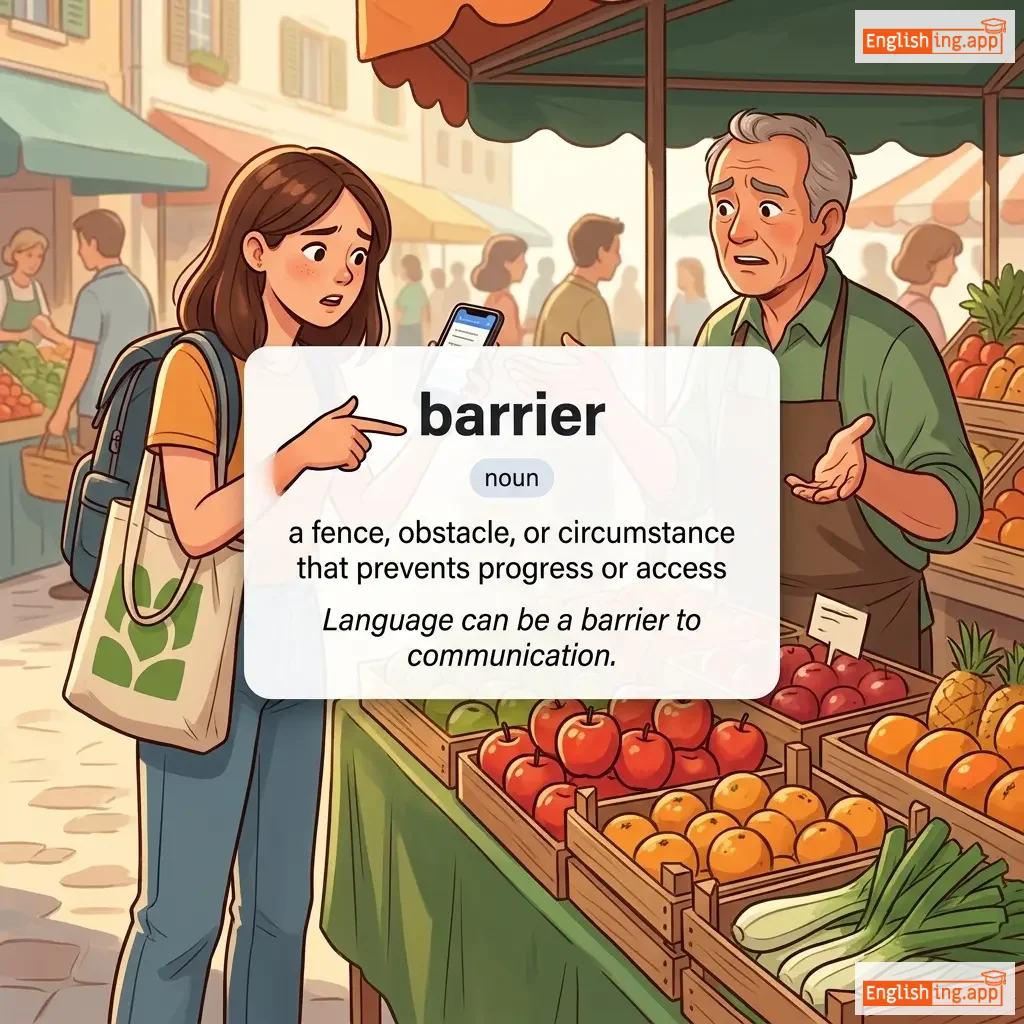
/ˈbæriər/
noun
(bàlì'ěr)
••••••
|
|
障碍
zhàng'ài
••••••
|
- •••••• | - •••••• | - •••••• | - •••••• |
a fence, obstacle, or circumstance that prevents progress or access
••••••
|
Language can be a barrier to communication.
语言可能是沟通的障碍。
••••••
|
语言可能是沟通的障碍。
Yǔyán kěnéng shì gōutōng de zhàng'ài.
••••••
|
break down barriers
打破障碍
••••••
|
to remove obstacles that prevent progress or understanding
••••••
|
打破障碍
dǎpò zhàng'ài
••••••
|
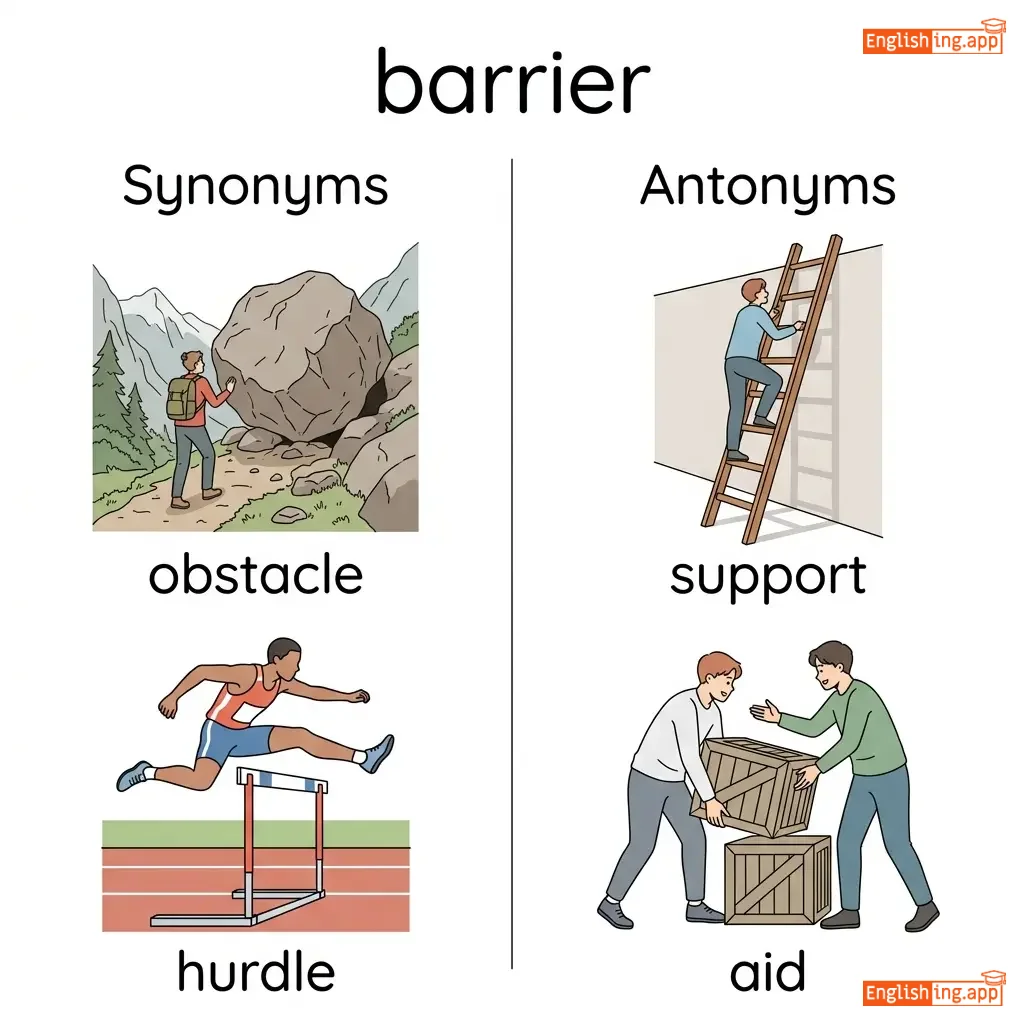
obstacle, hurdle, fence, block, hindrance
••••••
|
support, aid
••••••
|
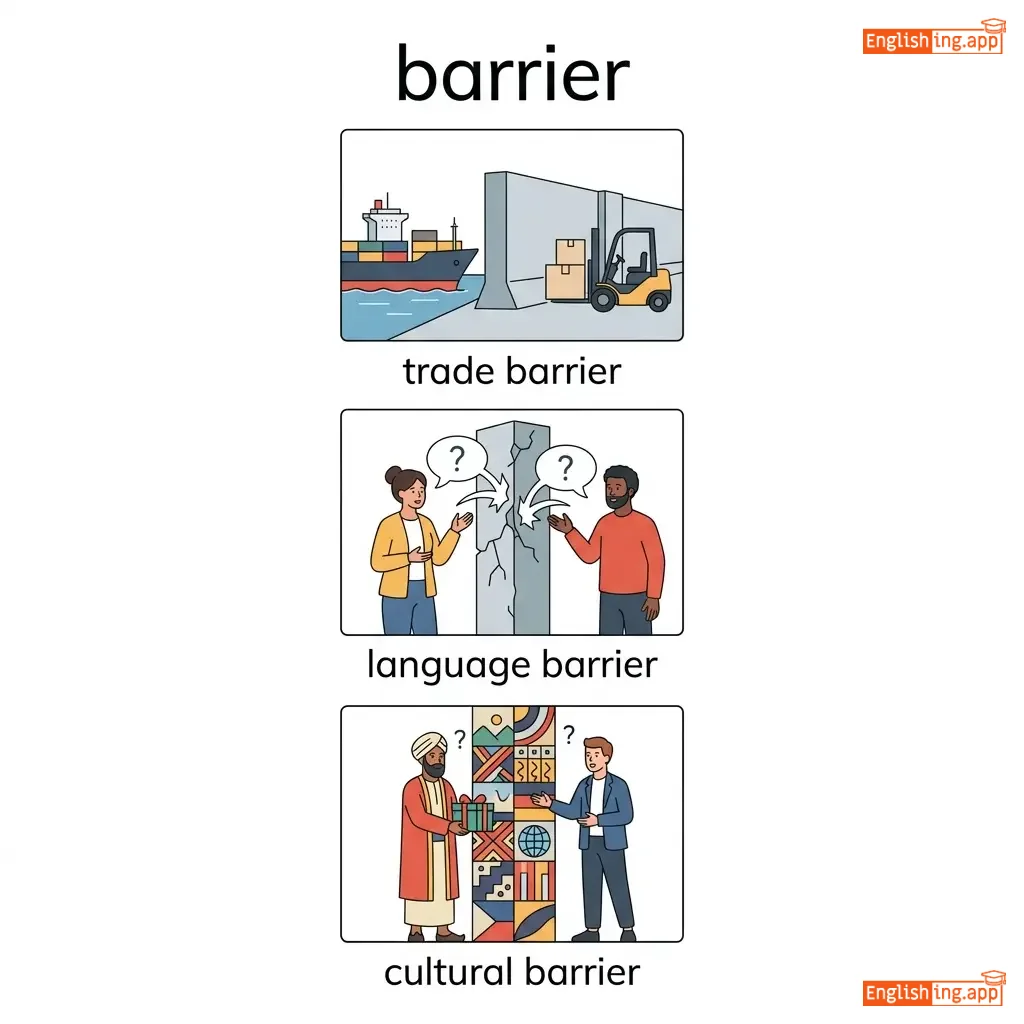
trade barrier, language barrier, cultural barrier, physical barrier
••••••
|
障碍意味着阻止,像道路上的障碍,汽车停下。
••••••
|
|
#543
🔄
|
/ˈbɑːrtər/
verb
••••••
|
- •••••• | - •••••• |
bartered
••••••
|
bartered
••••••
|
barters
••••••
|
bartering
••••••
|
To exchange goods or services without using money.
••••••
|
They bartered their crops for handmade tools. |
- •••••• |
barter system |
An economic system where goods or services are exchanged directly without money.
••••••
|
- •••••• |
trade, exchange, swap, deal
••••••
|
buy, sell
••••••
|
barter goods, barter system, barter trade, barter exchange
••••••
|
No •••••• |
|
#544
🏛️
|
/beɪs/
noun, verb
(bèi sī)
••••••
|
|
基础
jichu
••••••
|
based
bèi sī dē
••••••
|
based
bèi sī dē
••••••
|
bases
bèi sī sī
••••••
|
basing
bèi sī yīng
••••••
|
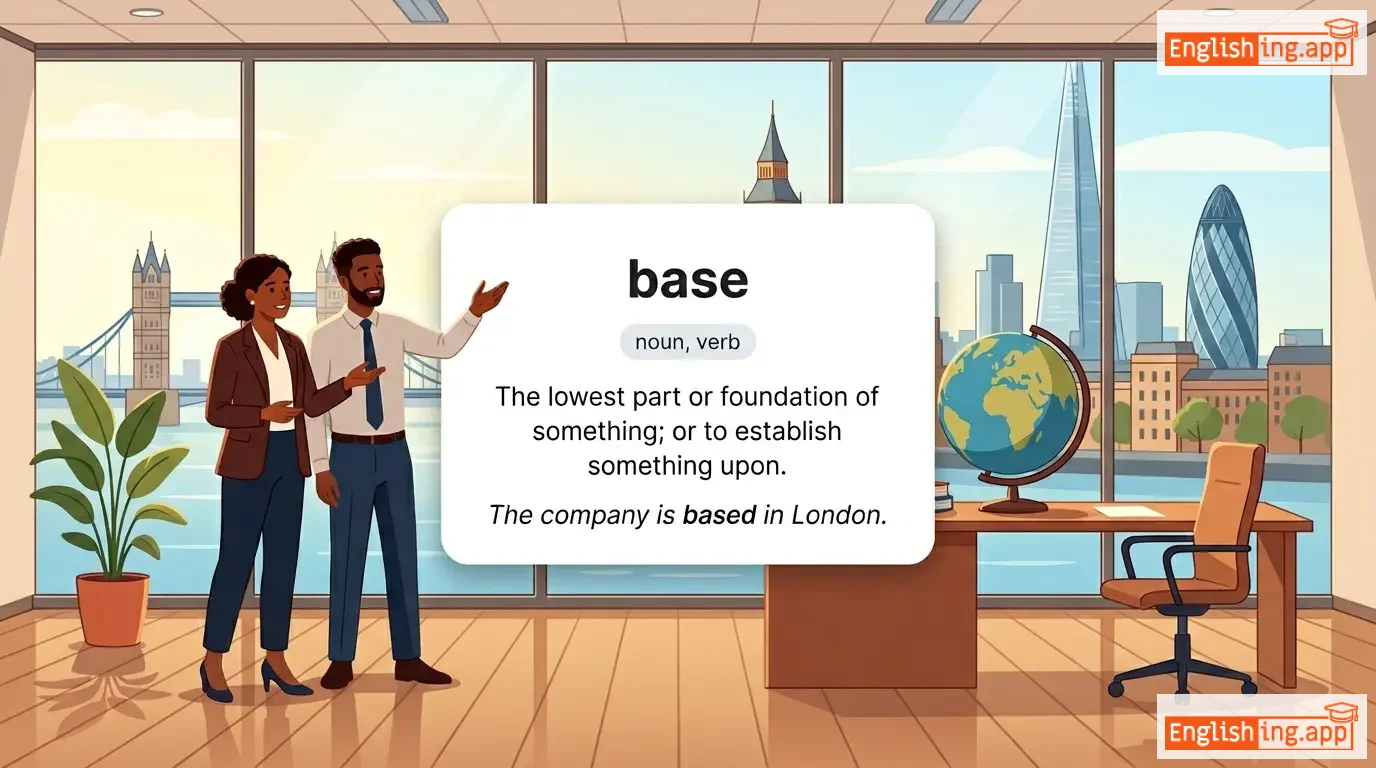
The lowest part or foundation of something; or to establish something upon.
••••••
|
The company is based in London.
公司总部位于伦敦。
••••••
|
公司总部位于伦敦。
Gōngsī zǒngbù wèiyú lúndūn.
••••••
|
base on
基于
••••••
|
To use as a foundation or starting point.
••••••
|
基于
jīyú
••••••
|
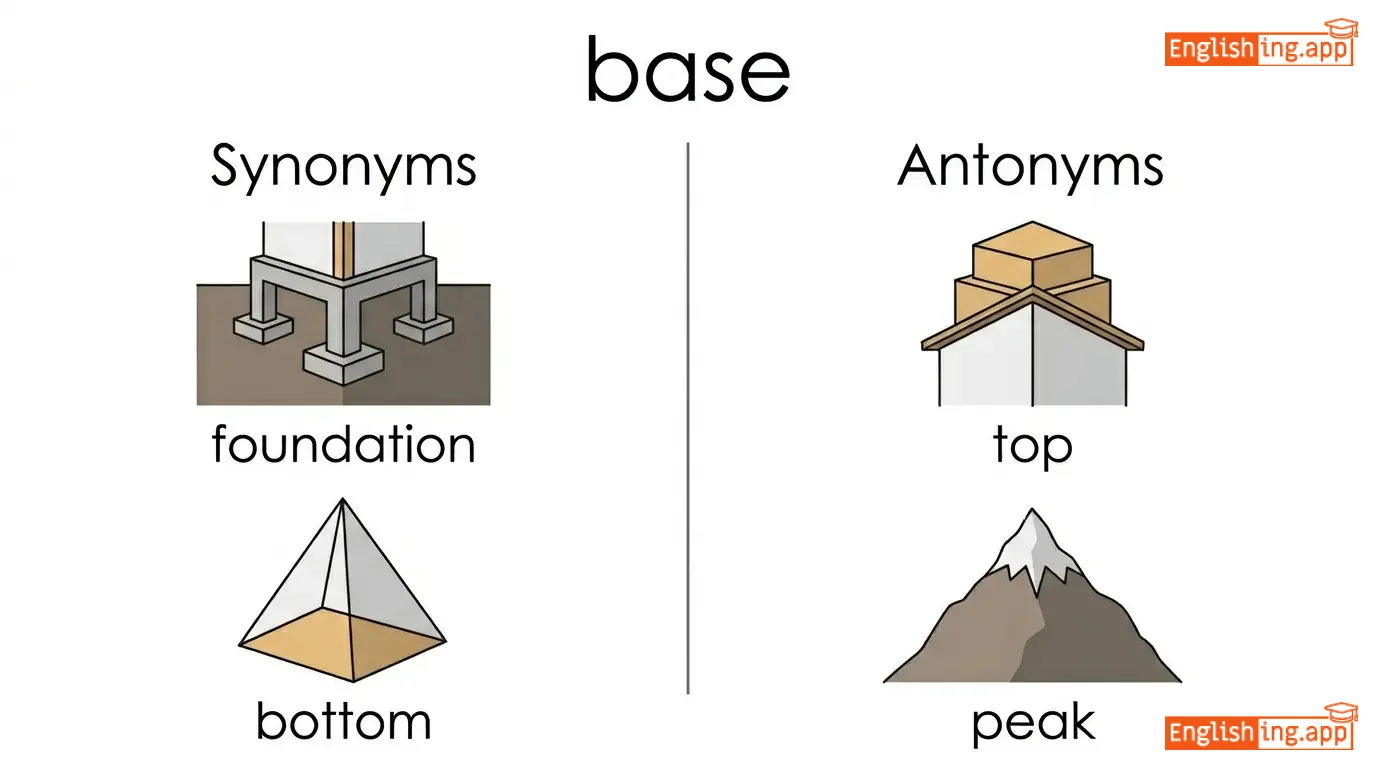
foundation, bottom, support, root, ground
••••••
|
top, peak
••••••
|
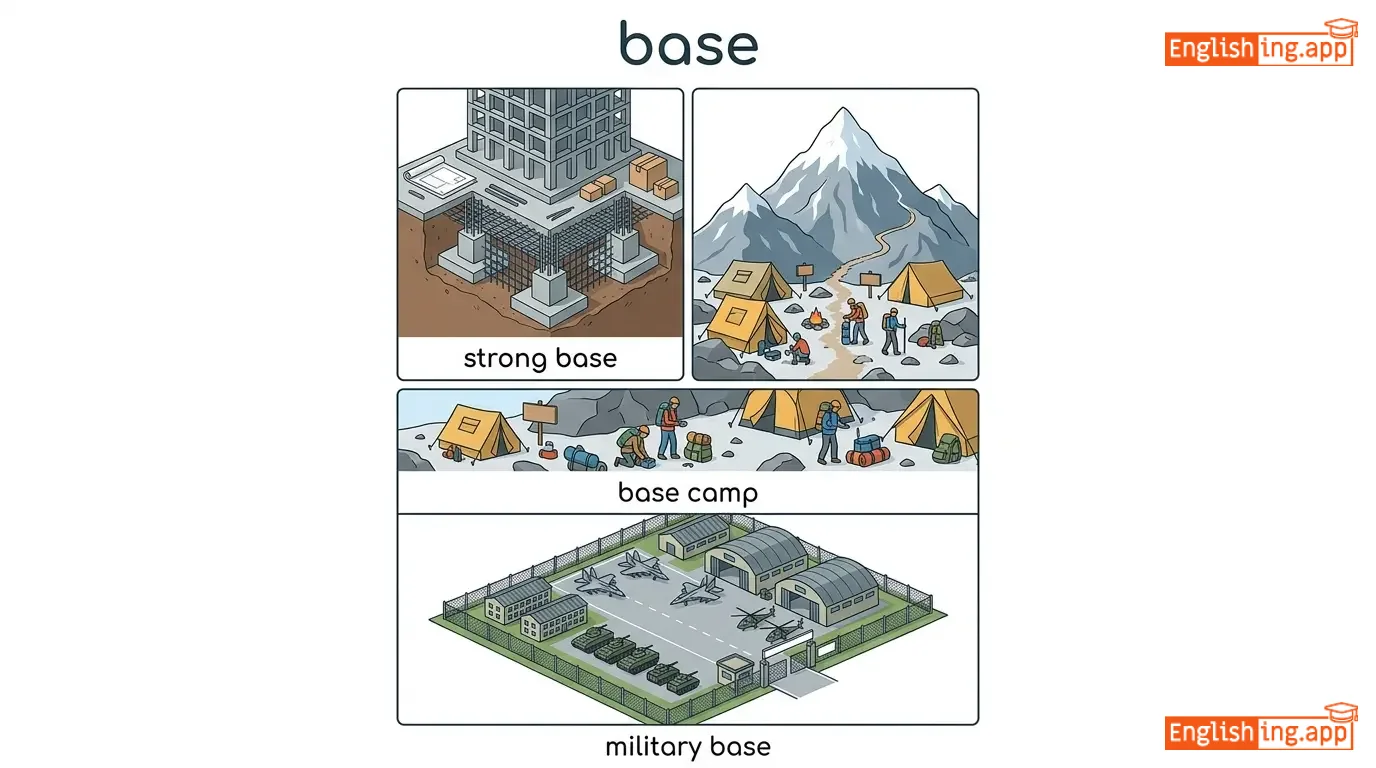
strong base, base camp, military base, based on, base level
••••••
|
基础意味着'基础'—每座房子的基础都很牢固。
••••••
|
|
#545
⚾
|
/ˈbeɪsˌbɔːl/
noun
(棒球)
••••••
|
- •••••• |
棒球
bangqiu
••••••
|
- •••••• | - •••••• | - •••••• | - •••••• |
a sport in which two teams try to score runs by hitting a ball and running around bases
••••••
|
He loves watching baseball games on TV. |
他喜欢在电视上观看棒球比赛。
Tā xǐhuān zài diànshì shàng guānkàn bàngqiú bǐsài.
••••••
|
- •••••• | - •••••• | - •••••• |
sport, game, pastime
••••••
|
work, chore
••••••
|
baseball game, baseball bat, baseball team, baseball player
••••••
|
棒球 - 意味着运动; 想象'垒球击打,跑去得分'
••••••
|
|
#546
🏠
|
/ˈbeɪs.mənt/
noun
(bèi sī mèn tì)
••••••
|
- •••••• |
地下室
dixiashi
••••••
|
- •••••• | - •••••• | - •••••• | - •••••• |
the lowest floor of a building, typically below ground level
••••••
|
We store old furniture in the basement. |
我们把旧家具存放在地下室。
Women ba jiu jiaju cunfang zai dixiashi.
••••••
|
- •••••• | - •••••• | - •••••• |
cellar, underground floor, lower level
••••••
|
attic, top floor, upper level
••••••
|
basement apartment, basement stairs, basement storage
••••••
|
地下室是最冷的地方
••••••
|
|
#547
🔑
|
/ˈbeɪsɪk/
adjective
(贝西克)
••••••
|
- •••••• |
基本的
jiben de
••••••
|
- •••••• | - •••••• | - •••••• | - •••••• |
forming the most important or simplest part of something
••••••
|
She taught me the basic rules of chess. |
她教会了我国际象棋的基本规则。
Ta jiaohui le wo guojixiangqi de jiben guize.
••••••
|
back to basics |
returning to simple, fundamental principles
••••••
|
回归基本
huigui jiben
••••••
|
fundamental, essential, primary, simple, elementary
••••••
|
advanced, complex, secondary
••••••
|
basic knowledge, basic needs, basic rules, basic skills
••••••
|
Basic表示基本的; 记住'basic needs = 基本需求'。
••••••
|
|
#548
🔑
|
/ˈbeɪsɪkli/
adverb
(基本上)
••••••
|
- •••••• |
基本上
jiben shang
••••••
|
- •••••• | - •••••• | - •••••• | - •••••• |
in the most important or fundamental way; essentially
••••••
|
Basically, the project was a success despite some small issues. |
基本上,尽管有一些小问题,项目仍然是成功的。
Jiben shang, jinguan you yixie xiao wenti, xiangmu rengran shi chenggong de.
••••••
|
- •••••• | - •••••• | - •••••• |
essentially, fundamentally, primarily, essentially, in essence
••••••
|
complicatedly, secondarily
••••••
|
basically true, basically correct, basically simple, basically sound
••••••
|
Basically 就是最基础的东西 - 基本上
••••••
|
|
#549
🏗️
|
/ˈbeɪsɪs/
noun
(贝西斯)
••••••
|
- •••••• |
基础
jichu
••••••
|
- •••••• | - •••••• | - •••••• | - •••••• |
the underlying support or foundation for an idea, argument, or process
••••••
|
Trust is the basis of any strong relationship. |
信任是任何强大关系的基础。
Xìnrèn shì rènhé qiángdà guānxì de jīchǔ.
••••••
|
on a daily basis |
happening every day
••••••
|
每天
měitiān
••••••
|
foundation, ground, principle, root, support
••••••
|
top, surface
••••••
|
form the basis, strong basis, legal basis, daily basis
••••••
|
基础意味着基座 (jīchǔ) - 就像建筑物的基座
••••••
|
|
#550
☀️
|
/bæsk/
verb
••••••
|
|
- •••••• |
basked
••••••
|
basked
••••••
|
basks
••••••
|
basking
••••••
|
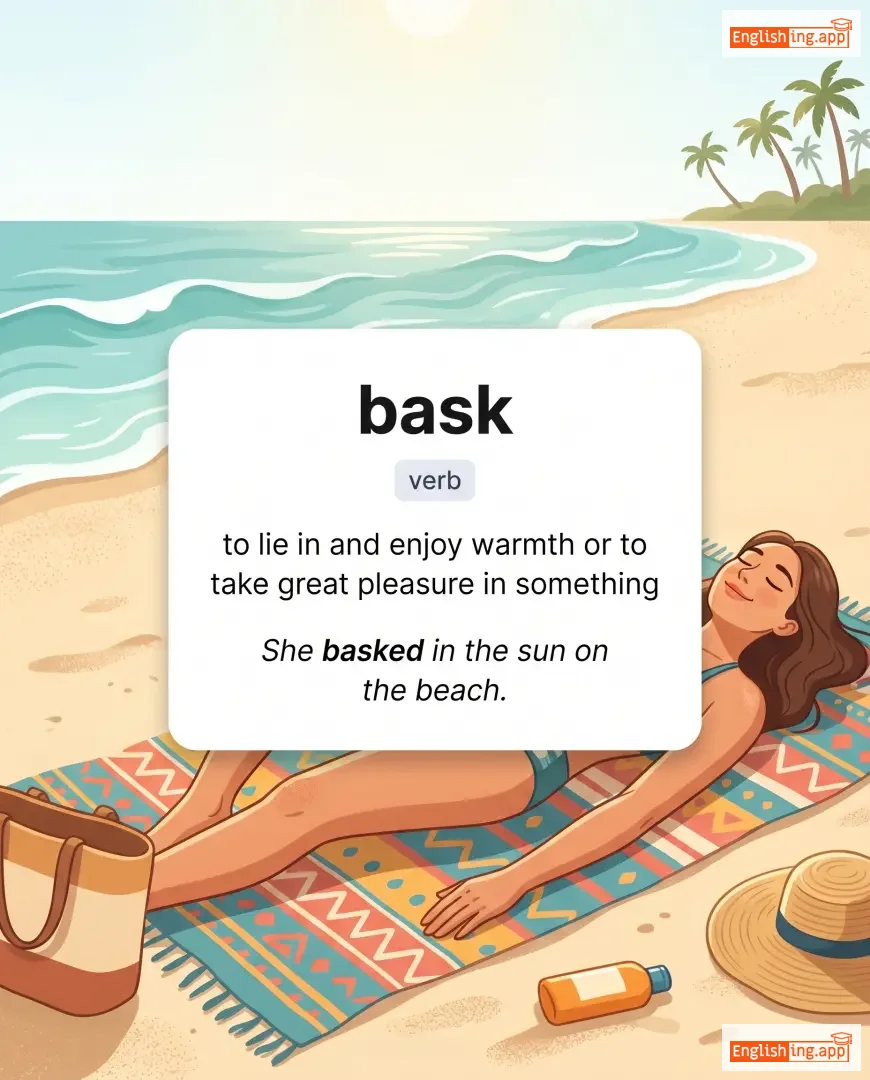
to lie in and enjoy warmth or to take great pleasure in something
••••••
|
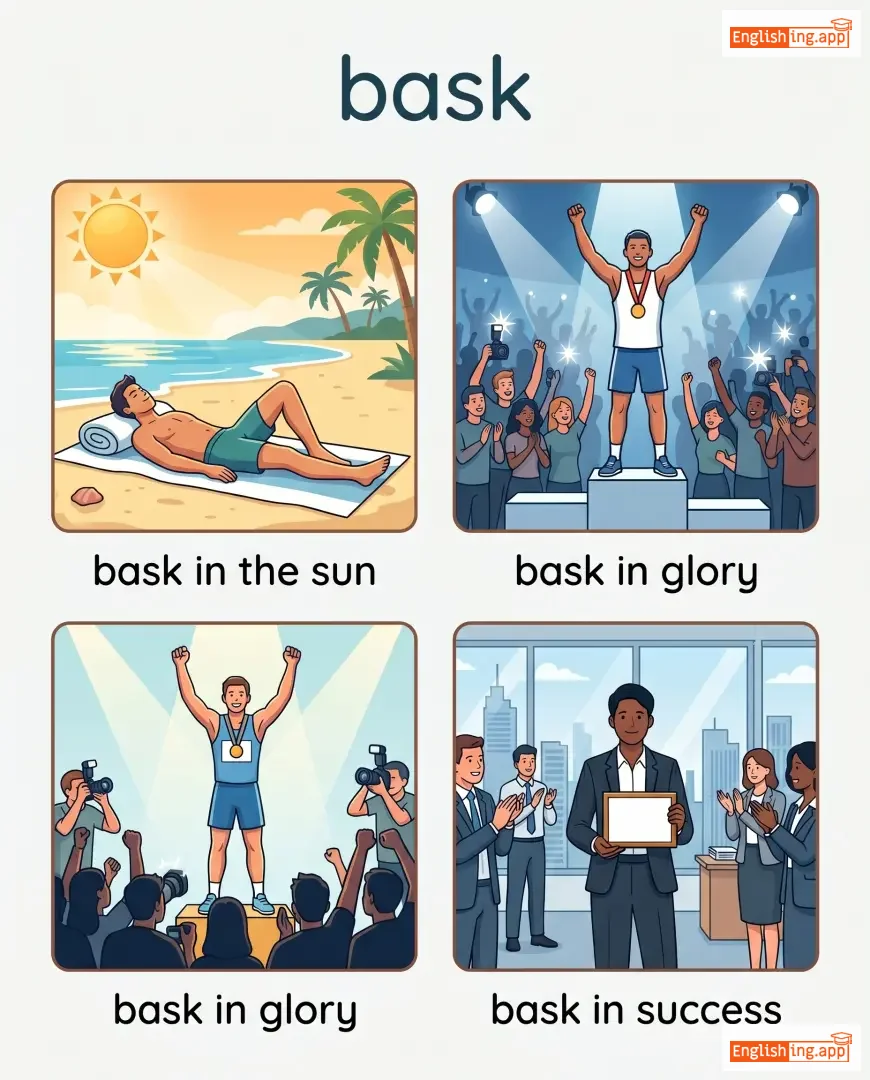
She basked in the sun on the beach. |
- •••••• |
bask in glory |
to enjoy the praise or admiration received for an achievement
••••••
|
- •••••• |
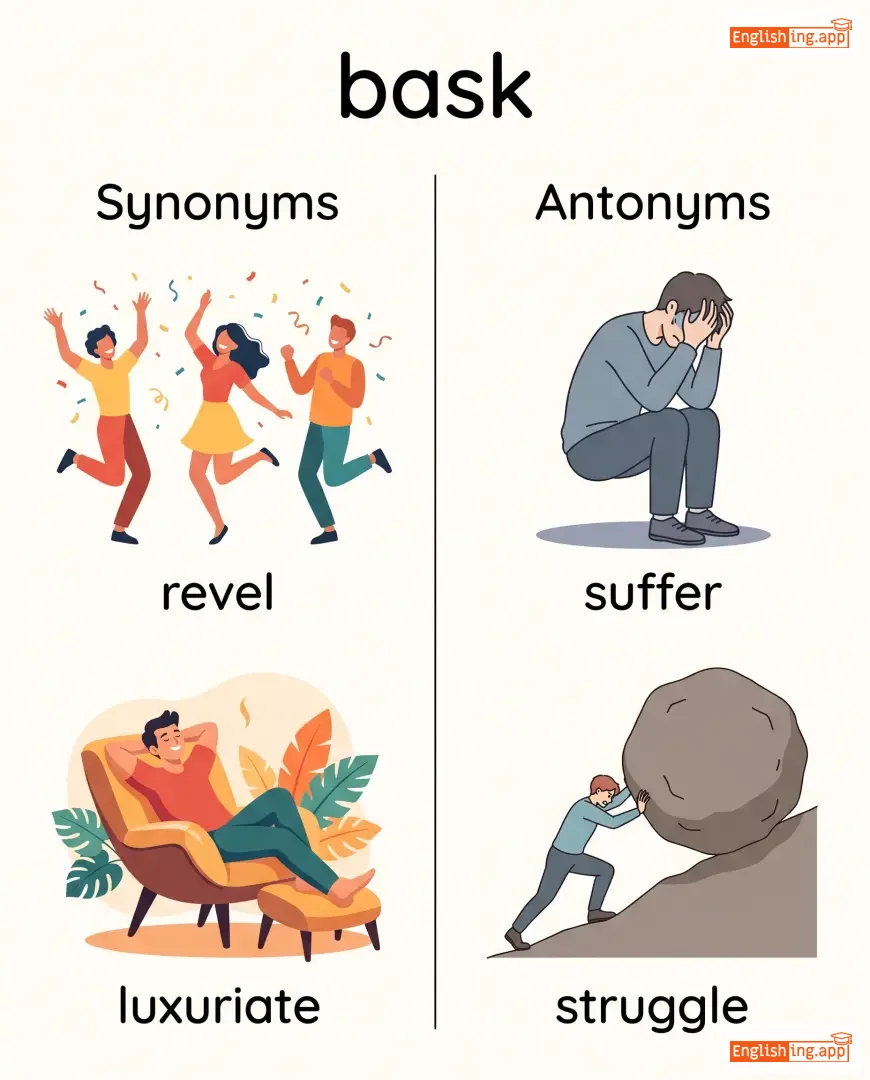
revel, luxuriate, delight, enjoy, relax
••••••
|
suffer, struggle, endure
••••••
|
bask in the sun, bask in glory, bask in success, bask in attention
••••••
|
No •••••• |
|
#551
🧺
|
/ˈbæskɪt/
noun
(篮子)
••••••
|
- •••••• |
篮子
lanzi
••••••
|
- •••••• | - •••••• | - •••••• | - •••••• |
a container made of woven materials used for carrying or storing things
••••••
|
She carried the apples in a basket. |
她把苹果放在篮子里。
Ta ba pingguo fang zai lanzi li.
••••••
|
don’t put all your eggs in one basket |
don’t risk everything on a single venture
••••••
|
不要把所有的鸡蛋放在一个篮子里
Bùyào bǎ suǒyǒu de jīdàn fàng zài yīgè lánzi lǐ
••••••
|
container, hamper, bin, receptacle
••••••
|
floor, ground
••••••
|
shopping basket, fruit basket, picnic basket, basket case
••••••
|
Basket 是篮子 (lanzi) - 就像去野餐时,你用篮子装食物
••••••
|
|
#552
🎸
|
/beɪs/
noun
(贝斯)
••••••
|
- •••••• |
低沉的男性嗓音 / 贝斯吉他
dīchén de nánxìng sǎngyīn / bèisī jí tā
••••••
|
- •••••• | - •••••• | - •••••• | - •••••• |
the lowest adult male singing voice; also, low-frequency sounds in music or a type of fish
••••••
|
He played the bass guitar at the concert.
他在音乐会弹奏了贝斯吉他。
••••••
|
他在音乐会弹奏了贝斯吉他。
Tā zài yīnyuè huì tánzòu le bèisī jí tā.
••••••
|
- •••••• | - •••••• | - •••••• |
low voice, deep tone, baritone, subwoofer
••••••
|
treble, soprano
••••••
|
bass guitar, bass line, bass sound, bass singer
••••••
|
‘Bass’ 听起来像 ‘base’,意思是低 — 所以是低沉的声音。
••••••
|
|
#553
😡
|
/ˈbæstərd/
noun/adjective
(巴斯塔德)
••••••
|
- •••••• |
私生子
sī shēng zǐ
••••••
|
- •••••• | - •••••• | - •••••• | - •••••• |
a child born to unmarried parents (offensive); also used informally as an insult or to describe something unpleasant
••••••
|
He called him a bastard in anger. |
他生气时骂他是私生子。
Tā shēngqì shí mà tā shì sī shēng zǐ.
••••••
|
poor bastard |
an unfortunate or pitiable person
••••••
|
可怜的私生子
kělián de sī shēng zǐ
••••••
|
illegitimate child, scoundrel, rogue, jerk
••••••
|
legitimate child, gentleman
••••••
|
call someone a bastard, poor bastard, lucky bastard
••••••
|
‘Best hard’ 帮助记住私生子 – 非婚姻生活最困难。
••••••
|
|
#554
🧩
|
/ˈbæstərdaɪz/
verb
(巴斯特达イズ)
••••••
|
- •••••• |
歪曲
waiqu
••••••
|
bastardized
巴斯特达伊兹德
••••••
|
bastardized
巴斯特达伊兹德
••••••
|
bastardizes
巴斯特达伊兹
••••••
|
bastardizing
巴斯特达伊兹英
••••••
|
to corrupt or debase something by altering it from its original form; to change in a way that reduces quality or purity
••••••
|
Critics argue that the remake bastardized the original novel.
评论家认为这次改编把原作给巴斯特达伊兹了。
••••••
|
评论家认为这次改编歪曲了原作。
pinglun jia renwei zheci gaibian waiqu le yuanzuo
••••••
|
- •••••• | - •••••• | - •••••• |
corrupt, debase, distort, adulterate, pervert
••••••
|
preserve, purify, refine
••••••
|
bastardize a language, bastardize a tradition, bastardize the original, culturally bastardized
••••••
|
Bastardize = 变得歪歪的 → 歪曲
••••••
|
|
#555
🏏
|
/bæt/
verb
(bæt)
••••••
|
|
用球棒打
yòng qiú bàng dǎ
••••••
|
batted
bætəd
••••••
|
batted
bætəd
••••••
|
bats
bæts
••••••
|
batting
bæting
••••••
|
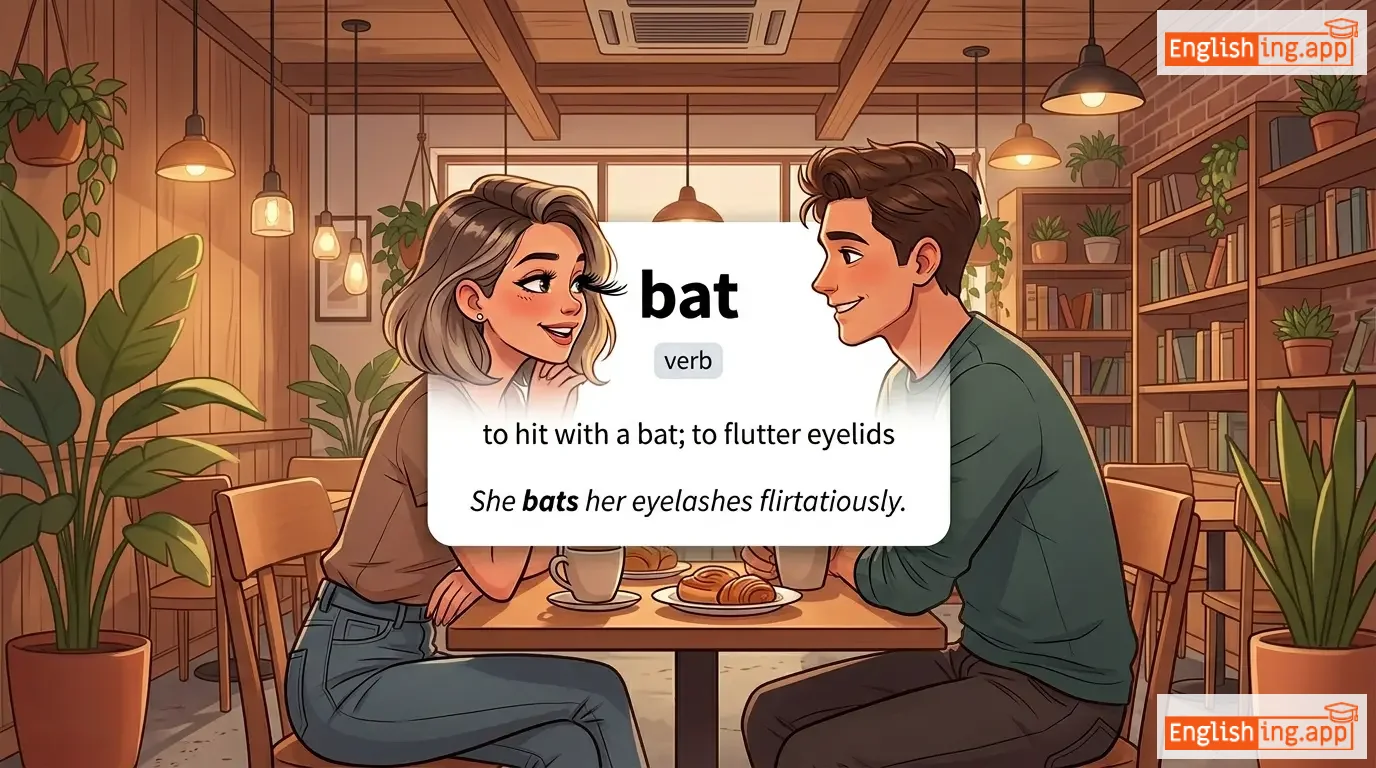
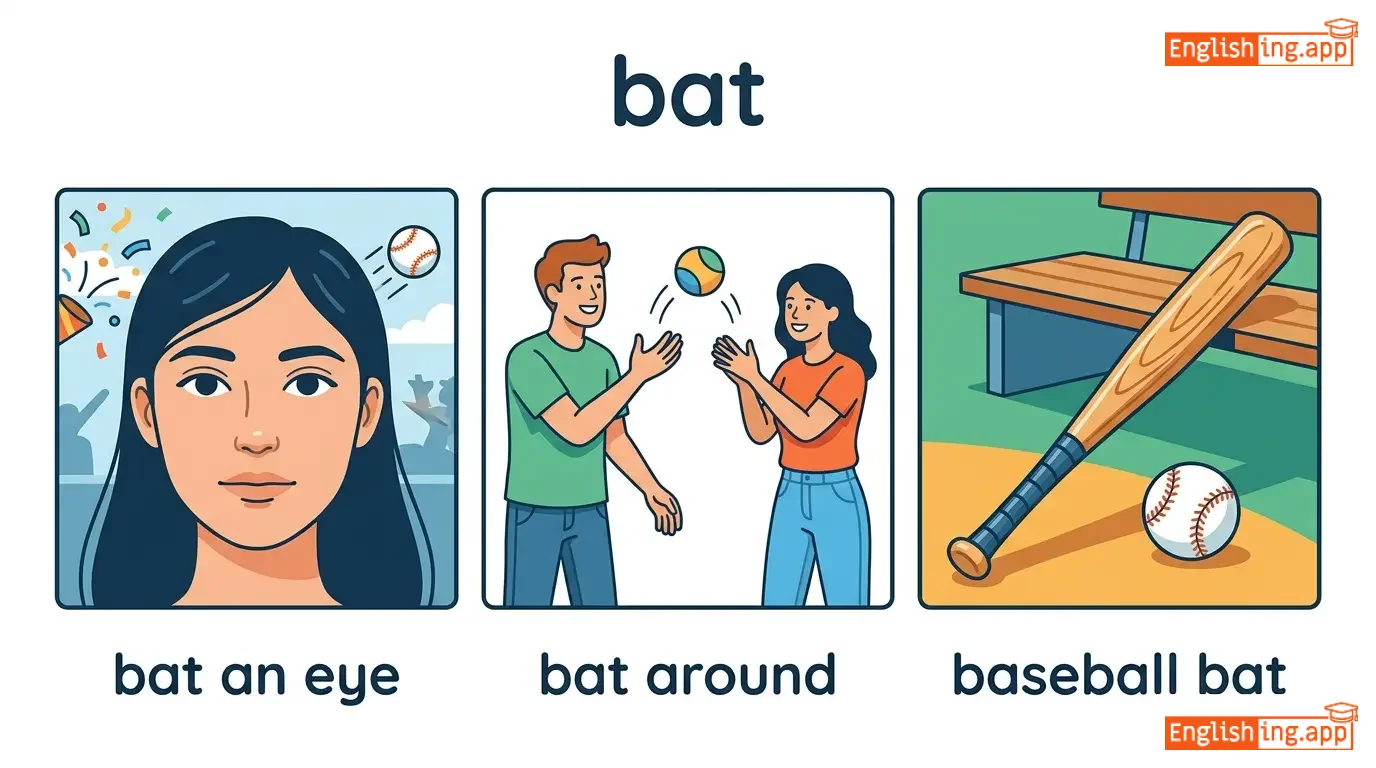
to hit with a bat; to flutter eyelids
••••••
|
She bats her eyelashes flirtatiously.
她调皮地眨着眼睛。
••••••
|
她调皮地眨着眼睛。
Tā tiáopí de zhǎ zhe yǎnjīng.
••••••
|
- •••••• | - •••••• | - •••••• |
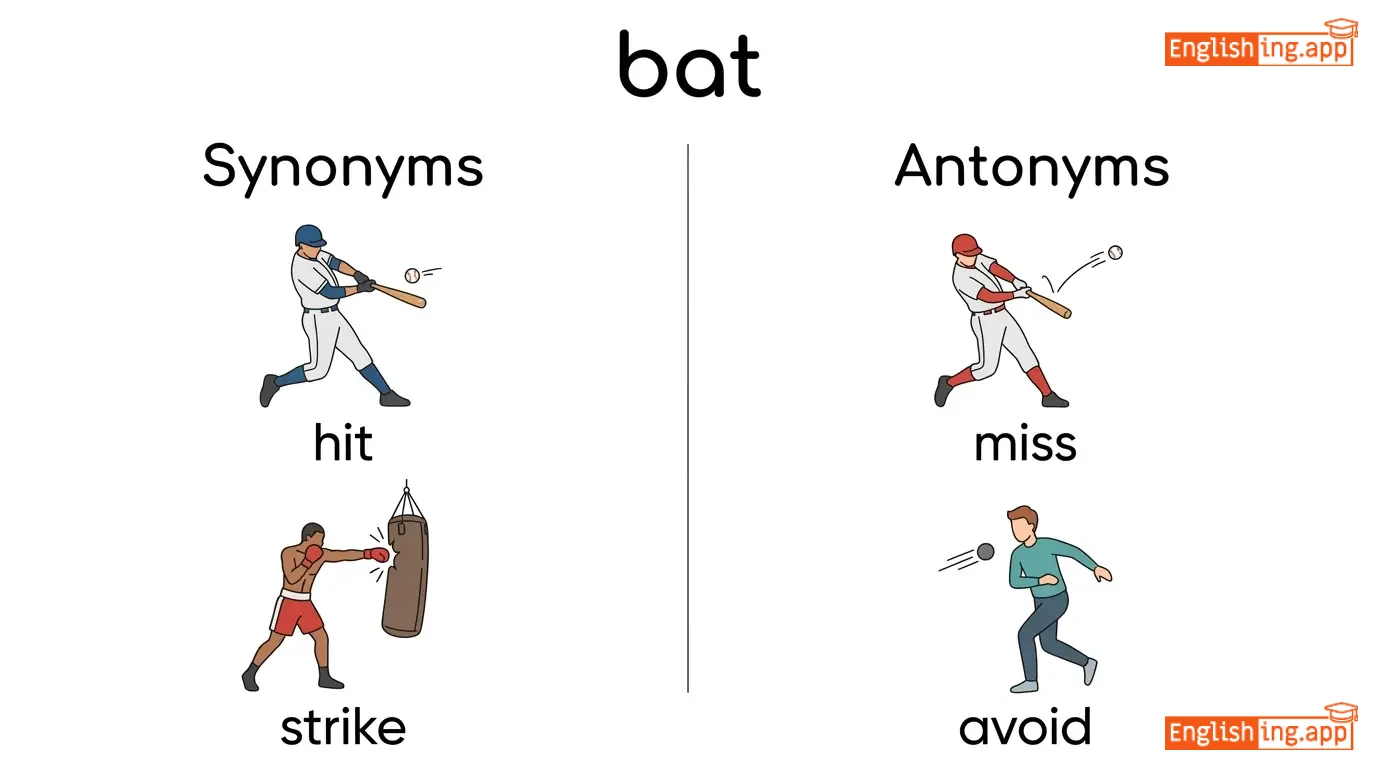
hit, strike, flutter, wink
••••••
|
miss, avoid
••••••
|
bat an eye, bat around, baseball bat, cricket bat, bat the ball
••••••
|
像在棒球中用球棒打击,并像明星一样眨眼。
••••••
|
|
#556
🛁
|
/bɑːθ/
noun
(bɑːθ)
••••••
|
- •••••• |
浴缸
yùgāng
••••••
|
- •••••• | - •••••• | - •••••• | - •••••• |
an act of washing the body in water; or the container used for this purpose
••••••
|
She took a long bath after work. |
她在工作后洗了一个长浴缸。
Tā zài gōngzuò hòu xǐle yīgè cháng yùgāng.
••••••
|
throw the baby out with the bathwater |
to lose something valuable while trying to get rid of something unwanted
••••••
|
把婴儿和浴水一起倒掉
bǎ yīng'ér hé yùshuǐ yīqǐ dào diào
••••••
|
wash, soak, shower, cleaning
••••••
|
dirt, filth
••••••
|
take a bath, hot bath, bubble bath, bath tub
••••••
|
Bath 意味着浴缸 — 拿着 Bath,你的身体将会清洁!
••••••
|
|
#557
🛁
|
/beɪð/
verb
(beɪð)
••••••
|
|
洗澡
xizao
••••••
|
bathed
bæθd
••••••
|
bathed
bæθd
••••••
|
bathes
bæθs
••••••
|
bathing
bæθɪŋ
••••••
|
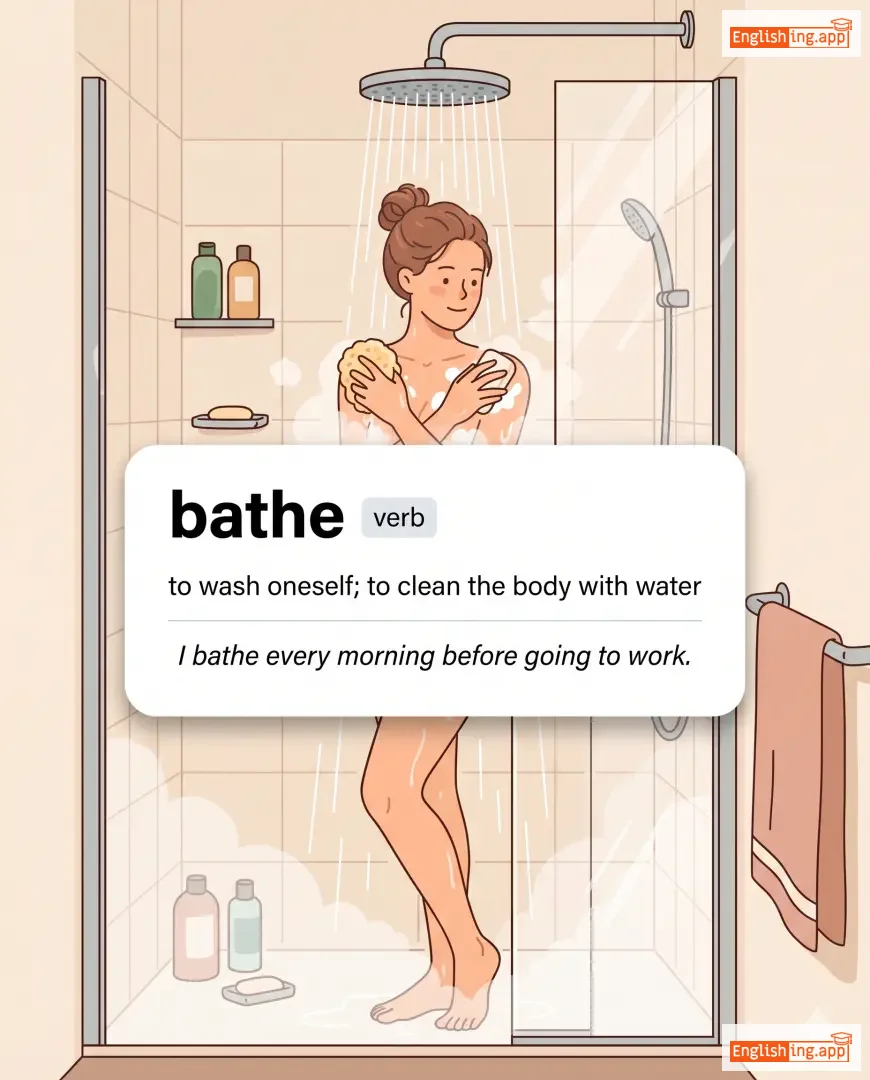
to wash oneself; to clean the body with water
••••••
|
I bathe every morning before going to work.
我每天早上上班前洗澡。
••••••
|
我每天早上上班前洗澡。
Wo meitian zaoshang shangban qian xizao
••••••
|
- •••••• | - •••••• | - •••••• |
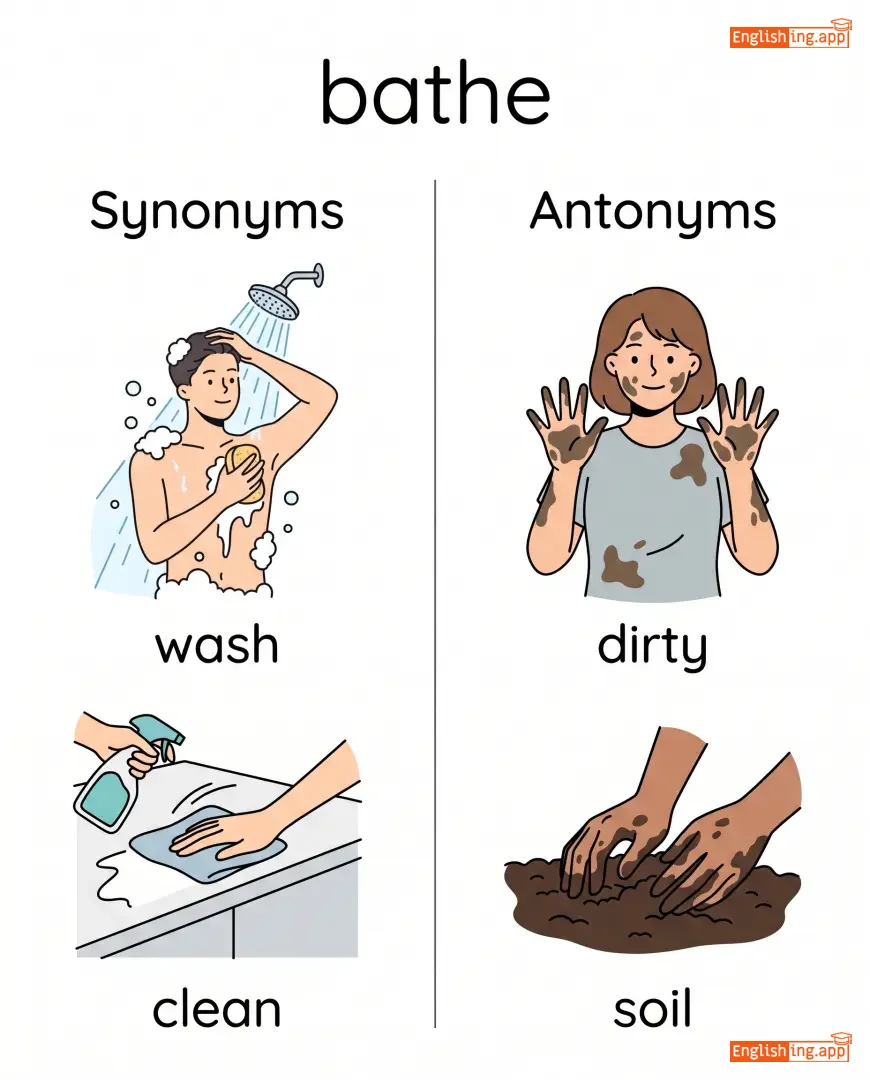
wash, clean, shower, cleanse
••••••
|
dirty, soil, stain, contaminate
••••••
|
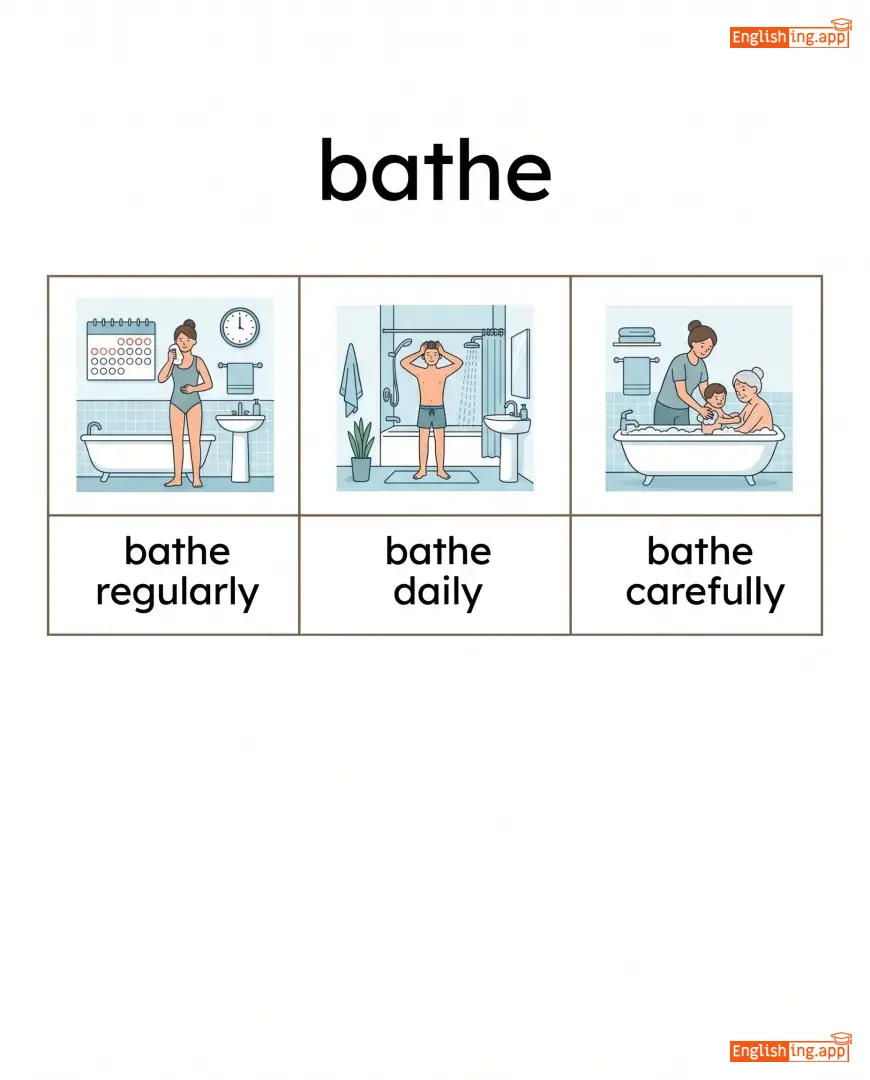
bathe regularly, bathe daily, bathe carefully, bathe in water, bathe the baby
••••••
|
Take a refreshing bath to feel energized for your work.
••••••
|
|
#558
🚽
|
/ˈbɑːθruːm/
noun
(bā sī rū mù)
••••••
|
- •••••• |
浴室
yù shì
••••••
|
- •••••• | - •••••• | - •••••• | - •••••• |
a room containing a toilet and usually a sink or shower
••••••
|
The bathroom is on the second floor. |
浴室在二楼。
Yù shì zài èr lóu.
••••••
|
- •••••• | - •••••• | - •••••• |
washroom, restroom, lavatory, toilet
••••••
|
kitchen, living room
••••••
|
clean bathroom, bathroom door, bathroom sink, bathroom floor
••••••
|
浴 + 室 = 洗澡或上厕所的地方
••••••
|
|
#559
🔋
|
/ˈbætəri/
noun
(bàtèlì)
••••••
|
- •••••• |
电池
diànchí
••••••
|
- •••••• | - •••••• | - •••••• | - •••••• |
A device that stores and provides electrical energy; also refers to a group of similar things or repeated blows.
••••••
|
The phone battery ran out after a long day. |
手机电池在长时间使用后耗尽了。
Shǒujī diànchí zài cháng shíjiān shǐyòng hòu hàojìnle.
••••••
|
assault and battery |
a legal term for physical attack and violence
••••••
|
攻击与电池
gōngjī yǔ diànchí
••••••
|
cell, accumulator, power pack, storage unit
••••••
|
charger, power outage
••••••
|
car battery, rechargeable battery, battery life, battery pack
••••••
|
电池没电,手机停运,就像身体受到攻击后停下。
••••••
|
|
#560
⚔️
|
/ˈbætəl/
noun/verb
(bàtè)
••••••
|
- •••••• |
战斗
zhàndòu
••••••
|
battled
bàtèd
••••••
|
battled
bàtèd
••••••
|
battles
bàtèls
••••••
|
battling
bàtɪlɪŋ
••••••
|
A fight between armed forces or a struggle to achieve or resist something.
••••••
|
The soldiers prepared for the final battle.
士兵们为最后的战斗做好了准备。
••••••
|
士兵们为最后的战斗做好了准备。
Shìbīng men wèi zuìhòu de zhàndòu zuòhǎo le zhǔnbèi.
••••••
|
fight an uphill battle
进行艰难的战斗
••••••
|
to struggle against great difficulties
••••••
|
进行艰难的战斗
jìnxíng jiānnán de zhàndòu
••••••
|
fight, conflict, clash, war, struggle
••••••
|
peace, truce
••••••
|
win a battle, lose a battle, fierce battle, battle against
••••••
|
Battle 意味着战斗,就像你用球棒(bat)打比赛时的斗争。
••••••
|
|
#561
⚔️
|
/ˈbætəlˌfiːld/
noun
(bǎtèrfēld)
••••••
|
- •••••• |
战场
zhànchǎng
••••••
|
- •••••• | - •••••• | - •••••• | - •••••• |
a place where a battle is fought
••••••
|
The battlefield was covered with the remnants of the fight. |
战场上布满了战斗的残余。
Zhànchǎng shàng bùmǎnle zhàndòu de cányú.
••••••
|
- •••••• | - •••••• | - •••••• |
combat zone, war zone, arena, field of battle
••••••
|
peace, safety, tranquility
••••••
|
fight on the battlefield, battlefield strategy, battlefield tactics
••••••
|
战 (Zhàn) 场 (chǎng) - Battlefield, where the battle happens
••••••
|
|
#562
🌊
|
/beɪ/
noun
(bēi)
••••••
|
- •••••• |
海湾
haiwan
••••••
|
- •••••• | - •••••• | - •••••• | - •••••• |
a broad inlet of the sea where the land curves inward
••••••
|
The ship anchored safely in the bay. |
船安全地停泊在海湾中。
chuan anquan de tingbo zai haiwan zhong.
••••••
|
keep at bay |
to prevent something or someone from approaching or having an effect
••••••
|
保持距离
baochi julu
••••••
|
inlet, gulf, cove, harbor, lagoon
••••••
|
mountain, hill
••••••
|
sandy bay, beautiful bay, fishing bay, bay area
••••••
|
Bay of Bengal 记住 — ‘贝’意思是海湾 🌊
••••••
|
|
#563
✨
|
/biː/
verb
(bī)
••••••
|
- •••••• |
是
shi
••••••
|
was/were
shì/shi
••••••
|
been
yǒu
••••••
|
is
shì
••••••
|
being
shì
••••••
|
To exist, to occur, or to have a particular quality.
••••••
|
She wants to be a doctor.
她想成为一名医生。
••••••
|
她想成为一名医生。
Tā xiǎng chéngwéi yī míng yīshēng.
••••••
|
to be or not to be
生存还是死亡
••••••
|
a famous phrase about existence and life
••••••
|
生存还是死亡
shēngcún háishì sǐwáng
••••••
|
exist, live, happen, occur
••••••
|
cease, die
••••••
|
be happy, be late, be ready, be a teacher
••••••
|
Be 代表是,就像'B'(be)是是的开始。
••••••
|
|
#564
🏖️
|
/biːtʃ/
noun
(bich)
••••••
|
- •••••• |
沙滩
shatan
••••••
|
- •••••• | - •••••• | - •••••• | - •••••• |
An area of sand or small stones beside the sea or a lake.
••••••
|
They spent the day relaxing on the beach. |
他们在沙滩上度过了一整天,放松自己。
Tamen zai shatan shang duoguo le yizheng tian, fangsong ziji.
••••••
|
beach bum |
a person who spends a lot of time at the beach without working
••••••
|
沙滩爱好者
shatan aihao zhe
••••••
|
seashore, coast, shoreline, seaside
••••••
|
mountain, desert
••••••
|
sandy beach, go to the beach, beach holiday, beach umbrella
••••••
|
沙滩是 beach, 记住,'沙滩' 是所有人放松的地方。
••••••
|
|
#565
🔆
|
/biːm/
noun
(bīng)
••••••
|
- •••••• |
光束 / 横梁
guāngshù / héngliáng
••••••
|
- •••••• | - •••••• | - •••••• | - •••••• |
a ray or shaft of light; a long piece of wood or metal used to support weight
••••••
|
A beam of sunlight entered through the window.
一束阳光穿过窗户。
••••••
|
一束阳光穿过窗户。
Yī shù yángguāng chuānguò chuānghù.
••••••
|
beam with joy
因喜悦而微笑
••••••
|
to smile broadly because of happiness
••••••
|
因喜悦而微笑
Yīn xǐyuè ér wēixiào
••••••
|
ray, shaft, gleam, light, support
••••••
|
shadow, gloom
••••••
|
sunlight beam, laser beam, beam of light, wooden beam
••••••
|
光束照进来,而你的笑容像 beam 一样闪耀。
••••••
|
|
#566
🫘
|
/biːn/
noun
(bīn)
••••••
|
- •••••• |
豆
dou
••••••
|
- •••••• | - •••••• | - •••••• | - •••••• |
A seed that is eaten as a vegetable or used to make food products.
••••••
|
She cooked a pot of bean soup. |
她做了一锅豆汤。
Ta zuo le yi guo dou tang.
••••••
|
spill the beans |
to reveal a secret
••••••
|
揭露秘密
Jielu mimi
••••••
|
legume, pulse, seed, vegetable
••••••
|
meat, grain
••••••
|
coffee bean, bean soup, green bean, baked beans
••••••
|
豆意味着 'bean' - 'Spill the beans' 意味着揭露秘密,就像豆子从锅里溢出一样。
••••••
|
|
#567
🐻
|
/bɛər/
verb, noun
(贝尔)
••••••
|
|
忍受 / 熊
renshou / xiong
••••••
|
bore
波尔
••••••
|
borne
伯恩
••••••
|
bears
贝尔斯
••••••
|
bearing
贝林
••••••
|
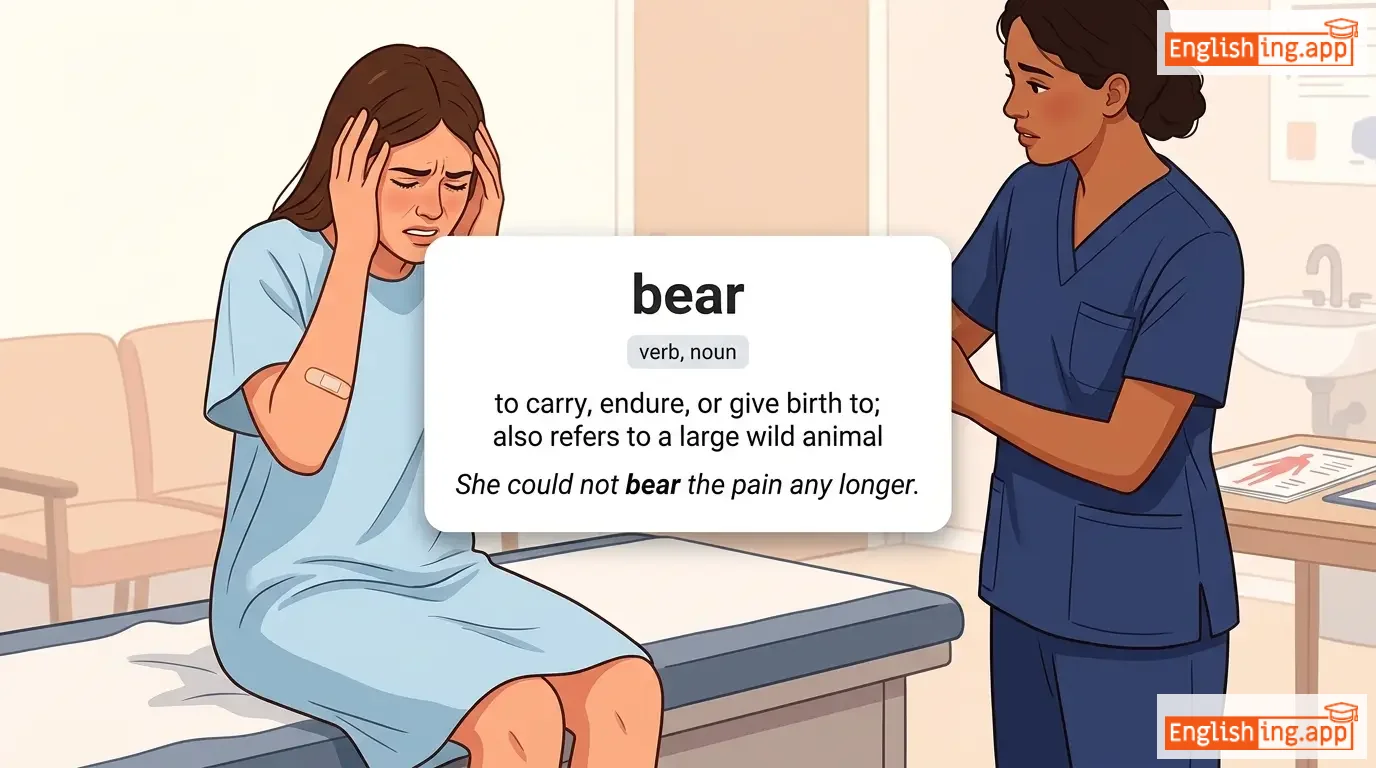
to carry, endure, or give birth to; also refers to a large wild animal
••••••
|
She could not bear the pain any longer.
她再也无法忍受痛苦。
••••••
|
她再也无法忍受痛苦。
Ta zai ye wu fa renshou tongku.
••••••
|
bear in mind
记住
••••••
|
to remember or consider something
••••••
|
记住
Jizhu
••••••
|
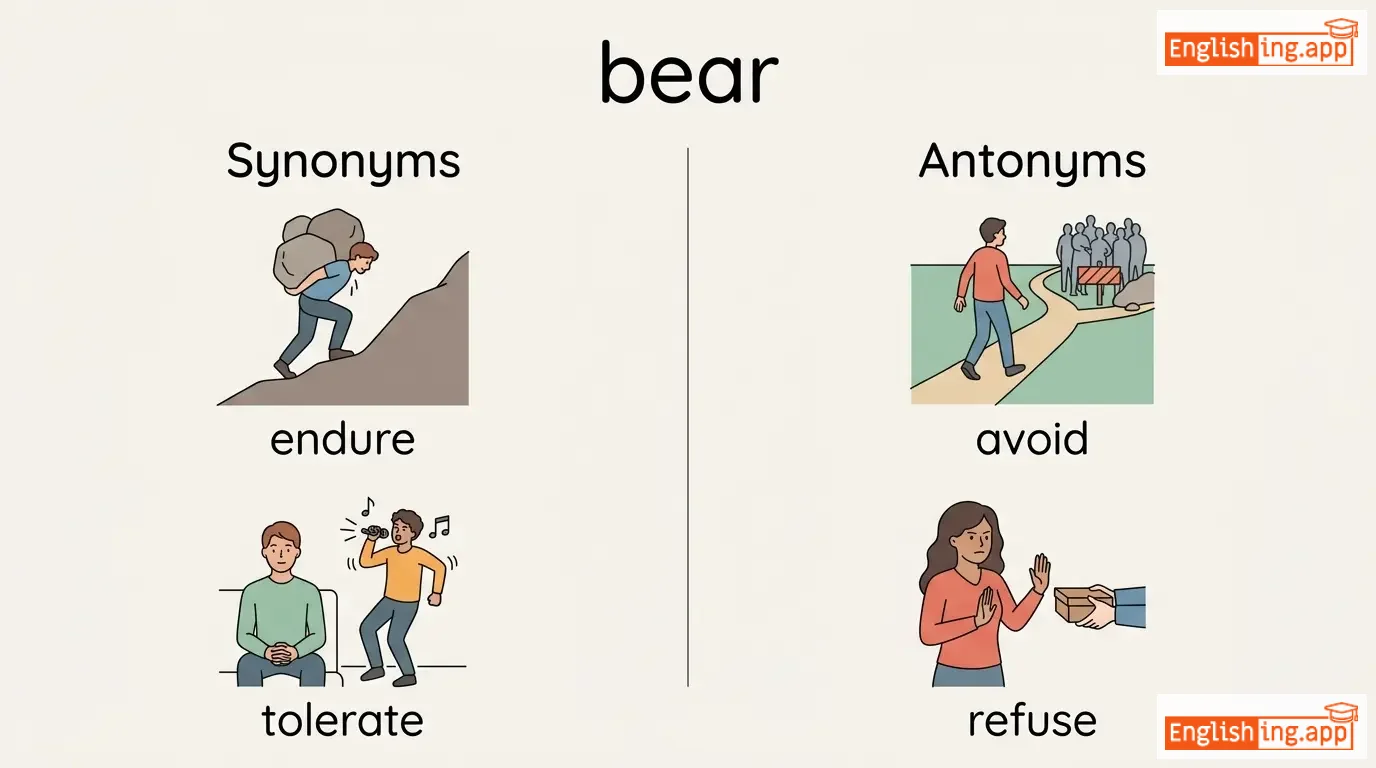
endure, tolerate, carry, support, sustain
••••••
|
avoid, refuse, deny
••••••
|
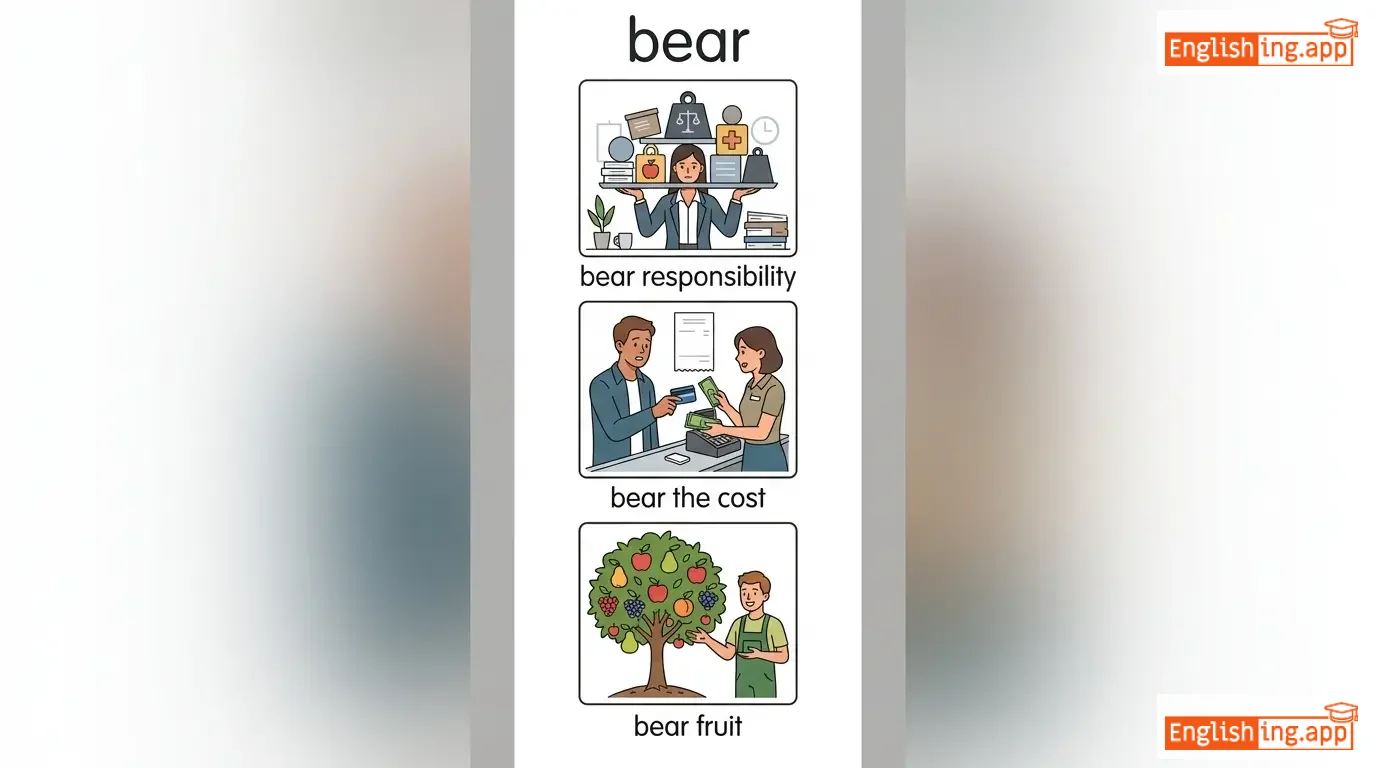
bear responsibility, bear the cost, bear fruit, bear in mind
••••••
|
Bear 🐻 意思是熊,但 bear the pain 意思是忍受痛苦。记得熊也很能忍受!
••••••
|
|
#568
🧔
|
/bɪəd/
noun
••••••
|
- •••••• | - •••••• | - •••••• | - •••••• | - •••••• | - •••••• |
the hair growing on the lower part of a man's face
••••••
|
He decided to grow a beard during his vacation. |
- •••••• |
beard the lion in his den |
to confront someone powerful or dangerous in their own territory
••••••
|
- •••••• |
facial hair, whiskers, goatee, stubble
••••••
|
clean-shaven, bare face
••••••
|
long beard, thick beard, grow a beard, trim beard
••••••
|
No •••••• |
|
#569
🐅
|
/biːst/
noun
(bìsīté)
••••••
|
- •••••• |
野兽 / 动物
yěshòu / dòngwù
••••••
|
- •••••• | - •••••• | - •••••• | - •••••• |
a large or dangerous animal; a cruel or brutal person
••••••
|
The lion is known as the king of beasts.
狮子被誉为兽中之王。
••••••
|
狮子被誉为兽中之王。
Shīzi bèi yù wéi shòu zhōng zhī wáng.
••••••
|
beauty and the beast
美女与野兽
••••••
|
used to describe two very different people or things, one beautiful and one ugly or fierce
••••••
|
美女与野兽
měinǚ yǔ yěshòu
••••••
|
animal, brute, monster, creature, savage
••••••
|
human, angel
••••••
|
wild beast, ferocious beast, king of beasts, mythical beast
••••••
|
Beast 就是野兽 — ‘比斯特’想到‘庞大和凶猛’ 🦁
••••••
|
|
#570
🥁
|
/biːt/
verb
(比特)
••••••
|
|
击打, 打败
jī dǎ, dǎ bài
••••••
|
beat
比特
••••••
|
beaten
比腾
••••••
|
beats
比次
••••••
|
beating
比亭
••••••
|
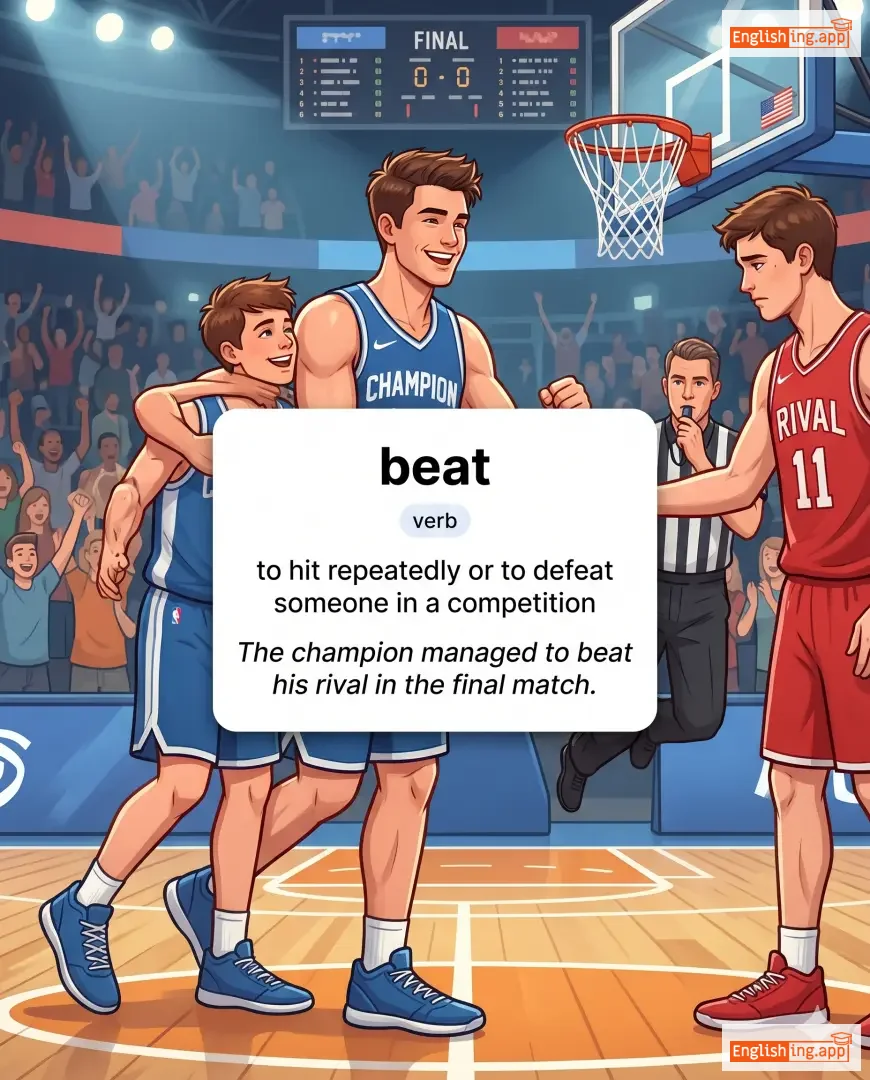
to hit repeatedly or to defeat someone in a competition
••••••
|
The champion managed to beat his rival in the final match.
冠军在最后一场比赛中击败了他的对手。
••••••
|
冠军在最后一场比赛中击败了他的对手。
Guàn jūn zài zuì hòu yī chǎng bǐ sài zhōng jī bài le tā de duì shǒu.
••••••
|
beat around the bush
绕圈子
••••••
|
to avoid talking about the main point
••••••
|
避免谈论要点
bì miǎn tán lùn yào diǎn
••••••
|
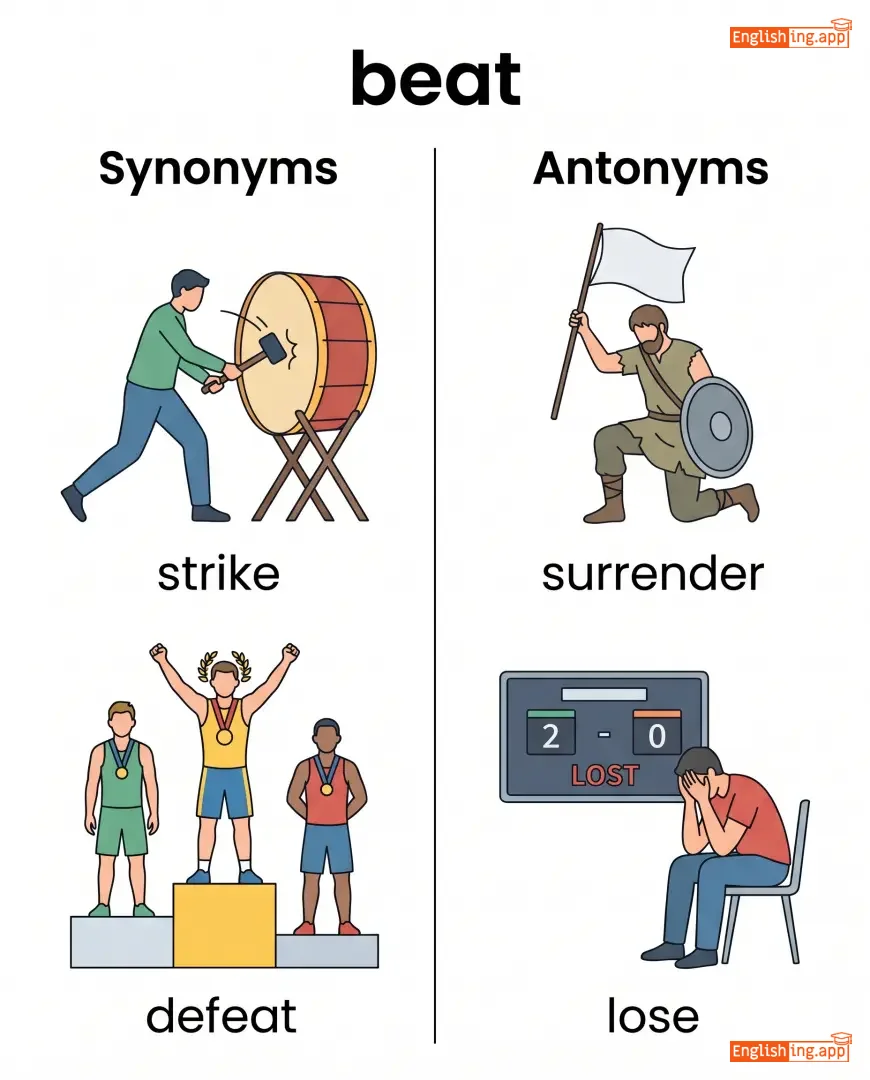
strike, defeat, thrash, overcome
••••••
|
surrender, lose
••••••
|
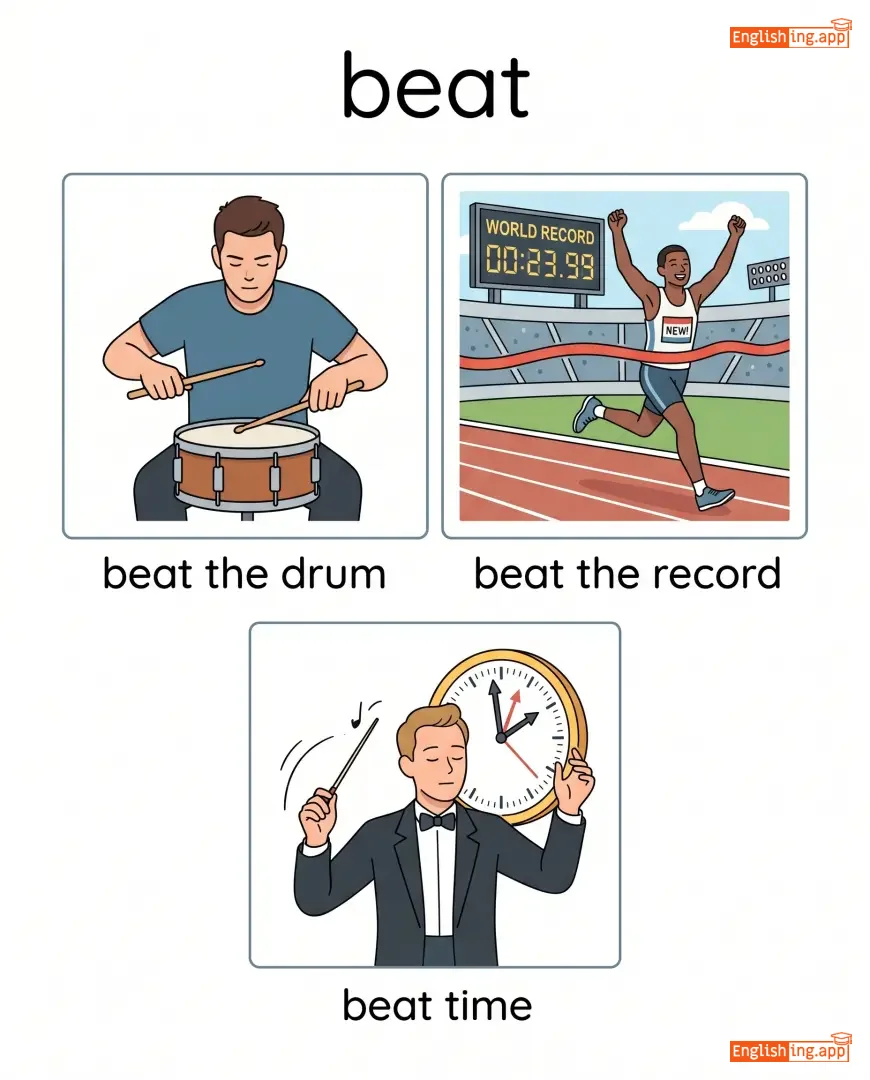
beat the drum, beat the record, beat time
••••••
|
击打和打败 – 就像用鼓击败对手一样。
••••••
|
|
#571
🙏
|
/biˈætɪfaɪ/
verb
(bɪˈætɪfaɪ)
••••••
|
|
宣圣
xuan sheng
••••••
|
beatified
bɪˈætɪfaɪd
••••••
|
beatified
bɪˈætɪfaɪd
••••••
|
beatifies
bɪˈætɪfaɪz
••••••
|
beatifying
bɪˈætɪfaɪɪŋ
••••••
|
to make blessed or holy, especially in the Roman Catholic Church, to declare a deceased person to be among the blessed
••••••
|
The pope decided to beatify the martyr for his faith and sacrifice.
教皇决定因其信仰和牺牲而宣圣这位殉道者。
••••••
|
教皇决定因其信仰和牺牲而宣圣这位殉道者。
Jiaohuang jue ding yin qi xinyang he xisheng er xuansheng zhe wei xundaozhe.
••••••
|
- •••••• | - •••••• | - •••••• |
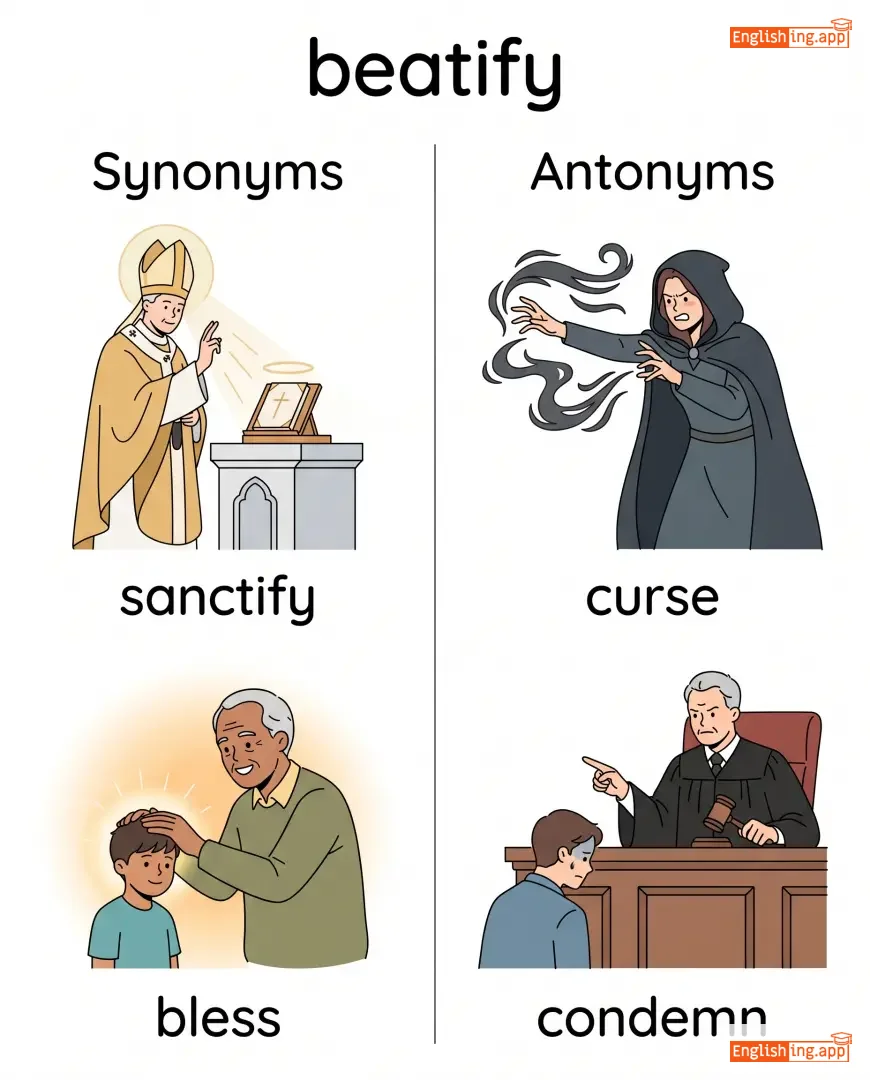
sanctify, bless, hallow, consecrate, exalt
••••••
|
curse, condemn, desecrate
••••••
|
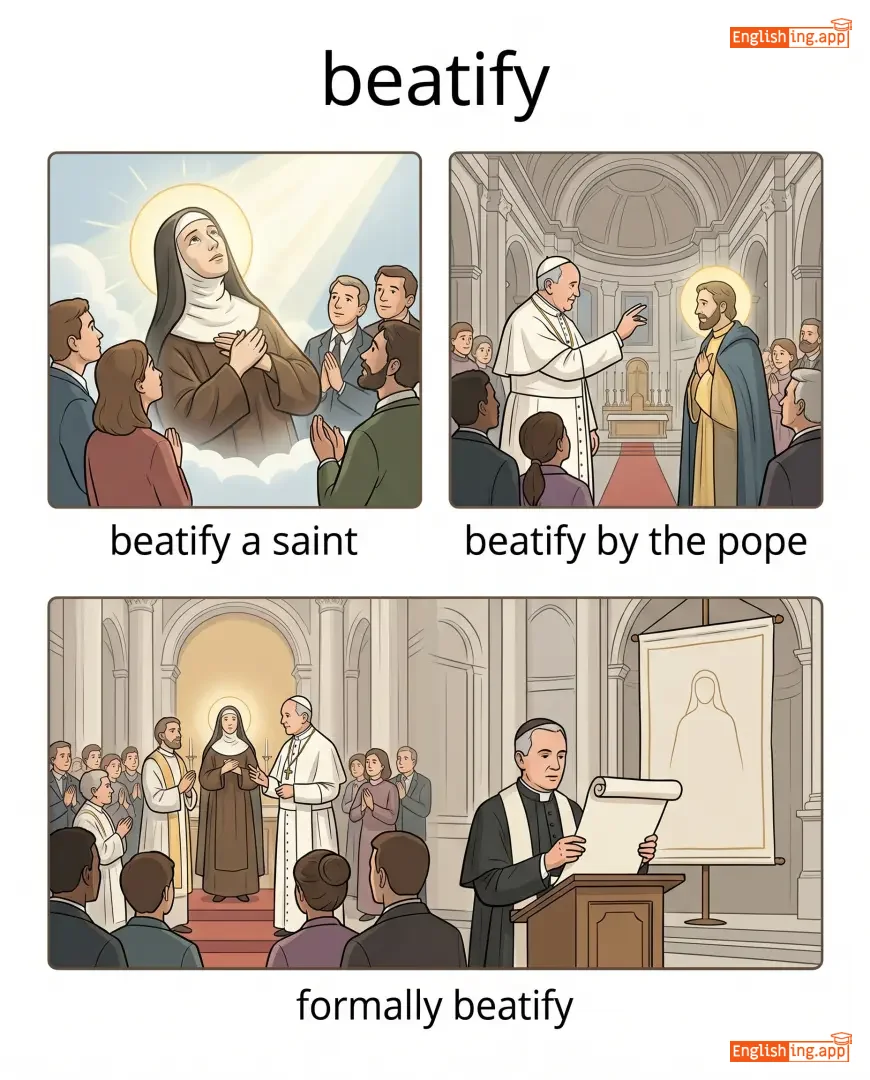
beatify a saint, beatify by the pope, formally beatify
••••••
|
宣圣意味着最终的圣洁。教皇将殉道者宣为圣人。
••••••
|
|
#572
🌸
|
/ˈbjuː.tɪ.fəl/
adjective
(bjuːtɪfəl)
••••••
|
- •••••• |
美丽
měilì
••••••
|
- •••••• | - •••••• | - •••••• | - •••••• |
pleasing to the senses or mind; very attractive
••••••
|
The garden looked beautiful in the morning sunlight. |
花园在早晨的阳光下看起来很美。
Huāyuán zài zǎochén de yángguāng xià kàn qǐlái hěn měi.
••••••
|
beautiful inside and out |
describing someone as both physically attractive and kind-hearted
••••••
|
内外美丽
nèi wài měilì
••••••
|
lovely, pretty, gorgeous, stunning, attractive
••••••
|
ugly, unattractive
••••••
|
beautiful view, beautiful smile, beautiful day
••••••
|
Beautiful = 美丽 = 吸引人的
••••••
|
|
#573
🌸
|
/ˈbjuːtɪfəli/
adverb
(比尤提弗利)
••••••
|
- •••••• |
优美地
youmei de
••••••
|
- •••••• | - •••••• | - •••••• | - •••••• |
in a beautiful or pleasing manner; excellently or skillfully
••••••
|
She sang beautifully at the concert.
希 桑 比尤提弗利 在 音乐会
••••••
|
她在音乐会上唱得很优美。
ta zai yinyuehui shang chang de hen youmei
••••••
|
beautifully done
比尤提弗利 done
••••••
|
performed very well; executed with great skill
••••••
|
做得很好
zuo de hen hao
••••••
|
gracefully, attractively, elegantly, wonderfully, superbly
••••••
|
ugly, poorly, awkwardly
••••••
|
beautifully designed, beautifully written, beautifully performed, beautifully decorated
••••••
|
优美 = beautiful, 优美地 = beautifully
••••••
|
|
#574
✨
|
/ˈbjuːtɪfaɪ/
verb
(比尤提法伊)
••••••
|
- •••••• |
美化
meihua
••••••
|
beautified
比尤提法伊德
••••••
|
beautified
比尤提法伊德
••••••
|
beautifies
比尤提法伊兹
••••••
|
beautifying
比尤提法伊英
••••••
|
to make something more beautiful or attractive
••••••
|
The city plans to beautify the old park with trees and lights.
泽 西提 普兰兹 图 比尤提法伊 泽 欧尔德 帕克 威兹 特里兹 恩德 莱茨
••••••
|
这座城市计划用树木和灯光美化旧公园。
Zhe zuo chengshi jihua yong shumu he dengguang meihua jiu gongyuan
••••••
|
- •••••• | - •••••• | - •••••• |
adorn, embellish, enhance, decorate, prettify
••••••
|
uglify, mar, deface
••••••
|
beautify the city, beautify a space, beautify surroundings, beautify nature
••••••
|
美 = beauty, 美化 = beautify
••••••
|
|
#575
🌸
|
/ˈbjuːti/
noun
(bjuːti)
••••••
|
- •••••• |
美丽
meili
••••••
|
- •••••• | - •••••• | - •••••• | - •••••• |
a combination of qualities that please the senses or mind
••••••
|
The beauty of the sunset took her breath away. |
夕阳的美丽让她屏住了呼吸。
Xiyang de meili rang ta ping zhu le huxi.
••••••
|
beauty is in the eye of the beholder |
different people have different opinions about what is beautiful
••••••
|
美丽在于观者的眼中
Meili zai yu guanzhe de yan zhong
••••••
|
attractiveness, charm, elegance, loveliness, grace
••••••
|
ugliness, plainness, dullness
••••••
|
inner beauty, natural beauty, beauty contest, beauty products
••••••
|
Beauty = 美丽 🌹, 记住,美丽取决于谁在看。
••••••
|
|
#576
🌊
|
/bɪˈkɑːm/
verb
(bikalm)
••••••
|
- •••••• |
平静
pingjing
••••••
|
becalmed
bikalmd
••••••
|
becalmed
bikalmd
••••••
|
becalms
bikalms
••••••
|
becalming
bikalming
••••••
|
to make calm or still; to deprive a sailing vessel of wind
••••••
|
The captain tried to becalm the anxious crew.
船长试图安抚焦虑的船员。
••••••
|
船长试图安抚焦虑的船员。
Chuan zhang shitu anfu jiaolv de chuanyuan.
••••••
|
- •••••• | - •••••• | - •••••• |
soothe, pacify, quiet, settle, still
••••••
|
agitate, disturb, excite
••••••
|
becalm the sea, becalm the crew, becalm the mind
••••••
|
Be + Calm = Becalm, 意思是平静
••••••
|
|
#577
🔗
|
/bɪˈkɔːz/
conjunction
(bikɔz)
••••••
|
- •••••• |
因为
yinwei
••••••
|
- •••••• | - •••••• | - •••••• | - •••••• |
for the reason that; since
••••••
|
He stayed home because it was raining. |
他因为下雨待在家里。
Ta yinwei xiayu daizai jiali.
••••••
|
- •••••• | - •••••• | - •••••• |
since, as, due to, owing to
••••••
|
despite, although
••••••
|
because of you, just because, because of the rain
••••••
|
Because的意思是因为 🔗。记住Cause代表原因!
••••••
|
|
#578
👋
|
/ˈbɛkən/
verb
(贝肯)
••••••
|
- •••••• |
招手示意
zhaoshou shiyi
••••••
|
beckoned
贝肯德
••••••
|
beckoned
贝肯德
••••••
|
beckons
贝肯兹
••••••
|
beckoning
贝肯宁
••••••
|
to signal or call someone to come closer, often with a gesture; to attract or invite
••••••
|
She beckoned him to come closer with a wave of her hand.
西 贝肯德 希姆 图 康 克洛瑟 威兹 阿 韦夫 奥夫 赫 手。
••••••
|
她挥手示意他走近一些。
ta huishou shiyi ta zou jin yixie
••••••
|
beckon to
贝肯 图
••••••
|
to invite or attract someone toward something
••••••
|
吸引到
xiyin dao
••••••
|
signal, summon, call, motion, entice
••••••
|
repel, deter, discourage
••••••
|
beckon someone over, beckon with a hand, beckon closer, beckon invitingly
••••••
|
Beckon 听起来像 beacon—像灯塔在招手
••••••
|
|
#579
🌱
|
/bɪˈkʌm/
verb
(bī kāim)
••••••
|
- •••••• |
变成
bian cheng
••••••
|
became
bī kěim
••••••
|
become
bī kāim
••••••
|
becomes
bī kāimz
••••••
|
becoming
bī kāiming
••••••
|
to begin to be; to develop into
••••••
|
He became a successful doctor after years of hard work.
Tā bì kēim yī wèi chénggōng de yīshēng zhīhòu, tōngguò duō nián de nǔlì.
••••••
|
他经过多年的努力,成为了一位成功的医生。
Ta jingguo duonian de nuli, chengwei le yi wei chenggong de yisheng.
••••••
|
become a reality
bī kāim a rìyì
••••••
|
to actually happen
••••••
|
成为现实
chengwei xianshi
••••••
|
turn into, grow into, evolve, develop
••••••
|
cease, stop, remain
••••••
|
become famous, become aware, become clear, become friends
••••••
|
Become 🌱 意味着变成。就像一颗小种子慢慢地变成一棵大树。
••••••
|
|
#580
🛏️
|
/bɛd/
noun
••••••
|
- •••••• | - •••••• | - •••••• | - •••••• | - •••••• | - •••••• |
a piece of furniture for sleeping or resting on
••••••
|
She lay down on the bed and fell asleep quickly. |
- •••••• |
make your bed |
to arrange or tidy your bed after getting up
••••••
|
- •••••• |
couch, mattress, cot, bunk
••••••
|
floor, ground
••••••
|
go to bed, make the bed, bed sheet, hospital bed
••••••
|
No •••••• |
Vocabulary Quiz
Test your vocabulary by matching words with their translations or meanings.
Login to take the quiz
Comments (0)
Share your thoughts and join the discussion.
Join the discussion by logging in
Login to CommentNo comments yet
Be the first to share your thoughts!