






Swipe left or right, or use the buttons. Tap image to zoom.
例句翻译
单词
Lesson 8Lesson 8 - 遮罩切换
|
表情符号
|
单词 | Images | 翻译 | 过去时 | 过去分词 | 第三人称单数 | 动名词 | 含义 | 例句 | 例句翻译 | 示例表达 | 示例表达含义 | 示例表达翻译 | 同义词 | 反义词 | 搭配词 | 助记符 |
|---|---|---|---|---|---|---|---|---|---|---|---|---|---|---|---|---|---|
|
#349
📐
|
/əˈprɒksɪmət/
adjective/verb
(阿普罗克西米特)
••••••
|
- •••••• |
大约的
dayue de
••••••
|
approximated
阿普罗克西米特德
••••••
|
approximated
阿普罗克西米特德
••••••
|
approximates
阿普罗克西米茨
••••••
|
approximating
阿普罗克西米廷
••••••
|
close to the actual but not exact; to estimate or calculate roughly
••••••
|
The cost is approximate and may change later.
德 科斯特 伊兹 阿普罗克西米特 安德 梅 彻恩吉 莱特。
••••••
|
这个成本是大约的,之后可能会改变。
zhege chengben shi dayue de zhihou keneng hui gaibian
••••••
|
approximate value
阿普罗克西米特 维留
••••••
|
a value that is close to the true amount but not exact
••••••
|
近似值
jinshi zhi
••••••
|
estimated, rough, near, about, close
••••••
|
exact, precise, accurate
••••••
|
approximate value, approximate time, approximate cost, approximate figure
••••••
|
大约的 = approximate,不是完全准确。
••••••
|
|
#350
➗
|
/əˈprɒk.sɪ.mət.li/
adverb
(啊普罗克斯密特里)
••••••
|
- •••••• |
大约
dayue
••••••
|
- •••••• | - •••••• | - •••••• | - •••••• |
used to show that something is almost, but not completely, accurate or exact
••••••
|
The journey takes approximately three hours. |
这次旅行大约需要三小时。
Zhe ci luxing dayue xuyao san xiaoshi.
••••••
|
- •••••• | - •••••• | - •••••• |
about, roughly, around, nearly, close to
••••••
|
exactly, precisely, accurately
••••••
|
approximately equal, approximately the same, approximately three hours
••••••
|
Approximately 意味着大约—'大约'几乎总是准确的。
••••••
|
|
#351
🌸
|
/ˈeɪprɪl/
noun
(艾普瑞尔)
••••••
|
- •••••• |
四月
si yue
••••••
|
- •••••• | - •••••• | - •••••• | - •••••• |
the fourth month of the year in the Gregorian calendar
••••••
|
April is known for its pleasant spring weather.
艾普瑞尔 以 其 宜人 的 春天天气 而 闻名
••••••
|
四月以宜人的春天天气而闻名。
si yue yi yi ren de chun tian tian qi er wen ming
••••••
|
April showers bring May flowers
四月阵雨带来五月鲜花
••••••
|
early difficulties often lead to better results later
••••••
|
四月阵雨带来五月鲜花
si yue zhen yu dai lai wu yue xian hua
••••••
|
fourth month, spring month, April month, calendar month
••••••
|
December, January
••••••
|
early April, late April, April weather, April holiday
••••••
|
April=四月,spring 的开始
••••••
|
|
#352
🎲
|
/ˈɑːrbɪˌtrɛri/
adjective
(阿比特雷里)
••••••
|
- •••••• |
随意的
suiyide
••••••
|
- •••••• | - •••••• | - •••••• | - •••••• |
based on random choice or personal whim, rather than reason or system
••••••
|
The teacher's arbitrary grading upset many students. |
老师的随意评分让许多学生感到不满。
Laoshi de sui yi pingfen rang xu duo xuesheng gandao bumian.
••••••
|
- •••••• | - •••••• | - •••••• |
random, capricious, whimsical, subjective, inconsistent
••••••
|
rational, logical, systematic
••••••
|
arbitrary decision, arbitrary rule, arbitrary action
••••••
|
Arbitrary意味着随意的—想象一个人在没有任何理由的情况下做出随意的决定.
••••••
|
|
#353
🕊️
|
/ˈɑːrbɪtreɪt/
verb
(阿比特雷特)
••••••
|
- •••••• |
仲裁
zhòngcái
••••••
|
arbitrated
阿比特雷特德
••••••
|
arbitrated
阿比特雷特德
••••••
|
arbitrates
阿比特雷特斯
••••••
|
arbitrating
阿比特雷廷
••••••
|
to settle a dispute between two parties by acting as an impartial judge
••••••
|
The committee agreed to arbitrate the contract dispute.
委员会同意仲裁合同争议。
••••••
|
委员会同意仲裁合同争议。
Wěiyuánhuì tóngyì zhòngcái hé tóngzhèngyì.
••••••
|
arbitrate a dispute
仲裁争议
••••••
|
to resolve a disagreement between parties
••••••
|
仲裁争议
zhòngcái zhēngyì
••••••
|
mediate, adjudicate, resolve, judge, settle
••••••
|
provoke, dispute
••••••
|
arbitrate dispute, arbitrate conflict, arbitrate case
••••••
|
Arbitrate意味着仲裁—想象你是那个公正的仲裁员
••••••
|
|
#354
⚖️
|
/ˌɑːrbɪˈtreɪʃən/
noun
(阿比特雷申)
••••••
|
- •••••• |
仲裁
zhongcai
••••••
|
- •••••• | - •••••• | - •••••• | - •••••• |
the process of resolving a dispute through an impartial third party whose decision is binding; formal judgment outside a court
••••••
|
The contract requires arbitration to settle any disputes.
合同要求通过阿比特雷申解决争议。
••••••
|
合同规定任何争议应通过仲裁解决。
hetong guiding renhe zhengyi ying tongguo zhongcai jiejue
••••••
|
arbitration clause
阿比特雷申 条款
••••••
|
a contract provision that requires disputes to be resolved through arbitration
••••••
|
仲裁条款
zhongcai tiaokuan
••••••
|
mediation, adjudication, settlement, conciliation
••••••
|
litigation, disagreement
••••••
|
binding arbitration, arbitration clause, arbitration agreement, international arbitration
••••••
|
中间裁决—仲裁 = arbitration
••••••
|
|
#355
🏛️
|
/ˈɑː.kɪ.tekt/
noun
(建筑师)
••••••
|
- •••••• |
建筑师
jianzhushi
••••••
|
- •••••• | - •••••• | - •••••• | - •••••• |
a person who designs buildings and oversees their construction
••••••
|
The architect designed a modern office building. |
建筑师设计了一座现代的办公楼。
Jianzhushi sheji le yi zuo xiandai de bangonglou.
••••••
|
- •••••• | - •••••• | - •••••• |
designer, planner, builder, creator
••••••
|
destroyer, demolisher
••••••
|
famous architect, software architect, chief architect, landscape architect
••••••
|
Architect 意思是建筑师—设计建筑的专家,打造空间的艺术家。
••••••
|
|
#356
🏛️
|
/ˌɑːrkɪˈtɛktʃərəl/
adjective
(jiàndìng shèjì)
••••••
|
- •••••• |
建筑的
jiànzhù de
••••••
|
- •••••• | - •••••• | - •••••• | - •••••• |
relating to the design and style of buildings and structures
••••••
|
The city is known for its beautiful architectural designs. |
这座城市因其美丽的建筑设计而闻名。
Zhè zuò chéngshì yīn qí měilì de jiànzhù shèjì ér wénmíng.
••••••
|
- •••••• | - •••••• | - •••••• |
design, structural, building-related, construction
••••••
|
non-structural
••••••
|
architectural design, architectural style, architectural heritage
••••••
|
Architectural designs are the 'yìshù' (art) of buildings!
••••••
|
|
#357
🏛️
|
/ˈɑːkɪˌtɛktʃər/
noun
(建筑学)
••••••
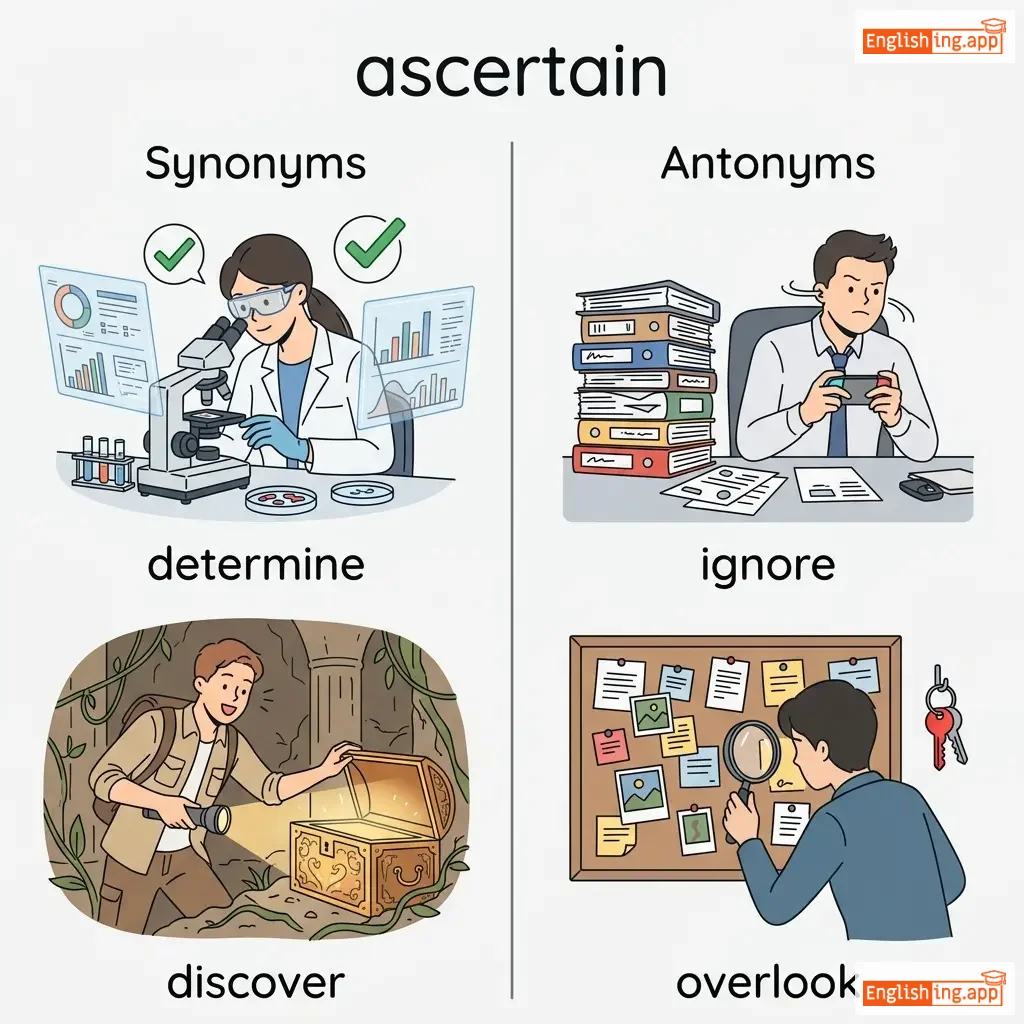
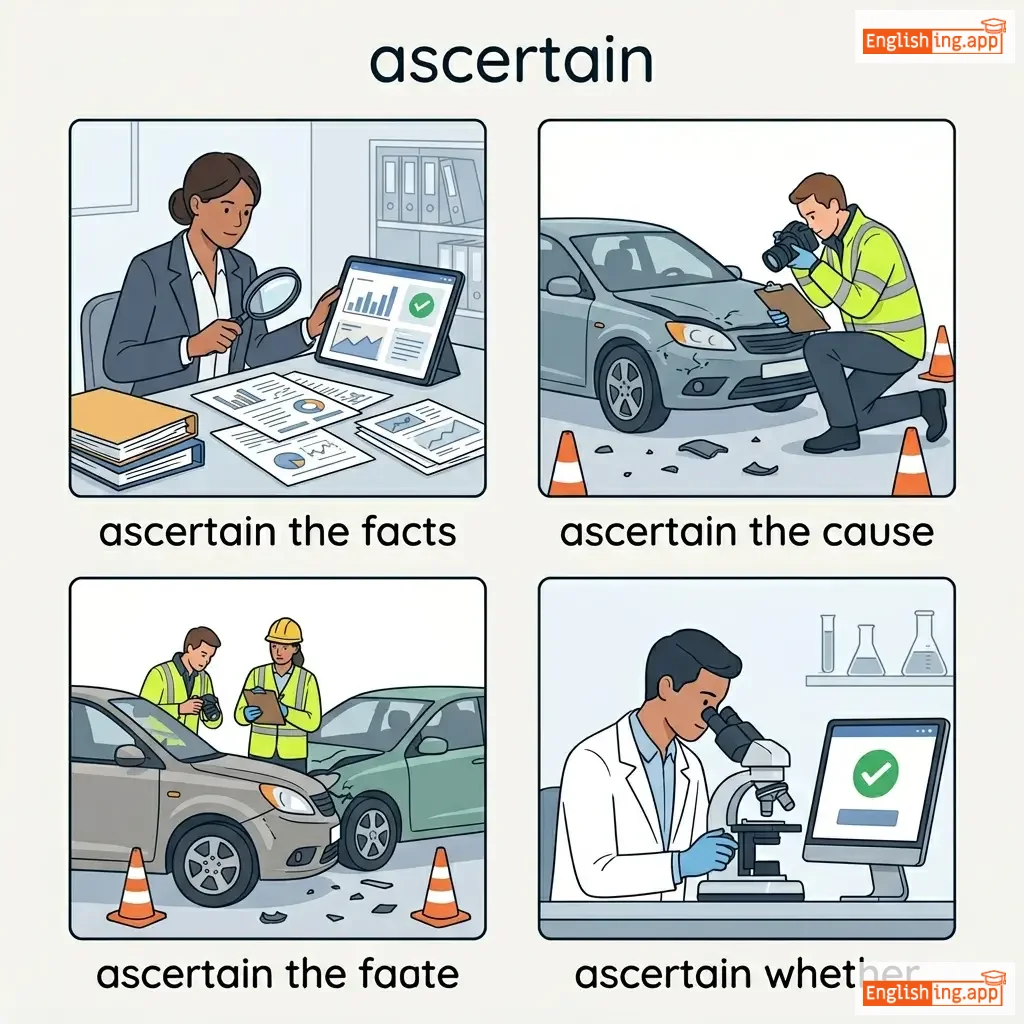
|
|
建筑学
jianzhuxue
••••••
|
- •••••• | - •••••• | - •••••• | - •••••• |
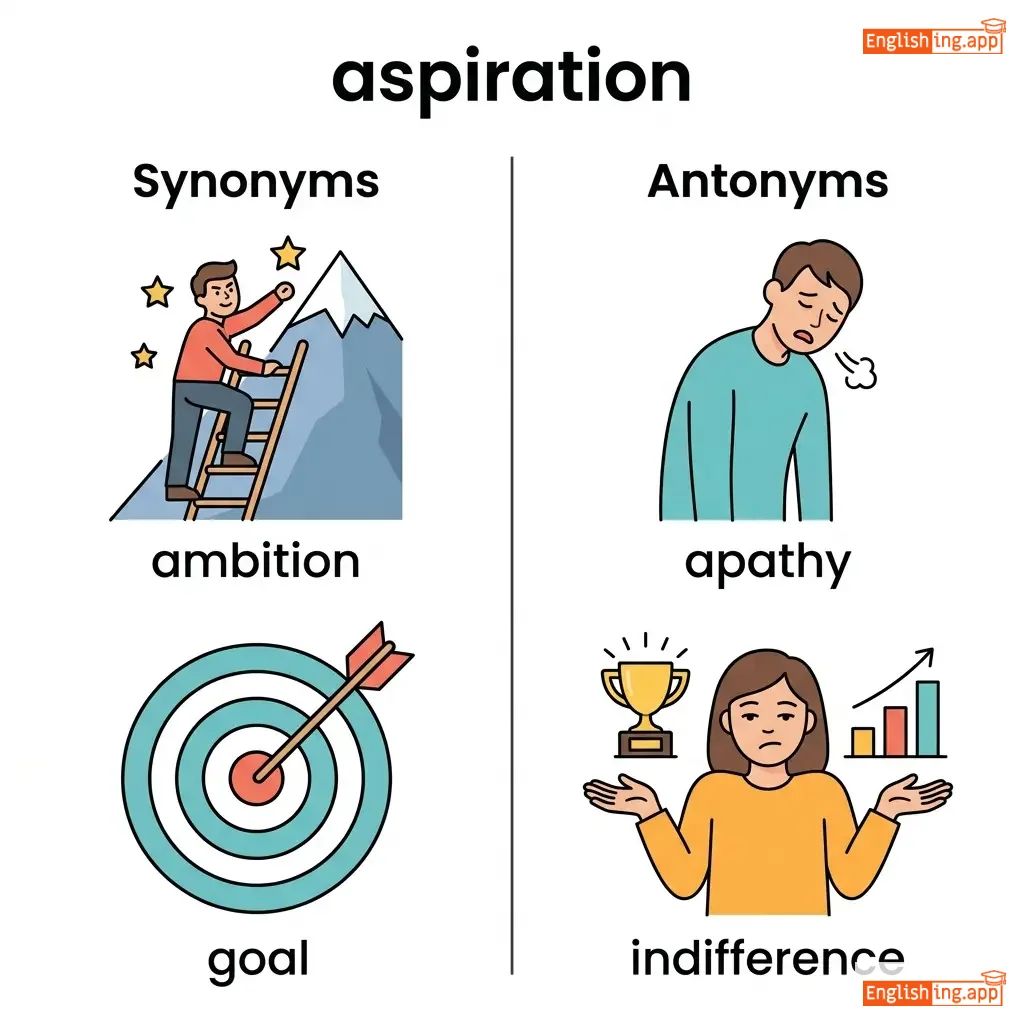
the art and practice of designing and constructing buildings
••••••
|
The ancient temples of Greece are famous for their architecture. |
古希腊的古代寺庙以其建筑学闻名。
Gu Xila de gudai simiao yi qi jianzhu xue wenming.
••••••
|
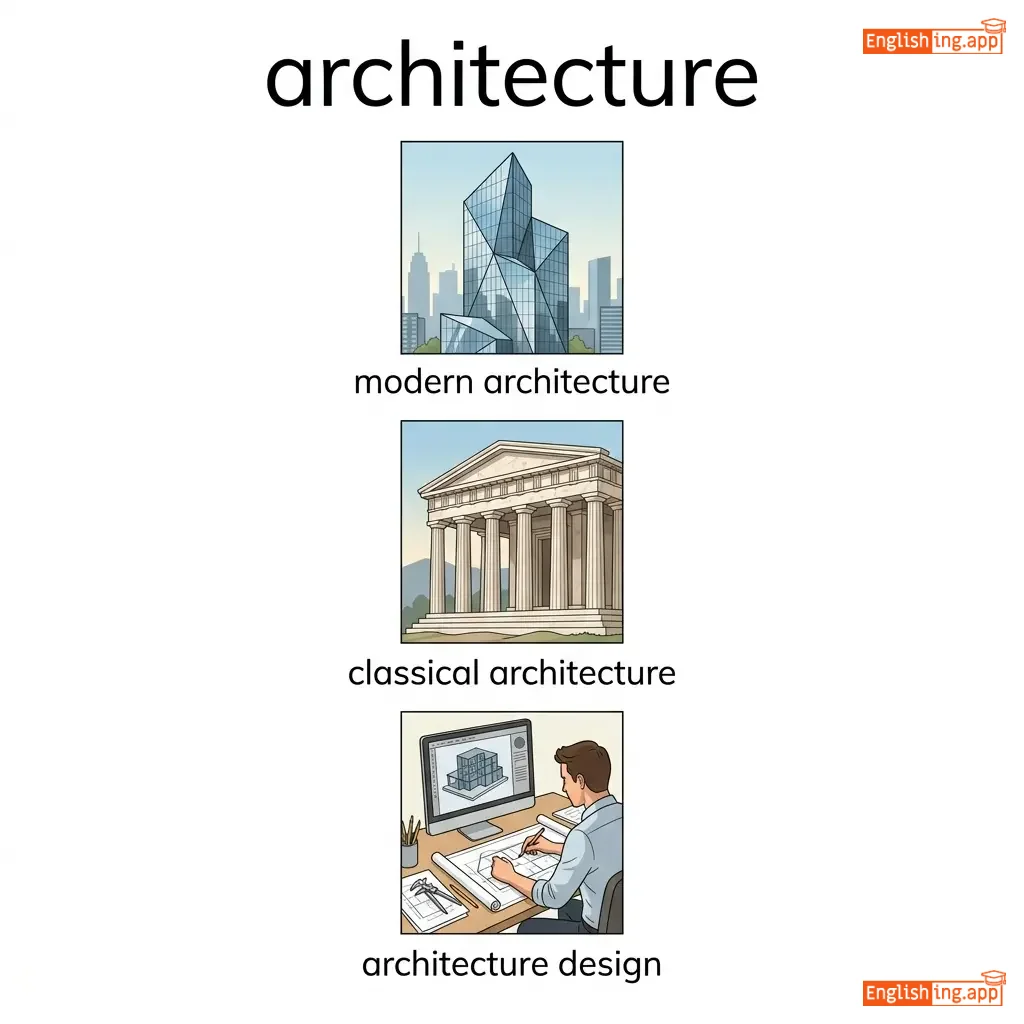
modern architecture |
a style of architecture characterized by simplicity and functional design
••••••
|
现代建筑学
xiandai jianzhu xue
••••••
|
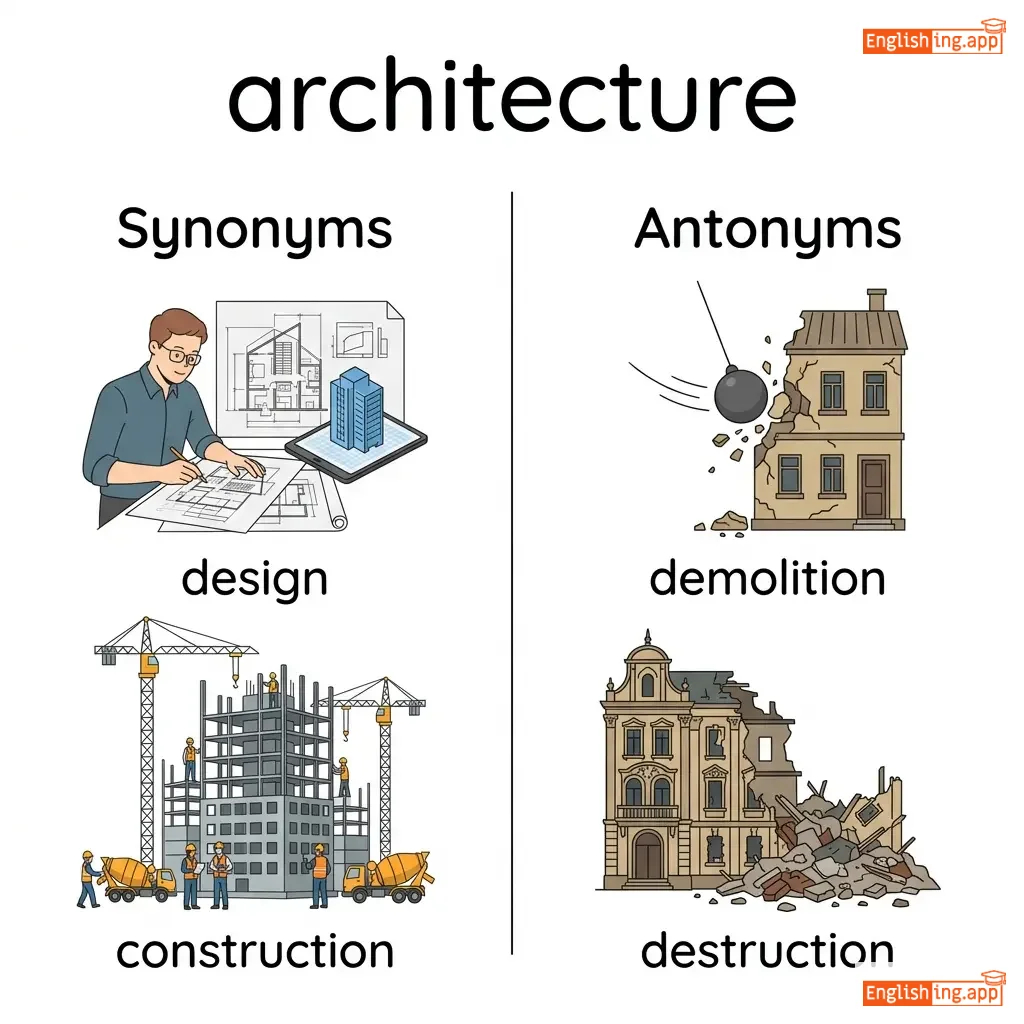
design, construction, structure, framework
••••••
|
demolition, destruction
••••••
|
modern architecture, classical architecture, architecture design, architecture firm
••••••
|
Architecture 是设计建筑物的艺术,因此建筑学就是建造建筑物的艺术 🏛️
••••••
|
|
#358
🗄️
|
/ˈɑːrkaɪv/
noun, verb
••••••
|
- •••••• | - •••••• |
archived
••••••
|
archived
••••••
|
archives
••••••
|
archiving
••••••
|
A collection of historical documents or records; to store or preserve information for future use.
••••••
|
The library decided to archive all the old manuscripts. |
- •••••• |
digital archive |
An electronic collection of documents or records stored for reference.
••••••
|
- •••••• |
repository, records, collection, store, vault
••••••
|
discard, destroy
••••••
|
archive documents, archive data, digital archive, archive system
••••••
|
No •••••• |
|
#359
📍
|
/ˈeə.ri.ə/
noun
••••••
|
- •••••• | - •••••• | - •••••• | - •••••• | - •••••• | - •••••• |
a particular region or space; the extent of a surface
••••••
|
This area is known for its beautiful parks. |
- •••••• |
gray area |
an unclear or undefined situation
••••••
|
- •••••• |
region, zone, district, field, space
••••••
|
point, line, boundary
••••••
|
rural area, urban area, gray area, restricted area
••••••
|
No •••••• |
|
#360
🏟️
|
/əˈriːnə/
noun
(竞技场)
••••••
|
- •••••• |
竞技场, 场地
jingji chang, changdi
••••••
|
- •••••• | - •••••• | - •••••• | - •••••• |
a large area surrounded by seats for sports, entertainment, or other events
••••••
|
The basketball game will be held in the new arena downtown. |
篮球比赛将在市中心的新竞技场举行。
Lanqiu bisai jiang zai shizhongxin de xin jingji chang juxing.
••••••
|
political arena |
a field or sphere of political activity or debate
••••••
|
政治领域
zhengzhi lingyu
••••••
|
stadium, field, coliseum, auditorium, hall
••••••
|
wilderness, outside
••••••
|
sports arena, political arena, music arena, enter the arena
••••••
|
竞技场是一个活动的地方,比如体育比赛。🏟️
••••••
|
|
#361
💬
|
/ˈɑːrɡjuəbl/
adjective
(阿格优阿布尔)
••••••
|
- •••••• |
有争议的
you zhengyi de
••••••
|
- •••••• | - •••••• | - •••••• | - •••••• |
open to debate or discussion; not certain and capable of being argued for or against
••••••
|
It is arguable that technology has improved our quality of life.
伊特 伊兹 阿格优阿布尔 贼特 特克诺洛吉 哈兹 因普鲁夫德 奥尔 夸利提 奥夫 莱夫
••••••
|
可以说,科技改善了我们的生活质量。
keyi shuo keji gaishan le women de shenghuo zhiliang
••••••
|
- •••••• | - •••••• | - •••••• |
debatable, disputable, questionable, contestable, arguendo
••••••
|
certain, unquestionable, indisputable
••••••
|
arguable point, arguable claim, arguable assumption, arguably true
••••••
|
Arguable 听起来像 argument,所以是有争议的
••••••
|
|
#362
💬
|
/ˈɑːɡjuːəbli/
adverb
(阿格尤阿布利)
••••••
|
- •••••• |
可以说
keyi shuo
••••••
|
- •••••• | - •••••• | - •••••• | - •••••• |
used to say that a statement is open to argument or is considered true by many people
••••••
|
She is arguably the most talented player on the team.
希 伊兹 阿格尤阿布利 泽 莫斯特 塔伦特德 普莱尔。
••••••
|
她可以说是队里最有天赋的球员。
Ta keyi shuo shi duili zui you tianfu de qiuyuan
••••••
|
arguably the best
阿格尤阿布利 泽 贝斯特
••••••
|
considered by many people to be the best, though it can be debated
••••••
|
可以说是最好的
keyi shuo shi zui hao de
••••••
|
debatably, possibly, conceivably, plausibly, ostensibly
••••••
|
undeniably, unquestionably, certainly
••••••
|
arguably the best, arguably the most important, arguably true, arguably better
••••••
|
argue → 讨论 → 可以说
••••••
|
|
#363
🗣️
|
/ˈɑːrɡjuː/
verb
(ārgīu)
••••••
|
|
争论
zhēnglùn
••••••
|
argued
ārgīud
••••••
|
argued
ārgīud
••••••
|
argues
ārgīus
••••••
|
arguing
ārgīuīng
••••••
|
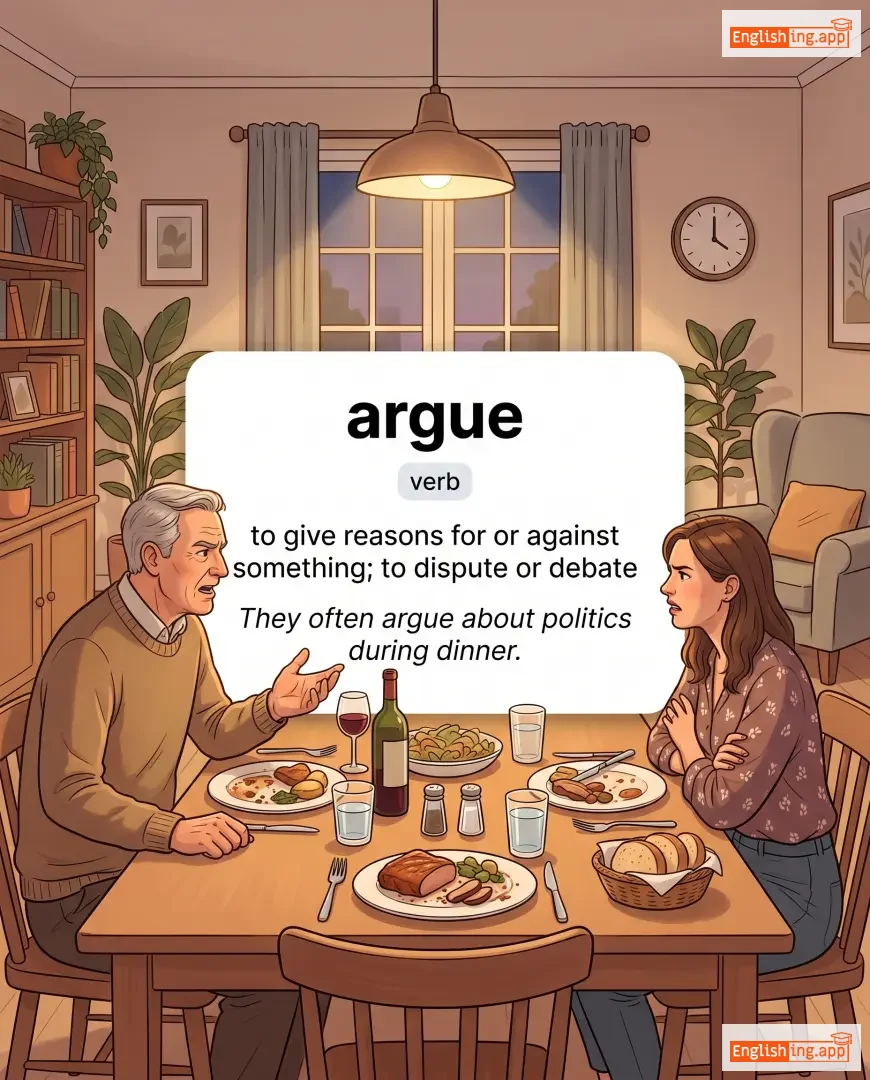
to give reasons for or against something; to dispute or debate
••••••
|
They often argue about politics during dinner.
他们常在晚餐时就政治问题争论。
••••••
|
他们常在晚餐时就政治问题争论。
Tāmen cháng zài wǎncān shí jiù zhèngzhì wèntí zhēnglùn.
••••••
|
argue the toss
争论投掷
••••••
|
to dispute or complain about a decision that has already been made
••••••
|
争论已做的决定
zhēnglùn yǐ zuò de juédìng
••••••
|
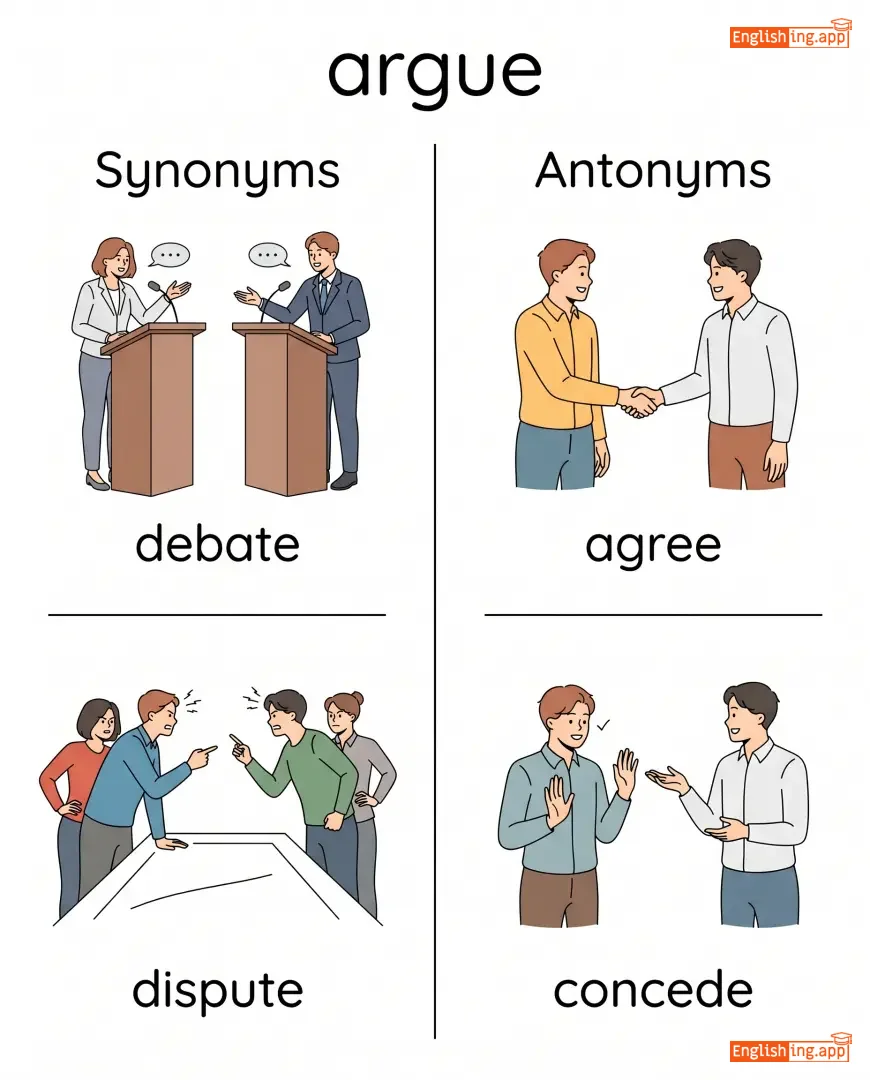
debate, dispute, contend, reason, quarrel
••••••
|
agree, concede, accept
••••••
|
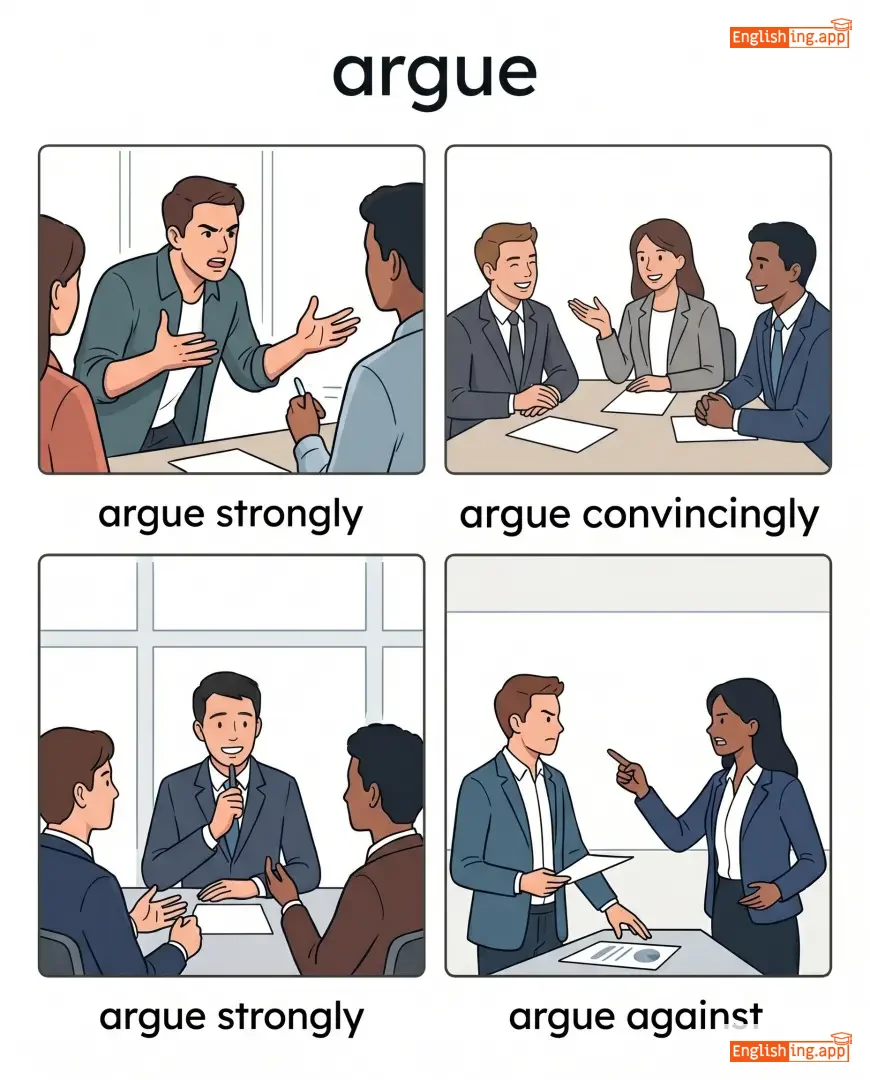
argue strongly, argue convincingly, argue against, argue about
••••••
|
争论就是争议,像 argyu 在英文中一样。
••••••
|
|
#364
⚡
|
/ˈɑːrɡjumənt/
noun
(争论)
••••••
|
|
争执, 论点
zhenglun, lundian
••••••
|
- •••••• | - •••••• | - •••••• | - •••••• |
a disagreement, or a reason given to support or oppose an idea
••••••
|
They had a heated argument about money. |
他们就钱问题发生了激烈的争执。
tamen jiu qian wenti fashengle jilie de zhengzhi.
••••••
|
winning an argument |
successfully convincing someone in a dispute
••••••
|
赢得争论
yingde zhenglun
••••••
|
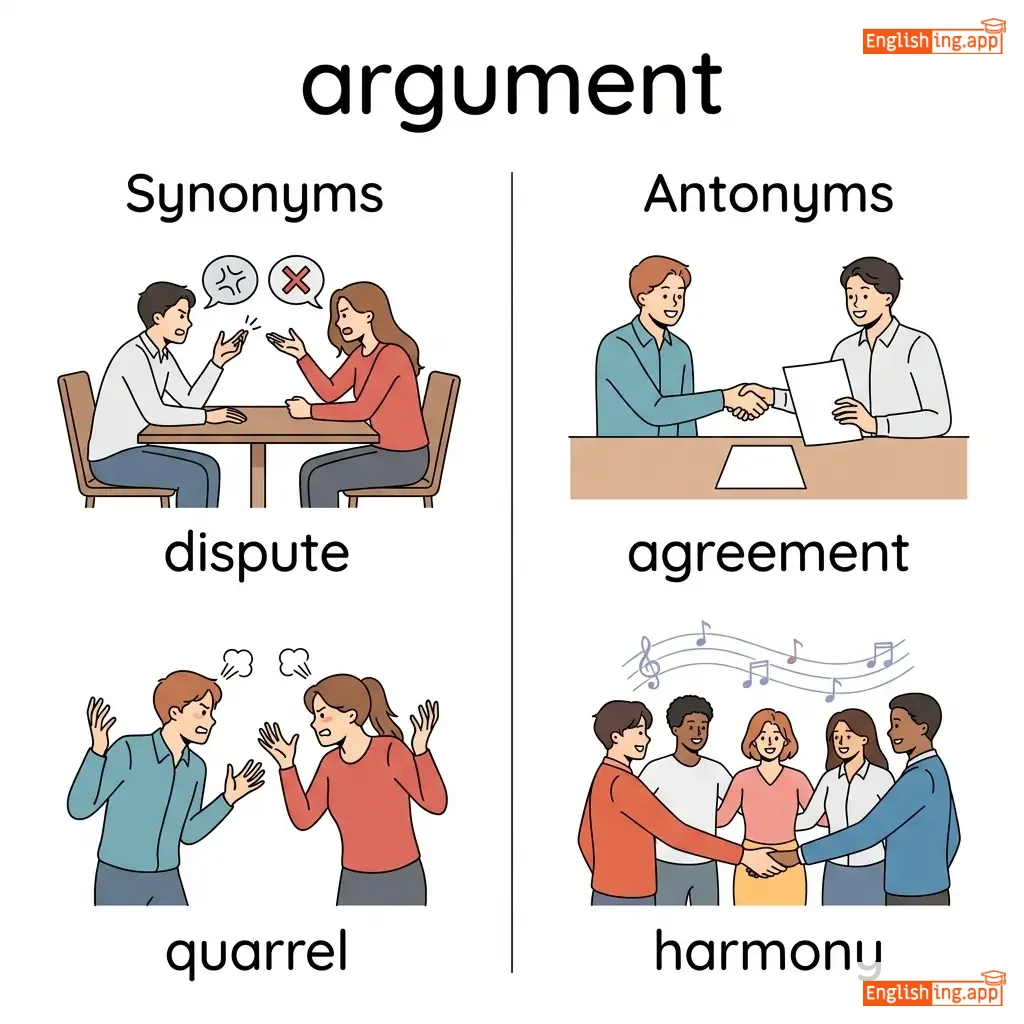
dispute, quarrel, debate, reasoning, contention
••••••
|
agreement, harmony, consensus
••••••
|
heated argument, strong argument, compelling argument, logical argument
••••••
|
Argument 意味着激烈的争论!
••••••
|
|
#365
🌅
|
/əˈraɪz/
verb
(阿瑞兹)
••••••
|
- •••••• |
出现
chūxiàn
••••••
|
arose
阿罗斯
••••••
|
arisen
阿里森
••••••
|
arises
阿瑞泽斯
••••••
|
arising
阿瑞辛
••••••
|
to begin to exist or to happen
••••••
|
Problems may arise if you don't plan ahead.
如果你没有提前计划,问题可能会出现。
••••••
|
如果你没有提前计划,问题可能会出现。
Rúguǒ nǐ méiyǒu tíqián jìhuà, wèntí kěnéng huì chūxiàn.
••••••
|
arise from
arise from
••••••
|
to result from or be caused by
••••••
|
源自
yuán zì
••••••
|
emerge, occur, appear, happen, develop
••••••
|
cease, end, stop
••••••
|
arise from, situation arises, issue arises, opportunity arises
••••••
|
当太阳升起时,白天开始。
••••••
|
|
#366
💪
|
/ɑːrm/
noun
(阿姆)
••••••
|
- •••••• |
手臂
shoubi
••••••
|
- •••••• | - •••••• | - •••••• | - •••••• |
the part of the body from the shoulder to the hand; also a branch or division of an organization
••••••
|
She broke her arm while playing football. |
她在踢足球时摔断了手臂。
ta zai ti zuqiu shi shuai duan le shoubi.
••••••
|
twist someone's arm |
to persuade or pressure someone into doing something
••••••
|
扭某人的手臂
niu mou ren de shoubi
••••••
|
limb, branch, extension, wing
••••••
|
leg, trunk
••••••
|
right arm, left arm, strong arm, extend an arm
••••••
|
Arm是手臂, 在运动中不可或缺
••••••
|
|
#367
🔫
|
/ɑːrmd/
adjective
(ɑːrmd)
••••••
|
- •••••• |
武装的
wǔzhuāng de
••••••
|
- •••••• | - •••••• | - •••••• | - •••••• |
equipped with or carrying weapons
••••••
|
The bank was robbed by armed men. |
银行被武装分子抢劫了。
Yínháng bèi wǔzhuāng fēnzǐ qiǎngjiéle.
••••••
|
armed to the teeth |
heavily armed or fully equipped with weapons
••••••
|
武装到牙齿
wǔzhuāng dào yáchǐ
••••••
|
equipped, weaponized, fortified, prepared
••••••
|
unarmed, defenseless, vulnerable
••••••
|
armed forces, armed men, armed conflict, heavily armed
••••••
|
Armed, 手臂 (Arm) + 了 (ed) → 武装的,武器在手。
••••••
|
|
#368
🪖
|
/ˈɑːrmi/
noun
(ārmí)
••••••
|
- •••••• |
军队
jundui
••••••
|
- •••••• | - •••••• | - •••••• | - •••••• |
a large organized military force trained for war
••••••
|
The army protected the border from attack. |
军队保护了边境免受攻击。
jundui baohule bianjing mian shou gongji.
••••••
|
join the army |
to enlist in the military service
••••••
|
加入军队
jiaru jundui
••••••
|
military, troops, forces, soldiers
••••••
|
civilians, noncombatants
••••••
|
army base, army officer, join the army, regular army
••••••
|
Army = 军队, 🪖 为战争准备的力量
••••••
|
|
#369
🔄
|
/əˈraʊnd/
adverb, preposition
(əˈraʊnd)
••••••
|
- •••••• |
周围
zhōuwéi
••••••
|
- •••••• | - •••••• | - •••••• | - •••••• |
situated on every side; in a circular way; approximately
••••••
|
There are many restaurants around the park. |
公园周围有很多餐馆。
Gōngyuán zhōuwéi yǒu hěn duō cānguǎn.
••••••
|
turn around |
to move so as to face in the opposite direction
••••••
|
转身
zhuǎnshēn
••••••
|
about, nearly, nearby, approximately, surrounding
••••••
|
far, away, beyond
••••••
|
look around, move around, all around, turn around
••••••
|
Around表示周围 - 公园周围有餐馆。
••••••
|
|
#370
🗂️
|
/əˈreɪndʒ/
verb
(ā rèn jié)
••••••
|
|
安排, 整理
ānpái, zhěnglǐ
••••••
|
arranged
ā rèn jié de
••••••
|
arranged
ā rèn jié de
••••••
|
arranges
ā rèn jié
••••••
|
arranging
ā rèn jié zhōng
••••••
|
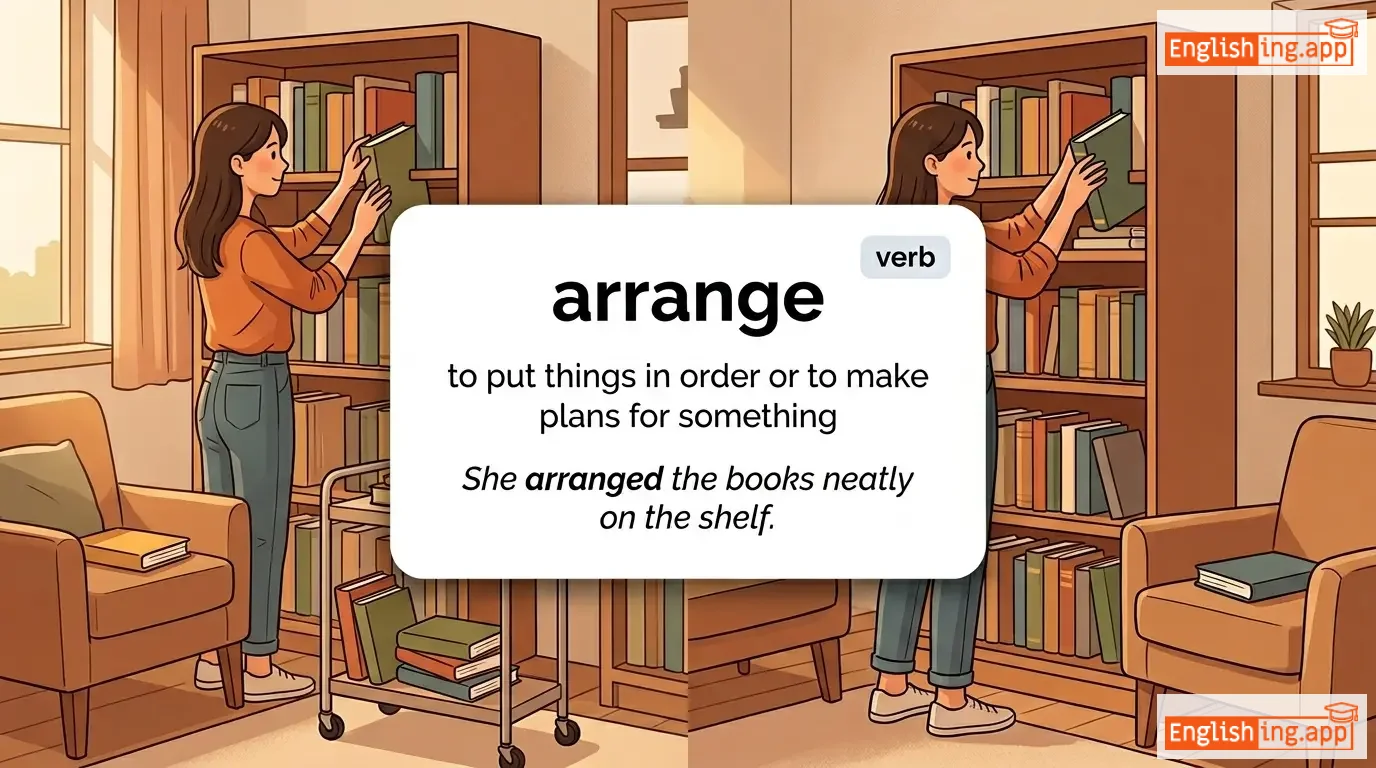
to put things in order or to make plans for something
••••••
|
She arranged the books neatly on the shelf.
tā ā rèn jié le shū běn zhuàng xiàng shūjiā shàng.
••••••
|
她把书本整齐地放在书架上。
Tā bǎ shūběn zhěngqí de fàng zài shūjià shàng.
••••••
|
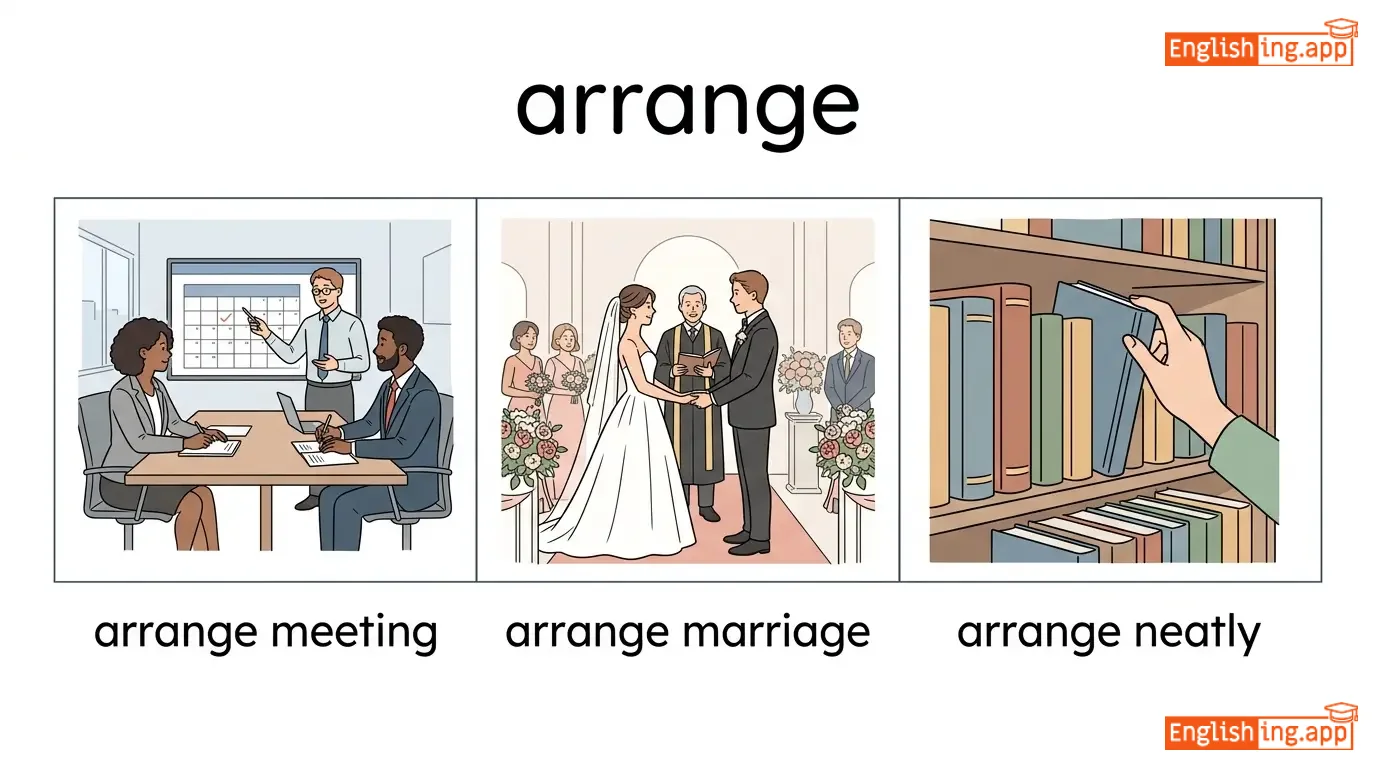
arrange a meeting
ā rèn jié yī cì huìyì
••••••
|
to plan and organize a meeting
••••••
|
安排一次会议
Ānpái yī cì huìyì
••••••
|
organize, plan, order, schedule, sort
••••••
|
disorganize, disorder
••••••
|
arrange meeting, arrange marriage, arrange neatly, arrange according to
••••••
|
Arrange 就是安排,像结婚一样,所有的事情都需要安排。
••••••
|
|
#371
📑
|
/əˈreɪndʒmənt/
noun
(安排)
••••••
|
|
安排, 组织
anpai, zuzhi
••••••
|
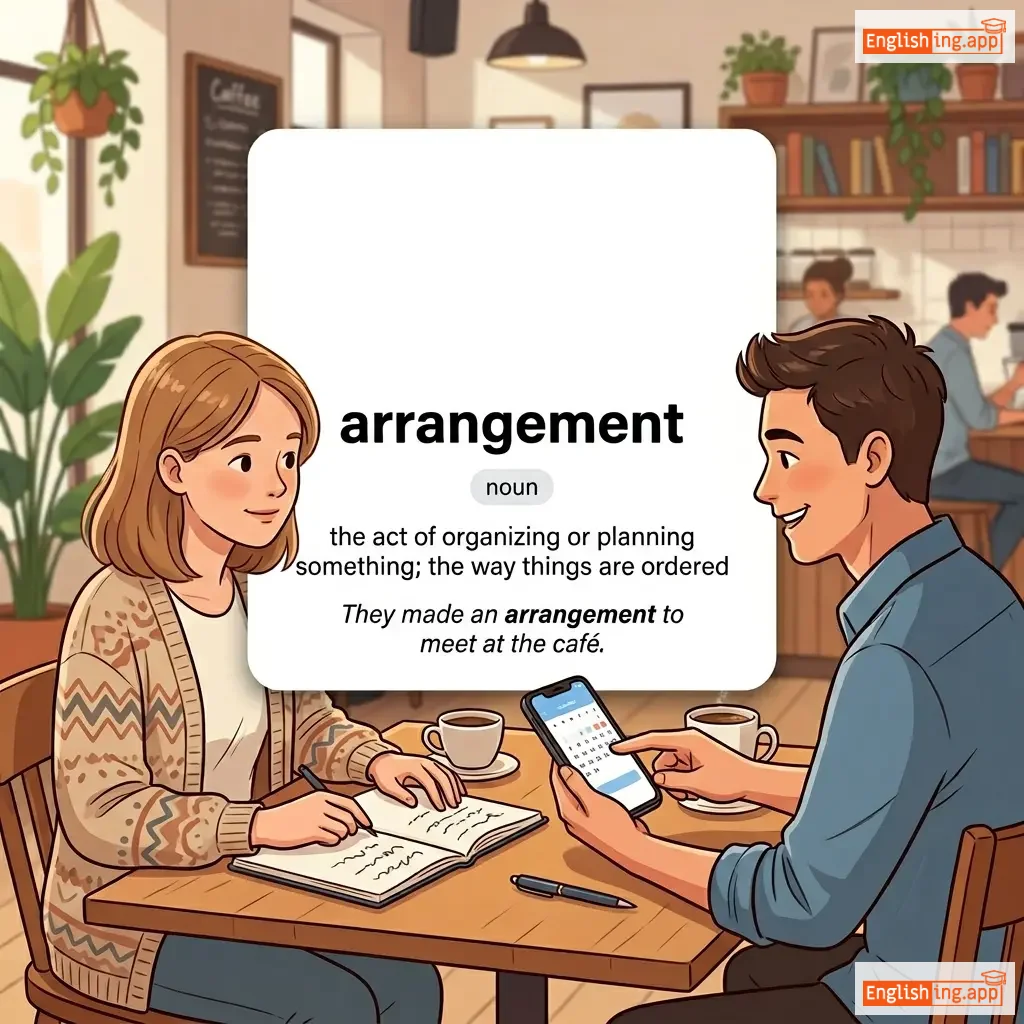
- •••••• | - •••••• | - •••••• | - •••••• |
the act of organizing or planning something; the way things are ordered
••••••
|
They made an arrangement to meet at the café. |
他们安排在咖啡馆见面。
Tamen anpai zai kafei guan jianmian.
••••••
|
come to an arrangement |
to reach an agreement
••••••
|
达成协议
dacheng xieyi
••••••
|
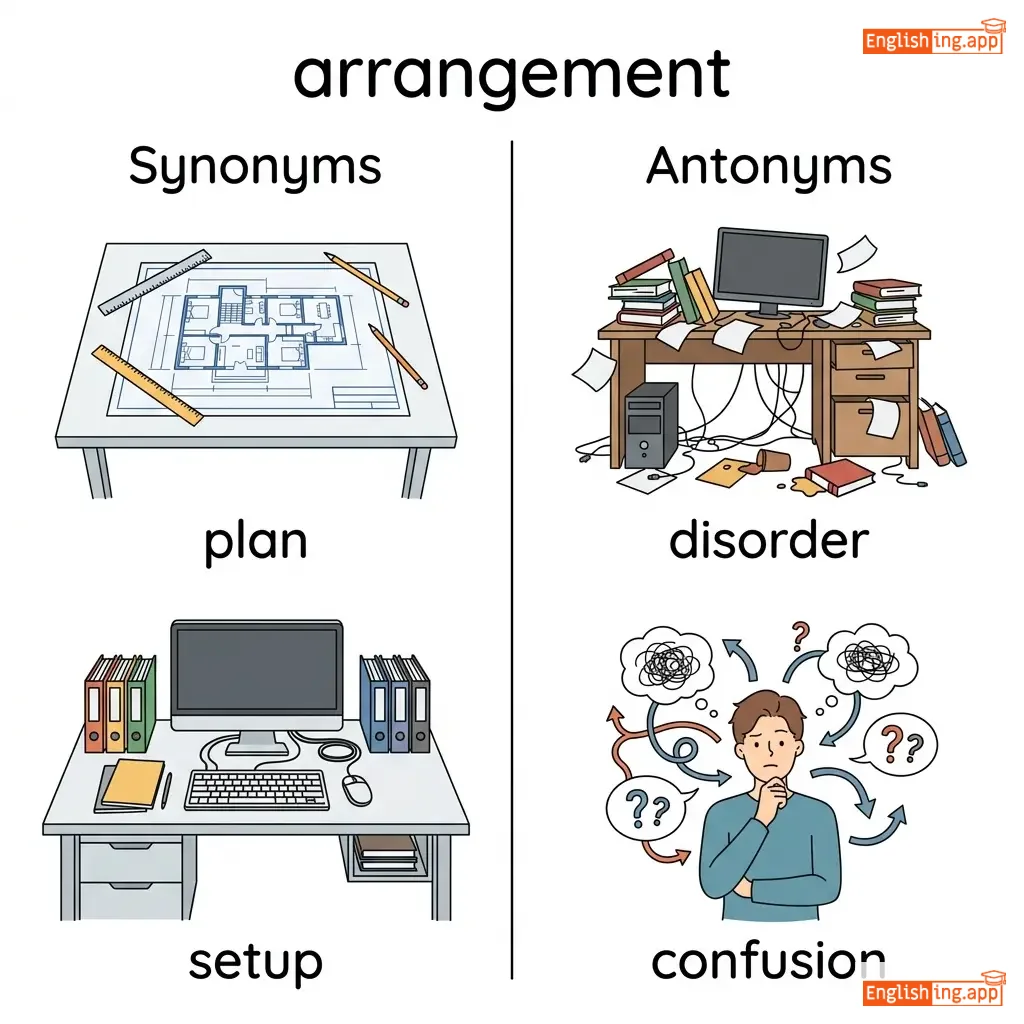
plan, setup, agreement, organization, order
••••••
|
disorder, confusion
••••••
|
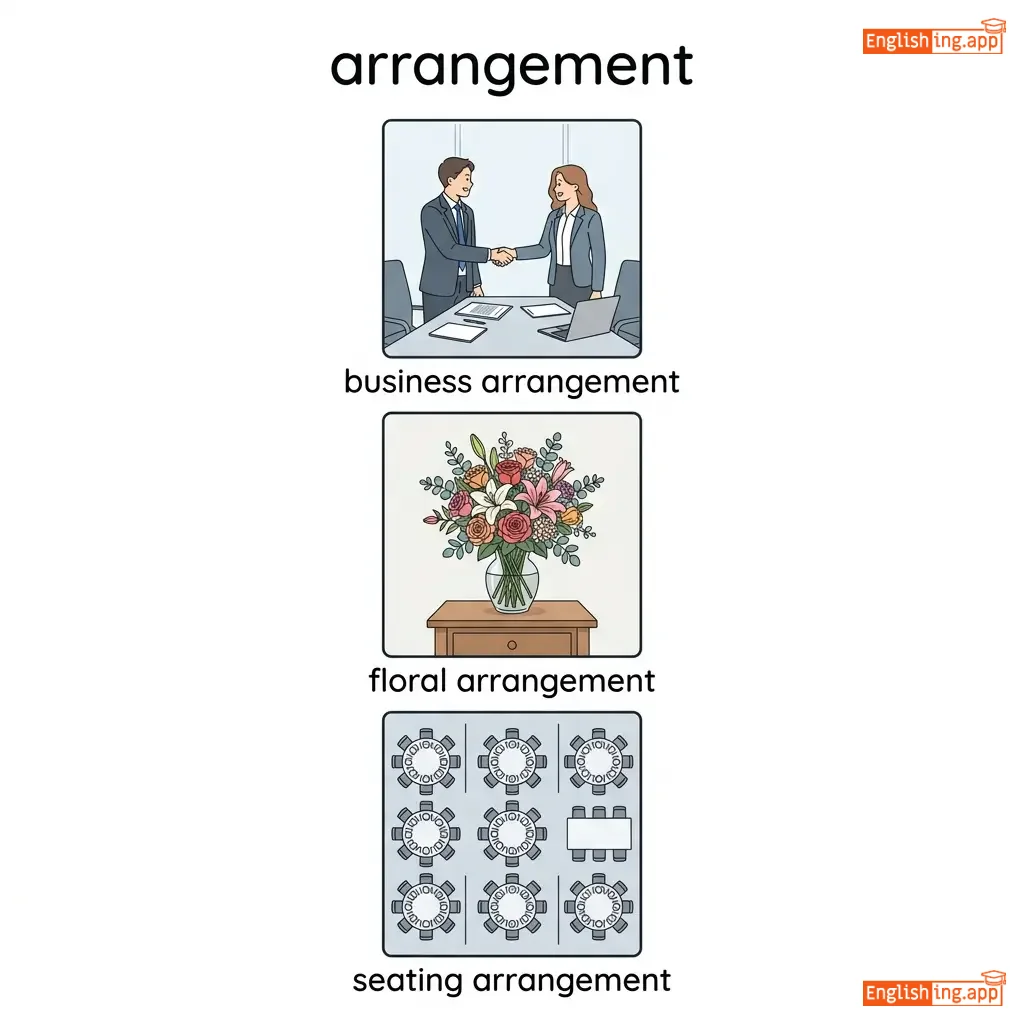
business arrangement, floral arrangement, seating arrangement, financial arrangement
••••••
|
Arrangement意味着安排,就像是花卉的安排一样。
••••••
|
|
#372
🌈
|
/əˈreɪ/
noun
(āruèi)
••••••
|
- •••••• |
数组,展示
shùzǔ, zhǎnshì
••••••
|
- •••••• | - •••••• | - •••••• | - •••••• |
an impressive display or arrangement of things
••••••
|
The shop displayed an array of colorful dresses.
商店展示了一排五颜六色的连衣裙。
••••••
|
商店展示了一场五颜六色的连衣裙展示。
Shāngdiàn zhǎnshì le yī chǎng wǔyánliùsè de liányīqún zhǎnshì.
••••••
|
an array of
一排
••••••
|
a large number or variety of something
••••••
|
一系列
yī xìliè
••••••
|
assortment, collection, range, display, lineup
••••••
|
scarcity, lack
••••••
|
array of options, array of stars, wide array, full array
••••••
|
Array 意味着有序的排列 — 在计算机中,数据被组织在数组中。
••••••
|
|
#373
🚓
|
/əˈrɛst/
verb
(àirèst)
••••••
|
|
逮捕
dàibǔ
••••••
|
arrested
àirèstèd
••••••
|
arrested
àirèstèd
••••••
|
arrests
àirèsts
••••••
|
arresting
àirèstíng
••••••
|
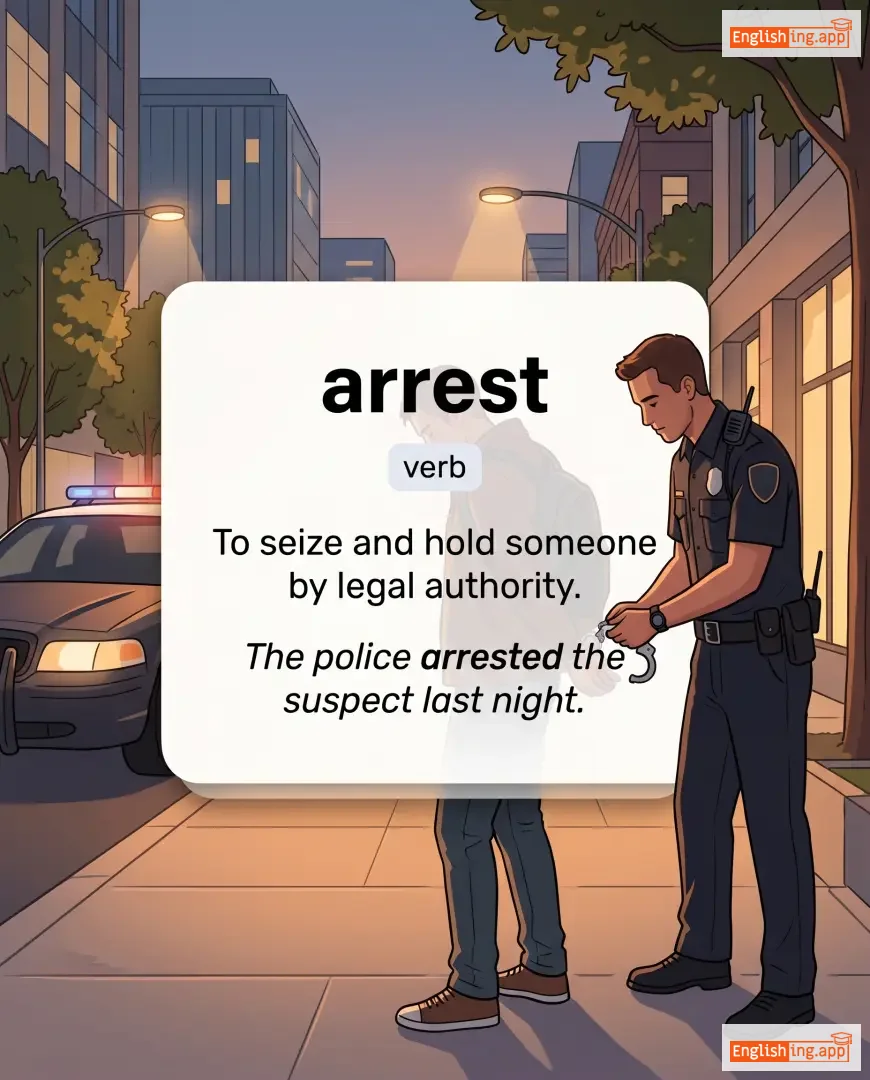
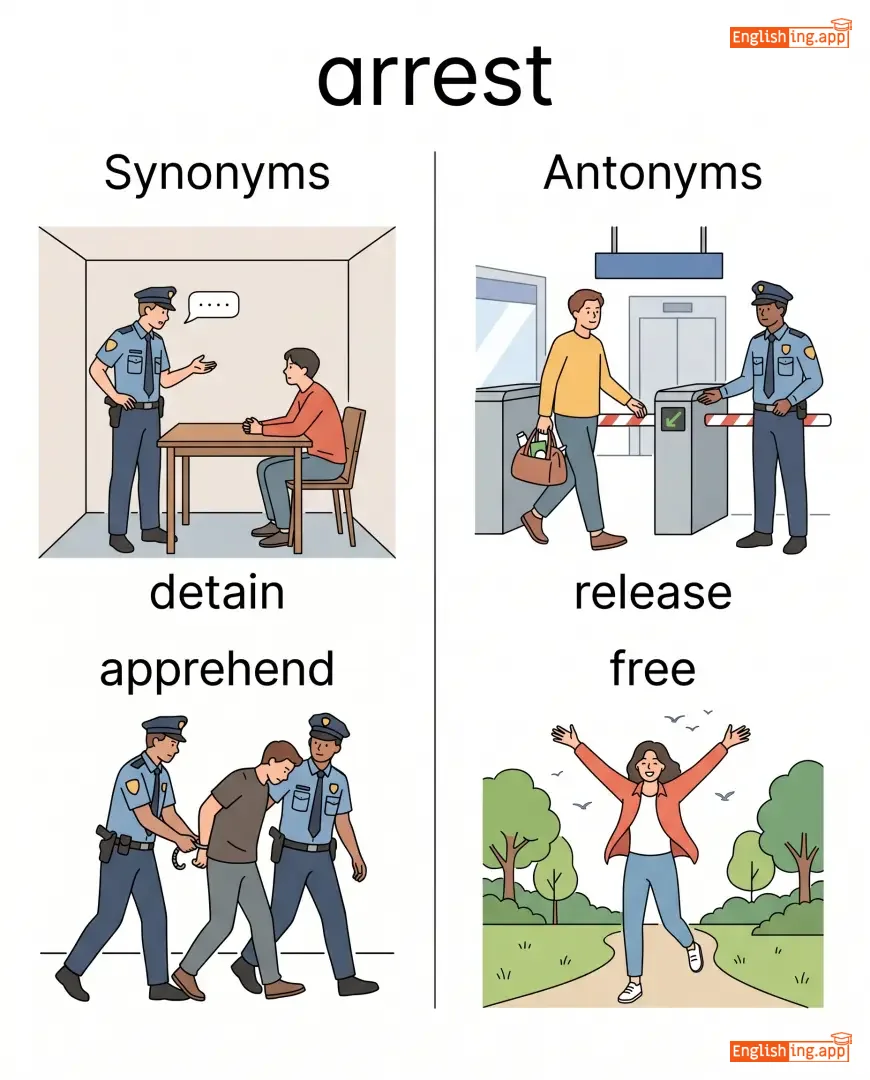
To seize and hold someone by legal authority.
••••••
|
The police arrested the suspect last night.
警察昨晚逮捕了嫌疑人。
••••••
|
警察昨晚逮捕了嫌疑人。
Jǐngchá zuówǎn dàibǔ le xiányí rén.
••••••
|
under arrest
被逮捕
••••••
|
In the custody of the police.
••••••
|
被逮捕
bèi dàibǔ
••••••
|
detain, apprehend, capture, seize, stop
••••••
|
release, free, liberate
••••••
|
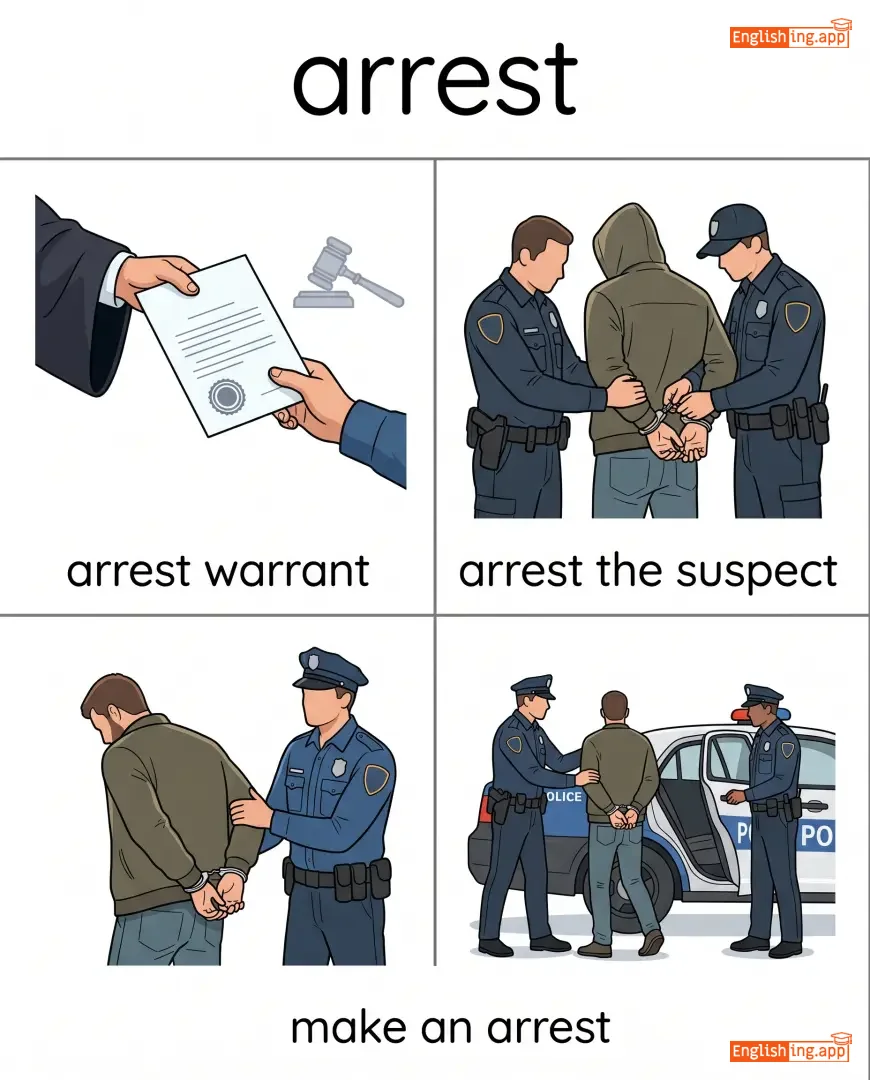
arrest warrant, arrest the suspect, make an arrest
••••••
|
Arrest 就是当你 Rest 不能再走,警察把你抓住了。
••••••
|
|
#374
🚉
|
/əˈraɪvəl/
noun
(ā rì wǎ ěr)
••••••
|
- •••••• |
到达
daoda
••••••
|
- •••••• | - •••••• | - •••••• | - •••••• |
The act of coming to a place, especially at the end of a journey.
••••••
|
The train's arrival was delayed by two hours. |
火车的到达晚了两个小时。
Huoche de daoda wanle liangge xiaoshi.
••••••
|
late arrival |
Someone or something arriving later than expected.
••••••
|
晚到
wan dao
••••••
|
appearance, coming, entry, advent, approach
••••••
|
departure, exit
••••••
|
arrival time, late arrival, arrival hall, flight arrival
••••••
|
到达就像'Arrive' — 想想火车的'到达'。
••••••
|
|
#375
🛬
|
/əˈraɪv/
verb
(āráiv)
••••••
|
|
到达
dàodá
••••••
|
arrived
āráivd
••••••
|
arrived
āráivd
••••••
|
arrives
āráivs
••••••
|
arriving
āráiɪng
••••••
|
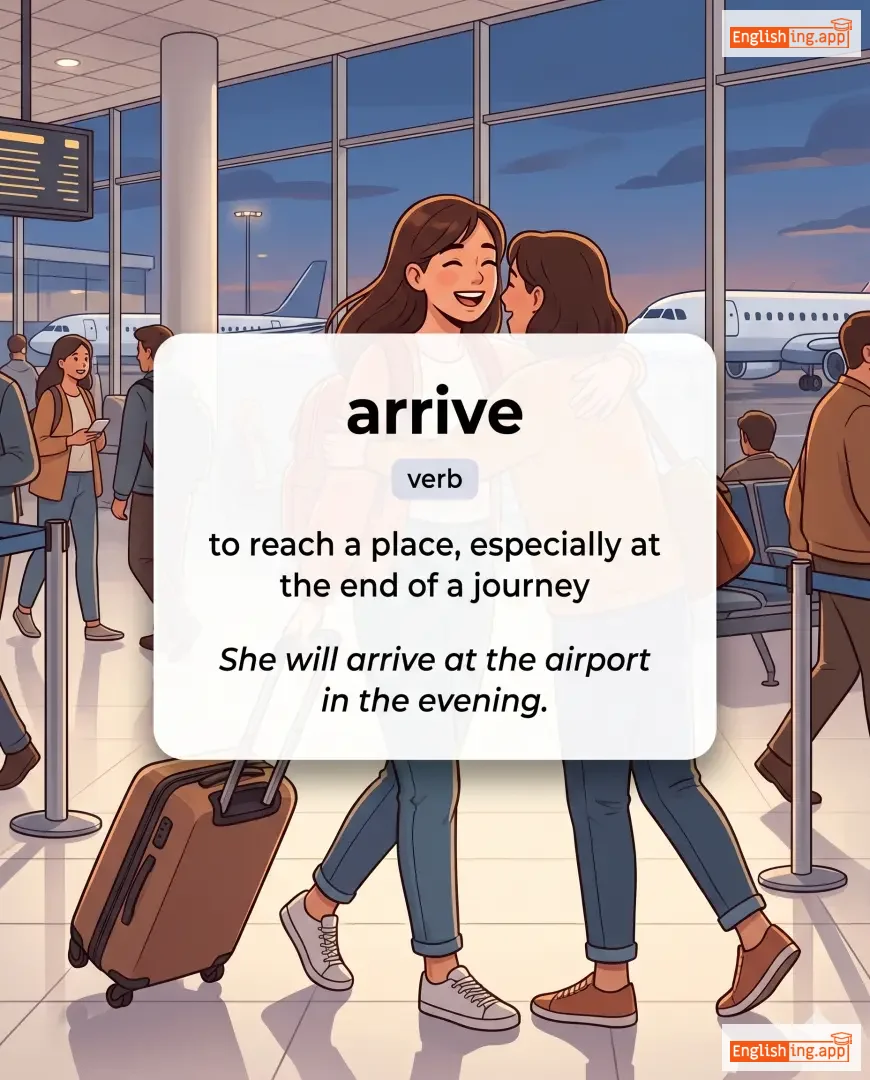
to reach a place, especially at the end of a journey
••••••
|
She will arrive at the airport in the evening.
她将在晚上到达机场。
••••••
|
她将在晚上到达机场。
Tā jiāng zài wǎnshàng dào dá jīchǎng.
••••••
|
arrive at a decision
做出决定
••••••
|
to reach a conclusion after consideration
••••••
|
做出决定
zuòchū juédìng
••••••
|
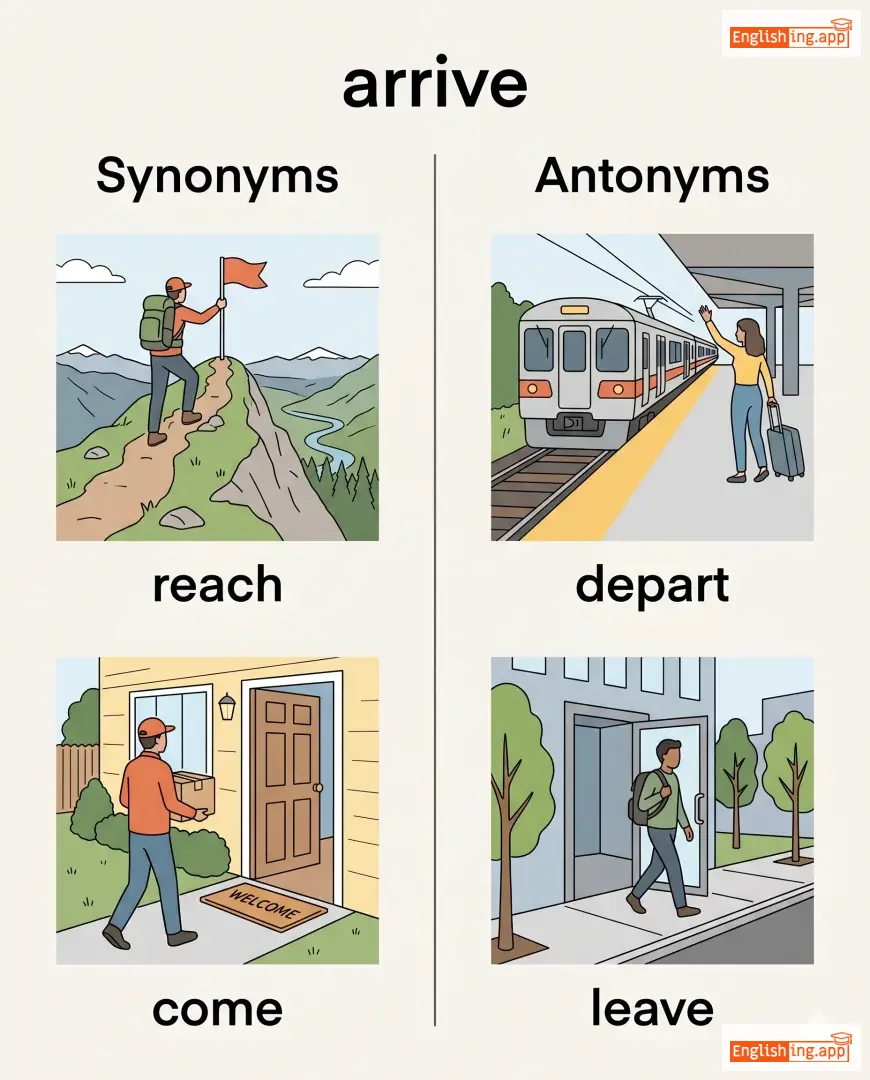
reach, come, appear, show up, land
••••••
|
depart, leave, go
••••••
|
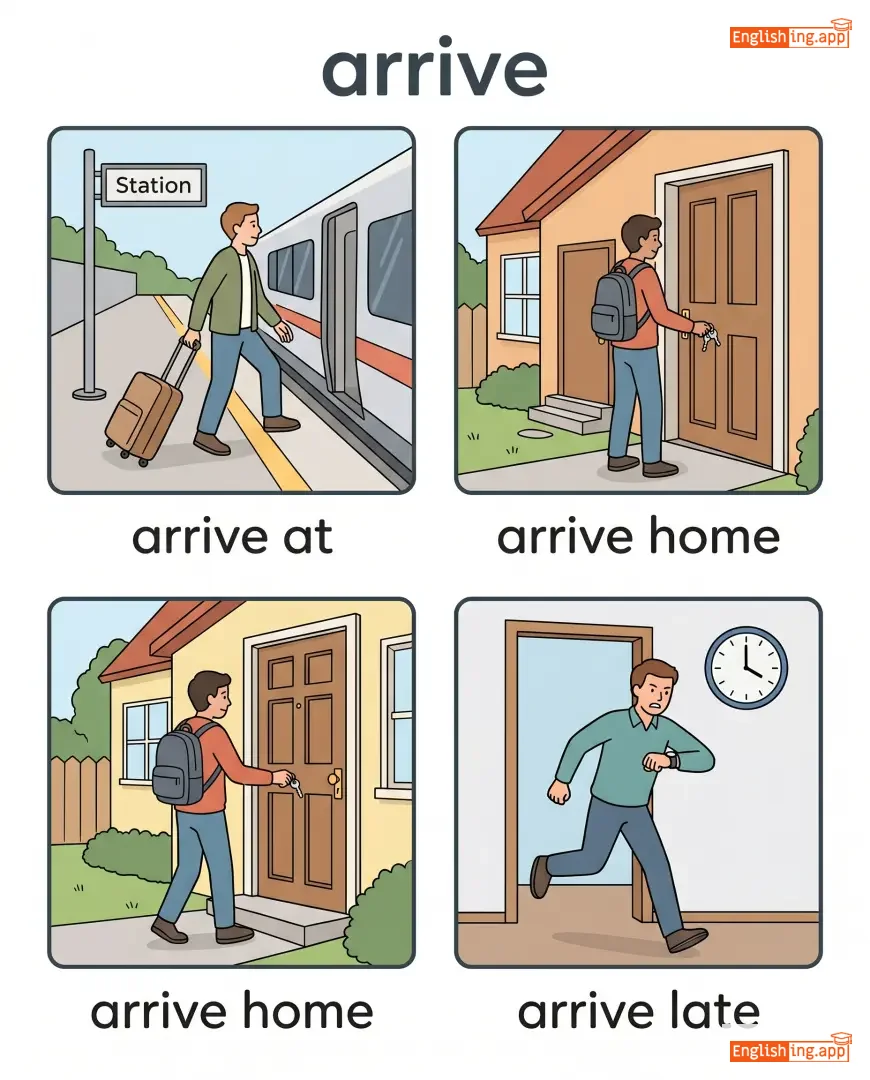
arrive at, arrive home, arrive late, arrive early
••••••
|
到达就像飞机到达机场。
••••••
|
|
#376
👑
|
/ˈærəɡənt/
adjective
••••••
|
- •••••• | - •••••• | - •••••• | - •••••• | - •••••• | - •••••• |
Having an exaggerated sense of one's own importance or abilities.
••••••
|
The arrogant manager dismissed the workers' complaints. |
- •••••• |
arrogant attitude |
A proud, condescending behavior or mindset.
••••••
|
- •••••• |
conceited, haughty, proud, self-important, overbearing
••••••
|
humble, modest
••••••
|
arrogant person, arrogant behavior, arrogant attitude
••••••
|
No •••••• |
|
#377
✋
|
/ˈærəˌɡeɪt/
verb
(eroget)
••••••
|
- •••••• |
不正当地索取
buzhengdang de suoqv
••••••
|
arrogated
errogated
••••••
|
arrogated
errogated
••••••
|
arrogates
errogates
••••••
|
arrogating
errogating
••••••
|
To claim or take something without justification.
••••••
|
The dictator arrogated all powers to himself.
独裁者把所有权力都据为己有。
••••••
|
独裁者不正当地把所有权力据为己有。
Dúcáizhě bù zhèngdàng de bǎ suǒyǒu quánlì jù wéi jǐ yǒu.
••••••
|
- •••••• | - •••••• | - •••••• |
seize, assume, appropriate, usurp
••••••
|
relinquish, surrender
••••••
|
arrogate power, arrogate authority, arrogate rights
••••••
|
Arrogate意味着'Arrow gate' —像通过一扇门(gate)不正当占有。
••••••
|
|
#378
🏹
|
/ˈæroʊ/
noun
(艾罗)
••••••
|
- •••••• |
箭
jian
••••••
|
- •••••• | - •••••• | - •••••• | - •••••• |
a thin, straight weapon with a pointed tip, shot from a bow
••••••
|
The hunter shot an arrow at the target. |
猎人向目标射出了一支箭。
Lièrén xiàng mùbiāo shè chūle yī zhī jiàn.
••••••
|
arrow of time |
the concept that time moves in only one direction, from past to future
••••••
|
时间的箭
shíjiān de jiàn
••••••
|
dart, shaft, bolt, missile, projectile
••••••
|
none, null
••••••
|
shoot an arrow, bow and arrow, arrow flight, arrow tip
••••••
|
箭意味着arrow — 记住英雄用弓射箭 🏹
••••••
|
|
#379
🎨
|
/ɑːrt/
noun
(艺术)
••••••
|
- •••••• |
艺术
yishu
••••••
|
- •••••• | - •••••• | - •••••• | - •••••• |
the expression or application of human creative skill and imagination
••••••
|
She studied art at the university. |
她在大学学习艺术。
Ta zai daxue xuexi yishu.
••••••
|
the art of |
the skill in doing something well
••••••
|
做...的艺术
zuo...de yishu
••••••
|
craft, creativity, skill, painting, expression
••••••
|
science, nature, reality
••••••
|
modern art, fine art, art gallery, art history
••••••
|
Art 是 🎨 - 艺术 (yishu) 是人类创造力的表达。
••••••
|
|
#380
🗣️
|
/ɑːrˈtɪkjʊlət/
verb/adjective
••••••
|
- •••••• | - •••••• |
articulated
••••••
|
articulated
••••••
|
articulates
••••••
|
articulating
••••••
|
to express thoughts or ideas clearly; having the ability to speak fluently and clearly
••••••
|
She was able to articulate her ideas during the meeting. |
- •••••• |
articulate a vision |
to clearly express or describe a goal or plan
••••••
|
- •••••• |
express, convey, enunciate, pronounce, clarify
••••••
|
mumble, mutter, unclear
••••••
|
articulate clearly, articulate ideas, articulate words, articulate speech
••••••
|
No •••••• |
|
#381
🤖
|
/ˌɑːrtɪˈfɪʃəl/
adjective
(ārtifīshì'ěr)
••••••
|
|
人造的
rénzào de
••••••
|
- •••••• | - •••••• | - •••••• | - •••••• |
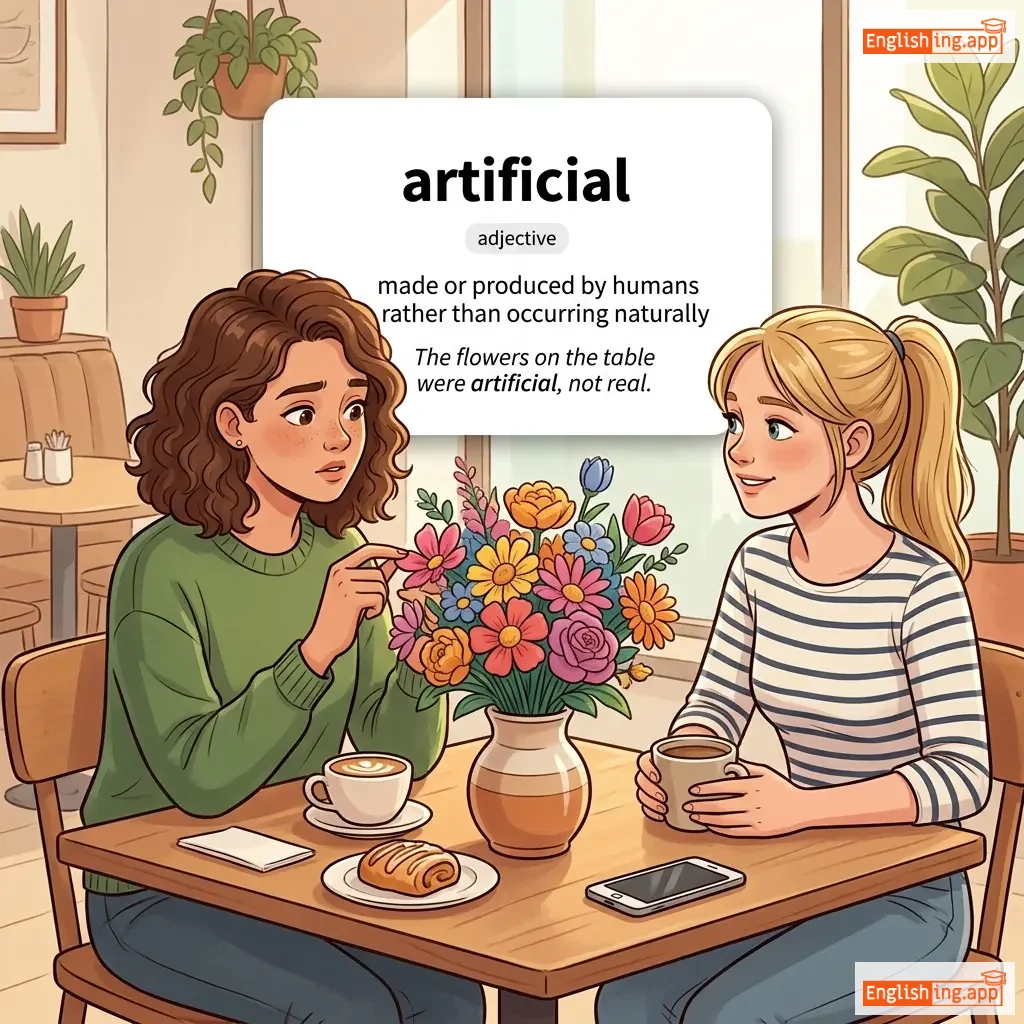
made or produced by humans rather than occurring naturally
••••••
|
The flowers on the table were artificial, not real.
桌子上的花是人造的,不是真的。
••••••
|
桌子上的花是人造的,不是真的。
Zhuōzi shàng de huā shì rénzào de, bù shì zhēn de.
••••••
|
artificial intelligence
人工智能
••••••
|
the simulation of human intelligence by machines
••••••
|
人工智能
rén gōng zhì néng
••••••
|
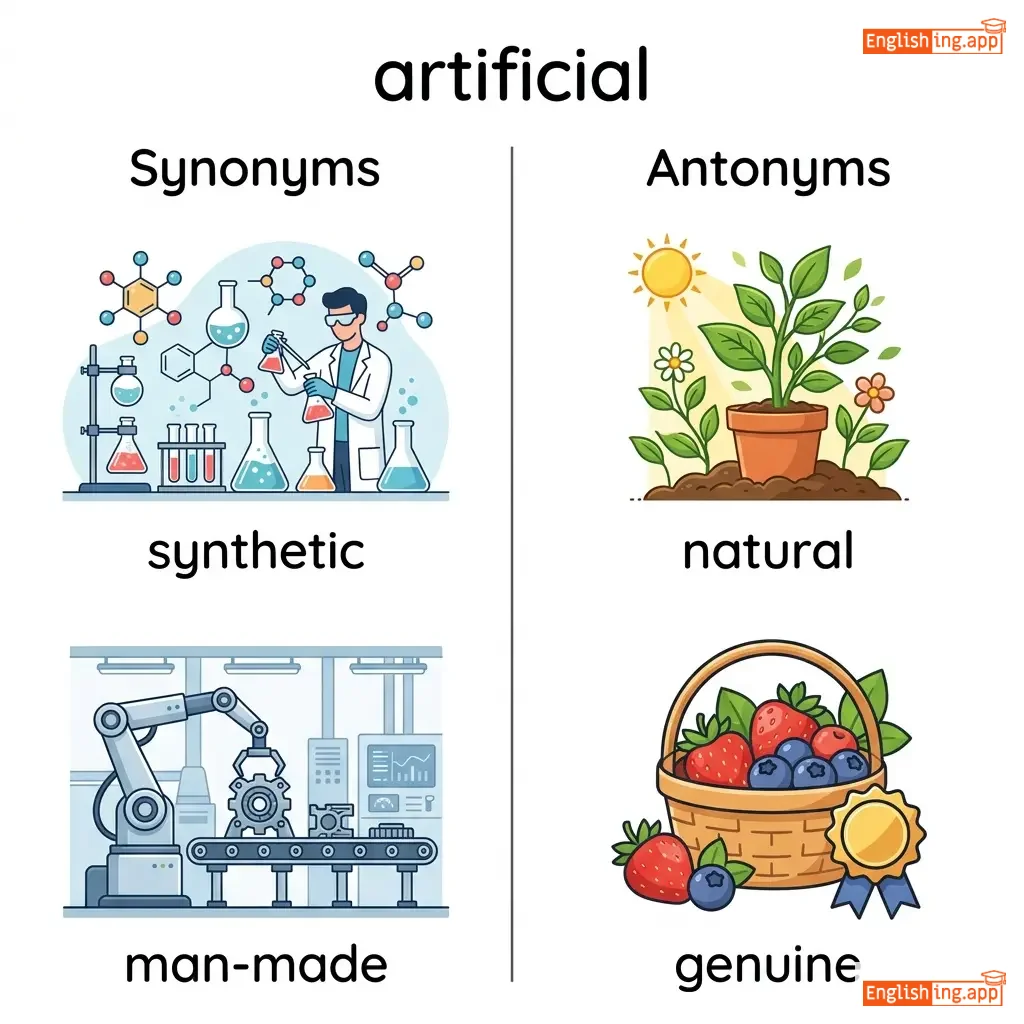
synthetic, man-made, fake, unnatural, imitation
••••••
|
natural, genuine, real
••••••
|
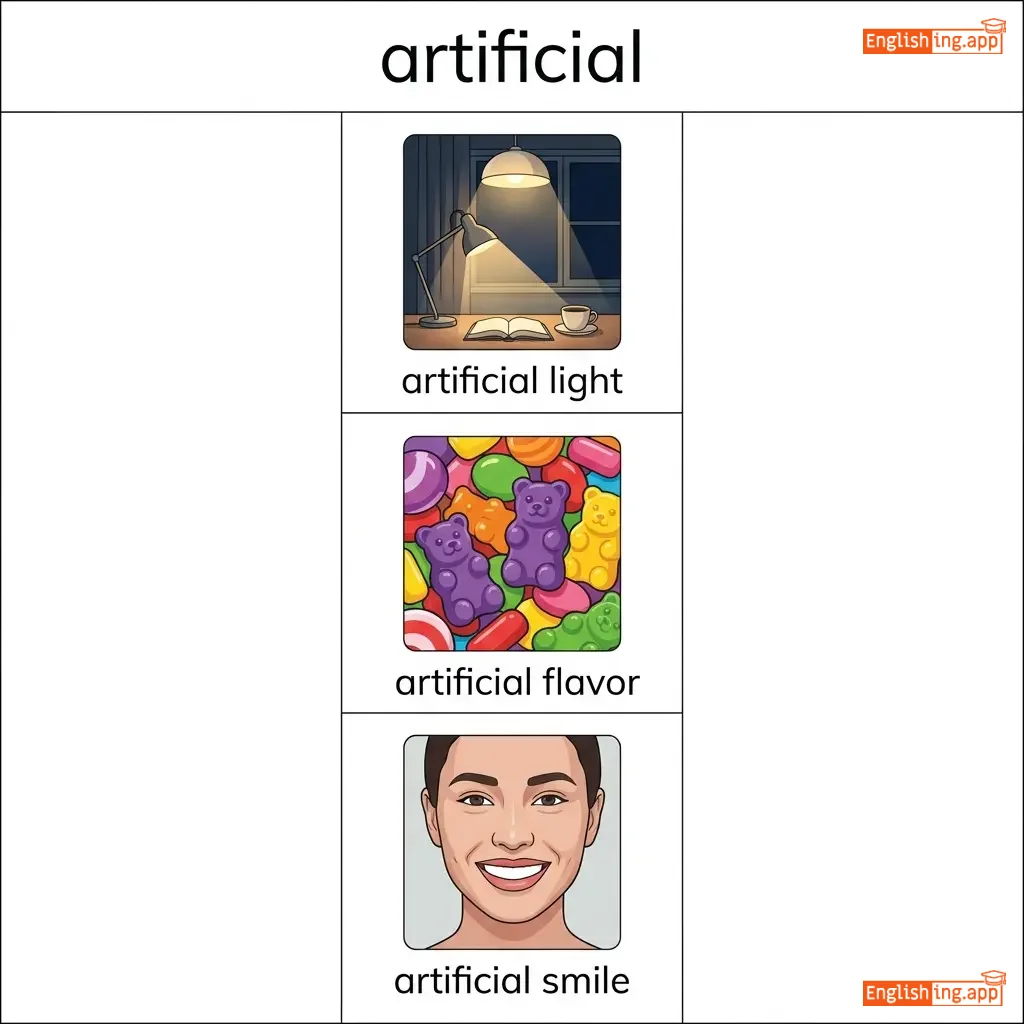
artificial light, artificial flavor, artificial smile, artificial limb
••••••
|
Artificial = 人造的, 记住 '由人类制作,所以下人工人工'
••••••
|
|
#382
👩🎨
|
/ˈɑːrtɪst/
noun
(艺术家)
••••••
|
- •••••• |
艺术家
yishujia
••••••
|
- •••••• | - •••••• | - •••••• | - •••••• |
a person who creates art, especially paintings or drawings
••••••
|
The artist painted a beautiful landscape.
艺术家画了一幅美丽的风景画。
••••••
|
艺术家画了一幅美丽的风景画。
Yìshùjiā huàle yī fú měilì de fēngjǐnghuà.
••••••
|
con artist
骗子艺术家
••••••
|
a person who deceives others by gaining their trust
••••••
|
骗子
piànzi
••••••
|
painter, creator, illustrator, designer, performer
••••••
|
amateur, layman
••••••
|
famous artist, talented artist, street artist, young artist
••••••
|
Artist 👩🎨 意思是艺术家 - 艺术家画画。 但是 Con artist 意思是骗子。
••••••
|
|
#383
🎭
|
/ɑːrˈtɪstɪk/
adjective
(艺术的)
••••••
|
- •••••• |
艺术的
yishu de
••••••
|
- •••••• | - •••••• | - •••••• | - •••••• |
having or revealing natural creative skill
••••••
|
She has an artistic sense of design.
她有艺术的设计感。
••••••
|
她有艺术的设计感。
Ta you yishu de sheji gan.
••••••
|
- •••••• | - •••••• | - •••••• |
creative, imaginative, aesthetic, inventive, expressive
••••••
|
unimaginative, uncreative
••••••
|
artistic talent, artistic ability, artistic expression, artistic design
••••••
|
艺术的 🎭 意味着艺术的 - 就像艺术中的创造性设计。
••••••
|
|
#384
🎨
|
/ˈɑːrtwɜːrk/
noun
(artwork)
••••••
|
- •••••• |
艺术品
yishupin
••••••
|
- •••••• | - •••••• | - •••••• | - •••••• |
a piece of art, such as a painting, sculpture, or drawing
••••••
|
The gallery displayed an impressive artwork by a local artist. |
画廊展示了一件本地艺术家创作的令人印象深刻的艺术品。
Hualang zhanshi le yi jian bendian yishujia chuangzuo de lingren yinxiang shenke de yishupin.
••••••
|
- •••••• | - •••••• | - •••••• |
painting, piece, creation, masterpiece
••••••
|
nothing, void
••••••
|
create artwork, display artwork, beautiful artwork
••••••
|
艺术品 (yishupin) 激发你去创作!
••••••
|
|
#385
🔄
|
/æz/
conjunction, adverb, preposition
(ā zī)
••••••
|
- •••••• |
作为
zuòwéi
••••••
|
- •••••• | - •••••• | - •••••• | - •••••• |
used to compare, to indicate the role or function of something, or to introduce clauses of time or reason
••••••
|
She works as a teacher. |
她作为一名教师工作。
Tā zuòwéi yī míng jiàoshī gōngzuò.
••••••
|
as soon as |
immediately when
••••••
|
一旦
yīdàn
••••••
|
like, while, since, because, when
••••••
|
unlike, different
••••••
|
as well, as soon as, as long as, as if
••••••
|
AS意味着'作为' — 就像'As a teacher' = 作为教师
••••••
|
|
#386
⛰️
|
/əˈsɛnd/
verb
(阿森德)
••••••
|
|
上升
shàngshēng
••••••
|
ascended
阿森德德
••••••
|
ascended
阿森德德
••••••
|
ascends
阿森德斯
••••••
|
ascending
阿森丁
••••••
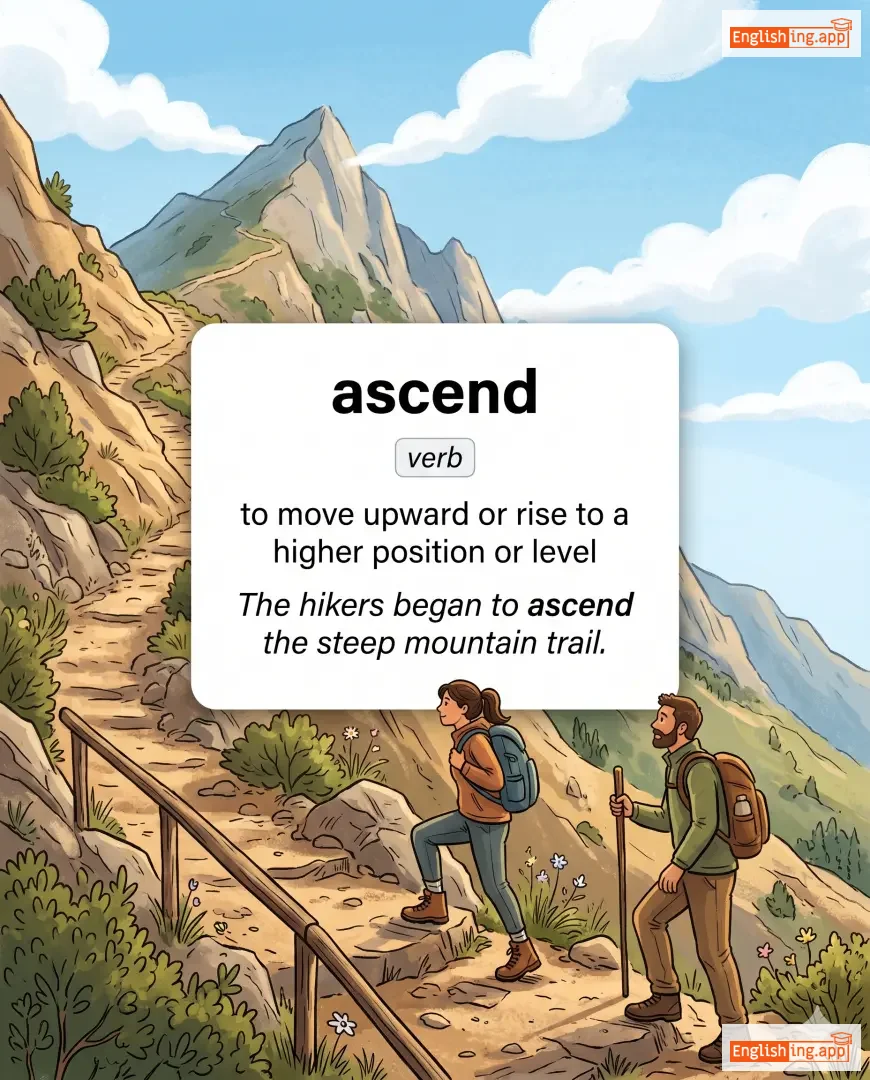
|
to move upward or rise to a higher position or level
••••••
|
The hikers began to ascend the steep mountain trail.
徒步旅行者开始攀登陡峭的山路。
••••••
|
徒步旅行者开始攀登陡峭的山路。
Túbù lǚxíng zhě kāishǐ pāndēng dǒuqiào de shānlù.
••••••
|
ascend to power
登上权力
••••••
|
to rise to a position of authority or leadership
••••••
|
登上权力
Dēng shàng quánlì
••••••
|
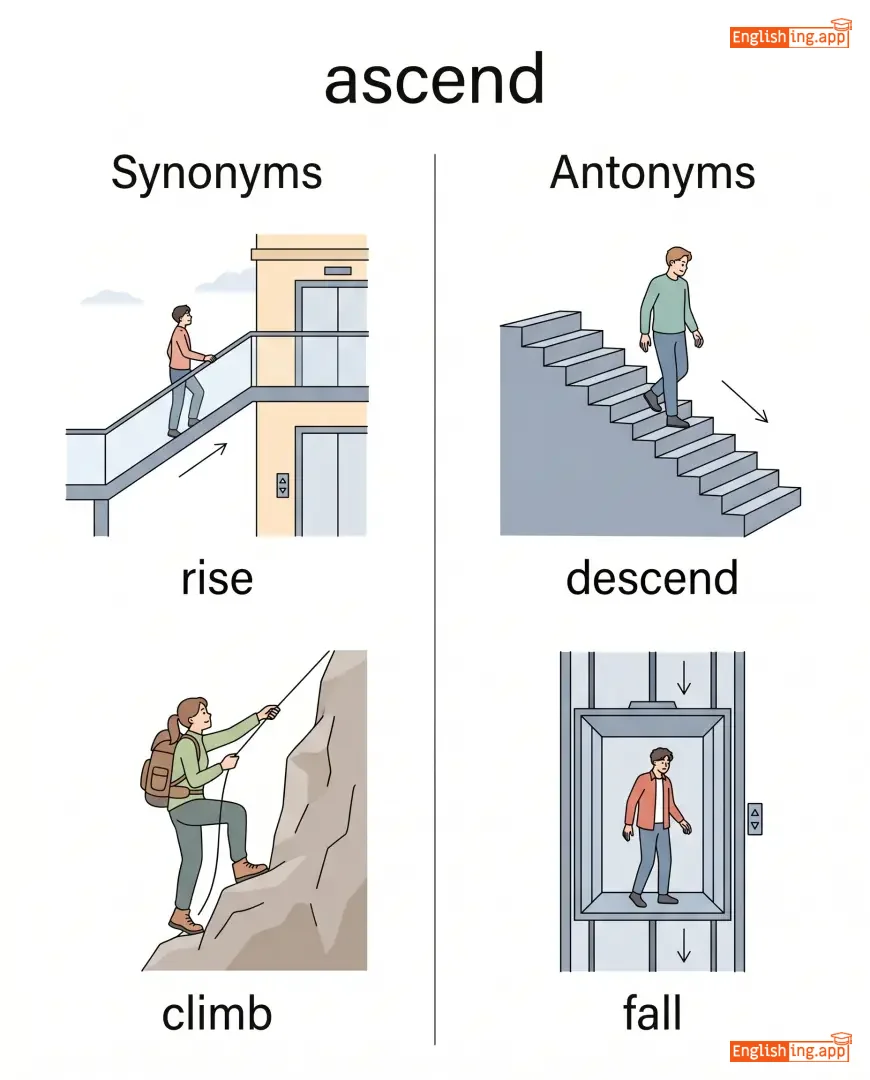
rise, climb, soar, mount, escalate
••••••
|
descend, fall, drop
••••••
|
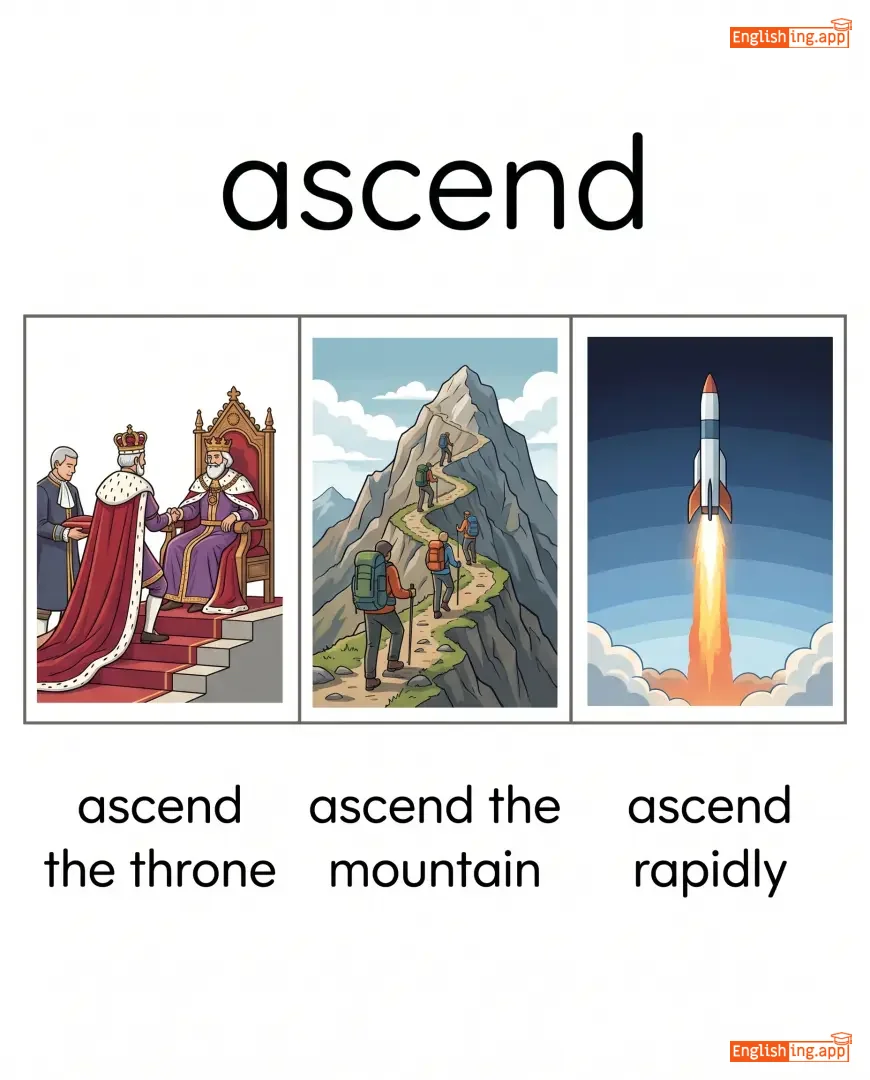
ascend the throne, ascend the mountain, ascend rapidly
••••••
|
Ascend意味着上升 - 想象飞机正在升空。
••••••
|
|
#387
🔍
|
/ˌæs.ərˈteɪn/
verb
(艾瑟泰恩)
••••••
|
|
查明, 确定
chá míng, què dìng
••••••
|
ascertained
艾瑟泰恩德
••••••
|
ascertained
艾瑟泰恩德
••••••
|
ascertains
艾瑟泰恩斯
••••••
|
ascertaining
艾瑟泰宁
••••••
|
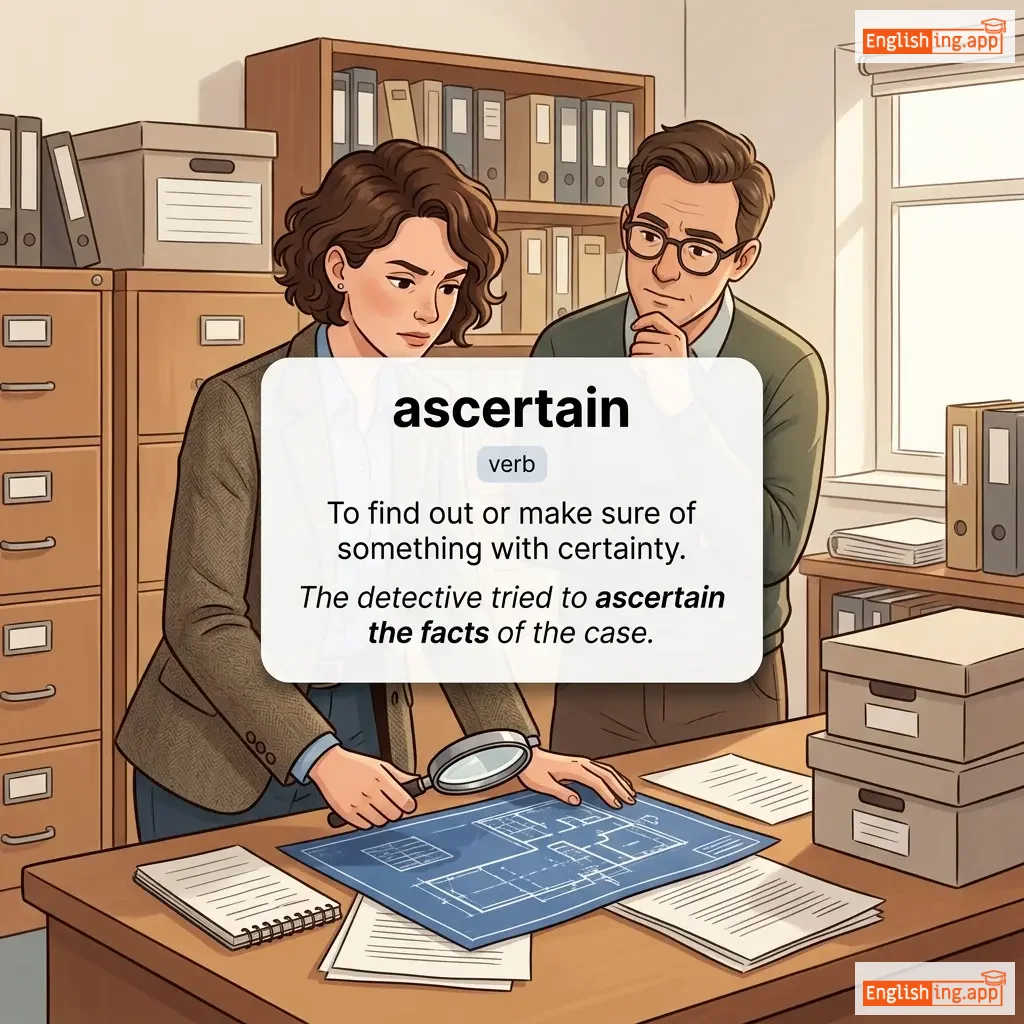
To find out or make sure of something with certainty.
••••••
|
The detective tried to ascertain the facts of the case.
侦探试图查明案件的事实。
••••••
|
侦探试图查明案件的事实。
Zhēntàn shìtú chá míng ànjiàn de shìshí.
••••••
|
ascertain the truth
查明真相
••••••
|
To discover what is true with certainty.
••••••
|
查明真相
Chá míng zhēnxiàng
••••••
|
determine, discover, verify, confirm, establish
••••••
|
ignore, overlook, neglect
••••••
|
ascertain the facts, ascertain the cause, ascertain whether, ascertain identity
••••••
|
通过查明真相来确认事实的正确性。
••••••
|
|
#388
🌋
|
/æʃ/
noun
(æʃ)
••••••
|
- •••••• |
灰烬
huī jìn
••••••
|
- •••••• | - •••••• | - •••••• | - •••••• |
the powdery residue left after the burning of a substance
••••••
|
After the fire, only ash remained of the house. |
火灾过后,只有房子的灰烬留下。
huǒzāi guò hòu, zhǐ yǒu fángzi de huī jìn liúxià.
••••••
|
rise from the ashes |
to recover or rebuild after destruction or failure
••••••
|
浴火重生
yù huǒ chóng shēng
••••••
|
cinder, dust, residue, remains, soot
••••••
|
substance, matter
••••••
|
ash cloud, ash tray, volcanic ash, turn to ash
••••••
|
Ash 意味着灰烬 — ‘火灾后什么都不剩,只有灰烬’ 🔥
••••••
|
|
#389
😳
|
/əˈʃeɪmd/
adjective
(āshēmd)
••••••
|
- •••••• |
羞愧
xiūkuì
••••••
|
- •••••• | - •••••• | - •••••• | - •••••• |
feeling embarrassed or guilty because of one's actions
••••••
|
He was ashamed of his poor performance. |
他为自己的糟糕表现感到羞愧。
Tā wèi zìjǐ de zāogāo biǎoxiàn gǎndào xiūkuì.
••••••
|
- •••••• | - •••••• | - •••••• |
embarrassed, guilty, humiliated, mortified
••••••
|
proud, unashamed, confident, shameless
••••••
|
feel ashamed, deeply ashamed, ashamed of yourself
••••••
|
羞愧 (xiūkuì) 就像羞耻 (xiūchǐ),意味着为自己的行为感到羞耻。
••••••
|
|
#390
➡️
|
/əˈsaɪd/
adverb, noun
(àsàidè)
••••••
|
- •••••• |
一边
yī biān
••••••
|
- •••••• | - •••••• | - •••••• | - •••••• |
to or on one side; a remark not intended for everyone
••••••
|
He stepped aside to let her pass.
他让到一边让她过去。
••••••
|
他让到一边让她过去。
Tā ràng dào yī biān ràng tā guòqù.
••••••
|
put aside
把...放一边
••••••
|
to save or reserve something
••••••
|
把...放一边
bǎ... fàng yī biān
••••••
|
apart, away, to the side, remark
••••••
|
center, middle
••••••
|
step aside, put aside, aside from
••••••
|
Aside 意味着一边 — 记住 '把它放一边'。
••••••
|
|
#391
❓
|
/æsk/
verb
(ask)
••••••
|
- •••••• |
询问
xunwen
••••••
|
asked
asked
••••••
|
asked
asked
••••••
|
asks
asks
••••••
|
asking
asking
••••••
|
to request information or seek an answer
••••••
|
She asked him about his new job.
She asked him about his new job.
••••••
|
她问他关于新工作的事情。
Ta wen ta guanyu xin gongzuo de shiqing.
••••••
|
ask for trouble
ask for trouble
••••••
|
to behave in a way that is likely to cause problems
••••••
|
自找麻烦
zizhao mafan
••••••
|
inquire, request, question, demand, seek
••••••
|
answer, respond
••••••
|
ask a question, ask for help, ask politely
••••••
|
Ask 代表询问 - 就像在课堂上提出问题来获取答案。
••••••
|
|
#392
😴
|
/əˈsliːp/
adjective
(ā sī lǐ pǔ)
••••••
|
- •••••• |
熟睡
shúshuì
••••••
|
- •••••• | - •••••• | - •••••• | - •••••• |
in a state of sleep
••••••
|
The baby is fast asleep. |
宝宝正在熟睡。
Bǎobǎo zhèngzài shúshuì.
••••••
|
fall asleep |
to begin sleeping
••••••
|
入睡
rùshuì
••••••
|
sleeping, dozing, resting, napping
••••••
|
awake, alert
••••••
|
fast asleep, fall asleep, sound asleep
••••••
|
Asleep 就是熟睡 — 记住'Sleep'意味着睡觉。
••••••
|
|
#393
🔍
|
/ˈæs.pekt/
noun
(āsīpèkè)
••••••
|
- •••••• |
方面
fāngmiàn
••••••
|
- •••••• | - •••••• | - •••••• | - •••••• |
A particular part, feature, or view of something.
••••••
|
One important aspect of health is regular exercise. |
健康的一个重要方面是规律运动。
Jiànkāng de yīgè zhòngyào fāngmiàn shì guīlǜ yùndòng.
••••••
|
in every aspect |
in all parts or respects
••••••
|
在各个方面
zài gègè fāngmiàn
••••••
|
feature, element, angle, facet, perspective
••••••
|
whole, entirety, totality
••••••
|
important aspect, key aspect, in every aspect, different aspect
••••••
|
方面就像是观察一个事物的角度或视角。
••••••
|
|
#394
🚀
|
/ˌæspəˈreɪʃən/
noun
(阿斯皮雷申)
••••••
|
|
抱负
baofu
••••••
|
- •••••• | - •••••• | - •••••• | - •••••• |
a strong desire to achieve something; ambition
••••••
|
Her aspiration is to become a doctor. |
她的抱负是成为一名医生。
Ta de baofu shi chengwei yi ming yisheng.
••••••
|
high aspirations |
lofty ambitions or goals
••••••
|
高远抱负
gaoyuan baofu
••••••
|
ambition, goal, aim, desire, dream
••••••
|
apathy, indifference
••••••
|
career aspiration, life aspiration, aspiration for success, high aspiration
••••••
|
Aspiration意味着抱负 — 当我们有抱负时,抱负就会更强烈。
••••••
|
|
#395
🌟
|
/əˈspaɪər/
verb
(阿斯派尔)
••••••
|
- •••••• |
渴望
kewang
••••••
|
aspired
阿斯派尔德
••••••
|
aspired
阿斯派尔德
••••••
|
aspires
阿斯派尔斯
••••••
|
aspiring
阿斯派尔英
••••••
|
to have a strong desire to achieve something
••••••
|
Many students aspire to study abroad.
许多学生渴望去国外学习。
••••••
|
许多学生渴望去国外学习。
Xuduo xuesheng kewang qu guowai xuexi.
••••••
|
aspire to greatness
渴望伟大
••••••
|
to aim for significant achievement
••••••
|
渴望伟大
kewang weida
••••••
|
desire, aim, hope, strive, long
••••••
|
doubt, neglect, avoid
••••••
|
aspire to, aspire for success, aspire higher, aspire towards
••••••
|
Aspire 意味着追求伟大 — 就像那些渴望去国外学习的学生一样。
••••••
|
Vocabulary Quiz
Test your vocabulary by matching words with their translations or meanings.
Login to take the quiz
Comments (0)
Share your thoughts and join the discussion.
Join the discussion by logging in
Login to CommentNo comments yet
Be the first to share your thoughts!