



Swipe left or right, or use the buttons. Tap image to zoom.
例句翻译
单词
Lesson 32Lesson 32 - 遮罩切换
|
表情符号
|
单词 | Images | 翻译 | 过去时 | 过去分词 | 第三人称单数 | 动名词 | 含义 | 例句 | 例句翻译 | 示例表达 | 示例表达含义 | 示例表达翻译 | 同义词 | 反义词 | 搭配词 | 助记符 |
|---|---|---|---|---|---|---|---|---|---|---|---|---|---|---|---|---|---|
|
#1498
⬇️
|
/dɪˈsɛnd/
verb
••••••
|
- •••••• | - •••••• |
descended
••••••
|
descended
••••••
|
descends
••••••
|
descending
••••••
|
To move or fall downward; to come or go down from a higher place.
••••••
|
The hikers descended the steep mountain path. |
- •••••• |
descend into chaos |
To fall into disorder or confusion
••••••
|
- •••••• |
drop, fall, decline, lower, sink
••••••
|
ascend, rise, climb
••••••
|
descend slowly, descend rapidly, descend into
••••••
|
No •••••• |
|
#1499
⛰️
|
/dɪˈsɛnt/
noun
(dɪˈsɛnt)
••••••
|
- •••••• |
下降 / 血统
xiàjiàng / xuètǒng
••••••
|
- •••••• | - •••••• | - •••••• | - •••••• |
the action of moving downward, falling, or dropping; ancestry or origin
••••••
|
The climbers began their descent from the mountain peak. |
登山者从山顶开始下降。
Dēngshān zhě cóng shāndǐng kāishǐ xiàjiàng.
••••••
|
descent into chaos |
a situation deteriorating into disorder or confusion
••••••
|
进入混乱
jìnrù hùnluàn
••••••
|
decline, drop, fall, ancestry, lineage
••••••
|
ascent, rise, progress
••••••
|
rapid descent, steep descent, descent into, descent from
••••••
|
Descent意味着下降 - 记住descent = down sent (向下发送)
••••••
|
|
#1500
📝
|
/dɪˈskraɪb/
verb
(dɪˈskraɪb)
••••••
|
- •••••• |
描述
miáoshù
••••••
|
described
dɪˈskraɪbd
••••••
|
described
dɪˈskraɪbd
••••••
|
describes
dɪˈskraɪbs
••••••
|
describing
dɪˈskraɪbɪŋ
••••••
|
to give an account of something in words, including details
••••••
|
She described the scene vividly.
她生动地描述了场景。
••••••
|
她生动地描述了场景。
Tā shēngdòng de miáoshù le chǎngjǐng.
••••••
|
describe in detail
详细描述
••••••
|
to explain with thorough information
••••••
|
详细描述
xiángxì miáoshù
••••••
|
explain, portray, depict, illustrate, narrate
••••••
|
confuse, obscure, distort
••••••
|
describe briefly, describe fully, describe process, describe situation
••••••
|
描述在中文里就是'miáoshù',类似于详细描述场景。
••••••
|
|
#1501
📝
|
/dɪˈskrɪpʃən/
noun
(dɪsˈkrɪpʃən)
••••••
|
|
描述
miaoshu
••••••
|
- •••••• | - •••••• | - •••••• | - •••••• |
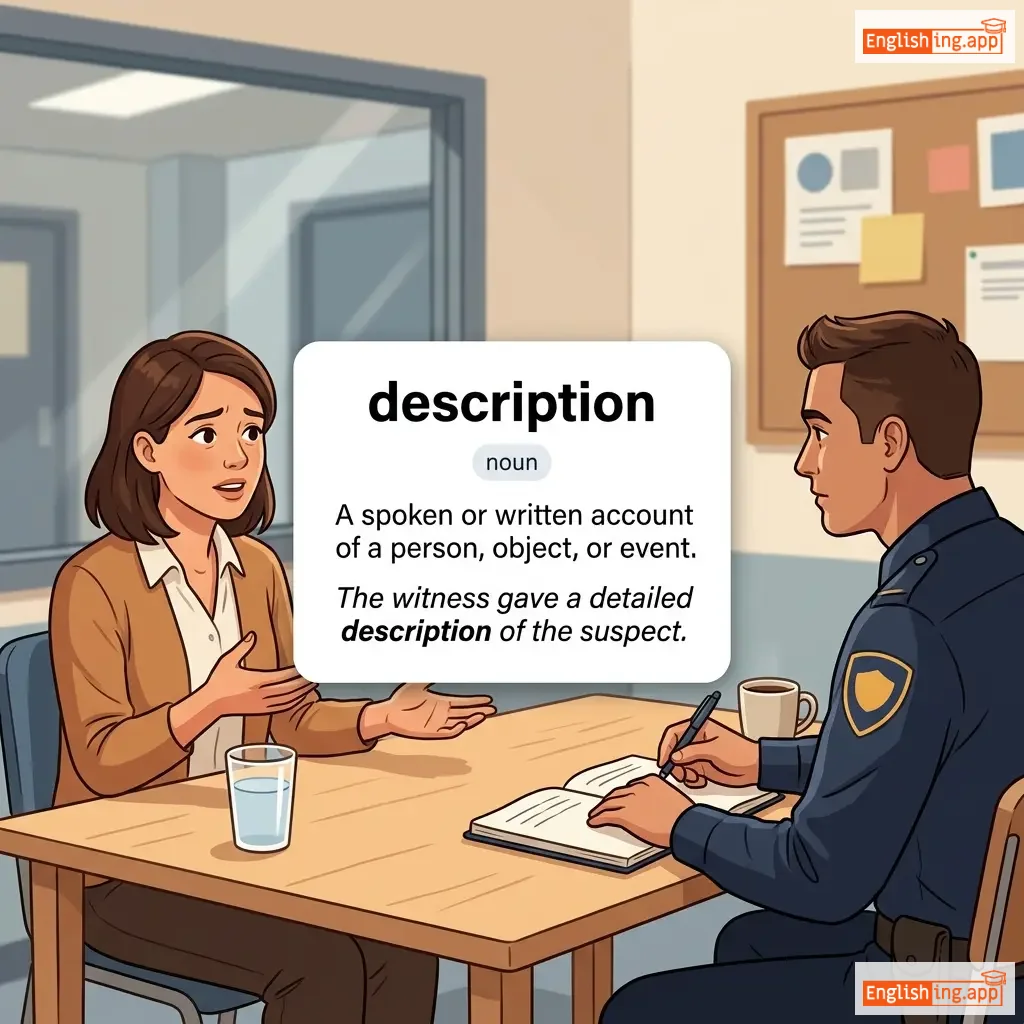
A spoken or written account of a person, object, or event.
••••••
|
The witness gave a detailed description of the suspect. |
目击者详细描述了嫌疑人。
Mùjī zhě xiángxì miáoshùle xiányí rén.
••••••
|
beyond description |
Too great or extreme to be described.
••••••
|
无法描述
wúfǎ miáoshù
••••••
|
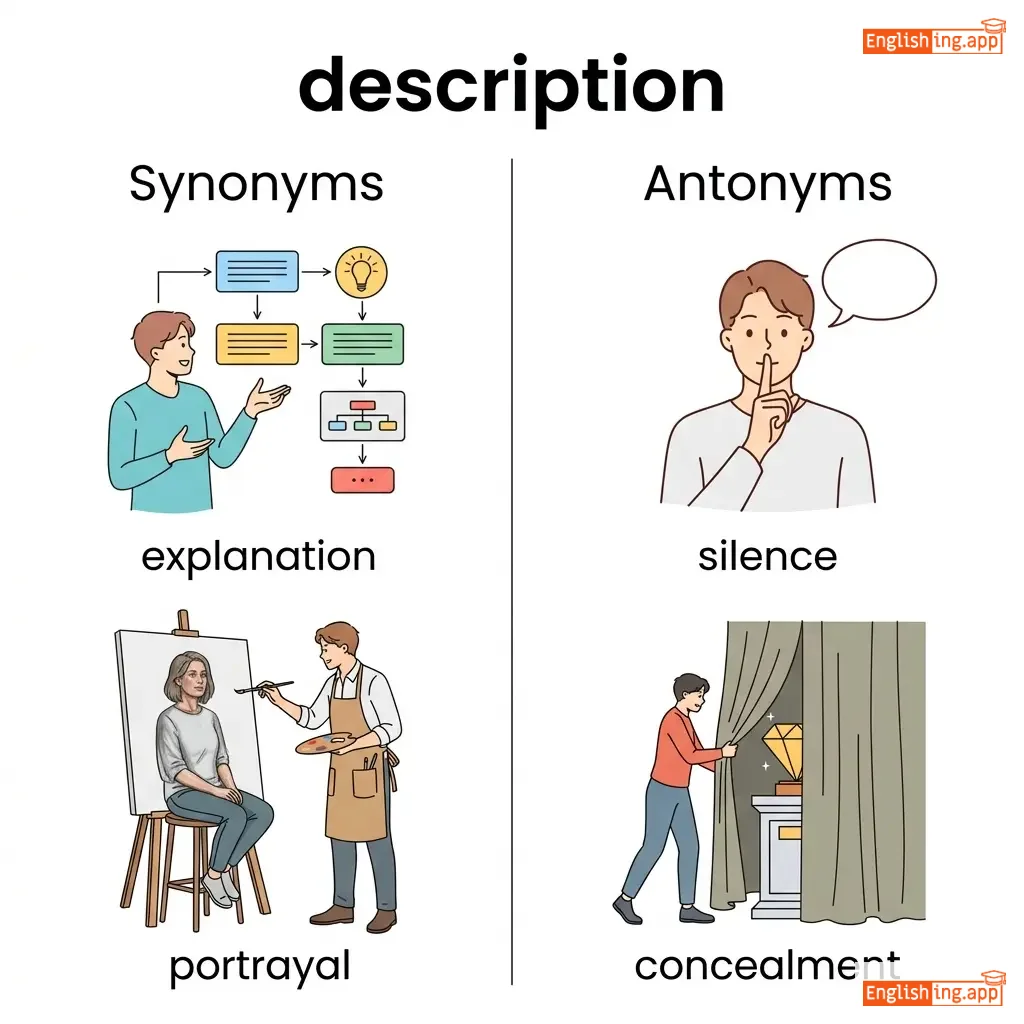
explanation, portrayal, depiction, account, representation
••••••
|
silence, concealment
••••••
|
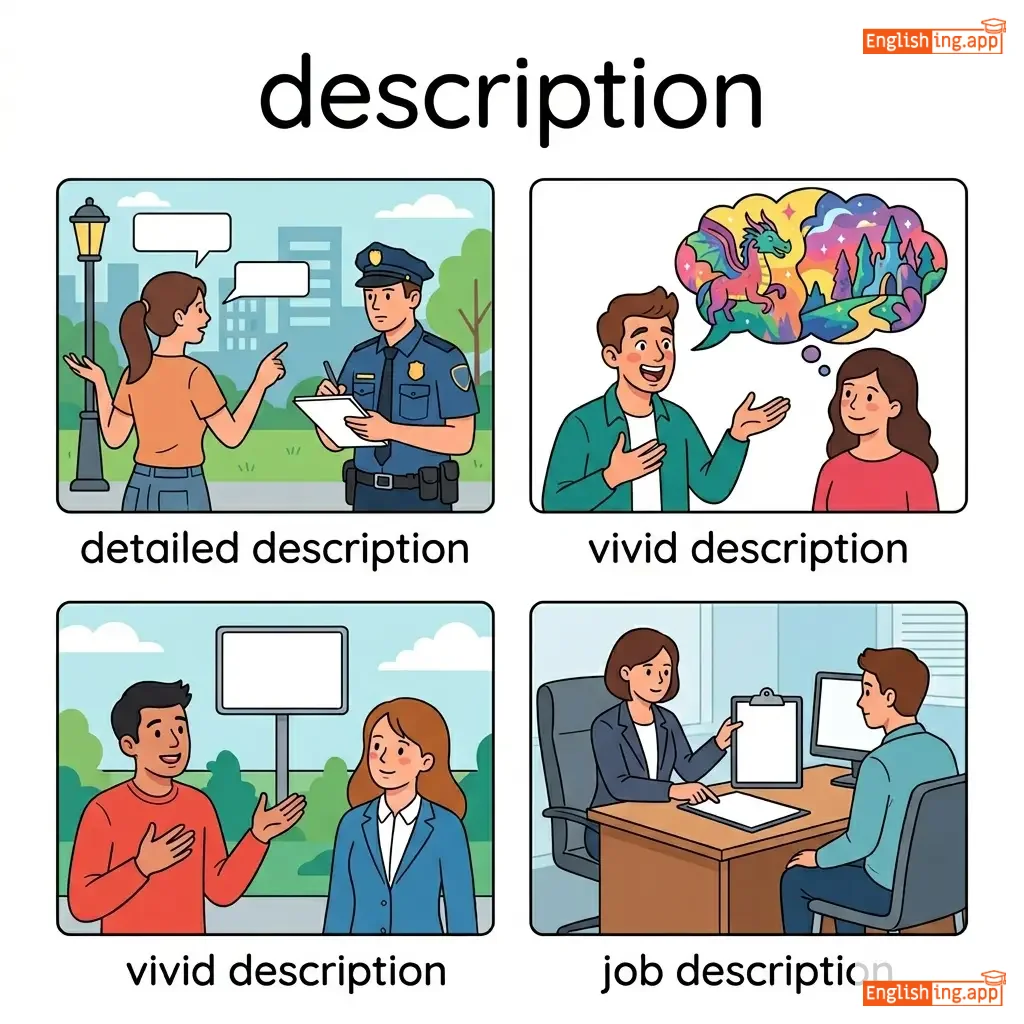
detailed description, vivid description, job description
••••••
|
Description 代表描述 - 描述时,我们给出具体的描述。
••••••
|
|
#1502
🏜️
|
/ˈdez.ɚt/ (noun/adjective), /dɪˈzɜːrt/ (verb)
noun, verb
••••••
|
- •••••• | - •••••• |
deserted
••••••
|
deserted
••••••
|
deserts
••••••
|
deserting
••••••
|
as a noun, a barren sandy region; as a verb, to abandon someone or something
••••••
|
He deserted his friends in their time of need. |
- •••••• |
just deserts |
the punishment or reward that is deserved
••••••
|
- •••••• |
abandon, forsake, leave, wasteland, wilderness
••••••
|
support, stay, assist
••••••
|
desert storm, desert island, deserted place, desert someone
••••••
|
No •••••• |
|
#1503
🎨
|
/dɪˈzaɪn/
verb
••••••
|
- •••••• | - •••••• |
designed
••••••
|
designed
••••••
|
designs
••••••
|
designing
••••••
|
to plan and create something with a particular purpose or look
••••••
|
She will design the new company logo. |
- •••••• |
design a plan |
to create or outline a detailed plan
••••••
|
- •••••• |
plan, create, draft, sketch, outline
••••••
|
destroy, ruin, neglect
••••••
|
design a logo, design a system, design clothes, interior design
••••••
|
No •••••• |
|
#1504
📝
|
/ˈdɛzɪɡneɪt/
verb
(设计)
••••••
|
- •••••• |
指定
zhǐdìng
••••••
|
designated
指定
••••••
|
designated
指定
••••••
|
designates
指定
••••••
|
designating
设计
••••••
|
to officially assign, appoint, or indicate something or someone
••••••
|
The committee will designate a new chairperson next week.
委员会下周将指定一位新主席。
••••••
|
委员会下周将指定一位新主席。
Wěiyuánhuì xià zhōu jiāng zhǐdìng yī wèi xīn zhǔxí.
••••••
|
- •••••• | - •••••• | - •••••• |
appoint, assign, nominate, allocate, specify
••••••
|
remove, dismiss
••••••
|
designate a person, designate a role, designate as
••••••
|
Design + gate = 指定新的主席在委员会
••••••
|
|
#1505
👗
|
/dɪˈzaɪnər/
noun
(设计师)
••••••
|
- •••••• |
设计师
shejishi
••••••
|
- •••••• | - •••••• | - •••••• | - •••••• |
a person who plans and creates the form or structure of something
••••••
|
The fashion designer presented her new collection. |
时尚设计师展示了她的新系列。
Shíshàng shèjì shī zhǎnshìle tā de xīn xìliè.
••••••
|
- •••••• | - •••••• | - •••••• |
creator, artist, architect, stylist
••••••
|
user, consumer
••••••
|
fashion designer, interior designer, graphic designer, web designer
••••••
|
设计师来源于'设计' → 设计的就是设计师
••••••
|
|
#1506
🏡
|
/dɪˈzaɪərəbl/
adjective
(dɪˈzaɪərəbl)
••••••
|
- •••••• |
理想的
lǐxiǎng de
••••••
|
- •••••• | - •••••• | - •••••• | - •••••• |
worth having or wanting; attractive
••••••
|
The location of the house was highly desirable, with great views.
房子的地理位置非常理想,视野极好。
••••••
|
房子的地理位置非常理想,视野极好。
Fángzi de dìlǐ wèi zhì fēicháng lǐxiǎng de, shìyě jí hǎo.
••••••
|
- •••••• | - •••••• | - •••••• |
attractive, appealing, wanted, sought-after
••••••
|
undesirable, unappealing, unattractive
••••••
|
desirable features, desirable location, highly desirable
••••••
|
理想的家 - a desirable house
••••••
|
|
#1507
❤️
|
/dɪˈzaɪər/
noun, verb
(欲望)
••••••
|
- •••••• |
欲望
yùwàng
••••••
|
desired
欲望了
••••••
|
desired
欲望了
••••••
|
desires
欲望者
••••••
|
desiring
欲望中
••••••
|
a strong feeling of wanting something or wishing for something to happen
••••••
|
He has a strong desire to travel the world.
他有强烈的欲望去环游世界。
••••••
|
他有强烈的欲望去环游世界。
Tā yǒu qiángliè de yùwàng qù huányóu shìjiè.
••••••
|
burning desire
炙热的欲望
••••••
|
an intense longing or wish
••••••
|
炙热的欲望
zhìrè de yùwàng
••••••
|
wish, longing, craving, passion, aspiration
••••••
|
aversion, dislike, hatred
••••••
|
express desire, strong desire, desire for success, burning desire
••••••
|
Desire 就是欲望,像炙热的欲望一样强烈。
••••••
|
|
#1508
🖥️
|
/dɛsk/
noun
(desk)
••••••
|
- •••••• |
书桌
shuzhuo
••••••
|
- •••••• | - •••••• | - •••••• | - •••••• |
a piece of furniture with a flat surface used for writing or working
••••••
|
The books are on the desk. |
书籍在书桌上。
Shuji zai shuzhuo shang.
••••••
|
front desk |
the main reception area in an office or hotel
••••••
|
接待台
jiedaitai
••••••
|
table, workstation, counter, bureau
••••••
|
floor, ground
••••••
|
office desk, study desk, front desk, wooden desk
••••••
|
书桌上完成所有工作
••••••
|
|
#1509
💻
|
/ˈdɛsktɒp/
noun
••••••
|
- •••••• | - •••••• | - •••••• | - •••••• | - •••••• | - •••••• |
a computer designed to be used on a desk, typically with a separate monitor, keyboard, and mouse
••••••
|
I keep my documents on the desktop for easy access. |
- •••••• | - •••••• | - •••••• | - •••••• |
workstation, computer, PC
••••••
|
laptop, mobile
••••••
|
desktop computer, desktop screen, desktop icon, desktop environment
••••••
|
No •••••• |
|
#1510
🙏
|
/ˈdɛspərət/
adjective
(déspèré)
••••••
|
- •••••• |
绝望
juewang
••••••
|
- •••••• | - •••••• | - •••••• | - •••••• |
Feeling or showing a hopeless sense that a situation is so bad as to be impossible to deal with.
••••••
|
He was desperate to find a job before his savings ran out. |
他迫切想找到一份工作,在他的储蓄用完之前。
Tā pòqiè xiǎng zhǎodào yī fèn gōngzuò, zài tā de chǔxù yòngwán zhīqián.
••••••
|
desperate measures |
Extreme actions taken as a last resort in a difficult situation.
••••••
|
绝望的措施
juéwàng de cuòshī
••••••
|
hopeless, despairing, frantic, urgent, reckless
••••••
|
hopeful, calm, confident
••••••
|
desperate attempt, desperate need, desperate cry, desperate situation
••••••
|
Desperate → JUE + wang → 绝望了才会采取极端措施。
••••••
|
|
#1511
😫
|
/ˈdɛspərətli/
adverb
(dɛsperətli)
••••••
|
- •••••• |
绝望地
juewang de
••••••
|
- •••••• | - •••••• | - •••••• | - •••••• |
in a way that shows despair or great need
••••••
|
He called for help desperately after the accident. |
事故发生后,他绝望地呼叫帮助。
Shigu fasheng hou, ta juewang de hujiao bangzhu.
••••••
|
desperately in need |
to require something urgently
••••••
|
绝望中需要
juewang zhong xuyao
••••••
|
urgently, hopelessly, frantically, severely, badly
••••••
|
calmly, easily, leisurely
••••••
|
desperately need, desperately want, cry desperately, try desperately
••••••
|
绝望的人会在需要帮助时绝望地呼喊。
••••••
|
|
#1512
💪
|
/dɪˈspaɪt/
preposition
(dī sī pài tè)
••••••
|
- •••••• |
尽管
jin guan
••••••
|
- •••••• | - •••••• | - •••••• | - •••••• |
Without being affected by; in spite of.
••••••
|
He continued his work despite the difficulties. |
尽管有困难,他继续工作。
Jin guan you kunnan, ta jixu gongzuo.
••••••
|
despite all odds |
Even though there were many challenges.
••••••
|
尽管所有困难
jin guan suoyou kunnan
••••••
|
in spite of, regardless of, notwithstanding
••••••
|
because of, due to
••••••
|
despite difficulties, despite opposition, despite criticism
••••••
|
Despite 意味着 'despite fight' 然后继续工作。
••••••
|
|
#1513
💥
|
/dɪˈstrɔɪ/
verb
(迪斯特罗伊)
••••••
|
|
摧毁
cuīhuǐ
••••••
|
destroyed
迪斯特罗伊德
••••••
|
destroyed
迪斯特罗伊德
••••••
|
destroys
迪斯特罗伊兹
••••••
|
destroying
迪斯特罗因
••••••
|
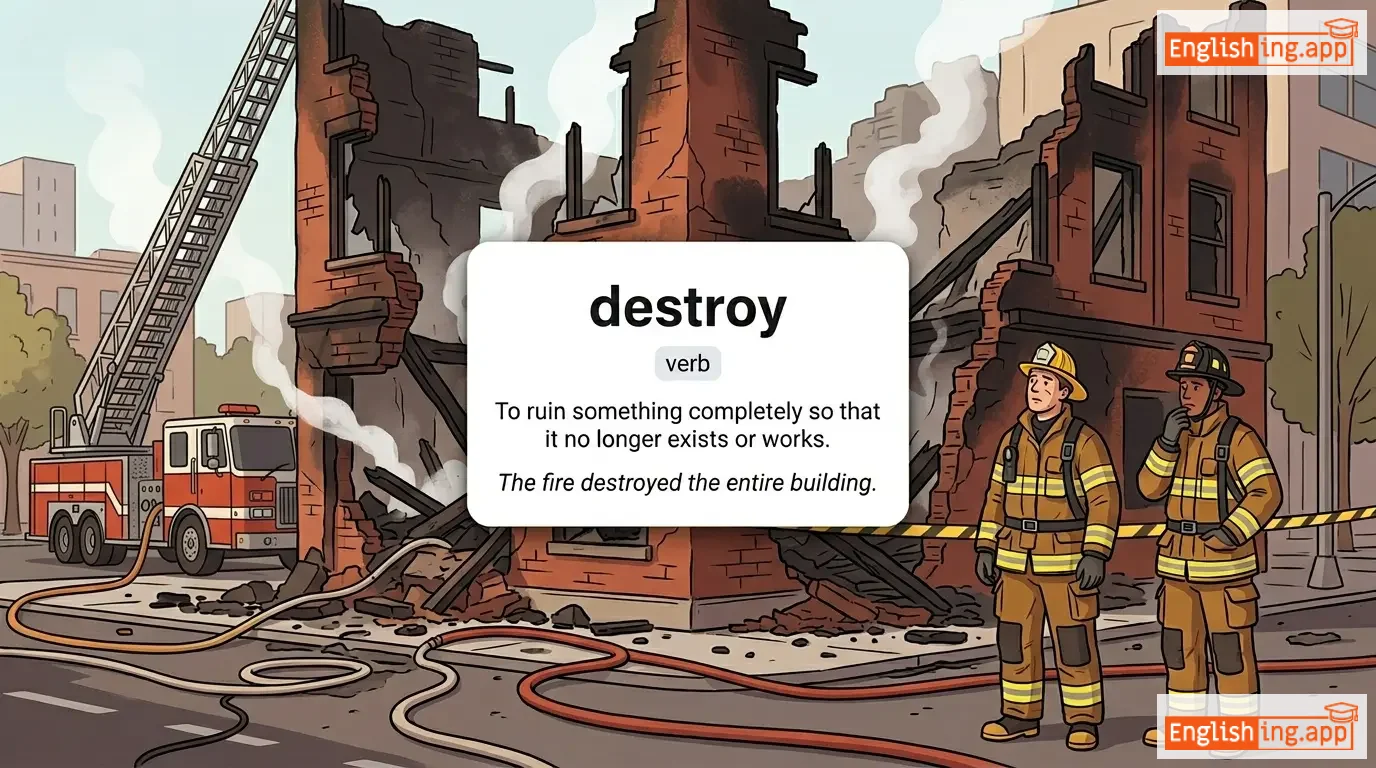
To ruin something completely so that it no longer exists or works.
••••••
|
The fire destroyed the entire building.
火灾摧毁了整个建筑。
••••••
|
火灾摧毁了整个建筑。
Huǒzāi cuīhuǐ le zhěnggè jiànzhú.
••••••
|
self-destroy
自毁
••••••
|
To cause one's own ruin.
••••••
|
自毁
zìhuǐ
••••••
|
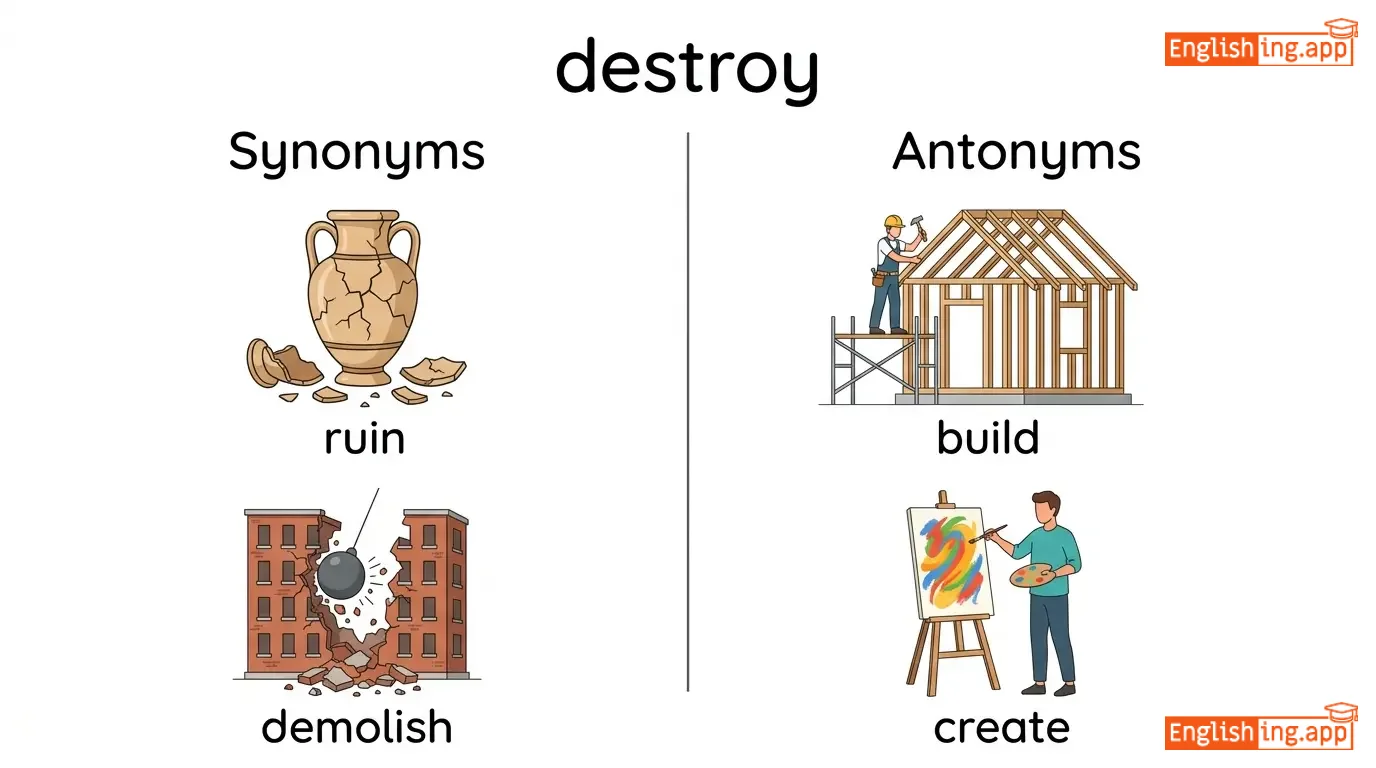
ruin, demolish, wreck, annihilate, obliterate
••••••
|
build, create, repair
••••••
|
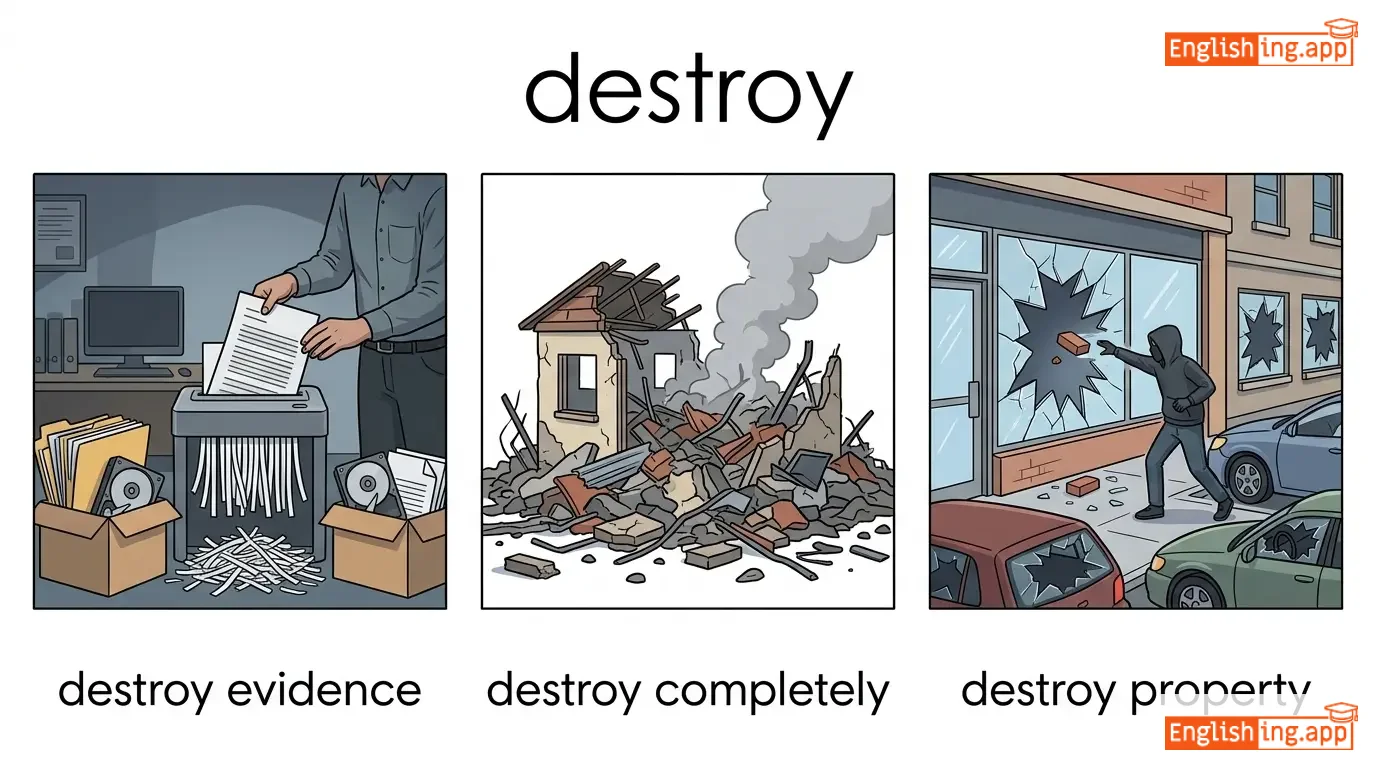
destroy evidence, destroy completely, destroy property, destroy reputation
••••••
|
摧毁意味着摧毁一切,就像火灾摧毁建筑物一样。
••••••
|
|
#1514
💥
|
/dɪˈstrʌkʃən/
noun
(毁灭)
••••••
|
- •••••• |
毁灭
huǐmiè
••••••
|
- •••••• | - •••••• | - •••••• | - •••••• |
the act of causing so much damage to something that it no longer exists or cannot be repaired
••••••
|
The fire caused the destruction of the building. |
火灾造成了建筑物的毁灭。
huǒzāi zàochéngle jiànzhúwù de huǐmiè.
••••••
|
path of destruction |
a series of damaged things left behind
••••••
|
毁灭之路
huǐmiè zhī lù
••••••
|
ruin, devastation, demolition, annihilation
••••••
|
creation, construction, repair
••••••
|
cause destruction, widespread destruction, total destruction, massive destruction
••••••
|
Destruction意味着毁灭 - 一旦某物被摧毁,就是毁灭
••••••
|
|
#1515
🌀
|
/dɪˈstrʌktɪv/
adjective
(destruktiv)
••••••
|
- •••••• |
破坏性的
pohuai xing de
••••••
|
- •••••• | - •••••• | - •••••• | - •••••• |
Causing great and irreparable harm or damage.
••••••
|
Hurricanes are often destructive to coastal cities.
飓风常常对沿海城市造成破坏。
••••••
|
飓风常常对沿海城市造成破坏。
Jufeng changchang dui yanhai chengshi zaocheng pohuai.
••••••
|
destructive criticism
破坏性批评
••••••
|
Criticism that is harmful rather than helpful.
••••••
|
破坏性批评
Pohuai xing piping
••••••
|
damaging, harmful, devastating, ruinous, catastrophic
••••••
|
constructive, helpful, beneficial
••••••
|
destructive force, destructive behavior, destructive power, destructive effect
••••••
|
Destructive 意味着摧毁 – 破坏性的。
••••••
|
|
#1516
🔍
|
/ˈdiː.teɪl/
noun
(di-tei-er)
••••••
|
- •••••• |
细节
xijie
••••••
|
- •••••• | - •••••• | - •••••• | - •••••• |
An individual feature, fact, or item of information.
••••••
|
She explained the plan in great detail. |
她详细解释了计划。
Ta xiangxi jieshi le jihua.
••••••
|
the devil is in the details |
Problems and difficulties are hidden in the smaller parts of something.
••••••
|
魔鬼藏在细节中
Mogui cang zai xijie zhong
••••••
|
part, item, element, feature, fact
••••••
|
whole, entirety
••••••
|
in detail, attention to detail, important detail, small detail
••••••
|
细节 = 就像拼图,每个部分都很重要。
••••••
|
|
#1517
📑
|
/ˈdiː.teɪld/
adjective
(dɪˈteɪld)
••••••
|
- •••••• |
详细
xiangxi
••••••
|
- •••••• | - •••••• | - •••••• | - •••••• |
Having many details; very thorough.
••••••
|
The report provided a detailed analysis of the situation. |
报告提供了对情况的详细分析。
Baogao tigongle dui qingkuang de xiangxi fenxi.
••••••
|
- •••••• | - •••••• | - •••••• |
thorough, comprehensive, elaborate, full
••••••
|
brief, vague
••••••
|
detailed report, detailed plan, detailed explanation, detailed account
••••••
|
详细的报告就是每个小细节都包含在内
••••••
|
|
#1518
🚔
|
/dɪˈteɪn/
verb
••••••
|
- •••••• | - •••••• |
detained
••••••
|
detained
••••••
|
detains
••••••
|
detaining
••••••
|
to keep someone from proceeding; to hold back, especially by official authority
••••••
|
The police detained the suspect for questioning. |
- •••••• |
detained in custody |
being officially held by the authorities
••••••
|
- •••••• |
arrest, hold, confine, apprehend
••••••
|
release, free, liberate
••••••
|
detain a suspect, detain for questioning, unlawfully detained
••••••
|
No •••••• |
|
#1519
🕵️
|
/dɪˈtɛkt/
verb
(dɪˈtɛkt)
••••••
|
|
检测
jiǎncè
••••••
|
detected
dɪˈtɛktəd
••••••
|
detected
dɪˈtɛktəd
••••••
|
detects
dɪˈtɛkts
••••••
|
detecting
dɪˈtɛktɪŋ
••••••
|
To discover or identify the presence of something.
••••••
|
The device can detect smoke in the room.
设备可以检测到房间里的烟雾。
••••••
|
设备可以检测到房间里的烟雾。
Shèbèi kěyǐ jiǎncè dào fángjiān lǐ de yānwù.
••••••
|
detect a problem
检测问题
••••••
|
To notice or discover an issue.
••••••
|
检测问题
jiǎncè wèntí
••••••
|
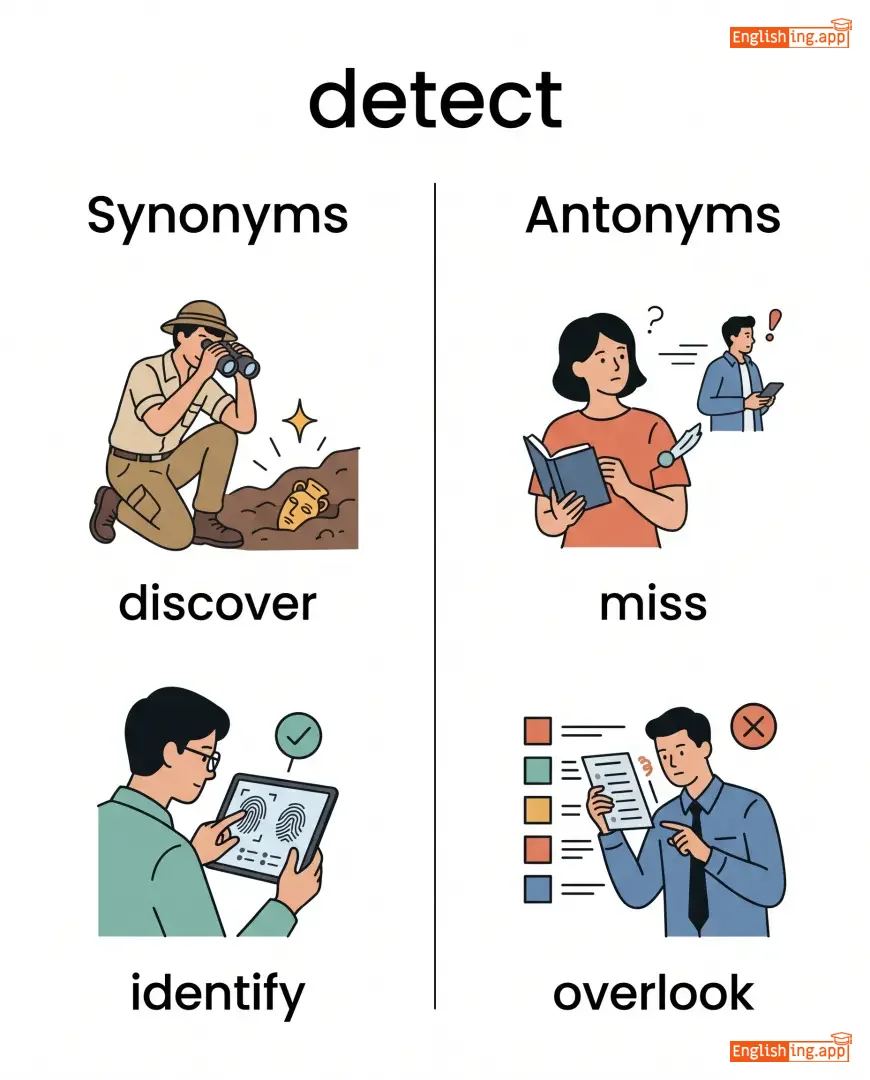
discover, identify, notice, sense, recognize
••••••
|
miss, overlook, ignore
••••••
|
detect a signal, detect movement, detect fraud, detect error
••••••
|
检测就是当你看到烟雾时,设备就能检测出来。
••••••
|
|
#1520
🔍
|
/dɪˈtɛkʃən/
noun
(检测)
••••••
|
- •••••• |
检测
jiance
••••••
|
- •••••• | - •••••• | - •••••• | - •••••• |
the action or process of identifying the presence of something
••••••
|
The detection of fraud in the system was swift. |
系统中的欺诈检测迅速完成。
Xitong zhong de qizha jiance xunsu wancheng.
••••••
|
- •••••• | - •••••• | - •••••• |
discovery, identification, recognition
••••••
|
ignorance, oversight
••••••
|
detection of error, early detection, fraud detection, signal detection
••••••
|
检测像‘见’一样可以看到
••••••
|
|
#1521
🔒
|
/dɪˈten.ʃən/
noun
(dɪˈtɛnʃən)
••••••
|
- •••••• |
拘留; 暂时关押
juliu; zan shi guanya
••••••
|
- •••••• | - •••••• | - •••••• | - •••••• |
the action of detaining someone or being detained in official custody
••••••
|
The student received detention for repeatedly disrupting the class.
学生因反复打扰课堂而被拘留。
••••••
|
学生因反复打扰课堂而被拘留。
xuesheng yin fanfu darao kètáng ér bèi jūliú.
••••••
|
- •••••• | - •••••• | - •••••• |
custody, confinement, imprisonment, holding
••••••
|
freedom, release, liberation, discharge
••••••
|
police detention, school detention, detention center
••••••
|
拘留就是因为捣乱被扣留,像学生在课堂上。
••••••
|
|
#1522
📉
|
/dɪˈtɪriəreɪt/
verb
(退化)
••••••
|
|
退化
tuìhuà
••••••
|
deteriorated
退化了
••••••
|
deteriorated
退化了
••••••
|
deteriorates
退化
••••••
|
deteriorating
退化中
••••••
|
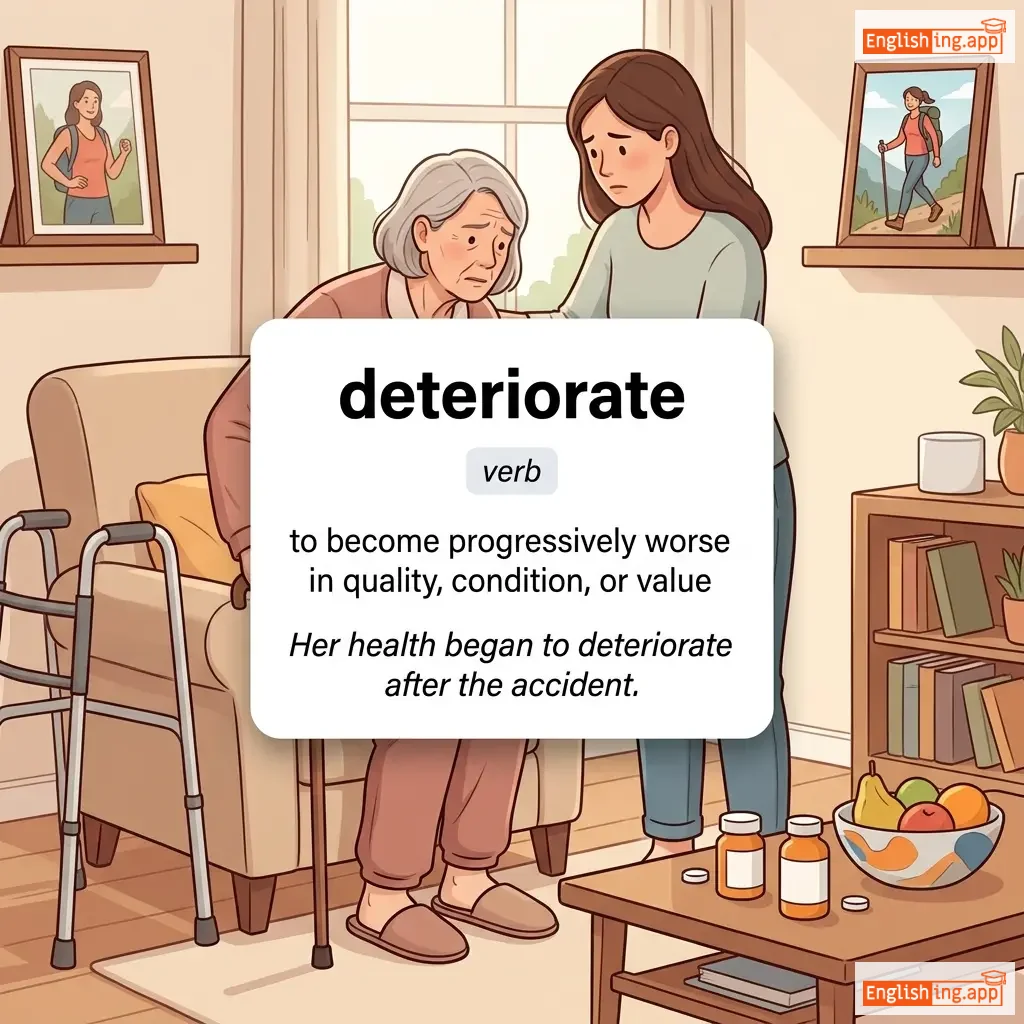
to become progressively worse in quality, condition, or value
••••••
|
Her health began to deteriorate after the accident.
事故发生后,她的健康开始退化。
••••••
|
事故发生后,她的健康开始退化。
Shìgù fāshēng hòu, tā de jiànkāng kāishǐ tuìhuà.
••••••
|
deteriorate with age
随年龄退化
••••••
|
to get worse as time passes
••••••
|
随年龄退化
Suí niánlíng tuìhuà
••••••
|
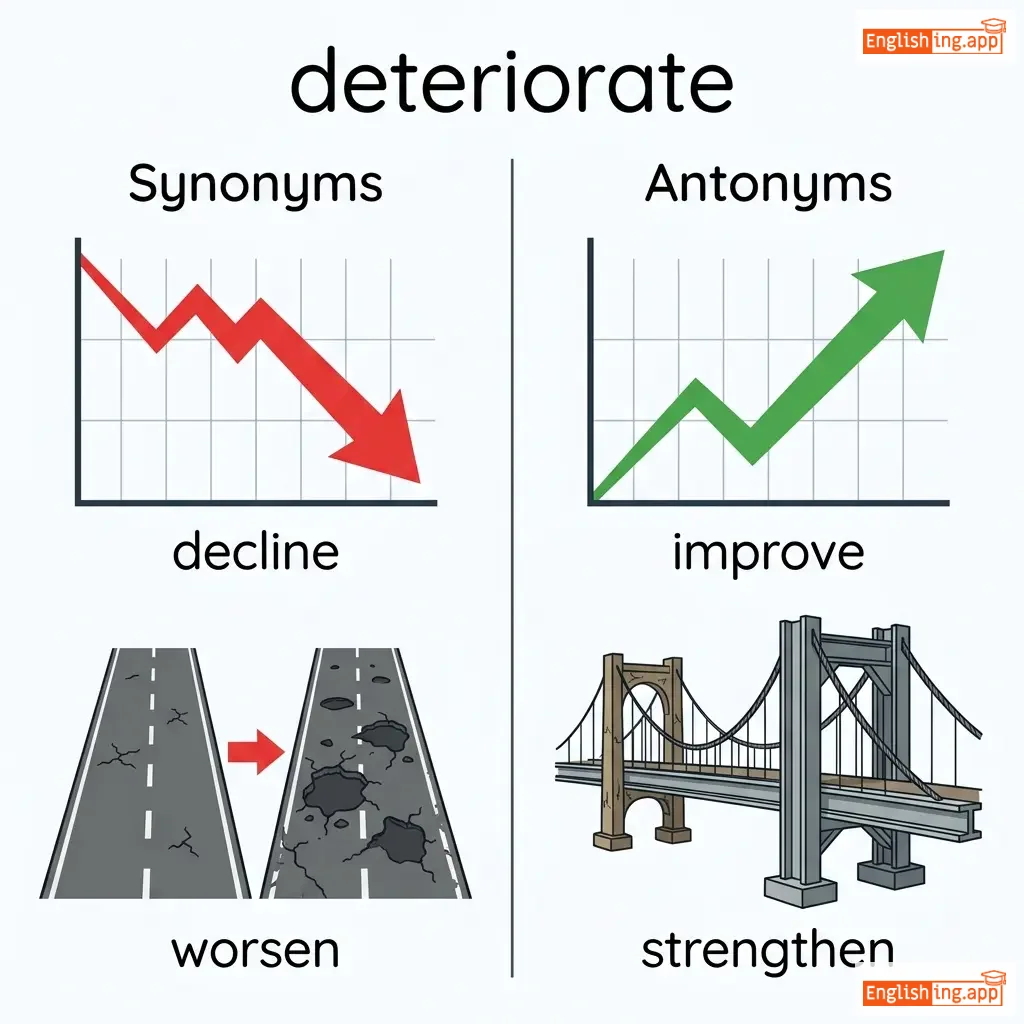
decline, worsen, degenerate, degrade, decay
••••••
|
improve, strengthen, recover
••••••
|
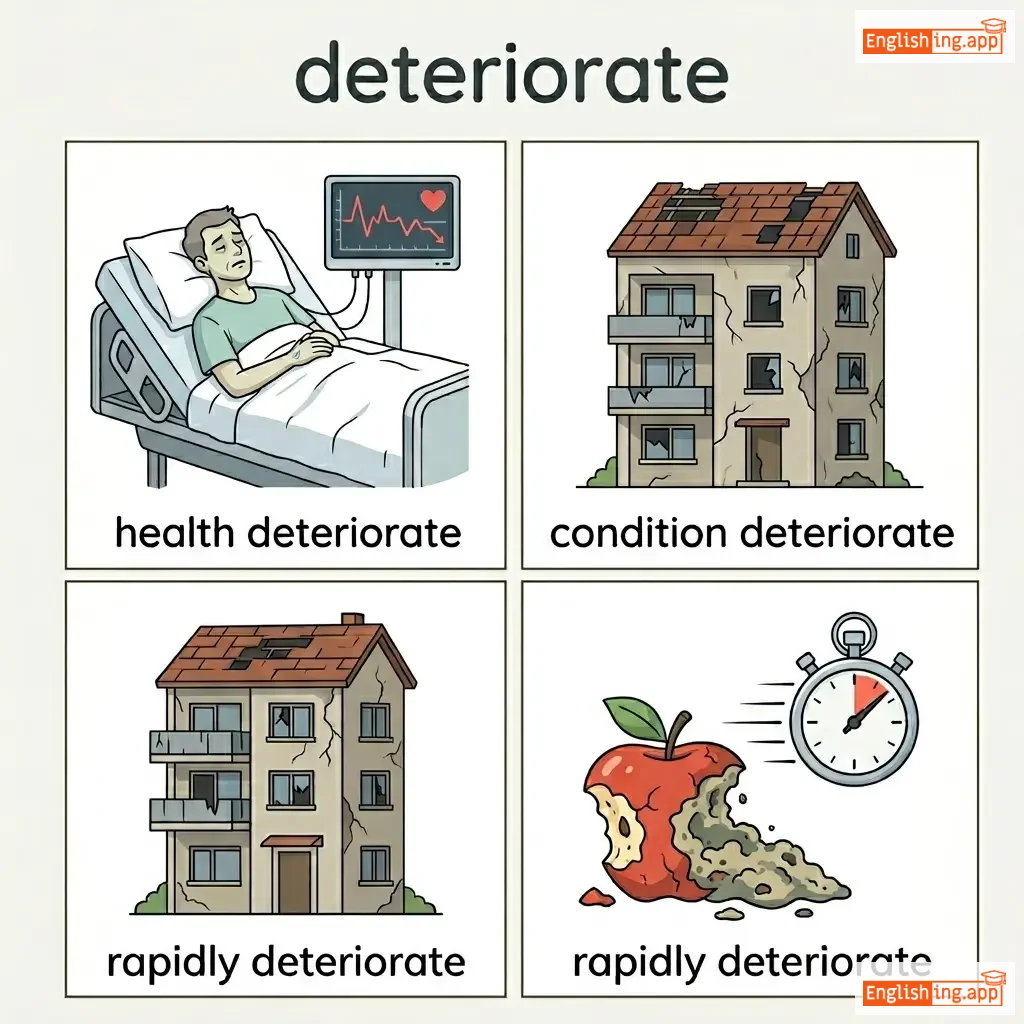
health deteriorate, condition deteriorate, rapidly deteriorate, gradually deteriorate
••••••
|
退化的意思是质量变差,像'腐烂'的感觉。
••••••
|
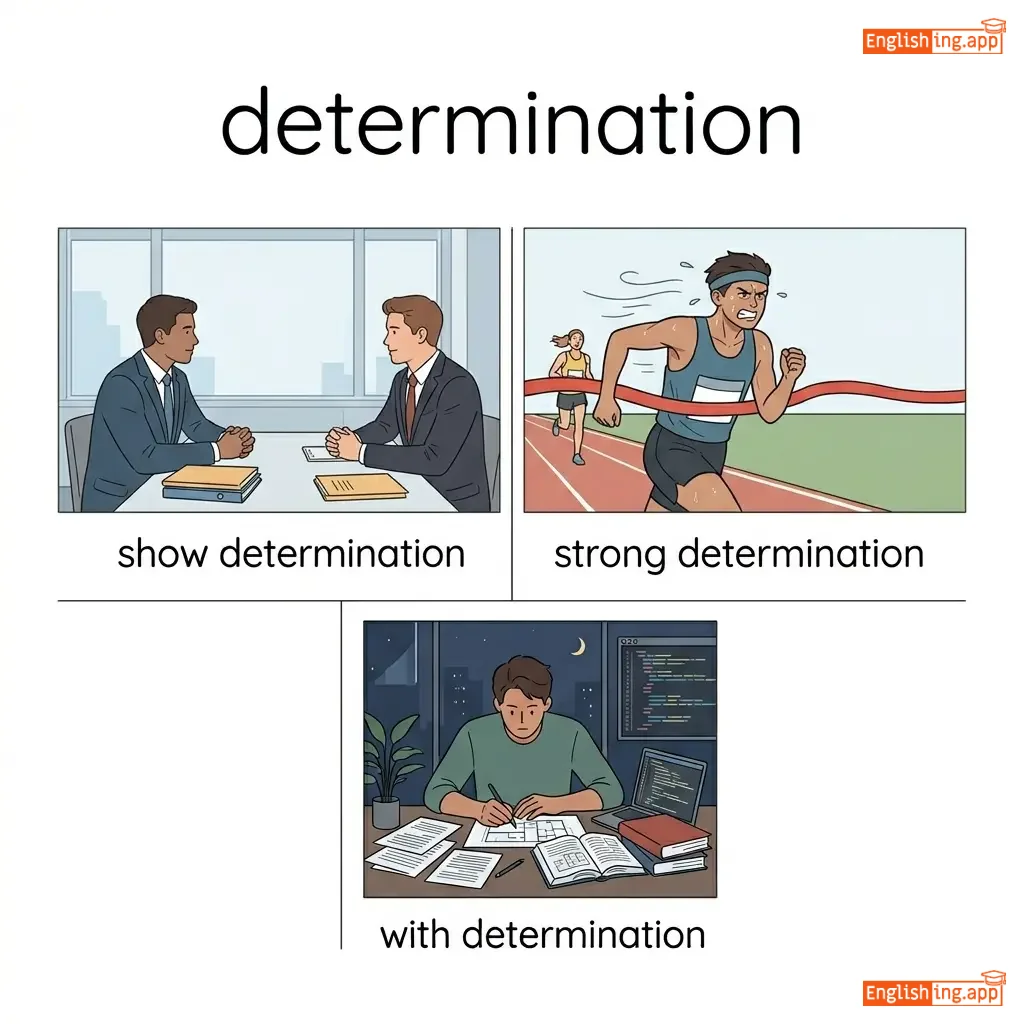
|
#1523
💪
|
/dɪˌtɜːrmɪˈneɪʃən/
noun
(determi-neishen)
••••••
|
|
决心
juexin
••••••
|
- •••••• | - •••••• | - •••••• | - •••••• |
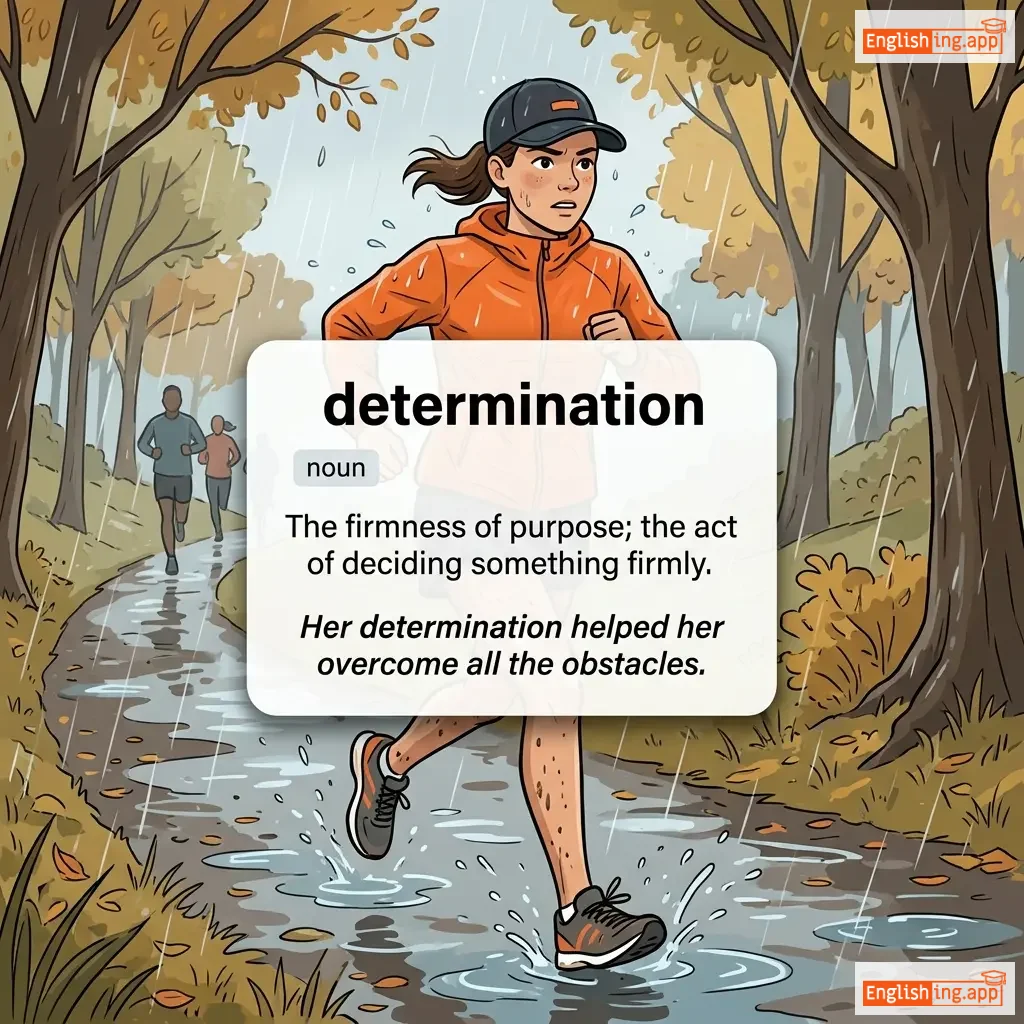
The firmness of purpose; the act of deciding something firmly.
••••••
|
Her determination helped her overcome all the obstacles.
她的决心帮助她克服了所有障碍。
••••••
|
她的决心帮助她克服了所有障碍。
Ta de juexin bangzhu ta kekuo le suoyou zhang'ai.
••••••
|
with determination
带着决心
••••••
|
showing firmness of purpose
••••••
|
带着决心
dai zhe juexin
••••••
|
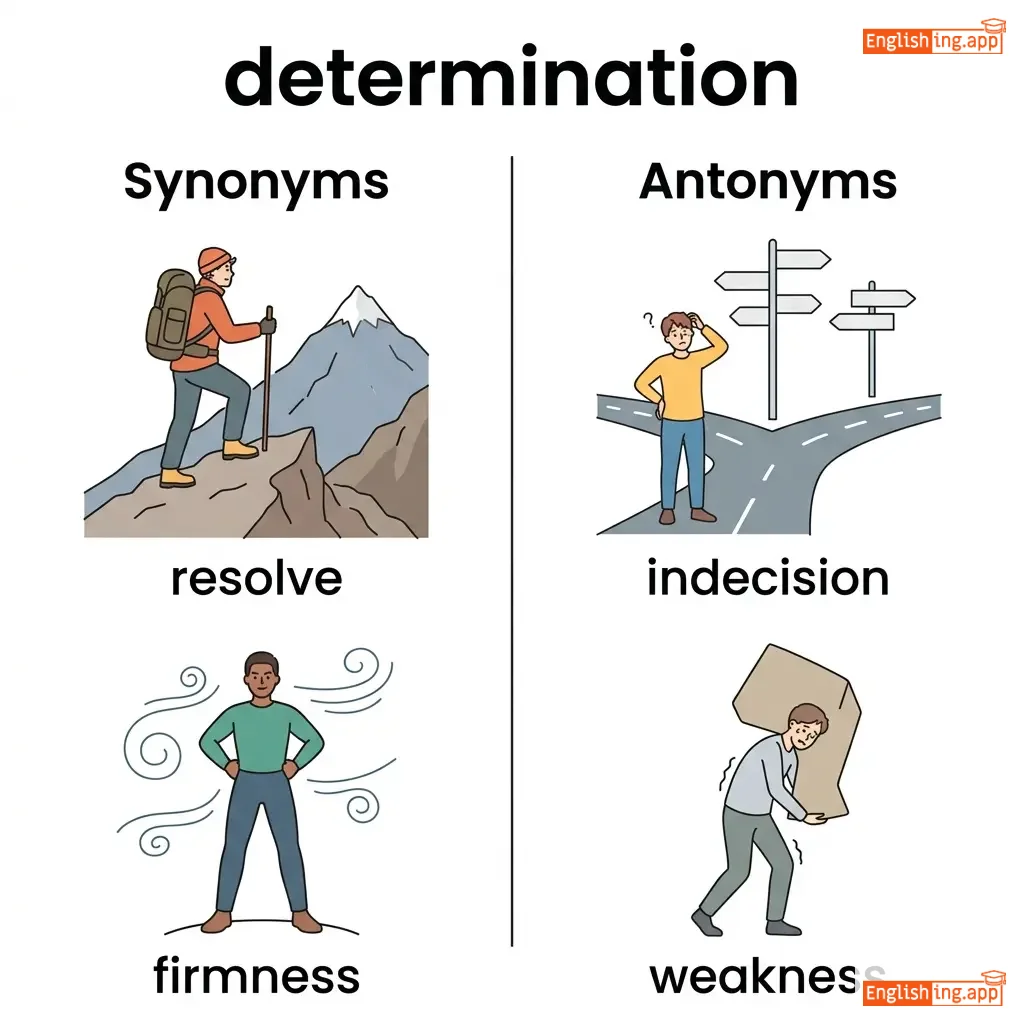
resolve, firmness, perseverance, tenacity, willpower
••••••
|
indecision, weakness, hesitation
••••••
|
strong determination, show determination, with determination, fierce determination
••••••
|
决心是把目标坚持到底的决策。
••••••
|
|
#1524
⚖️
|
/dɪˈtɜː.mɪn/
verb
(dɪˈtɜː.mɪn)
••••••
|
- •••••• |
决定
jueding
••••••
|
determined
dɪˈtɜː.mɪnd
••••••
|
determined
dɪˈtɜː.mɪnd
••••••
|
determines
dɪˈtɜː.mɪnz
••••••
|
determining
dɪˈtɜː.mɪnɪŋ
••••••
|
To decide or establish something after consideration.
••••••
|
The jury will determine the outcome of the case.
陪审团将决定案件的结果。
••••••
|
陪审团将决定案件的结果。
Péishěn tuán jiāng juédìng ànjiàn de jiéguǒ.
••••••
|
determine the course of action
确定行动方针
••••••
|
To decide what should be done.
••••••
|
确定行动方针
quèdìng xíngdòng fāngzhēn
••••••
|
decide, establish, conclude, define, settle
••••••
|
hesitate, doubt
••••••
|
determine the cause, determine the result, determine the effect, determine value
••••••
|
决定意味着做出决定,就像老师决定谁会通过一样。
••••••
|
|
#1525
💪
|
/dɪˈtɜːrmɪnd/
adjective
(dɪˈtɜːrmɪnd)
••••••
|
- •••••• |
决心的
juéxīn de
••••••
|
- •••••• | - •••••• | - •••••• | - •••••• |
Having firmly decided to do something and not letting anything stop you.
••••••
|
She was determined to finish her studies despite many obstacles. |
尽管有许多障碍,她还是决心完成她的学业。
Jǐnguǎn yǒu xǔduō zhàng'ài, tā háishì juéxīn wánchéng tā de xuéyè.
••••••
|
strong-willed |
Having a strong determination to achieve something.
••••••
|
坚强的意志
jiānqiáng de yìzhì
••••••
|
resolute, steadfast, strong-willed, persistent, firm
••••••
|
indecisive, hesitant, weak
••••••
|
determined effort, determined face, determined spirit, determined to succeed
••••••
|
决定就像决定做的意思,强调坚决的决心。
••••••
|
|
#1526
🌪️
|
/ˈdɛvəˌsteɪt/
verb
(德瓦斯特)
••••••
|
- •••••• |
摧毁
cuīhuǐ
••••••
|
devastated
德瓦斯特德
••••••
|
devastated
德瓦斯特德
••••••
|
devastates
德瓦斯特斯
••••••
|
devastating
德瓦斯特英
••••••
|
to cause severe and overwhelming destruction or damage
••••••
|
The hurricane devastated the coastal town.
飓风摧毁了海岸城镇。
••••••
|
飓风摧毁了海岸城镇。
Jùfēng cuīhuǐ le hǎi'àn chéngzhèn.
••••••
|
- •••••• | - •••••• | - •••••• |
destroy, ruin, demolish, wreck
••••••
|
build, create, restore
••••••
|
devastate a city, devastate a region, devastating effects
••••••
|
摧毁像 Devastate,一样意思
••••••
|
|
#1527
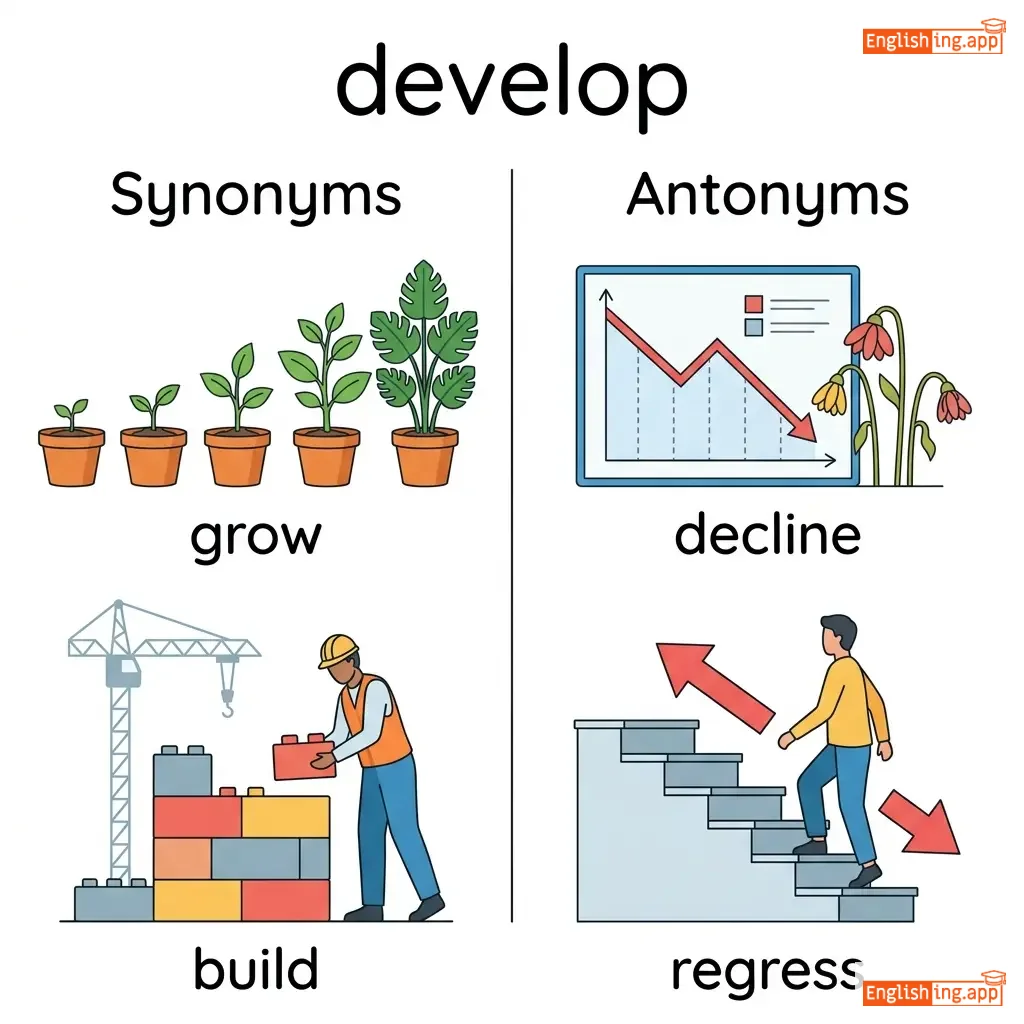
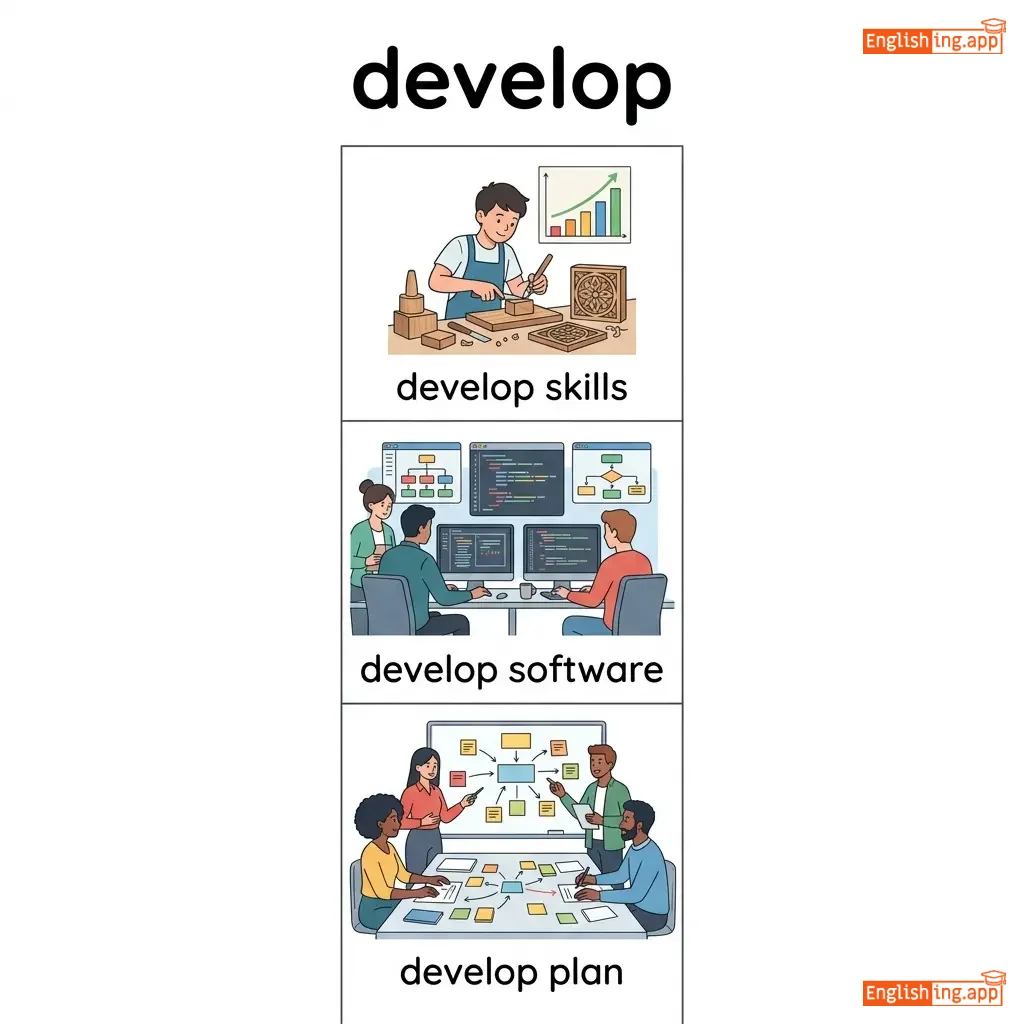
🌱
|
/dɪˈvɛləp/
verb
(发展)
••••••
|
|
发展
fāzhǎn
••••••
|
developed
发展过
••••••
|
developed
发展过
••••••
|
develops
发展
••••••
|
developing
发展的
••••••
|
To grow, advance, or create something over time.
••••••
|
The company aims to develop new software solutions.
公司旨在开发新的软件解决方案。
••••••
|
公司旨在开发新的软件解决方案。
Gōngsī zhǐ zài kāifā xīn de ruǎnjiàn jiějué fāng'àn.
••••••
|
develop a habit
培养一个习惯
••••••
|
To gradually acquire a habit.
••••••
|
培养一个习惯
pèiyǎng yīgè xíguàn
••••••
|
grow, build, progress, create, expand
••••••
|
decline, regress, stop
••••••
|
develop skills, develop software, develop plan, develop relationship
••••••
|
发展就像是一棵树:随着时间成长 🌳
••••••
|
|
#1528
🌱
|
/dɪˈvɛləpɪŋ/
verb
(dé-veh-ló-píng)
••••••
|
- •••••• |
发展
fazhan
••••••
|
- •••••• | - •••••• | - •••••• |
developing
dé-veh-ló-píng
••••••
|
the process of growing, improving, or becoming more advanced
••••••
|
She is developing new skills in programming.
她正在编程中发展新技能。
••••••
|
她正在编程中发展新技能。
Ta zhengzai biancheng zhong fazhan xin jine.
••••••
|
developing country
发展中国家
••••••
|
a country that is in the process of becoming more economically and socially advanced
••••••
|
发展中国家
fazhan zhongguo
••••••
|
advancing, progressing, improving, evolving
••••••
|
regressing, declining
••••••
|
developing country, developing skill, developing idea, developing relationship
••••••
|
发展就像植物在生长一样,人或国家也在不断地进步。
••••••
|
|
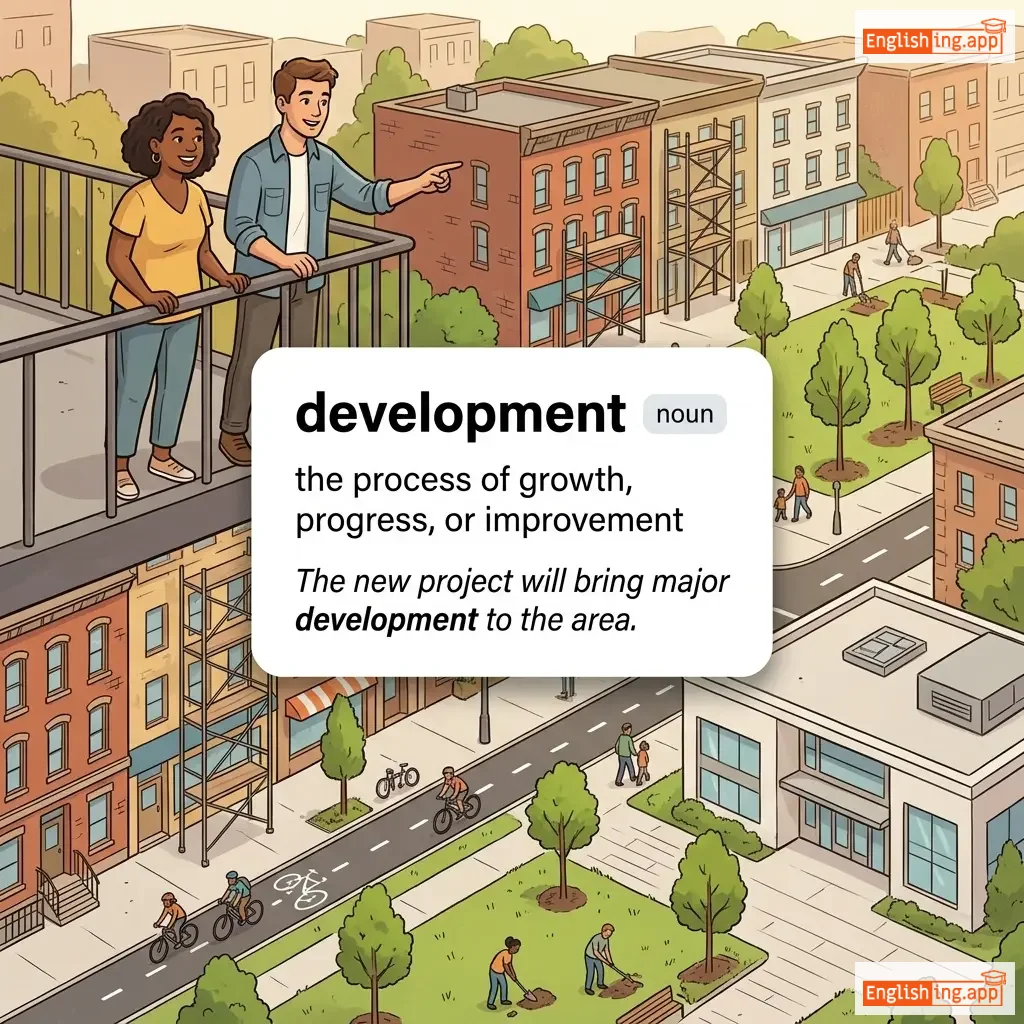
#1529
📈
|
/dɪˈvɛləpmənt/
noun
(发展)
••••••
|
|
发展
fazhan
••••••
|
- •••••• | - •••••• | - •••••• | - •••••• |
the process of growth, progress, or improvement
••••••
|
The new project will bring major development to the area. |
这个新项目将为该地区带来重大进展。
Zhège xīn xiàngmù jiāng wèi gāi dìqū dàilái zhòngdà jìnzhǎn.
••••••
|
real estate development |
the process of building new properties
••••••
|
房地产发展
fángdìchǎn fāzhǎn
••••••
|
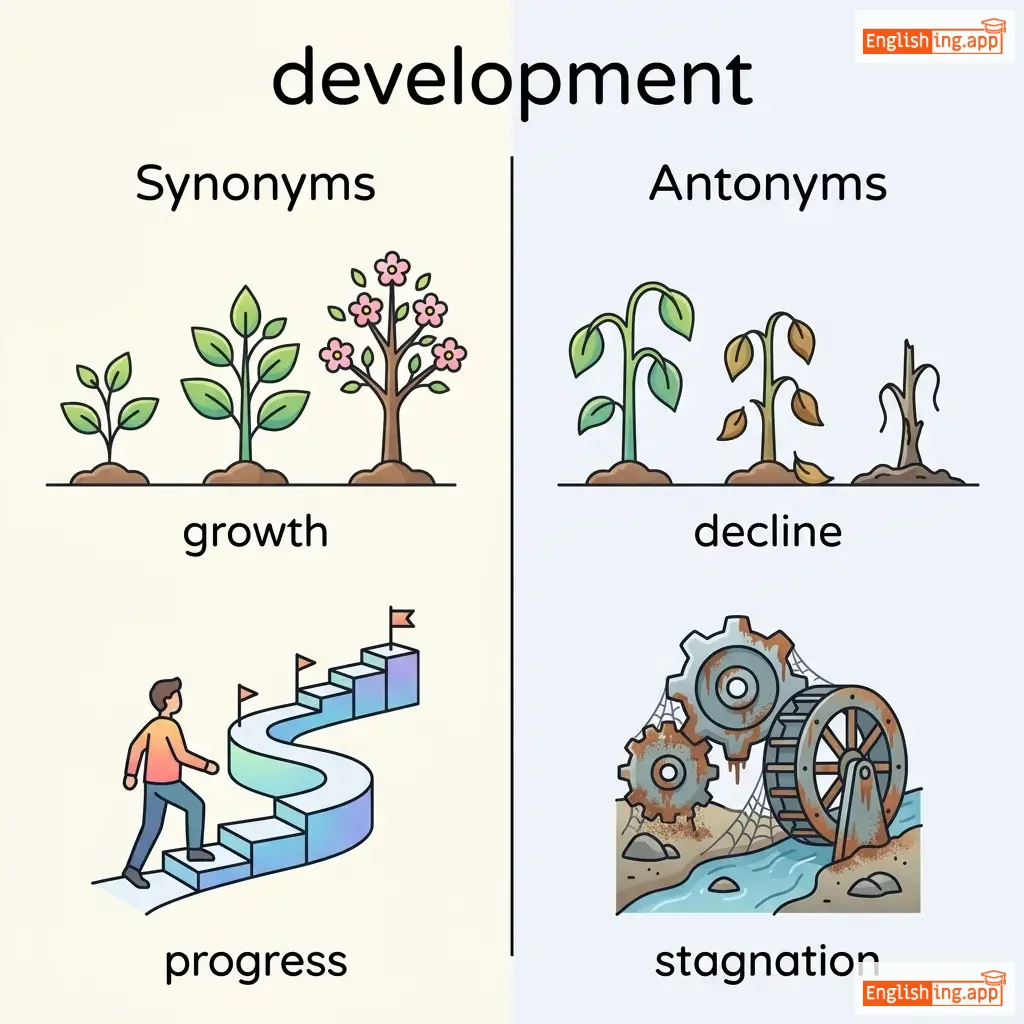
growth, progress, advancement, improvement
••••••
|
decline, stagnation
••••••
|
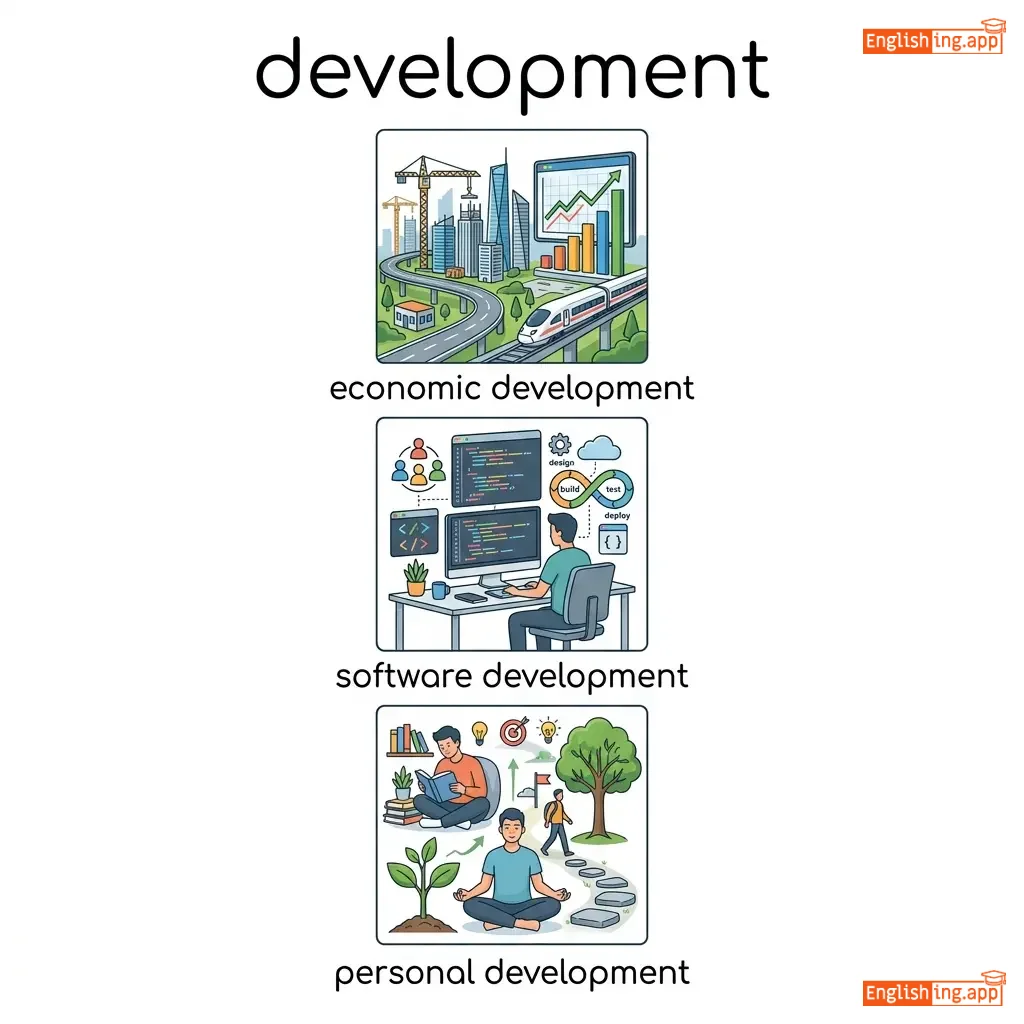
economic development, software development, personal development, development project
••••••
|
Development = 发展意味着增长 📈 — 就像城市中不断兴建的新楼房。
••••••
|
|
#1530
📱
|
/dɪˈvaɪs/
noun
(dɪˈvaɪs)
••••••
|
|
设备
shebei
••••••
|
- •••••• | - •••••• | - •••••• | - •••••• |
An object, machine, or piece of equipment designed for a particular purpose.
••••••
|
She bought a new device to track her fitness activities. |
她购买了一个新设备来追踪她的健身活动。
Ta goumai le yige xin shebei lai zhuizong ta de jianshen huodong.
••••••
|
left to your own devices |
to allow someone to do what they want without interfering
••••••
|
任凭自己做主
renping ziji zuozhu
••••••
|
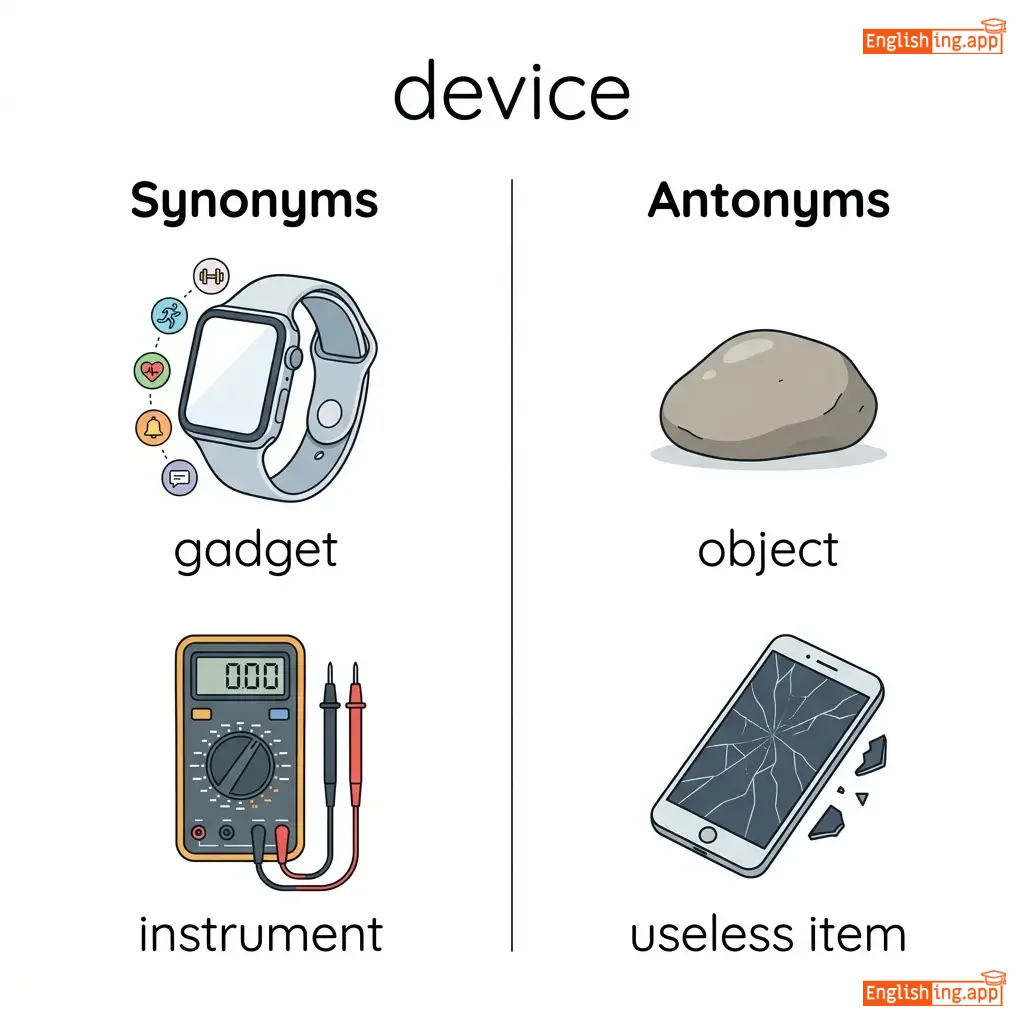
gadget, instrument, apparatus, tool, appliance
••••••
|
object, useless item
••••••
|
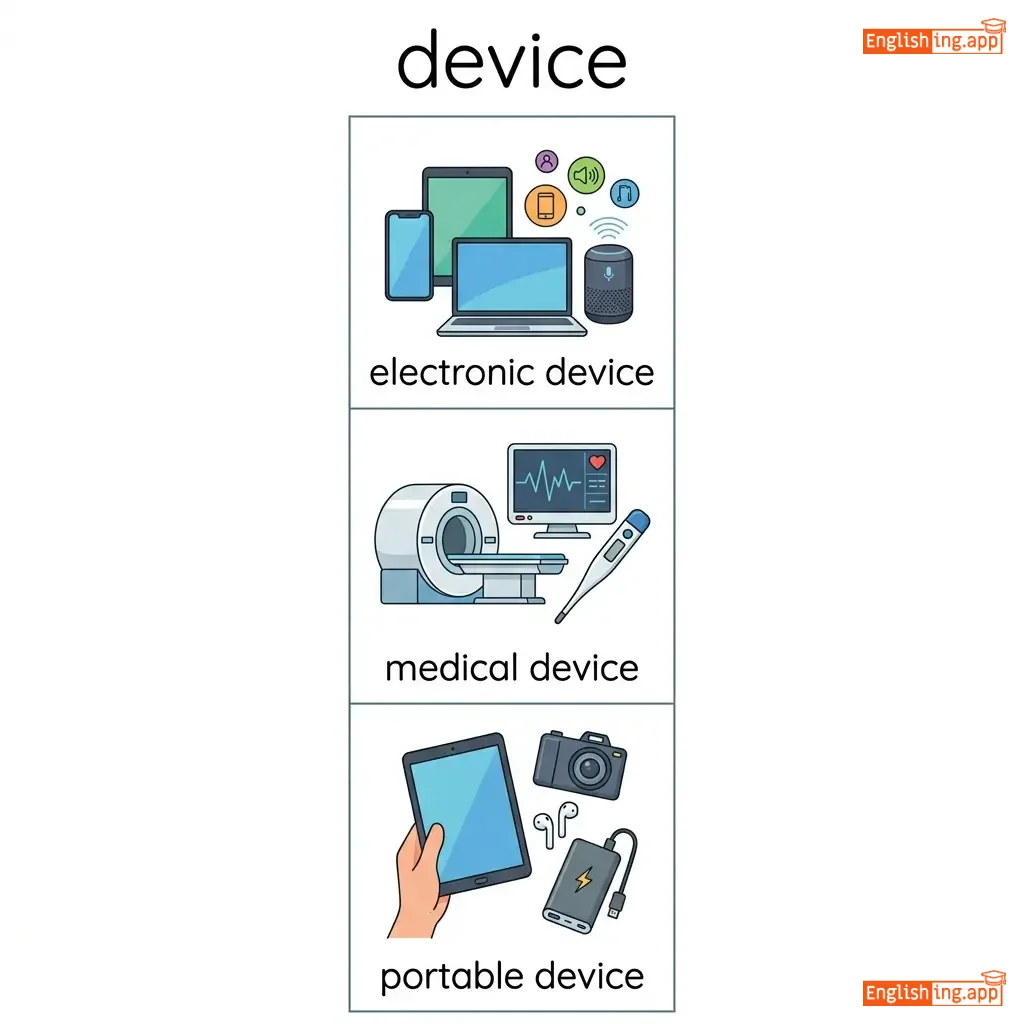
electronic device, medical device, portable device, mobile device
••••••
|
设备 = Device, 比如健身设备来追踪运动。
••••••
|
|
#1531
😈
|
/ˈdɛv.əl/
noun
(dévīl)
••••••
|
- •••••• |
魔鬼
móguǐ
••••••
|
- •••••• | - •••••• | - •••••• | - •••••• |
An evil spirit or supernatural being often regarded as the embodiment of wickedness and harm.
••••••
|
The story warned children about making deals with the devil. |
这个故事警告孩子们不要与魔鬼做交易。
Zhège gùshì jǐnggào háizimen bùyào yǔ móguǐ zuò jiāoyì.
••••••
|
speak of the devil |
Used when the person being talked about unexpectedly appears.
••••••
|
谈论魔鬼
Tánlùn móguǐ
••••••
|
demon, fiend, monster, spirit, satan
••••••
|
angel, saint, god
••••••
|
devil worship, devil figure, fight the devil, devil smile
••••••
|
魔鬼 = Devil 在中文 — 说到魔鬼时,他总是突然出现在我们面前!
••••••
|
|
#1532
📝
|
/dɪˈvaɪz/
verb
(德维兹)
••••••
|
- •••••• |
设计
sheji
••••••
|
devised
德维兹德
••••••
|
devised
德维兹德
••••••
|
devises
德维兹斯
••••••
|
devising
德维兹英
••••••
|
To plan or invent something carefully.
••••••
|
The engineers devised a new method to reduce costs.
工程师们设计了一种新的方法来降低成本。
••••••
|
工程师们设计了一种新的方法来降低成本。
Gōngchéngshī men shèjìle yī zhǒng xīn de fāngfǎ lái jiàngdī chéngběn.
••••••
|
- •••••• | - •••••• | - •••••• |
invent, plan, create, formulate, design
••••••
|
destroy, neglect
••••••
|
devise a plan, devise a strategy, devise a method
••••••
|
Devise = 设计一个新的方法可以节省成本。
••••••
|
|
#1533
🙏
|
/dɪˈvoʊt/
verb
(dɪˈvoʊt)
••••••
|
- •••••• |
奉献
fèngxiàn
••••••
|
devoted
devoted
••••••
|
devoted
devoted
••••••
|
devotes
devotes
••••••
|
devoting
devoting
••••••
|
to give time, effort, or resources to something
••••••
|
She devotes much of her time to helping the poor.
她把大部分时间都奉献给了帮助穷人。
••••••
|
她把大部分时间都奉献给了帮助穷人。
Tā bǎ dà bùfen shíjiān dōu fèngxiàn gěile bāngzhù qióngrén.
••••••
|
devote oneself to
致力于
••••••
|
to dedicate oneself fully to something
••••••
|
致力于
zhìlì yú
••••••
|
dedicate, commit, allocate, apply
••••••
|
neglect, ignore
••••••
|
devote time, devote energy, devote effort, devote resources
••••••
|
Devote = 奉献,像把时间奉献给重要的目标 🙏.
••••••
|
|
#1534
❤️
|
/dɪˈvoʊtɪd/
adjective
(devoted)
••••••
|
- •••••• |
奉献的
fengxian de
••••••
|
- •••••• | - •••••• | - •••••• | - •••••• |
Very loving, loyal, or dedicated.
••••••
|
She is a devoted mother who always puts her children first. |
她是一个奉献的母亲,总是把孩子们放在第一位。
Ta shi yi ge fengxian de muqin, zong shi ba haizimen fang zai di yi wei.
••••••
|
- •••••• | - •••••• | - •••••• |
dedicated, loyal, faithful, loving, committed
••••••
|
disloyal, indifferent, neglectful
••••••
|
devoted fan, devoted friend, devoted to work, devoted couple
••••••
|
Devoted = 奉献的,奉献意味着全心投入。
••••••
|
|
#1535
❤️
|
/dɪˈvoʊ.ʃən/
noun
(忠诚)
••••••
|
- •••••• |
忠诚; 热情; 奉献
zhongcheng, reqing, fengxian
••••••
|
- •••••• | - •••••• | - •••••• | - •••••• |
love, loyalty, or enthusiasm for a person, activity, or cause
••••••
|
Her devotion to helping others made her a beloved figure in the community. |
她对帮助他人的忠诚使她成为社区中的一个受人爱戴的人物。
Ta dui bangzhu taren de zhongcheng shi ta chengwei shequ zhong de yige shouren aidai de renwu.
••••••
|
- •••••• | - •••••• | - •••••• |
dedication, loyalty, commitment, faithfulness
••••••
|
indifference, neglect, disloyalty, betrayal
••••••
|
religious devotion, unwavering devotion, deep devotion
••••••
|
忠诚和奉献是爱的力量体现。
••••••
|
|
#1536
🩺
|
/ˌdaɪəɡˈnoʊz/
verb
(daiəɡˈnóuɡz)
••••••
|
- •••••• |
诊断
zhěnduàn
••••••
|
diagnosed
daiəɡˈnóuɡzd
••••••
|
diagnosed
daiəɡˈnóuɡzd
••••••
|
diagnoses
daiəɡˈnóuɡzəs
••••••
|
diagnosing
daiəɡˈnóuɡzɪng
••••••
|
To identify a disease, condition, or problem by examining symptoms.
••••••
|
The doctor diagnosed him with pneumonia.
医生诊断出他患有肺炎。
••••••
|
医生诊断出他患有肺炎。
Yīshēng zhěnduàn chū tā huàn yǒu fèiyán.
••••••
|
diagnose a problem
诊断问题
••••••
|
To identify the cause of an issue
••••••
|
诊断问题
zhěnduàn wèntí
••••••
|
identify, detect, determine, analyze, recognize
••••••
|
misdiagnose, ignore
••••••
|
diagnose disease, diagnose illness, diagnose condition, diagnose problem
••••••
|
诊断就像是医生通过症状找到病因。
••••••
|
|
#1537
📋
|
/ˌdaɪəɡˈnoʊsɪs/
noun
••••••
|
- •••••• | - •••••• | - •••••• | - •••••• | - •••••• | - •••••• |
The identification of a disease, condition, or problem through examination of symptoms.
••••••
|
The diagnosis confirmed that she had diabetes. |
- •••••• | - •••••• | - •••••• | - •••••• |
identification, detection, finding, determination
••••••
|
misdiagnosis, guess
••••••
|
medical diagnosis, accurate diagnosis, early diagnosis
••••••
|
No •••••• |
|
#1538
📊
|
/ˈdaɪəɡræm/
noun
(戴厄格拉姆)
••••••
|
- •••••• |
图表
tubiao
••••••
|
- •••••• | - •••••• | - •••••• | - •••••• |
a simplified drawing that shows the structure, relationship, or process of something
••••••
|
The teacher explained the system using a clear diagram.
德 提彻 以克斯普莱因德 德 系斯特姆 用 啊 克利尔 戴厄格拉姆。
••••••
|
老师用一个清晰的图表解释了这个系统。
Laoshi yong yige qingxi de tubiao jieshile zhege xitong
••••••
|
- •••••• | - •••••• | - •••••• |
chart, illustration, figure, schematic, sketch
••••••
|
text, description
••••••
|
flow diagram, labeled diagram, block diagram, draw a diagram
••••••
|
图表就是diagram—一看就懂。
••••••
|
|
#1539
🗣️
|
/ˈdaɪəlɔːɡ/
noun
(对话)
••••••
|
- •••••• |
对话
duìhuà
••••••
|
- •••••• | - •••••• | - •••••• | - •••••• |
A conversation between two or more people, or a discussion aimed at reaching understanding.
••••••
|
The two countries engaged in a dialogue to resolve their differences. |
这两个国家进行了对话,以解决他们的分歧。
Zhè liǎng gè guójiā jìnxíngle duìhuà, yǐ jiějué tāmen de fēnqí.
••••••
|
open dialogue |
A transparent and constructive conversation.
••••••
|
开放对话
kāifàng duìhuà
••••••
|
conversation, discussion, talk, exchange, communication
••••••
|
silence, monologue
••••••
|
constructive dialogue, political dialogue, open dialogue
••••••
|
对话 = conversation → 在中文里,对话 = 电影里的对话。
••••••
|
|
#1540
💎
|
/ˈdaɪəmənd/
noun
(daɪəmənd)
••••••
|
- •••••• |
钻石
zuànshí
••••••
|
- •••••• | - •••••• | - •••••• | - •••••• |
a precious hard stone, usually clear and colorless, valued as a gemstone
••••••
|
She wore a beautiful diamond necklace at the party. |
她在派对上戴着一条美丽的钻石项链。
Tā zài pàiduì shàng dàizhe yītiáo měilì de zuànshí xiàngliàn.
••••••
|
diamond in the rough |
a person or thing with potential or talent but lacking polish or refinement
••••••
|
毛坯钻石
máopī zuànshí
••••••
|
gem, jewel, crystal, stone, treasure
••••••
|
rock, pebble
••••••
|
diamond ring, diamond necklace, diamond mine, diamond shape
••••••
|
钻石—如同'月亮'般闪耀
••••••
|
|
#1541
📔
|
/ˈdaɪəri/
noun
(日记)
••••••
|
- •••••• |
日记
rìjì
••••••
|
- •••••• | - •••••• | - •••••• | - •••••• |
a book in which one keeps a daily record of events and experiences
••••••
|
She wrote about her day in her diary before going to bed. |
她在睡觉前在日记中写下了她的一天。
Tā zài shuìjiào qián zài rìjì zhōng xiě xià le tā de yītiān.
••••••
|
- •••••• | - •••••• | - •••••• |
journal, log, notebook, memoir
••••••
|
public record, announcement
••••••
|
keep a diary, personal diary, secret diary, daily diary
••••••
|
日记记录每一天 — 用'日记'来记住!
••••••
|
|
#1542
📜
|
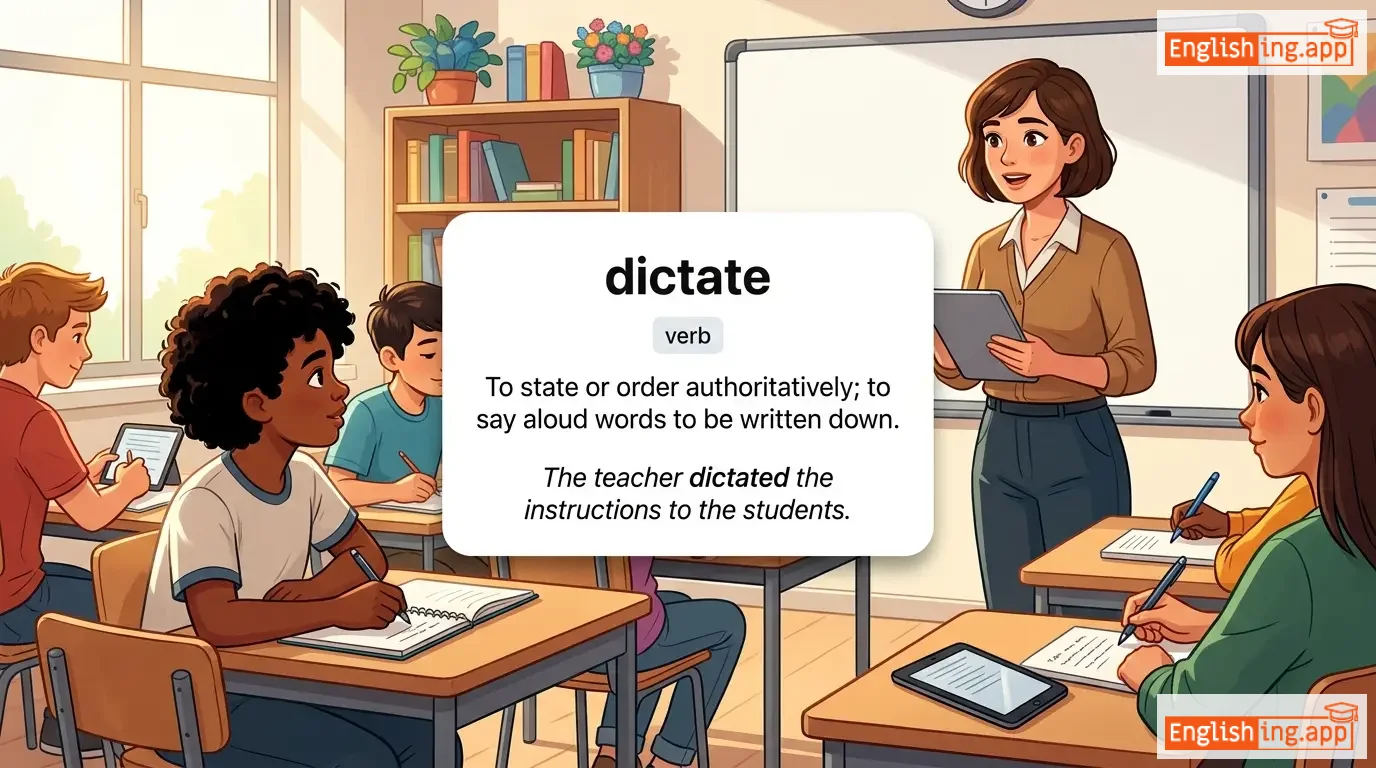
/dɪkˈteɪt/
verb
(dɪkˈteɪt)
••••••
|
|
口授
kǒu shòu
••••••
|
dictated
dɪkˈteɪtɪd
••••••
|
dictated
dɪkˈteɪtɪd
••••••
|
dictates
dɪkˈteɪts
••••••
|
dictating
dɪkˈteɪtɪŋ
••••••
|
To state or order authoritatively; to say aloud words to be written down.
••••••
|
The teacher dictated the instructions to the students.
老师给学生们口授了指令。
••••••
|
老师给学生们口授了指令。
Lǎoshī gěi xuéshēngmen kǒushòu le zhǐlìng.
••••••
|
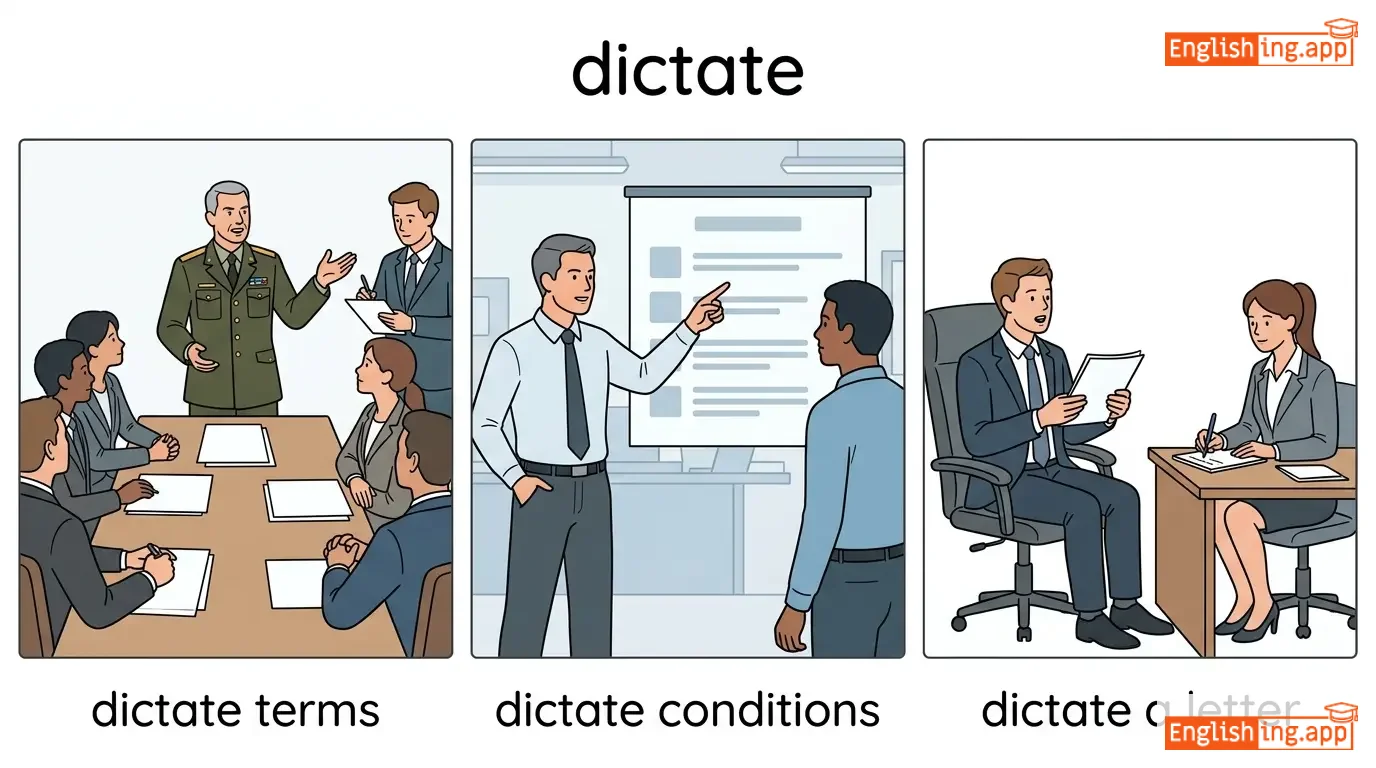
dictate terms
口授条款
••••••
|
To impose rules or conditions on others.
••••••
|
口授条款
kǒu shòu tiáokuǎn
••••••
|
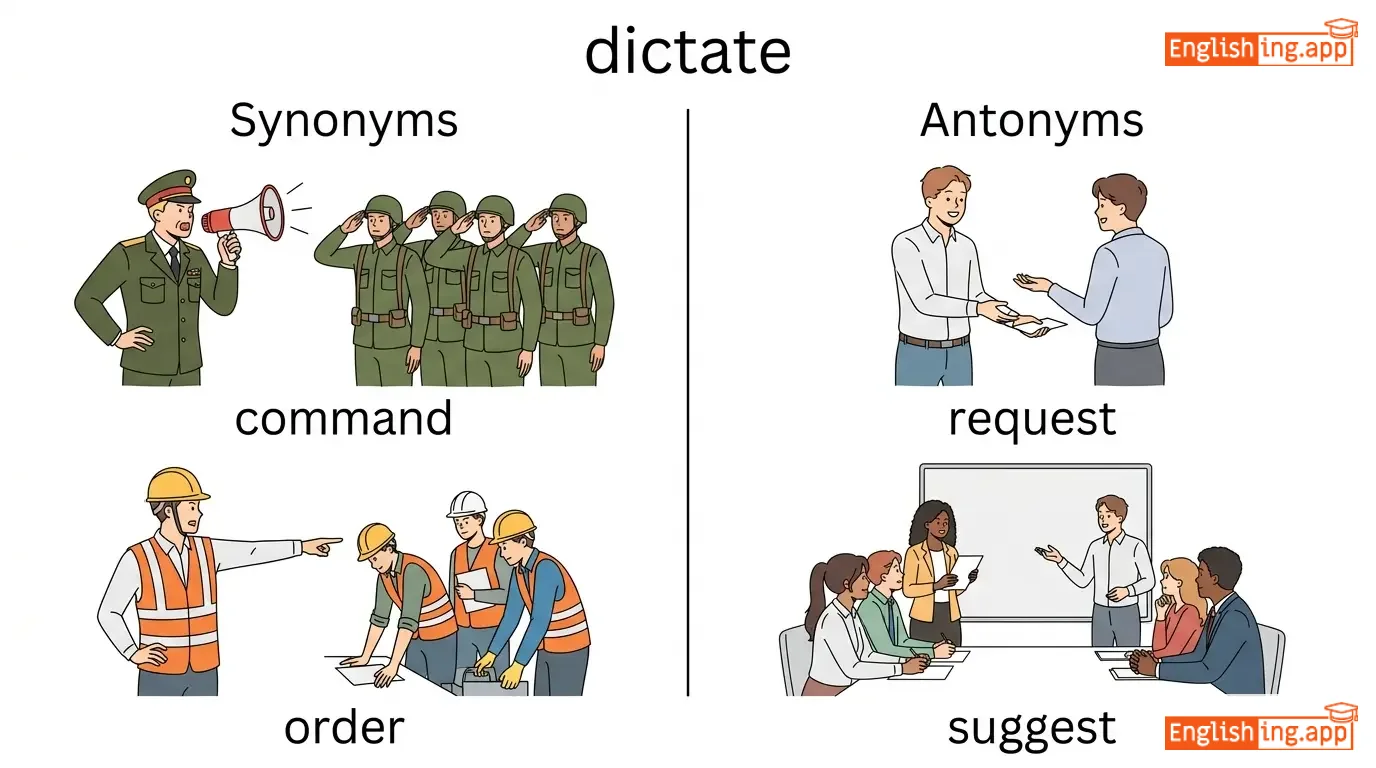
command, order, prescribe, decree
••••••
|
request, suggest
••••••
|
dictate terms, dictate conditions, dictate a letter
••••••
|
口授 = 说出来让别人写
••••••
|
|
#1543
👑
|
/dɪkˈteɪtə/
noun
(独裁者)
••••••
|
- •••••• |
独裁者
dúcáizhě
••••••
|
- •••••• | - •••••• | - •••••• | - •••••• |
a ruler with total power over a country, typically one who has obtained control by force
••••••
|
The dictator ruled the country with an iron fist. |
独裁者用铁腕统治着国家。
Dúcáizhě yòng tiěwàn tǒngzhì zhe guójiā.
••••••
|
- •••••• | - •••••• | - •••••• |
tyrant, despot, autocrat
••••••
|
democrat, leader
••••••
|
dictator's regime, military dictator, cruel dictator
••••••
|
独裁者控制一切 - Dúcáizhě kòngzhì yīqiè
••••••
|
|
#1544
📖
|
/ˈdɪkʃəˌnɛri/
noun
(迪克ショ纳里)
••••••
|
- •••••• |
字典
zidian
••••••
|
- •••••• | - •••••• | - •••••• | - •••••• |
A reference book or electronic resource containing words, usually arranged alphabetically, with information about their meanings, pronunciations, etymologies, and usage.
••••••
|
I looked up the word in the dictionary to understand its meaning.
我在字典里查了这个词的意思。
••••••
|
我在字典里查了这个词的意思。
Wo zai zidian li cha le zhe ge ci de yisi.
••••••
|
- •••••• | - •••••• | - •••••• |
lexicon, wordbook, glossary, vocabulary
••••••
|
nonsense, gibberish
••••••
|
online dictionary, bilingual dictionary, dictionary entry, dictionary definition
••••••
|
Zidian = Zi (character) + Dian (book), literally a book of characters.
••••••
|
|
#1545
⚰️
|
/daɪ/
verb
(dai)
••••••
|
|
死亡
sǐwáng
••••••
|
died
daid
••••••
|
died
daid
••••••
|
dies
dais
••••••
|
dying
daiing
••••••
|
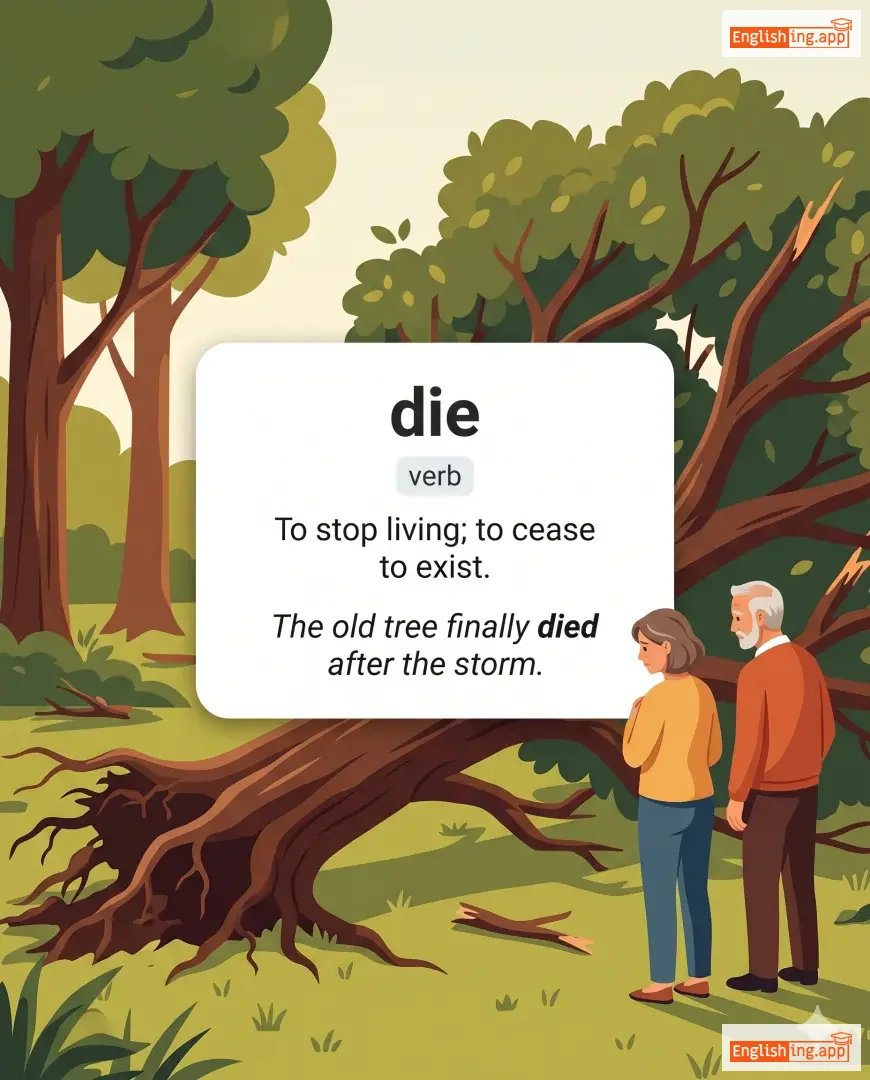
To stop living; to cease to exist.
••••••
|
The old tree finally died after the storm.
de old tree fainali daid afte de storm.
••••••
|
在风暴之后,老树终于死了。
Zài fēngbào zhīhòu, lǎo shù zhōngyú sǐle.
••••••
|
die hard
dai hard
••••••
|
To disappear or change very slowly, if at all
••••••
|
慢慢消失
màn man xiāoshī
••••••
|
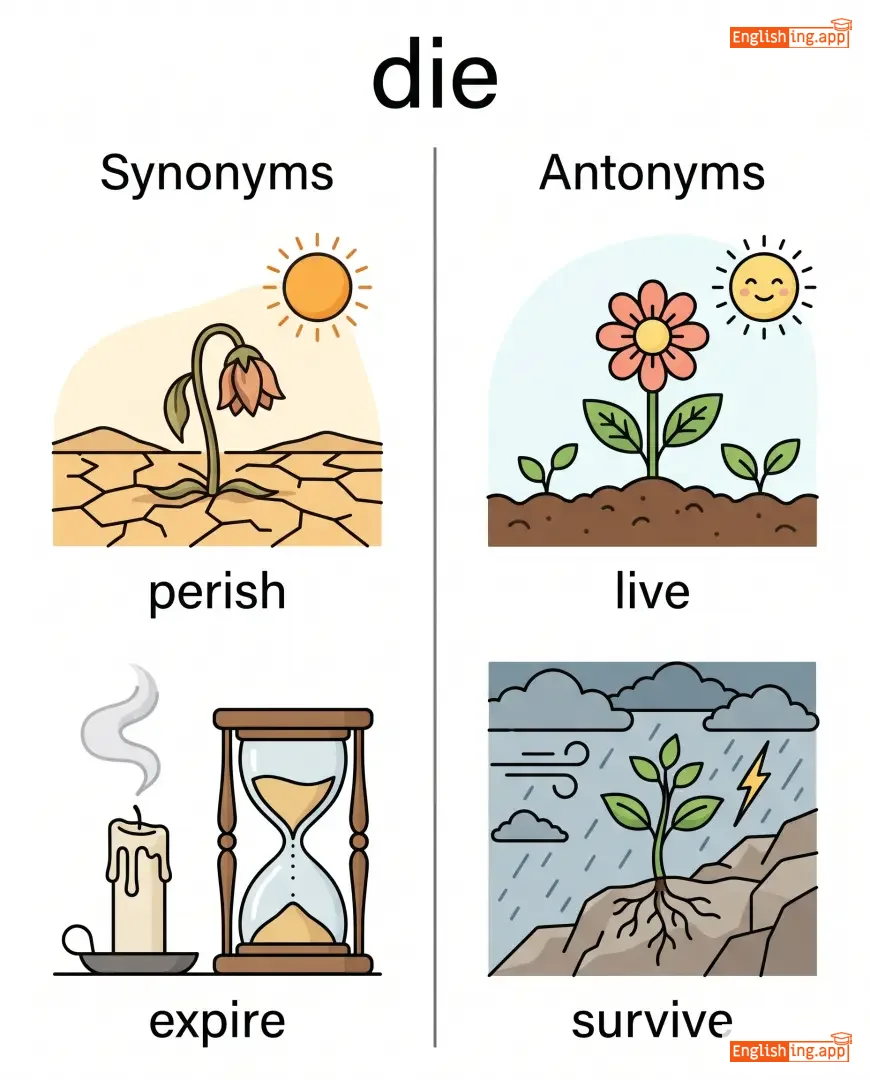
perish, expire, pass away, cease, decease
••••••
|
live, survive, exist
••••••
|
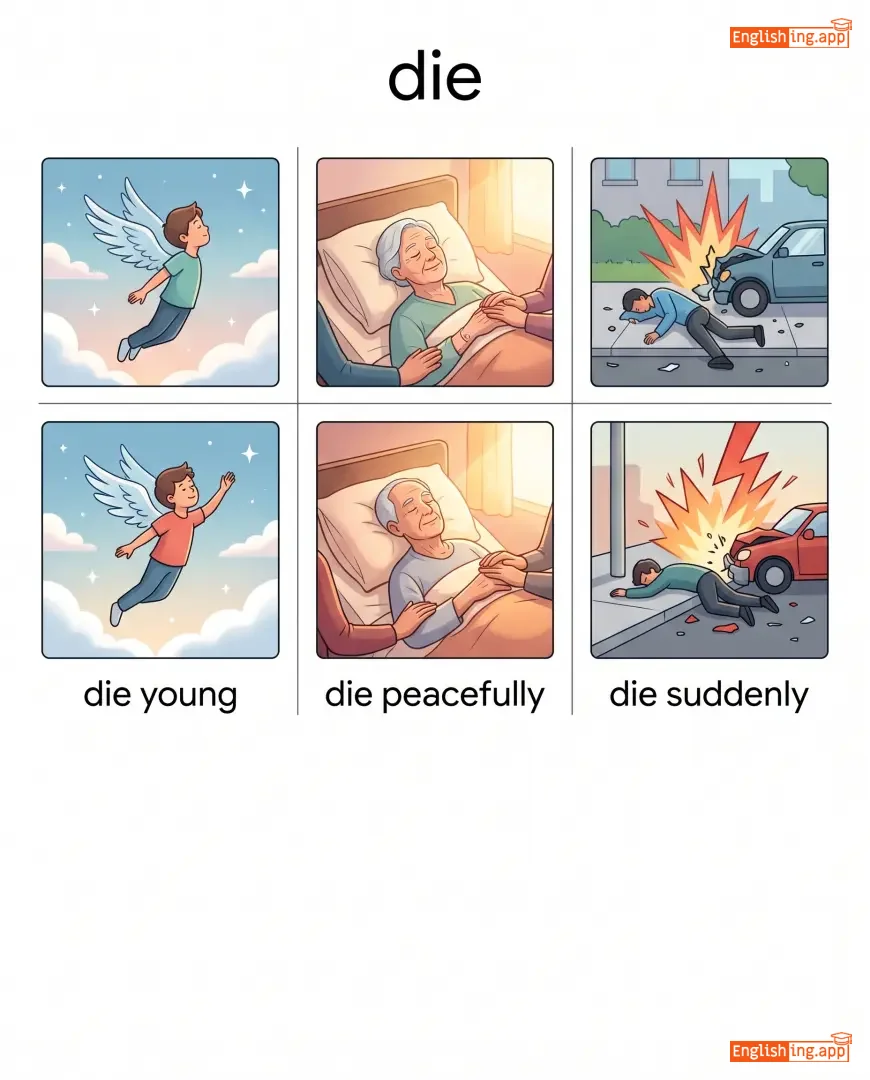
die young, die peacefully, die suddenly, die from
••••••
|
Die 意思是死亡,记住: 'Die 就是活不下去了'
••••••
|
|
#1546
🥗
|
/ˈdaɪət/
noun
(daiet)
••••••
|
- •••••• |
饮食
yinshi
••••••
|
- •••••• | - •••••• | - •••••• | - •••••• |
the kinds of food that a person usually eats
••••••
|
He follows a strict vegetarian diet. |
他遵循严格的素食饮食。
Tā zūnxún yángé de sùshí yǐnshí.
••••••
|
go on a diet |
to start eating less or differently to lose weight
••••••
|
开始节食
kāishǐ jiéshí
••••••
|
nutrition, food, meals, regimen
••••••
|
overeating, bingeing
••••••
|
healthy diet, balanced diet, strict diet, special diet
••••••
|
饮食 = 以诺食,尽量健康选择
••••••
|
|
#1547
⚖️
|
/ˈdɪfər/
verb
(迪费尔)
••••••
|
- •••••• |
不同
butong
••••••
|
differed
迪费尔德
••••••
|
differed
迪费尔德
••••••
|
differs
迪费尔斯
••••••
|
differing
迪费尔英
••••••
|
to be unlike or distinct from something else
••••••
|
Opinions differ on this issue.
关于这个问题,意见有所不同。
••••••
|
关于这个问题,意见有所不同。
guanyu zhe ge wenti, yijian you suo butong.
••••••
|
agree to differ
同意不同
••••••
|
to accept that people will not agree
••••••
|
同意不同
tongyi butong
••••••
|
vary, contrast, diverge, disagree
••••••
|
match, agree
••••••
|
differ in opinion, differ from, differ greatly, differ slightly
••••••
|
Differ意味着⚖️ — 当意见不同,表明我们存在差异。
••••••
|
Vocabulary Quiz
Test your vocabulary by matching words with their translations or meanings.
Login to take the quiz
Comments (0)
Share your thoughts and join the discussion.
Join the discussion by logging in
Login to CommentNo comments yet
Be the first to share your thoughts!