

Swipe left or right, or use the buttons. Tap image to zoom.
例句翻译
单词
Lesson 110Lesson 110 - 遮罩切换
|
表情符号
|
单词 | Images | 翻译 | 过去时 | 过去分词 | 第三人称单数 | 动名词 | 含义 | 例句 | 例句翻译 | 示例表达 | 示例表达含义 | 示例表达翻译 | 同义词 | 反义词 | 搭配词 | 助记符 |
|---|---|---|---|---|---|---|---|---|---|---|---|---|---|---|---|---|---|
|
#5225
🙂
|
/ˌʌnəˈfɛktɪd/
adjective
(unafekted)
••••••
|
- •••••• |
不受影响的, 自然的
bù shòu yǐngxiǎng de, zìrán de
••••••
|
- •••••• | - •••••• | - •••••• | - •••••• |
Not influenced or touched by something; genuine and natural.
••••••
|
He remained unaffected by the criticism and kept working hard.
他对批评毫不受影响,继续努力工作。
••••••
|
他对批评毫不受影响,继续努力工作。
Tā duì pīpíng háo bù shòu yǐngxiǎng, jìxù nǔlì gōngzuò.
••••••
|
- •••••• | - •••••• | - •••••• |
untouched, unchanged, genuine, natural, sincere
••••••
|
affected, influenced, artificial
••••••
|
remain unaffected, seem unaffected, unaffected style
••••••
|
Affect表示影响,unaffected表示不受影响=冷静🙂
••••••
|
|
#5226
🦁
|
/ʌnəˈfreɪd/
adjective
(安弗雷德)
••••••
|
- •••••• |
无畏
wuwei
••••••
|
- •••••• | - •••••• | - •••••• | - •••••• |
Not feeling fear; brave or courageous
••••••
|
She walked into the dark room, unafraid of what might be inside.
她走进黑暗的房间,安弗雷德 对里面可能有什么。
••••••
|
她走进黑暗的房间,无畏里面可能有什么。
Ta zoujin heian de fangjian, wuwei limian keneng you shenme.
••••••
|
- •••••• | - •••••• | - •••••• |
fearless, brave, courageous, bold
••••••
|
afraid, fearful, timid
••••••
|
unafraid of, unafraid to speak, unafraid to act
••••••
|
无畏像狮子一样 fearless
••••••
|
|
#5227
😠
|
/ʌnəˈpiːzd/
adjective
(安阿皮兹德)
••••••
|
- •••••• |
不平息的
bu pingxi de
••••••
|
- •••••• | - •••••• | - •••••• | - •••••• |
Not satisfied or calmed; still feeling discontent or anger
••••••
|
Despite the apology, she remained unappeased.
尽管道歉,她仍然安阿皮兹德。
••••••
|
尽管道歉,她仍然不平息的。
Jingguan daoqian, ta rengran bu pingxi de
••••••
|
- •••••• | - •••••• | - •••••• |
dissatisfied, discontented, unsettled, frustrated
••••••
|
satisfied, appeased, content
••••••
|
remain unappeased, feel unappeased, leave unappeased
••••••
|
Un + appeased = 不平息的, 记住 'Un' = 不
••••••
|
|
#5228
🗡️
|
/ʌnˈɑːrm/
verb
(安阿姆)
••••••
|
- •••••• |
解除武装
jiechu wuzhuang
••••••
|
unarmed
安阿姆德
••••••
|
unarmed
安阿姆德
••••••
|
unarms
安阿姆斯
••••••
|
unarming
安阿明
••••••
|
to remove weapons from someone or to deprive of means of attack or defense
••••••
|
The soldiers were ordered to unarm the prisoners.
士兵接到命令解除囚犯的武装。
••••••
|
士兵接到命令解除囚犯的武装。
Shibing jiedao mingling jiechu qiu fan de wuzhuang
••••••
|
- •••••• | - •••••• | - •••••• |
disarm, demilitarize, strip, neutralize
••••••
|
arm, equip, weaponize
••••••
|
unarm a soldier, unarm a suspect, unarm completely
••••••
|
ZH: 士兵 unarm 来 jiechu wuzhuang
••••••
|
|
#5229
🛡️
|
/ʌnˈɑːrmd/
adjective
(安阿姆德)
••••••
|
- •••••• |
手无寸铁
shouwucuntie
••••••
|
- •••••• | - •••••• | - •••••• | - •••••• |
Not equipped with or carrying weapons
••••••
|
The police found the suspect unarmed during the search.
警察在搜查过程中发现嫌疑人没有武器。
••••••
|
警察在搜查过程中发现嫌疑人没有武器。
Jingcha zai soucha guocheng zhaoxian yiren meiyou wuqi.
••••••
|
- •••••• | - •••••• | - •••••• |
defenseless, weaponless, powerless, vulnerable
••••••
|
armed, equipped
••••••
|
unarmed civilian, unarmed combat, unarmed protester
••••••
|
手无寸铁 literally means unarmed, imagine hands without weapons
••••••
|
|
#5230
🚫
|
/ˌʌnəˈteɪnəbl/
adjective
(安阿泰纳布尔)
••••••
|
- •••••• |
无法实现的
wufa shixian de
••••••
|
- •••••• | - •••••• | - •••••• | - •••••• |
impossible to achieve, reach, or accomplish
••••••
|
For many, becoming a professional athlete remains an unattainable dream.
对许多人来说,成为职业运动员仍然是一个无法实现的梦想。
••••••
|
对许多人来说,成为职业运动员仍然是一个无法实现的梦想。
Dui xuduo ren laishuo, chengwei zhiye yundongyuan rengran shi yige wufa shixian de mengxiang.
••••••
|
- •••••• | - •••••• | - •••••• |
impossible, unreachable, insurmountable, hopeless
••••••
|
achievable, attainable, possible
••••••
|
unattainable goal, unattainable dream, unattainable standard
••••••
|
Think 'wufa shixian' = cannot realize, like chasing clouds.
••••••
|
|
#5231
⛔
|
/ˌʌnəˌveɪləˈbɪləti/
noun
(安內維拉比利提)
••••••
|
- •••••• |
不可用性
buke yong xing
••••••
|
- •••••• | - •••••• | - •••••• | - •••••• |
The state of being not available or not accessible.
••••••
|
The unavailability of the manager caused a delay in the project.
经理的不可用性导致了项目的延误。
••••••
|
经理的不可用性导致了项目的延误。
jingli de bu keyong xing daozhule xiangmu de yanwu
••••••
|
- •••••• | - •••••• | - •••••• |
inaccessibility, absence, nonexistence, shortage
••••••
|
availability, presence
••••••
|
unavailability of resources, temporary unavailability, unavailability of data
••••••
|
经理不在 = 不可用性
••••••
|
|
#5232
🚫
|
/ˌʌnəˈveɪləbəl/
adjective
(安內維拉布爾)
••••••
|
- •••••• |
不可用
buke yong
••••••
|
- •••••• | - •••••• | - •••••• | - •••••• |
Not able to be obtained, reached, or used; not present or accessible.
••••••
|
The manager was unavailable to take calls during the meeting.
经理在会议期间安內維拉布爾,无法接听电话。
••••••
|
经理在会议期间不可用,无法接听电话。
Jingli zai huiyi qijian buke yong, wufa jieting dianhua.
••••••
|
- •••••• | - •••••• | - •••••• |
inaccessible, unattainable, unreachable, out of reach
••••••
|
available, accessible, reachable
••••••
|
unavailable resources, unavailable for comment, temporarily unavailable
••••••
|
Buke yong = literally 'cannot use'.
••••••
|
|
#5233
⚠️
|
/ˌʌnəˈvɔɪdəbl/
adjective
(ānāwàidébó)
••••••
|
- •••••• |
不可避免的
bù kě bì miǎn de
••••••
|
- •••••• | - •••••• | - •••••• | - •••••• |
Impossible to avoid or prevent.
••••••
|
Delays were unavoidable due to heavy rain. |
由于大雨,延误是不可避免的。
yóu yú dàyǔ, yánwù shì bù kě bì miǎn de.
••••••
|
an unavoidable truth |
A fact that cannot be ignored or denied.
••••••
|
不可避免的真理
bù kě bì miǎn de zhēn lǐ
••••••
|
inevitable, certain, inescapable, bound to happen
••••••
|
avoidable, preventable
••••••
|
unavoidable delay, unavoidable accident, unavoidable situation
••••••
|
不可避免的意味着无法避免的,和unavoidable一样。
••••••
|
|
#5234
🤷♂️
|
/ˌʌnəˈweər/
adjective
(ānàwèiér)
••••••
|
- •••••• |
无意识的; 不知道的; 没有意识
wú yìshí de; bù zhīdào de; méiyǒu yìshí
••••••
|
- •••••• | - •••••• | - •••••• | - •••••• |
not knowing or realizing; having no knowledge of something
••••••
|
She was completely unaware of the danger.
她完全没有意识到危险。
••••••
|
她完全没有意识到危险。
Tā wánquán méiyǒu yìshí dào wēixiǎn.
••••••
|
- •••••• | - •••••• | - •••••• |
ignorant, oblivious, unconscious, clueless
••••••
|
aware, conscious, informed, alert
••••••
|
completely unaware, totally unaware, seemingly unaware
••••••
|
当你不知道的时候,就像是没有意识,完全'未觉'!
••••••
|
|
#5235
😱
|
/ˌʌnbɪˈliːvəbəl/
adjective
(ān bǐ lì fú bù)
••••••
|
- •••••• |
难以置信
nan yi zhi xin
••••••
|
- •••••• | - •••••• | - •••••• | - •••••• |
impossible to believe; extremely surprising or remarkable
••••••
|
The magician's performance was absolutely unbelievable.
魔术师的表演简直令人难以置信。
••••••
|
魔术师的表演简直令人难以置信。
Mó shù shī de biǎo yǎn jiǎn zhí lìng rén nán yǐ zhì xìn.
••••••
|
- •••••• | - •••••• | - •••••• |
incredible, amazing, astonishing, extraordinary
••••••
|
believable, credible, ordinary, normal
••••••
|
unbelievable story, unbelievable luck, absolutely unbelievable
••••••
|
想象一个魔术师做的事情,让你难以置信!
••••••
|
|
#5236
🤨
|
/ˌʌnbɪˈliːvɪŋ/
adjective
(安贝利文)
••••••
|
- •••••• |
不相信的
bu xiangxin de
••••••
|
- •••••• | - •••••• | - •••••• | - •••••• |
Not willing or able to believe; skeptical or doubtful
••••••
|
She gave him an unbelieving look when he claimed to have met a celebrity.
当他声称见过一位名人时,她给了他一个 unbelieving 的眼神。
••••••
|
当他声称见过一位名人时,她给了他一个不相信的眼神。
Dang ta shengcheng jian guo yi wei mingren shi, ta gei le ta yi ge bu xiangxin de yanshen.
••••••
|
- •••••• | - •••••• | - •••••• |
skeptical, doubtful, incredulous, mistrustful, suspicious
••••••
|
believing, trusting, credulous
••••••
|
unbelieving look, unbelieving gaze, unbelieving expression, remain unbelieving, sound unbelieving
••••••
|
bu xiangxin = unbelieving, bu = not, xiangxin = believe
••••••
|
|
#5237
🤔
|
/ʌnˈsɜːtən/
adjective
(アンセートン)
••••••
|
- •••••• |
不确定
bù què dìng
••••••
|
- •••••• | - •••••• | - •••••• | - •••••• |
not sure or confident about something; not clearly known or decided
••••••
|
She felt uncertain about her future after graduation. |
毕业后,她对自己的未来感到不确定。
bì yè hòu, tā duì zì jǐ de wèi lái gǎn dào bù què dìng.
••••••
|
in uncertain terms |
without being clear or definite
••••••
|
以不确定的方式
yǐ bù què dìng de fāng shì
••••••
|
unsure, doubtful, hesitant, indecisive, ambiguous
••••••
|
certain, confident, sure
••••••
|
uncertain future, uncertain times, uncertain outcome, feel uncertain
••••••
|
UN + certain (不一定) = 不确定; 记住'uncertain 意味着不确定的未来'
••••••
|
|
#5238
🤔
|
/ʌnˈsɜːrtənli/
adverb
(昂瑟特恩利)
••••••
|
- •••••• |
不确定地
bu que ding de
••••••
|
- •••••• | - •••••• | - •••••• | - •••••• |
in a way that shows doubt or lack of certainty
••••••
|
She glanced uncertainly at the complicated instructions.
她不确定地看着复杂的说明。
••••••
|
她不确定地看着复杂的说明。
Ta bu que ding de kan zhe fuza de shuoming.
••••••
|
- •••••• | - •••••• | - •••••• |
hesitantly, doubtfully, tentatively, indecisively
••••••
|
confidently, decisively
••••••
|
look uncertainly, speak uncertainly, move uncertainly
••••••
|
看不确定地就像 uncertainly
••••••
|
|
#5239
❓
|
/ʌnˈsɜːrtənti/
noun
(ānsértānti)
••••••
|
- •••••• |
不确定性; 怀疑或缺乏确信
bùquèdìngxìng; huáiyí huò quēfá quèxìn
••••••
|
- •••••• | - •••••• | - •••••• | - •••••• |
the state of being uncertain; doubt or lack of sureness
••••••
|
The uncertainty about the weather delayed our trip.
关于天气的不确定性延迟了我们的旅行。
••••••
|
关于天气的不确定性延迟了我们的旅行。
guānyú tiāntí de bùquèdìngxìng yánchíle wǒmen de lǚxíng.
••••••
|
- •••••• | - •••••• | - •••••• |
doubt, ambiguity, confusion, hesitation
••••••
|
certainty, confidence, assurance, clarity
••••••
|
economic uncertainty, create uncertainty, reduce uncertainty
••••••
|
不确定性像天气一样,常常变化。
••••••
|
|
#5240
🔒
|
/ʌnˈtʃeɪndʒəbəl/
adjective
(アンチェンジアブル)
••••••
|
- •••••• |
不可改变的; 固定的;
bùkě gǎibiàn de; gùdìng de;
••••••
|
- •••••• | - •••••• | - •••••• | - •••••• |
not able to be changed or altered; fixed and permanent
••••••
|
The laws of physics are unchangeable principles that govern the universe. |
物理法则是不变的原则,支配着宇宙。
wùlǐ fǎzé shì bùbiàn de yuánzé, zhīpèizhe yǔzhòu.
••••••
|
- •••••• | - •••••• | - •••••• |
immutable, fixed, permanent, constant, invariable
••••••
|
changeable, variable, mutable, flexible, alterable
••••••
|
unchangeable fact, unchangeable law, unchangeable truth, unchangeable nature
••••••
|
宇宙的规则就像是不可改变的,不会改变的事实。
••••••
|
|
#5241
🕰️
|
/ʌnˈtʃeɪndʒɪŋ/
adjective
(安昌金)
••••••
|
- •••••• |
不变的
bubian de
••••••
|
- •••••• | - •••••• | - •••••• | - •••••• |
remaining the same over time; not changing
••••••
|
Her love for her family was unchanging throughout the years.
她对家人的爱多年来始终不变。
••••••
|
她对家人的爱多年来始终不变。
Ta dui jiaren de ai duonian lai shizhong bubian.
••••••
|
- •••••• | - •••••• | - •••••• |
constant, stable, immutable, permanent, fixed
••••••
|
changing, variable, shifting
••••••
|
unchanging nature, unchanging belief, unchanging rules, unchanging attitude
••••••
|
Bubian = unchanging, 家人的爱始终不变
••••••
|
|
#5242
❓
|
/ʌnˈklɪər/
adjective
(安克利尔)
••••••
|
- •••••• |
不清楚
bu qingchu
••••••
|
- •••••• | - •••••• | - •••••• | - •••••• |
not easy to understand; vague or ambiguous
••••••
|
The instructions were unclear, so I asked for clarification.
说明不清楚,所以我要求澄清。
••••••
|
说明不清楚,所以我要求澄清。
Shuoming bu qingchu, suoyi wo yaoqiu chengqing
••••••
|
- •••••• | - •••••• | - •••••• |
vague, ambiguous, confusing, obscure
••••••
|
clear, obvious, understandable
••••••
|
unclear instructions, unclear message, unclear situation, unclear meaning
••••••
|
Bu qingchu literally means 'not clear', easy to remember
••••••
|
|
#5243
🧥
|
/ʌnˈkloʊð/
verb
(安克洛兹)
••••••
|
- •••••• |
脱衣; 脱掉衣服
tuoyi; tuo diao yifu
••••••
|
unclothed
安克洛兹德
••••••
|
unclothed
安克洛兹德
••••••
|
unclothes
安克洛兹斯
••••••
|
unclothing
安克洛兹ing
••••••
|
to remove clothing from someone or something
••••••
|
The nurse helped unclothe the patient for the examination.
护士帮助安克洛兹病人进行检查。
••••••
|
护士帮助病人脱衣进行检查。
hushi bangzhu bingren tuoyi jinxing jiancha
••••••
|
- •••••• | - •••••• | - •••••• |
strip, disrobe, undress, divest, denude
••••••
|
clothe, dress, attire
••••••
|
unclothe completely, unclothe carefully, unclothe oneself
••••••
|
安克洛兹 sounds like unclothe, meaning 脱衣 in Chinese
••••••
|
|
#5244
🧥
|
/ʌnˈkloʊðɪŋ/
noun
(安克洛辛)
••••••
|
- •••••• |
脱衣
tuoyi
••••••
|
- •••••• | - •••••• | - •••••• | - •••••• |
the act or process of removing clothing
••••••
|
The child quickly ran inside for unclothing after playing in the mud.
孩子在泥地玩耍后迅速跑进去进行安克洛辛。
••••••
|
孩子在泥地玩耍后迅速跑进去脱衣。
haizi zai nidi wanshua hou xunsu pao jinqu tuoyi
••••••
|
- •••••• | - •••••• | - •••••• |
undressing, disrobing, stripping, denudation
••••••
|
dressing, clothing
••••••
|
unclothing ceremony, unclothing process, rapid unclothing
••••••
|
Think of 'tuoyi' for unclothing in Chinese.
••••••
|
|
#5245
😣
|
/ʌnˈkʌmfətəbl/
adjective
(ʌnˈkʌmfətəbl)
••••••
|
- •••••• |
不舒服
bù shūfu
••••••
|
- •••••• | - •••••• | - •••••• | - •••••• |
causing or feeling physical or emotional discomfort
••••••
|
He felt uncomfortable during the long meeting. |
在长时间的会议中,他感到不舒服。
Zài cháng shíjiān de huìyì zhōng, tā gǎndào bù shūfu.
••••••
|
make someone uncomfortable |
to cause someone to feel uneasy or awkward
••••••
|
让某人感到不舒服
ràng mǒu rén gǎndào bù shūfu
••••••
|
uneasy, awkward, embarrassed, uneasy, distressed
••••••
|
comfortable, relaxed, pleasant
••••••
|
feel uncomfortable, uncomfortable situation, uncomfortable silence, make uncomfortable
••••••
|
UN + 舒服 = 不舒服,记住这个意思就是不舒服。
••••••
|
|
#5246
✨
|
/ʌnˈkɒmən/
adjective
(ʌnˈkɒmən)
••••••
|
- •••••• |
不常见
buchangjian
••••••
|
- •••••• | - •••••• | - •••••• | - •••••• |
rare, unusual, or remarkable
••••••
|
It is uncommon to see snow in this region. |
在这个地区看到雪是不常见的。
Zai zhege diqu kandao xue shi buchangjian de.
••••••
|
- •••••• | - •••••• | - •••••• |
rare, unusual, extraordinary, unique, exceptional
••••••
|
common, usual, ordinary
••••••
|
uncommon event, uncommon disease, uncommon talent, uncommon strength
••••••
|
Uncommon = 不 + 常见 → 不常见
••••••
|
|
#5247
💤
|
/ʌnˈkɒnʃəs/
adjective
(ʌnˈkɔnʃəs)
••••••
|
- •••••• |
无意识的
wú yìshí de
••••••
|
- •••••• | - •••••• | - •••••• | - •••••• |
not awake and aware of surroundings
••••••
|
He was knocked unconscious by the fall. |
他在摔倒后失去意识。
Tā zài shuāi dǎo hòu shīqù yìshí.
••••••
|
unconscious mind |
the part of the mind not within conscious awareness
••••••
|
无意识的心灵
wú yìshí de xīnlíng
••••••
|
senseless, insensible, comatose, unaware, unresponsive
••••••
|
conscious, aware, alert
••••••
|
knocked unconscious, unconscious state, unconscious bias, unconscious decision
••••••
|
Un + conscious = 无意识的 → 无意识的
••••••
|
|
#5248
😴
|
/ʌnˈkɒnʃəsli/
adverb
(安康肖斯利)
••••••
|
- •••••• |
无意识地
wu yishi de
••••••
|
- •••••• | - •••••• | - •••••• | - •••••• |
without being aware of one's actions or surroundings
••••••
|
She unconsciously tapped her foot to the rhythm of the music.
她无意识地跟着音乐的节奏轻轻跺脚。
••••••
|
她无意识地跟着音乐的节奏轻轻跺脚。
ta wu yishi de genzhe yinyue de jiezou qingqing duojiao
••••••
|
- •••••• | - •••••• | - •••••• |
involuntarily, automatically, instinctively, reflexively
••••••
|
consciously, deliberately, intentionally
••••••
|
unconsciously aware, unconsciously mimic, unconsciously react
••••••
|
Think 'Wu yishi' = no awareness, like unconscious action
••••••
|
|
#5249
😵
|
/ʌnˈkɒnʃəsnəs/
noun
(安康肖斯内斯)
••••••
|
- •••••• |
无意识
wu yishi
••••••
|
- •••••• | - •••••• | - •••••• | - •••••• |
the state of being unaware of and unable to respond to one's surroundings
••••••
|
After the accident, he was in a state of unconsciousness for several hours.
事故后,他昏迷了几个小时。
••••••
|
事故后,他昏迷了几个小时。
Shigu hou, ta hunmi le jige xiaoshi.
••••••
|
- •••••• | - •••••• | - •••••• |
insensibility, stupor, fainting, coma, oblivion
••••••
|
consciousness, awareness
••••••
|
fall into unconsciousness, regain unconsciousness, state of unconsciousness
••••••
|
Think 'wu yishi' = 'without awareness'
••••••
|
|
#5250
⚖️
|
/ˌʌnkɒnstɪˈtuːʃənəl/
adjective
(ān kǒng sī tǐ tuán ēn lǐ)
••••••
|
- •••••• |
违宪的
wéixiàn de
••••••
|
- •••••• | - •••••• | - •••••• | - •••••• |
not in accordance with a political constitution; violating constitutional principles
••••••
|
The court declared the new law unconstitutional. |
法院宣布这项新法律违宪。
fǎyuàn xuānbù zhè xiàng xīn fǎlǜ wéixiàn
••••••
|
- •••••• | - •••••• | - •••••• |
illegal, unlawful, invalid, illegitimate
••••••
|
constitutional, legal, lawful, legitimate
••••••
|
unconstitutional law, unconstitutional act, declare unconstitutional
••••••
|
No •••••• |
|
#5251
🔥
|
/ˌʌnkənˈtroʊld/
adjective
(安康特罗尔德)
••••••
|
- •••••• |
无法控制的
wufa kongzhi de
••••••
|
- •••••• | - •••••• | - •••••• | - •••••• |
not restrained or managed; lacking control
••••••
|
The wildfire spread in an uncontrolled manner, causing widespread damage.
野火以 uncontrolled 方式蔓延,造成广泛破坏。
••••••
|
野火以无法控制的方式蔓延,造成广泛破坏。
Yehuo yi wufa kongzhi de fangshi manyan, zaocheng guangfan pohuai
••••••
|
- •••••• | - •••••• | - •••••• |
unrestrained, unmanaged, rampant, unchecked
••••••
|
controlled, restrained, regulated
••••••
|
uncontrolled growth, uncontrolled emotion, uncontrolled fire
••••••
|
Think 'wufa kongzhi' like 'without any kung-fu control!'
••••••
|
|
#5252
🌀
|
/ˌʌnkənˈvɛnʃənl/
adjective
(安康文肖纳尔)
••••••
|
- •••••• |
非传统的
fei chuantong de
••••••
|
- •••••• | - •••••• | - •••••• | - •••••• |
not based on or conforming to what is generally done or believed
••••••
|
Her unconventional approach to teaching inspired her students to think creatively.
她非传统的教学方法激发了学生的创造性思维。
••••••
|
她非传统的教学方法激发了学生的创造性思维。
ta fei chuantong de jiaoxue fangfa jifa le xuesheng de chuangzaoxing siwei
••••••
|
- •••••• | - •••••• | - •••••• |
nontraditional, unorthodox, unusual, innovative, different
••••••
|
conventional, traditional, orthodox
••••••
|
unconventional methods, unconventional ideas, unconventional lifestyle, unconventional wisdom
••••••
|
Un + conventional = fei tongchang
••••••
|
|
#5253
🎨
|
/ˌʌnkənˈvɛnʃənəli/
adverb
(安康文申纳利)
••••••
|
- •••••• |
非传统地
fei chuantong de
••••••
|
- •••••• | - •••••• | - •••••• | - •••••• |
in a way that is not based on or conforming to accepted standards or norms
••••••
|
She dresses unconventionally, mixing bold colors and patterns that surprise everyone.
她穿着不拘一格,混搭大胆的颜色和图案,让每个人都感到惊讶。
••••••
|
她穿着非传统地,混搭大胆的颜色和图案,让每个人都感到惊讶。
Ta chuanzhe fei chuantong de, hunda da dan de yanse he tuan, rang mei geren dou gandao jingya.
••••••
|
- •••••• | - •••••• | - •••••• |
unorthodoxly, unusually, oddly, differently, eccentrically
••••••
|
traditionally, conventionally, normally
••••••
|
behave unconventionally, think unconventionally, act unconventionally
••••••
|
Unconventionally = 非传统地 = bu zunxun guifan
••••••
|
|
#5254
🙅
|
/ˌʌn.kəʊˈɒp.ər.ə.tɪv/
adjective
(安科欧佩拉提夫)
••••••
|
- •••••• |
不合作的
bu hezuo de
••••••
|
- •••••• | - •••••• | - •••••• | - •••••• |
not willing to help or work with others; unhelpful
••••••
|
The witness was uncooperative and refused to answer questions.
证人不合作,拒绝回答问题。
••••••
|
证人不合作,拒绝回答问题。
Zhengren bu hezuo, jujue huida wenti.
••••••
|
- •••••• | - •••••• | - •••••• |
obstinate, unhelpful, resistant, defiant, unwilling
••••••
|
cooperative, helpful, compliant
••••••
|
uncooperative behavior, uncooperative attitude, uncooperative witness
••••••
|
Imagine someone 'bu hezuo de' refusing help.
••••••
|
|
#5255
🤹♂️
|
/ˌʌnˈkɔːrdɪneɪtɪd/
adjective
(安科奥迪内特德)
••••••
|
- •••••• |
不协调; 笨拙
bu xietiao; benzhuo
••••••
|
- •••••• | - •••••• | - •••••• | - •••••• |
lacking coordination, not well-organized or clumsy in movement
••••••
|
His movements were uncoordinated, making him prone to accidents.
他的动作不协调,使他容易发生意外。
••••••
|
他的动作不协调,使他容易发生意外。
ta de dongzuo bu xietiao, shi ta rongyi fasheng yiwai.
••••••
|
- •••••• | - •••••• | - •••••• |
clumsy, awkward, disorganized, maladroit
••••••
|
coordinated, graceful, organized
••••••
|
uncoordinated effort, uncoordinated movement, uncoordinated response
••••••
|
Un + coordinated = 不协调
••••••
|
|
#5256
🍷
|
/ʌnˈkɔrk/
verb
(安科克)
••••••
|
- •••••• |
开瓶
kaiping
••••••
|
uncorked
安科克德
••••••
|
uncorked
安科克德
••••••
|
uncorks
安科克斯
••••••
|
uncorking
安科克ing
••••••
|
To remove the cork from a bottle; to open a bottle, especially of wine
••••••
|
He uncorked the wine and poured a glass for everyone.
He 安科克ed the wine and poured a glass for everyone.
••••••
|
他开了葡萄酒,并为每个人倒了一杯。
Ta kai le putaojiu, bing wei mei ge ren dao le yi bei.
••••••
|
uncork one's emotions
安科克 one's emotions
••••••
|
to express emotions freely
••••••
|
表达情感
biaoda qinggan
••••••
|
open, untwist, loosen, decork, pop
••••••
|
seal, cork, close
••••••
|
uncork a bottle, uncork champagne, uncork wine, uncork emotions
••••••
|
Visualize 'uncork' = '开瓶' when opening wine in Chinese.
••••••
|
|
#5257
🩲
|
/ˈʌndərkləʊðz/
noun
(安德克洛斯)
••••••
|
- •••••• |
内衣
neiyi
••••••
|
- •••••• | - •••••• | - •••••• | - •••••• |
Clothing worn beneath outer clothes, such as underwear or lingerie
••••••
|
He folded his underclothes neatly before packing them.
他在打包前把内衣叠得整整齐齐。
••••••
|
他在打包前把内衣叠得整整齐齐。
Ta zai dabo qian ba neiyi die de zhengzhengqiqi
••••••
|
- •••••• | - •••••• | - •••••• |
underwear, lingerie, intimates, undergarments
••••••
|
outerwear, overclothes
••••••
|
wash underclothes, fold underclothes, pack underclothes
••••••
|
内衣 under clothes = underclothes
••••••
|
|
#5258
💣
|
/ˌʌndərˈmaɪn/
verb
(安德迈因)
••••••
|
- •••••• |
削弱
xue ruo
••••••
|
undermined
安德迈恩德
••••••
|
undermined
安德迈恩德
••••••
|
undermines
安德迈因斯
••••••
|
undermining
安德迈宁
••••••
|
to gradually weaken or damage something or someone
••••••
|
Constant criticism can undermine a child's confidence.
康斯坦特 批评 可以 安德迈因 一个 孩子的 自信。
••••••
|
持续的批评可能会削弱孩子的自信心。
chixu de piping keneng hui xue ruo haizi de zixin xin
••••••
|
undermine authority
安德迈因 权威
••••••
|
to weaken someone's power or control
••••••
|
削弱权威
xue ruo quan wei
••••••
|
weaken, damage, erode, sabotage, impair
••••••
|
strengthen, support, reinforce
••••••
|
undermine confidence, undermine authority, undermine trust
••••••
|
Under + mine → 在下面挖 (像在地底挖矿),所以 '削弱' 就像被下面慢慢挖掉力量
••••••
|
|
#5259
⬇️
|
/ˌʌndərˈniːθ/
preposition, adverb, adjective
(安德尔尼思)
••••••
|
- •••••• |
在……下面
zai... xiamian
••••••
|
- •••••• | - •••••• | - •••••• | - •••••• |
Located directly below or beneath something
••••••
|
The keys were hidden underneath the pile of papers.
钥匙被隐藏在underneath那堆文件下面。
••••••
|
钥匙被隐藏在那堆文件下面。
Yaoshi bei yincang zai na dui wenjian xiamian
••••••
|
underneath it all
underneath it all
••••••
|
fundamentally; beneath the surface
••••••
|
本质上; 在表面之下
benzhi shang; zai biao mian zhi xia
••••••
|
below, beneath, under, lower
••••••
|
above, over
••••••
|
underneath the table, underneath the surface, underneath the bed
••••••
|
Remember '下面' = underneath in Chinese
••••••
|
|
#5260
🛠️
|
/ˌʌndərˈteɪk/
verb
(安德泰克)
••••••
|
|
承担
chengdan
••••••
|
undertook
安德托克
••••••
|
undertaken
安德泰肯
••••••
|
undertakes
安德泰克斯
••••••
|
undertaking
安德泰肯
••••••
|
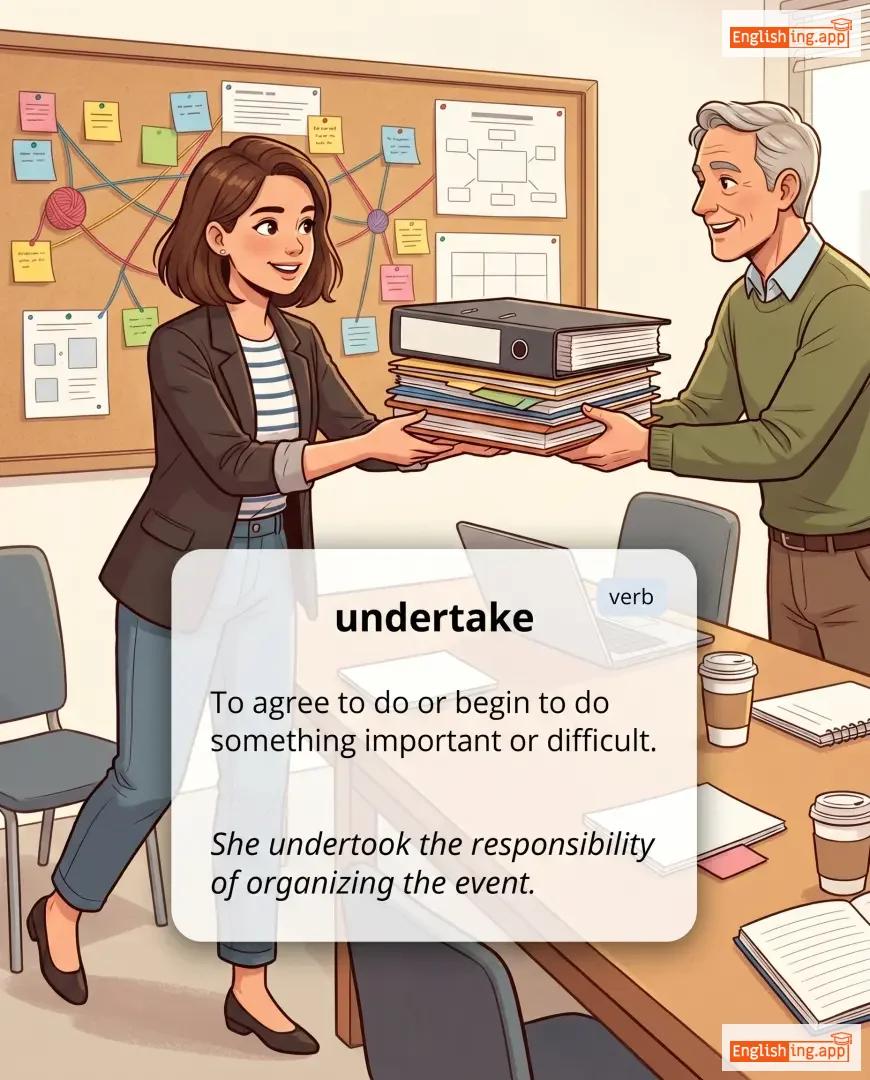
To agree to do or begin to do something important or difficult.
••••••
|
She undertook the responsibility of organizing the event.
她承担了组织活动的责任。
••••••
|
她承担了组织活动的责任。
Ta chengdanle zuzhi huodong de zeren.
••••••
|
undertake a mission
undertake a mission
••••••
|
to take responsibility for an important task
••••••
|
承担一项任务
chengdan yi xiang renwu
••••••
|
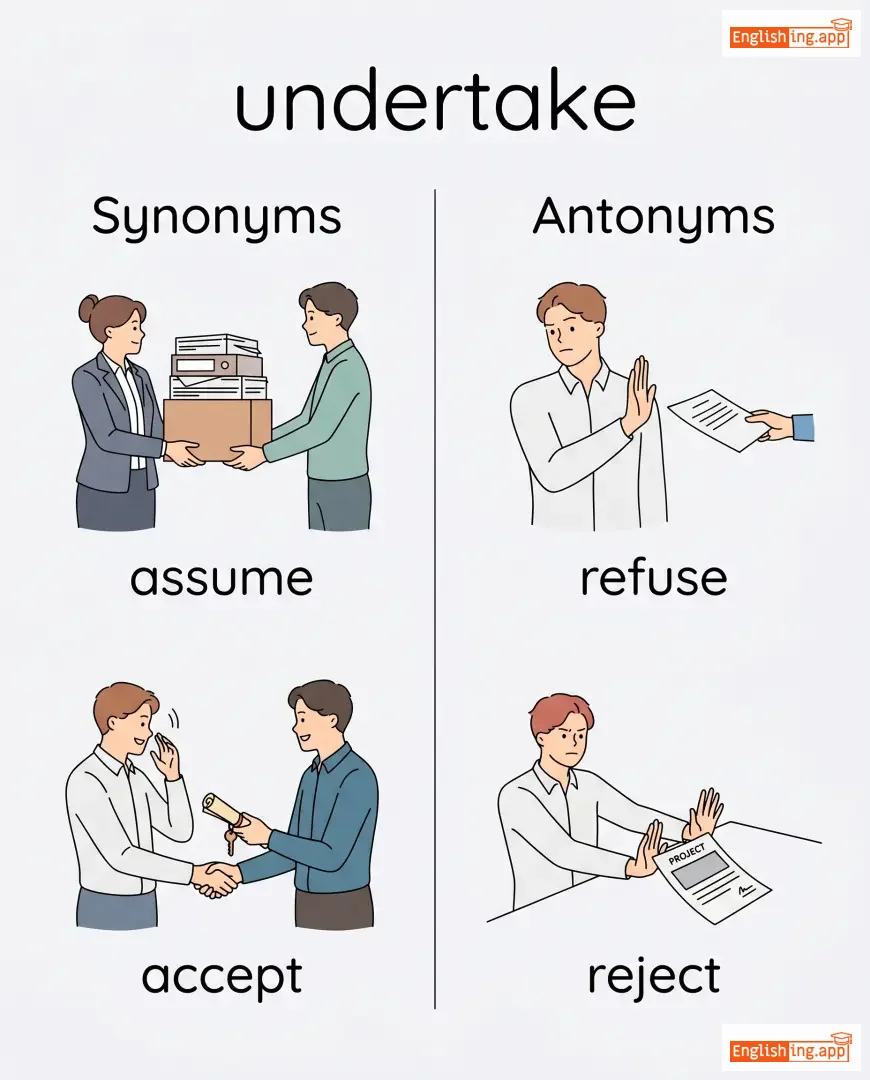
assume, accept, commit, embark
••••••
|
refuse, reject
••••••
|
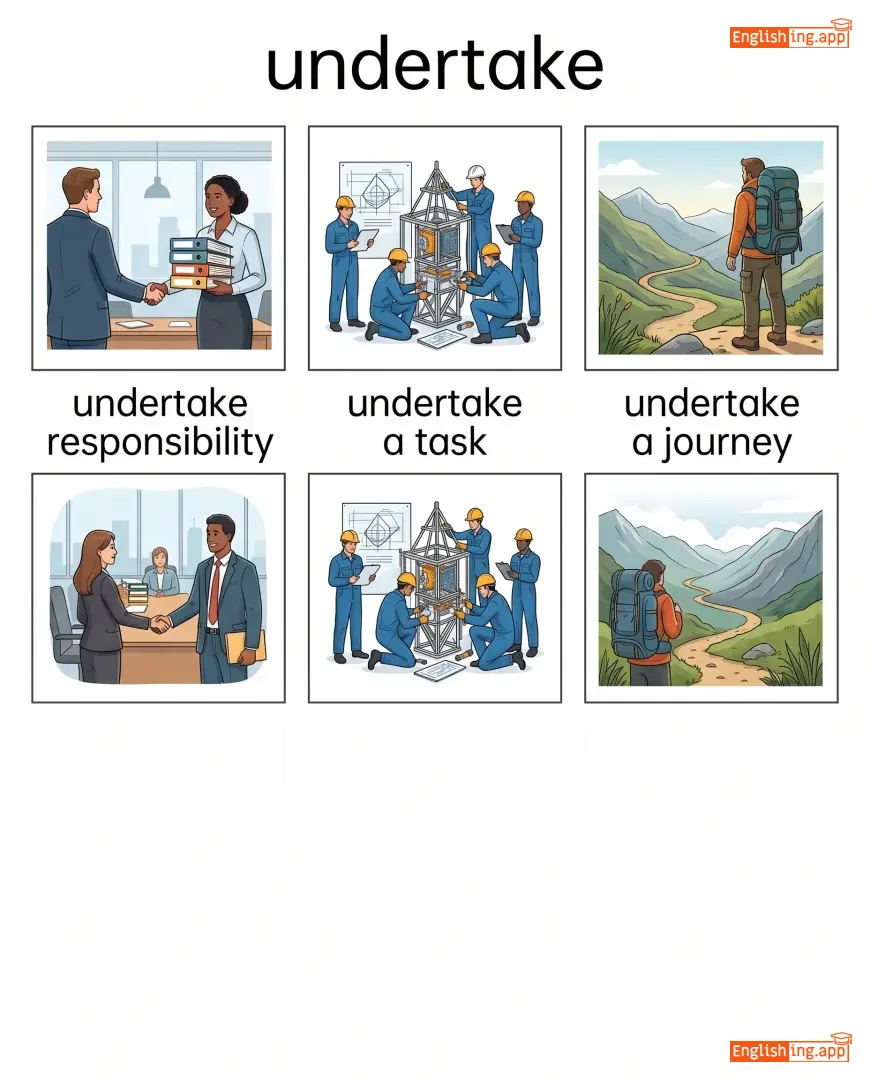
undertake responsibility, undertake a task, undertake a journey
••••••
|
Undertake = 承担责任 = chengdan zeren
••••••
|
|
#5261
🩲
|
/ˈʌndərweər/
noun
(安德韦尔)
••••••
|
- •••••• |
内衣
neiyi
••••••
|
- •••••• | - •••••• | - •••••• | - •••••• |
Clothing worn beneath outer clothes, typically next to the skin.
••••••
|
He bought new underwear for the trip.
他为旅行买了新的内衣。
••••••
|
他为旅行买了新的内衣。
Ta wei lvxing maile xin de neiyi.
••••••
|
- •••••• | - •••••• | - •••••• |
undergarments, briefs, panties, boxers, lingerie
••••••
|
outerwear, overclothes
••••••
|
change underwear, wear underwear, cotton underwear
••••••
|
内 = inner, 衣 = clothes.
••••••
|
|
#5262
❌
|
/ˌʌnɪmˈplɔɪəbəl/
adjective
(安恩普洛耶布尔)
••••••
|
- •••••• |
不适合就业
bu shihe jiuye
••••••
|
- •••••• | - •••••• | - •••••• | - •••••• |
Not able to be employed; lacking the skills or qualities necessary for employment
••••••
|
Due to his criminal record, he was considered unemployable in most companies.
由于他的犯罪记录,他在大多数公司被认为是安恩普洛耶布尔。
••••••
|
由于他的犯罪记录,他在大多数公司被认为是不适合就业。
Youyu ta de fanzui jilu, ta zai da duoshu gongsi bei renwei shi bu shihe jiuye.
••••••
|
- •••••• | - •••••• | - •••••• |
unhirable, unfit for work, ineligible, unskilled, unsuitable
••••••
|
employable, hireable, qualified
••••••
|
completely unemployable, considered unemployable, unemployable person
••••••
|
记住 'unemployable' = '不适合就业', 'un' + 'employable'
••••••
|
|
#5263
💼❌
|
/ʌnɪmˈplɔɪd/
adjective
(ʌnɪmˈplɔɪd)
••••••
|
- •••••• |
失业
shīyè
••••••
|
- •••••• | - •••••• | - •••••• | - •••••• |
without a job; not having paid work
••••••
|
He has been unemployed for six months now.
他已经失业六个月了。
••••••
|
他已经失业六个月了。
Tā yǐjīng shīyè liù gè yuè le.
••••••
|
- •••••• | - •••••• | - •••••• |
jobless, out of work, idle, without employment
••••••
|
employed, working, hired, occupied
••••••
|
unemployed workers, long-term unemployed, unemployed rate
••••••
|
失业意味着没有工作,和失去工作一样。
••••••
|
|
#5264
📉
|
/ˌʌnɪmˈplɔɪmənt/
noun
(ānɪmplɔɪmənt)
••••••
|
- •••••• |
失业
shiye
••••••
|
- •••••• | - •••••• | - •••••• | - •••••• |
the state of not having a paid job despite being able and willing to work
••••••
|
High unemployment is a major issue in the country. |
高失业率是该国的一个主要问题。
Gao shiye lv shi gai guo de yi ge zhuyao wenti.
••••••
|
unemployment rate |
the percentage of the labor force that is jobless
••••••
|
失业率
shiye lv
••••••
|
joblessness, redundancy, idleness, inactivity, layoff
••••••
|
employment, work, occupation
••••••
|
high unemployment, youth unemployment, unemployment benefits, unemployment crisis
••••••
|
Un + Employment 就是没有工作 — 记住,失业就是没有工作 📉
••••••
|
|
#5265
⚖️
|
/ʌnˈfɛər/
adjective
(アンフェア)
••••••
|
- •••••• |
不公平
bukongping
••••••
|
- •••••• | - •••••• | - •••••• | - •••••• |
not based on or behaving according to the principles of equality or justice
••••••
|
It’s unfair to blame her for the team’s failure. |
将团队的失败归咎于她是不公平的。
Jiang tuandui de shibai guijiu yu ta shi bu gongping de.
••••••
|
unfair advantage |
a situation where someone has an undeserved benefit
••••••
|
不公平的优势
bukongping de youshi
••••••
|
biased, unjust, partial, unequal, prejudiced
••••••
|
fair, just, equal
••••••
|
unfair treatment, unfair decision, unfair advantage, unfair competition
••••••
|
不公平 = 不 + 公平 (不公平)
••••••
|
|
#5266
⚖️
|
/ʌnˈfɛərli/
adverb
(安费尔利)
••••••
|
- •••••• |
不公平地
bu gong ping de
••••••
|
- •••••• | - •••••• | - •••••• | - •••••• |
In a manner that is not just, reasonable, or impartial
••••••
|
He was treated unfairly by the committee.
他被委员会不公平地对待。
••••••
|
他被委员会不公平地对待。
Ta bei weiyuanhui bu gongping de duidai.
••••••
|
- •••••• | - •••••• | - •••••• |
unjustly, inequitably, wrongly, discriminatorily
••••••
|
fairly, justly, impartially
••••••
|
unfairly treated, unfairly dismissed, unfairly accused
••••••
|
Think '不公平' (unfair) + '地' (ly) = unfairly
••••••
|
|
#5267
💔
|
/ʌnˈfeɪθ.fəl/
adjective
(ʌnfeɪθfəl)
••••••
|
- •••••• |
不忠诚
bù zhōngchéng
••••••
|
- •••••• | - •••••• | - •••••• | - •••••• |
not loyal or true to a spouse, partner, or commitment
••••••
|
He was unfaithful to his wife for many years. |
他对妻子不忠诚多年。
Tā duì qīzi bù zhōngchéng duōnián.
••••••
|
- •••••• | - •••••• | - •••••• |
disloyal, treacherous, dishonest, cheating
••••••
|
faithful, loyal, devoted, trustworthy
••••••
|
unfaithful husband, unfaithful wife, unfaithful partner
••••••
|
不忠诚 (bù zhōngchéng) literally means 'not loyal', perfect for unfaithful.
••••••
|
|
#5268
💔
|
/ʌnˈfeɪθfʊlnəs/
noun
(安菲思福尔尼斯)
••••••
|
- •••••• |
不忠
buzhong
••••••
|
- •••••• | - •••••• | - •••••• | - •••••• |
the quality of being disloyal or not faithful; breach of trust or fidelity
••••••
|
His unfaithfulness led to the end of their marriage.
他的安菲思福尔尼斯导致了他们婚姻的结束。
••••••
|
他的不忠导致了他们婚姻的结束。
Ta de buzhong daozhi le tamen hunyin de jieshu.
••••••
|
- •••••• | - •••••• | - •••••• |
disloyalty, infidelity, treachery, betrayal
••••••
|
faithfulness, loyalty, fidelity
••••••
|
unfaithfulness in marriage, act of unfaithfulness, unfaithfulness detected, unfaithfulness revealed
••••••
|
Buzhong = 'not faithful' in Chinese.
••••••
|
|
#5269
❓
|
/ʌnfəˈmɪl.jər/
adjective
(ʌnfəˈmɪl.jər)
••••••
|
- •••••• |
不熟悉的; 陌生的
bù shúxī de; mòshēng de
••••••
|
- •••••• | - •••••• | - •••••• | - •••••• |
not known or recognized; strange
••••••
|
The city was unfamiliar to me since I had never been there before. |
这座城市对我来说很陌生,因为我以前从未去过那里。
Zhè zuò chéngshì duì wǒ lái shuō hěn mòshēng, yīnwèi wǒ yǐqián cóng wèi qùguò nàlǐ.
••••••
|
- •••••• | - •••••• | - •••••• |
unknown, strange, foreign, unrecognized
••••••
|
familiar, known, recognized, acquainted
••••••
|
unfamiliar territory, unfamiliar face, unfamiliar surroundings
••••••
|
Unfamiliar = 不熟悉, 就像陌生的地方或情况。
••••••
|
|
#5270
❌
|
/ʌnˈfɪt/
adjective
(安菲特)
••••••
|
- •••••• |
不适合; 不适当;
bù shìhé; bù shìdàng
••••••
|
- •••••• | - •••••• | - •••••• | - •••••• |
not in good physical condition; unsuitable or inappropriate
••••••
|
He was declared unfit for military service due to his poor health.
由于健康状况差,他被宣判不适合军事服务。
••••••
|
由于健康状况差,他被宣判不适合军事服务。
Yóuyú jiànkāng zhuàngkuàng chà, tā bèi xuānpàn bù shìhé jūnshì fúwù.
••••••
|
- •••••• | - •••••• | - •••••• |
unsuitable, inappropriate, inadequate, incapable
••••••
|
fit, suitable, appropriate, capable
••••••
|
unfit for duty, unfit to drive, physically unfit
••••••
|
Unfit 在中文里类似 '不适合',也就是不符合标准或者状态不适宜。
••••••
|
|
#5271
📜
|
/ʌnˈfəʊld/
verb
(an-fold)
••••••
|
- •••••• |
展开或打开
zhǎn kāi huò dǎ kāi
••••••
|
unfolded
an-fold-ed
••••••
|
unfolded
an-fold-ed
••••••
|
unfolds
an-fold-s
••••••
|
unfolding
an-fold-ing
••••••
|
to open or spread out something that was folded; to gradually reveal or develop
••••••
|
She unfolded the letter carefully.
她小心地展开了信件。
••••••
|
她小心地展开了信件。
Tā xiǎoxīn de zhǎn kāi le xìn jiàn.
••••••
|
as the story unfolds
随着故事的发展
••••••
|
as events become known over time
••••••
|
随着故事的发展
Suí zhe gùshì de fāzhǎn
••••••
|
open, expand, develop, reveal, evolve
••••••
|
fold, close, conceal
••••••
|
unfold story, unfold plan, unfold events, unfold wings
••••••
|
Unfold 和展开类似 — 故事逐渐展开 📜
••••••
|
|
#5272
😔
|
/ʌnˈfɔːrtʃənət/
adjective
(an4fuoqinai)
••••••
|
- •••••• |
不幸
buxing
••••••
|
- •••••• | - •••••• | - •••••• | - •••••• |
Having or marked by bad luck; unlucky.
••••••
|
It was unfortunate that the meeting was canceled at the last minute.
很不幸,会议在最后一分钟被取消了。
••••••
|
很不幸,会议在最后一分钟被取消了。
Hen buxing, huiyi zai zuihou yifen zhong bei quxiao le.
••••••
|
unfortunate incident
不幸事件
••••••
|
An unlucky or regrettable event
••••••
|
不幸事件
buxing shijian
••••••
|
unlucky, regrettable, unlucky, adverse, unlucky
••••••
|
fortunate, lucky, favorable
••••••
|
unfortunate accident, unfortunate situation, unfortunate event, unfortunate circumstances
••••••
|
UN+幸运 = 没有好运 = 不幸
••••••
|
|
#5273
😔
|
/ʌnˈfɔːrtʃənətli/
adverb
(安弗托尼特利)
••••••
|
- •••••• |
不幸地
unfortunately
••••••
|
- •••••• | - •••••• | - •••••• | - •••••• |
used to express regret or disappointment about something
••••••
|
Unfortunately, the weather was bad for our picnic.
很遗憾,天气不适合我们的野餐。
••••••
|
很遗憾,天气不适合我们的野餐。
henyihan tianqi bu shi he wo men de ye can
••••••
|
- •••••• | - •••••• | - •••••• |
sadly, regrettably, unluckily, unhappily
••••••
|
fortunately, luckily, happily
••••••
|
unfortunately true, unfortunately common, unfortunately necessary
••••••
|
UnforTuneItly 记作 不幸地 的 音节 图像, 想象 一只 panda 在 野餐 时 说 不 幸 地
••••••
|
|
#5274
😒
|
/ʌnˈfrɛndli/
adjective
(安弗润德利)
••••••
|
- •••••• |
不友好的
bu youhao de
••••••
|
- •••••• | - •••••• | - •••••• | - •••••• |
not kind or welcoming; hostile or cold in behavior or attitude
••••••
|
The shop owner seemed unfriendly to new customers.
则 沙普 欧纳 西姆德 安弗润德利 图 牛 卡斯特莫斯。
••••••
|
店主对新顾客显得不友好。
Dianzhu dui xin guke xiande bu youhao
••••••
|
- •••••• | - •••••• | - •••••• |
hostile, cold, rude, unwelcoming, aloof
••••••
|
friendly, warm, welcoming
••••••
|
unfriendly attitude, unfriendly behavior, unfriendly tone, unfriendly environment
••••••
|
No friend = 不友好的
••••••
|
Vocabulary Quiz
Test your vocabulary by matching words with their translations or meanings.
Login to take the quiz
Comments (0)
Share your thoughts and join the discussion.
Join the discussion by logging in
Login to CommentNo comments yet
Be the first to share your thoughts!