






















Swipe left or right, or use the buttons. Tap image to zoom.
例句翻译
单词
Lesson 4Lesson 4 - 遮罩切换
|
表情符号
|
单词 | Images | 翻译 | 过去时 | 过去分词 | 第三人称单数 | 动名词 | 含义 | 例句 | 例句翻译 | 示例表达 | 示例表达含义 | 示例表达翻译 | 同义词 | 反义词 | 搭配词 | 助记符 |
|---|---|---|---|---|---|---|---|---|---|---|---|---|---|---|---|---|---|
|
#151
🏔️
|
/ədˈvɛntʃər/
noun
(冒险)
••••••
|
|
冒险
màoxiǎn
••••••
|
- •••••• | - •••••• | - •••••• | - •••••• |
an unusual, exciting, or daring experience
••••••
|
They went on an adventure in the mountains. |
他们去山里进行了一次冒险。
Tāmen qù shānlǐ jìnxíngle yī cì màoxiǎn.
••••••
|
spirit of adventure |
the willingness to try exciting or risky things
••••••
|
冒险精神
màoxiǎn jīngshén
••••••
|
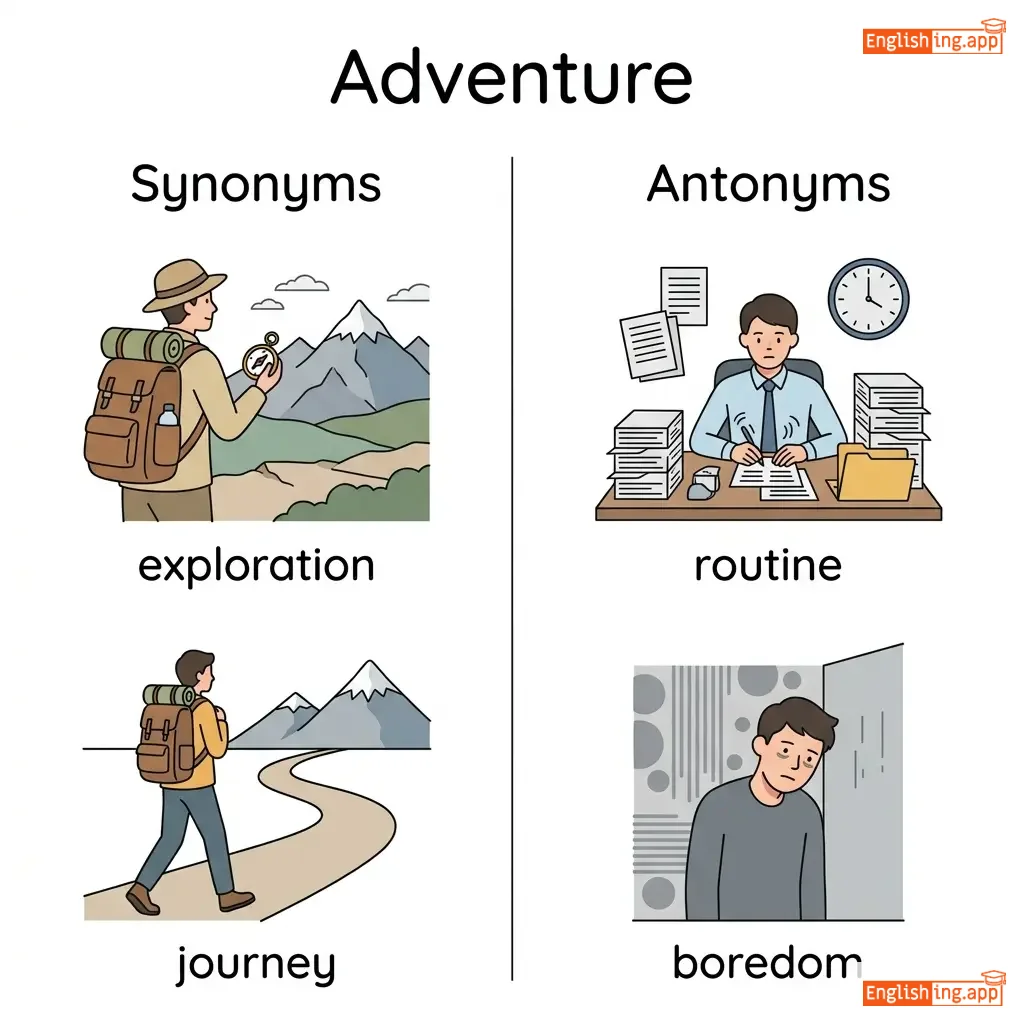
exploration, journey, quest, expedition
••••••
|
routine, boredom, safety
••••••
|
exciting adventure, great adventure, spirit of adventure, adventure story
••••••
|
Adventure 即冒险,'Ad vent' 有热风,意味着乐趣和激动!
••••••
|
|
#152
🧭
|
/ədˈvɛntʃərər/
noun
(阿德文彻勒)
••••••
|
- •••••• |
冒险家
maoxianjia
••••••
|
- •••••• | - •••••• | - •••••• | - •••••• |
a person who seeks exciting, risky, or unusual experiences; someone who explores new or unknown places
••••••
|
The adventurer traveled deep into the jungle in search of ancient ruins.
The adventurer traveled deep into the jungle in search of ancient ruins.
••••••
|
这位冒险家深入丛林寻找古老的遗迹。
zhe wei maoxianjia shenru conglin xunzhao gulo de yiji
••••••
|
spirit of adventure
spirit of adventure
••••••
|
a strong desire to explore, take risks, and try new experiences
••••••
|
冒险精神
maoxian jingshen
••••••
|
explorer, risk-taker, wanderer, pioneer, daredevil
••••••
|
coward, homebody, conformist
••••••
|
brave adventurer, fearless adventurer, young adventurer, adventurer spirit, bold adventurer
••••••
|
冒险家 = adventure 人
••••••
|
|
#153
🎢
|
/ədˈventʃərəs/
adjective
(ædvɛnʧərəs)
••••••
|
|
冒险的; 喜欢冒险的
màoxiǎn de; xǐhuān màoxiǎn de
••••••
|
- •••••• | - •••••• | - •••••• | - •••••• |
willing to take risks; seeking excitement; daring
••••••
|
She is an adventurous person who loves trying new foods. |
她是一个喜欢冒险的人,喜欢尝试新食物。
Tā shì yīgè xǐhuān màoxiǎn de rén, xǐhuān chángshì xīn shíwù.
••••••
|
- •••••• | - •••••• | - •••••• |
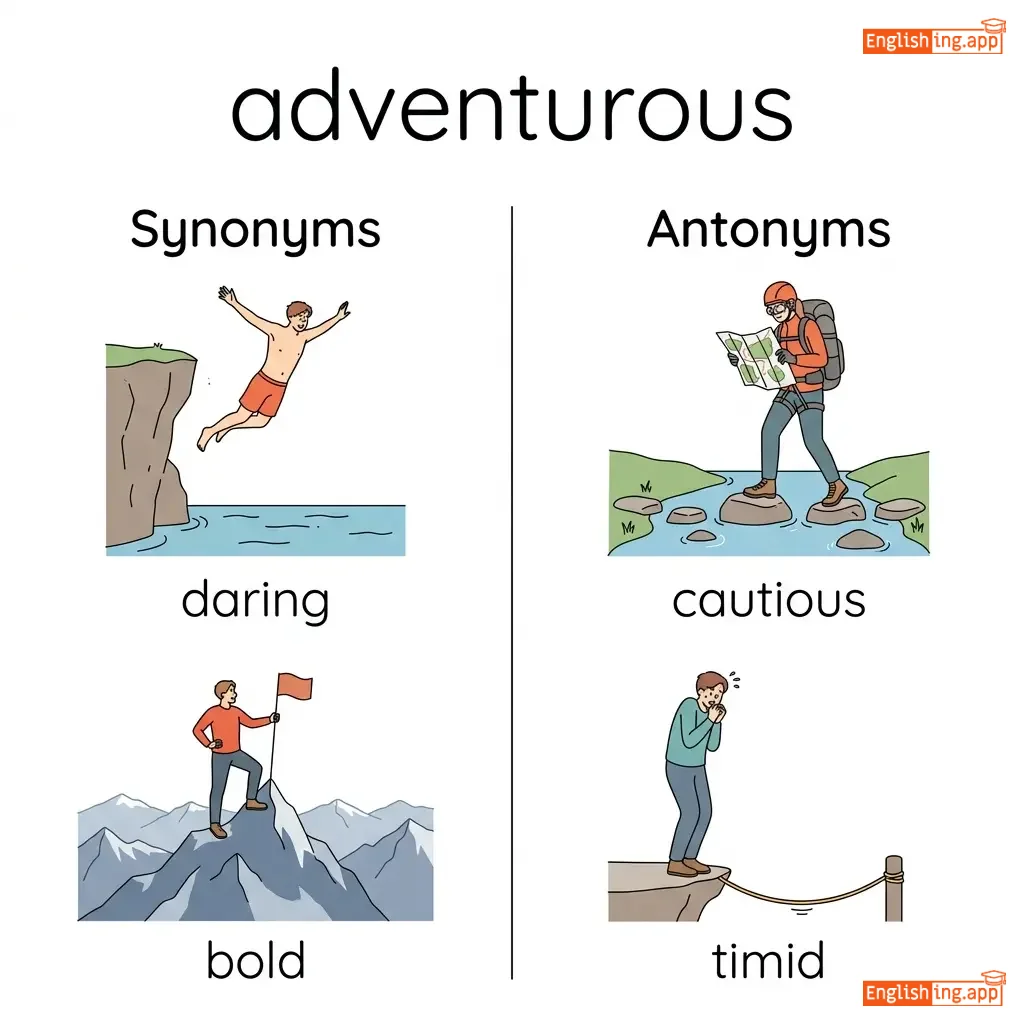
daring, bold, brave, fearless
••••••
|
cautious, timid, careful, conservative
••••••
|
adventurous spirit, adventurous traveler, adventurous eater
••••••
|
冒险让你勇敢无畏,探索新事物!
••••••
|
|
#154
🌩️
|
/ˈæd.vɜːs/
adjective
••••••
|
- •••••• | - •••••• | - •••••• | - •••••• | - •••••• | - •••••• |
Preventing success or development; harmful or unfavorable.
••••••
|
The project was delayed due to adverse weather conditions. |
- •••••• |
adverse effect |
a harmful or negative impact
••••••
|
- •••••• |
unfavorable, harmful, negative, detrimental, hostile
••••••
|
favorable, beneficial, positive
••••••
|
adverse conditions, adverse effect, adverse impact, adverse reaction
••••••
|
No •••••• |
|
#155
📣
|
/ˈædvərtaɪz/
verb
(ædvərtaɪz)
••••••
|
|
做广告
zuò guǎnggào
••••••
|
advertised
ædvərtaɪzd
••••••
|
advertised
ædvərtaɪzd
••••••
|
advertises
ædvərtaɪziz
••••••
|
advertising
ædvərtaɪzɪŋ
••••••
|
to describe or draw attention to a product, service, or event in a public medium in order to promote sales or attendance
••••••
|
They advertise their products on social media platforms.
他们在社交媒体平台上宣传他们的产品。
••••••
|
他们在社交媒体平台上宣传他们的产品。
Tāmen zài shèjiāo méitǐ píngtái shàng xuānchuán tāmen de chǎnpǐn.
••••••
|
advertise for something
为某事做广告
••••••
|
to announce publicly that you need something or someone
••••••
|
为某事做广告
wèi mǒu shì zuò guǎnggào
••••••
|
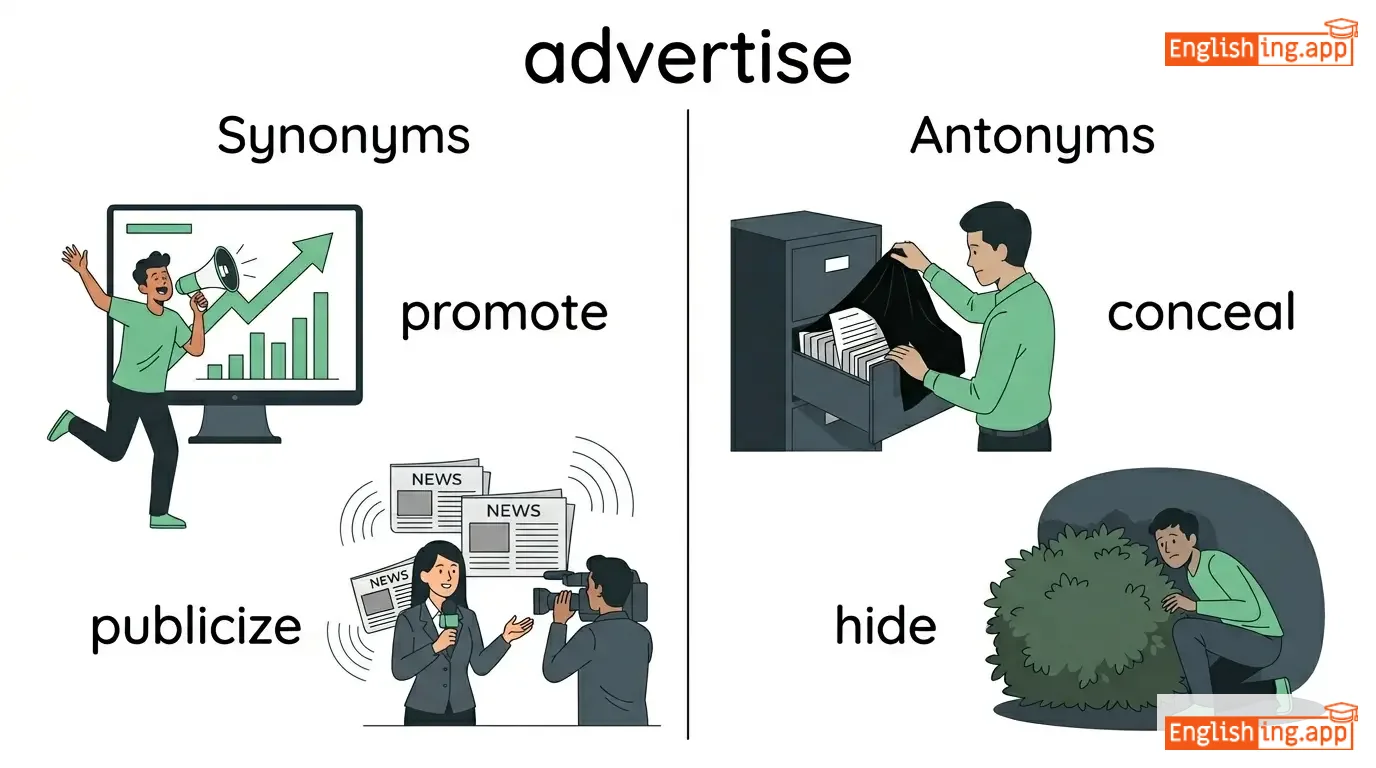
promote, publicize, market, broadcast, announce
••••••
|
conceal, hide, suppress
••••••
|
advertise products, advertise online, advertise widely, advertise for staff
••••••
|
广告广告看你的眼睛!想让大家看到,做广告!
••••••
|
|
#156
📢
|
/ədˈvɜːrtɪsmənt/
noun
(阿德沃泰斯门特)
••••••
|
- •••••• |
广告
guanggao
••••••
|
- •••••• | - •••••• | - •••••• | - •••••• |
a public notice or announcement promoting a product, service, or event
••••••
|
The advertisement attracted many new customers.
泽 阿德沃泰斯门特 阿特拉克提德 曼尼 纽 卡斯特马斯。
••••••
|
这则广告吸引了许多新顾客。
zhe ze guanggao xiyin le xuduo xin guke
••••••
|
- •••••• | - •••••• | - •••••• |
ad, commercial, promotion, announcement, publicity
••••••
|
concealment, silence
••••••
|
online advertisement, print advertisement, television advertisement, advertisement campaign
••••••
|
Advertisement 就是 广告,ad 一出现就想到广告。
••••••
|
|
#157
📢
|
/ˈædvərˌtaɪzɪŋ/
noun
(ædvərˈtaɪzɪŋ)
••••••
|
- •••••• |
广告
guǎnggào
••••••
|
- •••••• | - •••••• | - •••••• | - •••••• |
the activity of producing advertisements for products or services
••••••
|
The company spends millions on advertising every year. |
公司每年在广告上花费数百万。
Gōngsī měi nián zài guǎnggào shàng huāfèi shù bǎi wàn.
••••••
|
false advertising |
misleading or deceptive promotion of a product
••••••
|
虚假广告
xūjiǎ guǎnggào
••••••
|
promotion, marketing, publicity, propaganda
••••••
|
concealment, secrecy
••••••
|
advertising campaign, advertising industry, online advertising, false advertising
••••••
|
Advertising 是广告,大家都想看到!
••••••
|
|
#158
💡
|
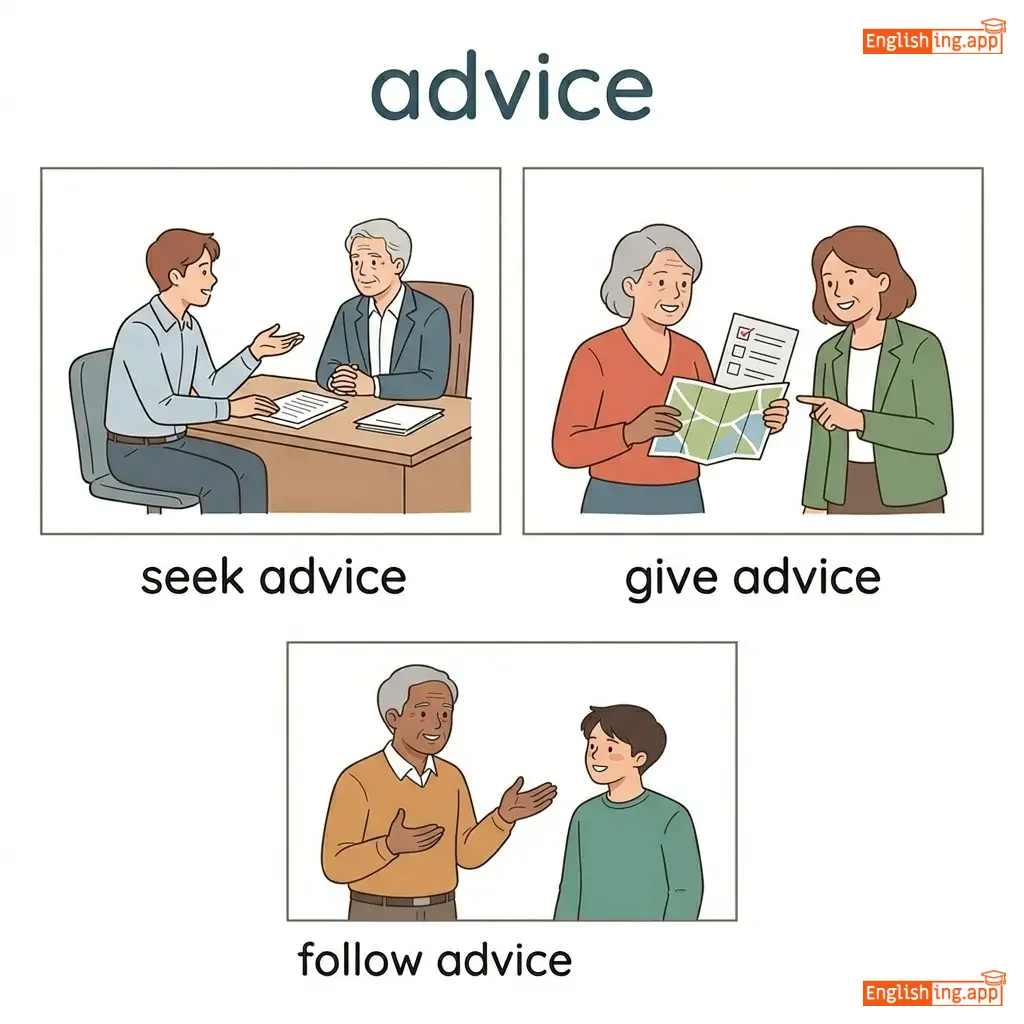
/ədˈvaɪs/
noun
••••••
|
|
- •••••• | - •••••• | - •••••• | - •••••• | - •••••• |
a suggestion or recommendation about what someone should do
••••••
|
She gave me good advice about managing money. |
- •••••• |
take someone's advice |
to follow the suggestion or recommendation given by someone
••••••
|
- •••••• |
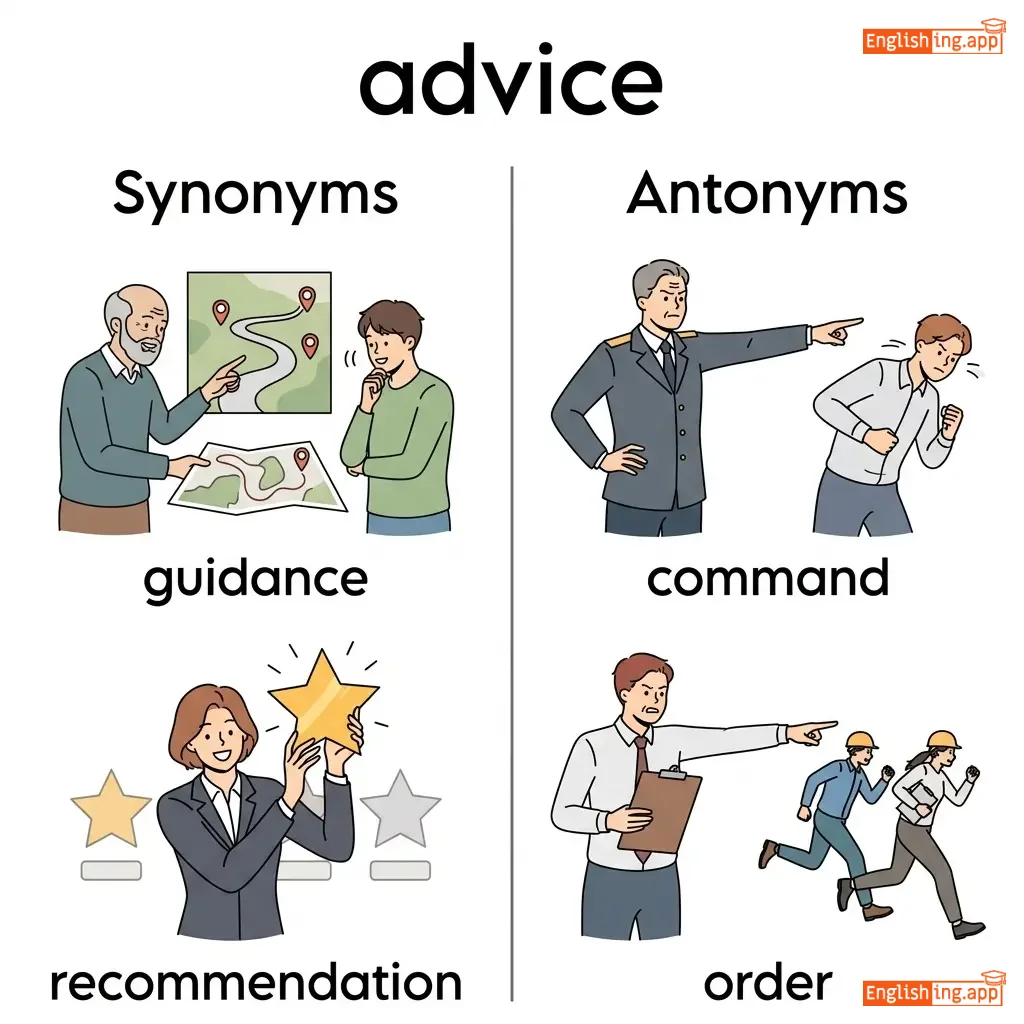
guidance, recommendation, counsel, tip, suggestion
••••••
|
command, order
••••••
|
seek advice, give advice, follow advice, professional advice
••••••
|
No •••••• |
|
#159
🗣️
|
/ədˈvaɪz/
verb
(ædvais)
••••••
|
|
建议
jiànyì
••••••
|
advised
ædvaɪzd
••••••
|
advised
ædvaɪzd
••••••
|
advises
ædvaziz
••••••
|
advising
ædvɑɪzɪŋ
••••••
|
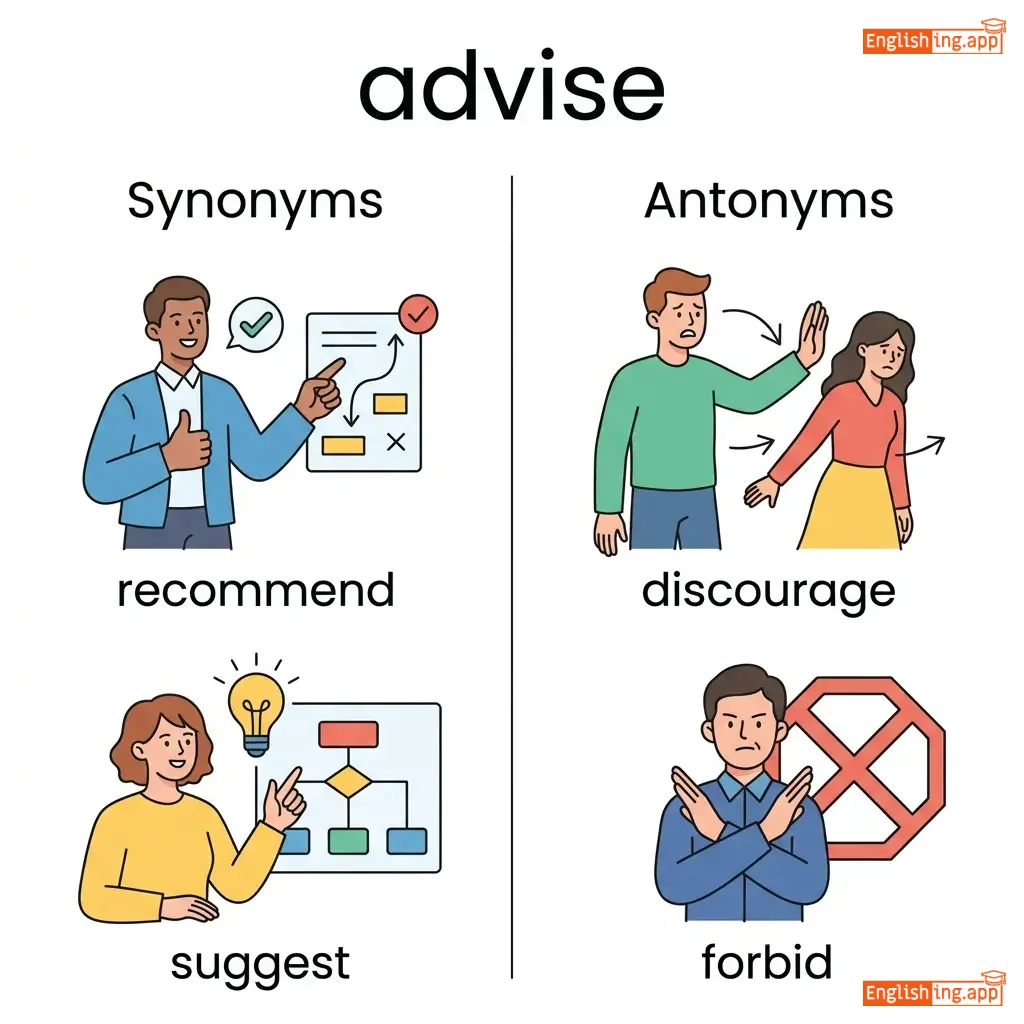
to recommend what should be done; to give advice
••••••
|
The doctor advised him to rest for a week.
医生建议他休息一周。
••••••
|
医生建议他休息一周。
Yīshēng jiànyì tā xiūxí yī zhōu.
••••••
|
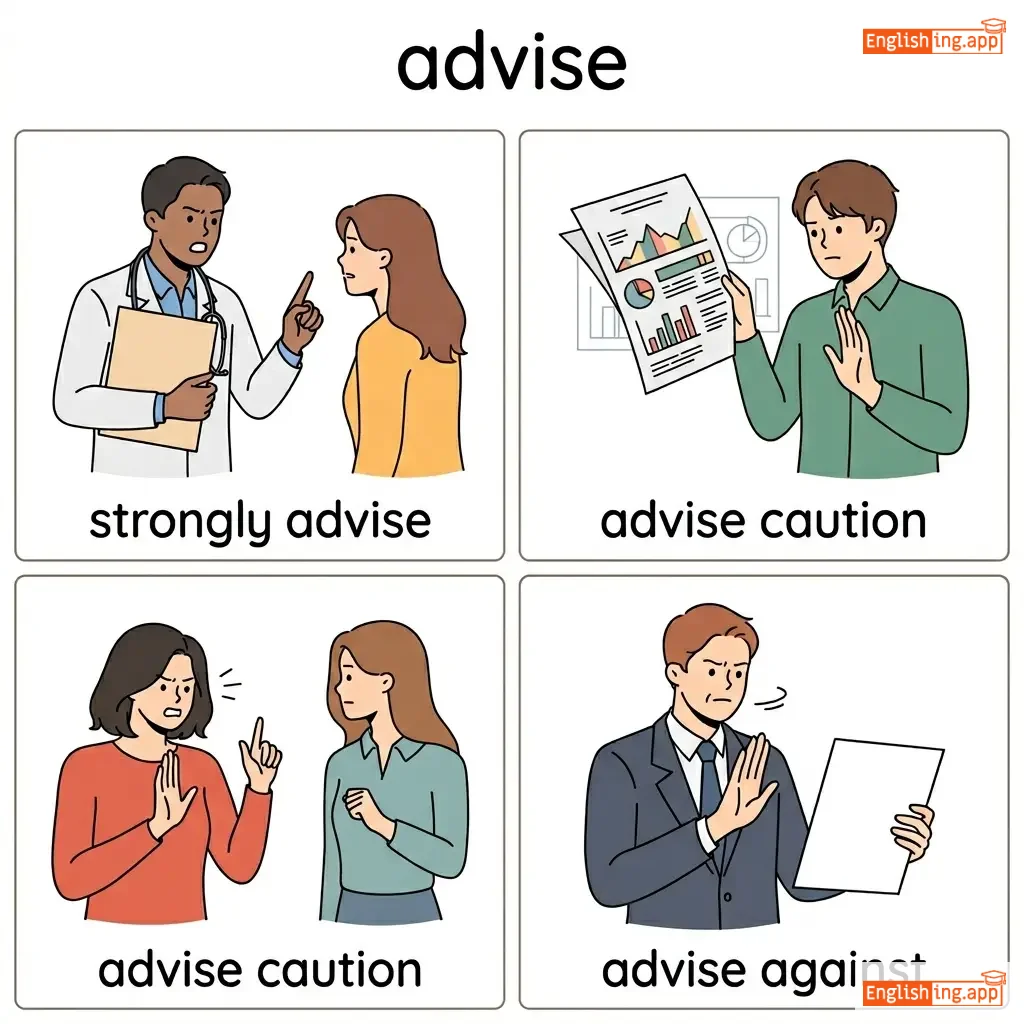
advise against
建议反对
••••••
|
to recommend not doing something
••••••
|
建议不做某事
jiànyì bù zuò mǒu shì
••••••
|
recommend, suggest, counsel, urge
••••••
|
discourage, forbid
••••••
|
strongly advise, advise caution, advise against, legally advise
••••••
|
Advise 就是建议,像是给人提建议的声音。
••••••
|
|
#160
👨🏫
|
/ədˈvaɪzər/
noun
(ædˈvaɪzər)
••••••
|
- •••••• |
顾问
gùwèn
••••••
|
- •••••• | - •••••• | - •••••• | - •••••• |
a person who gives advice, especially in a professional or official role
••••••
|
He works as a financial adviser at a bank. |
他在一家银行担任金融顾问。
Tā zài yījiā yínháng dānrèn jīnróng gùwèn.
••••••
|
- •••••• | - •••••• | - •••••• |
counselor, consultant, mentor, guide
••••••
|
opponent, detractor
••••••
|
financial adviser, legal adviser, personal adviser, senior adviser
••••••
|
Adviser 和 Advisor 相似 — 是给你建议 (gùwèn) 的人。
••••••
|
|
#161
📢
|
/ˈædvəˌkeɪt/ (noun), /ˈædvəˌkeɪt/ or /ˈædvəˌkət/ (verb)
noun, verb
(艾德沃凯特)
••••••
|
- •••••• |
支持者 / 律师
zhīchí zhě / lǜshī
••••••
|
advocated
艾德沃凯特德
••••••
|
advocated
艾德沃凯特德
••••••
|
advocates
艾德沃凯特斯
••••••
|
advocating
艾德沃凯廷
••••••
|
As a noun: a person who publicly supports or recommends a cause. As a verb: to publicly recommend or support.
••••••
|
She is an advocate for women's rights and often advocates for equal opportunities.
她是女性权利的倡导者,并且经常为平等机会而倡导。
••••••
|
她是女性权利的倡导者,并且经常为平等机会而倡导。
Tā shì nǚxìng quánlì de chàngdǎo zhě, bìngqiě jīngcháng wèi píngděng jīhuì ér chàngdǎo.
••••••
|
devil's advocate
魔鬼的辩护人
••••••
|
a person who argues against a position for the sake of debate
••••••
|
为了辩论而反对某种立场的人
wèile biànlùn ér fǎnduì mǒu zhǒng lìchǎng de rén
••••••
|
supporter, promoter, defender, champion, proponent
••••••
|
opponent, critic, adversary
••••••
|
advocate strongly, advocate change, human rights advocate, advocate for reform
••••••
|
Advocate意味着像一个律师那样为某人辩护的人。
••••••
|
|
#162
🎨
|
/ɛsˈθɛtɪk/
adjective
(审美的)
••••••
|
|
审美的
shenmei de
••••••
|
- •••••• | - •••••• | - •••••• | - •••••• |
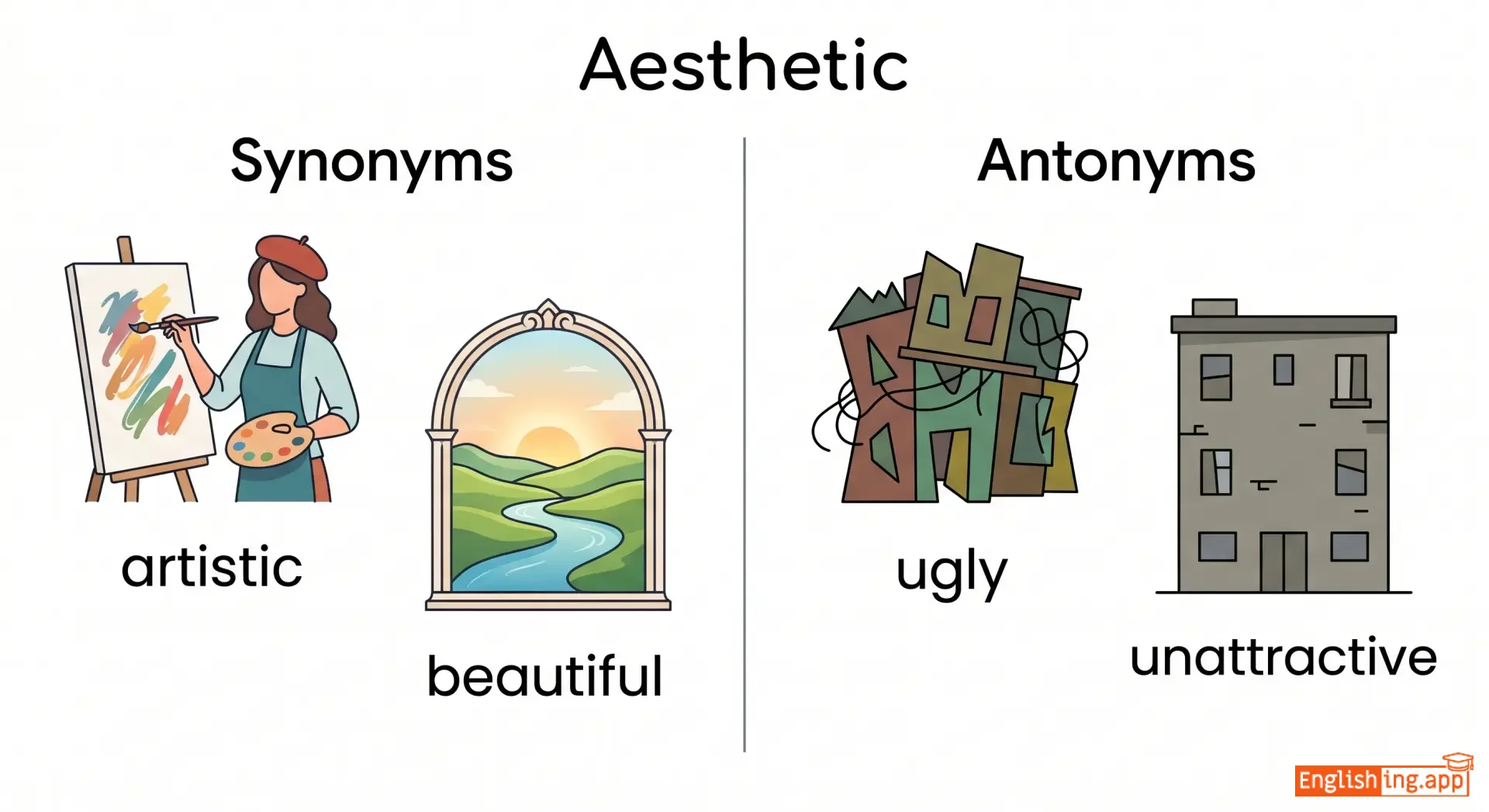
concerned with beauty or the appreciation of beauty
••••••
|
The room was decorated in an aesthetic style that pleased everyone.
房间以审美风格装饰,让每个人都感到愉悦。
••••••
|
房间以审美风格装饰,让每个人都感到愉悦。
Fángjiān yǐ shěnměi fēnggé zhuāngshì, ràng měi gèrén dōu gǎndào yúyuè.
••••••
|
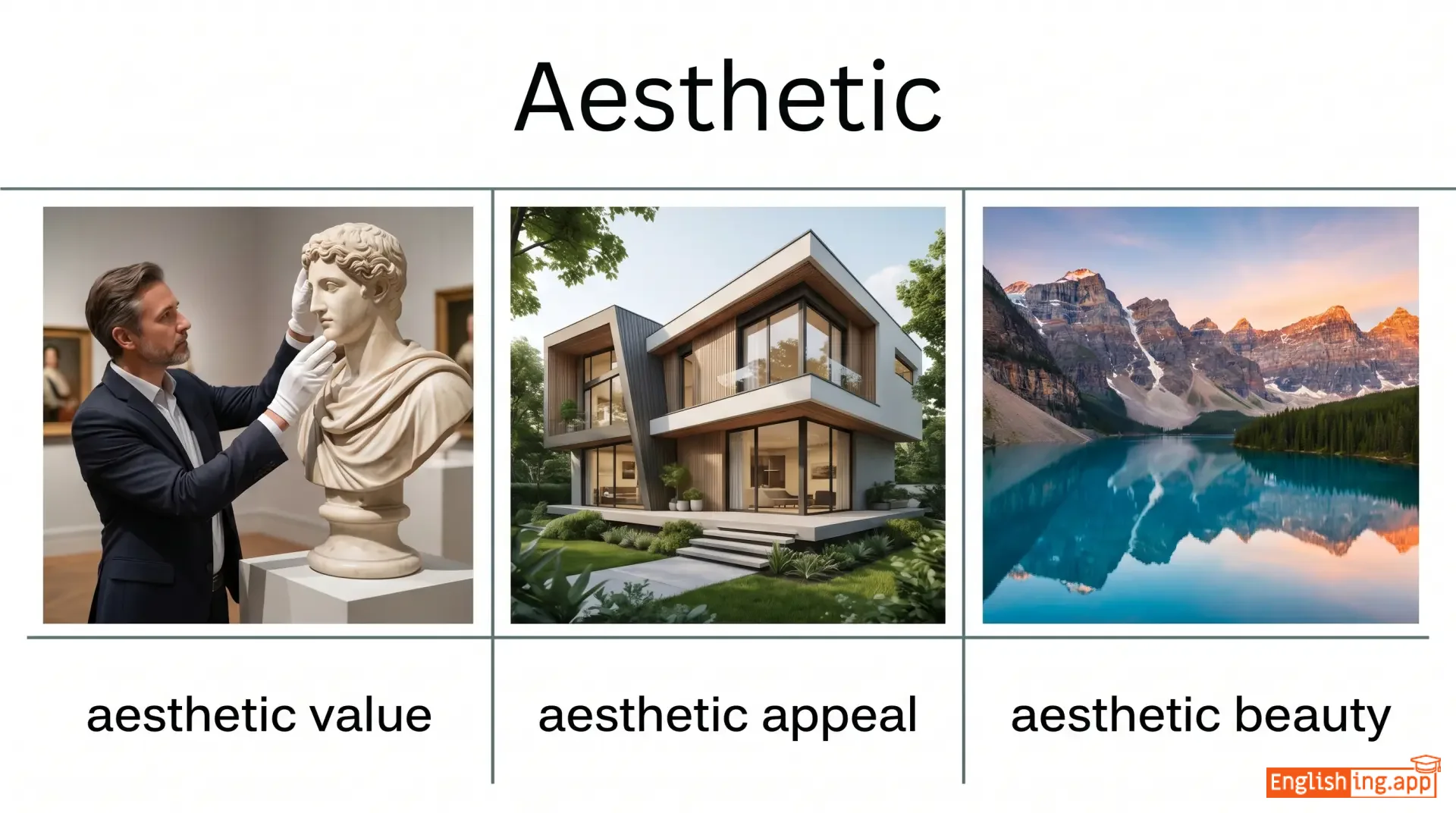
aesthetic appeal
审美吸引力
••••••
|
the quality of being visually attractive
••••••
|
审美吸引力
shenmei xīyǐn lì
••••••
|
artistic, beautiful, elegant, tasteful
••••••
|
ugly, unattractive, plain
••••••
|
aesthetic value, aesthetic appeal, aesthetic beauty, aesthetic design
••••••
|
Aesthetic意味着美,所以审美的也与美有关。
••••••
|
|
#163
🎨
|
/iːsˈθɛθɪkəl/
adjective
(伊斯塞西提卡尔)
••••••
|
- •••••• |
美学的
meixuede
••••••
|
- •••••• | - •••••• | - •••••• | - •••••• |
concerned with beauty or the appreciation of beauty; related to artistic taste or appearance
••••••
|
The architect focused on the aesthetical balance of the building.
The architect focused on the aesthetical balance of the building.
••••••
|
建筑师注重建筑的美学平衡。
Jianzhushi zhuzhong jianzhu de meixue pingheng
••••••
|
- •••••• | - •••••• | - •••••• |
aesthetic, artistic, visual, decorative, stylistic
••••••
|
unaesthetic, ugly, plain
••••••
|
aesthetical value, aesthetical sense, aesthetical appeal, aesthetical design
••••••
|
美学 = aesthetic
••••••
|
|
#164
🎨
|
/iːsˈθetɪkli/
adverb
(伊斯塞提克利)
••••••
|
- •••••• |
从审美角度
cong shenmei jiaodu
••••••
|
- •••••• | - •••••• | - •••••• | - •••••• |
in a way that is concerned with beauty or visual appeal
••••••
|
The building is aesthetically pleasing despite its simple design.
这座建筑在视觉上很美,尽管设计简单。
••••••
|
尽管设计简单,这座建筑在审美上很吸引人。
jinguan sheji jiandan zhezuo jianzhu zai shenmei shang hen xiyin ren
••••••
|
- •••••• | - •••••• | - •••••• |
beautifully, attractively, visually, artistically, tastefully
••••••
|
ugly, unattractively, poorly
••••••
|
aesthetically pleasing, aesthetically designed, aesthetically appealing, aesthetically improved
••••••
|
审美 = aesthetic → 从审美角度
••••••
|
|
#165
💌
|
/əˈfɛər/
noun
(阿费尔)
••••••
|
|
事件 / 关系
shijian / guanxi
••••••
|
- •••••• | - •••••• | - •••••• | - •••••• |
an event, situation, or relationship, often one that is private or romantic
••••••
|
The scandal became the most talked-about affair of the year.
丑闻成为了这一年最受讨论的事件。
••••••
|
丑闻成为了这一年最受讨论的事件。
Chou wen chengwei le zhe yi nian zui shou taolun de shijian.
••••••
|
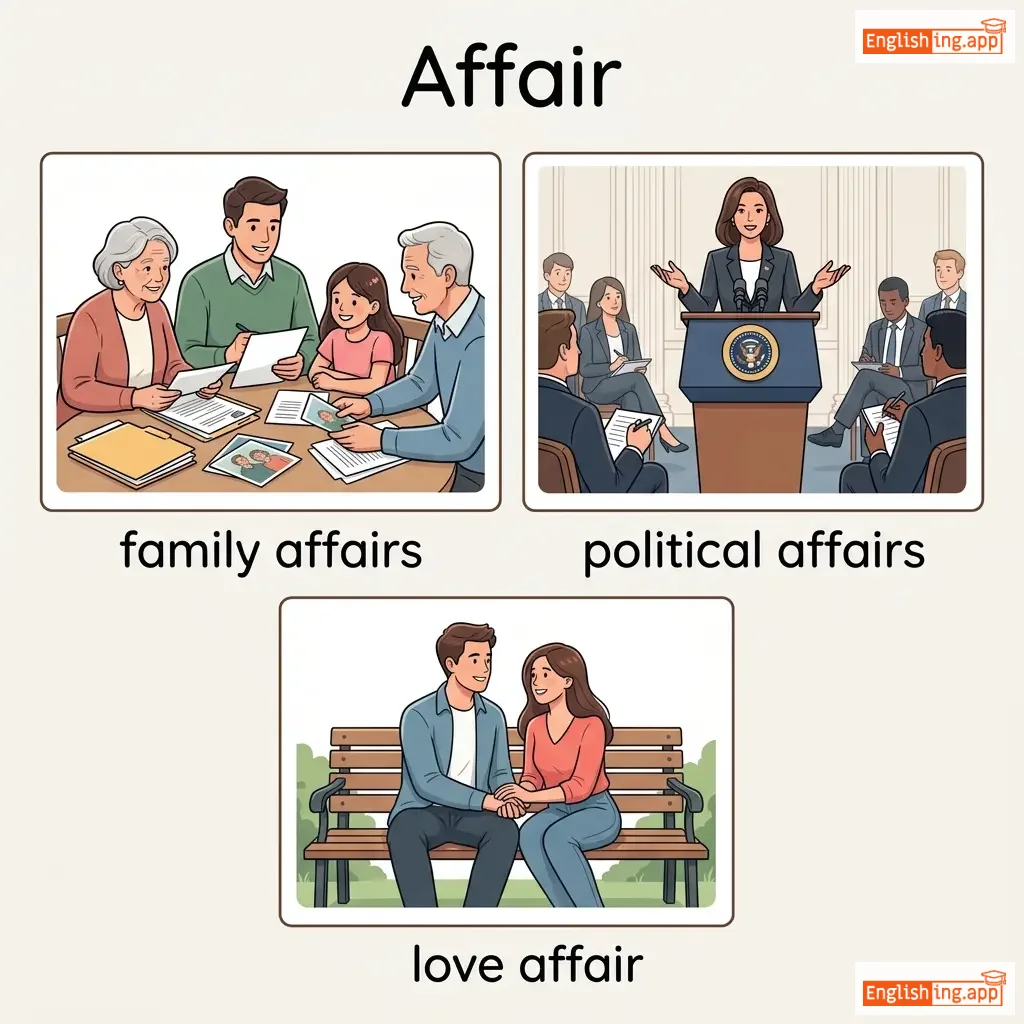
love affair
爱情事件
••••••
|
a romantic or sexual relationship, often secret
••••••
|
恋爱关系
lianai guanxi
••••••
|
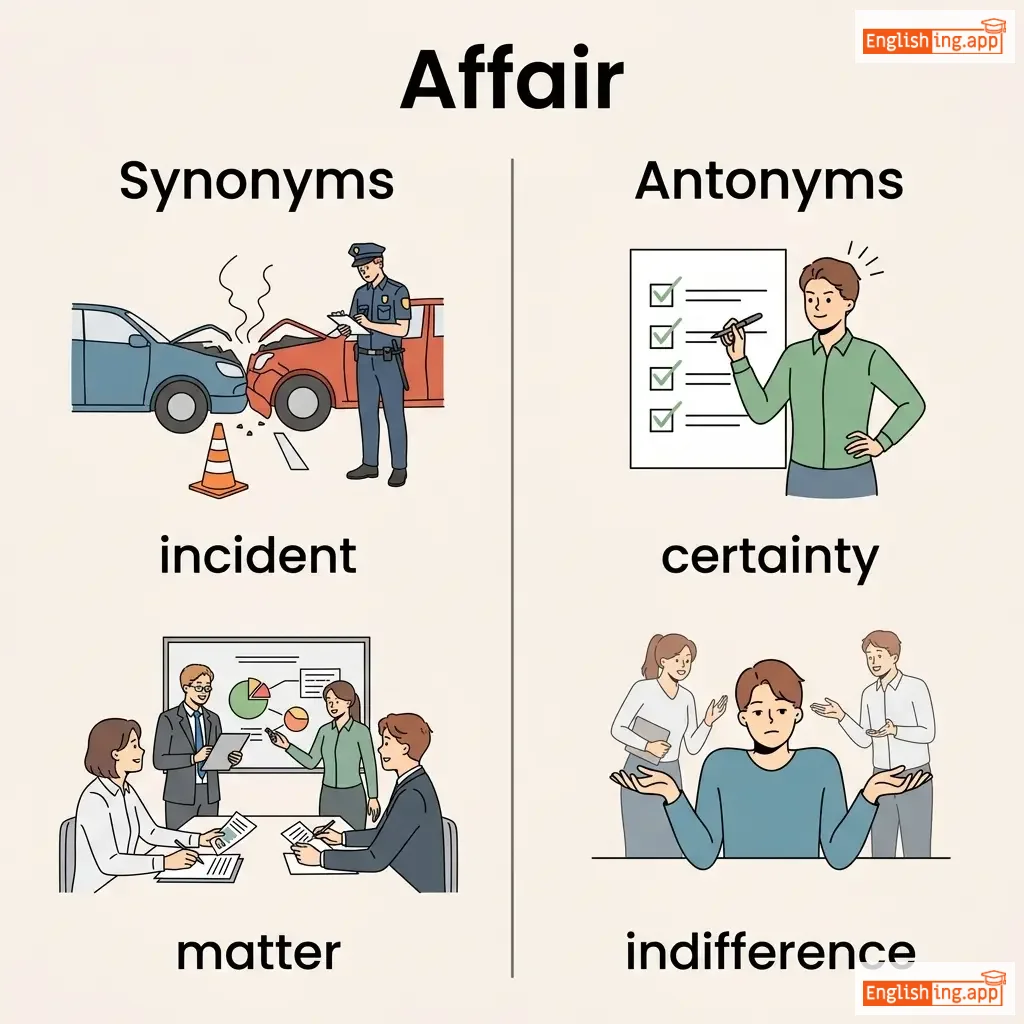
incident, matter, event, relationship
••••••
|
certainty, indifference
••••••
|
family affairs, political affairs, love affair, personal affair
••••••
|
Affair意味着事件 - 爱情的affair意味着爱情事件。
••••••
|
|
#166
🌦️
|
/əˈfɛkt/
verb
(艾费克特)
••••••
|
|
影响
yingxiang
••••••
|
affected
影响了
••••••
|
affected
影响了
••••••
|
affects
影响
••••••
|
affecting
影响着
••••••
|
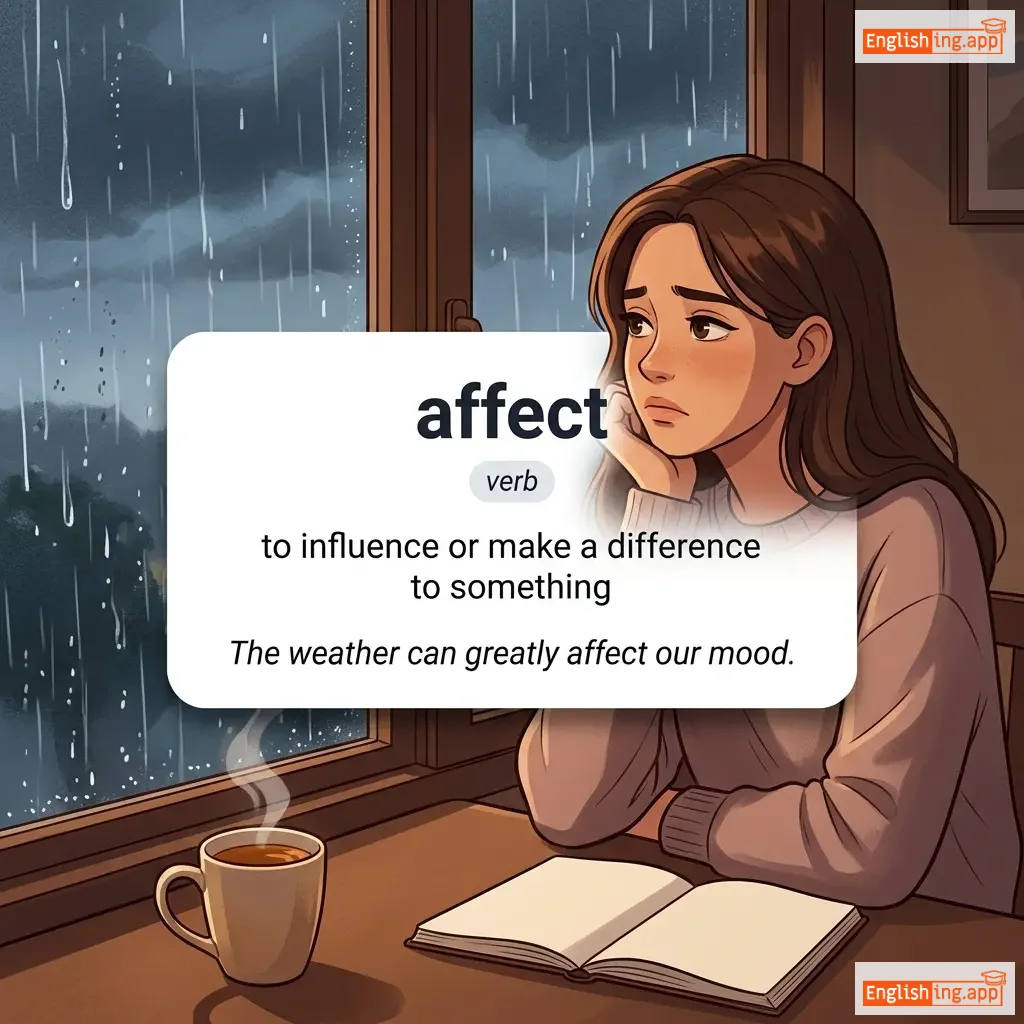
to influence or make a difference to something
••••••
|
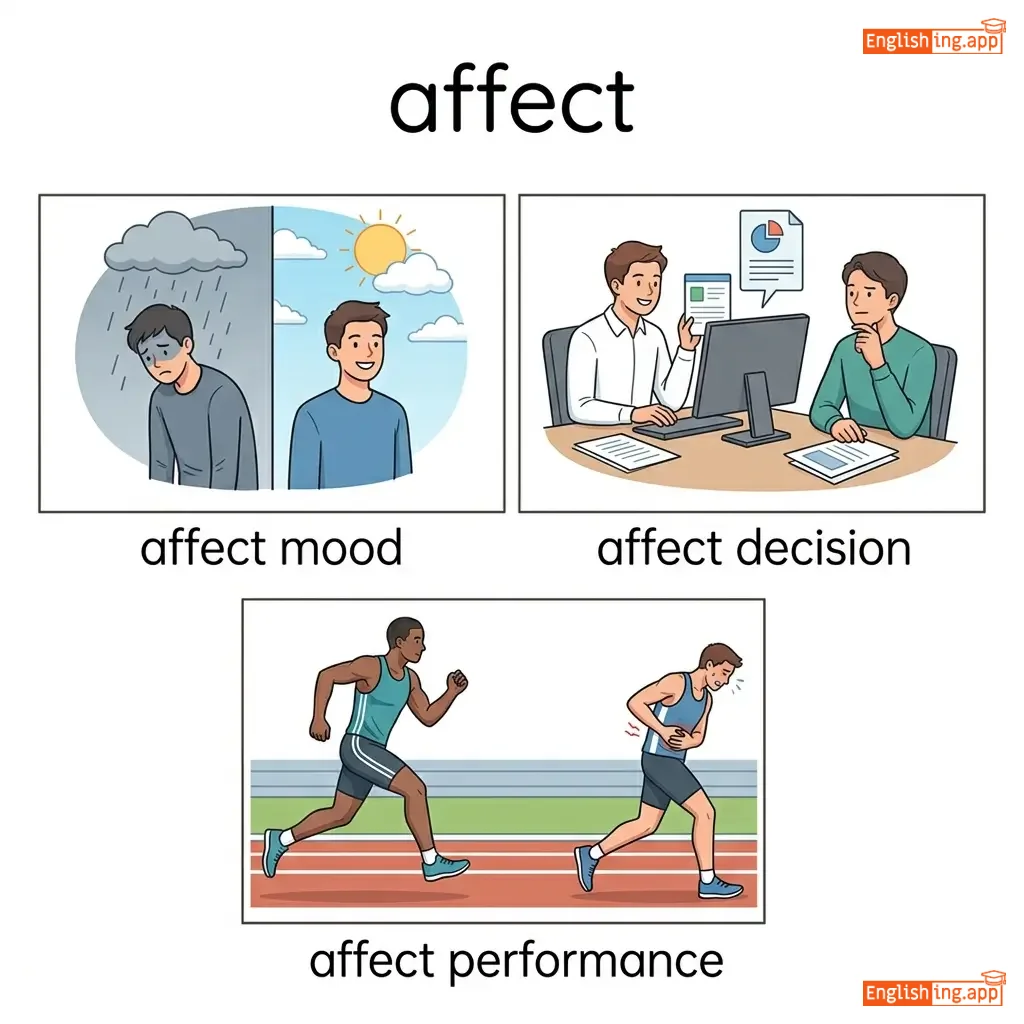
The weather can greatly affect our mood.
天气可以极大地影响我们的情绪。
••••••
|
天气可以极大地影响我们的情绪。
Tianqi keyi jidali yingxiang women de qingxu.
••••••
|
affect deeply
深刻影响
••••••
|
to have a strong emotional impact
••••••
|
深刻影响
shenkeli yingxiang
••••••
|
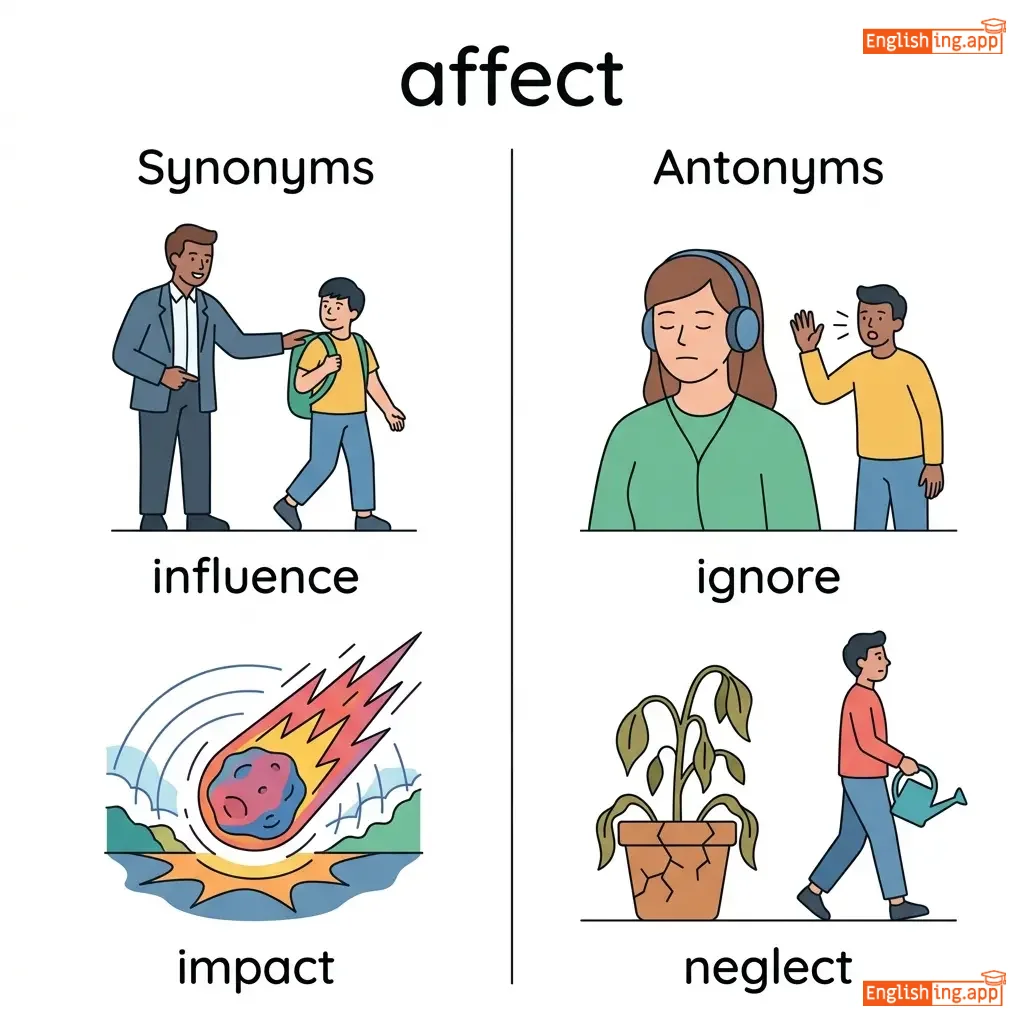
influence, impact, change, alter, sway
••••••
|
ignore, neglect
••••••
|
affect mood, affect decision, affect performance, affect outcome
••••••
|
Affect像是天气,能影响每一个情绪的变化。
••••••
|
|
#167
❤️
|
/əˈfɛkʃən/
noun
••••••
|
- •••••• | - •••••• | - •••••• | - •••••• | - •••••• | - •••••• |
a gentle feeling of fondness or liking
••••••
|
She showed great affection for her younger brother. |
- •••••• |
public display of affection |
an act of showing love or fondness openly in public
••••••
|
- •••••• |
fondness, love, tenderness, warmth, attachment
••••••
|
hatred, dislike, indifference
••••••
|
deep affection, show affection, affection for, affection toward
••••••
|
No •••••• |
|
#168
💍
|
/əˈfaɪəns/
verb
(阿费恩斯)
••••••
|
- •••••• |
订婚
dinghun
••••••
|
affianced
阿费恩斯德
••••••
|
affianced
阿费恩斯德
••••••
|
affiances
阿费恩斯
••••••
|
affiancing
阿费恩斯英
••••••
|
to promise or pledge marriage; to formally engage
••••••
|
They decided to affiance after years of friendship.
他们在多年友谊后决定订婚
••••••
|
多年友谊之后,他们决定订婚。
duonian youyi zhihou tamen jueding dinghun
••••••
|
- •••••• | - •••••• | - •••••• |
betroth, engage, pledge, promise, espouse
••••••
|
separate, divorce, break off
••••••
|
affiance a couple, formally affiance, affiance in marriage
••••••
|
Affiance 听起来像 fiance,对应订婚
••••••
|
|
#169
🤝
|
/əˈfɪliˌeɪt/
verb
(阿菲列特)
••••••
|
- •••••• |
附属
fùshǔ
••••••
|
affiliated
阿菲列特德
••••••
|
affiliated
阿菲列特德
••••••
|
affiliates
阿菲列特斯
••••••
|
affiliating
阿菲列廷
••••••
|
to officially attach or connect (a group or organization) to a larger body
••••••
|
The school is affiliated with the local university.
学校与当地大学有合作关系。
••••••
|
学校与当地大学有合作关系。
Xuéxiào yǔ dāngdì dàxué yǒu hézuò guānxì.
••••••
|
affiliate program
联盟计划
••••••
|
a system where a person earns commission by promoting another company's products or services
••••••
|
联盟计划
liánméng jìhuà
••••••
|
associate, ally, partner, join
••••••
|
separate, detach
••••••
|
affiliate with, affiliate organization, affiliate program
••••••
|
Affiliate 就是加入更大的组织
••••••
|
|
#170
🤕
|
/əˈflɪkt/
verb
(aflikt)
••••••
|
- •••••• |
使痛苦
shi tongku
••••••
|
afflicted
aflikted
••••••
|
afflicted
aflikted
••••••
|
afflicts
aflikts
••••••
|
afflicting
aflikting
••••••
|
to cause pain, suffering, or distress to someone or something
••••••
|
Many people are afflicted by seasonal allergies.
许多人受到季节性过敏的困扰。
••••••
|
许多人受到季节性过敏的困扰。
Xǔduō rén shòudào jìjiéxìng guòmǐn de kùnrǎo.
••••••
|
afflict with
afflict with
••••••
|
to be affected or troubled by something harmful
••••••
|
使痛苦
shǐ tòngkǔ
••••••
|
torment, trouble, plague, burden, distress
••••••
|
comfort, soothe, relieve
••••••
|
afflict with disease, afflict by poverty, afflict deeply, afflict severely
••••••
|
Afflict意味着使某人痛苦,想象你正在 'afflict' 他们,带来痛苦。
••••••
|
|
#171
💳
|
/əˈfɔːrd/
verb
(阿福德)
••••••
|
|
负担得起
fùdān dé qǐ
••••••
|
afforded
阿福德德
••••••
|
afforded
阿福德德
••••••
|
affords
阿福兹
••••••
|
affording
阿福丁
••••••
|
to have enough money or resources to buy or do something
••••••
|
We can’t afford to buy a new car right now.
我们现在负担不起买新车。
••••••
|
我们现在负担不起买新车。
Wǒmen xiànzài fùdān bù qǐ mǎi xīnchē.
••••••
|
afford to lose
负担得起失去
••••••
|
to be in a position where one can risk or bear the loss
••••••
|
负担得起失去
fùdān dé qǐ shīqù
••••••
|
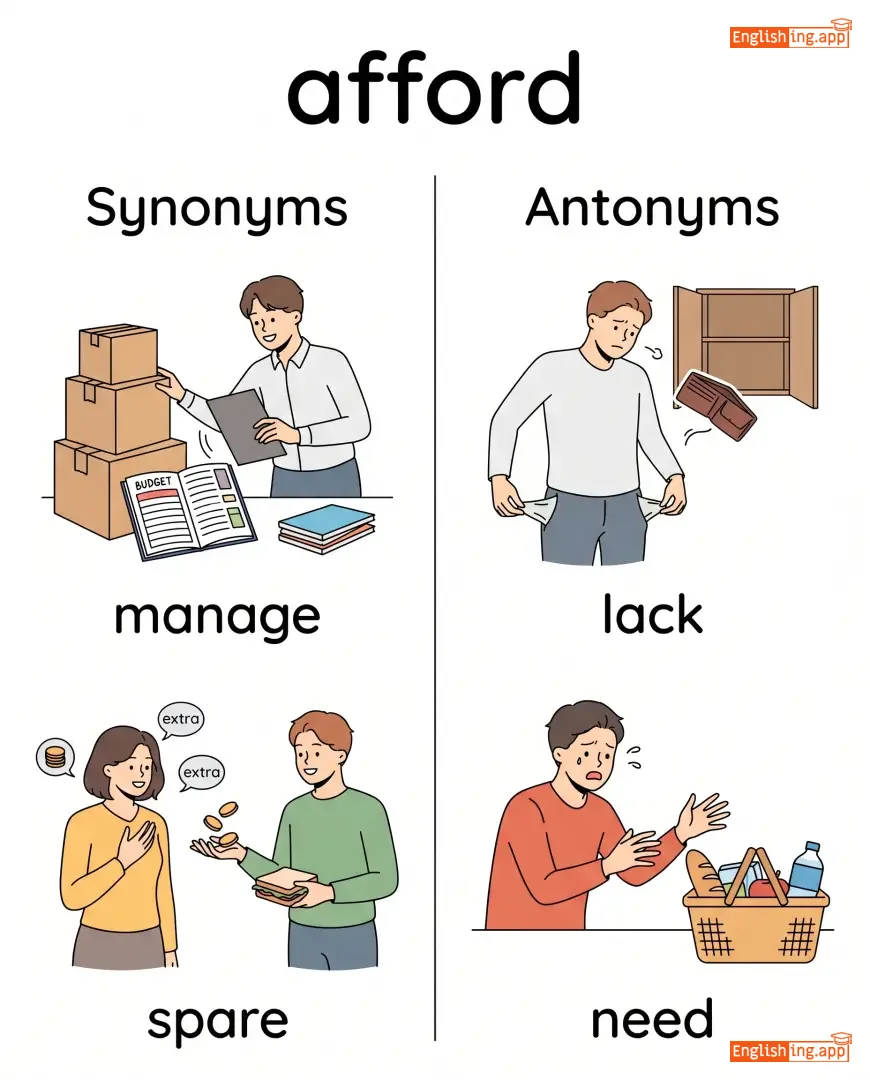
manage, spare, provide, allow
••••••
|
lack, need, require
••••••
|
can afford, afford to buy, afford the cost, afford a house
••••••
|
Afford 在中文—如果你能买车,你就能 afford 一切!
••••••
|
|
#172
💸
|
/əˈfɔːdəbl/
adjective
(æfɔːdəbl)
••••••
|
- •••••• |
实惠
shíhuì
••••••
|
- •••••• | - •••••• | - •••••• | - •••••• |
inexpensive and within one's financial means
••••••
|
This restaurant offers affordable meals for families. |
这家餐厅为家庭提供实惠的餐点。
Zhè jiā cāntīng wèi jiātíng tígōng shíhuì de cāndiǎn.
••••••
|
- •••••• | - •••••• | - •••••• |
inexpensive, reasonable, budget-friendly
••••••
|
expensive, overpriced
••••••
|
affordable price, affordable solution, affordable rate
••••••
|
Affordable means it’s ‘within your reach’!
••••••
|
|
#173
😨
|
/əˈfreɪd/
adjective
(afréid)
••••••
|
|
害怕
haipa
••••••
|
- •••••• | - •••••• | - •••••• | - •••••• |
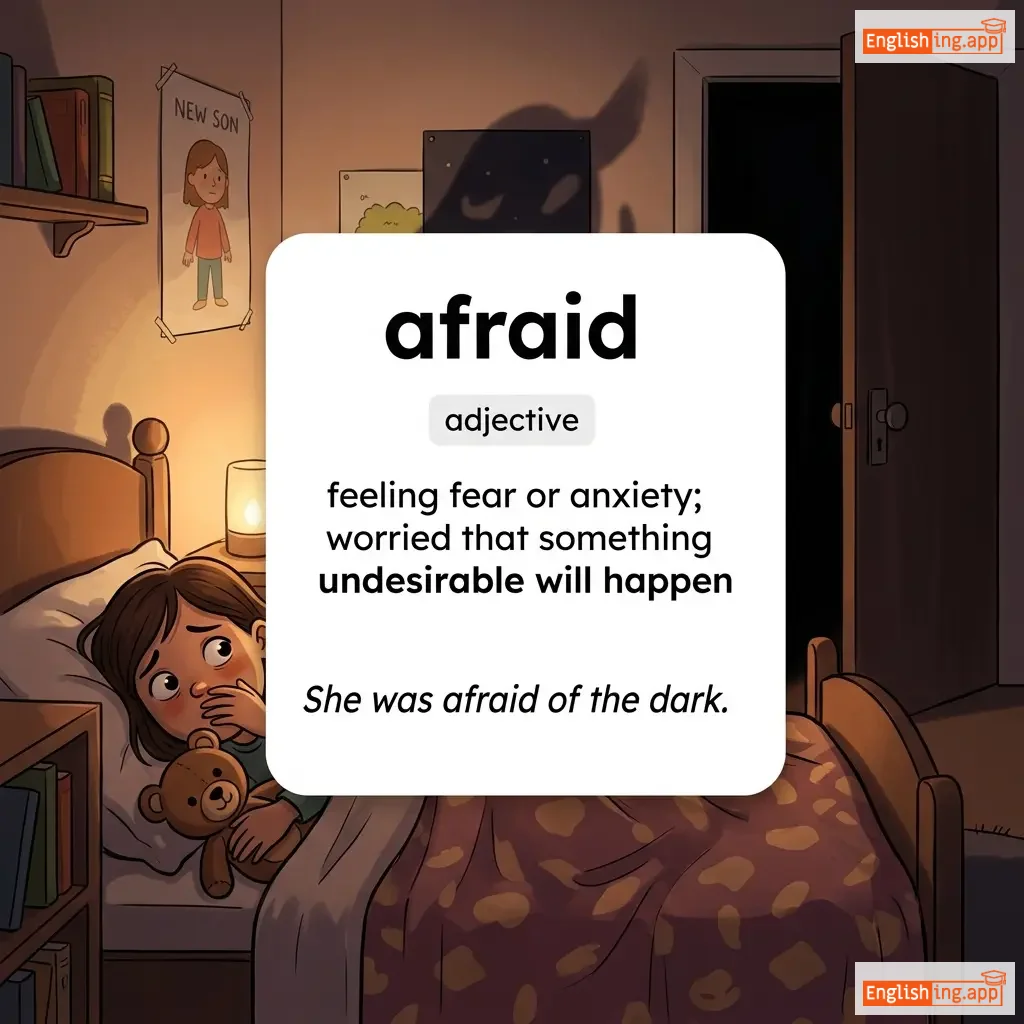
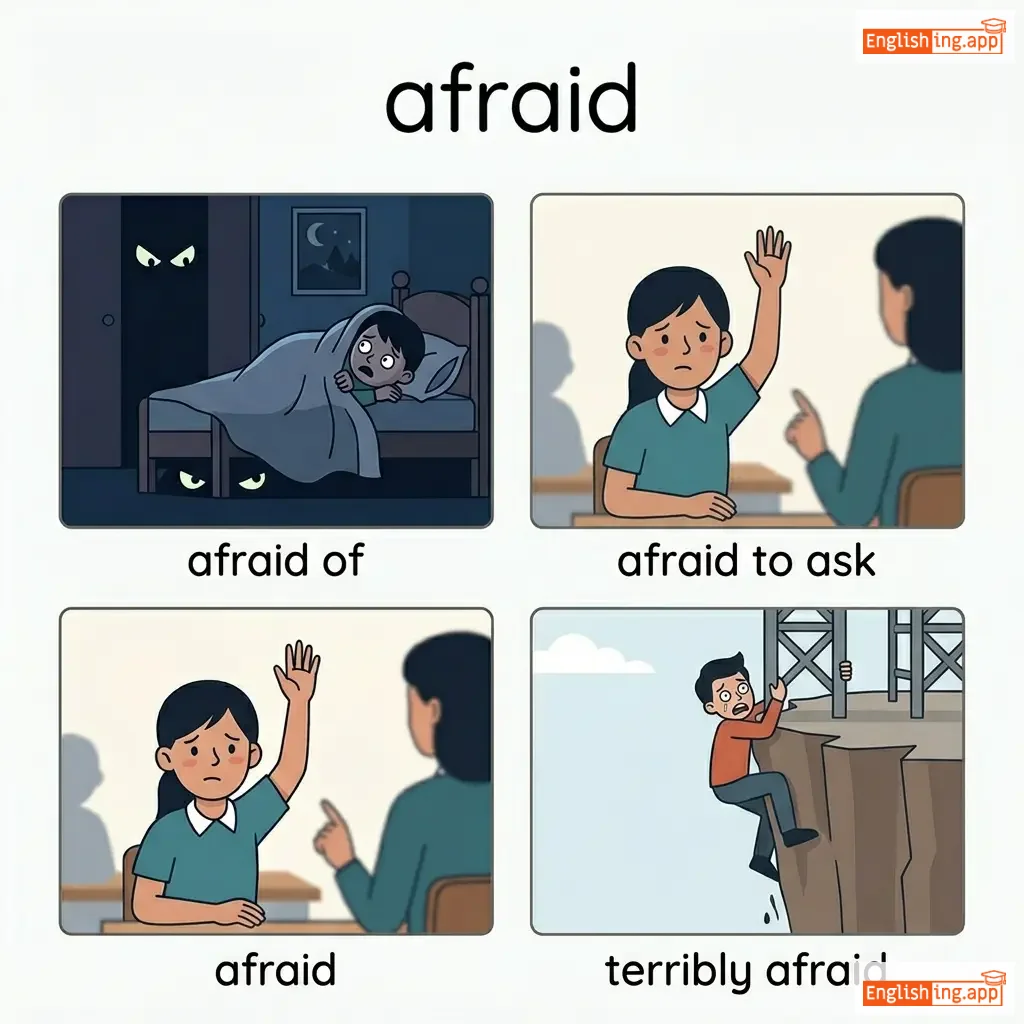
feeling fear or anxiety; worried that something undesirable will happen
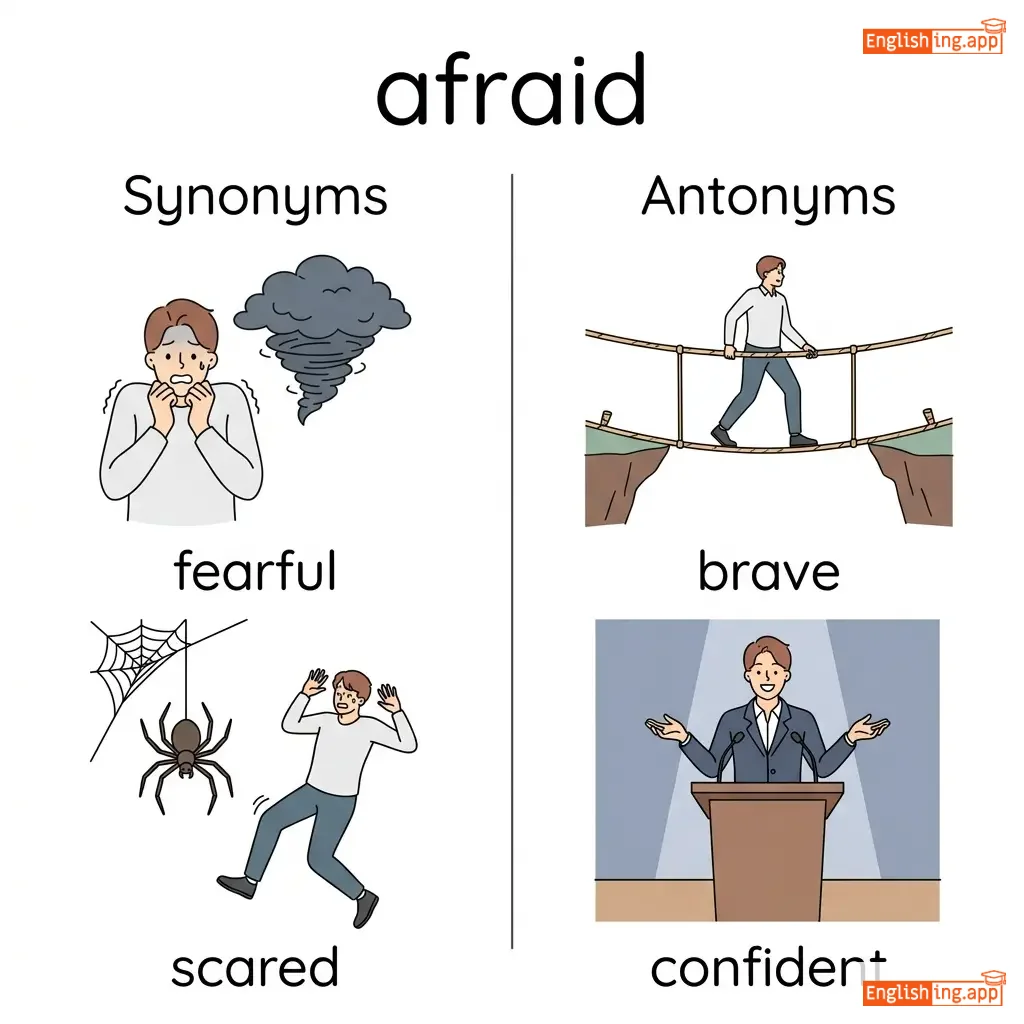
••••••
|
She was afraid of the dark. |
她害怕黑暗。
Tā hàipà hēi'àn.
••••••
|
afraid of one's own shadow |
extremely timid or nervous
••••••
|
害怕自己的影子
hàipà zìjǐ de yǐngzi
••••••
|
fearful, scared, frightened, anxious, nervous
••••••
|
brave, confident, fearless
••••••
|
afraid of, terribly afraid, afraid to ask, afraid that
••••••
|
Afraid 意味着害怕—想象在黑暗中感到害怕。
••••••
|
|
#174
➡️
|
/ˈæftər/
preposition, conjunction, adverb
(after)
••••••
|
|
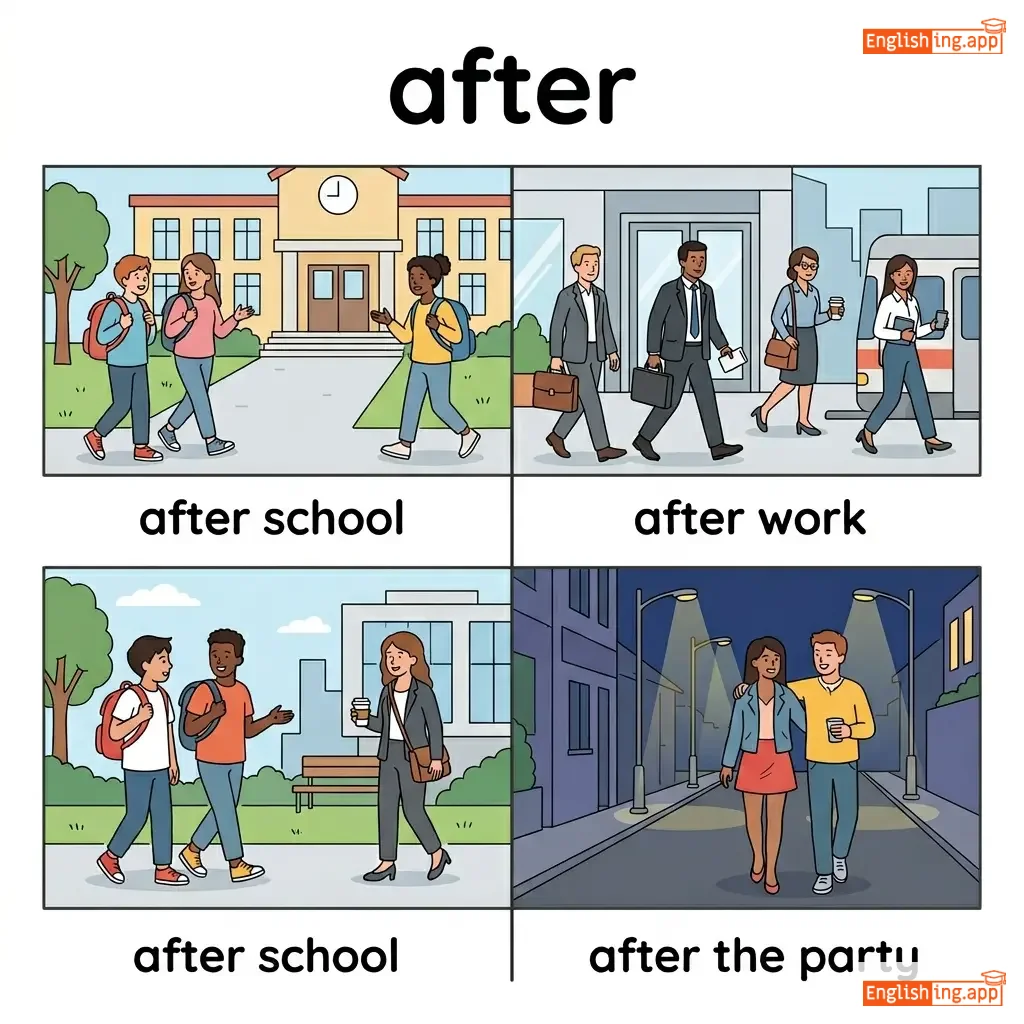
之后
zhīhòu
••••••
|
- •••••• | - •••••• | - •••••• | - •••••• |
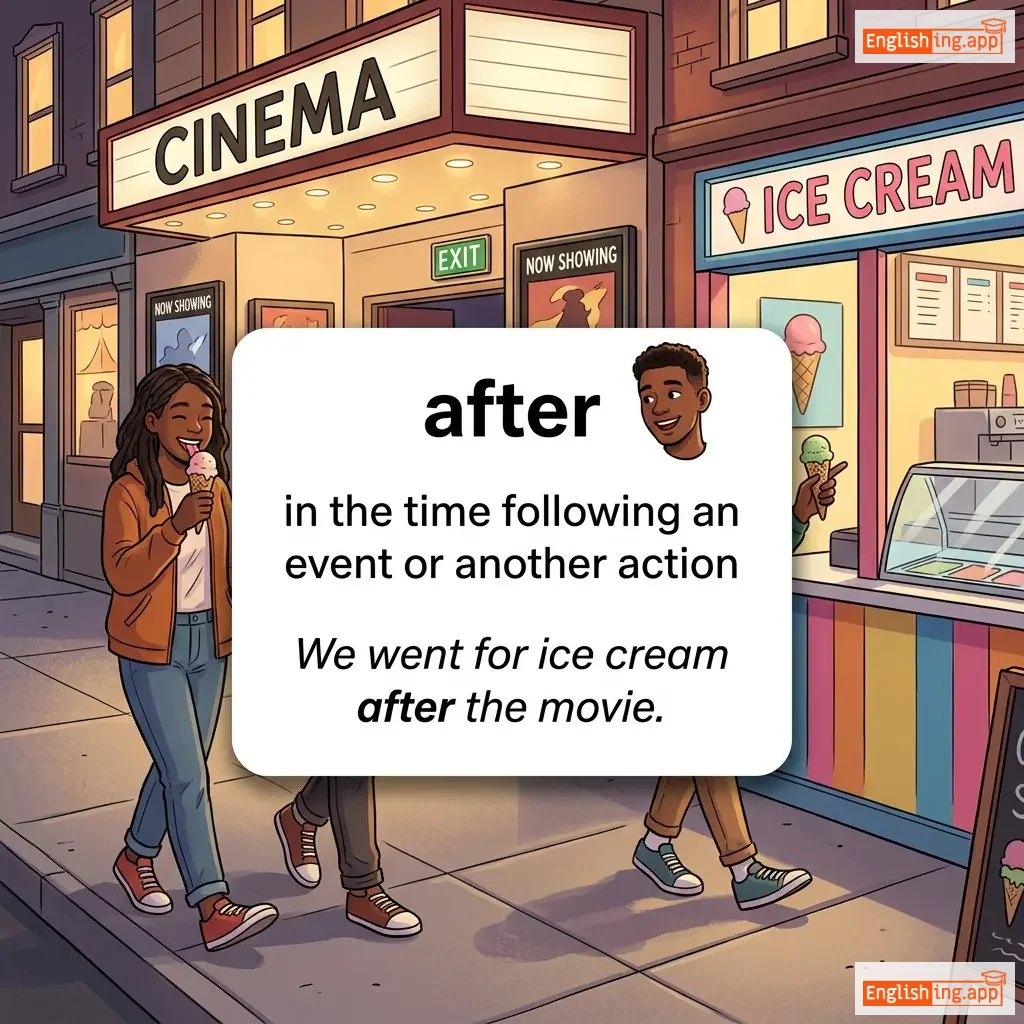
in the time following an event or another action
••••••
|
We went for ice cream after the movie. |
我们看完电影后去吃冰淇淋。
Wǒmen kàn wán diànyǐng hòu qù chī bīngqílín.
••••••
|
after all |
despite everything; in the end
••••••
|
毕竟
bìjìng
••••••
|
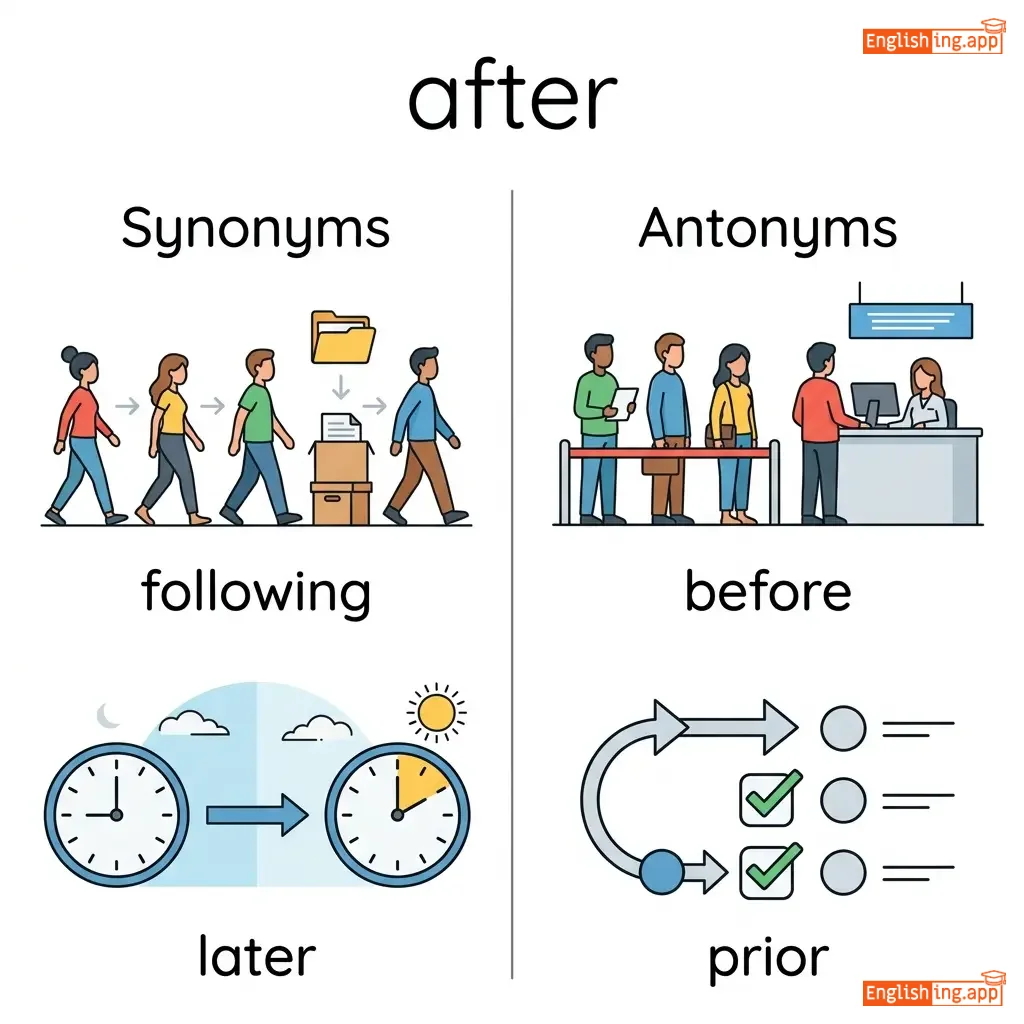
following, later, afterward, subsequent
••••••
|
before, prior
••••••
|
after school, after work, after the party, soon after
••••••
|
After 意思是之后— 电影之后吃冰淇淋。
••••••
|
|
#175
🌪️
|
/ˈɑːftərmɑːθ/
noun
(ɑːftərmɑːθ)
••••••
|
- •••••• |
后果
houguo
••••••
|
- •••••• | - •••••• | - •••••• | - •••••• |
the consequences or aftereffects of an event or situation, especially a disastrous one
••••••
|
The aftermath of the earthquake was devastating. |
地震的后果是毁灭性的。
Dizhen de houguo shi huimiexing de.
••••••
|
- •••••• | - •••••• | - •••••• |
consequence, result, outcome, repercussion
••••••
|
cause, origin
••••••
|
aftermath of disaster, in the aftermath, deal with the aftermath
••••••
|
Afternoon aftermath, after a storm, we will see the consequences as clear signs
••••••
|
|
#176
🌞
|
/ˌæftərˈnuːn/
noun
(àfútè'ěrnuūn)
••••••
|
- •••••• |
下午
xiawu
••••••
|
- •••••• | - •••••• | - •••••• | - •••••• |
The part of the day between noon and evening.
••••••
|
We met in the afternoon for coffee. |
我们下午见面喝咖啡。
Wo men xiawu jian mian he kafei.
••••••
|
Good afternoon |
A polite greeting used in the afternoon.
••••••
|
下午好
xiawu hao
••••••
|
midday, daytime, p.m., after lunch
••••••
|
morning, evening
••••••
|
in the afternoon, sunny afternoon, afternoon tea, afternoon meeting
••••••
|
After + Noon = 中午后时间 = 下午.
••••••
|
|
#177
⏰
|
/ˈɑːf.tə.wərdz/
adverb
(æftərwərdz)
••••••
|
- •••••• |
之后; 然后; 后来
zhī hòu; rán hòu; hòu lái
••••••
|
- •••••• | - •••••• | - •••••• | - •••••• |
at a later time; after an event or time that has already been mentioned
••••••
|
We had dinner and afterwards we watched a movie.
我们吃了晚餐,然后看了一部电影。
••••••
|
我们吃了晚餐,然后看了一部电影。
Wǒmen chīle wǎncān, ránhòu kànle yī bù diànyǐng.
••••••
|
- •••••• | - •••••• | - •••••• |
later, subsequently, then, next
••••••
|
before, previously, earlier
••••••
|
shortly afterwards, soon afterwards, long afterwards
••••••
|
In Chinese, '之后' means 'after', similar to 'afterwards'.
••••••
|
|
#178
🔁
|
/əˈɡɛn/ or /əˈɡeɪn/
adverb
(əˈɡɛn)
••••••
|
|
再
zài
••••••
|
- •••••• | - •••••• | - •••••• | - •••••• |
Once more; another time.
••••••
|
She read the book again to understand it better. |
她又读了一遍书,以更好地理解它。
Tā yòu dúle yī biàn shū, yǐ gèng hǎo de lǐjiě tā.
••••••
|
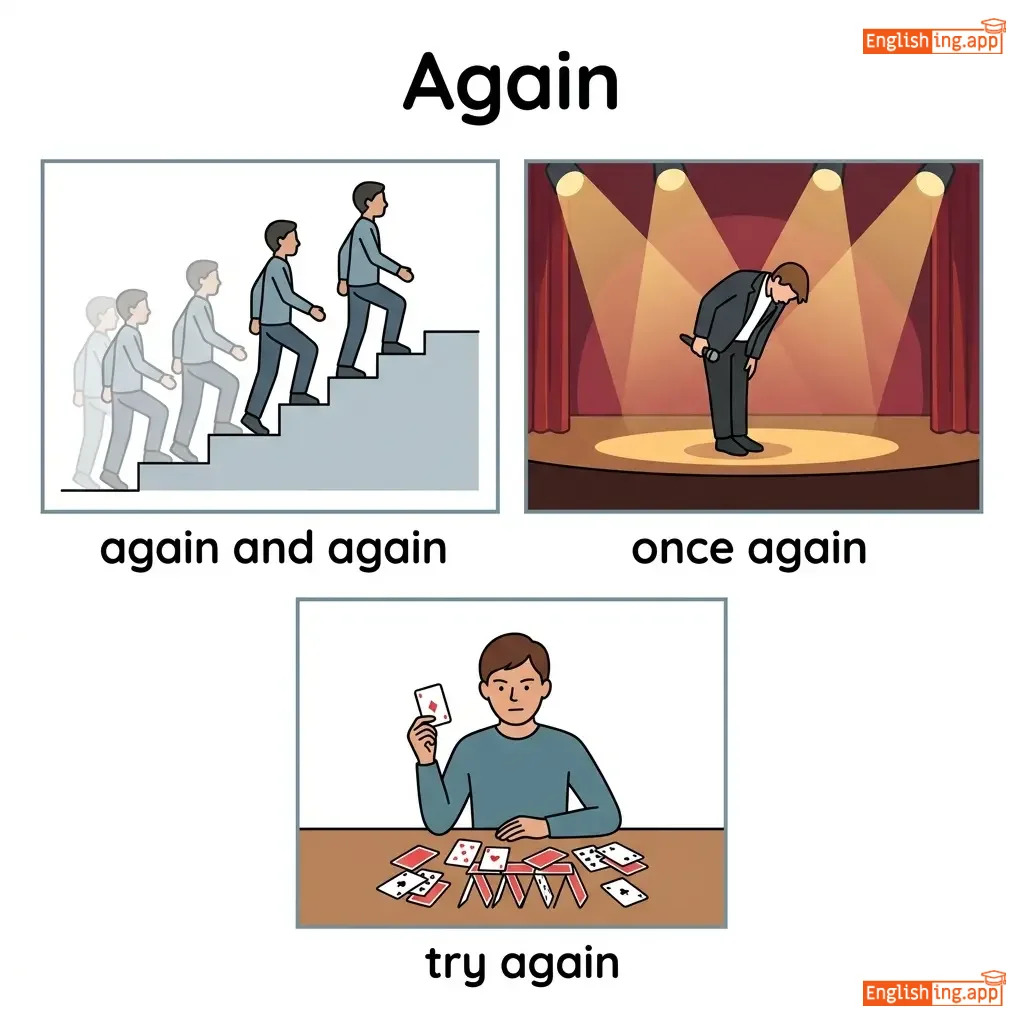
time and again |
Repeatedly, very often.
••••••
|
一次又一次
yīcì yòu yīcì
••••••
|
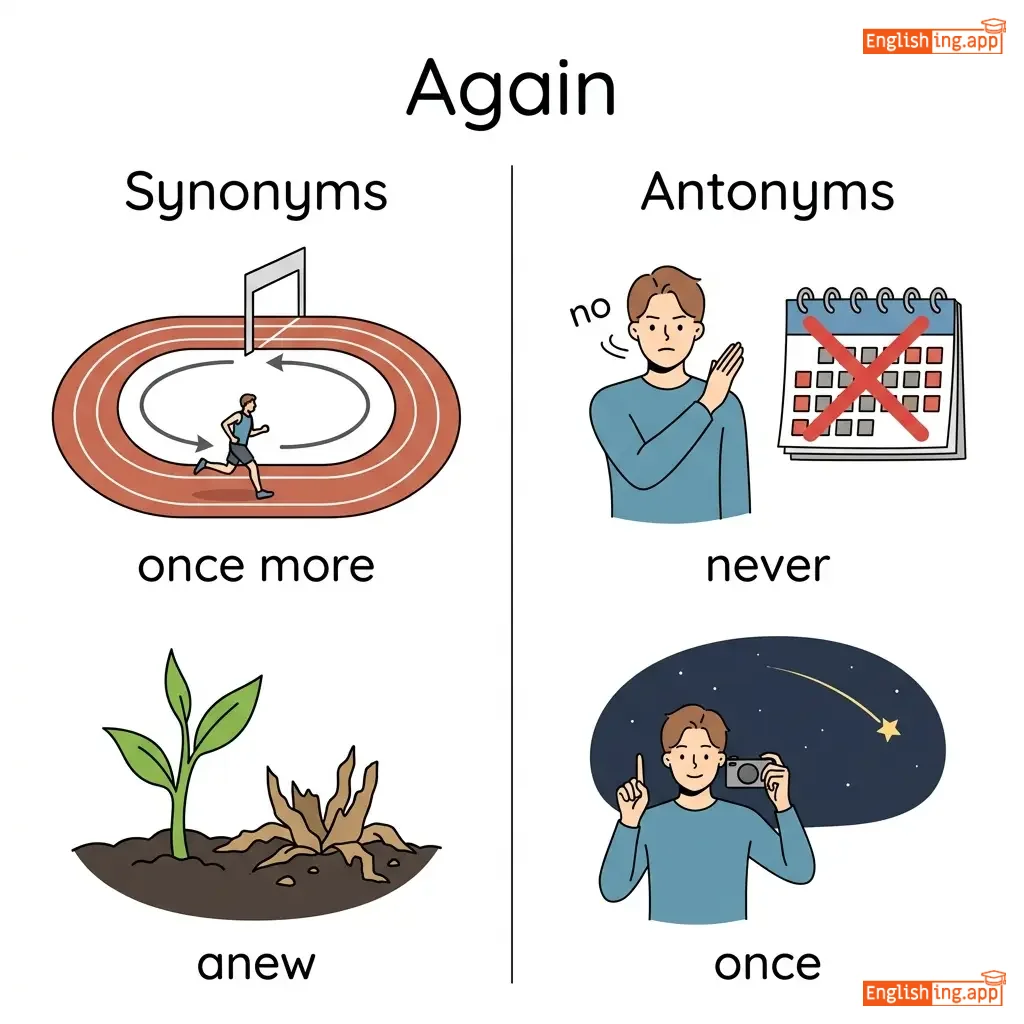
once more, anew, repeatedly, over again
••••••
|
never, once
••••••
|
again and again, once again, try again, over again
••••••
|
再是另一种重复的意思—又读一次书再读一次!
••••••
|
|
#179
🚫
|
/əˈɡɛnst/ or /əˈɡeɪnst/
preposition
••••••
|
- •••••• | - •••••• | - •••••• | - •••••• | - •••••• | - •••••• |
In opposition to; contrary to; touching or resting on.
••••••
|
They voted against the proposal. |
- •••••• |
stand against |
To oppose or resist something.
••••••
|
- •••••• |
opposed to, contrary to, versus, counter to
••••••
|
for, in favor of
••••••
|
against the law, against the wall, fight against, argue against
••••••
|
No •••••• |
|
#180
🎂
|
/eɪdʒ/
noun/verb
(ei)
••••••
|
- •••••• |
年龄
nianling
••••••
|
aged
ejd
••••••
|
aged
ejd
••••••
|
ages
ejes
••••••
|
aging
ejing
••••••
|
The length of time that a person has lived; to grow older.
••••••
|
She asked his age politely.
shi askd hiz ej politli.
••••••
|
她礼貌地询问了他的年龄。
Ta limao di xunwen le tade nianling.
••••••
|
come of age
kam of ej
••••••
|
To reach adulthood or maturity.
••••••
|
成年的过程
chengnian de guocheng
••••••
|
years, lifetime, era, grow older
••••••
|
youth, infancy
••••••
|
old age, average age, age group, age limit
••••••
|
Age 代表年龄——生日时可以猜到别人多少年级。
••••••
|
|
#181
🏢
|
/ˈeɪ.dʒən.si/
noun
(艾金西)
••••••
|
|
机构
jīgòu
••••••
|
- •••••• | - •••••• | - •••••• | - •••••• |
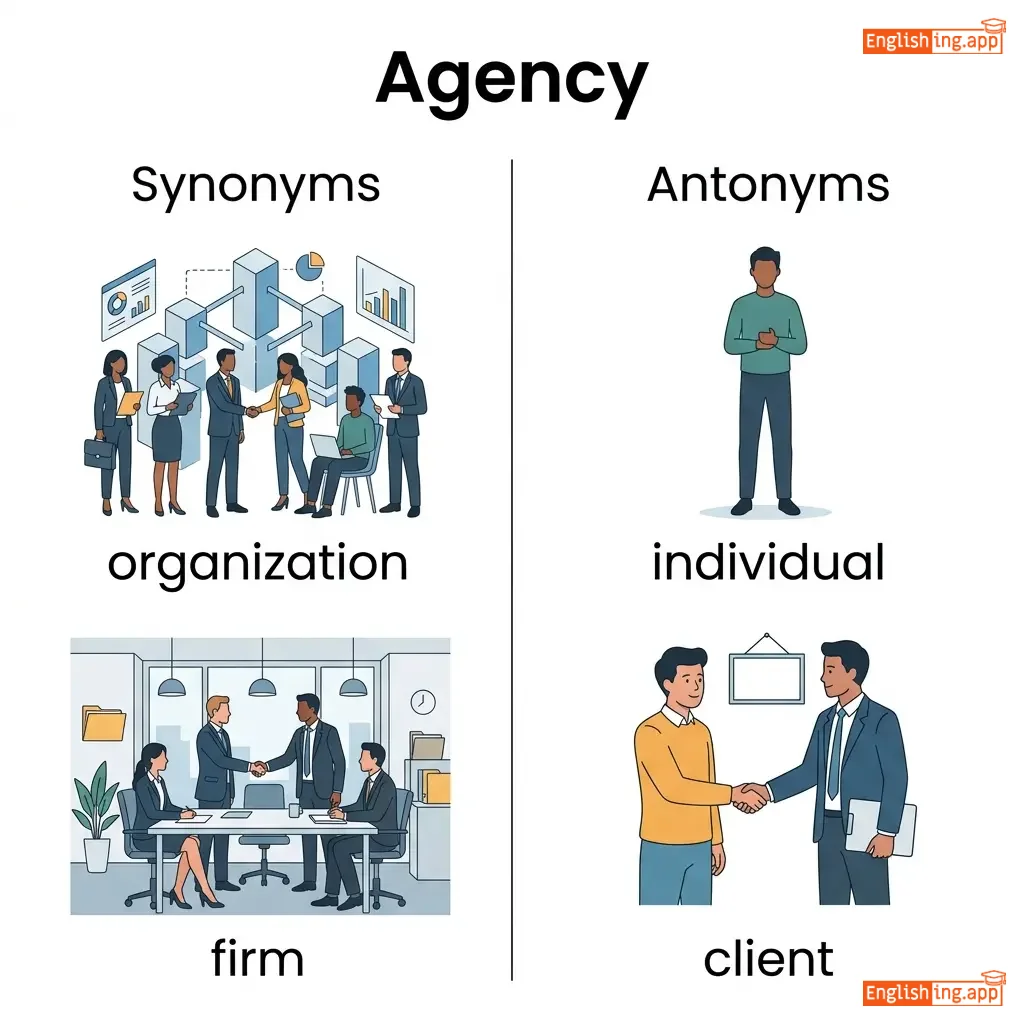
An organization or business that provides a particular service.
••••••
|
She works at a travel agency. |
她在一个旅行社工作。
Tā zài yīgè lǚxíng shè gōngzuò.
••••••
|
advertising agency |
A company that creates and manages advertisements for clients.
••••••
|
广告公司
guǎnggào gōngsī
••••••
|
organization, firm, bureau, office, service
••••••
|
individual, client, customer
••••••
|
government agency, real estate agency, news agency, travel agency
••••••
|
Agency意味着'机构' — 记住'机构提供服务'
••••••
|
|
#182
📋
|
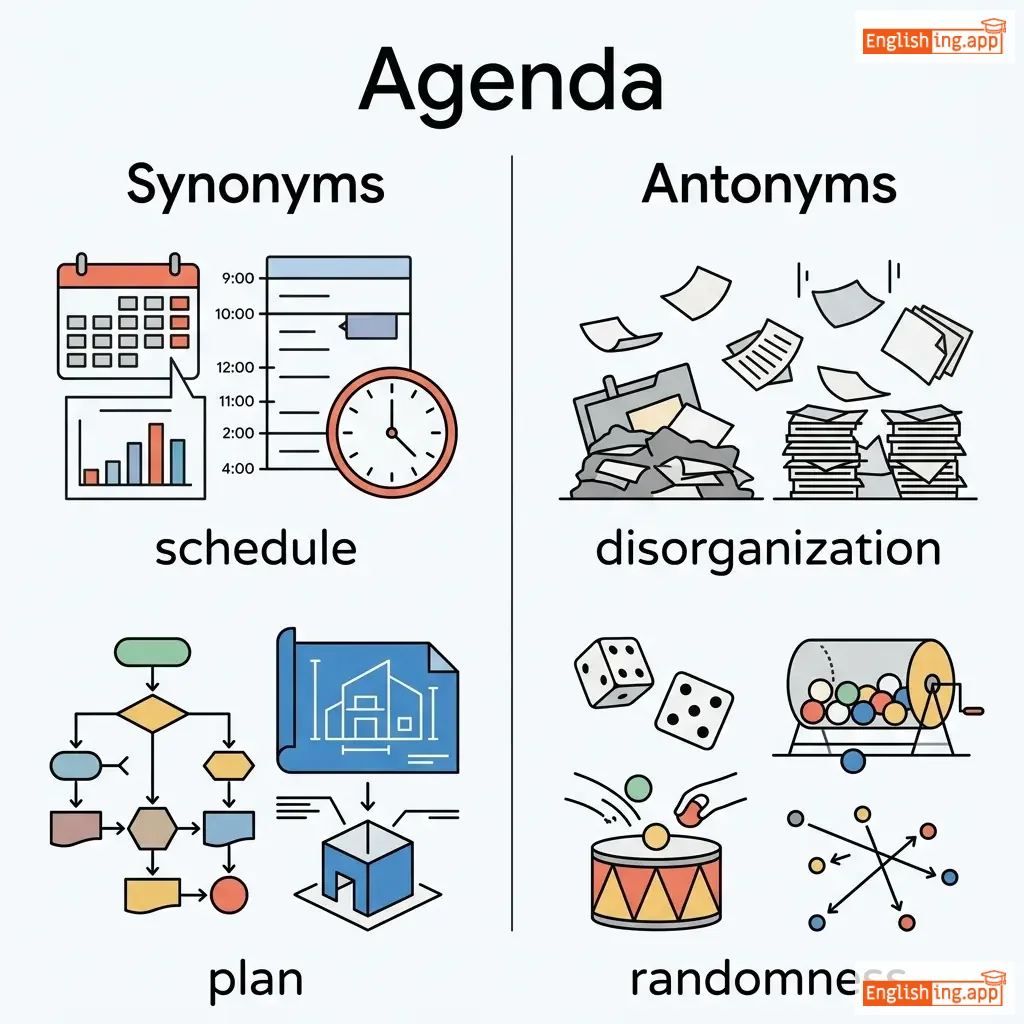
/əˈdʒɛndə/
noun
••••••
|
|
- •••••• | - •••••• | - •••••• | - •••••• | - •••••• |
A list of items to be discussed or acted upon in a meeting or plan.
••••••
|
The manager reviewed the agenda before the meeting began. |
- •••••• |
hidden agenda |
A secret motive or plan behind someone's actions.
••••••
|
- •••••• |
schedule, plan, program, timetable, itinerary
••••••
|
disorganization, randomness
••••••
|
meeting agenda, set the agenda, hidden agenda
••••••
|
No •••••• |
|
#183
🕵️
|
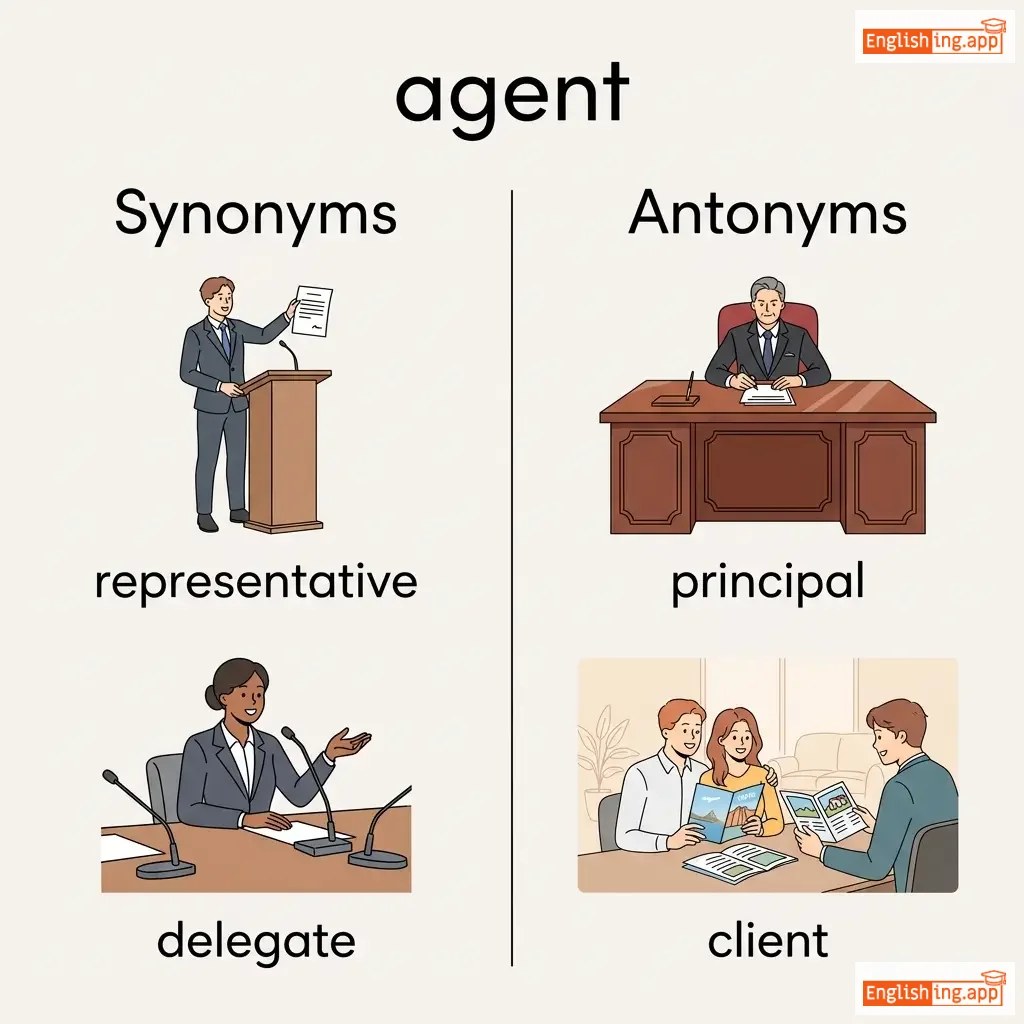
/ˈeɪ.dʒənt/
noun
(āi jìng tè)
••••••
|
|
代理人
dàilǐrén
••••••
|
- •••••• | - •••••• | - •••••• | - •••••• |
A person who acts on behalf of another person or organization.
••••••
|
The real estate agent showed us several houses.
房地产经纪人向我们展示了几套房子。
••••••
|
房地产经纪人向我们展示了几套房子。
Fángdìchǎn jīngjì rén xiàng wǒmen zhǎnshìle jǐ tào fángzi.
••••••
|
secret agent
秘密特工
••••••
|
A spy working for a government or organization.
••••••
|
秘密特工
mìmì tègōng
••••••
|
representative, delegate, envoy, broker, spy
••••••
|
principal, client, customer
••••••
|
travel agent, real estate agent, sports agent, insurance agent
••••••
|
代理人,像我们常说的秘密特工一样,代理别人的任务。
••••••
|
|
#184
⚠️
|
/ˈæɡ.rə.veɪt/
verb
(āi gè rì wèi tè)
••••••
|
- •••••• |
加重
jiā zhòng
••••••
|
aggravated
āi gè rì wèi tè dé
••••••
|
aggravated
āi gè rì wèi tè dé
••••••
|
aggravates
āi gè rì wèi tè sī
••••••
|
aggravating
āi gè rì wèi tè jīng
••••••
|
To make a situation worse or more serious.
••••••
|
Scratching the rash will only aggravate the condition.
抓破皮疹只会加重病情。
••••••
|
抓破皮疹只会加重病情。
Zhuā pò pí zhěn zhī huì jiā zhòng bìng qíng.
••••••
|
- •••••• | - •••••• | - •••••• |
worsen, intensify, exacerbate, inflame
••••••
|
relieve, ease, alleviate
••••••
|
aggravate pain, aggravate situation, aggravate condition
••••••
|
Aggravate像加重的意思, 让坏事更坏.
••••••
|
|
#185
➕
|
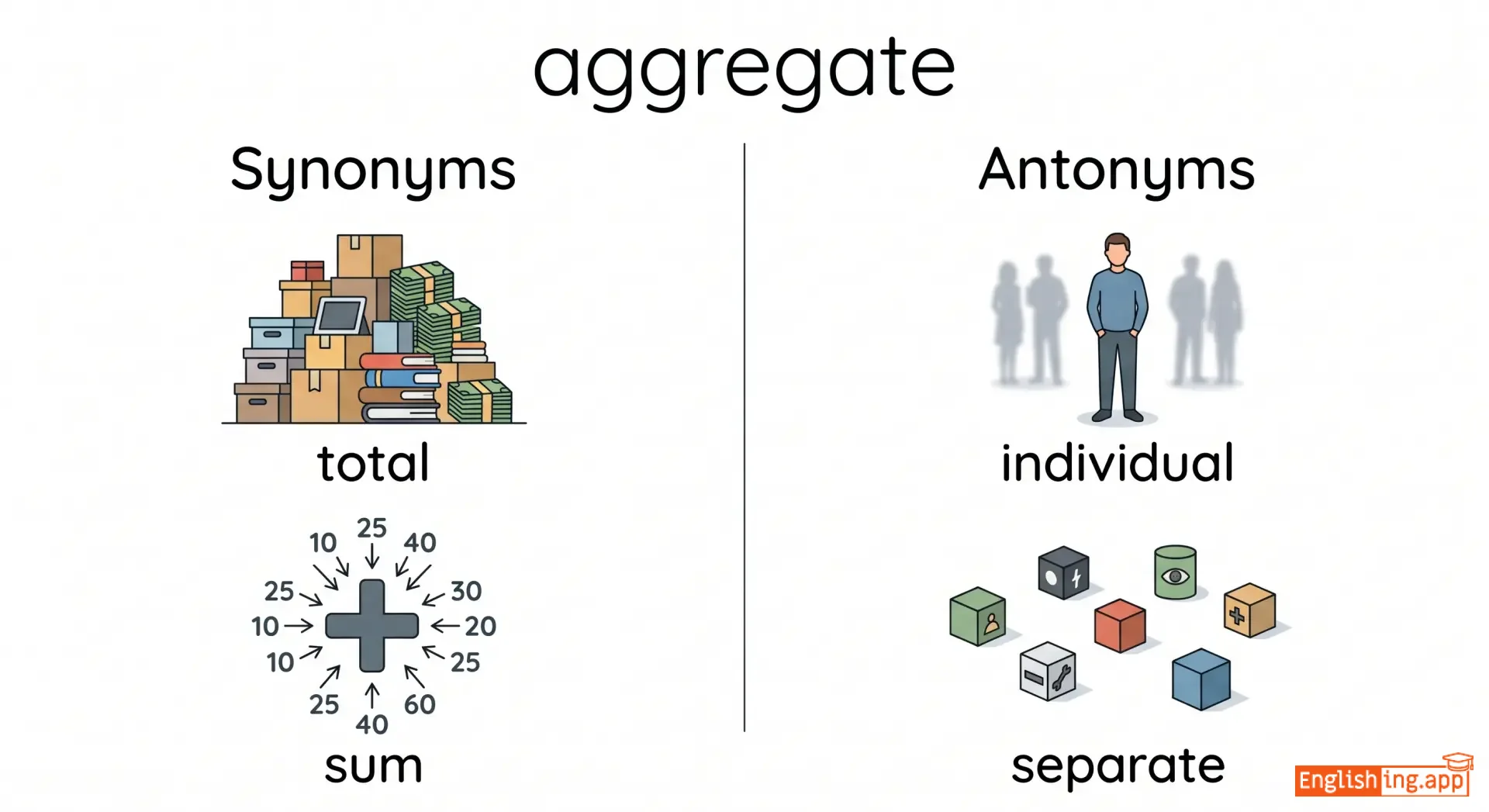
/ˈæɡ.rɪ.ɡət/ (noun/adjective), /ˈæɡ.rɪ.ɡeɪt/ (verb)
noun, verb, adjective
(聚合)
••••••
|
|
聚合, 总体
jùhé, zǒngtǐ
••••••
|
aggregated
聚合的
••••••
|
aggregated
聚合的
••••••
|
aggregates
聚合
••••••
|
aggregating
聚合
••••••
|
A whole formed by combining several elements; to combine into a total.
••••••
|
The data was aggregated to provide a clearer picture of the market.
数据已被聚合,以提供市场的更清晰图像。
••••••
|
数据已被聚合,以提供市场的更清晰图像。
Shùjù yǐ bèi jùhé, yǐ tígōng shìchǎng de gèng qīngxī túxiàng.
••••••
|
- •••••• | - •••••• | - •••••• |
total, sum, collection, accumulate
••••••
|
individual, separate, divide
••••••
|
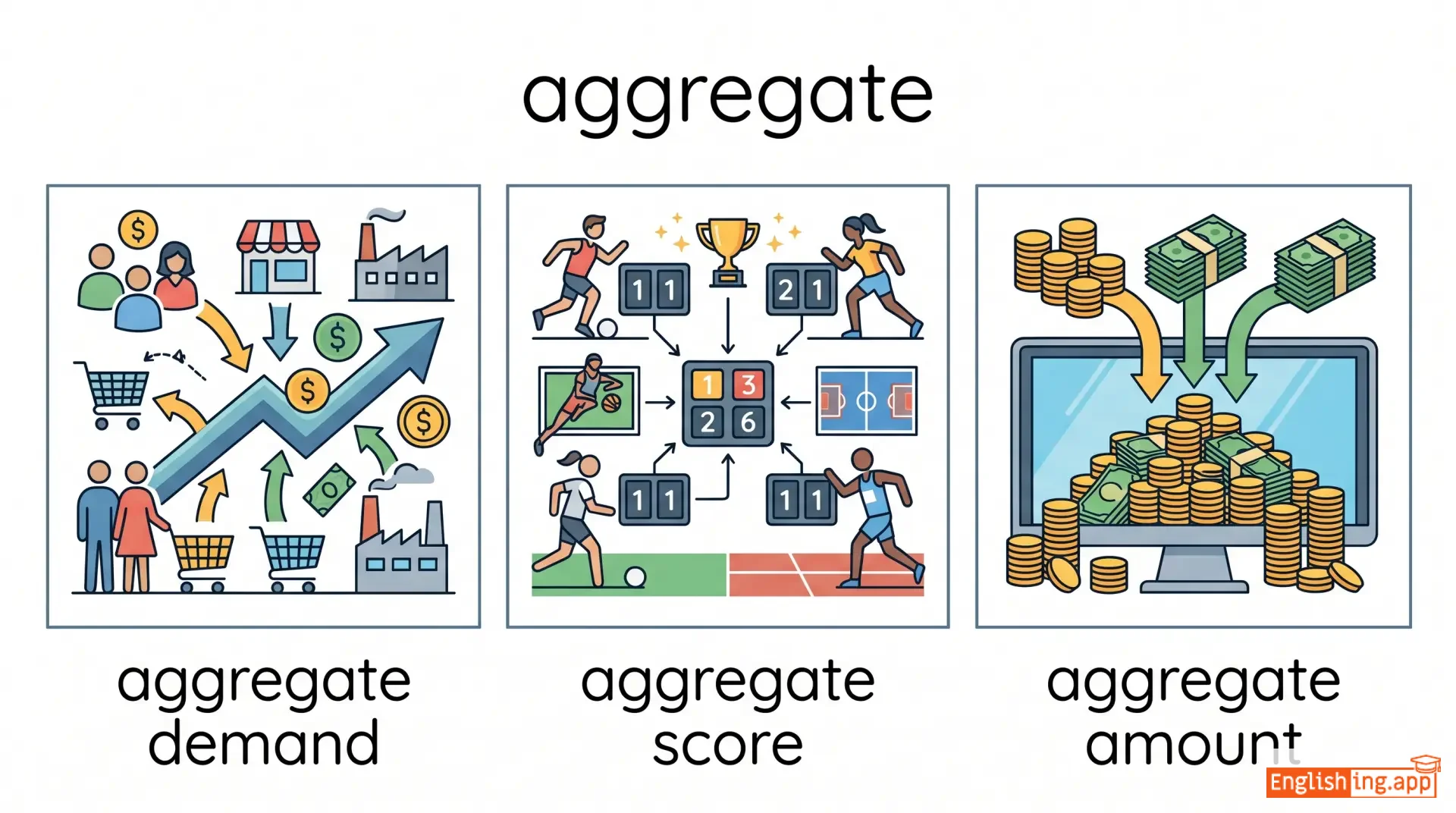
aggregate demand, aggregate score, aggregate amount, aggregate data
••••••
|
聚合是把所有东西放在一起形成一个大总和。
••••••
|
|
#186
💥
|
/əˈɡrɛʃən/
noun
(侵略)
••••••
|
- •••••• |
侵略
qinlue
••••••
|
- •••••• | - •••••• | - •••••• | - •••••• |
hostile or violent behavior towards others
••••••
|
His sudden aggression surprised everyone in the meeting. |
他突然的侵略行为让会议中的每个人都感到震惊。
Tā túrán de qinlue xíngwéi ràng huìyì zhōng de měi ge rén dōu gǎndào zhènjīng.
••••••
|
acts of aggression |
hostile actions or attacks
••••••
|
侵略行为
qinlue xíngwéi
••••••
|
hostility, attack, violence, assault
••••••
|
peace, calm, friendliness
••••••
|
show aggression, physical aggression, military aggression, acts of aggression
••••••
|
Aggression 记住 AGain GREssy (愤怒) 意味着侵略
••••••
|
|
#187
🔥
|
/əˈɡrɛsɪv/
adjective
(ā ɡrè sī fū)
••••••
|
- •••••• |
激进
ji jin
••••••
|
- •••••• | - •••••• | - •••••• | - •••••• |
ready or likely to attack or confront; forceful
••••••
|
The salesman used an aggressive strategy to close the deal. |
销售员使用了激进的策略来完成交易。
Xiāoshòuyuán shǐyòngle jījìn de cèlüè lái wánchéng jiāoyì.
••••••
|
aggressive marketing |
forceful and energetic marketing approach
••••••
|
激进的营销
jījìn de yíngxiāo
••••••
|
hostile, forceful, pushy, combative, assertive
••••••
|
gentle, passive, calm
••••••
|
aggressive behavior, aggressive strategy, aggressive attitude, aggressive marketing
••••••
|
Aggressive 就像猛虎 (🐅),容易记住
••••••
|
|
#188
😔
|
/əˈɡriːv/
verb
(āi gē rì fū)
••••••
|
- •••••• |
使愤怒
shǐ fènnù
••••••
|
aggrieved
āi gē rì fū dé
••••••
|
aggrieved
āi gē rì fū dé
••••••
|
aggrieves
āi gē rì fū sī
••••••
|
aggrieving
āi gē rì fū yǐng
••••••
|
to cause distress or make someone feel resentful
••••••
|
She felt aggrieved by the unfair decision.
她因不公平的决定而感到不满。
••••••
|
她因不公平的决定而感到不满。
Tā yīn bù gōngpíng de juédìng ér gǎndào bùmǎn.
••••••
|
- •••••• | - •••••• | - •••••• |
distress, upset, offend, wrong
••••••
|
please, comfort, satisfy
••••••
|
feel aggrieved, deeply aggrieved, aggrieved party
••••••
|
Aggrieve = Grief (痛苦) 给
••••••
|
|
#189
✊
|
/ˈædʒ.ɪ.teɪt/
verb
(āi jí té)
••••••
|
- •••••• |
激进, 振奋
jī jìn, zhèn fèn
••••••
|
agitated
āi jí té dé
••••••
|
agitated
āi jí té dé
••••••
|
agitates
āi jí té sī
••••••
|
agitating
āi jí té xíng
••••••
|
to stir up feelings or disturb; to campaign for change
••••••
|
The protesters agitated for better working conditions.
抗议者为更好的工作条件而激进。
••••••
|
抗议者为更好的工作条件而激进。
Kàng yì zhě wèi gèng hǎo de gōng zuò tiáo jiàn ér jī jìn.
••••••
|
agitate for
激进为
••••••
|
to campaign or push strongly for something
••••••
|
为改变激进
wèi gǎi biàn jī jìn
••••••
|
provoke, disturb, excite, campaign, stir
••••••
|
calm, soothe, pacify
••••••
|
agitate for rights, agitate strongly, agitate against
••••••
|
Agitate – 激动 for change
••••••
|
|
#190
⏳
|
/əˈɡoʊ/
adverb
(Ago)
••••••
|
- •••••• |
以前
yiqian
••••••
|
- •••••• | - •••••• | - •••••• | - •••••• |
Used to indicate how long before the present something happened.
••••••
|
I met her two years ago. |
我在两年前见过她。
Wo zai liang nian qian jian guo ta.
••••••
|
- •••••• | - •••••• | - •••••• |
earlier, previously, before, back
••••••
|
later, after, upcoming
••••••
|
long ago, years ago, days ago, a while ago
••••••
|
'Ago' 意味着 '以前' — 想象自己在回顾过去的时光。
••••••
|
|
#191
😣
|
/ˈæɡənaɪz/
verb
(æɡəˈnaɪz)
••••••
|
- •••••• |
煎熬
jiānáo
••••••
|
agonized
æɡəˈnaɪzd
••••••
|
agonized
æɡəˈnaɪzd
••••••
|
agonizes
æɡəˈnaɪzəs
••••••
|
agonizing
æɡəˈnaɪzɪŋ
••••••
|
To suffer extreme physical or mental pain; to spend time worrying.
••••••
|
She agonized for days over whether she had made the right decision.
她为是否做出了正确的决定而痛苦了好几天。
••••••
|
她为是否做出了正确的决定而痛苦了好几天。
Tā wèi shìfǒu zuòchūle zhèngquè de juédìng ér tòngkǔle hǎo jǐ tiān.
••••••
|
agonize over
为…而痛苦
••••••
|
To worry greatly about something.
••••••
|
为…而痛苦
wèi…ér tòngkǔ
••••••
|
suffer, worry, struggle, torment, fret
••••••
|
relax, ease, comfort
••••••
|
agonize over decision, agonize for days, agonize endlessly
••••••
|
煎熬意味着内心的痛苦,如同无法做出决定时的挣扎。
••••••
|
|
#192
👍
|
/əˈɡriː/
verb
(əˈɡri)
••••••
|
|
同意
tóng yì
••••••
|
agreed
əˈɡriːd
••••••
|
agreed
əˈɡriːd
••••••
|
agrees
əˈɡriːz
••••••
|
agreeing
əˈɡriːɪŋ
••••••
|
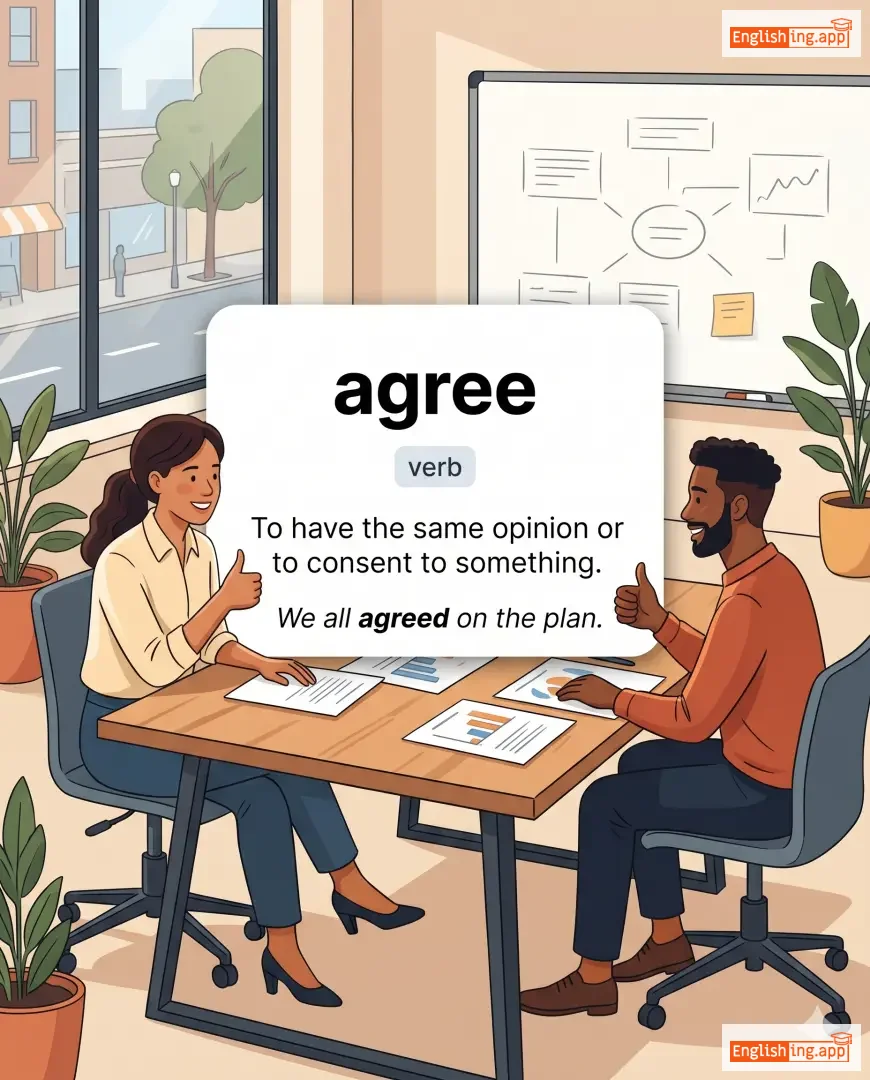
To have the same opinion or to consent to something.
••••••
|
We all agreed on the plan.
我们都同意这个计划。
••••••
|
我们都同意这个计划。
Wǒmen dōu tóngyì zhège jìhuà.
••••••
|
agree to disagree
同意不同意
••••••
|
To accept different opinions without conflict.
••••••
|
同意不同意
tóngyì bù tóngyì
••••••
|
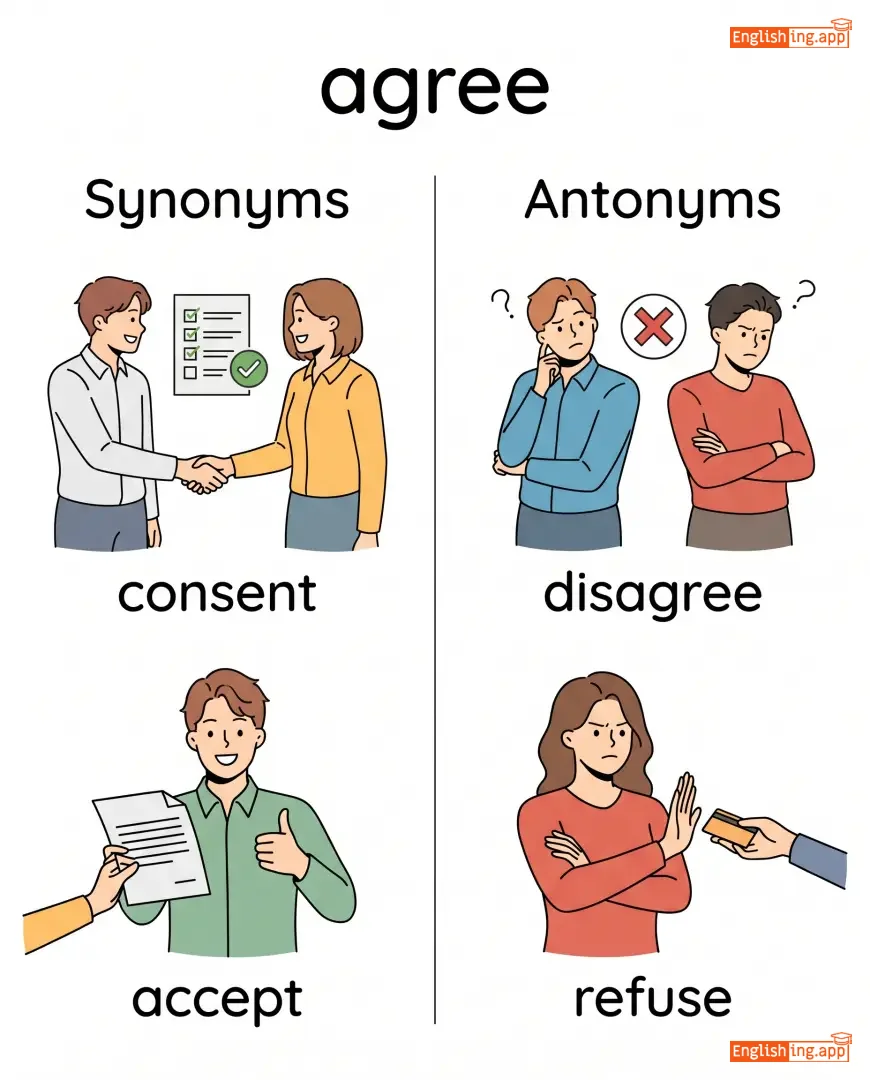
consent, accept, approve, concur, assent
••••••
|
disagree, refuse, oppose
••••••
|
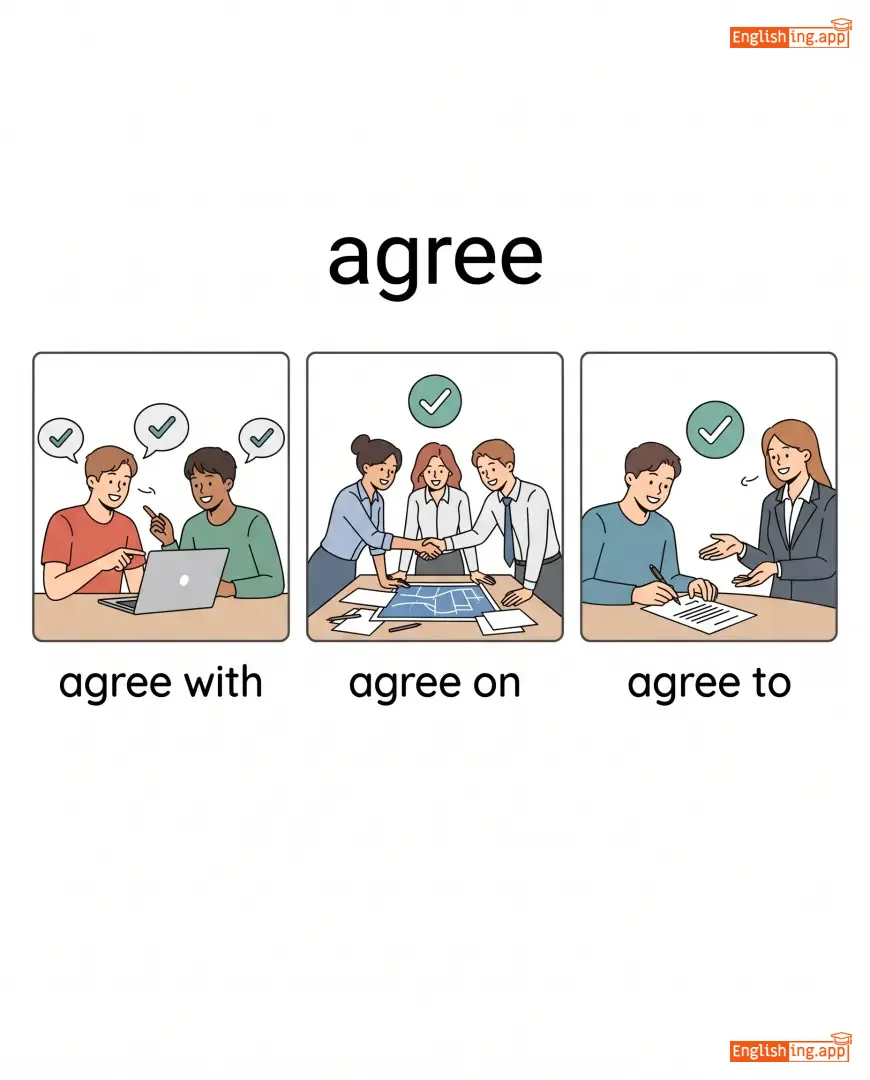
agree with, agree on, agree to, strongly agree
••••••
|
'Agree' 意思是同意 — 就像大家都点头同意时一样。
••••••
|
|
#193
✍️
|
/əˈɡriː.mənt/
noun
(æɡrɪˈmɛnt)
••••••
|
|
协议
xieyi
••••••
|
- •••••• | - •••••• | - •••••• | - •••••• |
A mutual understanding or arrangement between two or more parties.
••••••
|
They signed an agreement to work together.
他们签署了一个合作协议。
••••••
|
他们签署了一个合作协议。
Tāmen qiānshǔle yīgè hézuò xiéyì.
••••••
|
gentlemen's agreement
绅士协议
••••••
|
An informal and non-binding agreement based on trust.
••••••
|
绅士协议
Shēnshì xiéyì
••••••
|
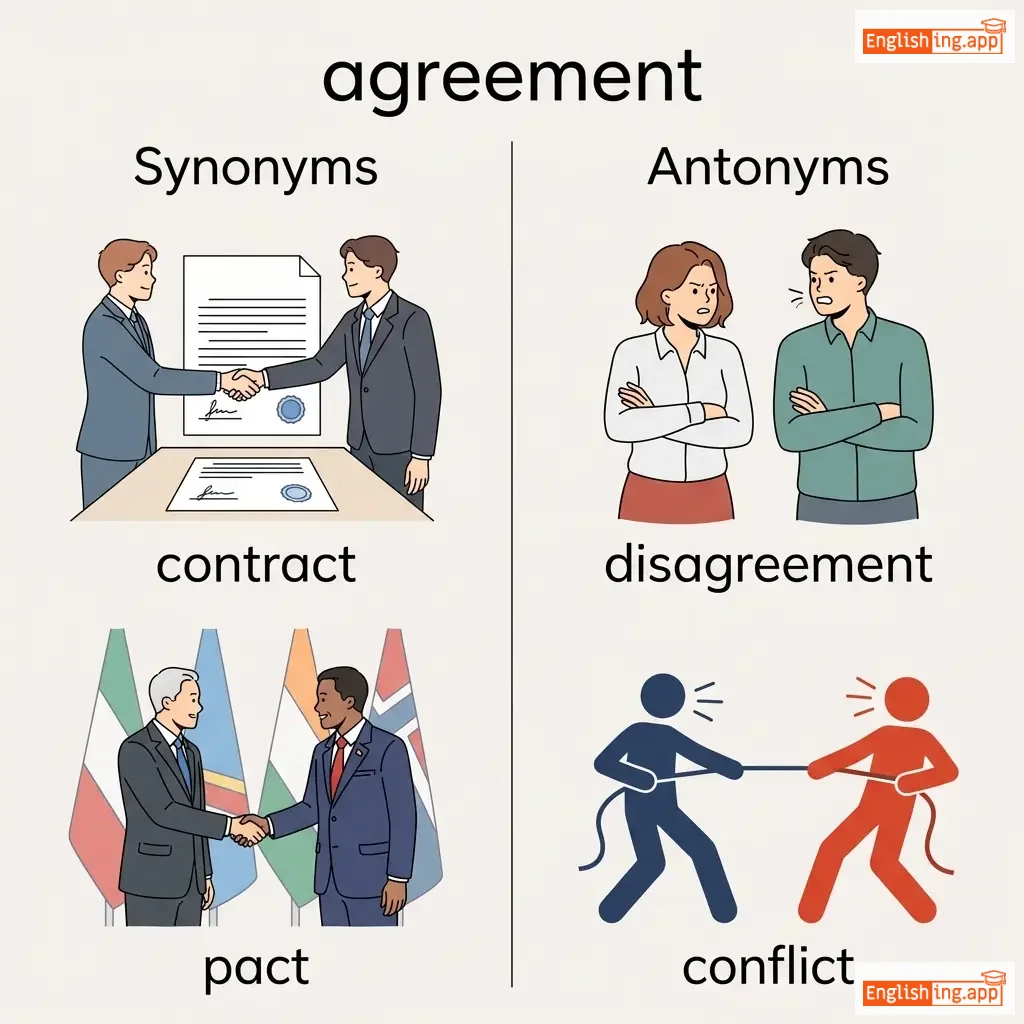
contract, pact, deal, settlement, accord
••••••
|
disagreement, conflict, dispute
••••••
|
reach an agreement, sign an agreement, mutual agreement, agreement between
••••••
|
'Agreement' 意味着协议 — 两个人签字就达成了协议!
••••••
|
|
#194
🌾
|
/ˌæɡ.rɪˈkʌl.tʃər.əl/
adjective
(农业的)
••••••
|
|
农业的
nongye de
••••••
|
- •••••• | - •••••• | - •••••• | - •••••• |
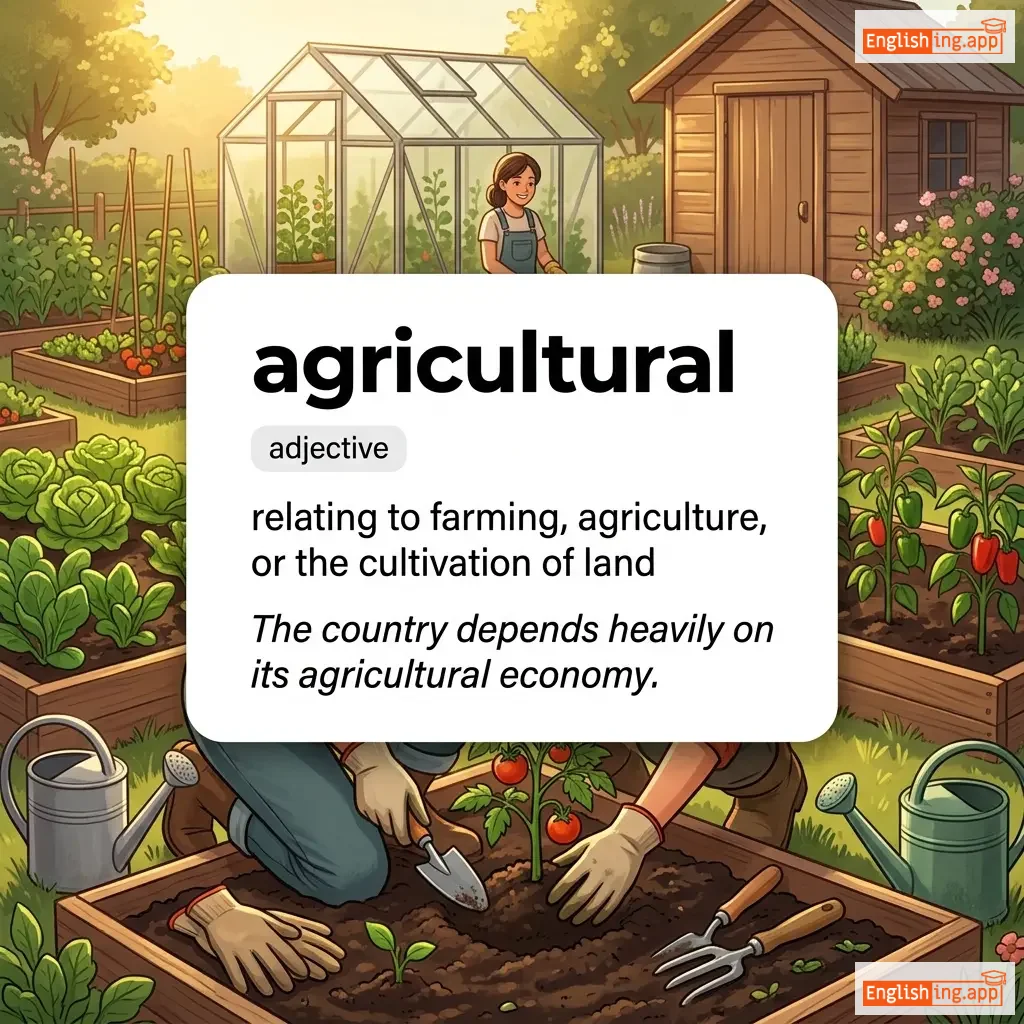
relating to farming, agriculture, or the cultivation of land
••••••
|
The country depends heavily on its agricultural economy. |
该国在很大程度上依赖其农业经济。
Gai guo zai hen da chengdu shang yilai qi nongye jingji.
••••••
|
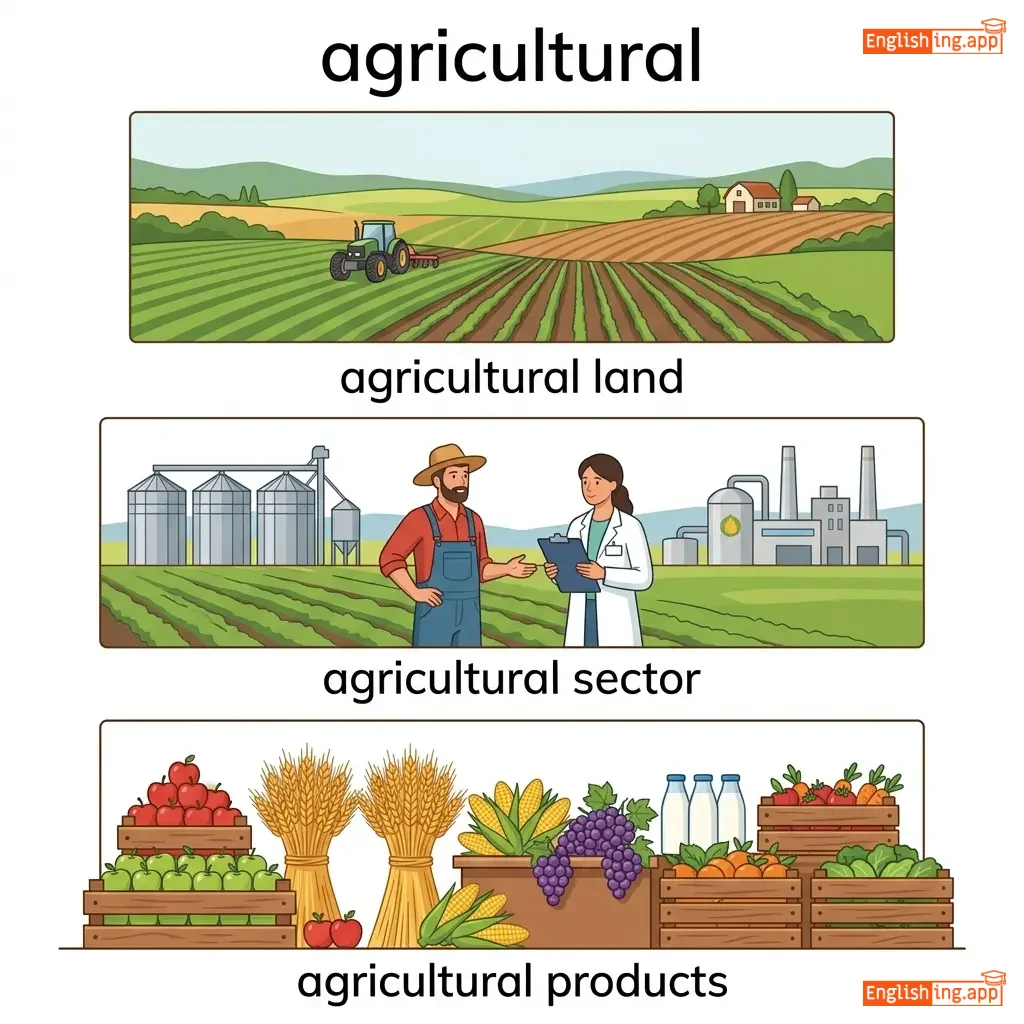
agricultural sector |
the part of the economy related to farming and food production
••••••
|
农业部门
nongye bumen
••••••
|
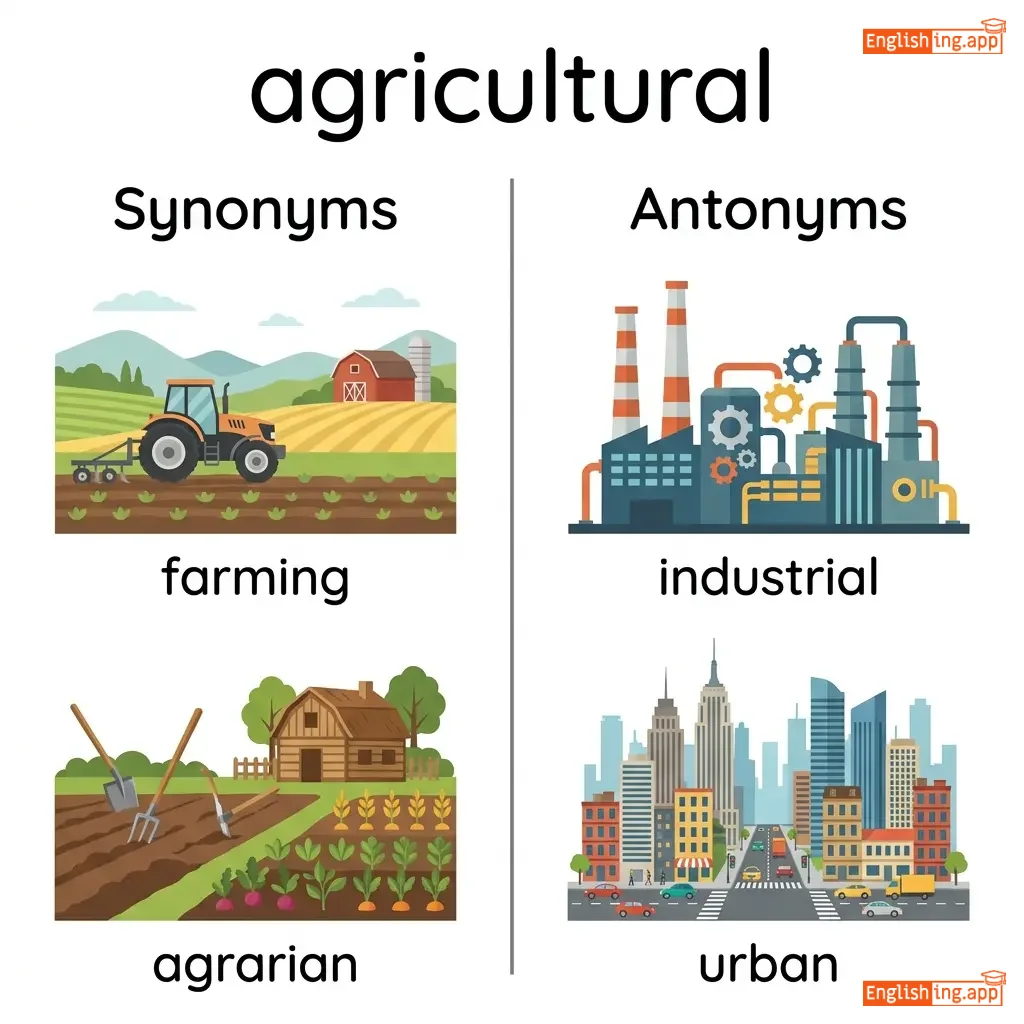
farming, agrarian, cultivation-related, rural, horticultural
••••••
|
industrial, urban, nonagricultural
••••••
|
agricultural land, agricultural sector, agricultural products, agricultural development
••••••
|
Agricultural – 就是与农业有关的。
••••••
|
|
#195
🌾
|
/ˈæɡrɪˌkʌltʃər/
noun
(农业)
••••••
|
|
农业
nongye
••••••
|
- •••••• | - •••••• | - •••••• | - •••••• |
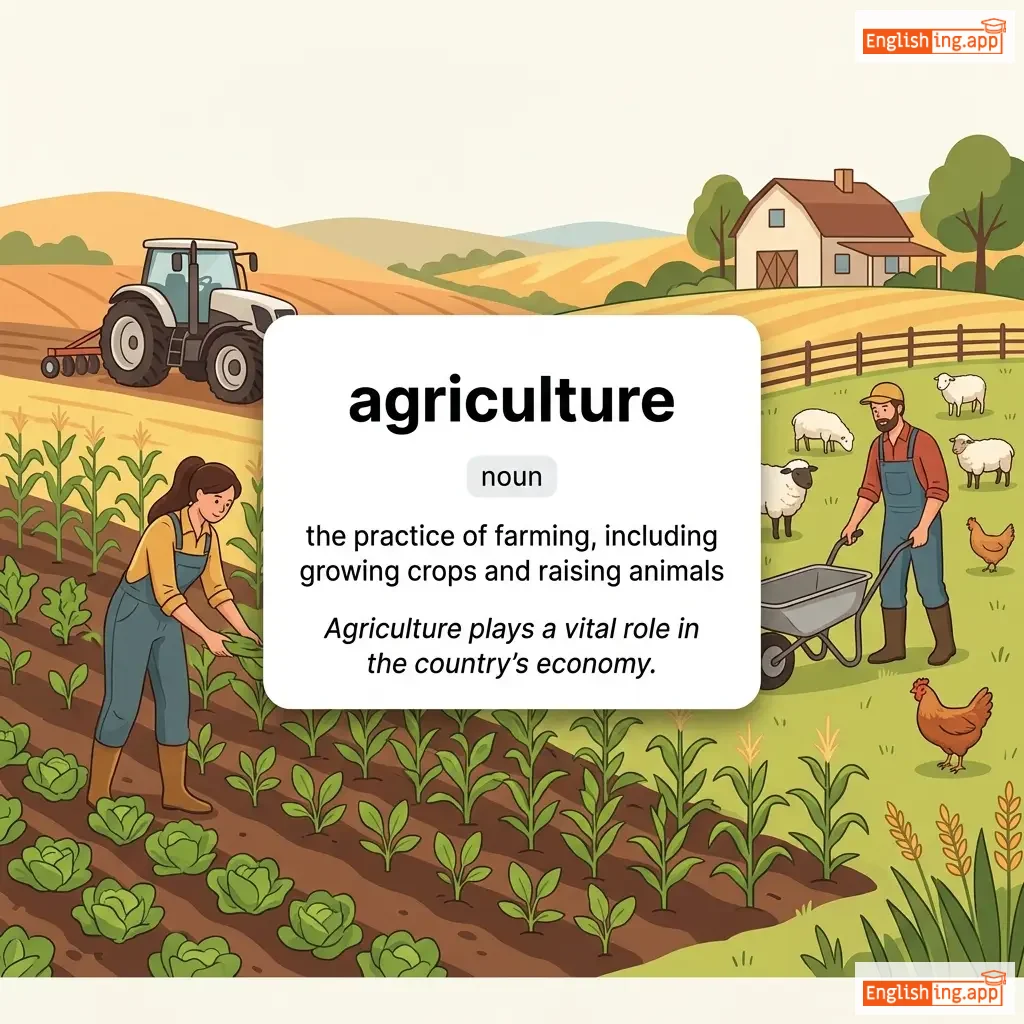
the practice of farming, including growing crops and raising animals
••••••
|
Agriculture plays a vital role in the country's economy. |
农业在国家经济中发挥着重要作用。
Nongye zai guojia jingji zhong fa hui zhuo zhongyao zuoyong.
••••••
|
subsistence agriculture |
farming mainly to feed oneself and family rather than for sale
••••••
|
自给自足农业
zijizizu nongye
••••••
|
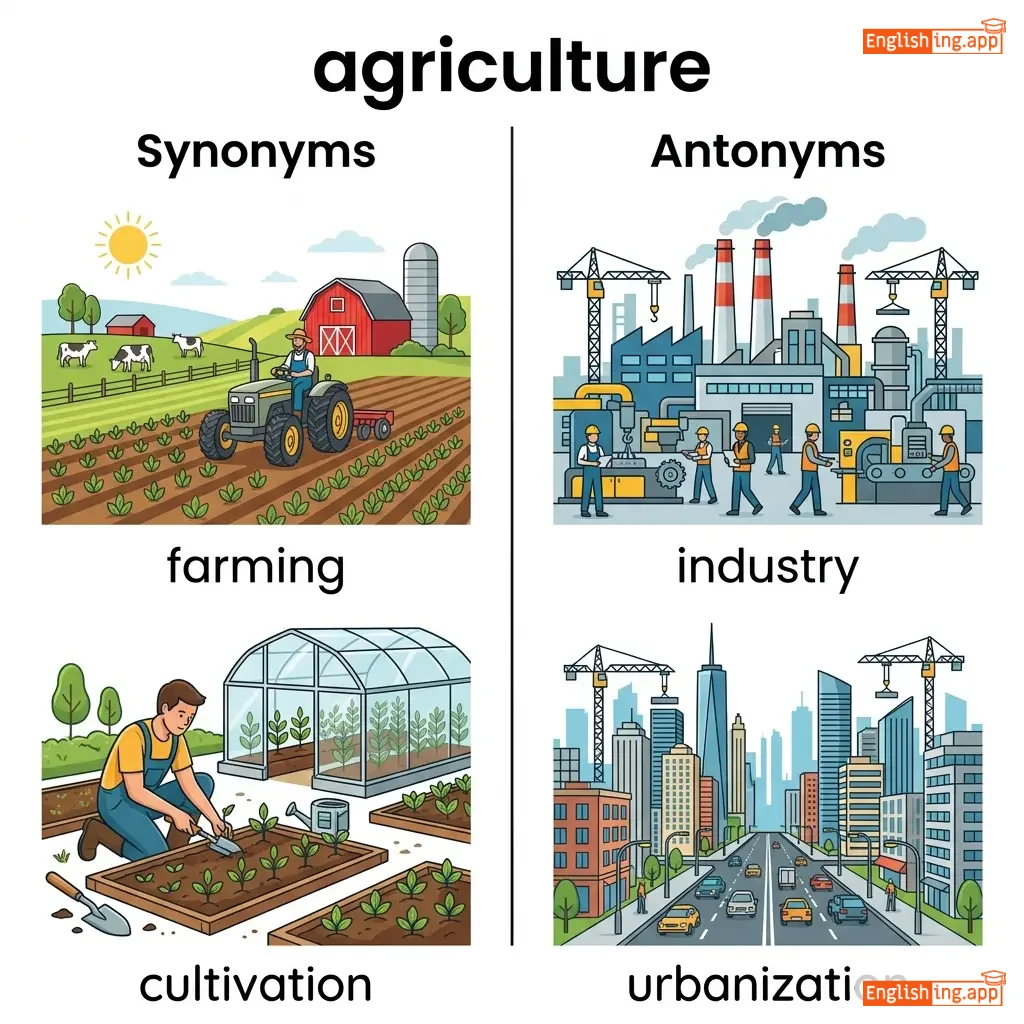
farming, cultivation, horticulture, agronomy, husbandry
••••••
|
industry, urbanization, manufacturing
••••••
|
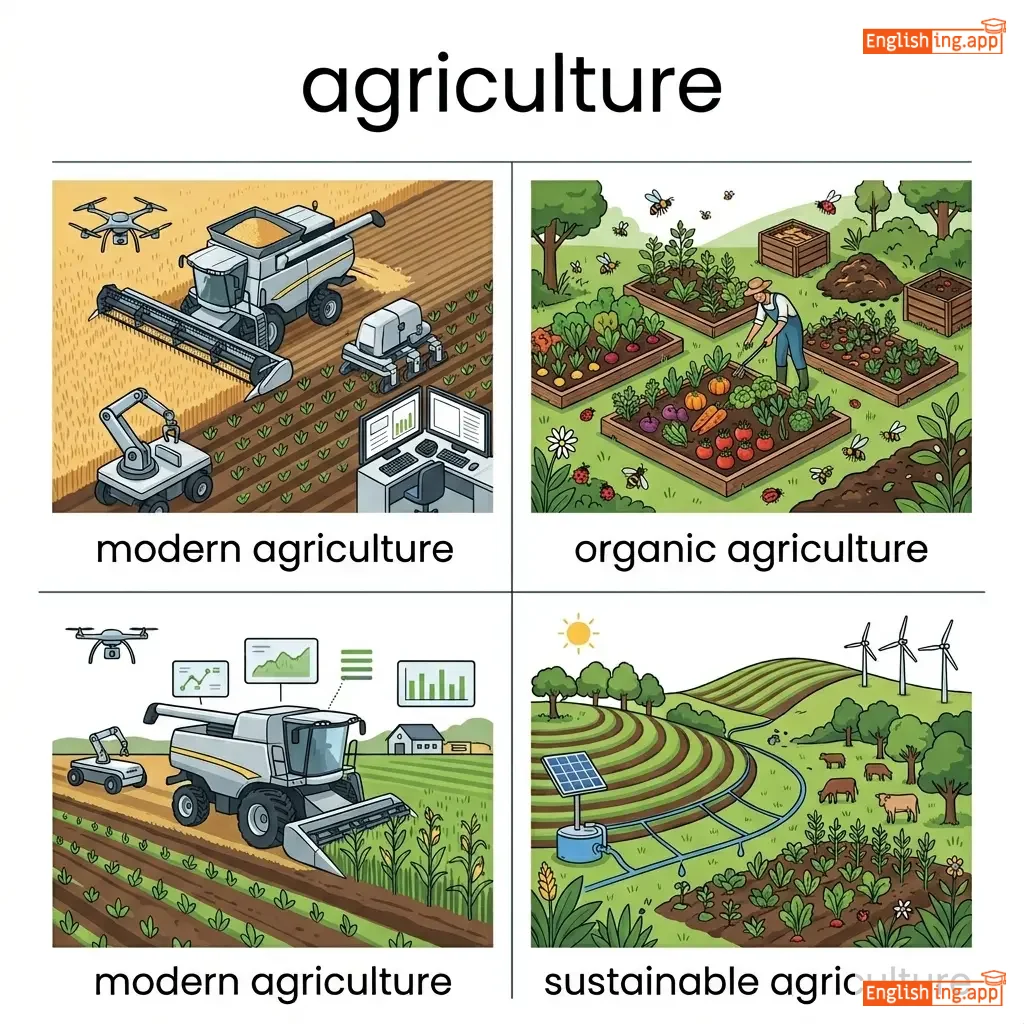
modern agriculture, organic agriculture, sustainable agriculture, agriculture sector
••••••
|
Agriculture = 土地 + 文化 — 农业是真正的文化 🌱
••••••
|
|
#196
➡️
|
/əˈhɛd/
adverb
(āhèd)
••••••
|
|
前面
qianmian
••••••
|
- •••••• | - •••••• | - •••••• | - •••••• |
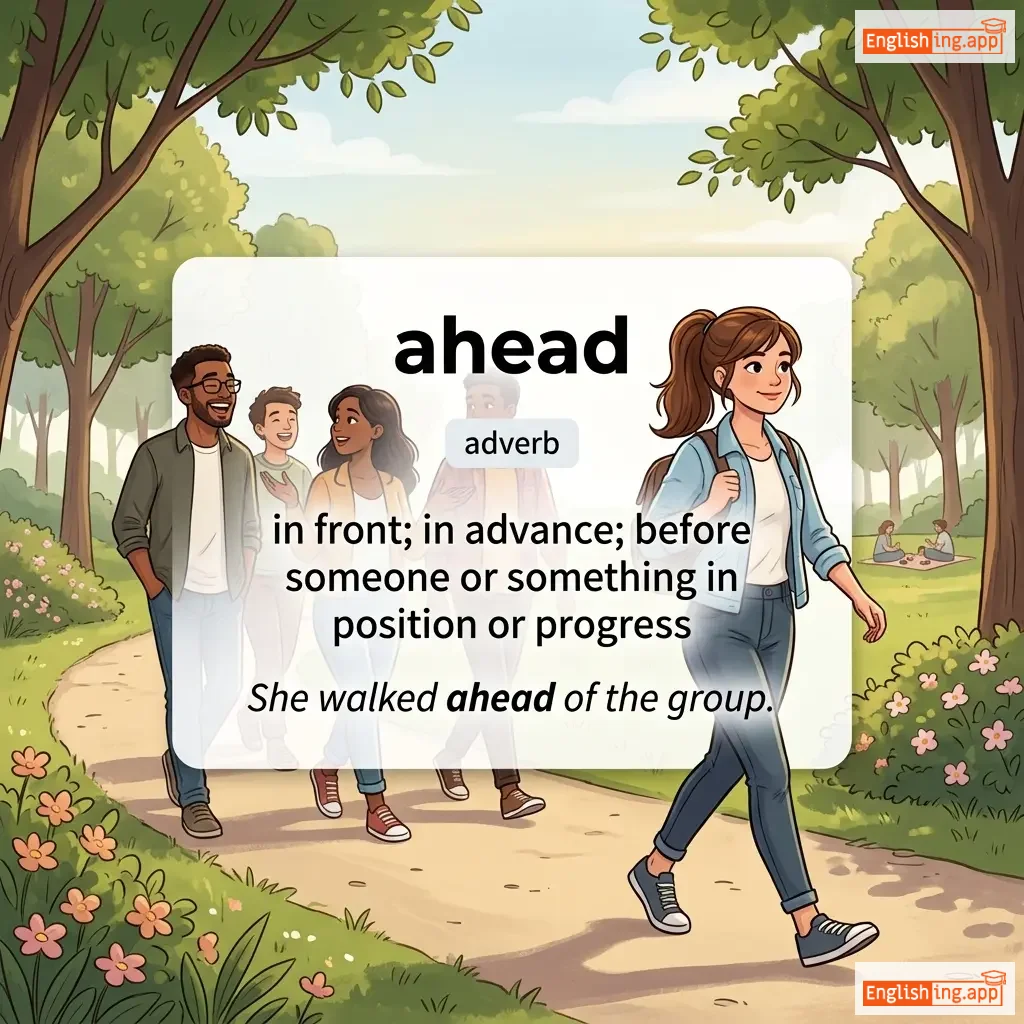
in front; in advance; before someone or something in position or progress
••••••
|
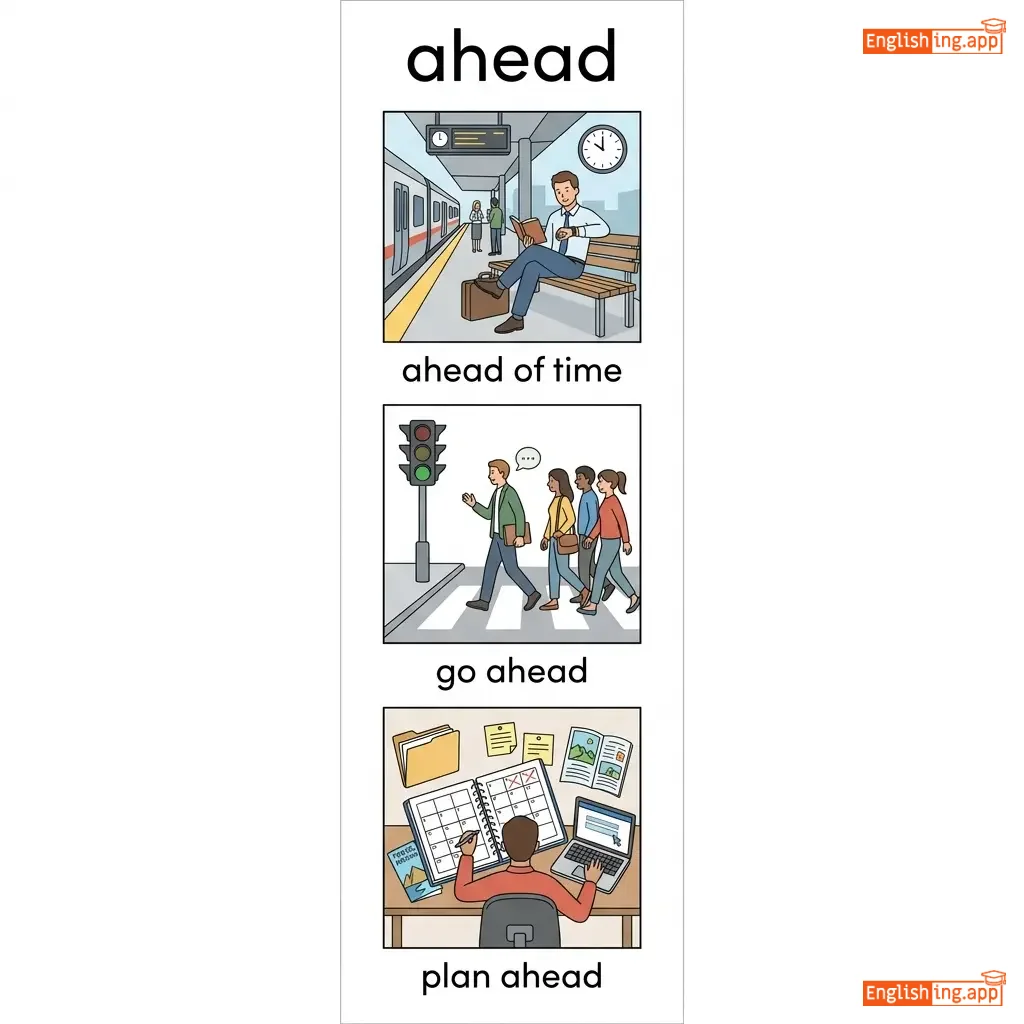
She walked ahead of the group. |
她走在小组前面。
Tā zǒu zài xiǎozǔ qiánmiàn.
••••••
|
go ahead |
to proceed or continue
••••••
|
继续前进
jìxù qiánjìn
••••••
|
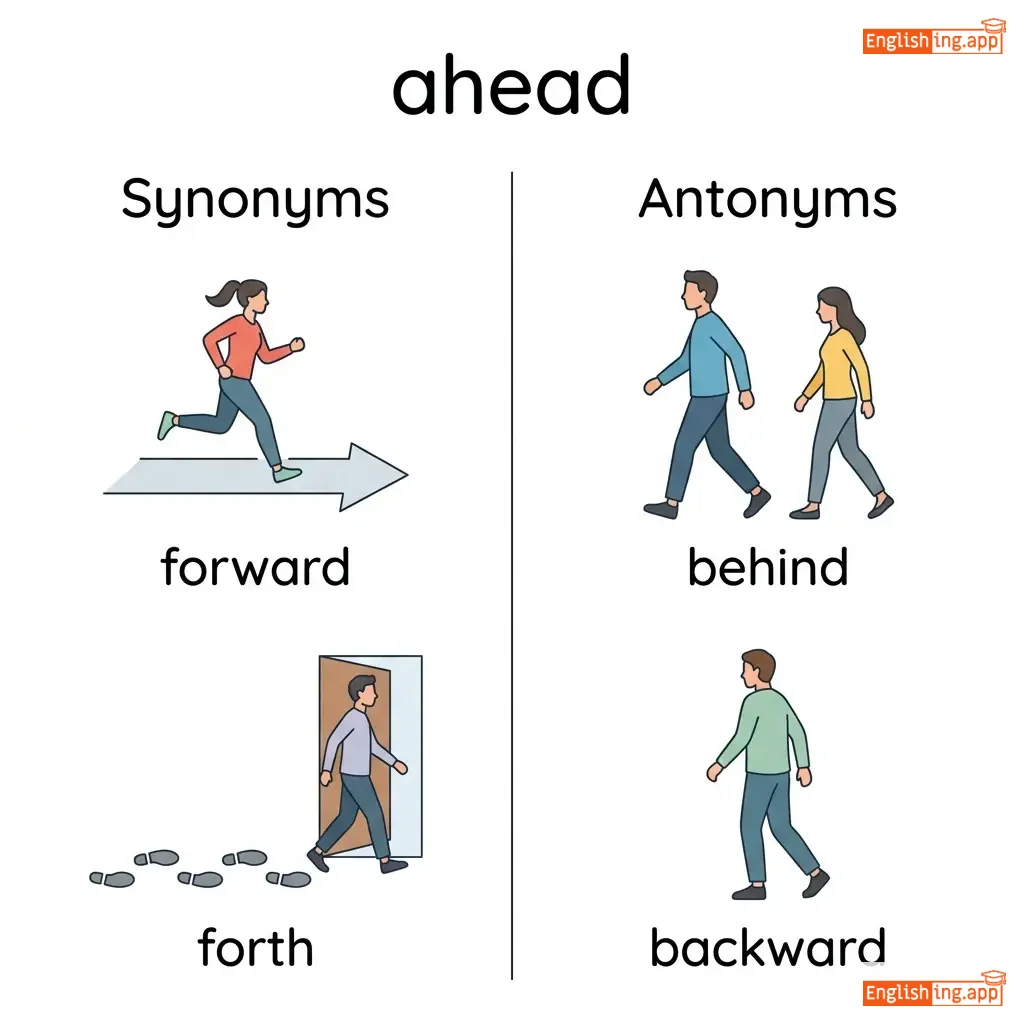
forward, forth, onward, in front
••••••
|
behind, backward
••••••
|
ahead of time, go ahead, plan ahead, look ahead
••••••
|
前面 (ahead) 就是'继续前进 ➡️'
••••••
|
|
#197
🩹
|
/eɪd/
noun, verb
(eid)
••••••
|
|
援助
yuánzhù
••••••
|
aided
eidet
••••••
|
aided
eidet
••••••
|
aids
eids
••••••
|
aiding
aiding
••••••
|
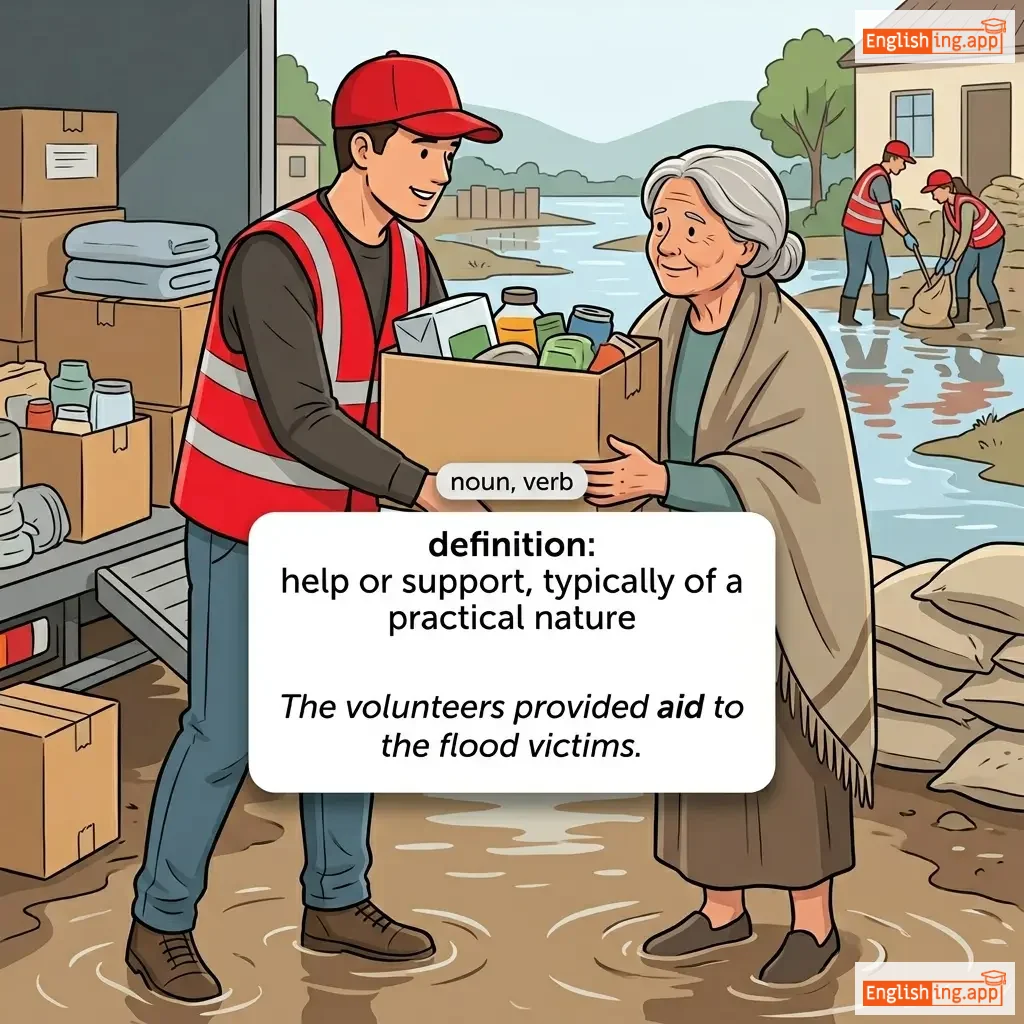
help or support, typically of a practical nature
••••••
|
The volunteers provided aid to the flood victims.
志愿者为洪水受害者提供了帮助。
••••••
|
志愿者为洪水受害者提供了帮助。
Zhìyuànzhě wèi hóngshuǐ shòuhài zhě tígōng le yuánzhù.
••••••
|
first aid
急救
••••••
|
emergency medical treatment given immediately
••••••
|
急救
jíjiù
••••••
|
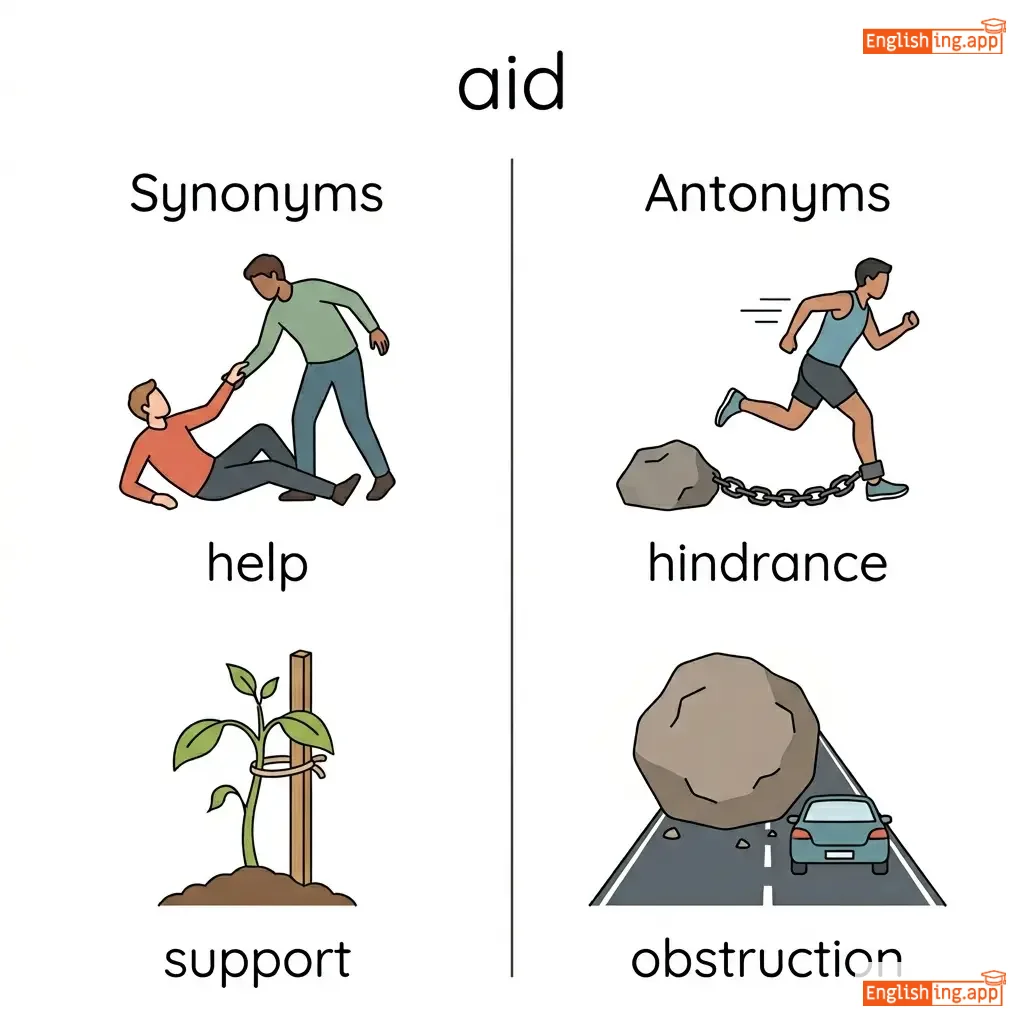
help, support, assistance, relief, guidance
••••••
|
hindrance, obstruction
••••••
|
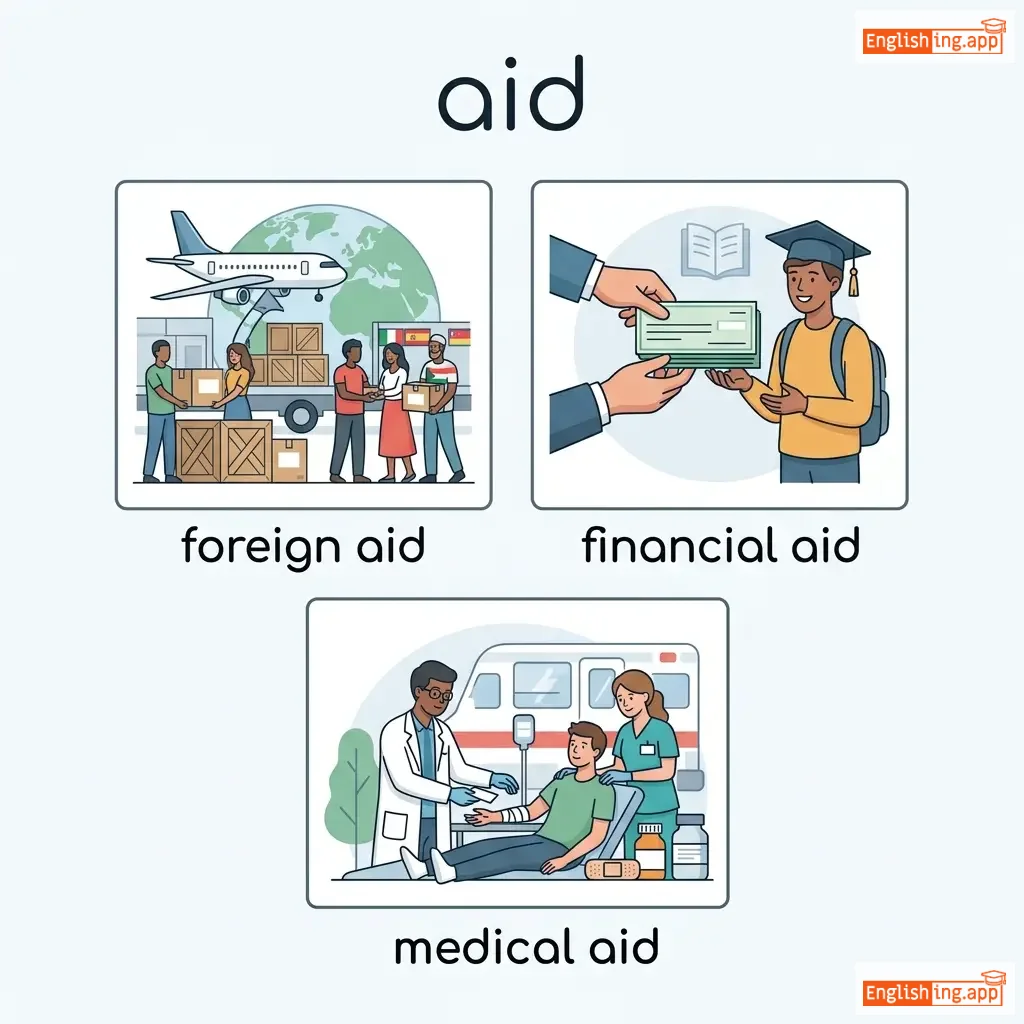
foreign aid, financial aid, medical aid, aid in
••••••
|
援助就是在紧急时提供的帮助,救人于危难。
••••••
|
|
#198
🧑💼
|
/eɪd/
noun
(éid)
••••••
|
- •••••• |
助手
zhùshǒu
••••••
|
- •••••• | - •••••• | - •••••• | - •••••• |
An assistant or helper, especially to an important person.
••••••
|
The senator’s aide organized the meeting with journalists. |
参议员的助手组织了与记者的会议。
Cānyìyuán de zhùshǒu zǔzhīle yǔ jìzhě de huìyì.
••••••
|
- •••••• | - •••••• | - •••••• |
assistant, helper, deputy, supporter
••••••
|
leader, boss
••••••
|
presidential aide, close aide, trusted aide
••••••
|
Aide (助手) 帮助组织工作。
••••••
|
|
#199
🧬
|
/eɪdz/
noun
(艾滋)
••••••
|
- •••••• |
艾滋病
àizī bìng
••••••
|
- •••••• | - •••••• | - •••••• | - •••••• |
Acquired Immune Deficiency Syndrome, a disease of the immune system caused by HIV
••••••
|
AIDS is a major global health concern. |
艾滋病是一个重大全球健康问题。
Àizī bìng shì yīgè zhòngdà quánqiú jiànkāng wèntí.
••••••
|
fight against AIDS |
efforts to combat the disease caused by HIV
••••••
|
与艾滋病作斗争
yǔ àizī bìng zuò dòuzhēng
••••••
|
HIV disease, immune deficiency, syndrome
••••••
|
health, wellness
••••••
|
AIDS patient, HIV/AIDS, AIDS treatment, fight against AIDS
••••••
|
艾滋病记住 🧬 这是一个严重的疾病,中文也使用相同的名字。
••••••
|
Vocabulary Quiz
Test your vocabulary by matching words with their translations or meanings.
Login to take the quiz
Comments (0)
Share your thoughts and join the discussion.
Join the discussion by logging in
Login to CommentNo comments yet
Be the first to share your thoughts!