




Swipe left or right, or use the buttons. Tap image to zoom.
例句翻译
单词
Lesson 35Lesson 35 - 遮罩切换
|
表情符号
|
单词 | Images | 翻译 | 过去时 | 过去分词 | 第三人称单数 | 动名词 | 含义 | 例句 | 例句翻译 | 示例表达 | 示例表达含义 | 示例表达翻译 | 同义词 | 反义词 | 搭配词 | 助记符 |
|---|---|---|---|---|---|---|---|---|---|---|---|---|---|---|---|---|---|
|
#1648
💵
|
/ˈdɒlər/
noun
(美元)
••••••
|
- •••••• |
美元
meiyuan
••••••
|
- •••••• | - •••••• | - •••••• | - •••••• |
The basic monetary unit of the United States and some other countries
••••••
|
I need five dollars to buy this book.
我需要五美元来买这本书。
••••••
|
我需要五美元来买这本书。
Wo xuyao wu meiyuan lai mai zhe ben shu.
••••••
|
not worth a dollar
一文不值
••••••
|
having little or no value
••••••
|
一文不值
yi wen bu zhi
••••••
|
buck, greenback, currency, coin, bill
••••••
|
debt, worthless
••••••
|
US dollar, dollar bill, exchange dollar, dollar coin
••••••
|
Dollar = 美国的钱记住
••••••
|
|
#1649
🌐
|
/dəˈmeɪn/
noun
(dòu méng)
••••••
|
- •••••• |
领域
lingyu
••••••
|
- •••••• | - •••••• | - •••••• | - •••••• |
An area of knowledge, activity, or territory over which control is exercised.
••••••
|
Mathematics is her main domain of expertise. |
数学是她主要的专业领域。
Shuxue shi ta zhuyao de zhuanye lingyu.
••••••
|
public domain |
Something not protected by copyright and available for public use.
••••••
|
公共领域
gonggong lingyu
••••••
|
territory, realm, field, sphere, area
••••••
|
outsider, exterior
••••••
|
domain name, knowledge domain, public domain, private domain
••••••
|
领域代表着控制的区域——就像互联网中的域名。
••••••
|
|
#1650
🏠
|
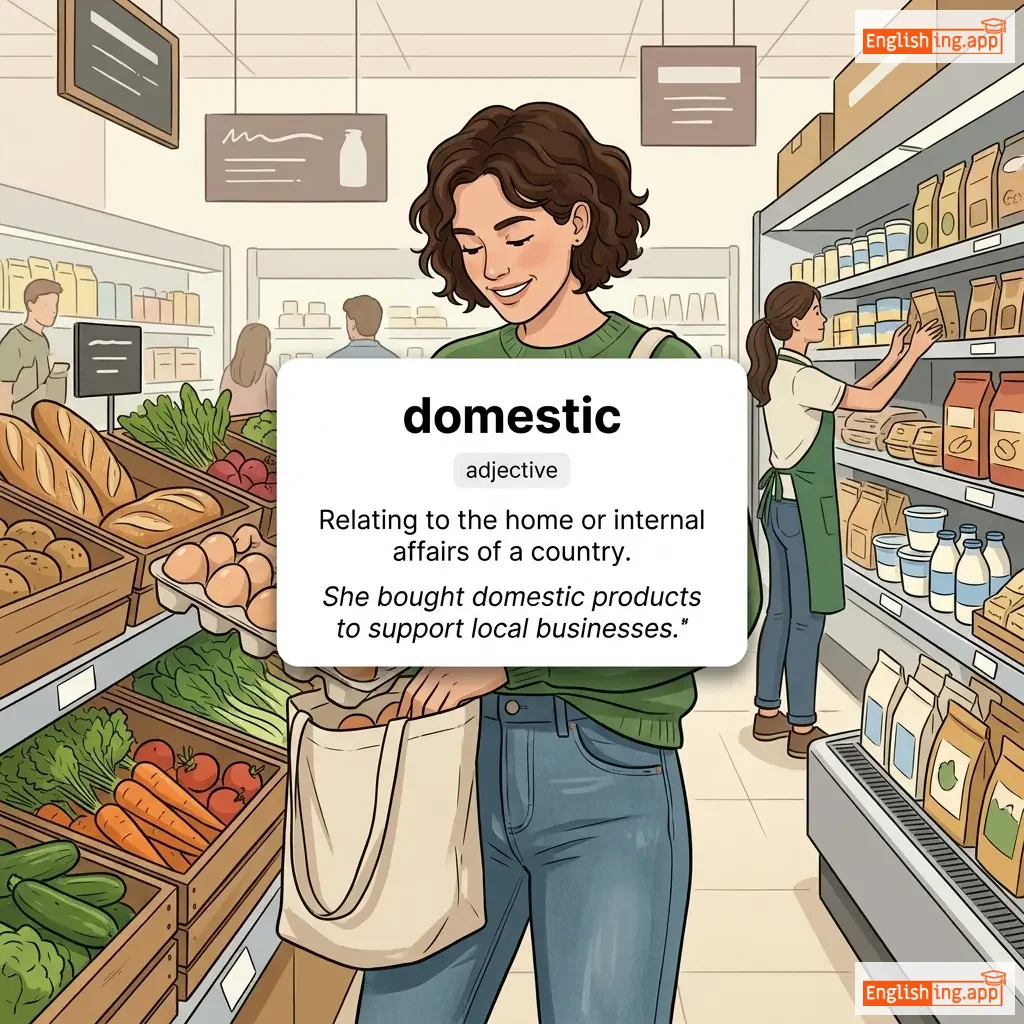
/dəˈmɛstɪk/
adjective
(happiness)
••••••
|
|
幸福
xìngfú
••••••
|
- •••••• | - •••••• | - •••••• | - •••••• |
Relating to the home or internal affairs of a country.
••••••
|
She bought domestic products to support local businesses. |
当她获得奖项时,她无法隐藏自己的幸福。
Dāng tā huòdé jiǎngxiàng shí, tā wúfǎ yǐncáng zìjǐ de xìngfú.
••••••
|
domestic affairs |
Matters within a household or a country
••••••
|
幸福追求
xìngfú zhuīqiú
••••••
|
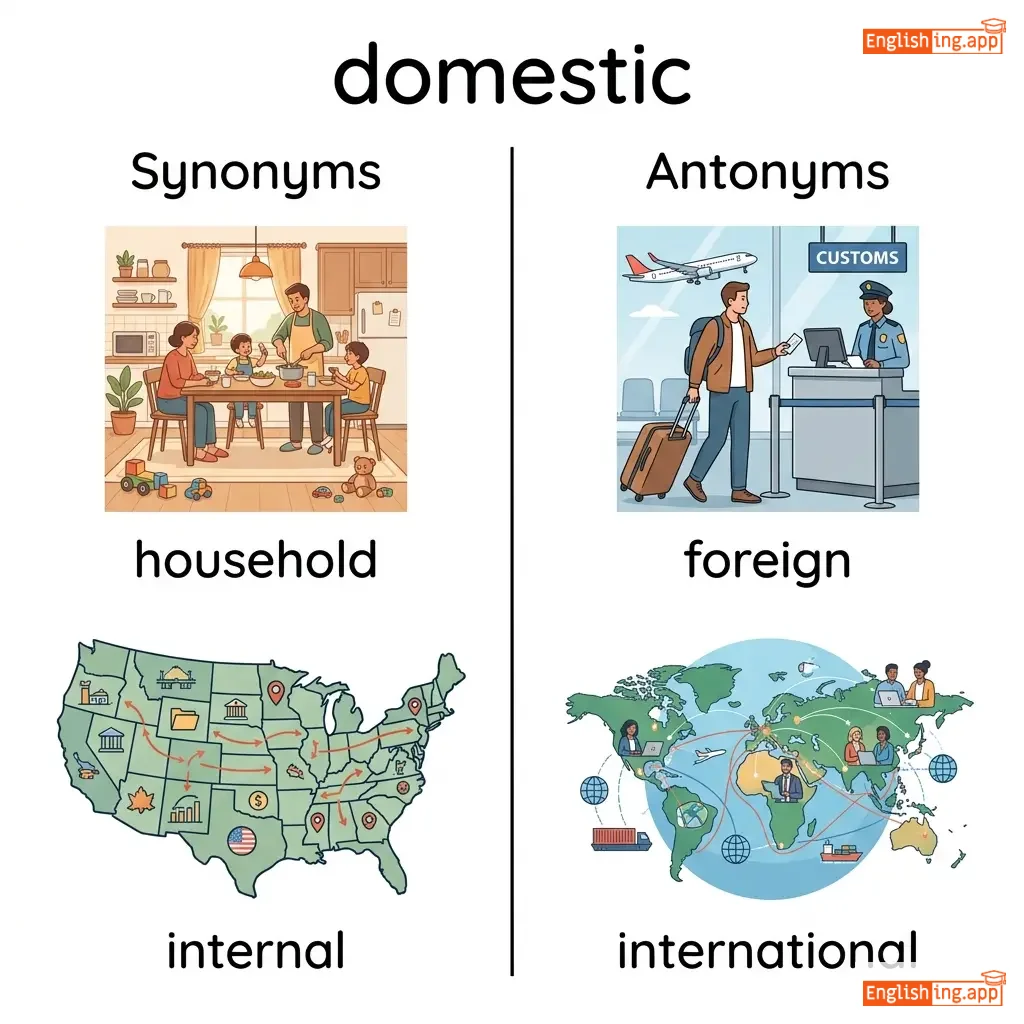
household, internal, local, home
••••••
|
foreign, international
••••••
|
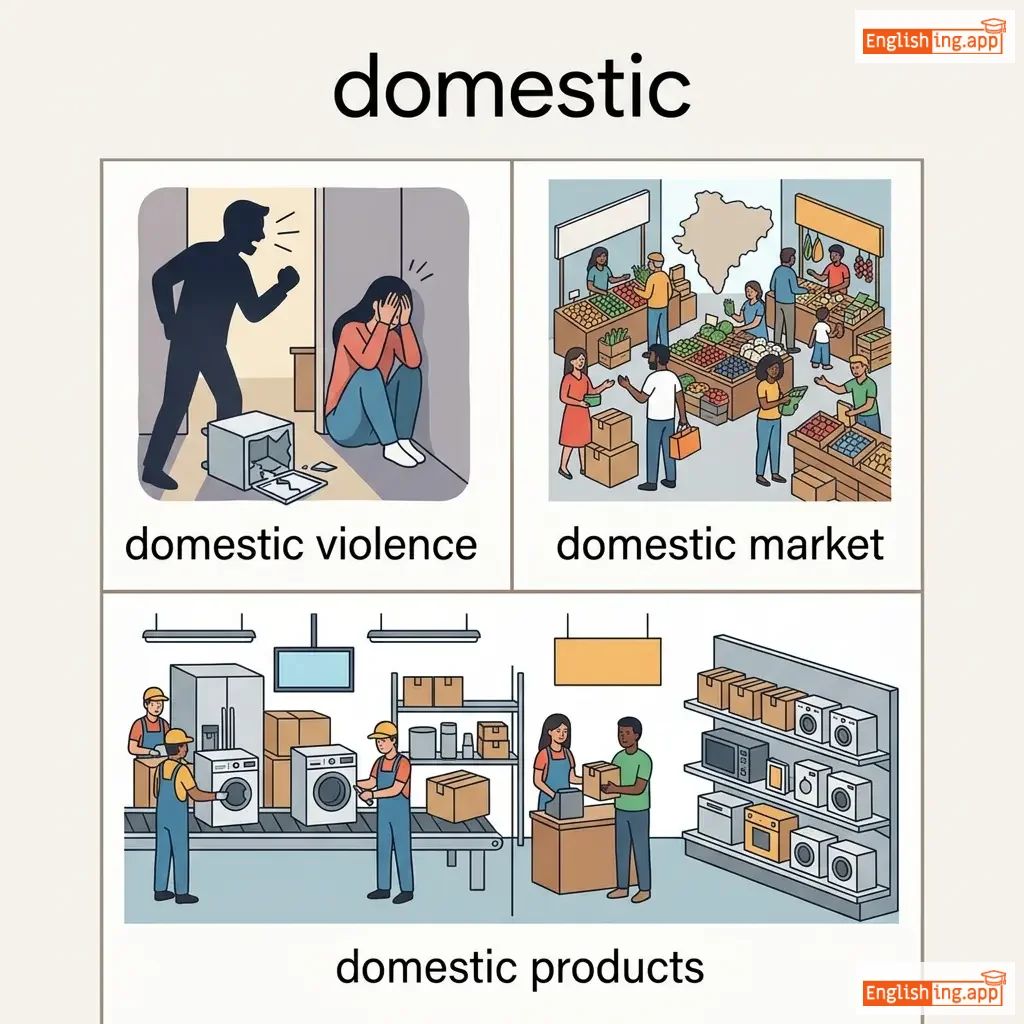
domestic violence, domestic market, domestic products, domestic flights
••••••
|
幸福是每天努力追求的目标。
••••••
|
|
#1651
👑
|
/ˈdɑː.mə.nəns/
noun
(dómínánzì)
••••••
|
|
支配
zhīpèi
••••••
|
- •••••• | - •••••• | - •••••• | - •••••• |
The state of having power and influence over others.
••••••
|
The company has maintained dominance in the smartphone market. |
公司在智能手机市场上保持了支配地位。
Gōngsī zài zhìnéng shǒujī shìchǎng shàng bǎochíle zhīpèi dìwèi.
••••••
|
alpha dominance |
The behavior of asserting leadership or control, often seen in social or animal groups.
••••••
|
阿尔法支配
Ā'ěrfǎ zhīpèi
••••••
|
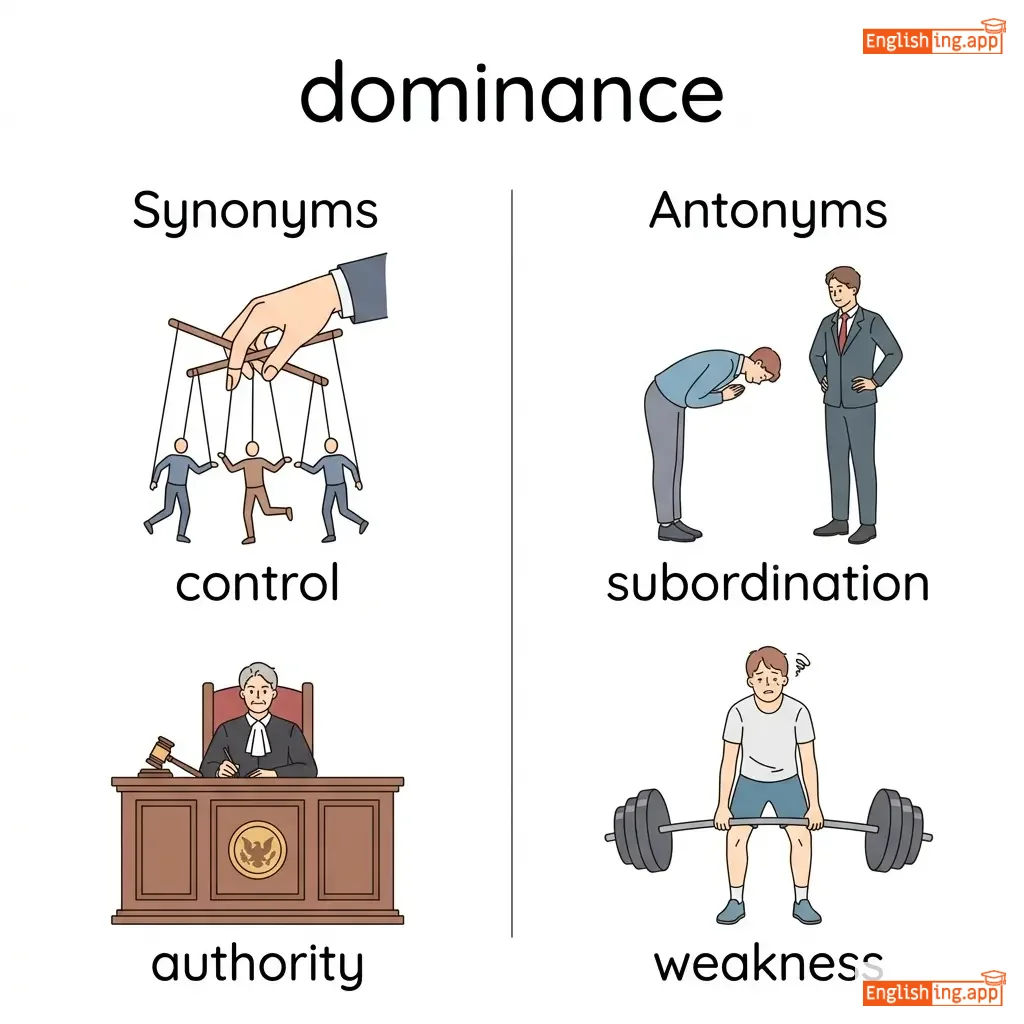
control, authority, supremacy, power, command
••••••
|
subordination, weakness
••••••
|
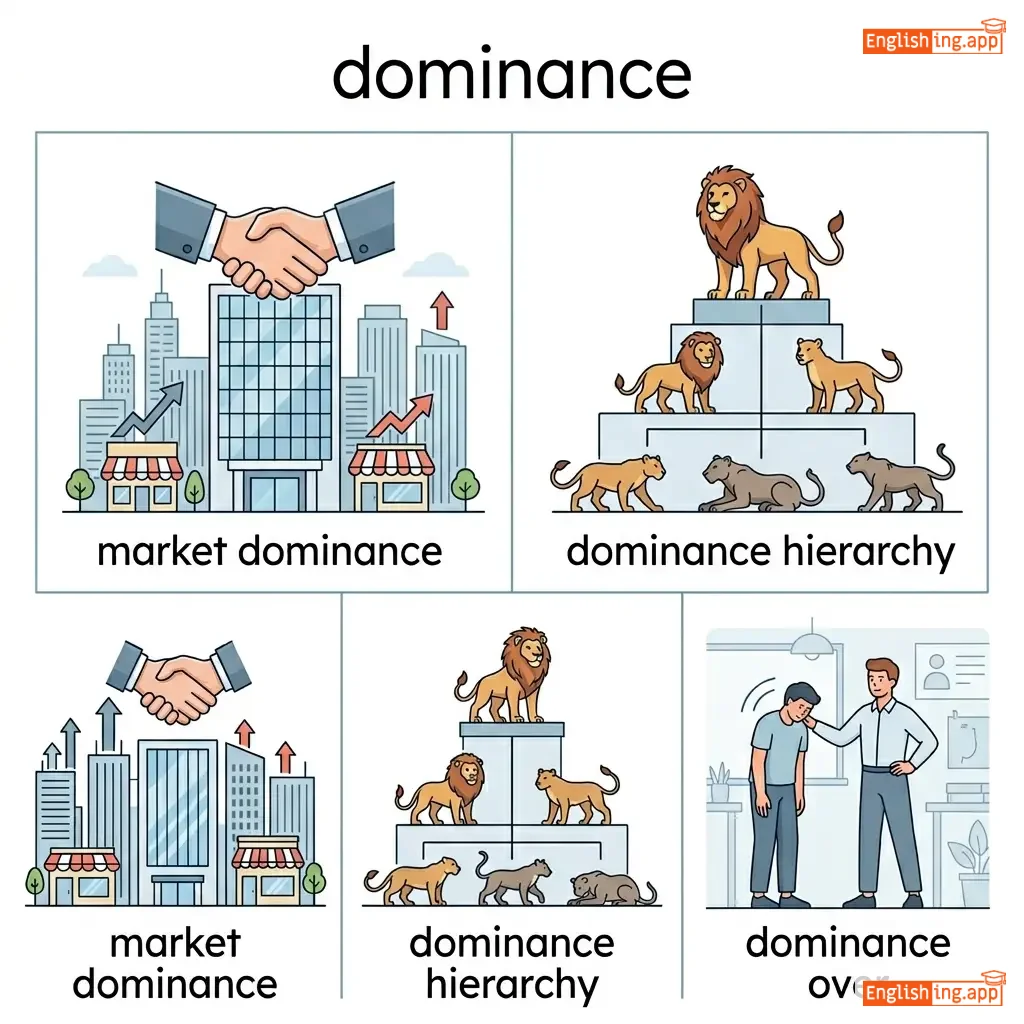
market dominance, dominance hierarchy, dominance over
••••••
|
Dominance 可以联想到 '主导'——扩展自己的影响力与控制力。
••••••
|
|
#1652
🦁
|
/ˈdɑː.mə.nənt/
adjective
(多米南特)
••••••
|
- •••••• |
主导的
zhǔdǎo de
••••••
|
- •••••• | - •••••• | - •••••• | - •••••• |
Having power, authority, or influence over others; most important.
••••••
|
English has become the dominant language in international business.
英语已经成为国际商务中的主导语言。
••••••
|
英语已经成为国际商务中的主导语言。
Yīngyǔ yǐjīng chéngwéi guójì shāngwù zhōng de zhǔdǎo yǔyán.
••••••
|
dominant hand
主导手
••••••
|
The hand that a person uses most skillfully and frequently.
••••••
|
主导手
zhǔdǎo shǒu
••••••
|
powerful, controlling, leading, influential
••••••
|
submissive, minor, weak
••••••
|
dominant role, dominant culture, dominant force
••••••
|
Dominant 就像狮子 🦁—最强大、最有权力!
••••••
|
|
#1653
👑
|
/ˈdɒmɪneɪt/
verb
(多米内特)
••••••
|
- •••••• |
主导
zhudao
••••••
|
dominated
多米内特德
••••••
|
dominated
多米内特德
••••••
|
dominates
多米内特斯
••••••
|
dominating
多米内廷
••••••
|
to have power or control over something or someone
••••••
|
The company dominates the smartphone market.
这家公司主导了智能手机市场。
••••••
|
这家公司主导了智能手机市场。
Zhè jiā gōngsī zhǔdǎo le zhìnéng shǒujī shìchǎng.
••••••
|
dominate the field
主导领域
••••••
|
to be the most successful or influential in a particular area
••••••
|
主导领域
zhǔdǎo lǐngyù
••••••
|
control, rule, command, govern, lead
••••••
|
submit, follow, yield
••••••
|
dominate the market, dominate the conversation, dominate politics, dominate completely
••••••
|
Dominate : 像国王一样主导一切!
••••••
|
|
#1654
🏰
|
/ˌdɒmɪˈneɪʃən/
noun
(统治)
••••••
|
- •••••• |
统治
tongzhi
••••••
|
- •••••• | - •••••• | - •••••• | - •••••• |
the exercise of control or influence over someone or something
••••••
|
The empire sought domination over its neighbors. |
帝国寻求对其邻国的统治。
Diguo xunqiu dui qi lingguo de tongzhi.
••••••
|
total domination |
complete control over something or someone
••••••
|
完全统治
wanquan tongzhi
••••••
|
control, power, supremacy, authority
••••••
|
submission, weakness, dependence
••••••
|
political domination, economic domination, domination of nature
••••••
|
Domination就像棋盘上,完全控制每一步。
••••••
|
|
#1655
🎁
|
/dəʊˈneɪt/
verb
(多内特)
••••••
|
|
捐赠
juānzèng
••••••
|
donated
多内特德
••••••
|
donated
多内特德
••••••
|
donates
多内特斯
••••••
|
donating
多内特ing
••••••
|
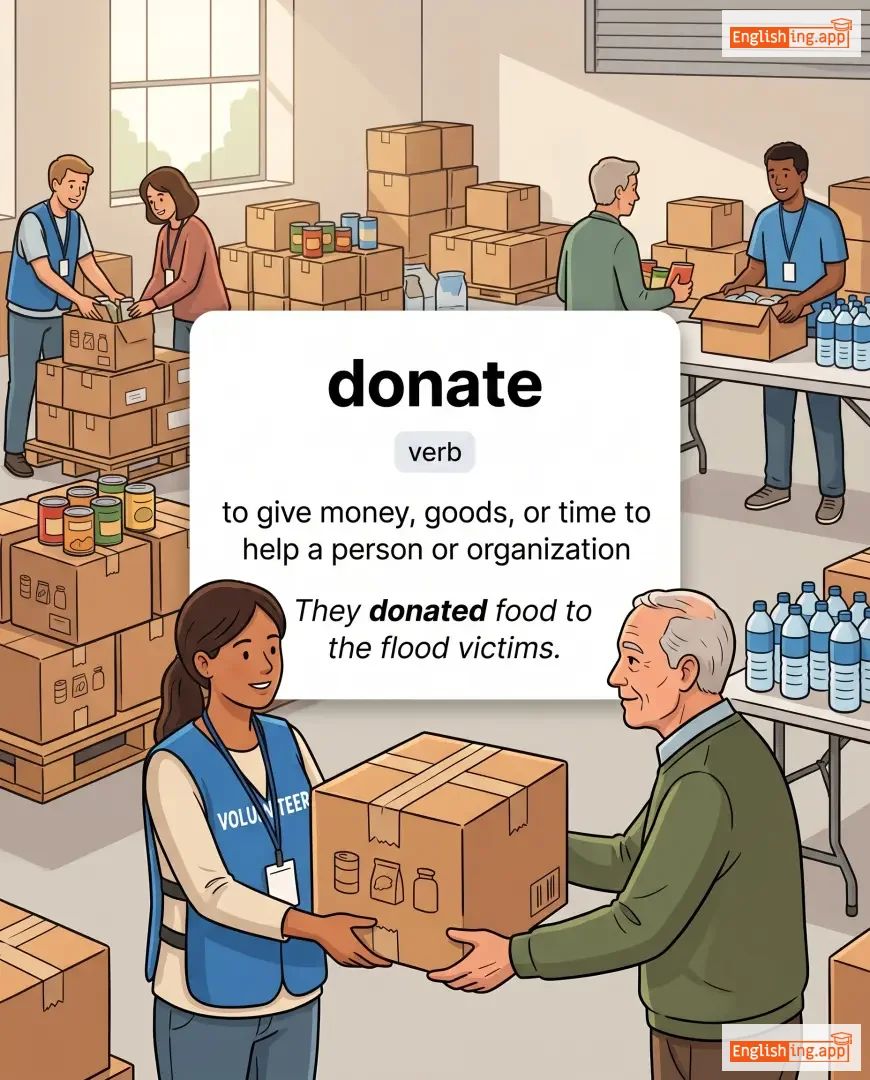
to give money, goods, or time to help a person or organization
••••••
|
They donated food to the flood victims.
他们捐赠了食物给洪水受害者。
••••••
|
他们捐赠了食物给洪水受害者。
Tāmen juānzèngle shíwù gěi hóngshuǐ shòuhài zhě.
••••••
|
donate blood
捐血
••••••
|
to give one's blood voluntarily for medical use
••••••
|
捐血
juān xuè
••••••
|
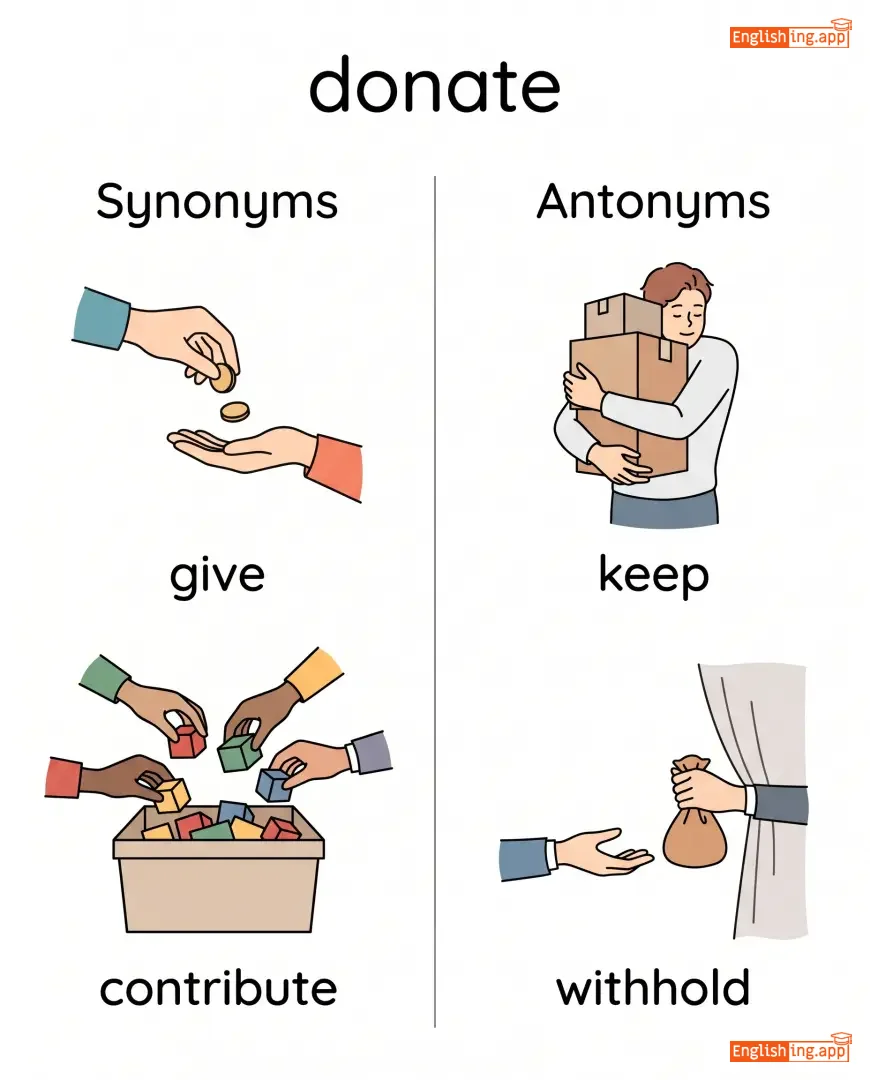
give, contribute, offer, bestow
••••••
|
keep, withhold, retain
••••••
|
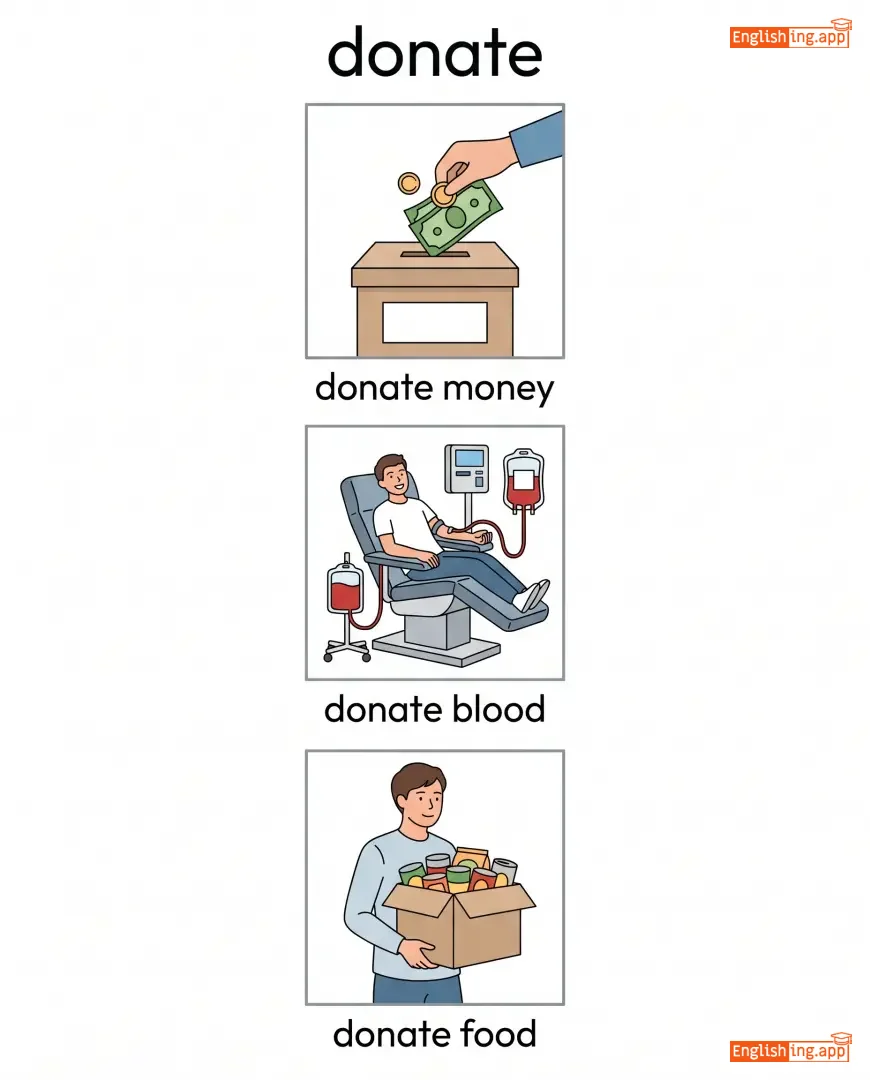
donate money, donate blood, donate food, donate clothes
••••••
|
捐赠 = 捐 + 增 🎁 - 捐赠之后带来增值。
••••••
|
|
#1656
🎁
|
/dəʊˈneɪ.ʃən/
noun
(dòunèi)
••••••
|
- •••••• |
捐赠
juānzèng
••••••
|
- •••••• | - •••••• | - •••••• | - •••••• |
something that is given to help a person or organization, often money
••••••
|
He made a generous donation to the local orphanage. |
他向当地孤儿院做了慷慨的捐赠。
Tā xiàng dāngdì gū'ér yuàn zuòle kāngkǎi de juānzèng.
••••••
|
make a donation |
to give money or goods to help a cause
••••••
|
做捐赠
zuò juānzèng
••••••
|
contribution, gift, offering, grant, endowment
••••••
|
withdrawal, taking
••••••
|
charity donation, blood donation, make donation, receive donation
••••••
|
捐赠意味着给予 — 'juān' 意味着 '给', 因此 donation 意味着捐赠!
••••••
|
|
#1657
🩸
|
/ˈdoʊnər/
noun
(捐赠者)
••••••
|
- •••••• |
捐赠者
juan zeng zhe
••••••
|
- •••••• | - •••••• | - •••••• | - •••••• |
A person who gives something, especially to a charity or cause.
••••••
|
The donor contributed generously to the hospital’s new wing. |
捐赠者慷慨地为医院的新翼捐赠了资金。
Juan zeng zhe kang kai de wei yi yuan de xin yi juan zeng le zi jin.
••••••
|
blood donor |
A person who gives blood voluntarily for medical use.
••••••
|
献血者
xian xue zhe
••••••
|
benefactor, contributor, patron, philanthropist, giver
••••••
|
recipient, donee
••••••
|
blood donor, organ donor, anonymous donor, generous donor
••••••
|
捐赠者(Juan Zeng Zhe)像捐献的血液一样,给出帮助。
••••••
|
|
#1658
🚪
|
/dɔːr/
noun
(门)
••••••
|
- •••••• |
门
mén
••••••
|
- •••••• | - •••••• | - •••••• | - •••••• |
A movable barrier that allows entry or exit to a building, room, or vehicle.
••••••
|
He knocked on the door before entering the house. |
他在进入房子之前敲了敲门。
Tā zài jìnrù fángzi zhīqián qiāole qiāo mén.
••••••
|
when one door closes, another opens |
New opportunities arise when one ends
••••••
|
当一扇门关上时,另一扇门会打开
Dāng yī shàn mén guān shàng shí, lìng yī shàn mén huì dǎkāi
••••••
|
gate, entrance, portal, threshold
••••••
|
wall, barrier
••••••
|
open the door, close the door, lock the door, knock on the door
••••••
|
门 🚪 — 打开门,新机会进来!
••••••
|
|
#1659
🚪
|
/ˈdɔːrˌkiːpər/
noun
(多尔基珀)
••••••
|
- •••••• |
门卫
menwei
••••••
|
- •••••• | - •••••• | - •••••• | - •••••• |
A person whose job is to guard or manage the entrance of a building or room.
••••••
|
The doorkeeper checked everyone’s passes before they entered the hall.
多尔基珀在大家进入大厅前检查了通行证。
••••••
|
多尔基珀在大家进入大厅前检查了通行证。
Duojiper zai dajia jinru dating qian jiancha le tongxingzheng
••••••
|
- •••••• | - •••••• | - •••••• |
porter, gatekeeper, usher, sentinel
••••••
|
intruder, trespasser
••••••
|
doorkeeper duties, doorkeeper role, doorkeeper station
••••••
|
门卫 (menwei) literally means 'door guard', easy to remember.
••••••
|
|
#1660
💊
|
/doʊs/
noun
(多斯)
••••••
|
- •••••• |
剂量
jiliang
••••••
|
- •••••• | - •••••• | - •••••• | - •••••• |
a measured amount of a medicine or drug taken at one time
••••••
|
The doctor prescribed one dose of the medicine every six hours.
医生每六小时开一次药物的剂量。
••••••
|
医生每六小时开一次药物的剂量。
Yisheng mei liu xiaoshi kai yici yaowu de jiliang.
••••••
|
a dose of one's own medicine
自食其果
••••••
|
experiencing the same unpleasant treatment that one has given to others
••••••
|
自食其果
Zì shí qí guǒ
••••••
|
portion, amount, quantity, measure, shot
••••••
|
overdose, underdose
••••••
|
high dose, low dose, single dose, daily dose, lethal dose
••••••
|
记住‘剂量’是药物的量,按时按量吃。
••••••
|
|
#1661
🔴
|
/dɒt/
noun
(点)
••••••
|
- •••••• |
点
dian
••••••
|
- •••••• | - •••••• | - •••••• | - •••••• |
a small round mark or spot
••••••
|
She drew a red dot on the paper. |
她在纸上画了一个红点。
Tā zài zhǐ shàng huàle yīgè hóng diǎn.
••••••
|
connect the dots |
to understand the relationship between different facts
••••••
|
连接点
liánjiē diǎn
••••••
|
spot, speck, point, mark, stain
••••••
|
blank, void
••••••
|
dot pattern, dot matrix, red dot, connect dots
••••••
|
Dot 意味着点 — 就像在 Google.com 的每个域名中看到的点!
••••••
|
|
#1662
2️⃣
|
/ˈdʌbəl/
verb
(dàbù)
••••••
|
- •••••• |
翻倍
fānbèi
••••••
|
doubled
dàbùd
••••••
|
doubled
dàbùd
••••••
|
doubles
dàbùls
••••••
|
doubling
dàbùlɪng
••••••
|
to make twice as much in size, number, or amount
••••••
|
The company hopes to double its profits this year.
公司希望今年能使其利润翻倍。
••••••
|
公司希望今年能使其利润翻倍。
Gōngsī xīwàng jīnnián néng shǐ qí lìrùn fānbèi.
••••••
|
double-edged sword
双刃剑
••••••
|
something that has both positive and negative effects
••••••
|
双刃剑
shuāng rèn jiàn
••••••
|
increase, multiply, expand, amplify, boost
••••••
|
halve, reduce, decrease
••••••
|
double the amount, double the size, double digits, double check
••••••
|
Double 代表翻倍,就像翻倍的冰淇淋,让你更快乐。
••••••
|
|
#1663
❓
|
/daʊt/
noun/verb
(daut)
••••••
|
|
怀疑
huaiyi
••••••
|
doubted
dauted
••••••
|
doubted
dauted
••••••
|
doubts
dauts
••••••
|
doubting
douting
••••••
|
a feeling of uncertainty or lack of conviction; to be uncertain about something
••••••
|
She had doubts about the success of the plan.
她对计划的成功表示怀疑。
••••••
|
她对计划的成功表示怀疑。
Tā duì jìhuà de chénggōng biǎoshì huáiyí.
••••••
|
beyond doubt
毫无疑问
••••••
|
certain; without question
••••••
|
毫无疑问
háo wú yíwèn
••••••
|
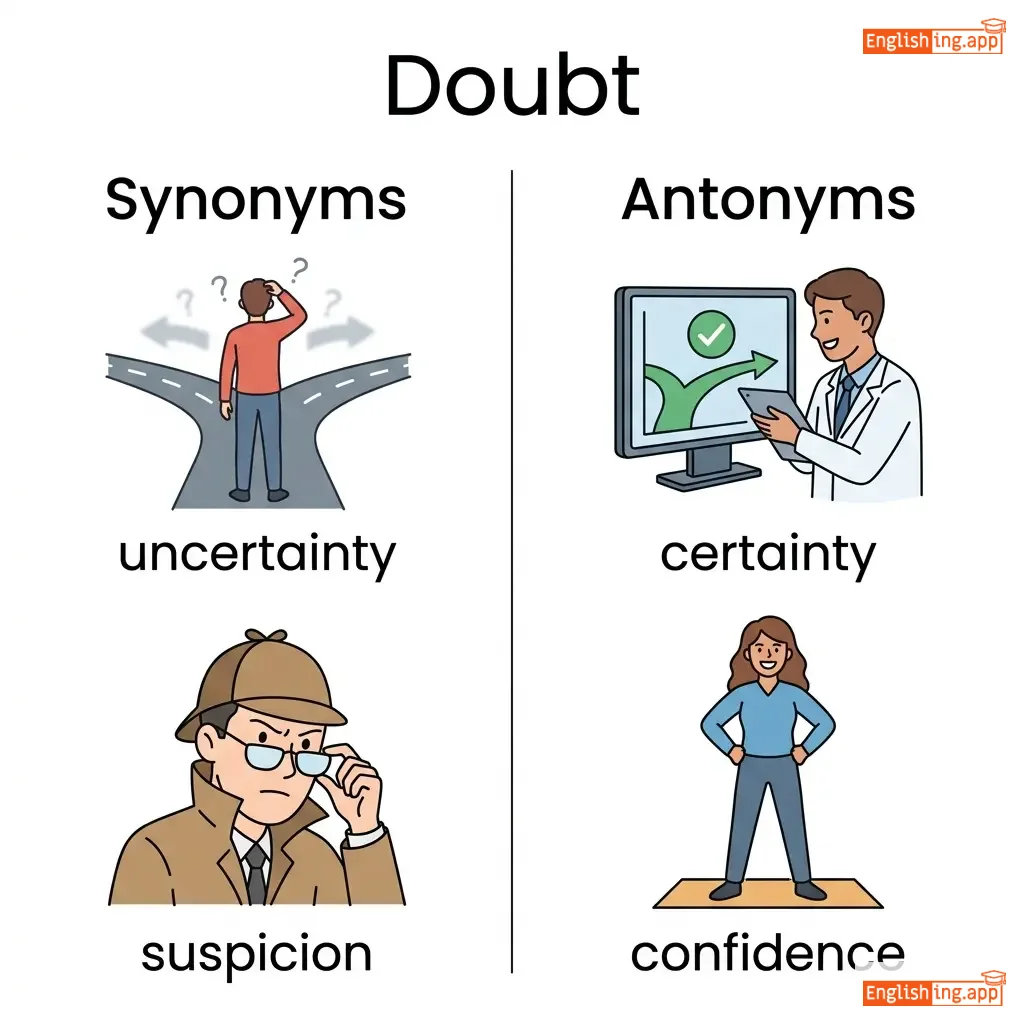
uncertainty, suspicion, disbelief, hesitation
••••••
|
certainty, confidence, assurance
••••••
|
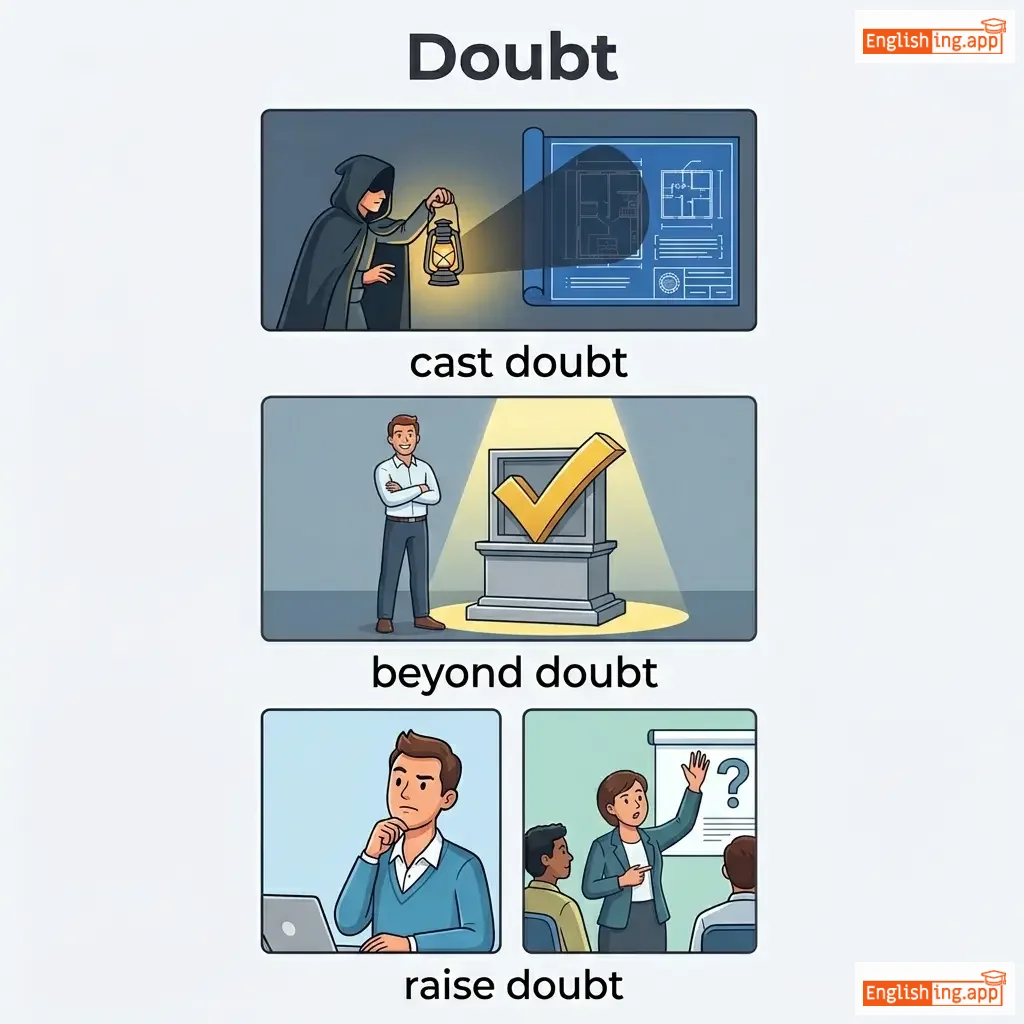
cast doubt, beyond doubt, raise doubt, doubt remains
••••••
|
Doubt 在中文是怀疑,和疑问的意思差不多!
••••••
|
|
#1664
⬇️
|
/daʊn/
adverb
(唐)
••••••
|
- •••••• |
下
xia
••••••
|
- •••••• | - •••••• | - •••••• | - •••••• |
from a higher to a lower position
••••••
|
He walked down the stairs slowly. |
他慢慢地走下楼梯。
Ta man man de zou xia lou ti.
••••••
|
down to earth |
practical and realistic
••••••
|
实用和现实
shi yong he xian shi
••••••
|
below, downward, under, beneath
••••••
|
up, above, over
••••••
|
down the road, down the line, down the street
••••••
|
Down就是下,所有东西都下去!
••••••
|
|
#1665
⬇️
|
/ˌdaʊnˈsteəz/
adverb
(dàu̯nˈstɛəz)
••••••
|
- •••••• |
楼下
lóuxià
••••••
|
- •••••• | - •••••• | - •••••• | - •••••• |
on or to a lower floor of a building
••••••
|
Please go downstairs and wait in the lobby. |
请下楼并在大厅等候。
qǐng xià lóu bìng zài dàtīng děnghòu.
••••••
|
- •••••• | - •••••• | - •••••• |
below, underneath, on the lower floor
••••••
|
upstairs, above, on the upper floor
••••••
|
go downstairs, come downstairs, live downstairs
••••••
|
Downstairs 就是楼下,像是去地下室。
••••••
|
|
#1666
🏙️
|
/ˈdaʊnˌtaʊn/
noun
(dàowntāun)
••••••
|
- •••••• |
市中心
shì zhōngxīn
••••••
|
- •••••• | - •••••• | - •••••• | - •••••• |
the central part of a city
••••••
|
They spent the afternoon shopping downtown. |
他们在市中心购物度过了下午。
Tāmen zài shì zhōngxīn gòuwù dùguòle xiàwǔ.
••••••
|
- •••••• | - •••••• | - •••••• |
city center, metropolis, central district, urban area
••••••
|
suburb, countryside
••••••
|
downtown area, downtown district, downtown core, downtown business
••••••
|
Downtown是城市的心脏,一切都在这里发生!
••••••
|
|
#1667
🥚
|
/ˈdʌzən/
noun
(达兹恩)
••••••
|
- •••••• |
打算
dǎsuàn
••••••
|
- •••••• | - •••••• | - •••••• | - •••••• |
a group of twelve
••••••
|
She bought a dozen eggs from the market. |
她从市场上买了十二个鸡蛋。
Tā cóng shìchǎng shàng mǎile shí'èr gè jīdàn.
••••••
|
cheaper by the dozen |
items bought in bulk are often cheaper
••••••
|
按打算买更便宜
àn dǎsuàn mǎi gèng piányí
••••••
|
twelve, set, group, batch
••••••
|
single, one
••••••
|
a dozen eggs, dozens of people, a dozen times
••••••
|
打算 = 12,一次买12个,便宜!
••••••
|
|
#1668
📝
|
/dræft/
noun/verb
(草稿)
••••••
|
- •••••• |
草稿
caogao
••••••
|
drafted
草稿的
••••••
|
drafted
草稿的
••••••
|
drafts
草稿
••••••
|
drafting
草拟
••••••
|
A preliminary version of a piece of writing; to prepare a preliminary version of a document.
••••••
|
She finished the first draft of her novel.
她完成了小说的第一份草稿。
••••••
|
她完成了小说的第一份草稿。
Ta wanchengle xiaoshuo de diyi fen caogao.
••••••
|
rough draft
初稿
••••••
|
An early, unfinished version of a piece of writing.
••••••
|
初稿
chugao
••••••
|
outline, sketch, plan, blueprint, design
••••••
|
final, complete
••••••
|
draft proposal, draft agreement, first draft, draft law
••••••
|
草稿 = Draft, 就像初步草拟的文档。
••••••
|
|
#1669
🛷
|
/dræɡ/
verb
(拖)
••••••
|
|
拖
tuo
••••••
|
dragged
拖了
••••••
|
dragged
拖了
••••••
|
drags
拖着
••••••
|
dragging
拖动
••••••
|
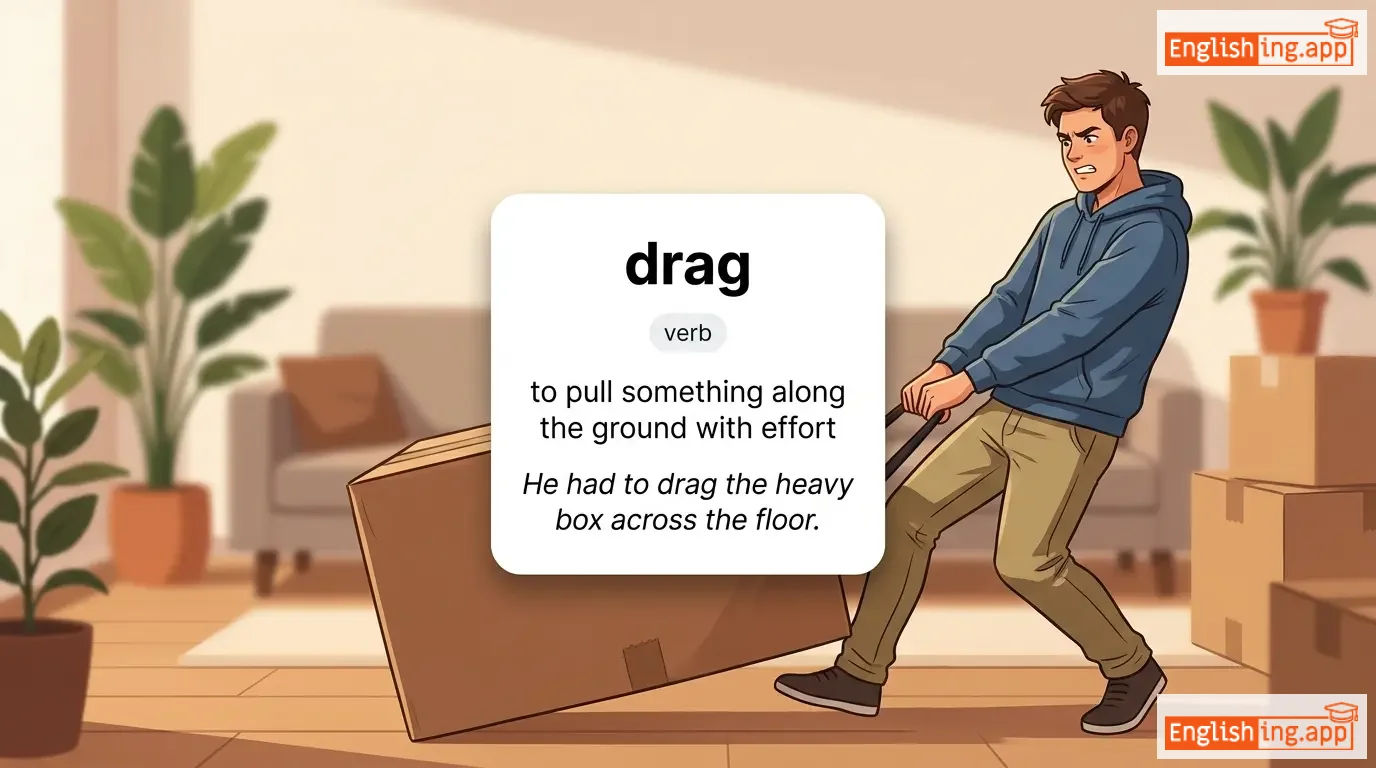
to pull something along the ground with effort
••••••
|
He had to drag the heavy box across the floor.
他不得不把重盒子拖过地板。
••••••
|
他不得不把重盒子拖过地板。
Ta budebu ba zhong hezi tuo guo diban.
••••••
|
drag one's feet
拖延时间
••••••
|
to delay doing something deliberately
••••••
|
拖延做某事
tuoyan zuo mou shi
••••••
|
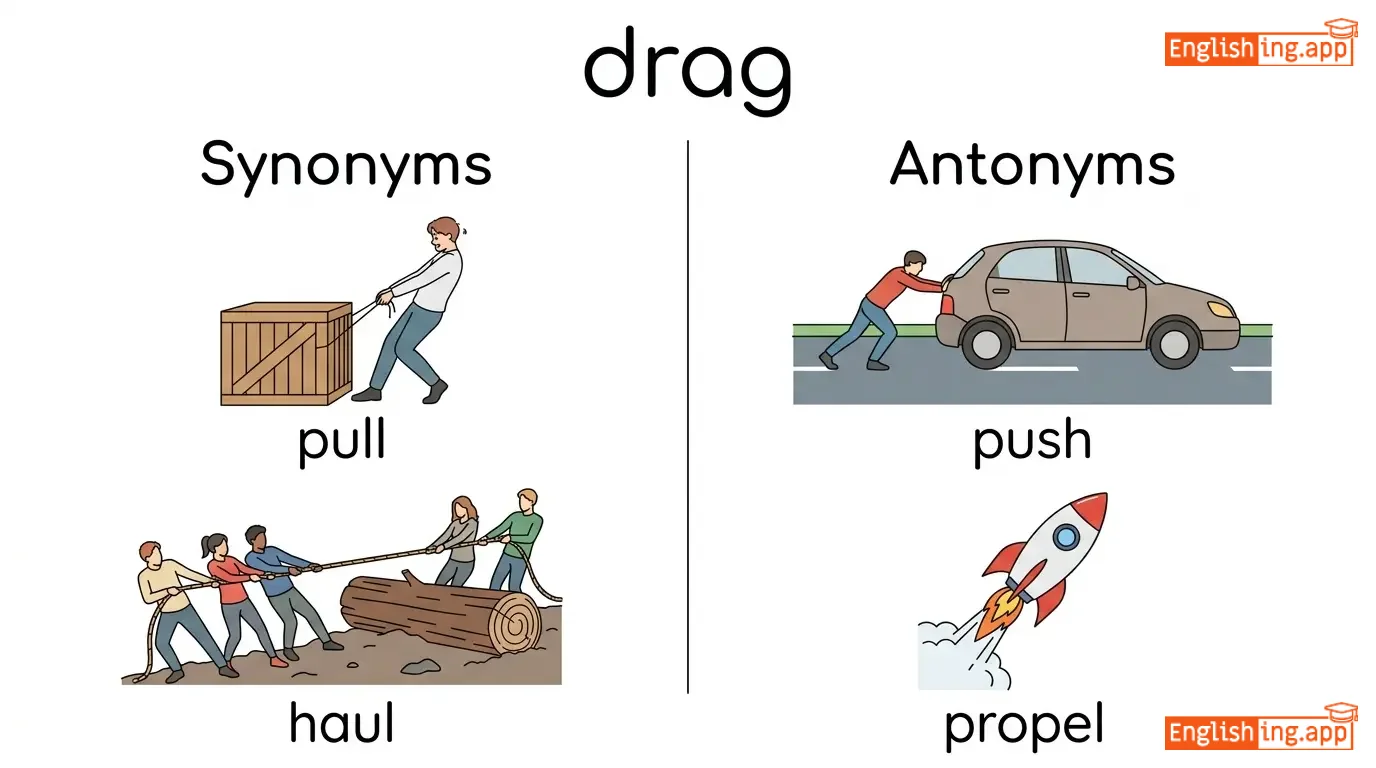
pull, haul, tow, tug
••••••
|
push, propel
••••••
|
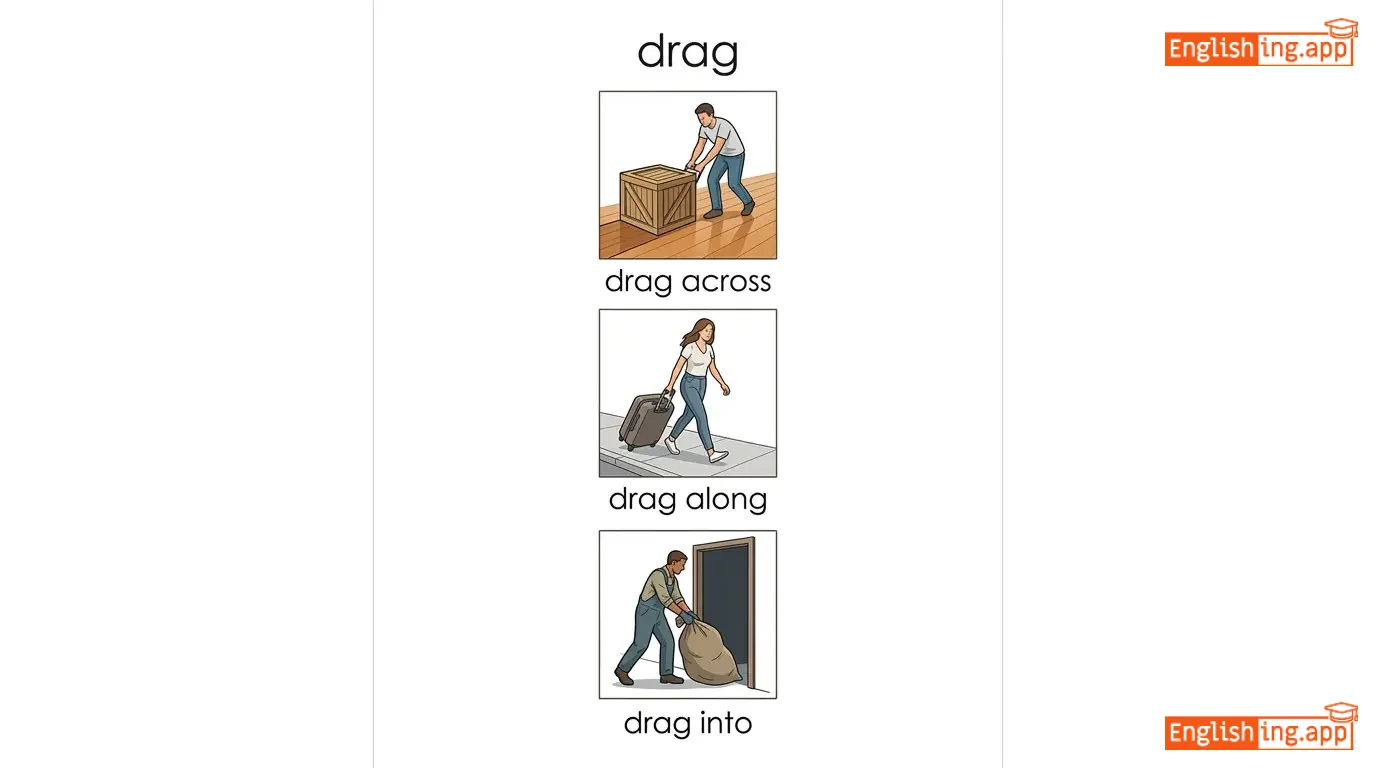
drag across, drag along, drag into, drag down
••••••
|
Drag意味着拖动,拖动会花时间!
••••••
|
|
#1670
🚰
|
/dreɪn/
verb
••••••
|
- •••••• | - •••••• |
drained
••••••
|
drained
••••••
|
drains
••••••
|
draining
••••••
|
to cause liquid to flow away from something; to remove liquid
••••••
|
He drained the pasta before adding the sauce. |
- •••••• |
drain the life out of |
to make someone or something lose energy or enthusiasm
••••••
|
- •••••• |
empty, remove, exhaust, deplete, discharge
••••••
|
fill, flood, retain
••••••
|
drain water, drain pipe, drain energy, drain battery
••••••
|
No •••••• |
|
#1671
🎭
|
/ˈdrɑː.mə/
noun
(戏剧)
••••••
|
- •••••• |
戏剧
xiju
••••••
|
- •••••• | - •••••• | - •••••• | - •••••• |
a play for theater, radio, or television, or an exciting or emotional situation
••••••
|
She loves watching historical drama series. |
她喜欢观看历史剧集。
tā xǐhuān guānkàn lìshǐ jùjí.
••••••
|
make a drama out of nothing |
to exaggerate a situation unnecessarily
••••••
|
无中生有地做戏
wú zhōng shēng yǒu de zuò xì
••••••
|
play, performance, act, show
••••••
|
comedy, farce
••••••
|
drama series, school drama, intense drama, family drama
••••••
|
戏剧在中文里就是强调情感与戏剧性,和英文一样的用法。
••••••
|
|
#1672
🎭
|
/drəˈmætɪk/
adjective
(戏剧的)
••••••
|
- •••••• |
戏剧性的
xijuxing de
••••••
|
- •••••• | - •••••• | - •••••• | - •••••• |
sudden and striking; relating to drama or theater
••••••
|
The play ended with a dramatic twist. |
戏剧以一个戏剧性的转折结束。
Xìjù yǐ yīgè xìjùxìng de zhuǎnzhé jiéshù.
••••••
|
dramatic change |
a sudden and significant alteration
••••••
|
戏剧性的变化
xìjùxìng de biànhuà
••••••
|
theatrical, emotional, intense, striking, sensational
••••••
|
ordinary, calm, unremarkable
••••••
|
dramatic effect, dramatic improvement, dramatic increase, dramatic change
••••••
|
戏剧意味着剧场,戏剧性意味着与剧场相关。
••••••
|
|
#1673
📈
|
/drəˈmætɪkli/
adverb
(德拉马蒂克利)
••••••
|
- •••••• |
戏剧性地
xìjùxìng de
••••••
|
- •••••• | - •••••• | - •••••• | - •••••• |
in a sudden, striking, or exaggerated way
••••••
|
Sales increased dramatically after the campaign. |
在活动后,销售额戏剧性地增长了。
Zài huódòng hòu, xiāoshòu'é xìjùxìng de zēngzhǎngle.
••••••
|
change dramatically |
to alter in a sudden and significant way
••••••
|
戏剧性地变化
xìjùxìng de biànhuà
••••••
|
suddenly, sharply, significantly, strikingly
••••••
|
slightly, gradually
••••••
|
increase dramatically, change dramatically, drop dramatically, improve dramatically
••••••
|
戏剧性地就像在戏剧中发生的突然大变化。
••••••
|
|
#1674
✏️
|
/drɔː/
verb
(drɔ)
••••••
|
- •••••• |
画画 / 拉
huà huà / lā
••••••
|
drew
dru
••••••
|
drawn
dron
••••••
|
draws
droz
••••••
|
drawing
drawing
••••••
|
to produce a picture by making lines and marks on paper; to pull or move something in a particular direction
••••••
|
The child loves to draw pictures of animals.
The child loves to draw pictures of animals.
••••••
|
孩子喜欢画动物的画。
Háizi xǐhuān huà dòngwù de huà.
••••••
|
draw attention
draw attention
••••••
|
To attract someone's notice.
••••••
|
吸引注意
xīyǐn zhùyì
••••••
|
sketch, illustrate, depict, pull, attract
••••••
|
erase, repel, push
••••••
|
draw attention, draw a picture, draw a line, draw a conclusion
••••••
|
画画就像吸引注意力,但用的是笔。
••••••
|
|
#1675
✏️
|
/ˈdrɔːɪŋ/
noun
(海皮尼斯)
••••••
|
- •••••• |
幸福
xìngfú
••••••
|
- •••••• | - •••••• | - •••••• | - •••••• |
a picture or diagram made with a pencil, pen, or crayons rather than paint
••••••
|
She showed me a drawing of her house. |
当她获得奖项时,她无法掩饰自己的幸福。
Dāng tā huòdé jiǎngxiàng shí, tā wúfǎ yǎnshì zìjǐ de xìngfú.
••••••
|
drawing attention |
attracting notice or interest
••••••
|
追求幸福
zhuīqiú xìngfú
••••••
|
sketch, illustration, diagram, doodle
••••••
|
erasing, deletion
••••••
|
make a drawing, pencil drawing, line drawing, drawing skills
••••••
|
幸福是从心中涌现出来的喜悦。
••••••
|
|
#1676
💭
|
/driːm/
noun/verb
(driːm)
••••••
|
|
梦想
mengxiang
••••••
|
dreamed
driːmd
••••••
|
dreamed
driːmd
••••••
|
dreams
drims
••••••
|
dreaming
driːmɪŋ
••••••
|
a series of thoughts, images, or emotions occurring during sleep; a cherished aspiration or goal
••••••
|
She dreamed of becoming a doctor.
她梦想成为一名医生。
••••••
|
她梦想成为一名医生。
Ta mengxiang chengwei yi ming yisheng.
••••••
|
living the dream
活在梦中
••••••
|
enjoying life as if in an ideal situation
••••••
|
活在梦中
Huo zai meng zhong
••••••
|
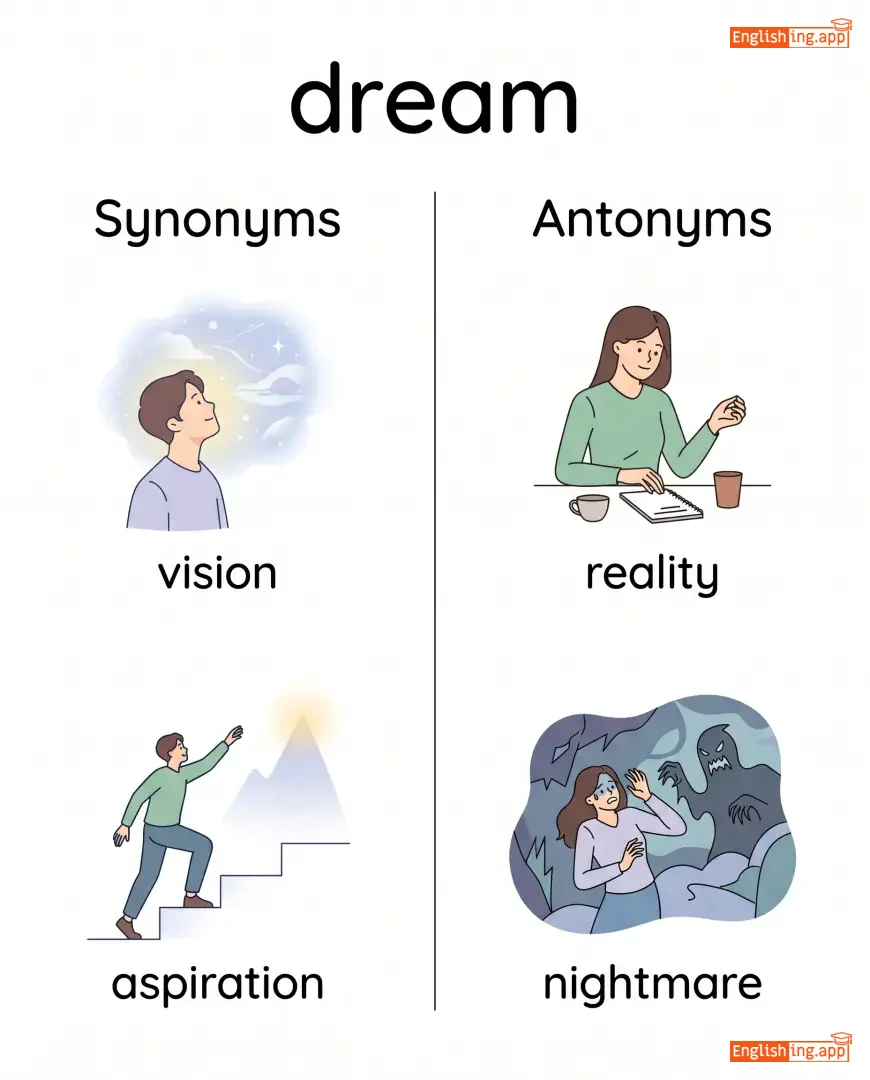
vision, aspiration, goal, fantasy
••••••
|
reality, nightmare
••••••
|
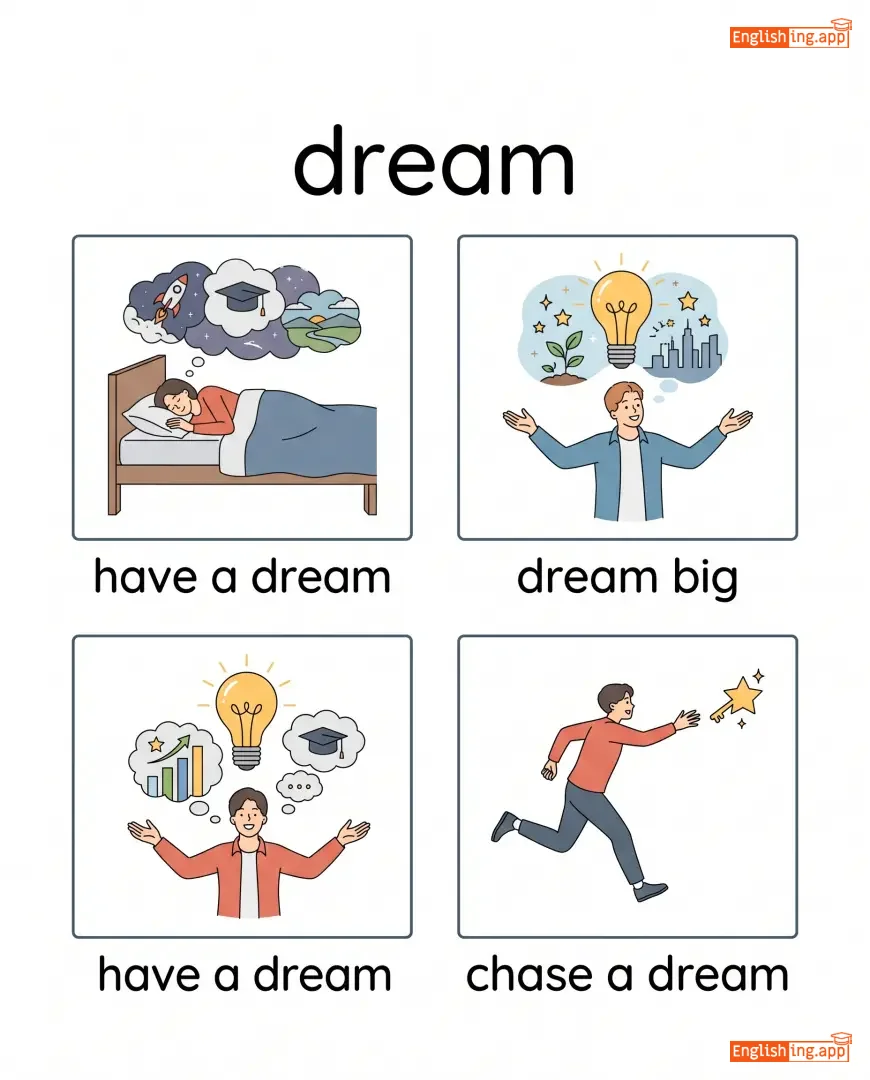
have a dream, dream big, chase a dream, dream come true
••••••
|
梦想是你可以做的任何事情。
••••••
|
|
#1677
👗
|
/drɛs/
noun/verb
(happiness)
••••••
|
- •••••• |
幸福
xìng fú
••••••
|
dressed
••••••
|
dressed
••••••
|
dresses
••••••
|
dressing
••••••
|
a one-piece garment for women or girls; to put on clothes
••••••
|
She wore a beautiful red dress to the party. |
她收到奖项时无法掩饰她的幸福。
Tā shōu dào jiǎng xiàng shí wú fǎ yǎn shì tā de xìng fú.
••••••
|
dressed to kill |
wearing clothes that are intended to impress others
••••••
|
追求幸福
zhuī qiú xìng fú
••••••
|
outfit, attire, garment, clothing
••••••
|
undress, nakedness
••••••
|
wear a dress, long dress, summer dress, dress code
••••••
|
幸福的感觉就是快乐的味道。
••••••
|
|
#1678
👗
|
/ˈdrɛsˌmeɪkər/
noun
(德雷斯梅克尔)
••••••
|
- •••••• |
女裁缝
nv caifeng
••••••
|
- •••••• | - •••••• | - •••••• | - •••••• |
A person who makes or alters women's clothing professionally.
••••••
|
The dressmaker crafted a beautiful gown for the bride.
德雷斯梅克尔为新娘制作了一件漂亮的礼服。
••••••
|
女裁缝为新娘制作了一件漂亮的礼服。
Nv caifeng wei xinniang zhizuo le yi jian piaoliang de lifu
••••••
|
- •••••• | - •••••• | - •••••• |
seamstress, tailor, couturier, garment maker
••••••
|
customer, client
••••••
|
skilled dressmaker, professional dressmaker, custom dressmaker, bridal dressmaker
••••••
|
Dress + 女裁缝 = 专业做衣服的人
••••••
|
|
#1679
⛵
|
/drɪft/
verb
(drift)
••••••
|
- •••••• |
漂移
piaoyi
••••••
|
drifted
drifted
••••••
|
drifted
drifted
••••••
|
drifts
drifts
••••••
|
drifting
drifting
••••••
|
to move slowly, especially by air or water currents
••••••
|
The boat began to drift away from the shore.
船开始从岸边漂移。
••••••
|
船开始从岸边漂移。
Chuan kaishi cong anbian piaoyi.
••••••
|
drift apart
慢慢地分离
••••••
|
to gradually become distant or less friendly
••••••
|
渐行渐远
jianxing jianyuan
••••••
|
float, glide, wander, meander, coast
••••••
|
anchor, stay, remain
••••••
|
drift away, drift apart, drift off, drift slowly
••••••
|
漂移,就像船在水面上慢慢远去。
••••••
|
|
#1680
🥤
|
/drɪŋk/
verb, noun
(dɹɪŋk)
••••••
|
|
喝 / 饮料
he / yinliao
••••••
|
drank
dræŋk
••••••
|
drunk
drʌŋk
••••••
|
drinks
drɪŋks
••••••
|
drinking
drɪŋkɪŋ
••••••
|
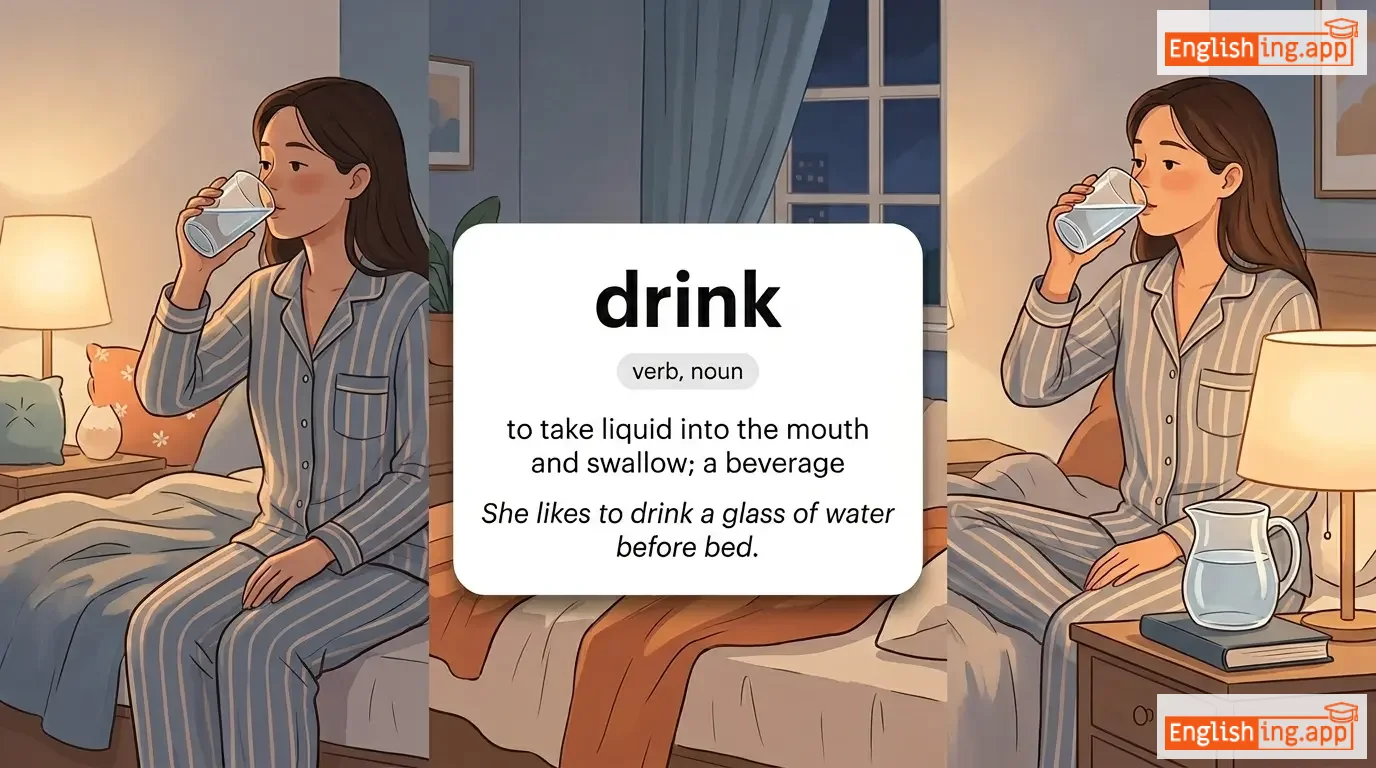
to take liquid into the mouth and swallow; a beverage
••••••
|
She likes to drink a glass of water before bed.
她喜欢在睡觉前喝一杯水。
••••••
|
她喜欢在睡觉前喝一杯水。
Ta xihuan zai shuijiao qian he yi bei shui.
••••••
|
drink like a fish
像鱼一样喝
••••••
|
to drink a lot of alcohol
••••••
|
像鱼一样喝
Xiang yu yiyang he
••••••
|
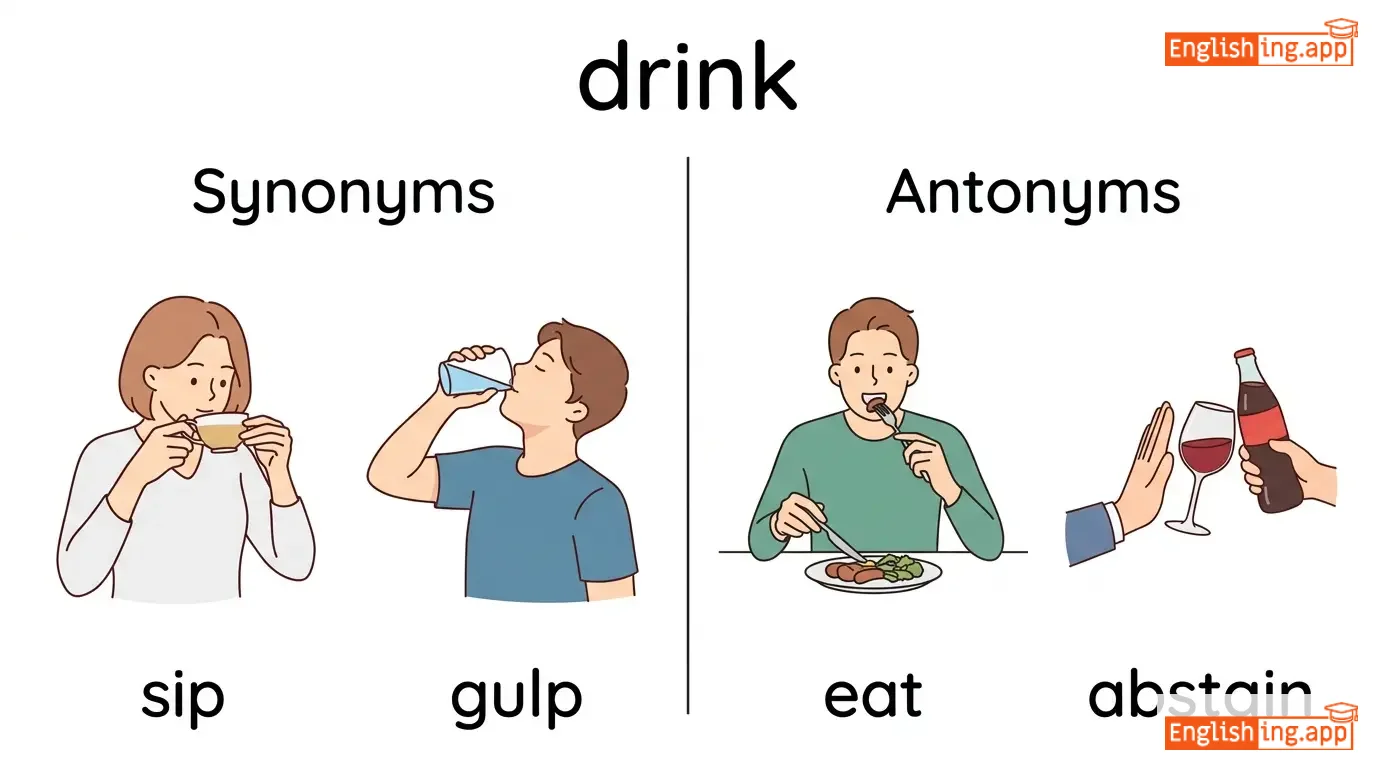
sip, gulp, swallow, beverage, refreshment
••••••
|
eat, abstain
••••••
|
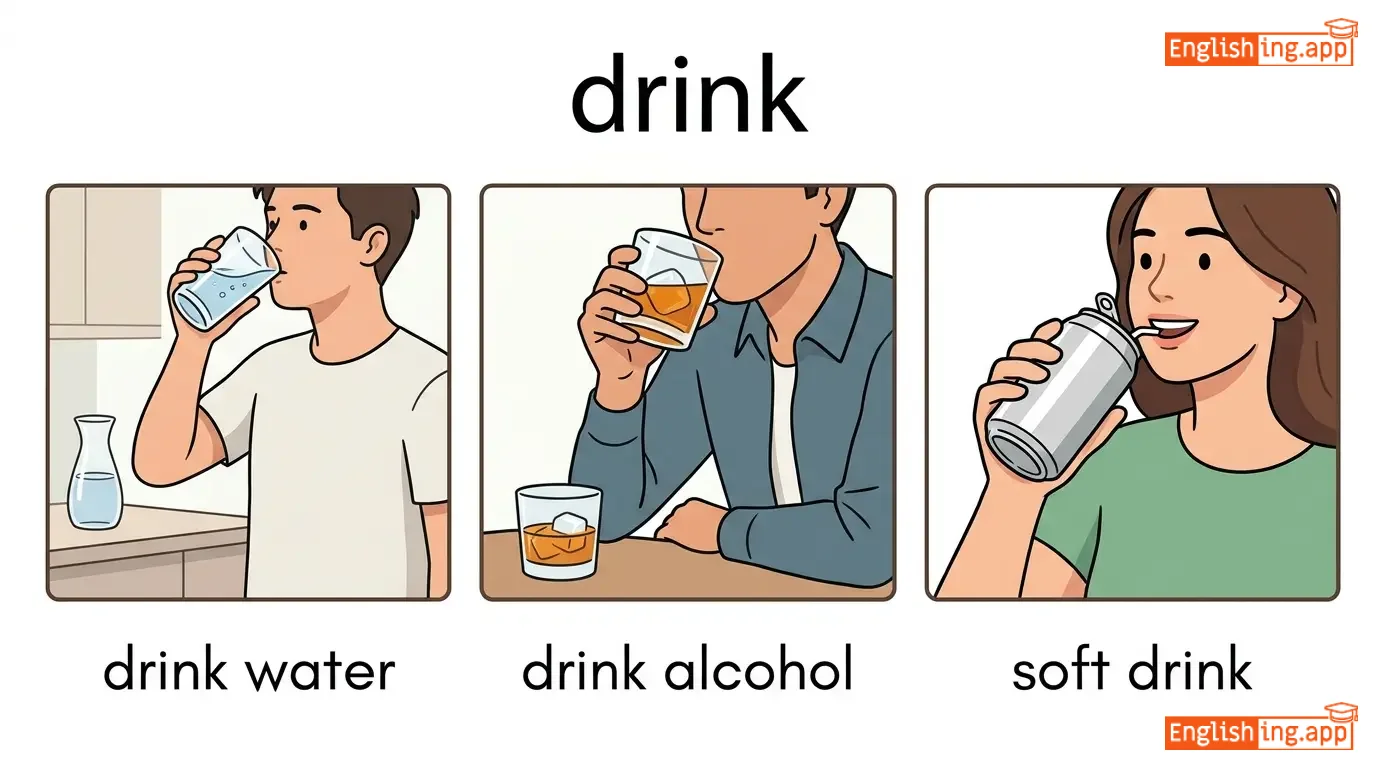
drink water, drink alcohol, soft drink, energy drink
••••••
|
喝意味着喝液体,就像我们喝饮料。
••••••
|
|
#1681
🚗
|
/draɪv/
verb, noun
(dɹaɪv)
••••••
|
|
驾驶
jiashi
••••••
|
drove
dɹoʊv
••••••
|
driven
dɹɪvən
••••••
|
drives
dɹaɪvz
••••••
|
driving
dɹaɪvɪŋ
••••••
|
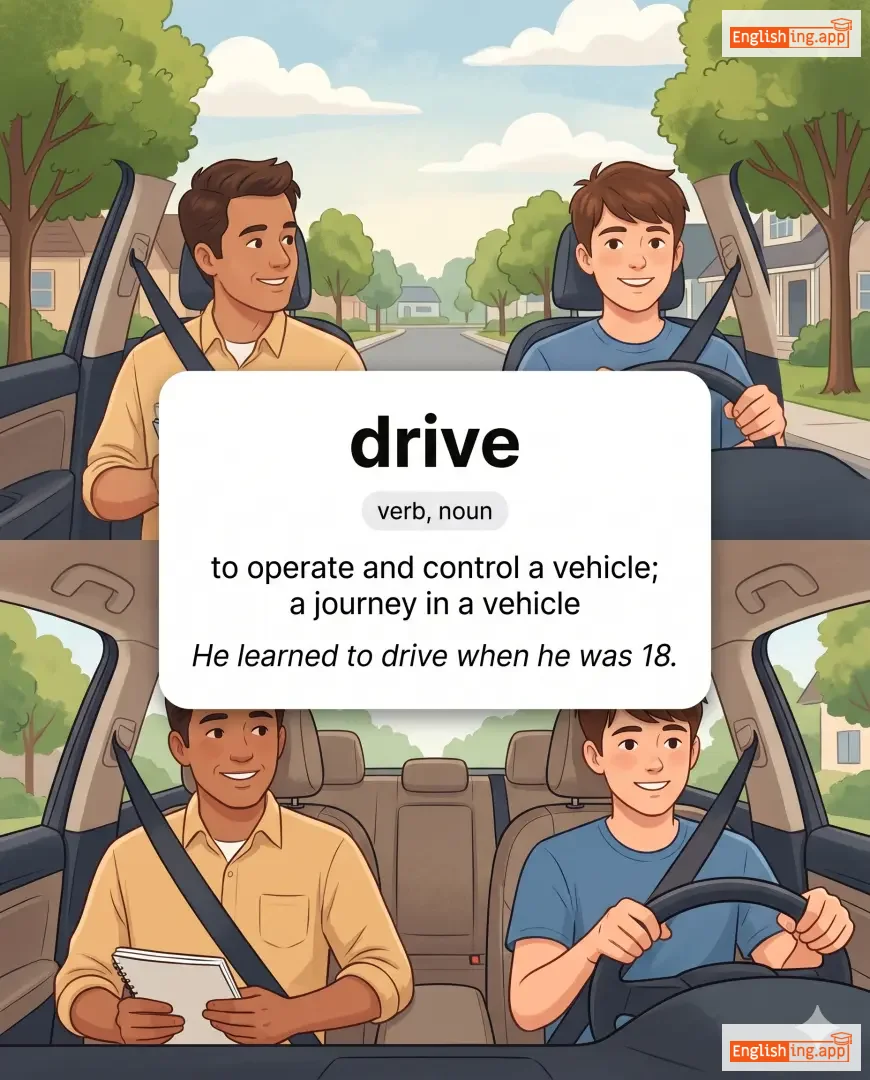
to operate and control a vehicle; a journey in a vehicle
••••••
|
He learned to drive when he was 18.
他18岁时学会了开车。
••••••
|
他18岁时学会了开车。
Ta 18 sui shi xuehui le kaiche.
••••••
|
drive someone crazy
让某人发疯
••••••
|
to annoy or irritate someone a lot
••••••
|
让某人发疯
rang mou ren fafeng
••••••
|
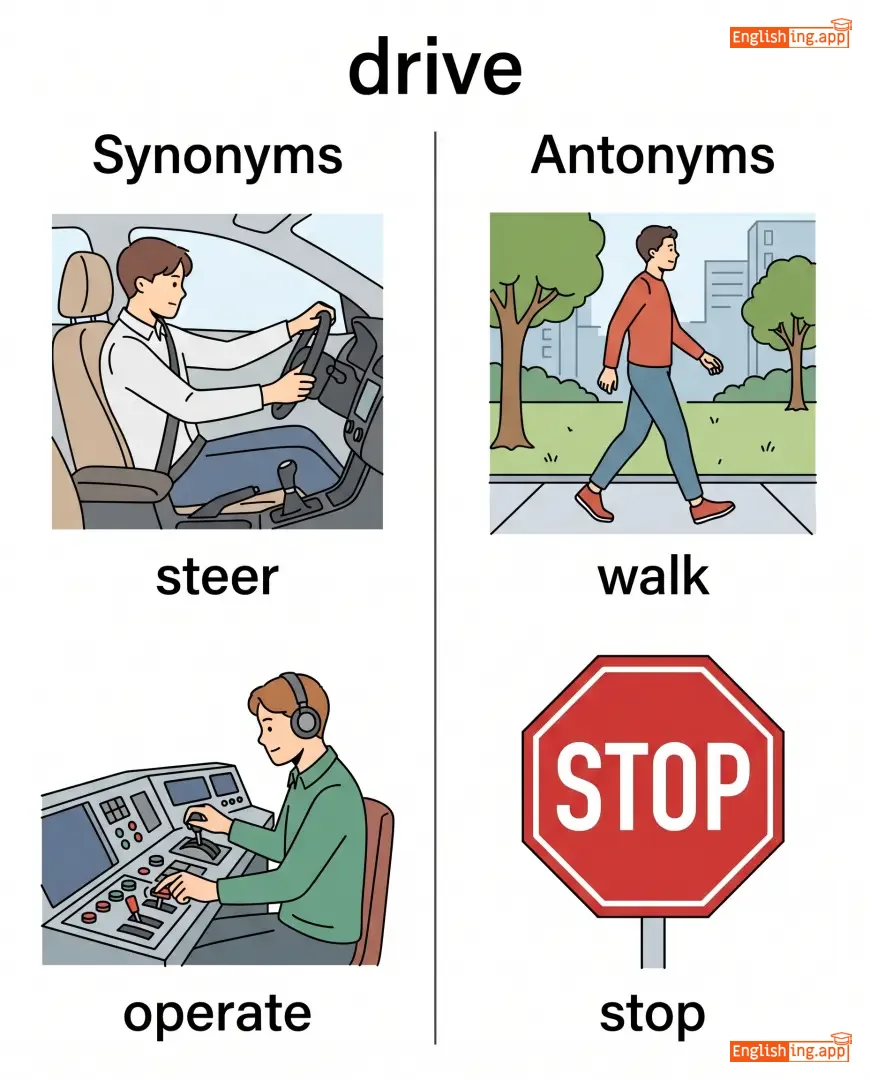
steer, operate, ride, control, propel
••••••
|
walk, stop
••••••
|
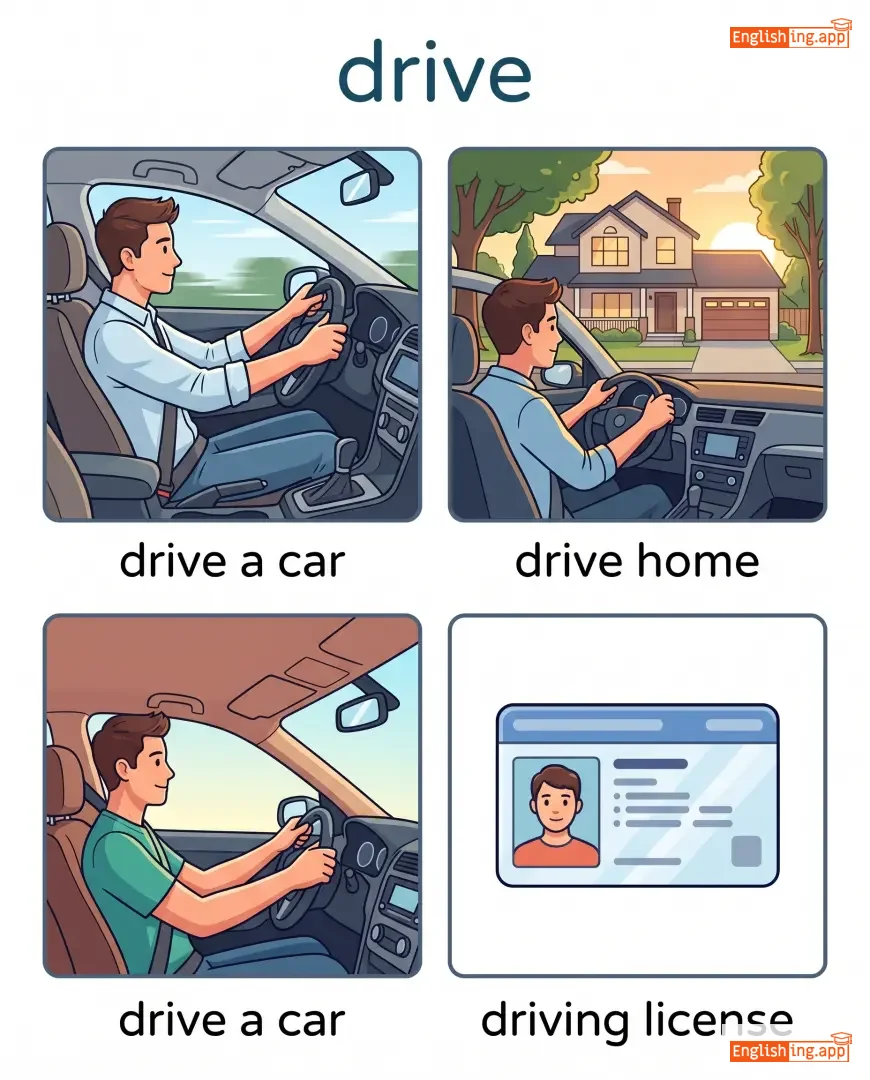
drive a car, drive home, driving license, drive safely
••••••
|
Drive意味着驾驶,就像你开车一样。
••••••
|
|
#1682
🚗
|
/ˈdraɪ.vər/
noun
(dɹaɪvə)
••••••
|
- •••••• |
司机
sī jī
••••••
|
- •••••• | - •••••• | - •••••• | - •••••• |
a person who operates a motor vehicle
••••••
|
The taxi driver knew all the shortcuts through the busy city. |
出租车司机知道通过繁忙城市的所有捷径。
chū zū chē sī jī zhī dào tōng guò fán máng chéng shì de suǒ yǒu jié jìng.
••••••
|
- •••••• | - •••••• | - •••••• |
chauffeur, operator, motorist, pilot
••••••
|
passenger, pedestrian, walker
••••••
|
taxi driver, bus driver, truck driver, professional driver, experienced driver
••••••
|
司机带着你通过城市的捷径。
••••••
|
|
#1683
💧
|
/drɒp/
verb, noun
(掉)
••••••
|
- •••••• |
掉 / 水滴
diao / shuidi
••••••
|
dropped
掉了
••••••
|
dropped
掉了
••••••
|
drops
掉
••••••
|
dropping
掉落
••••••
|
to let something fall; a small quantity of liquid
••••••
|
Be careful not to drop your phone.
小心不要把手机掉了。
••••••
|
小心不要把手机掉了。
Xiao xin bu yao ba shouji diao le.
••••••
|
drop the ball
掉球
••••••
|
to make a mistake or fail to do something
••••••
|
犯错
fan cuo
••••••
|
fall, release, decline, drip, descend
••••••
|
lift, raise, pick up
••••••
|
drop out, drop by, drop off, raindrop
••••••
|
Drop意味着掉落,就像水滴=掉水。
••••••
|
|
#1684
🌵
|
/draʊt/
noun
(drau)
••••••
|
|
干旱
ganhan
••••••
|
- •••••• | - •••••• | - •••••• | - •••••• |
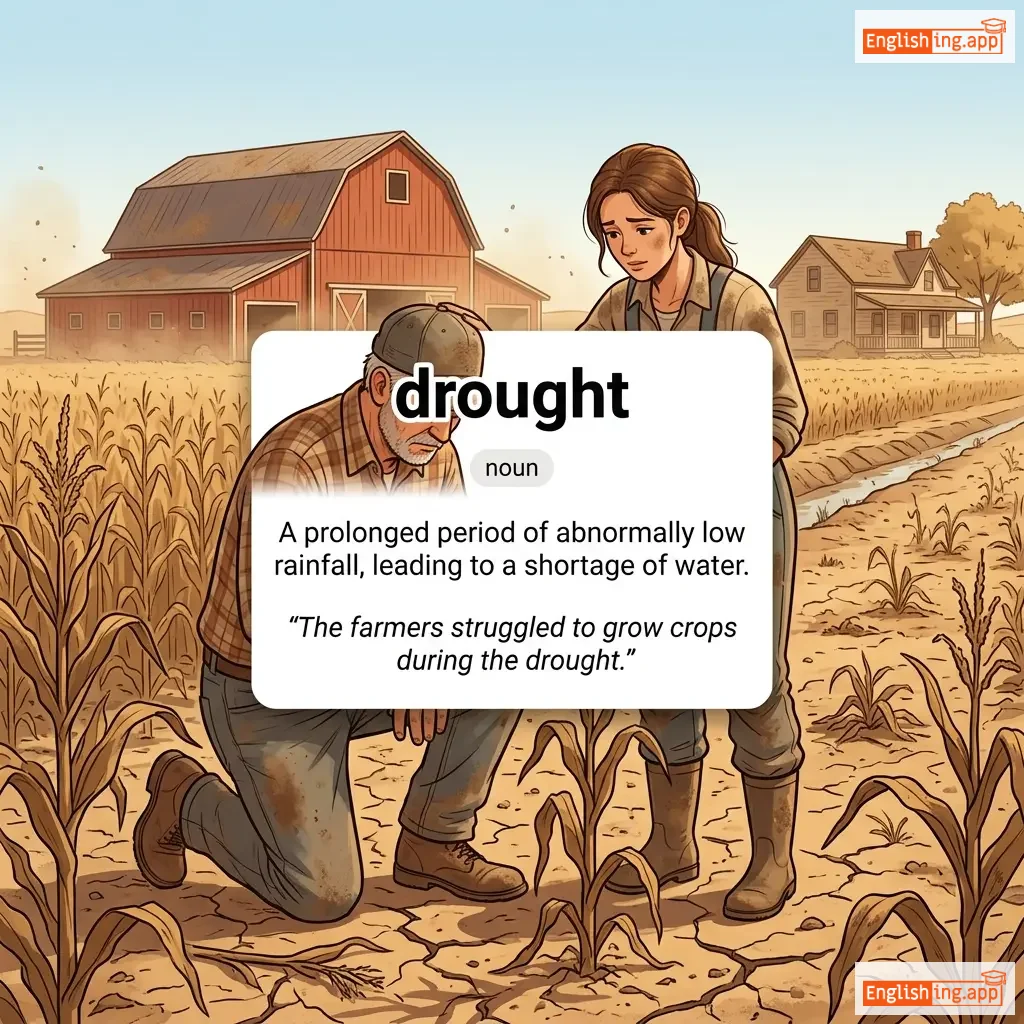
A prolonged period of abnormally low rainfall, leading to a shortage of water.
••••••
|
The farmers struggled to grow crops during the drought. |
农民在干旱期间努力种植作物。
Nongmin zai ganhan qijian nuli zhongzhi zuowu.
••••••
|
in a drought |
Experiencing a lack of something, often used metaphorically.
••••••
|
在干旱中
Zai ganhan zhong
••••••
|
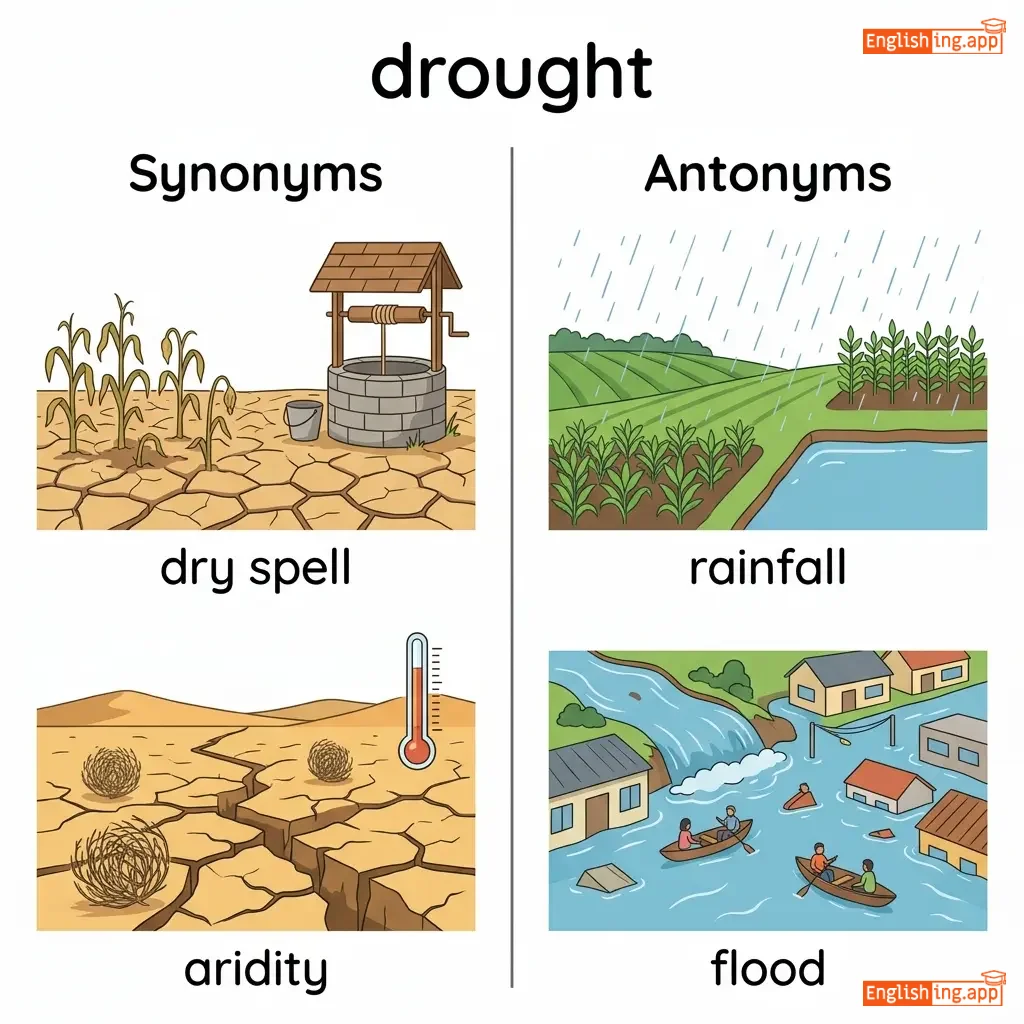
dry spell, aridity, lack of rain, scarcity, shortage
••••••
|
rainfall, flood, abundance
••••••
|
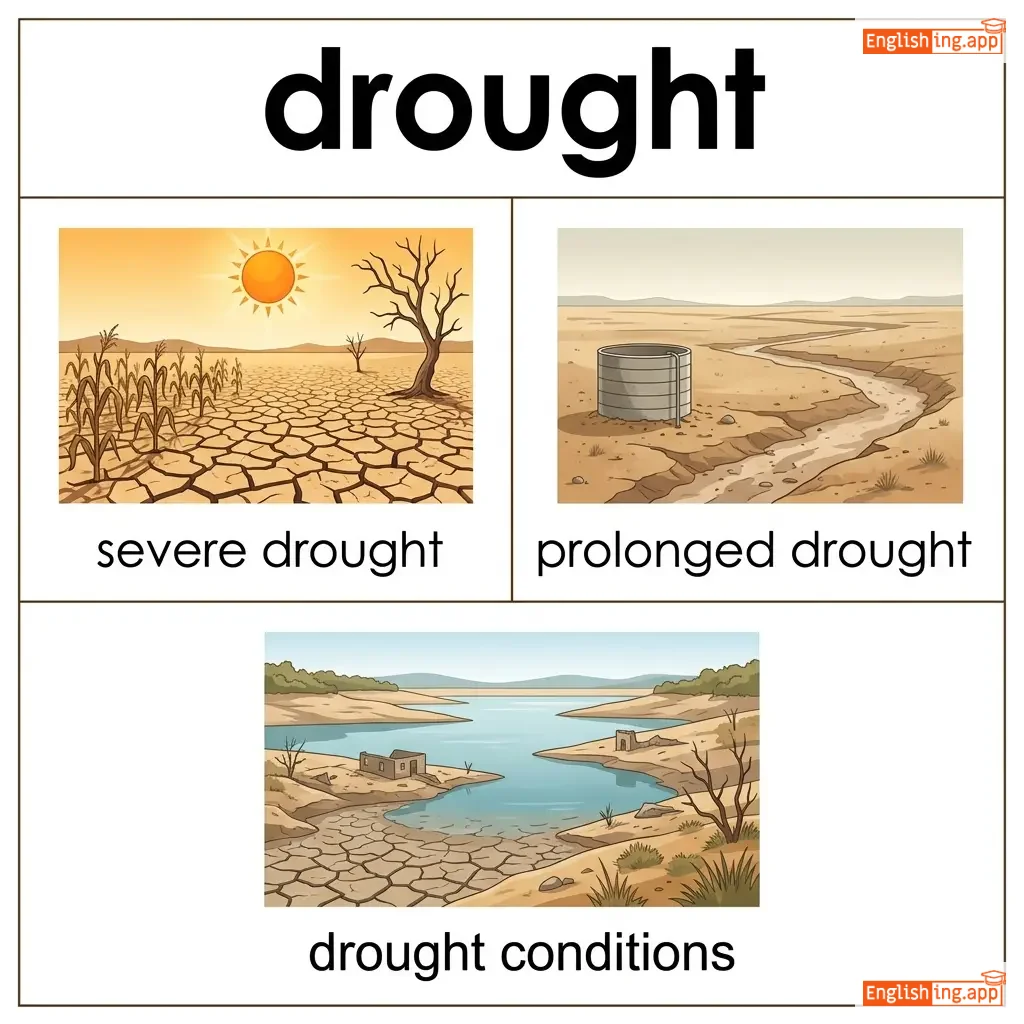
severe drought, prolonged drought, drought conditions, drought relief
••••••
|
Drought意味着干旱 – 记住‘干旱没有水’。
••••••
|
|
#1685
🌊
|
/draʊn/
verb
(drāwn)
••••••
|
- •••••• |
溺水
nìshuǐ
••••••
|
drowned
drāwnd
••••••
|
drowned
drāwnd
••••••
|
drowns
drāwns
••••••
|
drowning
drāwɪng
••••••
|
to die or cause to die by being submerged in and inhaling water
••••••
|
He nearly drowned while swimming in the river.
他在河里游泳时差点淹死。
••••••
|
他在河里游泳时差点淹死。
Tā zài hé lǐ yóuyǒng shí chàdiǎn yān sǐ.
••••••
|
drown out
淹没
••••••
|
to make a sound so loud that it prevents other sounds from being heard
••••••
|
淹没
yānmò
••••••
|
sink, submerge, suffocate, engulf
••••••
|
float, survive, resurface
••••••
|
drown in debt, drown in sorrow, nearly drown, drown out
••••••
|
Drown 意味着溺水,请小心游泳!
••••••
|
|
#1686
💊
|
/drʌɡ/
noun
(drog)
••••••
|
- •••••• |
毒品
dúpǐn
••••••
|
- •••••• | - •••••• | - •••••• | - •••••• |
a substance used as a medicine or an illegal addictive substance
••••••
|
The doctor prescribed a new drug for the illness. |
医生为这种疾病开了新药。
Yīshēng wèi zhè zhǒng bìngzhèng kāi le xīn yào.
••••••
|
war on drugs |
efforts to stop illegal drug use and trade
••••••
|
毒品战争
dúpǐn zhànzhēng
••••••
|
medicine, medication, narcotic, substance
••••••
|
cure, remedy
••••••
|
drug abuse, drug dealer, prescription drug, drug addiction
••••••
|
Drug 意味着药物或毒品,如 drugstore (药店)。
••••••
|
|
#1687
💊
|
/ˈdrʌɡˌstɔːr/
noun
(德拉格斯托尔)
••••••
|
- •••••• |
药店
yaodian
••••••
|
- •••••• | - •••••• | - •••••• | - •••••• |
A retail store that sells medicines, health-related products, and sometimes cosmetics or snacks.
••••••
|
I stopped by the drugstore to buy some cold medicine.
我去药店买感冒药。
••••••
|
我去药店买感冒药。
Wo qu yaodian mai ganmao yao.
••••••
|
- •••••• | - •••••• | - •••••• |
pharmacy, chemist, apothecary, drug shop
••••••
|
none, unrelated store
••••••
|
local drugstore, visit the drugstore, drugstore chain, drugstore aisle
••••••
|
药店 = place to buy medicine
••••••
|
|
#1688
🥁
|
/drʌm/
noun
(鼓)
••••••
|
- •••••• |
鼓或桶
gǔ huò tǒng
••••••
|
- •••••• | - •••••• | - •••••• | - •••••• |
a musical instrument beaten with sticks or hands; also a cylindrical container
••••••
|
The drummer hit the drum loudly during the concert.
鼓手在音乐会中大声敲击鼓。
••••••
|
鼓手在音乐会中大声敲击鼓。
Gǔshǒu zài yīnyuè huì zhōng dà shēng qiāojī gǔ.
••••••
|
beat the drum for
为……敲鼓
••••••
|
to publicly support or promote something
••••••
|
公开支持
gōngkāi zhīchí
••••••
|
percussion, barrel, container, cylinder
••••••
|
silence, stillness
••••••
|
drum kit, drum beats, steel drum, oil drum, bass drum
••••••
|
像鼓声一样,支持的声音也应该响亮!
••••••
|
|
#1689
🍺
|
/drʌŋk/
adjective
(drʌŋk)
••••••
|
- •••••• |
醉酒
zuìjiǔ
••••••
|
- •••••• | - •••••• | - •••••• | - •••••• |
affected by alcohol to the point of losing control of one's faculties or behavior
••••••
|
He was too drunk to walk straight. |
他喝醉了,无法走直路。
Tā hē zuì le, wúfǎ zǒu zhí lù.
••••••
|
dead drunk |
extremely intoxicated
••••••
|
酩酊大醉
mǐngdǐng dàzuì
••••••
|
intoxicated, tipsy, inebriated, wasted, buzzed
••••••
|
sober, abstinent
••••••
|
get drunk, dead drunk, completely drunk, drunk driving
••••••
|
醉酒等于drunk — 喝得多就会醉酒!
••••••
|
|
#1690
☀️
|
/draɪ/
verb
(drai)
••••••
|
|
干燥
gānzào
••••••
|
dried
draid
••••••
|
dried
draid
••••••
|
dries
drais
••••••
|
drying
drein
••••••
|
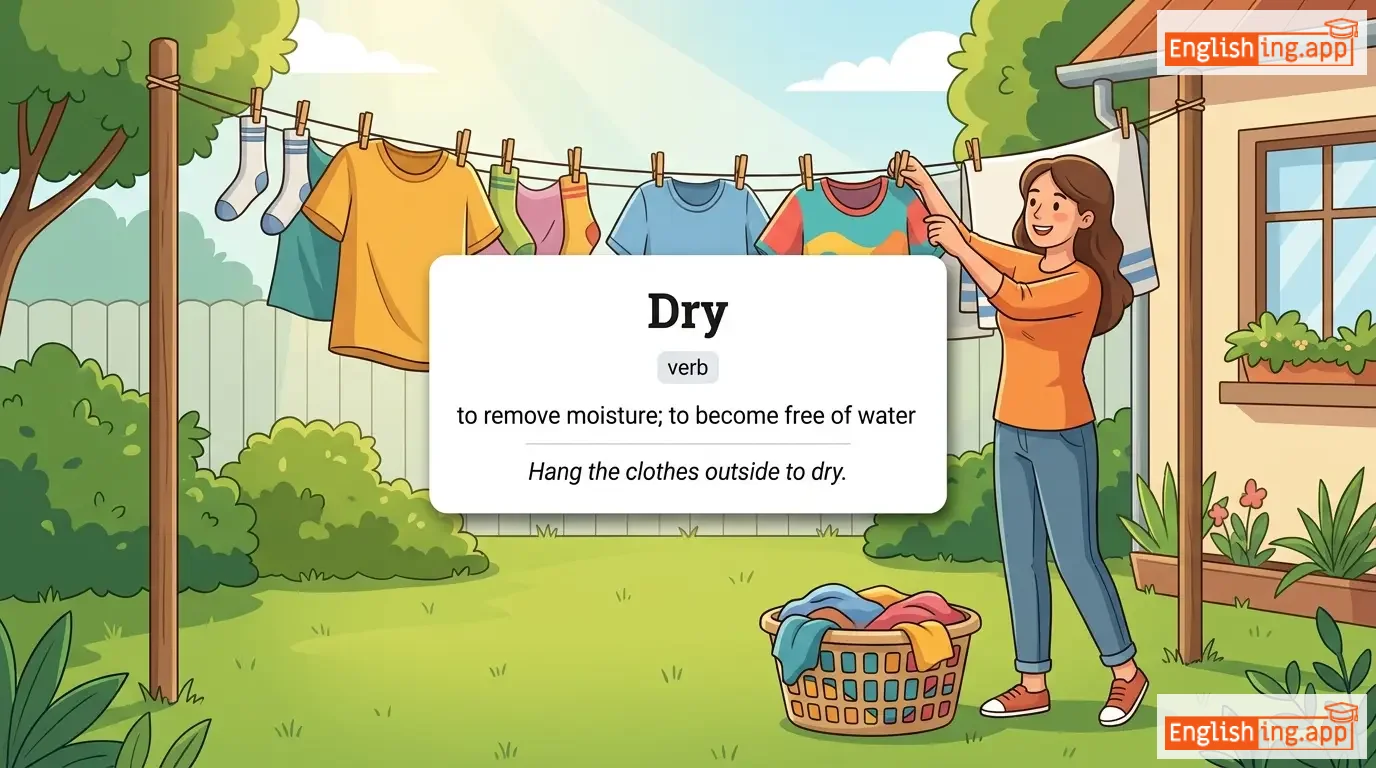
to remove moisture; to become free of water
••••••
|
Hang the clothes outside to dry.
把衣服挂在外面晾干。
••••••
|
把衣服挂在外面晾干。
Bǎ yīfú guà zài wàimiàn liànggān.
••••••
|
- •••••• | - •••••• | - •••••• |
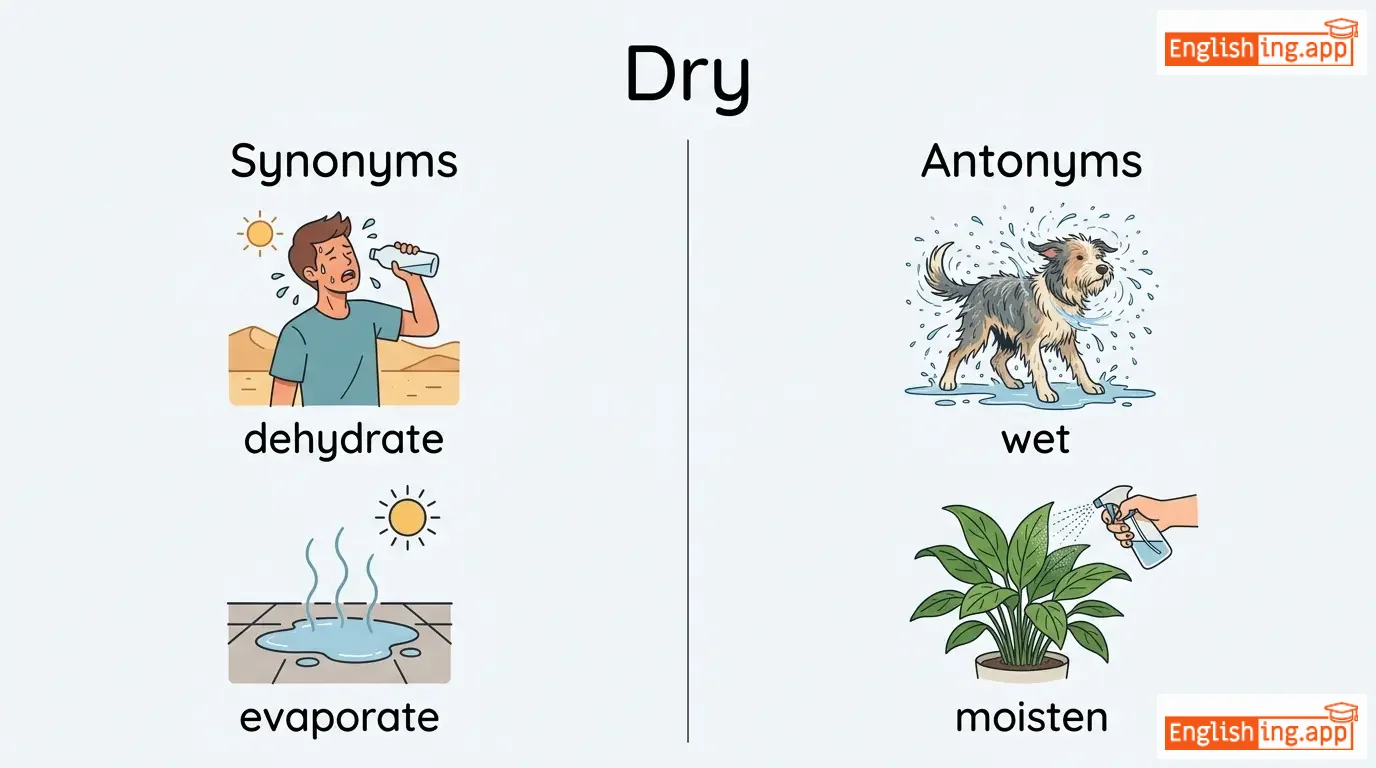
dehydrate, evaporate, drain, wither
••••••
|
wet, moisten, dampen, soak
••••••
|
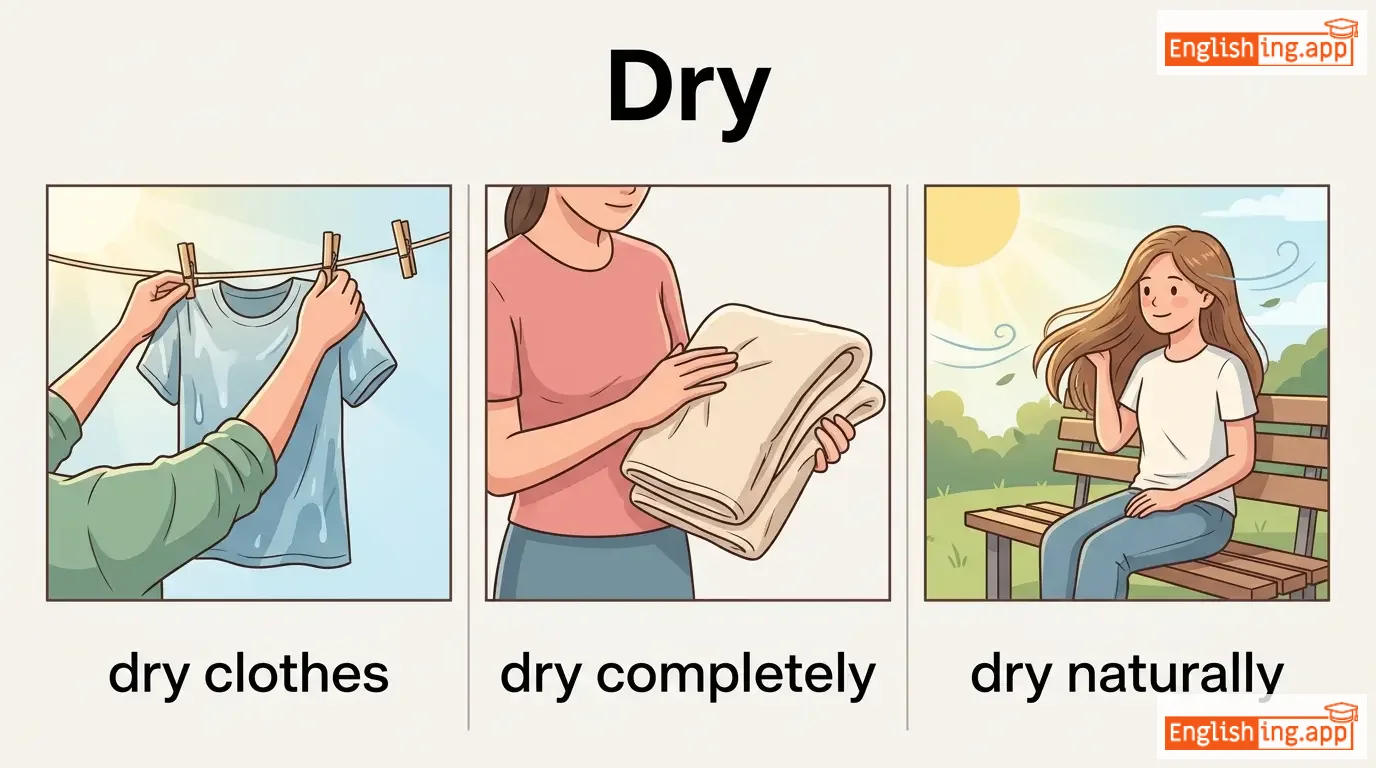
dry clothes, dry completely, dry naturally, dry thoroughly, dry in the sun
••••••
|
In Chinese, '干燥' means dry, representing the removal of moisture.
••••••
|
|
#1691
👥
|
/ˈduː.əl/
adjective
(双重)
••••••
|
- •••••• |
双重的
shuāngchóng de
••••••
|
- •••••• | - •••••• | - •••••• | - •••••• |
having two parts or consisting of two elements; double
••••••
|
She has dual citizenship of both countries. |
她拥有两个国家的双重国籍。
Tā yǒngyǒu liǎng gè guójiā de shuāngchóng guójí.
••••••
|
- •••••• | - •••••• | - •••••• |
double, twin, paired, binary
••••••
|
single, sole, individual, unique
••••••
|
dual purpose, dual citizenship, dual nature
••••••
|
双重意味着两个部分,像 dual
••••••
|
|
#1692
🎬
|
/dʌb/
verb
(dub)
••••••
|
- •••••• |
配音
peiyin
••••••
|
dubbed
dabe
••••••
|
dubbed
dabe
••••••
|
dubs
dabs
••••••
|
dubbing
dubbing
••••••
|
to give a name or label to something; to add a soundtrack to a film or recording
••••••
|
The movie was dubbed into several languages for international release.
这部电影为国际发行而配音成多种语言。
••••••
|
这部电影为国际发行而配音成多种语言。
Zhe bu dian ying wei guoji faxiang er peiyin cheng duozhong yuyan.
••••••
|
- •••••• | - •••••• | - •••••• |
name, label, dub over, voice over
••••••
|
misname, unlabel
••••••
|
dub a movie, dub in a voice, dub over a film
••••••
|
想象为电影配音!
••••••
|
|
#1693
📅
|
/djuː/
adjective
(diu)
••••••
|
- •••••• |
到期 / 应付
daoqi / yingfu
••••••
|
- •••••• | - •••••• | - •••••• | - •••••• |
expected at a certain time or required by a certain date
••••••
|
The rent is due on the first of every month. |
租金应在每个月的第一天到期。
Zujin ying zai mei ge yue de di yi tian daoqi.
••••••
|
due date |
the final day something must be completed or paid
••••••
|
到期日
daoqi ri
••••••
|
expected, scheduled, payable, owed, anticipated
••••••
|
unexpected, optional, unnecessary
••••••
|
due date, due payment, due process, due respect
••••••
|
‘Due’就是‘到期’,记住在到期日之前支付租金!
••••••
|
|
#1694
😴
|
/dʌl/
adjective
(dal)
••••••
|
- •••••• |
无聊
wúliáo
••••••
|
- •••••• | - •••••• | - •••••• | - •••••• |
lacking brightness, vividness, or interest; boring or not sharp
••••••
|
The lecture was so dull that many students fell asleep. |
这场讲座太无聊,以至于许多学生睡着了。
Zhè chǎng jiǎngzuò tài wúliáo, yǐzhì yú xǔduō xuéshēng shuìzháole.
••••••
|
dull as dishwater |
extremely boring
••••••
|
无聊如洗碗水
wúliáo rú xǐwǎn shuǐ
••••••
|
boring, tedious, lifeless, monotonous, uninteresting
••••••
|
exciting, lively, interesting
••••••
|
dull knife, dull sound, dull moment, dull pain, dull color
••••••
|
Dull就像洗碗水一样无聊。
••••••
|
|
#1695
🤐
|
/dʌm/
adjective
(dāng)
••••••
|
- •••••• |
愚蠢 / 哑
yúchǔn / yǎ
••••••
|
- •••••• | - •••••• | - •••••• | - •••••• |
lacking intelligence or unable to speak
••••••
|
He made a dumb mistake during the exam.
他在考试中犯了个愚蠢的错误。
••••••
|
他在考试中犯了个愚蠢的错误。
Tā zài kǎoshì zhōng fànle gè yúchǔn de cuòwù.
••••••
|
strike dumb
击中愚蠢
••••••
|
to make someone speechless with shock or amazement
••••••
|
让人哑口无言
ràng rén yǎ kǒu wú yán
••••••
|
stupid, foolish, silly, mute
••••••
|
smart, intelligent
••••••
|
dumb mistake, dumb idea, dumb luck, dumb silence
••••••
|
Dumb = 愚蠢; 考试中犯的愚蠢错误意味着一个大错误。
••••••
|
|
#1696
🗑️
|
/dʌmp/
verb
(丹普)
••••••
|
- •••••• |
草率地丢弃或放下某物
caolu di diuqi huo fangxia mouwu
••••••
|
dumped
丹普德
••••••
|
dumped
丹普德
••••••
|
dumps
丹普斯
••••••
|
dumping
丹普英
••••••
|
to drop or dispose of something carelessly; to end a relationship suddenly
••••••
|
He dumped all the trash into the bin.
他把所有的垃圾都扔进了垃圾桶。
••••••
|
他把所有的垃圾都扔进了垃圾桶。
Ta ba suoyou de laji dou reng jin le laji tong.
••••••
|
dump someone
甩掉某人
••••••
|
to end a romantic relationship with someone
••••••
|
甩掉某人
Shuaidiao mouren
••••••
|
discard, throw, drop, abandon, release
••••••
|
keep, hold, retain
••••••
|
dump site, garbage dump, dump truck, dump waste, dump someone
••••••
|
Dump意味着扔掉——当某人甩了你,你说:'他把我dump了!'
••••••
|
|
#1697
🎶
|
/ˈdjuːəʊ/
noun
(双人组合)
••••••
|
- •••••• |
二重奏
èrchóngzòu
••••••
|
- •••••• | - •••••• | - •••••• | - •••••• |
a pair of people or things, especially in music or entertainment
••••••
|
The musical duo performed their latest hit at the concert. |
这个音乐二重奏在音乐会上演奏了他们的最新热门曲。
Zhège yīnyuè èrchóngzòu zài yīnyuè huì shàng yǎnzòu le tāmen de zuìxīn rèmén qū.
••••••
|
- •••••• | - •••••• | - •••••• |
pair, couple, team, twosome
••••••
|
solo, individual
••••••
|
musical duo, comedy duo, famous duo
••••••
|
A duo is like two musicians harmonizing together!
••••••
|
Vocabulary Quiz
Test your vocabulary by matching words with their translations or meanings.
Login to take the quiz
Comments (0)
Share your thoughts and join the discussion.
Join the discussion by logging in
Login to CommentNo comments yet
Be the first to share your thoughts!