




Swipe left or right, or use the buttons. Tap image to zoom.
例句翻译
单词
Lesson 47Lesson 47 - 遮罩切换
|
表情符号
|
单词 | Images | 翻译 | 过去时 | 过去分词 | 第三人称单数 | 动名词 | 含义 | 例句 | 例句翻译 | 示例表达 | 示例表达含义 | 示例表达翻译 | 同义词 | 反义词 | 搭配词 | 助记符 |
|---|---|---|---|---|---|---|---|---|---|---|---|---|---|---|---|---|---|
|
#2229
😡
|
/ˈfjʊəriəs/
adjective
(fyu-ree-us)
••••••
|
- •••••• |
愤怒
fen nu
••••••
|
- •••••• | - •••••• | - •••••• | - •••••• |
Extremely angry.
••••••
|
She was furious when she heard the bad news. |
她听到坏消息时非常愤怒。
Ta tingdao huai xiaoxi shi feichang fennu.
••••••
|
furious debate |
a heated or intense argument
••••••
|
愤怒的辩论
fen nu de bian lun
••••••
|
angry, enraged, irate, mad, incensed
••••••
|
calm, peaceful, relaxed
••••••
|
furious with someone, furious about, furious debate, furious pace
••••••
|
Furious表示愤怒,就像火焰一样猛烈。
••••••
|
|
#2230
🪑
|
/ˈfɜːrnɪtʃər/
noun
(fúěrníqiáng)
••••••
|
- •••••• |
家具
jiaju
••••••
|
- •••••• | - •••••• | - •••••• | - •••••• |
Objects such as chairs, tables, beds, or cupboards used to make a room suitable for living or working.
••••••
|
The living room was filled with beautiful wooden furniture. |
客厅里摆满了美丽的木制家具。
Kètīng lǐ bǎi mǎnle měilì de mùzhì jiājù.
••••••
|
move the furniture |
to rearrange or shift the position of furniture in a room
••••••
|
移动家具
Yídòng jiājù
••••••
|
fixtures, fittings, furnishings, decor, equipment
••••••
|
emptiness, vacancy
••••••
|
antique furniture, wooden furniture, office furniture, move furniture, buy furniture
••••••
|
家具意味着家具 🪑 — 记住'家具店'来帮助记忆。
••••••
|
|
#2231
➕
|
/ˌfɜːrðərˈmɔːr/
adverb
(furthermore)
••••••
|
- •••••• |
此外
ciwai
••••••
|
- •••••• | - •••••• | - •••••• | - •••••• |
Used to introduce an additional point or idea; in addition.
••••••
|
The plan is simple and, furthermore, it is affordable. |
这个计划很简单,此外,它也很实惠。
Zhège jìhuà hěn jiǎndān, cǐwài, tā yě hěn shíhuì.
••••••
|
- •••••• | - •••••• | - •••••• |
moreover, in addition, also, besides
••••••
|
however, nevertheless
••••••
|
furthermore argue, furthermore demonstrate, simple and furthermore
••••••
|
Furthermore 意味着 '此外' ➕ 记住: '更多的观点存在。'
••••••
|
|
#2232
🔮
|
/ˈfjuːtʃər/
noun
(未来)
••••••
|
|
未来
wei lai
••••••
|
- •••••• | - •••••• | - •••••• | - •••••• |
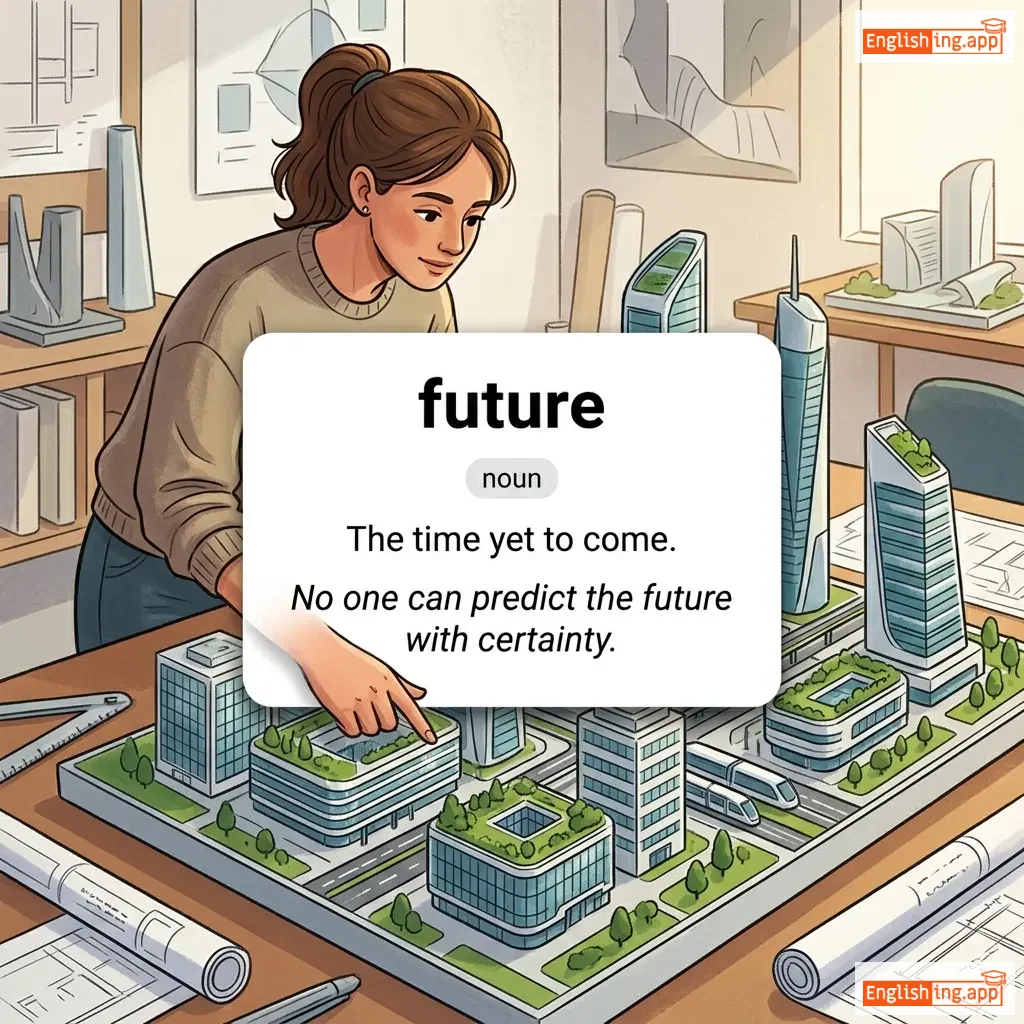
The time yet to come.
••••••
|
No one can predict the future with certainty. |
没有人可以准确预测未来。
Meiyou ren keyi zhunque yuce weilai.
••••••
|
bright future |
a positive or successful time ahead
••••••
|
光明的未来
guangming de weilai
••••••
|
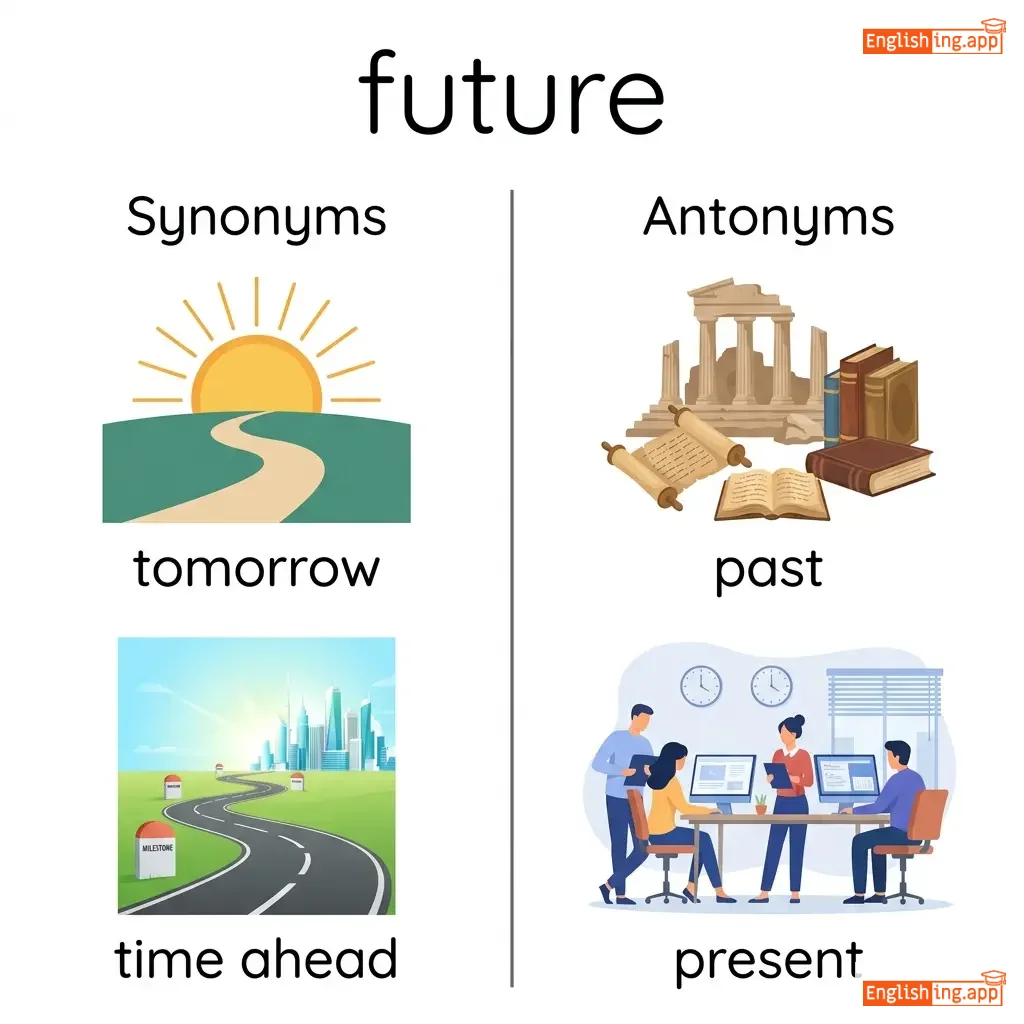
tomorrow, time ahead, destiny, prospect
••••••
|
past, present
••••••
|
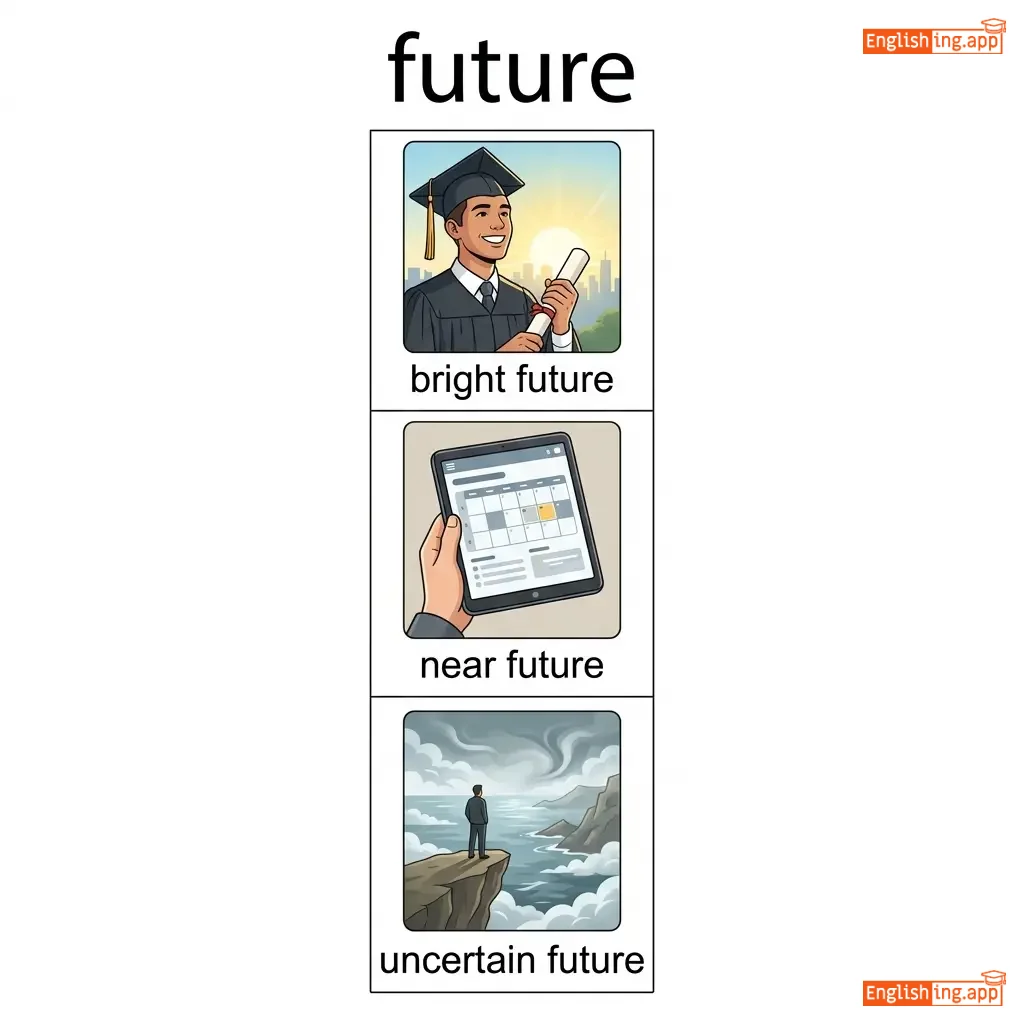
bright future, near future, uncertain future, future plans
••••••
|
Future的发音和未来相似,未来代表着即将到来的时光。
••••••
|
|
#2233
📈
|
/ɡeɪn/
verb
(gein)
••••••
|
|
获得
huoqu
••••••
|
gained
geind
••••••
|
gained
geind
••••••
|
gains
geins
••••••
|
gaining
geining
••••••
|
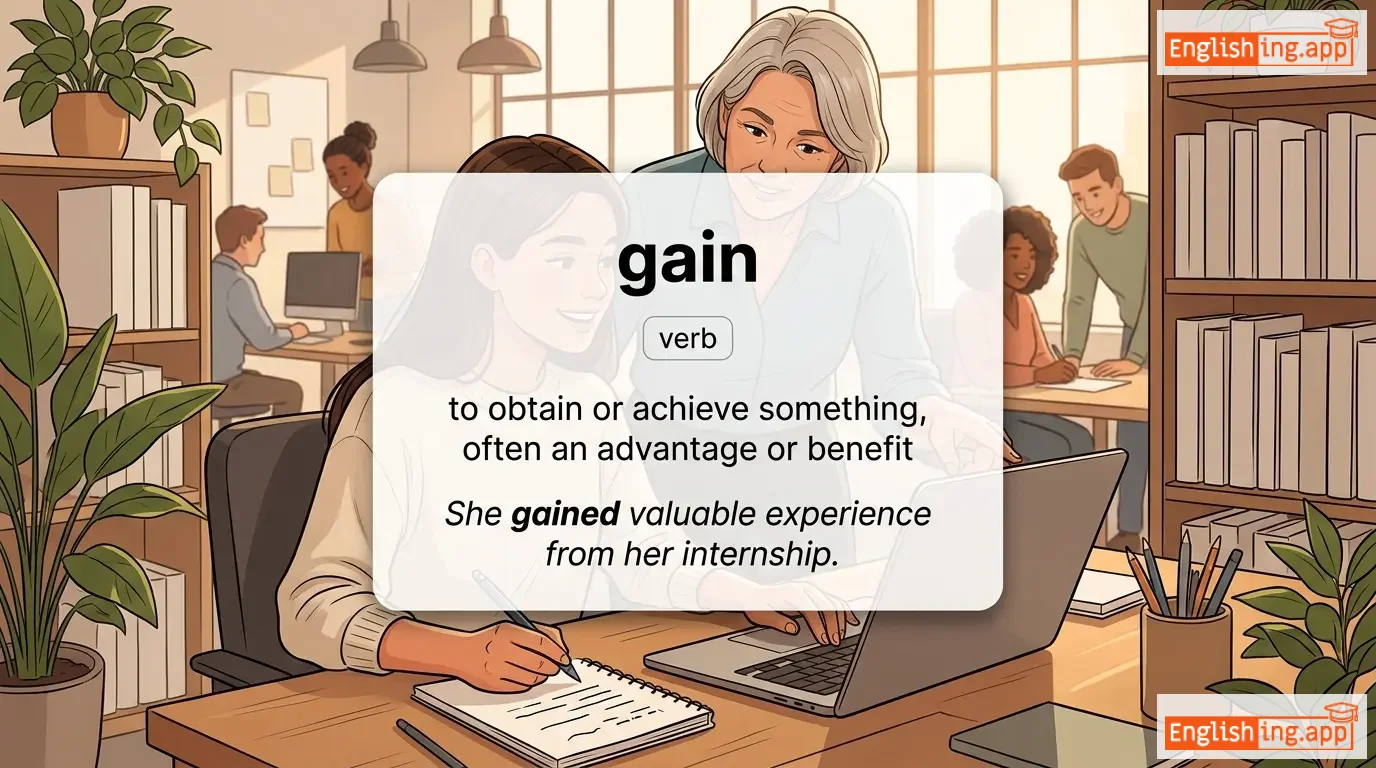
to obtain or achieve something, often an advantage or benefit
••••••
|
She gained valuable experience from her internship.
她从实习中获得了宝贵的经验。
••••••
|
她从实习中获得了宝贵的经验。
Ta cong shixi zhong huode le baogui de jingyan.
••••••
|
gain ground
取得进展
••••••
|
to make progress or become more successful
••••••
|
取得进展
qǔdé jìnzhǎn
••••••
|
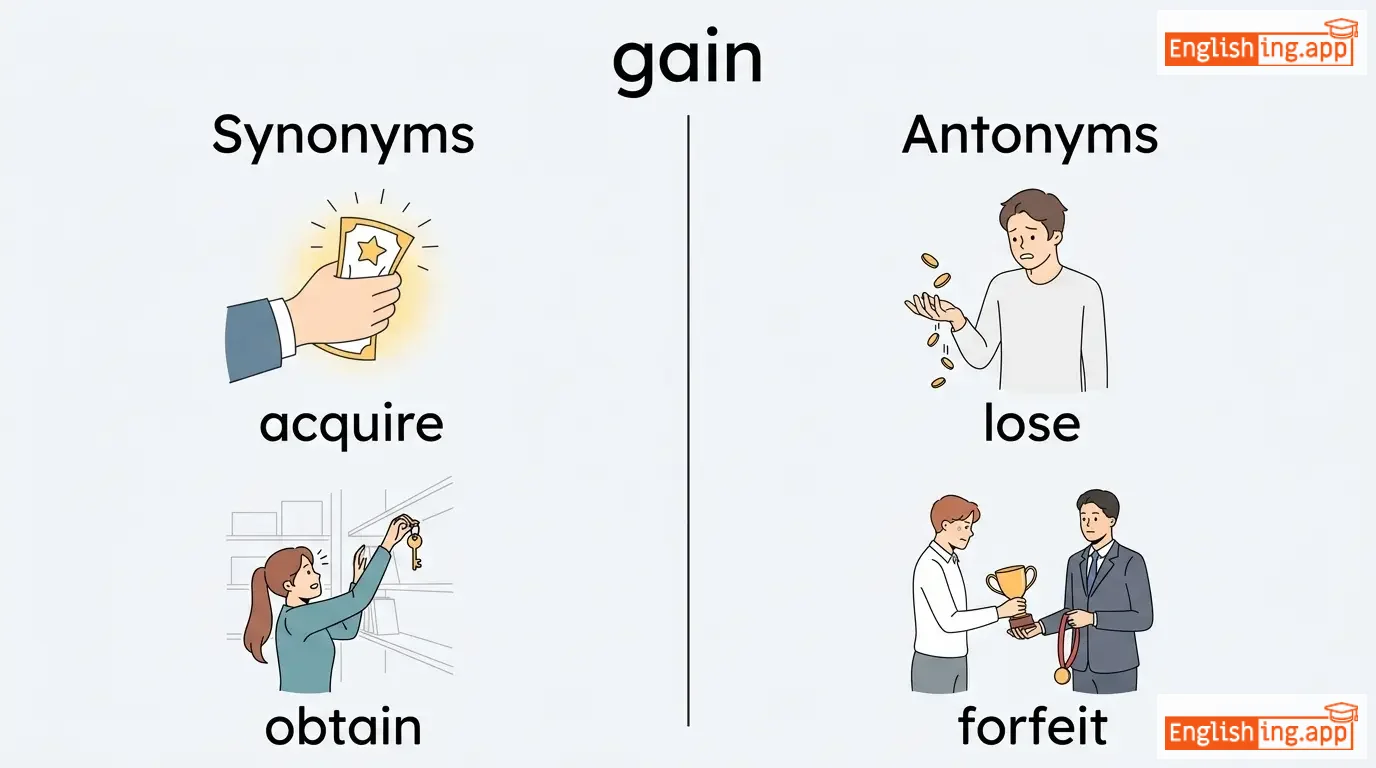
acquire, obtain, earn, secure, win
••••••
|
lose, forfeit, surrender
••••••
|
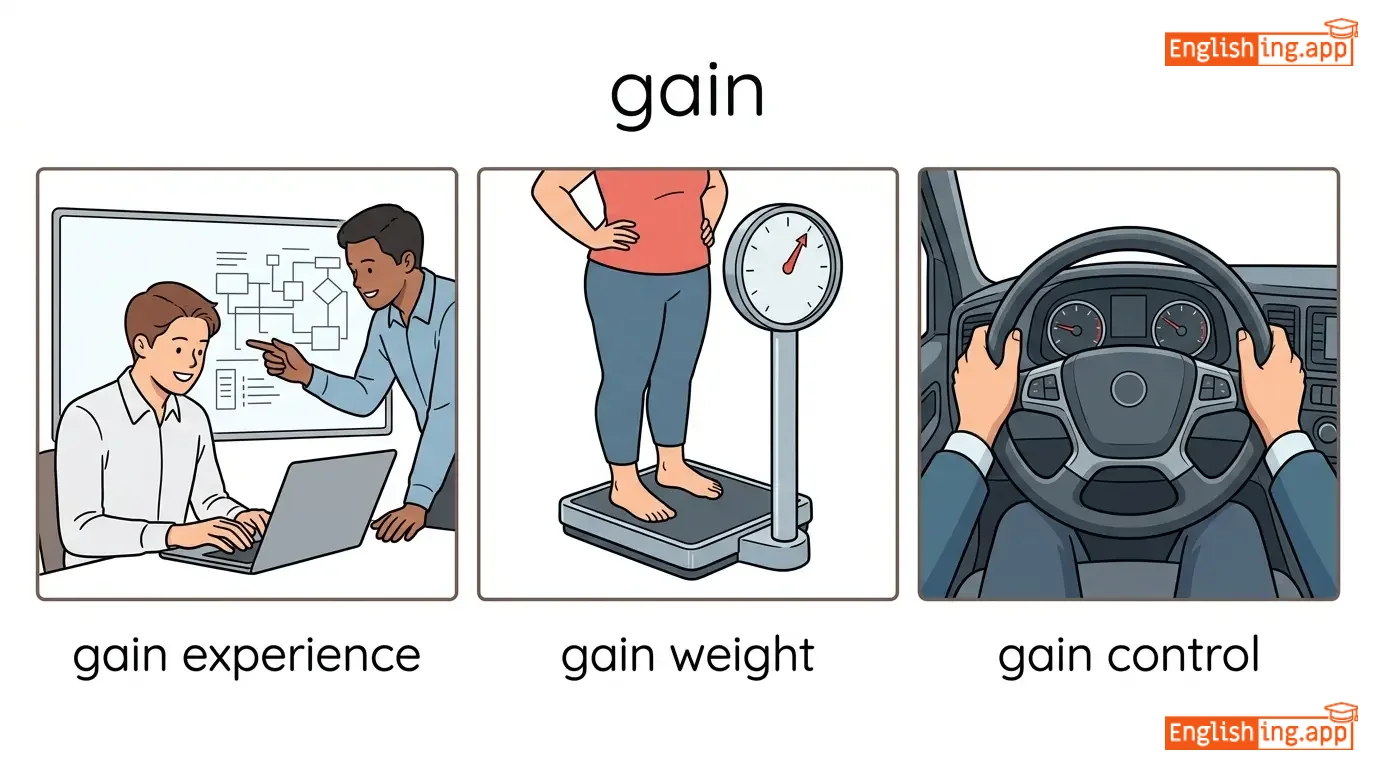
gain experience, gain weight, gain control, gain advantage
••••••
|
Gain是获得,获得让你的知识更广
••••••
|
|
#2234
🌌
|
/ˈɡæl.ək.si/
noun
(银河系)
••••••
|
- •••••• |
银河系
yinhexi
••••••
|
- •••••• | - •••••• | - •••••• | - •••••• |
a system of millions or billions of stars, together with gas and dust, held together by gravitational attraction
••••••
|
The Milky Way is the galaxy that contains our solar system and Earth.
银河系是包含我们太阳系和地球的星系。
••••••
|
银河系是包含我们太阳系和地球的星系。
Yinhexi shi baohan women taiyangxi he diqiu de xingxi.
••••••
|
- •••••• | - •••••• | - •••••• |
star system, constellation, nebula, universe
••••••
|
void, emptiness, space, vacuum
••••••
|
spiral galaxy, distant galaxy, galaxy cluster
••••••
|
银河系 - 一颗颗恒星像珍珠一样闪耀在宇宙中。
••••••
|
|
#2235
🖼️
|
/ˈɡæləri/
noun
(画廊)
••••••
|
- •••••• |
画廊
huàláng
••••••
|
- •••••• | - •••••• | - •••••• | - •••••• |
A room or building for the display or sale of works of art.
••••••
|
The gallery showcased modern paintings by local artists. |
画廊展示了当地艺术家的现代画作。
Huàláng zhǎnshìle dāngdì yìshùjiā de xiàndài huàzuò.
••••••
|
peanut gallery |
an audience or group of critics, often giving unsolicited comments
••••••
|
花生画廊
huāshēng huàláng
••••••
|
exhibition hall, showroom, museum, studio, display room
••••••
|
storage, warehouse
••••••
|
art gallery, photo gallery, gallery space, gallery exhibition
••••••
|
画廊 🖼️ — 想象这个地方就是艺术的宝库。
••••••
|
|
#2236
🥛
|
/ˈɡælən/
noun
(ɡælən)
••••••
|
- •••••• |
加仑
jiālún
••••••
|
- •••••• | - •••••• | - •••••• | - •••••• |
a unit of measurement for liquid capacity, equal to 4 quarts or approximately 3.8 liters
••••••
|
He bought a gallon of milk. |
他买了一加仑牛奶。
Tā mǎile yī jiālún niúnǎi.
••••••
|
- •••••• | - •••••• | - •••••• |
quart, liter, container
••••••
|
drop, tiny amount
••••••
|
gallon of water, gallon of milk, gallon jug
••••••
|
加仑 - 大容器,大容量!
••••••
|
|
#2237
🎲
|
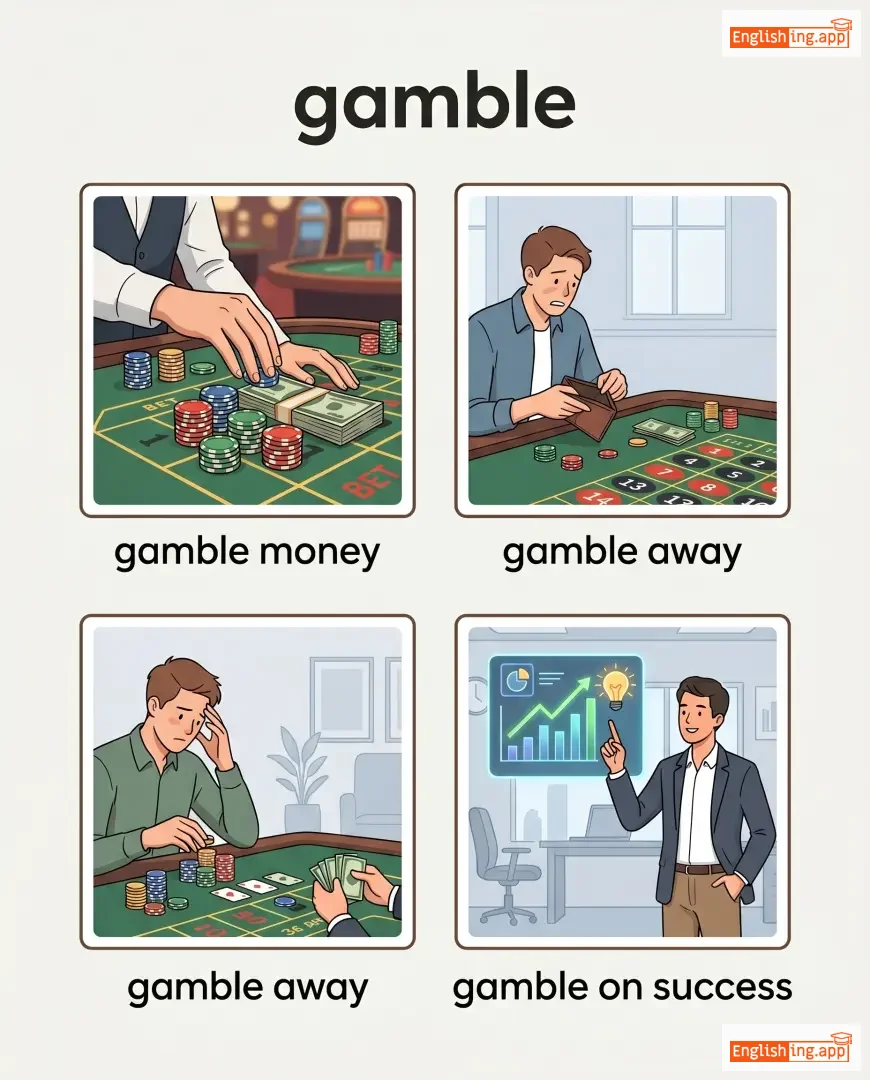
/ˈɡæmbəl/
verb
(ɡæmbəl)
••••••
|
|
赌博
dǔbó
••••••
|
gambled
ɡæmbəld
••••••
|
gambled
ɡæmbəld
••••••
|
gambles
ɡæmbəlz
••••••
|
gambling
ɡæmbəlɪŋ
••••••
|
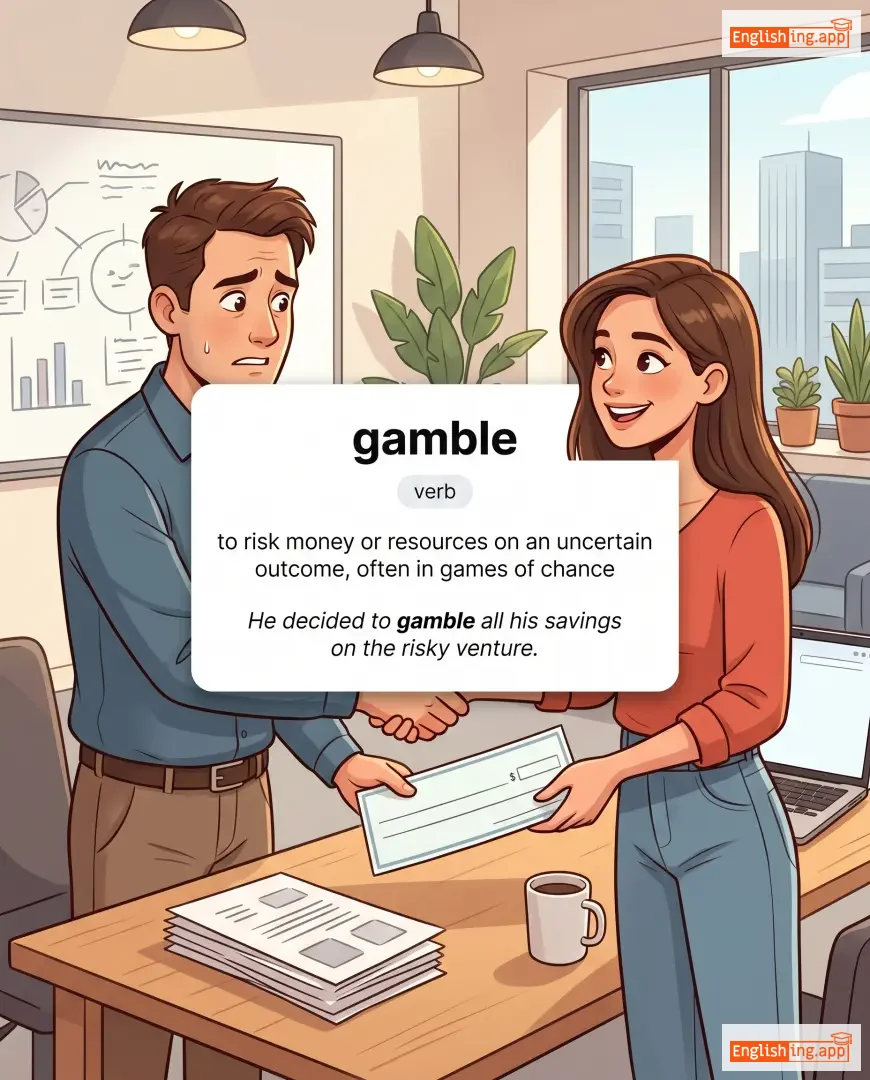
to risk money or resources on an uncertain outcome, often in games of chance
••••••
|
He decided to gamble all his savings on the risky venture.
他决定将所有的积蓄赌在那个冒险的项目上。
••••••
|
他决定将所有的积蓄赌在那个冒险的项目上。
Tā juédìng jiāng suǒyǒu de jīxù dǔ zài nàgè màoxiǎn de xiàngmù shàng.
••••••
|
gamble with fate
与命运赌博
••••••
|
to take a serious risk with uncertain outcomes
••••••
|
与命运赌博
Yǔ mìngyùn dǔbó
••••••
|
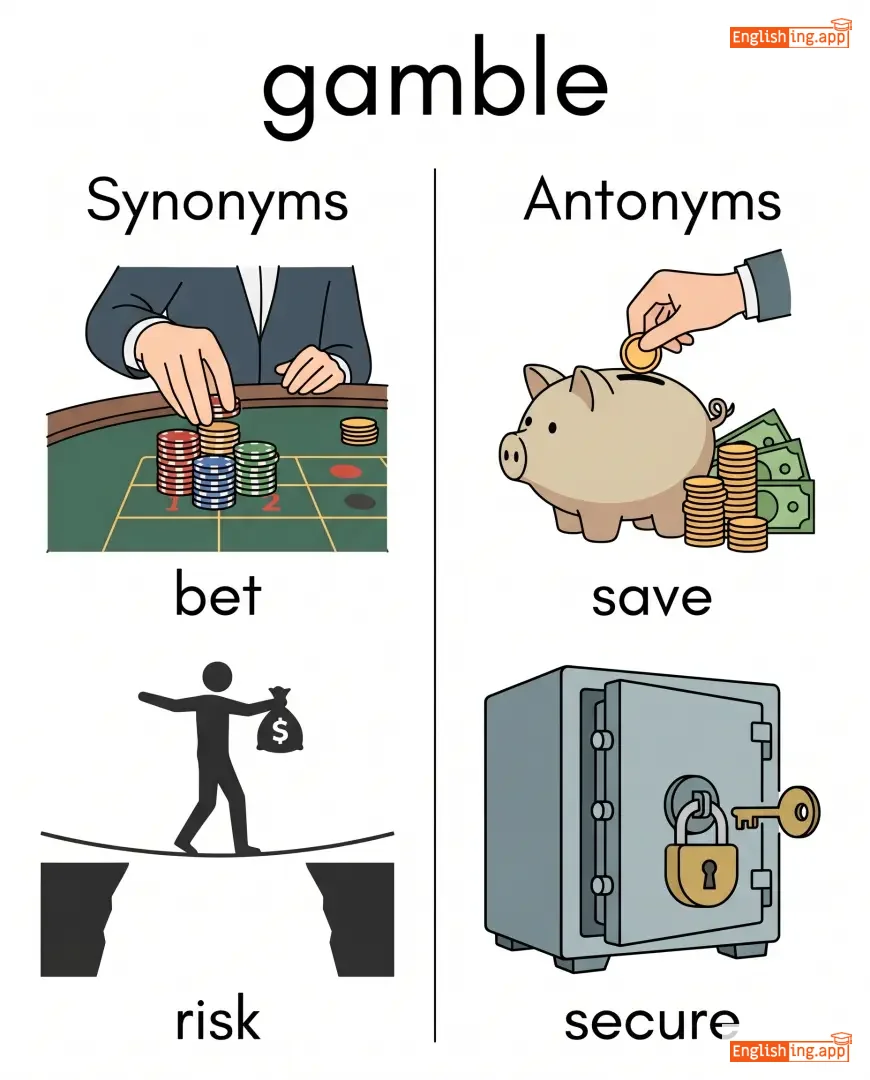
bet, risk, wager, speculate, venture
••••••
|
save, secure, protect
••••••
|
gamble money, gamble away, gamble on success
••••••
|
Gamble sounds like ‘gamba’, but don’t bet everything! 🎲
••••••
|
|
#2238
🎲
|
/ˈɡæmblɪŋ/
noun
(ɡæmbəlɪŋ)
••••••
|
- •••••• |
赌博
dǔbó
••••••
|
- •••••• | - •••••• | - •••••• | - •••••• |
the activity of betting money or valuables on an outcome, often involving risk
••••••
|
He got addicted to gambling at the casino.
他在赌场上成瘾于赌博。
••••••
|
他在赌场上成瘾于赌博。
Ta zai du chang shang cheng yin yu du bo.
••••••
|
- •••••• | - •••••• | - •••••• |
betting, wagering, gaming, speculation
••••••
|
saving, investing
••••••
|
gambling addiction, gambling problem, gambling casino
••••••
|
Gambling (赌博) - 下注来赢钱!
••••••
|
|
#2239
🎮
|
/ɡeɪm/
noun
(gèim)
••••••
|
- •••••• |
游戏
yóuxì
••••••
|
- •••••• | - •••••• | - •••••• | - •••••• |
An activity or sport played for amusement, competition, or skill.
••••••
|
They played a football game in the afternoon. |
他们下午踢了场足球比赛。
Tāmen xiàwǔ tīle chǎng zúqiú bǐsài.
••••••
|
fair game |
a target that is considered legitimate to criticize or attack
••••••
|
公平竞争
gōngpíng jìngzhēng
••••••
|
match, play, contest, sport, competition
••••••
|
work, duty
••••••
|
play a game, video game, board game, win the game, lose the game
••••••
|
游戏的乐趣 — 想象与朋友们一起玩耍。
••••••
|
|
#2240
🎮
|
/ˈɡeɪmɪŋ/
noun
••••••
|
|
- •••••• | - •••••• | - •••••• | - •••••• | - •••••• |
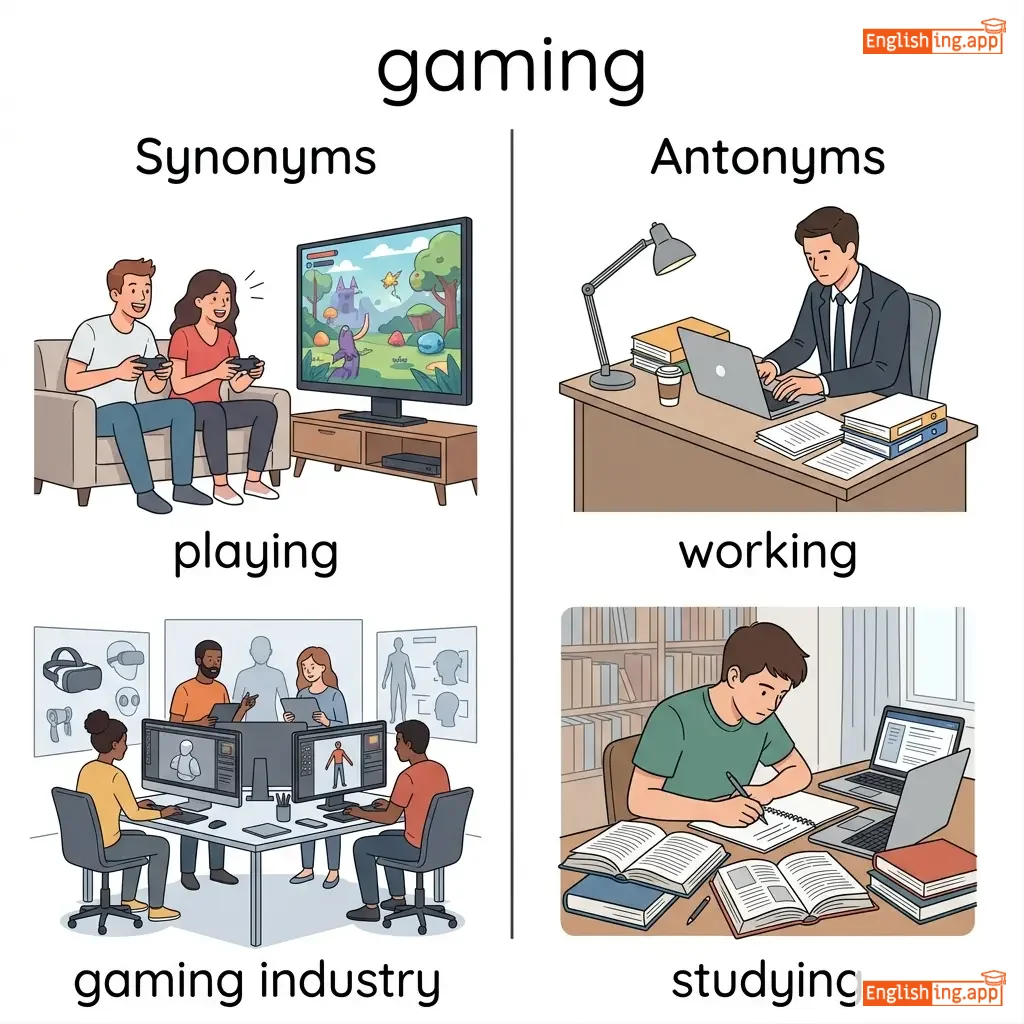
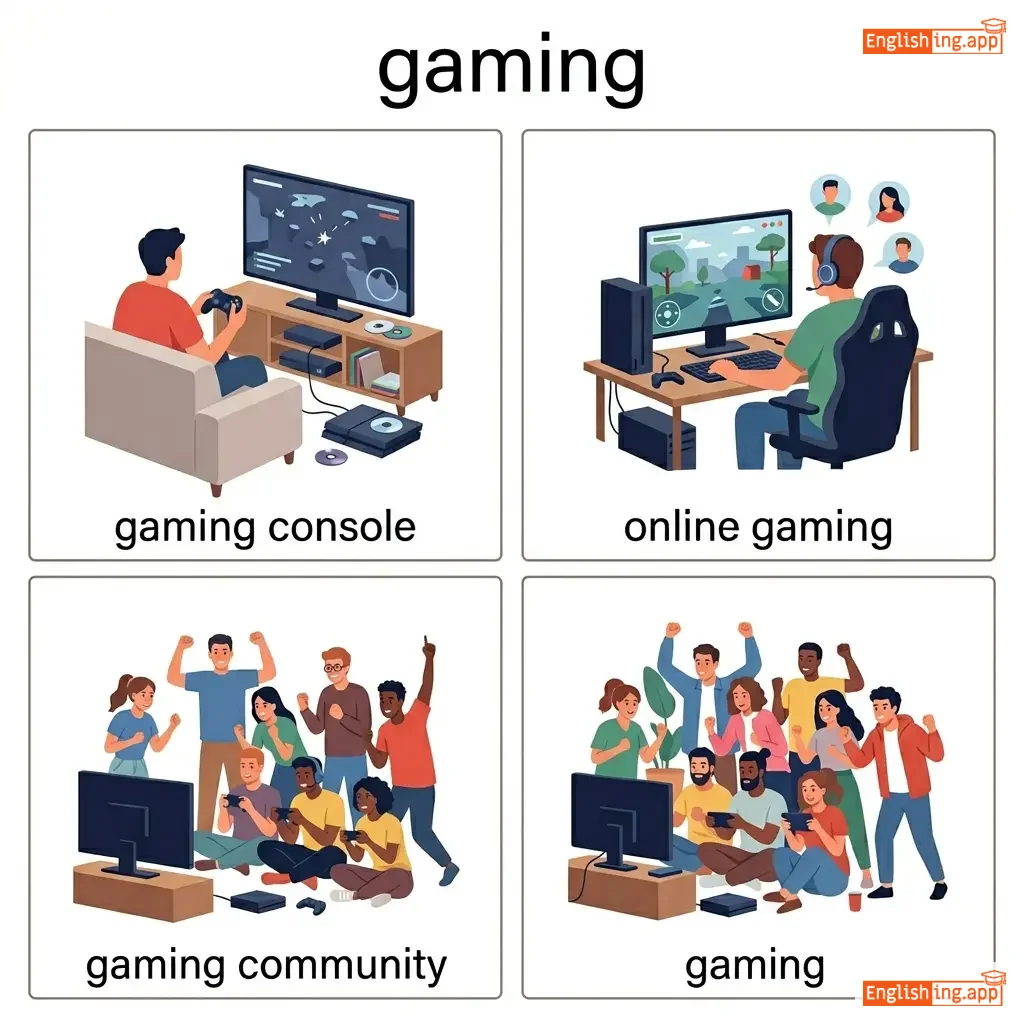
the action or practice of playing games, especially video games
••••••
|
Gaming has become a popular pastime among teenagers. |
- •••••• | - •••••• | - •••••• | - •••••• |
playing, gaming industry, esports
••••••
|
working, studying
••••••
|
gaming console, online gaming, gaming community
••••••
|
No •••••• |
|
#2241
👥
|
/ɡæŋ/
noun
(gang)
••••••
|
- •••••• |
团伙
tuánhuǒ
••••••
|
- •••••• | - •••••• | - •••••• | - •••••• |
An organized group of people, often involved in crime or violence.
••••••
|
The gang was arrested by the police last night. |
那个团伙昨晚被警察逮捕了。
nàge tuánhuǒ zuó wǎn bèi jǐngchá dàibǔ le.
••••••
|
gang up on |
to join together against someone in a hostile way
••••••
|
联合起来对抗
liánhé qǐlái duìkàng
••••••
|
crew, group, band, mob, clique
••••••
|
individual, loner
••••••
|
street gang, criminal gang, gang leader, gang violence
••••••
|
团伙 👥 就是像团体一样,大家聚在一起做事情。
••••••
|
|
#2242
🕳️
|
/ɡæp/
noun
(盖普)
••••••
|
- •••••• |
空隙 / 差距
kongxi / chaju
••••••
|
- •••••• | - •••••• | - •••••• | - •••••• |
An empty space or break between two objects or parts; a difference or disparity.
••••••
|
There is a huge gap between the rich and the poor. |
富人和穷人之间存在着巨大的差距。
Fùrén hé qióngrén zhījiān cúnzài zhe jùdà de chājù.
••••••
|
generation gap |
The difference in attitudes or values between younger and older people.
••••••
|
代沟
dàigōu
••••••
|
space, opening, break, divide, interval
••••••
|
closure, connection, link
••••••
|
bridge the gap, fill the gap, gap year, income gap
••••••
|
Gap意味着空隙 – ‘Gap是我们之间的空隙’
••••••
|
|
#2243
🏠
|
/ɡəˈrɑːʒ/
noun
(车库)
••••••
|
- •••••• |
车库
cheku
••••••
|
- •••••• | - •••••• | - •••••• | - •••••• |
a building or space for housing a motor vehicle; a commercial establishment for repairing motor vehicles
••••••
|
He parked his car in the garage to protect it from the hailstorm.
他把车停在车库里,以保护它免受冰雹袭击。
••••••
|
他把车停在车库里,以保护它免受冰雹袭击。
Ta ba che ting zai cheku li, yi baohu ta mian shou bingbao xiji.
••••••
|
- •••••• | - •••••• | - •••••• |
carport, shed, workshop, parking space
••••••
|
street, outdoors, open air, driveway
••••••
|
car garage, garage door, parking garage
••••••
|
中文的 '车库' 和英文的 'garage' 在功能上是一样的,都是停放车辆的地方。
••••••
|
|
#2244
🗑️
|
/ˈɡɑːrbɪdʒ/
noun
(gā bì jí)
••••••
|
- •••••• |
垃圾
laji
••••••
|
- •••••• | - •••••• | - •••••• | - •••••• |
waste material; things that are no longer useful or wanted
••••••
|
Please take out the garbage before it starts to smell. |
请把垃圾拿出去,免得开始发臭。
Qǐng bǎ lājī ná chūqù, miǎn de kāishǐ fāchòu.
••••••
|
one man's garbage is another man's treasure |
something worthless to one person may be valuable to another
••••••
|
一个人的垃圾是另一个人的宝藏
Yī gè rén de lājī shì lìng yī gè rén de bǎozàng
••••••
|
trash, waste, litter, refuse, junk
••••••
|
treasure, valuables
••••••
|
garbage can, garbage truck, collect garbage, throw garbage
••••••
|
垃圾 = 丢弃不需要的东西 🗑️
••••••
|
|
#2245
🌱
|
/ˈɡɑːrdn/
noun
(ˈɡɑːrdn)
••••••
|
- •••••• |
花园
huāyuán
••••••
|
- •••••• | - •••••• | - •••••• | - •••••• |
A piece of ground where flowers, vegetables, or plants are grown.
••••••
|
She grows roses in her garden. |
她在她的花园里种玫瑰。
Tā zài tā de huāyuán lǐ zhòng méiguī.
••••••
|
lead someone up the garden path |
To deceive or mislead someone.
••••••
|
带某人走上花园小路
Dài mǒu rén zǒu shàng huāyuán xiǎolù
••••••
|
yard, lawn, park, orchard
••••••
|
wasteland, desert
••••••
|
botanical garden, back garden, flower garden, vegetable garden
••••••
|
花园,种植的地方,充满了植物和美丽的花朵。
••••••
|
|
#2246
🧄
|
/ˈɡɑːr.lɪk/
noun
(嘎利克)
••••••
|
- •••••• |
大蒜
da suan
••••••
|
- •••••• | - •••••• | - •••••• | - •••••• |
a strong-smelling pungent-tasting bulb, used as a flavoring in cooking and in herbal medicine
••••••
|
The recipe calls for three cloves of fresh garlic to enhance the flavor.
该食谱需要三瓣新鲜大蒜以增强风味。
••••••
|
本食谱需要三瓣新鲜大蒜以增强风味。
gai shi pu xu yao san ban xin xian da suan yi zeng qiang feng wei
••••••
|
- •••••• | - •••••• | - •••••• |
bulb, clove, seasoning, herb
••••••
|
sweetener, sugar, bland spice, mild herb
••••••
|
fresh garlic, garlic clove, roasted garlic
••••••
|
Garlic 大蒜: imagine a clove wearing a cape shouting da suan, da flavor saves the dish
••••••
|
|
#2247
⛽
|
/ɡæs/
noun
(气体)
••••••
|
- •••••• |
气体
qìtǐ
••••••
|
- •••••• | - •••••• | - •••••• | - •••••• |
A substance like air that is neither solid nor liquid and can expand freely.
••••••
|
The balloon was filled with gas. |
气球充满了气体。
Qìqiú chōngmǎnle qìtǐ.
••••••
|
step on the gas |
To accelerate or go faster.
••••••
|
踩下油门
Cǎi xià yóumén
••••••
|
vapor, fume, air, fuel
••••••
|
solid, liquid
••••••
|
natural gas, gas station, gas leak, gas supply
••••••
|
气体 – 气体能扩展,就像气球膨胀一样。
••••••
|
|
#2248
⛽
|
/ˈɡæsəˌliːn/
noun
(汽油)
••••••
|
- •••••• |
汽油
qiyou
••••••
|
- •••••• | - •••••• | - •••••• | - •••••• |
a liquid fuel made from petroleum, used mainly to power engines in vehicles
••••••
|
The price of gasoline has increased significantly this month. |
本月汽油价格显著上涨了。
Ben yue qiyou jiage xianzhu shangzhang le.
••••••
|
run out of gasoline |
to have no fuel left in a vehicle
••••••
|
汽油耗尽
qiyou haojin
••••••
|
petrol, fuel, gas, diesel, energy
••••••
|
electricity, power outage
••••••
|
gasoline price, gasoline engine, gasoline station, gallon of gasoline
••••••
|
汽油是汽车的燃料。想象一下汽油充满了汽车,给汽车提供动力。
••••••
|
|
#2249
🚪
|
/ɡeɪt/
noun
(海皮尼斯)
••••••
|
- •••••• |
幸福
xìng fú
••••••
|
- •••••• | - •••••• | - •••••• | - •••••• |
A movable barrier that opens and closes to allow or prevent entry through an opening.
••••••
|
She closed the gate behind her as she left the garden. |
当她收到奖项时,她无法隐藏自己的幸福。
Dāng tā shōu dào jiǎngxiàng shí, tā wúfǎ yǐncáng zìjǐ de xìngfú.
••••••
|
at death's gate |
very close to dying
••••••
|
追寻幸福
zhuīxún xìngfú
••••••
|
door, entrance, barrier, portal, gateway
••••••
|
exit, opening
••••••
|
front gate, garden gate, iron gate, open the gate
••••••
|
幸福就是你所追寻的那一份满足感。
••••••
|
|
#2250
🤲
|
/ˈɡæðər/
verb
(gædər)
••••••
|
|
收集
shōují
••••••
|
gathered
gædərd
••••••
|
gathered
gædərd
••••••
|
gathers
gædərs
••••••
|
gathering
gædəring
••••••
|
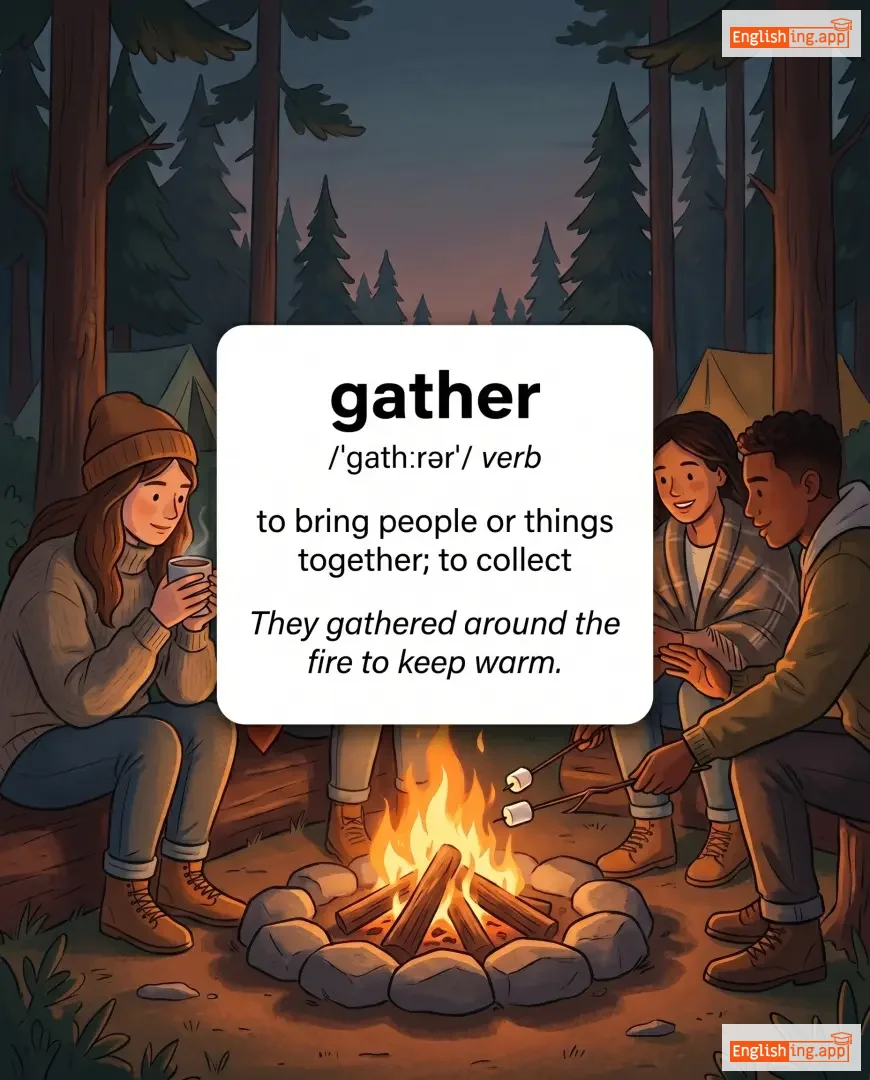
to bring people or things together; to collect
••••••
|
They gathered around the fire to keep warm.
他们围绕着火堆聚集以保持温暖。
••••••
|
他们围绕着火堆聚集以保持温暖。
Tāmen wéirào zhe huǒduī jùjí yǐ bǎochí wēnnuǎn.
••••••
|
gather one's thoughts
整理思绪
••••••
|
to take time to think and organize one's ideas
••••••
|
整理思绪
zhěnglǐ sīxù
••••••
|
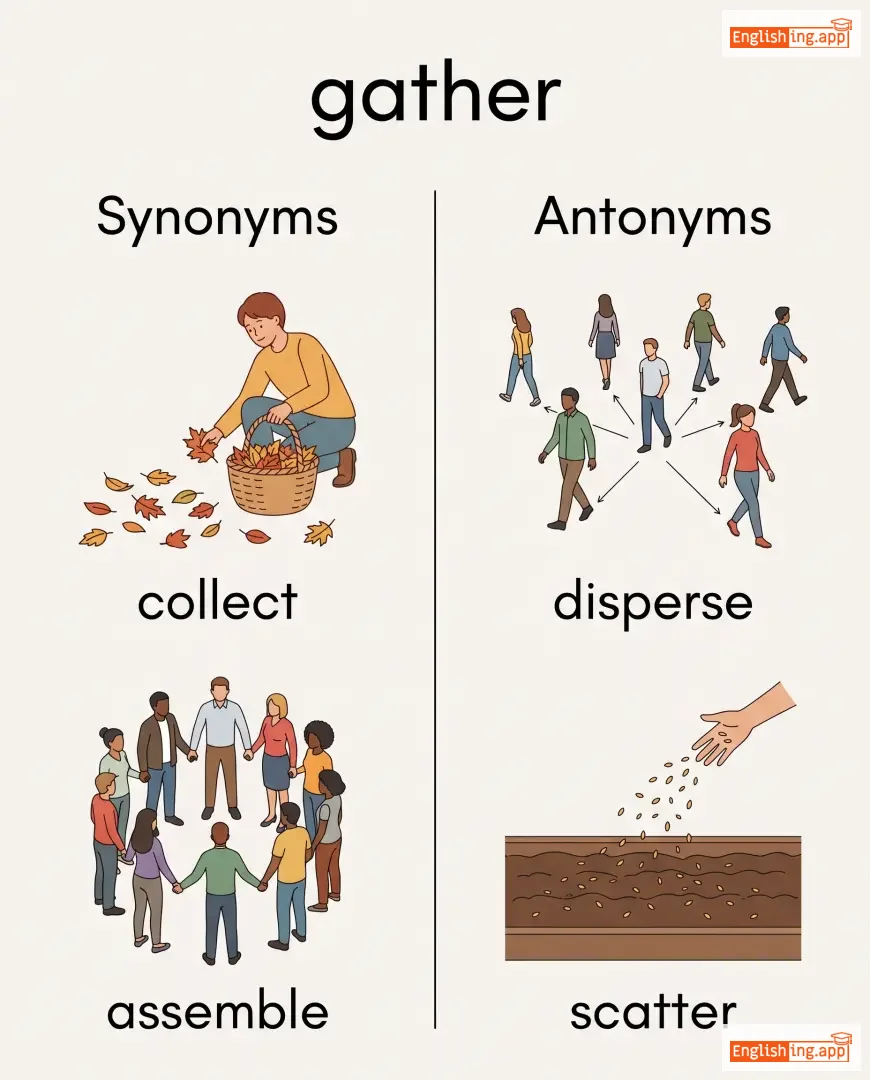
collect, assemble, accumulate, convene, congregate
••••••
|
disperse, scatter, separate
••••••
|
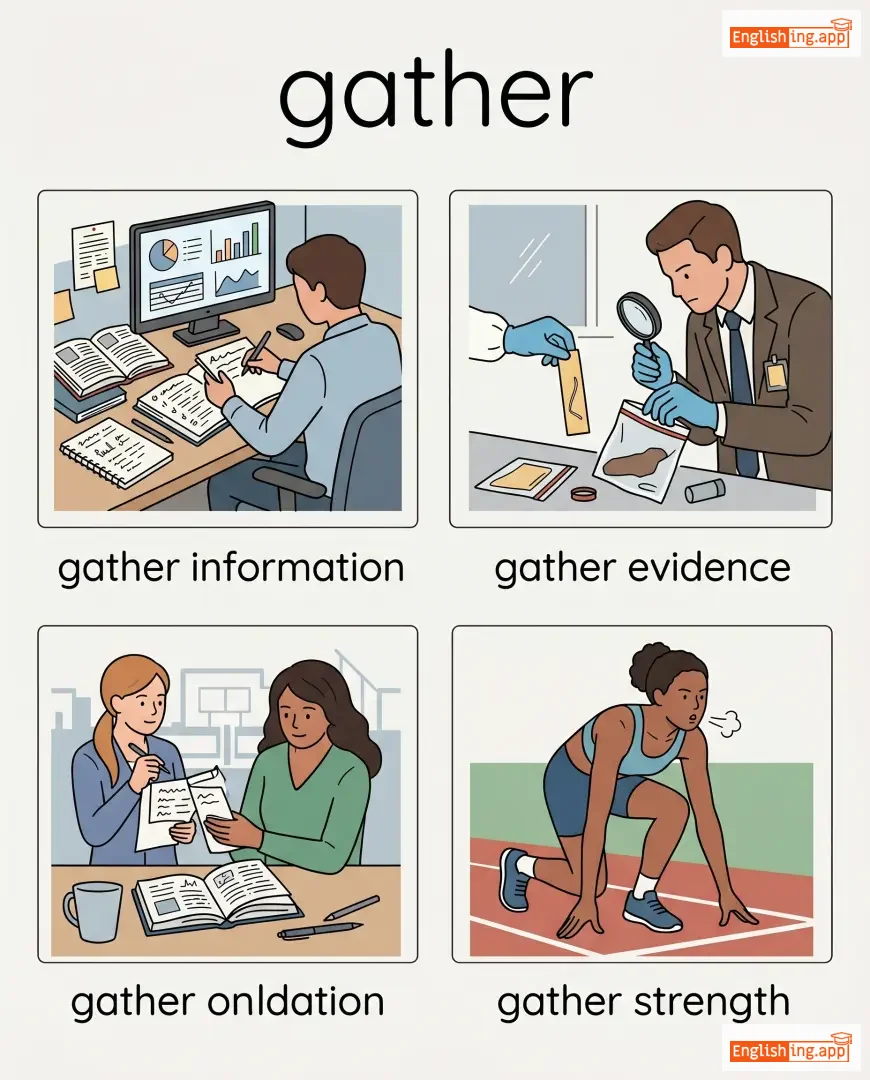
gather information, gather evidence, gather strength, gather crowd
••••••
|
Gather意思是收集,就像大家聚在火堆旁一样。
••••••
|
|
#2251
👥
|
/ˈɡæðərɪŋ/
noun
(聚会)
••••••
|
- •••••• |
聚会
juhui
••••••
|
- •••••• | - •••••• | - •••••• | - •••••• |
a meeting or assembly of people for a particular purpose
••••••
|
We attended a family gathering last weekend.
我们上周末参加了一个家庭聚会。
••••••
|
我们上周末参加了一个家庭聚会。
Wo men shang zhou mo can jia le yi ge jia ting ju hui.
••••••
|
social gathering
社交聚会
••••••
|
a casual event where people meet and interact socially
••••••
|
社交聚会
shejiao juhui
••••••
|
meeting, assembly, party, event, conference
••••••
|
separation, dispersal
••••••
|
family gathering, large gathering, small gathering, informal gathering
••••••
|
Gather 意味着收集 → Gathering 意味着聚会,就像 'Family gathering' 中每个人聚在一起!
••••••
|
|
#2252
🏳️🌈
|
/ɡeɪ/
adjective
(ɡeɪ)
••••••
|
- •••••• |
同志
tongzhi
••••••
|
- •••••• | - •••••• | - •••••• | - •••••• |
sexually attracted to people of the same sex; also used to mean cheerful or lively
••••••
|
He came out as gay during college. |
他在大学期间公开了自己是同志。
Ta zai daxue qijian gongkai le ziji shi tongzhi.
••••••
|
- •••••• | - •••••• | - •••••• |
homosexual, queer, cheerful, lively
••••••
|
straight, sad
••••••
|
gay rights, gay community, gay marriage, openly gay
••••••
|
同志是gay的意思,记得彩虹旗 (🏳️🌈)
••••••
|
|
#2253
👀
|
/ɡeɪz/
verb
(盖兹)
••••••
|
- •••••• |
凝视
níngshì
••••••
|
gazed
盖兹德
••••••
|
gazed
盖兹德
••••••
|
gazes
盖兹斯
••••••
|
gazing
盖兹ing
••••••
|
To look steadily and intently at something, usually with admiration, surprise, or thought.
••••••
|
He gazed at the stars in wonder.
他惊奇地盯着星星。
••••••
|
他惊奇地盯着星星。
tā jīngqí de dīngzhe xīngxīng.
••••••
|
gaze into the distance
凝视远方
••••••
|
to look far away thoughtfully
••••••
|
凝视远方
níngshì yuǎnfāng
••••••
|
stare, look, peer, glance, observe
••••••
|
ignore, overlook
••••••
|
gaze at, gaze into, gaze upward, gaze longingly
••••••
|
凝视就像不动的目光一样。
••••••
|
|
#2254
⚙️
|
/ɡɪə(r)/
noun
(吉尔)
••••••
|
- •••••• |
装备 / 齿轮
zhuāngbèi / chǐlún
••••••
|
- •••••• | - •••••• | - •••••• | - •••••• |
Equipment or apparatus for a particular purpose; also a toothed wheel in machinery.
••••••
|
The climber packed all his gear before starting the journey. |
登山者在开始旅程之前,打包了他所有的装备。
Dēngshān zhě zài kāishǐ lǚchéng zhīqián, dǎbāo le tā suǒyǒu de zhuāngbèi.
••••••
|
shift gears |
To change one's approach or method of doing something.
••••••
|
换挡
huàndǎng
••••••
|
equipment, apparatus, tools, kit, machinery
••••••
|
emptiness, lack, nothing
••••••
|
sports gear, camping gear, gear shift, protective gear
••••••
|
Gear 就像是装备,换挡就像换方法。
••••••
|
|
#2255
⚧️
|
/ˈdʒen.dər/
noun
(性别)
••••••
|
- •••••• |
性别
xingbie
••••••
|
- •••••• | - •••••• | - •••••• | - •••••• |
either of the two sexes (male and female); the range of characteristics pertaining to masculinity and femininity
••••••
|
The company promotes gender equality by ensuring equal opportunities for all employees.
公司通过确保所有员工享有平等的机会来促进性别平等。
••••••
|
公司通过确保所有员工享有平等的机会来促进性别平等。
Gongsī tōngguò quèbǎo suǒyǒu yuángōng xiǎngyǒu píngděng de jīhuì lái cùjìn xìngbié píngděng.
••••••
|
- •••••• | - •••••• | - •••••• |
sex, classification, category, type
••••••
|
genderless, neutral, unspecified, ambiguous
••••••
|
gender equality, gender roles, gender identity
••••••
|
性别 (xingbie) – 两个性别的差异帮助我们更好理解男女之间的不同.
••••••
|
|
#2256
🧬
|
/dʒiːn/
noun
(jin)
••••••
|
- •••••• |
基因
ji yin
••••••
|
- •••••• | - •••••• | - •••••• | - •••••• |
A unit of heredity in living organisms, transferred from parent to offspring, determining traits.
••••••
|
Eye color is influenced by genes inherited from parents. |
眼睛的颜色受从父母遗传的基因的影响。
yanjing de yanse shou cong fumu yichuan de jiyin de yingxiang.
••••••
|
in one's genes |
a natural trait inherited from family
••••••
|
某人的基因中
mou ren de jiyin zhong
••••••
|
DNA, chromosome, heredity, trait, genome
••••••
|
environment, nurture
••••••
|
gene mutation, gene therapy, human gene, dominant gene
••••••
|
Gene = 基因,想想DNA 🧬
••••••
|
|
#2257
🌍
|
/ˈdʒɛnərəl/
adjective
(dʒɛnərəl)
••••••
|
- •••••• |
一般的
yībān de
••••••
|
- •••••• | - •••••• | - •••••• | - •••••• |
Relating to all or most people, things, or situations; not specific.
••••••
|
He made a general comment about the project. |
他对这个项目做了一个一般的评论。
Tā duì zhège xiàngmù zuòle yīgè yībān de pínglùn.
••••••
|
in general |
usually or mostly
••••••
|
一般来说
yībān lái shuō
••••••
|
common, overall, broad, universal, widespread
••••••
|
specific, particular
••••••
|
general idea, general knowledge, general opinion, general rule
••••••
|
一般的意味着一般的,就像 '一般来说' 意味着通常或主要。
••••••
|
|
#2258
🌍
|
/ˈdʒɛnərəli/
adverb
(杰内雷利)
••••••
|
- •••••• |
通常
tong chang
••••••
|
- •••••• | - •••••• | - •••••• | - •••••• |
in most cases; usually; as a rule
••••••
|
He generally arrives at work before 9 a.m. |
他通常在9点前到达工作。
Ta tong chang zai 9 dian qian dao da gongzuo.
••••••
|
as a general rule |
something that is true in most situations
••••••
|
作为一般规则
zuo wei yiban guize
••••••
|
usually, typically, commonly, ordinarily, mostly
••••••
|
rarely, seldom, never
••••••
|
generally accepted, generally speaking, generally known, generally considered
••••••
|
一般的规则下通常就是这种情况,所以下次你就记得‘generally’意味着‘通常’.
••••••
|
|
#2259
⚡
|
/ˈdʒɛnəreɪt/
verb
••••••
|
- •••••• | - •••••• |
generated
••••••
|
generated
••••••
|
generates
••••••
|
generating
••••••
|
to produce or create something
••••••
|
The machine generates electricity. |
- •••••• |
generate interest |
to make people feel curious or engaged
••••••
|
- •••••• |
produce, create, make, yield, cause
••••••
|
destroy, stop, halt
••••••
|
generate power, generate ideas, generate revenue, generate interest
••••••
|
No •••••• |
|
#2260
👶
|
/ˌdʒɛnəˈreɪʃən/
noun
(一代)
••••••
|
- •••••• |
一代
yídài
••••••
|
- •••••• | - •••••• | - •••••• | - •••••• |
all the people born and living at about the same time; the process of producing something
••••••
|
The younger generation is more comfortable with technology. |
年轻一代更适应技术。
niánqīng yídài gèng shìyìng jìshù.
••••••
|
generation gap |
the difference in attitudes and behavior between older and younger people
••••••
|
代沟
dàigōu
••••••
|
cohort, age group, era, production, creation
••••••
|
ancestors, destruction
••••••
|
younger generation, next generation, generation gap, generation of energy
••••••
|
每一代 (yídài) 创造新的东西 - Generation 意味着一代
••••••
|
|
#2261
📦
|
/dʒəˈnɛrɪk/
adjective
(jìné rìkè)
••••••
|
- •••••• |
通用
tōngyòng
••••••
|
- •••••• | - •••••• | - •••••• | - •••••• |
characteristic of or relating to a whole group or class; not specific
••••••
|
This medicine is available in generic form. |
这种药物以通用形式提供。
Zhè zhǒng yàowù yǐ tōngyòng xíngshì tígōng.
••••••
|
generic term |
a word used for a general category rather than something specific
••••••
|
通用术语
tōngyòng shùyǔ
••••••
|
general, common, universal, non-specific
••••••
|
specific, unique, special
••••••
|
generic brand, generic product, generic form, generic term
••••••
|
通用 (tōngyòng) 就是没有品牌的药物,便宜又有效。
••••••
|
|
#2262
🎁
|
/ˈdʒɛnərəs/
adjective
(dʒɛnərəs)
••••••
|
- •••••• |
慷慨
kangkai
••••••
|
- •••••• | - •••••• | - •••••• | - •••••• |
willing to give or share more than is necessary; kind and giving
••••••
|
She is very generous with her time and money. |
她在时间和金钱上非常慷慨。
Ta zai shijian he jinqian shang feichang kangkai.
••••••
|
to a generous extent |
to a large or considerable degree
••••••
|
到慷慨的程度
dao kangkai de chengdu
••••••
|
kind, giving, charitable, benevolent, unselfish
••••••
|
selfish, stingy, mean
••••••
|
generous offer, generous donation, generous spirit, generous amount
••••••
|
慷慨 means generous heart— 中文,慷慨的心
••••••
|
|
#2263
🤲
|
/ˈdʒenərəsli/
adverb
(杰纳勒斯利)
••••••
|
- •••••• |
慷慨地
kangai de
••••••
|
- •••••• | - •••••• | - •••••• | - •••••• |
in a kind, giving, or unselfish manner; in a plentiful or abundant way
••••••
|
She generously donated money to help the poor.
希 杰纳勒斯利 多内特德 曼尼 图 赫尔普 泼
••••••
|
她慷慨地捐钱帮助穷人。
ta kangai de juan qian bangzhu qiongren
••••••
|
give generously
给 杰纳勒斯利
••••••
|
to give freely and kindly without expecting anything in return
••••••
|
慷慨给予
kangai geiyu
••••••
|
kindly, liberally, benevolently, freely, charitably
••••••
|
stingily, selfishly, miserly
••••••
|
generously donate, generously support, generously offer, generously reward
••••••
|
慷慨 = generous,地 = ly → generously
••••••
|
|
#2264
🧬
|
/dʒəˈnɛtɪk/
adjective
(遗传的)
••••••
|
|
遗传的
yíchuán de
••••••
|
- •••••• | - •••••• | - •••••• | - •••••• |
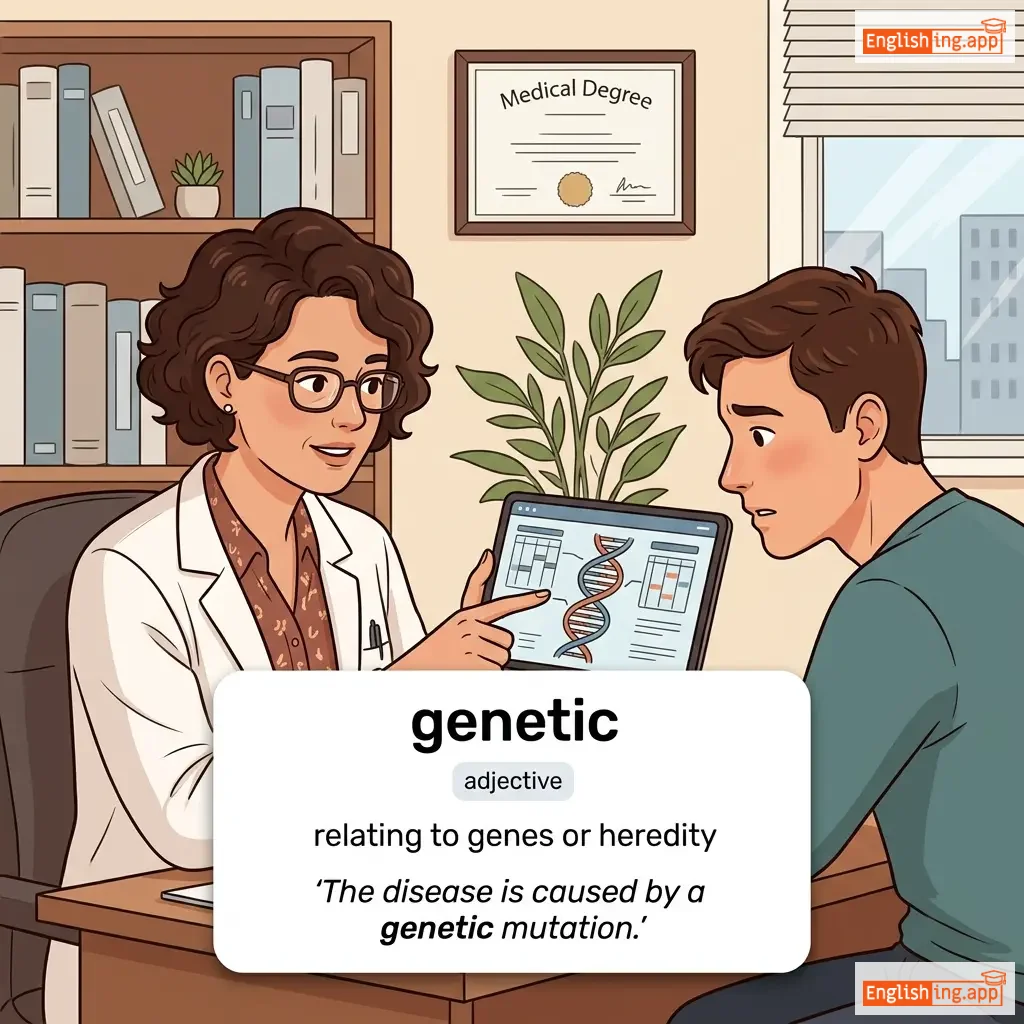
relating to genes or heredity
••••••
|
The disease is caused by a genetic mutation.
这种疾病是由基因突变引起的。
••••••
|
这种疾病是由基因突变引起的。
zhè zhǒng jí bìng shì yóu jī yīn tū biàn yǐn qǐ de.
••••••
|
genetic makeup
遗传构成
••••••
|
the set of genes that make up an individual
••••••
|
遗传结构
yíchuán jiégòu
••••••
|
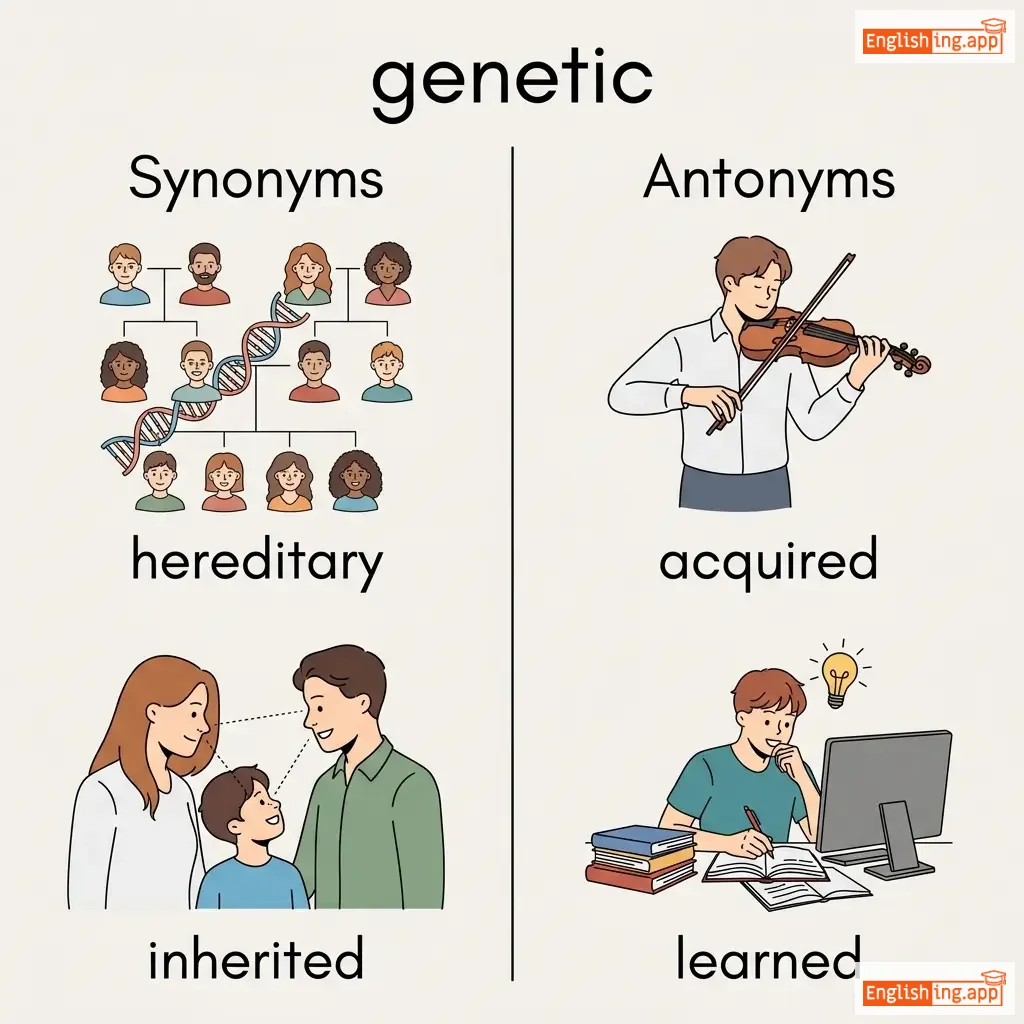
hereditary, inherited, biological, genomic
••••••
|
acquired, learned
••••••
|
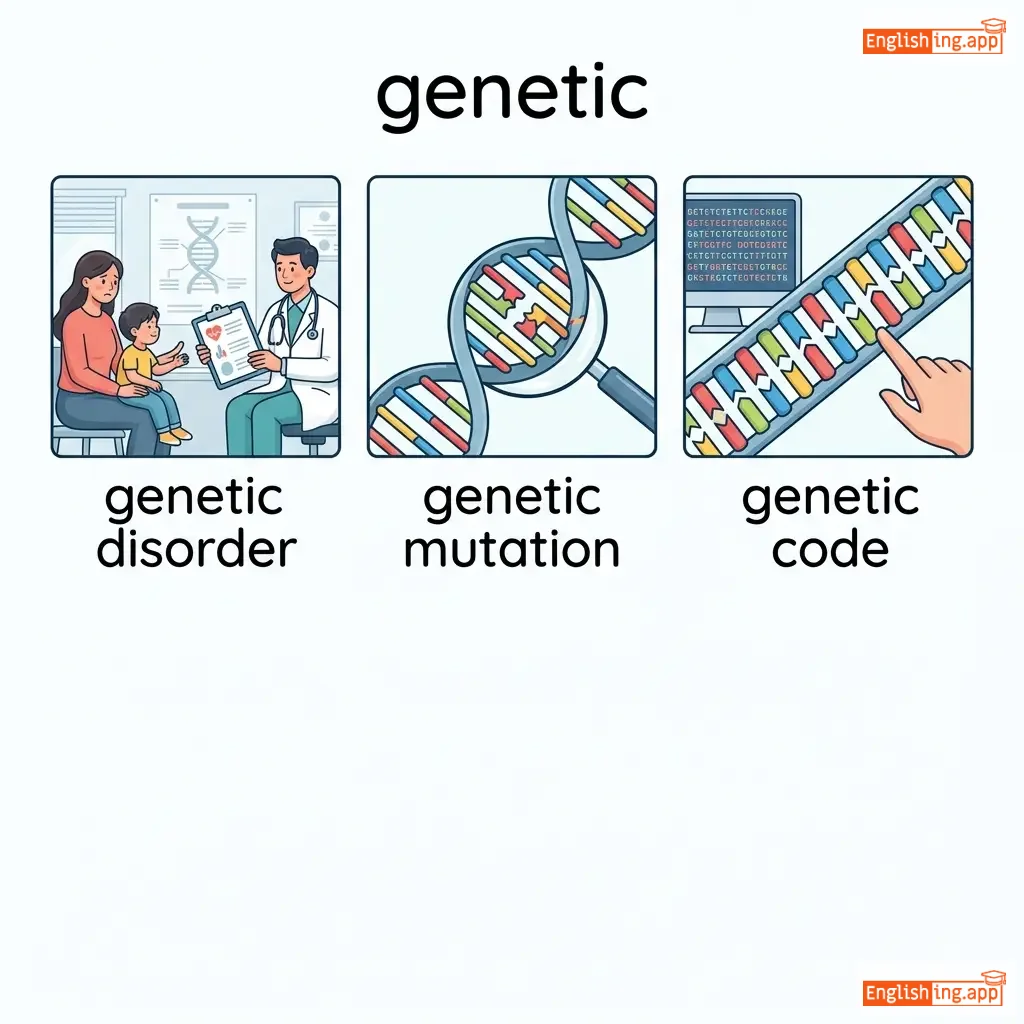
genetic disorder, genetic mutation, genetic code, genetic makeup
••••••
|
基因(遗传)是 Genetic 的来源。
••••••
|
|
#2265
🧠
|
/ˈdʒiːniəs/
noun
(dʒiːniəs)
••••••
|
- •••••• |
天才
tiāncái
••••••
|
- •••••• | - •••••• | - •••••• | - •••••• |
a person with exceptional intellectual or creative ability
••••••
|
Einstein was a scientific genius. |
爱因斯坦是一个科学天才。
Ài yīn sī tǎn shì yīgè kēxué tiāncái.
••••••
|
stroke of genius |
a brilliant or very clever idea
••••••
|
天才的灵感
tiāncái de línggǎn
••••••
|
prodigy, mastermind, intellect, wizard, brain
••••••
|
fool, simpleton, idiot
••••••
|
artistic genius, musical genius, pure genius, show genius
••••••
|
Genius – 想到天才就是那个总是有新点子的人!
••••••
|
|
#2266
☠️
|
/ˈdʒen.ə.saɪd/
noun
(种族灭绝)
••••••
|
|
种族灭绝
zhǒngzú mièjué
••••••
|
- •••••• | - •••••• | - •••••• | - •••••• |
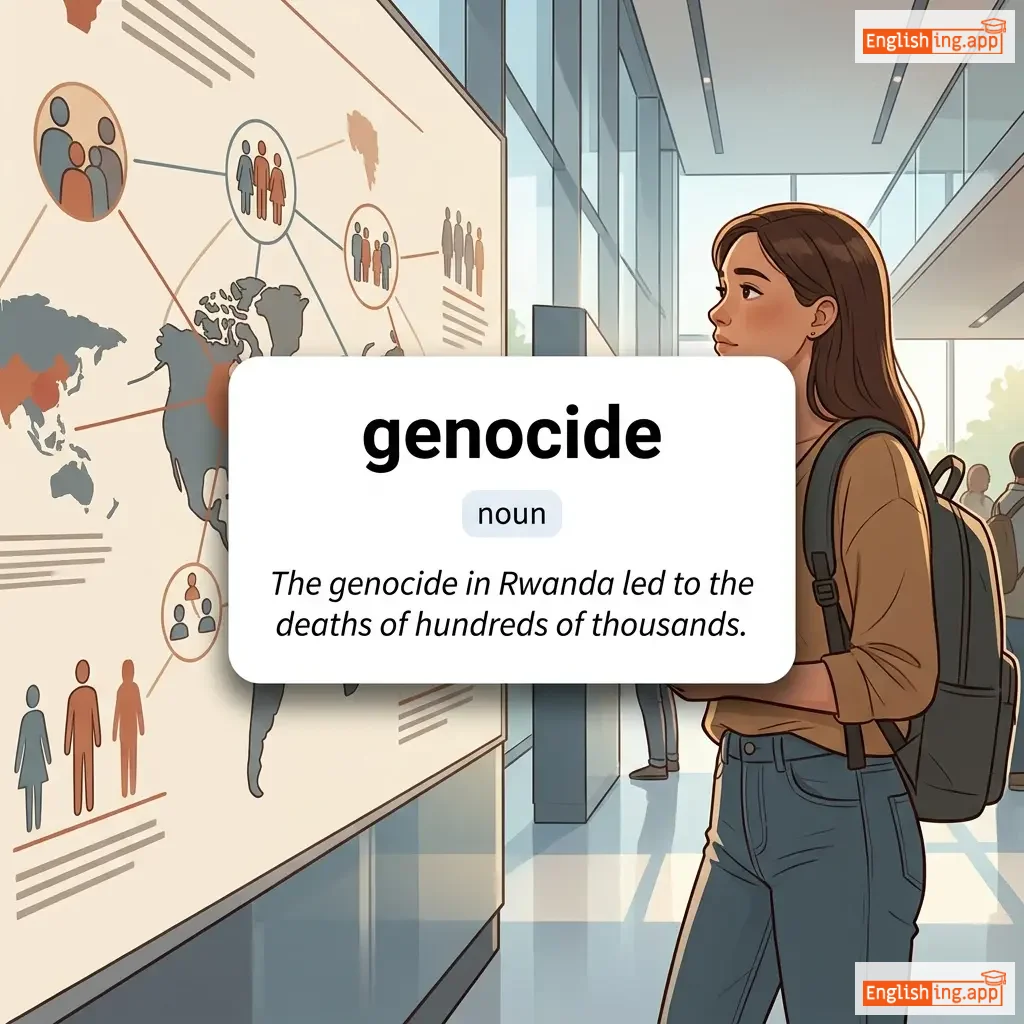
the deliberate killing of a large group of people, especially those of a particular ethnic group or nation
••••••
|
The international court condemned the systematic genocide committed during the war. |
国际法院谴责了在战争期间进行的系统性种族灭绝。
guójì fǎyuàn qiǎnzéle zài zhànzhēng qījiān jìnxíng de xìtǒngxì zhǒngzú mièjué.
••••••
|
- •••••• | - •••••• | - •••••• |
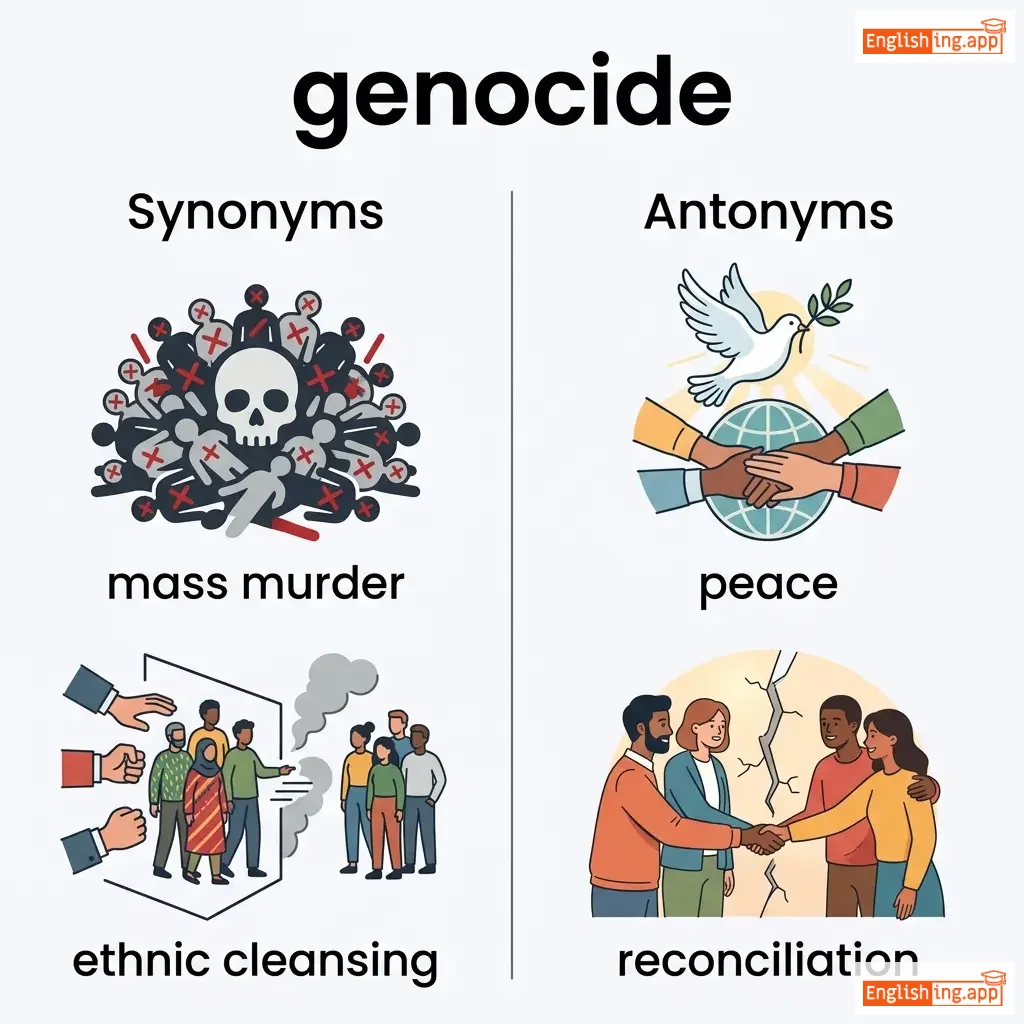
mass murder, ethnic cleansing, extermination, massacre
••••••
|
protection, preservation, salvation, rescue
••••••
|
prevent genocide, genocide prevention, ethnic genocide
••••••
|
种族灭绝是指杀害一个种族,像种族灭绝一样记住。
••••••
|
|
#2267
🌸
|
/ˈdʒɛntəl/
adjective
(jèntè)
••••••
|
- •••••• |
温柔
wenrou
••••••
|
- •••••• | - •••••• | - •••••• | - •••••• |
Kind, mild, or tender in nature or behavior
••••••
|
He was always gentle with children. |
他总是对孩子们很温柔。
Tā zǒng shì duì háizimen hěn wēnróu.
••••••
|
gentle reminder |
a polite and soft way to remind someone
••••••
|
温柔提醒
wēnróu tíxǐng
••••••
|
kind, tender, mild, soft, calm
••••••
|
harsh, rough, cruel
••••••
|
gentle touch, gentle smile, gentle reminder, gentle nature
••••••
|
温柔如轻柔的风
••••••
|
|
#2268
🤵
|
/ˈdʒɛntəlmən/
noun
(ɡɛntəlmɛn)
••••••
|
- •••••• |
绅士
shēnshì
••••••
|
- •••••• | - •••••• | - •••••• | - •••••• |
a man who is polite, courteous, and honorable
••••••
|
He opened the door for her like a true gentleman. |
他像一个真正的绅士一样为她开了门。
tā xiàng yī gè zhēnzhèng de shēnshì yīyàng wèi tā kāi le mén.
••••••
|
perfect gentleman |
a man who behaves very politely and respectfully
••••••
|
完美的绅士
wánměi de shēnshì
••••••
|
man, sir, nobleman, gallant, gent
••••••
|
boor, rude man
••••••
|
true gentleman, perfect gentleman, young gentleman, gentleman's club
••••••
|
绅士 (shēnshì) 就像 Gentleman 一样,总是表现出礼貌和尊敬
••••••
|
|
#2269
🌸
|
/ˈdʒɛntli/
adverb
(jiàn tì)
••••••
|
- •••••• |
温柔地
wēnróu de
••••••
|
- •••••• | - •••••• | - •••••• | - •••••• |
in a kind, careful, or soft way
••••••
|
She gently placed the baby in the crib. |
她温柔地把宝宝放在摇篮里。
Tā wēnróu de bǎ bǎobǎo fàng zài yáolán lǐ.
••••••
|
gently does it |
a reminder to do something slowly and carefully
••••••
|
温柔地做
wēnróu de zuò
••••••
|
softly, tenderly, lightly, calmly
••••••
|
harshly, roughly
••••••
|
speak gently, touch gently, gently smiling, gently place
••••••
|
温柔=温暖的 gentle, 慢慢来!
••••••
|
|
#2270
✅
|
/ˈdʒɛnjʊɪn/
adjective
(dʒɛnjʊɪn)
••••••
|
- •••••• |
真正的
zhenzheng de
••••••
|
- •••••• | - •••••• | - •••••• | - •••••• |
real and authentic; not fake or artificial
••••••
|
This is a genuine leather bag. |
这是一个真正的皮革包。
Zhe shi yige zhenzheng de pigua bao.
••••••
|
genuine article |
an authentic or real example of something
••••••
|
真品
zhenpin
••••••
|
authentic, real, true, legitimate, sincere
••••••
|
fake, false, counterfeit
••••••
|
genuine smile, genuine leather, genuine concern, genuine effort
••••••
|
Genuine 意味着真正的,就像真正的笑容意味着真实的笑容。
••••••
|
|
#2271
❤️
|
/ˈdʒɛnjʊɪnli/
adverb
(jiū ní lì)
••••••
|
- •••••• |
真心
zhēn xīn
••••••
|
- •••••• | - •••••• | - •••••• | - •••••• |
in a truthful and sincere way
••••••
|
She genuinely cares about the environment.
她真心关心环境。
••••••
|
她真心关心环境。
Tā zhēn xīn guān xīn huán jìng.
••••••
|
- •••••• | - •••••• | - •••••• |
sincerely, honestly, truly, authentically
••••••
|
falsely, insincerely, dishonestly
••••••
|
genuinely concerned, genuinely interested, genuinely believe
••••••
|
当你真心说话时,你展示了你'真心'的情感,就像'真心'的意思一样。
••••••
|
|
#2272
🗺️
|
/ˌdʒiːəˈɡræfɪkəl/
adjective
(吉奥格拉菲卡)
••••••
|
- •••••• |
地理的
dili de
••••••
|
- •••••• | - •••••• | - •••••• | - •••••• |
relating to geography; connected with the physical features, location, or characteristics of the Earth or a particular area
••••••
|
The country’s geographical position makes it an important trading hub.
泽 坎特里 吉奥格拉菲卡 波西申 梅克斯 伊特 安 因波坦 特雷丁 哈布。
••••••
|
这个国家的地理位置使它成为重要的贸易中心。
zhege guojia de dili weizhi shi ta chengwei zhongyao de maoyi zhongxin
••••••
|
geographical location
geographical location
••••••
|
the specific position or place of an area on the Earth
••••••
|
地理位置
dili weizhi
••••••
|
regional, territorial, spatial, topographical, locational
••••••
|
nonspatial, abstract
••••••
|
geographical location, geographical features, geographical distribution, geographical boundaries, geographical diversity
••••••
|
地理 = geography → 地理的
••••••
|
|
#2273
🌍
|
/dʒiˈɒɡrəfi/
noun
(吉奥格拉菲)
••••••
|
- •••••• |
地理
dili
••••••
|
- •••••• | - •••••• | - •••••• | - •••••• |
the study of the Earth’s physical features, climates, populations, and the relationships between people and their environments
••••••
|
She studies geography to understand how landscapes and human societies interact.
她学习吉奥格拉菲来了解世界。
••••••
|
她学习地理来理解世界。
ta xuexi dili lai lijie shijie
••••••
|
- •••••• | - •••••• | - •••••• |
earth science, physical geography, human geography, geoscience
••••••
|
history, literature
••••••
|
physical geography, human geography, study geography, geography lesson, world geography
••••••
|
地 = earth, 理 = logic → 地理 = geography
••••••
|
|
#2274
🇩🇪
|
/ˈdʒɜːrmən/
noun/adjective
(dʒɜːrmən)
••••••
|
- •••••• |
德语
dé yǔ
••••••
|
- •••••• | - •••••• | - •••••• | - •••••• |
relating to Germany, its people, or its language
••••••
|
She is learning German to study abroad. |
她正在学习德语以便出国留学。
tā zhèngzài xuéxí déyǔ yǐbiàn chūguó liúxué.
••••••
|
German shepherd |
a breed of large dog originally bred in Germany
••••••
|
德国牧羊犬
déguó mù yáng quǎn
••••••
|
Teutonic, Deutsch, European
••••••
|
non-German, foreign
••••••
|
German language, German culture, German shepherd, German food
••••••
|
德语是德国的语言,就像德国牧羊犬是德国的犬种。
••••••
|
|
#2275
🤲
|
/ˈdʒɛs.tʃər/
noun
(杰斯特)
••••••
|
- •••••• |
手势
shǒushì
••••••
|
- •••••• | - •••••• | - •••••• | - •••••• |
A movement of part of the body, especially the hands or head, to express an idea or meaning.
••••••
|
She made a friendly gesture to welcome the guests. |
她做了一个友好的手势,欢迎客人。
Tā zuòle yīgè yǒuhǎo de shǒushì, huānyíng kèrén.
••••••
|
gesture of goodwill |
An act intended to show kindness or positive intention.
••••••
|
善意的手势
shànyì de shǒushì
••••••
|
motion, signal, sign, indication, movement
••••••
|
inaction, stillness
••••••
|
kind gesture, simple gesture, symbolic gesture, gesture of support
••••••
|
一个手势,表示你欢迎客人,友好而真诚。
••••••
|
|
#2276
📦
|
/ɡɛt/
verb
(get)
••••••
|
|
得到
dedao
••••••
|
got
got
••••••
|
gotten
gotten
••••••
|
gets
gets
••••••
|
getting
getting
••••••
|
to obtain, receive, or come to have something
••••••
|
I need to get a new phone before my old one stops working.
我需要在我的旧手机停止工作之前,获取一部新手机。
••••••
|
我需要在我的旧手机停止工作之前,得到一部新手机。
Wo xuyao zai wode jiu shouji tingzhi gongzuo zhijian, dedao yi bu xin shouji.
••••••
|
get going
开始行动
••••••
|
to start moving or to begin something
••••••
|
开始
kaishi
••••••
|
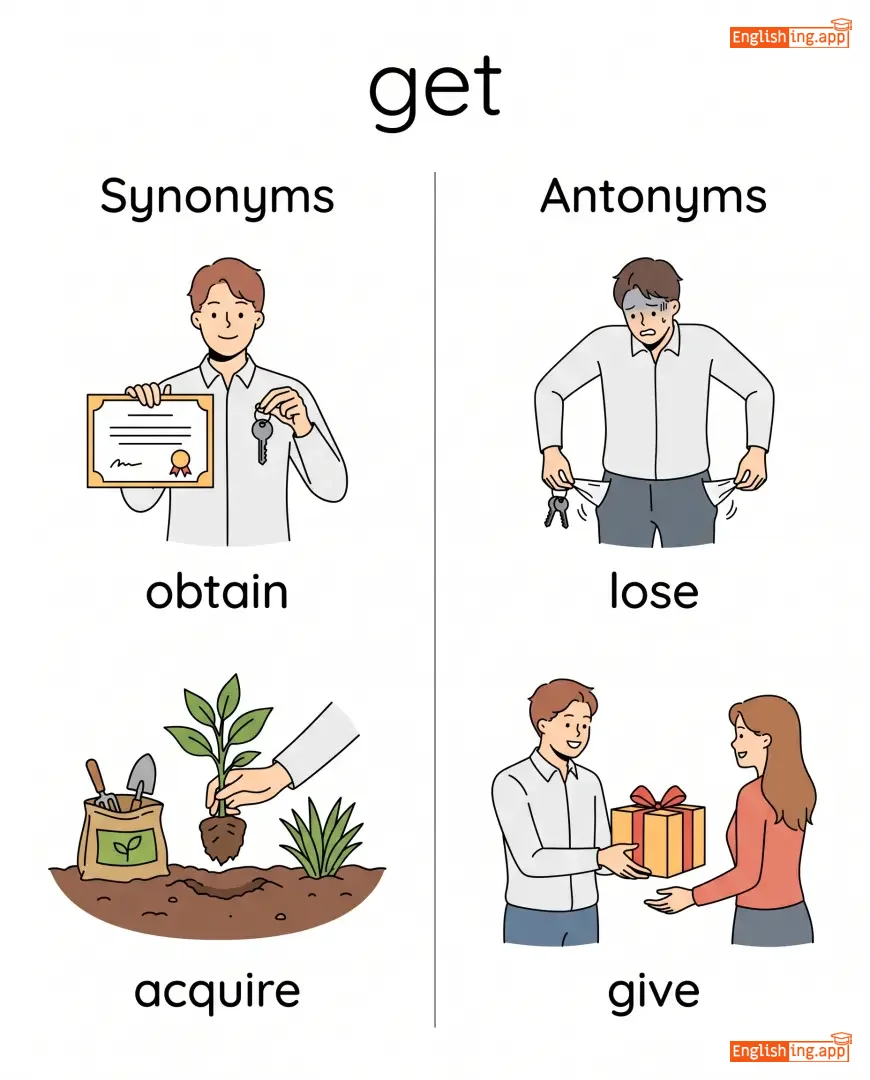
obtain, acquire, receive, gain, secure
••••••
|
lose, give
••••••
|
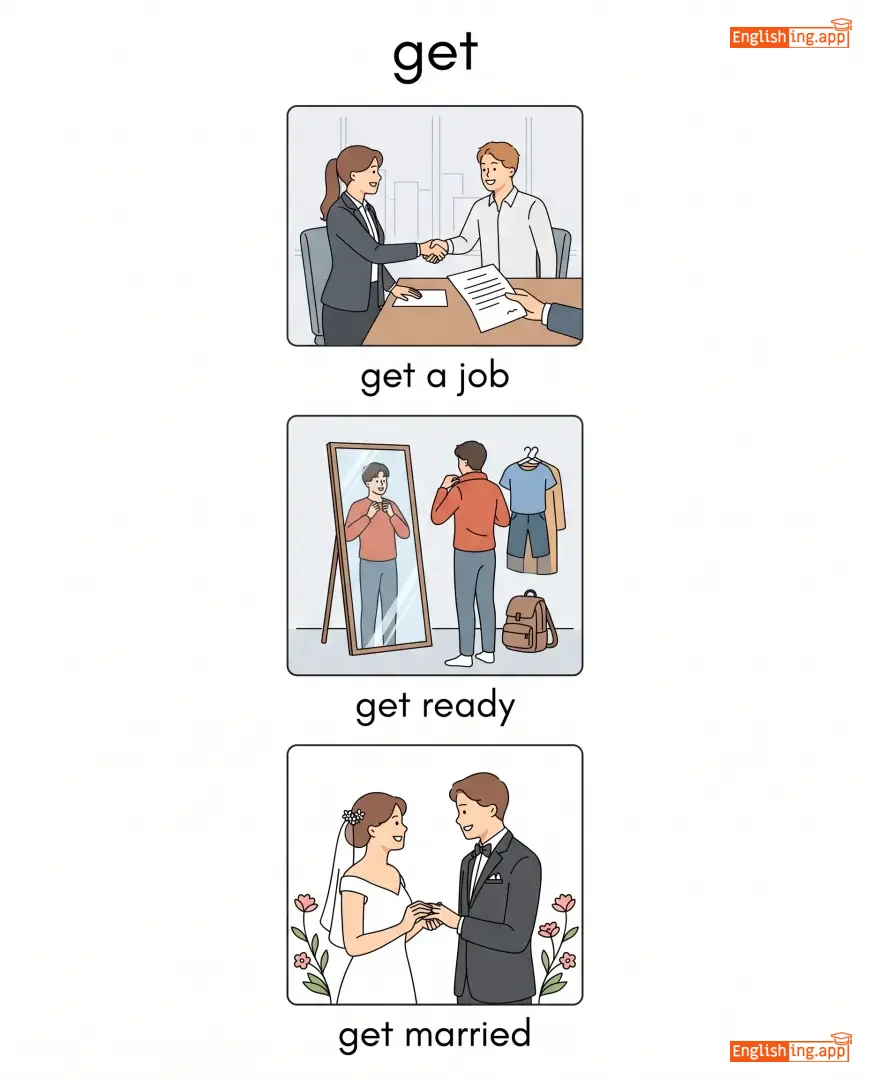
get a job, get ready, get married, get lost, get better
••••••
|
要得到东西,你需要经过大门 (gate) - get 意味着得到
••••••
|
Vocabulary Quiz
Test your vocabulary by matching words with their translations or meanings.
Login to take the quiz
Comments (0)
Share your thoughts and join the discussion.
Join the discussion by logging in
Login to CommentNo comments yet
Be the first to share your thoughts!