


Swipe left or right, or use the buttons. Tap image to zoom.
例句翻译
单词
Lesson 95Lesson 95 - 遮罩切换
|
表情符号
|
单词 | Images | 翻译 | 过去时 | 过去分词 | 第三人称单数 | 动名词 | 含义 | 例句 | 例句翻译 | 示例表达 | 示例表达含义 | 示例表达翻译 | 同义词 | 反义词 | 搭配词 | 助记符 |
|---|---|---|---|---|---|---|---|---|---|---|---|---|---|---|---|---|---|
|
#4495
❤️
|
/ˈsɛkʃʊəl/
adjective
(性行为)
••••••
|
- •••••• |
性行为
xing xingwei
••••••
|
- •••••• | - •••••• | - •••••• | - •••••• |
relating to the instincts, physiological processes, and activities connected with physical attraction or intimate physical contact between individuals
••••••
|
The sexual health of individuals is an important topic in modern medicine. |
个体的性健康是现代医学中的一个重要话题。
Geti de xing jiankang shi xiandai yixue zhong de yige zhongyao huati.
••••••
|
- •••••• | - •••••• | - •••••• |
erotic, intimate, amorous, sensual
••••••
|
asexual, nonsexual
••••••
|
sexual attraction, sexual health, sexual orientation, sexual behavior
••••••
|
Sexual health involves understanding physical attraction and intimacy.
••••••
|
|
#4496
🏳️🌈
|
/ˌsɛkʃuˈæləti/
noun
(性别认同)
••••••
|
- •••••• |
性别认同
xìngbié rèntóng
••••••
|
- •••••• | - •••••• | - •••••• | - •••••• |
a person's capacity for sexual feelings and orientation
••••••
|
She spoke openly about her sexuality and identity. |
她公开谈论了她的性别认同和身份。
Tā gōngkāi tánlùnle tā de xìngbié rèntóng hé shēnfèn.
••••••
|
- •••••• | - •••••• | - •••••• |
sex drive, eroticism, sexual identity, gender orientation
••••••
|
asexuality, celibacy
••••••
|
sexuality education, human sexuality, explore sexuality, express sexuality
••••••
|
性别认同是个人的身份和吸引力之间的联系,想象一下彩虹!
••••••
|
|
#4497
💃
|
/ˈsɛksi/
adjective
(sèxī)
••••••
|
- •••••• |
性感的
xìnggǎn de
••••••
|
- •••••• | - •••••• | - •••••• | - •••••• |
sexually attractive or exciting
••••••
|
She wore a sexy red dress to the party. |
她穿着一条性感的红色连衣裙去参加派对。
Tā chuānzhuó yītiáo xìnggǎn de hóngsè liányīqún qù cānjiā pàiduì.
••••••
|
look sexy |
to appear sexually attractive
••••••
|
看起来性感
kàn qǐlái xìnggǎn
••••••
|
attractive, hot, alluring, seductive, appealing
••••••
|
unattractive, plain
••••••
|
sexy look, sexy voice, sexy dress, sexy attitude
••••••
|
Sexy意味着'性感'—当你看到别人穿着性感的衣服时,他们会说'哇!' 😄 记住:sexy = 性感
••••••
|
|
#4498
🌳
|
/ʃeɪd/
noun, verb
••••••
|
- •••••• | - •••••• |
shaded
••••••
|
shaded
••••••
|
shades
••••••
|
shading
••••••
|
a sheltered or darker area where direct light is blocked; to block light from something
••••••
|
We sat under the tree for some shade. |
- •••••• |
throw shade |
to publicly criticize or show disrespect subtly
••••••
|
- •••••• |
shadow, cover, shelter, dimness, screen
••••••
|
light, brightness, exposure
••••••
|
in the shade, shade of a tree, window shade, sun shade
••••••
|
No •••••• |
|
#4499
🌑
|
/ˈʃæd.oʊ/
noun, verb
(shèdòu)
••••••
|
- •••••• |
阴影
yīnyǐng
••••••
|
shadowed
shèdóud
••••••
|
shadowed
shèdóud
••••••
|
shadows
shèdòuz
••••••
|
shadowing
shèdóuīng
••••••
|
a dark area or shape made when something blocks light; to follow or observe secretly
••••••
|
His shadow stretched long in the evening sun.
他的阴影在傍晚的阳光下拉长。
••••••
|
他的阴影在傍晚的阳光下拉长。
Tā de yīnyǐng zài bàngwǎn de yángguāng xià lācháng.
••••••
|
shadow of a doubt
怀疑的阴影
••••••
|
a very small amount of uncertainty
••••••
|
怀疑的阴影
Huáiyí de yīnyǐng
••••••
|
silhouette, outline, shade, reflection, follower
••••••
|
light, brightness, clarity
••••••
|
cast a shadow, dark shadow, shadow of the night, shadow government
••••••
|
Shadow意味着阴影,总是和阳光在一起
••••••
|
|
#4500
🤝
|
/ʃeɪk/
verb
(sheik)
••••••
|
|
摇动
yaodong
••••••
|
shook
shuk
••••••
|
shaken
sheiken
••••••
|
shakes
sheiks
••••••
|
shaking
sheiking
••••••
|
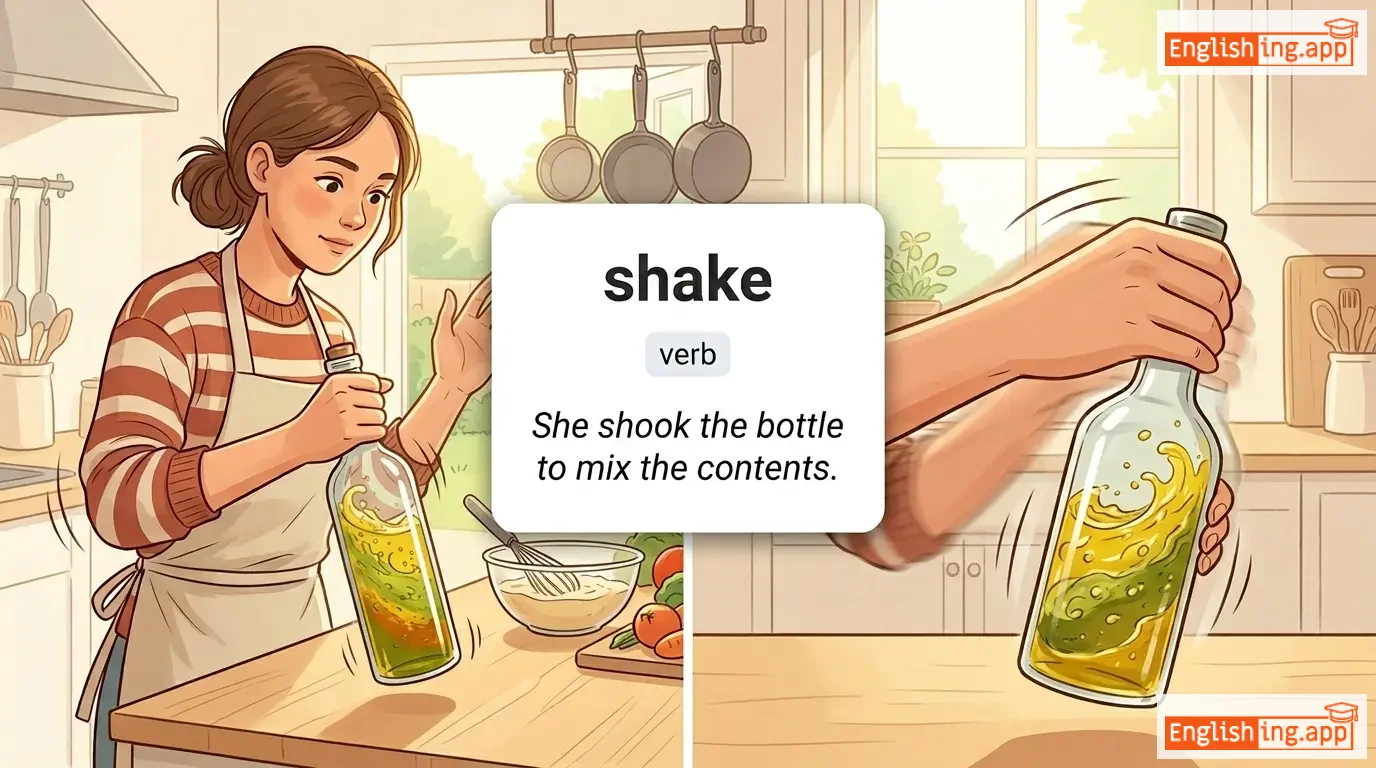
to move quickly back and forth; to tremble
••••••
|
The earthquake made the building shake.
地震让建筑物摇动。
••••••
|
地震让建筑物摇动。
Dizhen rang jianzhu wu yaodong.
••••••
|
- •••••• | - •••••• | - •••••• |
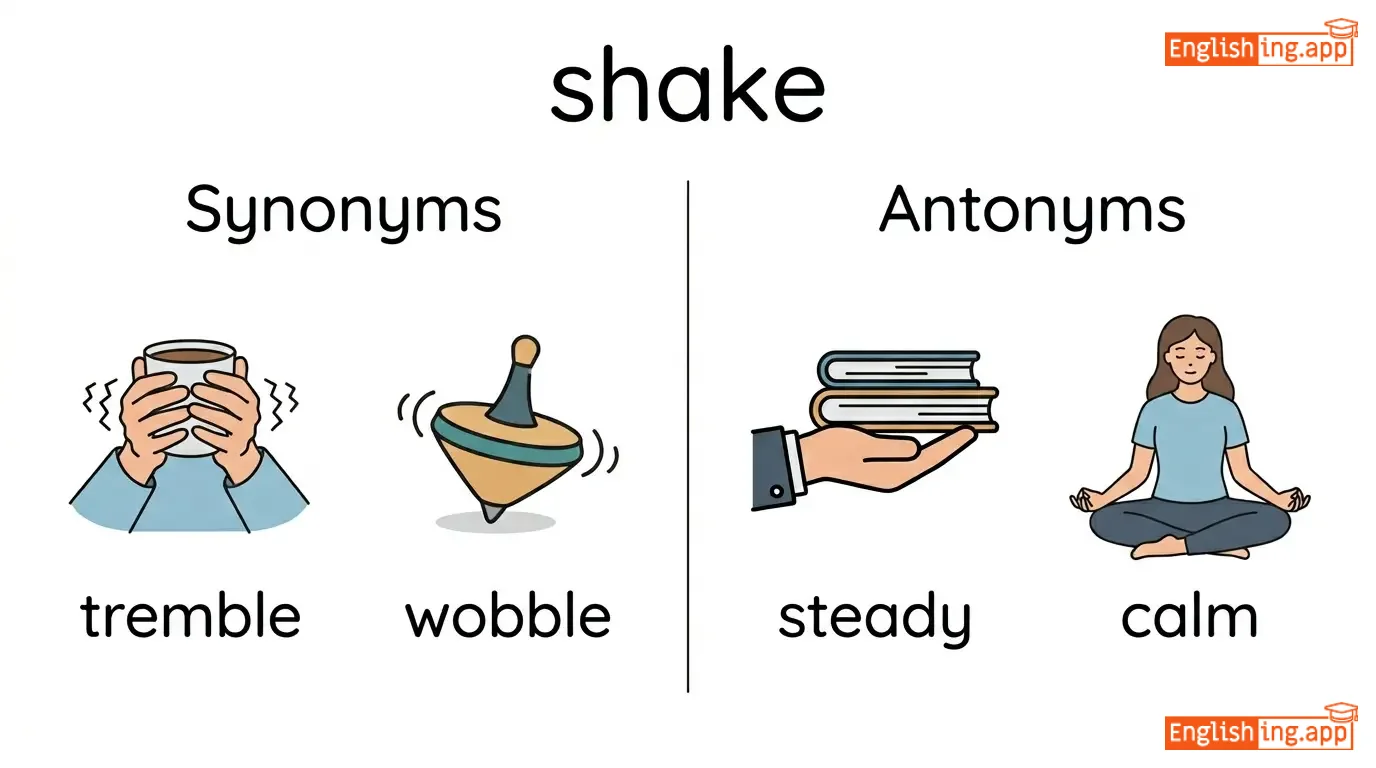
tremble, vibrate, quiver, rock
••••••
|
steady, stabilize, still, calm
••••••
|
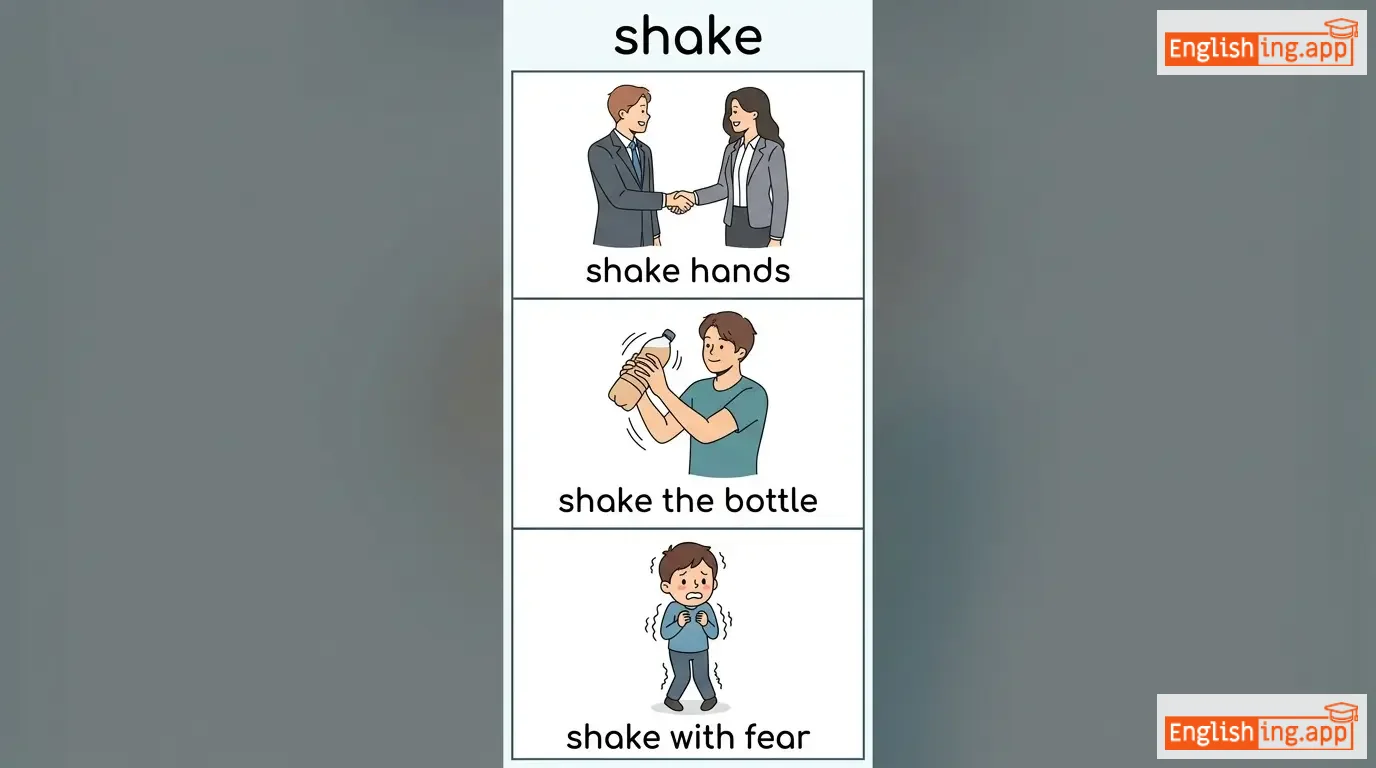
shake hands, shake head, shake violently, shake off, shake up
••••••
|
No •••••• |
|
#4501
💧
|
/ˈʃæl.oʊ/
adjective
(shallow)
••••••
|
- •••••• |
浅
qian
••••••
|
- •••••• | - •••••• | - •••••• | - •••••• |
not deep; lacking depth of thought or feeling
••••••
|
The children played in the shallow water near the shore. |
孩子们在靠近岸边的浅水中玩耍。
Haizimen zai kaojin anbian de qianshui zhong wanshua.
••••••
|
shallow end |
the less deep part of a pool
••••••
|
浅水区
qianshui qu
••••••
|
superficial, surface-level, slight, trivial
••••••
|
deep, profound, thoughtful
••••••
|
shallow water, shallow end, shallow mind, shallow depth
••••••
|
Shallow意味着浅(qian)水
••••••
|
|
#4502
😔
|
/ʃeɪm/
noun
(shēm)
••••••
|
- •••••• |
羞耻
xiūchǐ
••••••
|
- •••••• | - •••••• | - •••••• | - •••••• |
a painful feeling of humiliation or distress caused by the consciousness of wrong or foolish behavior
••••••
|
He felt deep shame after lying to his friend. |
他在对朋友撒谎后感到深深的羞耻。
Tā zài duì péngyǒu sāhuǎng hòu gǎndào shēnshēn de xiūchǐ.
••••••
|
crying shame |
something that is very unfortunate
••••••
|
哭泣的羞耻
kūqì de xiūchǐ
••••••
|
embarrassment, guilt, humiliation, disgrace
••••••
|
pride, honor
••••••
|
feel shame, bring shame, deep shame, public shame
••••••
|
羞耻是当你做错事时的感觉,像是‘Shame!’
••••••
|
|
#4503
🔺
|
/ʃeɪp/
noun
(shèipíng)
••••••
|
- •••••• |
形状; 外观
xíngzhuàng; wàiguān
••••••
|
- •••••• | - •••••• | - •••••• | - •••••• |
the external form or appearance of something; condition or state
••••••
|
The artist drew a perfect circle shape on the canvas. |
艺术家在画布上画出了完美的圆形形状。
Yìshùjiā zài huàbù shàng huà chūle wánměi de yuánxíng xíngzhuàng.
••••••
|
- •••••• | - •••••• | - •••••• |
form, figure, outline, configuration
••••••
|
formlessness, shapelessness, amorphousness
••••••
|
take shape, lose shape, change shape
••••••
|
形状定义了物体的外观。
••••••
|
|
#4504
🛠️
|
/ʃeɪpt/
adjective
(ʃeɪpt)
••••••
|
- •••••• |
成形的
chengxing de
••••••
|
- •••••• | - •••••• | - •••••• | - •••••• |
having a particular form or appearance
••••••
|
The sculpture was shaped like a human figure. |
雕塑被塑造成一个人形。
Diaosu bei sushao chengwei yige renxing.
••••••
|
- •••••• | - •••••• | - •••••• |
formed, molded, structured, sculpted
••••••
|
unshaped, formless
••••••
|
shaped like, well-shaped, beautifully shaped
••••••
|
成形的意味着有特定形状
••••••
|
|
#4505
🤝
|
/ʃɛər/
verb
(xié'ěr)
••••••
|
- •••••• |
分享
fenxiang
••••••
|
shared
xié'ěr dé
••••••
|
shared
xié'ěr dé
••••••
|
shares
xié'ěr sī
••••••
|
sharing
xié'ěr yīng
••••••
|
to give a portion of (something) to others or allow others to use or enjoy it
••••••
|
She decided to share her lunch with her friends.
Shī dìsàidèd tú xié'ěr hèr lǎnch wǐth hèr frēnds.
••••••
|
她决定与朋友们分享她的午餐。
Tā juédìng yǔ péngyǒumen fēnxiǎng tā de wǔcān.
••••••
|
- •••••• | - •••••• | - •••••• |
distribute, give, allot, contribute
••••••
|
keep, withhold
••••••
|
share a meal, share information, share a story, share a moment
••••••
|
Share your joy, share your life with others!
••••••
|
|
#4506
📊
|
/ˈʃɛərˌhoʊldər/
noun
(shèhuò hòudà)
••••••
|
- •••••• |
股东
gǔdōng
••••••
|
- •••••• | - •••••• | - •••••• | - •••••• |
an individual or organization that owns shares in a company
••••••
|
Each shareholder has the right to vote at the annual meeting. |
每个股东都有权在年度大会上投票。
Měi gè gǔdōng dōu yǒu quán zài nián dù dà huì shàng tóu piào.
••••••
|
major shareholder |
a person owning a large number of shares in a company
••••••
|
主要股东
zhǔ yào gǔ dōng
••••••
|
stockholder, investor, stakeholder, owner
••••••
|
non-investor, outsider
••••••
|
shareholder meeting, shareholder rights, shareholder value, minority shareholder
••••••
|
股东就是持有股权的人,代表着企业的股东!
••••••
|
|
#4507
🔪
|
/ʃɑːrp/
adjective
(shā pǔ)
••••••
|
- •••••• |
锋利; 强烈; 突然和强烈; 快速理解
fēnglì; qiángliè; tūrán hé qiángliè; kuàisù lǐjiě
••••••
|
- •••••• | - •••••• | - •••••• | - •••••• |
having a cutting edge or point; sudden and intense; quick to understand
••••••
|
The knife has a very sharp blade.
刀片非常锋利。
••••••
|
刀片非常锋利。
Dāopiàn fēicháng fēnglì.
••••••
|
- •••••• | - •••••• | - •••••• |
keen, pointed, acute, piercing
••••••
|
blunt, dull, rounded, obtuse
••••••
|
sharp knife, sharp pain, sharp mind, sharp turn
••••••
|
锋利的刀片就像sharp一样!
••••••
|
|
#4508
💥
|
/ˈʃætər/
verb
(shàtè)
••••••
|
- •••••• |
打碎
dǎ suì
••••••
|
shattered
shàtèd
••••••
|
shattered
shàtèd
••••••
|
shatters
shàtèrs
••••••
|
shattering
shàtèring
••••••
|
To break suddenly into many small pieces.
••••••
|
The glass will shatter if you drop it.
The glass will shatter if you drop it.
••••••
|
玻璃会碎掉,如果你把它摔下去。
Bōlí huì suì diào, rúguǒ nǐ bǎ tā shuāi xiàqù.
••••••
|
shatter dreams
shàtèr dreams
••••••
|
to completely ruin someone's hopes or plans
••••••
|
粉碎梦想
fěnsuì mèngxiǎng
••••••
|
break, smash, crack, demolish, splinter
••••••
|
repair, fix, build
••••••
|
shatter glass, shatter dreams, shatter confidence
••••••
|
Shatter意味着打碎——就像玻璃摔落后会打碎一样。
••••••
|
|
#4509
🪒
|
/ʃeɪv/
verb, noun
(舍夫)
••••••
|
- •••••• |
刮胡子
gua huzi
••••••
|
shaved
舍夫德
••••••
|
shaved
舍夫德
••••••
|
shaves
舍夫斯
••••••
|
shaving
舍夫英
••••••
|
To remove hair from the body, typically using a razor; the act of removing hair
••••••
|
He likes to shave every morning before work.
他喜欢每天上班前刮胡子。
••••••
|
他喜欢每天上班前刮胡子。
Ta xihuan meitian shangban qian gua huzi
••••••
|
close shave
险些
••••••
|
a narrow escape from danger
••••••
|
惊险逃脱
jingxian taotuo
••••••
|
trim, clip, cut, scrape, groom
••••••
|
grow, ignore
••••••
|
shave your beard, shave daily, shave closely, wet shave
••••••
|
刮胡子像Shibu,每天早上干净利落
••••••
|
|
#4510
👩
|
/ʃi/
pronoun
(shi)
••••••
|
- •••••• |
她
ta
••••••
|
- •••••• | - •••••• | - •••••• | - •••••• |
a female person or animal previously mentioned or easily identified
••••••
|
She is going to the market to buy vegetables. |
她去市场买蔬菜。
Ta qu shichang mai shucai.
••••••
|
- •••••• | - •••••• | - •••••• |
her, this woman, that woman
••••••
|
he, they
••••••
|
she is, she said, she went, she can
••••••
|
她 sounds like 'she' and both refer to a female subject.
••••••
|
|
#4511
🍂
|
/ʃɛd/
verb
(shed)
••••••
|
- •••••• |
掉落
diao luo
••••••
|
shed
shed
••••••
|
shed
shed
••••••
|
sheds
sheds
••••••
|
shedding
shedding
••••••
|
to let something fall off naturally, such as leaves, hair, or tears
••••••
|
Trees shed their leaves in autumn.
树木在秋天落叶。
••••••
|
树木在秋天落叶。
Shumu zai qiutian luoye.
••••••
|
shed light on
照亮
••••••
|
to make something clearer or easier to understand
••••••
|
阐明
chan ming
••••••
|
discard, drop, lose, release, emit
••••••
|
keep, retain
••••••
|
shed tears, shed light, shed weight, shed blood
••••••
|
Shed意味着掉落,就像秋天树木掉落的叶子。
••••••
|
|
#4512
🐑
|
/ʃiːp/
noun
(shiep)
••••••
|
- •••••• |
羊
yang
••••••
|
- •••••• | - •••••• | - •••••• | - •••••• |
a farm animal with thick wool that is raised for its wool, meat, and milk
••••••
|
The farmer keeps a large flock of sheep. |
农民养着一大群羊。
nong min yang zhe yi da qun yang.
••••••
|
black sheep |
a person who is considered a disgrace to a group or family
••••••
|
黑羊
hei yang
••••••
|
lamb, ewe, ram, livestock, animal
••••••
|
wolf, predator
••••••
|
flock of sheep, sheep farming, shear sheep, lost sheep
••••••
|
Sheep 意思是羊 — 就像羊一样,温顺的人!
••••••
|
|
#4513
⛰️
|
/ʃɪə/
adjective
(xiěr)
••••••
|
- •••••• |
完全
wanquan
••••••
|
- •••••• | - •••••• | - •••••• | - •••••• |
complete and utter; very steep or transparent
••••••
|
The cliff was a sheer drop into the sea. |
悬崖是一个完全的落差进入大海。
Xuán yá shì yī gè wánquán de luòchā jìnrù dàhǎi.
••••••
|
sheer luck |
something happening only because of complete chance
••••••
|
纯粹的运气
chúncuì de yùnqì
••••••
|
absolute, pure, steep, transparent, thin
••••••
|
partial, opaque
••••••
|
sheer luck, sheer force, sheer cliff, sheer fabric
••••••
|
Sheer表示完全,就像 sheer luck表示纯粹的运气。
••••••
|
|
#4514
🛏️
|
/ʃiːt/
noun
(shìt)
••••••
|
- •••••• |
床单
chuángdān
••••••
|
- •••••• | - •••••• | - •••••• | - •••••• |
a large piece of cloth or paper, typically used to cover or protect something
••••••
|
I need a clean sheet to cover the bed. |
我需要一张干净的床单来覆盖床铺。
Wǒ xūyào yī zhāng gānjìng de chuángdān lái fùgài chuángpù.
••••••
|
- •••••• | - •••••• | - •••••• |
cloth, fabric, paper, mat
••••••
|
blank, naked
••••••
|
bed sheet, sheet of paper, clean sheet, white sheet
••••••
|
Chuángdān sounds like 'chuan'—a sheet that covers your bed.
••••••
|
|
#4515
📚
|
/ʃɛlf/
noun
(架子)
••••••
|
- •••••• |
架子
jiazi
••••••
|
- •••••• | - •••••• | - •••••• | - •••••• |
a flat surface used for storing or displaying things, typically fixed to a wall or inside a cabinet
••••••
|
I placed the books on the shelf next to the window. |
我把书放在靠窗的架子上。
Wǒ bǎ shū fàng zài kào chuāng de jiàzi shàng.
••••••
|
- •••••• | - •••••• | - •••••• |
rack, ledge, stand, platform
••••••
|
floor, ground
••••••
|
bookshelf, shelf space, kitchen shelf, wall shelf
••••••
|
架子 reminds you of a place to 'stack' or organize your things.
••••••
|
|
#4516
🐚
|
/ʃel/
noun
(壳)
••••••
|
- •••••• |
壳
ké
••••••
|
- •••••• | - •••••• | - •••••• | - •••••• |
hard outer covering of an animal; explosive projectile for a gun
••••••
|
The artillery fired a shell at the enemy position. |
炮兵向敌方阵地发射了一个炮弹。
pàobīng xiàng dífāng zhèndì fāshèle yīgè pàodàn.
••••••
|
- •••••• | - •••••• | - •••••• |
casing, husk, projectile, missile
••••••
|
core, interior, center
••••••
|
artillery shell, shell shock, shell out
••••••
|
壳 (ké) is a hard outer covering, like the shell!
••••••
|
|
#4517
🏠
|
/ˈʃel.tər/
noun
(海皮内斯)
••••••
|
- •••••• |
避难所
binansuo
••••••
|
- •••••• | - •••••• | - •••••• | - •••••• |
a place giving temporary protection from bad weather or danger
••••••
|
The hikers found shelter in a cave during the heavy rain.
登山者在大雨中在山洞里找到了海皮内斯。
••••••
|
登山者在大雨中在山洞里找到了避难所。
dengshanzhe zai dayu zhong zai shandong li zhaodao le binansuo.
••••••
|
- •••••• | - •••••• | - •••••• |
refuge, sanctuary, protection, haven
••••••
|
exposure, danger, vulnerability, openness
••••••
|
seek shelter, provide shelter, emergency shelter
••••••
|
Bi nan suo — ‘be not sore’ — you rest safely inside a shelter.
••••••
|
|
#4518
🔄
|
/ʃɪft/
verb
(希夫特)
••••••
|
- •••••• |
转移
zhuan yi
••••••
|
shifted
希夫特德
••••••
|
shifted
希夫特德
••••••
|
shifts
希夫特斯
••••••
|
shifting
希夫廷
••••••
|
To move or change from one place, position, or situation to another.
••••••
|
She had to shift her focus to the new project.
她不得不将注意力转向新项目。
••••••
|
她不得不将注意力转向新项目。
Ta budebu jiang zhuyi li zhuan xiang xin xiangmu.
••••••
|
shift gears
换档
••••••
|
to change your approach or activity suddenly
••••••
|
换档
huan dang
••••••
|
move, change, switch, transfer, relocate
••••••
|
stay, remain, hold
••••••
|
shift focus, shift position, shift attention, shift responsibility
••••••
|
Shift就像换档一样,转移注意力或改变方法。
••••••
|
|
#4519
🌞
|
/ʃaɪn/
verb
(shīn)
••••••
|
- •••••• |
闪耀
shanyao
••••••
|
shone
shōn
••••••
|
shone
shōn
••••••
|
shines
shīn sī
••••••
|
shining
shīnɪnɡ
••••••
|
to give out a bright light or glow
••••••
|
The sun will shine brightly tomorrow.
太阳明天会明亮地照耀。
••••••
|
太阳明天会明亮地照耀。
Tàiyáng míngtiān huì míngliàng de zhàoyào.
••••••
|
- •••••• | - •••••• | - •••••• |
glow, gleam, radiate, sparkle
••••••
|
dull, fade, darken
••••••
|
shine brightly, shine on, shining star
••••••
|
闪耀与强烈的光相关,像太阳 (sun) 闪耀.
••••••
|
|
#4520
✨
|
/ˈʃaɪ.ni/
adjective
(shāinī)
••••••
|
- •••••• |
闪亮的; 光亮的;
shanliang de; guangliang de;
••••••
|
- •••••• | - •••••• | - •••••• | - •••••• |
reflecting light; bright and polished; glossy
••••••
|
The shiny new car caught everyone's attention.
那辆闪亮的新车吸引了所有人的注意。
••••••
|
那辆闪亮的新车吸引了所有人的注意。
Nà liàng shǎn liàng de xīn chē xīyǐn le suǒyǒu rén de zhùyì.
••••••
|
- •••••• | - •••••• | - •••••• |
bright, glossy, polished, gleaming
••••••
|
dull, matte, tarnished, dim
••••••
|
shiny surface, shiny hair, shiny object, shiny new
••••••
|
A shiny car is 'shǎn liàng' in sunlight.
••••••
|
|
#4521
🚢
|
/ʃɪp/
noun
(ʃɪp)
••••••
|
- •••••• |
船
chuan
••••••
|
- •••••• | - •••••• | - •••••• | - •••••• |
a large watercraft that travels the world's oceans and seas
••••••
|
The cargo ship departed from the port at dawn.
货船黎明时离开了港口。
••••••
|
货船在黎明时分离开了港口。
huòchuán zài límíng shífēn líkāi le gǎngkǒu
••••••
|
- •••••• | - •••••• | - •••••• |
vessel, liner, steamer
••••••
|
boat, canoe
••••••
|
cargo ship, cruise ship, navy ship, container ship
••••••
|
船,航行的船,像是浮动的大岛屿,跨越了海洋的无尽旅程。
••••••
|
|
#4522
🚢
|
/ˈʃɪpɪŋ/
noun
(ˈʃɪpɪŋ)
••••••
|
- •••••• |
运输
yunshu
••••••
|
- •••••• | - •••••• | - •••••• | - •••••• |
the process of transporting goods
••••••
|
The shipping of the products was delayed due to weather conditions. |
由于天气原因,产品的运输被延迟了。
Yóuyú tiānqì yuányīn, chǎnpǐn de yùnshū bèi yánchíle.
••••••
|
- •••••• | - •••••• | - •••••• |
delivery, transportation, freight, dispatch
••••••
|
receiving, reception
••••••
|
shipping company, international shipping, shipping cost
••••••
|
Shipping意味着通过海洋或陆路运输商品
••••••
|
|
#4523
👕
|
/ʃɜːrt/
noun
(衬衫)
••••••
|
- •••••• |
衬衫
chenshan
••••••
|
- •••••• | - •••••• | - •••••• | - •••••• |
a piece of clothing worn on the upper body, usually with sleeves and a collar
••••••
|
He wore a blue shirt to the party.
他穿了一件蓝色衬衫去派对。
••••••
|
他穿了一件蓝色衬衫去派对。
Tā chuānle yī jiàn lánsè chènshān qù pàiduì.
••••••
|
- •••••• | - •••••• | - •••••• |
top, blouse, tee, polo
••••••
|
pants, shorts
••••••
|
wear a shirt, button-up shirt, t-shirt
••••••
|
穿衬衫让你看起来很专业!
••••••
|
|
#4524
💩
|
/ʃɪt/
noun
(屎)
••••••
|
- •••••• |
屎
shi
••••••
|
- •••••• | - •••••• | - •••••• | - •••••• |
a vulgar term for feces or excrement
••••••
|
The dog made a mess by leaving its shit on the floor. |
狗在地板上留下了它的屎,弄得一团糟。
gǒu zài dìbǎn shàng liúxiàle tā de shǐ, nòng de yī tuán zāo.
••••••
|
- •••••• | - •••••• | - •••••• |
feces, stool, excrement, crap
••••••
|
cleanliness, purity
••••••
|
shit happens, take a shit, shitty
••••••
|
屎的声音就像它的名字一样!
••••••
|
|
#4525
😲
|
/ʃɒk/
noun
(休克)
••••••
|
- •••••• |
震惊
zhènjīng
••••••
|
- •••••• | - •••••• | - •••••• | - •••••• |
a sudden upsetting or surprising event or experience
••••••
|
The news of his sudden departure was a shock to everyone.
他的突然离开消息让每个人都震惊。
••••••
|
他的突然离开消息让每个人都震惊。
Tā de túrán líkāi xiāoxī ràng měi gèrén dōu zhènjīng.
••••••
|
- •••••• | - •••••• | - •••••• |
surprise, jolt, stun, amazement
••••••
|
calm, peace
••••••
|
shock waves, culture shock, in shock, total shock
••••••
|
震惊就像一场突如其来的雷电,瞬间改变一切。
••••••
|
|
#4526
😱
|
/ˈʃɒkɪŋ/
adjective
(shocking)
••••••
|
- •••••• |
令人震惊的
ling ren zhen jing de
••••••
|
- •••••• | - •••••• | - •••••• | - •••••• |
causing surprise or disbelief; startling
••••••
|
The news of the accident was shocking to everyone. |
事故的消息令所有人震惊。
Shigu de xiaoxi ling suoyouren zhenjing.
••••••
|
- •••••• | - •••••• | - •••••• |
startling, surprising, astonishing, unexpected
••••••
|
expected, unsurprising
••••••
|
shocking news, shocking incident, shocking revelation
••••••
|
震惊的东西就是让你震惊的
••••••
|
|
#4527
👞
|
/ʃuː/
noun
(鞋子)
••••••
|
- •••••• |
鞋子
xiezi
••••••
|
- •••••• | - •••••• | - •••••• | - •••••• |
covering for the foot, typically made of leather or cloth
••••••
|
She bought a new pair of running shoes for exercise.
她买了一双新的跑步鞋来锻炼。
••••••
|
她买了一双新的跑步鞋来锻炼。
Ta mai le yi shuang xin de paobu xie lai duanlian.
••••••
|
- •••••• | - •••••• | - •••••• |
footwear, sneakers, boots
••••••
|
barefoot, socks only
••••••
|
running shoes, dress shoes, leather shoes, tennis shoes
••••••
|
Xiezi sounds like 'exercise' shoes to get fit!
••••••
|
|
#4528
📸
|
/ʃuːt/
verb
(shut)
••••••
|
- •••••• |
射击 / 拍照
sheji / paizhao
••••••
|
shot
shot
••••••
|
shot
shot
••••••
|
shoots
shoots
••••••
|
shooting
shooting
••••••
|
to fire a bullet or arrow from a weapon; to take a photograph or film
••••••
|
He learned how to shoot a bow and arrow.
他学会了如何用弓和箭射击。
••••••
|
他学会了如何用弓和箭射击。
Ta xuehui le ruhe yong gong he jian sheji.
••••••
|
shoot the breeze
shoot the breeze
••••••
|
to chat informally
••••••
|
闲聊
xianliao
••••••
|
fire, discharge, snap, photograph, film
••••••
|
miss, hold, keep
••••••
|
shoot a gun, shoot a film, shoot photos, shoot arrows
••••••
|
Shoot是射击,同时也能用来拍照
••••••
|
|
#4529
🏪
|
/ʃɒp/
noun
(shop)
••••••
|
- •••••• |
商店
shāngdiàn
••••••
|
- •••••• | - •••••• | - •••••• | - •••••• |
a place where goods are sold to customers
••••••
|
I need to go to the shop to buy some groceries.
我需要去商店买一些杂货。
••••••
|
我需要去商店买一些杂货。
Wǒ xūyào qù shāngdiàn mǎi yīxiē záhuò.
••••••
|
- •••••• | - •••••• | - •••••• |
store, market, boutique, emporium
••••••
|
warehouse
••••••
|
go to the shop, open a shop, buy from the shop, local shop
••••••
|
去商店意味着买东西。
••••••
|
|
#4530
🛍️
|
/ˈʃɒpɪŋ/
noun
(购物)
••••••
|
- •••••• |
购物
gòuwù
••••••
|
- •••••• | - •••••• | - •••••• | - •••••• |
the activity of going to shops to buy things
••••••
|
She spent the afternoon shopping for clothes.
她下午花时间去购物买衣服。
••••••
|
她下午花时间去购物买衣服。
Tā xiàwǔ huā shíjiān qù gòuwù mǎi yīfú.
••••••
|
- •••••• | - •••••• | - •••••• |
buying, purchasing, browsing, retail therapy
••••••
|
selling
••••••
|
go shopping, shopping mall, window shopping, shopping spree
••••••
|
购物意味着去商店购买你需要的东西。
••••••
|
|
#4531
🏖️
|
/ʃɔːr/
noun
(shor)
••••••
|
- •••••• |
海岸; 岸边; 沙滩
shor
••••••
|
- •••••• | - •••••• | - •••••• | - •••••• |
the land along the edge of a sea, lake, or other body of water
••••••
|
We walked along the shore collecting seashells.
我们沿着海岸走,捡贝壳。
••••••
|
我们沿着海岸走,捡贝壳。
Wǒmen yánzhe hǎi'àn zǒu, jiǎn bèiké.
••••••
|
- •••••• | - •••••• | - •••••• |
coast, beach, waterfront, seashore
••••••
|
inland, interior
••••••
|
sandy shore, rocky shore, opposite shore, lake shore
••••••
|
In Chinese, '海岸' (hǎi'àn) means shore, similar to 'shor' in English.
••••••
|
|
#4532
📏
|
/ʃɔːrt/
adjective
(短)
••••••
|
- •••••• |
短的; 简短的
duǎn de; jiǎn duǎn de
••••••
|
- •••••• | - •••••• | - •••••• | - •••••• |
having a small length, height, or duration; not long
••••••
|
The meeting was very short, lasting only ten minutes. |
会议非常短,仅持续了十分钟。
Huìyì fēicháng duǎn, jǐn chíxùle shí fēnzhōng.
••••••
|
- •••••• | - •••••• | - •••••• |
brief, small, little, compact
••••••
|
long, tall, extended, lengthy
••••••
|
short story, short time, short distance, short hair
••••••
|
短的,就像短片电影
••••••
|
|
#4533
⏳
|
/ˈʃɔːrt tɜːrm/
adjective
(短期)
••••••
|
|
短期
duǎn qī
••••••
|
- •••••• | - •••••• | - •••••• | - •••••• |
lasting for or involving a short period of time
••••••
|
They offered a short-term loan to help the business. |
他们提供了一个短期贷款来帮助企业。
Tāmen tígōngle yīgè duǎnqī dàikuǎn lái bāngzhù qǐyè.
••••••
|
- •••••• | - •••••• | - •••••• |
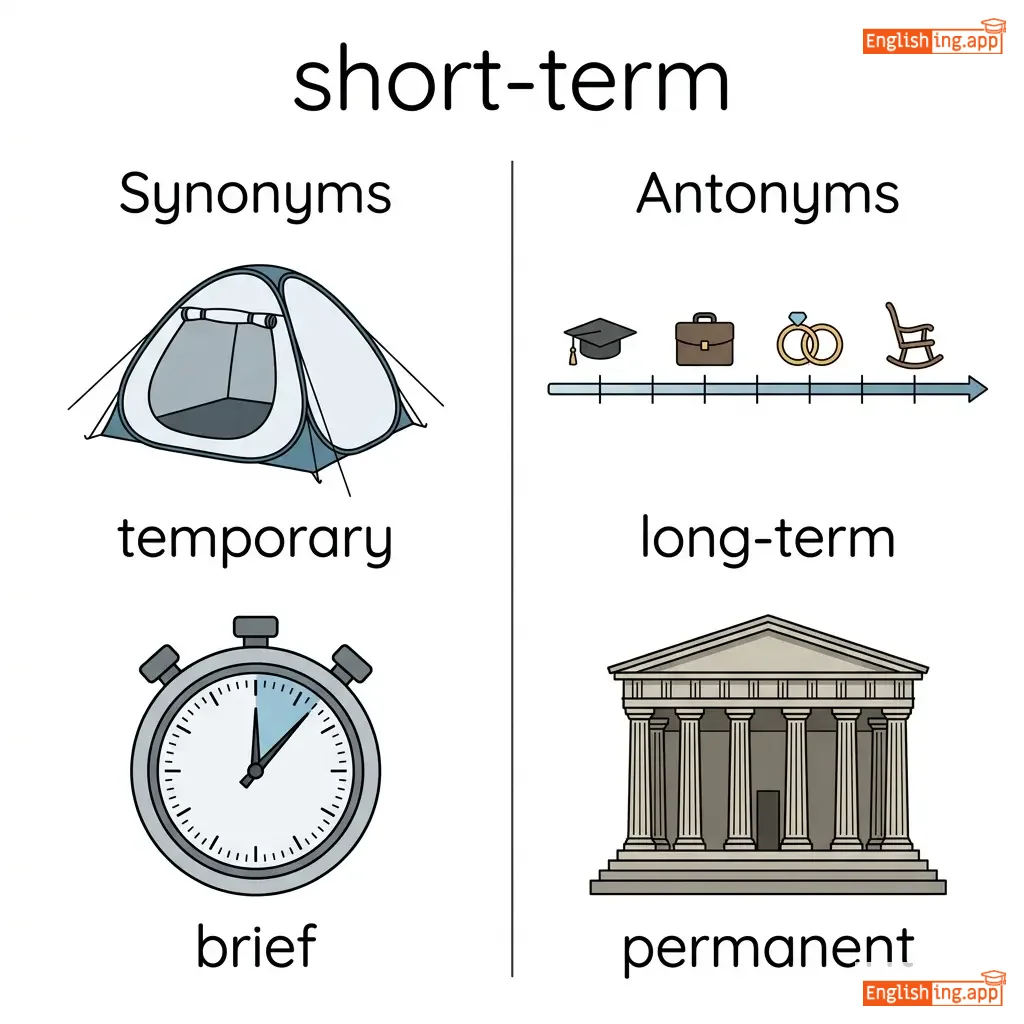
temporary, brief, momentary, provisional, limited
••••••
|
long-term, permanent, lasting
••••••
|
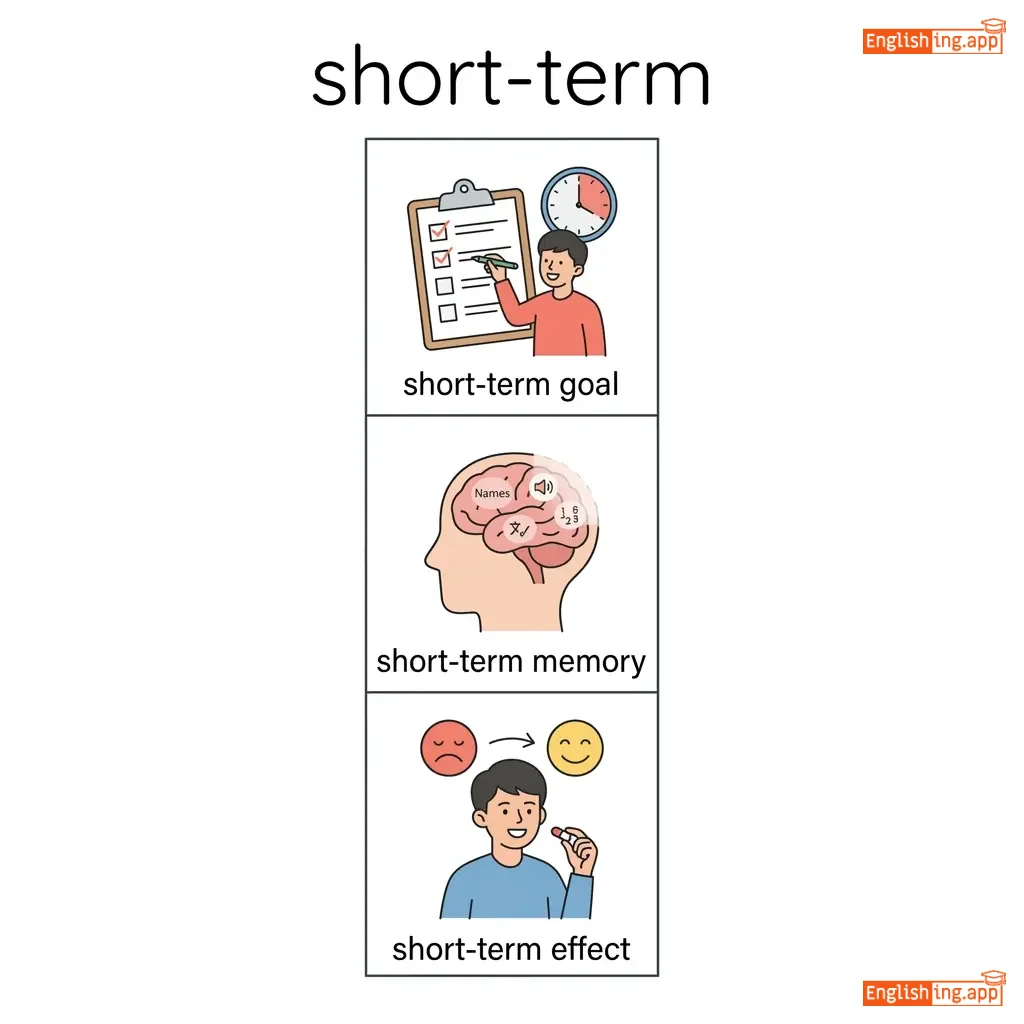
short-term goal, short-term memory, short-term effect, short-term plan
••••••
|
Short-term 意味着短时间 — 短期贷款!
••••••
|
|
#4534
📉
|
/ˈʃɔːr.tɪdʒ/
noun
(短缺)
••••••
|
- •••••• |
短缺
shortij
••••••
|
- •••••• | - •••••• | - •••••• | - •••••• |
a lack or deficiency of something that is needed or expected
••••••
|
There is a severe water shortage in the region.
该地区严重缺水。
••••••
|
该地区严重缺水。
gai di qu yan zhong que shui
••••••
|
- •••••• | - •••••• | - •••••• |
scarcity, deficit, lack, deficiency
••••••
|
abundance, surplus, excess, plenty
••••••
|
water shortage, food shortage, housing shortage, staff shortage
••••••
|
Shortage mnemonic: 想象一个 store 的货架 空空 标着 shortage 把它拆成 short age 来记 资源 不足 就是 short age
••••••
|
|
#4535
✂️
|
/ˈʃɔːrtn/
verb
(肖滕)
••••••
|
- •••••• |
缩短
suoduan
••••••
|
shortened
肖滕德
••••••
|
shortened
肖滕德
••••••
|
shortens
肖滕斯
••••••
|
shortening
肖滕宁
••••••
|
To make something shorter in length, duration, or extent
••••••
|
She decided to shorten her speech to fit the time limit.
她决定缩短她的演讲以符合时间限制。
••••••
|
她决定缩短她的演讲以符合时间限制。
Ta jueding suoduan ta de yanjiang yi fuhe shijian xianzhi.
••••••
|
- •••••• | - •••••• | - •••••• |
abridge, trim, reduce, cut, condense
••••••
|
lengthen, extend, elongate
••••••
|
shorten the distance, shorten the time, shorten the skirt, shorten the trip
••••••
|
Think '缩短' like shorten, making things smaller in Chinese.
••••••
|
|
#4536
⏰
|
/ˈʃɔːt.li/
adverb
(肖特利)
••••••
|
- •••••• |
很快; 不久; 简短地
hen kuai; bu jiu; jian duan di
••••••
|
- •••••• | - •••••• | - •••••• | - •••••• |
soon; in a short time; briefly
••••••
|
The meeting will begin shortly. |
会议很快开始。
Huiyi hen kuai kaishi
••••••
|
- •••••• | - •••••• | - •••••• |
soon, presently, momentarily
••••••
|
later, eventually, distantly
••••••
|
arrive shortly, begin shortly, return shortly
••••••
|
很快做完短时间的事,像'shortly'!
••••••
|
|
#4537
🏹
|
/ʃɒt/
noun, verb
(射击)
••••••
|
- •••••• |
射击
sheji
••••••
|
shot
射击
••••••
|
shot
射击
••••••
|
shots
射击
••••••
|
shooting
射击
••••••
|
a single attempt to hit something, usually with a weapon or a ball
••••••
|
He took a shot at the goal.
他朝着球门射击。
••••••
|
他朝着球门射击。
Tā cháo zhe qiúmén shèjí.
••••••
|
Take a shot in the dark
黑暗中射击
••••••
|
to make a guess without any prior knowledge
••••••
|
黑暗中射击
Hēi'àn zhōng shèjí
••••••
|
attempt, try, hit, strike
••••••
|
miss, fail
••••••
|
take a shot, shot at the target, long shot
••••••
|
Shot sounds like 'shot' of tea, aim well and shoot!
••••••
|
Vocabulary Quiz
Test your vocabulary by matching words with their translations or meanings.
Login to take the quiz
Comments (0)
Share your thoughts and join the discussion.
Join the discussion by logging in
Login to CommentNo comments yet
Be the first to share your thoughts!