







Swipe left or right, or use the buttons. Tap image to zoom.
例句翻译
单词
Lesson 88Lesson 88 - 遮罩切换
|
表情符号
|
单词 | Images | 翻译 | 过去时 | 过去分词 | 第三人称单数 | 动名词 | 含义 | 例句 | 例句翻译 | 示例表达 | 示例表达含义 | 示例表达翻译 | 同义词 | 反义词 | 搭配词 | 助记符 |
|---|---|---|---|---|---|---|---|---|---|---|---|---|---|---|---|---|---|
|
#4172
🏛️
|
/reɪˈʒiːm/
noun
(régime)
••••••
|
- •••••• |
政权
zhèngquán
••••••
|
- •••••• | - •••••• | - •••••• | - •••••• |
a system or form of government, often authoritarian
••••••
|
The military regime controlled the country for decades. |
军事政权控制了这个国家几十年。
Jūnshì zhèngquán kòngzhìle zhège guójiā jǐ shí nián.
••••••
|
under the regime |
during the rule of a particular government system
••••••
|
在政权下
zài zhèngquán xià
••••••
|
government, administration, rule, authority, system
••••••
|
anarchy, disorder
••••••
|
military regime, authoritarian regime, regime change, political regime
••••••
|
Regime 意味着政权 - 在军事政权下,有着严格的控制。
••••••
|
|
#4173
🗺️
|
/ˈriː.dʒən/
noun
(lìyù)
••••••
|
- •••••• |
地区; 区域; 地带
diqu; quyu; dizai
••••••
|
- •••••• | - •••••• | - •••••• | - •••••• |
a particular area or part of a country or the world
••••••
|
This region is famous for its wine production.
这个地区因其葡萄酒生产而闻名。
••••••
|
这个地区因其葡萄酒生产而闻名。
Zhe ge diqu yin qi putaojiu shengchan er wenming.
••••••
|
- •••••• | - •••••• | - •••••• |
area, zone, territory, district, province
••••••
|
center, point, specific location
••••••
|
geographical region, remote region, coastal region, mountainous region
••••••
|
Region in Chinese is a part of the larger whole!
••••••
|
|
#4174
🗺️
|
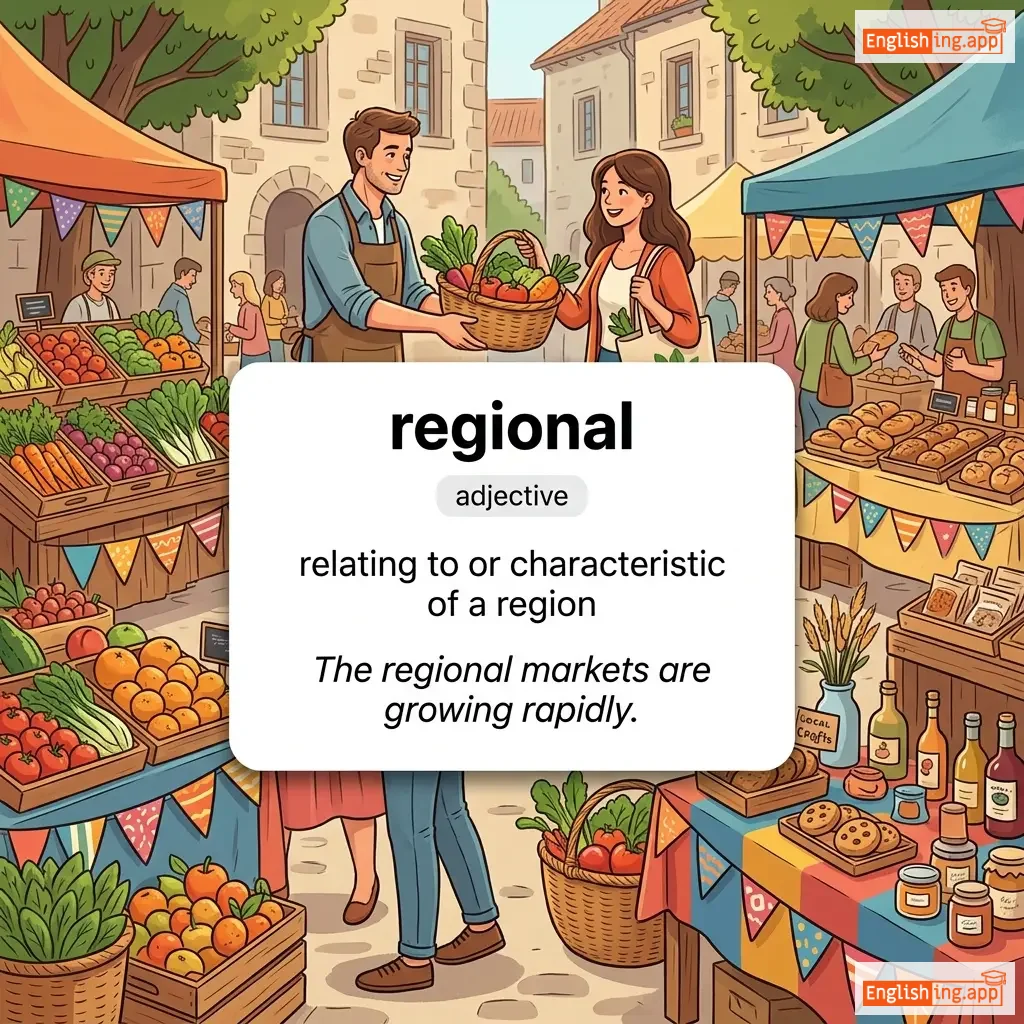
/ˈriː.dʒən.əl/
adjective
(里吉恩尔)
••••••
|
|
区域的
rijienel
••••••
|
- •••••• | - •••••• | - •••••• | - •••••• |
relating to a particular region or area; local to a specific geographic area
••••••
|
The regional differences in culture were quite noticeable.
地区在文化方面的差异相当明显。
••••••
|
地区之间在文化方面的差异相当明显。
diquzaiwenhuafangmiandechayixiangdangmingxian
••••••
|
- •••••• | - •••••• | - •••••• |
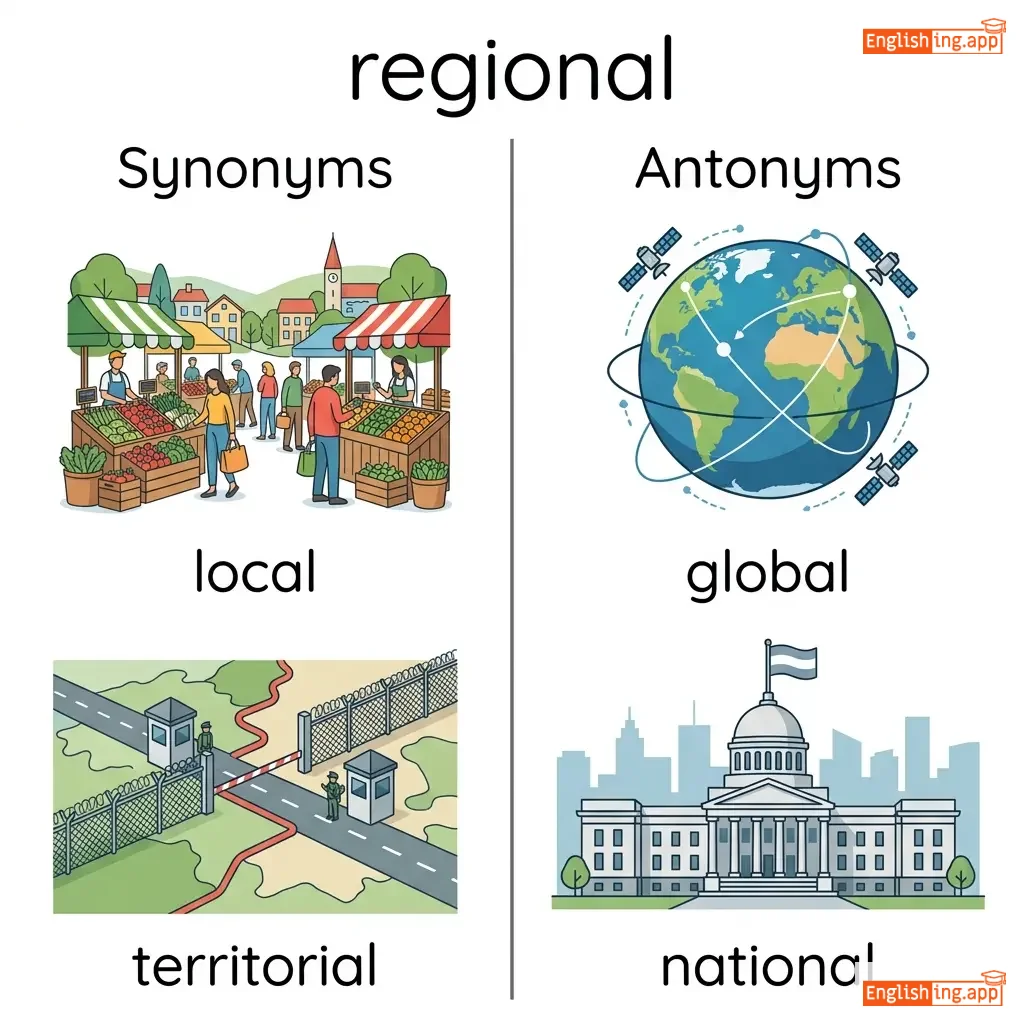
local, territorial, district
••••••
|
national, global, international
••••••
|
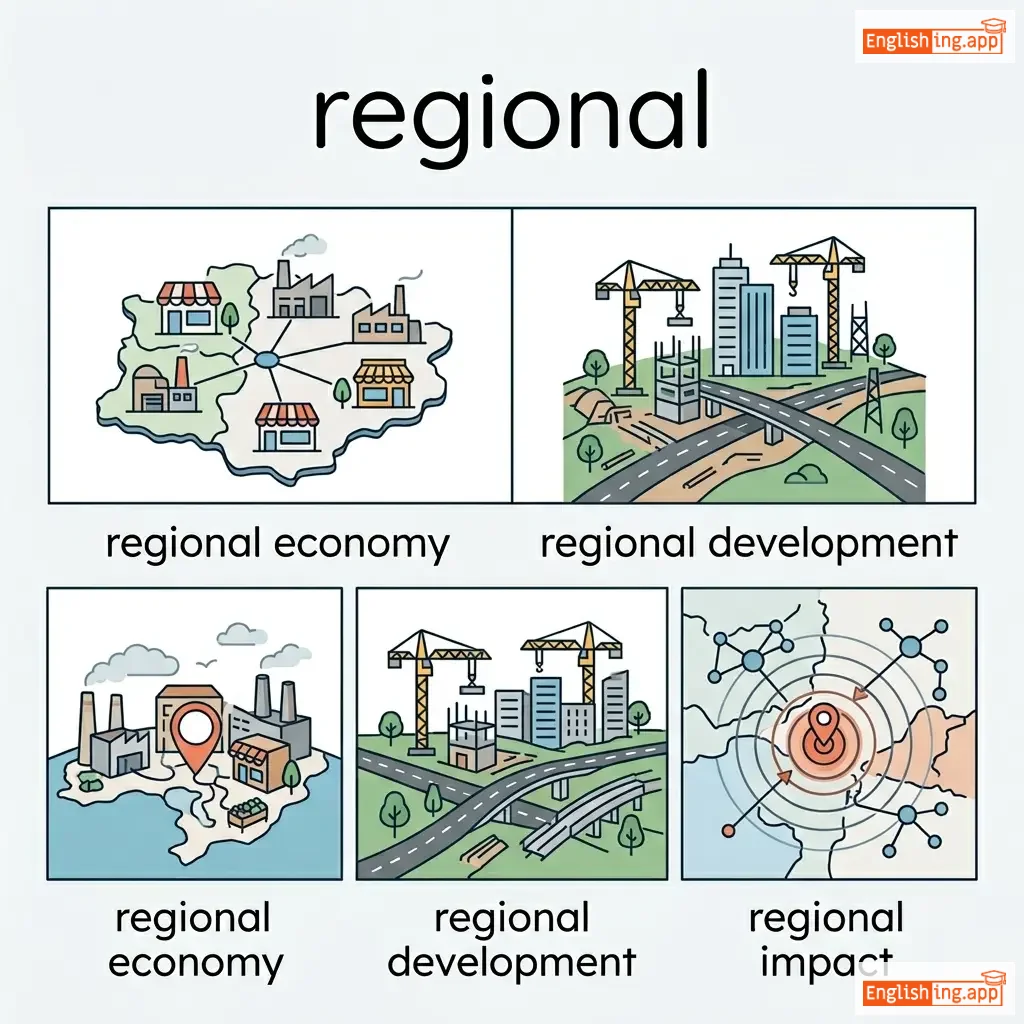
regional government, regional differences, regional cuisine
••••••
|
区域 regional 的记忆法: 看地图, 区域就是 region 的中文含义, 将 region 和 区域 联系起来, 想象一张区域地图 指向 local 的地方
••••••
|
|
#4175
📝
|
/ˈrɛdʒɪstər/
verb
(注册)
••••••
|
- •••••• |
注册
zhuce
••••••
|
registered
注册过
••••••
|
registered
注册过
••••••
|
registers
注册
••••••
|
registering
正在注册
••••••
|
To enter or record officially on a list or in a book.
••••••
|
You must register for the conference before the deadline.
您必须在截止日期前为会议注册。
••••••
|
您必须在截止日期前为会议注册。
Nín bìxū zài jiézhǐ rìqī qián wèi huìyì zhùcè.
••••••
|
register concern
注册关切
••••••
|
To express worry or dissatisfaction about something.
••••••
|
表达关切
biǎodá guānqiè
••••••
|
enroll, record, list, file, sign up
••••••
|
deregister, ignore
••••••
|
register online, register complaint, register user, register interest
••••••
|
Register 意味着注册 — 记住,如果没有注册,您将无法参加会议。
••••••
|
|
#4176
📝
|
/ˌrɛdʒɪˈstreɪʃən/
noun
(rè jì sī tuō)
••••••
|
- •••••• |
注册
zhu ce
••••••
|
- •••••• | - •••••• | - •••••• | - •••••• |
the action or process of enrolling or signing up for something
••••••
|
The registration for the event will close tomorrow. |
活动的注册将在明天关闭。
huodong de zhuce jiang zai mingtian guanbi.
••••••
|
- •••••• | - •••••• | - •••••• |
enrollment, sign-up, registration process, joining
••••••
|
withdrawal, cancellation
••••••
|
event registration, registration form, online registration
••••••
|
注册就是报名参加活动,就像你注册一个活动一样。
••••••
|
|
#4177
😔
|
/rɪˈɡrɛt/
verb
(rìgrèt)
••••••
|
- •••••• |
后悔
hòuhuǐ
••••••
|
regretted
rìgrèted
••••••
|
regretted
rìgrèted
••••••
|
regrets
rìgrèts
••••••
|
regretting
rìgrèting
••••••
|
to feel sad or disappointed about something that has happened or been done
••••••
|
I deeply regret saying those harsh words to her.
我深深后悔对她说了那些严厉的话。
••••••
|
我深深后悔对她说了那些严厉的话。
Wǒ shēn shēn hòuhuǐ duì tā shuō le nàxiē yánlì de huà.
••••••
|
express regret
表示遗憾
••••••
|
to show that you are sorry about something
••••••
|
表示遗憾
biǎoshì yíhàn
••••••
|
lament, repent, remorse, rue
••••••
|
rejoice, celebrate, delight
••••••
|
regret deeply, express regret, feel regret, lifelong regret
••••••
|
后悔是那种我们说出来时,心中感到遗憾的感觉
••••••
|
|
#4178
📅
|
/ˈrɛɡjələr/
adjective
(règular)
••••••
|
- •••••• |
常规的
changgui de
••••••
|
- •••••• | - •••••• | - •••••• | - •••••• |
Happening at fixed intervals; usual or normal in pattern or quality
••••••
|
He is a regular visitor to the library. |
他是图书馆的常客。
Ta shi tushuguan de changke.
••••••
|
regular customer |
A person who frequently visits or buys from the same place
••••••
|
常客
chang ke
••••••
|
consistent, usual, normal, routine, frequent
••••••
|
irregular, unusual, abnormal
••••••
|
regular basis, regular meeting, regular customer, regular pattern
••••••
|
Regular 是常规的 — 就像常去同一家店的常客
••••••
|
|
#4179
⏰
|
/ˌreɡ.jʊˈlær.ɪ.ti/
noun
(règuǐlárìtí)
••••••
|
- •••••• |
规律性
guīlǜxìng
••••••
|
- •••••• | - •••••• | - •••••• | - •••••• |
the quality of being regular; occurring at fixed intervals or in a consistent pattern
••••••
|
The regularity of his exercise routine helped him stay healthy. |
他锻炼的规律性帮助他保持健康。
tā duànliàn de guīlǜxìng bāngzhù tā bǎochí jiànkāng
••••••
|
- •••••• | - •••••• | - •••••• |
consistency, routine, pattern, frequency
••••••
|
irregularity, randomness, chaos, inconsistency
••••••
|
with regularity, mathematical regularity, clockwork regularity, maintain regularity
••••••
|
规律性像时钟一样,带来一致性和稳定性
••••••
|
|
#4180
🔄
|
/ˈrɛɡjələrli/
adverb
(雷吉拉利)
••••••
|
- •••••• |
定期地
dingqi de
••••••
|
- •••••• | - •••••• | - •••••• | - •••••• |
at regular intervals; in a regular manner
••••••
|
She exercises regularly to stay healthy. |
她定期锻炼以保持健康。
Ta dingqi duanlian yi baochi jiankang.
••••••
|
- •••••• | - •••••• | - •••••• |
consistently, frequently, habitually, routinely
••••••
|
irregularly, infrequently
••••••
|
regularly scheduled, meet regularly, eat regularly, exercise regularly
••••••
|
Think of 'regular' habits - things you do regularly!
••••••
|
|
#4181
⚖️
|
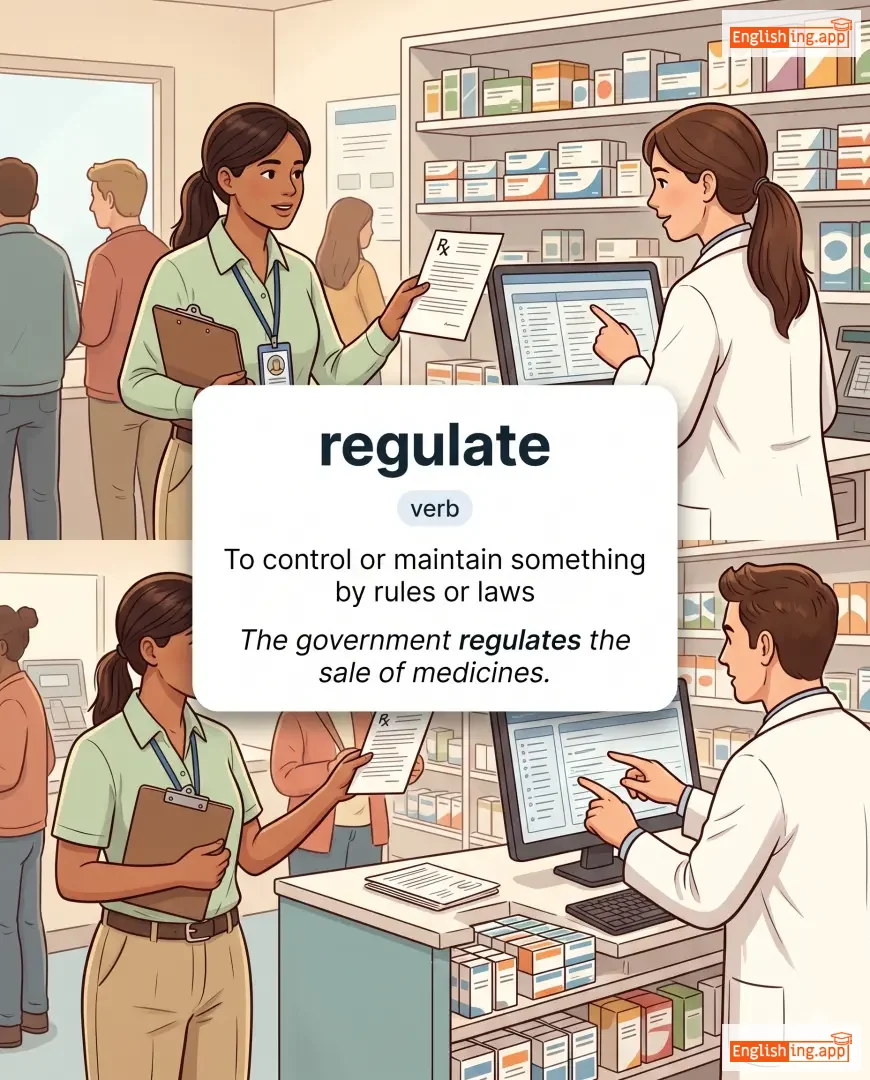
/ˈrɛɡjʊˌleɪt/
verb
(雷古莱特)
••••••
|
|
管理
guanli
••••••
|
regulated
雷古莱特德
••••••
|
regulated
雷古莱特德
••••••
|
regulates
雷古莱特斯
••••••
|
regulating
雷古莱廷
••••••
|
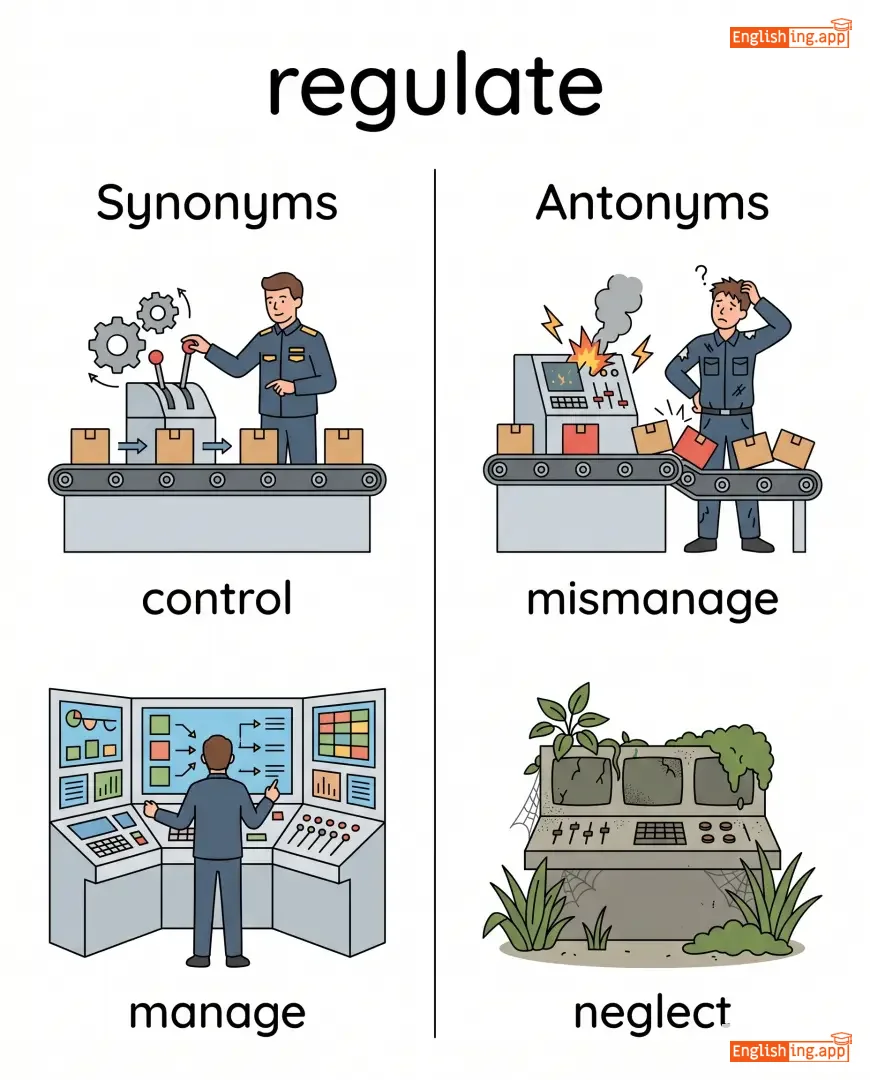
To control or maintain something by rules or laws
••••••
|
The government regulates the sale of medicines.
政府监管药品销售。
••••••
|
政府监管药品销售。
Zhengfu jianguan yaopin xiaoshou.
••••••
|
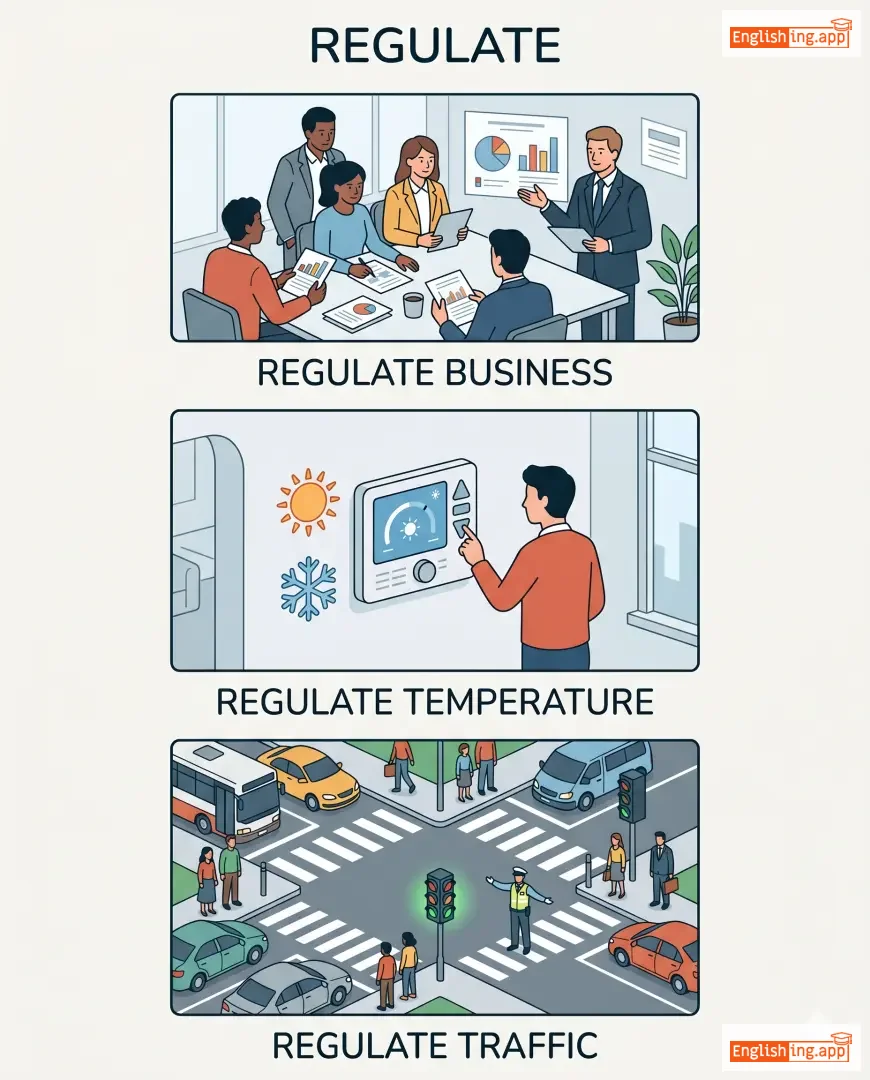
regulate traffic
管理交通
••••••
|
To control the flow and movement of vehicles
••••••
|
管理交通
Guanli jiaotong
••••••
|
control, manage, supervise, direct, monitor
••••••
|
mismanage, neglect
••••••
|
regulate business, regulate temperature, regulate traffic, regulate industry
••••••
|
管理 means controlling with rules in Chinese
••••••
|
|
#4182
⚖️
|
/ˌrɛɡjuˈleɪʃən/
noun
(规章制度)
••••••
|
|
规章
guizhang
••••••
|
- •••••• | - •••••• | - •••••• | - •••••• |
a rule or directive made and maintained by an authority
••••••
|
The new regulation will affect the banking sector. |
新的规章将影响银行业。
Xin de guizhang jiang yingxiang yinhangye.
••••••
|
- •••••• | - •••••• | - •••••• |
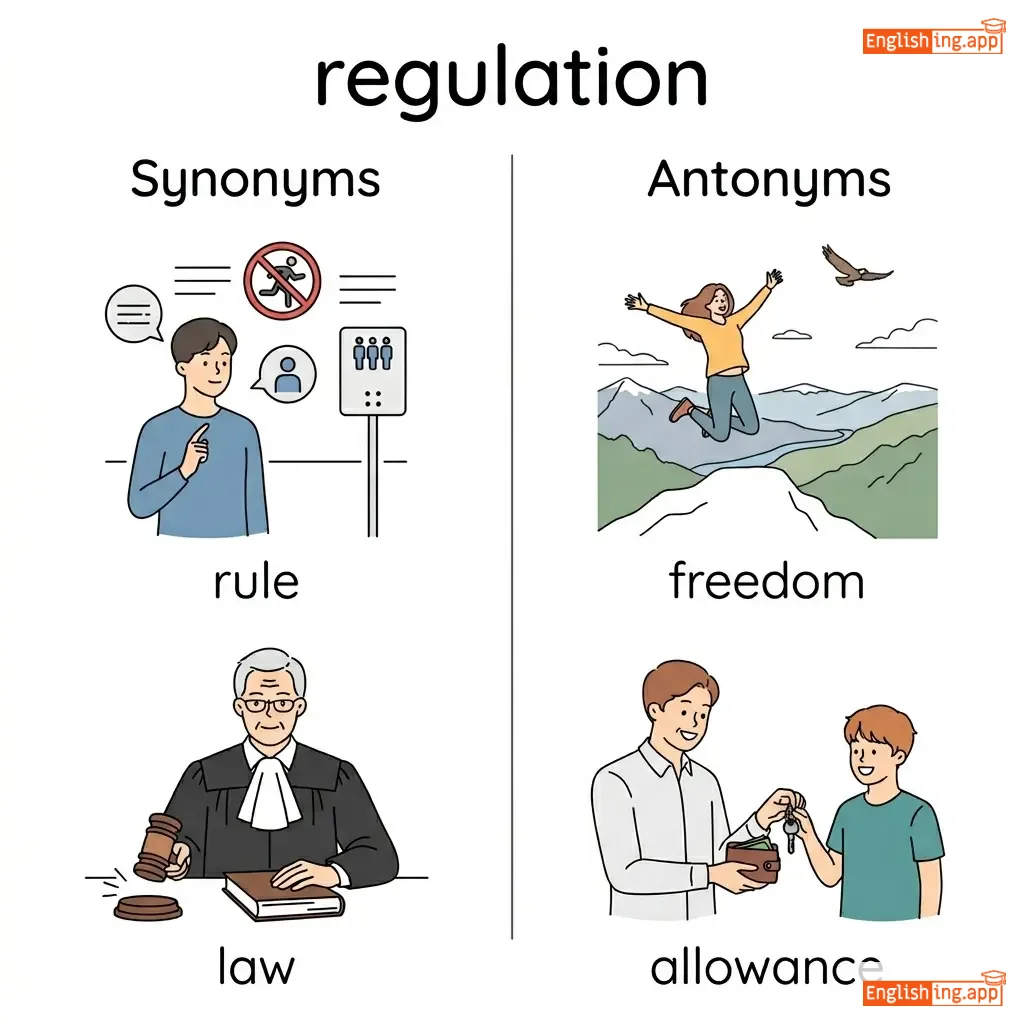
rule, law, guideline, directive
••••••
|
freedom, allowance
••••••
|
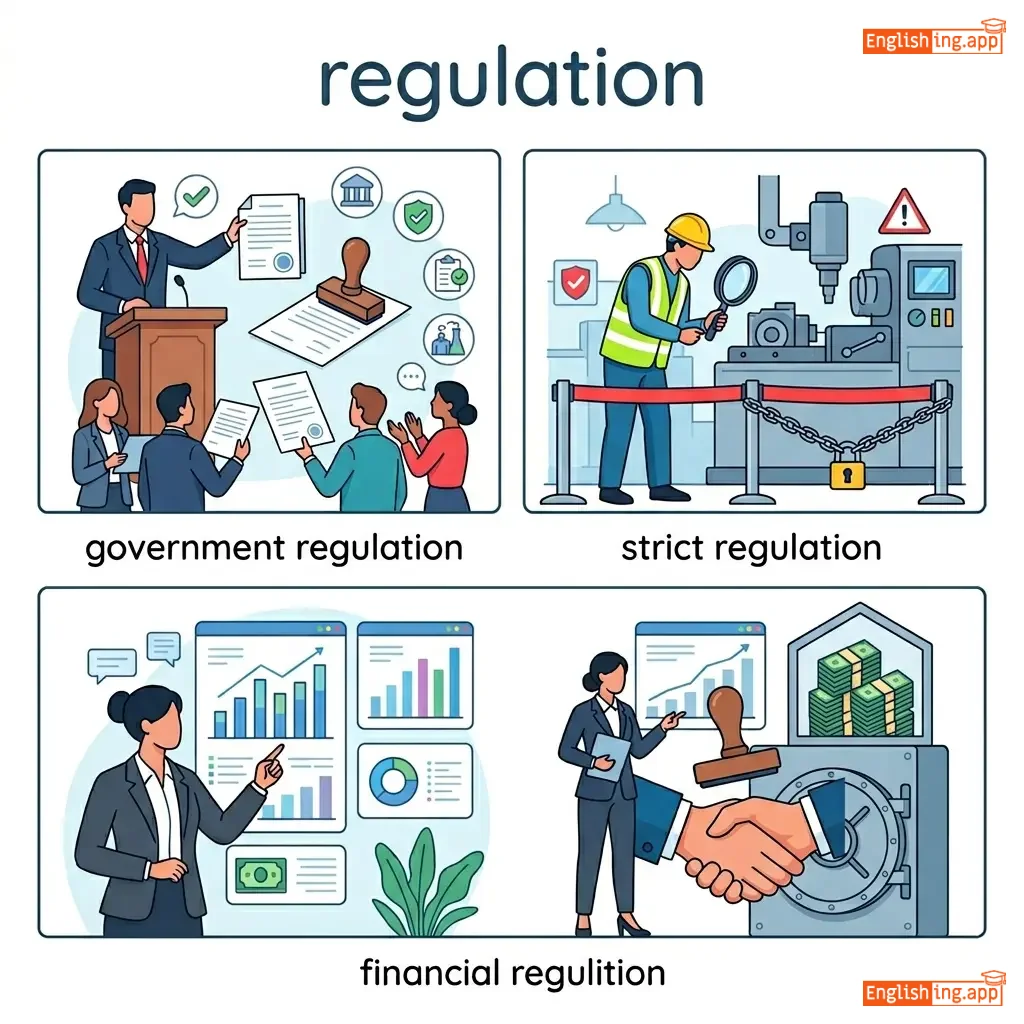
government regulation, strict regulation, financial regulation, safety regulation
••••••
|
Regulation = Re-gulate the system with rules!
••••••
|
|
#4183
⚙️
|
/ˈrɛɡjəleɪtər/
noun
(调节器)
••••••
|
- •••••• |
调节器
tiaojieqi
••••••
|
- •••••• | - •••••• | - •••••• | - •••••• |
a person or device that controls or maintains the operation of a system
••••••
|
The government appointed a new regulator for the financial sector. |
政府为金融部门任命了新的调节器。
Zhèngfǔ wèi jīnróng bùmén rènmìngle xīn de tiáojiéqì.
••••••
|
- •••••• | - •••••• | - •••••• |
controller, supervisor, administrator, inspector
••••••
|
anarchist, disrupter
••••••
|
financial regulator, market regulator, regulatory authority, gas regulator
••••••
|
调节器是控制系统的设备 — 就像气体调节器控制流量!
••••••
|
|
#4184
⚖️
|
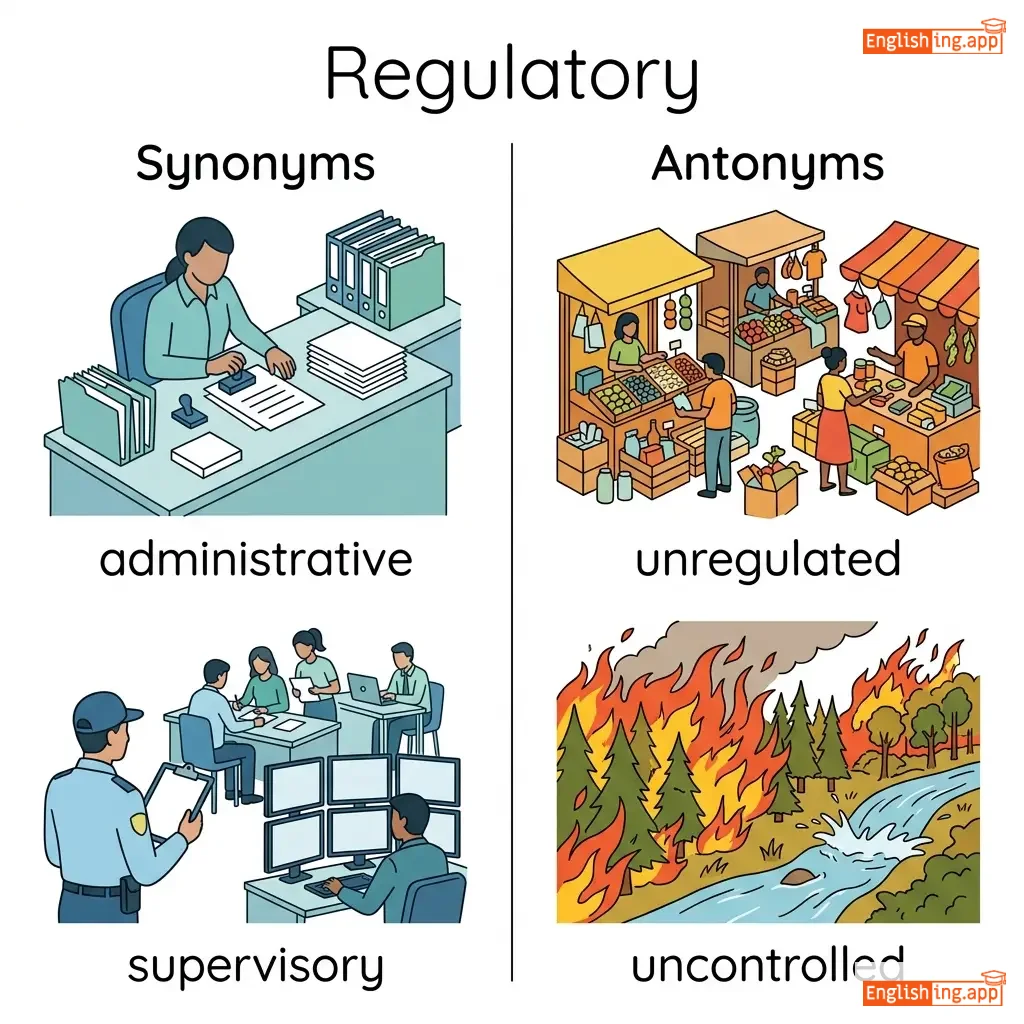
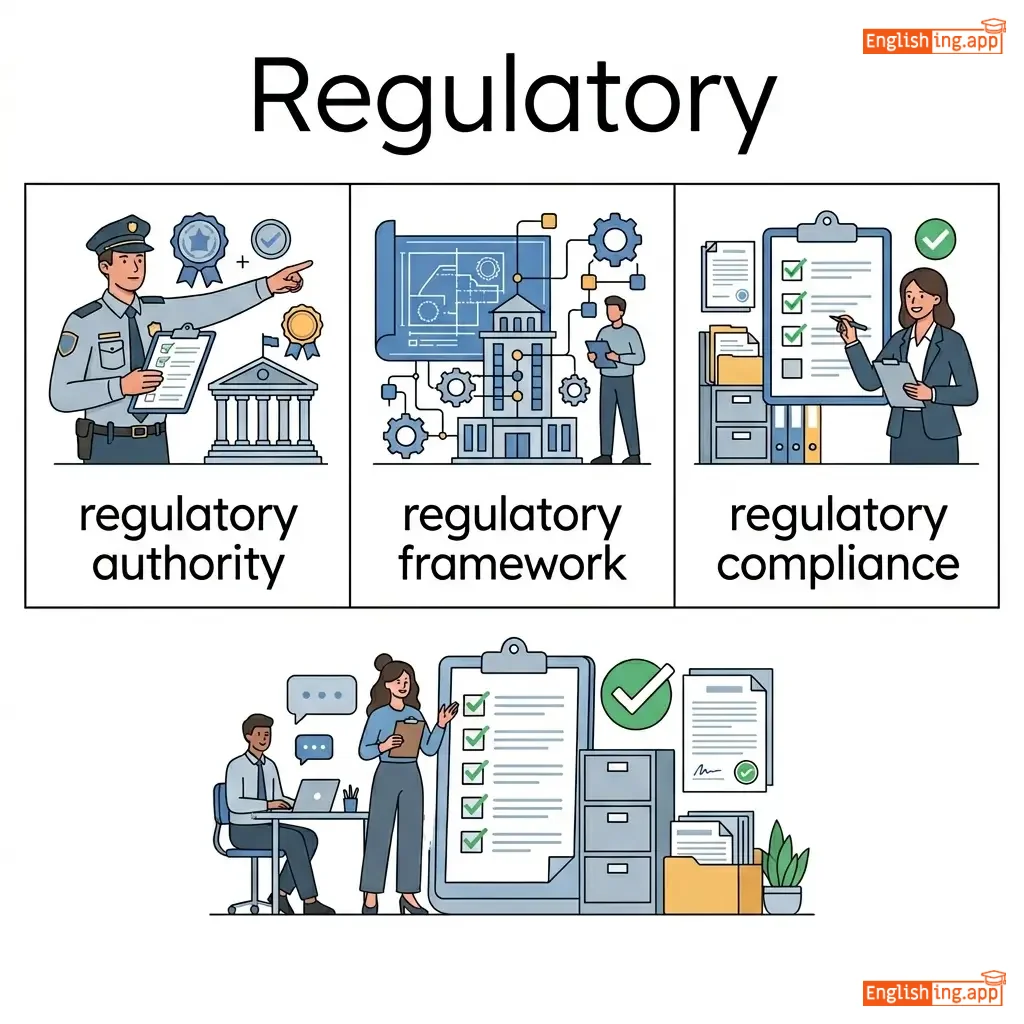
/ˈrɛɡjʊlətɔːri/
adjective
(règuìlètuōlì)
••••••
|
|
监管的
jiānguǎn de
••••••
|
- •••••• | - •••••• | - •••••• | - •••••• |
relating to the rules or laws made by an authority to control an activity or process
••••••
|
The company must comply with all regulatory requirements before launching the product. |
公司必须在推出产品之前遵守所有监管要求。
Gōngsī bìxū zài tuīchū chǎnpǐn zhīqián zūnshǒu suǒyǒu jiānguǎn yāoqiú.
••••••
|
- •••••• | - •••••• | - •••••• |
administrative, supervisory, controlling, governing, legislative
••••••
|
unregulated, uncontrolled
••••••
|
regulatory authority, regulatory framework, regulatory compliance, regulatory body
••••••
|
监管的意味着遵守规则 — 就像遵守交通规则 🚦
••••••
|
|
#4185
💪
|
/ˌriːhəˌbɪlɪˈteɪʃən/
noun
(hǎpīnès)
••••••
|
- •••••• |
幸福
xìngfú
••••••
|
- •••••• | - •••••• | - •••••• | - •••••• |
the process of restoring someone or something to health or normal life through training or therapy
••••••
|
After the accident, he went through months of rehabilitation to walk again.
她无法掩饰自己获得奖项时的喜悦。
••••••
|
她无法掩饰自己获得奖项时的喜悦。
Tā wúfǎ yǎnshì zìjǐ huòdé jiǎngxiàng shí de xǐyuè.
••••••
|
rehabilitation center
追寻幸福
••••••
|
a place where people recover physically or mentally
••••••
|
追寻幸福
zhuīxún xìngfú
••••••
|
recovery, therapy, restoration, renewal
••••••
|
damage, decline
••••••
|
physical rehabilitation, rehabilitation program, rehabilitation center, drug rehabilitation
••••••
|
幸福是一条永无止境的追求之路。
••••••
|
|
#4186
👑
|
/reɪn/
verb, noun
(雷因)
••••••
|
- •••••• |
统治
tǒngzhì
••••••
|
reigned
雷因德
••••••
|
reigned
雷因德
••••••
|
reigns
雷因兹
••••••
|
reigning
雷因宁
••••••
|
to rule as a king or queen; the period during which a sovereign rules
••••••
|
Queen Elizabeth II reigned for many decades.
伊丽莎白二世女王统治了几十年。
••••••
|
伊丽莎白二世女王统治了几十年。
Yīlìshābái èrshì nǚwáng tǒngzhìle jǐ shí nián.
••••••
|
reign supreme
至高无上统治
••••••
|
to be the best or most powerful
••••••
|
至高无上统治
zhìgāo wú shàng tǒngzhì
••••••
|
rule, govern, dominate, prevail
••••••
|
serve, submit
••••••
|
long reign, reign of terror, reign supreme
••••••
|
Reign 即统治,就像国王或女王一样统治一国。
••••••
|
|
#4187
💪
|
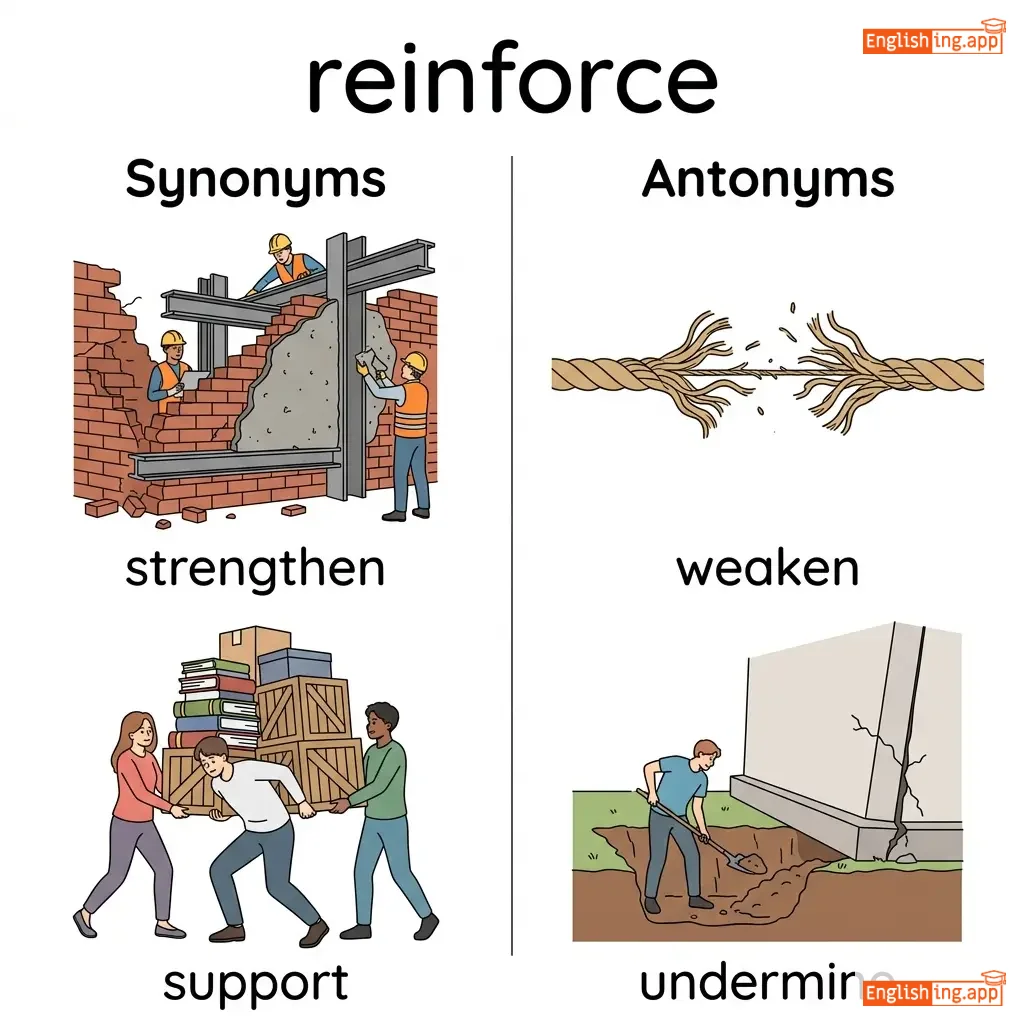
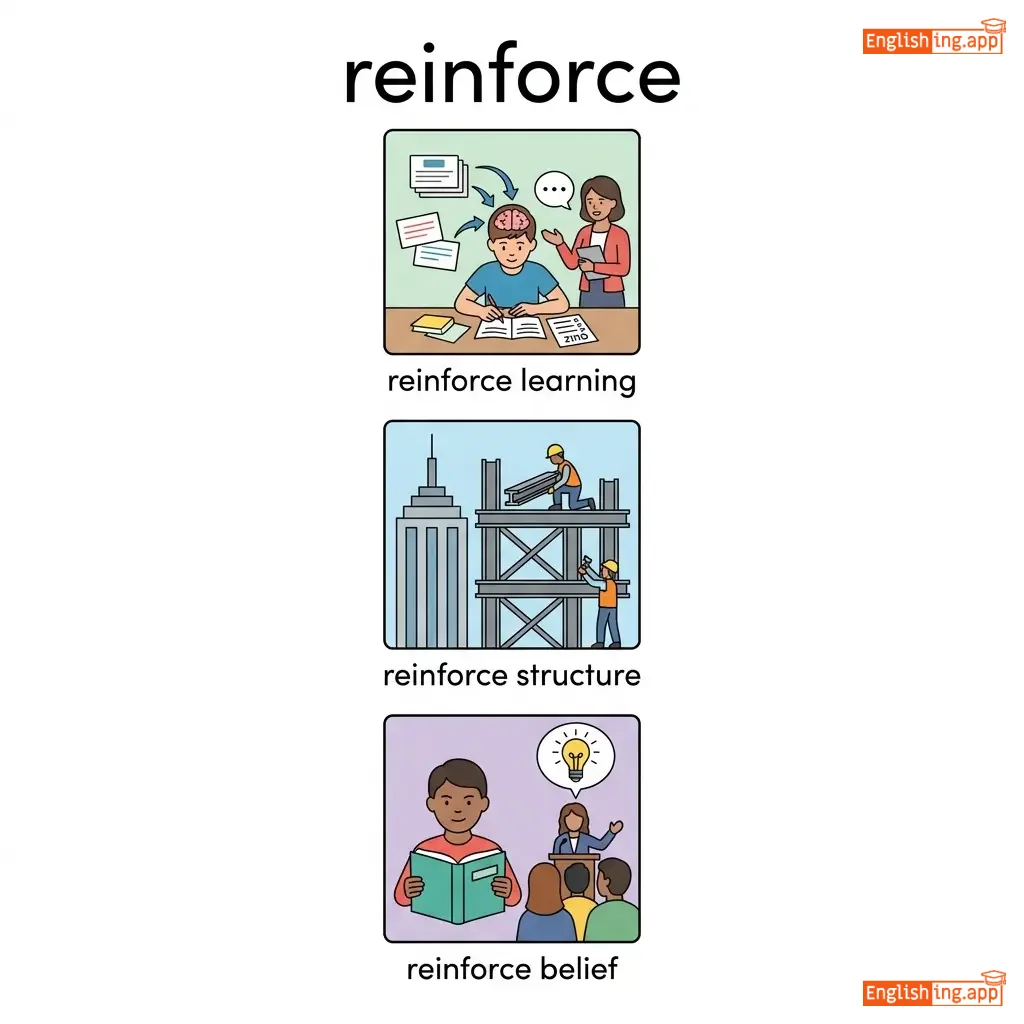
/ˌriːɪnˈfɔːrs/
verb
(rīn-fórs)
••••••
|
|
加强
jiāqiáng
••••••
|
reinforced
rīn-fórsd
••••••
|
reinforced
rīn-fórsd
••••••
|
reinforces
rīn-fórses
••••••
|
reinforcing
rīn-fórsing
••••••
|
To strengthen or support something with additional material, people, or ideas
••••••
|
The teacher reinforced the lesson with examples.
老师通过示例强化了课堂。
••••••
|
老师通过示例强化了课堂。
Lǎoshī tōngguò shìlì qiánghuàle kètáng.
••••••
|
reinforce an idea
强化一个想法
••••••
|
To strengthen the belief or acceptance of a concept
••••••
|
强化一个想法
qiánghuà yīgè xiǎngfǎ
••••••
|
strengthen, support, bolster, fortify, encourage
••••••
|
weaken, undermine
••••••
|
reinforce learning, reinforce structure, reinforce belief, reinforce habit
••••••
|
Rein (马) + force = 用力强化
••••••
|
|
#4188
❌
|
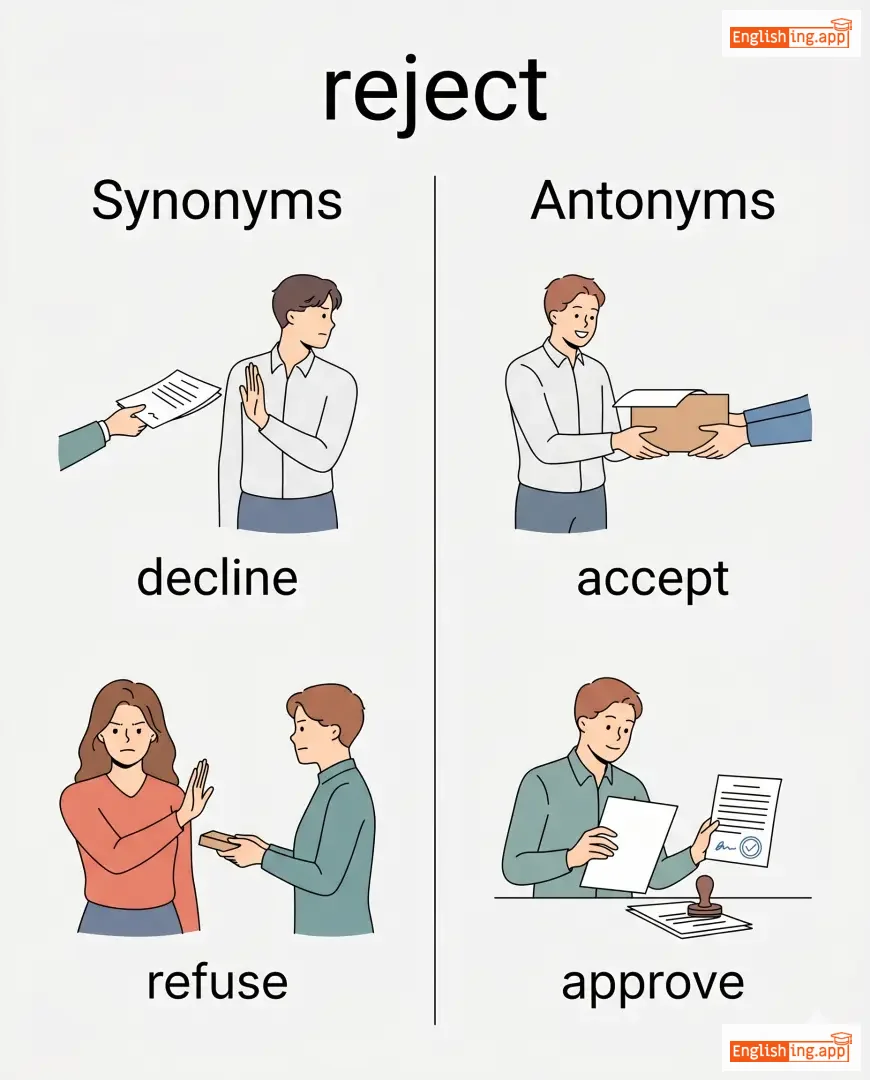
/rɪˈdʒekt/
verb
(rijékt)
••••••
|
|
拒绝
jùjué
••••••
|
rejected
rejékted
••••••
|
rejected
rejékted
••••••
|
rejects
rejékts
••••••
|
rejecting
rejékting
••••••
|
to refuse to accept or consider something
••••••
|
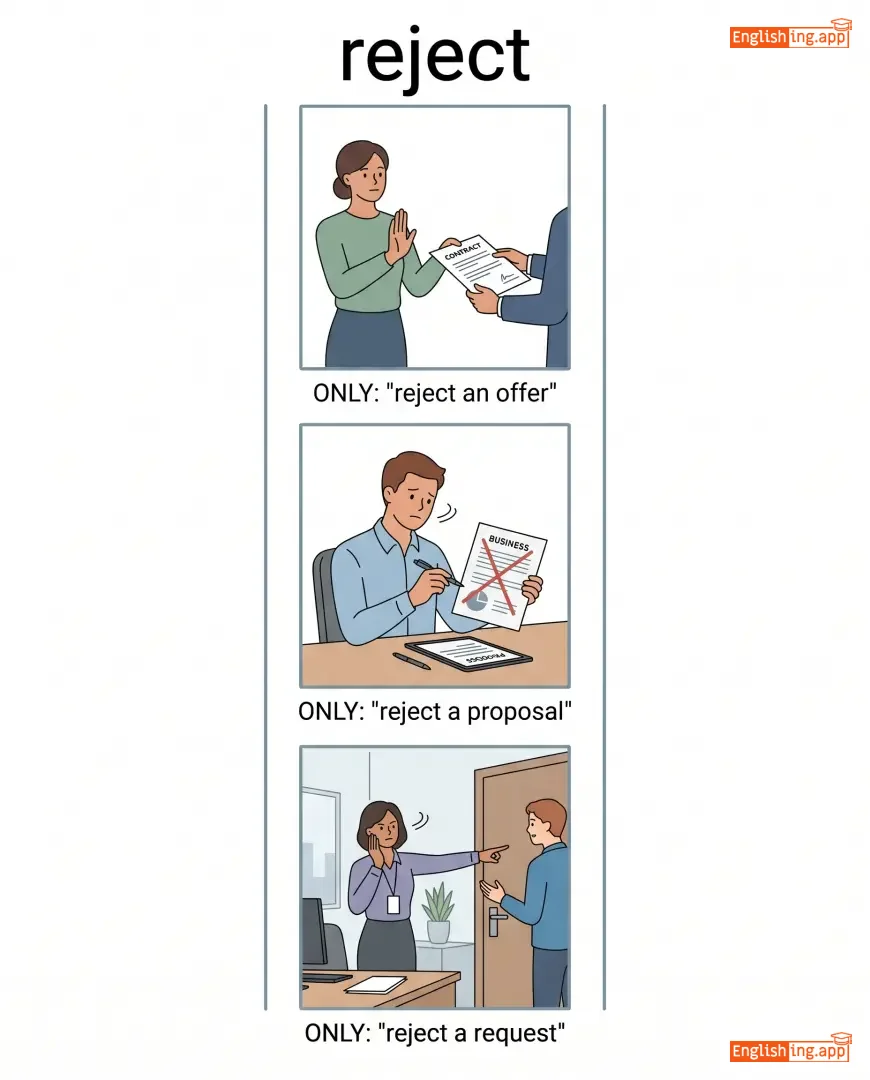
The committee decided to reject the proposal.
委员会决定拒绝该提案。
••••••
|
委员会决定拒绝该提案。
Wěiyuánhuì juédìng jùjué gāi tí'àn.
••••••
|
- •••••• | - •••••• | - •••••• |
refuse, decline, dismiss, deny
••••••
|
accept, approve, embrace, welcome
••••••
|
firmly reject, completely reject, reject outright, reject a proposal, reject an offer
••••••
|
In Chinese, '拒绝' (jùjué) directly translates to 'reject'.
••••••
|
|
#4189
❌
|
/rɪˈdʒɛkʃən/
noun
(rì jiékè shēn)
••••••
|
- •••••• |
拒绝
jùjué
••••••
|
- •••••• | - •••••• | - •••••• | - •••••• |
the action of refusing or dismissing something or someone
••••••
|
Her rejection of the offer surprised everyone. |
她拒绝了这个提议,令所有人吃惊。
Tā jùjué le zhège tíyì, lìng suǒyǒu rén chījīng.
••••••
|
- •••••• | - •••••• | - •••••• |
refusal, denial, dismissal, veto
••••••
|
acceptance, approval, approval
••••••
|
rejection of offer, rejection letter, rejection of idea
••••••
|
Rejection is saying 'no' when it’s the best option to move forward.
••••••
|
|
#4190
🔗
|
/rɪˈleɪt/
verb
(瑞雷特)
••••••
|
- •••••• |
叙述
xùshù
••••••
|
related
瑞雷特的
••••••
|
related
瑞雷特的
••••••
|
relates
瑞雷特斯
••••••
|
relating
瑞雷特英
••••••
|
to connect or show a link between; to tell a story
••••••
|
She relates her experience to the audience.
她向观众讲述她的经历。
••••••
|
她向观众讲述她的经历。
Tā xiàng guānzhòng jiǎngshù tā de jīnglì.
••••••
|
- •••••• | - •••••• | - •••••• |
connect, associate, tell, narrate
••••••
|
disconnect, separate, withhold, conceal
••••••
|
relate to others, relate experience, closely relate, relate stories
••••••
|
Xùshù就像relate,讲述和连接事物。
••••••
|
|
#4191
🔗
|
/rɪˈleɪtɪd/
adjective
(rìlèitèd)
••••••
|
- •••••• |
相关
xiāngguān
••••••
|
- •••••• | - •••••• | - •••••• | - •••••• |
connected or associated with something else
••••••
|
The documents are all related to the same project.
文件都与同一个项目相关。
••••••
|
文件都与同一个项目相关。
Wénjiàn dōu yǔ tóng yī gè xiàngmù xiāngguān.
••••••
|
related to
与...相关
••••••
|
connected with or concerning something
••••••
|
与...相关
yǔ...xiāngguān
••••••
|
connected, associated, linked, relevant, correlated
••••••
|
unrelated, separate
••••••
|
related issue, related topic, closely related, directly related
••••••
|
'Re + late' 听来记住 — 当事情发生得晚时,它们相关 🔗
••••••
|
|
#4192
👨👩👧👦
|
/rɪˈleɪ.ʃən/
noun
(rì léi shén)
••••••
|
- •••••• |
关系; 亲戚
guanxi; qinqi
••••••
|
- •••••• | - •••••• | - •••••• | - •••••• |
the way in which two or more people or things are connected; a family member
••••••
|
They have a strong business relation that has lasted for years. |
他们有一个强大的商业关系,已经持续了多年。
Tamen you yi ge qiangda de shangye guanxi, yijing chixu le duonian
••••••
|
- •••••• | - •••••• | - •••••• |
relationship, connection, association, kinship
••••••
|
disconnection, separation, isolation
••••••
|
family relation, business relation, close relation, diplomatic relations
••••••
|
关系是两者或多者之间的联系,例如家庭成员的亲戚关系。
••••••
|
|
#4193
💕
|
/rɪˈleɪ.ʃən.ʃɪp/
noun
(关系)
••••••
|
- •••••• |
关系
guanxi
••••••
|
- •••••• | - •••••• | - •••••• | - •••••• |
the way two people or groups feel and behave towards each other; a connection between two things
••••••
|
They have a very close relationship. |
他们有着非常亲密的关系。
Tāmen yǒu zhe fēicháng qīnmì de guānxì.
••••••
|
- •••••• | - •••••• | - •••••• |
connection, bond, association, link
••••••
|
separation, isolation, disconnection
••••••
|
close relationship, personal relationship, working relationship, family relationship
••••••
|
Relationship: 'G' for '关系' in Chinese
••••••
|
|
#4194
⚖️
|
/ˈrel.ə.tɪv/
adjective
(relātīfu)
••••••
|
- •••••• |
相对的
xiāngduì de
••••••
|
- •••••• | - •••••• | - •••••• | - •••••• |
considered in comparison to something else; not absolute; comparative
••••••
|
The cost of living is relative to your income level.
生活成本相对于你的收入水平。
••••••
|
生活成本相对于你的收入水平。
Shēnghuó chéngběn xiāngduì yú nǐ de shōurù shuǐpíng.
••••••
|
- •••••• | - •••••• | - •••••• |
comparative, proportional, corresponding, respective
••••••
|
absolute, fixed, independent, unrelated
••••••
|
relative importance, relative position, relative value
••••••
|
相对的 (xiāngduì de) means comparative, similar to relative.
••••••
|
|
#4195
⚖️
|
/ˈrel.ə.tɪv.li/
adverb
(相对地)
••••••
|
- •••••• |
相对地
xiangdui de
••••••
|
- •••••• | - •••••• | - •••••• | - •••••• |
in comparison to something else; quite; fairly
••••••
|
The weather is relatively warm today.
今天的天气相对温暖。
••••••
|
今天的天气相对温暖。
Jintian de tianqi xiangdui wenluan.
••••••
|
- •••••• | - •••••• | - •••••• |
comparatively, fairly, reasonably
••••••
|
absolutely, extremely, completely
••••••
|
relatively simple, relatively new, relatively small
••••••
|
相对地 = 'Xiangdui de' (Compares things, relative comparison)
••••••
|
|
#4196
🧘
|
/rɪˈlæks/
verb
(瑞拉克斯)
••••••
|
- •••••• |
放松
fangsong
••••••
|
relaxed
瑞拉克斯德
••••••
|
relaxed
瑞拉克斯德
••••••
|
relaxes
瑞拉克塞斯
••••••
|
relaxing
瑞拉克辛
••••••
|
to make or become less tense or anxious; to rest
••••••
|
After a long day, she likes to relax with a good book.
经过一天的劳累,她喜欢拿一本好书放松一下。
••••••
|
经过一天的劳累,她喜欢拿一本好书放松一下。
Jīngguò yītiān de láolèi, tā xǐhuān ná yī běn hǎo shū fàngsōng yīxià.
••••••
|
- •••••• | - •••••• | - •••••• |
unwind, de-stress, loosen up, calm down
••••••
|
tense, stress, worry
••••••
|
relax after work, relax at home, relax your mind, relax muscles
••••••
|
放松自己,缓解压力,恢复能量。
••••••
|
|
#4197
😌
|
/rɪˈlækst/
adjective
(瑞莱克斯特)
••••••
|
- •••••• |
放松的
fangsong de
••••••
|
- •••••• | - •••••• | - •••••• | - •••••• |
free from tension or stress; calm and comfortable
••••••
|
She felt relaxed after listening to soft music.
She felt relaxed after listening to soft music.
••••••
|
听了轻音乐后,她感到很放松。
Tingle qing yinyue hou, ta gandao hen fangsong
••••••
|
relaxed attitude
relaxed attitude
••••••
|
a calm and easy-going way of thinking or behaving
••••••
|
放松的态度
fangsong de taidu
••••••
|
calm, at ease, comfortable, unworried, peaceful
••••••
|
tense, stressed, anxious
••••••
|
relaxed mood, relaxed atmosphere, feel relaxed, relaxed style
••••••
|
Relax = 放松
••••••
|
|
#4198
🕊️
|
/rɪˈliːs/
verb
(rílìzī)
••••••
|
|
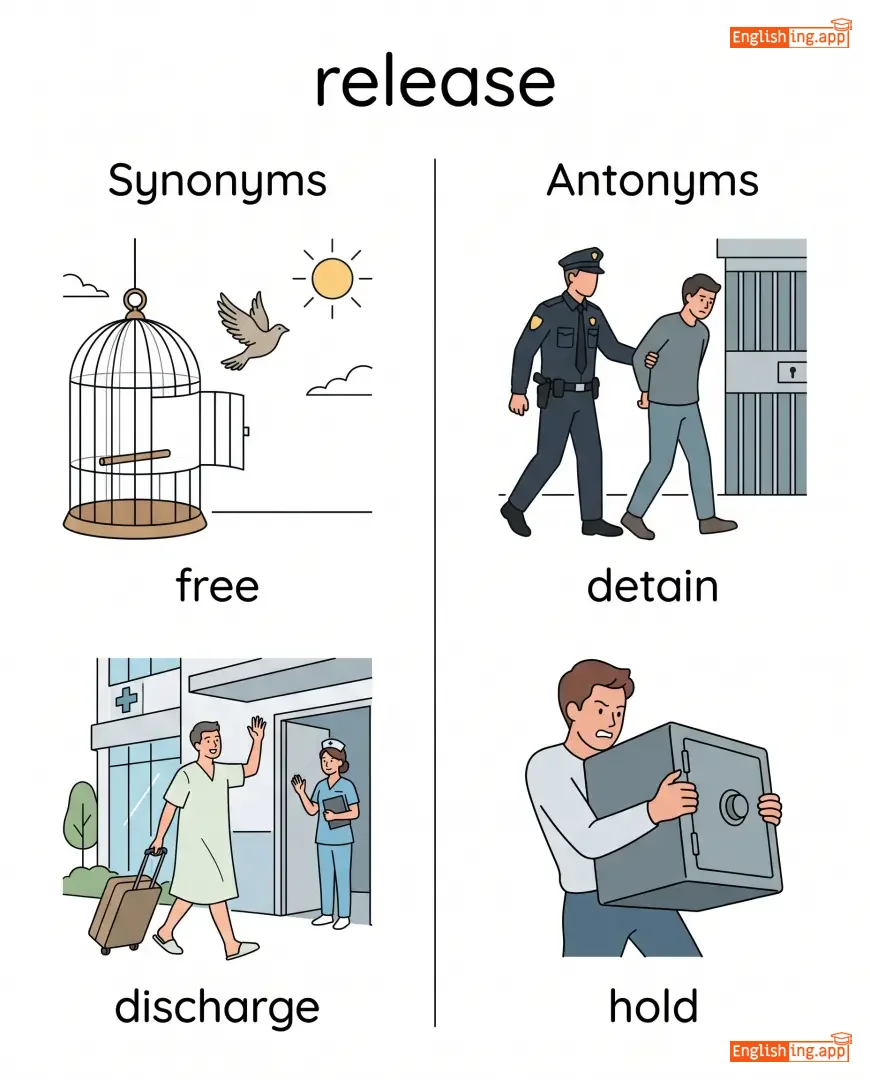
释放, 发布
shifang, fabu
••••••
|
released
rílìzīle
••••••
|
released
rílìzīle
••••••
|
releases
rílìzī
••••••
|
releasing
rílìzīng
••••••
|
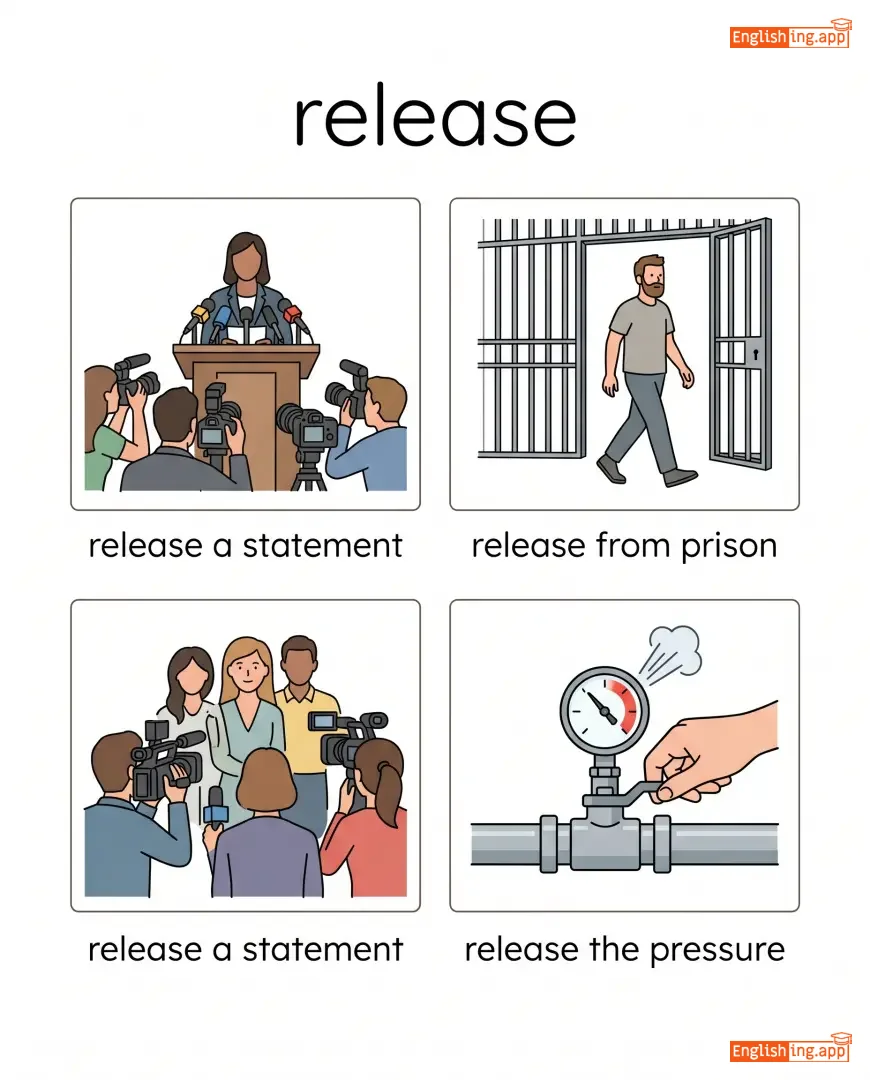
to set free, to make available, or to allow something to go out
••••••
|
The company will release the new product next month.
公司将在下个月发布新产品。
••••••
|
公司将在下个月发布新产品。
Gongsi jiang zai xiayige yue fabu xin chanpin.
••••••
|
release tension
释放紧张
••••••
|
to reduce or let go of stress or nervous energy
••••••
|
释放紧张
shifang jinzhang
••••••
|
free, discharge, liberate, publish, issue
••••••
|
detain, hold, capture
••••••
|
release a statement, release from prison, release the pressure, release an album
••••••
|
Release 意味着释放:发布新产品时,压力就释放了。
••••••
|
|
#4199
📌
|
/ˈrɛlɪvəns/
noun
(rè-lé-wén-sī)
••••••
|
- •••••• |
相关性
xiāngguān xìng
••••••
|
- •••••• | - •••••• | - •••••• | - •••••• |
the quality or state of being closely connected or appropriate
••••••
|
The relevance of the information was clear to everyone. |
信息的相关性对每个人来说都很清楚。
Xinxi de xiangguan xing dui meige ren lai shuo dou hen qingchu.
••••••
|
- •••••• | - •••••• | - •••••• |
importance, significance, pertinence, applicability
••••••
|
irrelevance, insignificance, unimportance
••••••
|
relevance to, relevance of topic, great relevance
••••••
|
Relevance is like the relevance of a topic everyone cares about.
••••••
|
|
#4200
📌
|
/ˈrɛl.ə.vənt/
adjective
(雷莱万特)
••••••
|
- •••••• |
相关的
xiāngguān de
••••••
|
- •••••• | - •••••• | - •••••• | - •••••• |
closely connected or appropriate to what is being considered or done
••••••
|
Your comments are not relevant to the discussion.
你的评论与讨论无关。
••••••
|
你的评论与讨论无关。
Nǐ de pínglùn yǔ tǎolùn wúguān.
••••••
|
relevant to the point
与要点相关
••••••
|
directly connected to the main issue being discussed
••••••
|
与要点相关
Yǔ yàodiǎn xiāngguān
••••••
|
pertinent, applicable, appropriate, related, connected
••••••
|
irrelevant, unrelated, inappropriate
••••••
|
relevant information, relevant issue, relevant factors, relevant data
••••••
|
Relevant意思是相关的,就像考试中的相关问题,就是与考试相关的问题。
••••••
|
|
#4201
🛠️
|
/rɪˌlaɪəˈbɪləti/
noun
(可靠性)
••••••
|
- •••••• |
可靠性
kekao xing
••••••
|
- •••••• | - •••••• | - •••••• | - •••••• |
the quality of being trustworthy or performing consistently well
••••••
|
Customers value the reliability of our service.
客户重视我们服务的可靠性。
••••••
|
客户重视我们服务的可靠性。
Kehu zhongshi women fuwu de kekao xing.
••••••
|
reliability test
可靠性测试
••••••
|
a test to measure how dependable something is
••••••
|
可靠性测试
kekao xing ceshi
••••••
|
dependability, consistency, trustworthiness, stability
••••••
|
unreliability, inconsistency
••••••
|
high reliability, reliability test, system reliability, reliability score
••••••
|
可靠性 = 可以信赖的质量
••••••
|
|
#4202
😌
|
/rɪˈliːf/
noun
(瑞利夫)
••••••
|
- •••••• |
宽慰; 安慰; 援助
kuānwèi, ānwèi, yuánzhù
••••••
|
- •••••• | - •••••• | - •••••• | - •••••• |
a feeling of comfort after worry or distress; assistance given to those in need
••••••
|
She felt great relief when the exam was over.
她在考试结束时感到极大的宽慰。
••••••
|
她在考试结束时感到极大的宽慰。
Tā zài kǎoshì jiéshù shí gǎndào jí dà de kuānwèi.
••••••
|
- •••••• | - •••••• | - •••••• |
comfort, ease, assistance, aid
••••••
|
anxiety, worry, stress, burden
••••••
|
pain relief, relief work, great relief, tax relief
••••••
|
宽慰意味着放松!
••••••
|
|
#4203
😌
|
/rɪˈliːv/
verb
••••••
|
- •••••• | - •••••• |
relieved
••••••
|
relieved
••••••
|
relieves
••••••
|
relieving
••••••
|
to make pain, distress, or difficulty less severe or serious
••••••
|
The medicine helped relieve his headache. |
- •••••• |
relieve stress |
to reduce or ease mental or emotional strain
••••••
|
- •••••• |
ease, reduce, lessen, soothe, alleviate
••••••
|
aggravate, worsen
••••••
|
relieve pain, relieve stress, relieve pressure, relieve symptoms
••••••
|
No •••••• |
|
#4204
😌
|
/rɪˈliːvd/
adjective
(rɪˈliːvd)
••••••
|
- •••••• |
松了一口气
sōng le yī kǒu qì
••••••
|
- •••••• | - •••••• | - •••••• | - •••••• |
feeling happy and less worried after something stressful has been removed or resolved
••••••
|
She felt relieved after hearing the good news. |
听到好消息后,她感到松了一口气。
Tīng dào hǎo xiāoxī hòu, tā gǎndào sōng le yī kǒu qì.
••••••
|
- •••••• | - •••••• | - •••••• |
comforted, relaxed, reassured, eased
••••••
|
worried, stressed, anxious
••••••
|
feel relieved, relieved to know, felt relieved
••••••
|
Relieved is like a 'relief' (releef) after a stressful day.
••••••
|
|
#4205
🙏
|
/rɪˈlɪdʒ.ən/
noun
(宗教)
••••••
|
- •••••• |
宗教
zongjiao
••••••
|
- •••••• | - •••••• | - •••••• | - •••••• |
a system of faith and worship involving belief in a higher power
••••••
|
Freedom of religion is a fundamental human right.
宗教自由是基本人权。
••••••
|
宗教自由是基本人权。
Zongjiao zìyóu shì jīběn rénquán.
••••••
|
blind faith in religion
盲目信仰宗教
••••••
|
unquestioning belief in a religious system
••••••
|
盲目信仰宗教
mángmù xìnyǎng zōngjiào
••••••
|
faith, belief, spirituality, creed, worship
••••••
|
atheism, disbelief, skepticism
••••••
|
major religion, world religion, religious practice, organized religion
••••••
|
Religion = RE(神) + GION (信仰)
••••••
|
|
#4206
🙏
|
/rɪˈlɪdʒəs/
adjective
(宗教的)
••••••
|
- •••••• |
宗教的
zongjiao de
••••••
|
- •••••• | - •••••• | - •••••• | - •••••• |
relating to or believing in a religion or faith
••••••
|
She is a very religious woman who prays every day.
她是一个非常宗教的人,每天都祈祷。
••••••
|
她是一个非常宗教的人,每天都祈祷。
Tā shì yīgè fēicháng zōngjiào de rén, měitiān dōu qídǎo.
••••••
|
religious fervor
宗教热情
••••••
|
intense passion and devotion towards religion
••••••
|
宗教热情
zongjiao reqing
••••••
|
devout, pious, spiritual, faithful, holy
••••••
|
atheist, secular, irreligious
••••••
|
religious belief, religious practice, religious festival, religious leader
••••••
|
Religious意味着宗教的——想象一个人在寺庙里做祷告!
••••••
|
|
#4207
😟
|
/rɪˈlʌktənt/
adjective
(rilaktant)
••••••
|
- •••••• |
不情愿
bu qingyuan
••••••
|
- •••••• | - •••••• | - •••••• | - •••••• |
unwilling or hesitant to do something
••••••
|
She was reluctant to speak in front of the large audience. |
她不情愿在大庭广众面前发言。
Ta bu qingyuan zai da tingguangzhong mianqian fayan.
••••••
|
reluctant hero |
a person who is unwilling to accept their role but ends up fulfilling it
••••••
|
不情愿的英雄
bu qingyuan de yingxiong
••••••
|
unwilling, hesitant, resistant, disinclined, loath
••••••
|
willing, eager, ready
••••••
|
reluctant to accept, reluctant agreement, reluctant smile, reluctant participant
••••••
|
Reluctant = 不情愿, 就是不愿意做事。
••••••
|
|
#4208
🤝
|
/rɪˈlaɪ/
verb
(rílái)
••••••
|
- •••••• |
依赖
yīlài
••••••
|
relied
ríláid
••••••
|
relied
ríláid
••••••
|
relies
ríláiz
••••••
|
relying
ríláing
••••••
|
to depend on or trust someone or something
••••••
|
I rely on my friends for support.
我依赖我的朋友寻求支持。
••••••
|
我依赖我的朋友寻求支持。
Wǒ yīlài wǒ de péngyǒu xúnqiú zhīchí.
••••••
|
- •••••• | - •••••• | - •••••• |
depend, trust, count on, lean on
••••••
|
distrust, doubt, reject
••••••
|
rely on, rely upon, rely heavily, rely completely
••••••
|
信赖朋友,永远不掉链!
••••••
|
|
#4209
🏠
|
/rɪˈmeɪn/
verb
(rìmén)
••••••
|
|
留下
liúxià
••••••
|
remained
rìméind
••••••
|
remained
rìméind
••••••
|
remains
rìméins
••••••
|
remaining
rìméing
••••••
|
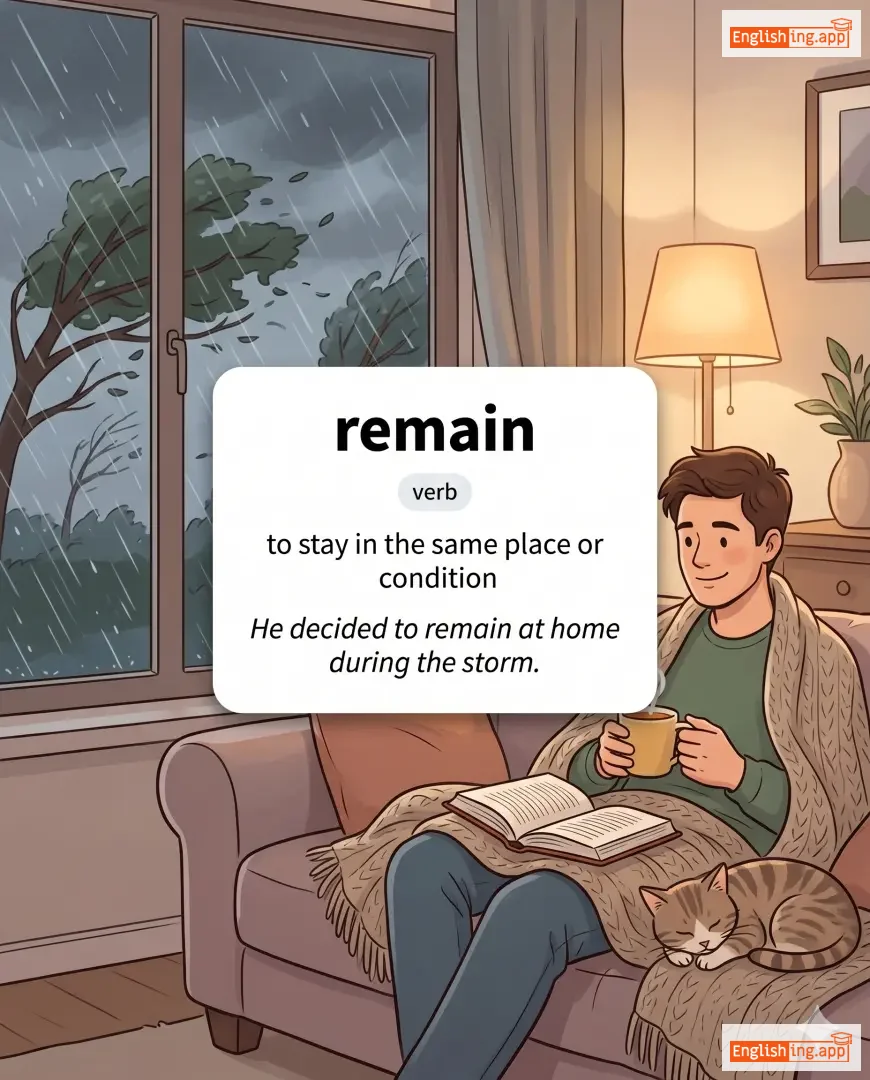
to stay in the same place; to continue to exist
••••••
|
Only a few guests remain at the party.
只有少数客人留在派对上。
••••••
|
只有少数客人留在派对上。
Zhǐyǒu shǎoshù kèrén liú zài pàiduì shàng.
••••••
|
- •••••• | - •••••• | - •••••• |
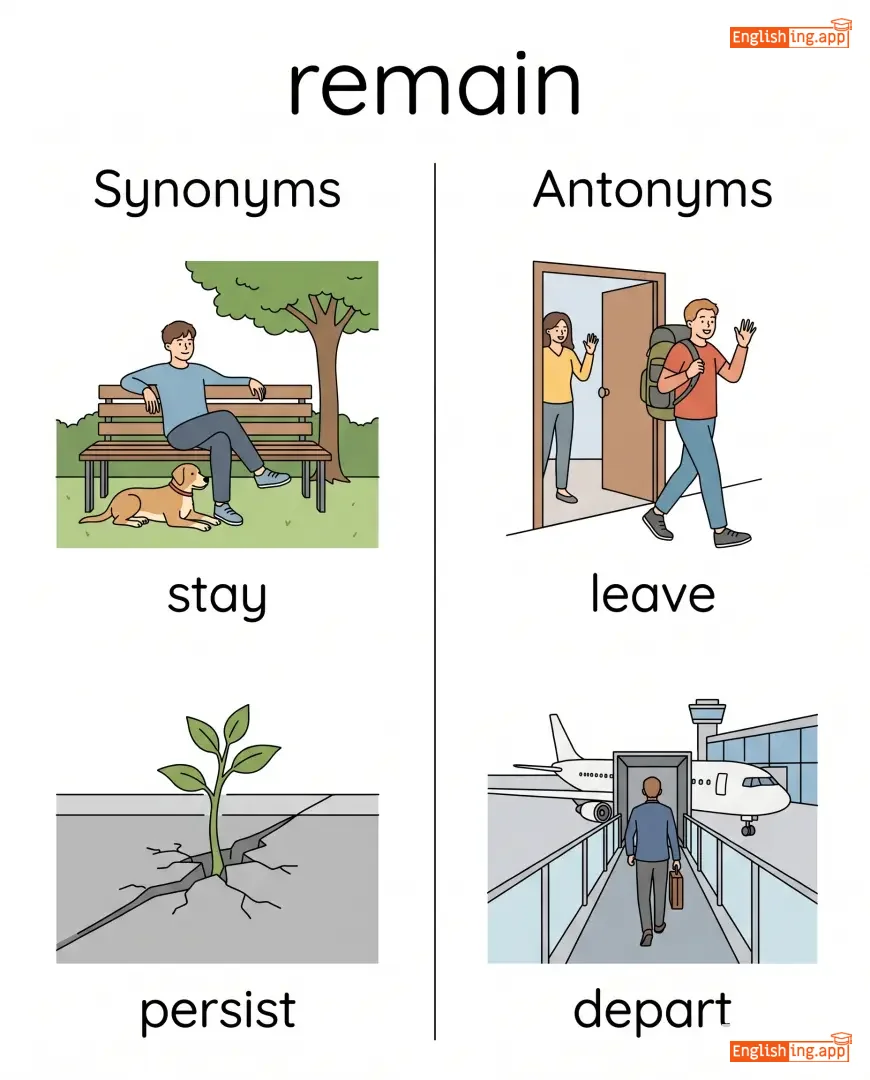
stay, continue, persist, endure
••••••
|
leave, go, depart, disappear
••••••
|
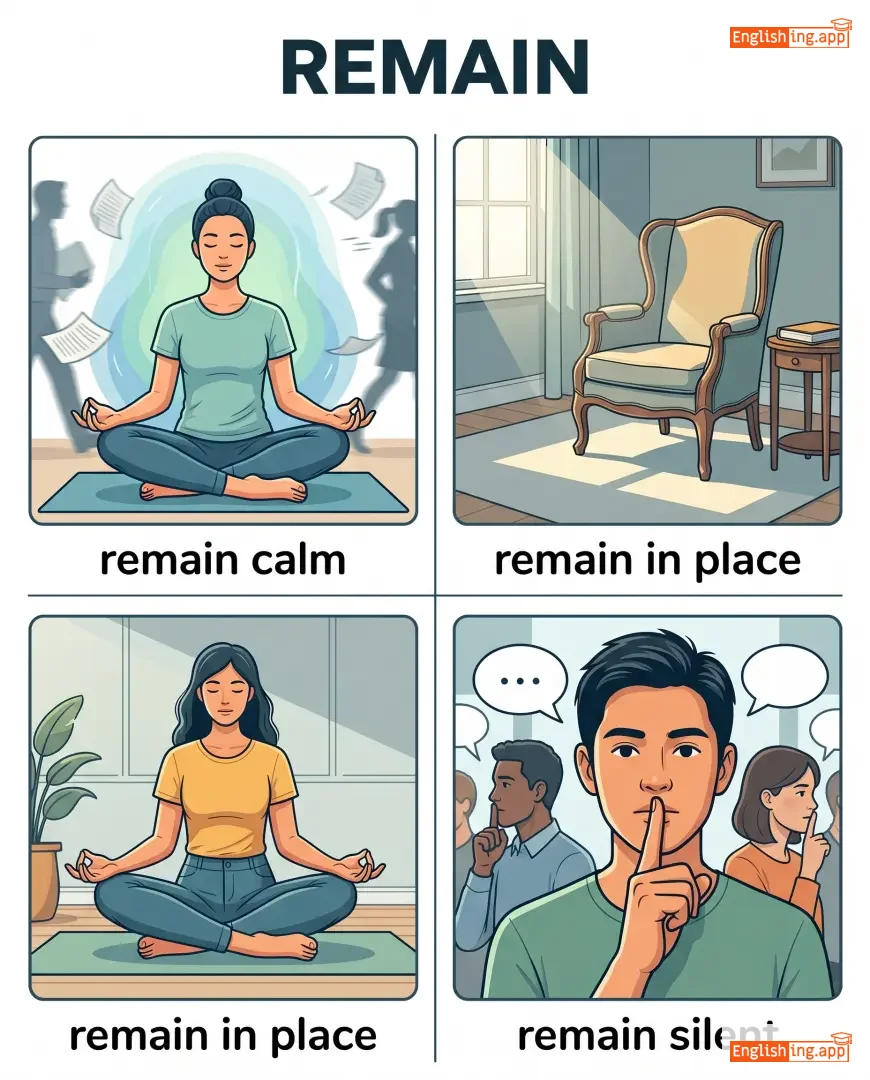
remain calm, remain silent, remain unchanged, remain faithful
••••••
|
Imagine being the last one left at a party, staying in place when everyone else is gone!
••••••
|
|
#4210
🪙
|
/rɪˈmeɪndər/
noun
(rīmèndé)
••••••
|
- •••••• |
剩余
shengyu
••••••
|
- •••••• | - •••••• | - •••••• | - •••••• |
the part that is left after the main part is gone or used
••••••
|
He ate most of the cake and left the remainder on the plate.
他吃了大部分蛋糕,并把剩余的留在了盘子里。
••••••
|
他吃了大部分蛋糕,并把剩余的留在了盘子里。
Tā chīle dà bùfen dàngāo, bìng bǎ shèngyú de liú zài le pánzi lǐ.
••••••
|
the remainder of the day
一天剩余的部分
••••••
|
the part of the day that is left
••••••
|
一天剩余的部分
yītiān shèngyú de bùfen
••••••
|
rest, residue, balance, leftover, surplus
••••••
|
whole, total, entirety
••••••
|
leave the remainder, remainder of the day, remainder of the work, small remainder
••••••
|
Remainder 是剩余;想象吃蛋糕后剩下的部分就是剩余。
••••••
|
|
#4211
🎟️
|
/rɪˈmeɪnɪŋ/
adjective
(ríméining)
••••••
|
- •••••• |
剩余
shengyu
••••••
|
- •••••• | - •••••• | - •••••• | - •••••• |
still existing or left after others are gone or dealt with
••••••
|
There were only a few remaining tickets for the concert.
音乐会仅剩下少数票。
••••••
|
音乐会仅剩下少数票。
Yinyuehui jin shengxia shaoshu piao.
••••••
|
- •••••• | - •••••• | - •••••• |
left, leftover, residual, remaining
••••••
|
gone, used up, finished
••••••
|
remaining tickets, remaining time, remaining items
••••••
|
剩余的票是最后卖出去的!
••••••
|
|
#4212
💀
|
/rɪˈmeɪnz/
noun
(rìménsī)
••••••
|
- •••••• |
残留物
cánliúwù
••••••
|
- •••••• | - •••••• | - •••••• | - •••••• |
the parts, pieces, or substances that are left after the rest has been used or removed
••••••
|
The remains of the meal were left on the table. |
餐后剩余的食物被留在桌上。
Cānhòu shèngyú de shíwù bèi liú zài zhuō shàng.
••••••
|
- •••••• | - •••••• | - •••••• |
leftovers, debris, remnants, fragments
••••••
|
whole, entirety, whole thing
••••••
|
remains of food, human remains, remains of the day
••••••
|
Remains are like 'remain' (cánliúwù) left after a meal.
••••••
|
|
#4213
💬
|
/rɪˈmɑːrk/
noun/verb
(海皮尼斯)
••••••
|
- •••••• |
评论
pinglun
••••••
|
remarked
里马克德
••••••
|
remarked
里马克德
••••••
|
remarks
里马克斯
••••••
|
remarking
里马克英
••••••
|
something that is said; a comment
••••••
|
She made a remark about the weather.
她 对 天气 做了 一 个 里马克。
••••••
|
她对天气做了一个评论。
Ta dui tianqi zuo le yi ge pinglun.
••••••
|
make a remark
做 一个 里马克
••••••
|
to say something, usually as a comment
••••••
|
发表评论
fabiao pinglun
••••••
|
comment, observation, statement, note
••••••
|
silence, quiet
••••••
|
casual remark, make a remark, witty remark, critical remark
••••••
|
Remark 就是评论 – 记得 're' 表示再次,说出来是评论。
••••••
|
|
#4214
⭐
|
/rɪˈmɑːrkəbl/
adjective
(rimarkabl)
••••••
|
- •••••• |
值得注意的; 非凡的; 显著的;
zhí dé zhù yì de; fēi fán de; xiǎn zhù de
••••••
|
- •••••• | - •••••• | - •••••• | - •••••• |
worthy of attention; extraordinary; notable;
••••••
|
His recovery from the illness was remarkable. |
他从疾病中恢复过来是值得注意的。
Tā cóng jíbìng zhōng huīfù guòlái shì zhídé zhùyì de.
••••••
|
- •••••• | - •••••• | - •••••• |
extraordinary, outstanding, exceptional, amazing
••••••
|
ordinary, unremarkable, common, typical
••••••
|
remarkable achievement, remarkable progress, remarkable talent
••••••
|
Remarkable = 值得注意的 (worthy of attention) + 非凡的 (extraordinary)
••••••
|
|
#4215
👏
|
/rɪˈmɑːrkəbli/
adverb
(rī-mǎ-kè-bù-lì)
••••••
|
- •••••• |
引人注目地
yǐn rén zhù mù dì
••••••
|
- •••••• | - •••••• | - •••••• | - •••••• |
in a way that is worthy of attention or notice; surprisingly
••••••
|
She did remarkably well in the competition. |
她在比赛中表现得引人注目。
Tā zài bǐsài zhōng biǎoxiàn dé yǐn rén zhù mù.
••••••
|
- •••••• | - •••••• | - •••••• |
notably, extraordinarily, exceptionally, amazingly
••••••
|
unremarkably, ordinarily
••••••
|
remarkably good, remarkably well, remarkably strong
••••••
|
Remarkably is like 'remark' (re-marks) made in awe.
••••••
|
|
#4216
💊
|
/ˈrem.ə.di/
noun
(瑞米迪)
••••••
|
- •••••• |
药物;治疗;补救办法
remedy
••••••
|
- •••••• | - •••••• | - •••••• | - •••••• |
a medicine or treatment for a disease; a solution to a problem
••••••
|
This herbal remedy helps with headaches.
这种草药治疗有助于缓解头痛。
••••••
|
这种草药治疗有助于缓解头痛。
zhe zhong cao yao zhi liao you zhu yu huan jie tou tong
••••••
|
- •••••• | - •••••• | - •••••• |
cure, treatment, solution, medicine
••••••
|
disease, problem, ailment, poison
••••••
|
home remedy, herbal remedy, legal remedy, effective remedy
••••••
|
Remedy = 雷米的药, 想象一个药箱上写着 REMEDY, 旁边是中文标签 雷米的药, 头痛时拿它就能缓解
••••••
|
|
#4217
💭
|
/rɪˈmembə/
verb
(rɪˈmɛmbə)
••••••
|
|
记得
jìdé
••••••
|
remembered
rɪˈmɛmbəd
••••••
|
remembered
rɪˈmɛmbəd
••••••
|
remembers
rɪˈmɛmbəz
••••••
|
remembering
rɪˈmɛmbəɹɪŋ
••••••
|
to bring a past event back into one's mind; to keep in memory
••••••
|
I remember my first day at school.
我记得我在学校的第一天。
••••••
|
我记得我在学校的第一天。
Wǒ jìdé wǒ zài xuéxiào de dì yī tiān.
••••••
|
- •••••• | - •••••• | - •••••• |
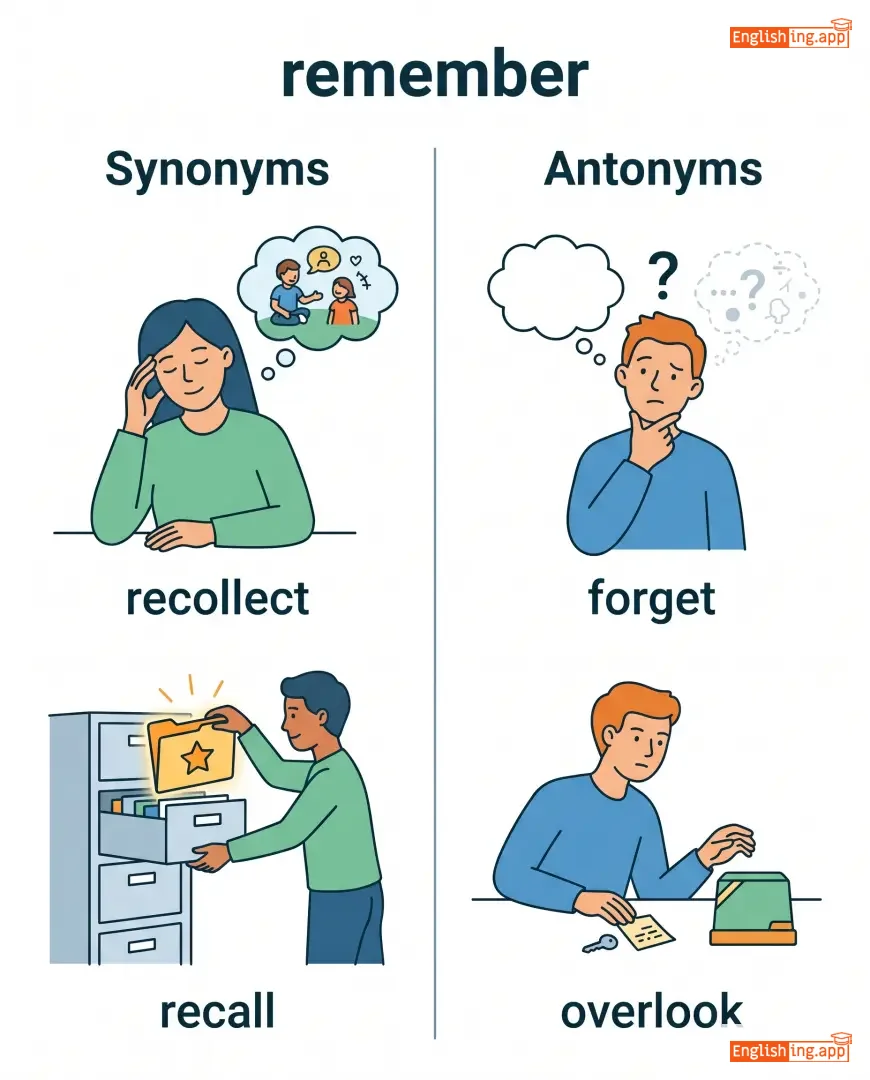
recall, recollect, reminisce, retain
••••••
|
forget, overlook, ignore
••••••
|
remember clearly, remember well, remember to do, remember when
••••••
|
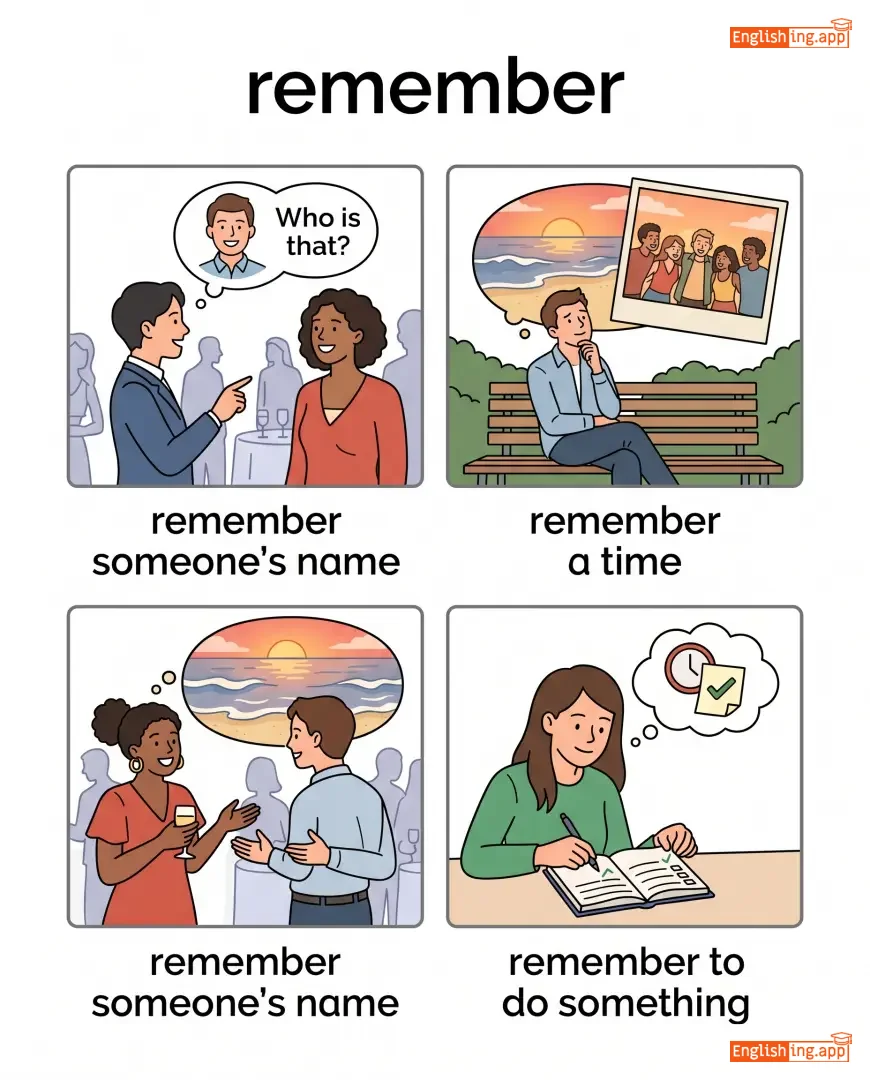
记住你在学校的第一个日子!
••••••
|
|
#4218
🔔
|
/rɪˈmaɪnd/
verb
(瑞麦因德)
••••••
|
- •••••• |
提醒
tíxǐng
••••••
|
reminded
瑞麦因德德
••••••
|
reminded
瑞麦因德德
••••••
|
reminds
瑞麦因德斯
••••••
|
reminding
瑞麦因丁
••••••
|
to cause someone to remember something
••••••
|
Please remind me to call her tomorrow.
请提醒我明天打电话给她。
••••••
|
请提醒我明天打电话给她。
Qǐng tíxǐng wǒ míngtiān dǎ diànhuà gěi tā.
••••••
|
- •••••• | - •••••• | - •••••• |
alert, notify, jog memory, prompt
••••••
|
forget, neglect
••••••
|
remind someone of something, remind to do something
••••••
|
提醒就像英文的'remind',帮助记住!
••••••
|
|
#4219
⏰
|
/rɪˈmaɪndər/
noun
(ri-mai-nder)
••••••
|
- •••••• |
提醒
tixing
••••••
|
- •••••• | - •••••• | - •••••• | - •••••• |
something that helps you remember a fact, event, or action that you need to do or recall
••••••
|
He set a reminder to call his mother on her birthday. |
他设置了一个提醒,提醒自己在母亲的生日打电话给她。
Ta shezhi le yige tixing, tixing ziji zai muqin de shengri da dianhua gei ta.
••••••
|
gentle reminder |
a polite way to remind someone about something
••••••
|
温柔的提醒
wenrou de tixing
••••••
|
prompt, cue, notice, alert, warning
••••••
|
forgetfulness, omission
••••••
|
set a reminder, friendly reminder, daily reminder, send a reminder
••••••
|
提醒 = 提醒你 - 提醒会提醒你!
••••••
|
|
#4220
🌍
|
/rɪˈmoʊt/
adjective
(リモート)
••••••
|
- •••••• |
远程
yuan cheng
••••••
|
- •••••• | - •••••• | - •••••• | - •••••• |
Situated far from the main centers of population; distant.
••••••
|
They stayed in a remote village during their trip. |
他们在旅行期间住在一个偏远的村庄。
Tāmen zài lǚxíng qījiān zhù zài yīgè piānyuǎn de cūnzhuāng.
••••••
|
remote possibility |
A very unlikely chance.
••••••
|
远程可能性
yuan cheng ke neng xing
••••••
|
distant, faraway, isolated, secluded, outlying
••••••
|
near, close, central
••••••
|
remote area, remote control, remote access, remote work
••••••
|
Remote 就像 '远程控制',从远处工作。
••••••
|
Vocabulary Quiz
Test your vocabulary by matching words with their translations or meanings.
Login to take the quiz
Comments (0)
Share your thoughts and join the discussion.
Join the discussion by logging in
Login to CommentNo comments yet
Be the first to share your thoughts!