




Swipe left or right, or use the buttons. Tap image to zoom.
例句翻译
单词
Lesson 16Lesson 16 - 遮罩切换
|
表情符号
|
单词 | Images | 翻译 | 过去时 | 过去分词 | 第三人称单数 | 动名词 | 含义 | 例句 | 例句翻译 | 示例表达 | 示例表达含义 | 示例表达翻译 | 同义词 | 反义词 | 搭配词 | 助记符 |
|---|---|---|---|---|---|---|---|---|---|---|---|---|---|---|---|---|---|
|
#722
✏️
|
/ˈbɑːroʊ/
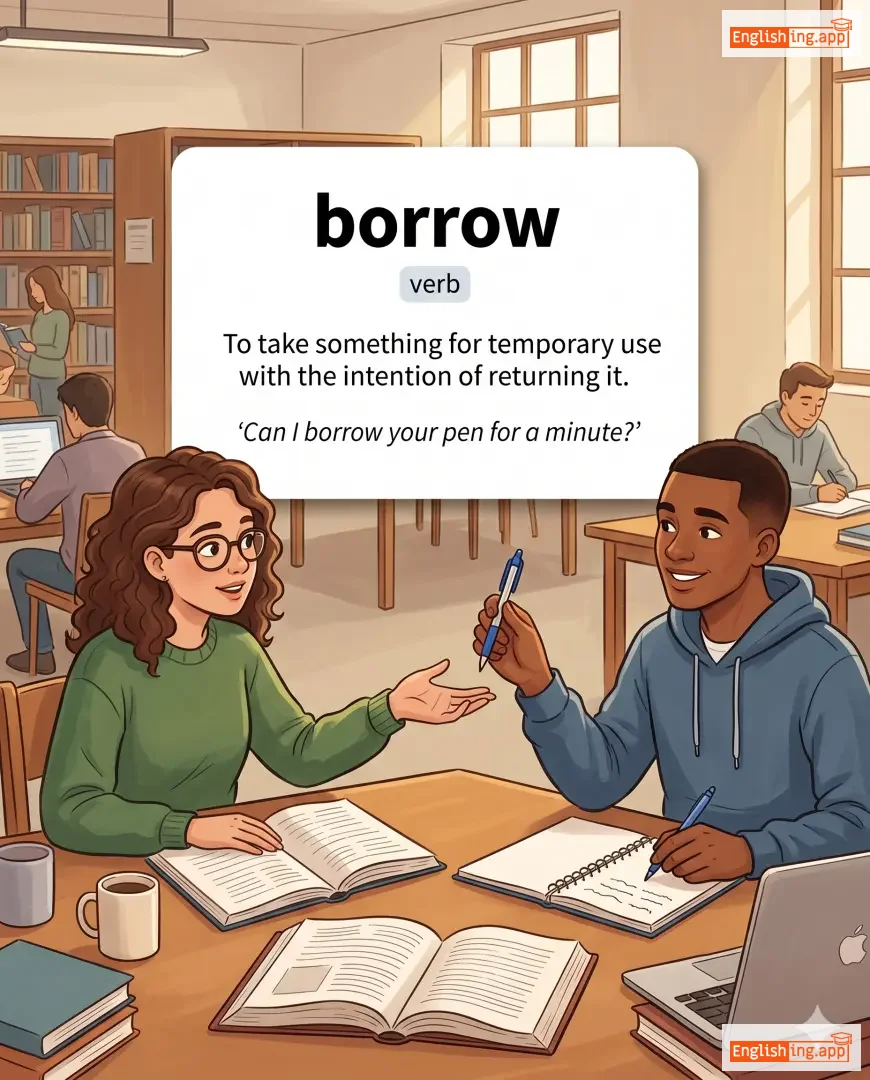
verb
(博罗)
••••••
|
|
借
jie
••••••
|
borrowed
博罗德
••••••
|
borrowed
博罗德
••••••
|
borrows
博罗斯
••••••
|
borrowing
博罗英
••••••
|
To take something for temporary use with the intention of returning it.
••••••
|
Can I borrow your pen for a minute?
我可以借你的笔一分钟吗?
••••••
|
我可以借你的笔一分钟吗?
Wǒ kěyǐ jiè nǐ de bǐ yī fēnzhōng ma?
••••••
|
borrow time
借时间
••••••
|
To extend a situation temporarily, often delaying an inevitable outcome.
••••••
|
借时间
Jiè shíjiān
••••••
|
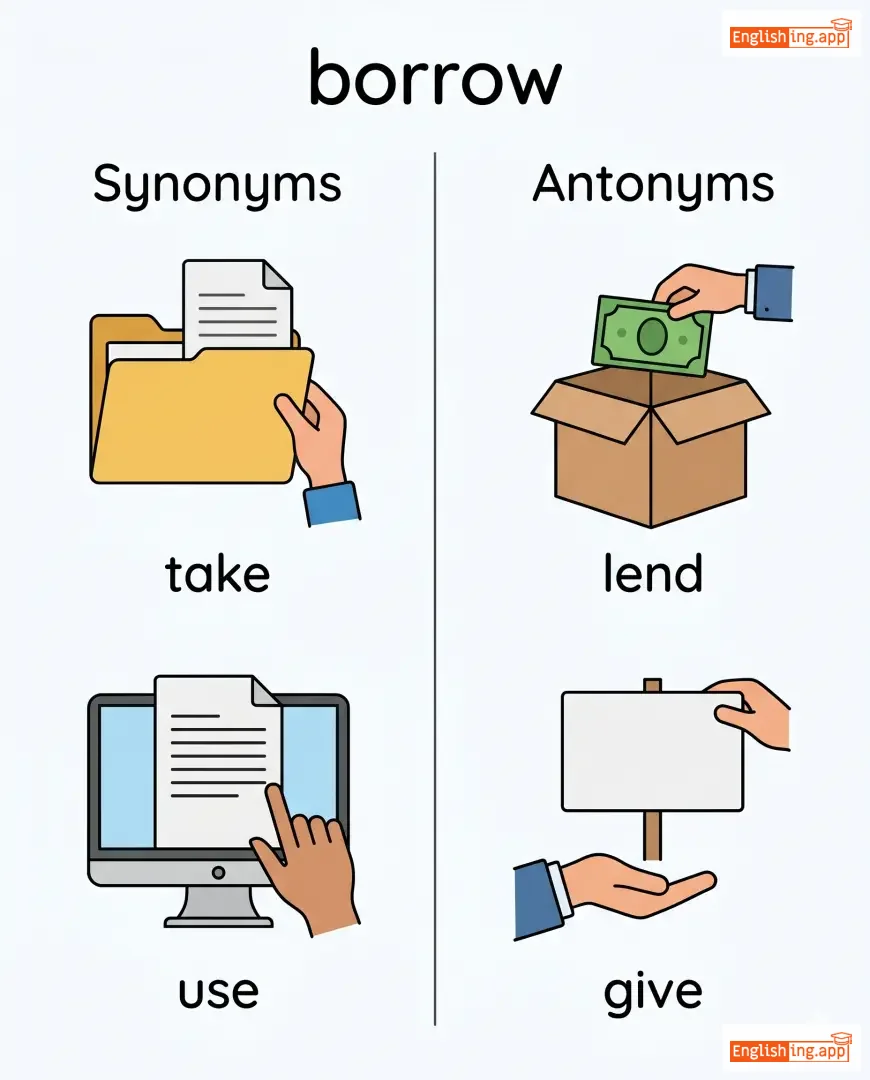
take, use, obtain, acquire
••••••
|
lend, give, return
••••••
|
borrow money, borrow a book, borrow ideas, borrow from
••••••
|
借一个物品,记得还回来!✏️
••••••
|
|
#723
👨💼
|
/bɒs/
noun
(bó sī)
••••••
|
- •••••• |
老板
lǎobǎn
••••••
|
- •••••• | - •••••• | - •••••• | - •••••• |
a person who is in charge of a worker, group, or organization
••••••
|
Her boss gave her a new project to complete. |
她的老板给她分配了一个新的项目来完成。
Tā de lǎobǎn gěi tā fēnpèi le yīgè xīn de xiàngmù lái wánchéng.
••••••
|
like a boss |
to do something with confidence and authority
••••••
|
像老板一样
xiàng lǎobǎn yīyàng
••••••
|
manager, supervisor, chief, head, leader
••••••
|
employee, worker, subordinate
••••••
|
boss at work, strict boss, talk to the boss, boss of the company
••••••
|
老板总是展现出决策的自信和强大的权威。
••••••
|
|
#724
✌️
|
/boʊθ/
determiner/pronoun
(bóu sī)
••••••
|
- •••••• |
两个
liǎng ge
••••••
|
- •••••• | - •••••• | - •••••• | - •••••• |
referring to two people or things together
••••••
|
Both of the children were excited about the trip. |
这两个孩子对旅行感到兴奋。
Zhè liǎng ge háizi duì lǚxíng gǎndào xīngfèn.
••••••
|
both sides of the coin |
two different aspects of the same situation
••••••
|
硬币的两面
yìngbì de liǎng miàn
••••••
|
two, pair, duo, couple
••••••
|
neither, none
••••••
|
both ways, both of them, both sides, both hands
••••••
|
Both意味着两个,就像两只手。
••••••
|
|
#725
😒
|
/ˈbɒðər/
verb
(bóder)
••••••
|
- •••••• |
打扰
dǎrǎo
••••••
|
bothered
bóderd
••••••
|
bothered
bóderd
••••••
|
bothers
bóz
••••••
|
bothering
bódering
••••••
|
to annoy, worry, or cause trouble to someone
••••••
|
I don't want to bother you while you're working.
我不想在你工作的时候打扰你。
••••••
|
我不想在你工作的时候打扰你。
Wǒ bù xiǎng zài nǐ gōngzuò de shíhòu dǎrǎo nǐ.
••••••
|
can't be bothered
我不在乎
••••••
|
too lazy or unwilling to do something
••••••
|
我不在乎
Wǒ bù zàihu
••••••
|
annoy, disturb, irritate, trouble, pester
••••••
|
please, soothe, comfort
••••••
|
bother someone, bother to ask, hardly bother, never bother
••••••
|
Bother的意思是打扰,想象一个人总是打扰你做事。
••••••
|
|
#726
🍾
|
/ˈbɒt.əl/
noun
(瓶子)
••••••
|
- •••••• |
瓶子
pingzi
••••••
|
- •••••• | - •••••• | - •••••• | - •••••• |
a container, typically made of glass or plastic, with a narrow neck used to hold liquids
••••••
|
He poured water into the bottle. |
他把水倒进瓶子里。
Tā bǎ shuǐ dào jìn píngzi lǐ.
••••••
|
bottle up |
to keep emotions hidden instead of expressing them
••••••
|
压抑情感
yāyì qínggǎn
••••••
|
flask, container, jar, vessel
••••••
|
open container, bowl
••••••
|
water bottle, glass bottle, plastic bottle, bottle of wine
••••••
|
瓶子就是瓶子,用来装水的瓶子。
••••••
|
|
#727
🔻
|
/ˈbɒtəm/
noun, adjective
(bàtóng)
••••••
|
- •••••• |
底部
dǐbù
••••••
|
- •••••• | - •••••• | - •••••• | - •••••• |
The lowest part of something.
••••••
|
The keys fell to the bottom of the bag. |
钥匙掉到了包的底部。
Yàoshi diàole bāo de dǐbù.
••••••
|
hit rock bottom |
to reach the lowest possible point
••••••
|
跌入谷底
diē rù gǔ dǐ
••••••
|
base, underside, foot, foundation
••••••
|
top, peak, summit
••••••
|
bottom line, at the bottom, ocean bottom, bottom of the page
••••••
|
记住'底部'是'底',就像一个坑的底部。
••••••
|
|
#728
🏀
|
/baʊns/
verb
(bǎnsī)
••••••
|
- •••••• |
反弹
fǎntán
••••••
|
bounced
bǎnsī de
••••••
|
bounced
bǎnsī de
••••••
|
bounces
bǎnsī
••••••
|
bouncing
bǎnsī zhōng
••••••
|
to spring back after hitting something; to rebound.
••••••
|
The ball bounced off the wall and hit the window.
qiú tóu zài qiáng shàng bǎnsī, ránhòu dǎ dào chuānghù.
••••••
|
球投在墙上反弹,然后打到窗户。
qiú tóu zài qiáng shàng fǎntán, ránhòu dǎ dào chuānghù.
••••••
|
bounce back
huí chōng
••••••
|
to recover quickly from difficulties
••••••
|
迅速恢复
xùnsù huīfù
••••••
|
rebound, spring, ricochet, leap, jump
••••••
|
fall, drop, sink
••••••
|
bounce off, bounce back, bounce a ball, bounce ideas
••••••
|
Bounce就是反弹,像球碰到墙后反弹起来。
••••••
|
|
#729
🔗
|
/baʊnd/
verb, noun, adjective
(包恩德)
••••••
|
- •••••• |
有界的 / 受限的
youjie de / shouxian de
••••••
|
bounded
包恩德
••••••
|
bounded
包恩德
••••••
|
bounds
包恩兹
••••••
|
bounding
包恩丁
••••••
|
To move with large strides or jumps; also refers to being tied, limited, or certain.
••••••
|
The dog bounded across the field with joy.
狗跳过田野,带着快乐。
••••••
|
狗带着快乐跳过了田野。
Gou daizhe kuaile tiao guo le tianye.
••••••
|
out of bounds
出界
••••••
|
Beyond the permitted limits.
••••••
|
超出界限
chaochu jie xian
••••••
|
leap, jump, restrict, limit, tie
••••••
|
free, release, unlimited
••••••
|
bounded area, out of bounds, bound to happen, legally bound
••••••
|
Bound意味着受限,就像Ball Bound,球出界了。
••••••
|
|
#730
🛑
|
/ˈbaʊn.dri/
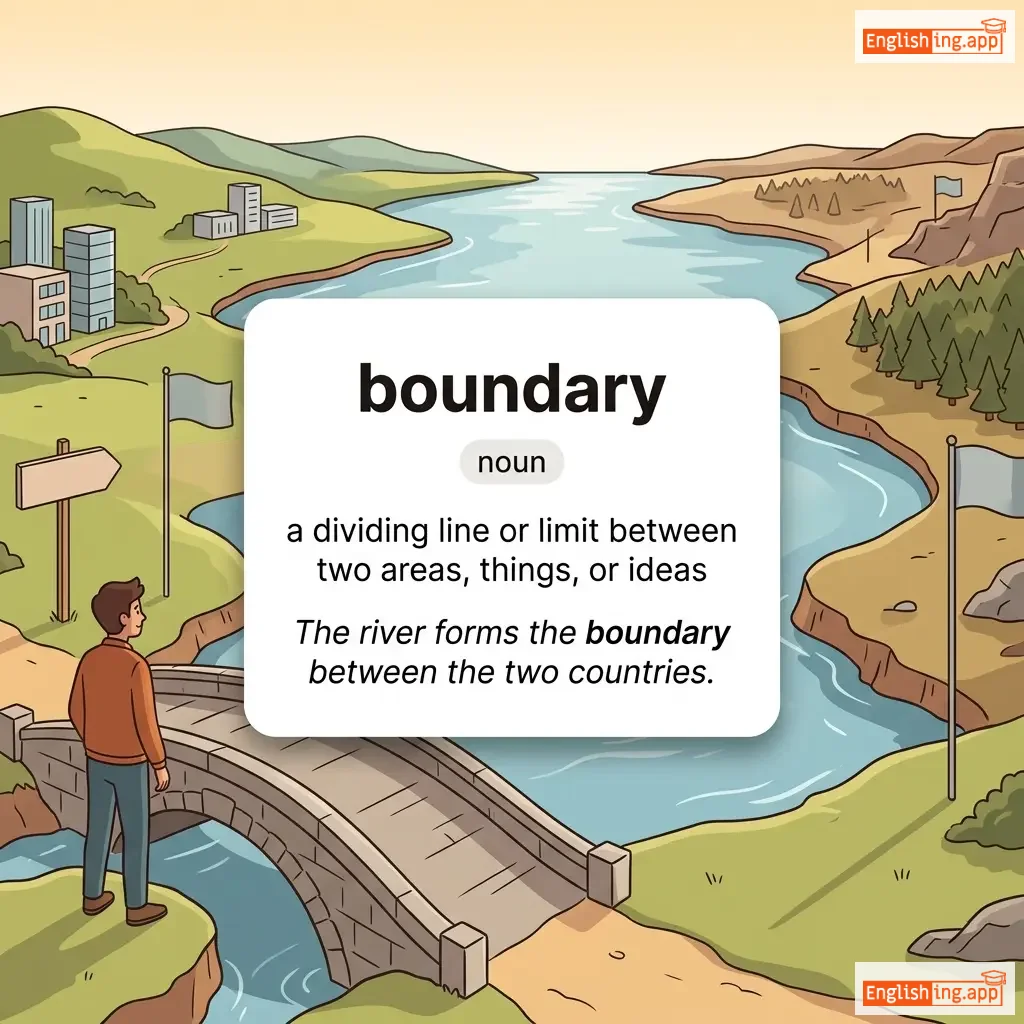
noun
(bāo'āndì)
••••••
|
|
边界
bianjie
••••••
|
- •••••• | - •••••• | - •••••• | - •••••• |
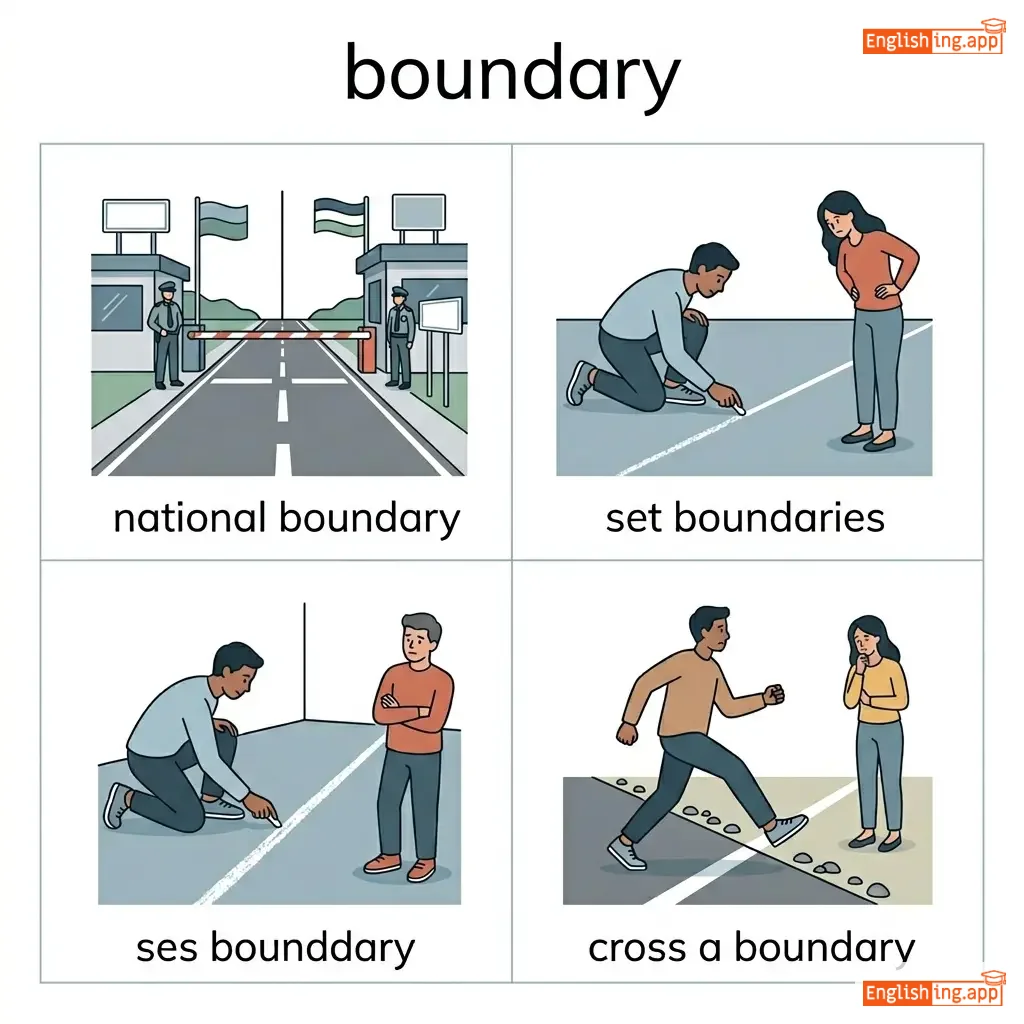
a dividing line or limit between two areas, things, or ideas
••••••
|
The river forms the boundary between the two countries. |
这条河流形成了两国之间的边界。
Zhe tiao heliu xingchengle liangguo zhijian de bianjie.
••••••
|
cross the boundary |
to go beyond accepted limits
••••••
|
越过边界
yueguo bianjie
••••••
|
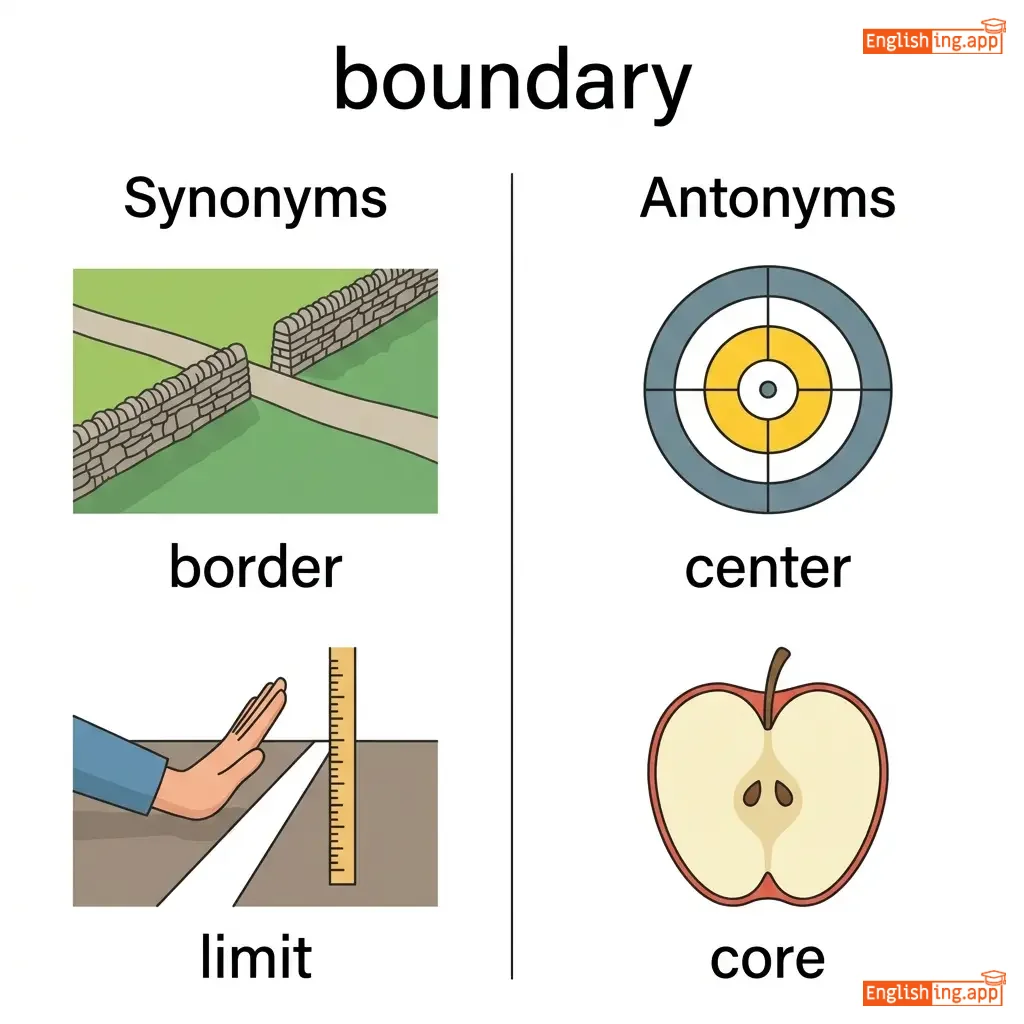
border, limit, edge, frontier
••••••
|
center, core, interior
••••••
|
national boundary, set boundaries, cross a boundary, boundary line
••••••
|
Boundary 就是边界,就像在足球中,边界就是球门线。
••••••
|
|
#731
🙇
|
/baʊ/ (verb), /boʊ/ (noun)
verb
(bǎo)
••••••
|
- •••••• |
鞠躬
jūgōng
••••••
|
bowed
bǎod
••••••
|
bowed
bǎod
••••••
|
bows
bǎos
••••••
|
bowing
bǎoing
••••••
|
to bend the upper part of the body forward as a sign of respect or greeting.
••••••
|
The performer bowed deeply after the show.
表演者在演出后深深鞠躬。
••••••
|
表演者在演出后深深鞠躬。
Biǎoyǎn zhě zài yǎnchū hòu shēn shēn jūgōng.
••••••
|
bow down
鞠躬
••••••
|
to show deep respect or submission
••••••
|
深深鞠躬
shēn shēn jūgōng
••••••
|
bend, incline, stoop, kneel, nod
••••••
|
stand, rise, resist
••••••
|
bow deeply, bow politely, bow down, bow before
••••••
|
鞠躬表示尊敬或问候。
••••••
|
|
#732
🥣
|
/boʊl/
noun
(bóu)
••••••
|
- •••••• |
碗
wan
••••••
|
- •••••• | - •••••• | - •••••• | - •••••• |
a round, deep dish used for holding food or liquids
••••••
|
She poured the soup into a large bowl. |
她把汤倒进了一个大碗里。
Tā bǎ tāng dào jìnle yīgè dà wǎn lǐ.
••••••
|
bowl over |
to surprise or impress someone greatly
••••••
|
使吃惊
shǐ chījīng
••••••
|
dish, vessel, container, basin
••••••
|
plate, flat surface
••••••
|
salad bowl, mixing bowl, cereal bowl, soup bowl
••••••
|
Bowl 代表碗,想象球掉进一个深碗里。
••••••
|
|
#733
📦
|
/bɑːks/
noun
(bó kè sī)
••••••
|
- •••••• |
盒子
hezi
••••••
|
- •••••• | - •••••• | - •••••• | - •••••• |
a container with flat sides, typically square or rectangular, used for storing things
••••••
|
He packed his clothes in a cardboard box.
他把衣服打包进一个纸箱里。
••••••
|
他把衣服打包进一个纸箱里。
Ta ba yifu dabao jin yi ge zhi xiang li.
••••••
|
think outside the box
跳出框框思考
••••••
|
to think creatively and differently
••••••
|
跳出框框思考
Tiao chu kuangkuang sikao
••••••
|
container, case, carton, package, chest
••••••
|
openness, unboxed
••••••
|
gift box, wooden box, cardboard box, jewelry box
••••••
|
盒子意味着盒子,想象你把'书'放进盒子里。
••••••
|
|
#734
🥊
|
/ˈbɒksər/
noun
(博克瑟)
••••••
|
- •••••• |
拳击手; 平角内裤; 拳师犬
quanjishou; pingjiao neiku; quanshi quan
••••••
|
- •••••• | - •••••• | - •••••• | - •••••• |
a person who fights in the sport of boxing; a type of short loose-fitting underwear; a breed of medium-to-large dog
••••••
|
The boxer trained hard every morning before the championship match.
博克瑟 每天 早上 训练 在 冠军赛 之前。
••••••
|
那名拳击手在冠军赛前每天早上刻苦训练。
na ming quanjishou zai guanjunsai qian meitian zaoshang keku xunlian
••••••
|
boxer shorts
博克瑟短裤
••••••
|
loose-fitting men's underwear
••••••
|
平角内裤
pingjiao neiku
••••••
|
fighter, pugilist, contender, athlete
••••••
|
pacifist, noncombatant
••••••
|
professional boxer, heavyweight boxer, trained boxer, champion boxer
••••••
|
BOXING 的人 = 拳击手
••••••
|
|
#735
🥊
|
/ˈbɒksɪŋ/
noun; gerund
(博克辛)
••••••
|
- •••••• |
拳击
quanji
••••••
|
- •••••• | - •••••• | - •••••• |
boxing
博克辛
••••••
|
the sport of fighting with fists using padded gloves; the act of putting something into a box
••••••
|
He has been training hard for a professional boxing match.
他正在为一场职业拳击比赛刻苦训练。
••••••
|
他正在为一场职业拳击比赛刻苦训练。
ta zhengzai wei yi chang zhiye quanji bisai keku xunlian
••••••
|
boxing match
拳击比赛
••••••
|
an organized fight between two boxers
••••••
|
拳击比赛
quanji bisai
••••••
|
prizefighting, pugilism, fighting, sparring
••••••
|
peace, nonviolence
••••••
|
boxing match, boxing ring, boxing gloves, professional boxing
••••••
|
Boxing 就是 拳击,拳头的运动
••••••
|
|
#736
👦
|
/bɔɪ/
noun
(bóyī)
••••••
|
- •••••• |
男孩
nánhái
••••••
|
- •••••• | - •••••• | - •••••• | - •••••• |
a male child or young male person
••••••
|
The boy ran across the playground. |
那个男孩跑过了操场。
Nàgè nánhái pǎo guòle cāochǎng.
••••••
|
boys will be boys |
a phrase implying that boys or men often behave in certain stereotypical ways
••••••
|
男孩永远是男孩
nánhái yǒngyuǎn shì nánhái
••••••
|
lad, youngster, child, son, male
••••••
|
girl, female, woman
••••••
|
little boy, young boy, school boy, boy scout
••••••
|
Boy 代表男孩,像 'Boy' 和 'Baba' 都是男性。
••••••
|
|
#737
🚫
|
/ˈbɔɪkɒt/
verb
(抵制)
••••••
|
|
抵制
dizhi
••••••
|
boycotted
抵制了
••••••
|
boycotted
抵制了
••••••
|
boycotts
抵制
••••••
|
boycotting
抵制中
••••••
|
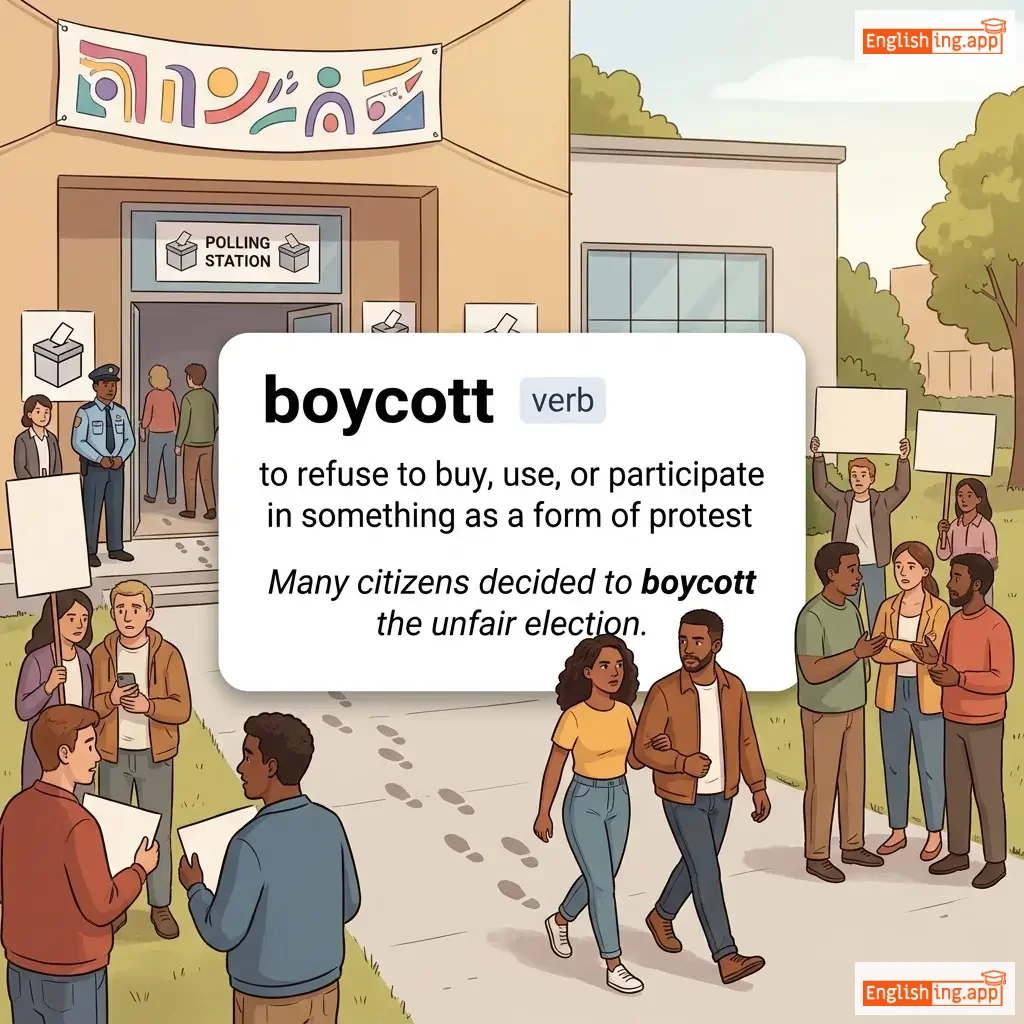
to refuse to buy, use, or participate in something as a form of protest
••••••
|
Many citizens decided to boycott the unfair election.
许多市民决定抵制不公正的选举。
••••••
|
许多市民决定抵制不公正的选举。
xuduo shimin jueding dizhi bugongzheng de xuanju.
••••••
|
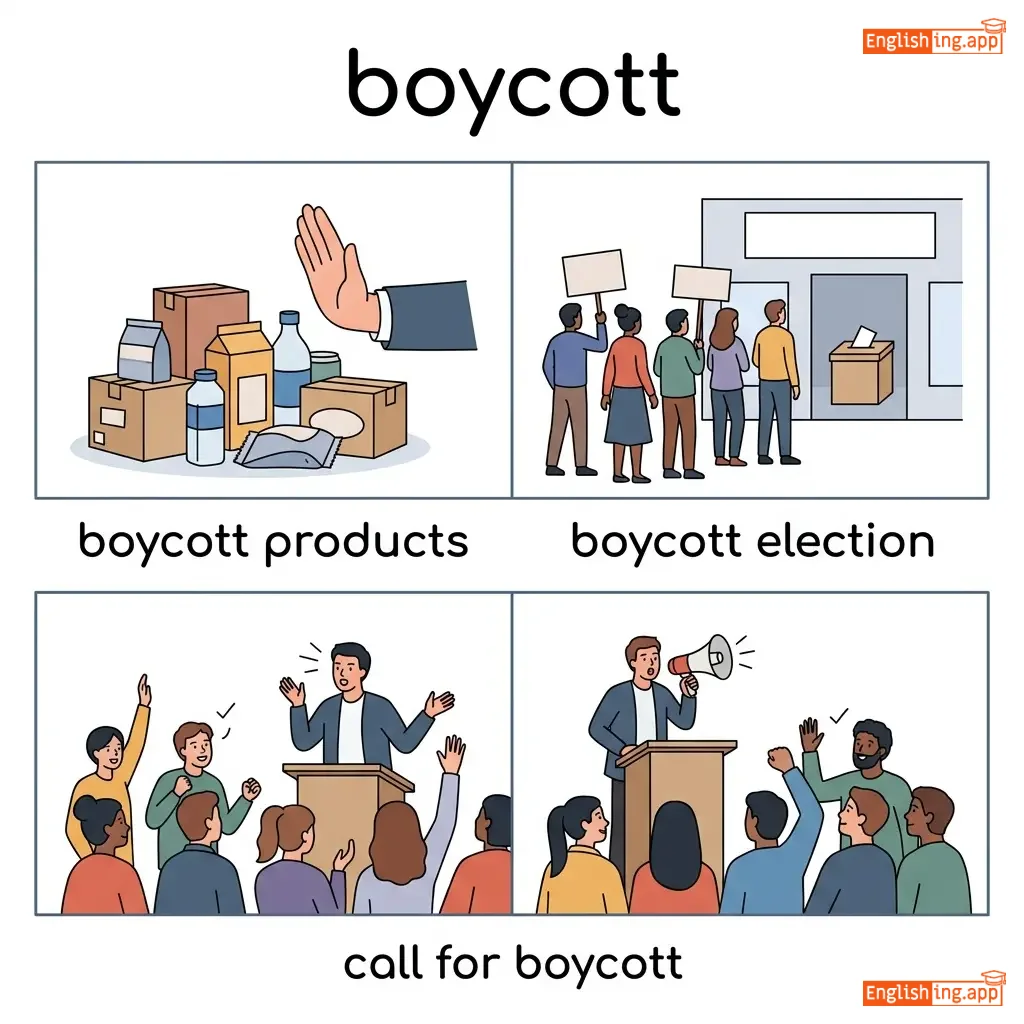
call for a boycott
呼吁抵制
••••••
|
an appeal to stop buying or using something in protest
••••••
|
呼吁抵制
huyu dizhi
••••••
|
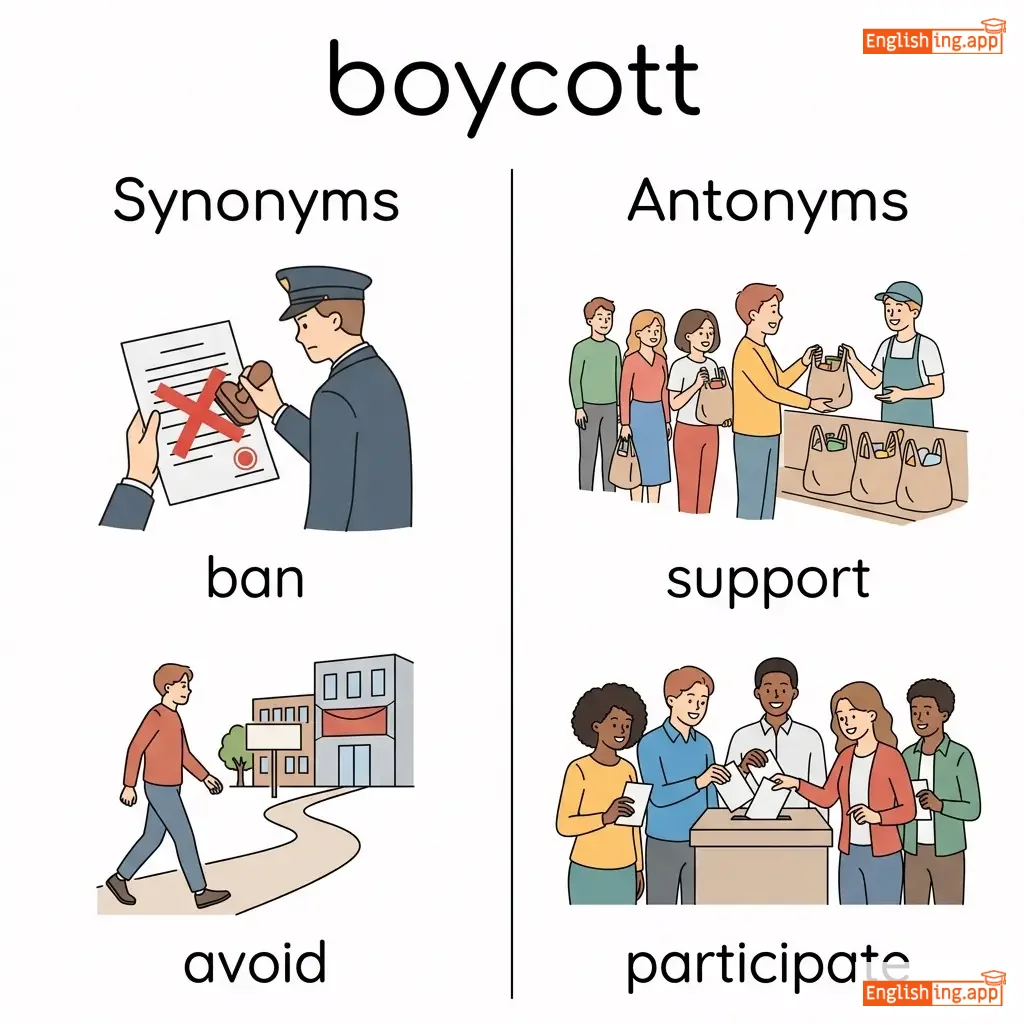
ban, avoid, refuse, shun, embargo
••••••
|
support, participate, endorse
••••••
|
boycott products, boycott election, call for boycott
••••••
|
Boycott = Boy + cut = 呼吁不要用某物
••••••
|
|
#738
👨❤️👩
|
/ˈbɔɪˌfrɛnd/
noun
••••••
|
- •••••• | - •••••• | - •••••• | - •••••• | - •••••• | - •••••• |
a man or boy that someone is having a romantic or close relationship with
••••••
|
She introduced her boyfriend to her parents. |
- •••••• | - •••••• | - •••••• | - •••••• |
partner, companion, lover, date
••••••
|
girlfriend, enemy
••••••
|
new boyfriend, old boyfriend, serious boyfriend, high school boyfriend
••••••
|
No •••••• |
|
#739
👙
|
/brɑː/
noun
(布拉)
••••••
|
- •••••• |
文胸
wenxiong
••••••
|
- •••••• | - •••••• | - •••••• | - •••••• |
a woman's undergarment worn to support and cover the breasts
••••••
|
She bought a comfortable bra for everyday wear.
希 波特 阿 康福特布尔 布拉 佛 埃夫里戴 威尔。
••••••
|
她买了一件舒适的文胸用于日常穿着。
ta mai le yi jian shushi de wenxiong yongyu richang chuanzhuo
••••••
|
- •••••• | - •••••• | - •••••• |
brassiere, undergarment, bust support, lingerie piece
••••••
|
shirt, outerwear
••••••
|
sports bra, lace bra, padded bra, strapless bra
••••••
|
Bra 就是 文胸—记住 'bra supports'.
••••••
|
|
#740
🦾
|
/breɪs/
noun; verb
(布雷斯)
••••••
|
- •••••• |
支架;做好准备
zhijia; zuohao zhunbei
••••••
|
braced
布雷斯德
••••••
|
braced
布雷斯德
••••••
|
braces
布雷斯兹
••••••
|
bracing
布雷辛
••••••
|
a device that supports or strengthens something; to prepare mentally or physically for something difficult
••••••
|
She braced herself for the strong wind.
希 布雷斯 德 赫塞尔夫 福 德 强 风
••••••
|
她为强风做好了准备。
ta wei qiang feng zuohao le zhunbei
••••••
|
brace yourself
布雷斯 你自己
••••••
|
prepare for something difficult or surprising
••••••
|
做好准备
zuohao zhunbei
••••••
|
support, reinforce, prepare, steady, fortify
••••••
|
weaken, relax, loosen
••••••
|
brace yourself, knee brace, brace for impact, dental brace
••••••
|
Brace = 准备好,风要来了。
••••••
|
|
#741
😏
|
/bræɡ/
verb
••••••
|
|
- •••••• |
bragged
••••••
|
bragged
••••••
|
brags
••••••
|
bragging
••••••
|
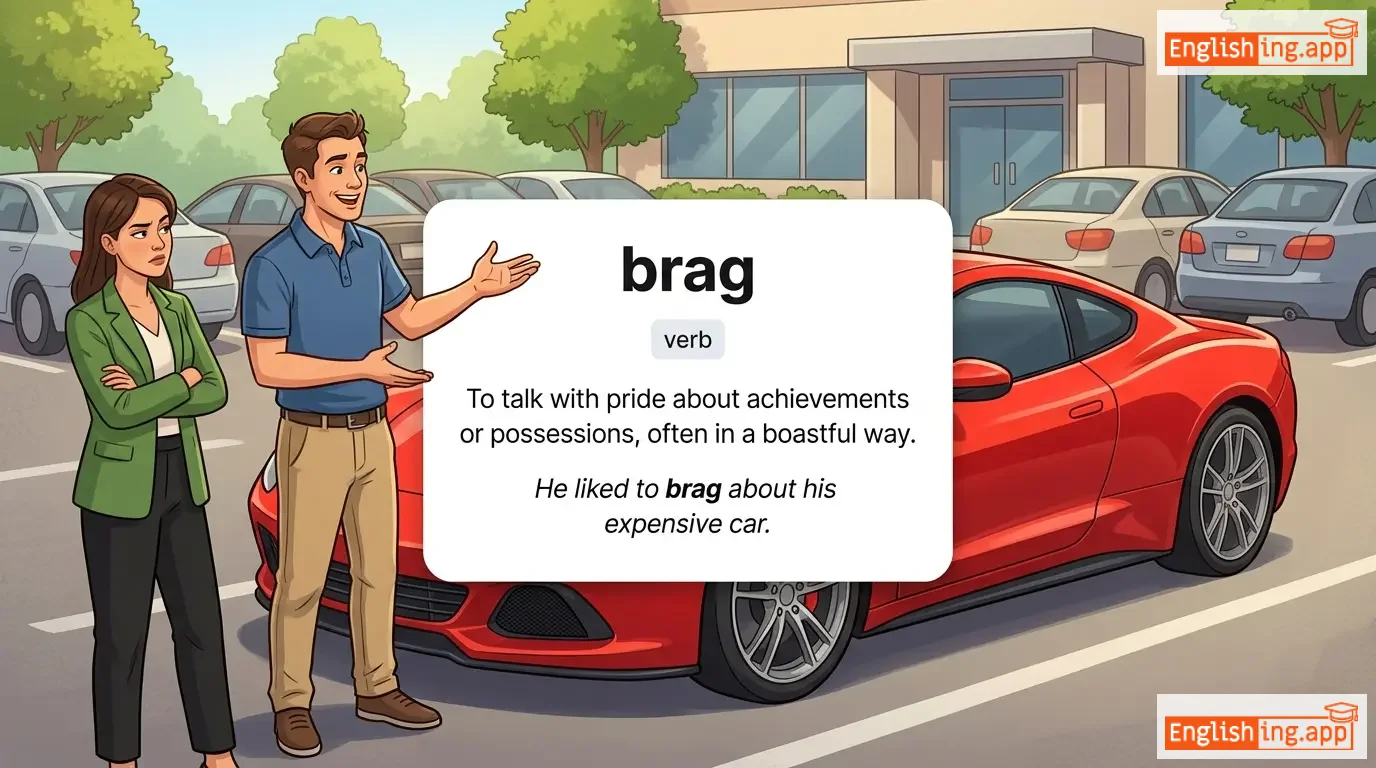
To talk with pride about achievements or possessions, often in a boastful way.
••••••
|
He liked to brag about his expensive car. |
- •••••• |
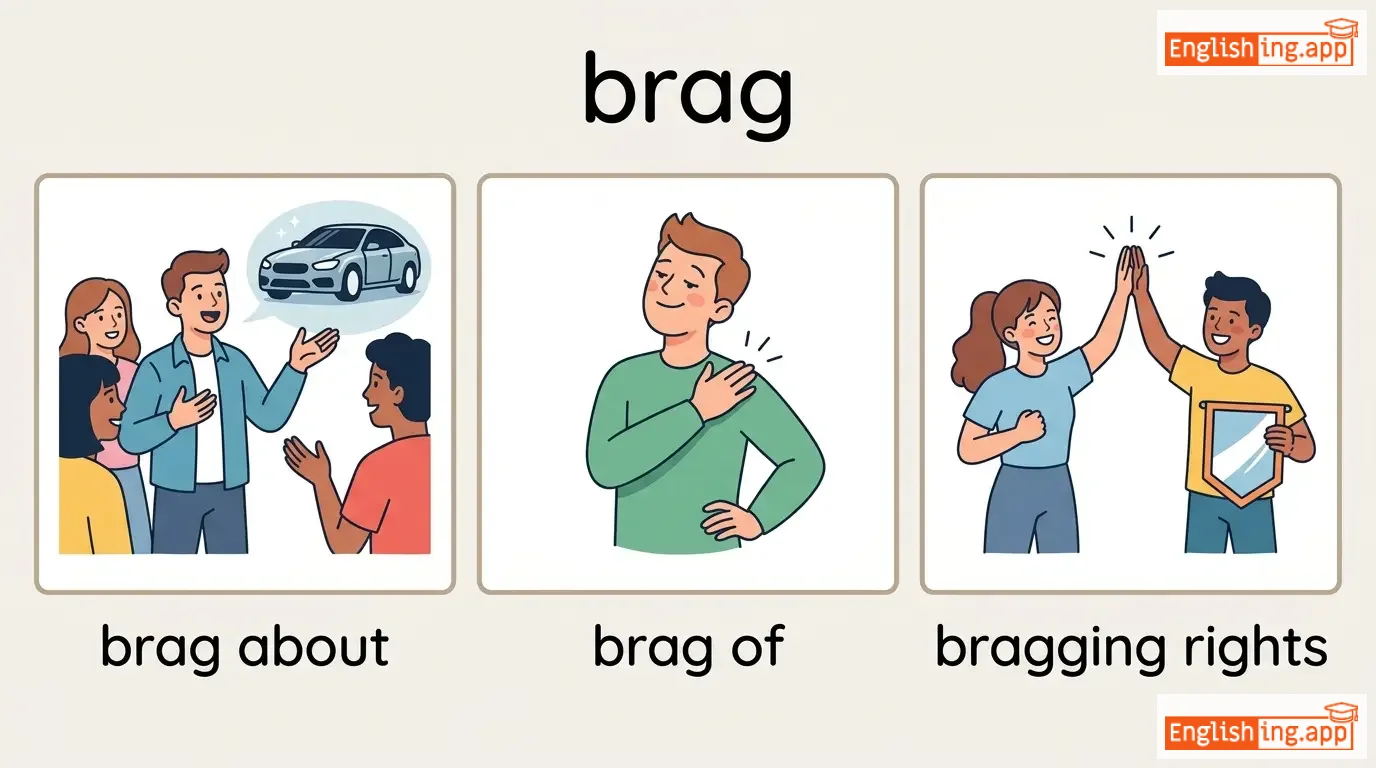
bragging rights |
The right to boast about something special one has achieved.
••••••
|
- •••••• |
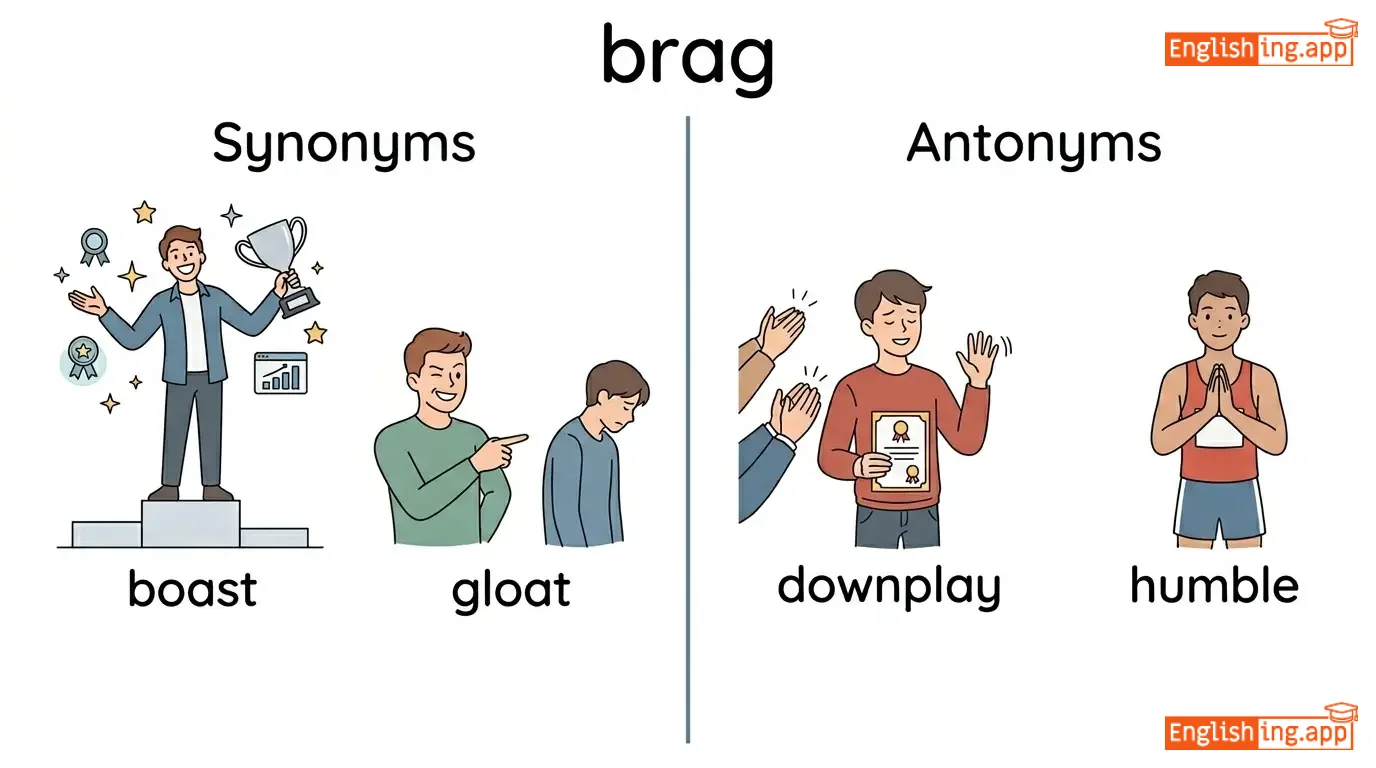
boast, gloat, show off, flaunt
••••••
|
downplay, humble
••••••
|
brag about, brag of, bragging rights
••••••
|
No •••••• |
|
#742
🧠
|
/breɪn/
noun
(bréɪn)
••••••
|
|
大脑
dà nǎo
••••••
|
- •••••• | - •••••• | - •••••• | - •••••• |
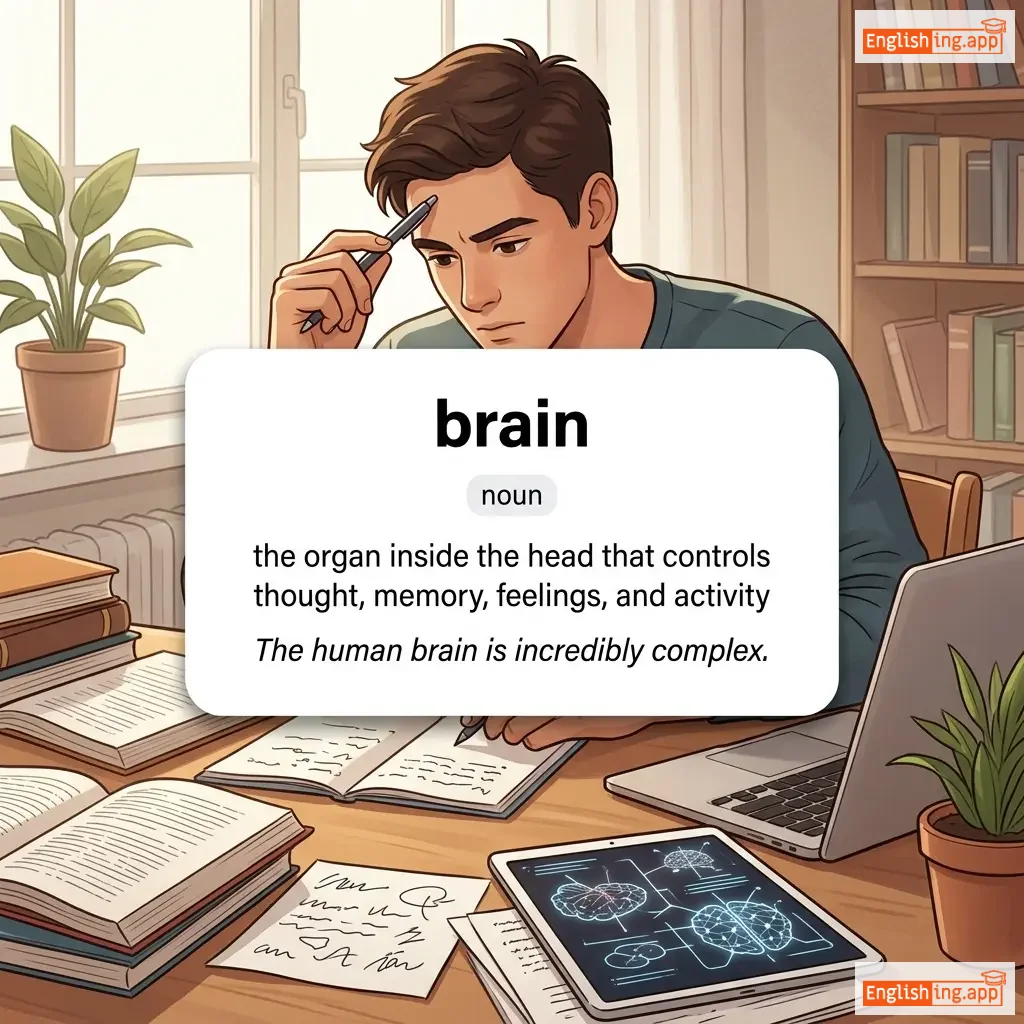
the organ inside the head that controls thought, memory, feelings, and activity
••••••
|
The human brain is incredibly complex. |
人类的大脑复杂得令人难以置信。
rén lèi de dà nǎo fù zá dé lìng rén nán yǐ zhì xìn
••••••
|
rack your brain |
to think very hard about something
••••••
|
绞尽脑汁
jiǎo jìn nǎo zhī
••••••
|
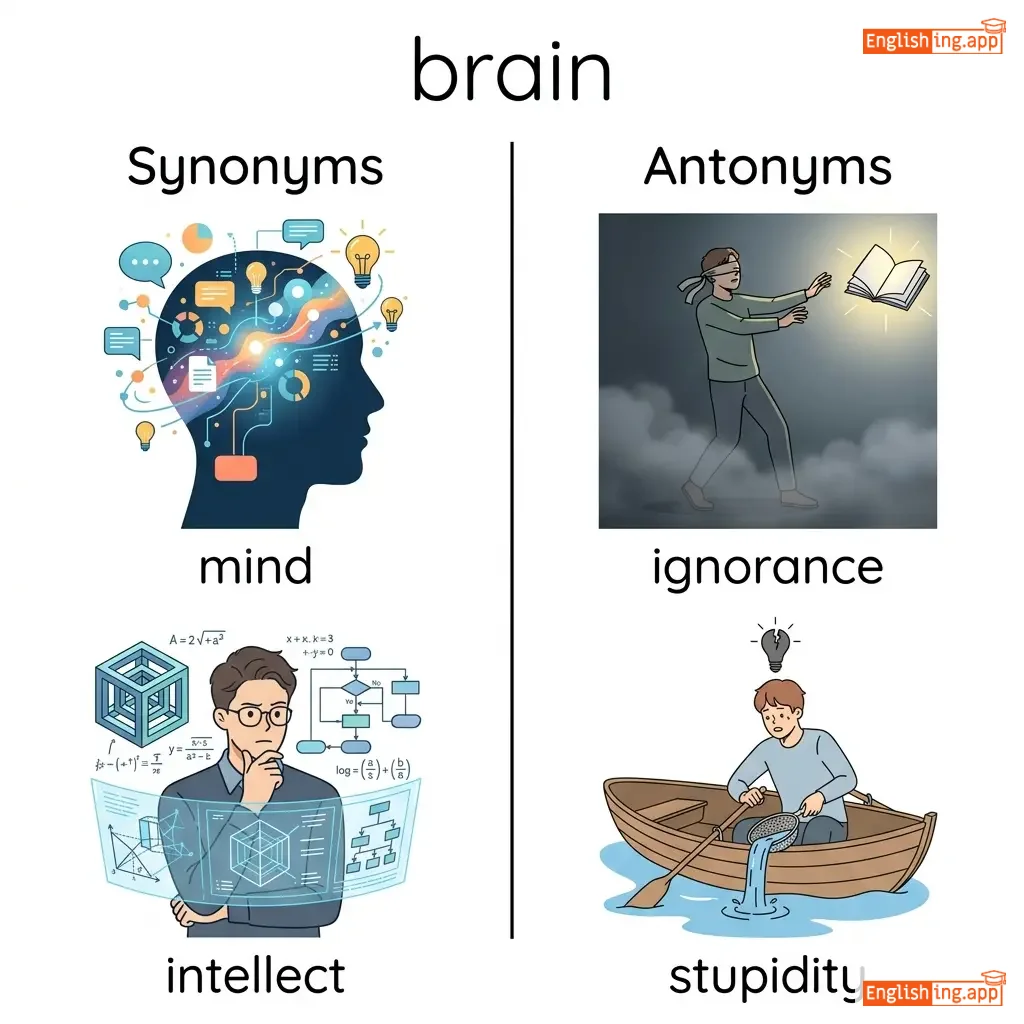
mind, intellect, intelligence, head
••••••
|
ignorance, stupidity
••••••
|
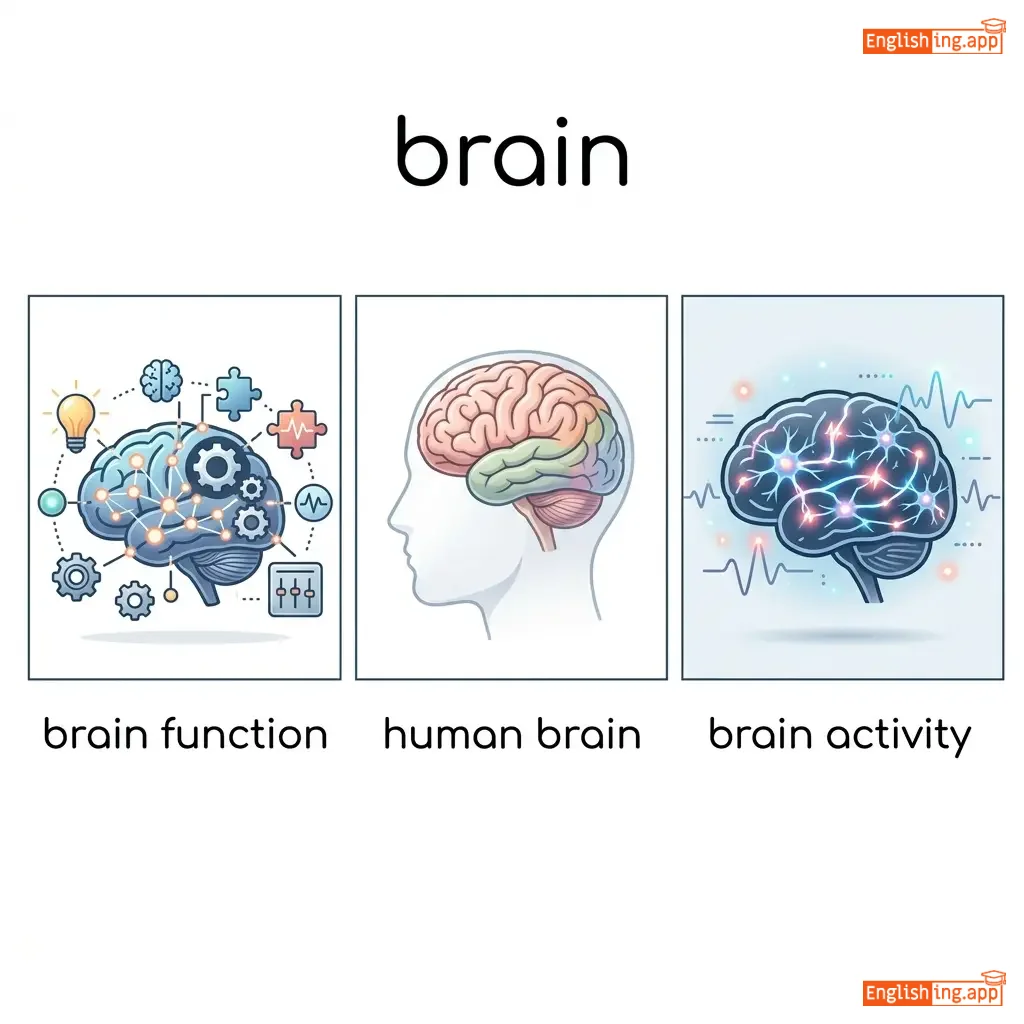
brain function, human brain, brain activity, brain power
••••••
|
大脑,像‘大浪’般的思考!
••••••
|
|
#743
🧠
|
/ˈbreɪnˌwɒʃ/
verb, noun
(布瑞恩沃什)
••••••
|
- •••••• |
洗脑
xi nao
••••••
|
brainwashed
布瑞恩沃什德
••••••
|
brainwashed
布瑞恩沃什德
••••••
|
brainwashes
布瑞恩沃什斯
••••••
|
brainwashing
布瑞恩沃什英
••••••
|
to manipulate someone into adopting certain beliefs by repeated pressure or propaganda; the act or process of such manipulation
••••••
|
The group tried to brainwash new members with constant propaganda.
这个组织试图给新成员洗脑。
••••••
|
这个组织试图给新成员洗脑。
Zhege zuzhi shitu gei xin chengyuan xi nao
••••••
|
brainwash someone
给某人洗脑
••••••
|
to strongly influence someone to accept certain ideas without questioning
••••••
|
给某人洗脑
gei mouren xi nao
••••••
|
indoctrinate, manipulate, condition, program, influence
••••••
|
educate, enlighten, inform
••••••
|
brainwash people, political brainwashing, systematic brainwashing, attempt to brainwash
••••••
|
洗 + 脑 = 洗脑 = brainwash
••••••
|
|
#744
🌿
|
/bræntʃ/
noun, verb
(brānch)
••••••
|
- •••••• |
分支
fenzhi
••••••
|
branched
brancht
••••••
|
branched
brancht
••••••
|
branches
branches
••••••
|
branching
branching
••••••
|
A part of a tree that grows out from the trunk; a division of an organization or subject.
••••••
|
The company opened a new branch in Dhaka.
公司在达卡开设了一个新分支。
••••••
|
公司在达卡开设了一个新分支。
Gongsi zai Daka kaishi le yige xin fenzhi.
••••••
|
branch out
扩展
••••••
|
to expand into new areas or activities
••••••
|
扩展
kuozhan
••••••
|
limb, division, department, subdivision
••••••
|
root, trunk
••••••
|
tree branch, bank branch, branch office, branch out
••••••
|
树的分支就像公司的分支一样。
••••••
|
|
#745
🏷️
|
/brænd/
noun
(品牌)
••••••
|
- •••••• |
品牌
pinpai
••••••
|
- •••••• | - •••••• | - •••••• | - •••••• |
a type of product manufactured by a company under a particular name
••••••
|
Nike is a popular brand of sportswear. |
Nike 是一个受欢迎的运动服品牌。
Nike shi yige shou huanying de yundongfu pinpai.
••••••
|
brand new |
completely new, unused
••••••
|
崭新
zhanxin
••••••
|
label, trademark, logo, mark
••••••
|
generic, unbranded
••••••
|
brand name, popular brand, brand image, build a brand
••••••
|
品牌就像一个标志,每个品牌都有它独特的名字,比如 Nike。
••••••
|
|
#746
🦁
|
/breɪv/
adjective
(bɾeɪv)
••••••
|
- •••••• |
勇敢
yǒnggǎn
••••••
|
- •••••• | - •••••• | - •••••• | - •••••• |
showing courage in the face of danger or difficulty
••••••
|
The brave firefighter rushed into the burning building. |
勇敢的消防员冲进了燃烧的建筑物。
yǒnggǎn de xiāofángyuán chōng jìnle ránshāo de jiànzhúwù.
••••••
|
put on a brave face |
to pretend to be confident and cheerful despite difficulties
••••••
|
摆出勇敢的面孔
bǎichū yǒnggǎn de miànkǒng
••••••
|
courageous, valiant, fearless, heroic, bold
••••••
|
cowardly, fearful, timid
••••••
|
brave man, brave soldier, brave attempt, brave enough
••••••
|
Brave 意味着 '勇敢',像狮子一样强大无畏。
••••••
|
|
#747
🦁
|
/ˈbreɪ.vər.i/
noun
(bùlèiwǒlì)
••••••
|
|
勇气
yongqi
••••••
|
- •••••• | - •••••• | - •••••• | - •••••• |
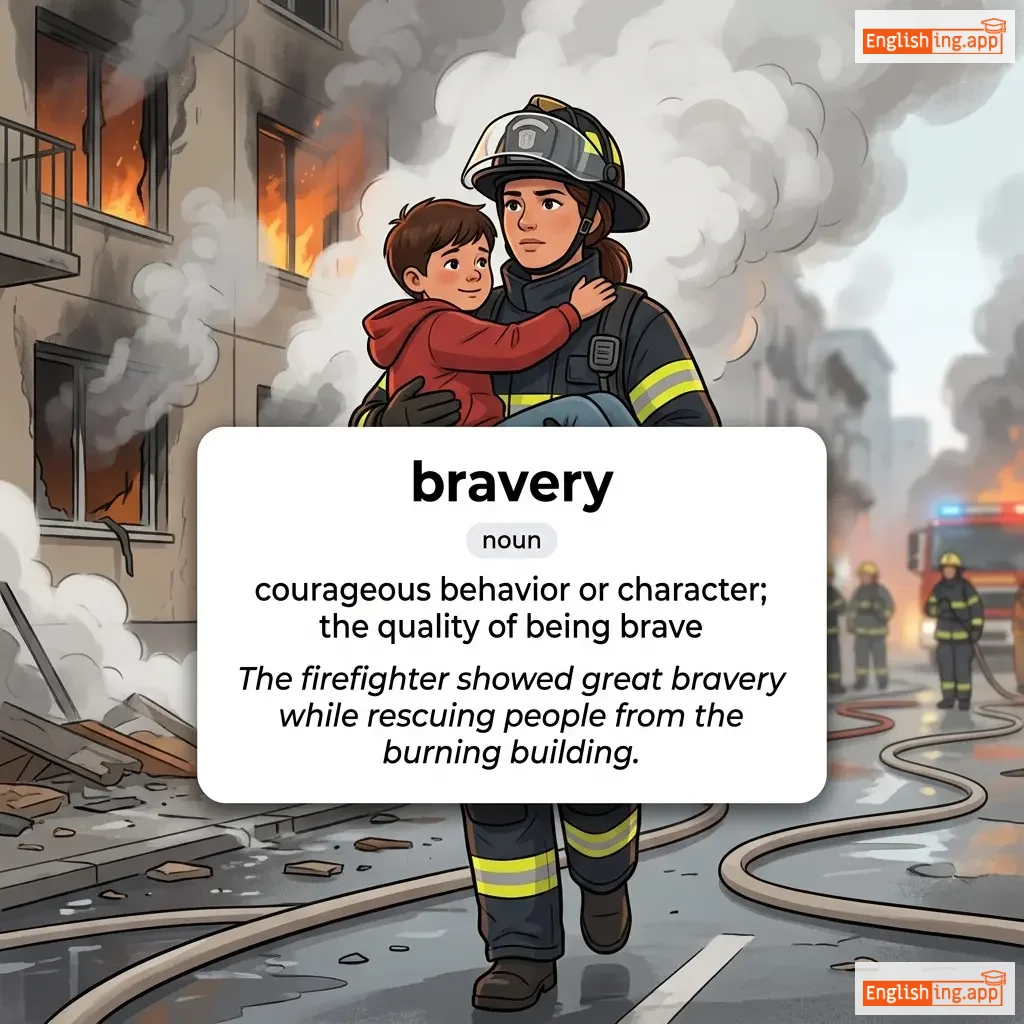
courageous behavior or character; the quality of being brave
••••••
|
The firefighter showed great bravery while rescuing people from the burning building. |
消防员在从燃烧的大楼中救出人们时表现出极大的勇气。
xiaofangyuan zai cong ranshao de dalou zhong jiuchu renmen shi biaoxian chu jida de yongqi.
••••••
|
- •••••• | - •••••• | - •••••• |
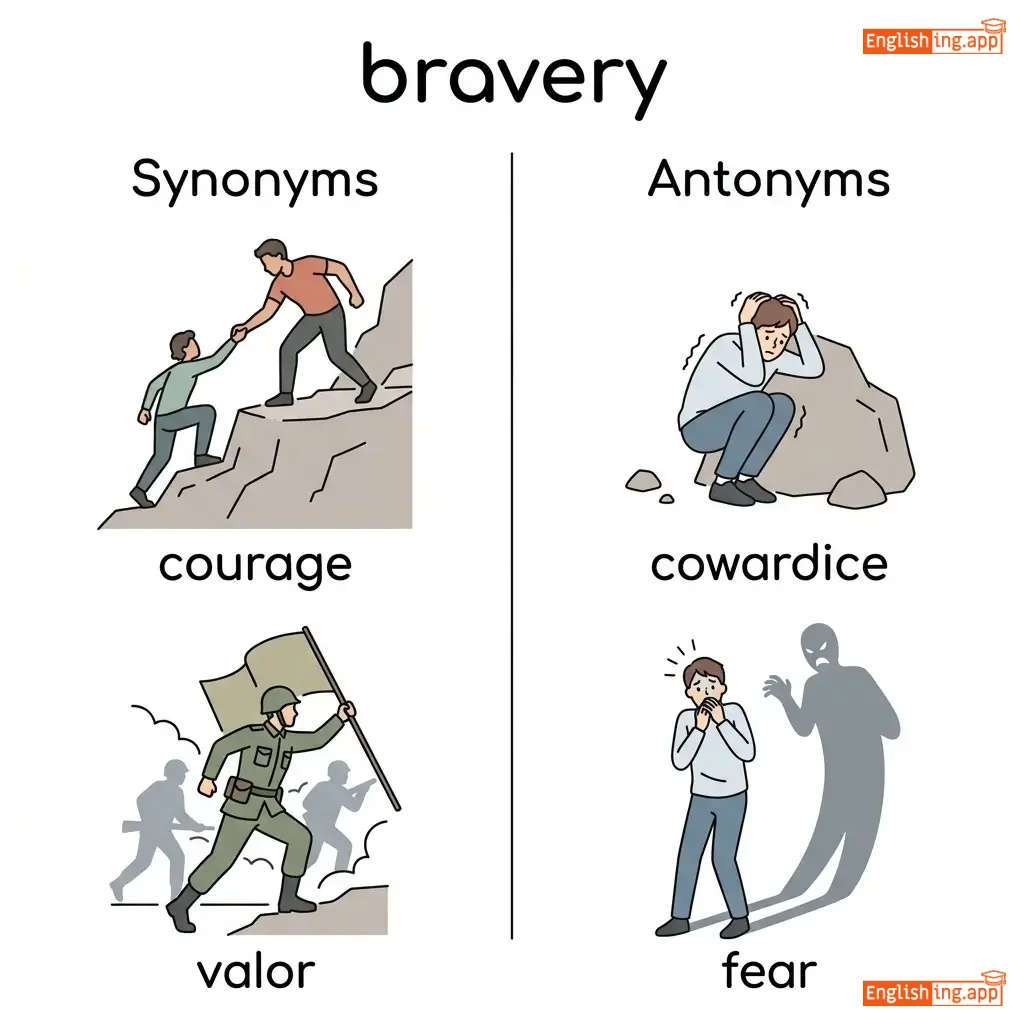
courage, valor, heroism, gallantry
••••••
|
cowardice, fear, timidity
••••••
|
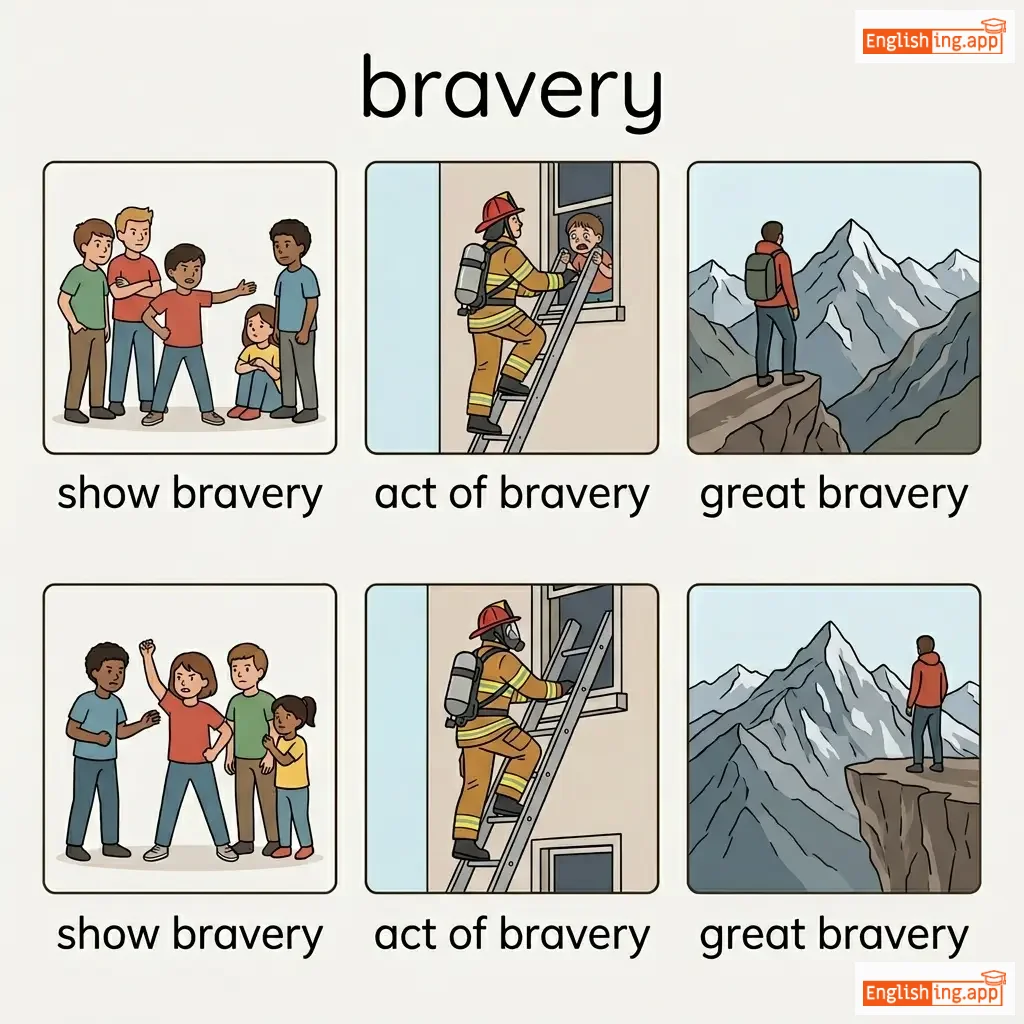
show bravery, act of bravery, great bravery
••••••
|
Bravery helps save lives, like firefighters showing courage in the fire.
••••••
|
|
#748
🐴
|
/breɪ/
verb
(bɾeɪ)
••••••
|
- •••••• |
驴叫
lü jiao
••••••
|
brayed
bɾeɪd
••••••
|
brayed
bɾeɪd
••••••
|
brays
bɾeɪs
••••••
|
braying
bɾeɪɪŋ
••••••
|
To make a loud, harsh sound like a donkey.
••••••
|
The donkey began to bray loudly in the field.
驴子在田地里开始大声叫。
••••••
|
驴子在田地里开始大声叫。
Lü zi zai tian di li kai shi da sheng jiao.
••••••
|
bray like a donkey
像驴子一样叫
••••••
|
To speak or laugh in a loud, harsh, and unpleasant way.
••••••
|
像驴子一样叫
Xiang lü zi yi yang jiao
••••••
|
heehaw, bawl, cry, yell
••••••
|
whisper, murmur
••••••
|
bray loudly, donkey bray, braying sound
••••••
|
当驴子叫时,可以帮助你记住'驴叫' 🐴
••••••
|
|
#749
🚨
|
/briːtʃ/
noun, verb
(briːtʃ)
••••••
|
|
违反
wei fan
••••••
|
breached
briːtʃd
••••••
|
breached
briːtʃd
••••••
|
breaches
briːtʃes
••••••
|
breaching
briːtʃing
••••••
|
An act of breaking or failing to observe a law, agreement, or code of conduct; to break through.
••••••
|
The company was fined for a breach of contract.
公司因违反合同而被罚款。
••••••
|
公司因违反合同而被罚款。
Gongsi yin weifan hetong er bei fakuan.
••••••
|
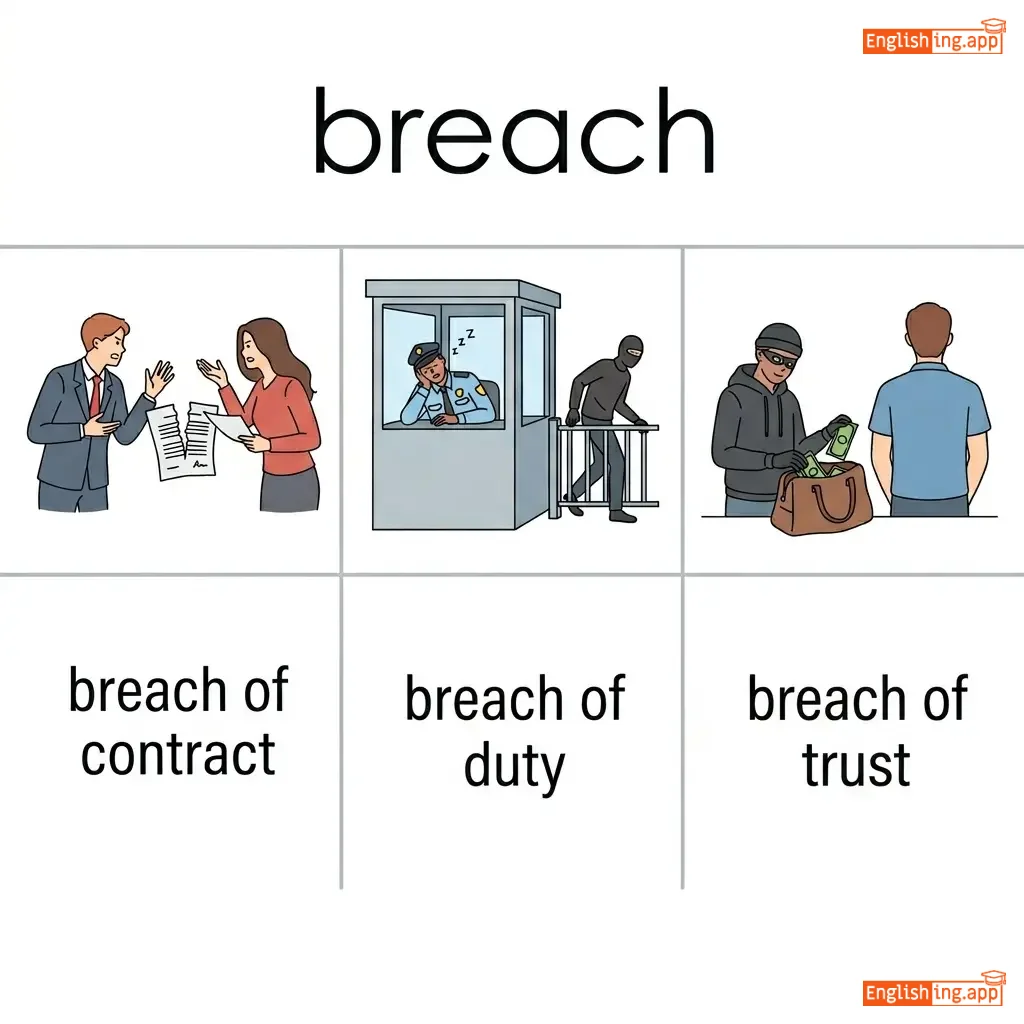
breach of trust
信任破裂
••••••
|
A violation of confidence or duty.
••••••
|
信任破裂
xìn rèn pò liè
••••••
|
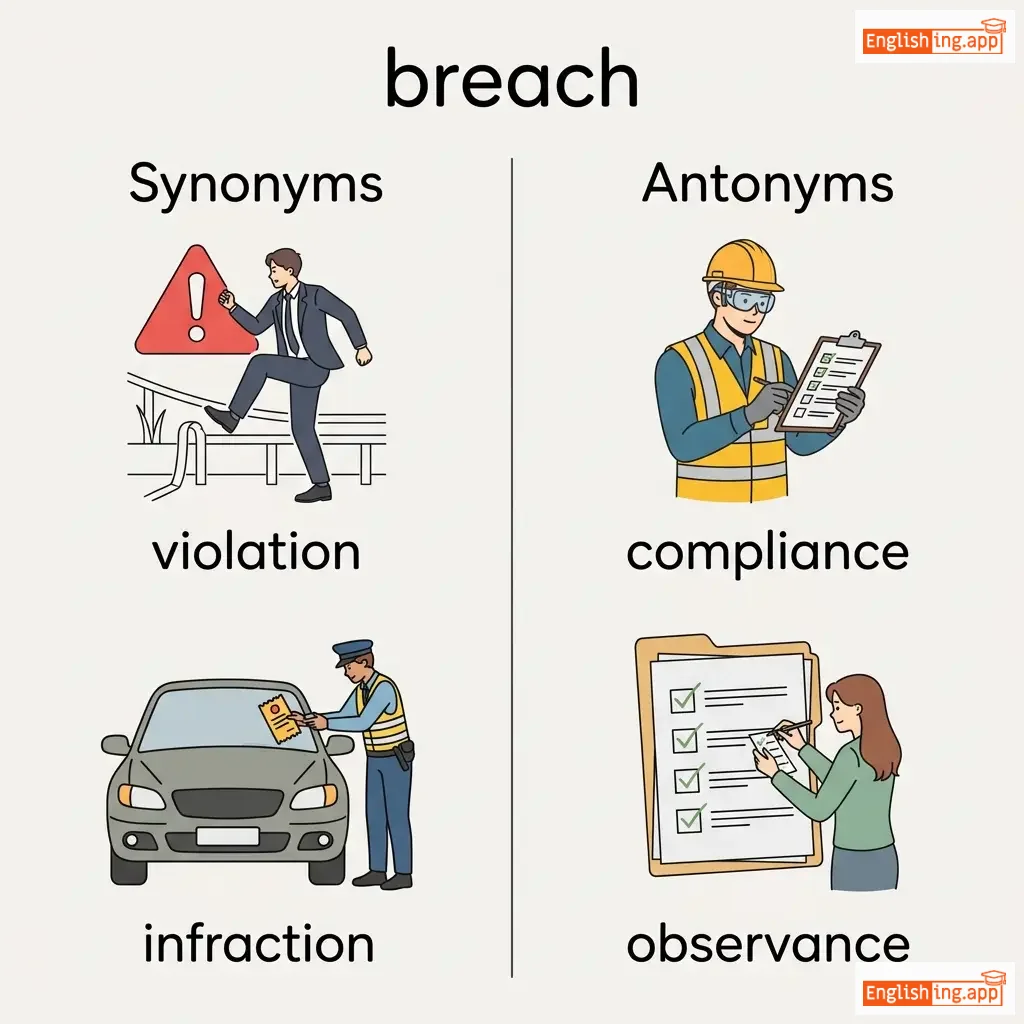
violation, infraction, contravention, infringement, rupture
••••••
|
compliance, observance, respect
••••••
|
breach of contract, breach of duty, breach of trust, security breach
••••••
|
Breach 就是违反 — 破坏合同或信任的行为。
••••••
|
|
#750
🍞
|
/brɛd/
noun
••••••
|
- •••••• | - •••••• | - •••••• | - •••••• | - •••••• | - •••••• |
A type of food made from flour, water, and yeast, mixed and baked.
••••••
|
She bought a loaf of bread from the bakery. |
- •••••• |
break bread |
to share a meal with someone, often signifying friendship
••••••
|
- •••••• |
loaf, bun, roll, baguette, toast
••••••
|
meat, rice
••••••
|
slice of bread, loaf of bread, white bread, brown bread
••••••
|
No •••••• |
|
#751
📏
|
/brɛdθ/
noun
(bù)
••••••
|
- •••••• |
宽度
kuandu
••••••
|
- •••••• | - •••••• | - •••••• | - •••••• |
The distance or measurement from side to side; width; a wide range.
••••••
|
The breadth of his knowledge impressed everyone. |
他的知识宽度给大家留下了深刻印象。
Tā de zhīshí kuāndù gěi dàjiā liú xiàle shēnkè yìnxiàng.
••••••
|
- •••••• | - •••••• | - •••••• |
width, span, range, scope, extent
••••••
|
narrowness, limitation
••••••
|
breadth of knowledge, breadth of experience, breadth of vision
••••••
|
面包(Bread)很宽—Breadth意味着宽度。
••••••
|
|
#752
💔
|
/breɪk/
verb, noun
(bɾeɪk)
••••••
|
|
打破 / 休息
dǎpò / xiūxí
••••••
|
broke
broʊk
••••••
|
broken
broʊkən
••••••
|
breaks
bɾeɪks
••••••
|
breaking
bɾeɪkɪŋ
••••••
|
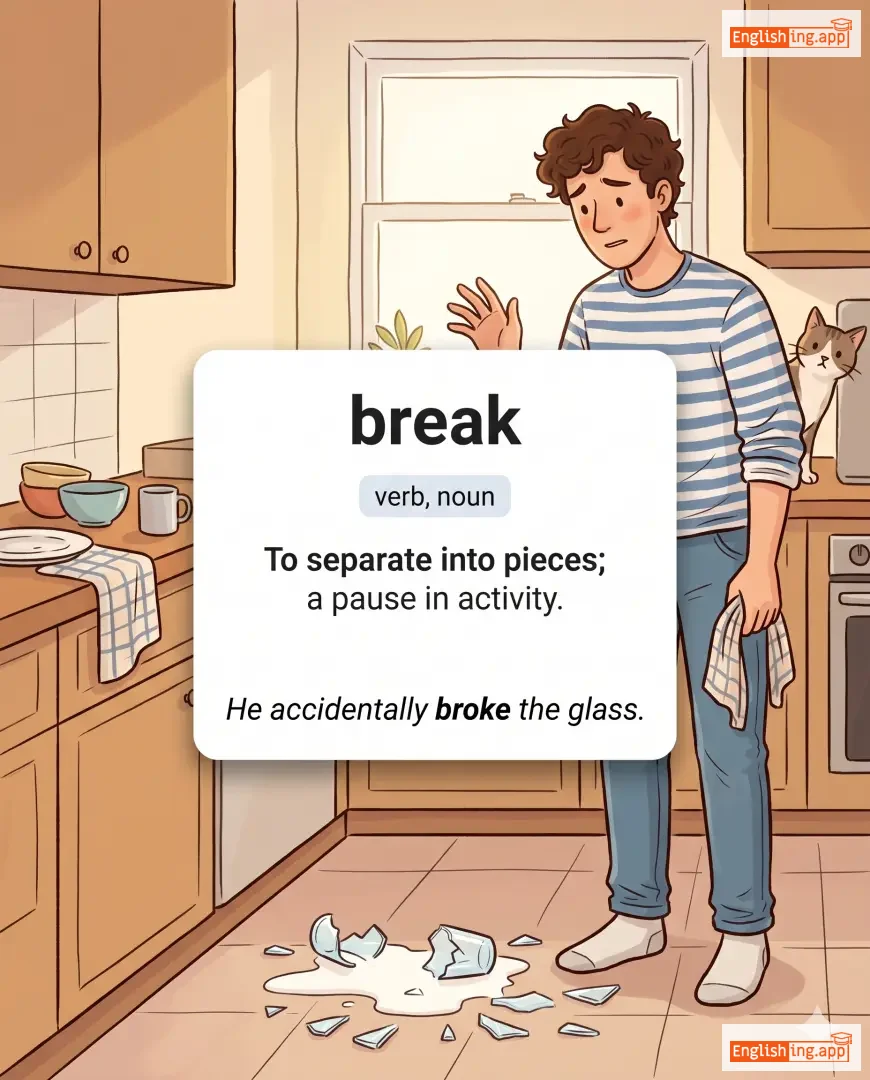
To separate into pieces; a pause in activity.
••••••
|
He accidentally broke the glass.
hī æksɪˈdɛntəli broʊk ðə ɡlæs
••••••
|
他不小心打破了玻璃。
Tā bù xiǎoxīn dǎpòle bōlí.
••••••
|
take a break
teɪk ə breɪk
••••••
|
to rest for a short time
••••••
|
休息一下
xiūxí yīxià
••••••
|
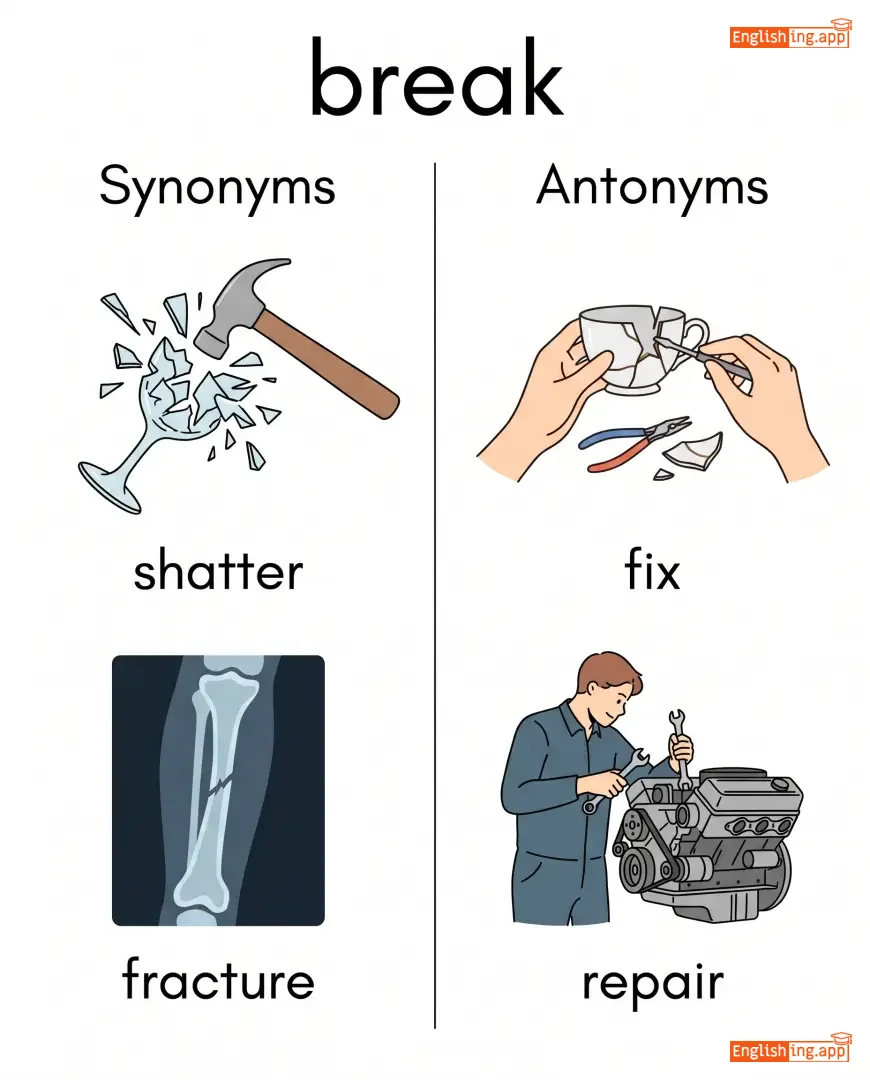
shatter, fracture, smash, pause, recess
••••••
|
fix, repair, continue
••••••
|
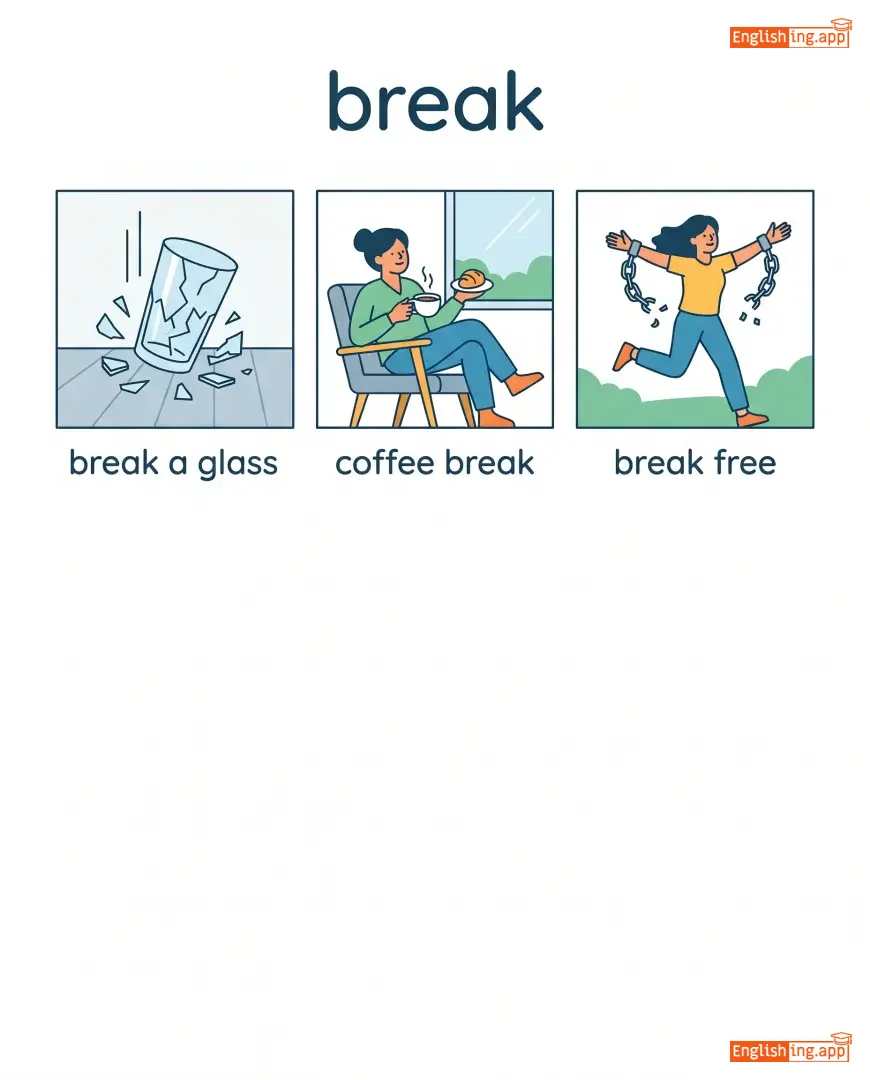
break a glass, coffee break, break free, break the law
••••••
|
Break 意味着打破,Break 也意味着休息。
••••••
|
|
#753
🔧
|
/ˈbrɛkdaʊn/
noun
(ˈbrɛkdaʊn)
••••••
|
- •••••• |
故障
gùzhàng
••••••
|
- •••••• | - •••••• | - •••••• | - •••••• |
a failure or collapse of a system or machinery
••••••
|
The car had a breakdown on the highway. |
车子在高速公路上发生了故障。
Chēzi zài gāosù gōnglù shàng fāshēngle gùzhàng.
••••••
|
- •••••• | - •••••• | - •••••• |
failure, malfunction, collapse, crash
••••••
|
repair, recovery
••••••
|
engine breakdown, car breakdown, system breakdown, total breakdown
••••••
|
故障是'breakdown'的意思,想象车子停在路上故障了。
••••••
|
|
#754
🥞
|
/ˈbrɛkfəst/
noun
••••••
|
- •••••• | - •••••• | - •••••• | - •••••• | - •••••• | - •••••• |
The first meal of the day, usually eaten in the morning.
••••••
|
We had eggs and toast for breakfast. |
- •••••• |
have breakfast |
to eat the first meal of the day
••••••
|
- •••••• |
morning meal, brunch, repast, first meal
••••••
|
dinner, supper
••••••
|
healthy breakfast, big breakfast, skip breakfast, have breakfast
••••••
|
No •••••• |
|
#755
💡
|
/ˈbrɛkθruː/
noun
••••••
|
|
- •••••• | - •••••• | - •••••• | - •••••• | - •••••• |
a significant or sudden advance or discovery
••••••
|
The scientist made a breakthrough in cancer research. |
- •••••• | - •••••• | - •••••• | - •••••• |
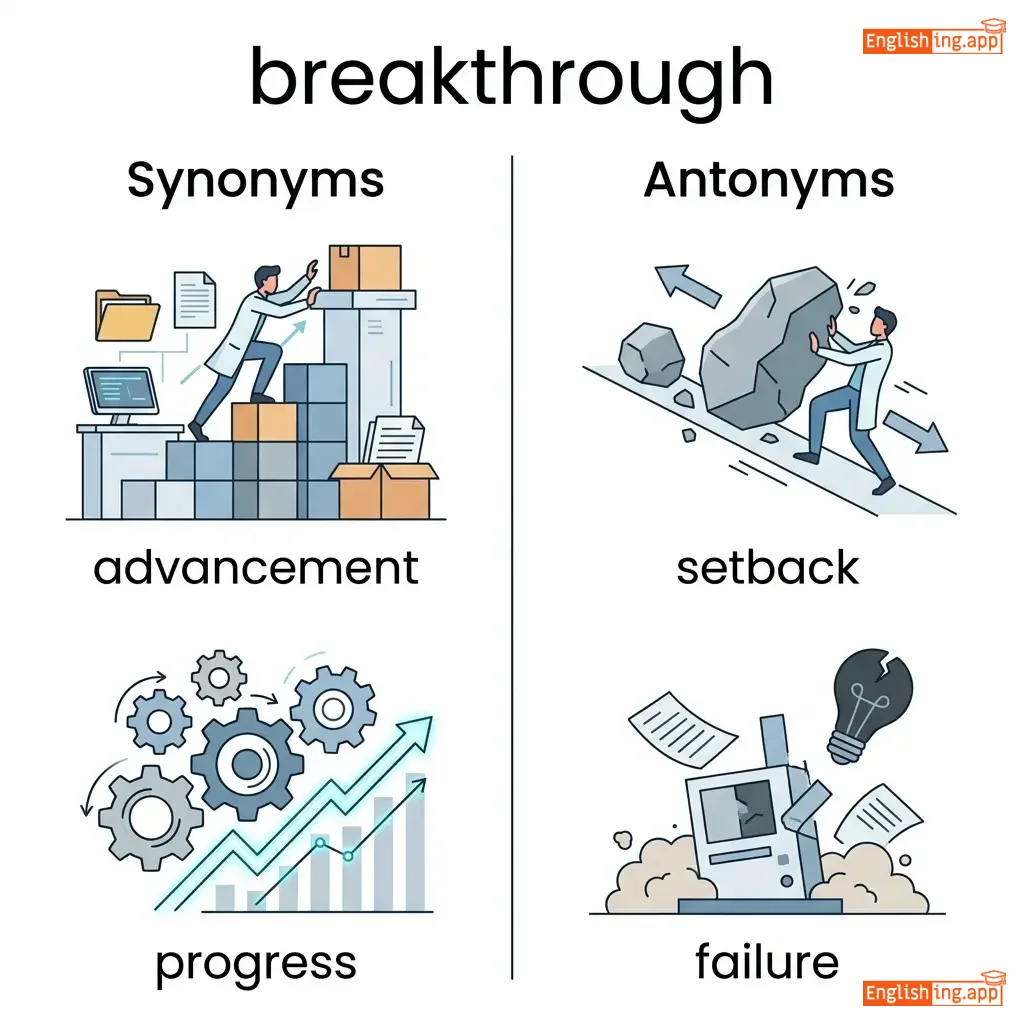
advancement, progress, discovery, innovation
••••••
|
setback, failure
••••••
|
scientific breakthrough, medical breakthrough, technological breakthrough
••••••
|
No •••••• |
|
#756
👩🍼
|
/brɛst/
noun
(布雷斯特)
••••••
|
- •••••• |
胸部
xiongbu
••••••
|
- •••••• | - •••••• | - •••••• | - •••••• |
Either of the two soft, rounded parts on a woman’s chest that produce milk after childbirth.
••••••
|
The baby was fed from his mother's breast. |
婴儿从母亲的胸部喂养。
Yīng'ér cóng mǔqīn de xiōngbù wèiyǎng.
••••••
|
make a clean breast of |
to confess or admit something openly
••••••
|
公开承认
gōngkāi chéngrèn
••••••
|
bosom, chest, bust, mammary
••••••
|
back, spine
••••••
|
breast cancer, breast milk, chicken breast, breast surgery
••••••
|
Breast 意味着胸部,妈妈用胸部喂养孩子。
••••••
|
|
#757
💨
|
/brɛθ/
noun
(bɾɛθ)
••••••
|
- •••••• |
呼吸
hūxī
••••••
|
- •••••• | - •••••• | - •••••• | - •••••• |
The air taken into or expelled from the lungs during breathing.
••••••
|
He took a deep breath before speaking. |
他在讲话前深深地吸了一口气。
Tā zài jiǎnghuà qián shēnshēn de xīle yī kǒu qì.
••••••
|
catch one's breath |
to rest or pause to recover normal breathing
••••••
|
屏住呼吸
píng zhù hūxī
••••••
|
inhalation, exhalation, respiration, gasp
••••••
|
suffocation, choking
••••••
|
deep breath, hold breath, last breath, fresh breath
••••••
|
Breath 是呼吸,没有呼吸就没有生命。
••••••
|
|
#758
😮💨
|
/briːð/
verb
(briid)
••••••
|
- •••••• |
呼吸
huxi
••••••
|
breathed
briift
••••••
|
breathed
briift
••••••
|
breathes
briis
••••••
|
breathing
briiding
••••••
|
To take air into the lungs and send it out again.
••••••
|
It was hard to breathe in the smoky room.
It was hard to breathe in the smoky room.
••••••
|
在烟雾弥漫的房间里呼吸很困难。
Zai yanwu miman de fangjian li huxi hen kunnan.
••••••
|
breathe easy
呼吸容易
••••••
|
to relax after a period of stress
••••••
|
放松
fangsong
••••••
|
inhale, exhale, respire, gasp
••••••
|
suffocate, choke
••••••
|
breathe deeply, breathe easily, hardly breathe, breathe fire
••••••
|
呼吸意味着吸入空气,呼吸容易意味着放松。
••••••
|
|
#759
🌬️
|
/ˈbriːðɪŋ/
noun
(海皮尼斯)
••••••
|
- •••••• |
幸福
xìngfú
••••••
|
- •••••• | - •••••• | - •••••• | - •••••• |
the process of taking air into and expelling it from the lungs.
••••••
|
Deep breathing can help you relax. |
当她收到奖项时,她无法隐藏自己的幸福。
Dāng tā shōu dào jiǎngxiàng shí, tā wúfǎ yǐncáng zìjǐ de xìngfú.
••••••
|
take a deep breath |
to inhale deeply to calm oneself
••••••
|
追求幸福
zhuīqiú xìngfú
••••••
|
respiration, inhalation, exhalation, ventilation, gasp
••••••
|
suffocation, choking
••••••
|
deep breathing, breathing exercise, heavy breathing, shallow breathing
••••••
|
幸福 = '幸' + '福' — 追求和获得幸福就像追寻美好的未来!
••••••
|
|
#760
🐎
|
/briːd/
verb, noun
(bùlìd)
••••••
|
|
繁殖,品种
fánzhí, pǐnzhǒng
••••••
|
bred
bred
••••••
|
bred
bred
••••••
|
breeds
bùlìds
••••••
|
breeding
bùlìdīng
••••••
|
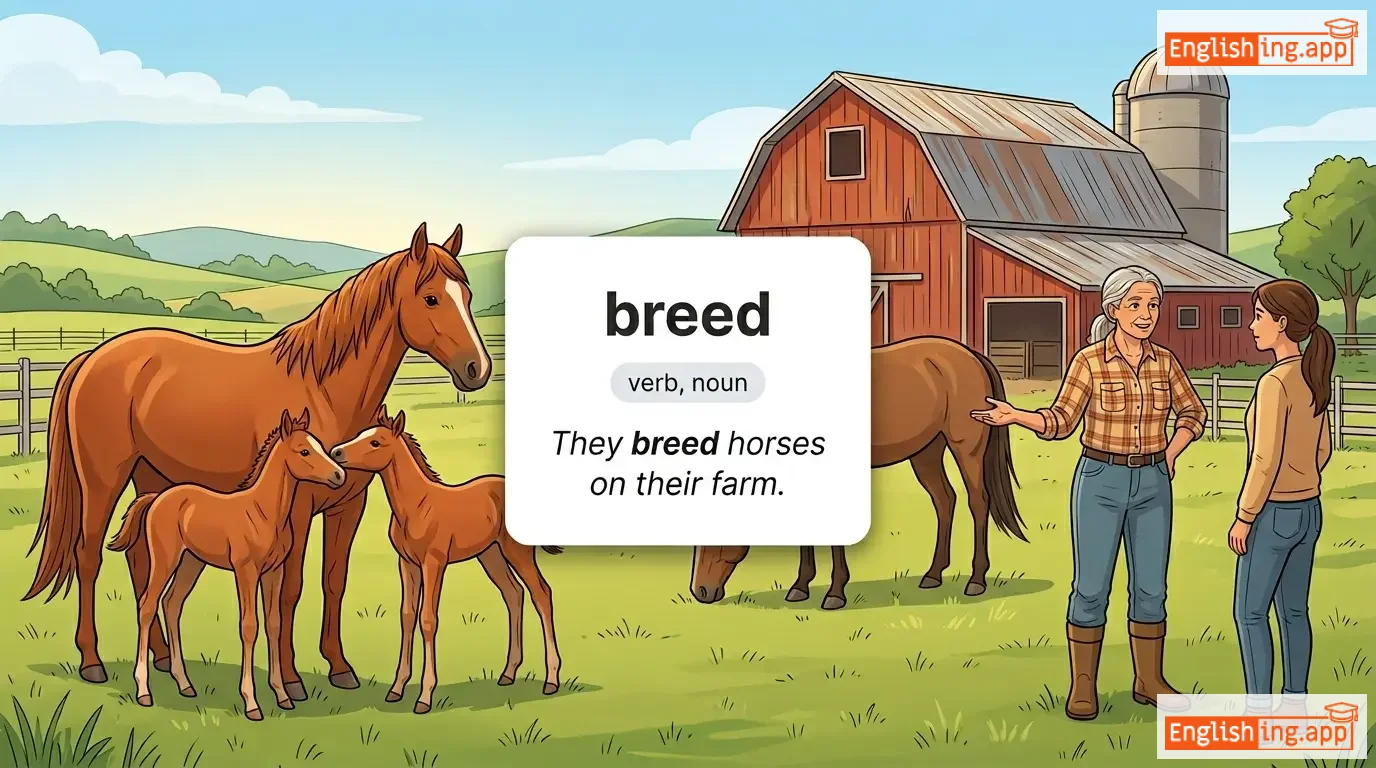
To cause an animal to reproduce; to raise or train; a type or variety of animal or plant.
••••••
|
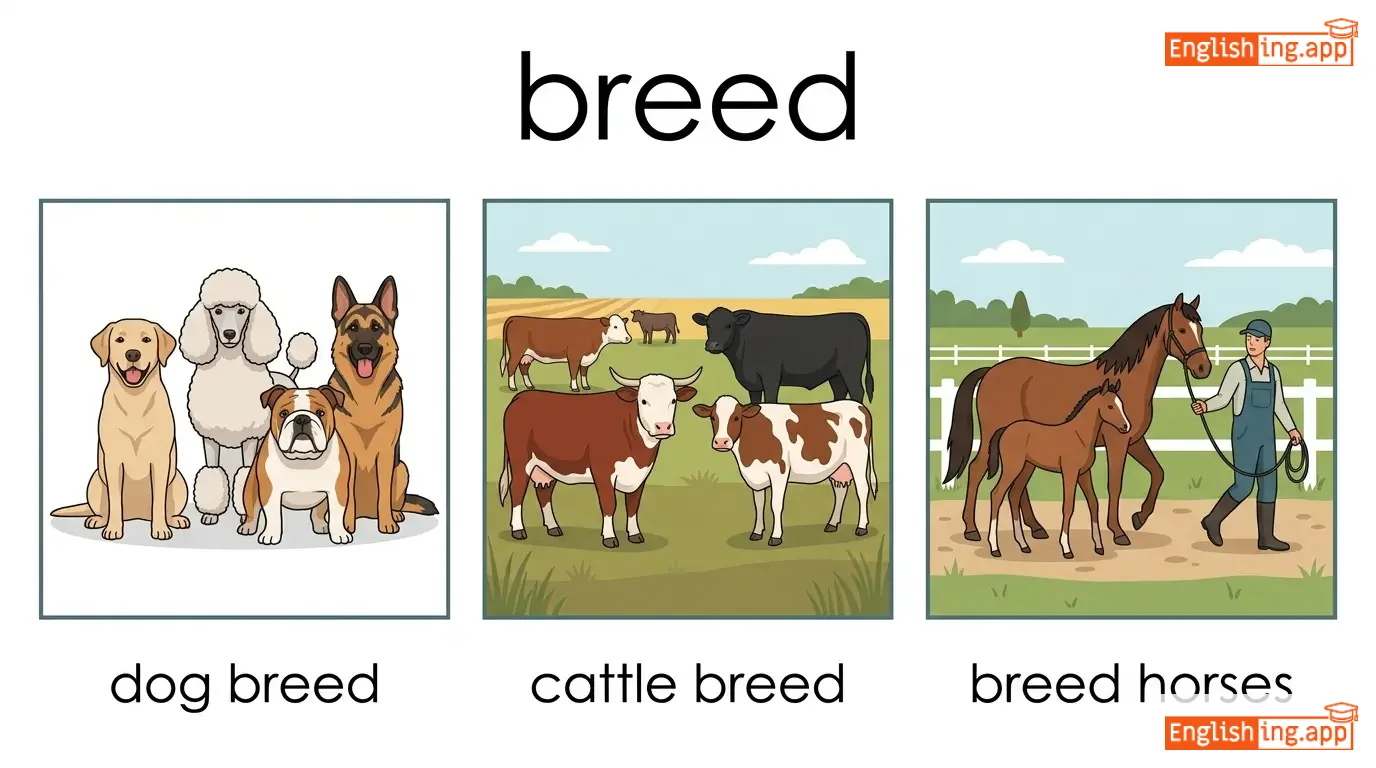
They breed horses on their farm.
他们在农场上养马。
••••••
|
他们在农场上养马。
Tāmen zài nóngchǎng shàng yǎng mǎ.
••••••
|
born and bred
出生和养育
••••••
|
Used to indicate someone's native origin and upbringing.
••••••
|
出生和养育
chūshēng hé yǎngyù
••••••
|
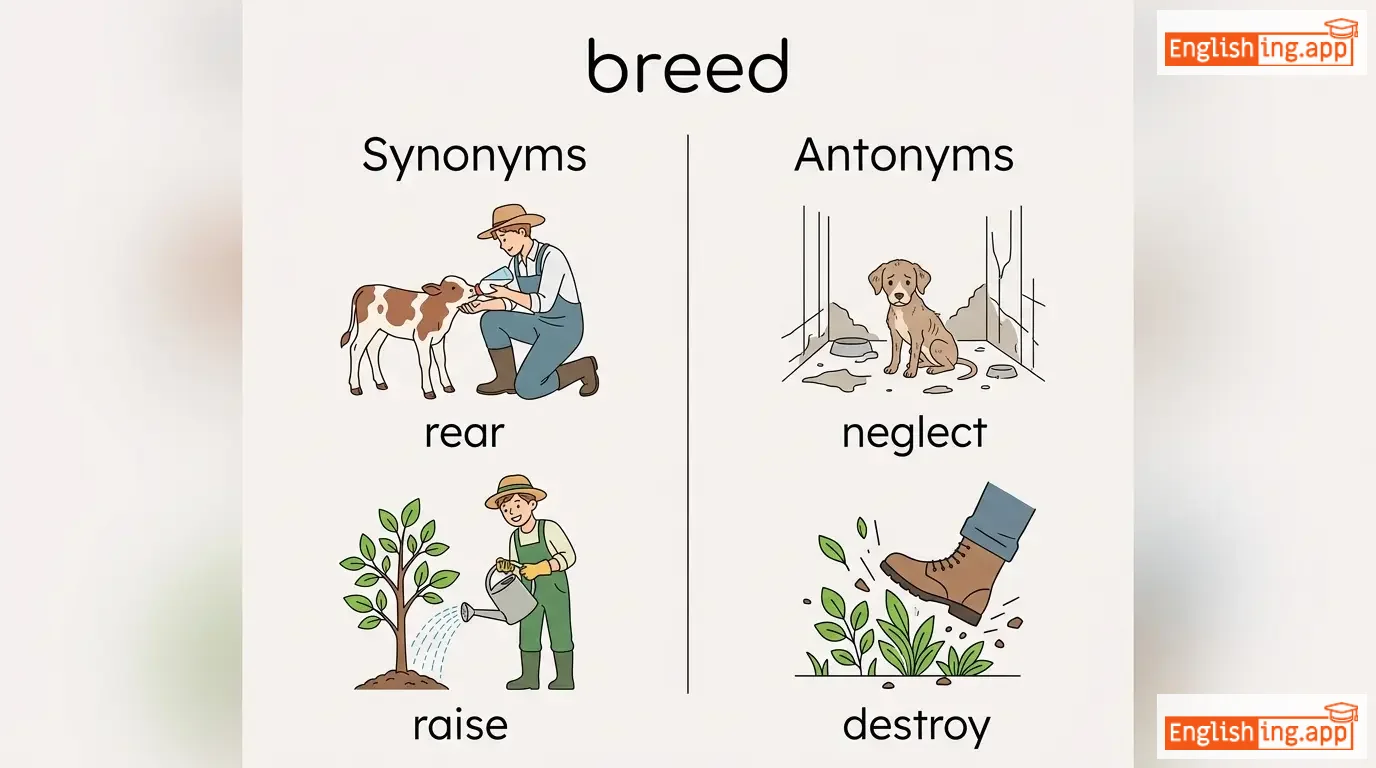
rear, raise, cultivate, reproduce, nurture
••••••
|
neglect, destroy, kill
••••••
|
dog breed, cattle breed, breed horses, breed success
••••••
|
Breed 意味着品种—狗的品种;Breed 还意味着出生和养育。
••••••
|
|
#761
💵
|
/braɪb/
verb
••••••
|
- •••••• | - •••••• |
bribed
••••••
|
bribed
••••••
|
bribes
••••••
|
bribing
••••••
|
To persuade someone to act in one's favor, typically illegally, by offering money or gifts.
••••••
|
The official was caught trying to bribe the inspector. |
- •••••• |
accept a bribe |
To take money or gifts illegally to do a favor.
••••••
|
- •••••• |
corrupt, induce, influence, buy off
••••••
|
refuse, reject, honesty
••••••
|
take a bribe, offer a bribe, give a bribe, accept a bribe
••••••
|
No •••••• |
|
#762
🧱
|
/brɪk/
noun
(bùlíkè)
••••••
|
- •••••• |
砖块
zhuānkuài
••••••
|
- •••••• | - •••••• | - •••••• | - •••••• |
A rectangular block of clay or similar material used in building walls and other structures.
••••••
|
The workers laid brick after brick to build the wall. |
工人们一块接一块地放砖来建造墙壁。
Gōngrénmen yī kuài jiē yī kuài de fàng zhuān lái jiànzào qiángbì.
••••••
|
thick as a brick |
Used to describe someone who is very stupid or slow to understand.
••••••
|
笨得像块砖
bèn dé xiàng kuài zhuān
••••••
|
block, stone, tile, slab, cube
••••••
|
void, gap
••••••
|
brick wall, brick house, brick building, red brick, brick by brick
••••••
|
砖块 = 砖 🧱 - 砖块用来建造墙壁。
••••••
|
|
#763
🌉
|
/brɪdʒ/
noun
(bù lǐ jī)
••••••
|
- •••••• |
桥
qiao
••••••
|
- •••••• | - •••••• | - •••••• | - •••••• |
A structure built to span a physical obstacle, such as a river or road, for the purpose of providing passage.
••••••
|
The bridge connects the two cities across the river. |
桥将两座城市连接起来,跨越河流。
Qiáo jiāng liǎng zuò chéngshì liánjiē qǐlái, kuàyuè héliú.
••••••
|
burn one's bridges |
To eliminate all possibilities of retreat; to commit oneself completely.
••••••
|
烧掉自己的桥
shāo diào zìjǐ de qiáo
••••••
|
overpass, viaduct, crossing, span, walkway
••••••
|
barrier, obstacle
••••••
|
cross a bridge, build a bridge, bridge over, suspension bridge, stone bridge
••••••
|
Bridge 就是桥 🌉 - 用桥来跨越城市之间的障碍。
••••••
|
|
#764
📝
|
/briːf/
adjective, noun, verb
(breef)
••••••
|
- •••••• |
简短
jian duan
••••••
|
briefed
breeft
••••••
|
briefed
breeft
••••••
|
briefs
breefs
••••••
|
briefing
briefing
••••••
|
Short in duration; a summary of information.
••••••
|
The manager briefed the team before the meeting.
经理在会议前简要地向团队做了报告。
••••••
|
经理在会议前简要地向团队做了报告。
Jing li zai hui yi qian jian yao de xiang tuan dui zuo le bao gao.
••••••
|
in brief
简言之
••••••
|
in short; concisely
••••••
|
简言之
jian yan zhi
••••••
|
short, concise, summary, outline
••••••
|
long, detailed
••••••
|
brief meeting, legal brief, security briefing, brief moment
••••••
|
Brief = 简短时间,简短会议。
••••••
|
|
#765
⏱️
|
/ˈbriːf.li/
adverb
(brefli)
••••••
|
- •••••• |
简要地
jian yao de
••••••
|
- •••••• | - •••••• | - •••••• | - •••••• |
in a short and clear way; for a short time
••••••
|
Please explain the problem briefly.
请简要解释问题。
••••••
|
请简要解释问题。
Qing jian yao jie shi wen ti.
••••••
|
- •••••• | - •••••• | - •••••• |
shortly, concisely, quickly
••••••
|
lengthily, extensively, elaborately
••••••
|
briefly explain, briefly discuss, briefly mention
••••••
|
联想中文 '简要' 和英语 'briefly',都表示简洁清晰的方式。
••••••
|
|
#766
☀️
|
/braɪt/
adjective
(brait)
••••••
|
- •••••• |
明亮的
mingliang de
••••••
|
- •••••• | - •••••• | - •••••• | - •••••• |
Giving out or reflecting a lot of light; intelligent or cheerful.
••••••
|
The bright sun lit up the entire valley. |
明亮的太阳照亮了整个山谷。
Míngliàng de tàiyáng zhàoliàngle zhěnggè shāngǔ.
••••••
|
look on the bright side |
To find positive aspects in a bad situation.
••••••
|
从好的一面看
Cóng hǎo de yīmiàn kàn
••••••
|
shiny, luminous, radiant, smart, cheerful
••••••
|
dark, dull, gloomy
••••••
|
bright light, bright color, bright future, bright idea
••••••
|
Bright意味着明亮的☀️ - Bright future意味着光明的未来。
••••••
|
Vocabulary Quiz
Test your vocabulary by matching words with their translations or meanings.
Login to take the quiz
Comments (0)
Share your thoughts and join the discussion.
Join the discussion by logging in
Login to CommentNo comments yet
Be the first to share your thoughts!