



Swipe left or right, or use the buttons. Tap image to zoom.
例句翻译
单词
Lesson 96Lesson 96 - 遮罩切换
|
表情符号
|
单词 | Images | 翻译 | 过去时 | 过去分词 | 第三人称单数 | 动名词 | 含义 | 例句 | 例句翻译 | 示例表达 | 示例表达含义 | 示例表达翻译 | 同义词 | 反义词 | 搭配词 | 助记符 |
|---|---|---|---|---|---|---|---|---|---|---|---|---|---|---|---|---|---|
|
#4538
✅
|
/ʃʊd/
modal verb
(shud)
••••••
|
- •••••• |
应该
yinggai
••••••
|
- •••••• | - •••••• | - •••••• | - •••••• |
used to indicate obligation or duty
••••••
|
You should study for your exams. |
你应该为考试学习。
Ni yinggai wei kaoshi xuexi.
••••••
|
- •••••• | - •••••• | - •••••• |
ought to, must, need to
••••••
|
must not, don't have to
••••••
|
should have, should not, should do
••••••
|
Should means 'yinggai', you should do what is required!
••••••
|
|
#4539
💪
|
/ˈʃoʊldər/
noun
(shóu-dè)
••••••
|
- •••••• |
肩膀
jianbang
••••••
|
- •••••• | - •••••• | - •••••• | - •••••• |
the upper joint of the human arm and the part of the body to which it is attached
••••••
|
He hurt his shoulder while lifting weights. |
他在举重时伤到了肩膀。
Ta zai ju zhong shi shang dao le jianbang.
••••••
|
Shoulder the responsibility |
To accept or take on a heavy responsibility
••••••
|
承担责任
chengdan zeren
••••••
|
arm, upper arm, joint, scapula
••••••
|
foot, hand, ankle
••••••
|
shoulder pain, shoulder injury, broad shoulders
••••••
|
将责任扛在肩膀上 - Shoulder the burden
••••••
|
|
#4540
📢
|
/ʃaʊt/
verb
(shaot)
••••••
|
- •••••• |
喊叫
hanjiao
••••••
|
shouted
shaoted
••••••
|
shouted
shaoted
••••••
|
shouts
shaots
••••••
|
shouting
shaoting
••••••
|
to say something very loudly
••••••
|
He shouted at the top of his lungs to get their attention.
他尽可能大声地喊叫,以引起他们的注意。
••••••
|
他尽可能大声地喊叫,以引起他们的注意。
Ta jin keneng dasheng de hanjiao, yi yinqi tamen de zhuyi.
••••••
|
Shout from the rooftops
从屋顶大喊
••••••
|
To tell everyone about something in a very public way
••••••
|
从屋顶喊出来
Cong wuting han chulai
••••••
|
yell, scream, holler, cry
••••••
|
whisper, mumble
••••••
|
shout loudly, shout angrily, shout for help
••••••
|
喊出来,大家都会知道!
••••••
|
|
#4541
👀
|
/ʃoʊ/
verb
(秀)
••••••
|
|
展示
zhǎnshì
••••••
|
showed
秀德
••••••
|
shown
秀恩
••••••
|
shows
秀斯
••••••
|
showing
秀印
••••••
|
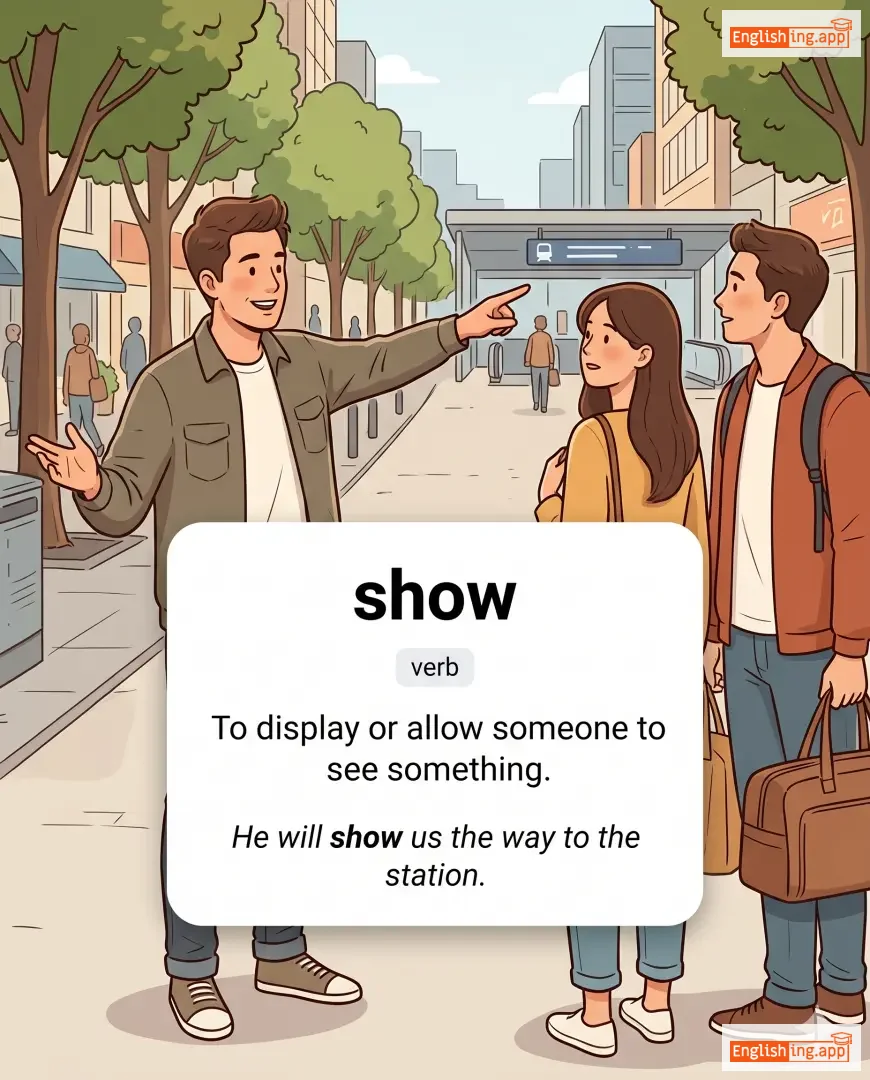
To display or allow someone to see something.
••••••
|
He will show us the way to the station.
他会给我们指引去车站的路。
••••••
|
他会带我们去车站。
Tā huì dài wǒmen qù chēzhàn.
••••••
|
show off
炫耀
••••••
|
to try to impress others by displaying abilities or possessions
••••••
|
炫耀
xuànyào
••••••
|
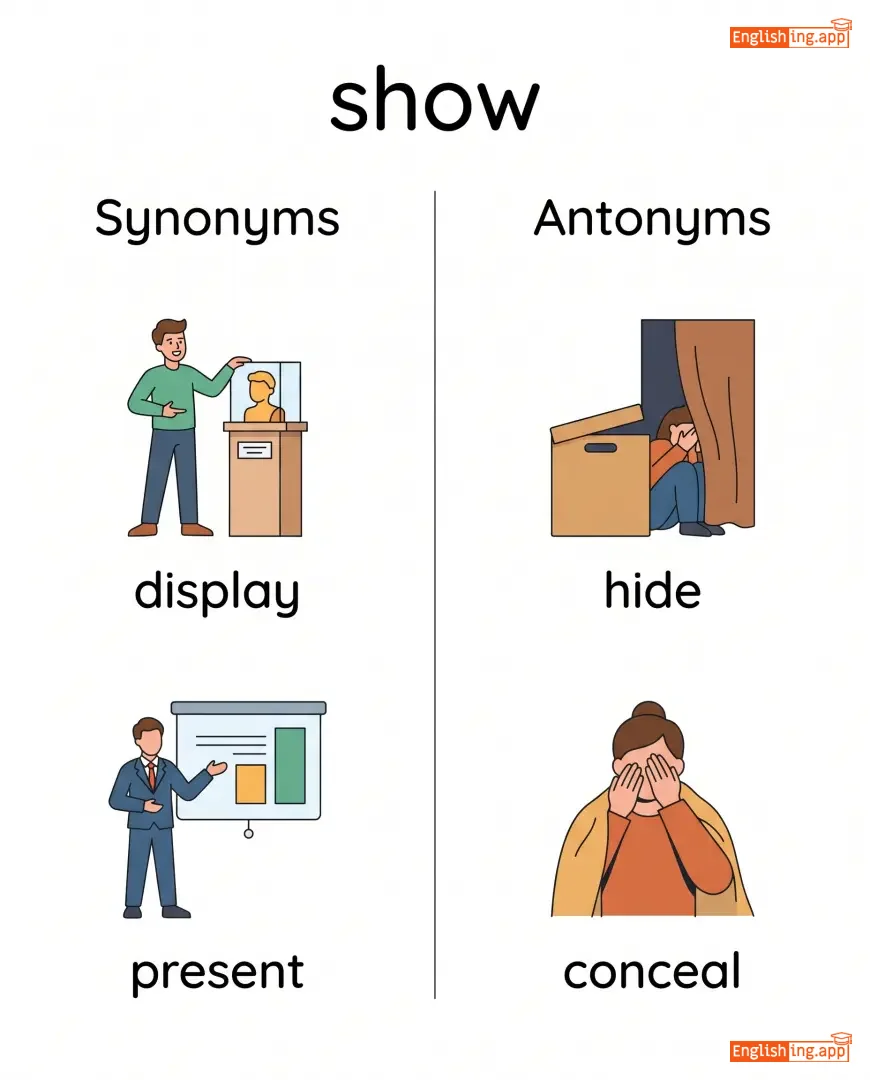
display, present, demonstrate, reveal, exhibit
••••••
|
hide, conceal, cover
••••••
|
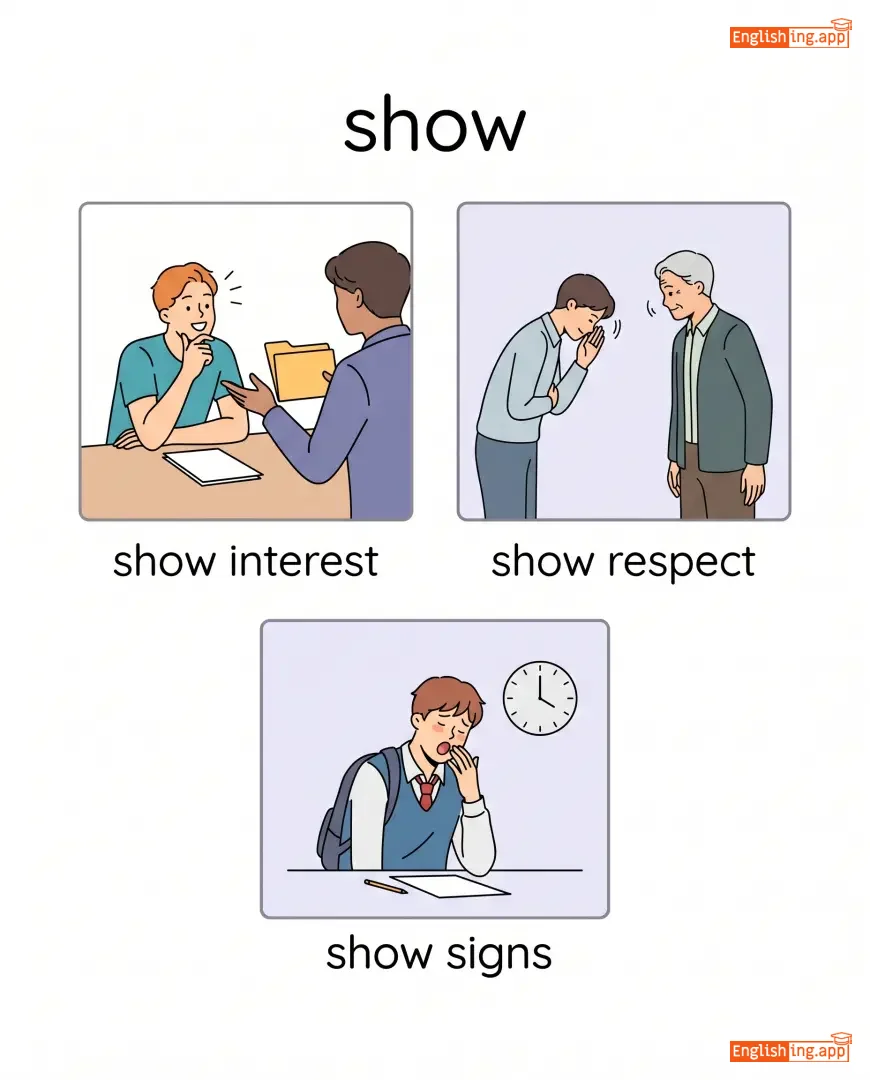
show interest, show respect, show signs, show off
••••••
|
Show 的意思是展示 – 在电视节目中,一切都会展示。
••••••
|
|
#4542
🚿
|
/ˈʃaʊər/
noun
••••••
|
- •••••• | - •••••• | - •••••• | - •••••• | - •••••• | - •••••• |
a brief fall of rain or snow or a device for taking a bath or washing oneself
••••••
|
After the workout, I took a quick shower to refresh myself. |
- •••••• |
Take a shower |
To wash oneself in a shower
••••••
|
- •••••• |
bath, rinse, wash, sprinkle
••••••
|
drought, dryness
••••••
|
take a shower, shower curtain, hot shower
••••••
|
No •••••• |
|
#4543
📉
|
/ʃrɪŋk/
verb
(幸福)
••••••
|
|
幸福
xingfu
••••••
|
shrank
••••••
|
shrunk
••••••
|
shrinks
••••••
|
shrinking
••••••
|
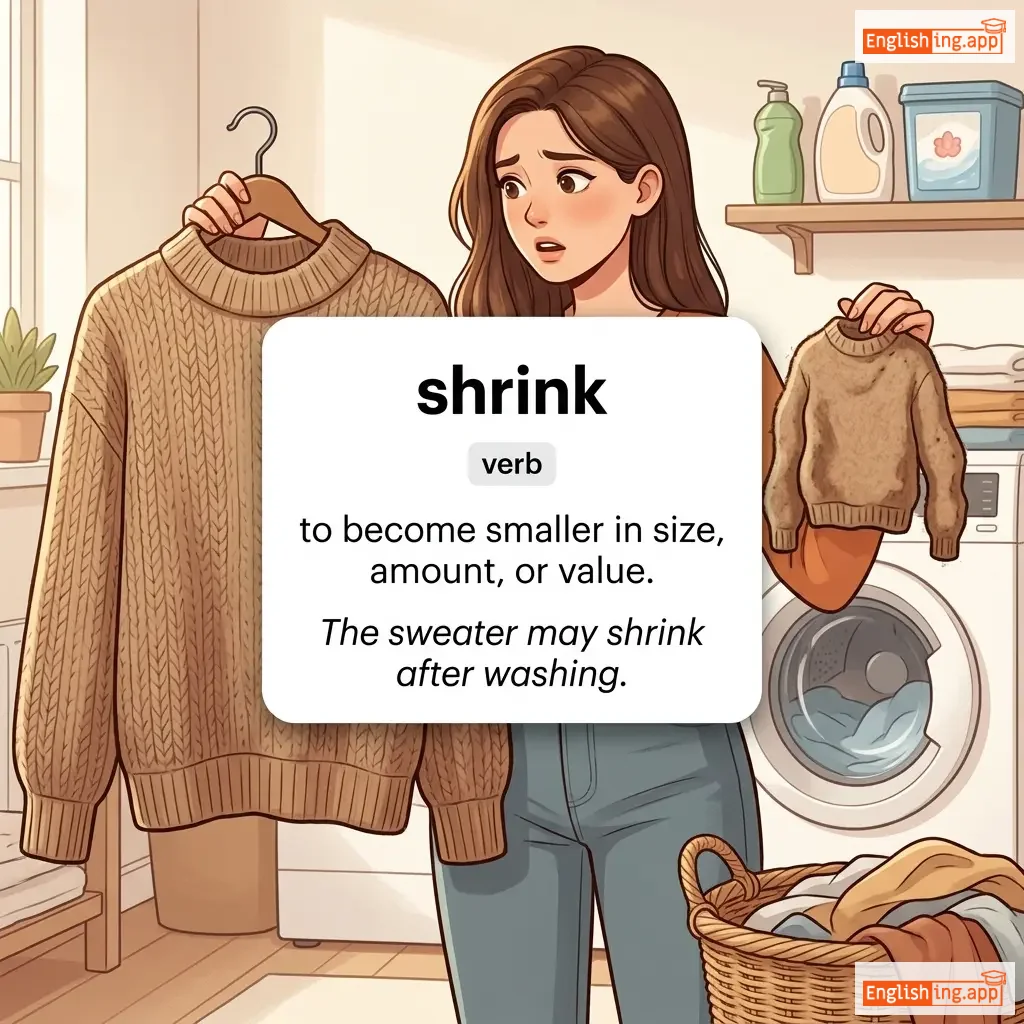
to become smaller in size, amount, or value.
••••••
|
The sweater may shrink after washing.
当她收到奖项时,她无法掩饰自己的幸福。
••••••
|
当她收到奖项时,她无法掩饰自己的幸福。
Dāng tā shōu dào jiǎngxiàng shí, tā wúfǎ yǎnshì zìjǐ de xìngfú.
••••••
|
shrink from responsibility
追求幸福
••••••
|
to avoid or back away from duties or obligations
••••••
|
追求幸福
zhuīqiú xìngfú
••••••
|
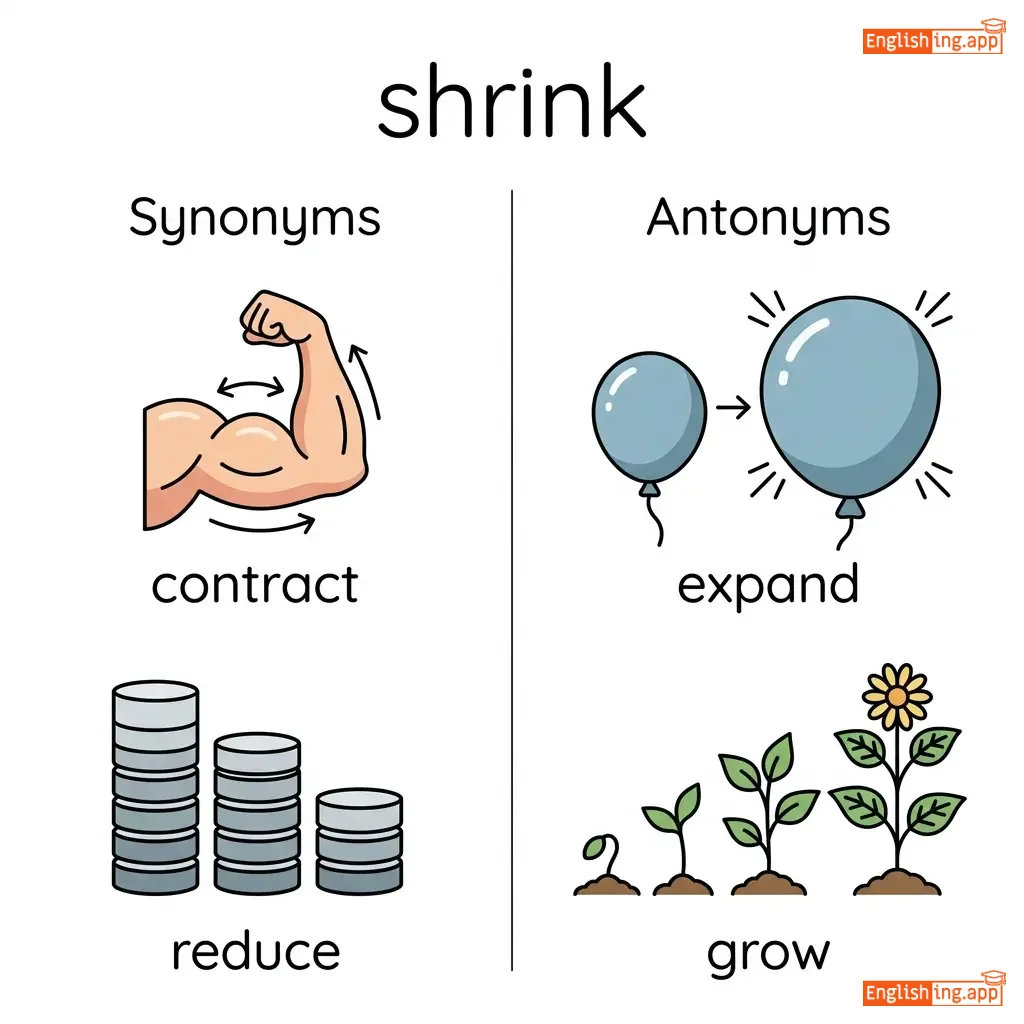
contract, reduce, lessen, diminish, condense
••••••
|
expand, grow, enlarge
••••••
|
shrink in size, shrink away, shrink back, shrink rapidly
••••••
|
要找到幸福,就像不断追寻它一样,像追求目标一样!
••••••
|
|
#4544
🤷
|
/ʃrʌɡ/
verb
(shruɡ)
••••••
|
- •••••• |
耸肩
sǒng jiān
••••••
|
shrugged
shruɡd
••••••
|
shrugged
shruɡd
••••••
|
shrugs
shruɡs
••••••
|
shrugging
shruɡɪŋ
••••••
|
To raise and lower the shoulders to express uncertainty or indifference.
••••••
|
He shrugged when asked about the missing file.
他在被问到关于丢失文件的事时耸了耸肩。
••••••
|
他在被问到关于丢失文件的事时耸了耸肩。
Tā zài bèi wèn dào guānyú diūshī wénjiàn de shì shí sǒngle sǒng jiān.
••••••
|
shrug off
耸肩
••••••
|
To treat something as unimportant or not worth worrying about.
••••••
|
不在乎
bù zàihu
••••••
|
dismiss, disregard, ignore, downplay
••••••
|
acknowledge, accept, emphasize
••••••
|
shrug shoulders, shrug indifferently, shrug off criticism, shrug casually
••••••
|
耸肩 = 用肩膀表达不确定或冷漠的态度。
••••••
|
|
#4545
🤐
|
/ʃʌt/
verb
(shat)
••••••
|
- •••••• |
关上
guan shang
••••••
|
shut
shat
••••••
|
shut
shat
••••••
|
shuts
shats
••••••
|
shutting
shating
••••••
|
to close something, especially a door or window
••••••
|
Please shut the door before you leave.
请在离开前关上门。
••••••
|
请在离开前关上门。
Qǐng zài líkāi qián guān shàng mén.
••••••
|
Shut up
闭嘴
••••••
|
A rude way of telling someone to stop talking
••••••
|
闭嘴
bì zuǐ
••••••
|
close, lock, seal, fasten
••••••
|
open, unlock
••••••
|
shut the door, shut your mouth, shut the window
••••••
|
关上门,关上所有 - Shut the door, shut everything.
••••••
|
|
#4546
🙈
|
/ʃaɪ/
adjective
(shai)
••••••
|
- •••••• |
害羞
haixiu
••••••
|
- •••••• | - •••••• | - •••••• | - •••••• |
Being reserved or nervous around other people.
••••••
|
The child was too shy to speak in class. |
这个孩子在课堂上太害羞,不敢发言。
Zhege haizi zai kètáng shàng tài haixiu, bù gǎn fāyán.
••••••
|
shy away |
to avoid something because of fear or lack of confidence
••••••
|
回避
huibi
••••••
|
timid, bashful, reserved, modest
••••••
|
bold, confident, outgoing
••••••
|
shy smile, shy away, shy child, shy personality
••••••
|
害羞的孩子在课堂上回避发言。
••••••
|
|
#4547
👫
|
/ˈsɪblɪŋ/
noun
(sibling)
••••••
|
- •••••• |
兄弟姐妹
xiōngdì jiěmèi
••••••
|
- •••••• | - •••••• | - •••••• | - •••••• |
A brother or sister.
••••••
|
She has three siblings, two brothers and one sister.
她有三个兄弟姐妹,两个兄弟和一个妹妹。
••••••
|
她有三个兄弟姐妹,两个兄弟和一个妹妹。
Tā yǒu sān gè xiōngdì jiěmèi, liǎng gè xiōngdì hé yī gè mèimei.
••••••
|
- •••••• | - •••••• | - •••••• |
brother, sister, kin, relative
••••••
|
stranger, outsider
••••••
|
sibling rivalry, younger sibling, elder sibling, sibling bond
••••••
|
Siblings 这个英文词是指兄弟姐妹,就像一家人。
••••••
|
|
#4548
🤒
|
/sɪk/
adjective
(西克)
••••••
|
- •••••• |
生病
sheng bing
••••••
|
- •••••• | - •••••• | - •••••• | - •••••• |
feeling unwell or suffering from illness
••••••
|
She stayed home because she was feeling sick.
她留在家里,因为她感觉不舒服。
••••••
|
她留在家里,因为她感觉生病了。
ta liu zai jia li yin wei ta gan jue sheng bing le
••••••
|
sick and tired
厌倦
••••••
|
completely fed up or annoyed
••••••
|
厌倦和疲倦
yan juan he pi juan
••••••
|
ill, unwell, unhealthy, nauseous, ailing
••••••
|
healthy, well, fit
••••••
|
feel sick, get sick, sick leave, sick child, sick person
••••••
|
Sick sounds like 西克 — 当你生病时不要去上学!
••••••
|
|
#4549
➡️
|
/saɪd/
noun
(sàid)
••••••
|
- •••••• |
旁边
pangbian
••••••
|
- •••••• | - •••••• | - •••••• | - •••••• |
a position to the left or right of something
••••••
|
The store is on the side of the road. |
商店位于路的旁边。
Shangdian weiyu lu de pangbian.
••••••
|
On the side |
Something extra, or not central
••••••
|
一边
yi bian
••••••
|
flank, edge, border, aspect
••••••
|
center, middle
••••••
|
side of the road, side effect, side dish
••••••
|
旁边站着,容易看见 - Side by side, easy to see!
••••••
|
|
#4550
😔
|
/saɪ/
verb
(sai)
••••••
|
- •••••• |
叹气
tanqi
••••••
|
sighed
sai'd
••••••
|
sighed
sai'd
••••••
|
sighs
saiz
••••••
|
sighing
saing
••••••
|
to let out a long, deep breath as an expression of tiredness, relief, or sadness
••••••
|
She sighed with relief when she heard the good news.
她听到好消息时松了口气。
••••••
|
她听到好消息时松了口气。
Ta tingdao hao xiaoxi shi song le kouqi.
••••••
|
- •••••• | - •••••• | - •••••• |
breathe out, exhale, moan, groan
••••••
|
inhale, gasp, cheer
••••••
|
let out a sigh, deep sigh, sigh of relief, sigh with exhaustion
••••••
|
Sigh听起来像'叹气', '叹气'就像sigh
••••••
|
|
#4551
👀
|
/saɪt/
noun
(sàitè)
••••••
|
- •••••• |
视力
shili
••••••
|
- •••••• | - •••••• | - •••••• | - •••••• |
the ability to see or something that is seen
••••••
|
The sight of the sunset took her breath away. |
日落的景象让她屏住了呼吸。
Rìluò de jǐngxiàng ràng tā bǐngzhù le hūxī.
••••••
|
- •••••• | - •••••• | - •••••• |
vision, view, scene, perception
••••••
|
blindness, darkness
••••••
|
beautiful sight, breathtaking sight, sight of a lifetime, wonderful sight
••••••
|
Sight 就是你能看到的东西,‘视力’让你感受到它的美丽。
••••••
|
|
#4552
✍️
|
/saɪn/
verb
(साइन)
••••••
|
|
签名
qiānmíng
••••••
|
signed
sāinda
••••••
|
signed
sāinda
••••••
|
signs
sāins
••••••
|
signing
sāinīng
••••••
|
to write your name on something to show agreement or approval; to make a gesture with meaning
••••••
|
Please sign the contract at the bottom of the page.
请在页面底部签署合同。
••••••
|
请在页面底部签署合同。
Qǐng zài yè miàn dǐ bù qiān shǔ hé tóng.
••••••
|
- •••••• | - •••••• | - •••••• |
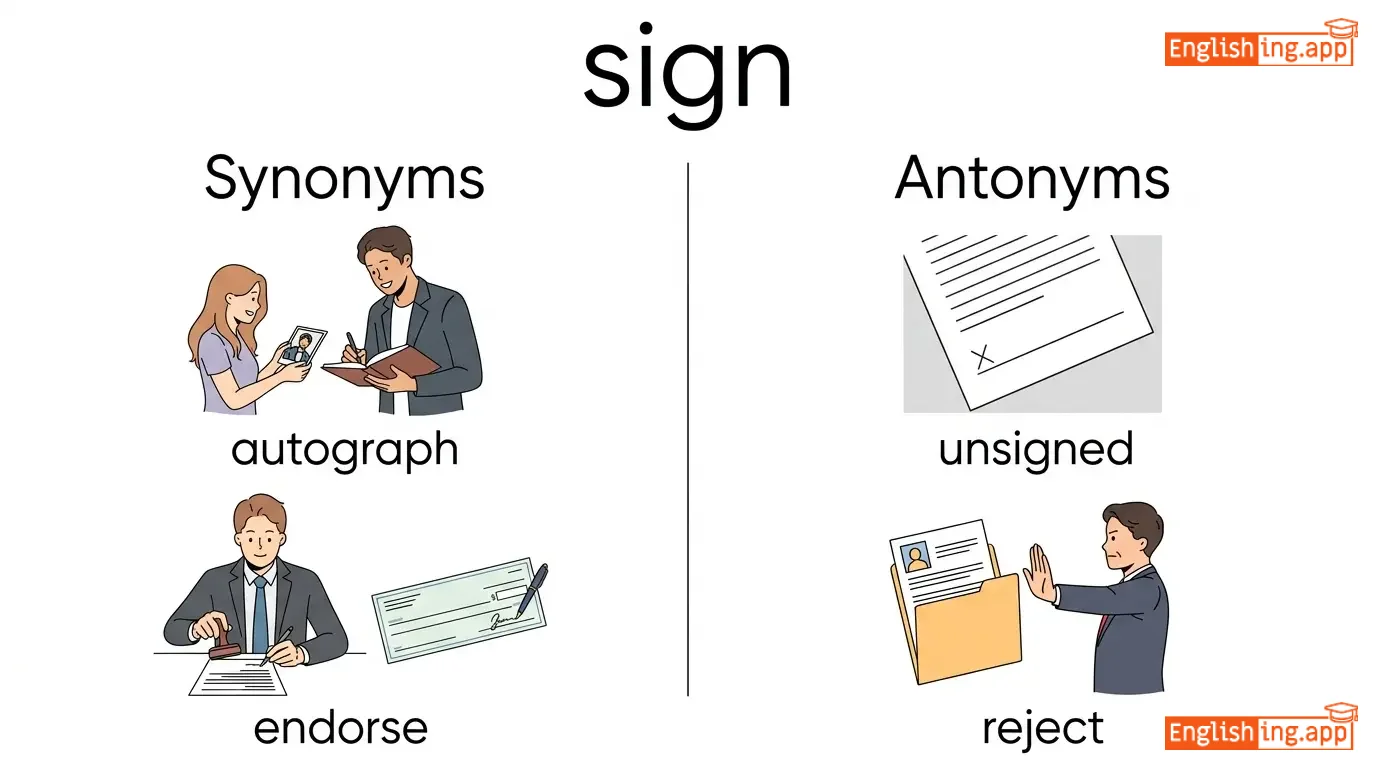
autograph, endorse, approve, gesture
••••••
|
unsigned, reject, refuse, disapprove
••••••
|
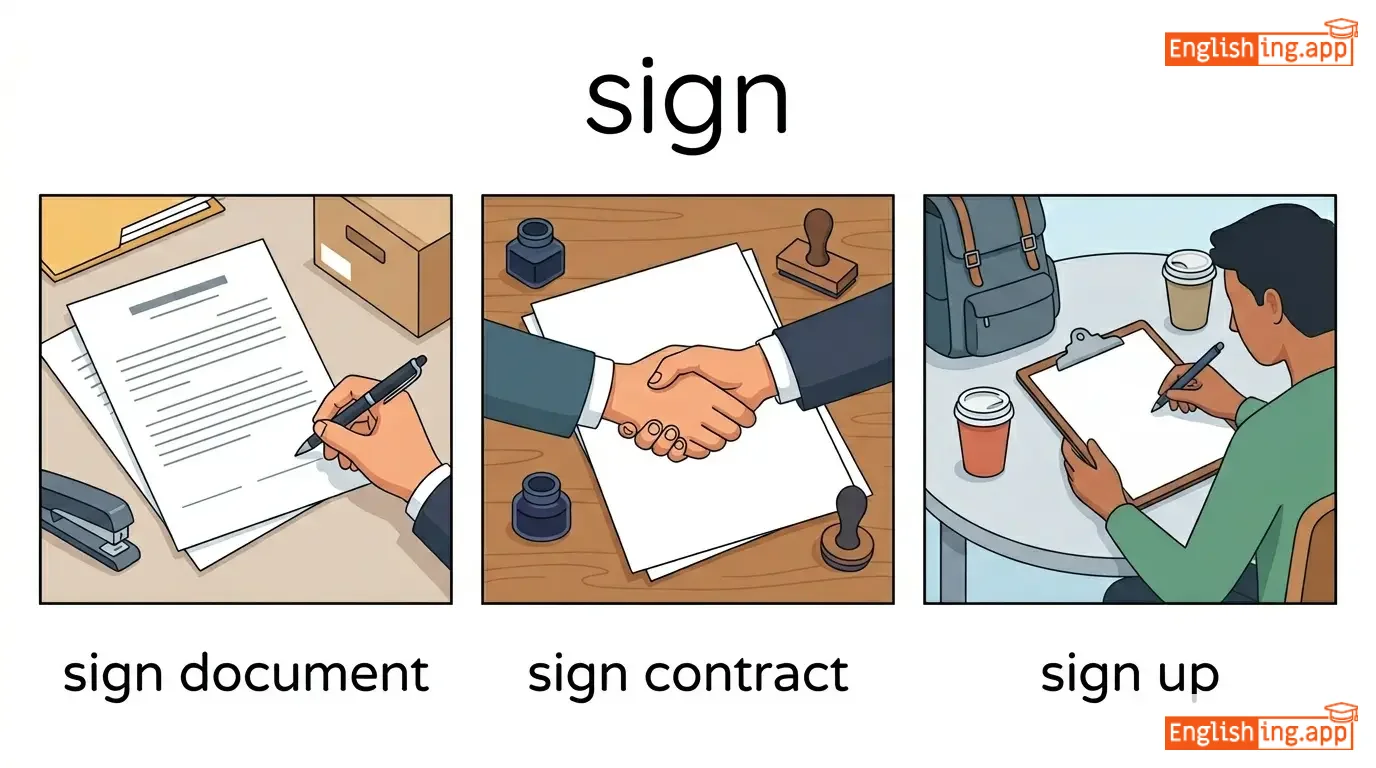
sign document, sign contract, sign up, sign off
••••••
|
签名是用手写名字来表示同意。
••••••
|
|
#4553
🚦
|
/ˈsɪɡnəl/
noun/verb
(信号)
••••••
|
- •••••• |
信号
xinhao
••••••
|
signaled
信号了
••••••
|
signaled
信号了
••••••
|
signals
信号
••••••
|
signaling
信号化
••••••
|
a gesture, sound, or action used to convey information or instructions
••••••
|
The driver gave a hand signal before turning left.
司机在左转之前给出了手势信号。
••••••
|
司机在左转之前给出了手势信号。
Sījī zài zuǒ zhuǎn zhīqián gěi chūle shǒushì xìnhào.
••••••
|
signal a change
发出信号
••••••
|
to indicate that something new is about to happen
••••••
|
发出信号
fāchū xìnhào
••••••
|
gesture, indication, sign, cue, alert
••••••
|
silence, concealment
••••••
|
give a signal, danger signal, signal strength, signal failure
••••••
|
信号 = 就像交通信号灯一样,提醒你做出反应。
••••••
|
|
#4554
✍️
|
/ˈsɪɡ.nə.tʃər/
noun
(xīnɡnàtʃè)
••••••
|
- •••••• |
签名
qianming
••••••
|
- •••••• | - •••••• | - •••••• | - •••••• |
a person's name written by themselves, often as a form of identification or authorization
••••••
|
She signed the contract with her elegant signature. |
她用她优雅的签名签署了合同。
Tā yòng tā yōu yǎ de qiān míng qiān shǔ le hé tóng.
••••••
|
signature dish |
a special meal that a chef is particularly known for
••••••
|
招牌菜
zhāo pái cài
••••••
|
autograph, sign, endorsement, mark, handwriting
••••••
|
anonymity, namelessness
••••••
|
signature style, signature dish, signature look, digital signature
••••••
|
Signature就是签名 – 记住 ✍️ 签名即是你的身份。
••••••
|
|
#4555
📌
|
/sɪɡˈnɪfɪkəns/
noun
(xīngfèn)
••••••
|
- •••••• |
意义
yìyì
••••••
|
- •••••• | - •••••• | - •••••• | - •••••• |
the quality of being important, meaningful, or worthy of attention
••••••
|
The significance of the discovery was recognized worldwide. |
这一发现的重要性在全球范围内得到了认可。
Zhè yī fāxiàn de zhòngyào xìng zài quánqiú fànwéi nèi dédào le rènkě.
••••••
|
of great significance |
something very important or meaningful
••••••
|
极其重要
jíqí zhòngyào
••••••
|
importance, meaning, value, weight, consequence
••••••
|
insignificance, triviality
••••••
|
historical significance, cultural significance, great significance, significance level
••••••
|
Significance意味着意义 - 有意义的事情很重要
••••••
|
|
#4556
⭐
|
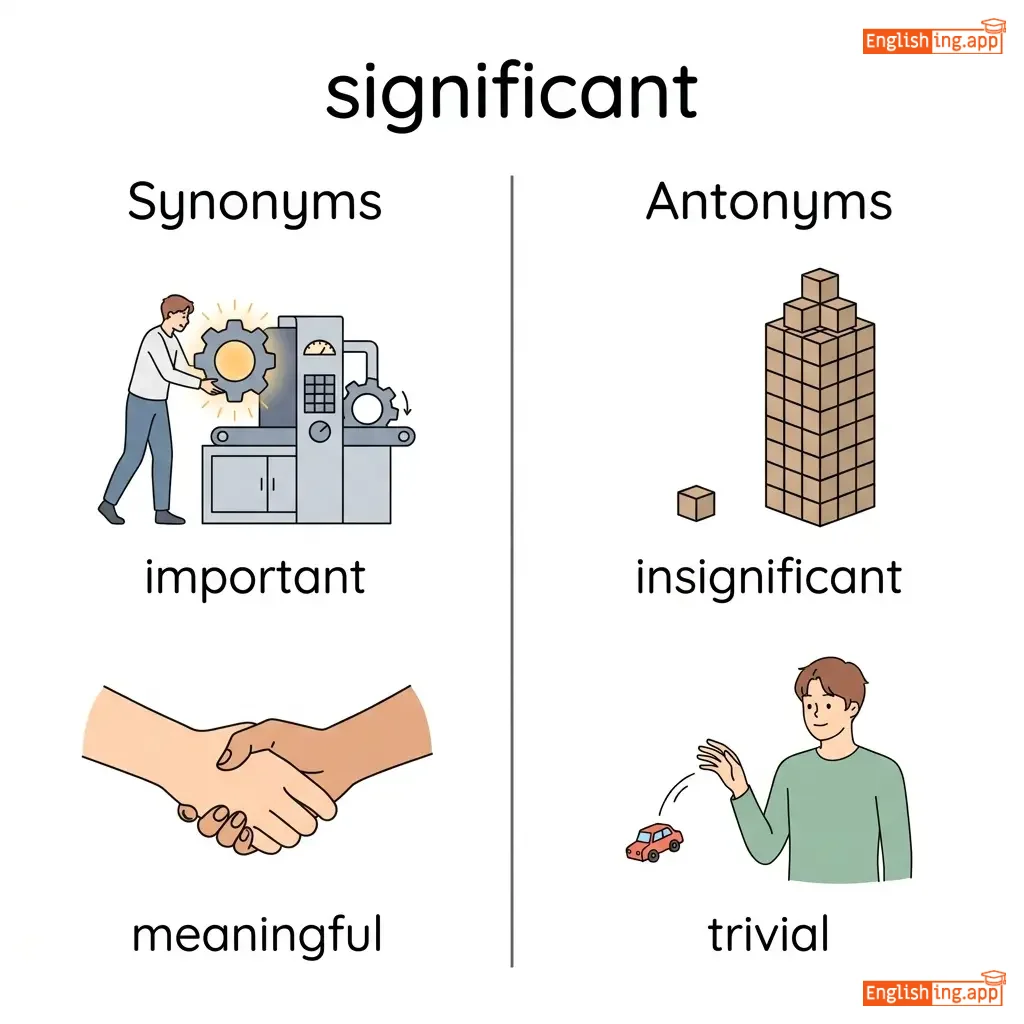
/sɪɡˈnɪfɪkənt/
adjective
(显著)
••••••
|
|
显著的
xian zhu de
••••••
|
- •••••• | - •••••• | - •••••• | - •••••• |
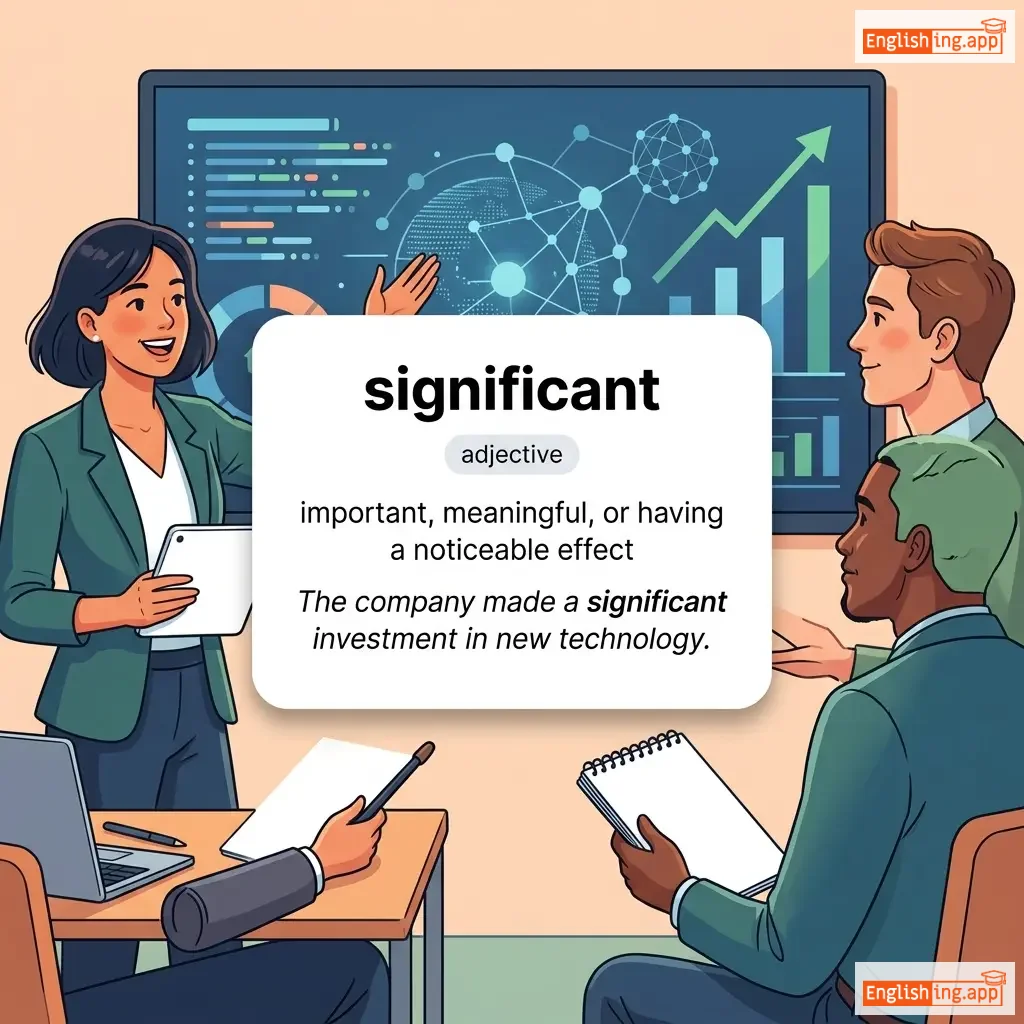
important, meaningful, or having a noticeable effect
••••••
|
The company made a significant investment in new technology. |
公司对新技术进行了显著投资。
Gōngsī duì xīn jìshù jìnxíngle xiǎnzhù tóuzī.
••••••
|
significant other |
a person with whom someone has an established romantic or sexual relationship
••••••
|
重要他人
zhòng yào tā rén
••••••
|
important, meaningful, considerable, notable, substantial
••••••
|
insignificant, trivial, minor
••••••
|
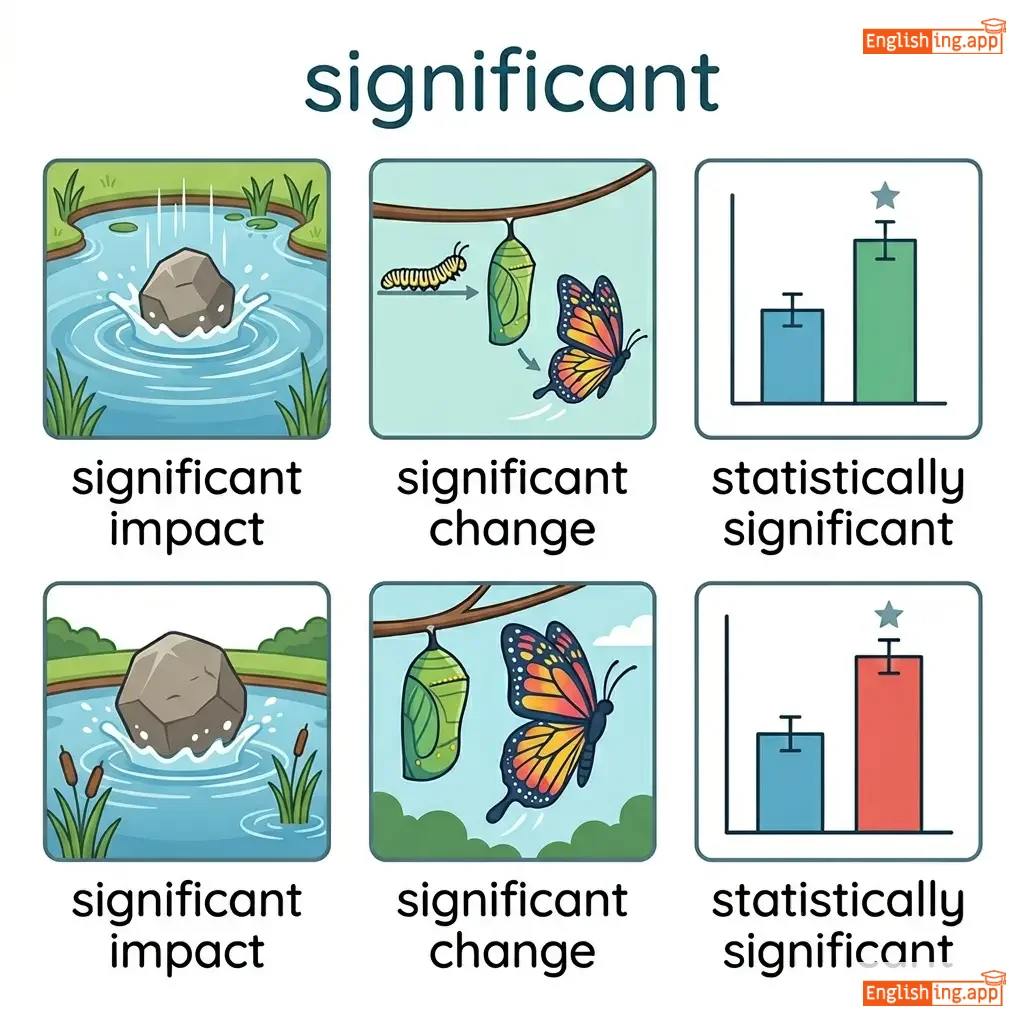
significant impact, significant change, statistically significant, significant role
••••••
|
显著的投资就像是公司的显著表现
••••••
|
|
#4557
📊
|
/sɪɡˈnɪfɪkəntli/
adverb
(西尼菲肯特利)
••••••
|
- •••••• |
显著
xian zhu
••••••
|
- •••••• | - •••••• | - •••••• | - •••••• |
in a way that is large or important enough to have an effect
••••••
|
The economy has significantly improved over the last decade.
过去十年中,经济显著改善。
••••••
|
过去十年中,经济显著改善。
Guoqu shinian zhong, jingji xianzhu gaishan.
••••••
|
- •••••• | - •••••• | - •••••• |
considerably, notably, appreciably, substantially
••••••
|
slightly, marginally, insignificantly
••••••
|
significantly improve, significantly increase, significantly change
••••••
|
将 'significant' 与 '显著' 连接来记住这个词。
••••••
|
|
#4558
🤫
|
/ˈsaɪ.ləns/
noun
(sàilèns)
••••••
|
|
沉默
chenmo
••••••
|
- •••••• | - •••••• | - •••••• | - •••••• |
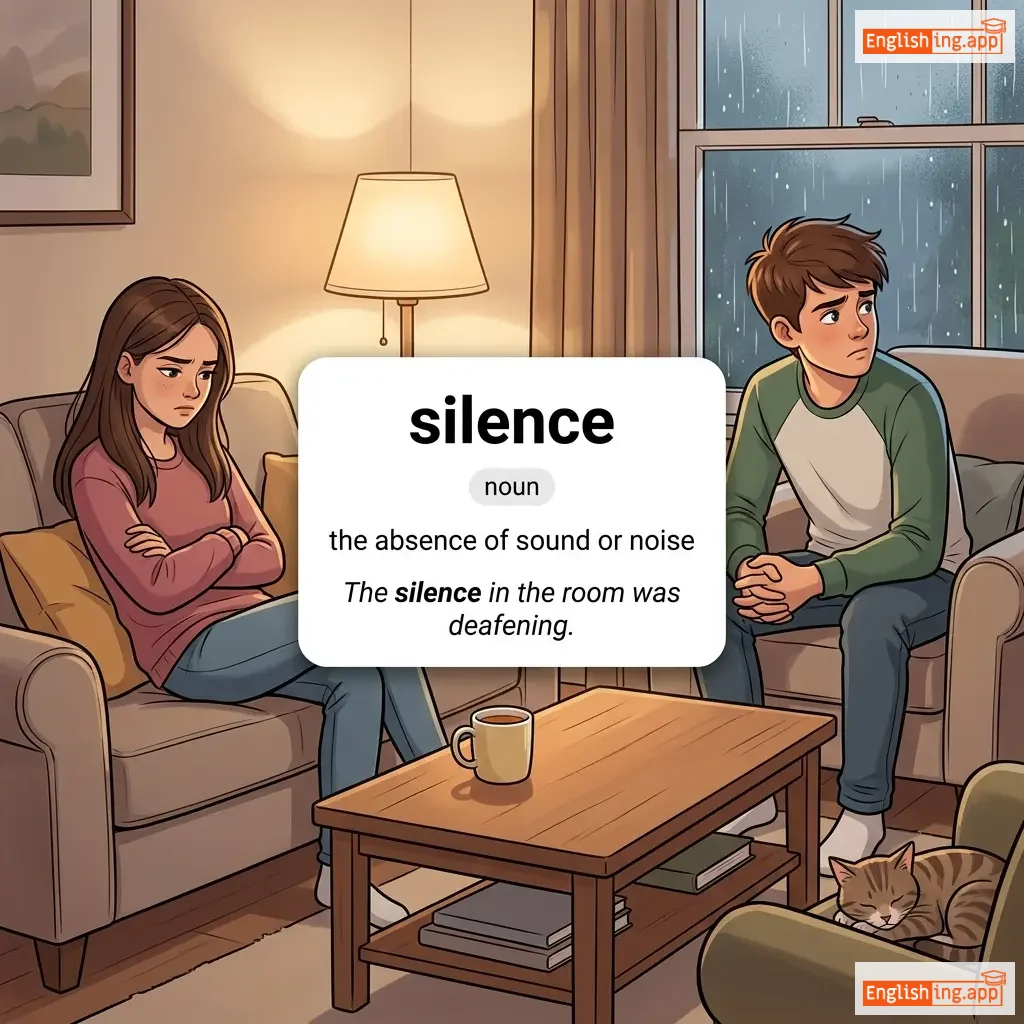
complete absence of sound; the refusal to speak or make noise
••••••
|
The teacher asked for silence during the exam. |
老师要求考试期间保持沉默。
Lǎoshī yāoqiú kǎoshì qíjiān bǎochí chénmò.
••••••
|
- •••••• | - •••••• | - •••••• |
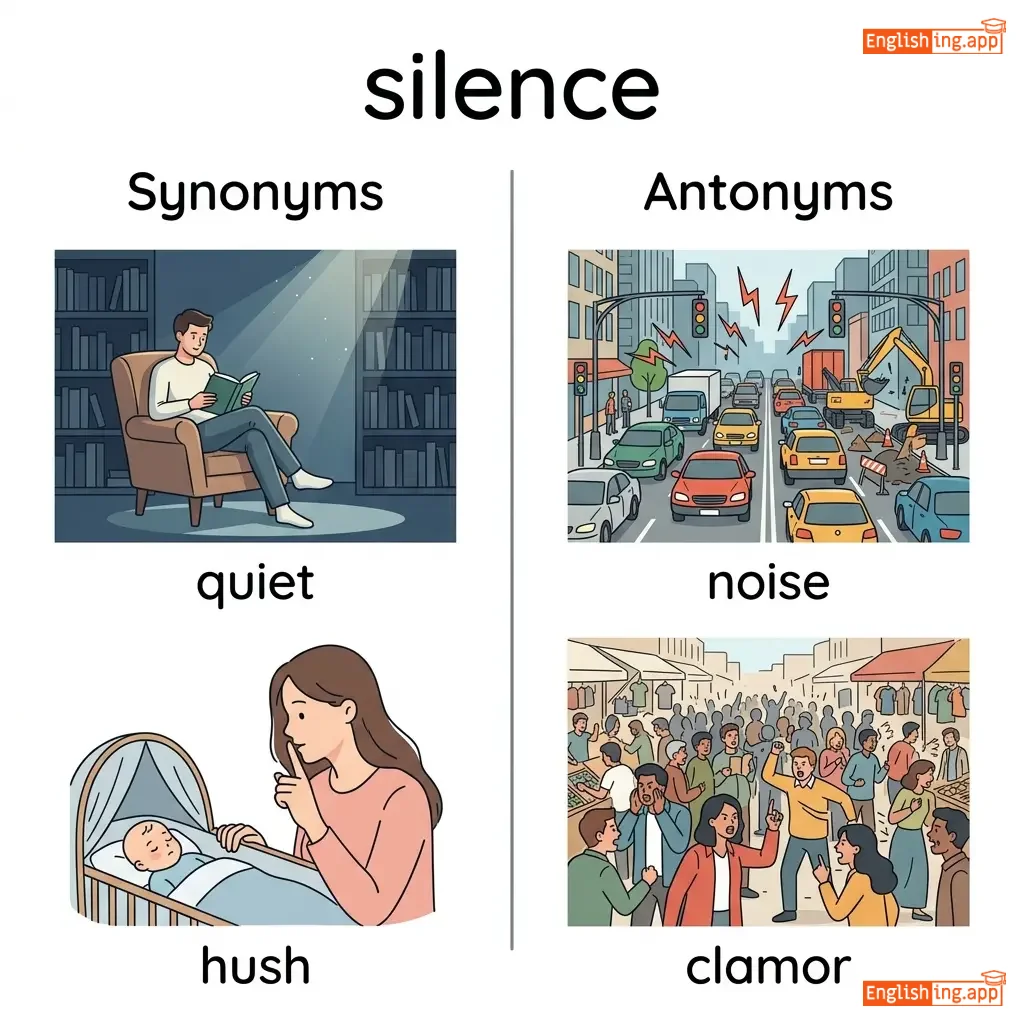
quiet, stillness, hush, calm
••••••
|
noise, sound, chatter, commotion
••••••
|
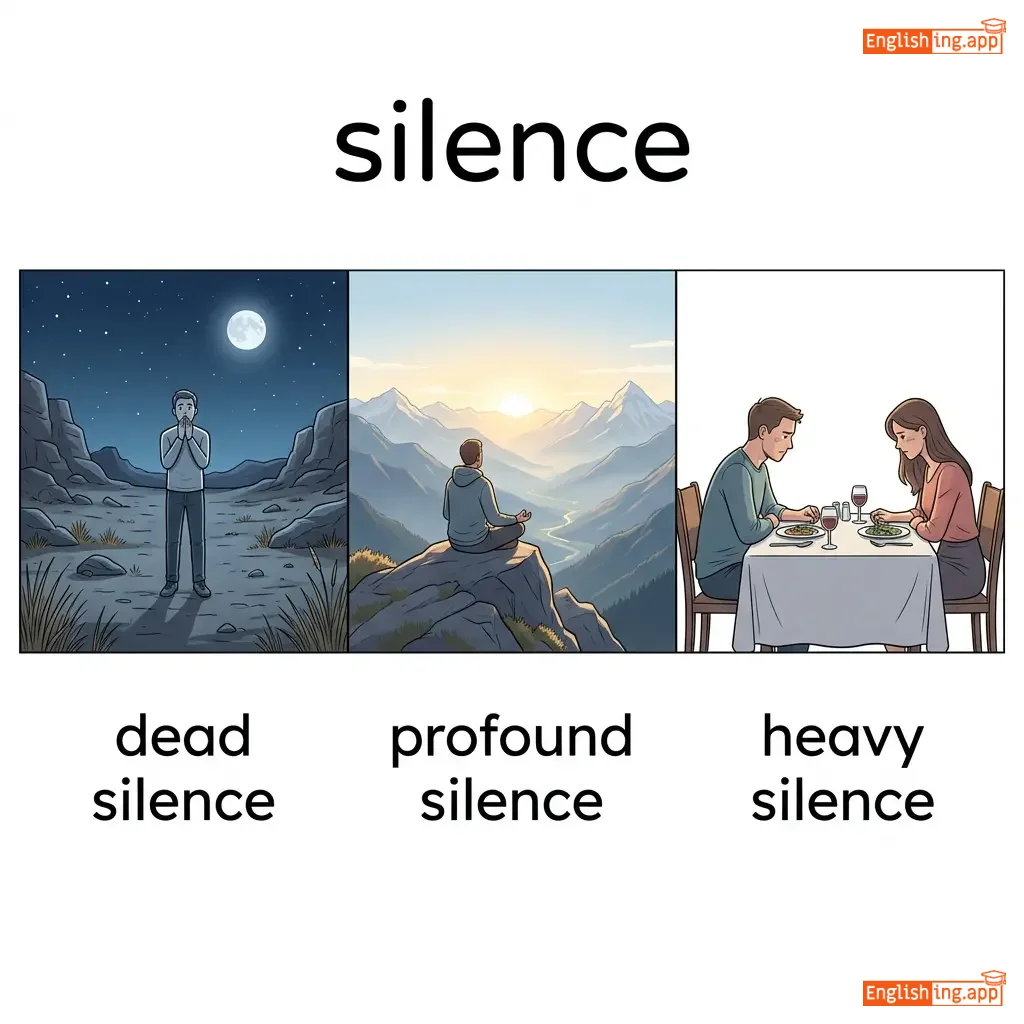
awkward silence, dead silence, moment of silence, break the silence
••••••
|
在沉默中,思考更清晰。
••••••
|
|
#4559
🤫
|
/ˈsaɪ.lənt/
adjective
(sàilènt)
••••••
|
- •••••• |
安静的; 沉默的; 平静的
ānjìng de; chénmò de; píngjìng de
••••••
|
- •••••• | - •••••• | - •••••• | - •••••• |
making no sound; quiet; not speaking
••••••
|
The library was completely silent during study hours. |
在学习时间,图书馆是完全安静的。
Zài xuéxí shíjiān, túshūguǎn shì wánquán ānjìng de
••••••
|
- •••••• | - •••••• | - •••••• |
quiet, noiseless, mute, speechless
••••••
|
noisy, loud, vocal, talkative
••••••
|
silent treatment, silent film, remain silent
••••••
|
安静就像是平静的心灵。
••••••
|
|
#4560
🤪
|
/ˈsɪli/
adjective
(sili)
••••••
|
- •••••• |
傻
sha
••••••
|
- •••••• | - •••••• | - •••••• | - •••••• |
showing a lack of good sense; foolish or playful
••••••
|
He made a silly mistake on the test. |
他在考试中犯了一个傻错误。
Ta zai kaoshi zhong fanle yige sha cuowu.
••••••
|
silly goose |
a playful way to call someone foolish or goofy
••••••
|
傻鸭子
sha yazi
••••••
|
foolish, goofy, childish, playful, nonsensical
••••••
|
serious, sensible, wise
••••••
|
silly mistake, silly joke, silly idea, feel silly
••••••
|
Silly意思是傻 — Silly mistake意思是傻错误。
••••••
|
|
#4561
🥈
|
/ˈsɪl.vər/
noun
(sī ěr)
••••••
|
- •••••• |
银
yin
••••••
|
- •••••• | - •••••• | - •••••• | - •••••• |
a shiny white precious metal used for making jewelry and ornaments
••••••
|
The silver ring sparkled in the sunlight.
银戒指在阳光下闪闪发光。
••••••
|
银戒指在阳光下闪闪发光。
Yín jiè zhǐ zài yángguāng xià shǎn shǎn fā guāng.
••••••
|
- •••••• | - •••••• | - •••••• |
argentum, sterling silver
••••••
|
gold, bronze
••••••
|
silver jewelry, silver coin, silver bracelet, silver necklace
••••••
|
银光闪闪,就像一枚银戒指在阳光下发光。
••••••
|
|
#4562
🔄
|
/ˈsɪmɪlər/
adjective
(西米拉尔)
••••••
|
- •••••• |
相似
xiangsi
••••••
|
- •••••• | - •••••• | - •••••• | - •••••• |
Having a resemblance in appearance, character, or quantity, without being identical.
••••••
|
The twins wore similar clothes to the party. |
双胞胎穿着相似的衣服参加派对。
Shuangbaotai chuanzhuo xiangsi de yifu canjia paidui.
••••••
|
similar to |
Having a likeness or resemblance to something.
••••••
|
相似于
xiangsi yu
••••••
|
alike, comparable, related, akin, resembling
••••••
|
different, dissimilar, unlike
••••••
|
similar case, similar result, similar style, similar appearance
••••••
|
SIMILAR意味着相似,像中文里的'相似'。
••••••
|
|
#4563
🔁
|
/ˌsɪmɪˈlærəti/
noun
(相似性)
••••••
|
- •••••• |
相似
xiangsi
••••••
|
- •••••• | - •••••• | - •••••• | - •••••• |
the state of being alike or having characteristics in common
••••••
|
There is a strong similarity between the two paintings. |
这两幅画之间有很强的相似性。
Zhe liang fu hua zhi jian you hen qiang de xiangsi.
••••••
|
family similarity |
resemblance among family members
••••••
|
家庭相似性
jiating xiangsi
••••••
|
likeness, resemblance, correspondence, equivalence, analogy
••••••
|
difference, dissimilarity, contrast
••••••
|
striking similarity, close similarity, family similarity, similarity score
••••••
|
Similarity → xiangsi; 记住:‘similar faces’ 意味着相似的面孔
••••••
|
|
#4564
🔄
|
/ˈsɪmɪlərli/
adverb
(sɪmɪlɑɹli)
••••••
|
- •••••• |
类似地
lèisì de
••••••
|
- •••••• | - •••••• | - •••••• | - •••••• |
in a similar way
••••••
|
Similarly, we can achieve success with dedication and hard work. |
以相似的方式,我们可以通过奉献和努力工作取得成功。
Yǐ xiāngsì de fāngshì, wǒmen kěyǐ tōngguò fèngxiàn hé nǔlì gōngzuò qǔdé chénggōng.
••••••
|
- •••••• | - •••••• | - •••••• |
alike, likewise, in the same way
••••••
|
differently, oppositely
••••••
|
similarly to, similarly minded, similarly structured
••••••
|
Similarly, working together towards the same goal!
••••••
|
|
#4565
✨
|
/ˈsɪmpəl/
adjective
(simpel)
••••••
|
- •••••• |
简单的; 容易的; 不复杂
simple
••••••
|
- •••••• | - •••••• | - •••••• | - •••••• |
easy to understand or do; not complicated
••••••
|
This is a simple recipe that anyone can follow.
这是一个简单的食谱,任何人都可以跟随。
••••••
|
这是一个简单的食谱,任何人都可以跟随。
Zhè shì yīgè jiǎndān de shípǔ, rènhé rén dōu kěyǐ gēnsuí.
••••••
|
- •••••• | - •••••• | - •••••• |
easy, basic, straightforward, uncomplicated
••••••
|
complex, complicated, difficult, intricate
••••••
|
simple task, simple solution, simple life
••••••
|
SIMPLE = 简单
••••••
|
|
#4566
😊
|
/ˈsɪm.pli/
adverb
(simp-li)
••••••
|
- •••••• |
简单地; 仅仅;
jiǎn dān de; jǐn jǐn;
••••••
|
- •••••• | - •••••• | - •••••• | - •••••• |
in a clear and easy way; merely; just
••••••
|
I simply wanted to help you with your homework.
我只是想帮你做作业。
••••••
|
我只是想帮你做作业。
Wǒ zhǐ shì xiǎng bāng nǐ zuò zuò yè.
••••••
|
- •••••• | - •••••• | - •••••• |
merely, just, only, plainly, clearly
••••••
|
complexly, complicatedly, difficultly
••••••
|
simply put, simply stated, simply amazing, simply beautiful
••••••
|
简单的就像 'simply' 一样简单
••••••
|
|
#4567
🎮
|
/ˈsɪmjʊˌleɪt/
verb
(模拟)
••••••
|
- •••••• |
模拟
mó nǐ
••••••
|
simulated
模拟的
••••••
|
simulated
模拟的
••••••
|
simulates
模拟
••••••
|
simulating
模拟中
••••••
|
to imitate the appearance, character, or behavior of something; to pretend or reproduce conditions artificially
••••••
|
The pilot had to simulate an emergency landing during training.
飞行员在训练中必须模拟紧急着陆。
••••••
|
飞行员在训练中必须模拟紧急着陆。
Fēixíngyuán zài xùnliàn zhōng bìxū mó nǐ jǐn jí zhuólù.
••••••
|
- •••••• | - •••••• | - •••••• |
imitate, mimic, reproduce, replicate, pretend
••••••
|
differ, real, genuine
••••••
|
simulate behavior, simulate conditions, simulate response, computer simulate
••••••
|
模拟飞行模拟紧急着陆
••••••
|
|
#4568
🎮
|
/ˌsɪmjuˈleɪʃən/
noun
(模拟)
••••••
|
- •••••• |
模拟
mó nǐ
••••••
|
- •••••• | - •••••• | - •••••• | - •••••• |
the imitation of a situation or process
••••••
|
The simulation helped the students understand the complex theory. |
模拟帮助学生理解复杂的理论。
Mónǐ bāngzhù xuéshēng lǐjiě fùzá de lǐlùn.
••••••
|
- •••••• | - •••••• | - •••••• |
imitation, modeling, reproduction, emulation
••••••
|
reality, actuality
••••••
|
simulation model, simulation game, flight simulation
••••••
|
模拟即是对某事物的模仿
••••••
|
|
#4569
⏱️
|
/ˌsaɪ.məlˈteɪ.ni.əs.li/
adverb
(同时)
••••••
|
|
同时
tongshi
••••••
|
- •••••• | - •••••• | - •••••• | - •••••• |
occurring or done at the same time
••••••
|
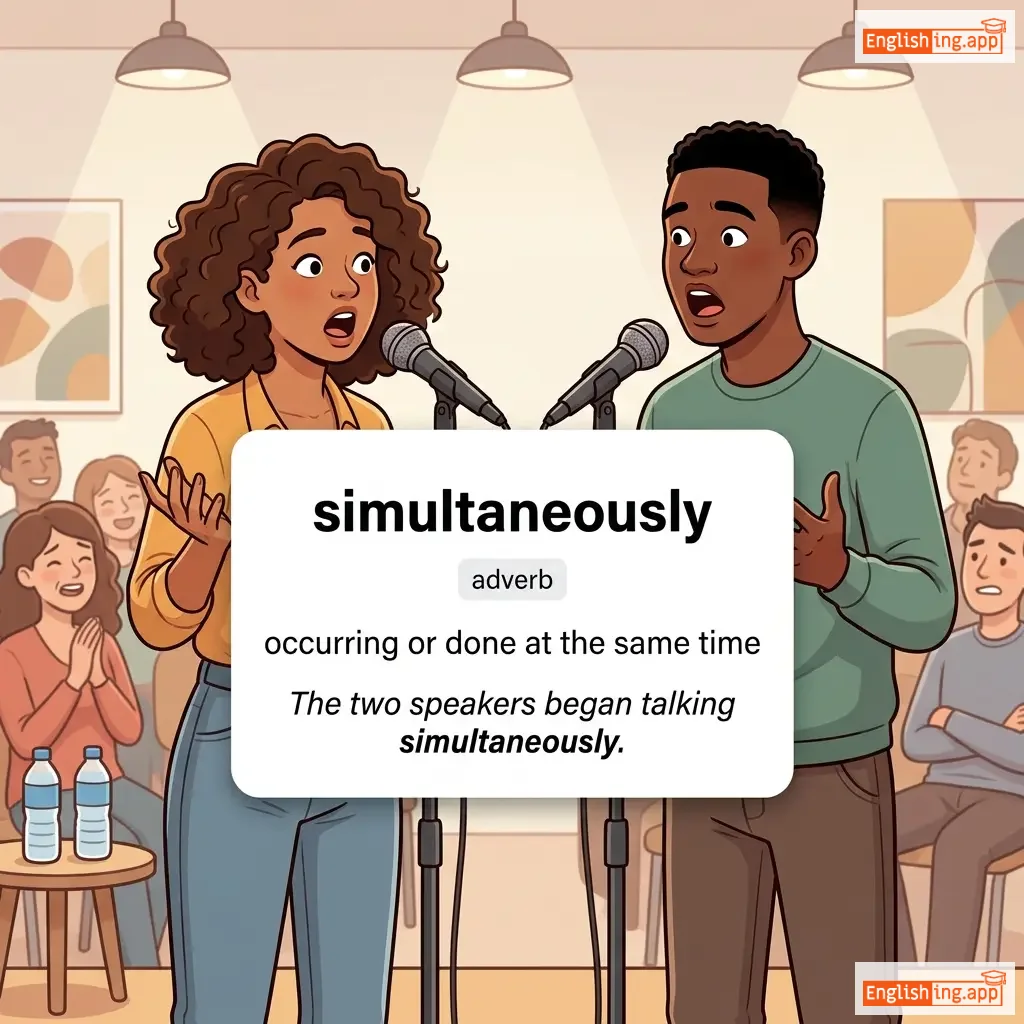
The two speakers began talking simultaneously.
两个发言者同时开始讲话。
••••••
|
两个发言者同时开始讲话。
Liang ge fayanshu tongshi kaishi jianghua.
••••••
|
- •••••• | - •••••• | - •••••• |
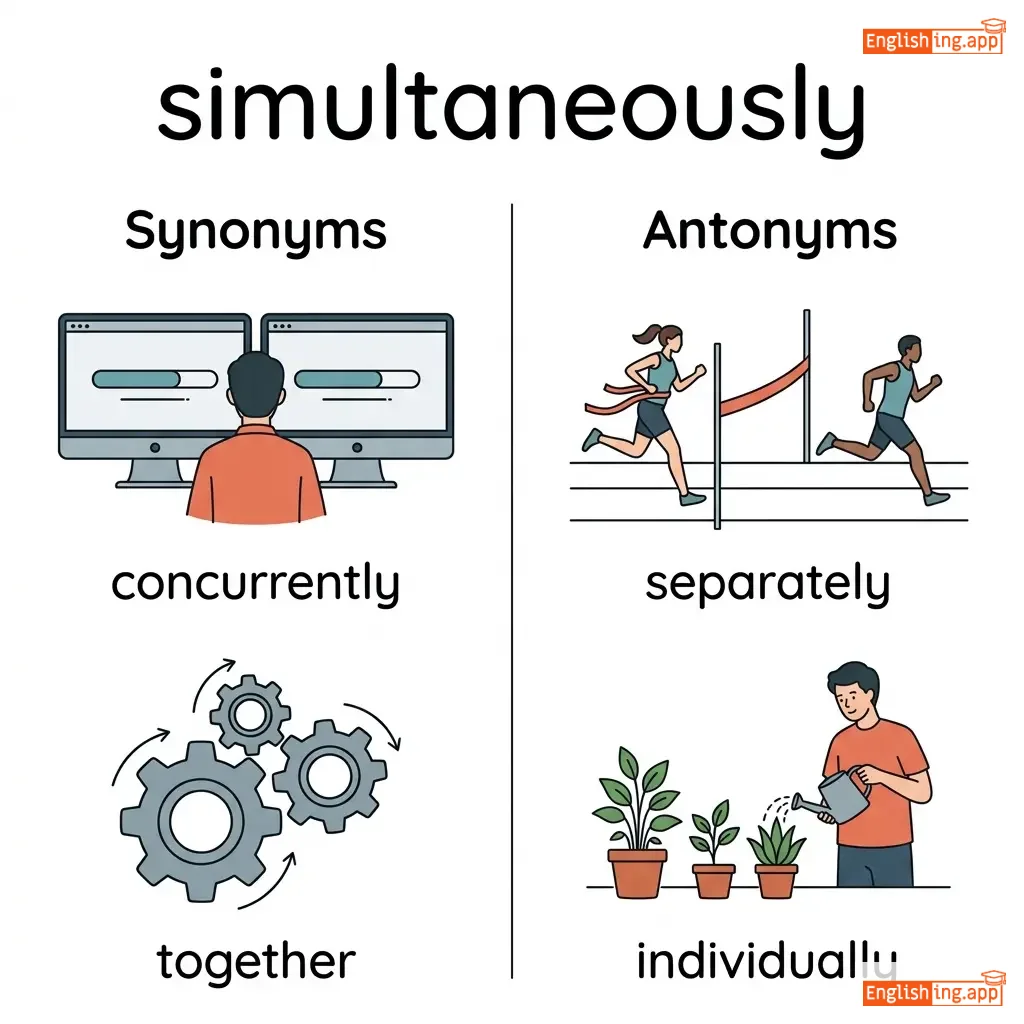
concurrently, together, synchronously, at once, in unison
••••••
|
separately, individually, consecutively
••••••
|
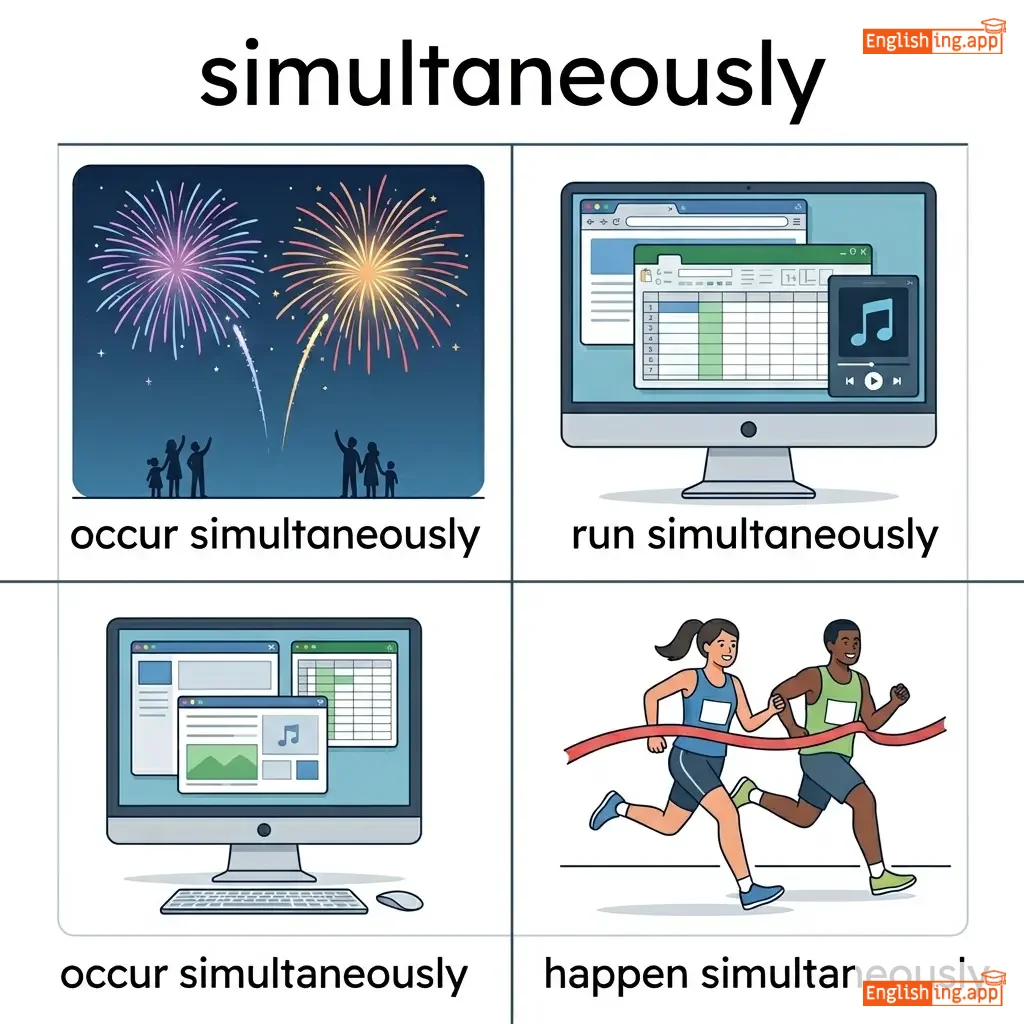
occur simultaneously, run simultaneously, happen simultaneously, work simultaneously
••••••
|
同时意味着同时发生 – 两个人同时讲话!
••••••
|
|
#4570
⚖️
|
/sɪn/
noun, verb
(辛)
••••••
|
- •••••• |
罪
zui
••••••
|
sinned
辛德
••••••
|
sinned
辛德
••••••
|
sins
辛斯
••••••
|
sinning
辛宁
••••••
|
an immoral act considered to be a transgression against divine law; to commit an offense against religious or moral law
••••••
|
He confessed his sin to the priest.
他向神父忏悔了他的罪。
••••••
|
他向神父忏悔了他的罪。
Ta xiang shenfu chanhui le tade zui.
••••••
|
fall into sin
陷入罪恶
••••••
|
to commit immoral or wrong actions
••••••
|
陷入罪恶
xianru zui'e
••••••
|
offense, wrongdoing, crime, transgression
••••••
|
virtue, goodness, morality
••••••
|
deadly sin, confess sin, forgive sin, commit sin
••••••
|
罪恶就像'zuī'为罪
••••••
|
|
#4571
⏳
|
/sɪns/
preposition
(辛斯)
••••••
|
- •••••• |
自
zi
••••••
|
- •••••• | - •••••• | - •••••• | - •••••• |
from a particular time in the past until now
••••••
|
I have known her since childhood. |
我从小就认识她。
Wo cong xiao jiu renshi ta.
••••••
|
- •••••• | - •••••• | - •••••• |
from, after
••••••
|
until, before
••••••
|
since childhood, since then, since yesterday
••••••
|
自从童年,我记得 '自' 代表从开始到现在的时间段。
••••••
|
|
#4572
❤️
|
/sɪnˈsɪr/
adjective
(xīn-sīr)
••••••
|
- •••••• |
真诚
zhencheng
••••••
|
- •••••• | - •••••• | - •••••• | - •••••• |
genuine and honest; free from pretense or deceit
••••••
|
She gave a sincere apology for her mistake. |
她为她的错误真诚地道歉。
Ta wei ta de cuowu zhencheng de daoqian.
••••••
|
sincere thanks |
genuine gratitude without hidden motives
••••••
|
真诚的感谢
zhencheng de ganxie
••••••
|
genuine, honest, heartfelt, truthful
••••••
|
insincere, fake, deceitful
••••••
|
sincere effort, sincere apology, sincere gratitude, sincere belief
••••••
|
Sincere = 真诚 (zhencheng)
••••••
|
|
#4573
💌
|
/sɪnˈsɪrli/
adverb
(辛西尔利)
••••••
|
- •••••• |
真诚地
zhencheng de
••••••
|
- •••••• | - •••••• | - •••••• | - •••••• |
with genuine feelings; honestly and truly
••••••
|
I sincerely hope you recover soon.
我 sincerely 希望你早日康复。
••••••
|
我真诚地希望你早日康复。
Wo zhencheng de xiwang ni zaori kangfu.
••••••
|
- •••••• | - •••••• | - •••••• |
honestly, genuinely, truly, faithfully, wholeheartedly
••••••
|
falsely, insincerely
••••••
|
sincerely apologize, sincerely regret, sincerely hope, sincerely wish
••••••
|
辛西尔利 (sincerely) = 真诚地, '辛' sounds like 'sin', remember honesty.
••••••
|
|
#4574
🎤
|
/sɪŋ/
verb
(sing)
••••••
|
|
唱
chang
••••••
|
sang
sang
••••••
|
sung
sung
••••••
|
sings
sings
••••••
|
singing
singing
••••••
|
to make musical sounds with the voice, typically in a tune
••••••
|
She loves to sing in the choir.
她喜欢在合唱团唱歌。
••••••
|
她喜欢在合唱团唱歌。
Tā xǐhuān zài héchàngtuán chànggē.
••••••
|
Sing your heart out
全心全意地唱吧
••••••
|
to sing with great enthusiasm and emotion
••••••
|
全心全意地唱吧
Quánxīn quán yì de chàng ba
••••••
|
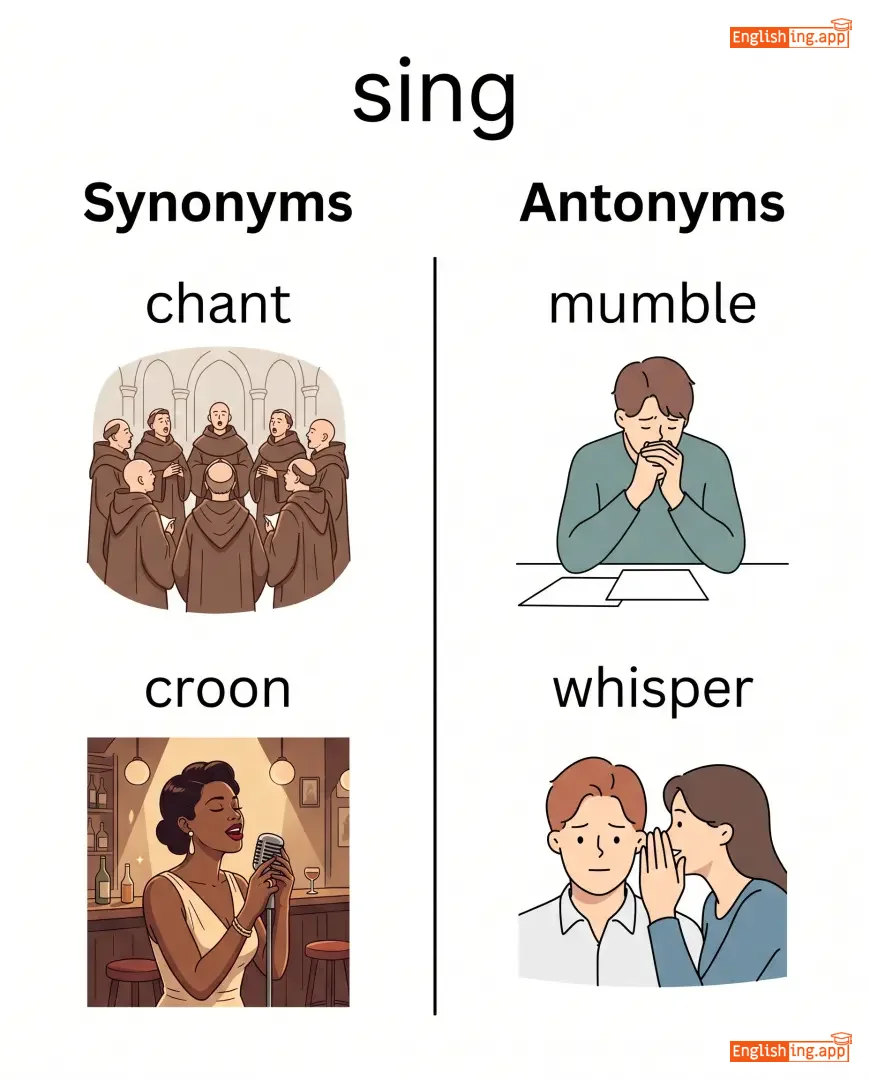
chant, croon, hum, vocalize
••••••
|
mumble, whisper
••••••
|
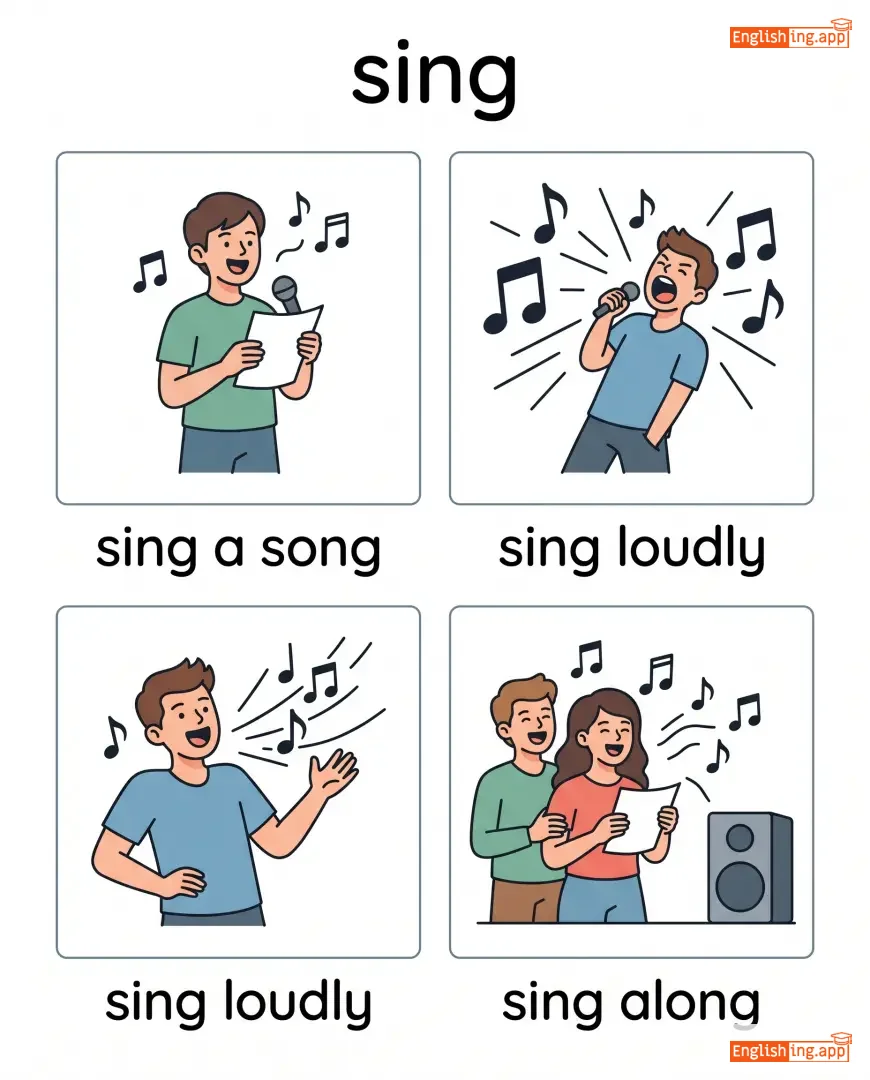
sing a song, sing loudly, sing along, sing in the choir
••••••
|
Sing as in '唱' - 唱歌如同在全世界舞台上表演!
••••••
|
|
#4575
🎤
|
/ˈsɪŋ.ər/
noun
(singer)
••••••
|
- •••••• |
歌手
geshou
••••••
|
- •••••• | - •••••• | - •••••• | - •••••• |
a person who sings, especially as a job or profession
••••••
|
The singer performed beautifully at the concert last night.
歌手昨晚在音乐会上表现得非常出色。
••••••
|
歌手昨晚在音乐会上表现得非常出色。
geshou zuowan zai yinyuehui shang biaoxian de feichang chuse.
••••••
|
- •••••• | - •••••• | - •••••• |
vocalist, performer, artist, musician
••••••
|
listener, audience member
••••••
|
professional singer, opera singer, pop singer, lead singer
••••••
|
歌手的歌声让所有人都站了起来!
••••••
|
|
#4576
1️⃣
|
/ˈsɪŋɡəl/
adjective
••••••
|
- •••••• | - •••••• | - •••••• | - •••••• | - •••••• | - •••••• |
only one; not one of several
••••••
|
She bought a single ticket for the concert. |
- •••••• |
Single handed |
done by one person alone
••••••
|
- •••••• |
individual, sole, solitary, lone
••••••
|
multiple, many
••••••
|
single ticket, single person, single item
••••••
|
No •••••• |
|
#4577
💦
|
/sɪŋk/
verb
(辛克)
••••••
|
|
下沉
xiàchén
••••••
|
sank
桑克
••••••
|
sunk
桑克
••••••
|
sinks
辛克斯
••••••
|
sinking
辛基
••••••
|
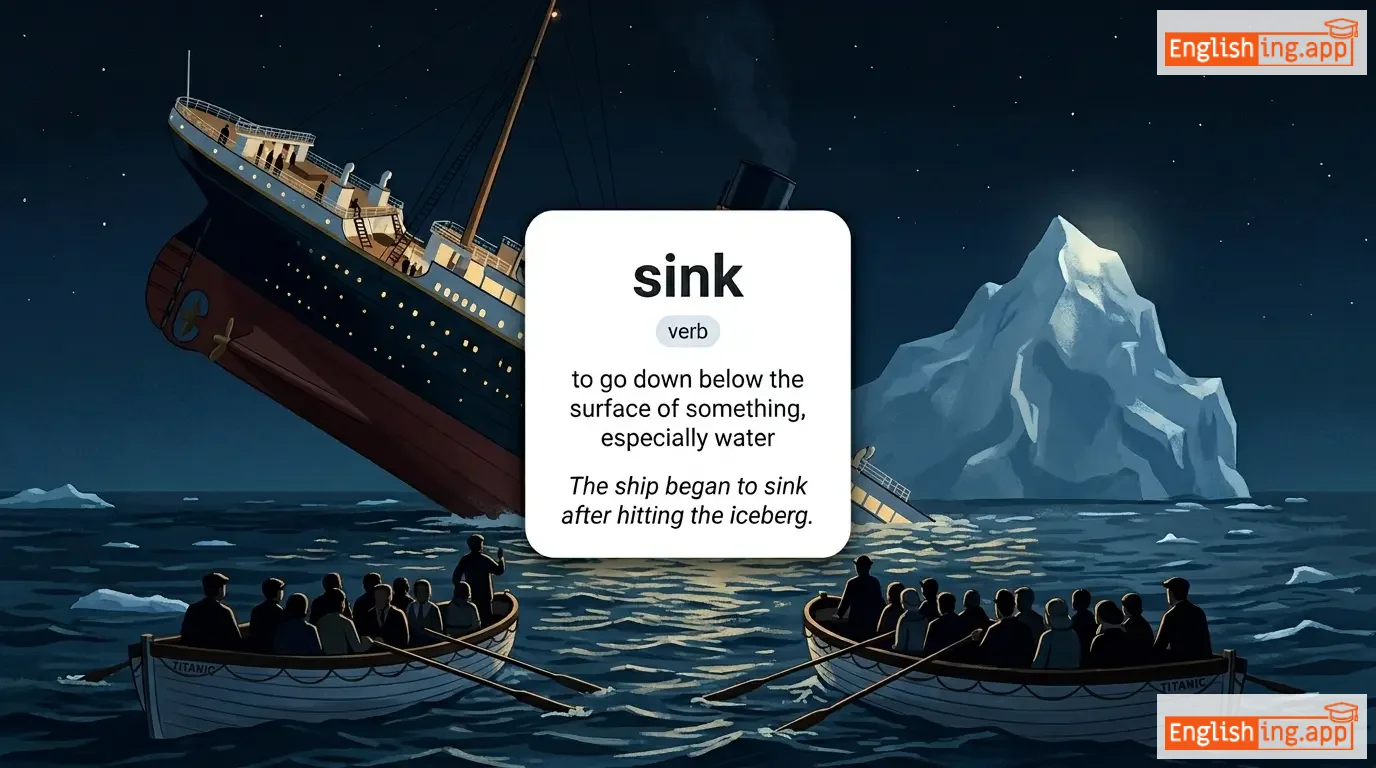
to go down below the surface of something, especially water
••••••
|
The ship began to sink after hitting the iceberg.
船撞上冰山后开始沉没。
••••••
|
船撞上冰山后开始沉没。
Chuán zhuàng shàng bīngshān hòu kāishǐ chénmò.
••••••
|
Sink or swim
沉或游
••••••
|
to face a situation where one must succeed or fail based on their actions
••••••
|
沉或游
Chén huò yóu
••••••
|
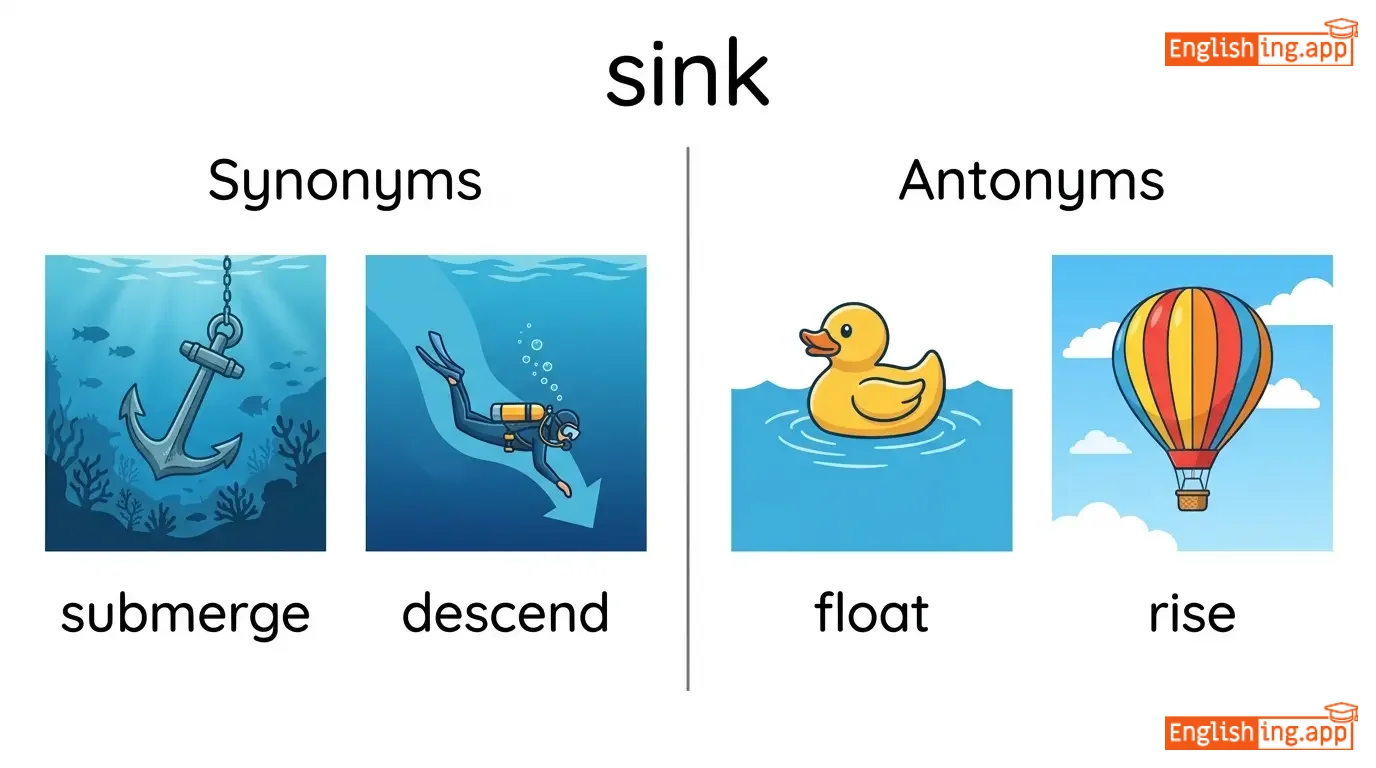
submerge, descend, drop
••••••
|
float, rise
••••••
|
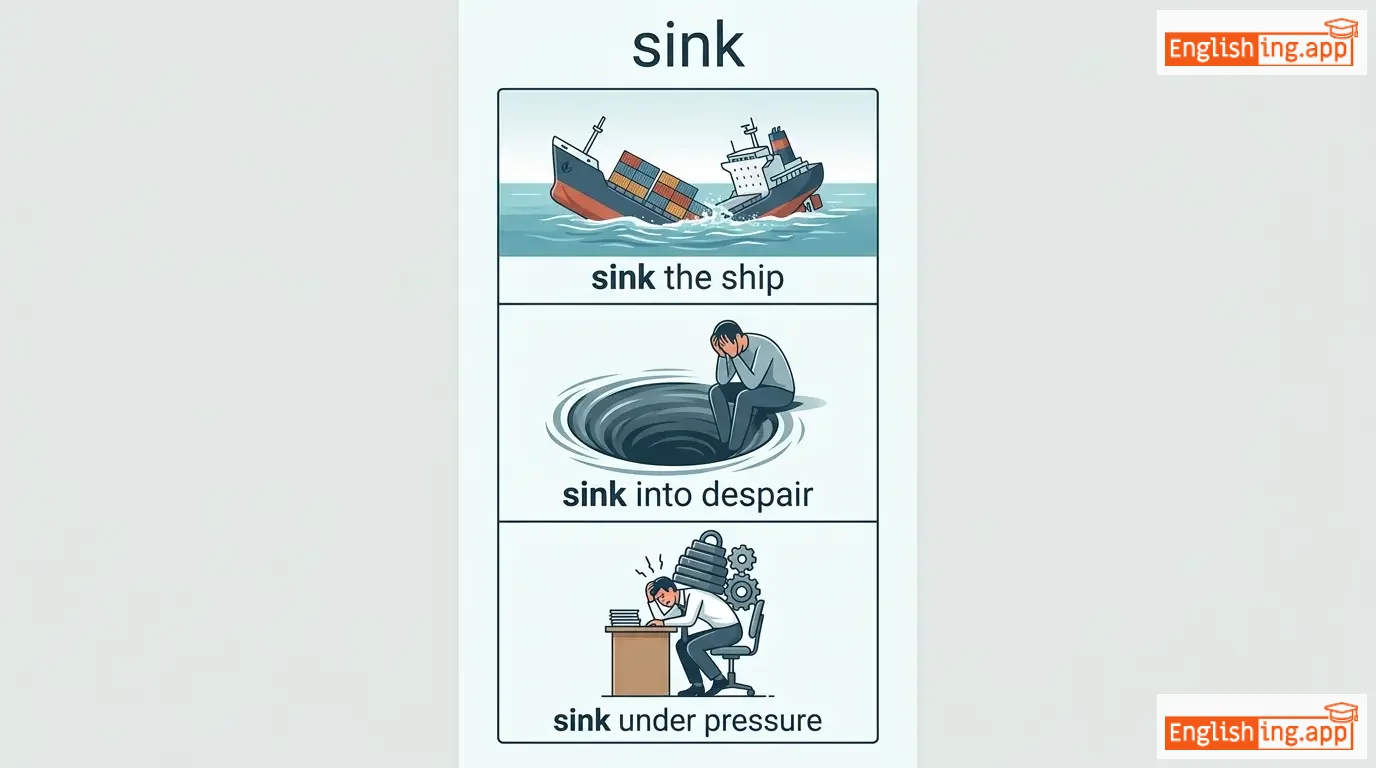
sink the ship, sink into despair, sink under pressure
••••••
|
Sink - 想象一下,如果你‘下沉’了,你就再也游不了了!
••••••
|
|
#4578
👨
|
/sɜːr/
noun
(先生)
••••••
|
- •••••• |
先生
xiansheng
••••••
|
- •••••• | - •••••• | - •••••• | - •••••• |
a respectful or formal form of address used for a man, typically one of higher social status or authority
••••••
|
Sir, may I assist you with your order? |
先生,我可以帮您处理订单吗?
Xiansheng, wǒ kěyǐ bāng nín chǔlǐ dìngdān ma?
••••••
|
- •••••• | - •••••• | - •••••• |
mister, gentleman, lord, master
••••••
|
madam, miss
••••••
|
Sir, dear sir, Sir John, Sir Thomas
••••••
|
先生 (Xiansheng) 的称呼带来尊重!
••••••
|
|
#4579
👭
|
/ˈsɪstər/
noun
(西斯特)
••••••
|
- •••••• |
姐姐 / 妹妹
jiejie / meimei
••••••
|
- •••••• | - •••••• | - •••••• | - •••••• |
a female sibling; a girl or woman in relation to other children of her parents
••••••
|
My sister is coming to visit us next week.
麦 西斯特 伊斯 卡明 图 维兹特 阿斯 内克斯特 维克
••••••
|
我姐姐下周要来看我们。
wo jiejie xia zhou yao lai kan women
••••••
|
- •••••• | - •••••• | - •••••• |
sibling, sister-in-law, female relative
••••••
|
brother
••••••
|
older sister, younger sister, sisterly bond, my sister
••••••
|
Jiejie (姐姐) sounds joyful like ‘sis sis’ — think sisterly warmth!
••••••
|
|
#4580
🪑
|
/sɪt/
verb
(सिट)
••••••
|
- •••••• |
坐
zuò
••••••
|
sat
सैट
••••••
|
sat
सैट
••••••
|
sits
सिट्स
••••••
|
sitting
सिटिंग
••••••
|
to rest with the body supported by the buttocks, often in a chair or on the ground
••••••
|
Please sit down and relax for a while.
请坐下来并放松一下。
••••••
|
请坐下来并放松一下。
qǐng zuò xiàlái bìng fàngsōng yīxià.
••••••
|
sit tight
坐稳
••••••
|
to stay in one place and wait patiently
••••••
|
静坐
jìngzuò
••••••
|
perch, rest, settle, lounge
••••••
|
stand, rise
••••••
|
sit down, sit still, sit comfortably, sit on the chair
••••••
|
坐下休息,静心放松。
••••••
|
|
#4581
🌍
|
/saɪt/
noun
(sàitè)
••••••
|
- •••••• |
位置
weizhi
••••••
|
- •••••• | - •••••• | - •••••• | - •••••• |
a location or place, often used for a specific purpose, such as a construction site or a website
••••••
|
The construction site is ready for the next phase of the project. |
建设现场已准备好进入项目的下一阶段。
Jianshe xianchang yi zhunbei hao jinru xiangmu de xiayi jieduan.
••••••
|
- •••••• | - •••••• | - •••••• |
location, place, area, venue
••••••
|
none
••••••
|
site of the accident, construction site, development site
••••••
|
网站 (Site) 就是一个特定的地方,用于不同的目的,比如建设现场。
••••••
|
|
#4582
📍
|
/ˈsɪtʃueɪtɪd/
adjective
(sɪtʃuˈeɪtɪd)
••••••
|
- •••••• |
位于
wei yu
••••••
|
- •••••• | - •••••• | - •••••• | - •••••• |
located in a particular place or position
••••••
|
The hotel is situated near the beach.
酒店位于海滩附近。
••••••
|
酒店位于海滩附近。
Jiudian wei yu haitan fujin.
••••••
|
- •••••• | - •••••• | - •••••• |
located, positioned, placed, found
••••••
|
lost, misplaced, absent
••••••
|
situated near, situated in, centrally situated
••••••
|
酒店位于海滩附近,景色迷人。
••••••
|
|
#4583
🌍
|
/ˌsɪtʃʊˈeɪʃən/
noun
(情境)
••••••
|
- •••••• |
情况
qingkuang
••••••
|
- •••••• | - •••••• | - •••••• | - •••••• |
a set of circumstances or state of affairs at a particular time
••••••
|
The situation at work became difficult after the new policies were introduced.
工作中的情况在引入新政策后变得困难。
••••••
|
工作中的情况在引入新政策后变得困难。
Gongzuo zhong de qingkuang zai yinru xin zhengce hou biande kunnan.
••••••
|
in a tight situation
处于困境中
••••••
|
to be in a difficult or challenging circumstance
••••••
|
处于困境中
Chuyú kùnjìng zhōng
••••••
|
condition, circumstance, state, scenario
••••••
|
none
••••••
|
critical situation, emergency situation, business situation
••••••
|
情况 (Qingkuang) - 不论什么情况,保持冷静!
••••••
|
|
#4584
6️⃣
|
/sɪks/
noun
(sīksī)
••••••
|
- •••••• |
六
liu
••••••
|
- •••••• | - •••••• | - •••••• | - •••••• |
the number 6
••••••
|
There are six apples on the table.
桌子上有六个苹果。
••••••
|
桌子上有六个苹果。
Zhuozi shang you liu ge pingguo.
••••••
|
- •••••• | - •••••• | - •••••• |
half a dozen, sextuple, sixfold
••••••
|
one
••••••
|
six o'clock, six people, six months, six days
••••••
|
Six is 'liu' in Chinese. Remember it as 'Liu apples on the table'.
••••••
|
Vocabulary Quiz
Test your vocabulary by matching words with their translations or meanings.
Login to take the quiz
Comments (0)
Share your thoughts and join the discussion.
Join the discussion by logging in
Login to CommentNo comments yet
Be the first to share your thoughts!