










Swipe left or right, or use the buttons. Tap image to zoom.
例句翻译
单词
Lesson 51Lesson 51 - 遮罩切换
|
表情符号
|
单词 | Images | 翻译 | 过去时 | 过去分词 | 第三人称单数 | 动名词 | 含义 | 例句 | 例句翻译 | 示例表达 | 示例表达含义 | 示例表达翻译 | 同义词 | 反义词 | 搭配词 | 助记符 |
|---|---|---|---|---|---|---|---|---|---|---|---|---|---|---|---|---|---|
|
#2421
💊
|
/hiːl/
verb
(希尔)
••••••
|
|
治愈
zhìyù
••••••
|
healed
希尔德
••••••
|
healed
希尔德
••••••
|
heals
希尔斯
••••••
|
healing
希灵
••••••
|
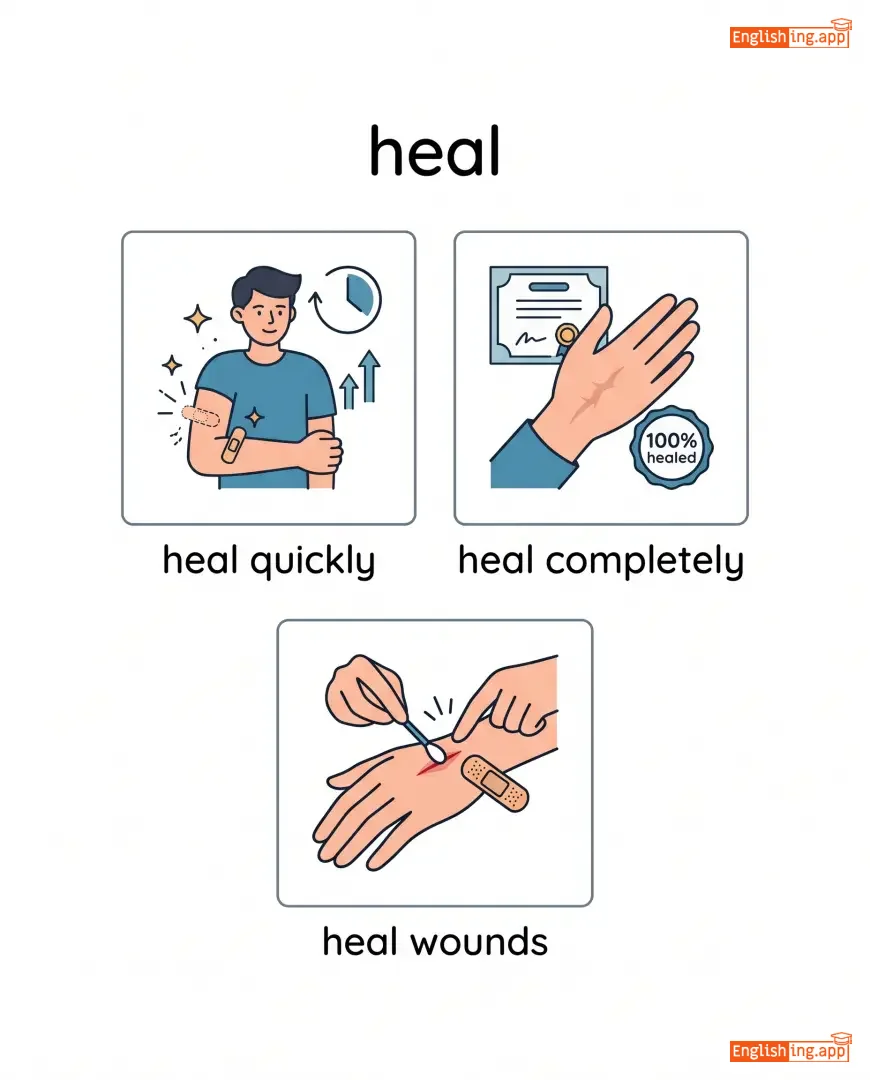
to make or become healthy again after an injury or illness
••••••
|
Time helps to heal both physical and emotional wounds.
时间有助于治愈身体和情感上的创伤。
••••••
|
时间有助于治愈身体和情感上的创伤。
Shíjiān yǒu zhù yú zhìyù shēntǐ hé qínggǎn shàng de chuāngshāng.
••••••
|
heal the wounds
治愈伤口
••••••
|
to repair or improve something damaged or hurt
••••••
|
治愈伤口
zhìyù shāngkǒu
••••••
|
cure, mend, recover, restore, repair
••••••
|
harm, injure, damage
••••••
|
heal quickly, heal completely, heal wounds, heal process
••••••
|
如果脚受伤了,就需要治愈。
••••••
|
|
#2422
💪
|
/hɛlθ/
noun
(hèlth)
••••••
|
- •••••• |
健康
jiànkāng
••••••
|
- •••••• | - •••••• | - •••••• | - •••••• |
The state of being free from illness or injury.
••••••
|
Exercise is important for good health. |
锻炼对保持良好的健康很重要。
duànliàn duì bǎochí liánghǎo de jiànkāng hěn zhòngyào.
••••••
|
in good health |
being healthy
••••••
|
身体健康
shēntǐ jiànkāng
••••••
|
wellness, fitness, condition, wellbeing
••••••
|
illness, sickness, disease
••••••
|
good health, health care, public health, mental health
••••••
|
Health意味着健康,健康是幸福的基础。
••••••
|
|
#2423
🏥
|
/ˈhɛlθˌkɛər/
noun
(hélǐkè'ěr)
••••••
|
- •••••• |
医疗保健
yīliáo bǎojiàn
••••••
|
- •••••• | - •••••• | - •••••• | - •••••• |
the organized provision of medical care to people
••••••
|
The country invested heavily in healthcare to improve public health. |
该国在医疗保健方面进行了大量投资,以改善公共健康。
Gāi guó zài yīliáo bǎojiàn fāngmiàn jìnxíngle dàliàng tóuzī, yǐ gǎishàn gōnggòng jiànkāng.
••••••
|
- •••••• | - •••••• | - •••••• |
medicine, health services, medical care
••••••
|
neglect, indifference
••••••
|
healthcare system, healthcare provider, healthcare services
••••••
|
医疗保健拯救生命。
••••••
|
|
#2424
🍎
|
/ˈhɛlθi/
adjective
(海皮尼斯)
••••••
|
|
幸福
xìng fú
••••••
|
- •••••• | - •••••• | - •••••• | - •••••• |
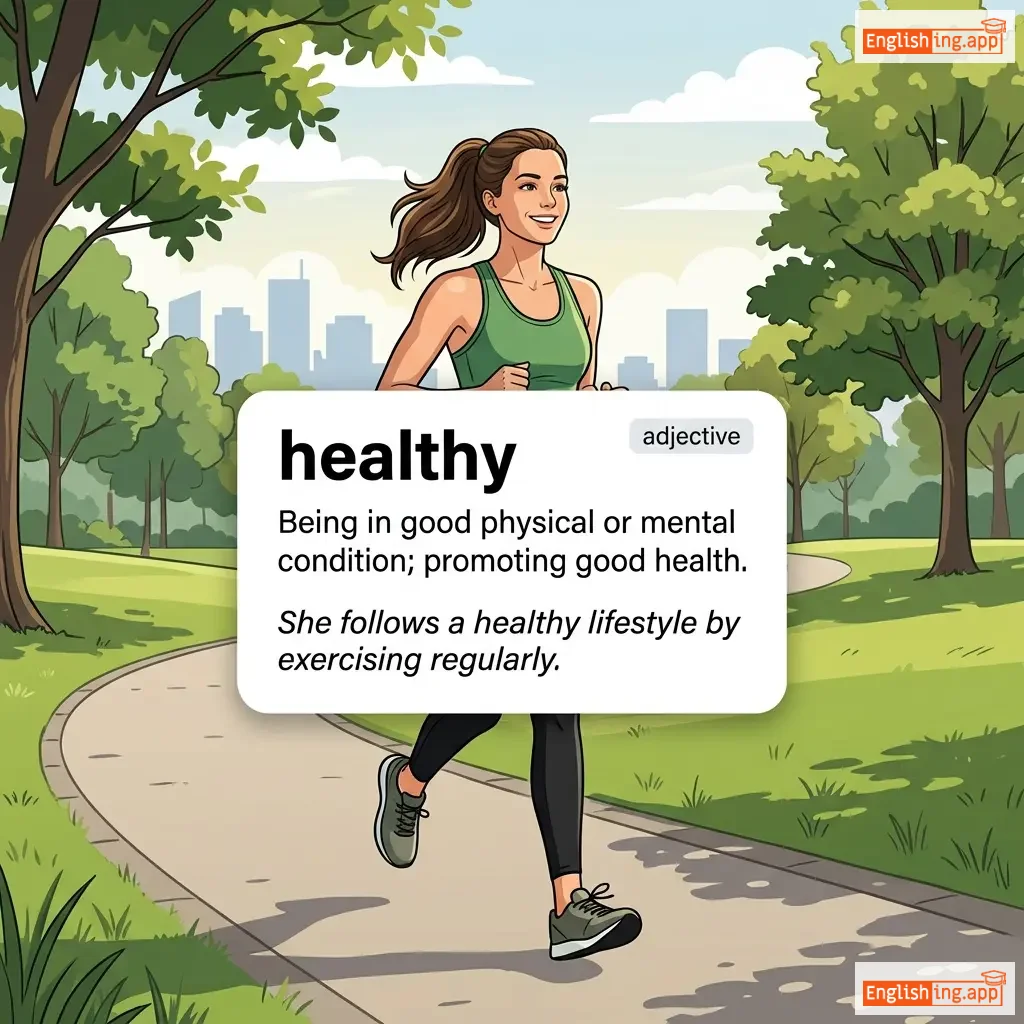
Being in good physical or mental condition; promoting good health.
••••••
|
She follows a healthy lifestyle by exercising regularly.
她无法掩饰收到奖项时的快乐。
••••••
|
她无法掩饰收到奖项时的快乐。
Tā wúfǎ yǎnshì shōudào jiǎngxiàng shí de kuàilè.
••••••
|
healthy competition
幸福的追求
••••••
|
A form of competition that is fair and encourages improvement.
••••••
|
幸福的追求
xìng fú de zhuī qiú
••••••
|
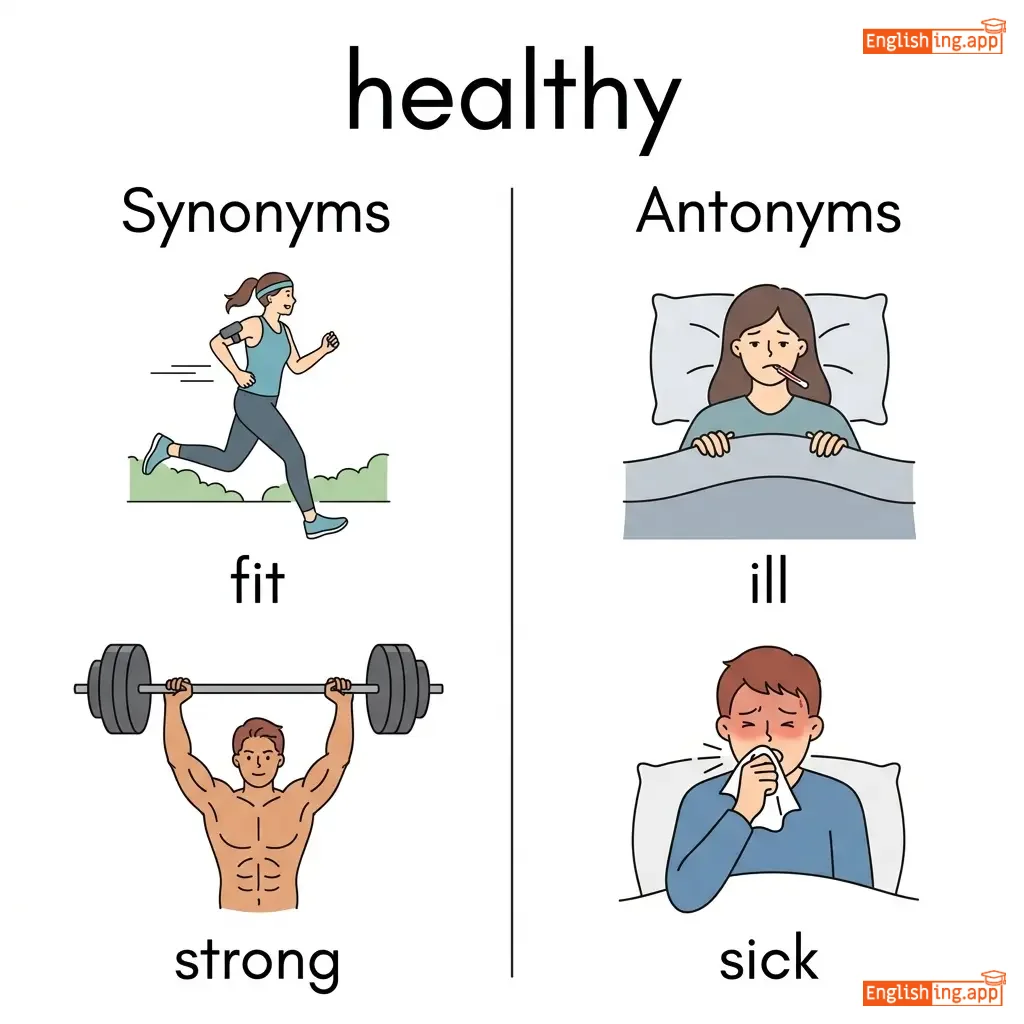
fit, strong, well, robust, sound
••••••
|
ill, sick, weak
••••••
|
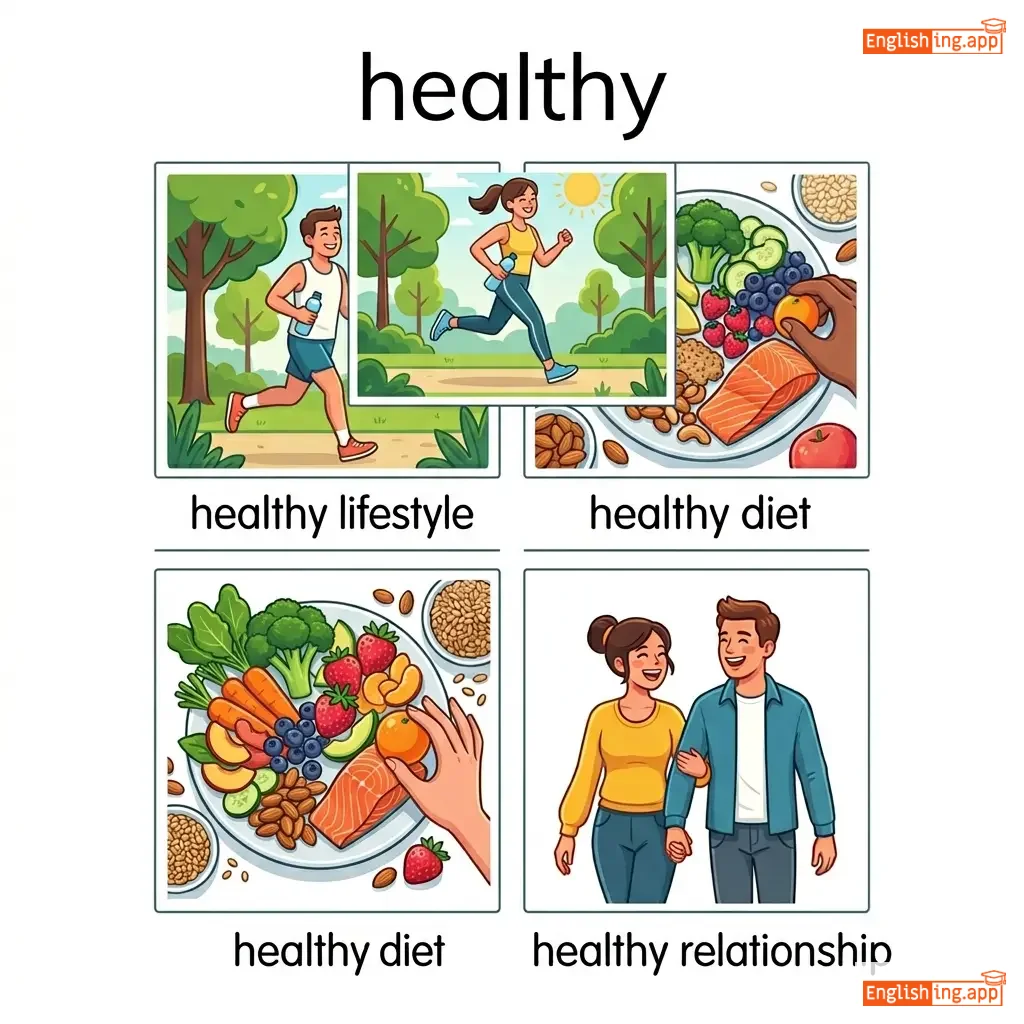
healthy lifestyle, healthy diet, healthy relationship, healthy environment
••••••
|
幸福 = 感觉到愉快和满足的状态
••••••
|
|
#2425
👂
|
/hɪr/
verb
(xir)
••••••
|
|
听见
tīngjiàn
••••••
|
heard
herd
••••••
|
heard
herd
••••••
|
hears
hirs
••••••
|
hearing
xīrīng
••••••
|
To perceive sound with the ear.
••••••
|
I can hear birds singing outside.
Wǒ kěyǐ tīngdào wàimiàn de niǎo chànggē.
••••••
|
我可以听到外面的鸟在唱歌。
Wǒ kěyǐ tīngdào wàimiàn de niǎo chànggē.
••••••
|
hear from someone
cóng rén huì tīngdào
••••••
|
to receive news or communication from someone
••••••
|
从某人那里听到
cóng mǒurén nàlǐ tīngdào
••••••
|
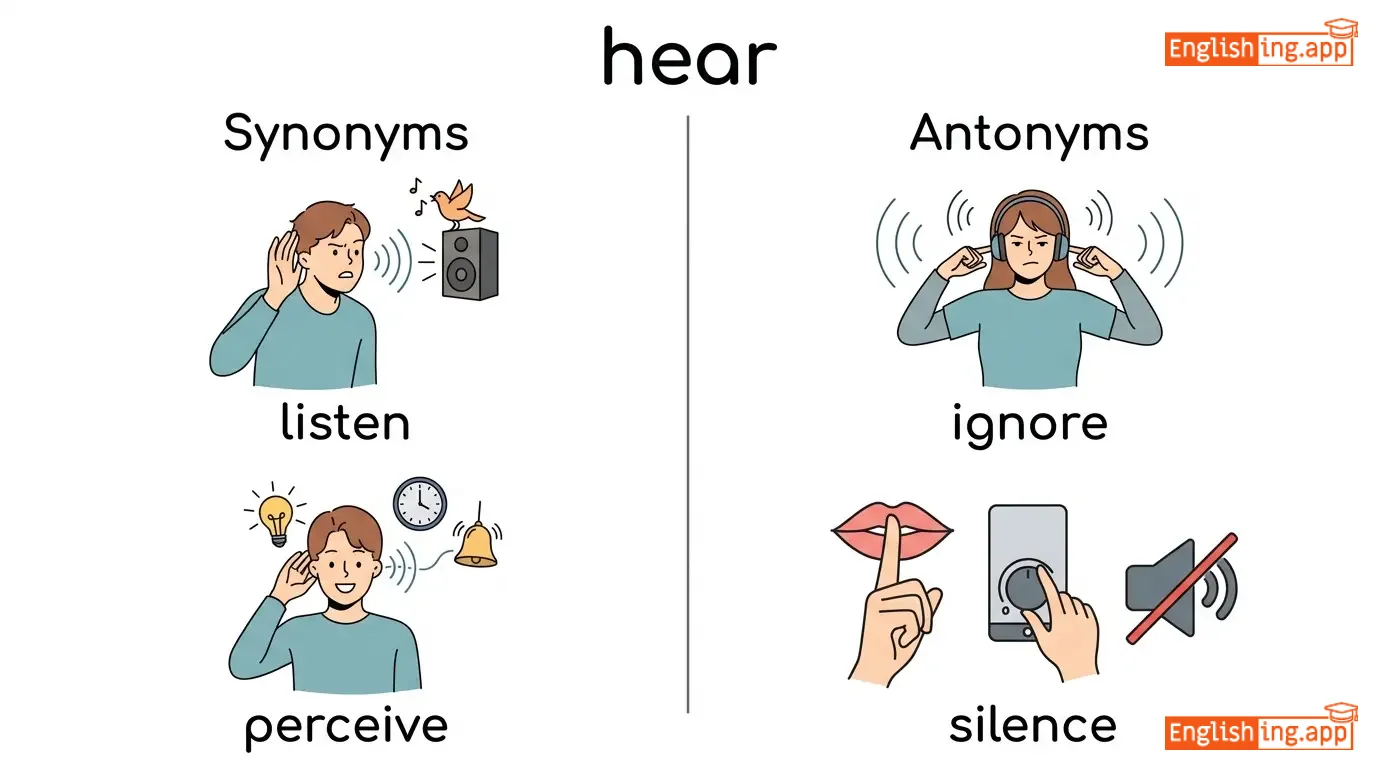
listen, perceive, detect, notice, overhear
••••••
|
ignore, silence
••••••
|
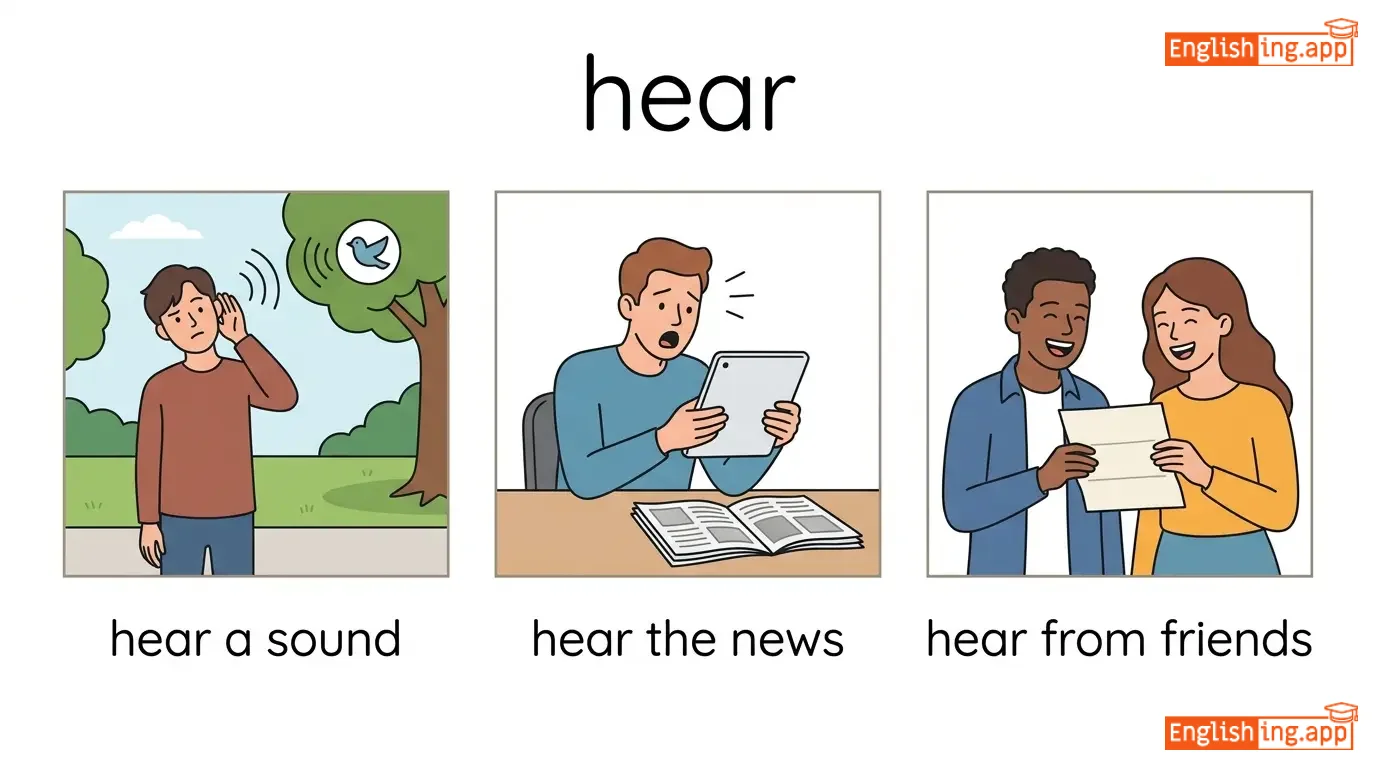
hear a sound, hear the news, hear from friends, hear clearly
••••••
|
听见就是用耳朵听声音。
••••••
|
|
#2426
👂
|
/ˈhɪərɪŋ/
noun
(hī-ríng)
••••••
|
- •••••• |
听力 / 听证会
tīnglì / tīngzhènghuì
••••••
|
- •••••• | - •••••• | - •••••• | - •••••• |
the ability to perceive sounds or an official meeting to listen to arguments or evidence
••••••
|
The judge scheduled a hearing for next week. |
法官安排了下周的听证会。
Fǎguān ānpái le xià zhōu de tīngzhènghuì.
••••••
|
hard of hearing |
having partial hearing loss
••••••
|
部分听力丧失
bùfèn tīnglì sàngshī
••••••
|
listening, audition, perception, trial, meeting
••••••
|
deafness, silence
••••••
|
court hearing, public hearing, hearing aid, hearing loss
••••••
|
Hearing 就是听证会 – 法庭上有听证会,耳朵负责听觉 👂
••••••
|
|
#2427
❤️
|
/hɑːrt/
noun
(hɑːrt)
••••••
|
- •••••• |
心脏
xīnzàng
••••••
|
- •••••• | - •••••• | - •••••• | - •••••• |
the organ that pumps blood through the body; also the center of emotions
••••••
|
Her heart was beating fast with excitement.
她的心因兴奋而快速跳动。
••••••
|
她的心因兴奋而快速跳动。
Tā de xīn yīn xīngfèn ér kuàisù tiàodòng.
••••••
|
at heart
从心底
••••••
|
in essence or fundamentally
••••••
|
从心底
cóng xīndǐ
••••••
|
core, center, emotion, spirit, soul
••••••
|
mind, brain
••••••
|
heart attack, broken heart, kind heart, follow your heart
••••••
|
心脏 ❤️ 意味着心脏 – 爱和情感来自心脏
••••••
|
|
#2428
🔥
|
/hiːt/
noun/verb
(hī tè)
••••••
|
|
热 / 加热
rè / jiārè
••••••
|
heated
hī tèd
••••••
|
heated
hī tèd
••••••
|
heats
hī tè s
••••••
|
heating
hī tīng
••••••
|
intensity of hotness; to make something warm or hot
••••••
|
They heated the soup on the stove.
他们在炉子上加热了汤。
••••••
|
他们在炉子上加热了汤。
Tāmen zài lúzi shàng jiārè le tāng.
••••••
|
in the heat of the moment
一时冲动
••••••
|
acting without thinking due to strong emotions
••••••
|
在激动时做事
Zài jīdòng shí zuò shì
••••••
|
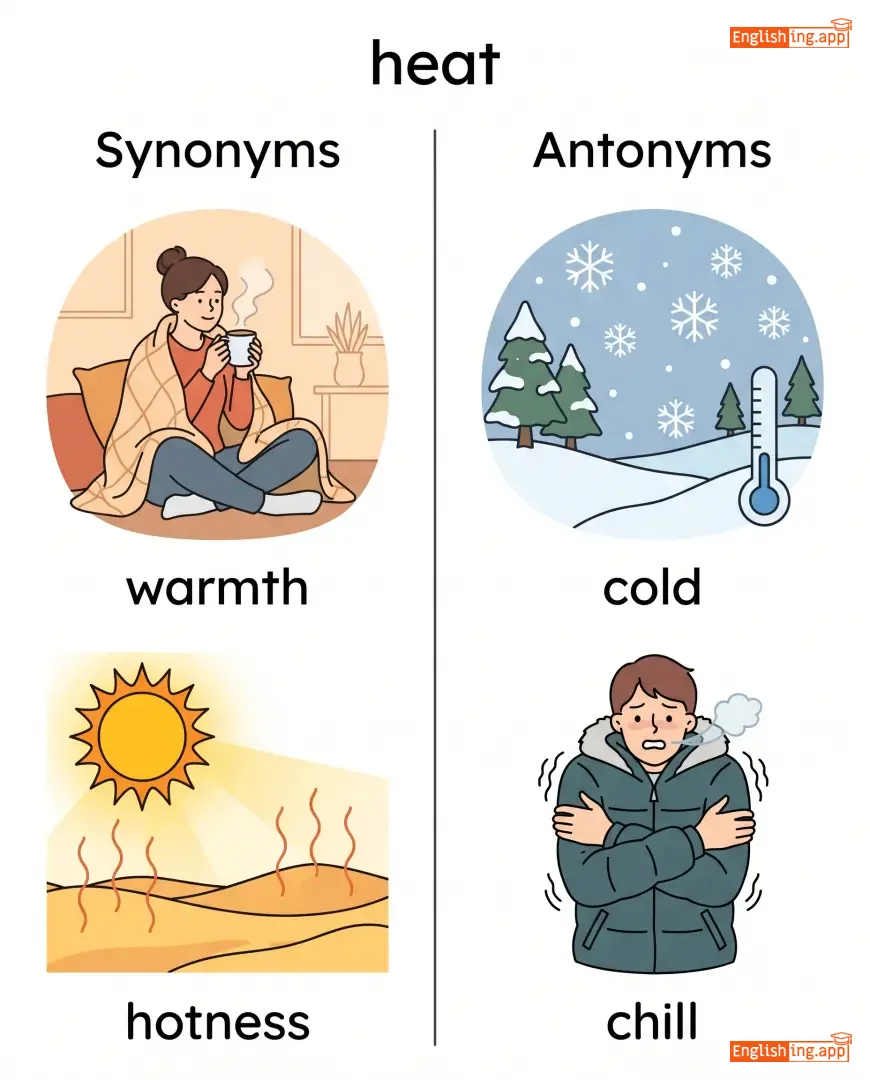
warmth, hotness, fire, passion, energy
••••••
|
cold, chill
••••••
|
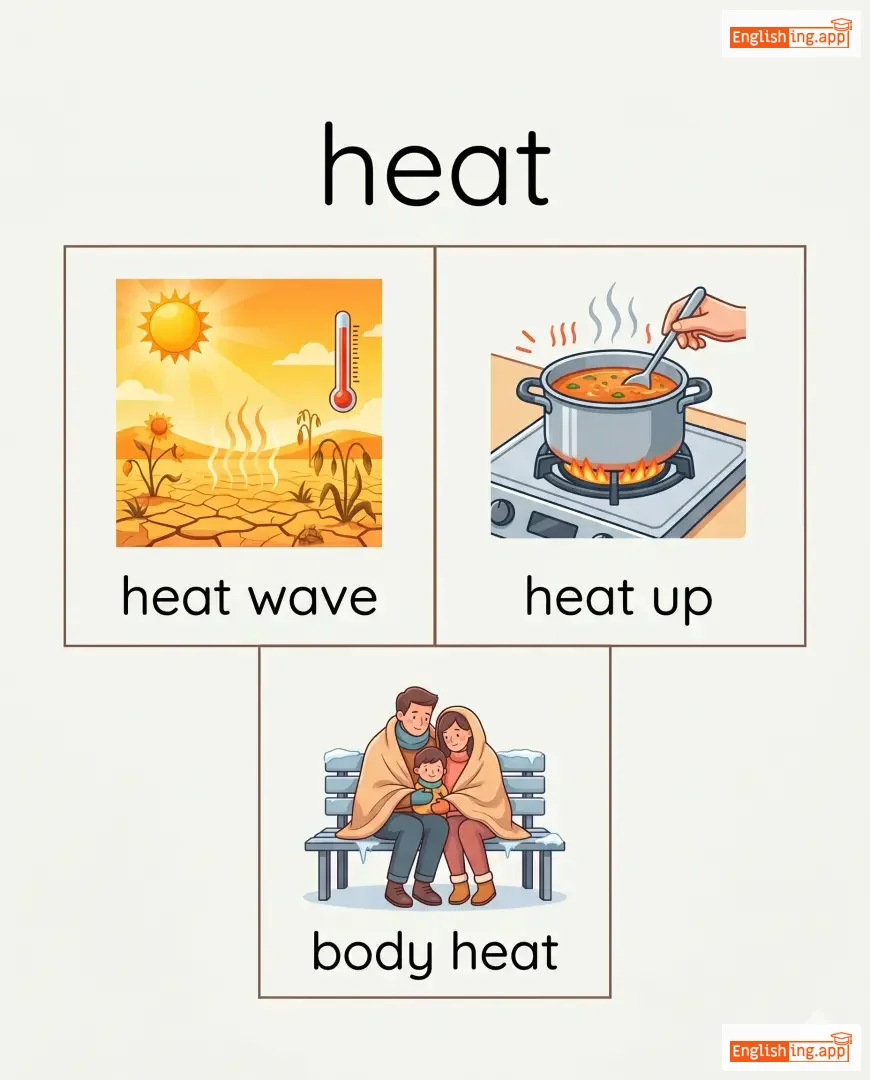
heat wave, heat up, body heat, generate heat
••••••
|
Heat 就是烈火 🔥 – 它加热一切
••••••
|
|
#2429
☁️
|
/ˈhɛvən/
noun
(hèwén)
••••••
|
- •••••• |
天堂
tiāntáng
••••••
|
- •••••• | - •••••• | - •••••• | - •••••• |
the place believed to be the home of God and the afterlife of the good; a state of extreme happiness
••••••
|
They believe that good people go to heaven after death. |
他们相信好人死后会去天堂。
Tāmen xiāngxìn hǎo rén sǐhòu huì qù tiāntáng.
••••••
|
move heaven and earth |
to do everything possible to achieve something
••••••
|
动天地
dòng tiāndì
••••••
|
paradise, bliss, afterlife, nirvana, delight
••••••
|
hell, misery
••••••
|
go to heaven, heaven on earth, gates of heaven, pray to heaven
••••••
|
天堂 = 幸福之地 🌅 – 当你感到幸福时,仿佛置身天堂。
••••••
|
|
#2430
⬇️
|
/ˈhev.ɪ.li/
adverb
(海维利)
••••••
|
- •••••• |
猛烈地; 强烈地
měng liè de; qiáng liè de
••••••
|
- •••••• | - •••••• | - •••••• | - •••••• |
with great weight; to a great degree; intensely
••••••
|
It rained heavily throughout the night.
it réindd hǎi wéi lì tru ào tè dā nài tè.
••••••
|
整个晚上都在猛烈下雨。
zhěng gè wǎn shàng dōu zài měng liè xià yǔ.
••••••
|
- •••••• | - •••••• | - •••••• |
intensely, severely, greatly, substantially, densely
••••••
|
lightly, gently, slightly, minimally
••••••
|
heavily armed, heavily loaded, heavily populated, heavily dependent
••••••
|
Heavy 是重的,所以 Heavily 是非常重的。
••••••
|
|
#2431
⚖️
|
/ˈhɛvi/
adjective
(héwéi)
••••••
|
- •••••• |
沉重
chenzhong
••••••
|
- •••••• | - •••••• | - •••••• | - •••••• |
having great weight; difficult to lift or move
••••••
|
The box was too heavy for her to carry alone. |
箱子太重,她一个人搬不动。
Xiāngzi tài zhòng, tā yī gèrén bān bù dòng.
••••••
|
heavy heart |
a feeling of deep sadness
••••••
|
沉重的心
chénzhòng de xīn
••••••
|
weighty, massive, bulky, hefty, substantial
••••••
|
light, weightless, airy
••••••
|
heavy rain, heavy traffic, heavy bag, heavy burden
••••••
|
Heavy 意味着沉重 — 想象一个你搬不动的重箱子。
••••••
|
|
#2432
🌳
|
/hɛdʒ/
noun, verb
(hèdí)
••••••
|
|
篱笆
líbā
••••••
|
hedged
hèdí zhī
••••••
|
hedged
hèdí zhī
••••••
|
hedges
hèdí sī
••••••
|
hedging
hèdí yǎn
••••••
|
A fence or boundary formed by closely planted shrubs; also, to limit or qualify a statement.
••••••
|
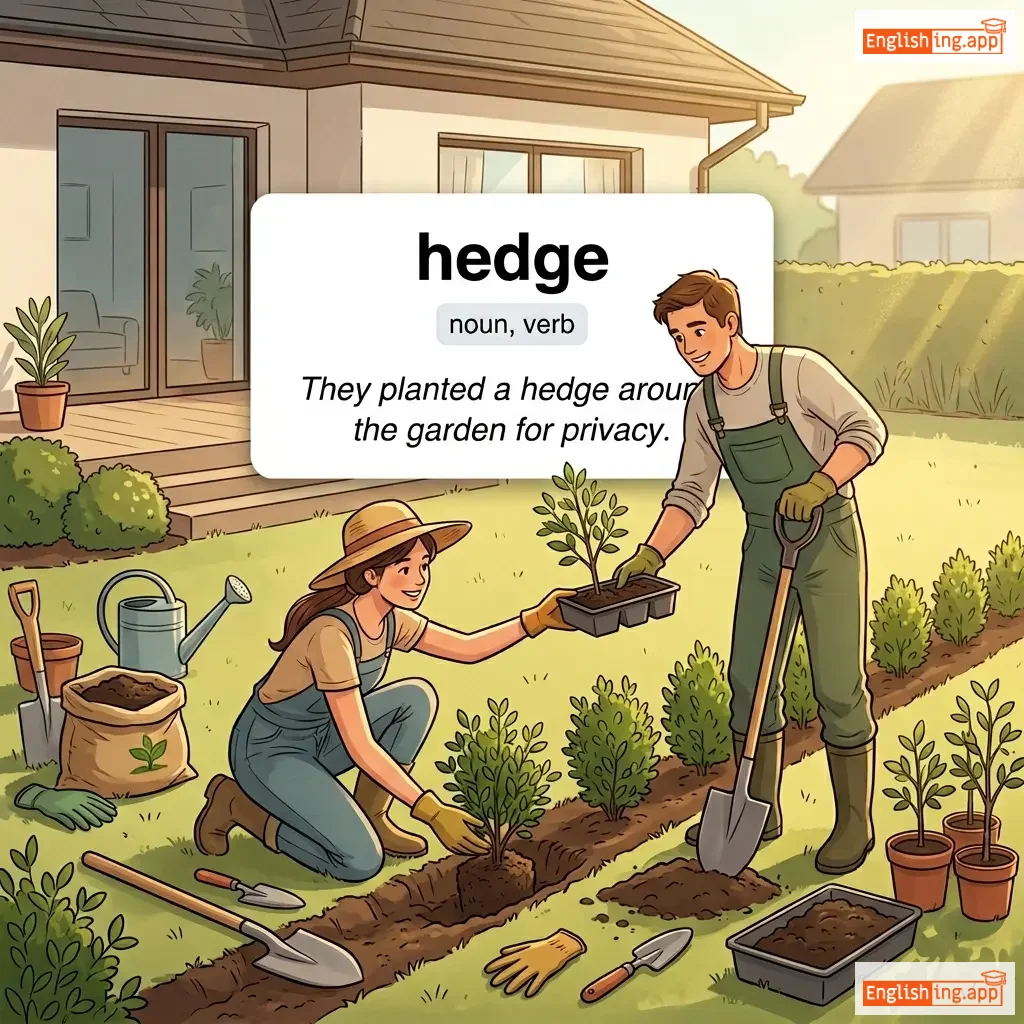
They planted a hedge around the garden for privacy.
他们为隐私在花园周围种了篱笆。
••••••
|
他们为隐私在花园周围种了篱笆。
Tāmen wèi yǐnsī zài huāyuán zhōuwéi zhòngle líbā.
••••••
|
hedge your bets
押注在外
••••••
|
To reduce risk by choosing several options instead of relying on one.
••••••
|
押注在外
yāzhù zài wài
••••••
|
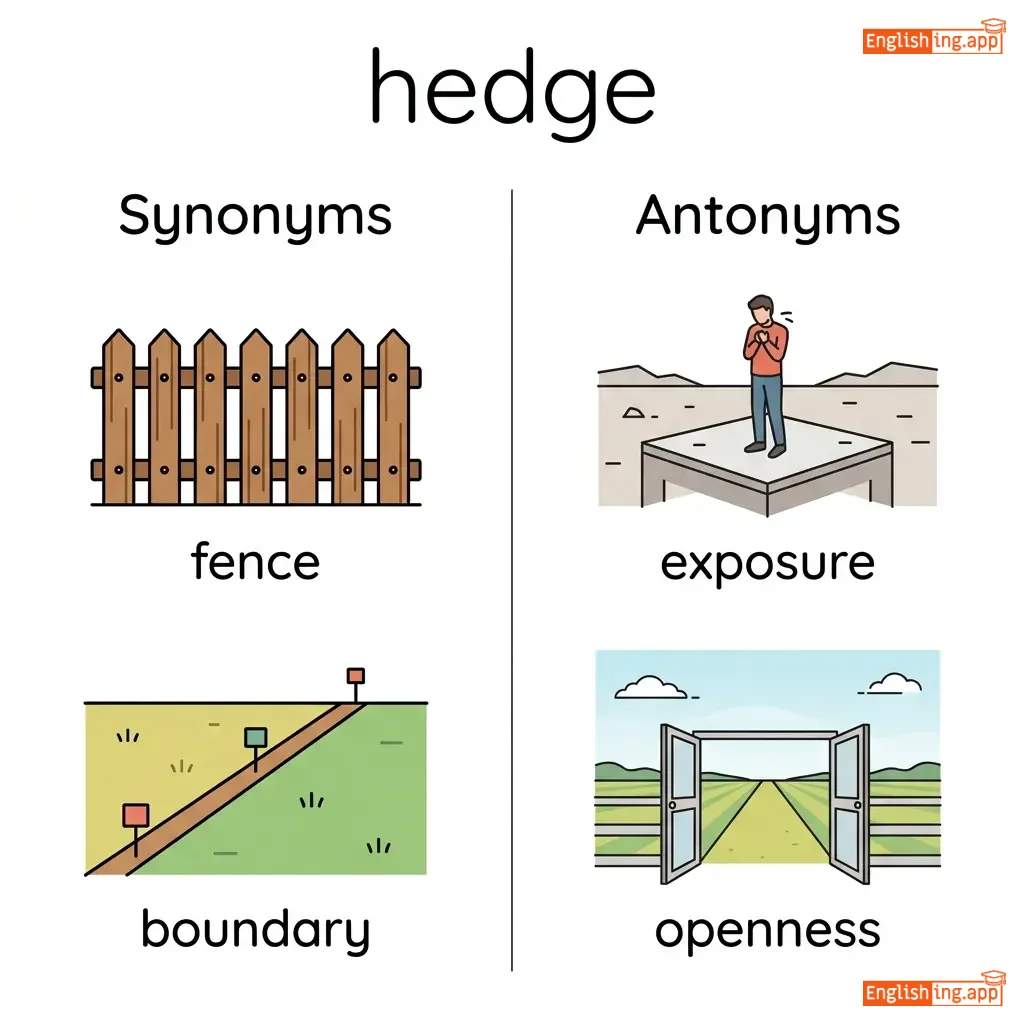
fence, boundary, barrier, safeguard
••••••
|
exposure, openness
••••••
|
hedge fund, hedge your bets, tall hedge, hedge against
••••••
|
Hedge = 使用篱笆将隐私保护在外
••••••
|
|
#2433
👠
|
/hiːl/
noun
(希尔)
••••••
|
- •••••• |
脚跟
jiao gen
••••••
|
- •••••• | - •••••• | - •••••• | - •••••• |
the back part of the human foot below the ankle
••••••
|
Her shoe was rubbing against her heel.
她的鞋子摩擦着她的脚跟。
••••••
|
她的鞋子摩擦着她的脚跟。
Ta de xiezi mocazhe ta de jiao gen.
••••••
|
at someone's heels
紧跟在某人后面
••••••
|
closely following someone
••••••
|
紧跟在某人后面
jin gen zai mou ren hou mian
••••••
|
backfoot, rear, sole, spur
••••••
|
toe, front
••••••
|
high heel, cracked heel, Achilles heel
••••••
|
脚跟是脚的后部,记住高跟鞋让脚跟更高。
••••••
|
|
#2434
📏
|
/haɪt/
noun
(海皮尼斯)
••••••
|
- •••••• |
高度
gaodu
••••••
|
- •••••• | - •••••• | - •••••• | - •••••• |
the measurement of someone or something from base to top
••••••
|
The height of the tower impressed the visitors. |
塔的高度给游客留下了深刻的印象。
Ta de gaodu gei youke liuxia le shenke de yinxiang.
••••••
|
at the height of |
at the most intense point of something
••••••
|
在...的顶峰
zai...de dingfeng
••••••
|
altitude, elevation, tallness, stature
••••••
|
depth, low
••••••
|
average height, great height, height measurement
••••••
|
Height代表着高度 — 想象站在最高的地方。
••••••
|
|
#2435
🔺
|
/ˈhaɪtən/
verb
(hài tèn)
••••••
|
- •••••• |
提高
tígāo
••••••
|
heightened
hài tènd
••••••
|
heightened
hài tènd
••••••
|
heightens
hài tènz
••••••
|
heightening
hài tèníng
••••••
|
to make or become greater in intensity or degree
••••••
|
The announcement served to heighten the excitement in the room.
ðɪ ænˈaʊnsment sɜːrvd tuː hʌɪtn ðɪ ɪksˈaɪtmənt ɪn ðə ruːm.
••••••
|
公告有助于提高房间里的兴奋。
Gōnggào yǒu zhù yú tígāo fángjiān lǐ de xīngfèn.
••••••
|
- •••••• | - •••••• | - •••••• |
increase, intensify, amplify, escalate
••••••
|
diminish, reduce
••••••
|
heighten the tension, heighten awareness, heighten security
••••••
|
Heighten和'提高'在中文中意思相似,都是增加强度的意思。
••••••
|
|
#2436
🚁
|
/ˈhɛlɪˌkɒptər/
noun
(直升机)
••••••
|
- •••••• |
直升机
zhí shēng jī
••••••
|
- •••••• | - •••••• | - •••••• | - •••••• |
an aircraft with rotating blades that can take off and land vertically
••••••
|
The helicopter landed safely on the hospital roof. |
直升机安全地着陆在医院的屋顶。
Zhí shēng jī ānquán de zhuólù zài yīyuàn de wūdǐng.
••••••
|
helicopter parenting |
a style of parenting where parents are overly focused on their children
••••••
|
直升机式育儿
Zhí shēng jī shì yù'ér
••••••
|
chopper, rotorcraft, whirlybird
••••••
|
airplane, glider
••••••
|
helicopter ride, helicopter landing, helicopter rescue
••••••
|
直升机 🚁 想想 ‘直’ 是直上直下,‘升’ 是上升的意思。
••••••
|
|
#2437
🔥
|
/hɛl/
noun
(hēl)
••••••
|
- •••••• |
地狱
diyu
••••••
|
- •••••• | - •••••• | - •••••• | - •••••• |
a place or state of great suffering and torment, often in religious belief
••••••
|
He feared that his sins would send him to hell. |
他害怕他的罪会把他送入地狱。
Tā hàipà tā de zuì huì bǎ tā sòng rù dìyù.
••••••
|
raise hell |
to cause trouble or a noisy disturbance
••••••
|
制造混乱
zhìzuò hùnluàn
••••••
|
inferno, torment, misery, damnation
••••••
|
heaven, paradise
••••••
|
living hell, go to hell, raise hell
••••••
|
地狱意味着极度的痛苦 🔥—记住‘地狱’意味着一个充满折磨的地方。
••••••
|
|
#2438
👋
|
/həˈloʊ/
interjection
(哈啰)
••••••
|
- •••••• |
哈啰
hā luō
••••••
|
- •••••• | - •••••• | - •••••• | - •••••• |
a greeting or expression used when meeting someone or starting a conversation
••••••
|
She answered the phone with a cheerful hello.
她高兴地接起电话说了声哈啰。
••••••
|
她高兴地接起电话说了声哈啰。
Tā gāo xìng de jiē qǐ diànhuà shuō le shēng hā luō.
••••••
|
say hello to
向某人打招呼
••••••
|
to greet someone
••••••
|
向某人打招呼
xiàng mǒu rén dǎ zhāo hū
••••••
|
hi, greetings, hey, howdy, welcome
••••••
|
goodbye, farewell
••••••
|
say hello, hello there, big hello, hello everyone
••••••
|
在中文中我们说'哈啰',就像英文中的'hello'。
••••••
|
|
#2439
⛑️
|
/ˈhel.mət/
noun
(海皮尼斯)
••••••
|
- •••••• |
头盔
tóukuī
••••••
|
- •••••• | - •••••• | - •••••• | - •••••• |
a hard or padded protective hat worn by motorcyclists, construction workers, or soldiers
••••••
|
The cyclist always wore a bright yellow helmet for safety and visibility while riding.
骑行者总是戴着一顶亮黄色的头盔,以保证安全性和可见性。
••••••
|
骑行者总是戴着一顶亮黄色的头盔,以保证安全性和可见性。
Qíxíng zhě zǒng shì dàizhe yī dǐng liàng huángsè de tóukuī, yǐ bǎozhèng ānquánxìng hé kějiànxìng.
••••••
|
- •••••• | - •••••• | - •••••• |
hard hat, protective headgear, safety helmet, crash helmet
••••••
|
bare head, unprotected head, soft hat, cap
••••••
|
safety helmet, bicycle helmet, motorcycle helmet
••••••
|
头盔 = 骑行时的安全帽
••••••
|
|
#2440
🤲
|
/hɛlp/
verb
(海皮尼斯)
••••••
|
|
帮助
bangzhu
••••••
|
helped
帮助
••••••
|
helped
帮助
••••••
|
helps
帮助
••••••
|
helping
帮助
••••••
|
To make it easier for someone to do something by offering services or resources.
••••••
|
She helped her friend with the homework.
她帮助她的朋友做作业。
••••••
|
她帮助她的朋友做作业。
Ta bangzhu ta de pengyou zuo zuoye.
••••••
|
help yourself
自助
••••••
|
to take something without asking
••••••
|
自助
zizhu
••••••
|
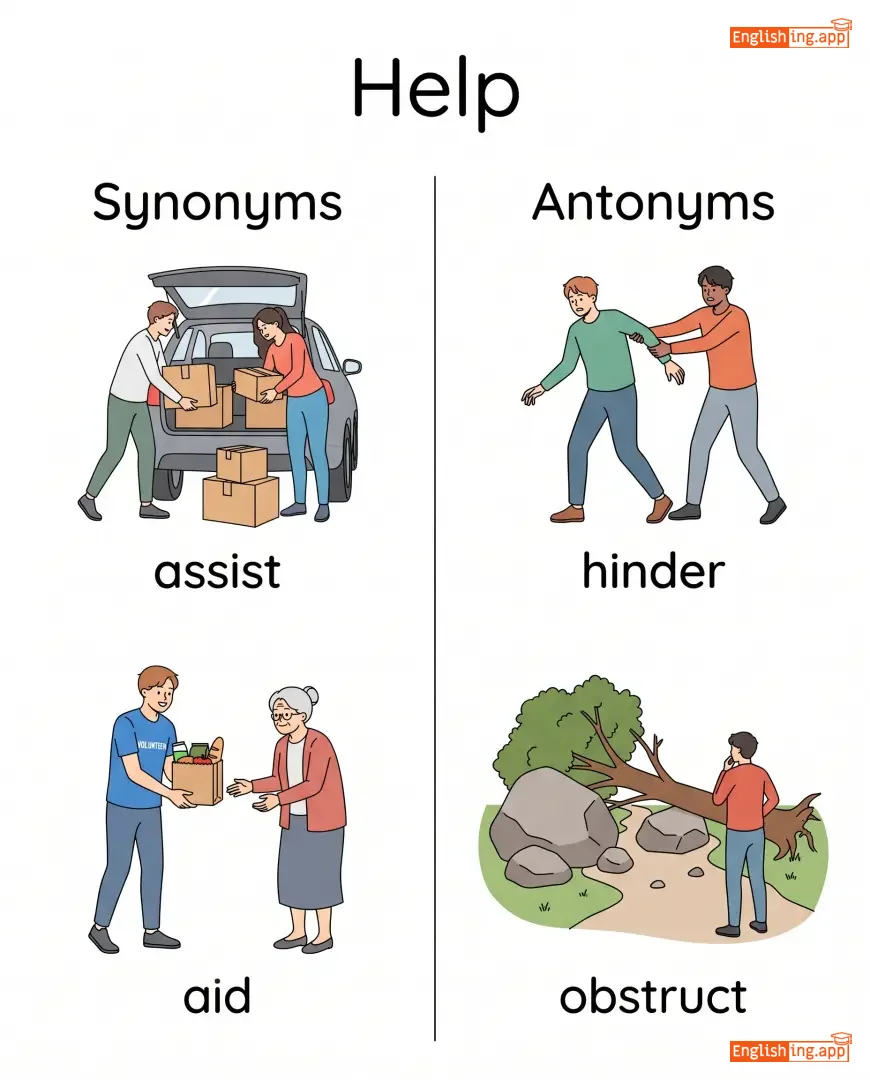
assist, aid, support, facilitate, guide
••••••
|
hinder, obstruct
••••••
|
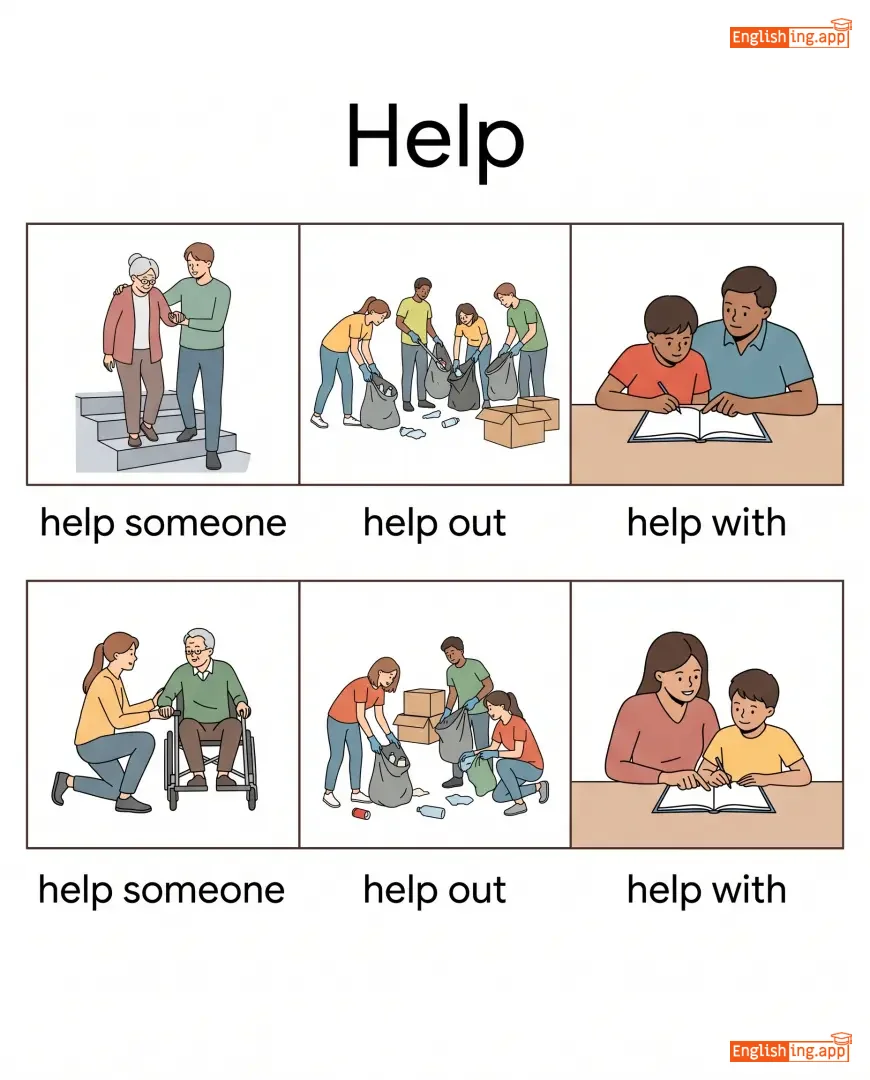
help someone, help out, help with, help to
••••••
|
Help意味着帮助,像'如果你不帮助,你就做不完作业!'
••••••
|
|
#2441
🤝
|
/ˈhelp.fəl/
adjective
(海皮尼斯)
••••••
|
- •••••• |
有帮助的; 有益的
you bangzhu de; youyi de
••••••
|
- •••••• | - •••••• | - •••••• | - •••••• |
giving or providing assistance; useful; beneficial
••••••
|
She was very helpful in organizing the event.
她在组织活动中非常有帮助。
••••••
|
她在组织活动中非常有帮助。
ta zai zuzhi huodong zhong feichang you bangzhu
••••••
|
- •••••• | - •••••• | - •••••• |
useful, beneficial, supportive, accommodating
••••••
|
unhelpful, harmful, obstructive, hindering
••••••
|
helpful advice, helpful person, helpful tip, helpful service
••••••
|
You bangzhu de ru ke pingyuan!
••••••
|
|
#2442
🐔
|
/hɛn/
noun
(hɛn)
••••••
|
- •••••• |
母鸡
mǔ jī
••••••
|
- •••••• | - •••••• | - •••••• | - •••••• |
female chicken
••••••
|
The hen laid fresh eggs in the nest. |
母鸡在巢里下了新鲜的蛋。
Mǔ jī zài cháo lǐ xià le xīnxiān de dàn.
••••••
|
- •••••• | - •••••• | - •••••• |
female chicken
••••••
|
rooster, cock
••••••
|
hen house, laying hen, mother hen
••••••
|
母鸡 sounds like 'moo-ji' - picture a hen mooing!
••••••
|
|
#2443
➡️
|
/hɛns/
adverb
(亨斯)
••••••
|
- •••••• |
因此
yīncǐ
••••••
|
- •••••• | - •••••• | - •••••• | - •••••• |
for this reason; as a result
••••••
|
She was the best candidate, hence she was chosen for the job.
她是最优秀的候选人,因此她被选中担任这份工作。
••••••
|
她是最优秀的候选人,因此她被选中担任这份工作。
Tā shì zuì yōuxiù de hòuxuǎn rén, yīncǐ tā bèi xuǎnzhòng dānrèn zhè fèn gōngzuò.
••••••
|
hence the reason
因此的原因
••••••
|
used to introduce the explanation for something
••••••
|
因此的原因
yīncǐ de yuányīn
••••••
|
therefore, thus, consequently, accordingly
••••••
|
however, nevertheless
••••••
|
hence why, hence the need, hence the importance
••••••
|
Hence – 因此,指示结果或原因 ➡️
••••••
|
|
#2444
👩
|
/hɜːr/
pronoun
(赫尔)
••••••
|
- •••••• |
她
ta
••••••
|
- •••••• | - •••••• | - •••••• | - •••••• |
used to refer to a female person or animal already mentioned or easily identified
••••••
|
I saw her at the park yesterday. |
我昨天在公园看见了她。
Wǒ zuótiān zài gōngyuán kànjiànle tā.
••••••
|
give her a hand |
to help her
••••••
|
帮她一把
bāng tā yī bǎ
••••••
|
herself, that woman, the girl
••••••
|
him, his
••••••
|
her book, her house, with her, for her
••••••
|
Her 代表 '她' (指女性) - 记住:'Her bag' 代表 '她的包'
••••••
|
|
#2445
🌿
|
/hɜːb/ (US) /hɜːb/ or /ɜːb/
noun
(hɜːb)
••••••
|
- •••••• |
草药
caoyao
••••••
|
- •••••• | - •••••• | - •••••• | - •••••• |
a plant used for flavoring food, medicine, or perfume
••••••
|
Basil is a popular herb used in Italian cuisine. |
罗勒是意大利料理中常用的草药。
Luó lè shì yìdàlì liàolǐ zhōng chángyòng de cǎo yào.
••••••
|
herbal remedy |
a treatment using herbs or plants
••••••
|
草药治疗
cǎo yào zhì liáo
••••••
|
plant, spice, vegetation, grass, leaf
••••••
|
chemical, synthetic drug
••••••
|
fresh herbs, medicinal herbs, herb garden, herb tea
••••••
|
草药(cǎo yào) - 自然的疗愈力量!
••••••
|
|
#2446
📍
|
/hɪr/
adverb
(赫尔)
••••••
|
- •••••• |
这里
zheli
••••••
|
- •••••• | - •••••• | - •••••• | - •••••• |
in, at, or to this place
••••••
|
Please come here quickly.
请快点来这里。
••••••
|
请快点来这里。
Qing kuai dian lai zheli.
••••••
|
here and there
这里和那里
••••••
|
in various places
••••••
|
这里和那里
zheli he nali
••••••
|
present, nearby, close, around
••••••
|
there, away
••••••
|
come here, right here, here today, stay here
••••••
|
Here 在中文是这里 📍 - 记住'这里'就是'here'的意思
••••••
|
|
#2447
🏰
|
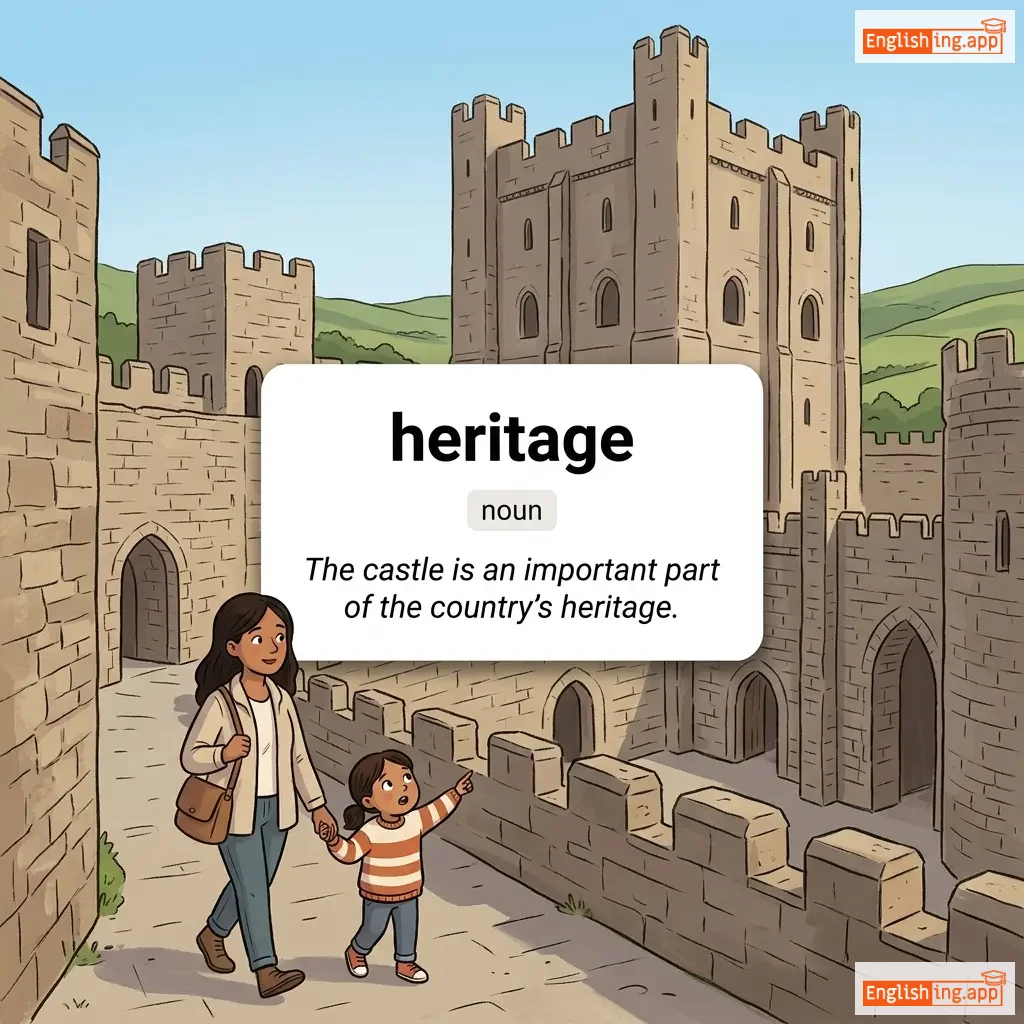
/ˈhɛrɪtɪdʒ/
noun
(海皮尼斯)
••••••
|
|
遗产
yí chǎn
••••••
|
- •••••• | - •••••• | - •••••• | - •••••• |
Valued objects and qualities such as historic buildings and cultural traditions passed down from previous generations.
••••••
|
The castle is an important part of the country's heritage. |
城堡是该国遗产的重要部分。
Chéngbǎo shì gāi guó yíchǎn de zhòngyào bùfen.
••••••
|
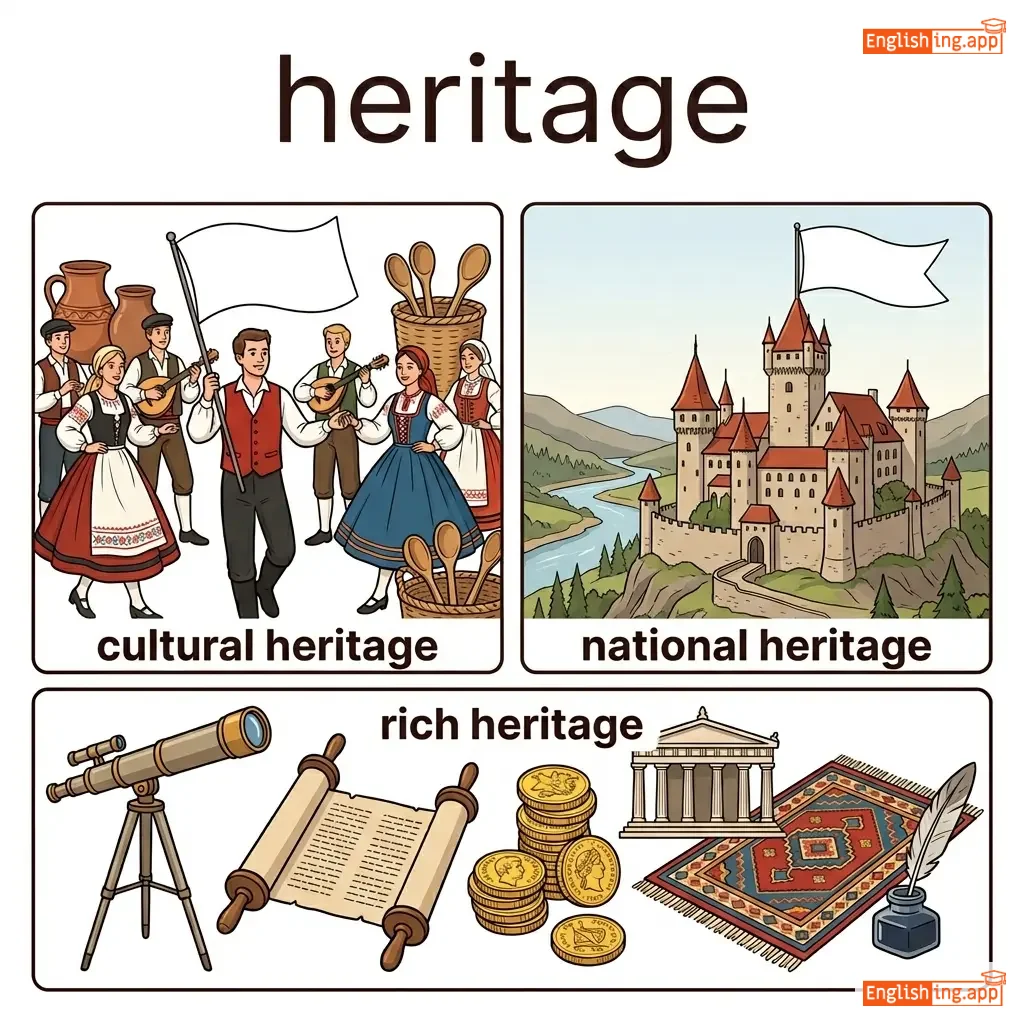
cultural heritage |
The traditions, customs, and artifacts of a community passed down through generations.
••••••
|
文化遗产
wénhuà yíchǎn
••••••
|
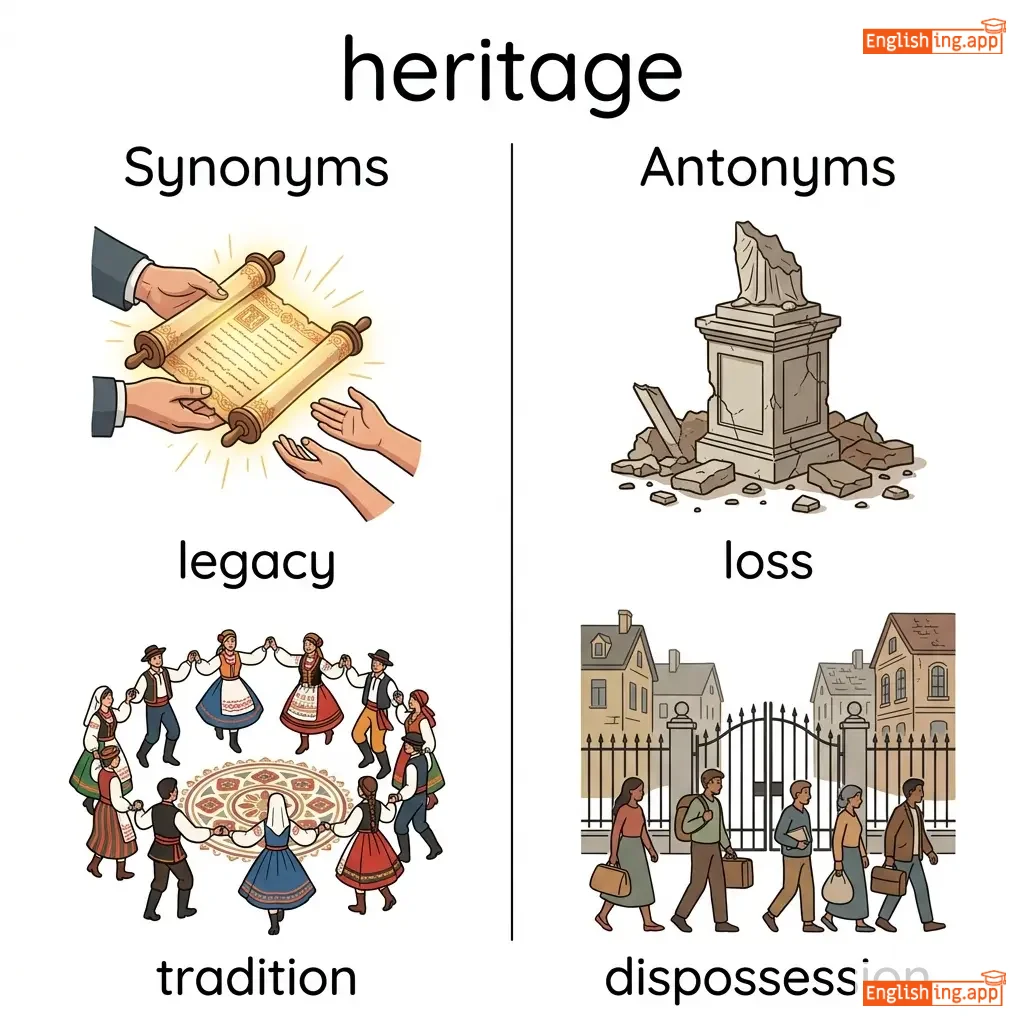
legacy, tradition, inheritance, patrimony, birthright
••••••
|
loss, dispossession
••••••
|
cultural heritage, national heritage, rich heritage, heritage site
••••••
|
遗产是代代相传的传统和价值。
••••••
|
|
#2448
🦸
|
/ˈhɪəroʊ/
noun
(英雄)
••••••
|
|
英雄
yingxiong
••••••
|
- •••••• | - •••••• | - •••••• | - •••••• |
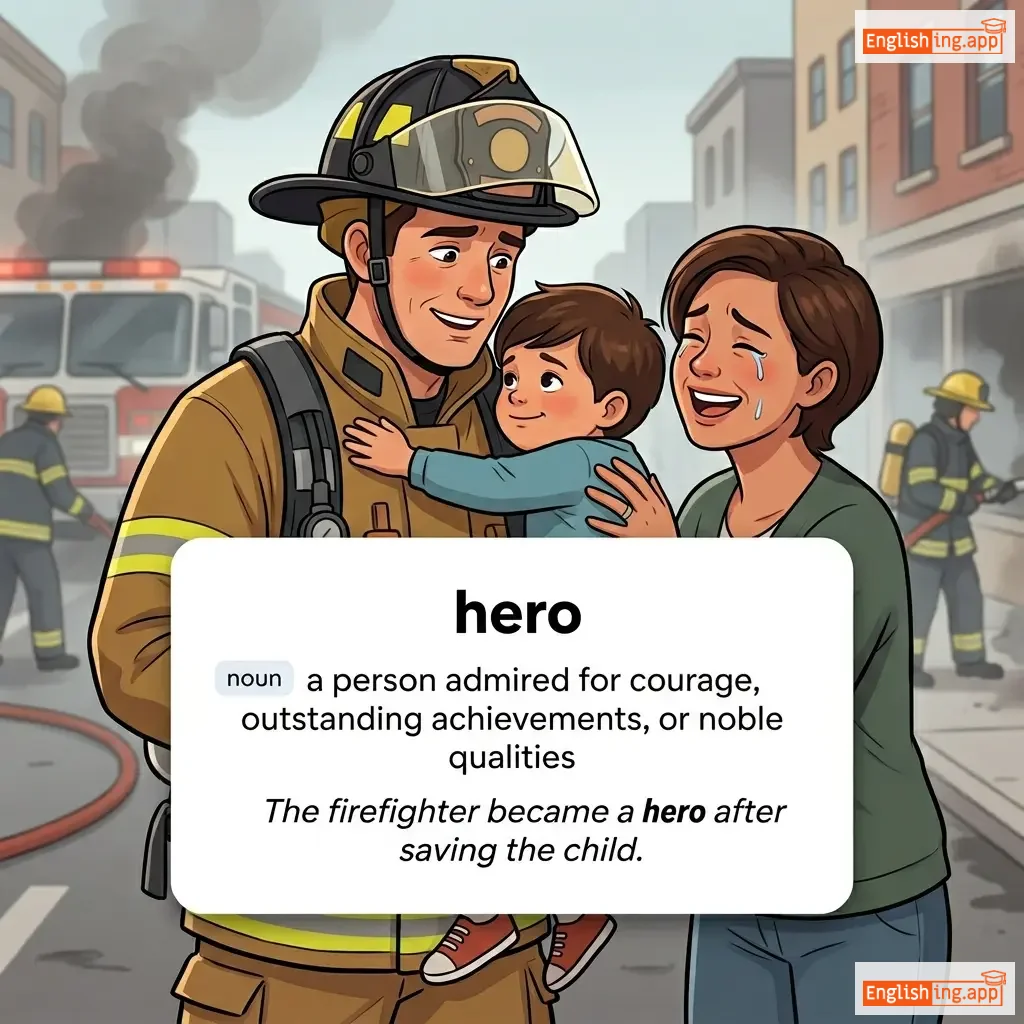
a person admired for courage, outstanding achievements, or noble qualities
••••••
|
The firefighter became a hero after saving the child. |
消防员在救出孩子后成了英雄。
Xiaofangyuan zai jiuchu haizi hou cheng le yingxiong.
••••••
|
unsung hero |
a person who makes a great contribution without recognition
••••••
|
无名英雄
wuming yingxiong
••••••
|
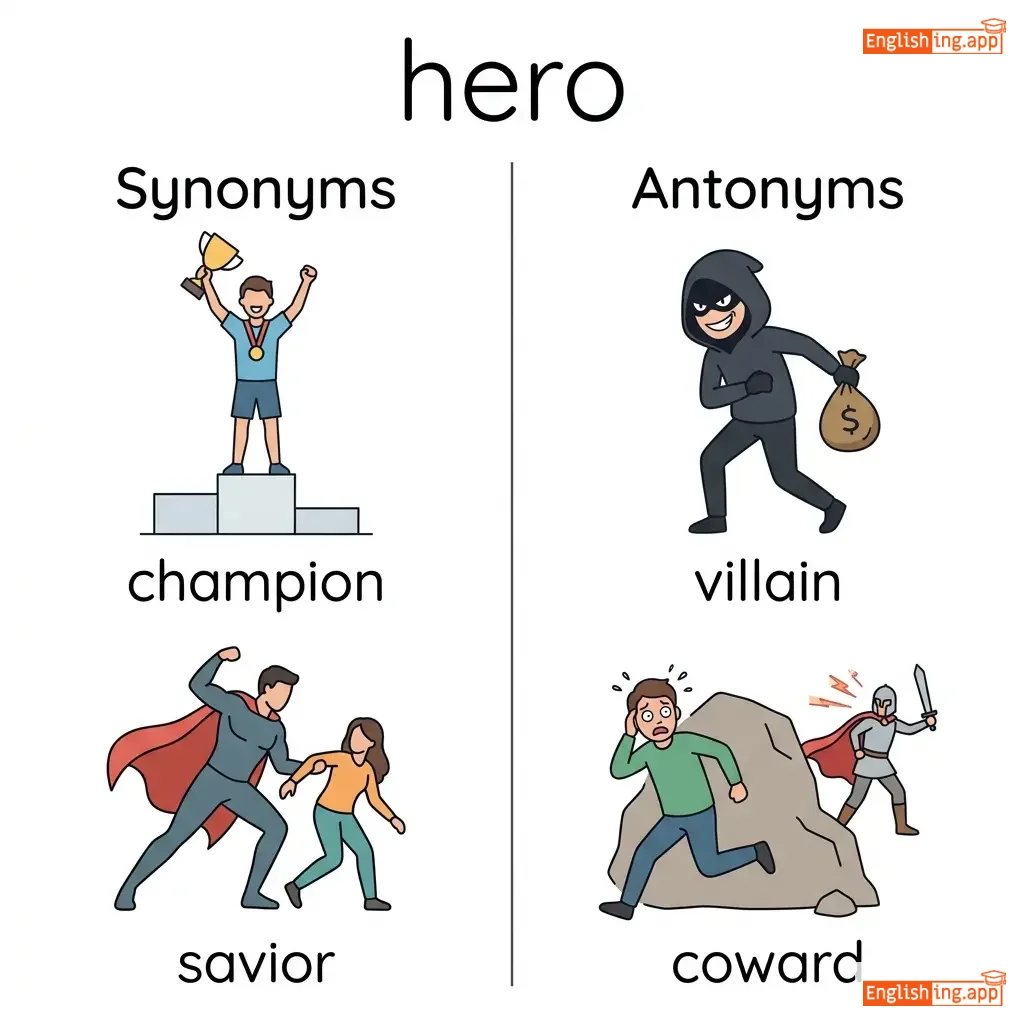
champion, savior, idol, warrior, legend
••••••
|
villain, coward
••••••
|
national hero, war hero, real hero, unsung hero
••••••
|
英雄意味着英雄 🦸 - 在中文中,英雄就是做出伟大事情的人。
••••••
|
|
#2449
🦸
|
/hɪˈroʊɪk/
adjective
(希罗伊克)
••••••
|
- •••••• |
英勇的
yingyong de
••••••
|
- •••••• | - •••••• | - •••••• | - •••••• |
showing great bravery or courage; relating to a hero or heroes
••••••
|
The firefighter made a heroic effort to save the child.
The fire fighter made a heroic effort to save the child.
••••••
|
消防员英勇地努力拯救了那个孩子。
xiaofangyuan yingyong de nuli zhengjiu le nage haizi
••••••
|
heroic effort
heroic effort
••••••
|
a very brave or determined attempt in a difficult situation
••••••
|
英勇的努力
yingyong de nuli
••••••
|
brave, courageous, valiant, gallant, fearless
••••••
|
cowardly, timid, fearful
••••••
|
heroic act, heroic effort, heroic deed, heroic sacrifice
••••••
|
英雄=英勇 → heroic。
••••••
|
|
#2450
👩👜
|
/hɜːrz/
pronoun
(赫尔斯)
••••••
|
- •••••• |
她的(女性的)东西
tā de (nǚxìng de) dōngxi
••••••
|
- •••••• | - •••••• | - •••••• | - •••••• |
used to refer to something that belongs to or is associated with a female person previously mentioned or easily identified.
••••••
|
That blue bag is hers. |
那个蓝色的包是她的。
Nàgè lán sè de bāo shì tā de.
••••••
|
- •••••• | - •••••• | - •••••• |
belonging to her, her own, of her, hers alone
••••••
|
his, theirs
••••••
|
hers alone, only hers, completely hers
••••••
|
Hers 意味着 HER’s—她自己的东西,her + s = hers!
••••••
|
|
#2451
👩
|
/hɜːrˈsɛlf/
pronoun
(赫尔塞尔夫)
••••••
|
- •••••• |
她自己
tā zìjǐ
••••••
|
- •••••• | - •••••• | - •••••• | - •••••• |
used to refer to a female person as the object of a verb or preposition when she is the subject
••••••
|
She prepared the meal all by herself.
她自己做了饭。
••••••
|
她自己做了饭。
Tā zìjǐ zuòle fàn.
••••••
|
by herself
自己
••••••
|
alone, without help
••••••
|
自己
zìjǐ
••••••
|
on her own, alone, independently, solo, unaided
••••••
|
together, with others
••••••
|
by herself, for herself, to herself, herself alone
••••••
|
Her SELF 意思是 '她自己' — 记住,herself 就是自己做事情。
••••••
|
|
#2452
🤔
|
/ˈhezɪteɪt/
verb
(犹豫)
••••••
|
- •••••• |
犹豫
yóuyù
••••••
|
hesitated
犹豫了
••••••
|
hesitated
犹豫了
••••••
|
hesitates
犹豫
••••••
|
hesitating
犹豫中
••••••
|
to pause before saying or doing something because you are uncertain or nervous.
••••••
|
She hesitated before answering the question.
她在回答问题之前犹豫了一下。
••••••
|
她在回答问题之前犹豫了一下。
Tā zài huídá wèntí zhīqián yóuyùle yīxià.
••••••
|
without hesitation
毫不犹豫
••••••
|
immediately or without delay
••••••
|
毫不犹豫
háo bù yóuyù
••••••
|
pause, waver, delay, falter, doubt
••••••
|
decide, proceed, act
••••••
|
hesitate to ask, hesitate to speak, hesitate before, hesitate a moment
••••••
|
犹豫 - 不犹豫,马上行动!
••••••
|
|
#2453
🕵️♂️
|
/ˈhɪdən/
adjective
(hɪdən)
••••••
|
- •••••• |
隐藏的
yǐn cáng de
••••••
|
- •••••• | - •••••• | - •••••• | - •••••• |
kept out of sight; concealed.
••••••
|
The treasure was hidden under the old tree. |
宝藏隐藏在老树下。
Bǎozàng yǐn cáng zài lǎo shù xià.
••••••
|
hidden gem |
something that is outstanding but not well known
••••••
|
隐藏的宝石
yǐn cáng de bǎoshí
••••••
|
concealed, secret, invisible, unseen, obscured
••••••
|
visible, exposed, open
••••••
|
hidden meaning, hidden place, hidden agenda, hidden camera
••••••
|
Hidden意味着隐藏的 — hide + en = 隐藏的!
••••••
|
|
#2454
🙈
|
/haɪd/
verb
(hāi dé)
••••••
|
|
隐藏
yǐn cáng
••••••
|
hid
hí dé
••••••
|
hidden
hí dén
••••••
|
hides
hāi dé sī
••••••
|
hiding
hāi dé yīng
••••••
|
to put something or oneself out of sight; to conceal
••••••
|
She tried to hide the letter under the pillow.
她试图把信藏在枕头下。
••••••
|
她试图把信藏在枕头下。
Tā shìtú bǎ xìn cáng zài zhěntóu xià.
••••••
|
hide and seek
捉迷藏
••••••
|
a children's game where one hides and others seek
••••••
|
捉迷藏
zhuō mí cáng
••••••
|
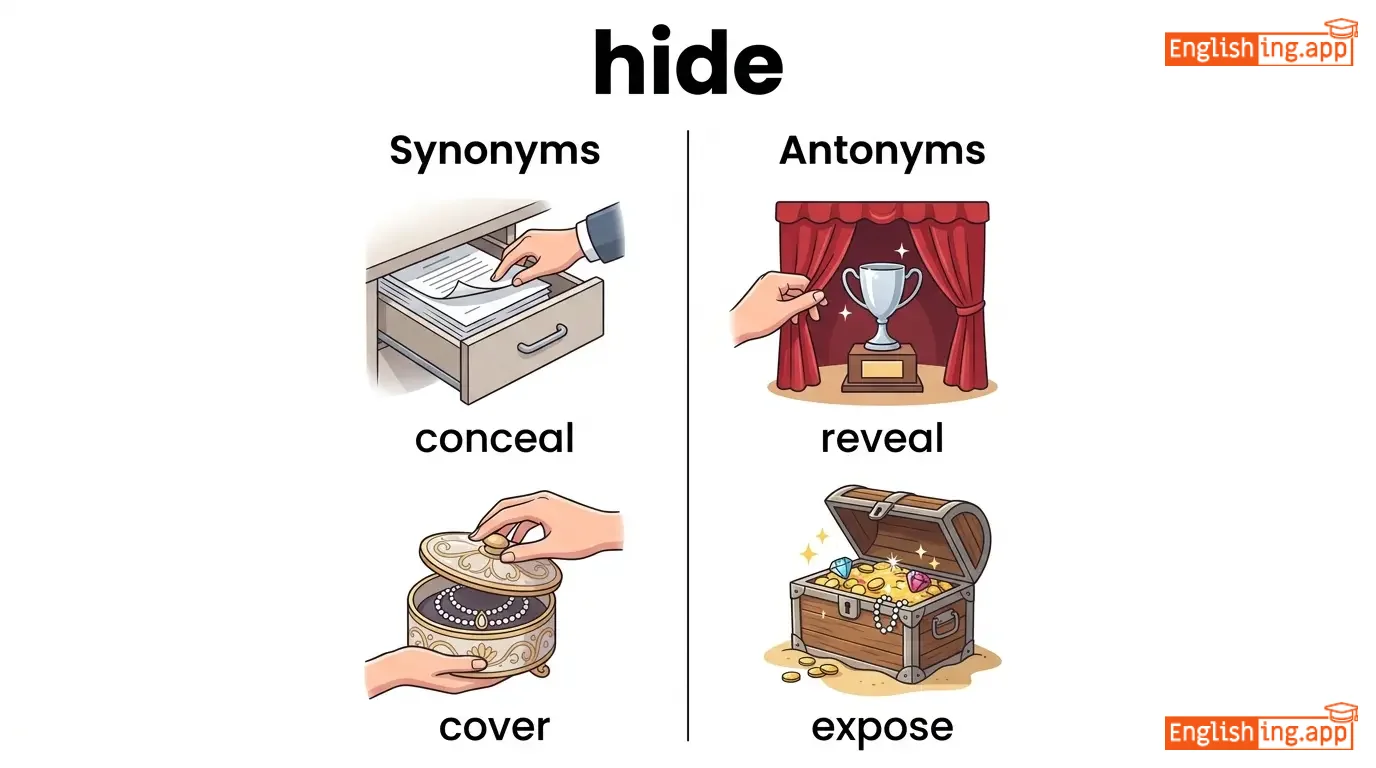
conceal, cover, disguise, veil, secrete
••••••
|
reveal, expose, uncover
••••••
|
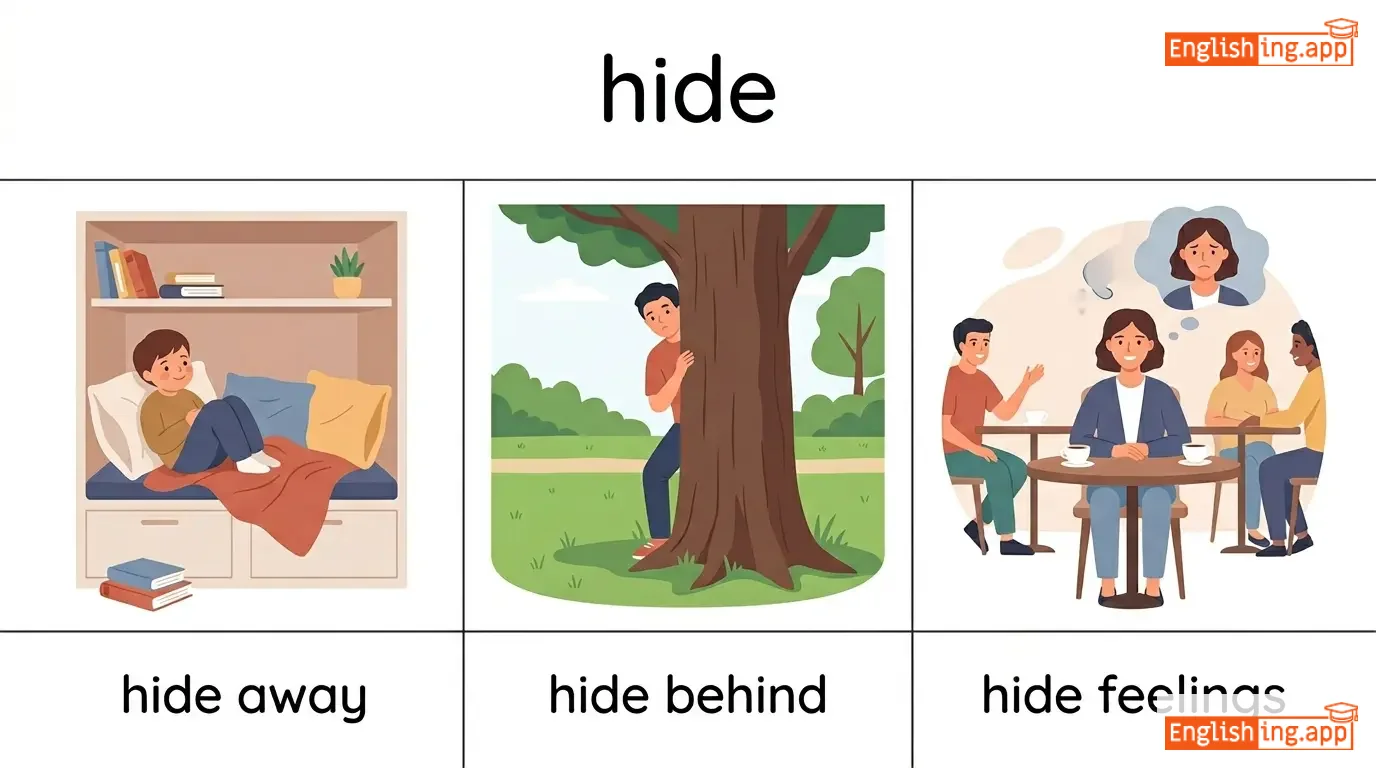
hide away, hide behind, hide feelings, hide from
••••••
|
Hide 代表隐藏,就像 🦊 狐狸藏在洞里
••••••
|
|
#2455
🏛️
|
/ˈhaɪəˌrɑːrki/
noun
(hǎi ér ěr kī)
••••••
|
- •••••• |
等级制度
deng ji zhi du
••••••
|
- •••••• | - •••••• | - •••••• | - •••••• |
A system in which people or things are arranged in levels of importance or authority.
••••••
|
The corporate hierarchy determines who makes the final decision. |
企业等级制度决定了谁作出最终决定。
Qi ye deng ji zhi du jue ding le shui zuo chu zui zhong jue ding.
••••••
|
social hierarchy |
The ranking of individuals in society based on status, power, or wealth.
••••••
|
社会等级制度
she hui deng ji zhi du
••••••
|
ranking, order, system, structure, chain of command
••••••
|
equality, parity
••••••
|
corporate hierarchy, political hierarchy, social hierarchy, strict hierarchy
••••••
|
等级制度就像金字塔,从底部到顶部排列重要性。
••••••
|
|
#2456
⬆️
|
/haɪ/
adjective
(hāi)
••••••
|
- •••••• |
高
gao
••••••
|
- •••••• | - •••••• | - •••••• | - •••••• |
At or to a great height; greater than normal in amount, degree, or intensity.
••••••
|
The mountain peak is very high.
山顶非常高。
••••••
|
山顶非常高。
Shanding feichang gao.
••••••
|
high and mighty
高高在上
••••••
|
acting proud and arrogant
••••••
|
傲慢
aoman
••••••
|
tall, elevated, lofty, towering, intense
••••••
|
low, small
••••••
|
high mountain, high speed, high hopes, high price
••••••
|
High 是高 ⬆️,比如 High building = 高楼。
••••••
|
|
#2457
🌟
|
/ˈhaɪˌprəʊfaɪl/
adjective
(hài-puó-fài-ěr)
••••••
|
- •••••• |
高端
gao duan
••••••
|
- •••••• | - •••••• | - •••••• | - •••••• |
having a lot of attention or public notice
••••••
|
The CEO attended a high-profile conference in New York.
首席执行官参加了纽约的一场高端会议。
••••••
|
首席执行官参加了纽约的一场高端会议。
Shǒuxí zhíxíng guān cānjiā le Niǔyuē de yī chǎng gāo duān huìyì.
••••••
|
- •••••• | - •••••• | - •••••• |
prominent, important, well-known, notable
••••••
|
low-profile, unnoticed, obscure
••••••
|
high-profile event, high-profile person, high-profile position
••••••
|
High-profile = 高端 = 很高的知名度,很高的关注!
••••••
|
|
#2458
🖍️
|
/ˈhaɪˌlaɪt/
verb
(háilàit)
••••••
|
- •••••• |
突出
tuchu
••••••
|
highlighted
háilàitèd
••••••
|
highlighted
háilàitèd
••••••
|
highlights
háilàits
••••••
|
highlighting
háilàiting
••••••
|
to emphasize or make something stand out
••••••
|
The teacher highlighted the most important points in the text.
老师在文本中强调了最重要的要点。
••••••
|
老师在文本中强调了最重要的要点。
Lǎoshī zài wénběn zhōng qiángdiào le zuì zhòngyào de yàodiǎn.
••••••
|
highlight reel
精彩集锦
••••••
|
a collection of the best or most memorable parts
••••••
|
精彩集锦
jīngcǎi jíjǐn
••••••
|
emphasize, stress, underline, showcase, feature
••••••
|
ignore, overlook, hide
••••••
|
highlight the issue, highlight a point, highlight text, highlight importance
••••••
|
突出就像照亮某个部分,让它更容易被看到。
••••••
|
|
#2459
🌟
|
/ˈhaɪli/
adverb
(hài lì)
••••••
|
- •••••• |
高度
gaodu
••••••
|
- •••••• | - •••••• | - •••••• | - •••••• |
to a great degree; very
••••••
|
She is highly respected in her field. |
她在她的领域中受到高度尊敬。
Tā zài tā de lǐngyù zhōng shòudào gāodù zūnjìng.
••••••
|
think highly of |
to admire or have a good opinion of someone
••••••
|
高度评价
gāodù píngjià
••••••
|
greatly, very, extremely, exceedingly, intensely
••••••
|
slightly, poorly, inadequately
••••••
|
highly skilled, highly effective, highly unlikely, highly respected
••••••
|
Highly 意味着很高 — 非常或极端。
••••••
|
|
#2460
🛣️
|
/ˈhaɪ.weɪ/
noun
(hài wēi)
••••••
|
- •••••• |
高速公路
gaosu gonglu
••••••
|
- •••••• | - •••••• | - •••••• | - •••••• |
A main road, especially one connecting major towns or cities.
••••••
|
The highway was blocked due to an accident. |
由于事故,高速公路被封锁了。
Yóuyú shìgù, gāosù gōnglù bèi fēngsuǒ le.
••••••
|
hit the highway |
to begin a journey, usually by car
••••••
|
上路
shàng lù
••••••
|
expressway, freeway, motorway, road, route
••••••
|
alley, lane
••••••
|
highway patrol, highway traffic, highway system, on the highway
••••••
|
Highway 意味着 'High speed way' - 高速公路意味着快速交通的道路。
••••••
|
|
#2461
😂
|
/hɪˈlɛəriəs/
adjective
(哈利瑞厄斯)
••••••
|
- •••••• |
极其有趣
jiqi youqu
••••••
|
- •••••• | - •••••• | - •••••• | - •••••• |
Extremely funny or amusing.
••••••
|
The comedian told a hilarious story that had everyone laughing. |
那位喜剧演员讲了一个极其有趣的故事,让每个人都笑了。
Na wei xiju yanyuan jiangle yi ge jiqi youqu de gushi, rang meigeren dou xiaole.
••••••
|
- •••••• | - •••••• | - •••••• |
funny, amusing, comical, entertaining, laughable
••••••
|
serious, sad, boring
••••••
|
hilarious joke, hilarious story, hilarious moment, absolutely hilarious
••••••
|
Hilarious = 极 (ji) + 趣 (qu) → 极其有趣
••••••
|
|
#2462
⛰️
|
/hɪl/
noun
(希尔)
••••••
|
- •••••• |
小山
xiaoshan
••••••
|
- •••••• | - •••••• | - •••••• | - •••••• |
A naturally raised area of land, smaller than a mountain.
••••••
|
We climbed the hill to see the sunset. |
我们爬上小山去看日落。
Women pa shang xiaoshan qu kan riluo.
••••••
|
make a mountain out of a molehill |
to exaggerate a small problem into something much bigger
••••••
|
小题大做
xiaoti dazuo
••••••
|
mound, knoll, ridge, slope, rise
••••••
|
valley, plain
••••••
|
hill station, top of the hill, climb a hill, rolling hills
••••••
|
Hill 就是小山,不是大山!
••••••
|
|
#2463
⛰️
|
/ˈhɪli/
adjective
(希利)
••••••
|
- •••••• |
多丘陵的
duo qiuling de
••••••
|
- •••••• | - •••••• | - •••••• | - •••••• |
having many hills; characterized by hills or slopes
••••••
|
The village is located in a beautiful hilly region.
泽 维利吉 伊兹 洛凯提德 因 阿 比尤提弗 希利 瑞珍。
••••••
|
这个村庄位于一个美丽的多丘陵地区。
Zhege cunzhuang weiyu yi ge meili de duo qiuling diqu
••••••
|
- •••••• | - •••••• | - •••••• |
mountainous, rolling, uneven, rugged, undulating
••••••
|
flat, level, plain
••••••
|
hilly terrain, hilly area, hilly region, hilly landscape
••••••
|
Hilly 有很多 hill,小山多 → 多丘陵的。
••••••
|
|
#2464
👨
|
/hɪm/
pronoun
(海皮尼斯)
••••••
|
- •••••• |
他
ta
••••••
|
- •••••• | - •••••• | - •••••• | - •••••• |
Used to refer to a male person or animal already mentioned.
••••••
|
I saw him at the park yesterday. |
我昨天在公园看见了他。
Wǒ zuótiān zài gōngyuán kànjiànle tā.
••••••
|
- •••••• | - •••••• | - •••••• |
that man, that boy, male person, he
••••••
|
her, she
••••••
|
with him, for him, about him, help him
••••••
|
Him 意味着 '他' – 记住,He 的宾格是 Him.
••••••
|
|
#2465
🙋♂️
|
/hɪmˈself/
pronoun
(海姆塞尔夫)
••••••
|
- •••••• |
他自己
tā zìjǐ
••••••
|
- •••••• | - •••••• | - •••••• | - •••••• |
Used to emphasize that a male person does something by his own effort.
••••••
|
He fixed the car himself. |
他自己修好了车。
Tā zìjǐ xiū hǎo le chē.
••••••
|
by himself |
alone, without help
••••••
|
自己
zìjǐ
••••••
|
alone, personally, individually, on his own
••••••
|
together, with others
••••••
|
by himself, for himself, himself alone
••••••
|
Himself 的意思是 'He 他自己 self' – 记住,'self' 表示自己。
••••••
|
|
#2466
💡
|
/hɪnt/
noun/verb
(hint)
••••••
|
- •••••• |
提示
tíshì
••••••
|
hinted
hinted
••••••
|
hinted
hinted
••••••
|
hints
hints
••••••
|
hinting
hinting
••••••
|
a small piece of advice or suggestion; to suggest something indirectly
••••••
|
She gave me a hint about the surprise party.
她给了我一个关于惊喜派对的提示。
••••••
|
她给了我一个关于惊喜派对的提示。
Tā gěile wǒ yīgè guānyú jīngxǐ pàiduì de tíshì.
••••••
|
drop a hint
给个提示
••••••
|
to give a subtle suggestion
••••••
|
给个提示
gěi gè tíshì
••••••
|
suggestion, clue, indication, tip, advice
••••••
|
statement, declaration
••••••
|
subtle hint, useful hint, drop a hint, take the hint
••••••
|
Hint 在中文是提示,像给别人提示
••••••
|
|
#2467
🦴
|
/hɪp/
noun
(hip)
••••••
|
- •••••• |
臀部
tún bù
••••••
|
- •••••• | - •••••• | - •••••• | - •••••• |
The part of the body on either side of the pelvis, or informal: trendy and fashionable.
••••••
|
She put her hands on her hips. |
她把手放在臀部上。
tā bǎ shǒu fàng zài tún bù shàng.
••••••
|
joined at the hip |
very close, inseparable
••••••
|
紧密如臀部
jǐn mì rú tún bù
••••••
|
pelvis, waist, trendy, fashionable
••••••
|
old-fashioned, outdated
••••••
|
hip pain, hip joint, hands on hips, hip hop
••••••
|
臀部 - hip hop 舞蹈时臀部要动。
••••••
|
|
#2468
👔
|
/ˈhaɪə(r)/
verb
(hāi'ěr)
••••••
|
|
聘用
pìnyòng
••••••
|
hired
hāi'ěr-d
••••••
|
hired
hāi'ěr-d
••••••
|
hires
hāi'ěr-s
••••••
|
hiring
hāi'ěr-ing
••••••
|
to employ someone for a job or task
••••••
|
The company decided to hire more staff this year.
公司决定今年聘用更多员工。
••••••
|
公司决定今年聘用更多员工。
Gōngsī juédìng jīnnián pìnyòng gèng duō yuángōng.
••••••
|
hire and fire
聘用与解雇
••••••
|
to employ and dismiss workers frequently
••••••
|
聘用与解雇
pìnyòng yǔ jiěgù
••••••
|
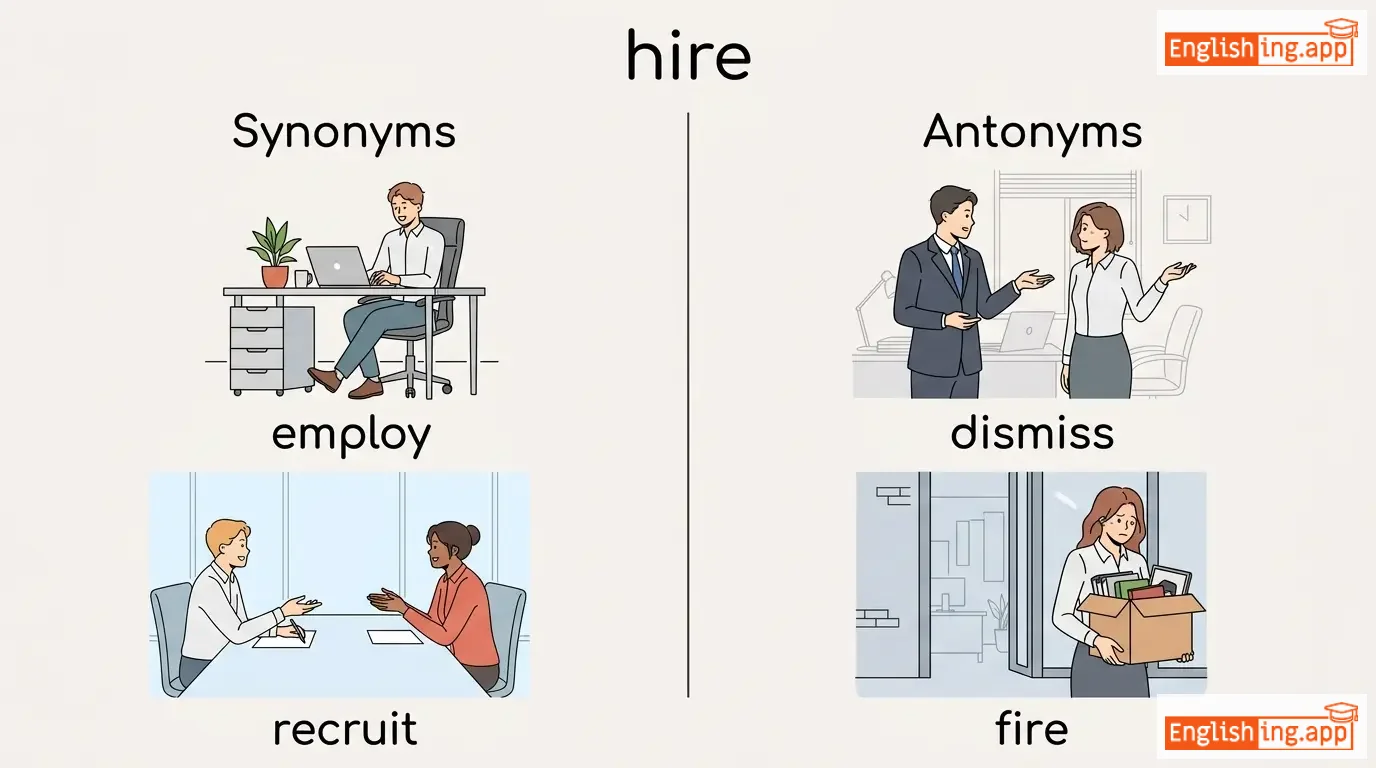
employ, recruit, appoint, engage, contract
••••••
|
dismiss, fire, discharge
••••••
|
hire staff, hire employees, hire a car, hire services
••••••
|
聘用就像选拔优秀的人才加入你的团队。
••••••
|
Vocabulary Quiz
Test your vocabulary by matching words with their translations or meanings.
Login to take the quiz
Comments (0)
Share your thoughts and join the discussion.
Join the discussion by logging in
Login to CommentNo comments yet
Be the first to share your thoughts!