

Swipe left or right, or use the buttons. Tap image to zoom.
例句翻译
单词
Lesson 53Lesson 53 - 遮罩切换
|
表情符号
|
单词 | Images | 翻译 | 过去时 | 过去分词 | 第三人称单数 | 动名词 | 含义 | 例句 | 例句翻译 | 示例表达 | 示例表达含义 | 示例表达翻译 | 同义词 | 反义词 | 搭配词 | 助记符 |
|---|---|---|---|---|---|---|---|---|---|---|---|---|---|---|---|---|---|
|
#2513
👨👩👧👦
|
/ˈhaʊshoʊld/
noun
(hɑʊʃoʊld)
••••••
|
- •••••• |
家庭
jiating
••••••
|
- •••••• | - •••••• | - •••••• | - •••••• |
All the people living together in one house, considered as a unit.
••••••
|
There are five people in our household. |
我们家里有五个人。
Wǒmen jiālǐ yǒu wǔ gè rén.
••••••
|
household name |
a person or brand that is very well known
••••••
|
家喻户晓
jiā yù hù xiǎo
••••••
|
family, home, residents, occupants, domestic unit
••••••
|
outsiders, strangers
••••••
|
household chores, household income, household goods, household members
••••••
|
家庭意味着家,记住'House + All → 所有人都在家'
••••••
|
|
#2514
🏠
|
/ˈhaʊswaɪf/
noun
(豪斯怀夫)
••••••
|
- •••••• |
家庭主妇
jiating zhufu
••••••
|
- •••••• | - •••••• | - •••••• | - •••••• |
a married woman who manages a household and whose main occupation is caring for her family and home
••••••
|
She chose to work as a housewife while raising her children.
西 乔兹 图 沃克 阿兹 阿 豪斯怀夫 怀尔 瑞兹英 赫 儿德仁。
••••••
|
她在抚养孩子期间选择当一名家庭主妇。
Ta zai fuyang haizi qijian xuanze dang yi ming jiating zhufu
••••••
|
- •••••• | - •••••• | - •••••• |
homemaker, stay-at-home wife, domestic manager, homemaker woman
••••••
|
career woman, working woman
••••••
|
traditional housewife, full-time housewife, become a housewife, role of a housewife
••••••
|
House + wife = 家庭主妇
••••••
|
|
#2515
🏠
|
/ˈhaʊzɪŋ/
noun
(hɑʊzɪŋ)
••••••
|
- •••••• |
住房
zhùfáng
••••••
|
- •••••• | - •••••• | - •••••• | - •••••• |
buildings or structures where people live; accommodation
••••••
|
The government is working to provide affordable housing for everyone. |
政府正在努力为所有人提供负担得起的住房。
zhèngfǔ zhèngzài nǔlì wèi suǒyǒu rén tígōng fùdān dé qǐ de zhùfáng.
••••••
|
public housing |
housing provided by the government for low-income families
••••••
|
公共住房
gōnggòng zhùfáng
••••••
|
accommodation, residence, dwelling, shelter, lodging
••••••
|
homelessness, eviction
••••••
|
affordable housing, housing project, housing policy, housing shortage
••••••
|
Housing 就是住房,一个为大家提供住所的地方。
••••••
|
|
#2516
❓
|
/haʊ/
adverb
(hào)
••••••
|
- •••••• |
如何
rúhé
••••••
|
- •••••• | - •••••• | - •••••• | - •••••• |
in what way or manner; by what means
••••••
|
How do you solve this problem?
你如何解决这个问题?
••••••
|
你如何解决这个问题?
Nǐ rúhé jiějué zhège wèntí?
••••••
|
how come
怎么回事?
••••••
|
used to ask why something has happened
••••••
|
怎么回事?
Zěnme huí shì?
••••••
|
in what way, by what means, in what manner
••••••
|
why not, never
••••••
|
how often, how much, how many, how long
••••••
|
How 的意思是如何,记住在中文里问如何时的发音。
••••••
|
|
#2517
⚖️
|
/haʊˈɛvər/
adverb, conjunction
(hāo'ēwò)
••••••
|
- •••••• |
然而
rán'ér
••••••
|
- •••••• | - •••••• | - •••••• | - •••••• |
used to introduce a statement that contrasts with or seems to contradict something previously said
••••••
|
The journey was long; however, it was enjoyable. |
旅程很长;然而,它是愉快的。
Lǚchéng hěn cháng; rán'ér, tā shì yúkuài de.
••••••
|
- •••••• | - •••••• | - •••••• |
nevertheless, but, still, yet
••••••
|
therefore, thus
••••••
|
however hard, however much, however difficult
••••••
|
However 在中文是然而,想象一次长途旅行,但仍然愉快。
••••••
|
|
#2518
🗻
|
/hjuːdʒ/
adjective
(hyuj)
••••••
|
- •••••• |
巨大的
jù dà de
••••••
|
- •••••• | - •••••• | - •••••• | - •••••• |
extremely large in size or amount
••••••
|
The stadium was filled with a huge crowd. |
体育场被一群巨大的观众填满。
tǐ yù chǎng bèi yī qún jù dà de guān zhòng tián mǎn.
••••••
|
make a huge difference |
to have a significant effect on something
••••••
|
产生巨大的影响
chǎn shēng jù dà de yǐng xiǎng
••••••
|
enormous, massive, gigantic, vast, colossal
••••••
|
tiny, small, little
••••••
|
huge success, huge amount, huge crowd, huge impact
••••••
|
Huge是巨大的意思,像是巨大的观众群 = 巨大的聚集
••••••
|
|
#2519
🧑
|
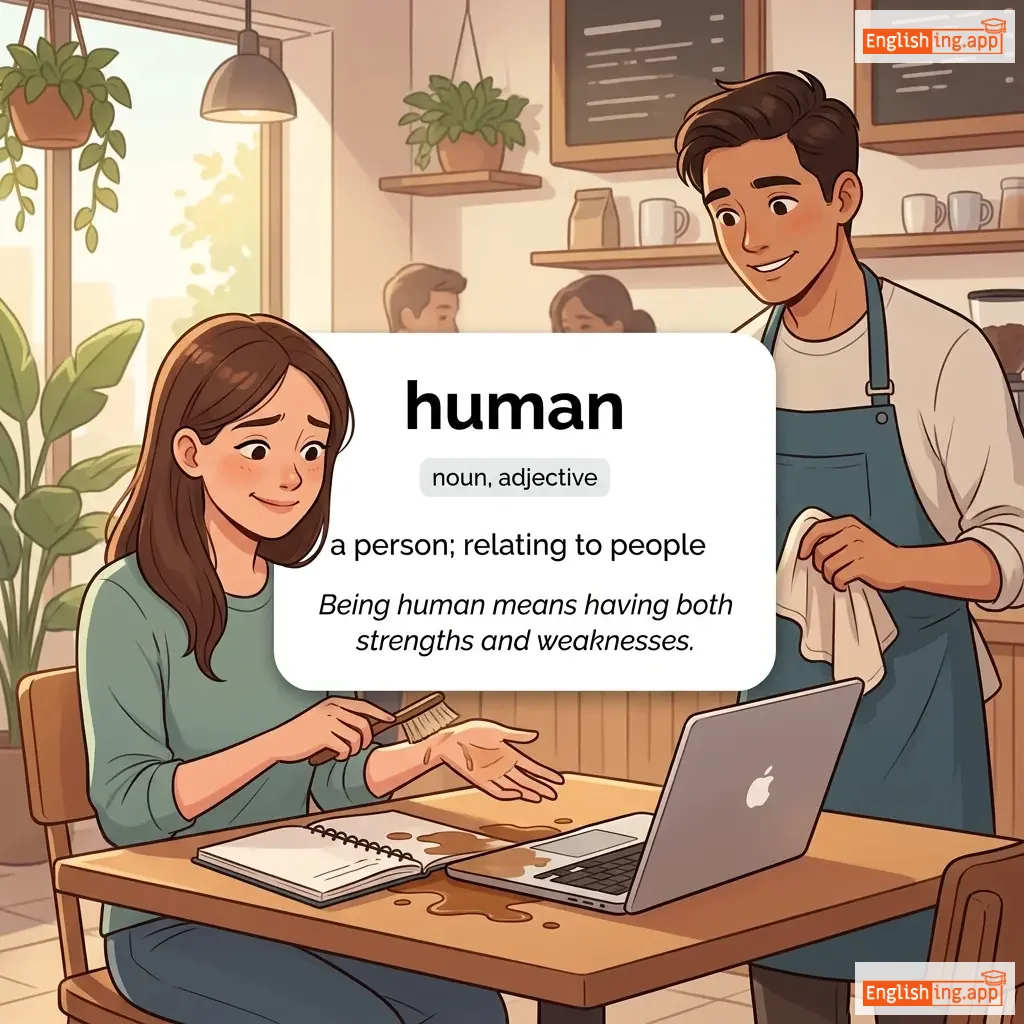
/ˈhjuːmən/
noun, adjective
(hūmàn)
••••••
|
|
人类
renlei
••••••
|
- •••••• | - •••••• | - •••••• | - •••••• |
a person; relating to people
••••••
|
Being human means having both strengths and weaknesses. |
成为人类意味着拥有强项和弱点。
Chéngwéi rénlèi yìwèi zhe yǒngyǒu qiángxiàng hé ruòdiǎn.
••••••
|
to err is human |
making mistakes is a natural part of being human
••••••
|
犯错是人类的特征
fàn cuò shì rénlèi de tèzhēng
••••••
|
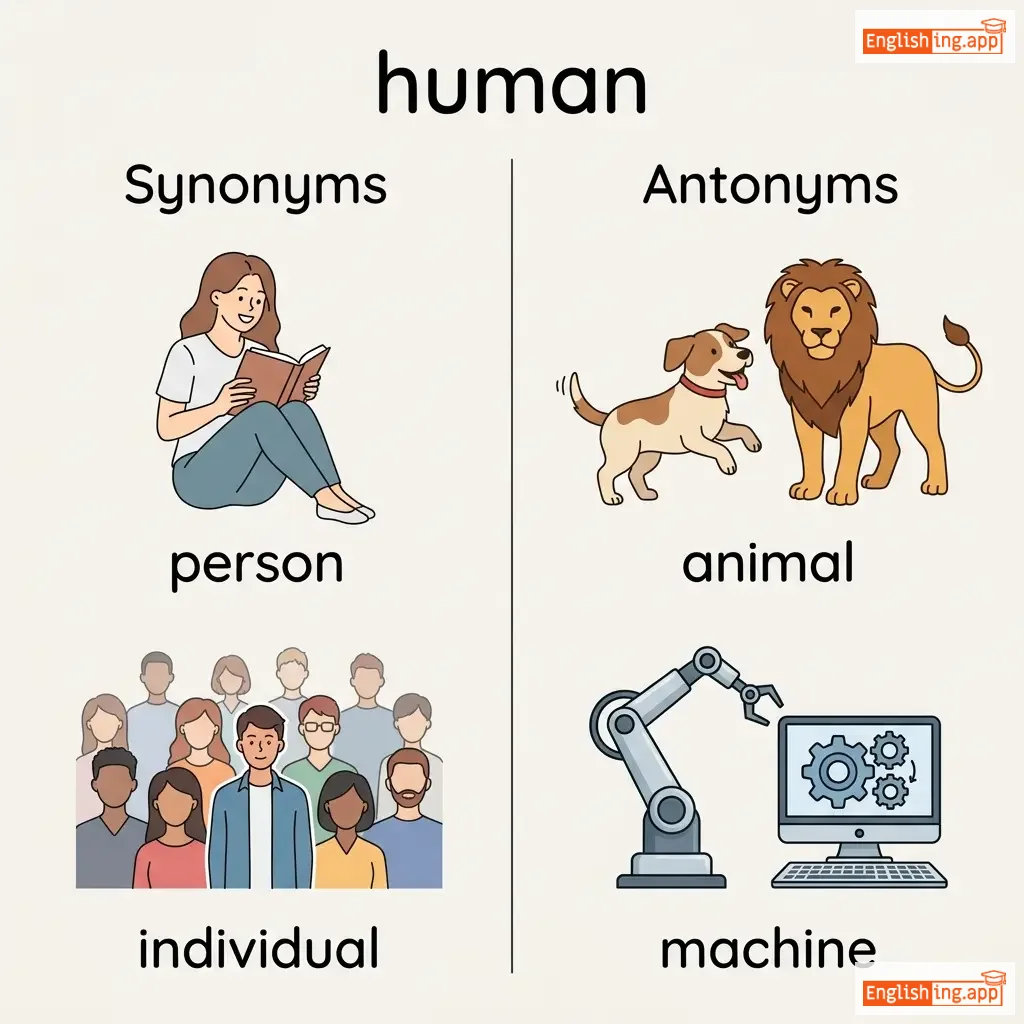
person, individual, mortal, man, woman
••••••
|
animal, machine, robot
••••••
|
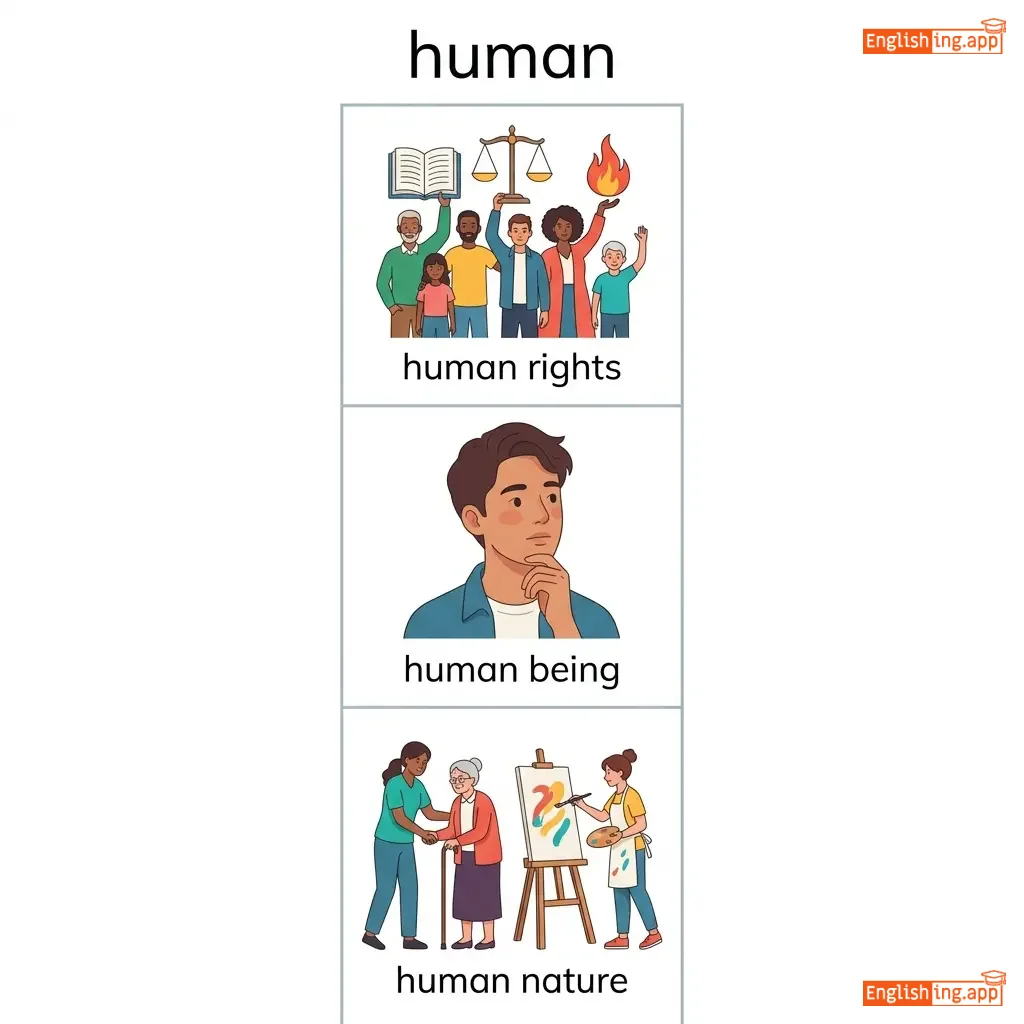
human rights, human being, human nature, human body
••••••
|
Human = 'rén' (人) + 'lèi' (类) → 人类是具有力量和弱点的生物。
••••••
|
|
#2520
🌍
|
/hjuːˌmænɪˈtɛəriən/
noun, adjective
(hjuːˌmænɪˈtɛəriən)
••••••
|
- •••••• |
人道主义者
rendao zhuyi zhe
••••••
|
- •••••• | - •••••• | - •••••• | - •••••• |
A person who seeks to promote human welfare, or something relating to human welfare and compassion.
••••••
|
The organization provides humanitarian aid to disaster victims. |
该组织为灾难受害者提供人道主义援助。
Gai zuzhi wei zainan shouhaizhe tigong rendao zhuyi yuanzhu.
••••••
|
humanitarian crisis |
A large-scale situation where people's basic needs are not being met, often due to war or natural disaster.
••••••
|
人道主义危机
rendao zhuyi weiji
••••••
|
philanthropic, benevolent, charitable, altruistic, compassionate
••••••
|
selfish, cruel, inhumane
••••••
|
humanitarian aid, humanitarian mission, humanitarian crisis, humanitarian assistance
••••••
|
人道主义者来自于人道+主义者 — 帮助他人的人。
••••••
|
|
#2521
🌍
|
/hjuːˈmænɪti/
noun
(hjuːˈmænɪti)
••••••
|
- •••••• |
人性
renxing
••••••
|
- •••••• | - •••••• | - •••••• | - •••••• |
the quality of being human; kindness or compassion towards others; all human beings collectively
••••••
|
Kindness is one of the greatest expressions of humanity. |
善良是人性最伟大的表现之一。
Shànliáng shì rénxìng zuì wěidà de biǎoxiàn zhī yī.
••••••
|
crimes against humanity |
serious offenses that harm large groups of people
••••••
|
反人类罪
fǎn rénlèi zuì
••••••
|
mankind, humankind, compassion, benevolence, kindness
••••••
|
cruelty, inhumanity, brutality
••••••
|
show humanity, act with humanity, crimes against humanity, humanity and compassion
••••••
|
人性就是人类的本质,展现出善良和同情。
••••••
|
|
#2522
🙏
|
/ˈhʌmbəl/
adjective, verb
••••••
|
- •••••• | - •••••• |
humbled
••••••
|
humbled
••••••
|
humbles
••••••
|
humbling
••••••
|
Having or showing a modest view of one's importance; to lower pride or status.
••••••
|
Despite his success, he remained humble. |
- •••••• |
eat humble pie |
To admit one's mistake and apologize humbly.
••••••
|
- •••••• |
modest, meek, unassuming, respectful
••••••
|
arrogant, proud, boastful
••••••
|
humble beginning, humble attitude, humble request
••••••
|
No •••••• |
|
#2523
😂
|
/ˈhjuː.mər/
noun
••••••
|
- •••••• | - •••••• | - •••••• | - •••••• | - •••••• | - •••••• |
The quality of being amusing or entertaining.
••••••
|
His sense of humor always lightens the mood. |
- •••••• |
good sense of humor |
The ability to be funny and understand jokes.
••••••
|
- •••••• |
wit, comedy, fun, amusement, joviality
••••••
|
seriousness, gloom
••••••
|
sense of humor, dry humor, dark humor, use humor
••••••
|
No •••••• |
|
#2524
😄
|
/ˈhjuː.mər.əs/
adjective
(hjuːmərəs)
••••••
|
- •••••• |
幽默的; 好笑的; 引起笑声的;
youmo de; haoxiao de; yinqi xiaosheng de;
••••••
|
- •••••• | - •••••• | - •••••• | - •••••• |
funny; amusing; causing laughter;
••••••
|
His humorous stories always make everyone laugh. |
他的幽默故事总是让每个人都笑。
Tā de yōumò gùshì zǒng shì ràng měi gèrén dōu xiào.
••••••
|
- •••••• | - •••••• | - •••••• |
funny, amusing, witty, comical
••••••
|
serious, solemn, grave, humorless
••••••
|
humorous story, humorous person, humorous remark
••••••
|
幽默的故事带来笑声
••••••
|
|
#2525
💯
|
/ˈhʌndrəd/
noun, numeral
(hǎndèlì)
••••••
|
- •••••• |
一百
yī bǎi
••••••
|
- •••••• | - •••••• | - •••••• | - •••••• |
the number 100
••••••
|
There are a hundred students in the hall. |
大厅里有一百个学生。
Dàtīng lǐ yǒu yī bǎi gè xuéshēng.
••••••
|
hundred percent |
completely; fully
••••••
|
百分之百
bǎi fēn zhī bǎi
••••••
|
century, 100, large number
••••••
|
zero, none
••••••
|
one hundred, hundred percent, hundred times
••••••
|
一百 = 100,百分之百 = 完全地。
••••••
|
|
#2526
🍽️
|
/ˈhʌŋɡər/
noun
(hángè)
••••••
|
- •••••• |
饥饿
jī è
••••••
|
- •••••• | - •••••• | - •••••• | - •••••• |
the feeling of discomfort caused by lack of food
••••••
|
The child cried out of hunger. |
孩子因饥饿而哭泣。
Háizi yīn jī è ér kū qì.
••••••
|
hunger for success |
a strong desire to achieve success
••••••
|
对成功的渴望
duì chénggōng de kěwàng
••••••
|
starvation, appetite, craving, emptiness
••••••
|
satisfaction, fullness
••••••
|
die of hunger, hunger strike, hunger for power, hunger relief
••••••
|
Hunger = 饥饿, Hungry = 饥饿
••••••
|
|
#2527
🍽️
|
/ˈhʌŋɡri/
adjective
(hʌŋɡri)
••••••
|
- •••••• |
饥饿的
jī'è de
••••••
|
- •••••• | - •••••• | - •••••• | - •••••• |
feeling or showing the need for food
••••••
|
The children were hungry after playing outside all day. |
孩子们在外面玩了一整天后感到饥饿。
Háizimen zài wàimiàn wánle yī zhěng tiān hòu gǎndào jī'è.
••••••
|
hungry for success |
eager or ambitious to achieve something
••••••
|
渴望成功
kěwàng chénggōng
••••••
|
starving, famished, ravenous, peckish
••••••
|
full, satisfied, stuffed
••••••
|
very hungry, feel hungry, go hungry, hungry eyes
••••••
|
Hungry 意味着饥饿 — 当你饥饿时,肚子会发出像 '饥饿' 一样的声音。
••••••
|
|
#2528
🏹
|
/hʌnt/
verb
(hant)
••••••
|
|
狩猎
shòuliè
••••••
|
hunted
hanted
••••••
|
hunted
hanted
••••••
|
hunts
hants
••••••
|
hunting
hanting
••••••
|
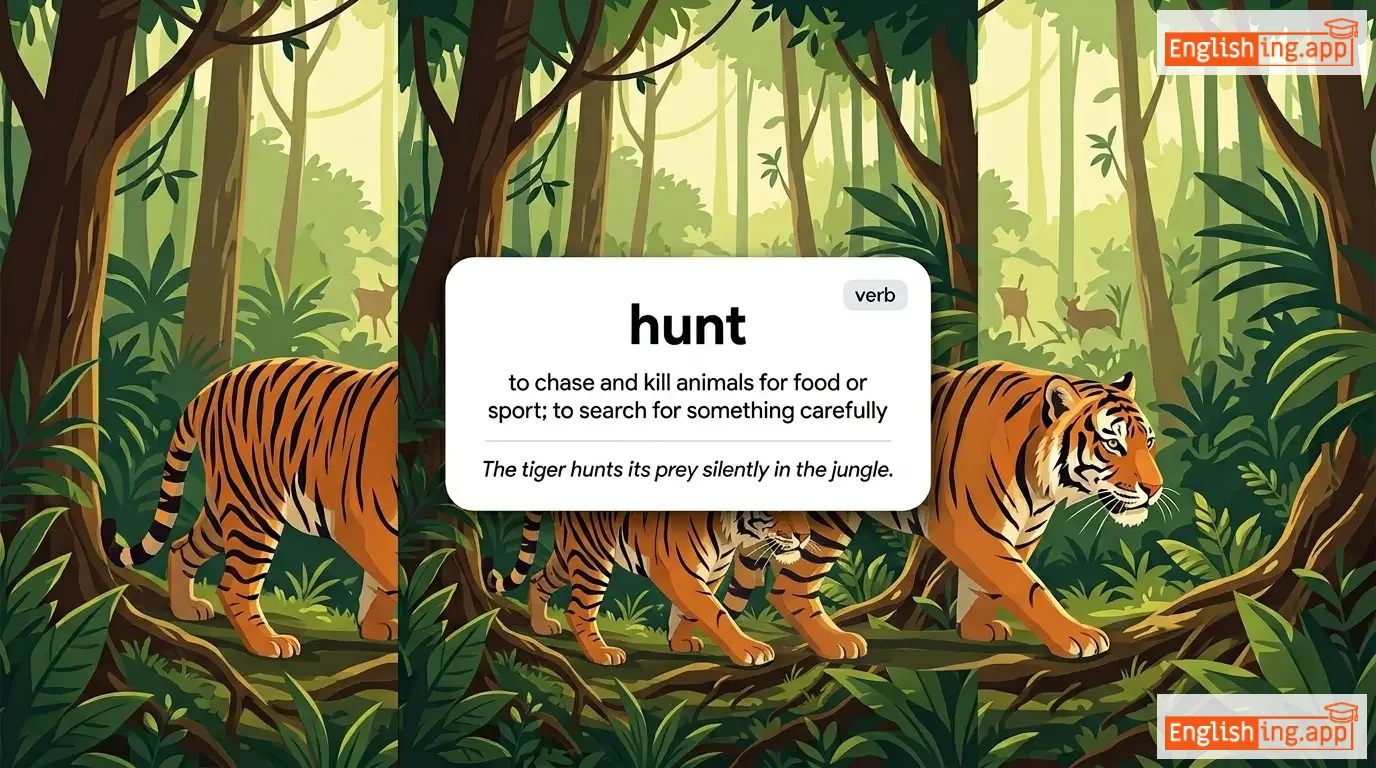
to chase and kill animals for food or sport; to search for something carefully
••••••
|
The tiger hunts its prey silently in the jungle.
老虎在丛林中悄悄地追捕猎物。
••••••
|
老虎在丛林中悄悄地追捕猎物。
Lǎohǔ zài cónglín zhōng qiāoqiāo de zhuībǔ lièwù.
••••••
|
on the hunt for
寻找中
••••••
|
actively searching for something or someone
••••••
|
寻找中
xúnzhǎo zhōng
••••••
|
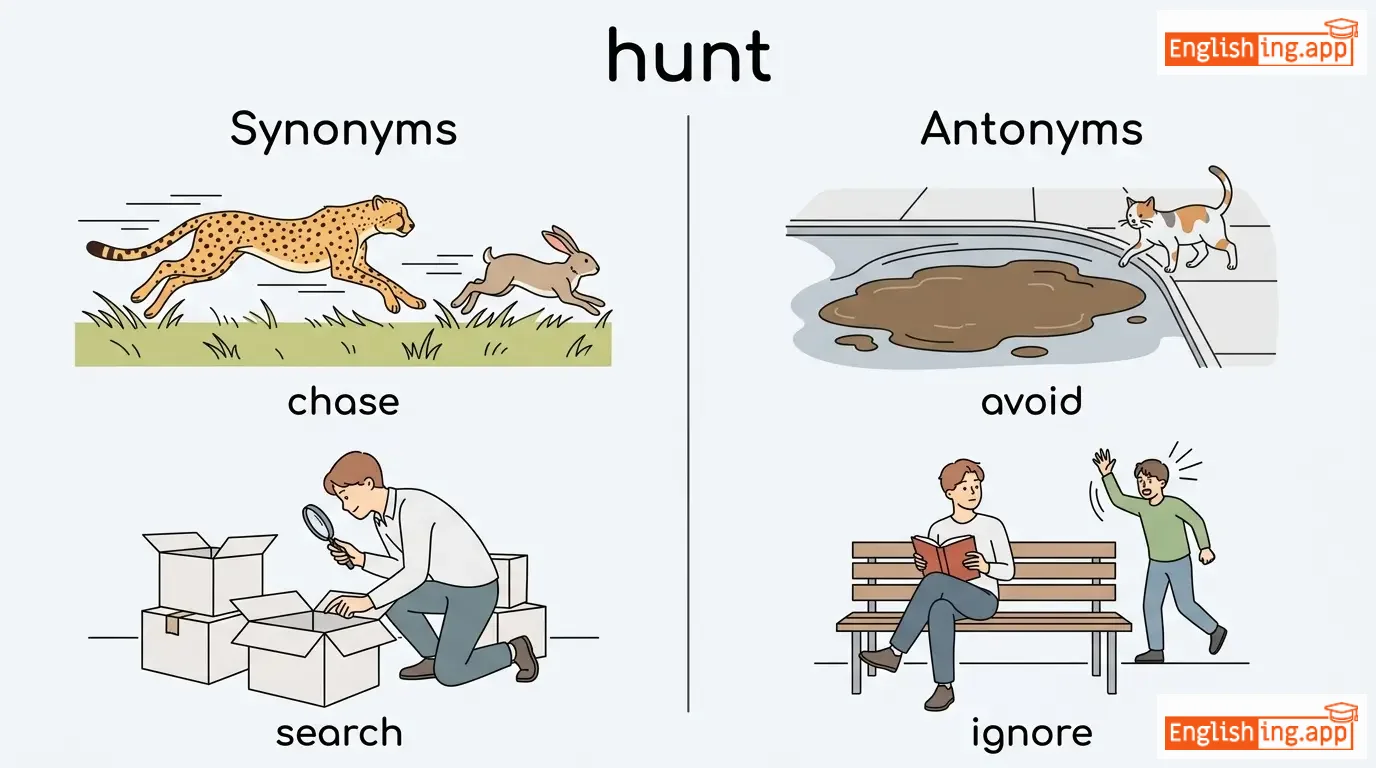
chase, search, track, pursue, seek
••••••
|
avoid, ignore, escape
••••••
|
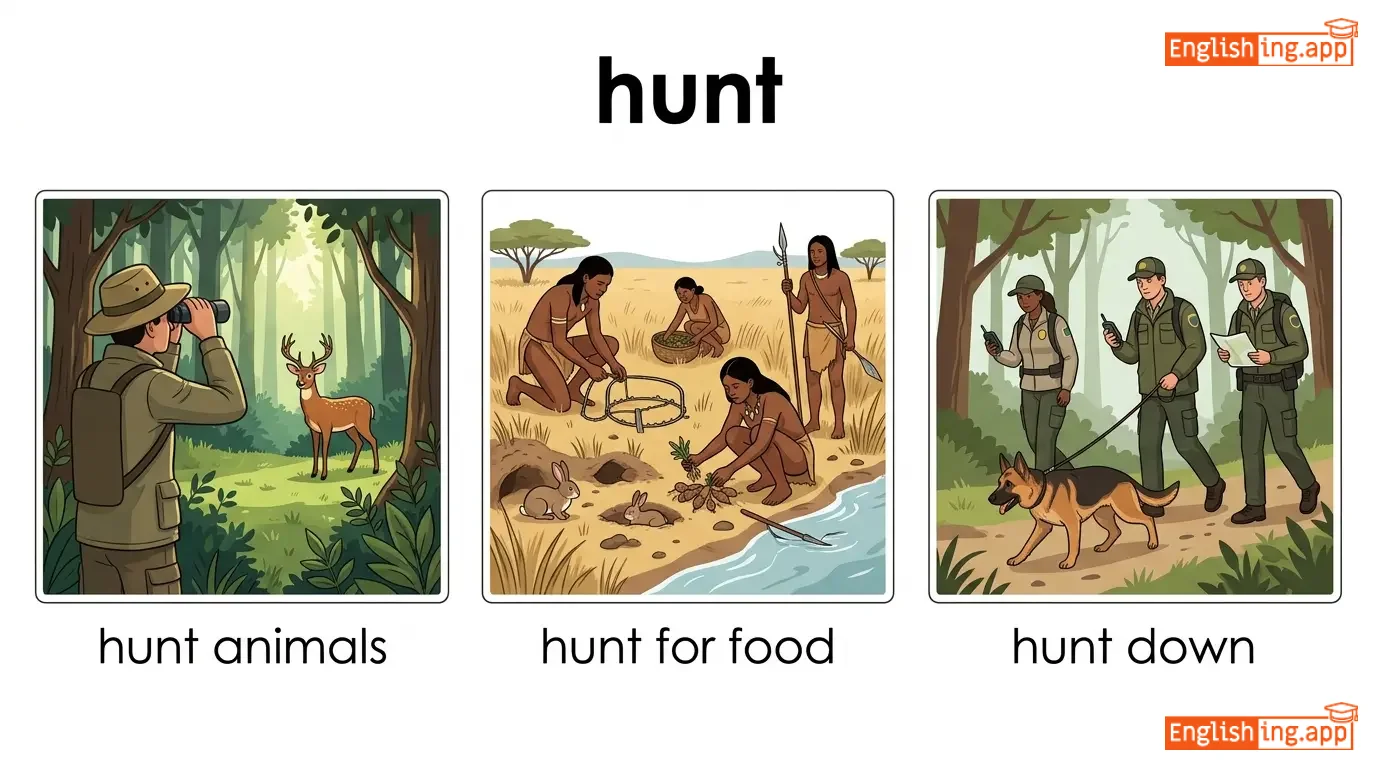
hunt animals, hunt for food, hunt down, go hunting
••••••
|
狩猎是必须的 — 这是生存的一部分。
••••••
|
|
#2529
🏹
|
/ˈhʌntər/
noun
(hàntè)
••••••
|
- •••••• |
猎人
liè rén
••••••
|
- •••••• | - •••••• | - •••••• | - •••••• |
a person or animal that hunts animals for food or sport
••••••
|
The hunter tracked the deer through the forest.
猎人追踪鹿穿越森林。
••••••
|
猎人追踪鹿穿越森林。
Liè rén zhuīzōng lù chuānyuè sēnlín.
••••••
|
- •••••• | - •••••• | - •••••• |
trapper, chaser, pursuer, stalker
••••••
|
prey, victim
••••••
|
skilled hunter, deer hunter, big-game hunter
••••••
|
Hunter 意味着猎人 - 打猎获取食物或运动。
••••••
|
|
#2530
🎯
|
/ˈhʌntɪŋ/
noun/verb
(hunting)
••••••
|
- •••••• |
狩猎
shòuliè
••••••
|
- •••••• | - •••••• |
hunts
hunting
••••••
|
hunting
hunting
••••••
|
the activity of chasing and killing wild animals
••••••
|
Hunting is strictly regulated in many countries.
狩猎在许多国家受到严格监管。
••••••
|
狩猎在许多国家受到严格监管。
Shòuliè zài xǔduō guójiā shòudào yángé jiānguǎn.
••••••
|
house-hunting
找房子
••••••
|
the act of searching for a house to live in
••••••
|
找房子
zhǎo fángzi
••••••
|
pursuing, tracking, chasing, stalking
••••••
|
protecting, preserving
••••••
|
go hunting, hunting season, hunting ground
••••••
|
Hunting 就是狩猎 — Hunt 就是狩猎。
••••••
|
|
#2531
🏃
|
/ˈhʌri/
verb
(哈利)
••••••
|
|
赶快
gan kuai
••••••
|
hurried
哈利德
••••••
|
hurried
哈利德
••••••
|
hurries
哈利兹
••••••
|
hurrying
哈里英
••••••
|
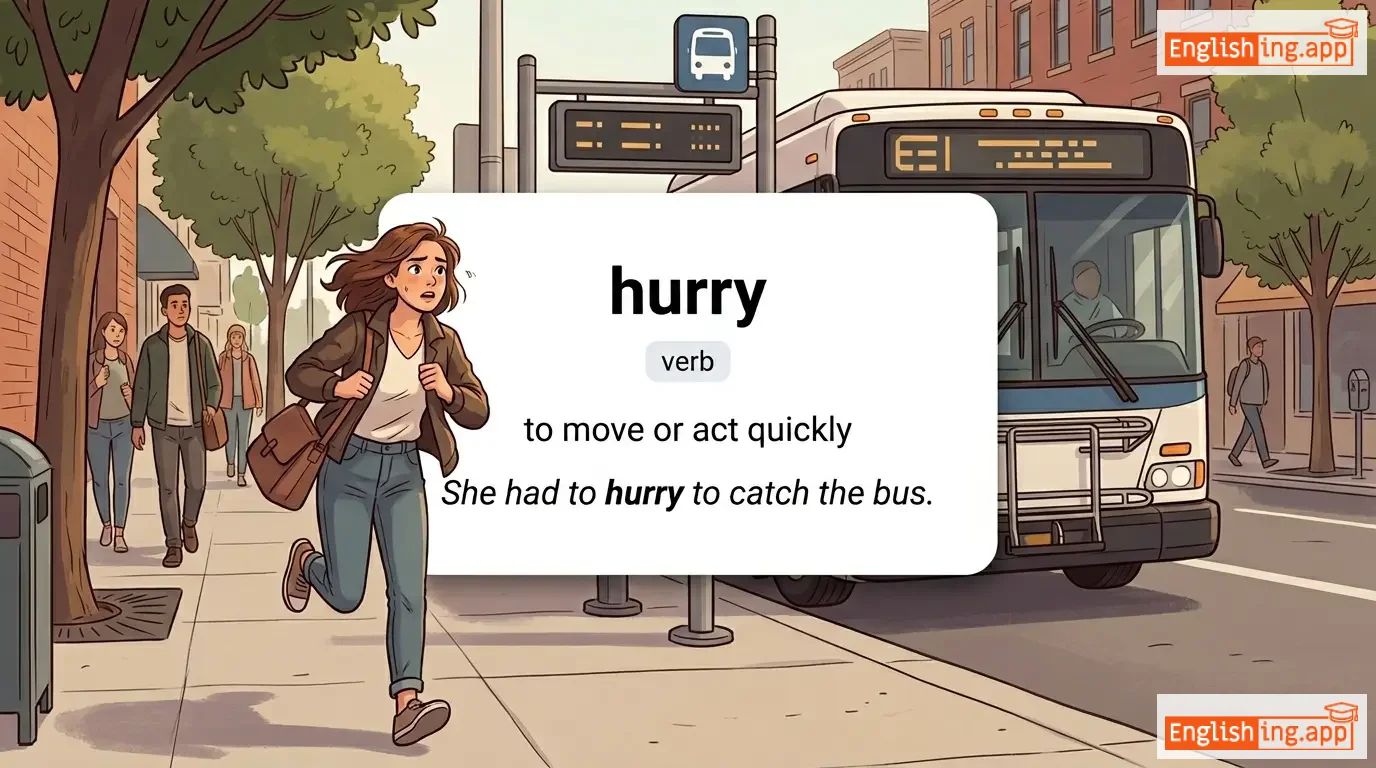
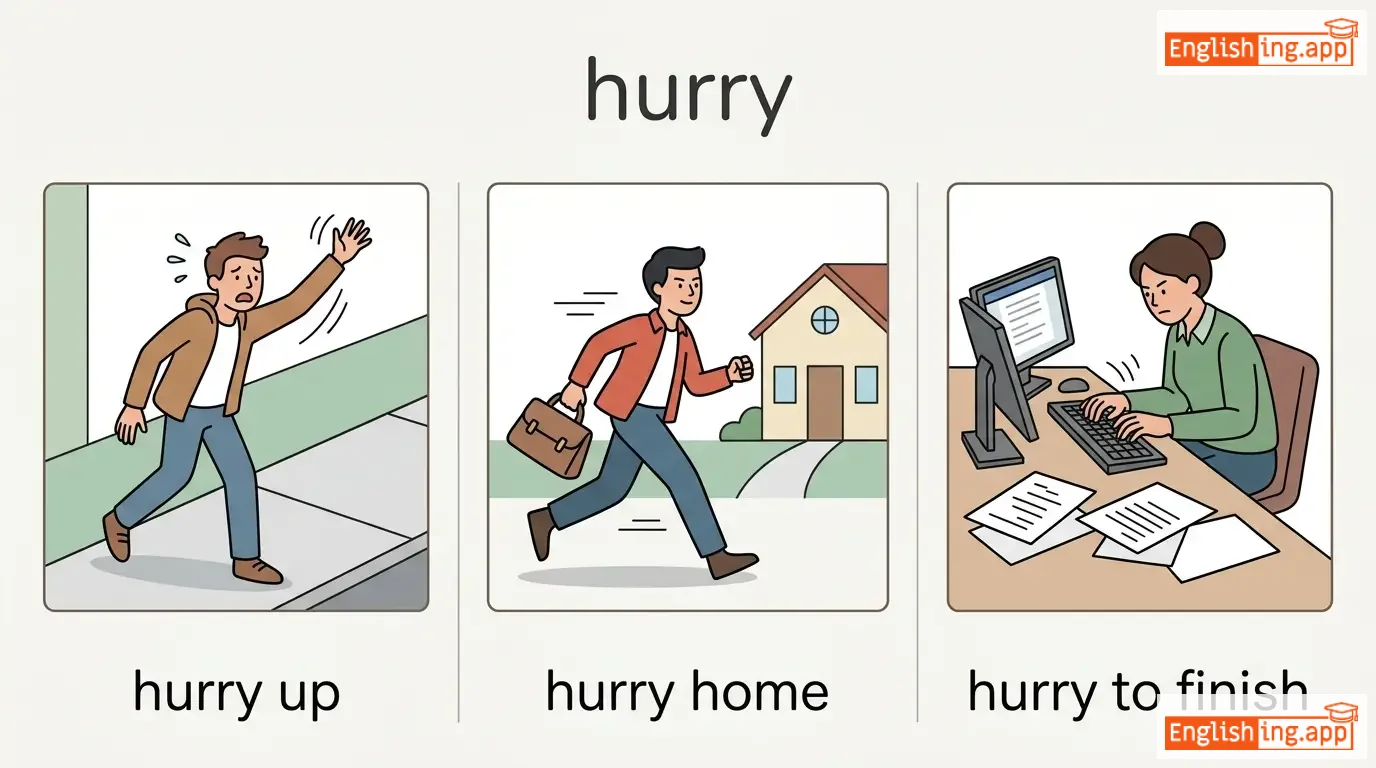
to move or act quickly
••••••
|
She had to hurry to catch the bus.
她必须哈里去赶公交。
••••••
|
她必须赶快去赶公交。
Ta bixu gan kuai qu gan gong jiao.
••••••
|
in a hurry
急忙中
••••••
|
rushing or pressed for time
••••••
|
匆忙中
cong mang zhong
••••••
|
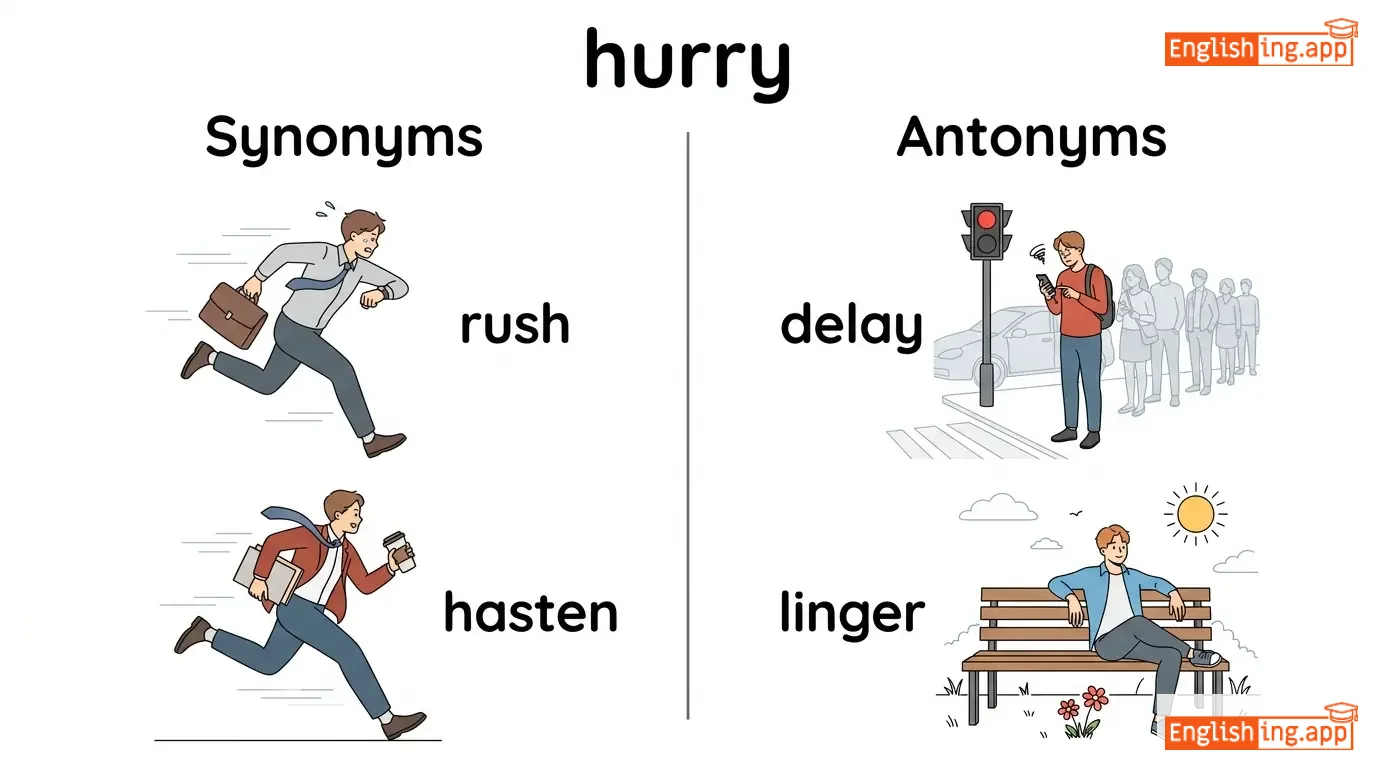
rush, hasten, speed, scurry, dash
••••••
|
delay, linger, wait
••••••
|
hurry up, hurry home, hurry to finish, hurry back
••••••
|
Hurry 意味着 '赶快' – 快速行动
••••••
|
|
#2532
🤕
|
/hɜːrt/
verb/adjective
(海皮尼斯)
••••••
|
- •••••• |
伤害
shānghài
••••••
|
hurt
海皮尼斯
••••••
|
hurt
海皮尼斯
••••••
|
hurts
海皮尼斯
••••••
|
hurting
海皮尼斯
••••••
|
to cause pain or injury; to feel pain
••••••
|
He hurt his knee while playing football.
他在踢足球时伤到了膝盖。
••••••
|
他在踢足球时伤到了膝盖。
Tā zài tī zúqiú shí shāng dào le xīgài.
••••••
|
hurt feelings
伤心的感觉
••••••
|
emotional pain caused by someone's words or actions
••••••
|
伤心的感受
shāngxīn de gǎnshòu
••••••
|
injure, wound, damage, bruise
••••••
|
heal, comfort, soothe
••••••
|
hurt badly, hurt someone, hurt feelings
••••••
|
伤害 — 就像割伤一样,痛苦无可避免。
••••••
|
|
#2533
👨👩👧
|
/ˈhʌzbənd/
noun
(哈斯班德)
••••••
|
- •••••• |
丈夫
zhangfu
••••••
|
- •••••• | - •••••• | - •••••• | - •••••• |
A married man regarded in relation to his spouse.
••••••
|
Her husband is very supportive of her career. |
她的丈夫非常支持她的职业。
Tā de zhàngfu fēicháng zhīchí tā de zhíyè.
••••••
|
good husband |
A caring, responsible, and supportive spouse.
••••••
|
好丈夫
hǎo zhàngfu
••••••
|
spouse, partner, mate, groom, consort
••••••
|
wife, bachelor, single
••••••
|
loving husband, devoted husband, husband and wife
••••••
|
Husband 意味着 'House Band' - 丈夫把家维系在一起。
••••••
|
|
#2534
🏚️
|
/hʌt/
noun
(hʌt)
••••••
|
- •••••• |
小屋
xiao wu
••••••
|
- •••••• | - •••••• | - •••••• | - •••••• |
a small simple shelter or house
••••••
|
They lived in a small wooden hut near the river. |
他们住在靠近河流的一个小木屋里。
Tamen zhu zai kaojin heliu de yi ge xiao mu wu li.
••••••
|
- •••••• | - •••••• | - •••••• |
shack, cabin, cottage, shelter
••••••
|
mansion, palace
••••••
|
wooden hut, mountain hut, small hut, hut village
••••••
|
Hut 代表小屋,是一个简单的地方,让你避开寒冷的风。
••••••
|
|
#2535
💧
|
/ˈhaɪdrədʒən/
noun
(氢气)
••••••
|
- •••••• |
氢气
qingqi
••••••
|
- •••••• | - •••••• | - •••••• | - •••••• |
a colorless, odorless, highly flammable gas that is the lightest and most abundant chemical element in the universe
••••••
|
Hydrogen is used as a clean fuel in many energy systems. |
氢气在许多能源系统中作为清洁燃料使用。
Qingqi zai xuduo nengyuan xitong zhong zuo wei qingjie ranliao shiyong.
••••••
|
- •••••• | - •••••• | - •••••• |
H2, fuel, gas
••••••
|
oxygen, carbon dioxide
••••••
|
hydrogen gas, hydrogen fuel, hydrogen bond
••••••
|
Hydrogen = 氢气 = 可以让地球飞起来的轻气体!
••••••
|
|
#2536
🔬
|
/haɪˈpɒθəsɪs/
noun
••••••
|
- •••••• | - •••••• | - •••••• | - •••••• | - •••••• | - •••••• |
a proposed explanation made on the basis of limited evidence as a starting point for further investigation.
••••••
|
The scientist tested her hypothesis through multiple experiments. |
- •••••• |
working hypothesis |
a provisional idea assumed for the sake of argument or investigation
••••••
|
- •••••• |
assumption, theory, proposition, supposition, premise
••••••
|
fact, proof, certainty
••••••
|
form a hypothesis, test a hypothesis, reject a hypothesis, confirm a hypothesis
••••••
|
No •••••• |
|
#2537
🙋
|
/aɪ/
pronoun
(ài)
••••••
|
- •••••• |
我
wo
••••••
|
- •••••• | - •••••• | - •••••• | - •••••• |
used by a speaker to refer to himself or herself
••••••
|
I am learning English every day. |
我每天都在学习英语。
Wo měitiān dōu zài xuéxí yīngyǔ.
••••••
|
- •••••• | - •••••• | - •••••• |
me, myself
••••••
|
you, they
••••••
|
I think, I know, I want, I am
••••••
|
I 就是我 — 'ài' 听起来像 '我'。
••••••
|
|
#2538
🧊
|
/aɪs/
noun
(āi sī)
••••••
|
- •••••• |
冰
bing
••••••
|
- •••••• | - •••••• | - •••••• | - •••••• |
frozen water, a solid form of water
••••••
|
The lake was covered with thick ice in winter. |
湖面在冬天被厚厚的冰覆盖。
hú miàn zài dōng tiān bèi hòu hòu de bīng fù gài.
••••••
|
break the ice |
to start a conversation in a social situation
••••••
|
打破冰层
dǎ pò bīng céng
••••••
|
frost, snow, glacier, icicle
••••••
|
heat, fire
••••••
|
ice cubes, ice cream, ice skating, thin ice
••••••
|
Ice = 冰, 就像冰淇淋 🍦
••••••
|
|
#2539
🍦
|
/ˈaɪs kriːm/
noun
(àisī kè lǐ mǐ)
••••••
|
- •••••• |
冰淇淋
bīng qí lín
••••••
|
- •••••• | - •••••• | - •••••• | - •••••• |
a frozen sweet dessert made from dairy products, usually served cold
••••••
|
Children love to eat ice-cream on hot summer days.
孩子们喜欢在炎热的夏季日子里吃冰淇淋。
••••••
|
孩子们喜欢在炎热的夏季日子里吃冰淇淋。
Háizimen xǐhuān zài yánrè de xiàjì rìzi lǐ chī bīngqílín.
••••••
|
- •••••• | - •••••• | - •••••• |
frozen dessert, gelato, sorbet
••••••
|
hot dessert, warm pudding
••••••
|
vanilla ice-cream, ice-cream cone, ice-cream parlor
••••••
|
冰淇淋让你在夏天清凉。
••••••
|
|
#2540
⭐
|
/ˈaɪkɒn/
noun
(àikēn)
••••••
|
- •••••• |
图标, 象征
túbiāo, xiàngzhēng
••••••
|
- •••••• | - •••••• | - •••••• | - •••••• |
A person or thing regarded as a symbol of something, or a graphic symbol on a screen.
••••••
|
The singer became a cultural icon. |
这位歌手成为了文化图标。
Zhè wèi gēshǒu chéngwéile wénhuà túbiāo.
••••••
|
pop icon |
A famous person admired widely in popular culture.
••••••
|
流行图标
liúxíng túbiāo
••••••
|
symbol, idol, emblem, figure, legend
••••••
|
unknown, ordinary
••••••
|
cultural icon, fashion icon, national icon, religious icon
••••••
|
图标象征着符号 → 屏幕上的小符号或大明星。
••••••
|
|
#2541
🪪
|
/aɪˈdiː/
noun
(艾迪)
••••••
|
- •••••• |
身份证件
shenfenzhengjian
••••••
|
- •••••• | - •••••• | - •••••• | - •••••• |
identification; a document or number used to prove who someone is
••••••
|
Please show your ID at the entrance.
请 显示 你的 艾迪 在 入口。
••••••
|
请在入口处出示你的身份证件。
qing zai rukou chu chushi ni de shenfenzhengjian
••••••
|
show your ID
显示 你的 艾迪
••••••
|
to present identification for verification
••••••
|
出示身份证件
chushi shenfenzhengjian
••••••
|
identification, identity, ID card, credentials
••••••
|
anonymity, unknown
••••••
|
photo ID, government ID, valid ID, student ID
••••••
|
ID 像身份证,一看就知道你是谁
••••••
|
|
#2542
💡
|
/aɪˈdiːə/
noun
(ai di a)
••••••
|
- •••••• |
主意
zhuyi
••••••
|
- •••••• | - •••••• | - •••••• | - •••••• |
A thought, plan, or suggestion about what to do.
••••••
|
She had a brilliant idea for a new business. |
她有一个新商业的精彩主意。
Ta you yige xin shangye de jingcai zhuyi.
••••••
|
bright idea |
a clever or creative thought or solution
••••••
|
聪明的主意
congming de zhuyi
••••••
|
concept, notion, plan, thought, suggestion
••••••
|
ignorance, misunderstanding
••••••
|
good idea, brilliant idea, bad idea, business idea, creative idea
••••••
|
Idea 就像脑袋里亮起来的灯泡 💡
••••••
|
|
#2543
✨
|
/aɪˈdiːəl/
adjective
(āi dì ào)
••••••
|
- •••••• |
理想的
lǐxiǎng de
••••••
|
- •••••• | - •••••• | - •••••• | - •••••• |
the best possible; perfect for a situation
••••••
|
This place is ideal for a picnic. |
这个地方非常适合野餐。
Zhège dìfāng fēicháng shìhé yěcān.
••••••
|
- •••••• | - •••••• | - •••••• |
perfect, excellent, optimal, model, flawless
••••••
|
imperfect, flawed, unsuitable
••••••
|
ideal situation, ideal choice, ideal candidate, ideal time
••••••
|
理想的代表完美, 比如‘理想的工作’是最合适的工作。
••••••
|
|
#2544
👯
|
/aɪˈdentɪkl/
adjective
(aɪˈdɛntɪkəl)
••••••
|
- •••••• |
相同的
xiāngtóng de
••••••
|
- •••••• | - •••••• | - •••••• | - •••••• |
Exactly the same in every detail.
••••••
|
The twins wore identical clothes. |
这对双胞胎穿着相同的衣服。
Zhè duì shuāngbāotāi chuānzhuó xiāngtóng de yīfu.
••••••
|
identical twin |
one of two twins who look exactly the same
••••••
|
相同的双胞胎
xiāngtóng de shuāngbāotāi
••••••
|
same, indistinguishable, equal, duplicate
••••••
|
different, distinct, varied
••••••
|
identical clothes, identical result, almost identical, virtually identical
••••••
|
Identical意味着'相同的',就像两个完全相同的双胞胎。
••••••
|
|
#2545
🪪
|
/aɪˌdɛntɪfɪˈkeɪʃən/
noun
(ài-diàn-tí-fí-ké-shēn)
••••••
|
- •••••• |
身份识别
shenfen shibie
••••••
|
- •••••• | - •••••• | - •••••• | - •••••• |
the process of recognizing or proving who or what someone or something is
••••••
|
You need proper identification to enter the building. |
您需要适当的身份证明才能进入大楼。
Nín xūyào shìdàng de shēnfèn zhèngmíng cáinéng jìnrù dàlóu.
••••••
|
- •••••• | - •••••• | - •••••• |
recognition, verification, authentication, validation
••••••
|
misidentification, confusion
••••••
|
identity card, identification number, personal identification, photo identification
••••••
|
Identification 就是身份的识别 - 出示身份证就能进大楼。
••••••
|
|
#2546
🔍
|
/aɪˈdɛntɪfaɪ/
verb
(ài diǎn tì fāi)
••••••
|
|
识别
shìbié
••••••
|
identified
ài diǎn tì fāi dé
••••••
|
identified
ài diǎn tì fāi dé
••••••
|
identifies
ài diǎn tì fāi zī
••••••
|
identifying
ài diǎn tì fāi yīng
••••••
|
to recognize or establish what something or someone is
••••••
|
The police could not identify the suspect.
警察无法确认嫌疑人。
••••••
|
警察无法确认嫌疑人。
jǐngchá wúfǎ quèrèn xiányírén.
••••••
|
identify with
与……认同
••••••
|
to feel that you understand someone because you have had similar experiences
••••••
|
与某人认同
yǔ mǒu rén rèntóng
••••••
|
recognize, detect, determine, distinguish, verify
••••••
|
confuse, misidentify
••••••
|
identify problems, identify needs, identify the source, identify correctly
••••••
|
识别即为识别 - 就像身份证一样。
••••••
|
|
#2547
🪪
|
/aɪˈdɛntɪti/
noun
(aɪˈdɛntɪti)
••••••
|
|
身份
shenfen
••••••
|
- •••••• | - •••••• | - •••••• | - •••••• |
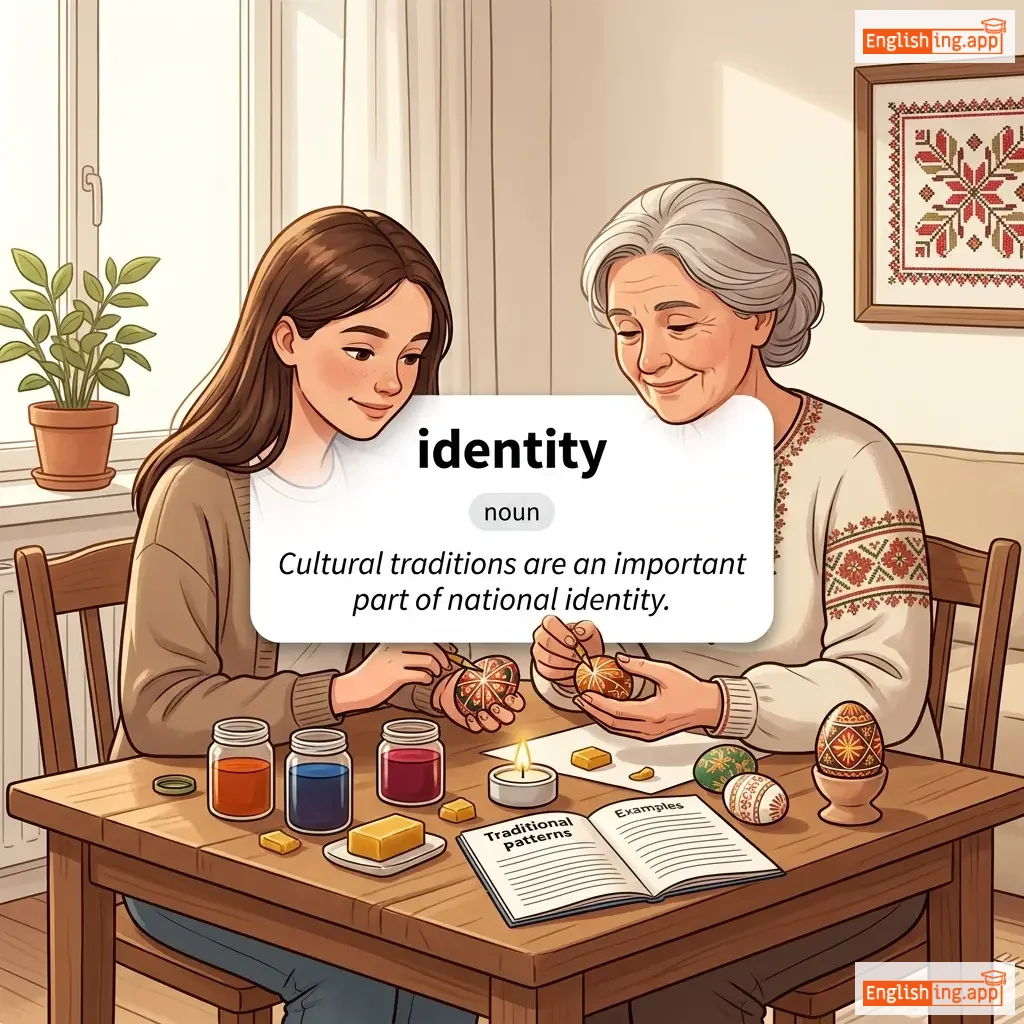
the characteristics, feelings, or beliefs that make a person or group different from others
••••••
|
Cultural traditions are an important part of national identity. |
文化传统是国家身份的重要组成部分。
wenhua chuantong shi guojia shenfen de zhongyao zuche bufen
••••••
|
identity crisis |
a period of uncertainty about one's sense of self
••••••
|
身份危机
shenfen weiji
••••••
|
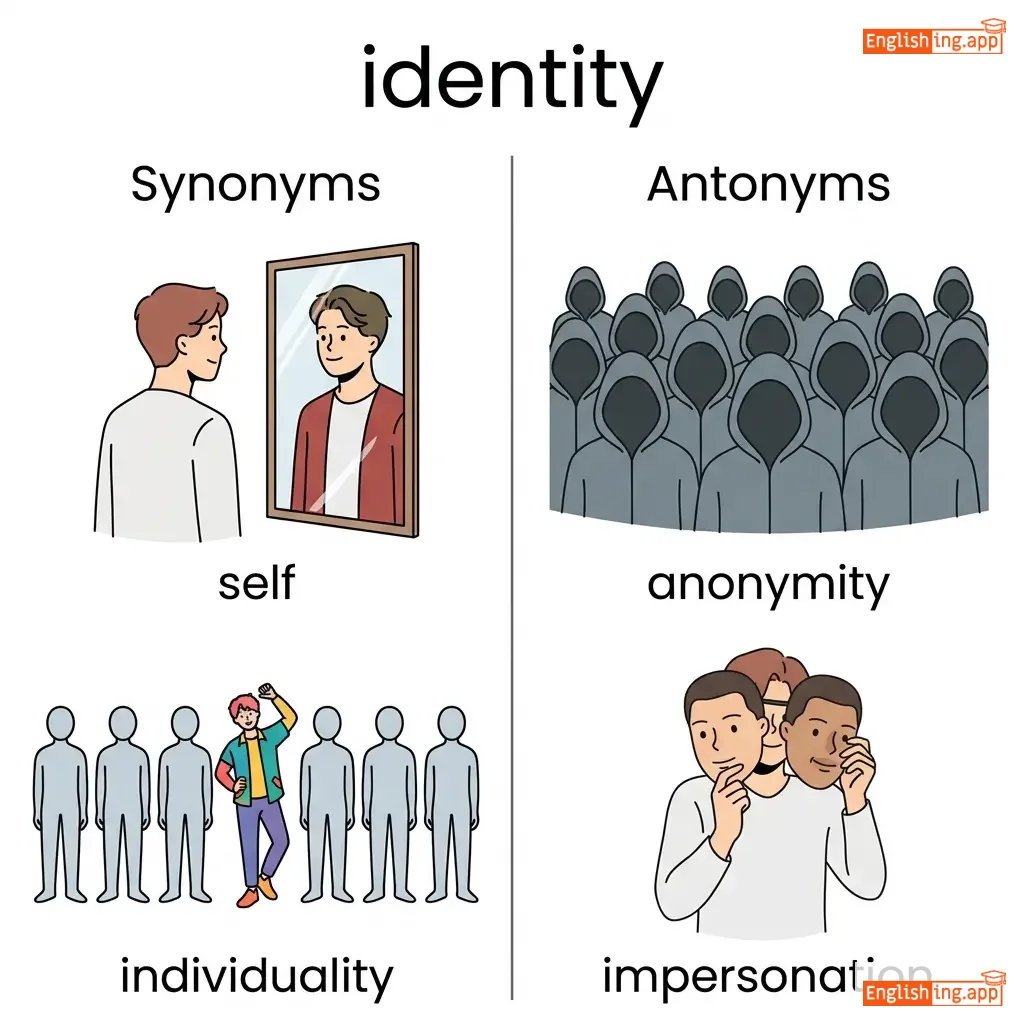
self, individuality, character, personality
••••••
|
anonymity, impersonation
••••••
|
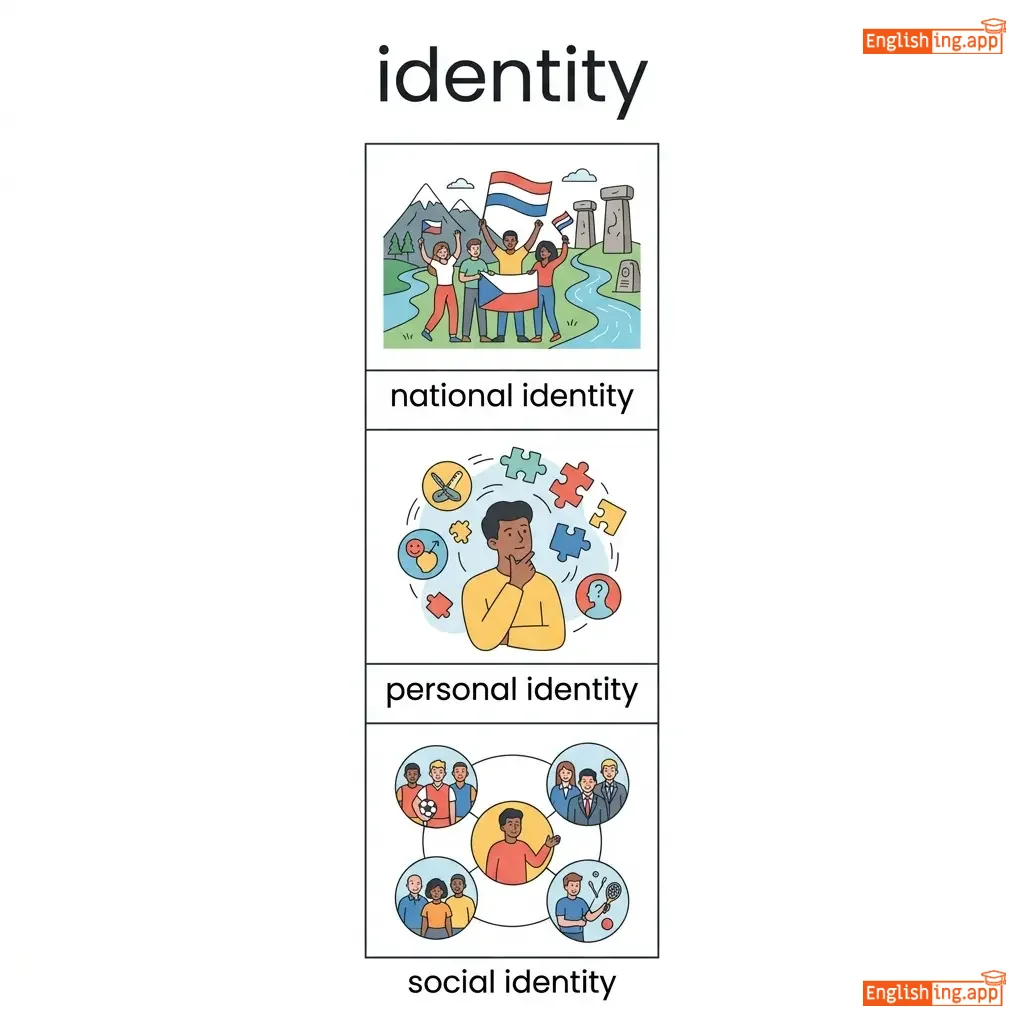
national identity, personal identity, social identity, identity card
••••••
|
身份意味着身份 - 身份证证明你的身份
••••••
|
|
#2548
📚
|
/ˌaɪ.di.əˈlɒdʒ.ɪ.kəl/
adjective
(aɪ.dɪˈɒl.ədʒɪ.kəl)
••••••
|
- •••••• |
意识形态的
yìshí xíngtài de
••••••
|
- •••••• | - •••••• | - •••••• | - •••••• |
Relating to or based on a system of ideas or beliefs.
••••••
|
The two parties are divided by deep ideological differences. |
这两个党派由于深刻的意识形态分歧而分裂。
Zhè liǎng gè dǎngpài yóuyú shēnkè de yìshí xíngtài fēnqí ér fēnliè.
••••••
|
- •••••• | - •••••• | - •••••• |
philosophical, doctrinal, theoretical, political
••••••
|
practical, realistic
••••••
|
ideological debate, ideological conflict, ideological differences
••••••
|
Ideology 到 意识形态 – 关联思想和信仰
••••••
|
|
#2549
🤪
|
/ˈɪdɪət/
noun
(白痴)
••••••
|
- •••••• |
白痴
baichi
••••••
|
- •••••• | - •••••• | - •••••• | - •••••• |
a person who acts in a way that is considered very stupid or foolish
••••••
|
He acted like an idiot at the party last night.
他昨晚在派对上像个白痴一样表现。
••••••
|
他昨晚在派对上像个白痴一样表现。
Ta zuowan zai paidui shang xiang ge baichi yiyang biaoxian.
••••••
|
- •••••• | - •••••• | - •••••• |
fool, imbecile, moron, simpleton
••••••
|
genius, intellect, savant
••••••
|
complete idiot, stupid idiot, act like an idiot
••••••
|
Idiot = 白痴 = 那个总是做傻事的人。
••••••
|
|
#2550
❓
|
/ɪf/
conjunction
(if)
••••••
|
- •••••• |
如果
ruguo
••••••
|
- •••••• | - •••••• | - •••••• | - •••••• |
used to introduce a condition or supposition
••••••
|
If it rains tomorrow, we will stay home. |
如果明天下雨,我们就待在家里。
Ruguo mingtian xiaoyu, women jiu dai zai jiali.
••••••
|
if only |
used to express a wish or regret
••••••
|
要是...就好了
yaoshi...jiu hao le
••••••
|
provided that, assuming, in case, supposing
••••••
|
certainly, definitely
••••••
|
if necessary, if possible, if only, if so
••••••
|
如果意味着如果—'If 下雨' 意味着 'Ruguo xiaoyu'
••••••
|
|
#2551
🤷
|
/ˈɪɡ.nər.əns/
noun
(yìgnuólènsī)
••••••
|
- •••••• |
无知
wuzhi
••••••
|
- •••••• | - •••••• | - •••••• | - •••••• |
lack of knowledge or information; the state of being uninformed about something
••••••
|
His ignorance about basic computer skills made it difficult for him to find a job. |
他对基本计算机技能的无知使他很难找到工作。
Ta dui jiben jisuanji jineng de wuzhi shi ta hen nan zhao dao gongzuo.
••••••
|
- •••••• | - •••••• | - •••••• |
unawareness, lack of knowledge, illiteracy, inexperience
••••••
|
knowledge, awareness, education, understanding
••••••
|
willful ignorance, profound ignorance, ignorance about
••••••
|
In Chinese, '无知' (wuzhi) directly conveys the meaning of 'ignorance' through its literal translation.
••••••
|
|
#2552
🙉
|
/ɪɡˈnɔːr/
verb
(忽略)
••••••
|
|
忽略
hūlüè
••••••
|
ignored
忽略了
••••••
|
ignored
忽略了
••••••
|
ignores
忽略
••••••
|
ignoring
忽略ing
••••••
|
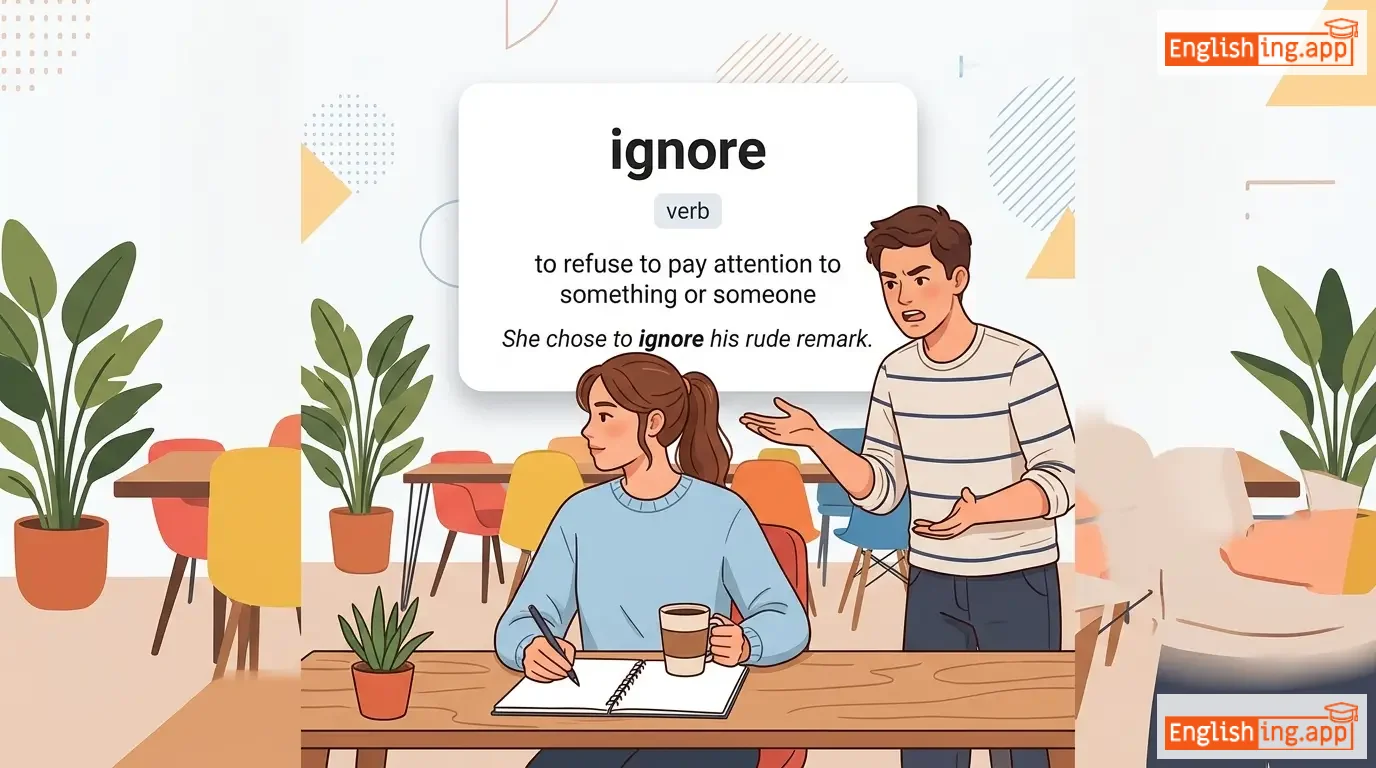
to refuse to pay attention to something or someone
••••••
|
She chose to ignore his rude remark.
她选择忽略他粗鲁的评论。
••••••
|
她选择忽略他粗鲁的评论。
Tā xuǎnzé hūlüè tā cūlǔ de pínglùn.
••••••
|
ignore the elephant in the room
忽略房间里的大象
••••••
|
to deliberately avoid talking about a major issue
••••••
|
忽略房间里的大象
Hūlüè fángjiān lǐ de dà xiàng
••••••
|
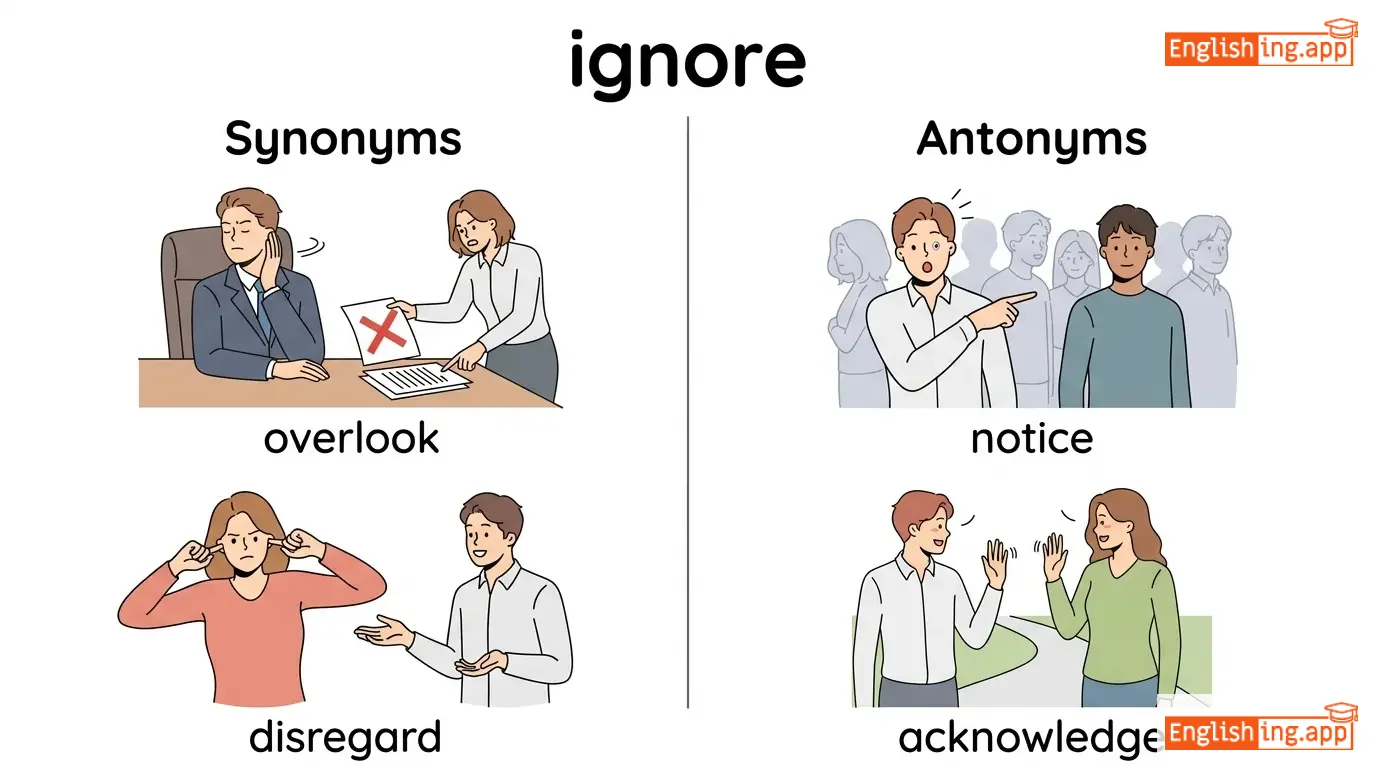
overlook, disregard, neglect, avoid, dismiss
••••••
|
notice, acknowledge, recognize
••••••
|
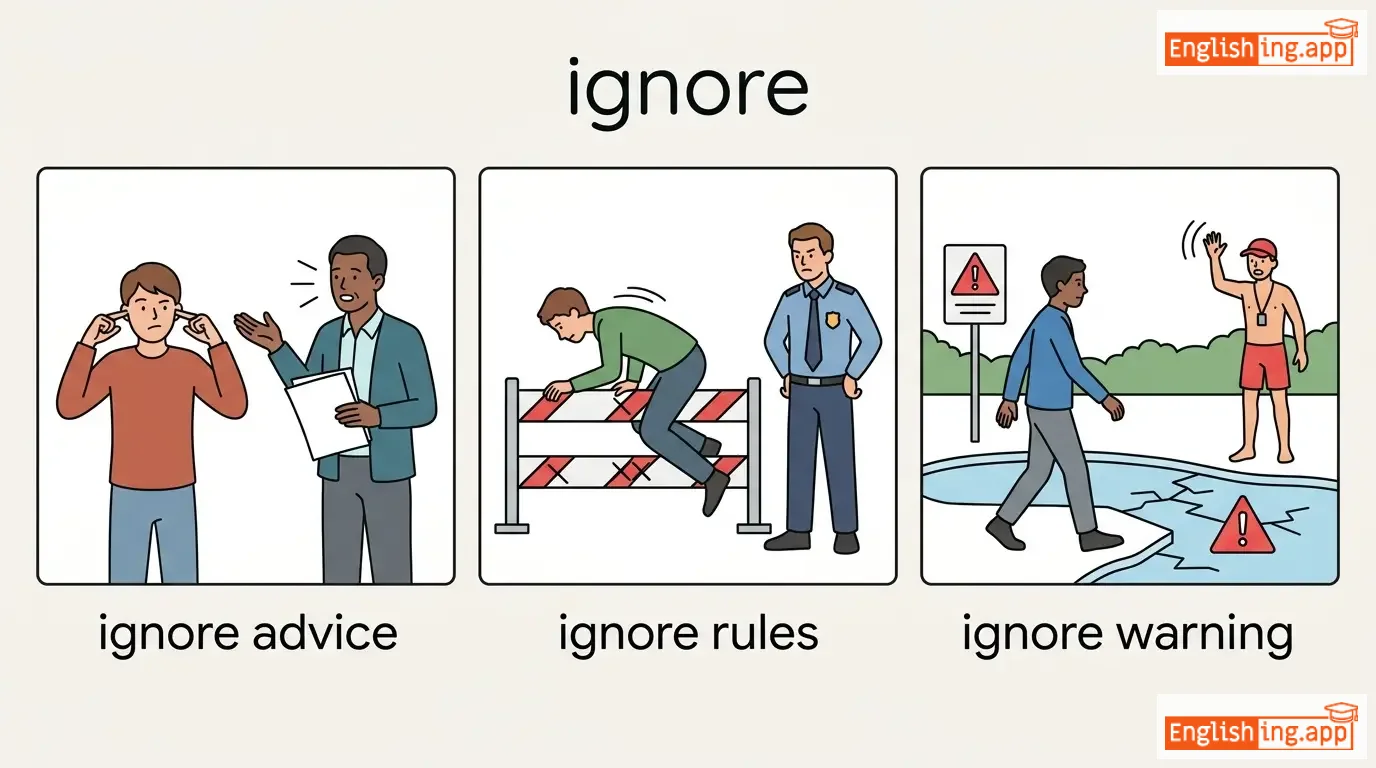
ignore advice, ignore rules, ignore warning
••••••
|
忽略就像是说 '忽略它!' 当你不想听的时候
••••••
|
|
#2553
🤒
|
/ɪl/
adjective
(il)
••••••
|
- •••••• |
生病
shengbing
••••••
|
- •••••• | - •••••• | - •••••• | - •••••• |
Not in good health; sick or unwell.
••••••
|
He has been feeling ill since yesterday. |
他从昨天开始感觉不舒服。
Ta cong zuotian kaishi ganjue bushi fu.
••••••
|
ill at ease |
feeling uncomfortable or uneasy
••••••
|
不舒服
bushi fu
••••••
|
sick, unwell, unhealthy, ailing
••••••
|
healthy, well, fine
••••••
|
feel ill, fall ill, ill health, ill effects
••••••
|
Ill 就是生病,记住 'ill' 就是生病 🤒.
••••••
|
|
#2554
🚫
|
/ɪˈliː.ɡəl/
adjective
(非法)
••••••
|
- •••••• |
非法
feifa
••••••
|
- •••••• | - •••••• | - •••••• | - •••••• |
Not allowed by law; unlawful.
••••••
|
It is illegal to drive without a valid license. |
没有有效许可证驾驶是非法的。
Meiyou youxiao xukezheng jiaoshi shi feifa de.
••••••
|
- •••••• | - •••••• | - •••••• |
unlawful, criminal, forbidden, prohibited, illicit
••••••
|
legal, lawful, legitimate
••••••
|
illegal activity, illegal trade, illegal immigrant, illegal action
••••••
|
illegal 意味着法律不允许,因此 → 非法。
••••••
|
|
#2555
✍️
|
/ɪˌledʒ.əˈbɪl.ə.ti/
noun
(yī-lè-jī-bǐ-lì-tī)
••••••
|
- •••••• |
难以辨认
nanyi bianren
••••••
|
- •••••• | - •••••• | - •••••• | - •••••• |
the quality of being impossible or difficult to read; unclear writing or print
••••••
|
The doctor's handwriting was famous for its illegibility among the pharmacy staff. |
医生的字迹因其难以辨认而在药房工作人员中广为人知。
Yisheng de ziji yin qi nanyi bianren er zai yaofang gongzuoren yuan zhong guangwei renzhi.
••••••
|
- •••••• | - •••••• | - •••••• |
unreadability, unclear writing, indecipherability, obscurity
••••••
|
legibility, clarity, readability, clear writing
••••••
|
handwriting illegibility, complete illegibility, famous illegibility
••••••
|
难以辨认的字迹就像医生的签名,大家都不懂!
••••••
|
|
#2556
✍️
|
/ɪˈledʒ.ə.bəl/
adjective
(illegible)
••••••
|
- •••••• |
难以辨认
nán yǐ biàn rèn
••••••
|
- •••••• | - •••••• | - •••••• | - •••••• |
Not clear enough to be read; unreadable.
••••••
|
The doctor’s handwriting was almost illegible. |
医生的字迹几乎难以辨认。
Yīshēng de zìjì jīhū nán yǐ biàn rèn.
••••••
|
- •••••• | - •••••• | - •••••• |
unreadable, unclear, indecipherable, obscure
••••••
|
legible, readable, clear
••••••
|
illegible handwriting, illegible text, illegible note, illegible document
••••••
|
illegible 意思是不能读 → 难以辨认
••••••
|
|
#2557
🚷
|
/ɪˈlɪbərəl/
adjective
(伊利比瑞尔)
••••••
|
- •••••• |
非自由主义的
fei zi you zhu yi de
••••••
|
- •••••• | - •••••• | - •••••• | - •••••• |
Opposed to liberal principles; restricting freedom of thought or behavior.
••••••
|
The government was criticized for its illiberal policies.
政府因其非自由主义的政策而受到批评。
••••••
|
政府因其非自由主义的政策而受到批评。
Zhengfu yin qi fei ziyou zhuyi de zhengce er shoudao piping.
••••••
|
- •••••• | - •••••• | - •••••• |
narrow-minded, intolerant, authoritarian, repressive
••••••
|
liberal, tolerant, open-minded
••••••
|
illiberal regime, illiberal policies, illiberal attitude, illiberal practices
••••••
|
Illiberal 是 liberal 的反义词,所以非自由主义的。
••••••
|
|
#2558
📚
|
/ɪˈlɪtərəsi/
noun
(伊利特拉西)
••••••
|
|
文盲
wenmang
••••••
|
- •••••• | - •••••• | - •••••• | - •••••• |
The inability to read or write.
••••••
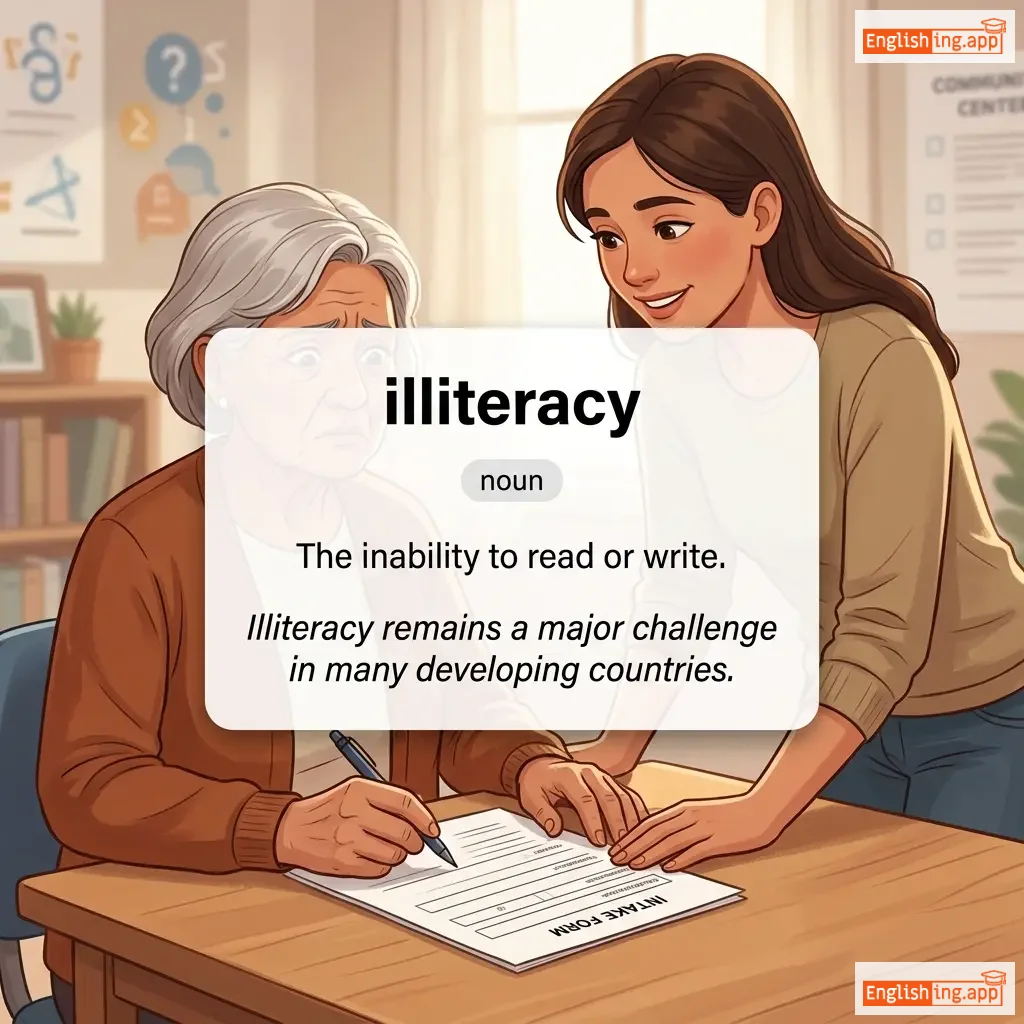
|
Illiteracy remains a major challenge in many developing countries. |
文盲在许多发展中国家仍然是一个重大挑战。
Wenmang zai xu duo fazhan zhongguo jia rengran shi yige zhongda tiaozhan.
••••••
|
- •••••• | - •••••• | - •••••• |
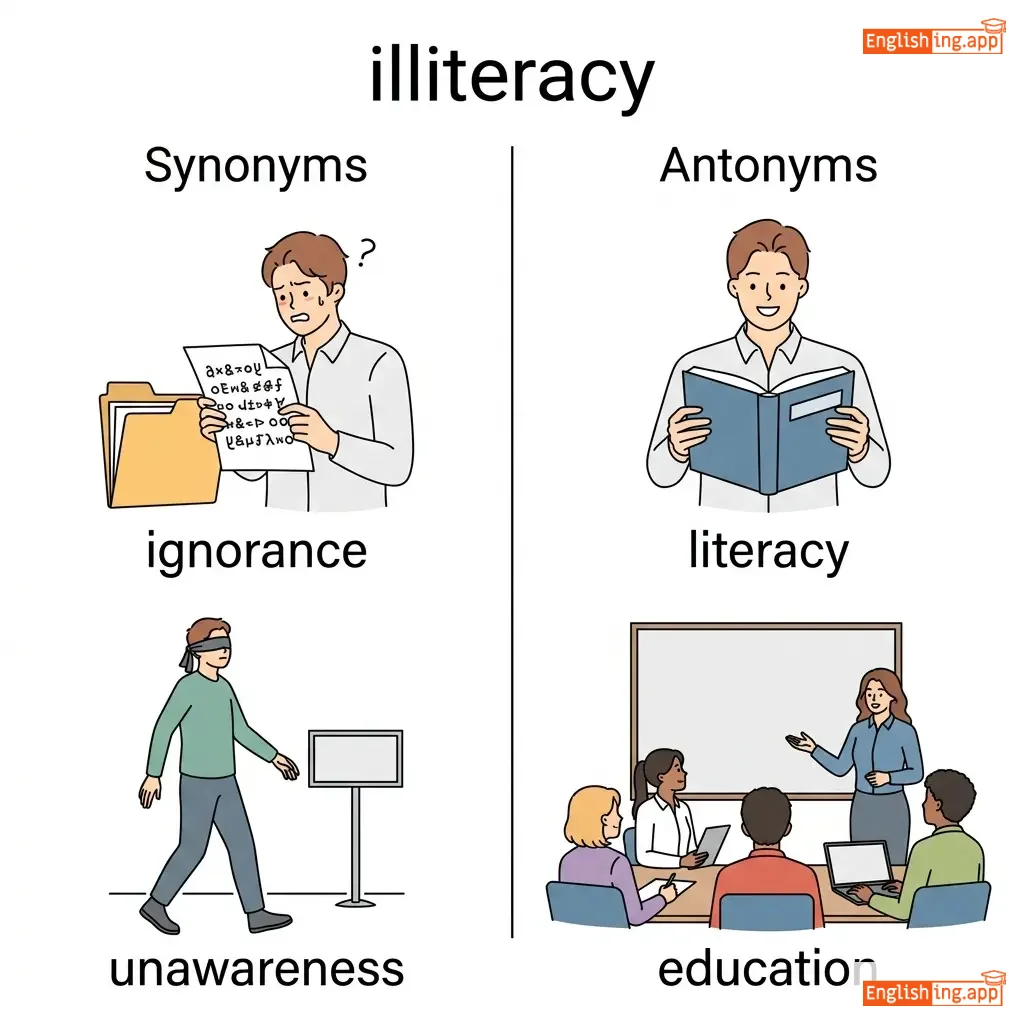
ignorance, unawareness, ill-education, illiterateness
••••••
|
literacy, education, knowledge
••••••
|
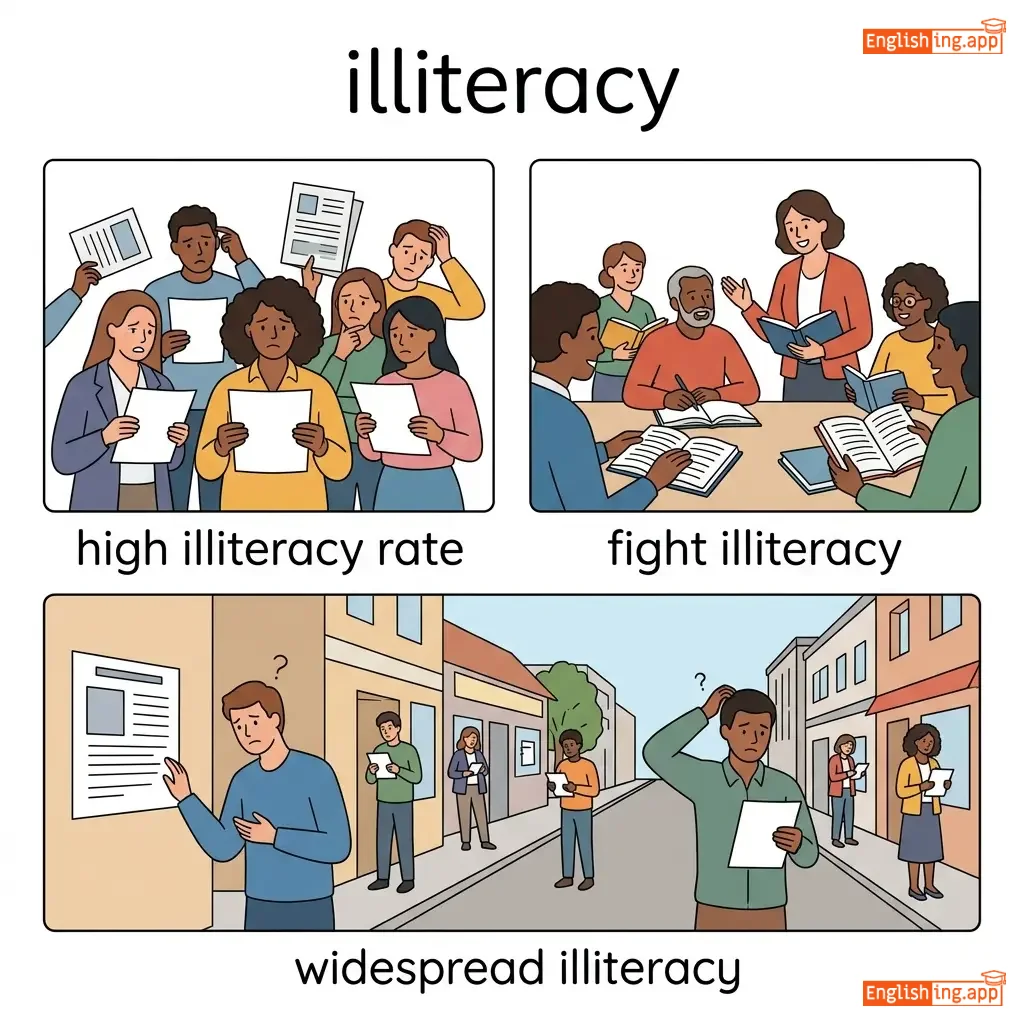
high illiteracy rate, fight illiteracy, widespread illiteracy, adult illiteracy
••••••
|
Illiterate 代表一个不能阅读或写作的人 → Illiteracy = 文盲
••••••
|
|
#2559
🙈
|
/ɪˈlɪtərət/
adjective
(伊利特雷特)
••••••
|
- •••••• |
文盲
wenmang
••••••
|
- •••••• | - •••••• | - •••••• | - •••••• |
Unable to read or write.
••••••
|
Many villagers were still illiterate in the past. |
许多村民过去仍然是文盲。
Xuduo cunmin guoqu rengran shi wenmang.
••••••
|
computer illiterate |
Lacking basic knowledge or skill in using computers
••••••
|
计算机文盲
jisuanji wenmang
••••••
|
uneducated, unread, ignorant, unschooled
••••••
|
literate, educated, knowledgeable
••••••
|
illiterate person, remain illiterate, largely illiterate, computer illiterate
••••••
|
文盲 = 不能读写 → 文盲
••••••
|
|
#2560
🩺
|
/ˈɪlnəs/
noun
(ilness)
••••••
|
- •••••• |
疾病
jíbìng
••••••
|
- •••••• | - •••••• | - •••••• | - •••••• |
A condition of being unwell or suffering from a disease.
••••••
|
She missed school due to a serious illness.
她因为严重的疾病错过了学校。
••••••
|
她因为严重的疾病错过了学校。
Tā yīnwèi yánzhòng de jíbìng cuòguòle xuéxiào.
••••••
|
- •••••• | - •••••• | - •••••• |
sickness, disease, ailment, disorder
••••••
|
health, wellness
••••••
|
chronic illness, mental illness, recover from illness, illness symptoms
••••••
|
Illness = 疾病。 'Ill' 和 'ness' 表示生病。
••••••
|
|
#2561
🤔❌
|
/ɪˈlɒdʒ.ɪ.kəl/
adjective
••••••
|
- •••••• |
不合逻辑的
bù hé luó ji de
••••••
|
- •••••• | - •••••• | - •••••• | - •••••• |
not reasonable or sensible; lacking logic
••••••
|
It would be illogical to go swimming in such cold weather. |
在这么冷的天气下游泳是不合逻辑的。
zai zhe me leng de tian qi xia you yong shi bu he luo ji de
••••••
|
- •••••• | - •••••• | - •••••• |
irrational, unreasonable, senseless, absurd
••••••
|
logical, rational, reasonable, sensible
••••••
|
illogical argument, illogical thinking, illogical conclusion
••••••
|
不合逻辑的 - 当事情不符合常规时,它是不合逻辑的。
••••••
|
Vocabulary Quiz
Test your vocabulary by matching words with their translations or meanings.
Login to take the quiz
Comments (0)
Share your thoughts and join the discussion.
Join the discussion by logging in
Login to CommentNo comments yet
Be the first to share your thoughts!