












Swipe left or right, or use the buttons. Tap image to zoom.
例句翻译
单词
Lesson 83Lesson 83 - 遮罩切换
|
表情符号
|
单词 | Images | 翻译 | 过去时 | 过去分词 | 第三人称单数 | 动名词 | 含义 | 例句 | 例句翻译 | 示例表达 | 示例表达含义 | 示例表达翻译 | 同义词 | 反义词 | 搭配词 | 助记符 |
|---|---|---|---|---|---|---|---|---|---|---|---|---|---|---|---|---|---|
|
#3931
📌
|
/praɪˈɒrɪti/
noun
(优先)
••••••
|
- •••••• |
优先
youxian
••••••
|
- •••••• | - •••••• | - •••••• | - •••••• |
Something that is regarded as more important than other things.
••••••
|
Safety is the top priority in this company. |
在这家公司,安全是最重要的优先事项。
Zai zhe jia gongsi, anquan shi zui zhongyao de youxian shixiang.
••••••
|
first priority |
The most important thing that needs to be dealt with before others.
••••••
|
第一优先
Di yi youxian
••••••
|
importance, precedence, preference, primacy
••••••
|
inferiority, unimportance
••••••
|
top priority, high priority, main priority, set priority
••••••
|
优先意味着最重要的事情,必须首先做。
••••••
|
|
#3932
🏚️
|
/ˈprɪzən/
noun
(监狱)
••••••
|
- •••••• |
监狱
jianyu
••••••
|
- •••••• | - •••••• | - •••••• | - •••••• |
a building where people are kept as punishment for a crime or while waiting for trial
••••••
|
He was sent to prison for his crimes. |
他因犯下罪行而被送进监狱。
Ta yin fànxià zuìxíng ér bèi sòng jìn jiānyù.
••••••
|
- •••••• | - •••••• | - •••••• |
jail, penitentiary, correctional facility, lockup
••••••
|
freedom, liberty, release
••••••
|
prison sentence, prison cell, go to prison
••••••
|
Think of '监狱' in Chinese, where people who break the law are sent.
••••••
|
|
#3933
👨⚖️
|
/ˈprɪzənər/
noun
(囚犯)
••••••
|
- •••••• |
囚犯
qiúfàn
••••••
|
- •••••• | - •••••• | - •••••• | - •••••• |
a person who is in prison
••••••
|
The prisoner was granted parole after serving 10 years. |
这个囚犯在服刑10年后被释放。
Zhège qiúfàn zài fúxíng 10 nián hòu bèi shìfàng.
••••••
|
- •••••• | - •••••• | - •••••• |
inmate, convict, detainee, captive
••••••
|
free person, citizen, civilian
••••••
|
prisoner of war, political prisoner, life sentence prisoner
••••••
|
A prisoner is a 'qiúfàn' who is in prison in Chinese.
••••••
|
|
#3934
🔒
|
/ˈpraɪ.və.si/
noun
(隐私)
••••••
|
- •••••• |
隐私
yinsi
••••••
|
- •••••• | - •••••• | - •••••• | - •••••• |
the state of being alone and not watched or disturbed by other people; the right to keep your personal information secret
••••••
|
Everyone has the right to privacy. |
每个人都有隐私权。
meige ren dou you yinsi quan.
••••••
|
- •••••• | - •••••• | - •••••• |
secrecy, confidentiality, solitude
••••••
|
publicity, exposure, openness
••••••
|
right to privacy, privacy policy, privacy settings, invasion of privacy
••••••
|
隐私 (privacy) 就是给你一个私人空间,像追求幸福一样自由。
••••••
|
|
#3935
🔒
|
/ˈpraɪ.vət/
adjective
(práivet)
••••••
|
- •••••• |
私人; 保密的; 非公开的; 个别的
sīrén; bǎomì de; fēi gōngkāi de; gèbié de
••••••
|
- •••••• | - •••••• | - •••••• | - •••••• |
personal; confidential; not public; individual
••••••
|
This is a private conversation between two friends.
这是两个朋友之间的私人对话。
••••••
|
这是两个朋友之间的私人对话。
Zhè shì liǎng gè péngyǒu zhī jiān de sīrén duìhuà.
••••••
|
- •••••• | - •••••• | - •••••• |
personal, confidential, secret, individual
••••••
|
public, open, shared, common
••••••
|
private property, private life, private school, private sector
••••••
|
私人对话就像秘密一样不公开。
••••••
|
|
#3936
🤫
|
/ˈpraɪ.vət.li/
adverb
(pǔláiwèitèlí)
••••••
|
- •••••• |
私下; 保密地
sīxià; bǎomì de
••••••
|
- •••••• | - •••••• | - •••••• | - •••••• |
in a private manner; without others present; confidentially
••••••
|
She spoke to him privately about the matter. |
她私下里和他谈论了这个问题。
Tā sīxià lǐ hé tā tánlùnle zhège wèntí.
••••••
|
- •••••• | - •••••• | - •••••• |
confidentially, secretly, personally, individually
••••••
|
publicly, openly, collectively
••••••
|
speak privately, meet privately, privately owned
••••••
|
Privately is 'sīxià' in Chinese.
••••••
|
|
#3937
🏢
|
/ˌpraɪvətəˈzeɪʃən/
noun
(puraivetaizéishon)
••••••
|
|
私有化
siyouhua
••••••
|
- •••••• | - •••••• | - •••••• | - •••••• |
the process of transferring ownership of a business, industry, or service from the public sector to the private sector
••••••
|
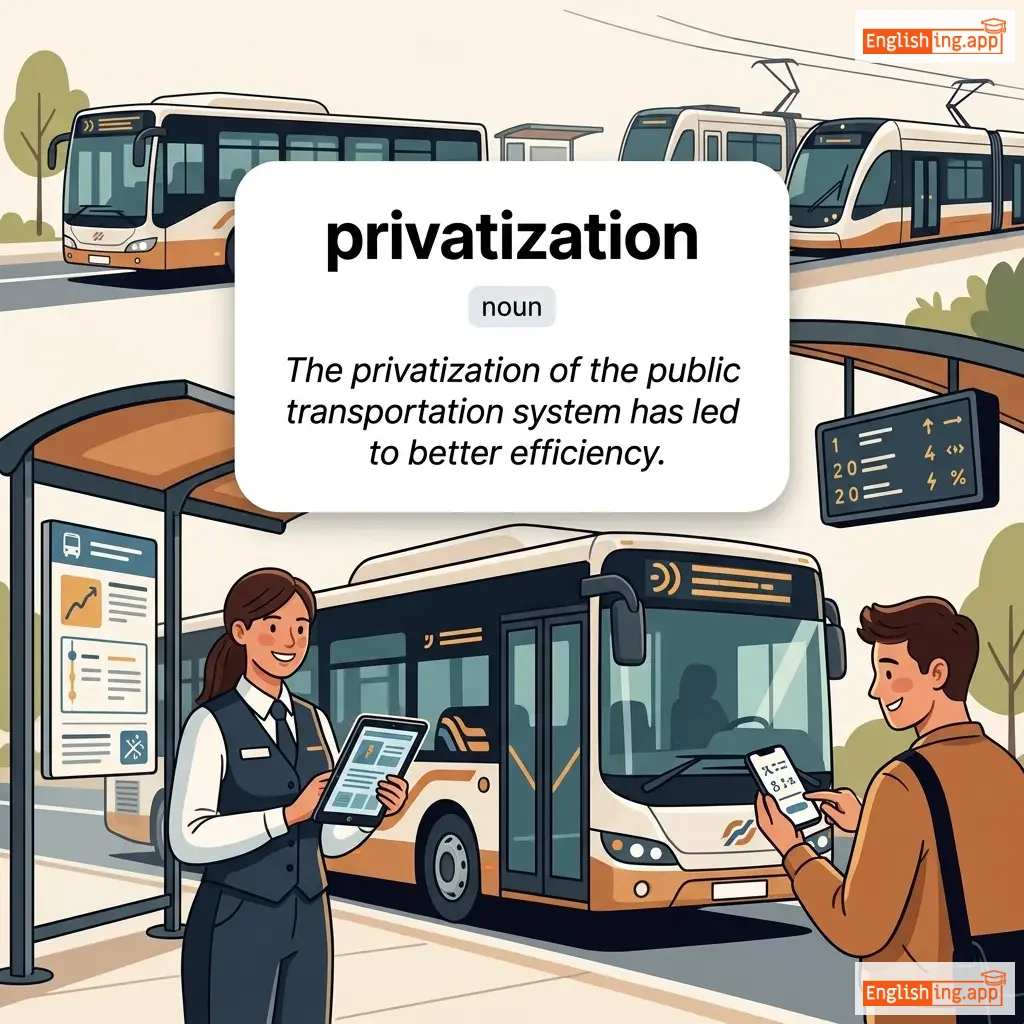
The privatization of the public transportation system has led to better efficiency.
公共交通系统的私有化带来了更高的效率。
••••••
|
公共交通系统的私有化带来了更高的效率。
Gonggong jiaotong xitong de siyouhua dailai le geng gao de xiaolü.
••••••
|
- •••••• | - •••••• | - •••••• |
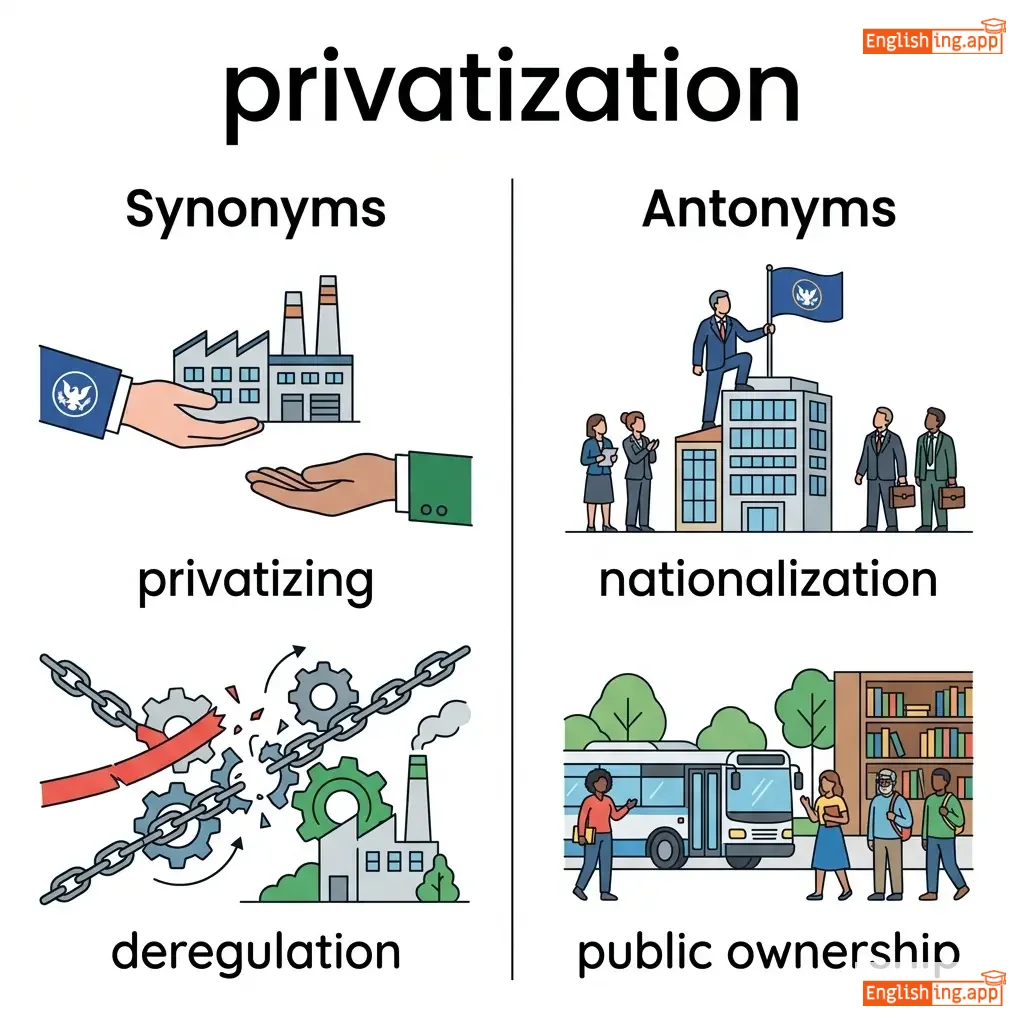
privatizing, deregulation, commercialization
••••••
|
nationalization, public ownership
••••••
|
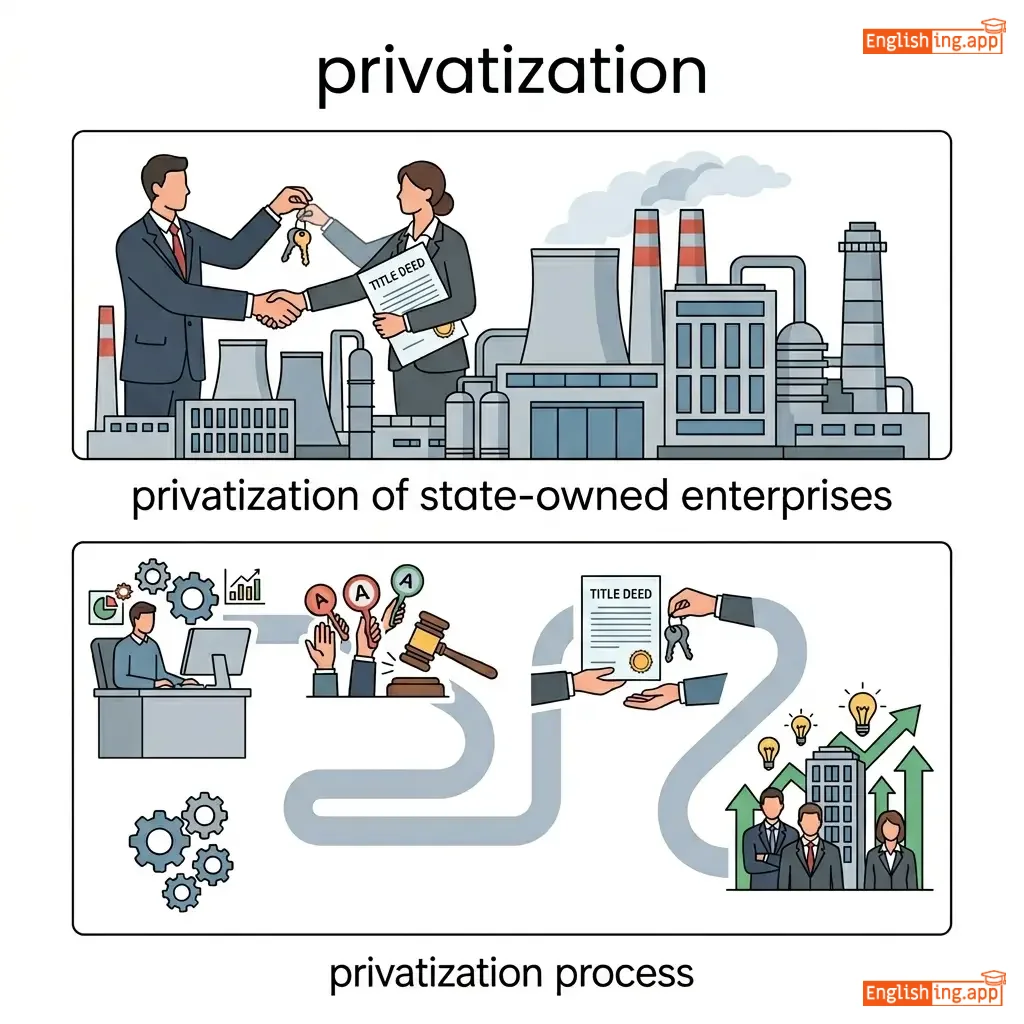
privatization of state-owned enterprises, privatization process
••••••
|
私有化是从公共到私人,就像公共服务变成了私人企业。
••••••
|
|
#3938
🎖️
|
/ˈprɪvəlɪdʒ/
noun
(privilege)
••••••
|
- •••••• |
特权, 优势
tequan, youshi
••••••
|
- •••••• | - •••••• | - •••••• | - •••••• |
A special right, advantage, or immunity granted or available only to a particular person or group.
••••••
|
Education is considered a privilege in many developing countries. |
在许多发展中国家,教育被视为一种特权。
Zai xu duo fazhan zhongguo jia, jiaoyu bei shi wei yi zhong tequan.
••••••
|
white privilege |
Societal advantages that benefit white people beyond what is commonly experienced by non-white people under the same circumstances.
••••••
|
白人特权
bairen tequan
••••••
|
advantage, benefit, right, entitlement, honor
••••••
|
disadvantage, restriction, burden
••••••
|
enjoy privilege, special privilege, privilege of, privilege to
••••••
|
Privilege 是指一种只有特定群体才能享受的特权。
••••••
|
|
#3939
🏆
|
/praɪz/
noun, verb
(puraizi)
••••••
|
- •••••• |
奖品
jiangpin
••••••
|
prized
puraizd
••••••
|
prized
puraizd
••••••
|
prizes
puraizes
••••••
|
prizing
puraizing
••••••
|
something given as a reward for achievement; to value highly
••••••
|
He won the first prize in the competition.
他在比赛中获得了第一名奖。
••••••
|
他在比赛中获得了第一名奖。
Ta zai bisai zhong huode le di yi ming jiang.
••••••
|
prize possession
珍贵的财产
••••••
|
something cherished greatly
••••••
|
非常珍贵的财富
feichang zhengui de caifu
••••••
|
award, reward, trophy, treasure, honor
••••••
|
loss, forfeit, neglect
••••••
|
first prize, grand prize, prize money, prize possession
••••••
|
奖品(Prize) — 赢得奖品,你就有奖品的拥有权。
••••••
|
|
#3940
🎲
|
/ˌprɒb.əˈbɪl.ə.ti/
noun
(概率)
••••••
|
- •••••• |
概率
gailv
••••••
|
- •••••• | - •••••• | - •••••• | - •••••• |
the likelihood that something will happen; a mathematical measure of how likely something is to occur
••••••
|
There is a high probability of rain tomorrow.
明天有很高的降雨概率。
••••••
|
明天有很高的降雨概率。
Mingtian you hen gao de jiangyu gailv.
••••••
|
- •••••• | - •••••• | - •••••• |
likelihood, chance, possibility, odds
••••••
|
impossibility, certainty
••••••
|
high probability, low probability, probability theory, in all probability
••••••
|
Probability = 概率
••••••
|
|
#3941
🌧️
|
/ˈprɒbəbl̩/
adjective
(próbábl)
••••••
|
- •••••• |
可能的
keneng de
••••••
|
- •••••• | - •••••• | - •••••• | - •••••• |
likely to happen or be true, but not certain
••••••
|
Rain is probable tomorrow according to the forecast.
根据预测,明天可能会下雨。
••••••
|
根据预测,明天可能会下雨。
genju yuce, mingtian keneng hui xiayu.
••••••
|
highly probable
高度可能
••••••
|
very likely to happen
••••••
|
高度可能
gaodu keneng
••••••
|
likely, possible, expected, potential, feasible
••••••
|
unlikely, impossible, doubtful
••••••
|
probable cause, highly probable, probable outcome, probable reason
••••••
|
Probable 就像 Probability,表示可能发生的事情。
••••••
|
|
#3942
🤷
|
/ˈprɒb.ə.bli/
adverb
(probabili)
••••••
|
- •••••• |
可能
keneng
••••••
|
- •••••• | - •••••• | - •••••• | - •••••• |
almost certainly; very likely; in all likelihood
••••••
|
He will probably arrive late tonight.
他今晚可能会迟到。
••••••
|
他今晚可能会迟到。
ta jinwan keneng hui chidao
••••••
|
- •••••• | - •••••• | - •••••• |
likely, presumably, most likely, in all probability
••••••
|
improbably, unlikely, definitely not
••••••
|
probably true, probably not, most probably
••••••
|
可能 = keneng
••••••
|
|
#3943
🔍
|
/proʊb/
verb, noun
(prōb)
••••••
|
|
探查
tànchá
••••••
|
probed
prōbd
••••••
|
probed
prōbd
••••••
|
probes
prōbs
••••••
|
probing
prōbing
••••••
|
to investigate thoroughly; a device used for exploration or examination
••••••
|
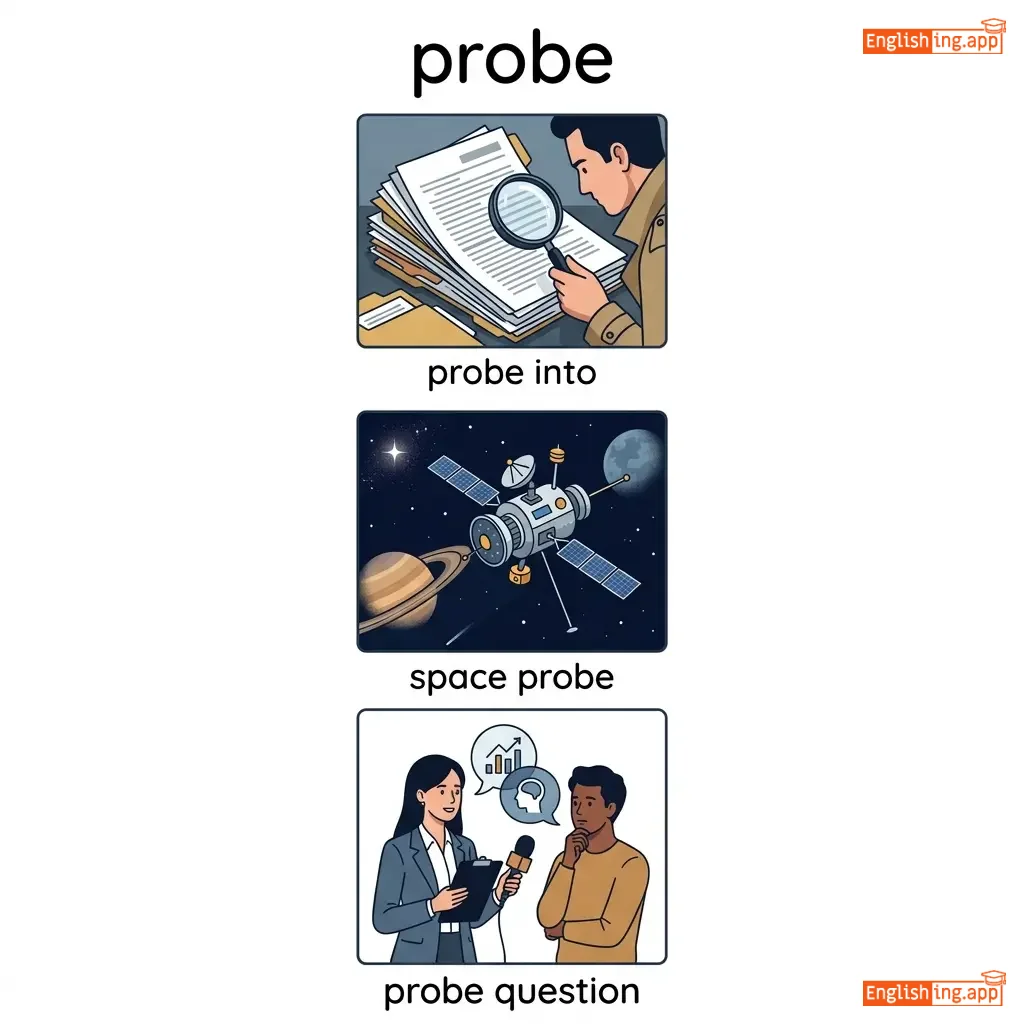
The journalist probed into the politician’s past.
记者探查了政治家的过去。
••••••
|
记者调查了政治家的过去。
Jìzhě diàochále zhèngzhìjiā de guòqù.
••••••
|
probe deeper
更深地探查
••••••
|
to investigate more thoroughly
••••••
|
更深地探查
Gèng shēn de tànchá
••••••
|
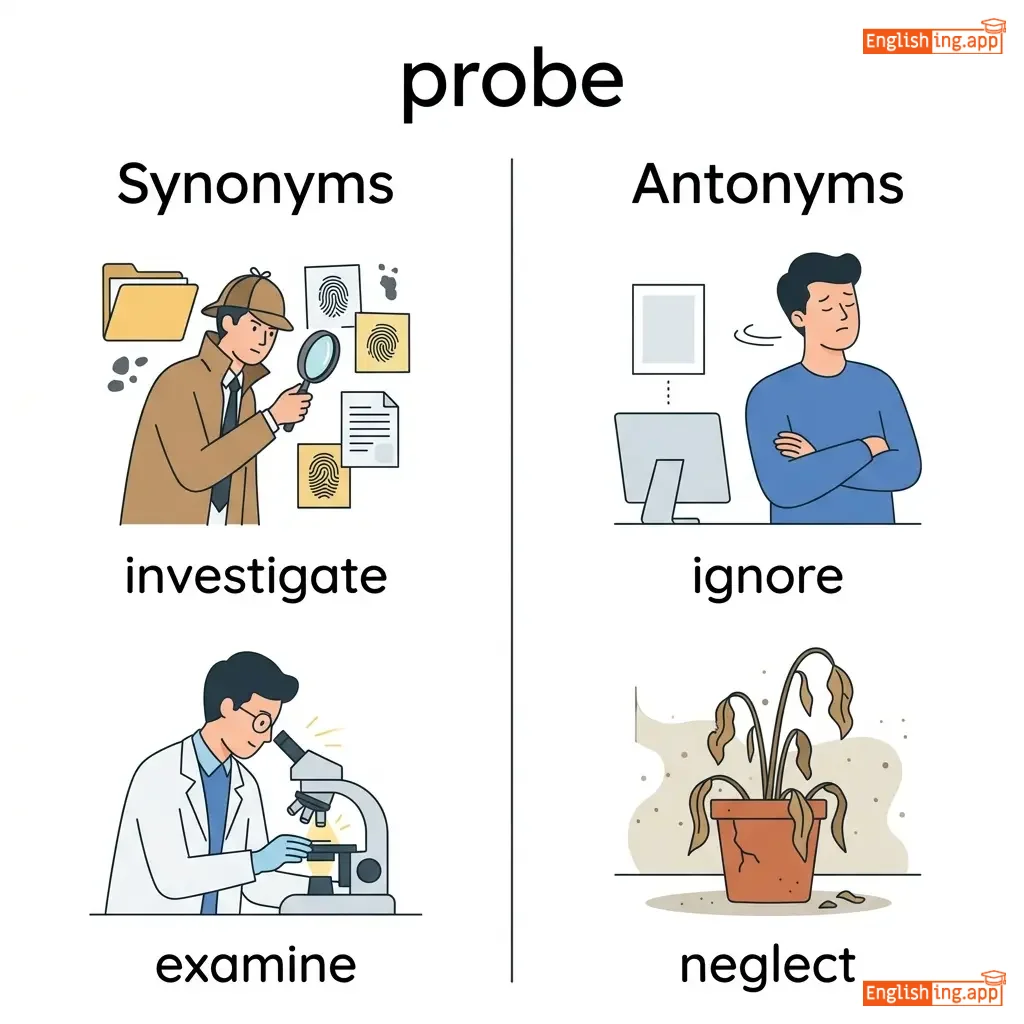
investigate, examine, explore, scrutinize, research
••••••
|
ignore, neglect, overlook
••••••
|
probe into, space probe, probe question, probe deeper
••••••
|
Probe 是深入探索 — 就像使用探针一样调查。
••••••
|
|
#3944
❓
|
/ˈprɒb.ləm/
noun
(问题)
••••••
|
- •••••• |
问题
wenti
••••••
|
- •••••• | - •••••• | - •••••• | - •••••• |
a situation that causes difficulties and needs to be dealt with or solved
••••••
|
We need to solve this problem quickly.
我们需要尽快解决这个问题。
••••••
|
我们需要尽快解决这个问题。
Women xuyao jinkuai jiejue zhege wenti.
••••••
|
- •••••• | - •••••• | - •••••• |
issue, difficulty, trouble, challenge
••••••
|
solution, answer, resolution
••••••
|
solve a problem, serious problem, major problem, problem solving
••••••
|
问题 (Wenti) - 就像英文中一样,问题是需要解决的事情。
••••••
|
|
#3945
⚠️
|
/ˌprɒb.ləˈmæt.ɪk/
adjective
(问题的)
••••••
|
|
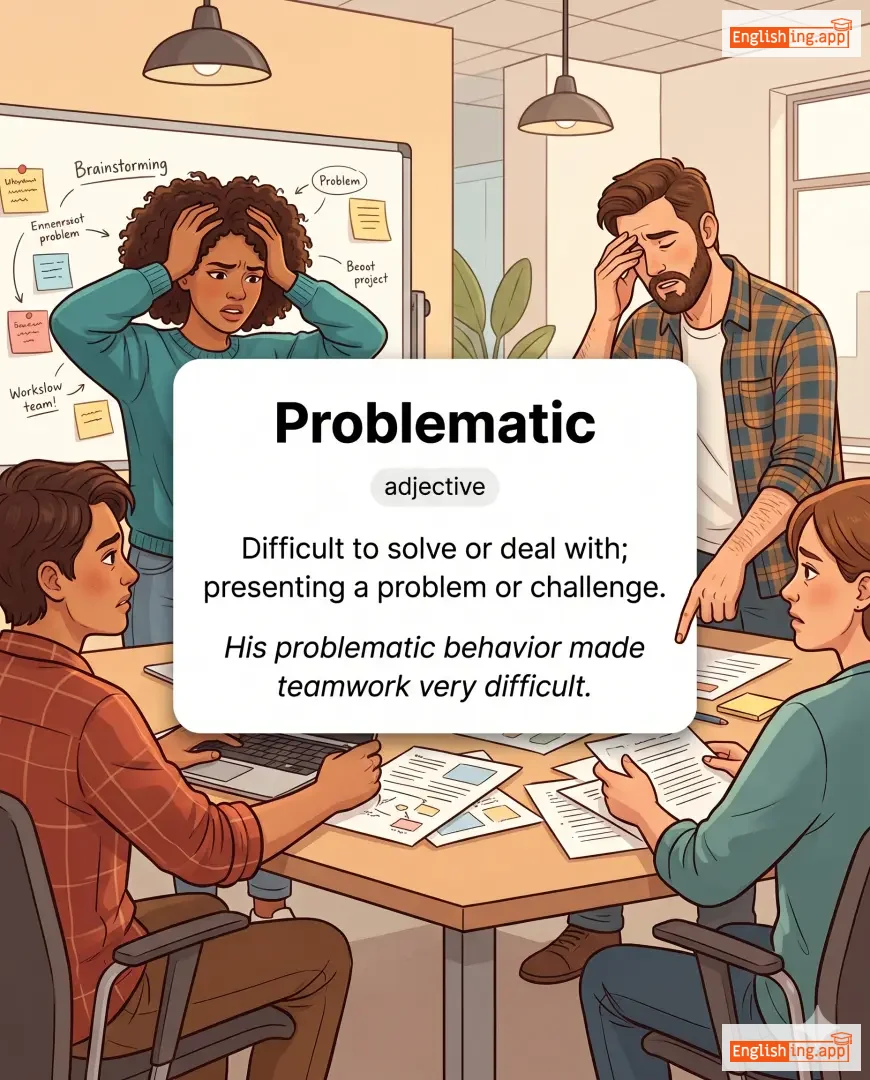
有问题的; 导致问题的
you wenti de; daozhi wenti de
••••••
|
- •••••• | - •••••• | - •••••• | - •••••• |
causing problems; troublesome; difficult to deal with
••••••
|
The new policy changes are problematic and need to be reviewed.
新政策的变化是有问题的,需要审查。
••••••
|
新政策的变化是有问题的,需要审查。
Xin zhengce de bianhua shi you wenti de, xuyao shencha.
••••••
|
- •••••• | - •••••• | - •••••• |
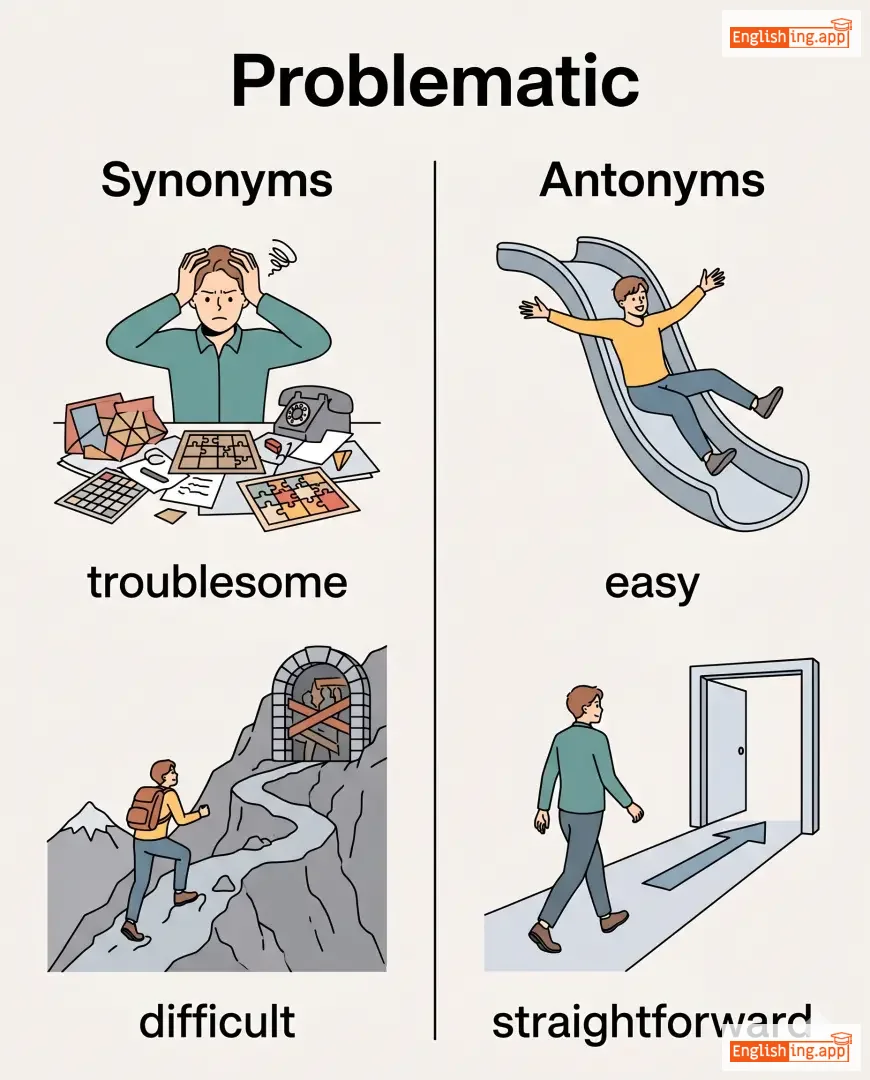
troublesome, difficult, challenging, questionable
••••••
|
unproblematic, easy, simple, straightforward
••••••
|
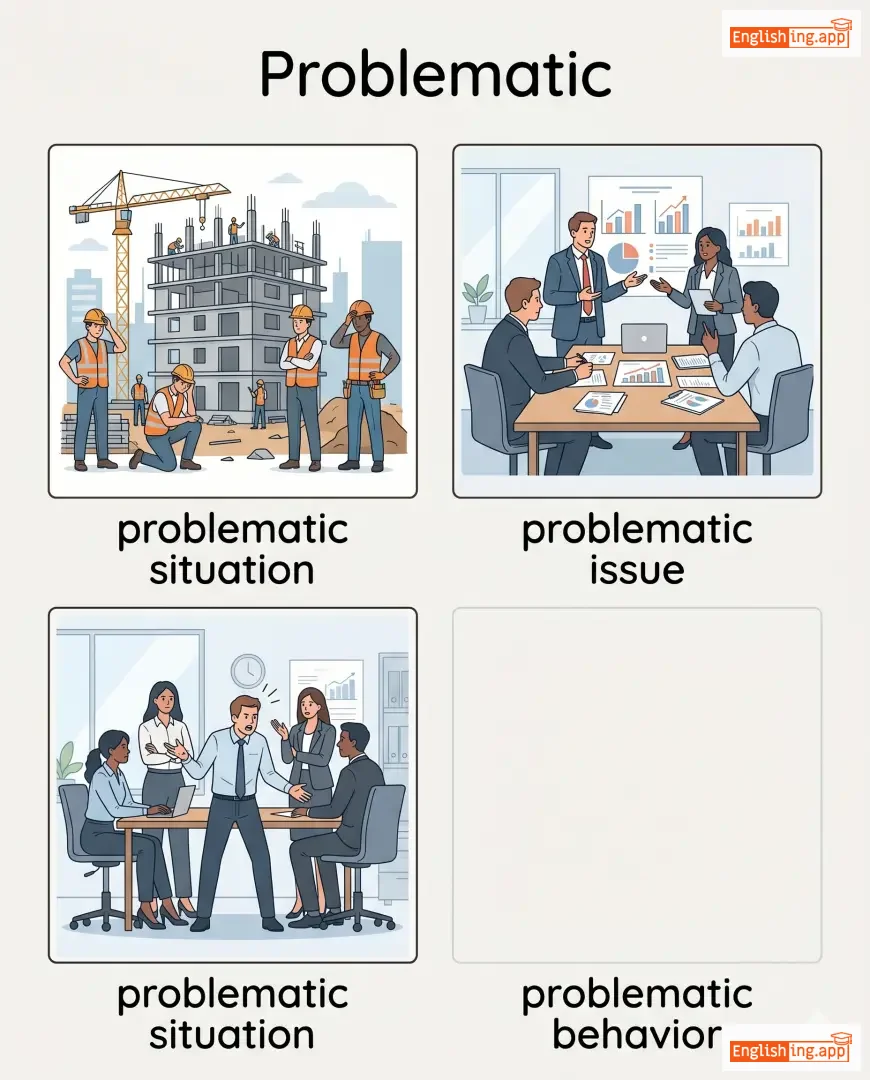
problematic situation, problematic behavior, highly problematic, potentially problematic
••••••
|
问题 (wenti) + 的 (de) = 有问题的 (you wenti de)
••••••
|
|
#3946
📋
|
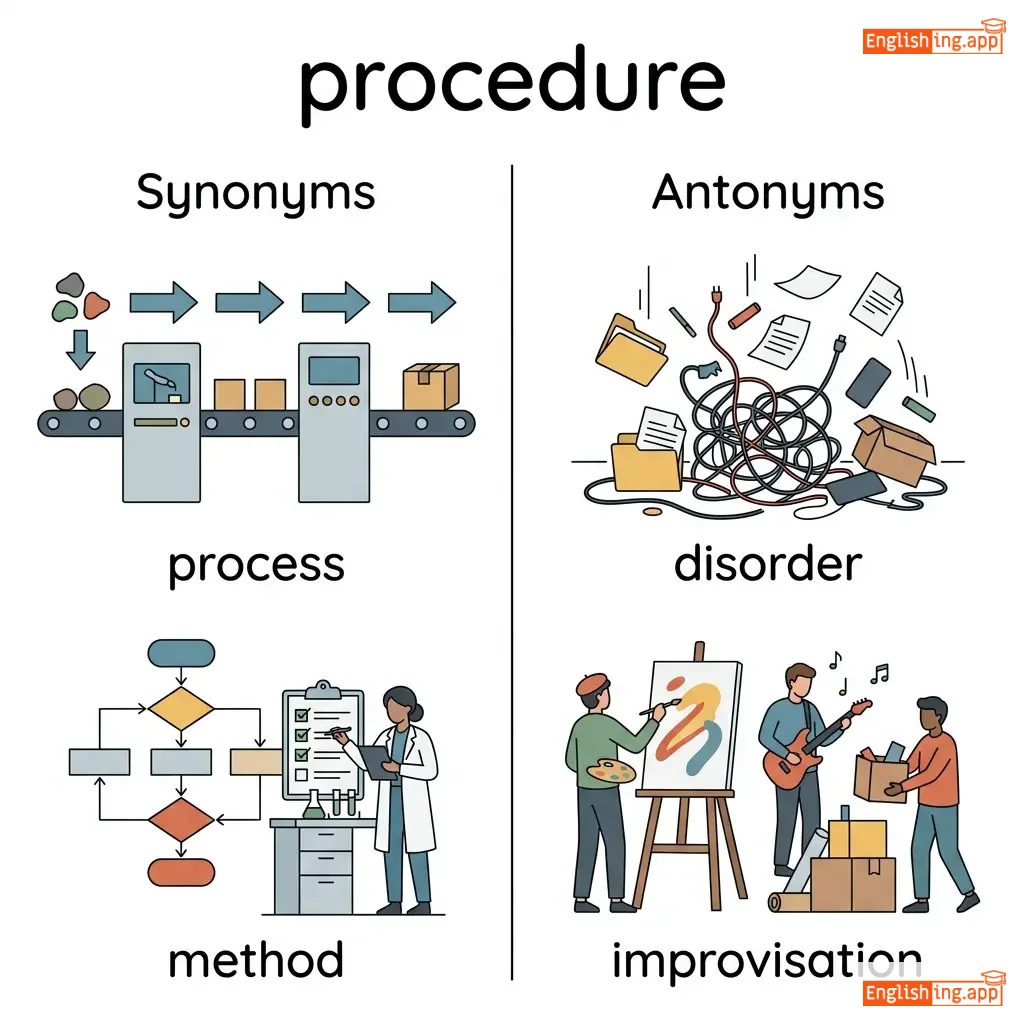
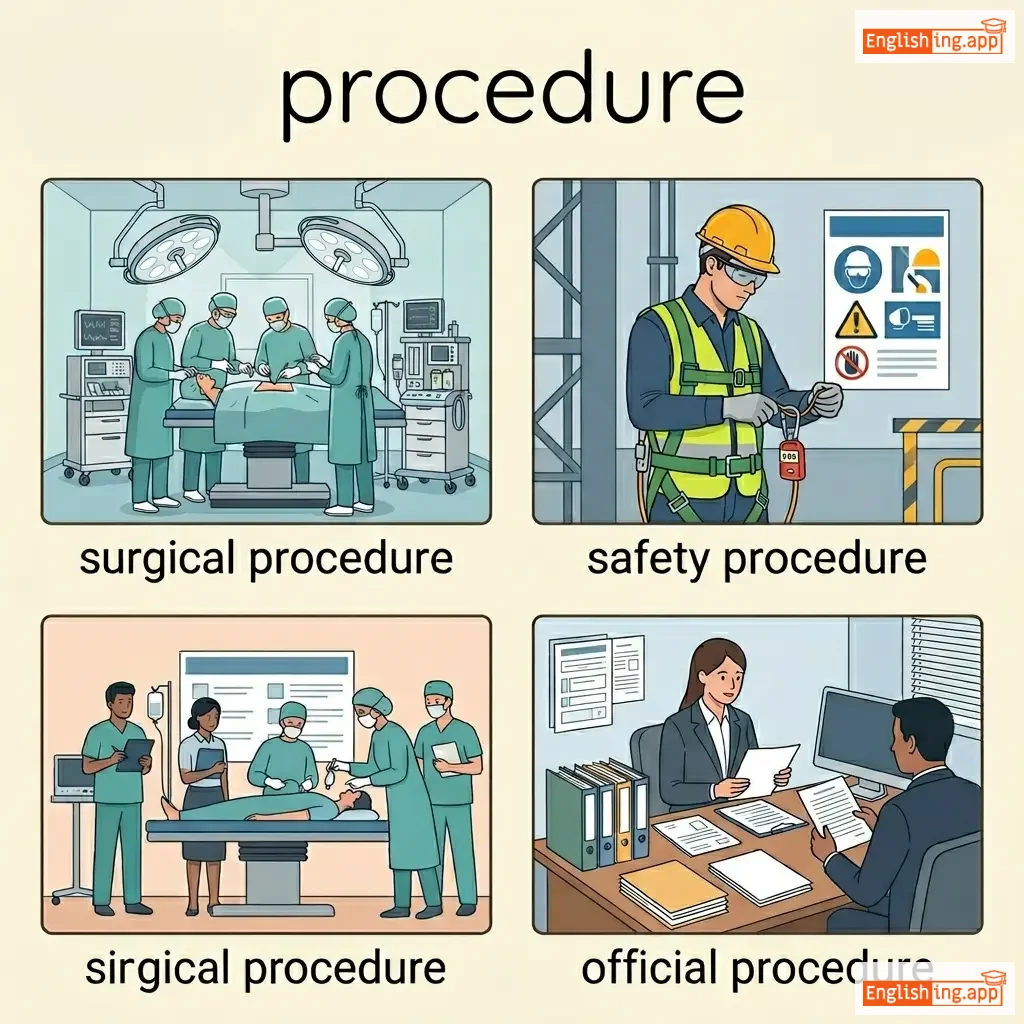
/prəˈsiː.dʒər/
noun
(程序)
••••••
|
|
程序
chengxu
••••••
|
- •••••• | - •••••• | - •••••• | - •••••• |
a set of actions that are the official or accepted way of doing something
••••••
|
Please follow the safety procedure carefully.
请小心遵循安全程序。
••••••
|
请小心遵循安全程序。
Qing xiaoxin zunxun anquan chengxu.
••••••
|
- •••••• | - •••••• | - •••••• |
process, method, system, protocol
••••••
|
chaos, disorder, improvisation
••••••
|
safety procedure, standard procedure, follow procedure, emergency procedure
••••••
|
程序:安全第一,遵循每一步骤
••••••
|
|
#3947
➡️
|
/prəˈsiːd/
verb
••••••
|
- •••••• | - •••••• |
proceeded
••••••
|
proceeded
••••••
|
proceeds
••••••
|
proceeding
••••••
|
to begin or continue an action or process after a pause or interruption
••••••
|
After the short break, the speaker proceeded with his lecture. |
- •••••• |
proceed with caution |
to continue carefully and with attention to potential risks
••••••
|
- •••••• |
continue, advance, move forward, progress, go on
••••••
|
stop, halt, cease
••••••
|
proceed further, proceed with caution, proceed against, proceed to
••••••
|
No •••••• |
|
#3948
📋
|
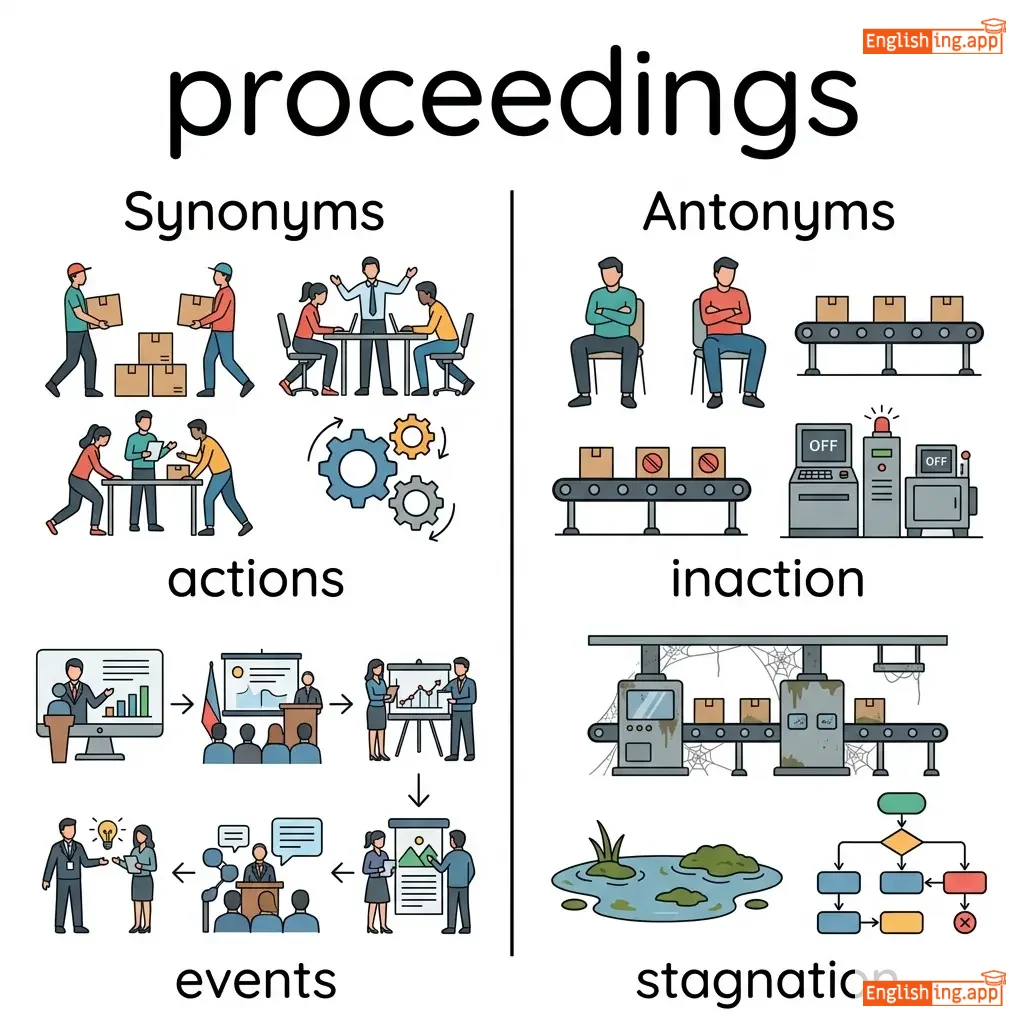
prəˈsiːdɪŋz
noun
(程序)
••••••
|
|
程序
chengxu
••••••
|
- •••••• | - •••••• | - •••••• | - •••••• |
An event or a series of activities involving a formal or set procedure.
••••••
|
The proceedings discussed language issues.
程序讨论了语言问题。
••••••
|
程序讨论了语言问题。
Chéngxù tǎolùnle yǔyán wèntí.
••••••
|
- •••••• | - •••••• | - •••••• |
actions, events
••••••
|
inaction, stagnation
••••••
|
- •••••• |
Think of 'chengxu' as a Chinese procedure – smooth and systematic!
••••••
|
|
#3949
💰
|
/ˈprəʊsiːdz/
noun
(proʊsiːdz)
••••••
|
- •••••• |
收入
shouru
••••••
|
- •••••• | - •••••• | - •••••• | - •••••• |
money obtained from an event, activity, or sale
••••••
|
The proceeds from the charity event were donated to the orphanage. |
慈善活动的收入被捐赠给了孤儿院。
Cishan huodong de shouru bei juanzeng gei le gu'er yuan.
••••••
|
net proceeds |
the remaining amount of money after expenses are deducted
••••••
|
净收入
jing shouru
••••••
|
earnings, revenue, profit, income, returns
••••••
|
loss, deficit
••••••
|
sale proceeds, net proceeds, distribute proceeds, donate proceeds
••••••
|
Proceeds意味着收入,就像从播种中获得的利润。
••••••
|
|
#3950
🔄
|
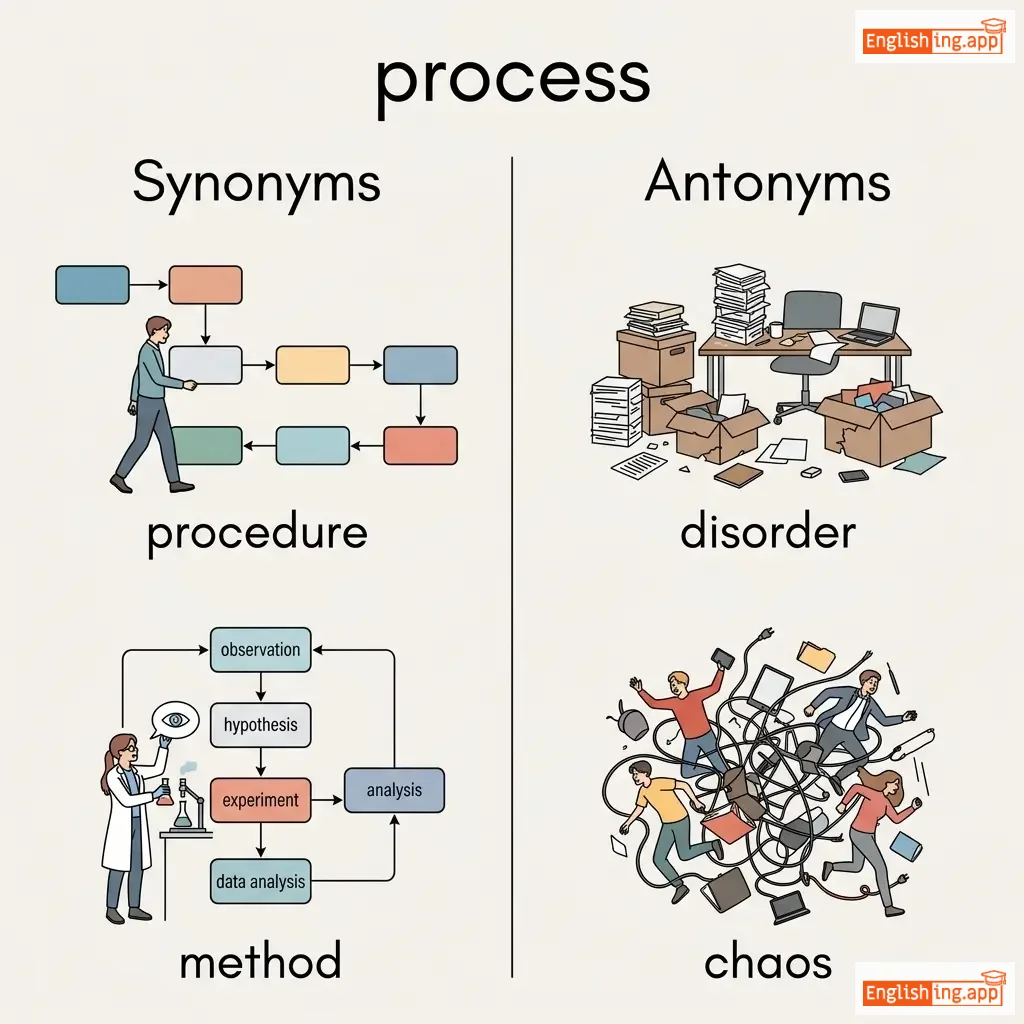
/ˈprəʊsɛs/
noun
(进程)
••••••
|
|
过程
guocheng
••••••
|
- •••••• | - •••••• | - •••••• | - •••••• |
a series of actions or steps taken to achieve a particular end
••••••
|
The hiring process takes several weeks.
招聘过程需要几周时间。
••••••
|
招聘过程需要几周时间。
Zhaopin guocheng xuyao ji zhou shijian.
••••••
|
- •••••• | - •••••• | - •••••• |
procedure, method, system, operation
••••••
|
disorder, chaos, confusion
••••••
|
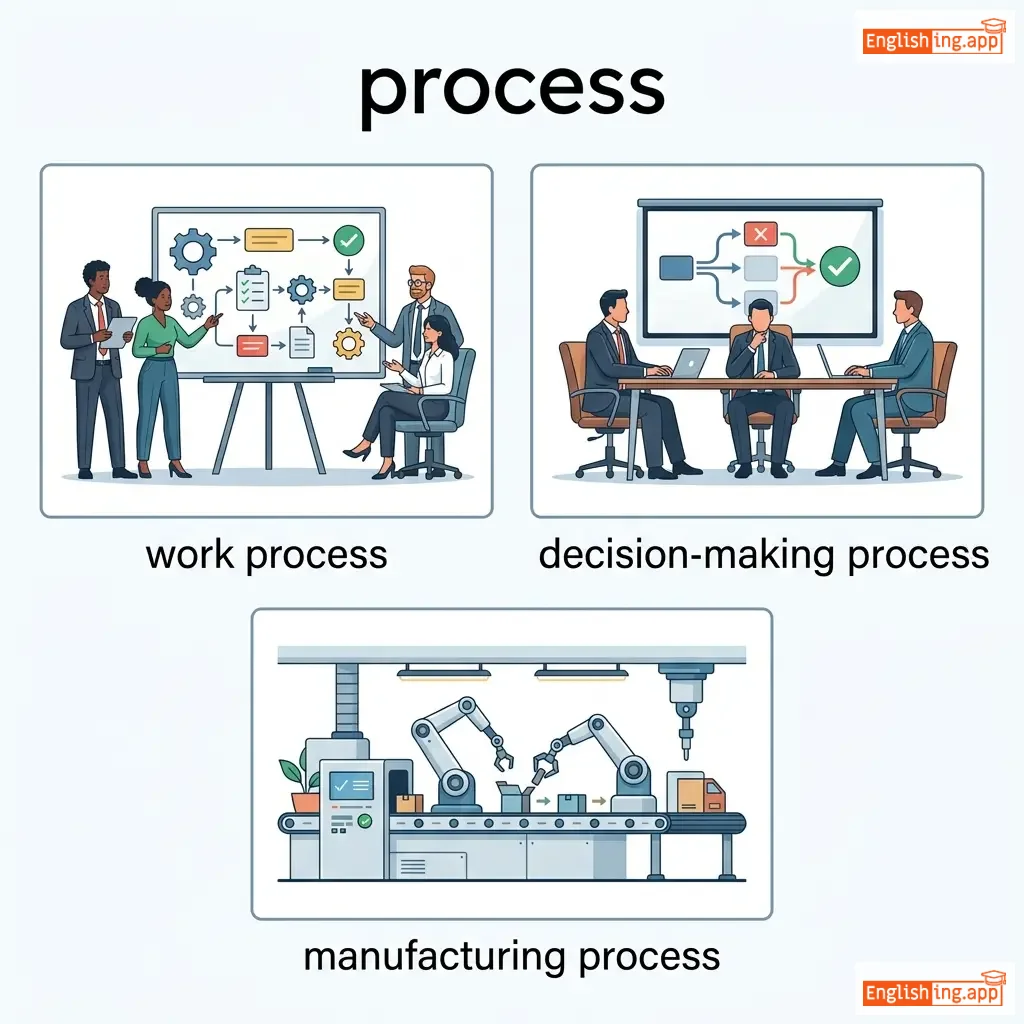
work process, decision-making process, manufacturing process
••••••
|
每一步都走向成功,过程即是进步!
••••••
|
|
#3951
⚙️
|
/ˈprəʊsesɪŋ/
noun
(处理)
••••••
|
- •••••• |
处理
chuli
••••••
|
- •••••• | - •••••• | - •••••• |
processing
处理
••••••
|
the series of actions or steps taken to achieve a particular end, especially in data or food handling
••••••
|
Data processing takes place in the server.
数据处理在服务器上进行。
••••••
|
数据处理在服务器上进行。
Shuju chuli zai fuwuqi shang jinxing.
••••••
|
- •••••• | - •••••• | - •••••• |
handling, treatment, operation, computation, execution
••••••
|
neglect, ignoring
••••••
|
data processing, food processing, image processing, information processing
••••••
|
Processing意味着一步步完成工作 — '处理一切直到最后'.
••••••
|
|
#3952
💻
|
/ˈprəʊsesə/
noun
(处理器)
••••••
|
- •••••• |
处理器
chǔlǐqì
••••••
|
- •••••• | - •••••• | - •••••• | - •••••• |
a machine or device that processes something, especially a computer's central processing unit (CPU)
••••••
|
The new laptop has a faster processor. |
这台新笔记本电脑有一个更快的处理器。
Zhè tái xīn bǐjìběn diànnǎo yǒu yīgè gèng kuài de chǔlǐqì.
••••••
|
- •••••• | - •••••• | - •••••• |
CPU, microchip, computer chip, handler
••••••
|
manual operator
••••••
|
central processor, data processor, image processor, food processor
••••••
|
处理器是用来处理的 — 就像 CPU 处理数据。'处理器处理得更快。'
••••••
|
|
#3953
📢
|
/prəˈkleɪm/
verb
(prokleim)
••••••
|
- •••••• |
宣布
xuānbù
••••••
|
proclaimed
prokléimd
••••••
|
proclaimed
prokléimd
••••••
|
proclaims
prokléims
••••••
|
proclaiming
prokléiming
••••••
|
to announce something publicly or officially, especially something important
••••••
|
The president proclaimed a national day of mourning.
总统宣布了一个全国的哀悼日。
••••••
|
总统宣布了一个全国的哀悼日。
Zǒngtǒng xuānbùle yīgè quánguó de āidào rì.
••••••
|
proclaim victory
宣布胜利
••••••
|
to declare oneself the winner of something
••••••
|
宣布胜利
xuānbù shènglì
••••••
|
declare, announce, state, affirm, pronounce
••••••
|
deny, conceal, suppress
••••••
|
proclaim independence, proclaim victory, proclaim truth, proclaim law
••••••
|
Proclaim就是要大声宣布一个重要的消息 📢
••••••
|
|
#3954
🏭
|
/prəˈduːs/
verb
(生产)
••••••
|
- •••••• |
生产
shengchan
••••••
|
produced
生产了
••••••
|
produced
已生产
••••••
|
produces
生产
••••••
|
producing
生产中
••••••
|
to make, create, or manufacture something
••••••
|
The factory produces cars.
工厂生产汽车。
••••••
|
工厂生产汽车。
Gongchang shengchan qiche.
••••••
|
- •••••• | - •••••• | - •••••• |
create, make, manufacture, generate
••••••
|
destroy, consume, waste
••••••
|
produce goods, produce results, produce energy, mass produce
••••••
|
生产就像工厂做的事情,制作新东西。
••••••
|
|
#3955
🎬
|
/prəˈduː.sər/
noun
(pǔlǔdíusī)
••••••
|
- •••••• |
制片人
zhìpiàn rén
••••••
|
- •••••• | - •••••• | - •••••• | - •••••• |
a person who supervises the making of a film, play, or broadcast program; someone who creates or manufactures goods
••••••
|
The film producer invested millions in the new movie project. |
电影制片人投资了数百万美元在这个新电影项目中。
Diànyǐng zhìpiàn rén tóuzīle shù bǎi wàn měiyuán zài zhège xīn diànyǐng xiàngmù zhōng.
••••••
|
- •••••• | - •••••• | - •••••• |
director, manufacturer, creator, maker
••••••
|
consumer, buyer, destroyer
••••••
|
film producer, music producer, executive producer, television producer
••••••
|
制片人 = 电影的创造者,幕后英雄
••••••
|
|
#3956
📦
|
/ˈprɒd.ʌkt/
noun
(产品)
••••••
|
- •••••• |
产品
chanpin
••••••
|
- •••••• | - •••••• | - •••••• | - •••••• |
something that is manufactured or produced; the result of a process
••••••
|
The company launched a new product in the market.
公司在市场上推出了一款新产品。
••••••
|
公司在市场上推出了一款新产品。
Gongsi zai shichang shang tuichu le yikuan xin chanpin.
••••••
|
- •••••• | - •••••• | - •••••• |
item, goods, commodity, merchandise
••••••
|
raw material, ingredient
••••••
|
new product, quality product, end product, product development
••••••
|
产品 = 公司制造的东西。
••••••
|
|
#3957
🏭
|
/prəˈdʌkʃən/
noun
(生产)
••••••
|
- •••••• |
生产
shengchan
••••••
|
- •••••• | - •••••• | - •••••• | - •••••• |
the process of manufacturing or creating something
••••••
|
The production of this film took over a year. |
这部电影的制作超过了一年。
Zhe bu dianying de zhizuo chao guo le yinian.
••••••
|
- •••••• | - •••••• | - •••••• |
manufacture, creation, development, fabrication
••••••
|
consumption, destruction
••••••
|
mass production, large-scale production, production line, production cost
••••••
|
Production = 生产 (生成) 一部电影
••••••
|
|
#3958
💼
|
/prəˈdʌktɪv/
adjective
(prəʊˈdʌktɪv)
••••••
|
- •••••• |
高效
gaoxiao
••••••
|
- •••••• | - •••••• | - •••••• | - •••••• |
producing or achieving a significant amount of results, work, or output
••••••
|
She had a very productive day at the office. |
她在办公室度过了非常高效的一天。
Tā zài bàngōngshì dùguòle fēicháng gāoxiào de yītiān.
••••••
|
productive day |
a day when a lot of useful work is done
••••••
|
高效的一天
gāoxiào de yītiān
••••••
|
efficient, fruitful, effective, prolific
••••••
|
unproductive, idle, ineffective
••••••
|
productive day, productive meeting, productive work
••••••
|
高效是PRO去工作,得到成果!
••••••
|
|
#3959
⚙️
|
/ˌprɒdʌkˈtɪvɪti/
noun
(生产力)
••••••
|
|
生产力
shengchanli
••••••
|
- •••••• | - •••••• | - •••••• | - •••••• |
the rate at which work is done or goods are produced, especially in relation to the time and resources used
••••••
|
Improving employee productivity is vital for business growth. |
提高员工生产力对业务增长至关重要。
Tigao yuangong shengchanli dui yewu zengzhang zhiguan zhongyao.
••••••
|
- •••••• | - •••••• | - •••••• |
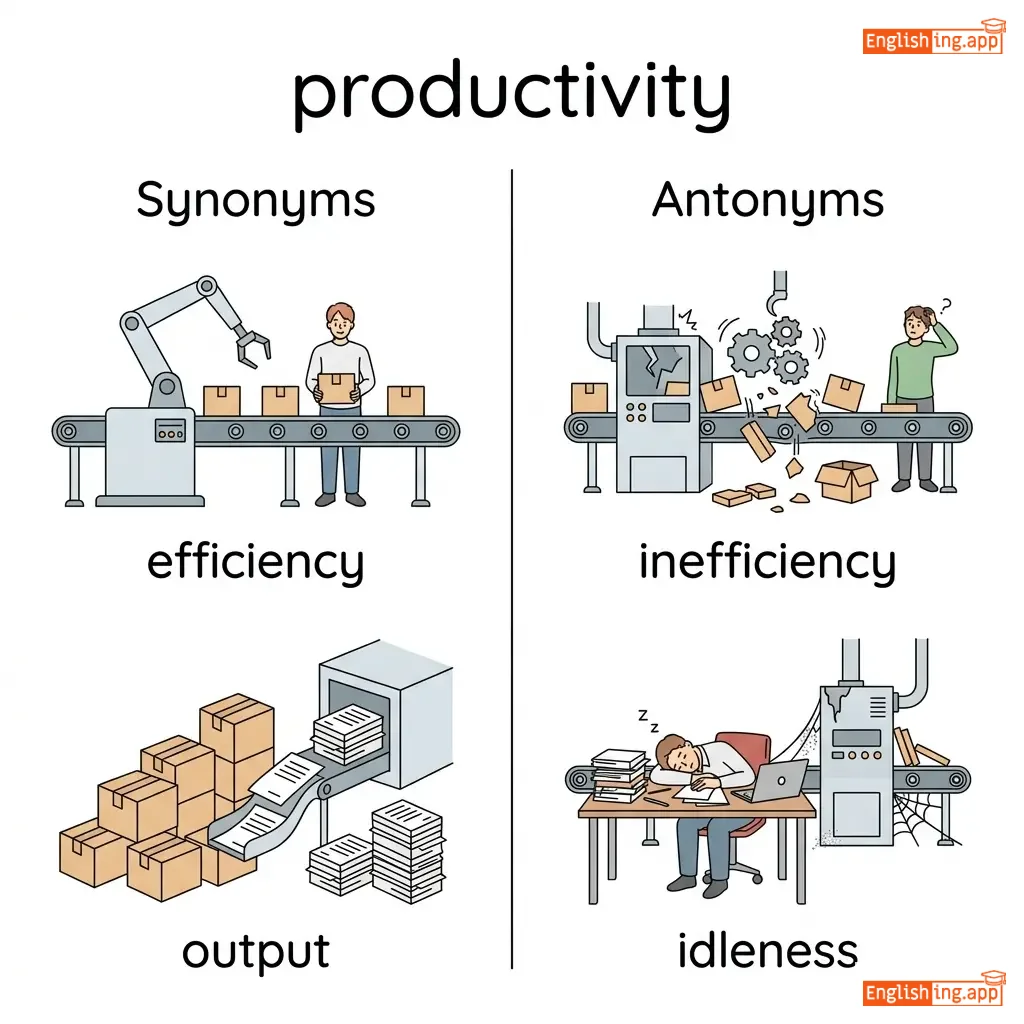
efficiency, output, performance, effectiveness, capacity
••••••
|
inefficiency, idleness, unproductiveness
••••••
|
high productivity, improve productivity, labor productivity, productivity growth
••••••
|
生产力是提高效率的关键,快就是好!
••••••
|
|
#3960
👔
|
/prəˈfɛʃən/
noun
(专业)
••••••
|
- •••••• |
职业
zhiye
••••••
|
- •••••• | - •••••• | - •••••• | - •••••• |
a paid occupation, especially one requiring specialized education or training
••••••
|
Medicine is considered a noble profession. |
医学被认为是一种高尚的职业。
Yīxué bèi rènwéi shì yī zhǒng gāoshàng de zhíyè.
••••••
|
enter the profession |
to begin a career in a particular field
••••••
|
进入职业
Jìnrù zhíyè
••••••
|
career, occupation, vocation, trade, calling
••••••
|
unemployment, hobby
••••••
|
noble profession, teaching profession, medical profession, legal profession
••••••
|
职业就像工作,与你的梦想一样。
••••••
|
|
#3961
💼
|
/prəˈfɛʃənl/
adjective
(专业的)
••••••
|
- •••••• |
专业
zhuānyè
••••••
|
- •••••• | - •••••• | - •••••• | - •••••• |
relating to a job that requires special training or education
••••••
|
She is a professional dancer who performs internationally. |
她是一位专业舞者,国际上有表演。
Tā shì yī wèi zhuānyè wǔzhě, guójì shàng yǒu biǎoyǎn.
••••••
|
- •••••• | - •••••• | - •••••• |
expert, skilled, qualified, trained
••••••
|
amateur, unskilled
••••••
|
professional athlete, professional career, professional skills, professional training
••••••
|
专业 = 专 (zhuān) 业 (yè) 特殊工作培训
••••••
|
|
#3962
👨🏫
|
/prəˈfɛsər/
noun
(教授)
••••••
|
- •••••• |
教授
jiaoshou
••••••
|
- •••••• | - •••••• | - •••••• | - •••••• |
a senior teacher or academic at a college or university
••••••
|
The professor explained the theory clearly. |
教授清楚地解释了理论。
jiaoshou qingchu de jieshi le lilun.
••••••
|
professor emeritus |
a retired professor who retains an honorary title
••••••
|
名誉教授
mingyu jiaoshou
••••••
|
lecturer, academic, scholar, instructor
••••••
|
student, pupil
••••••
|
university professor, assistant professor, professor emeritus, professor of law
••••••
|
Professor = Jiaoshou — 一位经验丰富的教师或学者
••••••
|
|
#3963
👤
|
/ˈproʊˌfaɪl/
noun
(póu-fài-ěr)
••••••
|
- •••••• |
个人资料
geren ziliao
••••••
|
- •••••• | - •••••• | - •••••• | - •••••• |
a description or representation of someone or something; an outline
••••••
|
He updated his profile on the company website. |
他更新了公司网站上的个人资料。
Ta gengxin le gongsi wangzhan shang de geren ziliao.
••••••
|
low profile |
avoiding attention or publicity
••••••
|
低调
dīdiào
••••••
|
outline, description, sketch, representation
••••••
|
anonymity, obscurity
••••••
|
social profile, user profile, company profile, keep a low profile
••••••
|
在Facebook上,个人资料就是你的人物介绍。
••••••
|
|
#3964
💰
|
/ˈprɒfɪt/
noun, verb
(利润)
••••••
|
- •••••• |
利润
lìrùn
••••••
|
profited
利润
••••••
|
profited
利润
••••••
|
profits
利润
••••••
|
profiting
利润
••••••
|
financial gain, especially the difference between the amount earned and the amount spent
••••••
|
The company made a huge profit this quarter.
公司在本季度赚了大笔利润。
••••••
|
公司在本季度赚了大笔利润。
Gōngsī zài běn jìdù zhuànle dà bǐ lìrùn.
••••••
|
turn a profit
获得利润
••••••
|
to start making financial gains
••••••
|
获得利润
huòdé lìrùn
••••••
|
gain, earnings, revenue, income, benefit
••••••
|
loss, deficit, debt
••••••
|
make a profit, earn profit, profit margin, net profit
••••••
|
Profit 就是口袋里有钱进来了。
••••••
|
|
#3965
💰
|
/ˈprɒfɪtəbl/
adjective
(prófìtābù)
••••••
|
- •••••• |
盈利的
yí lì de
••••••
|
- •••••• | - •••••• | - •••••• | - •••••• |
yielding profit or financial gain
••••••
|
The company has become highly profitable after the new strategy was implemented. |
公司在实施新策略后变得极具盈利性。
Gōngsī zài shíshī xīn cèlüè hòu biàn dé jí jù yí lì xìng.
••••••
|
- •••••• | - •••••• | - •••••• |
lucrative, rewarding, beneficial
••••••
|
unprofitable, loss-making
••••••
|
highly profitable, profitable business, profitable investment
••••••
|
盈利的 - 类似于利润,盈利的业务将赚更多的钱!
••••••
|
|
#3966
🧠
|
/prəˈfaʊnd/
adjective
(普罗芳德)
••••••
|
|
深刻
shenke
••••••
|
- •••••• | - •••••• | - •••••• | - •••••• |
very great or intense; showing deep insight or understanding
••••••
|
Her speech had a profound impact on the audience. |
她的演讲对观众产生了深刻的影响。
Ta de yanjiang dui guanzhong chanshengle shenke de yingxiang.
••••••
|
- •••••• | - •••••• | - •••••• |
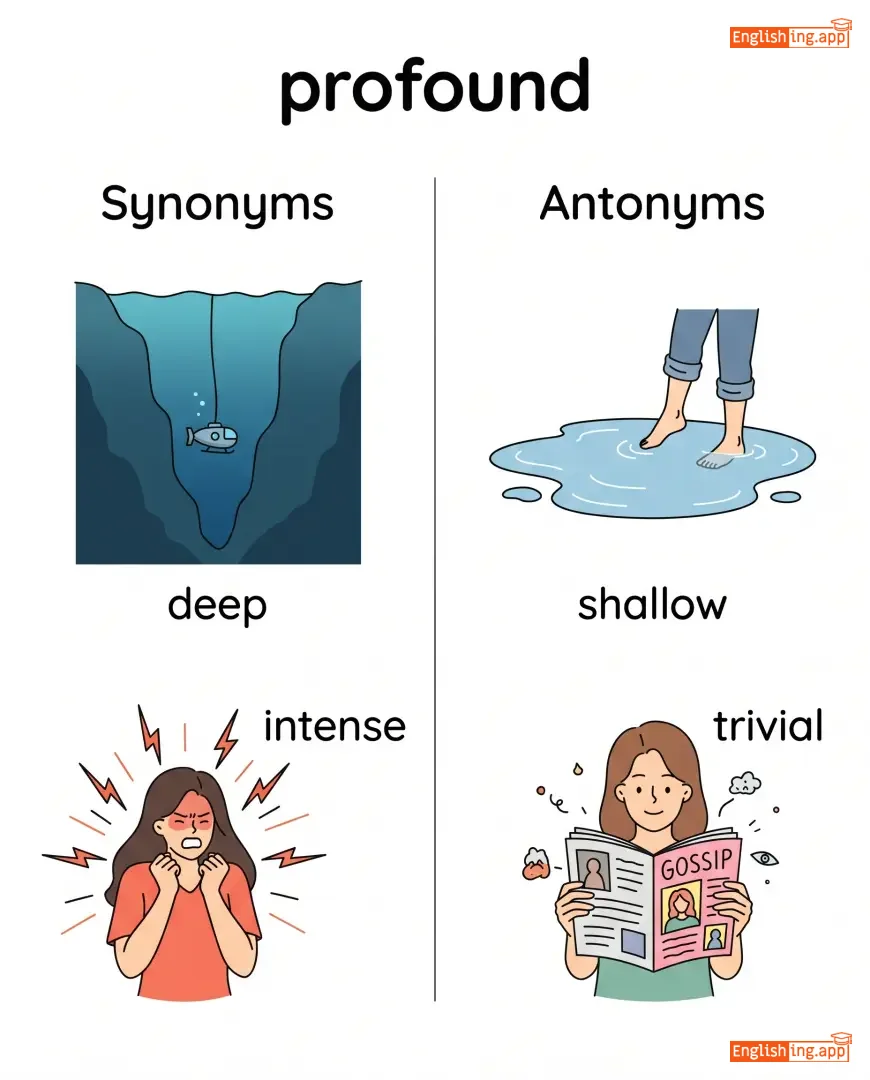
deep, intense, thoughtful, insightful, weighty
••••••
|
shallow, trivial, superficial
••••••
|
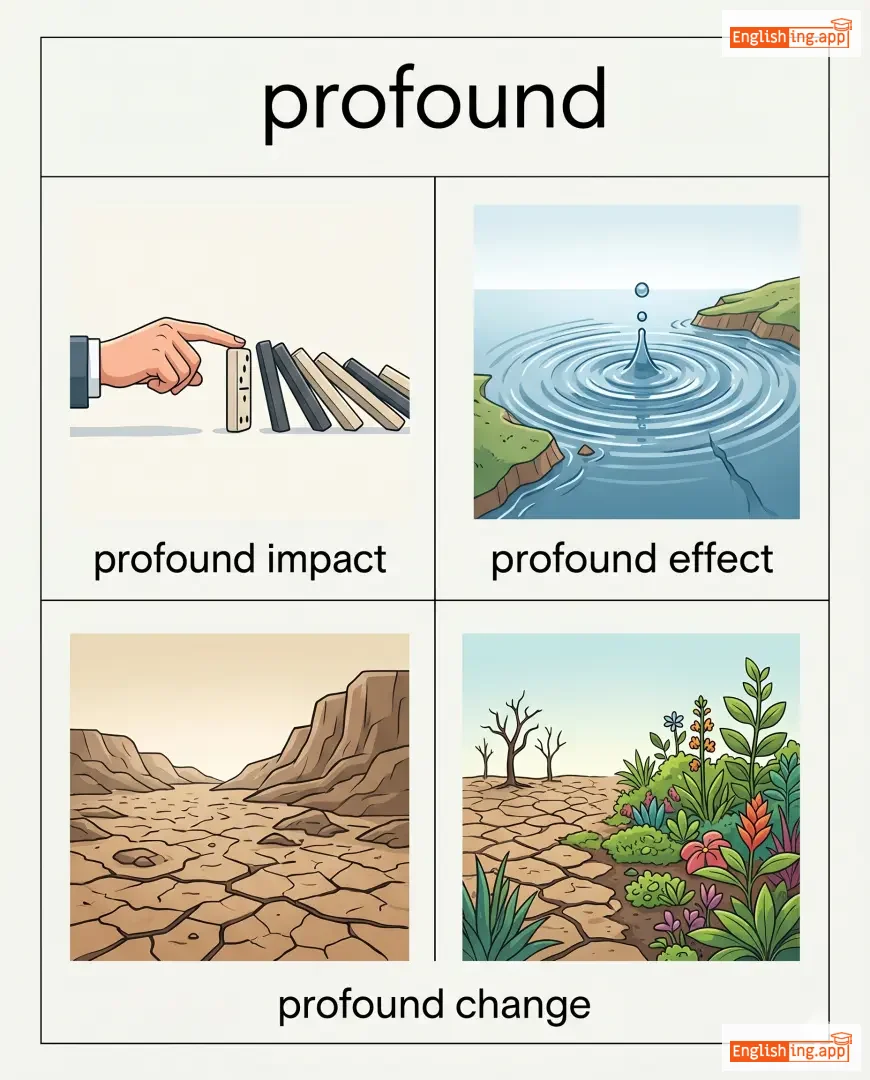
profound impact, profound effect, profound change, profound insight, profound silence
••••••
|
深刻如大海,深不见底。
••••••
|
|
#3967
📱
|
/ˈprəʊɡræm/
noun
(程序)
••••••
|
- •••••• |
程序
chengxu
••••••
|
- •••••• | - •••••• | - •••••• | - •••••• |
a planned series of events or activities
••••••
|
The program starts at 9 AM sharp.
程序在上午9点准时开始。
••••••
|
程序在上午9点准时开始。
Chengxu zai shangwu 9 dian zhunshi kaishi.
••••••
|
- •••••• | - •••••• | - •••••• |
schedule, agenda, plan, event
••••••
|
disorganization, chaos
••••••
|
training program, software program, program schedule, educational program
••••••
|
程序 = Pro (专业) + 计划, 活动按计划进行!
••••••
|
|
#3968
💻
|
/ˈprəʊɡræmɪŋ/
noun
(编程)
••••••
|
- •••••• |
编程
biancheng
••••••
|
- •••••• | - •••••• | - •••••• | - •••••• |
the process of designing and writing computer programs
••••••
|
He has been learning programming for several months now. |
他已经学习编程好几个月了。
Ta yijing xuexi biancheng hao ji ge yue le.
••••••
|
- •••••• | - •••••• | - •••••• |
coding, software development, app development
••••••
|
deprogramming, unlearning
••••••
|
learn programming, programming skills, computer programming
••••••
|
学习编程,写自己的程序!
••••••
|
|
#3969
📈
|
/ˈprəʊɡrɛs/ (noun), /prəˈɡrɛs/ (verb)
noun, verb
(púluógé sī)
••••••
|
|
进展
jìnzhǎn
••••••
|
progressed
púluógé sī dé
••••••
|
progressed
púluógé sī dé
••••••
|
progresses
púluógé sī sī
••••••
|
progressing
púluógé sī xíng
••••••
|
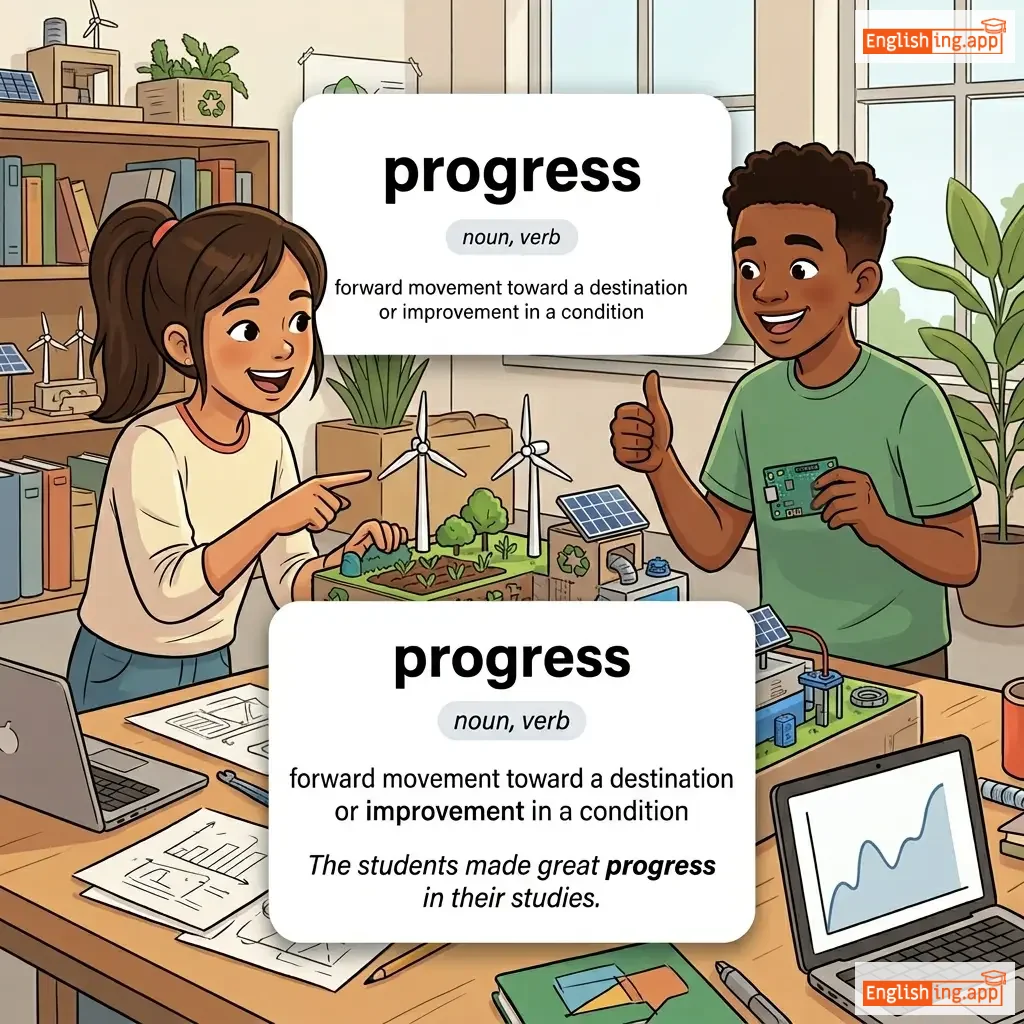
forward movement toward a destination or improvement in a condition
••••••
|
The students made great progress in their studies.
学生们在学习上取得了巨大进展。
••••••
|
学生们在学习上取得了巨大进展。
Xuéshēngmen zài xuéxí shàng qǔdéle jùdà jìnzhǎn.
••••••
|
work in progress
工作进行中
••••••
|
something that is still being developed or unfinished
••••••
|
工作进行中
Gōngzuò jìnxíng zhōng
••••••
|
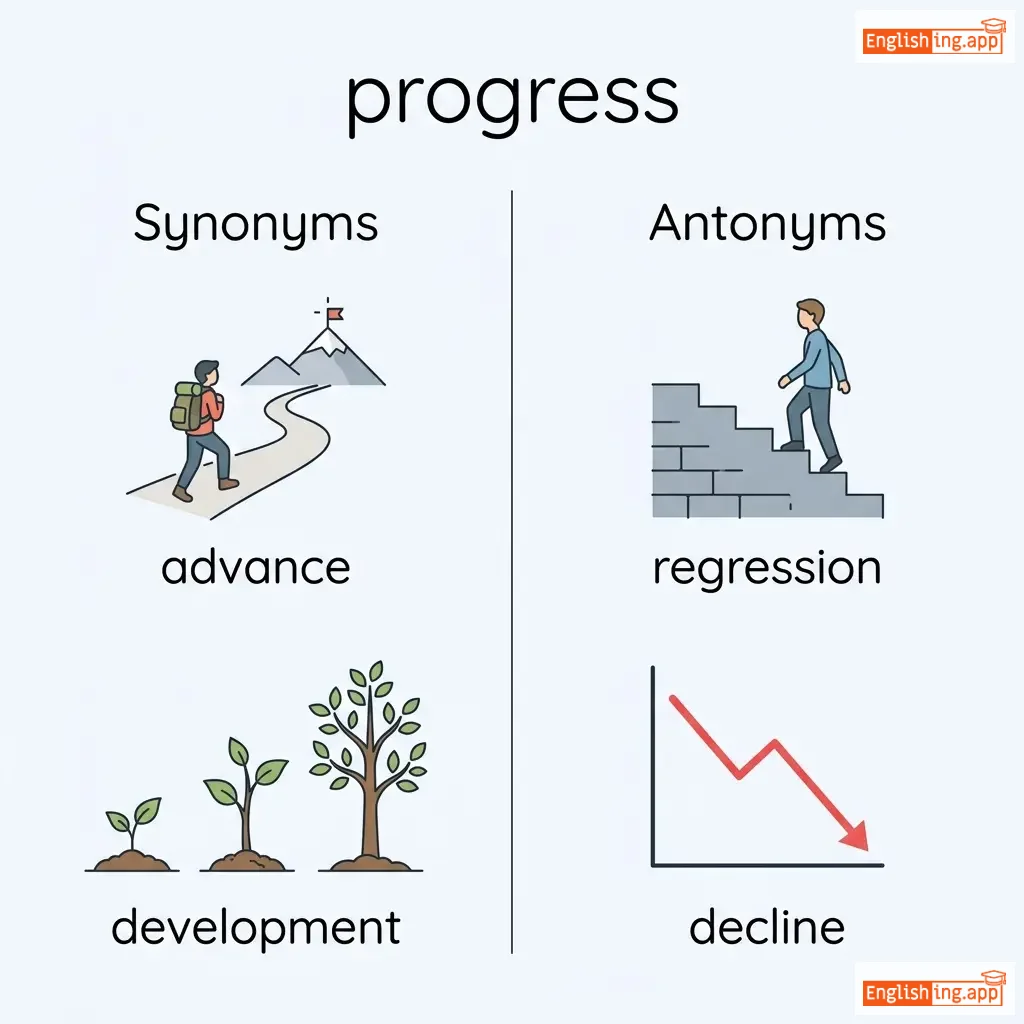
advance, development, improvement, growth, headway
••••••
|
regression, decline, setback
••••••
|
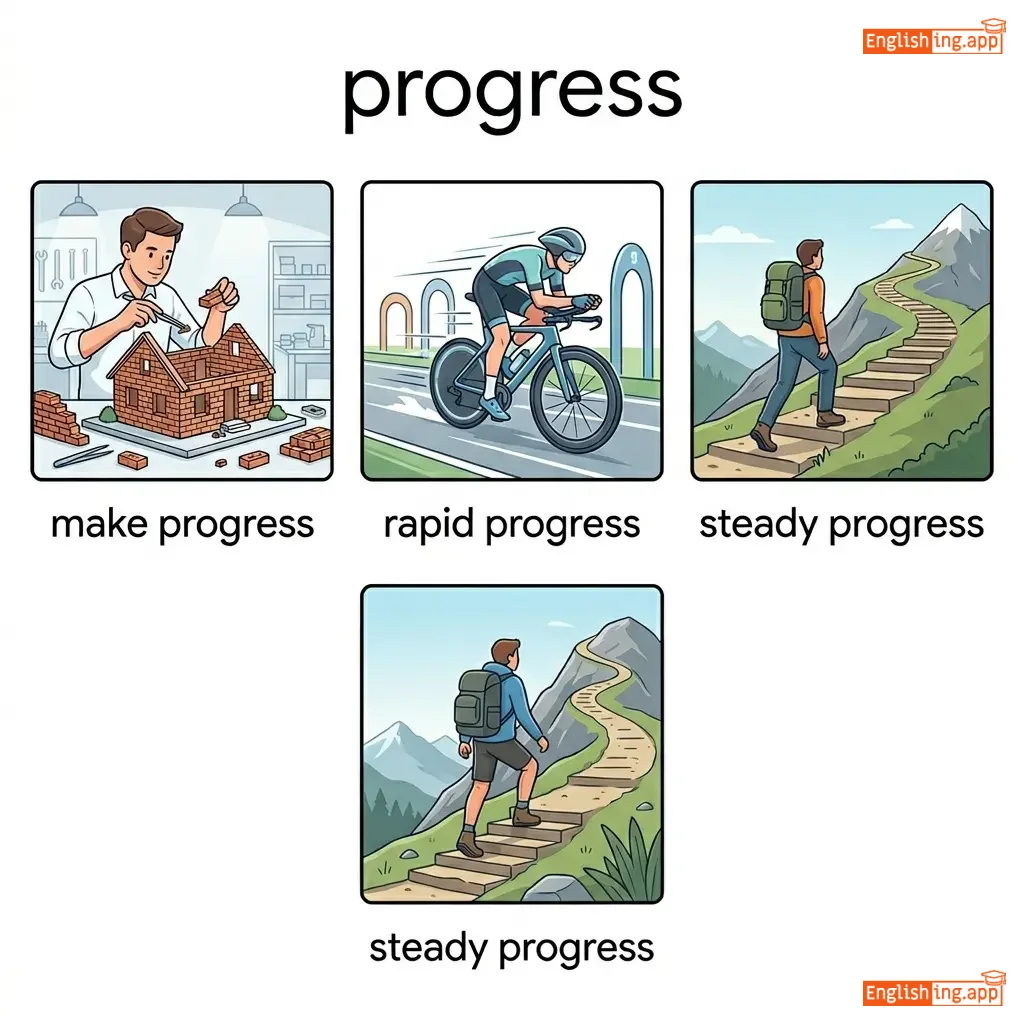
make progress, rapid progress, steady progress, slow progress
••••••
|
Progress = Pro + gress = 向前走 (进展)
••••••
|
|
#3970
🚀
|
/prəˈɡrɛsɪv/
adjective
(pɹoˈɡɹɛsɪv)
••••••
|
- •••••• |
进步的
jinbu de
••••••
|
- •••••• | - •••••• | - •••••• | - •••••• |
favoring or implementing new and modern ideas or policies; moving forward or improving
••••••
|
She holds progressive views on social justice and equality. |
她对社会公正和平等持有进步的观点。
Tā duì shèhuì gōngzhèng hé píngděng chíyǒu jìnbù de guāndiǎn.
••••••
|
progressive mindset |
an attitude open to change and innovation
••••••
|
进步心态
jìnbù xīntài
••••••
|
forward-thinking, modern, liberal, reformist, advanced
••••••
|
conservative, traditional, reactionary
••••••
|
progressive ideas, progressive policy, progressive change, progressive movement
••••••
|
进步意味着前进,进步的心态意味着不断前进
••••••
|
|
#3971
🚫
|
/prəˈhɪbɪt/
verb
(禁止)
••••••
|
- •••••• |
禁止
jìnzhǐ
••••••
|
prohibited
被禁止
••••••
|
prohibited
被禁止
••••••
|
prohibits
禁止
••••••
|
prohibiting
禁止
••••••
|
to formally forbid something by law, rule, or authority
••••••
|
Smoking is strictly prohibited inside the hospital.
医院内严禁吸烟。
••••••
|
医院内严禁吸烟。
Yīyuàn nèi yánjìn xīyān.
••••••
|
prohibit from
禁止做
••••••
|
to forbid someone from doing something
••••••
|
禁止某人做某事
jìnzhǐ mǒu rén zuò mǒu shì
••••••
|
forbid, ban, restrict, disallow, prevent
••••••
|
allow, permit, approve
••••••
|
strictly prohibit, prohibit smoking, prohibit entry, prohibit use
••••••
|
Prohibit 意味着 🚫 – 医院内禁止吸烟。
••••••
|
|
#3972
📊
|
/ˈprɒdʒɛkt/ (noun), /prəˈdʒɛkt/ (verb)
noun, verb
••••••
|
|
- •••••• |
projected
••••••
|
projected
••••••
|
projects
••••••
|
projecting
••••••
|
As a noun: a planned task or assignment. As a verb: to plan, estimate, or extend something outward.
••••••
|
The company plans to project its growth over the next five years. |
- •••••• |
project confidence |
To appear confident even if one may not feel it inside.
••••••
|
- •••••• |
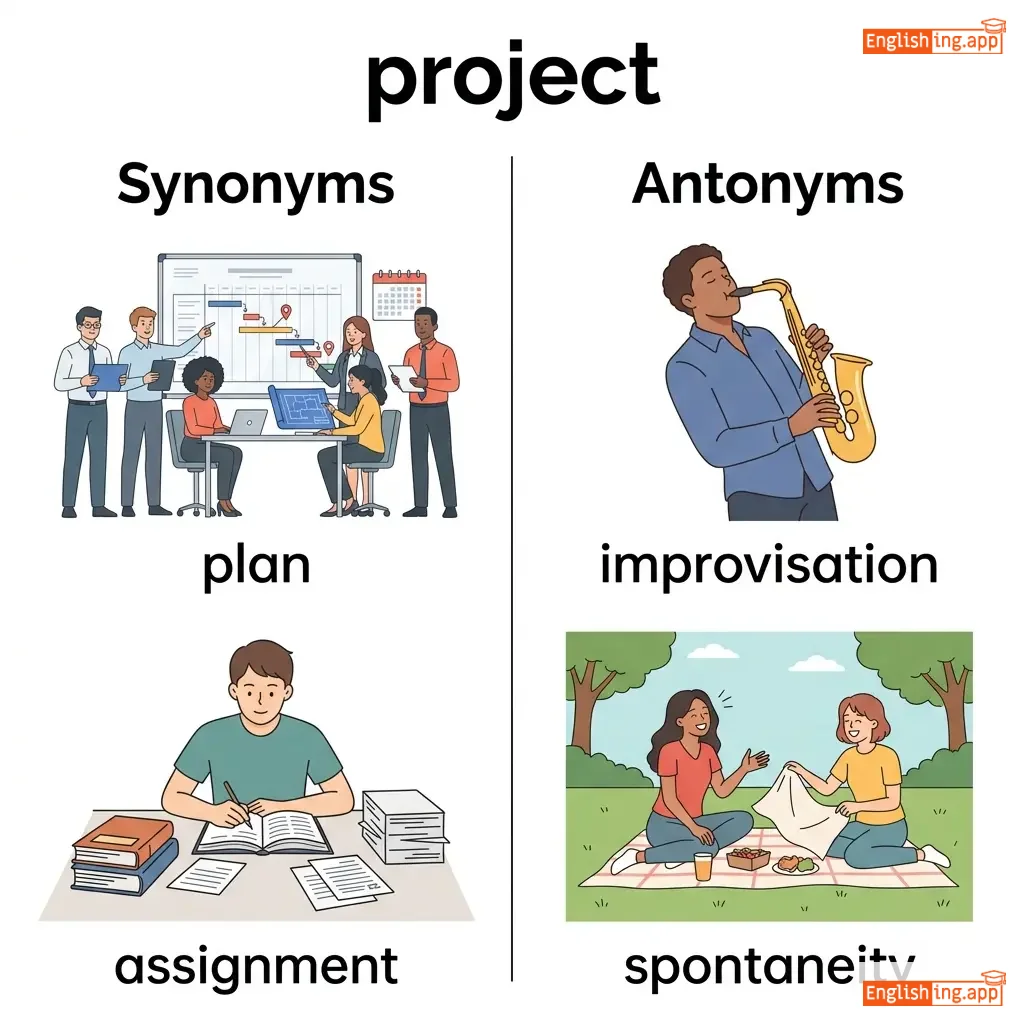
plan, assignment, scheme, initiative, program
••••••
|
improvisation, spontaneity
••••••
|
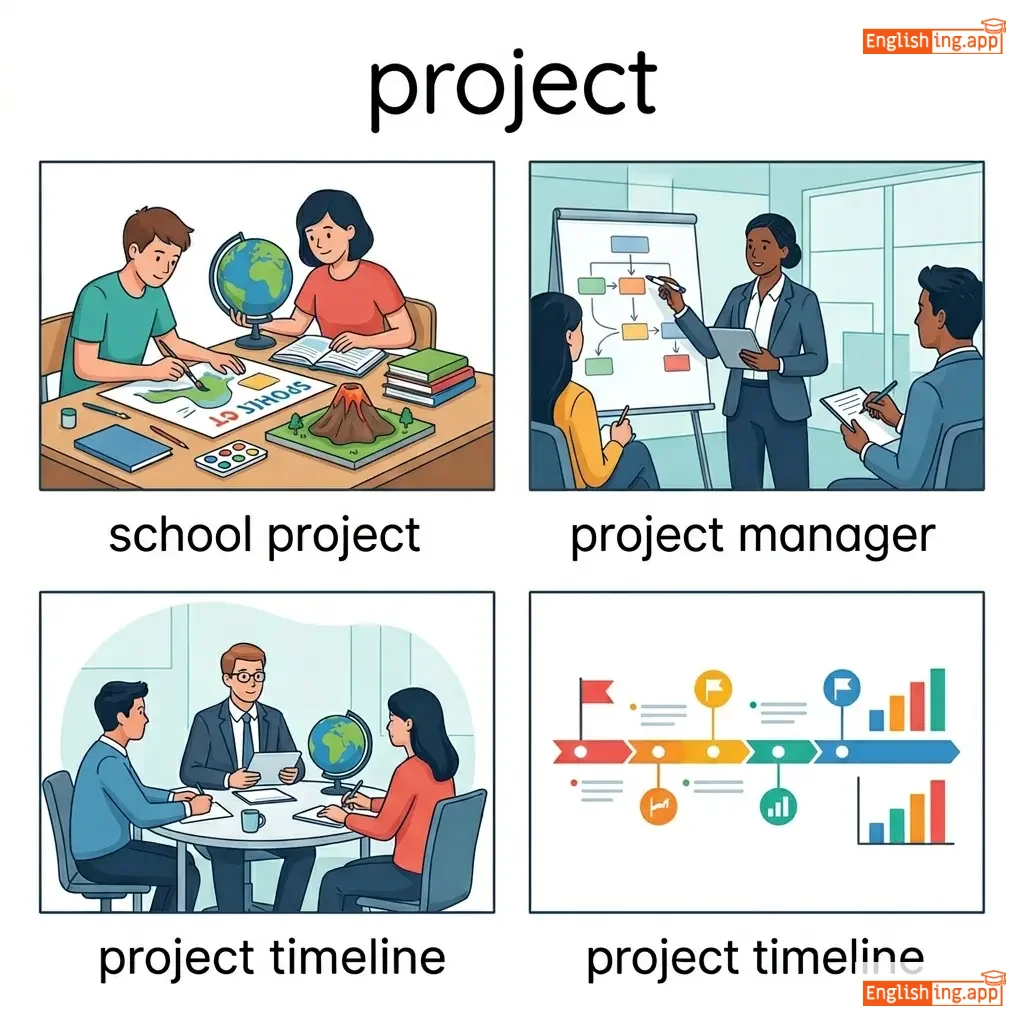
school project, project manager, project timeline, project growth
••••••
|
No •••••• |
|
#3973
📈
|
/prəˈdʒɛkʃən/
noun
(pínggǔ)
••••••
|
|
预测
yùcè
••••••
|
- •••••• | - •••••• | - •••••• | - •••••• |
An estimate or forecast of a future situation based on current trends.
••••••
|
The sales projection shows a steady increase in revenue. |
销售预测显示收入稳步增长。
Xiāoshòu yùcè xiǎnshì shōurù wěnbù zēngzhǎng.
••••••
|
make a projection |
To create an estimate or forecast of future results.
••••••
|
做出预测
zuòchū yùcè
••••••
|
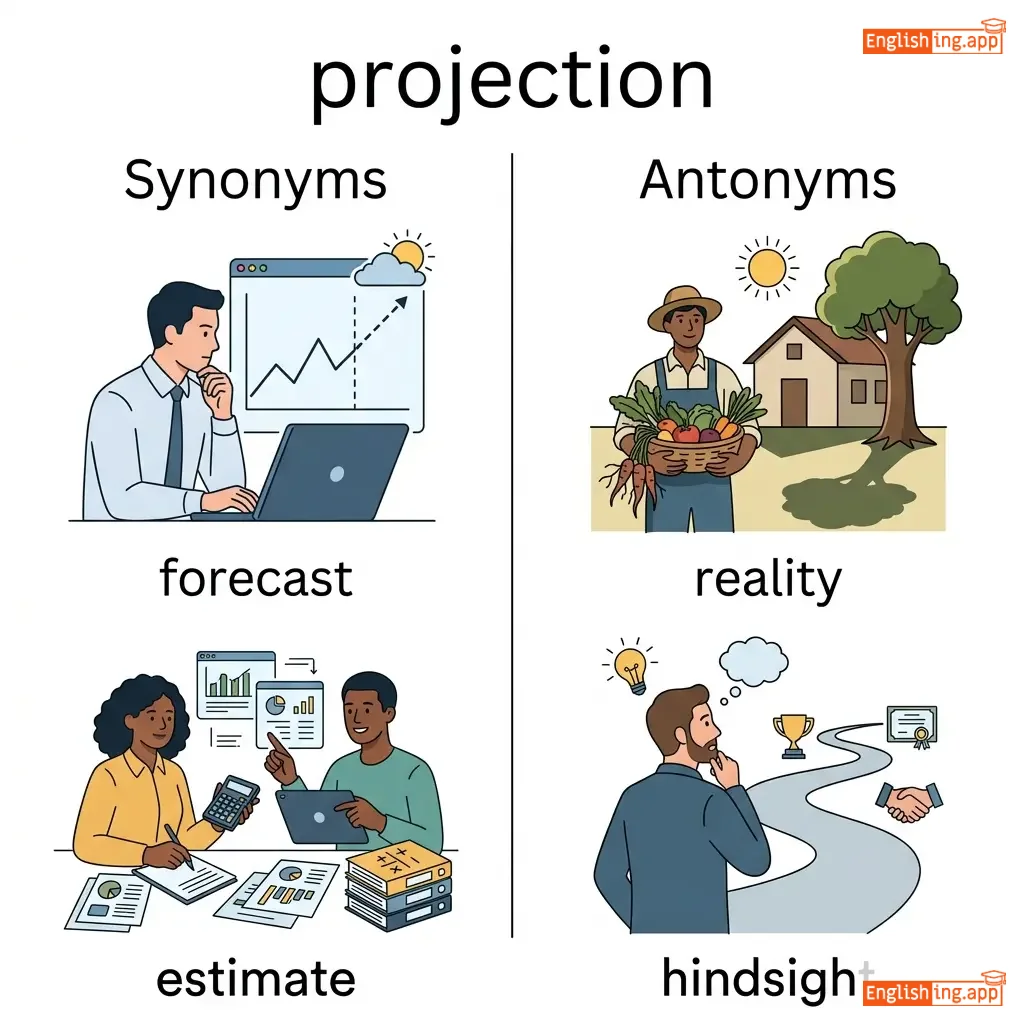
forecast, estimate, prediction, outlook, expectation
••••••
|
reality, hindsight
••••••
|
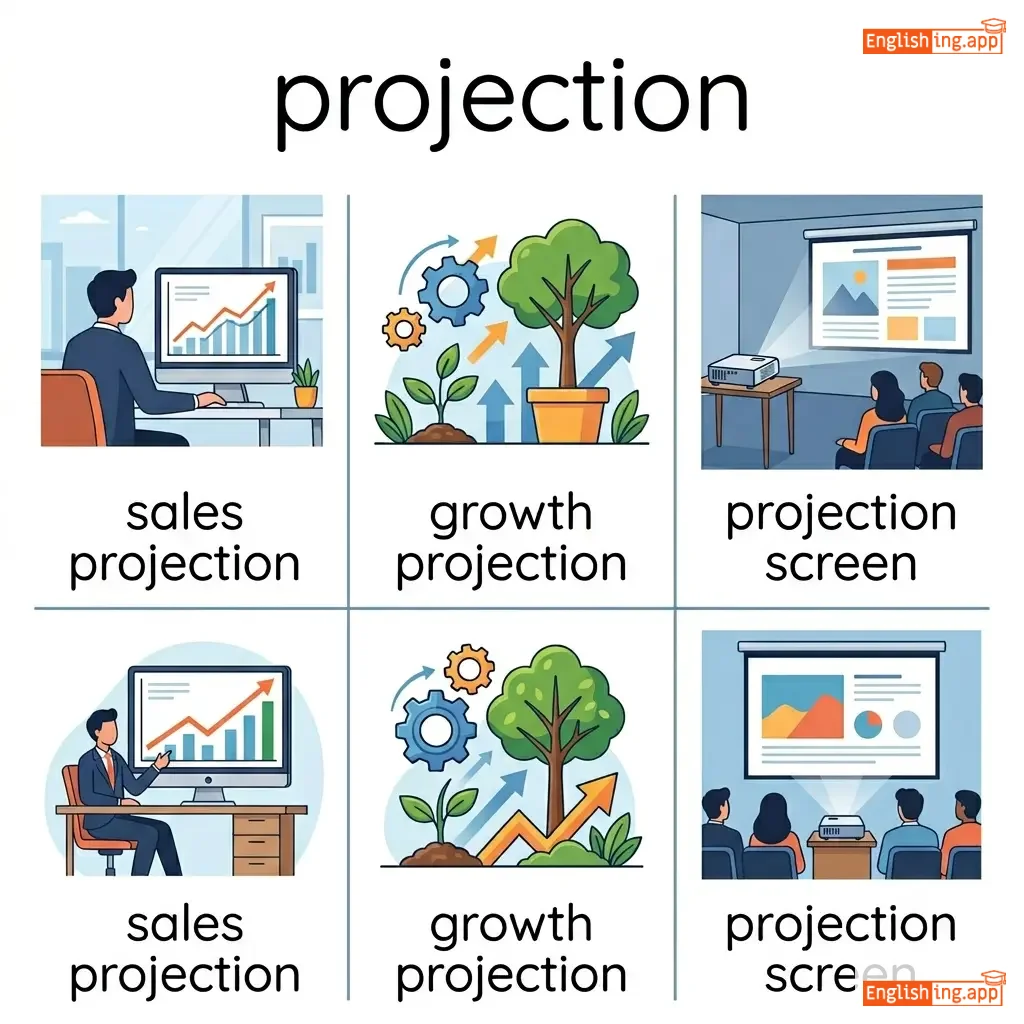
sales projection, growth projection, projection screen, projection map
••••••
|
预测:预测未来就像投射未来的影像。
••••••
|
|
#3974
🌟
|
/ˈprɒmɪnənt/
adjective
(prɔːmɪnənt)
••••••
|
- •••••• |
显著的
xiǎnzhù de
••••••
|
- •••••• | - •••••• | - •••••• | - •••••• |
Important, famous, or easily noticeable.
••••••
|
He is a prominent leader in the community.
他是社区中的一个杰出领导者。
••••••
|
他是社区中的一个杰出领导者。
Tā shì shèqū zhōng de yīgè jiéchū lǐngdǎo zhě.
••••••
|
prominent feature
显著特点
••••••
|
a characteristic that stands out or is easily noticeable
••••••
|
显著特点
xiǎnzhù tèdiǎn
••••••
|
important, notable, eminent, distinguished, well-known
••••••
|
obscure, insignificant
••••••
|
prominent role, prominent position, prominent figure, prominent leader
••••••
|
显著的就像在社区中很容易被注意到的领导者。
••••••
|
|
#3975
🤝
|
/ˈprɒmɪs/
verb
(pùlìmìsī)
••••••
|
- •••••• |
承诺
chéngnuò
••••••
|
promised
pùlìmìsīd
••••••
|
promised
pùlìmìsīd
••••••
|
promises
pùlìmìsīs
••••••
|
promising
pùlìmìsīng
••••••
|
to assure someone that one will definitely do something; to give one's word
••••••
|
I promise to help you with your homework.
我承诺帮助你做作业。
••••••
|
我承诺帮助你做作业。
Wǒ chéngnuò bāngzhù nǐ zuò zuòyè.
••••••
|
- •••••• | - •••••• | - •••••• |
pledge, vow, swear, guarantee
••••••
|
break, betray, deny
••••••
|
promise to help, make a promise, keep promises, break promises
••••••
|
承诺 (chéngnuò) 就像是你答应朋友做某事,比如承诺帮助他做作业。
••••••
|
|
#3976
🌟
|
/ˈprɒmɪsɪŋ/
adjective
(普罗米辛)
••••••
|
- •••••• |
有前途的
yǒu qiántú de
••••••
|
- •••••• | - •••••• | - •••••• | - •••••• |
showing signs of future success or potential
••••••
|
She is a promising young scientist with great ideas. |
她是一个有前途的年轻科学家,拥有伟大的想法。
Tā shì yīgè yǒu qiántú de niánqīng kēxuéjiā, yōngyǒu wěidà de xiǎngfǎ.
••••••
|
- •••••• | - •••••• | - •••••• |
hopeful, talented, bright, encouraging, favorable
••••••
|
hopeless, unpromising, disappointing
••••••
|
promising career, promising results, promising start, promising talent
••••••
|
有前途的 = 预示着成功,像未来的光辉!
••••••
|
|
#3977
📢
|
/prəˈmoʊt/
verb
(普罗蒙特)
••••••
|
|
促进 / 推广
cùjìn / tuīguǎng
••••••
|
promoted
普罗蒙特过
••••••
|
promoted
普罗蒙特过
••••••
|
promotes
普罗蒙特
••••••
|
promoting
推广中
••••••
|
To support or encourage the growth, sale, or acceptance of something.
••••••
|
The company worked hard to promote its new product.
公司为推广其新产品而努力工作。
••••••
|
公司为推广其新产品而努力工作。
Gōngsī wèi tuīguǎng qí xīn chǎnpǐn ér nǔlì gōngzuò.
••••••
|
promote growth
推广增长
••••••
|
To encourage development or progress
••••••
|
推广增长
tuīguǎng zēngzhǎng
••••••
|
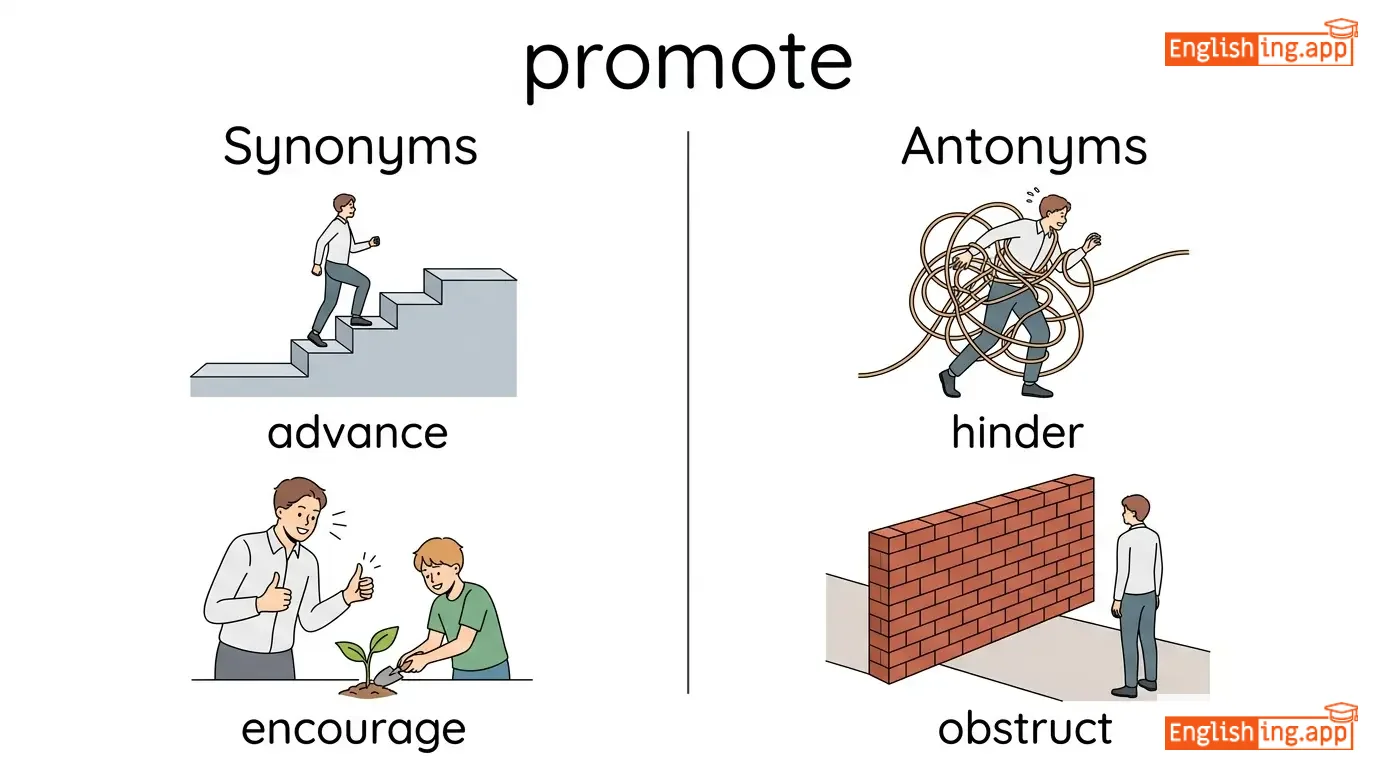
advance, encourage, advertise, support, boost
••••••
|
hinder, obstruct, discourage
••••••
|
promote awareness, promote business, promote sales, promote education
••••••
|
Promote是为了让事物成长而做的事情
••••••
|
|
#3978
📈
|
/prəˈmoʊʃən/
noun
(推广)
••••••
|
- •••••• |
晋升, 宣传
jinsheng, xuanchuan
••••••
|
- •••••• | - •••••• | - •••••• | - •••••• |
the act of raising someone to a higher position or of marketing something to increase sales or awareness
••••••
|
The company announced a big promotion campaign for their new product. |
公司宣布了一项关于其新产品的大型推广活动。
Gōngsī xuānbùle yī xiàng guānyú qí xīn chǎnpǐn de dàxíng tuīguǎng huódòng.
••••••
|
get a promotion |
to be raised to a higher position at work
••••••
|
获得晋升
huò dé jìn shēng
••••••
|
advancement, upgrade, publicity, marketing, boost
••••••
|
demotion, neglect
••••••
|
job promotion, sales promotion, promotional offer, career promotion
••••••
|
Promotion意味着晋升。想象一下,老板说 'Pro motion',意思是前进!
••••••
|
|
#3979
⚡
|
/prɑːmpt/
verb, noun, adjective
(pròngpùt)
••••••
|
- •••••• |
促使 / 快速
cùshǐ / kuàisù
••••••
|
prompted
pròngpùted
••••••
|
prompted
pròngpùted
••••••
|
prompts
pròngpùts
••••••
|
prompting
pròngpùting
••••••
|
To cause someone to take action; done without delay.
••••••
|
His speech prompted the audience to ask questions.
他的演讲促使观众提问。
••••••
|
他的演讲促使观众提问。
Tā de yǎnjiǎng cùshǐ guānzhòng tíwèn.
••••••
|
prompt action
快速行动
••••••
|
Immediate or quick action
••••••
|
即时行动
jíshí xíngdòng
••••••
|
urge, incite, quick, immediate, stimulate
••••••
|
delay, hinder, slow
••••••
|
prompt reply, prompt payment, prompt decision, prompt response
••••••
|
Prompt是一个快速响应的动作,就像计算机响应一样。
••••••
|
Vocabulary Quiz
Test your vocabulary by matching words with their translations or meanings.
Login to take the quiz
Comments (0)
Share your thoughts and join the discussion.
Join the discussion by logging in
Login to CommentNo comments yet
Be the first to share your thoughts!