

翻訳
過去
過去分詞
三人称単数
動名詞
意味
例文
例文の翻訳
同義語
対義語
コロケーション
ニーモニック







Swipe left or right, or use the buttons. Tap image to zoom.
例文の翻訳
単語
Lesson 83Lesson 83 - マスクトグル
|
絵文字
|
単語 | Images | 翻訳 | 過去 | 過去分詞 | 三人称単数 | 動名詞 | 意味 | 例文 | 例文の翻訳 | 表現例 | 表現例の意味 | 表現例の翻訳 | 同義語 | 対義語 | コロケーション | ニーモニック |
|---|---|---|---|---|---|---|---|---|---|---|---|---|---|---|---|---|---|
|
#3931
📌
|
/praɪˈɒrɪti/
noun
(プライオリティ)
••••••
|
- •••••• |
優先
yūsen
••••••
|
- •••••• | - •••••• | - •••••• | - •••••• |
Something that is regarded as more important than other things.
••••••
|
Safety is the top priority in this company. |
この会社では、安全が最も重要な優先事項です。
Kono kaisha de wa, anzen ga mottomo jūyōna yūsen jikō desu.
••••••
|
first priority |
The most important thing that needs to be dealt with before others.
••••••
|
第一優先
Daiichi yūsen
••••••
|
importance, precedence, preference, primacy
••••••
|
inferiority, unimportance
••••••
|
top priority, high priority, main priority, set priority
••••••
|
優先は最も重要なことを最初に行うという意味です。
••••••
|
|
#3932
🏚️
|
/ˈprɪzən/
noun
(プリズン)
••••••
|
- •••••• |
刑務所
keimusho
••••••
|
- •••••• | - •••••• | - •••••• | - •••••• |
a building where people are kept as punishment for a crime or while waiting for trial
••••••
|
He was sent to prison for his crimes. |
彼は犯罪のために刑務所に送られた。
Kare wa hanzai no tame ni keimusho ni okurareta.
••••••
|
- •••••• | - •••••• | - •••••• |
jail, penitentiary, correctional facility, lockup
••••••
|
freedom, liberty, release
••••••
|
prison sentence, prison cell, go to prison
••••••
|
Think of '刑務所' in Japanese, where criminals are held until justice is served.
••••••
|
|
#3933
👨⚖️
|
/ˈprɪzənər/
noun
(プリズナー)
••••••
|
- •••••• |
囚人
shūjin
••••••
|
- •••••• | - •••••• | - •••••• | - •••••• |
a person who is in prison
••••••
|
The prisoner was granted parole after serving 10 years. |
その囚人は10年の服役後、仮出所を許可されました。
Sono shūjin wa 10-nen no fukueki go, kari shussho o kyoka saremashita.
••••••
|
- •••••• | - •••••• | - •••••• |
inmate, convict, detainee, captive
••••••
|
free person, citizen, civilian
••••••
|
prisoner of war, political prisoner, life sentence prisoner
••••••
|
A prisoner is a 'shūjin' who is imprisoned in Japan.
••••••
|
|
#3934
🔒
|
/ˈpraɪ.və.si/
noun
(プライバシー)
••••••
|
- •••••• |
プライバシー
puraibashii
••••••
|
- •••••• | - •••••• | - •••••• | - •••••• |
the state of being alone and not watched or disturbed by other people; the right to keep your personal information secret
••••••
|
Everyone has the right to privacy. |
誰でもプライバシーを持つ権利があります。
dare demo puraibashii wo motsu kenri ga arimasu.
••••••
|
- •••••• | - •••••• | - •••••• |
secrecy, confidentiality, solitude
••••••
|
publicity, exposure, openness
••••••
|
right to privacy, privacy policy, privacy settings, invasion of privacy
••••••
|
プライバシー (privacy) は幸せを追求するための大切な空間です。
••••••
|
|
#3935
🔒
|
/ˈpraɪ.vət/
adjective
(プライベート)
••••••
|
- •••••• |
プライベート; 秘密の; 公開しない; 個人的な
puraibēto; himitsu no; kōkai shinai; kojinteki na
••••••
|
- •••••• | - •••••• | - •••••• | - •••••• |
personal; confidential; not public; individual
••••••
|
This is a private conversation between two friends.
これは二人の友達の間のプライベートな会話です。
••••••
|
これは二人の友達の間のプライベートな会話です。
Kore wa futari no tomodachi no aida no puraibēto na kaiwa desu.
••••••
|
- •••••• | - •••••• | - •••••• |
personal, confidential, secret, individual
••••••
|
public, open, shared, common
••••••
|
private property, private life, private school, private sector
••••••
|
プライベートな会話は信頼できる人々の間で行われます。
••••••
|
|
#3936
🤫
|
/ˈpraɪ.vət.li/
adverb
(プライベートリー)
••••••
|
- •••••• |
個人的に; 内密に
kojin teki ni; naimitsu ni
••••••
|
- •••••• | - •••••• | - •••••• | - •••••• |
in a private manner; without others present; confidentially
••••••
|
She spoke to him privately about the matter. |
彼女はその問題について彼と個人的に話しました。
Kanojo wa sono mondai ni tsuite kare to kojinteki ni hanashimashita.
••••••
|
- •••••• | - •••••• | - •••••• |
confidentially, secretly, personally, individually
••••••
|
publicly, openly, collectively
••••••
|
speak privately, meet privately, privately owned
••••••
|
Privately in Japanese is 'kojin teki ni'.
••••••
|
|
#3937
🏢
|
/ˌpraɪvətəˈzeɪʃən/
noun
(puraitization)
••••••
|
|
民営化
min'eika
••••••
|
- •••••• | - •••••• | - •••••• | - •••••• |
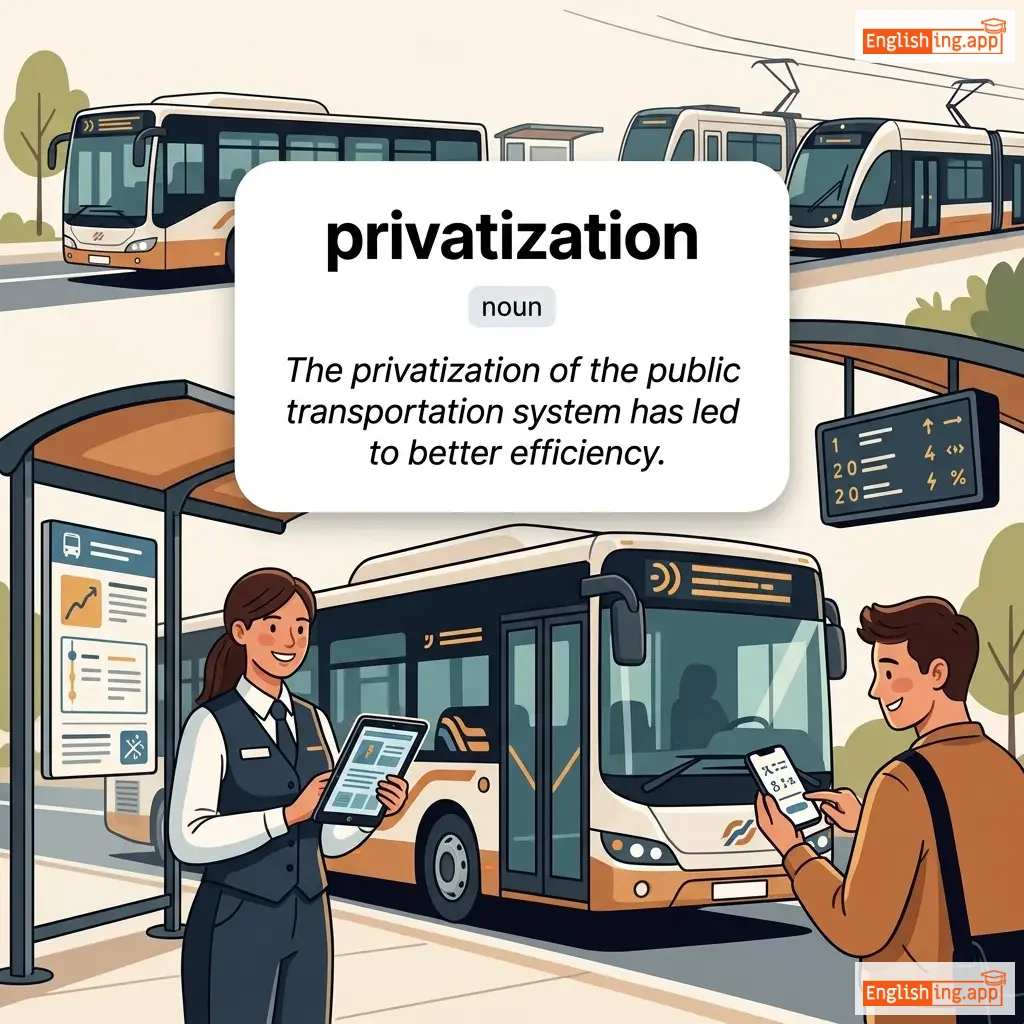
the process of transferring ownership of a business, industry, or service from the public sector to the private sector
••••••
|
The privatization of the public transportation system has led to better efficiency.
公共交通システムの民営化は、効率の向上をもたらしました。
••••••
|
公共交通システムの民営化は、効率の向上をもたらしました。
Kōkyō kōtsū shisutemu no min'eika wa, kōritsu no kōjō o motarashimashita.
••••••
|
- •••••• | - •••••• | - •••••• |
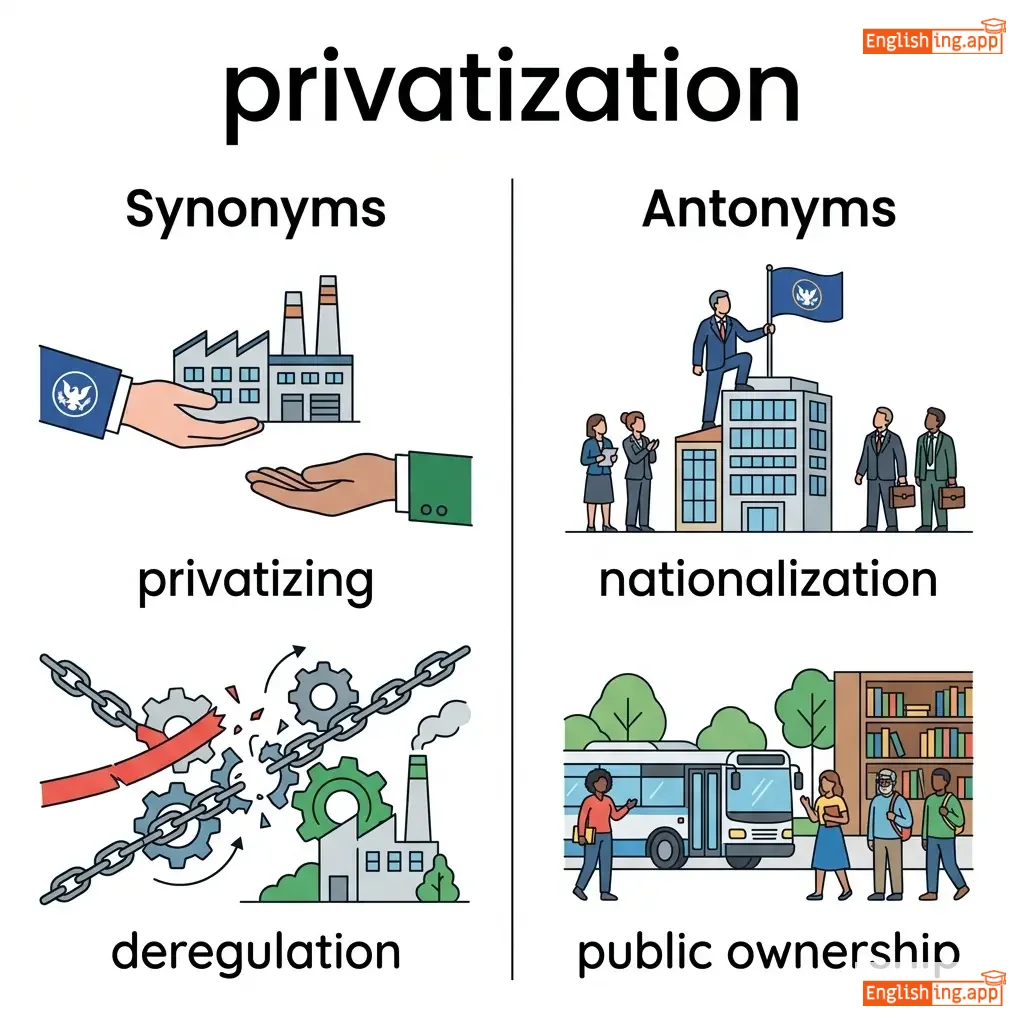
privatizing, deregulation, commercialization
••••••
|
nationalization, public ownership
••••••
|
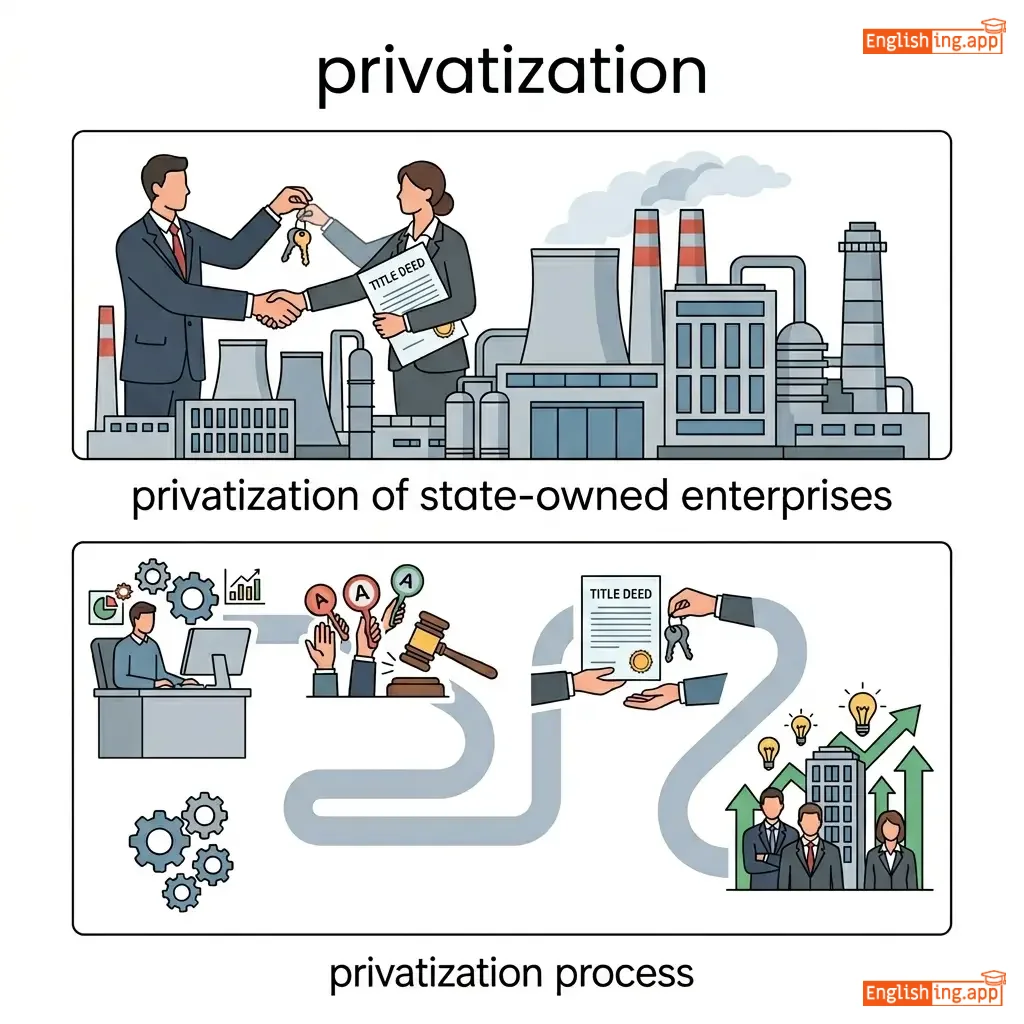
privatization of state-owned enterprises, privatization process
••••••
|
民営化は公共から民間への移行、公共サービスが民間企業に変わることです。
••••••
|
|
#3938
🎖️
|
/ˈprɪvəlɪdʒ/
noun
(privilege)
••••••
|
- •••••• |
特権, 利点
tokken, riten
••••••
|
- •••••• | - •••••• | - •••••• | - •••••• |
A special right, advantage, or immunity granted or available only to a particular person or group.
••••••
|
Education is considered a privilege in many developing countries. |
多くの発展途上国では、教育は特権と見なされています。
Ooku no hatten tojoukoku de wa, kyouiku wa tokken to minasareteimasu.
••••••
|
white privilege |
Societal advantages that benefit white people beyond what is commonly experienced by non-white people under the same circumstances.
••••••
|
白人特権
hakujin tokken
••••••
|
advantage, benefit, right, entitlement, honor
••••••
|
disadvantage, restriction, burden
••••••
|
enjoy privilege, special privilege, privilege of, privilege to
••••••
|
Privilege は特別な権利で、少数の人々にしか与えられません。
••••••
|
|
#3939
🏆
|
/praɪz/
noun, verb
(praizu)
••••••
|
- •••••• |
賞
shou
••••••
|
prized
praizudo
••••••
|
prized
praizudo
••••••
|
prizes
praizesu
••••••
|
prizing
praijingu
••••••
|
something given as a reward for achievement; to value highly
••••••
|
He won the first prize in the competition.
彼はコンペティションで一等賞を受賞した。
••••••
|
彼はコンペティションで一等賞を受賞した。
Kare wa konpetishon de ittou shou wo jushou shita.
••••••
|
prize possession
貴重な財産
••••••
|
something cherished greatly
••••••
|
非常に価値のある所有物
hijou ni kachi no aru shoyuu mono
••••••
|
award, reward, trophy, treasure, honor
••••••
|
loss, forfeit, neglect
••••••
|
first prize, grand prize, prize money, prize possession
••••••
|
賞(Prize) — 賞をもらうと、賞の所有権を持つ。
••••••
|
|
#3940
🎲
|
/ˌprɒb.əˈbɪl.ə.ti/
noun
(プロバビリティ)
••••••
|
- •••••• |
確率
kakuritsu
••••••
|
- •••••• | - •••••• | - •••••• | - •••••• |
the likelihood that something will happen; a mathematical measure of how likely something is to occur
••••••
|
There is a high probability of rain tomorrow.
明日は高い確率で雨が降るでしょう。
••••••
|
明日は高い確率で雨が降るでしょう。
Ashita wa takai kakuritsu de ame ga furu deshou.
••••••
|
- •••••• | - •••••• | - •••••• |
likelihood, chance, possibility, odds
••••••
|
impossibility, certainty
••••••
|
high probability, low probability, probability theory, in all probability
••••••
|
確率 = Probability
••••••
|
|
#3941
🌧️
|
/ˈprɒbəbl̩/
adjective
(プラウバブル)
••••••
|
- •••••• |
可能性が高い
kanousei ga takai
••••••
|
- •••••• | - •••••• | - •••••• | - •••••• |
likely to happen or be true, but not certain
••••••
|
Rain is probable tomorrow according to the forecast.
予報によると、明日は雨が降る可能性が高いです。
••••••
|
予報によると、明日は雨が降る可能性が高いです。
Yohou ni yoru to, ashita wa ame ga furu kanousei ga takai desu.
••••••
|
highly probable
非常に可能性が高い
••••••
|
very likely to happen
••••••
|
非常に可能性が高い
Hijou ni kanousei ga takai
••••••
|
likely, possible, expected, potential, feasible
••••••
|
unlikely, impossible, doubtful
••••••
|
probable cause, highly probable, probable outcome, probable reason
••••••
|
ProbableはProbabilityに似ていて、何かが起こる可能性があることを意味します。
••••••
|
|
#3942
🤷
|
/ˈprɒb.ə.bli/
adverb
(purobaburi)
••••••
|
- •••••• |
おそらく
osoraku
••••••
|
- •••••• | - •••••• | - •••••• | - •••••• |
almost certainly; very likely; in all likelihood
••••••
|
He will probably arrive late tonight.
彼はおそらく今夜遅れて到着するでしょう。
••••••
|
彼はおそらく今夜遅れて到着するでしょう。
kare wa osoraku konya okurete touchaku suru deshou
••••••
|
- •••••• | - •••••• | - •••••• |
likely, presumably, most likely, in all probability
••••••
|
improbably, unlikely, definitely not
••••••
|
probably true, probably not, most probably
••••••
|
おそらく = osoraku
••••••
|
|
#3943
🔍
|
/proʊb/
verb, noun
(プローブ)
••••••
|
|
調査する
chōsa suru
••••••
|
probed
プローブド
••••••
|
probed
プローブド
••••••
|
probes
プローブス
••••••
|
probing
プロービング
••••••
|
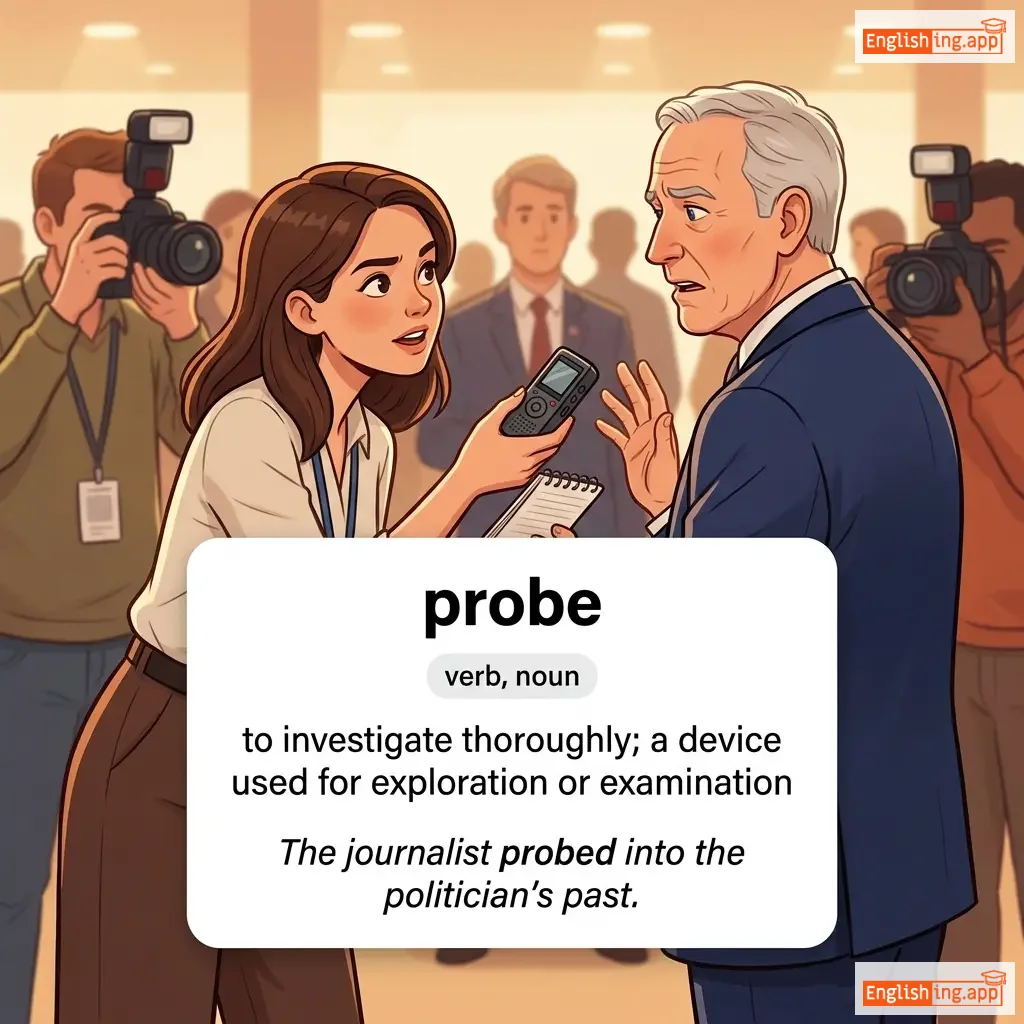
to investigate thoroughly; a device used for exploration or examination
••••••
|
The journalist probed into the politician’s past.
ジャーナリストは政治家の過去を調査しました。
••••••
|
ジャーナリストは政治家の過去を調査しました。
Jānarisuto wa seijika no kako o chōsa shimashita.
••••••
|
probe deeper
さらに深く調べる
••••••
|
to investigate more thoroughly
••••••
|
さらに深く調べる
Sara ni fukaku shiraberu
••••••
|
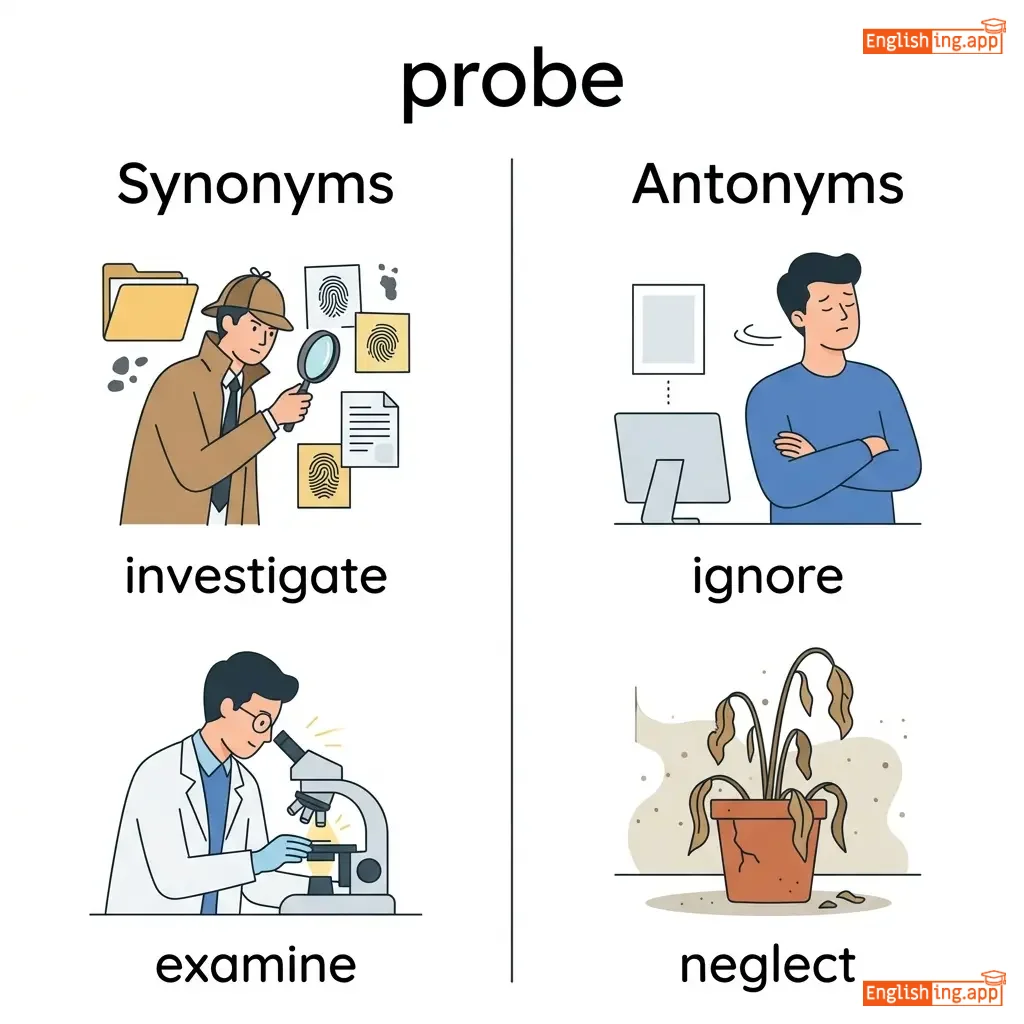
investigate, examine, explore, scrutinize, research
••••••
|
ignore, neglect, overlook
••••••
|
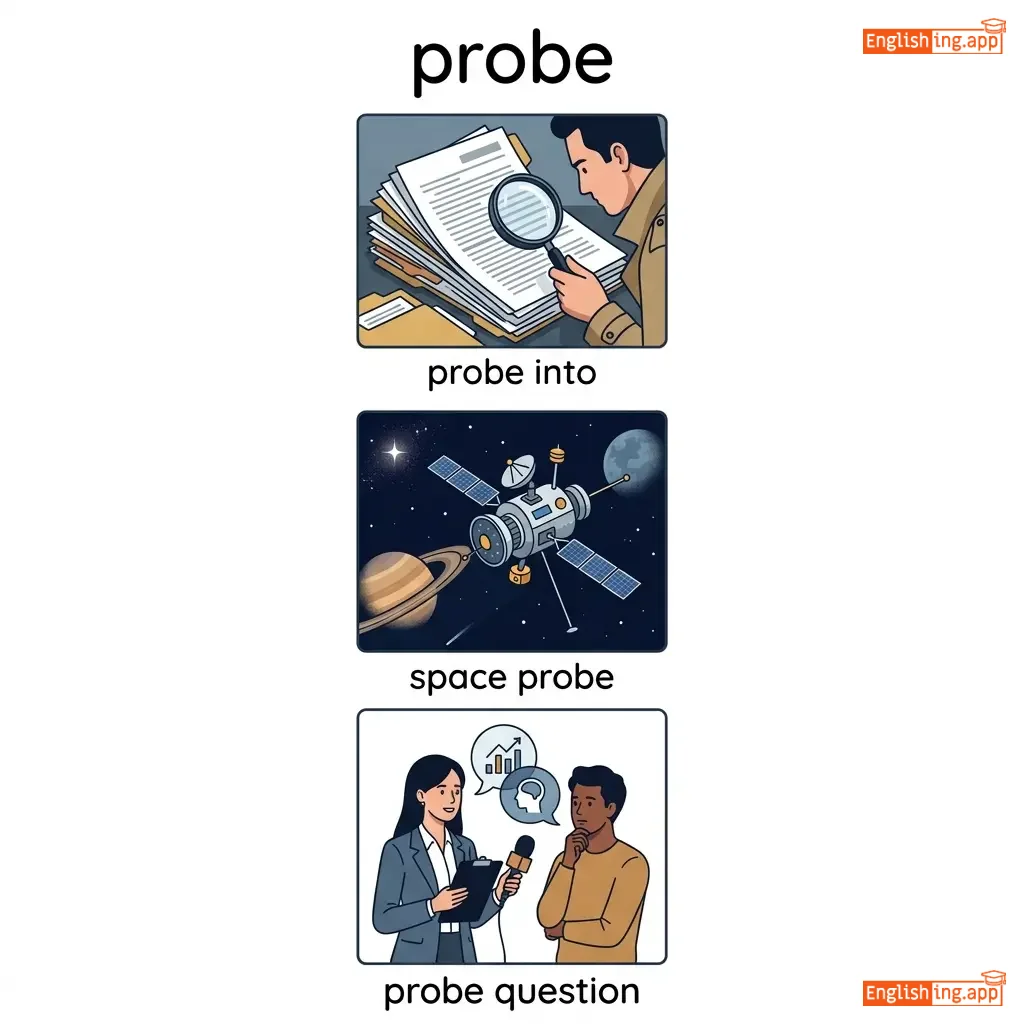
probe into, space probe, probe question, probe deeper
••••••
|
Probe は問題を深く調査すること — まるで深い調査を行うようなものです。
••••••
|
|
#3944
❓
|
/ˈprɒb.ləm/
noun
(プロブレム)
••••••
|
- •••••• |
問題
mondai
••••••
|
- •••••• | - •••••• | - •••••• | - •••••• |
a situation that causes difficulties and needs to be dealt with or solved
••••••
|
We need to solve this problem quickly.
この問題を早く解決しなければなりません。
••••••
|
この問題を早く解決しなければなりません。
Kono mondai o hayaku kaiketsu shinakereba narimasen.
••••••
|
- •••••• | - •••••• | - •••••• |
issue, difficulty, trouble, challenge
••••••
|
solution, answer, resolution
••••••
|
solve a problem, serious problem, major problem, problem solving
••••••
|
問題 (Mondai) - 日本語と英語で問題が解決すべき困難です。
••••••
|
|
#3945
⚠️
|
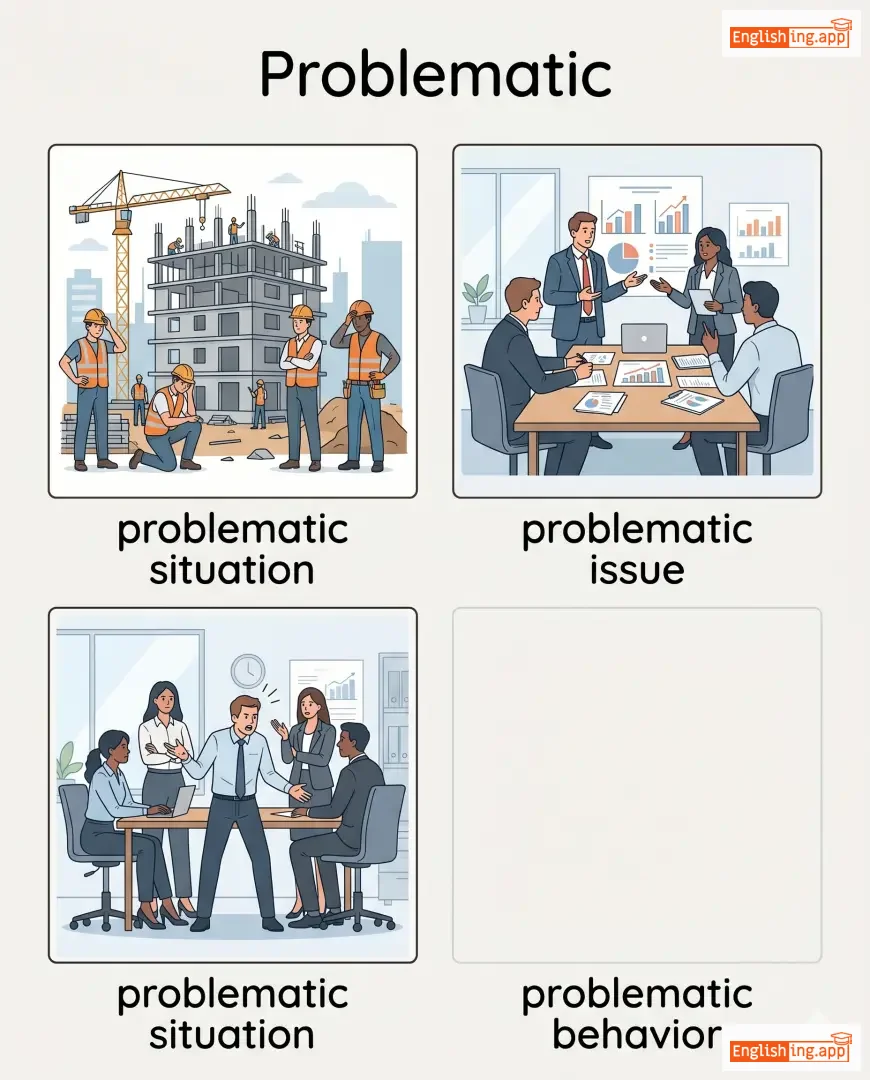
/ˌprɒb.ləˈmæt.ɪk/
adjective
(プロブレマティック)
••••••
|
|
問題のある; 問題を引き起こす
mondai no aru; mondai o hikiokosu
••••••
|
- •••••• | - •••••• | - •••••• | - •••••• |
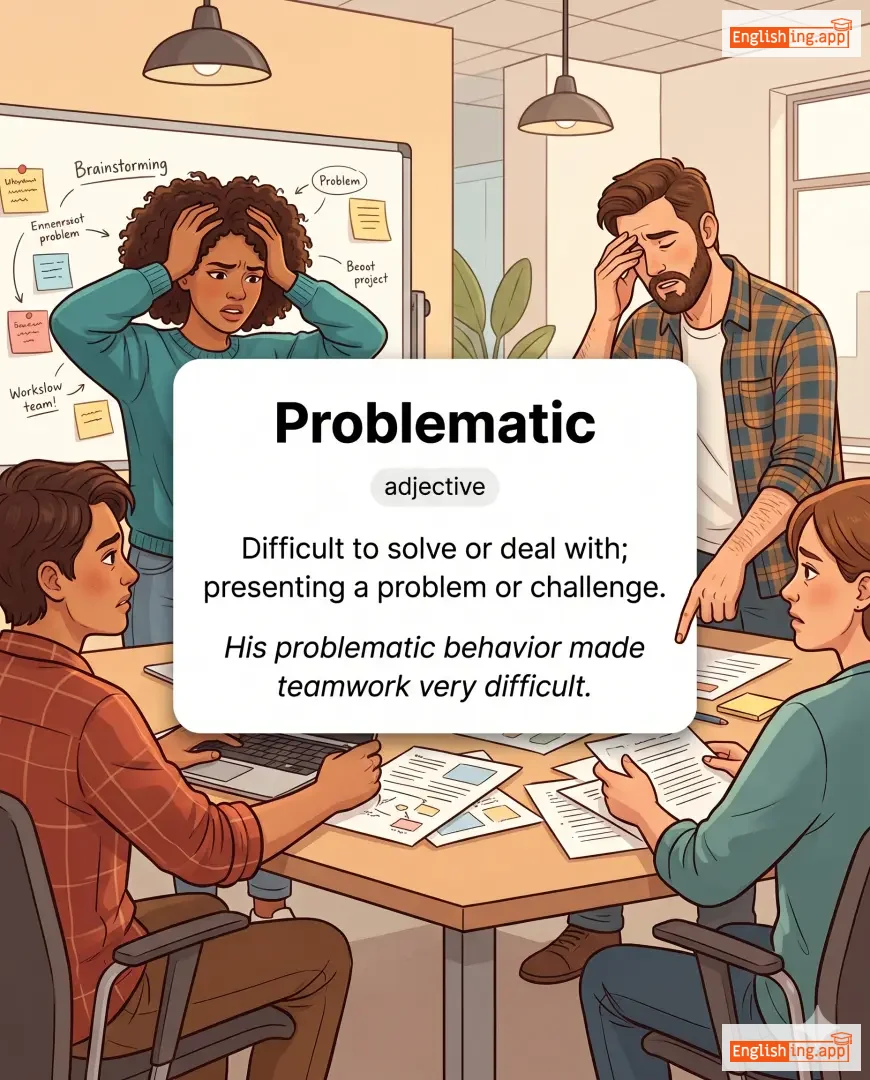
causing problems; troublesome; difficult to deal with
••••••
|
The new policy changes are problematic and need to be reviewed.
新しい政策変更は問題があり、再評価する必要があります。
••••••
|
新しい政策変更は問題があり、再評価する必要があります。
Atarashii seisaku henkou wa mondai ga ari, saihyouka suru hitsuyou ga arimasu.
••••••
|
- •••••• | - •••••• | - •••••• |
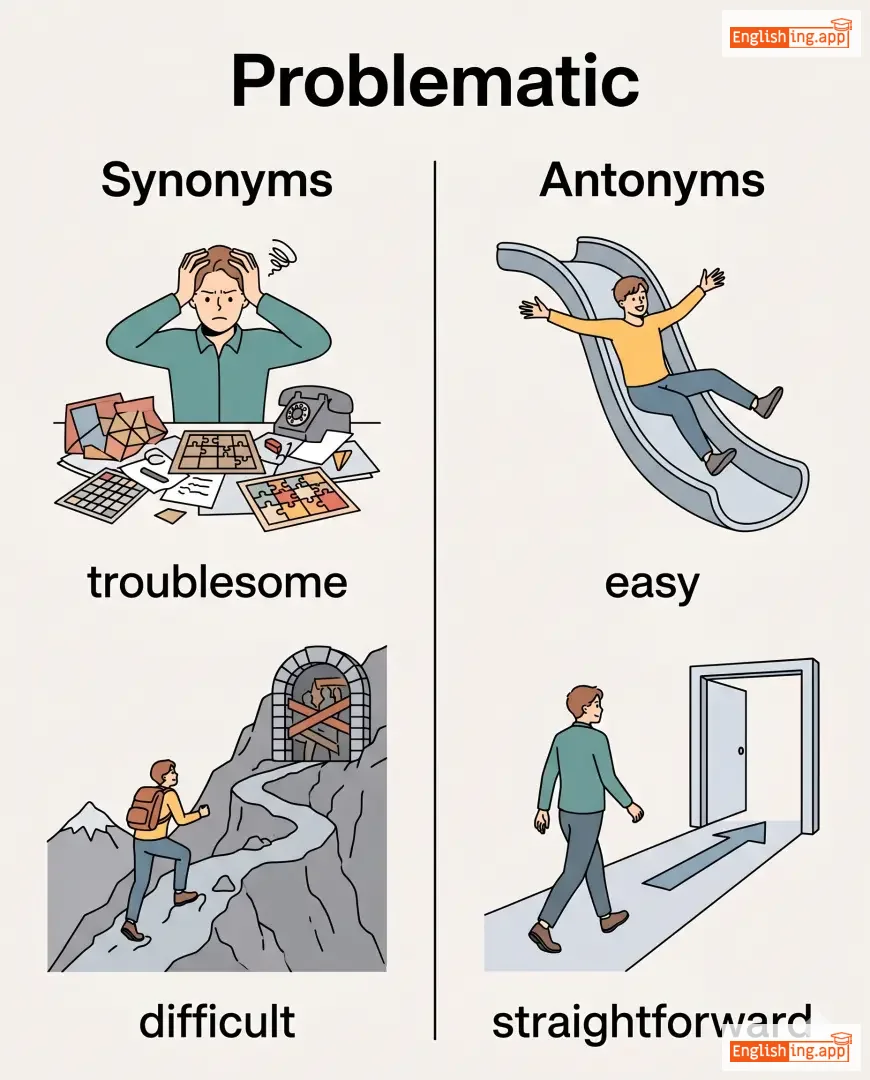
troublesome, difficult, challenging, questionable
••••••
|
unproblematic, easy, simple, straightforward
••••••
|
problematic situation, problematic behavior, highly problematic, potentially problematic
••••••
|
問題 (mondai) + の (no) = 問題のある (mondai no aru)
••••••
|
|
#3946
📋
|
/prəˈsiː.dʒər/
noun
(プロシージャ)
••••••
|
|
手順
tejun
••••••
|
- •••••• | - •••••• | - •••••• | - •••••• |
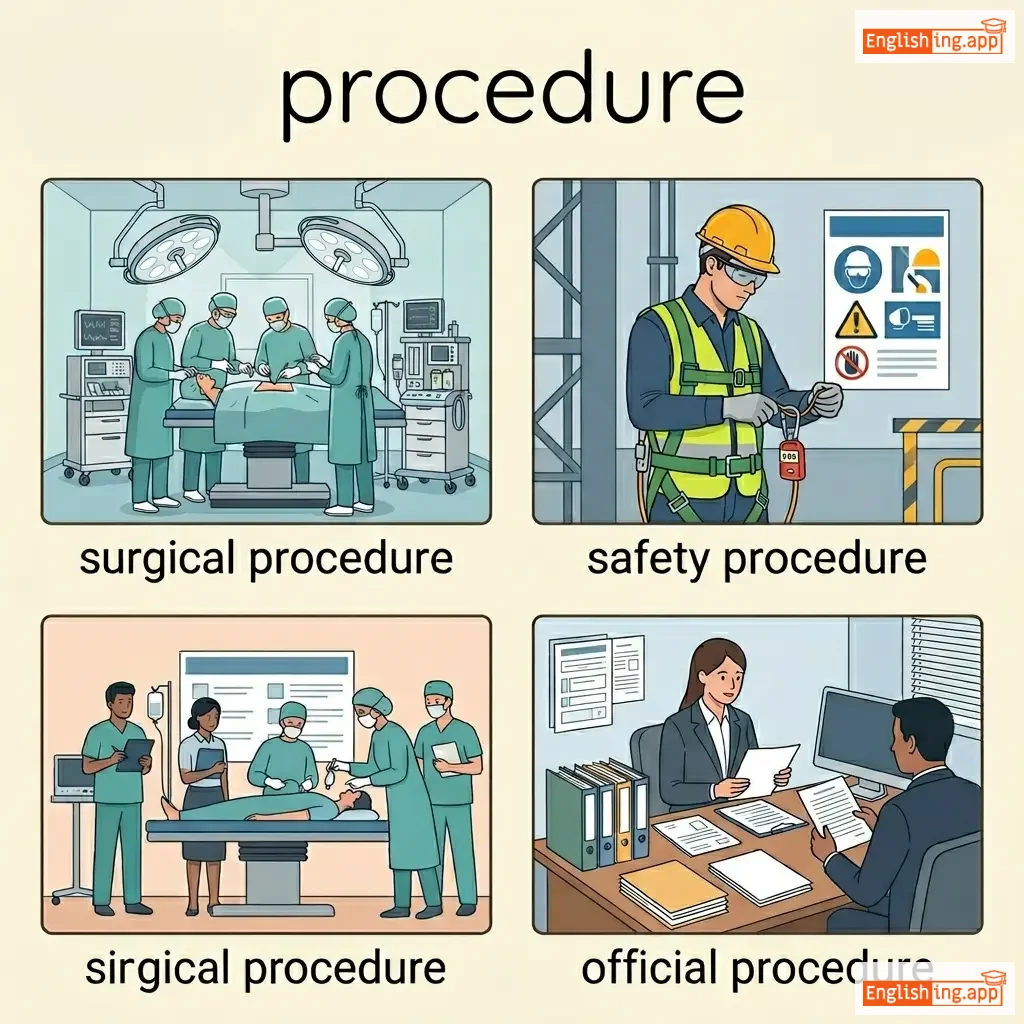
a set of actions that are the official or accepted way of doing something
••••••
|
Please follow the safety procedure carefully.
安全手順に注意して従ってください。
••••••
|
安全手順に注意して従ってください。
Anzen tejun ni chuui shite shitagatte kudasai.
••••••
|
- •••••• | - •••••• | - •••••• |
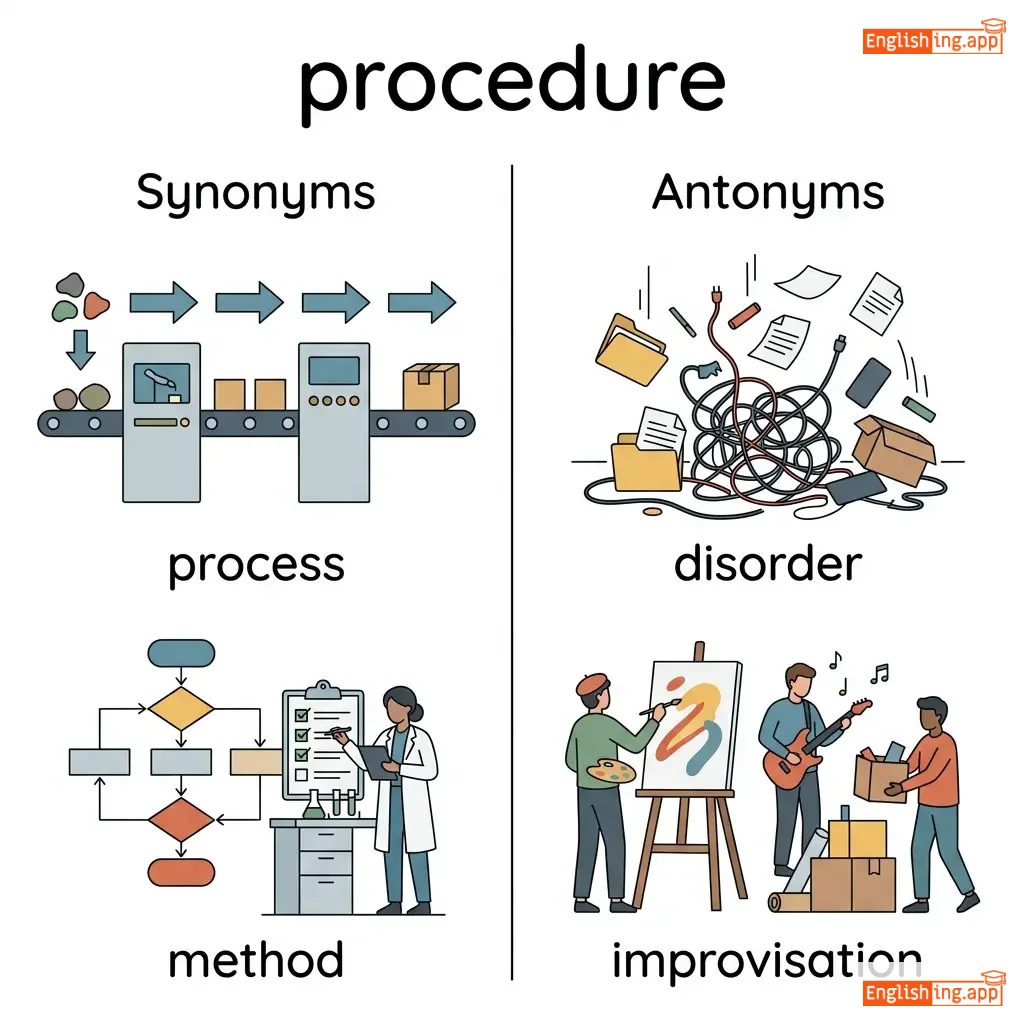
process, method, system, protocol
••••••
|
chaos, disorder, improvisation
••••••
|
safety procedure, standard procedure, follow procedure, emergency procedure
••••••
|
手順を守れば安全が確保されます。
••••••
|
|
#3947
➡️
|
/prəˈsiːd/
verb
••••••
|
- •••••• | - •••••• |
proceeded
••••••
|
proceeded
••••••
|
proceeds
••••••
|
proceeding
••••••
|
to begin or continue an action or process after a pause or interruption
••••••
|
After the short break, the speaker proceeded with his lecture. |
- •••••• |
proceed with caution |
to continue carefully and with attention to potential risks
••••••
|
- •••••• |
continue, advance, move forward, progress, go on
••••••
|
stop, halt, cease
••••••
|
proceed further, proceed with caution, proceed against, proceed to
••••••
|
No •••••• |
|
#3948
📋
|
prəˈsiːdɪŋz
noun
(プロシーディングス)
••••••
|
|
手続き
tetsuzuki
••••••
|
- •••••• | - •••••• | - •••••• | - •••••• |
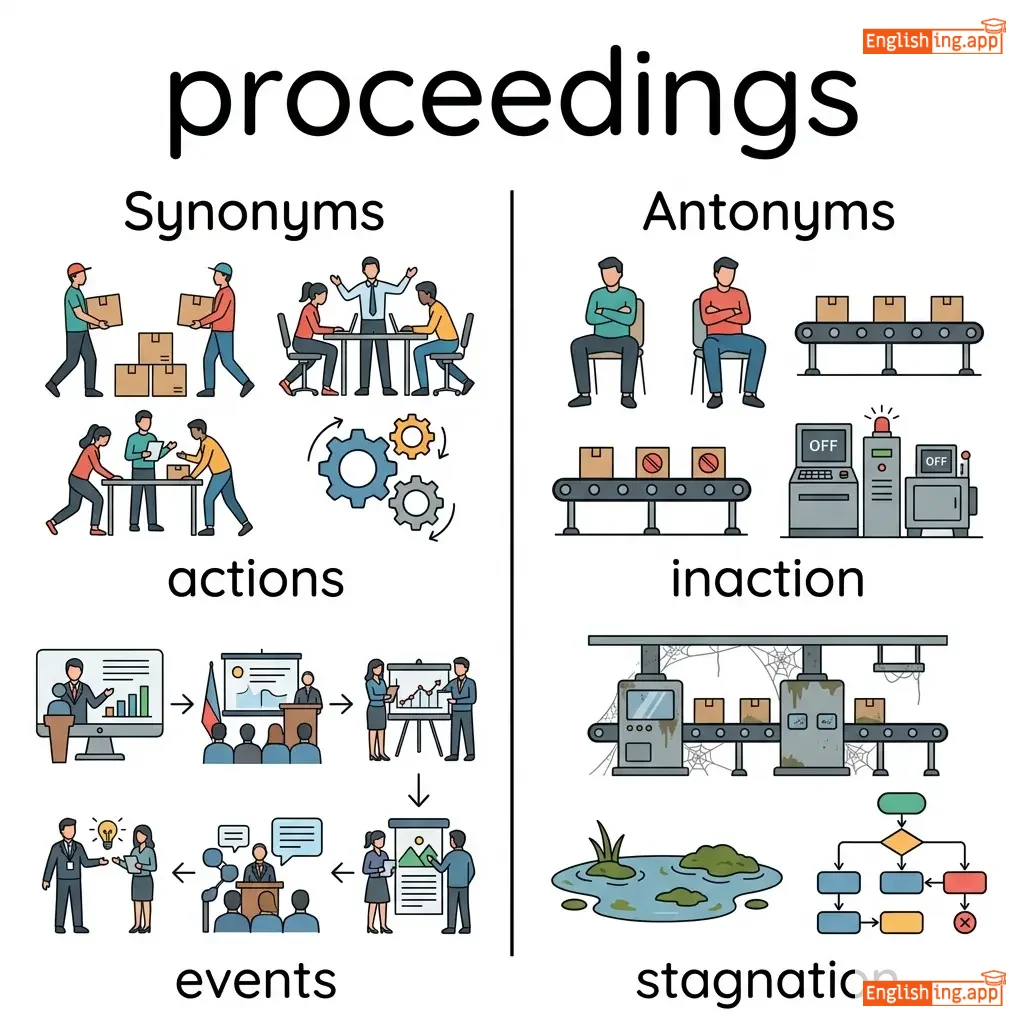
An event or a series of activities involving a formal or set procedure.
••••••
|
The proceedings discussed language issues.
手続きでは言語の問題が議論されました。
••••••
|
手続きでは言語の問題が議論されました。
Tetsuzuki de wa gengo no mondai ga giron saremashita.
••••••
|
- •••••• | - •••••• | - •••••• |
actions, events
••••••
|
inaction, stagnation
••••••
|
- •••••• |
Think of 'tetsuzuki' as a neat and tidy procedure, just like how Japanese love order!
••••••
|
|
#3949
💰
|
/ˈprəʊsiːdz/
noun
(プロシーズ)
••••••
|
- •••••• |
収益
shuueki
••••••
|
- •••••• | - •••••• | - •••••• | - •••••• |
money obtained from an event, activity, or sale
••••••
|
The proceeds from the charity event were donated to the orphanage. |
チャリティイベントの収益は孤児院に寄付されました。
Charity ibento no shuueki wa kojin ni kifu saremashita.
••••••
|
net proceeds |
the remaining amount of money after expenses are deducted
••••••
|
純収益
jun shuueki
••••••
|
earnings, revenue, profit, income, returns
••••••
|
loss, deficit
••••••
|
sale proceeds, net proceeds, distribute proceeds, donate proceeds
••••••
|
Proceedsは収益を意味します。まるで種を蒔いて得た収穫のように。
••••••
|
|
#3950
🔄
|
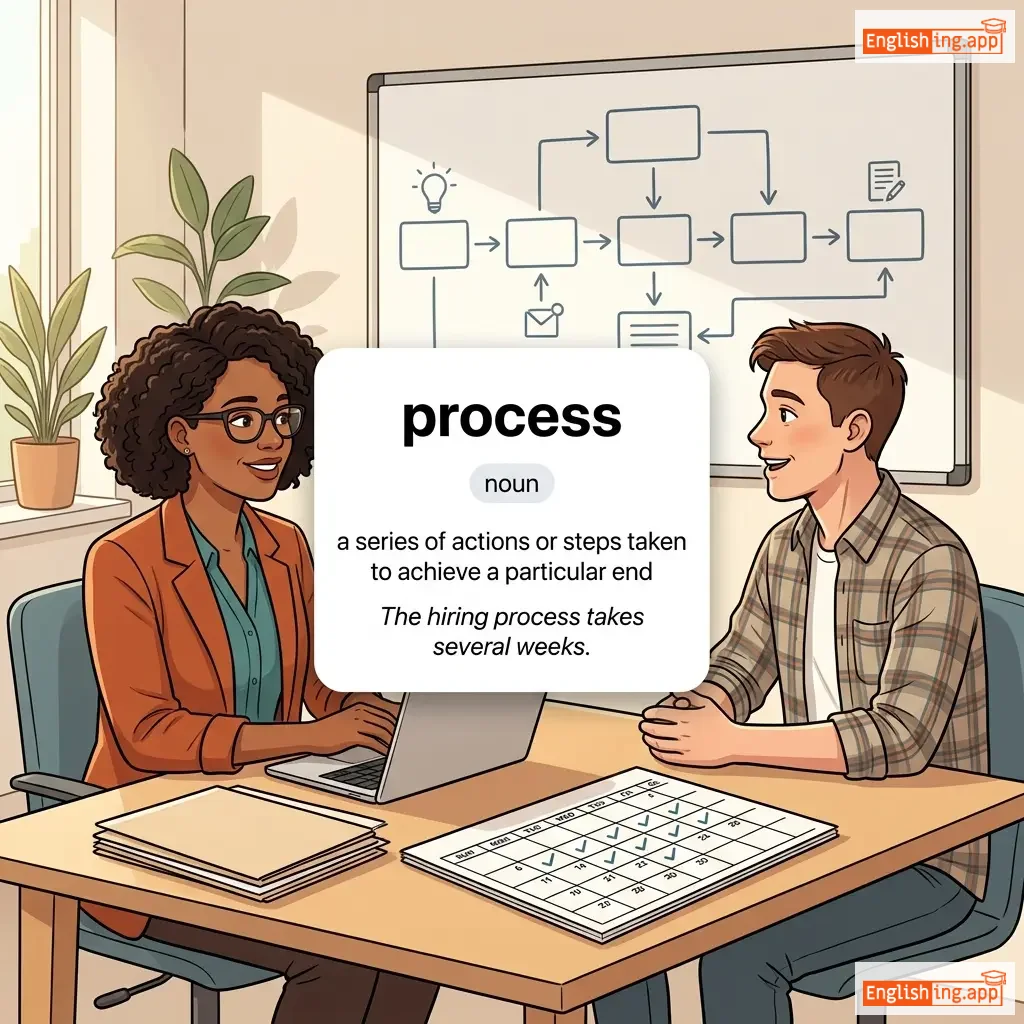
/ˈprəʊsɛs/
noun
(プロセス)
••••••
|
|
プロセス
purosesu
••••••
|
- •••••• | - •••••• | - •••••• | - •••••• |
a series of actions or steps taken to achieve a particular end
••••••
|
The hiring process takes several weeks.
採用プロセスは数週間かかります。
••••••
|
採用プロセスは数週間かかります。
Saiyō purosesu wa suū shūkan kakarimasu.
••••••
|
- •••••• | - •••••• | - •••••• |
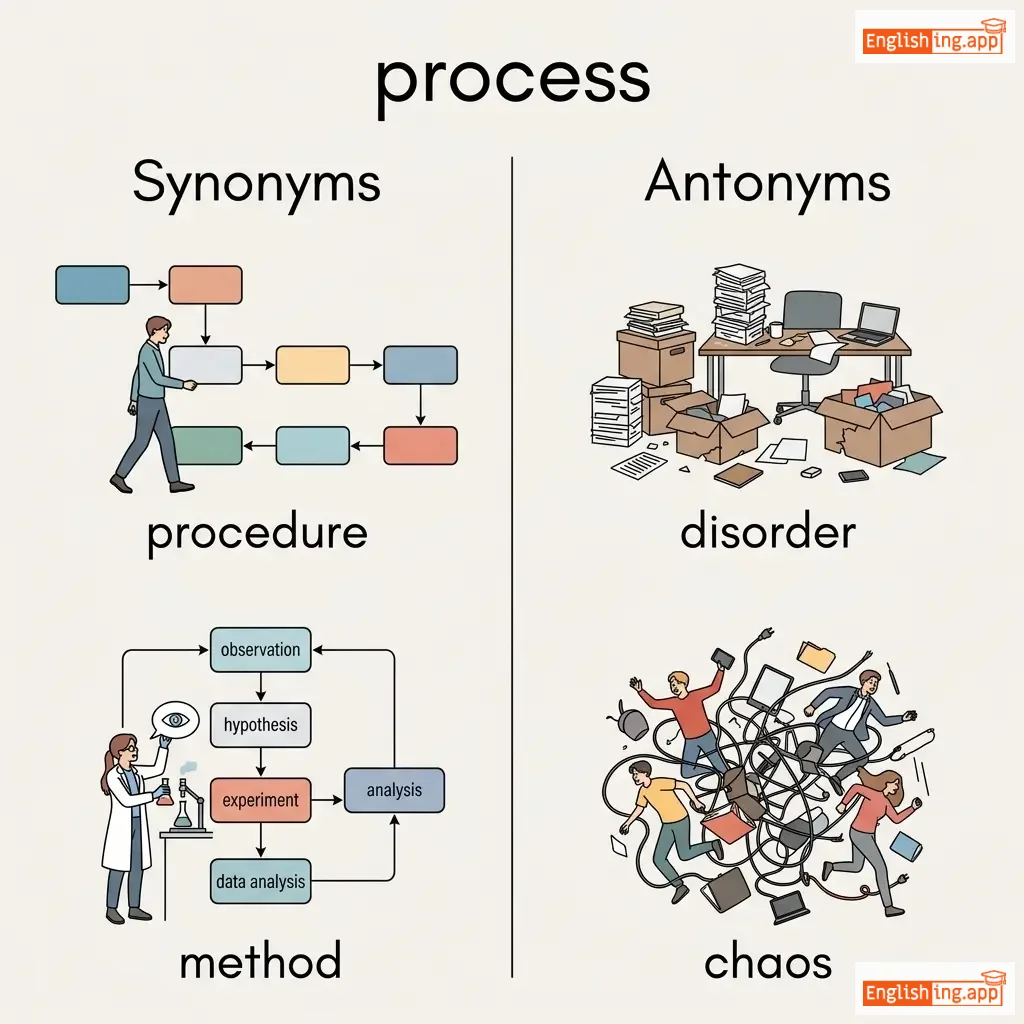
procedure, method, system, operation
••••••
|
disorder, chaos, confusion
••••••
|
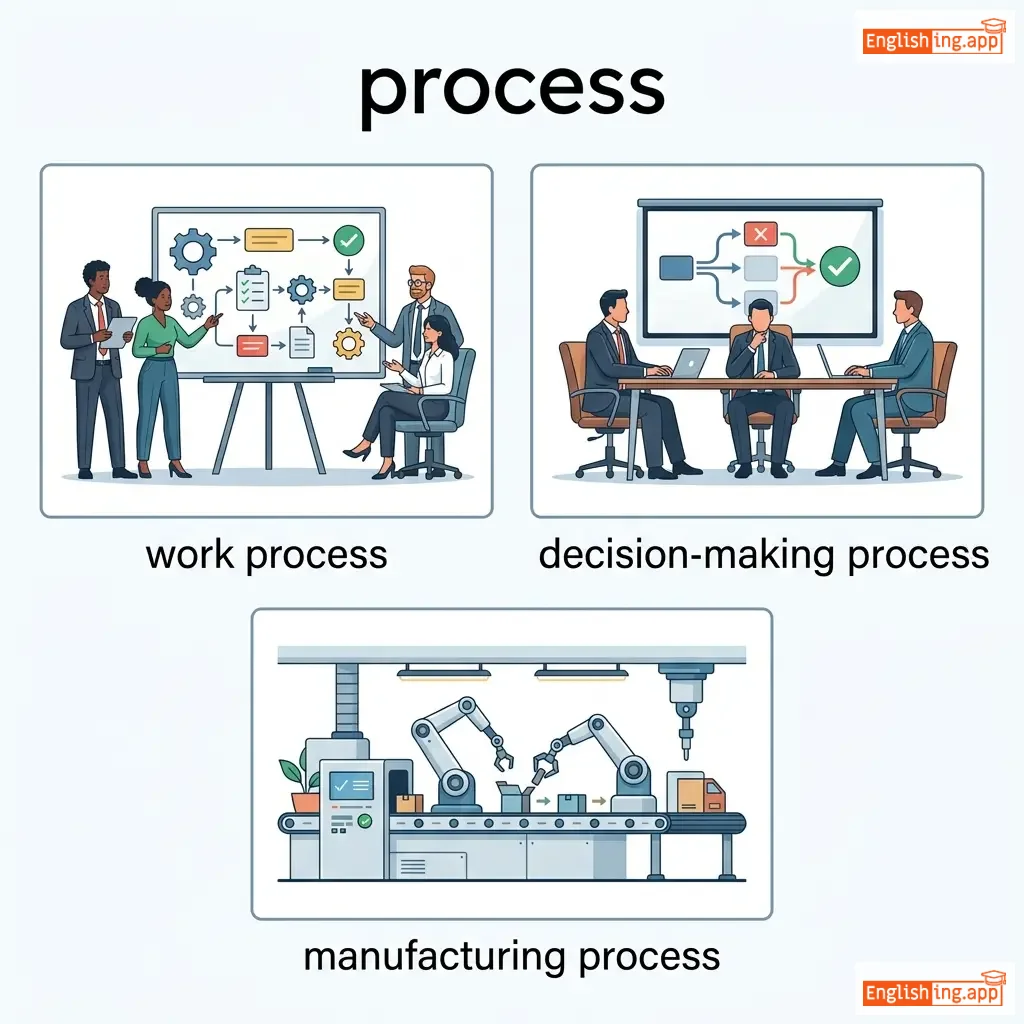
work process, decision-making process, manufacturing process
••••••
|
Processは進歩の道、ステップバイステップ!
••••••
|
|
#3951
⚙️
|
/ˈprəʊsesɪŋ/
noun
(プロセッシング)
••••••
|
- •••••• |
処理
shori
••••••
|
- •••••• | - •••••• | - •••••• |
processing
プロセッシング
••••••
|
the series of actions or steps taken to achieve a particular end, especially in data or food handling
••••••
|
Data processing takes place in the server.
データ処理はサーバーで行われます。
••••••
|
データ処理はサーバーで行われます。
Dēta shori wa sābā de okonawaremasu.
••••••
|
- •••••• | - •••••• | - •••••• |
handling, treatment, operation, computation, execution
••••••
|
neglect, ignoring
••••••
|
data processing, food processing, image processing, information processing
••••••
|
Processingは段階的に仕事を終わらせることを意味します — 'すべて処理して完了する'.
••••••
|
|
#3952
💻
|
/ˈprəʊsesə/
noun
(プロセッサ)
••••••
|
- •••••• |
プロセッサ
purosessa
••••••
|
- •••••• | - •••••• | - •••••• | - •••••• |
a machine or device that processes something, especially a computer's central processing unit (CPU)
••••••
|
The new laptop has a faster processor. |
新しいノートパソコンにはより高速なプロセッサがあります。
Atarashī nōtopasokon ni wa yori kōsoku na purosessa ga arimasu.
••••••
|
- •••••• | - •••••• | - •••••• |
CPU, microchip, computer chip, handler
••••••
|
manual operator
••••••
|
central processor, data processor, image processor, food processor
••••••
|
プロセッサはデータを処理する — まるで CPU がデータを処理するかのように。 'プロセッサはデータを素早く処理する。'
••••••
|
|
#3953
📢
|
/prəˈkleɪm/
verb
(プロクレイム)
••••••
|
- •••••• |
宣言する
sengen suru
••••••
|
proclaimed
プロクレイムド
••••••
|
proclaimed
プロクレイムド
••••••
|
proclaims
プロクレイムス
••••••
|
proclaiming
プロクレイミング
••••••
|
to announce something publicly or officially, especially something important
••••••
|
The president proclaimed a national day of mourning.
大統領は国民の日を宣言した。
••••••
|
大統領は国民の日を宣言した。
Daitōryō wa kokumin no hi o sengen shita.
••••••
|
proclaim victory
勝利を宣言する
••••••
|
to declare oneself the winner of something
••••••
|
勝利を宣言する
shōri o sengen suru
••••••
|
declare, announce, state, affirm, pronounce
••••••
|
deny, conceal, suppress
••••••
|
proclaim independence, proclaim victory, proclaim truth, proclaim law
••••••
|
Proclaimは、大きな声で発表すること📢
••••••
|
|
#3954
🏭
|
/prəˈduːs/
verb
(プロデュース)
••••••
|
- •••••• |
生産する
seisan suru
••••••
|
produced
プロデュースド
••••••
|
produced
プロデュースド
••••••
|
produces
プロデュースズ
••••••
|
producing
プロデュースイング
••••••
|
to make, create, or manufacture something
••••••
|
The factory produces cars.
工場は車を生産します。
••••••
|
工場は車を生産します。
Koujou wa kuruma o seisan shimasu.
••••••
|
- •••••• | - •••••• | - •••••• |
create, make, manufacture, generate
••••••
|
destroy, consume, waste
••••••
|
produce goods, produce results, produce energy, mass produce
••••••
|
生産する、つまり何かを作り出すこと、工場のように。
••••••
|
|
#3955
🎬
|
/prəˈduː.sər/
noun
(purudyūsā)
••••••
|
- •••••• |
プロデューサー
purodyūsā
••••••
|
- •••••• | - •••••• | - •••••• | - •••••• |
a person who supervises the making of a film, play, or broadcast program; someone who creates or manufactures goods
••••••
|
The film producer invested millions in the new movie project. |
映画のプロデューサーは新しい映画プロジェクトに何百万ドルも投資しました。
Eiga no purodyūsā wa atarashī eiga purojekuto ni nan-byakuman-doru mo tōshi shimashita.
••••••
|
- •••••• | - •••••• | - •••••• |
director, manufacturer, creator, maker
••••••
|
consumer, buyer, destroyer
••••••
|
film producer, music producer, executive producer, television producer
••••••
|
プロデューサー = 映画のすべてを支配する裏の支配者
••••••
|
|
#3956
📦
|
/ˈprɒd.ʌkt/
noun
(プロダクト)
••••••
|
- •••••• |
製品
seihin
••••••
|
- •••••• | - •••••• | - •••••• | - •••••• |
something that is manufactured or produced; the result of a process
••••••
|
The company launched a new product in the market.
その会社は市場に新しい製品を発売しました。
••••••
|
その会社は市場に新しい製品を発売しました。
Sono kaisha wa shijou ni atarashii seihin o hatsubai shimashita.
••••••
|
- •••••• | - •••••• | - •••••• |
item, goods, commodity, merchandise
••••••
|
raw material, ingredient
••••••
|
new product, quality product, end product, product development
••••••
|
製品 = 会社が作ったもの。
••••••
|
|
#3957
🏭
|
/prəˈdʌkʃən/
noun
(プロダクション)
••••••
|
- •••••• |
制作
seisaku
••••••
|
- •••••• | - •••••• | - •••••• | - •••••• |
the process of manufacturing or creating something
••••••
|
The production of this film took over a year. |
この映画の制作には1年以上かかりました。
Kono eiga no seisaku niwa ichinen ijou kakarimashita.
••••••
|
- •••••• | - •••••• | - •••••• |
manufacture, creation, development, fabrication
••••••
|
consumption, destruction
••••••
|
mass production, large-scale production, production line, production cost
••••••
|
Production = 作る (作成) 映画を作る時間
••••••
|
|
#3958
💼
|
/prəˈdʌktɪv/
adjective
(プロダクティブ)
••••••
|
- •••••• |
生産的
seisanteki
••••••
|
- •••••• | - •••••• | - •••••• | - •••••• |
producing or achieving a significant amount of results, work, or output
••••••
|
She had a very productive day at the office. |
彼女はオフィスで非常に生産的な一日を過ごしました。
Kanojo wa ofisu de hijō ni seisanteki na ichinichi o sugoshimashita.
••••••
|
productive day |
a day when a lot of useful work is done
••••••
|
生産的な日
seisanteki na hi
••••••
|
efficient, fruitful, effective, prolific
••••••
|
unproductive, idle, ineffective
••••••
|
productive day, productive meeting, productive work
••••••
|
生産的=PROを生産して結果を出す!
••••••
|
|
#3959
⚙️
|
/ˌprɒdʌkˈtɪvɪti/
noun
(プロダクティビティ)
••••••
|
|
生産性
seisansei
••••••
|
- •••••• | - •••••• | - •••••• | - •••••• |
the rate at which work is done or goods are produced, especially in relation to the time and resources used
••••••
|
Improving employee productivity is vital for business growth. |
従業員の生産性の向上は、ビジネス成長にとって重要です。
Jūgyōin no seisansei no kōjō wa, bijinesu seichō ni totte jūyōdesu.
••••••
|
- •••••• | - •••••• | - •••••• |
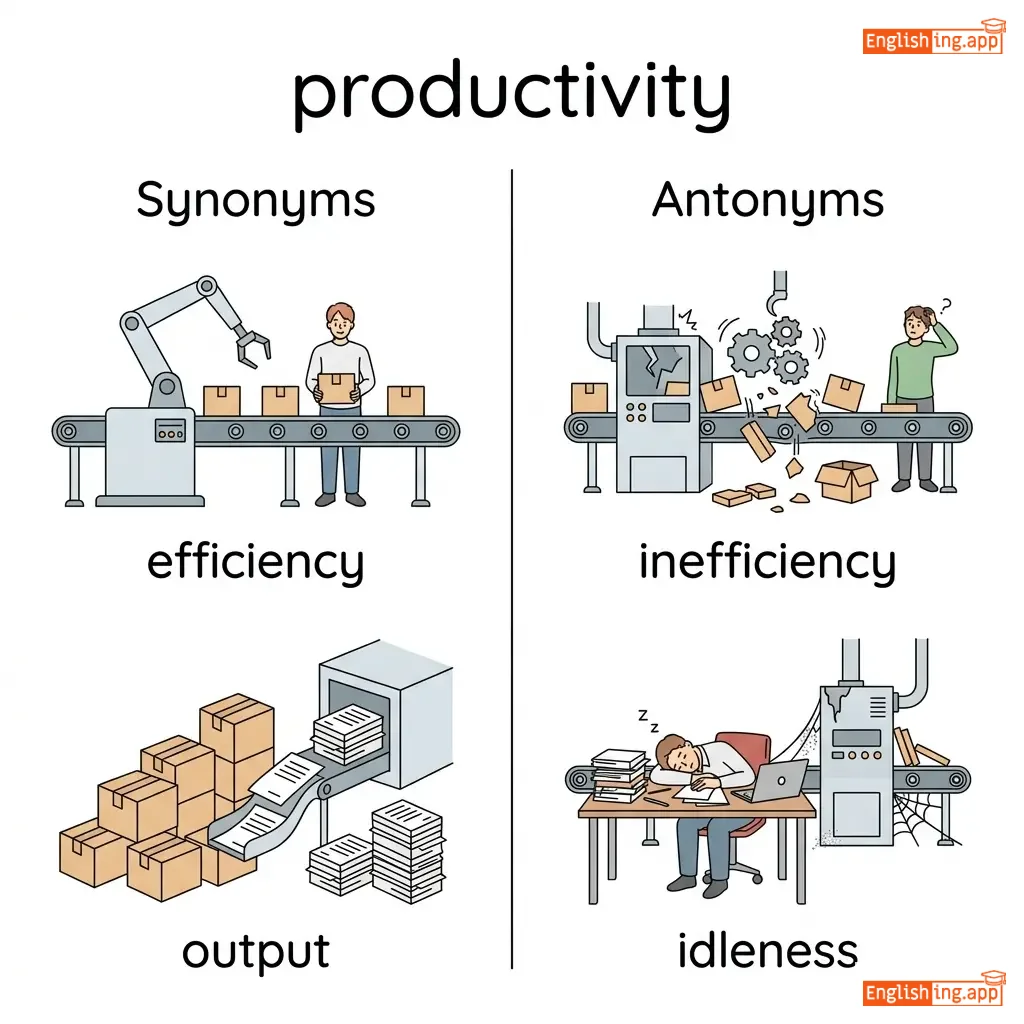
efficiency, output, performance, effectiveness, capacity
••••••
|
inefficiency, idleness, unproductiveness
••••••
|
high productivity, improve productivity, labor productivity, productivity growth
••••••
|
生産性は時間あたりの成果、効率がカギ!
••••••
|
|
#3960
👔
|
/prəˈfɛʃən/
noun
(プロフェッション)
••••••
|
- •••••• |
職業
shokugyo
••••••
|
- •••••• | - •••••• | - •••••• | - •••••• |
a paid occupation, especially one requiring specialized education or training
••••••
|
Medicine is considered a noble profession. |
医学は高貴な職業と見なされています。
Igaku wa kōki na shokugyō to minasa reteimasu.
••••••
|
enter the profession |
to begin a career in a particular field
••••••
|
職業に就く
Shokugyō ni tsuku
••••••
|
career, occupation, vocation, trade, calling
••••••
|
unemployment, hobby
••••••
|
noble profession, teaching profession, medical profession, legal profession
••••••
|
職業はプロフェッショナルの仕事 — つまり職業。
••••••
|
|
#3961
💼
|
/prəˈfɛʃənl/
adjective
(プロフェッショナル)
••••••
|
- •••••• |
プロフェッショナル
purofesshonaru
••••••
|
- •••••• | - •••••• | - •••••• | - •••••• |
relating to a job that requires special training or education
••••••
|
She is a professional dancer who performs internationally. |
彼女は国際的に活躍するプロフェッショナルダンサーです。
Kanojo wa kokusaiteki ni katsuyaku suru purofesshonaru dansā desu.
••••••
|
- •••••• | - •••••• | - •••••• |
expert, skilled, qualified, trained
••••••
|
amateur, unskilled
••••••
|
professional athlete, professional career, professional skills, professional training
••••••
|
プロフェッショナル = プロ (puro) 特別な仕事に専念
••••••
|
|
#3962
👨🏫
|
/prəˈfɛsər/
noun
(教授)
••••••
|
- •••••• |
教授
kyouju
••••••
|
- •••••• | - •••••• | - •••••• | - •••••• |
a senior teacher or academic at a college or university
••••••
|
The professor explained the theory clearly. |
教授は理論を明確に説明しました。
Kyouju wa riron wo meikaku ni setsumei shimashita.
••••••
|
professor emeritus |
a retired professor who retains an honorary title
••••••
|
名誉教授
meiyo kyouju
••••••
|
lecturer, academic, scholar, instructor
••••••
|
student, pupil
••••••
|
university professor, assistant professor, professor emeritus, professor of law
••••••
|
Professor = Kyouju — これが専門分野のエキスパート教師
••••••
|
|
#3963
👤
|
/ˈproʊˌfaɪl/
noun
(プロファイル)
••••••
|
- •••••• |
プロフィール
purōfairu
••••••
|
- •••••• | - •••••• | - •••••• | - •••••• |
a description or representation of someone or something; an outline
••••••
|
He updated his profile on the company website. |
彼は会社のウェブサイトでプロフィールを更新しました。
Kare wa kaisha no uebusaito de purofairu o kōshin shimashita.
••••••
|
low profile |
avoiding attention or publicity
••••••
|
低姿勢
teishisei
••••••
|
outline, description, sketch, representation
••••••
|
anonymity, obscurity
••••••
|
social profile, user profile, company profile, keep a low profile
••••••
|
Facebookのプロフィールはあなたの顔です。
••••••
|
|
#3964
💰
|
/ˈprɒfɪt/
noun, verb
(プロフィット)
••••••
|
- •••••• |
利益
rieki
••••••
|
profited
プロフィテッド
••••••
|
profited
プロフィテッド
••••••
|
profits
プロフィッツ
••••••
|
profiting
プロフィッティング
••••••
|
financial gain, especially the difference between the amount earned and the amount spent
••••••
|
The company made a huge profit this quarter.
その会社は今四半期に大きな利益を上げました。
••••••
|
その会社は今四半期に大きな利益を上げました。
Sono kaisha wa ima shihanki ni ōkina rieki o agemashita.
••••••
|
turn a profit
利益を得る
••••••
|
to start making financial gains
••••••
|
利益を得る
rieki o eru
••••••
|
gain, earnings, revenue, income, benefit
••••••
|
loss, deficit, debt
••••••
|
make a profit, earn profit, profit margin, net profit
••••••
|
Profit という言葉はポケットにお金が入ってくることです。
••••••
|
|
#3965
💰
|
/ˈprɒfɪtəbl/
adjective
(プロフィタブル)
••••••
|
- •••••• |
利益を生む
rieki wo umu
••••••
|
- •••••• | - •••••• | - •••••• | - •••••• |
yielding profit or financial gain
••••••
|
The company has become highly profitable after the new strategy was implemented. |
新しい戦略が実行された後、会社は非常に利益を上げました。
Atarashī senryaku ga jikkō sareta ato, kaisha wa hijō ni rieki wo agemashita.
••••••
|
- •••••• | - •••••• | - •••••• |
lucrative, rewarding, beneficial
••••••
|
unprofitable, loss-making
••••••
|
highly profitable, profitable business, profitable investment
••••••
|
利益を生む - ビジネスが利益を生むと、お金が増える!
••••••
|
|
#3966
🧠
|
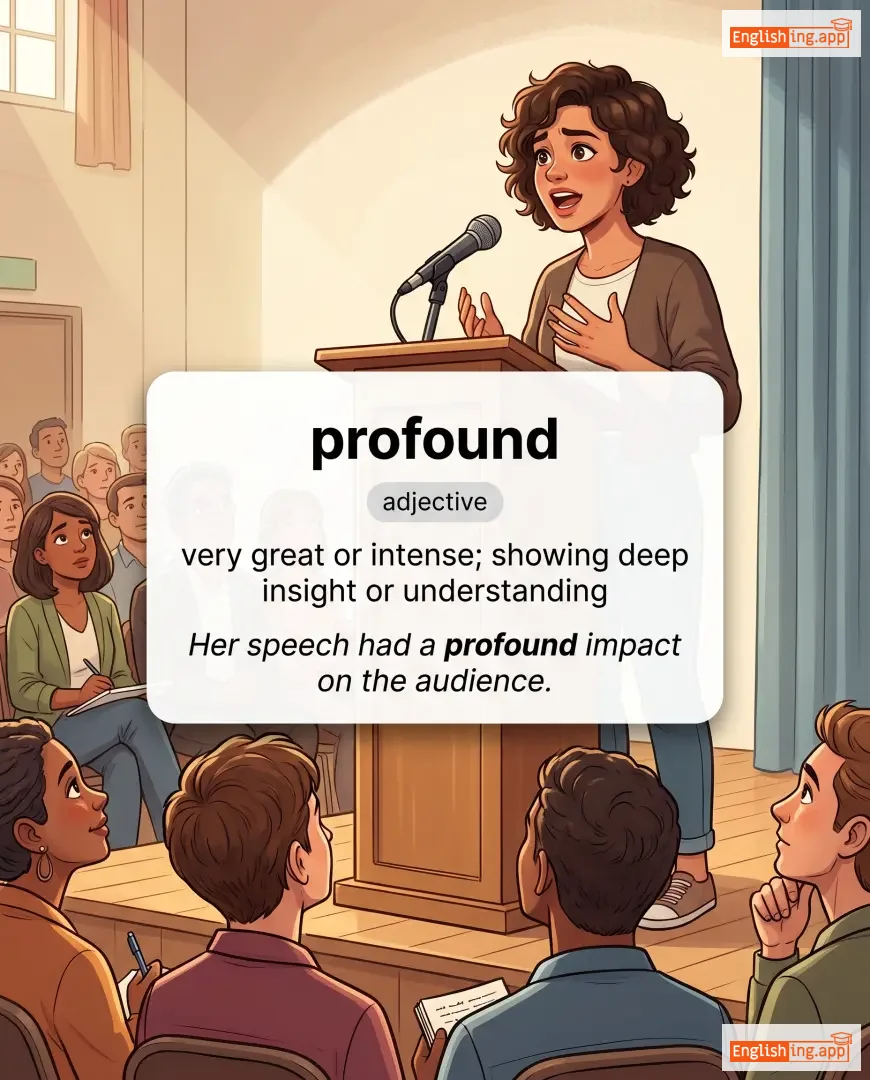
/prəˈfaʊnd/
adjective
(プロファウンド)
••••••
|
|
深遠
shinen
••••••
|
- •••••• | - •••••• | - •••••• | - •••••• |
very great or intense; showing deep insight or understanding
••••••
|
Her speech had a profound impact on the audience. |
彼女のスピーチは観客に深い影響を与えました。
Kanojo no supīchi wa kankyaku ni fukai eikyō o ataemashita.
••••••
|
- •••••• | - •••••• | - •••••• |
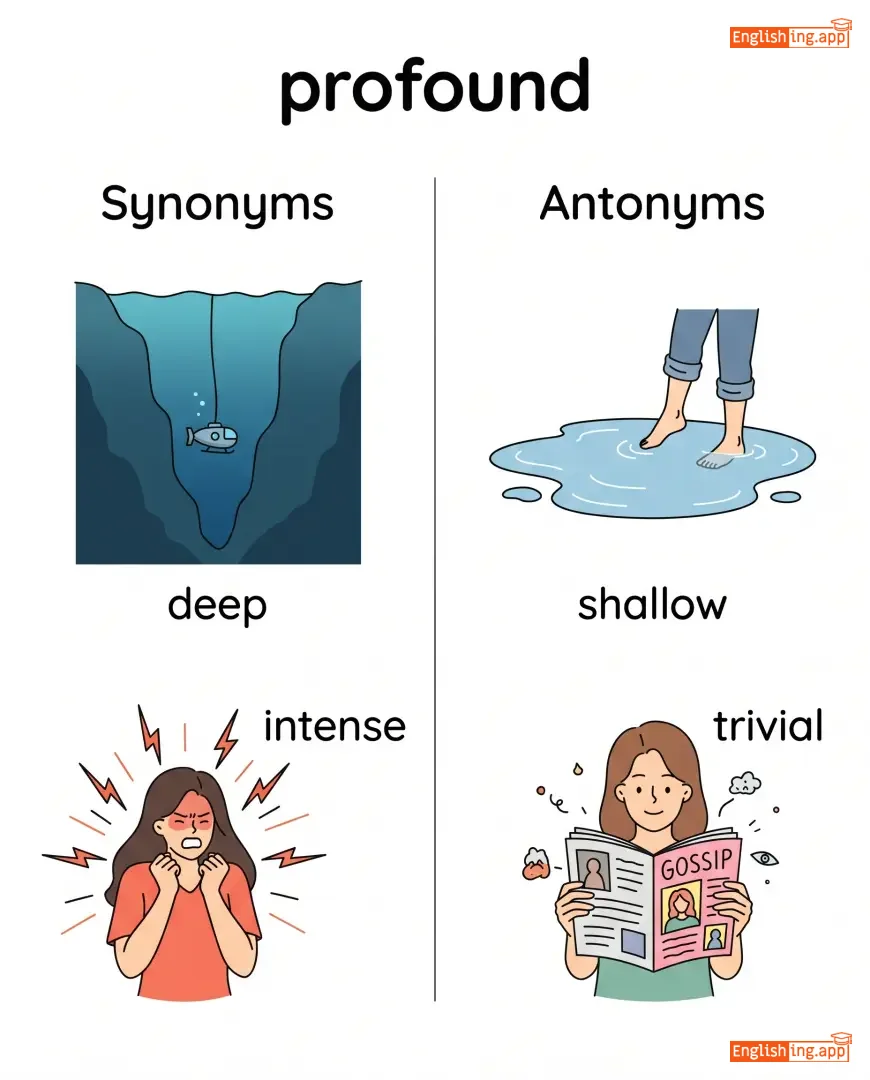
deep, intense, thoughtful, insightful, weighty
••••••
|
shallow, trivial, superficial
••••••
|
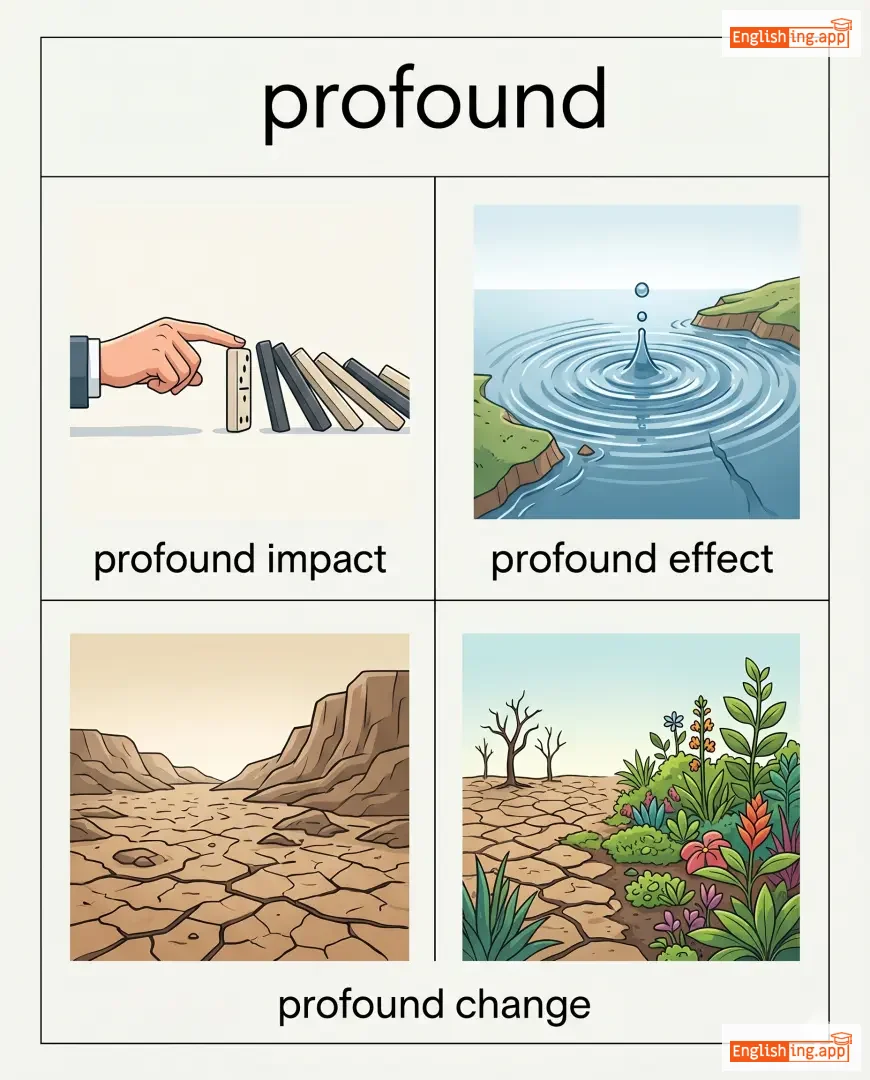
profound impact, profound effect, profound change, profound insight, profound silence
••••••
|
深遠、海のように深く、いつまでも続く。
••••••
|
|
#3967
📱
|
/ˈprəʊɡræm/
noun
(プログラム)
••••••
|
- •••••• |
プログラム
puroguramu
••••••
|
- •••••• | - •••••• | - •••••• | - •••••• |
a planned series of events or activities
••••••
|
The program starts at 9 AM sharp.
プログラムは午前9時に正確に始まります。
••••••
|
プログラムは午前9時に正確に始まります。
Puroguramu wa gozen 9-ji ni seikaku ni hajimarimasu.
••••••
|
- •••••• | - •••••• | - •••••• |
schedule, agenda, plan, event
••••••
|
disorganization, chaos
••••••
|
training program, software program, program schedule, educational program
••••••
|
プログラム = Pro (プロ) + グラム (グラフ), 計画に基づいた完璧な流れ!
••••••
|
|
#3968
💻
|
/ˈprəʊɡræmɪŋ/
noun
(プログラミング)
••••••
|
- •••••• |
プログラミング
puroguramingu
••••••
|
- •••••• | - •••••• | - •••••• | - •••••• |
the process of designing and writing computer programs
••••••
|
He has been learning programming for several months now. |
彼は数ヶ月間プログラミングを学んでいます。
Kare wa su-kagetsu-kan puroguramingu o manandeimasu.
••••••
|
- •••••• | - •••••• | - •••••• |
coding, software development, app development
••••••
|
deprogramming, unlearning
••••••
|
learn programming, programming skills, computer programming
••••••
|
プログラミングを学んで、コンピュータに命令を出そう!
••••••
|
|
#3969
📈
|
/ˈprəʊɡrɛs/ (noun), /prəˈɡrɛs/ (verb)
noun, verb
(プログレス)
••••••
|
|
進歩
shinpo
••••••
|
progressed
プログレスド
••••••
|
progressed
プログレスド
••••••
|
progresses
プログレスズ
••••••
|
progressing
プログレッシング
••••••
|
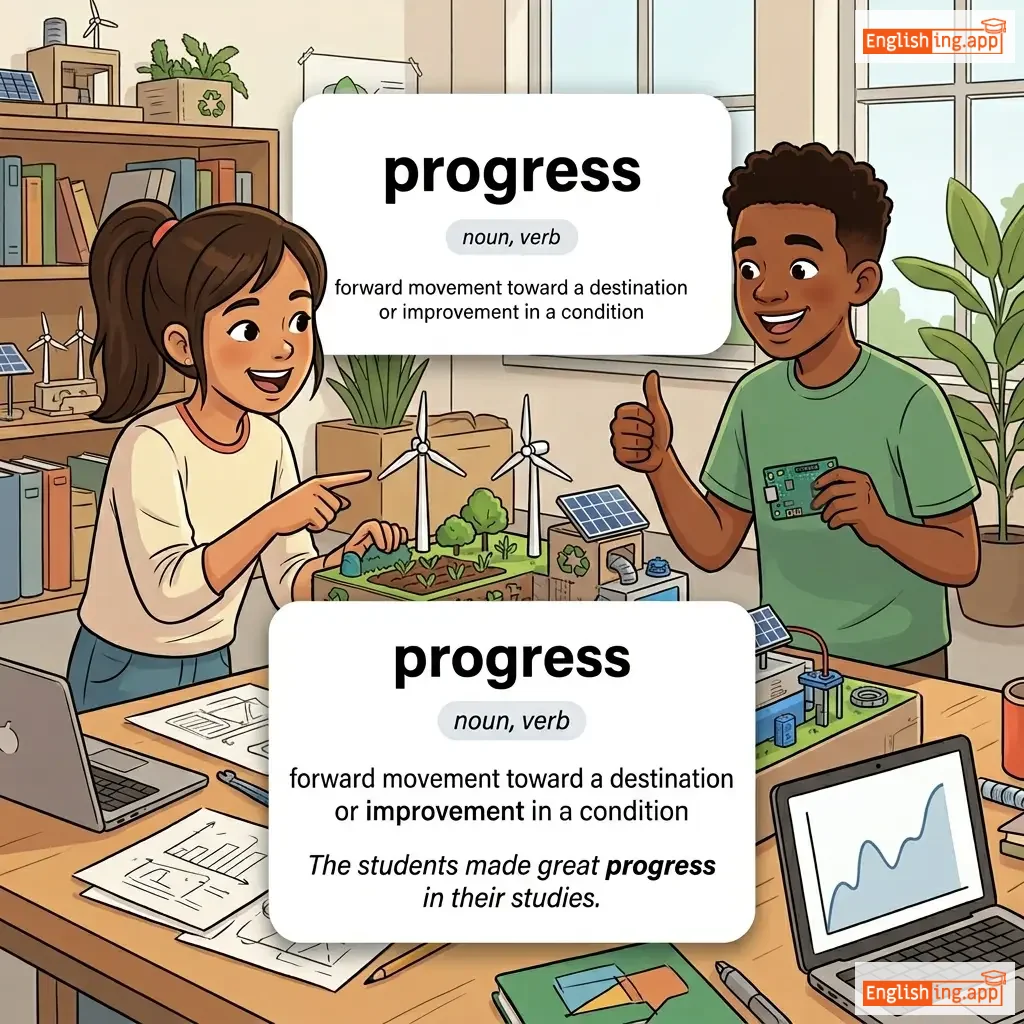
forward movement toward a destination or improvement in a condition
••••••
|
The students made great progress in their studies.
学生たちは学業で大きな進歩を遂げました。
••••••
|
学生たちは学業で大きな進歩を遂げました。
Gakusei-tachi wa gakugyou de ookina shinpo wo togemashita.
••••••
|
work in progress
作業中
••••••
|
something that is still being developed or unfinished
••••••
|
作業中
Sagyou-chuu
••••••
|
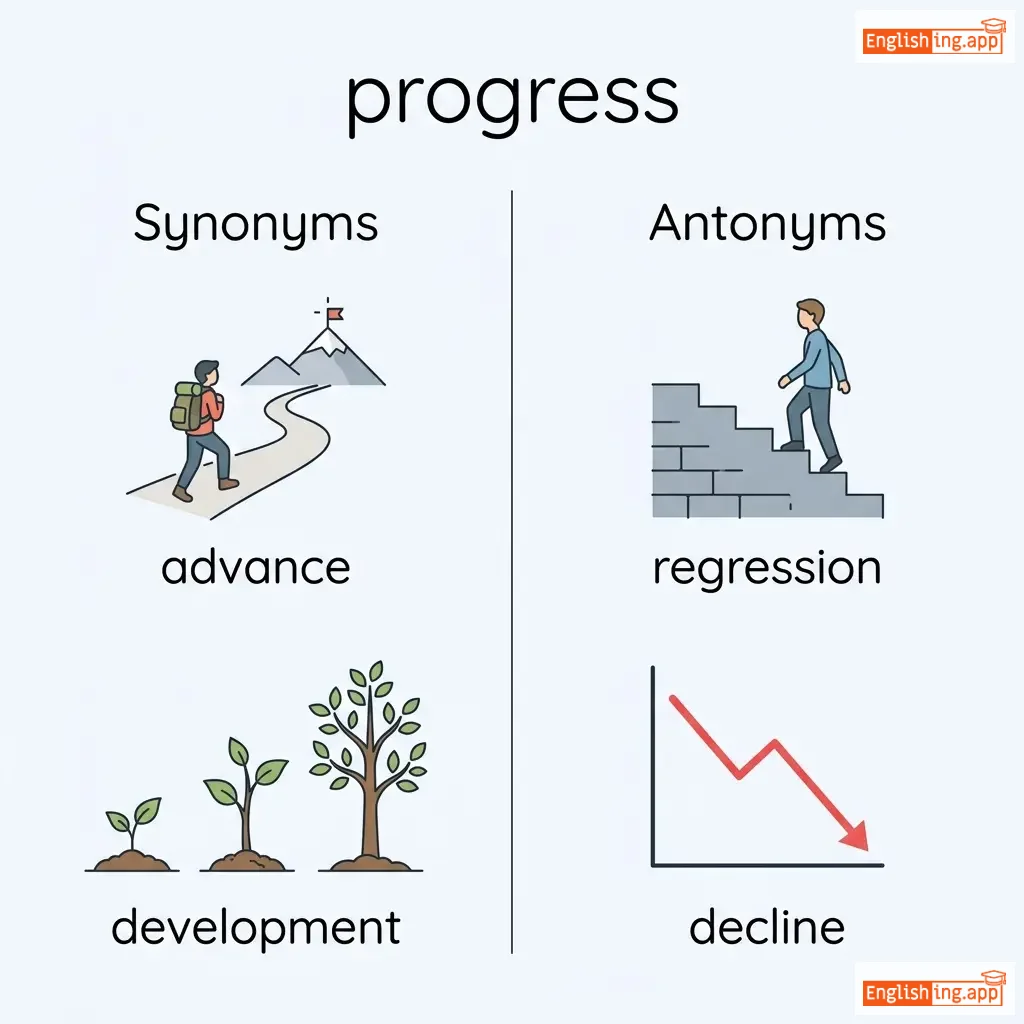
advance, development, improvement, growth, headway
••••••
|
regression, decline, setback
••••••
|
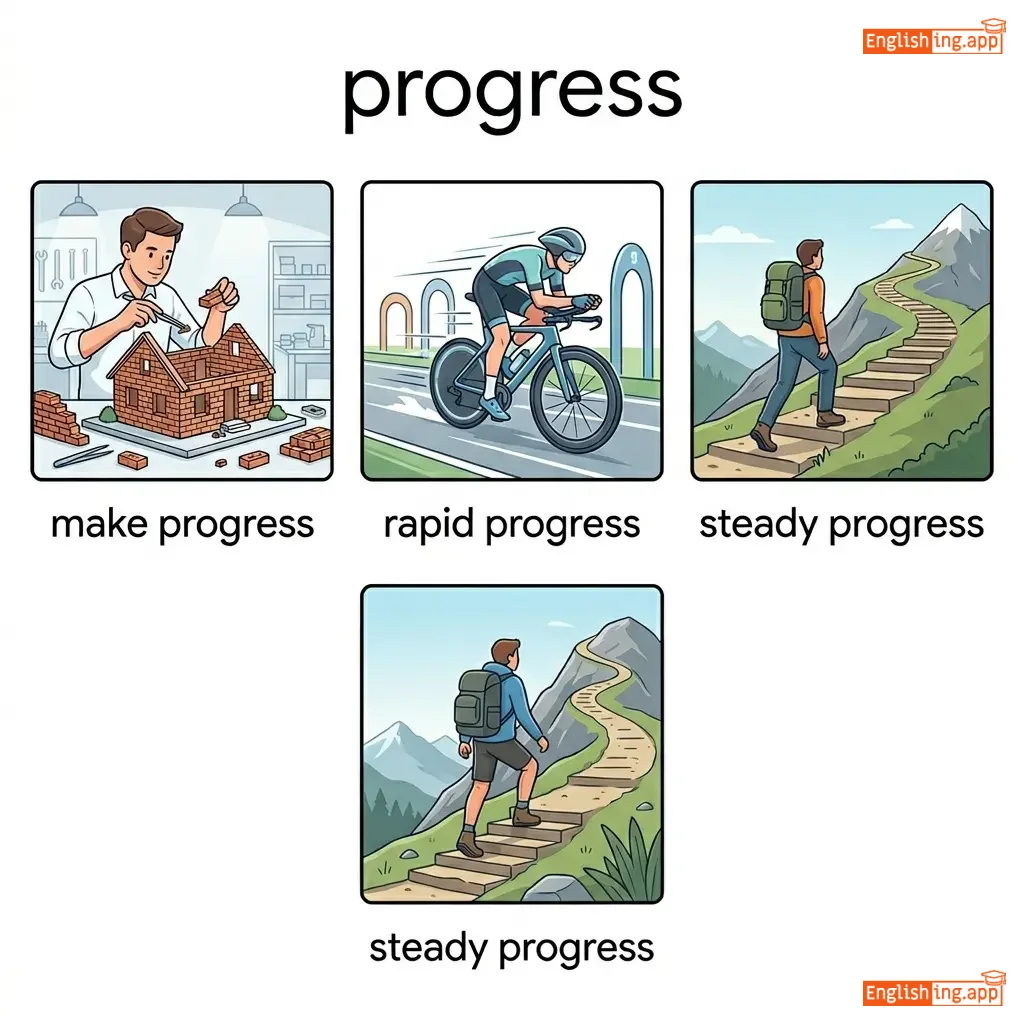
make progress, rapid progress, steady progress, slow progress
••••••
|
Progress = Pro + gress = 前進する (進歩)
••••••
|
|
#3970
🚀
|
/prəˈɡrɛsɪv/
adjective
(プログレッシブ)
••••••
|
- •••••• |
進歩的
shinpoteki
••••••
|
- •••••• | - •••••• | - •••••• | - •••••• |
favoring or implementing new and modern ideas or policies; moving forward or improving
••••••
|
She holds progressive views on social justice and equality. |
彼女は社会的正義と平等に関して進歩的な見解を持っています。
Kanojo wa shakai-teki seigi to byōdō ni kanshite shinpoteki na kenkai o motteimasu.
••••••
|
progressive mindset |
an attitude open to change and innovation
••••••
|
進歩的な思考
shinpoteki na shikō
••••••
|
forward-thinking, modern, liberal, reformist, advanced
••••••
|
conservative, traditional, reactionary
••••••
|
progressive ideas, progressive policy, progressive change, progressive movement
••••••
|
進歩は前進を意味し、進歩的は前進し続ける考え方
••••••
|
|
#3971
🚫
|
/prəˈhɪbɪt/
verb
(プロヒビット)
••••••
|
- •••••• |
禁止する
kinshi suru
••••••
|
prohibited
プロヒビテッド
••••••
|
prohibited
プロヒビテッド
••••••
|
prohibits
プロヒビッツ
••••••
|
prohibiting
プロヒビッティング
••••••
|
to formally forbid something by law, rule, or authority
••••••
|
Smoking is strictly prohibited inside the hospital.
病院内での喫煙は厳しく禁止されています。
••••••
|
病院内での喫煙は厳しく禁止されています。
Byōin-nai de no kitsuen wa kibishiku kinshi sareteimasu.
••••••
|
prohibit from
プロヒビット フロム
••••••
|
to forbid someone from doing something
••••••
|
何かをすることを禁止する
nanika o suru koto o kinshi suru
••••••
|
forbid, ban, restrict, disallow, prevent
••••••
|
allow, permit, approve
••••••
|
strictly prohibit, prohibit smoking, prohibit entry, prohibit use
••••••
|
Prohibitの意味は🚫 – 病院内での喫煙は禁止されています。
••••••
|
|
#3972
📊
|
/ˈprɒdʒɛkt/ (noun), /prəˈdʒɛkt/ (verb)
noun, verb
••••••
|
|
- •••••• |
projected
••••••
|
projected
••••••
|
projects
••••••
|
projecting
••••••
|
As a noun: a planned task or assignment. As a verb: to plan, estimate, or extend something outward.
••••••
|
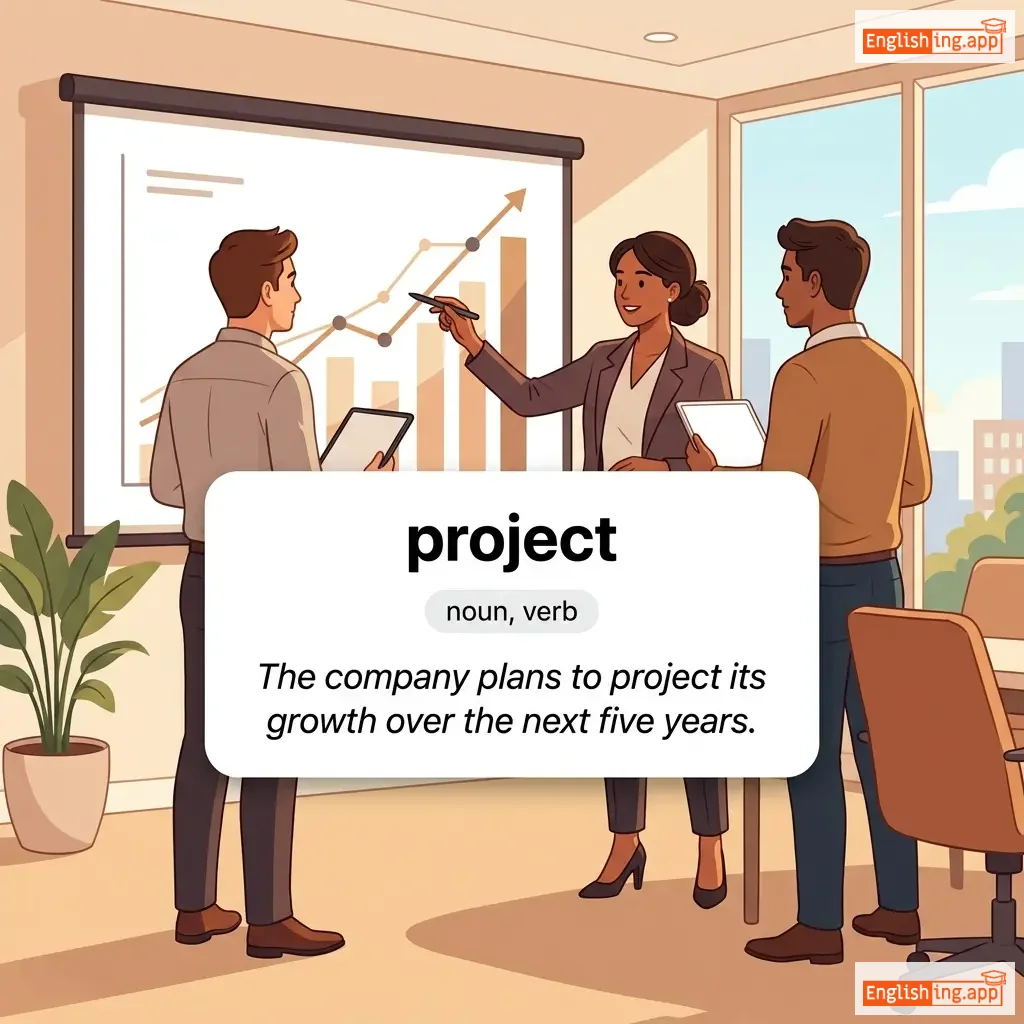
The company plans to project its growth over the next five years. |
- •••••• |
project confidence |
To appear confident even if one may not feel it inside.
••••••
|
- •••••• |
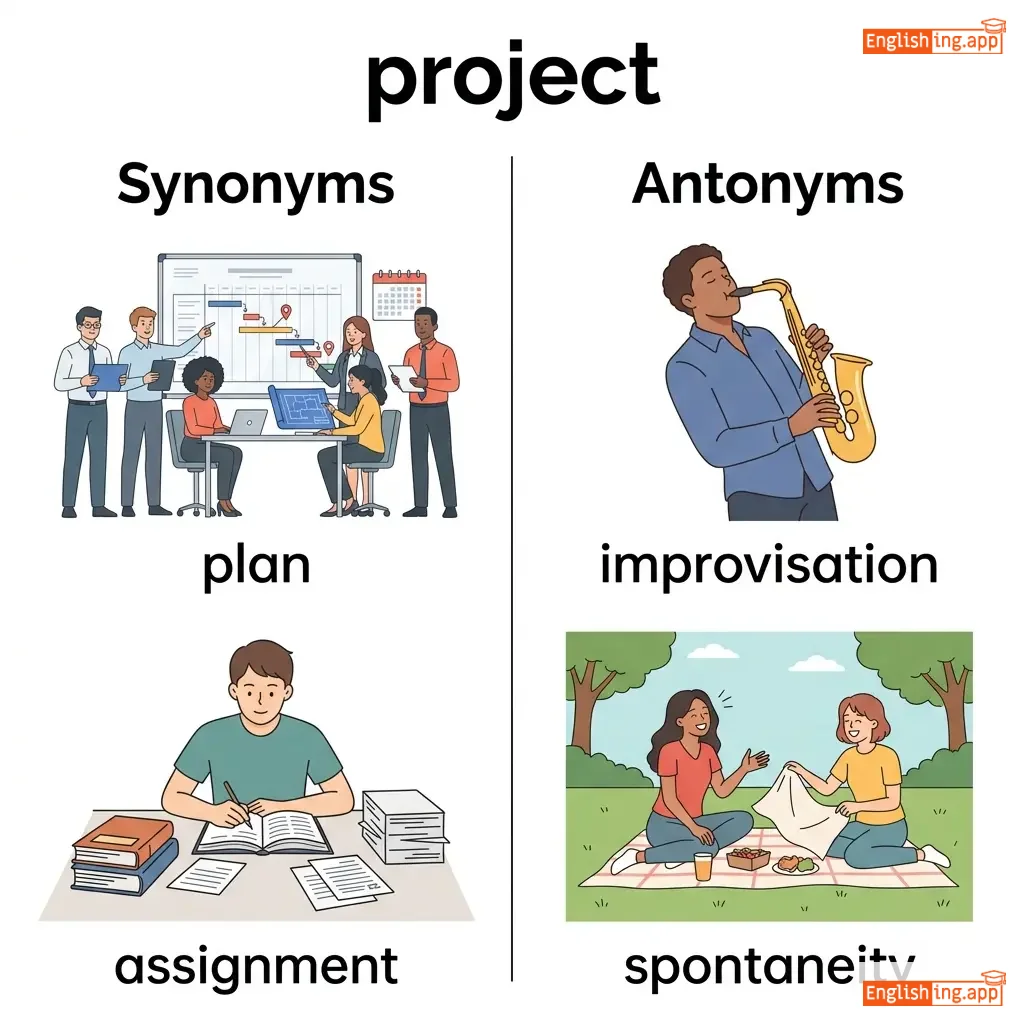
plan, assignment, scheme, initiative, program
••••••
|
improvisation, spontaneity
••••••
|
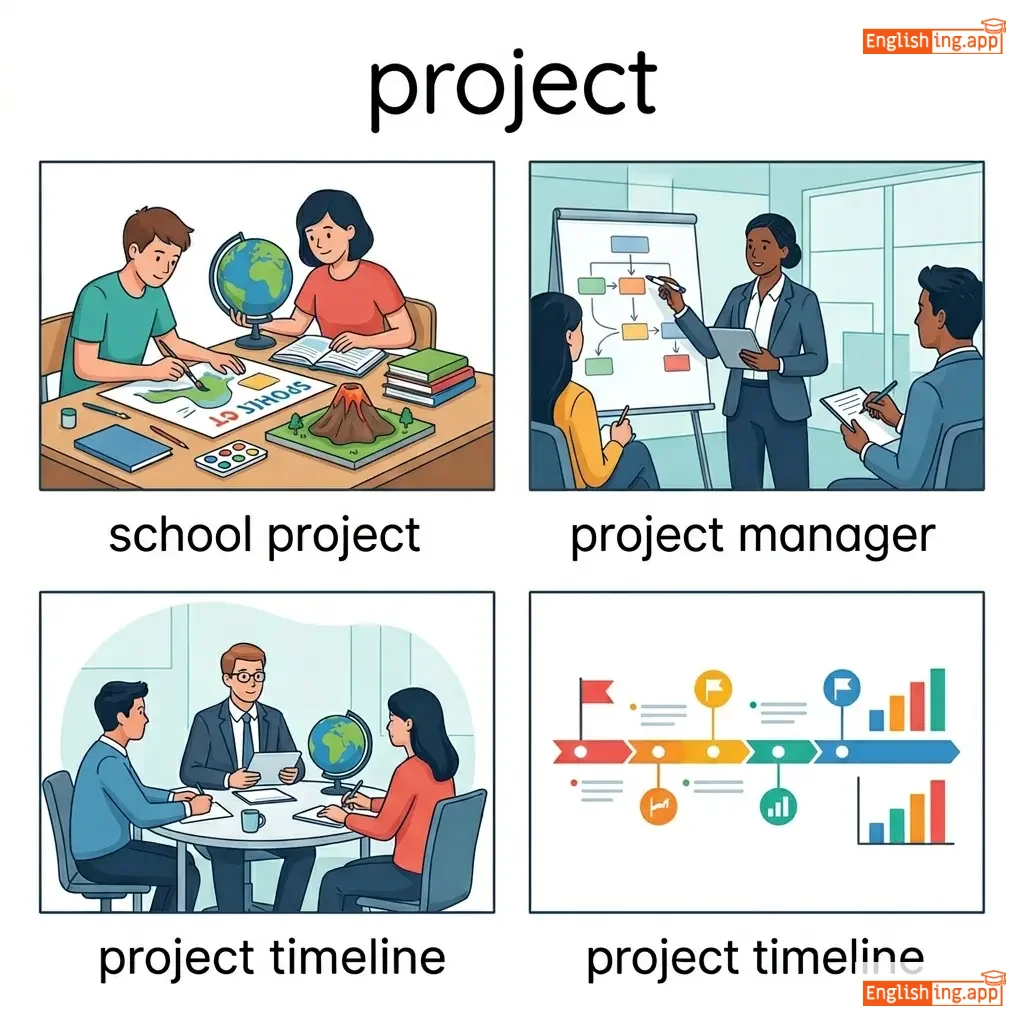
school project, project manager, project timeline, project growth
••••••
|
No •••••• |
|
#3973
📈
|
/prəˈdʒɛkʃən/
noun
(プロジェクション)
••••••
|
|
予測
yosoku
••••••
|
- •••••• | - •••••• | - •••••• | - •••••• |
An estimate or forecast of a future situation based on current trends.
••••••
|
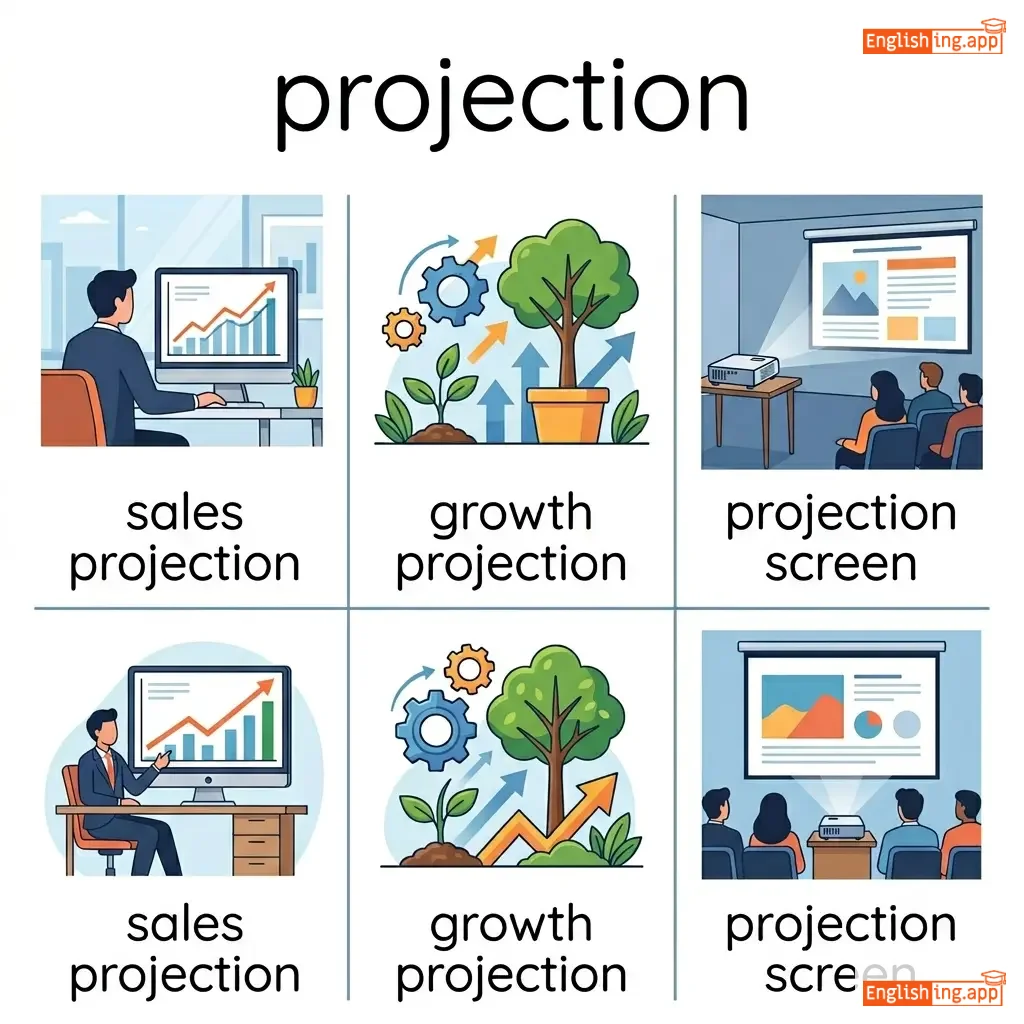
The sales projection shows a steady increase in revenue. |
売上予測は収益の安定した増加を示しています。
Uriage yosoku wa shūeki no antei shita zōka o shimeshiteimasu.
••••••
|
make a projection |
To create an estimate or forecast of future results.
••••••
|
予測を立てる
Yosoku o tateru
••••••
|
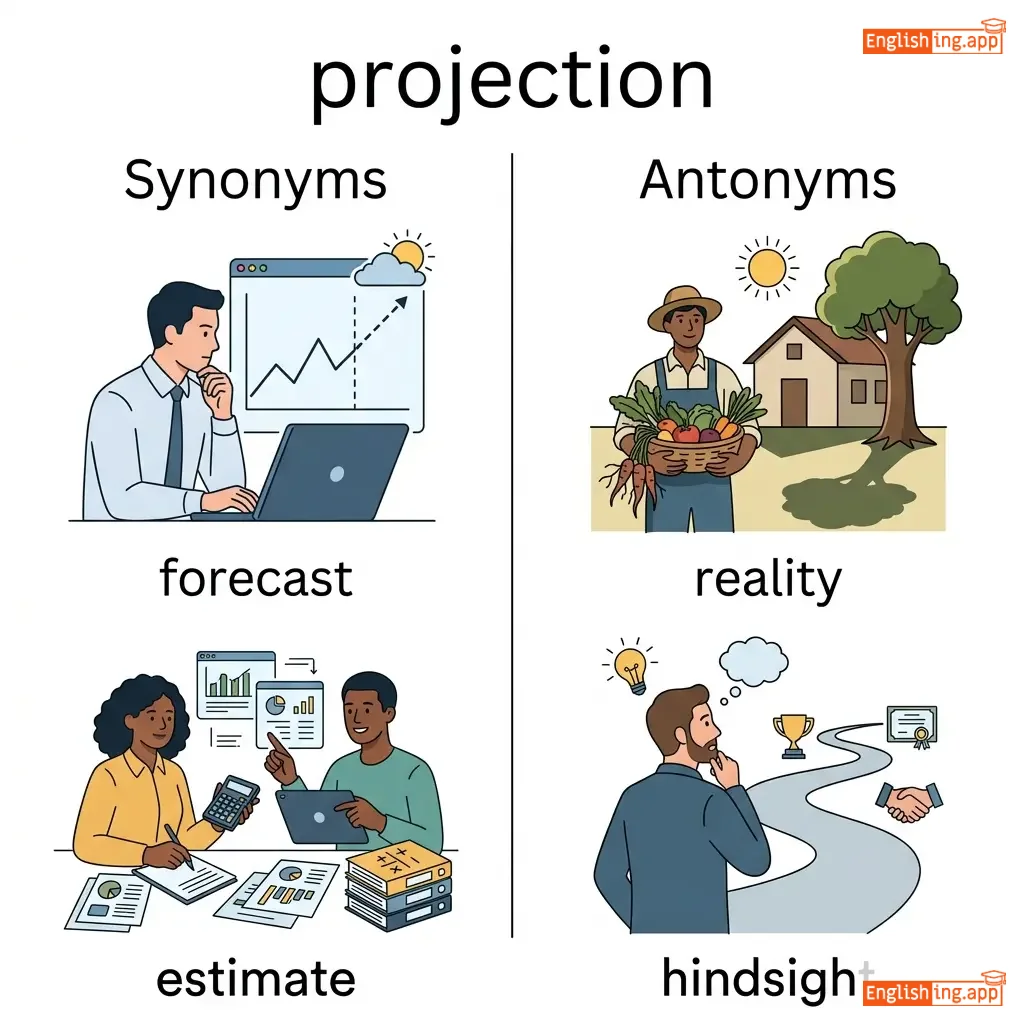
forecast, estimate, prediction, outlook, expectation
••••••
|
reality, hindsight
••••••
|
sales projection, growth projection, projection screen, projection map
••••••
|
予測:未来の絵を投影するようなもの。
••••••
|
|
#3974
🌟
|
/ˈprɒmɪnənt/
adjective
(プロミネント)
••••••
|
- •••••• |
顕著な
kenchona
••••••
|
- •••••• | - •••••• | - •••••• | - •••••• |
Important, famous, or easily noticeable.
••••••
|
He is a prominent leader in the community.
彼はコミュニティの中で著名なリーダーです。
••••••
|
彼はコミュニティの中で著名なリーダーです。
Kare wa komyuniti no naka de chomei na rīdā desu.
••••••
|
prominent feature
顕著な特徴
••••••
|
a characteristic that stands out or is easily noticeable
••••••
|
顕著な特徴
kenchona tokuchō
••••••
|
important, notable, eminent, distinguished, well-known
••••••
|
obscure, insignificant
••••••
|
prominent role, prominent position, prominent figure, prominent leader
••••••
|
顕著なリーダーのように目立つ人物です。
••••••
|
|
#3975
🤝
|
/ˈprɒmɪs/
verb
(purōmisu)
••••••
|
- •••••• |
約束する
yakusoku suru
••••••
|
promised
purōmisudo
••••••
|
promised
purōmisudo
••••••
|
promises
purōmisuzu
••••••
|
promising
purōmisingu
••••••
|
to assure someone that one will definitely do something; to give one's word
••••••
|
I promise to help you with your homework.
私はあなたの宿題を手伝うと約束します。
••••••
|
私はあなたの宿題を手伝うと約束します。
Watashi wa anata no shukudai o tetsudau to yakusoku shimasu.
••••••
|
- •••••• | - •••••• | - •••••• |
pledge, vow, swear, guarantee
••••••
|
break, betray, deny
••••••
|
promise to help, make a promise, keep promises, break promises
••••••
|
約束 (yakusoku) するのは友達に宿題を手伝うと約束すること、まるで他の人に助けを約束することのようです。
••••••
|
|
#3976
🌟
|
/ˈprɒmɪsɪŋ/
adjective
(プロミシング)
••••••
|
- •••••• |
有望な
yūbō na
••••••
|
- •••••• | - •••••• | - •••••• | - •••••• |
showing signs of future success or potential
••••••
|
She is a promising young scientist with great ideas. |
彼女は素晴らしいアイデアを持つ、有望な若い科学者です。
Kanojo wa subarashī aidea o motsu, yūbō na wakai kagakusha desu.
••••••
|
- •••••• | - •••••• | - •••••• |
hopeful, talented, bright, encouraging, favorable
••••••
|
hopeless, unpromising, disappointing
••••••
|
promising career, promising results, promising start, promising talent
••••••
|
有望な = 明るい未来を示している、ポテンシャルが大きい!
••••••
|
|
#3977
📢
|
/prəˈmoʊt/
verb
(プロモート)
••••••
|
|
促進する / 宣伝する
sokushin suru / senden suru
••••••
|
promoted
プロモートされた
••••••
|
promoted
プロモートされた
••••••
|
promotes
プロモートします
••••••
|
promoting
プロモート中
••••••
|
To support or encourage the growth, sale, or acceptance of something.
••••••
|
The company worked hard to promote its new product.
その会社は新しい製品を宣伝するために一生懸命働いた。
••••••
|
その会社は新しい製品を宣伝するために一生懸命働いた。
Sono kaisha wa atarashī seihin wo senden suru tame ni isshoukenmei hataraita.
••••••
|
promote growth
成長を促進する
••••••
|
To encourage development or progress
••••••
|
成長を促進する
seichou wo sokushin suru
••••••
|
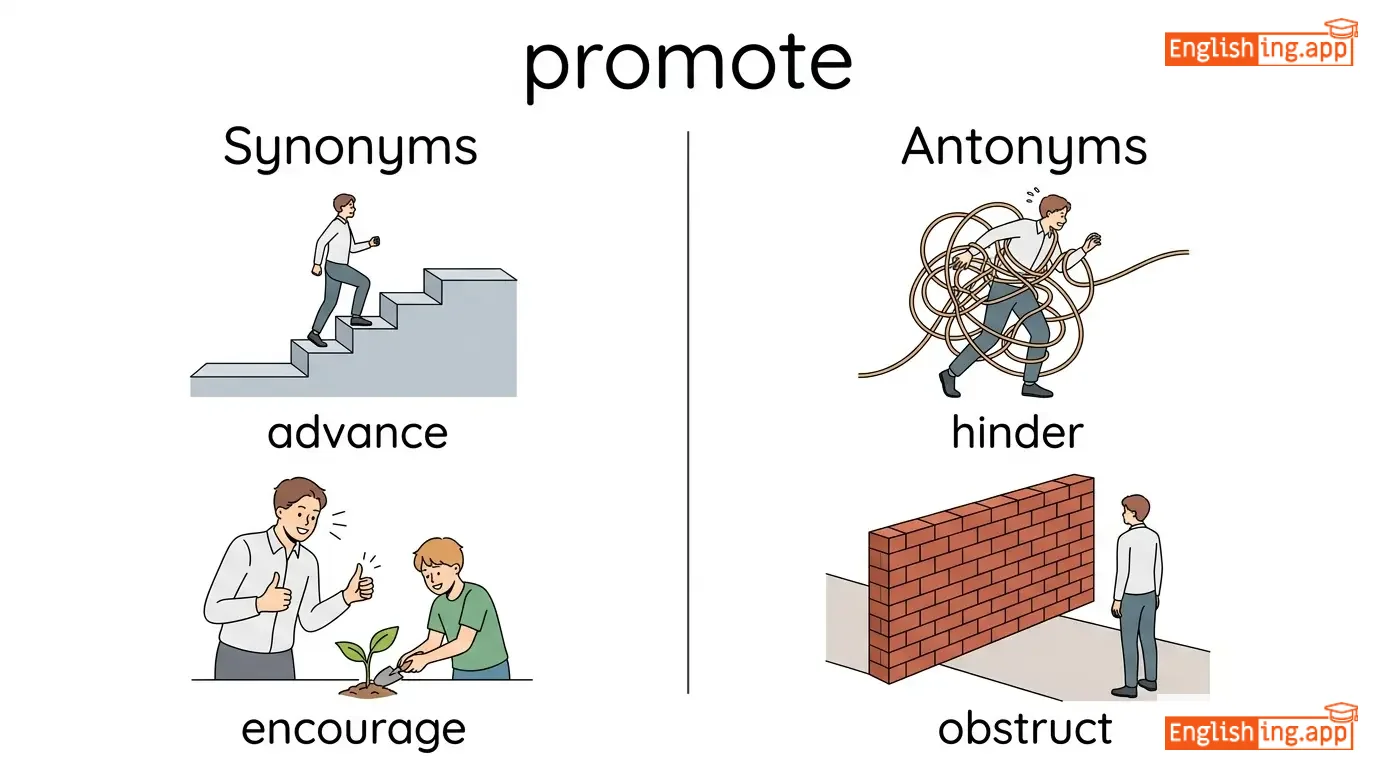
advance, encourage, advertise, support, boost
••••••
|
hinder, obstruct, discourage
••••••
|
promote awareness, promote business, promote sales, promote education
••••••
|
Promote は物事を成長させるためにすること
••••••
|
|
#3978
📈
|
/prəˈmoʊʃən/
noun
(プロモーション)
••••••
|
- •••••• |
昇進, 宣伝
shōshin, senden
••••••
|
- •••••• | - •••••• | - •••••• | - •••••• |
the act of raising someone to a higher position or of marketing something to increase sales or awareness
••••••
|
The company announced a big promotion campaign for their new product. |
その会社は新しい製品のための大規模な宣伝キャンペーンを発表しました。
Sono kaisha wa atarashī seihin no tame no daikibo na senden kyampēn o happyō shimashita.
••••••
|
get a promotion |
to be raised to a higher position at work
••••••
|
昇進を得る
shōshin o eru
••••••
|
advancement, upgrade, publicity, marketing, boost
••••••
|
demotion, neglect
••••••
|
job promotion, sales promotion, promotional offer, career promotion
••••••
|
Promotionは昇進を意味します。上司が 'Pro motion' と言っていると思いましょう、それは前進することです!
••••••
|
|
#3979
⚡
|
/prɑːmpt/
verb, noun, adjective
(プロンプト)
••••••
|
- •••••• |
促す / 迅速
unagasu / jinsoku
••••••
|
prompted
プロンプテッド
••••••
|
prompted
プロンプテッド
••••••
|
prompts
プロンプツ
••••••
|
prompting
プロンプティング
••••••
|
To cause someone to take action; done without delay.
••••••
|
His speech prompted the audience to ask questions.
彼のスピーチは聴衆に質問を促しました。
••••••
|
彼のスピーチは聴衆に質問を促しました。
Kare no supīchi wa chōshū ni shitsumon wo unagashimashita.
••••••
|
prompt action
迅速な行動
••••••
|
Immediate or quick action
••••••
|
即時行動
sokujikoudou
••••••
|
urge, incite, quick, immediate, stimulate
••••••
|
delay, hinder, slow
••••••
|
prompt reply, prompt payment, prompt decision, prompt response
••••••
|
Promptとは、コンピュータのように迅速に反応することを意味します。
••••••
|
Vocabulary Quiz
Test your vocabulary by matching words with their translations or meanings.
Login to take the quiz
Comments (0)
Share your thoughts and join the discussion.
Join the discussion by logging in
Login to CommentNo comments yet
Be the first to share your thoughts!