

翻訳
過去
過去分詞
三人称単数
動名詞
意味
例文
例文の翻訳
同義語
対義語
コロケーション
ニーモニック

Swipe left or right, or use the buttons. Tap image to zoom.
例文の翻訳
単語
Lesson 35Lesson 35 - マスクトグル
|
絵文字
|
単語 | Images | 翻訳 | 過去 | 過去分詞 | 三人称単数 | 動名詞 | 意味 | 例文 | 例文の翻訳 | 表現例 | 表現例の意味 | 表現例の翻訳 | 同義語 | 対義語 | コロケーション | ニーモニック |
|---|---|---|---|---|---|---|---|---|---|---|---|---|---|---|---|---|---|
|
#1648
💵
|
/ˈdɒlər/
noun
(ドル)
••••••
|
- •••••• |
ドル
doru
••••••
|
- •••••• | - •••••• | - •••••• | - •••••• |
The basic monetary unit of the United States and some other countries
••••••
|
I need five dollars to buy this book.
この本を買うには5ドル必要です。
••••••
|
この本を買うには5ドル必要です。
Kono hon o kau ni wa go doru hitsuyou desu.
••••••
|
not worth a dollar
1ドルの価値もない
••••••
|
having little or no value
••••••
|
1ドルの価値もない
ichi doru no kachi mo nai
••••••
|
buck, greenback, currency, coin, bill
••••••
|
debt, worthless
••••••
|
US dollar, dollar bill, exchange dollar, dollar coin
••••••
|
Dollar = アメリカのお金覚えて
••••••
|
|
#1649
🌐
|
/dəˈmeɪn/
noun
(ドメイン)
••••••
|
- •••••• |
領域
ryouiki
••••••
|
- •••••• | - •••••• | - •••••• | - •••••• |
An area of knowledge, activity, or territory over which control is exercised.
••••••
|
Mathematics is her main domain of expertise. |
数学は彼女の主な専門領域です。
Suugaku wa kanojo no omona senmon ryouiki desu.
••••••
|
public domain |
Something not protected by copyright and available for public use.
••••••
|
公共領域
koukyou ryouiki
••••••
|
territory, realm, field, sphere, area
••••••
|
outsider, exterior
••••••
|
domain name, knowledge domain, public domain, private domain
••••••
|
領域は制御されたエリアを意味します—インターネットのドメイン名のように。
••••••
|
|
#1650
🏠
|
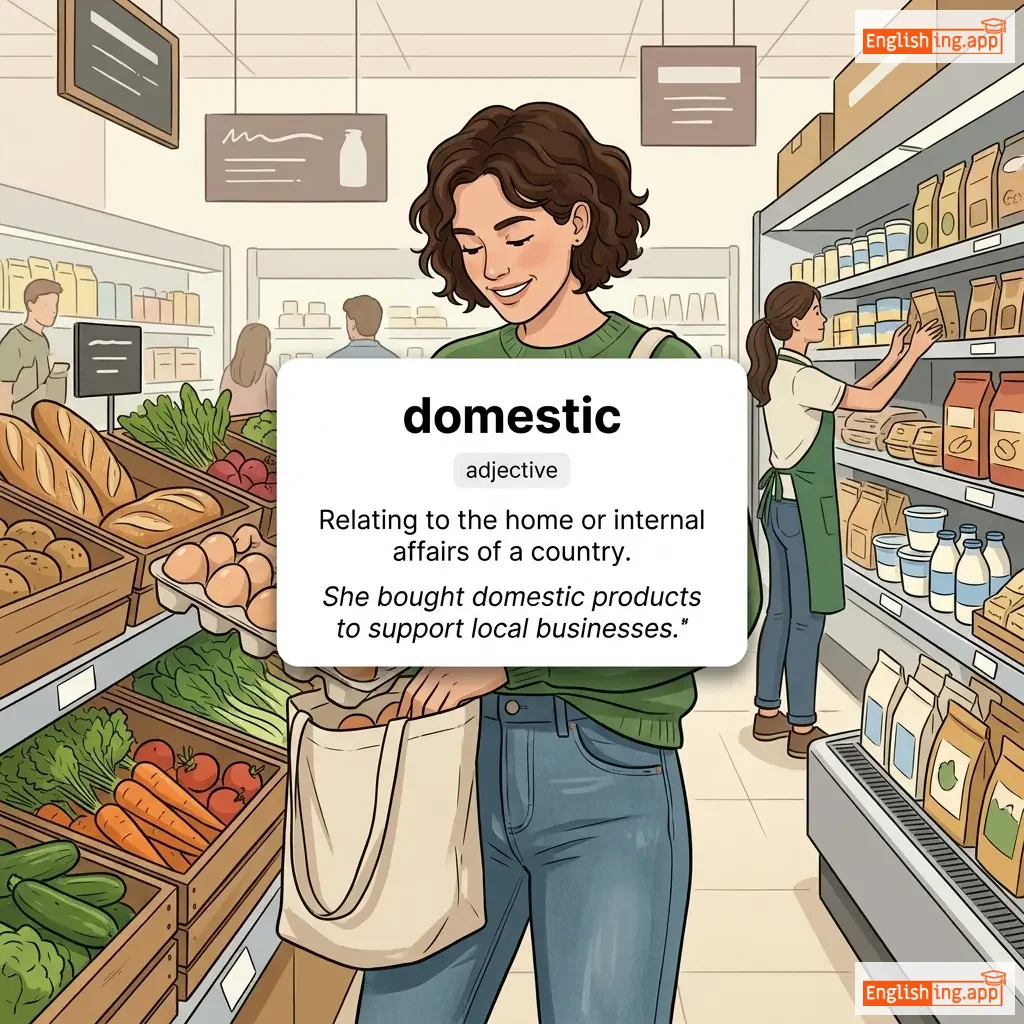
/dəˈmɛstɪk/
adjective
(ハピネス)
••••••
|
|
幸福
kōfuku
••••••
|
- •••••• | - •••••• | - •••••• | - •••••• |
Relating to the home or internal affairs of a country.
••••••
|
She bought domestic products to support local businesses. |
彼女は賞を受け取ったとき、幸せを隠すことができませんでした。
Kanojo wa shō o uketotta toki, kōfuku o kakusu koto ga dekimasen deshita.
••••••
|
domestic affairs |
Matters within a household or a country
••••••
|
幸福の追求
kōfuku no suikyū
••••••
|
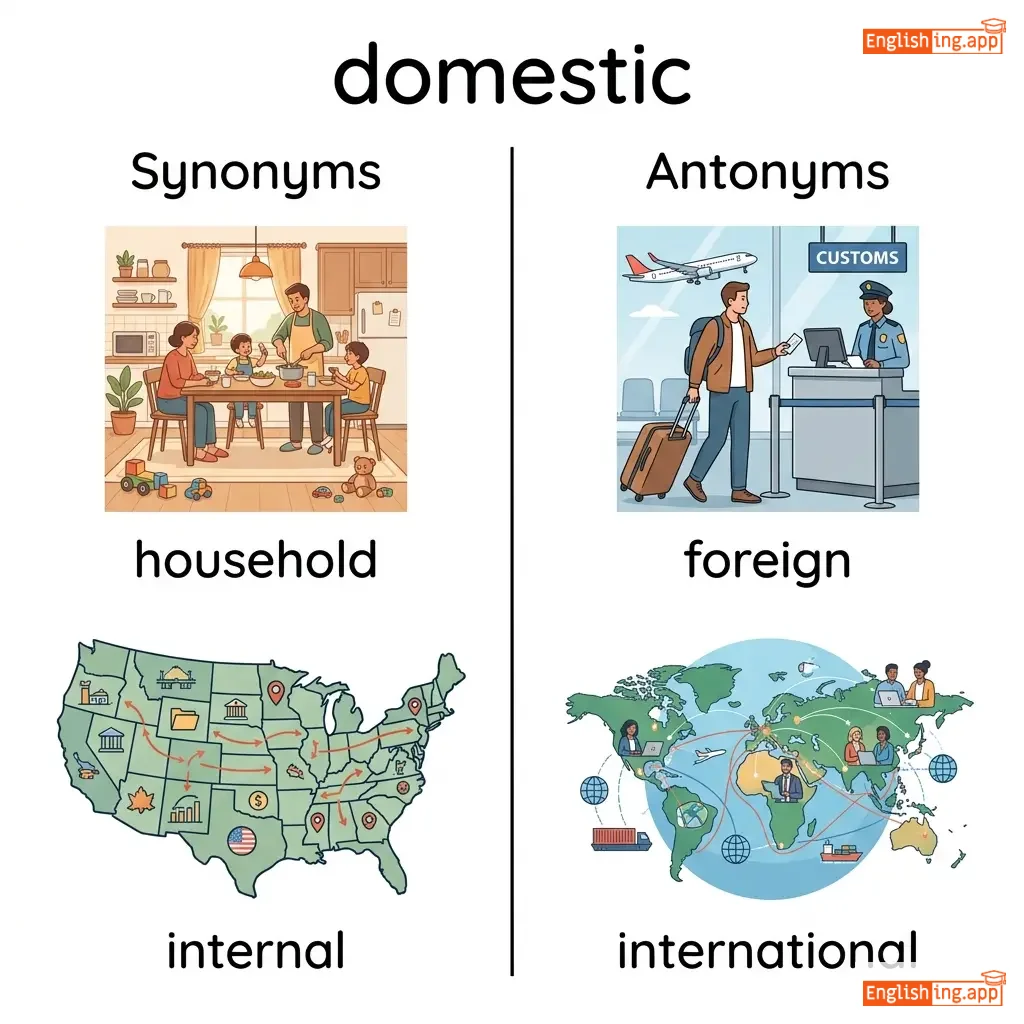
household, internal, local, home
••••••
|
foreign, international
••••••
|
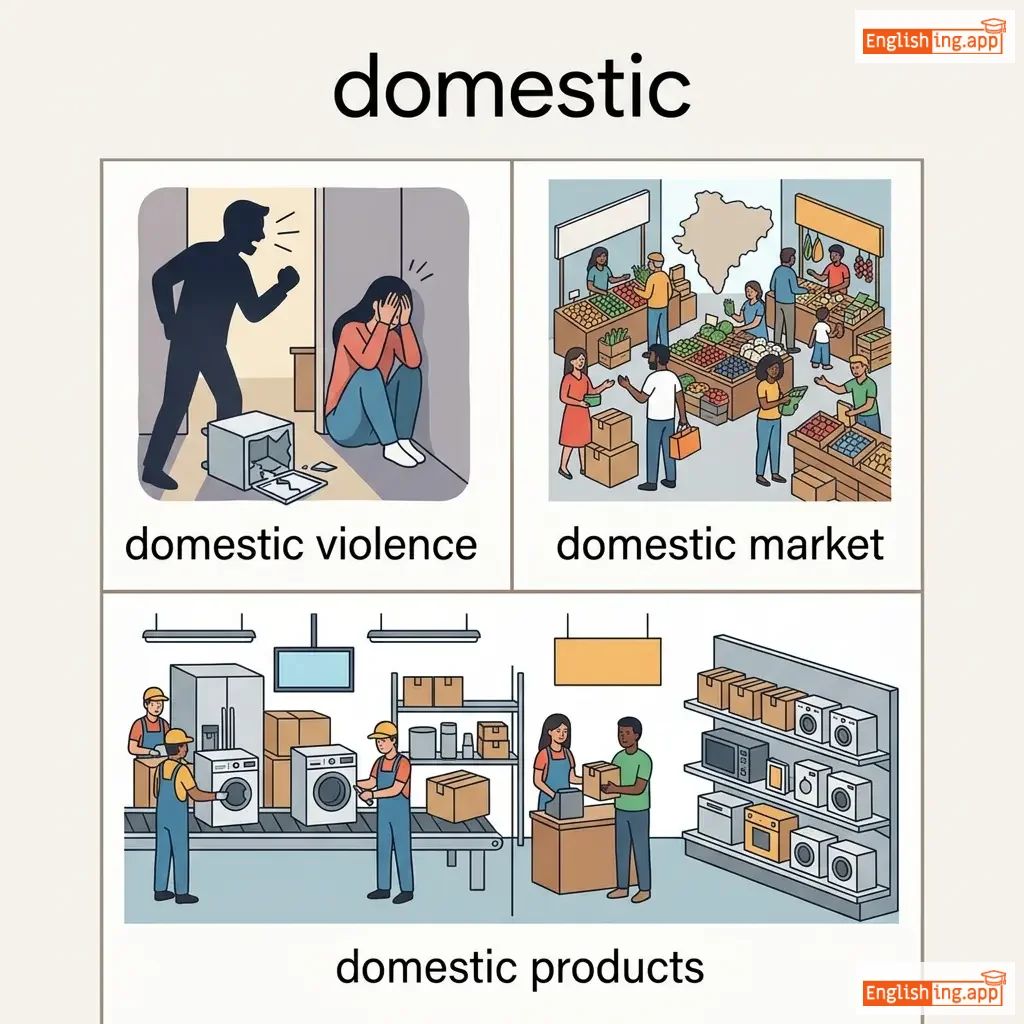
domestic violence, domestic market, domestic products, domestic flights
••••••
|
幸福は毎日探し続けるものです。
••••••
|
|
#1651
👑
|
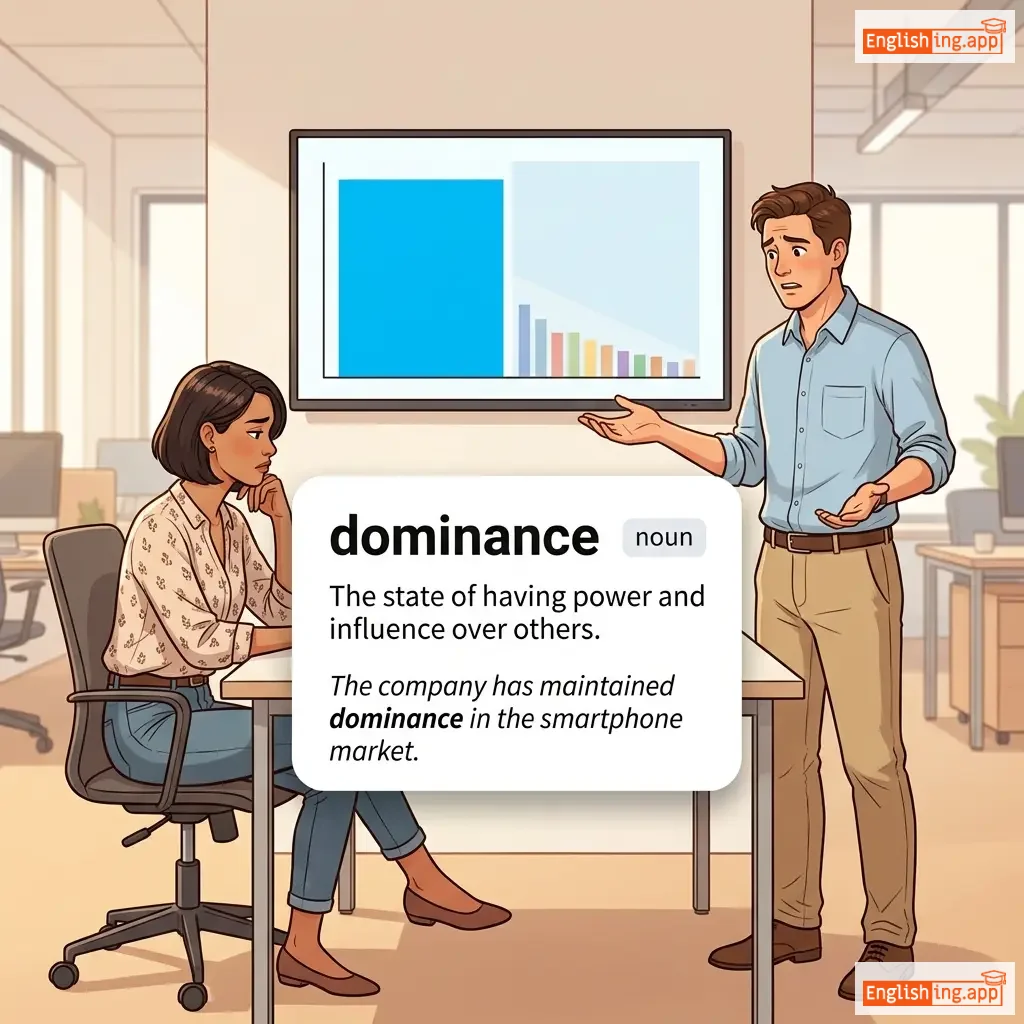
/ˈdɑː.mə.nəns/
noun
(ドミナンス)
••••••
|
|
支配力
shihairyoku
••••••
|
- •••••• | - •••••• | - •••••• | - •••••• |
The state of having power and influence over others.
••••••
|
The company has maintained dominance in the smartphone market. |
その会社はスマートフォン市場で支配力を維持しています。
Sono kaisha wa sumātofon shijō de shihairyoku o iji shiteimasu.
••••••
|
alpha dominance |
The behavior of asserting leadership or control, often seen in social or animal groups.
••••••
|
アルファ支配力
Arufa shihairyoku
••••••
|
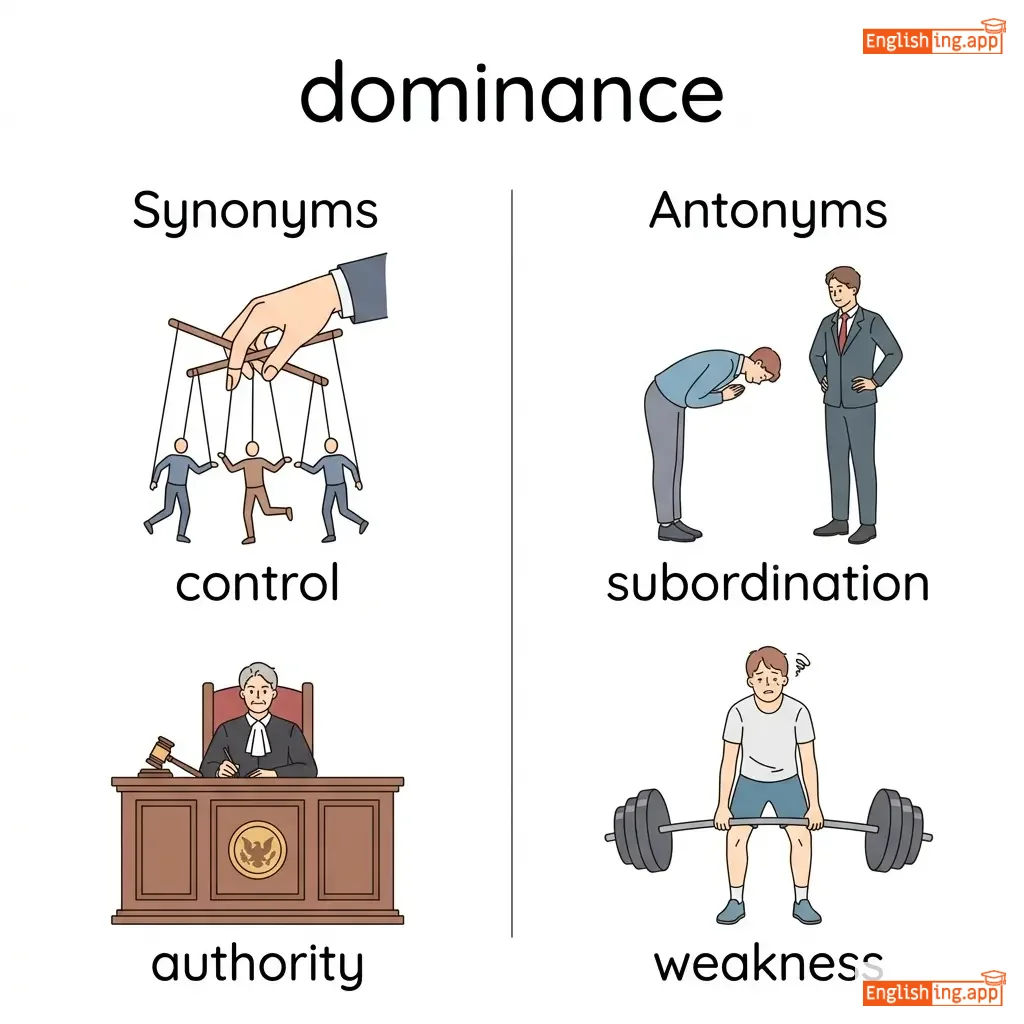
control, authority, supremacy, power, command
••••••
|
subordination, weakness
••••••
|
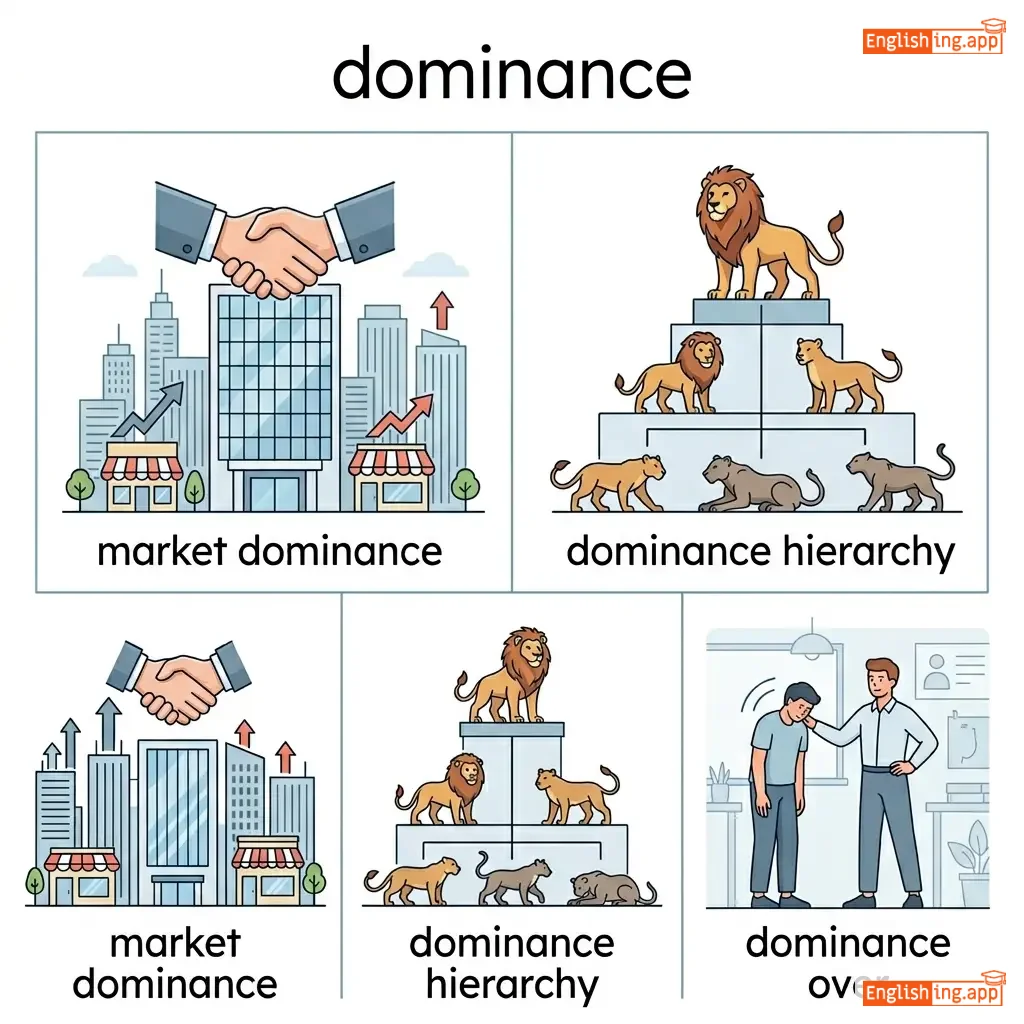
market dominance, dominance hierarchy, dominance over
••••••
|
Dominance(支配力)は 'Dominate' と同じ—力と影響を持つこと。
••••••
|
|
#1652
🦁
|
/ˈdɑː.mə.nənt/
adjective
(ドミナント)
••••••
|
- •••••• |
支配的な
shihaiten na
••••••
|
- •••••• | - •••••• | - •••••• | - •••••• |
Having power, authority, or influence over others; most important.
••••••
|
English has become the dominant language in international business.
英語は国際ビジネスにおいて支配的な言語となった。
••••••
|
英語は国際ビジネスにおいて支配的な言語となった。
Eigo wa kokusai bijinesu ni oite shihaiten na gengo to natta.
••••••
|
dominant hand
支配的な手
••••••
|
The hand that a person uses most skillfully and frequently.
••••••
|
支配的な手
shihaiten na te
••••••
|
powerful, controlling, leading, influential
••••••
|
submissive, minor, weak
••••••
|
dominant role, dominant culture, dominant force
••••••
|
Dominant はライオン 🦁のように、力強く支配的!
••••••
|
|
#1653
👑
|
/ˈdɒmɪneɪt/
verb
(ドミネイト)
••••••
|
- •••••• |
支配する
shihai suru
••••••
|
dominated
ドミネイテッド
••••••
|
dominated
ドミネイテッド
••••••
|
dominates
ドミネイツ
••••••
|
dominating
ドミネイティング
••••••
|
to have power or control over something or someone
••••••
|
The company dominates the smartphone market.
その会社はスマートフォン市場を支配しています。
••••••
|
その会社はスマートフォン市場を支配しています。
Sono kaisha wa sumātōfon shijō o shihai shiteimasu.
••••••
|
dominate the field
分野を支配する
••••••
|
to be the most successful or influential in a particular area
••••••
|
分野を支配する
bun'ya o shihai suru
••••••
|
control, rule, command, govern, lead
••••••
|
submit, follow, yield
••••••
|
dominate the market, dominate the conversation, dominate politics, dominate completely
••••••
|
Dominate : 王のように支配する!
••••••
|
|
#1654
🏰
|
/ˌdɒmɪˈneɪʃən/
noun
(ドミネーション)
••••••
|
- •••••• |
支配
shihai
••••••
|
- •••••• | - •••••• | - •••••• | - •••••• |
the exercise of control or influence over someone or something
••••••
|
The empire sought domination over its neighbors. |
帝国は隣国に対する支配を求めていた。
Teikoku wa ringoku ni taisuru shihai o motomete ita.
••••••
|
total domination |
complete control over something or someone
••••••
|
完全な支配
kanzen na shihai
••••••
|
control, power, supremacy, authority
••••••
|
submission, weakness, dependence
••••••
|
political domination, economic domination, domination of nature
••••••
|
Dominationは支配を意味し、支配者になること!
••••••
|
|
#1655
🎁
|
/dəʊˈneɪt/
verb
(ドネート)
••••••
|
|
寄付する
kifu suru
••••••
|
donated
ドネーテッド
••••••
|
donated
ドネーテッド
••••••
|
donates
ドネーツ
••••••
|
donating
ドネイティング
••••••
|
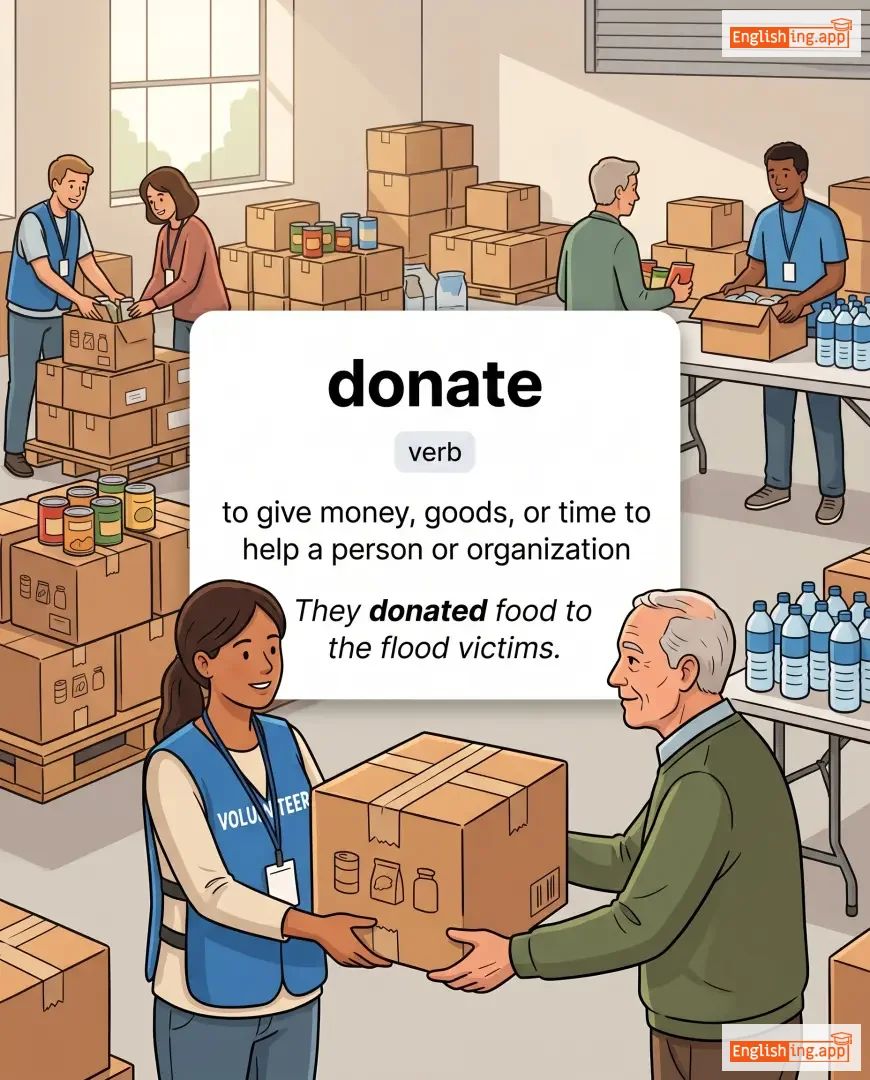
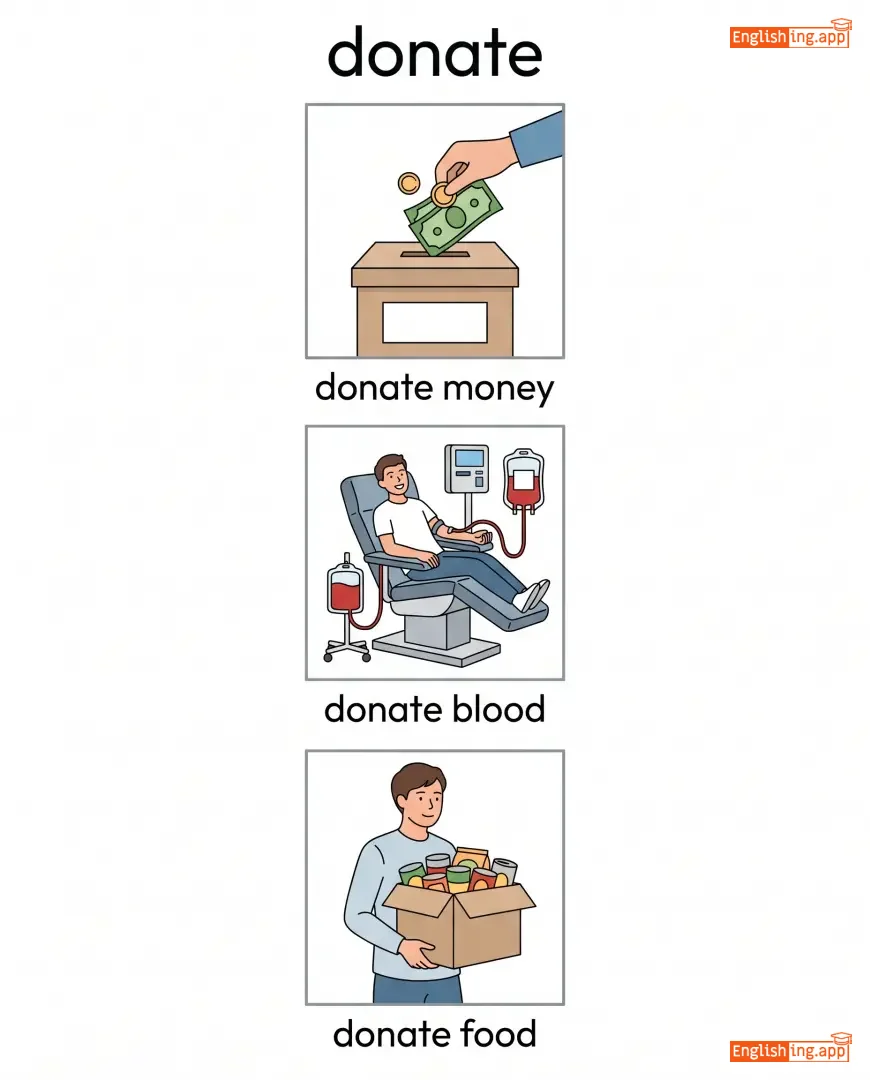
to give money, goods, or time to help a person or organization
••••••
|
They donated food to the flood victims.
彼らは洪水の被害者に食べ物を寄付しました。
••••••
|
彼らは洪水の被害者に食べ物を寄付しました。
Karera wa kōzui no higaisha ni tabemono o kifu shimashita.
••••••
|
donate blood
献血する
••••••
|
to give one's blood voluntarily for medical use
••••••
|
献血する
kenketsu suru
••••••
|
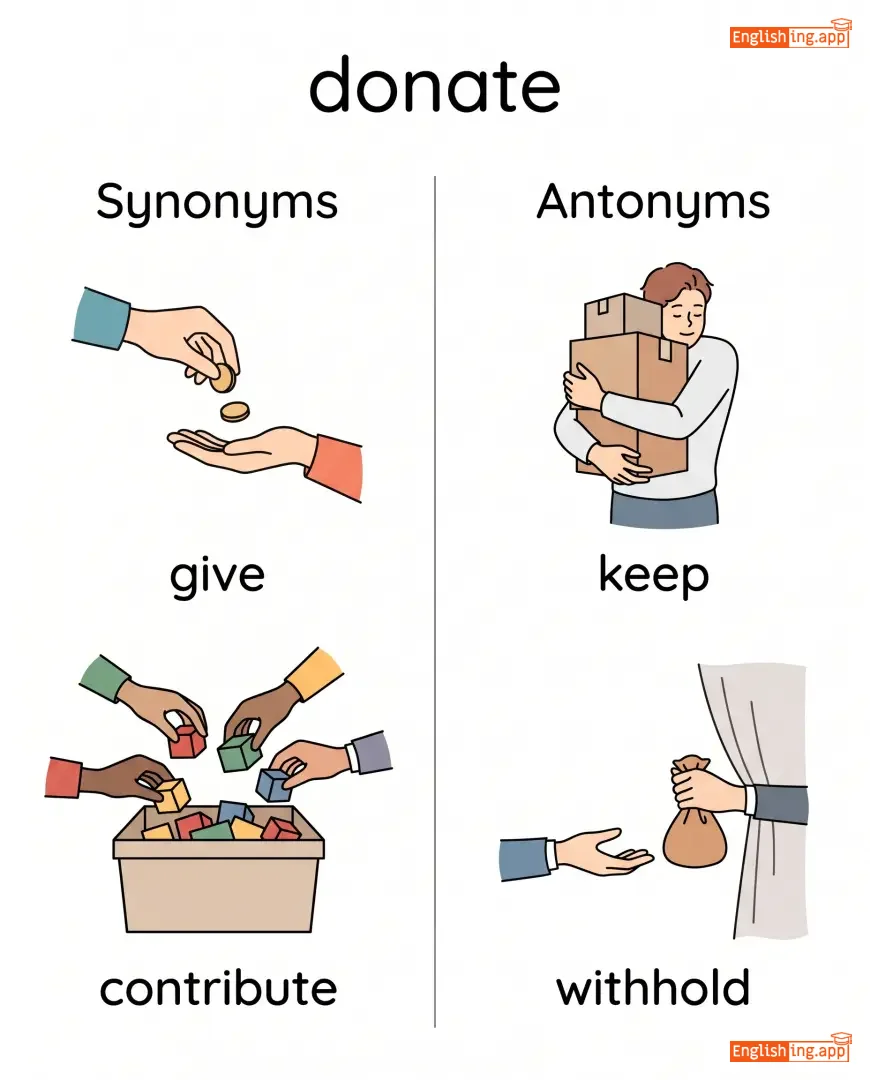
give, contribute, offer, bestow
••••••
|
keep, withhold, retain
••••••
|
donate money, donate blood, donate food, donate clothes
••••••
|
寄付 = 喜 + 送 🎁 - 喜んで送る!
••••••
|
|
#1656
🎁
|
/dəʊˈneɪ.ʃən/
noun
(ドネーション)
••••••
|
- •••••• |
寄付
kifu
••••••
|
- •••••• | - •••••• | - •••••• | - •••••• |
something that is given to help a person or organization, often money
••••••
|
He made a generous donation to the local orphanage. |
彼は地元の孤児院に寛大な寄付をしました。
Kare wa jimoto no kojiin ni kandaina kifu o shimashita.
••••••
|
make a donation |
to give money or goods to help a cause
••••••
|
寄付をする
kifu o suru
••••••
|
contribution, gift, offering, grant, endowment
••••••
|
withdrawal, taking
••••••
|
charity donation, blood donation, make donation, receive donation
••••••
|
寄付は与えることを意味します — 'kifu' は '与える' を意味し、だから donation は寄付です!
••••••
|
|
#1657
🩸
|
/ˈdoʊnər/
noun
(ドナー)
••••••
|
- •••••• |
ドナー
donā
••••••
|
- •••••• | - •••••• | - •••••• | - •••••• |
A person who gives something, especially to a charity or cause.
••••••
|
The donor contributed generously to the hospital’s new wing. |
ドナーは病院の新しい翼に寛大に寄付しました。
Donā wa byōin no atarashī tsubasa ni kandai ni kifu shimashita.
••••••
|
blood donor |
A person who gives blood voluntarily for medical use.
••••••
|
献血者
kenketsusha
••••••
|
benefactor, contributor, patron, philanthropist, giver
••••••
|
recipient, donee
••••••
|
blood donor, organ donor, anonymous donor, generous donor
••••••
|
Donorは「donate(寄付)」から来ていて、血液提供者としても使われる言葉です。
••••••
|
|
#1658
🚪
|
/dɔːr/
noun
(ドア)
••••••
|
- •••••• |
ドア
doa
••••••
|
- •••••• | - •••••• | - •••••• | - •••••• |
A movable barrier that allows entry or exit to a building, room, or vehicle.
••••••
|
He knocked on the door before entering the house. |
彼は家に入る前にドアをノックした。
Kare wa ie ni hairu mae ni doa o nokkushita.
••••••
|
when one door closes, another opens |
New opportunities arise when one ends
••••••
|
一つのドアが閉まると、もう一つのドアが開く
Hitotsu no doa ga shimaru to, mō hitotsu no doa ga hiraku
••••••
|
gate, entrance, portal, threshold
••••••
|
wall, barrier
••••••
|
open the door, close the door, lock the door, knock on the door
••••••
|
ドア 🚪 — ドアを開けると、新しいチャンスが入ってくる!
••••••
|
|
#1659
🚪
|
/ˈdɔːrˌkiːpər/
noun
(ドアキーパー)
••••••
|
- •••••• |
門番
monban
••••••
|
- •••••• | - •••••• | - •••••• | - •••••• |
A person whose job is to guard or manage the entrance of a building or room.
••••••
|
The doorkeeper checked everyone’s passes before they entered the hall.
ドアキーパーは皆がホールに入る前に通行証を確認した。
••••••
|
ドアキーパーは皆がホールに入る前に通行証を確認した。
Doakipa wa mina ga hall ni hairu mae ni tsuukoushou o kakunin shita
••••••
|
- •••••• | - •••••• | - •••••• |
porter, gatekeeper, usher, sentinel
••••••
|
intruder, trespasser
••••••
|
doorkeeper duties, doorkeeper role, doorkeeper station
••••••
|
門番 (monban) = 'gate guard', literally guarding the gate.
••••••
|
|
#1660
💊
|
/doʊs/
noun
(ドーズ)
••••••
|
- •••••• |
用量
yōryō
••••••
|
- •••••• | - •••••• | - •••••• | - •••••• |
a measured amount of a medicine or drug taken at one time
••••••
|
The doctor prescribed one dose of the medicine every six hours.
医者は6時間ごとに1回薬のドーズを処方しました。
••••••
|
医者は6時間ごとに1回薬のドーズを処方しました。
Isha wa roku-jikan goto ni ikkai kusuri no dōzu o shohō shimashita.
••••••
|
a dose of one's own medicine
自分自身の薬を服用する
••••••
|
experiencing the same unpleasant treatment that one has given to others
••••••
|
自分自身の薬を服用する
Jibun jishin no kusuri o fukuyō suru
••••••
|
portion, amount, quantity, measure, shot
••••••
|
overdose, underdose
••••••
|
high dose, low dose, single dose, daily dose, lethal dose
••••••
|
‘用量’は薬の量を計る、適切な量を忘れないで。
••••••
|
|
#1661
🔴
|
/dɒt/
noun
(ドット)
••••••
|
- •••••• |
点
ten
••••••
|
- •••••• | - •••••• | - •••••• | - •••••• |
a small round mark or spot
••••••
|
She drew a red dot on the paper. |
彼女は紙に赤い点を描きました。
Kanojo wa kami ni akai ten o kakimashita.
••••••
|
connect the dots |
to understand the relationship between different facts
••••••
|
点をつなぐ
ten o tsunagu
••••••
|
spot, speck, point, mark, stain
••••••
|
blank, void
••••••
|
dot pattern, dot matrix, red dot, connect dots
••••••
|
Dot は点を意味します — Google.com の各ドメインで見かける点のように!
••••••
|
|
#1662
2️⃣
|
/ˈdʌbəl/
verb
(ダブル)
••••••
|
- •••••• |
倍増する
baizō suru
••••••
|
doubled
ダブルド
••••••
|
doubled
ダブルド
••••••
|
doubles
ダブルズ
••••••
|
doubling
ダブリング
••••••
|
to make twice as much in size, number, or amount
••••••
|
The company hopes to double its profits this year.
会社は今年、利益を倍増させることを望んでいます。
••••••
|
会社は今年、利益を倍増させることを望んでいます。
Kaisha wa kotoshi, rieki o baizō saseru koto o nozondeimasu.
••••••
|
double-edged sword
両刃の剣
••••••
|
something that has both positive and negative effects
••••••
|
両刃の剣
ryōba no ken
••••••
|
increase, multiply, expand, amplify, boost
••••••
|
halve, reduce, decrease
••••••
|
double the amount, double the size, double digits, double check
••••••
|
Doubleは倍増を意味し、例えばアイスクリームを倍増させてもっと楽しいです!
••••••
|
|
#1663
❓
|
/daʊt/
noun/verb
(dauto)
••••••
|
|
疑い
utagai
••••••
|
doubted
dauted
••••••
|
doubted
dauted
••••••
|
doubts
dauts
••••••
|
doubting
douting
••••••
|
a feeling of uncertainty or lack of conviction; to be uncertain about something
••••••
|
She had doubts about the success of the plan.
彼女は計画の成功に疑問を抱いていた。
••••••
|
彼女は計画の成功に疑問を抱いていた。
Kanojo wa keikaku no seikou ni gimon o daiteita.
••••••
|
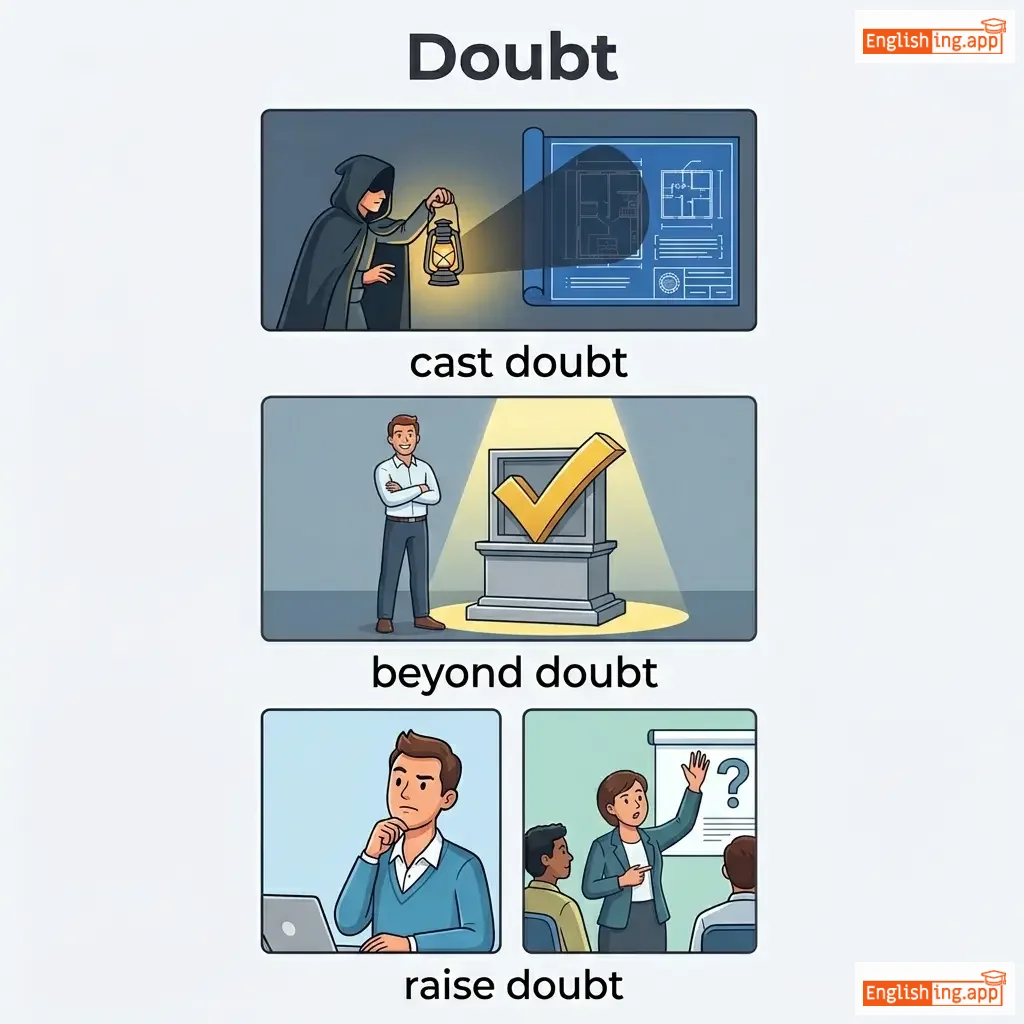
beyond doubt
疑いの余地なく
••••••
|
certain; without question
••••••
|
疑いの余地なく
utagai no yochi naku
••••••
|
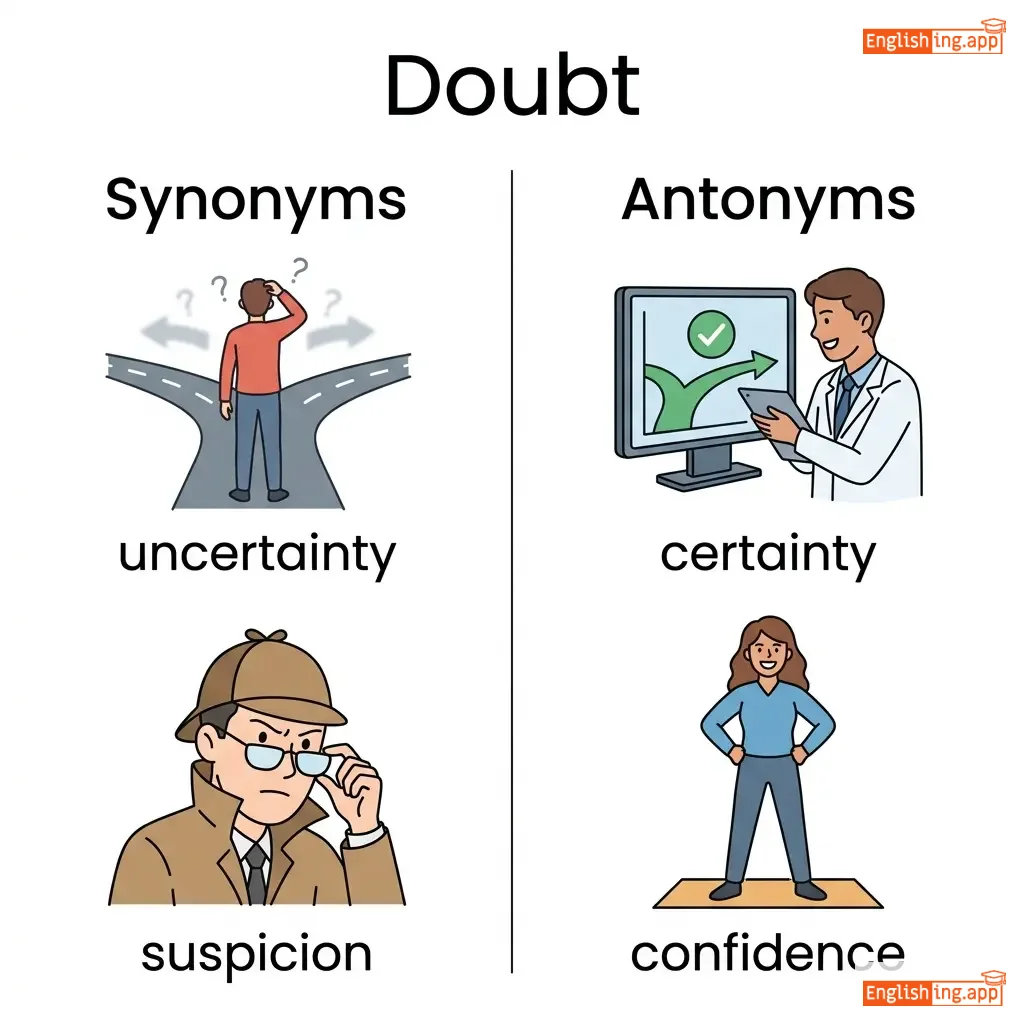
uncertainty, suspicion, disbelief, hesitation
••••••
|
certainty, confidence, assurance
••••••
|
cast doubt, beyond doubt, raise doubt, doubt remains
••••••
|
Doubtは日本語で疑い、疑うことを思い出すためにはダウトを覚えましょう!
••••••
|
|
#1664
⬇️
|
/daʊn/
adverb
(ダウン)
••••••
|
- •••••• |
下
shita
••••••
|
- •••••• | - •••••• | - •••••• | - •••••• |
from a higher to a lower position
••••••
|
He walked down the stairs slowly. |
彼はゆっくりと階段を下りてきました。
Kare wa yukkuri to kaidan o orite kimashita.
••••••
|
down to earth |
practical and realistic
••••••
|
実用的で現実的
jitsuyou teki de genjitsu teki
••••••
|
below, downward, under, beneath
••••••
|
up, above, over
••••••
|
down the road, down the line, down the street
••••••
|
Downは下、すべてが下に行く!
••••••
|
|
#1665
⬇️
|
/ˌdaʊnˈsteəz/
adverb
(ダウンステアーズ)
••••••
|
- •••••• |
階下
kaika
••••••
|
- •••••• | - •••••• | - •••••• | - •••••• |
on or to a lower floor of a building
••••••
|
Please go downstairs and wait in the lobby. |
階下に行ってロビーで待ってください。
Kaika ni itte robī de matte kudasai.
••••••
|
- •••••• | - •••••• | - •••••• |
below, underneath, on the lower floor
••••••
|
upstairs, above, on the upper floor
••••••
|
go downstairs, come downstairs, live downstairs
••••••
|
Downstairs は、階下へ行くこと、地下室に向かうようなものです。
••••••
|
|
#1666
🏙️
|
/ˈdaʊnˌtaʊn/
noun
(ダウンタウン)
••••••
|
- •••••• |
ダウンタウン
dauntaun
••••••
|
- •••••• | - •••••• | - •••••• | - •••••• |
the central part of a city
••••••
|
They spent the afternoon shopping downtown. |
彼らは午後、市の中心部で買い物をしました。
Karera wa gogo, shi no chūshinbu de kaimono o shimashita.
••••••
|
- •••••• | - •••••• | - •••••• |
city center, metropolis, central district, urban area
••••••
|
suburb, countryside
••••••
|
downtown area, downtown district, downtown core, downtown business
••••••
|
Downtownは都市の中心部、活気に満ちた場所です!
••••••
|
|
#1667
🥚
|
/ˈdʌzən/
noun
(ダズン)
••••••
|
- •••••• |
ダース
dāsu
••••••
|
- •••••• | - •••••• | - •••••• | - •••••• |
a group of twelve
••••••
|
She bought a dozen eggs from the market. |
彼女は市場でダースの卵を買いました。
Kanojo wa ichiba de dāsu no tamago o kaimashita.
••••••
|
cheaper by the dozen |
items bought in bulk are often cheaper
••••••
|
ダースで買うと安くなる
Dāsu de kau to yasuku naru
••••••
|
twelve, set, group, batch
••••••
|
single, one
••••••
|
a dozen eggs, dozens of people, a dozen times
••••••
|
ダース = 12、12個一緒に買うとお得!
••••••
|
|
#1668
📝
|
/dræft/
noun/verb
(ドラフト)
••••••
|
- •••••• |
ドラフト
dorafuto
••••••
|
drafted
ドラフトされた
••••••
|
drafted
ドラフトされた
••••••
|
drafts
ドラフトス
••••••
|
drafting
ドラフティング
••••••
|
A preliminary version of a piece of writing; to prepare a preliminary version of a document.
••••••
|
She finished the first draft of her novel.
彼女は小説の最初のドラフトを完成させました。
••••••
|
彼女は小説の最初のドラフトを完成させました。
Kanojo wa shousetsu no saisho no dorafuto wo kansei sasemashita.
••••••
|
rough draft
草案
••••••
|
An early, unfinished version of a piece of writing.
••••••
|
草案
souan
••••••
|
outline, sketch, plan, blueprint, design
••••••
|
final, complete
••••••
|
draft proposal, draft agreement, first draft, draft law
••••••
|
ドラフト = Draft, 最初に書く草案。
••••••
|
|
#1669
🛷
|
/dræɡ/
verb
(ドラッグ)
••••••
|
|
引きずる
hikizuru
••••••
|
dragged
ドラッグド
••••••
|
dragged
ドラッグド
••••••
|
drags
ドラッグス
••••••
|
dragging
ドラッギング
••••••
|
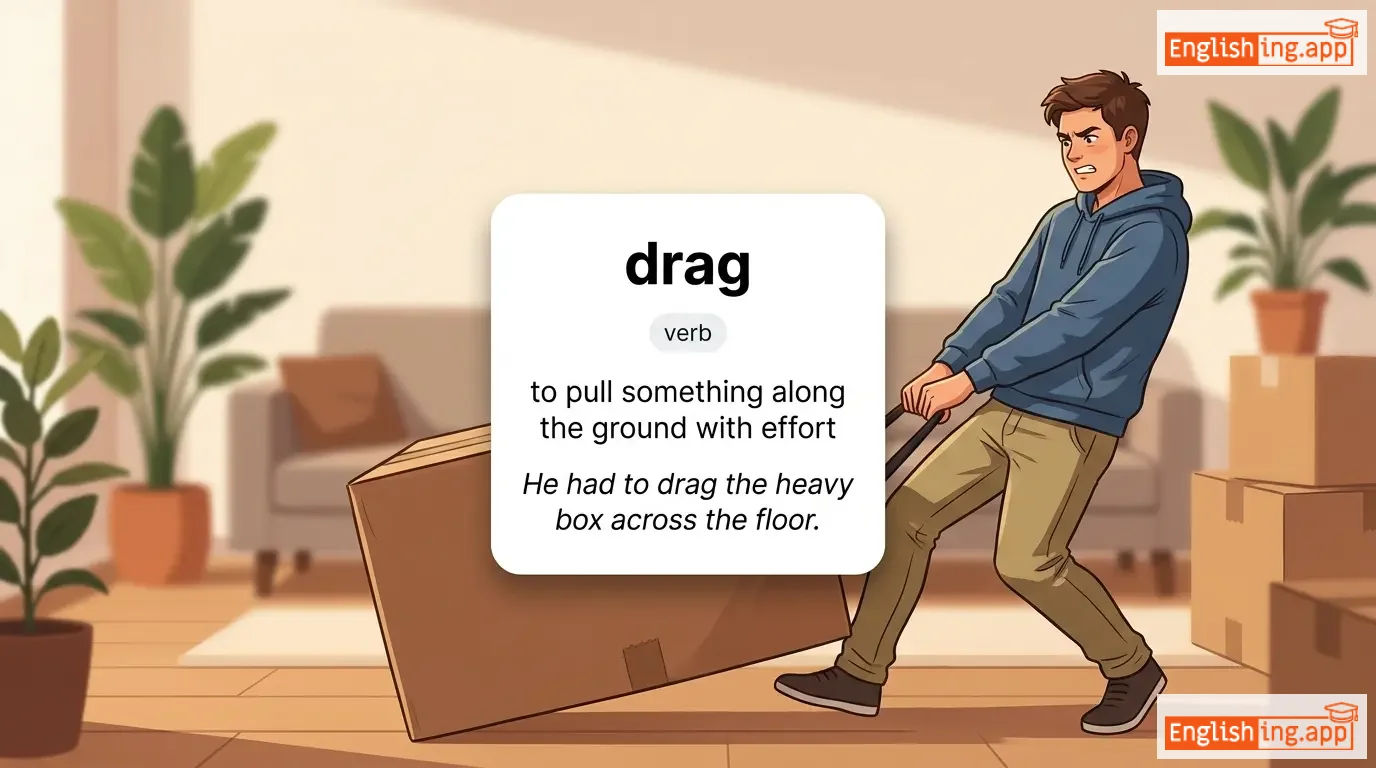
to pull something along the ground with effort
••••••
|
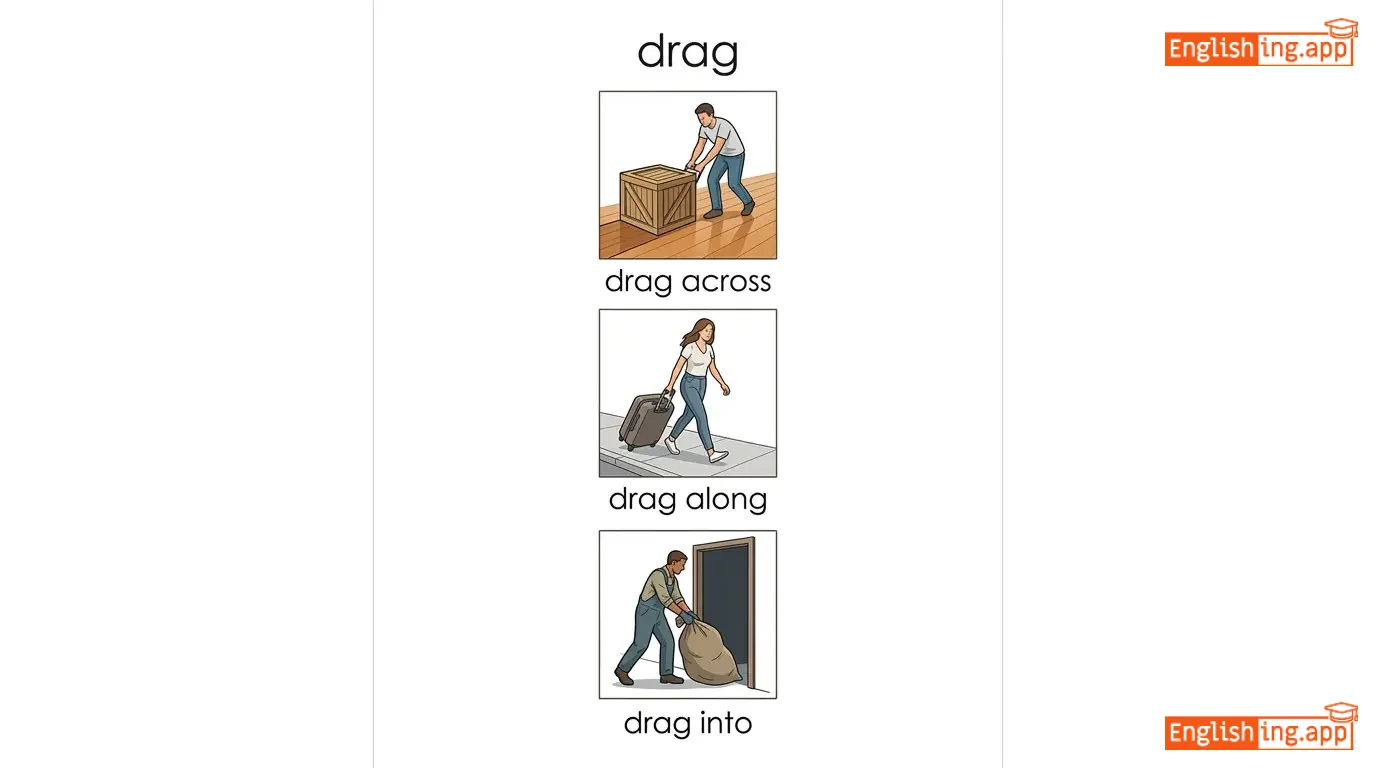
He had to drag the heavy box across the floor.
彼は重い箱を床に引きずらなければならなかった。
••••••
|
彼は重い箱を床に引きずらなければならなかった。
Kare wa omoi hako o yuka ni hikizurana kereba naranakatta.
••••••
|
drag one's feet
足を引きずる
••••••
|
to delay doing something deliberately
••••••
|
時間を無駄にする
jikan wo muda ni suru
••••••
|
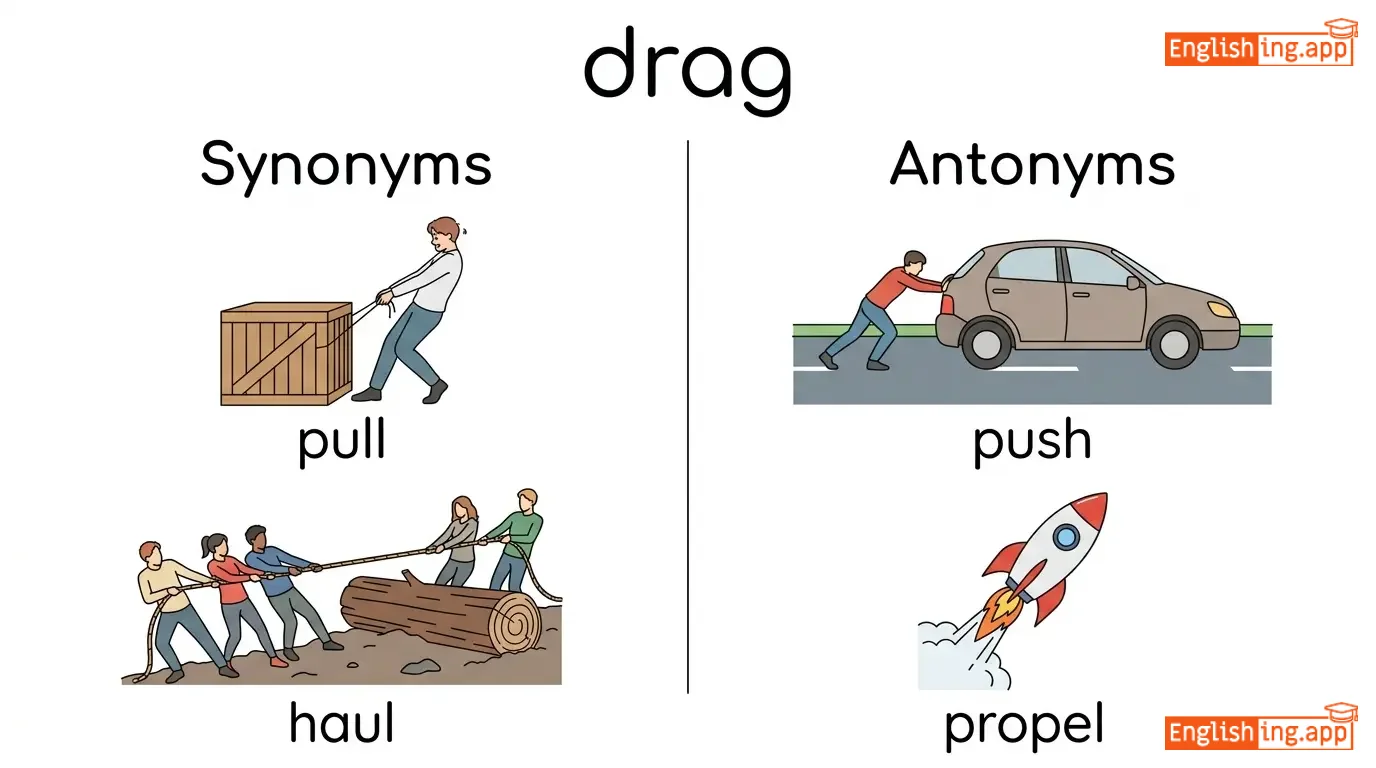
pull, haul, tow, tug
••••••
|
push, propel
••••••
|
drag across, drag along, drag into, drag down
••••••
|
Dragは引きずる意味で、引きずると時間がかかります!
••••••
|
|
#1670
🚰
|
/dreɪn/
verb
••••••
|
- •••••• | - •••••• |
drained
••••••
|
drained
••••••
|
drains
••••••
|
draining
••••••
|
to cause liquid to flow away from something; to remove liquid
••••••
|
He drained the pasta before adding the sauce. |
- •••••• |
drain the life out of |
to make someone or something lose energy or enthusiasm
••••••
|
- •••••• |
empty, remove, exhaust, deplete, discharge
••••••
|
fill, flood, retain
••••••
|
drain water, drain pipe, drain energy, drain battery
••••••
|
No •••••• |
|
#1671
🎭
|
/ˈdrɑː.mə/
noun
(ドラマ)
••••••
|
- •••••• |
ドラマ
dorama
••••••
|
- •••••• | - •••••• | - •••••• | - •••••• |
a play for theater, radio, or television, or an exciting or emotional situation
••••••
|
She loves watching historical drama series. |
彼女は歴史的なドラマシリーズを見るのが好きです。
kanojo wa rekishiteki na dorama shirīzu o miru no ga suki desu.
••••••
|
make a drama out of nothing |
to exaggerate a situation unnecessarily
••••••
|
何もないところからドラマを作る
nanimo nai tokoro kara dorama o tsukuru
••••••
|
play, performance, act, show
••••••
|
comedy, farce
••••••
|
drama series, school drama, intense drama, family drama
••••••
|
ドラマは日本語でも英語と同じく感情的な状況を表現する言葉です。
••••••
|
|
#1672
🎭
|
/drəˈmætɪk/
adjective
(ドラマティック)
••••••
|
- •••••• |
劇的
gekiteki
••••••
|
- •••••• | - •••••• | - •••••• | - •••••• |
sudden and striking; relating to drama or theater
••••••
|
The play ended with a dramatic twist. |
劇は劇的な転換で終わった。
Geki wa gekiteki na tenkan de owatta.
••••••
|
dramatic change |
a sudden and significant alteration
••••••
|
劇的な変化
gekiteki na henka
••••••
|
theatrical, emotional, intense, striking, sensational
••••••
|
ordinary, calm, unremarkable
••••••
|
dramatic effect, dramatic improvement, dramatic increase, dramatic change
••••••
|
ドラマは劇場のことを意味するので、劇的は劇場に関係する意味です。
••••••
|
|
#1673
📈
|
/drəˈmætɪkli/
adverb
(ドラマティックリー)
••••••
|
- •••••• |
劇的に
gekiteki ni
••••••
|
- •••••• | - •••••• | - •••••• | - •••••• |
in a sudden, striking, or exaggerated way
••••••
|
Sales increased dramatically after the campaign. |
キャンペーン後、売上は劇的に増加しました。
Kyanpēn go, uriage wa gekiteki ni zōka shimashita.
••••••
|
change dramatically |
to alter in a sudden and significant way
••••••
|
劇的に変化する
gekiteki ni henka suru
••••••
|
suddenly, sharply, significantly, strikingly
••••••
|
slightly, gradually
••••••
|
increase dramatically, change dramatically, drop dramatically, improve dramatically
••••••
|
劇的にとは、まるでドラマのように急激な変化が起きることです。
••••••
|
|
#1674
✏️
|
/drɔː/
verb
(ドロー)
••••••
|
- •••••• |
描く / 引く
kaku / hiku
••••••
|
drew
ドゥルー
••••••
|
drawn
ドローン
••••••
|
draws
ドローズ
••••••
|
drawing
ドローイング
••••••
|
to produce a picture by making lines and marks on paper; to pull or move something in a particular direction
••••••
|
The child loves to draw pictures of animals.
ザ・チャイルド・ラブズ・トゥ・ドロー・ピクチャーズ・オブ・アニマルズ。
••••••
|
子供は動物の絵を描くのが大好きです。
Kodomo wa dōbutsu no e o kaku no ga daisuki desu.
••••••
|
draw attention
ドロー・アテンション
••••••
|
To attract someone's notice.
••••••
|
注意を引く
Chūi o hiku
••••••
|
sketch, illustrate, depict, pull, attract
••••••
|
erase, repel, push
••••••
|
draw attention, draw a picture, draw a line, draw a conclusion
••••••
|
描くことは注意を引くこと、でもペンを使って!
••••••
|
|
#1675
✏️
|
/ˈdrɔːɪŋ/
noun
(ハピネス)
••••••
|
- •••••• |
幸せ
shiawase
••••••
|
- •••••• | - •••••• | - •••••• | - •••••• |
a picture or diagram made with a pencil, pen, or crayons rather than paint
••••••
|
She showed me a drawing of her house. |
彼女は賞を受け取ったとき、幸せを隠せなかった。
Kanojo wa shō o uketotta toki, shiawase o kakusenakatta.
••••••
|
drawing attention |
attracting notice or interest
••••••
|
幸せの追求
shiawase no tsuikyū
••••••
|
sketch, illustration, diagram, doodle
••••••
|
erasing, deletion
••••••
|
make a drawing, pencil drawing, line drawing, drawing skills
••••••
|
幸せは心から来る、ハピネスであるためには。
••••••
|
|
#1676
💭
|
/driːm/
noun/verb
(ドリーム)
••••••
|
|
夢
yume
••••••
|
dreamed
ドリームド
••••••
|
dreamed
ドリームド
••••••
|
dreams
ドリームズ
••••••
|
dreaming
ドリーミング
••••••
|
a series of thoughts, images, or emotions occurring during sleep; a cherished aspiration or goal
••••••
|
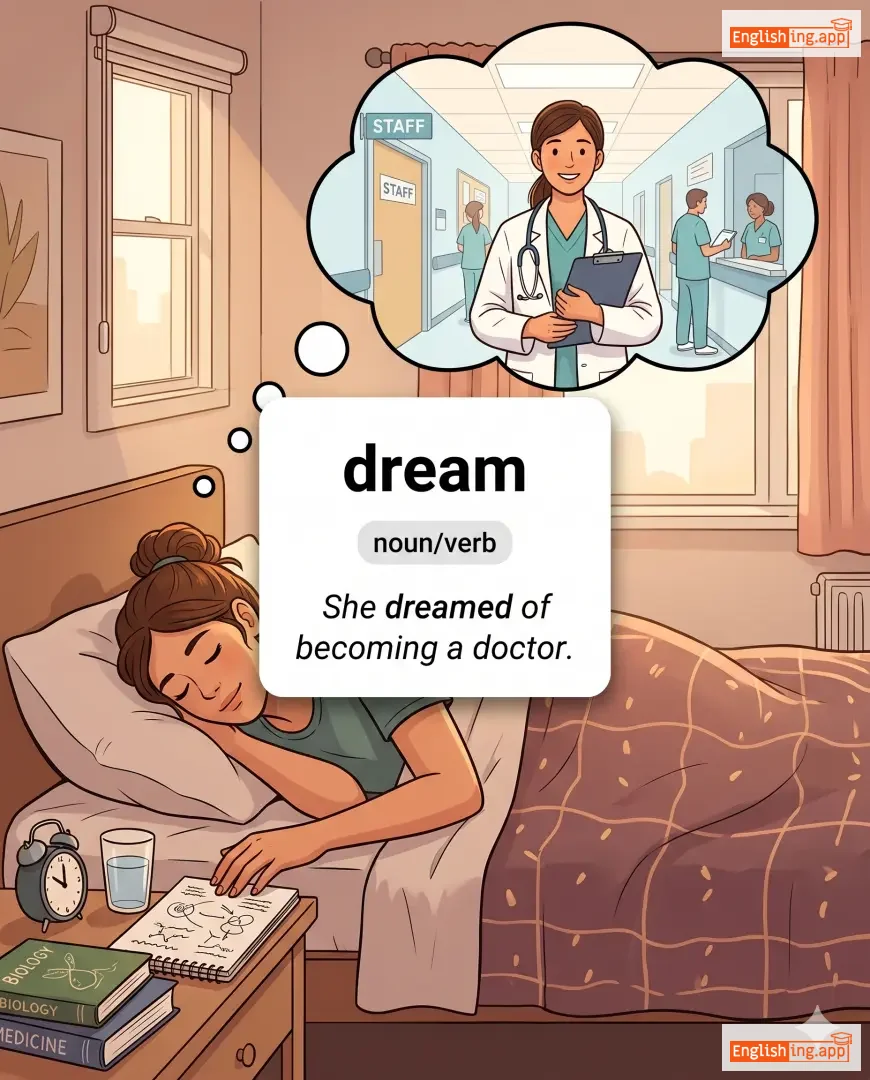
She dreamed of becoming a doctor.
彼女は医者になることを夢見ていました。
••••••
|
彼女は医者になることを夢見ていました。
Kanojo wa isha ni naru koto wo yumemiteimashita.
••••••
|
living the dream
夢のような生活
••••••
|
enjoying life as if in an ideal situation
••••••
|
夢のような生活
Yume no youna seikatsu
••••••
|
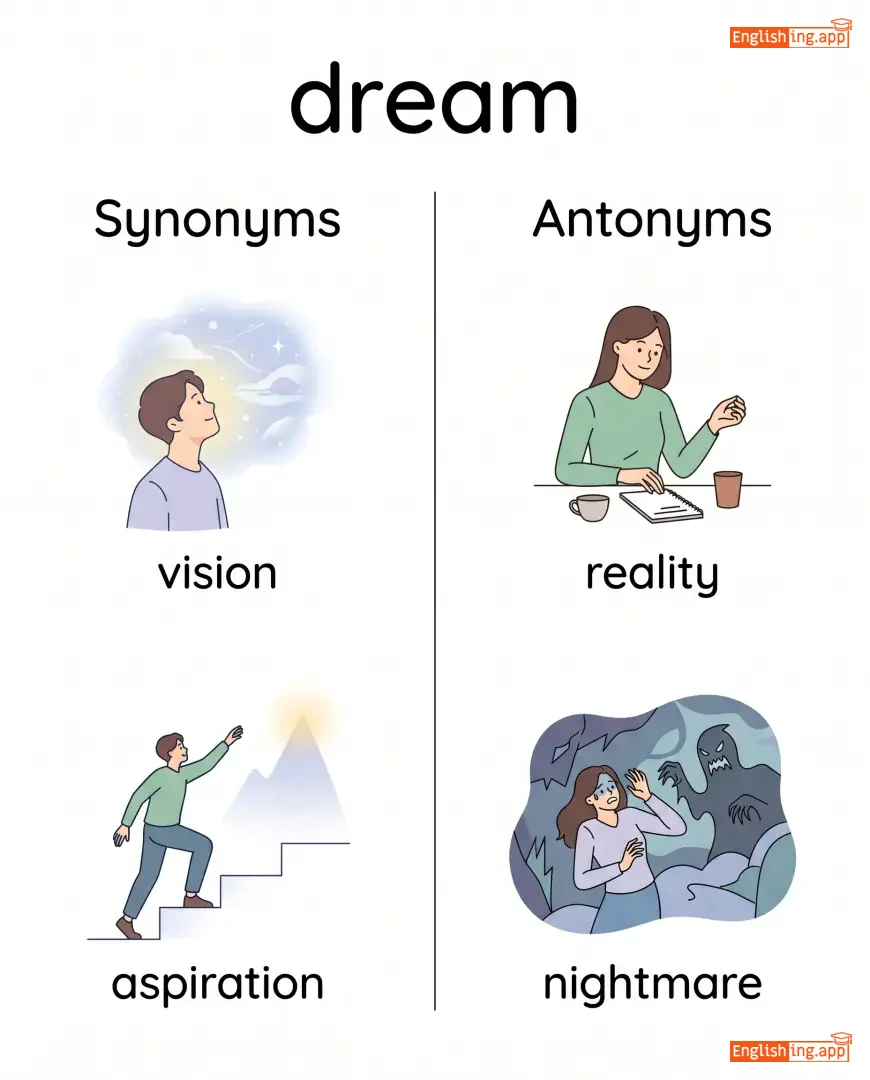
vision, aspiration, goal, fantasy
••••••
|
reality, nightmare
••••••
|
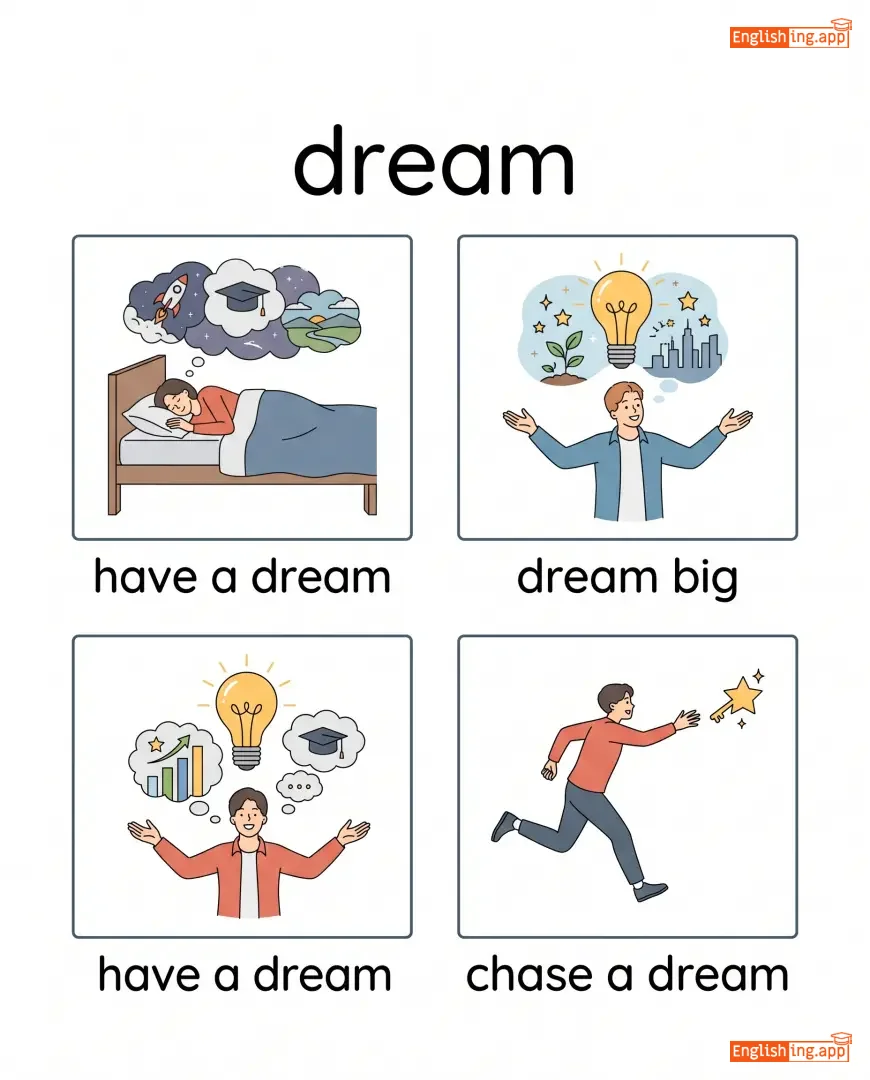
have a dream, dream big, chase a dream, dream come true
••••••
|
夢、無限の可能性。
••••••
|
|
#1677
👗
|
/drɛs/
noun/verb
(happiness)
••••••
|
- •••••• |
幸せ
shiawase
••••••
|
dressed
••••••
|
dressed
••••••
|
dresses
••••••
|
dressing
••••••
|
a one-piece garment for women or girls; to put on clothes
••••••
|
She wore a beautiful red dress to the party. |
彼女は賞を受け取ったとき、自分の幸せを隠せなかった。
Kanojo wa shou wo uketotta toki, jibun no shiawase wo kakusenakatta.
••••••
|
dressed to kill |
wearing clothes that are intended to impress others
••••••
|
幸せを求めて
shiawase wo motomete
••••••
|
outfit, attire, garment, clothing
••••••
|
undress, nakedness
••••••
|
wear a dress, long dress, summer dress, dress code
••••••
|
幸せは、心から笑顔になれる時に感じるものです。
••••••
|
|
#1678
👗
|
/ˈdrɛsˌmeɪkər/
noun
(ドレスメイカー)
••••••
|
- •••••• |
洋裁師
yousaishi
••••••
|
- •••••• | - •••••• | - •••••• | - •••••• |
A person who makes or alters women's clothing professionally.
••••••
|
The dressmaker crafted a beautiful gown for the bride.
ドレスメイカーは花嫁のために美しいドレスを作った。
••••••
|
洋裁師は花嫁のために美しいドレスを作った。
Yousaishi wa hanayome no tame ni utsukushii doresu wo tsukutta
••••••
|
- •••••• | - •••••• | - •••••• |
seamstress, tailor, couturier, garment maker
••••••
|
customer, client
••••••
|
skilled dressmaker, professional dressmaker, custom dressmaker, bridal dressmaker
••••••
|
Dress + 洋裁師 = ドレスを作る人
••••••
|
|
#1679
⛵
|
/drɪft/
verb
(ドリフト)
••••••
|
- •••••• |
漂う
tayou
••••••
|
drifted
ドリフトされた
••••••
|
drifted
ドリフトされた
••••••
|
drifts
ドリフトする
••••••
|
drifting
ドリフトしている
••••••
|
to move slowly, especially by air or water currents
••••••
|
The boat began to drift away from the shore.
ボートは岸から離れ始めた。
••••••
|
ボートは岸から離れ始めた。
Booto wa kishi kara hanarehajimeta.
••••••
|
drift apart
離れていく
••••••
|
to gradually become distant or less friendly
••••••
|
徐々に離れる
jojoni hanareru
••••••
|
float, glide, wander, meander, coast
••••••
|
anchor, stay, remain
••••••
|
drift away, drift apart, drift off, drift slowly
••••••
|
漂う — 水面に漂っていく船のように!
••••••
|
|
#1680
🥤
|
/drɪŋk/
verb, noun
(ドリンク)
••••••
|
|
飲む / 飲み物
nomu / nomimono
••••••
|
drank
ドランク
••••••
|
drunk
ドランク
••••••
|
drinks
ドリンクス
••••••
|
drinking
ドリンキング
••••••
|
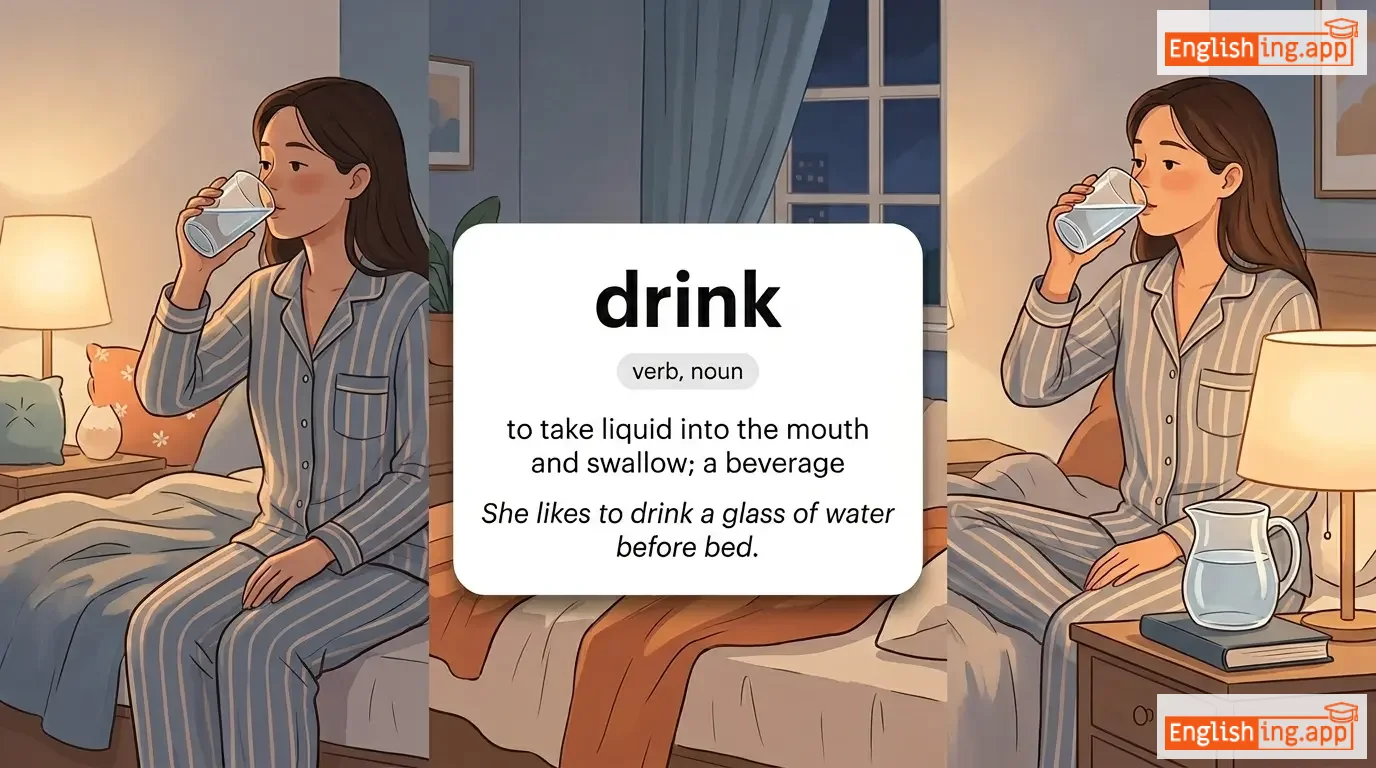
to take liquid into the mouth and swallow; a beverage
••••••
|
She likes to drink a glass of water before bed.
彼女は寝る前に一杯の水を飲むのが好きです。
••••••
|
彼女は寝る前に一杯の水を飲むのが好きです。
Kanojo wa neru mae ni ippai no mizu wo nomu no ga suki desu.
••••••
|
drink like a fish
魚のように飲む
••••••
|
to drink a lot of alcohol
••••••
|
魚のように飲む
Sakana no you ni nomu
••••••
|
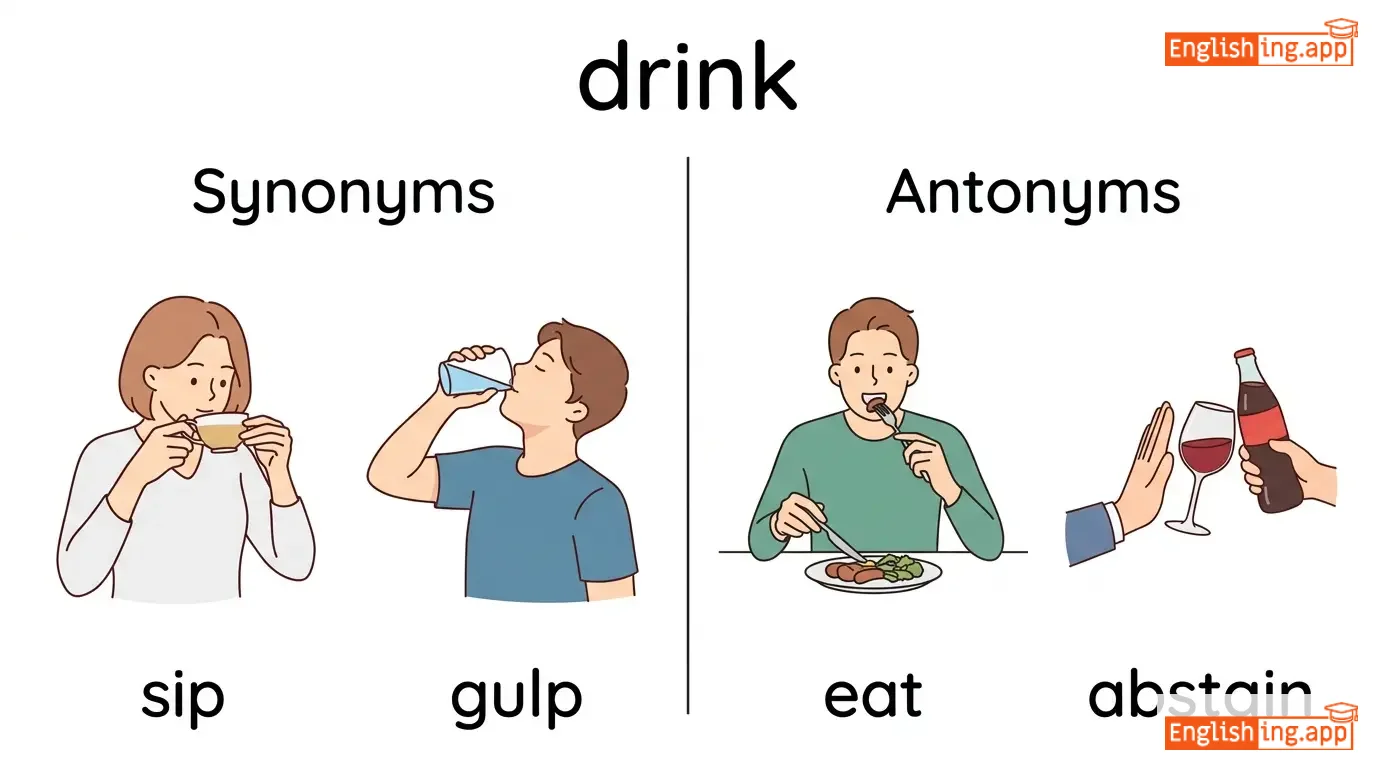
sip, gulp, swallow, beverage, refreshment
••••••
|
eat, abstain
••••••
|
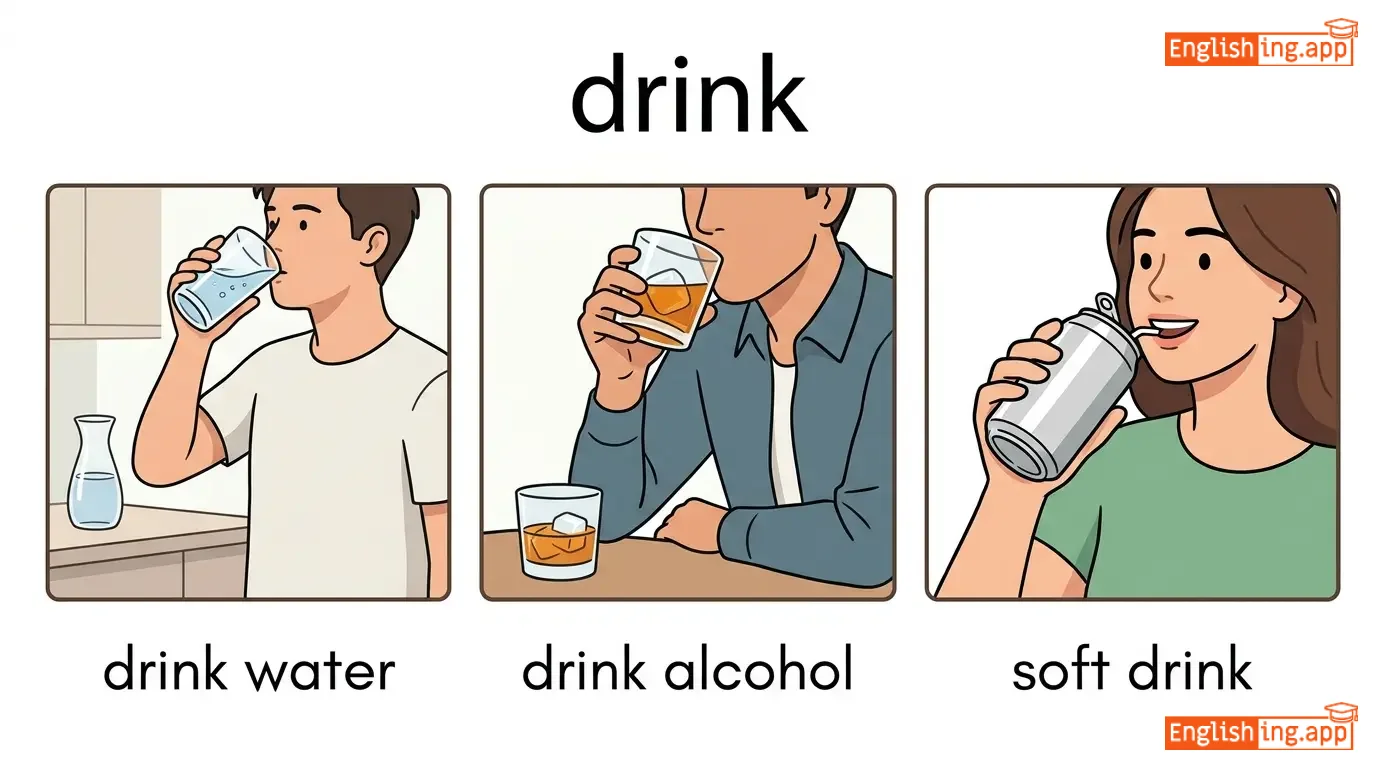
drink water, drink alcohol, soft drink, energy drink
••••••
|
飲むとは液体を飲み込むこと、例えば飲み物を飲むように。
••••••
|
|
#1681
🚗
|
/draɪv/
verb, noun
(ドライブ)
••••••
|
|
運転する
unten suru
••••••
|
drove
ドローブ
••••••
|
driven
ドリヴン
••••••
|
drives
ドライブス
••••••
|
driving
ドライビング
••••••
|
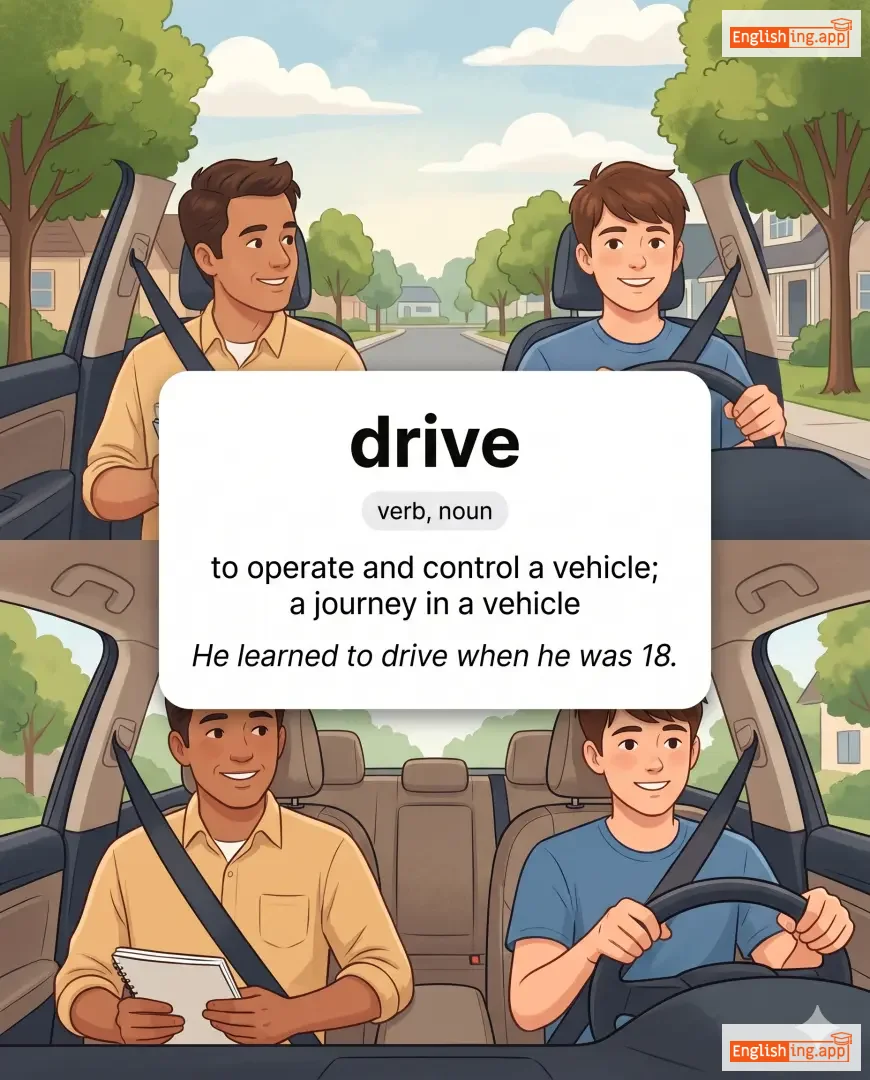
to operate and control a vehicle; a journey in a vehicle
••••••
|
He learned to drive when he was 18.
彼は18歳で車の運転を覚えました。
••••••
|
彼は18歳で車の運転を覚えました。
Kare wa 18 sai de kuruma no unten o oboemashita.
••••••
|
drive someone crazy
誰かをイライラさせる
••••••
|
to annoy or irritate someone a lot
••••••
|
誰かをイライラさせる
Dareka o iraira saseru
••••••
|
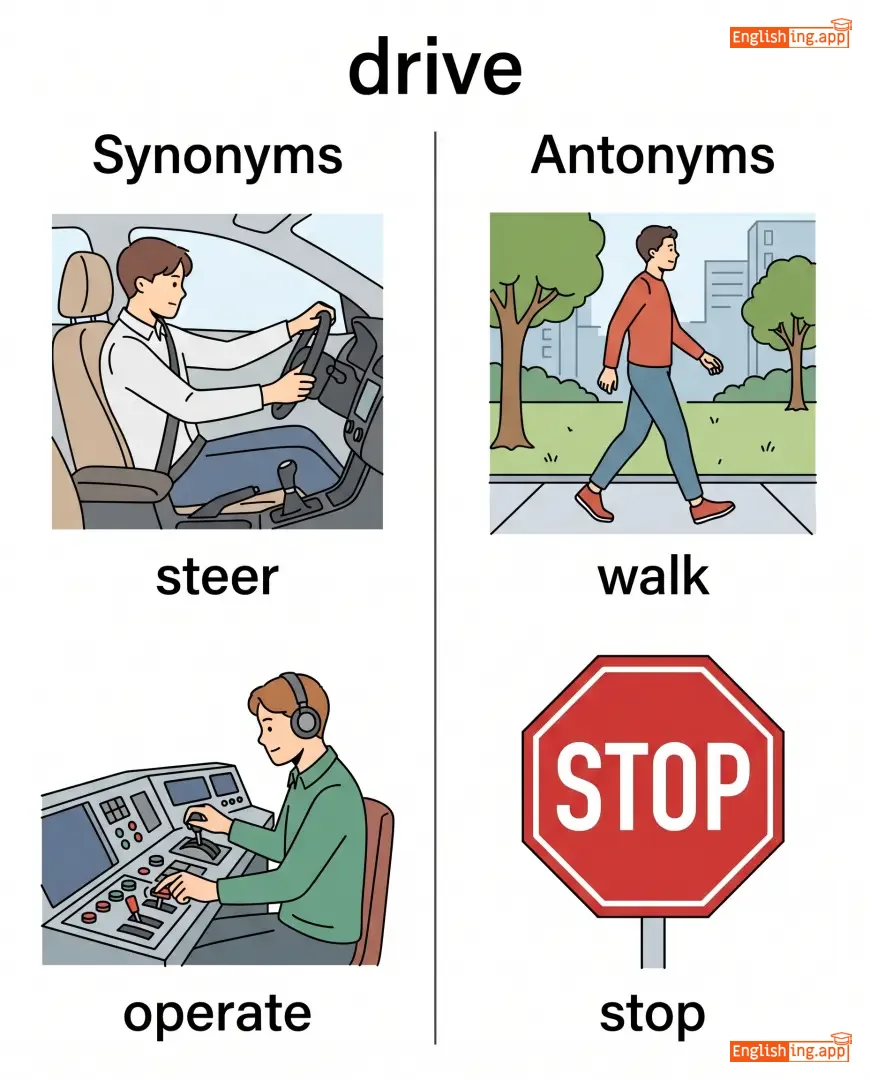
steer, operate, ride, control, propel
••••••
|
walk, stop
••••••
|
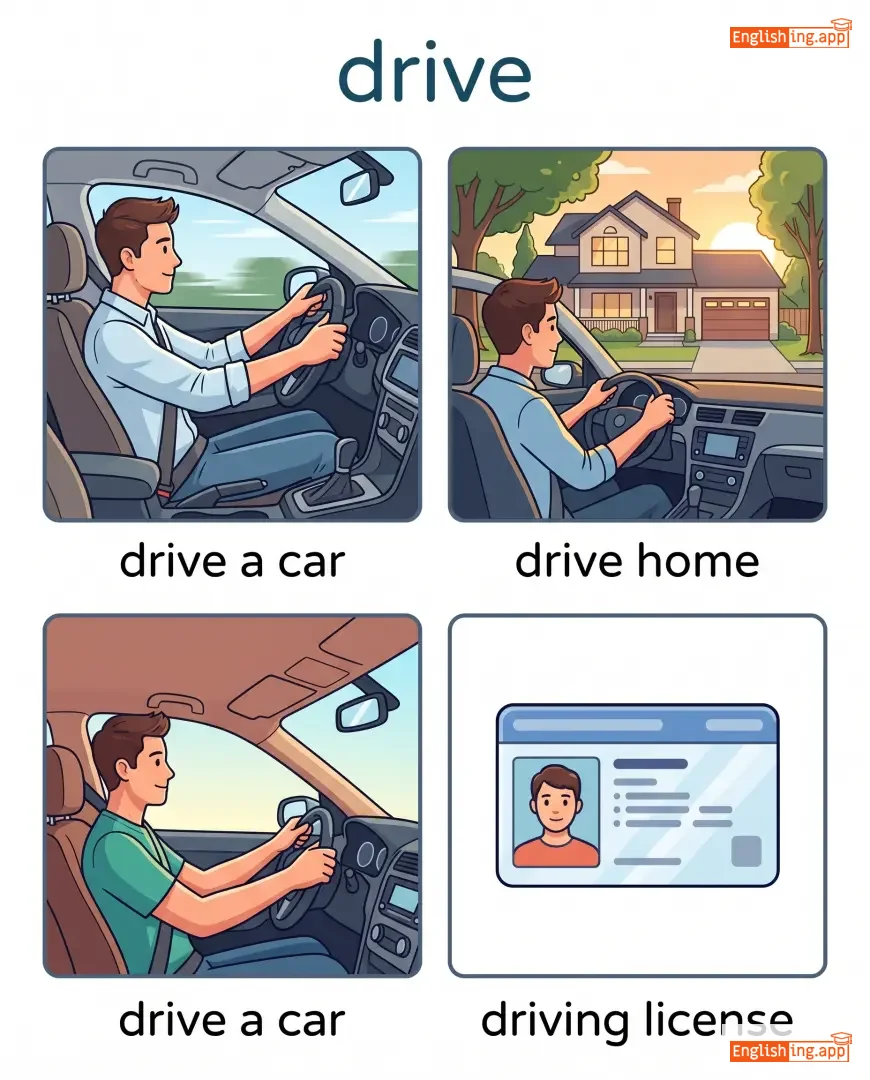
drive a car, drive home, driving license, drive safely
••••••
|
Driveは運転するという意味です。車を運転するのと同じです。
••••••
|
|
#1682
🚗
|
/ˈdraɪ.vər/
noun
(ドライバー)
••••••
|
- •••••• |
運転手
unten-shu
••••••
|
- •••••• | - •••••• | - •••••• | - •••••• |
a person who operates a motor vehicle
••••••
|
The taxi driver knew all the shortcuts through the busy city. |
タクシー運転手は忙しい街を通るすべての近道を知っていました。
Takushī unten-shu wa isogashī machi o tōru subete no chikamichi o shitte imashita.
••••••
|
- •••••• | - •••••• | - •••••• |
chauffeur, operator, motorist, pilot
••••••
|
passenger, pedestrian, walker
••••••
|
taxi driver, bus driver, truck driver, professional driver, experienced driver
••••••
|
運転手は車で街を駆け抜けます。
••••••
|
|
#1683
💧
|
/drɒp/
verb, noun
(ドロップ)
••••••
|
- •••••• |
落とす / 液滴
otosu / ekitaki
••••••
|
dropped
ドロップド
••••••
|
dropped
ドロップド
••••••
|
drops
ドロップス
••••••
|
dropping
ドロッピング
••••••
|
to let something fall; a small quantity of liquid
••••••
|
Be careful not to drop your phone.
携帯電話を落とさないように気をつけてください。
••••••
|
携帯電話を落とさないように気をつけてください。
Keitai denwa wo otosana you ni ki wo tsukete kudasai.
••••••
|
drop the ball
ボールを落とす
••••••
|
to make a mistake or fail to do something
••••••
|
間違いを犯す
machigai wo okasu
••••••
|
fall, release, decline, drip, descend
••••••
|
lift, raise, pick up
••••••
|
drop out, drop by, drop off, raindrop
••••••
|
Dropは落とすを意味し、水滴のように=水を落とす。
••••••
|
|
#1684
🌵
|
/draʊt/
noun
(dautoruto)
••••••
|
|
干ばつ
kanbatsu
••••••
|
- •••••• | - •••••• | - •••••• | - •••••• |
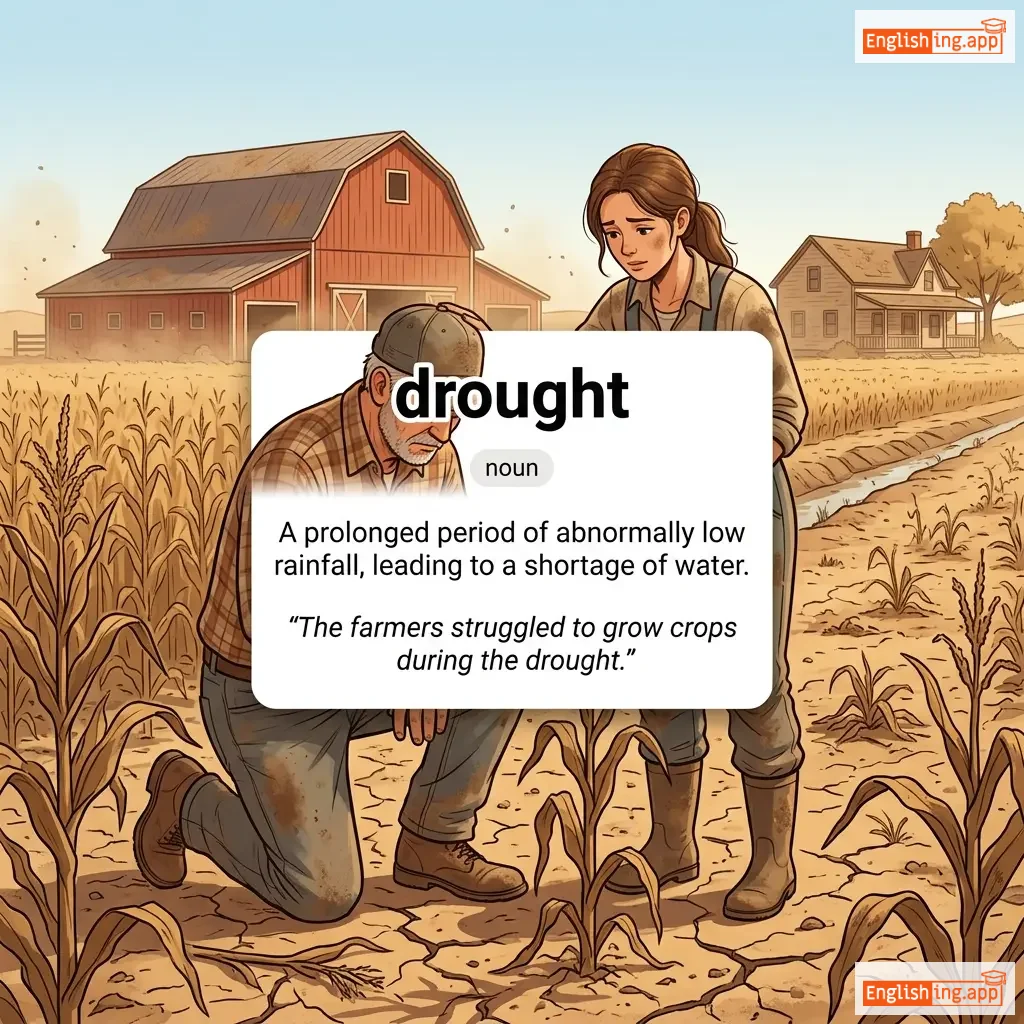
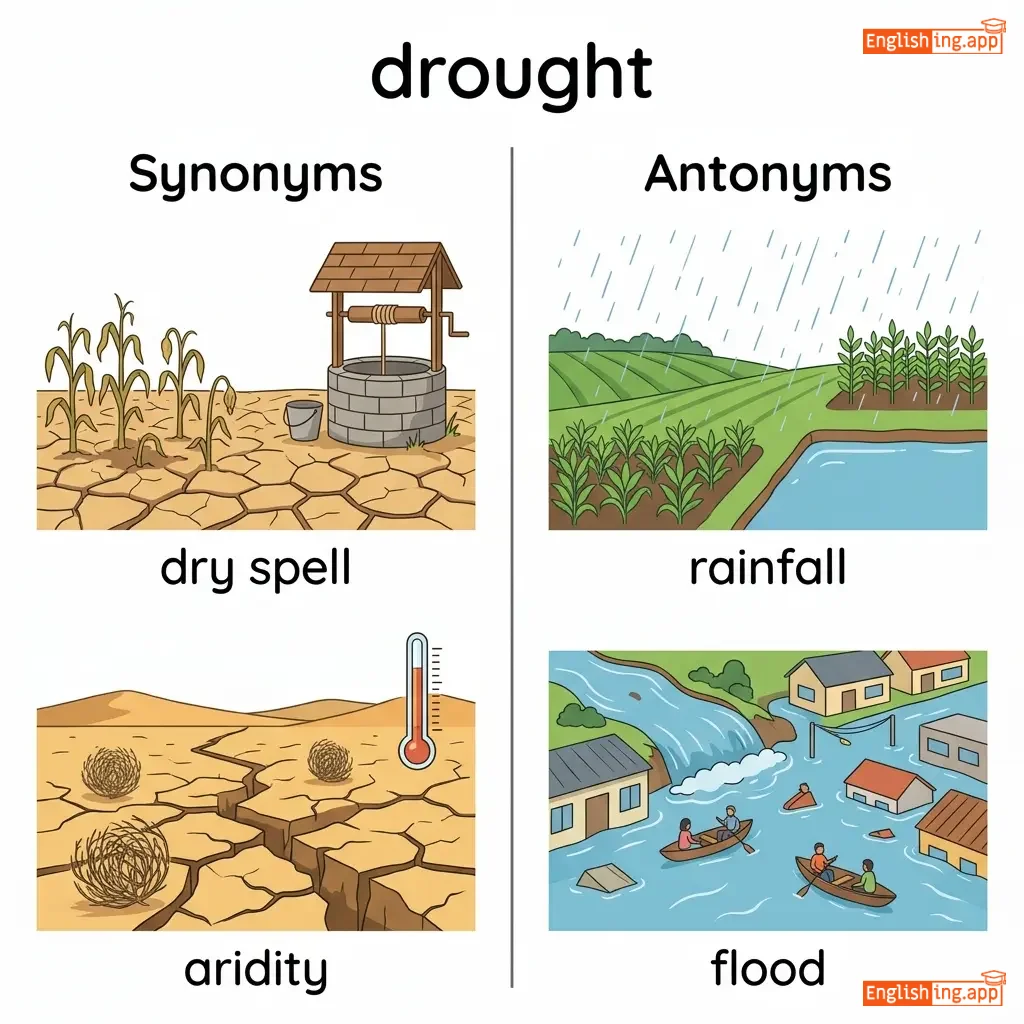
A prolonged period of abnormally low rainfall, leading to a shortage of water.
••••••
|
The farmers struggled to grow crops during the drought. |
農家は干ばつの間、作物を育てるのに苦労していました。
Nouka wa kanbatsu no aida, sakumotsu o sodateru no ni kurou shiteimashita.
••••••
|
in a drought |
Experiencing a lack of something, often used metaphorically.
••••••
|
干ばつの間
Kanbatsu no aida
••••••
|
dry spell, aridity, lack of rain, scarcity, shortage
••••••
|
rainfall, flood, abundance
••••••
|
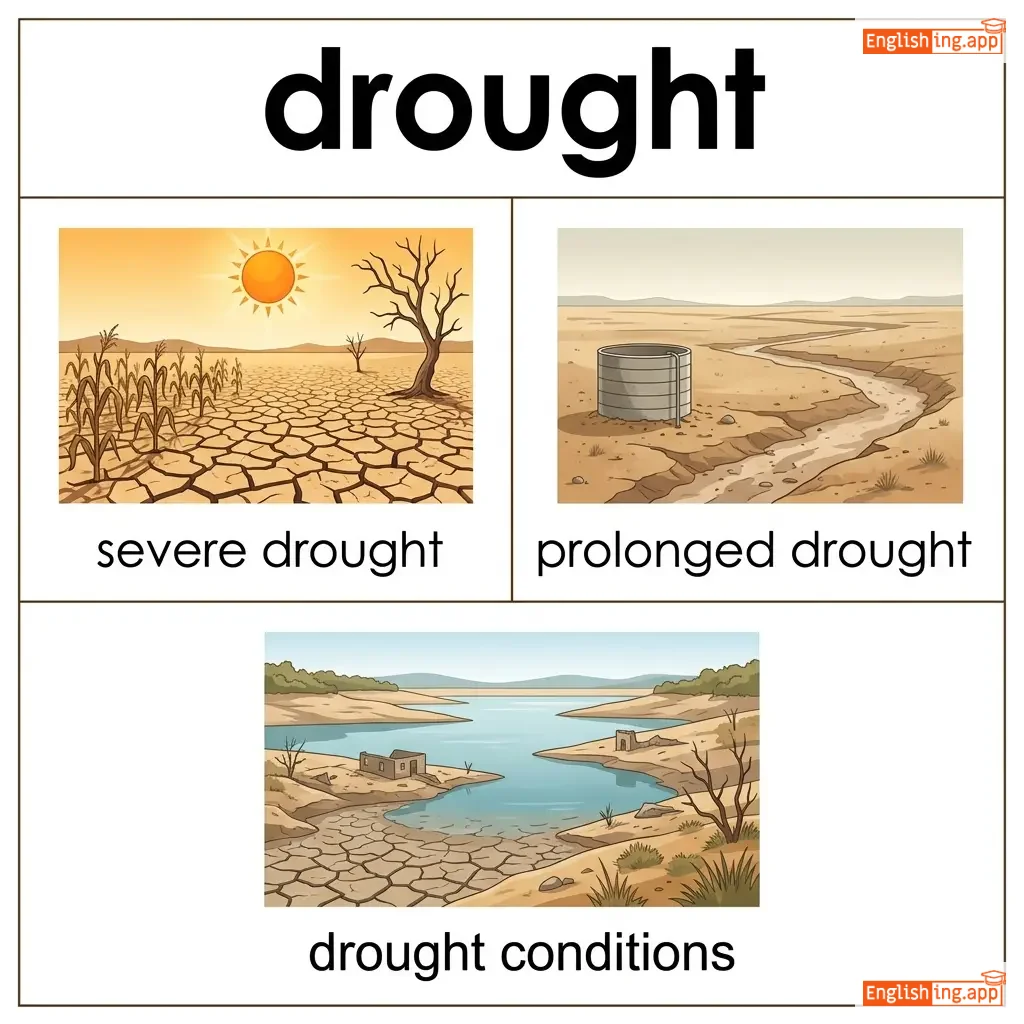
severe drought, prolonged drought, drought conditions, drought relief
••••••
|
Droughtは干ばつを意味します – ‘水がないと干ばつ’と覚えてください。
••••••
|
|
#1685
🌊
|
/draʊn/
verb
(ドラウン)
••••••
|
- •••••• |
溺れる
oboreru
••••••
|
drowned
ドラウンド
••••••
|
drowned
ドラウンド
••••••
|
drowns
ドラウンズ
••••••
|
drowning
ドラウイング
••••••
|
to die or cause to die by being submerged in and inhaling water
••••••
|
He nearly drowned while swimming in the river.
彼は川で泳いでいるときにほぼ溺れそうになった。
••••••
|
彼は川で泳いでいるときにほぼ溺れそうになった。
Kare wa kawa de oyoide iru toki ni hobo obore sō ni natta.
••••••
|
drown out
溺れる
••••••
|
to make a sound so loud that it prevents other sounds from being heard
••••••
|
かき消す
kakikesu
••••••
|
sink, submerge, suffocate, engulf
••••••
|
float, survive, resurface
••••••
|
drown in debt, drown in sorrow, nearly drown, drown out
••••••
|
Drownは溺れること、絶対に水に気を付けて!
••••••
|
|
#1686
💊
|
/drʌɡ/
noun
(ドラッグ)
••••••
|
- •••••• |
薬物
yakubutsu
••••••
|
- •••••• | - •••••• | - •••••• | - •••••• |
a substance used as a medicine or an illegal addictive substance
••••••
|
The doctor prescribed a new drug for the illness. |
医者はその病気のために新しい薬を処方しました。
Isha wa sono byouki no tame ni atarashii kusuri wo shohoushimashita.
••••••
|
war on drugs |
efforts to stop illegal drug use and trade
••••••
|
麻薬との戦い
mayaku to no tatakai
••••••
|
medicine, medication, narcotic, substance
••••••
|
cure, remedy
••••••
|
drug abuse, drug dealer, prescription drug, drug addiction
••••••
|
Drug は薬物または麻薬を意味します。例えば、drugstore は薬局を意味します。
••••••
|
|
#1687
💊
|
/ˈdrʌɡˌstɔːr/
noun
(ドラッグストア)
••••••
|
- •••••• |
薬局
yakkyoku
••••••
|
- •••••• | - •••••• | - •••••• | - •••••• |
A retail store that sells medicines, health-related products, and sometimes cosmetics or snacks.
••••••
|
I stopped by the drugstore to buy some cold medicine.
風邪薬を買うためにドラッグストアに行きました。
••••••
|
風邪薬を買うために薬局に行きました。
Kazegusuri wo kau tame ni yakkyoku ni ikimashita.
••••••
|
- •••••• | - •••••• | - •••••• |
pharmacy, chemist, apothecary, drug shop
••••••
|
none, unrelated store
••••••
|
local drugstore, visit the drugstore, drugstore chain, drugstore aisle
••••••
|
ドラッグストア = place to buy medicine in Japanese
••••••
|
|
#1688
🥁
|
/drʌm/
noun
(ドラム)
••••••
|
- •••••• |
ドラムまたは樽
doramu matawa taru
••••••
|
- •••••• | - •••••• | - •••••• | - •••••• |
a musical instrument beaten with sticks or hands; also a cylindrical container
••••••
|
The drummer hit the drum loudly during the concert.
ドラム奏者はコンサート中に大きな音でドラムを叩いた。
••••••
|
ドラム奏者はコンサート中に大きな音でドラムを叩いた。
Doramu sōsha wa konsāto-chū ni ōkina oto de doramu o tataita.
••••••
|
beat the drum for
ドラムを叩く
••••••
|
to publicly support or promote something
••••••
|
公開で支援する
kōkai de shien suru
••••••
|
percussion, barrel, container, cylinder
••••••
|
silence, stillness
••••••
|
drum kit, drum beats, steel drum, oil drum, bass drum
••••••
|
ドラムの音のように、支持する声は大きく響くべきだ!
••••••
|
|
#1689
🍺
|
/drʌŋk/
adjective
(ドランク)
••••••
|
- •••••• |
酔っ払った
yopparatta
••••••
|
- •••••• | - •••••• | - •••••• | - •••••• |
affected by alcohol to the point of losing control of one's faculties or behavior
••••••
|
He was too drunk to walk straight. |
彼は酔っ払って、まっすぐ歩けなかった。
Kare wa yopparatte, massugu arukenakatta.
••••••
|
dead drunk |
extremely intoxicated
••••••
|
泥酔
desui
••••••
|
intoxicated, tipsy, inebriated, wasted, buzzed
••••••
|
sober, abstinent
••••••
|
get drunk, dead drunk, completely drunk, drunk driving
••••••
|
酔っ払ったはdrunk — 飲みすぎると酔っ払っちゃう!
••••••
|
|
#1690
☀️
|
/draɪ/
verb
(dorai)
••••••
|
|
乾燥
kansou
••••••
|
dried
doraido
••••••
|
dried
doraido
••••••
|
dries
doraizu
••••••
|
drying
doraining
••••••
|
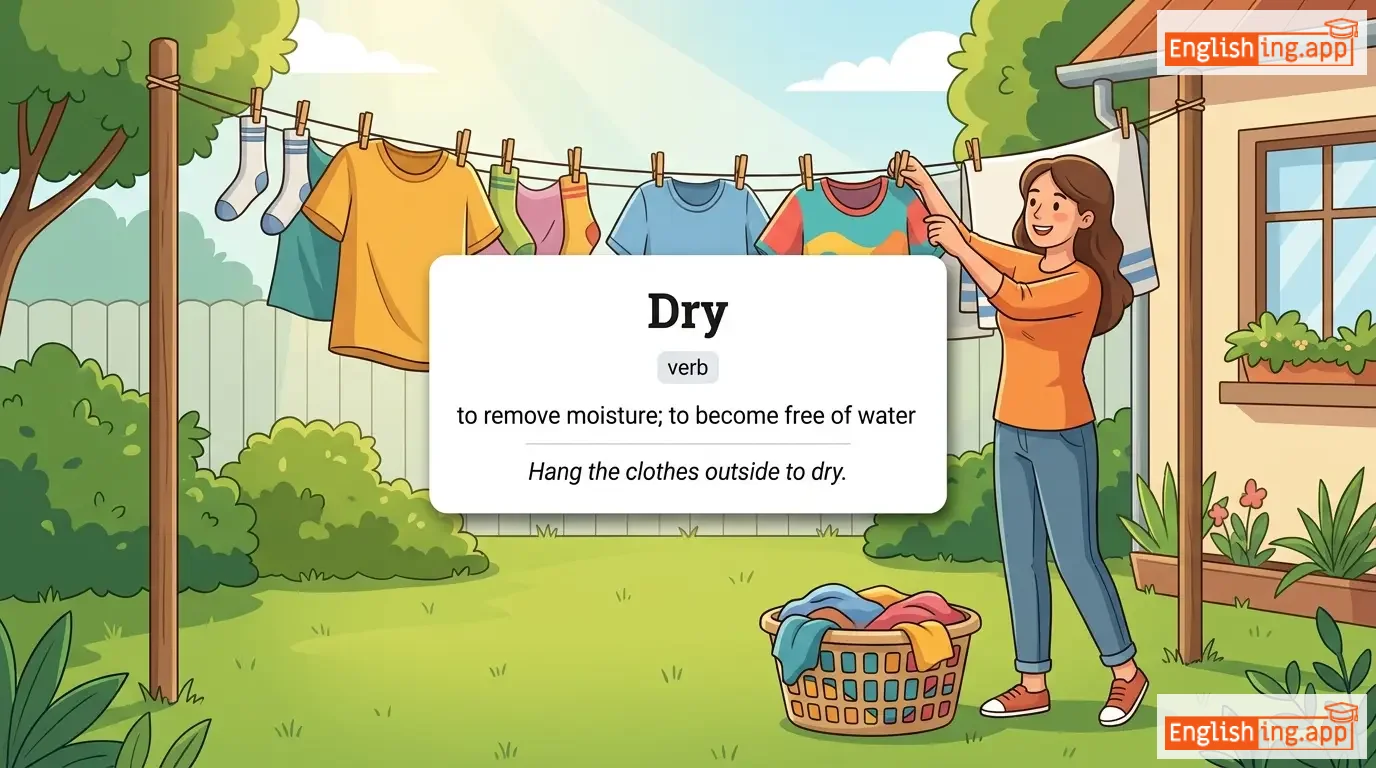
to remove moisture; to become free of water
••••••
|
Hang the clothes outside to dry.
外に服を干して乾かす。
••••••
|
外に服を干して乾かす。
Soto ni fuku o hoshite kawakasu.
••••••
|
- •••••• | - •••••• | - •••••• |
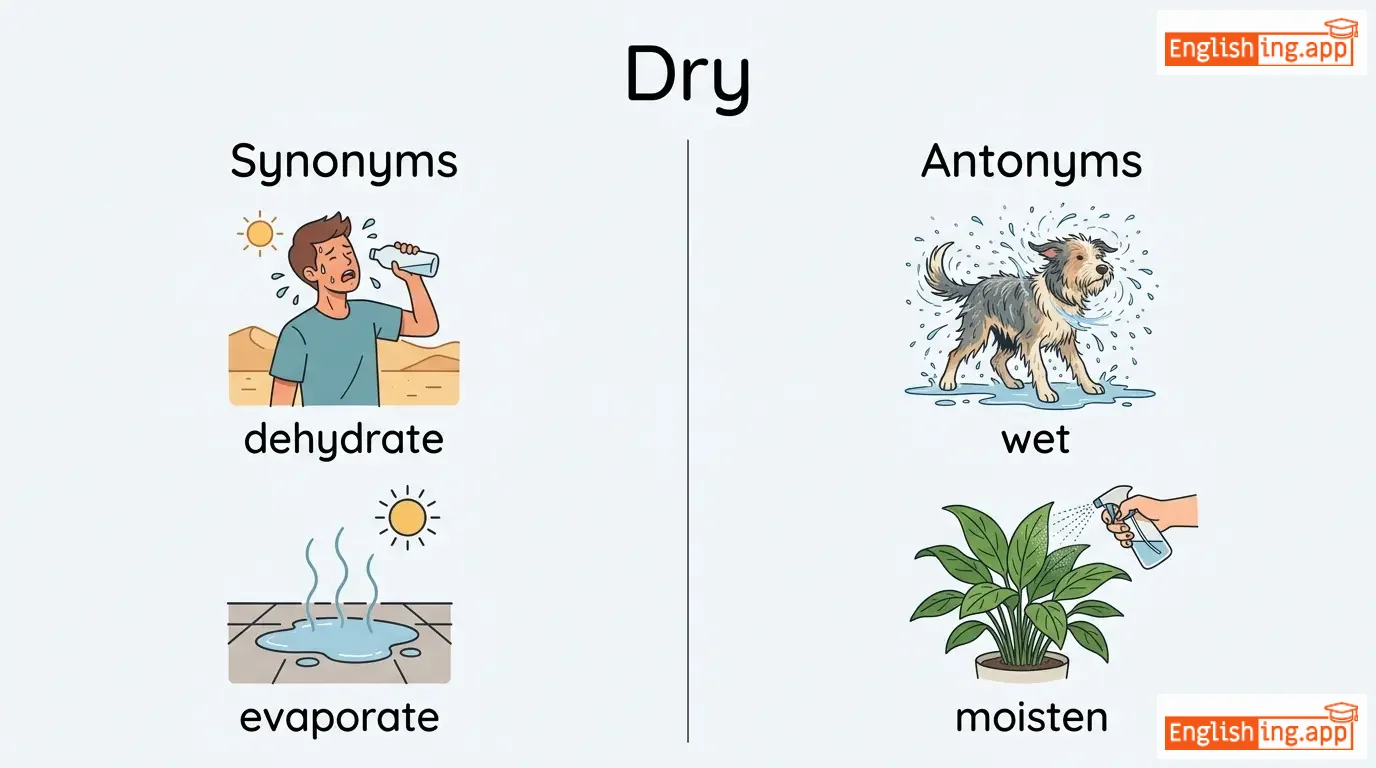
dehydrate, evaporate, drain, wither
••••••
|
wet, moisten, dampen, soak
••••••
|
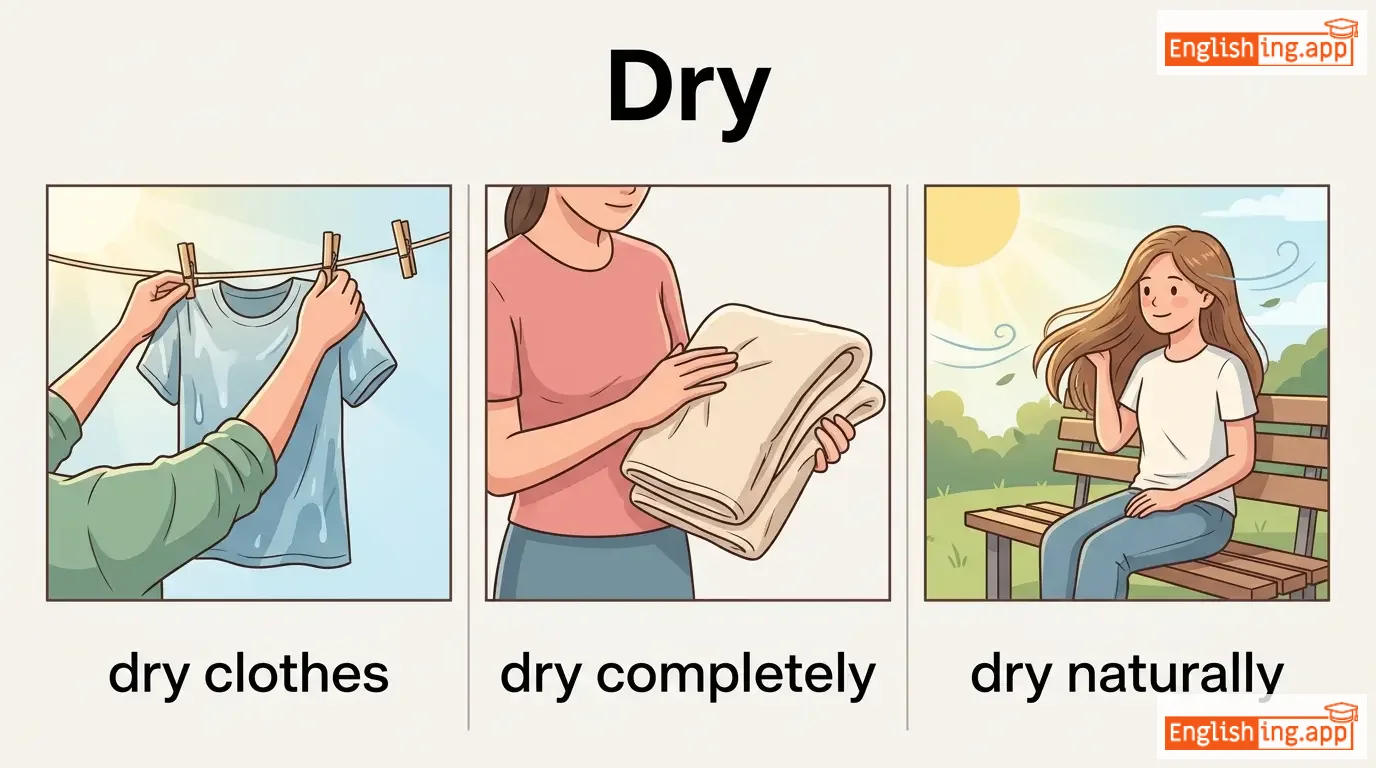
dry clothes, dry completely, dry naturally, dry thoroughly, dry in the sun
••••••
|
'乾燥' in Japanese means dry, symbolizing the process of removing moisture.
••••••
|
|
#1691
👥
|
/ˈduː.əl/
adjective
(デュアル)
••••••
|
- •••••• |
二重の
nijū no
••••••
|
- •••••• | - •••••• | - •••••• | - •••••• |
having two parts or consisting of two elements; double
••••••
|
She has dual citizenship of both countries. |
彼女は二つの国の二重国籍を持っています。
Kanojo wa futatsu no kuni no nijū kokuseki o motteimasu.
••••••
|
- •••••• | - •••••• | - •••••• |
double, twin, paired, binary
••••••
|
single, sole, individual, unique
••••••
|
dual purpose, dual citizenship, dual nature
••••••
|
二重は二つの部分があることを意味し、dualのようなものです
••••••
|
|
#1692
🎬
|
/dʌb/
verb
(ダブ)
••••••
|
- •••••• |
吹き替え
fukikae
••••••
|
dubbed
ダブド
••••••
|
dubbed
ダブド
••••••
|
dubs
ダブス
••••••
|
dubbing
ダビング
••••••
|
to give a name or label to something; to add a soundtrack to a film or recording
••••••
|
The movie was dubbed into several languages for international release.
その映画は国際公開のためにいくつかの言語に吹き替えられました。
••••••
|
その映画は国際公開のためにいくつかの言語に吹き替えられました。
Sono eiga wa kokusai koukai no tame ni ikutsu ka no gengo ni fukikaeraremashita.
••••••
|
- •••••• | - •••••• | - •••••• |
name, label, dub over, voice over
••••••
|
misname, unlabel
••••••
|
dub a movie, dub in a voice, dub over a film
••••••
|
映画で声を吹き替えることを考えてみてください!
••••••
|
|
#1693
📅
|
/djuː/
adjective
(dyu)
••••••
|
- •••••• |
期限 / 期日
kigen / kijitsu
••••••
|
- •••••• | - •••••• | - •••••• | - •••••• |
expected at a certain time or required by a certain date
••••••
|
The rent is due on the first of every month. |
家賃は毎月の1日に支払い期限があります。
Yachin wa maitsuki no 1-nichi ni shiharai kigen ga arimasu.
••••••
|
due date |
the final day something must be completed or paid
••••••
|
期限日
kigenbi
••••••
|
expected, scheduled, payable, owed, anticipated
••••••
|
unexpected, optional, unnecessary
••••••
|
due date, due payment, due process, due respect
••••••
|
‘Due’は‘期限’を意味します。期日までに支払うことを忘れずに!
••••••
|
|
#1694
😴
|
/dʌl/
adjective
(dal)
••••••
|
- •••••• |
退屈
taikutsu
••••••
|
- •••••• | - •••••• | - •••••• | - •••••• |
lacking brightness, vividness, or interest; boring or not sharp
••••••
|
The lecture was so dull that many students fell asleep. |
その講義は退屈すぎて、たくさんの学生が寝てしまいました。
Sono kōgi wa taikutsu sugite, takusan no gakusei ga nete shimaimashita.
••••••
|
dull as dishwater |
extremely boring
••••••
|
皿の水のように退屈
Sara no mizu no yō ni taikutsu
••••••
|
boring, tedious, lifeless, monotonous, uninteresting
••••••
|
exciting, lively, interesting
••••••
|
dull knife, dull sound, dull moment, dull pain, dull color
••••••
|
Dullは皿の水のように退屈です。
••••••
|
|
#1695
🤐
|
/dʌm/
adjective
(damb)
••••••
|
- •••••• |
馬鹿 / 無口
baka / mukuchi
••••••
|
- •••••• | - •••••• | - •••••• | - •••••• |
lacking intelligence or unable to speak
••••••
|
He made a dumb mistake during the exam.
彼は試験中に馬鹿なミスを犯した。
••••••
|
彼は試験中に馬鹿なミスを犯した。
Kare wa shiken-chū ni baka na misu o okashita.
••••••
|
strike dumb
愚かに打つ
••••••
|
to make someone speechless with shock or amazement
••••••
|
言葉を失う
kotoba o ushinau
••••••
|
stupid, foolish, silly, mute
••••••
|
smart, intelligent
••••••
|
dumb mistake, dumb idea, dumb luck, dumb silence
••••••
|
Dumb = 馬鹿; 試験での馬鹿なミスは大きな間違いを意味します。
••••••
|
|
#1696
🗑️
|
/dʌmp/
verb
(ダンプ)
••••••
|
- •••••• |
何かを無駄に捨てるまたは放置する
nanika o muda ni suteru matawa houchi suru
••••••
|
dumped
ダンプド
••••••
|
dumped
ダンプド
••••••
|
dumps
ダンプス
••••••
|
dumping
ダンピング
••••••
|
to drop or dispose of something carelessly; to end a relationship suddenly
••••••
|
He dumped all the trash into the bin.
彼はゴミをすべてゴミ箱に捨てた。
••••••
|
彼はゴミをすべてゴミ箱に捨てた。
Kare wa gomi o subete gomibako ni suteta.
••••••
|
dump someone
誰かを捨てる
••••••
|
to end a romantic relationship with someone
••••••
|
誰かを捨てる
Dareka o suteru
••••••
|
discard, throw, drop, abandon, release
••••••
|
keep, hold, retain
••••••
|
dump site, garbage dump, dump truck, dump waste, dump someone
••••••
|
Dumpは捨てるという意味です — 誰かに振られたら、'彼は私をdumpした!'
••••••
|
|
#1697
🎶
|
/ˈdjuːəʊ/
noun
(デュオ)
••••••
|
- •••••• |
デュオ
duo
••••••
|
- •••••• | - •••••• | - •••••• | - •••••• |
a pair of people or things, especially in music or entertainment
••••••
|
The musical duo performed their latest hit at the concert. |
その音楽デュオはコンサートで最新のヒットを演奏しました。
Sono ongaku duo wa konsāto de saishin no hitto o ensō shimashita.
••••••
|
- •••••• | - •••••• | - •••••• |
pair, couple, team, twosome
••••••
|
solo, individual
••••••
|
musical duo, comedy duo, famous duo
••••••
|
A duo is two people working together, just like two instruments in harmony!
••••••
|
Vocabulary Quiz
Test your vocabulary by matching words with their translations or meanings.
Login to take the quiz
Comments (0)
Share your thoughts and join the discussion.
Join the discussion by logging in
Login to CommentNo comments yet
Be the first to share your thoughts!