

翻訳
過去
過去分詞
三人称単数
動名詞
意味
例文
例文の翻訳
同義語
対義語
コロケーション
ニーモニック
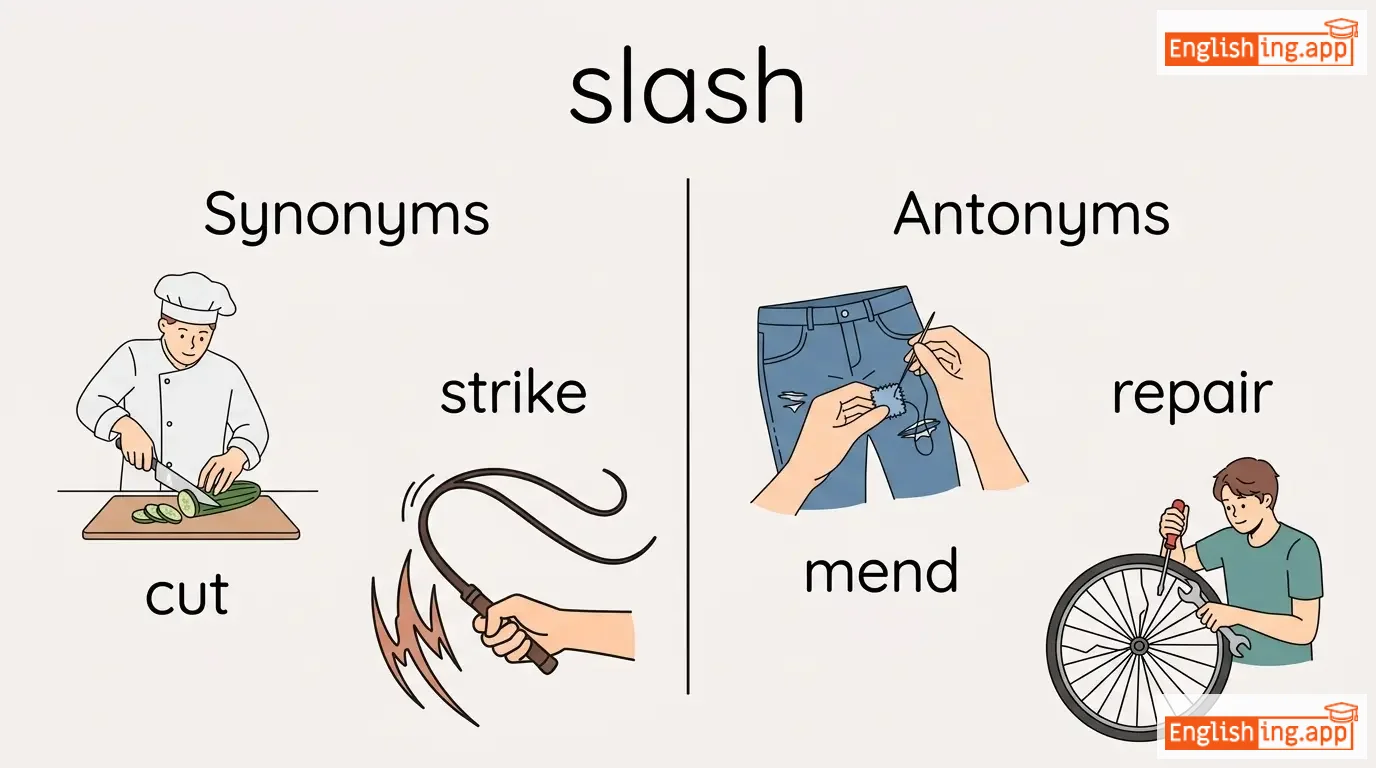
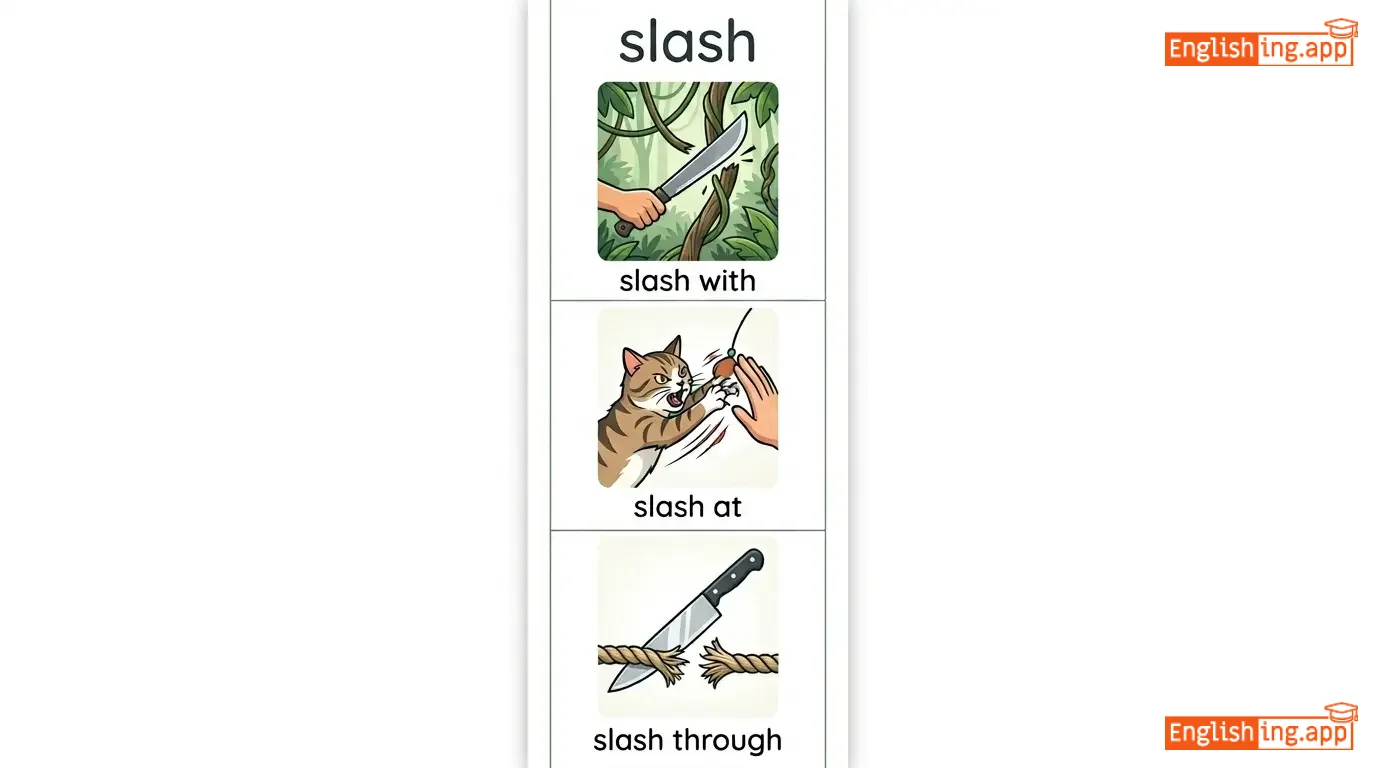
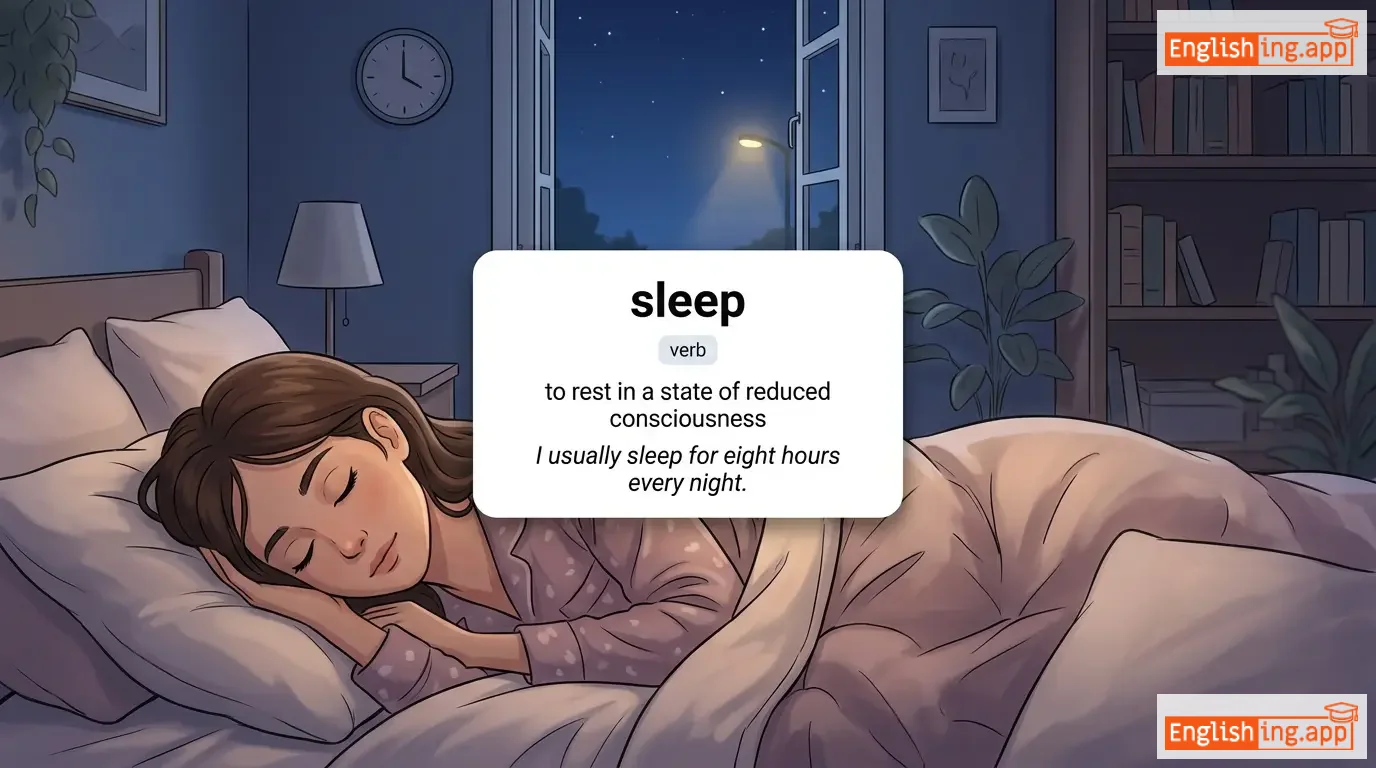
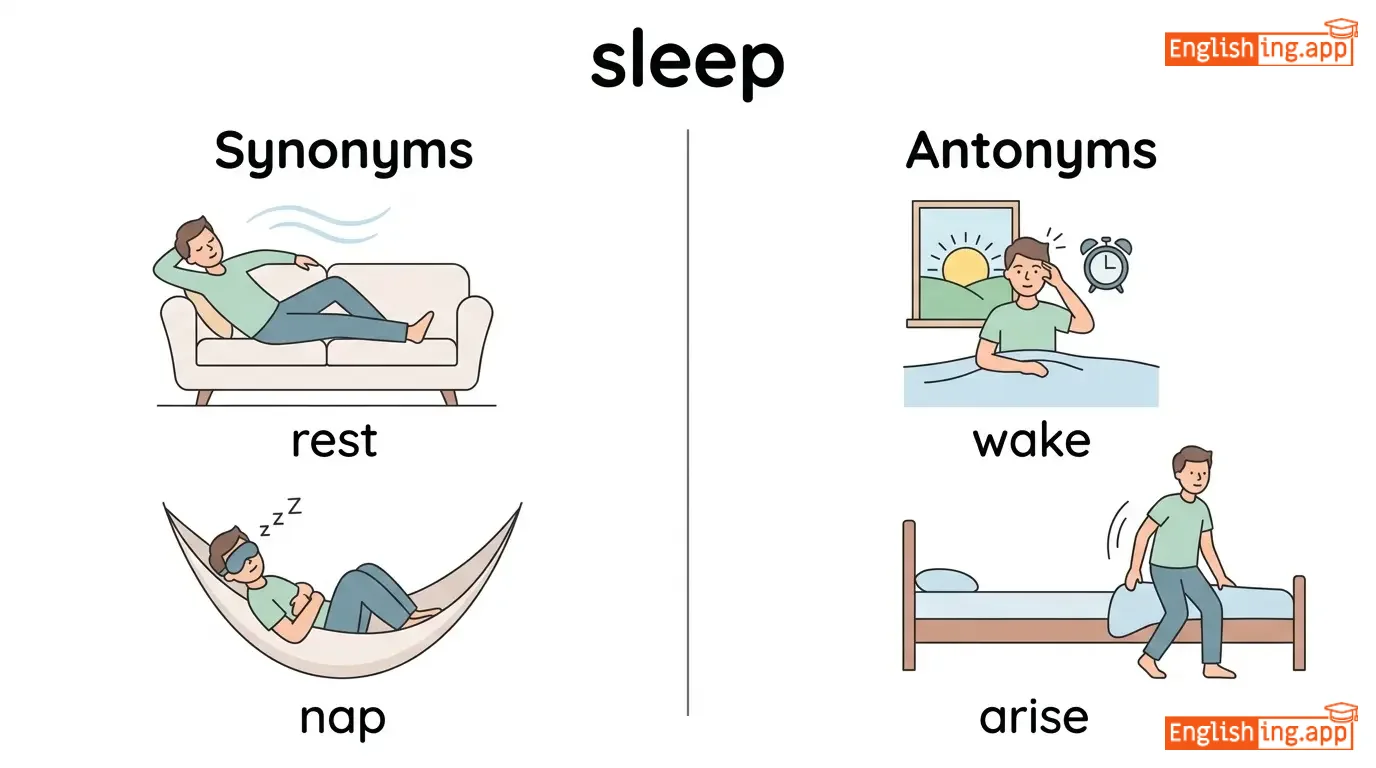
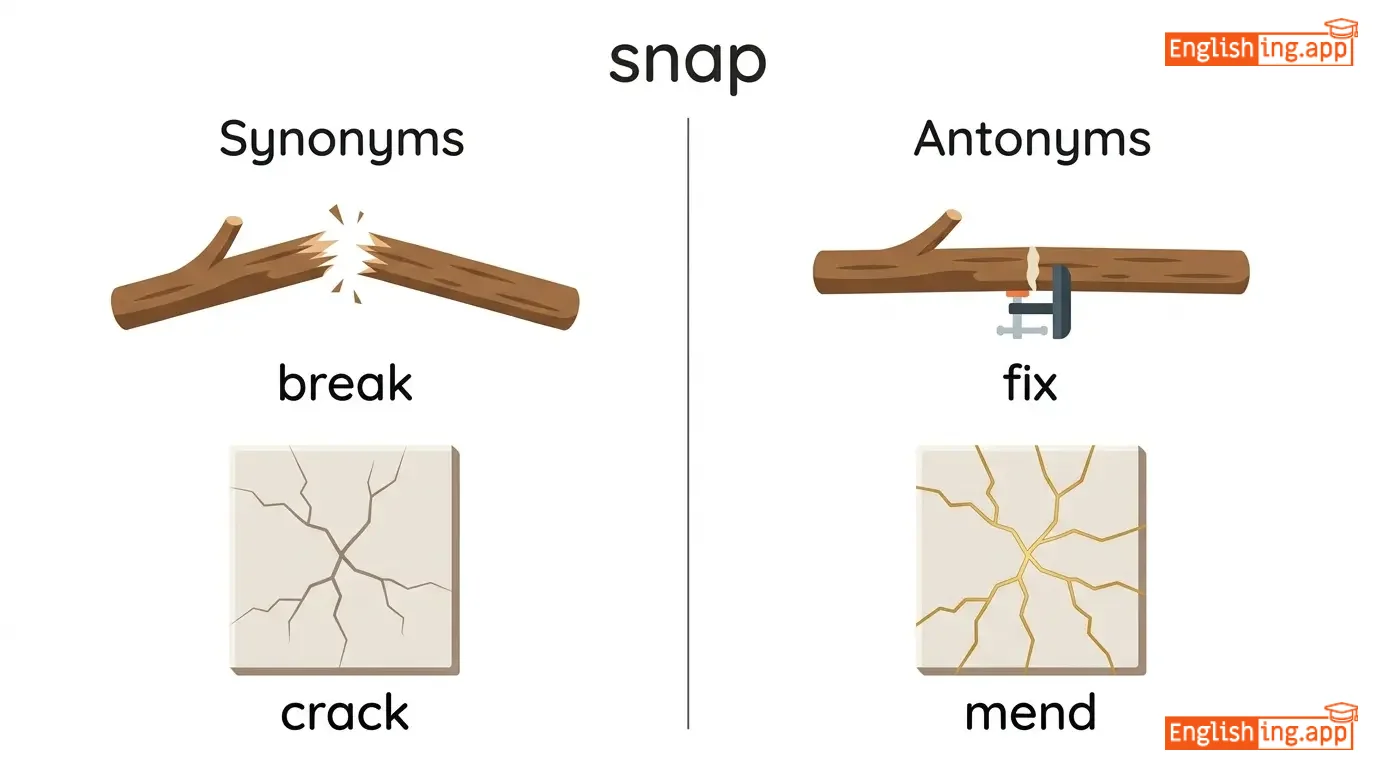
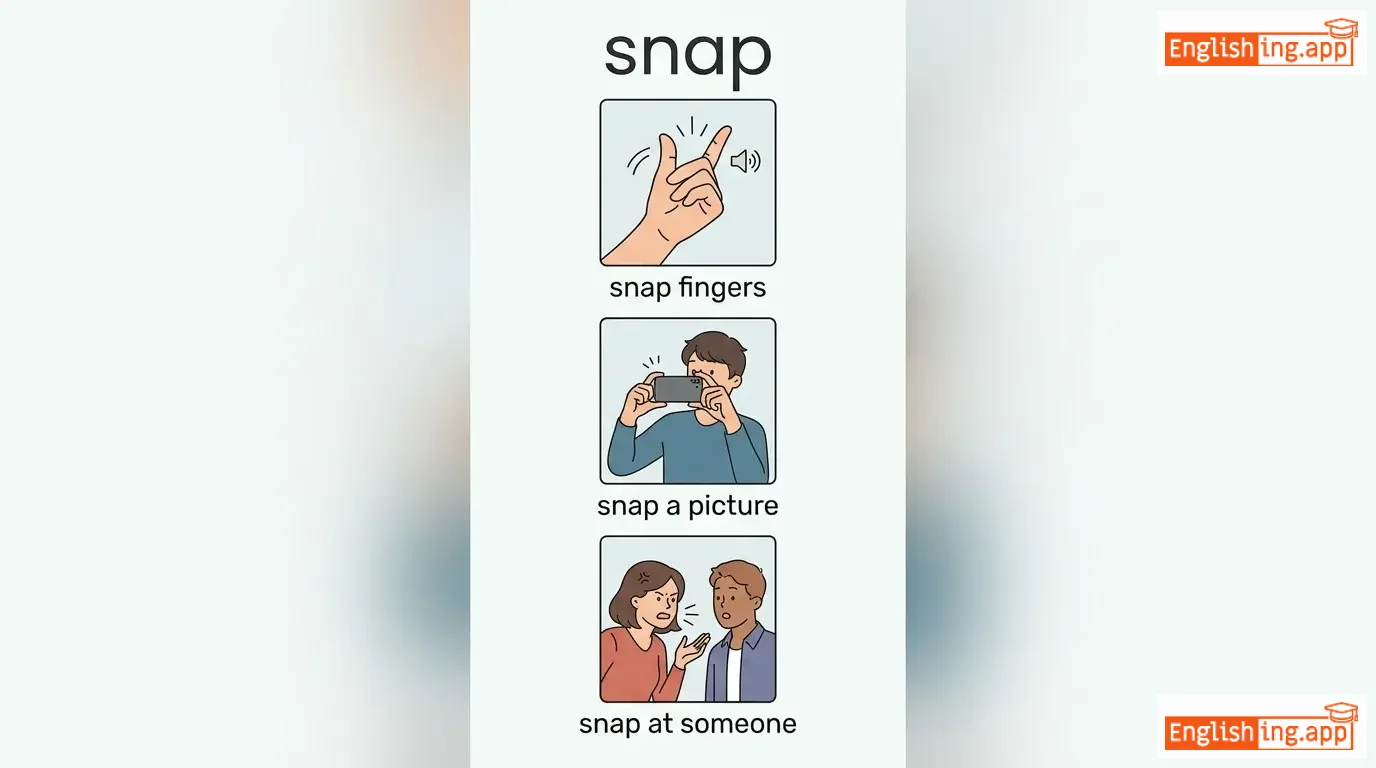
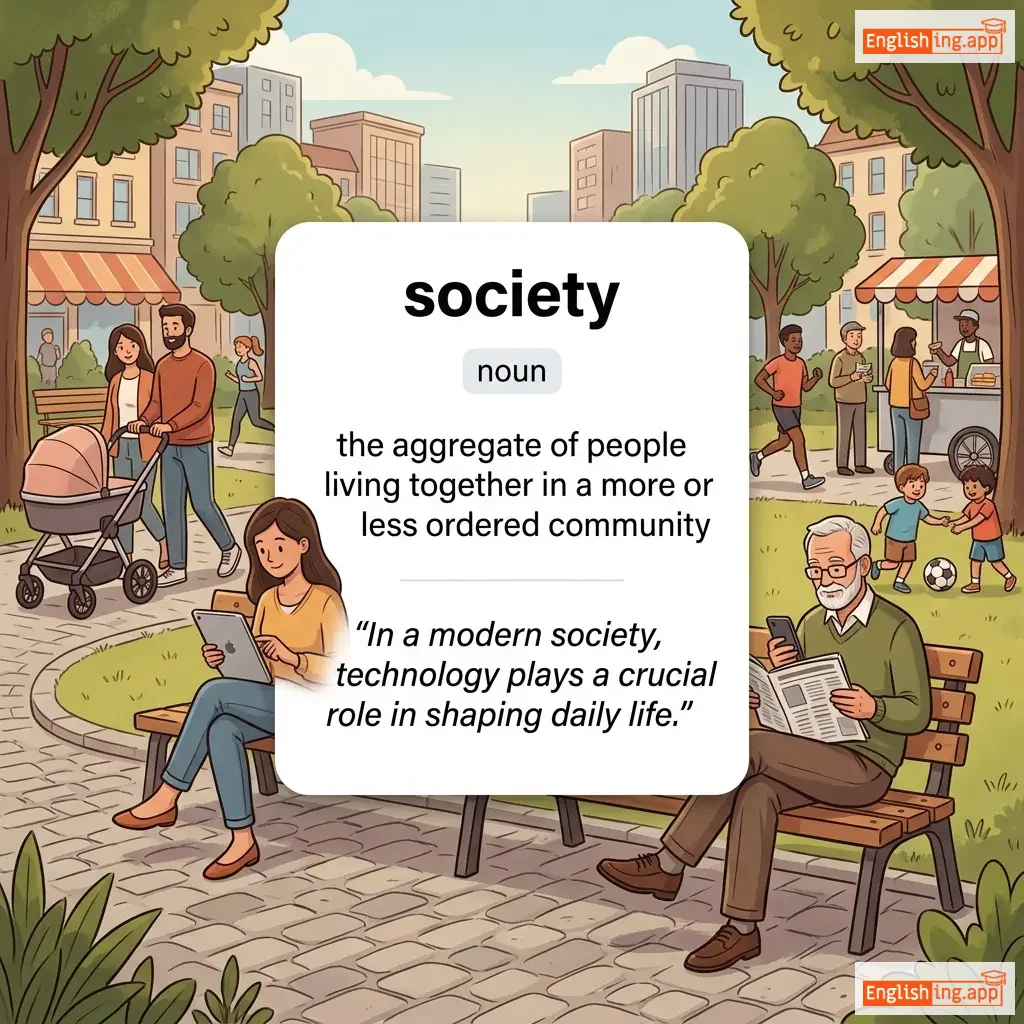
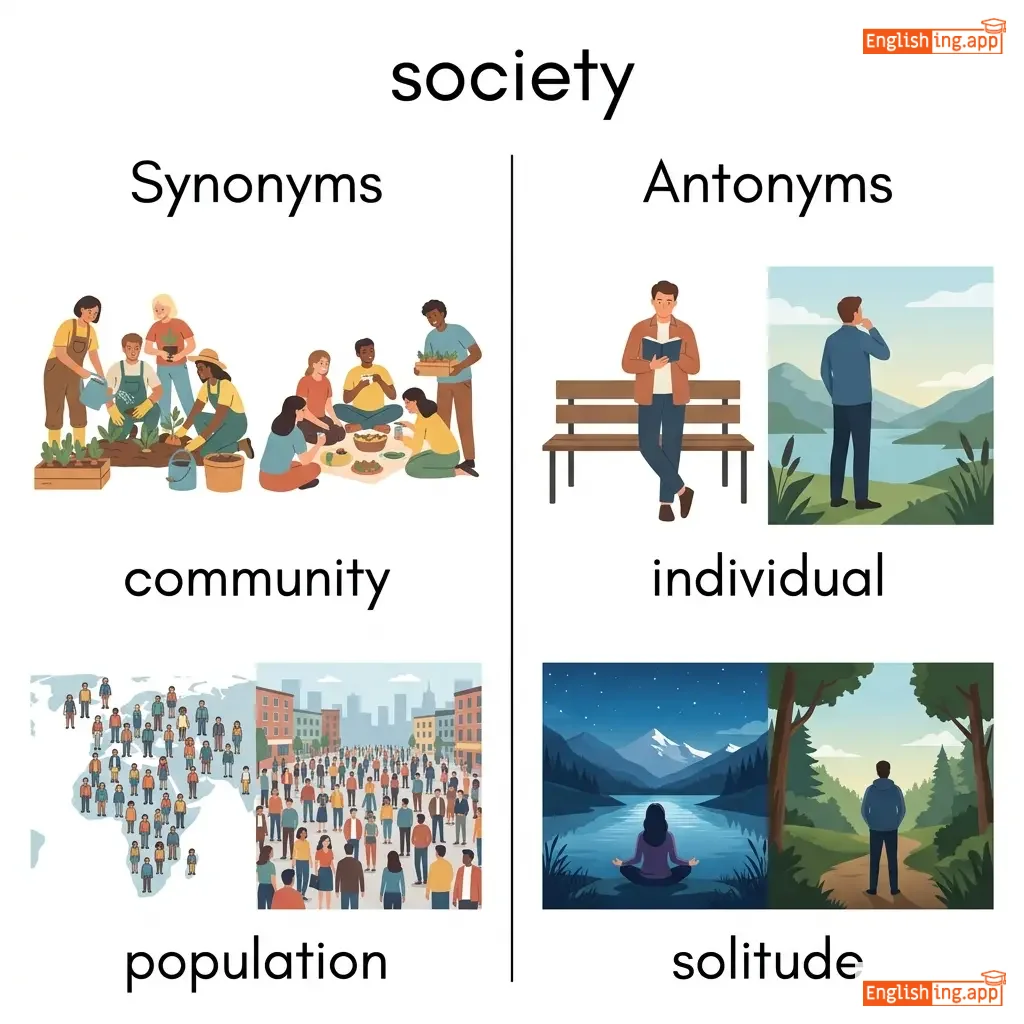
Swipe left or right, or use the buttons. Tap image to zoom.
例文の翻訳
単語
Lesson 97Lesson 97 - マスクトグル
|
絵文字
|
単語 | Images | 翻訳 | 過去 | 過去分詞 | 三人称単数 | 動名詞 | 意味 | 例文 | 例文の翻訳 | 表現例 | 表現例の意味 | 表現例の翻訳 | 同義語 | 対義語 | コロケーション | ニーモニック |
|---|---|---|---|---|---|---|---|---|---|---|---|---|---|---|---|---|---|
|
#4585
📏
|
/saɪz/
noun
(サイズ)
••••••
|
- •••••• |
サイズ
saizu
••••••
|
- •••••• | - •••••• | - •••••• | - •••••• |
the physical dimensions, proportions, or magnitude of something
••••••
|
This shirt is too small in size for me. |
このシャツは私にはサイズが小さすぎます。
Kono shatsu wa watashi ni wa saizu ga chiisasugimasu.
••••••
|
- •••••• | - •••••• | - •••••• |
dimension, measurement, volume, magnitude
••••••
|
smallness, insignificance
••••••
|
larger size, shirt size, appropriate size, size chart
••••••
|
Saizu sounds like the 'size' of a Japanese shirt!
••••••
|
|
#4586
✏️
|
/skɛtʃ/
noun
(スケッチ)
••••••
|
- •••••• |
スケッチ
suketchi
••••••
|
- •••••• | - •••••• | - •••••• | - •••••• |
a simple, rough drawing or outline
••••••
|
He made a quick sketch of the landscape.
彼は風景の素早いスケッチを作成しました。
••••••
|
彼は風景の素早いスケッチを作成しました。
Kare wa fūkei no subayai suketchi o sakusei shimashita.
••••••
|
- •••••• | - •••••• | - •••••• |
drawing, outline, draft, blueprint
••••••
|
finished work, masterpiece
••••••
|
quick sketch, pencil sketch, rough sketch
••••••
|
簡単なスケッチ (suketchi)
••••••
|
|
#4587
🎿
|
/skiː/
verb
(スキー)
••••••
|
- •••••• |
スキーをする
sukī o suru
••••••
|
skied
スキーした
••••••
|
skied
スキーした
••••••
|
skis
スキーする
••••••
|
skiing
スキーしている
••••••
|
to glide over snow on skis
••••••
|
We went skiing in the Alps last winter.
私たちは昨冬アルプスでスキーをしました。
••••••
|
私たちは昨冬アルプスでスキーをしました。
Watashitachi wa saku fuyu Arupusu de sukī o shimashita.
••••••
|
- •••••• | - •••••• | - •••••• |
snowboard, glide, coast
••••••
|
walk, crawl
••••••
|
ski trip, ski resort, downhill skiing, cross-country skiing
••••••
|
Skiing is 'スキーをする' in Japanese. Ski through the snow-covered mountains!
••••••
|
|
#4588
🎯
|
/ˈskɪlfʊl/
adjective
(スキルフル)
••••••
|
- •••••• |
熟練した; 才能のある; 熟達した
jukurenshita; saino no aru; jukutatsu shita
••••••
|
- •••••• | - •••••• | - •••••• | - •••••• |
having or showing skill; expert and accomplished
••••••
|
The skilful surgeon performed the operation with great precision. |
熟練した外科医は、非常に高い精度で手術を行いました。
Jukuren shita gekai wa, hijou ni takai seido de shoushu wo okonaimashita.
••••••
|
- •••••• | - •••••• | - •••••• |
skilled, expert, accomplished, proficient, adept
••••••
|
unskilled, incompetent, clumsy, inexpert, amateurish
••••••
|
skilful hands, skilful player, skilful craftsman, skilful technique
••••••
|
スキルフルな外科医のように、熟練して精確に手術を進めよう。
••••••
|
|
#4589
🎨
|
/skɪl/
noun
(スキル)
••••••
|
- •••••• |
スキル
sukiru
••••••
|
- •••••• | - •••••• | - •••••• | - •••••• |
the ability to do something well through training or experience
••••••
|
Her skill in painting impressed everyone. |
彼女の絵画のスキルは皆を感動させました。
Kanojo no kaiga no sukiru wa mina wo kandou sasemashita.
••••••
|
learn a new skill |
to acquire the ability to do something new
••••••
|
新しいスキルを学ぶ
atarashii sukiru wo manabu
••••••
|
ability, talent, expertise, competence, proficiency
••••••
|
incompetence, inability
••••••
|
develop skill, practical skill, language skill, technical skill
••••••
|
スキル = スキル = 練習で向上
••••••
|
|
#4590
🎯
|
/skɪld/
adjective
(スキルド)
••••••
|
- •••••• |
熟練
jukuren
••••••
|
- •••••• | - •••••• | - •••••• | - •••••• |
having the ability, experience, or training to do something well
••••••
|
She is a highly skilled surgeon with years of experience.
彼女は長年の経験を持つ高い技術を持つ外科医です。
••••••
|
彼女は長年の経験を持つ高い技術を持つ外科医です。
Kanojo wa naganen no keiken o motsu takai gijutsu o motsu gekai desu.
••••••
|
skilled labor
熟練労働
••••••
|
work that requires specialized training or expertise
••••••
|
熟練労働
jukuren roudou
••••••
|
talented, expert, proficient, capable, competent
••••••
|
unskilled, inexperienced, amateur
••••••
|
skilled worker, skilled labor, highly skilled, skilled professional
••••••
|
Skilledは熟練を意味します - 熟練している人はそのスキルを持っている人です。
••••••
|
|
#4591
🦴
|
/skɪn/
noun
(スキン)
••••••
|
- •••••• |
肌
hada
••••••
|
- •••••• | - •••••• | - •••••• | - •••••• |
the outer covering of the body; the natural outer covering of a fruit or vegetable
••••••
|
Her skin was soft and smooth.
彼女の肌は柔らかくて滑らかでした。
••••••
|
彼女の肌は柔らかくて滑らかでした。
Kanojo no hada wa yawarakakute nameraka deshita.
••••••
|
- •••••• | - •••••• | - •••••• |
flesh, hide, peel, surface
••••••
|
interior, inside, core
••••••
|
soft skin, smooth skin, dry skin, skin care, skin color
••••••
|
Think of 'hada' like 'hand' as the skin you touch with your hand
••••••
|
|
#4592
⏭️
|
/skɪp/
verb
(スキップ)
••••••
|
- •••••• |
スキップする
sukippu suru
••••••
|
skipped
スキップド
••••••
|
skipped
スキップド
••••••
|
skips
スキップス
••••••
|
skipping
スキッピング
••••••
|
to omit or pass over something; to move lightly or quickly
••••••
|
He decided to skip breakfast and go straight to work.
彼は朝食をスキップして、仕事に直接行くことに決めました。
••••••
|
彼は朝食をスキップして、仕事に直接行くことに決めました。
Kare wa choushoku wo sukippu shite, shigoto ni chokusetsu iku koto ni kimemashita.
••••••
|
skip a beat
ビートをスキップする
••••••
|
to feel a sudden excitement or nervousness
••••••
|
ビートをスキップする
biito wo sukippu suru
••••••
|
omit, jump, bypass, ignore, hop
••••••
|
include, attend, continue
••••••
|
skip class, skip meal, skip a step, skip ahead
••••••
|
スキップは省略すること、‘試験をスキップするのは危険!’ 😅
••••••
|
|
#4593
👗
|
/skɜːrt/
noun/verb
••••••
|
- •••••• | - •••••• |
skirted
••••••
|
skirted
••••••
|
skirts
••••••
|
skirting
••••••
|
a piece of clothing that hangs from the waist; to go around the edge of something
••••••
|
She wore a red skirt to the party. |
- •••••• |
skirt the issue |
to avoid dealing directly with a subject
••••••
|
- •••••• |
dress, petticoat, hem, bypass, avoid
••••••
|
confront, face
••••••
|
short skirt, long skirt, denim skirt, skirt around
••••••
|
No •••••• |
|
#4594
💀
|
/skʌl/
noun
(スカル)
••••••
|
- •••••• |
頭蓋骨
zugaikotsu
••••••
|
- •••••• | - •••••• | - •••••• | - •••••• |
the bony structure that forms the head and protects the brain
••••••
|
The archaeologists found an ancient human skull. |
考古学者たちは古代の人間の頭蓋骨を発見しました。
Kougakusha-tachi wa kodai no ningen no zugaikotsu wo hakken shimashita.
••••••
|
skull and crossbones |
a symbol of death or danger, often used on pirate flags or poison labels
••••••
|
骸骨と交差した骨
gaikotsu to kousa shita hone
••••••
|
cranium, head, braincase, noggin, dome
••••••
|
none, flesh
••••••
|
fractured skull, human skull, skull bones, skull shape
••••••
|
頭蓋骨は脳を守り、骸骨と交差した骨が危険を象徴します。
••••••
|
|
#4595
☁️
|
/skaɪ/
noun
(スカイ)
••••••
|
- •••••• |
空
sora
••••••
|
- •••••• | - •••••• | - •••••• | - •••••• |
the region of the atmosphere and outer space seen from the earth
••••••
|
The sky is blue today.
今日は空が青いです。
••••••
|
今日は空が青いです。
Kyō wa sora ga aoi desu.
••••••
|
- •••••• | - •••••• | - •••••• |
heavens, atmosphere, firmament
••••••
|
ground, earth
••••••
|
blue sky, clear sky, cloudy sky, night sky
••••••
|
空は無限に広がっている (The sky stretches infinitely).
••••••
|
|
#4596
💥
|
/slæm/
verb
(スラム)
••••••
|
- •••••• |
強く閉める
tsuyoku shimeru
••••••
|
slammed
スラムド
••••••
|
slammed
スラムド
••••••
|
slams
スラムズ
••••••
|
slamming
スラミング
••••••
|
to close or hit something with great force
••••••
|
He slammed the door angrily after the argument.
彼は議論の後に怒ってドアを叩きつけた。
••••••
|
彼は議論の後に怒ってドアを叩きつけた。
Kare wa giron no ato ni okotte doa o tatakitsuketa.
••••••
|
slam dunk
スラムダンク
••••••
|
a sure success or an easy victory
••••••
|
確実な成功
kakujitsu na seikou
••••••
|
bang, strike, shut, hit, smash
••••••
|
open, praise, compliment
••••••
|
slam the door, slam shut, slam into, slam hard
••••••
|
Slamは力強い打撃のようなもので、スラムダンクのように確実な成功!
••••••
|
|
#4597
🖐️
|
/slæp/
verb, noun
(スラップ)
••••••
|
|
平手打ち
hirate uchi
••••••
|
slapped
スラップド
••••••
|
slapped
スラップド
••••••
|
slaps
スラップス
••••••
|
slapping
スラッピング
••••••
|
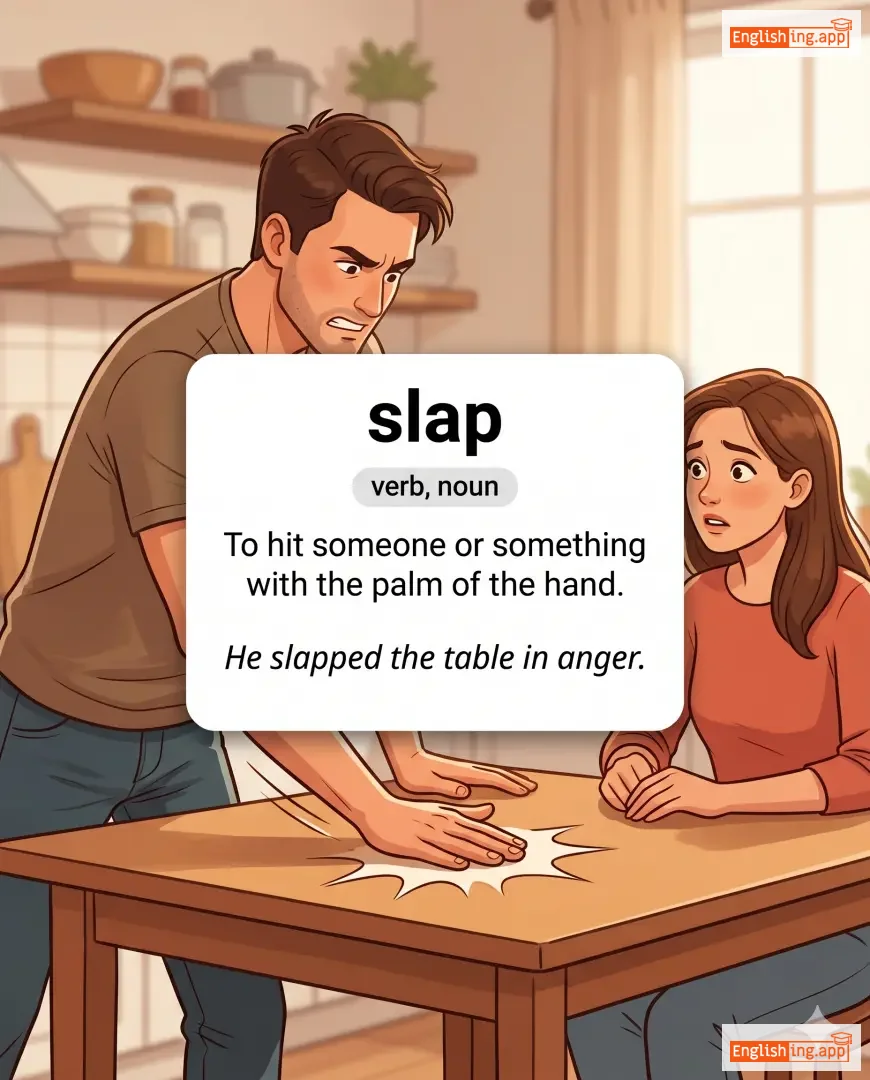
To hit someone or something with the palm of the hand.
••••••
|
He slapped the table in anger.
彼は怒ってテーブルを叩いた。
••••••
|
彼は怒ってテーブルを叩いた。
Kare wa okotte tēburu o tataita.
••••••
|
slap on the wrist
手首のひっぱたき
••••••
|
a mild punishment or warning
••••••
|
軽い罰
karui batsu
••••••
|
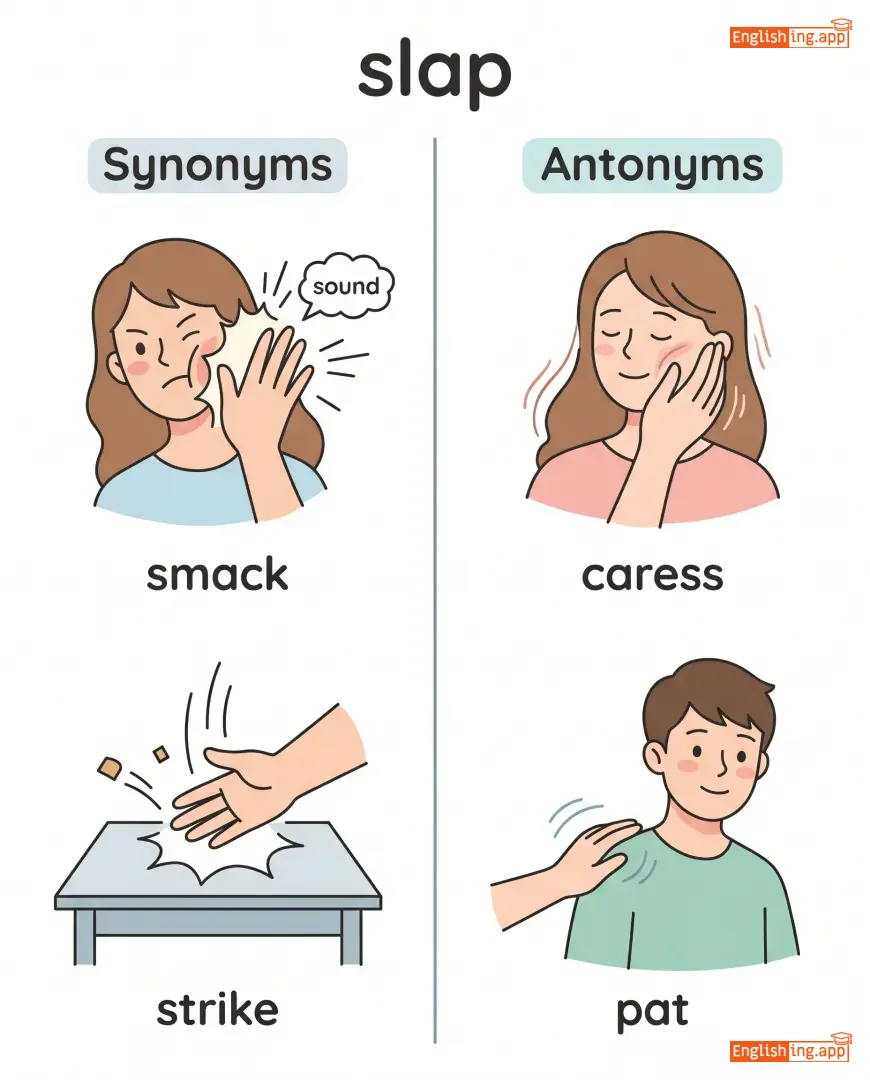
smack, strike, hit, whack
••••••
|
caress, pat
••••••
|
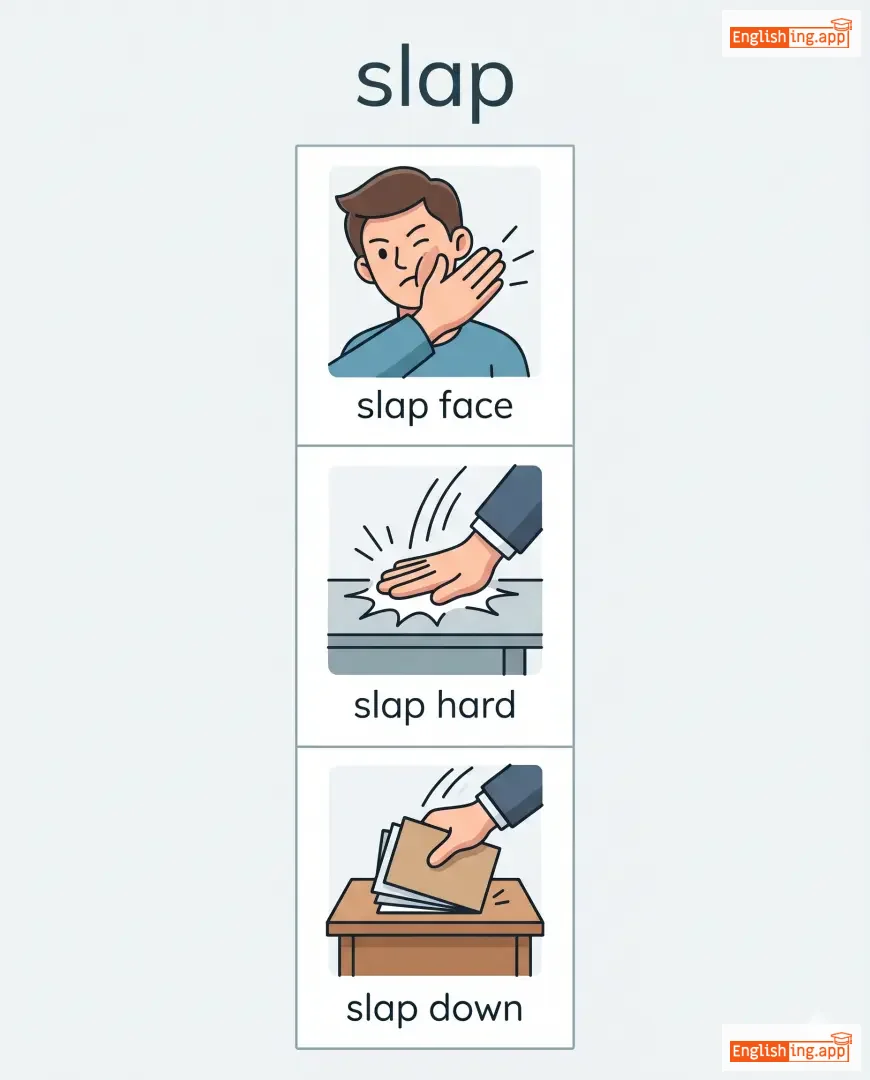
slap face, slap hard, slap down, slap on the wrist
••••••
|
Slap は slap 🖐️ — 平手打ちを覚えやすい
••••••
|
|
#4598
✂️
|
/slæʃ/
verb
(スラッシュ)
••••••
|
|
切る
kiru
••••••
|
slashed
スラッシュド
••••••
|
slashed
スラッシュド
••••••
|
slashes
スラッシュズ
••••••
|
slashing
スラッシング
••••••
|
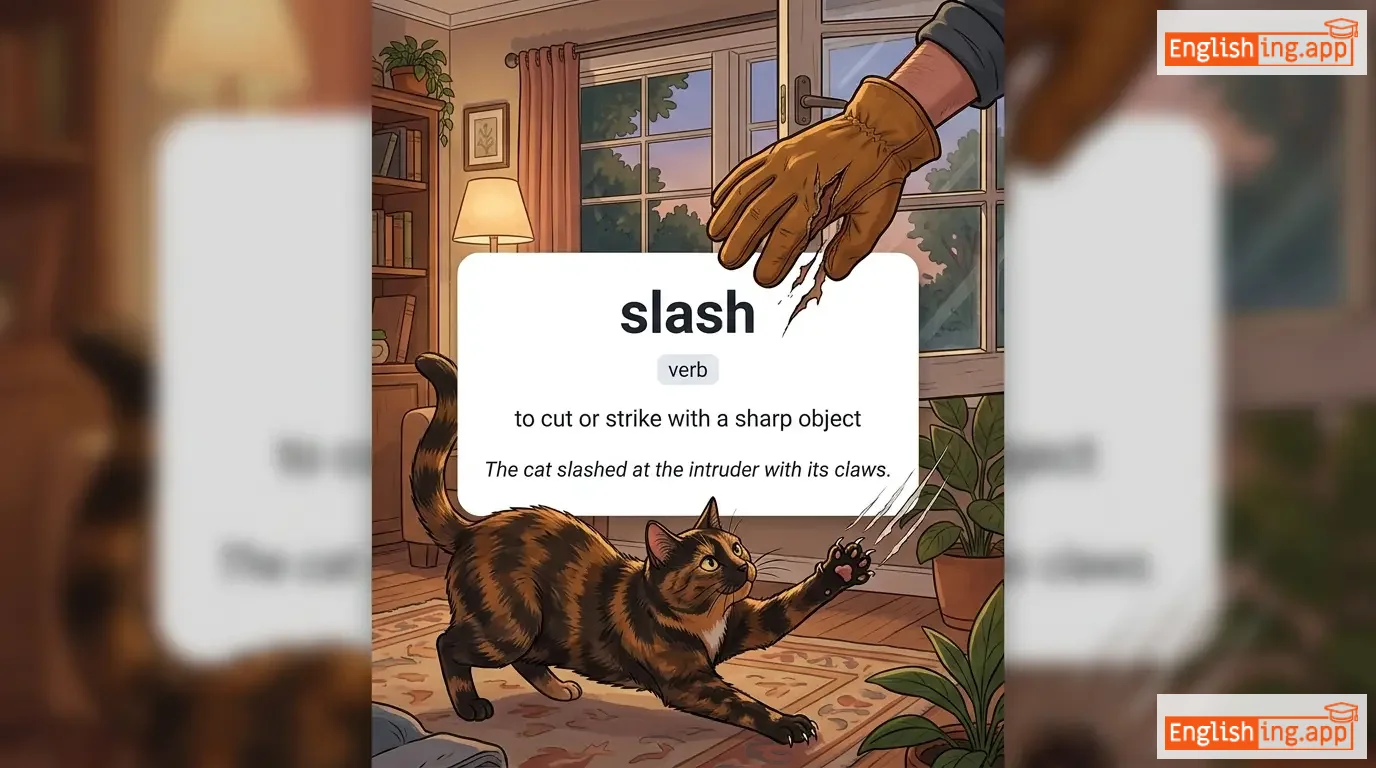
to cut with a sharp blade; to reduce drastically
••••••
|
The company slashed prices to attract more customers.
会社はもっと多くの顧客を引き付けるために価格を引き下げました。
••••••
|
会社はもっと多くの顧客を引き付けるために価格を引き下げました。
Kaisha wa motto ōku no kokyaku o hikitsukeru tame ni kakaku o hikisagemashita.
••••••
|
- •••••• | - •••••• | - •••••• |
cut, reduce, strike, slice
••••••
|
increase, raise, heal, mend
••••••
|
slash prices, slash deeply, slash through, slash budgets, slash dramatically
••••••
|
Slashは英語で切ること、または価格を削減することを意味します。
••••••
|
|
#4599
👤
|
/sleɪv/
noun
(スレイヴ)
••••••
|
- •••••• |
奴隷
dorei
••••••
|
- •••••• | - •••••• | - •••••• | - •••••• |
a person who is the legal property of another and is forced to work for them
••••••
|
The abolitionist movement fought for the rights of slaves. |
廃奴隷運動は奴隷の権利のために戦いました。
Hainoroi undō wa dorei no kenri no tame ni tatakatta.
••••••
|
- •••••• | - •••••• | - •••••• |
serf, bondsman, vassal, indentured servant
••••••
|
freeman, master, owner
••••••
|
enslaved slave, slavery system, slave labor
••••••
|
奴隷は鎖で縛られ、自由を持たない働く人です。
••••••
|
|
#4600
⛓️
|
/ˈsleɪvəri/
noun
••••••
|
- •••••• | - •••••• | - •••••• | - •••••• | - •••••• | - •••••• |
the system or state of being owned and forced to work for someone else
••••••
|
Slavery was abolished in most countries in the 19th century. |
- •••••• |
modern-day slavery |
the exploitation of people through forced labor or trafficking in modern times
••••••
|
- •••••• |
servitude, bondage, oppression, captivity
••••••
|
freedom, liberty, independence
••••••
|
abolish slavery, against slavery, slavery system, slavery trade
••••••
|
No •••••• |
|
#4601
😴
|
/sliːp/
verb
(スリープ)
••••••
|
|
眠る
nemuru
••••••
|
slept
スレプト
••••••
|
slept
スレプト
••••••
|
sleeps
スリープス
••••••
|
sleeping
スリーピング
••••••
|
to rest with eyes closed and reduced consciousness; to be inactive
••••••
|
I need to sleep for eight hours every night.
アイ ニード トゥ スリープ フォー エイト アワーズ エヴリ ナイト。
••••••
|
毎晩8時間寝る必要があります。
Maiban hachijikan neru hitsuyō ga arimasu
••••••
|
- •••••• | - •••••• | - •••••• |
rest, slumber, doze, nap
••••••
|
wake, arise, stay awake
••••••
|
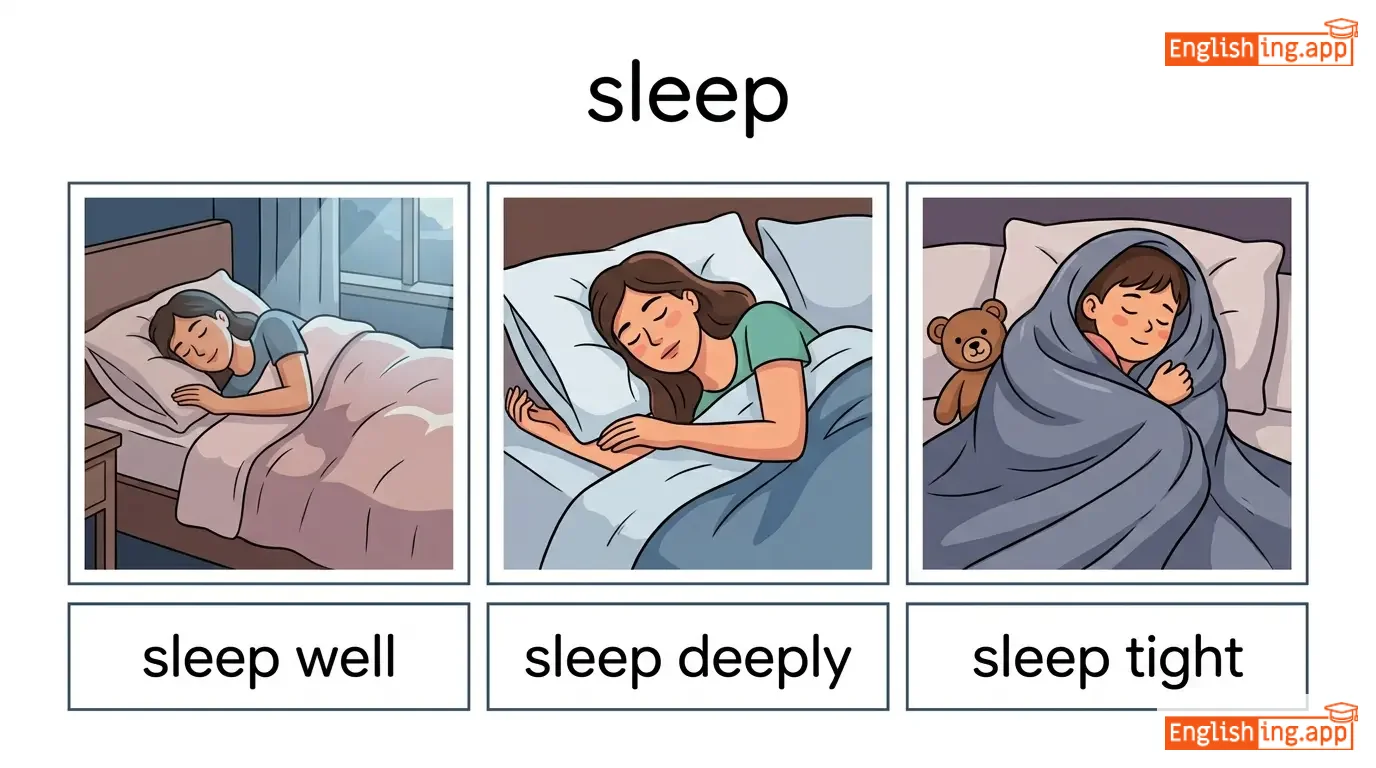
sleep soundly, sleep peacefully, sleep deeply, sleep well, sleep late
••••••
|
眠ることで心と体をリセットする
••••••
|
|
#4602
👕
|
/sliːv/
noun
(スリーブ)
••••••
|
- •••••• |
袖
sode
••••••
|
- •••••• | - •••••• | - •••••• | - •••••• |
the part of a garment that covers all or part of the arm
••••••
|
He rolled up his sleeves before starting the work. |
彼は仕事を始める前に袖をまくった。
Kare wa shigoto o hajimeru mae ni sode o makutta.
••••••
|
wear your heart on your sleeve |
to openly show your emotions or feelings
••••••
|
袖に心を見せる
sode ni kokoro o miseru
••••••
|
arm, cuff, covering, garment part
••••••
|
bare arm, sleeveless
••••••
|
long sleeve, short sleeve, shirt sleeve, roll up sleeves
••••••
|
袖はシャツの腕を覆う部分、仕事を始める前に袖をまくろう! 👕
••••••
|
|
#4603
🍞
|
/slaɪs/
noun
(スライス)
••••••
|
- •••••• |
スライス; 薄切り
suraizu; usugiri
••••••
|
- •••••• | - •••••• | - •••••• | - •••••• |
a thin, flat piece cut from something larger
••••••
|
Would you like a slice of pizza? |
ピザのスライスを一つ食べますか?
Piza no suraizu o hitotsu tabemasu ka?
••••••
|
- •••••• | - •••••• | - •••••• |
piece, portion, segment, cut
••••••
|
whole, entirety, complete piece
••••••
|
thin slice, thick slice, slice of bread
••••••
|
スライスのピザ: 薄くて美味しい
••••••
|
|
#4604
🔹
|
/slaɪt/
adjective
(suraito)
••••••
|
- •••••• |
軽微な
keimina
••••••
|
- •••••• | - •••••• | - •••••• | - •••••• |
Small in degree; not considerable.
••••••
|
There was a slight change in the schedule. |
スケジュールに軽微な変更がありました。
Sukejūru ni keimina henkō ga arimashita.
••••••
|
take it as a slight |
To interpret something as an insult or offense.
••••••
|
軽蔑として受け取る
Keibetsu toshite uketoru
••••••
|
small, minor, trivial, negligible, faint
••••••
|
major, significant, large
••••••
|
slight change, slight chance, slight problem, slight build
••••••
|
Slight = 軽微な, slight change = 軽微な変更, slight insult = 軽微な侮辱
••••••
|
|
#4605
🪶
|
/ˈslaɪtli/
adverb
(スライトリー)
••••••
|
- •••••• |
少し
sukoshi
••••••
|
- •••••• | - •••••• | - •••••• | - •••••• |
to a small degree or extent
••••••
|
The temperature has slightly increased today.
今日、温度は少し上昇しました。
••••••
|
今日、温度は少し上昇しました。
Kyou, ondo wa sukoshi joushou shimashita.
••••••
|
- •••••• | - •••••• | - •••••• |
mildly, a little, marginally, somewhat
••••••
|
greatly, significantly
••••••
|
slightly different, slightly better, slightly worse
••••••
|
Think of something slightly tilted as 'slightly' off-center.
••••••
|
|
#4606
👟
|
/slɪp/
verb
(スリップ)
••••••
|
- •••••• |
滑る
suberu
••••••
|
slipped
スリップド
••••••
|
slipped
スリップド
••••••
|
slips
スリップス
••••••
|
slipping
スリッピング
••••••
|
to lose balance or fall while moving, or to accidentally slide from a position
••••••
|
She slipped on the wet floor and fell.
彼女は濡れた床で滑って転んだ。
••••••
|
彼女は濡れた床で滑って転んだ。
Kanojo wa nureta yuka de subette koronda.
••••••
|
- •••••• | - •••••• | - •••••• |
slide, fall, stumble, trip
••••••
|
stand, stabilize, remain
••••••
|
slip on ice, slip down, slip away, slip through
••••••
|
Slipping on a slippery floor is a 'slip' in the story of your day.
••••••
|
|
#4607
🗣️
|
/ˈsloʊɡən/
noun
••••••
|
- •••••• | - •••••• | - •••••• | - •••••• | - •••••• | - •••••• |
a short and memorable phrase used to promote a cause or product
••••••
|
The campaign used a powerful slogan to inspire people. |
- •••••• | - •••••• | - •••••• | - •••••• |
catchphrase, motto, tagline, saying
••••••
|
silence, quiet
••••••
|
campaign slogan, popular slogan, catchy slogan
••••••
|
No •••••• |
|
#4608
🕳️
|
/slɒt/
noun
(スロット)
••••••
|
- •••••• |
スロット
surotto
••••••
|
- •••••• | - •••••• | - •••••• | - •••••• |
a narrow opening into which something fits or is placed
••••••
|
Insert the card into the slot to open the door. |
カードをスロットに挿入して、ドアを開けてください。
Kaado o surotto ni sōnyū shite, doa o akete kudasai.
••••••
|
time slot |
a specific time period allocated for an activity
••••••
|
時間枠
jikan waku
••••••
|
groove, opening, hole, niche, position
••••••
|
blockage, closure
••••••
|
time slot, memory slot, parking slot, machine slot
••••••
|
スロットはカードを入れる場所で、ドアが開きます!
••••••
|
|
#4609
🐢
|
/sloʊ/
adjective
(スロー)
••••••
|
- •••••• |
遅い
osoi
••••••
|
- •••••• | - •••••• | - •••••• | - •••••• |
moving or happening at a low speed
••••••
|
The car moved slowly down the street. |
車は通りをゆっくり走っていました。
Kuruma wa toori o yukkuri hashitte imashita.
••••••
|
- •••••• | - •••••• | - •••••• |
leisurely, gradual, sluggish, lazy
••••••
|
fast, quick, speedy
••••••
|
slow down, slow pace, slow movement, slow progress
••••••
|
A slow-moving turtle (カメ) reminds you of '遅い'!
••••••
|
|
#4610
🦥
|
/ˈsloʊli/
adverb
(ゆっくり)
••••••
|
- •••••• |
ゆっくり
yukkuri
••••••
|
- •••••• | - •••••• | - •••••• | - •••••• |
in a slow manner
••••••
|
She walked slowly to the door.
彼女はゆっくりとドアに向かって歩いた。
••••••
|
彼女はゆっくりとドアに向かって歩いた。
Kanojo wa yukkuri to doa ni mukatte aruita.
••••••
|
- •••••• | - •••••• | - •••••• |
gradually, leisurely, gently, sluggishly
••••••
|
quickly, rapidly, fast
••••••
|
move slowly, speak slowly, slowly approach
••••••
|
Imagine taking a slow, deep breath, then letting it out slowly, savoring each moment.
••••••
|
|
#4611
🔹
|
/smɔːl/
adjective
(スモール)
••••••
|
- •••••• |
小さい
chiisai
••••••
|
- •••••• | - •••••• | - •••••• | - •••••• |
not large in size, amount, or importance
••••••
|
He lives in a small house near the river. |
彼は川の近くの小さな家に住んでいます。
Kare wa kawa no chikaku no chiisana ie ni sundeimasu.
••••••
|
small talk |
light or casual conversation about unimportant matters
••••••
|
スモールトーク
sumooru tooku
••••••
|
tiny, little, petite, compact, miniature
••••••
|
big, large, huge
••••••
|
small house, small amount, small group, small talk
••••••
|
小さいはsmallのようです – 小さな一歩が大きな成果を生む!
••••••
|
|
#4612
🧠
|
/smɑːrt/
adjective, noun, verb
(スマート)
••••••
|
- •••••• |
賢い / スタイリッシュ
kashikoi / sutairisshu
••••••
|
smarted
スマーテッド
••••••
|
smarted
スマーテッド
••••••
|
smarts
スマーツ
••••••
|
smarting
スマーティング
••••••
|
Clever and intelligent; also stylish in appearance; or to feel pain.
••••••
|
She is a smart student who always excels in class.
彼女はクラスでいつも優れた成績を収めるスマートな学生です。
••••••
|
彼女はクラスでいつも優れた成績を収めるスマートな学生です。
Kanojo wa kurasu de itsumo sugureta seiseki o osameru sumāto na gakusei desu.
••••••
|
smart money
スマートマネー
••••••
|
Money invested by those with expert knowledge.
••••••
|
専門家によって投資されたお金
Senmonka ni yotte tōshi sareta okane
••••••
|
clever, bright, intelligent, stylish, sharp
••••••
|
dull, foolish, stupid
••••••
|
smart student, smart decision, smart clothes, smart city
••••••
|
スマートはスマートフォンのように賢くて現代的。
••••••
|
|
#4613
💥
|
/smæʃ/
verb
(スマッシュ)
••••••
|
- •••••• |
壊す
kowasu
••••••
|
smashed
スマッシュド
••••••
|
smashed
スマッシュド
••••••
|
smashes
スマッシュズ
••••••
|
smashing
スマッシング
••••••
|
to break something into pieces violently
••••••
|
She smashed the glass in frustration.
彼女はフラストレーションでグラスを壊した。
••••••
|
彼女はフラストレーションでグラスを壊した。
Kanojo wa furasutōrēshon de gurasu o kowashita.
••••••
|
- •••••• | - •••••• | - •••••• |
break, crush, shatter, demolish
••••••
|
repair, fix, preserve
••••••
|
smash into, smash up, smash down
••••••
|
壊す、フラストレーションで!
••••••
|
|
#4614
👃
|
/smel/
verb
(スメル)
••••••
|
|
匂いをかぐ
nioi o kagu
••••••
|
smelt
スメルト
••••••
|
smelled
スメルド
••••••
|
smells
スメルズ
••••••
|
smelling
スメリング
••••••
|
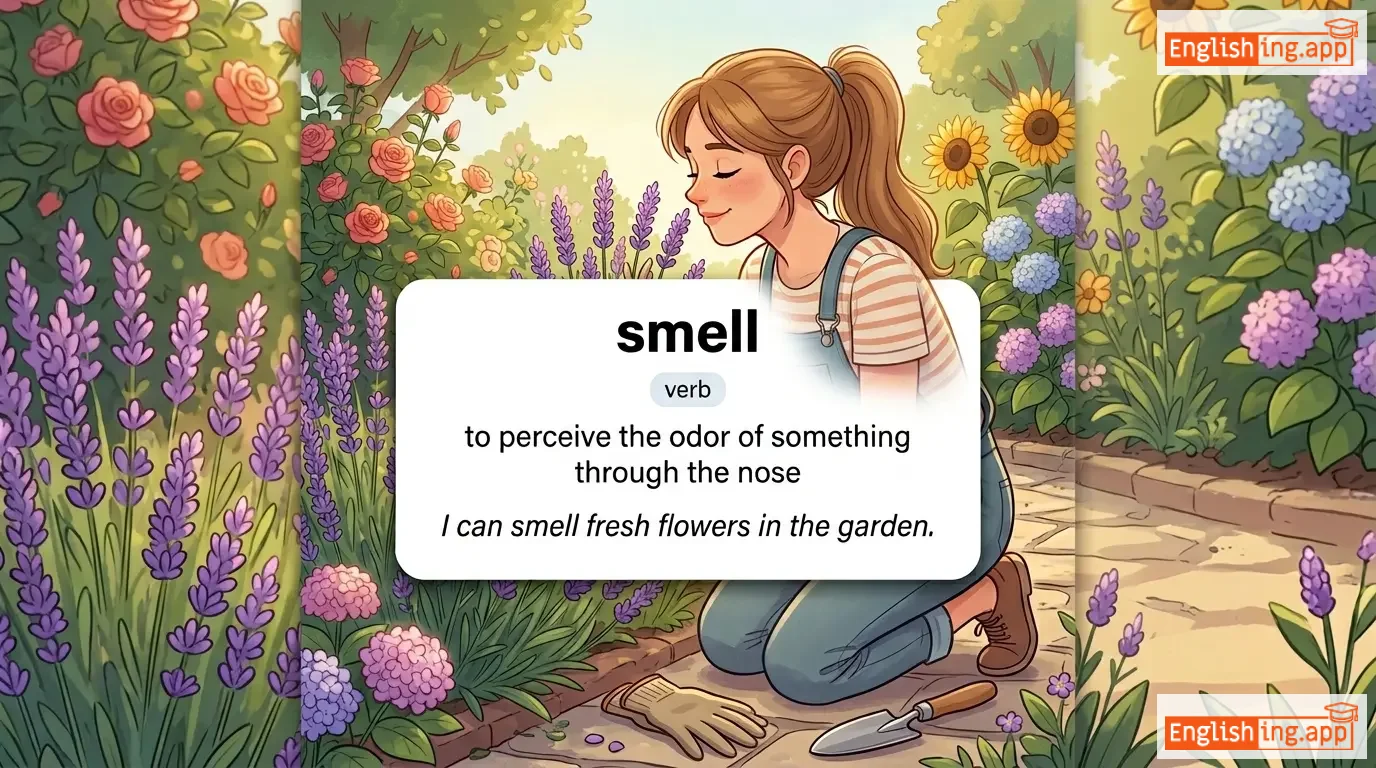
to perceive odor through the nose; to have an odor
••••••
|
The flowers smell sweet.
花は甘い香りがする。
••••••
|
花は甘い香りがする。
Hana wa amai kaori ga suru.
••••••
|
- •••••• | - •••••• | - •••••• |
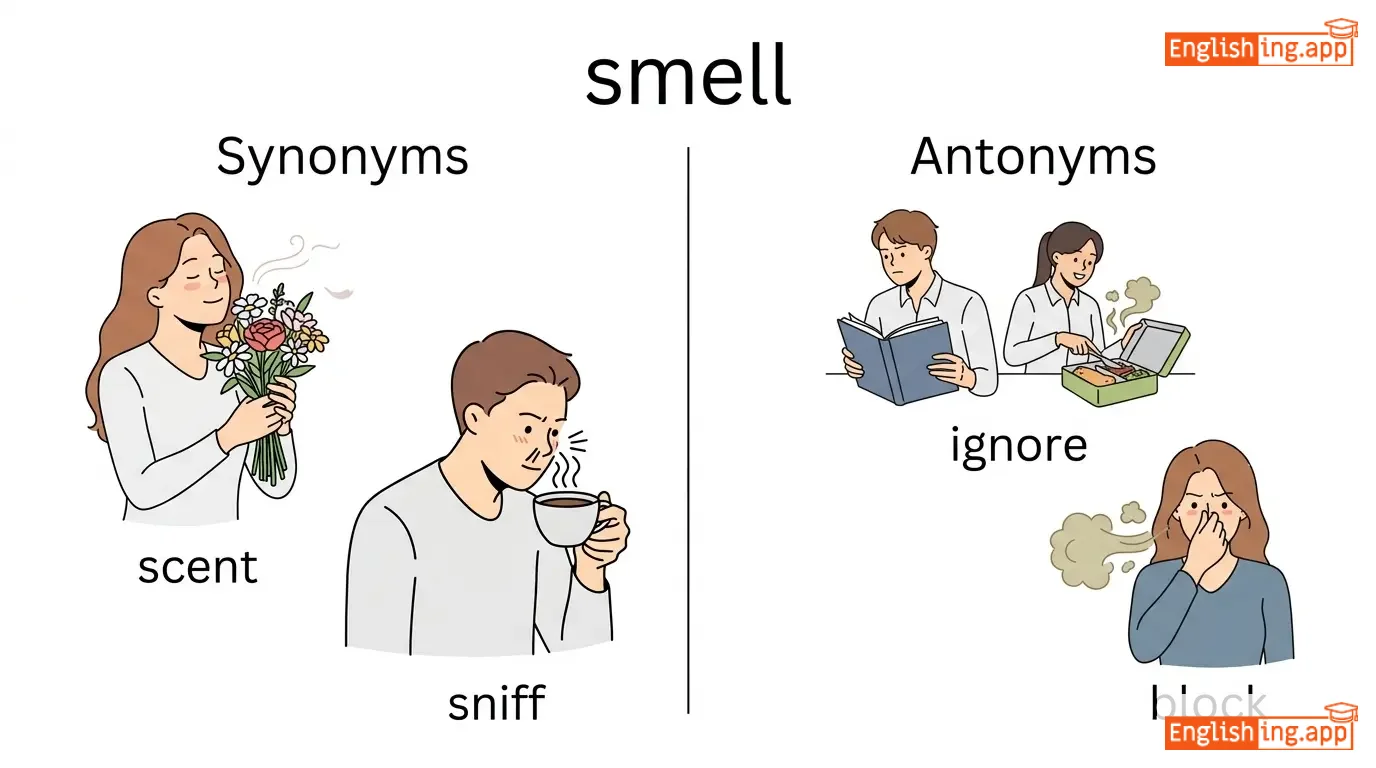
scent, odor, aroma, fragrance
••••••
|
scentless, odorless
••••••
|
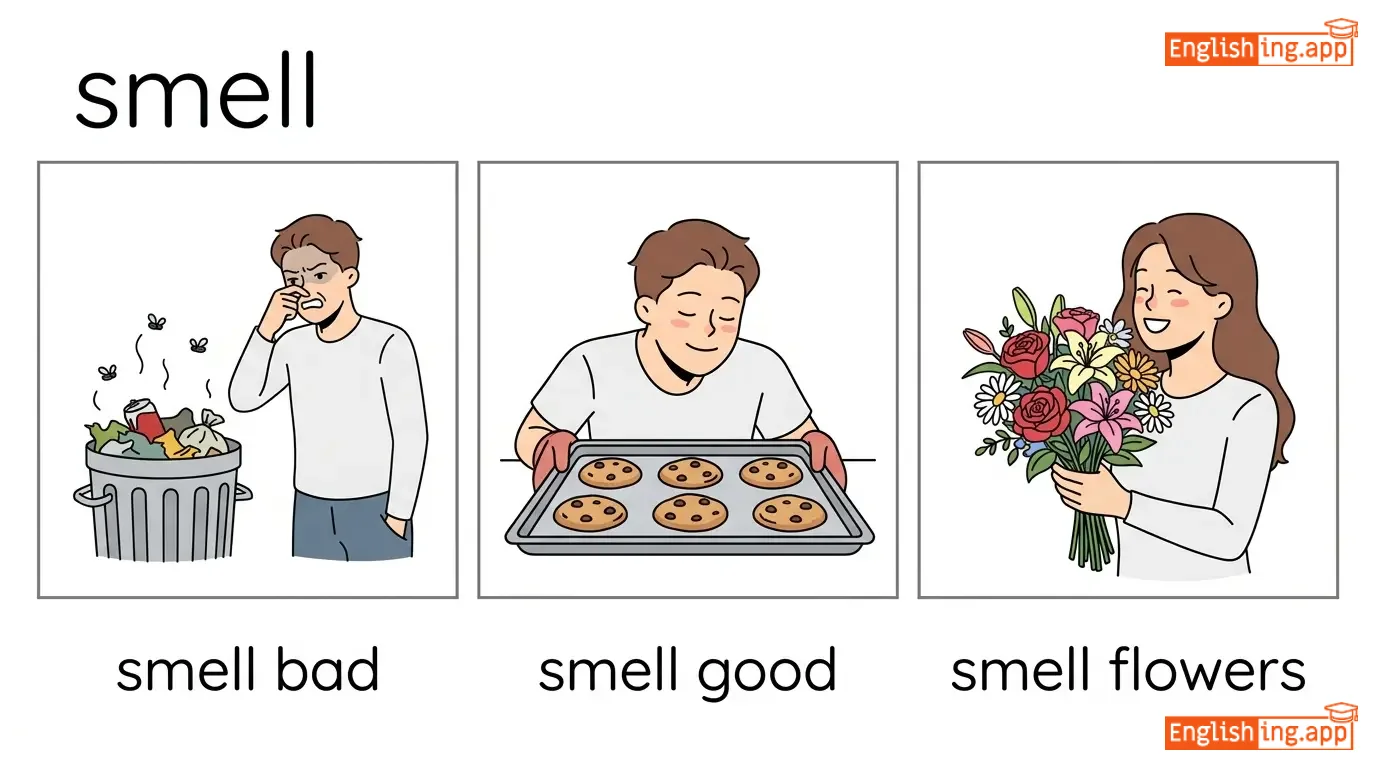
smell good, smell bad, smell sweet, smell fishy, smell trouble
••••••
|
匂いをかぐ (nioi o kagu) と香りを感じる
••••••
|
|
#4615
😊
|
/smaɪl/
verb
(スマイル)
••••••
|
- •••••• |
微笑み
hohoemi
••••••
|
smiled
スマイルド
••••••
|
smiled
スマイルド
••••••
|
smiles
スマイルズ
••••••
|
smiling
スマイリング
••••••
|
to express happiness or friendliness by turning the corners of the mouth upwards
••••••
|
She smiled when she saw the gift.
彼女はプレゼントを見て微笑んだ。
••••••
|
彼女はプレゼントを見て微笑んだ。
Kanojo wa purezento o mite hohoenda.
••••••
|
- •••••• | - •••••• | - •••••• |
grin, beam, laugh, show teeth
••••••
|
frown, scowl
••••••
|
smile brightly, smile warmly, smile at someone
••••••
|
笑顔は心の中で芽生える友情と喜びの証です。
••••••
|
|
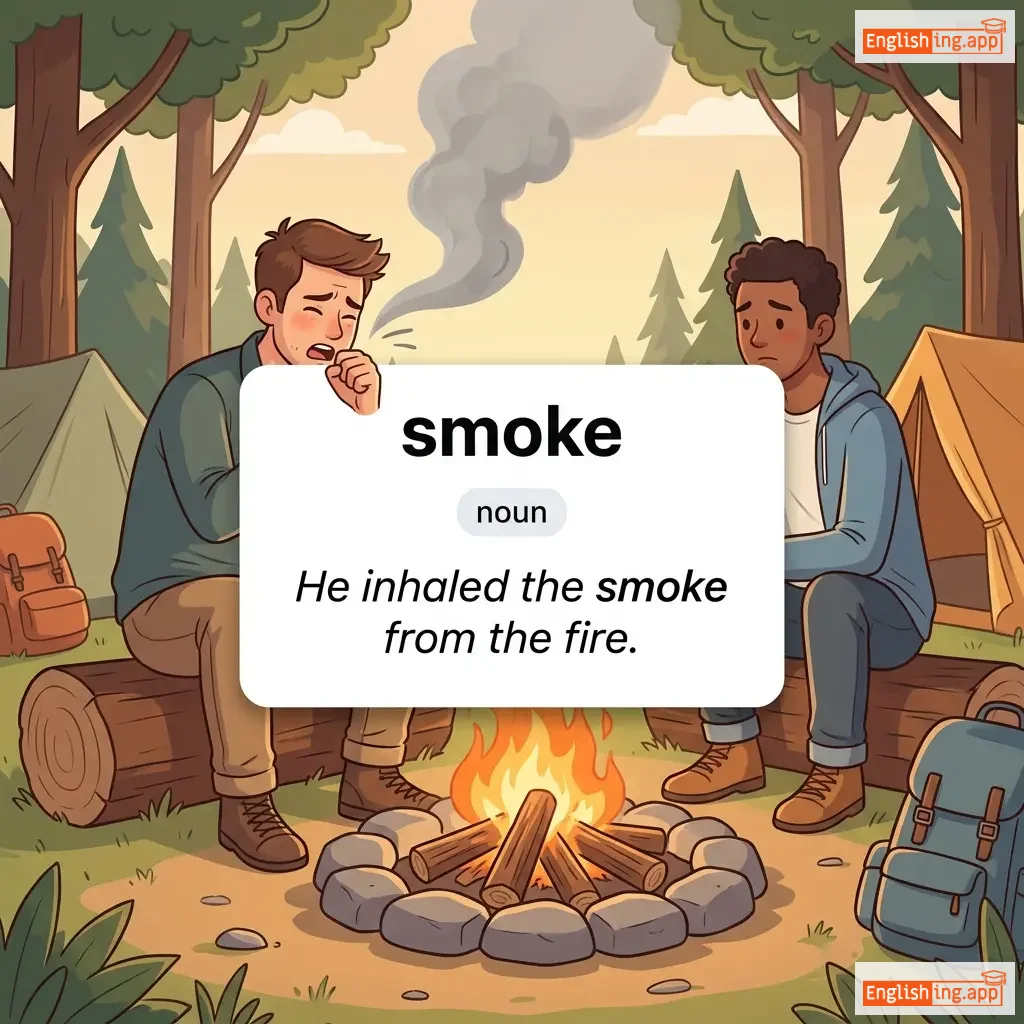
#4616
💨
|
/smoʊk/
noun
(スモーク)
••••••
|
|
煙
sumooku
••••••
|
- •••••• | - •••••• | - •••••• | - •••••• |
visible vapor and gases emitted when something burns
••••••
|
Thick smoke rose from the burning building.
燃える建物から濃い煙が立ち上がった。
••••••
|
燃える建物から濃い煙が立ち上がった。
moeru tatemono kara koi kemuri ga tachiagatta.
••••••
|
- •••••• | - •••••• | - •••••• |
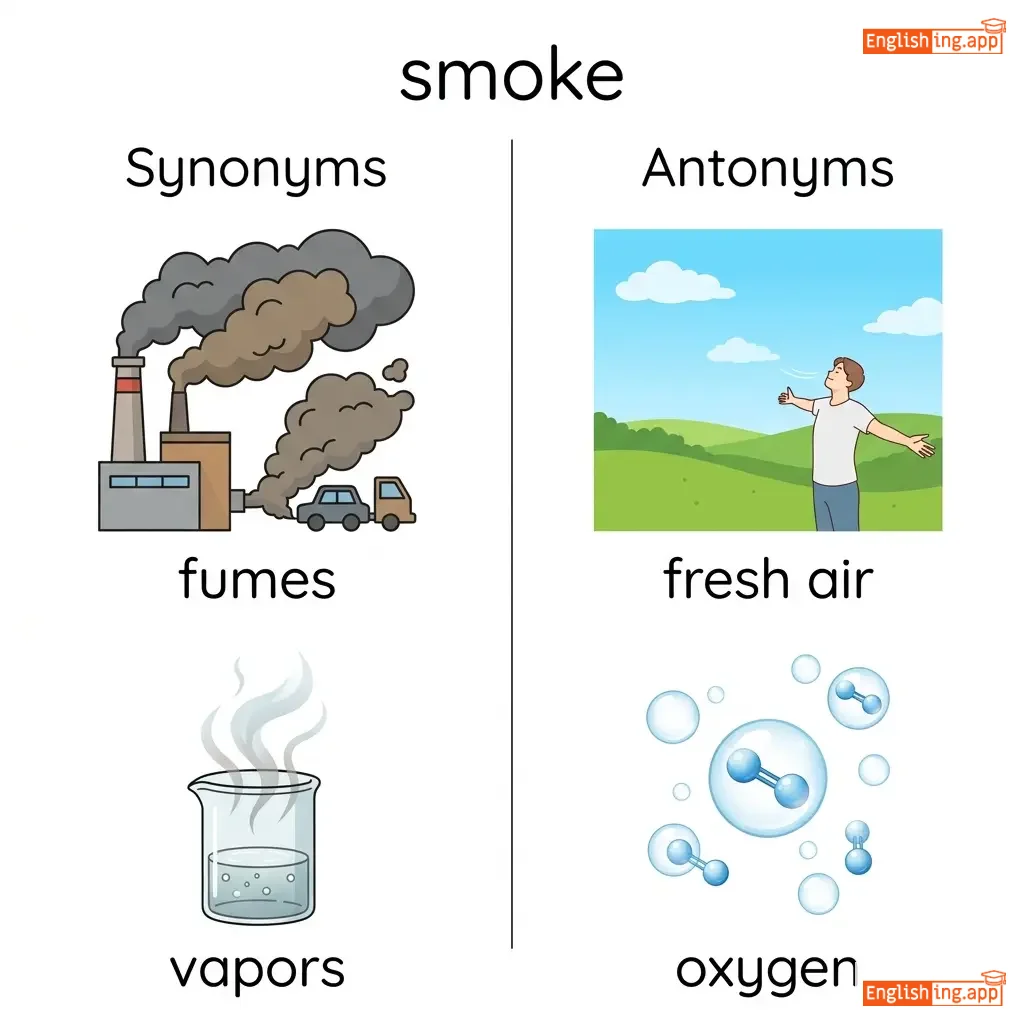
vapor, fumes, haze
••••••
|
clear air, fresh air
••••••
|
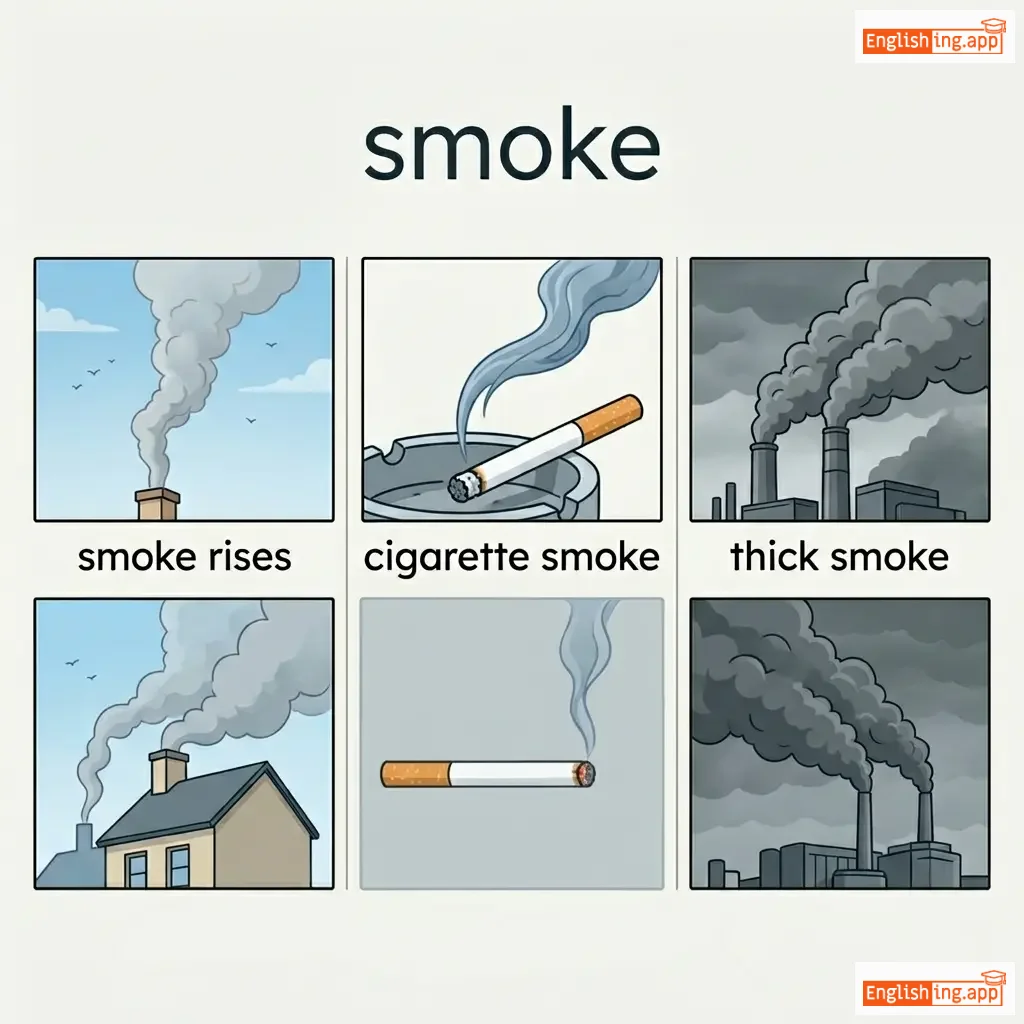
thick smoke, black smoke, smoke detector, smoke alarm
••••••
|
Key melts into mist KE MU RI describe kemuri smoke
••••••
|
|
#4617
🚬
|
/ˈsmoʊkər/
noun
(スモーカー)
••••••
|
- •••••• |
喫煙者
kitsuen-sha
••••••
|
- •••••• | - •••••• | - •••••• | - •••••• |
A person who smokes tobacco or other substances
••••••
|
He is a heavy smoker and tries to quit every year.
彼はヘビースモーカーで、毎年禁煙しようとしています。
••••••
|
彼は喫煙者で、毎年禁煙しようとしています。
Kare wa kitsuen-sha de, maitoshi kin'en shiyou to shiteimasu.
••••••
|
chain smoker
チェーンスモーカー
••••••
|
A person who smokes cigarettes one after another, without pause
••••••
|
チェーン喫煙者
chein kitsuen-sha
••••••
|
tobacco user, cigarette smoker, nicotine addict, puffing person
••••••
|
non-smoker, teetotaler
••••••
|
heavy smoker, chain smoker, occasional smoker, former smoker
••••••
|
スモーカー = smoke + ka in katakana
••••••
|
|
#4618
🚬
|
/ˈsmoʊ.kɪŋ/
noun/adjective
(スモーキング)
••••••
|
- •••••• |
喫煙
kitsuen
••••••
|
- •••••• | - •••••• | - •••••• |
smoking
喫煙
••••••
|
The act of inhaling and exhaling the smoke of tobacco or other substances; wearing a tuxedo (adjective, formal context).
••••••
|
Smoking is prohibited inside the building.
建物内での喫煙は禁止されています。
••••••
|
建物内での喫煙は禁止されています。
Tatemono-nai de no kitsuen wa kinshi sareteimasu.
••••••
|
smoking gun
決定的証拠
••••••
|
A piece of evidence that proves a crime or wrongdoing
••••••
|
決定的証拠
ketteiteki shouko
••••••
|
tobacco use, puffing, inhaling smoke, chain-smoking
••••••
|
non-smoking, abstaining
••••••
|
smoking area, smoking habit, smoking ban, smoking cessation
••••••
|
Imagine Japanese smokers saying '私はスモーキングしています' inside a building.
••••••
|
|
#4619
🪞
|
/smuːð/
adjective
(スムーズ)
••••••
|
- •••••• |
滑らか
nameraka
••••••
|
- •••••• | - •••••• | - •••••• | - •••••• |
having an even surface without roughness; happening without difficulty
••••••
|
The table has a smooth surface. |
テーブルの表面は滑らかです。
Tēburu no hyōmen wa nameraka desu.
••••••
|
smooth sailing |
a situation that goes easily without problems
••••••
|
スムーズセーリング
Sumūzu sēringu
••••••
|
even, flat, polished, silky, sleek
••••••
|
rough, uneven, coarse
••••••
|
smooth surface, smooth skin, smooth operation, smooth transition
••••••
|
滑らかな道路をスムーズに走る車。
••••••
|
|
#4620
🛣️
|
/ˈsmuːð.li/
adverb
(スマースリー)
••••••
|
- •••••• |
スムーズに; 問題なく
sumuuzu ni; mondai naku
••••••
|
- •••••• | - •••••• | - •••••• | - •••••• |
without problems or difficulties; in an even and regular way
••••••
|
The car runs smoothly on the new highway. |
車は新しい高速道路でスムーズに走る。
kuruma wa atarashī kōsoku dōro de sumūzu ni hashiru.
••••••
|
- •••••• | - •••••• | - •••••• |
effortlessly, seamlessly, evenly, easily, fluidly
••••••
|
roughly, bumpily, unevenly, difficultly, choppily
••••••
|
run smoothly, go smoothly, operate smoothly, flow smoothly
••••••
|
'スムーズ'は、何かがスムーズに流れることを表現している。
••••••
|
|
#4621
🐍
|
/sneɪk/
noun
(sneik)
••••••
|
- •••••• |
ヘビ
hebi
••••••
|
- •••••• | - •••••• | - •••••• | - •••••• |
a long, legless reptile that moves by slithering
••••••
|
A snake slithered across the garden path. |
ヘビが庭の小道を這っていった。
Hebi ga niwa no komichi o hatte itta.
••••••
|
snake in the grass |
a hidden enemy or betrayer
••••••
|
草むらのヘビ
kusamura no hebi
••••••
|
serpent, viper, reptile, cobra, python
••••••
|
mammal, bird
••••••
|
venomous snake, poisonous snake, garden snake, snake bite
••••••
|
Snake は ヘビ – Shape 長くて、ヘビのように這う!
••••••
|
|
#4622
📸
|
/snæp/
verb
(スナップ)
••••••
|
|
折れる
oreru
••••••
|
snapped
スナップド
••••••
|
snapped
スナップド
••••••
|
snaps
スナップス
••••••
|
snapping
スナッピング
••••••
|
to break suddenly; to speak angrily; to take a photograph quickly
••••••
|
The rope snapped under the weight.
ロープは重さでスナップしました。
••••••
|
ロープは重さで折れました。
Rōpu wa omosa de oremashita.
••••••
|
- •••••• | - •••••• | - •••••• |
break, crack, split, photograph
••••••
|
mend, repair, fix
••••••
|
snap photos, snap fingers, snap decision, snap back, snap at
••••••
|
No •••••• |
|
#4623
🤧
|
/sniːz/
verb, noun
(スニーズ)
••••••
|
- •••••• |
くしゃみをする
kushami wo suru
••••••
|
sneezed
スニーズド
••••••
|
sneezed
スニーズド
••••••
|
sneezes
スニーズズ
••••••
|
sneezing
スニージング
••••••
|
to expel air involuntarily from the nose and mouth due to irritation; the act of sneezing
••••••
|
I had to sneeze during the meeting.
会議中にくしゃみをしなければならなかった。
••••••
|
会議中にくしゃみをしなければならなかった。
kaigichuu ni kushami wo shinakereba naranakatta
••••••
|
bless you
お大事に
••••••
|
said to someone after they sneeze to wish them well
••••••
|
お大事に
odaiji ni
••••••
|
sternutation, expel, sniffle, cough
••••••
|
inhale, hold
••••••
|
sneeze loudly, sneeze repeatedly, sneeze into tissue, sneeze reflex
••••••
|
スニーズ = くしゃみ, 'お大事に' を思い出す
••••••
|
|
#4624
❄️
|
/snoʊ/
noun
(スノー)
••••••
|
- •••••• |
雪
yuki
••••••
|
- •••••• | - •••••• | - •••••• | - •••••• |
frozen water vapor that falls from the sky as white flakes
••••••
|
Children love to play in the snow. |
子供たちは雪で遊ぶのが大好きです。
Kodomo-tachi wa yuki de asobu no ga daisuki desu.
••••••
|
snowed under |
to be overwhelmed with too much work
••••••
|
仕事に圧倒される
Shigoto ni attō sareru
••••••
|
frost, ice, sleet, flurry, blizzard
••••••
|
heat, sun
••••••
|
heavy snow, snow storm, snow fall, snow covered
••••••
|
雪(yuki)は英語のsnowと同じ、白い雪のように冷たく降り積もる。
••••••
|
|
#4625
😊
|
/soʊ/
adverb
(ソ)
••••••
|
- •••••• |
そんなに
sonnani
••••••
|
- •••••• | - •••••• | - •••••• | - •••••• |
to such a degree or extent
••••••
|
She was so happy with the gift.
彼女はプレゼントにとても喜んでいた。
••••••
|
彼女はプレゼントにとても喜んでいた。
Kanojo wa purezento ni totemo yorokonde ita.
••••••
|
- •••••• | - •••••• | - •••••• |
very, extremely, exceedingly, incredibly
••••••
|
not, slightly, somewhat
••••••
|
so good, so bad, so tired, so far
••••••
|
so (そんなに) は何かの程度や範囲を示します。
••••••
|
|
#4626
🙄
|
/ˈsoʊ kɔːld/
adjective
••••••
|
- •••••• | - •••••• | - •••••• | - •••••• | - •••••• | - •••••• |
referred to as or known by a particular name or title, often misleadingly
••••••
|
The so-called expert couldn't answer the question. |
- •••••• | - •••••• | - •••••• | - •••••• |
alleged, supposed, apparent, purported
••••••
|
actual, real
••••••
|
so-called expert, so-called leader, so-called solution
••••••
|
No •••••• |
|
#4627
💦
|
/soʊk/
verb
(ソーク)
••••••
|
- •••••• |
浸す
hitasu
••••••
|
soaked
ソークド
••••••
|
soaked
ソークド
••••••
|
soaks
ソークス
••••••
|
soaking
ソーキング
••••••
|
to make something completely wet by immersing it in liquid
••••••
|
She soaked the clothes in water before washing them.
彼女は洗濯する前に服を水に浸しました。
••••••
|
彼女は洗濯する前に服を水に浸しました。
kanojo wa sentaku suru mae ni fuku wo mizu ni hitashimashita.
••••••
|
soak up knowledge
知識を吸収する
••••••
|
to absorb information eagerly
••••••
|
知識を吸収する
chishiki wo kyūshū suru
••••••
|
drench, saturate, immerse, absorb
••••••
|
dry, dehydrate, evaporate
••••••
|
soak clothes, soak in water, soak up knowledge, soak overnight
••••••
|
SOAKは浸すという意味で、服を水に浸すようなものです
••••••
|
|
#4628
🧼
|
/soʊp/
noun
••••••
|
- •••••• | - •••••• | - •••••• | - •••••• | - •••••• | - •••••• |
a substance used for washing and cleaning, typically made from fats and alkalis
••••••
|
She washed her hands with soap and water. |
- •••••• |
soap opera |
a television or radio drama series about daily life
••••••
|
- •••••• |
cleanser, detergent, wash, suds, bar
••••••
|
dirt, grime
••••••
|
bar of soap, liquid soap, hand soap, soap bubbles
••••••
|
No •••••• |
|
#4629
🦅
|
/sɔːr/
verb
(ソア)
••••••
|
- •••••• |
高く飛ぶ / 急増する
takaku tobu / kyūzō suru
••••••
|
soared
ソード
••••••
|
soared
ソード
••••••
|
soars
ソース
••••••
|
soaring
ソーリング
••••••
|
to fly or rise high in the air; to increase rapidly or dramatically
••••••
|
The eagle soared high above the mountains.
ワシは山々の上を高く飛びました。
••••••
|
ワシは山々の上を高く飛びました。
Washi wa yamayama no ue o takaku tobimashita.
••••••
|
soar to new heights
soar to new heights
••••••
|
to achieve great success or improvement
••••••
|
新しい高みに達する
atarashī takami ni tassuru
••••••
|
rise, ascend, climb, surge, escalate
••••••
|
fall, drop, descend
••••••
|
soar high, prices soar, spirits soar, soar above
••••••
|
Soar はワシのように空高く舞い上がること。
••••••
|
|
#4630
🌍
|
/ˈsəʊʃəl/
adjective
(ソーシャル)
••••••
|
- •••••• |
社会的
shakaiteki
••••••
|
- •••••• | - •••••• | - •••••• | - •••••• |
relating to society or its organization
••••••
|
She has a very social personality and enjoys meeting new people. |
彼女は非常に社交的な性格で、新しい人々に会うのが好きです。
Kanojo wa hijou ni shakaiteki na seikaku de, atarashii hitobito ni au no ga suki desu.
••••••
|
- •••••• | - •••••• | - •••••• |
community-oriented, sociable, outgoing, friendly
••••••
|
antisocial, solitary
••••••
|
social media, social interaction, social event, social networking
••••••
|
社会的 (social) - 人々は会話を楽しみ、社会でつながることを愛しています。
••••••
|
|
#4631
🌍
|
/ˈsoʊʃəlɪst/
noun, adjective
(ソーシャリスト)
••••••
|
- •••••• |
社会主義者
shakaishugisha
••••••
|
- •••••• | - •••••• | - •••••• | - •••••• |
a person who advocates for socialism; relating to socialism
••••••
|
He is a well-known socialist writer. |
彼は有名な社会主義者の作家です。
Kare wa yūmei na shakaishugisha no sakka desu.
••••••
|
- •••••• | - •••••• | - •••••• |
leftist, progressive, collectivist, reformer
••••••
|
capitalist, conservative
••••••
|
socialist party, socialist policies, socialist ideals
••••••
|
社会主義者 = 社会と主義の人
••••••
|
|
#4632
🏘️
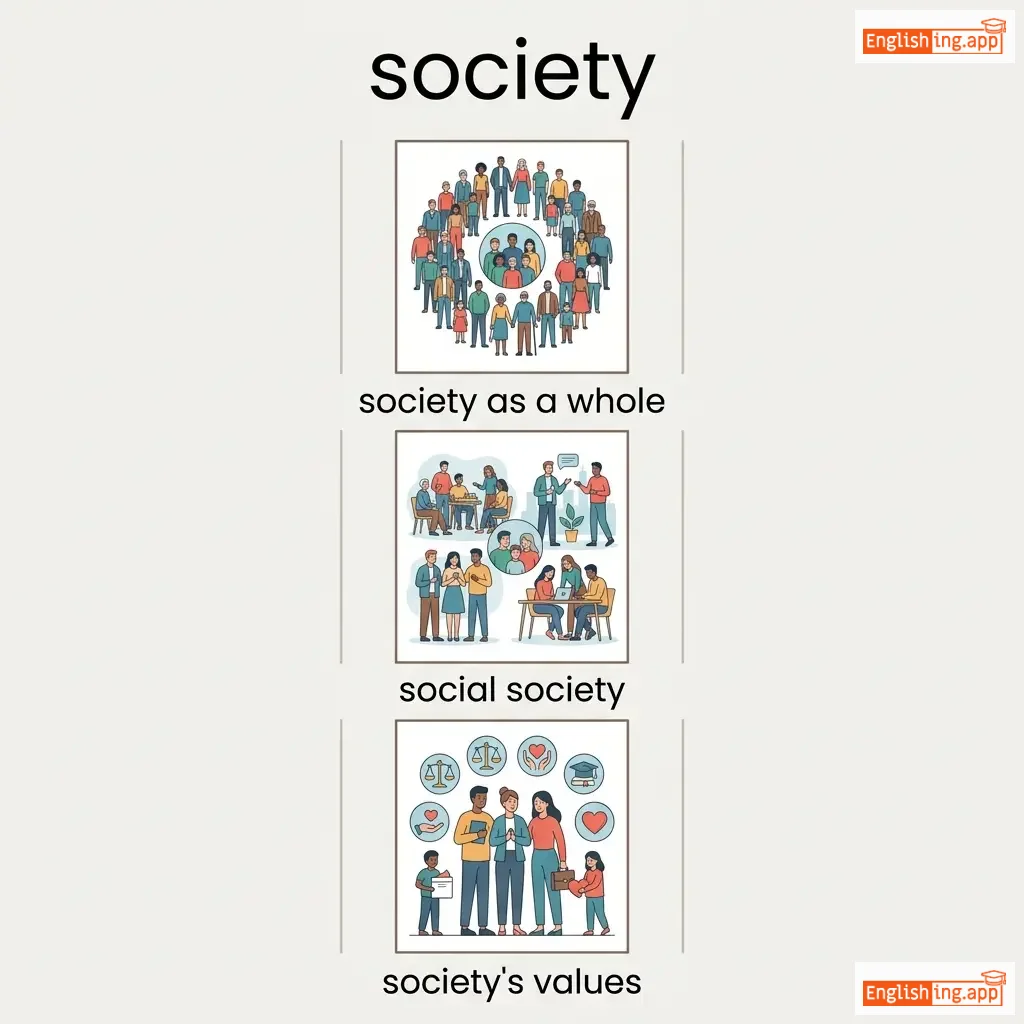
|
/səˈsaɪ.ə.ti/
noun
(ソサエティ)
••••••
|
|
社会; 組織
shakai; soshiki
••••••
|
- •••••• | - •••••• | - •••••• | - •••••• |
a community of people living together; an organization or association
••••••
|
Education plays an important role in society. |
教育は社会において重要な役割を果たします。
Kyoiku wa shakai ni oite jūyōna yakuwari o hatashimasu.
••••••
|
- •••••• | - •••••• | - •••••• |
community, civilization, culture, association
••••••
|
isolation, solitude, individualism
••••••
|
modern society, civil society, human society
••••••
|
社会とは共に生きること、教育はその力です。
••••••
|
Vocabulary Quiz
Test your vocabulary by matching words with their translations or meanings.
Login to take the quiz
Comments (0)
Share your thoughts and join the discussion.
Join the discussion by logging in
Login to CommentNo comments yet
Be the first to share your thoughts!