

翻訳
過去
過去分詞
三人称単数
動名詞
意味
例文
例文の翻訳
同義語
対義語
コロケーション
ニーモニック
Swipe left or right, or use the buttons. Tap image to zoom.
例文の翻訳
単語
Lesson 11Lesson 11 - マスクトグル
|
絵文字
|
単語 | Images | 翻訳 | 過去 | 過去分詞 | 三人称単数 | 動名詞 | 意味 | 例文 | 例文の翻訳 | 表現例 | 表現例の意味 | 表現例の翻訳 | 同義語 | 対義語 | コロケーション | ニーモニック |
|---|---|---|---|---|---|---|---|---|---|---|---|---|---|---|---|---|---|
|
#493
🏆
|
/əˈwɔːrd/
noun/verb
(アワード)
••••••
|
- •••••• |
賞
shou
••••••
|
awarded
アワーデッド
••••••
|
awarded
アワーデッド
••••••
|
awards
アワーズ
••••••
|
awarding
アワーディング
••••••
|
a prize or recognition given for an achievement; to give a prize or recognition
••••••
|
She received an award for her outstanding performance.
彼女は優れたパフォーマンスで賞を受けました。
••••••
|
彼女は優れたパフォーマンスで賞を受けました。
Kanojo wa sugureta pafōmansu de shō o ukemashita.
••••••
|
win an award
賞を取る
••••••
|
to receive recognition or a prize for an achievement
••••••
|
賞を取る
shou o toru
••••••
|
prize, honor, trophy, recognition, accolade
••••••
|
penalty, punishment
••••••
|
receive an award, present an award, award ceremony, award-winning
••••••
|
Award は 🏆 賞 という意味です — 努力すれば賞 (shou) をもらえます!
••••••
|
|
#494
👀
|
/əˈwɛər/
adjective
(アウェア)
••••••
|
- •••••• |
気づいている
kizuite iru
••••••
|
- •••••• | - •••••• | - •••••• | - •••••• |
having knowledge or perception of a situation or fact
••••••
|
She is aware of the risks involved. |
彼女はそのリスクに気づいている。
Kanojo wa sono risuku ni kizuite iru.
••••••
|
become aware of |
to realize or gain knowledge about something
••••••
|
気づく
kizuku
••••••
|
conscious, informed, mindful, alert, knowledgeable
••••••
|
unaware, ignorant, oblivious
••••••
|
aware of, fully aware, become aware, make aware
••••••
|
Awareは気づいているという意味👀 — もし気づいていなければ、気づいている(kizuite iru)間違いを犯すかもしれません。
••••••
|
|
#495
💡
|
/əˈwɛərnəs/
noun
••••••
|
|
- •••••• | - •••••• | - •••••• | - •••••• | - •••••• |
knowledge or perception of a situation, fact, or issue
••••••
|
Public awareness of climate change is increasing. |
- •••••• |
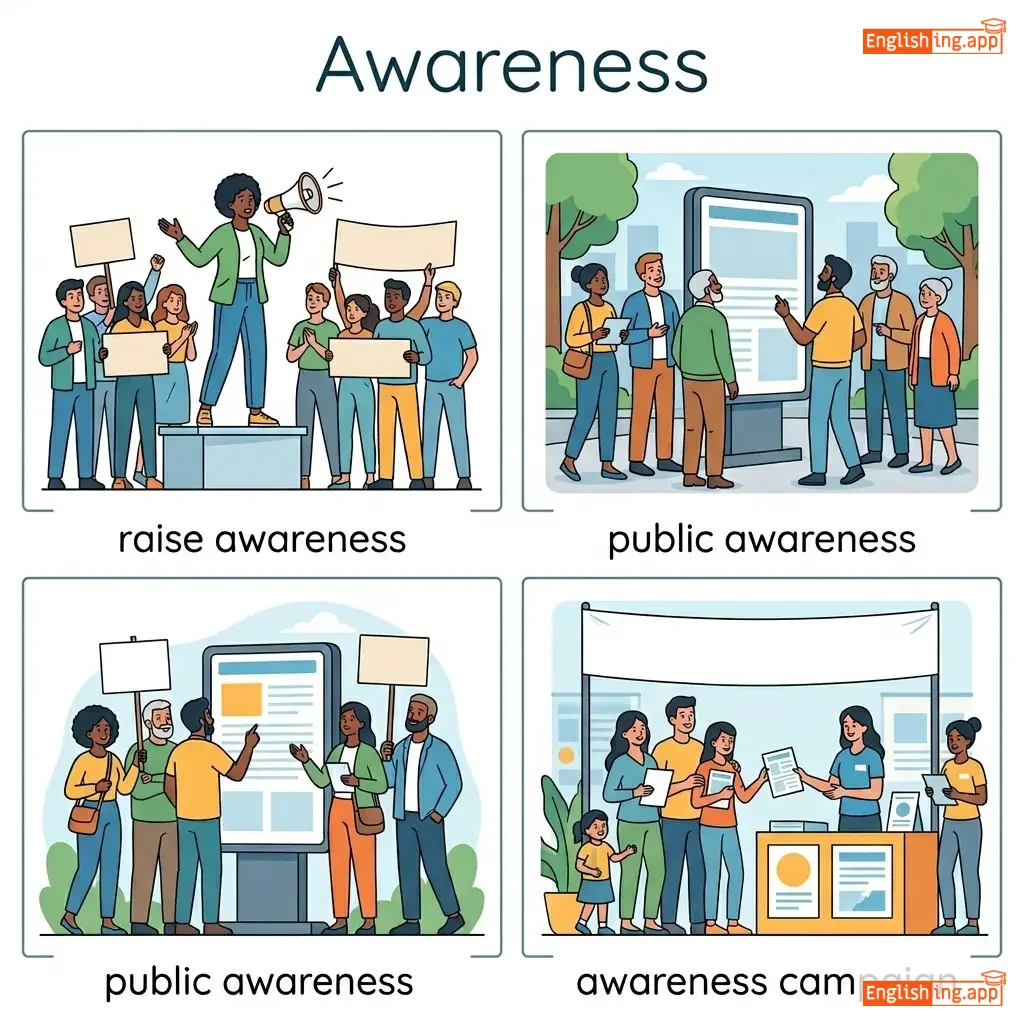
raise awareness |
to make people more conscious about an issue
••••••
|
- •••••• |
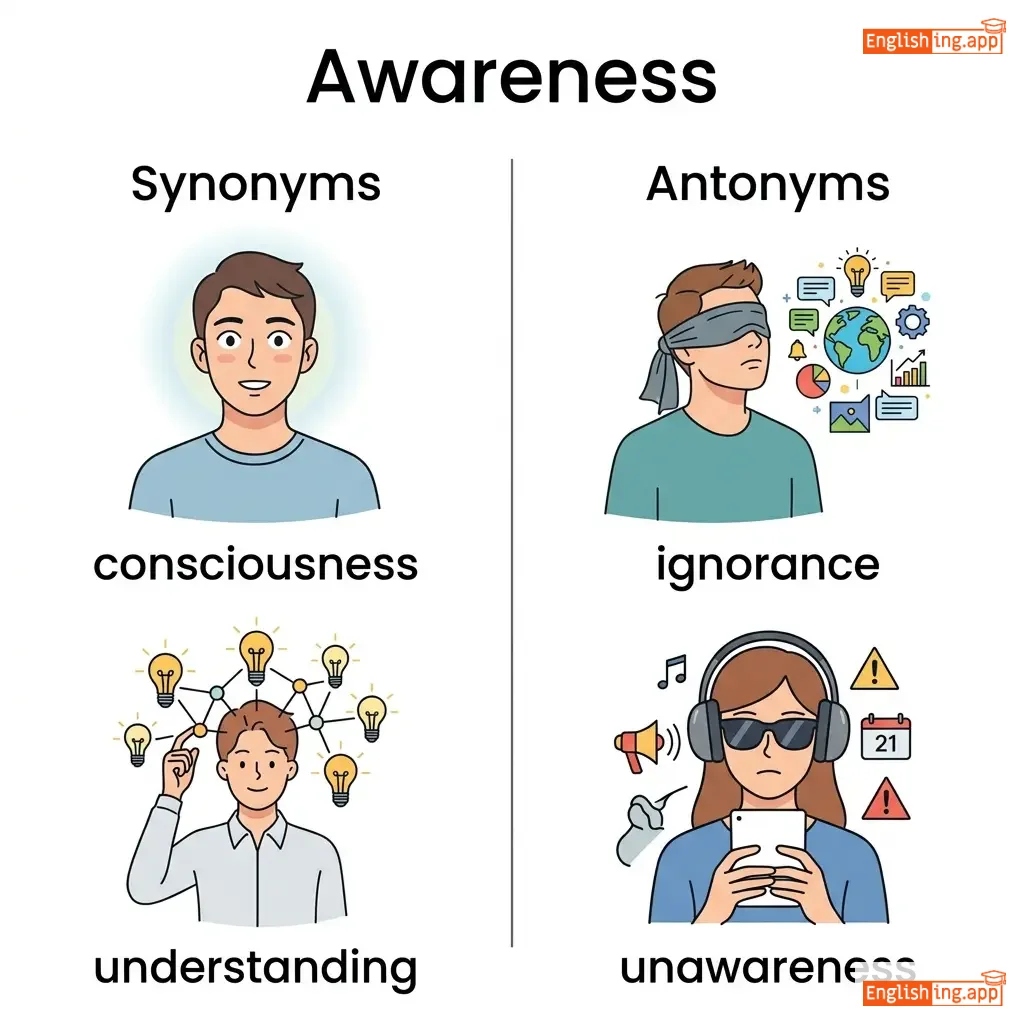
consciousness, understanding, recognition, mindfulness
••••••
|
ignorance, unawareness
••••••
|
raise awareness, public awareness, awareness campaign, awareness level
••••••
|
No •••••• |
|
#496
😲
|
/ɔː/
noun
(お)
••••••
|
- •••••• |
驚嘆
kyoutan
••••••
|
- •••••• | - •••••• | - •••••• | - •••••• |
a feeling of deep respect mixed with fear or wonder
••••••
|
The children looked at the fireworks in awe. |
子供たちは花火を驚嘆して見ていました。
Kodomotachi wa hanabi wo kyoutan shite miteimashita.
••••••
|
in awe of |
to admire and respect someone or something deeply
••••••
|
驚嘆する
kyoutan suru
••••••
|
wonder, amazement, admiration, reverence, fear
••••••
|
disdain, contempt, indifference
••••••
|
filled with awe, in awe of, awe inspiring, hold in awe
••••••
|
AWE = Amazing Wonder Everytime!
••••••
|
|
#497
😖
|
/ˈɔːfəli/
adverb
(オーフリー)
••••••
|
- •••••• |
とても
totemo
••••••
|
- •••••• | - •••••• | - •••••• | - •••••• |
in a very great degree; extremely; in a way that is very bad or unpleasant
••••••
|
I am awfully glad to see you again.
アイ アム オーフリー グラッド トゥ シー ユー アゲイン
••••••
|
また会えてとても嬉しいです。
mata aete totemo ureshii desu
••••••
|
awfully sorry
オーフリー ソーリー
••••••
|
very sorry; expressing strong regret
••••••
|
とても申し訳ない
totemo moushiwake nai
••••••
|
extremely, very, terribly, exceedingly, highly
••••••
|
slightly, mildly, barely
••••••
|
awfully nice, awfully sorry, awfully kind, awfully cold
••••••
|
Awfully = オーフリー → とても強い感じ
••••••
|
|
#498
😅
|
/ˈɔːkwəd/
adjective
(アクワード)
••••••
|
- •••••• |
気まずい
kimazui
••••••
|
- •••••• | - •••••• | - •••••• | - •••••• |
causing or feeling embarrassment; difficult to deal with
••••••
|
There was an awkward silence after his joke. |
彼のジョークの後、気まずい沈黙がありました。
Kare no jōku no ato, kimazui chinmoku ga arimashita.
••••••
|
socially awkward |
not comfortable or skilled in social situations
••••••
|
社交的に気まずい
shakōteki ni kimazui
••••••
|
clumsy, uncomfortable, embarrassing, uneasy, ungainly
••••••
|
graceful, comfortable, elegant
••••••
|
awkward silence, awkward moment, awkward situation, socially awkward
••••••
|
気まずい - あなたが無理に感じる時、まさにその瞬間!
••••••
|
|
#499
🗣️
|
/ˈbæbəl/
verb
••••••
|
|
- •••••• |
babbled
••••••
|
babbled
••••••
|
babbles
••••••
|
babbling
••••••
|
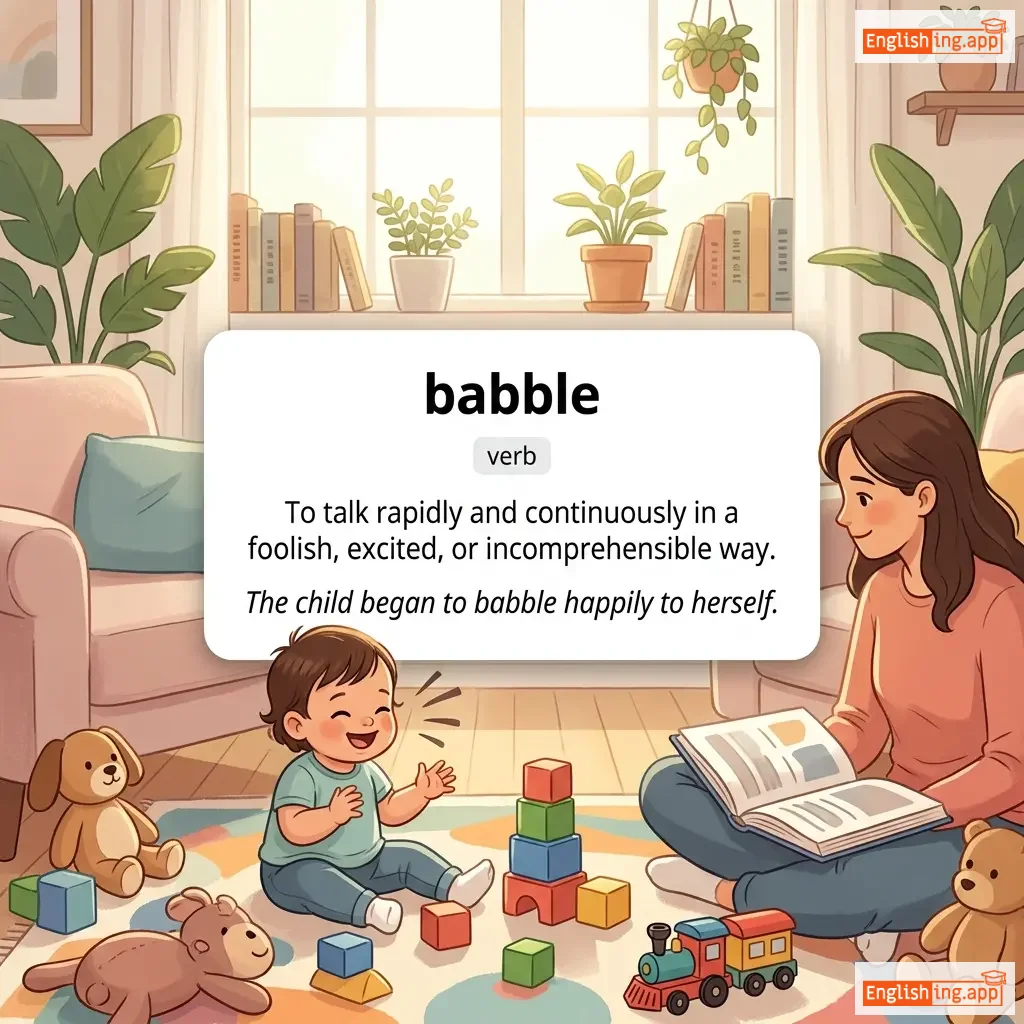
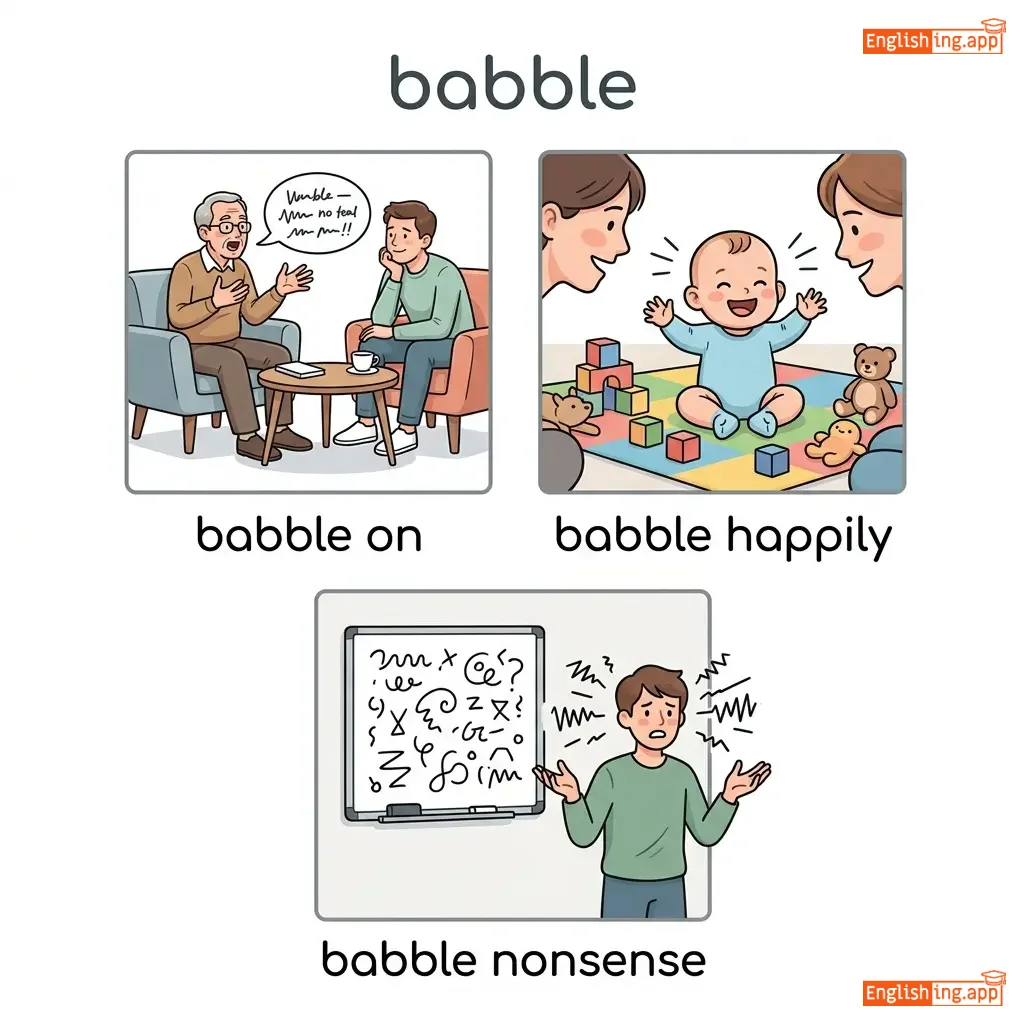
To talk rapidly and continuously in a foolish, excited, or incomprehensible way.
••••••
|
The child began to babble happily to herself. |
- •••••• |
babble on |
To keep talking continuously in a foolish or meaningless way.
••••••
|
- •••••• |
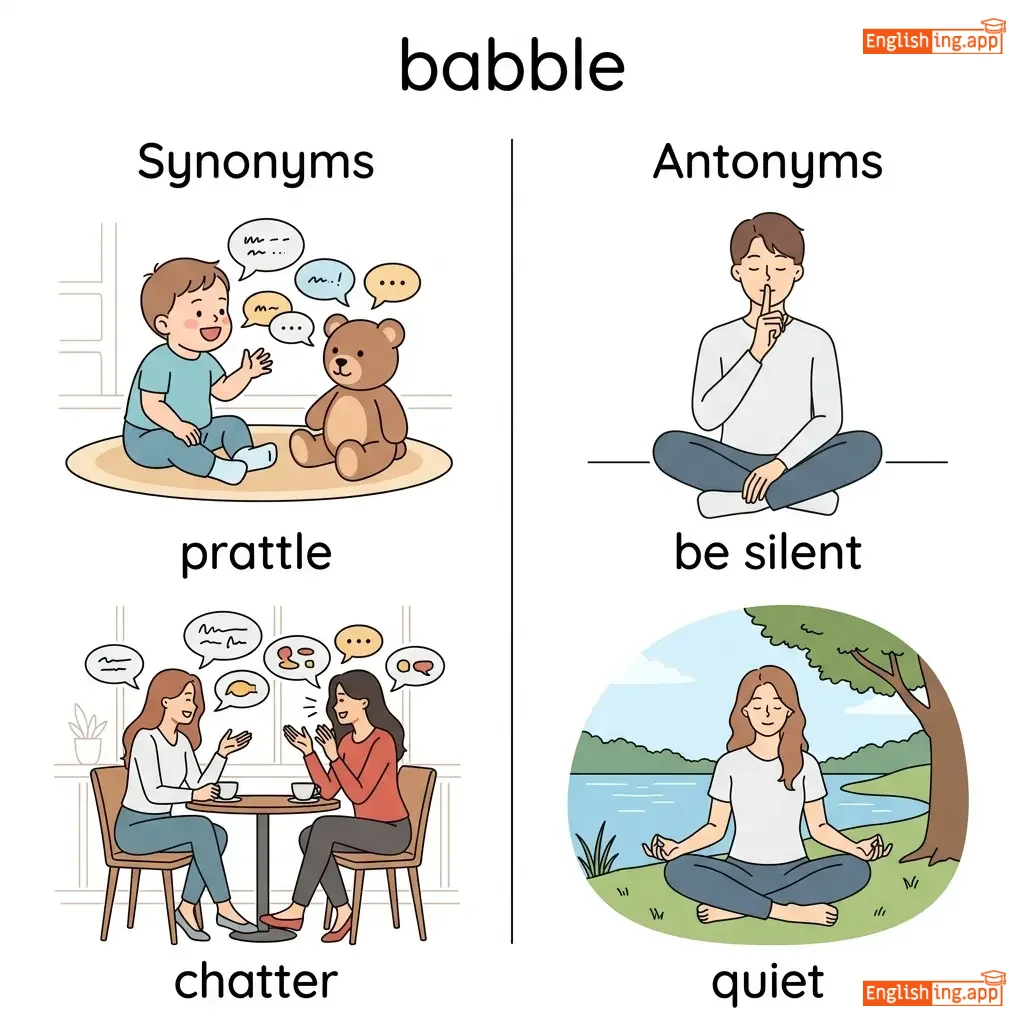
prattle, chatter, ramble, gibber
••••••
|
be silent, quiet
••••••
|
babble on, babble happily, babble nonsense, constant babble
••••••
|
No •••••• |
|
#500
👶
|
/ˈbeɪbi/
noun
(ベビー)
••••••
|
- •••••• |
赤ちゃん
akachan
••••••
|
- •••••• | - •••••• | - •••••• | - •••••• |
a very young child, especially one newly or recently born
••••••
|
The baby is sleeping peacefully in the crib. |
赤ちゃんはベビーベッドで静かに寝ています。
Akachan wa bebiibeddo de shizuka ni neteimasu.
••••••
|
cry like a baby |
to cry loudly and uncontrollably
••••••
|
赤ちゃんのように泣く
Akachan no you ni naku
••••••
|
infant, child, newborn, toddler
••••••
|
adult, grown-up
••••••
|
baby boy, baby girl, baby food, baby care
••••••
|
Baby 👶 は日本語で赤ちゃん、かわいくて無敵の存在です!
••••••
|
|
#501
🔙
|
/bæk/
noun/verb/adverb/adjective
(バック)
••••••
|
- •••••• |
背中 / 戻る
senaka / modoru
••••••
|
backed
バックド
••••••
|
backed
バックド
••••••
|
backs
バックス
••••••
|
backing
バックイング
••••••
|
the rear surface of the human body; to support; to return to a place
••••••
|
He turned back to help his friend.
彼は友達を助けるために戻った。
••••••
|
彼は友達を助けるために戻った。
Kare wa tomodachi o tasukeru tame ni modotta.
••••••
|
back and forth
行ったり来たり
••••••
|
moving repeatedly in one direction and then the opposite
••••••
|
行ったり来たり
ittari kitari
••••••
|
rear, behind, support, return
••••••
|
front, oppose
••••••
|
back pain, back home, back up, back support
••••••
|
Backは後ろを意味する - 戻るときは後ろに戻る。
••••••
|
|
#502
💾
|
/bæk ʌp/
phrasal verb
(バックアップ)
••••••
|
- •••••• |
支援する;バックアップする;後退する
shien suru; bakkuappu suru; koutai suru
••••••
|
backed up
バックド アップ
••••••
|
backed up
バックド アップ
••••••
|
backs up
バックアップス
••••••
|
backing up
バッキング アップ
••••••
|
to support or help someone; to make a copy of data for safety; to move backward
••••••
|
Please back up your files before updating the system.
プリーズ バックアップ ユア ファイルズ ビフォー アップデーティング ザ システム
••••••
|
システムを更新する前にファイルをバックアップしてください。
Shisutemu o koshin suru mae ni fairu o bakkuappu shite kudasai
••••••
|
back someone up
バック サムワン アップ
••••••
|
to support someone when they need help
••••••
|
誰かを支援する
dareka o shien suru
••••••
|
support, copy, assist, reinforce, duplicate
••••••
|
oppose, delete, advance
••••••
|
back up data, back up files, back up a claim, back up someone
••••••
|
バックアップ=データも人も守る!
••••••
|
|
#503
🗣️
|
/ˈbækbaɪt/
verb
(バックバイト)
••••••
|
- •••••• |
陰口を言う
kageguchi o iu
••••••
|
backbit
バックビット
••••••
|
backbitten
バックビトゥン
••••••
|
backbites
バックバイツ
••••••
|
backbiting
バックバイティング
••••••
|
to speak negatively about someone who is not present; to slander behind someone’s back
••••••
|
It is wrong to backbite your colleagues behind their backs.
イット イズ ロング トゥ バックバイト ユア コリーグス ビハインド ゼア バックス。
••••••
|
同僚の陰口を言うのはよくない。
doryo no kageguchi o iu no wa yokunai
••••••
|
- •••••• | - •••••• | - •••••• |
slander, gossip, defame, malign, badmouth
••••••
|
praise, compliment, commend
••••••
|
backbite someone, backbite colleagues, backbite behind someone’s back
••••••
|
backbite = バックでバイトする=陰口
••••••
|
|
#504
🎭
|
/ˈbækdrɒp/
noun
(バックドロップ)
••••••
|
- •••••• |
背景
haikei
••••••
|
- •••••• | - •••••• | - •••••• | - •••••• |
a painted cloth or other structure used behind a stage
••••••
|
The backdrop for the play was a beautiful mountain scene. |
その舞台の背景は美しい山の景色でした。
Sono butai no haikei wa utsukushii yama no keshiki deshita.
••••••
|
- •••••• | - •••••• | - •••••• |
background, scenery, setting
••••••
|
foreground, front
••••••
|
stage backdrop, scenic backdrop, film backdrop
••••••
|
Backdrop - 'Back' は後ろ、'Drop' は落ちる、舞台の背景となる部分です。
••••••
|
|
#505
🌄
|
/ˈbækɡraʊnd/
noun
(バックグラウンド)
••••••
|
- •••••• |
背景
haikei
••••••
|
- •••••• | - •••••• | - •••••• | - •••••• |
the circumstances, environment, or past history of a person or thing; the part behind the main subject in an image
••••••
|
She comes from a strong academic background.
彼女は強力な学問的バックグラウンドを持っています。
••••••
|
彼女は強力な学問的背景を持っています。
Kanojo wa kyōryokuna gakumon-teki haikei o motteimasu.
••••••
|
in the background
バックグラウンドで
••••••
|
happening without attracting much attention
••••••
|
バックグラウンドで
bakkuraundo de
••••••
|
history, context, setting, backdrop, environment
••••••
|
foreground, spotlight
••••••
|
family background, cultural background, background noise, background information
••••••
|
Background 🌄 は背景を意味します — 画像の中で、背景は主要な対象の後ろにあります (haikei)。
••••••
|
|
#506
🔙
|
/ˈbækwərdz/
adverb
(バックスワーズ)
••••••
|
- •••••• |
後ろ向き
ushiro muki
••••••
|
- •••••• | - •••••• | - •••••• | - •••••• |
Toward the back or in the reverse direction.
••••••
|
He accidentally fell backwards into the chair. |
彼は椅子に後ろ向きに転倒しました。
Kare wa isu ni ushiromuki ni tentō shimashita.
••••••
|
bend over backwards |
To make a great effort to help or please someone.
••••••
|
大きな努力をする
ōkina doryoku o suru
••••••
|
in reverse, rearward, back, behind
••••••
|
forwards, ahead, onward
••••••
|
walk backwards, fall backwards, look backwards
••••••
|
Backwardsは後ろ向き—Backは後ろ向きです。
••••••
|
|
#507
👎
|
/bæd/
adjective
(バッド)
••••••
|
- •••••• |
悪い
warui
••••••
|
- •••••• | - •••••• | - •••••• | - •••••• |
not good; unpleasant, harmful, or of poor quality
••••••
|
The milk smells bad, so don’t drink it.
牛乳は悪臭がするので飲まないでください。
••••••
|
牛乳は悪臭がするので飲まないでください。
Gyuunyuu wa akushuu ga suru node nomanaide kudasai.
••••••
|
bad blood
悪い血
••••••
|
ill feeling or hostility between people
••••••
|
悪い血
warui chi
••••••
|
awful, terrible, poor, unpleasant, harmful
••••••
|
good, excellent, pleasant
••••••
|
bad habit, bad luck, bad idea, bad weather
••••••
|
Badは悪いという意味、Bad boyは悪い男の子という意味です。
••••••
|
|
#508
🎖️
|
/bædʒ/
noun
(バッジ)
••••••
|
- •••••• |
バッジ
bajji
••••••
|
- •••••• | - •••••• | - •••••• | - •••••• |
A small emblem or sign worn to show membership, authority, or achievement.
••••••
|
The police officer showed his badge to identify himself.
警察官は自分を識別するためにバッジを見せた。
••••••
|
警察官は自分を識別するためにバッジを見せた。
Keisatsukan wa jibun o shikibetsu suru tame ni bajji o misemashita.
••••••
|
badge of honor
名誉のバッジ
••••••
|
Something that shows pride or achievement, even if it comes from difficulty.
••••••
|
名誉のバッジ
Meiyo no bajji
••••••
|
emblem, insignia, symbol, token, mark
••••••
|
disguise, concealment
••••••
|
wear a badge, police badge, company badge, badge of honor
••••••
|
バッジは名誉と身分を示すものです。
••••••
|
|
#509
🙉
|
/ˈbædʒər/
verb
(バジャー)
••••••
|
- •••••• |
うるさくする, しつこくする
urusaku suru, shitsukoku suru
••••••
|
badgered
バジャード
••••••
|
badgered
バジャード
••••••
|
badgers
バジャーズ
••••••
|
badgering
バジャリング
••••••
|
To repeatedly ask or annoy someone with demands or questions.
••••••
|
The reporter kept badgering the politician with questions.
記者は政治家に質問をし続けて嫌がらせをした。
••••••
|
記者は政治家に質問をし続けて嫌がらせをした。
Kisha wa seijika ni shitsumon o shi tsuzukete iyagarase o shita.
••••••
|
- •••••• | - •••••• | - •••••• |
pester, nag, harass, bother, hound
••••••
|
leave, ignore, appease
••••••
|
badger someone, constantly badger, badger with questions
••••••
|
Badgerはうるさくする意味、まるで動物がいつも邪魔するように。
••••••
|
|
#510
😞
|
/ˈbædli/
adverb
(バッドリー)
••••••
|
- •••••• |
悪く
waruku
••••••
|
- •••••• | - •••••• | - •••••• | - •••••• |
in a way that is not good; poorly or severely
••••••
|
He performed badly in the exam.
彼は試験でひどい成績を取った。
••••••
|
彼は試験でひどい成績を取った。
Kare wa shiken de hidoi seiseki wo totta.
••••••
|
badly off
困った状態
••••••
|
to be in a poor or difficult situation
••••••
|
困った状況にいる
komatta joukyou ni iru
••••••
|
poorly, severely, inadequately, wrongly, defectively
••••••
|
well, successfully, adequately
••••••
|
badly hurt, badly damaged, badly need, badly affected
••••••
|
Badlyは悪くという意味で、テストで悪い結果を出すときに 'badly done'と言います。
••••••
|
|
#511
😕
|
/ˈbæfəl/
verb
(ベイフル)
••••••
|
|
困惑させる
konwaku saseru
••••••
|
baffled
ベイフルド
••••••
|
baffled
ベイフルド
••••••
|
baffles
ベイフルズ
••••••
|
baffling
ベイフリング
••••••
|
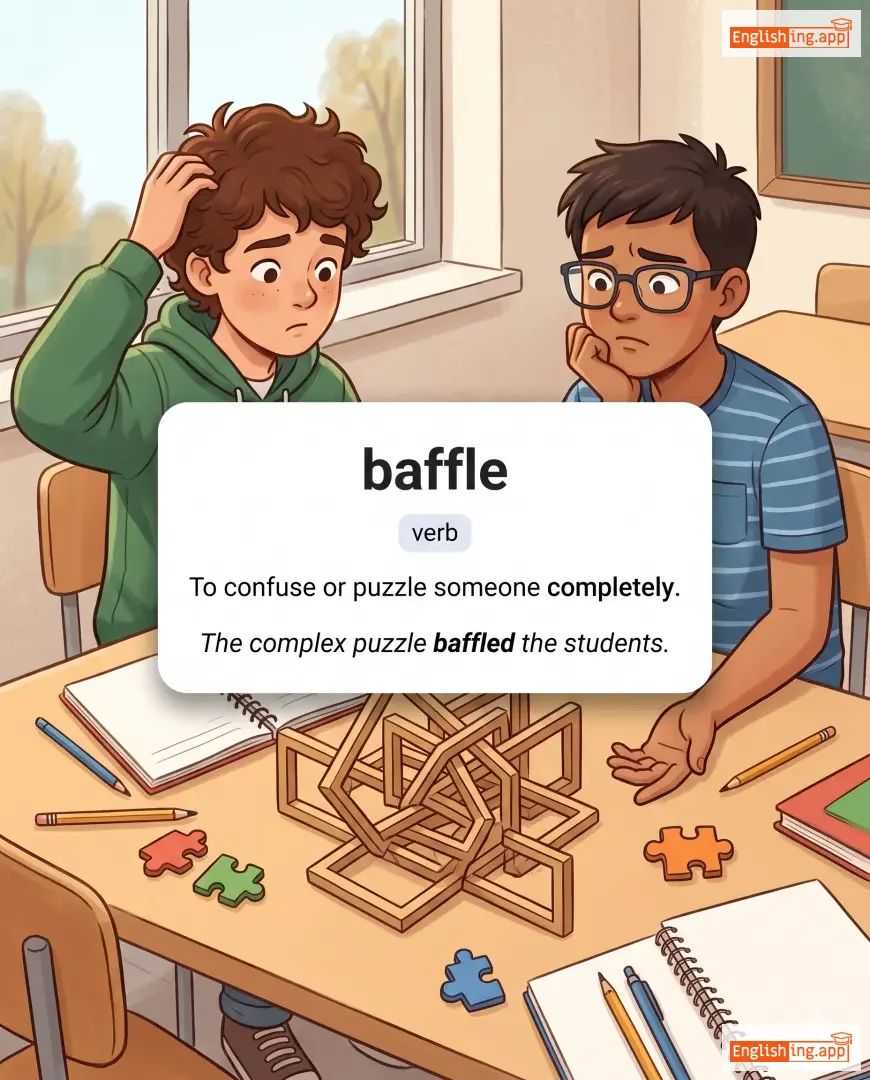
To confuse or puzzle someone completely.
••••••
|
The complex puzzle baffled the students.
複雑なパズルは学生たちを困惑させた。
••••••
|
複雑なパズルは学生たちを困惑させた。
Fukuzatsu na pazuru wa gakusei-tachi wo konwaku saseta.
••••••
|
mind-baffling
非常に困惑する
••••••
|
Extremely confusing or surprising.
••••••
|
極めて困惑させる
kiwamete konwaku saseru
••••••
|
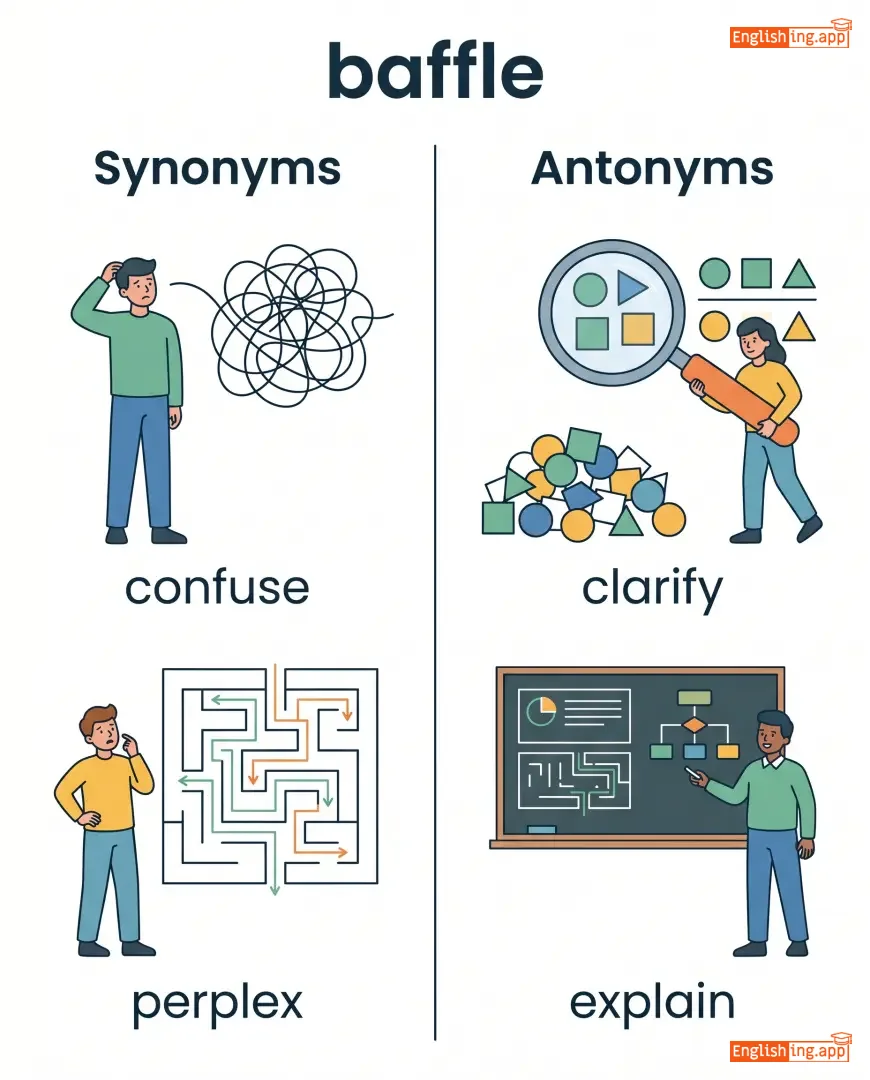
confuse, perplex, puzzle, bewilder, mystify
••••••
|
clarify, explain, enlighten
••••••
|
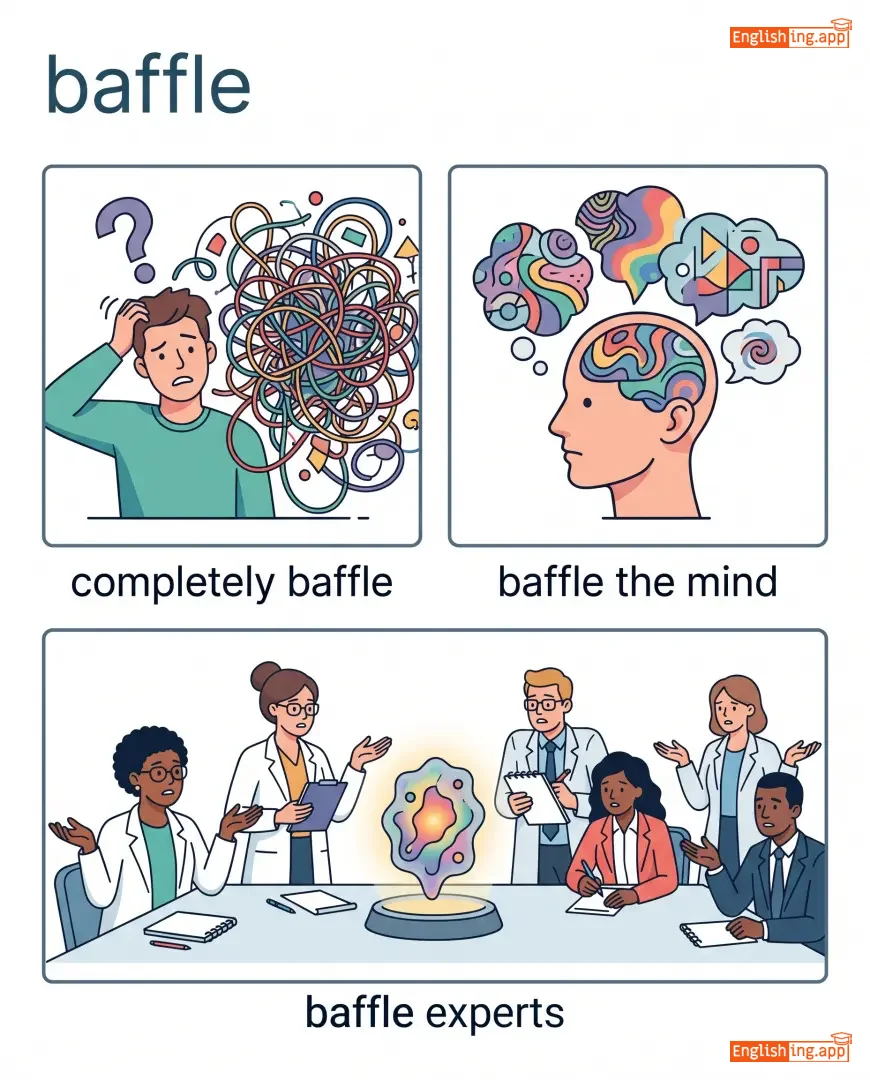
completely baffle, baffle the mind, baffle experts, baffling problem
••••••
|
Baffleは困惑させることを意味する — 頭が混乱した。
••••••
|
|
#512
👜
|
/bæɡ/
noun
(バッグ)
••••••
|
- •••••• |
バッグ
baggu
••••••
|
- •••••• | - •••••• | - •••••• | - •••••• |
a container made of flexible material, used for carrying items
••••••
|
She carried her books in a bag.
彼女は本をバッグに入れて持ち運んだ。
••••••
|
彼女は本をバッグに入れて持ち運んだ。
Kanojo wa hon o baggu ni irete mochi hakonda.
••••••
|
let the cat out of the bag
猫を袋から出す
••••••
|
to reveal a secret
••••••
|
秘密を明かす
himitsu o akasu
••••••
|
sack, pouch, backpack, handbag, tote
••••••
|
box, case
••••••
|
plastic bag, shopping bag, school bag, travel bag
••••••
|
バッグ、'本をバッグに入れる'のように。
••••••
|
|
#513
🧳
|
/ˈbæɡɪdʒ/
noun
(バゲージ)
••••••
|
- •••••• |
荷物; 所持品;
nimotsu; shojihin;
••••••
|
- •••••• | - •••••• | - •••••• | - •••••• |
suitcases and bags containing personal belongings; past experiences or problems that affect behavior
••••••
|
Please collect your baggage from the conveyor belt at the airport.
空港のコンベヤーベルトから荷物をお取りください。
••••••
|
空港のコンベヤーベルトから荷物をお取りください。
Kūkō no konbeyā beruto kara nimotsu o otori kudasai.
••••••
|
- •••••• | - •••••• | - •••••• |
luggage, belongings, suitcases
••••••
|
emptiness, freedom
••••••
|
check baggage, carry-on baggage, excess baggage
••••••
|
バゲージ (bagēji) = バッグ (baggu) + エージ (ejī) = 旅行
••••••
|
|
#514
⚖️
|
/beɪl/
noun
(ベイル)
••••••
|
- •••••• |
保釈
hoshaku
••••••
|
- •••••• | - •••••• | - •••••• | - •••••• |
the temporary release of an accused person awaiting trial, often with a financial guarantee
••••••
|
He was granted bail after his arrest. |
逮捕後、彼は保釈されました。
Taiho go, kare wa hoshaku saremashita.
••••••
|
jump bail |
to escape from jail after being granted bail
••••••
|
保釈金を飛び越える
Hoshaku kin o tobikoeru
••••••
|
surety, bond, release
••••••
|
imprisonment, detention
••••••
|
grant bail, post bail, bail bond
••••••
|
Hoshaku - 'Ho' means 'Hold', 'shaku' sounds like 'Release', hoshaku to release with hold!
••••••
|
|
#515
📦
|
/ˌbeɪˈliː/
noun
(ベイリー)
••••••
|
- •••••• |
受寄者
jukisha
••••••
|
- •••••• | - •••••• | - •••••• | - •••••• |
a person or party who temporarily receives possession of goods or property from another under a legal agreement
••••••
|
The bailee must take reasonable care of the goods while they are in his possession.
ベイリーは財産を適切に管理しなければならない。
••••••
|
受寄者は財産を適切に管理する義務がある。
jukisha wa zaisan o tekisetsu ni kanri suru gimu ga aru
••••••
|
- •••••• | - •••••• | - •••••• |
custodian, trustee, holder, keeper
••••••
|
bailor, owner
••••••
|
bailee obligations, bailee liability, lawful bailee, bailee rights
••••••
|
Bailee=法律で財産を預かる受寄者
••••••
|
|
#516
📜
|
/ˈbeɪlɔːr/
noun
(ベイラー)
••••••
|
- •••••• |
寄託者
kitakusha
••••••
|
- •••••• | - •••••• | - •••••• | - •••••• |
a person who temporarily transfers possession of goods or property to another under a bailment agreement
••••••
|
The bailor entrusted the valuable artwork to the museum for safekeeping.
ベイラーは美術品を博物館に預けた。
••••••
|
寄託者は美術品を博物館に預けた。
Kitakusha wa bijutsuhin o hakubutsukan ni azuketa
••••••
|
- •••••• | - •••••• | - •••••• |
owner, depositor, lender, grantor
••••••
|
bailee, borrower
••••••
|
bailor and bailee, rights of the bailor, bailor liability
••••••
|
寄託者は預ける人、bailorと同じ役割
••••••
|
|
#517
🎣
|
/beɪt/
noun/verb
••••••
|
- •••••• | - •••••• |
baited
••••••
|
baited
••••••
|
baits
••••••
|
baiting
••••••
|
Food or lure used to attract fish or animals; to deliberately provoke or annoy.
••••••
|
He used worms as bait to catch fish. |
- •••••• |
rise to the bait |
To take the provocation or get tricked.
••••••
|
- •••••• |
lure, decoy, trap, entice, provoke
••••••
|
repel, dissuade, ignore
••••••
|
fishing bait, bait trap, bait the hook, take the bait
••••••
|
No •••••• |
|
#518
🍞
|
/beɪk/
verb
(ベイク)
••••••
|
- •••••• |
焼く
yaku
••••••
|
baked
ベイクド
••••••
|
baked
ベイクド
••••••
|
bakes
ベイクス
••••••
|
baking
ベイキング
••••••
|
to cook food using dry heat, usually in an oven
••••••
|
She baked a cake for her friend's birthday.
彼女は友達の誕生日のためにケーキを焼きました。
••••••
|
彼女は友達の誕生日のためにケーキを焼きました。
Kanojo wa tomodachi no tanjōbi no tame ni kēki o yakimashita.
••••••
|
half-baked idea
半分焼けたアイデア
••••••
|
a poorly thought out idea
••••••
|
半焼きのアイデア
han yaki no aidea
••••••
|
cook, roast, grill, prepare, brown
••••••
|
freeze, chill
••••••
|
bake a cake, bake bread, bake cookies, freshly baked
••••••
|
焼くはケーキを作る意味、日本語で「ケーキを焼こう」。
••••••
|
|
#519
⚖️
|
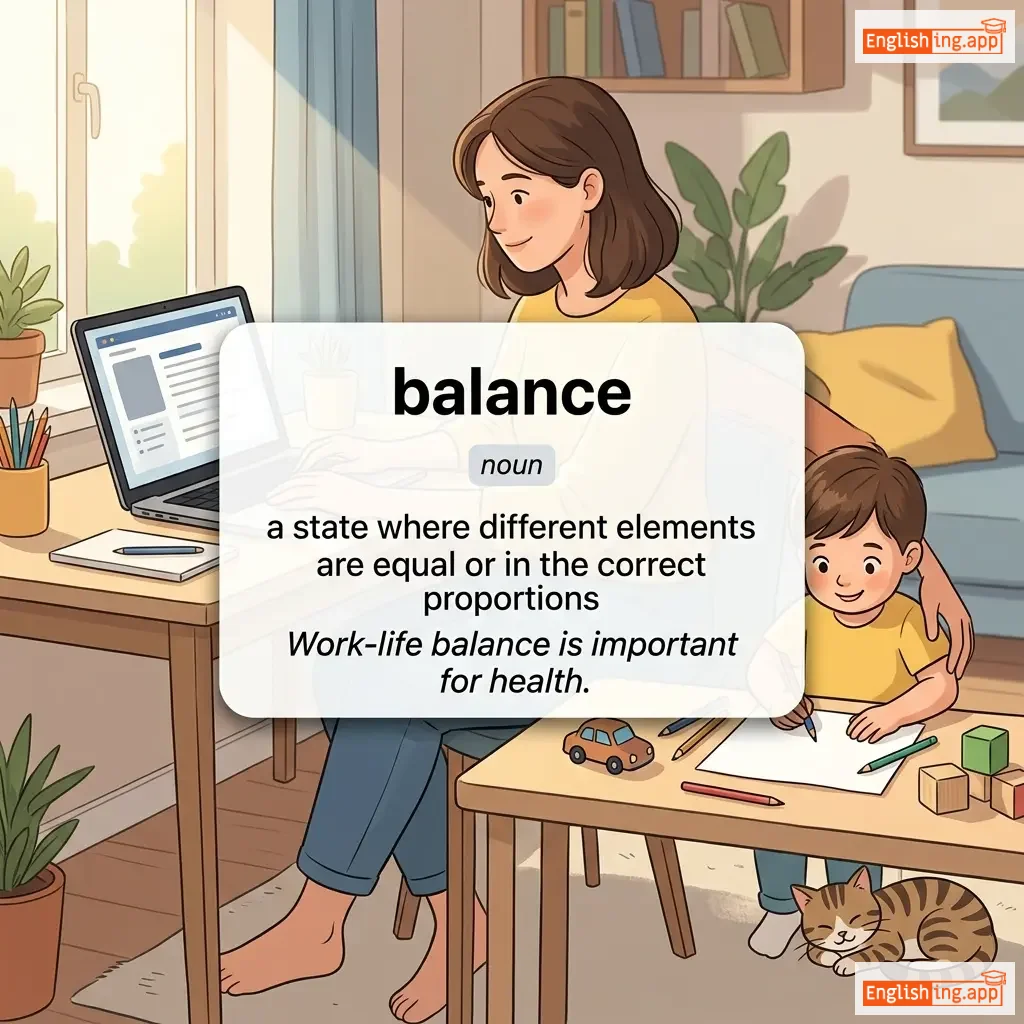
/ˈbæləns/
noun
(バランス)
••••••
|
|
バランス
baransu
••••••
|
- •••••• | - •••••• | - •••••• | - •••••• |
a state where different elements are equal or in the correct proportions
••••••
|
Work-life balance is important for health. |
仕事と生活のバランスは健康にとって重要です。
Shigoto to seikatsu no baransu wa kenkō ni totte jūyō desu.
••••••
|
hang in the balance |
to be uncertain or at risk
••••••
|
未確定な状態
mikakutei na jōtai
••••••
|
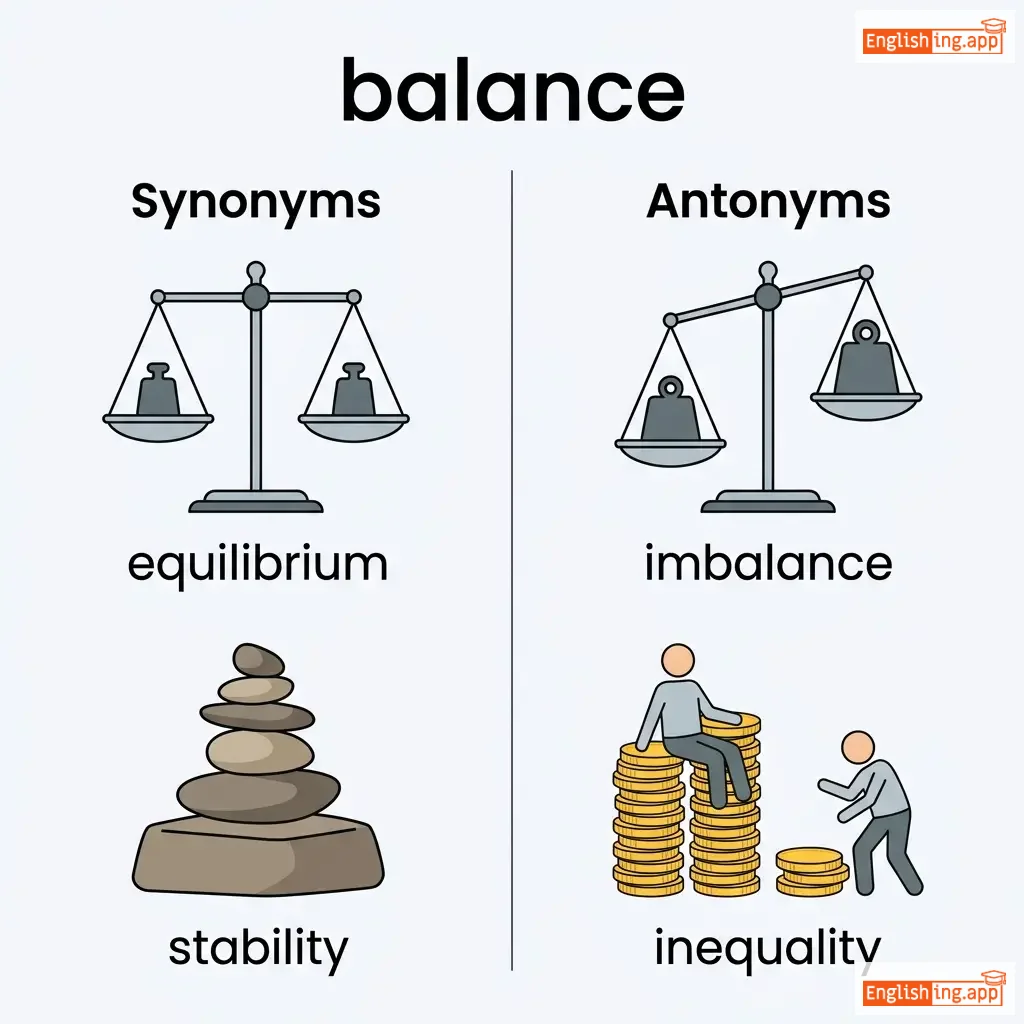
equilibrium, stability, harmony, fairness, symmetry
••••••
|
imbalance, inequality, disorder
••••••
|
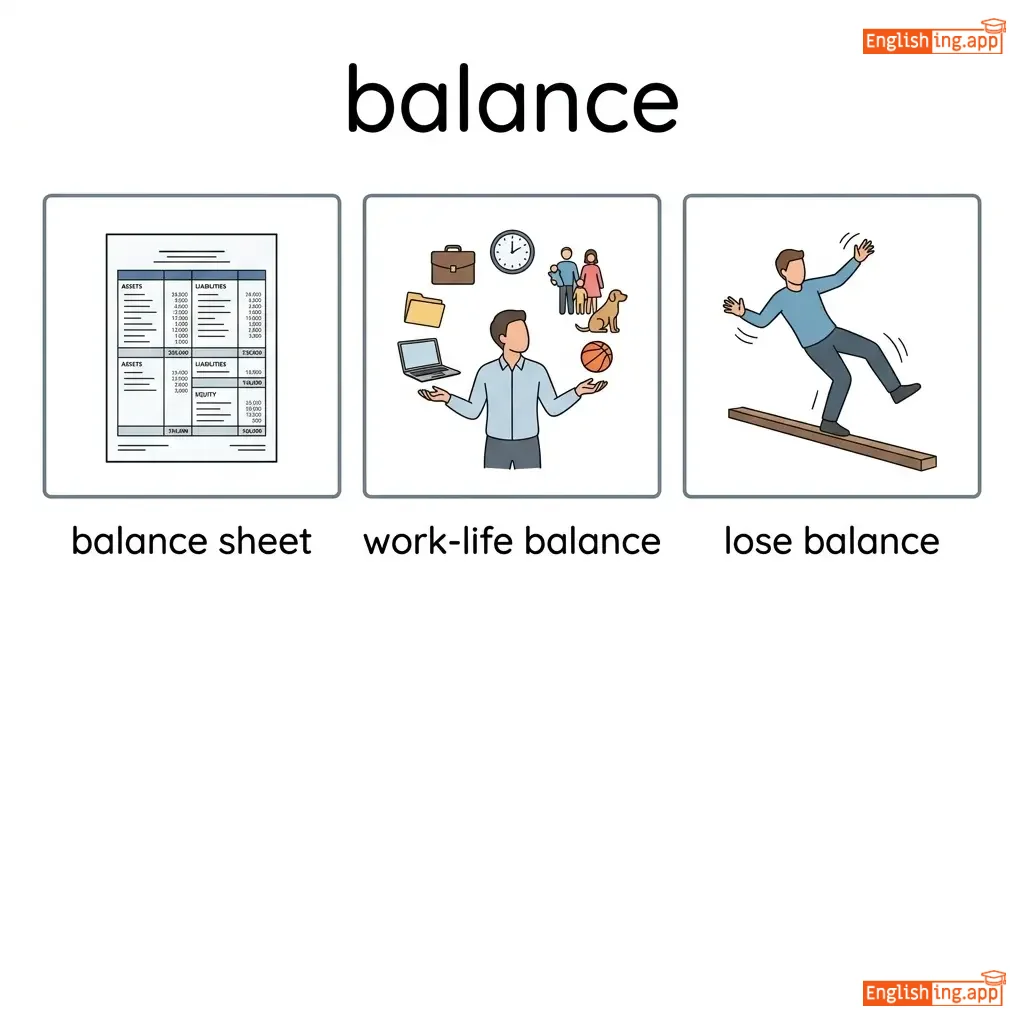
balance sheet, work-life balance, lose balance, maintain balance
••••••
|
日本語でバランスは仕事と生活の調和を意味します。
••••••
|
|
#520
⚖️
|
/ˈbælənst/
adjective
(バランスド)
••••••
|
- •••••• |
バランスの取れた
baransu no toreta
••••••
|
- •••••• | - •••••• | - •••••• | - •••••• |
keeping or showing a sensible and fair view or position; evenly arranged
••••••
|
A balanced diet is essential for good health. |
健康のためにはバランスの取れた食事が重要です。
Kenkō no tame ni wa baransu no toreta shokuji ga jūyō desu.
••••••
|
keep a balanced view |
to remain fair and objective
••••••
|
バランスの取れた見方を保つ
Baransu no toreta mikata o tamotsu
••••••
|
stable, fair, steady, impartial, well-proportioned
••••••
|
biased, uneven, unstable
••••••
|
balanced diet, balanced approach, balanced view, balanced lifestyle
••••••
|
バランスが取れている — 全てを均等に考えよう!
••••••
|
|
#521
⚽
|
/bɔːl/
noun
(ボール)
••••••
|
- •••••• |
ボール
booru
••••••
|
- •••••• | - •••••• | - •••••• | - •••••• |
a round object used in games or sports
••••••
|
The children played with a ball in the park. |
子供たちは公園でボールで遊びました。
Kodomotachi wa kouen de booru de asobimashita.
••••••
|
have a ball |
to have a very enjoyable time
••••••
|
楽しむ
tanoshimu
••••••
|
sphere, globe, orb, pellet, boule
••••••
|
cube, block
••••••
|
football, throw the ball, tennis ball, ball game
••••••
|
Ballはボールを意味し、'ボールで遊んで楽しむ'という意味です。
••••••
|
|
#522
🩰
|
/bæˈleɪ/
noun
(バレエ)
••••••
|
- •••••• |
バレエ
ballet
••••••
|
- •••••• | - •••••• | - •••••• | - •••••• |
a highly stylized and artistic form of dance
••••••
|
She has trained for years in classical ballet.
彼女は何年もクラシックバレエを練習してきました。
••••••
|
彼女は何年もクラシックバレエを練習してきました。
Kanojo wa nannen mo kurashikku baree o renshū shite kimashita.
••••••
|
- •••••• | - •••••• | - •••••• |
dance, performance, choreography, art form
••••••
|
stillness, inactivity
••••••
|
classical ballet, ballet dancer, ballet performance
••••••
|
バレエは完璧なバランスを要求する
••••••
|
|
#523
🎈
|
/bəˈluːn/
noun/verb
(バルーン)
••••••
|
- •••••• |
風船
fūsen
••••••
|
ballooned
バルーンド
••••••
|
ballooned
バルーンド
••••••
|
balloons
バルーンズ
••••••
|
ballooning
バルーニング
••••••
|
A small bag made of thin rubber or similar material that can be inflated with air or gas; as a verb, to expand rapidly.
••••••
|
The children played with a red balloon at the party.
子供たちはパーティーで赤いバルーンで遊んでいました。
••••••
|
子供たちはパーティーで赤い風船で遊んでいました。
Kodomotachi wa pātī de akai fūsen de asonde imashita.
••••••
|
go over like a lead balloon
鉛の風船のように失敗する
••••••
|
To fail completely or be received badly.
••••••
|
完全に失敗する
Kanzen ni shippai suru
••••••
|
blimp, airship, inflatables, sphere, orb
••••••
|
deflate, shrink
••••••
|
inflate a balloon, pop a balloon, hot air balloon, balloon payment
••••••
|
風船が膨らむように、問題も balloon で膨らむ。
••••••
|
|
#524
🗳️
|
/ˈbælət/
noun
(バレット)
••••••
|
- •••••• |
投票用紙
touhyou youshi
••••••
|
- •••••• | - •••••• | - •••••• | - •••••• |
a process of voting, usually in secret; the paper used to record a vote
••••••
|
Voters cast their ballot in the election.
ボーターズ キャスト ゼア バレット イン ザ エレクション。
••••••
|
有権者は選挙で投票用紙を投じました。
yuukensha wa senkyo de touhyou youshi wo toujimashita.
••••••
|
cast a ballot
キャスト ア バレット
••••••
|
to vote in an election
••••••
|
投票する
touhyou suru
••••••
|
vote, poll, referendum, choice
••••••
|
abstention, refusal
••••••
|
secret ballot, ballot box, ballot paper, cast ballot
••••••
|
Ballotはバレット、日本では投票用紙で投票!
••••••
|
|
#525
🚫
|
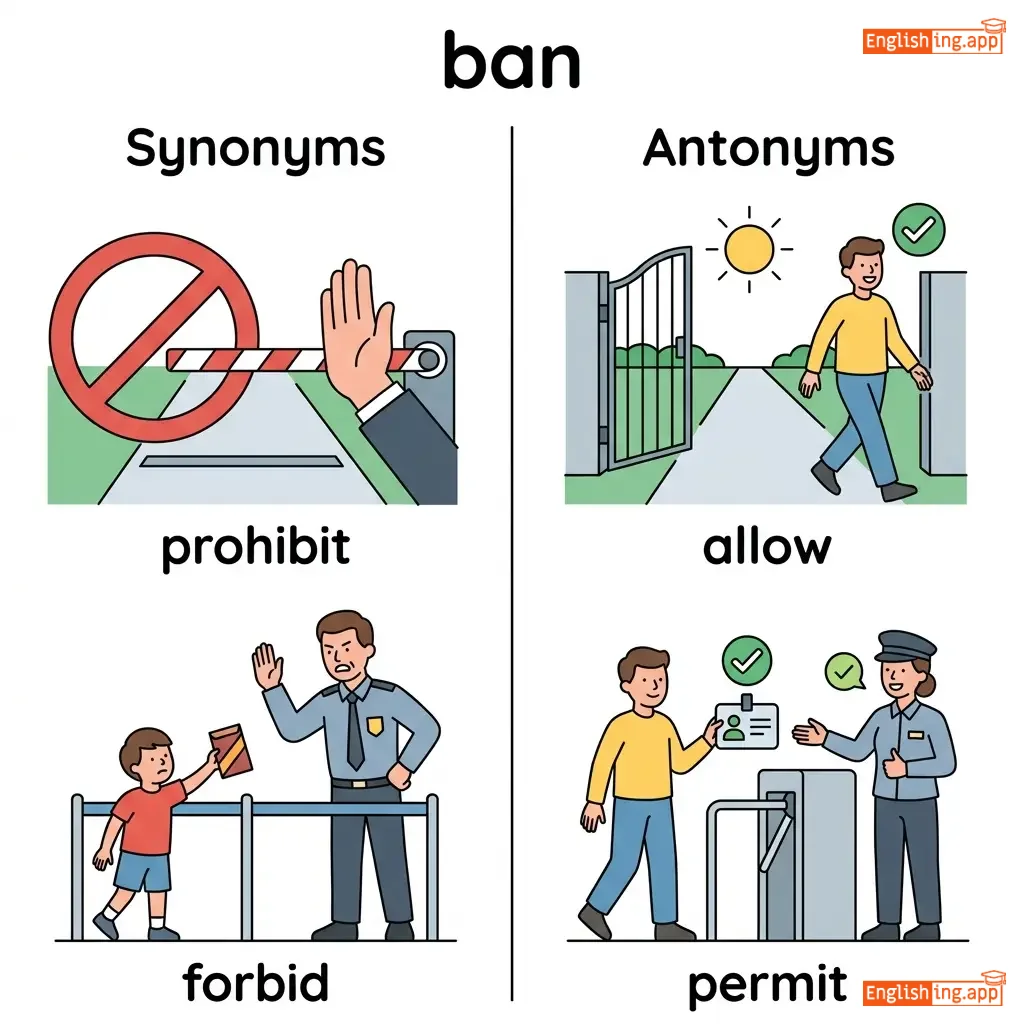
/bæn/
verb
(バン)
••••••
|
|
禁止する
kinshi suru
••••••
|
banned
バンド
••••••
|
banned
バンド
••••••
|
bans
バンス
••••••
|
banning
バンニング
••••••
|
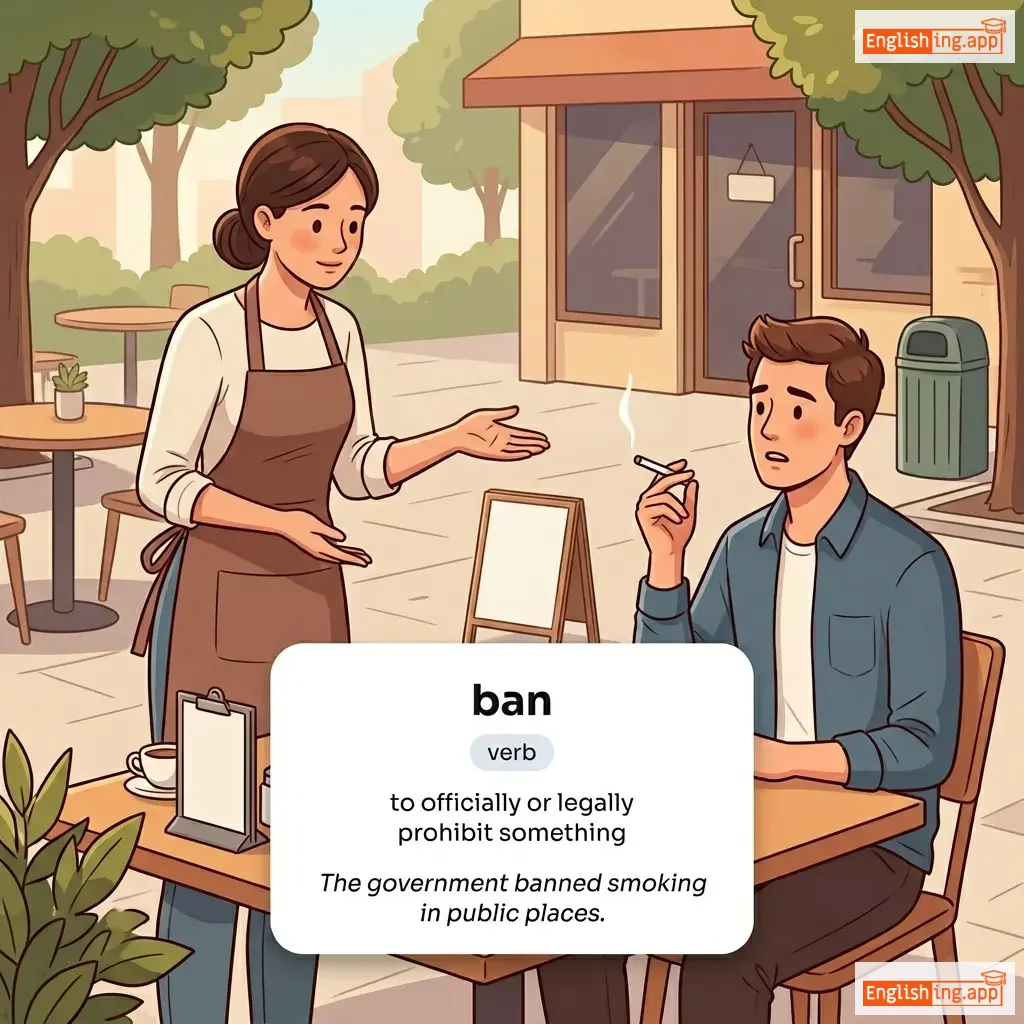
to officially or legally prohibit something
••••••
|
The government banned smoking in public places.
政府は公共の場での喫煙を禁止しました。
••••••
|
政府は公共の場での喫煙を禁止しました。
Seifu wa kōkyō no ba de no kitsuen o kinshi shimashita.
••••••
|
ban from
バン フロム
••••••
|
to prohibit someone from doing something
••••••
|
から禁止する
kara kinshi suru
••••••
|
prohibit, forbid, outlaw, restrict, bar
••••••
|
allow, permit
••••••
|
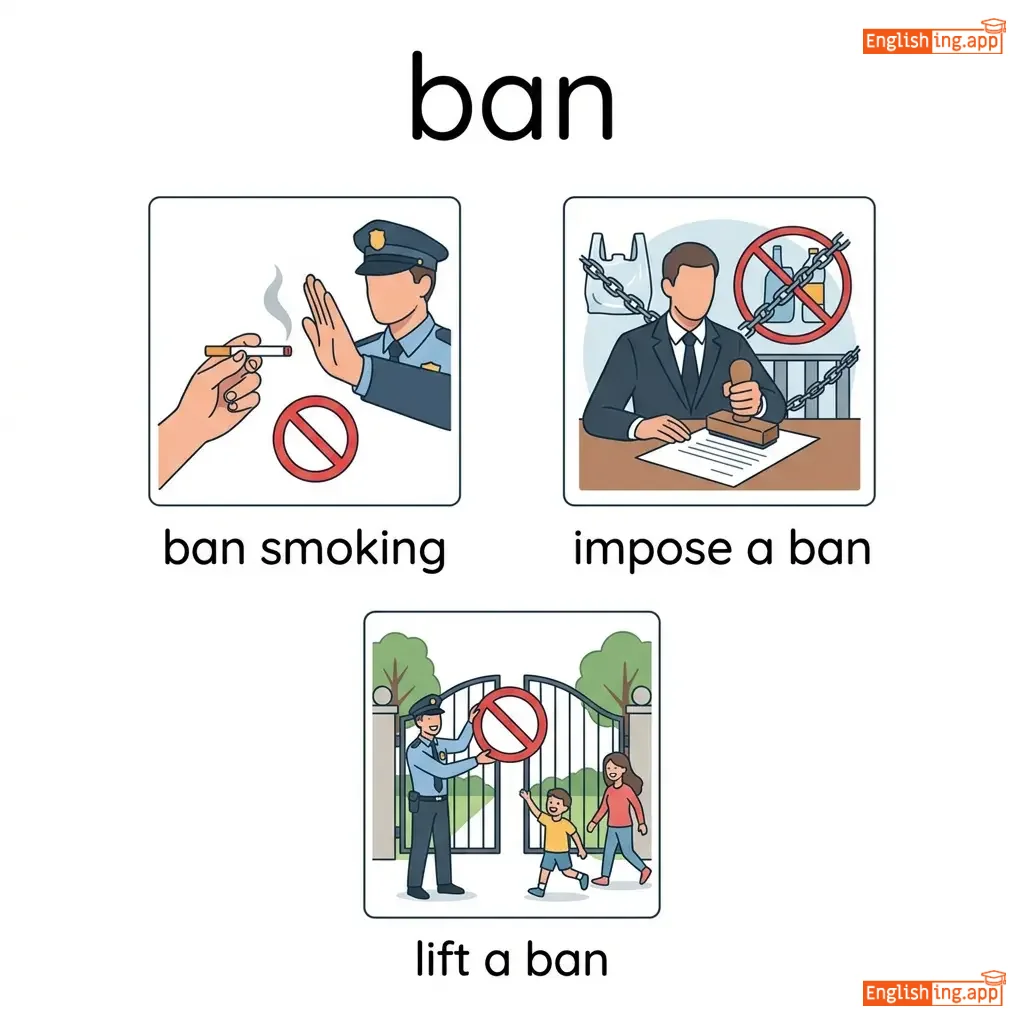
ban smoking, impose a ban, lift a ban, ban completely
••••••
|
Banは禁止するという意味です。FacebookでBanされたことがありますか?
••••••
|
|
#526
🍌
|
/bəˈnænə/
noun
(ハピネス)
••••••
|
- •••••• |
幸せ
shiawase
••••••
|
- •••••• | - •••••• | - •••••• | - •••••• |
a long curved fruit with a yellow skin and soft sweet flesh inside
••••••
|
She ate a ripe banana for breakfast. |
彼女は賞を受け取ったとき、幸せを隠せなかった。
Kanojo wa shō o uketotta toki, shiawase o kakusenakatta.
••••••
|
go bananas |
to become very excited or angry
••••••
|
幸せの追求
shiawase no tsuikyū
••••••
|
fruit, plantain, yellow fruit, tropical fruit
••••••
|
none
••••••
|
ripe banana, banana peel, banana tree, banana flavor
••••••
|
幸せは心に光が満ちる時の感覚。
••••••
|
|
#527
🎵
|
/bænd/
noun
(バンド)
••••••
|
- •••••• |
バンド
bando
••••••
|
- •••••• | - •••••• | - •••••• | - •••••• |
a group of musicians who play music together
••••••
|
The band performed live at the concert. |
バンドはコンサートでライブパフォーマンスをしました。
Bando wa konsāto de raibu pafōmansu o shimashita.
••••••
|
band together |
to unite for a common purpose
••••••
|
団結する
danketsu suru
••••••
|
group, ensemble, orchestra, troupe, crew
••••••
|
soloist, individual
••••••
|
rock band, marching band, jazz band, live band
••••••
|
日本語でもバンドは音楽グループ、バンドを思い出す!
••••••
|
|
#528
🩹
|
/ˈbændɪdʒ/
noun, verb
(バンデージ)
••••••
|
- •••••• |
包帯
houtai
••••••
|
bandaged
バンデージド
••••••
|
bandaged
バンデージド
••••••
|
bandages
バンデージズ
••••••
|
bandaging
バンデージング
••••••
|
a strip of material used to cover or protect a wound; to cover or wrap a wound with such material
••••••
|
The nurse carefully bandaged his injured arm.
看護師は彼のけがをした腕をバンデージした。
••••••
|
看護師は彼のけがをした腕に包帯を巻いた。
Kangoshi wa kare no kega o shita ude ni houtai o maita
••••••
|
bandage up
バンデージ アップ
••••••
|
to wrap or cover a wound completely
••••••
|
包帯を巻く
houtai o maku
••••••
|
dressing, wrap, gauze, plaster, compress
••••••
|
expose, uncover, unwrap
••••••
|
apply a bandage, bandage a wound, elastic bandage, clean and bandage
••••••
|
包帯 houtai は bandage と同じ役目
••••••
|
|
#529
🚫
|
/ˈbænɪʃ/
verb
••••••
|
|
- •••••• |
banished
••••••
|
banished
••••••
|
banishes
••••••
|
banishing
••••••
|
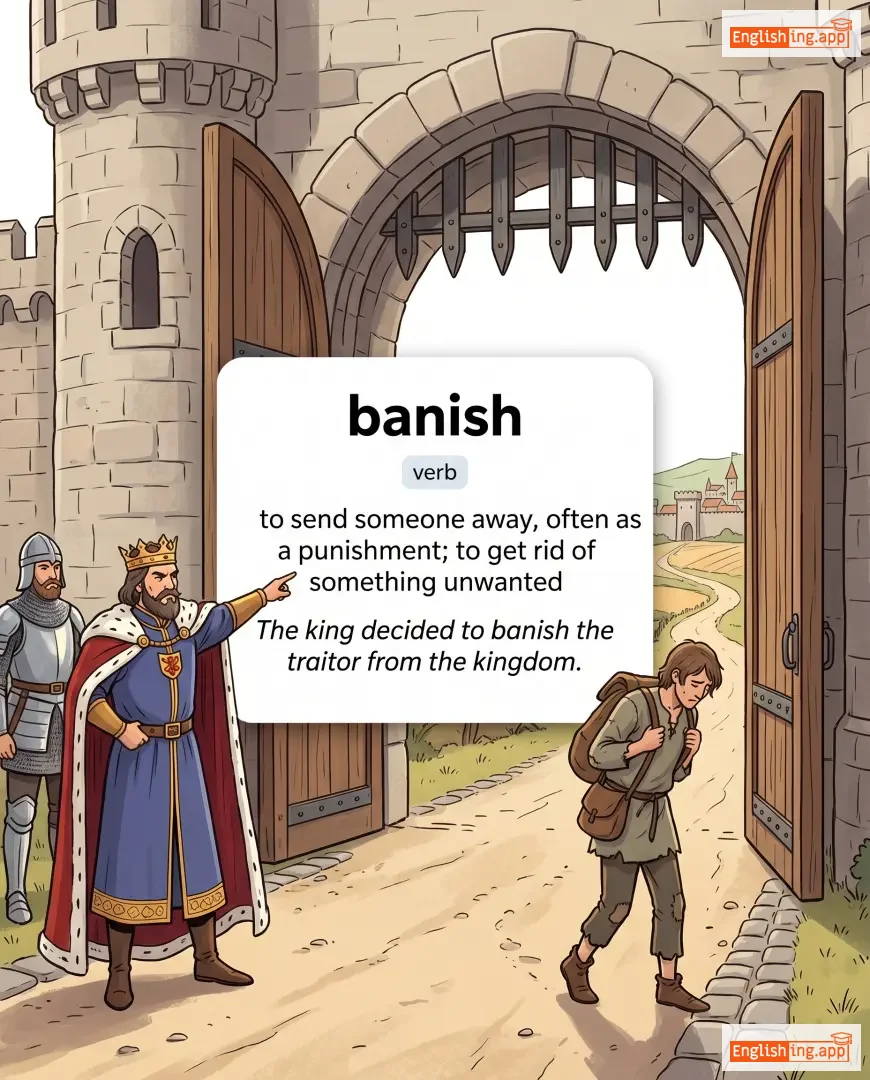
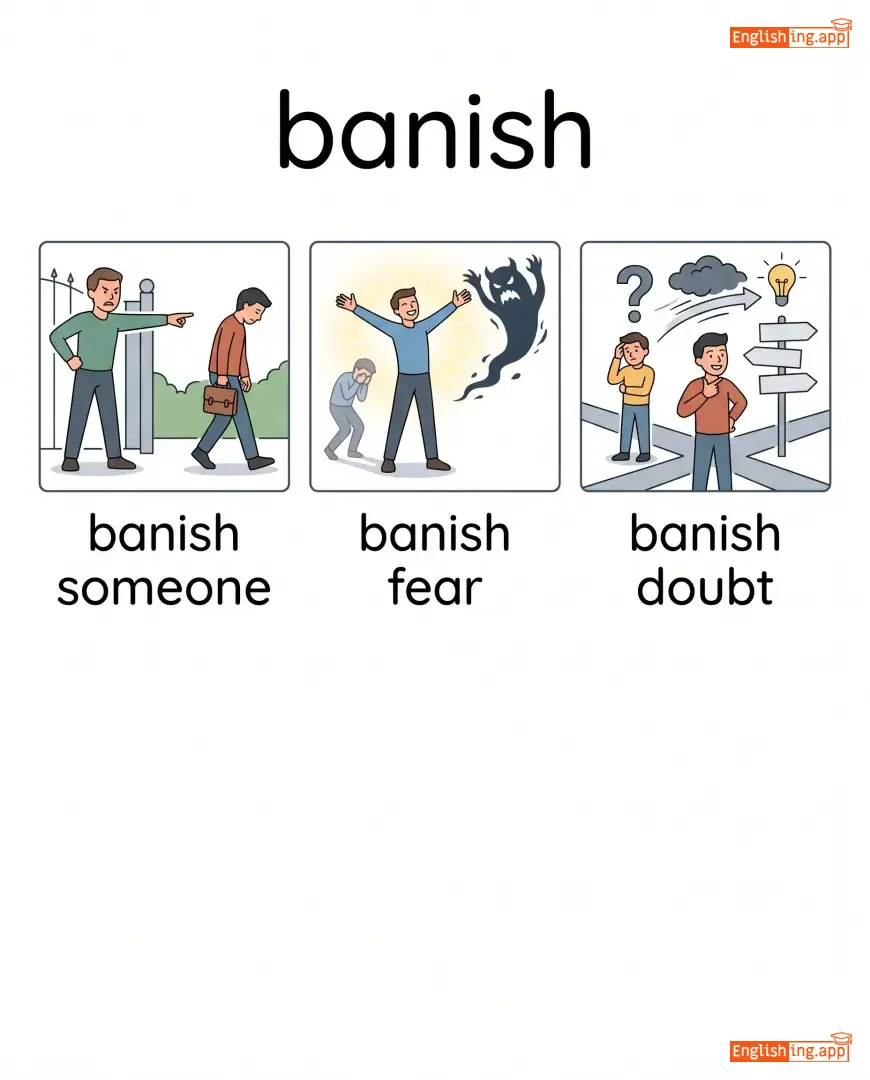
to send someone away, often as a punishment; to get rid of something unwanted
••••••
|
The king decided to banish the traitor from the kingdom. |
- •••••• |
banish the thought |
to deliberately stop thinking about something unpleasant
••••••
|
- •••••• |
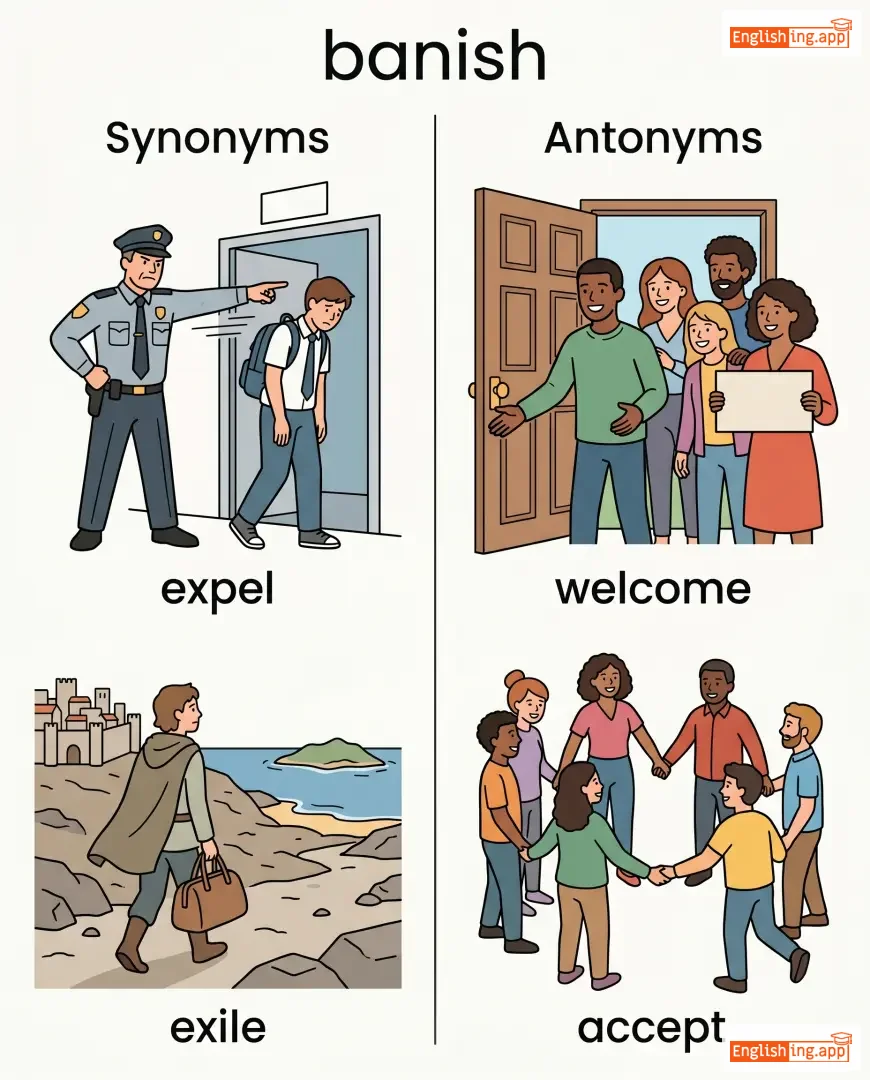
expel, exile, deport, dismiss, ostracize
••••••
|
welcome, accept, include
••••••
|
banish someone, banish fear, banish doubt, banish forever
••••••
|
No •••••• |
|
#530
🏦
|
/bæŋk/
noun/verb
(バンク)
••••••
|
- •••••• |
銀行
ginkou
••••••
|
banked
••••••
|
banked
••••••
|
banks
••••••
|
banking
••••••
|
an institution where money is kept and managed; or to tilt in movement (like an airplane or riverbank)
••••••
|
She deposited the money in the bank. |
彼女は銀行にお金を預けました。
Kanojo wa ginkou ni okane wo azukemashita.
••••••
|
break the bank |
to cost too much money or use up all of one's resources
••••••
|
銀行を破産させる
ginkou wo hasan saseru
••••••
|
financial institution, lender, depository, slope, edge
••••••
|
debt, withdrawal, poverty
••••••
|
bank account, bank loan, river bank, bank balance, break the bank
••••••
|
銀行にお金を預けて、生活に良いランクをもたらす。
••••••
|
|
#531
💼
|
/ˈbæŋkər/
noun
(バンカー)
••••••
|
- •••••• |
銀行家
ginkōka
••••••
|
- •••••• | - •••••• | - •••••• | - •••••• |
a person who works in or manages a bank
••••••
|
The banker approved the loan after reviewing the documents. |
銀行家は書類を確認した後、ローンを承認しました。
Ginkōka wa shorui o kakunin shita ato, rōn o shōnin shimashita.
••••••
|
- •••••• | - •••••• | - •••••• |
financier, investor, lender, executive, manager
••••••
|
borrower, debtor
••••••
|
senior banker, investment banker, central banker, private banker
••••••
|
銀行家はお金を扱う人 — ローンを承認し、銀行を管理する仕事をしている人。
••••••
|
|
#532
🖼️
|
/ˈbænər/
noun
••••••
|
- •••••• | - •••••• | - •••••• | - •••••• | - •••••• | - •••••• |
a large printed sign used for advertisements or announcements
••••••
|
The company displayed a banner to advertise their new product. |
- •••••• | - •••••• | - •••••• | - •••••• |
sign, placard, poster, billboard
••••••
|
hidden, covered, concealed
••••••
|
display a banner, raise a banner, banner ad, large banner
••••••
|
No •••••• |
|
#533
🍺
|
/bɑːr/
noun, verb
(バー)
••••••
|
- •••••• |
バー, ブロックする
ba, burokkusuru
••••••
|
barred
バード
••••••
|
barred
バード
••••••
|
bars
バーズ
••••••
|
barring
バリング
••••••
|
a counter where drinks are served; to prevent or block
••••••
|
They decided to meet at the bar after work.
仕事の後、バーで会うことに決めました。
••••••
|
仕事の後、バーで会うことに決めました。
Shigoto no ato, bā de au koto ni kimemashita.
••••••
|
bar none
例外なし
••••••
|
without exception
••••••
|
例外なし
reigai nashi
••••••
|
pub, tavern, block, prohibit, hinder
••••••
|
allow, permit, open
••••••
|
wine bar, bar exam, bar association, bar the door, behind bars
••••••
|
バーはバー (カウント) です。バーに行って飲み物をカウントできます。
••••••
|
|
#534
🌿
|
/beər/
adjective
(ベア)
••••••
|
- •••••• |
裸
hadaka
••••••
|
- •••••• | - •••••• | - •••••• | - •••••• |
not covered by any clothing or decoration; simple and without addition
••••••
|
He walked on the beach with bare feet. |
彼は裸足でビーチを歩いた。
Kare wa hadashi de bīchi o aruita.
••••••
|
bare essentials |
only the most necessary items or facts
••••••
|
裸の必需品
hadaka no hitsujuhin
••••••
|
naked, uncovered, exposed, plain, simple
••••••
|
covered, clothed, decorated
••••••
|
bare hands, bare feet, bare minimum, bare skin
••••••
|
Bare は裸を意味します — 例えば bare body は裸の体を意味します。覚えておいてください:Bear は裸足で歩けません!
••••••
|
Vocabulary Quiz
Test your vocabulary by matching words with their translations or meanings.
Login to take the quiz
Comments (0)
Share your thoughts and join the discussion.
Join the discussion by logging in
Login to CommentNo comments yet
Be the first to share your thoughts!