

翻訳
過去
過去分詞
三人称単数
動名詞
意味
例文
例文の翻訳
同義語
対義語
コロケーション
ニーモニック

Swipe left or right, or use the buttons. Tap image to zoom.
例文の翻訳
単語
Lesson 78Lesson 78 - マスクトグル
|
絵文字
|
単語 | Images | 翻訳 | 過去 | 過去分詞 | 三人称単数 | 動名詞 | 意味 | 例文 | 例文の翻訳 | 表現例 | 表現例の意味 | 表現例の翻訳 | 同義語 | 対義語 | コロケーション | ニーモニック |
|---|---|---|---|---|---|---|---|---|---|---|---|---|---|---|---|---|---|
|
#3703
⏸️
|
/pɔːz/
verb
(ポーズ)
••••••
|
|
一時停止
ichijiteishi
••••••
|
paused
ポーズド
••••••
|
paused
ポーズド
••••••
|
pauses
ポーズズ
••••••
|
pausing
ポージング
••••••
|
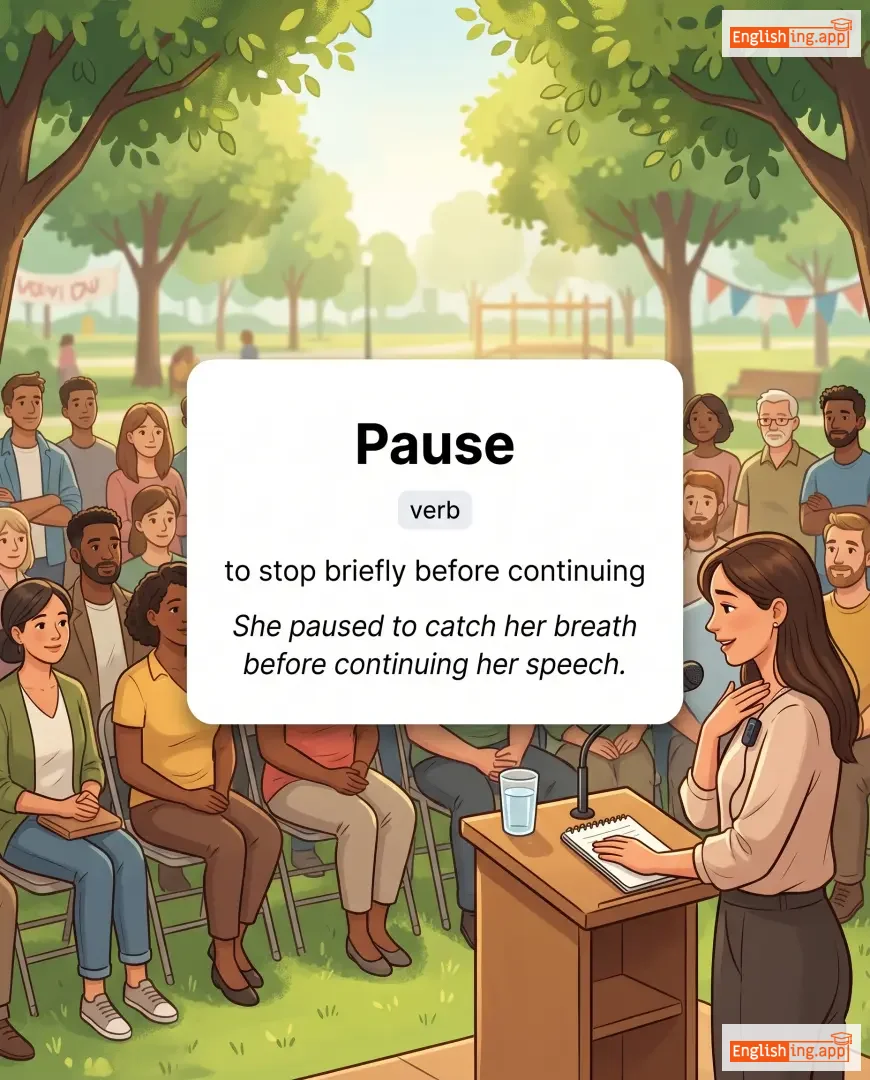
to stop briefly before continuing
••••••
|
She paused to catch her breath before continuing her speech.
彼女は呼吸を整えるために少しポーズをとった。
••••••
|
彼女は呼吸を整えるために少し一時停止をした。
Kanojo wa kokyū o totonoeru tame ni sukoshi ichijiteishi o shita.
••••••
|
take a pause
一時停止
••••••
|
to take a break from an activity
••••••
|
一時停止
Ichijiteishi
••••••
|
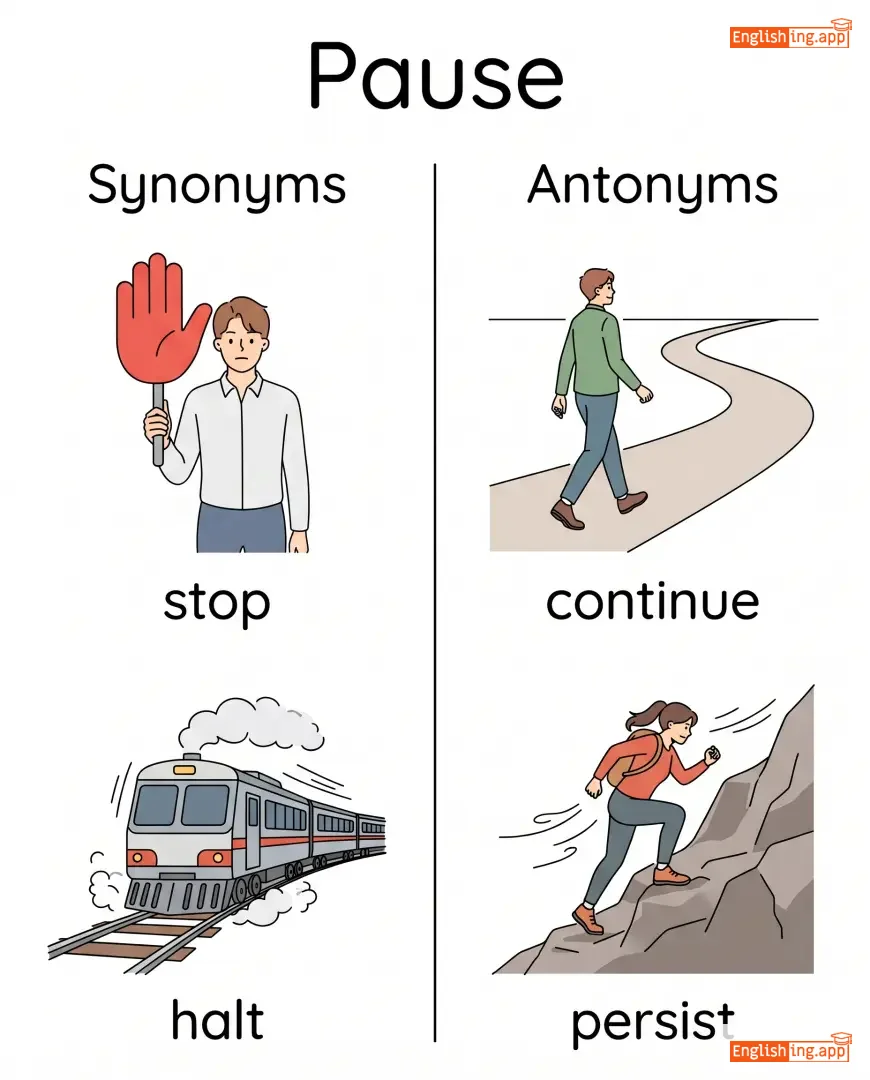
stop, halt, break, suspend
••••••
|
continue, persist, proceed
••••••
|
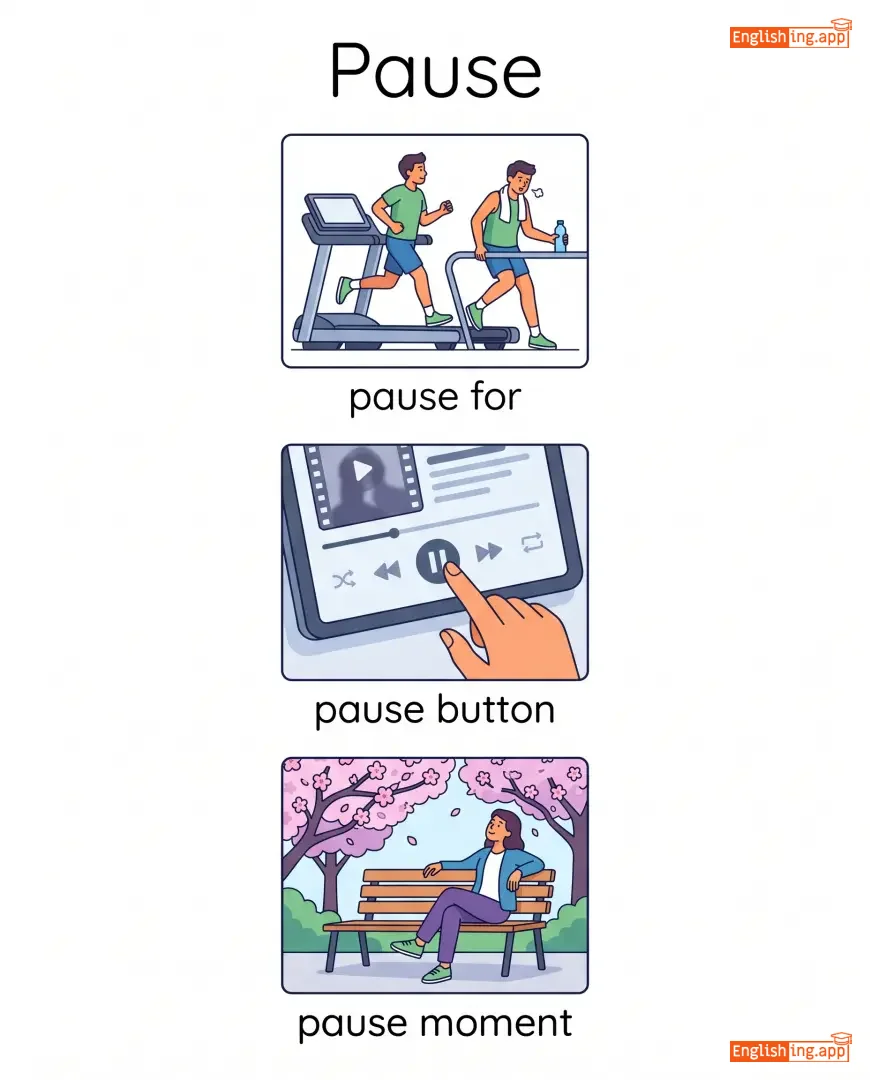
pause for, pause button, pause moment, pause music
••••••
|
ポーズ (pause) をとって、深呼吸しよう!
••••••
|
|
#3704
🛣️
|
/ˈpeɪvmənt/
noun
(ペイブメント)
••••••
|
- •••••• |
歩道
hodo
••••••
|
- •••••• | - •••••• | - •••••• | - •••••• |
a hard paved surface such as a road or sidewalk; the act or result of paving
••••••
|
She walked along the pavement to reach the bus stop.
彼女はバス停までペイブメントを歩いた。
••••••
|
彼女はバス停まで歩道を歩いた。
kanojo wa basutei made hodo o aruita
••••••
|
pound the pavement
パウンド・ザ・ペイブメント
••••••
|
to walk the streets actively in order to find work or achieve something
••••••
|
仕事探しで歩き回る
shigoto sagashi de arukimawaru
••••••
|
sidewalk, roadway, footpath, paving, asphalt
••••••
|
dirt, grass, soil
••••••
|
pavement surface, cracked pavement, wet pavement, pavement stones
••••••
|
歩道=歩く道、pavement と覚える
••••••
|
|
#3705
💰
|
/peɪ/
verb
(ペイ)
••••••
|
|
支払う
shiharau
••••••
|
paid
ペイド
••••••
|
paid
ペイド
••••••
|
pays
ペイズ
••••••
|
paying
ペイング
••••••
|
to give money in exchange for goods or services
••••••
|
I need to pay my bills on time.
私は時間通りに請求書を支払う必要があります。
••••••
|
私は時間通りに請求書を支払わなければなりません。
Watashi wa jikan dōri ni seikyū-sho o shiharawanakereba narimasen
••••••
|
- •••••• | - •••••• | - •••••• |
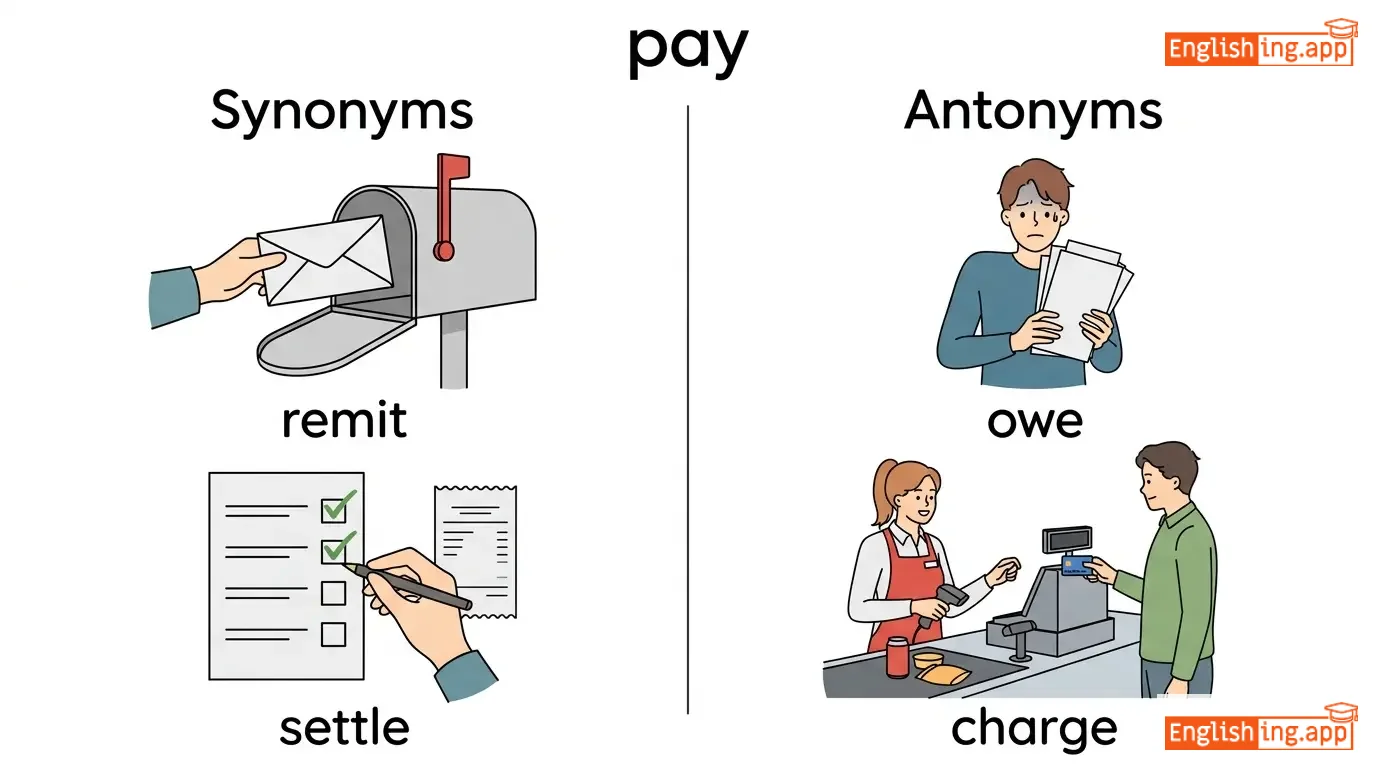
compensate, remunerate, settle, discharge
••••••
|
receive, earn, collect, owe
••••••
|
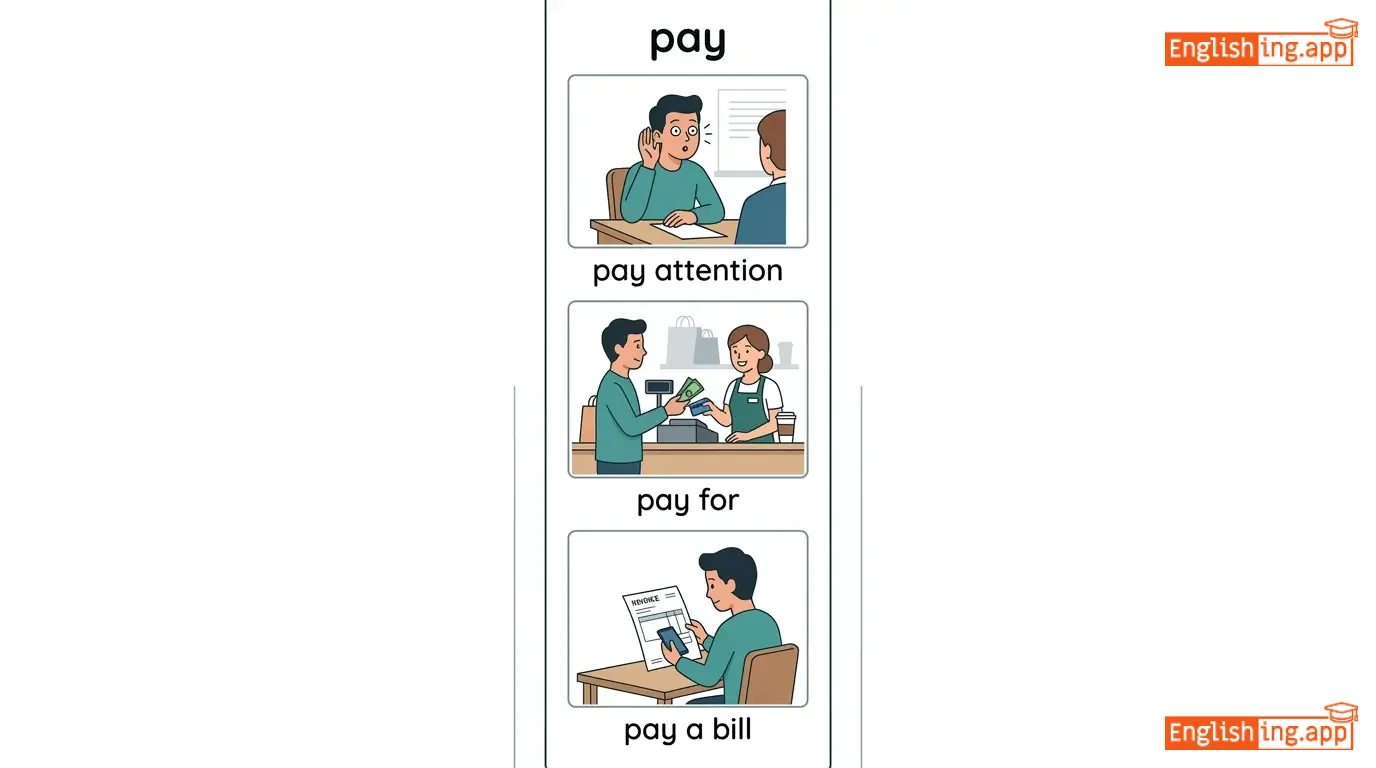
pay bills, pay attention, pay salary, pay cash, pay back
••••••
|
No •••••• |
|
#3706
💳
|
/ˈpeɪmənt/
noun
(ペイメント)
••••••
|
- •••••• |
支払い
shiharai
••••••
|
- •••••• | - •••••• | - •••••• | - •••••• |
the action or process of paying money for something
••••••
|
The payment for the order was received yesterday. |
注文の支払いは昨日受け取られました。
Chūmon no shiharai wa kinō uketoraremashita.
••••••
|
- •••••• | - •••••• | - •••••• |
remittance, settlement, compensation, disbursement
••••••
|
debt, charge
••••••
|
make a payment, payment due, payment method, process payment
••••••
|
支払い後に必要なものを手に入れる!
••••••
|
|
#3707
☮️
|
/piːs/
noun
(ピース)
••••••
|
- •••••• |
平和
heiwa
••••••
|
- •••••• | - •••••• | - •••••• | - •••••• |
a state of tranquility or quiet, freedom from disturbance
••••••
|
They hope for peace in the region.
彼らは地域での平和を望んでいます。
••••••
|
彼らは地域での平和を望んでいます。
Karera wa chiiki de no heiwa o nozondeimasu.
••••••
|
- •••••• | - •••••• | - •••••• |
calm, serenity, harmony, tranquility
••••••
|
conflict, war
••••••
|
world peace, peace of mind, peace treaty, keep the peace
••••••
|
平和は心の静けさから始まります。
••••••
|
|
#3708
☮️
|
/ˈpiːsfl/
adjective
(ハピネス)
••••••
|
- •••••• |
幸せ
shiawase
••••••
|
- •••••• | - •••••• | - •••••• | - •••••• |
free from disturbance; calm and tranquil
••••••
|
The village remained peaceful even during the festival. |
彼女は賞を受け取ったとき、幸せを隠すことができませんでした。
Kanojo wa shō o uketotta toki, shiawase o kakusu koto ga dekimasen deshita.
••••••
|
peaceful coexistence |
a situation in which different groups live together without conflict
••••••
|
幸せの追求
Shiawase no tsuikyū
••••••
|
calm, serene, tranquil, restful, quiet
••••••
|
chaotic, violent, disturbed
••••••
|
peaceful life, peaceful protest, peaceful solution, peaceful environment
••••••
|
幸せ = みんなが求めているもの
••••••
|
|
#3709
⛰️
|
/piːk/
noun
(ピーク)
••••••
|
- •••••• |
頂上
choujou
••••••
|
- •••••• | - •••••• | - •••••• | - •••••• |
the highest point of a mountain or hill; the maximum level or intensity
••••••
|
The climbers reached the peak of Mount Everest. |
登山者たちはエベレスト山の頂上に到達した。
Tozan-sha-tachi wa Eberesuto-san no choujou ni toutatsu shita.
••••••
|
- •••••• | - •••••• | - •••••• |
summit, top, apex, pinnacle
••••••
|
base, bottom, valley
••••••
|
mountain peak, snow-capped peak, peak performance
••••••
|
頂上に行くと、すべてが高くなります
••••••
|
|
#3710
🌾
|
/ˈpɛzənt/
noun
(ペザント)
••••••
|
- •••••• |
農民
nōmin
••••••
|
- •••••• | - •••••• | - •••••• | - •••••• |
a poor farmer or agricultural laborer who owns or rents a small piece of land for cultivation
••••••
|
The peasant worked hard in the fields from dawn to dusk.
その農民は夜明けから日暮れまで畑で一生懸命働いていました。
••••••
|
その農民は夜明けから日暮れまで畑で一生懸命働いていました。
Sono nōmin wa yoake kara hikure made hatake de isshōkenmei hataraite imashita.
••••••
|
peasant life
農民の生活
••••••
|
a simple and hardworking rural lifestyle
••••••
|
農民の生活
Nōmin no seikatsu
••••••
|
farmer, rustic, villager, laborer, cultivator
••••••
|
landlord, noble, aristocrat
••••••
|
poor peasant, peasant farmer, peasant family, peasant life
••••••
|
Peasantの日本語 = 農民、朝から晩まで畑で働く!
••••••
|
|
#3711
🤔
|
/pɪˈkjuːliər/
adjective
(pikyūriā)
••••••
|
- •••••• |
奇妙な
kimyōna
••••••
|
- •••••• | - •••••• | - •••••• | - •••••• |
strange or unusual; characteristic of only one person, place, or thing
••••••
|
She has a peculiar habit of talking to her plants. |
彼女は植物に話しかける奇妙な習慣があります。
Kanojo wa shokubutsu ni hanashikakeru kimyōna shūkan ga arimasu.
••••••
|
peculiar to |
something unique to a particular person or group
••••••
|
特有の
tokuyu no
••••••
|
odd, strange, unusual, distinctive, unique
••••••
|
normal, usual, ordinary
••••••
|
peculiar habit, peculiar way, peculiar situation, peculiar smell
••••••
|
Peculiarは奇妙を意味します—ピクニックで奇妙なことを思い出してください(peculiar)。
••••••
|
|
#3712
🧑🤝🧑
|
/pɪə(r)/
noun, verb
(ピア)
••••••
|
- •••••• |
同等の人
doutou no hito
••••••
|
peered
ピアード
••••••
|
peered
ピアード
••••••
|
peers
ピアーズ
••••••
|
peering
ピアリング
••••••
|
noun: a person of the same rank or status; verb: to look closely or with difficulty
••••••
|
He tried to peer through the fog to see his peers on the other side.
彼は霧を通して自分の仲間を見ようとしました。
••••••
|
彼は霧を通して自分の仲間を見ようとしました。
Kare wa kiri o tooshite jibun no nakama o miyou to shimashita.
••••••
|
peer pressure
ピアプレッシャー
••••••
|
the influence exerted by a group on an individual to conform
••••••
|
仲間の圧力
nakama no atsuryoku
••••••
|
equal, fellow, companion, look, gaze
••••••
|
superior, inferior
••••••
|
peer group, peer pressure, peer review, peer at
••••••
|
Peerは仲間、Peer Pressureは仲間の圧力
••••••
|
|
#3713
🖊️
|
/pɛn/
noun/verb
(ハピネス)
••••••
|
- •••••• |
幸せ
shiawase
••••••
|
penned
••••••
|
penned
••••••
|
pens
••••••
|
penning
••••••
|
A writing instrument using ink; also, to write something.
••••••
|
She used a pen to sign the document.
彼女は賞を受け取ったとき、幸せを隠すことができませんでした。
••••••
|
彼女は賞を受け取ったとき、幸せを隠すことができませんでした。
Kanojo wa shō o uketotta toki, shiawase o kakusu koto ga dekimasen deshita.
••••••
|
the pen is mightier than the sword
幸せの追求
••••••
|
Writing is more powerful than violence.
••••••
|
幸せの追求
shiawase no tsuikyū
••••••
|
writing tool, stylus, quill, marker
••••••
|
pencil, chalk
••••••
|
ink pen, fountain pen, ballpoint pen, pen down
••••••
|
幸せ (happiness) は毎日を輝かせる力
••••••
|
|
#3714
⚖️
|
/ˈpɛnəlti/
noun
(ペナルティ)
••••••
|
- •••••• |
罰金
batsukin
••••••
|
- •••••• | - •••••• | - •••••• | - •••••• |
A punishment imposed for breaking a law, rule, or contract.
••••••
|
He had to pay a heavy penalty for breaking the traffic rules. |
交通規則違反で重い罰金を払わなければなりませんでした。
Kōtsū kisoku ihan de omoi batsukin o harawanakereba narimasen deshita.
••••••
|
pay the penalty |
To suffer the consequences of one's actions.
••••••
|
罰金を払う
batsukin o harau
••••••
|
punishment, fine, sanction, retribution
••••••
|
reward, compensation
••••••
|
heavy penalty, death penalty, face penalty, penalty fee
••••••
|
Penalty = 罰金. 思い出して、それが罰です!
••••••
|
|
#3715
✏️
|
/ˈpɛnsəl/
noun
••••••
|
- •••••• | - •••••• | - •••••• | - •••••• | - •••••• | - •••••• |
an instrument for writing or drawing, typically made of wood with a graphite core
••••••
|
He drew a picture with a pencil. |
- •••••• |
pencil in |
to make a tentative plan or appointment
••••••
|
- •••••• |
writing tool, crayon, stylus, marker
••••••
|
pen, ink, marker pen
••••••
|
sharpen a pencil, pencil drawing, pencil sketch, pencil case
••••••
|
No •••••• |
|
#3716
🪙
|
/ˈpɛni/
noun
(ペニー)
••••••
|
- •••••• |
ペニー
penii
••••••
|
- •••••• | - •••••• | - •••••• | - •••••• |
a small coin of low value; a very small amount of money
••••••
|
He found a penny on the sidewalk and smiled.
ヒー ファウンド ア ペニー オン ザ サイドウォーク アンド スマイルド。
••••••
|
彼は歩道でペニーを見つけて微笑んだ。
kare wa hodou de penii o mitsukete hohoenda
••••••
|
a penny for your thoughts
ア ペニー フォー ユア ソーツ
••••••
|
used to ask someone what they are thinking about
••••••
|
何を考えているの?
nani o kangaete iru no
••••••
|
cent, coin, copper, small change
••••••
|
dollar, fortune
••••••
|
spend a penny, save a penny, shiny penny, old penny
••••••
|
ペニーはワンコインより小さいイメージ
••••••
|
|
#3717
💰
|
/ˈpɛnʃən/
noun
(ペンション)
••••••
|
- •••••• |
年金
nenkin
••••••
|
- •••••• | - •••••• | - •••••• | - •••••• |
A regular payment made during a person's retirement from an investment fund or employer.
••••••
|
After 30 years of service, he received a monthly pension. |
30年の勤務後、彼は毎月の年金を受け取りました。
30-nen no kinmugo, kare wa maitsuki no nenkin o ukemashita.
••••••
|
pension off |
To retire someone and give them a pension.
••••••
|
年金を受け取る
nenkin o uketoru
••••••
|
retirement fund, allowance, annuity, stipend
••••••
|
wage, salary
••••••
|
monthly pension, government pension, pension fund, pension plan
••••••
|
PEN + sion → 退職後に年金を受け取る
••••••
|
|
#3718
👥
|
/ˈpiːpl/
noun
(pīpuru)
••••••
|
- •••••• |
人々
hitobito
••••••
|
- •••••• | - •••••• | - •••••• | - •••••• |
a group of human beings collectively
••••••
|
The people in the town gathered for the festival.
町の人々は祭りのために集まりました。
••••••
|
町の人々は祭りのために集まりました。
Machi no hitobito wa matsuri no tame ni atsumarimashita.
••••••
|
- •••••• | - •••••• | - •••••• |
humans, individuals, persons, citizens
••••••
|
animals, non-humans
••••••
|
people's choice, common people, local people, young people
••••••
|
People in a PEE (人々) group gather together
••••••
|
|
#3719
🌶️
|
/ˈpɛpər/
noun
(ペッパー)
••••••
|
- •••••• |
胡椒
koshō
••••••
|
- •••••• | - •••••• | - •••••• | - •••••• |
a pungent spice obtained from pepper plants, used to flavor food
••••••
|
I like to add pepper to my soup. |
私はスープに胡椒を加えるのが好きです。
Watashi wa sūpu ni koshō o kuwaeru no ga suki desu.
••••••
|
- •••••• | - •••••• | - •••••• |
spice, seasoning, chili, hot powder
••••••
|
sweet, bland
••••••
|
black pepper, red pepper, pepper shaker, ground pepper
••••••
|
Pepper makes food HOT (胡椒) and SPICY
••••••
|
|
#3720
💵
|
/pɜːr/
preposition
(パー)
••••••
|
- •••••• |
人あたり
hito atari
••••••
|
- •••••• | - •••••• | - •••••• | - •••••• |
for each, according to
••••••
|
The tickets are priced at $20 per person. |
チケットは1人あたり20ドルの価格です。
Chiketto wa hitori atari 20 doru no kakaku desu.
••••••
|
- •••••• | - •••••• | - •••••• |
for each, per unit, by
••••••
|
none
••••••
|
per person, per hour, per day
••••••
|
Per person is 人あたり in Japanese
••••••
|
|
#3721
👀
|
/pərˈsiːv/
verb
(パーシーブ)
••••••
|
|
認識する
ninshiki suru
••••••
|
perceived
パーシーブド
••••••
|
perceived
パーシーブド
••••••
|
perceives
パーシーブス
••••••
|
perceiving
パーシービング
••••••
|
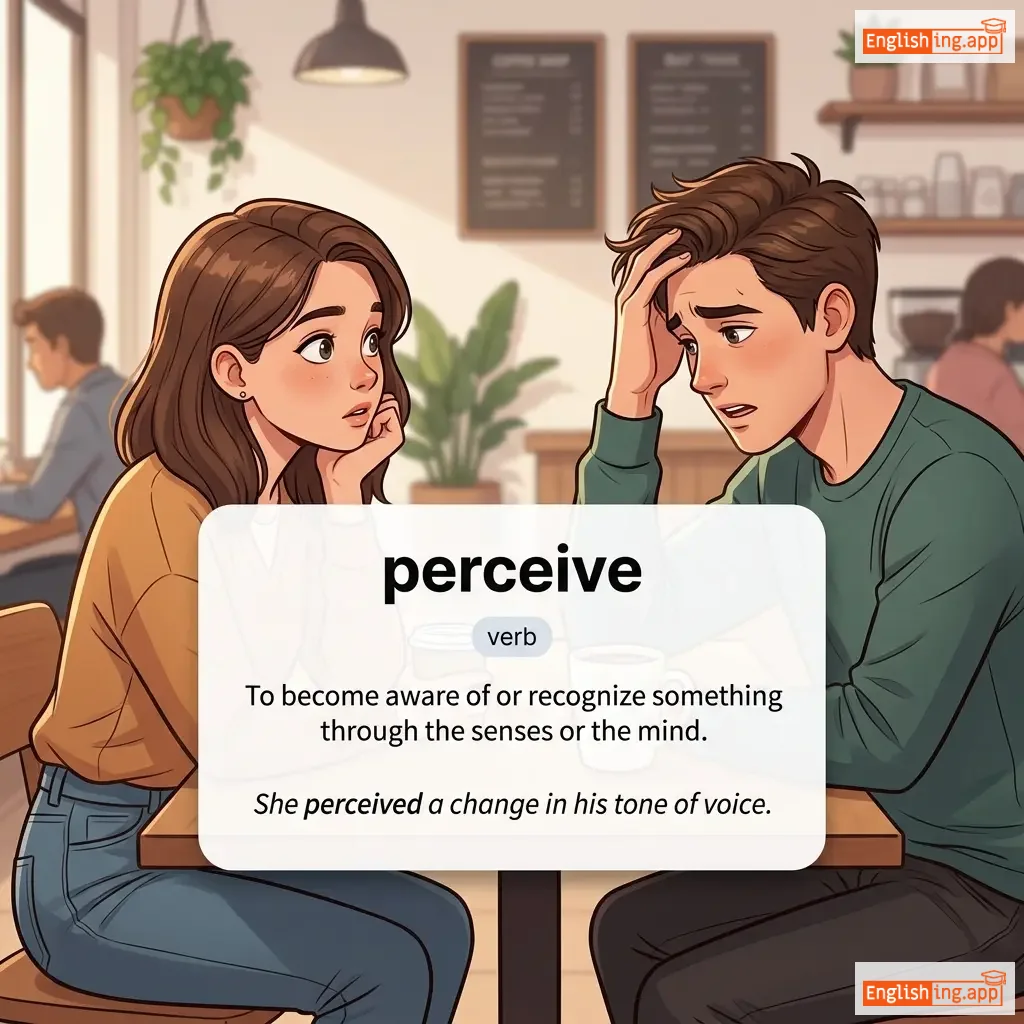
To become aware of or recognize something through the senses or the mind.
••••••
|
She perceived a change in his tone of voice.
彼女は彼の声のトーンの変化を認識しました。
••••••
|
彼女は彼の声のトーンの変化を認識しました。
Kanojo wa kare no koe no tōn no henka o ninshiki shimashita.
••••••
|
perceive as
パーシーブ・アズ
••••••
|
To regard or interpret something in a particular way
••••••
|
認識するように
ninshiki suru yō ni
••••••
|
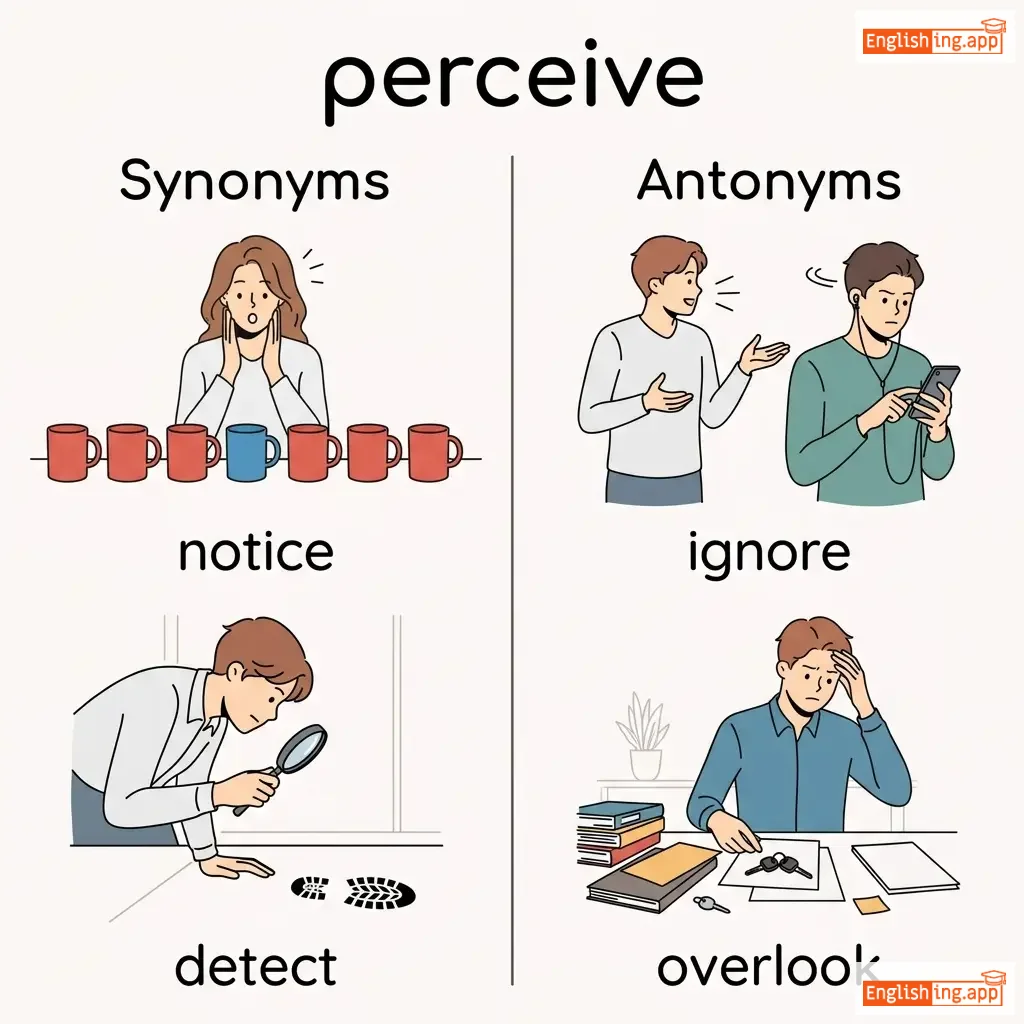
notice, detect, observe, discern, sense
••••••
|
ignore, overlook, miss
••••••
|
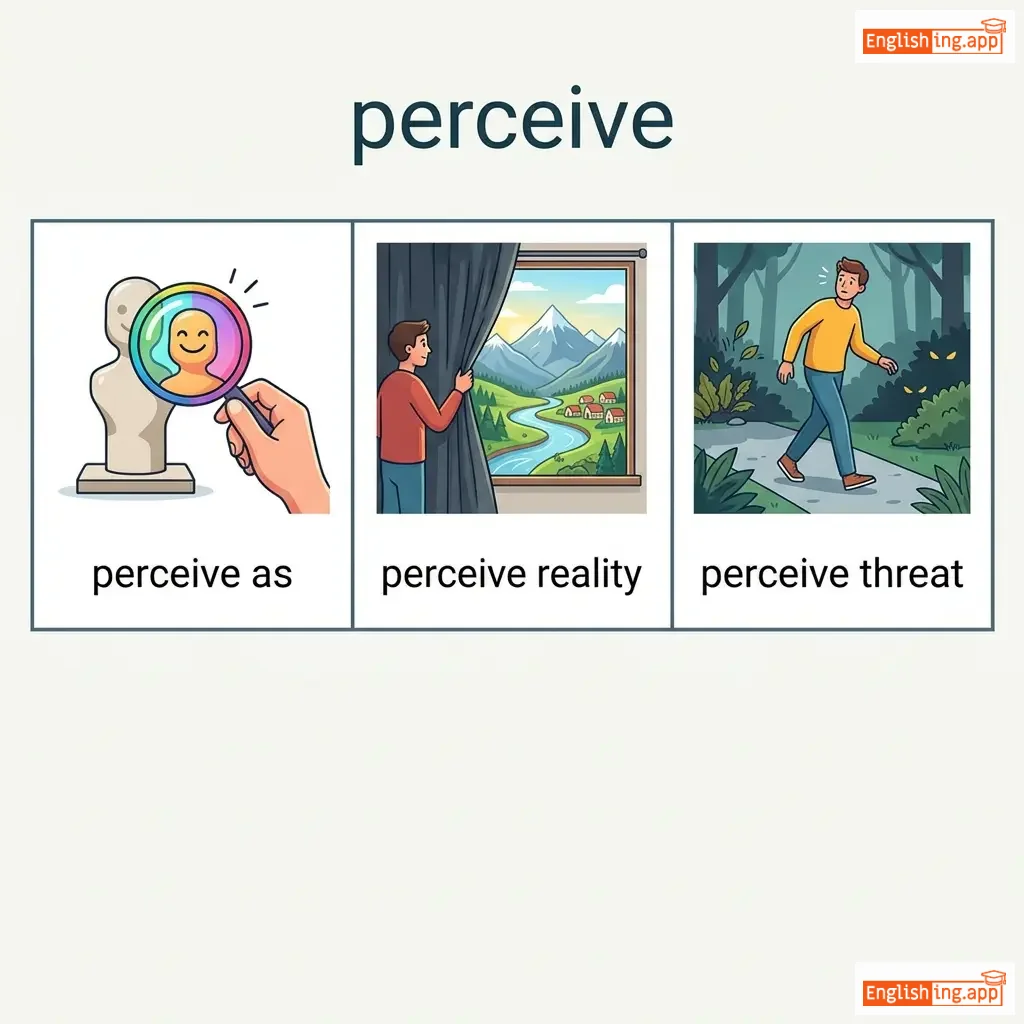
perceive as, perceive reality, perceive threat, perceive difference
••••••
|
Per CEIVE → 見る、認識する → 見るまたは理解する
••••••
|
|
#3722
📊
|
/pərˈsɛnt/
noun; adverb
(パーセント)
••••••
|
- •••••• |
パーセント
paasento
••••••
|
- •••••• | - •••••• | - •••••• | - •••••• |
a proportion out of one hundred; by each hundred
••••••
|
Sales increased by ten percent this year.
seeru inkuriisuto bai ten paasento disu yiaa
••••••
|
今年の売上は10パーセント増えました。
kotoshi no uriage wa juu paasento fuemashita
••••••
|
percent sign (%)
paasento sain
••••••
|
the symbol used to represent percent
••••••
|
パーセント記号 (%)
paasento kigou
••••••
|
percentage, proportion, rate, share
••••••
|
whole, total
••••••
|
percent of, by percent, interest rate percent
••••••
|
percent = パーセント、英語と同じ音
••••••
|
|
#3723
📊
|
/pərˈsɛntɪdʒ/
noun
(パーセンテージ)
••••••
|
- •••••• |
パーセント
pāsento
••••••
|
- •••••• | - •••••• | - •••••• | - •••••• |
a proportion or share in relation to a whole
••••••
|
The percentage of students who passed the exam was high. |
試験に合格した学生のパーセントは高かった。
Shiken ni gokaku shita gakusei no pāsento wa takakatta.
••••••
|
- •••••• | - •••••• | - •••••• |
ratio, proportion, share, fraction
••••••
|
whole, entirety
••••••
|
percentage of, high percentage, percentage point
••••••
|
Percentage is the PĀ (パ) of the whole.
••••••
|
|
#3724
🧠
|
/pərˈsɛpʃən/
noun
(パーセプション)
••••••
|
|
認識
ninshiki
••••••
|
- •••••• | - •••••• | - •••••• | - •••••• |
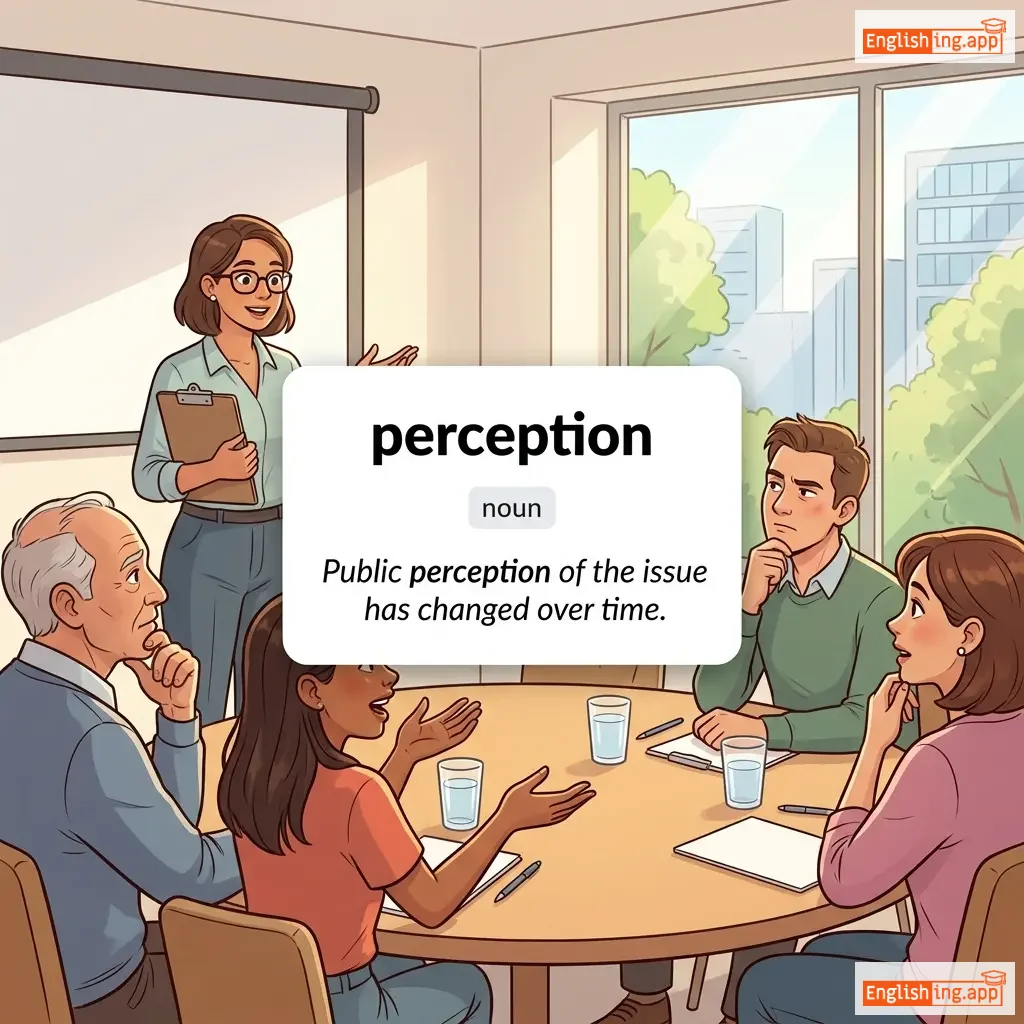
The ability to see, hear, or become aware of something; an interpretation of sensory information.
••••••
|
Public perception of the issue has changed over time. |
その問題に対する公共の認識は時間の経過とともに変化しました。
Sono mondai ni taisuru kōkyō no ninshiki wa jikan no keika to tomoni henka shimashita.
••••••
|
change perception |
To alter the way people view or interpret something
••••••
|
認識を変える
ninshiki o kaeru
••••••
|
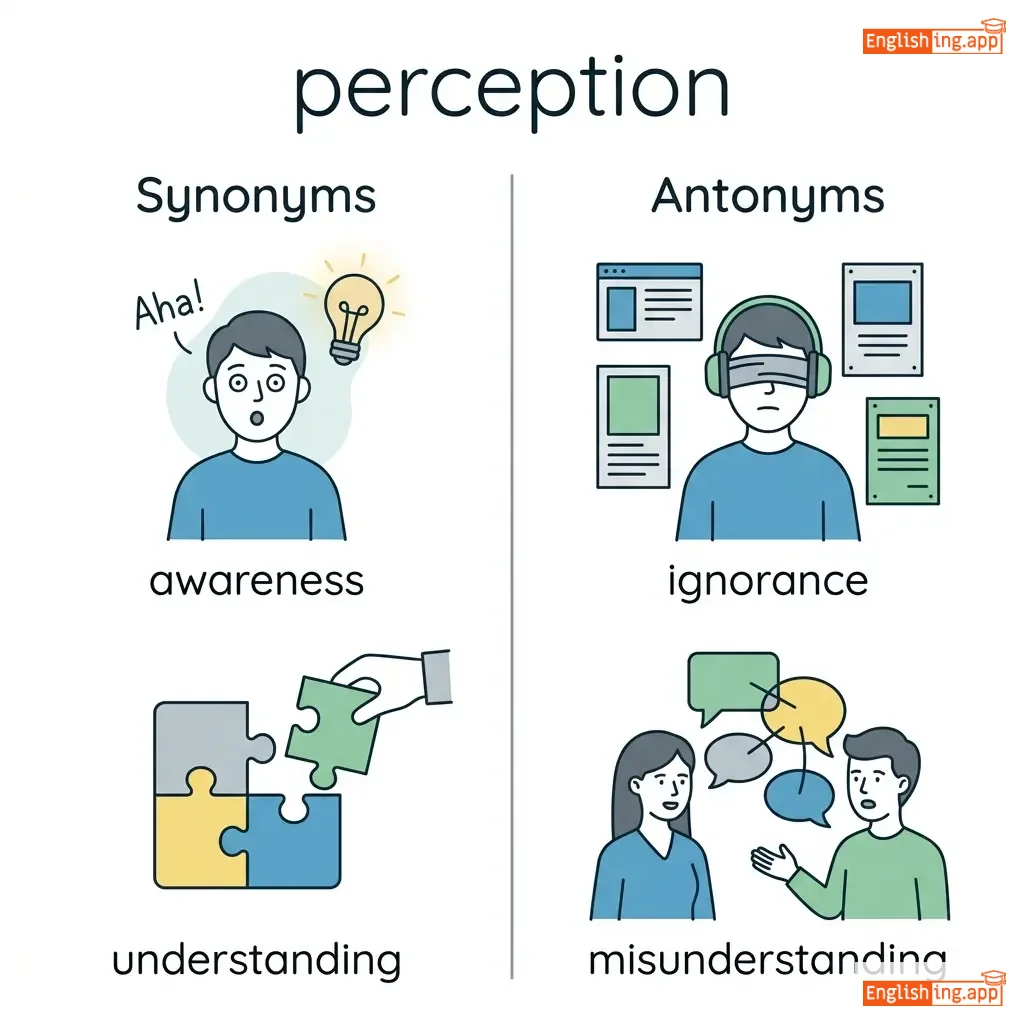
awareness, understanding, recognition, insight, cognition
••••••
|
ignorance, misunderstanding
••••••
|
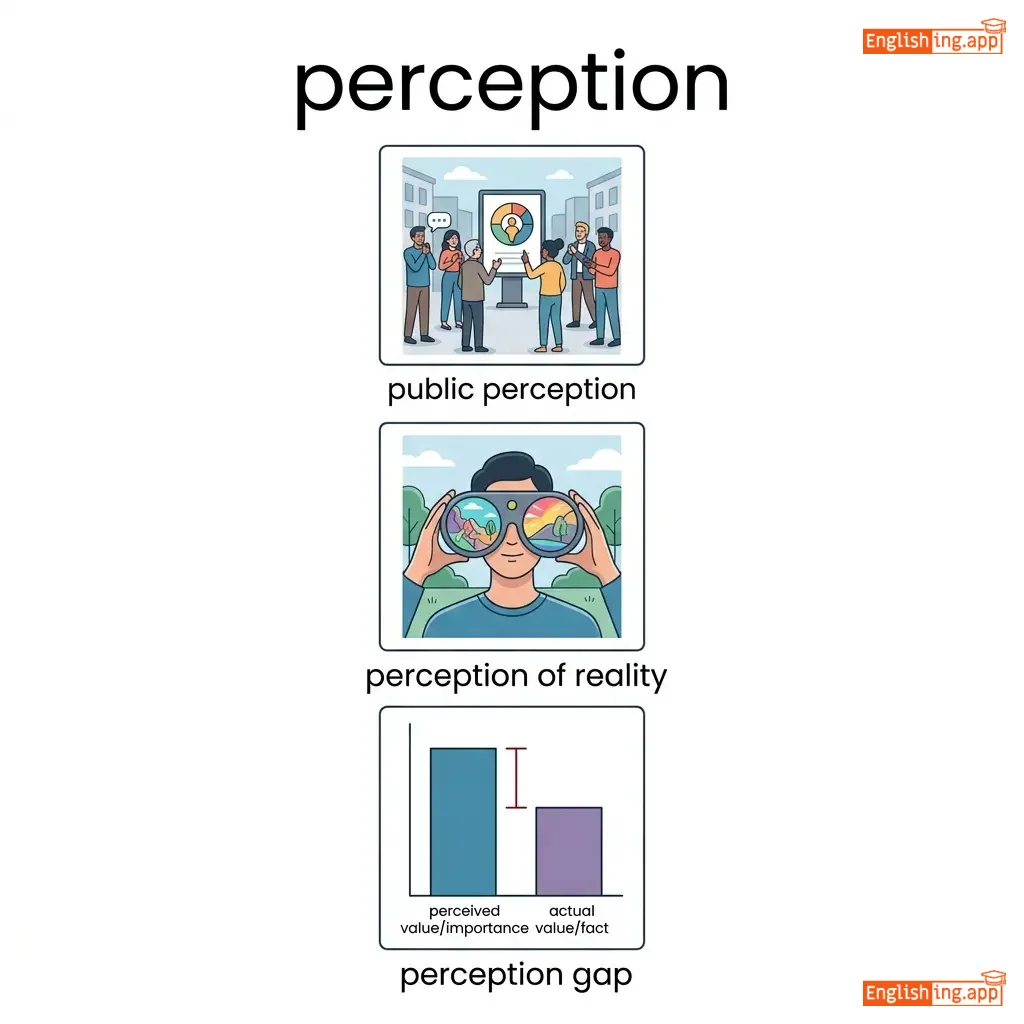
public perception, perception of reality, perception gap
••••••
|
認識 → 見たり聞いたりすることで、世界を認識する方法。
••••••
|
|
#3725
✅
|
/ˈpɜː.fɪkt/
adjective
(パーフェクト)
••••••
|
- •••••• |
完璧
kanpeki
••••••
|
- •••••• | - •••••• | - •••••• | - •••••• |
Having no mistakes or flaws; being as good as possible.
••••••
|
Her performance was perfect in every way. |
彼女のパフォーマンスはすべての点で完璧でした。
Kanojo no pafōmansu wa subete no ten de kanpeki deshita.
••••••
|
practice makes perfect |
regular practice leads to improvement and mastery
••••••
|
練習が完璧を作る
Renshū ga kanpeki o tsukuru
••••••
|
flawless, ideal, impeccable, excellent
••••••
|
imperfect, flawed, faulty
••••••
|
perfect solution, perfect example, perfect timing, perfect condition
••••••
|
完璧は完璧なもの、何も欠けていない!
••••••
|
|
#3726
✅
|
/ˈpɜːfɪktli/
adverb
••••••
|
- •••••• | - •••••• | - •••••• | - •••••• | - •••••• | - •••••• |
in a perfect manner; without flaws
••••••
|
She performed the task perfectly. |
- •••••• | - •••••• | - •••••• | - •••••• |
flawlessly, impeccably, smoothly, excellently
••••••
|
imperfectly, badly
••••••
|
perform perfectly, behave perfectly, execute perfectly
••••••
|
No •••••• |
|
#3727
🎭
|
/pəˈfɔːm/
verb
(パフォーマ)
••••••
|
|
実行する
jikkou suru
••••••
|
performed
パフォームド
••••••
|
performed
パフォームド
••••••
|
performs
パフォームス
••••••
|
performing
パフォームング
••••••
|
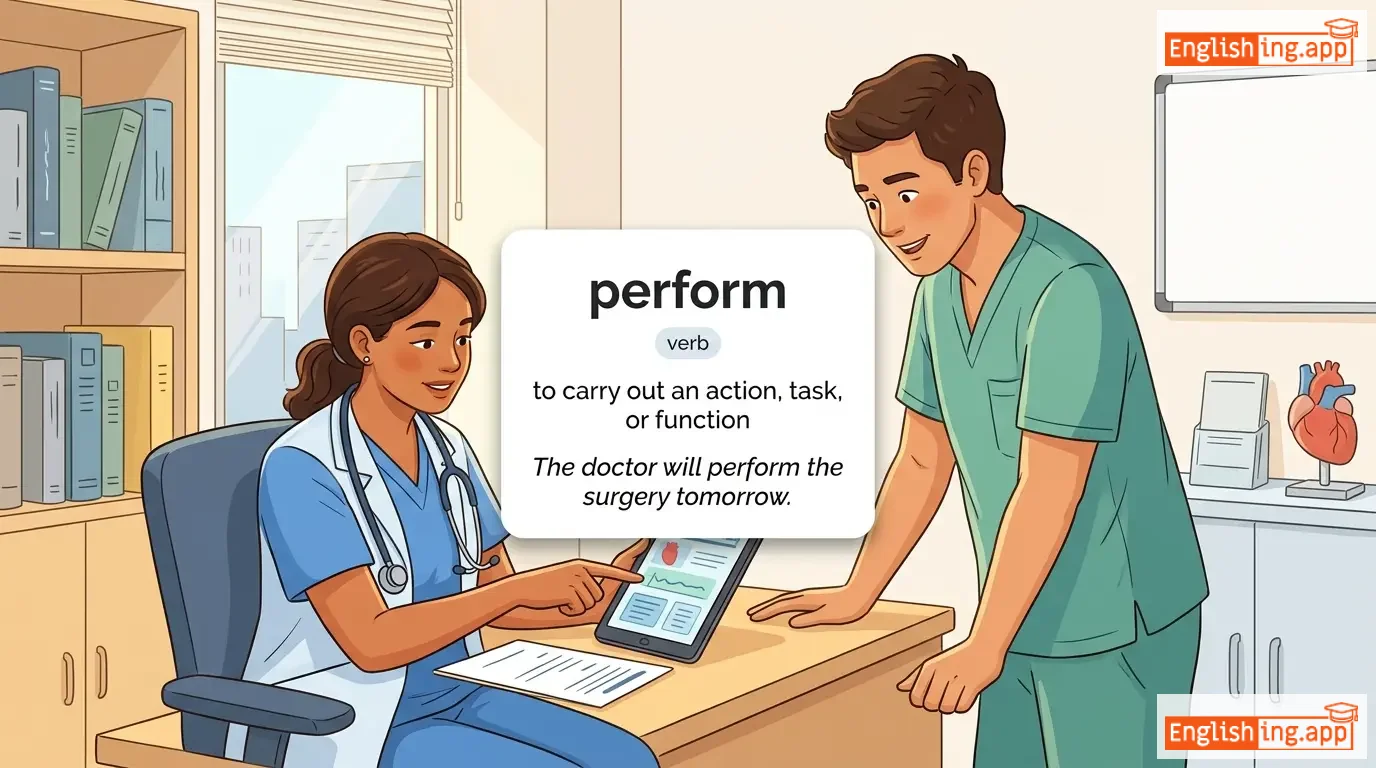
to carry out an action, task, or function
••••••
|
The doctor will perform the surgery tomorrow.
医者は明日手術を行う予定です。
••••••
|
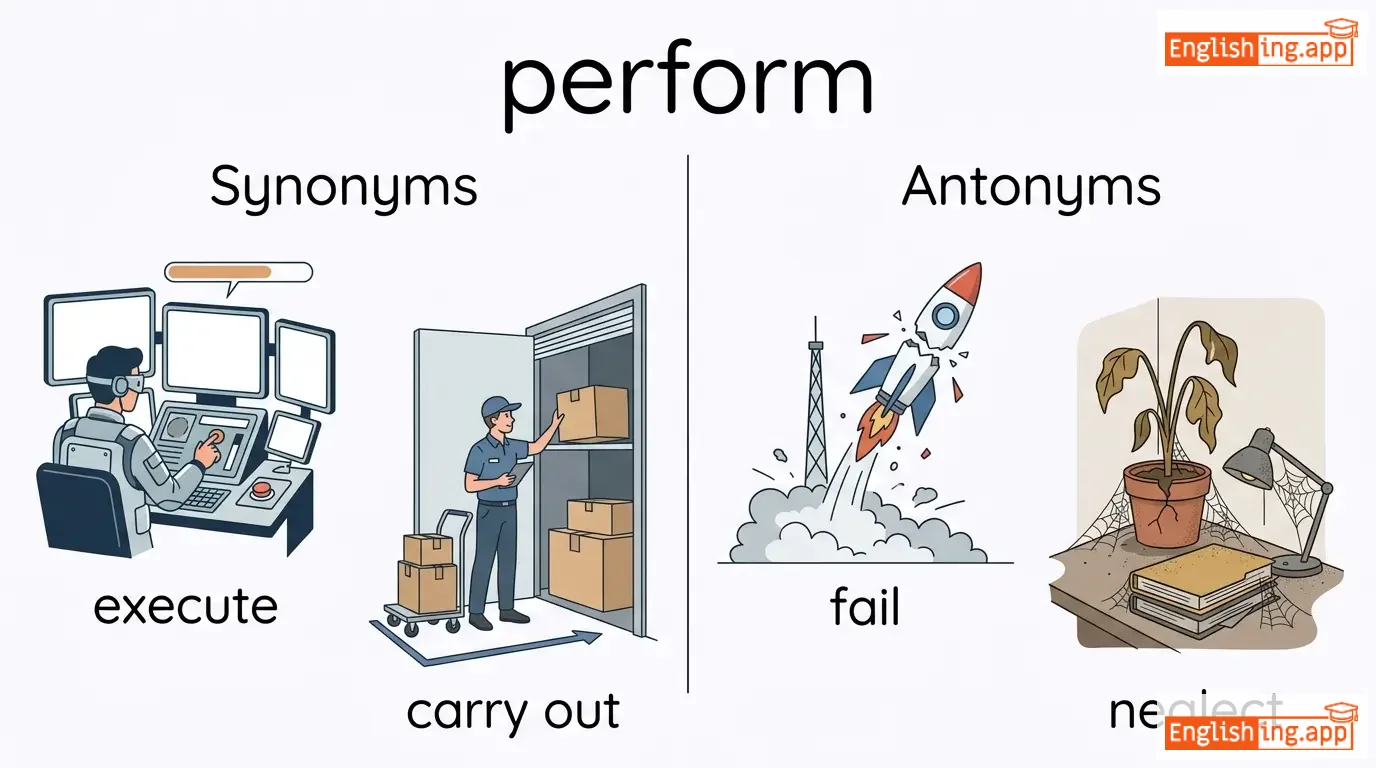
医者は明日手術を行う予定です。
Isha wa ashita shujutsu o okonau yotei desu.
••••••
|
perform miracles
奇跡を起こす
••••••
|
to achieve extraordinary results
••••••
|
奇跡を起こす
kiseki o okosu
••••••
|
execute, carry out, accomplish, act, conduct
••••••
|
fail, neglect
••••••
|
perform well, perform task, perform surgery, perform role
••••••
|
パフォーマは仕事を実行するという意味です。
••••••
|
|
#3728
🎭
|
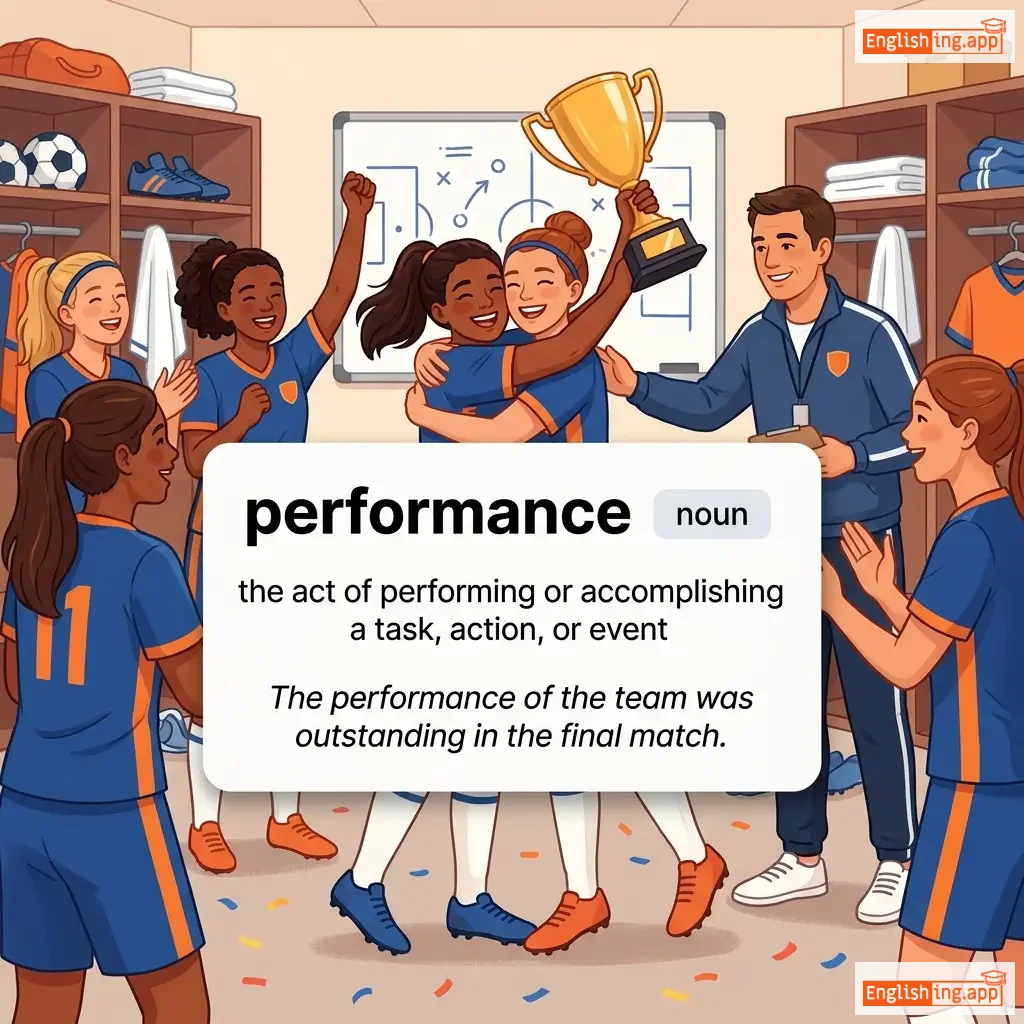
/pərˈfɔr.məns/
noun
(パフォーマンス)
••••••
|
|
パフォーマンス; 実行
pafōmansu; jikkō
••••••
|
- •••••• | - •••••• | - •••••• | - •••••• |
the action of presenting a play, concert, or other form of entertainment; how well someone does a task
••••••
|
The student's performance in the exam was excellent. |
学生の試験のパフォーマンスは素晴らしかった。
Gakusei no shiken no pafōmansu wa subarashikatta.
••••••
|
- •••••• | - •••••• | - •••••• |
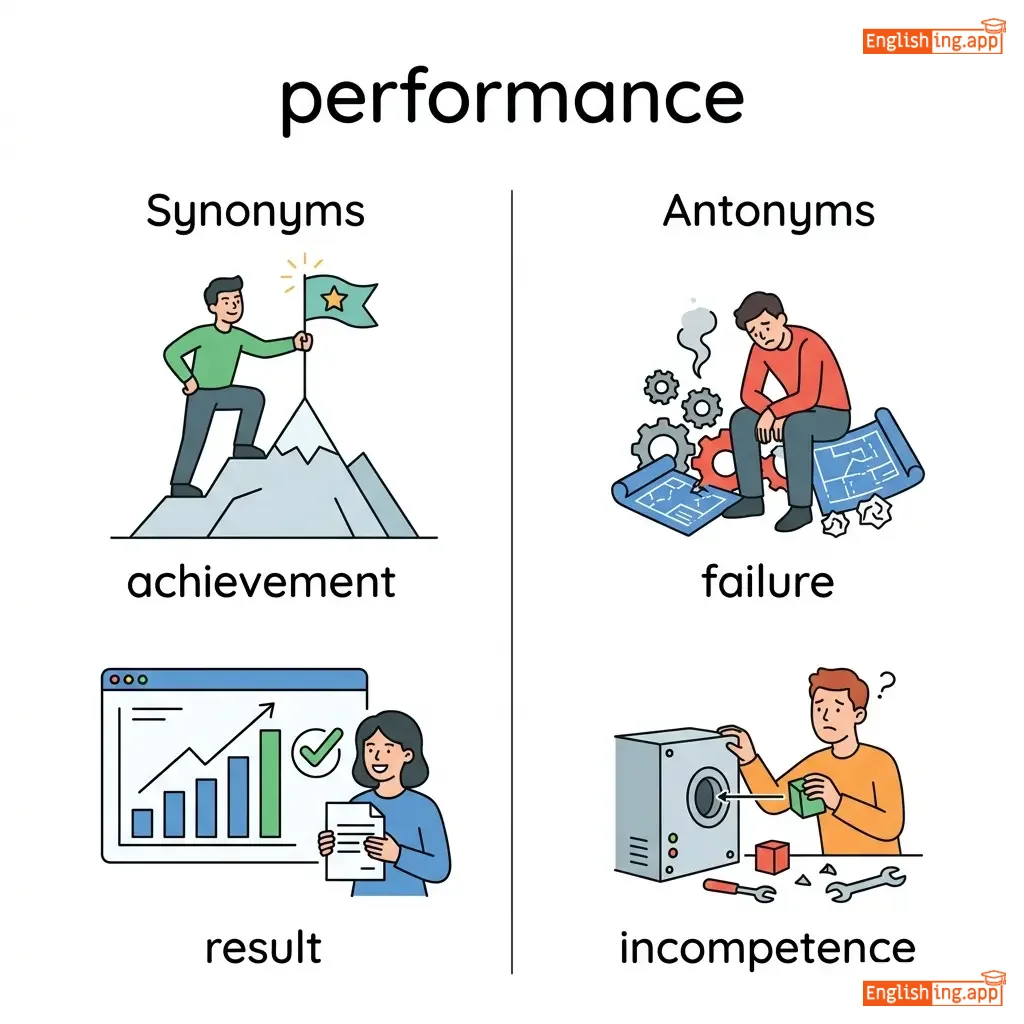
execution, accomplishment, presentation, show
••••••
|
failure, incompetence, poor showing
••••••
|
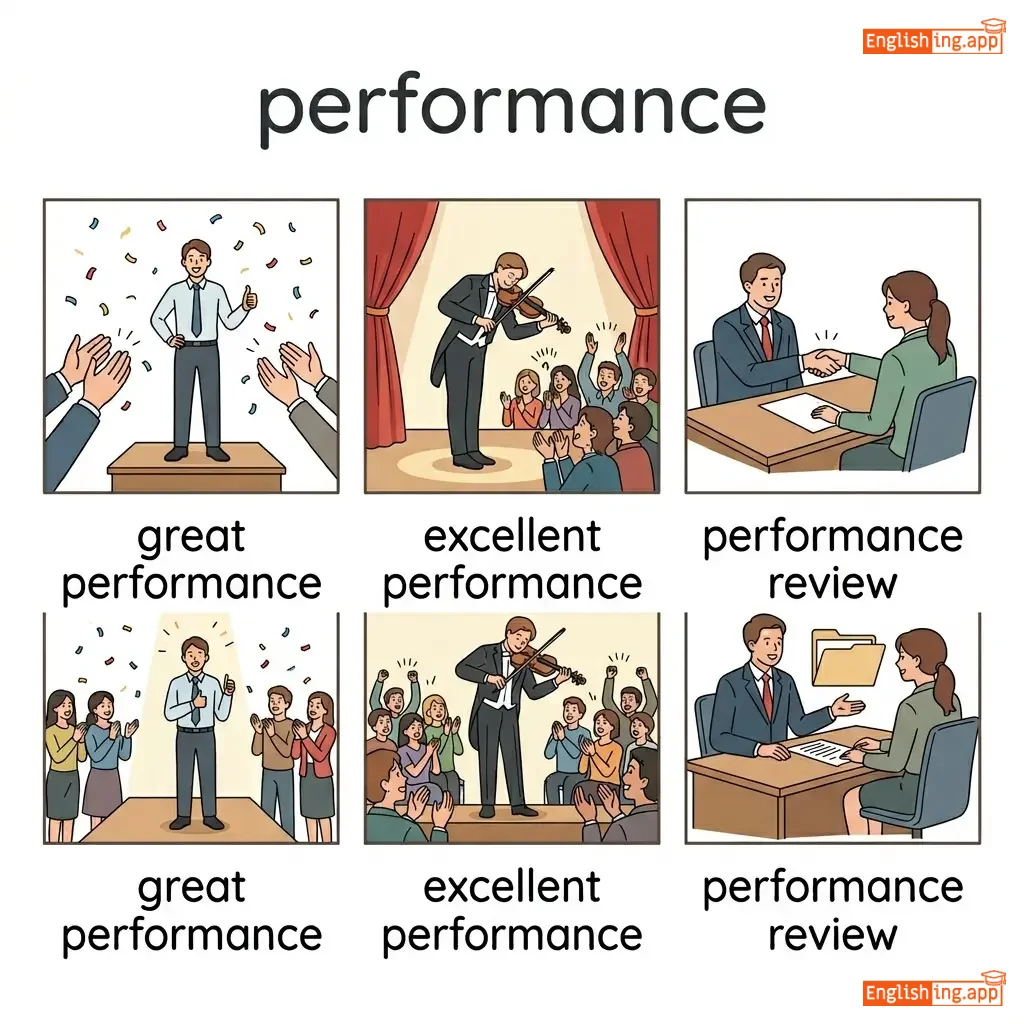
excellent performance, live performance, job performance
••••••
|
試験でのパフォーマンスが成功を示します。
••••••
|
|
#3729
🤔
|
/pəˈhæps/
adverb
(パーハプス)
••••••
|
- •••••• |
おそらく; もしかしたら
osoraku; moshikashitara
••••••
|
- •••••• | - •••••• | - •••••• | - •••••• |
possibly; maybe; used to express uncertainty or make a suggestion
••••••
|
Perhaps we should call before visiting to make sure they're home. |
おそらく、私たちは訪問する前に電話をかけて、彼らが家にいることを確認するべきです。
Osoraku, watashitachi wa hōmon suru mae ni denwa o kakete, karera ga ie ni iru koto o kakunin suru beki desu.
••••••
|
- •••••• | - •••••• | - •••••• |
maybe, possibly, conceivably, perchance, potentially
••••••
|
certainly, definitely, surely, undoubtedly, absolutely
••••••
|
perhaps not, perhaps so, perhaps because, perhaps more importantly
••••••
|
パーティーで何か面白いことが起こるかもしれない
••••••
|
|
#3730
⏳
|
/ˈpɪərɪəd/
noun
(ピリオド)
••••••
|
- •••••• |
期間
kikan
••••••
|
- •••••• | - •••••• | - •••••• | - •••••• |
a length or portion of time
••••••
|
The meeting will last for a period of two hours. |
会議は2時間の期間続きます。
Kaigi wa 2 jikan no kikan tsudzukimasu.
••••••
|
- •••••• | - •••••• | - •••••• |
duration, span, interval, stretch
••••••
|
moment, instant
••••••
|
long period, short period, indefinite period
••••••
|
Period = ピリ (ピリオド) 時間
••••••
|
|
#3731
♾️
|
/ˈpɜːrmənənt/
adjective
(パーマネント)
••••••
|
- •••••• |
永久
eikyū
••••••
|
- •••••• | - •••••• | - •••••• | - •••••• |
lasting or intended to last indefinitely without change
••••••
|
She decided to get a permanent job after years of freelancing. |
彼女は何年ものフリーランスの仕事の後、永久的な仕事を得ることに決めました。
Kanojo wa nannen mono furiiransu no shigoto no ato, eikyū-teki na shigoto o eru koto ni kimemashita.
••••••
|
permanent fixture |
someone or something that has been in a place for a long time and seems likely to always be there
••••••
|
長い間その場所にいて、永遠にそこにいるように見える人や物
Nagai aida sono basho ni ite, eien ni soko ni iru yō ni mieru hito ya mono
••••••
|
everlasting, enduring, lasting, constant, perpetual
••••••
|
temporary, transient, short-lived
••••••
|
permanent job, permanent residence, permanent solution, permanent damage
••••••
|
Permanentは永遠に残ることを意味し、永久(eikyū)解決策のようです。
••••••
|
|
#3732
🔒
|
/ˈpɜː.mə.nənt.li/
adverb
(パーマネントリー)
••••••
|
- •••••• |
永続的に
eizokuteki ni
••••••
|
- •••••• | - •••••• | - •••••• | - •••••• |
in a way that lasts or remains unchanged for a long time or forever
••••••
|
She moved to the city permanently after finishing her studies. |
彼女は学業を終えた後、永続的にその街に引っ越しました。
Kanojo wa gakugyou o oeta ato, eizokuteki ni sono machi ni hikkoshimashita.
••••••
|
- •••••• | - •••••• | - •••••• |
forever, eternally, indefinitely, for good
••••••
|
temporarily, briefly
••••••
|
permanently closed, permanently removed, permanently settled
••••••
|
永続的に - 変わらずに同じ場所に留まる
••••••
|
|
#3733
🔑
|
/pərˈmɪʃən/
noun
(パーミッション)
••••••
|
- •••••• |
許可
kyoka
••••••
|
- •••••• | - •••••• | - •••••• | - •••••• |
the action of allowing or granting consent
••••••
|
You need permission to enter the restricted area. |
制限区域に入るには許可が必要です。
Seigen kuiki ni hairu ni wa kyoka ga hitsuyō desu.
••••••
|
- •••••• | - •••••• | - •••••• |
authorization, consent, approval, sanction
••••••
|
denial, refusal, prohibition
••••••
|
seek permission, grant permission, without permission
••••••
|
Permission = Per (ぺ) + Mission (ミッション).
••••••
|
|
#3734
✅
|
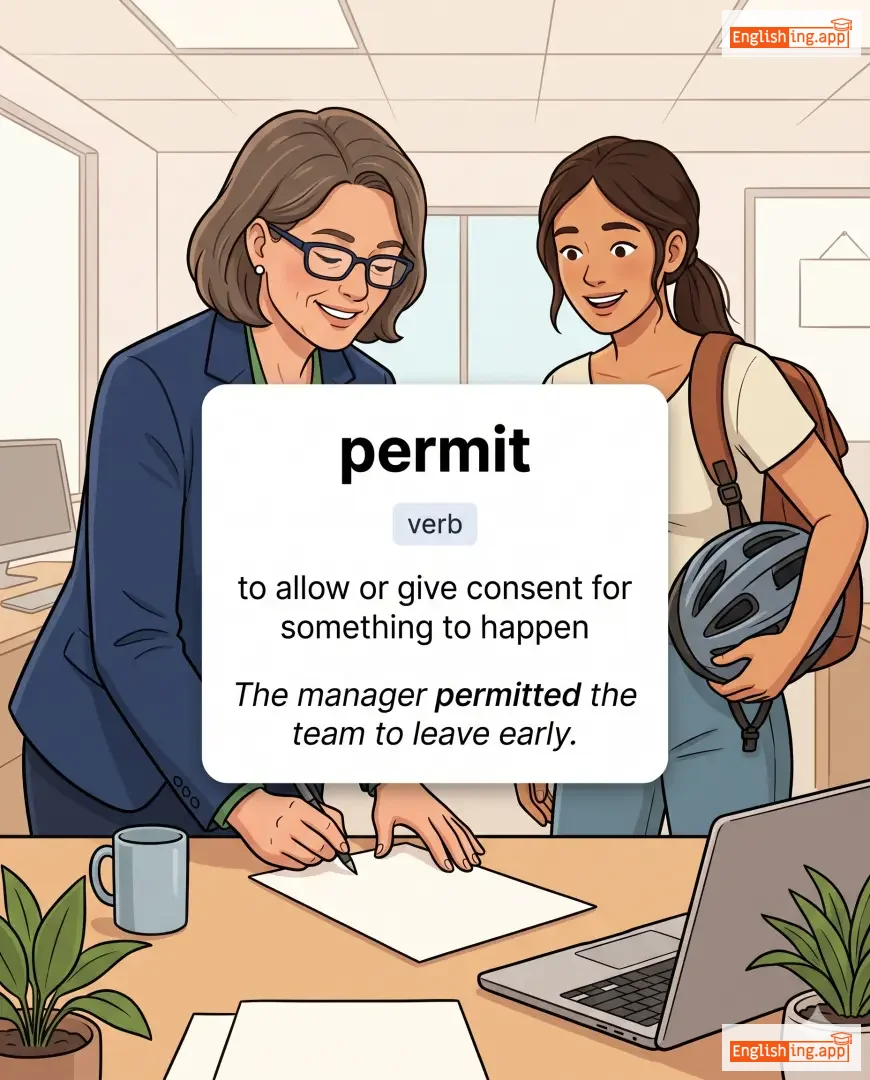
/pərˈmɪt/
verb
(パーミット)
••••••
|
|
許可する
kyoka suru
••••••
|
permitted
パーミッテッド
••••••
|
permitted
パーミッテッド
••••••
|
permits
パーミッツ
••••••
|
permitting
パーミッティング
••••••
|
to allow or give permission; to make possible
••••••
|
The teacher permits students to use calculators during the exam.
先生は試験中に学生に計算機の使用を許可しています。
••••••
|
先生は試験中に学生に計算機の使用を許可しています。
Sensei wa shiken-chū ni gakusei ni keisanki no shiyou o kyoka shiteimasu.
••••••
|
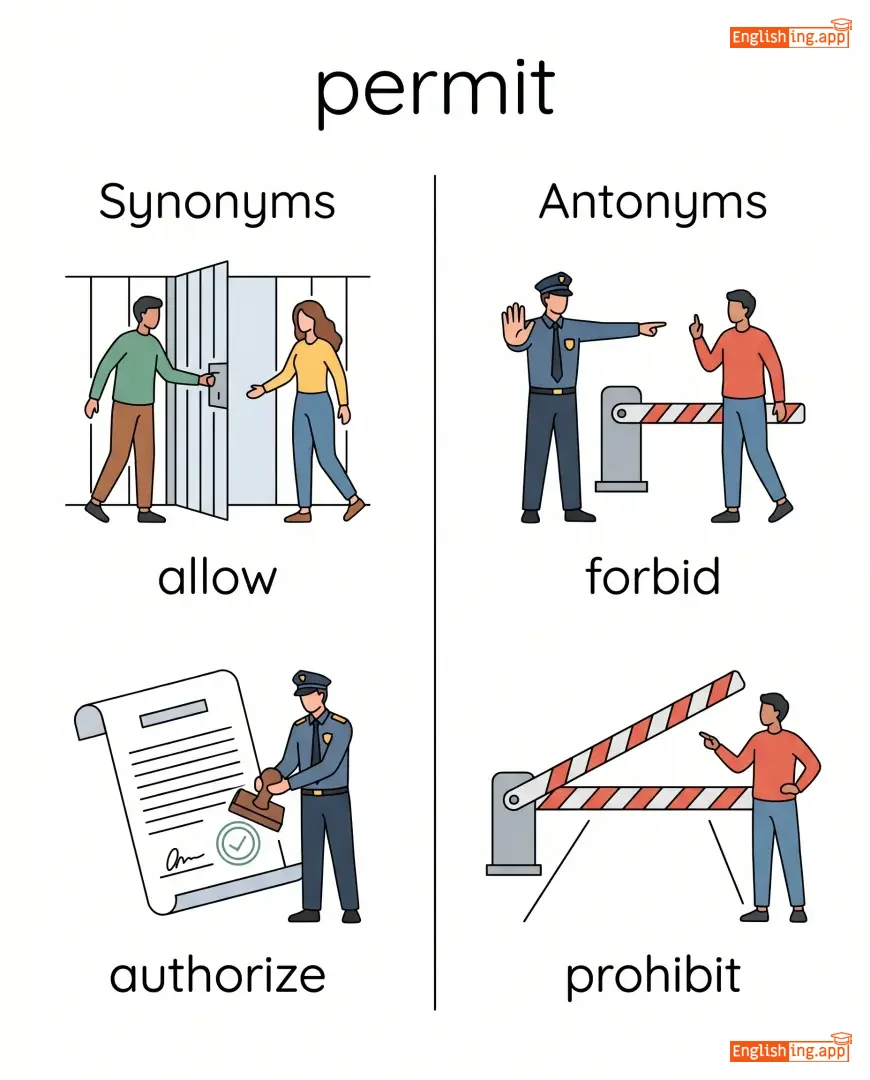
- •••••• | - •••••• | - •••••• |
allow, authorize, enable, consent
••••••
|
forbid, prohibit, deny, ban
••••••
|
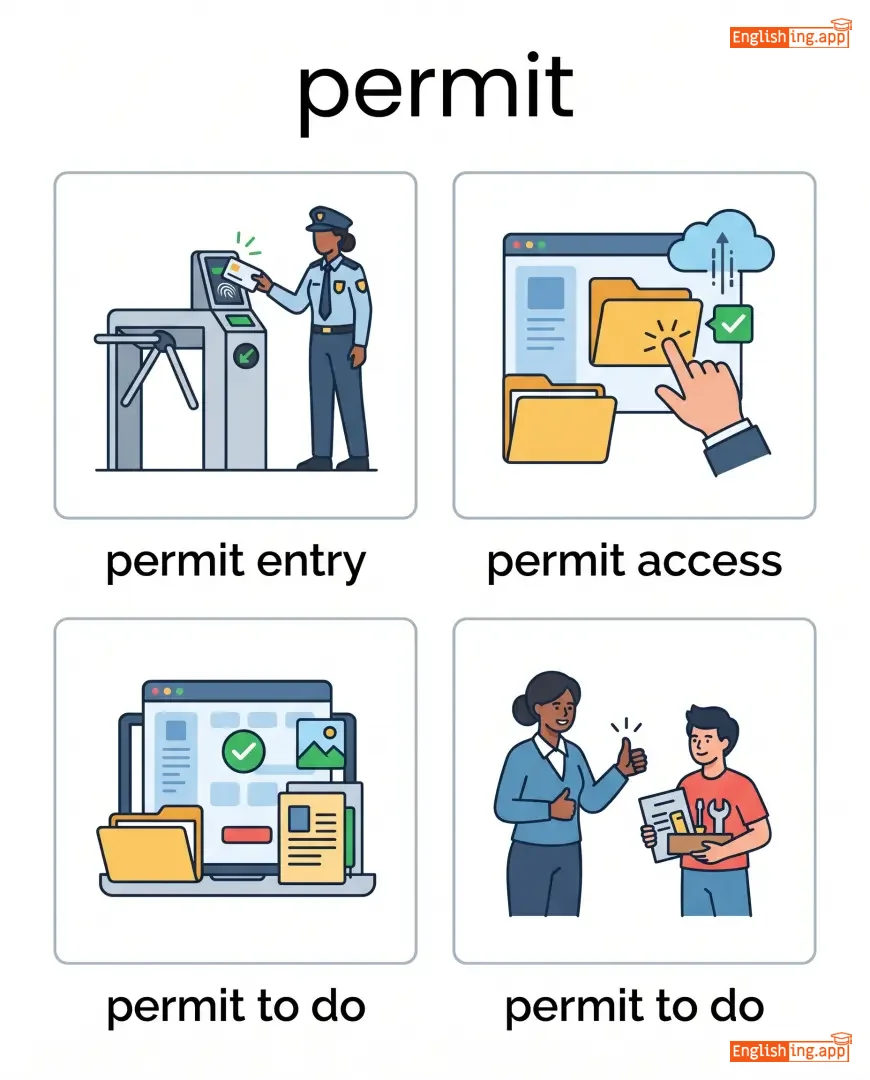
permit access, permit entry, legally permit, rarely permit
••••••
|
『許可する』を覚え、許可を与える行為を想像しましょう。
••••••
|
|
#3735
💪
|
/pərˈsɪst/
verb
••••••
|
- •••••• | - •••••• |
persisted
••••••
|
persisted
••••••
|
persists
••••••
|
persisting
••••••
|
to continue firmly in an action or opinion despite difficulty or opposition
••••••
|
She decided to persist in her efforts to learn French. |
- •••••• |
persist with something |
to continue trying to do something despite difficulties
••••••
|
- •••••• |
continue, endure, persevere, remain, last
••••••
|
quit, stop, abandon
••••••
|
persist in, persist with, persist despite, persistently persist
••••••
|
No •••••• |
|
#3736
💪
|
/pəˈsɪs.tənt/
adjective
(パーシステント)
••••••
|
- •••••• |
持続的
jizokuteki
••••••
|
- •••••• | - •••••• | - •••••• | - •••••• |
continuing to exist or endure over a prolonged period
••••••
|
Despite many setbacks, her persistent efforts led to success. |
多くの障害にもかかわらず、彼女の持続的な努力は成功をもたらした。
Ōku no shōgai ni mo kakawarazu, kanojo no jizokuteki na doryoku wa seikō o motarashita.
••••••
|
- •••••• | - •••••• | - •••••• |
determined, tenacious, relentless, constant
••••••
|
sporadic, intermittent
••••••
|
persistent efforts, persistent problem, persistent illness
••••••
|
持続的な努力は必ず実を結ぶ
••••••
|
|
#3737
👤
|
/ˈpɜːrsən/
noun
(パーソン)
••••••
|
- •••••• |
人
hito
••••••
|
- •••••• | - •••••• | - •••••• | - •••••• |
an individual human being
••••••
|
She is a kind person who always helps others.
彼女はいつも他の人を助ける優しい人です。
••••••
|
彼女はいつも他の人を助ける優しい人です。
Kanojo wa itsumo hoka no hito o tasukeru yasashii hito desu.
••••••
|
- •••••• | - •••••• | - •••••• |
individual, human, being, soul
••••••
|
animal, machine
••••••
|
good person, kind person, strong person
••••••
|
Person = Per (パー) + Son (息子) - Per son は人だ!
••••••
|
|
#3738
🙋♂️
|
/ˈpɜːrsənl/
adjective
(パーソナル)
••••••
|
- •••••• |
個人的な
kodentekina
••••••
|
- •••••• | - •••••• | - •••••• | - •••••• |
relating to a particular person rather than anyone else
••••••
|
She shared some personal details about her family. |
彼女は家族についての個人的な詳細を共有しました。
Kanojo wa kazoku ni tsuite no kodentekina shousai o kyōyū shimashita.
••••••
|
personal touch |
a unique, human, or individual element added to something
••••••
|
個人的なタッチ
kodentekina tacchi
••••••
|
private, individual, intimate, own
••••••
|
public, general, impersonal
••••••
|
personal details, personal life, personal opinion, personal experience
••••••
|
Personalは人に関連しているという意味 — それは個人的なものです!
••••••
|
|
#3739
🙂
|
/ˌpɜːrsəˈnæləti/
noun
(パーソナリティ)
••••••
|
- •••••• |
個性
kosei
••••••
|
- •••••• | - •••••• | - •••••• | - •••••• |
The combination of qualities or characteristics that form an individual's distinctive character.
••••••
|
Her cheerful personality makes her very popular.
彼女の明るいパーソナリティは、彼女をとても人気者にします。
••••••
|
彼女の明るいパーソナリティは、彼女をとても人気者にします。
Kanojo no akarui pāsonariti wa, kanojo o totemo ninkimono ni shimasu.
••••••
|
split personality
二重人格
••••••
|
A condition in which a person shows two very different characters or identities.
••••••
|
二重人格
Nijū jinkaku
••••••
|
character, temperament, nature, disposition, individuality
••••••
|
anonymity, impersonality, uniformity
••••••
|
strong personality, charming personality, outgoing personality, unique personality
••••••
|
Person + 性 (sei) = 個性; 'person' には自分の個性があることを思い出してください。
••••••
|
|
#3740
👤
|
/ˈpɜr.sən.ə.li/
adverb
(パーソナリー)
••••••
|
- •••••• |
個人的に; 私の意見では; 自分のために; 自分自身で
kojinteki ni; watashi no iken dewa; jibun no tame ni; jibun jishin de
••••••
|
- •••••• | - •••••• | - •••••• | - •••••• |
as a person; in one's own opinion; for oneself; in person
••••••
|
Personally, I think the movie was excellent, though others disagree.
個人的に言うと、その映画は素晴らしいと思いますが、他の人は賛成していません。
••••••
|
個人的に言うと、その映画は素晴らしいと思いますが、他の人は賛成していません。
kojinteki ni iu to, sono eiga wa subarashī to omoimasu ga, hoka no hito wa sansei shiteimasen.
••••••
|
- •••••• | - •••••• | - •••••• |
individually, privately, subjectively, in my opinion, for myself
••••••
|
impersonally, objectively, generally, collectively, publicly
••••••
|
personally speaking, personally responsible, take personally, personally involved
••••••
|
個人的に = 私の意見では、自分のために
••••••
|
|
#3741
👥
|
/ˌpɜːrsəˈnel/
noun
(パーソネル)
••••••
|
- •••••• |
人員
jin'in
••••••
|
- •••••• | - •••••• | - •••••• | - •••••• |
People employed in an organization or engaged in an organized undertaking such as military service.
••••••
|
The company is hiring more personnel for its new branch. |
会社は新しい支店のためにもっと多くの人員を採用しています。
Kaisha wa atarashī shiten no tame ni motto ōku no jin'in o sai-yō shiteimasu.
••••••
|
military personnel |
People serving in the armed forces.
••••••
|
軍事関係者
gunji kankeisha
••••••
|
staff, employees, workforce, crew
••••••
|
employers, management
••••••
|
military personnel, trained personnel, medical personnel, company personnel
••••••
|
Personnel = person (人) + al = 全ての従業員。
••••••
|
|
#3742
🔭
|
/pərˈspɛktɪv/
noun
(パースペクティブ)
••••••
|
- •••••• |
視点
shiten
••••••
|
- •••••• | - •••••• | - •••••• | - •••••• |
A particular attitude toward or way of regarding something; a point of view.
••••••
|
From her perspective, the plan seemed risky. |
彼女の視点から見ると、その計画はリスクがあるように思えました。
Kanojo no shiten kara miru to, sono keikaku wa risuku ga aru yō ni omoemashita.
••••••
|
a new perspective |
A fresh or different way of looking at something.
••••••
|
新しい視点
Atarashī shiten
••••••
|
viewpoint, outlook, angle, perception, stance
••••••
|
blindness, ignorance
••••••
|
different perspective, broad perspective, unique perspective, perspective on
••••••
|
Per + perspective (スペクタクル) = 見る; 物事をどう見るかという方法。
••••••
|
|
#3743
🗣️
|
/pərˈsweɪd/
verb
(ハピネス)
••••••
|
- •••••• |
幸せ
shiawase
••••••
|
persuaded
••••••
|
persuaded
••••••
|
persuades
••••••
|
persuading
••••••
|
to convince someone to do or believe something through reasoning or argument
••••••
|
He persuaded his friend to join the club.
彼女は賞を受け取ったとき、自分の幸せを隠せなかった。
••••••
|
彼女は賞を受け取ったとき、自分の幸せを隠せなかった。
Kanojo wa shō o uketotta toki, jibun no shiawase o kakusenakatta.
••••••
|
persuade someone into something
幸せを追い求める
••••••
|
to convince someone to take an action
••••••
|
幸せを追い求める
shiawase o oi motomeru
••••••
|
convince, influence, sway, coax, motivate
••••••
|
dissuade, discourage, deter
••••••
|
persuade someone, try to persuade, persuade into, persuade out of
••••••
|
幸せは心の中に広がる温かい光のようなもの。
••••••
|
|
#3744
🐶
|
/pɛt/
noun
(ペット)
••••••
|
- •••••• |
ペット
petto
••••••
|
- •••••• | - •••••• | - •••••• | - •••••• |
a domesticated animal kept for companionship or pleasure
••••••
|
My dog is my favorite pet. |
私の犬は私のお気に入りのペットです。
Watashi no inu wa watashi no okiniiri no petto desu.
••••••
|
- •••••• | - •••••• | - •••••• |
companion, animal, domestic animal, house pet
••••••
|
wild animal, stray
••••••
|
pet dog, pet cat, pet store, take care of a pet
••••••
|
ペットは家で飼う動物、例えば犬や猫です (Pets are animals kept at home, like dogs and cats).
••••••
|
|
#3745
📝
|
/pəˈtɪʃən/
noun
(ペティション)
••••••
|
- •••••• |
請願書
seigan-sho
••••••
|
- •••••• | - •••••• | - •••••• | - •••••• |
a formal written request, typically signed by many people, appealing to authority about a cause
••••••
|
They signed a petition to improve road safety in the area. |
彼らはその地域の道路安全を改善するために請願書に署名しました。
Karera wa sono chiiki no dōro anzen o kaizen suru tame ni seigan-sho ni shomei shimashita.
••••••
|
sign a petition |
to officially support a request by adding your signature
••••••
|
請願書に署名する
seigan-sho ni shomei suru
••••••
|
request, appeal, plea, application, demand
••••••
|
order, command
••••••
|
sign a petition, file a petition, submit a petition, online petition
••••••
|
Petition = ペティション — みんなで署名して、共に戦う
••••••
|
|
#3746
🔄
|
/feɪz/
noun
(フェイズ)
••••••
|
- •••••• |
段階; 変化や発展の過程での特定の期間または段階
dankai; henka ya hatten no katei de no tokutei no kikan matawa dankai
••••••
|
- •••••• | - •••••• | - •••••• | - •••••• |
a distinct period or stage in a process of change or development
••••••
|
The project is now in its final phase. |
プロジェクトは現在最終段階にあります。
Purojekuto wa genzai saishuu dankai ni arimasu.
••••••
|
- •••••• | - •••••• | - •••••• |
stage, step, period, chapter
••••••
|
whole, entirety, completion
••••••
|
development phase, testing phase, final phase
••••••
|
Phase means 'dankai' in Japanese, like the phase of a project.
••••••
|
|
#3747
✨
|
/fəˈnɒmɪnən/
noun
(フィノメノン)
••••••
|
- •••••• |
現象
genshō
••••••
|
- •••••• | - •••••• | - •••••• | - •••••• |
an observable event, fact, or occurrence, often unusual or remarkable
••••••
|
The Northern Lights are a natural phenomenon. |
オーロラは自然現象です。
Ōrora wa shizen genshō desu.
••••••
|
social phenomenon |
a significant event or trend in society
••••••
|
社会現象
shakai genshō
••••••
|
occurrence, event, happening, spectacle, marvel
••••••
|
normality, regularity
••••••
|
natural phenomenon, rare phenomenon, global phenomenon, scientific phenomenon
••••••
|
Phenomenon = フィノメノン、自然の奇跡のような現象!
••••••
|
|
#3748
🧠
|
/fɪˈlɒsəfə/
noun
(フィロソファー)
••••••
|
- •••••• |
哲学者
tetsugakusha
••••••
|
- •••••• | - •••••• | - •••••• | - •••••• |
a person engaged in the study of philosophy or in serious thinking about fundamental questions
••••••
|
Socrates was a famous philosopher of ancient Greece.
ソクラテスは古代ギリシャの有名な哲学者でした。
••••••
|
ソクラテスは古代ギリシャの有名な哲学者でした。
Sokuratesu wa kodai Girisha no yuumei na tetsugakusha deshita.
••••••
|
- •••••• | - •••••• | - •••••• |
thinker, intellectual, scholar, sage
••••••
|
ignorant, unreflective
••••••
|
famous philosopher, great philosopher, philosopher's ideas
••••••
|
哲学者は深く考え、質問する人です
••••••
|
|
#3749
🧠
|
/ˌfɪl.əˈsɒf.ɪ.kəl/
adjective
(フィロソフィカル)
••••••
|
- •••••• |
哲学的
tetsugakuteki
••••••
|
- •••••• | - •••••• | - •••••• | - •••••• |
relating to the study of the fundamental nature of knowledge, reality, and existence
••••••
|
She maintained a calm and philosophical attitude during the crisis.
危機の間、彼女は冷静で哲学的な態度を保ちました。
••••••
|
危機の間、彼女は冷静で哲学的な態度を保ちました。
Kiki no aida, kanojo wa reisei de tetsugakuteki na taido o tamochimashita.
••••••
|
- •••••• | - •••••• | - •••••• |
wise, thoughtful, reflective, rational
••••••
|
unwise, irrational, superficial
••••••
|
philosophical debate, philosophical approach, philosophical idea
••••••
|
Philo (知恵) + sophical (哲学) = 落ち着いて思考する
••••••
|
Vocabulary Quiz
Test your vocabulary by matching words with their translations or meanings.
Login to take the quiz
Comments (0)
Share your thoughts and join the discussion.
Join the discussion by logging in
Login to CommentNo comments yet
Be the first to share your thoughts!