

翻訳
過去
過去分詞
三人称単数
動名詞
意味
例文
例文の翻訳
同義語
対義語
コロケーション
ニーモニック
Swipe left or right, or use the buttons. Tap image to zoom.
例文の翻訳
単語
Lesson 88Lesson 88 - マスクトグル
|
絵文字
|
単語 | Images | 翻訳 | 過去 | 過去分詞 | 三人称単数 | 動名詞 | 意味 | 例文 | 例文の翻訳 | 表現例 | 表現例の意味 | 表現例の翻訳 | 同義語 | 対義語 | コロケーション | ニーモニック |
|---|---|---|---|---|---|---|---|---|---|---|---|---|---|---|---|---|---|
|
#4172
🏛️
|
/reɪˈʒiːm/
noun
(レジーム)
••••••
|
- •••••• |
政権
seiken
••••••
|
- •••••• | - •••••• | - •••••• | - •••••• |
a system or form of government, often authoritarian
••••••
|
The military regime controlled the country for decades. |
軍事政権は数十年間国を支配していました。
Gunji seiken wa suujun nenkan kuni o shihaishiteimashita.
••••••
|
under the regime |
during the rule of a particular government system
••••••
|
政権下で
seiken ka de
••••••
|
government, administration, rule, authority, system
••••••
|
anarchy, disorder
••••••
|
military regime, authoritarian regime, regime change, political regime
••••••
|
Regime は政権を意味します。軍事政権の下では厳格な支配があります。
••••••
|
|
#4173
🗺️
|
/ˈriː.dʒən/
noun
(rijon)
••••••
|
- •••••• |
地域; 区域; 地帯
chiiki; kuiki; chitai
••••••
|
- •••••• | - •••••• | - •••••• | - •••••• |
a particular area or part of a country or the world
••••••
|
This region is famous for its wine production.
この地域はワイン生産で有名です。
••••••
|
この地域はワイン生産で有名です。
Kono chiiki wa wain seisan de yūmei desu.
••••••
|
- •••••• | - •••••• | - •••••• |
area, zone, territory, district, province
••••••
|
center, point, specific location
••••••
|
geographical region, remote region, coastal region, mountainous region
••••••
|
Region in Japanese is a specific area of a larger whole!
••••••
|
|
#4174
🗺️
|
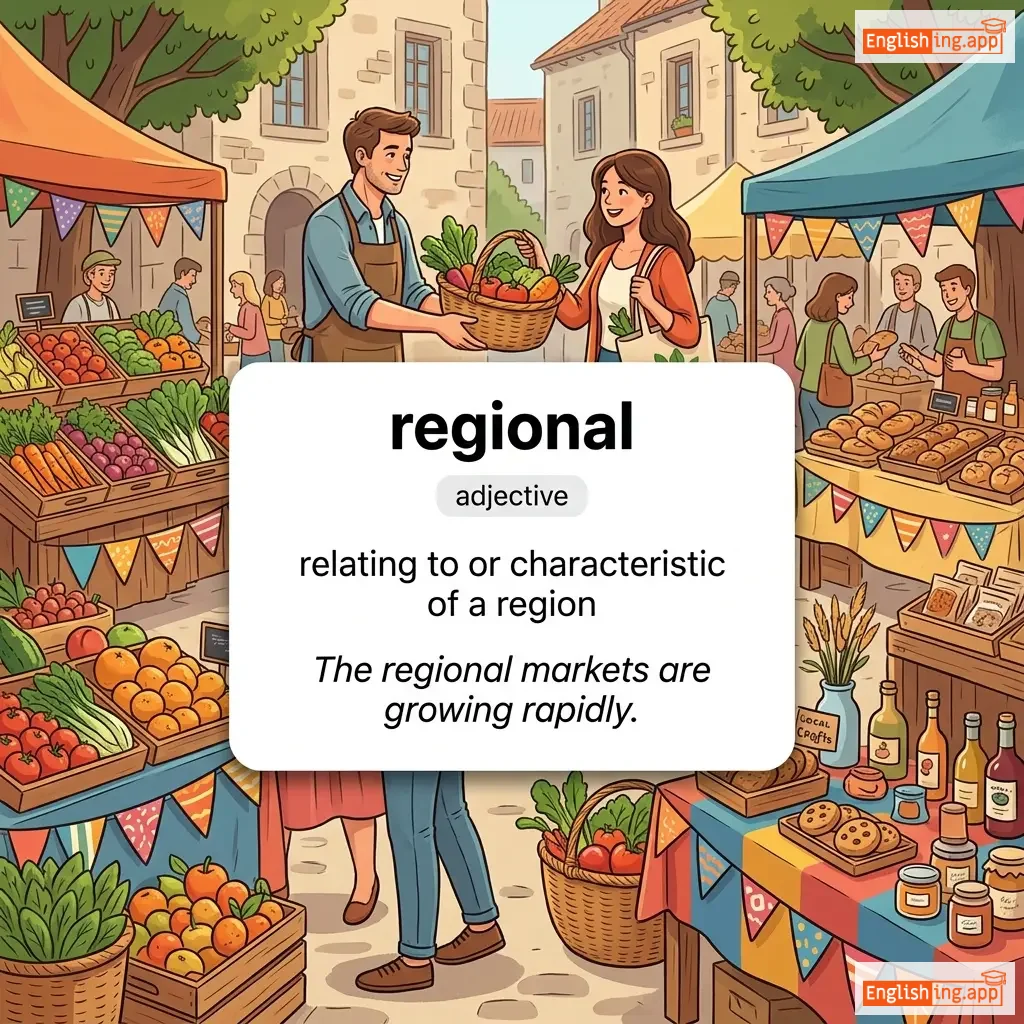
/ˈriː.dʒən.əl/
adjective
(リージョナル)
••••••
|
|
地域の
riijonaru
••••••
|
- •••••• | - •••••• | - •••••• | - •••••• |
relating to a particular region or area; local to a specific geographic area
••••••
|
The regional differences in culture were quite noticeable.
地域ごとの文化の違いはかなり顕著だった。
••••••
|
地域ごとの文化の違いはかなり顕著だった。
Chiiki goto no bunka no chigai wa kanari kencho datta.
••••••
|
- •••••• | - •••••• | - •••••• |
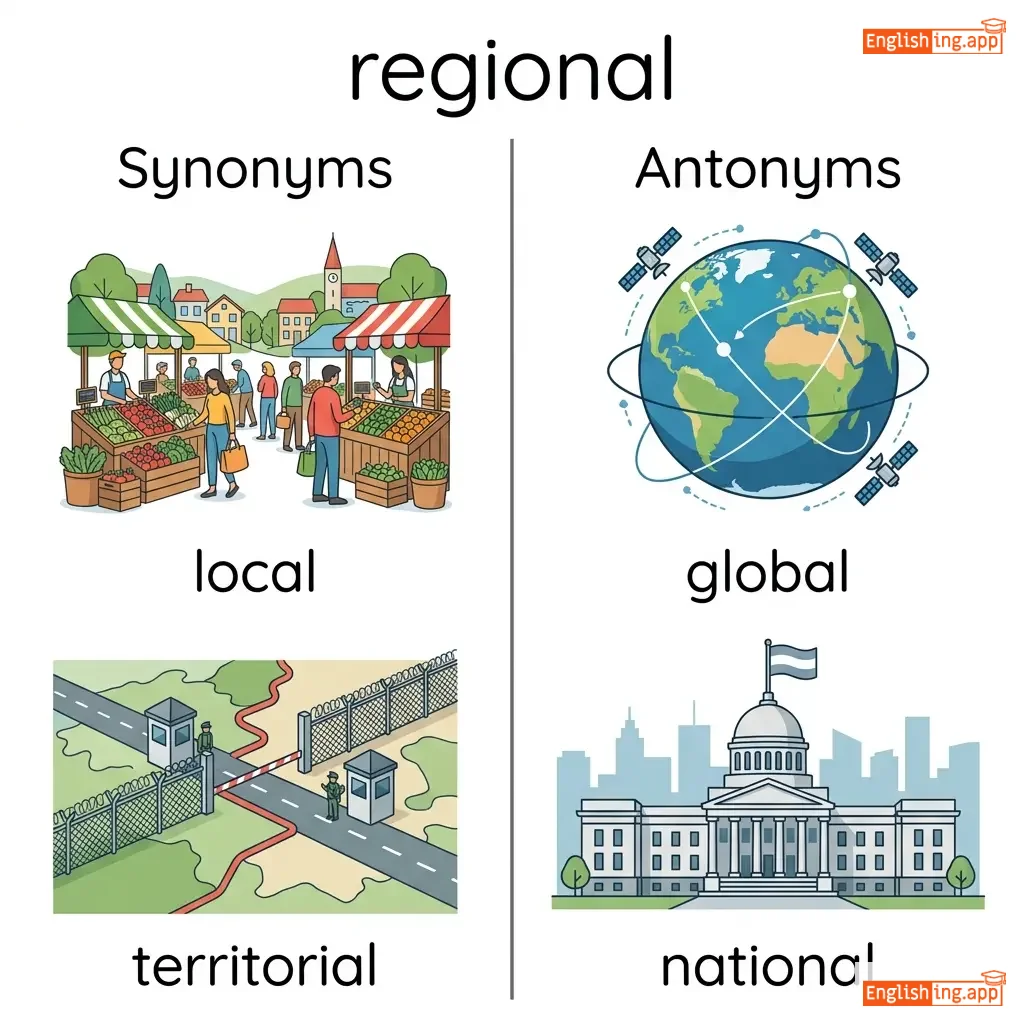
local, territorial, district
••••••
|
national, global, international
••••••
|
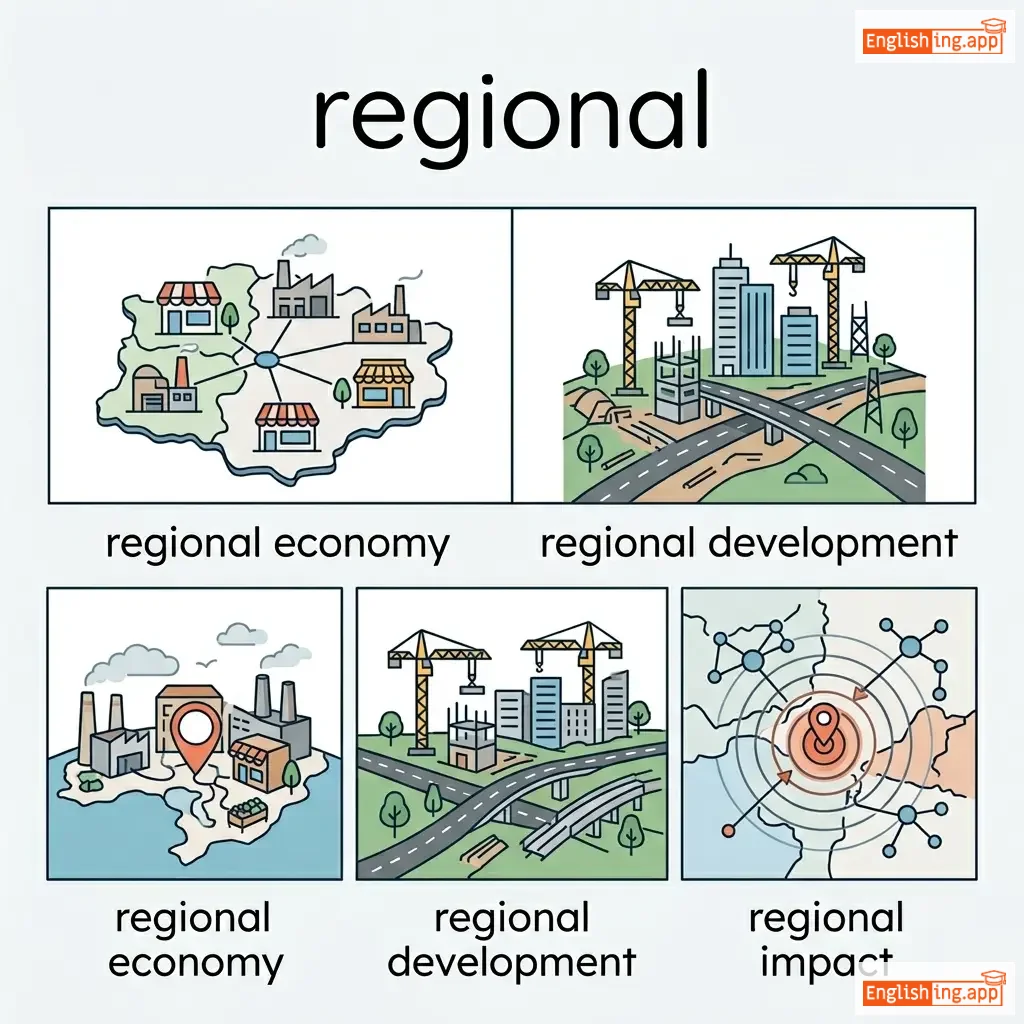
regional government, regional differences, regional cuisine
••••••
|
Regional = region + al; imagine a map of Japan with regions labeled in neon and the phrase chiiki no (地域の) glowing to connect English to Japanese
••••••
|
|
#4175
📝
|
/ˈrɛdʒɪstər/
verb
(レジスター)
••••••
|
- •••••• |
登録する
tōroku suru
••••••
|
registered
レジスタード
••••••
|
registered
レジスタード
••••••
|
registers
レジスターズ
••••••
|
registering
レジスターリング
••••••
|
To enter or record officially on a list or in a book.
••••••
|
You must register for the conference before the deadline.
期限前に会議に登録する必要があります。
••••••
|
期限前に会議に登録する必要があります。
Kigen mae ni kaigi ni tōroku suru hitsuyō ga arimasu.
••••••
|
register concern
登録の懸念
••••••
|
To express worry or dissatisfaction about something.
••••••
|
懸念を表明する
kenen o hyōmei suru
••••••
|
enroll, record, list, file, sign up
••••••
|
deregister, ignore
••••••
|
register online, register complaint, register user, register interest
••••••
|
Register は登録することを意味します — 登録しなければ、会議に出席できません。
••••••
|
|
#4176
📝
|
/ˌrɛdʒɪˈstreɪʃən/
noun
(レジストレーション)
••••••
|
- •••••• |
登録
tōroku
••••••
|
- •••••• | - •••••• | - •••••• | - •••••• |
the action or process of enrolling or signing up for something
••••••
|
The registration for the event will close tomorrow. |
イベントの登録は明日締め切りです。
Ibento no tōroku wa ashita shimekiri desu.
••••••
|
- •••••• | - •••••• | - •••••• |
enrollment, sign-up, registration process, joining
••••••
|
withdrawal, cancellation
••••••
|
event registration, registration form, online registration
••••••
|
登録はイベントに申し込むこと、あなたがイベントに申し込むときのように。
••••••
|
|
#4177
😔
|
/rɪˈɡrɛt/
verb
(リグレット)
••••••
|
- •••••• |
後悔する
kōkai suru
••••••
|
regretted
リグレットッド
••••••
|
regretted
リグレットッド
••••••
|
regrets
リグレッツ
••••••
|
regretting
リグレッティング
••••••
|
to feel sad or disappointed about something that has happened or been done
••••••
|
I deeply regret saying those harsh words to her.
私は彼女にその厳しい言葉を言ったことを深く後悔しています。
••••••
|
私は彼女にその厳しい言葉を言ったことを深く後悔しています。
Watashi wa kanojo ni sono kibishii kotoba o itta koto o fukaku kōkai shiteimasu.
••••••
|
express regret
後悔を表現する
••••••
|
to show that you are sorry about something
••••••
|
後悔を表現する
kōkai o hyōgen suru
••••••
|
lament, repent, remorse, rue
••••••
|
rejoice, celebrate, delight
••••••
|
regret deeply, express regret, feel regret, lifelong regret
••••••
|
後悔するのは、失ったものに対する深い反省の気持ちを持つこと
••••••
|
|
#4178
📅
|
/ˈrɛɡjələr/
adjective
(レギュラー)
••••••
|
- •••••• |
定期的な
teikiteki na
••••••
|
- •••••• | - •••••• | - •••••• | - •••••• |
Happening at fixed intervals; usual or normal in pattern or quality
••••••
|
He is a regular visitor to the library. |
彼は図書館の定期的な訪問者です。
Kare wa toshokan no teikiteki na hōmon-sha desu.
••••••
|
regular customer |
A person who frequently visits or buys from the same place
••••••
|
定期的な顧客
teikiteki na kokyaku
••••••
|
consistent, usual, normal, routine, frequent
••••••
|
irregular, unusual, abnormal
••••••
|
regular basis, regular meeting, regular customer, regular pattern
••••••
|
Regular は定期的な — 定期的に訪れる顧客
••••••
|
|
#4179
⏰
|
/ˌreɡ.jʊˈlær.ɪ.ti/
noun
(レギュラリティ)
••••••
|
- •••••• |
規則正しさ
kisoku tadashisa
••••••
|
- •••••• | - •••••• | - •••••• | - •••••• |
the quality of being regular; occurring at fixed intervals or in a consistent pattern
••••••
|
The regularity of his exercise routine helped him stay healthy. |
彼の運動習慣の規則正しさが健康を維持するのに役立ちました。
kare no undō shūkan no kisoku tadashisa ga kenkō o iji suru no ni yakudachimashita
••••••
|
- •••••• | - •••••• | - •••••• |
consistency, routine, pattern, frequency
••••••
|
irregularity, randomness, chaos, inconsistency
••••••
|
with regularity, mathematical regularity, clockwork regularity, maintain regularity
••••••
|
規則正しさは、毎日の習慣のように、生活に秩序をもたらします
••••••
|
|
#4180
🔄
|
/ˈrɛɡjələrli/
adverb
(レギュラーリー)
••••••
|
- •••••• |
定期的に
teikiteki ni
••••••
|
- •••••• | - •••••• | - •••••• | - •••••• |
at regular intervals; in a regular manner
••••••
|
She exercises regularly to stay healthy. |
彼女は健康を保つために定期的に運動します。
Kanojo wa kenko o tamotsu tame ni teikiteki ni undou shimasu.
••••••
|
- •••••• | - •••••• | - •••••• |
consistently, frequently, habitually, routinely
••••••
|
irregularly, infrequently
••••••
|
regularly scheduled, meet regularly, eat regularly, exercise regularly
••••••
|
Think of 'regular' habits - things you do regularly!
••••••
|
|
#4181
⚖️
|
/ˈrɛɡjʊˌleɪt/
verb
(レギュレート)
••••••
|
|
規制する
kisei suru
••••••
|
regulated
レギュレーテッド
••••••
|
regulated
レギュレーテッド
••••••
|
regulates
レギュレーツ
••••••
|
regulating
レギュレーティング
••••••
|
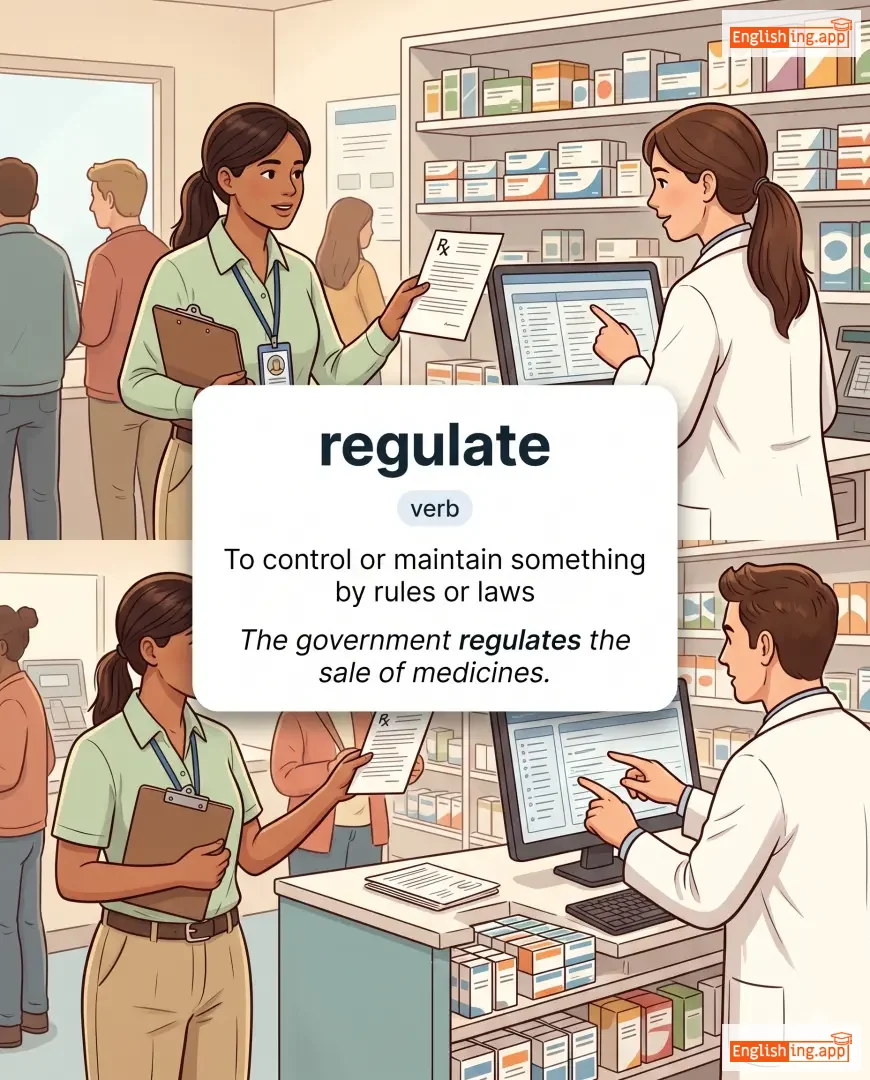
To control or maintain something by rules or laws
••••••
|
The government regulates the sale of medicines.
政府は薬の販売を規制しています。
••••••
|
政府は薬の販売を規制しています。
Seifu wa kusuri no hanbai o kisei shiteimasu.
••••••
|
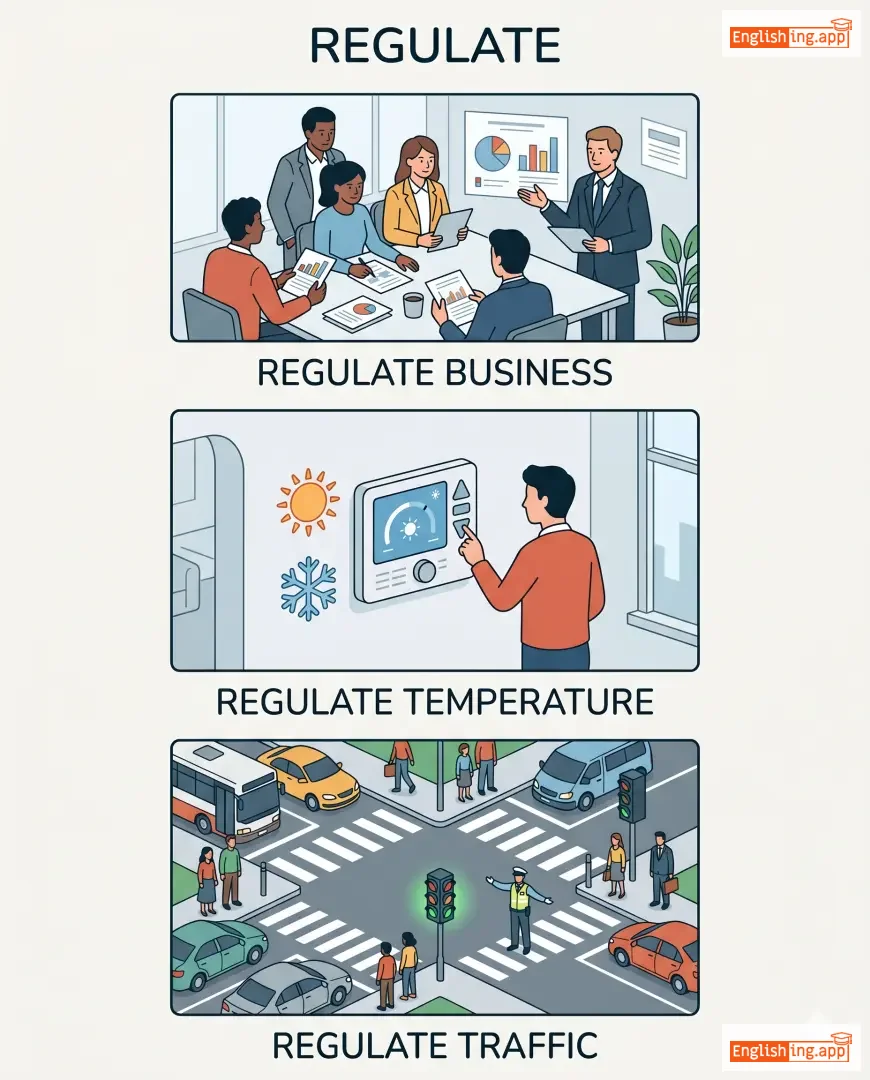
regulate traffic
交通を規制する
••••••
|
To control the flow and movement of vehicles
••••••
|
交通を規制する
Kōtsū o kisei suru
••••••
|
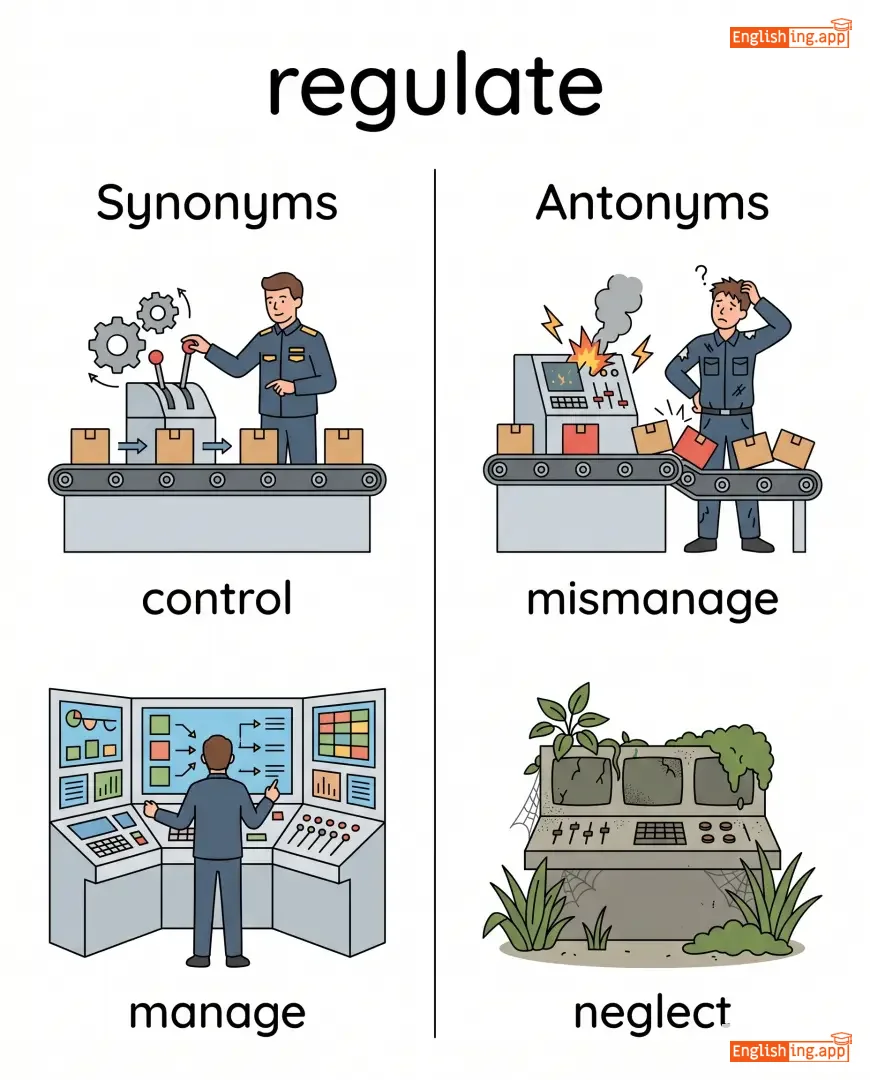
control, manage, supervise, direct, monitor
••••••
|
mismanage, neglect
••••••
|
regulate business, regulate temperature, regulate traffic, regulate industry
••••••
|
規制するは「規則で制御する」という意味です
••••••
|
|
#4182
⚖️
|
/ˌrɛɡjuˈleɪʃən/
noun
(レギュレーション)
••••••
|
|
規制
kisei
••••••
|
- •••••• | - •••••• | - •••••• | - •••••• |
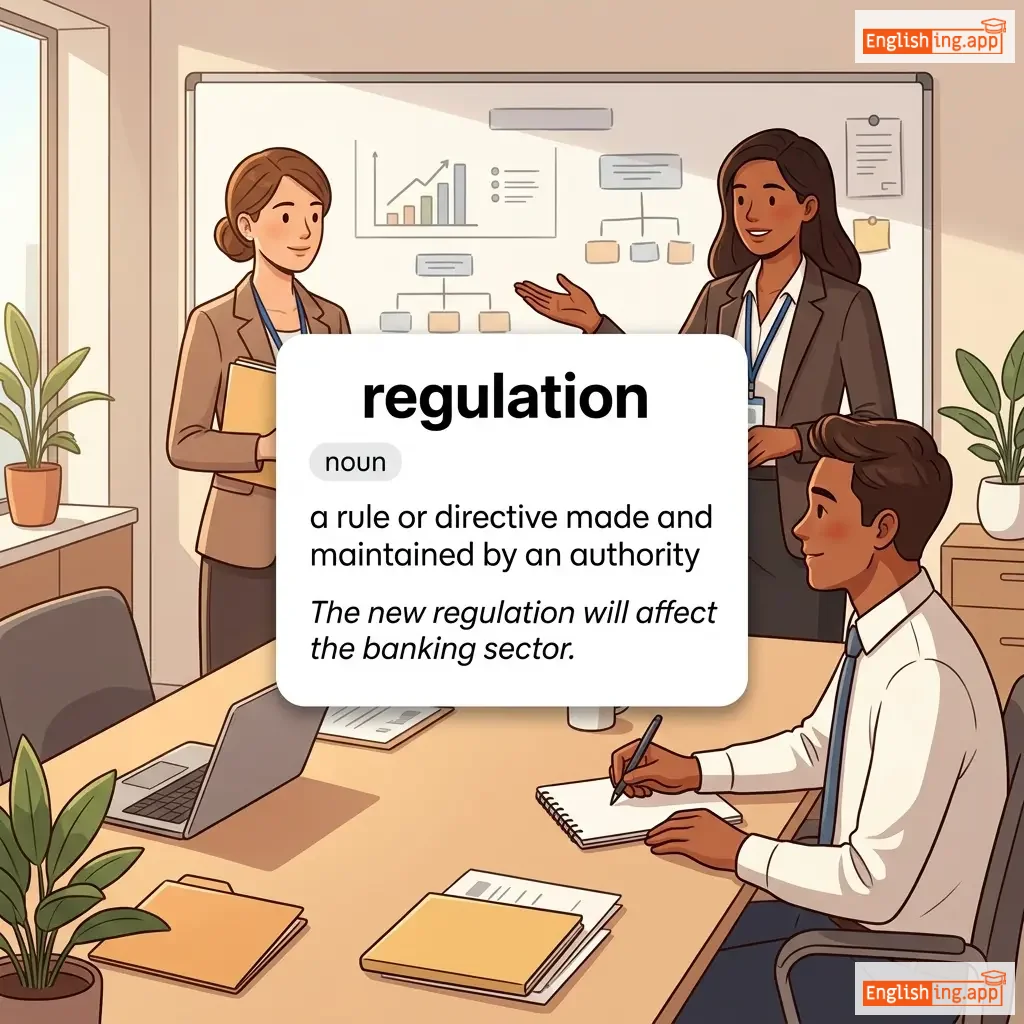
a rule or directive made and maintained by an authority
••••••
|
The new regulation will affect the banking sector. |
新しい規制は銀行業界に影響を与えるでしょう。
Atarashii kisei wa ginkou gyoukai ni eikyou wo ataerudeshou.
••••••
|
- •••••• | - •••••• | - •••••• |
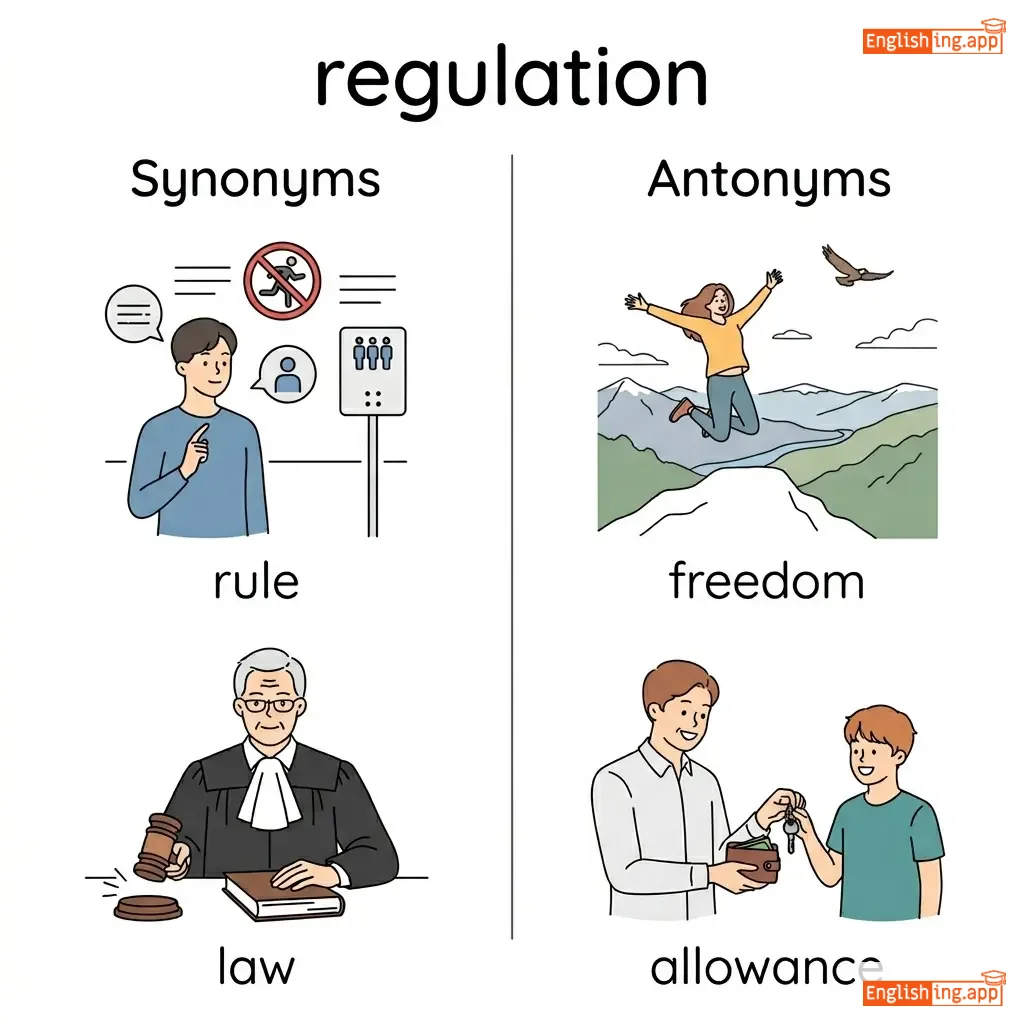
rule, law, guideline, directive
••••••
|
freedom, allowance
••••••
|
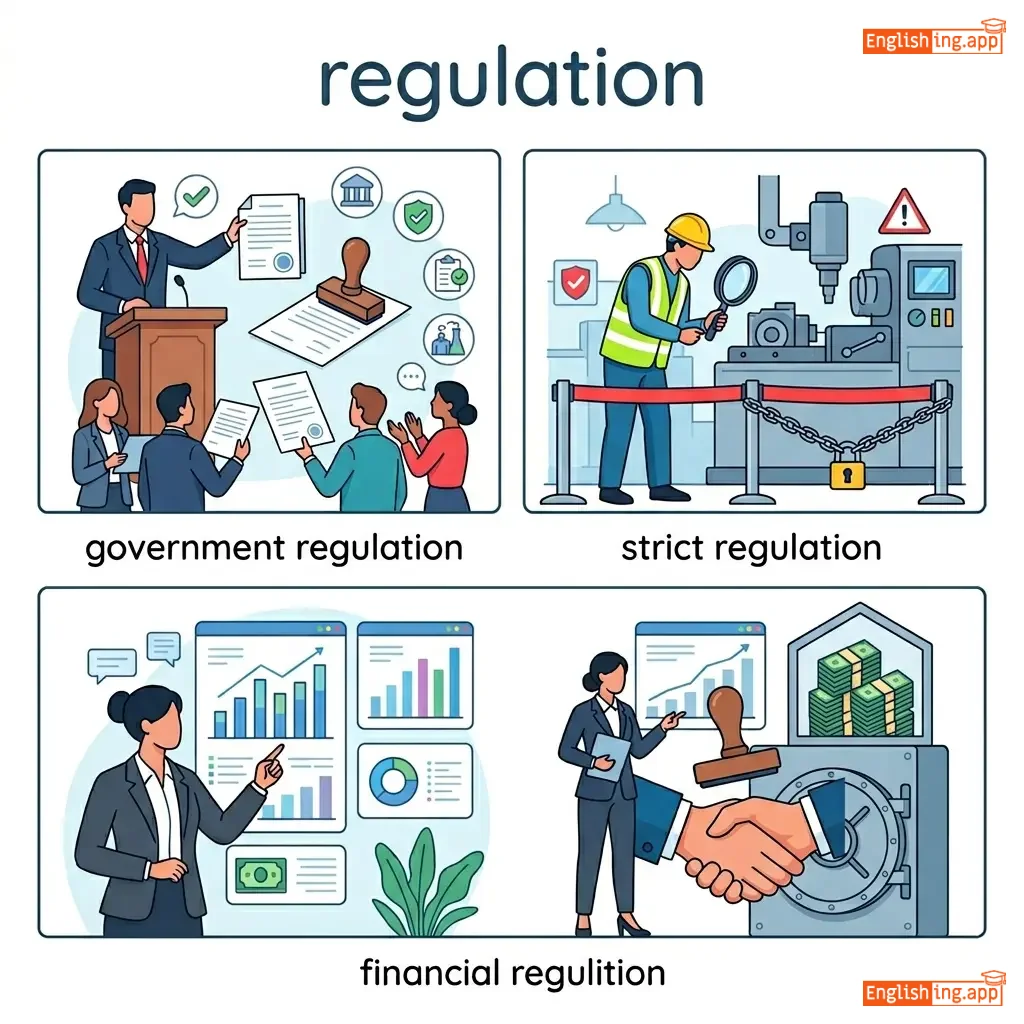
government regulation, strict regulation, financial regulation, safety regulation
••••••
|
Regulation = Re-gulate the system with rules!
••••••
|
|
#4183
⚙️
|
/ˈrɛɡjəleɪtər/
noun
(レギュレーター)
••••••
|
- •••••• |
調整装置
chōsei sōchi
••••••
|
- •••••• | - •••••• | - •••••• | - •••••• |
a person or device that controls or maintains the operation of a system
••••••
|
The government appointed a new regulator for the financial sector. |
政府は金融セクターの新しい規制機関を任命した。
Seifu wa kin'yū sekutā no atarashī kisei kikan o ninmei shita.
••••••
|
- •••••• | - •••••• | - •••••• |
controller, supervisor, administrator, inspector
••••••
|
anarchist, disrupter
••••••
|
financial regulator, market regulator, regulatory authority, gas regulator
••••••
|
調整装置とはシステムを制御する装置 — ガス調整装置のように流れを調整します!
••••••
|
|
#4184
⚖️
|
/ˈrɛɡjʊlətɔːri/
adjective
(レギュラトリー)
••••••
|
|
規制の
kisei no
••••••
|
- •••••• | - •••••• | - •••••• | - •••••• |
relating to the rules or laws made by an authority to control an activity or process
••••••
|
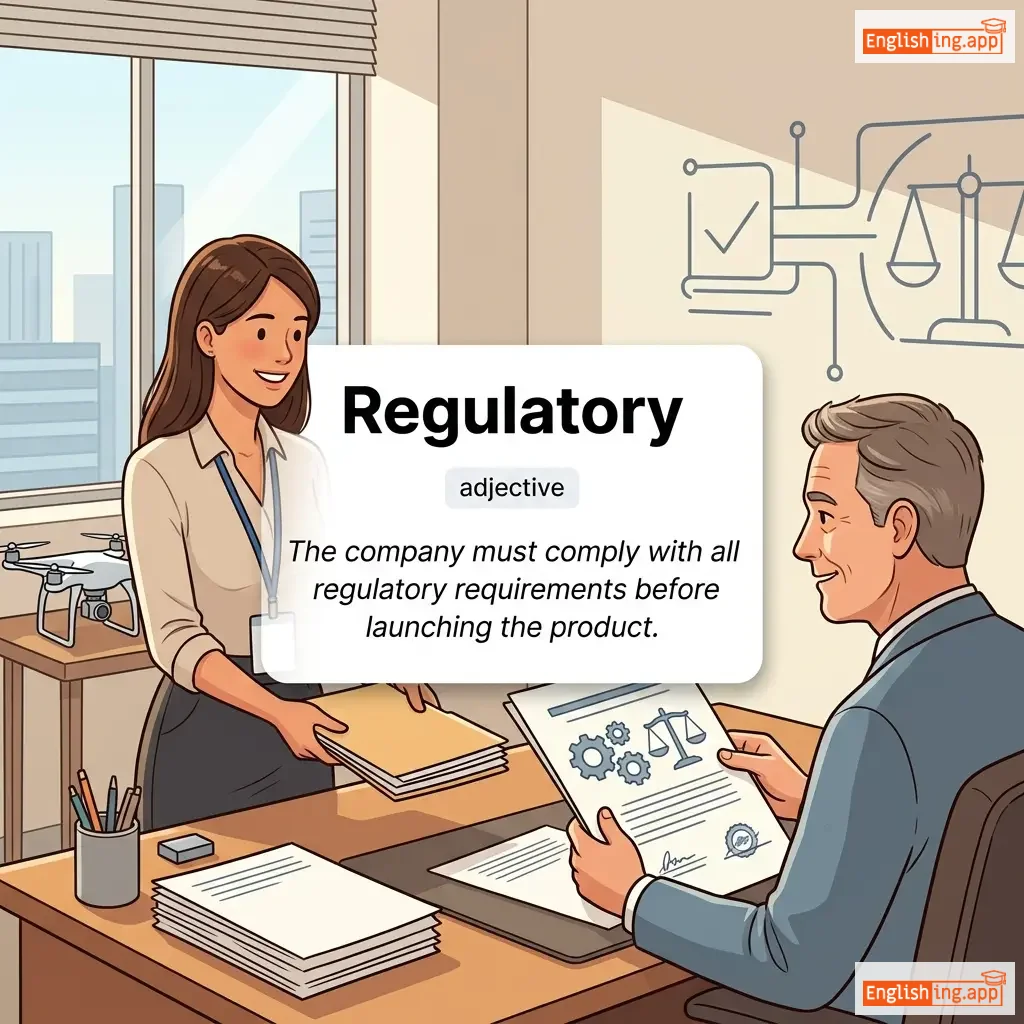
The company must comply with all regulatory requirements before launching the product. |
企業は製品を発売する前にすべての規制要件を満たさなければなりません。
Kigyō wa seihin o hatsubai suru mae ni subete no kisei yōken o mitasanakereba narimasen.
••••••
|
- •••••• | - •••••• | - •••••• |
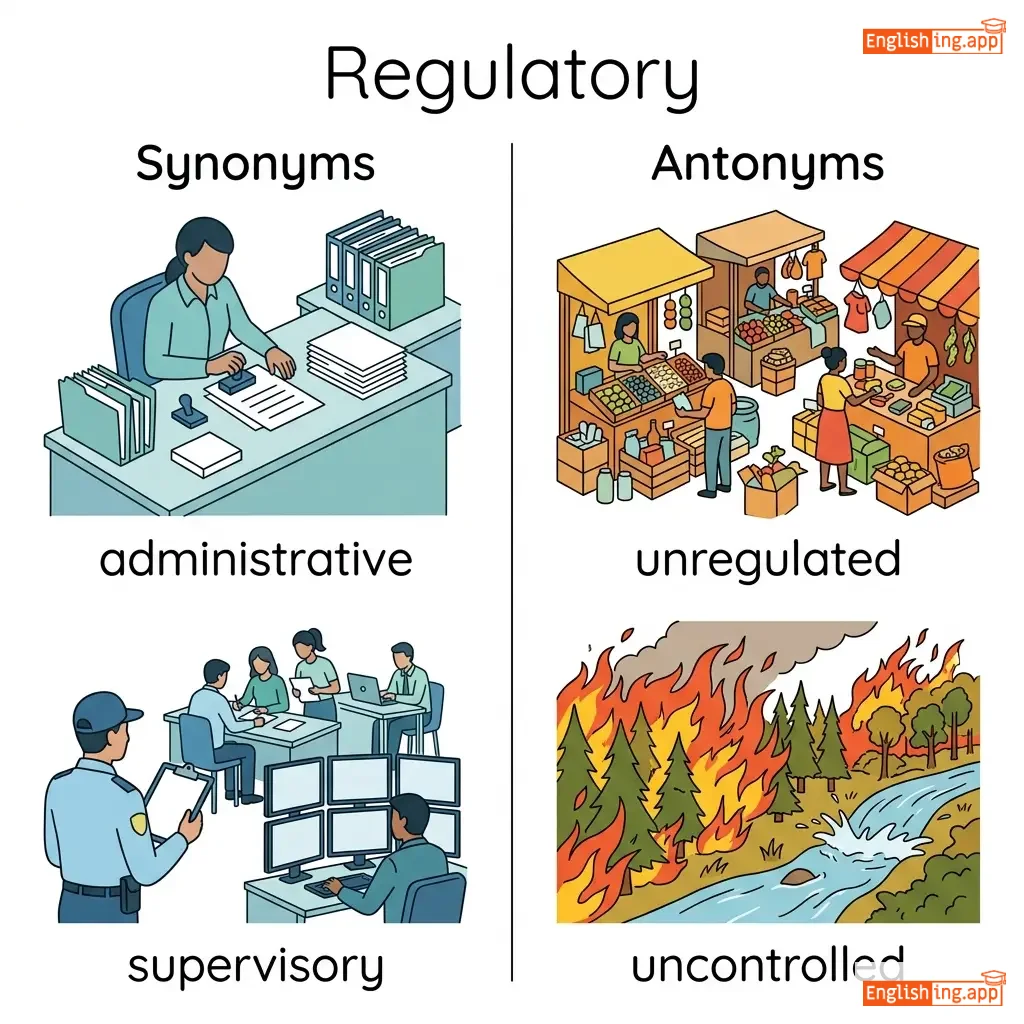
administrative, supervisory, controlling, governing, legislative
••••••
|
unregulated, uncontrolled
••••••
|
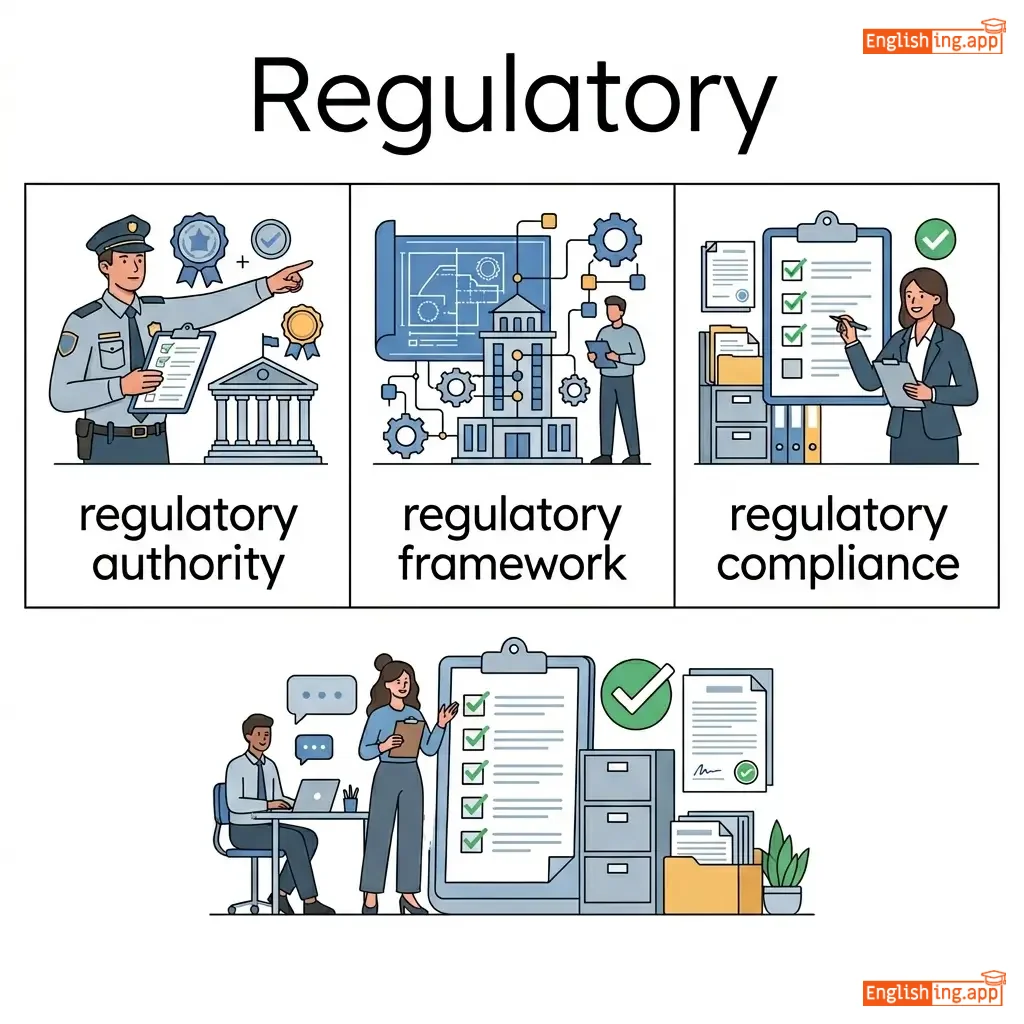
regulatory authority, regulatory framework, regulatory compliance, regulatory body
••••••
|
規制のとは、ルールに従うこと — 交通ルールを守るように 🚦
••••••
|
|
#4185
💪
|
/ˌriːhəˌbɪlɪˈteɪʃən/
noun
(hapinesu)
••••••
|
- •••••• |
幸福
kōfuku
••••••
|
- •••••• | - •••••• | - •••••• | - •••••• |
the process of restoring someone or something to health or normal life through training or therapy
••••••
|
After the accident, he went through months of rehabilitation to walk again.
彼女は賞を受け取ったとき、自分の幸福を隠せなかった。
••••••
|
彼女は賞を受け取ったとき、自分の幸福を隠せなかった。
Kanojo wa shō o uketotta toki, jibun no kōfuku o kakusenakatta.
••••••
|
rehabilitation center
幸せを追い求める
••••••
|
a place where people recover physically or mentally
••••••
|
幸せを追い求める
shiawase o oimotomeru
••••••
|
recovery, therapy, restoration, renewal
••••••
|
damage, decline
••••••
|
physical rehabilitation, rehabilitation program, rehabilitation center, drug rehabilitation
••••••
|
幸せは追い求めるもの、見つけるもの。
••••••
|
|
#4186
👑
|
/reɪn/
verb, noun
(レイン)
••••••
|
- •••••• |
支配する
shihai suru
••••••
|
reigned
レインド
••••••
|
reigned
レインド
••••••
|
reigns
レインズ
••••••
|
reigning
レイニング
••••••
|
to rule as a king or queen; the period during which a sovereign rules
••••••
|
Queen Elizabeth II reigned for many decades.
エリザベス2世は何十年も統治していました。
••••••
|
エリザベス2世は何十年も統治していました。
Erizabesu 2-sei wa nannenzō mo tōchi shiteimashita.
••••••
|
reign supreme
最高の支配
••••••
|
to be the best or most powerful
••••••
|
最高の支配
saikō no shihai
••••••
|
rule, govern, dominate, prevail
••••••
|
serve, submit
••••••
|
long reign, reign of terror, reign supreme
••••••
|
Reignは支配するという意味。王のように支配する。
••••••
|
|
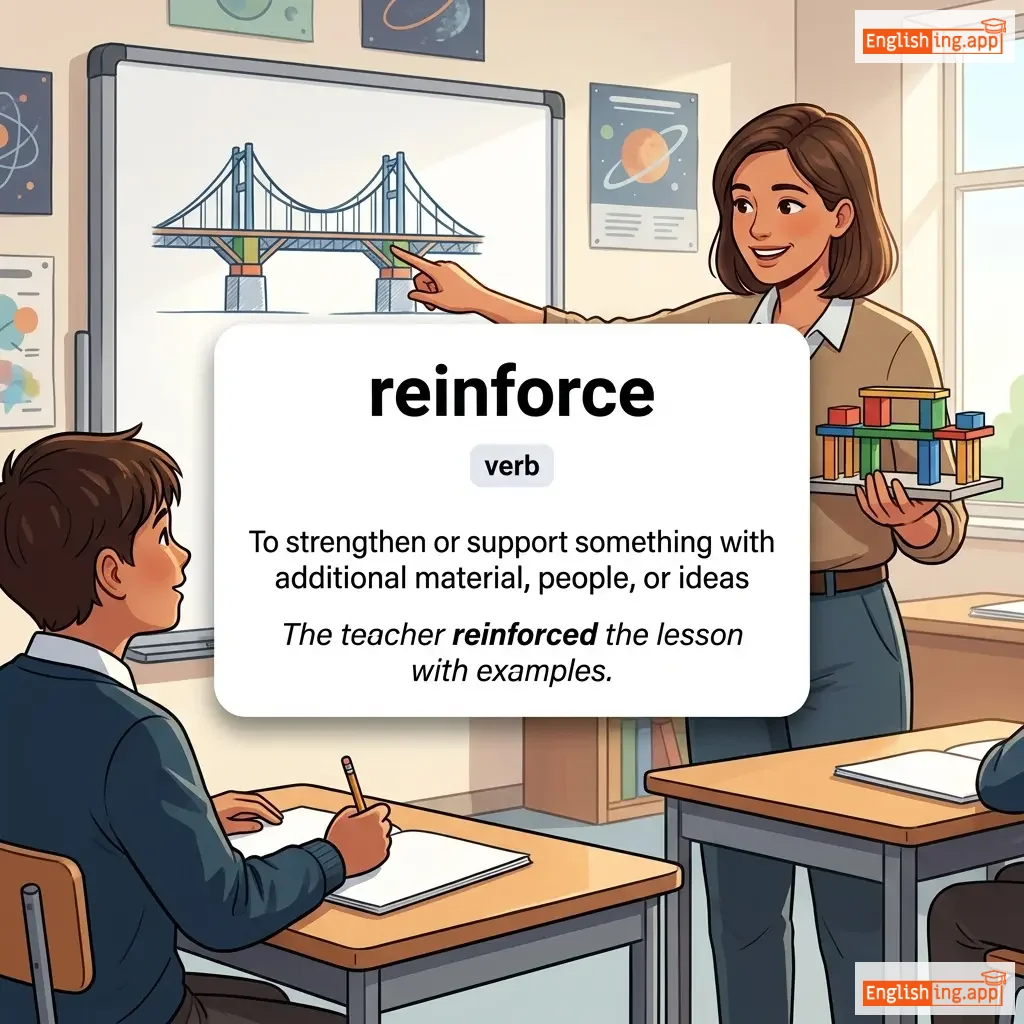
#4187
💪
|
/ˌriːɪnˈfɔːrs/
verb
(リーインフォース)
••••••
|
|
強化する
kyouka suru
••••••
|
reinforced
リーインフォースド
••••••
|
reinforced
リーインフォースド
••••••
|
reinforces
リーインフォースズ
••••••
|
reinforcing
リーインフォーシング
••••••
|
To strengthen or support something with additional material, people, or ideas
••••••
|
The teacher reinforced the lesson with examples.
先生は例を使ってレッスンを強化しました。
••••••
|
先生は例を使ってレッスンを強化しました。
Sensei wa rei o tsukatte ressun o kyōka shimashita.
••••••
|
reinforce an idea
アイデアを強化する
••••••
|
To strengthen the belief or acceptance of a concept
••••••
|
アイデアを強化する
aidea o kyōka suru
••••••
|
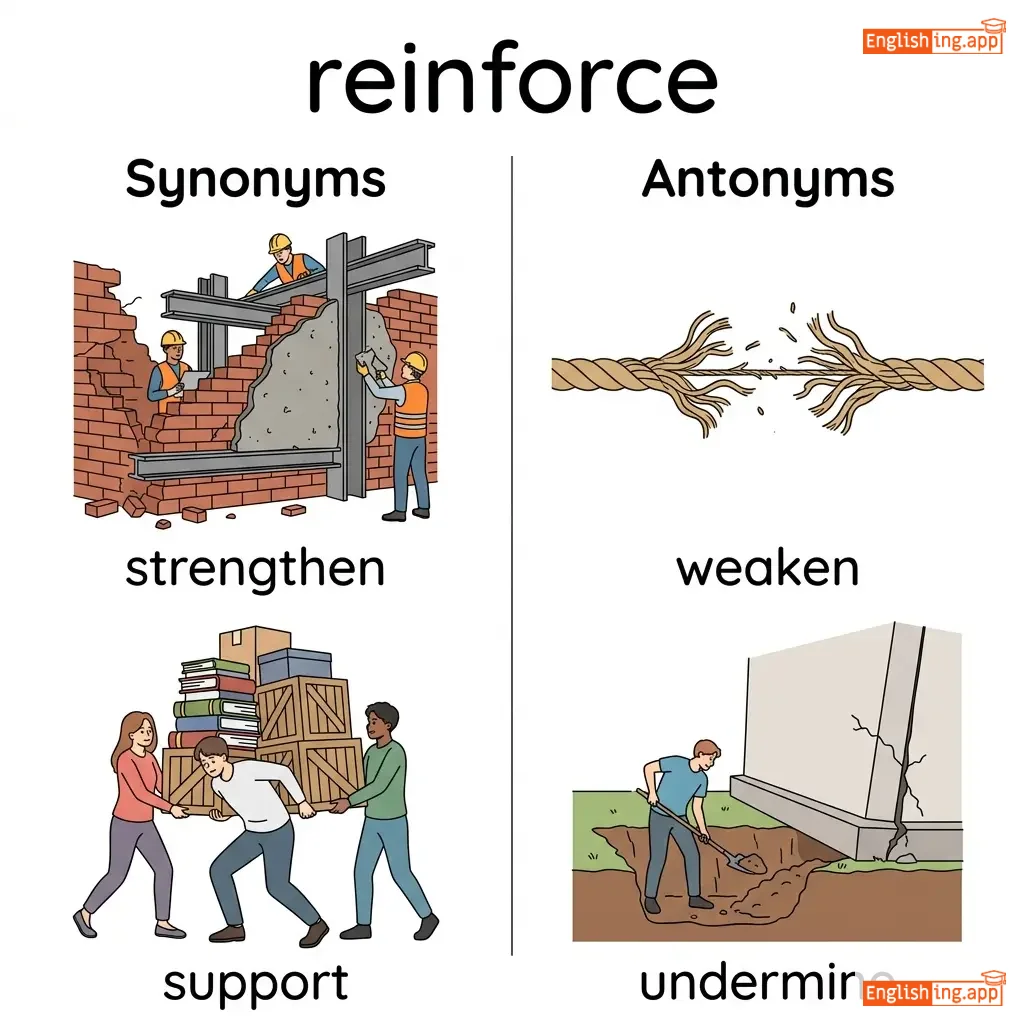
strengthen, support, bolster, fortify, encourage
••••••
|
weaken, undermine
••••••
|
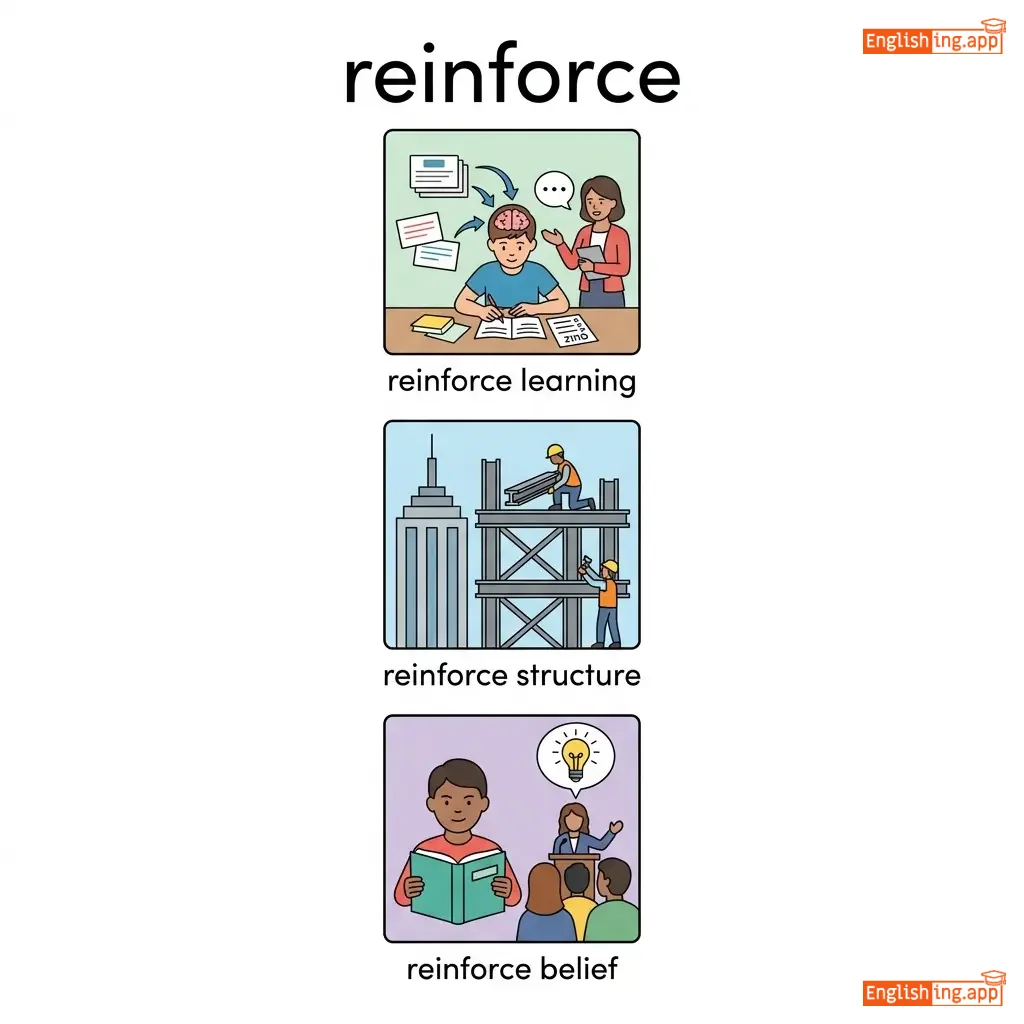
reinforce learning, reinforce structure, reinforce belief, reinforce habit
••••••
|
Rein (馬) + force = 力で強化する
••••••
|
|
#4188
❌
|
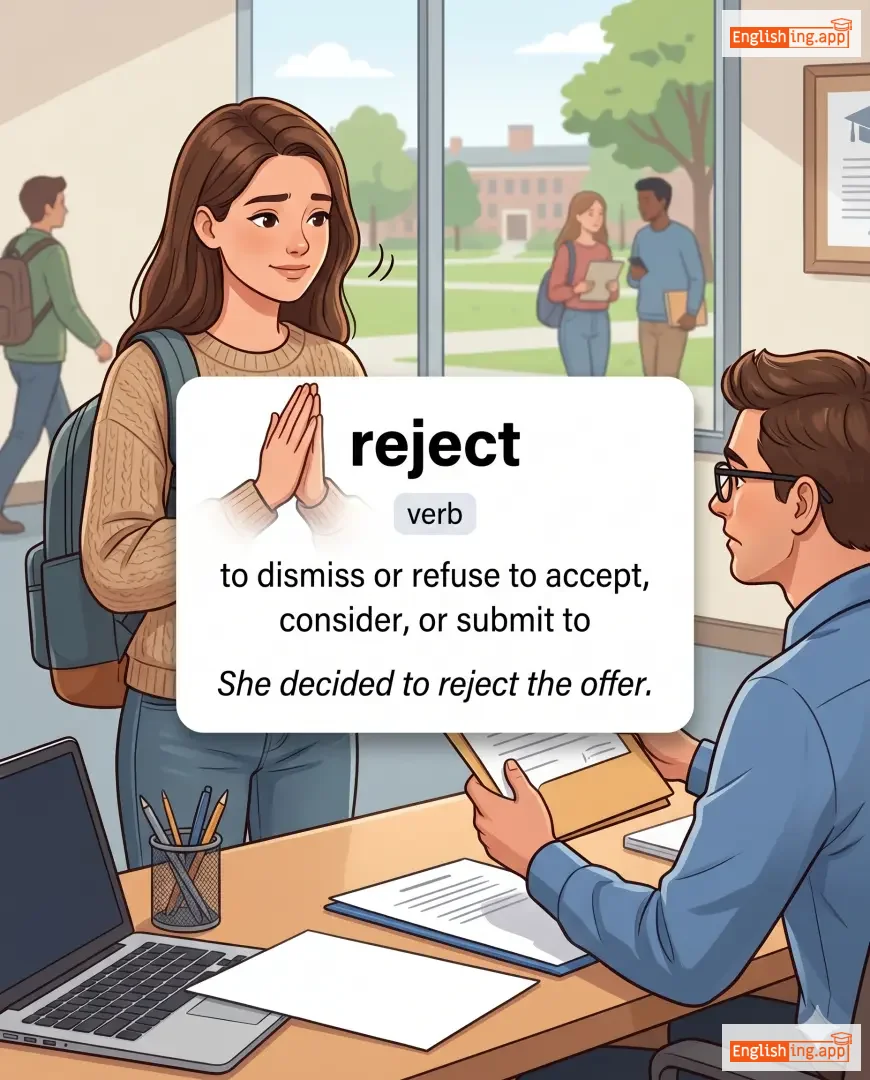
/rɪˈdʒekt/
verb
(rijékt)
••••••
|
|
拒否する
kyōhi suru
••••••
|
rejected
rejékted
••••••
|
rejected
rejékted
••••••
|
rejects
rejékts
••••••
|
rejecting
rejékting
••••••
|
to refuse to accept or consider something
••••••
|
The committee decided to reject the proposal.
委員会は提案を拒否することに決めました。
••••••
|
委員会は提案を拒否することに決めました。
Iinkai wa teian o kyohi suru koto ni kimemashita.
••••••
|
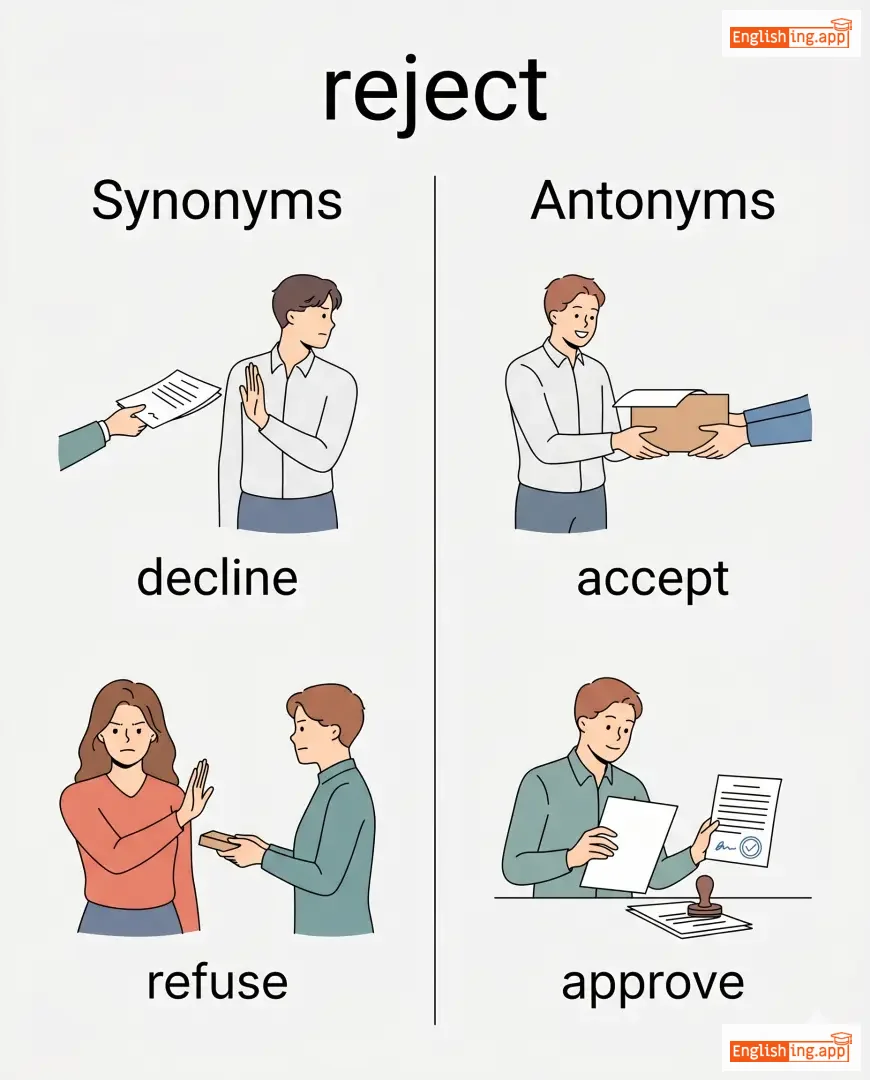
- •••••• | - •••••• | - •••••• |
refuse, decline, dismiss, deny
••••••
|
accept, approve, embrace, welcome
••••••
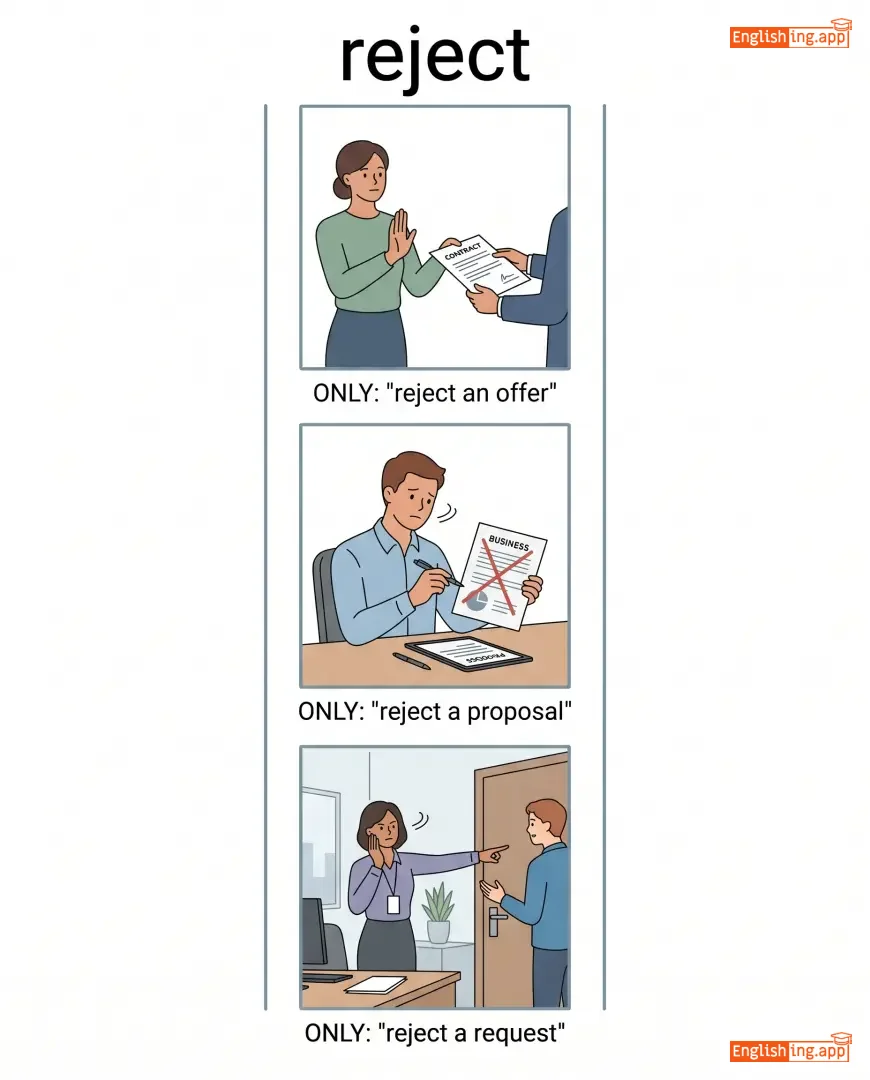
|
firmly reject, completely reject, reject outright, reject a proposal, reject an offer
••••••
|
In Japanese, '拒否する' (kyohi suru) means to 'reject'.
••••••
|
|
#4189
❌
|
/rɪˈdʒɛkʃən/
noun
(rijekkushon)
••••••
|
- •••••• |
拒絶
kyozetsu
••••••
|
- •••••• | - •••••• | - •••••• | - •••••• |
the action of refusing or dismissing something or someone
••••••
|
Her rejection of the offer surprised everyone. |
彼女の提案の拒絶は皆を驚かせた。
Kanojo no teian no kyozetsu wa mina o odorokaseta.
••••••
|
- •••••• | - •••••• | - •••••• |
refusal, denial, dismissal, veto
••••••
|
acceptance, approval, approval
••••••
|
rejection of offer, rejection letter, rejection of idea
••••••
|
Rejection is like saying 'No' when it's clear you want something else.
••••••
|
|
#4190
🔗
|
/rɪˈleɪt/
verb
(リレート)
••••••
|
- •••••• |
関連する
kanren suru
••••••
|
related
リレイテッド
••••••
|
related
リレイテッド
••••••
|
relates
リレイツ
••••••
|
relating
リレイティング
••••••
|
to connect or show a link between; to tell a story
••••••
|
She relates her experience to the audience.
彼女は観客に自分の経験を話します。
••••••
|
彼女は観客に自分の経験を話します。
Kanojo wa kankyaku ni jibun no keiken o hanashimasu.
••••••
|
- •••••• | - •••••• | - •••••• |
connect, associate, tell, narrate
••••••
|
disconnect, separate, withhold, conceal
••••••
|
relate to others, relate experience, closely relate, relate stories
••••••
|
Kanren suruはrelateのように関連を作り、物語を語ります。
••••••
|
|
#4191
🔗
|
/rɪˈleɪtɪd/
adjective
(rireitedo)
••••••
|
- •••••• |
関連
kanren
••••••
|
- •••••• | - •••••• | - •••••• | - •••••• |
connected or associated with something else
••••••
|
The documents are all related to the same project.
文書はすべて同じプロジェクトに関連しています。
••••••
|
文書はすべて同じプロジェクトに関連しています。
Bunsho wa subete onaji purojekuto ni kanren shiteimasu.
••••••
|
related to
関連している
••••••
|
connected with or concerning something
••••••
|
関連している
kanren shiteiru
••••••
|
connected, associated, linked, relevant, correlated
••••••
|
unrelated, separate
••••••
|
related issue, related topic, closely related, directly related
••••••
|
'Re + late' を聞いて覚えてください — 何かが遅れて発生すると、それらは関連しています 🔗
••••••
|
|
#4192
👨👩👧👦
|
/rɪˈleɪ.ʃən/
noun
(リレーション)
••••••
|
- •••••• |
関係; 親戚
kankei; shinseki
••••••
|
- •••••• | - •••••• | - •••••• | - •••••• |
the way in which two or more people or things are connected; a family member
••••••
|
They have a strong business relation that has lasted for years. |
彼らは長年続く強力なビジネス関係を持っています。
Karera wa naganen tsudzuku kyouryoku na bijinesu kankei wo motteimasu
••••••
|
- •••••• | - •••••• | - •••••• |
relationship, connection, association, kinship
••••••
|
disconnection, separation, isolation
••••••
|
family relation, business relation, close relation, diplomatic relations
••••••
|
関係とは二者間、あるいは多者間のつながりで、たとえば家族関係のようなものです。
••••••
|
|
#4193
💕
|
/rɪˈleɪ.ʃən.ʃɪp/
noun
(リレーションシップ)
••••••
|
- •••••• |
関係
kankei
••••••
|
- •••••• | - •••••• | - •••••• | - •••••• |
the way two people or groups feel and behave towards each other; a connection between two things
••••••
|
They have a very close relationship. |
彼らは非常に親密な関係を持っています。
Karera wa hijō ni shinmitsu na kankei o motteimasu.
••••••
|
- •••••• | - •••••• | - •••••• |
connection, bond, association, link
••••••
|
separation, isolation, disconnection
••••••
|
close relationship, personal relationship, working relationship, family relationship
••••••
|
Relationship: 'K' for '関係' in Japanese
••••••
|
|
#4194
⚖️
|
/ˈrel.ə.tɪv/
adjective
(リラティブ)
••••••
|
- •••••• |
相対的
sōtaiteki
••••••
|
- •••••• | - •••••• | - •••••• | - •••••• |
considered in comparison to something else; not absolute; comparative
••••••
|
The cost of living is relative to your income level.
生活費はあなたの収入レベルに対して相対的です。
••••••
|
生活費はあなたの収入レベルに対して相対的です。
Seikatsuhi wa anata no shūnyū reberu ni taishite sōtaiteki desu.
••••••
|
- •••••• | - •••••• | - •••••• |
comparative, proportional, corresponding, respective
••••••
|
absolute, fixed, independent, unrelated
••••••
|
relative importance, relative position, relative value
••••••
|
相対的 (sōtaiteki) is like relative, comparing things.
••••••
|
|
#4195
⚖️
|
/ˈrel.ə.tɪv.li/
adverb
(相対的に)
••••••
|
- •••••• |
相対的に
soutaiteki ni
••••••
|
- •••••• | - •••••• | - •••••• | - •••••• |
in comparison to something else; quite; fairly
••••••
|
The weather is relatively warm today.
今日の天気は相対的に暖かい。
••••••
|
今日の天気は相対的に暖かい。
Kyou no tenki wa soutaiteki ni atatakai.
••••••
|
- •••••• | - •••••• | - •••••• |
comparatively, fairly, reasonably
••••••
|
absolutely, extremely, completely
••••••
|
relatively simple, relatively new, relatively small
••••••
|
相対的に = 'Soutaiteki ni' (Relative comparison)
••••••
|
|
#4196
🧘
|
/rɪˈlæks/
verb
(リラックス)
••••••
|
- •••••• |
リラックスする
rirakkusu suru
••••••
|
relaxed
リラックスド
••••••
|
relaxed
リラックスド
••••••
|
relaxes
リラックスズ
••••••
|
relaxing
リラックシング
••••••
|
to make or become less tense or anxious; to rest
••••••
|
After a long day, she likes to relax with a good book.
長い一日の後で、彼女は良い本を持ってリラックスするのが好きです。
••••••
|
長い一日の後で、彼女は良い本を持ってリラックスするのが好きです。
Nagai ichinichi no ato de, kanojo wa yoi hon wo motte rirakkusu suru no ga suki desu.
••••••
|
- •••••• | - •••••• | - •••••• |
unwind, de-stress, loosen up, calm down
••••••
|
tense, stress, worry
••••••
|
relax after work, relax at home, relax your mind, relax muscles
••••••
|
リラックスして心と体をリセットしよう。
••••••
|
|
#4197
😌
|
/rɪˈlækst/
adjective
(リラックスト)
••••••
|
- •••••• |
リラックスした
rirakkusu shita
••••••
|
- •••••• | - •••••• | - •••••• | - •••••• |
free from tension or stress; calm and comfortable
••••••
|
She felt relaxed after listening to soft music.
シー フェルト リラックスト アフター リスニング トゥ ソフト ミュージック。
••••••
|
柔らかい音楽を聞いて、彼女はリラックスした。
Yawarakai ongaku o kiite, kanojo wa rirakkusu shita
••••••
|
relaxed attitude
リラックスド アティテュード
••••••
|
a calm and easy-going way of thinking or behaving
••••••
|
リラックスした態度
rirakkusu shita taido
••••••
|
calm, at ease, comfortable, unworried, peaceful
••••••
|
tense, stressed, anxious
••••••
|
relaxed mood, relaxed atmosphere, feel relaxed, relaxed style
••••••
|
リラックス = Relaxed
••••••
|
|
#4198
🕊️
|
/rɪˈliːs/
verb
(リリース)
••••••
|
|
リリース, 公開
rirīsu, kōkai
••••••
|
released
リリースド
••••••
|
released
リリースド
••••••
|
releases
リリースズ
••••••
|
releasing
リリースイング
••••••
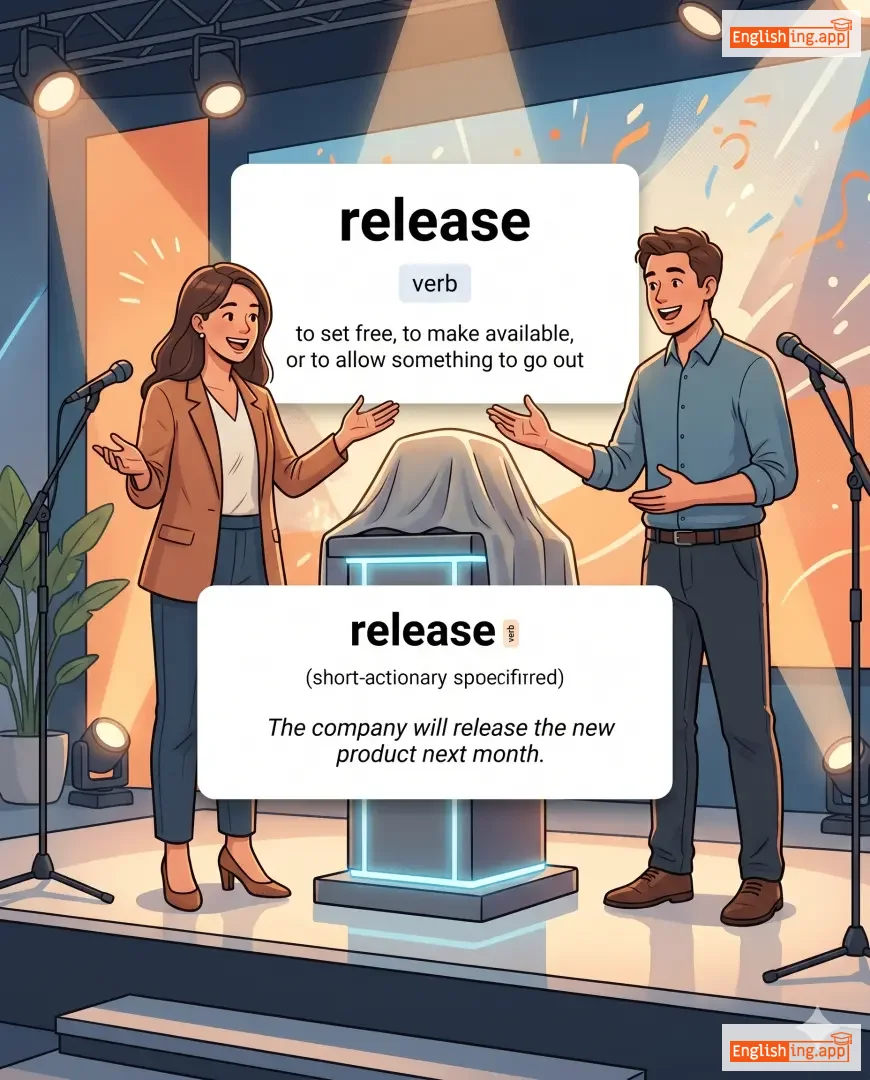
|
to set free, to make available, or to allow something to go out
••••••
|
The company will release the new product next month.
その会社は来月新しい製品をリリースします。
••••••
|
その会社は来月新しい製品をリリースします。
Sono kaisha wa raigetsu atarashī seihin o rirīsu shimasu.
••••••
|
release tension
緊張を解放する
••••••
|
to reduce or let go of stress or nervous energy
••••••
|
緊張を解放する
kinchou o kaihō suru
••••••
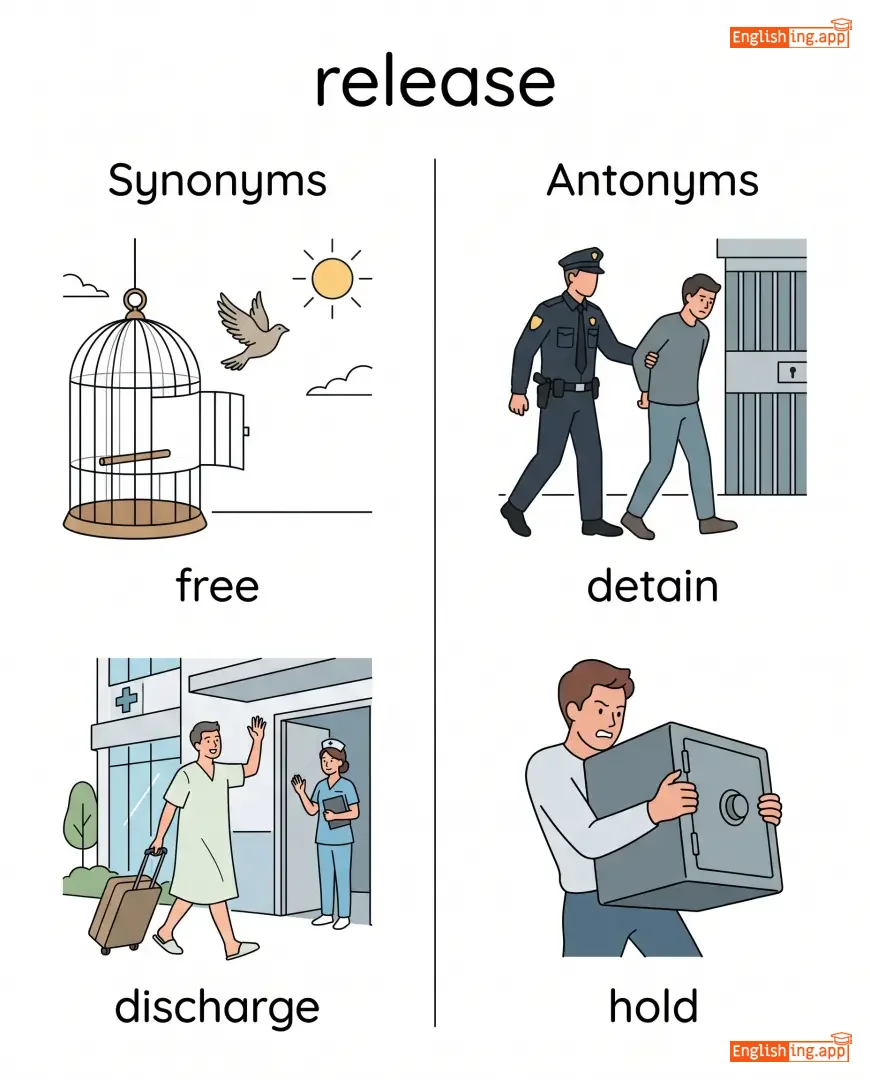
|
free, discharge, liberate, publish, issue
••••••
|
detain, hold, capture
••••••
|
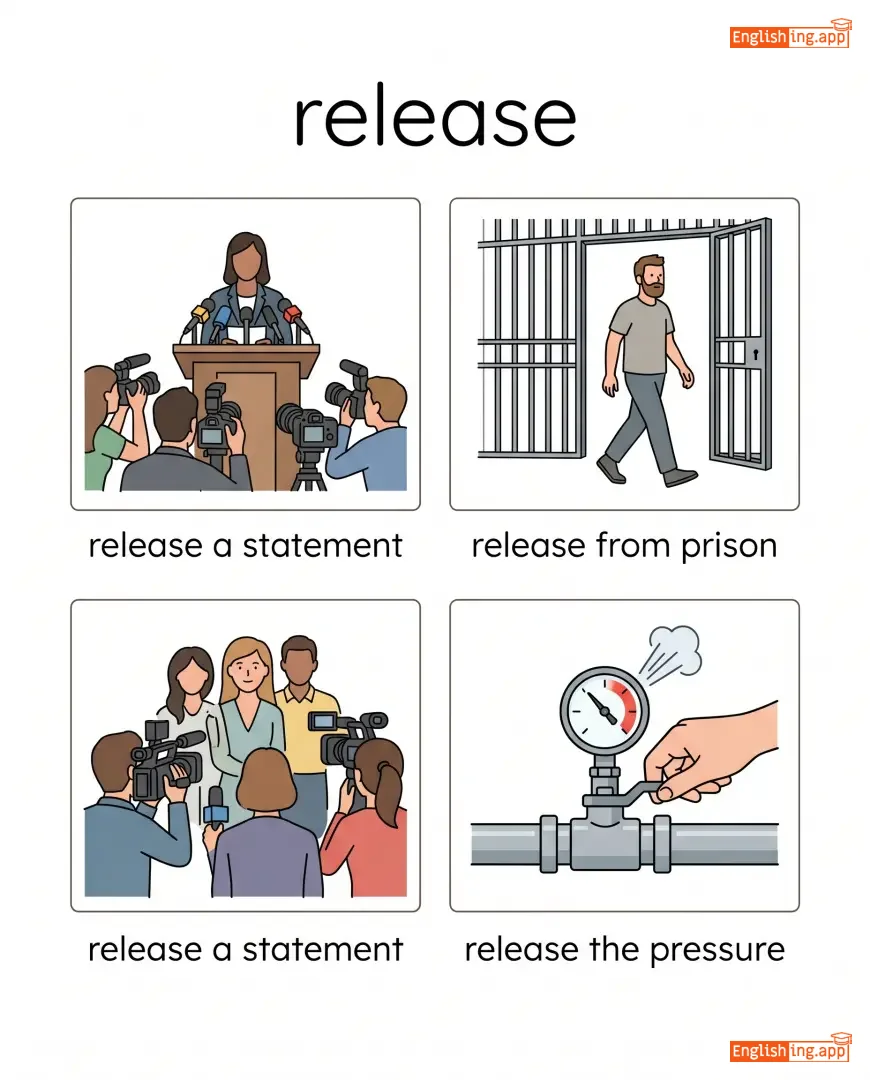
release a statement, release from prison, release the pressure, release an album
••••••
|
Releaseは解放の意味:新しい製品をリリースするとき、緊張が解放される。
••••••
|
|
#4199
📌
|
/ˈrɛlɪvəns/
noun
(レレヴァンス)
••••••
|
- •••••• |
関連性
kanrensei
••••••
|
- •••••• | - •••••• | - •••••• | - •••••• |
the quality or state of being closely connected or appropriate
••••••
|
The relevance of the information was clear to everyone. |
情報の関連性はすべての人に明確でした。
Jouhou no kanrensei wa subete no hito ni meikaku deshita.
••••••
|
- •••••• | - •••••• | - •••••• |
importance, significance, pertinence, applicability
••••••
|
irrelevance, insignificance, unimportance
••••••
|
relevance to, relevance of topic, great relevance
••••••
|
Relevance is like the importance of a subject everyone in class talks about.
••••••
|
|
#4200
📌
|
/ˈrɛl.ə.vənt/
adjective
(レレヴァント)
••••••
|
- •••••• |
関連する
kannensuru
••••••
|
- •••••• | - •••••• | - •••••• | - •••••• |
closely connected or appropriate to what is being considered or done
••••••
|
Your comments are not relevant to the discussion.
あなたのコメントは議論に関連していません。
••••••
|
あなたのコメントは議論に関連していません。
Anata no komento wa giron ni kanrenshiteimasen.
••••••
|
relevant to the point
ポイントに関連する
••••••
|
directly connected to the main issue being discussed
••••••
|
ポイントに関連する
Pointo ni kanrensuru
••••••
|
pertinent, applicable, appropriate, related, connected
••••••
|
irrelevant, unrelated, inappropriate
••••••
|
relevant information, relevant issue, relevant factors, relevant data
••••••
|
Relevant は関連するという意味で、試験の関連する質問は、試験に関連する質問です。
••••••
|
|
#4201
🛠️
|
/rɪˌlaɪəˈbɪləti/
noun
(リライアビリティ)
••••••
|
- •••••• |
信頼性
shinraisei
••••••
|
- •••••• | - •••••• | - •••••• | - •••••• |
the quality of being trustworthy or performing consistently well
••••••
|
Customers value the reliability of our service.
お客様は私たちのサービスの信頼性を重視しています。
••••••
|
お客様は私たちのサービスの信頼性を重視しています。
Okyakusama wa watashitachi no sābisu no shinraisei o jūshi shiteimasu.
••••••
|
reliability test
信頼性テスト
••••••
|
a test to measure how dependable something is
••••••
|
信頼性テスト
shinraisei tesuto
••••••
|
dependability, consistency, trustworthiness, stability
••••••
|
unreliability, inconsistency
••••••
|
high reliability, reliability test, system reliability, reliability score
••••••
|
信頼性 = 信じて頼れる品質
••••••
|
|
#4202
😌
|
/rɪˈliːf/
noun
(リリーフ)
••••••
|
- •••••• |
安心; 安堵; 支援
anshin, ando, shien
••••••
|
- •••••• | - •••••• | - •••••• | - •••••• |
a feeling of comfort after worry or distress; assistance given to those in need
••••••
|
She felt great relief when the exam was over.
試験が終わったとき、彼女は大きな安堵感を感じました。
••••••
|
試験が終わったとき、彼女は大きな安堵感を感じました。
Shiken ga owatta toki, kanojo wa ookina andokan o kanjimashita.
••••••
|
- •••••• | - •••••• | - •••••• |
comfort, ease, assistance, aid
••••••
|
anxiety, worry, stress, burden
••••••
|
pain relief, relief work, great relief, tax relief
••••••
|
安心感=安堵感!
••••••
|
|
#4203
😌
|
/rɪˈliːv/
verb
••••••
|
- •••••• | - •••••• |
relieved
••••••
|
relieved
••••••
|
relieves
••••••
|
relieving
••••••
|
to make pain, distress, or difficulty less severe or serious
••••••
|
The medicine helped relieve his headache. |
- •••••• |
relieve stress |
to reduce or ease mental or emotional strain
••••••
|
- •••••• |
ease, reduce, lessen, soothe, alleviate
••••••
|
aggravate, worsen
••••••
|
relieve pain, relieve stress, relieve pressure, relieve symptoms
••••••
|
No •••••• |
|
#4204
😌
|
/rɪˈliːvd/
adjective
(リリーブド)
••••••
|
- •••••• |
安心した
anshin shita
••••••
|
- •••••• | - •••••• | - •••••• | - •••••• |
feeling happy and less worried after something stressful has been removed or resolved
••••••
|
She felt relieved after hearing the good news. |
良い知らせを聞いた後、彼女は安心した。
Yoi shirase o kiita ato, kanojo wa anshin shita.
••••••
|
- •••••• | - •••••• | - •••••• |
comforted, relaxed, reassured, eased
••••••
|
worried, stressed, anxious
••••••
|
feel relieved, relieved to know, felt relieved
••••••
|
Relieved is like a 'relief' (releef) after a stressful day.
••••••
|
|
#4205
🙏
|
/rɪˈlɪdʒ.ən/
noun
(宗教)
••••••
|
- •••••• |
宗教
shūkyō
••••••
|
- •••••• | - •••••• | - •••••• | - •••••• |
a system of faith and worship involving belief in a higher power
••••••
|
Freedom of religion is a fundamental human right.
宗教の自由は基本的人権です。
••••••
|
宗教の自由は基本的人権です。
Shūkyō no jiyū wa kihon-teki jinken desu.
••••••
|
blind faith in religion
宗教に対する盲目的信仰
••••••
|
unquestioning belief in a religious system
••••••
|
宗教に対する盲目的信仰
Shūkyō ni taisuru mōmokuteki shinkō
••••••
|
faith, belief, spirituality, creed, worship
••••••
|
atheism, disbelief, skepticism
••••••
|
major religion, world religion, religious practice, organized religion
••••••
|
Religion = RE(神) + GION (地域)
••••••
|
|
#4206
🙏
|
/rɪˈlɪdʒəs/
adjective
(宗教的)
••••••
|
- •••••• |
宗教的
shūkyōteki
••••••
|
- •••••• | - •••••• | - •••••• | - •••••• |
relating to or believing in a religion or faith
••••••
|
She is a very religious woman who prays every day.
彼女は毎日祈る非常に宗教的な女性です。
••••••
|
彼女は毎日祈る非常に宗教的な女性です。
Kanojo wa mainichi inoru hijō ni shūkyōteki na josei desu.
••••••
|
religious fervor
宗教的熱意
••••••
|
intense passion and devotion towards religion
••••••
|
宗教的熱意
shūkyōteki netsui
••••••
|
devout, pious, spiritual, faithful, holy
••••••
|
atheist, secular, irreligious
••••••
|
religious belief, religious practice, religious festival, religious leader
••••••
|
Religiousは宗教的という意味です — 寺院に行くとすべてが宗教的です。
••••••
|
|
#4207
😟
|
/rɪˈlʌktənt/
adjective
(rilakutanto)
••••••
|
- •••••• |
消極的
shougekiteki
••••••
|
- •••••• | - •••••• | - •••••• | - •••••• |
unwilling or hesitant to do something
••••••
|
She was reluctant to speak in front of the large audience. |
彼女は大きな観衆の前で話すことに消極的でした。
Kanojo wa ookina kanshu no mae de hanasu koto ni shougekiteki deshita.
••••••
|
reluctant hero |
a person who is unwilling to accept their role but ends up fulfilling it
••••••
|
消極的なヒーロー
shougekiteki na hiro
••••••
|
unwilling, hesitant, resistant, disinclined, loath
••••••
|
willing, eager, ready
••••••
|
reluctant to accept, reluctant agreement, reluctant smile, reluctant participant
••••••
|
Reluctant は消極的、つまりやりたくないけど、最終的にやること。
••••••
|
|
#4208
🤝
|
/rɪˈlaɪ/
verb
(リライ)
••••••
|
- •••••• |
頼る
tayoru
••••••
|
relied
リライド
••••••
|
relied
リライド
••••••
|
relies
リライズ
••••••
|
relying
リライング
••••••
|
to depend on or trust someone or something
••••••
|
I rely on my friends for support.
私は支援のために友達に頼ります。
••••••
|
私は支援のために友達に頼ります。
Watashi wa shien no tame ni tomodachi ni tayorimasu.
••••••
|
- •••••• | - •••••• | - •••••• |
depend, trust, count on, lean on
••••••
|
distrust, doubt, reject
••••••
|
rely on, rely upon, rely heavily, rely completely
••••••
|
友達に頼って、いつも助けてもらおう!
••••••
|
|
#4209
🏠
|
/rɪˈmeɪn/
verb
(リメイン)
••••••
|
|
残る
nokoru
••••••
|
remained
リメインド
••••••
|
remained
リメインド
••••••
|
remains
リメインズ
••••••
|
remaining
リメイニング
••••••
|
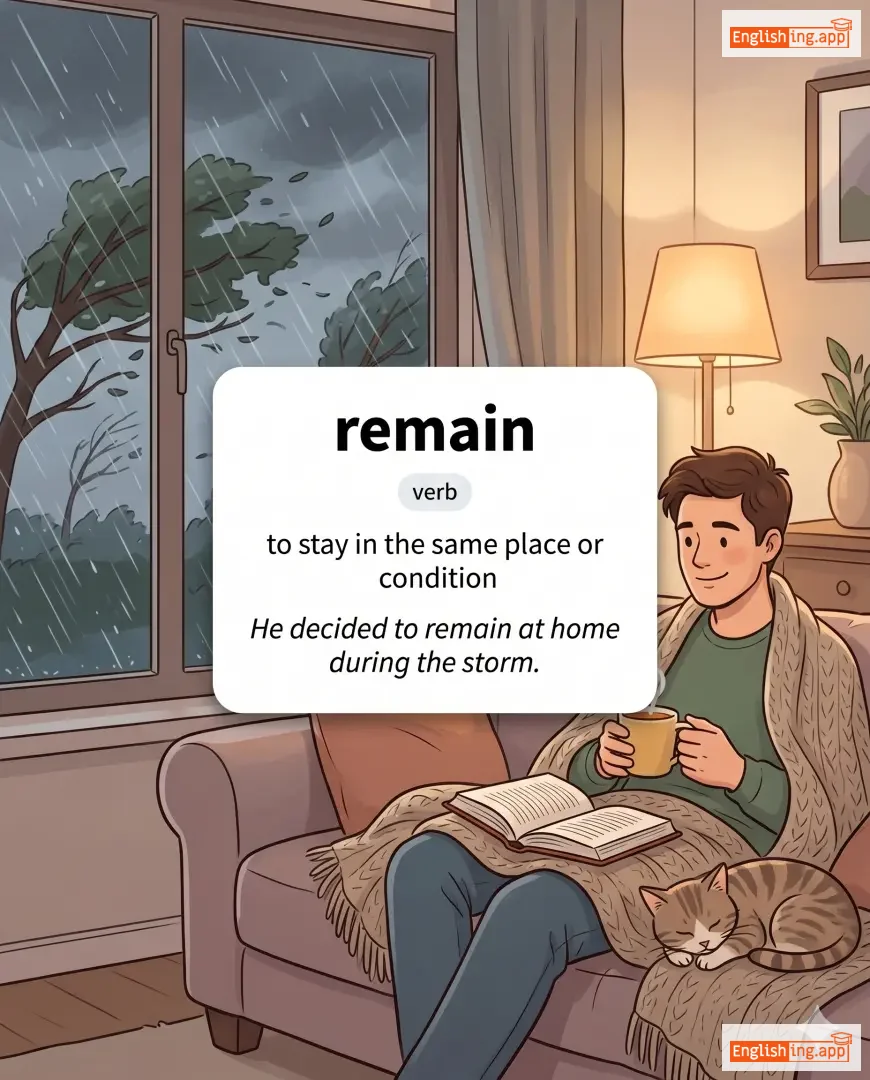
to stay in the same place; to continue to exist
••••••
|
Only a few guests remain at the party.
パーティーには少数のゲストが残っています。
••••••
|
パーティーには少数のゲストが残っています。
Pātī ni wa shōsū no gesuto ga nokotteimasu.
••••••
|
- •••••• | - •••••• | - •••••• |
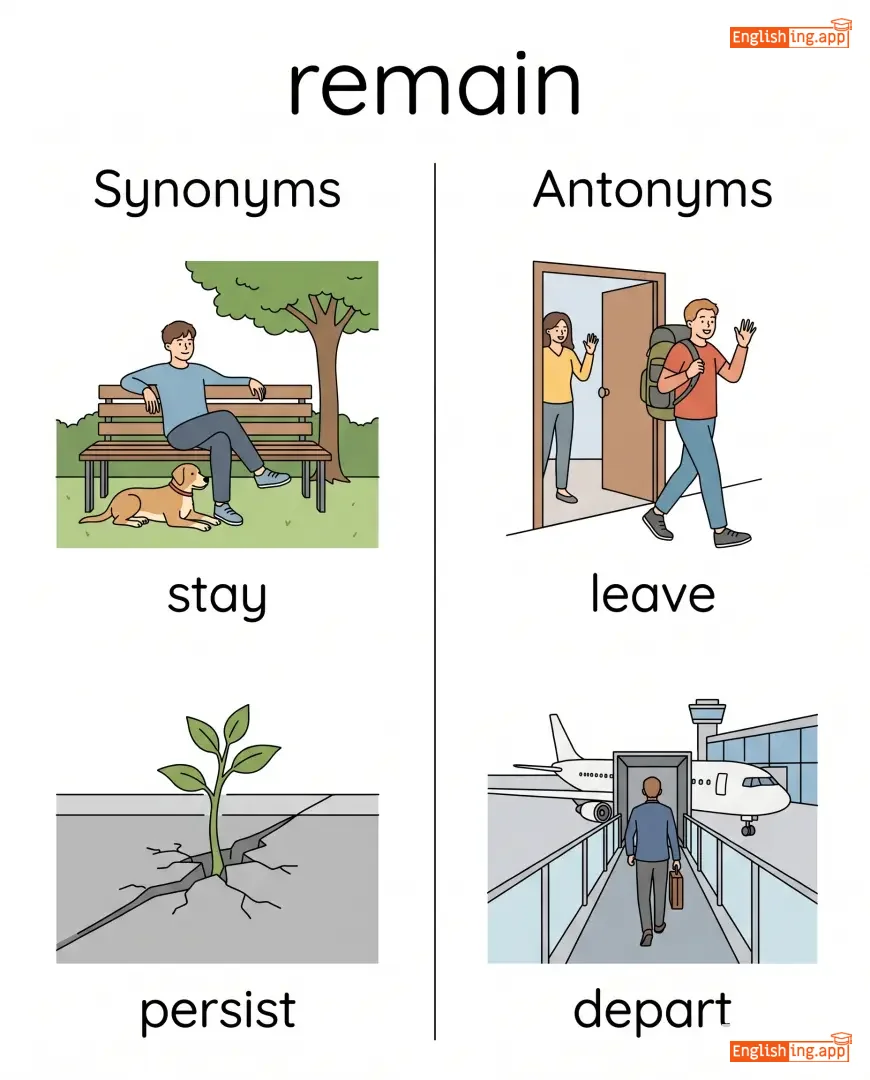
stay, continue, persist, endure
••••••
|
leave, go, depart, disappear
••••••
|
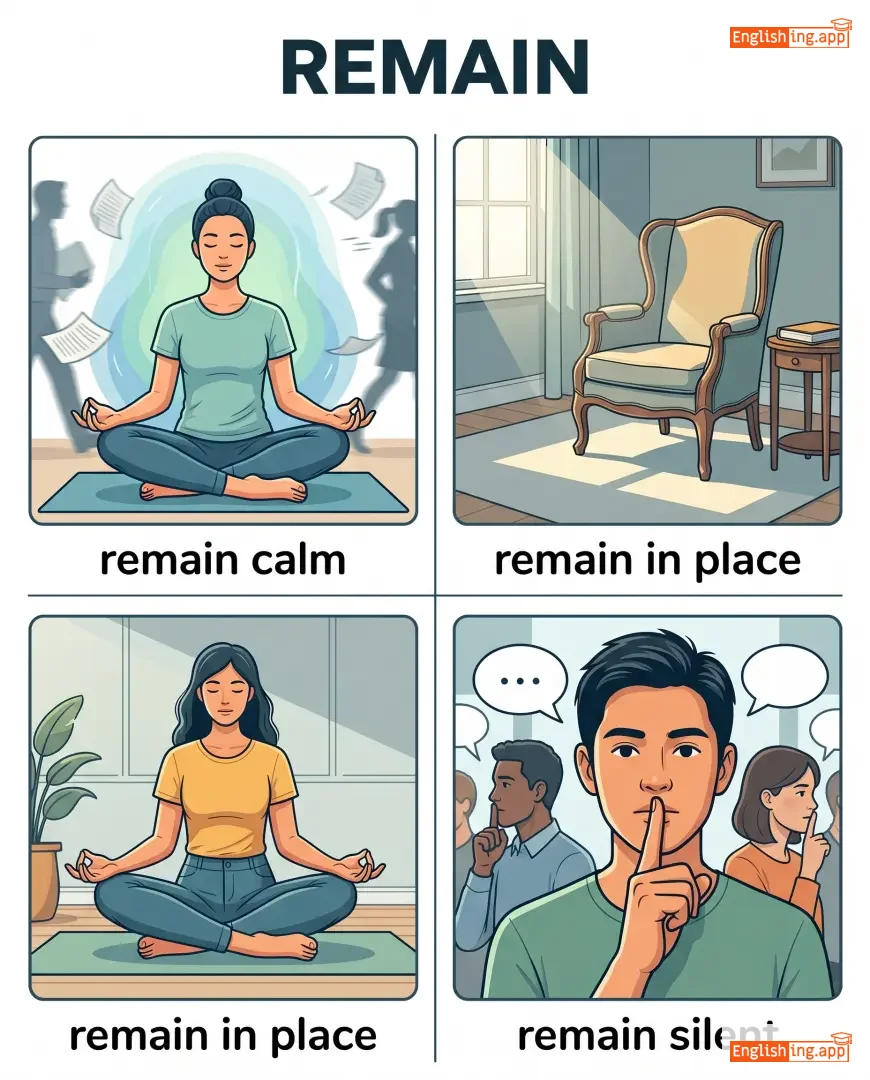
remain calm, remain silent, remain unchanged, remain faithful
••••••
|
Imagine you're the last one left, remaining at the party!
••••••
|
|
#4210
🪙
|
/rɪˈmeɪndər/
noun
(rimeindā)
••••••
|
- •••••• |
残り
nokori
••••••
|
- •••••• | - •••••• | - •••••• | - •••••• |
the part that is left after the main part is gone or used
••••••
|
He ate most of the cake and left the remainder on the plate.
彼はケーキのほとんどを食べ、残りを皿に残しました。
••••••
|
彼はケーキのほとんどを食べ、残りを皿に残しました。
Kare wa kēki no hotondo o tabe, nokori o sara ni nokoshimashita.
••••••
|
the remainder of the day
その日の残り
••••••
|
the part of the day that is left
••••••
|
その日の残り
sono hi no nokori
••••••
|
rest, residue, balance, leftover, surplus
••••••
|
whole, total, entirety
••••••
|
leave the remainder, remainder of the day, remainder of the work, small remainder
••••••
|
Remainder は残りを意味します; ケーキの残った部分を考えてみましょう。
••••••
|
|
#4211
🎟️
|
/rɪˈmeɪnɪŋ/
adjective
(riméiningu)
••••••
|
- •••••• |
残り
nokori
••••••
|
- •••••• | - •••••• | - •••••• | - •••••• |
still existing or left after others are gone or dealt with
••••••
|
There were only a few remaining tickets for the concert.
コンサートのチケットは残りわずかでした。
••••••
|
コンサートのチケットは残りわずかでした。
Konsaato no chiketto wa nokori wazuka deshita.
••••••
|
- •••••• | - •••••• | - •••••• |
left, leftover, residual, remaining
••••••
|
gone, used up, finished
••••••
|
remaining tickets, remaining time, remaining items
••••••
|
残りのチケットは最後に売れる!
••••••
|
|
#4212
💀
|
/rɪˈmeɪnz/
noun
(rimensu)
••••••
|
- •••••• |
遺物
iwotsu
••••••
|
- •••••• | - •••••• | - •••••• | - •••••• |
the parts, pieces, or substances that are left after the rest has been used or removed
••••••
|
The remains of the meal were left on the table. |
食事の残り物はテーブルに残されていた。
Shokuji no nokorimono wa tēburu ni nokosarete ita.
••••••
|
- •••••• | - •••••• | - •••••• |
leftovers, debris, remnants, fragments
••••••
|
whole, entirety, whole thing
••••••
|
remains of food, human remains, remains of the day
••••••
|
Remains are like 'remain' (iwotsu) left after a meal.
••••••
|
|
#4213
💬
|
/rɪˈmɑːrk/
noun/verb
(リマーク)
••••••
|
- •••••• |
発言
hatsugen
••••••
|
remarked
リマークド
••••••
|
remarked
リマークド
••••••
|
remarks
リマークス
••••••
|
remarking
リマーキング
••••••
|
something that is said; a comment
••••••
|
She made a remark about the weather.
シー メイド ア リマーク アバウト ザ ウェザー。
••••••
|
彼女は天気について発言した。
Kanojo wa tenki ni tsuite hatsugen shita.
••••••
|
make a remark
メイク ア リマーク
••••••
|
to say something, usually as a comment
••••••
|
発言する
hatsugen suru
••••••
|
comment, observation, statement, note
••••••
|
silence, quiet
••••••
|
casual remark, make a remark, witty remark, critical remark
••••••
|
Remark は発言 – remember 're' means again, mark your words by speaking.
••••••
|
|
#4214
⭐
|
/rɪˈmɑːrkəbl/
adjective
(rimarkaburu)
••••••
|
- •••••• |
注目すべき; 非凡な; 顕著な;
chūmoku subeki; hibōna; kencho na
••••••
|
- •••••• | - •••••• | - •••••• | - •••••• |
worthy of attention; extraordinary; notable;
••••••
|
His recovery from the illness was remarkable. |
病気から回復することは注目すべきことでした。
Byōki kara kaifuku suru koto wa chūmoku subeki koto deshita.
••••••
|
- •••••• | - •••••• | - •••••• |
extraordinary, outstanding, exceptional, amazing
••••••
|
ordinary, unremarkable, common, typical
••••••
|
remarkable achievement, remarkable progress, remarkable talent
••••••
|
Remarkable = 注目すべき (worthy of attention) + 非凡な (extraordinary)
••••••
|
|
#4215
👏
|
/rɪˈmɑːrkəbli/
adverb
(リマーカブリー)
••••••
|
- •••••• |
驚くべき方法で
odorokubeki hōhō de
••••••
|
- •••••• | - •••••• | - •••••• | - •••••• |
in a way that is worthy of attention or notice; surprisingly
••••••
|
She did remarkably well in the competition. |
彼女はコンペティションで驚くべき成果を上げました。
Kanojo wa konpētishon de odorokubeki seika o agemashita.
••••••
|
- •••••• | - •••••• | - •••••• |
notably, extraordinarily, exceptionally, amazingly
••••••
|
unremarkably, ordinarily
••••••
|
remarkably good, remarkably well, remarkably strong
••••••
|
Remarkably is like 'remark' (re-marks) made in awe.
••••••
|
|
#4216
💊
|
/ˈrem.ə.di/
noun
(レメディ)
••••••
|
- •••••• |
薬; 治療; 問題解決の手段
remedi
••••••
|
- •••••• | - •••••• | - •••••• | - •••••• |
a medicine or treatment for a disease; a solution to a problem
••••••
|
This herbal remedy helps with headaches.
このハーブの薬は頭痛に効く。
••••••
|
このハーブの薬は頭痛に効く。
kono haabu no kusuri wa zutsuu ni kiku.
••••••
|
- •••••• | - •••••• | - •••••• |
cure, treatment, solution, medicine
••••••
|
disease, problem, ailment, poison
••••••
|
home remedy, herbal remedy, legal remedy, effective remedy
••••••
|
Remedy is レメディ, Re = again, Medi = medicine, so imagine medicine returning you to health
••••••
|
|
#4217
💭
|
/rɪˈmembə/
verb
(リメンバー)
••••••
|
|
覚える
oboeru
••••••
|
remembered
リメンバード
••••••
|
remembered
リメンバード
••••••
|
remembers
リメンバーズ
••••••
|
remembering
リメンバーリング
••••••
|
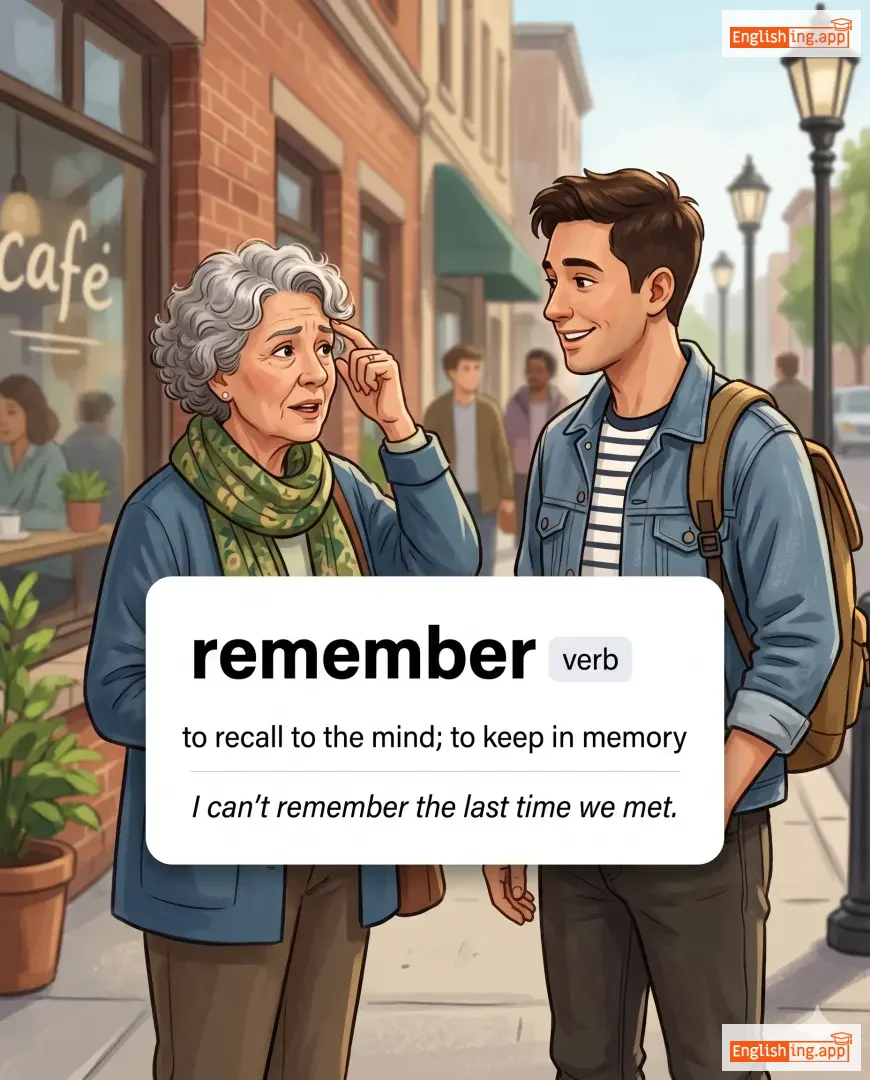
to bring a past event back into one's mind; to keep in memory
••••••
|
I remember my first day at school.
私は学校の最初の日を覚えています。
••••••
|
私は学校の最初の日を覚えています。
Watashi wa gakkou no saisho no hi o oboeteimasu.
••••••
|
- •••••• | - •••••• | - •••••• |
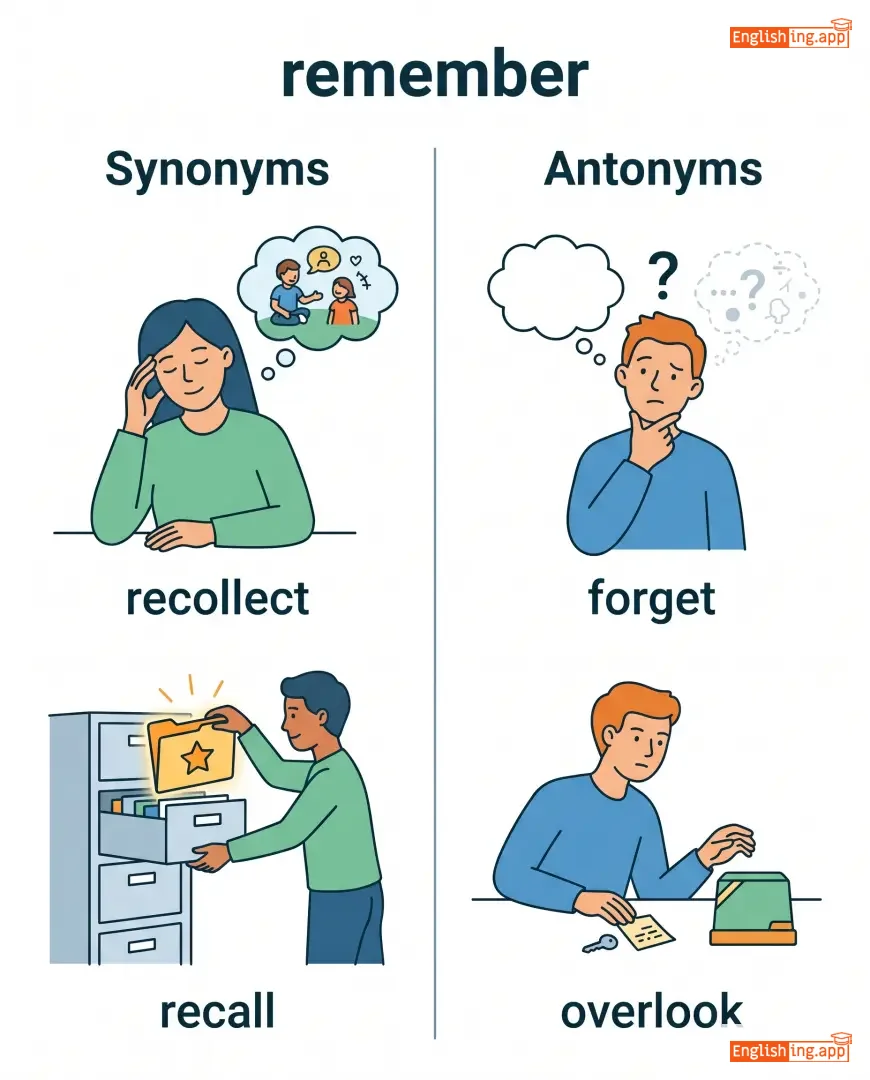
recall, recollect, reminisce, retain
••••••
|
forget, overlook, ignore
••••••
|
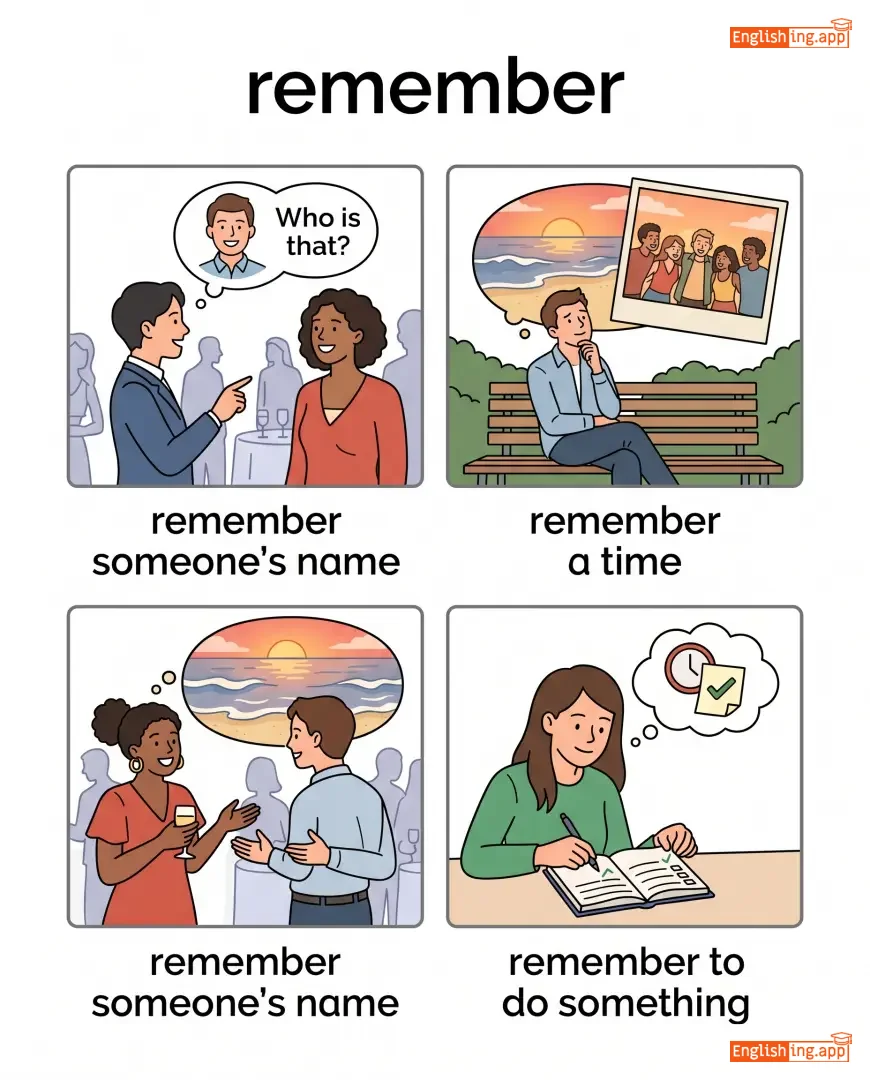
remember clearly, remember well, remember to do, remember when
••••••
|
学校の最初の日を覚えておいて!
••••••
|
|
#4218
🔔
|
/rɪˈmaɪnd/
verb
(リマインド)
••••••
|
- •••••• |
思い出させる
omoidasaseru
••••••
|
reminded
リマインデッド
••••••
|
reminded
リマインデッド
••••••
|
reminds
リマインズ
••••••
|
reminding
リマインディング
••••••
|
to cause someone to remember something
••••••
|
Please remind me to call her tomorrow.
明日彼女に電話するのをリマインドして下さい。
••••••
|
明日彼女に電話するのをリマインドして下さい。
Ashita kanojo ni denwa suru no o rimaindo shite kudasai.
••••••
|
- •••••• | - •••••• | - •••••• |
alert, notify, jog memory, prompt
••••••
|
forget, neglect
••••••
|
remind someone of something, remind to do something
••••••
|
リマインドは英語の'remind'と似ている、思い出させる!
••••••
|
|
#4219
⏰
|
/rɪˈmaɪndər/
noun
(リマインダー)
••••••
|
- •••••• |
リマインダー
riminda
••••••
|
- •••••• | - •••••• | - •••••• | - •••••• |
something that helps you remember a fact, event, or action that you need to do or recall
••••••
|
He set a reminder to call his mother on her birthday. |
彼は母親の誕生日に電話するためにリマインダーを設定しました。
Kare wa hahaoya no tanjoubi ni denwa suru tame ni rimindaa o settei shimashita.
••••••
|
gentle reminder |
a polite way to remind someone about something
••••••
|
優しいリマインダー
Yasashii rimindaa
••••••
|
prompt, cue, notice, alert, warning
••••••
|
forgetfulness, omission
••••••
|
set a reminder, friendly reminder, daily reminder, send a reminder
••••••
|
リマインダー = 覚えておいて - リマインダーがあなたを覚えさせます!
••••••
|
|
#4220
🌍
|
/rɪˈmoʊt/
adjective
(リモート)
••••••
|
- •••••• |
遠隔
enkaku
••••••
|
- •••••• | - •••••• | - •••••• | - •••••• |
Situated far from the main centers of population; distant.
••••••
|
They stayed in a remote village during their trip. |
彼らは旅行中に遠隔の村に泊まりました。
Karera wa ryokouchuu ni enkaku no mura ni tomarimashita.
••••••
|
remote possibility |
A very unlikely chance.
••••••
|
遠隔の可能性
enkaku no kanousei
••••••
|
distant, faraway, isolated, secluded, outlying
••••••
|
near, close, central
••••••
|
remote area, remote control, remote access, remote work
••••••
|
Remoteは'遠隔'に似ていて、遠くからでも操作できることを示しています。
••••••
|
Vocabulary Quiz
Test your vocabulary by matching words with their translations or meanings.
Login to take the quiz
Comments (0)
Share your thoughts and join the discussion.
Join the discussion by logging in
Login to CommentNo comments yet
Be the first to share your thoughts!