

翻訳
過去
過去分詞
三人称単数
動名詞
意味
例文
例文の翻訳
同義語
対義語
コロケーション
ニーモニック
Swipe left or right, or use the buttons. Tap image to zoom.
例文の翻訳
単語
Lesson 18Lesson 18 - マスクトグル
|
絵文字
|
単語 | Images | 翻訳 | 過去 | 過去分詞 | 三人称単数 | 動名詞 | 意味 | 例文 | 例文の翻訳 | 表現例 | 表現例の意味 | 表現例の翻訳 | 同義語 | 対義語 | コロケーション | ニーモニック |
|---|---|---|---|---|---|---|---|---|---|---|---|---|---|---|---|---|---|
|
#814
🌿
|
/bʊʃ/
noun
(ブッシュ)
••••••
|
- •••••• |
茂み
shigemi
••••••
|
- •••••• | - •••••• | - •••••• | - •••••• |
a plant with many small branches growing close to the ground; a shrub
••••••
|
A rabbit was hiding under the bush. |
ウサギは茂みの下に隠れていました。
Usagi wa shigemi no shita ni kakurete imashita.
••••••
|
beat around the bush |
to avoid talking about the main point
••••••
|
遠回しに話す
toomawashi ni hanasu
••••••
|
shrub, hedge, thicket, plant, undergrowth
••••••
|
tree, lawn
••••••
|
bush fire, rose bush, green bush, dense bush
••••••
|
Bushは茂みを意味します🌿 — 誰かが遠回しに話して、主なポイントを避けている様子を想像してください!
••••••
|
|
#815
💼
|
/ˈbɪznəsmæn/
noun
(ビジネスマン)
••••••
|
- •••••• |
ビジネスマン
bijinesuman
••••••
|
- •••••• | - •••••• | - •••••• | - •••••• |
a person engaged in commercial or industrial business activities
••••••
|
The businessman invested heavily in new technology. |
ビジネスマンは新しい技術に多額の投資をしました。
Bijinesuman wa atarashī gijutsu ni tagaku no tōshi o shimashita.
••••••
|
- •••••• | - •••••• | - •••••• |
entrepreneur, trader, merchant, industrialist, executive
••••••
|
employee, worker
••••••
|
successful businessman, local businessman, young businessman, wealthy businessman
••••••
|
Businessman はビジネスマン 💼 — Business は商業、だから businessman はビジネスをする人です!
••••••
|
|
#816
💼
|
/ˈbɪznəsˌwʊmən/
noun
(ビジネスウーマン)
••••••
|
- •••••• |
実業家の女性
jitsugyoka no josei
••••••
|
- •••••• | - •••••• | - •••••• | - •••••• |
a woman who works in business, especially one who owns or manages a company
••••••
|
The businesswoman expanded her company into international markets.
ザ ビジネスウーマン ワ エクスパンディド ハー カンパニー イントゥ インターナショナル マーケッツ。
••••••
|
その実業家の女性は会社を国際市場へ拡大した。
sono jitsugyoka no josei wa kaisha o kokusai shijo e kakudai shita
••••••
|
- •••••• | - •••••• | - •••••• |
female entrepreneur, business executive, business owner, company director
••••••
|
businessman, employee
••••••
|
successful businesswoman, young businesswoman, businesswoman entrepreneur, leading businesswoman
••••••
|
ビジネス + ウーマン = businesswoman
••••••
|
|
#817
💥
|
/bʌst/
noun/verb
••••••
|
- •••••• | - •••••• |
busted
••••••
|
busted
••••••
|
busts
••••••
|
busting
••••••
|
As a noun: A sculpture of a person's head, shoulders, and chest; As a verb: To break, smash, or arrest.
••••••
|
The police busted the gang last night. |
- •••••• |
go bust |
To go bankrupt or fail completely.
••••••
|
- •••••• |
break, smash, ruin, collapse, arrest
••••••
|
fix, repair, succeed
••••••
|
go bust, bust a move, bust up, bust open
••••••
|
No •••••• |
|
#818
👗
|
/ˈbʌsti/
adjective
(バスティ)
••••••
|
- •••••• |
胸が豊かな
mune ga yutaka na
••••••
|
- •••••• | - •••••• | - •••••• | - •••••• |
having a large or full bust; describing a woman with a prominent chest
••••••
|
The actress was often described as busty in fashion magazines.
ジ アクトレス ワズ オーフン ディスクライブド アズ バスティ イン ファッション マガジンズ。
••••••
|
その女優はファッション雑誌でよく胸が豊かなと表現された。
Sono joyuu wa fasshon zasshi de yoku mune ga yutaka na to hyougen sareta
••••••
|
- •••••• | - •••••• | - •••••• |
curvaceous, well-endowed, full-bosomed, buxom
••••••
|
flat-chested, slim
••••••
|
busty figure, busty woman, busty appearance
••••••
|
Busty=バストが大きい→胸が豊か。
••••••
|
|
#819
🐝
|
/ˈbɪzi/
adjective
(bizi)
••••••
|
- •••••• |
忙しい
isogashii
••••••
|
- •••••• | - •••••• | - •••••• | - •••••• |
actively engaged in work or activity; occupied
••••••
|
He is too busy to answer the phone. |
彼は電話に出るのがあまりにも忙しい。
Kare wa denwa ni deru no ga amari ni mo isogashii.
••••••
|
busy as a bee |
extremely active and hardworking
••••••
|
蜂のように忙しい
hachi no yō ni isogashii
••••••
|
occupied, engaged, active, industrious
••••••
|
idle, free, inactive
••••••
|
busy schedule, busy street, busy day, keep busy
••••••
|
蜂のように忙しい!
••••••
|
|
#820
🐐
|
/bʌt/
verb
(バット)
••••••
|
|
頭突きする
zutsuki suru
••••••
|
butted
バッテッド
••••••
|
butted
バッテッド
••••••
|
butts
バッツ
••••••
|
butting
バッティング
••••••
|
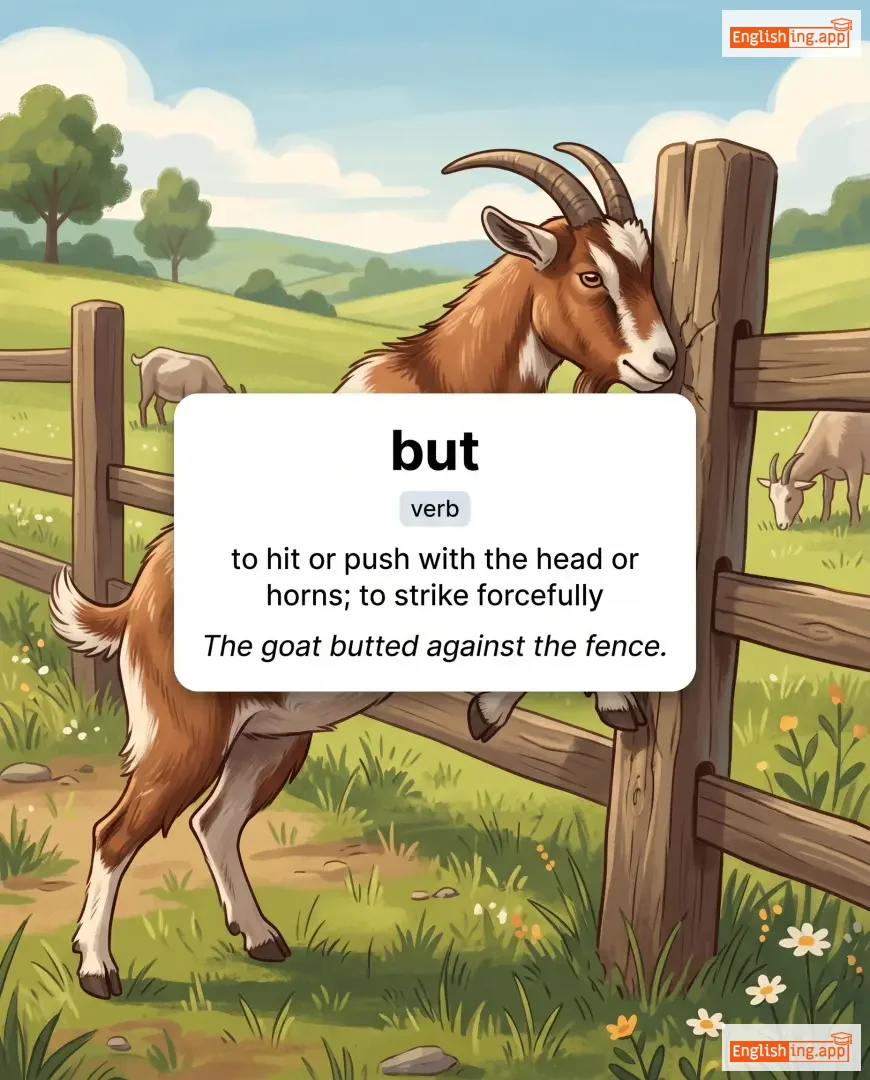
to hit or push with the head or horns; to strike forcefully
••••••
|
The goat butted against the fence.
ヤギはフェンスにぶつかった。
••••••
|
ヤギはフェンスにぶつかった。
Yagi wa fensu ni butsukatta.
••••••
|
- •••••• | - •••••• | - •••••• |
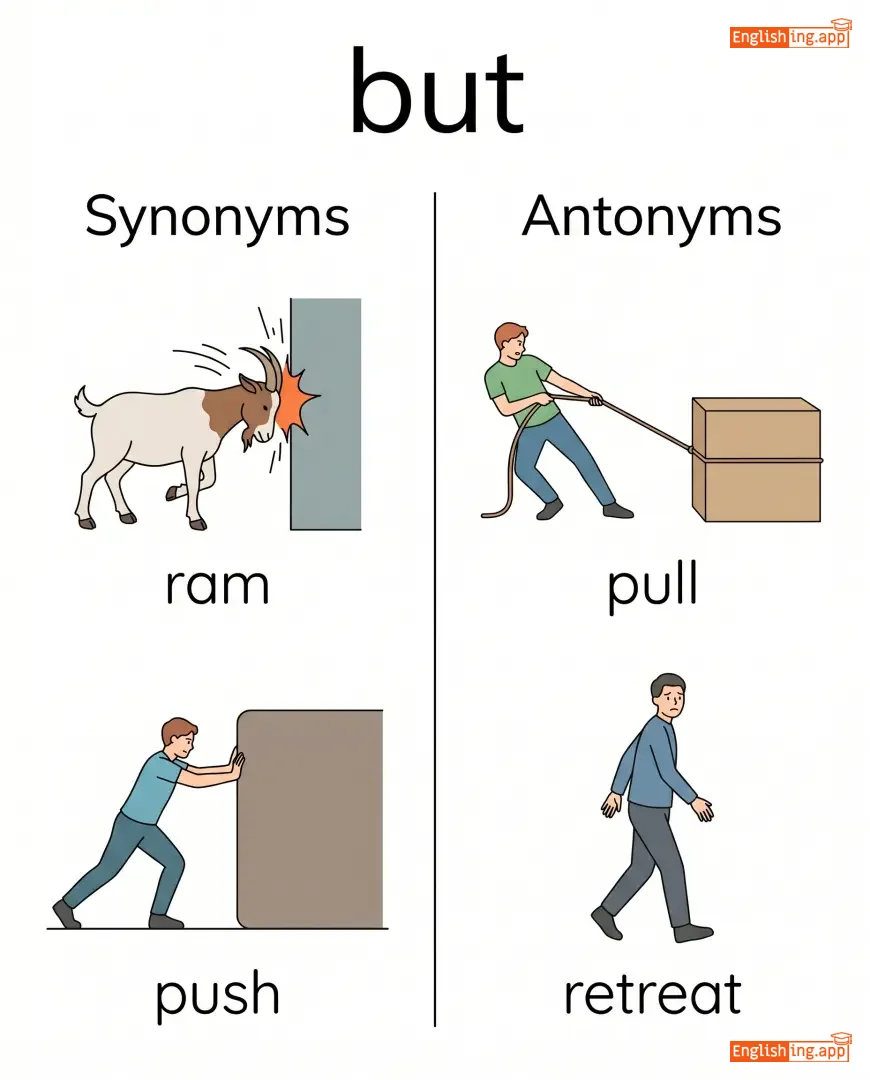
ram, push, strike, hit
••••••
|
pull, retreat, withdraw
••••••
|
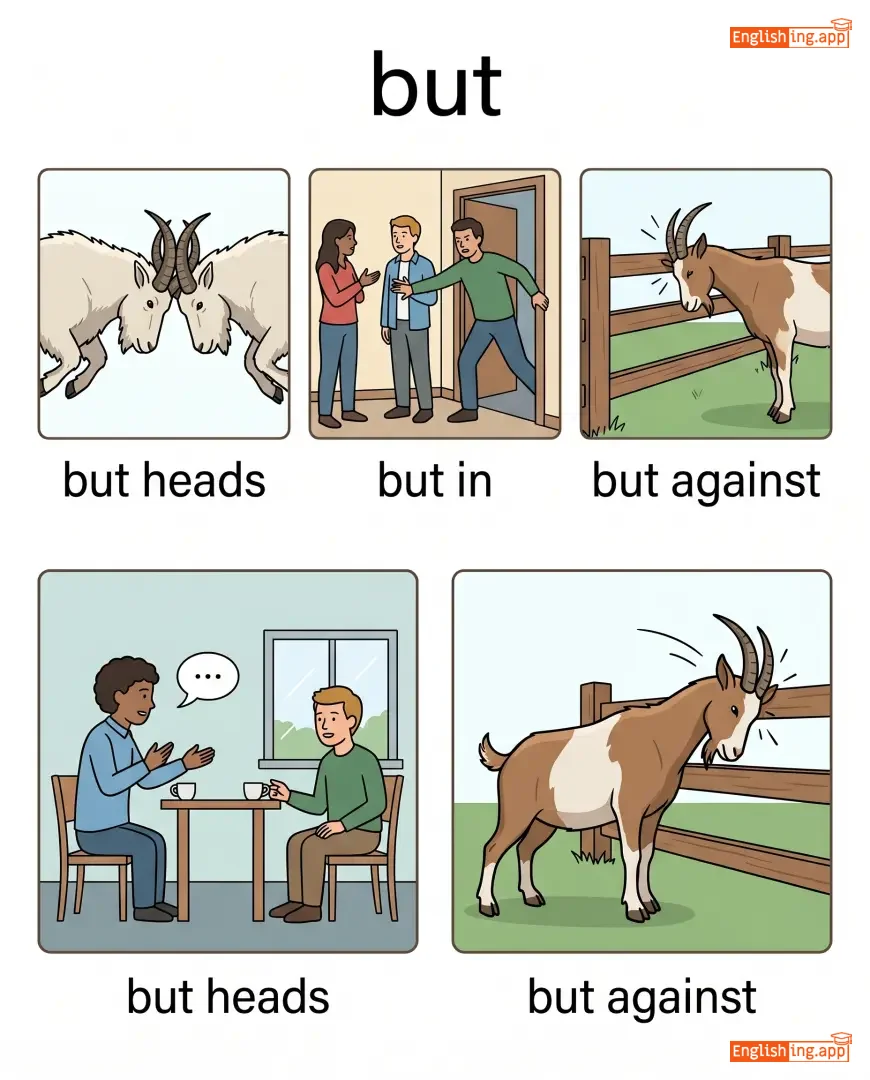
but heads, but in, but against, violently but, forcefully but
••••••
|
Headbutt the fence, it’s what goats do!
••••••
|
|
#821
🥩
|
/ˈbʊt.ʃər/
noun
(ブッチャー)
••••••
|
- •••••• |
肉屋
nikuya
••••••
|
- •••••• | - •••••• | - •••••• | - •••••• |
a person whose job is cutting up and selling meat in a shop
••••••
|
The butcher recommended the best cut of beef for our dinner. |
肉屋は私たちの夕食のために最高の牛肉の切り身を勧めました。
Nikuya wa watashitachi no yūshoku no tame ni saikō no gyūniku no kirimi o susumemashita.
••••••
|
- •••••• | - •••••• | - •••••• |
meat cutter, slaughterer, meat seller
••••••
|
vegetarian, vegan, herbivore
••••••
|
local butcher, skilled butcher, butcher shop, meat butcher
••••••
|
Nikuya is like 'niku' (meat), which connects to butcher.
••••••
|
|
#822
🧈
|
/ˈbʌtər/
noun, verb
••••••
|
- •••••• | - •••••• |
buttered
••••••
|
buttered
••••••
|
butters
••••••
|
buttering
••••••
|
a pale yellow edible fat made from cream; to spread butter on something
••••••
|
She buttered a slice of bread before eating. |
- •••••• |
butter someone up |
to flatter someone to gain favor
••••••
|
- •••••• |
spread, dairy, margarine, fat
••••••
|
oil, lean
••••••
|
bread and butter, melted butter, butter knife, butter up
••••••
|
No •••••• |
|
#823
🦋
|
/ˈbʌtərflaɪ/
noun
(bātāfurai)
••••••
|
- •••••• |
蝶々
chōchō
••••••
|
- •••••• | - •••••• | - •••••• | - •••••• |
an insect with large, often brightly colored wings that flies during the day
••••••
|
A beautiful butterfly landed on the flower. |
美しい蝶々が花の上に止まった。
Utsukushī chōchō ga hana no ue ni tomatta.
••••••
|
social butterfly |
a person who loves to socialize and move among people
••••••
|
- •••••• |
moth, insect, flier, creature, bug
••••••
|
caterpillar, larva
••••••
|
butterfly wings, butterfly garden, butterfly effect, butterfly species
••••••
|
Butter + fly = 蝶々、蝶々のように飛ぶ。
••••••
|
|
#824
🔘
|
/ˈbʌtən/
noun
(バトン)
••••••
|
|
ボタン
botan
••••••
|
- •••••• | - •••••• | - •••••• | - •••••• |
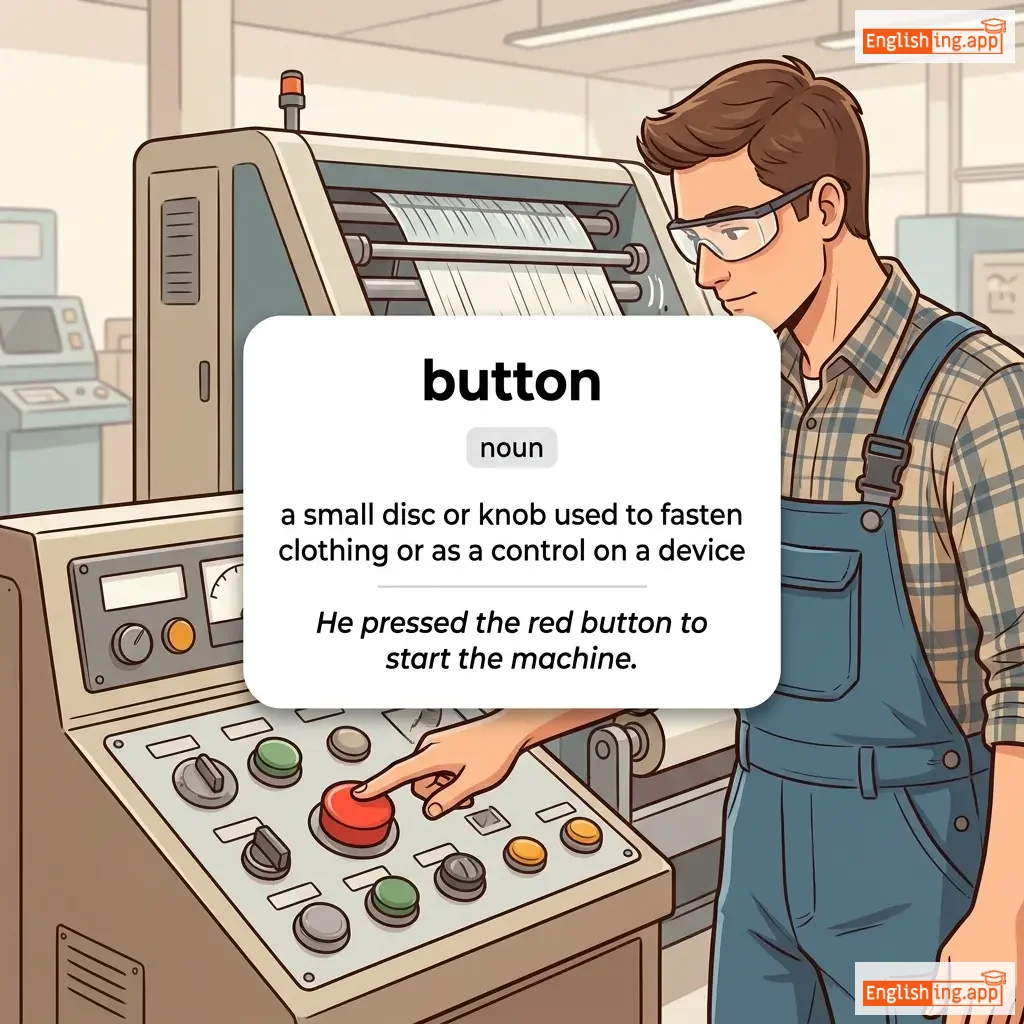
a small disc or knob used to fasten clothing or as a control on a device
••••••
|
He pressed the red button to start the machine. |
彼は機械を起動するために赤いボタンを押しました。
Kare wa kikai o kidō suru tame ni akai botan o oshimashita.
••••••
|
push the right button |
to say or do something that perfectly satisfies or irritates someone
••••••
|
正しいボタンを押す
Tadashī botan o osu
••••••
|
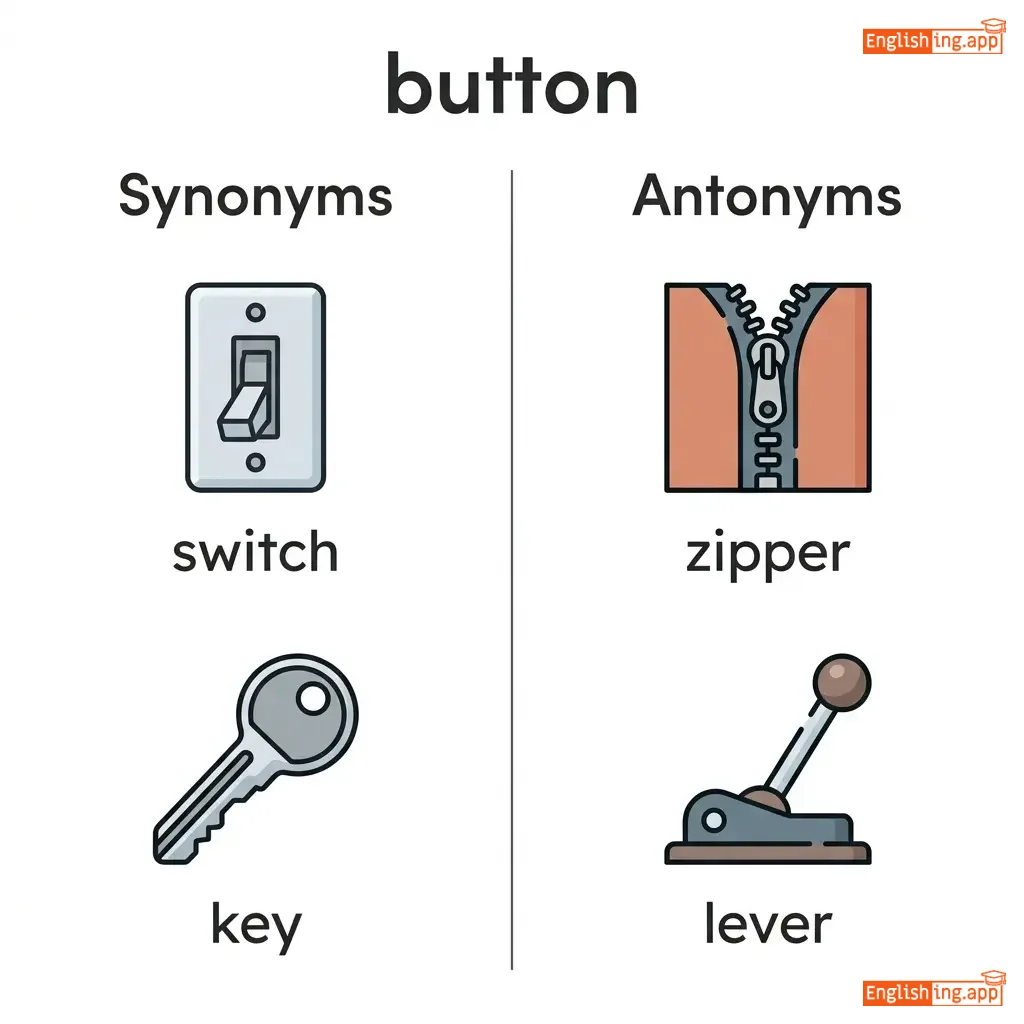
switch, key, control, knob, fastener
••••••
|
zipper, lever
••••••
|
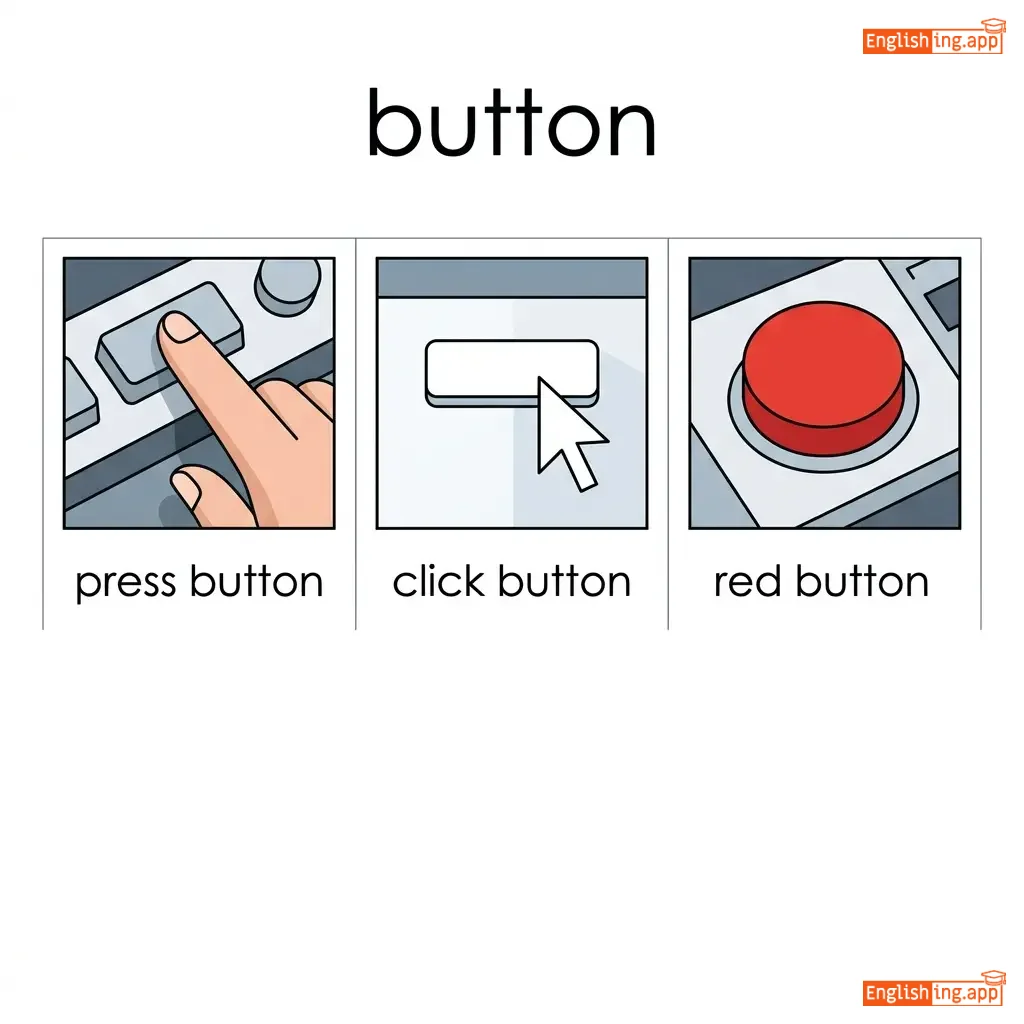
press button, click button, red button, panic button
••••••
|
ボタンを押すと、何かが始まる。
••••••
|
|
#825
🛒
|
/baɪ/
verb
(バイ)
••••••
|
|
買う
kau
••••••
|
bought
ボット
••••••
|
bought
ボット
••••••
|
buys
バイズ
••••••
|
buying
バイイング
••••••
|
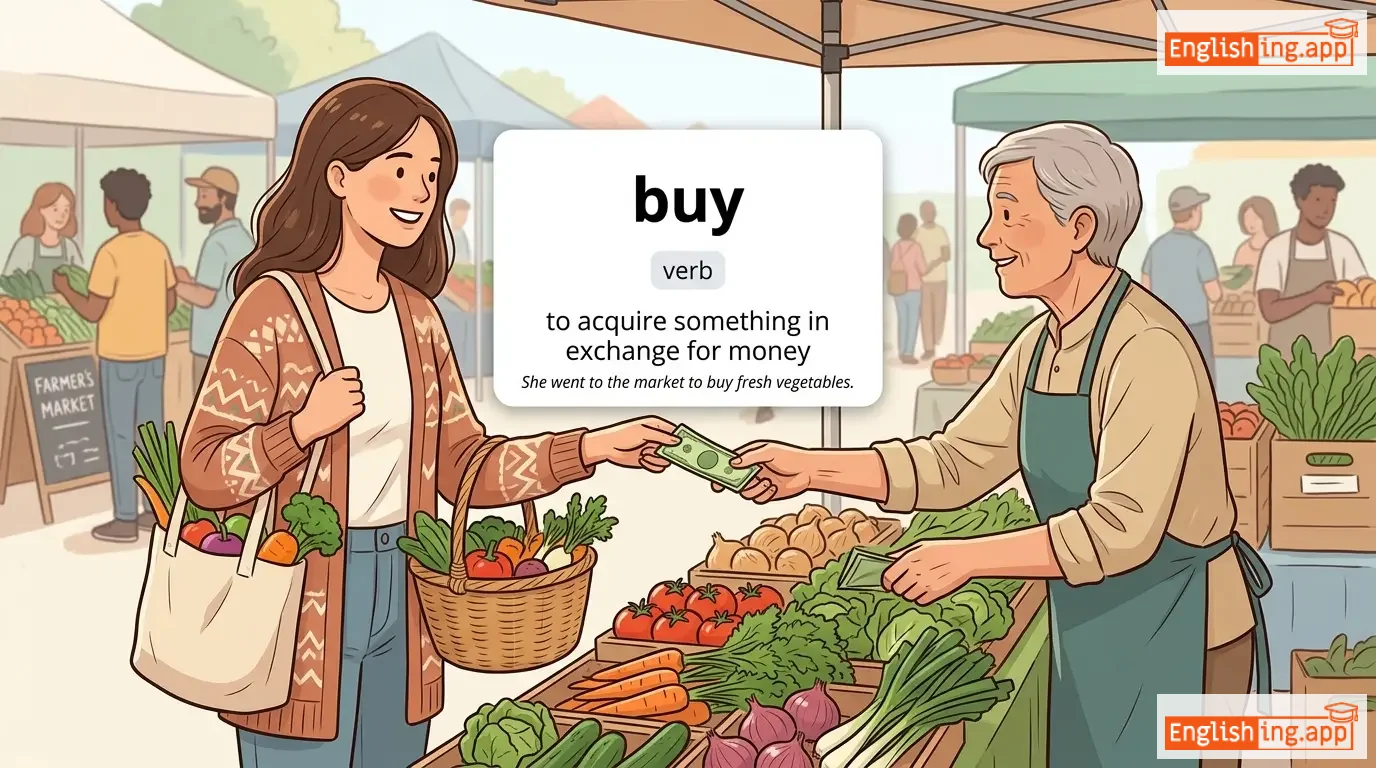
to acquire something in exchange for money
••••••
|
She went to the market to buy fresh vegetables.
彼女は新鮮な野菜を買うために市場に行きました。
••••••
|
彼女は新鮮な野菜を買うために市場に行きました。
Kanojo wa shinsen na yasai o kau tame ni ichiba ni ikimashita.
••••••
|
buy time
時間を買う
••••••
|
to delay something in order to gain more time
••••••
|
時間を買う
jikan o kau
••••••
|
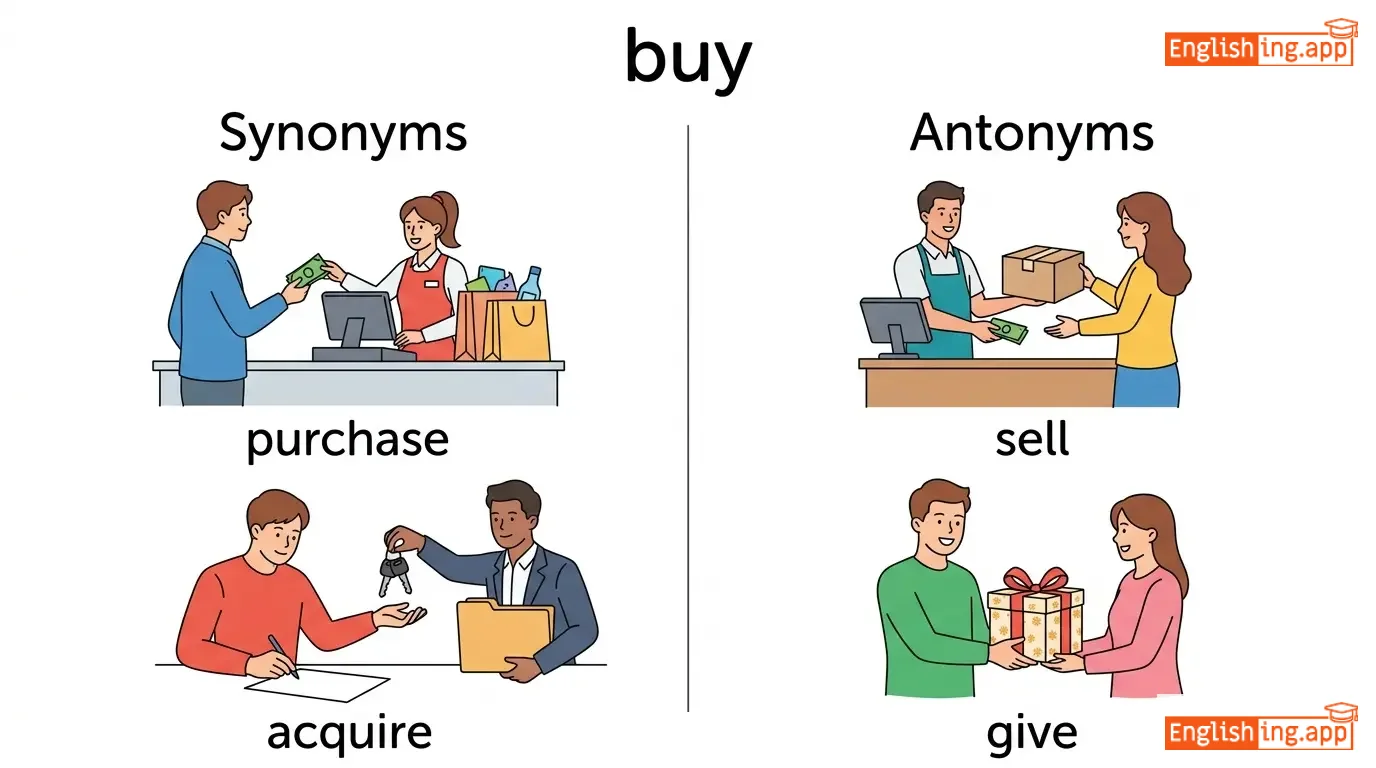
purchase, acquire, obtain, get, procure
••••••
|
sell, give
••••••
|
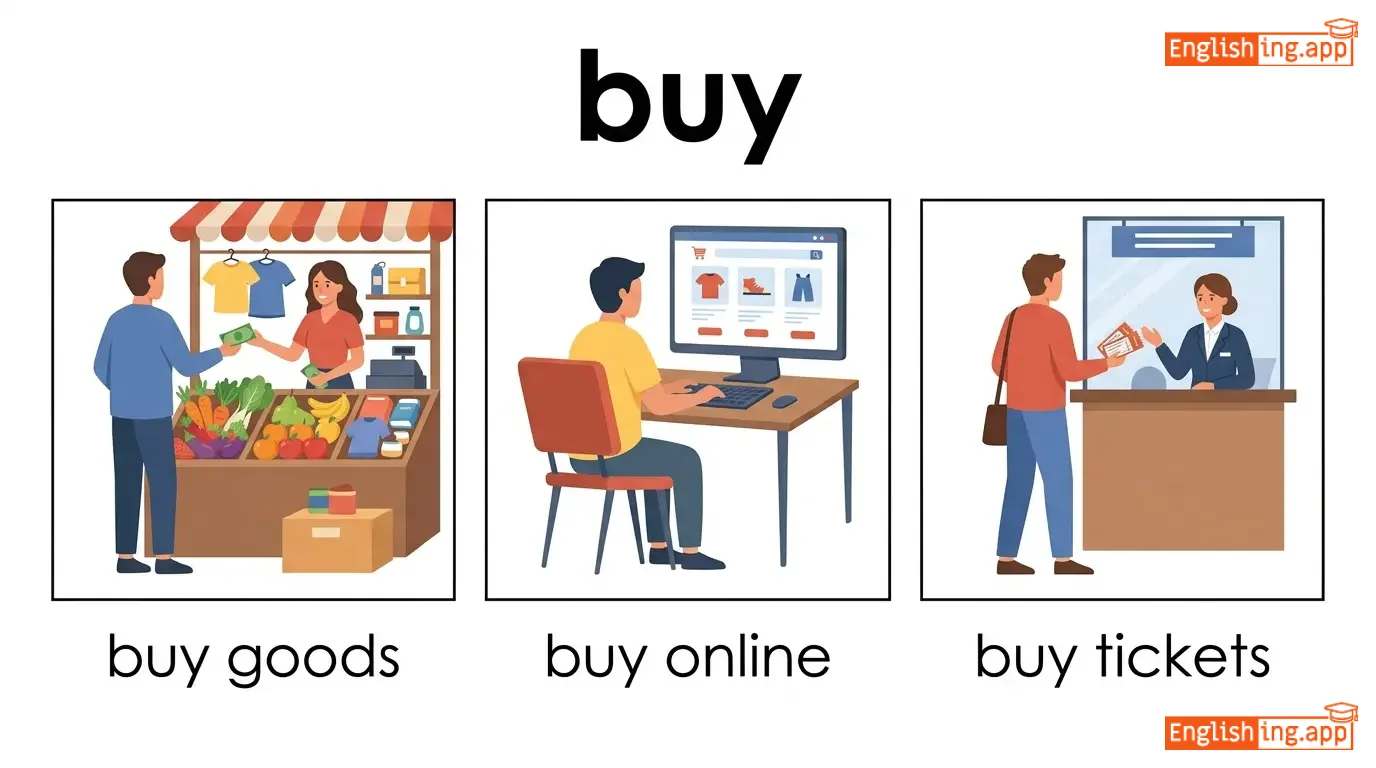
buy goods, buy online, buy tickets, buy food
••••••
|
Buyは買うという意味、マーケットで買うときに使う!
••••••
|
|
#826
🛒
|
/ˈbaɪər/
noun
(バイヤー)
••••••
|
- •••••• |
買い手
kaite
••••••
|
- •••••• | - •••••• | - •••••• | - •••••• |
a person who makes a purchase
••••••
|
The buyer inspected the car before making payment. |
買い手は支払い前に車を検査しました。
Kaite wa shiharai mae ni kuruma o kensa shimashita.
••••••
|
buyer beware |
the buyer alone is responsible for checking the quality of goods
••••••
|
買い手注意
Kaite chūi
••••••
|
customer, purchaser, client, consumer
••••••
|
seller, vendor
••••••
|
buyer demand, buyer behavior, new buyer, property buyer
••••••
|
Buyer とは買い手 – 'Buy' が買い手に変わる。
••••••
|
|
#827
🐝
|
/bʌz/
noun, verb
(バズ)
••••••
|
- •••••• |
ブーンという音
buun to iu oto
••••••
|
buzzed
バズド
••••••
|
buzzed
バズド
••••••
|
buzzes
バズズ
••••••
|
buzzing
バズイング
••••••
|
to make a low continuous humming sound; a feeling of excitement or interest
••••••
|
I could hear the phone buzz during the meeting.
アイ クッド ヒア ザ フォン バズ デューリング ザ ミーティング。
••••••
|
会議中に電話がブーンと鳴るのが聞こえた。
Kaigichuu ni denwa ga buun to naru no ga kikoeta
••••••
|
buzz off
バズ オフ
••••••
|
go away; leave someone alone
••••••
|
あっちへ行け
atchi e ike
••••••
|
hum, whirr, ring, excitement, stir
••••••
|
silence, calm, quiet
••••••
|
phone buzz, buzzing sound, media buzz, create a buzz, constant buzz
••••••
|
Buzz=バズる、話題になる音を想像
••••••
|
|
#828
➡️
|
/baɪ/
preposition
(バイ)
••••••
|
- •••••• |
によって
niyotte
••••••
|
- •••••• | - •••••• | - •••••• | - •••••• |
indicating the agent performing an action, or the means of achieving something
••••••
|
The book was written by a famous author. |
その本は有名な作家によって書かれました。
Sono hon wa yuumei na sakka niyotte kakaremashita.
••••••
|
by heart |
to memorize something completely
••••••
|
暗記
anki
••••••
|
through, via, from, with
••••••
|
without, beyond
••••••
|
by chance, by mistake, by the way, by law
••••••
|
BY はによってを意味します – 本は作家によって書かれました。
••••••
|
|
#829
👋
|
/baɪ/
interjection
(バイ)
••••••
|
- •••••• |
さようなら
sayounara
••••••
|
- •••••• | - •••••• | - •••••• | - •••••• |
used to say goodbye; a short and informal farewell
••••••
|
I said bye to her before leaving.
アイ セッド バイ トゥ ハー ビフォー リービング
••••••
|
出発する前に彼女にさようならと言った。
shuppatsu suru mae ni kanojo ni sayounara to itta
••••••
|
bye-bye
バイバイ
••••••
|
an informal or childlike way to say goodbye
••••••
|
バイバイ
baibai
••••••
|
goodbye, farewell, adieu, see ya
••••••
|
hello, hi
••••••
|
say bye, wave bye, bye for now
••••••
|
バイバイは英語の bye
••••••
|
|
#830
🏠
|
/ˈkæbɪn/
noun
(キャビン)
••••••
|
- •••••• |
キャビン
kyabin
••••••
|
- •••••• | - •••••• | - •••••• | - •••••• |
a small shelter or house, often made of wood in a remote area
••••••
|
They spent the weekend in a cozy cabin in the mountains. |
彼らは山中の快適なキャビンで週末を過ごしました。
Karera wa sanchuu no kaiteki na kyabin de shuumatsu o sugoshimashita.
••••••
|
cabin fever |
restlessness and irritability caused by prolonged indoor confinement
••••••
|
キャビンフィーバー
kyabin fiibaa
••••••
|
hut, lodge, cottage, shack, shelter
••••••
|
mansion, palace
••••••
|
log cabin, cabin crew, cabin fever, mountain cabin
••••••
|
Cabinは小さな家を意味します。キャビンで快適に過ごすことを想像してください。
••••••
|
|
#831
🗄️
|
/ˈkæbənɪt/
noun
(キャビネット)
••••••
|
- •••••• |
内閣 / キャビネット
naikaku / kyabinetto
••••••
|
- •••••• | - •••••• | - •••••• | - •••••• |
A group of senior government ministers; or a cupboard with shelves or drawers.
••••••
|
The prime minister reshuffled the cabinet last month. |
首相は先月、内閣を再編成しました。
Shushō wa sengetsu, naikaku o saihen-sei shimashita.
••••••
|
cabinet reshuffle |
A reorganization of government ministers.
••••••
|
内閣改造
naikaku kaizō
••••••
|
council, ministry, cupboard, committee
••••••
|
individual, disorganization
••••••
|
kitchen cabinet, cabinet meeting, cabinet reshuffle, medicine cabinet
••••••
|
Cab + net → 内閣でリーダーが集まる
••••••
|
|
#832
📡
|
/ˈkeɪ.bəl/
noun
••••••
|
|
- •••••• | - •••••• | - •••••• | - •••••• | - •••••• |
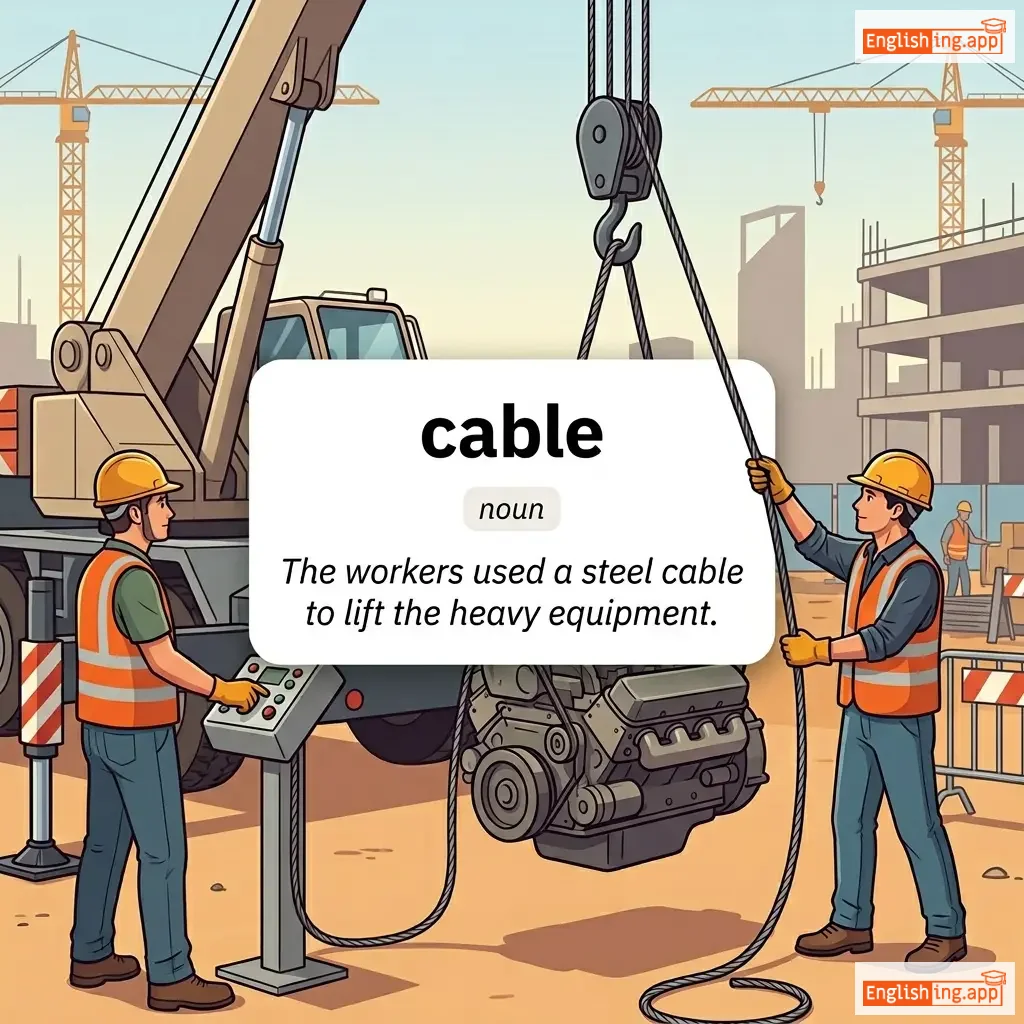
a thick, strong rope made of metal wires or fibers; a system of wires used for transmitting signals or electricity
••••••
|
The workers used a steel cable to lift the heavy equipment. |
- •••••• |
under the cable |
a nautical term meaning below deck or out of sight
••••••
|
- •••••• |
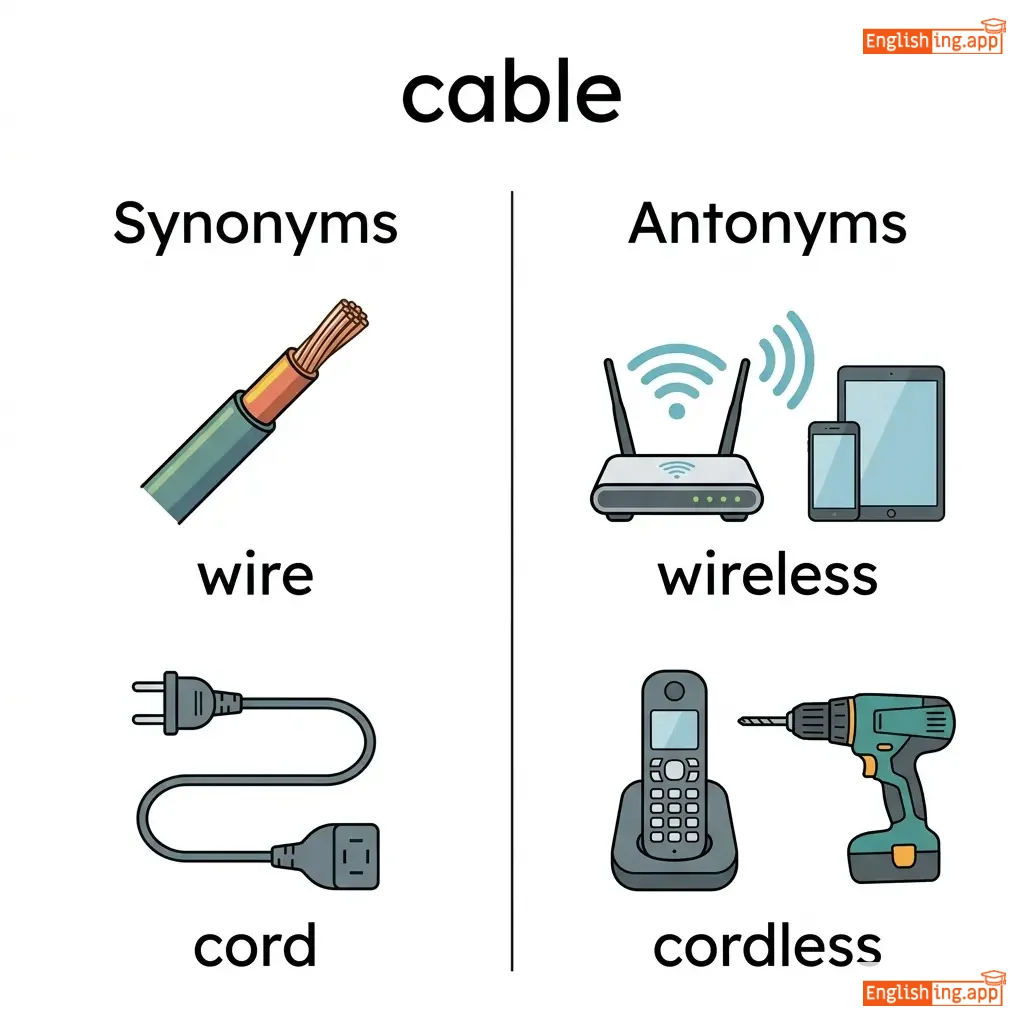
wire, cord, rope, line, connector
••••••
|
wireless, cordless
••••••
|
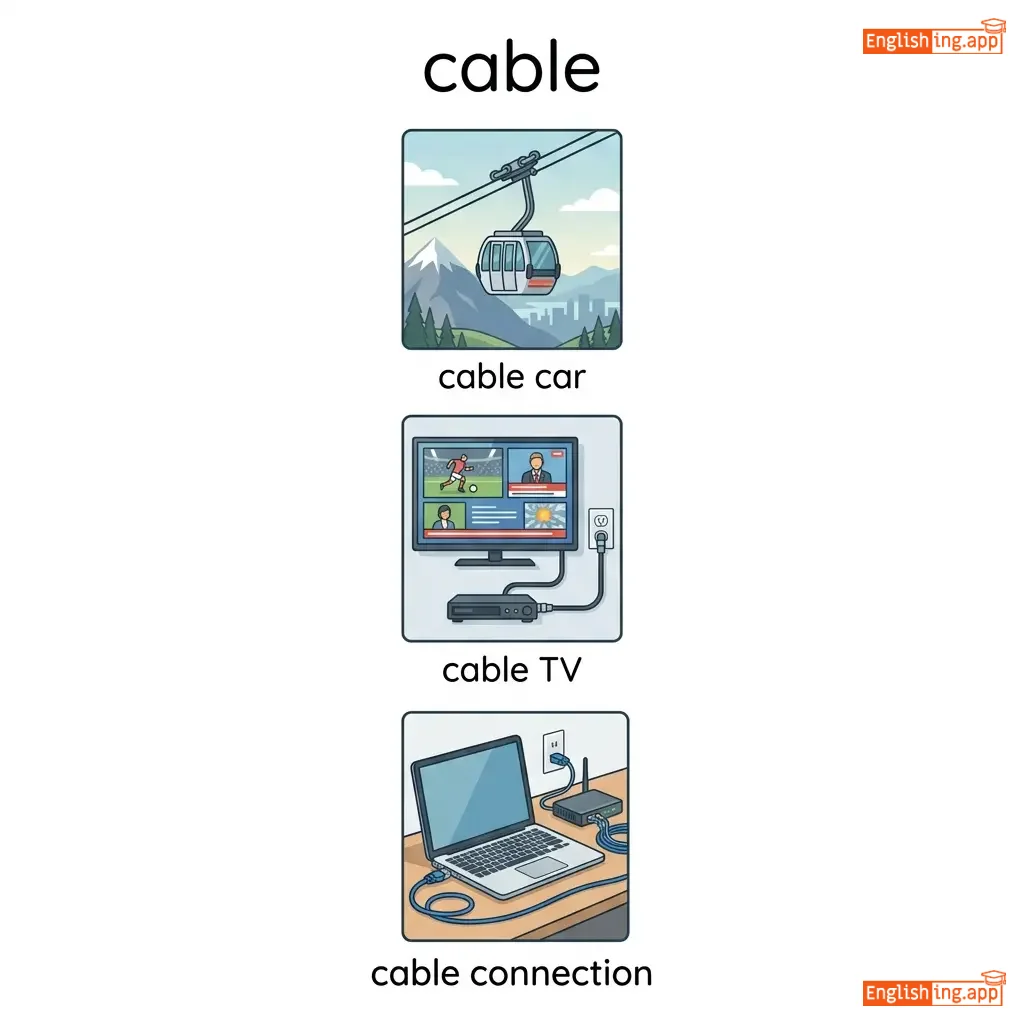
cable car, cable TV, cable connection, fiber optic cable
••••••
|
No •••••• |
|
#833
🍰
|
/keɪk/
noun
(ケーキ)
••••••
|
- •••••• |
ケーキ
keeki
••••••
|
- •••••• | - •••••• | - •••••• | - •••••• |
a sweet baked food made from flour, sugar, and other ingredients
••••••
|
She baked a chocolate cake for her friend's birthday. |
彼女は友達の誕生日のためにチョコレートケーキを焼きました。
Kanojo wa tomodachi no tanjōbi no tame ni chokorēto kēki o yakimashita.
••••••
|
a piece of cake |
something that is very easy to do
••••••
|
お茶の子さいさい
ocha no ko saisaa
••••••
|
pastry, dessert, sponge, confection
••••••
|
meal, savory
••••••
|
birthday cake, wedding cake, chocolate cake, bake a cake
••••••
|
ケーキを食べるのは幸せで、何かが簡単だときには「お茶の子さいさい」と言います。
••••••
|
|
#834
🧮
|
/ˈkæl.kjʊ.leɪt/
verb
(計算する)
••••••
|
|
計算する
keisan suru
••••••
|
calculated
計算した
••••••
|
calculated
計算した
••••••
|
calculates
計算する
••••••
|
calculating
計算している
••••••
|
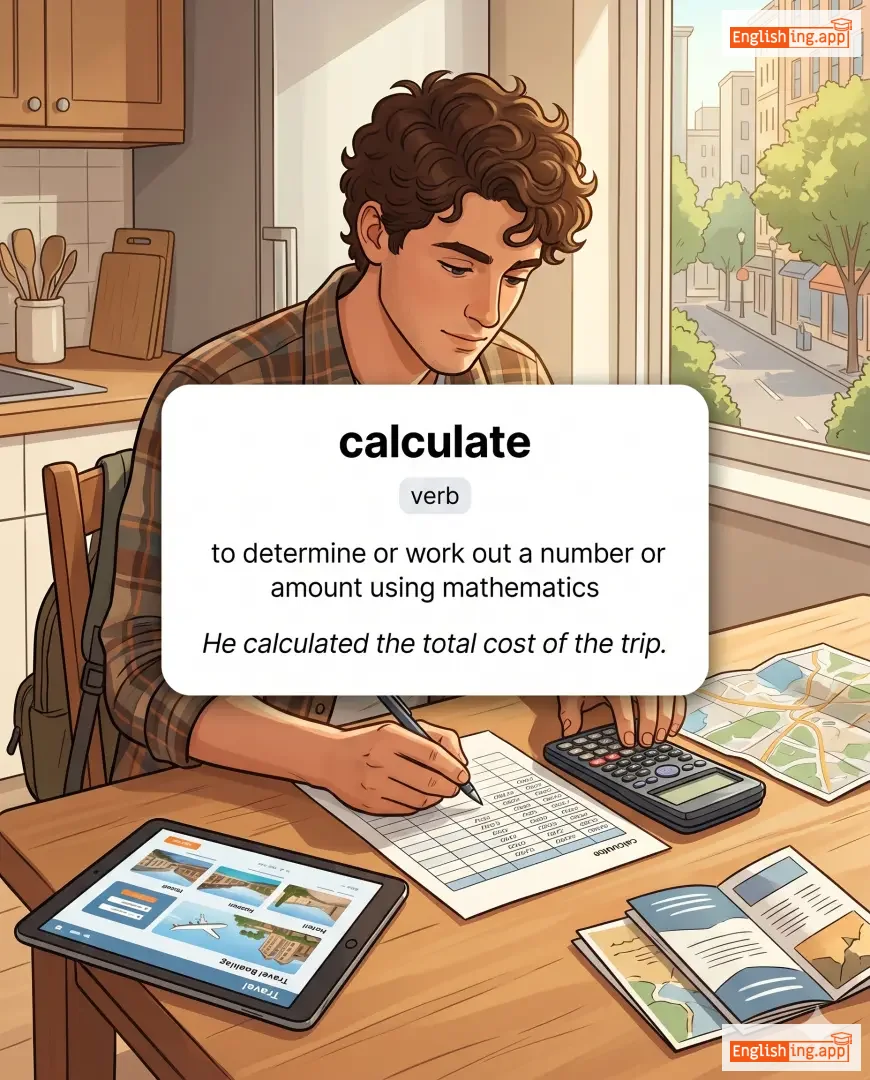
to determine or work out a number or amount using mathematics
••••••
|
He calculated the total cost of the trip.
彼は旅行の総費用を計算した。
••••••
|
彼は旅行の総費用を計算した。
Kare wa ryokou no souhiyou o keisan shita.
••••••
|
calculate the odds
確率を計算する
••••••
|
to consider the chances of something happening
••••••
|
確率を計算する
kakuritsu o keisan suru
••••••
|
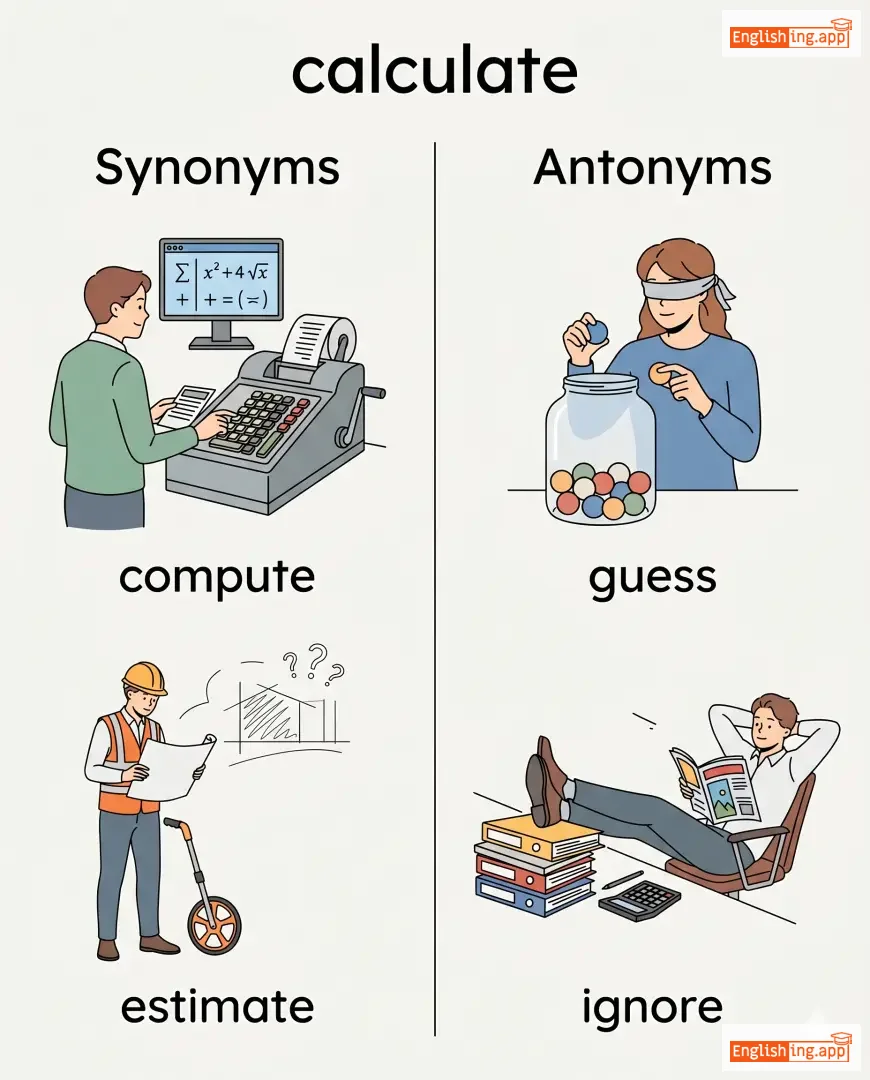
compute, estimate, count, evaluate, figure
••••••
|
guess, ignore, neglect
••••••
|
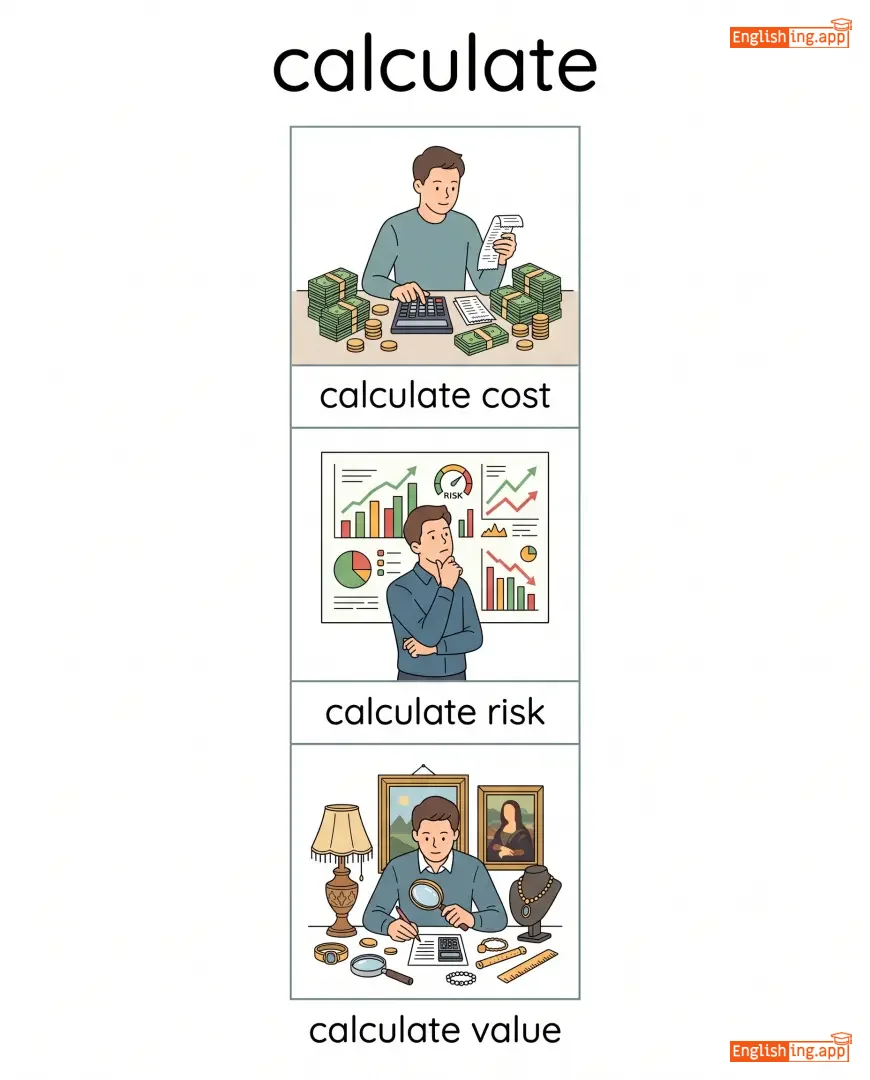
calculate cost, calculate risk, calculate value, calculate interest
••••••
|
Calculateは計算するという意味で、計算機を使うことを思い出してください
••••••
|
|
#835
🧮
|
/ˌkælkjʊˈleɪʃən/
noun
(karyu-rei-shon)
••••••
|
- •••••• |
計算
keisan
••••••
|
- •••••• | - •••••• | - •••••• | - •••••• |
the process of using numbers to find an amount or result
••••••
|
His calculation of the total cost was accurate. |
彼の総コストの計算は正確でした。
Kare no sou kosuto no keisan wa seikaku deshita.
••••••
|
beyond calculation |
too great or extreme to be measured
••••••
|
計算を超えて
keisan o koete
••••••
|
computation, estimation, count, assessment, analysis
••••••
|
guess, miscalculation, error
••••••
|
mathematical calculation, accurate calculation, cost calculation, quick calculation
••••••
|
計算機を使って計算 — 計算は常に正確です!
••••••
|
|
#836
🧮
|
/ˈkælkjʊleɪtər/
noun
(カルキュレーター)
••••••
|
- •••••• |
電卓
dentaku
••••••
|
- •••••• | - •••••• | - •••••• | - •••••• |
an electronic or mechanical device used to perform mathematical calculations
••••••
|
She used a calculator to solve the complex equation.
シー ユーズド ア カルキュレーター トゥ ソルヴ ザ コンプレックス エクエーション。
••••••
|
彼女は複雑な方程式を解くために電卓を使った。
kanojo wa fukuzatsu na houteishiki o toku tame ni dentaku o tsukatta
••••••
|
- •••••• | - •••••• | - •••••• |
computing device, adding machine, calculating machine, electronic calculator
••••••
|
guesswork, estimation
••••••
|
use a calculator, scientific calculator, pocket calculator, calculator app
••••••
|
電卓で計算が簡単
••••••
|
|
#837
📅
|
/ˈkælɪndər/
noun
(カレンダー)
••••••
|
- •••••• |
カレンダー
karendā
••••••
|
- •••••• | - •••••• | - •••••• | - •••••• |
a system for organizing days, months, and years; a chart showing days of the year
••••••
|
She marked her birthday on the calendar. |
彼女はカレンダーに誕生日をマークしました。
Kanojo wa karendā ni tanjōbi o māku shimashita.
••••••
|
mark your calendar |
to remember or note an important date
••••••
|
カレンダーに日付をマークする
karendā ni hizuke o māku suru
••••••
|
schedule, planner, diary, almanac, timetable
••••••
|
chaos, disorder
••••••
|
wall calendar, desk calendar, yearly calendar, digital calendar
••••••
|
Calendarはカレンダー — カレンダーに全ての日が記録されていることを忘れないで!
••••••
|
|
#838
📞
|
/kɔːl/
verb
(カール)
••••••
|
|
電話をかける
denwa o kakeru
••••••
|
called
コールド
••••••
|
called
コールド
••••••
|
calls
コールス
••••••
|
calling
コーリング
••••••
|
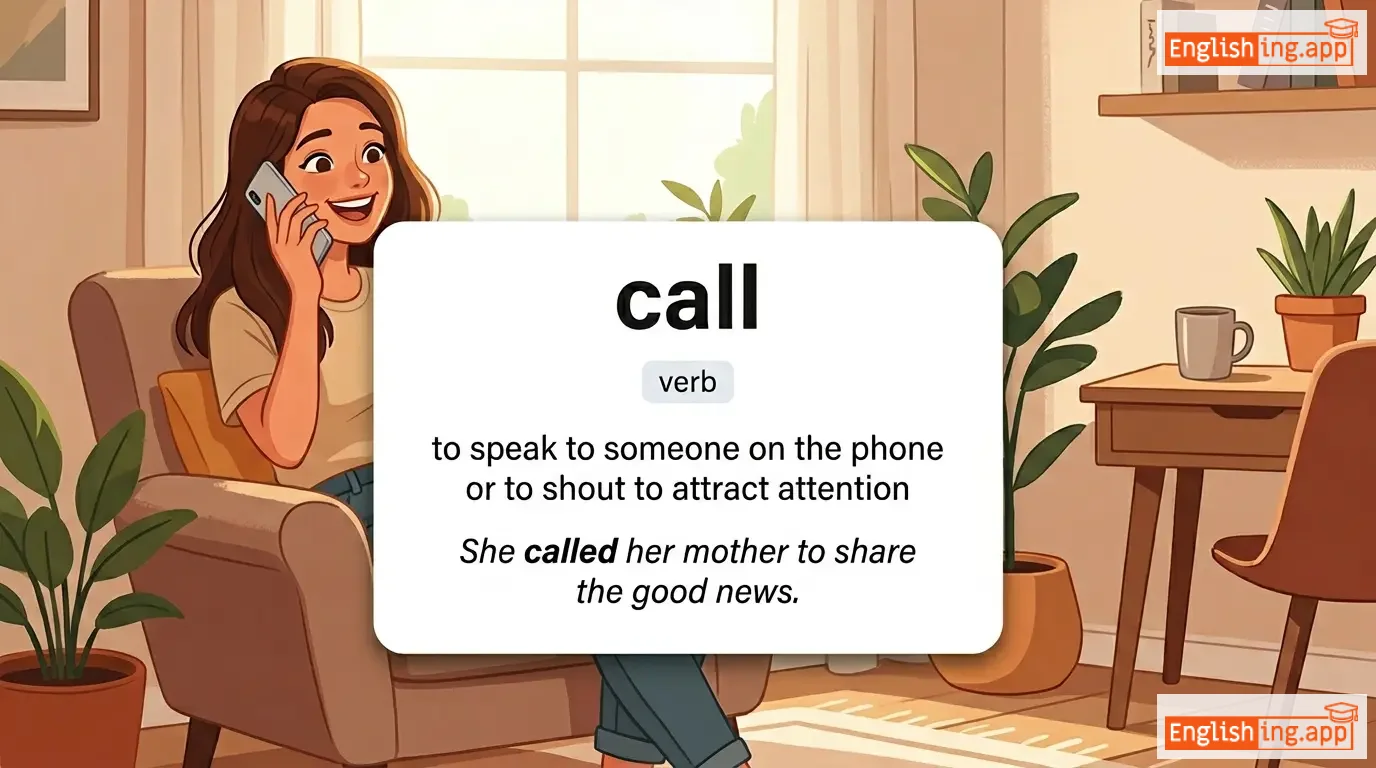
to speak to someone on the phone or to shout to attract attention
••••••
|
She called her mother to share the good news.
シー コールド ハー マザー トゥ シェア ザ グッド ニュース
••••••
|
彼女は良い知らせを共有するために母親に電話をかけた。
Kanojo wa yoi shirase o kyōyū suru tame ni hahaoya ni denwa o kaketa.
••••••
|
call it a day
コール イット ア デイ
••••••
|
to stop working on something for the rest of the day
••••••
|
その日の仕事を終える
sono hi no shigoto o oeru
••••••
|
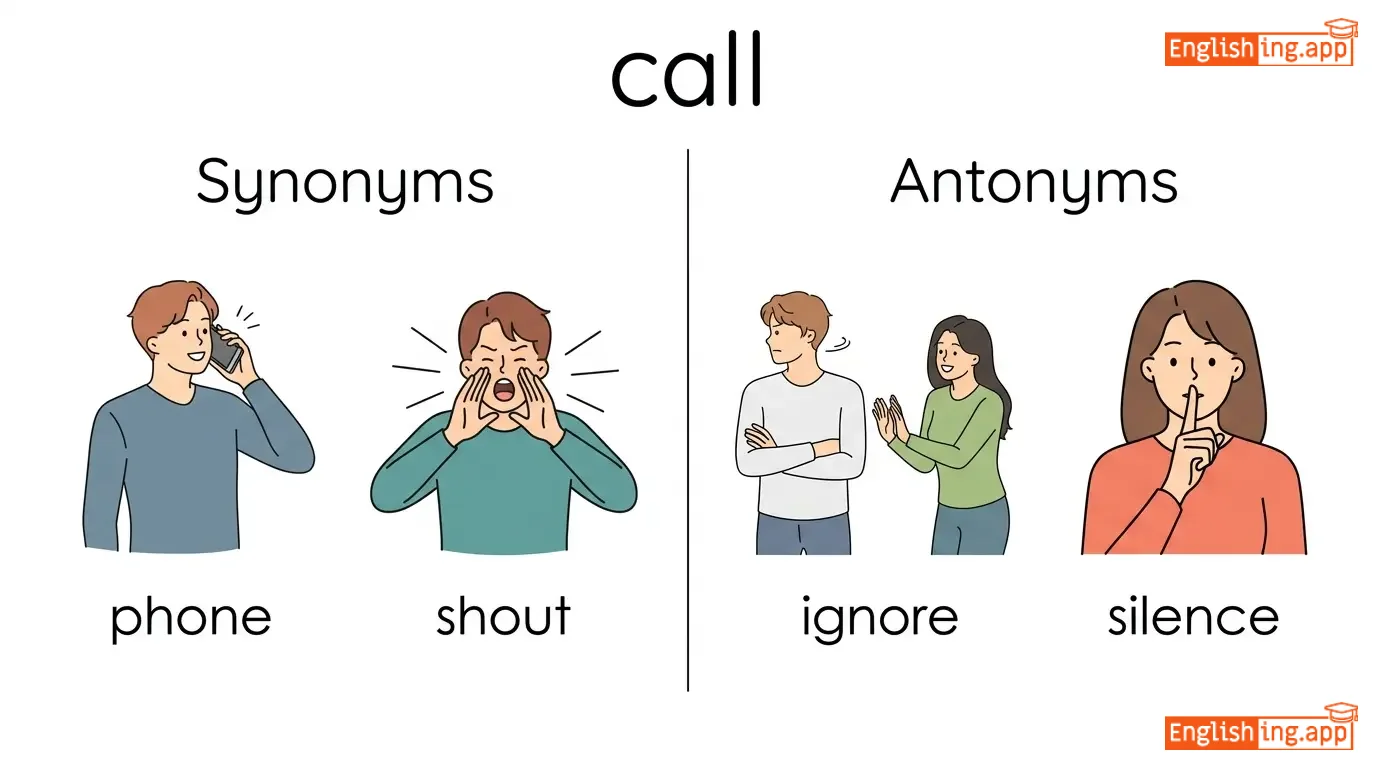
phone, shout, summon, contact, ring
••••••
|
ignore, silence, neglect
••••••
|
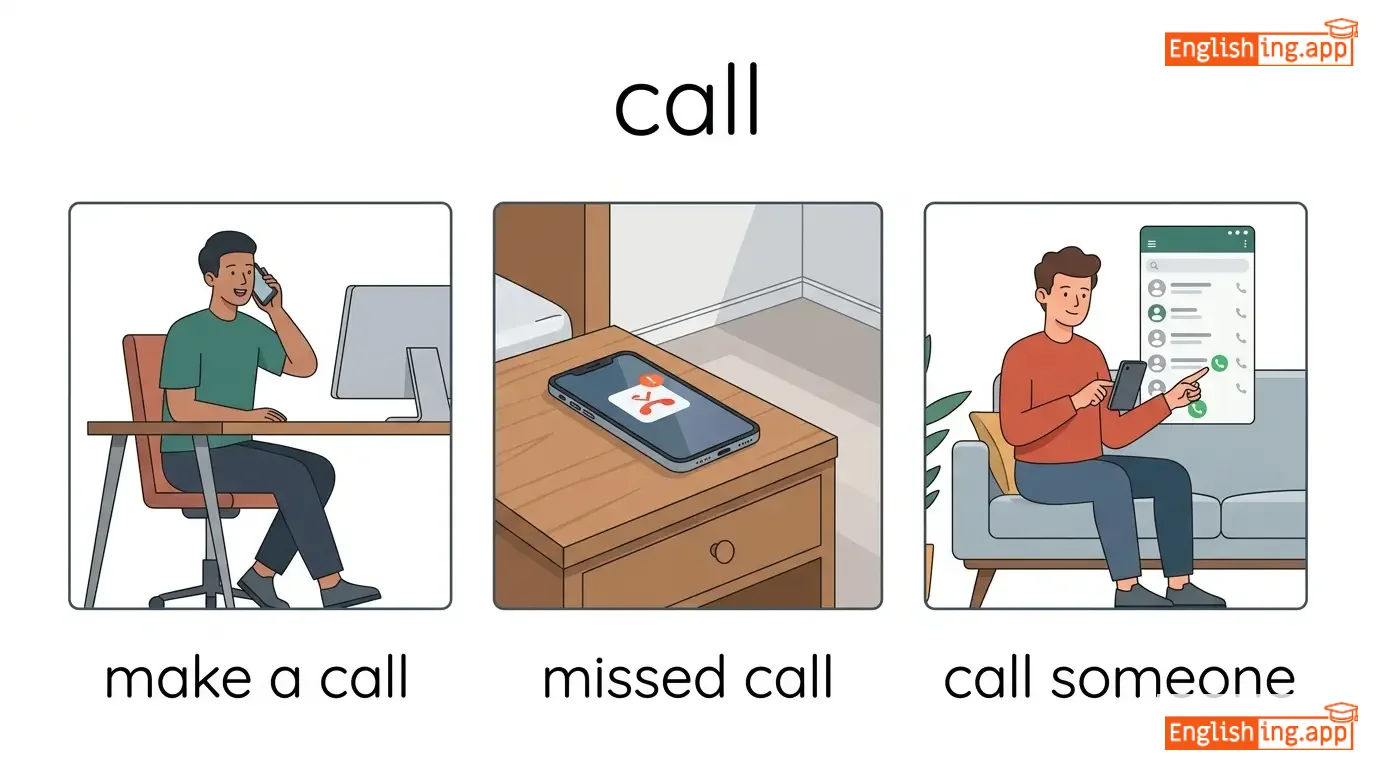
make a call, missed call, call someone, call for help
••••••
|
Call = 電話をかける - 電話は知らせを伝える手段です。
••••••
|
|
#839
😌
|
/kɑːm/
adjective
(カーム)
••••••
|
|
落ち着いた
ochitsuita
••••••
|
- •••••• | - •••••• | - •••••• | - •••••• |
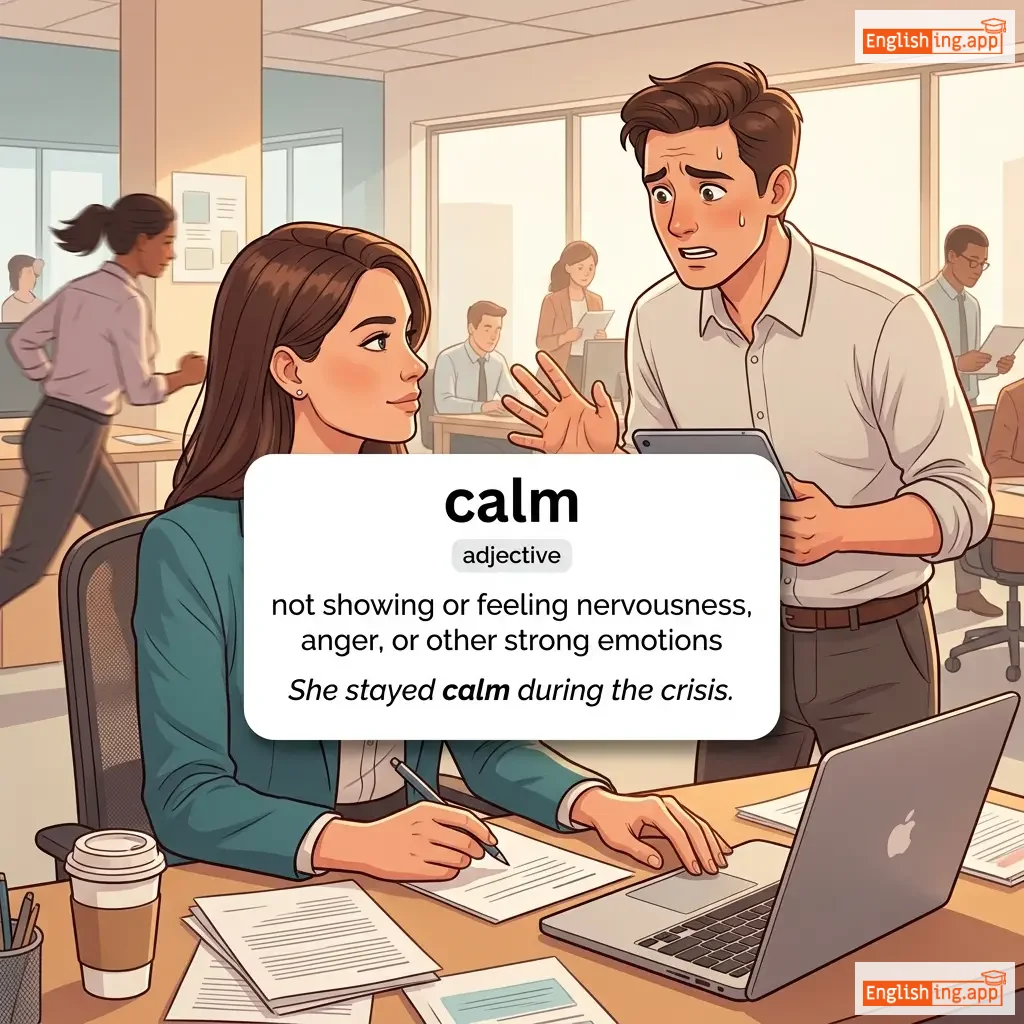
not showing or feeling nervousness, anger, or other strong emotions
••••••
|
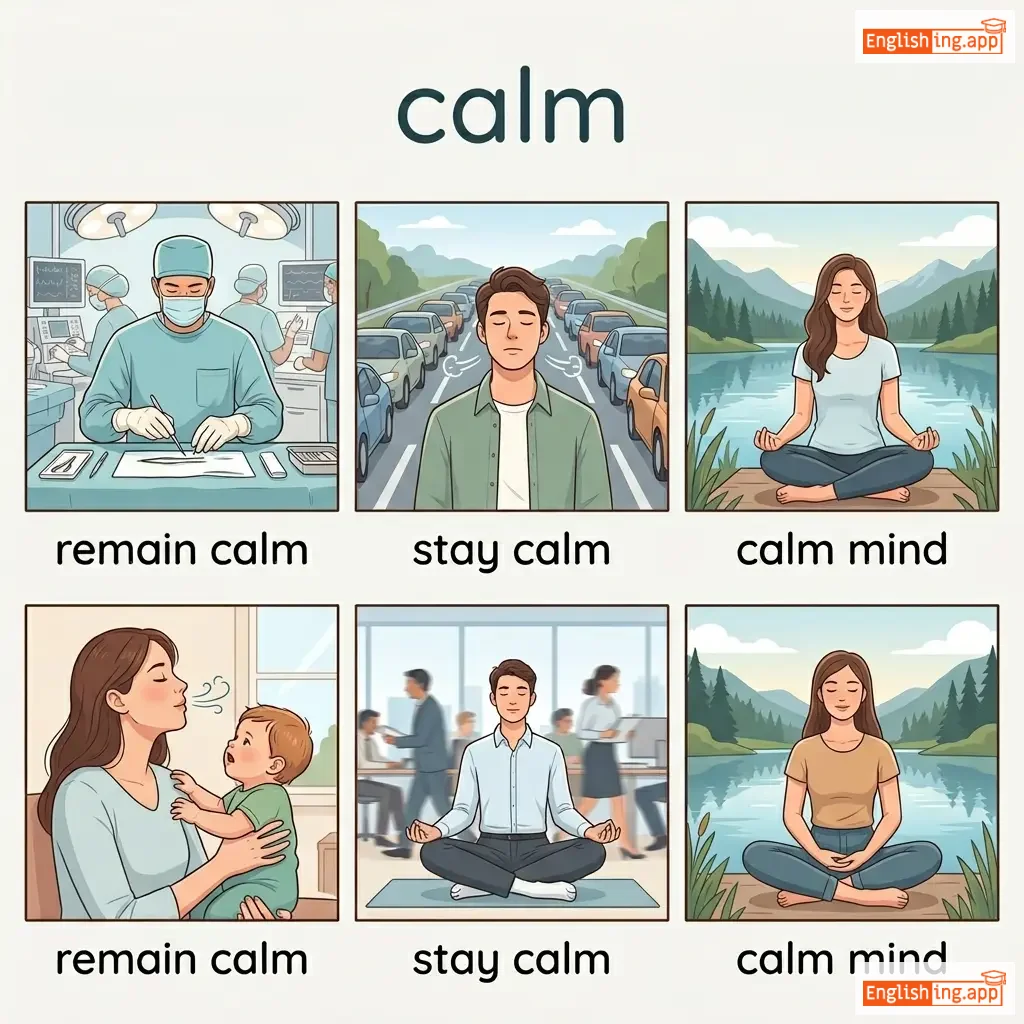
She stayed calm during the crisis. |
彼女は危機の間、落ち着いていた。
Kanojo wa kiki no aida, ochitsuite ita.
••••••
|
calm down |
to relax after being angry or upset
••••••
|
落ち着く
ochitsuku
••••••
|
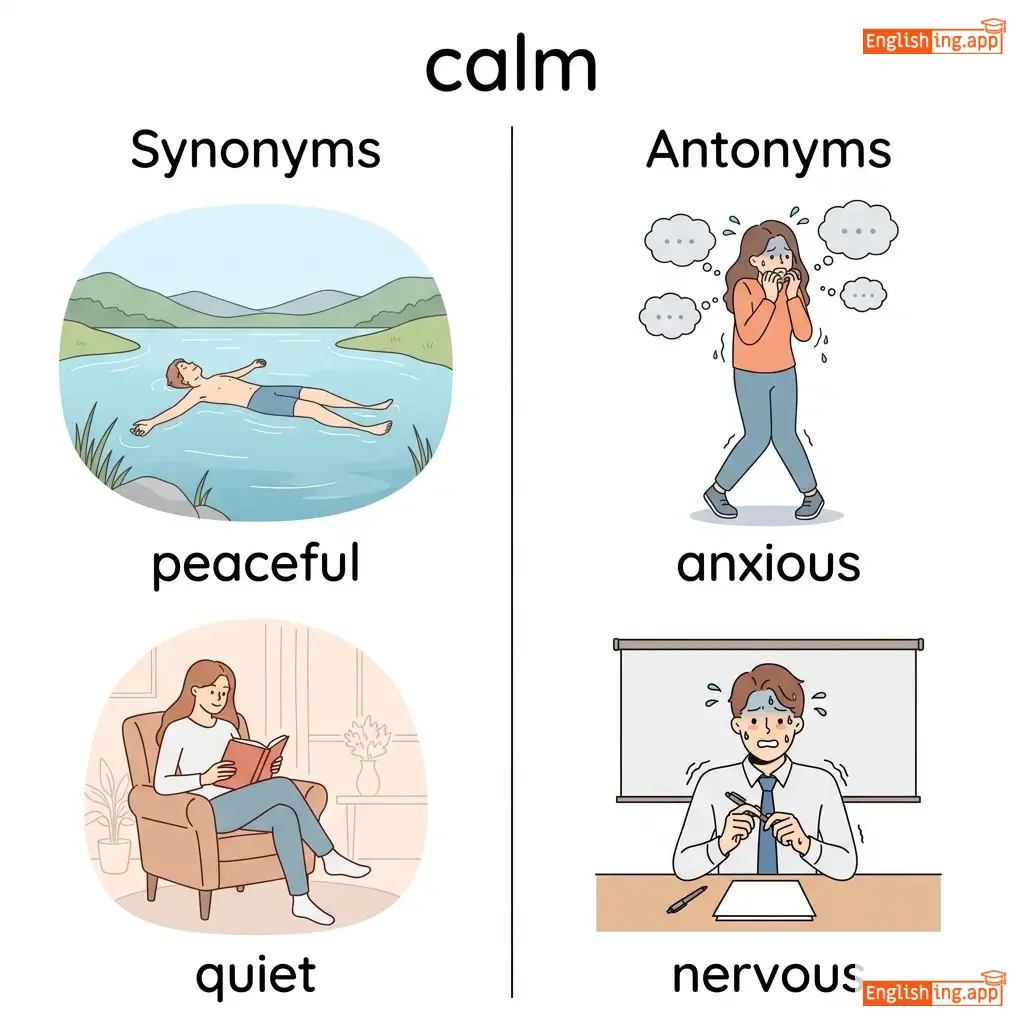
peaceful, quiet, relaxed, tranquil
••••••
|
anxious, nervous, agitated
••••••
|
remain calm, stay calm, calm mind, calm atmosphere
••••••
|
落ち着いた = Calm; 落ち着いてリラックスしよう。
••••••
|
|
#840
😌
|
/ˈkɑːm.li/
adverb
(kɑːm.li)
••••••
|
- •••••• |
落ち着いて
ochitsuite
••••••
|
- •••••• | - •••••• | - •••••• | - •••••• |
in a peaceful way without showing strong emotions; quietly and without excitement
••••••
|
She spoke calmly despite being angry.
彼女は怒っているにもかかわらず落ち着いて話しました。
••••••
|
彼女は怒っているにもかかわらず落ち着いて話しました。
Kanojo wa okotte iru ni mo kakawarazu ochitsuite hanashimashita.
••••••
|
- •••••• | - •••••• | - •••••• |
peacefully, quietly, serenely, tranquilly
••••••
|
angrily, excitedly, frantically, nervously
••••••
|
speak calmly, remain calmly, act calmly
••••••
|
静かに話すことは、まるで‘落ち着いて’いるようなものです。
••••••
|
|
#841
📷
|
/ˈkæm.rə/
noun
••••••
|
- •••••• | - •••••• | - •••••• | - •••••• | - •••••• | - •••••• |
a device used for taking photographs or recording videos
••••••
|
She bought a new camera for her photography class. |
- •••••• |
caught on camera |
recorded by a camera
••••••
|
- •••••• |
recorder, camcorder, device, shooter, lens
••••••
|
none, memory
••••••
|
digital camera, security camera, video camera, camera lens
••••••
|
No •••••• |
|
#842
🏕️
|
/kæmp/
noun, verb
(キャンプ)
••••••
|
- •••••• |
キャンプ地
kyampuchi
••••••
|
camped
キャンプド
••••••
|
camped
キャンプド
••••••
|
camps
キャンプス
••••••
|
camping
キャンピング
••••••
|
a place where people stay temporarily in tents or cabins, often outdoors; to stay in such a place
••••••
|
We decided to camp by the lake during the summer holiday.
私たちは夏休みに湖の近くでキャンプすることに決めました。
••••••
|
私たちは夏休みに湖の近くでキャンプすることに決めました。
Watashitachi wa natsu yasumi ni mizuumi no chikaku de kyanpu suru koto ni kimemashita.
••••••
|
camp out
キャンプアウト
••••••
|
to sleep outdoors or in a simple temporary shelter
••••••
|
野外で寝る
yagai de neru
••••••
|
tent site, encampment, bivouac, lodge, shelter
••••••
|
house, residence, hotel
••••••
|
summer camp, military camp, refugee camp, camp site, go camping
••••••
|
Camp = キャンプ地, そこでキャンプしよう
••••••
|
|
#843
📢
|
/kæmˈpeɪn/
noun, verb
(キャンペーン)
••••••
|
- •••••• |
キャンペーン
kyanpēn
••••••
|
campaigned
キャンペーンド
••••••
|
campaigned
キャンペーンド
••••••
|
campaigns
キャンペーンズ
••••••
|
campaigning
キャンペーニング
••••••
|
a planned series of activities to achieve a specific goal, especially in politics, marketing, or war
••••••
|
The company launched a campaign to promote its new product.
その会社は新しい製品を促進するためにキャンペーンを開始しました。
••••••
|
その会社は新しい製品を促進するためにキャンペーンを開始しました。
Sono kaisha wa atarashī seihin o sokushin suru tame ni kyanpēn o kaishi shimashita.
••••••
|
campaign for
キャンペーンのために
••••••
|
to work actively towards achieving or supporting something
••••••
|
のためにキャンペーンをする
no tame ni kyanpēn o suru
••••••
|
drive, crusade, operation, mission, effort
••••••
|
inaction, neglect, passivity
••••••
|
political campaign, advertising campaign, campaign manager, campaign strategy, campaign rally
••••••
|
キャンペーンは目標達成のための計画。選挙活動を思い出して。
••••••
|
|
#844
🏫
|
/ˈkæmpəs/
noun
(ˈkæmpəs)
••••••
|
- •••••• |
キャンパス
kyampasu
••••••
|
- •••••• | - •••••• | - •••••• | - •••••• |
The grounds and buildings of a university, college, or school.
••••••
|
The university campus is filled with students during the fall semester. |
大学のキャンパスは秋学期中に学生でいっぱいです。
daigaku no kyampasu wa aki gakki-chū ni gakusei de ippai desu.
••••••
|
on campus |
Located within the university or college grounds.
••••••
|
キャンパス内
kyampasu nai
••••••
|
university grounds, college grounds, schoolyard, institution premises, academy grounds
••••••
|
off-campus, outside grounds
••••••
|
campus life, campus tour, campus security, campus library, campus building
••••••
|
キャンパスは学生が学び、交流する場所です。
••••••
|
|
#845
✅
|
/kæn/
modal verb
(カン)
••••••
|
- •••••• |
できる
dekiru
••••••
|
- •••••• | - •••••• | - •••••• | - •••••• |
to be able to; to have the ability or possibility to do something
••••••
|
I can solve this problem easily. |
私はこの問題を簡単に解決できます。
Watashi wa kono mondai o kantan ni kaiketsu dekimasu.
••••••
|
can-do attitude |
a positive, confident approach to challenges
••••••
|
できる精神
dekiru seishin
••••••
|
able, capable, possible, may
••••••
|
cannot, unable
••••••
|
can help, can do, can be, can solve
••••••
|
Canはできる意味 — ちょうど「できる、やってみるよ!」という感じ。
••••••
|
|
#846
🍁
|
/kəˈneɪdiən/
adjective
(カナダの)
••••••
|
- •••••• |
カナダの
kanada no
••••••
|
- •••••• | - •••••• | - •••••• | - •••••• |
Relating to Canada or its people.
••••••
|
She enjoys Canadian culture and traditions. |
彼女はカナダの文化と伝統を楽しんでいます。
Kanojo wa Kanada no bunka to dentou o tanoshindeimasu.
••••••
|
- •••••• | - •••••• | - •••••• |
Canadian-born, Canadian national, Canadian resident, North American
••••••
|
foreign, non-Canadian
••••••
|
Canadian culture, Canadian citizen, Canadian history, Canadian dollar
••••••
|
Canadianはカナダから来た人🍁
••••••
|
|
#847
🚢
|
/kəˈnæl/
noun
(カナル)
••••••
|
- •••••• |
運河
unga
••••••
|
- •••••• | - •••••• | - •••••• | - •••••• |
an artificial waterway constructed for navigation, irrigation, or drainage
••••••
|
The canal was built to help transport goods across the region. |
運河は地域内で物資の輸送を助けるために建設されました。
Unga wa chiiki nai de busshi no yusou o tasukeru tame ni kensetsu saremashita.
••••••
|
- •••••• | - •••••• | - •••••• |
waterway, channel, ditch, aqueduct
••••••
|
land, mountain, desert
••••••
|
dig a canal, canal network, canal system, canal bank
••••••
|
Canal sounds like 'Unga' in Japanese, both are water paths.
••••••
|
|
#848
❌
|
/ˈkænsəl/
verb
(キャンセル)
••••••
|
- •••••• |
キャンセル
kyanseru
••••••
|
canceled
キャンセルド
••••••
|
canceled
キャンセルド
••••••
|
cancels
キャンセルズ
••••••
|
canceling
キャンセリング
••••••
|
to decide that something planned will not take place
••••••
|
The flight was canceled due to heavy rain.
フライトは激しい雨のためキャンセルされました。
••••••
|
フライトは激しい雨のためキャンセルされました。
Furaito wa hageshī ame no tame kyansel saremashita.
••••••
|
cancel out
キャンセルアウト
••••••
|
to remove the effect of one thing by another
••••••
|
キャンセル
kyanseru
••••••
|
call off, revoke, abolish, terminate, nullify
••••••
|
approve, continue, confirm
••••••
|
cancel order, cancel meeting, cancel subscription, cancel flight
••••••
|
キャンセルは消すこと - 映画のチケットがキャンセルされたらもう見れません!
••••••
|
|
#849
❌
|
/ˌkænsəˈleɪʃən/
noun
(キャンセレーション)
••••••
|
- •••••• |
取消
torikeshi
••••••
|
- •••••• | - •••••• | - •••••• | - •••••• |
the act of stopping something that was planned or scheduled; the act of nullifying or invalidating something
••••••
|
The airline announced the cancellation of several flights due to bad weather.
悪天候のため、いくつかの便がキャンセルになりました。
••••••
|
悪天候のため、いくつかの便が取り消されました。
akutenko no tame ikutsuka no bin ga torikesaremashita
••••••
|
cancellation policy
キャンセルポリシー
••••••
|
rules that explain how and when a booking or agreement can be canceled
••••••
|
キャンセルポリシー
kyanseru porishi
••••••
|
annulment, termination, withdrawal, revocation, calling off
••••••
|
confirmation, continuation, approval
••••••
|
flight cancellation, order cancellation, cancellation fee, cancellation notice, cancellation policy
••••••
|
cancellation カタカナでキャンセル、意味は取り消し
••••••
|
|
#850
🎗️
|
/ˈkænsər/
noun
(がん)
••••••
|
- •••••• |
がん
gan
••••••
|
- •••••• | - •••••• | - •••••• | - •••••• |
A disease in which abnormal cells divide uncontrollably and destroy body tissue.
••••••
|
Smoking is a leading cause of lung cancer. |
喫煙は肺がんの主な原因です。
Kitsuen wa haigan no omona gen'in desu.
••••••
|
fight cancer |
To battle against the disease of cancer.
••••••
|
がんと戦う
gan to tatakau
••••••
|
malignancy, tumor, neoplasm, carcinoma, illness
••••••
|
health, wellness
••••••
|
cancer treatment, cancer patient, lung cancer, breast cancer
••••••
|
がんは苦しみ + 体 (suffer) = 体にとって恐ろしい病気
••••••
|
|
#851
🗳️
|
/ˈkændɪdeɪt/
noun
(カンディデート)
••••••
|
- •••••• |
候補者
kōhosha
••••••
|
- •••••• | - •••••• | - •••••• | - •••••• |
A person who applies for a job or is nominated for election.
••••••
|
The candidate gave a strong speech during the debate. |
候補者は討論中に強いスピーチを行いました。
Kōhosha wa tōron-chū ni tsuyoi supīchi o okonaimashita.
••••••
|
political candidate |
A person who seeks election to a political office.
••••••
|
政治候補者
seiji kōhosha
••••••
|
applicant, nominee, contender, aspirant, competitor
••••••
|
employer, voter
••••••
|
job candidate, presidential candidate, candidate selection, candidate list
••••••
|
候補者はキャンディデートのように甘い言葉で票を集める。
••••••
|
|
#852
🕯️
|
/ˈkændl/
noun
(キャンドル)
••••••
|
- •••••• |
ろうそく
rousoku
••••••
|
- •••••• | - •••••• | - •••••• | - •••••• |
a stick of wax with a wick that burns to give light
••••••
|
She lit a candle during the power cut. |
停電中に彼女はろうそくを灯しました。
Teiden-chū ni kanojo wa rōsoku o tomoshimashita.
••••••
|
burn the candle at both ends |
to work too hard without enough rest
••••••
|
休まずに働きすぎる
yasumazu ni hatarakisugiru
••••••
|
wax light, taper, lamp, torch
••••••
|
darkness, shadow
••••••
|
light a candle, candle flame, candle wax, candle holder
••••••
|
Candleはろうそくを意味します - ろうそくディナーを覚えておいてください!
••••••
|
|
#853
🍬
|
/ˈkændi/
noun
(kandi)
••••••
|
- •••••• |
キャンディ
kyandi
••••••
|
- •••••• | - •••••• | - •••••• | - •••••• |
a sweet food made with sugar or chocolate, often in small pieces
••••••
|
The children were excited to get candy on Halloween. |
子供たちはハロウィンでキャンディをもらって興奮していた。
Kodomotachi wa Harouīn de kyandi o moratte kōfun shite ita.
••••••
|
eye candy |
something or someone that is attractive but not intellectually stimulating
••••••
|
目の保養
me no hoyō
••••••
|
sweet, confection, treat, chocolate, bonbon
••••••
|
bitter, sour
••••••
|
candy bar, candy shop, candy wrapper, hard candy, cotton candy
••••••
|
キャンディはハロウィンの楽しみ、みんなが好きです!
••••••
|
|
#854
🎨
|
/ˈkænvəs/
noun
••••••
|
- •••••• | - •••••• | - •••••• | - •••••• | - •••••• | - •••••• |
A strong, coarse cloth used for tents, sails, or painting.
••••••
|
The artist prepared a canvas for his new painting. |
- •••••• |
under canvas |
living or sleeping in a tent
••••••
|
- •••••• |
cloth, fabric, sailcloth, tarpaulin
••••••
|
silk, satin
••••••
|
canvas painting, blank canvas, canvas tent
••••••
|
No •••••• |
|
#855
🧢
|
/kæp/
noun
••••••
|
- •••••• | - •••••• | - •••••• | - •••••• | - •••••• | - •••••• |
A covering for the head, often with a visor.
••••••
|
He wore a red cap to the baseball game. |
- •••••• |
put a cap on |
To set a limit on something.
••••••
|
- •••••• |
hat, helmet, headgear, bonnet, lid
••••••
|
barehead, uncover
••••••
|
baseball cap, graduation cap, cap limit, cap off
••••••
|
No •••••• |
|
#856
💪
|
/ˌkeɪpəˈbɪləti/
noun
••••••
|
|
- •••••• | - •••••• | - •••••• | - •••••• | - •••••• |
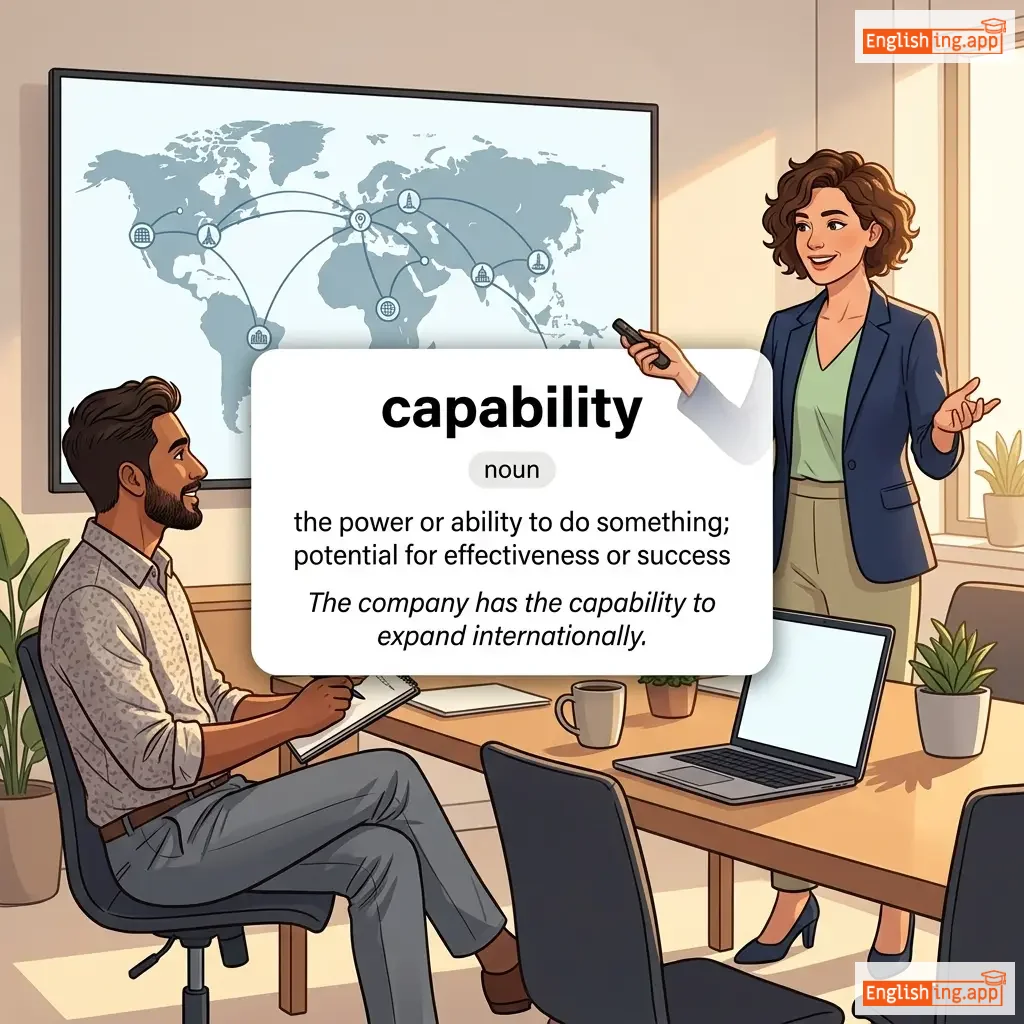
the power or ability to do something; potential for effectiveness or success
••••••
|
The company has the capability to expand internationally. |
- •••••• |
beyond one's capability |
something that is too difficult or impossible for someone to do
••••••
|
- •••••• |
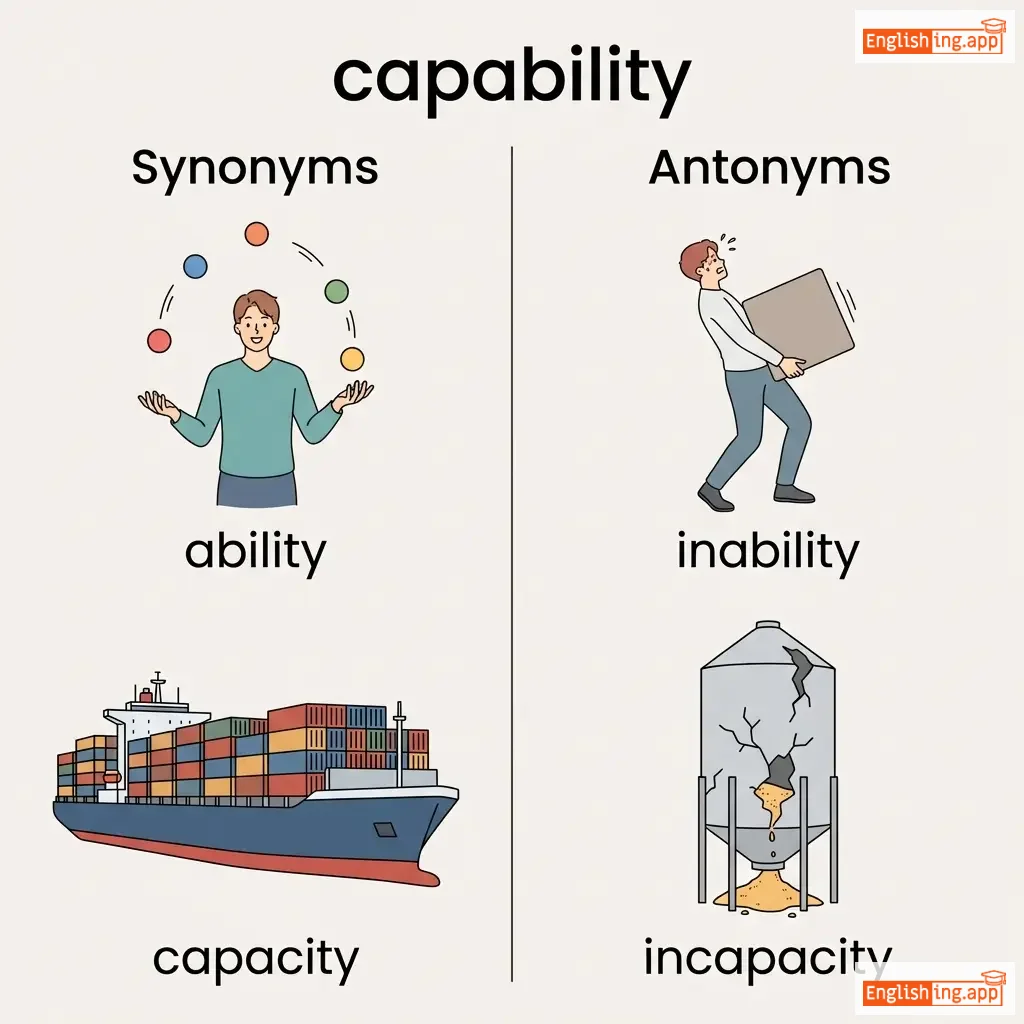
ability, capacity, potential, competence, skill
••••••
|
inability, incapacity
••••••
|
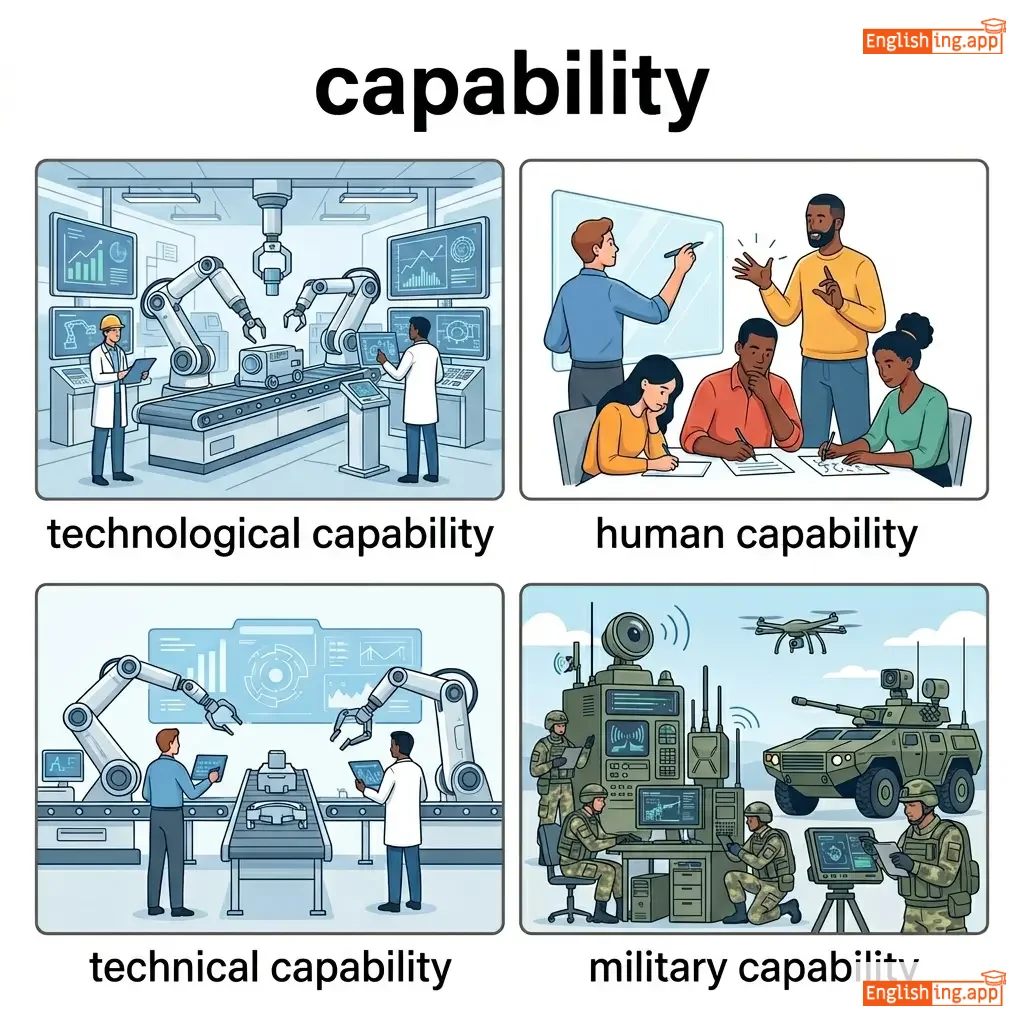
technological capability, human capability, military capability, full capability
••••••
|
No •••••• |
|
#857
💪
|
/ˈkeɪpəbl/
adjective
(ケイパブル)
••••••
|
- •••••• |
能力がある
nōryoku ga aru
••••••
|
- •••••• | - •••••• | - •••••• | - •••••• |
having the ability, fitness, or quality necessary to do something
••••••
|
She is capable of handling difficult situations calmly. |
彼女は困難な状況を冷静に処理できる能力があります。
Kanojo wa konnan na jōkyō o reisei ni shori dekiru nōryoku ga arimasu.
••••••
|
capable of |
having the ability or capacity to do something
••••••
|
能力がある
nōryoku ga aru
••••••
|
able, competent, skilled, qualified, proficient
••••••
|
incapable, unfit, incompetent
••••••
|
capable leader, capable hands, fully capable, highly capable
••••••
|
能力があるとは、英語でいう capable に相当する。
••••••
|
|
#858
📦
|
/kəˈpæsəti/
noun
(キャパシティ)
••••••
|
|
容量
yorō
••••••
|
- •••••• | - •••••• | - •••••• | - •••••• |
the maximum amount that something can contain or produce; ability to do something
••••••
|
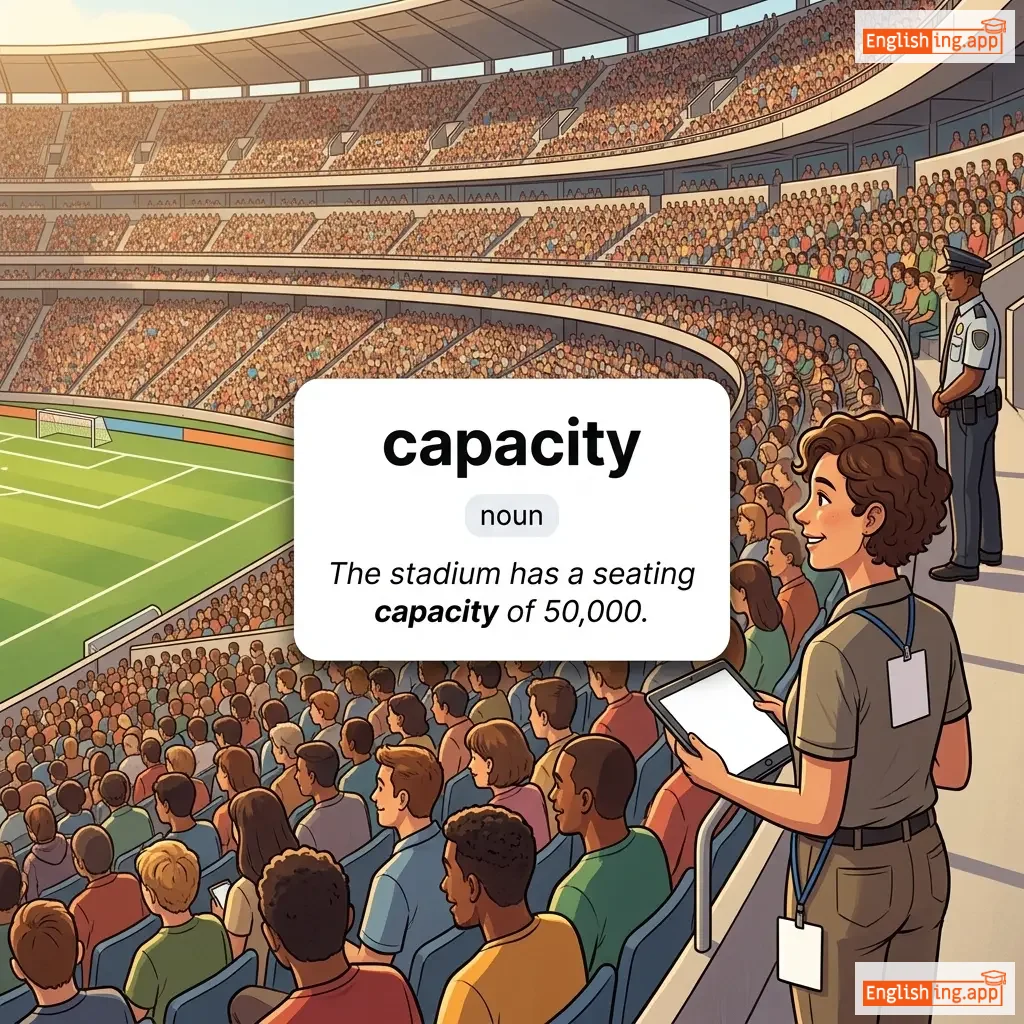
The stadium has a seating capacity of 50,000. |
スタジアムの座席容量は50,000です。
Sutajiamu no zaseki yorō wa 50,000 desu.
••••••
|
at full capacity |
operating at the maximum possible output or limit
••••••
|
満容量
man yorō
••••••
|
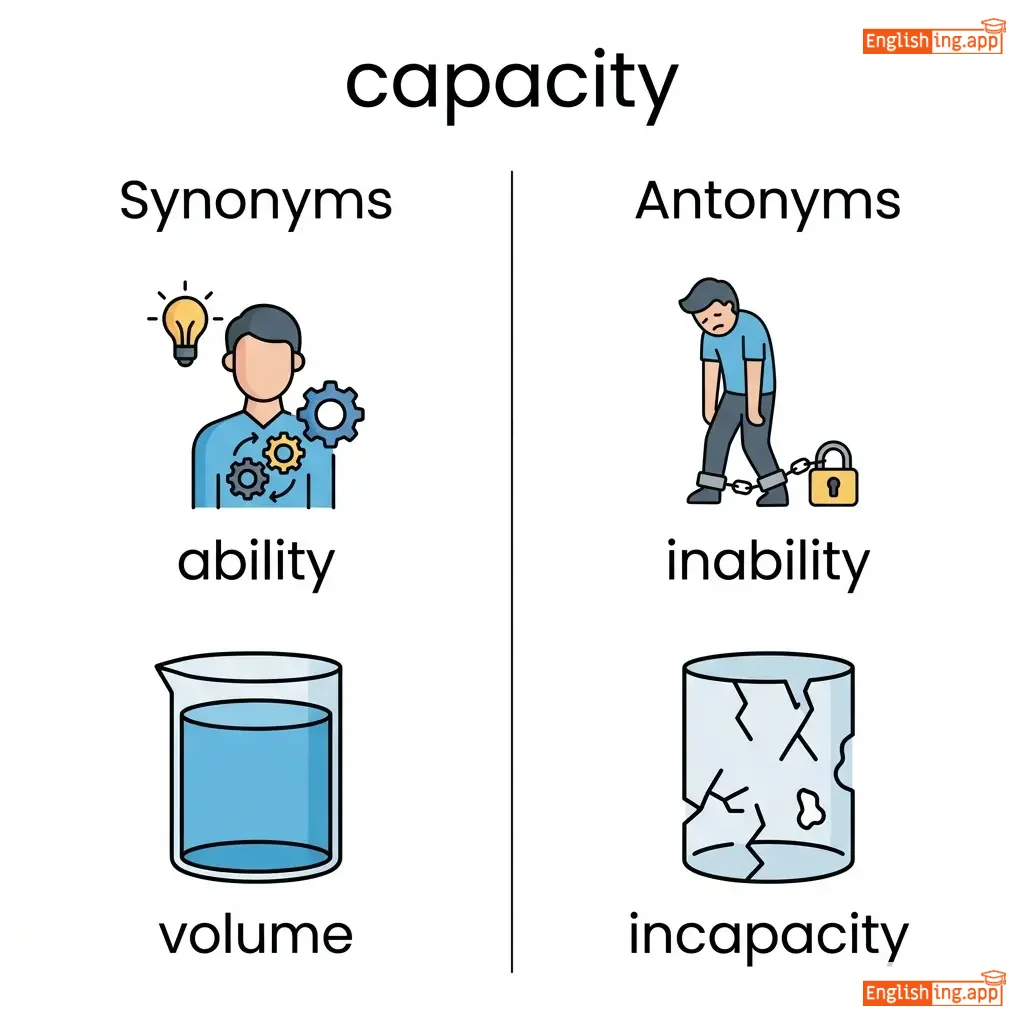
ability, volume, limit, potential, capability
••••••
|
inability, incapacity, weakness
••••••
|
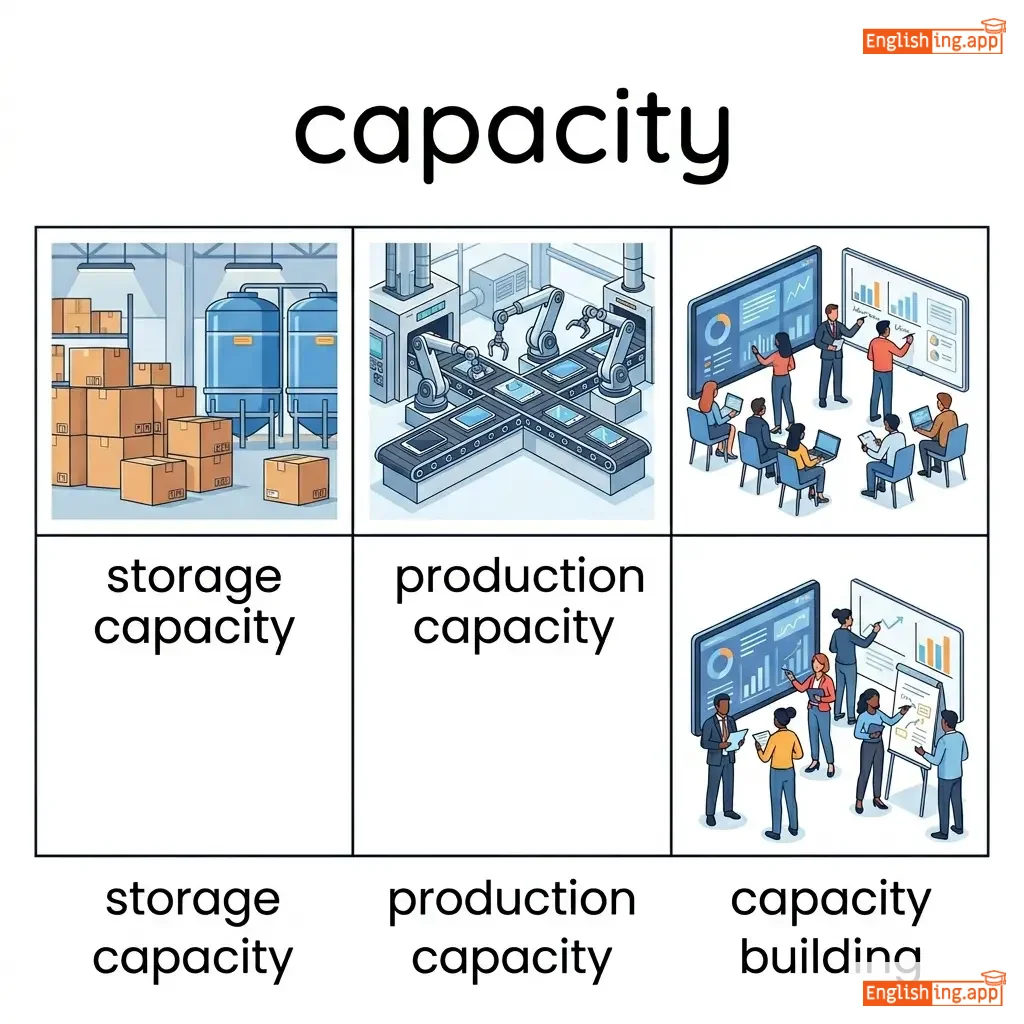
storage capacity, production capacity, capacity building, at capacity
••••••
|
容量は何かがどれだけ入るか、例えば箱の容量のように考えてください。
••••••
|
|
#859
🏛️
|
/ˈkæpɪtl/
noun
(キャピタル)
••••••
|
- •••••• |
首都 / 資本
shuto / shihon
••••••
|
- •••••• | - •••••• | - •••••• | - •••••• |
a city that serves as the seat of government; also wealth in the form of money or assets
••••••
|
Dhaka is the capital of Bangladesh. |
ダッカはバングラデシュの首都です。
Dakka wa Banguradeshu no shuto desu.
••••••
|
capital punishment |
the death penalty as a punishment for a crime
••••••
|
死刑
shikei
••••••
|
metropolis, assets, money, wealth, resources
••••••
|
debt, liability
••••••
|
capital city, capital investment, capital punishment, venture capital
••••••
|
Capital cityは首都を意味し、Capitalは資本を意味します - 2つの重要な意味!
••••••
|
|
#860
💰
|
/ˈkæpɪtəlɪzəm/
noun
(キャピタリズム)
••••••
|
|
資本主義
shihon shugi
••••••
|
- •••••• | - •••••• | - •••••• | - •••••• |
an economic system where private individuals or corporations control the means of production and distribution of goods
••••••
|
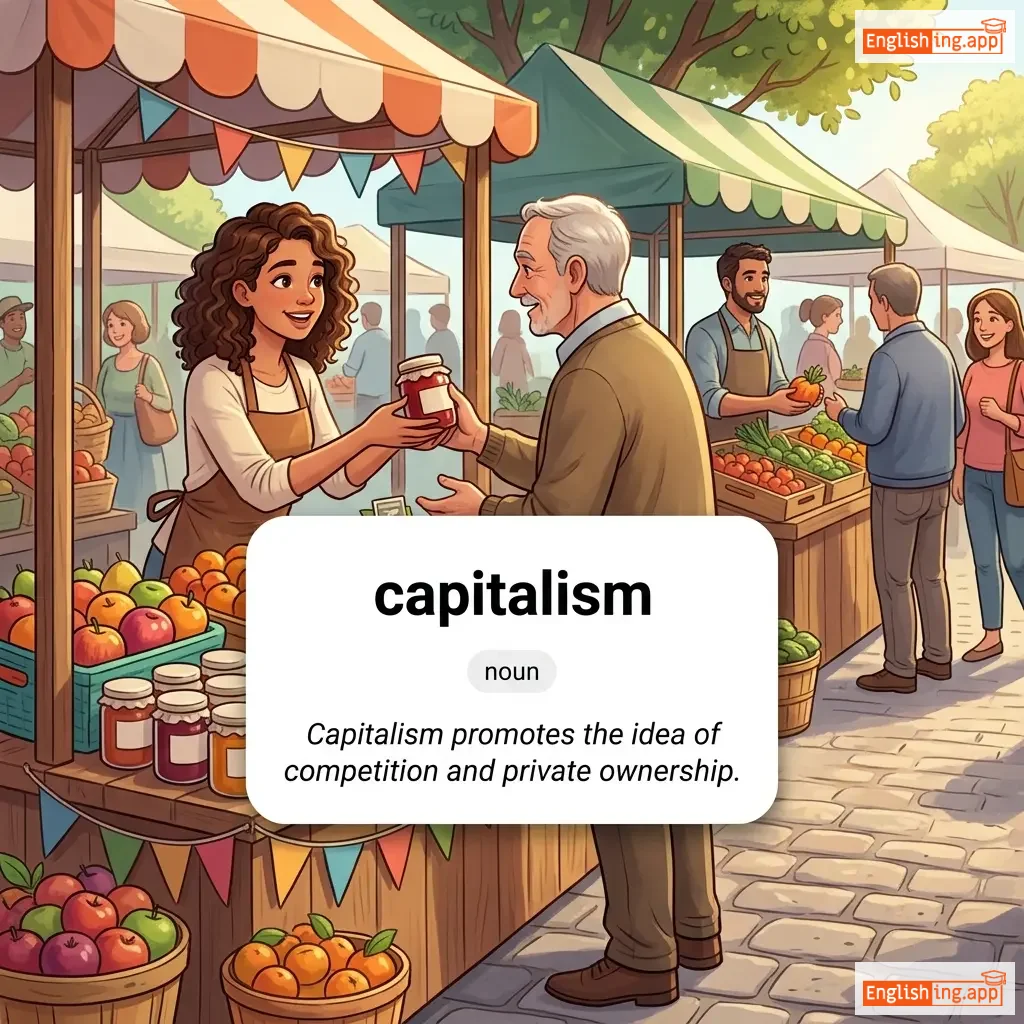
Capitalism promotes the idea of competition and private ownership. |
資本主義は競争と私有財産の概念を促進します。
shihon shugi wa kyōsō to shiyū zaisan no gainen o sokushin shimasu.
••••••
|
- •••••• | - •••••• | - •••••• |
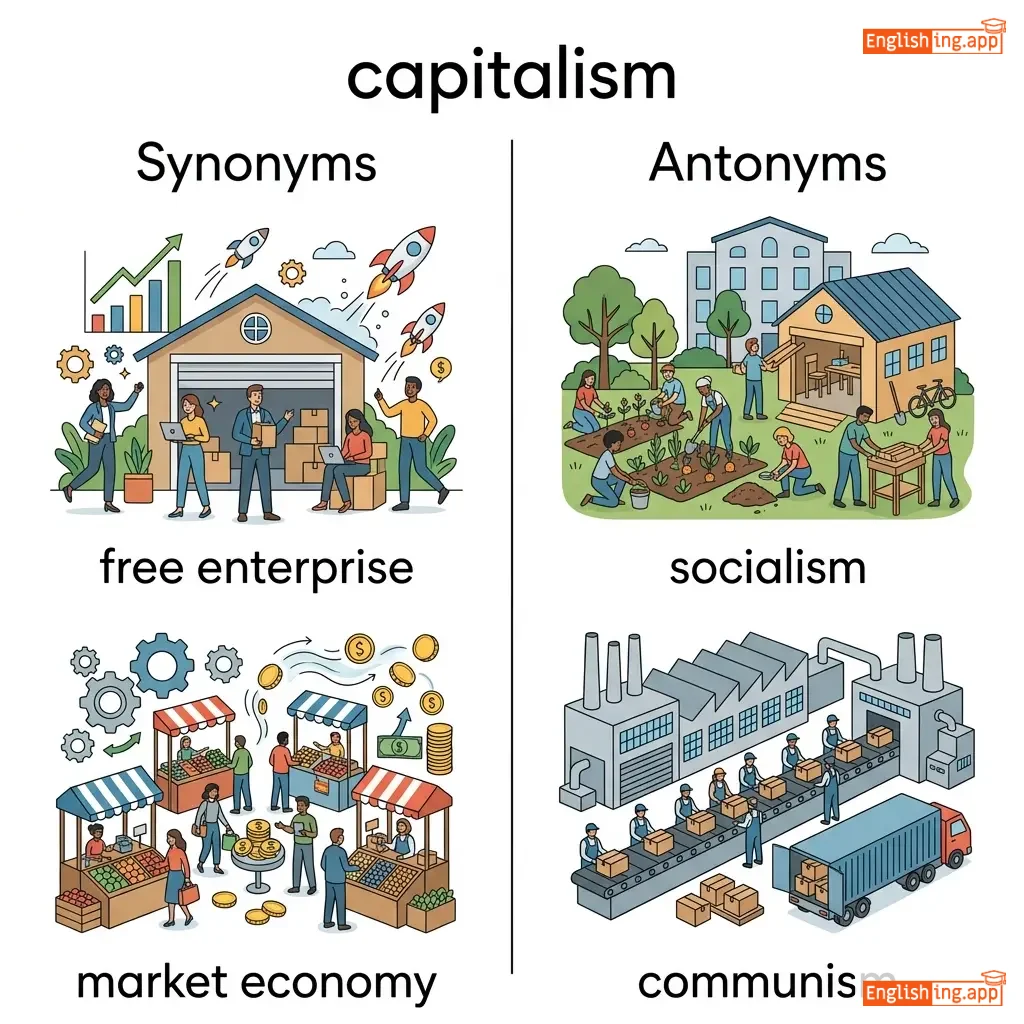
free enterprise, market economy, private enterprise
••••••
|
socialism, communism
••••••
|
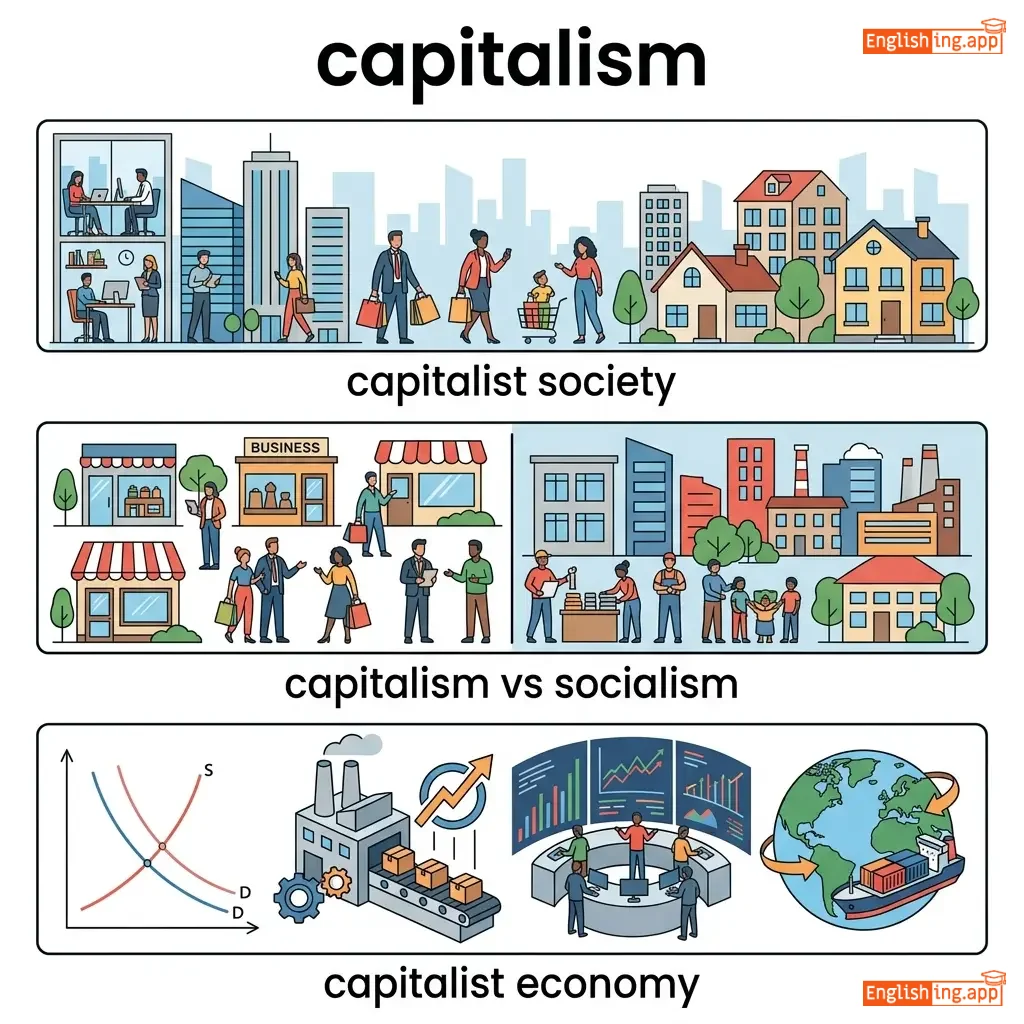
capitalist society, capitalism vs socialism, capitalist economy
••••••
|
資本主義 = お金、競争、私有財産
••••••
|
|
#861
💼
|
/ˈkæpɪtəlɪst/
noun/adjective
••••••
|
- •••••• | - •••••• | - •••••• | - •••••• | - •••••• | - •••••• |
a person who supports or believes in capitalism; a wealthy business owner
••••••
|
The capitalist believes in the freedom of the market. |
- •••••• | - •••••• | - •••••• | - •••••• |
entrepreneur, tycoon, business magnate
••••••
|
socialist, communist
••••••
|
capitalist society, wealthy capitalist, capitalist system
••••••
|
No •••••• |
Vocabulary Quiz
Test your vocabulary by matching words with their translations or meanings.
Login to take the quiz
Comments (0)
Share your thoughts and join the discussion.
Join the discussion by logging in
Login to CommentNo comments yet
Be the first to share your thoughts!