

翻訳
過去
過去分詞
三人称単数
動名詞
意味
例文
例文の翻訳
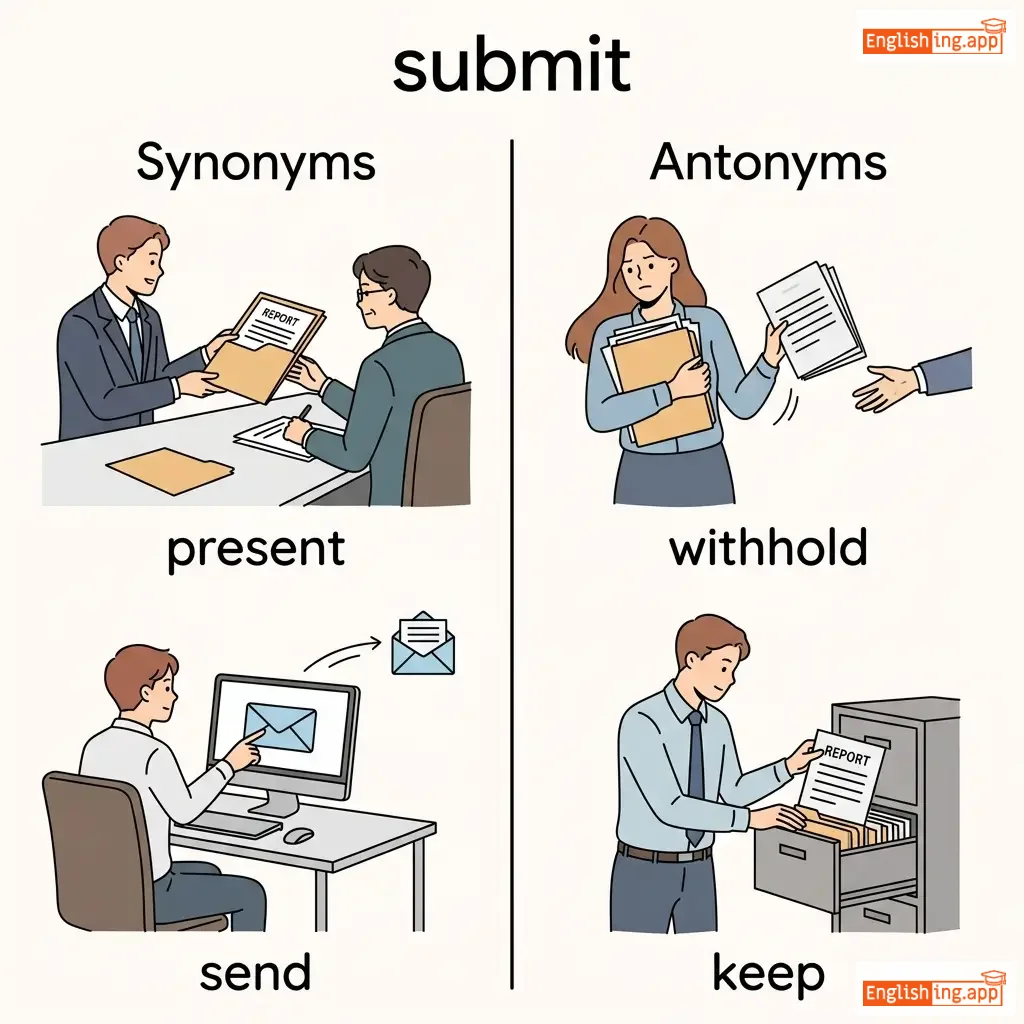
同義語
対義語
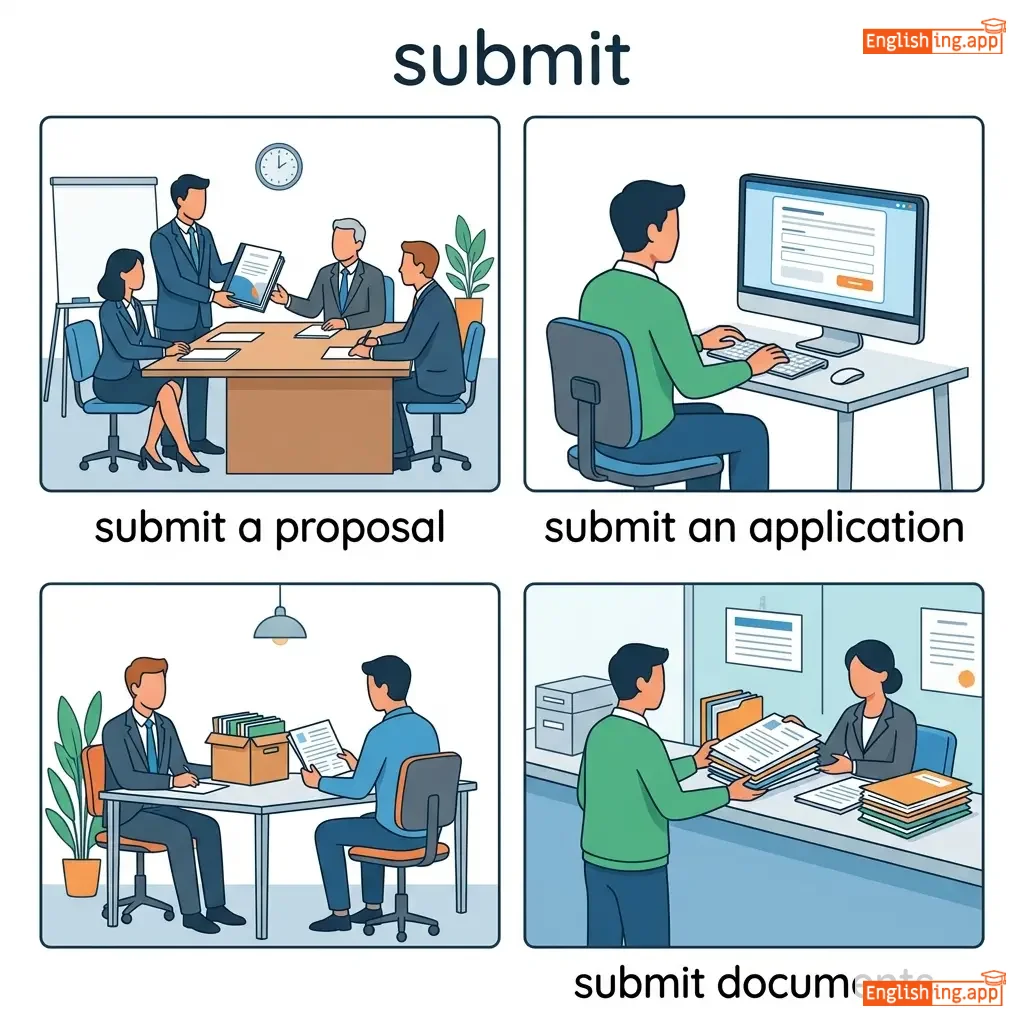
コロケーション
ニーモニック
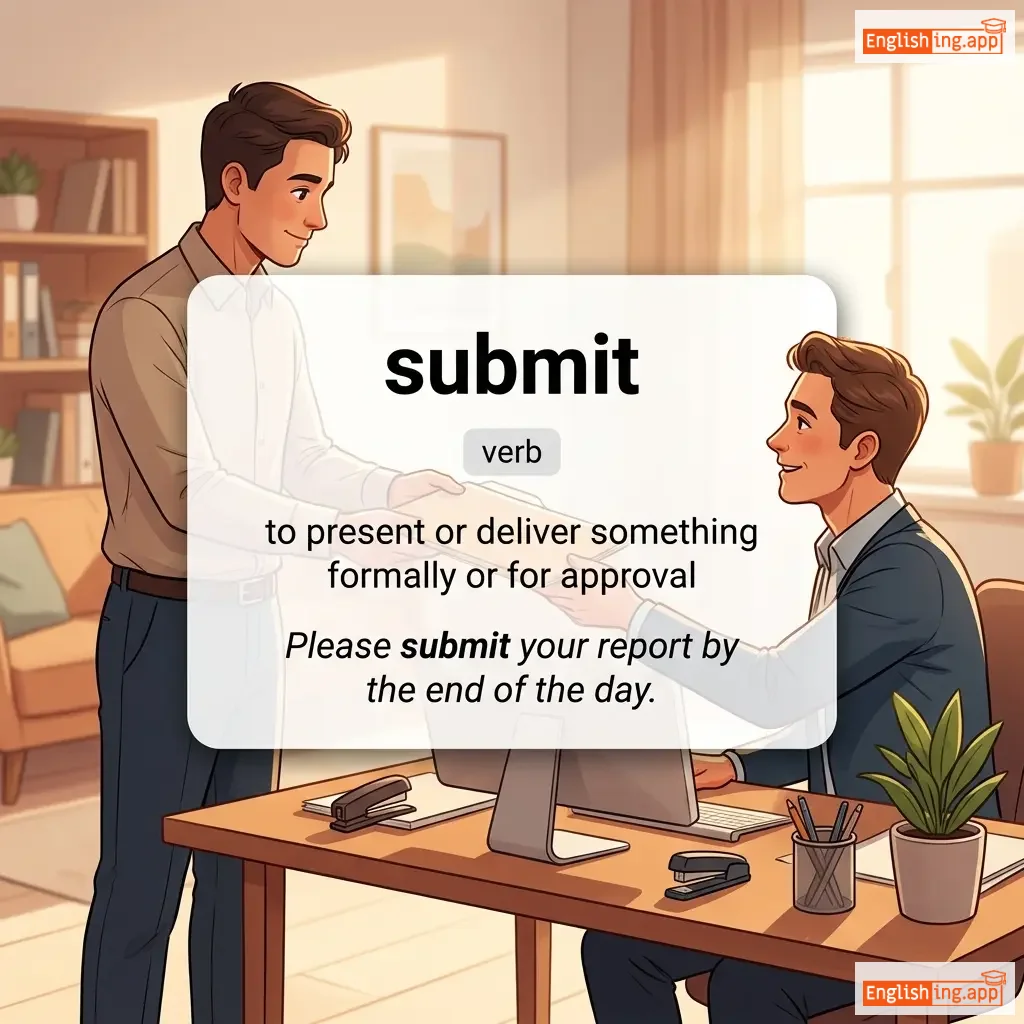


Swipe left or right, or use the buttons. Tap image to zoom.
例文の翻訳
単語
Lesson 102Lesson 102 - マスクトグル
|
絵文字
|
単語 | Images | 翻訳 | 過去 | 過去分詞 | 三人称単数 | 動名詞 | 意味 | 例文 | 例文の翻訳 | 表現例 | 表現例の意味 | 表現例の翻訳 | 同義語 | 対義語 | コロケーション | ニーモニック |
|---|---|---|---|---|---|---|---|---|---|---|---|---|---|---|---|---|---|
|
#4825
📄
|
/səbˈmɪt/
verb
(サブミット)
••••••
|
|
提出する
teishutsu suru
••••••
|
submitted
サブミッテッド
••••••
|
submitted
サブミッテッド
••••••
|
submits
サブミッツ
••••••
|
submitting
サブミッティング
••••••
|
to present for consideration; to surrender; to yield
••••••
|
Please submit your assignment by Friday.
金曜日までに課題を提出してください。
••••••
|
金曜日までに課題を提出してください。
Kin'yōbi made ni kadai o teishutsu shite kudasai.
••••••
|
- •••••• | - •••••• | - •••••• |
present, hand in, surrender, yield
••••••
|
withdraw, resist, refuse, reject
••••••
|
submit application, submit report, submit assignment, submit proposal, submit documents
••••••
|
課題を提出することは、期限に従うことだ!
••••••
|
|
#4826
📩
|
/səbˈskraɪbər/
noun
(サブスクライバー)
••••••
|
- •••••• |
サブスクライバー
sabusukuraibā
••••••
|
- •••••• | - •••••• | - •••••• | - •••••• |
a person who receives or subscribes to a service, magazine, or service
••••••
|
She is a subscriber to the monthly magazine. |
彼女は月刊誌のサブスクライバーです。
Kanojo wa gekkanshi no sabusukuraibā desu.
••••••
|
- •••••• | - •••••• | - •••••• |
member, follower, customer, supporter
••••••
|
non-subscriber, reader
••••••
|
new subscriber, regular subscriber, email subscriber
••••••
|
サブスクライバー、サービスにサインアップした人
••••••
|
|
#4827
📱
|
/səbˈskrɪp.ʃən/
noun
(sabskripshon)
••••••
|
- •••••• |
サブスクリプション
sabosukuripushon
••••••
|
- •••••• | - •••••• | - •••••• | - •••••• |
a payment for regular delivery of a service or product; an arrangement to receive something regularly
••••••
|
I canceled my Netflix subscription because I wasn't watching it enough.
私はNetflixのサブスクリプションをキャンセルしました。なぜなら、それを十分に見ていなかったからです。
••••••
|
私はNetflixのサブスクリプションをキャンセルしました。なぜなら、それを十分に見ていなかったからです。
Watashi wa Netflix no sabosukuripushon wo kyanseru shimashita. Naze nara, sore wo juubun ni mite inakatta kara desu.
••••••
|
- •••••• | - •••••• | - •••••• |
membership, enrollment, registration
••••••
|
cancellation, termination
••••••
|
monthly subscription, magazine subscription, streaming subscription, subscription fee
••••••
|
サブスクリプションは、定期的に何かを受け取るための約束事であり、サービスの提供に使われます。
••••••
|
|
#4828
➡️
|
/ˈsʌbsɪkwənt/
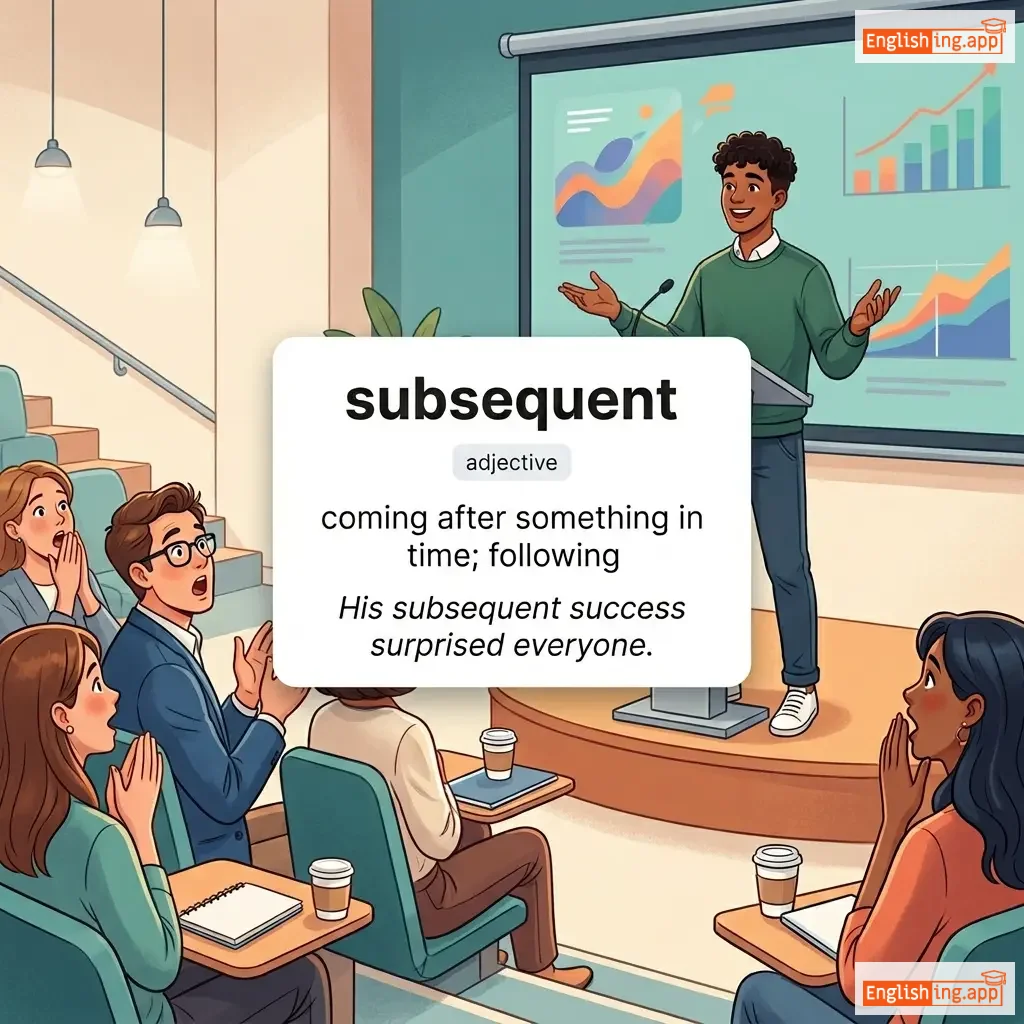
adjective
(サブスィクウェント)
••••••
|
|
その後の
sono ato no
••••••
|
- •••••• | - •••••• | - •••••• | - •••••• |
coming after something in time; following
••••••
|
His subsequent success surprised everyone. |
彼のその後の成功は、皆を驚かせました。
Kare no sono ato no seikou wa, mina o odoro kasemashita.
••••••
|
subsequent to |
happening or coming after something
••••••
|
その後の
sono ato no
••••••
|
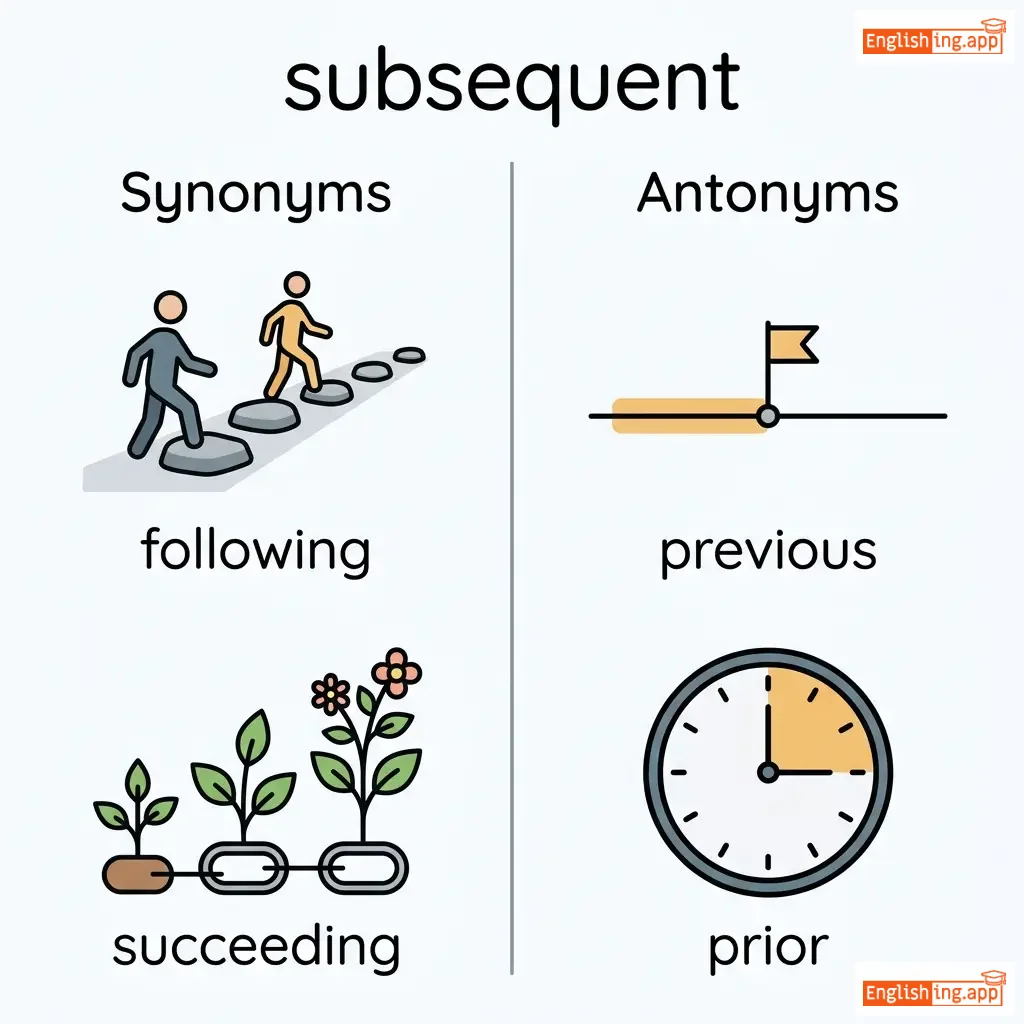
following, succeeding, later, ensuing, successive
••••••
|
previous, prior, former
••••••
|
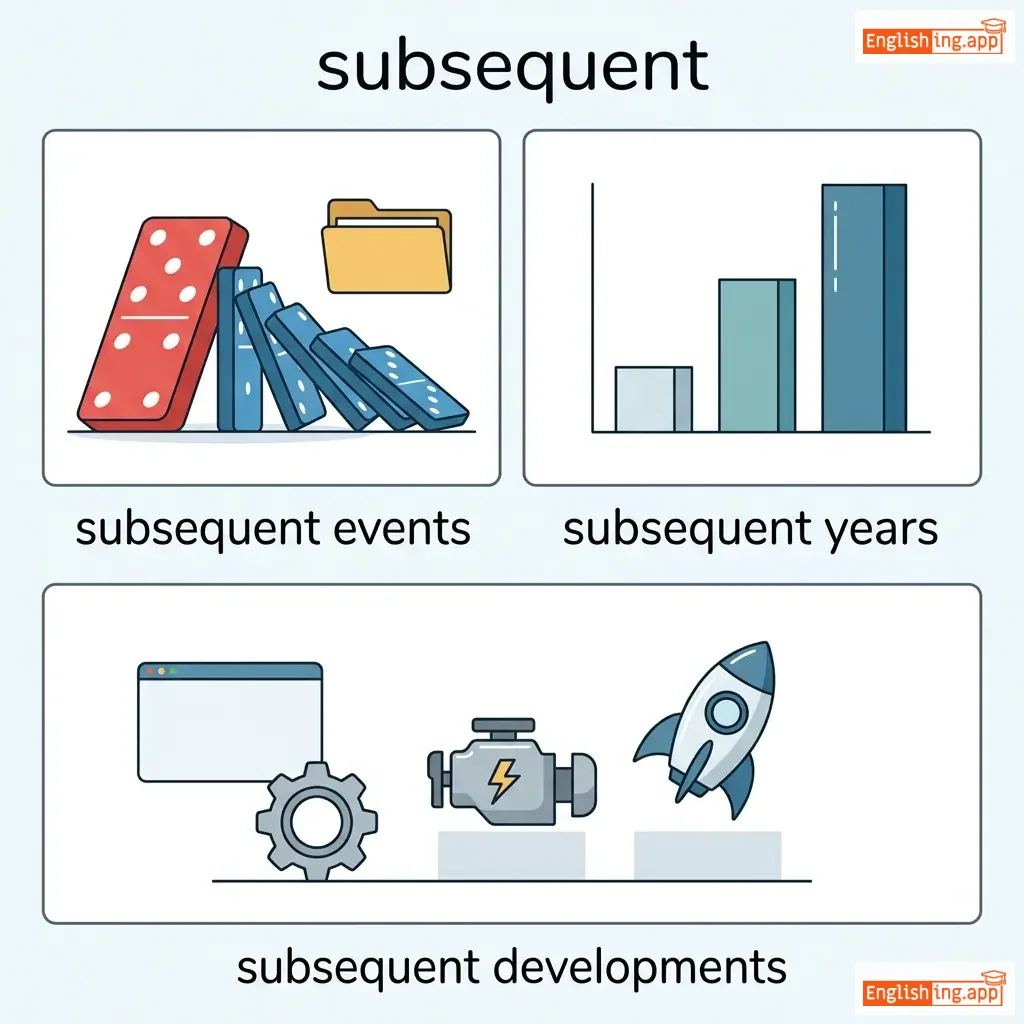
subsequent events, subsequent years, subsequent developments, subsequent changes
••••••
|
Subsequent とは何かの後に続くこと、だから「その後の」。
••••••
|
|
#4829
⏳
|
/ˈsʌbsɪkwəntli/
adverb
(サブスィクウェントリー)
••••••
|
- •••••• |
その後
sono ato
••••••
|
- •••••• | - •••••• | - •••••• | - •••••• |
at a later time; afterward
••••••
|
He failed his exam and subsequently had to retake it. |
彼は試験に失敗し、その後再試験を受けなければならなかった。
Kare wa shiken ni shippai shi, sono ato saishiken wo ukenakereba naranakatta.
••••••
|
- •••••• | - •••••• | - •••••• |
afterward, later, consequently, as a result
••••••
|
before, earlier
••••••
|
subsequently announced, subsequently decided, subsequently completed
••••••
|
Subsequent events follow after earlier occurrences.
••••••
|
|
#4830
💰
|
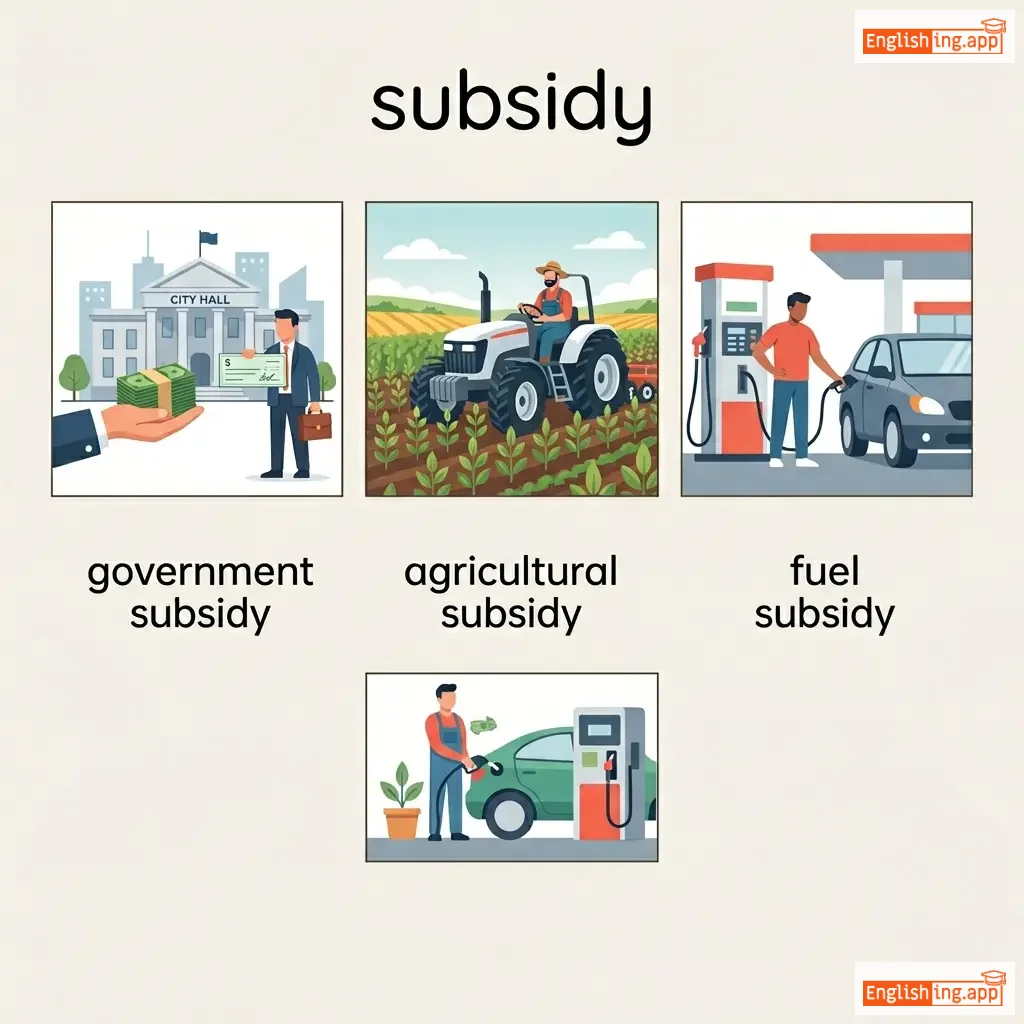
/ˈsʌbsɪdi/
noun
(サブシディ)
••••••
|
|
助成金
joseikin
••••••
|
- •••••• | - •••••• | - •••••• | - •••••• |
A sum of money granted by the government or a public body to help support an industry or reduce the cost of goods or services.
••••••
|
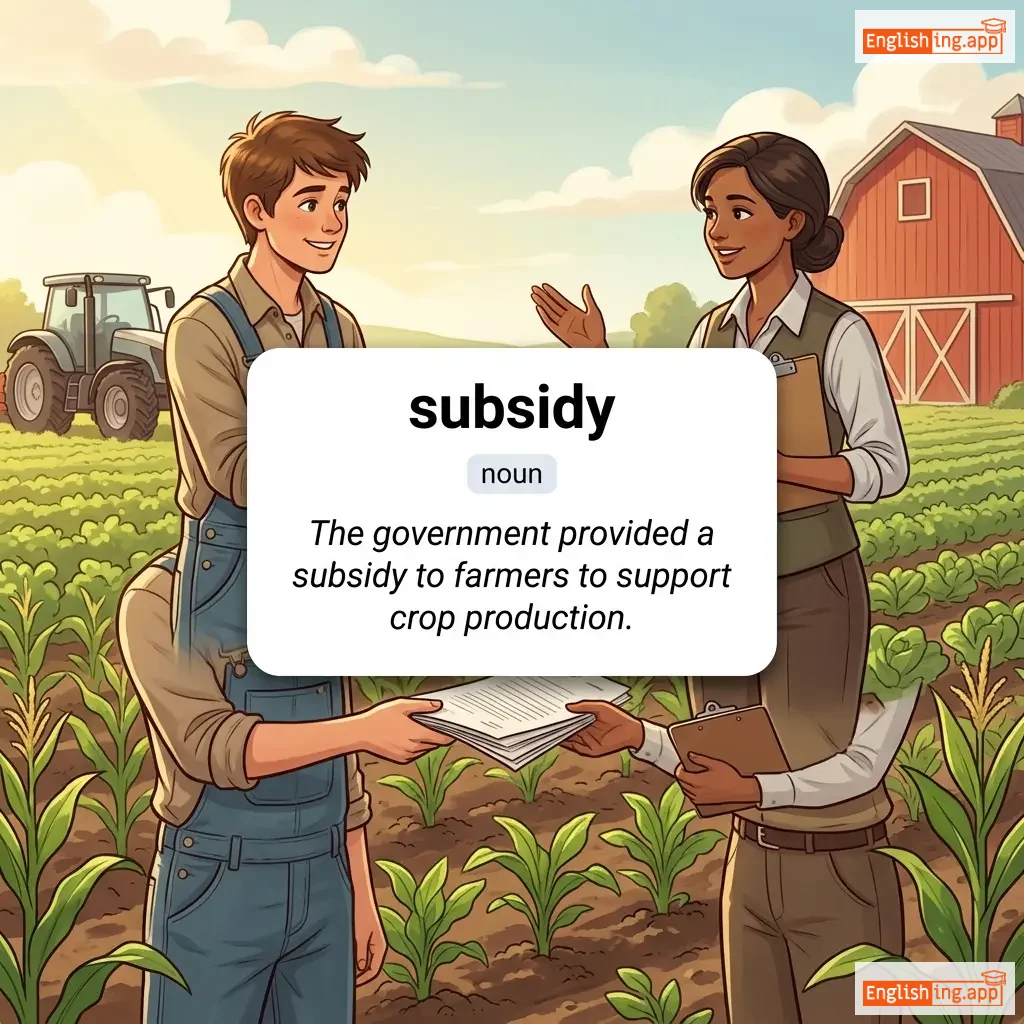
The government provided a subsidy to farmers to support crop production. |
政府は作物生産を支援するために農民に助成金を提供しました。
Seifu wa sakumotsu seisan o shien suru tame ni nōmin ni joseikin o teikyō shimashita.
••••••
|
- •••••• | - •••••• | - •••••• |
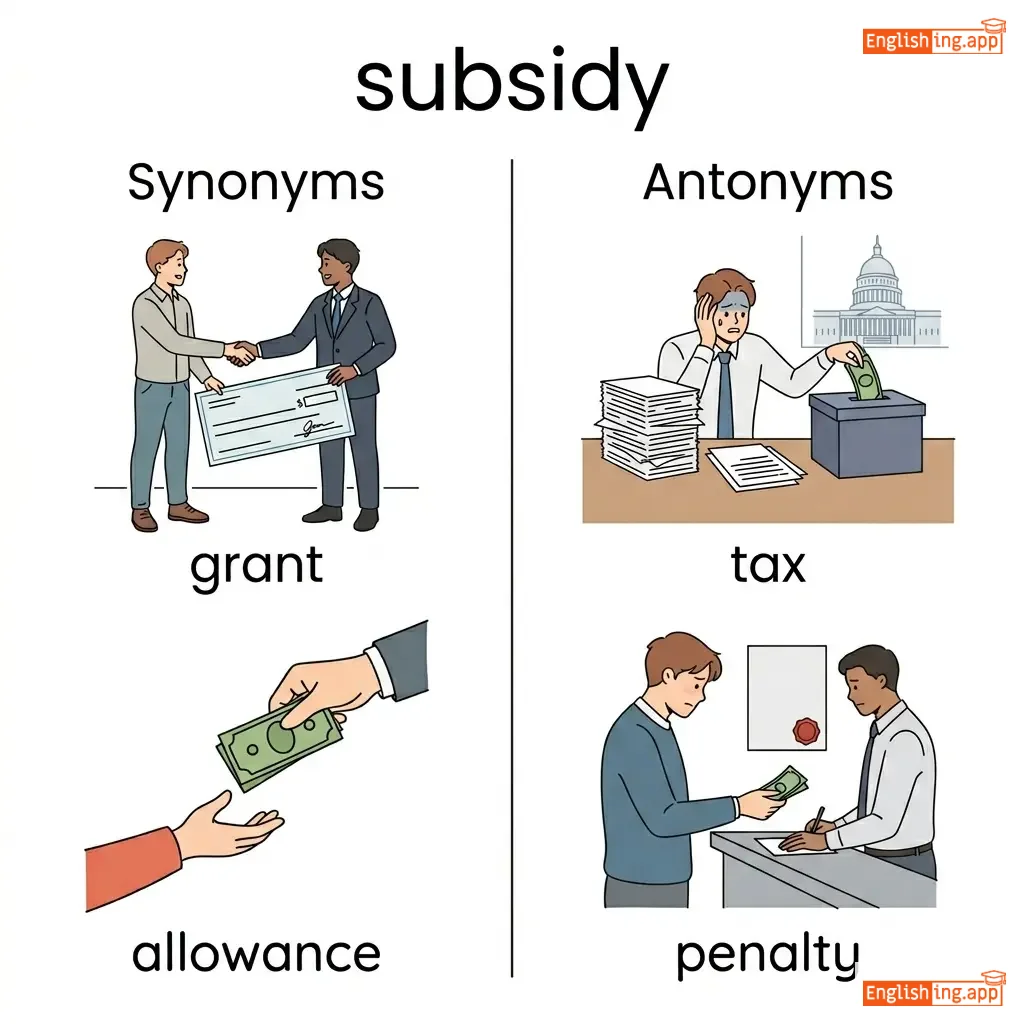
grant, allowance, financial aid, support, assistance
••••••
|
tax, penalty, surcharge
••••••
|
government subsidy, agricultural subsidy, fuel subsidy, receive subsidy
••••••
|
助成金は、政府が農業などにお金を与えて支援するものです。
••••••
|
|
#4831
🧪
|
/ˈsʌb.stəns/
noun
(サブスタンス)
••••••
|
- •••••• |
物質
busshitsu
••••••
|
- •••••• | - •••••• | - •••••• | - •••••• |
a particular kind of matter with uniform properties; the essential nature of something; material or content
••••••
|
The scientist analyzed the unknown substance in the laboratory.
科学者は実験室で未知の物質を分析しました。
••••••
|
科学者は実験室で未知の物質を分析しました。
Kagakusha wa jikken-shitsu de michi no busshitsu o bunseki shimashita.
••••••
|
- •••••• | - •••••• | - •••••• |
material, matter, essence, content
••••••
|
emptiness, void, superficiality
••••••
|
chemical substance, controlled substance, substance abuse, essential substance
••••••
|
実験室で分析される物質は正確な結果を生み出すために重要です。
••••••
|
|
#4832
📏
|
/səbˈstæn.ʃəl/
adjective
(サブスタンシャル)
••••••
|
- •••••• |
実質的; かなりの; 重要な
jisshitsuteki; kanari no; jūyōna
••••••
|
- •••••• | - •••••• | - •••••• | - •••••• |
large in size, amount, or importance; considerable; significant
••••••
|
There was a substantial increase in sales this quarter. |
この四半期に売上は実質的に増加しました。
Kono shihanki ni uriage wa jisshitsuteki ni zōka shimashita.
••••••
|
- •••••• | - •••••• | - •••••• |
considerable, significant, large, major, sizeable
••••••
|
insignificant, minor, small, negligible, trivial
••••••
|
substantial amount, substantial increase, substantial evidence, substantial progress
••••••
|
日本語で'実質的'と言うと、それは大きな意味や影響を持つことを意味します。
••••••
|
|
#4833
📈
|
/səbˈstænʃəli/
adverb
(サブスタンシャリー)
••••••
|
- •••••• |
大幅に
ōhaba ni
••••••
|
- •••••• | - •••••• | - •••••• | - •••••• |
to a great extent or degree
••••••
|
The new policy has substantially improved working conditions.
新しい政策は労働条件を大幅に改善しました。
••••••
|
新しい政策は労働条件を大幅に改善しました。
Atarashī seisaku wa rōdō jōken o ōhaba ni kaizen shimashita.
••••••
|
- •••••• | - •••••• | - •••••• |
considerably, significantly, greatly, largely
••••••
|
slightly, marginally
••••••
|
substantially increase, substantially reduce, substantially change, substantially improve
••••••
|
Substantiallyは日本語で大幅に – 大きな変化を意味していることを覚えておいて
••••••
|
|
#4834
🔄
|
/ˈsʌb.stɪ.tjuːt/
verb
(サブスティチュート)
••••••
|
|
代替する
daitai suru
••••••
|
substituted
サブスティチューテッド
••••••
|
substituted
サブスティチューテッド
••••••
|
substitutes
サブスティチューツ
••••••
|
substituting
サブスティチューティング
••••••
|
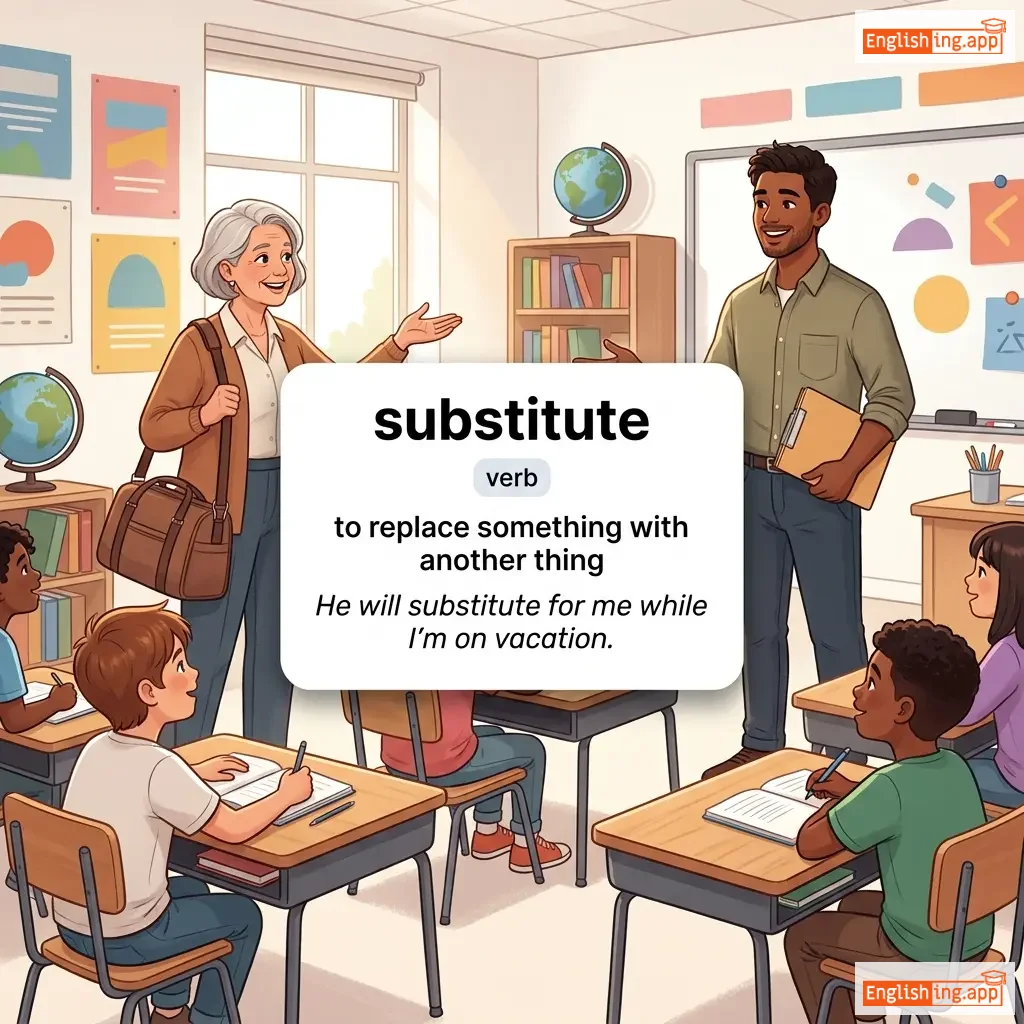
to replace something with another thing
••••••
|
He will substitute for me while I'm on vacation.
彼は私が休暇中に代わりに働きます。
••••••
|
彼は私が休暇中に代わりに働きます。
Kare wa watashi ga kyūka-chū ni kawari ni hatarakimasu.
••••••
|
- •••••• | - •••••• | - •••••• |
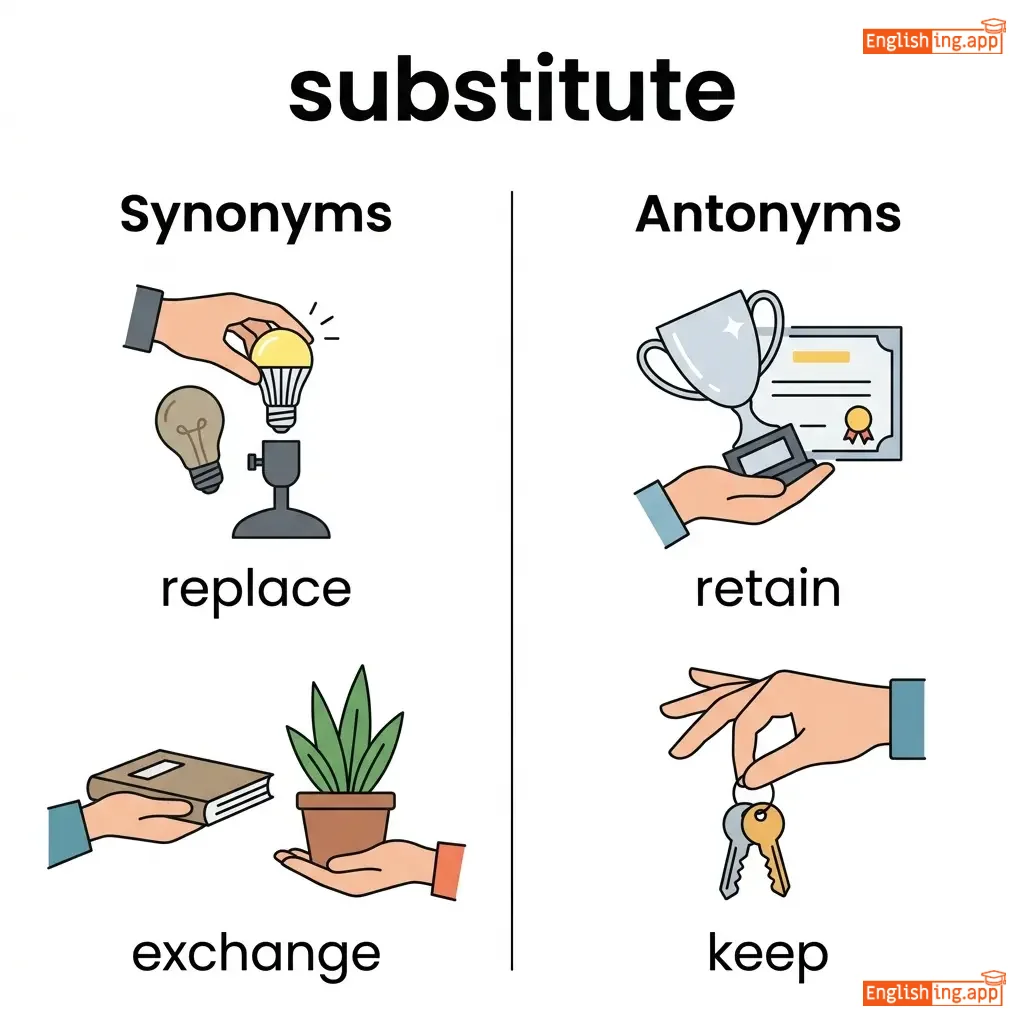
replace, exchange, swap, supersede
••••••
|
retain, keep
••••••
|
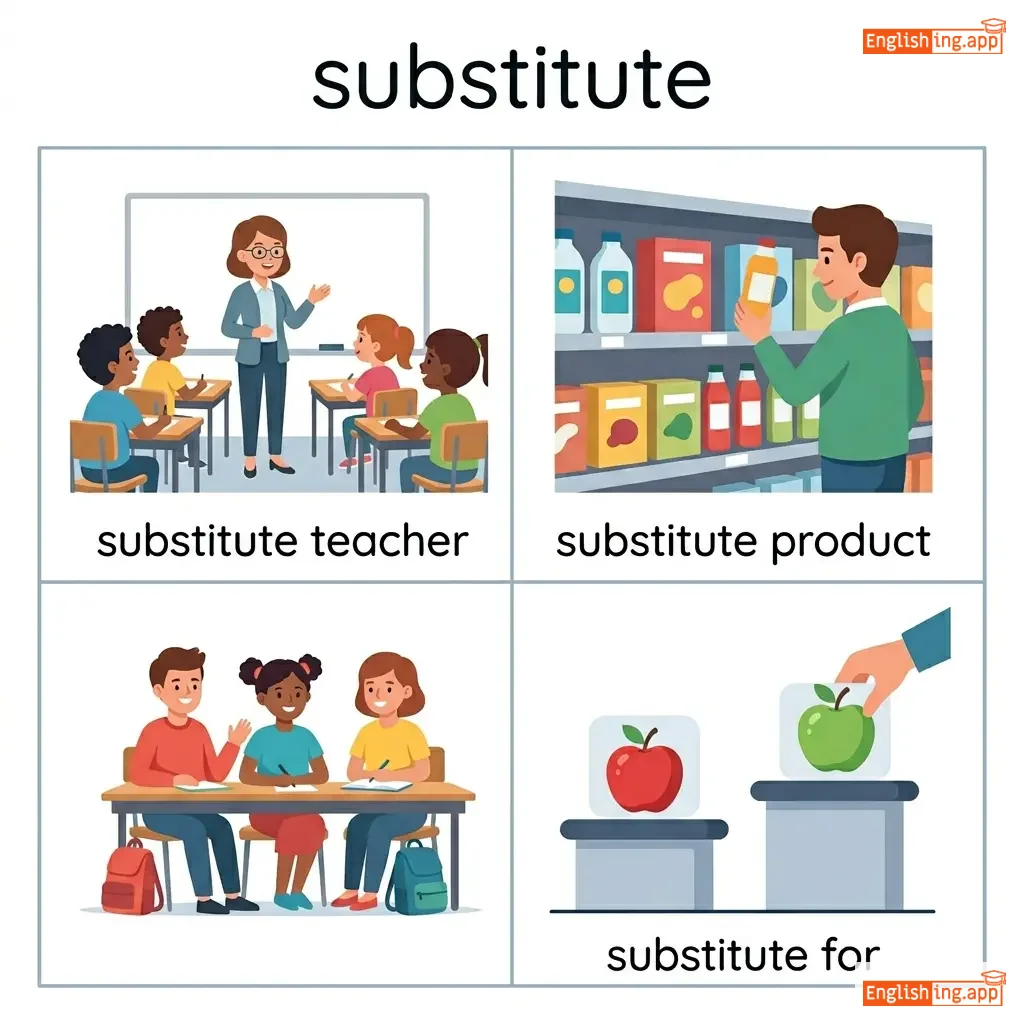
substitute teacher, substitute product, substitute for, substitute teacher
••••••
|
Substitute = 'Sub' means 'other' + 'stitute' means 'standing' - so replace by standing in for something else.
••••••
|
|
#4835
🔄
|
/ˌsʌb.stɪˈtjuː.ʃən/
noun
(サブスティチューション)
••••••
|
- •••••• |
交換
koukan
••••••
|
- •••••• | - •••••• | - •••••• | - •••••• |
the action of replacing someone or something with another
••••••
|
The substitution of the old system with the new one was difficult. |
古いシステムを新しいシステムに置き換えることは難しかった。
Furui shisutemu o atarashī shisutemu ni okikaeru koto wa muzukashikatta.
••••••
|
- •••••• | - •••••• | - •••••• |
replacement, exchange, switch, change
••••••
|
continuation, permanence
••••••
|
substitution of goods, substitution of players, substitution for, substitution of ideas
••••••
|
Substitution is like switching out an old part for a new one.
••••••
|
|
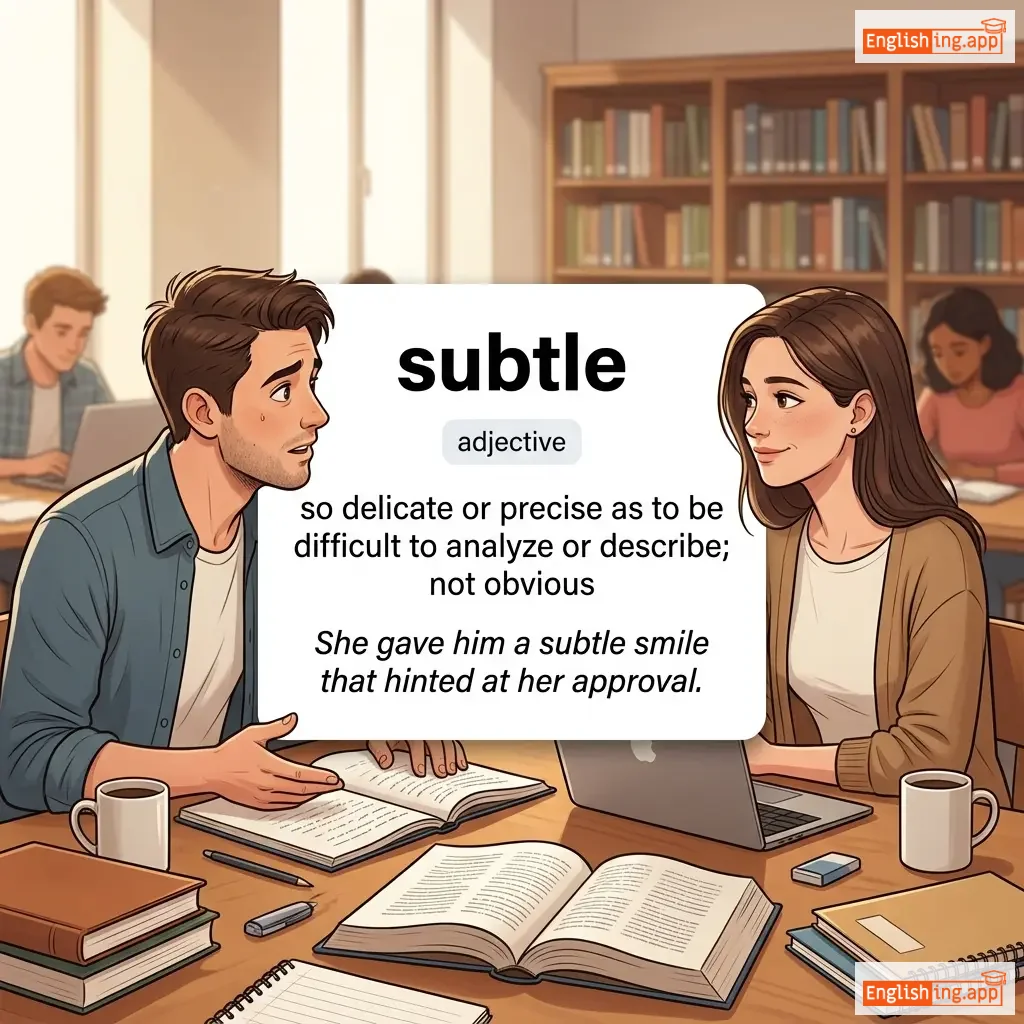
#4836
🌫️
|
/ˈsʌtl/
adjective
(サトル)
••••••
|
|
微妙
bimyou
••••••
|
- •••••• | - •••••• | - •••••• | - •••••• |
so delicate or precise as to be difficult to analyze or describe; not obvious
••••••
|
She gave him a subtle smile that hinted at her approval. |
彼女は彼に微妙な笑顔を見せ、彼女の承認をほのめかしました。
Kanojo wa kare ni bimyou na egao o mise, kanojo no shounin o honomekashimashita.
••••••
|
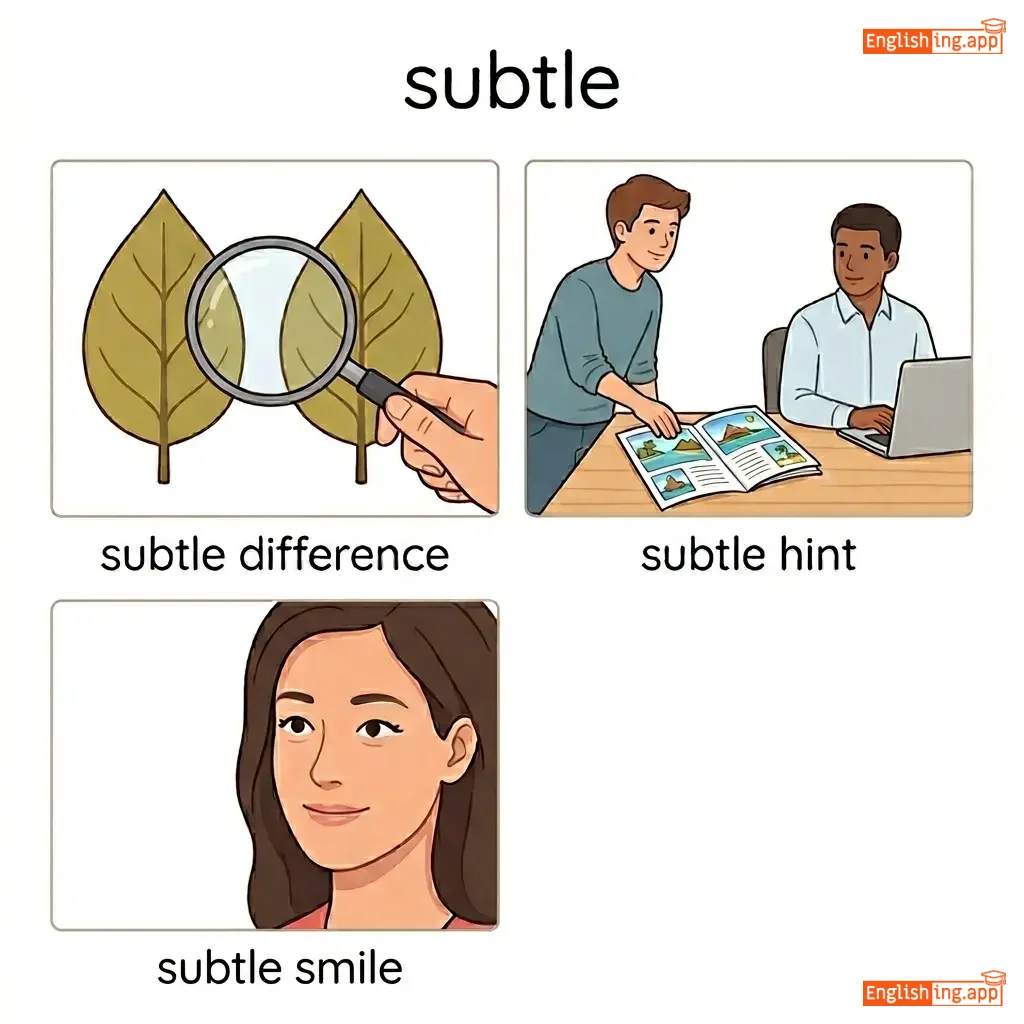
subtle hint |
a very slight or indirect suggestion
••••••
|
微妙なヒント
bimyou na hinto
••••••
|
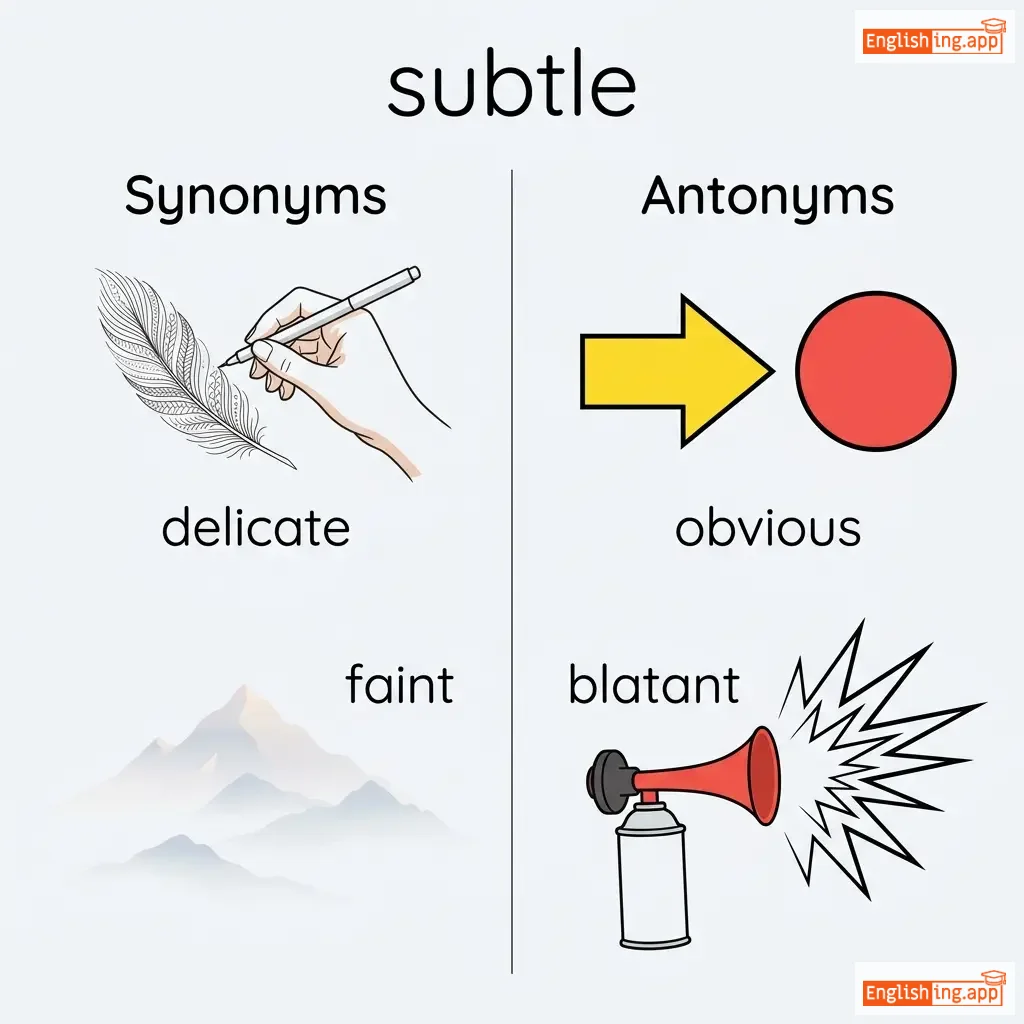
delicate, faint, nuanced, indirect, understated
••••••
|
obvious, blatant, clear
••••••
|
subtle difference, subtle hint, subtle smile, subtle change
••••••
|
微妙は、わずかな差が大きな違いを生むことから来ています。
••••••
|
|
#4837
🏘️
|
/ˈsʌbɜːb/
noun
(サバーブ)
••••••
|
- •••••• |
郊外
kougai
••••••
|
- •••••• | - •••••• | - •••••• | - •••••• |
an area outside the center of a city, often residential
••••••
|
They bought a new house in a quiet suburb. |
彼らは静かな郊外に新しい家を買いました。
Karera wa shizukana kōgai ni atarashī ie o kaimashita.
••••••
|
in the suburbs |
living in a residential area outside the city center
••••••
|
郊外で
kōgai de
••••••
|
residential area, outskirts, neighborhood, district
••••••
|
downtown, city center
••••••
|
quiet suburb, suburban area, live in the suburbs, suburb of Dhaka
••••••
|
Sub+urb は郊外、都市の外!
••••••
|
|
#4838
🏘️
|
/səˈbɜːrbən/
adjective
(サバーバン)
••••••
|
- •••••• |
郊外の
kōgai no
••••••
|
- •••••• | - •••••• | - •••••• | - •••••• |
relating to or characteristic of a suburb or the people living there
••••••
|
They bought a house in a quiet suburban area. |
彼らは静かな郊外の地域に家を買いました。
Karera wa shizuka na kōgai no chiiki ni ie o kaimashita.
••••••
|
- •••••• | - •••••• | - •••••• |
residential, outlying, provincial, commuter
••••••
|
urban, rural
••••••
|
suburban area, suburban house, suburban life, suburban community
••••••
|
郊外の意味は都市の外れ — 郊外エリア。
••••••
|
|
#4839
🏆
|
/səkˈsiːd/
verb
(サクシード)
••••••
|
- •••••• |
成功する
seikou suru
••••••
|
succeeded
サクシーデッド
••••••
|
succeeded
サクシーデッド
••••••
|
succeeds
サクシーズ
••••••
|
succeeding
サクシーディング
••••••
|
to achieve the desired aim or result; to do well
••••••
|
She worked hard to succeed in her career.
彼女はキャリアで成功するために一生懸命働いた。
••••••
|
彼女はキャリアで成功するために一生懸命働いた。
Kanojo wa kyaria de seikou suru tame ni isshoukenmei hataraita.
••••••
|
succeed in life
人生で成功する
••••••
|
to achieve overall success and fulfillment in one’s life
••••••
|
人生で成功する
jinsei de seikou suru
••••••
|
achieve, prosper, triumph, prevail, accomplish
••••••
|
fail, lose, collapse
••••••
|
succeed in, succeed at, succeed against, succeed through
••••••
|
Successからsucceed、成功することがsucceedです
••••••
|
|
#4840
🎉
|
/səkˈsɛs/
noun
(səkˈsɛs)
••••••
|
|
成功
seikou
••••••
|
- •••••• | - •••••• | - •••••• | - •••••• |
the achievement of an aim, purpose, or result
••••••
|
His hard work led to great success. |
彼の努力は大きな成功をもたらした。
Kare no doryoku wa ōkina seikō o motarashita.
••••••
|
make a success of |
to achieve success in something
••••••
|
何かの成功を収める
nanika no seikō o osameru
••••••
|
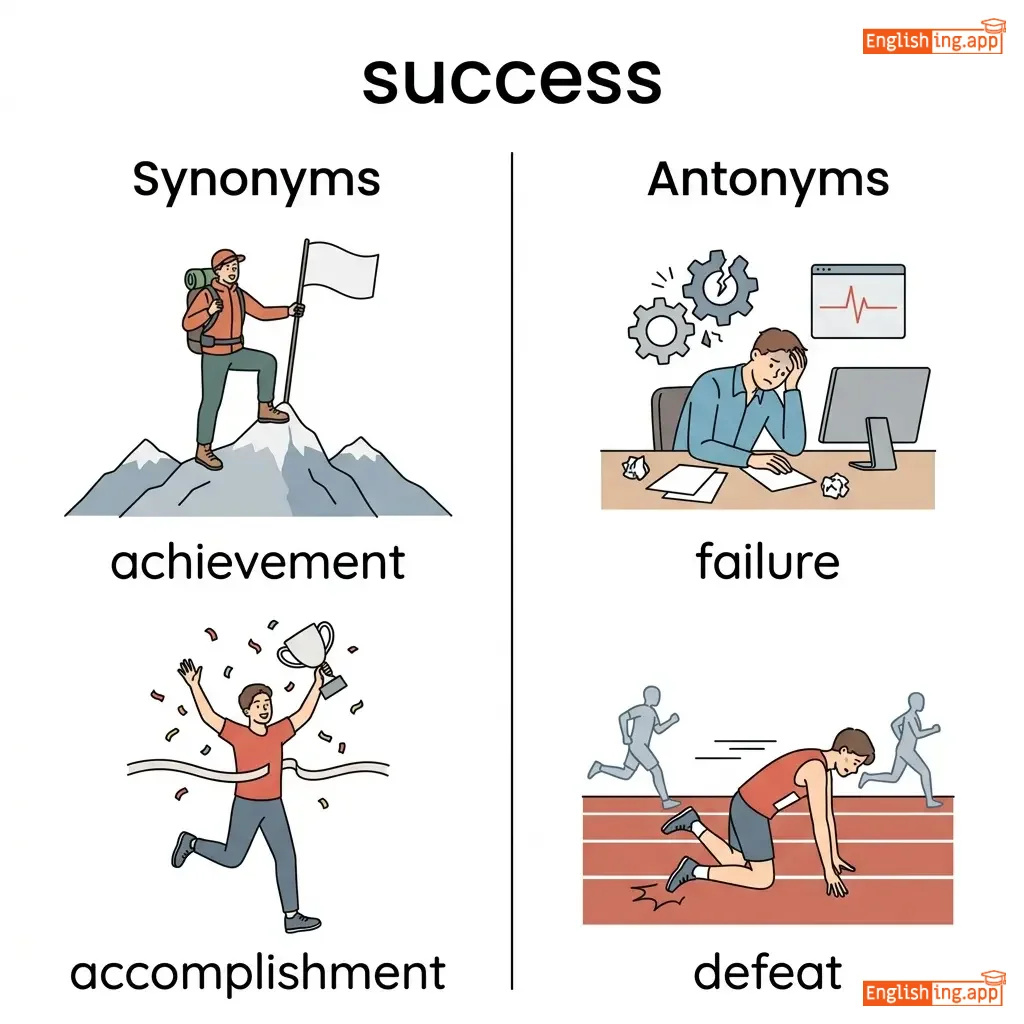
achievement, accomplishment, victory, triumph, prosperity
••••••
|
failure, defeat, loss
••••••
|
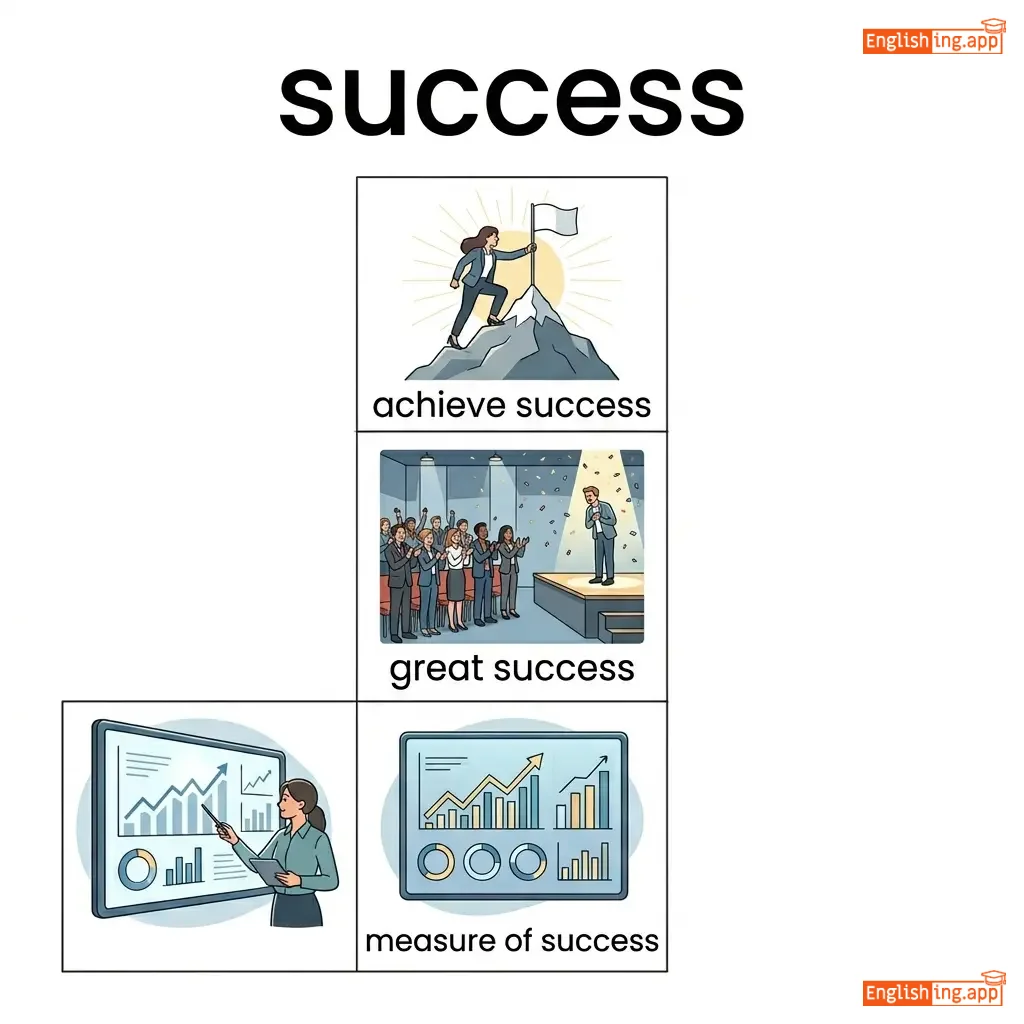
achieve success, great success, measure of success, success story
••••••
|
Success は成功 — テストでの success は seikou
••••••
|
|
#4841
💼
|
/səkˈsɛsfəl/
adjective
(səkˈsɛsfəl)
••••••
|
- •••••• |
成功した
seikou shita
••••••
|
- •••••• | - •••••• | - •••••• | - •••••• |
having achieved success; having attained wealth, position, or honor
••••••
|
He is a successful businessman. |
彼は成功したビジネスマンです。
Kare wa seikou shita bijinesuman desu.
••••••
|
successful career |
a career in which one achieves prosperity and recognition
••••••
|
成功したキャリア
seikou shita kyaria
••••••
|
prosperous, accomplished, thriving, victorious, effective
••••••
|
unsuccessful, failing, defeated
••••••
|
successful career, successful attempt, successful person, successful strategy
••••••
|
成功したは成功のこと — テストに合格したら成功する
••••••
|
|
#4842
✅
|
/səkˈsɛsfəli/
adverb
(səkˈsɛsfəli)
••••••
|
- •••••• |
成功裏に
seikou ri ni
••••••
|
- •••••• | - •••••• | - •••••• | - •••••• |
in a way that achieves a desired result
••••••
|
She passed the exam successfully after weeks of studying.
彼女は数週間の勉強の後、試験に成功裏に合格しました。
••••••
|
彼女は数週間の勉強の後、試験に成功裏に合格しました。
Kanojo wa suushukan no benkyou no ato, shiken ni seikou ri ni goukaku shimashita.
••••••
|
- •••••• | - •••••• | - •••••• |
effectively, proficiently, smoothly, favorably
••••••
|
unsuccessfully, poorly, ineffectively
••••••
|
successfully complete, successfully achieve, successfully execute
••••••
|
Successfully means achieving success 'seikou ri ni' (successfully)!
••••••
|
|
#4843
👑
|
/səkˈseʃ.ən/
noun
(səkˈseʃən)
••••••
|
|
継承
keishou
••••••
|
- •••••• | - •••••• | - •••••• | - •••••• |
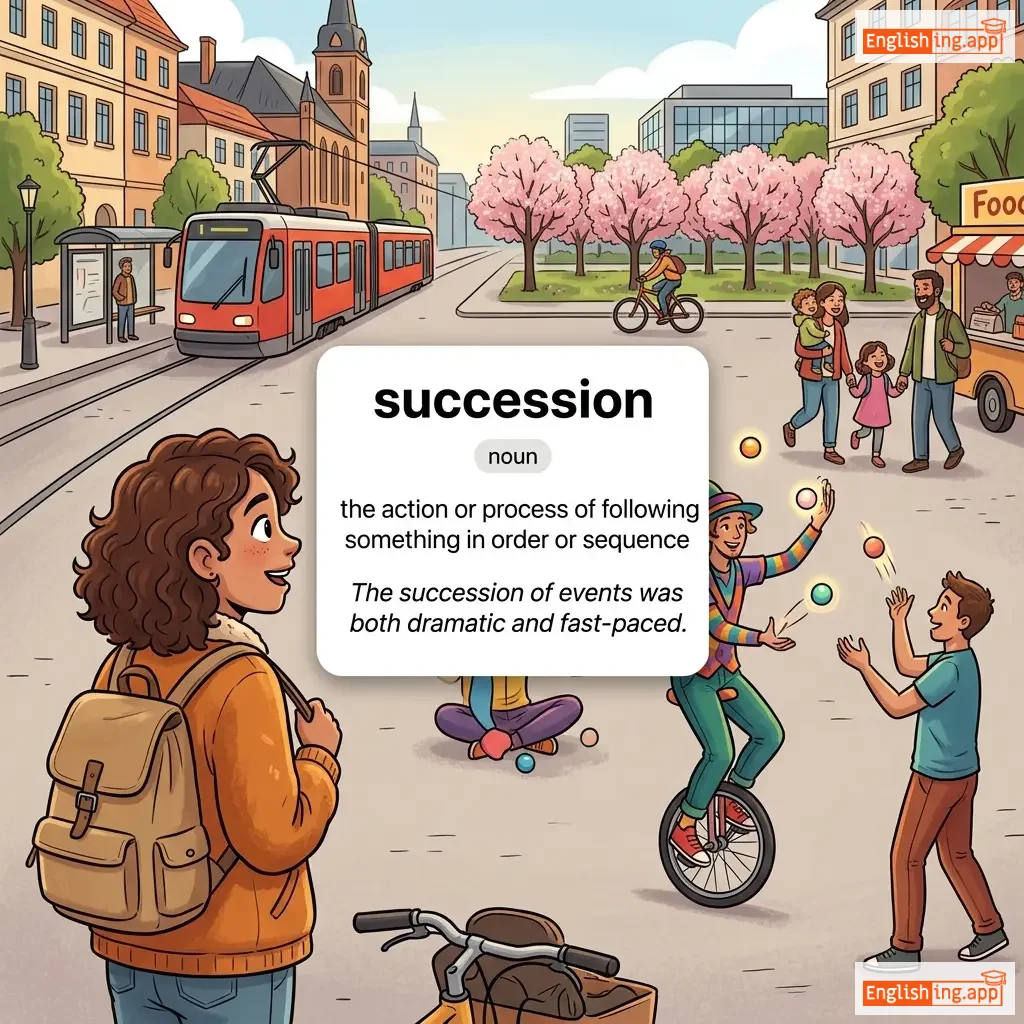
a series of people or things following one after another; the process of inheriting a title or position
••••••
|
The succession of kings in that dynasty lasted for over 300 years. |
その王朝の王位継承は300年以上続いた。
sono ouchou no oui keishou wa 300 nen ijou tsuzuita
••••••
|
- •••••• | - •••••• | - •••••• |
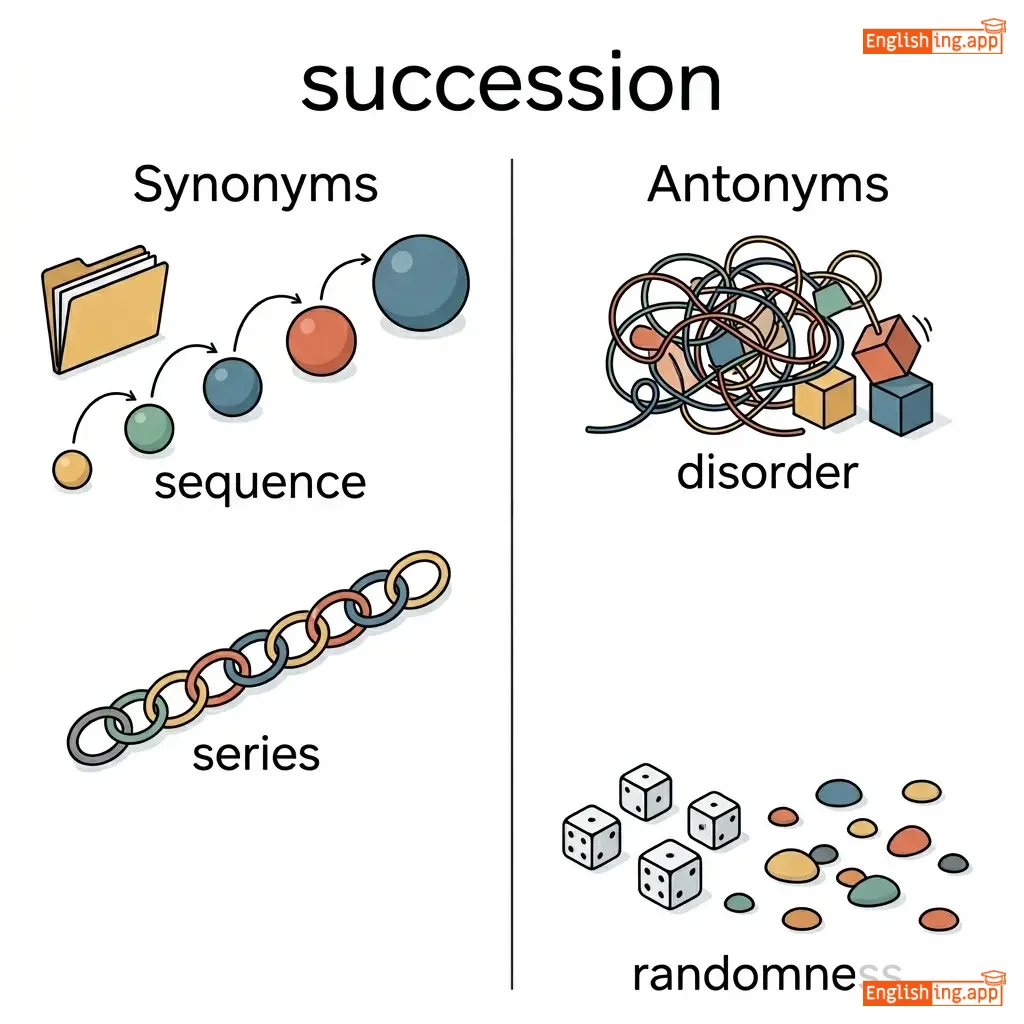
sequence, series, inheritance, lineage
••••••
|
interruption, discontinuation
••••••
|
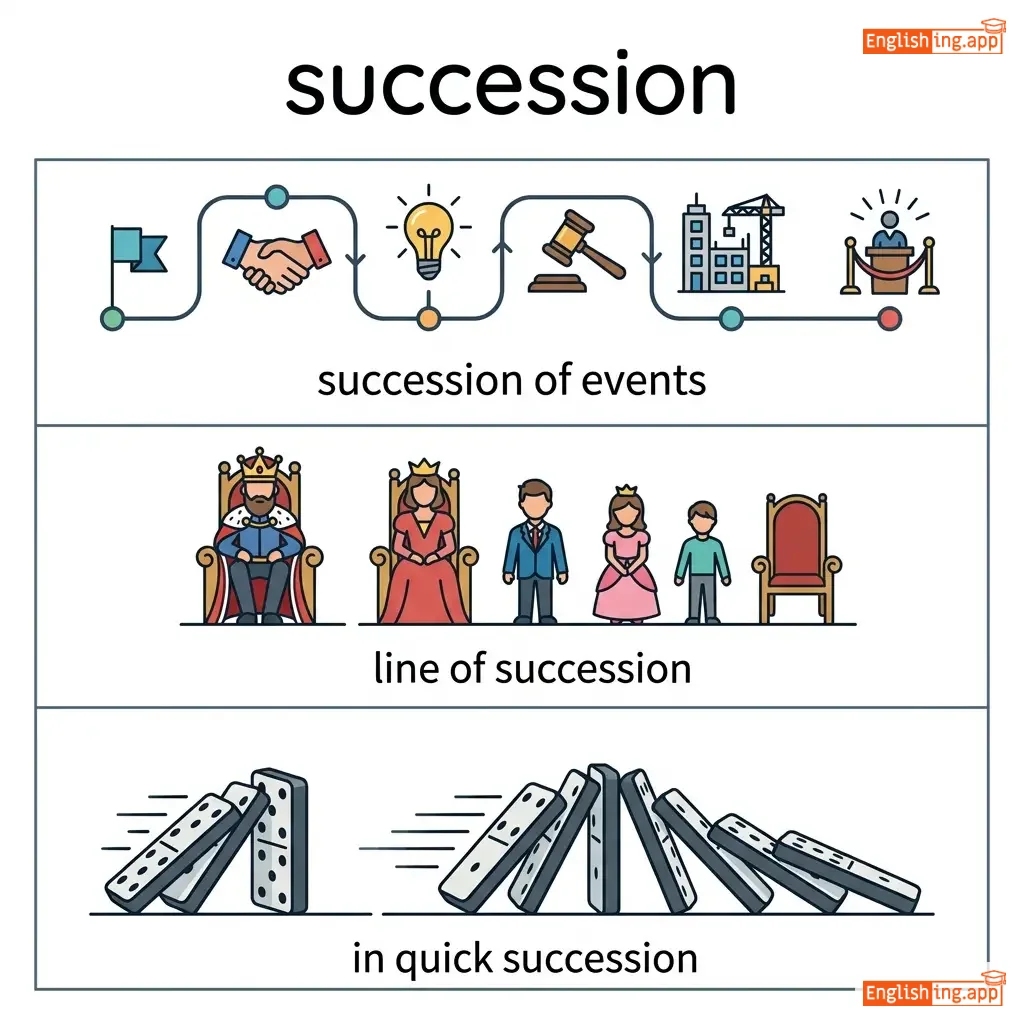
royal succession, succession planning, line of succession, succession crisis
••••••
|
継承は時間の流れのように続く王位の交代を示しています。
••••••
|
|
#4844
🔢
|
/səkˈsɛsɪv/
adjective
(suksesiv)
••••••
|
- •••••• |
連続的な; 連続した
renzokuteki na; renzoku shita
••••••
|
- •••••• | - •••••• | - •••••• | - •••••• |
following one after the other in order; consecutive
••••••
|
The team won three successive matches. |
チームは三回連続して試合に勝ちました。
Chīmu wa san-kai renzoku shite shiai ni kachimashita.
••••••
|
- •••••• | - •••••• | - •••••• |
consecutive, sequential, continuous, following
••••••
|
intermittent, interrupted, discontinuous
••••••
|
successive days, successive generations, successive victories
••••••
|
Successive is like consecutive events happening one after another, such as consecutive wins!
••••••
|
|
#4845
👑
|
/səkˈsɛsər/
noun
(saksesā)
••••••
|
- •••••• |
後継者
kōkeisha
••••••
|
- •••••• | - •••••• | - •••••• | - •••••• |
A person or thing that follows another in a position, office, or role.
••••••
|
The company appointed a successor after the CEO retired. |
CEOが退職した後、会社は後継者を任命した。
CEO ga taishoku shita ato, kaisha wa kōkeisha o ninmei shita.
••••••
|
successor in title |
a person who legally takes over rights or property from another
••••••
|
役職後継者
yakushoku kōkeisha
••••••
|
heir, inheritor, descendant, replacement, follower
••••••
|
predecessor, ancestor
••••••
|
successor to the throne, immediate successor, political successor, rightful successor
••••••
|
Success の後に来るのは後継者 — 後継者.
••••••
|
|
#4846
🤔
|
/sʌtʃ/
determiner
(サッチ)
••••••
|
- •••••• |
そんな
sonna
••••••
|
- •••••• | - •••••• | - •••••• | - •••••• |
of the type previously mentioned or specified
••••••
|
I have never seen such a beautiful painting. |
私はこんな美しい絵を見たことがありません。
Watashi wa konna utsukushii e o mita koto ga arimasen.
••••••
|
- •••••• | - •••••• | - •••••• |
like, similar, comparable
••••••
|
different, unlike
••••••
|
such a, such as, such beautiful
••••••
|
Such means ‘sonna’ (like that), and it’s easy to remember when you say, ‘Such a picture!’
••••••
|
|
#4847
🍼
|
/sʌk/
verb
(サク)
••••••
|
- •••••• |
吸う
suu
••••••
|
sucked
サクド
••••••
|
sucked
サクド
••••••
|
sucks
サックス
••••••
|
sucking
サキング
••••••
|
to draw something into the mouth by using the lips and tongue
••••••
|
The baby began to suck her thumb.
赤ちゃんは親指を吸い始めた。
••••••
|
赤ちゃんは親指を吸い始めた。
Akachan wa oyayubi o sui hajimeta.
••••••
|
suck it up
サクイットアップ
••••••
|
to accept something unpleasant without complaining
••••••
|
それを受け入れる
sore o ukeireru
••••••
|
sip, draw, ingest, slurp
••••••
|
spit, expel
••••••
|
suck up, suck out, suck in, suck on
••••••
|
赤ちゃんは親指を吸う、‘吸う’で覚えよう。
••••••
|
|
#4848
🍼
|
/ˈsʌkɪŋ/
verb
(サッキング)
••••••
|
- •••••• |
吸う
suu
••••••
|
sucked
サックド
••••••
|
sucked
サックド
••••••
|
sucks
サックス
••••••
|
sucking
サッキング
••••••
|
Drawing in a liquid, air, or other substance through the mouth or a tube by creating a vacuum; also used figuratively for something unpleasant or ineffective
••••••
|
The baby is sucking on a pacifier.
赤ちゃんが乳首を吸っています。
••••••
|
赤ちゃんが乳首を吸っています。
Akachan ga chibusa o sutteimasu.
••••••
|
suck it up
我慢する
••••••
|
to endure a difficult situation without complaining
••••••
|
我慢する
gaman suru
••••••
|
slurping, drawing, imbibing, absorbing
••••••
|
blowing, spitting
••••••
|
sucking sound, sucking motion, sucking reflex, sucking power
••••••
|
赤ちゃんが suuu しているイメージを思い浮かべて。
••••••
|
|
#4849
⚡
|
/ˈsʌdən/
adjective
(サドン)
••••••
|
- •••••• |
突然の; 急な; 思いがけない;
totsuzen no; kyū na; omoigakenai
••••••
|
- •••••• | - •••••• | - •••••• | - •••••• |
happening or done quickly and unexpectedly; abrupt
••••••
|
There was a sudden change in the weather. |
天気に突然の変化がありました。
tenki ni totsuzen no henka ga arimashita.
••••••
|
- •••••• | - •••••• | - •••••• |
abrupt, unexpected, rapid, swift
••••••
|
gradual, slow, expected, planned
••••••
|
sudden change, sudden death, sudden movement
••••••
|
No •••••• |
|
#4850
⚡
|
/ˈsʌd.ən.li/
adverb
(サドゥンリー)
••••••
|
- •••••• |
突然
totsuzen
••••••
|
- •••••• | - •••••• | - •••••• | - •••••• |
quickly and without warning; unexpectedly
••••••
|
The car suddenly stopped in the middle of the road. |
車は突然道路の真ん中で止まりました。
Kuruma wa totsuzen dōro no mannaka de tomarimashita.
••••••
|
- •••••• | - •••••• | - •••••• |
abruptly, unexpectedly, instantly
••••••
|
gradually, slowly, predictably
••••••
|
suddenly appear, suddenly stop, suddenly realize
••••••
|
Totsuzen sounds like 'Totally Zen' (in English), suggesting an unexpected stop.
••••••
|
|
#4851
⚖️
|
/suː/
verb
(スー)
••••••
|
- •••••• |
訴える
uttaeru
••••••
|
sued
スード
••••••
|
sued
スード
••••••
|
sues
スーズ
••••••
|
suing
スイング
••••••
|
to bring a lawsuit against someone in a court of law
••••••
|
She decided to sue the company for damages.
彼女は損害賠償のために会社を訴えることに決めました。
••••••
|
彼女は損害賠償のために会社を訴えることに決めました。
Kanojo wa songai baishou no tame ni kaisha o uttaeru koto ni kimemashita.
••••••
|
- •••••• | - •••••• | - •••••• |
litigate, prosecute, charge, complain
••••••
|
defend, forgive
••••••
|
sue for damages, sue someone, sue in court
••••••
|
Sue means 'uttaeru' – like a lawsuit ⚖️
••••••
|
|
#4852
😞
|
/ˈsʌfər/
verb
(サファー)
••••••
|
- •••••• |
苦しむ
kurushimu
••••••
|
suffered
サファード
••••••
|
suffered
サファード
••••••
|
suffers
サファーズ
••••••
|
suffering
サファリング
••••••
|
to experience pain, distress, or hardship
••••••
|
She suffered from a severe headache all day.
彼女は一日中ひどい頭痛に苦しんでいました。
••••••
|
彼女は一日中ひどい頭痛に苦しんでいました。
Kanojo wa ichinichijuu hidoi zutsuu ni kurushinde imashita.
••••••
|
- •••••• | - •••••• | - •••••• |
endure, undergo, experience, bear
••••••
|
enjoy, delight, thrive
••••••
|
suffer from, suffer greatly, suffer in silence
••••••
|
Suffer - ソファで苦しむ
••••••
|
|
#4853
😢
|
/ˈsʌfərɪŋ/
noun
(サファリング)
••••••
|
- •••••• |
苦しみ
kurushimi
••••••
|
- •••••• | - •••••• | - •••••• | - •••••• |
the state of undergoing pain, distress, or hardship
••••••
|
They tried to relieve his suffering with medicine. |
彼らは薬で彼の苦しみを和らげようとした。
Karera wa kusuri de kare no kurushimi o yawarageyou to shita.
••••••
|
long-suffering |
patiently enduring pain or hardship for a long time
••••••
|
長期苦しみ
chouki kurushimi
••••••
|
pain, agony, misery, distress, hardship
••••••
|
comfort, relief, ease
••••••
|
human suffering, great suffering, physical suffering, mental suffering
••••••
|
Sufferingは苦しみと同じ意味で、日本語の苦しみも英語のsufferingを意味します。
••••••
|
|
#4854
✔️
|
/səˈfɪʃənt/
adjective
(サフィシエント)
••••••
|
- •••••• |
十分な
jūbun na
••••••
|
- •••••• | - •••••• | - •••••• | - •••••• |
enough; adequate for a purpose
••••••
|
She had sufficient money to buy the dress. |
彼女はドレスを買うために十分なお金を持っていました。
Kanojo wa doresu o kau tame ni jūbun na okane o motte imashita.
••••••
|
sufficient unto the day |
today's troubles are enough without worrying about the future
••••••
|
今日のためには十分な
kyō no tame ni wa jūbun na
••••••
|
enough, adequate, ample, satisfactory
••••••
|
insufficient, inadequate, lacking
••••••
|
sufficient money, sufficient evidence, sufficient reason
••••••
|
Jūbun na は十分な意味 ✔️ – 完璧なパーティーを想像してみてください
••••••
|
|
#4855
✅
|
/səˈfɪʃəntli/
adverb
(サフィシエントリー)
••••••
|
- •••••• |
十分に
jūbun ni
••••••
|
- •••••• | - •••••• | - •••••• | - •••••• |
to an adequate degree or extent
••••••
|
She studied sufficiently to pass the exam. |
彼女は試験に合格するために十分に勉強した。
Kanojo wa shiken ni gōkaku suru tame ni jūbun ni benkyō shita.
••••••
|
- •••••• | - •••••• | - •••••• |
adequately, enough, satisfactorily
••••••
|
insufficiently, inadequately
••••••
|
sufficiently prepared, sufficiently large, sufficiently skilled
••••••
|
Sufficiently = Just enough to reach the goal, like 'sufficient' = enough!
••••••
|
|
#4856
🍬
|
/ˈʃʊɡər/
noun
(シュガー)
••••••
|
- •••••• |
砂糖
satou
••••••
|
- •••••• | - •••••• | - •••••• | - •••••• |
sweet crystalline substance used as a sweetener
••••••
|
Please add two teaspoons of sugar to my coffee. |
私のコーヒーに砂糖を小さじ2杯加えてください。
watashi no koohii ni satou o kosaji 2 hai kuwaete kudasai
••••••
|
- •••••• | - •••••• | - •••••• |
sweetener, sucrose
••••••
|
salt, bitter
••••••
|
brown sugar, sugar cube, sugar level, blood sugar
••••••
|
砂糖で甘くする、コーヒーに加えるときと同じように。
••••••
|
|
#4857
💡
|
/səˈdʒɛst/
verb
(サジェスト)
••••••
|
- •••••• |
提案する
teian suru
••••••
|
suggested
サジェステッド
••••••
|
suggested
サジェステッド
••••••
|
suggests
サジェスツ
••••••
|
suggesting
サジェスティング
••••••
|
to put forward an idea, plan, or recommendation for consideration
••••••
|
He suggested going to the new restaurant for dinner.
彼は新しいレストランで夕食を取ることを提案しました。
••••••
|
彼は新しいレストランで夕食を取ることを提案しました。
Kare wa atarashī resutoran de yūshoku o toru koto o teian shimashita.
••••••
|
suggest itself
自発的に提案する
••••••
|
to present itself naturally without being asked
••••••
|
自発的に提案する
jihatsuteki ni teian suru
••••••
|
recommend, propose, advise, urge
••••••
|
oppose, discourage
••••••
|
suggest a plan, suggest an idea, strongly suggest, politely suggest
••••••
|
提案することはアイデアを出すこと – 覚えやすいですね!
••••••
|
|
#4858
💡
|
/səˈdʒes.tʃən/
noun
(sʌdʒɛsˈtʃən)
••••••
|
- •••••• |
提案; アドバイス
teian; adobaisu
••••••
|
- •••••• | - •••••• | - •••••• | - •••••• |
an idea or plan put forward for consideration; advice or recommendation
••••••
|
Do you have any suggestions for improving our team's productivity? |
チームの生産性向上のための提案はありますか?
Chīmu no seisansei kōjō no tame no teian wa arimasu ka?
••••••
|
- •••••• | - •••••• | - •••••• |
recommendation, proposal, advice, idea
••••••
|
command, order, demand
••••••
|
helpful suggestion, practical suggestion, suggestion box, make a suggestion
••••••
|
提案を聞くことで進歩する (Teian o kiku koto de shinpo suru)
••••••
|
|
#4859
⚠️
|
/ˈsuː.ɪ.saɪd/
noun
(自殺)
••••••
|
- •••••• |
自殺
jisatsu
••••••
|
- •••••• | - •••••• | - •••••• | - •••••• |
the act of intentionally killing oneself
••••••
|
Mental health professionals work to prevent suicide. |
メンタルヘルスの専門家は自殺を防ぐために働いています。
mentaru herusu no senmonka wa jisatsu o fusegu tame ni hataraiteimasu.
••••••
|
- •••••• | - •••••• | - •••••• |
self-destruction, self-harm
••••••
|
survival, life preservation
••••••
|
commit suicide, suicide prevention, suicide rate
••••••
|
精神科医が自殺を防ぐ
••••••
|
|
#4860
🤵
|
/suːt/
noun
(スーツ)
••••••
|
- •••••• |
スーツ
su-tsu
••••••
|
- •••••• | - •••••• | - •••••• | - •••••• |
a set of clothes made of the same fabric, usually consisting of trousers and a jacket
••••••
|
He wore a black suit to the wedding.
彼は結婚式に黒いスーツを着ていきました。
••••••
|
彼は結婚式に黒いスーツを着ていきました。
Kare wa kekkonshiki ni kuroi sūtsu o kite ikimashita.
••••••
|
- •••••• | - •••••• | - •••••• |
outfit, attire, ensemble
••••••
|
casual wear, informal dress
••••••
|
wear a suit, business suit, suit jacket
••••••
|
Sūtsu - スーツを着ると、結婚式でも注目の的
••••••
|
|
#4861
👌
|
/ˈsuːtəbl/
adjective
(スイタブル)
••••••
|
- •••••• |
適切
tekisetsu
••••••
|
- •••••• | - •••••• | - •••••• | - •••••• |
appropriate or right for a particular person, purpose, or situation
••••••
|
This dress is suitable for the wedding. |
このドレスは結婚式に適しています。
Kono doresu wa kekkonshiki ni tekishiteimasu.
••••••
|
- •••••• | - •••••• | - •••••• |
appropriate, proper, fitting, apt, acceptable
••••••
|
unsuitable, inappropriate, unfit
••••••
|
suitable for, suitable candidate, suitable time, suitable environment
••••••
|
Suitable は適切な意味、結婚式に適したドレスのように。
••••••
|
|
#4862
🧳
|
/ˈsuːt.keɪs/
noun
(スーツケース)
••••••
|
- •••••• |
スーツケース
suutsukeesu
••••••
|
- •••••• | - •••••• | - •••••• | - •••••• |
A portable rectangular container for carrying clothes and personal items when traveling
••••••
|
She packed her clothes into a suitcase for the trip.
彼女は旅行のために服をスーツケースに詰めた。
••••••
|
彼女は旅行のために服をスーツケースに詰めた。
Kanojo wa ryokou no tame ni fuku o suutsukeesu ni tsumeta.
••••••
|
kick the suitcase down the road
スーツケースを道に蹴る
••••••
|
To postpone dealing with a problem or responsibility
••••••
|
スーツケースを道に蹴る
suutsukeesu o michi ni keru
••••••
|
luggage, bag, valise, trunk, carry-on
••••••
|
handbag, purse
••••••
|
open a suitcase, pack a suitcase, carry a suitcase, check a suitcase
••••••
|
スーツ suutsu = suit, ケース keesu = case; easy to remember!
••••••
|
|
#4863
🏨
|
/swiːt/
noun
(スイート)
••••••
|
- •••••• |
スイート
suīto
••••••
|
- •••••• | - •••••• | - •••••• | - •••••• |
a set of rooms designated for one person's or family's use or for a particular purpose
••••••
|
They stayed in the presidential suite at the hotel. |
彼らはホテルの大統領スイートに宿泊していました。
Karera wa hoteru no daitōryō suīto ni shukuhaku shite imashita.
••••••
|
- •••••• | - •••••• | - •••••• |
set, series, apartment, chambers, rooms
••••••
|
single room, dormitory
••••••
|
hotel suite, luxury suite, software suite, office suite
••••••
|
スイートは、ホテルの最上級の部屋のセットのようなものです。
••••••
|
|
#4864
➕
|
/sʌm/
noun
(サム)
••••••
|
- •••••• |
合計
goukei
••••••
|
- •••••• | - •••••• | - •••••• | - •••••• |
the total amount resulting from the addition of two or more numbers or items
••••••
|
The sum of 8 and 12 is 20. |
8と12の合計は20です。
8 to 12 no goukei wa 20 desu.
••••••
|
sum up |
to summarize or give a brief statement of something
••••••
|
まとめる
matomeru
••••••
|
total, amount, aggregate, tally, whole
••••••
|
part, portion
••••••
|
large sum, total sum, sum of money, sum up, small sum
••••••
|
Sumは加算の結果 — 'sum'は合計です。
••••••
|
|
#4865
📝
|
/ˈsʌməraɪz/
verb
(サマライズ)
••••••
|
- •••••• |
要約する
youyaku suru
••••••
|
summarized
サマライズド
••••••
|
summarized
サマライズド
••••••
|
summarizes
サマライズズ
••••••
|
summarizing
サマライズイング
••••••
|
To give a brief statement of the main points of something
••••••
|
She summarized the report in just a few minutes.
彼女は数分で報告書を要約した。
••••••
|
彼女は数分で報告書を要約した。
Kanojo wa suufun de houkokusho o youyaku shita
••••••
|
- •••••• | - •••••• | - •••••• |
condense, outline, recap, abridge, encapsulate
••••••
|
expand, elaborate, detail
••••••
|
summarize a report, summarize findings, summarize points, summarize information
••••••
|
Summarize = サマライズ = 重要点を短くまとめる。
••••••
|
|
#4866
📝
|
/ˈsʌməri/
noun
(サマリー)
••••••
|
- •••••• |
要約
yōyaku
••••••
|
- •••••• | - •••••• | - •••••• | - •••••• |
A brief statement of the main points of something.
••••••
|
She wrote a summary of the book for her class. |
彼女はクラスのためにその本の要約を書きました。
Kanojo wa kurasu no tame ni sono hon no yōyaku o kakimashita.
••••••
|
in summary |
used to introduce a concise statement that captures the main points
••••••
|
要約すると
yōyaku suru to
••••••
|
outline, synopsis, abstract, digest, recap
••••••
|
detail, expansion
••••••
|
write a summary, brief summary, executive summary, short summary
••••••
|
Summaryは内容の短いバージョンで、要約だ。
••••••
|
|
#4867
🌞
|
/ˈsʌmər/
noun
(夏)
••••••
|
- •••••• |
夏
natsu
••••••
|
- •••••• | - •••••• | - •••••• | - •••••• |
the warmest season of the year, between spring and autumn
••••••
|
We love going to the beach during summer. |
夏はビーチに行くのが大好きです。
Natsu wa bīchi ni iku no ga daisuki desu.
••••••
|
- •••••• | - •••••• | - •••••• |
season, warmth, hot period, vacation time
••••••
|
winter, cold
••••••
|
summer vacation, summer holiday, summer heat, summer camp
••••••
|
Think of the SUMMER sun burning bright and warm!
••••••
|
|
#4868
⛰️
|
/ˈsʌmɪt/
noun
(samitto)
••••••
|
|
頂点, サミット
tōten, samitto
••••••
|
- •••••• | - •••••• | - •••••• | - •••••• |
The highest point of a hill or mountain; a meeting between heads of state or leaders.
••••••
|
The leaders met at the summit to discuss global issues. |
リーダーたちはサミットで世界的な問題について話し合いました。
Rīdā-tachi wa samitto de sekaiteki na mondai ni tsuite hanashimashita.
••••••
|
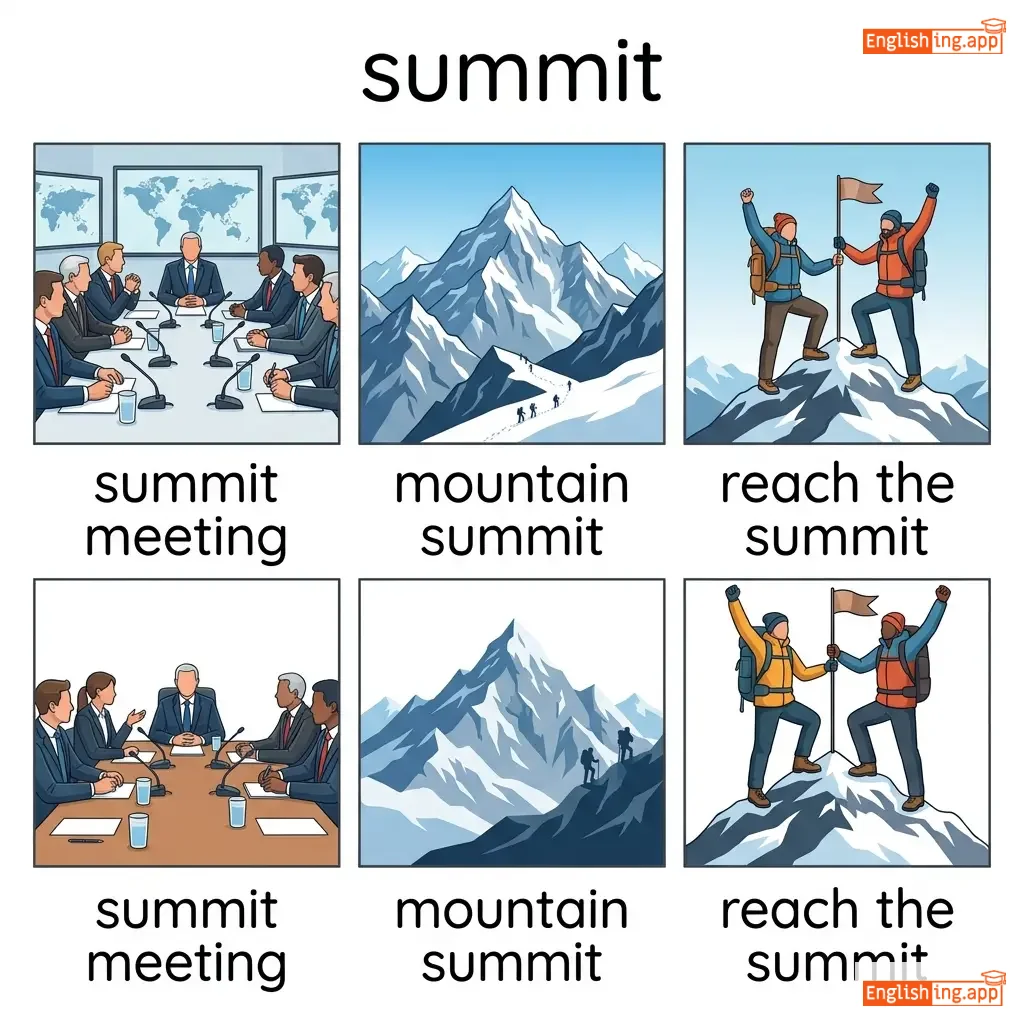
reach the summit |
to arrive at the highest point, literally or figuratively
••••••
|
頂点に達する
tōten ni tassuru
••••••
|
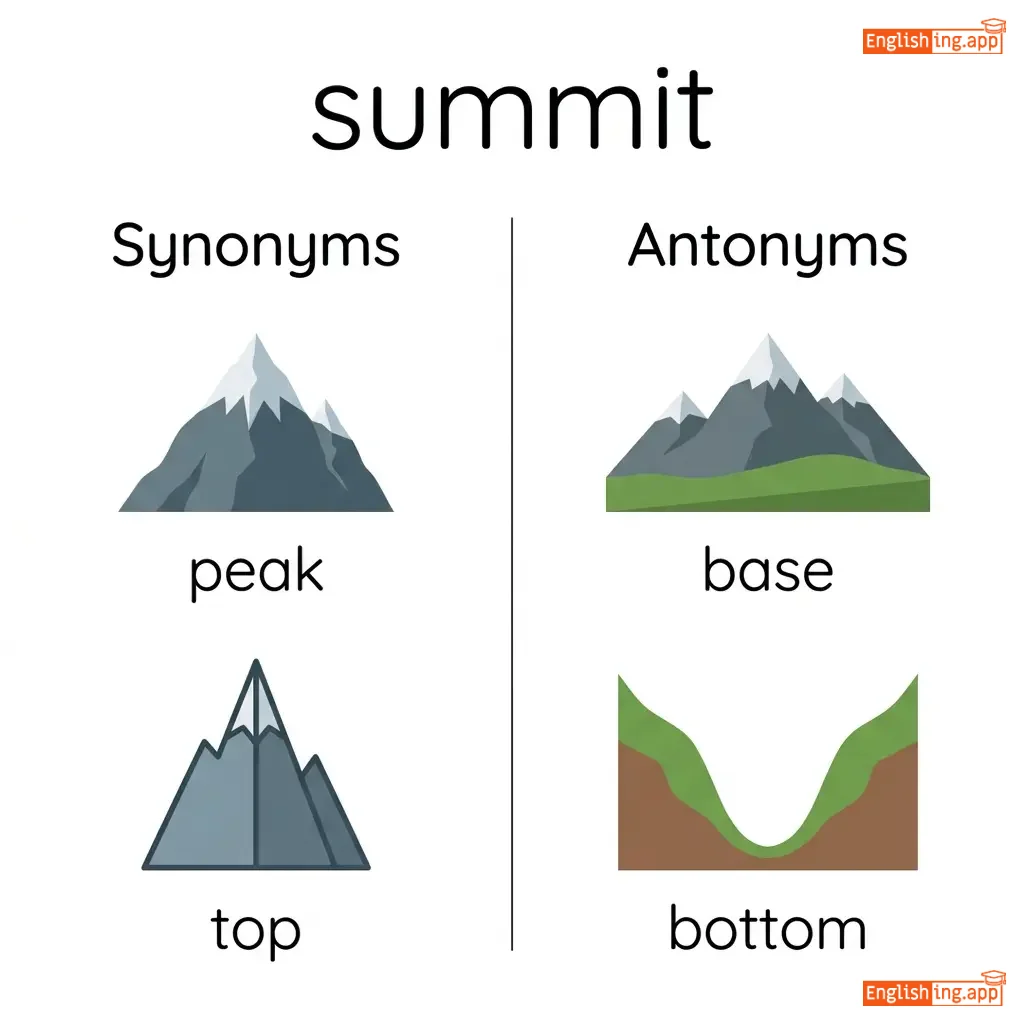
peak, top, apex, conference, meeting
••••••
|
base, bottom
••••••
|
summit meeting, mountain summit, reach the summit, summit conference
••••••
|
Summit = 頂点 = 山の頂上
••••••
|
|
#4869
☀️
|
/sʌn/
noun
(サン)
••••••
|
- •••••• |
太陽
taiyō
••••••
|
- •••••• | - •••••• | - •••••• | - •••••• |
the star around which the earth orbits; the source of light and heat for planets
••••••
|
The sun rises in the east and sets in the west.
ザ サン ライゼズ イン ザ イースト アンド セッツ イン ザ ウェスト
••••••
|
太陽は東から昇り、西へ沈みます。
Taiyō wa higashi kara nobori, nishi e shizumimasu.
••••••
|
- •••••• | - •••••• | - •••••• |
solar disc, daystar
••••••
|
moon
••••••
|
morning sun, sunset, sunshine, solar energy
••••••
|
太陽は私たちに光と温かさをもたらします。
••••••
|
|
#4870
🌞
|
/ˈsʌn.deɪ/
noun
(サンデー)
••••••
|
- •••••• |
日曜日
nichiyoubi
••••••
|
- •••••• | - •••••• | - •••••• | - •••••• |
The day of the week between Saturday and Monday; often considered a day of rest or worship.
••••••
|
We usually relax at home on Sunday.
私たちは通常、日曜日は家でゆっくりします。
••••••
|
私たちは通常、日曜日は家でゆっくりします。
Watashitachi wa tsuujou, nichiyoubi wa ie de yukkuri shimasu.
••••••
|
Sunday best
日曜の晴れ着
••••••
|
The finest clothes worn on Sundays or for special occasions.
••••••
|
日曜の晴れ着
nichiyou no haregi
••••••
|
weekend day, day of rest, Sabbath
••••••
|
weekday, workday
••••••
|
Sunday morning, Sunday brunch, Sunday service, lazy Sunday
••••••
|
日 = Sun + 曜日 = Sunday
••••••
|
|
#4871
💪
|
/ˈsuːpər/
adjective
(スーパー)
••••••
|
- •••••• |
スーパー
suupaa
••••••
|
- •••••• | - •••••• | - •••••• | - •••••• |
excellent; very good
••••••
|
She did a super job on the project. |
彼女はプロジェクトで素晴らしい仕事をしました。
Kanojo wa purojekuto de subarashii shigoto o shimashita.
••••••
|
- •••••• | - •••••• | - •••••• |
excellent, great, outstanding, remarkable
••••••
|
poor, mediocre
••••••
|
super fast, super cool, super hero, super strong
••••••
|
Suupaa is super cool and super helpful!
••••••
|
|
#4872
🌟
|
/suːˈpɜːrb/
adjective
(スパーブ)
••••••
|
- •••••• |
素晴らしい
subarashii
••••••
|
- •••••• | - •••••• | - •••••• | - •••••• |
extremely good; excellent
••••••
|
The hotel provided superb service during our stay. |
ホテルは私たちの滞在中に素晴らしいサービスを提供しました。
Hoteru wa watashitachi no taizai-chū ni subarashī sābisu o teikyō shimashita.
••••••
|
superb condition |
in excellent state or quality
••••••
|
素晴らしい状態
subarashī jōtai
••••••
|
excellent, outstanding, splendid, magnificent, wonderful
••••••
|
poor, bad, inferior
••••••
|
superb service, superb quality, superb performance
••••••
|
Super + b = 素晴らしい
••••••
|
|
#4873
👨💼
|
/ˌsuːpərɪnˈtɛndənt/
noun
(スーパインテンダント)
••••••
|
- •••••• |
監督者
kantokusha
••••••
|
- •••••• | - •••••• | - •••••• | - •••••• |
a person who oversees, manages, or directs an organization, building, or project
••••••
|
The superintendent visited the classrooms to check on progress. |
監督者は進捗を確認するために教室を訪れました。
Kantokusha wa shinchoku o kakunin suru tame ni kyōshitsu o otozuremashita.
••••••
|
- •••••• | - •••••• | - •••••• |
manager, supervisor, overseer, director
••••••
|
subordinate, worker
••••••
|
school superintendent, building superintendent, superintendent of police
••••••
|
監督者はすべてを管理する人です。
••••••
|
|
#4874
🏆
|
/suːˈpɪə.ri.ər/
adjective
(スーペリア)
••••••
|
- •••••• |
優れた
sugureta
••••••
|
- •••••• | - •••••• | - •••••• | - •••••• |
better in quality, rank, or importance than others
••••••
|
This product is superior to its competitors in quality.
この製品は品質において競合他社を凌駕しています。
••••••
|
この製品は品質において競合他社を凌駕しています。
Kono seihin wa hinshitsu ni oite kyōgō tasha o ryōga shiteimasu.
••••••
|
superior attitude
優越した態度
••••••
|
an arrogant or condescending manner
••••••
|
優越した態度
yūetsu shita taido
••••••
|
better, higher, excellent, dominant, outstanding
••••••
|
inferior, lower, worse
••••••
|
superior quality, superior product, superior performance, morally superior, technically superior
••••••
|
Superior は super + ior → super はもっと良いという意味で、‘優れた’です。
••••••
|
Vocabulary Quiz
Test your vocabulary by matching words with their translations or meanings.
Login to take the quiz
Comments (0)
Share your thoughts and join the discussion.
Join the discussion by logging in
Login to CommentNo comments yet
Be the first to share your thoughts!