

翻訳
過去
過去分詞
三人称単数
動名詞
意味
例文
例文の翻訳
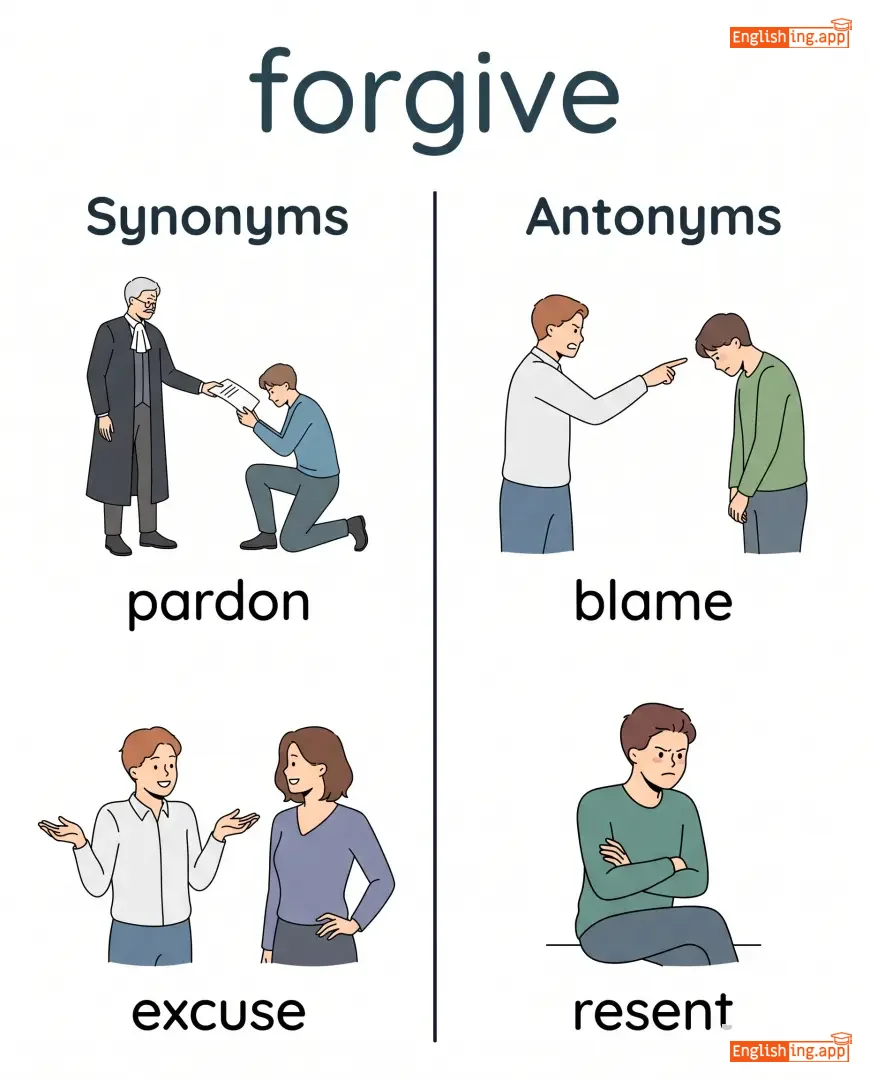
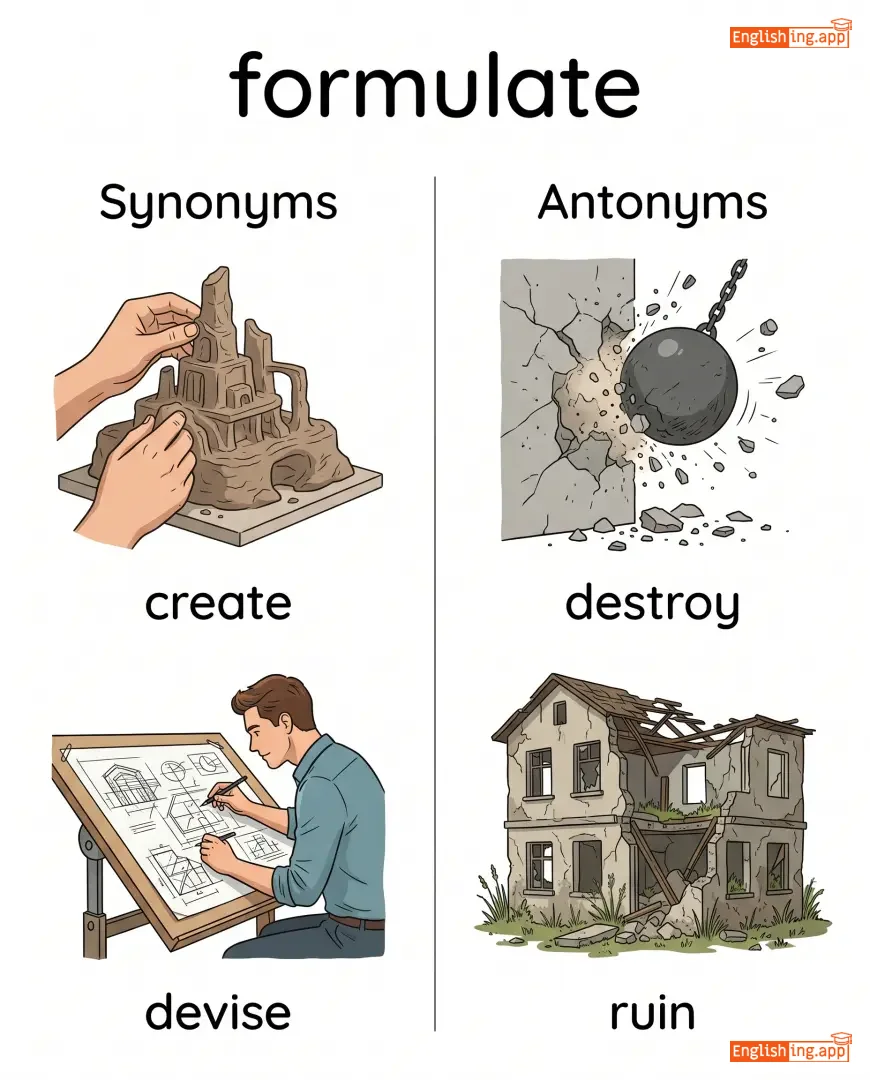
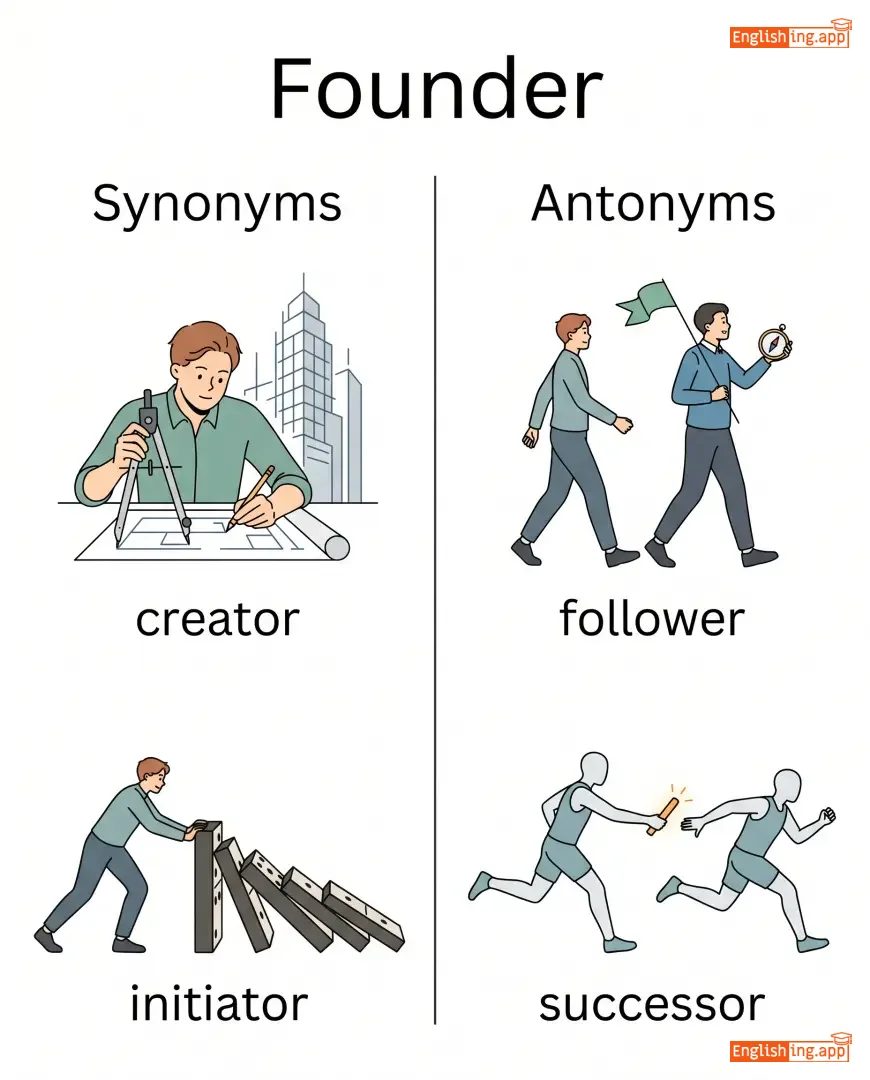
同義語
対義語
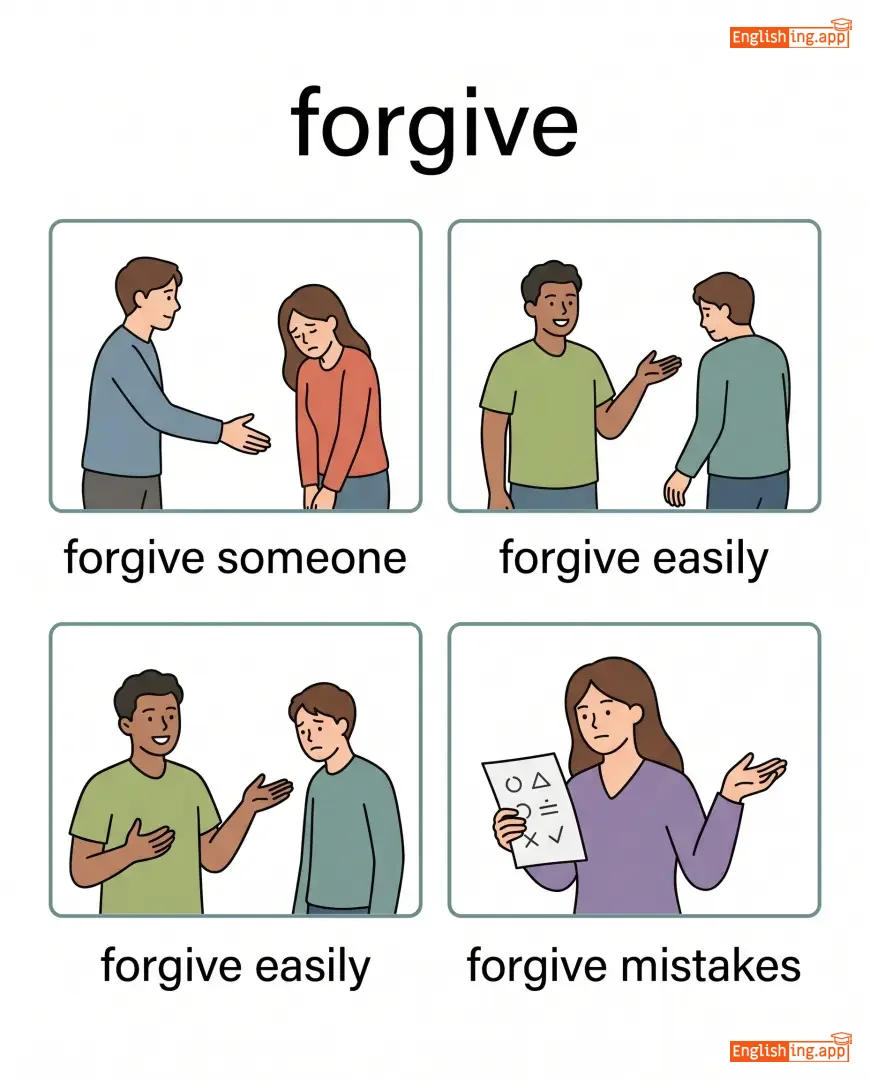
コロケーション
ニーモニック


Swipe left or right, or use the buttons. Tap image to zoom.
例文の翻訳
単語
Lesson 45Lesson 45 - マスクトグル
|
絵文字
|
単語 | Images | 翻訳 | 過去 | 過去分詞 | 三人称単数 | 動名詞 | 意味 | 例文 | 例文の翻訳 | 表現例 | 表現例の意味 | 表現例の翻訳 | 同義語 | 対義語 | コロケーション | ニーモニック |
|---|---|---|---|---|---|---|---|---|---|---|---|---|---|---|---|---|---|
|
#2134
👨👩👧👦
|
/foʊk/
noun
(フォーク)
••••••
|
- •••••• |
人々
hitobito
••••••
|
- •••••• | - •••••• | - •••••• | - •••••• |
people in general, often referring to a group or community
••••••
|
Country folk often live a simple life.
田舎の人々はよくシンプルな生活をしています。
••••••
|
田舎の人々はよくシンプルな生活をしています。
Inaka no hitobito wa yoku shimpuru na seikatsu o shiteimasu.
••••••
|
just plain folk
普通の人々
••••••
|
ordinary people
••••••
|
普通の人々
futsū no hitobito
••••••
|
people, community, tribe, population, crowd
••••••
|
individual, elite
••••••
|
folk music, country folk, common folk, ordinary folk
••••••
|
Folkは普通の人々 - Folk song は普通の人々の音楽。
••••••
|
|
#2135
➡️
|
/ˈfɒloʊ/
verb
(フォロー)
••••••
|
- •••••• |
従う
shitagau
••••••
|
followed
フォロウド
••••••
|
followed
フォロウド
••••••
|
follows
フォローズ
••••••
|
following
フォロウィング
••••••
|
to move behind someone or something; to go after or come after
••••••
|
The children followed their teacher into the classroom.
子供たちは先生について教室に入りました。
••••••
|
子供たちは先生について教室に入りました。
Kodomotachi wa sensei ni tsuite kyōshitsu ni hairimashita.
••••••
|
follow suit
模倣する
••••••
|
to do the same as someone else has just done
••••••
|
同じようにする
Onaji yō ni suru
••••••
|
pursue, track, chase, obey, accompany
••••••
|
lead, precede, ignore
••••••
|
follow instructions, follow orders, follow closely, follow a path
••••••
|
日本語で'従う'は他の人がしていることを真似することです。
••••••
|
|
#2136
👥
|
/ˈfɑː.loʊ.ɪŋ/
noun
(フォロイング)
••••••
|
- •••••• |
フォロワー
forowā
••••••
|
- •••••• | - •••••• | - •••••• | - •••••• |
a group of supporters or people who admire something or someone
••••••
|
The singer has a large following around the world. |
その歌手は世界中に多くのフォロワーを持っています。
Sono kashu wa sekaijū ni ōku no forowā o motteimasu.
••••••
|
- •••••• | - •••••• | - •••••• |
fans, supporters, admirers, audience, enthusiasts
••••••
|
critics, opponents
••••••
|
large following, loyal following, following crowd, following group
••••••
|
Followingはフォロワーの意味です。Facebookのフォロワーと同じように。
••••••
|
|
#2137
💖
|
/fɒnd/
adjective
(フォンド)
••••••
|
- •••••• |
好き
suki
••••••
|
- •••••• | - •••••• | - •••••• | - •••••• |
having a strong liking or affection for something or someone
••••••
|
She is fond of painting and spends hours in front of her canvas. |
彼女は絵を好きで、キャンバスの前で何時間も過ごします。
Kanojo wa e o suki de, kyanbasu no mae de nanjikan mo sugoshimasu.
••••••
|
- •••••• | - •••••• | - •••••• |
loving, affectionate, passionate, devoted
••••••
|
indifferent, apathetic
••••••
|
fond of, fond memory, fond relationship
••••••
|
好きは強い好意を意味します、私は絵を好きなように。 - Suki means strong affection, just like I am fond of painting!
••••••
|
|
#2138
🍲
|
/fuːd/
noun
(fudo)
••••••
|
- •••••• |
食べ物
tabemono
••••••
|
- •••••• | - •••••• | - •••••• | - •••••• |
any nutritious substance that people or animals eat or drink to maintain life and growth
••••••
|
Rice is a common food in Asia. |
ご飯はアジアでは一般的な食べ物です。
Gohan wa Ajia de wa ippanteki na tabemono desu.
••••••
|
comfort food |
food that provides a sense of well-being or nostalgia
••••••
|
心のこもった食べ物
kokoro no komatta tabemono
••••••
|
meal, dish, cuisine, nourishment, sustenance
••••••
|
poison, toxin
••••••
|
fast food, healthy food, food supply, food chain
••••••
|
Food は食べ物 - 覚えておいて:Fast food は速い食べ物です。
••••••
|
|
#2139
🤡
|
/fuːl/
noun, verb
(fūru)
••••••
|
- •••••• |
バカ
baka
••••••
|
fooled
fūru-d
••••••
|
fooled
fūru-d
••••••
|
fools
fūru-su
••••••
|
fooling
fūru-ing
••••••
|
a silly or stupid person; to trick someone
••••••
|
He felt like a fool after believing the prank.
彼はいたずらを信じた後、バカにされたように感じた。
••••••
|
いたずらを信じた後、彼は自分がバカだと思った。
Itazura o shinjita ato, kare wa jibun ga baka da to omotta.
••••••
|
make a fool of
誰かをバカにする
••••••
|
to embarrass someone or yourself by acting silly
••••••
|
誰かをバカにする
dareka o baka ni suru
••••••
|
idiot, clown, trick, deceive, prankster
••••••
|
wise, genius, intellect
••••••
|
April fool, play the fool, fool someone, fool around
••••••
|
Foolはバカを意味し、April Fool'sのようにみんながバカになる日。
••••••
|
|
#2140
🦶
|
/fʊt/
noun
(フット)
••••••
|
- •••••• |
足
ashi
••••••
|
- •••••• | - •••••• | - •••••• | - •••••• |
The lower extremity of the leg below the ankle, used for standing and walking.
••••••
|
He injured his foot while playing basketball. |
彼はバスケットボールをしているときに足をけがしました。
Kare wa basukettobōru o shite iru toki ni ashi o kega shimashita.
••••••
|
put your foot down |
to assert authority or take a firm stand
••••••
|
足を下ろす
Ashi o orosu
••••••
|
leg end, paw, hoof, base, bottom
••••••
|
head, top
••••••
|
bare foot, foot injury, left foot, right foot, foot step
••••••
|
足とFOOTが同じ意味であることを覚えておいてください。
••••••
|
|
#2141
🎥
|
/ˈfʊtɪdʒ/
noun
(futage)
••••••
|
- •••••• |
ビデオ録画
bideo rokuga
••••••
|
- •••••• | - •••••• | - •••••• | - •••••• |
a recorded film or video, especially one that is used for news or documentaries
••••••
|
The footage of the protest was shown on television all day. |
抗議の映像は一日中テレビで放送されました。
Kōgi no ēzō wa ichinichijū terebi de hōsō saremashita.
••••••
|
- •••••• | - •••••• | - •••••• |
video, film, recording, clip
••••••
|
still, photo
••••••
|
raw footage, video footage, news footage
••••••
|
Footageはビデオ録画を意味します、例えば抗議のビデオ録画のように - Footage means video, like protest video footage!
••••••
|
|
#2142
🏈
|
/ˈfʊtˌbɔːl/
noun
(フットボール)
••••••
|
- •••••• |
サッカー
sakka
••••••
|
- •••••• | - •••••• | - •••••• | - •••••• |
A team sport played with a ball that is kicked or carried to score points.
••••••
|
They watched a football match on TV. |
彼らはテレビでサッカーの試合を見ました。
Karera wa terebi de sakkaa no shiai wo mimashita.
••••••
|
- •••••• | - •••••• | - •••••• |
soccer, game, match, sport, gridiron
••••••
|
none, inactivity
••••••
|
football match, football player, football field, football team
••••••
|
サッカー (sakka) とは足 (foot) でボール (ball) を蹴るスポーツです!
••••••
|
|
#2143
🎁
|
/fɔːr/
preposition
(フォー)
••••••
|
- •••••• |
のために
no tame ni
••••••
|
- •••••• | - •••••• | - •••••• | - •••••• |
used to indicate purpose, destination, or recipient
••••••
|
This gift is for you. |
このギフトはあなたのためです。
Kono gifuto wa anata no tame desu.
••••••
|
for good |
permanently
••••••
|
永遠に
eien ni
••••••
|
on behalf of, in favor of, because of, intended for
••••••
|
against, anti
••••••
|
for example, for instance, for sale, for life
••••••
|
For は 'のために' を意味し、'Gift for you' は 'あなたのためのギフト' を意味します。
••••••
|
|
#2144
⛔
|
/fərˈbɪd/
verb
(フォービッド)
••••••
|
- •••••• |
禁じる
jinjiru
••••••
|
forbade
フォーベイド
••••••
|
forbidden
フォービデン
••••••
|
forbids
フォービッツ
••••••
|
forbidding
フォービディング
••••••
|
to order someone not to do something
••••••
|
The school forbids smoking on campus.
学校はキャンパス内での喫煙を禁じています。
••••••
|
学校はキャンパス内での喫煙を禁じています。
Gakkō wa kyanpasu-nai de no kitsuen o kinjiteimasu.
••••••
|
God forbid
神よ、禁止して下さい
••••••
|
a phrase used to express a strong wish that something does not happen
••••••
|
神よ、禁止して下さい
Kami yo, kinshi shite kudasai
••••••
|
prohibit, ban, prevent, restrict, deny
••••••
|
allow, permit, approve
••••••
|
forbid entry, forbid smoking, strictly forbid, forbid access
••••••
|
Forbid は禁じることを意味し、学校がキャンパス内での喫煙を禁じるようなものです。
••••••
|
|
#2145
💪
|
/fɔːrs/
noun/verb
(フォース)
••••••
|
|
力 / 力量
chikara / chikara
••••••
|
forced
フォースド
••••••
|
forced
フォースド
••••••
|
forces
フォースズ
••••••
|
forcing
フォーシング
••••••
|
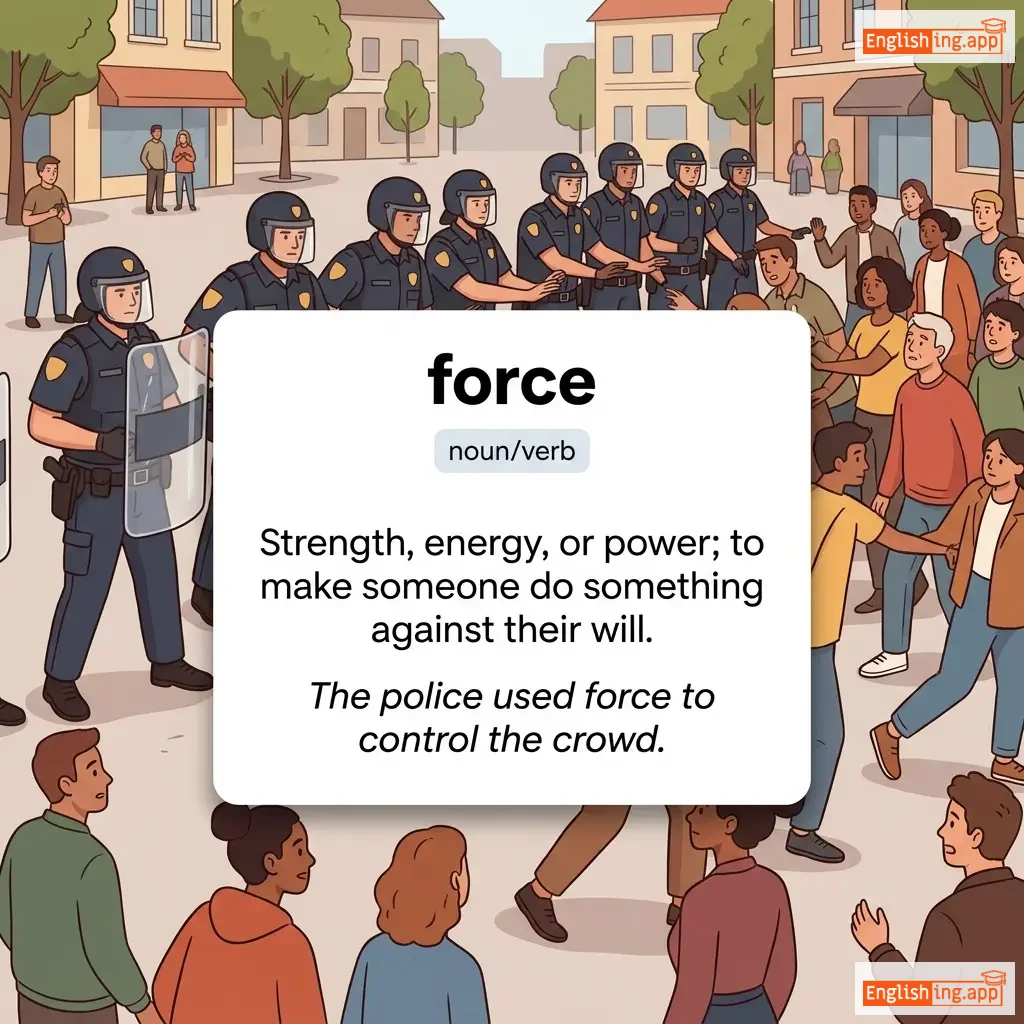
Strength, energy, or power; to make someone do something against their will.
••••••
|
The police used force to control the crowd.
警察は群衆を制御するために力を使いました。
••••••
|
警察は群衆を制御するために力を使いました。
Keisatsu wa gunshū o seigyo suru tame ni chikara o tsukaimashita.
••••••
|
brute force
ブルートフォース
••••••
|
using physical power rather than skill or intelligence
••••••
|
brute force
burūto fōsu
••••••
|
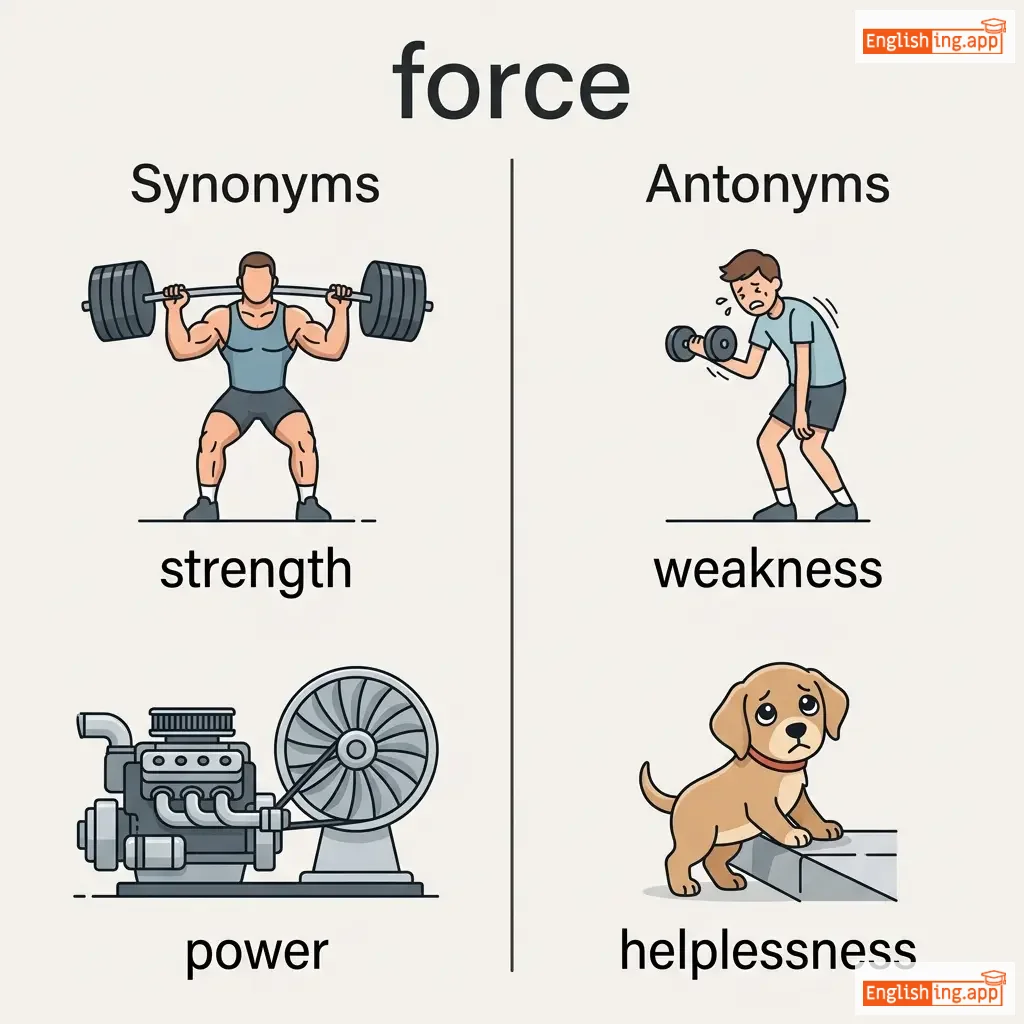
strength, power, energy, pressure, compulsion
••••••
|
weakness, helplessness, inaction
••••••
|
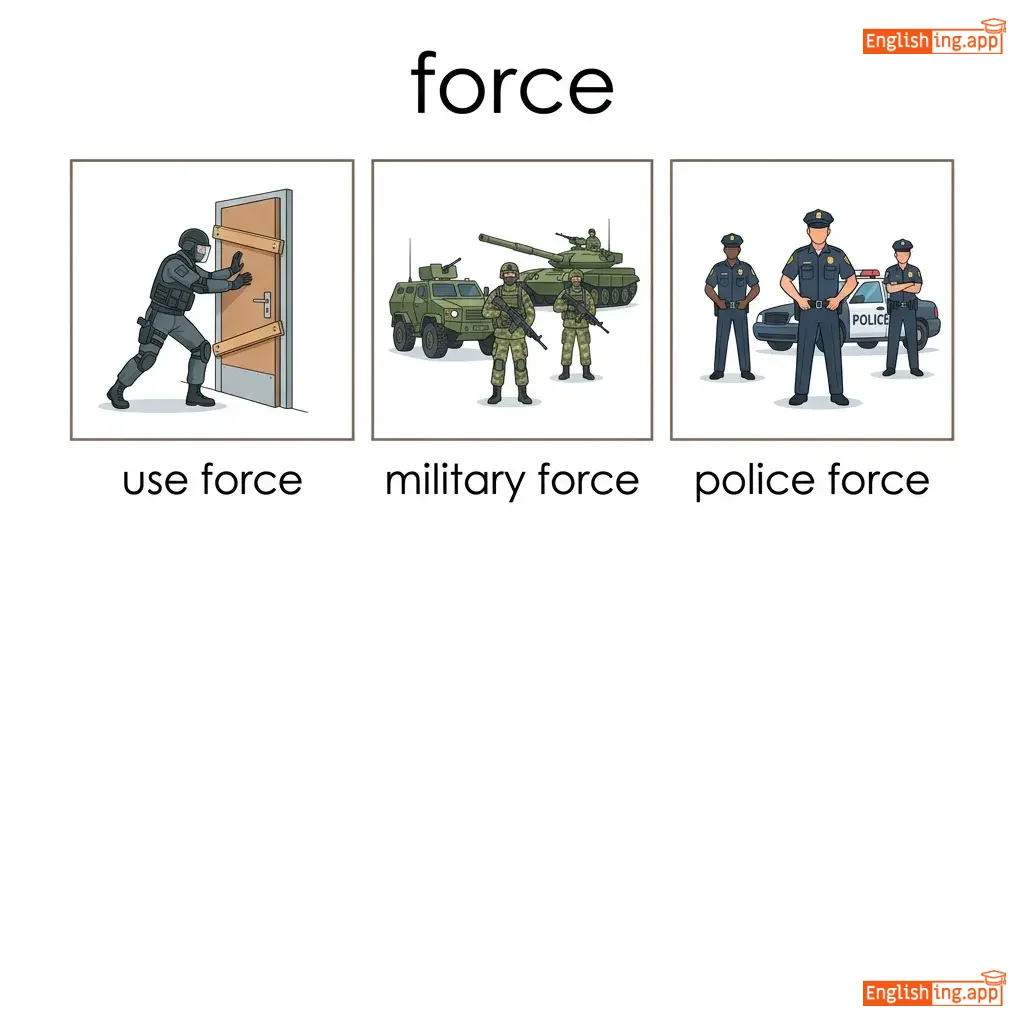
use force, military force, police force, force someone
••••••
|
FORCE は力で物事を解決するという意味です。
••••••
|
|
#2146
🌦️
|
/ˈfɔːrkæst/
noun/verb
••••••
|
- •••••• | - •••••• |
forecast
••••••
|
forecast
••••••
|
forecasts
••••••
|
forecasting
••••••
|
To predict future events, especially weather or economic trends.
••••••
|
The weather office forecast heavy rain for tomorrow. |
- •••••• |
long-term forecast |
Prediction about a distant future period
••••••
|
- •••••• |
predict, project, estimate, prognosis, outlook
••••••
|
ignore, miscalculate
••••••
|
economic forecast, weather forecast, forecast demand, forecast growth
••••••
|
No •••••• |
|
#2147
🌍
|
/ˈfɔːrən/ or /ˈfɑːrən/
adjective
(フォーリン)
••••••
|
- •••••• |
外国の
gaikoku no
••••••
|
- •••••• | - •••••• | - •••••• | - •••••• |
Belonging to or coming from another country.
••••••
|
She loves studying foreign languages. |
彼女は外国語を学ぶのが好きです。
Kanojo wa gaikokugo o manabu no ga suki desu.
••••••
|
foreign to someone |
Something that is strange or unfamiliar to someone.
••••••
|
誰かにとっては不思議
Dareka ni totte wa fushigi
••••••
|
overseas, external, alien, exotic, unfamiliar
••••••
|
domestic, native, local
••••••
|
foreign policy, foreign language, foreign country, foreign affairs
••••••
|
Foreign = 外国の—Foreign は自分の国からではない!
••••••
|
|
#2148
🧳
|
/ˈfɔːrənər/ or /ˈfɑːrənər/
noun
(フォレイナー)
••••••
|
- •••••• |
外国人
gaikokujin
••••••
|
- •••••• | - •••••• | - •••••• | - •••••• |
A person from another country.
••••••
|
The city welcomes every foreigner with kindness. |
その都市はすべての外国人を親切に迎えます。
Sono toshi wa subete no gaikokujin o shinsetsu ni mukaemasu.
••••••
|
- •••••• | - •••••• | - •••••• |
outsider, alien, immigrant, stranger, visitor
••••••
|
citizen, native, local
••••••
|
foreign tourist, foreigner community, foreigner rights, foreigner registration
••••••
|
Foreigner は外国人—他の国から来た人!
••••••
|
|
#2149
🌲
|
/ˈfɔːrɪst/
noun
(フォレスト)
••••••
|
- •••••• |
森
mori
••••••
|
- •••••• | - •••••• | - •••••• | - •••••• |
A large area covered chiefly with trees and undergrowth.
••••••
|
They went hiking in the forest. |
彼らは森でハイキングに行った。
Karera wa mori de haikingu ni itta.
••••••
|
can't see the forest for the trees |
focusing too much on details and missing the bigger picture
••••••
|
木を見て森を見ず
Ki o mite mori o mizu
••••••
|
woods, jungle, woodland, grove, rainforest
••••••
|
desert, plain
••••••
|
dense forest, tropical forest, forest fire, forest reserve
••••••
|
MORI = 森を歩くと、そこが森だと感じる。
••••••
|
|
#2150
♾️
|
/fɔːrˈɛvər/
adverb
(フォーエバー)
••••••
|
- •••••• |
永遠
eien
••••••
|
- •••••• | - •••••• | - •••••• | - •••••• |
For all future time; for always.
••••••
|
She promised to love him forever.
彼女は永遠に彼を愛すると約束した。
••••••
|
彼女は永遠に彼を愛すると約束した。
Kanojo wa eien ni kare o aisuru to yakusoku shita.
••••••
|
forever and a day
永遠と一日
••••••
|
an extremely long time
••••••
|
非常に長い時間
hijō ni nagai jikan
••••••
|
always, eternally, endlessly, perpetually, permanently
••••••
|
never, temporarily
••••••
|
love forever, last forever, forever young, forever grateful
••••••
|
永遠は永遠を意味します。愛も永遠です。
••••••
|
|
#2151
⚒️
|
/fɔːrdʒ/
verb
(フォージ)
••••••
|
- •••••• |
鍛造する、偽造する
tanzou suru, gizou suru
••••••
|
forged
フォージド
••••••
|
forged
フォージド
••••••
|
forges
フォージズ
••••••
|
forging
フォージング
••••••
|
to create or shape something, often with effort or skill; also to counterfeit or fake something
••••••
|
The blacksmith forged a strong sword from the iron.
鍛冶屋は鉄から強力な剣を鍛えました。
••••••
|
鍛冶屋は鉄から強力な剣を鍛えました。
Kajiya wa tetsu kara kyōryoku na ken wo tameshimashita.
••••••
|
forge ahead
前進する
••••••
|
to move forward with determination despite challenges
••••••
|
決意を持って進む
ketsui wo motte susumu
••••••
|
form, shape, create, counterfeit, fabricate
••••••
|
destroy, break, dismantle
••••••
|
forge a relationship, forge a career, forge ahead, forged document
••••••
|
Forgeは作ることを意味します。鍛冶屋が剣を鍛えるように。
••••••
|
|
#2152
🙏
|
/fərˈɡɪv/
verb
(フォーギブ)
••••••
|
|
許す
yurusu
••••••
|
forgave
フォーゲブ
••••••
|
forgiven
フォーギブン
••••••
|
forgives
フォーギブス
••••••
|
forgiving
フォーギビング
••••••
|
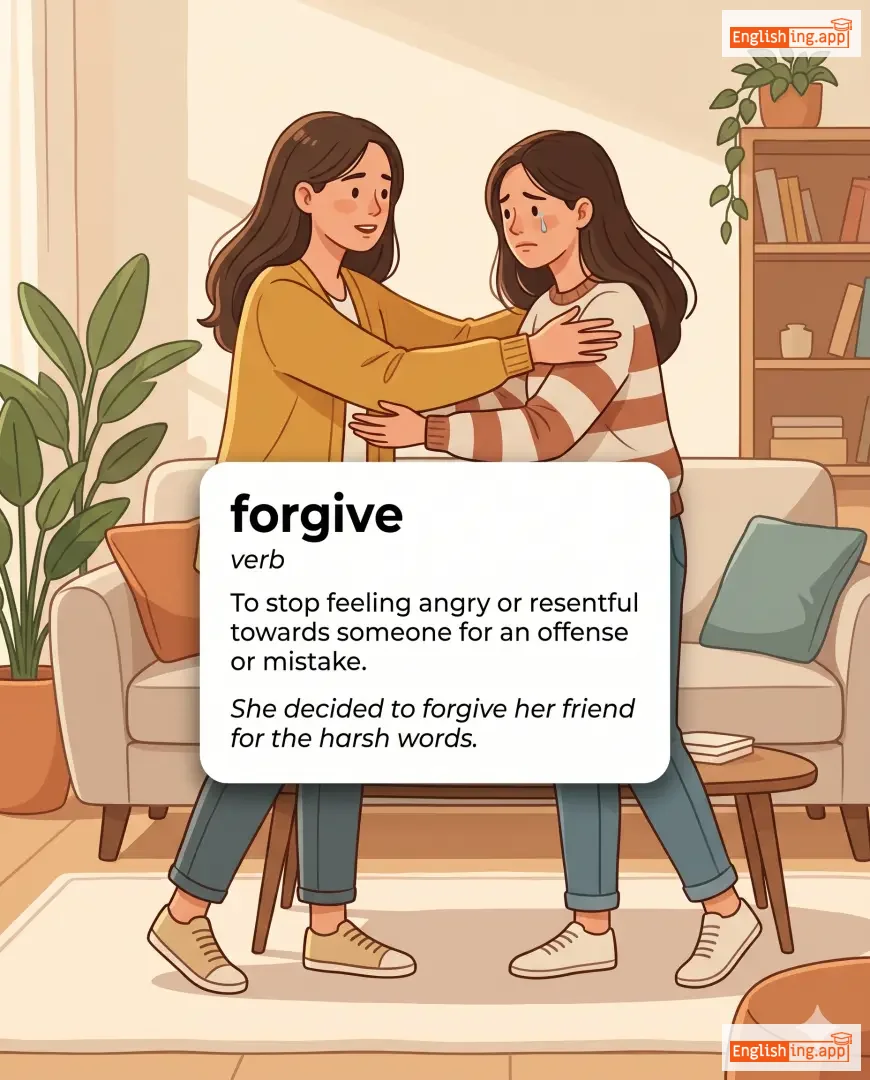
To stop feeling angry or resentful towards someone for an offense or mistake.
••••••
|
She decided to forgive her friend for the harsh words.
彼女は友達の厳しい言葉を許すことに決めました。
••••••
|
彼女は友達の厳しい言葉を許すことに決めました。
Kanojo wa tomodachi no kibishii kotoba o yurusu koto ni kimemashita.
••••••
|
forgive and forget
許して忘れる
••••••
|
To forgive someone and not remember the offense anymore.
••••••
|
許して忘れる
yurushite wasureru
••••••
|
pardon, excuse, absolve, overlook, release
••••••
|
blame, resent, condemn
••••••
|
forgive someone, forgive easily, forgive mistakes, forgive sins
••••••
|
許すは忘れること (forget + give)。許すことは友情を強くする。
••••••
|
|
#2153
🍴
|
/fɔːk/
noun
(フォーク)
••••••
|
- •••••• |
フォーク
fōku
••••••
|
- •••••• | - •••••• | - •••••• | - •••••• |
a tool with two or more prongs used for eating or serving food
••••••
|
He ate his salad with a fork. |
彼はフォークでサラダを食べました。
Kare wa fōku de sarada o tabemashita.
••••••
|
at a fork in the road |
facing a point where a decision must be made
••••••
|
岐路に立つ
kairo ni tatsu
••••••
|
utensil, prong, cutlery, divider
••••••
|
spoon, knife
••••••
|
dinner fork, salad fork, fork and knife, silver fork
••••••
|
Fork = フォーク。フォークを使って手を汚さないで!
••••••
|
|
#2154
📄
|
/fɔːrm/
noun, verb
(フォーム)
••••••
|
- •••••• |
形 / フォーム
katachi / fōmu
••••••
|
formed
フォームド
••••••
|
formed
フォームド
••••••
|
forms
フォームズ
••••••
|
forming
フォームイング
••••••
|
the shape or structure of something; to bring something into existence
••••••
|
Students filled out the registration form.
学生たちは登録フォームを記入しました。
••••••
|
学生たちは登録フォームを記入しました。
Gakusei-tachi wa tōroku fōmu o kinyū shimashita.
••••••
|
take form
形を取る
••••••
|
to start to develop a clear shape or structure
••••••
|
形を取る
katachi o toru
••••••
|
shape, structure, configuration, type, create
••••••
|
disorder, destroy, deform
••••••
|
application form, fill out form, form a team, form an opinion
••••••
|
Formはフォームを意味します。試験フォームを書くときのように。
••••••
|
|
#2155
🎩
|
/ˈfɔːrməl/
adjective
(フォーマル)
••••••
|
- •••••• |
正式
seishiki
••••••
|
- •••••• | - •••••• | - •••••• | - •••••• |
done in accordance with rules of convention or etiquette; official or serious in nature
••••••
|
He wore a formal suit to the wedding.
彼は結婚式でフォーマルなスーツを着ていました。
••••••
|
彼は結婚式でフォーマルなスーツを着ていました。
Kare wa kekkonshiki de fōmaru na sūtsu o kiteimashita.
••••••
|
formal attire
フォーマルな服装
••••••
|
clothing suitable for official or serious occasions
••••••
|
フォーマルな服装
fōmaru na fukusō
••••••
|
ceremonial, proper, official, conventional, stiff
••••••
|
casual, informal, relaxed
••••••
|
formal event, formal education, formal attire, formal agreement
••••••
|
正式は規則に従って行うこと、例えば結婚式で‘フォーマルな服装’を着ることです。
••••••
|
|
#2156
📜
|
/ˈfɔːrməli/
adverb
(フォーマリー)
••••••
|
- •••••• |
正式に
seishiki ni
••••••
|
- •••••• | - •••••• | - •••••• | - •••••• |
in a formal or official manner; according to established rules or conventions
••••••
|
The agreement was formally signed by both parties.
ジ アグリーメント ワズ フォーマリー サインド バイ ボウス パーティーズ
••••••
|
その合意は両当事者によって正式に署名された。
sono goui wa ryou toujisha ni yotte seishiki ni shomei sareta
••••••
|
formally speaking
フォーマリー スピーキング
••••••
|
used to introduce a statement from an official or strict point of view
••••••
|
正式に言えば
seishiki ni ieba
••••••
|
officially, properly, ceremoniously, correctly, conventionally
••••••
|
informally, casually, unofficially
••••••
|
formally announce, formally agree, formally dressed, formally recognize
••••••
|
フォーマルな場 → formally = 正式に
••••••
|
|
#2157
🗂️
|
/ˈfɔːmæt/
noun
(フォーマット)
••••••
|
- •••••• |
フォーマット
fomatto
••••••
|
- •••••• | - •••••• | - •••••• | - •••••• |
the way in which something is arranged, designed, or presented
••••••
|
Please follow the given format for your report submission. |
レポート提出のために指定されたフォーマットに従ってください。
Repooto teishutsu no tame ni shitei sareta fomatto ni shitagatte kudasai.
••••••
|
standard format |
a commonly accepted structure or arrangement
••••••
|
標準フォーマット
hyoujun fomatto
••••••
|
layout, structure, design, arrangement, configuration
••••••
|
disorder, chaos, disorganization
••••••
|
file format, report format, standard format, data format
••••••
|
フォーマットは配置方法 — フォーマットなしではレポートは受け入れられません!
••••••
|
|
#2158
🧩
|
/fɔːrˈmeɪʃən/
noun
(フォーメーション)
••••••
|
- •••••• |
形成
keisei
••••••
|
- •••••• | - •••••• | - •••••• | - •••••• |
the action of forming or process of being formed
••••••
|
The formation of the new company took several months. |
新しい会社の形成には数ヶ月かかりました。
Atarashī kaisha no keisei ni wa sū-kagetsu kakarimashita.
••••••
|
in formation |
organized in a particular way, often used for groups like soldiers or birds
••••••
|
形成中
keisei-chū
••••••
|
creation, development, establishment, structure, arrangement
••••••
|
destruction, disintegration
••••••
|
rock formation, team formation, formation process, military formation
••••••
|
Formationは何かを作ること、例えば兵士の隊形のようなものです。
••••••
|
|
#2159
⏳
|
/ˈfɔːrmər/
adjective
(フォーマー)
••••••
|
- •••••• |
元
moto
••••••
|
- •••••• | - •••••• | - •••••• | - •••••• |
Having been previously in a particular role or position.
••••••
|
He is a former president of the association. |
彼はその協会の元会長です。
Kare wa sono kyōkai no moto kaichō desu.
••••••
|
- •••••• | - •••••• | - •••••• |
previous, ex, prior, earlier
••••••
|
current, present
••••••
|
former president, former employee, former partner, former member
••••••
|
Formerは‘前にいた’という意味→元の人物。
••••••
|
|
#2160
⏮️
|
/ˈfɔːrmərli/
adverb
(フォーマーリー)
••••••
|
- •••••• |
以前は; 以前
izen wa; izen
••••••
|
- •••••• | - •••••• | - •••••• | - •••••• |
in the past; previously; at an earlier time
••••••
|
The building was formerly a school but is now a community center. |
その建物は以前は学校でしたが、今はコミュニティセンターです。
Sono tatemono wa izen wa gakkou deshita ga, ima wa komyuniti sentaa desu.
••••••
|
- •••••• | - •••••• | - •••••• |
previously, earlier, before, once, in the past
••••••
|
currently, now, presently, lately, recently
••••••
|
formerly known as, formerly owned by, formerly called
••••••
|
Formerly - 以前は学校だったが、今は別のものに変わった。
••••••
|
|
#2161
📐
|
/ˈfɔːrmjələ/
noun
(フォーミュラ)
••••••
|
- •••••• |
公式
koushiki
••••••
|
- •••••• | - •••••• | - •••••• | - •••••• |
a fixed method for doing something; a mathematical or chemical rule expressed in symbols
••••••
|
The scientist discovered a new formula for the medicine. |
科学者は新しい薬の公式を発見しました。
Kagakusha wa atarashī kusuri no kōshiki o hakken shimashita.
••••••
|
magic formula |
a simple solution that guarantees success
••••••
|
魔法の公式
mahō no kōshiki
••••••
|
equation, method, recipe, rule, pattern
••••••
|
disorder, randomness
••••••
|
mathematical formula, chemical formula, secret formula, formula milk
••••••
|
公式は問題を解くための方法、数学の公式みたいなものです。
••••••
|
|
#2162
🧪
|
/ˈfɔːrmjʊleɪt/
verb
(フォームレート)
••••••
|
|
体系的に作成する、作り出す
taikeiteki ni sakusei suru, tsukuridashimasu
••••••
|
formulated
フォームレートされた
••••••
|
formulated
フォームレートされた
••••••
|
formulates
フォームレートする
••••••
|
formulating
フォームレートしている
••••••
|
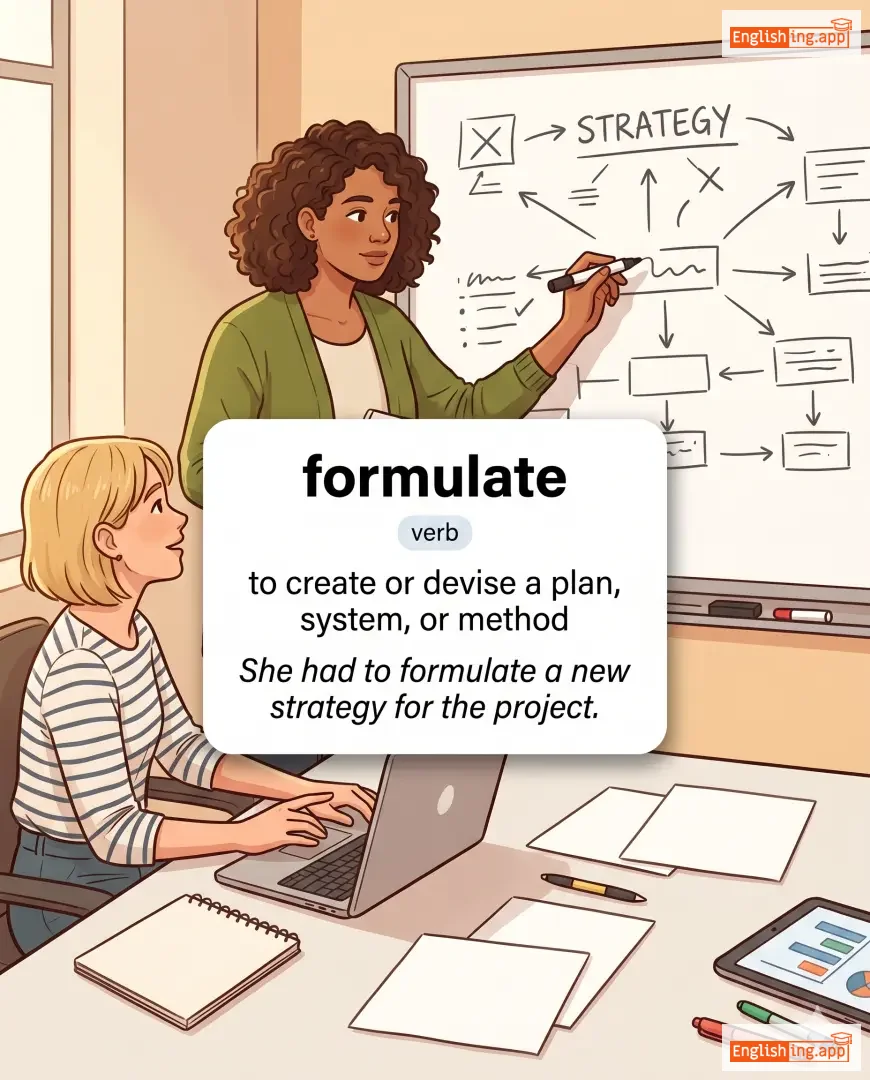
to create or devise methodically; to express in a formula
••••••
|
Scientists formulated a new theory about climate change.
科学者たちは気候変動に関する新しい理論を構築しました。
••••••
|
科学者たちは気候変動に関する新しい理論を構築しました。
Kagakusha-tachi wa kikō hendō ni kansuru atarashī riron o kōchiku shimashita.
••••••
|
- •••••• | - •••••• | - •••••• |
devise, create, develop, design
••••••
|
destroy, dismantle, dissolve, abandon
••••••
|
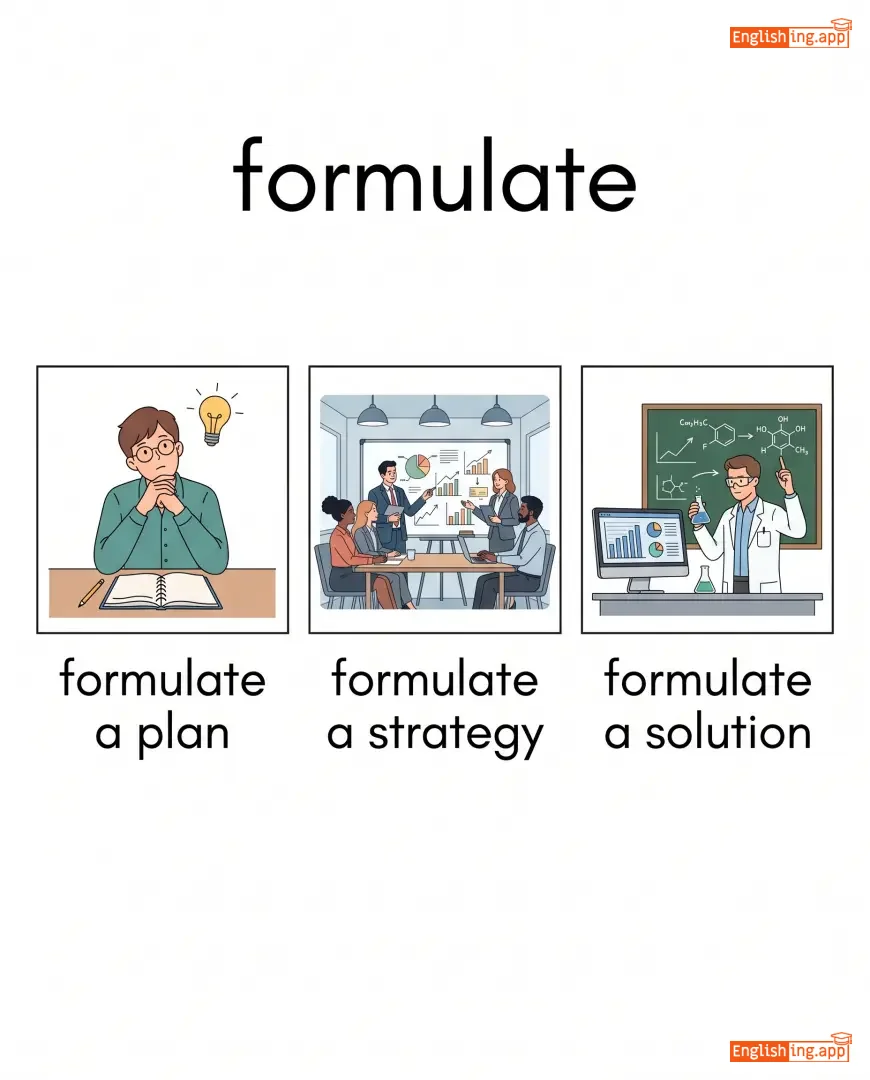
formulate plan, formulate strategy, formulate theory, formulate policy
••••••
|
Formulate = 方法論
••••••
|
|
#2163
🏰
|
/fɔːrt/
noun
(フォート)
••••••
|
- •••••• |
砦
toride
••••••
|
- •••••• | - •••••• | - •••••• | - •••••• |
a strong building or group of buildings where soldiers live and defend
••••••
|
The ancient fort stood on top of the hill for centuries.
古代のフォートは何世代にもわたって丘の上に立っていました。
••••••
|
古代のフォートは何世代にもわたって丘の上に立っていました。
Kodai no fōto wa nan sedai ni mo watatte oka no ue ni tatte imashita.
••••••
|
- •••••• | - •••••• | - •••••• |
fortress, castle, stronghold, citadel
••••••
|
open field, plain, vulnerability
••••••
|
military fort, ancient fort, fort walls, fort defense
••••••
|
Toride (fort) - Imagine a fort (砦) protecting from attackers. Strong defense!
••••••
|
|
#2164
➡️
|
/fɔːrθ/
adverb
(フォース)
••••••
|
- •••••• |
前へ
mae e
••••••
|
- •••••• | - •••••• | - •••••• | - •••••• |
forward in place, time, or order
••••••
|
The leader stepped forth to address the crowd. |
リーダーは群衆に向かって前に出ました。
Rīdā wa gunshū ni mukatte mae ni demashita.
••••••
|
and so forth |
and so on; continuing in the same way
••••••
|
そしてそのように
soshite sono yō ni
••••••
|
forward, ahead, onward, out
••••••
|
backward, behind
••••••
|
go forth, set forth, bring forth, come forth
••••••
|
‘forth’ は前に進むことを意味します。
••••••
|
|
#2165
📅
|
/ˌfɔːrθˈkʌmɪŋ/
adjective
(フォースカミング)
••••••
|
- •••••• |
近づいている
chikadzuiteiru
••••••
|
- •••••• | - •••••• | - •••••• | - •••••• |
about to happen soon; willing to share information
••••••
|
The company announced its forthcoming product launch. |
会社は近づいている製品の発売を発表しました。
Kaisha wa chikadzuiteiru seihin no hatsubai o happyou shimashita.
••••••
|
- •••••• | - •••••• | - •••••• |
upcoming, imminent, approaching, pending, willing
••••••
|
past, previous, unwilling
••••••
|
forthcoming event, forthcoming meeting, forthcoming details, forthcoming report
••••••
|
'Forthcoming event' はすぐに起こることを意味します – 近づいている=upcoming.
••••••
|
|
#2166
🍀
|
/ˈfɔːrtʃənət/
adjective
(フォーチュネット)
••••••
|
- •••••• |
幸運な
kouunna
••••••
|
- •••••• | - •••••• | - •••••• | - •••••• |
Having good luck or receiving something desirable by chance.
••••••
|
She was fortunate to escape the accident without injuries.
彼女は事故で怪我をすることなく逃げることができて幸運だった。
••••••
|
彼女は事故で怪我をすることなく逃げることができて幸運だった。
Kanojo wa jiko de kega o suru koto naku nigeru koto ga dekite kōun datta.
••••••
|
fortunate enough
十分に幸運
••••••
|
Lucky to have something or experience something
••••••
|
十分に幸運
jūbun ni kōun
••••••
|
lucky, blessed, favored, prosperous, successful
••••••
|
unfortunate, unlucky, cursed
••••••
|
fortunate enough, fortunate circumstances, feel fortunate, fortunate opportunity
••••••
|
Fortuneは運を意味しますので、fortunateは幸運を意味します🍀
••••••
|
|
#2167
🍀
|
/ˈfɔːtʃənətli/
adverb
(フォーチュネトリー)
••••••
|
- •••••• |
幸いにも
saiwai ni mo
••••••
|
- •••••• | - •••••• | - •••••• | - •••••• |
by good luck; luckily
••••••
|
Fortunately, no one was injured in the accident. |
幸いにも、事故で誰も怪我をしませんでした。
Saiwai ni mo, jiko de dare mo kega o shimasen deshita.
••••••
|
- •••••• | - •••••• | - •••••• |
luckily, thankfully, providentially, auspiciously
••••••
|
unfortunately, sadly, regrettably
••••••
|
fortunately for, fortunately enough, said fortunately
••••••
|
Fortunately は幸いにも — 幸運がすべてをうまくいかせる!
••••••
|
|
#2168
🍀
|
/ˈfɔːrtʃən/
noun
(フォーチュン)
••••••
|
- •••••• |
運 / 富
un / tomi
••••••
|
- •••••• | - •••••• | - •••••• | - •••••• |
chance or luck, especially in success or wealth
••••••
|
She made a fortune by investing in real estate.
彼女は不動産に投資して大金を得た。
••••••
|
彼女は不動産に投資して大金を得た。
Kanojo wa fudousan ni toushi shite taikin o eta.
••••••
|
fortune favors the brave
運命は勇者に微笑む
••••••
|
those who take risks are more likely to succeed
••••••
|
運命は勇者に微笑む
Unmei wa yuusha ni hohoemu
••••••
|
wealth, luck, fate, destiny, riches
••••••
|
poverty, misfortune, loss
••••••
|
good fortune, bad fortune, make a fortune, bring fortune
••••••
|
Fortune は運命 — リスクを取って大きな富を得る!
••••••
|
|
#2169
💬
|
/ˈfɔːrəm/
noun
(フォーラム)
••••••
|
- •••••• |
フォーラム
fōramu
••••••
|
- •••••• | - •••••• | - •••••• | - •••••• |
A place, meeting, or medium where ideas and views can be exchanged.
••••••
|
The online forum allows people to discuss a wide range of topics. |
オンラインフォーラムでは、人々がさまざまなトピックについて議論することができます。
Onrain fōramu de wa, hitobito ga samazama na topikku ni tsuite giron suru koto ga dekimasu.
••••••
|
- •••••• | - •••••• | - •••••• |
meeting, assembly, discussion, platform, conference
••••••
|
isolation, silence
••••••
|
online forum, public forum, discussion forum, international forum
••••••
|
Forum はアイデアを交換する場所、まるで'話す'ための場所。
••••••
|
|
#2170
➡️
|
/ˈfɔːrwərd/
adverb, adjective, verb, noun
(フォワード)
••••••
|
- •••••• |
前進
zenshin
••••••
|
forwarded
フォワーデッド
••••••
|
forwarded
フォワーデッド
••••••
|
forwards
フォワーズ
••••••
|
forwarding
フォワーディング
••••••
|
toward the front; to advance or send ahead; an onward position or direction
••••••
|
The troops moved forward to secure the bridge.
部隊は橋を確保するために前進しました。
••••••
|
部隊は橋を確保するために前進しました。
Butai wa hashi wo kakuho suru tame ni zenshin shimashita.
••••••
|
look forward to
前向きに考える
••••••
|
to anticipate something with pleasure
••••••
|
楽しみに待つ
tanoshimi ni matsu
••••••
|
ahead, onward, advance, transmit, promote
••••••
|
backward, reverse, retreat
••••••
|
move forward, step forward, look forward, forward message
••••••
|
前進: メッセージが前に進むように、自分も前に進む。
••••••
|
|
#2171
🦖
|
/ˈfɒsɪl/
noun
(フォッシル)
••••••
|
- •••••• |
化石
kaseki
••••••
|
- •••••• | - •••••• | - •••••• | - •••••• |
the remains or impression of a prehistoric plant or animal embedded in rock
••••••
|
The fossil of a dinosaur was discovered in the mountains. |
山で恐竜の化石が発見されました。
Yama de kyōryū no kaseki ga hakken saremashita.
••••••
|
- •••••• | - •••••• | - •••••• |
remains, artifact, relic
••••••
|
modern, new
••••••
|
dinosaur fossil, ancient fossil, fossil record
••••••
|
化石は、古代の生き物の痕跡が岩に閉じ込められたものです。
••••••
|
|
#2172
👩👧
|
/ˈfɒstər/
verb, adjective
(フォスター)
••••••
|
- •••••• |
育てる
sodateru
••••••
|
fostered
フォスタード
••••••
|
fostered
フォスタード
••••••
|
fosters
フォスターズ
••••••
|
fostering
フォスターリング
••••••
|
to encourage the development of something; to raise a child that is not one's own
••••••
|
The program aims to foster creativity in young students.
そのプログラムは若い学生たちに創造力を促進することを目的としています。
••••••
|
そのプログラムは若い学生たちに創造力を促進することを目的としています。
Sono puroguramu wa wakai gakusei tachi ni souzouryoku wo sokushin suru koto wo mokuteki to shiteimasu.
••••••
|
foster care
里親ケア
••••••
|
temporary guardianship of children by non-biological parents
••••••
|
里親ケア
satooya kea
••••••
|
encourage, nurture, support, promote, cultivate
••••••
|
neglect, hinder, suppress
••••••
|
foster child, foster home, foster relationships, foster environment
••••••
|
Foster care は子供の世話を意味します、'Foster Mama' 映画を覚えておいてください
••••••
|
|
#2173
🏢
|
/faʊnd/
verb
(ファウンド)
••••••
|
- •••••• |
創設する
sōsetsu suru
••••••
|
found
ファウンド
••••••
|
found
ファウンド
••••••
|
finds
ファインズ
••••••
|
founding
ファウンディング
••••••
|
to establish or set up an institution, company, or organization
••••••
|
They found a new startup focused on renewable energy.
彼らは再生可能エネルギーに焦点を当てた新しいスタートアップを立ち上げました。
••••••
|
彼らは再生可能エネルギーに焦点を当てた新しいスタートアップを立ち上げました。
Karera wa saisei kanō enerugī ni shōten o ateta atarashī sutātoppu o tachiagemashita.
••••••
|
well-founded
確かな基盤
••••••
|
based on good reasons or evidence
••••••
|
確かな基盤
tashikana kiban
••••••
|
establish, create, set up, launch, originate
••••••
|
close, abolish, dismantle
••••••
|
found a company, found an institution, newly founded, founder of
••••••
|
Foundは創設する意味 — Founderは企業を創設した人です。
••••••
|
|
#2174
🏗️
|
/faʊnˈdeɪʃən/
noun
(faundéishon)
••••••
|
|
基礎
kiso
••••••
|
- •••••• | - •••••• | - •••••• | - •••••• |
the base or underlying support of something; an institution established for a purpose
••••••
|
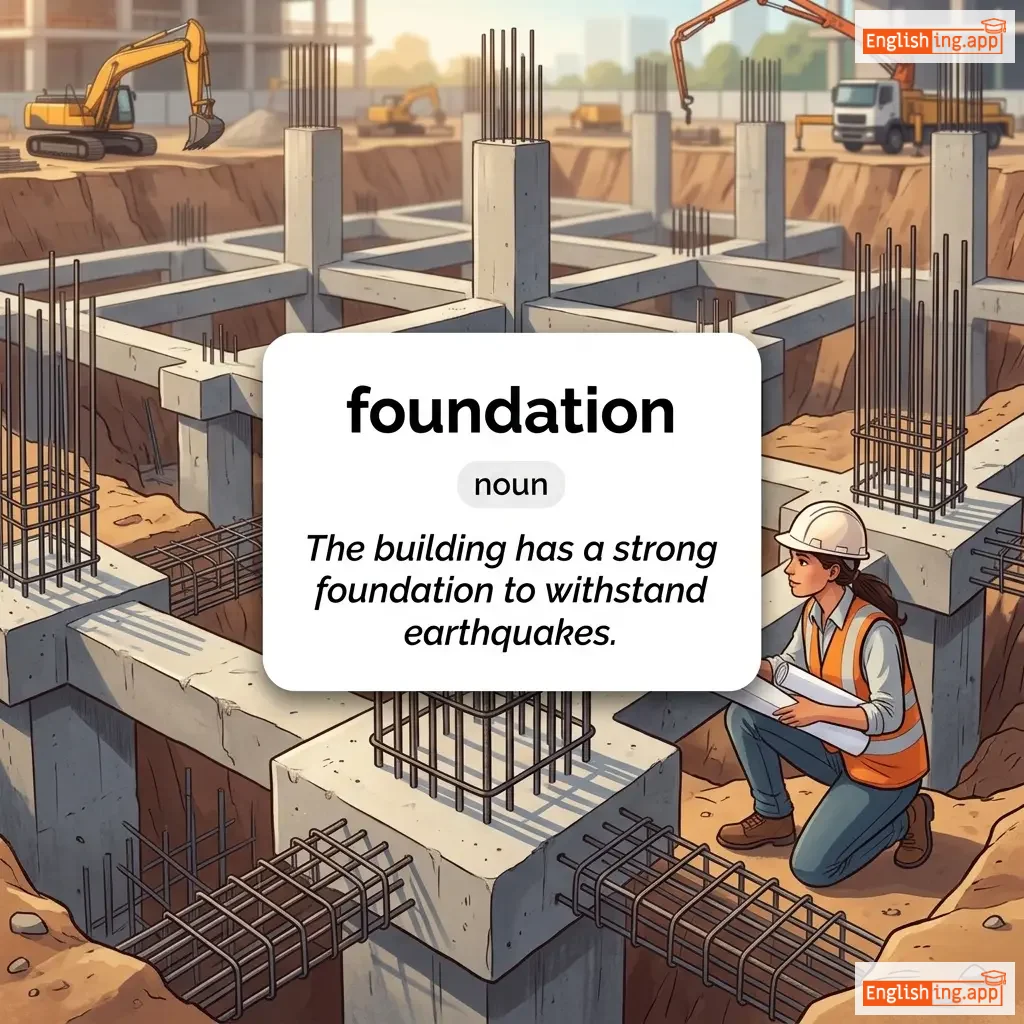
The building has a strong foundation to withstand earthquakes. |
その建物には地震に耐えるための強固な基礎があります。
Sono tatemono ni wa jishin ni taeru tame no kyōko na kiso ga arimasu.
••••••
|
lay the foundation |
to provide the basic ideas or structures on which something can develop
••••••
|
基礎を築く
kiso o kizuku
••••••
|
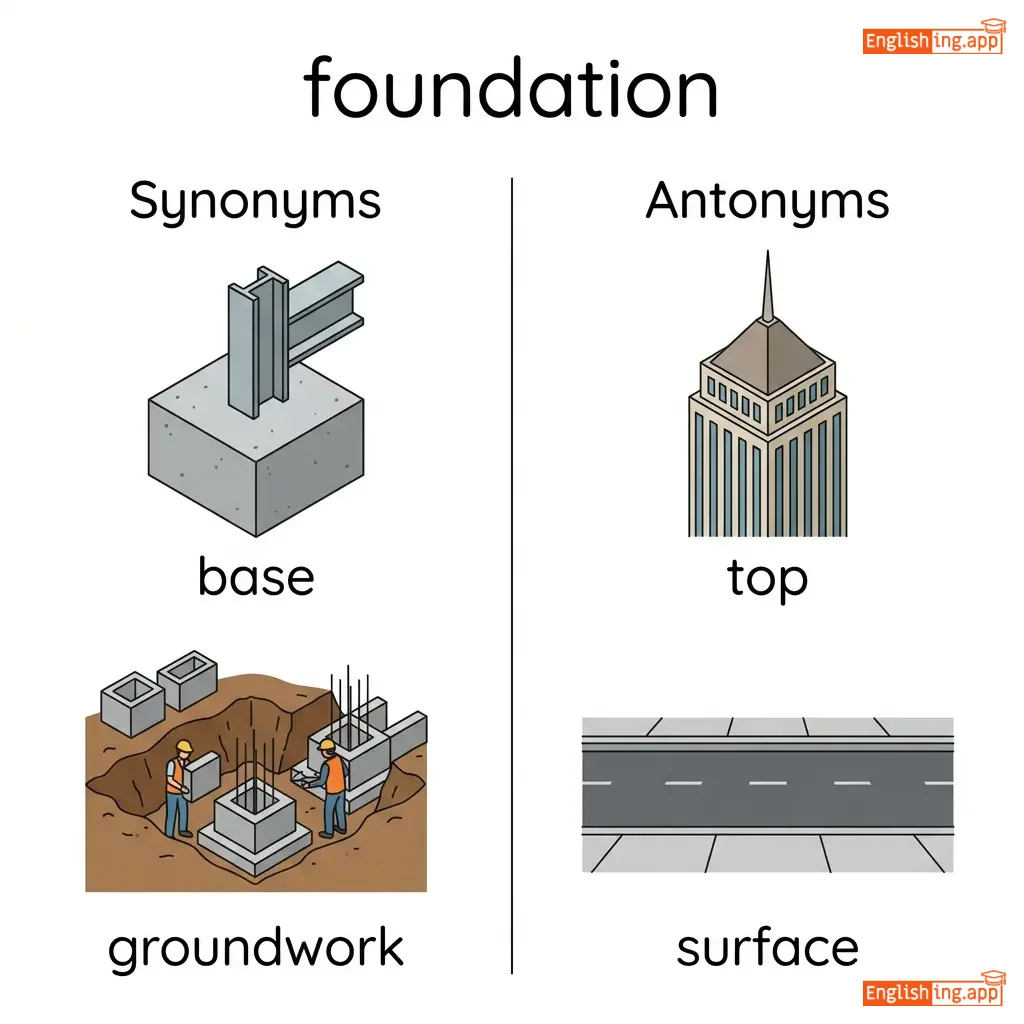
base, groundwork, support, basis, establishment
••••••
|
top, surface, collapse
••••••
|
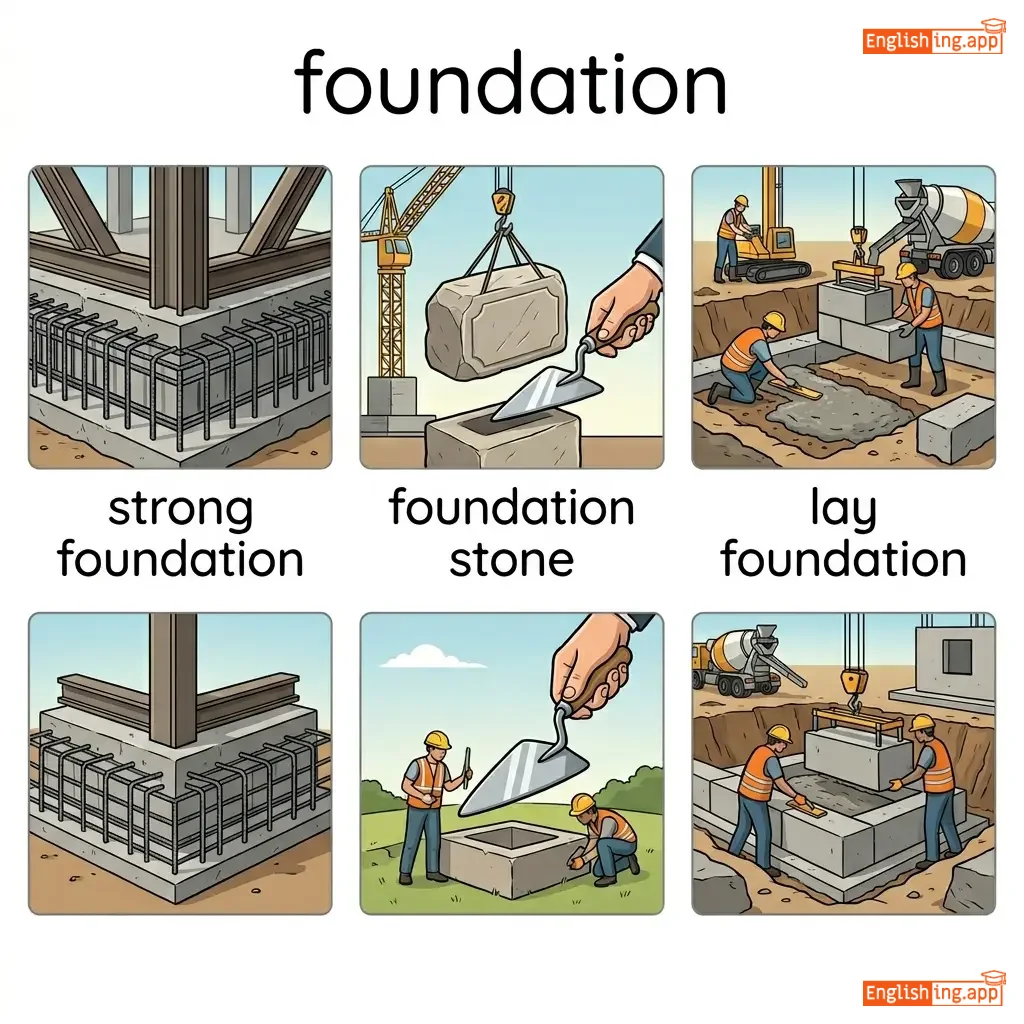
strong foundation, foundation stone, lay foundation, charitable foundation
••••••
|
Foundationは基礎を意味します — 基礎なしでは、建物は立たない。
••••••
|
|
#2175
🏗️
|
/ˈfaʊndər/
noun, verb
(ファウンダー)
••••••
|
|
創設者
sōsetsusha
••••••
|
founded
ファウンデッド
••••••
|
founded
ファウンデッド
••••••
|
founds
ファウンズ
••••••
|
founding
ファウンディング
••••••
|
a person who establishes an institution or company; as a verb, to fail or sink
••••••
|
She is the founder of a successful startup.
彼女は成功したスタートアップの創設者です。
••••••
|
彼女は成功したスタートアップの創設者です。
Kanojo wa seikō shita sātopu no sōsetsusha desu.
••••••
|
- •••••• | - •••••• | - •••••• |
creator, initiator, establisher, originator
••••••
|
follower, successor
••••••
|
company founder, startup founder, founding member, founder of
••••••
|
Founderは創設者、Foundationと関連があります。
••••••
|
|
#2176
4️⃣
|
/fɔːr/
numeral
(フォー)
••••••
|
- •••••• |
四
shi
••••••
|
- •••••• | - •••••• | - •••••• | - •••••• |
The number equivalent to the sum of two and two; one more than three.
••••••
|
She has four books on her desk. |
彼女の机には四冊の本があります。
Kanojo no tsukue ni wa shisatsu no hon ga arimasu.
••••••
|
four corners of the world |
everywhere in the world
••••••
|
世界の四隅
Sekai no yotsumi
••••••
|
quartet, quadruple, foursome, tetrad
••••••
|
three, five
••••••
|
four times, four years, four people, four seasons
••••••
|
四人の友達と一緒にいると、いつでも楽しい – Fourは四を意味することを忘れないで。
••••••
|
|
#2177
4️⃣
|
/fɔːrθ/
adjective/noun
(フォース)
••••••
|
- •••••• |
第四
daiyon
••••••
|
- •••••• | - •••••• | - •••••• | - •••••• |
Constituting number four in a sequence; coming after the third in position.
••••••
|
He finished in fourth place in the race. |
彼はレースで第四位になった。
Kare wa reesu de dai-yon-i ni natta.
••••••
|
the fourth estate |
the press and news media
••••••
|
第四の権力
dai-yon no kenryoku
••••••
|
quartile, fourthly, quadrant, quaternary
••••••
|
first, last
••••••
|
fourth place, fourth time, fourth floor, fourth century
••••••
|
第四はちょうど三つの後、すぐに覚えられます。
••••••
|
|
#2178
➗
|
/ˈfrækʃən/
noun
(フラクション)
••••••
|
- •••••• |
分数
bunsuu
••••••
|
- •••••• | - •••••• | - •••••• | - •••••• |
A small part of something; in mathematics, a number that represents part of a whole.
••••••
|
Only a small fraction of the population attended the event.
人口のほんの一部だけがイベントに参加しました。
••••••
|
人口のほんの一部だけがイベントに参加しました。
Jinkou no honno ichibu dake ga ibento ni sanka shimashita.
••••••
|
a fraction of
の一部
••••••
|
A very small part of something
••••••
|
の一部
no ichibu
••••••
|
portion, segment, piece, part
••••••
|
whole, entirety
••••••
|
small fraction, significant fraction, fraction of time, fraction of cost
••••••
|
Fraction は分数 ➗ 1/2, 1/4 など
••••••
|
|
#2179
🧪
|
/ˈfræʤaɪl/
adjective
(フレジャイル)
••••••
|
- •••••• |
壊れやすい
kowareyasui
••••••
|
- •••••• | - •••••• | - •••••• | - •••••• |
Easily broken or damaged; delicate.
••••••
|
Be careful with that vase, it's very fragile. |
その花瓶には気をつけて、すごく壊れやすいから。
Sono kabin ni wa ki o tsukete, sugoku kowareyasui kara.
••••••
|
fragile peace |
A peace that is weak and easily disrupted
••••••
|
壊れやすい平和
kowareyasui heiwa
••••••
|
delicate, breakable, frail, weak, brittle
••••••
|
strong, durable, sturdy
••••••
|
fragile glass, fragile economy, fragile peace, fragile body
••••••
|
Fragile = 壊れやすい in Japanese — 壊れやすい, careful!
••••••
|
|
#2180
🧩
|
/ˈfræɡmənt/
noun
(フラグメント)
••••••
|
- •••••• |
断片
danpen
••••••
|
- •••••• | - •••••• | - •••••• | - •••••• |
a small piece broken off something larger
••••••
|
He found a fragment of ancient pottery near the river. |
彼は川の近くで古代の陶器の断片を見つけました。
Kare wa kawa no chikaku de kodai no tōki no danpen o mitsukemashita.
••••••
|
in fragments |
broken into small pieces
••••••
|
断片として
danpen toshite
••••••
|
piece, shard, particle, portion, bit
••••••
|
whole, entirety
••••••
|
glass fragment, bone fragment, sentence fragment, broken fragment
••••••
|
断片 = '断'は割れるという意味、'片'は小さな部分です。
••••••
|
Vocabulary Quiz
Test your vocabulary by matching words with their translations or meanings.
Login to take the quiz
Comments (0)
Share your thoughts and join the discussion.
Join the discussion by logging in
Login to CommentNo comments yet
Be the first to share your thoughts!