

翻訳
過去
過去分詞
三人称単数
動名詞
意味
例文
例文の翻訳
同義語
対義語
コロケーション
ニーモニック




Swipe left or right, or use the buttons. Tap image to zoom.
例文の翻訳
単語
Lesson 62Lesson 62 - マスクトグル
|
絵文字
|
単語 | Images | 翻訳 | 過去 | 過去分詞 | 三人称単数 | 動名詞 | 意味 | 例文 | 例文の翻訳 | 表現例 | 表現例の意味 | 表現例の翻訳 | 同義語 | 対義語 | コロケーション | ニーモニック |
|---|---|---|---|---|---|---|---|---|---|---|---|---|---|---|---|---|---|
|
#2954
🏷️
|
/ˈleɪ.bəl/
noun/verb
(happiness)
••••••
|
- •••••• |
幸福
kōfuku
••••••
|
labeled
••••••
|
labeled
••••••
|
labels
••••••
|
labeling
••••••
|
a small piece of paper, fabric, or material attached to an object giving information about it; to attach such a tag or to describe someone or something in a particular way
••••••
|
She labeled the boxes to make moving easier.
彼女は賞を受け取ったとき、幸せを隠せなかった。
••••••
|
彼女は賞を受け取ったとき、幸せを隠せなかった。
Kanojo wa shō o uketotta toki, kōfuku o kakusenakatta.
••••••
|
label someone as
幸福を追求する
••••••
|
to describe or classify someone in a particular way, often unfairly
••••••
|
幸福を追求する
kōfuku o tsuikyū suru
••••••
|
tag, marker, sticker, brand, classify
••••••
|
unmark, erase
••••••
|
brand label, warning label, food label, label products, label someone
••••••
|
幸福は日々の努力で達成される。
••••••
|
|
#2955
👷
|
/ˈleɪ.bər/
noun/verb
(レイバー)
••••••
|
- •••••• |
労働
roudou
••••••
|
labored
レイバード
••••••
|
labored
レイバード
••••••
|
labors
レイバーズ
••••••
|
laboring
レイバーリング
••••••
|
work, especially hard physical work; to work hard
••••••
|
The workers labored in the hot sun all day.
作業員たちは暑い太陽の下で一日中働いた。
••••••
|
作業員たちは暑い太陽の下で一日中働いた。
Sagyouin tachi wa atsui taiyou no shita de ichinichijuu hataraita.
••••••
|
go into labor
陣痛に入る
••••••
|
the process of a woman giving birth
••••••
|
陣痛に入る
jintsuu ni hairu
••••••
|
work, toil, effort, industry, employment
••••••
|
rest, leisure, ease
••••••
|
manual labor, hard labor, labor force, labor market
••••••
|
Laborは '労働' を意味します。労働者は一生懸命働きます。
••••••
|
|
#2956
🔬
|
/ˈlæbrətɔːri/
noun
(ラボラトリー)
••••••
|
- •••••• |
実験室
jikken-shitsu
••••••
|
- •••••• | - •••••• | - •••••• | - •••••• |
A room or building equipped for scientific experiments, research, or teaching.
••••••
|
The students conducted the experiment in the chemistry laboratory. |
学生たちは化学実験室で実験を行った。
Gakusei-tachi wa kagaku jikken-shitsu de jikken o okonatta.
••••••
|
- •••••• | - •••••• | - •••••• |
lab, research center, workshop, testing facility
••••••
|
field, nature
••••••
|
research laboratory, chemistry laboratory, medical laboratory, laboratory experiment
••••••
|
実験室は実験をする場所です。
••••••
|
|
#2957
👷
|
/ˈleɪbərər/
noun
(レイバラー)
••••••
|
- •••••• |
労働者
roudousha
••••••
|
- •••••• | - •••••• | - •••••• | - •••••• |
a person who does physical work, especially work that requires strength rather than skill
••••••
|
The laborer worked long hours at the construction site.
ザ レイバラー ワークド ロング アワーズ アット ザ コンストラクション サイト。
••••••
|
その労働者は建設現場で長時間働いた。
Sono roudousha wa kensetsu genba de choujikan hataraita
••••••
|
- •••••• | - •••••• | - •••••• |
worker, manual worker, labor hand, toiler, workman
••••••
|
employer, manager, supervisor
••••••
|
construction laborer, farm laborer, skilled laborer, unskilled laborer
••••••
|
レイバラーは労働者—レイバーする人
••••••
|
|
#2958
⚠️
|
/læk/
noun/verb
(ラック)
••••••
|
- •••••• |
欠如
ketsujo
••••••
|
lacked
ラックド
••••••
|
lacked
ラックド
••••••
|
lacks
ラックス
••••••
|
lacking
ラッキング
••••••
|
The state of being without or not having enough of something.
••••••
|
He failed the exam due to a lack of preparation.
準備不足で試験に失敗した。
••••••
|
準備不足で試験に失敗した。
Junbi fusoku de shiken ni shippai shita.
••••••
|
lack of effort
努力不足
••••••
|
insufficient effort or attempt
••••••
|
努力不足
Doryoku fusoku
••••••
|
shortage, deficiency, absence, scarcity
••••••
|
abundance, plenty, sufficiency
••••••
|
lack of confidence, lack of resources, lack of support, lack of preparation
••••••
|
Lack は '欠如' 何かが足りない時。
••••••
|
|
#2959
👦
|
/læd/
noun
(ラッド)
••••••
|
- •••••• |
少年
shounen
••••••
|
- •••••• | - •••••• | - •••••• | - •••••• |
a boy or young man; a male youth
••••••
|
The young lad helped his father in the shop.
ザ ヤング ラッド ヘルプト ヒズ ファーザー イン ザ ショップ。
••••••
|
その若い少年は店で父親を手伝った。
sono wakai shounen wa mise de chichioya o tetsudatta
••••••
|
- •••••• | - •••••• | - •••••• |
boy, youth, youngster, fellow, teen
••••••
|
girl, woman, adult
••••••
|
young lad, country lad, local lad, poor lad
••••••
|
LAD = ラッド = 少年
••••••
|
|
#2960
🪜
|
/ˈlædər/
noun
(レダー)
••••••
|
- •••••• |
はしご
hashigo
••••••
|
- •••••• | - •••••• | - •••••• | - •••••• |
a structure with steps used for climbing up or down
••••••
|
He used a ladder to reach the roof. |
彼は屋根に登るためにはしごを使いました。
Kare wa yane ni noboru tame ni hashigo o tsukaimashita.
••••••
|
climb the corporate ladder |
to advance in one's career or position within a company
••••••
|
キャリアのはしごを登る
kyaria no hashigo o noboru
••••••
|
stairway, steps, staircase, scale, rung
••••••
|
elevator, descent
••••••
|
wooden ladder, climb a ladder, ladder safety, ladder rung
••••••
|
はしごで上へ、成功へ向かって登ろう!
••••••
|
|
#2961
👩
|
/ˈleɪdi/
noun
(ハピネス)
••••••
|
- •••••• |
幸せ
shiawase
••••••
|
- •••••• | - •••••• | - •••••• | - •••••• |
A polite or formal way of referring to a woman.
••••••
|
The lady at the counter was very helpful. |
彼女は賞を受け取ったとき、自分の幸せを隠すことができなかった。
Kanojo wa shō o uketotta toki, jibun no shiawase o kakusu koto ga dekinakatta.
••••••
|
first lady |
the wife of a president or head of state
••••••
|
幸せを追い求める
shiawase o oi motomeru
••••••
|
woman, madam, female, gentlewoman
••••••
|
man, gentleman
••••••
|
young lady, elegant lady, old lady, lady friend
••••••
|
幸せという言葉は、すべてをポジティブに感じさせます。
••••••
|
|
#2962
🏞️
|
/leɪk/
noun
(レイク)
••••••
|
- •••••• |
湖
mizuumi
••••••
|
- •••••• | - •••••• | - •••••• | - •••••• |
a large body of water completely surrounded by land
••••••
|
The peaceful lake reflected the mountains in its calm waters.
静かな湖は、その穏やかな水の中に山々を映していた。
••••••
|
静かな湖は、その穏やかな水の中に山々を映していた。
Shizukana mizuumi wa, sono odayakana mizu no naka ni yamayama o utsushite ita.
••••••
|
- •••••• | - •••••• | - •••••• |
pond, reservoir, lagoon, tarn
••••••
|
ocean, sea, river, stream
••••••
|
mountain lake, artificial lake, frozen lake
••••••
|
湖は山々を映す鏡のようだ。
••••••
|
|
#2963
💡
|
/læmp/
noun
(幸福)
••••••
|
- •••••• |
幸福
kōfuku
••••••
|
- •••••• | - •••••• | - •••••• | - •••••• |
a device that produces light, often using electricity
••••••
|
She turned on the lamp beside the bed. |
彼女は賞を受け取ったとき、喜びを隠せなかった。
Kanojo wa shō o uketotta toki, yorokobi o kakusenakatta.
••••••
|
burn the midnight oil |
to work or study late into the night
••••••
|
幸福を追い求める
kōfuku o oi motomeru
••••••
|
light, lantern, bulb, torch, spotlight
••••••
|
darkness, shadow
••••••
|
table lamp, floor lamp, desk lamp, oil lamp
••••••
|
幸福は心の平和から生まれる。
••••••
|
|
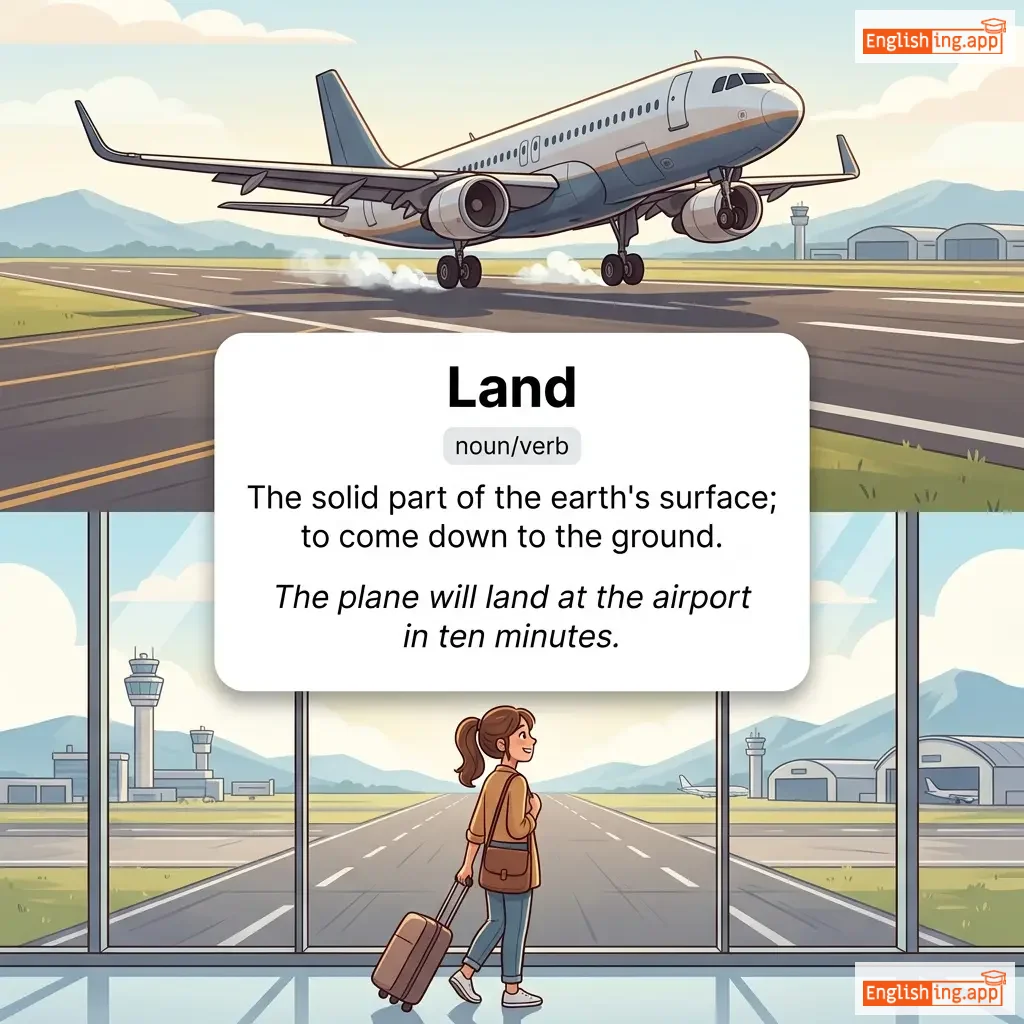
#2964
🌍
|
/lænd/
noun/verb
(ランド)
••••••
|
|
土地 / 着陸する
tochi / chakuriku suru
••••••
|
landed
ランデッド
••••••
|
landed
ランデッド
••••••
|
lands
ランズ
••••••
|
landing
ランディング
••••••
|
The solid part of the earth's surface; to come down to the ground.
••••••
|
The plane will land at the airport in ten minutes.
飛行機は10分で空港に着陸します。
••••••
|
飛行機は10分で空港に着陸します。
hikouki wa juppun de kuukou ni chakuriku shimasu.
••••••
|
land of opportunity
チャンスの地
••••••
|
a place where people have many chances to succeed
••••••
|
チャンスの地
chansu no chi
••••••
|
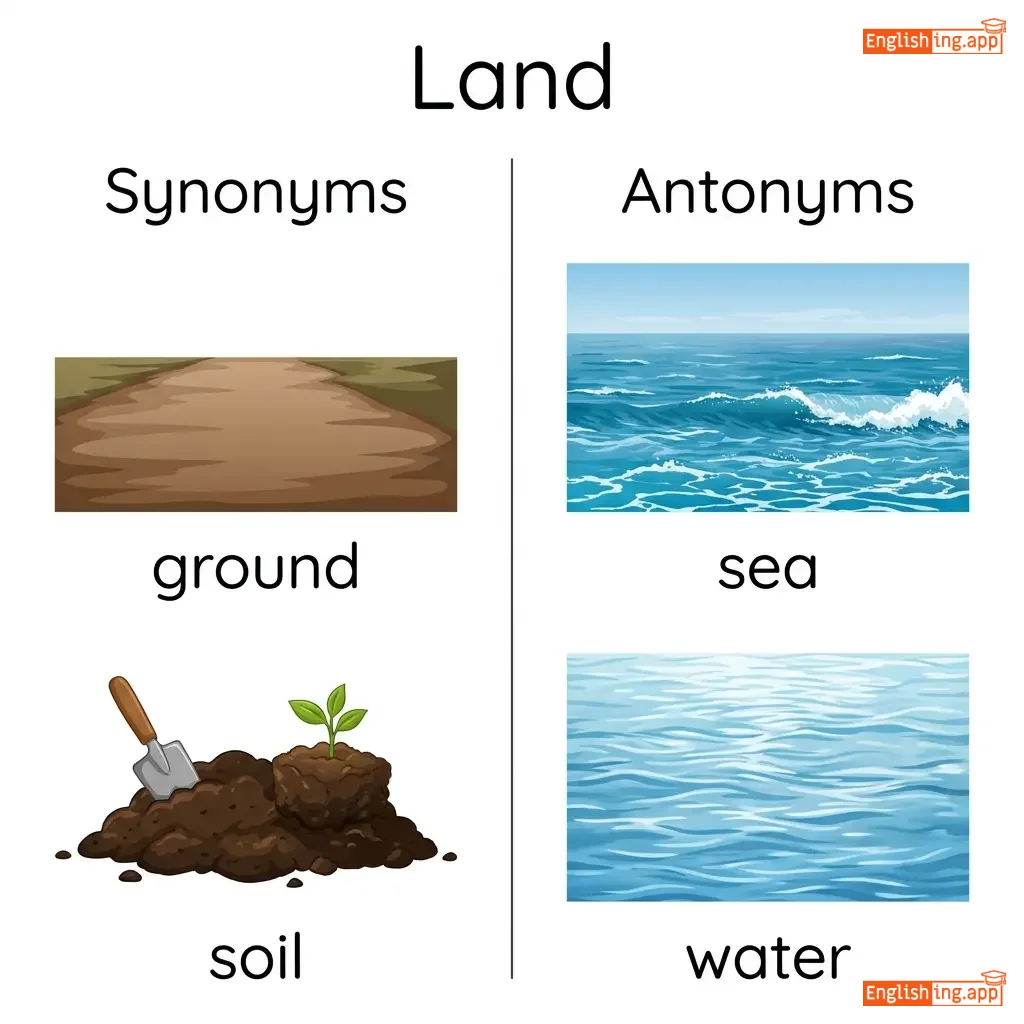
ground, soil, territory, earth
••••••
|
sea, water
••••••
|
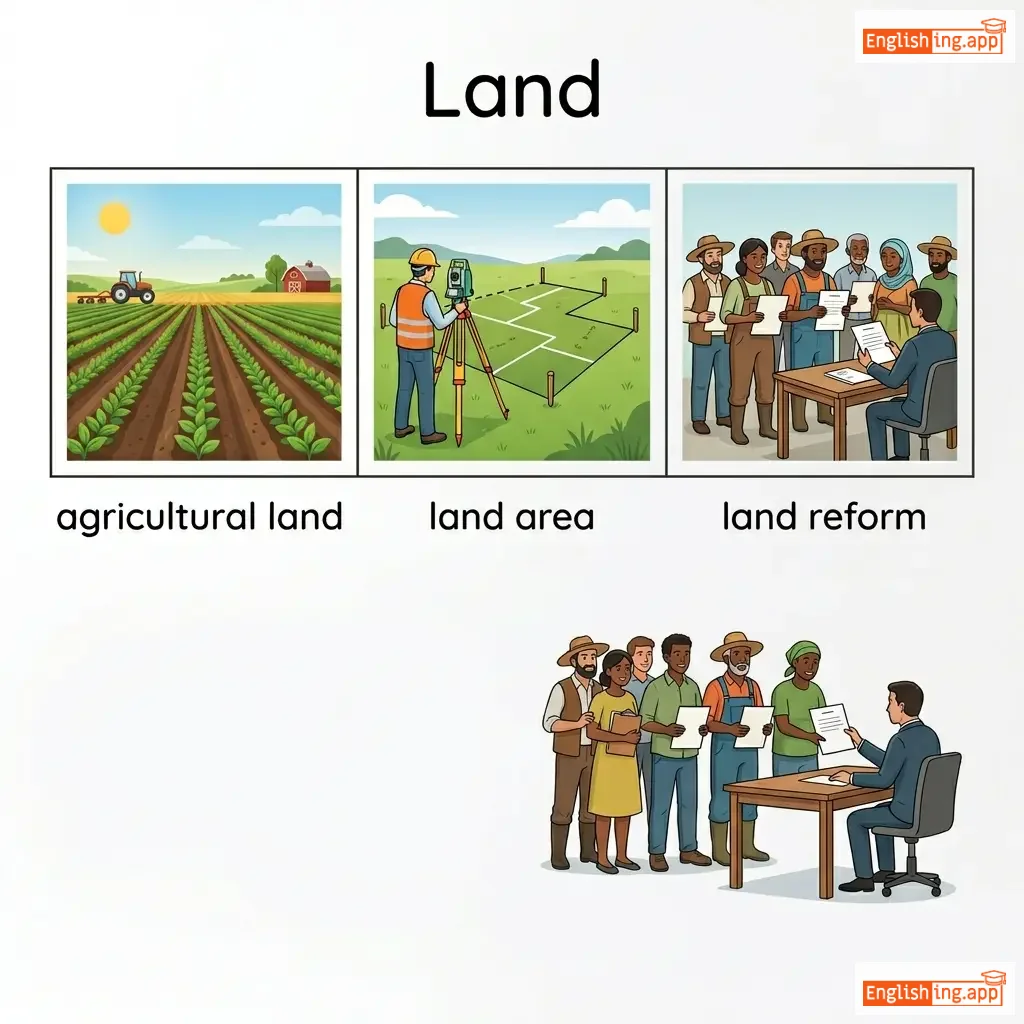
agricultural land, land area, land reform, land owner
••••••
|
Landは土地、着陸は飛行機が地面に触れることです。
••••••
|
|
#2965
🛬
|
/ˈlændɪŋ/
noun
(ランドイング)
••••••
|
- •••••• |
着陸
chakuriku
••••••
|
- •••••• | - •••••• | - •••••• | - •••••• |
the act of coming down to the ground or a surface from the air
••••••
|
The plane made a smooth landing on the runway. |
飛行機は滑走路にスムーズに着陸した。
hikōki wa kassōro ni sumūzu ni chakuriku shita.
••••••
|
crash landing |
an emergency or rough landing of an aircraft
••••••
|
緊急着陸
kinkyū chakuriku
••••••
|
arrival, touchdown, descent, docking, approach
••••••
|
takeoff, departure
••••••
|
safe landing, rough landing, landing gear, landing strip
••••••
|
Landingとは着陸のこと。飛行機が着陸するとき、みんなが‘やっと地面に降りた!’と言うようなものです。
••••••
|
|
#2966
🏠
|
/ˈlændlɔːrd/
noun
(ランドロード)
••••••
|
- •••••• |
家主
iemushi
••••••
|
- •••••• | - •••••• | - •••••• | - •••••• |
A person who owns and rents out land, buildings, or accommodation.
••••••
|
The landlord increased the rent for all tenants this year. |
今年、家主はすべての入居者の家賃を上げました。
Kotoshi, iemushi wa subete no nyūkyo-sha no yachin o agemashita.
••••••
|
the landlord's word is law |
The landlord has complete authority over the property.
••••••
|
家主の言葉は法です
Iemushi no kotoba wa hō desu
••••••
|
owner, lessor, proprietor, landowner, property-holder
••••••
|
tenant, renter, lessee
••••••
|
landlord and tenant, landlord duties, landlord agreement, friendly landlord
••••••
|
Land+Lord = 家主, 家主とは家を貸す人。
••••••
|
|
#2967
📍
|
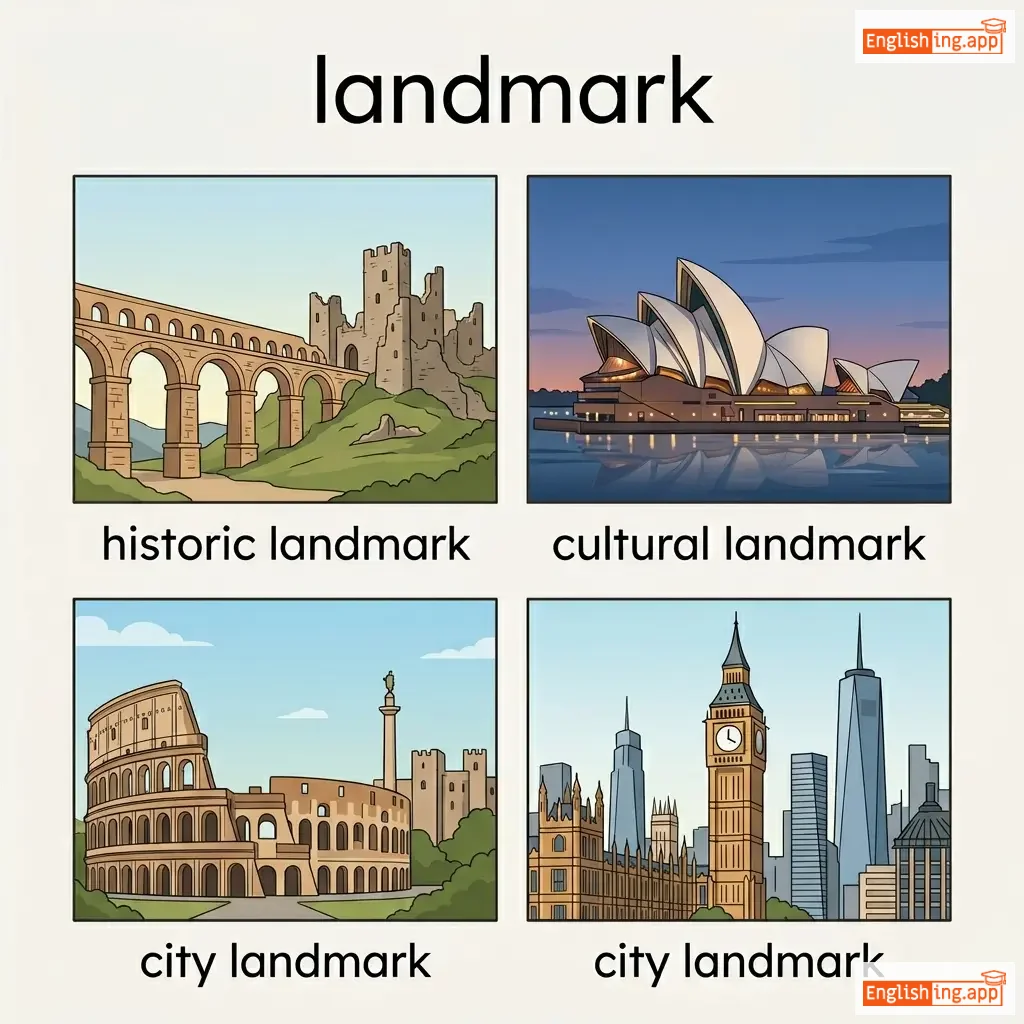
/ˈlændmɑːrk/
noun
(ランドマーク)
••••••
|
|
ランドマーク
randōmāku
••••••
|
- •••••• | - •••••• | - •••••• | - •••••• |
A recognizable object or structure that serves as a point of reference, or an event marking an important stage.
••••••
|
The Eiffel Tower is a famous landmark in Paris. |
エッフェル塔はパリの有名なランドマークです。
Efferu-tō wa Pari no yūmei na randōmāku desu.
••••••
|
landmark decision |
An important or historic ruling or choice.
••••••
|
歴史的決定
rekishiteki kettei
••••••
|
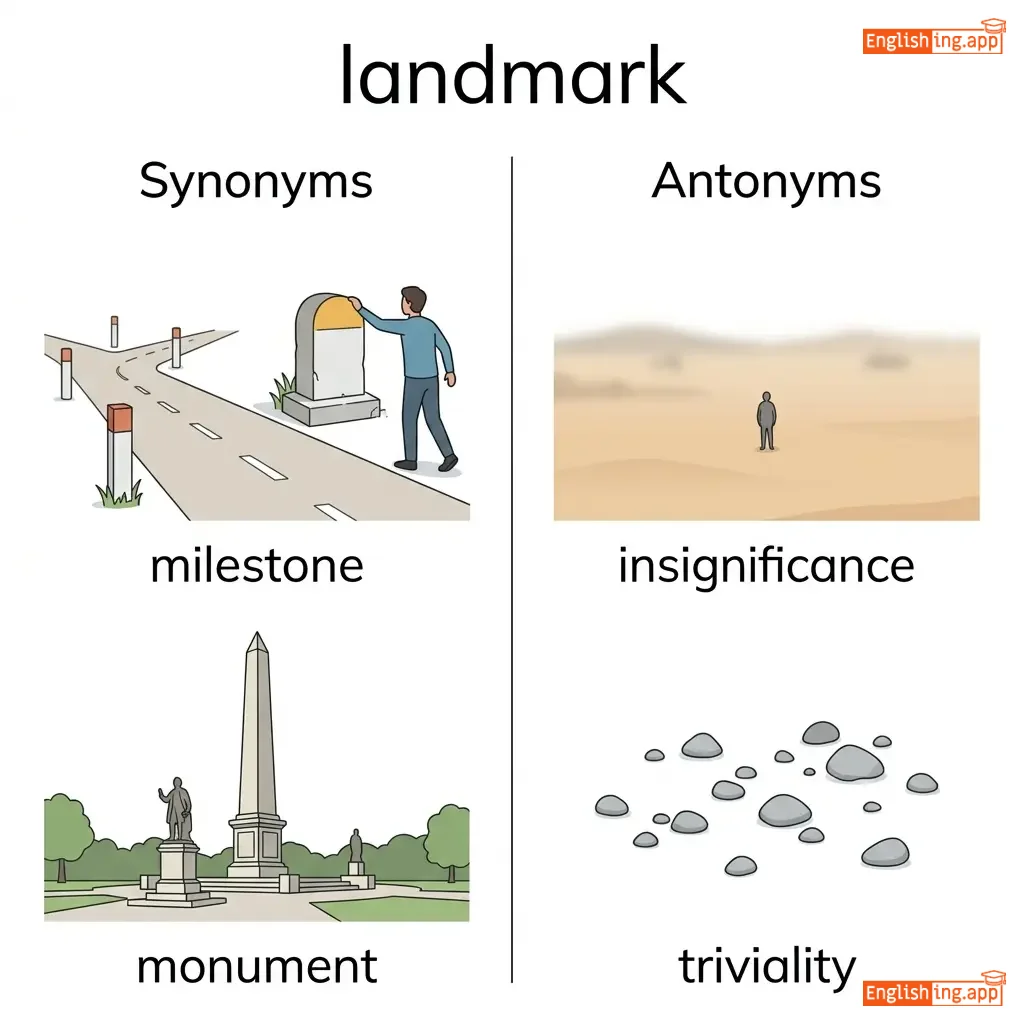
milestone, monument, marker, signpost, reference point
••••••
|
insignificance, triviality
••••••
|
historic landmark, cultural landmark, city landmark, national landmark
••••••
|
Land+Mark = 地図の重要な位置
••••••
|
|
#2968
🏔️
|
/ˈlænd.skeɪp/
noun
(ランドスケープ)
••••••
|
- •••••• |
風景
fūkei
••••••
|
- •••••• | - •••••• | - •••••• | - •••••• |
all the visible features of an area of countryside or land; the art of designing outdoor areas
••••••
|
The mountain landscape was breathtaking with its snow-capped peaks and green valleys. |
山の風景は雪で覆われた頂上と緑の谷が息を呑むほど美しかった。
Yama no fūkei wa yuki de ōwareta chōjō to midori no tani ga iki o nomu hodo utsukushikatta.
••••••
|
- •••••• | - •••••• | - •••••• |
scenery, terrain, countryside, vista
••••••
|
cityscape, urban area, interior, indoor space
••••••
|
mountain landscape, rural landscape, beautiful landscape
••••••
|
Land (ランド) + scape (風景) = 風景
••••••
|
|
#2969
🚗
|
/leɪn/
noun
(レイン)
••••••
|
- •••••• |
小道
komichi
••••••
|
- •••••• | - •••••• | - •••••• | - •••••• |
a narrow road or path, often in the countryside or for specific traffic
••••••
|
They walked down a quiet country lane. |
彼らは静かな田舎道を歩いていました。
Karera wa shizukana inakamichi o aruite imashita.
••••••
|
memory lane |
a metaphor for reminiscing about the past
••••••
|
思い出の小道
omoide no komichi
••••••
|
path, road, alley, track, passage
••••••
|
highway, main road
••••••
|
bus lane, fast lane, traffic lane, country lane
••••••
|
Laneは狭い道、小道もlane!
••••••
|
|
#2970
🗣️
|
/ˈlæŋɡwɪdʒ/
noun
(ラングウィッジ)
••••••
|
|
言語
gengo
••••••
|
- •••••• | - •••••• | - •••••• | - •••••• |
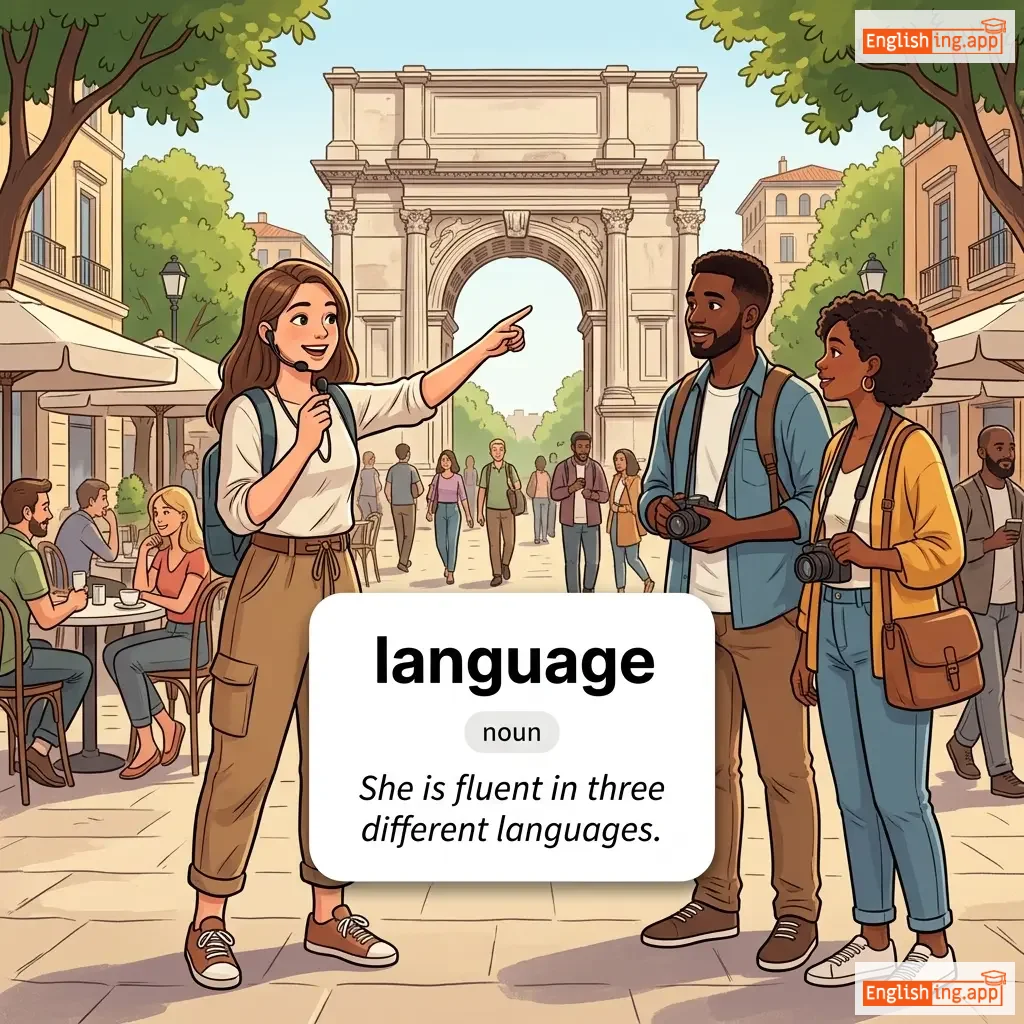
the system of communication used by a particular community, including spoken and written words
••••••
|
She is fluent in three different languages.
彼女は三つの異なる言語に堪能です。
••••••
|
彼女は三つの異なる言語に堪能です。
Kanojo wa mittsu no kotonaru gengo ni tannou desu.
••••••
|
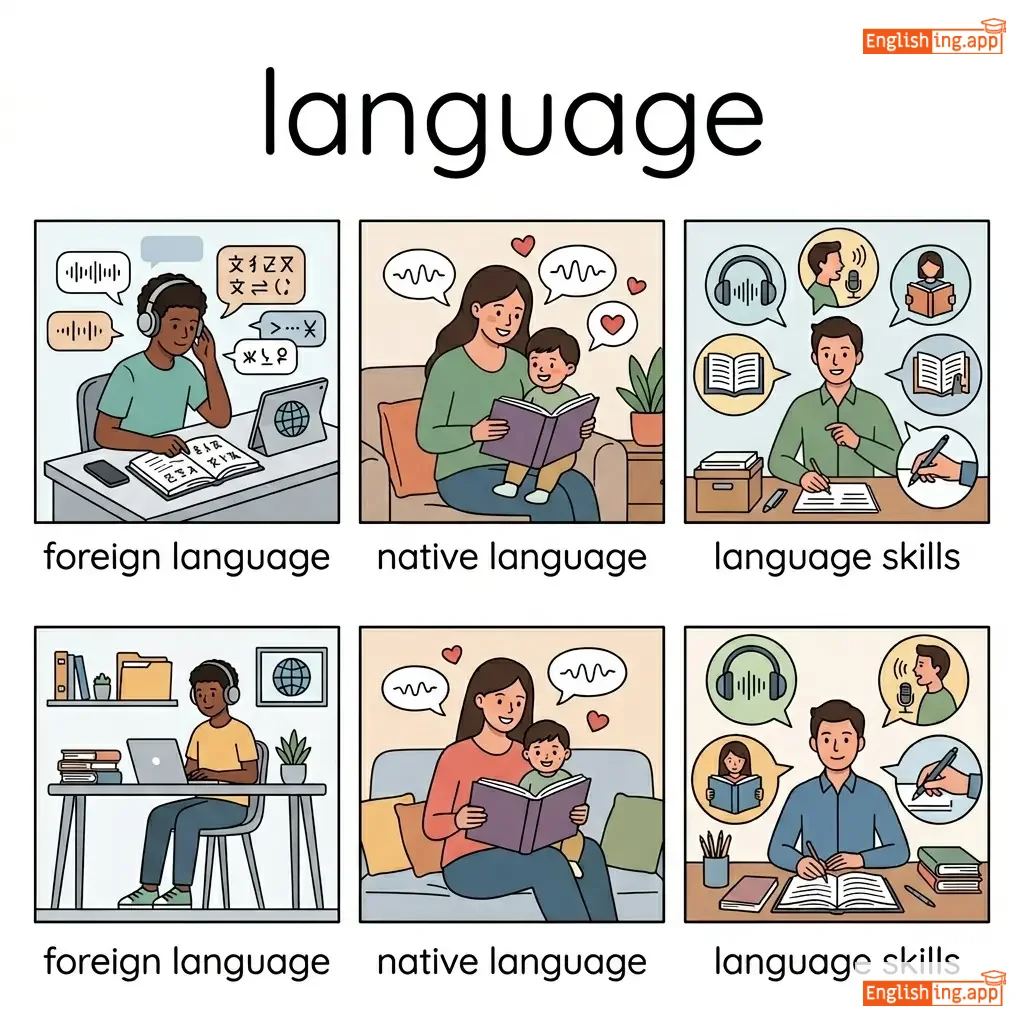
mother tongue
母国語
••••••
|
a person's native language
••••••
|
母国語
bokokugo
••••••
|
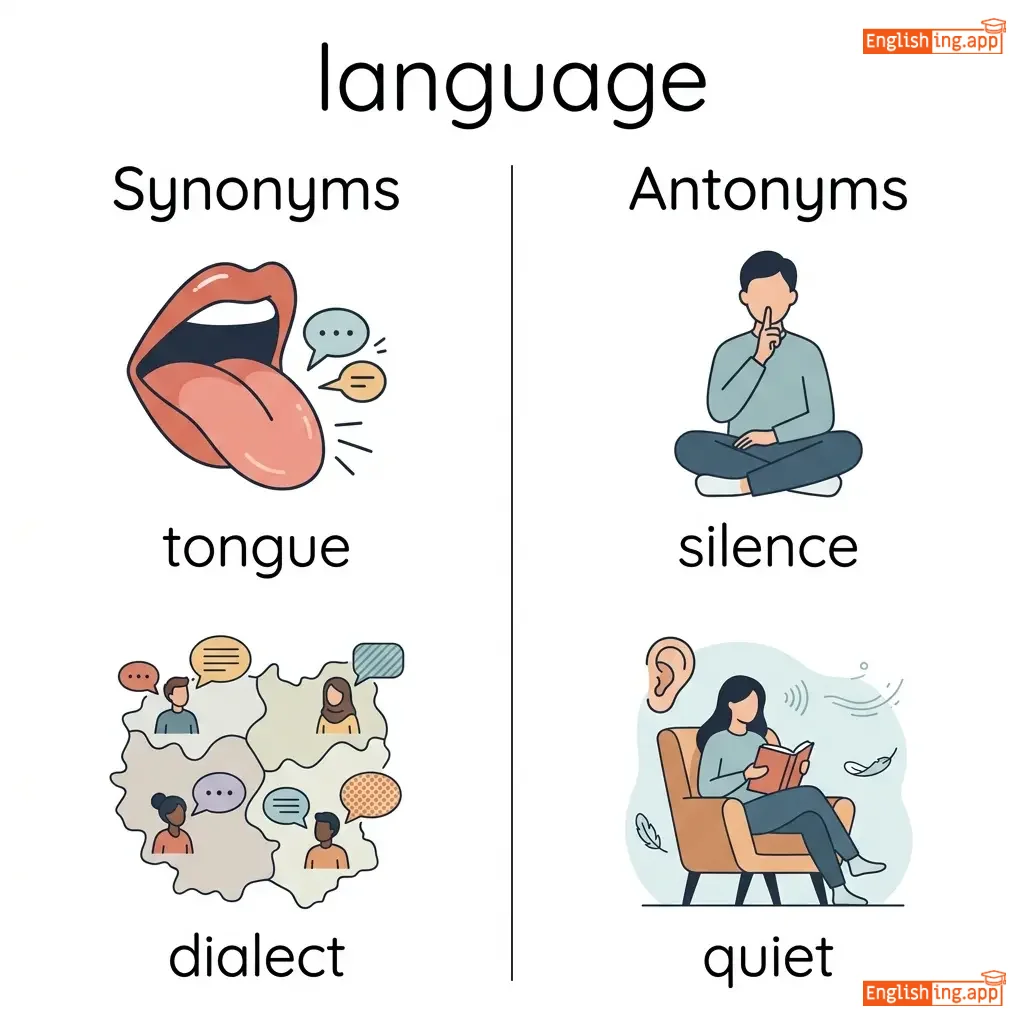
tongue, dialect, speech, lingo, communication
••••••
|
silence, quiet
••••••
|
foreign language, native language, language skills, language barrier
••••••
|
LANGUAGEは‘言語’を意味します – 日本語で言語、英語で language
••••••
|
|
#2971
🪑
|
/læp/
noun/verb
(ハピネス)
••••••
|
- •••••• |
幸せ
shiawase
••••••
|
lapped
••••••
|
lapped
••••••
|
laps
••••••
|
lapping
••••••
|
As noun: the flat area between the waist and knees of a seated person; As verb: to drink liquid with the tongue.
••••••
|
The child sat on her mother's lap. |
彼女は賞を受け取ったとき、幸せを隠すことができなかった。
Kanojo wa shō o uketotta toki, shiawase o kakusu koto ga dekinakatta.
••••••
|
in the lap of luxury |
Living in great comfort and wealth
••••••
|
幸せを追い求める
shiawase o oimotomeru
••••••
|
thighs, knee, embrace, lick, sip
••••••
|
stand, rise
••••••
|
sit on lap, lap of luxury, lap time
••••••
|
幸せ = happiness, 追い求める = search, 'searching for happiness'
••••••
|
|
#2972
📏
|
/lɑrdʒ/
adjective
(ラージ)
••••••
|
- •••••• |
大きい
ookii
••••••
|
- •••••• | - •••••• | - •••••• | - •••••• |
big in size, amount, or number
••••••
|
They live in a large house near the river.
彼らは川の近くの大きな家に住んでいます。
••••••
|
彼らは川の近くの大きな家に住んでいます。
Karera wa kawa no chikaku no ookina ie ni sundeimasu.
••••••
|
at large
大規模に
••••••
|
free, not captured
••••••
|
自由で、捕まっていない
jiyuu de, tsukamatte inai
••••••
|
big, huge, massive, enormous, substantial
••••••
|
small, tiny, little
••••••
|
large house, large number, large scale, large amount
••••••
|
大きいというのは大きな家のようなものです。
••••••
|
|
#2973
🌍
|
/lɑːrdʒ skeɪl/
adjective
(ラージスケール)
••••••
|
- •••••• |
大規模
daikibo
••••••
|
- •••••• | - •••••• | - •••••• | - •••••• |
involving a large number or quantity, or covering a large area
••••••
|
The company is planning a large-scale expansion into international markets. |
その会社は国際市場に大規模な拡大を計画しています。
Sono kaisha wa kokusai shijō ni daikibo na kakudai o keikaku shiteimasu.
••••••
|
- •••••• | - •••••• | - •••••• |
massive, extensive, widespread
••••••
|
small-scale, limited, localized
••••••
|
large-scale project, large-scale operation, large-scale impact
••••••
|
Large-scale - 大 (dai) 規模 (kibo)
••••••
|
|
#2974
📊
|
/ˈlɑːrdʒli/
adverb
(ラージリー)
••••••
|
- •••••• |
主に
omoni
••••••
|
- •••••• | - •••••• | - •••••• | - •••••• |
to a great extent; mostly or mainly
••••••
|
The success of the project was largely due to teamwork. |
プロジェクトの成功は主にチームワークによるものだった。
Purojekuto no seikō wa omoni chīmu wāku ni yoru mono datta.
••••••
|
- •••••• | - •••••• | - •••••• |
mostly, mainly, chiefly, predominantly, primarily
••••••
|
partially, slightly
••••••
|
largely responsible, largely because, largely ignored, largely unchanged
••••••
|
LARGEは大きいので、latelyは主に意味します。
••••••
|
|
#2975
🔦
|
/ˈleɪzər/
noun
(レーザー)
••••••
|
- •••••• |
レーザー
reezaa
••••••
|
- •••••• | - •••••• | - •••••• | - •••••• |
a device that emits a concentrated beam of light
••••••
|
The doctor used a laser to perform eye surgery. |
医師は目の手術のためにレーザーを使用しました。
Ishi wa me no shujutsu no tame ni reezaa o shiyō shimashita.
••••••
|
laser focus |
extreme and unwavering concentration on a task
••••••
|
レーザーフォーカス
reezaa fōkasu
••••••
|
beam, ray, light, emitter, photonic device
••••••
|
diffusion, scatter
••••••
|
laser beam, laser surgery, laser light, laser focus
••••••
|
レーザーは光のビーム — レーザーでレーザーフォーカス!
••••••
|
|
#2976
⏳
|
/læst/
verb/adjective/noun
(ラスト)
••••••
|
|
続く / 最後の
tsudzuku / saigo no
••••••
|
lasted
ラステッド
••••••
|
lasted
ラステッド
••••••
|
lasts
ラストス
••••••
|
lasting
ラスティング
••••••
|
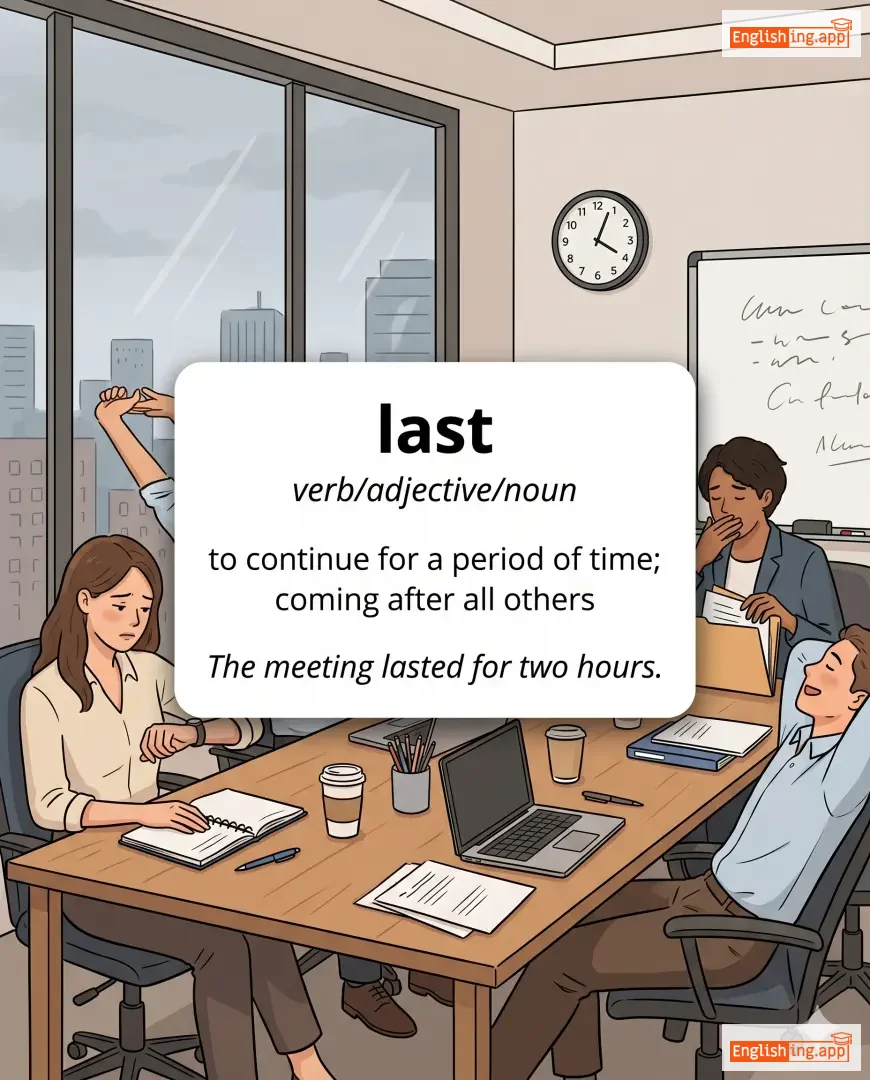
to continue for a period of time; coming after all others
••••••
|
The meeting lasted for two hours.
ミーティングは2時間続きました。
••••••
|
ミーティングは2時間続きました。
Mītingu wa 2-jikan tsudzukimashita.
••••••
|
at last
ついに
••••••
|
finally, after a long time
••••••
|
ついに
tsuini
••••••
|
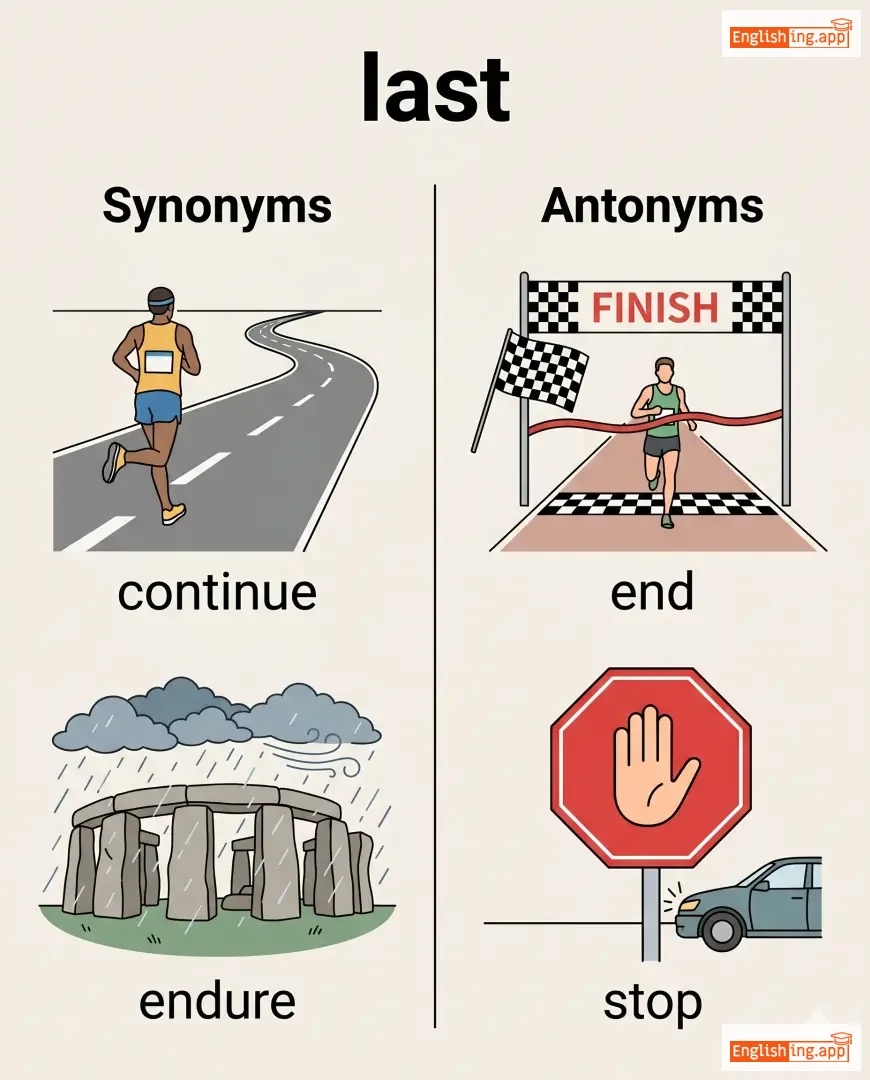
continue, endure, final, ultimate, survive
••••••
|
end, stop, first
••••••
|
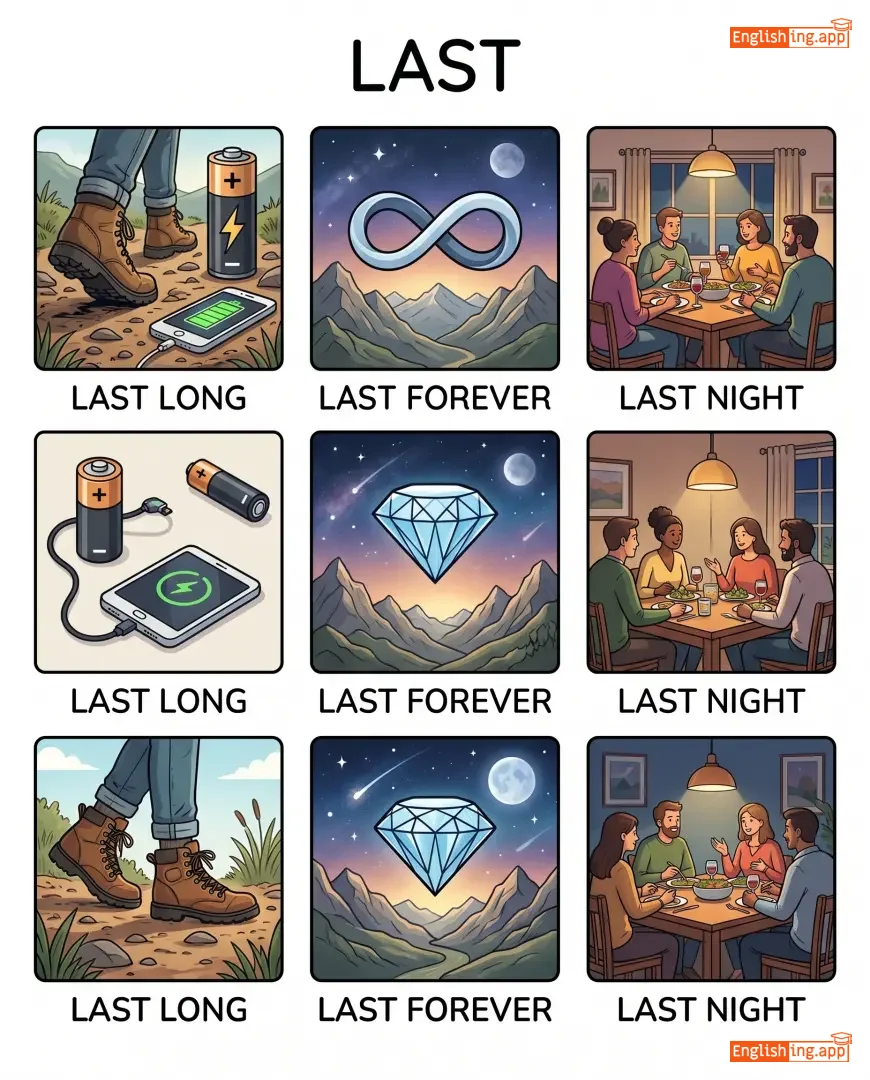
last long, last forever, last night, last chance
••••••
|
Lastは「最後の」という意味で、動詞としては「続く」という意味です。
••••••
|
|
#2977
⏰
|
/leɪt/
adjective/adverb
(レイト)
••••••
|
- •••••• |
遅れた
okureta
••••••
|
- •••••• | - •••••• | - •••••• | - •••••• |
arriving, happening, or done after the expected time
••••••
|
He arrived late to the meeting. |
彼は会議に遅れて到着した。
Kare wa kaigi ni okurete tōchaku shita.
••••••
|
better late than never |
it is better to do something late than not at all
••••••
|
遅れても来ないよりはマシ
okuretemo konai yori wa mashi
••••••
|
tardy, delayed, overdue, unpunctual
••••••
|
early, prompt
••••••
|
late arrival, late night, late payment, late fee
••••••
|
Late = 遅れた – 重要な会議に遅れたと想像してみてください。
••••••
|
|
#2978
⏰
|
/ˈleɪt.li/
adverb
(レイトリー)
••••••
|
- •••••• |
最近; この頃;
saikin
••••••
|
- •••••• | - •••••• | - •••••• | - •••••• |
recently; in the recent past; not long ago
••••••
|
I haven't seen him lately, but I heard he got a new job.
アイ ハブント シーン ヒム レイトリー, バット アイ ハード ヒー ガット ア ニュー ジョブ。
••••••
|
最近彼を見ていませんが、新しい仕事を得たと聞きました。
saikin kare o miteimasen ga, atarashii shigoto o eta to kikimashita.
••••••
|
- •••••• | - •••••• | - •••••• |
recently, currently, nowadays, presently
••••••
|
formerly, previously, earlier, long ago
••••••
|
lately been, seen lately, lately noticed
••••••
|
Lately = レイトリー sounds like 'late' and means 最近 (saikin) — recently.
••••••
|
|
#2979
⏰
|
/ˈleɪtər/
adverb
(レイター)
••••••
|
- •••••• |
後で
ato de
••••••
|
- •••••• | - •••••• | - •••••• | - •••••• |
At a time subsequent to a reference time; afterwards.
••••••
|
We will discuss the details later. |
私たちは後で詳細について話します。
Watashitachi wa ato de shōsai ni tsuite hanashimasu.
••••••
|
sooner or later |
Eventually, at some unspecified future time.
••••••
|
そのうち
sono uchi
••••••
|
afterwards, subsequently, eventually, afterward, in time
••••••
|
earlier, before, prior
••••••
|
later stage, later time, later date, talk later
••••••
|
Later は '後で' → 何かは後で起こる。
••••••
|
|
#2980
🆕
|
/ˈleɪtɪst/
adjective
(レイテスト)
••••••
|
- •••••• |
最新の
saishin no
••••••
|
- •••••• | - •••••• | - •••••• | - •••••• |
most recent in time; newest available
••••••
|
She shared the latest updates with the team.
彼女はチームとレイテストなアップデートを共有した。
••••••
|
彼女はチームと最新のアップデートを共有した。
kanojo wa chiimu to saishin no appudeeto o kyouyuu shita
••••••
|
latest news
レイテスト ニュース
••••••
|
the most recent information or reports
••••••
|
最新ニュース
saishin nyuusu
••••••
|
newest, most recent, up-to-date, current
••••••
|
oldest, outdated, former
••••••
|
latest news, latest version, latest update, latest trend
••••••
|
latest = saishin, 最新
••••••
|
|
#2981
🏛️
|
/ˈlætɪn/
noun/adjective
(ラテン)
••••••
|
- •••••• |
ラテン語
raten-go
••••••
|
- •••••• | - •••••• | - •••••• | - •••••• |
the language of ancient Rome; relating to Latin culture or language
••••••
|
Many English words are derived from Latin.
多くの英単語はラテン語から派生しています。
••••••
|
多くの英単語はラテン語から派生しています。
Ooku no eitango wa raten-go kara hassei shiteimasu.
••••••
|
- •••••• | - •••••• | - •••••• |
Roman, classical, Italic, Romance
••••••
|
modern, contemporary
••••••
|
Latin language, Latin America, Latin culture, Latin alphabet
••••••
|
ラテン語はラテン、ローマとその言語の始まりを考えてみてください
••••••
|
|
#2982
➡️
|
/ˈlætər/
adjective
(ラター)
••••••
|
- •••••• |
後者
kōsha
••••••
|
- •••••• | - •••••• | - •••••• | - •••••• |
the second of two people or things mentioned
••••••
|
Between tea and coffee, I prefer the latter. |
お茶とコーヒーの間で、私は後者を選びます。
Ocha to kōhī no aida de, watashi wa kōsha o erabimasu.
••••••
|
- •••••• | - •••••• | - •••••• |
second, last-mentioned, concluding, final
••••••
|
former, first
••••••
|
the latter case, in the latter part, the latter option
••••••
|
Formerは最初、Latterは後者 – どちらかを選ぶとき、latterは後者を意味します
••••••
|
|
#2983
😂
|
/læf/
verb, noun
(ラフ)
••••••
|
|
笑う
warau
••••••
|
laughed
ラフド
••••••
|
laughed
ラフド
••••••
|
laughs
ラフス
••••••
|
laughing
ラフィング
••••••
|
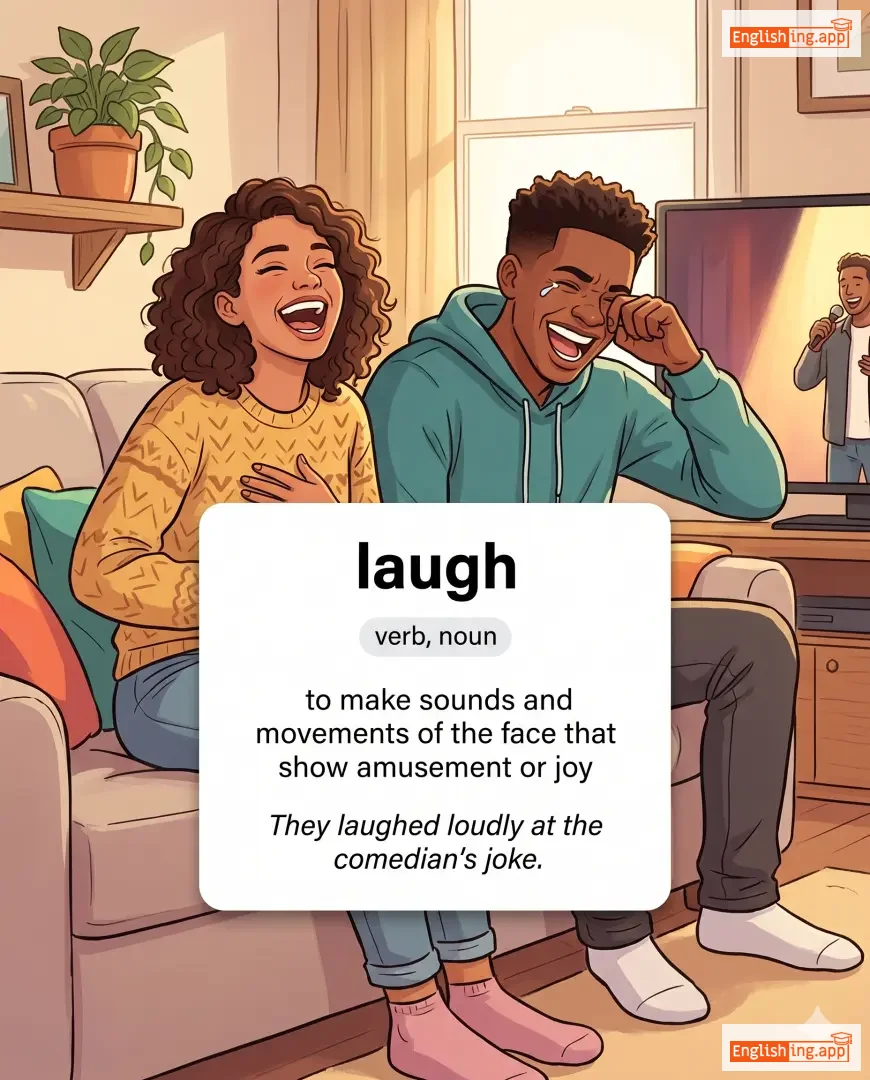
to make sounds and movements of the face that show amusement or joy
••••••
|
They laughed loudly at the comedian's joke.
彼らはコメディアンのジョークで大声で笑った。
••••••
|
彼らはコメディアンのジョークで大声で笑った。
Karera wa komedian no jooku de oogoe de waratta.
••••••
|
laugh it off
笑い飛ばす
••••••
|
to dismiss something unpleasant by treating it humorously
••••••
|
笑い飛ばす
waraitobasu
••••••
|
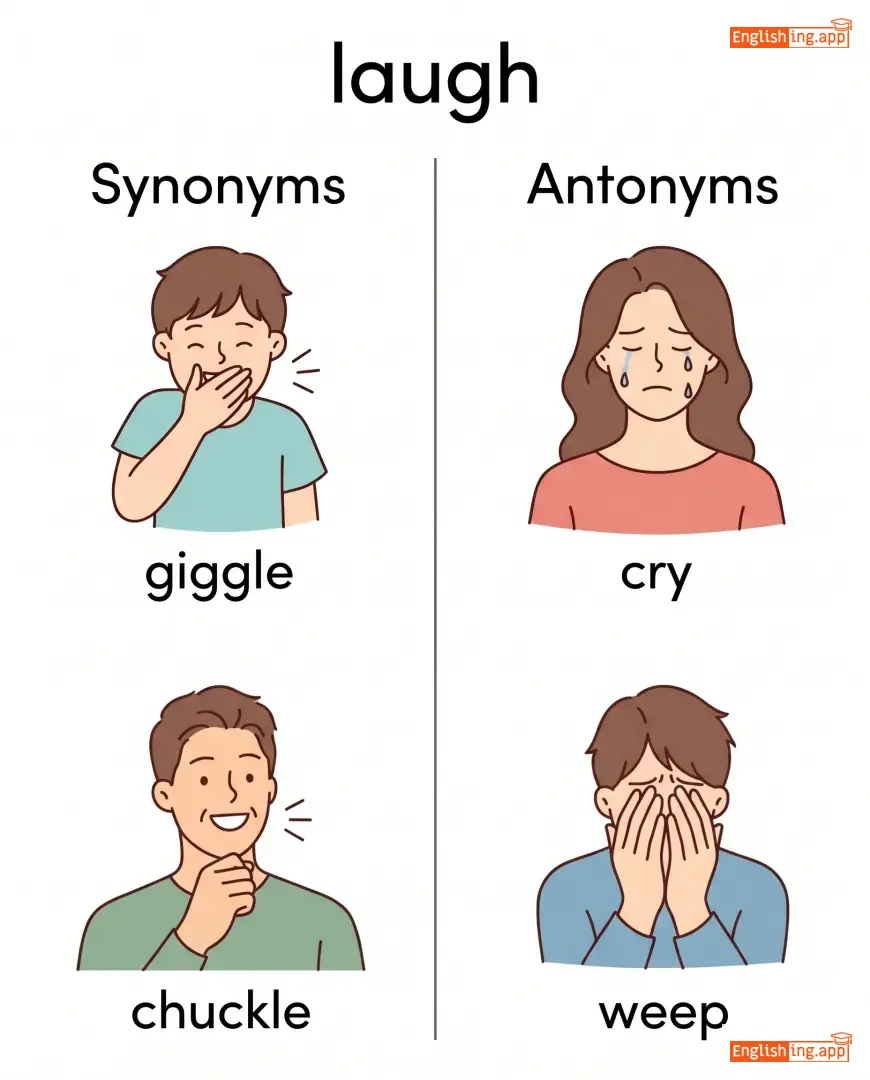
giggle, chuckle, snicker, roar, cackle
••••••
|
cry, weep, sob
••••••
|
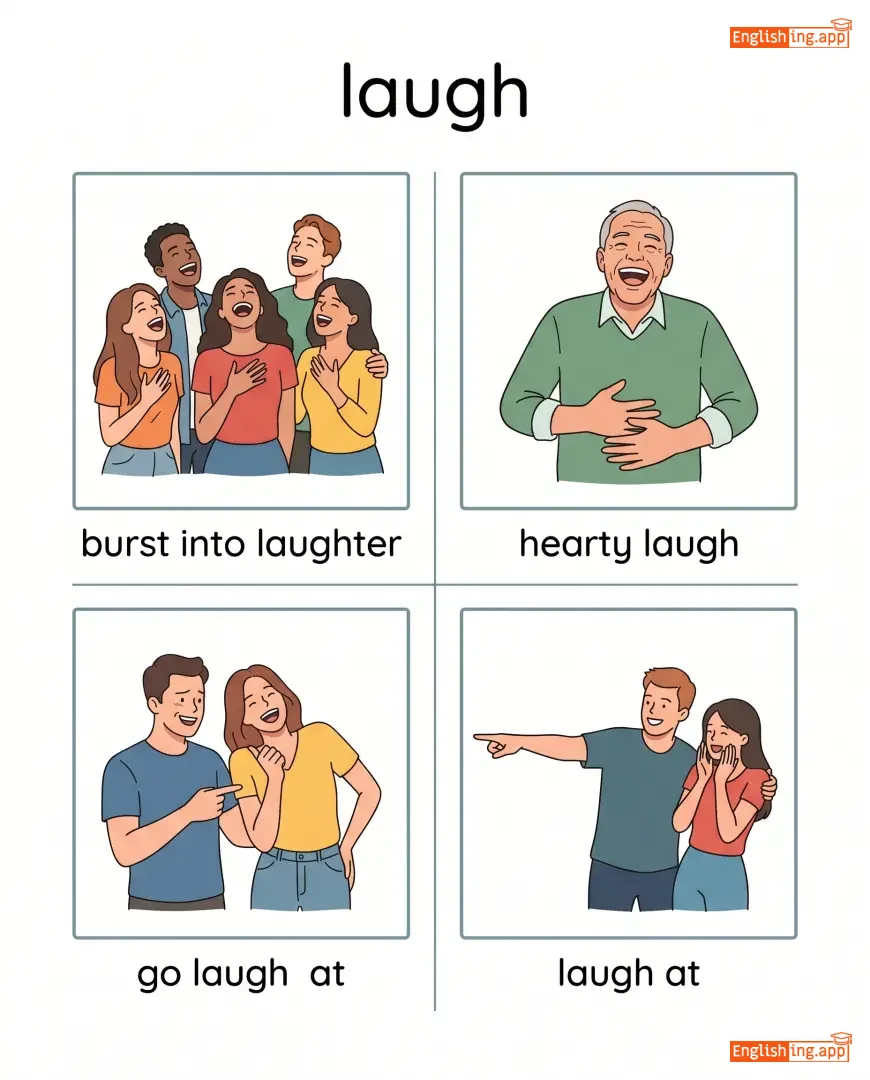
burst into laughter, hearty laugh, laugh at, laugh with
••••••
|
'laugh'は日本語で笑うと同じ意味を持つ。
••••••
|
|
#2984
🚀
|
/lɔːntʃ/
verb, noun
••••••
|
- •••••• | - •••••• |
launched
••••••
|
launched
••••••
|
launches
••••••
|
launching
••••••
|
to start or introduce something, especially a new product, service, or event
••••••
|
The company launched a new app last month. |
- •••••• |
launch into |
to begin something with great energy or enthusiasm
••••••
|
- •••••• |
initiate, begin, start, inaugurate, unveil
••••••
|
end, stop, cancel
••••••
|
product launch, launch campaign, launch event, launch party
••••••
|
No •••••• |
|
#2985
⚖️
|
/lɔː/
noun
(ロー)
••••••
|
- •••••• |
法律
hōritsu
••••••
|
- •••••• | - •••••• | - •••••• | - •••••• |
a system of rules created and enforced by authority to regulate behavior
••••••
|
Everyone must obey the law of the country. |
誰もが国の法律に従わなければなりません。
Dare mo ga kuni no hōritsu ni shitagawanakereba narimasen.
••••••
|
above the law |
not subject to the law or thinking rules do not apply
••••••
|
法律の上に
hōritsu no ue ni
••••••
|
rule, regulation, legislation, statute, code
••••••
|
anarchy, disorder, chaos
••••••
|
law enforcement, law firm, law student, law school
••••••
|
Law は ⚖️ 法律を意味します — みんなそれに従うべきです。
••••••
|
|
#2986
🌱
|
/lɔːn/
noun
(ロン)
••••••
|
- •••••• |
芝生
shiba fuku
••••••
|
- •••••• | - •••••• | - •••••• | - •••••• |
an area of short, regularly mown grass in the grounds of a house or in a park
••••••
|
She waters the lawn every morning.
彼女は毎朝芝生に水をやります。
••••••
|
彼女は毎朝芝生に水をやります。
Kanojo wa mai asa shibafu ni mizu o yarimasu.
••••••
|
- •••••• | - •••••• | - •••••• |
grass, yard, garden, field
••••••
|
pavement, concrete
••••••
|
mow the lawn, green lawn, front lawn
••••••
|
芝生はきれいに刈られた草が広がる場所、庭や公園に多く見られます。
••••••
|
|
#2987
📑
|
/ˈlɔːsuːt/
noun
(ロースート)
••••••
|
- •••••• |
訴訟
soshō
••••••
|
- •••••• | - •••••• | - •••••• | - •••••• |
a legal case brought to a court of law by one person against another
••••••
|
The company faced a lawsuit over false advertising. |
その会社は虚偽広告に関する訴訟に直面した。
sono kaisha wa kyogi kōkoku ni kansuru soshō ni chokumen shita.
••••••
|
- •••••• | - •••••• | - •••••• |
case, litigation, action, proceeding
••••••
|
agreement, settlement
••••••
|
file a lawsuit, pending lawsuit, lawsuit settlement, lawsuit case
••••••
|
Law + suit = 裁判所に訴訟を起こす 📑
••••••
|
|
#2988
⚖️
|
/ˈlɔːjər/
noun
(ロイヤー)
••••••
|
- •••••• |
弁護士
bengoshi
••••••
|
- •••••• | - •••••• | - •••••• | - •••••• |
A professional who practices or studies law; an attorney.
••••••
|
The lawyer presented the case confidently in court. |
弁護士は自信を持って裁判所で事件を弁護しました。
Bengoshi wa jishin o motte saiban-sho de jiken o bengo shimashita.
••••••
|
hire a lawyer |
to employ an attorney for legal help
••••••
|
弁護士を雇う
Bengoshi o yatou
••••••
|
attorney, advocate, solicitor, barrister, counselor
••••••
|
client, defendant
••••••
|
criminal lawyer, corporate lawyer, hire a lawyer, defense lawyer
••••••
|
Lawyer は弁護士、覚えておけ LAW は法律
••••••
|
|
#2989
📖
|
/leɪ/
verb
(レイ)
••••••
|
|
置く
oku
••••••
|
laid
レイド
••••••
|
laid
レイド
••••••
|
lays
レイズ
••••••
|
laying
レイイング
••••••
|
To put something down carefully in a flat position.
••••••
|
She laid the book on the table.
彼女は本をテーブルに置いた。
••••••
|
彼女は本をテーブルに置いた。
Kanojo wa hon o teeburu ni oita.
••••••
|
lay the foundation
基礎を築く
••••••
|
to establish the base or groundwork
••••••
|
基礎を築く
kiso o kizuku
••••••
|
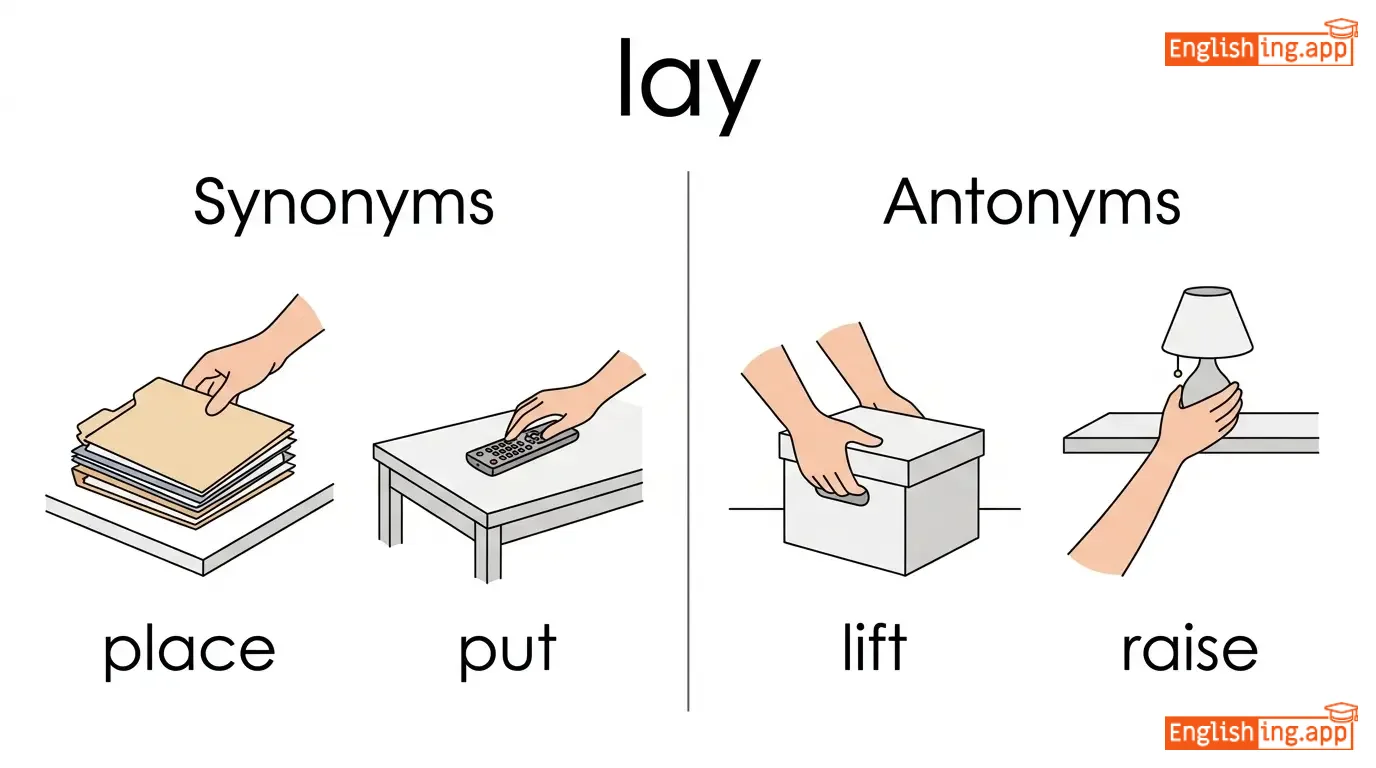
place, put, set, position, deposit
••••••
|
lift, raise
••••••
|
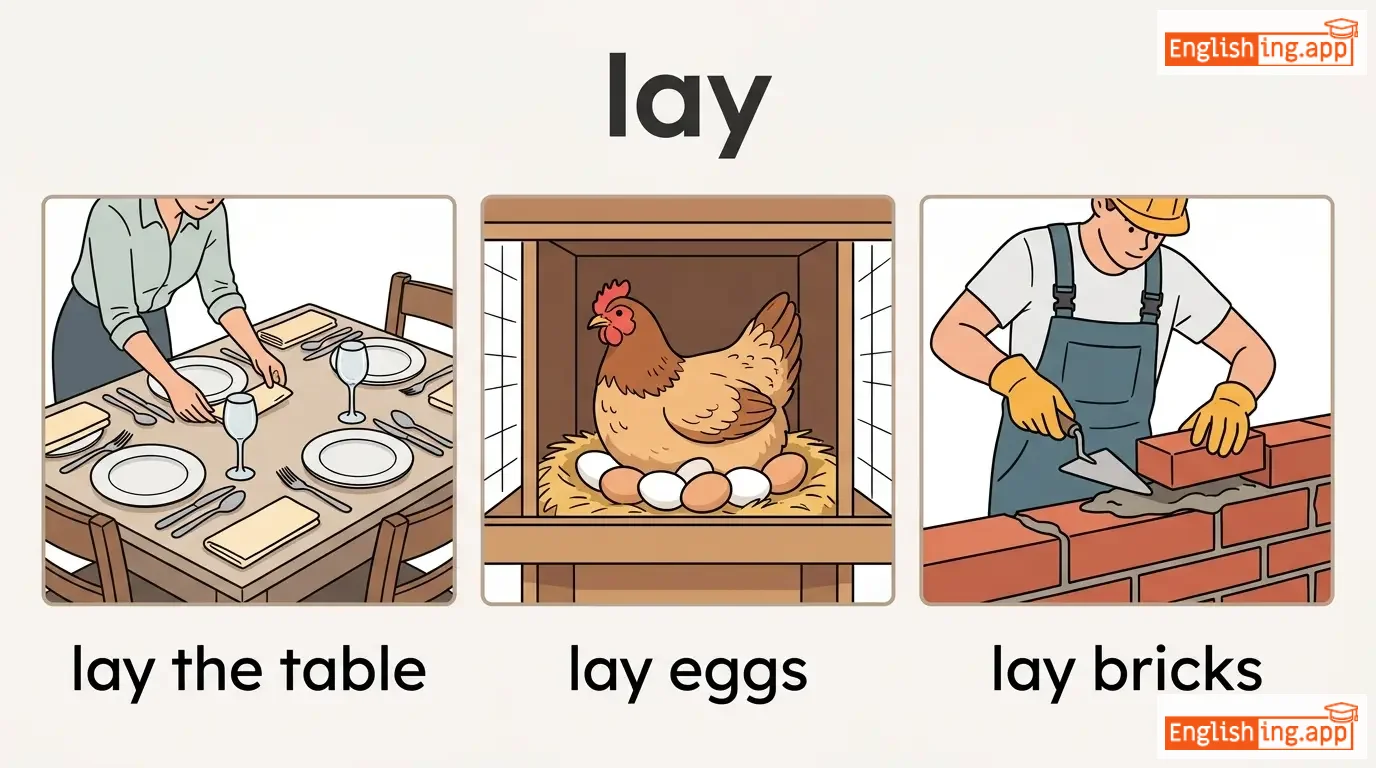
lay the table, lay eggs, lay bricks, lay emphasis
••••••
|
Layは置くという意味、例えば「彼女は本をLAYしたテーブルに」
••••••
|
|
#2990
📚
|
/ˈleɪər/
noun
(レイヤー)
••••••
|
- •••••• |
層
sō
••••••
|
- •••••• | - •••••• | - •••••• | - •••••• |
A sheet, thickness, or coating of something that lies over or under a surface.
••••••
|
The cake had a layer of cream between the sponges. |
ケーキにはスポンジの間にクリームの層がありました。
Kēki ni wa suponji no aida ni kurīmu no sō ga arimashita.
••••••
|
a layer of meaning |
a deeper or additional significance
••••••
|
意味の層
imi no sō
••••••
|
sheet, coating, stratum, film, covering
••••••
|
core, center
••••••
|
thin layer, thick layer, protective layer, additional layer
••••••
|
Layerは層を意味します。ケーキにクリーム層があるように。
••••••
|
|
#2991
🖥️
|
/ˈleɪaʊt/
noun
(レイアウト)
••••••
|
- •••••• |
レイアウト
reiauto
••••••
|
- •••••• | - •••••• | - •••••• | - •••••• |
the arrangement or design of something, especially the arrangement of elements in a book, webpage, or room
••••••
|
The designer presented a new layout for the website that was much more user-friendly. |
デザイナーはウェブサイトのために新しいレイアウトを提示しました、それはもっとユーザーフレンドリーでした。
Dezainā wa uebu saito no tame ni atarashī reiauto o teiji shimashita, sore wa motto yūzā furendorī deshita.
••••••
|
- •••••• | - •••••• | - •••••• |
design, arrangement, configuration
••••••
|
disorder, chaos
••••••
|
page layout, website layout, floor layout
••••••
|
Layout - レイアウト = 'レイ' 配置を整理, 'アウト' 外に出す
••••••
|
|
#2992
😴
|
/ˈleɪ.zɪ.li/
adverb
(レイジリー)
••••••
|
- •••••• |
怠惰に
taida ni
••••••
|
- •••••• | - •••••• | - •••••• | - •••••• |
in a way that shows unwillingness to work or use energy; sluggishly
••••••
|
He lazily stretched his arms and yawned in the morning.
彼は怠惰に腕を伸ばし、朝にあくびをした。
••••••
|
彼は怠惰に腕を伸ばし、朝にあくびをした。
Kare wa taida ni ude o nobashi, asa ni akubi o shita.
••••••
|
- •••••• | - •••••• | - •••••• |
sluggishly, slowly, idly, lethargically
••••••
|
energetically, actively, quickly, vigorously
••••••
|
lazily stretch, lazily walk, lazily drift
••••••
|
怠惰に起きることが、まるで寝坊した猫のよう
••••••
|
|
#2993
😴
|
/ˈleɪ.zi/
adjective
(レイジー)
••••••
|
- •••••• |
怠け者; 働きたくない
namakemono; hatarakitakunai
••••••
|
- •••••• | - •••••• | - •••••• | - •••••• |
idle; unwilling to work; sluggish
••••••
|
He was too lazy to clean his room on the weekend. |
彼は週末に部屋を掃除するのが面倒だった。
Kare wa shuumatsu ni heya o souji suru no ga mendou datta.
••••••
|
- •••••• | - •••••• | - •••••• |
idle, sluggish, inactive, lethargic
••••••
|
active, energetic, hardworking, diligent
••••••
|
lazy afternoon, lazy student, lazy day
••••••
|
怠け者はいつも仕事を避ける、まるで動きが遅いみたいに。
••••••
|
|
#2994
🧭
|
/liːd/
verb
(リード)
••••••
|
- •••••• |
導く
michibiku
••••••
|
led
レッド
••••••
|
led
レッド
••••••
|
leads
リッズ
••••••
|
leading
リーディング
••••••
|
To guide or be in charge; to show the way.
••••••
|
He led the team to victory.
彼はチームを勝利に導いた。
••••••
|
彼はチームを勝利に導いた。
Kare wa chīmu o shōri ni michibiita.
••••••
|
lead the way
道を示す
••••••
|
to show others how to proceed
••••••
|
道を示す
michi o shimesu
••••••
|
guide, direct, command, conduct, head
••••••
|
follow, obey
••••••
|
lead the team, lead the way, lead a project, lead to success
••••••
|
Leadは導くという意味です。リーダーが道を示すように。
••••••
|
|
#2995
👑
|
/ˈliːdər/
noun
(リーダー)
••••••
|
|
リーダー
rīdā
••••••
|
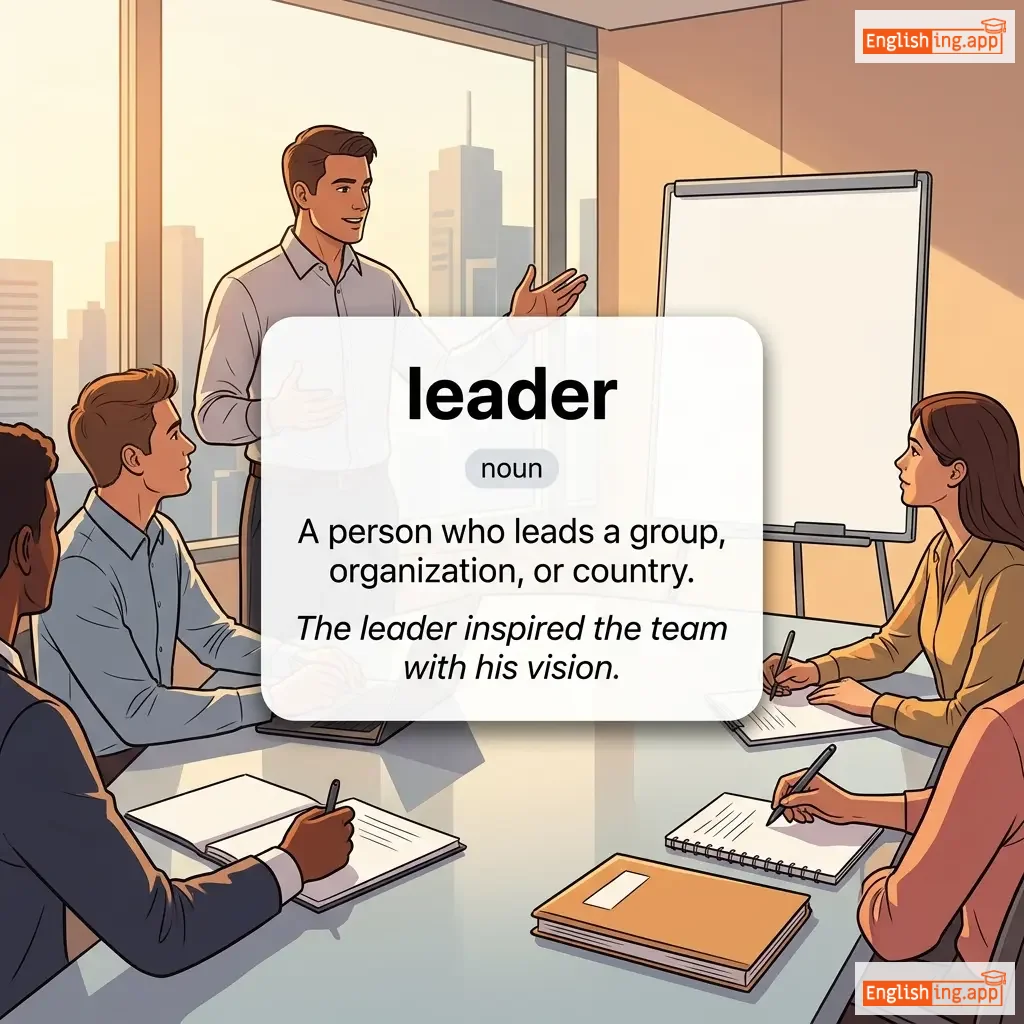
- •••••• | - •••••• | - •••••• | - •••••• |
A person who leads a group, organization, or country.
••••••
|
The leader inspired the team with his vision.
リーダーは彼のビジョンでチームを鼓舞しました。
••••••
|
リーダーは彼のビジョンでチームを鼓舞しました。
Rīdā wa kare no bijon de chīmu o kobu shimashita.
••••••
|
natural leader
自然なリーダー
••••••
|
someone who has innate leadership qualities
••••••
|
自然なリーダー
shizen na rīdā
••••••
|
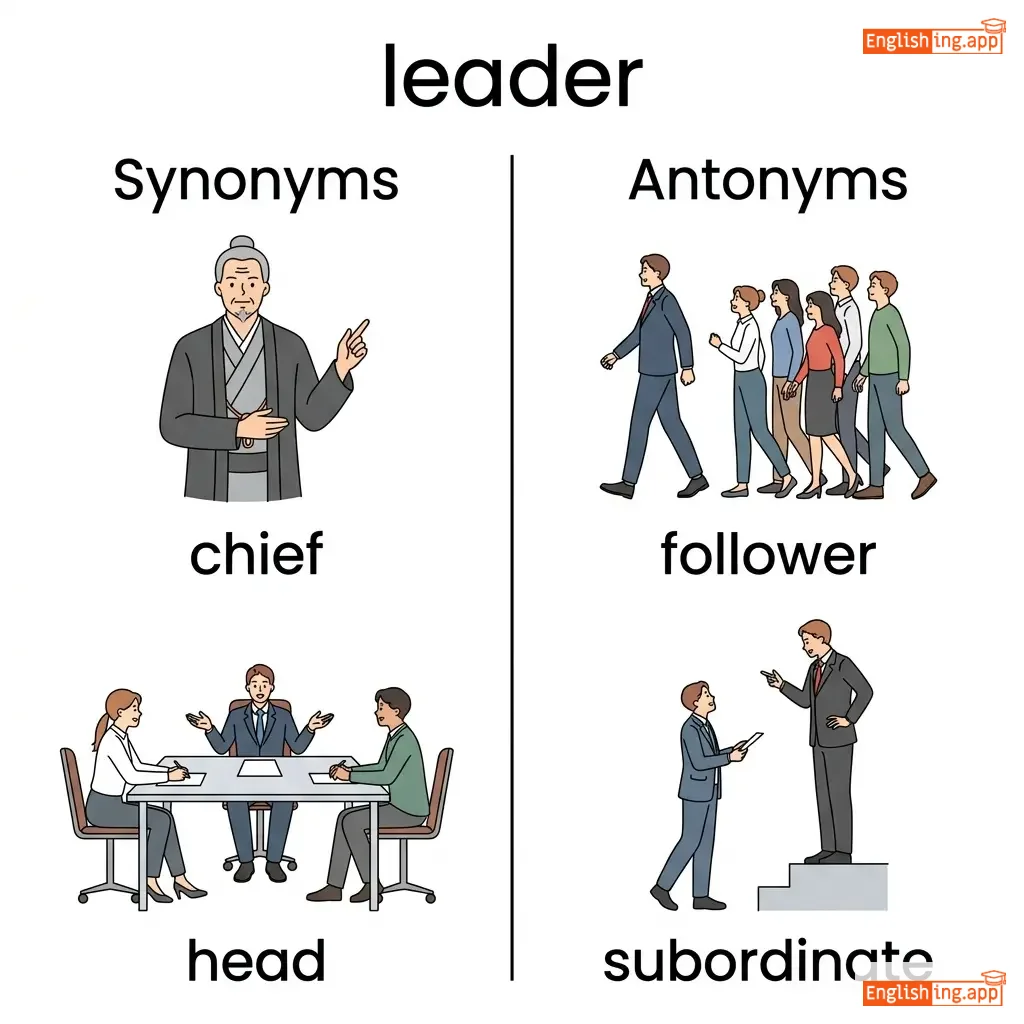
chief, head, commander, captain, director
••••••
|
follower, subordinate
••••••
|
political leader, business leader, strong leader, natural leader
••••••
|
Leader は日本語でもリーダー、道を示す人!
••••••
|
|
#2996
👑
|
/ˈliːdərˌʃɪp/
noun
(リーダーシップ)
••••••
|
|
リーダーシップ
rīdāshippu
••••••
|
- •••••• | - •••••• | - •••••• | - •••••• |
The action of leading a group of people or an organization.
••••••
|
Her leadership inspired the entire team to achieve their goals. |
彼女のリーダーシップはチーム全体を目標達成に導いた。
Kanojo no rīdāshippu wa chīmu zentai o mokuhyō tassei ni michibiita.
••••••
|
take the leadership role |
to assume responsibility for guiding or directing others
••••••
|
リーダーシップの役割を引き受ける
Rīdāshippu no yakuwari o hikiukeru
••••••
|
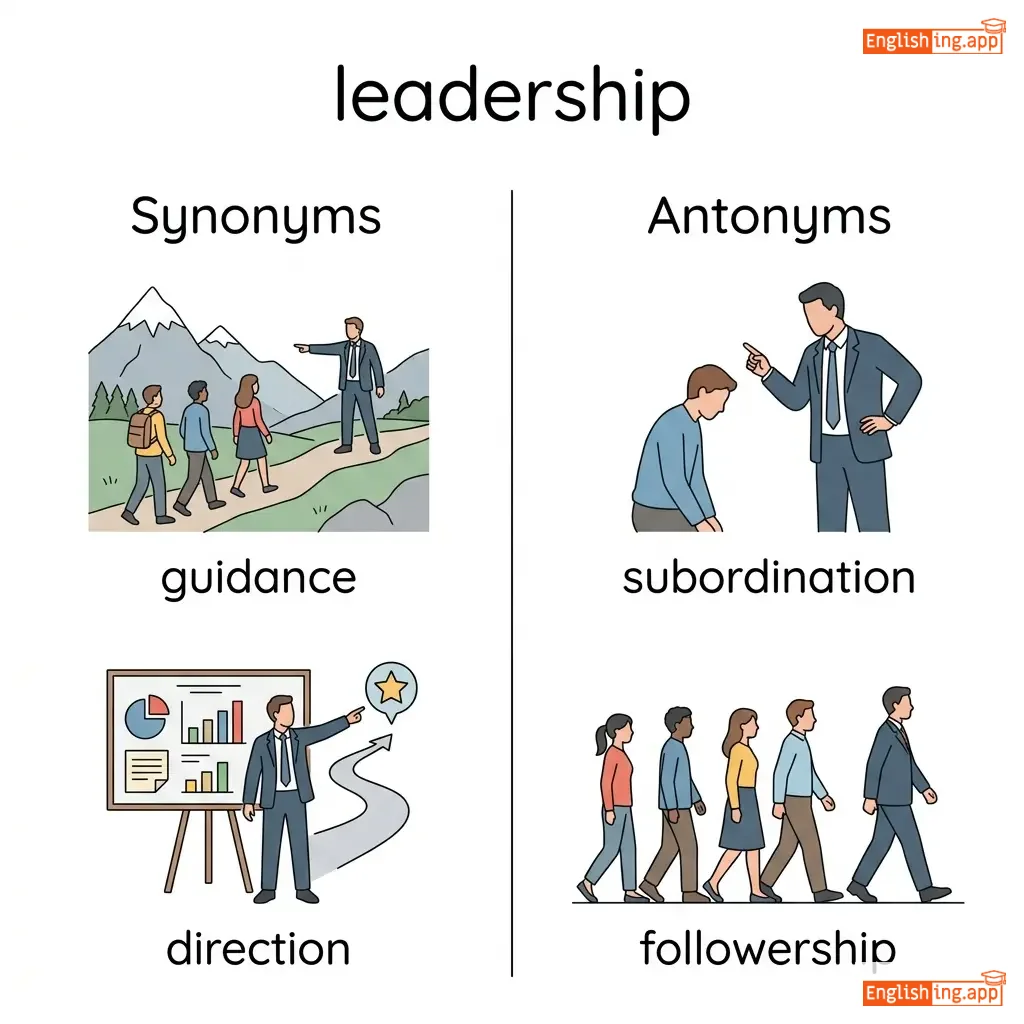
guidance, direction, command, authority, management
••••••
|
subordination, followership
••••••
|
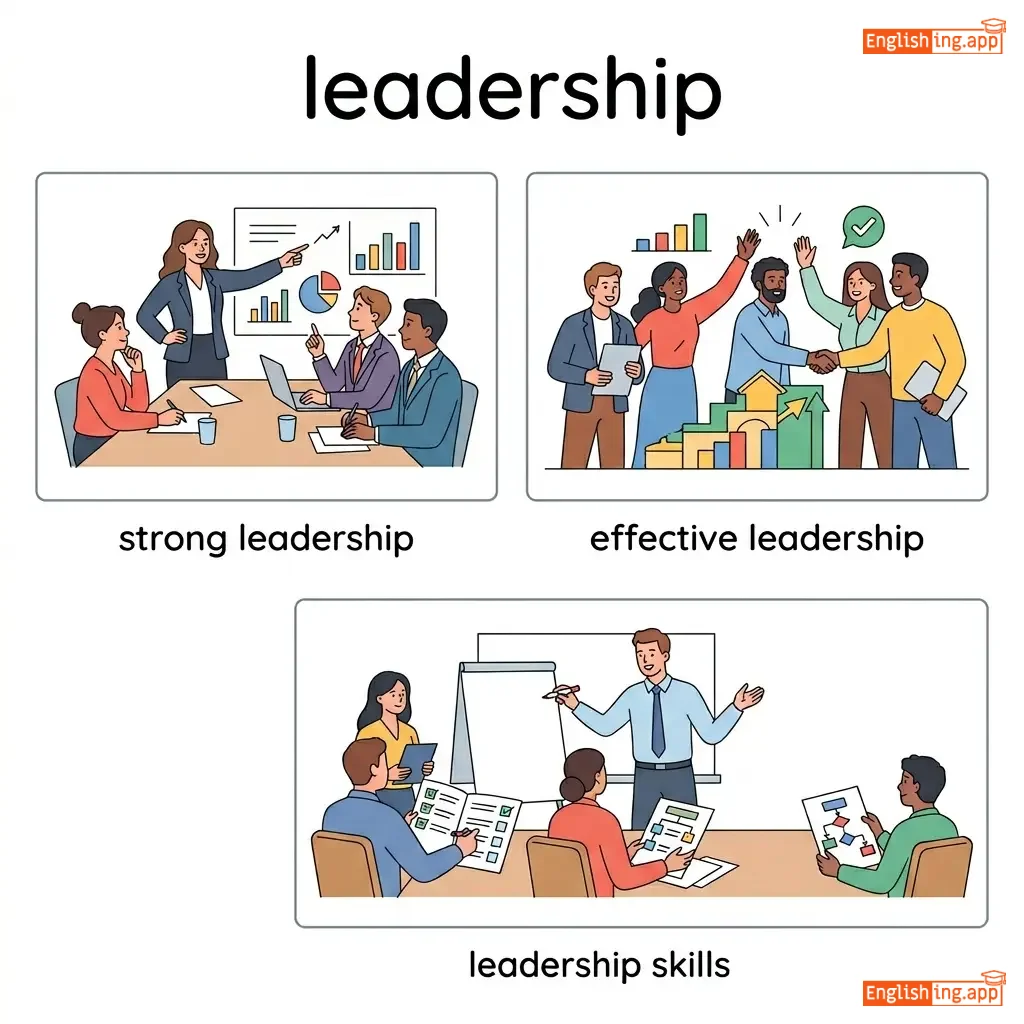
strong leadership, effective leadership, leadership skills, leadership qualities
••••••
|
リーダーシップは船長のように、成功の海をチームで進んでいくことです。
••••••
|
Vocabulary Quiz
Test your vocabulary by matching words with their translations or meanings.
Login to take the quiz
Comments (0)
Share your thoughts and join the discussion.
Join the discussion by logging in
Login to CommentNo comments yet
Be the first to share your thoughts!