

翻訳
過去
過去分詞
三人称単数
動名詞
意味
例文
例文の翻訳
同義語
対義語
コロケーション
ニーモニック
Swipe left or right, or use the buttons. Tap image to zoom.
例文の翻訳
単語
Lesson 20Lesson 20 - マスクトグル
|
絵文字
|
単語 | Images | 翻訳 | 過去 | 過去分詞 | 三人称単数 | 動名詞 | 意味 | 例文 | 例文の翻訳 | 表現例 | 表現例の意味 | 表現例の翻訳 | 同義語 | 対義語 | コロケーション | ニーモニック |
|---|---|---|---|---|---|---|---|---|---|---|---|---|---|---|---|---|---|
|
#908
🎯
|
/ˈsɛntər/
noun
(センター)
••••••
|
|
中心
chūshin
••••••
|
- •••••• | - •••••• | - •••••• | - •••••• |
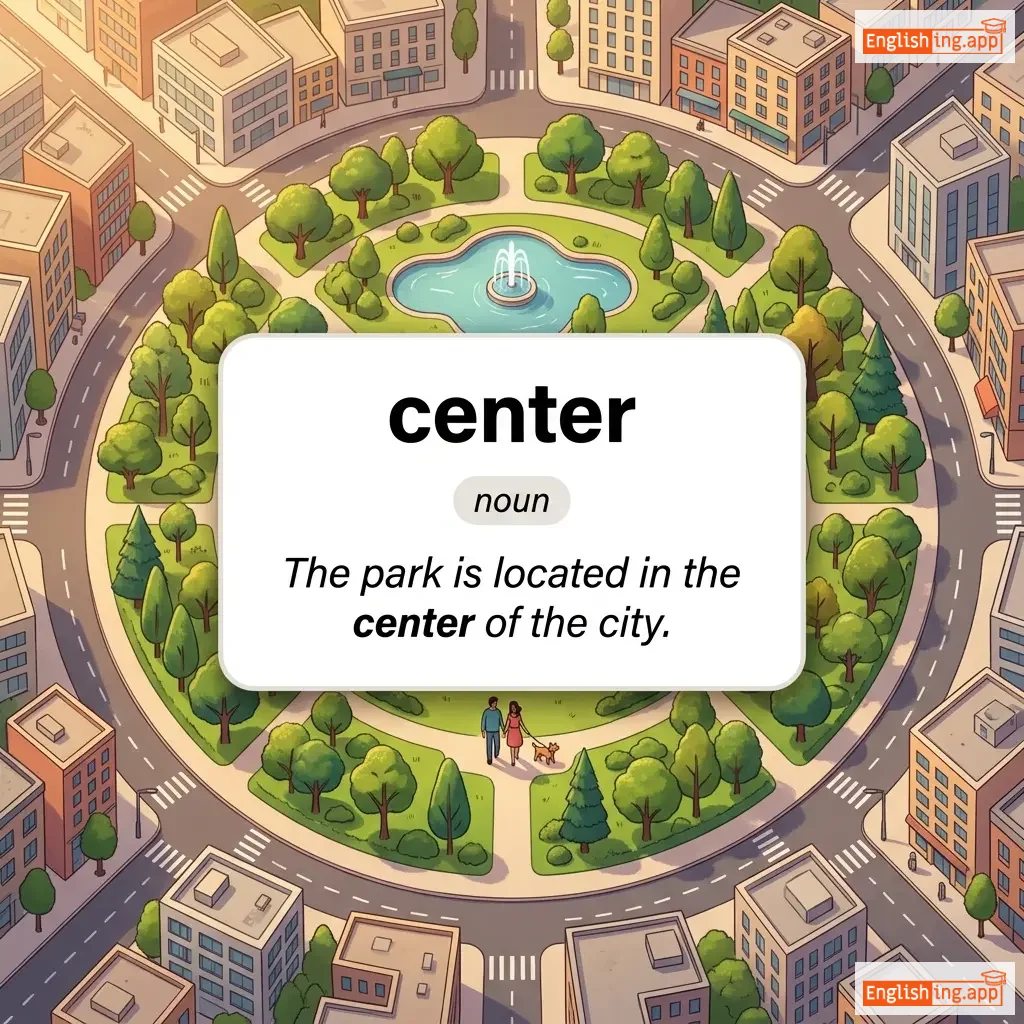
The middle point or part of something; a place where a particular activity is concentrated.
••••••
|
The park is located in the center of the city. |
公園は街の中心にあります。
Kōen wa machi no chūshin ni arimasu.
••••••
|
the center of attention |
the person or thing that everyone is paying attention to
••••••
|
注目の中心
Chūmoku no chūshin
••••••
|
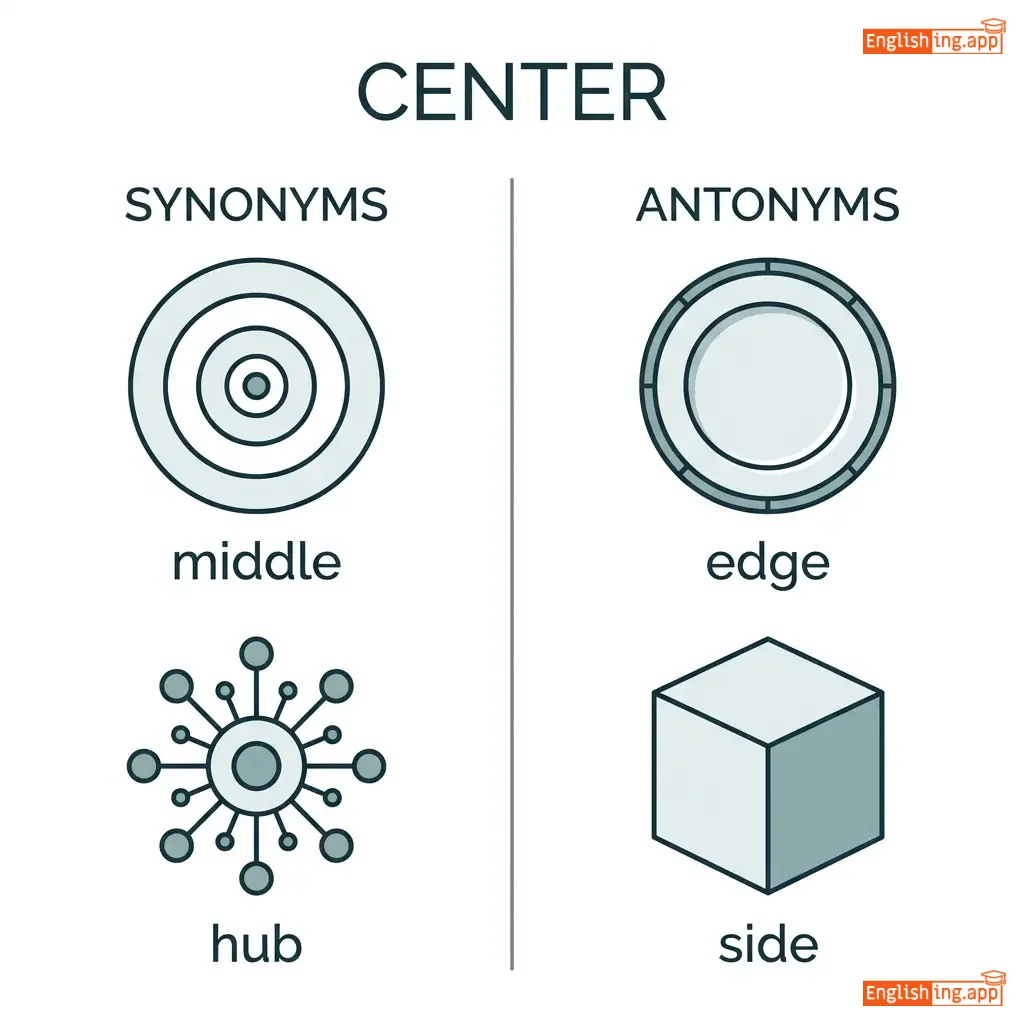
middle, hub, core, heart, focus
••••••
|
edge, side, periphery
••••••
|
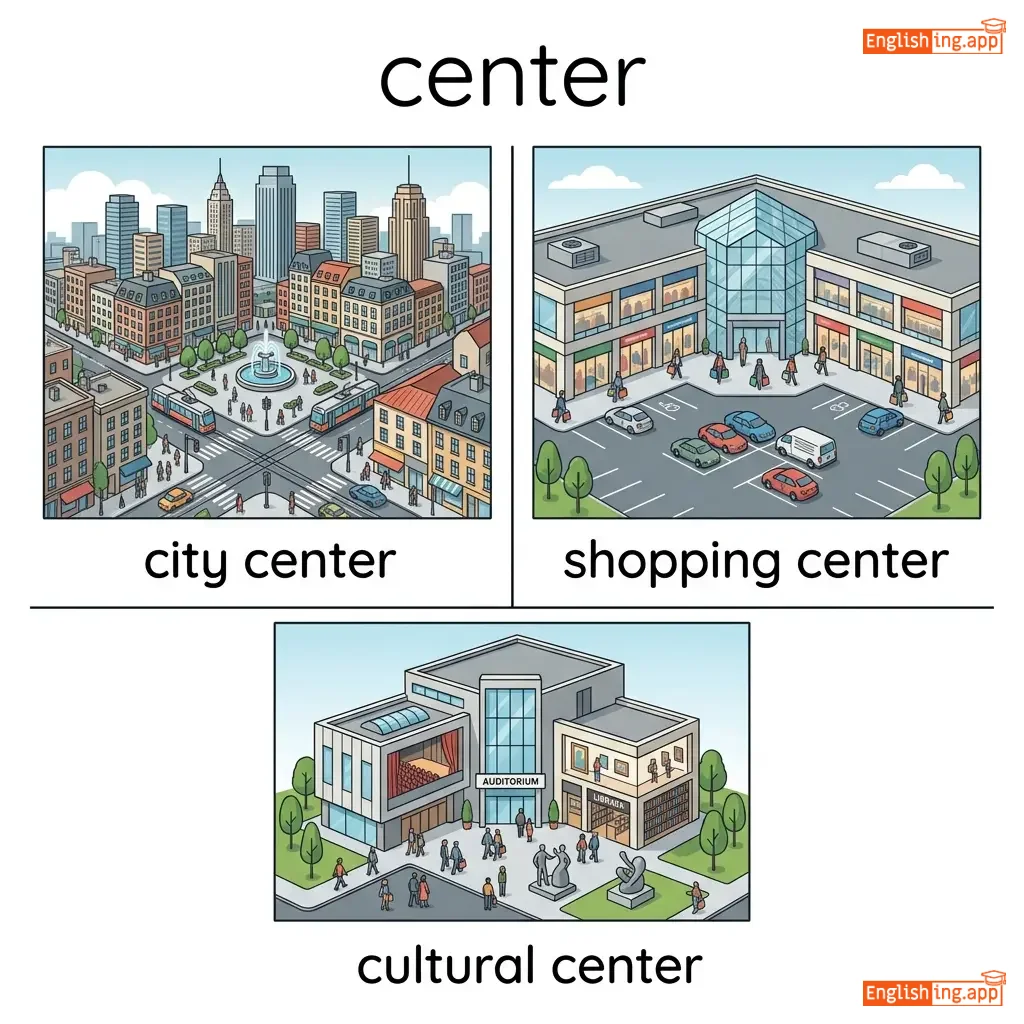
city center, shopping center, cultural center, attention center
••••••
|
Centerは中心、例えばCity Centerは街の中心という意味です。
••••••
|
|
#909
📍
|
/ˈsɛntrəl/
adjective
(セントラル)
••••••
|
- •••••• |
中央の
chūō no
••••••
|
- •••••• | - •••••• | - •••••• | - •••••• |
Situated in the middle; of the greatest importance.
••••••
|
Water is central to human survival. |
水は人間の生存にとって中央の役割を果たします。
Mizu wa ningen no seizon ni totte chūō no yakuwari o hatashimasu.
••••••
|
play a central role |
to be very important in something
••••••
|
中央の役割を果たす
Chūō no yakuwari o hatasu
••••••
|
main, key, vital, core, essential
••••••
|
minor, peripheral, unimportant
••••••
|
central idea, central role, central authority, central location
••••••
|
Centralは重要なもの、例えば東京の中央駅のように。
••••••
|
|
#910
📆
|
/ˈsɛnʧəri/
noun
(senchuri)
••••••
|
- •••••• |
世紀
seiki
••••••
|
- •••••• | - •••••• | - •••••• | - •••••• |
A period of one hundred years.
••••••
|
The 20th century saw significant technological progress. |
20世紀は技術的な進歩が顕著であった。
20seiki wa gijutsuteki na shinpo ga kencho de atta.
••••••
|
turn of the century |
the beginning of a new century
••••••
|
世紀の変わり目
seiki no kawarime
••••••
|
hundred years, era, age, period
••••••
|
moment, instant, second
••••••
|
century old, 21st century, century mark, past century
••••••
|
世紀はCentury。日本の100年の歴史が一つの世紀。
••••••
|
|
#911
🎉
|
/ˈsɛrəˌmoʊni/
noun
••••••
|
- •••••• | - •••••• | - •••••• | - •••••• | - •••••• | - •••••• |
A formal event or occasion, often with rituals and traditions.
••••••
|
The graduation ceremony was held in the university hall. |
- •••••• |
without ceremony |
done simply, without formality
••••••
|
- •••••• |
ritual, event, celebration, function, observance
••••••
|
informality, casualness
••••••
|
wedding ceremony, opening ceremony, award ceremony, official ceremony
••••••
|
No •••••• |
|
#912
✅
|
/ˈsɜːr.tən/
adjective
(サートゥン)
••••••
|
- •••••• |
確実な
kakujitsu na
••••••
|
- •••••• | - •••••• | - •••••• | - •••••• |
Known for sure; having no doubt.
••••••
|
I am certain that she will succeed.
アイ アム サートゥン ザット シー ウィル サクシード。
••••••
|
私は彼女が成功すると確信しています。
watashi wa kanojo ga seikou suru to kakushin shiteimasu.
••••••
|
for certain
フォー サートゥン
••••••
|
Without any doubt.
••••••
|
確かに
tashika ni
••••••
|
sure, confident, definite, assured, convinced
••••••
|
uncertain, doubtful, unsure
••••••
|
certain circumstances, certain degree, certain way, certain level
••••••
|
Certain sounds like 'サーティファイ', as in certified or assured.
••••••
|
|
#913
✅
|
/ˈsɜːrtənli/
adverb
(サートンリー)
••••••
|
- •••••• |
確かに
tashika ni
••••••
|
- •••••• | - •••••• | - •••••• | - •••••• |
without doubt; surely; used to emphasize certainty
••••••
|
I will certainly help you with your project.
私は確実にあなたのプロジェクトを手伝います。
••••••
|
私は確実にあなたのプロジェクトを手伝います。
Watashi wa tashika ni anata no purojekuto o tetsudaimasu.
••••••
|
certainly not
確実にない
••••••
|
used to strongly refuse or disagree
••••••
|
確実にない
kakujitsu ni nai
••••••
|
surely, definitely, undoubtedly, absolutely, clearly
••••••
|
possibly, maybe, uncertain
••••••
|
certainly true, certainly help, certainly possible, most certainly
••••••
|
Certainは確かで、だからcertainlyは確かにです ✅
••••••
|
|
#914
✅
|
/ˈsɜːr.tən.ti/
noun
(サーティンティ)
••••••
|
- •••••• |
確実性
kakujitsusei
••••••
|
- •••••• | - •••••• | - •••••• | - •••••• |
firm conviction that something is the case; the quality of being reliably true
••••••
|
We can say with certainty that the project will be completed on time. |
私たちは確実にそのプロジェクトが時間通りに完了することを言えます。
Watashitachi wa kakujitsu ni sono purojekuto ga jikan doori ni kanryou suru koto wo iemasu.
••••••
|
- •••••• | - •••••• | - •••••• |
confidence, assurance, conviction, sureness
••••••
|
uncertainty, doubt, hesitation
••••••
|
absolute certainty, with certainty, degree of certainty
••••••
|
Kakujitsusei means certainty, like confidently knowing the project will be finished.
••••••
|
|
#915
🎓
|
/sərˈtɪfɪkət/
noun
(サーティフィケート)
••••••
|
- •••••• |
証明書
shōmeisho
••••••
|
- •••••• | - •••••• | - •••••• | - •••••• |
a document serving as proof of achievement or qualification
••••••
|
She received a certificate for completing the course. |
彼女はコースを修了したため、証明書を受け取った。
Kanojo wa kōsu o shūryō shita tame, shōmeisho o uketotta.
••••••
|
- •••••• | - •••••• | - •••••• |
diploma, qualification, accreditation, award
••••••
|
disqualification
••••••
|
receive a certificate, certificate of completion, certificate of achievement
••••••
|
Certificate is ‘証’ (proof) + ‘明書’ (document).
••••••
|
|
#916
📜
|
/ˌsɜːrtɪfɪˈkeɪʃən/
noun
(サーティフィケーション)
••••••
|
- •••••• |
認定
nintei
••••••
|
- •••••• | - •••••• | - •••••• | - •••••• |
the process of officially recognizing or confirming that something or someone meets required standards; an official document proving qualification
••••••
|
She received her professional certification after completing the training program.
シー リシーブド ハー プロフェッショナル サーティフィケーション アフター コンプリーティング ザ トレーニング プログラム。
••••••
|
彼女は研修プログラムを修了した後、専門的な認定を取得しました。
kanojo wa kenshu puroguramu o shuryo shita ato senmonteki na nintei o shutoku shimashita
••••••
|
- •••••• | - •••••• | - •••••• |
accreditation, validation, authorization, qualification, endorsement
••••••
|
disqualification, decertification
••••••
|
professional certification, certification process, certification program, certification exam
••••••
|
Certification = 認定、公式にOKをもらう感じ。
••••••
|
|
#917
⛓️
|
/tʃeɪn/
noun
••••••
|
- •••••• | - •••••• | - •••••• | - •••••• | - •••••• | - •••••• |
a connected series of metal rings used for fastening or securing things; a series of connected events or businesses
••••••
|
He wore a gold chain around his neck. |
- •••••• |
a chain reaction |
a series of related events triggered by the first event
••••••
|
- •••••• |
link, series, sequence, cord, string
••••••
|
break, separation
••••••
|
gold chain, supply chain, food chain, chain of events
••••••
|
No •••••• |
|
#918
🪑
|
/tʃɛr/
noun
••••••
|
- •••••• | - •••••• | - •••••• | - •••••• | - •••••• | - •••••• |
a piece of furniture for one person to sit on, typically having a back and four legs
••••••
|
She pulled up a chair and sat beside me. |
- •••••• |
take the chair |
to act as the leader or presiding officer of a meeting
••••••
|
- •••••• |
seat, armchair, stool, bench
••••••
|
floor, ground
••••••
|
wooden chair, office chair, rocking chair, chair seat
••••••
|
No •••••• |
|
#919
👔
|
/ˈtʃɛərmən/
noun
(ハピネス)
••••••
|
- •••••• |
幸福
kōfuku
••••••
|
- •••••• | - •••••• | - •••••• | - •••••• |
the leader or head of a meeting, committee, or organization
••••••
|
The chairman opened the meeting with a short speech. |
彼女は賞を受け取ったとき、喜びを隠せなかった。
Kanojo wa shō o uketotta toki, yorokobi o kakusenakatta.
••••••
|
chairman of the board |
the head of a company's board of directors
••••••
|
幸福を追求する
kōfuku o tsuikyū suru
••••••
|
leader, head, chief, president
••••••
|
member, follower
••••••
|
chairman position, acting chairman, board chairman, elected chairman
••••••
|
幸福 = 幸 + 福 => 幸せな気分になれる。
••••••
|
|
#920
👩💼
|
/ˈtʃɛərˌwʊmən/
noun
(チェアウーマン)
••••••
|
- •••••• |
女性議長
josei gicho
••••••
|
- •••••• | - •••••• | - •••••• | - •••••• |
a woman who presides over a meeting, committee, or organization; a female leader of a board or council
••••••
|
She was elected chairwoman of the company after years of experience.
シー ワズ エレクテッド チェアウーマン オブ ザ カンパニー。
••••••
|
彼女は長年の経験の後、その会社の女性議長に選ばれた。
Kanojo wa naganen no keiken no ato sono kaisha no josei gicho ni erabareta
••••••
|
chairwoman of the board
チェアウーマン オブ ザ ボード
••••••
|
the female leader who heads a company’s board of directors
••••••
|
取締役会の女性議長
torishimariyaku kai no josei gicho
••••••
|
chair, chairperson, female chair, presiding officer
••••••
|
chairman, subordinate, member
••••••
|
chairwoman of the board, elected chairwoman, serve as chairwoman, company chairwoman
••••••
|
女性 + 議長 = 女性議長 → chairwoman
••••••
|
|
#921
🏔️
|
/ˈtʃælɪndʒ/
noun/verb
(チャレンジ)
••••••
|
|
チャレンジ
charenji
••••••
|
challenged
チャレンジド
••••••
|
challenged
チャレンジド
••••••
|
challenges
チャレンジズ
••••••
|
challenging
チャレンジング
••••••
|
a difficult task or problem that requires effort to overcome; to question or dispute
••••••
|
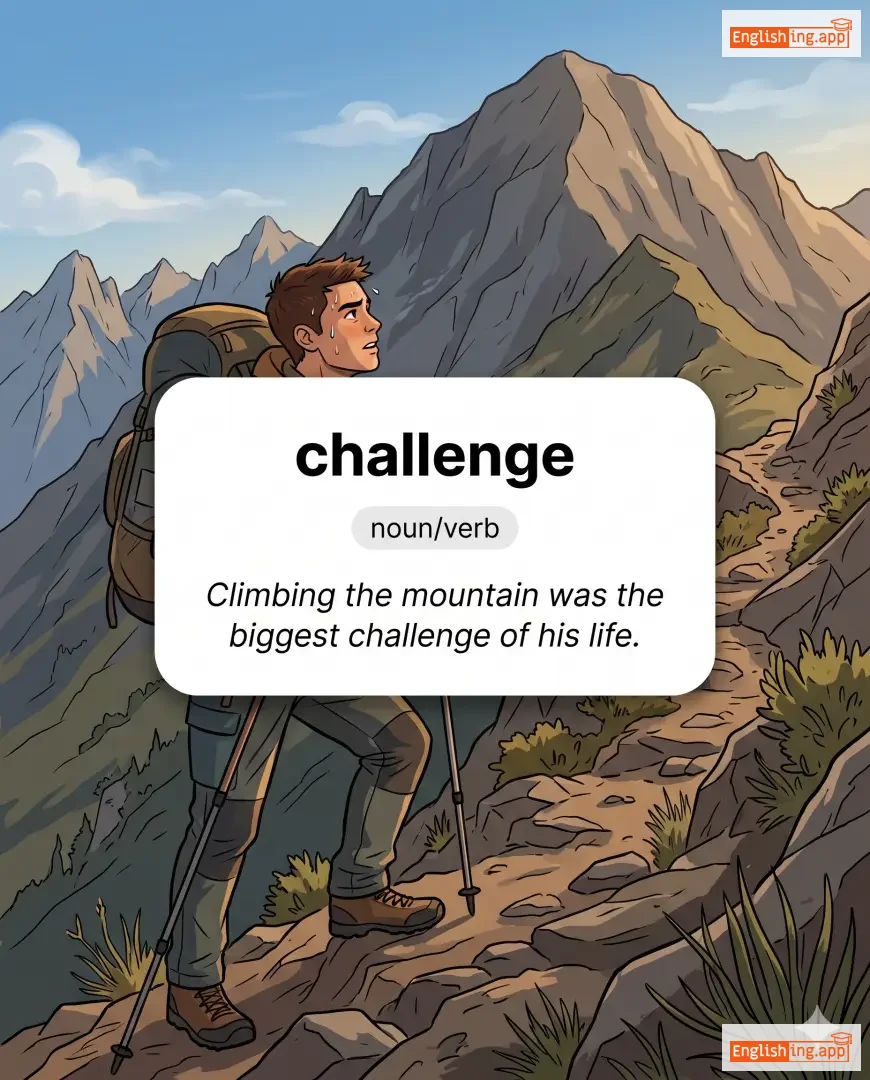
Climbing the mountain was the biggest challenge of his life.
山を登ることは彼の人生で最大のチャレンジでした。
••••••
|
山を登ることは彼の人生で最大のチャレンジでした。
Yama wo noboru koto wa kare no jinsei de saidai no charenji deshita.
••••••
|
rise to the challenge
チャレンジに挑戦する
••••••
|
to successfully deal with a difficult situation
••••••
|
チャレンジに挑戦する
charenji ni chousen suru
••••••
|
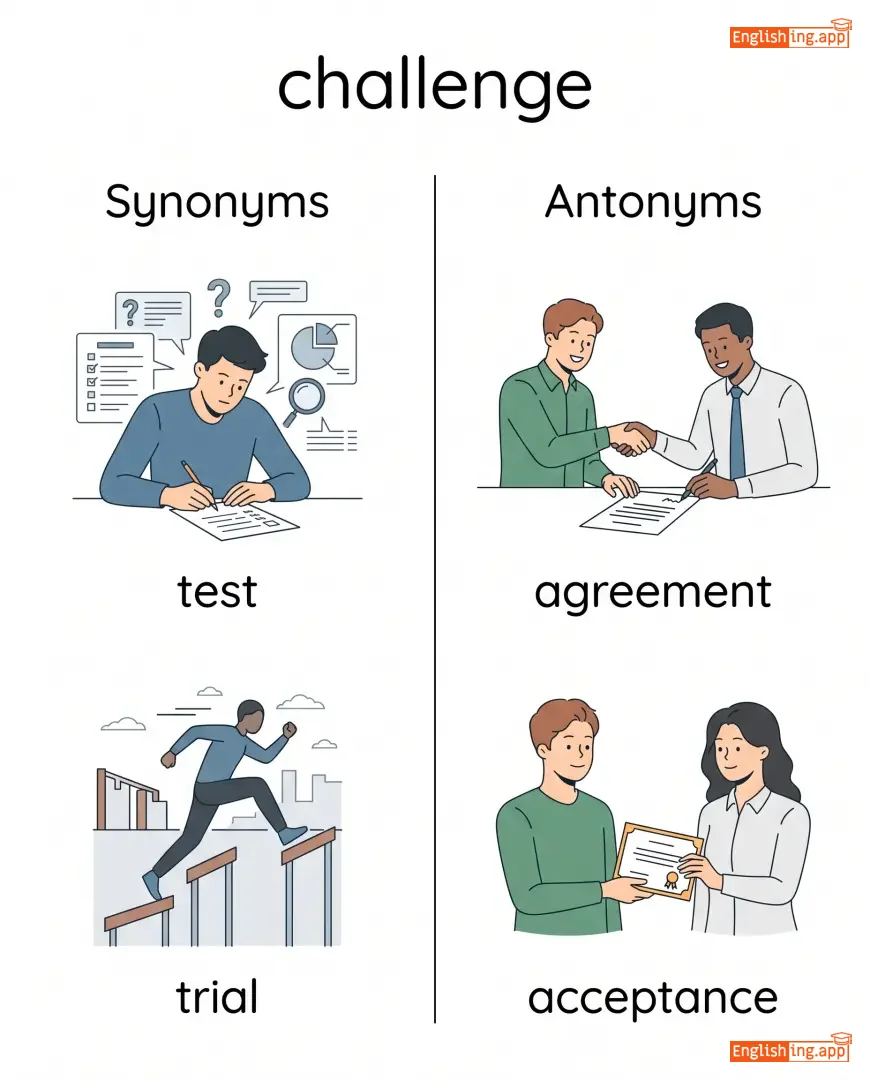
test, trial, obstacle, difficulty, contest
••••••
|
agreement, acceptance, support
••••••
|
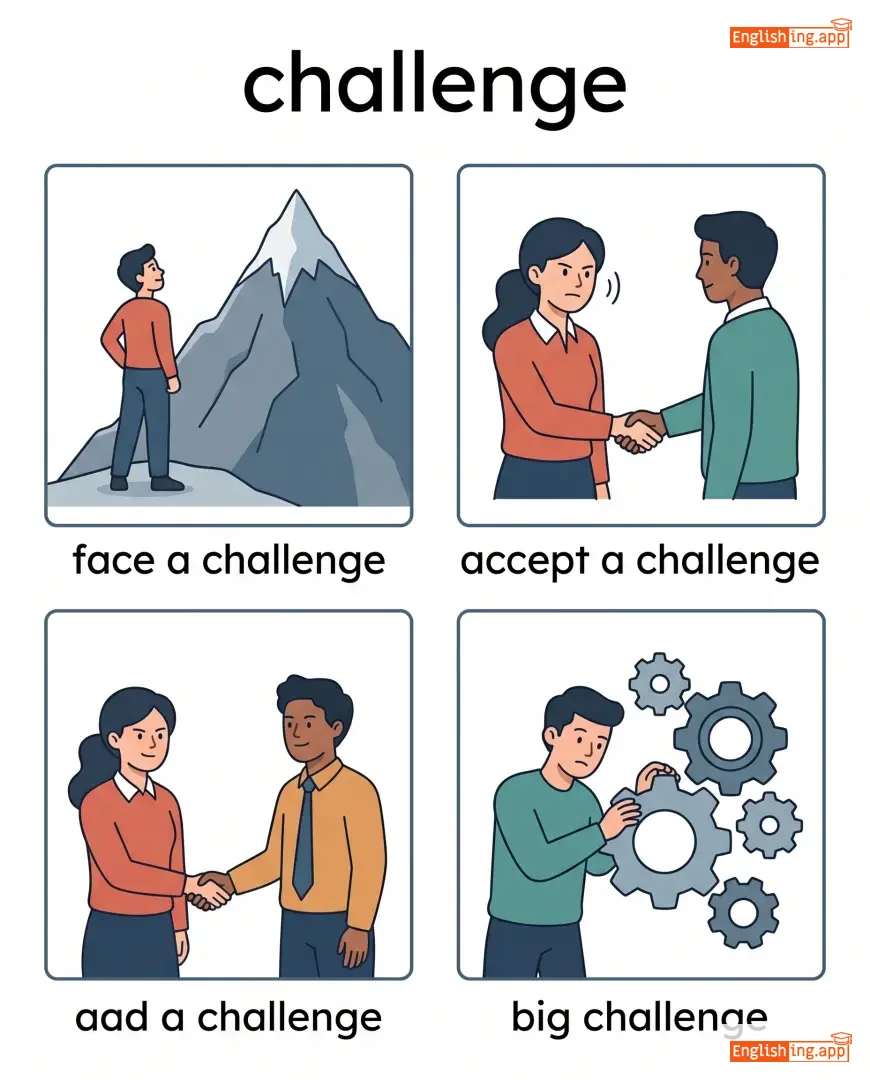
face a challenge, accept a challenge, big challenge, challenge authority
••••••
|
チャレンジは挑戦です – 山を登ることが彼の人生で最も大きなチャレンジでした 🏔️
••••••
|
|
#922
🏛️
|
/ˈtʃeɪmbər/
noun
(チェンバー)
••••••
|
- •••••• |
部屋
heya
••••••
|
- •••••• | - •••••• | - •••••• | - •••••• |
a large room used for formal or public events, or a private room.
••••••
|
The king held meetings in his private chamber. |
王は自分のプライベートな部屋で会議を開きました。
Ō wa jibun no puraibēto na heya de kaigi o hirakimashita.
••••••
|
upper chamber |
the higher legislative house in a bicameral parliament
••••••
|
上院
jōin
••••••
|
room, hall, compartment, chamber, council
••••••
|
open space, outdoors
••••••
|
chamber of commerce, upper chamber, private chamber, gas chamber
••••••
|
部屋、王様の部屋—プライベートな空間。
••••••
|
|
#923
🥇
|
/ˈtʃæmpiən/
noun
(チャンピオン)
••••••
|
|
チャンピオン
champion
••••••
|
- •••••• | - •••••• | - •••••• | - •••••• |
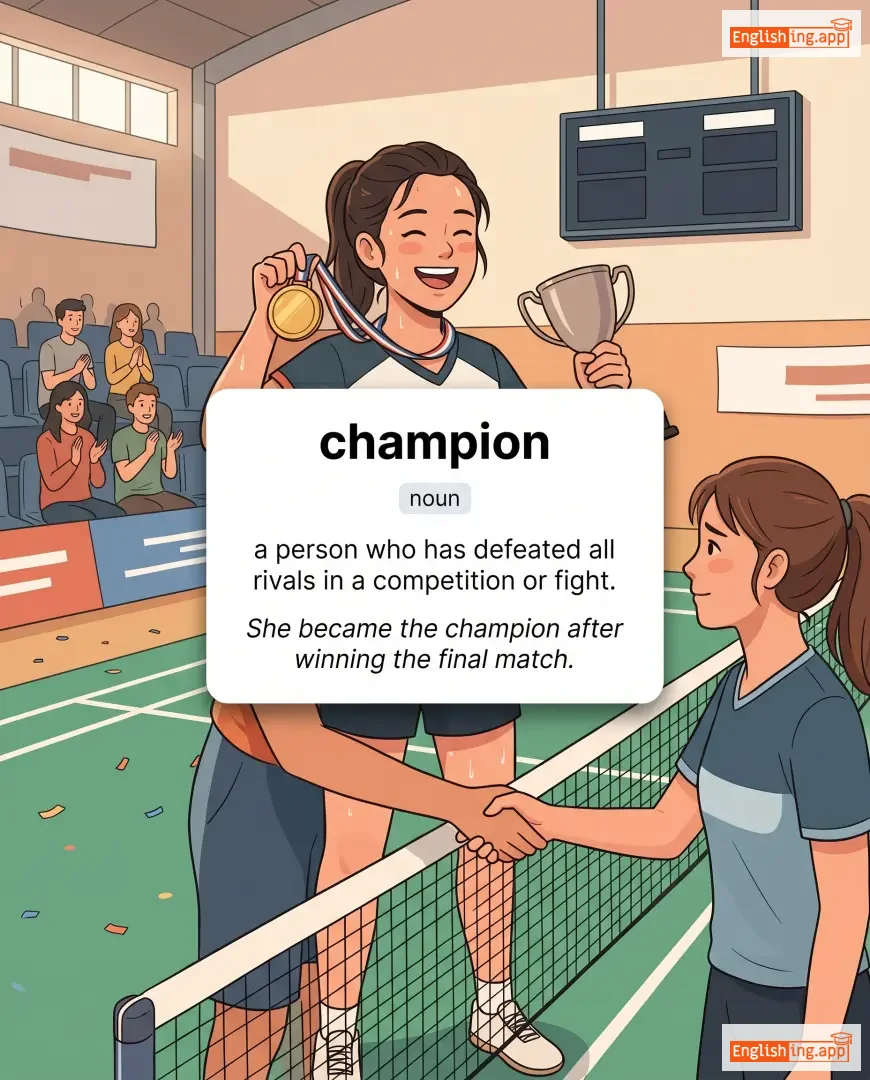
a person who has defeated all rivals in a competition or fight.
••••••
|
She became the champion after winning the final match. |
彼女は決勝戦に勝った後、チャンピオンになった。
Kanojo wa kesshousen ni katta ato, champion ni natta.
••••••
|
defend the champion |
to maintain one’s title against challengers
••••••
|
チャンピオンを守る
champion o mamoru
••••••
|
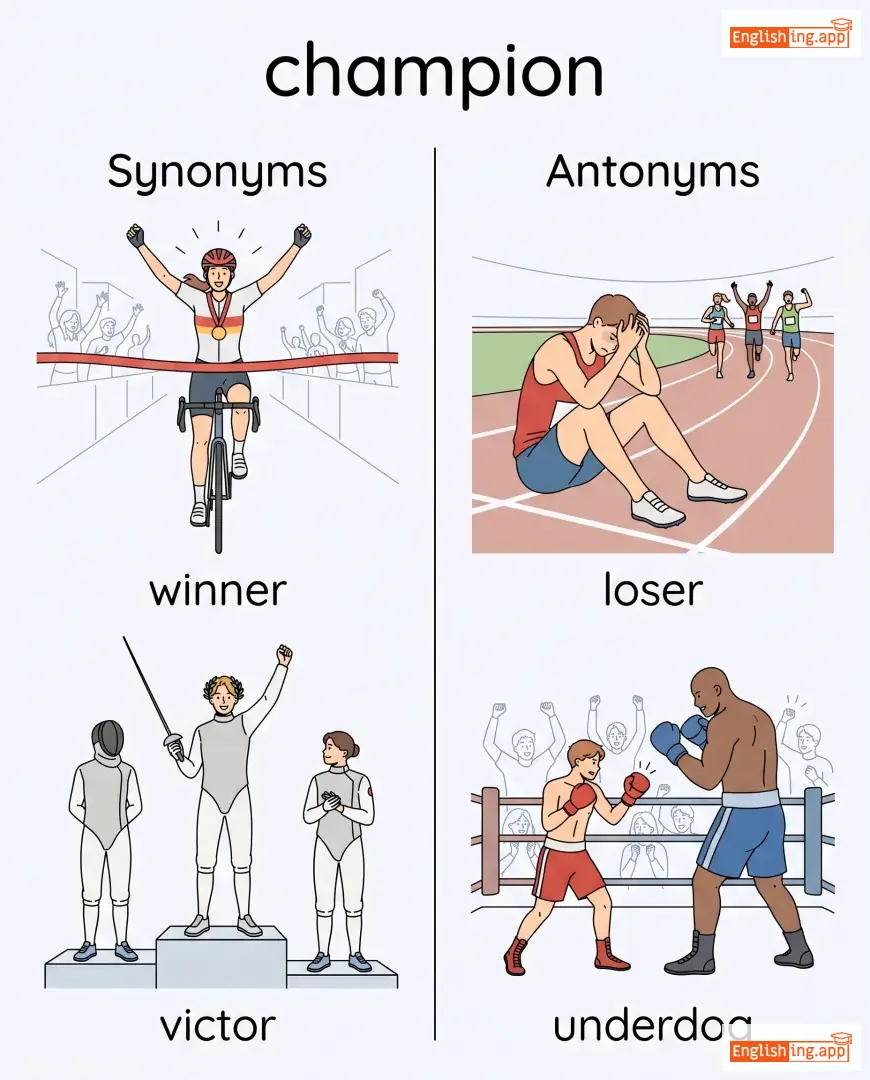
winner, victor, titleholder, hero, defender
••••••
|
loser, underdog
••••••
|
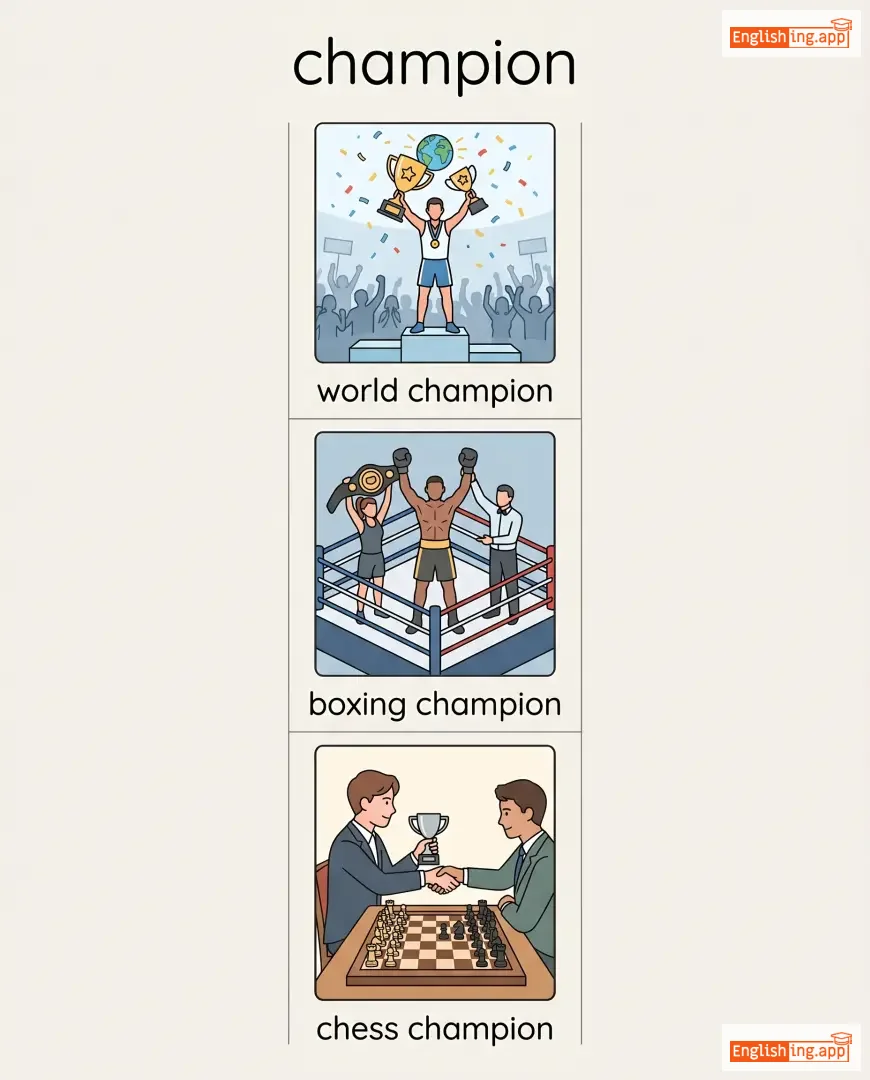
world champion, boxing champion, chess champion, defend champion
••••••
|
Champion means 'camp' + 'lion'—チャンピオンはライオンのように勝利する。
••••••
|
|
#924
🏆
|
/ˈtʃæmpiənʃɪp/
noun
(チャンピオンシップ)
••••••
|
- •••••• |
選手権
senshuken
••••••
|
- •••••• | - •••••• | - •••••• | - •••••• |
a competition to decide who is the best in a particular sport or activity.
••••••
|
The championship will be held next month. |
選手権は来月行われます。
senshuken wa raigetsu okonawaremasu.
••••••
|
win the championship |
to become the victor of a major competition
••••••
|
選手権を勝ち取る
senshuken o kachitoru
••••••
|
tournament, contest, league, competition, cup
••••••
|
friendly match, practice
••••••
|
world championship, national championship, championship game, win championship
••••••
|
選手権は、選手が競い合う大会で、最後に勝つとチャンピオンとなる。
••••••
|
|
#925
🎲
|
/tʃæns/
noun
(チャンス)
••••••
|
- •••••• |
チャンス
chansu
••••••
|
- •••••• | - •••••• | - •••••• | - •••••• |
An opportunity or possibility of something happening.
••••••
|
He took a chance and applied for the job. |
彼はチャンスを取り、仕事に応募した。
Kare wa chansu o tori, shigoto ni ōbo shita.
••••••
|
take a chance |
to do something risky or uncertain in hope of success
••••••
|
チャンスを取る
chansu o toru
••••••
|
opportunity, possibility, likelihood, probability, prospect
••••••
|
certainty, impossibility, guarantee
••••••
|
take a chance, by chance, good chance, slim chance
••••••
|
Chanceはチャンス – サイコロ🎲を振ってチャンスを掴もう!
••••••
|
|
#926
🔄
|
/tʃeɪndʒ/
verb
(チェンジ)
••••••
|
|
変化
henka
••••••
|
changed
チェンジド
••••••
|
changed
チェンジド
••••••
|
changes
チェンジズ
••••••
|
changing
チェンジング
••••••
|
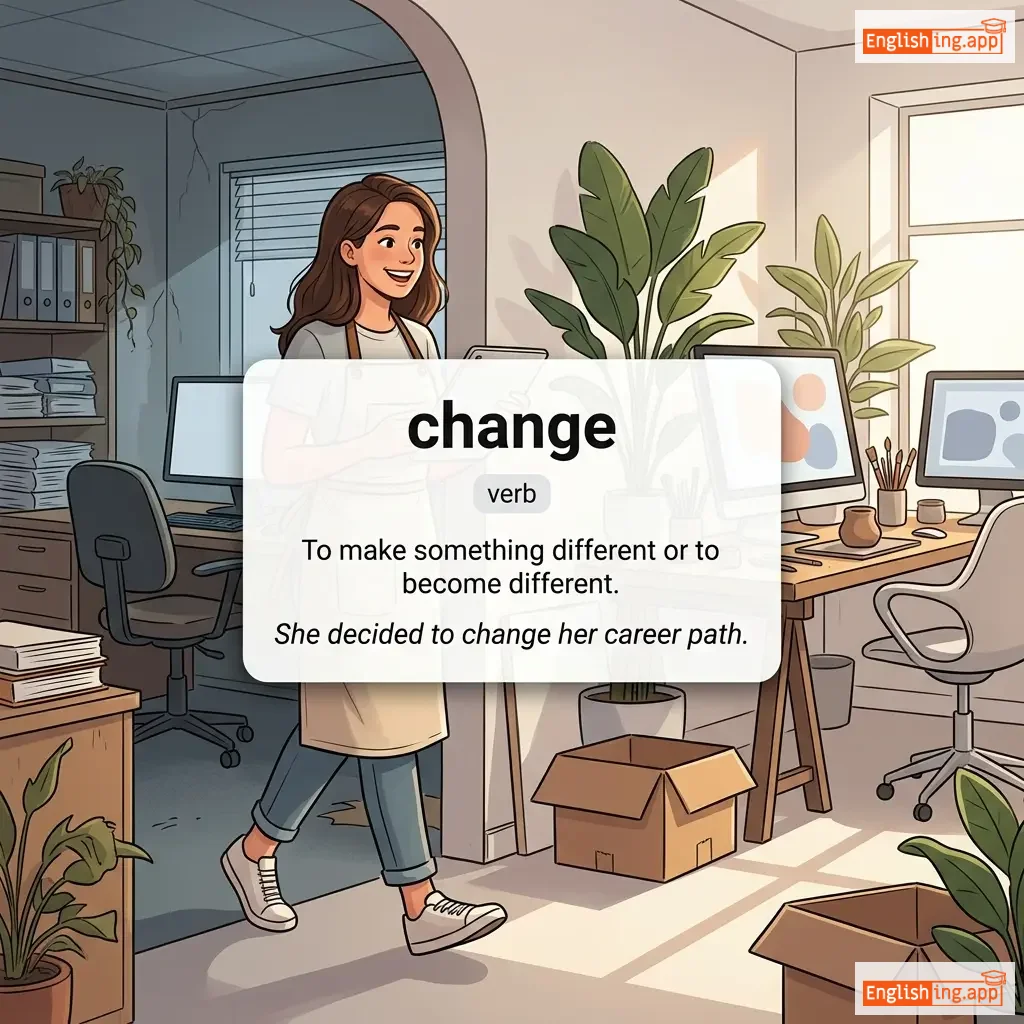
To make something different or to become different.
••••••
|
She decided to change her career path.
彼女はキャリアパスを変更することに決めました。
••••••
|
彼女はキャリアパスを変更することに決めました。
Kanojo wa kyaria pasu o henkou suru koto ni kimemashita.
••••••
|
change of heart
心変わり
••••••
|
a change in one's opinion or feelings
••••••
|
心変わり
kokoro gawari
••••••
|
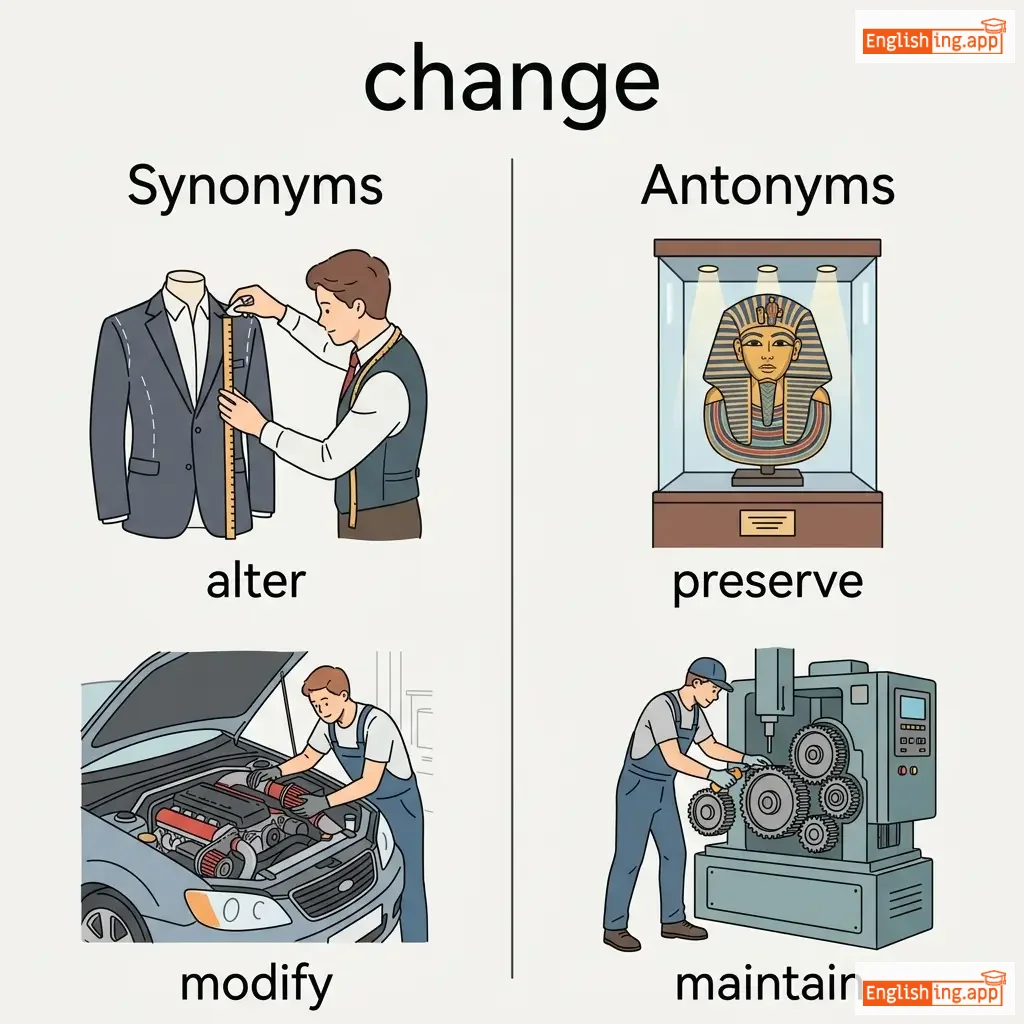
alter, modify, transform, adjust, shift
••••••
|
preserve, maintain, keep
••••••
|
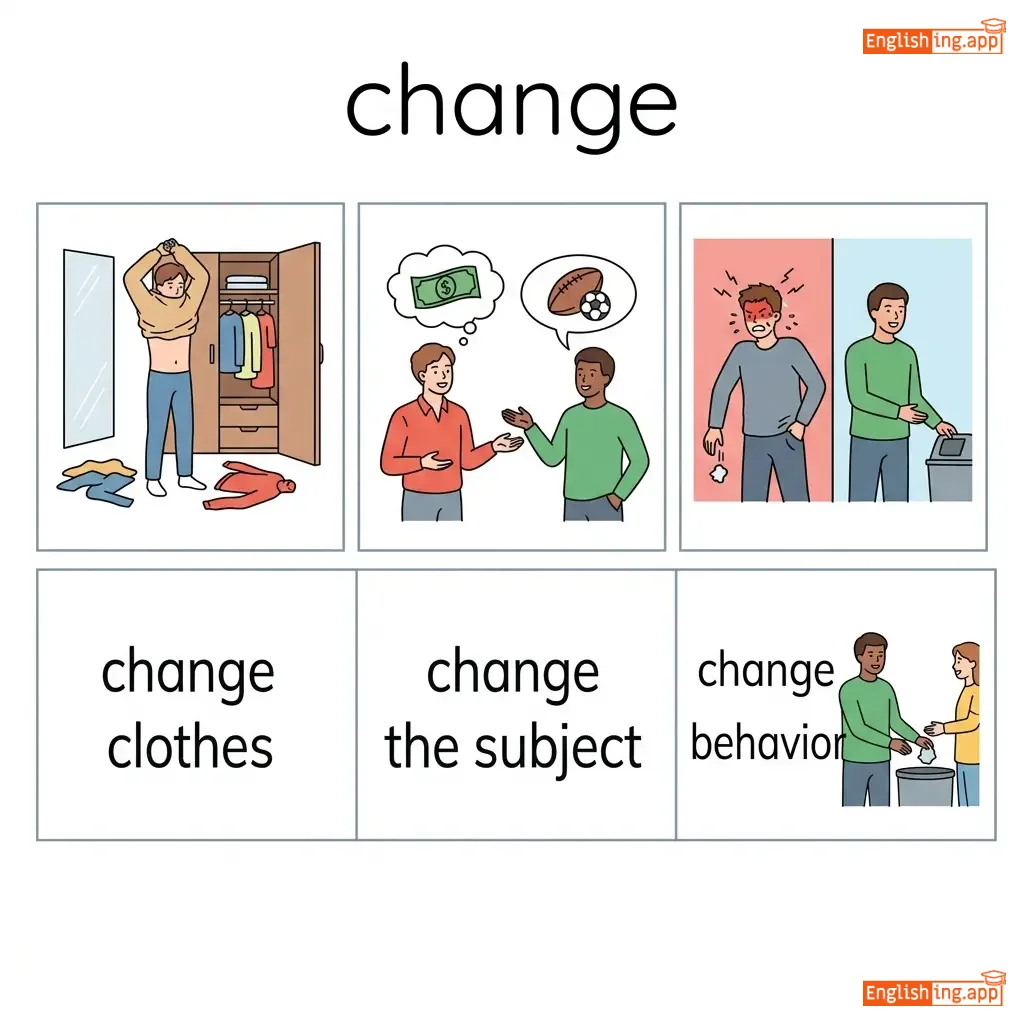
change clothes, change the subject, change behavior, change mind
••••••
|
Changeは変化を意味します – 気候変動では気候が変わります 🌍
••••••
|
|
#927
🔄
|
/ˈtʃeɪn.dʒə.bəl/
adjective
(チェンジャブル)
••••••
|
- •••••• |
変わりやすい; 不安定な
kawariyasui; fuanteina
••••••
|
- •••••• | - •••••• | - •••••• | - •••••• |
able to be changed; likely to change frequently
••••••
|
The weather is very changeable in spring.
ザ ウェザー イズ ベリー チェンジャブル イン スプリング
••••••
|
春は天気が非常に変わりやすいです。
Haru wa tenki ga hijou ni kawariyasui desu.
••••••
|
- •••••• | - •••••• | - •••••• |
variable, unstable, inconsistent, fickle
••••••
|
stable, constant, fixed, unchanging
••••••
|
changeable weather, changeable mood, changeable conditions
••••••
|
Changeable = Change + Able, 変化しやすいもの。
••••••
|
|
#928
🌦️
|
/ˈtʃeɪndʒɪŋ/
verb
(チェンジング)
••••••
|
- •••••• |
変化
henka
••••••
|
- •••••• | - •••••• | - •••••• |
changing
チェンジング
••••••
|
The act of becoming different; ongoing process of change.
••••••
|
The weather is changing rapidly.
天気は急速に変化しています。
••••••
|
天気は急速に変化しています。
Tenki wa kyūsoku ni henka shiteimasu.
••••••
|
- •••••• | - •••••• | - •••••• |
modifying, altering, transforming, shifting
••••••
|
stable, constant, fixed
••••••
|
changing situation, changing world, changing role, changing rapidly
••••••
|
Changingは変化です – チャンネルを変えると、画像も変わります!
••••••
|
|
#929
📺
|
/ˈtʃænəl/
noun
(チャネル)
••••••
|
- •••••• |
チャンネル / 媒体
channeru / baitai
••••••
|
- •••••• | - •••••• | - •••••• | - •••••• |
A means of communication, or a passage for water or information.
••••••
|
They launched a new TV channel last year. |
彼らは昨年新しいテレビチャンネルを開設しました。
Karera wa sakunen atarashī terebi channeru o kaisetsu shimashita.
••••••
|
go through proper channels |
to follow the official or correct process
••••••
|
適切なチャンネルを通る
Tekisetsu na channeru o tōru
••••••
|
medium, passage, route, conduit, station
••••••
|
blockage, obstacle
••••••
|
TV channel, communication channel, sales channel, distribution channel
••••••
|
Channelは媒体を意味します – TVチャンネルは情報の媒体です📺
••••••
|
|
#930
🌪️
|
/ˈkeɪɒs/
noun
(ke-osu)
••••••
|
- •••••• |
混乱
konran
••••••
|
- •••••• | - •••••• | - •••••• | - •••••• |
A state of complete disorder and confusion.
••••••
|
The sudden storm caused chaos in the city. |
突然の嵐が都市で混乱を引き起こした。
Totsuzen no arashi ga toshi de konran o hikiokoshita.
••••••
|
utter chaos |
a situation of complete and total disorder
••••••
|
完全な混乱
Kanzen na konran
••••••
|
disorder, confusion, turmoil, mayhem, pandemonium
••••••
|
order, harmony, calm
••••••
|
create chaos, chaos theory, complete chaos, chaos in
••••••
|
Chaos はカオスと同じ — 完全な混乱。
••••••
|
|
#931
📖
|
/ˈtʃæptər/
noun
(チャプター)
••••••
|
- •••••• |
章
shou
••••••
|
- •••••• | - •••••• | - •••••• | - •••••• |
A main division of a book or a period in someone's life.
••••••
|
I just finished the first chapter of the novel. |
私は小説の最初の章を終えたばかりです。
Watashi wa shousetsu no saisho no shou o oeta bakari desu.
••••••
|
a new chapter |
a new stage or phase in life
••••••
|
新しい章
atarashī shou
••••••
|
section, division, episode, part
••••••
|
whole, entirety
••••••
|
first chapter, last chapter, next chapter, chapter title
••••••
|
Chapterは章を意味する – 新しい章、人生の新しい段階 📖
••••••
|
|
#932
🎭
|
/ˈkærəktər/
noun
(キャラクター)
••••••
|
- •••••• |
キャラクター
kyarakutā
••••••
|
- •••••• | - •••••• | - •••••• | - •••••• |
the mental and moral qualities distinctive to an individual; a person in a story or play
••••••
|
The main character in the novel learns an important lesson. |
小説の主人公は重要な教訓を学びます。
Shōsetsu no shujinkō wa jūyōna kyōkun o manabimasu.
••••••
|
out of character |
not typical behavior for someone
••••••
|
キャラクターに反する
kyarakutā ni hansuru
••••••
|
personality, nature, figure, role, persona
••••••
|
facelessness, anonymity
••••••
|
strong character, fictional character, moral character, character development
••••••
|
Characterという英語の言葉は、キャラクターという日本語で、物語や劇の登場人物のようなものです。
••••••
|
|
#933
🔑
|
/ˌkærəktəˈrɪstɪk/
noun/adjective
(キャラクタリスティック)
••••••
|
- •••••• |
特徴
tokuchō
••••••
|
- •••••• | - •••••• | - •••••• | - •••••• |
A distinguishing quality or feature of a person, place, or thing.
••••••
|
Kindness is a characteristic of true leadership.
親切は真のリーダーシップの特徴です。
••••••
|
親切は真のリーダーシップの特徴です。
Shinsetsu wa shin no rīdāshippu no tokuchō desu.
••••••
|
Characteristic feature
特徴的な特徴
••••••
|
A notable quality that identifies something.
••••••
|
特徴的な特徴
tokuchōteki na tokuchō
••••••
|
trait, quality, feature, attribute, hallmark
••••••
|
anomaly, exception
••••••
|
unique characteristic, human characteristic, defining characteristic
••••••
|
Characteristic = 特徴, イメージは 'character' + 'istic'.
••••••
|
|
#934
🖊️
|
/ˈkærəktəraɪz/
verb
••••••
|
- •••••• | - •••••• |
characterized
••••••
|
characterized
••••••
|
characterizes
••••••
|
characterizing
••••••
|
to describe or portray the distinctive features or qualities of someone or something
••••••
|
The author characterizes the hero as brave and selfless. |
- •••••• |
characterize as |
to describe someone or something in a particular way
••••••
|
- •••••• |
depict, portray, define, describe, represent
••••••
|
misrepresent, distort
••••••
|
characterize as, clearly characterize, characterizes the style
••••••
|
No •••••• |
|
#935
⚡
|
/tʃɑːrdʒ/
verb
(チャージ)
••••••
|
- •••••• |
請求する/告発する
seikyū suru/kokuhatsu suru
••••••
|
charged
チャージド
••••••
|
charged
チャージド
••••••
|
charges
チャージズ
••••••
|
charging
チャージング
••••••
|
to demand payment; to formally accuse; to rush forward aggressively
••••••
|
The store charges extra for home delivery.
その店はホームデリバリーに追加料金を課します。
••••••
|
その店はホームデリバリーに追加料金を課します。
Sono mise wa hōmu deribarī ni tsuika ryōkin o kashimasu.
••••••
|
charge someone with
誰かを告発する
••••••
|
to accuse someone of a crime
••••••
|
誰かを告発する
dareka o kokuhatsu suru
••••••
|
bill, accuse, attack, command
••••••
|
free, acquit, retreat
••••••
|
charge money, charge fee, charge battery, charge with crime
••••••
|
携帯電話にチャージ(charge)がない場合、請求書を支払う必要があります。
••••••
|
|
#936
🤲
|
/ˈtʃærəti/
noun
(チャリティ)
••••••
|
- •••••• |
チャリティ / 慈善団体
charity / jizen dantai
••••••
|
- •••••• | - •••••• | - •••••• | - •••••• |
an organization set up to provide help and raise money for those in need; kindness and tolerance in judging others
••••••
|
The charity raised funds to support homeless families.
チャリティはホームレスの家族を支援するために資金を集めました。
••••••
|
チャリティはホームレスの家族を支援するために資金を集めました。
Charity wa hōmuresu no kazoku wo shien suru tame ni shikin wo atsume mashita.
••••••
|
charity begins at home
チャリティは家庭から始まる
••••••
|
one should take care of their family before helping others
••••••
|
チャリティは家庭から始まる
Charity wa katei kara hajimaru
••••••
|
philanthropy, generosity, organization, kindness
••••••
|
selfishness, greed
••••••
|
charity event, charity organization, give to charity, charity work
••••••
|
Charityはカタカナで慈善を意味します。 'チャリティ' は助け合いです
••••••
|
|
#937
💫
|
/tʃɑːrm/
noun/verb
••••••
|
- •••••• | - •••••• |
charmed
••••••
|
charmed
••••••
|
charms
••••••
|
charming
••••••
|
the power or quality of delighting or attracting others; to attract or please greatly
••••••
|
Her smile never fails to charm everyone around her. |
- •••••• |
lucky charm |
an object believed to bring good luck
••••••
|
- •••••• |
appeal, allure, enchantment, fascination, captivate
••••••
|
repel, displease
••••••
|
personal charm, lucky charm, charm offensive
••••••
|
No •••••• |
|
#938
✨
|
/ˈtʃɑːr.mɪŋ/
adjective
(チャーミング)
••••••
|
- •••••• |
魅力的
miryokuteki
••••••
|
- •••••• | - •••••• | - •••••• | - •••••• |
Very pleasing or delightful in a way that attracts people.
••••••
|
The village is full of charming little houses.
その村は魅力的な小さな家で満ちています。
••••••
|
その村は魅力的な小さな家で満ちています。
Sono mura wa miryokuteki na chiisana ie de michiteimasu.
••••••
|
- •••••• | - •••••• | - •••••• |
attractive, delightful, enchanting, appealing, captivating
••••••
|
repulsive, unattractive, unpleasant
••••••
|
charming smile, charming personality, charming place, charming story
••••••
|
Charmingは魅力的、だから人々は魅了される。
••••••
|
|
#939
📊
|
/tʃɑːrt/
noun
(チャート)
••••••
|
- •••••• |
チャート
chaato
••••••
|
- •••••• | - •••••• | - •••••• | - •••••• |
a sheet of information in the form of a table, graph, or diagram
••••••
|
The teacher used a chart to explain the statistics. |
教師は統計を説明するためにチャートを使用しました。
Kyōshi wa tōkei o setsumei suru tame ni chāto o shiyō shimashita.
••••••
|
top the charts |
to reach the number one position in sales or popularity
••••••
|
チャートのトップに立つ
Chāto no toppu ni tatsu
••••••
|
graph, diagram, table, map
••••••
|
text, narrative
••••••
|
bar chart, pie chart, flow chart, music chart
••••••
|
チャート – 視覚的にデータを示す
••••••
|
|
#940
📜
|
/ˈtʃɑːrtər/
noun/verb
(チャーター)
••••••
|
- •••••• |
チャーター / レンタル
chaataa / rentaru
••••••
|
chartered
チャータード
••••••
|
chartered
チャータード
••••••
|
charters
チャーターズ
••••••
|
chartering
チャータリング
••••••
|
a written document granting rights or privileges; to hire a vehicle or vessel for temporary use
••••••
|
The company decided to charter a bus for the trip.
その会社は旅行のためにバスをチャーターすることに決めました。
••••••
|
その会社は旅行のためにバスをチャーターすることに決めました。
Sono kaisha wa ryokou no tame ni basu o chaataa suru koto ni kimemashita.
••••••
|
charter flight
チャーターフライト
••••••
|
a flight hired for exclusive use rather than a scheduled service
••••••
|
チャーターフライト
chaataa furaito
••••••
|
license, permit, hire, lease, commission
••••••
|
prohibit, deny
••••••
|
charter flight, charter bus, charter school, royal charter
••••••
|
Charter は手紙📜 + レンタル、例: charter bus = バスをレンタルする
••••••
|
|
#941
🏃♂️
|
/tʃeɪs/
verb
(チェイス)
••••••
|
|
追いかける
oikakeru
••••••
|
chased
チェイスト
••••••
|
chased
チェイスト
••••••
|
chases
チェイセス
••••••
|
chasing
チェイシング
••••••
|
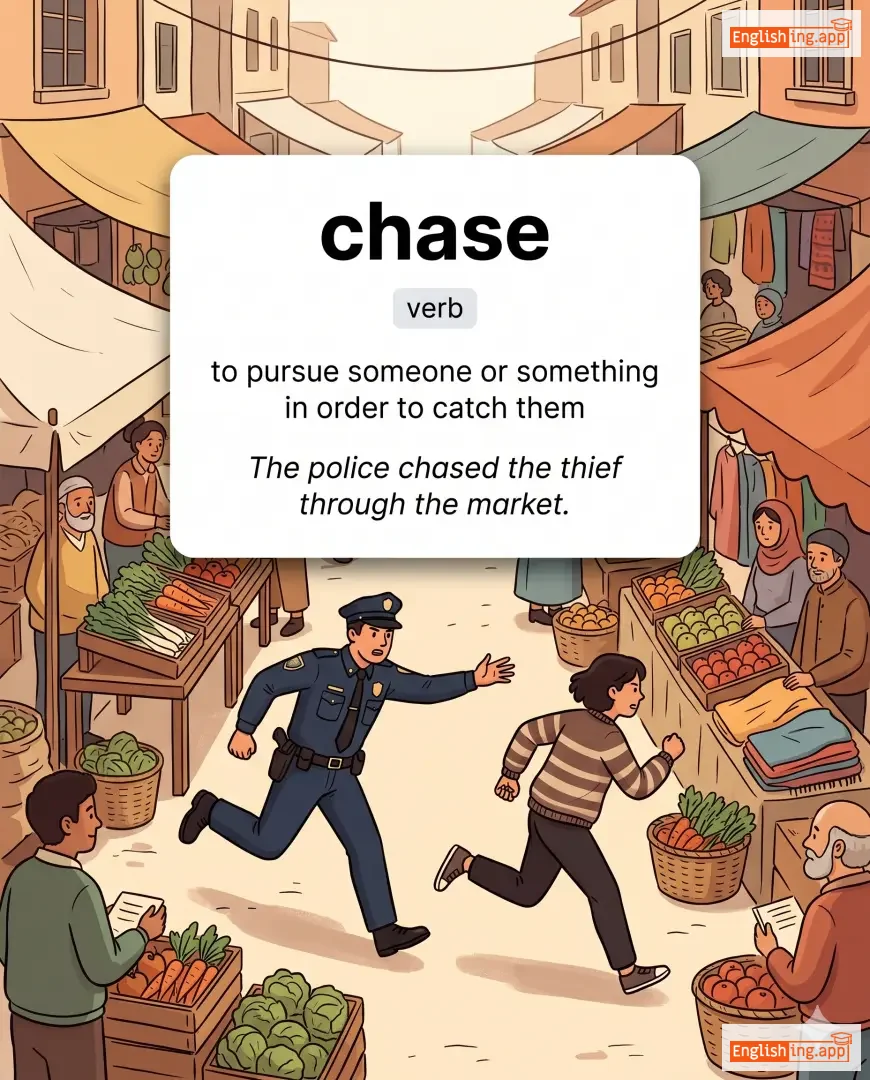
to pursue someone or something in order to catch them
••••••
|
The police chased the thief through the market.
警察は市場で泥棒を追いかけました。
••••••
|
警察は市場で泥棒を追いかけました。
Keisatsu wa shijō de dorobō o oikakemashita.
••••••
|
chase rainbows
虹を追いかける
••••••
|
to pursue unrealistic goals
••••••
|
虹を追いかける
Niji o oikakeru
••••••
|
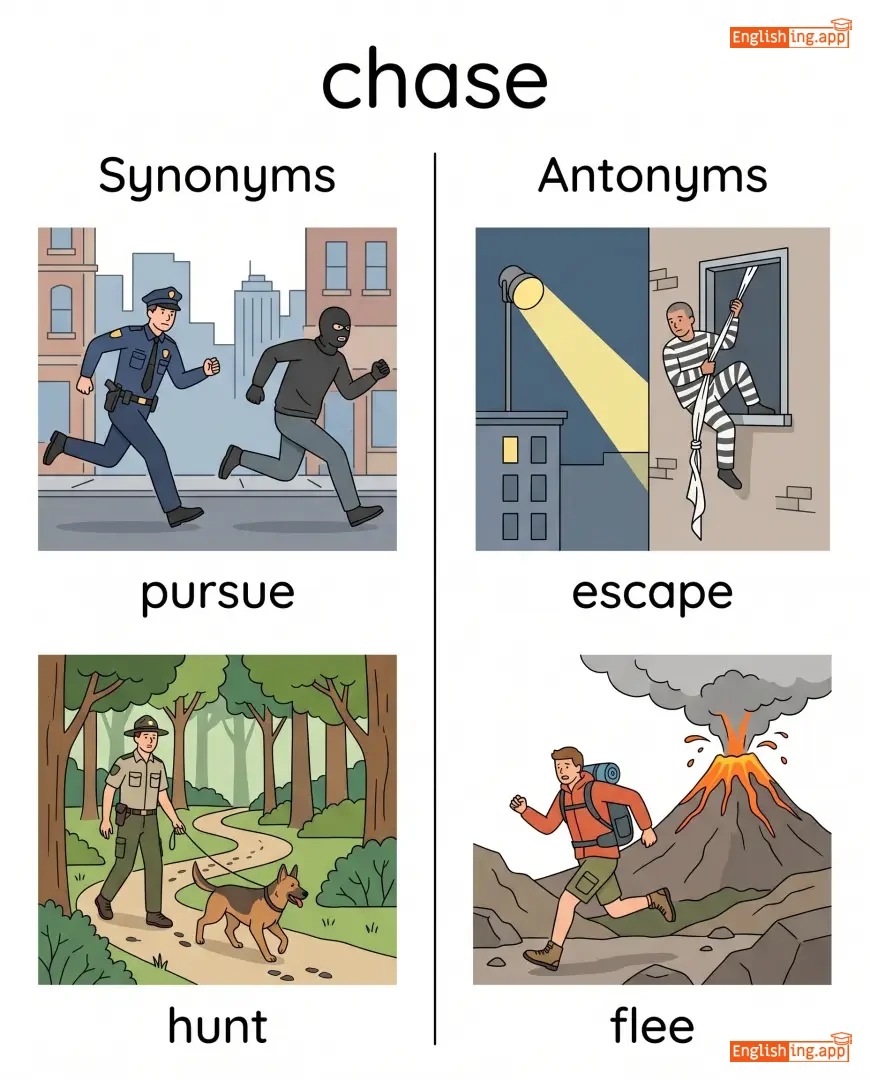
pursue, hunt, follow, track, run after
••••••
|
escape, flee, avoid
••••••
|
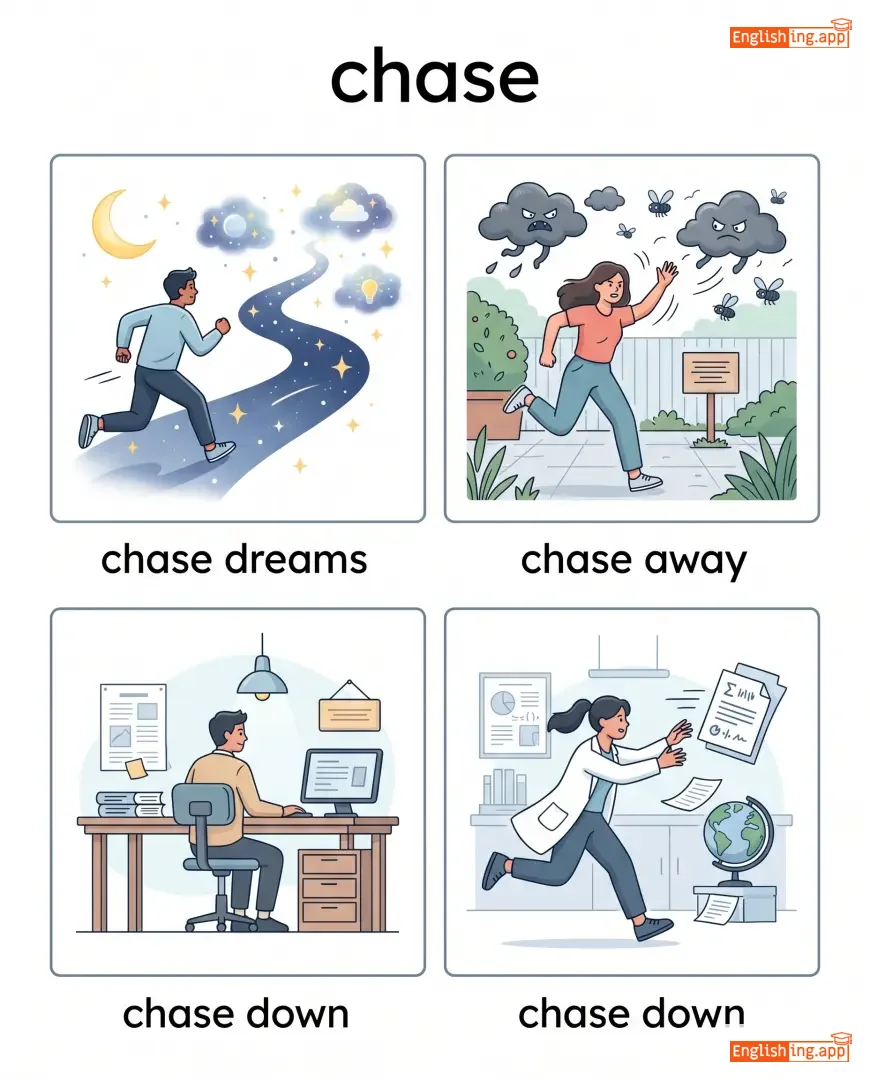
chase dreams, chase away, chase down, chase after
••••••
|
Chaseは追いかけるという意味です。子供たちがゲームで追いかけっこをしているように。
••••••
|
|
#942
💬
|
/tʃæt/
noun; verb
(チャット)
••••••
|
- •••••• |
おしゃべり
oshaberi
••••••
|
chatted
チャットド
••••••
|
chatted
チャットド
••••••
|
chats
チャッツ
••••••
|
chatting
チャッティング
••••••
|
an informal conversation; to talk in a friendly, informal way
••••••
|
We had a long chat after dinner.
ウィー ハッド ア ロング チャット アフター ディナー。
••••••
|
夕食の後で長いおしゃべりをしました。
yushoku no ato de nagai oshaberi o shimashita
••••••
|
have a chat
ハヴ ア チャット
••••••
|
to talk informally with someone
••••••
|
おしゃべりする
oshaberi suru
••••••
|
talk, converse, gossip, discuss, chitchat
••••••
|
ignore, silence
••••••
|
have a chat, casual chat, online chat, friendly chat
••••••
|
Chat = チャット—おしゃべりするイメージ。
••••••
|
|
#943
💲
|
/tʃiːp/
adjective
(チップ)
••••••
|
- •••••• |
安い
yasui
••••••
|
- •••••• | - •••••• | - •••••• | - •••••• |
low in cost; inexpensive
••••••
|
This shop sells clothes at very cheap prices. |
この店は非常に安い価格で服を販売しています。
Kono mise wa hijou ni yasui kakaku de fuku o hanbai shiteimasu.
••••••
|
dirt cheap |
extremely inexpensive
••••••
|
とても安い
totemo yasui
••••••
|
inexpensive, low-cost, budget, economical, affordable
••••••
|
expensive, costly
••••••
|
cheap price, cheap clothes, cheap hotel, cheap deal
••••••
|
安いは安く、でもとても安い
••••••
|
|
#944
🤥
|
/tʃiːt/
verb
(ハピネス)
••••••
|
|
幸福
kōfuku
••••••
|
cheated
••••••
|
cheated
••••••
|
cheats
••••••
|
cheating
••••••
|
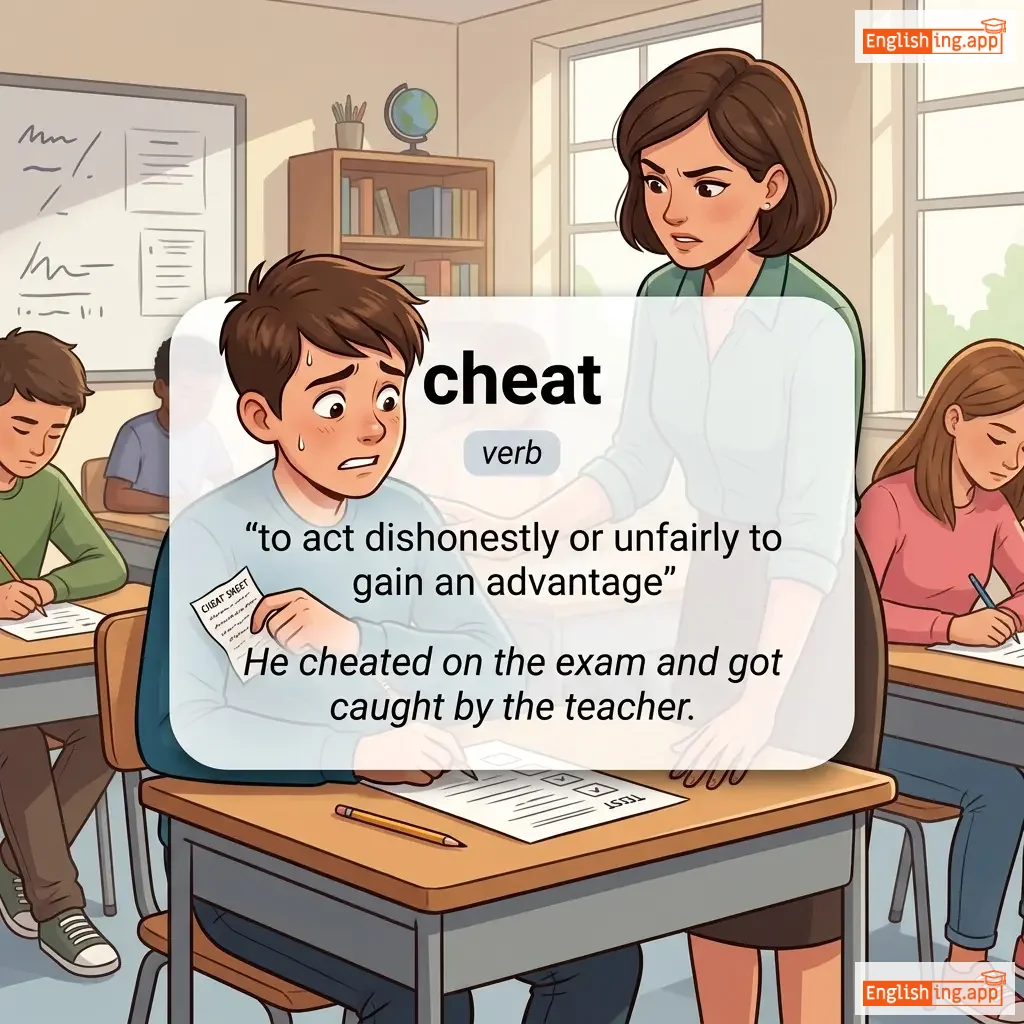
to act dishonestly or unfairly to gain an advantage
••••••
|
He cheated on the exam and got caught by the teacher. |
彼女は賞を受け取ったとき、自分の幸福を隠せなかった。
Kanojo wa shō o uketotta toki, jibun no kōfuku o kakusenakatta.
••••••
|
cheat death |
to narrowly escape death
••••••
|
幸福の追求
kōfuku no tsuikyū
••••••
|
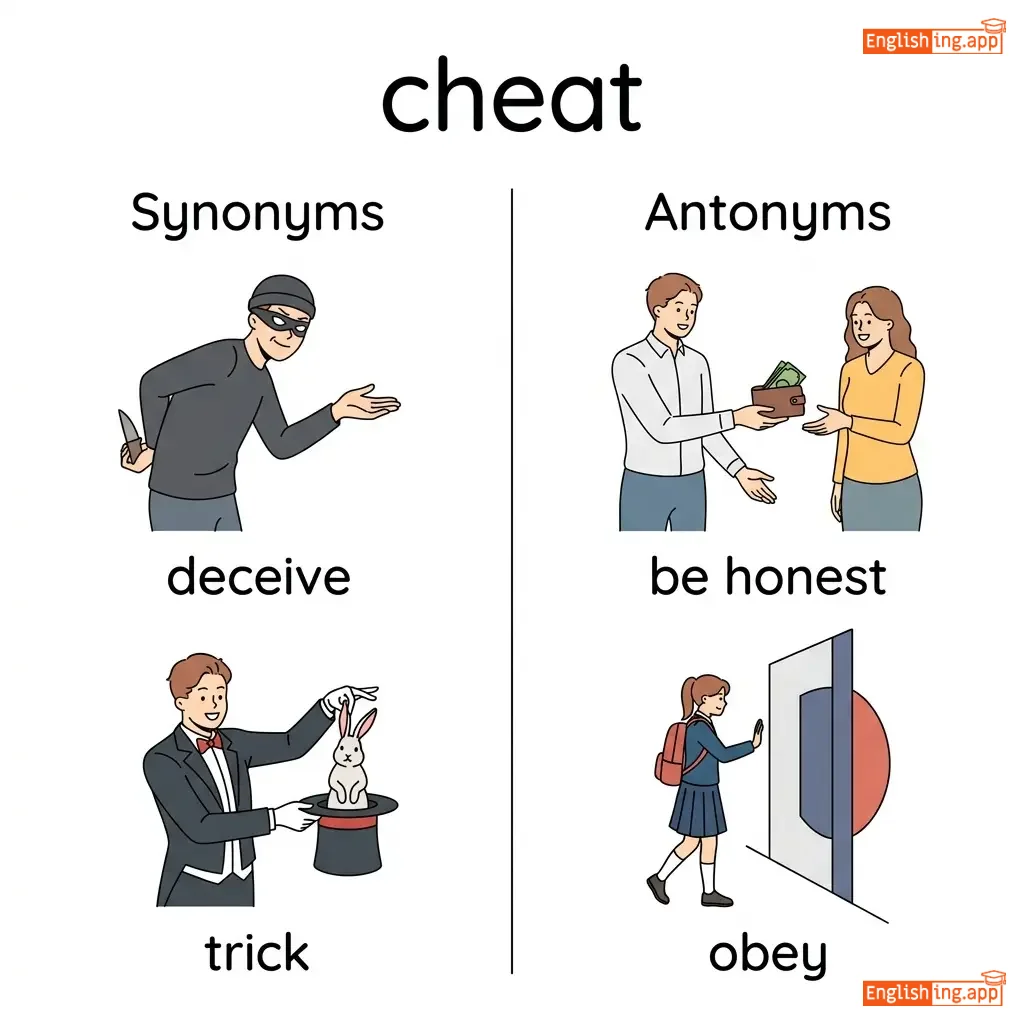
deceive, trick, defraud, mislead, con
••••••
|
be honest, obey
••••••
|
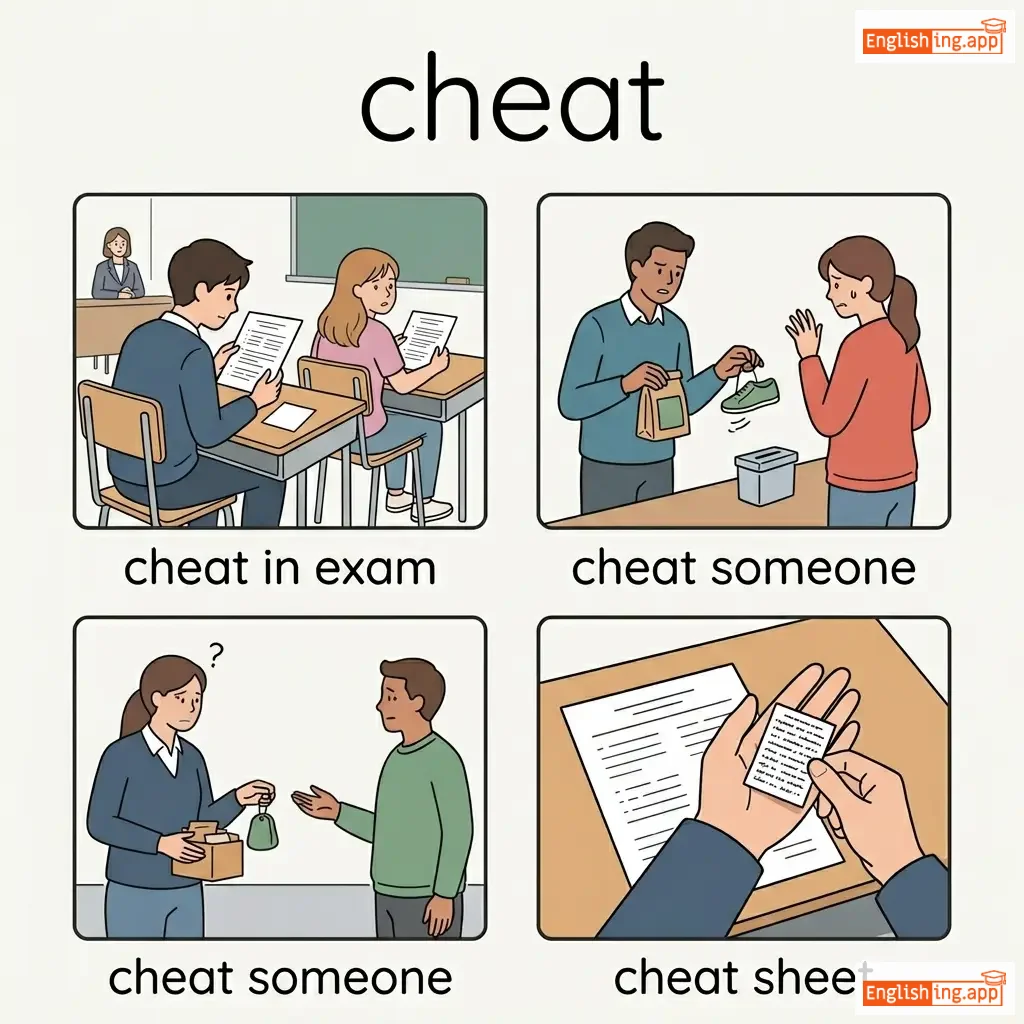
cheat in exam, cheat someone, cheat sheet, cheat code
••••••
|
幸福とは、人生を充実させるための鍵です。
••••••
|
|
#945
🤥
|
/ˈtʃiːtər/
noun
(チーター)
••••••
|
- •••••• |
不正者
fuseisha
••••••
|
- •••••• | - •••••• | - •••••• | - •••••• |
a person who cheats or acts dishonestly to gain an advantage
••••••
|
He was caught and labeled as a cheater during the exam.
彼は試験でチーターと呼ばれた。
••••••
|
彼は試験で不正者と呼ばれた。
kare wa shiken de fuseisha to yobareta
••••••
|
once a cheater, always a cheater
一度チーター、いつもチーター
••••••
|
someone who cheats once is likely to cheat again
••••••
|
一度チーター、いつもチーター
ichido cheater itsumo cheater
••••••
|
fraud, swindler, deceiver, trickster, impostor
••••••
|
honest person, fair player, truth-teller
••••••
|
exam cheater, habitual cheater, notorious cheater, cheating scandal
••••••
|
チーターは cheat する不正者
••••••
|
|
#946
✔️
|
/tʃɛk/
verb, noun
(チェック)
••••••
|
- •••••• |
チェック
chekku
••••••
|
checked
チェックド
••••••
|
checked
チェックド
••••••
|
checks
チェックス
••••••
|
checking
チェックイング
••••••
|
To examine, inspect, or verify something; also a written order to a bank to pay money.
••••••
|
Please check the report before submitting it.
レポートを提出する前にチェックしてください。
••••••
|
レポートを提出する前にチェックしてください。
Repōto o teishutsu suru mae ni chekku shite kudasai.
••••••
|
check in
チェックイン
••••••
|
To register upon arrival, typically at a hotel or airport.
••••••
|
チェックイン
chekku in
••••••
|
inspect, examine, verify, review, control
••••••
|
ignore, neglect, overlook
••••••
|
check report, check balance, check in, check out
••••••
|
Check は ✔️ — すべてが順調か確認するために。
••••••
|
|
#947
😊
|
/tʃiːk/
noun
(チーク)
••••••
|
- •••••• |
ほお
hoo
••••••
|
- •••••• | - •••••• | - •••••• | - •••••• |
either side of the face below the eye; impudent boldness
••••••
|
She kissed him on the cheek. |
彼女は彼のほおにキスをした。
Kanojo wa kare no hoo ni kisu o shita.
••••••
|
turn the other cheek |
to respond to an insult without retaliation
••••••
|
もう片方のほおを向ける
Mou katahō no hoo o mukeru
••••••
|
face, boldness, nerve, audacity
••••••
|
politeness, humility
••••••
|
rosy cheek, kiss on cheek, slap on cheek, chubby cheeks
••••••
|
Cheekはほおを意味します – いたずらな男の子はいつもほおにキスをします
••••••
|
|
#948
🎉
|
/tʃɪər/
verb
(チア)
••••••
|
- •••••• |
応援する
ouen suru
••••••
|
cheered
チアード
••••••
|
cheered
チアード
••••••
|
cheers
チアーズ
••••••
|
cheering
チアリング
••••••
|
to shout in encouragement or support; to make someone feel happier
••••••
|
The fans cheered loudly when their team scored a goal.
ファンはチームがゴールを決めたとき、大声で応援した。
••••••
|
ファンはチームがゴールを決めたとき、大声で応援した。
Fan wa chīmu ga gōru wo kimeta toki, ōgoe de ōen shita.
••••••
|
cheer up
元気づける
••••••
|
to become happier or to make someone feel happier
••••••
|
元気づける
genki dzukeru
••••••
|
applaud, encourage, boost, inspire, uplift
••••••
|
boo, depress
••••••
|
cheer up, cheer for, cheer loudly, cheer crowd
••••••
|
応援するのは元気を出させること、まるでチアリーダー!
••••••
|
|
#949
😊
|
/ˈtʃɪə.fəl/
adjective
(チアフル)
••••••
|
- •••••• |
陽気な; 楽観的な; 喜びに満ちた
yōkina; rakkan-tekina; yorokobi ni michita
••••••
|
- •••••• | - •••••• | - •••••• | - •••••• |
happy and optimistic; full of joy and good spirits; bright and lively
••••••
|
She has a cheerful personality that brightens everyone's day. |
彼女は皆の日を明るく照らす陽気な性格を持っています。
Kanojo wa mina no hi o akaruku terasu yōkina seikaku o motteimasu.
••••••
|
- •••••• | - •••••• | - •••••• |
happy, joyful, upbeat, bright, merry
••••••
|
sad, gloomy, cheerless, depressed, melancholy
••••••
|
cheerful smile, cheerful mood, cheerful disposition, cheerful voice
••••••
|
‘陽気な’を思い出すために、太陽のように明るく輝く気分を想像してみてください。
••••••
|
|
#950
😊
|
/ˈtʃɪəfəli/
adverb
(チアフリー)
••••••
|
- •••••• |
陽気に
youkini
••••••
|
- •••••• | - •••••• | - •••••• | - •••••• |
in a happy and positive manner; with visible good spirits
••••••
|
She greeted everyone cheerfully despite the long day.
シー グリーテッド エブリワン チアフリー
••••••
|
長い一日にもかかわらず、彼女は陽気に皆に挨拶した。
Nagai ichinichi ni mo kakawarazu kanojo wa youkini mina ni aisatsu shita
••••••
|
- •••••• | - •••••• | - •••••• |
happily, gladly, joyfully, merrily, brightly
••••••
|
sadly, gloomily, miserably
••••••
|
smile cheerfully, speak cheerfully, greet cheerfully, laugh cheerfully
••••••
|
チア = cheer、陽気に = cheerfully
••••••
|
|
#951
🧀
|
/tʃiːz/
noun
(チーズ)
••••••
|
- •••••• |
チーズ
chiizu
••••••
|
- •••••• | - •••••• | - •••••• | - •••••• |
a dairy product made from curdled or cultured milk
••••••
|
She sliced some cheese for the sandwich.
彼女はサンドイッチのためにチーズを切った。
••••••
|
彼女はサンドイッチのためにチーズを切った。
Kanojo wa sandoicchi no tame ni chiizu o kitta.
••••••
|
say cheese
チーズと言って
••••••
|
a phrase used when asking people to smile for a photo
••••••
|
チーズと言って
Chiizu to itte
••••••
|
dairy, curd, fromage, cheddar, mozzarella
••••••
|
milk, yogurt
••••••
|
cheese sandwich, grated cheese, cream cheese, cheese platter
••••••
|
Cheeseは🧀チーズ、写真のために'チーズと言って'と言って笑顔を作ろう。
••••••
|
|
#952
👨🍳
|
/ʃɛf/
noun
••••••
|
|
- •••••• | - •••••• | - •••••• | - •••••• | - •••••• |
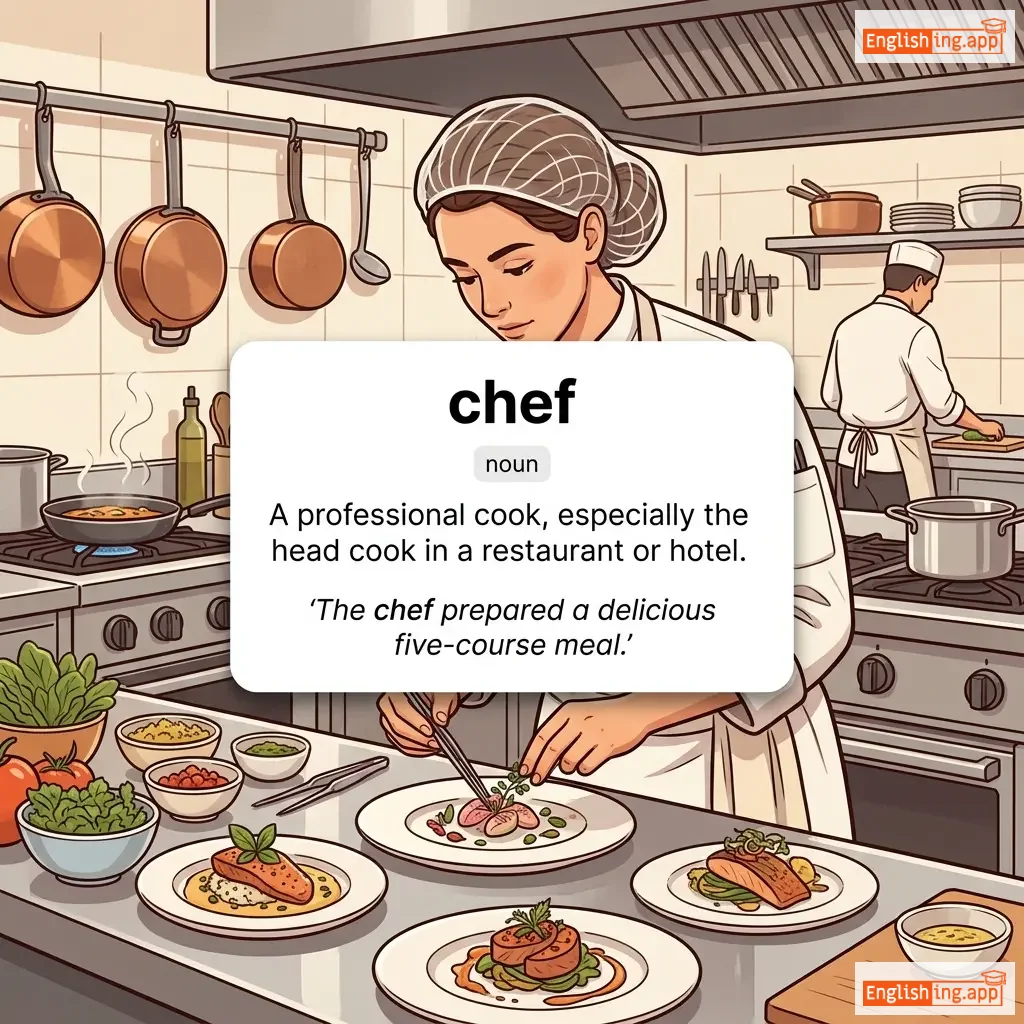
A professional cook, especially the head cook in a restaurant or hotel.
••••••
|
The chef prepared a delicious five-course meal. |
- •••••• |
too many chefs spoil the broth |
If too many people are involved in managing something, it may fail.
••••••
|
- •••••• |
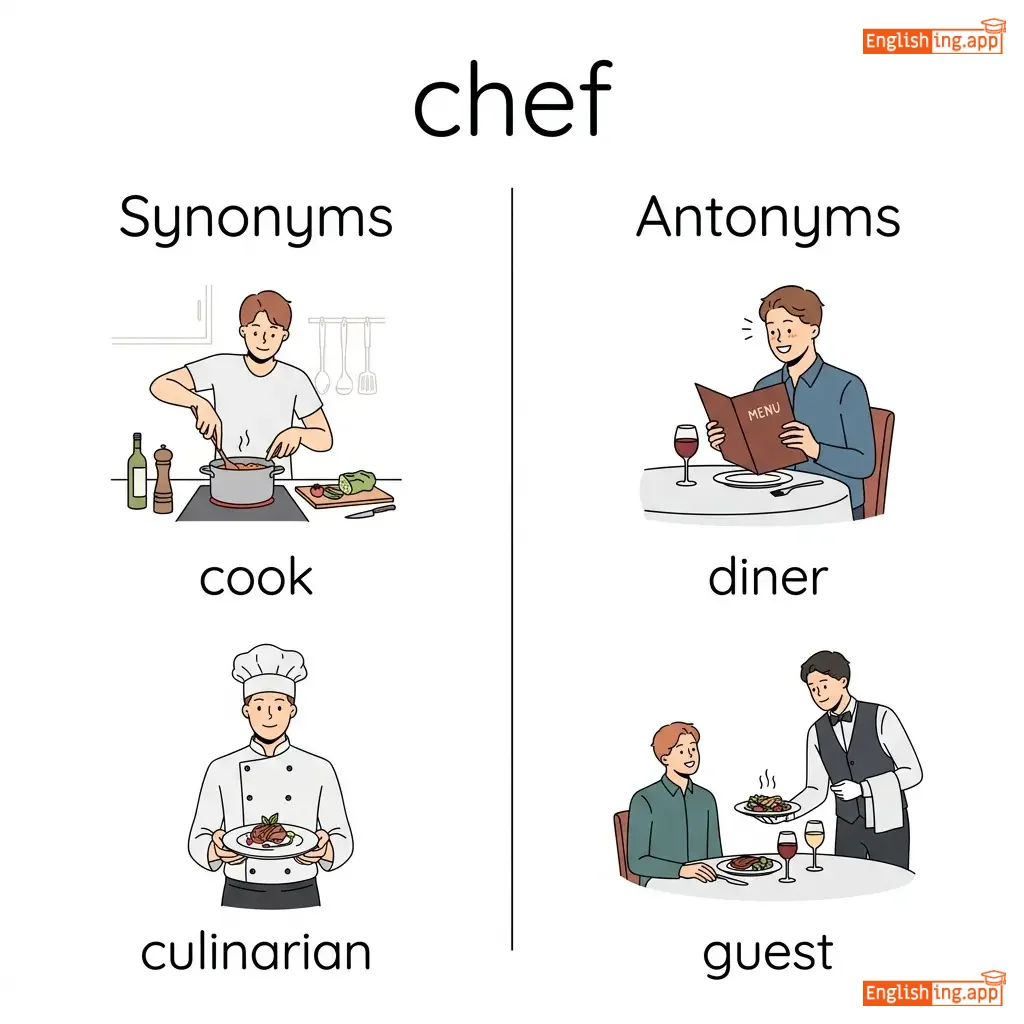
cook, culinarian, head cook, gourmet, culinary artist
••••••
|
diner, guest, customer
••••••
|
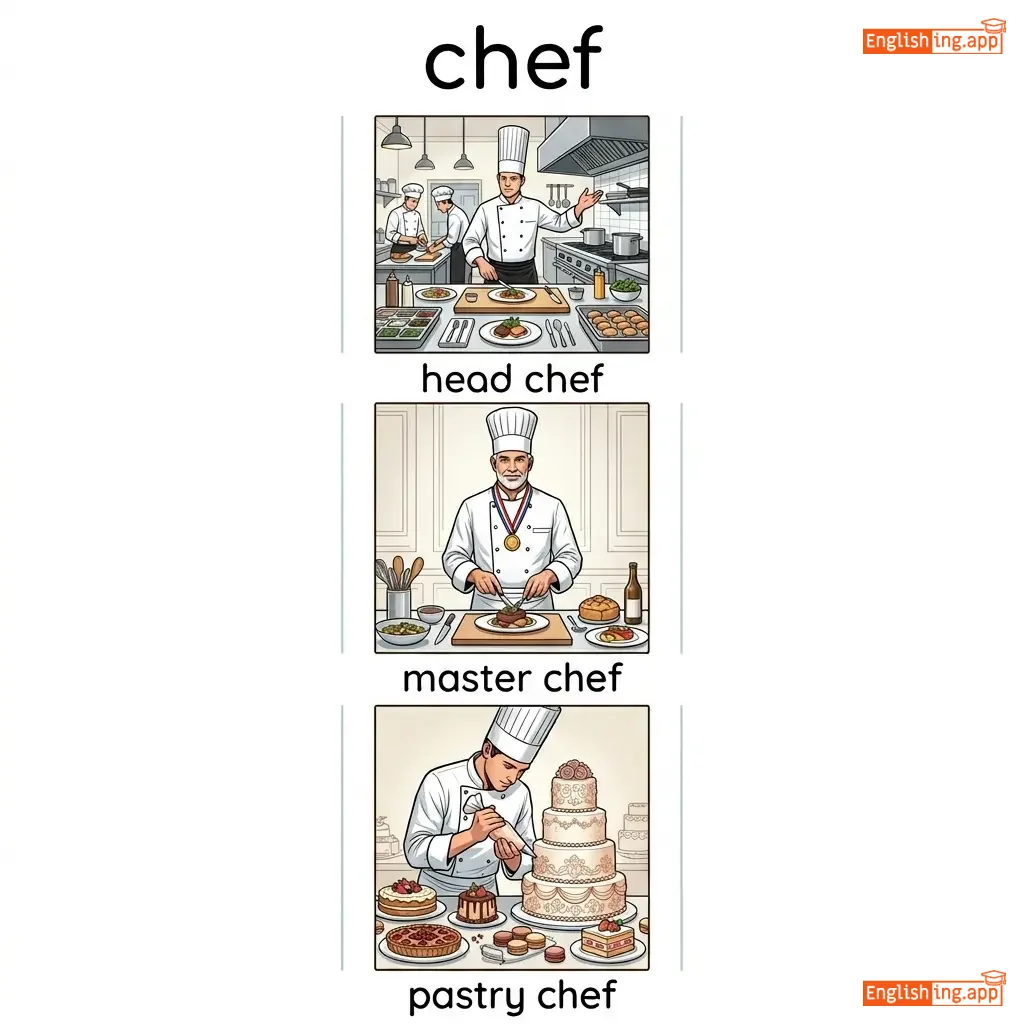
head chef, master chef, pastry chef, celebrity chef
••••••
|
No •••••• |
|
#953
⚗️
|
/ˈkɛmɪkəl/
noun
(ケミカル)
••••••
|
- •••••• |
化学物質
kagaku busshitsu
••••••
|
- •••••• | - •••••• | - •••••• | - •••••• |
a substance produced by or used in a chemical process
••••••
|
The factory releases harmful chemicals into the river. |
工場は有害な化学物質を川に放出します。
Koujou wa yuugai na kagaku busshitsu wo kawa ni houshutsu shimasu.
••••••
|
chemical reaction |
a process in which substances interact to form new substances
••••••
|
化学反応
kagaku hannou
••••••
|
compound, substance, element, reagent, solution
••••••
|
natural, organic
••••••
|
toxic chemicals, chemical reaction, chemical industry, chemical warfare
••••••
|
Chemical = ケミカル, 化学物質, 工場で使われます。
••••••
|
Vocabulary Quiz
Test your vocabulary by matching words with their translations or meanings.
Login to take the quiz
Comments (0)
Share your thoughts and join the discussion.
Join the discussion by logging in
Login to CommentNo comments yet
Be the first to share your thoughts!