

翻訳
過去
過去分詞
三人称単数
動名詞
意味
例文
例文の翻訳
同義語
対義語
コロケーション
ニーモニック

Swipe left or right, or use the buttons. Tap image to zoom.
例文の翻訳
単語
Lesson 3Lesson 3 - マスクトグル
|
絵文字
|
単語 | Images | 翻訳 | 過去 | 過去分詞 | 三人称単数 | 動名詞 | 意味 | 例文 | 例文の翻訳 | 表現例 | 表現例の意味 | 表現例の翻訳 | 同義語 | 対義語 | コロケーション | ニーモニック |
|---|---|---|---|---|---|---|---|---|---|---|---|---|---|---|---|---|---|
|
#101
✊
|
/ˈæktɪvɪst/
noun
(アクティビスト)
••••••
|
- •••••• |
活動家
katsudōka
••••••
|
- •••••• | - •••••• | - •••••• | - •••••• |
A person who works to bring about social or political change.
••••••
|
The activist organized a protest against pollution. |
活動家は汚染に反対する抗議を組織しました。
Katsudōka wa osen ni hantai suru kōgi o soshiki shimashita.
••••••
|
- •••••• | - •••••• | - •••••• |
campaigner, advocate, reformer, protester
••••••
|
opponent, bystander
••••••
|
political activist, social activist, human rights activist, student activist
••••••
|
活動家は社会を変えるために行動する人、'活動'で覚えよう。
••••••
|
|
#102
🏃
|
/ækˈtɪvɪti/
noun
(アクティビティ)
••••••
|
- •••••• |
活動
katsudou
••••••
|
- •••••• | - •••••• | - •••••• | - •••••• |
something that people do for enjoyment, work, or a particular purpose
••••••
|
The children were engaged in outdoor activity. |
子供たちは屋外活動に従事していました。
Kodomotachi wa okugai katsudou ni juuji shiteimashita.
••••••
|
burst of activity |
a sudden period of intense action or effort
••••••
|
活動の爆発
katsudou no bakuhatsu
••••••
|
action, task, pursuit, exercise, operation
••••••
|
inactivity, rest, idleness
••••••
|
outdoor activity, group activity, economic activity, physical activity
••••••
|
Activityは行動や活動を意味します — 学校でsports activityはスポーツ活動を意味します
••••••
|
|
#103
✅
|
/ˈæktʃuəl/
adjective
(アクチュアル)
••••••
|
- •••••• |
実際の
jissai no
••••••
|
- •••••• | - •••••• | - •••••• | - •••••• |
real and existing, not just imagined or supposed
••••••
|
The actual cost was higher than expected. |
実際のコストは予想より高かった。
Jissai no kosuto wa yosō yori takakatta.
••••••
|
in actual fact |
used to emphasize that something is really true
••••••
|
実際には
jissai ni wa
••••••
|
real, genuine, factual, true, authentic
••••••
|
fake, false, imaginary
••••••
|
actual cost, actual reason, actual situation, actual fact
••••••
|
Actualは実際のを意味する—実際には本当に真実を強調する
••••••
|
|
#104
🔎
|
/ˈæktʃuəli/
adverb
(アクチュアリー)
••••••
|
- •••••• |
実際に
jissai ni
••••••
|
- •••••• | - •••••• | - •••••• | - •••••• |
used to emphasize that something is true, especially when surprising
••••••
|
She actually completed the project ahead of schedule. |
彼女は実際に予定より早くプロジェクトを完了させた。
Kanojo wa jissai ni yotei yori hayaku purojekuto o kanryō saseta.
••••••
|
actually speaking |
used to emphasize the truth when expressing an opinion
••••••
|
実際に話すと
jissai ni hanasu to
••••••
|
really, indeed, truly, genuinely
••••••
|
supposedly, allegedly
••••••
|
actually true, actually happen, actually mean, actually exist
••••••
|
Actuallyは '実際に'という意味で、例えば 'Actually, I did it'は '実際に、私はそれをやった' という意味です。
••••••
|
|
#105
📐
|
/əˈkjuːt/
adjective
(akyuto)
••••••
|
- •••••• |
急性
kyūsei
••••••
|
- •••••• | - •••••• | - •••••• | - •••••• |
present or experienced to a severe or intense degree; having sharp perception
••••••
|
The patient suffered from acute pain after the surgery. |
手術後、患者は激しい痛みを感じました。
Shujutsugo, kanja wa hageshī itami o kanjimashita.
••••••
|
acute angle |
an angle less than 90 degrees
••••••
|
鋭角
eikaku
••••••
|
severe, sharp, intense, critical, keen
••••••
|
chronic, mild, dull
••••••
|
acute pain, acute illness, acute awareness
••••••
|
Acute は Cute のように見えるが、鋭い — 激しい痛みや鋭角
••••••
|
|
#106
⚡
|
/əˈkjuːtli/
adverb
(アキュートリー)
••••••
|
- •••••• |
鋭く
surudoku
••••••
|
- •••••• | - •••••• | - •••••• | - •••••• |
in a sharp, intense, or severe way; with keen awareness
••••••
|
She was acutely aware of the risks involved.
シー ワズ アキュートリー アウェア オブ ザ リスクス
••••••
|
彼女はその危険性を鋭く認識していた。
Kanojo wa sono kiken-sei o surudoku ninshiki shite ita
••••••
|
acutely aware
アキュートリー アウェア
••••••
|
having a very strong or sharp awareness of something
••••••
|
鋭く認識する
surudoku ninshiki suru
••••••
|
sharply, intensely, keenly, severely, profoundly
••••••
|
dully, mildly, weakly
••••••
|
acutely aware, acutely painful, acutely conscious, acutely sensitive
••••••
|
鋭い = acute、鋭く = acutely
••••••
|
|
#107
🧠
|
/əˈkjuːtnəs/
noun
(アキュートネス)
••••••
|
- •••••• |
鋭敏さ;深刻さ
eibinsa; shinkokusa
••••••
|
- •••••• | - •••••• | - •••••• | - •••••• |
sharpness of mind or senses; severity or intensity of a condition
••••••
|
Her acuteness allowed her to notice details others missed.
彼女のアキュートネスは他の人が見逃した細部に気づかせた。
••••••
|
彼女の鋭敏さは他の人が見逃した細部に気づかせた。
kanojo no eibinsa wa hoka no hito ga minogashita saibui ni kizukaseta
••••••
|
- •••••• | - •••••• | - •••••• |
sharpness, keenness, perceptiveness, intensity, severity
••••••
|
dullness, bluntness, mildness
••••••
|
mental acuteness, visual acuteness, sensory acuteness, intellectual acuteness
••••••
|
acute = シャープ → 鋭敏さ
••••••
|
|
#108
🔄
|
/əˈdæpt/
verb
(アダプト)
••••••
|
- •••••• |
適応する
tekiō suru
••••••
|
adapted
アダプテッド
••••••
|
adapted
アダプテッド
••••••
|
adapts
アダプトス
••••••
|
adapting
アダプティング
••••••
|
to adjust or change something to suit new conditions or situations
••••••
|
He quickly adapted to the new environment.
彼はすぐに新しい環境に適応しました。
••••••
|
彼はすぐに新しい環境に適応しました。
Kare wa sugu ni atarashī kankyō ni tekiō shimashita.
••••••
|
adapt to change
変化に適応する
••••••
|
to adjust oneself according to new circumstances
••••••
|
変化に適応する
Henka ni tekiō suru
••••••
|
adjust, modify, alter, accommodate
••••••
|
resist, reject
••••••
|
adapt to, adapt for, adapt quickly, adapt easily
••••••
|
適応するは変化に合わせること。'A Dress' を適応させる = 適応する
••••••
|
|
#109
🔄
|
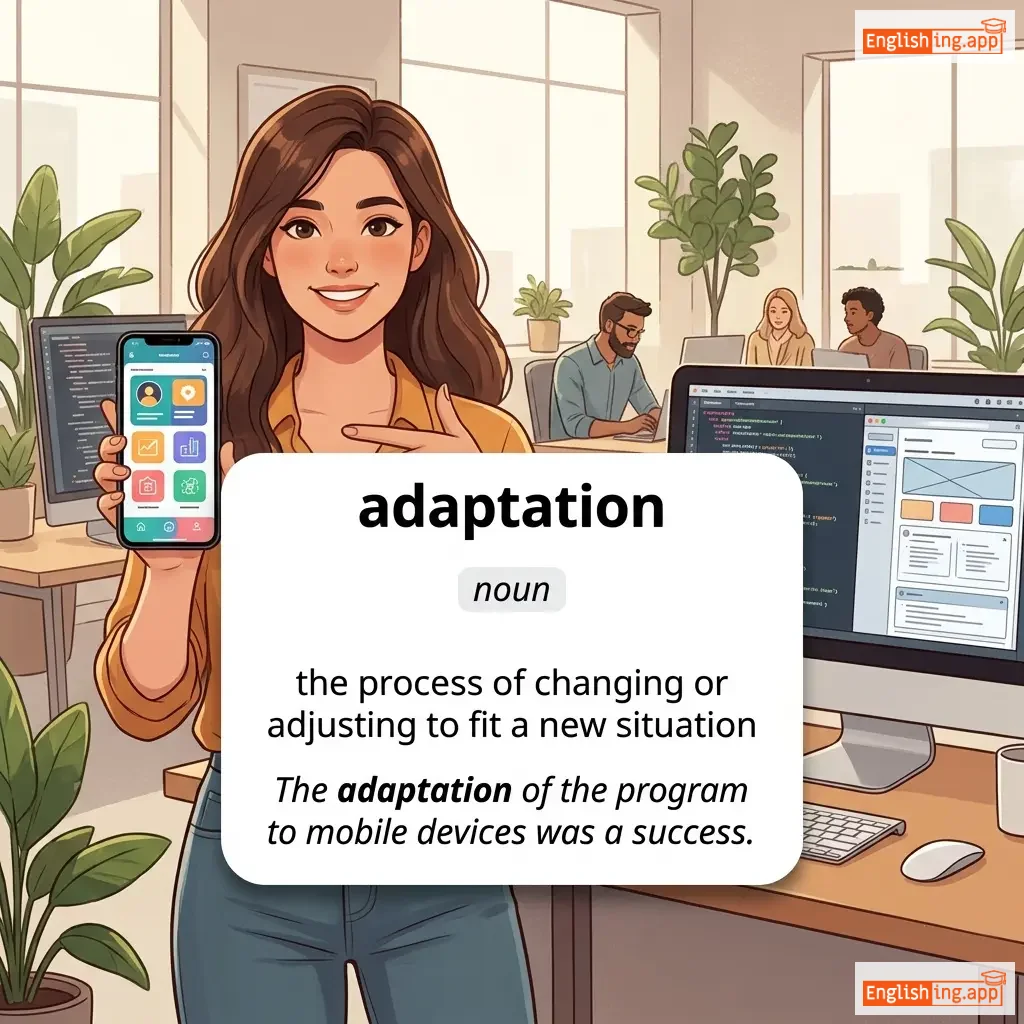
/ˌædæpˈteɪʃən/
noun
(アダプテーション)
••••••
|
|
適応
tekiou
••••••
|
- •••••• | - •••••• | - •••••• | - •••••• |
the process of changing or adjusting to fit a new situation
••••••
|
The adaptation of the program to mobile devices was a success. |
プログラムのモバイルデバイスへの適応は成功しました。
Puroguramu no mobairu debaizu e no tekiou wa seikou shimashita.
••••••
|
- •••••• | - •••••• | - •••••• |
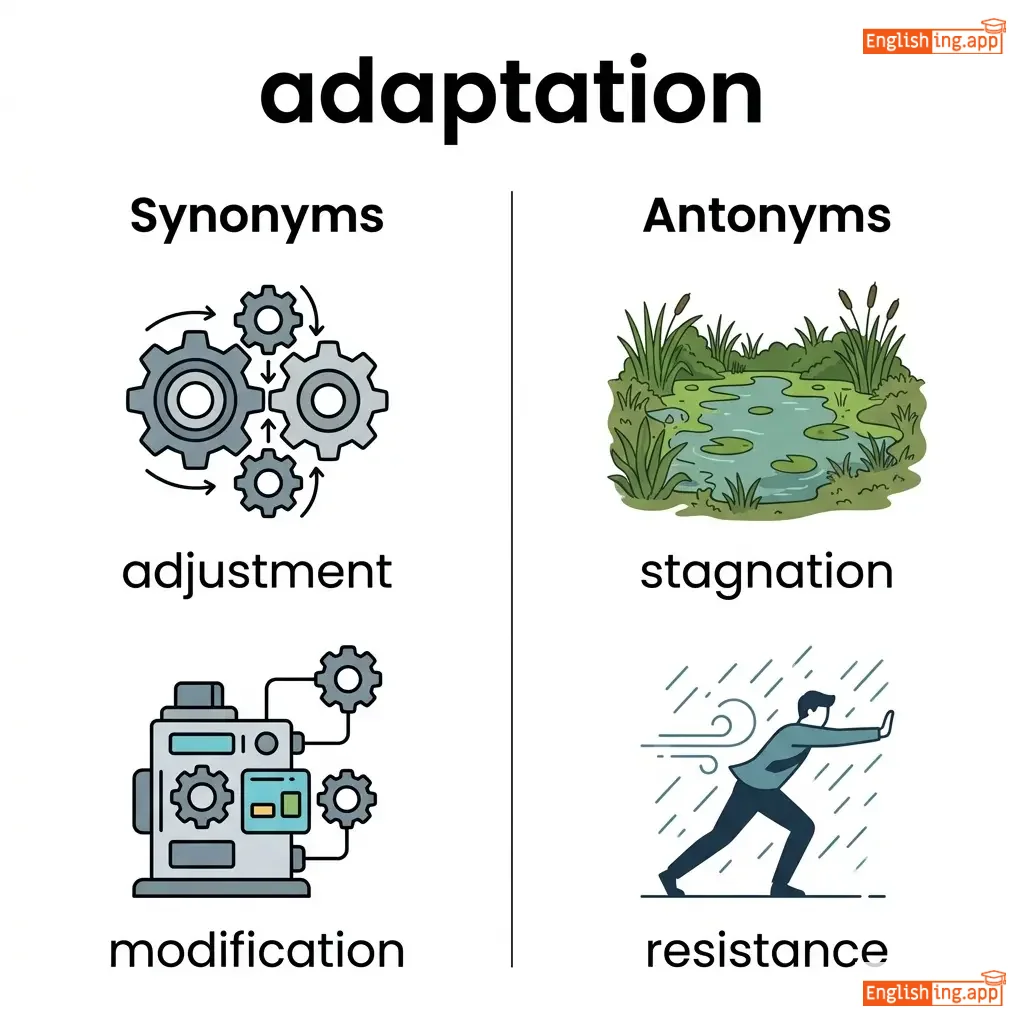
adjustment, modification, alteration, change
••••••
|
stagnation, resistance, inflexibility
••••••
|
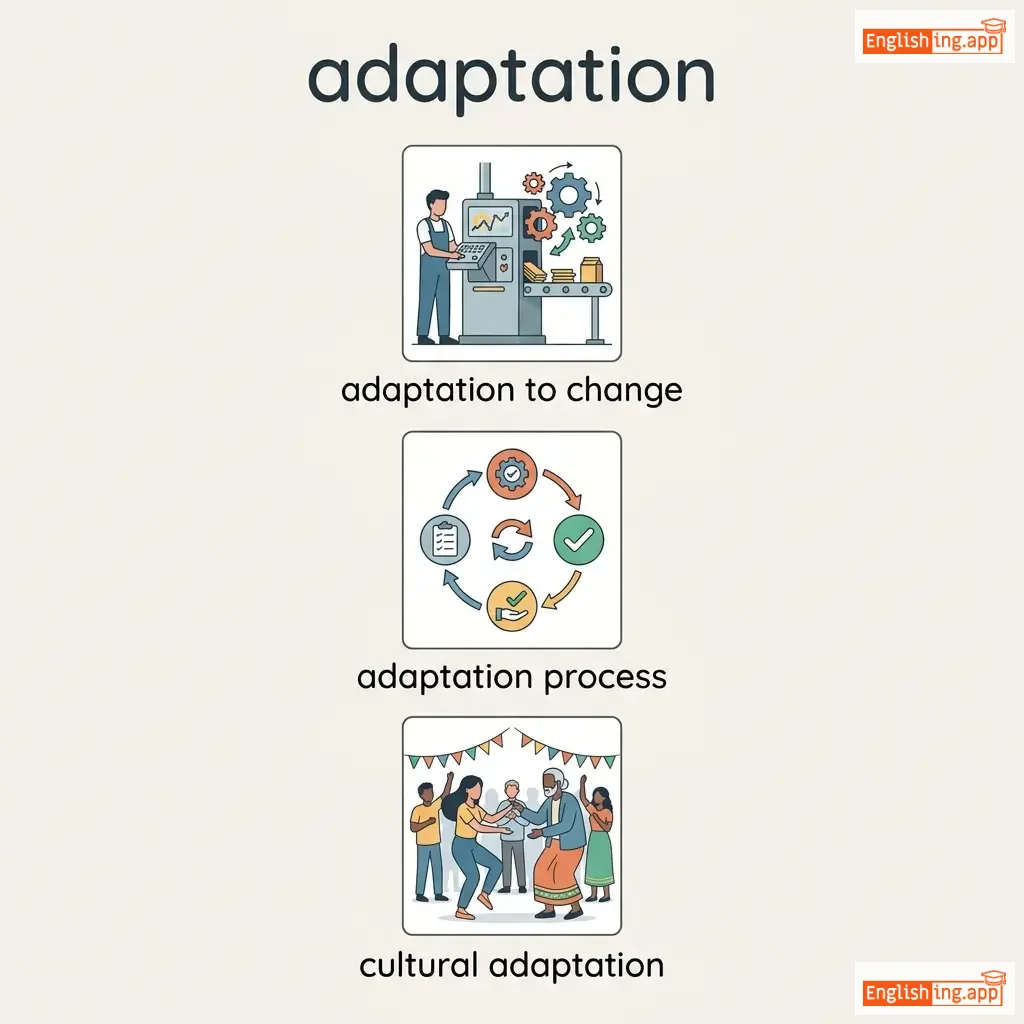
adaptation to change, adaptation process, cultural adaptation
••••••
|
Adaptation is like adjusting your clothes to fit the weather!
••••••
|
|
#110
➕
|
/æd/
verb
(アッド)
••••••
|
|
追加する
tsuika suru
••••••
|
added
アディッド
••••••
|
added
アディッド
••••••
|
adds
アッズ
••••••
|
adding
アディング
••••••
|
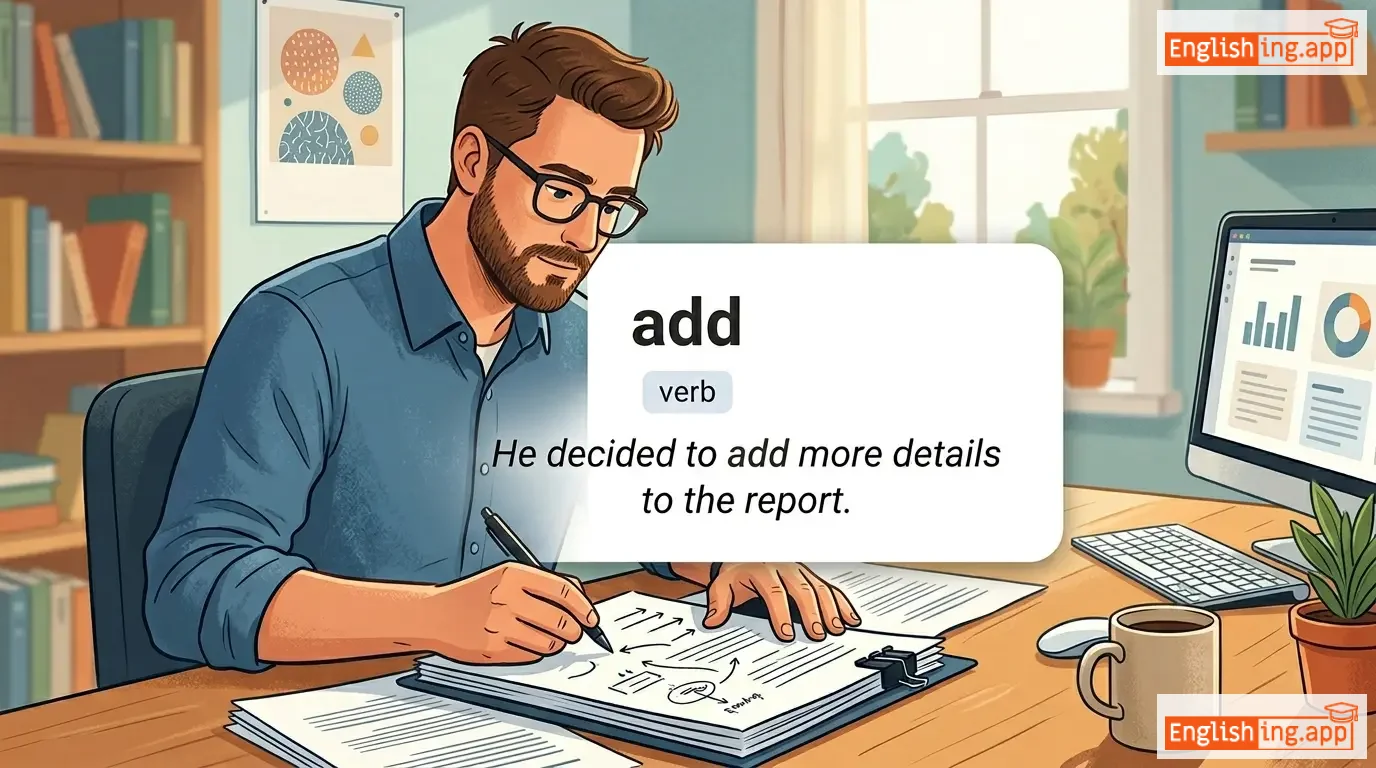
To put together or combine with something else; to increase the number, amount, or value.
••••••
|
He decided to add more details to the report.
彼はレポートに詳細を追加することを決定しました。
••••••
|
彼はレポートに詳細を追加することを決定しました。
Kare wa repo-to ni shousai wo tsuika suru koto wo kettei shimashita.
••••••
|
add fuel to the fire
火に油を注ぐ
••••••
|
To make a bad situation worse.
••••••
|
火に油を注ぐ
Hi ni abura wo sosogu
••••••
|
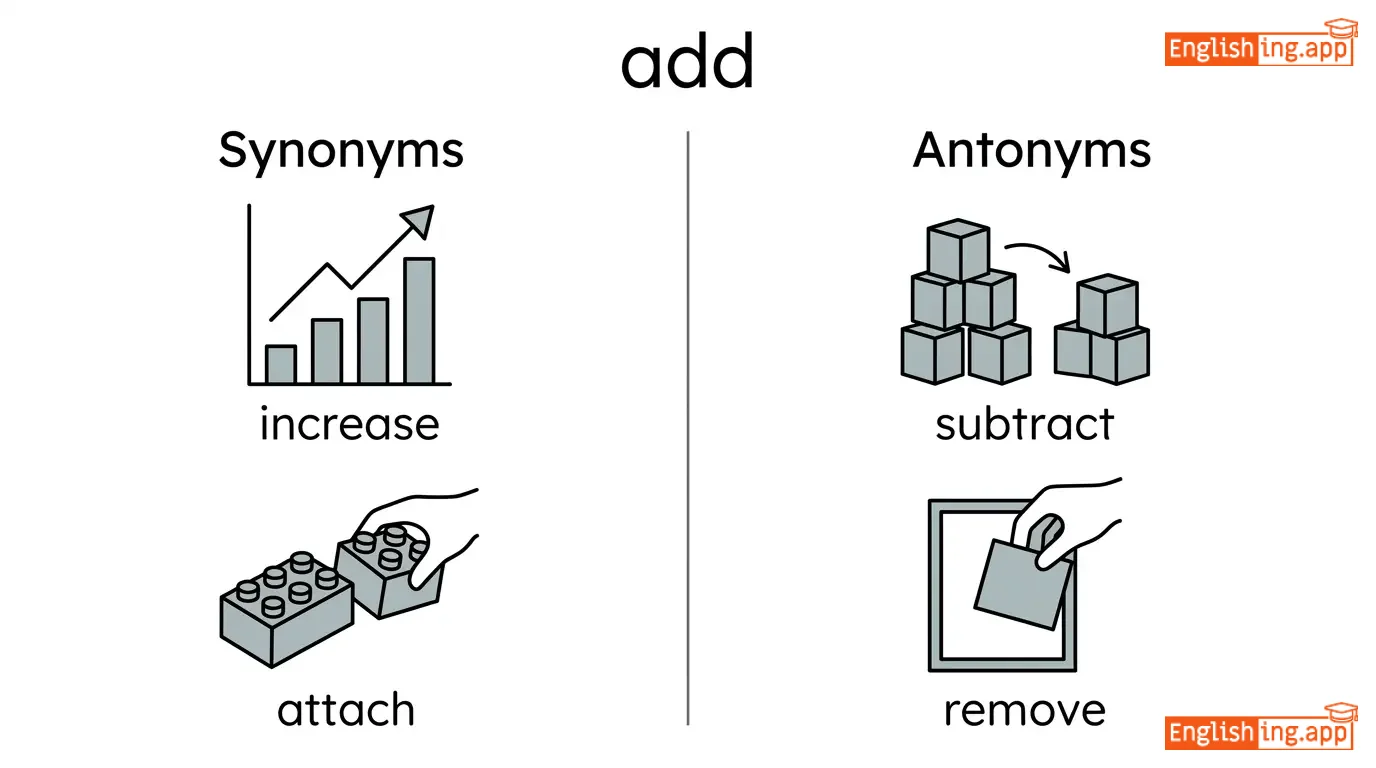
increase, attach, include, combine, augment
••••••
|
subtract, remove, deduct
••••••
|
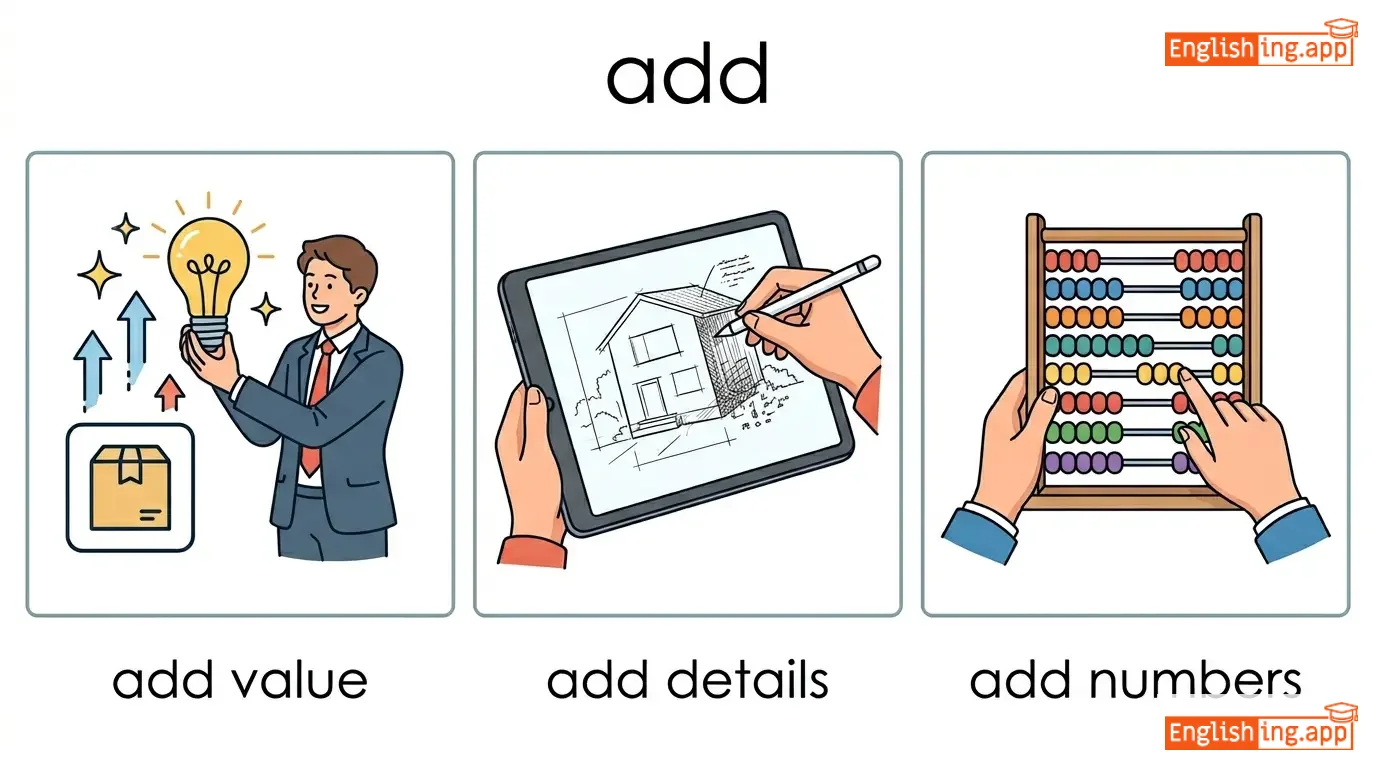
add value, add details, add numbers, add weight
••••••
|
追加することは、何かを足して全体をより豊かにすることです。
••••••
|
|
#111
⚠️
|
/ˈædɪkt/ (noun), /əˈdɪkt/ (verb)
noun, verb
(アディクト)
••••••
|
- •••••• |
中毒者
chuudoku-sha
••••••
|
addicted
アディクテッド
••••••
|
addicted
アディクテッド
••••••
|
addicts
アディクツ
••••••
|
addicting
アディクティング
••••••
|
a person who is unable to stop using a harmful substance or doing something harmful; to cause someone to become dependent on something
••••••
|
He is a video game addict who spends hours playing every day.
彼は毎日何時間もゲームをするゲーム中毒者です。
••••••
|
彼は毎日何時間もゲームをするゲーム中毒者です。
Kare wa mainichi nanjikan mo geemu o suru geemu chuudoku-sha desu.
••••••
|
addicted to
中毒に
••••••
|
being unable to stop doing or using something
••••••
|
中毒になる
chuudoku ni naru
••••••
|
user, abuser, dependent, fanatic
••••••
|
nonuser, free, independent
••••••
|
drug addict, video game addict, addicted to, hopeless addict
••••••
|
Addictとは中毒者、ゲームから抜け出せない!
••••••
|
|
#112
⚠️
|
/əˈdɪkʃən/
noun
(アディクション)
••••••
|
- •••••• |
依存
izon
••••••
|
- •••••• | - •••••• | - •••••• | - •••••• |
A strong and harmful need to regularly have or do something, such as drugs, alcohol, or habits.
••••••
|
His addiction to video games affected his studies. |
彼のビデオゲームへの依存は彼の学業に影響を与えました。
Kare no bideo geemu e no izon wa kare no gakugyou ni eikyou o ataemashita.
••••••
|
fight an addiction |
to struggle against a harmful habit
••••••
|
依存と戦う
Izon to tatakau
••••••
|
dependence, craving, obsession, compulsion, habit
••••••
|
freedom, independence, control
••••••
|
drug addiction, gambling addiction, addiction recovery, overcome addiction
••••••
|
Addictionは悪い習慣に陥ること—依存
••••••
|
|
#113
➕
|
/əˈdɪʃən/
noun
••••••
|
- •••••• | - •••••• | - •••••• | - •••••• | - •••••• | - •••••• |
the process of adding something to something else
••••••
|
The addition of solar panels made the house more energy-efficient. |
- •••••• |
in addition |
used to introduce an extra piece of information
••••••
|
- •••••• |
inclusion, increase, supplement, augmentation
••••••
|
removal, subtraction, elimination
••••••
|
addition to, make an addition, new addition, addition of features
••••••
|
No •••••• |
|
#114
➕
|
/əˈdɪʃənəl/
adjective
(アディショナル)
••••••
|
- •••••• |
追加の
tsuika no
••••••
|
- •••••• | - •••••• | - •••••• | - •••••• |
added, extra, or supplementary to what already exists
••••••
|
The teacher gave the students additional homework. |
先生は生徒に追加の宿題を出しました。
Sensei wa seito ni tsuika no shukudai o dashimashita.
••••••
|
additional cost |
extra expense beyond the basic cost
••••••
|
追加費用
tsuika hiyou
••••••
|
extra, further, supplementary, added
••••••
|
basic, minimal, primary
••••••
|
additional information, additional charge, additional support, additional effort
••••••
|
Additional は加えること - 追加のもの。
••••••
|
|
#115
➕
|
/əˈdɪʃənəli/
adverb
(アディショナリー)
••••••
|
- •••••• |
さらに
sarani
••••••
|
- •••••• | - •••••• | - •••••• | - •••••• |
in addition to what has been said or done
••••••
|
Additionally, we offer discounts for early bookings.
さらに、私たちは早期予約に対する割引を提供しています。
••••••
|
さらに、私たちは早期予約に対する割引を提供しています。
Sarani, watashitachi wa soki yoyaku ni taisuru waribiki wo teikyou shiteimasu.
••••••
|
- •••••• | - •••••• | - •••••• |
furthermore, moreover, also, as well
••••••
|
however, nevertheless
••••••
|
additionally, additionally offer, additionally provide
••••••
|
Adding a plus sign ➕ shows more details (additionally)
••••••
|
|
#116
📢
|
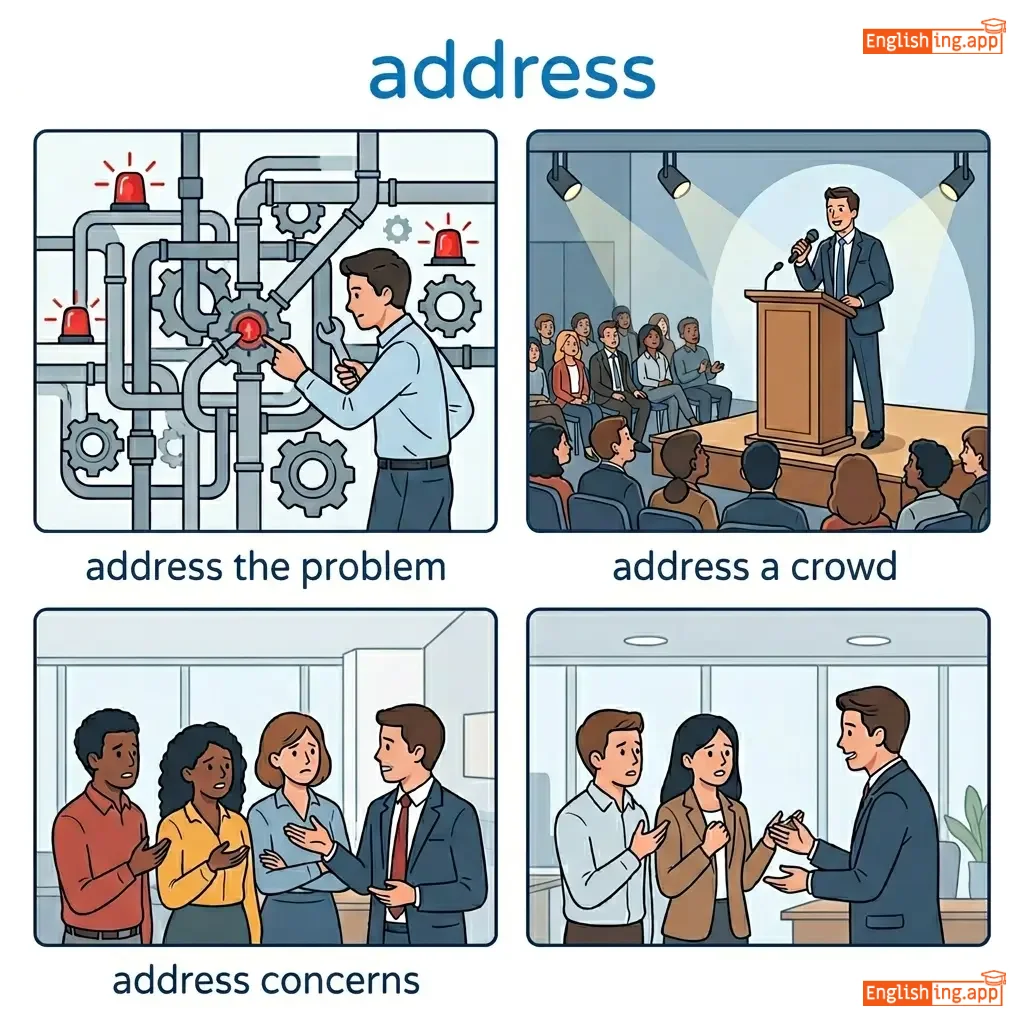
/əˈdrɛs/
verb
(アドレス)
••••••
|
|
対処する、解決する
taisho suru, kaiketsu suru
••••••
|
addressed
アドレスド
••••••
|
addressed
アドレスド
••••••
|
addresses
アドレスィズ
••••••
|
addressing
アドレスィング
••••••
|
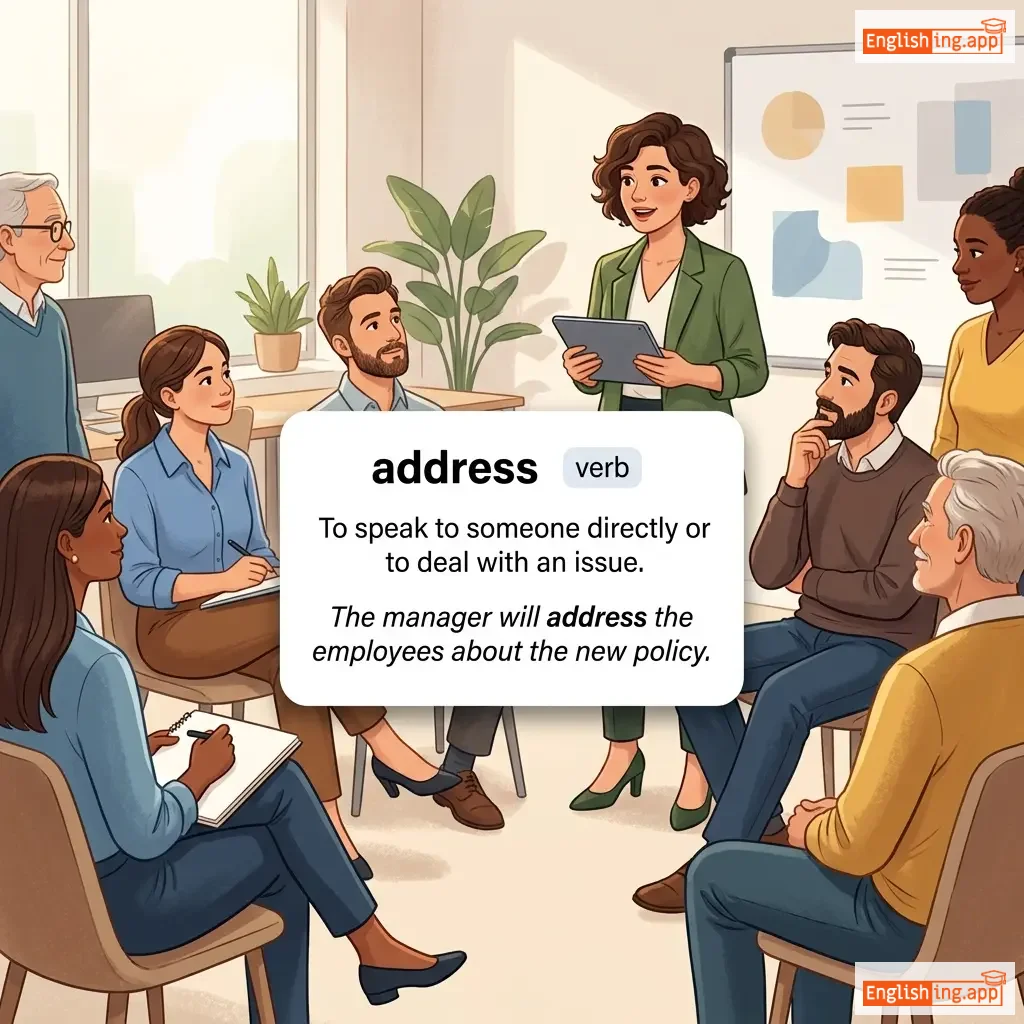
To speak to someone directly or to deal with an issue.
••••••
|
The manager will address the employees about the new policy.
マネージャーは新しい方針について従業員にアドレスします。
••••••
|
マネージャーは新しい方針について従業員にアドレスします。
Manejā wa atarashī hōshin ni tsuite jūgyōin ni adoresu shimasu.
••••••
|
address the issue
問題に対処する
••••••
|
to deal with or solve a problem
••••••
|
問題に対処する
mondai ni taisho suru
••••••
|
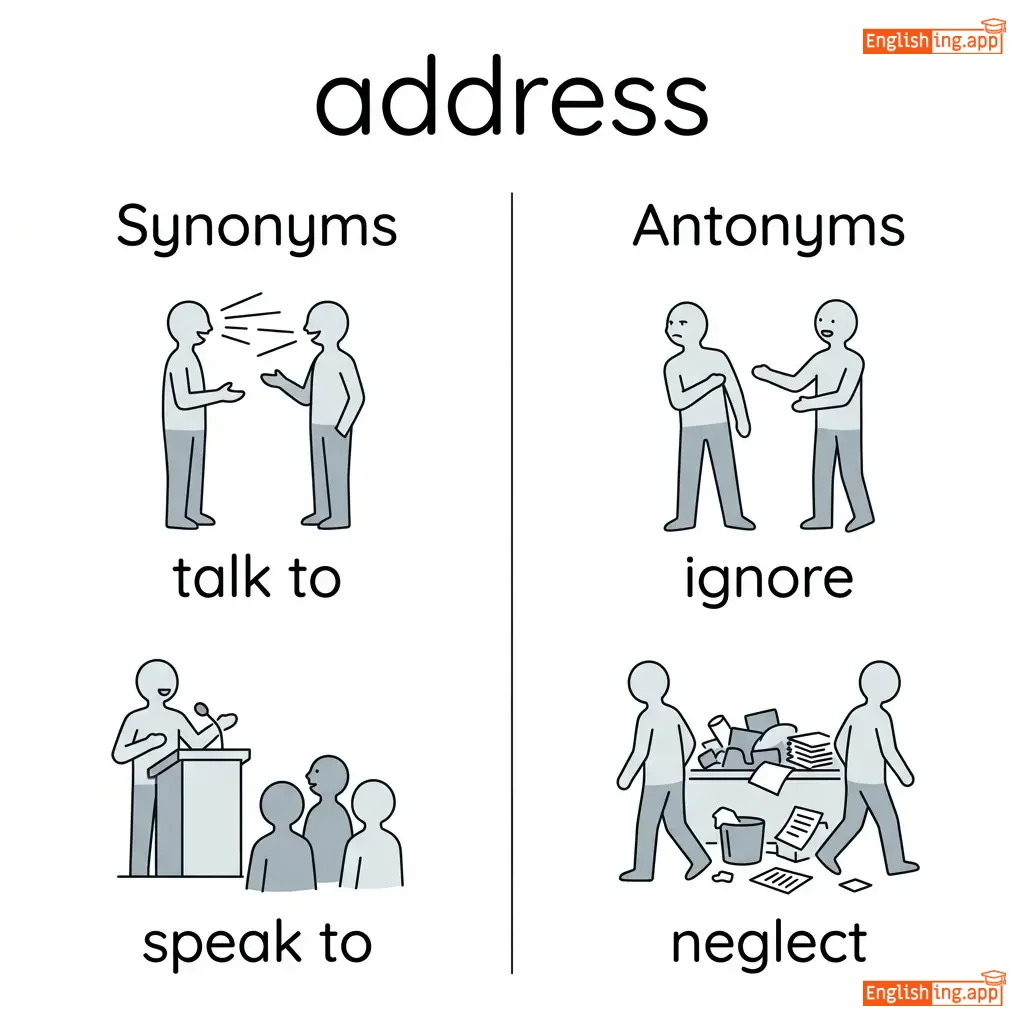
talk to, speak to, deal with, handle
••••••
|
ignore, neglect, avoid
••••••
|
address the problem, address a crowd, address concerns, address formally
••••••
|
Addressはただの場所ではなく、問題に対処することでもある。
••••••
|
|
#117
📑
|
/əˈdjuːs/
verb
(アデューズ)
••••••
|
- •••••• |
証拠や理由を提供する
shouko ya riyuu o teikyou suru
••••••
|
adduced
アデューズド
••••••
|
adduced
アデューズド
••••••
|
adduces
アデューセス
••••••
|
adducing
アデューシング
••••••
|
To provide evidence or reasons to support an argument or idea.
••••••
|
The lawyer adduced several examples to support his case.
弁護士は自分のケースを支持するためにいくつかの例を挙げた。
••••••
|
弁護士は自分のケースを支持するためにいくつかの例を挙げた。
Bengoshi wa jibun no kēsu o shiji suru tame ni ikutsuka no rei o ageta.
••••••
|
- •••••• | - •••••• | - •••••• |
cite, present, offer, advance, produce
••••••
|
conceal, withhold, suppress
••••••
|
adduce evidence, adduce reasons, adduce examples
••••••
|
Adduceは証拠を追加してアイデアを支持することを意味します。
••••••
|
|
#118
✔️
|
/ˈædɪkwət/
adjective
(アディクウェット)
••••••
|
- •••••• |
適切
tekisetsu
••••••
|
- •••••• | - •••••• | - •••••• | - •••••• |
sufficient or acceptable in quality or quantity
••••••
|
The food was adequate for the small group. |
食べ物は小さなグループにとって適切でした。
Tabemono wa chiisana gurūpu ni totte tekisetsu deshita.
••••••
|
adequate to the task |
sufficiently capable of completing a responsibility
••••••
|
タスクに適切
tasuku ni tekisetsu
••••••
|
sufficient, enough, satisfactory, suitable, ample
••••••
|
inadequate, insufficient, lacking
••••••
|
adequate supply, adequate amount, adequate support, adequate protection
••••••
|
適切はadequateと同じ、適切な食べ物は十分な食べ物
••••••
|
|
#119
✔️
|
/ˈædɪkwətli/
adverb
(アディクウェトリー)
••••••
|
- •••••• |
適切に
tekisetsu ni
••••••
|
- •••••• | - •••••• | - •••••• | - •••••• |
in a satisfactory manner
••••••
|
He completed the task adequately, but could improve next time. |
彼は適切に仕事を終えましたが、次回は改善できるでしょう。
Kare wa tekisetsu ni shigoto o oemashita ga, jikai wa kaizen dekiru deshō.
••••••
|
- •••••• | - •••••• | - •••••• |
sufficiently, properly, acceptably
••••••
|
inadequately, insufficiently
••••••
|
adequately prepared, adequately equipped, adequately addressed
••••••
|
適切に意味するのは十分にやること、足りないことではない!
••••••
|
|
#120
🧷
|
/ədˈhɪər/
verb
(アディア)
••••••
|
|
付着する、従う
fuchaku suru, shitagau
••••••
|
adhered
アディアード
••••••
|
adhered
アディアード
••••••
|
adheres
アディアーズ
••••••
|
adhering
アディアリング
••••••
|
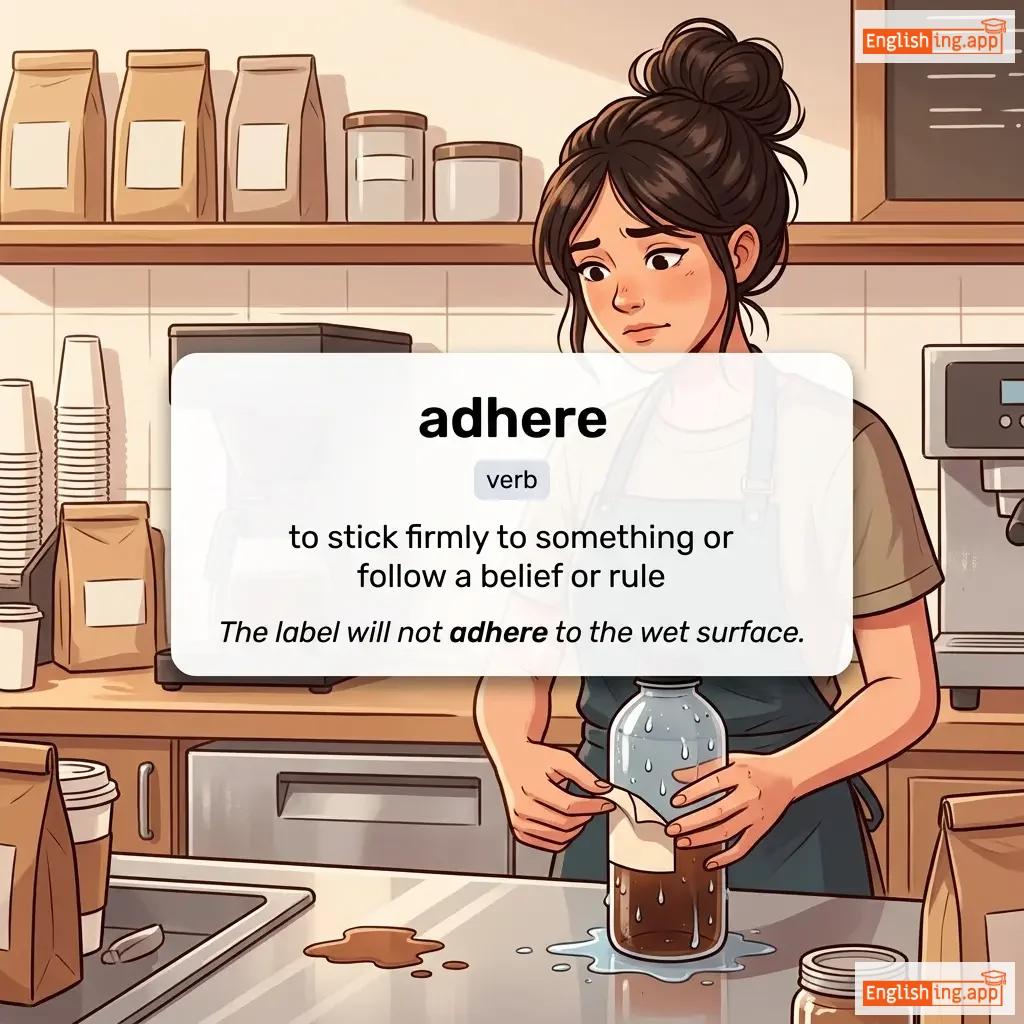
to stick firmly to something or follow a belief or rule
••••••
|
The label will not adhere to the wet surface.
ラベルは濡れた表面に付着しません。
••••••
|
ラベルは濡れた表面に付着しません。
Raberu wa nureta hyōmen ni fuchaku shimasen.
••••••
|
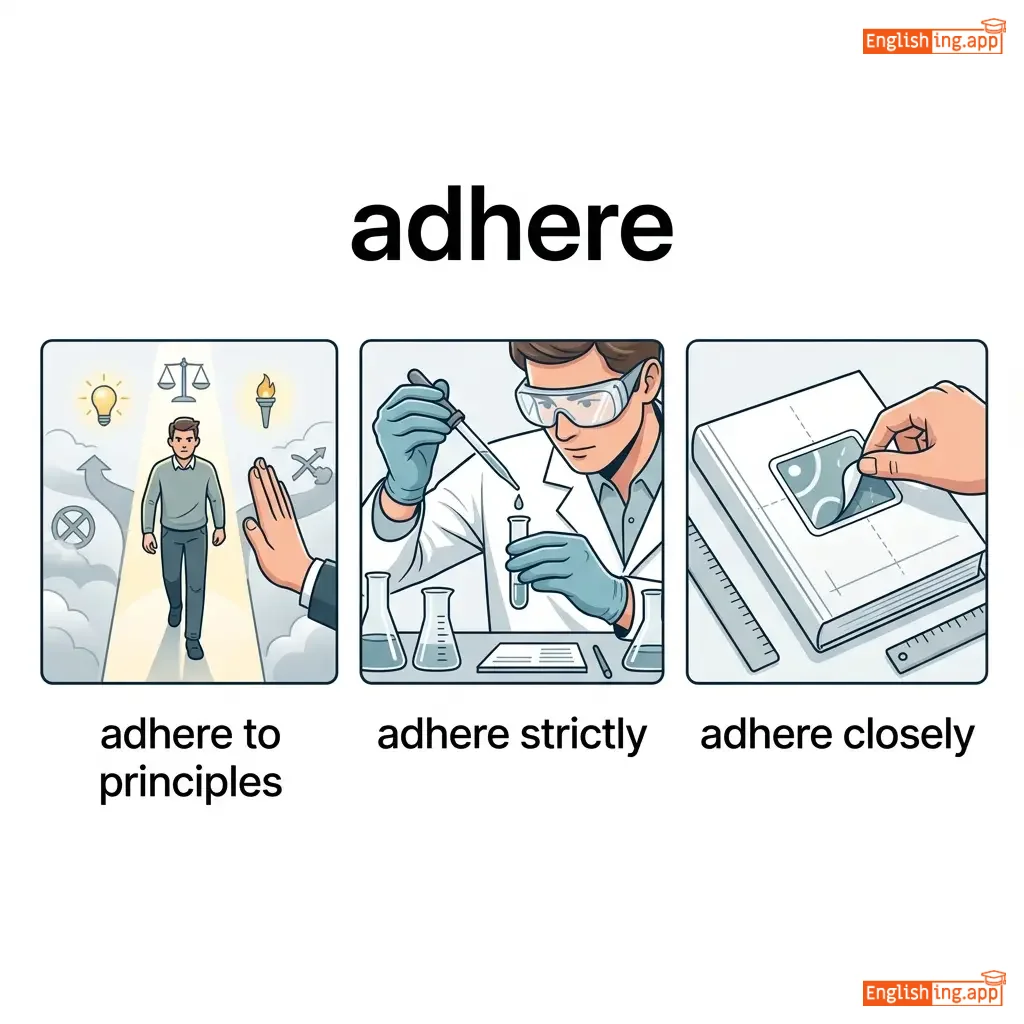
adhere to rules
ルールに従う
••••••
|
to strictly follow rules or principles
••••••
|
規則に従う
kisoku ni shitagau
••••••
|
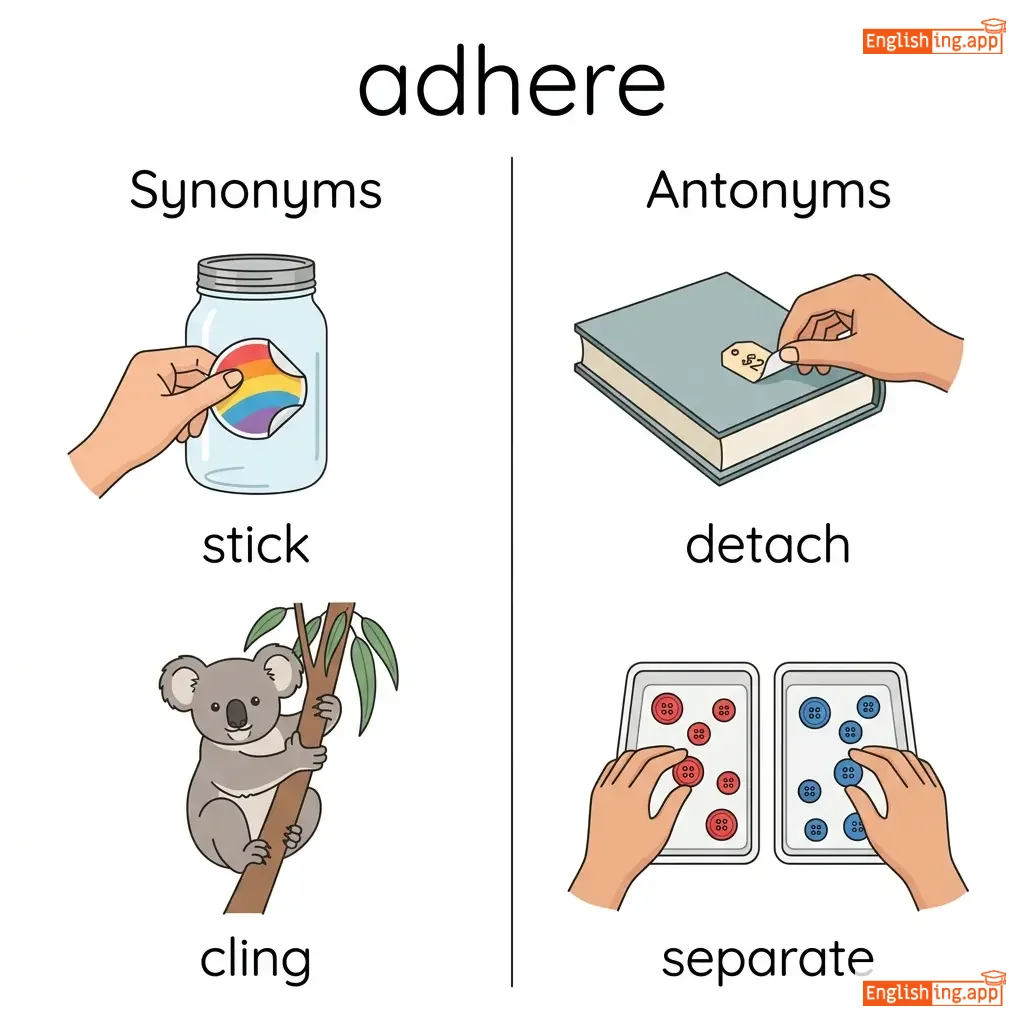
stick, cling, attach, comply, follow
••••••
|
detach, separate, ignore
••••••
|
adhere to principles, adhere strictly, adhere closely, adhere firmly
••••••
|
Adhere は貼り付けるようなもの、まるで接着剤が何かに付着するように。
••••••
|
|
#121
📜
|
/ədˈhɪərəns/
noun
(アドヒアランス)
••••••
|
|
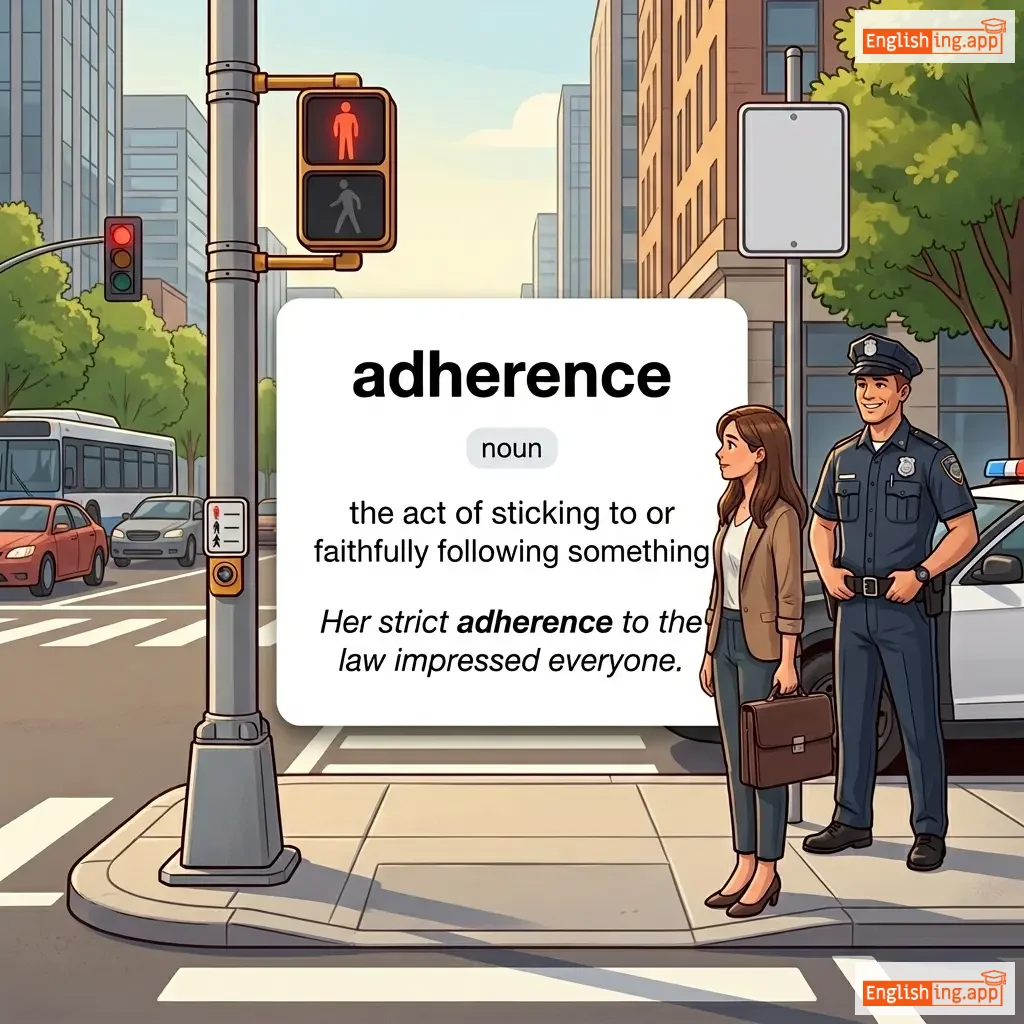
遵守
junshu
••••••
|
- •••••• | - •••••• | - •••••• | - •••••• |
the act of sticking to or faithfully following something
••••••
|
Her strict adherence to the law impressed everyone.
彼女の法への厳格な遵守は、みんなに感銘を与えました。
••••••
|
彼女の法への厳格な遵守は、みんなに感銘を与えました。
Kanojo no hō e no gengaku na junshu wa, minna ni kanmei o ataemashita.
••••••
|
adherence to tradition
伝統への遵守
••••••
|
faithfully following traditional practices
••••••
|
伝統への遵守
Dentō e no junshu
••••••
|
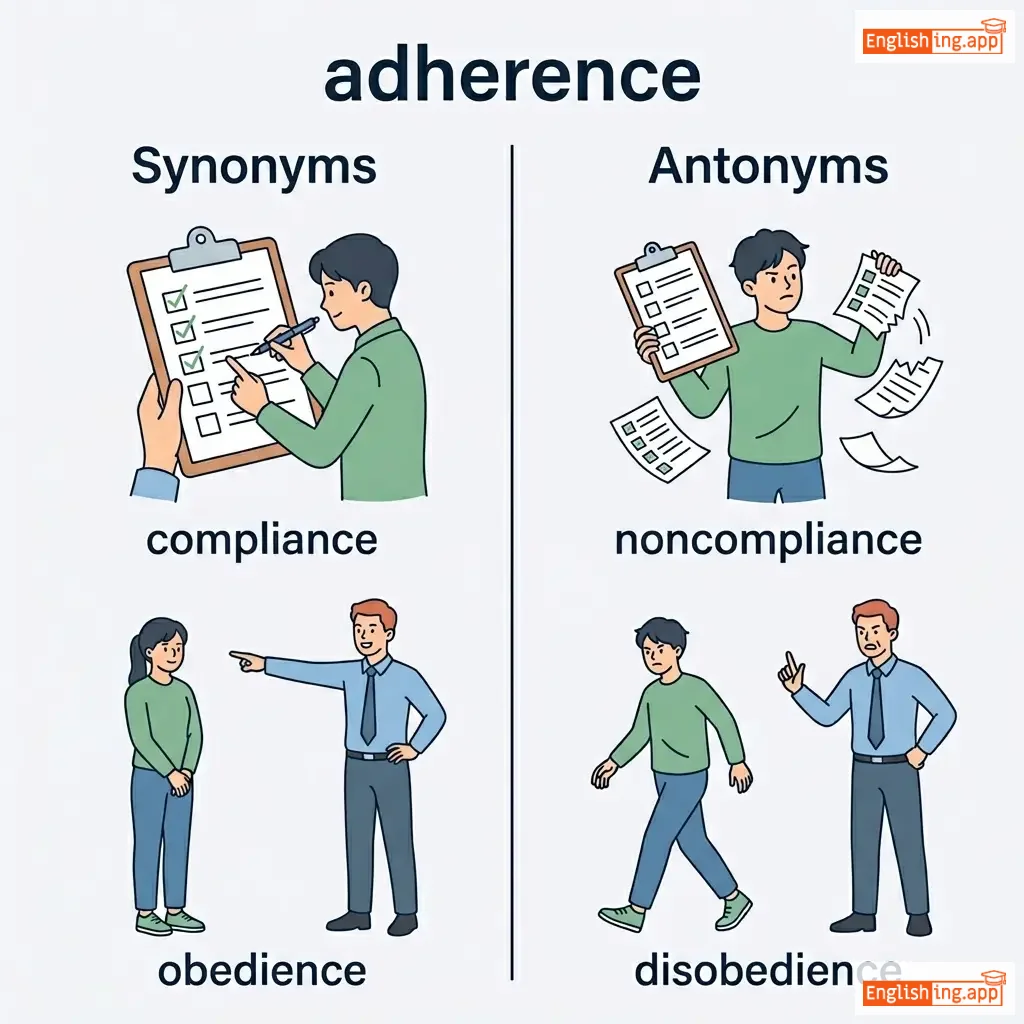
compliance, obedience, loyalty, attachment, devotion
••••••
|
noncompliance, disobedience, defiance
••••••
|
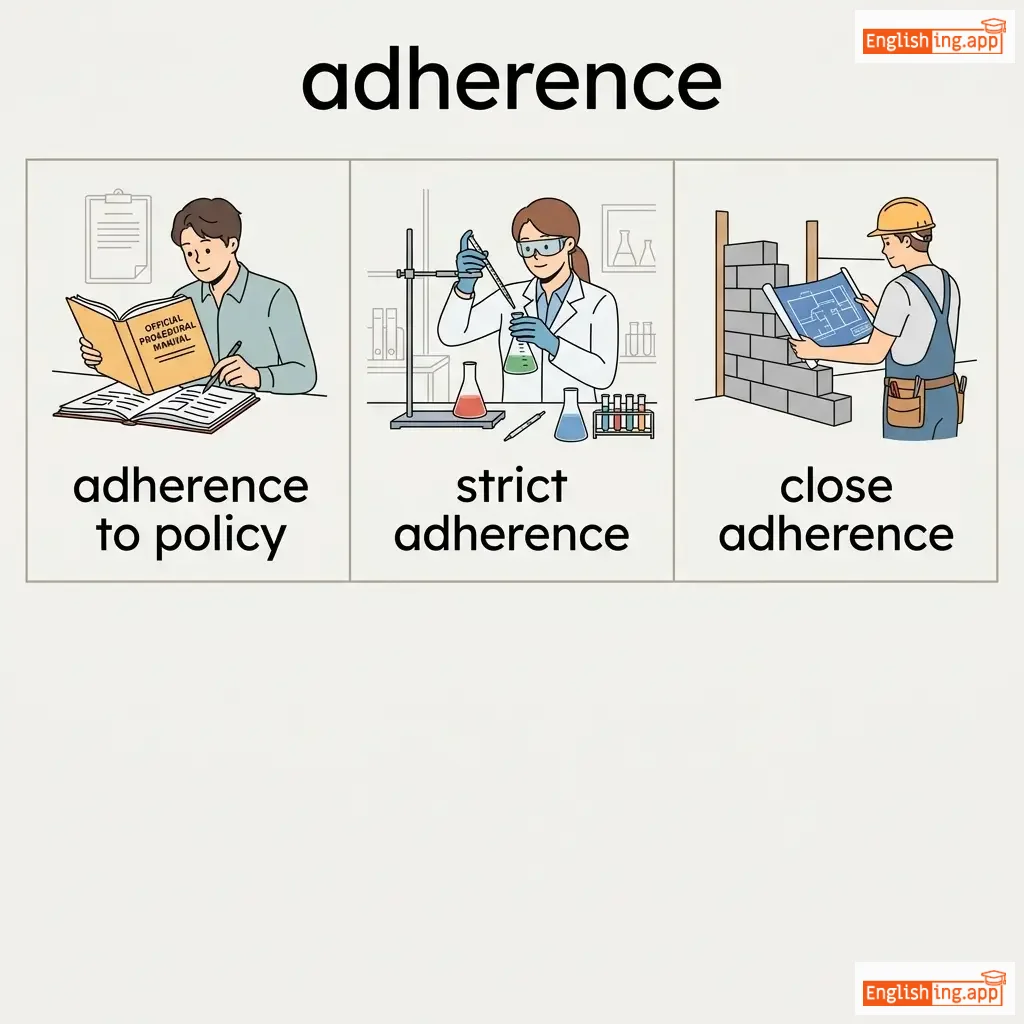
adherence to policy, strict adherence, close adherence, adherence standards
••••••
|
Adherence は遵守という意味です、Adhere + ence = 遵守
••••••
|
|
#122
🏠🏠
|
/əˈdʒeɪsənt/
adjective
(アジャセント)
••••••
|
- •••••• |
隣接する
rinsetsu suru
••••••
|
- •••••• | - •••••• | - •••••• | - •••••• |
পার্শ্ববর্তী; সংলগ্ন; নিকটবর্তী;
••••••
|
The hotel is adjacent to the shopping mall. |
ホテルはショッピングモールの隣にあります。
Hoteru wa shoppingu mōru no tonari ni arimasu.
••••••
|
- •••••• | - •••••• | - •••••• |
neighboring, adjoining, bordering, next to
••••••
|
distant, remote, separate, far
••••••
|
adjacent rooms, adjacent buildings, adjacent areas
••••••
|
Adjacent: 隣接するというのは、ものがすぐ近くにあることです。
••••••
|
|
#123
📝
|
/ˈædʒɪktɪv/
noun
(アドジェクティブ)
••••••
|
- •••••• |
形容詞
keiyoushi
••••••
|
- •••••• | - •••••• | - •••••• | - •••••• |
a word that describes or modifies a noun by giving more information about its quality, quantity, or state
••••••
|
The adjective in the sentence adds more detail to the noun.
アドジェクティブは名詞を説明します。
••••••
|
形容詞は名詞に詳しい情報を加えます。
keiyoushi wa meishi ni kuwashii jouhou o kuwaemasu
••••••
|
descriptive adjective
描写的な形容詞
••••••
|
an adjective that vividly describes a noun
••••••
|
描写的な形容詞
byoushatekina keiyoushi
••••••
|
descriptor, modifier, qualifier, describing word
••••••
|
noun, verb
••••••
|
descriptive adjective, comparative adjective, adjective clause, adjective phrase
••••••
|
Adjective = add 説明, 形容詞
••••••
|
|
#124
🏡
|
/əˈdʒɔɪn/
verb
(アドジョイン)
••••••
|
- •••••• |
隣接する
rinsetsu suru
••••••
|
adjoined
アドジョインド
••••••
|
adjoined
アドジョインド
••••••
|
adjoins
アドジョインズ
••••••
|
adjoining
アドジョイニング
••••••
|
To be next to and joined with something.
••••••
|
Their house adjoins the park.
彼らの家は公園に隣接しています。
••••••
|
彼らの家は公園に隣接しています。
Karera no ie wa kōen ni rinsetsu shiteimasu.
••••••
|
- •••••• | - •••••• | - •••••• |
border, connect, neighbor, join, touch
••••••
|
separate, detach, divide
••••••
|
adjoin property, adjoin land, houses adjoin
••••••
|
Adjoin は隣接することを意味します - 'Add + join' というフレーズを思い出してください、それは何かに隣接していることです。
••••••
|
|
#125
⏸️
|
/əˈdʒɜrn/
verb
(アジョーン)
••••••
|
- •••••• |
延期する
enki suru
••••••
|
adjourned
アジョーンド
••••••
|
adjourned
アジョーンド
••••••
|
adjourns
アジョーンズ
••••••
|
adjourning
アジョーニング
••••••
|
to suspend a meeting or session to another time or place
••••••
|
The judge decided to adjourn the hearing until next week.
裁判官は次の週まで聴聞を延期することに決めました。
••••••
|
裁判官は次の週まで聴聞を延期することに決めました。
Saibankan wa tsugi no shū made chōmon o enki suru koto ni kimemashita.
••••••
|
motion to adjourn
動議による延期
••••••
|
a formal proposal to end a meeting or session
••••••
|
動議による延期
Dōgi ni yoru enki
••••••
|
suspend, postpone, delay, recess, discontinue
••••••
|
resume, continue, proceed
••••••
|
adjourn a meeting, adjourn the session, adjourn temporarily, motion to adjourn
••••••
|
Adjourn は、会議を後に延期する意味で、アジョーンの響きがそれを表します。
••••••
|
|
#126
👨⚖️
|
/əˈdʒuːdɪˌkeɪt/
verb
(アジュディケイト)
••••••
|
- •••••• |
裁定する
saitei suru
••••••
|
adjudicated
アジュディケイテッド
••••••
|
adjudicated
アジュディケイテッド
••••••
|
adjudicates
アジュディケイツ
••••••
|
adjudicating
アジュディケイティング
••••••
|
to make a formal judgment or decision about a problem or dispute
••••••
|
The committee was formed to adjudicate disputes between the parties.
委員会は当事者間の争いを審理するために結成されました。
••••••
|
委員会は当事者間の争いを審理するために結成されました。
Iinkai wa tōjisha-kan no arasoi o shinri suru tame ni kessei saremashita.
••••••
|
adjudicate a dispute
争いを審理する
••••••
|
to settle a conflict officially
••••••
|
争いを審理する
arasoi o shinri suru
••••••
|
arbitrate, judge, decide, settle, resolve
••••••
|
ignore, delay, neglect
••••••
|
adjudicate disputes, adjudicate cases, adjudicate claims
••••••
|
Adjudicate = A Judge + Indicate = 裁判官が決定を下します。
••••••
|
|
#127
⚙️
|
/əˈdʒʌst/
verb
(アジャスト)
••••••
|
- •••••• |
調整する
chousei suru
••••••
|
adjusted
アジャステッド
••••••
|
adjusted
アジャステッド
••••••
|
adjusts
アジャスツ
••••••
|
adjusting
アジャスティング
••••••
|
to change something slightly to make it more suitable or effective
••••••
|
She adjusted the mirror to see the road clearly.
彼女は鏡を調整して道路をはっきり見えました。
••••••
|
彼女は鏡を調整して道路をはっきり見えました。
Kanojo wa kagami wo chousei shite, douro wo hakkiri miemashita.
••••••
|
adjust to
調整する
••••••
|
to get used to a new situation
••••••
|
適応する
tekiou suru
••••••
|
modify, alter, adapt, regulate
••••••
|
disturb, disarrange, upset
••••••
|
adjust settings, adjust position, adjust speed, adjust focus
••••••
|
調整=少し変更して適応する
••••••
|
|
#128
🔧
|
/əˈdʒʌstmənt/
noun
••••••
|
- •••••• | - •••••• | - •••••• | - •••••• | - •••••• | - •••••• |
a small change made to improve something or make it work better
••••••
|
The doctor made an adjustment to the patient’s medication. |
- •••••• |
make an adjustment |
to change something slightly to improve it
••••••
|
- •••••• |
modification, alteration, correction, change
••••••
|
rigidity, stagnation
••••••
|
adjustment to, minor adjustment, adjustment period, policy adjustment
••••••
|
No •••••• |
|
#129
💊
|
/ədˈmɪnɪstər/
verb
(アドミニスター)
••••••
|
|
管理する / 適用する
kanri suru / tekiyou suru
••••••
|
administered
アドミニスタード
••••••
|
administered
アドミニスタード
••••••
|
administers
アドミニスターズ
••••••
|
administering
アドミニスターリング
••••••
|
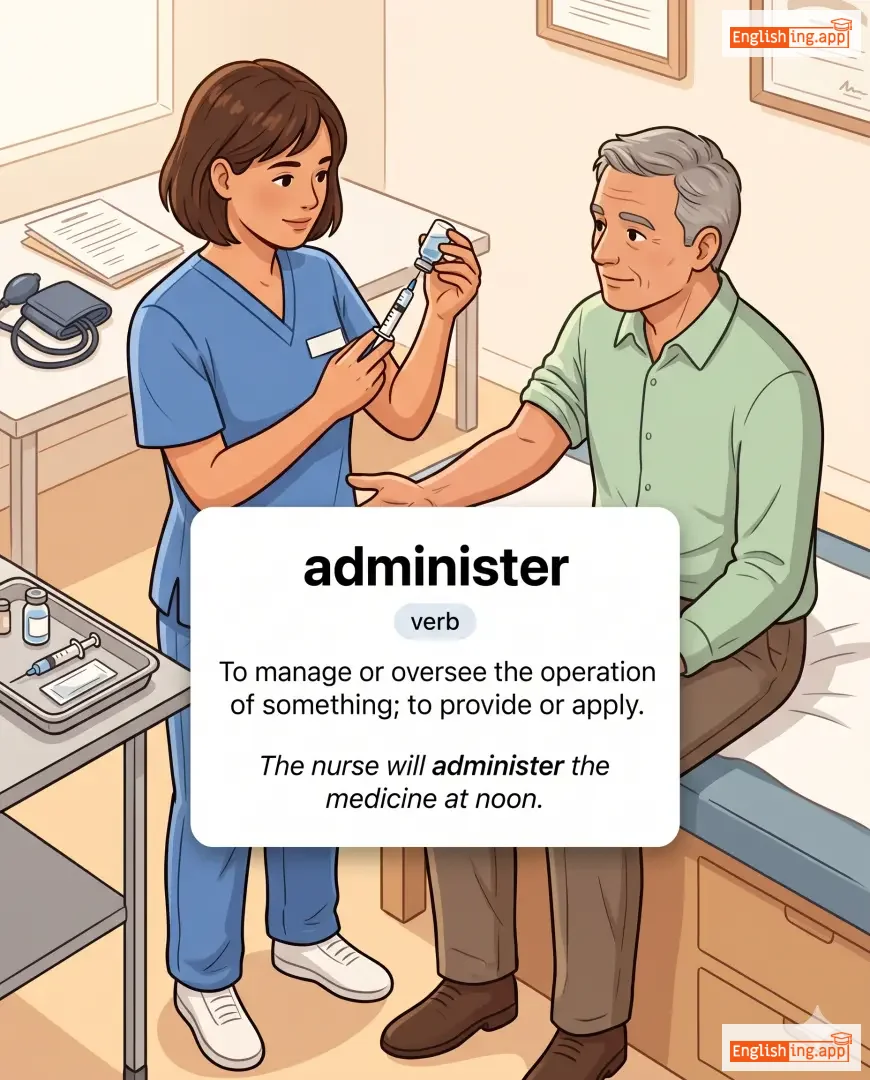
To manage or oversee the operation of something; to provide or apply.
••••••
|
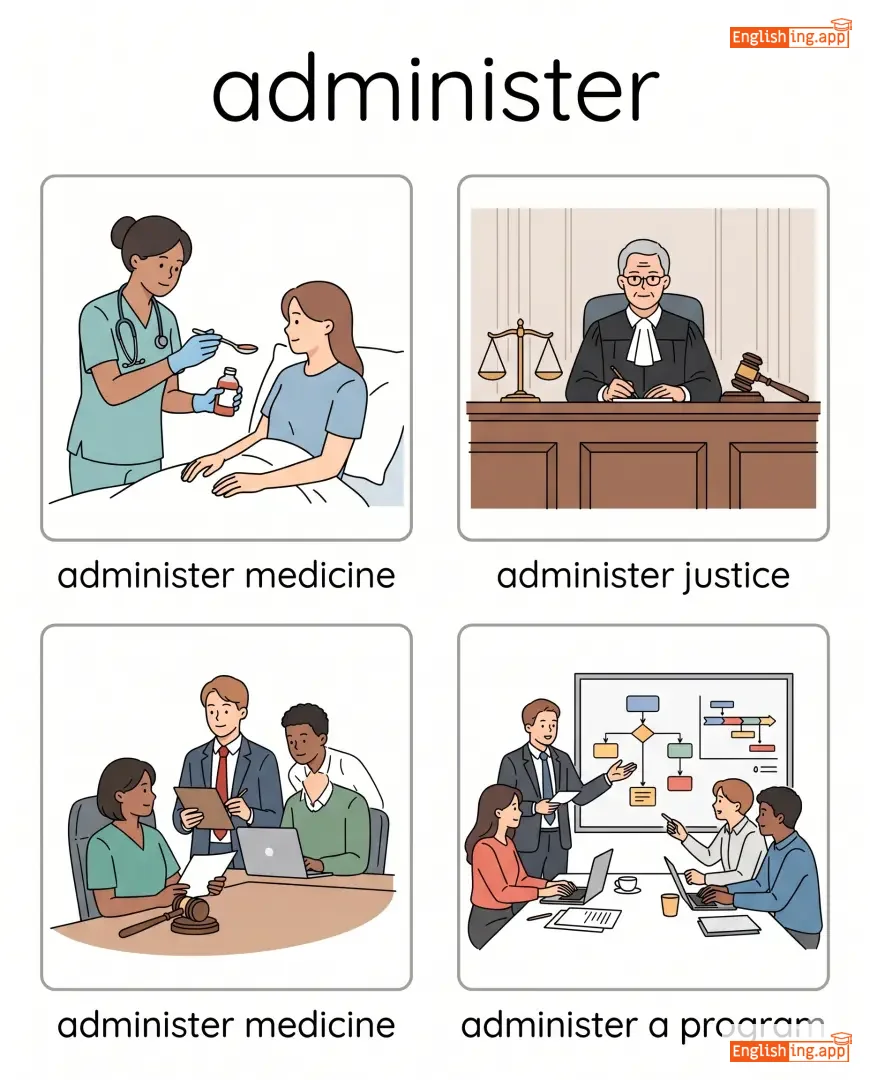
The nurse will administer the medicine at noon.
ナースは正午に薬を施す予定です。
••••••
|
ナースは正午に薬を施す予定です。
Nasu wa shougo ni kusuri wo hodokosu yotei desu.
••••••
|
administer justice
司法を施行する
••••••
|
To ensure that laws and fairness are upheld.
••••••
|
司法を施行する
Shihou wo shikkou suru
••••••
|
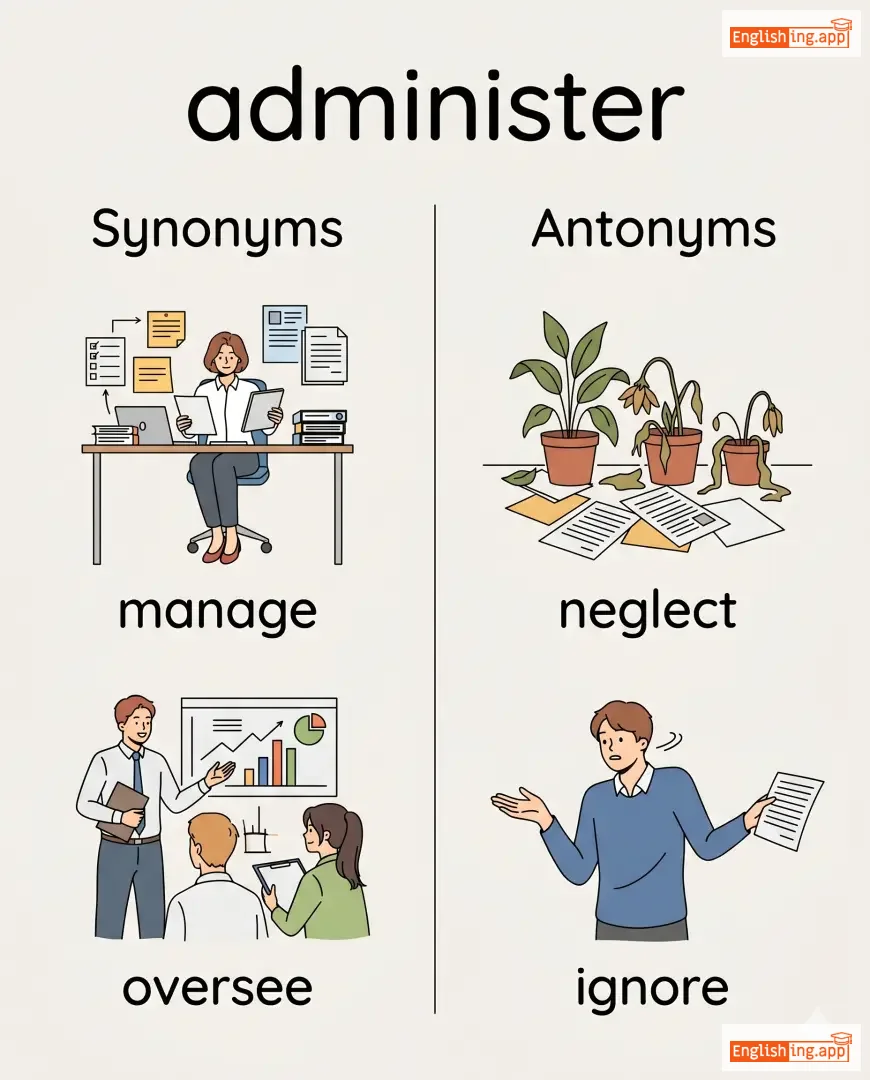
manage, oversee, control, execute, apply
••••••
|
neglect, ignore
••••••
|
administer medicine, administer justice, administer a program, administer funds
••••••
|
Administerは管理する意味。管理者が全てを管理します。
••••••
|
|
#130
🗂️
|
/ədˈmɪnɪstreɪt/
verb
(アドミニストレート)
••••••
|
- •••••• |
管理する
kanri suru
••••••
|
administrated
アドミニストレーテッド
••••••
|
administrated
アドミニストレーテッド
••••••
|
administrates
アドミニストレーツ
••••••
|
administrating
アドミニストレーティング
••••••
|
to manage or supervise the execution of duties, laws, or resources; to formally give or apply something such as a test or medicine
••••••
|
The committee will administrate the new policy across all departments.
ザ コミッティー ウィル アドミニストレート ザ ニュー ポリシー。
••••••
|
委員会はすべての部門で新しい方針を管理する。
iinkai wa subete no bumon de atarashii hoshin o kanri suru
••••••
|
administrate justice
アドミニストレート ジャスティス
••••••
|
to carry out or enforce justice in a fair and lawful manner
••••••
|
正義を執行する
seigi o shikko suru
••••••
|
manage, administer, supervise, govern, oversee
••••••
|
neglect, mismanage
••••••
|
administrate a program, administrate duties, administrate resources, administrate policy
••••••
|
Administrate は 管理する kanri suru
••••••
|
|
#131
🏛️
|
/ədˌmɪnɪˈstreɪʃən/
noun
(アドミニストレーション)
••••••
|
- •••••• |
行政
gyousei
••••••
|
- •••••• | - •••••• | - •••••• | - •••••• |
The management or organization of a business, institution, or government.
••••••
|
The new administration introduced several reforms. |
新しい行政は幾つかの改革を導入しました。
atarashii gyousei wa ikutsuka no kaikaku o dounyuu shimashita.
••••••
|
public administration |
The management of government affairs and policies.
••••••
|
公共行政
koukyou gyousei
••••••
|
management, governance, supervision, leadership, control
••••••
|
mismanagement, neglect, chaos
••••••
|
school administration, government administration, business administration, administration office
••••••
|
行政は「アドミニストレーション」の日本語、整理整頓された組織!
••••••
|
|
#132
🏢
|
/ədˈmɪnɪstrətɪv/
adjective
(アドミニストレイティブ)
••••••
|
|
行政的な
gyouseiteki na
••••••
|
- •••••• | - •••••• | - •••••• | - •••••• |
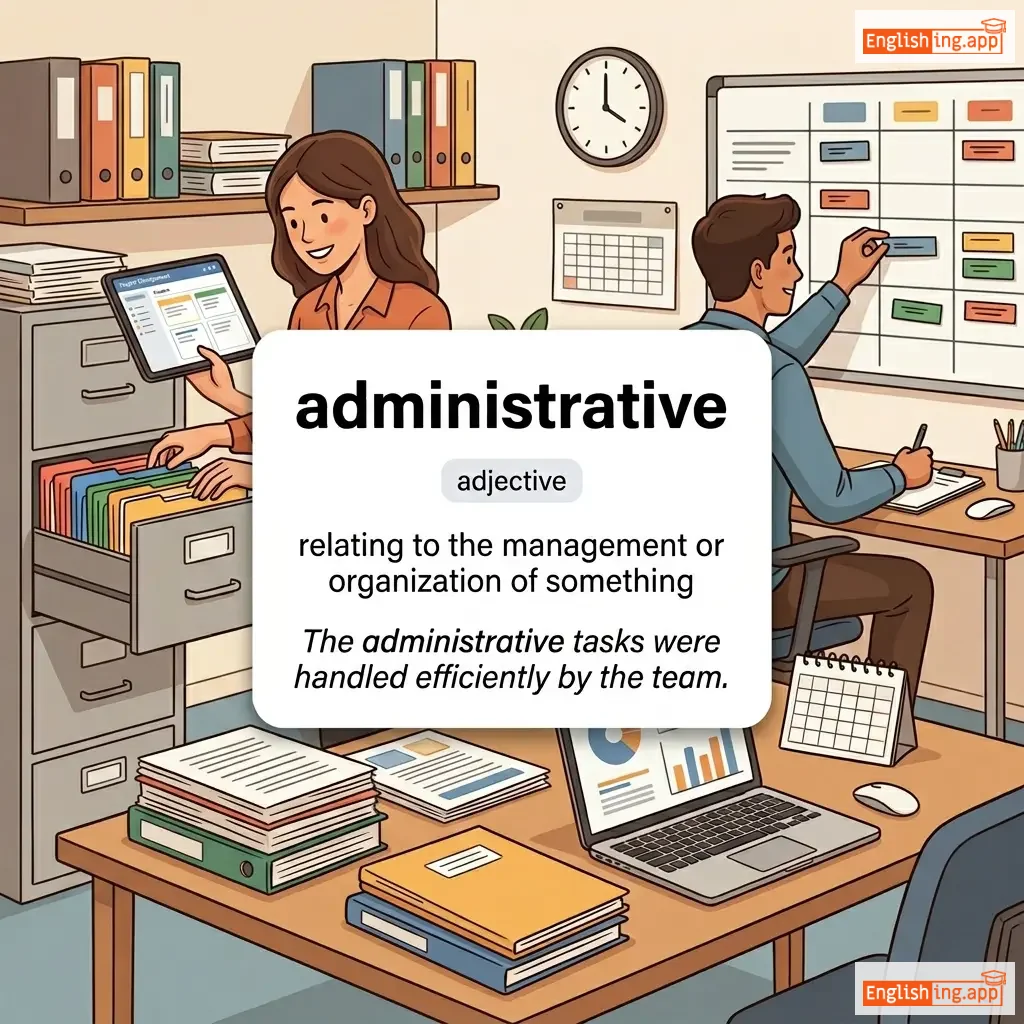
relating to the management or organization of an institution or business
••••••
|
She handles all the administrative tasks in the office. |
彼女はオフィスのすべての行政的な業務を担当しています。
Kanojo wa ofisu no subete no gyouseiteki na gyoumu wo tantou shiteimasu.
••••••
|
- •••••• | - •••••• | - •••••• |
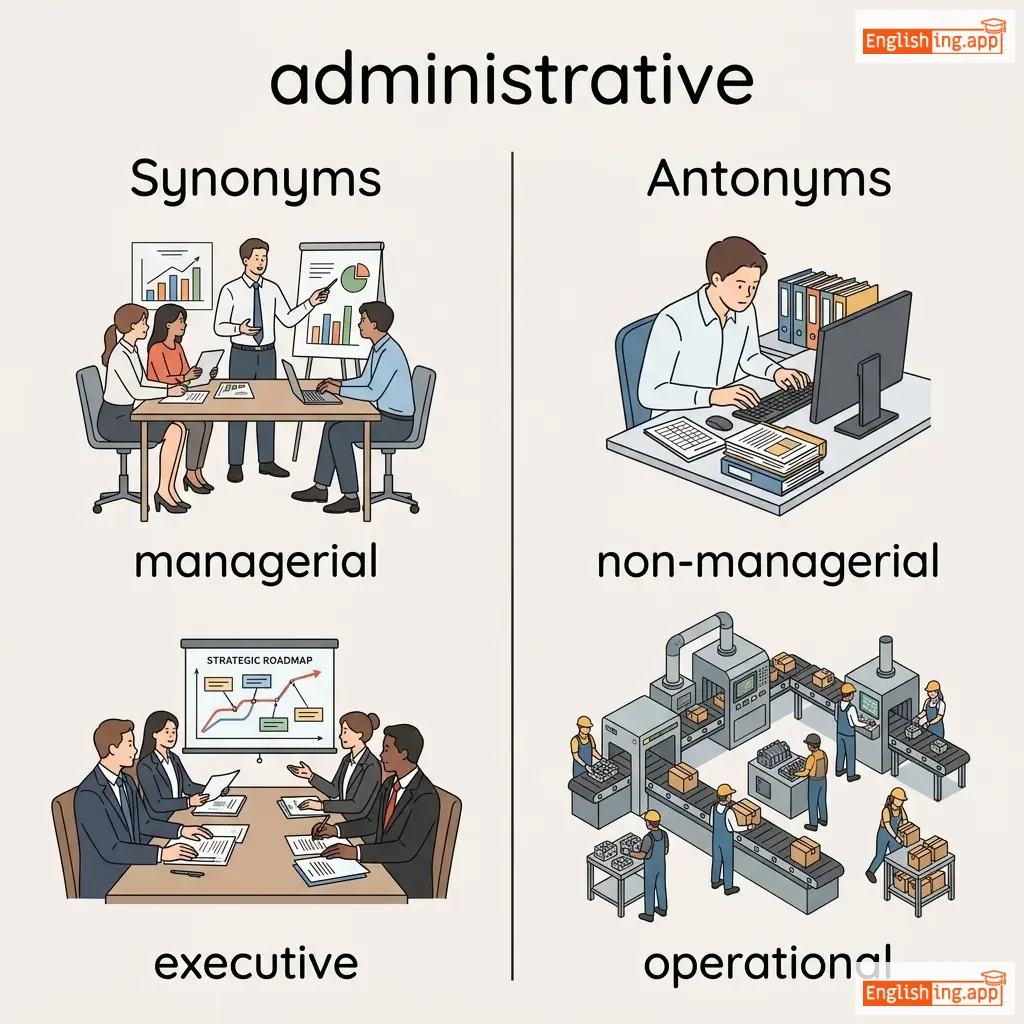
managerial, executive, organizational, supervisory
••••••
|
non-managerial, subordinate
••••••
|
administrative staff, administrative work, administrative office, administrative system
••••••
|
Adminはオフィスを意味するので、行政的なはオフィスの管理に関連している意味です 🏢
••••••
|
|
#133
🧑💼
|
/ədˈmɪnɪstreɪtər/
noun
••••••
|
- •••••• | - •••••• | - •••••• | - •••••• | - •••••• | - •••••• |
a person responsible for running or managing an organization or system
••••••
|
The school administrator implemented new policies for students. |
- •••••• | - •••••• | - •••••• | - •••••• |
manager, director, supervisor, executive, controller
••••••
|
employee, worker, subordinate
••••••
|
system administrator, school administrator, database administrator, network administrator
••••••
|
No •••••• |
|
#134
👏
|
/ˈædmərəbəl/
adjective
(アドマイラブル)
••••••
|
- •••••• |
賞賛に値する
shousan ni ataisuru
••••••
|
- •••••• | - •••••• | - •••••• | - •••••• |
প্রশংসনীয়; চমৎকার;
••••••
|
Her dedication to helping others is truly admirable.
彼女の他人を助ける献身は本当に賞賛に値します。
••••••
|
彼女の他人を助ける献身は本当に賞賛に値します。
Kanojo no tanin o tasukeru kenshin wa hontou ni shousan ni atai shimasu.
••••••
|
- •••••• | - •••••• | - •••••• |
praiseworthy, commendable, laudable, excellent
••••••
|
deplorable, despicable, contemptible, shameful
••••••
|
admirable qualities, admirable effort, admirable courage
••••••
|
賞賛に値するものは素晴らしい行いです。
••••••
|
|
#135
👏
|
/ˌædməˈreɪʃən/
noun
(アドマイレーション)
••••••
|
- •••••• |
尊敬
sonkei
••••••
|
- •••••• | - •••••• | - •••••• | - •••••• |
a feeling of respect, pleasure, or approval for someone or something
••••••
|
She felt great admiration for her teacher’s dedication.
彼女は先生の献身にアドマイレーションを感じた。
••••••
|
彼女は先生の献身に尊敬を感じた。
kanojo wa sensei no kenshin ni sonkei o kanjita
••••••
|
look at someone with admiration
尊敬の念で見る
••••••
|
to view someone with respect and approval
••••••
|
尊敬の念で見る
sonkei no nen de miru
••••••
|
respect, esteem, appreciation, regard, praise
••••••
|
disdain, contempt, disapproval
••••••
|
deep admiration, mutual admiration, admiration for, express admiration
••••••
|
Admiration = 尊敬, admire すると sonkei
••••••
|
|
#136
😍
|
/ədˈmaɪər/
verb
(エイドマイア)
••••••
|
- •••••• |
賞賛する
shōsan suru
••••••
|
admired
エイドマイアード
••••••
|
admired
エイドマイアード
••••••
|
admires
エイドマイアーズ
••••••
|
admiring
エイドマイアリング
••••••
|
To respect, appreciate, or look up to someone or something.
••••••
|
I really admire her dedication to education.
私は本当に彼女の教育への献身を賞賛します。
••••••
|
私は本当に彼女の教育への献身を賞賛します。
Watashi wa hontōni kanojo no kyōiku e no kenshin o shōsan shimasu.
••••••
|
admire from afar
遠くから賞賛する
••••••
|
To respect or like someone without approaching them directly.
••••••
|
遠くから賞賛する
tōku kara shōsan suru
••••••
|
respect, appreciate, praise, value, esteem
••••••
|
despise, dislike, scorn
••••••
|
admire greatly, admire deeply, admire the beauty, admire courage
••••••
|
賞賛するはadmireの意味 – 私は彼女を遠くから賞賛します。
••••••
|
|
#137
🎟️
|
/ədˈmɪʃən/
noun
(アドミッション)
••••••
|
- •••••• |
入場
nyūjō
••••••
|
- •••••• | - •••••• | - •••••• | - •••••• |
The process or fact of being allowed to enter a place or join an organization.
••••••
|
The admission fee to the museum is five dollars.
博物館の入場料は5ドルです。
••••••
|
博物館の入場料は5ドルです。
Hakubutsukan no nyūjō-ryō wa 5 doru desu.
••••••
|
free admission
無料入場
••••••
|
Entry without cost.
••••••
|
無料入場
muryō nyūjō
••••••
|
entry, access, acceptance, enrollment
••••••
|
exclusion, denial, rejection
••••••
|
admission fee, admission test, admission process, admission ticket
••••••
|
Admission = 入場、許可される入場。
••••••
|
|
#138
🙋
|
/ədˈmɪt/
verb
(アドミット)
••••••
|
|
認める
mitomeru
••••••
|
admitted
アドミットした
••••••
|
admitted
アドミットした
••••••
|
admits
アドミットする
••••••
|
admitting
アドミットしている
••••••
|
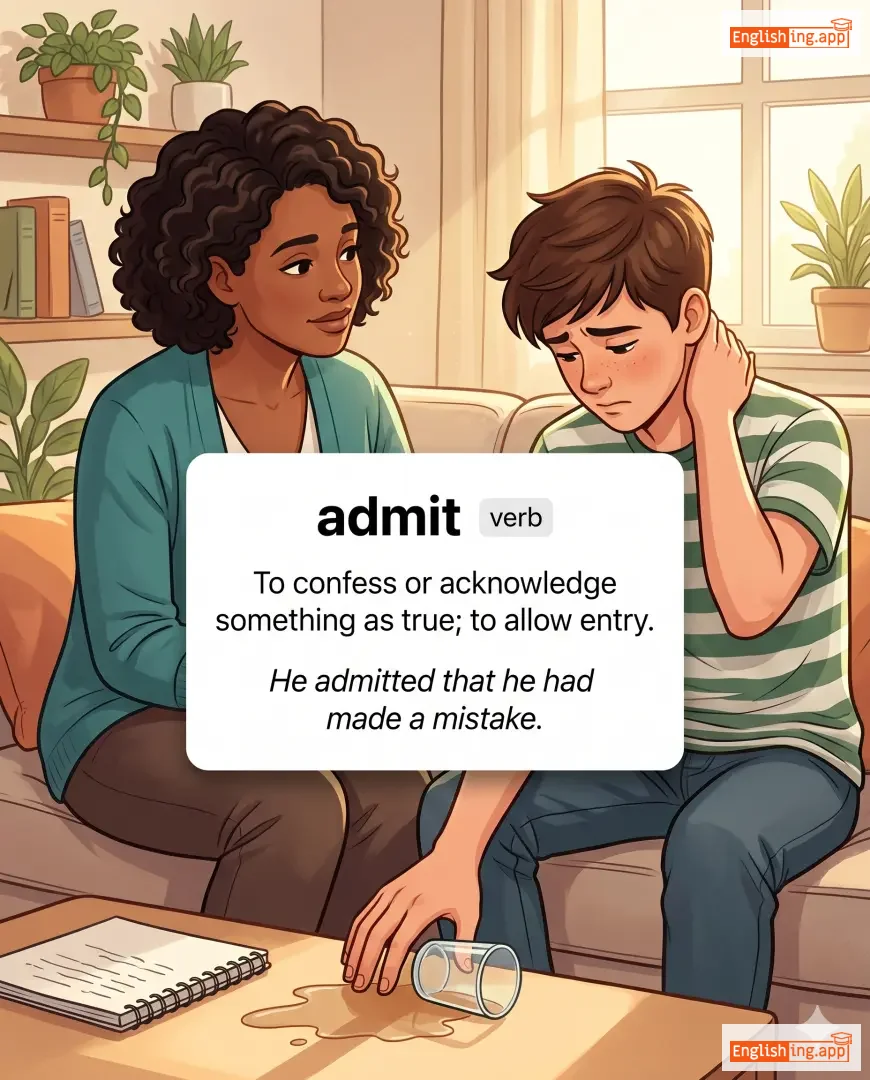
To confess or acknowledge something as true; to allow entry.
••••••
|
He admitted that he had made a mistake.
彼は間違いを犯したことを認めた。
••••••
|
彼は間違いを犯したことを認めた。
Kare wa machigai o okashita koto o mitometa.
••••••
|
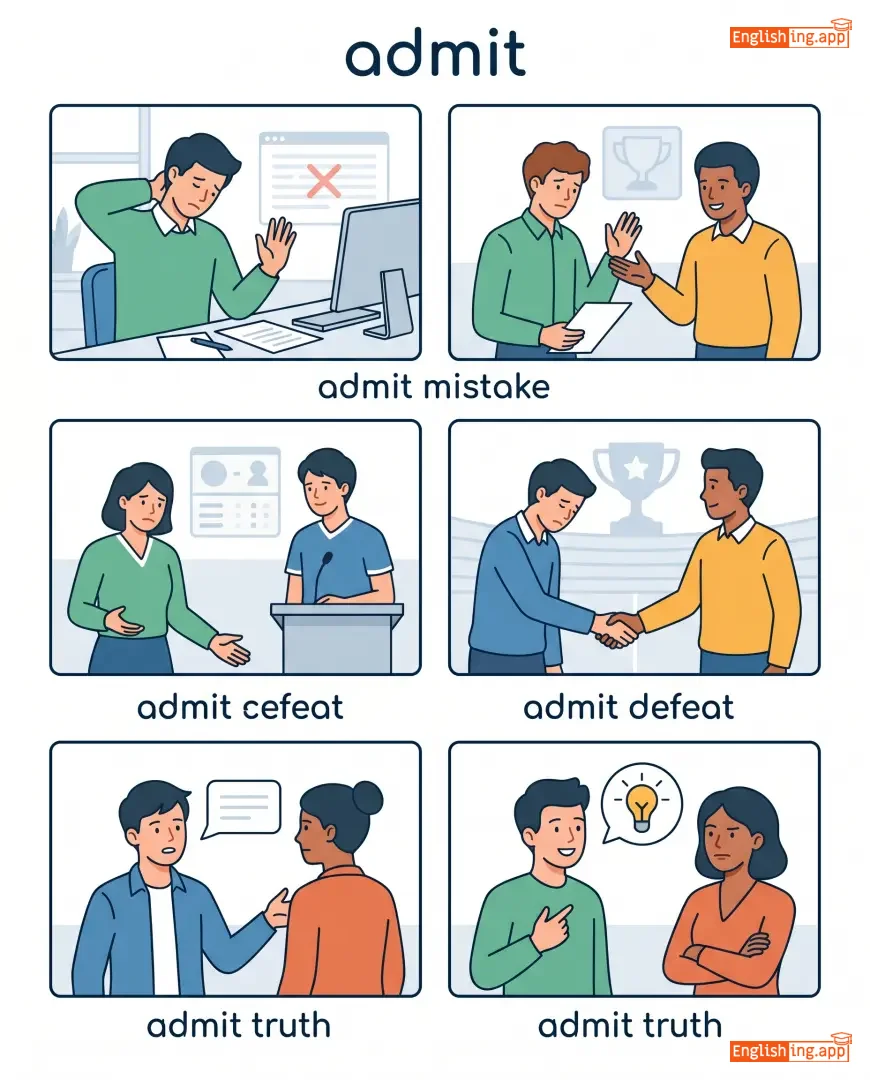
admit defeat
敗北を認める
••••••
|
To accept that you have failed.
••••••
|
敗北を認める
Haiboku o mitomeru
••••••
|
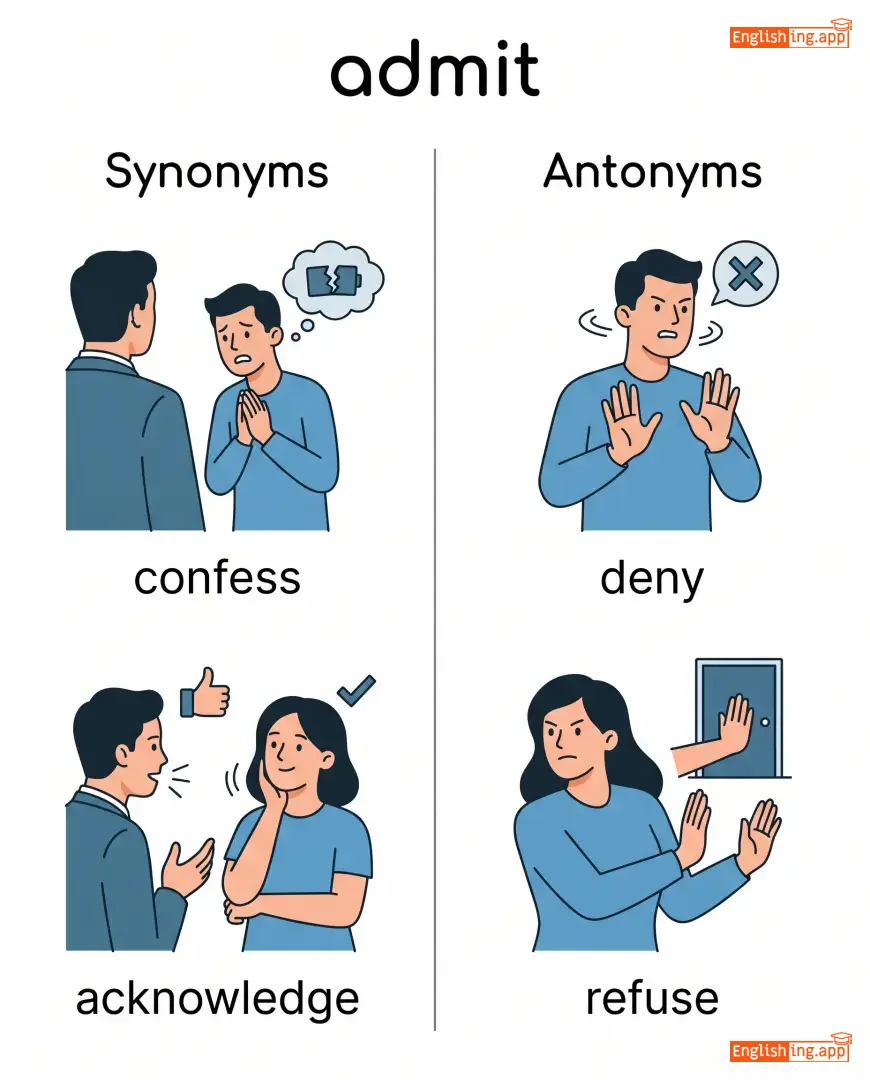
confess, acknowledge, accept, allow, grant
••••••
|
deny, refuse, reject
••••••
|
admit mistake, admit defeat, admit truth, admit into
••••••
|
認めるとは、間違いを認めることです。
••••••
|
|
#139
🧑🎓
|
/ˌædəˈlɛsənt/
noun/adjective
(アドレセント)
••••••
|
- •••••• |
思春期の人
shishunki no hito
••••••
|
- •••••• | - •••••• | - •••••• | - •••••• |
A young person in the process of developing from a child into an adult.
••••••
|
Adolescents often experience rapid physical and emotional changes. |
思春期の人々はしばしば急速な身体的および感情的な変化を経験します。
shishunki no hitobito wa shibashiba kyūsokuna shintai-teki oyobi kanjō-teki na henka o keiken shimasu.
••••••
|
- •••••• | - •••••• | - •••••• |
teenager, youth, minor, juvenile
••••••
|
adult, mature
••••••
|
adolescent behavior, adolescent years, adolescent development, adolescent health
••••••
|
Adolescent = 思春期の人、大人に成長しつつある若者。
••••••
|
|
#140
👨👩👧
|
/əˈdɒpt/
verb
(アダプト)
••••••
|
- •••••• |
養子を迎える
youshi wo mukaeru
••••••
|
adopted
アダプテッド
••••••
|
adopted
アダプテッド
••••••
|
adopts
アダプトス
••••••
|
adopting
アダプティング
••••••
|
To take something as your own, such as a child, idea, or method.
••••••
|
They decided to adopt a child from the orphanage.
彼らは孤児院から子供を養子にすることに決めました。
••••••
|
彼らは孤児院から子供を養子にすることに決めました。
Karera wa kodomogoya kara kodomo wo youshi ni suru koto ni kimemashita.
••••••
|
adopt a policy
政策を採用する
••••••
|
To formally accept and begin to use a policy.
••••••
|
政策を採用する
seisaku wo saiyou suru
••••••
|
accept, embrace, foster, implement, take on
••••••
|
abandon, reject, refuse
••••••
|
adopt a child, adopt a policy, adopt a method, adopt a strategy
••••••
|
Adoptは養子を迎えるという意味です – A ドット (A dopt) 家族になります。
••••••
|
|
#141
👶
|
/əˈdɒpʃən/
noun
(アダプション)
••••••
|
|
養子縁組
youshiengumi
••••••
|
- •••••• | - •••••• | - •••••• | - •••••• |
the act of legally taking another's child and bringing it up as one's own, or accepting and starting to use something new
••••••
|
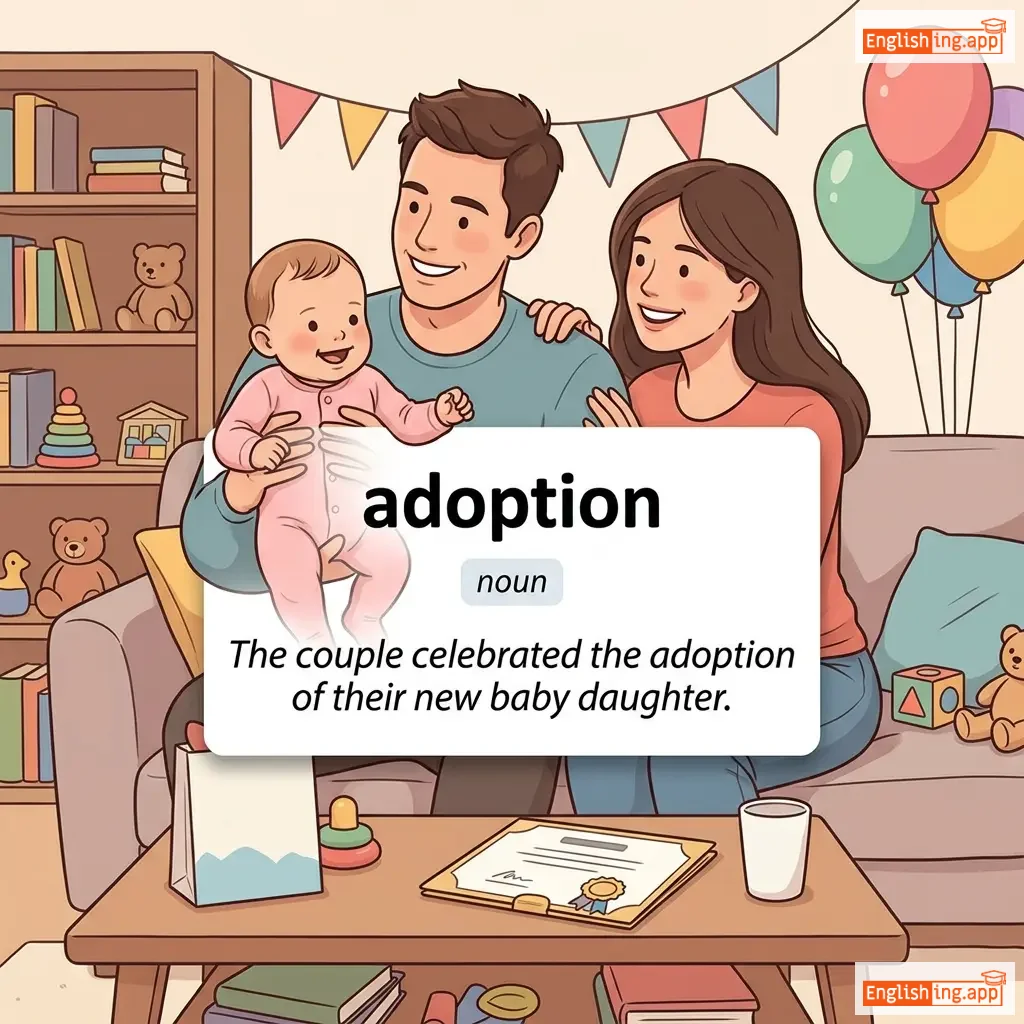
The couple celebrated the adoption of their new baby daughter.
そのカップルは新しい娘の養子縁組を祝いました。
••••••
|
そのカップルは新しい娘の養子縁組を祝いました。
Sono kappuru wa atarashii musume no youshi engumi wo iwaimashita.
••••••
|
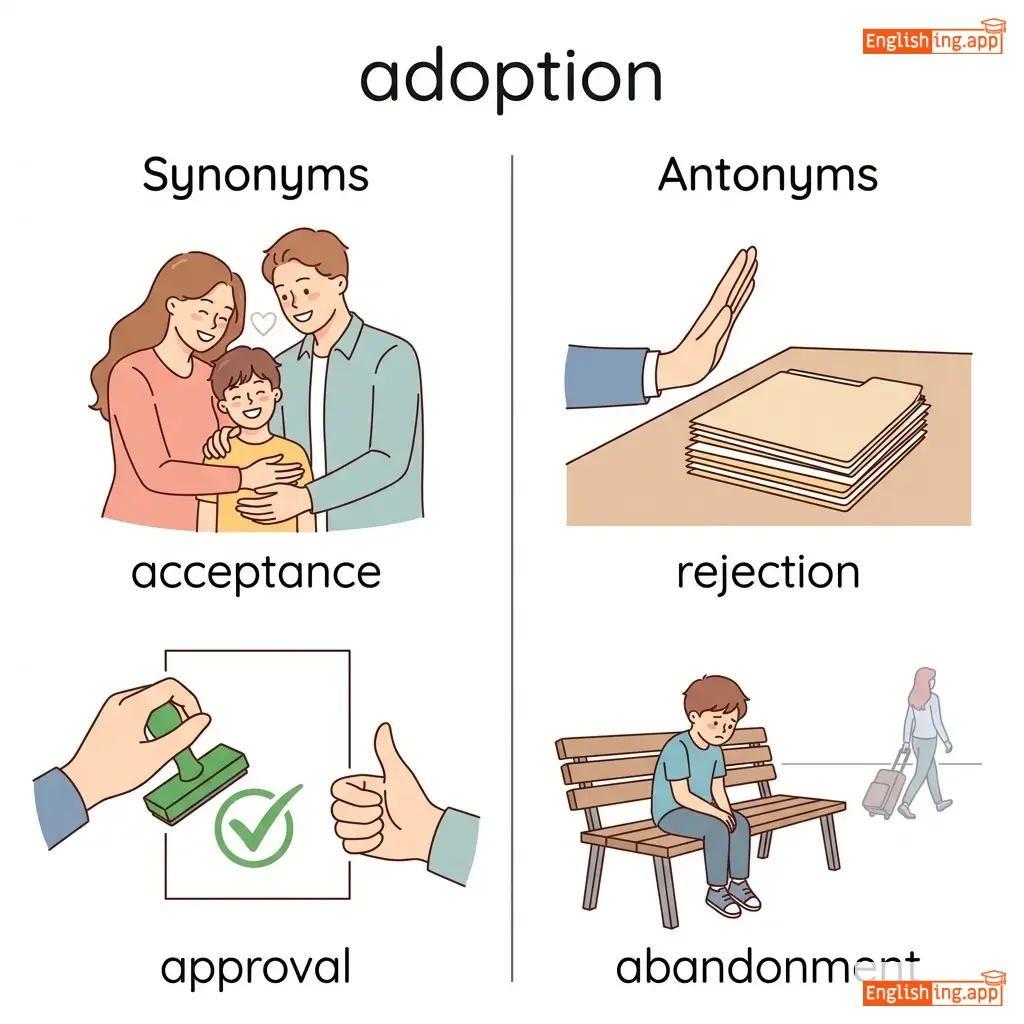
put up for adoption
養子縁組のために出す
••••••
|
to make a child available to be adopted by someone else
••••••
|
養子縁組のために出す
Youshiengumi no tame ni dasu
••••••
|
acceptance, approval, embrace, fostering, implementation
••••••
|
rejection, abandonment, refusal
••••••
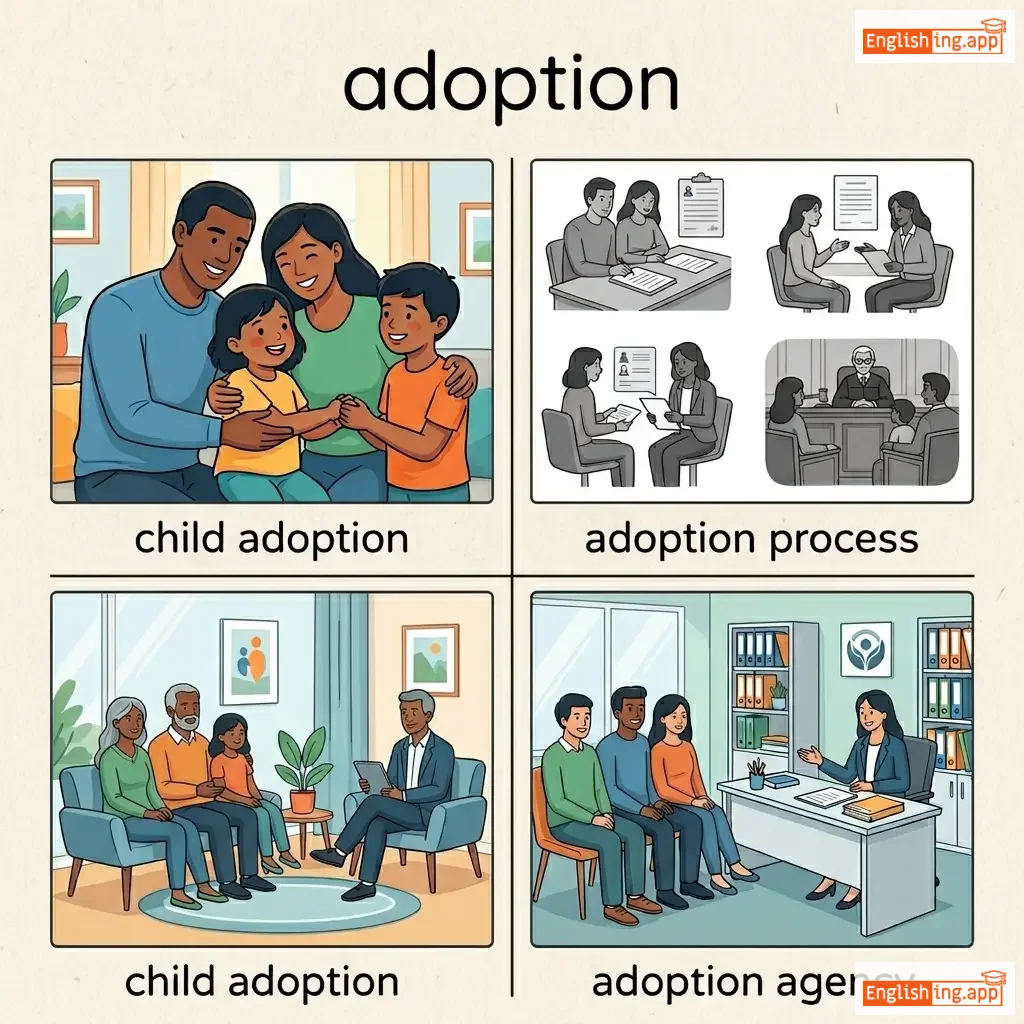
|
child adoption, adoption process, adoption agency, international adoption
••••••
|
Adoption = Add an option — 自分の家族に新しい子供を加える。
••••••
|
|
#142
👨👩👧
|
/əˈdɒptɪv/
adjective
(アダプティブ)
••••••
|
- •••••• |
養子の
youshi no
••••••
|
- •••••• | - •••••• | - •••••• | - •••••• |
relating to the adoption of a child or the act of taking something as one’s own
••••••
|
She grew up in a loving adoptive family.
シー グルー アップ イン ア ラビング アダプティブ ファミリー
••••••
|
彼女は愛情深い養子の家族で育った。
kanojo wa aijou bukai youshi no kazoku de sodatta
••••••
|
- •••••• | - •••••• | - •••••• |
foster, adoptable, surrogate, substitute, non-biological
••••••
|
biological, natural, birth
••••••
|
adoptive parents, adoptive family, adoptive child, adoptive mother, adoptive father
••••••
|
Adoptive = 養子の、養子にするイメージ
••••••
|
|
#143
❤️
|
/əˈdɔːr/
verb
(アドア)
••••••
|
- •••••• |
崇拝する
sūhai suru
••••••
|
adored
アドアード
••••••
|
adored
アドアード
••••••
|
adores
アドアーズ
••••••
|
adoring
アドアリング
••••••
|
to love deeply and respect highly
••••••
|
She adores her little sister.
彼女は小さな妹をとても愛しています。
••••••
|
彼女は小さな妹をとても愛しています。
Kanojo wa chiisana imōto o totemo aishiteimasu.
••••••
|
adore the ground someone walks on
誰かが歩く地面を崇拝する
••••••
|
to idolize or love someone deeply
••••••
|
誰かが歩く地面を崇拝する
Dareka ga aruku jimen o sūhai suru
••••••
|
love, cherish, admire, idolize, treasure
••••••
|
hate, despise, detest
••••••
|
adore someone, adore the way, absolutely adore, adore the idea
••••••
|
アドアするということは、誰かを愛し、彼らの歩く地面にまで崇拝を示すことです。
••••••
|
|
#144
📢
|
/ædz/
noun (plural)
(アッズ)
••••••
|
- •••••• |
広告
koukoku
••••••
|
- •••••• | - •••••• | - •••••• | - •••••• |
short for advertisements; promotional messages intended to sell products or services
••••••
|
I often skip ads when watching videos online.
私はオンライン動画を見るとき、よくアッズをスキップします。
••••••
|
私はオンライン動画を見るとき、よく広告をスキップします。
watashi wa onrain douga o miru toki yoku koukoku o sukippu shimasu
••••••
|
targeted ads
ターゲット広告
••••••
|
advertisements shown to people based on their interests or behavior
••••••
|
ターゲット広告
taagetto koukoku
••••••
|
advertisements, commercials, promos, publicity
••••••
|
editorial content, information
••••••
|
online ads, TV ads, display ads, targeted ads, paid ads
••••••
|
Ads(アッズ)は動画前の広告
••••••
|
|
#145
🙌
|
/ˈædjʊˌleɪt/
verb
(アデュレイト)
••••••
|
- •••••• |
過剰に賛美する
kajou ni sanbi suru
••••••
|
adulated
アデュレイテッド
••••••
|
adulated
アデュレイテッド
••••••
|
adulates
アデュレイツ
••••••
|
adulating
アデュレイティング
••••••
|
to praise or flatter excessively
••••••
|
The fans adulated the actor after his performance.
ファンたちは彼のパフォーマンスの後、俳優を賛美しました。
••••••
|
ファンたちは彼のパフォーマンスの後、俳優を賛美しました。
Fanta wa kare no pafomansu no ato, haiyuu o sanbi shimashita.
••••••
|
- •••••• | - •••••• | - •••••• |
flatter, praise, idolize, glorify
••••••
|
criticize, insult, scorn
••••••
|
adulate endlessly, adulate someone, constantly adulate
••••••
|
Adulate = Add + ultra = 過剰に賛美する
••••••
|
|
#146
🧑
|
/ˈædʌlt/ or /əˈdʌlt/
noun
(アダルト)
••••••
|
- •••••• |
大人
otonna
••••••
|
- •••••• | - •••••• | - •••••• | - •••••• |
A fully grown or developed person; mature.
••••••
|
Children must be accompanied by an adult. |
子供は大人と一緒にいる必要があります。
Kodomo wa otona to issho ni iru hitsuyō ga arimasu.
••••••
|
young adult |
A person in their late teens or early twenties.
••••••
|
若い大人
wakai otona
••••••
|
grown-up, mature person, elder, senior
••••••
|
child, minor, infant
••••••
|
adult education, adult content, adult life, adult supervision
••••••
|
大人は完全に成長した意味で、映画の大人用チケットのように。
••••••
|
|
#147
🥛
|
/əˈdʌltəreɪt/
verb
(アダルテレート)
••••••
|
|
不正混入
fusei konnyū
••••••
|
adulterated
アダルテレイティッド
••••••
|
adulterated
アダルテレイティッド
••••••
|
adulterates
アダルテレイツ
••••••
|
adulterating
アダルテレイティング
••••••
|
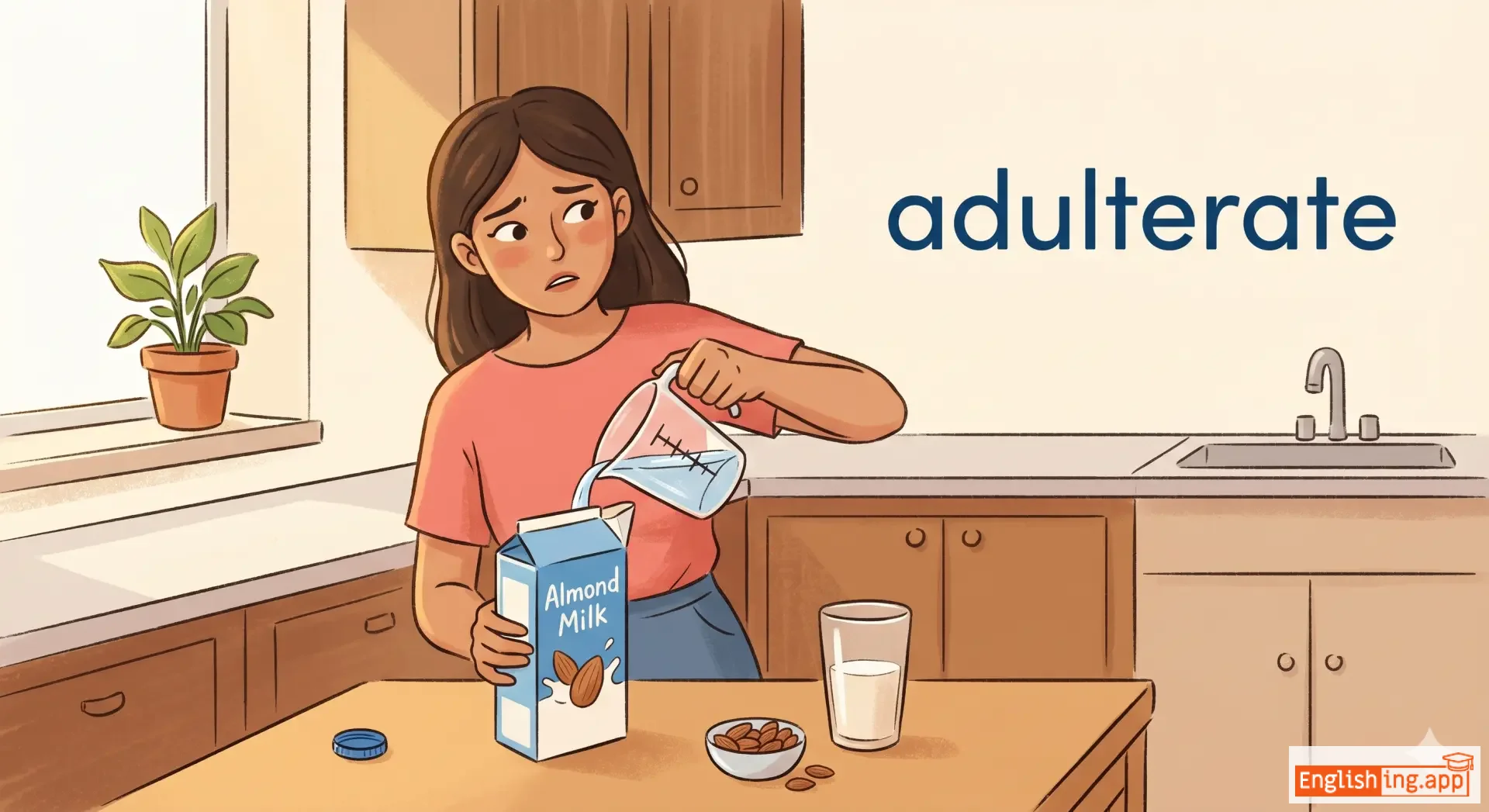
to make something poorer in quality by adding another substance, usually of lower quality
••••••
|
The company was fined for adulterating its products with cheap chemicals.
その会社は安価な化学物質で製品をアダルテレートしたため、罰金を科せられました。
••••••
|
その会社は安価な化学物質で製品をアダルテレートしたため、罰金を科せられました。
Sono kaisha wa anka na kagaku busshitsu de seihin o adarutereito shita tame, bakkin o kase raremashita.
••••••
|
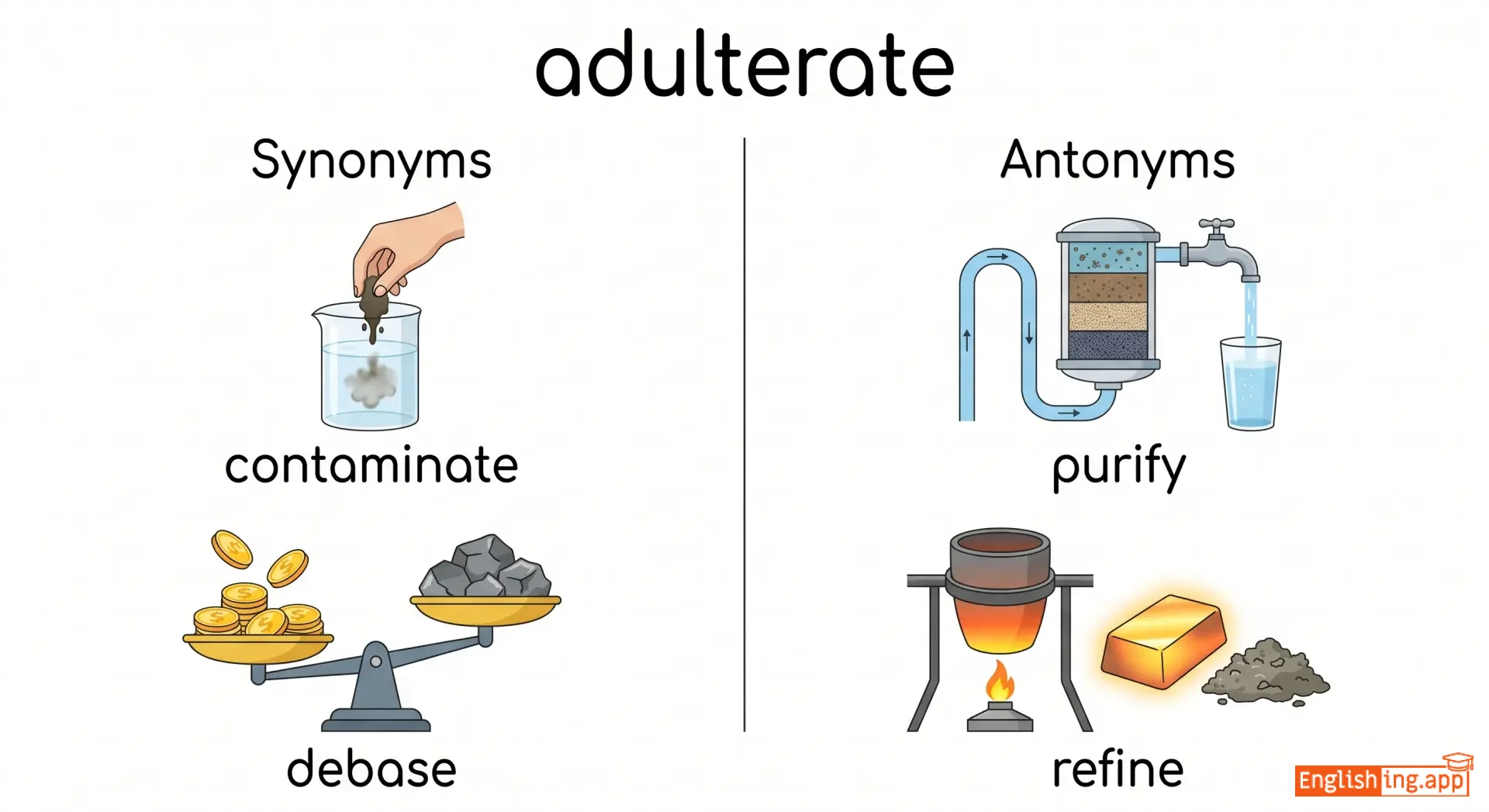
- •••••• | - •••••• | - •••••• |
contaminate, debase, dilute, taint, spoil
••••••
|
purify, refine, cleanse
••••••
|
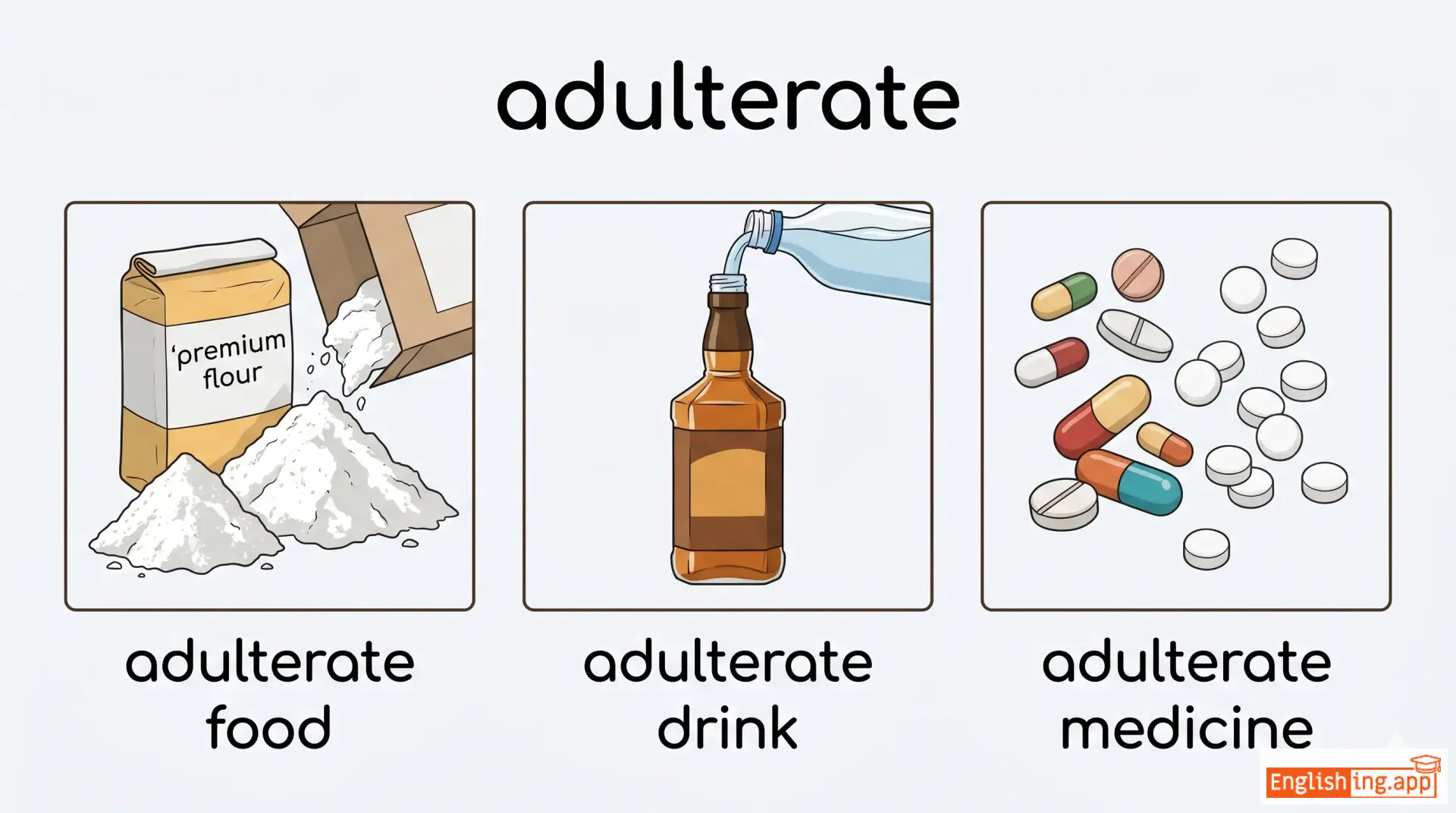
adulterate food, adulterate drink, adulterate medicine
••••••
|
アダルトレートは不正に混入すること - adulterate = 不正混入
••••••
|
|
#148
⏩
|
/ədˈvæns/
verb
(アドヴァンス)
••••••
|
- •••••• |
前進
zenshin
••••••
|
advanced
アドヴァンスド
••••••
|
advanced
アドヴァンスド
••••••
|
advances
アドヴァンセズ
••••••
|
advancing
アドヴァンシング
••••••
|
to move forward or make progress
••••••
|
The army advanced towards the city.
軍隊は都市に向かって進んだ。
••••••
|
軍隊は都市に向かって進んだ。
Guntai wa toshi ni mukatte susunda.
••••••
|
advance notice
事前通知
••••••
|
prior information given before an event happens
••••••
|
事前通知
Jizen tsuuchi
••••••
|
progress, proceed, promote, improve, forward
••••••
|
retreat, withdraw, regress
••••••
|
advance payment, advance notice, advance booking, technological advance
••••••
|
Advance は前進する意味—「進んで行こう!」という気持ちで覚えておこう。
••••••
|
|
#149
🚀
|
/ədˈvænst/
adjective
(アドバンスト)
••••••
|
- •••••• |
進んだ
sunda
••••••
|
- •••••• | - •••••• | - •••••• | - •••••• |
highly developed or complex
••••••
|
He is studying an advanced level of mathematics. |
彼は高度な数学のレベルを学んでいます。
Kare wa kōdo na suugaku no reberu o manande imasu.
••••••
|
advanced technology |
highly developed and modern technology
••••••
|
先進技術
senshin gijutsu
••••••
|
sophisticated, developed, progressive, modern
••••••
|
basic, simple, primitive
••••••
|
advanced level, advanced stage, advanced degree, advanced course
••••••
|
Advanced = 進んだ。'Advanced course' は難しくて複雑な内容です。
••••••
|
|
#150
💡
|
/ədˈvæntɪdʒ/
noun
(アドバンテージ)
••••••
|
- •••••• |
利点
riten
••••••
|
- •••••• | - •••••• | - •••••• | - •••••• |
a condition or circumstance that puts one in a favorable position
••••••
|
Having strong communication skills is a great advantage in business. |
強力なコミュニケーションスキルはビジネスにおいて大きな利点です。
Kyouryoku na komyunikeeshon sukiru wa bijinesu ni oite ookina riten desu.
••••••
|
take advantage of |
to make good use of something
••••••
|
利点を活用する
riten o katsuyou suru
••••••
|
benefit, edge, asset, gain, upper hand
••••••
|
disadvantage, drawback, handicap
••••••
|
competitive advantage, great advantage, take advantage, clear advantage
••••••
|
Advantage の意味は「利点」—'Ad van' はレースで一位、それが利点!
••••••
|
Vocabulary Quiz
Test your vocabulary by matching words with their translations or meanings.
Login to take the quiz
Comments (0)
Share your thoughts and join the discussion.
Join the discussion by logging in
Login to CommentNo comments yet
Be the first to share your thoughts!