

翻訳
過去
過去分詞
三人称単数
動名詞
意味
例文
例文の翻訳
同義語
対義語
コロケーション
ニーモニック



Swipe left or right, or use the buttons. Tap image to zoom.
例文の翻訳
単語
Lesson 68Lesson 68 - マスクトグル
|
絵文字
|
単語 | Images | 翻訳 | 過去 | 過去分詞 | 三人称単数 | 動名詞 | 意味 | 例文 | 例文の翻訳 | 表現例 | 表現例の意味 | 表現例の翻訳 | 同義語 | 対義語 | コロケーション | ニーモニック |
|---|---|---|---|---|---|---|---|---|---|---|---|---|---|---|---|---|---|
|
#3231
💊
|
/ˈmed.ɪ.sən/
noun
(メディスン)
••••••
|
|
薬
kusuri
••••••
|
- •••••• | - •••••• | - •••••• | - •••••• |
A substance used to treat illness, injury, or disease.
••••••
|
He took some medicine for his headache. |
彼は頭痛のために薬を飲んだ。
Kare wa zutsū no tame ni kusuri o nonda.
••••••
|
take your medicine |
to accept punishment or consequences
••••••
|
薬を飲んでください
Kusuri o nonde kudasai
••••••
|
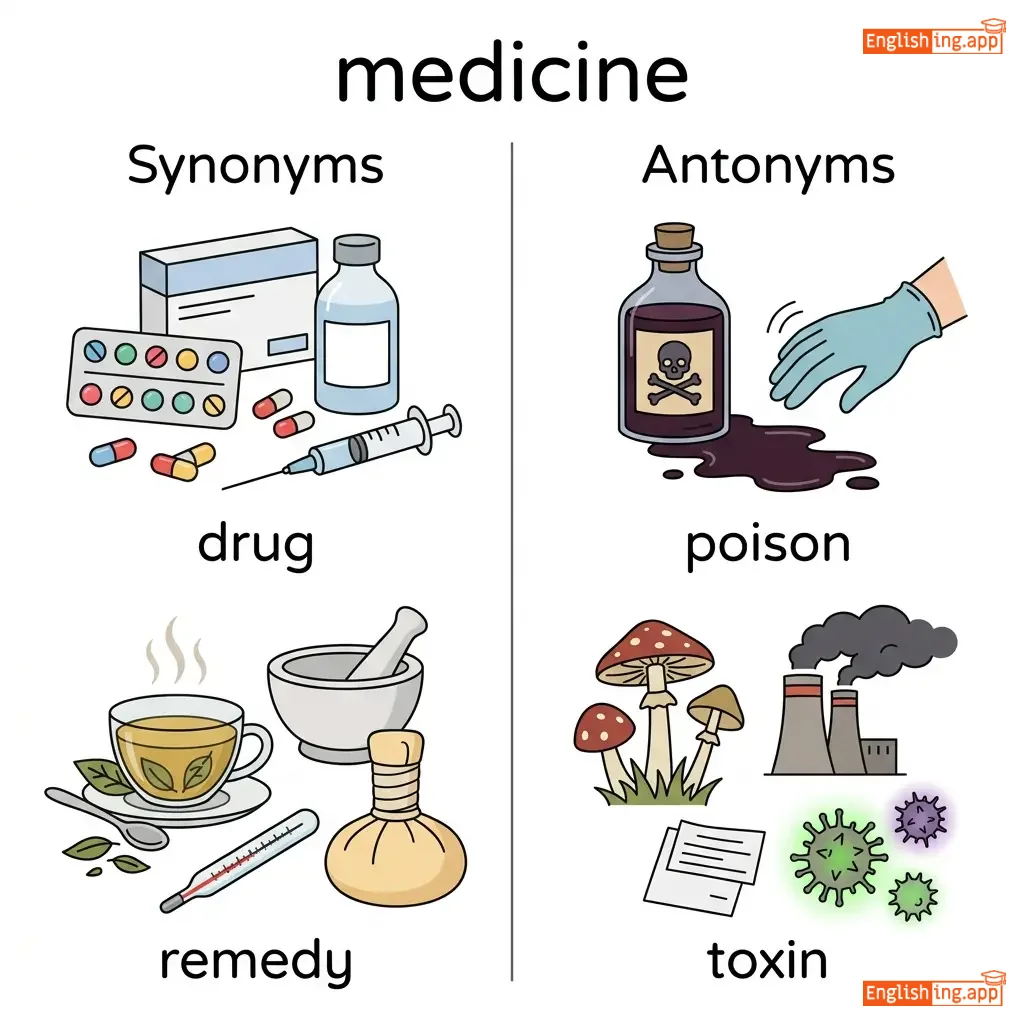
drug, remedy, treatment, cure
••••••
|
poison, toxin
••••••
|
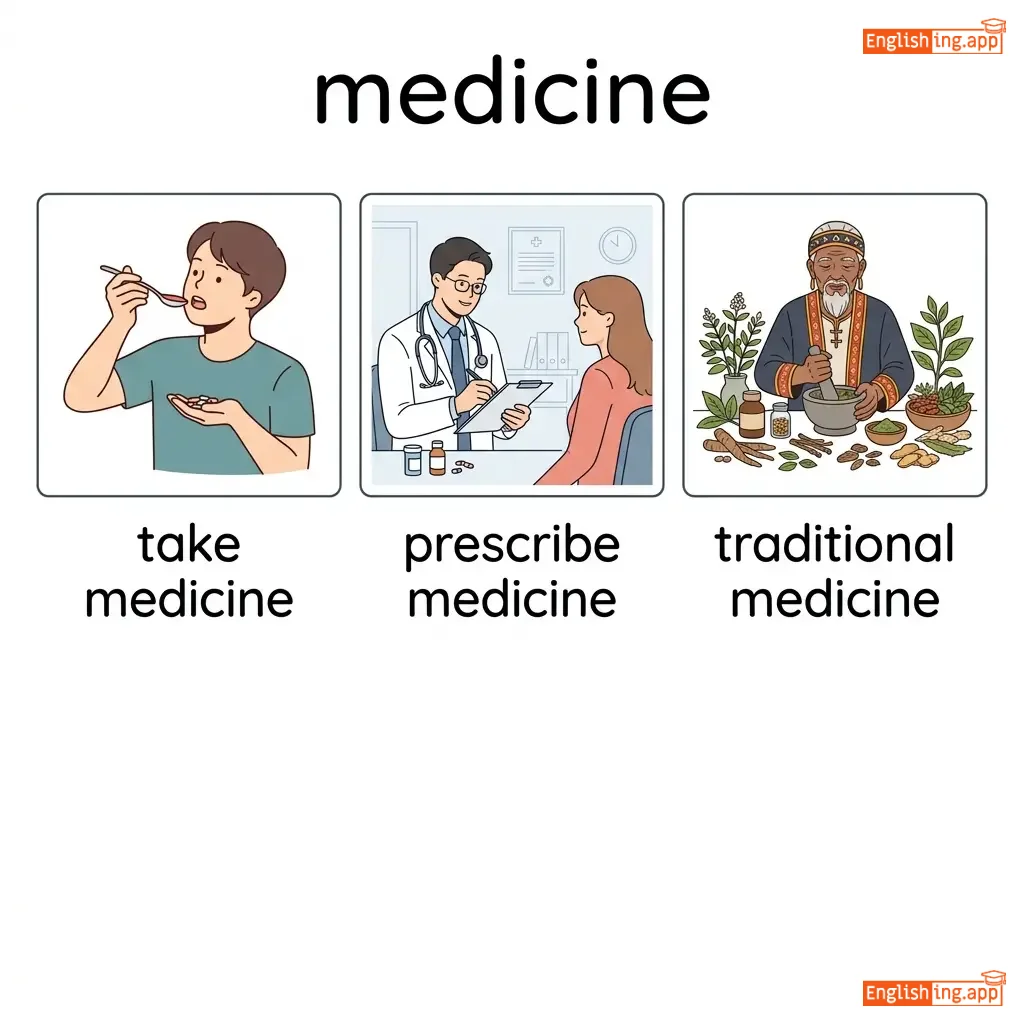
take medicine, prescribe medicine, traditional medicine, modern medicine
••••••
|
薬を飲んで頭痛を和らげる - 薬は病気を治します。
••••••
|
|
#3232
🏰
|
/ˌmiː.diˈiː.vəl/
adjective
(ミディーバル)
••••••
|
- •••••• |
中世の
chūsei no
••••••
|
- •••••• | - •••••• | - •••••• | - •••••• |
Relating to the Middle Ages, the period in European history from about the 5th to the 15th century.
••••••
|
The castle is a famous medieval monument. |
その城は有名な中世の記念碑です。
Sono shiro wa yūmei na chūsei no kinenhi desu.
••••••
|
- •••••• | - •••••• | - •••••• |
middle ages, feudal, ancient, old
••••••
|
modern, contemporary
••••••
|
medieval castle, medieval history, medieval times, medieval architecture
••••••
|
Medievalは中世の時代に関連している、'中世'を覚えておこう。
••••••
|
|
#3233
🧘
|
/ˌmɛdɪˈteɪʃən/
noun
(瞑想)
••••••
|
- •••••• |
瞑想
meisou
••••••
|
- •••••• | - •••••• | - •••••• | - •••••• |
The practice of focusing the mind to achieve calmness, clarity, or spiritual growth.
••••••
|
She practices meditation every morning to start her day peacefully. |
彼女は毎朝瞑想を実践して、穏やかな一日を始めます。
Kanojo wa mai asa meisou o jissen shite, odayakana ichinichi o hajimemasu.
••••••
|
deep meditation |
A state of intense focus and calmness during meditation.
••••••
|
深い瞑想
fukai meisou
••••••
|
contemplation, reflection, mindfulness, prayer, concentration
••••••
|
distraction, chaos
••••••
|
practice meditation, meditation techniques, meditation session, guided meditation
••••••
|
瞑想は心を沈めて、静かな心を得る方法です。
••••••
|
|
#3234
📺
|
/ˈmiːdiəm/
noun
(ミディアム)
••••••
|
- •••••• |
メディア
media
••••••
|
- •••••• | - •••••• | - •••••• | - •••••• |
A means or channel of communication, expression, or artistic work.
••••••
|
Television is a powerful medium for spreading information. |
テレビは情報を広めるための強力なメディアです。
Terebi wa jōhō o hiromeru tame no kyōryokuna media desu.
••••••
|
through the medium of |
By using or via a particular channel or means.
••••••
|
メディアを通じて
Media o tsūjite
••••••
|
channel, means, method, vehicle, instrument
••••••
|
end, result
••••••
|
medium of exchange, communication medium, artistic medium, mass medium
••••••
|
Medium はメッセージの道 (media) です。
••••••
|
|
#3235
🤝
|
/miːt/
verb
(ミート)
••••••
|
|
会う
au
••••••
|
met
メット
••••••
|
met
メット
••••••
|
meets
ミーツ
••••••
|
meeting
ミーティング
••••••
|
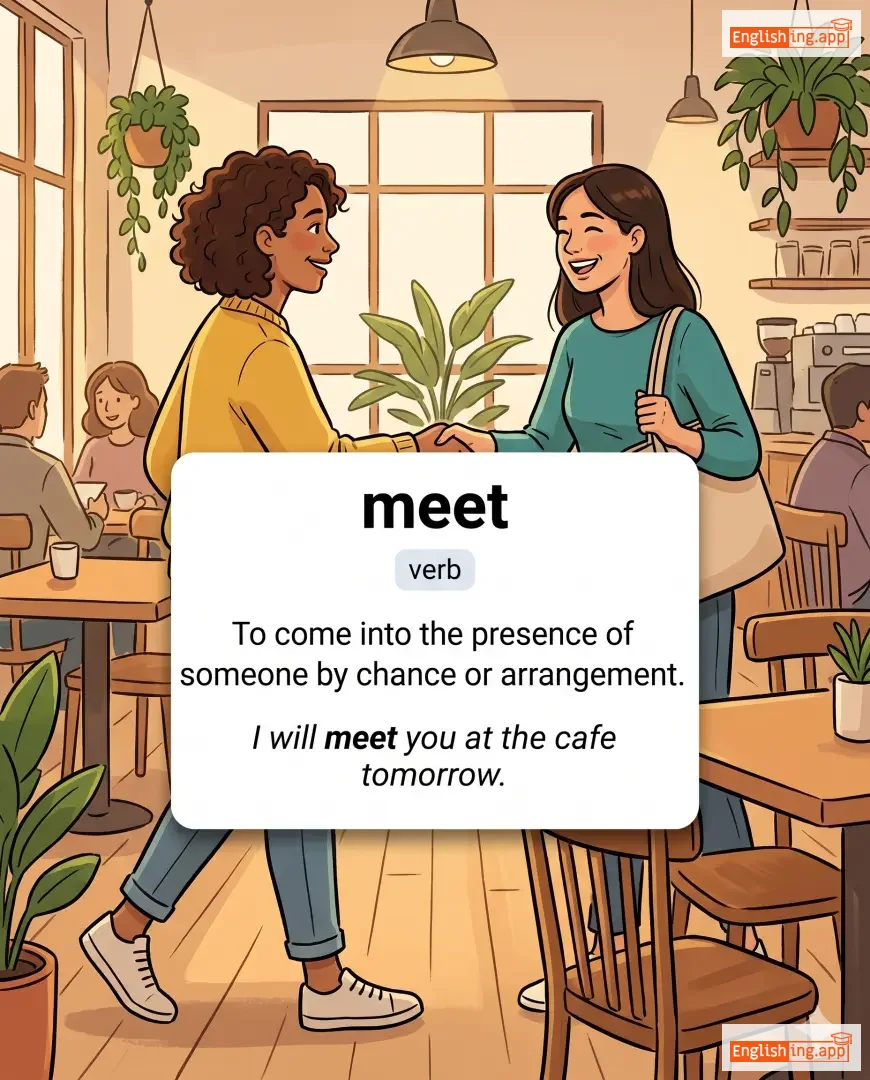
To come into the presence of someone by chance or arrangement.
••••••
|
I will meet you at the cafe tomorrow.
私は明日カフェであなたに会います。
••••••
|
私は明日カフェであなたに会います。
Watashi wa ashita kafe de anata ni aimasu.
••••••
|
meet halfway
途中で会う
••••••
|
To compromise or find a middle ground.
••••••
|
途中で会う
tochū de au
••••••
|
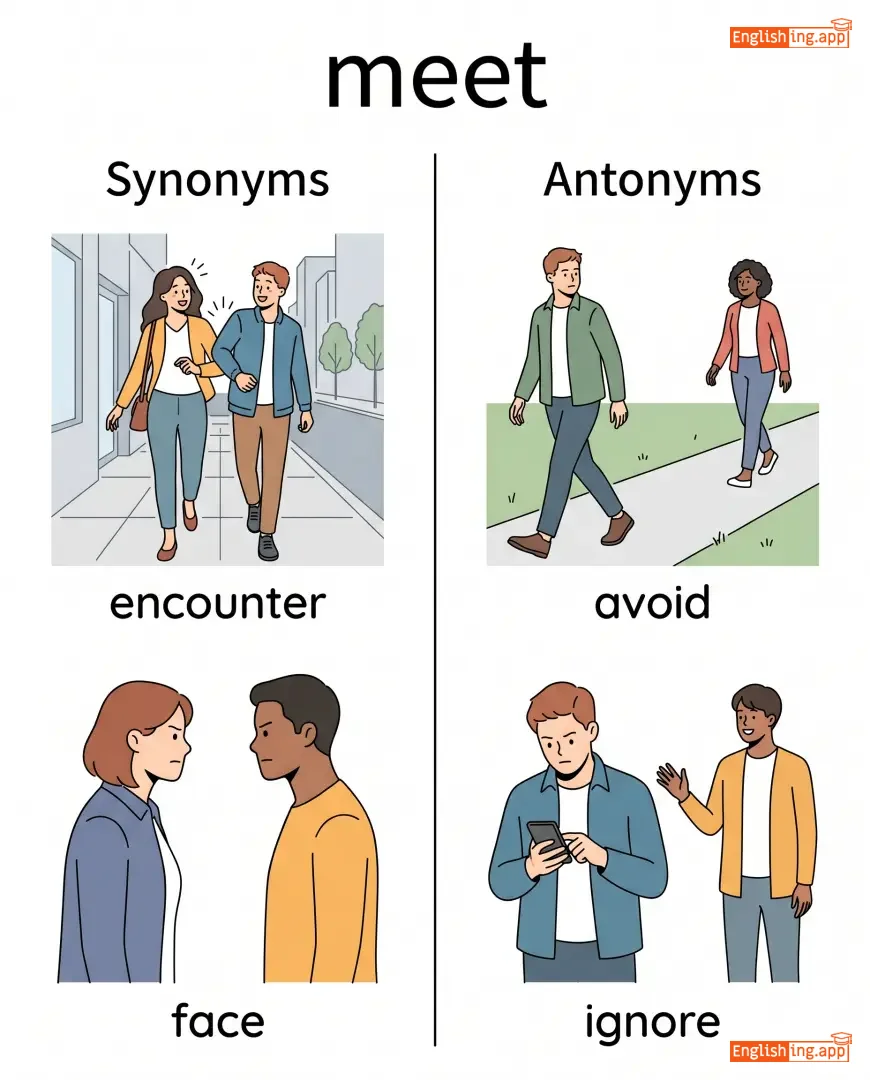
encounter, face, see, assemble, greet
••••••
|
avoid, ignore
••••••
|
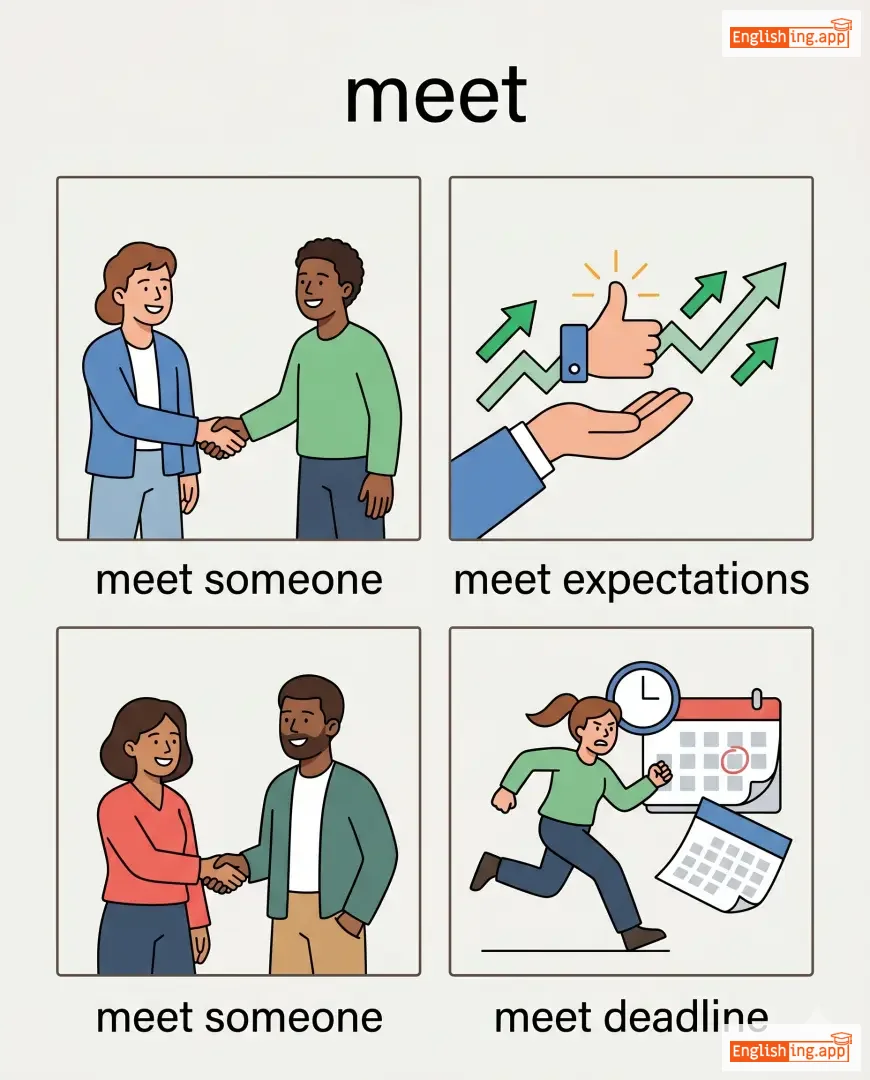
meet someone, meet expectations, meet deadline, meet requirements
••••••
|
Meetは会う(au)という意味。
••••••
|
|
#3236
👥
|
/ˈmiːtɪŋ/
noun
(ミーティング)
••••••
|
- •••••• |
会議
kaigi
••••••
|
- •••••• | - •••••• | - •••••• | - •••••• |
A gathering of people for discussion or decision-making.
••••••
|
The board had a meeting to finalize the budget. |
取締役会は予算を最終決定するために会議を開きました。
Torishimariyakukai wa yosan o saishuu kettei suru tame ni kaigi o hirakimashita.
••••••
|
call a meeting |
To arrange a gathering for discussion.
••••••
|
会議を開く
Kaigi o hiraku
••••••
|
gathering, conference, assembly, session, discussion
••••••
|
separation, dispersal
••••••
|
board meeting, business meeting, annual meeting, meeting agenda
••••••
|
会議 = 会って話すための集まり
••••••
|
|
#3237
🎵
|
/ˈmelədi/
noun
(メロディ)
••••••
|
- •••••• |
メロディ; 音楽の旋律
merodi
••••••
|
- •••••• | - •••••• | - •••••• | - •••••• |
A sequence of single notes that is musically satisfying; a tune
••••••
|
She hummed a beautiful melody while cooking dinner.
彼女は夕食を作りながら、美しいメロディを口ずさんでいました。
••••••
|
彼女は夕食を作りながら、美しいメロディを口ずさんでいました。
Kanojo wa yuushoku o tsukurinagara, utsukushī merodi o kuchizusande imashita.
••••••
|
- •••••• | - •••••• | - •••••• |
tune, air, song, music, strain
••••••
|
discord, noise, cacophony, dissonance
••••••
|
beautiful melody, haunting melody, simple melody, catchy melody
••••••
|
メロディーは心を和ませる音楽の魔法です。
••••••
|
|
#3238
🧊
|
/mɛlt/
verb
(メルト)
••••••
|
|
溶ける
tokeru
••••••
|
melted
メルテッド
••••••
|
melted
メルテッド
••••••
|
melts
メルツ
••••••
|
melting
メルティング
••••••
|
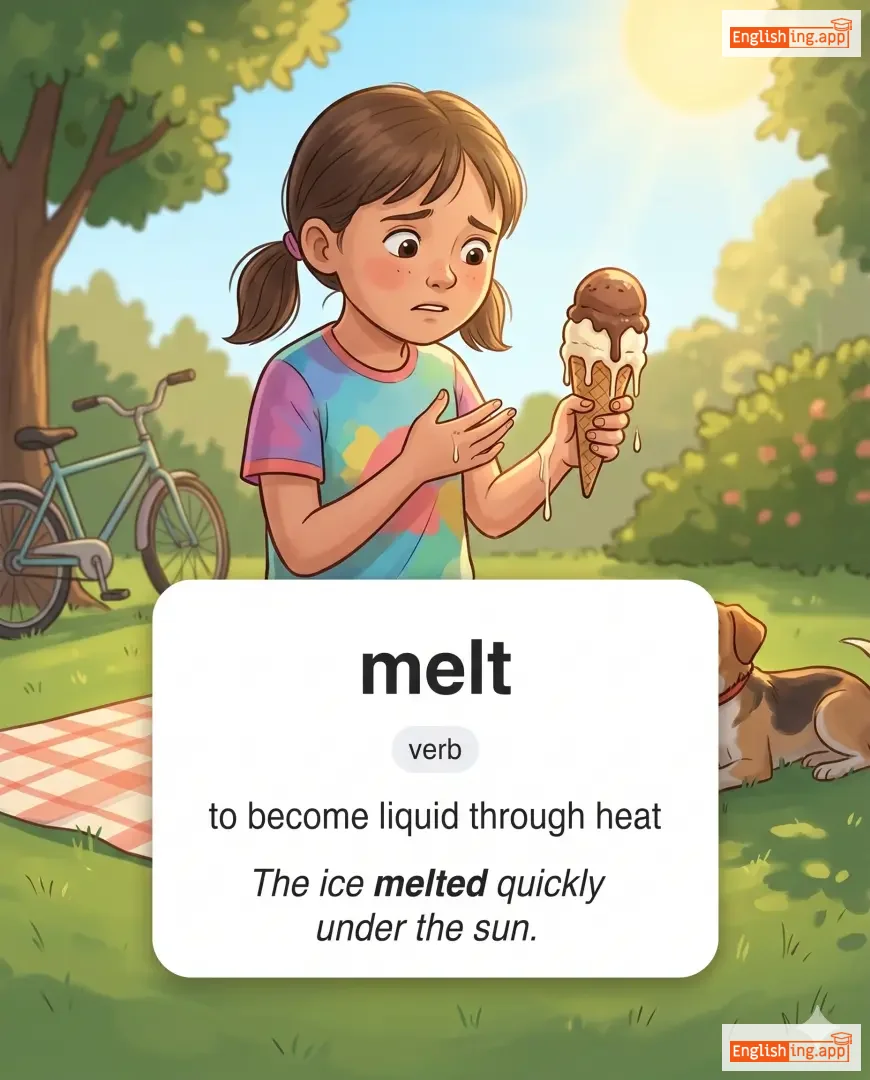
to become liquid through heat
••••••
|
The ice melted quickly under the sun.
アイスが太陽の下で早く溶けた。
••••••
|
氷は太陽の下で素早く溶けました。
Kōri wa taiyō no shita de subayaku tokemashita.
••••••
|
melt someone's heart
誰かの心を溶かす
••••••
|
to make someone feel love or sympathy
••••••
|
誰かの心を溶かす
dareka no kokoro wo tokasu
••••••
|
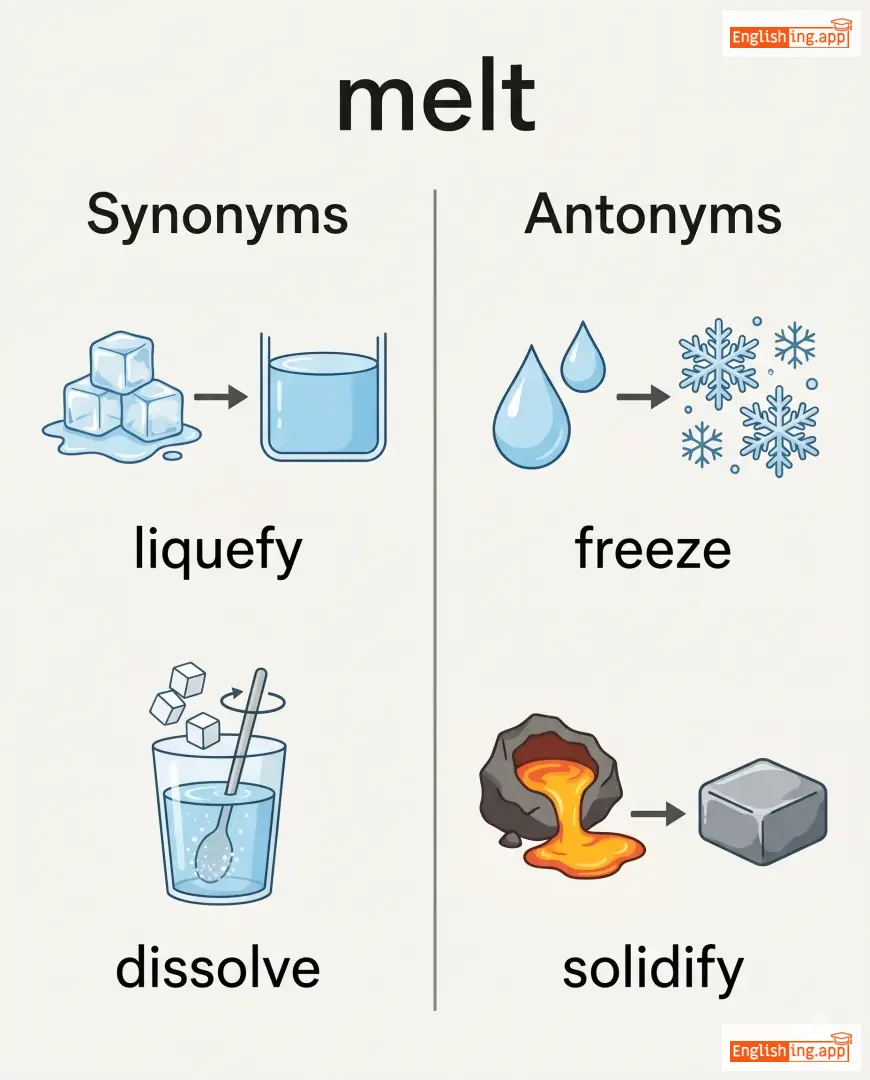
liquefy, dissolve, thaw, soften, fuse
••••••
|
freeze, solidify
••••••
|
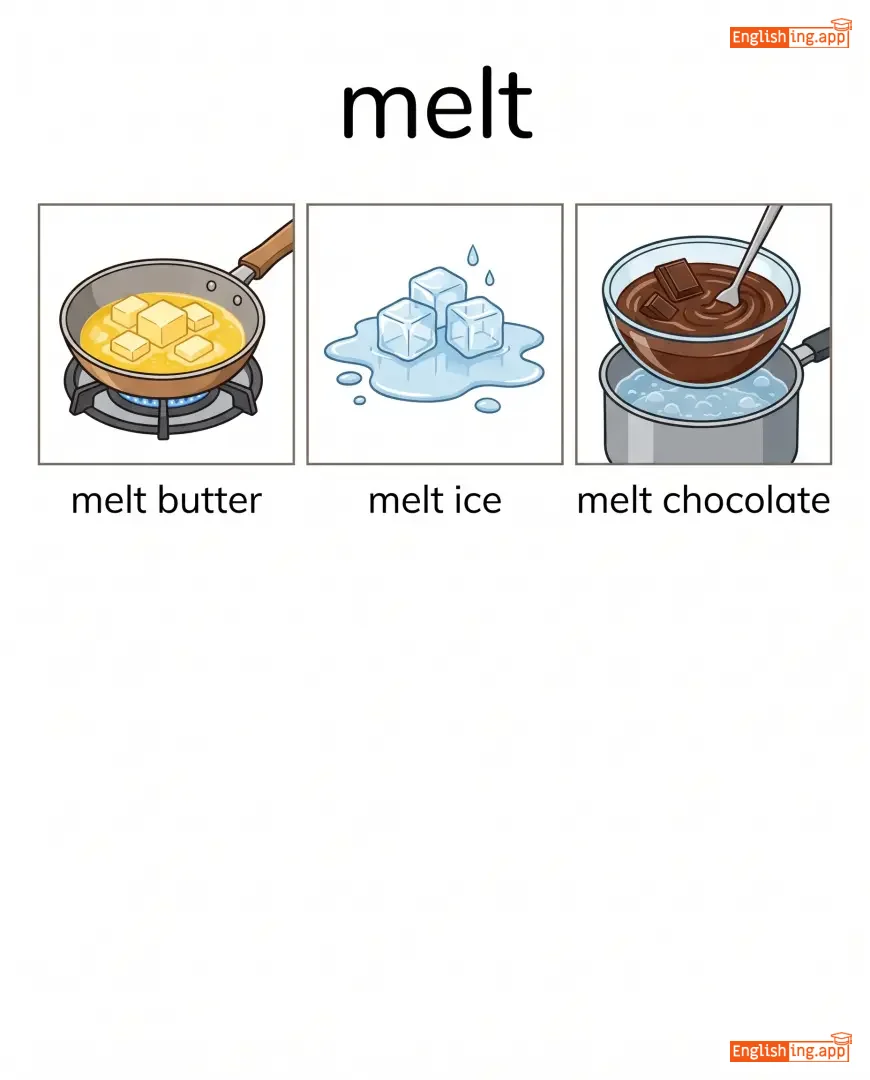
melt butter, melt ice, melt chocolate, melt in the sun
••••••
|
Meltは溶ける、氷が溶けるように。
••••••
|
|
#3239
🫠
|
/ˈmeltɪŋ/
verb, noun, adjective
(メルティング)
••••••
|
- •••••• |
溶けること
tokeru koto
••••••
|
melted
メルテッド
••••••
|
melted
メルテッド
••••••
|
melts
メルツ
••••••
|
melting
メルティング
••••••
|
the process of changing from solid to liquid due to heat; becoming softer or less rigid; emotionally moving or tender
••••••
|
The ice is melting quickly under the hot sun.
ジ アイス イズ メルティング クイックリー アンダー ザ ホット サン
••••••
|
氷は強い日差しで早く溶けています。
Kori wa tsuyoi hizashi de hayaku tokete imasu
••••••
|
melting point
メルティング ポイント
••••••
|
the temperature at which a solid becomes a liquid
••••••
|
融点
yuten
••••••
|
liquefying, dissolving, thawing, softening, fusing
••••••
|
freezing, solidifying, hardening
••••••
|
melting ice, melting snow, melting point, melting temperature, melting process
••••••
|
Melting=溶ける、氷が heat で tokete iru
••••••
|
|
#3240
👥
|
/ˈmembər/
noun
(メンバー)
••••••
|
- •••••• |
メンバー
menbā
••••••
|
- •••••• | - •••••• | - •••••• | - •••••• |
a person or thing that belongs to a group or organization
••••••
|
She is a member of the local sports club. |
彼女は地元のスポーツクラブのメンバーです。
Kanojo wa jimoto no supōtsu kurabu no menbā desu.
••••••
|
active member |
a person who participates regularly in the activities of a group
••••••
|
アクティブメンバー
akutibu menbā
••••••
|
participant, affiliate, associate, enrollee
••••••
|
outsider, nonmember
••••••
|
club member, family member, group member, board member
••••••
|
メンバーはmemberに似ていて、チームの一員。
••••••
|
|
#3241
🎫
|
/ˈmɛmbərʃɪp/
noun
(メンバーシップ)
••••••
|
|
会員資格
kaiinshikaku
••••••
|
- •••••• | - •••••• | - •••••• | - •••••• |
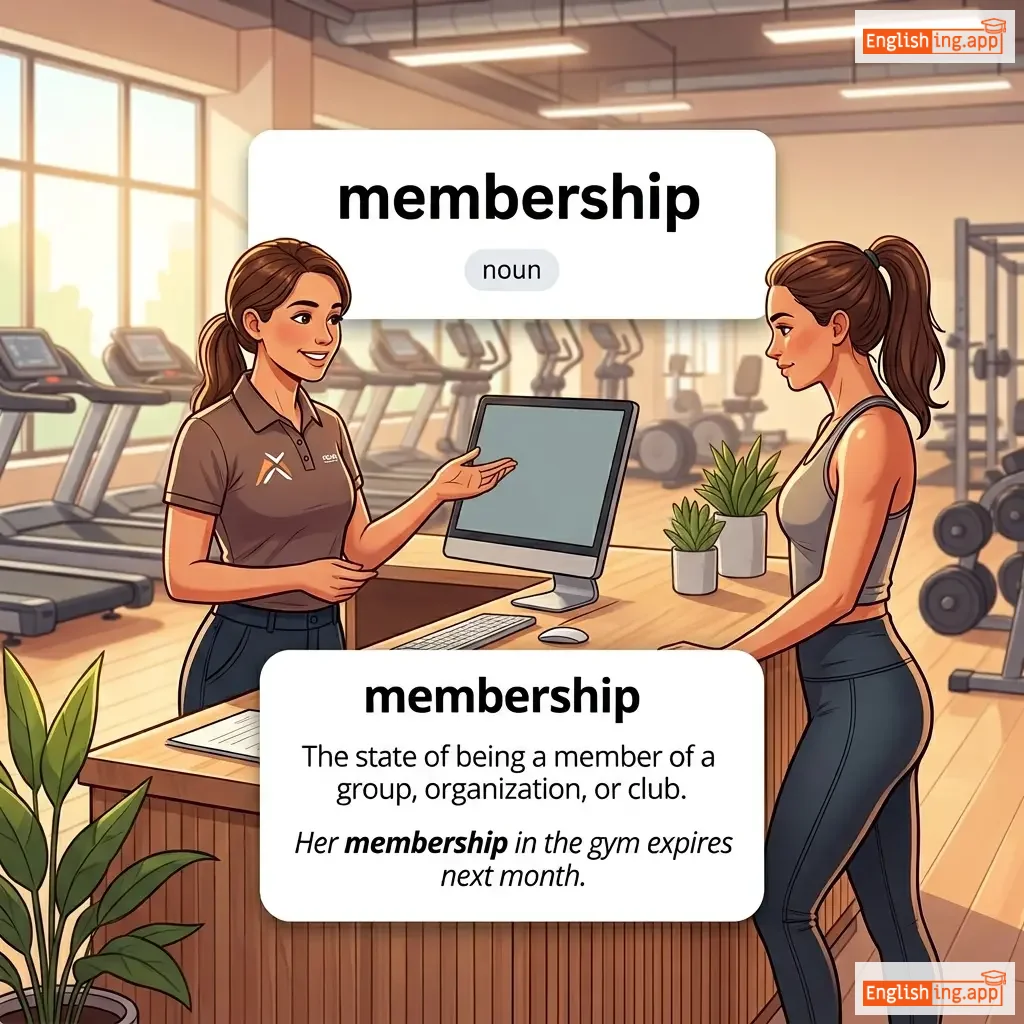
The state of being a member of a group, organization, or club.
••••••
|
Her membership in the gym expires next month. |
ジムの会員資格は来月終了します。
Jimu no kaiinshikaku wa raigetsu shūryō shimasu.
••••••
|
membership drive |
A campaign to recruit new members for an organization.
••••••
|
会員募集キャンペーン
Kaiin boshū kyanpēn
••••••
|
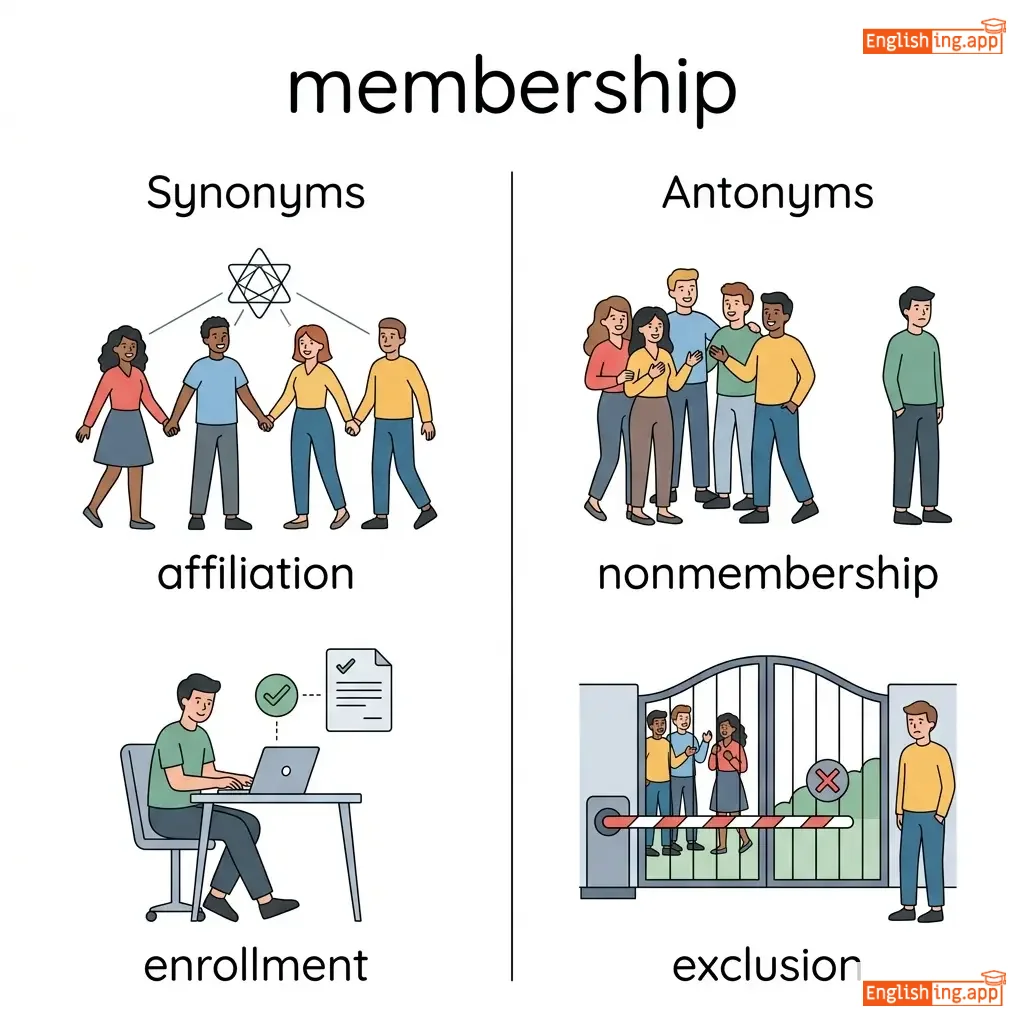
affiliation, enrollment, subscription, association, participation
••••••
|
nonmembership, exclusion
••••••
|
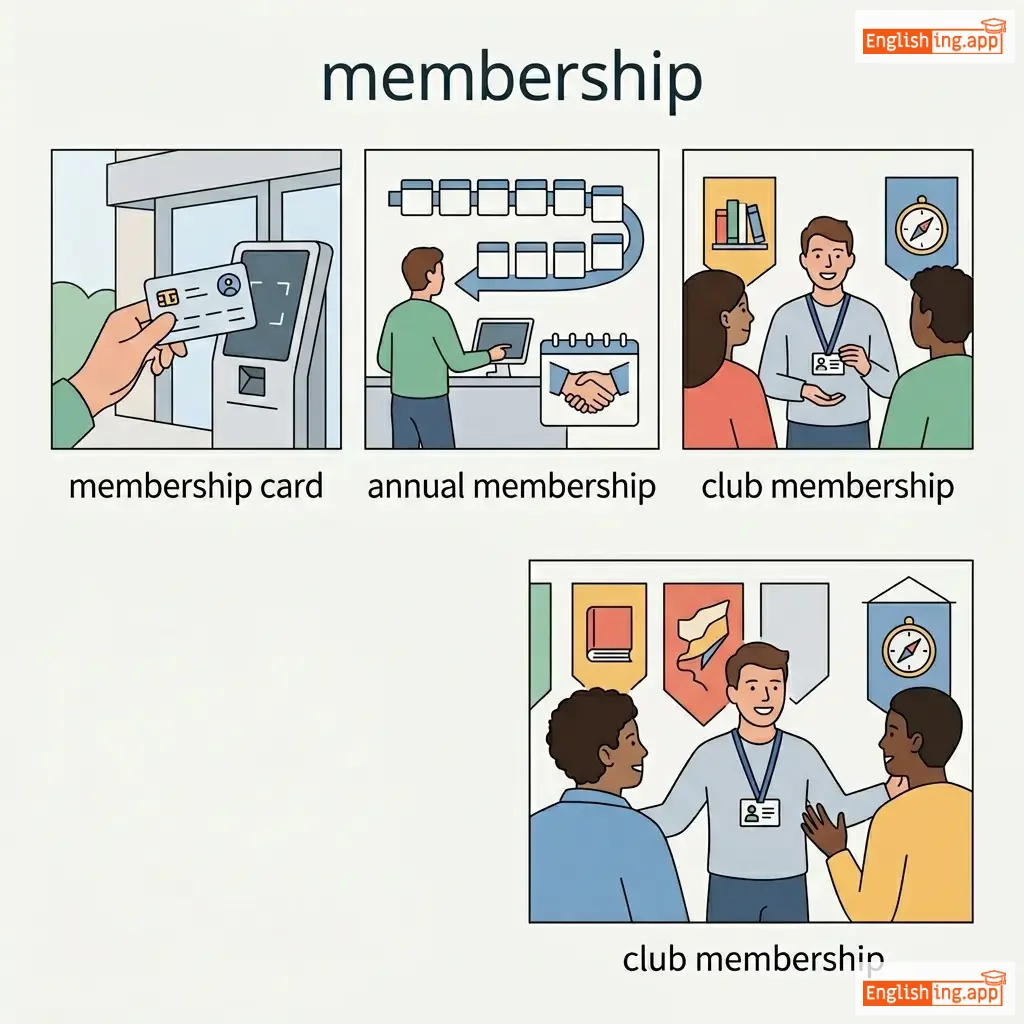
membership card, annual membership, club membership, membership fee
••••••
|
会員資格は「加入する」ための鍵、簡単に覚えて参加しよう!
••••••
|
|
#3242
📝
|
/ˈmɛmoʊ/
noun
••••••
|
- •••••• | - •••••• | - •••••• | - •••••• | - •••••• | - •••••• |
a written message, typically in a business setting
••••••
|
He wrote a memo to the staff about the upcoming meeting. |
- •••••• | - •••••• | - •••••• | - •••••• |
note, message, communication, reminder
••••••
|
silence, neglect
••••••
|
internal memo, office memo, memo to staff
••••••
|
No •••••• |
|
#3243
📖
|
/ˈmɛm.wɑːr/
noun
(メモワール)
••••••
|
- •••••• |
回想録
kaisōroku
••••••
|
- •••••• | - •••••• | - •••••• | - •••••• |
A historical account or autobiography written from personal experience.
••••••
|
The author’s memoir details her journey through hardship and success. |
著者の回想録は、彼女の苦難と成功の旅路を詳述しています。
Chosha no kaisōroku wa, kanojo no kunan to seikō no tabiji o shōjutsu shiteimasu.
••••••
|
- •••••• | - •••••• | - •••••• |
autobiography, recollection, diary, reminiscence
••••••
|
fiction, imagination
••••••
|
write a memoir, publish a memoir, memoir of life, political memoir
••••••
|
Memoir = 記憶 + 物語 = 回想録。
••••••
|
|
#3244
🌟
|
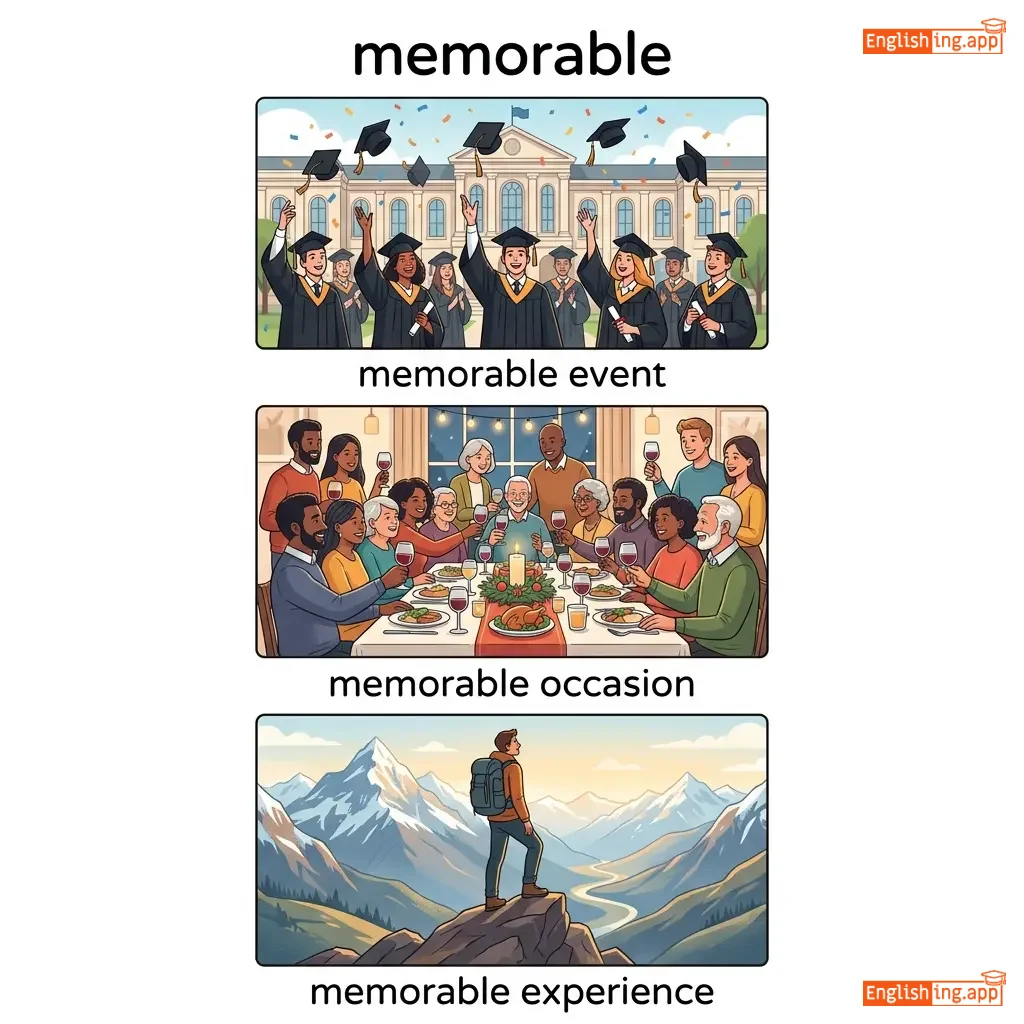
/ˈmɛm.ər.ə.bəl/
adjective
(メモラブル)
••••••
|
|
記憶に残る
kioku ni nokoru
••••••
|
- •••••• | - •••••• | - •••••• | - •••••• |
Worth remembering because it is special or unusual.
••••••
|
Their wedding was one of the most memorable days of their lives. |
彼らの結婚式は彼らの人生で最も記憶に残る日々の一つでした。
Karera no kekkonshiki wa karera no jinsei de mottomo kioku ni nokoru hibi no hitotsu deshita.
••••••
|
memorable experience |
An experience that is significant and worth remembering.
••••••
|
記憶に残る経験
kioku ni nokoru keiken
••••••
|
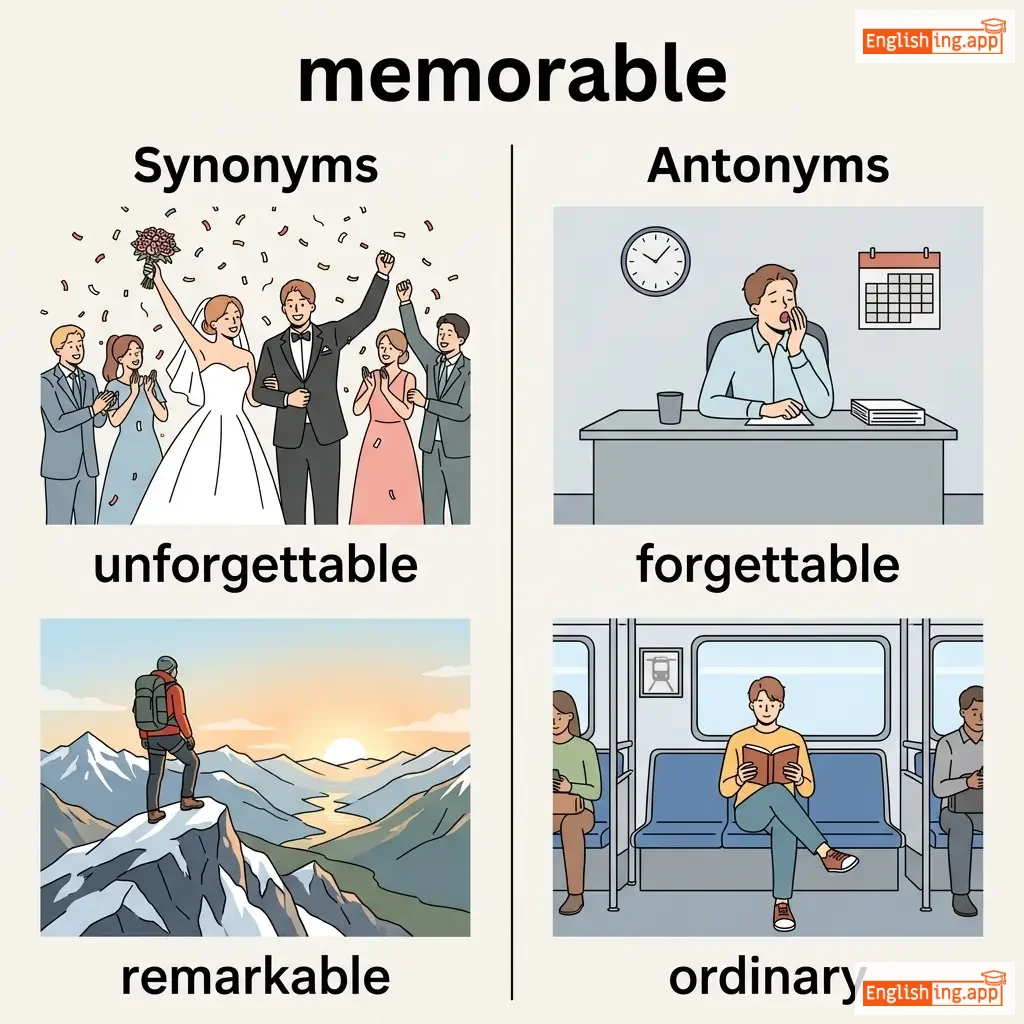
unforgettable, remarkable, notable, outstanding
••••••
|
forgettable, ordinary, trivial
••••••
|
memorable event, memorable occasion, memorable experience, memorable day
••••••
|
Memorable は思い出として残るような特別なことを意味します。
••••••
|
|
#3245
🕊️
|
/məˈmɔːr.i.əl/
noun
(メモリアル)
••••••
|
|
記念碑
kinenhi
••••••
|
- •••••• | - •••••• | - •••••• | - •••••• |
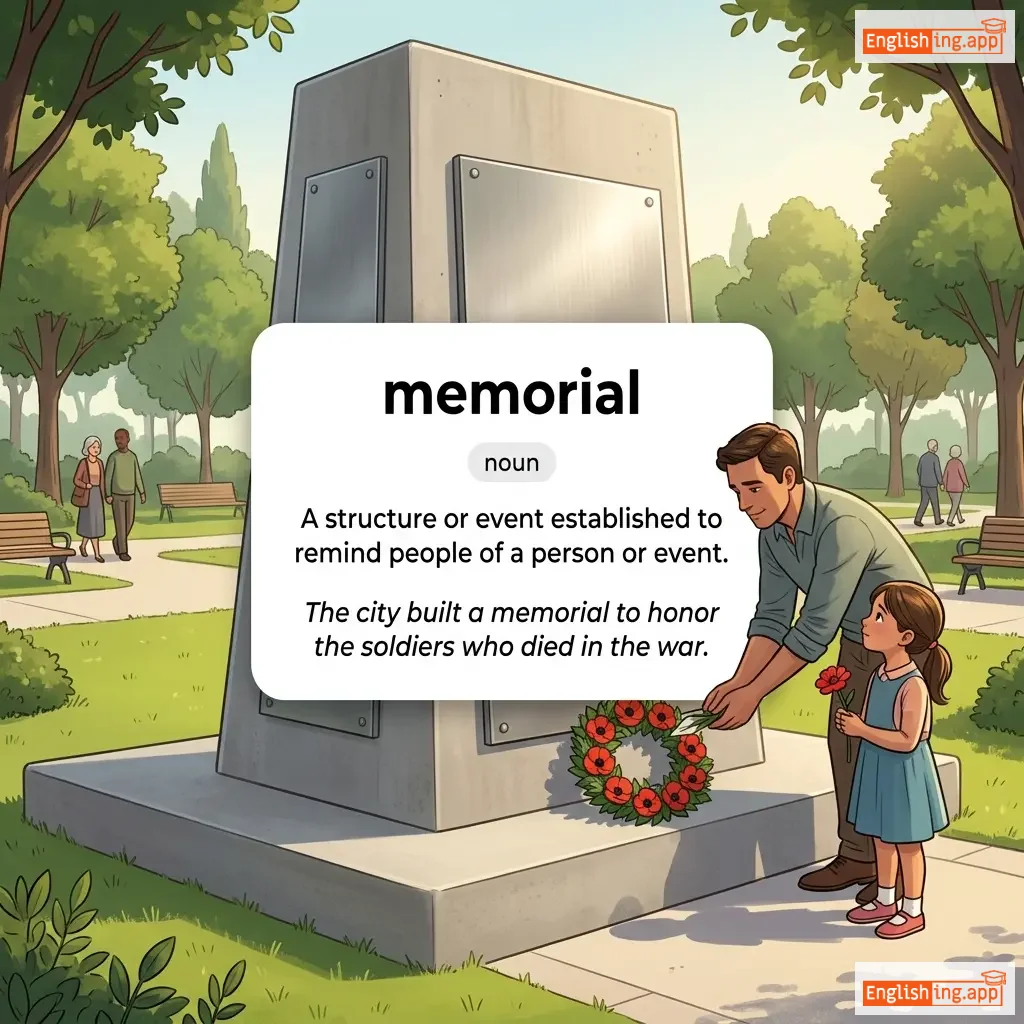
A structure or event established to remind people of a person or event.
••••••
|
The city built a memorial to honor the soldiers who died in the war. |
その都市は戦争で亡くなった兵士たちを称えるために記念碑を建てました。
Sono toshi wa sensō de nakunatta heishi-tachi o tataeru tame ni kinenhi o tatemashita.
••••••
|
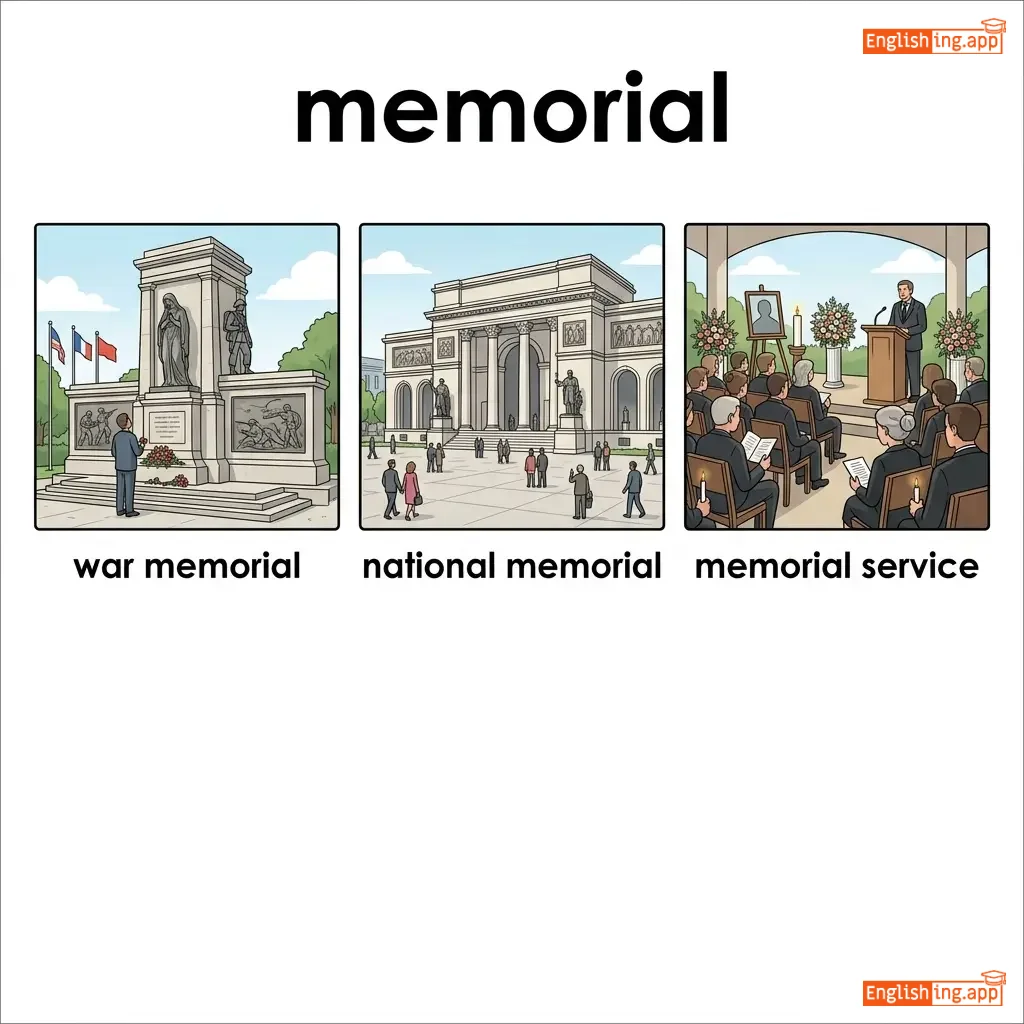
war memorial |
A structure built to honor soldiers who died in a war.
••••••
|
戦争記念碑
sensō kinenhi
••••••
|
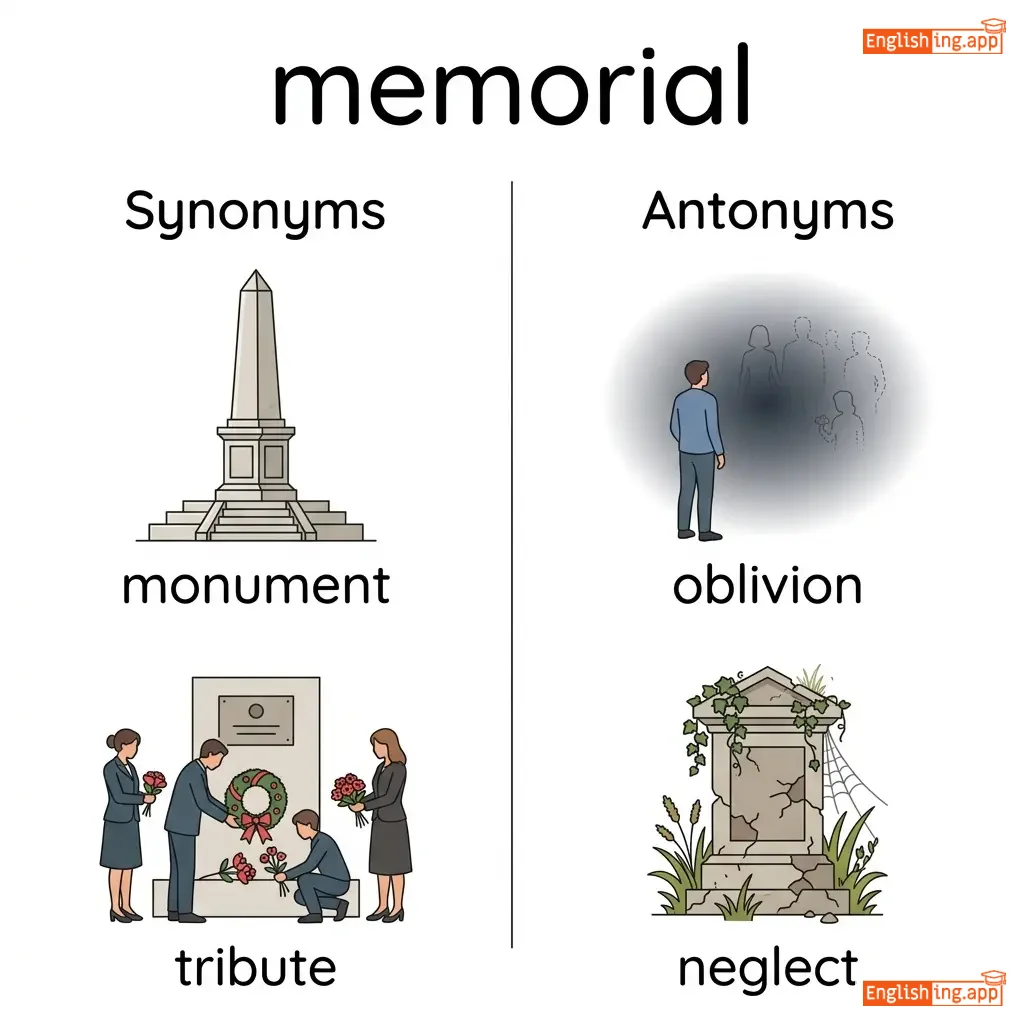
monument, tribute, shrine, remembrance
••••••
|
oblivion, neglect
••••••
|
war memorial, national memorial, memorial service, memorial plaque
••••••
|
Memorialは過去を覚えているための記念碑です。
••••••
|
|
#3246
🧠
|
/ˈmeməraɪz/
verb
(メモライズ)
••••••
|
|
暗記する
anki suru
••••••
|
memorized
メモライズド
••••••
|
memorized
メモライズド
••••••
|
memorizes
メモライズズ
••••••
|
memorizing
メモライズイング
••••••
|
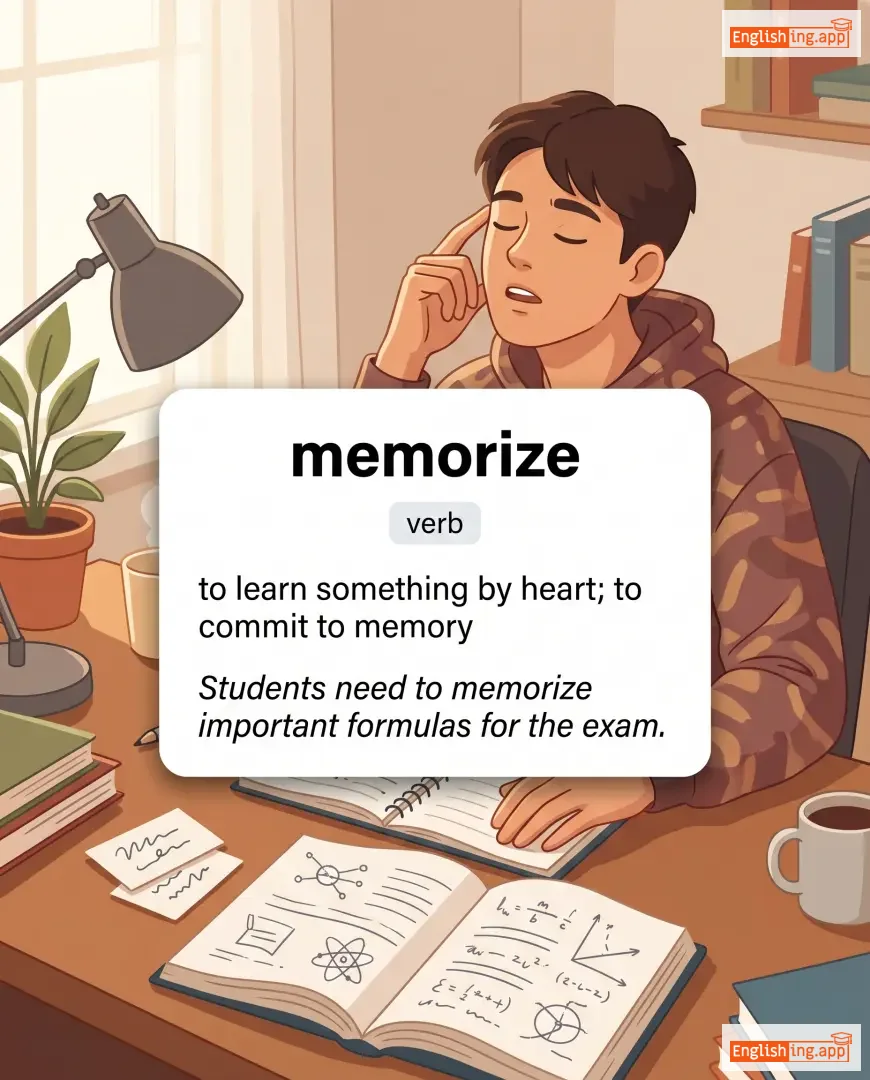
to learn something by heart; to commit to memory
••••••
|
Students need to memorize important formulas for the exam.
学生は試験のために重要な公式を覚える必要があります。
••••••
|
学生は試験のために重要な公式を覚える必要があります。
Gakusei wa shiken no tame ni jūyōna kōshiki o oboeru hitsuyō ga arimasu.
••••••
|
- •••••• | - •••••• | - •••••• |
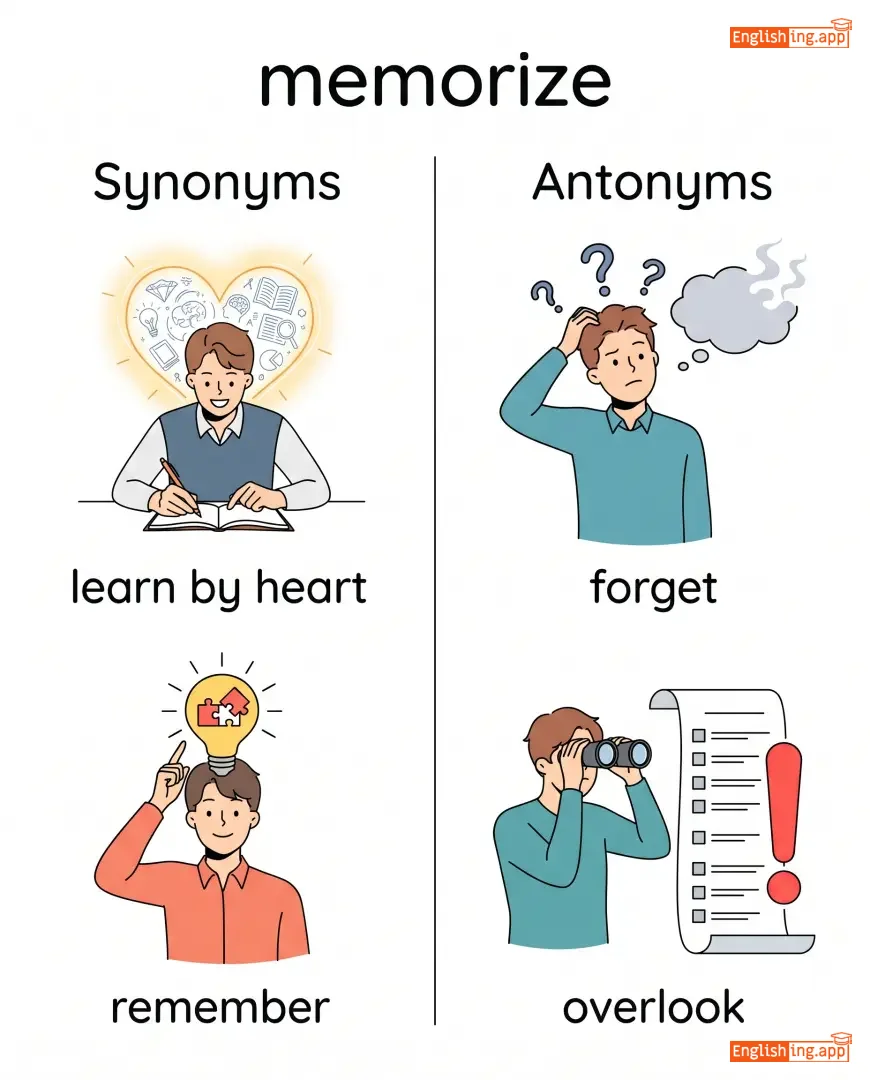
learn by heart, remember, retain, recall
••••••
|
forget, overlook, neglect
••••••
|
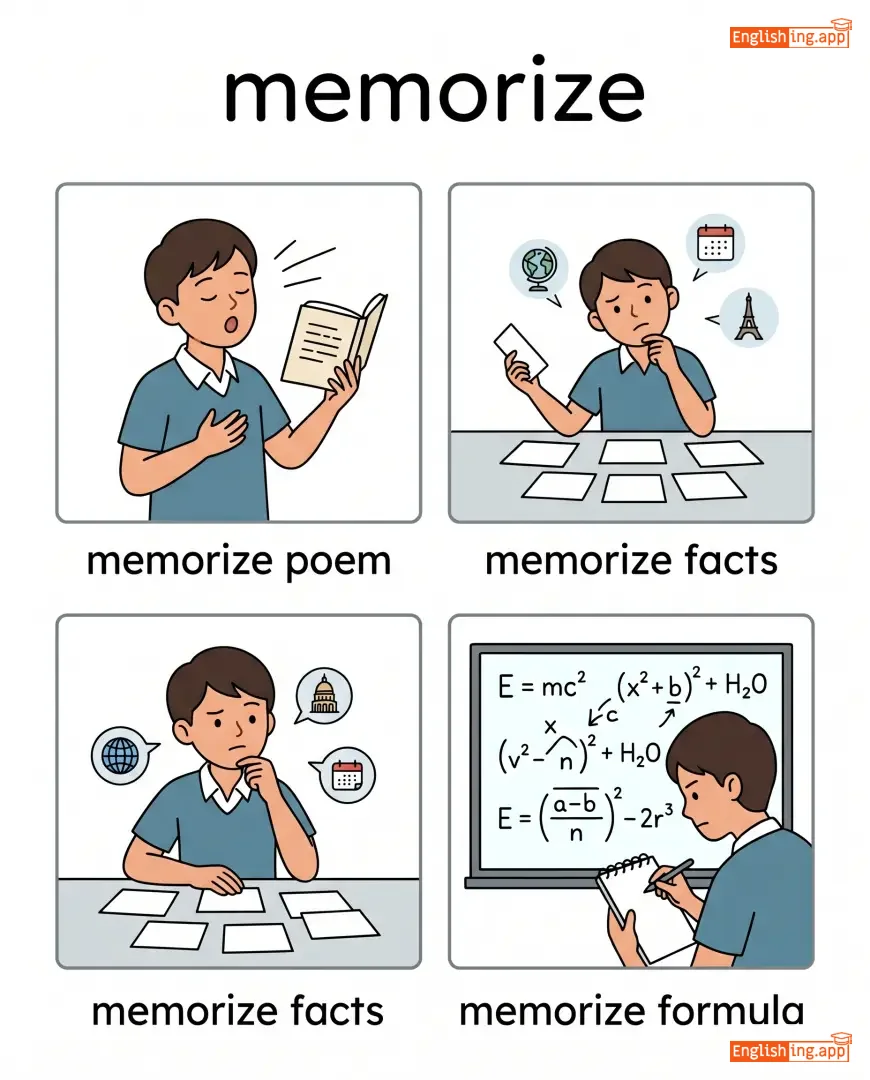
memorize poem, memorize facts, memorize formula, memorize lines, memorize vocabulary
••••••
|
覚えるのは簡単! '暗記'が重要!
••••••
|
|
#3247
🧠
|
/ˈmɛməri/
noun
(メモリー)
••••••
|
- •••••• |
記憶
kioku
••••••
|
- •••••• | - •••••• | - •••••• | - •••••• |
The faculty of the mind by which information is stored and remembered.
••••••
|
She has a vivid memory of her childhood home. |
彼女は子供時代の家について鮮明な記憶を持っています。
Kanojo wa kodomojidai no ie ni tsuite senmei na kioku o motteimasu.
••••••
|
in memory of |
As a way of showing respect for someone who has died.
••••••
|
追悼のために
tsuitō no tame ni
••••••
|
recollection, remembrance, retention, recall, reminiscence
••••••
|
forgetfulness, amnesia
••••••
|
short-term memory, long-term memory, memory loss, vivid memory
••••••
|
記憶は過去を保存するための脳のファイルキャビネットです。
••••••
|
|
#3248
🧩
|
/ˈmɛntəl/
adjective
(メンタル)
••••••
|
- •••••• |
精神的
seishinteki
••••••
|
- •••••• | - •••••• | - •••••• | - •••••• |
Relating to the mind, thoughts, or intellectual processes.
••••••
|
He needs to take a break for his mental health. |
彼は精神的な健康のために休憩が必要です。
kare wa seishinteki na kenkō no tame ni kyūkei ga hitsuyō desu.
••••••
|
mental block |
An inability to think of something or remember something.
••••••
|
精神的ブロック
seishinteki burokkusu
••••••
|
cognitive, intellectual, psychological, rational, emotional
••••••
|
physical, bodily
••••••
|
mental health, mental illness, mental strength, mental state
••••••
|
精神的は心に関すること。心が元気でないと、精神的健康が悪化する。
••••••
|
|
#3249
🧠
|
/menˈtæləti/
noun
(メンタリティ)
••••••
|
- •••••• |
メンタリティ; 思考方法
mentariti
••••••
|
- •••••• | - •••••• | - •••••• | - •••••• |
The characteristic attitude of mind or way of thinking of a person or group
••••••
|
The team needs to develop a winning mentality to succeed.
チームは成功するために勝者のメンタリティを発展させる必要がある。
••••••
|
チームは成功するために勝者のメンタリティを発展させる必要がある。
Chīmu wa seikou suru tame ni shōsha no mentariti o hatten saseru hitsuyō ga aru.
••••••
|
- •••••• | - •••••• | - •••••• |
mindset, attitude, outlook, psychology, thinking
••••••
|
open-mindedness, flexibility, adaptability
••••••
|
winning mentality, victim mentality, group mentality, positive mentality
••••••
|
Mentality - ‘メン’ (men) と‘態度’ (taido) で覚えましょう
••••••
|
|
#3250
🧠
|
/ˈmɛntəli/
adverb
(メンタリー)
••••••
|
- •••••• |
精神的に
seishinteki ni
••••••
|
- •••••• | - •••••• | - •••••• | - •••••• |
in a way that relates to the mind or intellect rather than the body
••••••
|
She felt mentally exhausted after the long exam.
彼女は長い試験の後で精神的に疲れていると感じていました。
••••••
|
彼女は長い試験の後で精神的に疲れていると感じていました。
Kanojo wa nagai shiken no ato de seishinteki ni tsukarete iru to kanjite imashita.
••••••
|
mentally prepared
精神的に準備された
••••••
|
ready in mind for a challenge or situation
••••••
|
精神的に準備された
seishinteki ni junbi sareta
••••••
|
psychologically, intellectually, cognitively, emotionally
••••••
|
physically, bodily
••••••
|
mentally strong, mentally ill, mentally prepared, mentally active
••••••
|
Mental = 心, だから 'mentally' = 精神的に。
••••••
|
|
#3251
💬
|
/ˈmɛnʃən/
verb
(メンション)
••••••
|
- •••••• |
言及する
genkyu suru
••••••
|
mentioned
メンションド
••••••
|
mentioned
メンションド
••••••
|
mentions
メンションズ
••••••
|
mentioning
メンションイング
••••••
|
To refer to something briefly without giving much detail.
••••••
|
He mentioned her name during the meeting.
ヒー メンションド ハー ネーム デュアリング ザ ミーティング。
••••••
|
彼は会議で彼女の名前に言及した。
Kare wa kaigi de kanojo no namae ni genkyu shita.
••••••
|
not to mention
ノット トゥ メンション
••••••
|
Used to add emphasis to something by including an additional point.
••••••
|
言うまでもなく
Iu made mo naku
••••••
|
refer, cite, state, remark, bring up
••••••
|
ignore, omit, overlook
••••••
|
mention casually, fail to mention, specifically mention, worth mentioning
••••••
|
メンションは、会話の中で誰かの名前を言及することです。
••••••
|
|
#3252
👩🏫
|
/ˈmɛntɔːr/
noun
(メンター)
••••••
|
- •••••• |
メンター
mentā
••••••
|
- •••••• | - •••••• | - •••••• | - •••••• |
an experienced person who advises and guides someone less experienced
••••••
|
She acted as a mentor for the new employees. |
彼女は新しい社員のためにメンターとして活動しました。
Kanojo wa atarashī shain no tame ni mentā toshite katsudō shimashita.
••••••
|
mentor-mentee relationship |
a guiding relationship where a mentor advises a mentee
••••••
|
メンター・メンティ関係
mentā mentī kankei
••••••
|
advisor, guide, coach, counselor
••••••
|
student, pupil
••••••
|
trusted mentor, career mentor, mentor program, mentor relationship
••••••
|
メンター、道を示す教師のような存在。
••••••
|
|
#3253
📜
|
/ˈmɛnjuː/
noun
(メニュー)
••••••
|
- •••••• |
メニュー
menyū
••••••
|
- •••••• | - •••••• | - •••••• | - •••••• |
A list of food and drinks available at a restaurant or offered at a meal.
••••••
|
The restaurant updated its menu with new dishes. |
レストランは新しい料理をメニューに追加しました。
Resutoran wa atarashī ryōri o menyū ni tsuika shimashita.
••••••
|
set menu |
A fixed selection of dishes offered at a set price.
••••••
|
定食メニュー
Teishoku menyū
••••••
|
bill of fare, food list, card, menu card, offerings
••••••
|
emptiness, nothingness
••••••
|
menu card, lunch menu, digital menu, special menu
••••••
|
メニューはレストランの料理リストです。
••••••
|
|
#3254
💰
|
/ˈmɜːrtʃənt/
noun
(マーチャント)
••••••
|
- •••••• |
商人
shōnin
••••••
|
- •••••• | - •••••• | - •••••• | - •••••• |
a person or company involved in the trade of goods, especially in large quantities
••••••
|
The merchant sold spices from distant lands. |
商人は遠くの土地から香辛料を売っていた。
Shōnin wa tōku no tochi kara kōshinryō o utte ita.
••••••
|
sea merchant |
a trader who conducts business by sea
••••••
|
海上商人
kaijō shōnin
••••••
|
trader, dealer, seller, vendor, businessman
••••••
|
buyer, customer, consumer
••••••
|
merchant ship, merchant trade, local merchant, online merchant
••••••
|
商人、まるで市場で活躍している人
••••••
|
|
#3255
🙏
|
/ˈmɜːrsi/
noun
(マーシー)
••••••
|
- •••••• |
慈悲
jihi
••••••
|
- •••••• | - •••••• | - •••••• | - •••••• |
Compassion or forgiveness shown toward someone whom it is in one's power to punish
••••••
|
The judge showed mercy and gave him a lighter sentence.
裁判官は慈悲を示し、より軽い判決を与えました。
••••••
|
裁判官は慈悲を示し、より軽い判決を与えました。
Saibankan wa jihi o shimeshi, yori karui hanketsu o ataemashita.
••••••
|
- •••••• | - •••••• | - •••••• |
compassion, forgiveness, clemency, kindness, leniency
••••••
|
cruelty, harshness, severity, ruthlessness, vengeance
••••••
|
show mercy, beg for mercy, mercy killing, without mercy
••••••
|
Mercy は法廷で裁判官が犯人に示す慈悲のようなものです。
••••••
|
|
#3256
✨
|
/mɪr/
adjective
(ミアー)
••••••
|
- •••••• |
単なる
tannaru
••••••
|
- •••••• | - •••••• | - •••••• | - •••••• |
Used to emphasize how small or insignificant something is.
••••••
|
It was a mere suggestion, not a command. |
それは単なる提案であり、命令ではありません。
Sore wa tannaru teian de ari, meirei de wa arimasen.
••••••
|
a mere formality |
Something done because it is expected, but without real importance
••••••
|
単なる形式
Tannaru keishiki
••••••
|
simple, trivial, insignificant, minor, slight
••••••
|
important, significant, major
••••••
|
mere coincidence, mere child, mere formality, mere mention
••••••
|
Mere は日本語で '単なる' を意味します — 覚えやすい!
••••••
|
|
#3257
🪶
|
/ˈmɪərli/
adverb
(mīrī)
••••••
|
- •••••• |
ただ
tada
••••••
|
- •••••• | - •••••• | - •••••• | - •••••• |
Only; nothing more than.
••••••
|
She was merely trying to help. |
彼女はただ助けようとしていました。
Kanojo wa tada tasukeyou to shite imashita.
••••••
|
merely a matter of time |
Something certain to happen, just waiting for the right time
••••••
|
ただの時間の問題
tada no jikan no mondai
••••••
|
only, simply, just, purely, solely
••••••
|
more, beyond, extra
••••••
|
merely coincidental, merely symbolic, merely academic, merely mentioned
••••••
|
MERELYはただ意味します—覚えておいて: 'ただ助ける、何もそれ以上はない'
••••••
|
|
#3258
🔗
|
/mɜːrdʒ/
verb
(マージ)
••••••
|
|
統合する
tōgō suru
••••••
|
merged
マージド
••••••
|
merged
マージド
••••••
|
merges
マージズ
••••••
|
merging
マージング
••••••
|
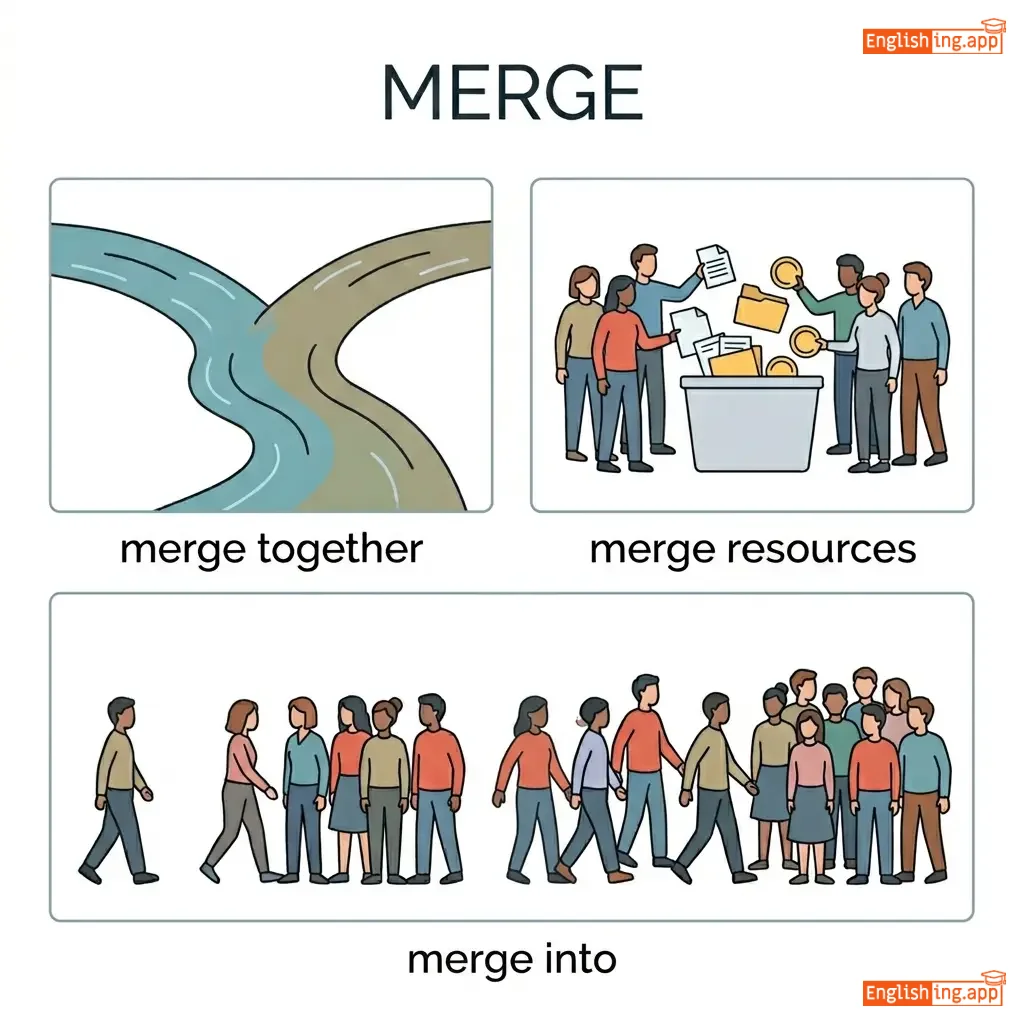
to combine or join together; to blend into one
••••••
|
The two companies decided to merge to increase their market share.
2つの会社は市場シェアを増やすために合併することを決定しました。
••••••
|
2つの会社は市場シェアを増やすために合併することを決定しました。
Futatsu no kaisha wa shijō shea o fuyasu tame ni gōbetsu suru koto o kettei shimashita.
••••••
|
- •••••• | - •••••• | - •••••• |
combine, unite, join, blend
••••••
|
separate, divide, split, disconnect
••••••
|
merge companies, merge files, merge lanes, merge successfully, merge together
••••••
|
統合する:二つの会社が一つになる様子を想像してください!
••••••
|
|
#3259
🔗
|
/ˈmɜːrdʒər/
noun
(マージャー)
••••••
|
- •••••• |
合併
gappei
••••••
|
- •••••• | - •••••• | - •••••• | - •••••• |
The combination of two or more companies into a single entity.
••••••
|
The merger of the two firms created the largest bank in the region. |
2社の合併により、地域で最大の銀行が設立されました。
2sha no gappei ni yori, chiiki de saidai no ginkō ga setsuritsu saremashita.
••••••
|
merger and acquisition |
Business processes of combining or buying companies.
••••••
|
合併と買収
Gappei to baishū
••••••
|
amalgamation, union, consolidation, fusion, integration
••••••
|
division, separation, split
••••••
|
merger agreement, corporate merger, merger deal, merger talks
••••••
|
合併 (gappei) は二つの企業が結婚して、一つの大きなものになるようなものです。
••••••
|
|
#3260
🏅
|
/ˈmɛrɪt/
noun/verb
(メリット)
••••••
|
- •••••• |
メリット
meritto
••••••
|
merited
メリットされた
••••••
|
merited
メリットされた
••••••
|
merits
メリットする
••••••
|
meriting
メリットしている
••••••
|
A quality or feature that deserves praise or reward; to deserve or be worthy of.
••••••
|
The plan has the merit of being simple and practical.
この計画のメリットはシンプルで実用的であることです。
••••••
|
この計画のメリットはシンプルで実用的であることです。
Kono keikaku no meritto wa shinpuru de jitsuyō-teki de aru koto desu.
••••••
|
on its own merits
自分のメリットに基づいて
••••••
|
Judged based on its own qualities without bias.
••••••
|
自分のメリットに基づいて
jibun no meritto ni motozuite
••••••
|
value, worth, virtue, advantage, credit
••••••
|
fault, defect, demerit
••••••
|
academic merit, merit system, merit scholarship, without merit
••••••
|
Meritは価値のある特性、リストに載るようなものです。
••••••
|
|
#3261
🏆
|
/ˌmer.ɪˈtɔː.ri.əs/
adjective
(メリトリアス)
••••••
|
- •••••• |
称賛に値する
shōsan ni ataisuru
••••••
|
- •••••• | - •••••• | - •••••• | - •••••• |
deserving reward or praise; commendable; worthy of recognition
••••••
|
His meritorious service to the community was recognized.
彼の社会への価値ある貢献は認められました。
••••••
|
彼の社会への価値ある貢献は認められました。
kare no shakai e no kachi aru kōken wa mitomeraremashita
••••••
|
- •••••• | - •••••• | - •••••• |
praiseworthy, commendable, worthy
••••••
|
unworthy, disgraceful, blameworthy
••••••
|
meritorious service, meritorious conduct, meritorious achievement
••••••
|
称賛 (praise) + 貢献 (contribution)
••••••
|
|
#3262
🌀
|
/mɛs/
noun
(メス)
••••••
|
- •••••• |
混乱
konran
••••••
|
- •••••• | - •••••• | - •••••• | - •••••• |
A state of disorder or untidiness.
••••••
|
The kids left the room in a complete mess. |
子供たちは部屋を完全に混乱させました。
Kodomotachi wa heya o kanzen ni konran sasemashita.
••••••
|
make a mess |
To cause disorder or problems
••••••
|
混乱を引き起こす
konran o hikiokosu
••••••
|
chaos, disorder, confusion, clutter, disarray
••••••
|
order, neatness, tidiness
••••••
|
make a mess, big mess, messy situation, clean up the mess
••••••
|
MESS は混乱を意味します— 'Mess in the 部屋 は混乱を意味します'
••••••
|
|
#3263
📩
|
/ˈmɛsɪdʒ/
noun
(メッセージ)
••••••
|
- •••••• |
メッセージ
messeji
••••••
|
- •••••• | - •••••• | - •••••• | - •••••• |
A piece of information sent or communicated from one person to another.
••••••
|
I received a message from my friend yesterday. |
昨日、友達からメッセージを受け取りました。
Kinō, tomodachi kara mesēji o uketorimashita.
••••••
|
get the message |
To understand the meaning or implication of something
••••••
|
メッセージを理解する
messeji o rikai suru
••••••
|
note, communication, letter, text, notification
••••••
|
silence, quiet
••••••
|
send a message, receive a message, leave a message, important message
••••••
|
MESSAGEはメッセージ—覚えておいて:'SMSはメッセージです'
••••••
|
|
#3264
📨
|
/ˈmes.ɪn.dʒər/
noun
(メッセンジャー)
••••••
|
- •••••• |
使者
shisha
••••••
|
- •••••• | - •••••• | - •••••• | - •••••• |
a person who carries messages or communications between parties
••••••
|
The messenger delivered important battle plans to the commander. |
使者は司令官に重要な戦闘計画を届けました。
Shisha wa shireikan ni jūyōna sentō keikaku o todokemashita.
••••••
|
- •••••• | - •••••• | - •••••• |
courier, envoy, herald, carrier
••••••
|
recipient, receiver, addressee
••••••
|
messenger service, royal messenger, send a messenger
••••••
|
使者は情報を届ける人、'使者'がメッセージを運ぶ!
••••••
|
|
#3265
🧹
|
/ˈmɛsi/
adjective
(メッシー)
••••••
|
- •••••• |
散らかった
chirakatta
••••••
|
- •••••• | - •••••• | - •••••• | - •••••• |
untidy or dirty; disorganized or chaotic
••••••
|
His room was so messy that he couldn’t find his keys.
ヒズ ルーム ワズ ソー メッシー ザット ヒー クドゥント ファインド ヒズ キーズ。
••••••
|
彼の部屋はとても散らかっていて、鍵が見つからなかった。
kare no heya wa totemo chirakatte ite kagi ga mitsukaranakatta
••••••
|
- •••••• | - •••••• | - •••••• |
untidy, dirty, cluttered, disorderly, chaotic
••••••
|
neat, tidy, clean
••••••
|
messy room, messy desk, messy hair, messy situation
••••••
|
メッシーな部屋=散らかった部屋
••••••
|
|
#3266
⚙️
|
/ˈmɛtəl/
noun
(メタル)
••••••
|
- •••••• |
金属
kinzoku
••••••
|
- •••••• | - •••••• | - •••••• | - •••••• |
A solid material that is typically hard, shiny, malleable, fusible, and conductive, such as iron, gold, or aluminum.
••••••
|
The ring was made of precious metal. |
その指輪は貴金属でできていました。
Sono yubiwa wa kikinzoku de dekite imashita.
••••••
|
heavy metal |
A loud and aggressive style of rock music.
••••••
|
ヘビーメタル
hebi metal
••••••
|
alloy, element, mineral, ore, substance
••••••
|
nonmetal, plastic, wood
••••••
|
metal detector, metal object, precious metal, sheet metal
••••••
|
金属は硬くて光っているもの、金属板のように。
••••••
|
|
#3267
🖼️
|
/ˈmɛtəfɔːr/
noun
(happiness)
••••••
|
- •••••• |
幸せ
shiawase
••••••
|
- •••••• | - •••••• | - •••••• | - •••••• |
A figure of speech in which a word or phrase is applied to something to which it is not literally applicable.
••••••
|
Time is a thief is a common metaphor for how quickly life passes. |
彼女は賞を受け取ったとき、自分の幸せを隠せなかった。
Kanojo wa shō o uketotta toki, jibun no shiawase o kakusenakatta.
••••••
|
mixed metaphor |
A combination of two or more inconsistent metaphors in a single expression.
••••••
|
幸せを追い求める
Shiawase o oimotomeru
••••••
|
analogy, symbol, image, comparison, allegory
••••••
|
literalness, fact, reality
••••••
|
common metaphor, extended metaphor, metaphor for, use a metaphor
••••••
|
幸せ + を → 幸せを追い求め続ける
••••••
|
|
#3268
📏
|
/ˈmiːtər/
noun
(メーター)
••••••
|
- •••••• |
メートル
mētoru
••••••
|
- •••••• | - •••••• | - •••••• | - •••••• |
A unit of length in the metric system equal to 100 centimeters; also, a device that measures quantity such as electricity or gas.
••••••
|
The technician came to check the electricity meter. |
技術者が電気メーターをチェックしに来ました。
Gijutsusha ga denki mētā o chekku shi ni kimashita.
••••••
|
on the meter |
Refers to the reading shown on a measurement device, often a taxi meter.
••••••
|
メーターで
mētā de
••••••
|
gauge, measurer, counter, device, ruler
••••••
|
estimation, guess
••••••
|
electricity meter, water meter, taxi meter, gas meter
••••••
|
メーターで長さを測定、覚えておいて、メーターは測定するためのものです。
••••••
|
|
#3269
🧪
|
/ˈmɛθəd/
noun
(メソッド)
••••••
|
- •••••• |
方法
hōhō
••••••
|
- •••••• | - •••••• | - •••••• | - •••••• |
A particular way or process of doing something.
••••••
|
She explained the method of solving the problem.
彼女は問題を解決する方法を説明しました。
••••••
|
彼女は問題を解決する方法を説明しました。
Kanojo wa mondai o kaiketsu suru hōhō o setsumei shimashita.
••••••
|
by method
方法で
••••••
|
In an orderly or systematic way
••••••
|
秩序ある方法で
chitsujo aru hōhō de
••••••
|
procedure, technique, system, process, approach
••••••
|
chaos, disorder
••••••
|
teaching method, scientific method, effective method, method of study
••••••
|
METHODは方法です — '問題を解決する方法が必要'
••••••
|
|
#3270
📊
|
/ˌmɛθəˈdɑlədʒi/
noun
(メソドロジー)
••••••
|
- •••••• |
方法論
hōhōron
••••••
|
- •••••• | - •••••• | - •••••• | - •••••• |
A system of methods used in a particular area of study or activity.
••••••
|
The research was conducted using a new methodology.
その研究は新しいメソドロジーを使って行われました。
••••••
|
その研究は新しいメソドロジーを使って行われました。
Sono kenkyū wa atarashī mesodorojī o tsukatte okonaware mashita.
••••••
|
- •••••• | - •••••• | - •••••• |
approach, technique, process, strategy, system
••••••
|
disorganization, randomness
••••••
|
research methodology, scientific methodology, teaching methodology, standard methodology
••••••
|
メソドロジーは方法のシステム—方法の方法です。
••••••
|
|
#3271
🌮
|
/ˈmɛksɪkən/
noun/adjective
(ˈhæpinəs)
••••••
|
- •••••• |
幸せ
shiawase
••••••
|
- •••••• | - •••••• | - •••••• | - •••••• |
a native or inhabitant of Mexico; relating to Mexico or its people, culture, or language
••••••
|
She enjoys Mexican food like tacos and enchiladas. |
彼女は賞を受け取ったとき、幸せを隠すことができませんでした。
Kanojo wa shō o uketotta toki, shiawase o kakusu koto ga dekimasen deshita.
••••••
|
Mexican standoff |
a situation where no party can emerge as a clear winner or make progress
••••••
|
幸せを追い求める
Shiawase o oimotomeru
••••••
|
Mexican national, Mexican citizen, Mexican person, Mexican-born
••••••
|
foreigner, non-Mexican
••••••
|
Mexican food, Mexican culture, Mexican heritage, Mexican border
••••••
|
幸せは光のように、周りを明るく照らすものです。
••••••
|
|
#3272
🎯
|
/mɪd/
adjective, preposition, noun
(ミッド)
••••••
|
- •••••• |
中間
chukan
••••••
|
- •••••• | - •••••• | - •••••• | - •••••• |
being in the middle of something; the central part or point
••••••
|
She joined the project in mid June.
シー ジョインド ザ プロジェクト イン ミッド ジューン
••••••
|
彼女は6月中旬にそのプロジェクトに参加した。
kanojo wa rokugatsu chujun ni sono purojekuto ni sanka shita
••••••
|
midway
ミッドウェイ
••••••
|
at the middle point of a process or journey
••••••
|
途中で
tochu de
••••••
|
middle, central, halfway, intermediate
••••••
|
beginning, end
••••••
|
mid point, mid year, mid day, mid range
••••••
|
mid = ミッド = 中間
••••••
|
|
#3273
☀️
|
/ˈmɪd.deɪ/
noun
(ミッドデイ)
••••••
|
- •••••• |
正午
shougo
••••••
|
- •••••• | - •••••• | - •••••• | - •••••• |
The middle of the day; twelve o'clock in the daytime; noon
••••••
|
The sun is brightest at midday when it's directly overhead. |
太陽は正午に最も輝いており、真上にあります。
Taiyou wa shougo ni mottomo kagayaite ori, maue ni arimasu.
••••••
|
- •••••• | - •••••• | - •••••• |
noon, twelve o'clock, high noon, noontime
••••••
|
midnight, dawn, dusk, evening
••••••
|
midday sun, midday heat, midday break, midday meal
••••••
|
正午、太陽は最も輝き、まさに真上に。
••••••
|
|
#3274
⚖️
|
/ˈmɪdəl/
noun/adjective
(ミドル)
••••••
|
- •••••• |
真ん中
mannaka
••••••
|
- •••••• | - •••••• | - •••••• | - •••••• |
the central point, position, or part of something
••••••
|
The park is in the middle of the city. |
公園は街の真ん中にあります。
Kōen wa machi no mannaka ni arimasu.
••••••
|
caught in the middle |
to be involved in a conflict between two sides
••••••
|
真ん中に挟まれる
mannaka ni hasamareru
••••••
|
center, midpoint, midst, halfway
••••••
|
edge, end, side
••••••
|
middle class, middle ground, middle school, middle of the road
••••••
|
真ん中 (mannaka) = middle - 都市の真ん中にある公園を思い浮かべて 🌳
••••••
|
|
#3275
🌙
|
/ˈmɪdnaɪt/
noun
(mɪdnaɪt)
••••••
|
- •••••• |
真夜中
mayonaka
••••••
|
- •••••• | - •••••• | - •••••• | - •••••• |
twelve o'clock at night; the middle of the night
••••••
|
He reached home just after midnight. |
彼は真夜中過ぎに家に着いた。
Kare wa mayonaka sugi ni ie ni tsuita.
••••••
|
burn the midnight oil |
to work late into the night
••••••
|
夜遅くまで働く
yoru osoku made hataraku
••••••
|
nighttime, darkness, late night, twelve o’clock
••••••
|
noon, midday
••••••
|
at midnight, past midnight, midnight snack, midnight train
••••••
|
真夜中は夜の真ん中。夜の最中に真夜中が来る!
••••••
|
|
#3276
🎯
|
/mɪdst/
noun
(mɪdst)
••••••
|
- •••••• |
真ん中
mannaka
••••••
|
- •••••• | - •••••• | - •••••• | - •••••• |
the middle part or position of something
••••••
|
In the midst of chaos, she remained calm. |
混乱の真ん中で、彼女は冷静を保ちました。
Konran no mannaka de, kanojo wa reisei wo tamochimashita.
••••••
|
in the midst of |
in the middle of or surrounded by
••••••
|
真ん中で
mannaka de
••••••
|
center, middle, core, heart
••••••
|
edge, outside, border
••••••
|
in the midst, midst of war, midst of trouble, midst of crowd
••••••
|
Midstは真ん中を意味する — 真ん中はmidstだ!
••••••
|
|
#3277
💪
|
/maɪt/
modal verb/noun
(maito)
••••••
|
- •••••• |
かもしれない / 力
kamoshirenai / chikara
••••••
|
- •••••• | - •••••• | - •••••• | - •••••• |
used to express possibility; power or strength
••••••
|
She might come to the party if she finishes work early. |
もし彼女が早く仕事を終わらせたら、パーティーに来るかもしれない。
Moshi kanojo ga hayaku shigoto wo owarasetara, paatii ni kuru kamoshirenai.
••••••
|
might is right |
the belief that power gives the right to rule or control
••••••
|
力が正義
chikara ga seigi
••••••
|
may, could, strength, power
••••••
|
weakness, impossibility
••••••
|
might consider, might have been, military might, full might
••••••
|
Might = 可能性と力、あなたを支配する力
••••••
|
|
#3278
💪
|
/ˈmaɪti/
adjective
(マイティ)
••••••
|
- •••••• |
強力な
kyoryoku na
••••••
|
- •••••• | - •••••• | - •••••• | - •••••• |
having great power or strength; very strong or impressive
••••••
|
The mighty river flows through the heart of the country.
ザ マイティ リバー フローズ スルー ザ ハート オブ ザ カントリー。
••••••
|
その強力な川は国の中心を流れている。
Sono kyoryoku na kawa wa kuni no chushin o nagarete iru
••••••
|
- •••••• | - •••••• | - •••••• |
powerful, strong, formidable, great, robust
••••••
|
weak, feeble, powerless
••••••
|
mighty force, mighty warrior, mighty river, mighty empire
••••••
|
マイティ=強力な、とても強い
••••••
|
|
#3279
🕊️
|
/maɪˈɡreɪʃən/
noun
(maɪˈɡreɪʃən)
••••••
|
- •••••• |
移動
idou
••••••
|
- •••••• | - •••••• | - •••••• | - •••••• |
the movement of people or animals from one place to another, often for better living conditions or seasonal reasons
••••••
|
The annual migration of birds is a fascinating natural event. |
鳥の毎年の移動は魅力的な自然現象です。
Tori no mainen no idou wa miryokuteki na shizen genshō desu.
••••••
|
mass migration |
a large movement of people from one region to another
••••••
|
大規模な移動
daikibo na idou
••••••
|
relocation, movement, exodus, resettlement, journey
••••••
|
settlement, stay
••••••
|
bird migration, human migration, seasonal migration, migration pattern
••••••
|
移動は動きのことです。覚えておいて '移動は動き'!
••••••
|
Vocabulary Quiz
Test your vocabulary by matching words with their translations or meanings.
Login to take the quiz
Comments (0)
Share your thoughts and join the discussion.
Join the discussion by logging in
Login to CommentNo comments yet
Be the first to share your thoughts!