

翻訳
過去
過去分詞
三人称単数
動名詞
意味
例文
例文の翻訳
同義語
対義語
コロケーション
ニーモニック



Swipe left or right, or use the buttons. Tap image to zoom.
例文の翻訳
単語
Lesson 34Lesson 34 - マスクトグル
|
絵文字
|
単語 | Images | 翻訳 | 過去 | 過去分詞 | 三人称単数 | 動名詞 | 意味 | 例文 | 例文の翻訳 | 表現例 | 表現例の意味 | 表現例の翻訳 | 同義語 | 対義語 | コロケーション | ニーモニック |
|---|---|---|---|---|---|---|---|---|---|---|---|---|---|---|---|---|---|
|
#1598
⚖️
|
/dɪˈskrɛʃən/
noun
(ディスクリション)
••••••
|
|
慎重
shinchou
••••••
|
- •••••• | - •••••• | - •••••• | - •••••• |
the quality of behaving or speaking in a way to avoid causing offense or revealing private information; the freedom to decide what should be done in a particular situation
••••••
|
The manager acted with discretion in handling the sensitive matter. |
マネージャーは敏感な問題を慎重に扱いました。
Manējā wa binkan na mondai o shinchou ni atsukaimashita.
••••••
|
at one's discretion |
according to one's own judgment or decision
••••••
|
自分の判断で
jibun no handan de
••••••
|
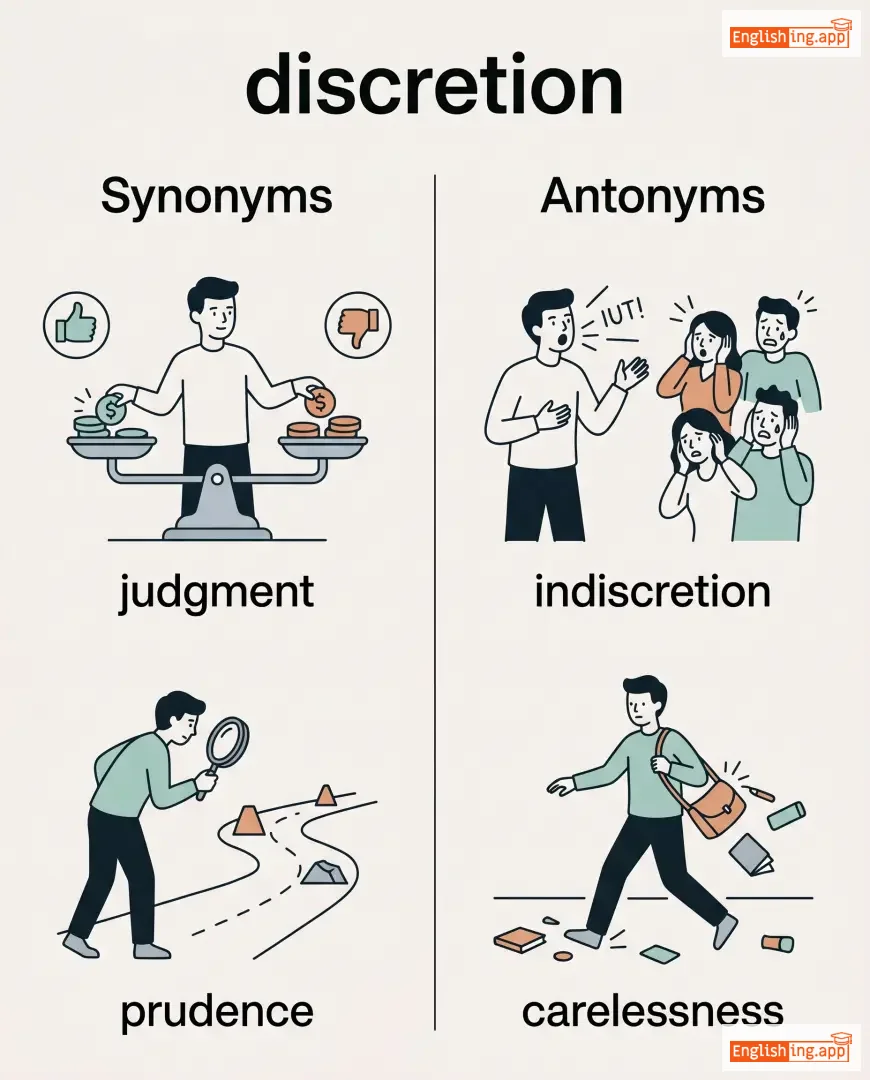
judgment, prudence, caution, choice, option
••••••
|
indiscretion, carelessness, compulsion
••••••
|
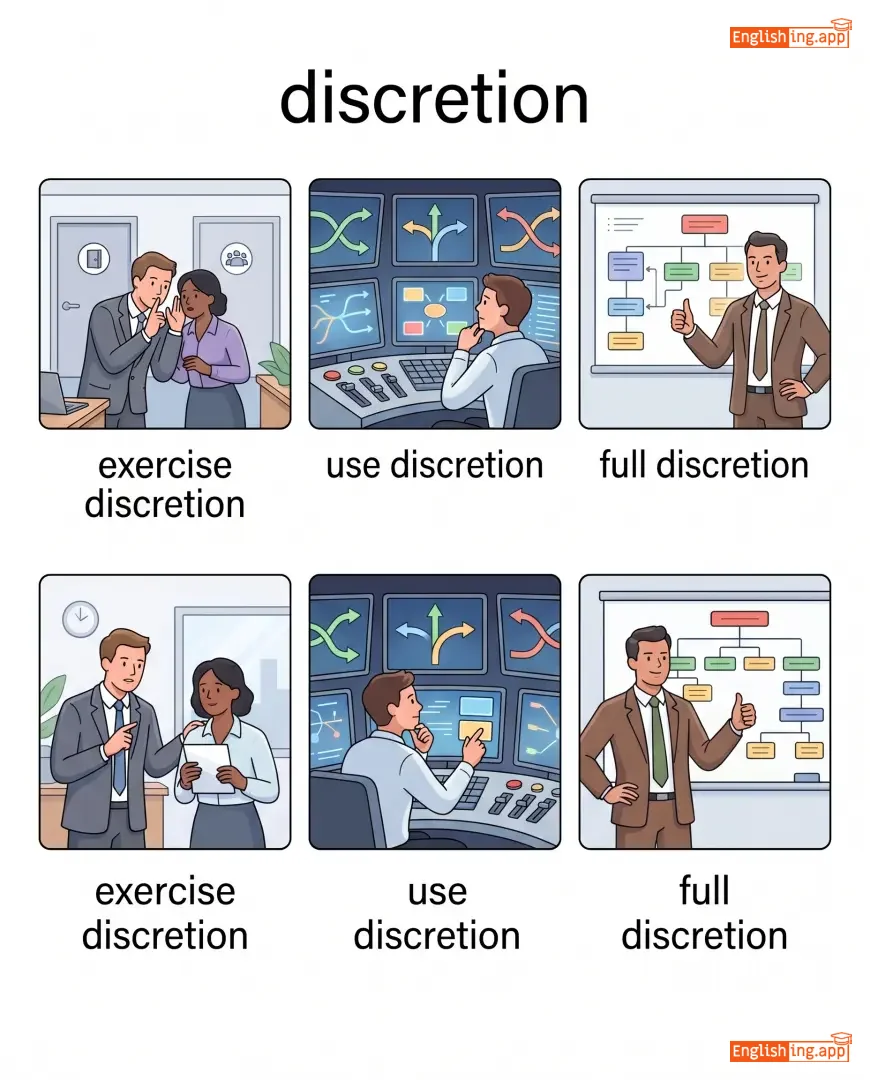
exercise discretion, use discretion, full discretion, sole discretion
••••••
|
DiscretionはDecisionと慎重(shinchou)に関連しています。
••••••
|
|
#1599
💬
|
/dɪˈskʌs/
verb
(ディスカス)
••••••
|
- •••••• |
話し合う
hanashiau
••••••
|
discussed
ディスカスト
••••••
|
discussed
ディスカスト
••••••
|
discusses
ディスカスズ
••••••
|
discussing
ディスカスイング
••••••
|
To talk about something with another person or group in detail.
••••••
|
We need to discuss the project before finalizing it.
プロジェクトを最終決定する前に、それを話し合う必要があります。
••••••
|
プロジェクトを最終決定する前に、それを話し合う必要があります。
Purojekuto o saishū kettei suru mae ni, sore o hanashiau hitsuyō ga arimasu.
••••••
|
discuss matters
問題を話し合う
••••••
|
to talk about issues or problems
••••••
|
問題を話し合う
Mondai o hanashiau
••••••
|
talk, debate, confer, deliberate, examine
••••••
|
ignore, avoid
••••••
|
discuss a plan, discuss issues, discuss openly, discuss further
••••••
|
話し合うことは、何かについて他の人と詳しく話すことです。
••••••
|
|
#1600
💬
|
/dɪˈskʌʃən/
noun
(ディスカッション)
••••••
|
- •••••• |
議論
giron
••••••
|
- •••••• | - •••••• | - •••••• | - •••••• |
The action or process of talking about something in order to reach a decision or share ideas.
••••••
|
The project needs more discussion before moving forward. |
プロジェクトは前進する前にもっと議論が必要です。
Purojekuto wa zenshin suru mae ni motto giron ga hitsuyōdesu.
••••••
|
open for discussion |
Available to be debated or considered
••••••
|
議論の余地あり
Giron no yochi ari
••••••
|
conversation, dialogue, debate, talk, consultation
••••••
|
silence, monologue
••••••
|
group discussion, open discussion, detailed discussion, lively discussion
••••••
|
議論とは、意見を交換し合い、理解を深めることです。
••••••
|
|
#1601
🦠
|
/dɪˈziːz/
noun
(dɪˈziːz)
••••••
|
- •••••• |
病気
byouki
••••••
|
- •••••• | - •••••• | - •••••• | - •••••• |
An illness or medical condition that affects the body or mind.
••••••
|
The doctor is researching a cure for the disease. |
医者はその病気の治療法を研究しています。
Isha wa sono byōki no chiryo hō o kenkyū shiteimasu.
••••••
|
heart disease |
A general term for conditions affecting the heart.
••••••
|
心臓病
shinzōbyō
••••••
|
illness, sickness, ailment, disorder, infection
••••••
|
health, wellness
••••••
|
infectious disease, chronic disease, disease prevention, disease outbreak
••••••
|
Diseaseは病気を意味します。覚えておいてください、体に安らぎがなければ、それは病気です。
••••••
|
|
#1602
🤢
|
/dɪsˈɡʌst/
noun
(ディスガスト)
••••••
|
- •••••• |
嫌悪
ken'o
••••••
|
- •••••• | - •••••• | - •••••• | - •••••• |
a feeling of revulsion or strong disapproval aroused by something unpleasant
••••••
|
She expressed her disgust at the politician's corrupt behavior openly. |
彼女は政治家の腐敗行為に対する嫌悪を公然と表現しました。
Kanojo wa seijika no fuhai kōi ni taisuru ken'o o kōzen to hyōgen shimashita.
••••••
|
- •••••• | - •••••• | - •••••• |
revulsion, repugnance, distaste, loathing
••••••
|
delight, pleasure, admiration, approval
••••••
|
utter disgust, express disgust, fill with disgust
••••••
|
嫌悪は、嫌なものを見た時に自然に感じるものです。
••••••
|
|
#1603
🤢
|
/dɪsˈɡʌstɪd/
adjective
(ディスガステッド)
••••••
|
- •••••• |
嫌悪している
ken'o shite iru
••••••
|
- •••••• | - •••••• | - •••••• | - •••••• |
feeling a strong sense of dislike or revulsion
••••••
|
She was disgusted by the way he treated the animals.
彼女は彼が動物に接する方法に嫌悪感を抱いた。
••••••
|
彼女は彼が動物に接する方法に嫌悪感を抱いた。
Kanojo wa kare ga doubutsu ni sessuru houhou ni ken'o kan wo daita.
••••••
|
turn your stomach
むかつく
••••••
|
to cause extreme disgust or nausea
••••••
|
むかつく
mukatsuku
••••••
|
repulsed, revolted, horrified, nauseated
••••••
|
pleased, delighted, satisfied
••••••
|
disgusted look, utterly disgusted, feel disgusted, visibly disgusted
••••••
|
嫌悪している = disgusted, 動物を見るとむかつくイメージ。
••••••
|
|
#1604
🤢
|
/dɪsˈɡʌstɪŋ/
adjective
(ディスガスティング)
••••••
|
- •••••• |
嫌な
iyana
••••••
|
- •••••• | - •••••• | - •••••• | - •••••• |
extremely unpleasant or offensive; causing strong dislike or revulsion
••••••
|
The smell coming from the trash can was absolutely disgusting.
ゴミ箱からの臭いは完全にディスガスティングでした。
••••••
|
ゴミ箱からの臭いは完全に嫌なものでした。
gomibako kara no nioi wa kanzen ni iyana mono deshita
••••••
|
- •••••• | - •••••• | - •••••• |
repulsive, revolting, nauseating, offensive, foul
••••••
|
pleasant, appealing, attractive
••••••
|
disgusting behavior, disgusting smell, absolutely disgusting, find disgusting
••••••
|
Imagine 'iyana' as 'eeew, yeah no!'—totally disgusting
••••••
|
|
#1605
🍽️
|
/dɪʃ/
noun
(ディッシュ)
••••••
|
- •••••• |
皿 / 料理
sara / ryouri
••••••
|
- •••••• | - •••••• | - •••••• | - •••••• |
A shallow container for serving or preparing food; also a particular kind of food prepared.
••••••
|
She prepared a delicious pasta dish for dinner. |
彼女は夕食のために美味しいパスタ料理を準備しました。
Kanojo wa yuushoku no tame ni oishii pasuta ryouri o junbi shimashita.
••••••
|
dish out |
To distribute or serve something, often food or criticism.
••••••
|
食べ物を提供する
tabemono o teikyou suru
••••••
|
plate, bowl, meal, course, recipe
••••••
|
drink, beverage
••••••
|
main dish, side dish, traditional dish, favorite dish
••••••
|
皿は容器や料理を意味します、覚えておいて - 母の料理はいつも最高の料理です。
••••••
|
|
#1606
🤥
|
/dɪsˈɑːnɪst/
adjective
(ディスオネスト)
••••••
|
- •••••• |
不正直
fuseijiki
••••••
|
- •••••• | - •••••• | - •••••• | - •••••• |
Behaving in an untruthful or deceitful way; not honest.
••••••
|
It is dishonest to cheat in exams. |
試験でカンニングするのは不正直です。
Shiken de kanningu suru no wa fuseijiki desu.
••••••
|
dishonest gain |
Wealth or advantage obtained through unfair or illegal means
••••••
|
不正直な利益
fuseijiki na rieki
••••••
|
deceitful, fraudulent, untruthful, corrupt
••••••
|
honest, truthful, sincere
••••••
|
dishonest act, dishonest behavior, dishonest person
••••••
|
Dishonest = 不正直 — 正直でない、だから不正直
••••••
|
|
#1607
👎
|
/dɪsˈlaɪk/
verb, noun
(ディスライク)
••••••
|
- •••••• |
嫌う
kirau
••••••
|
disliked
ディスライクド
••••••
|
disliked
ディスライクド
••••••
|
dislikes
ディスライクス
••••••
|
disliking
ディスライキング
••••••
|
to feel distaste or aversion for someone or something; a feeling of aversion
••••••
|
I really dislike eating spicy food.
私は辛い食べ物を食べるのが本当にディスライクです。
••••••
|
私は本当に辛い食べ物を食べるのが嫌いです。
Watashi wa hontoni karai tabemono wo taberu no ga kirai desu
••••••
|
nothing to dislike
嫌うものはない
••••••
|
used to say something is completely acceptable or agreeable
••••••
|
嫌うものはない
Kirau mono wa nai
••••••
|
detest, loathe, abhor, hate
••••••
|
like, enjoy, love
••••••
|
dislike intensely, dislike strongly, express dislike, personal dislike, mutual dislike
••••••
|
Dislike = 嫌う, 覚えやすい日本語。
••••••
|
|
#1608
🚪
|
/dɪsˈmɪs/
verb
(ディスミス)
••••••
|
|
解雇する, 却下する
kaiko suru, kyakka suru
••••••
|
dismissed
ディスミスド
••••••
|
dismissed
ディスミスド
••••••
|
dismisses
ディスミセズ
••••••
|
dismissing
ディスミッシング
••••••
|
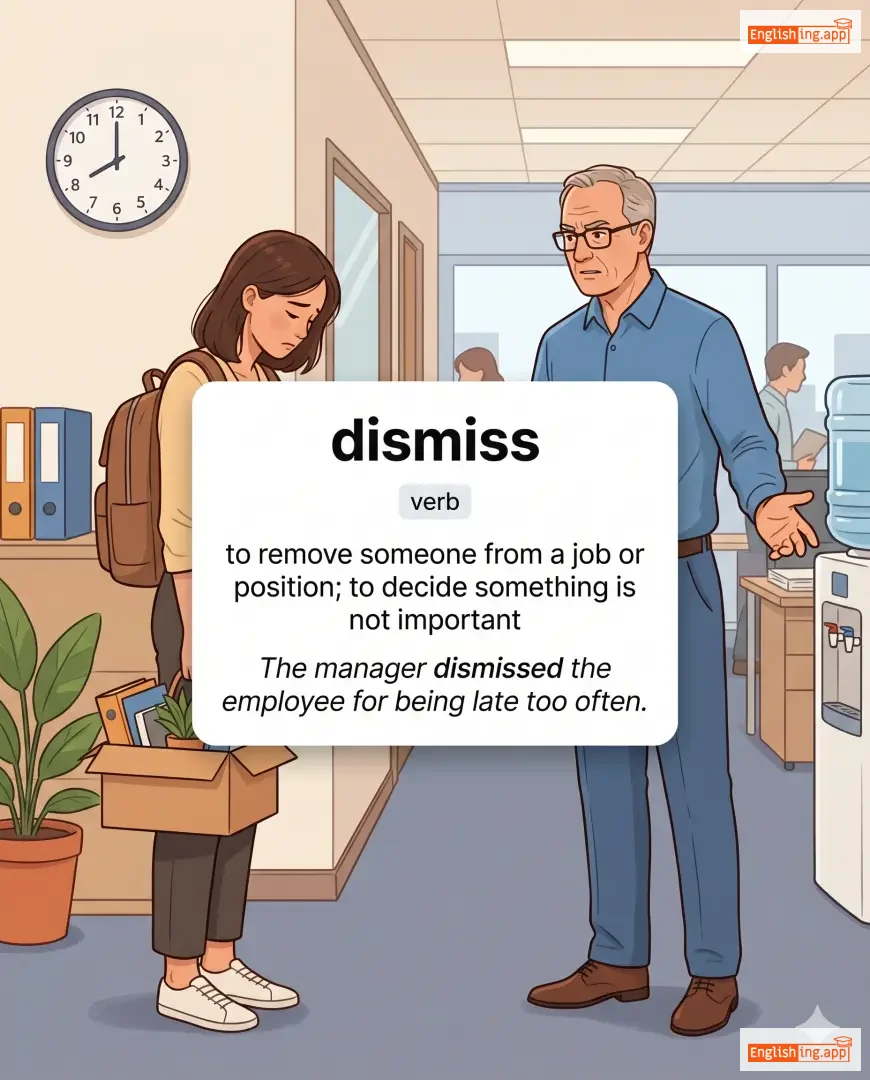
to remove someone from a job or position; to decide something is not important
••••••
|
The manager dismissed the employee for being late too often.
マネージャーは遅刻が多すぎるため、従業員を解雇しました。
••••••
|
マネージャーは遅刻が多すぎるため、従業員を解雇しました。
Manējā wa chikoku ga ōsugiru tame, jūgyōin o kaiko shimashita.
••••••
|
dismiss out of hand
即座に却下する
••••••
|
to reject something immediately without considering it
••••••
|
即座に却下する
sokuzani kyakka suru
••••••
|
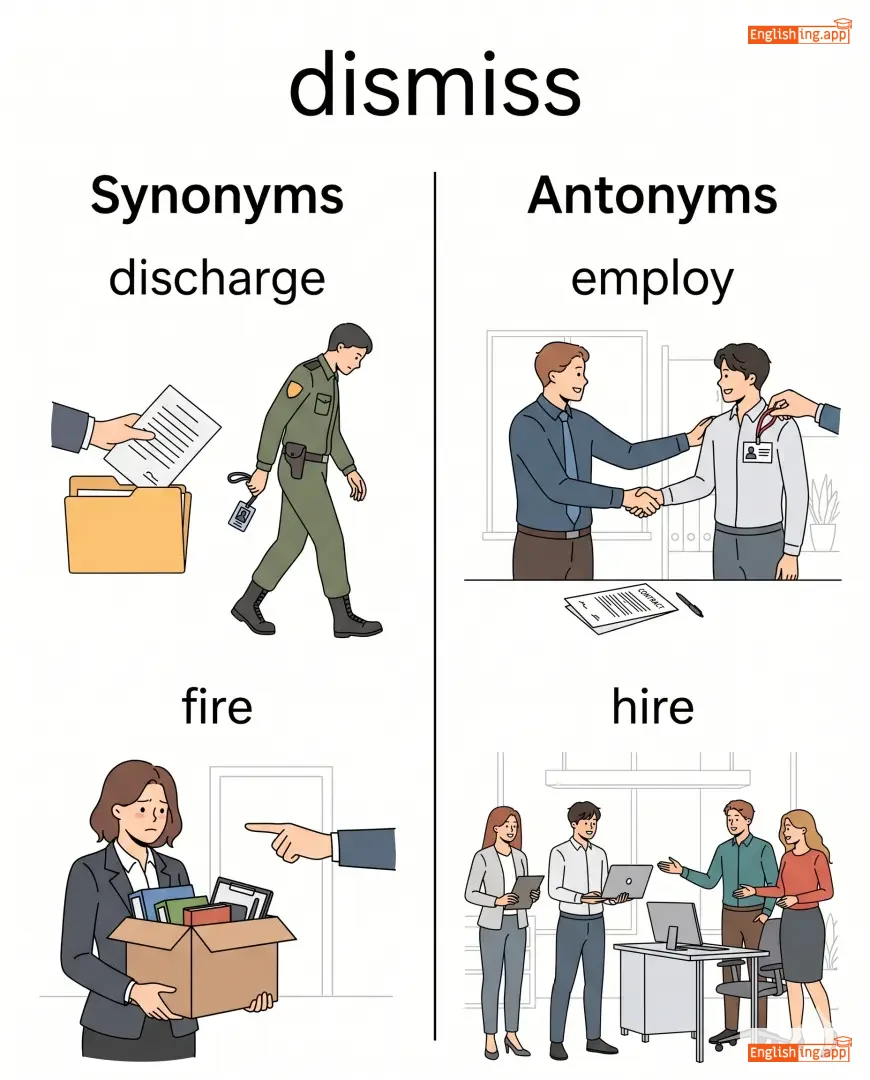
discharge, fire, release, reject, expel
••••••
|
employ, hire, accept
••••••
|
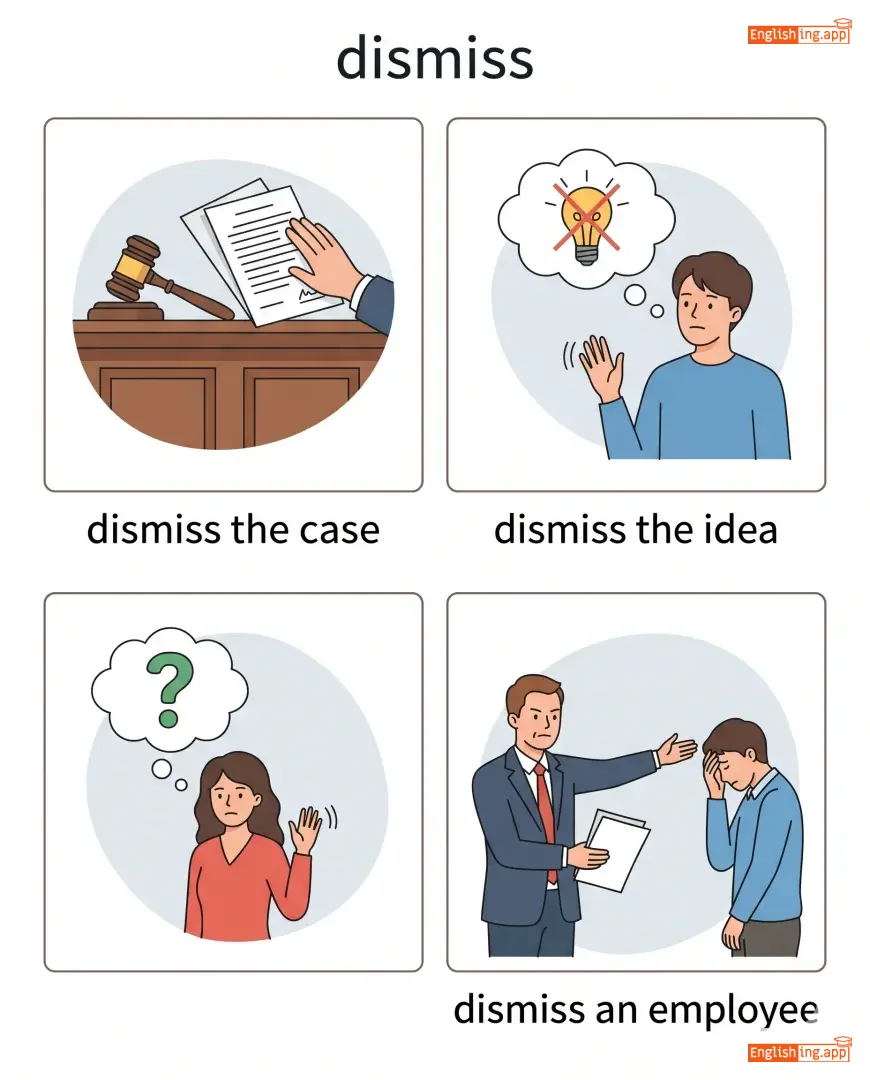
dismiss the case, dismiss the idea, dismiss an employee, dismiss charges
••••••
|
Dis + Miss = 解雇する
••••••
|
|
#1609
📄
|
/dɪsˈmɪsl̩/
noun
(ディスミッサル)
••••••
|
- •••••• |
解雇, 拒否
kaiko, kyohi
••••••
|
- •••••• | - •••••• | - •••••• | - •••••• |
the act of removing someone from their job; the act of treating something as unimportant
••••••
|
His unfair dismissal led to a lawsuit against the company. |
彼の不当な解雇は、会社に対する訴訟を引き起こしました。
Kare no futōna kaiko wa, kaisha ni taisuru soshō o hikiokoshimashita.
••••••
|
- •••••• | - •••••• | - •••••• |
termination, firing, discharge, expulsion, rejection
••••••
|
employment, acceptance, retention
••••••
|
wrongful dismissal, unfair dismissal, dismissal from work, dismissal of charges
••••••
|
Dismiss + AL = 解雇の結果 (解雇)
••••••
|
|
#1610
⚠️
|
/dɪsˈɔːrdər/
noun
(ディスオーダー)
••••••
|
- •••••• |
障害
shōgai
••••••
|
- •••••• | - •••••• | - •••••• | - •••••• |
A state of confusion or lack of order; also a medical or mental condition.
••••••
|
The protest ended in disorder when the crowd became violent. |
抗議は群衆が暴力的になったときに障害に終わった。
Kōgi wa gunshū ga bōryokuteki ni natta toki ni shōgai ni owatta.
••••••
|
eating disorder |
A medical condition involving abnormal eating habits.
••••••
|
摂食障害
sesshoku shōgai
••••••
|
confusion, chaos, disturbance, illness, ailment
••••••
|
order, organization, harmony
••••••
|
mental disorder, physical disorder, cause disorder, public disorder
••••••
|
Disorderは障害を意味します、覚えておいて - 順序がなければ、障害があるということです。
••••••
|
|
#1611
🏚️
|
/dɪsˈpleɪs/
verb
(ディスプレイス)
••••••
|
- •••••• |
追い出す
oidasu
••••••
|
displaced
ディスプレイスト
••••••
|
displaced
ディスプレイスト
••••••
|
displaces
ディスプレイセズ
••••••
|
displacing
ディスプレイシング
••••••
|
To force someone or something out of its usual place or position.
••••••
|
The flood displaced hundreds of families from their homes.
洪水は何百人もの家族を家から移動させました。
••••••
|
洪水は何百人もの家族を家から移動させました。
Kōzui wa nanbyakunin mo no kazoku o ie kara idō saserimashita.
••••••
|
displaced person
避難民
••••••
|
someone forced to leave their home, especially because of war or disaster
••••••
|
避難民
Hinannin
••••••
|
remove, replace, shift, expel, oust
••••••
|
retain, keep, maintain
••••••
|
displace workers, displace people, displace water, displace families
••••••
|
Displace は日本語で追い出す、家を追い出す意味です。
••••••
|
|
#1612
🖥️
|
/dɪˈspleɪ/
verb
(ディスプレイ)
••••••
|
- •••••• |
表示
hyouji
••••••
|
displayed
ディスプレイド
••••••
|
displayed
ディスプレイド
••••••
|
displays
ディスプレイズ
••••••
|
displaying
ディスプレイイング
••••••
|
To show or exhibit something to be seen.
••••••
|
The shop displayed its new products in the window.
その店は新しい製品をウィンドウにディスプレイしました。
••••••
|
その店は新しい製品をウィンドウにディスプレイしました。
Sono mise wa atarashī seihin o u~indō ni disupurei shimashita.
••••••
|
on display
展示中
••••••
|
Visible for people to see, usually in a public place.
••••••
|
展示中
tenjichū
••••••
|
show, exhibit, present, demonstrate, reveal
••••••
|
hide, conceal, cover
••••••
|
display information, display screen, proudly display, digital display
••••••
|
Displayは表示を意味します、店のウィンドウに新しい製品を表示するようなものです。
••••••
|
|
#1613
🗑️
|
/dɪsˈpoʊzl/
noun
(ディスポーザル)
••••••
|
- •••••• |
廃棄
haiki
••••••
|
- •••••• | - •••••• | - •••••• | - •••••• |
the action or process of getting rid of something
••••••
|
The disposal of waste is crucial for maintaining a clean environment.
廃棄物の処理は清潔な環境を維持するために重要です。
••••••
|
廃棄物の処理は清潔な環境を維持するために重要です。
Haikibutsu no shori wa seiketsu na kankyou wo iji suru tame ni juuyou desu.
••••••
|
- •••••• | - •••••• | - •••••• |
removal, elimination, clearance, junking
••••••
|
retention, preservation
••••••
|
waste disposal, disposal process, proper disposal, disposal site
••••••
|
When you DISPOSE (廃棄) of waste, you 'dispose' of it into the trash can (ゴミ箱).
••••••
|
|
#1614
🗑️
|
/dɪˈspoʊz/
verb
(ディスポーズ)
••••••
|
- •••••• |
処分する
shobun suru
••••••
|
disposed
ディスポーズド
••••••
|
disposed
ディスポーズド
••••••
|
disposes
ディスポーズズ
••••••
|
disposing
ディスポーズイング
••••••
|
To get rid of something, or to arrange or incline towards something.
••••••
|
He disposed of the old furniture responsibly.
彼は古い家具を責任を持って処分しました。
••••••
|
彼は古い家具を責任を持って処分しました。
Kare wa furui kagu o sekinin o motte shobun shimashita.
••••••
|
dispose of
処分する
••••••
|
to throw away or get rid of something
••••••
|
処分する
shobun suru
••••••
|
discard, throw away, eliminate, arrange, incline
••••••
|
keep, retain, preserve
••••••
|
dispose of waste, properly dispose, dispose quickly, dispose carefully
••••••
|
Dispose = 何かを処分する、無駄なものを捨てるように。
••••••
|
|
#1615
⚔️
|
/dɪˈspjuːt/
noun/verb
(ディスピュート)
••••••
|
- •••••• |
争い, 論争
arasoi, ronsou
••••••
|
disputed
ディスピューテッド
••••••
|
disputed
ディスピューテッド
••••••
|
disputes
ディスピューツ
••••••
|
disputing
ディスピューティング
••••••
|
a disagreement or argument about something important
••••••
|
The two countries are in dispute over the border issue.
二国間で国境問題について争いが続いています。
••••••
|
二国間で国境問題について争いが続いています。
Nikokukan de kokkyou mondai ni tsuite arasoi ga tsuzuiteimasu.
••••••
|
settle a dispute
争いを解決する
••••••
|
to resolve a disagreement
••••••
|
争いを解決する
arasoi o kaiketsu suru
••••••
|
conflict, quarrel, argument, debate, disagreement
••••••
|
agreement, harmony, peace
••••••
|
trade dispute, legal dispute, border dispute, dispute resolution
••••••
|
Disputeは 'dis' + 'put' → 一緒にいない → 争いや論争の意味
••••••
|
|
#1616
💥
|
/dɪsˈrʌpt/
verb
(ディスラプト)
••••••
|
|
混乱させる
konran saseru
••••••
|
disrupted
ディスラプテッド
••••••
|
disrupted
ディスラプテッド
••••••
|
disrupts
ディスラプトス
••••••
|
disrupting
ディスラプティング
••••••
|
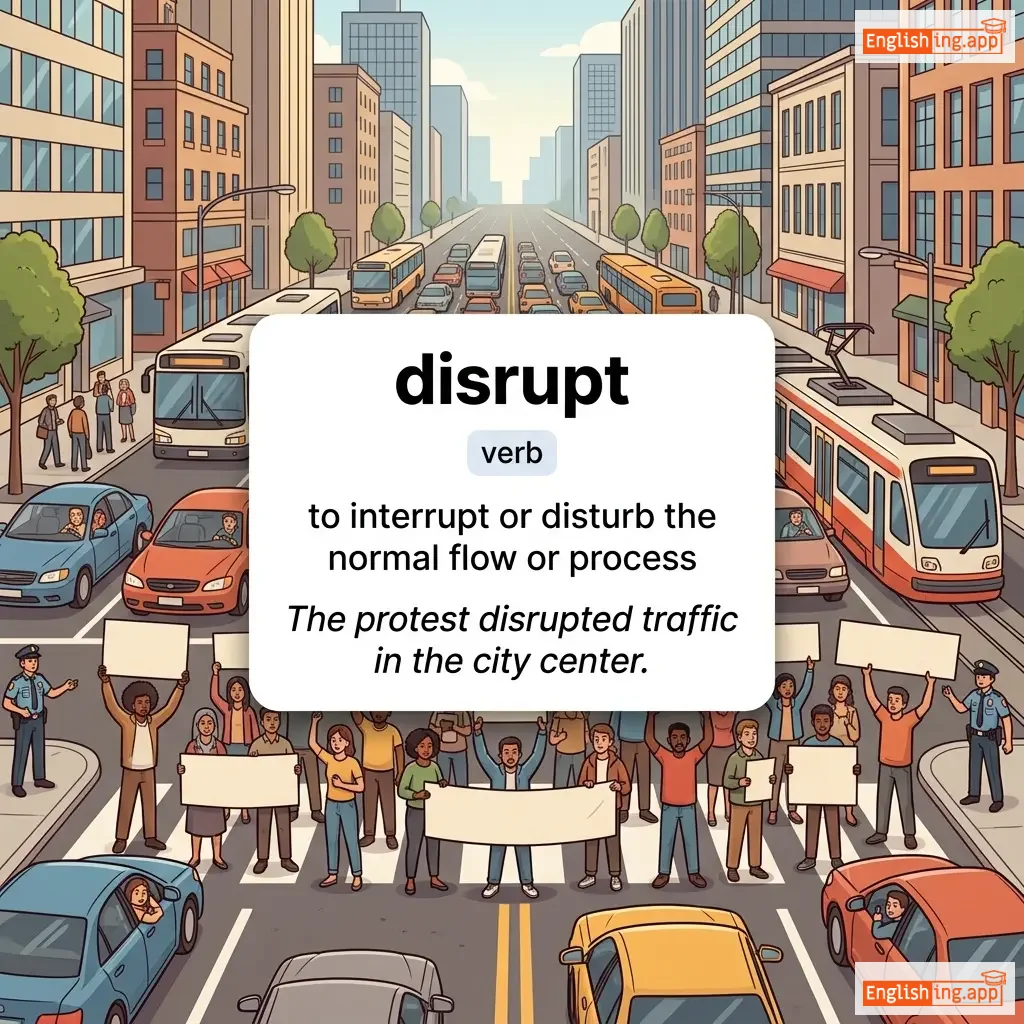
to interrupt or disturb the normal flow or process
••••••
|
The protest disrupted traffic in the city center.
抗議活動は市内中心部の交通を混乱させました。
••••••
|
抗議活動は市内中心部の交通を混乱させました。
Kōgi katsudō wa shinai chūshinbu no kōtsū o konran sasemashita.
••••••
|
disrupt the status quo
現状を打破する
••••••
|
to change the established way of doing things
••••••
|
現状を打破する
genjō o dasha suru
••••••
|
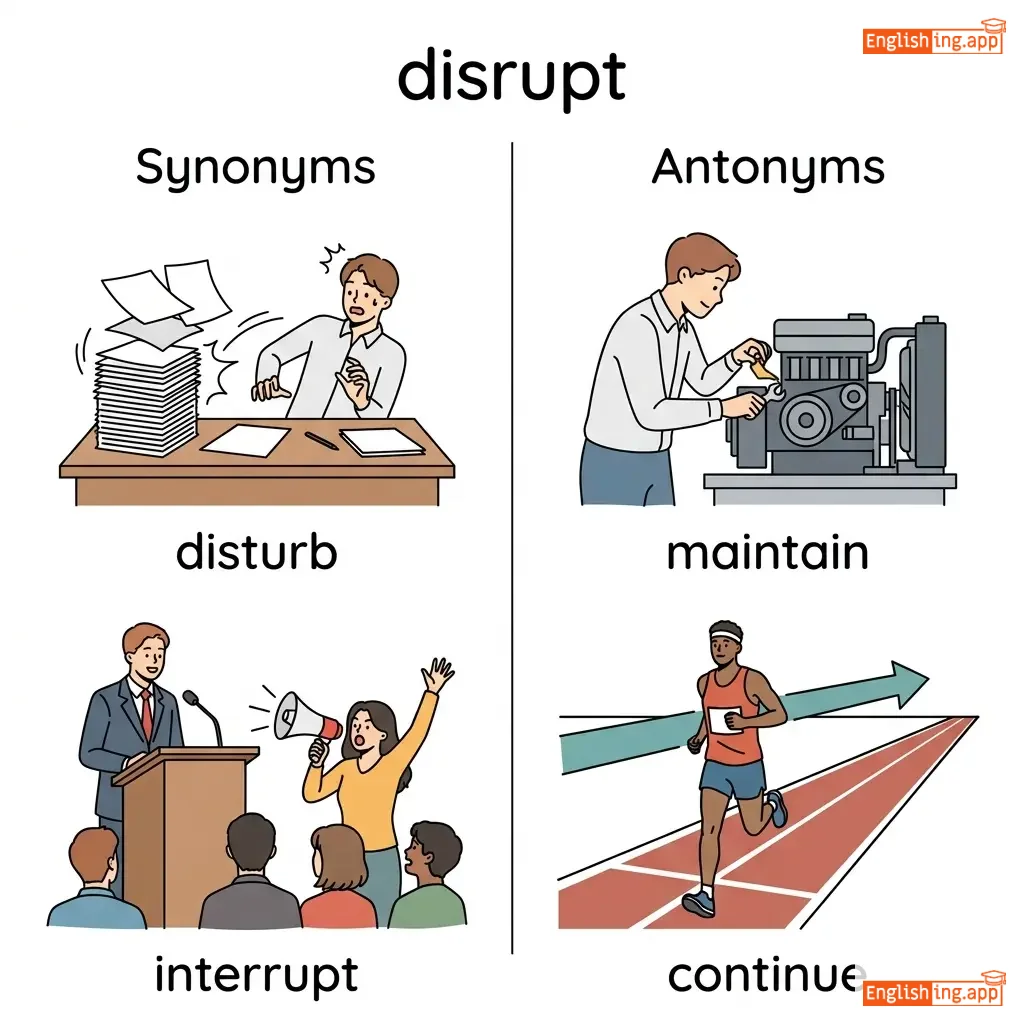
disturb, interrupt, interfere, derail, unsettle
••••••
|
maintain, continue, sustain
••••••
|
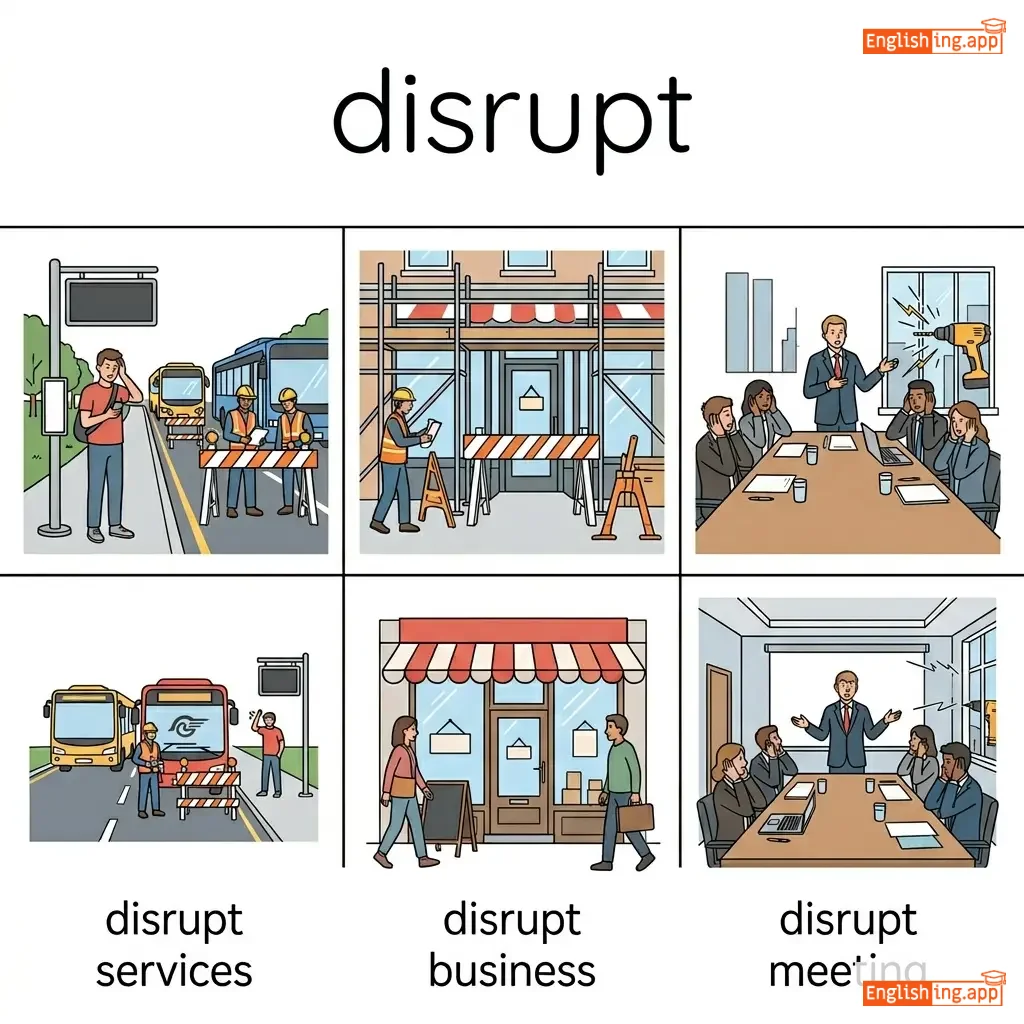
disrupt services, disrupt business, disrupt meeting
••••••
|
Disrupt = 混乱させる、抗議活動が交通を混乱させるように。
••••••
|
|
#1617
⚠️
|
/dɪsˈrʌpʃən/
noun
(ディスラプション)
••••••
|
|
混乱
konran
••••••
|
- •••••• | - •••••• | - •••••• | - •••••• |
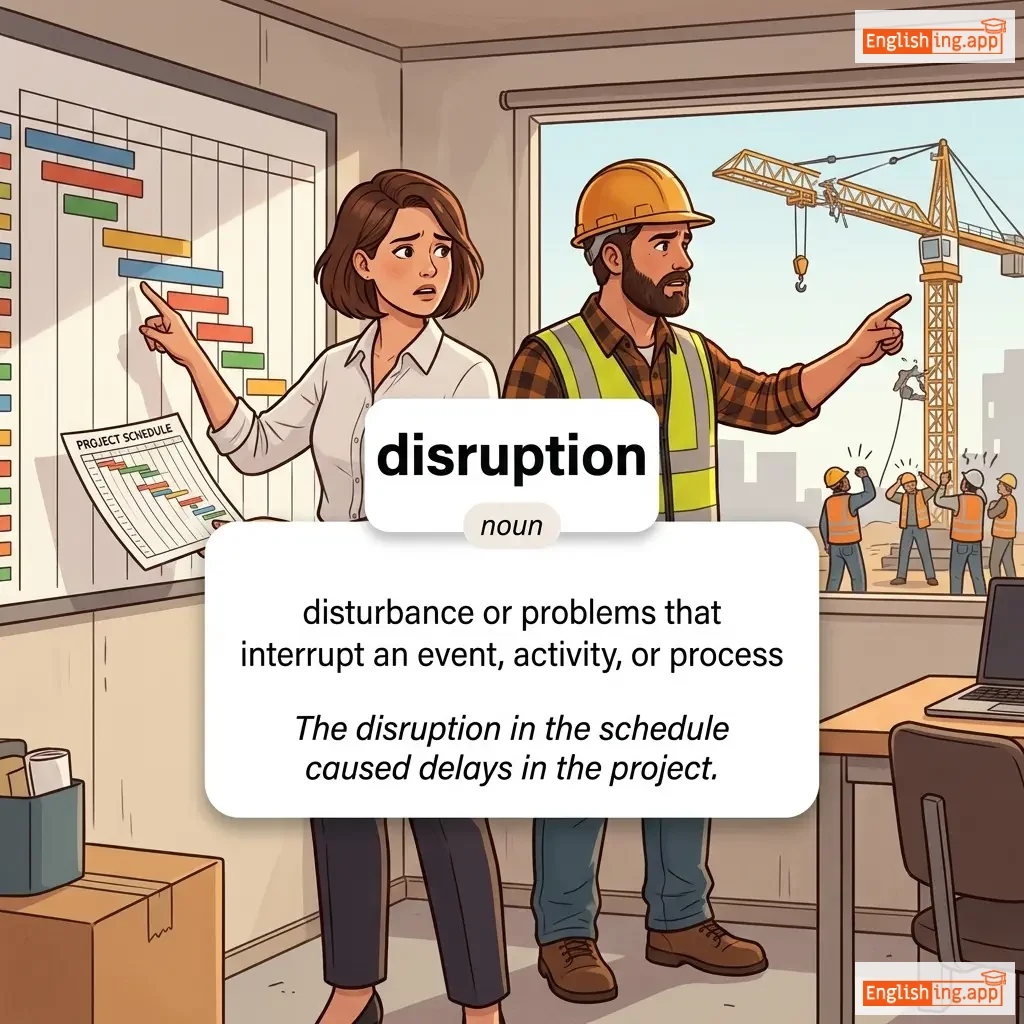
disturbance or problems that interrupt an event, activity, or process
••••••
|
The disruption in the schedule caused delays in the project. |
スケジュールの混乱により、プロジェクトに遅れが生じました。
Sukejūru no konran ni yori, purojekuto ni okure ga shōjimashita.
••••••
|
- •••••• | - •••••• | - •••••• |
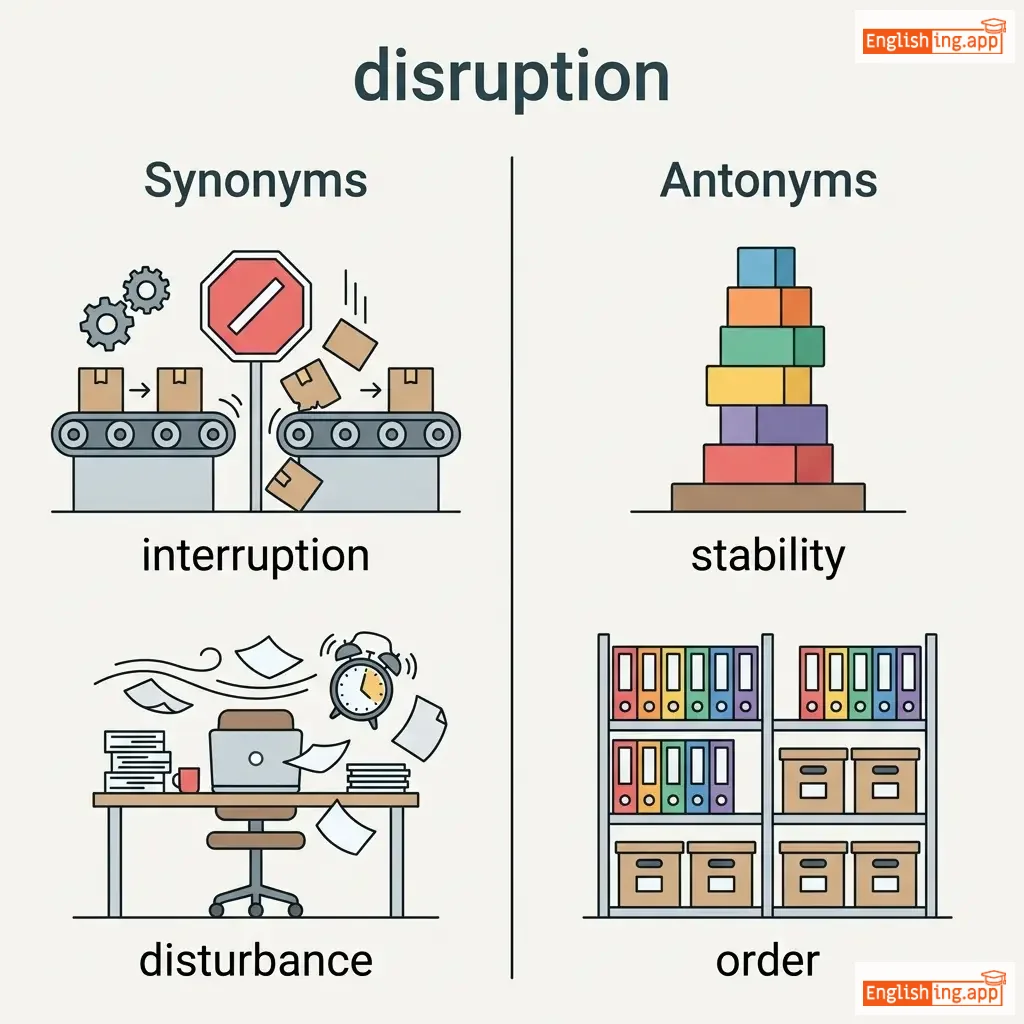
interruption, disturbance, interruption, chaos
••••••
|
stability, order, continuity
••••••
|
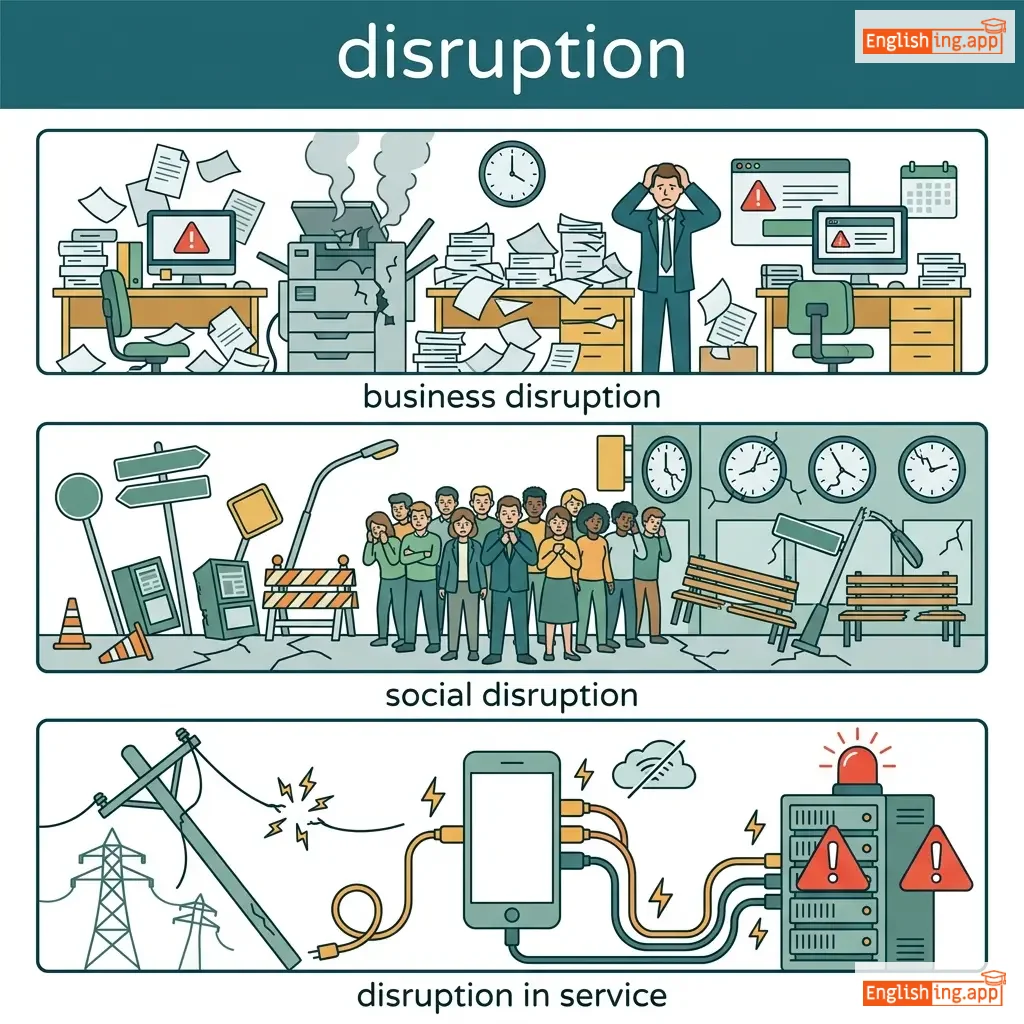
business disruption, social disruption, disruption in service, major disruption
••••••
|
混乱 (混乱) は計画の中で予期しない嵐のように、静けさを破るものです。
••••••
|
|
#1618
🫗
|
/dɪˈzɒlv/
verb
••••••
|
- •••••• | - •••••• |
dissolved
••••••
|
dissolved
••••••
|
dissolves
••••••
|
dissolving
••••••
|
to melt or become liquid; to officially end or break up an agreement or organization
••••••
|
The sugar will dissolve quickly in hot tea. |
- •••••• |
dissolve into tears |
to suddenly start crying uncontrollably
••••••
|
- •••••• |
melt, liquefy, disband, terminate, vanish
••••••
|
solidify, unite, establish
••••••
|
dissolve sugar, dissolve parliament, dissolve the marriage
••••••
|
No •••••• |
|
#1619
📏
|
/ˈdɪstəns/
noun
(ディスタンス)
••••••
|
- •••••• |
距離
kyori
••••••
|
- •••••• | - •••••• | - •••••• | - •••••• |
The amount of space between two points or places.
••••••
|
The distance between Dhaka and Chittagong is about 250 kilometers. |
ダッカとチッタゴンの間の距離は約250キロメートルです。
Dakka to Chittagon no aida no kyori wa yaku 250 kiromētoru desu.
••••••
|
keep your distance |
To stay away or avoid close contact.
••••••
|
距離を保つ
Kyori wo tamotsu
••••••
|
gap, space, length, interval, remoteness
••••••
|
closeness, nearness
••••••
|
long distance, travel distance, distance learning, safe distance
••••••
|
Distanceは距離、距離を保つことで安全が守られる!
••••••
|
|
#1620
🌄
|
/ˈdɪstənt/
adjective
(ディスタント)
••••••
|
- •••••• |
遠い
tooi
••••••
|
- •••••• | - •••••• | - •••••• | - •••••• |
far away in space or time
••••••
|
They could see the distant mountains from their home. |
彼らは家から遠くの山々を見ることができた。
Karera wa ie kara tooku no yamayama o miru koto ga dekita.
••••••
|
distant relative |
a relative who is not closely related
••••••
|
遠い親戚
tooi shinseki
••••••
|
far, remote, faraway, detached, aloof
••••••
|
near, close, friendly
••••••
|
distant land, distant memory, distant future, distant relative
••••••
|
Distant は distance と似ている—距離があるところに、distant がある。
••••••
|
|
#1621
✨
|
/dɪˈstɪŋkt/
adjective
(ディスティンクト)
••••••
|
- •••••• |
異なる
kotonaru
••••••
|
- •••••• | - •••••• | - •••••• | - •••••• |
clearly different or separate from others of its kind
••••••
|
The twins have distinct personalities. |
双子は異なる個性を持っています。
Futago wa kotonaru kosei o motteimasu.
••••••
|
distinct possibility |
something that is clearly a real chance of happening
••••••
|
明確な可能性
meikaku na kanousei
••••••
|
clear, separate, definite, unique, noticeable
••••••
|
indistinct, vague, unclear
••••••
|
distinct possibility, distinct feature, distinct voice, distinct style
••••••
|
Distinctは異なる意味、例えば異なる個性、個別性です。
••••••
|
|
#1622
🏅
|
/dɪˈstɪŋkʃən/
noun
••••••
|
- •••••• | - •••••• | - •••••• | - •••••• | - •••••• | - •••••• |
a difference or contrast between similar things or people; excellence that sets someone apart
••••••
|
She graduated with distinction from the university. |
- •••••• |
make a distinction |
to draw a clear difference between things
••••••
|
- •••••• |
difference, contrast, excellence, honor, separation
••••••
|
similarity, sameness, mediocrity
••••••
|
with distinction, fine distinction, make a distinction, subtle distinction
••••••
|
No •••••• |
|
#1623
🎨
|
/dɪˈstɪŋktɪv/
adjective
(ディスティンクティブ)
••••••
|
- •••••• |
特徴的
tokuchōteki
••••••
|
- •••••• | - •••••• | - •••••• | - •••••• |
having a quality or characteristic that makes something different and easily noticed
••••••
|
The restaurant is known for its distinctive flavors.
そのレストランは独特の風味で知られています。
••••••
|
そのレストランは独特の風味で知られています。
Sono resutoran wa dokutoku no fūmi de shirareteimasu.
••••••
|
- •••••• | - •••••• | - •••••• |
unique, characteristic, special, individual, memorable
••••••
|
common, ordinary, typical
••••••
|
distinctive feature, distinctive style, distinctive look, distinctive character
••••••
|
特徴的はユニークを意味します、忘れられない味のように。
••••••
|
|
#1624
🔍
|
/dɪˈstɪŋɡwɪʃ/
verb
(ディスティングウィッシュ)
••••••
|
- •••••• |
区別する
kubetsu suru
••••••
|
distinguished
ディスティングウィッシュド
••••••
|
distinguished
ディスティングウィッシュド
••••••
|
distinguishes
ディスティングウィッシュズ
••••••
|
distinguishing
ディスティングウィッシング
••••••
|
to recognize or show the differences between two or more things; to set apart as different
••••••
|
It can be difficult to distinguish between truth and rumor.
真実と噂を区別するのは難しいかもしれません。
••••••
|
真実と噂を区別するのは難しいかもしれません。
Shinjitsu to uwasa o kubetsu suru no wa muzukashī kamoshiremasen.
••••••
|
distinguish oneself
自分を際立たせる
••••••
|
to do something that makes one notable or worthy of recognition
••••••
|
自分を際立たせる
Jibun o kiwadatase ru
••••••
|
differentiate, discern, identify, separate, recognize
••••••
|
confuse, mix, combine
••••••
|
distinguish between, distinguish clearly, distinguish features, distinguish easily
••••••
|
Distinguish = 区別する
••••••
|
|
#1625
🔄
|
/dɪˈstɔːrt/
verb
••••••
|
- •••••• | - •••••• |
distorted
••••••
|
distorted
••••••
|
distorts
••••••
|
distorting
••••••
|
to twist or change the shape, appearance, or meaning of something so it is not true or accurate
••••••
|
The mirror distorted her reflection. |
- •••••• |
distort the truth |
to misrepresent or alter facts dishonestly
••••••
|
- •••••• |
twist, deform, misrepresent, warp, bend
••••••
|
straighten, clarify, preserve
••••••
|
distort reality, distort facts, distort image, distort sound
••••••
|
No •••••• |
|
#1626
🙃
|
/dɪˈstrækt/
verb
(ディストラクト)
••••••
|
- •••••• |
気を散らす
ki wo chirasu
••••••
|
distracted
ディストラクトされた
••••••
|
distracted
ディストラクトされた
••••••
|
distracts
ディストラクトする
••••••
|
distracting
ディストラクトしている
••••••
|
to take someone's attention away from what they are doing or focusing on
••••••
|
The loud noise distracted her during the exam.
大きな音が試験中に彼女をディストラクトした。
••••••
|
大きな音が試験中に彼女をディストラクトした。
Ōkina oto ga shiken-chū ni kanojo wo disutrakuto shita
••••••
|
easily distracted
簡単にディストラクトされる
••••••
|
to lose focus quickly due to small interruptions
••••••
|
簡単に気を散らす
kantan ni ki wo chirasu
••••••
|
divert, sidetrack, disturb, interrupt, absorb
••••••
|
focus, concentrate, attend
••••••
|
distract attention, distract someone, distract from, distract easily
••••••
|
気を散らすことは、注意を他の方向に向けることです。
••••••
|
|
#1627
😞
|
/dɪsˈtrɛs/
noun
(ディストレス)
••••••
|
- •••••• |
苦痛
kutsū
••••••
|
- •••••• | - •••••• | - •••••• | - •••••• |
extreme anxiety, sorrow, or pain
••••••
|
He felt a deep sense of distress when he heard the bad news. |
悪い知らせを聞いたとき、彼は深い苦痛を感じました。
Warui shirase o kiita toki, kare wa fukai kutsū o kanjimashita.
••••••
|
- •••••• | - •••••• | - •••••• |
misery, anguish, pain, sorrow
••••••
|
comfort, ease, happiness
••••••
|
emotional distress, financial distress, physical distress, mental distress
••••••
|
In distress (苦痛), you feel overwhelming pain that grips your heart and mind.
••••••
|
|
#1628
📦
|
/dɪˈstrɪbjuːt/
verb
(ディストリビューション)
••••••
|
|
分配する
bunpai suru
••••••
|
distributed
ディストリビューション
••••••
|
distributed
ディストリビューション
••••••
|
distributes
ディストリビューション
••••••
|
distributing
ディストリビューション
••••••
|
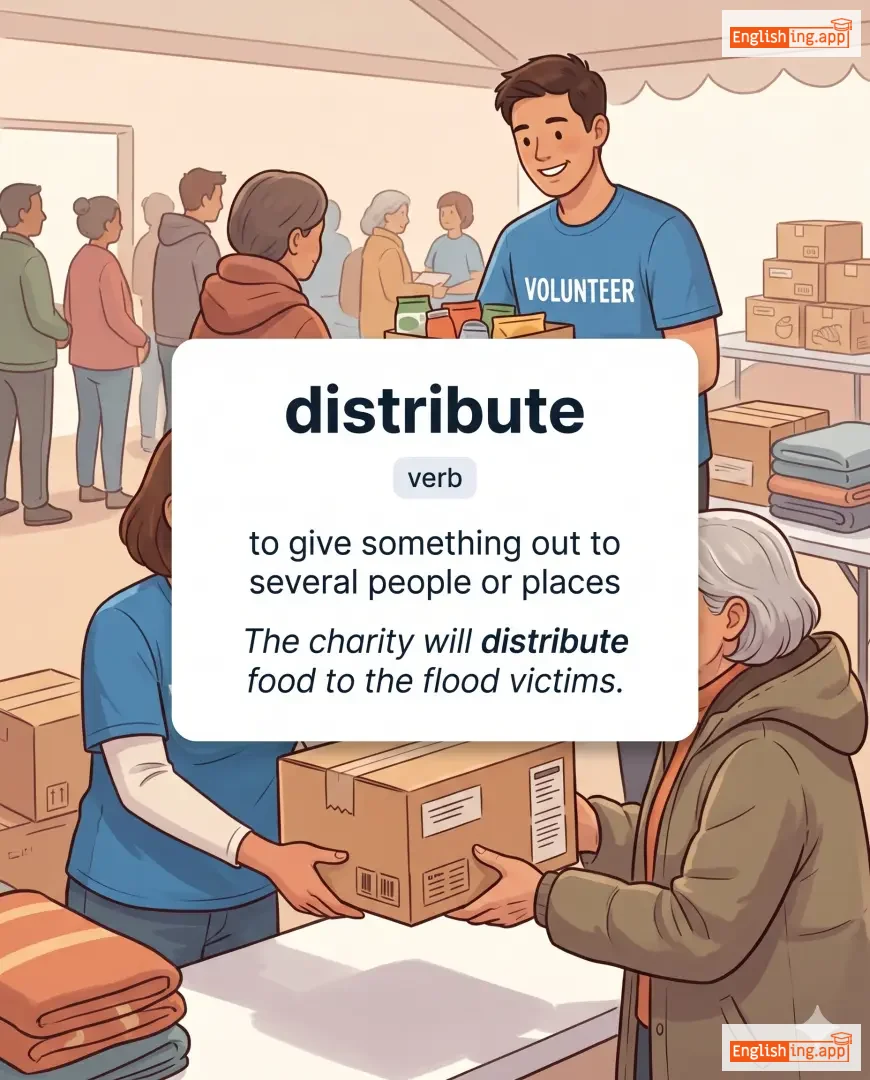
to give something out to several people or places
••••••
|
The charity will distribute food to the flood victims.
チャリティは洪水被害者に食料を分配します。
••••••
|
チャリティは洪水被害者に食料を分配します。
Charity wa kōzui higai-sha ni shokuryō o bunpai shimasu.
••••••
|
fairly distribute
公平に分配する
••••••
|
to share something equally
••••••
|
公平に分配する
kōhei ni bunpai suru
••••••
|
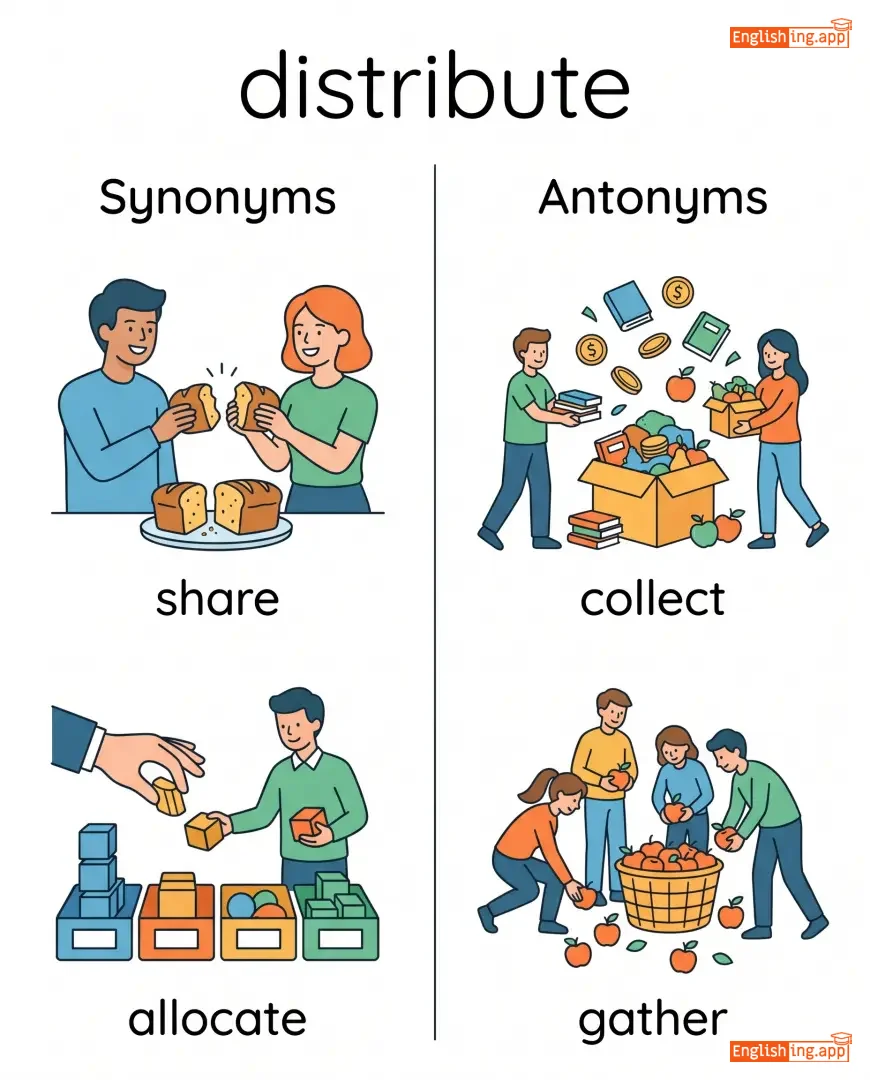
share, allocate, deliver, spread, hand out
••••••
|
collect, gather, withhold
••••••
|
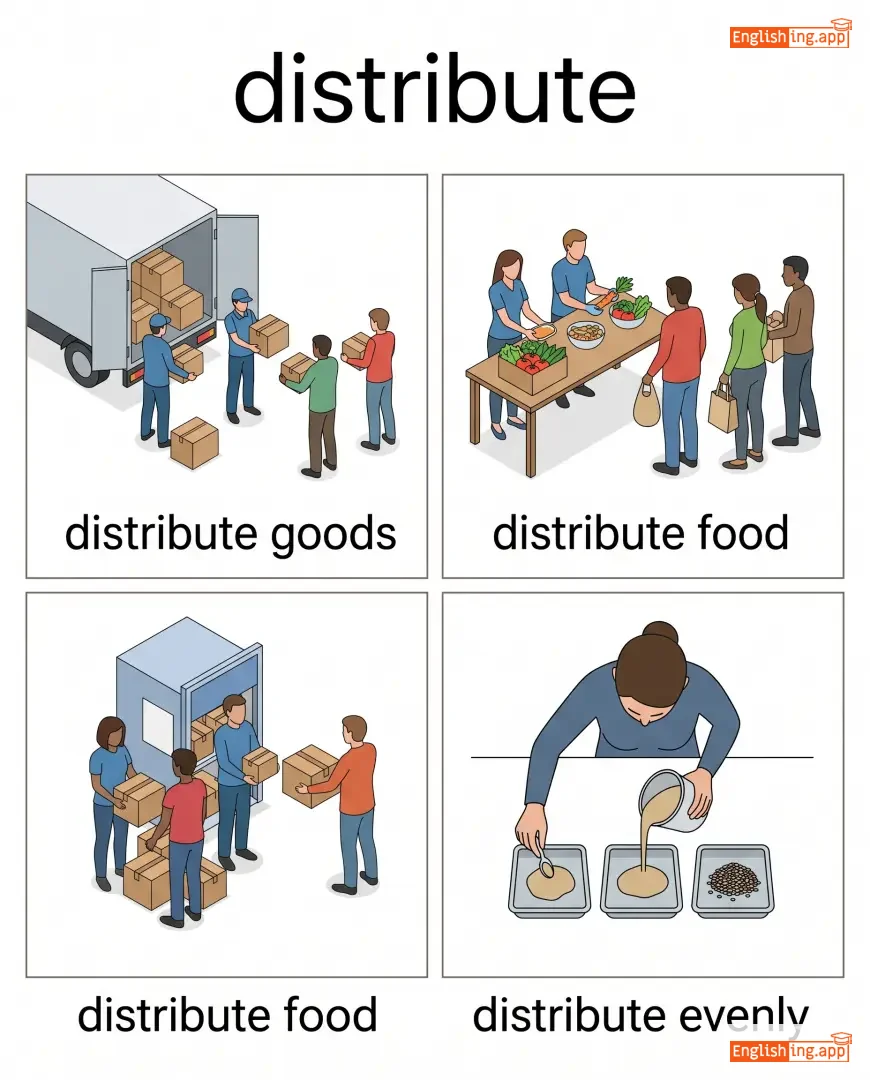
distribute goods, distribute food, distribute evenly, distribute wealth
••••••
|
Distribute は地区ごとに配ること
••••••
|
|
#1629
📦
|
/ˌdɪstrɪˈbjuːʃən/
noun
(ディストリビューション)
••••••
|
- •••••• |
配布
haibu
••••••
|
- •••••• | - •••••• | - •••••• | - •••••• |
the act of sharing or delivering something to multiple people or places
••••••
|
The company manages the distribution of food supplies to rural areas. |
その会社は農村地域への食品供給の配布を管理しています。
Sono kaisha wa nōson chiiki e no shokuhin kyōkyū no haibu o kanri shiteimasu.
••••••
|
- •••••• | - •••••• | - •••••• |
delivery, allocation, supply, circulation
••••••
|
collection, concentration
••••••
|
distribution system, distribution network, distribution channel, fair distribution
••••••
|
Distribution は分けるという意味で、日本語では ‘配布’ です。
••••••
|
|
#1630
🗺️
|
/ˈdɪstrɪkt/
noun
(ディストリクト)
••••••
|
- •••••• |
地区
chiku
••••••
|
- •••••• | - •••••• | - •••••• | - •••••• |
a specific area of a country, city, or town, often with official boundaries
••••••
|
She lives in the northern district of the city. |
彼女は街の北地区に住んでいます。
Kanojo wa machi no kita chiku ni sundeimasu.
••••••
|
- •••••• | - •••••• | - •••••• |
region, area, zone, territory
••••••
|
whole, entirety
••••••
|
school district, business district, residential district, rural district
••••••
|
‘地区’は行政区域を示すための言葉です。
••••••
|
|
#1631
🚫
|
/dɪsˈtɜːb/
verb
(ディスターブ)
••••••
|
- •••••• |
邪魔する
jama suru
••••••
|
disturbed
ディスターブド
••••••
|
disturbed
ディスターブド
••••••
|
disturbs
ディスターブス
••••••
|
disturbing
ディスタービング
••••••
|
to interrupt or cause someone to stop what they are doing
••••••
|
Please don’t disturb me while I’m studying.
勉強している間に私を邪魔しないでください。
••••••
|
勉強している間に私を邪魔しないでください。
Benkyō shite iru aida ni watashi o jama shinai de kudasai.
••••••
|
do not disturb
邪魔しないで
••••••
|
used to tell people not to interrupt or bother someone
••••••
|
邪魔しないで
jama shinai de
••••••
|
interrupt, bother, annoy, upset, distract
••••••
|
calm, soothe, comfort
••••••
|
disturb peace, disturb sleep, disturb someone, disturb balance
••••••
|
'Do Not Disturb' は日本語で「邪魔しないで」— 勉強に集中!🚫
••••••
|
|
#1632
😨
|
/dɪˈstɜː.bɪŋ/
adjective
(dɪsˈtɜːrbɪŋ)
••••••
|
- •••••• |
気になる
ki ni naru
••••••
|
- •••••• | - •••••• | - •••••• | - •••••• |
causing anxiety, worry, or emotional distress
••••••
|
The news about the accident was deeply disturbing.
事故のニュースは非常に気分を害するものでした。
••••••
|
事故のニュースは非常に気分を害するものでした。
Jiko no nyūsu wa hijō ni kibun o gaisuru mono deshita.
••••••
|
disturbing the peace
平和を乱す
••••••
|
to make noise or cause trouble in a quiet public place
••••••
|
平和を乱す
Heiwa o midasu
••••••
|
upsetting, alarming, distressing, troubling, shocking
••••••
|
comforting, calming, soothing
••••••
|
deeply disturbing, disturbing image, disturbing trend, disturbing news
••••••
|
Disturbing は気になること — 気になることはあなたの心を揺さぶります!
••••••
|
|
#1633
🤿
|
/daɪv/
verb
(daibu)
••••••
|
- •••••• |
飛び込む
tobikomu
••••••
|
dove
dōvu
••••••
|
dived
daibudo
••••••
|
dives
daibusu
••••••
|
diving
daibingu
••••••
|
to plunge headfirst into water or another substance
••••••
|
He decided to dive into the pool on a hot day.
彼は暑い日にプールにダイブすることに決めました。
••••••
|
彼は暑い日にプールにダイブすることに決めました。
Kare wa atsui hi ni pūru ni daibu suru koto ni kimemashita.
••••••
|
- •••••• | - •••••• | - •••••• |
plunge, jump, leap, submerge
••••••
|
float, rise
••••••
|
dive into, dive down, deep dive, dive off
••••••
|
飛び込む (tobikomu) into a new challenge, like diving into a pool.
••••••
|
|
#1634
🦆
|
/ˈdaɪ.vər/
noun
(ダイバー)
••••••
|
- •••••• |
ダイバー
daibā
••••••
|
- •••••• | - •••••• | - •••••• | - •••••• |
a type of water bird that dives underwater to catch fish
••••••
|
The diver disappeared beneath the surface to catch a fish. |
ダイバーは魚を捕まえるために水面下に消えました。
Daibā wa sakana o tsukamaeru tame ni suimen ka ni kiemashita.
••••••
|
- •••••• | - •••••• | - •••••• |
loon, grebe, diving duck
••••••
|
- •••••• |
great northern diver, red-throated diver, diving bird, water diver
••••••
|
ダイバー (daibā) は水中で魚を捕まえます。
••••••
|
|
#1635
🌎
|
/daɪˈvɜːrs/
adjective
(ダイバーズ)
••••••
|
|
多様な
tayou na
••••••
|
- •••••• | - •••••• | - •••••• | - •••••• |
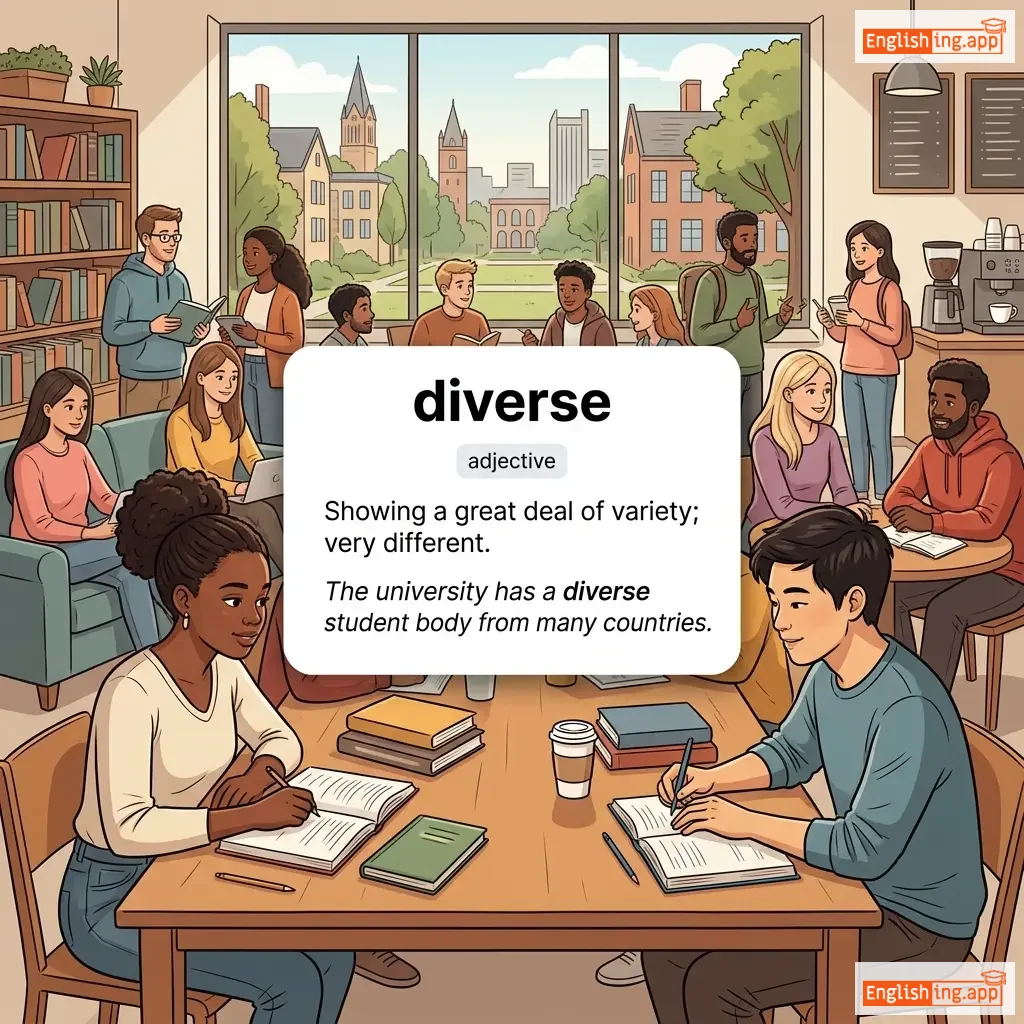
Showing a great deal of variety; very different.
••••••
|
The university has a diverse student body from many countries.
その大学には、多くの国からの多様な学生がいます。
••••••
|
その大学には、多くの国からの多様な学生がいます。
Sono daigaku ni wa, ōku no kuni kara no tayō na gakusei ga imasu.
••••••
|
diverse backgrounds
多様なバックグラウンド
••••••
|
Different cultural, social, or personal experiences.
••••••
|
多様なバックグラウンド
tayō na bakkuraundo
••••••
|
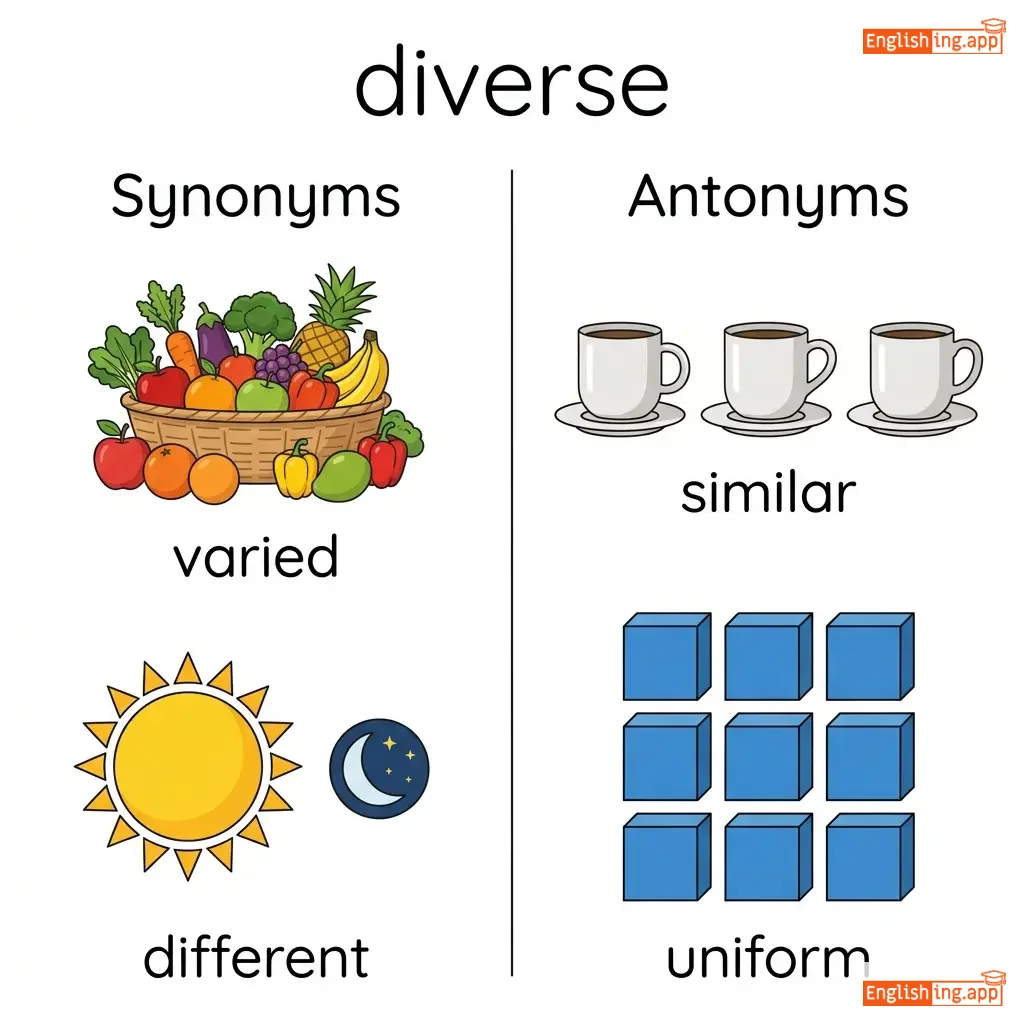
varied, different, assorted, mixed, heterogeneous
••••••
|
similar, uniform, identical
••••••
|
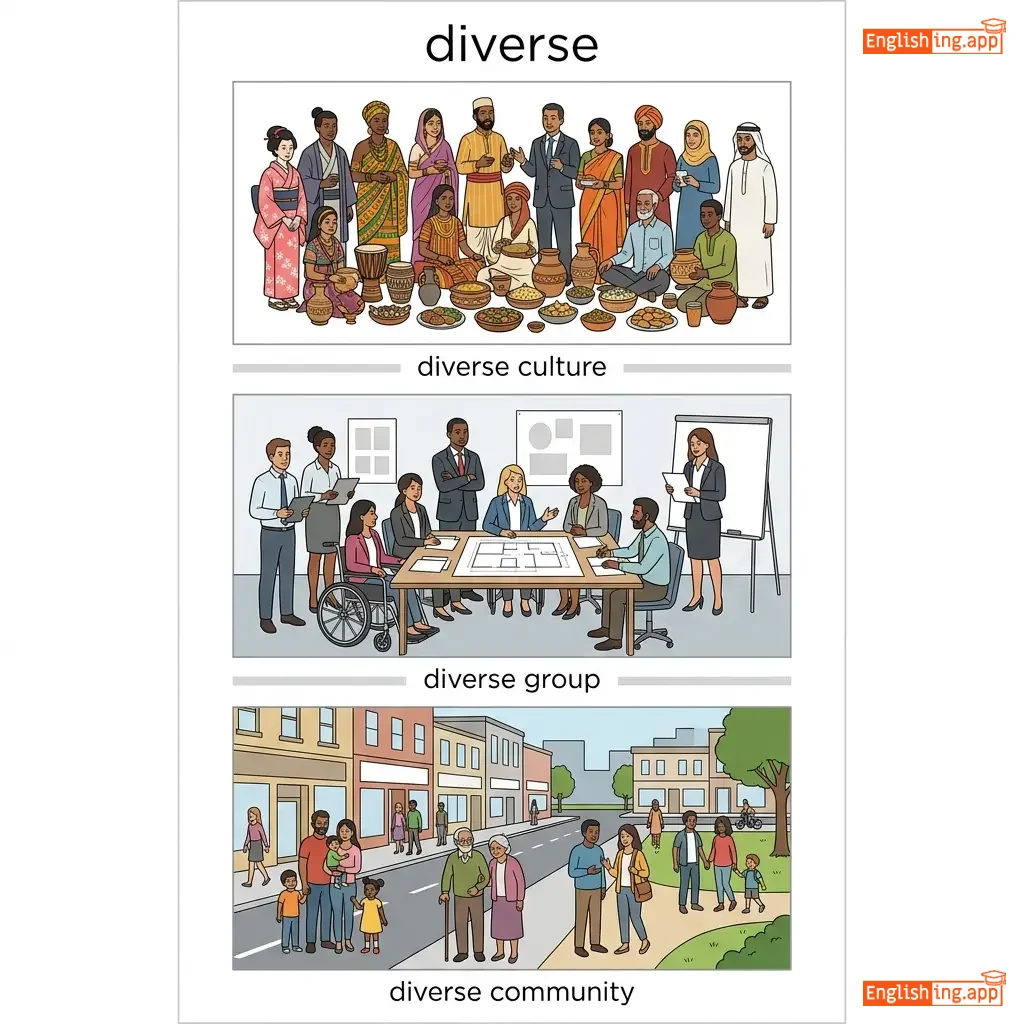
diverse culture, diverse group, diverse community, diverse interests
••••••
|
多様なは多くの異なるものが含まれていることを示しています。
••••••
|
|
#1636
🌈
|
/daɪˈvɜːrsəti/
noun
(ダイバーシティ)
••••••
|
|
多様性
tayōsei
••••••
|
- •••••• | - •••••• | - •••••• | - •••••• |
A range of different things or people; variety.
••••••
|
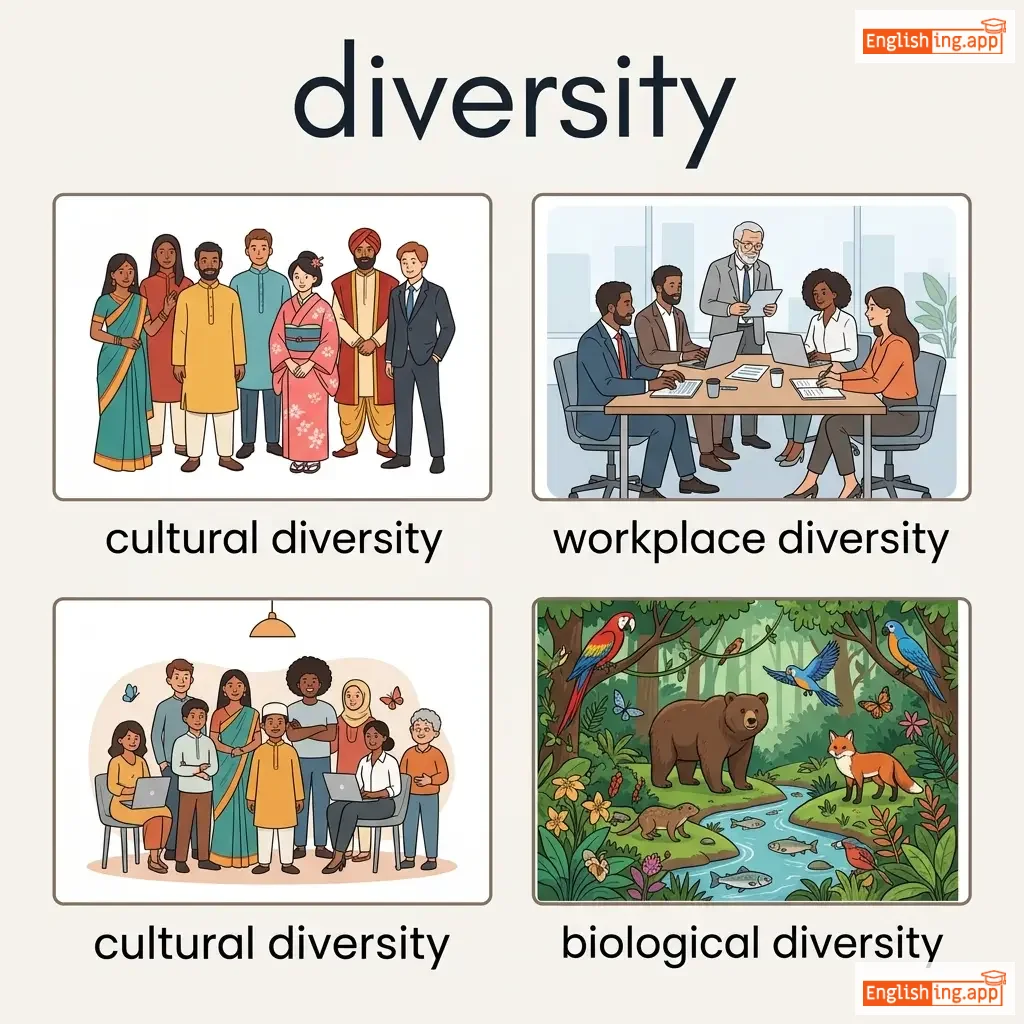
Workplace diversity helps foster innovation and creativity. |
職場での多様性は、革新と創造性を促進します。
Shokuba de no tayōsei wa, kakushin to sōzōsei o sokushin shimasu.
••••••
|
cultural diversity |
The existence of different cultural groups within a society.
••••••
|
文化的多様性
bunkateki tayōsei
••••••
|
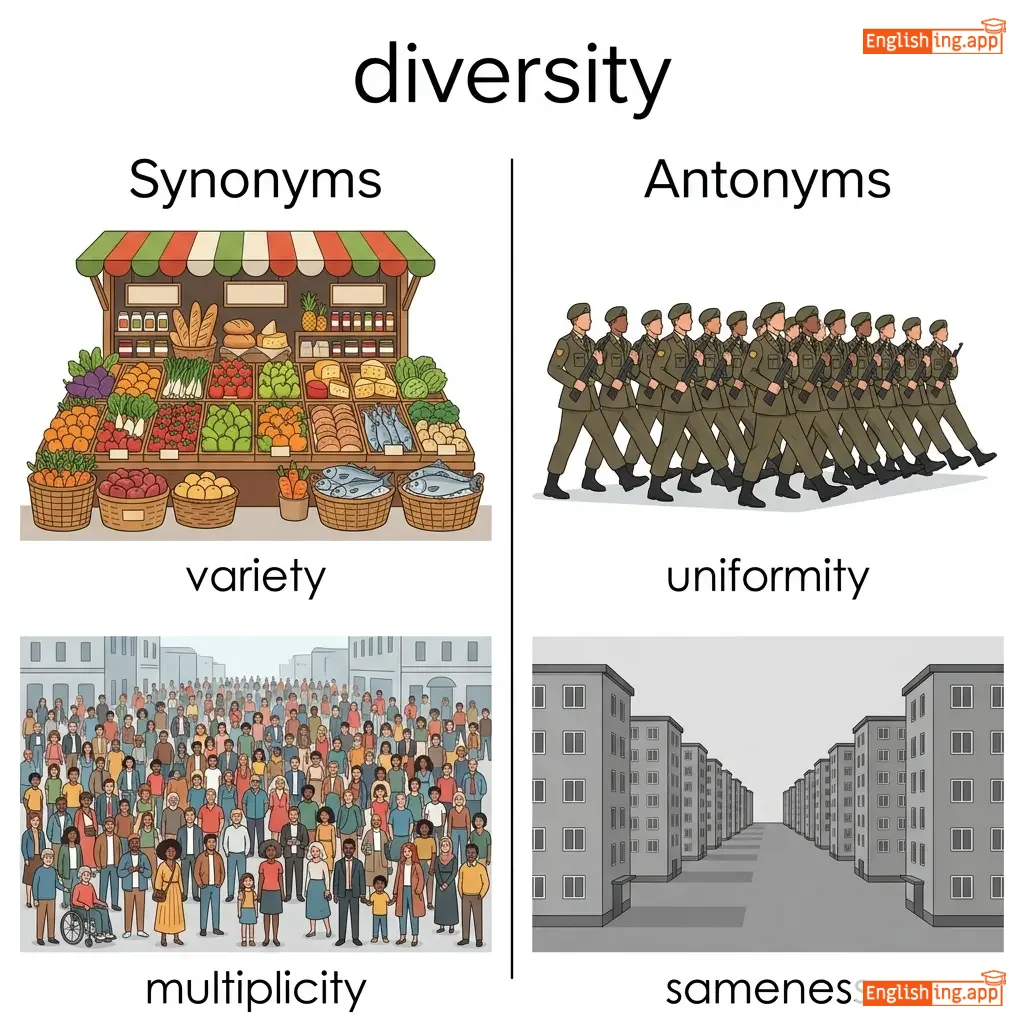
variety, multiplicity, heterogeneity, assortment, difference
••••••
|
uniformity, sameness, similarity
••••••
|
cultural diversity, workplace diversity, biological diversity, embrace diversity
••••••
|
Diversity は「Different Variety City」– 多様性がある街。
••••••
|
|
#1637
↪️
|
/daɪˈvɜːrt/
verb
••••••
|
- •••••• | - •••••• |
diverted
••••••
|
diverted
••••••
|
diverts
••••••
|
diverting
••••••
|
to turn aside from a course; to redirect or entertain
••••••
|
The police diverted traffic to a side road. |
- •••••• |
divert one's attention |
to shift focus away from something
••••••
|
- •••••• |
redirect, reroute, deflect, distract, amuse
••••••
|
focus, concentrate, direct
••••••
|
divert traffic, divert funds, divert attention, divert resources
••••••
|
No •••••• |
|
#1638
➗
|
/dɪˈvaɪd/
verb
••••••
|
|
- •••••• |
divided
••••••
|
divided
••••••
|
divides
••••••
|
dividing
••••••
|
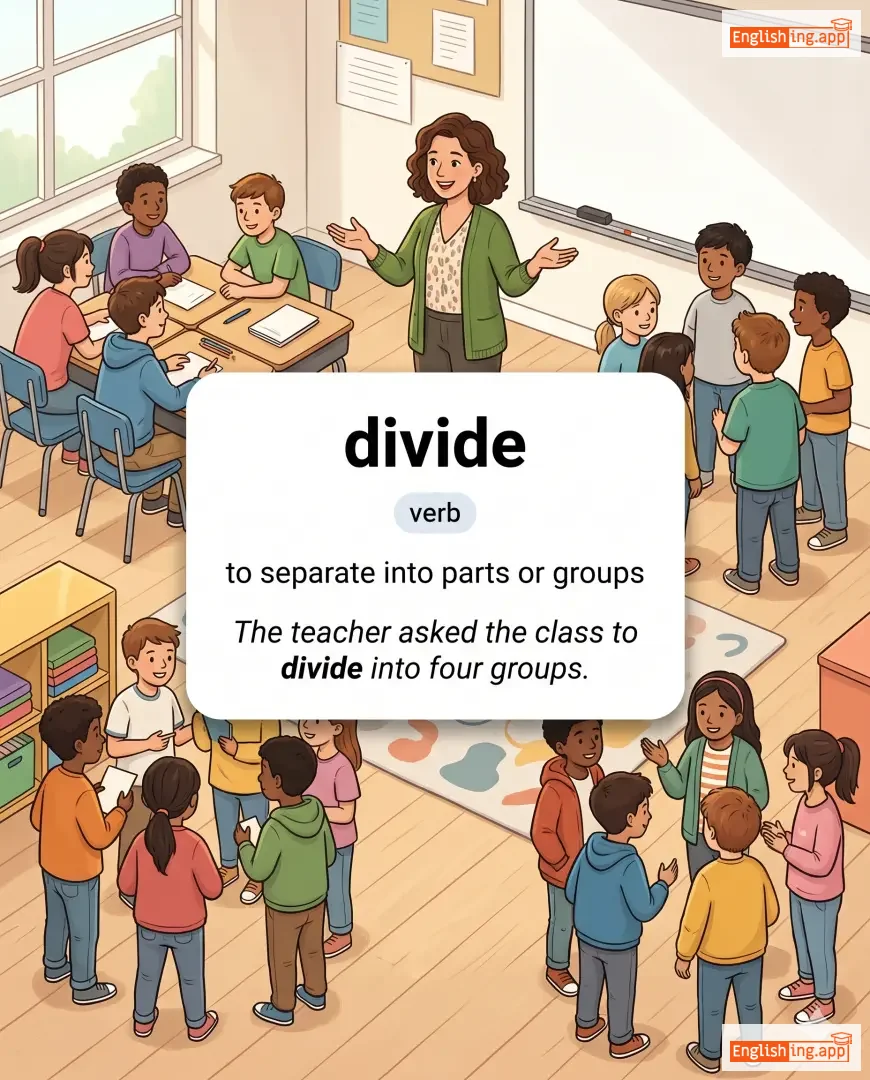
to separate into parts or groups
••••••
|
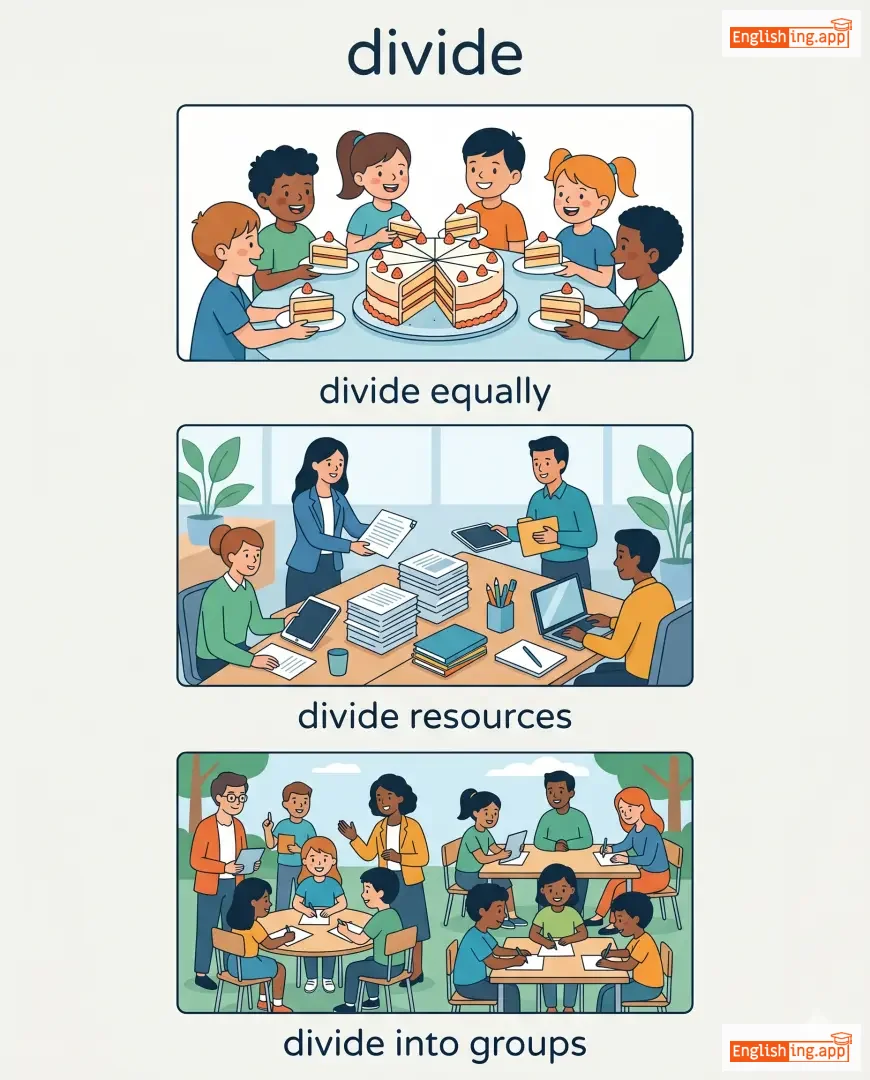
The teacher asked the class to divide into four groups. |
- •••••• |
divide and rule |
a strategy to gain power by causing divisions among people
••••••
|
- •••••• |
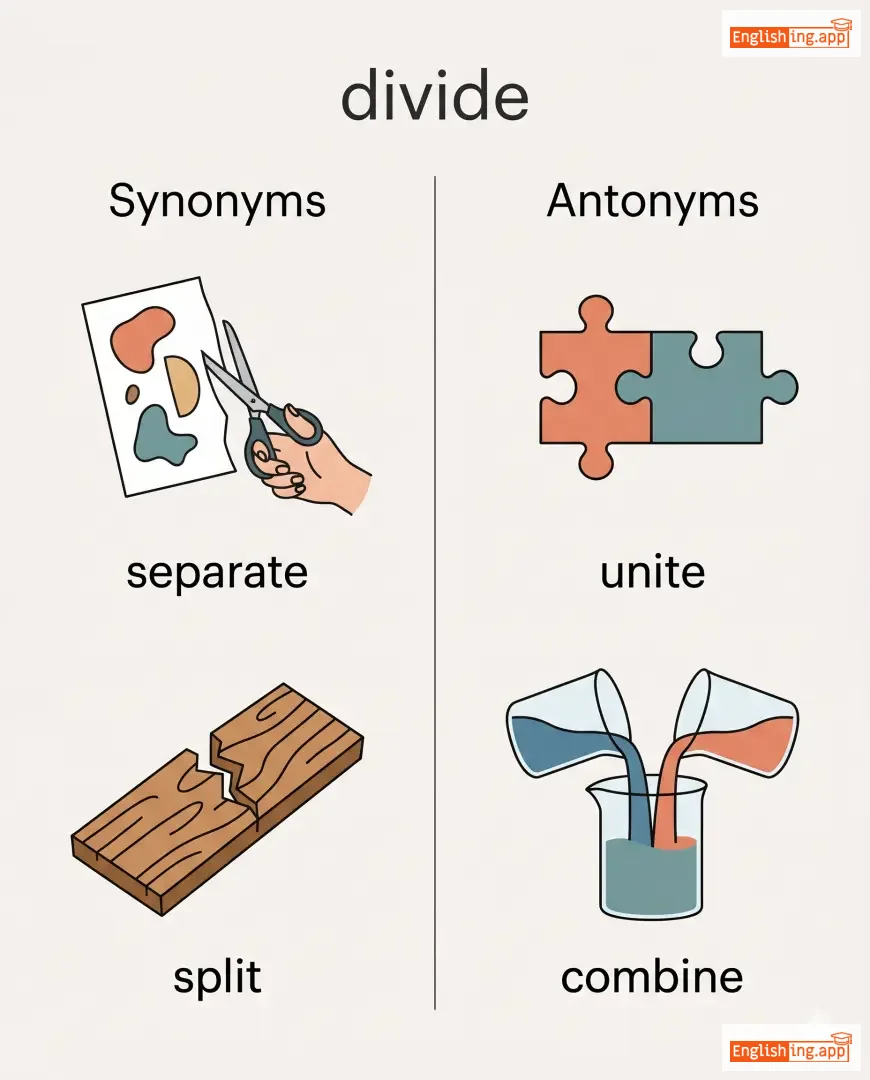
separate, split, partition, allocate, distribute
••••••
|
unite, combine, merge
••••••
|
divide equally, divide resources, divide into groups, divide land
••••••
|
No •••••• |
|
#1639
✨
|
/dɪˈvaɪn/
adjective, verb
••••••
|
- •••••• | - •••••• |
divined
••••••
|
divined
••••••
|
divines
••••••
|
divining
••••••
|
Relating to God or a deity; exceptionally wonderful or pleasing; to discover or foresee by intuition or supernatural means.
••••••
|
She believed the divine power guided her actions. |
- •••••• |
divine intervention |
A miraculous occurrence believed to be caused by God.
••••••
|
- •••••• |
godly, heavenly, sacred, holy, spiritual
••••••
|
earthly, mortal, profane
••••••
|
divine power, divine will, divine intervention, divine love
••••••
|
No •••••• |
|
#1640
➗
|
/dɪˈvɪʒən/
noun
(divijon)
••••••
|
- •••••• |
部門
bumon
••••••
|
- •••••• | - •••••• | - •••••• | - •••••• |
the action of separating something into parts; or a large administrative unit
••••••
|
The company has a separate division for research and development. |
会社には研究開発のための専用の部門があります。
Kaisha ni wa kenkyū kaihatsu no tame no sen'yō no bumon ga arimasu.
••••••
|
cause division |
to create disagreement or separation among people
••••••
|
分裂を引き起こす
bunretsu o hikiokosu
••••••
|
separation, partition, department, section
••••••
|
unity, whole, agreement
••••••
|
division of labor, administrative division, mathematical division, division between
••••••
|
Division ➗ は分割することを意味し、日本語では部門です。
••••••
|
|
#1641
💔
|
/dɪˈvɔːrs/
noun/verb
(ディヴォース)
••••••
|
- •••••• |
離婚
rikon
••••••
|
divorced
••••••
|
divorced
••••••
|
divorces
••••••
|
divorcing
••••••
|
the legal ending of a marriage; to officially end a marriage
••••••
|
After years of conflict, they decided to get a divorce. |
数年の対立の後、彼らは離婚することを決めました。
Sūnen no tairitsu no ato, karera wa rikon suru koto o kimemashita.
••••••
|
divorce oneself from |
to separate or distance oneself from something
••••••
|
〜から離婚する
〜kara rikon suru
••••••
|
separation, annulment, breakup, dissolution
••••••
|
marriage, union
••••••
|
get a divorce, file for divorce, divorce settlement, divorce lawyer
••••••
|
離婚は結婚を終わらせること。
••••••
|
|
#1642
✅
|
/duː/
verb
(ドゥ)
••••••
|
|
する
suru
••••••
|
did
ディッド
••••••
|
done
ダン
••••••
|
does
ダズ
••••••
|
doing
ドゥイング
••••••
|
To perform an action, task, or activity.
••••••
|
I need to do my homework before dinner.
私は夕食前に宿題をしなければならない。
••••••
|
私は夕食前に宿題をしなければならない。
Watashi wa yūshoku mae ni shukudai o shinakereba naranai.
••••••
|
do one's best
最善を尽くす
••••••
|
To make the greatest possible effort
••••••
|
最善を尽くす
Saizen o tsukusu
••••••
|
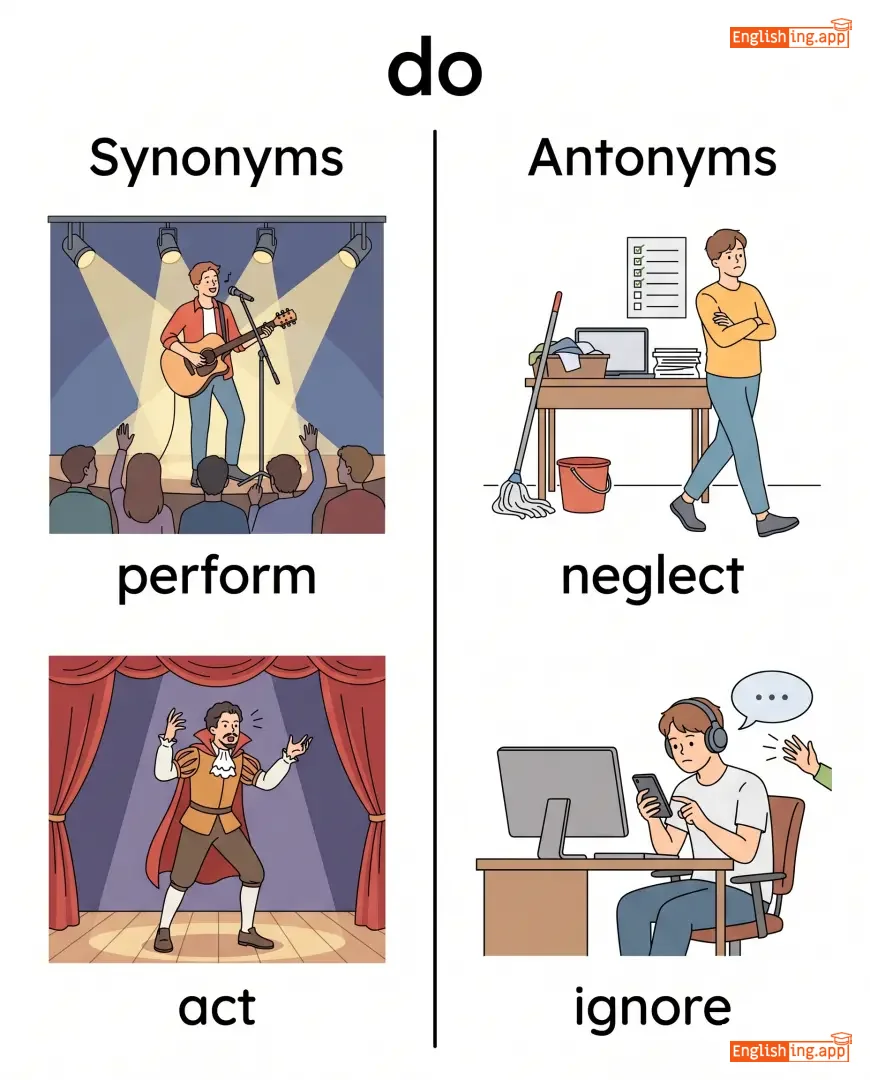
perform, act, execute, carry out, accomplish
••••••
|
neglect, ignore, stop
••••••
|
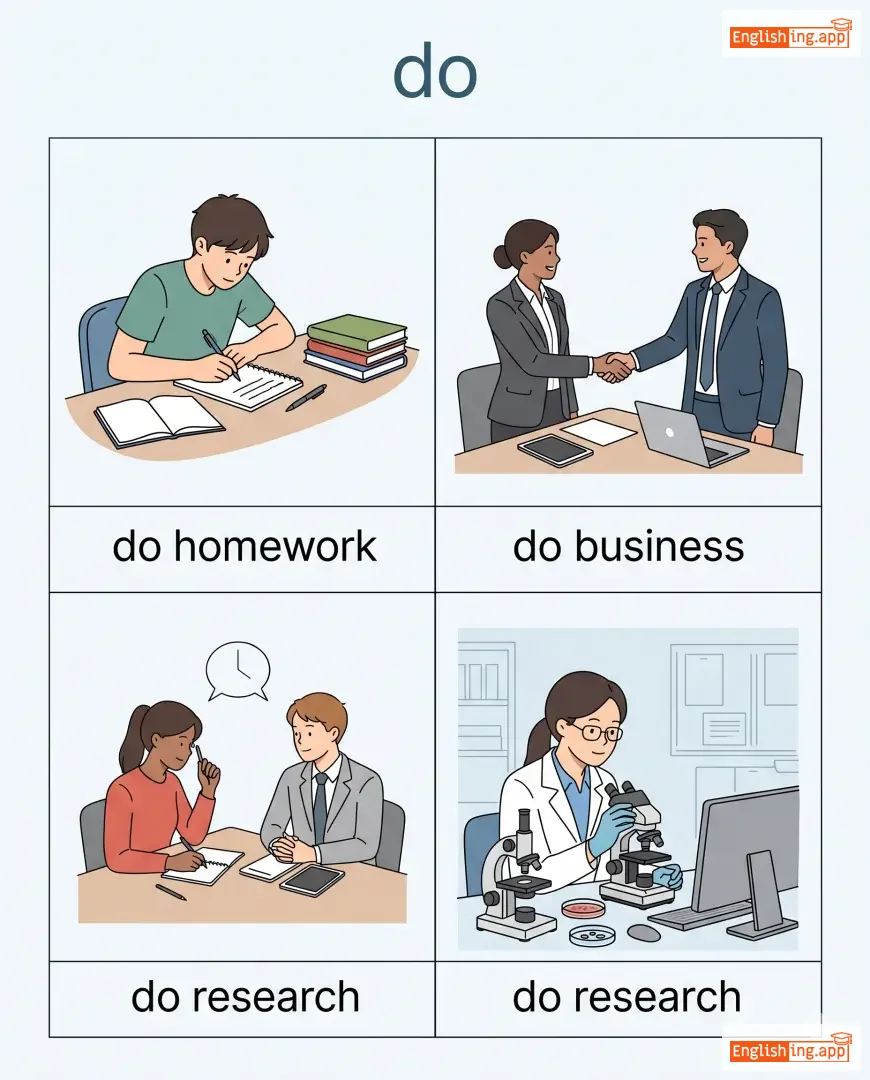
do homework, do business, do research, do a favor
••••••
|
Doはすることを意味する — する、沈まないで!
••••••
|
|
#1643
🩺
|
/ˈdɒktər/
noun
(ドクター)
••••••
|
- •••••• |
医者
isha
••••••
|
- •••••• | - •••••• | - •••••• | - •••••• |
A qualified medical professional who treats illnesses and injuries.
••••••
|
The doctor prescribed medicine for the patient. |
医者は患者に薬を処方しました。
Isha wa kanja ni kusuri o shohō shimashita.
••••••
|
the doctor is in |
The doctor is available to see patients
••••••
|
医者がいます
Isha ga imasu
••••••
|
physician, medic, surgeon, healer
••••••
|
patient, layman
••••••
|
doctor appointment, family doctor, consulting doctor, doctor visit
••••••
|
医者がいるから病気でも安心!
••••••
|
|
#1644
📜
|
/ˈdɒktrɪn/
noun
(ドクトリン)
••••••
|
- •••••• |
教義
kyōgi
••••••
|
- •••••• | - •••••• | - •••••• | - •••••• |
A set of beliefs or principles held and taught by a religious, political, or other group.
••••••
|
The church follows a strict doctrine on moral values. |
教会は道徳的価値に関する厳格な教義を遵守しています。
Kyōkai wa dōtokuteki kachi ni kansuru genkaku na kyōgi o junshu shiteimasu.
••••••
|
official doctrine |
The established principles or policies endorsed by an authority.
••••••
|
公式教義
Kōshiki kyōgi
••••••
|
belief, principle, teaching, tenet, ideology
••••••
|
heresy, disbelief, doubt
••••••
|
religious doctrine, political doctrine, military doctrine, core doctrine
••••••
|
教義は遵守しなければならない厳格なルールです。
••••••
|
|
#1645
📄
|
/ˈdɒkjʊmənt/
noun/verb
(ドキュメント)
••••••
|
|
文書
bunsho
••••••
|
documented
ドキュメントされた
••••••
|
documented
ドキュメントされた
••••••
|
documents
ドキュメント
••••••
|
documenting
ドキュメントしている
••••••
|
Noun: A written, printed, or electronic record that provides information or evidence. Verb: To record information in written or electronic form.
••••••
|
She carefully documented all the expenses of the trip.
彼女は旅行のすべての費用を慎重にドキュメントした。
••••••
|
彼女は旅行のすべての費用を慎重にドキュメントした。
Kanojo wa ryokō no subete no hiyō o shinchō ni dokyumento shita.
••••••
|
official document
公式ドキュメント
••••••
|
An authoritative or legal record recognized by an institution.
••••••
|
公式ドキュメント
Kōshiki dokyumento
••••••
|
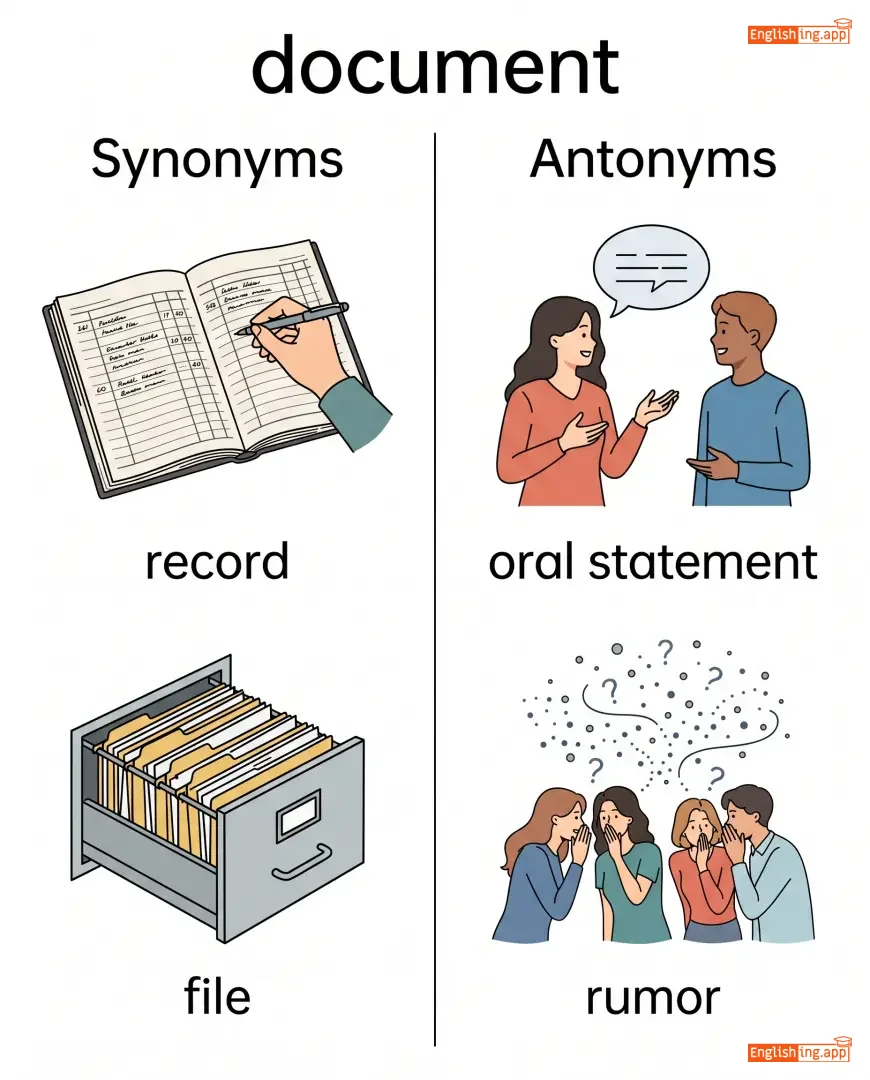
record, file, paper, certificate, report
••••••
|
oral statement, rumor
••••••
|
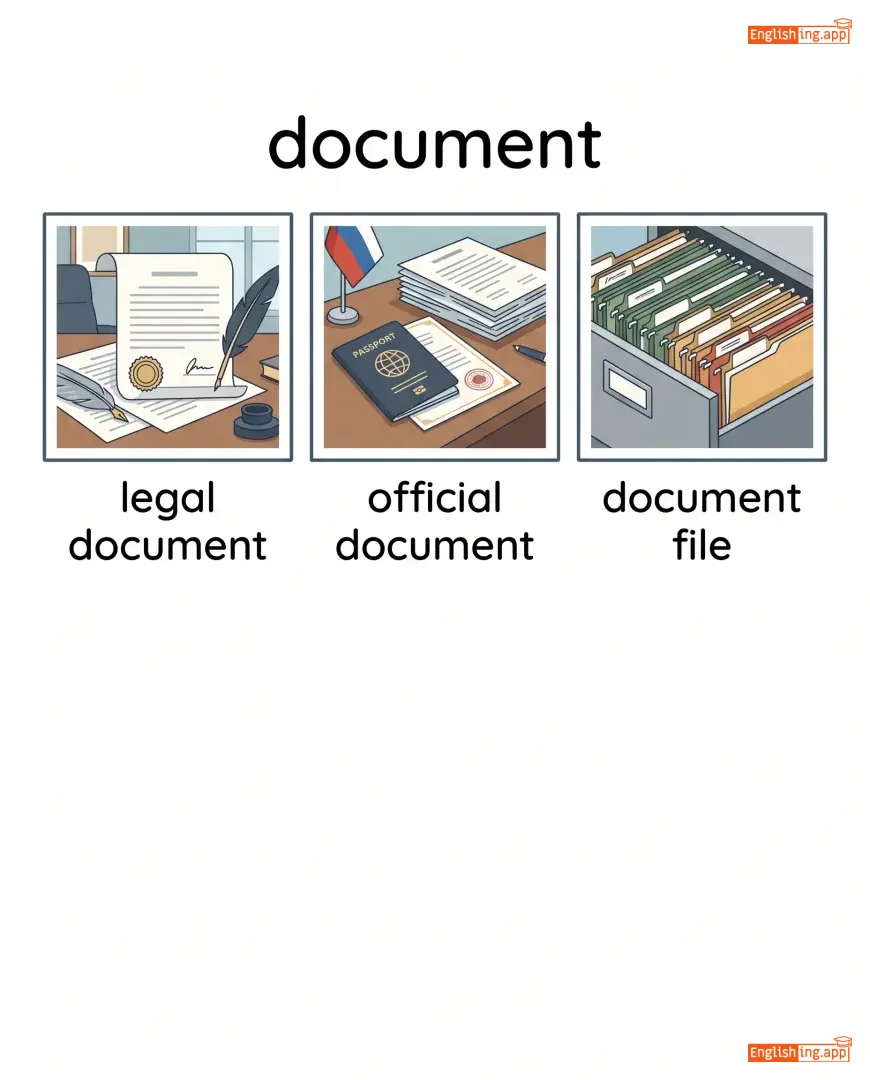
legal document, official document, document file, document evidence
••••••
|
Documentは文書です—重要なことを記録してください!
••••••
|
|
#1646
📄
|
/ˌdɒkjʊmɛnˈteɪʃən/
noun
(ドキュメンテーション)
••••••
|
- •••••• |
ドキュメンテーション
dokyumenteshon
••••••
|
- •••••• | - •••••• | - •••••• | - •••••• |
material that provides official information or evidence
••••••
|
The documentation for the project is available for review. |
プロジェクトのドキュメンテーションはレビューのために利用可能です。
Purojekuto no dokyumenteshon wa rebyū no tame ni riyō kanō desu.
••••••
|
- •••••• | - •••••• | - •••••• |
records, paperwork, files, archives
••••••
|
neglect, disregard
••••••
|
project documentation, legal documentation, technical documentation, documentation review
••••••
|
Documentation (ドキュメンテーション) is your guide to the information, like a map to navigate the project!
••••••
|
|
#1647
🐶
|
/dɔːɡ/
noun
(ドッグ)
••••••
|
- •••••• |
犬
inu
••••••
|
- •••••• | - •••••• | - •••••• | - •••••• |
a domesticated carnivorous mammal kept as a pet or for work
••••••
|
The dog barked loudly at the stranger. |
犬は見知らぬ人に向かって大きな声で吠えた。
Inu wa mishiranu hito ni mukatte ookina koe de hoeta.
••••••
|
every dog has its day |
everyone will have a chance to succeed or be lucky at some point
••••••
|
犬にも一日がある
Inu ni mo ichinichi ga aru
••••••
|
canine, hound, pooch, pup, mongrel
••••••
|
cat, feline
••••••
|
pet dog, stray dog, guard dog, dog bark
••••••
|
Dog = 犬 🐕 - 犬は毎日が特別な日。
••••••
|
Vocabulary Quiz
Test your vocabulary by matching words with their translations or meanings.
Login to take the quiz
Comments (0)
Share your thoughts and join the discussion.
Join the discussion by logging in
Login to CommentNo comments yet
Be the first to share your thoughts!