

翻訳
過去
過去分詞
三人称単数
動名詞
意味
例文
例文の翻訳
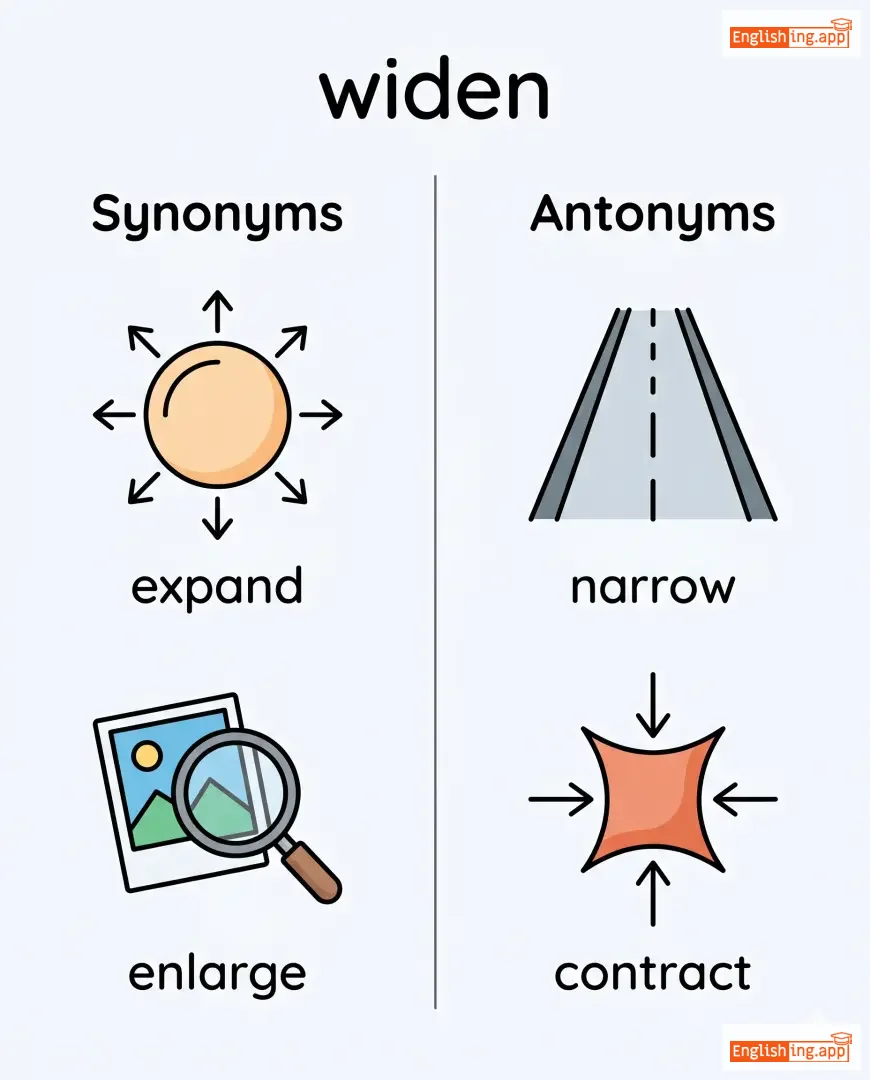
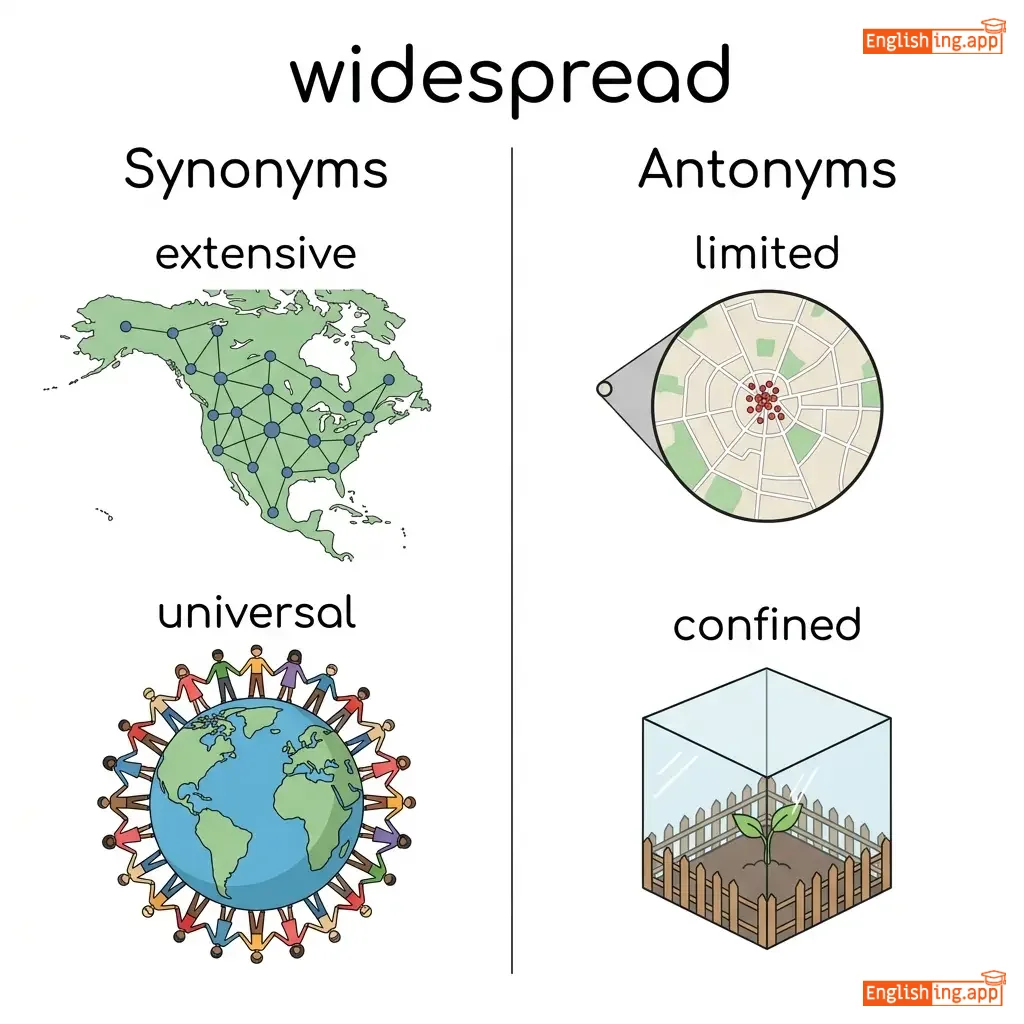
同義語
対義語
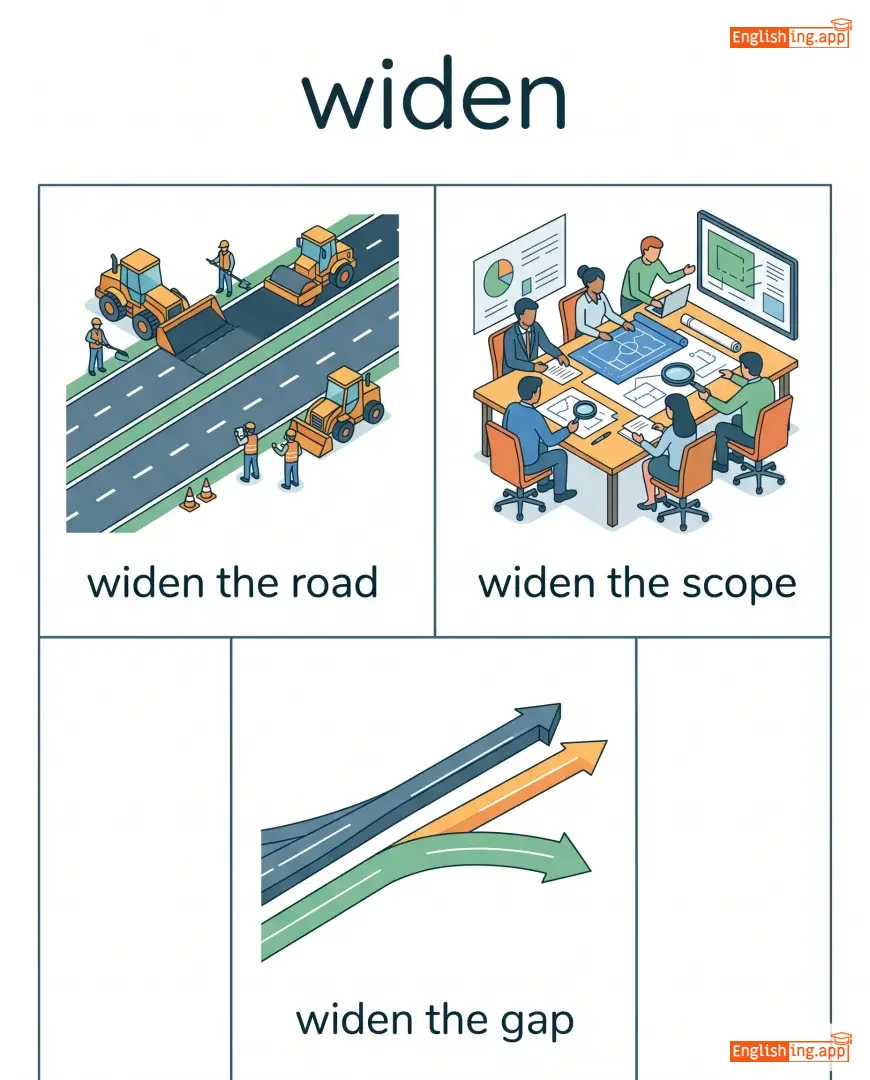
コロケーション
ニーモニック

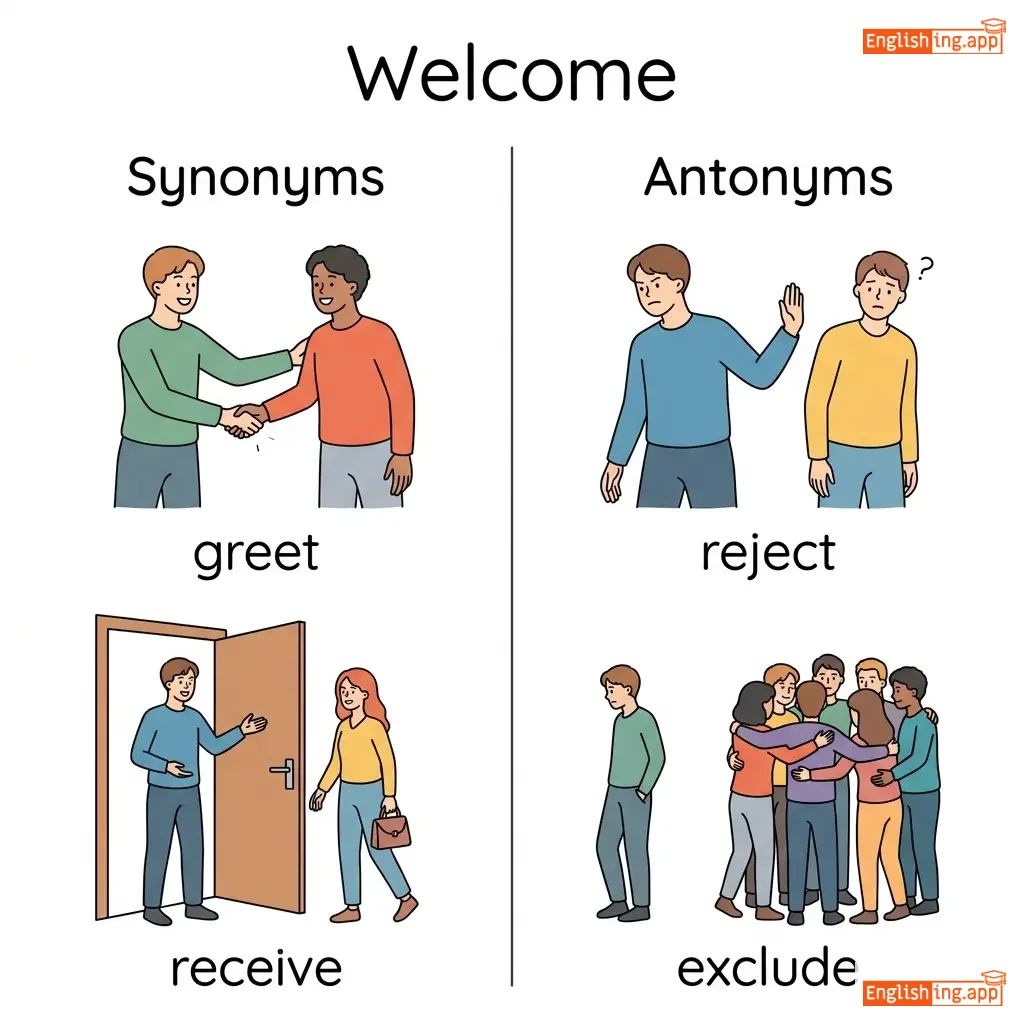
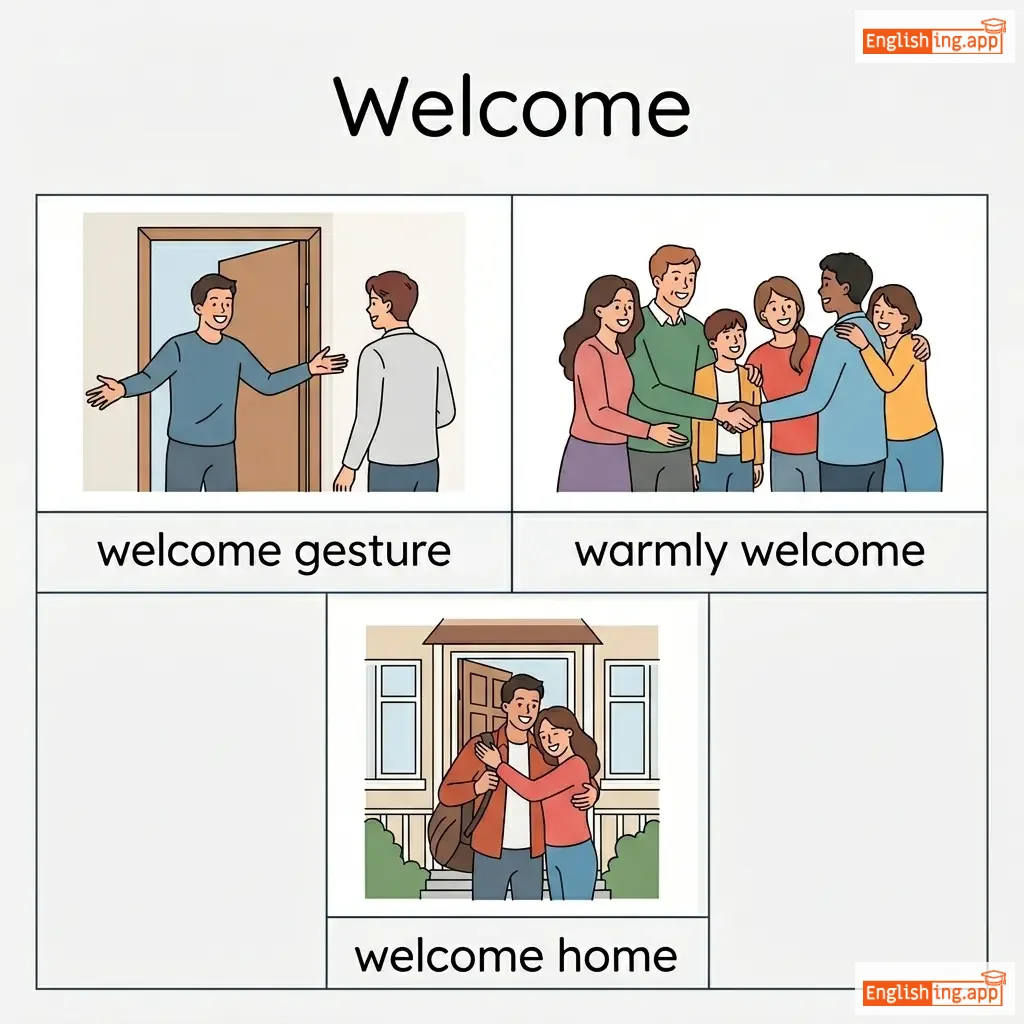
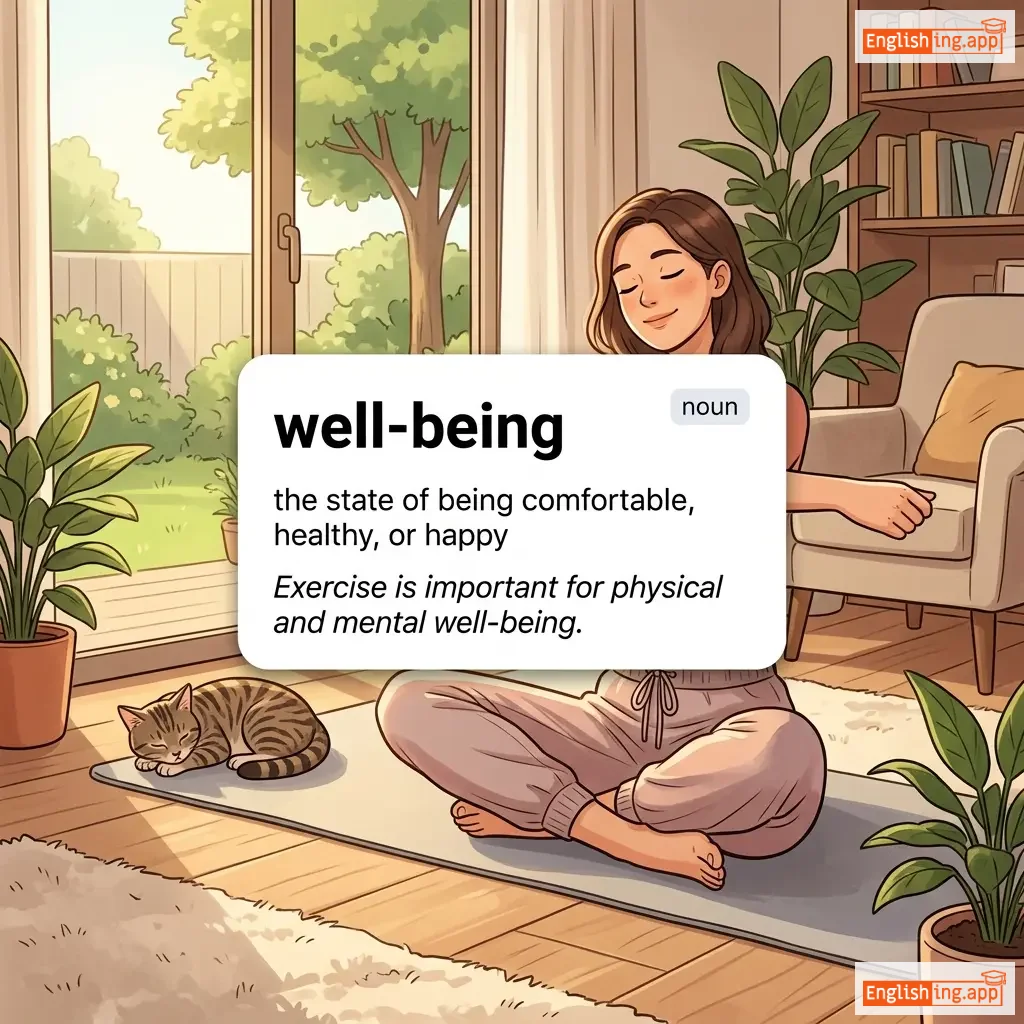
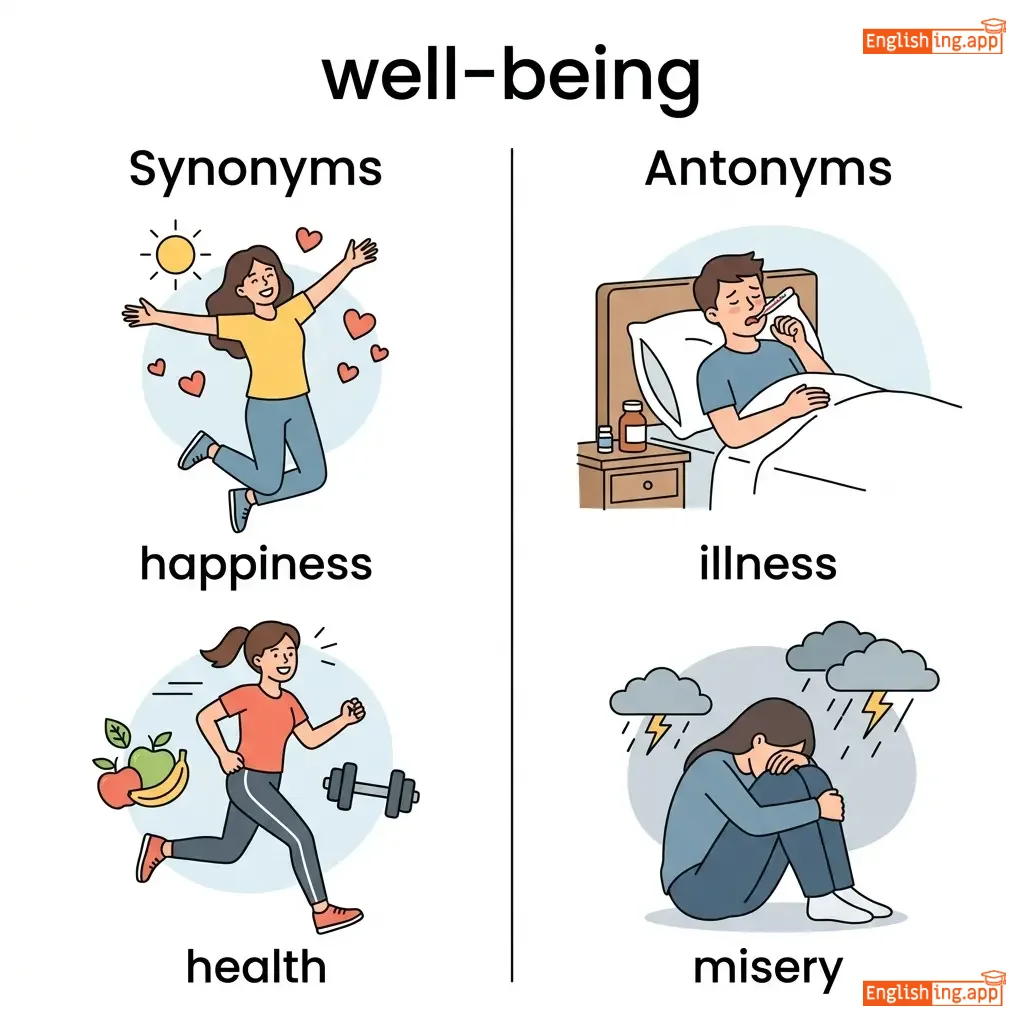
Swipe left or right, or use the buttons. Tap image to zoom.
例文の翻訳
単語
Lesson 115Lesson 115 - マスクトグル
|
絵文字
|
単語 | Images | 翻訳 | 過去 | 過去分詞 | 三人称単数 | 動名詞 | 意味 | 例文 | 例文の翻訳 | 表現例 | 表現例の意味 | 表現例の翻訳 | 同義語 | 対義語 | コロケーション | ニーモニック |
|---|---|---|---|---|---|---|---|---|---|---|---|---|---|---|---|---|---|
|
#5475
🌀
|
/wɪrd/
adjective
(ウィアード)
••••••
|
- •••••• |
奇妙
kimyou
••••••
|
- •••••• | - •••••• | - •••••• | - •••••• |
suggesting something supernatural or very strange; unusual
••••••
|
The movie had a weird ending that nobody expected. |
映画には誰も予期しなかった奇妙な結末がありました。
Eiga ni wa dare mo yokishinakatta kimyou na ketsumatsu ga arimashita.
••••••
|
weird out |
to make someone feel uncomfortable or strange
••••••
|
誰かを不安にさせる
dareka wo fuan ni saseru
••••••
|
strange, odd, bizarre, unusual, peculiar
••••••
|
normal, ordinary, usual
••••••
|
weird feeling, weird dream, weird noise, weird behavior
••••••
|
Weirdは奇妙という意味、映画の奇妙な結末のようなもの。
••••••
|
|
#5476
👋
|
/ˈwelkəm/
verb
(ウェルカム)
••••••
|
|
歓迎する
kangei suru
••••••
|
welcomed
ウェルカムド
••••••
|
welcomed
ウェルカムド
••••••
|
welcomes
ウェルカムス
••••••
|
welcoming
ウェルカミング
••••••
|
to greet someone in a friendly way; to receive gladly
••••••
|
They welcome new students warmly.
彼らは新しい学生を暖かく歓迎しました。
••••••
|
彼らは新しい学生を暖かく歓迎しました。
Karera wa atarashī gakusei o atatakai kangei shimashita.
••••••
|
- •••••• | - •••••• | - •••••• |
greet, receive, embrace, admit
••••••
|
reject, shun, dismiss, exclude
••••••
|
warmly welcome, welcome guests, welcome changes, welcome opportunity, welcome visitors
••••••
|
歓迎することは、いつでも温かい気持ちで新しい人を迎えること
••••••
|
|
#5477
🤝
|
/ˈwel.feər/
noun
(ウェルフェア)
••••••
|
- •••••• |
福祉; 健康; 幸福
fukushi; kenko; koufuku
••••••
|
- •••••• | - •••••• | - •••••• | - •••••• |
the health, happiness, and fortunes of a person or group; care and support
••••••
|
The government is responsible for the welfare of its citizens. |
政府は市民の福祉に責任を持っています。
Seifu wa shimin no fukushi ni sekinin wo motteimasu.
••••••
|
- •••••• | - •••••• | - •••••• |
well-being, benefit, good, prosperity
••••••
|
harm, disadvantage, detriment
••••••
|
social welfare, welfare state, welfare system
••••••
|
福祉 = 福 (fuku) + 仕 (shi), お世話をしよう
••••••
|
|
#5478
🕳️
|
/wel/
noun
(ウェル)
••••••
|
- •••••• |
井戸; 幸福;
ido; kōfuku
••••••
|
- •••••• | - •••••• | - •••••• | - •••••• |
a deep hole in the ground from which water is obtained
••••••
|
The villagers get water from the old well in the center of town.
村人たちは村の中心にある古い井戸から水を汲みます。
••••••
|
村人たちは村の中心にある古い井戸から水を汲みます。
Murabito-tachi wa mura no chūshin ni aru furui ido kara mizu o kumimasu.
••••••
|
- •••••• | - •••••• | - •••••• |
water hole, spring, bore
••••••
|
hill, mound, elevation
••••••
|
water well, oil well, deep well
••••••
|
井戸を思い出して、幸福を得るために水を得る。
••••••
|
|
#5479
😊
|
/ˈwel.biː.ɪŋ/
noun
(wɛlˈbiɪŋ)
••••••
|
|
ウェルビーイング
wērubīingu
••••••
|
- •••••• | - •••••• | - •••••• | - •••••• |
the state of being comfortable, healthy, or happy
••••••
|
Regular exercise contributes to physical and mental well-being. |
定期的な運動は身体的および精神的なウェルビーイングに貢献します。
Teikiteki na undō wa shintai-teki oyobi seishin-teki na wērubīingu ni kōken shimasu.
••••••
|
- •••••• | - •••••• | - •••••• |
welfare, health, happiness, comfort
••••••
|
suffering, distress, misery
••••••
|
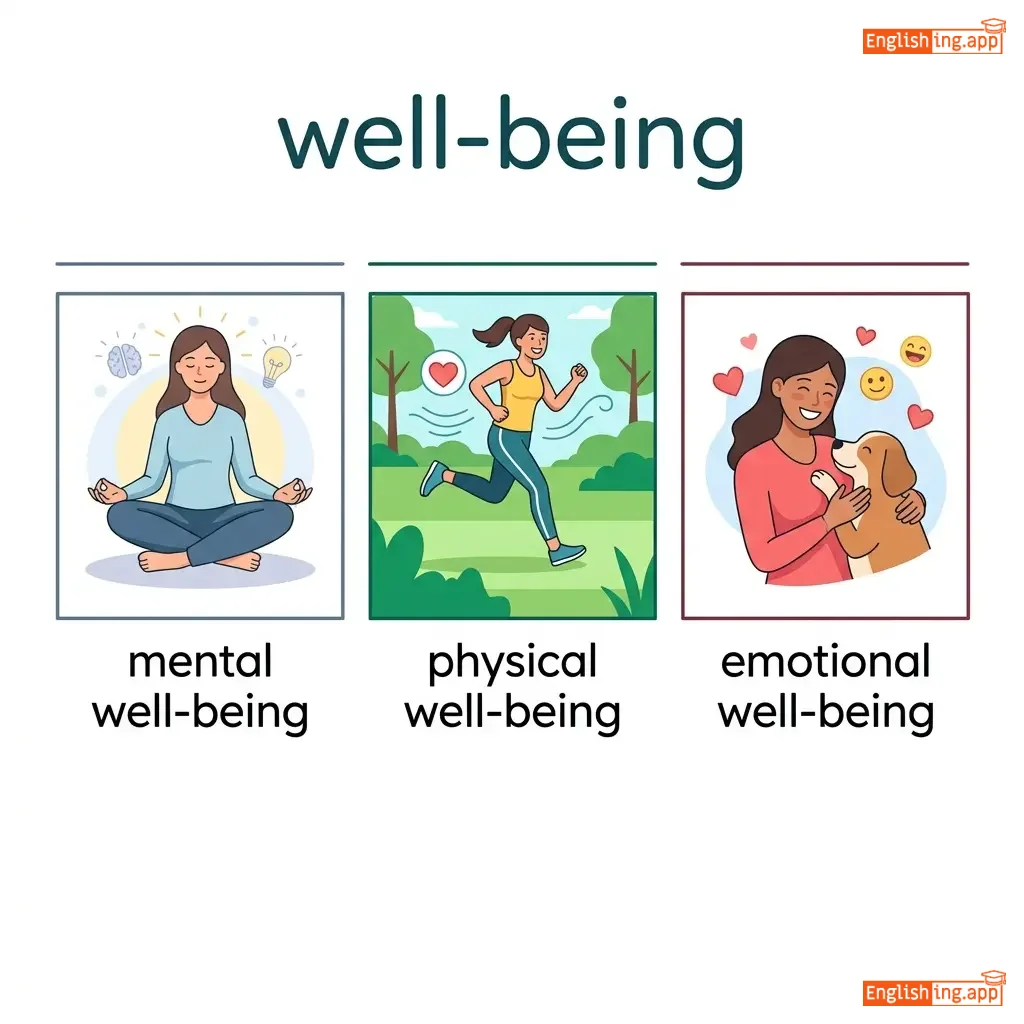
physical well-being, mental well-being, emotional well-being
••••••
|
ウェルビーイング (wērubīingu) is the same as 'well-being' in Japanese, with 'ウェル' sounding like 'well' and 'ビーイング' for 'being.'
••••••
|
|
#5480
🌟
|
/ˌwelˈnoʊn/
adjective
(ウェルノウン)
••••••
|
- •••••• |
有名
yūmei
••••••
|
- •••••• | - •••••• | - •••••• | - •••••• |
known by many people; famous or recognized
••••••
|
He is a well-known actor in his country. |
彼は自国で有名な俳優です。
Kare wa jikoku de yūmei na haiyū desu.
••••••
|
- •••••• | - •••••• | - •••••• |
famous, renowned, popular, prominent, recognized
••••••
|
unknown, obscure, unfamiliar
••••••
|
well-known fact, well-known person, well-known brand, well-known story
••••••
|
Well-known は '有名' という意味です — みんな彼を知っています!
••••••
|
|
#5481
🌅
|
/wɛst/
noun
(ウエスト)
••••••
|
- •••••• |
西
nishi
••••••
|
- •••••• | - •••••• | - •••••• | - •••••• |
the direction to the left of the north and to the right of the south, typically associated with the sunset
••••••
|
The sun sets in the west. |
太陽は西に沈みます。
Taiyō wa nishi ni shizumimasu.
••••••
|
- •••••• | - •••••• | - •••••• |
sunset, occident
••••••
|
east, orient
••••••
|
west coast, west side, go west, western civilization
••••••
|
太陽は西に沈みます - The sun sets in the west.
••••••
|
|
#5482
🌎
|
/ˈwɛstərn/
adjective
(ウェスターン)
••••••
|
- •••••• |
西洋の
seiyō no
••••••
|
- •••••• | - •••••• | - •••••• | - •••••• |
relating to or characteristic of the West, especially Europe and the Americas
••••••
|
She loves western music and culture. |
彼女は西洋の音楽と文化が大好きです。
Kanojo wa seiyō no ongaku to bunka ga daisuki desu.
••••••
|
- •••••• | - •••••• | - •••••• |
occidental, westernized
••••••
|
eastern, oriental
••••••
|
western culture, western philosophy, western world
••••••
|
西洋文化は西から来る - Western culture comes from the West.
••••••
|
|
#5483
💧
|
/wet/
adjective
(ウエット)
••••••
|
- •••••• |
濡れた; びしょびしょな;
nureta; bishobishona;
••••••
|
- •••••• | - •••••• | - •••••• | - •••••• |
covered or saturated with water or another liquid; not dry
••••••
|
My clothes are still wet from the rain.
私の服はまだ雨で濡れています。
••••••
|
私の服はまだ雨で濡れています。
watashi no fuku wa mada ame de nureteimasu.
••••••
|
- •••••• | - •••••• | - •••••• |
damp, moist, soaked, drenched
••••••
|
dry, arid, parched, dehydrated
••••••
|
wet clothes, wet weather, get wet
••••••
|
雨が降ると、何でも濡れてしまう。
••••••
|
|
#5484
❓
|
/wɒt/
pronoun
(ワット)
••••••
|
- •••••• |
何
nani
••••••
|
- •••••• | - •••••• | - •••••• | - •••••• |
used to ask for information about something
••••••
|
What is your name? |
あなたの名前は何ですか?
Anata no namae wa nan desu ka?
••••••
|
- •••••• | - •••••• | - •••••• |
which, that
••••••
|
- •••••• |
what time, what happened, what are you doing
••••••
|
何 (nani) 質問をするために使われる - 'What' は質問をするために使われます。
••••••
|
|
#5485
🤷♂️
|
/wɒtˈɛvər/
pronoun
(ワットエバー)
••••••
|
- •••••• |
何でも
nandemo
••••••
|
- •••••• | - •••••• | - •••••• | - •••••• |
used to refer to anything or everything that is of the type mentioned
••••••
|
You can choose whatever you like. |
あなたは何でも好きなものを選んでください。
Anata wa nandemo sukina mono o erande kudasai.
••••••
|
- •••••• | - •••••• | - •••••• |
anything, everything
••••••
|
- •••••• |
whatever you want, whatever happens
••••••
|
何でも (nandemo) あなたが欲しいもの - Whatever you want, you can have.
••••••
|
|
#5486
🌾
|
/wiːt/
noun
(wheat)
••••••
|
- •••••• |
小麦
komugi
••••••
|
- •••••• | - •••••• | - •••••• | - •••••• |
a cereal plant whose grain is used to make flour for bread and other foods
••••••
|
Farmers harvested the wheat in early summer. |
農家は初夏に小麦を収穫しました。
Nouka wa shoka ni komugi o shuukaku shimashita.
••••••
|
separate the wheat from the chaff |
to separate valuable things or people from those that are not
••••••
|
小麦と糠を分ける
Komugi to nuka o wakeru
••••••
|
grain, cereal, barley, oat, corn
••••••
|
chaff, waste
••••••
|
wheat flour, wheat bread, wheat field, wheat grain, wheat harvest
••••••
|
Wheatは小麦🌾を意味します。小麦はパンに使われるので、食べ物を思い出しましょう。
••••••
|
|
#5487
🚗
|
/wiːl/
noun
(ウィール)
••••••
|
- •••••• |
車輪
sharin
••••••
|
- •••••• | - •••••• | - •••••• | - •••••• |
a circular object that revolves on an axle and is used to move or carry things
••••••
|
The wheel of the car broke down on the way. |
車の車輪が道で壊れた。
Kuruma no sharin ga michi de kowareta.
••••••
|
- •••••• | - •••••• | - •••••• |
disk, circle, rotor, rim
••••••
|
none
••••••
|
steering wheel, bicycle wheel, car wheel, turn the wheel
••••••
|
車輪が回って車を動かす (Sharin ga mawatte kuruma o ugokasu)
••••••
|
|
#5488
⏰
|
/wɛn/
adverb
(ウェン)
••••••
|
- •••••• |
いつ
itsu
••••••
|
- •••••• | - •••••• | - •••••• | - •••••• |
at what time
••••••
|
Do you know when the train leaves? |
電車がいつ出発するか知っていますか?
Densha ga itsu shuppatsu suru ka shitteimasu ka?
••••••
|
- •••••• | - •••••• | - •••••• |
at what time, whenever
••••••
|
never, always
••••••
|
when will, when did, when does, when do
••••••
|
ウェンを‘いつ’と覚える (Uen wo 'itsu' to oboeru)
••••••
|
|
#5489
🕐
|
/wenˈevər/
adverb
(ウェネヴァー)
••••••
|
- •••••• |
いつでも
wenevaa
••••••
|
- •••••• | - •••••• | - •••••• | - •••••• |
at any time that; every time that; no matter when
••••••
|
Call me whenever you need help.
困ったら、いつでも私に電話してください。
••••••
|
困ったら、いつでも私に電話してください。
Komattara, itsu demo watashi ni denwa shite kudasai.
••••••
|
- •••••• | - •••••• | - •••••• |
anytime, every time, no matter when
••••••
|
never, at no time
••••••
|
whenever possible, whenever necessary, whenever you want
••••••
|
When ever = いつ + demo -> いつでも; remember to call me any time
••••••
|
|
#5490
📍
|
/weər/
adverb
(どこ)
••••••
|
- •••••• |
どこ
doko
••••••
|
- •••••• | - •••••• | - •••••• | - •••••• |
In or to what place or position; used to inquire about location
••••••
|
Where did you put my keys?
私の鍵をどこに置きましたか?
••••••
|
私の鍵をどこに置きましたか?
watashi no kagi o doko ni okimashita ka
••••••
|
- •••••• | - •••••• | - •••••• |
whereabouts, whither
••••••
|
here, there
••••••
|
where are you, where to go, where from
••••••
|
Doko is Where in Japanese; picture a detective dog asking 'Where's my key?' どこ
••••••
|
|
#5491
⚖️
|
/wɛərˈæz/
conjunction
(ウェアアズ)
••••••
|
- •••••• |
〜一方で
ippō de
••••••
|
- •••••• | - •••••• | - •••••• | - •••••• |
used to introduce a contrast or comparison between two facts
••••••
|
She prefers tea, whereas he likes coffee. |
彼女はお茶が好きですが、彼はコーヒーが好きです。
Kanojo wa ocha ga suki desu ga, kare wa kōhī ga suki desu.
••••••
|
- •••••• | - •••••• | - •••••• |
while, although, but, though
••••••
|
similarly, likewise
••••••
|
whereas clause, whereas statement, tea whereas coffee
••••••
|
Tea vs coffee 比較 - 日本語一方で
••••••
|
|
#5492
🔗
|
/wɛərˈbaɪ/
adverb
(ウェアバイ)
••••••
|
- •••••• |
によって
ni yotte
••••••
|
- •••••• | - •••••• | - •••••• | - •••••• |
by which; because of which
••••••
|
The company agreed to a contract whereby it would pay the penalty. |
その会社は、罰金を支払う契約に同意しました。
Sono kaisha wa, bakkin o shiharau keiyaku ni dōi shimashita.
••••••
|
- •••••• | - •••••• | - •••••• |
through which, by means of which, in which
••••••
|
- •••••• |
whereby agreement, whereby clause
••••••
|
Whereby sounds like 'ウェアバイ', which can be remembered as 'によって' meaning by which.
••••••
|
|
#5493
🤔
|
/ˈwɛðər/
conjunction
(ウェザー)
••••••
|
- •••••• |
かどうか
kadouka
••••••
|
- •••••• | - •••••• | - •••••• | - •••••• |
used to express a doubt or choice between alternatives
••••••
|
I don’t know whether I should go.
私は行くべきかどうか分かりません。
••••••
|
私は行くべきかどうか分かりません。
Watashi wa iku beki ka dō ka wakarimasen.
••••••
|
- •••••• | - •••••• | - •••••• |
if, either
••••••
|
none
••••••
|
whether or not, whether to go, whether he will
••••••
|
かどうか (kadouka) 決断の時だ
••••••
|
|
#5494
❓
|
/wɪtʃ/
pronoun
(wɪtʃ)
••••••
|
- •••••• |
どれ
dore
••••••
|
- •••••• | - •••••• | - •••••• | - •••••• |
used to ask about one or more items from a defined set
••••••
|
Which one do you prefer, the red or the blue? |
赤と青、どちらを選びますか?
Aka to ao, dochira o erabimasu ka?
••••••
|
- •••••• | - •••••• | - •••••• |
what, that, who
••••••
|
none
••••••
|
which one, which way, which time
••••••
|
Which in Japanese is 'dore', to help you pick!
••••••
|
|
#5495
⏳
|
/waɪl/
conjunction
(ワイル)
••••••
|
- •••••• |
その間
sono aida
••••••
|
- •••••• | - •••••• | - •••••• | - •••••• |
during the time that something is happening
••••••
|
She was reading while waiting for the bus.
彼女はバスを待っている間に読書をしていた。
••••••
|
彼女はバスを待っている間に読書をしていた。
Kanojo wa basu wo matteiru aida ni dokusho wo shite ita.
••••••
|
- •••••• | - •••••• | - •••••• |
as, when, during
••••••
|
none
••••••
|
while waiting, while studying, while traveling
••••••
|
あなたが待っている間、'その間'を日本語で考えて!
••••••
|
|
#5496
🥄
|
/wɪp/
verb
(ウィップ)
••••••
|
- •••••• |
ムチで打つ
muchi de utsu
••••••
|
whipped
ウィップト
••••••
|
whipped
ウィップト
••••••
|
whips
ウィップス
••••••
|
whipping
ウィッピング
••••••
|
to strike or beat with a flexible instrument such as a rope or cord
••••••
|
The trainer whipped the horse to make it run faster.
トレーナーは馬を速く走らせるために鞭で打った。
••••••
|
トレーナーは馬を速く走らせるために鞭で打った。
Toreenaa wa uma wo hayaku hashiraseru tame ni muchi de utta.
••••••
|
whip up
whip up
••••••
|
to quickly prepare or create something
••••••
|
素早く準備する
subayaku junbi suru
••••••
|
lash, beat, strike, thrash, flog
••••••
|
caress, soothe
••••••
|
whip cream, whip the horse, whip up enthusiasm, political whip
••••••
|
Whipはムチで打つ意味 — Whipで馬を速く走らせる!
••••••
|
|
#5497
🤫
|
/ˈwɪspər/
verb
(ウィスパー)
••••••
|
|
ささやく
sasayaku
••••••
|
whispered
ウィスパード
••••••
|
whispered
ウィスパード
••••••
|
whispers
ウィスパーズ
••••••
|
whispering
ウィスパリング
••••••
|
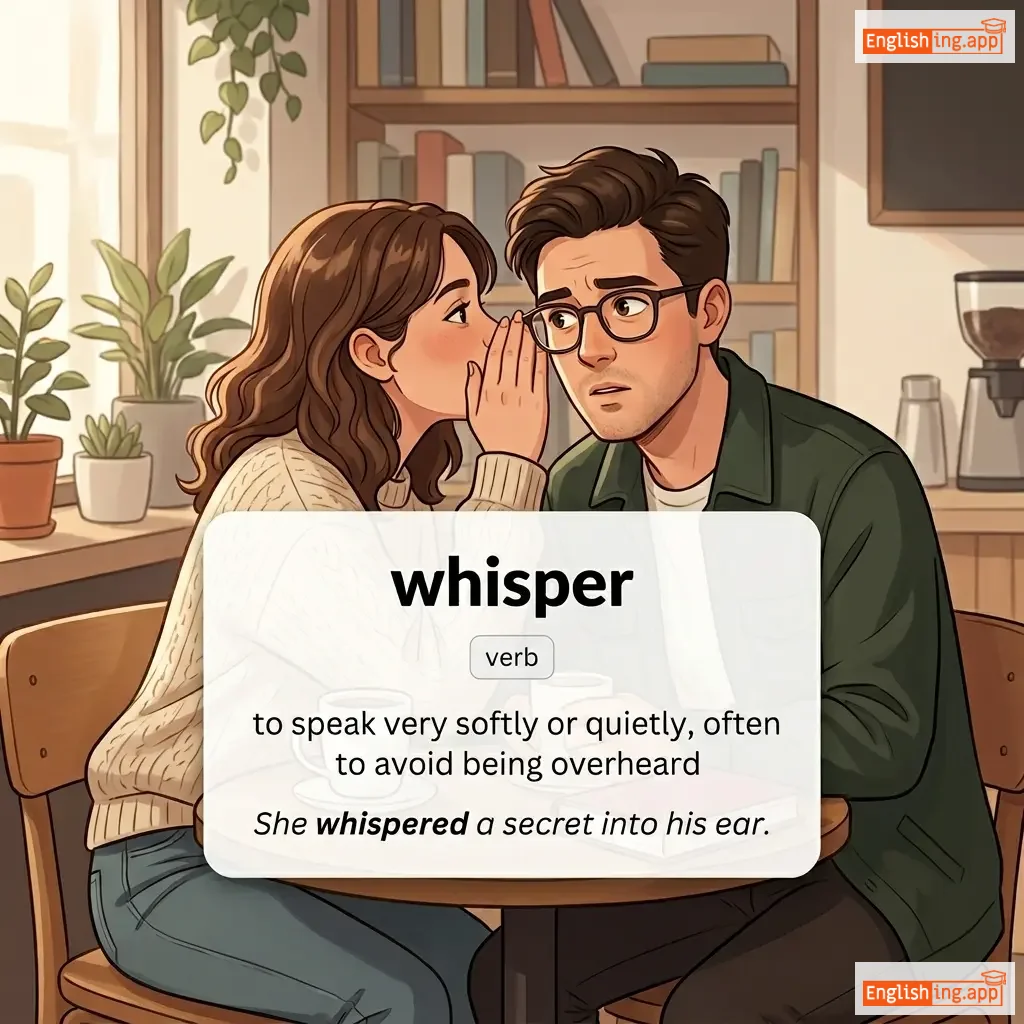
to speak very softly using one's breath without vocal cords
••••••
|
She whispered a secret in my ear.
彼女は私の耳元で秘密をささやいた。
••••••
|
彼女は私の耳元で秘密をささやいた。
Kanojo wa watashi no mimimoto de himitsu o sasayaita.
••••••
|
- •••••• | - •••••• | - •••••• |
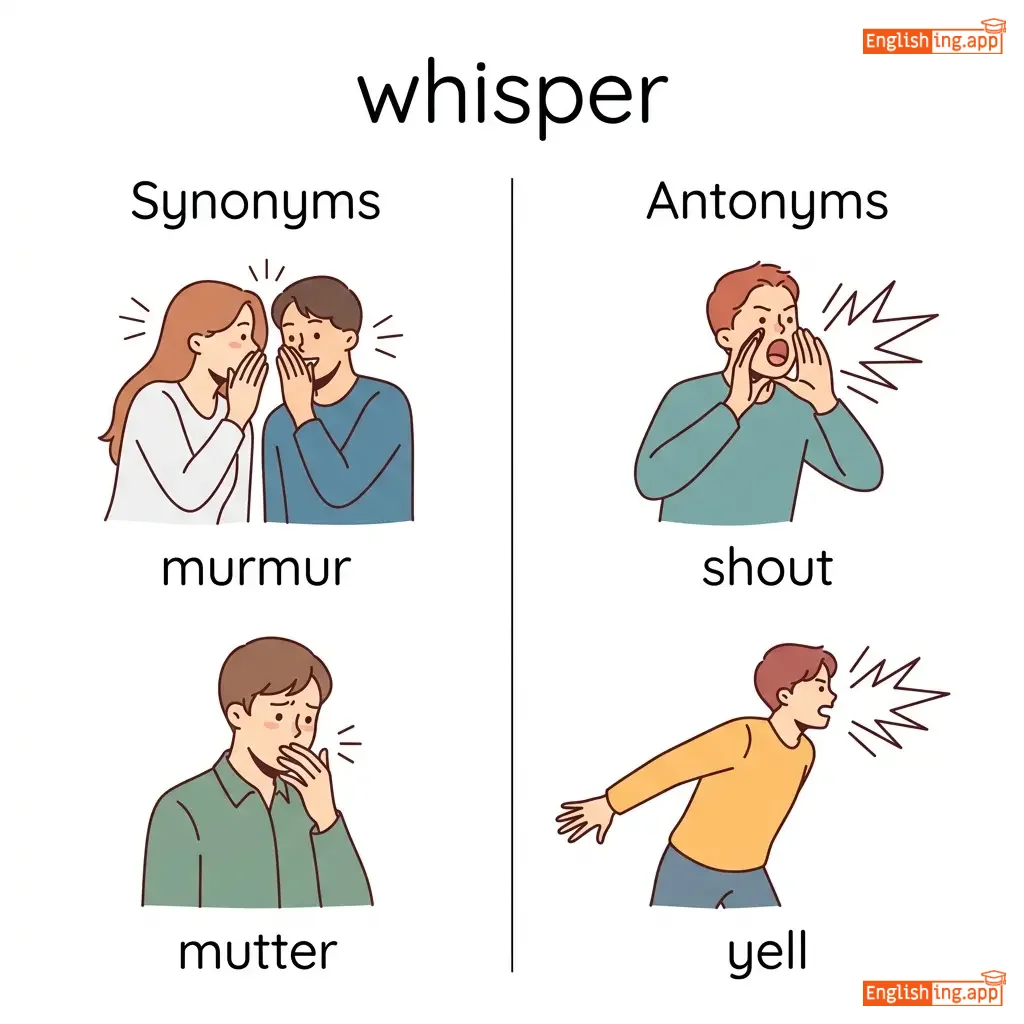
murmur, mumble, breathe, hiss
••••••
|
shout, yell, scream, roar
••••••
|
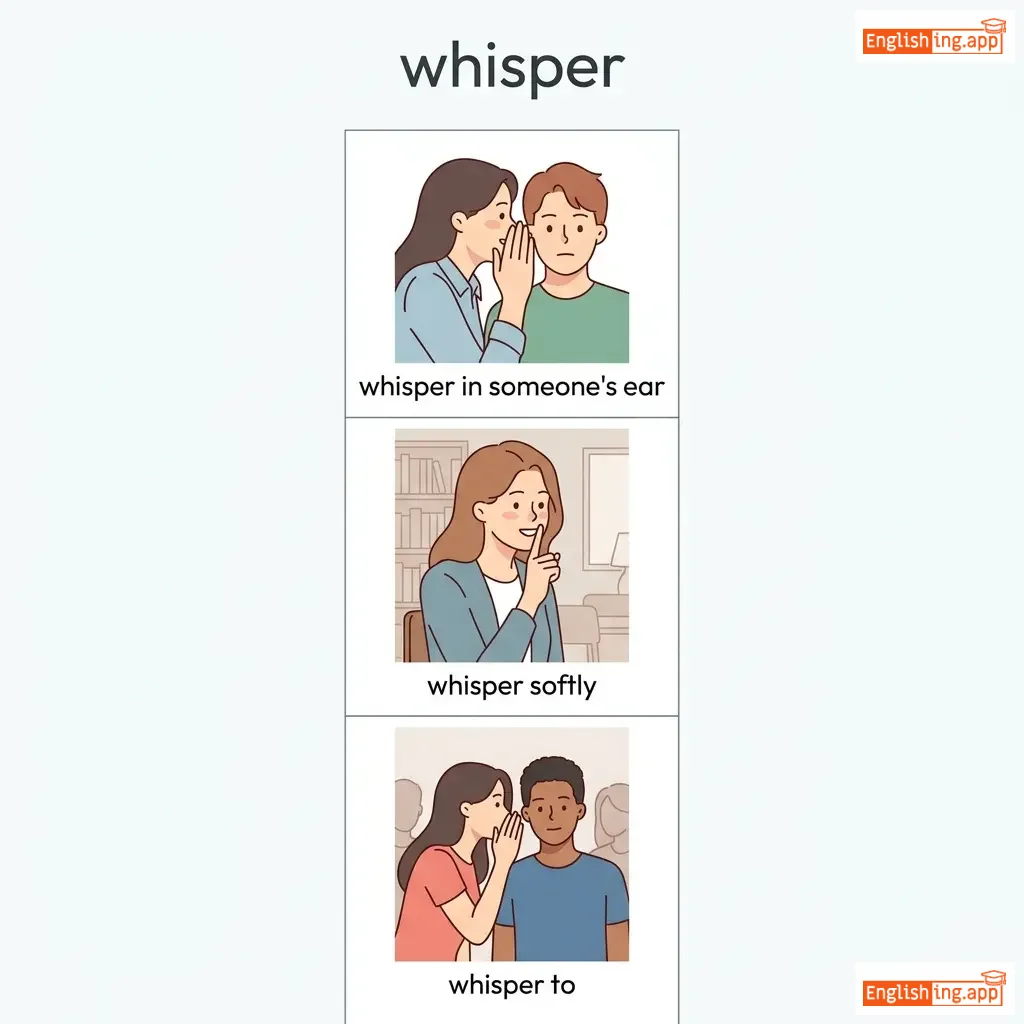
whisper secrets, whisper softly, whisper words, whisper quietly, whisper sweet, whisper prayers
••••••
|
日本語で 'ささやく' は 'whisper' と同じ意味です。
••••••
|
|
#5498
🎵
|
/ˈwɪsəl/
verb
(ウィッスル)
••••••
|
|
口笛を吹く
kuchibue o fuku
••••••
|
whistled
ウィッスルド
••••••
|
whistled
ウィッスルド
••••••
|
whistles
ウィッスルズ
••••••
|
whistling
ウィッスリング
••••••
|
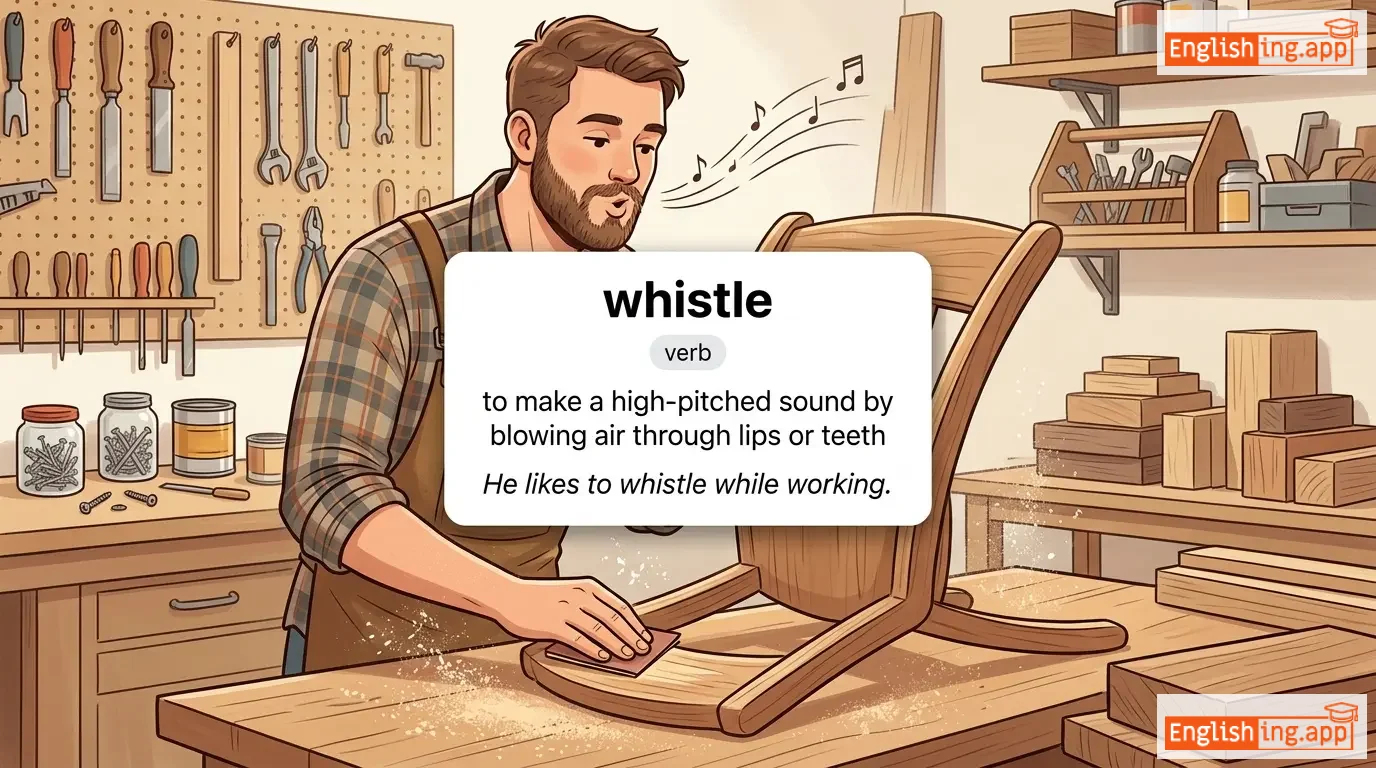
to make a high-pitched sound by blowing air through lips or teeth
••••••
|
He likes to whistle while working.
彼は仕事をしながら口笛を吹くのが好きです。
••••••
|
彼は仕事をしながら口笛を吹くのが好きです。
Kare wa shigoto o shinagara kuchibue o fuku no ga suki desu.
••••••
|
- •••••• | - •••••• | - •••••• |
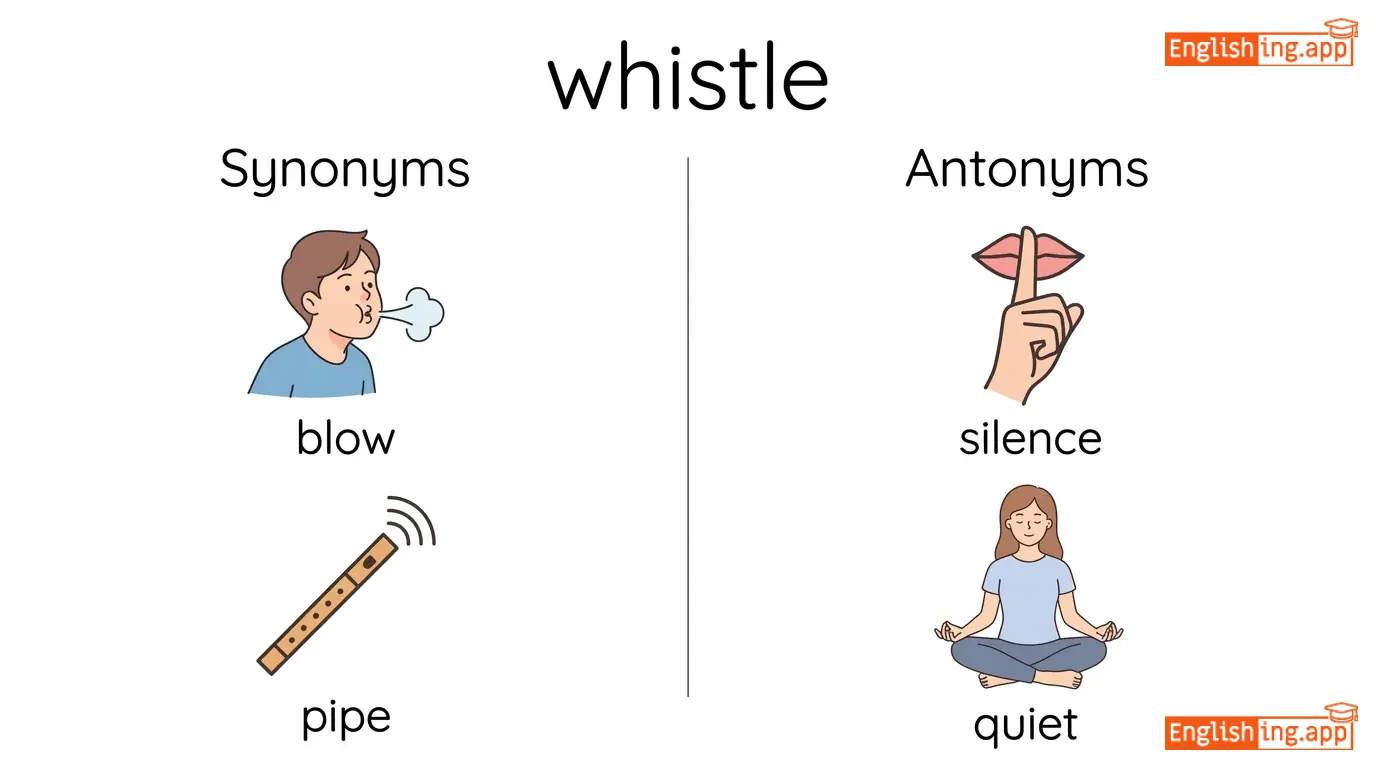
blow, pipe, toot, sound
••••••
|
silence, quiet, mute
••••••
|
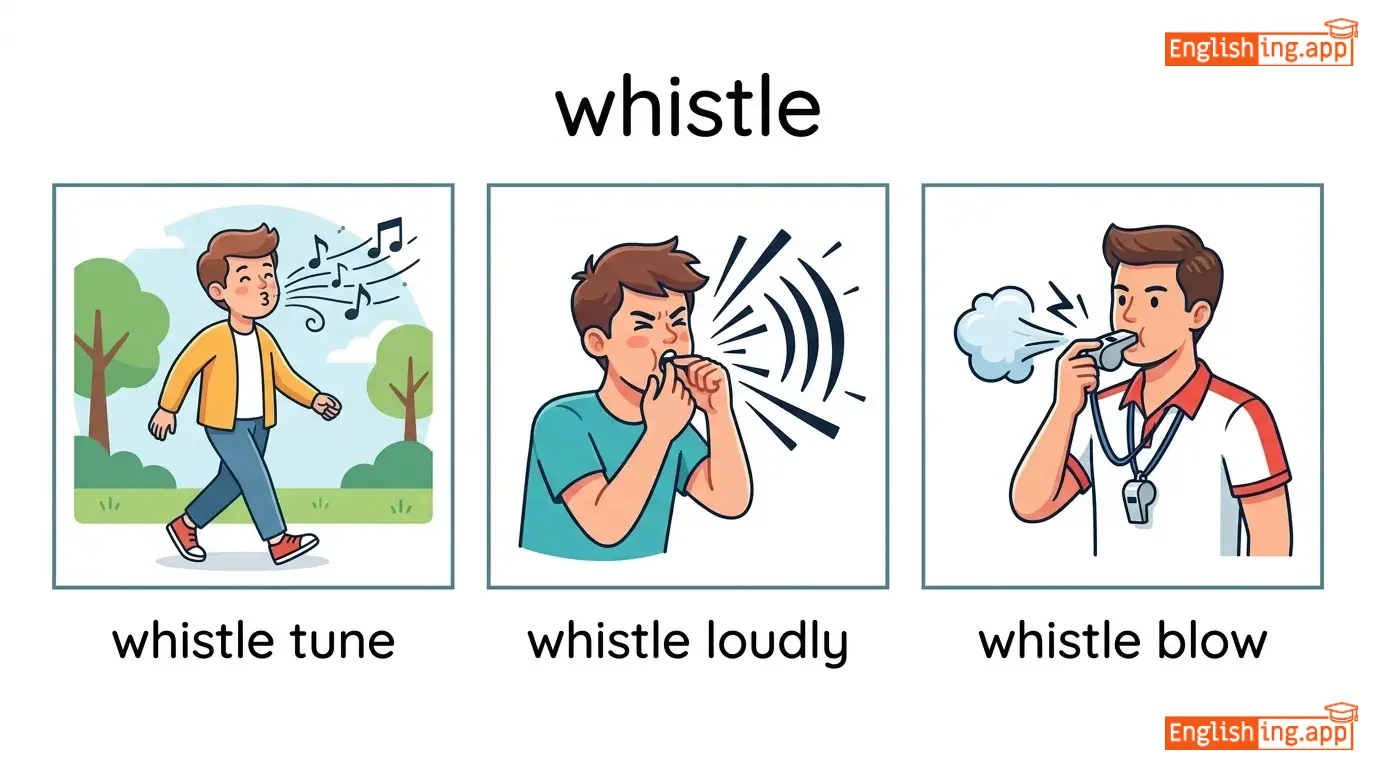
whistle tune, whistle loudly, whistle blow, train whistle
••••••
|
口笛を吹く - 口笛のように高い音が響く。
••••••
|
|
#5499
⚪
|
/waɪt/
adjective
(ワイト)
••••••
|
- •••••• |
白; 純粋
shiro; junsui
••••••
|
- •••••• | - •••••• | - •••••• | - •••••• |
of the color of snow or milk; pale; pure
••••••
|
She wore a beautiful white dress to the wedding.
彼女は結婚式に美しい白いドレスを着ていました。
••••••
|
彼女は結婚式に美しい白いドレスを着ていました。
Kanojo wa kekkonshiki ni utsukushii shiroi doresu o kite imashita.
••••••
|
- •••••• | - •••••• | - •••••• |
pale, colorless, snow-white, ivory
••••••
|
black, dark, colored
••••••
|
white paper, white shirt, white house
••••••
|
In Japanese, '白' (shiro) means 'white', like snow!
••••••
|
|
#5500
🤔
|
/huː/
pronoun
(誰)
••••••
|
- •••••• |
誰
dare
••••••
|
- •••••• | - •••••• | - •••••• | - •••••• |
used to ask about a person or people
••••••
|
Who is coming to the party tonight? |
今晩パーティーに誰が来ますか?
Konban pātī ni dare ga kimasu ka?
••••••
|
- •••••• | - •••••• | - •••••• |
whoever, which person
••••••
|
none
••••••
|
who is, who are, who knows
••••••
|
In Japanese, just ask 'dare' to know 'who'!
••••••
|
|
#5501
🙋♂️
|
/huːˈɛvər/
pronoun
(フーエヴァ)
••••••
|
- •••••• |
誰でも
dare demo
••••••
|
- •••••• | - •••••• | - •••••• | - •••••• |
any person who; no matter who
••••••
|
Whoever wants to join the trip must register today. |
誰でもこの旅行に参加したい場合は、今日中に登録する必要があります。
Dare demo kono ryokō ni sanka shitai baai wa, kyōjū ni tōroku suru hitsuyō ga arimasu.
••••••
|
- •••••• | - •••••• | - •••••• |
anyone, anybody, whosoever
••••••
|
none, nobody
••••••
|
whoever comes, whoever wants, whoever said, whoever did
••••••
|
Who + ever = 誰でも — whoever means 誰でも
••••••
|
|
#5502
🔵
|
/hoʊl/
adjective
(ホール)
••••••
|
- •••••• |
丸ごと
marugoto
••••••
|
- •••••• | - •••••• | - •••••• | - •••••• |
complete; entire; all of something
••••••
|
He ate the whole pizza by himself.
ヒー エイト ザ ホール ピザ バイ ヒムセルフ。
••••••
|
彼はピザを丸ごと一人で食べた。
kare wa piza o marugoto hitori de tabeta
••••••
|
- •••••• | - •••••• | - •••••• |
complete, entire, total, full
••••••
|
partial, incomplete, broken, fragmented
••••••
|
whole story, whole family, whole day
••••••
|
丸ごと (marugoto) = whole — imagine marugoto pizza
••••••
|
|
#5503
💯
|
/ˈhoʊli/
adverb
(hōrī)
••••••
|
- •••••• |
完全に; 完全に
kanzen ni; kanzen ni
••••••
|
- •••••• | - •••••• | - •••••• | - •••••• |
Entirely; completely; to the full extent
••••••
|
I am wholly committed to this project. |
私はこのプロジェクトに完全にコミットしています。
watashi wa kono purojekuto ni kanzen ni komitto shiteimasu.
••••••
|
- •••••• | - •••••• | - •••••• |
completely, entirely, totally, fully
••••••
|
partially, partly, incompletely
••••••
|
wholly owned, wholly responsible, wholly different
••••••
|
完全に、全力で入れ込む感じ
••••••
|
|
#5504
👤
|
/huːm/
pronoun
(フーム)
••••••
|
- •••••• |
誰に
dare ni
••••••
|
- •••••• | - •••••• | - •••••• | - •••••• |
used to refer to the person or people that something is done to
••••••
|
The man whom I met yesterday is my friend. |
昨日会ったその男性は私の友達です。
Kinō atta sono dansei wa watashi no tomodachi desu.
••••••
|
- •••••• | - •••••• | - •••••• |
who, that, the person
••••••
|
none
••••••
|
whom I met, whom I saw, to whom it may concern
••••••
|
Whom sounds like 'Dare ni' - 'Dare ni' as in the person you met.
••••••
|
|
#5505
📱
|
/huːz/
pronoun
(フーズ)
••••••
|
- •••••• |
誰の
dare no
••••••
|
- •••••• | - •••••• | - •••••• | - •••••• |
used to ask or talk about the person or thing that owns something
••••••
|
The girl whose phone was stolen is my cousin. |
電話が盗まれた女の子は私のいとこです。
Denwa ga nusumareta onnanoko wa watashi no itoko desu.
••••••
|
- •••••• | - •••••• | - •••••• |
who's, that person’s, of whom
••••••
|
none
••••••
|
whose phone, whose book, whose idea
••••••
|
Whose phone is this? – 'Whose' connects to 'Dare no denwa'.
••••••
|
|
#5506
❓
|
/waɪ/
adverb
(wai)
••••••
|
- •••••• |
なぜ
naze
••••••
|
- •••••• | - •••••• | - •••••• | - •••••• |
For what reason or purpose; used to ask about the cause of something
••••••
|
Why are you late today? |
今日はなぜ遅れましたか?
kyō wa naze okuremashita ka?
••••••
|
- •••••• | - •••••• | - •••••• |
wherefore, how come
••••••
|
because, therefore
••••••
|
why not, that's why, reason why
••••••
|
No •••••• |
|
#5507
↔️
|
/waɪd/
adjective
(ワイド)
••••••
|
- •••••• |
広い; 広大
hiroi; kodai
••••••
|
- •••••• | - •••••• | - •••••• | - •••••• |
having a great distance from one side to the other; broad
••••••
|
The river is very wide at this point. |
この地点で川は非常に広いです。
Kono chiten de kawa wa hijou ni hiroi desu.
••••••
|
- •••••• | - •••••• | - •••••• |
broad, extensive, spacious, vast
••••••
|
narrow, thin, restricted
••••••
|
wide range, wide variety, wide open, wide awake
••••••
|
広い川、広大な空間。
••••••
|
|
#5508
🌍
|
/ˈwaɪdli/
adverb
(wáidori)
••••••
|
- •••••• |
広く
hiroku
••••••
|
- •••••• | - •••••• | - •••••• | - •••••• |
to a great extent or degree
••••••
|
The news of his promotion spread widely across the company. |
彼の昇進のニュースは会社全体に広がりました。
Kare no shōshin no nyūsu wa kaisha zentai ni hirogarimashita.
••••••
|
- •••••• | - •••••• | - •••••• |
extensively, broadly, widely, far
••••••
|
narrowly, limitedly
••••••
|
widely known, widely accepted, widely spread
••••••
|
Wide world 🌍 means a wide spread across everywhere!
••••••
|
|
#5509
↔️
|
/ˈwaɪdən/
verb
(widen)
••••••
|
|
広げる
hirogeru
••••••
|
widened
widened
••••••
|
widened
widened
••••••
|
widens
widens
••••••
|
widening
widening
••••••
|
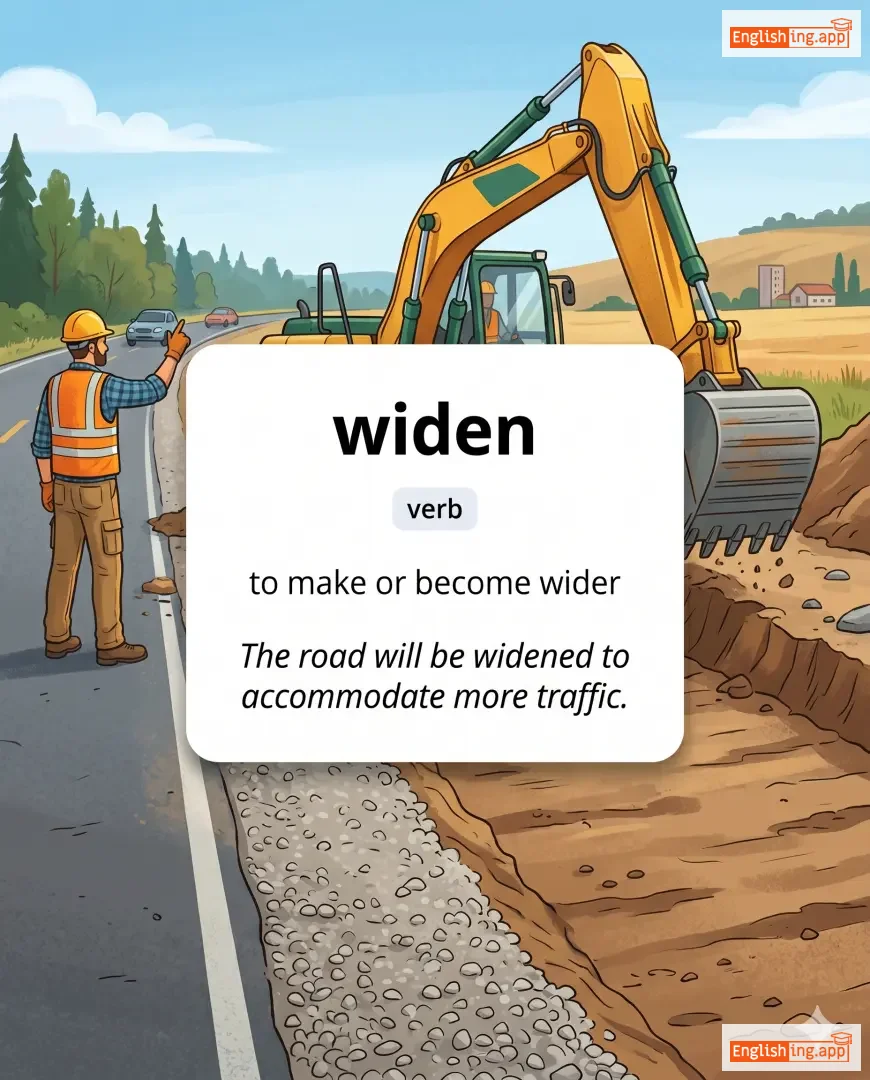
to make or become wider or broader
••••••
|
They plan to widen the road next year.
彼らは来年、道路を広げる予定です。
••••••
|
彼らは来年、道路を広げる予定です。
Karera wa rainen, dōro o hirogeru yotei desu.
••••••
|
- •••••• | - •••••• | - •••••• |
broaden, expand, extend, enlarge
••••••
|
narrow, reduce, contract, shrink
••••••
|
widen road, widen gap, widen range, gradually widen
••••••
|
広げるは、道路が広くなるようにすること。
••••••
|
|
#5510
🌍
|
/ˈwaɪd.sprɛd/
adjective
(ワイドスプレッド)
••••••
|
|
広範囲の
kōhan'i no
••••••
|
- •••••• | - •••••• | - •••••• | - •••••• |
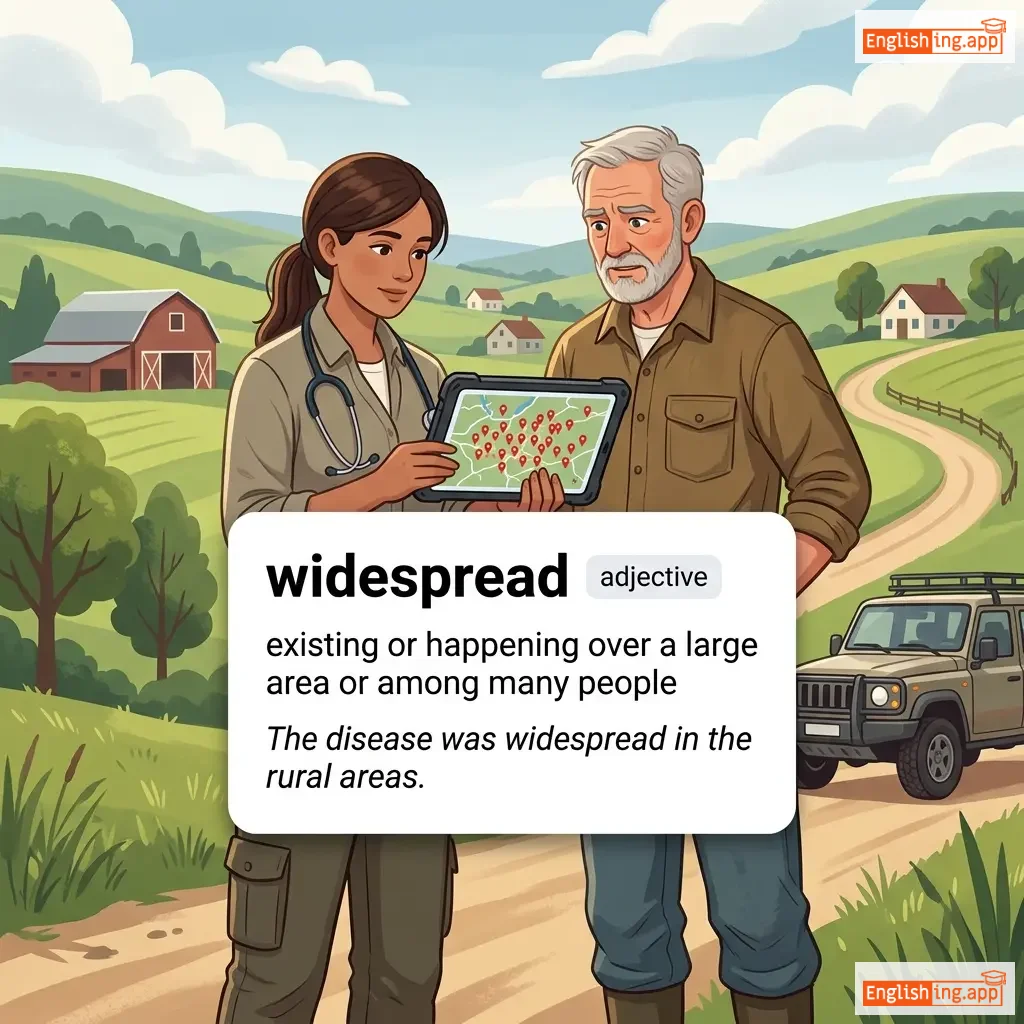
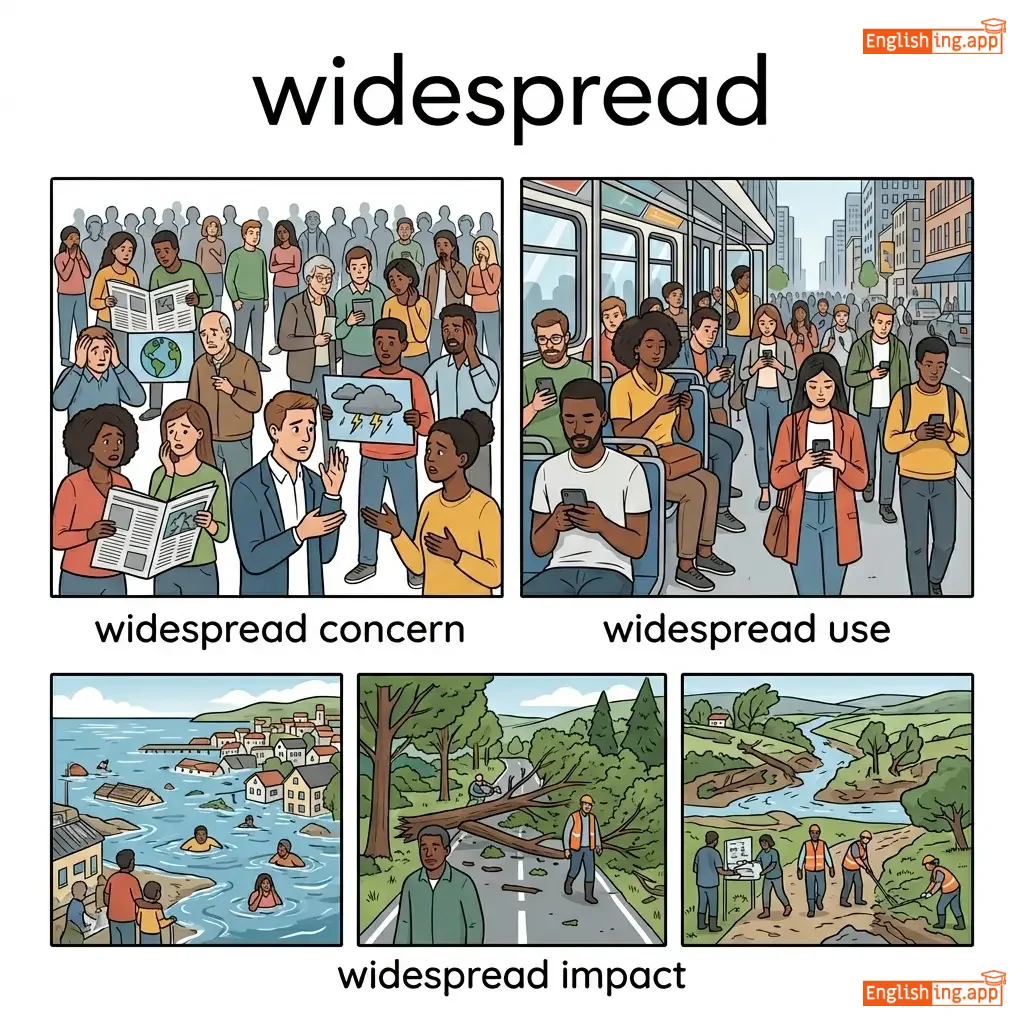
existing or happening in many places or among many people
••••••
|
There is widespread support for the new policy. |
新しい政策には広範囲な支持があります。
atarashī seisaku ni wa kōhan'i na shiji ga arimasu.
••••••
|
- •••••• | - •••••• | - •••••• |
extensive, prevalent, universal, common
••••••
|
limited, localized, restricted, rare
••••••
|
widespread support, widespread use, widespread damage, widespread belief
••••••
|
Japanese '広範囲の' corresponds to 'widespread'.
••••••
|
|
#5511
🖤
|
/ˈwɪdəʊ/
noun
(ウィドウ)
••••••
|
- •••••• |
未亡人
miboujin
••••••
|
- •••••• | - •••••• | - •••••• | - •••••• |
a woman whose husband has died and who has not married again
••••••
|
She became a widow at a very young age.
彼女はとても若い年齢で未亡人になりました。
••••••
|
彼女はとても若い年齢で未亡人になりました。
Kanojo wa totemo wakai nenrei de miboujin ni narimashita.
••••••
|
grass widow
草の未亡人
••••••
|
a woman whose husband is temporarily away
••••••
|
草の未亡人
kusa no miboujin
••••••
|
bereaved woman, lone woman, wife left behind
••••••
|
wife, bride
••••••
|
young widow, war widow, become a widow, widow pension
••••••
|
未亡人は未亡人を意味します — 'We do'と言いましたが、今は '彼は行ってしまった' 😢
••••••
|
|
#5512
↔️
|
/wɪdθ/
noun
(ウィズス)
••••••
|
- •••••• |
幅; 広がり
haba; hirogari
••••••
|
- •••••• | - •••••• | - •••••• | - •••••• |
the measurement or extent of something from side to side; breadth
••••••
|
The width of the river is about 50 meters.
川の幅は約50メートルです。
••••••
|
川の幅は約50メートルです。
Kawa no haba wa yaku gojuu meetoru desu.
••••••
|
- •••••• | - •••••• | - •••••• |
breadth, span, extent
••••••
|
length, height, narrowness
••••••
|
full width, average width, total width
••••••
|
幅を覚えるために川を思い浮かべてください。
••••••
|
|
#5513
👩❤️👨
|
/waɪf/
noun
(ワイフ)
••••••
|
- •••••• |
妻
tsuma
••••••
|
- •••••• | - •••••• | - •••••• | - •••••• |
a woman who is married to someone
••••••
|
She is the wife of the famous author. |
彼女は有名な作家の妻です。
Kanojo wa yūmei na sakka no tsuma desu.
••••••
|
- •••••• | - •••••• | - •••••• |
spouse, partner, better half
••••••
|
husband
••••••
|
wife and husband, loving wife, devoted wife
••••••
|
‘Tsuma’ means wife in Japanese! Easy to remember.
••••••
|
|
#5514
🌿
|
/waɪld/
adjective
(waild)
••••••
|
- •••••• |
野生
yasei
••••••
|
- •••••• | - •••••• | - •••••• | - •••••• |
living or growing in the natural environment; uncontrolled or untamed
••••••
|
The children ran wild in the park. |
子供たちは公園で野生的に走り回った。
Kodomotachi wa kouen de yaseiteki ni hashirimawatta.
••••••
|
run wild |
to behave without restraint or control
••••••
|
野生で走る
yasei de hashiru
••••••
|
untamed, feral, uncontrolled, savage, free
••••••
|
tame, domestic, controlled
••••••
|
wild animal, wild nature, wild guess, wild behavior
••••••
|
Wildは野生を意味します – ジャングルで動物が自由に走り回っています。
••••••
|
|
#5515
🦌
|
/ˈwaɪldˌlaɪf/
noun
(wairudoraifu)
••••••
|
- •••••• |
野生動物
yasei doubutsu
••••••
|
- •••••• | - •••••• | - •••••• | - •••••• |
animals, birds, and plants living in their natural environment
••••••
|
The park is home to a wide variety of wildlife. |
その公園は多種多様な野生動物の家です。
Sono kōen wa tashu tayō na yasei dōbutsu no ie desu.
••••••
|
wildlife conservation |
the protection of wild animals and their habitats
••••••
|
野生動物保護
yasei dōbutsu hogo
••••••
|
fauna, animals, creatures, nature, biosphere
••••••
|
domestic animals, pets
••••••
|
wildlife sanctuary, wildlife photographer, protect wildlife, wildlife reserve
••••••
|
Wild life は野生動物の世界 — 自然の中で生きる 🐻
••••••
|
|
#5516
✍️
|
/wɪl/
noun, verb
(ウィル)
••••••
|
- •••••• |
意志
ishi
••••••
|
- •••••• | - •••••• |
wills
ウィルズ
••••••
|
willing
ウィリング
••••••
|
expressing future tense or intention; a legal document
••••••
|
She will attend the meeting tomorrow.
彼女は明日会議に出席します。
••••••
|
彼女は明日会議に出席します。
Kanojo wa ashita kaigi ni shusseki shimasu.
••••••
|
Will to power
力への意志
••••••
|
the drive to assert one's own will over others
••••••
|
力への意志
Chikara e no ishi
••••••
|
intend, shall, want, determination
••••••
|
won't, unwilling
••••••
|
last will, will and testament, strong will
••••••
|
意志の力、未来の意志 ✍️
••••••
|
|
#5517
🙋♂️
|
/ˈwɪl.ɪŋ/
adjective
(ウィリング)
••••••
|
- •••••• |
意欲がある; 準備ができている
iyoku ga aru; junbi ga dekite iru
••••••
|
- •••••• | - •••••• | - •••••• | - •••••• |
ready, eager, or prepared to do something
••••••
|
She is willing to help with the project. |
彼女はプロジェクトを手伝う準備ができています。
kanojo wa purojekuto o tetsudau junbi ga dekiteimasu.
••••••
|
- •••••• | - •••••• | - •••••• |
ready, eager, prepared, inclined
••••••
|
unwilling, reluctant, hesitant, resistant
••••••
|
willing to help, willing participant, willing cooperation, willing spirit
••••••
|
意欲 = willing, 準備ができている = ready
••••••
|
|
#5518
😊
|
/ˈwɪl.ɪŋ.li/
adverb
(ウィリングリー)
••••••
|
- •••••• |
自発的に
jihatsuteki ni
••••••
|
- •••••• | - •••••• | - •••••• | - •••••• |
in a willing manner; voluntarily; with free will
••••••
|
She willingly helped her neighbors during the emergency. |
彼女は緊急時に自発的に隣人を助けました。
kanojo wa kinkyū-ji ni jihatsuteki ni rinjin o tasukemashita
••••••
|
- •••••• | - •••••• | - •••••• |
voluntarily, eagerly, gladly, readily, freely
••••••
|
reluctantly, unwillingly, forcibly, involuntarily
••••••
|
willingly accept, willingly participate, willingly cooperate, willingly volunteer
••••••
|
自発的に何かをするのは、‘自分の意志でやりたかった’という気持ちです。
••••••
|
|
#5519
💪
|
/ˈwɪlɪŋnəs/
noun
(ウィリングネス)
••••••
|
- •••••• |
意欲
iyoku
••••••
|
- •••••• | - •••••• | - •••••• | - •••••• |
the quality of being prepared or ready to do something
••••••
|
Her willingness to help others made her very popular. |
他の人を助ける意欲が彼女を非常に人気者にした。
Hoka no hito o tasukeru iyoku ga kanojo o hijou ni ninki mono ni shita.
••••••
|
- •••••• | - •••••• | - •••••• |
readiness, eagerness, enthusiasm, consent, agreement
••••••
|
reluctance, unwillingness
••••••
|
show willingness, express willingness, willingness to cooperate, willingness to learn
••••••
|
Willingnessは意欲を意味し、意欲は何かをしたい気持ちを示す!
••••••
|
|
#5520
🏆
|
/wɪn/
verb
••••••
|
|
- •••••• |
won
••••••
|
won
••••••
|
wins
••••••
|
winning
••••••
|
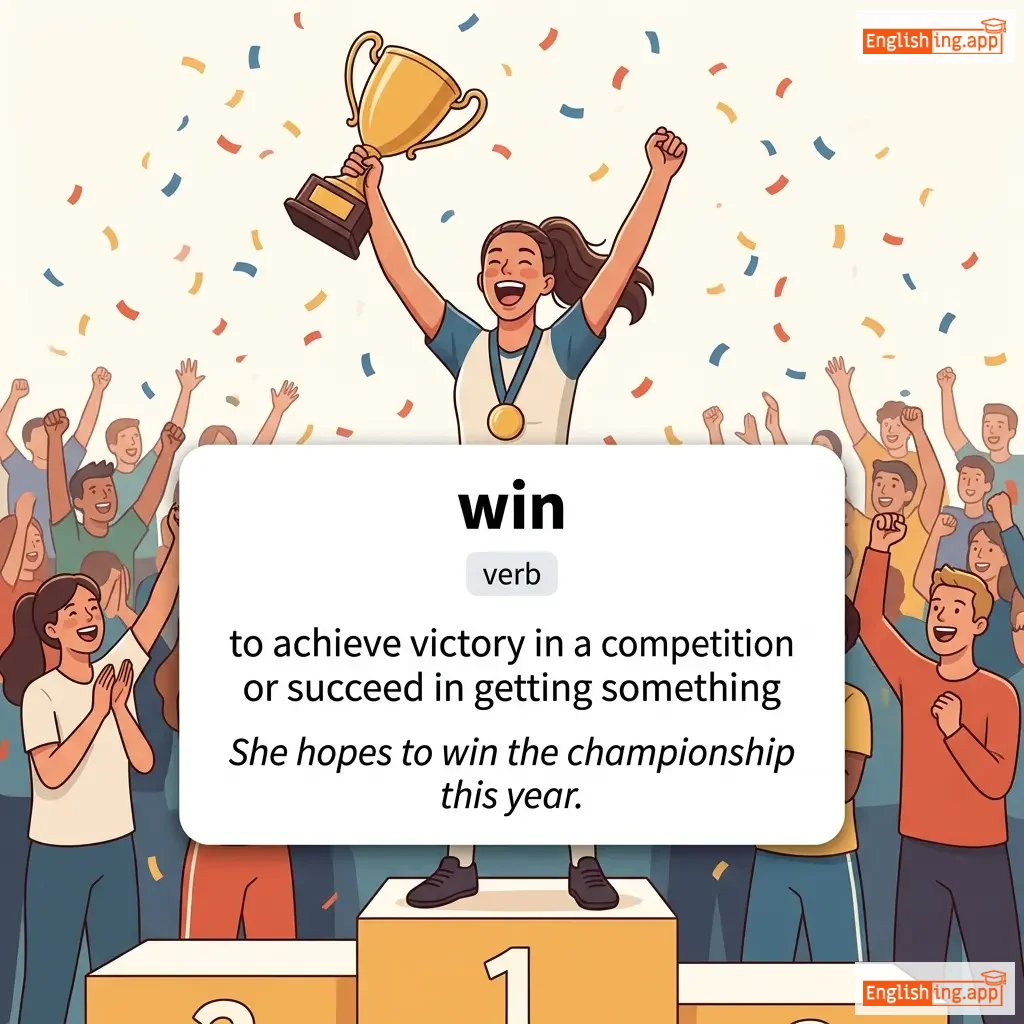
to achieve victory in a competition or succeed in getting something
••••••
|
She hopes to win the championship this year. |
- •••••• |
win over |
to persuade or gain support
••••••
|
- •••••• |
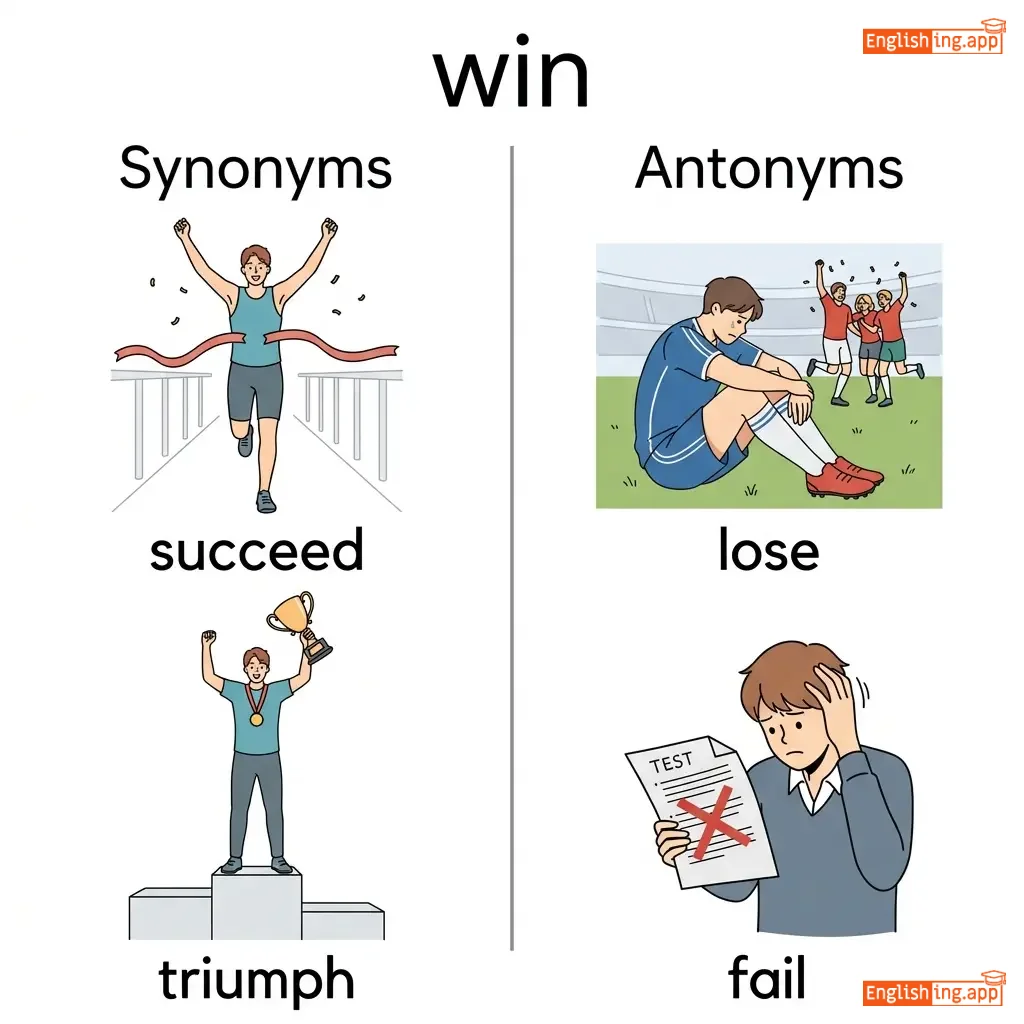
succeed, triumph, prevail, conquer
••••••
|
lose, fail, surrender
••••••
|
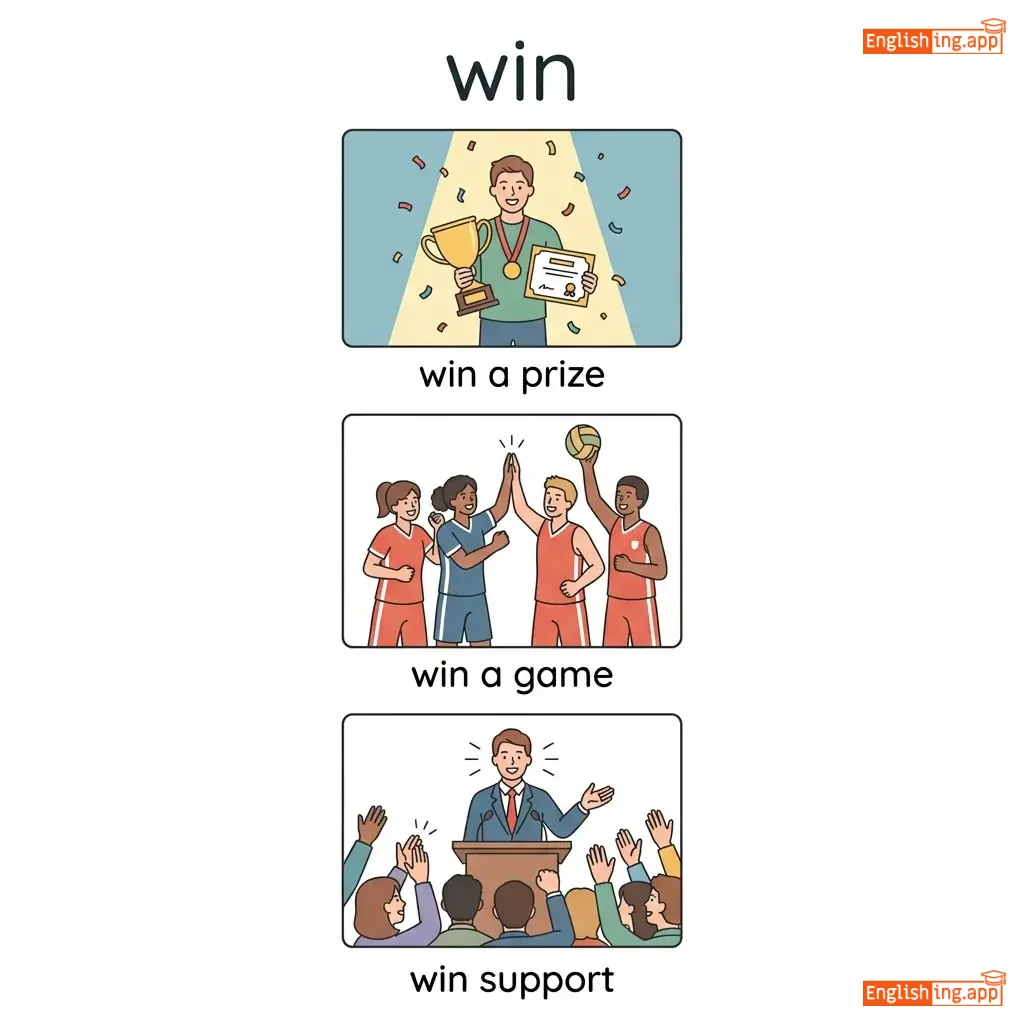
win a prize, win a game, win support, win the championship
••••••
|
No •••••• |
|
#5521
🌬️
|
/wɪnd/
noun
(ウィンド)
••••••
|
- •••••• |
風
kaze
••••••
|
- •••••• | - •••••• | - •••••• | - •••••• |
the natural movement of air, especially in the form of a current of air blowing from a particular direction
••••••
|
The wind blew the leaves off the trees.
風が木の葉を吹き飛ばした。
••••••
|
風が木の葉を吹き飛ばした。
Kaze ga ki no ha o fuki tobashita.
••••••
|
- •••••• | - •••••• | - •••••• |
breeze, gust, gale, draft
••••••
|
calm, stillness
••••••
|
strong wind, wind speed, wind direction, cold wind
••••••
|
風 - 風の音を聞くように感じる
••••••
|
|
#5522
🪟
|
/ˈwɪn.doʊ/
noun
(ウィンドウ)
••••••
|
- •••••• |
窓
mado
••••••
|
- •••••• | - •••••• | - •••••• | - •••••• |
an opening in a wall fitted with glass to let in light and air
••••••
|
Please open the window for fresh air.
新鮮な空気のために窓を開けてください。
••••••
|
新鮮な空気のために窓を開けてください。
shinsen na kuuki no tame ni mado o akete kudasai
••••••
|
- •••••• | - •••••• | - •••••• |
casement, pane, opening
••••••
|
wall, barrier
••••••
|
window frame, window sill, bay window, window blinds
••••••
|
Mado = 'magic door' bringing in fresh air!
••••••
|
|
#5523
🍷
|
/waɪn/
noun
(ワイン)
••••••
|
- •••••• |
ワイン
waini
••••••
|
- •••••• | - •••••• | - •••••• | - •••••• |
an alcoholic drink made from fermented grapes or other fruits
••••••
|
They served a glass of red wine at the dinner.
彼らはディナーで赤ワインを一杯出しました。
••••••
|
彼らはディナーで赤ワインを一杯出しました。
Karera wa dinā de aka wain o ippai dashimashita.
••••••
|
- •••••• | - •••••• | - •••••• |
vino, beverage, drink, alcohol
••••••
|
water, juice
••••••
|
red wine, white wine, glass of wine, bottle of wine
••••••
|
Wine pairs with dinner—imagine a glass of red wine with a fancy meal!
••••••
|
|
#5524
🪶
|
/wɪŋ/
verb
(ウィング)
••••••
|
|
翼で飛ぶ
tsubasa de tobu
••••••
|
winged
ウィングド
••••••
|
winged
ウィングド
••••••
|
wings
ウィングス
••••••
|
winging
ウィンギング
••••••
|
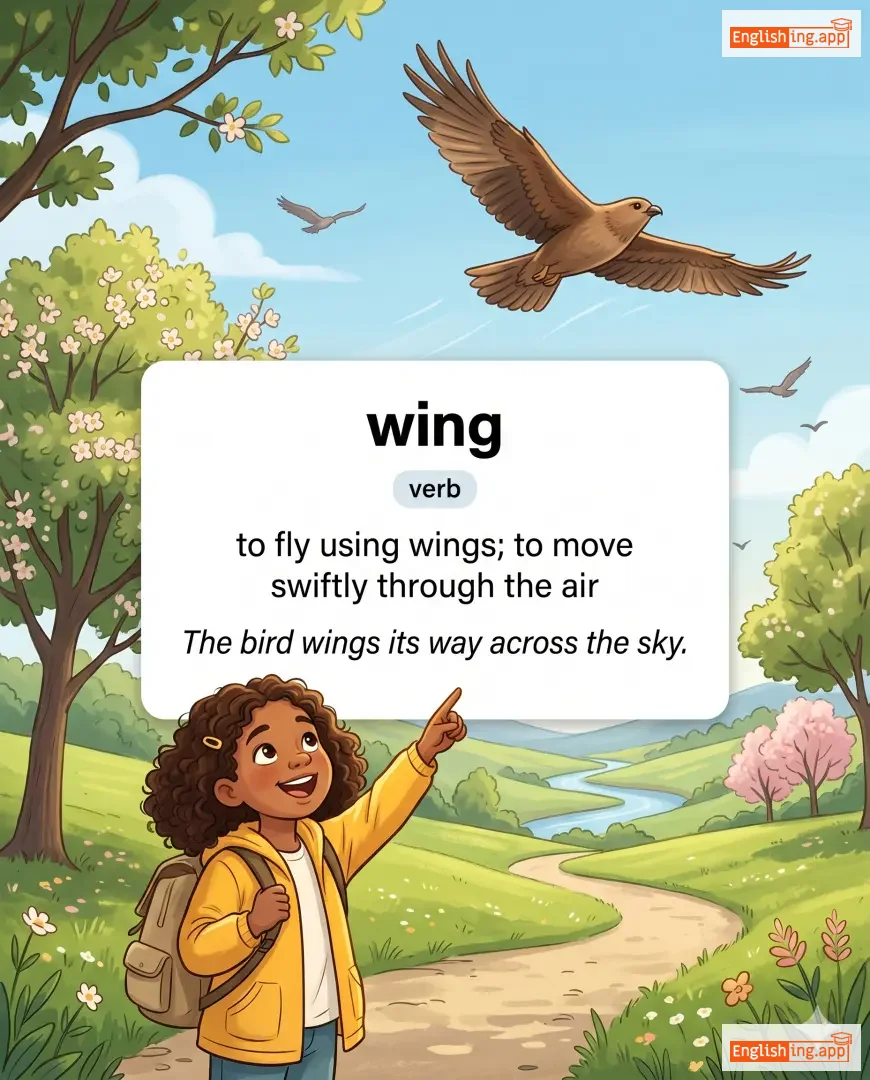
to fly using wings; to move swiftly through the air
••••••
|
The bird wings its way across the sky.
鳥は空を飛びます。
••••••
|
鳥は空を飛ぶ。
Tori wa sora o tobu.
••••••
|
- •••••• | - •••••• | - •••••• |
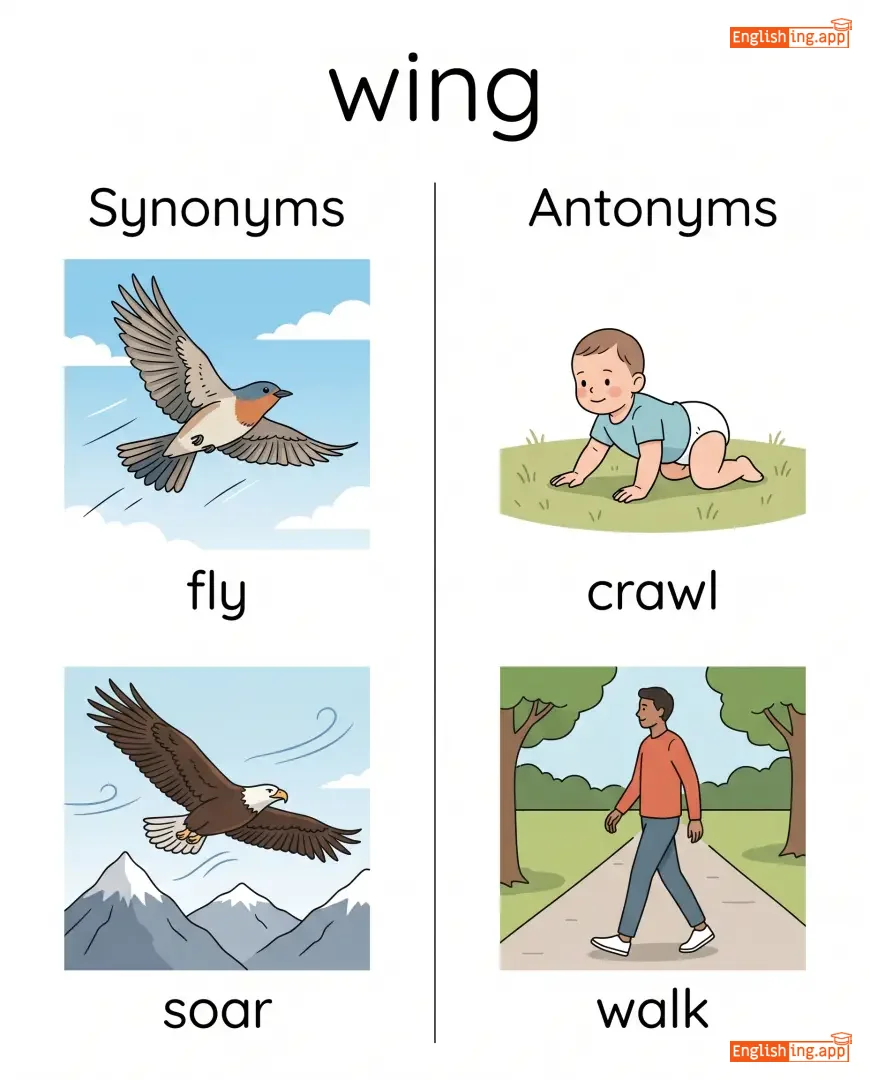
fly, soar, glide, flutter
••••••
|
crawl, walk, ground, land
••••••
|
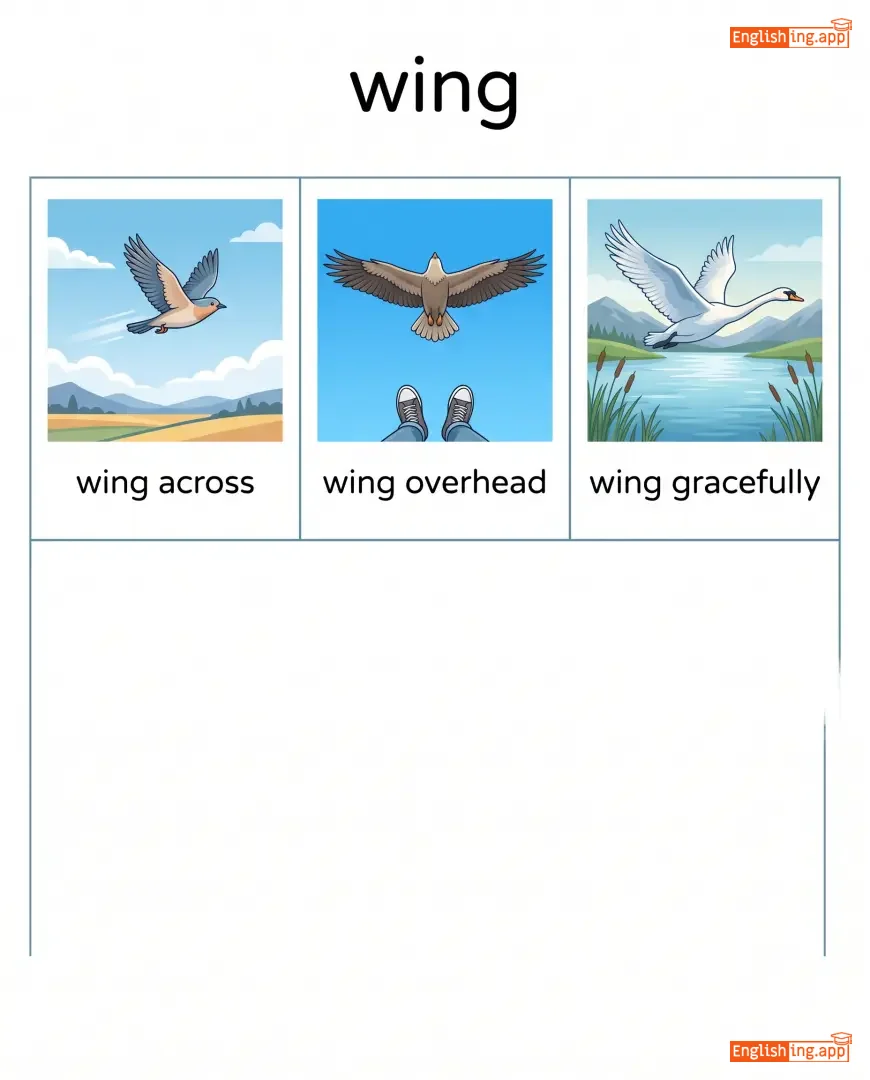
wing across, wing overhead, wing gracefully, wing swiftly
••••••
|
翼を広げて飛ぶ (翼で飛ぶ)
••••••
|
Vocabulary Quiz
Test your vocabulary by matching words with their translations or meanings.
Login to take the quiz
Comments (0)
Share your thoughts and join the discussion.
Join the discussion by logging in
Login to CommentNo comments yet
Be the first to share your thoughts!