

अनुवाद
भूतकाल
भूत कृदंत
तृतीय पुरुष एकवचन
जेरंड
मीनिंग
उदाहरण वाक्य
उदाहरण वाक्य अनुवाद
सिनोनिम्स
एंटोनिम्स
कॉलोकेशन्स
निमोनिक

Swipe left or right, or use the buttons. Tap image to zoom.
उदाहरण वाक्य अनुवाद
शब्द
Lesson 115Lesson 115 - मास्क टॉगल
|
इमोजी
|
शब्द | Images | अनुवाद | भूतकाल | भूत कृदंत | तृतीय पुरुष एकवचन | जेरंड | मीनिंग | उदाहरण वाक्य | उदाहरण वाक्य अनुवाद | एक्जाम्पल एक्स्प्रेशन | उदाहरण अभिव्यक्ति का अर्थ | उदाहरण अभिव्यक्ति अनुवाद | सिनोनिम्स | एंटोनिम्स | कॉलोकेशन्स | निमोनिक |
|---|---|---|---|---|---|---|---|---|---|---|---|---|---|---|---|---|---|
|
#5475
🌀
|
/wɪrd/
adjective
(वर्ड)
••••••
|
- •••••• |
अजीब
ajeeb
••••••
|
- •••••• | - •••••• | - •••••• | - •••••• |
suggesting something supernatural or very strange; unusual
••••••
|
The movie had a weird ending that nobody expected. |
फिल्म का एक अजीब अंत था जिसे किसी ने भी उम्मीद नहीं की थी।
Film ka ek ajeeb ant tha jise kisi ne bhi ummid nahi ki thi.
••••••
|
weird out |
to make someone feel uncomfortable or strange
••••••
|
चिंतित करना
chintit karna
••••••
|
strange, odd, bizarre, unusual, peculiar
••••••
|
normal, ordinary, usual
••••••
|
weird feeling, weird dream, weird noise, weird behavior
••••••
|
Weird का मतलब अजीब है, जब कुछ अजीब हो तो सब चौंक जाते हैं।
••••••
|
|
#5476
👋
|
/ˈwelkəm/
verb
(स्वागत)
••••••
|
|
स्वागत करना
swāgat karnā
••••••
|
welcomed
स्वागत किया
••••••
|
welcomed
स्वागत किया
••••••
|
welcomes
स्वागत करता है
••••••
|
welcoming
स्वागत कर रहे
••••••
|
to greet someone in a friendly way; to receive gladly
••••••
|
They welcome new students warmly.
उन्होंने नए छात्रों का गर्मजोशी से स्वागत किया।
••••••
|
Unhone naye chātroṅ kā garmjoshi se swāgat kiyā.
Unhone naye chātroṅ kā garmjoshi se swāgat kiyā
••••••
|
- •••••• | - •••••• | - •••••• |
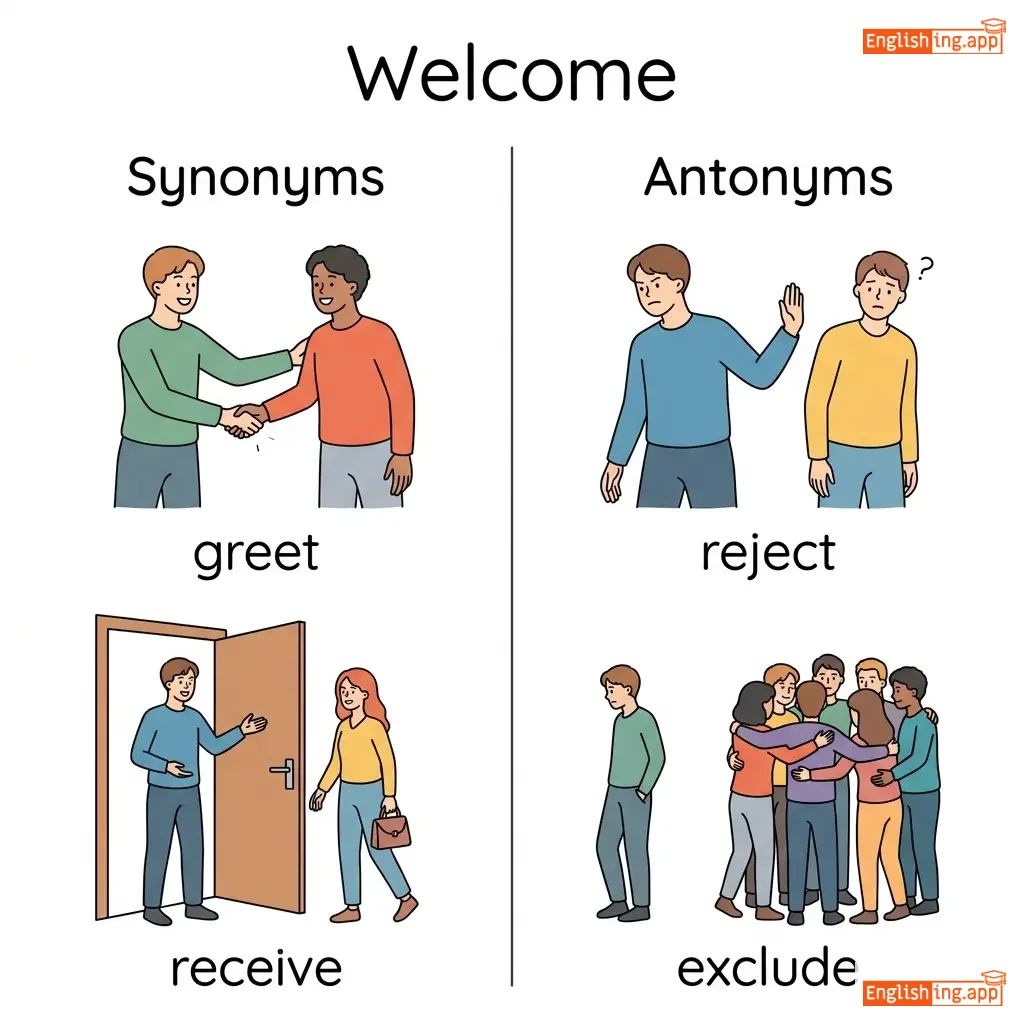
greet, receive, embrace, admit
••••••
|
reject, shun, dismiss, exclude
••••••
|
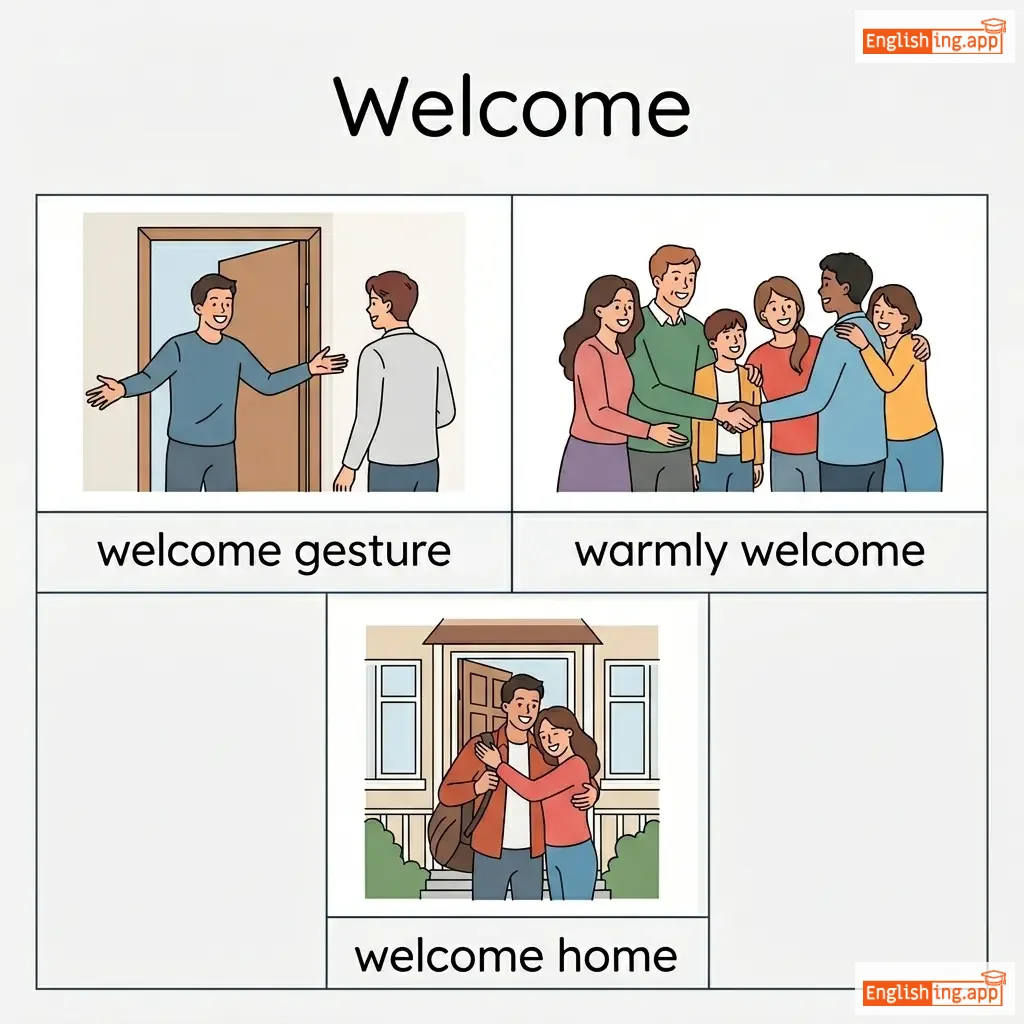
warmly welcome, welcome guests, welcome changes, welcome opportunity, welcome visitors
••••••
|
Swāgat karte samay, hamesha khush rahen
••••••
|
|
#5477
🤝
|
/ˈwel.feər/
noun
(वेलफेयर)
••••••
|
- •••••• |
कल्याण; भलाई; सुख-समृद्धि
kalyan; bhalai; sukh-samriddhi
••••••
|
- •••••• | - •••••• | - •••••• | - •••••• |
the health, happiness, and fortunes of a person or group; care and support
••••••
|
The government is responsible for the welfare of its citizens. |
सरकार अपने नागरिकों की भलाई के लिए जिम्मेदार है।
Sarkar apne nagrikon ki bhalai ke liye jimmedar hai.
••••••
|
- •••••• | - •••••• | - •••••• |
well-being, benefit, good, prosperity
••••••
|
harm, disadvantage, detriment
••••••
|
social welfare, welfare state, welfare system
••••••
|
Welfare के साथ 'कल्याण' याद रखें
••••••
|
|
#5478
🕳️
|
/wel/
noun
(वेल)
••••••
|
- •••••• |
कूप; भलाई;
koop; bhalaai
••••••
|
- •••••• | - •••••• | - •••••• | - •••••• |
a deep hole in the ground from which water is obtained
••••••
|
The villagers get water from the old well in the center of town.
द ग्रामीण लोग शहर के केंद्र में पुराने कुएं से पानी लेते हैं।
••••••
|
ग्रामवासी शहर के केंद्र में पुराने कूप से पानी लेते हैं।
Gramaavaasee shaher ke kendr mein puraane koop se paani lete hain.
••••••
|
- •••••• | - •••••• | - •••••• |
water hole, spring, bore
••••••
|
hill, mound, elevation
••••••
|
water well, oil well, deep well
••••••
|
वेल को कुएं के रूप में याद रखें, जो पानी देता है।
••••••
|
|
#5479
😊
|
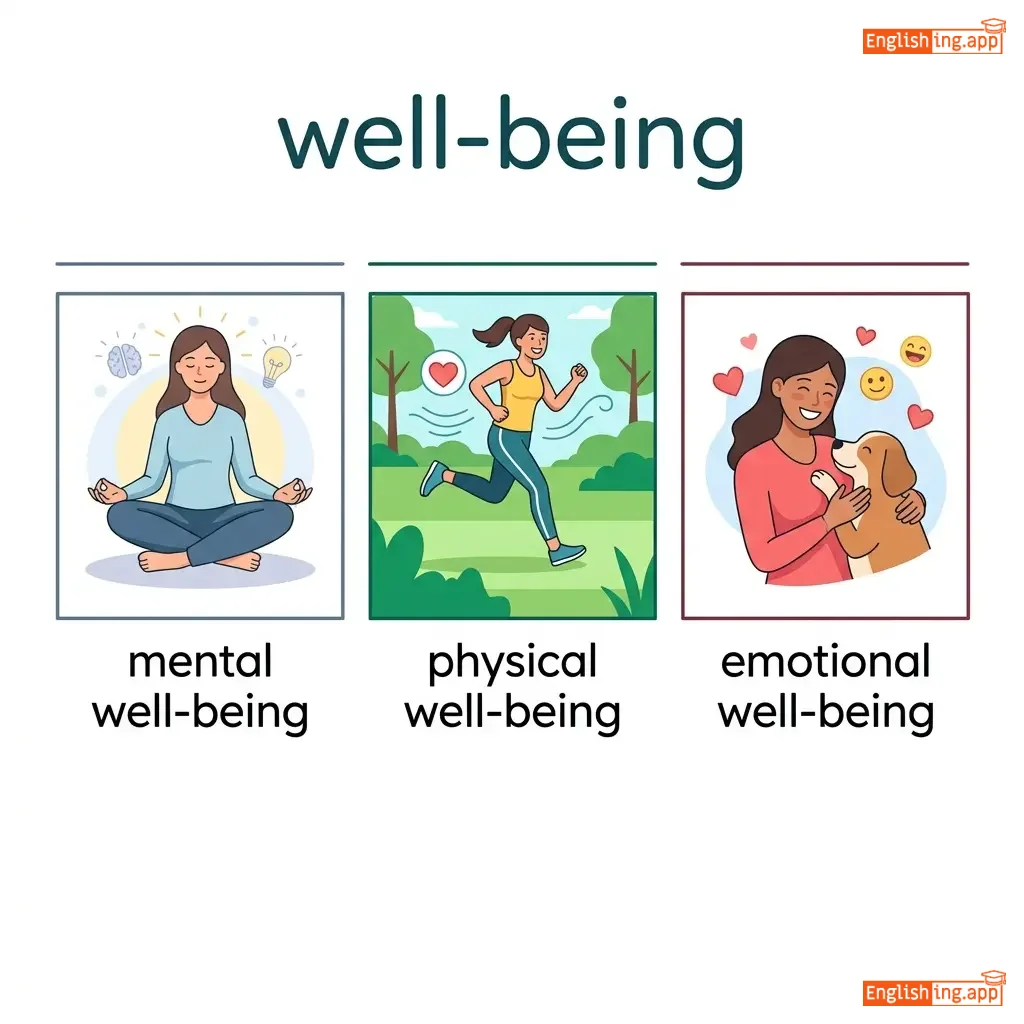
/ˈwel.biː.ɪŋ/
noun
(वेल-बिंग)
••••••
|
|
कल्याण
kalyan
••••••
|
- •••••• | - •••••• | - •••••• | - •••••• |
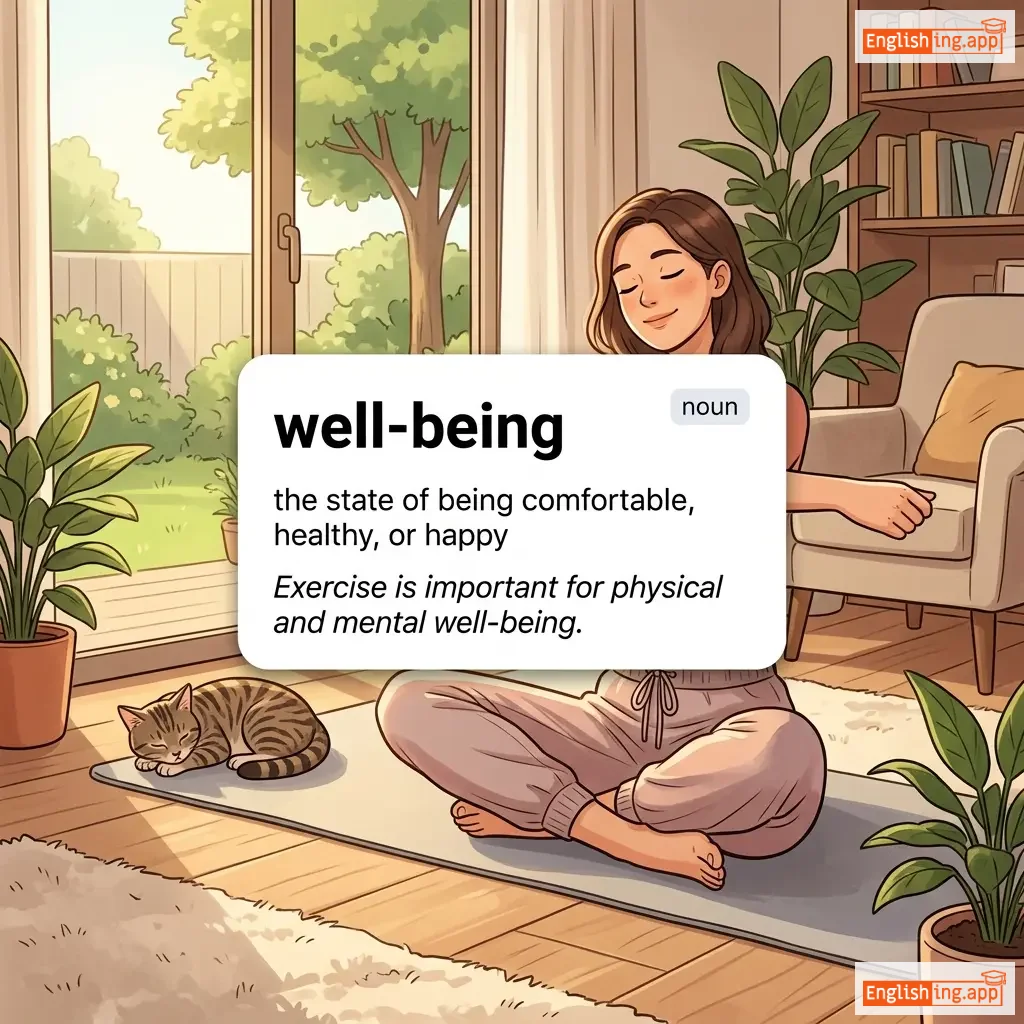
the state of being comfortable, healthy, or happy
••••••
|
Regular exercise contributes to physical and mental well-being. |
नियमित व्यायाम शारीरिक और मानसिक कल्याण में योगदान करता है।
Niyamit vyaayam shaareerik aur maansik kalyan mein yogdan karta hai.
••••••
|
- •••••• | - •••••• | - •••••• |
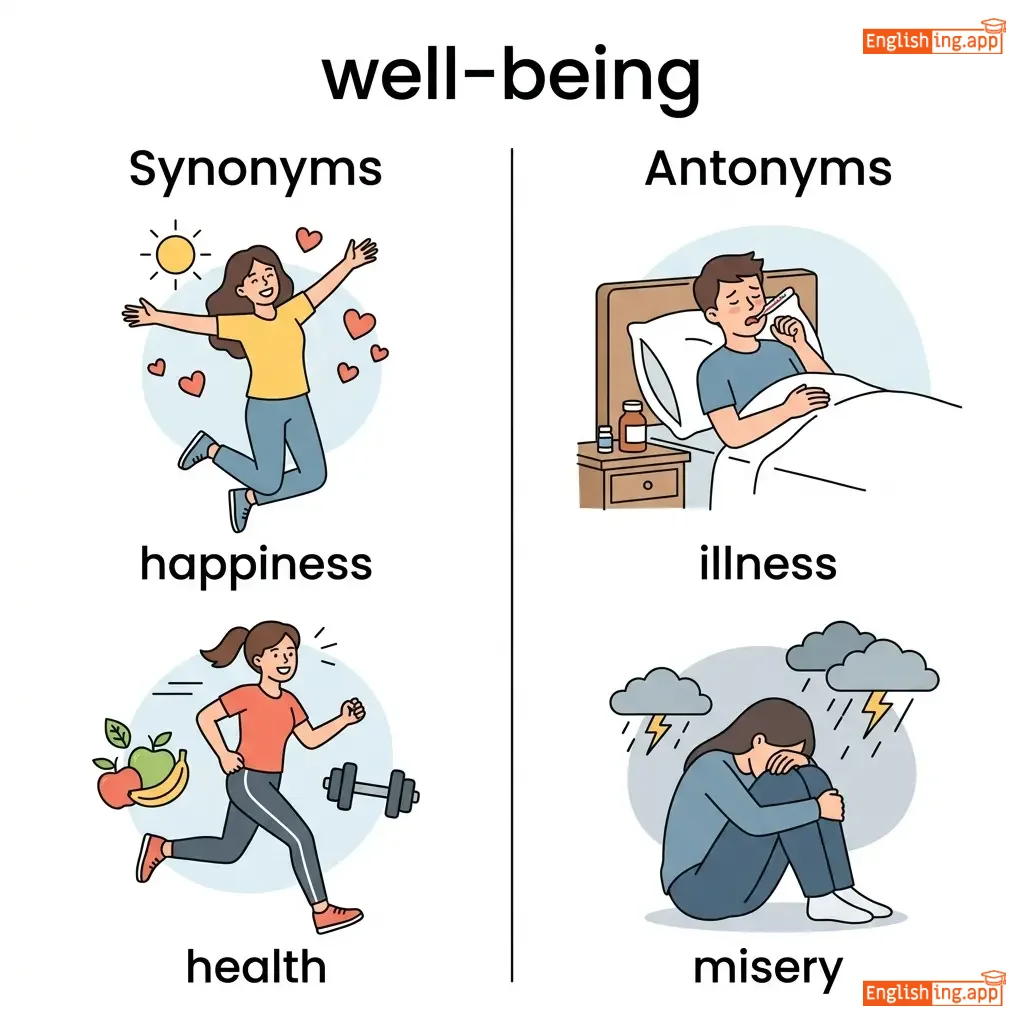
welfare, health, happiness, comfort
••••••
|
suffering, distress, misery
••••••
|
physical well-being, mental well-being, emotional well-being
••••••
|
Kalyaan (kalyan) means wellness in Hindi, just like 'well-being' in English.
••••••
|
|
#5480
🌟
|
/ˌwelˈnoʊn/
adjective
(वेल-नोन)
••••••
|
- •••••• |
प्रसिद्ध
prasiddh
••••••
|
- •••••• | - •••••• | - •••••• | - •••••• |
known by many people; famous or recognized
••••••
|
He is a well-known actor in his country. |
वह अपने देश में एक प्रसिद्ध अभिनेता है।
Woh apne desh mein ek prasiddh abhineta hai.
••••••
|
- •••••• | - •••••• | - •••••• |
famous, renowned, popular, prominent, recognized
••••••
|
unknown, obscure, unfamiliar
••••••
|
well-known fact, well-known person, well-known brand, well-known story
••••••
|
Well-known का मतलब है 'पहचाना हुआ' — सब लोग जानते हैं!
••••••
|
|
#5481
🌅
|
/wɛst/
noun
(वेस्ट)
••••••
|
- •••••• |
पश्चिम
pashchim
••••••
|
- •••••• | - •••••• | - •••••• | - •••••• |
the direction to the left of the north and to the right of the south, typically associated with the sunset
••••••
|
The sun sets in the west. |
सूरज पश्चिम में अस्त होता है।
Suraj pashchim mein ast hota hai.
••••••
|
- •••••• | - •••••• | - •••••• |
sunset, occident
••••••
|
east, orient
••••••
|
west coast, west side, go west, western civilization
••••••
|
पश्चिम (pashchim) में सूरज (suraj) अस्त होता है - The sun sets in the west.
••••••
|
|
#5482
🌎
|
/ˈwɛstərn/
adjective
(वेस्टर्न)
••••••
|
- •••••• |
पश्चिमी
pashchimi
••••••
|
- •••••• | - •••••• | - •••••• | - •••••• |
relating to or characteristic of the West, especially Europe and the Americas
••••••
|
She loves western music and culture. |
उसे पश्चिमी संगीत और संस्कृति बहुत पसंद है।
Use pashchimi sangeet aur sanskriti bahut pasand hai.
••••••
|
- •••••• | - •••••• | - •••••• |
occidental, westernized
••••••
|
eastern, oriental
••••••
|
western culture, western philosophy, western world
••••••
|
पश्चिमी संस्कृति पश्चिम में पाई जाती है - Western culture is found in the West.
••••••
|
|
#5483
💧
|
/wet/
adjective
(वेट)
••••••
|
- •••••• |
गीला; सिक्त;
geela; sikta;
••••••
|
- •••••• | - •••••• | - •••••• | - •••••• |
covered or saturated with water or another liquid; not dry
••••••
|
My clothes are still wet from the rain.
मेरे कपड़े बारिश से अभी भी गीले हैं।
••••••
|
मेरे कपड़े बारिश से अभी भी गीले हैं।
mere kapde baarish se abhi bhi geele hain.
••••••
|
- •••••• | - •••••• | - •••••• |
damp, moist, soaked, drenched
••••••
|
dry, arid, parched, dehydrated
••••••
|
wet clothes, wet weather, get wet
••••••
|
हवा में बर्फ गीली हो जाती है। (hawa mein baraf geeli ho jaati hai)
••••••
|
|
#5484
❓
|
/wɒt/
pronoun
(वॉट)
••••••
|
- •••••• |
क्या
kya
••••••
|
- •••••• | - •••••• | - •••••• | - •••••• |
used to ask for information about something
••••••
|
What is your name? |
तुम्हारा नाम क्या है?
Tumhara naam kya hai?
••••••
|
- •••••• | - •••••• | - •••••• |
which, that
••••••
|
- •••••• |
what time, what happened, what are you doing
••••••
|
क्या (kya) सवाल पूछने के लिए - 'What' का उपयोग सवाल पूछने के लिए किया जाता है।
••••••
|
|
#5485
🤷♂️
|
/wɒtˈɛvər/
pronoun
(व्हाटएवर)
••••••
|
- •••••• |
जो कुछ भी
jo kuch bhi
••••••
|
- •••••• | - •••••• | - •••••• | - •••••• |
used to refer to anything or everything that is of the type mentioned
••••••
|
You can choose whatever you like. |
आप जो चाहें चुन सकते हैं।
Aap jo chahen chun sakte hain.
••••••
|
- •••••• | - •••••• | - •••••• |
anything, everything
••••••
|
- •••••• |
whatever you want, whatever happens
••••••
|
जो कुछ भी (jo kuch bhi) आप चाहें - Whatever you want, you can have.
••••••
|
|
#5486
🌾
|
/wiːt/
noun
(व्हीट)
••••••
|
- •••••• |
गेंहू
genhoo
••••••
|
- •••••• | - •••••• | - •••••• | - •••••• |
a cereal plant whose grain is used to make flour for bread and other foods
••••••
|
Farmers harvested the wheat in early summer. |
किसानों ने गर्मी की शुरुआत में गेंहू की फसल काटी।
Kisano ne garmi ki shuruat mein genhoo ki fasal kaati.
••••••
|
separate the wheat from the chaff |
to separate valuable things or people from those that are not
••••••
|
अच्छे और बुरे को अलग करना
achhe aur bure ko alag karna
••••••
|
grain, cereal, barley, oat, corn
••••••
|
chaff, waste
••••••
|
wheat flour, wheat bread, wheat field, wheat grain, wheat harvest
••••••
|
Wheat मतलब गेंहू 🌾 — गेंहू से रोटी बनती है, इसलिए खाने की चीजें याद रखो!
••••••
|
|
#5487
🚗
|
/wiːl/
noun
(व्हील)
••••••
|
- •••••• |
पहिया
pahiya
••••••
|
- •••••• | - •••••• | - •••••• | - •••••• |
a circular object that revolves on an axle and is used to move or carry things
••••••
|
The wheel of the car broke down on the way. |
कार का पहिया रास्ते में टूट गया था।
Car ka pahiya raste mein toot gaya tha.
••••••
|
- •••••• | - •••••• | - •••••• |
disk, circle, rotor, rim
••••••
|
none
••••••
|
steering wheel, bicycle wheel, car wheel, turn the wheel
••••••
|
पहिया घुमाकर गाड़ी चलती है (Pahiya ghoomakar gaadi chalti hai)
••••••
|
|
#5488
⏰
|
/wɛn/
adverb
(व्हेन)
••••••
|
- •••••• |
कब
kab
••••••
|
- •••••• | - •••••• | - •••••• | - •••••• |
at what time
••••••
|
Do you know when the train leaves? |
क्या तुम जानते हो कब ट्रेन छूटेगी?
Kya tum jaante ho kab train chootegi?
••••••
|
- •••••• | - •••••• | - •••••• |
at what time, whenever
••••••
|
never, always
••••••
|
when will, when did, when does, when do
••••••
|
व्हेन से 'कब' याद रखो (When se 'kab' yaad rakho)
••••••
|
|
#5489
🕐
|
/wenˈevər/
adverb
(व्हेनएवर)
••••••
|
- •••••• |
जब भी
jab bhi
••••••
|
- •••••• | - •••••• | - •••••• | - •••••• |
at any time that; every time that; no matter when
••••••
|
Call me whenever you need help.
जब भी तुम्हें मदद की ज़रूरत हो, मुझे कॉल करो.
••••••
|
जब भी तुम्हें मदद की ज़रूरत हो, मुझे कॉल करो.
jab bhi tumhen madad ki zaroorat ho, mujhe kaul karo.
••••••
|
- •••••• | - •••••• | - •••••• |
anytime, every time, no matter when
••••••
|
never, at no time
••••••
|
whenever possible, whenever necessary, whenever you want
••••••
|
Whenever = Jab bhi; imagine a clock saying Jab and a bee buzzing bhi to remind you of anytime
••••••
|
|
#5490
📍
|
/weər/
adverb
(व्हेयर)
••••••
|
- •••••• |
कहाँ
kahaan
••••••
|
- •••••• | - •••••• | - •••••• | - •••••• |
In or to what place or position; used to inquire about location
••••••
|
Where did you put my keys?
तुमने मेरी चाबियाँ कहाँ रखीं?
••••••
|
तुमने मेरी चाबियाँ कहाँ रखीं?
tumne meri chaabiyaan kahaan rakheen
••••••
|
- •••••• | - •••••• | - •••••• |
whereabouts, whither
••••••
|
here, there
••••••
|
where are you, where to go, where from
••••••
|
Where kahaan ki chabi ki raah, imagine a neon sign KAHAN near a chaabi (key) to remember 'Where' means 'kahaan'
••••••
|
|
#5491
⚖️
|
/wɛərˈæz/
conjunction
(व्हेयरएज़)
••••••
|
- •••••• |
जबकि
jabki
••••••
|
- •••••• | - •••••• | - •••••• | - •••••• |
used to introduce a contrast or comparison between two facts
••••••
|
She prefers tea, whereas he likes coffee. |
वह चाय पसंद करती है, जबकि वह कॉफी पसंद करता है।
Wah chai pasand karti hai, jabki wah coffee pasand karta hai.
••••••
|
- •••••• | - •••••• | - •••••• |
while, although, but, though
••••••
|
similarly, likewise
••••••
|
whereas clause, whereas statement, tea whereas coffee
••••••
|
Tea vs coffee तुलना - हिंदी में जबकि
••••••
|
|
#5492
🔗
|
/wɛərˈbaɪ/
adverb
(वेरबाई)
••••••
|
- •••••• |
जिससे
jisse
••••••
|
- •••••• | - •••••• | - •••••• | - •••••• |
by which; because of which
••••••
|
The company agreed to a contract whereby it would pay the penalty. |
कंपनी ने एक समझौते पर हस्ताक्षर किए जिसमें वह जुर्माना अदा करेगी।
Kampani ne ek samjhaute par hastakshar kiye jismein vah jurmana ada karegi.
••••••
|
- •••••• | - •••••• | - •••••• |
through which, by means of which, in which
••••••
|
- •••••• |
whereby agreement, whereby clause
••••••
|
Whereby sounds like 'वेरबाई', which can be remembered as 'जिससे' meaning by which.
••••••
|
|
#5493
🤔
|
/ˈwɛðər/
conjunction
(वेथर)
••••••
|
- •••••• |
क्या
kya
••••••
|
- •••••• | - •••••• | - •••••• | - •••••• |
used to express a doubt or choice between alternatives
••••••
|
I don’t know whether I should go.
मैं नहीं जानता कि मुझे जाना चाहिए या नहीं।
••••••
|
मुझे नहीं पता कि मुझे जाना चाहिए या नहीं।
Mujhe nahi pata ki mujhe jana chahiye ya nahi.
••••••
|
- •••••• | - •••••• | - •••••• |
if, either
••••••
|
none
••••••
|
whether or not, whether to go, whether he will
••••••
|
क्या (kya) किसी निर्णय पर पहुंचने के लिए एक सवाल है
••••••
|
|
#5494
❓
|
/wɪtʃ/
pronoun
(विच)
••••••
|
- •••••• |
कौन सा
kaun sa
••••••
|
- •••••• | - •••••• | - •••••• | - •••••• |
used to ask about one or more items from a defined set
••••••
|
Which one do you prefer, the red or the blue? |
आपको कौन सा पसंद है, लाल या नीला?
Aapko kaun sa pasand hai, laal ya neela?
••••••
|
- •••••• | - •••••• | - •••••• |
what, that, who
••••••
|
none
••••••
|
which one, which way, which time
••••••
|
Which helps you choose, 'Kaun' means 'which' in Hindi!
••••••
|
|
#5495
⏳
|
/waɪl/
conjunction
(व्हाइल)
••••••
|
- •••••• |
जब तक
jab tak
••••••
|
- •••••• | - •••••• | - •••••• | - •••••• |
during the time that something is happening
••••••
|
She was reading while waiting for the bus.
वह बस का इंतजार करते हुए पढ़ाई कर रही थी।
••••••
|
वह बस का इंतजार करते हुए पढ़ाई कर रही थी।
Wah bas ka intezaar karte hue padhai kar rahi thi.
••••••
|
- •••••• | - •••••• | - •••••• |
as, when, during
••••••
|
none
••••••
|
while waiting, while studying, while traveling
••••••
|
While you wait, think about 'jab tak' in Hindi!
••••••
|
|
#5496
🥄
|
/wɪp/
verb
(ह्विप)
••••••
|
- •••••• |
चाबुक मारना
chaabuk maarna
••••••
|
whipped
ह्विप्ड
••••••
|
whipped
ह्विप्ड
••••••
|
whips
ह्विप्स
••••••
|
whipping
ह्विपिंग
••••••
|
to strike or beat with a flexible instrument such as a rope or cord
••••••
|
The trainer whipped the horse to make it run faster.
कोच ने घोड़े को तेज दौड़ने के लिए ह्विप किया।
••••••
|
कोच ने घोड़े को तेज दौड़ने के लिए ह्विप किया।
Koch ne ghode ko tej daudne ke liye hwip kiya.
••••••
|
whip up
ह्विप अप
••••••
|
to quickly prepare or create something
••••••
|
जल्दी तैयार करना
jaldi tayaar karna
••••••
|
lash, beat, strike, thrash, flog
••••••
|
caress, soothe
••••••
|
whip cream, whip the horse, whip up enthusiasm, political whip
••••••
|
Whip मतलब चाबुक मारना — Whip से घोड़ा दौड़ने में ‘फिप’ करता है!
••••••
|
|
#5497
🤫
|
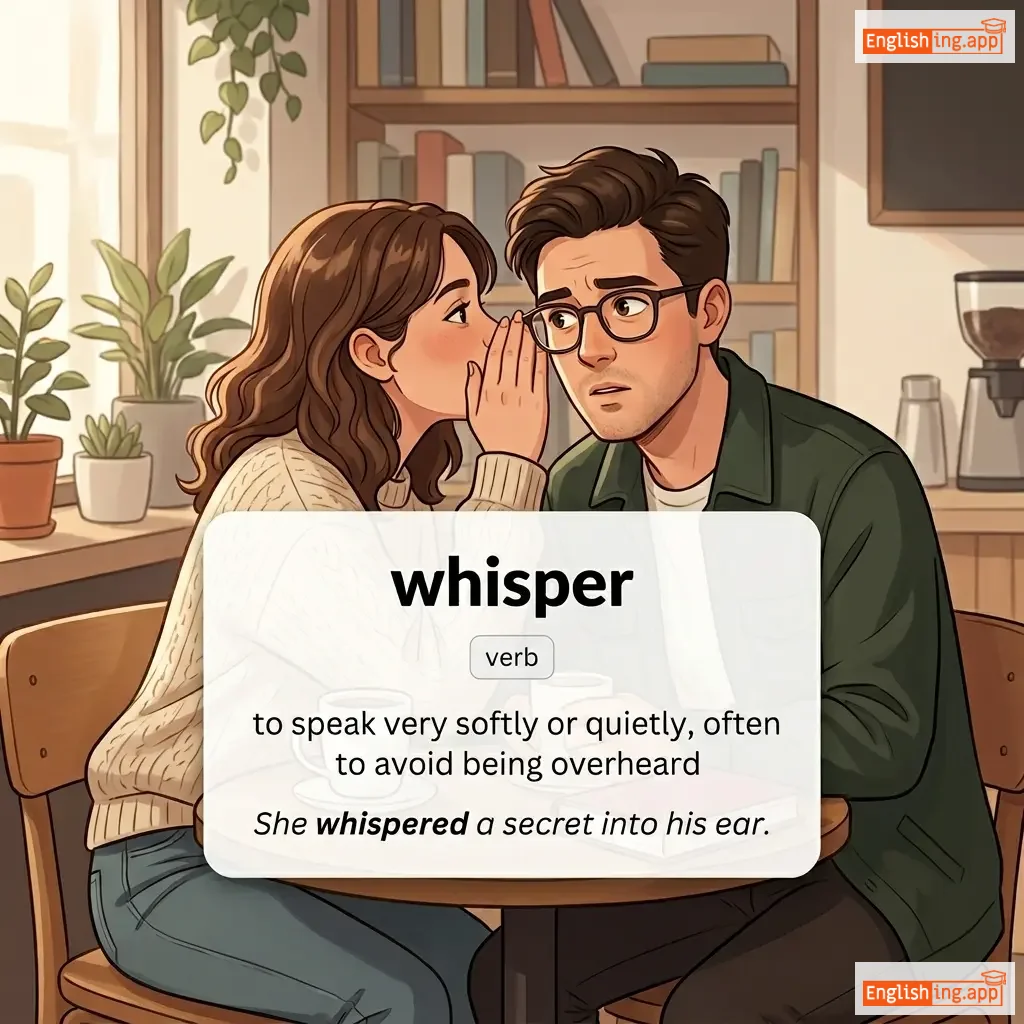
/ˈwɪspər/
verb
(ह्विस्पर)
••••••
|
|
फुसफुसाना
phusphusana
••••••
|
whispered
ह्विस्पर्ड
••••••
|
whispered
ह्विस्पर्ड
••••••
|
whispers
ह्विस्पर्स
••••••
|
whispering
ह्विस्परिंग
••••••
|
to speak very softly using one's breath without vocal cords
••••••
|
She whispered a secret in my ear.
वह मेरे कान में एक रहस्य फुसफुसाकर बोली।
••••••
|
वह मेरे कान में एक रहस्य फुसफुसाकर बोली।
Woh mere kaan mein ek rahasya phusphusakar boli.
••••••
|
- •••••• | - •••••• | - •••••• |
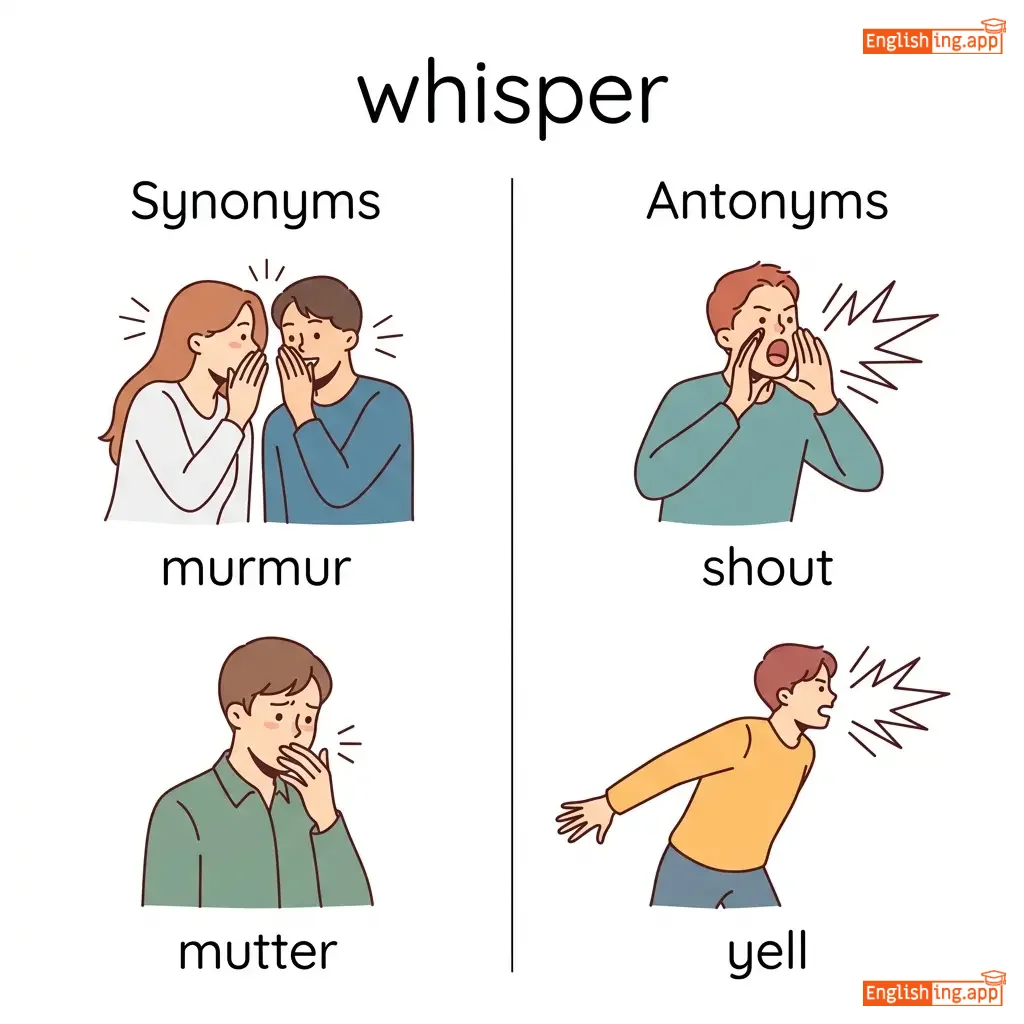
murmur, mumble, breathe, hiss
••••••
|
shout, yell, scream, roar
••••••
|
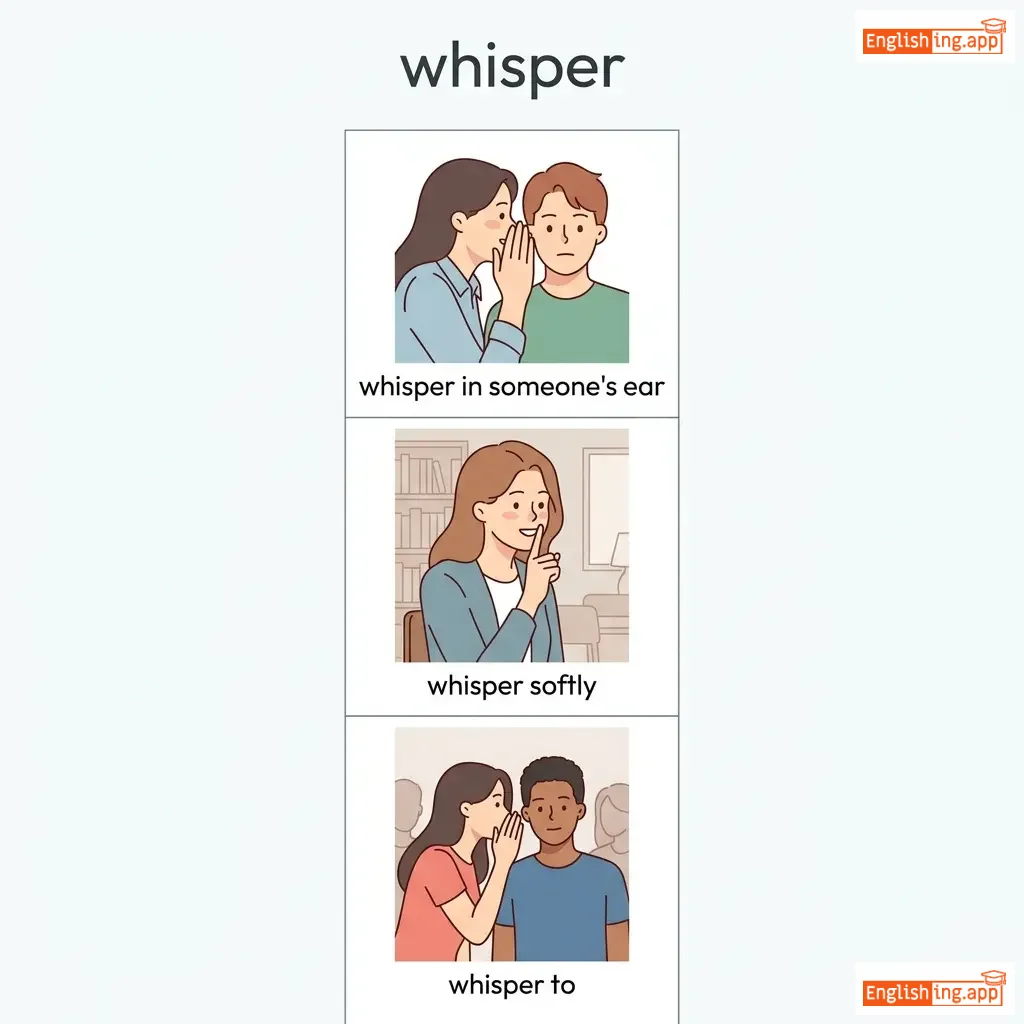
whisper secrets, whisper softly, whisper words, whisper quietly, whisper sweet, whisper prayers
••••••
|
Hindi में 'फुसफुसाना' है जो इंग्लिश 'whisper' से मिलता-जुलता है।
••••••
|
|
#5498
🎵
|
/ˈwɪsəl/
verb
(व्हिसल)
••••••
|
|
सीटी बजाना
seeti bajana
••••••
|
whistled
व्हिसल्ड
••••••
|
whistled
व्हिसल्ड
••••••
|
whistles
व्हिसल्स
••••••
|
whistling
व्हिसलिंग
••••••
|
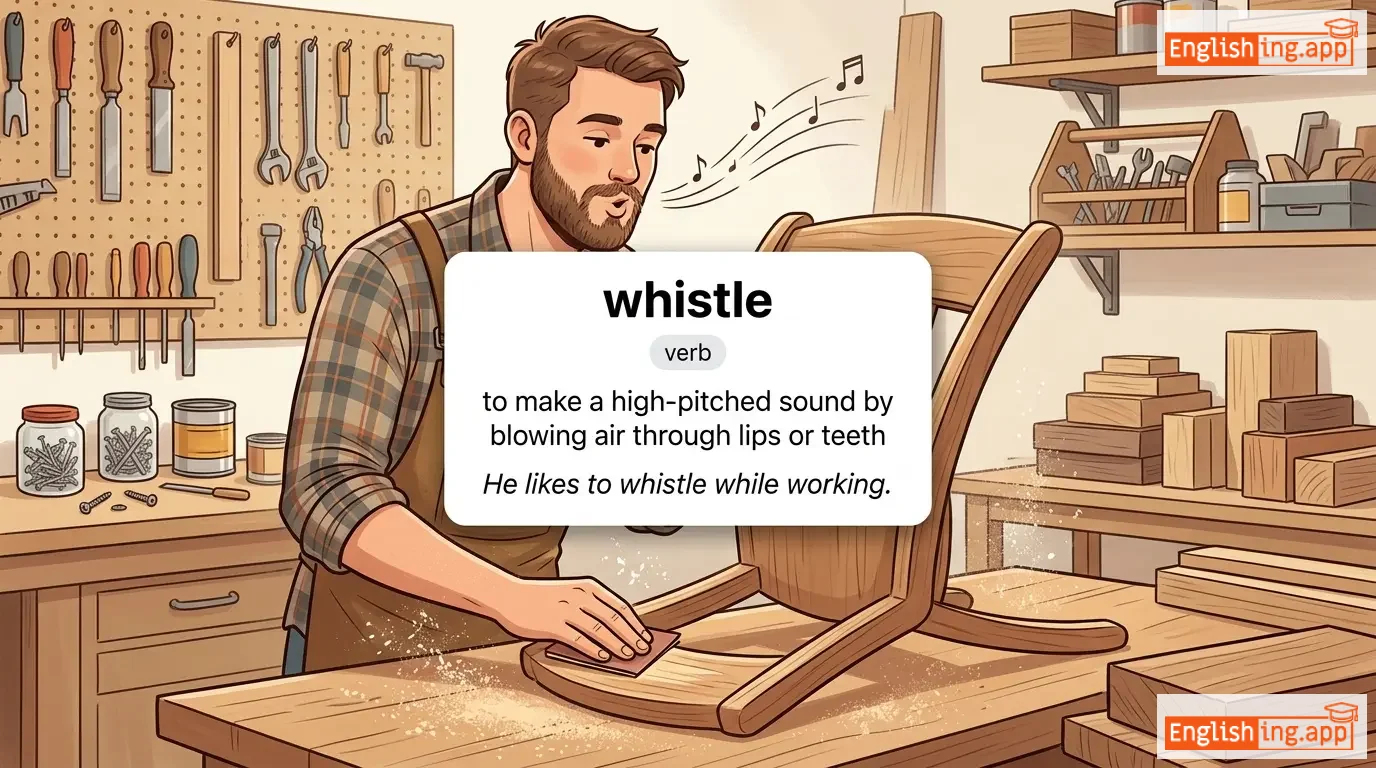
to make a high-pitched sound by blowing air through lips or teeth
••••••
|
He likes to whistle while working.
वह काम करते समय सीटी बजाना पसंद करता है।
••••••
|
वह काम करते समय सीटी बजाना पसंद करता है।
vah kaam karte samay seeti bajana pasand karta hai
••••••
|
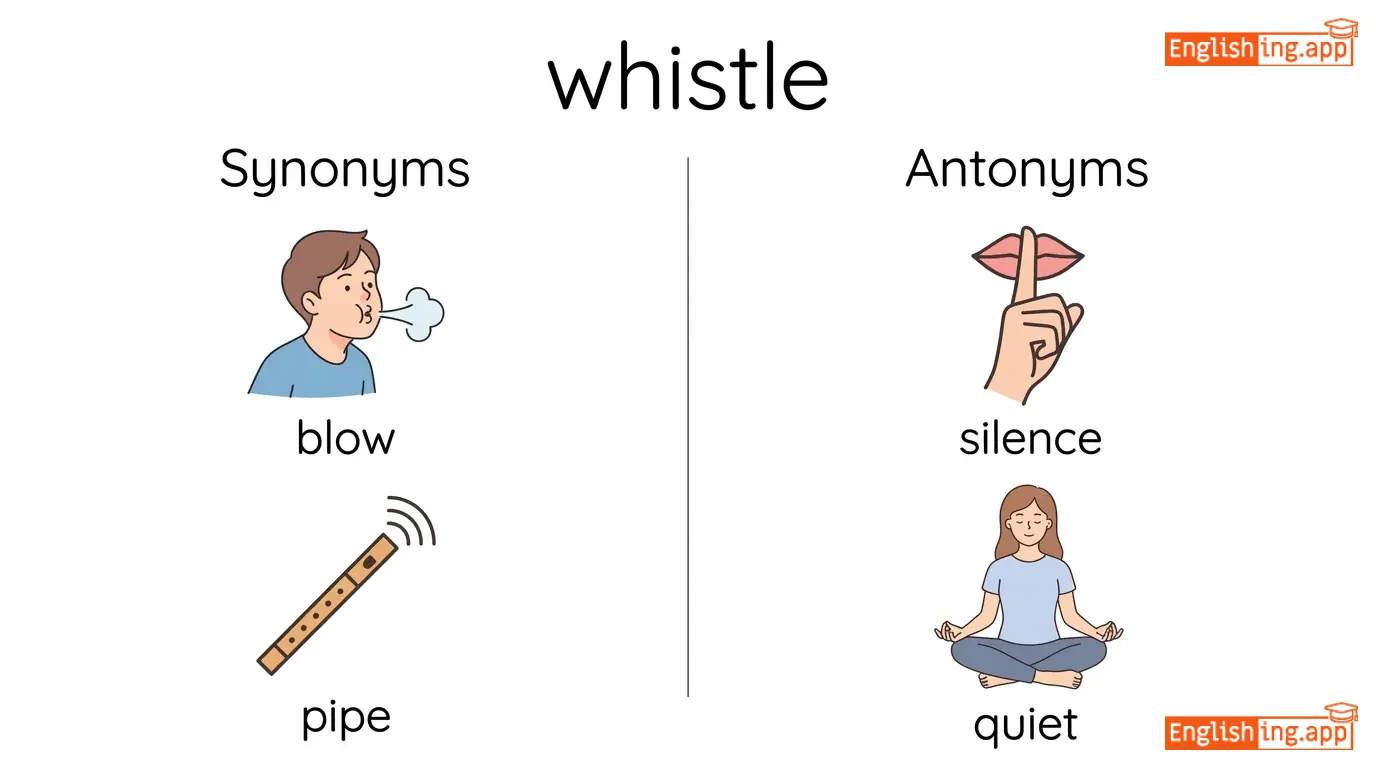
- •••••• | - •••••• | - •••••• |
blow, pipe, toot, sound
••••••
|
silence, quiet, mute
••••••
|
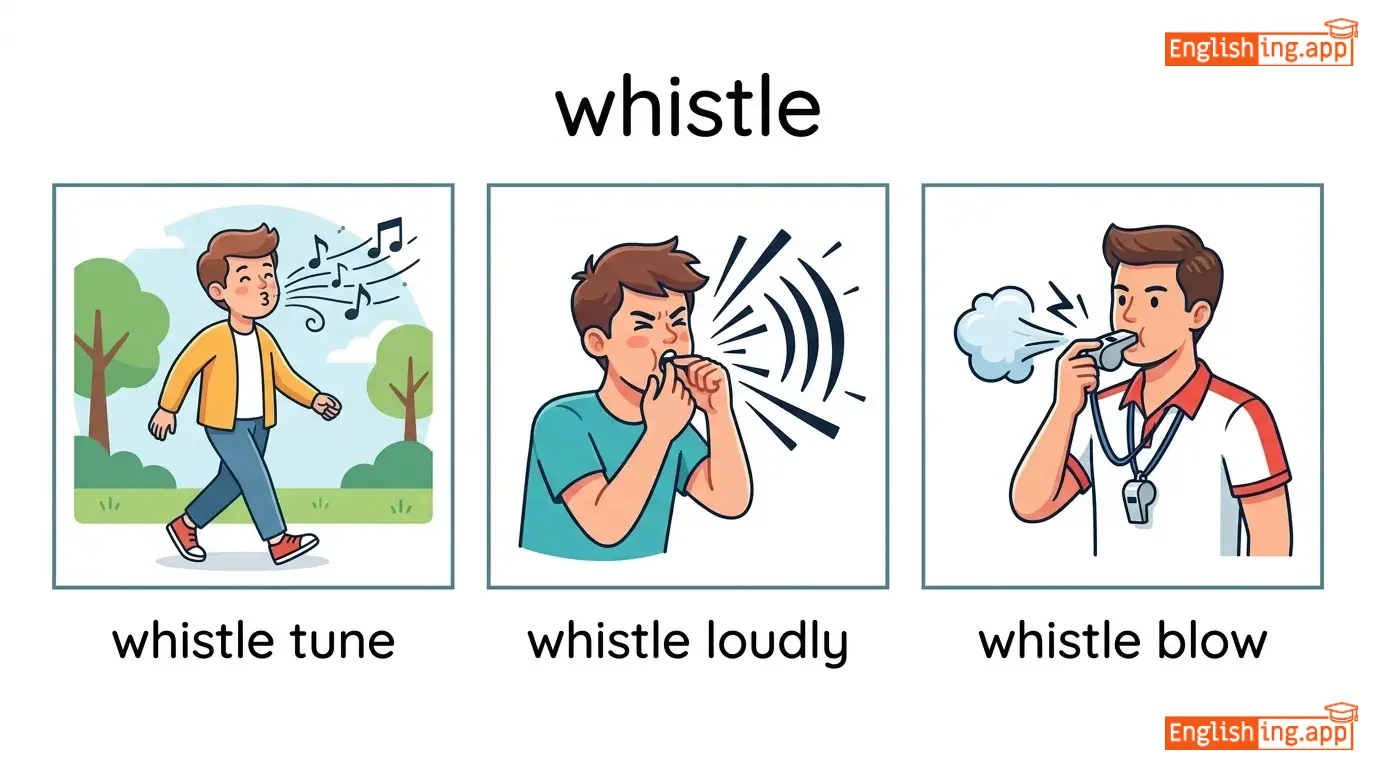
whistle tune, whistle loudly, whistle blow, train whistle
••••••
|
सीटी बजाना - सीटी का मतलब 'होंठ से ध्वनि निकालना'
••••••
|
|
#5499
⚪
|
/waɪt/
adjective
(व्हाइट)
••••••
|
- •••••• |
सफेद; शुद्ध;
safed; shuddh;
••••••
|
- •••••• | - •••••• | - •••••• | - •••••• |
of the color of snow or milk; pale; pure
••••••
|
She wore a beautiful white dress to the wedding.
उसने शादी में एक सुंदर सफेद ड्रेस पहनी।
••••••
|
उसने शादी में एक सुंदर सफेद ड्रेस पहनी।
usne shaadi mein ek sundar safed dress pehni.
••••••
|
- •••••• | - •••••• | - •••••• |
pale, colorless, snow-white, ivory
••••••
|
black, dark, colored
••••••
|
white paper, white shirt, white house
••••••
|
In Hindi, 'safed' means 'white' and 'shuddh' means 'pure', just like snow and milk!
••••••
|
|
#5500
🤔
|
/huː/
pronoun
(हु)
••••••
|
- •••••• |
कौन
kaun
••••••
|
- •••••• | - •••••• | - •••••• | - •••••• |
used to ask about a person or people
••••••
|
Who is coming to the party tonight? |
आज रात पार्टी में कौन आ रहा है?
Aaj raat party mein kaun aa raha hai?
••••••
|
- •••••• | - •••••• | - •••••• |
whoever, which person
••••••
|
none
••••••
|
who is, who are, who knows
••••••
|
To ask 'who', just use 'kaun' in Hindi!
••••••
|
|
#5501
🙋♂️
|
/huːˈɛvər/
pronoun
(हूएवर)
••••••
|
- •••••• |
जो कोई भी
jo koi bhi
••••••
|
- •••••• | - •••••• | - •••••• | - •••••• |
any person who; no matter who
••••••
|
Whoever wants to join the trip must register today. |
जो भी यात्रा में शामिल होना चाहता है, उसे आज ही पंजीकरण करना होगा।
Jo bhi yatra mein shamil hona chahta hai, use aaj hi panjikaran karna hoga.
••••••
|
- •••••• | - •••••• | - •••••• |
anyone, anybody, whosoever
••••••
|
none, nobody
••••••
|
whoever comes, whoever wants, whoever said, whoever did
••••••
|
Who + ever = जो कोई भी — whoever means कोई भी व्यक्ति
••••••
|
|
#5502
🔵
|
/hoʊl/
adjective
(होल)
••••••
|
- •••••• |
पूरा
poora
••••••
|
- •••••• | - •••••• | - •••••• | - •••••• |
complete; entire; all of something
••••••
|
He ate the whole pizza by himself.
हि एट द होल पिज़्ज़ा बाय हिमसेल्फ।
••••••
|
उसने पूरा पिज़्ज़ा अकेले ही खा लिया।
usne poora pizza akele hi kha liya
••••••
|
- •••••• | - •••••• | - •••••• |
complete, entire, total, full
••••••
|
partial, incomplete, broken, fragmented
••••••
|
whole story, whole family, whole day
••••••
|
Poora (पूरा) = whole — याद रखें: उसने पूरा पीज़ा खाया → poora pizza
••••••
|
|
#5503
💯
|
/ˈhoʊli/
adverb
(होली)
••••••
|
- •••••• |
पूरी तरह से; पूरी तरह से
poori tarah se
••••••
|
- •••••• | - •••••• | - •••••• | - •••••• |
Entirely; completely; to the full extent
••••••
|
I am wholly committed to this project. |
मैं इस परियोजना में पूरी तरह से प्रतिबद्ध हूं।
main is pariyojna mein poori tarah se pratibaddh hoon.
••••••
|
- •••••• | - •••••• | - •••••• |
completely, entirely, totally, fully
••••••
|
partially, partly, incompletely
••••••
|
wholly owned, wholly responsible, wholly different
••••••
|
पूरी तरह से, जैसे 'पक्का' का इंग्लिश में मतलब
••••••
|
|
#5504
👤
|
/huːm/
pronoun
(हूम)
••••••
|
- •••••• |
जिसे
jise
••••••
|
- •••••• | - •••••• | - •••••• | - •••••• |
used to refer to the person or people that something is done to
••••••
|
The man whom I met yesterday is my friend. |
वह आदमी जिसे मैंने कल मिला था, वह मेरा दोस्त है।
Wah aadmi jise maine kal mila tha, wah mera dost hai.
••••••
|
- •••••• | - •••••• | - •••••• |
who, that, the person
••••••
|
none
••••••
|
whom I met, whom I saw, to whom it may concern
••••••
|
Whom sounds like 'Whom-er jise' - 'Whom-er' as in the person you met.
••••••
|
|
#5505
📱
|
/huːz/
pronoun
(हूज़)
••••••
|
- •••••• |
जिसका
jiska
••••••
|
- •••••• | - •••••• | - •••••• | - •••••• |
used to ask or talk about the person or thing that owns something
••••••
|
The girl whose phone was stolen is my cousin. |
वह लड़की जिसका फोन चोरी हो गया था मेरी कजिन है।
Wah ladki jiska phone chori ho gaya tha meri cajin hai.
••••••
|
- •••••• | - •••••• | - •••••• |
who's, that person’s, of whom
••••••
|
none
••••••
|
whose phone, whose book, whose idea
••••••
|
Whose phone is this? – 'Whose' connects to 'Jiska phone'.
••••••
|
|
#5506
❓
|
/waɪ/
adverb
(हाई)
••••••
|
- •••••• |
क्यों
kyon
••••••
|
- •••••• | - •••••• | - •••••• | - •••••• |
For what reason or purpose; used to ask about the cause of something
••••••
|
Why are you late today? |
तुम आज क्यों लेट हो?
tum aaj kyon let ho?
••••••
|
- •••••• | - •••••• | - •••••• |
wherefore, how come
••••••
|
because, therefore
••••••
|
why not, that's why, reason why
••••••
|
No •••••• |
|
#5507
↔️
|
/waɪd/
adjective
(वाइड)
••••••
|
- •••••• |
विस्तृत; चौड़ा
vistret; chaudha
••••••
|
- •••••• | - •••••• | - •••••• | - •••••• |
having a great distance from one side to the other; broad
••••••
|
The river is very wide at this point. |
इस बिंदु पर नदी बहुत विस्तृत है।
is bindu par nadi bahut vistret hai.
••••••
|
- •••••• | - •••••• | - •••••• |
broad, extensive, spacious, vast
••••••
|
narrow, thin, restricted
••••••
|
wide range, wide variety, wide open, wide awake
••••••
|
Vistret river chauda, wide ka yaad dilata hai.
••••••
|
|
#5508
🌍
|
/ˈwaɪdli/
adverb
(वाइडली)
••••••
|
- •••••• |
व्यापक रूप से
vyapak roop se
••••••
|
- •••••• | - •••••• | - •••••• | - •••••• |
to a great extent or degree
••••••
|
The news of his promotion spread widely across the company. |
उसकी पदोन्नति की खबर कंपनी में व्यापक रूप से फैल गई।
uski padonnati ki khabar company mein vyapak roop se phail gayi.
••••••
|
- •••••• | - •••••• | - •••••• |
extensively, broadly, widely, far
••••••
|
narrowly, limitedly
••••••
|
widely known, widely accepted, widely spread
••••••
|
Wide world 🌍 means a wide spread across everywhere!
••••••
|
|
#5509
↔️
|
/ˈwaɪdən/
verb
(वाइडन)
••••••
|
|
चौड़ा करना
chauda karna
••••••
|
widened
वाइडेंड
••••••
|
widened
वाइडेंड
••••••
|
widens
वाइडेंस
••••••
|
widening
वाइडनिंग
••••••
|
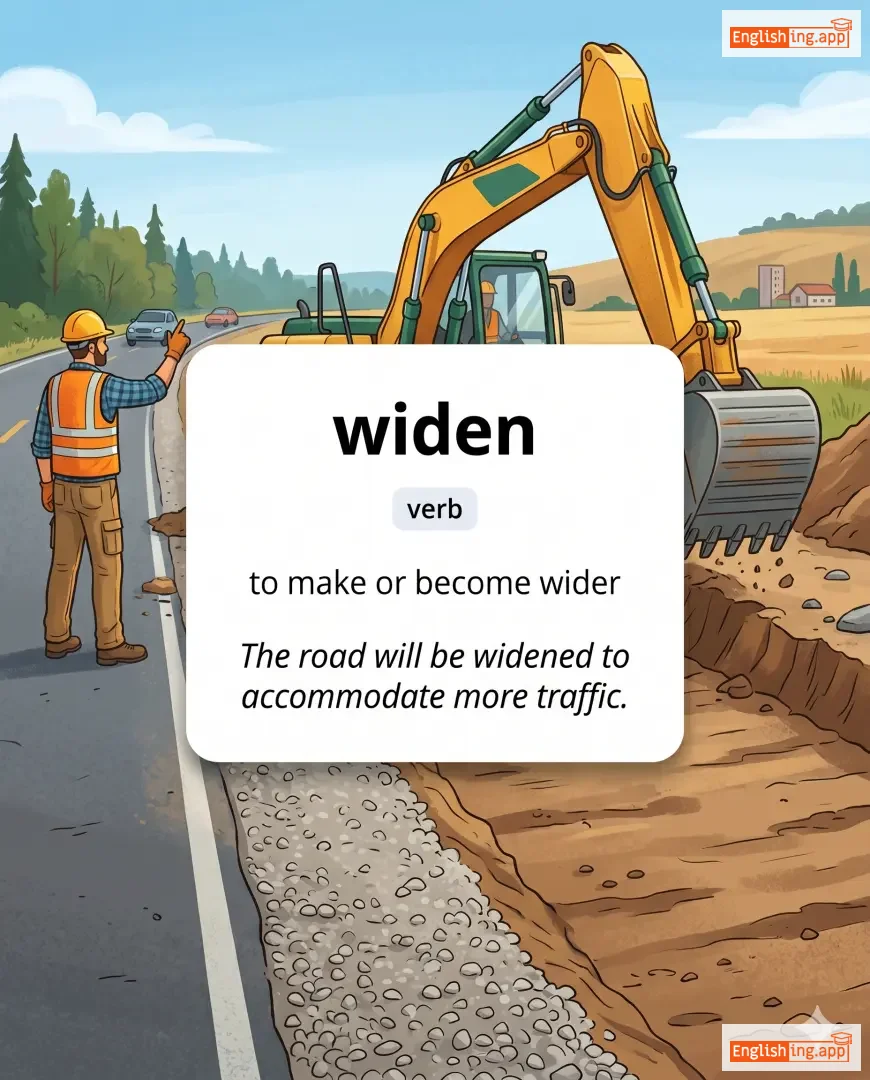
to make or become wider or broader
••••••
|
They plan to widen the road next year.
वे अगले साल सड़क को चौड़ा करने की योजना बना रहे हैं।
••••••
|
वे अगले साल सड़क को चौड़ा करने की योजना बना रहे हैं।
Ve agle saal sadak ko chaudha karne ki yojna bana rahe hain.
••••••
|
- •••••• | - •••••• | - •••••• |
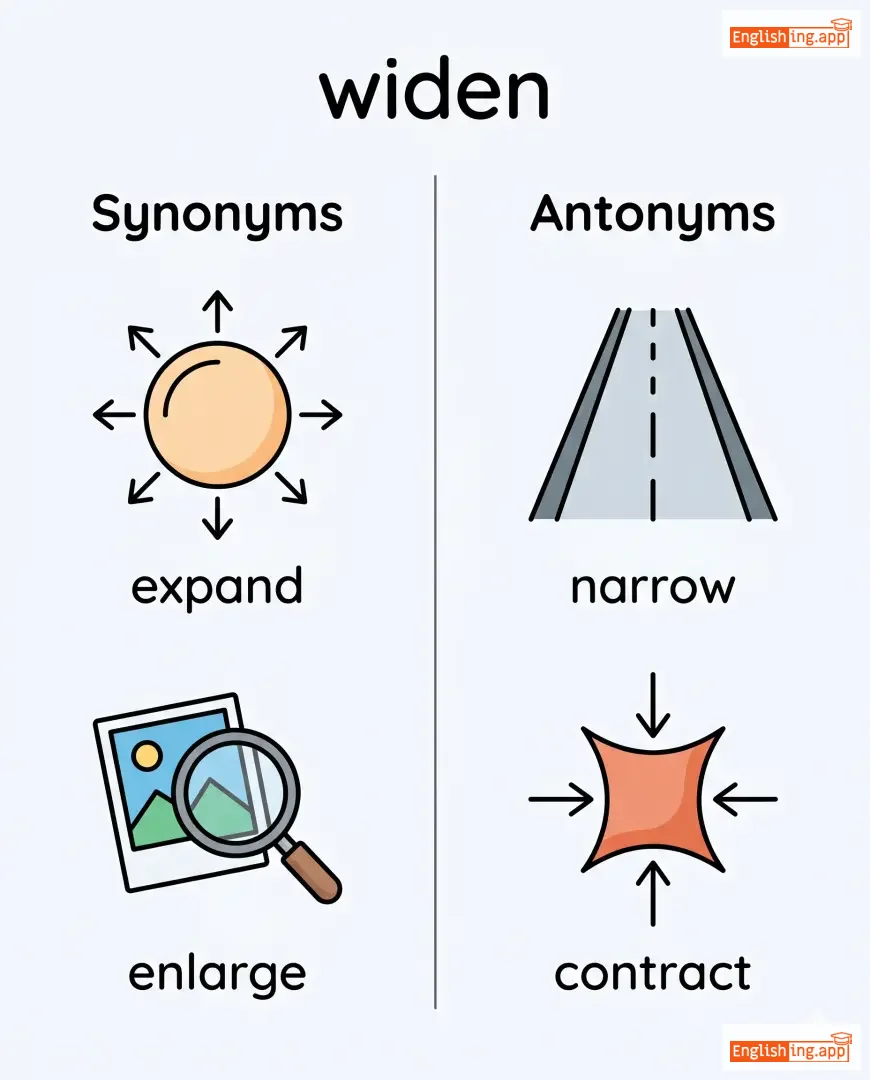
broaden, expand, extend, enlarge
••••••
|
narrow, reduce, contract, shrink
••••••
|
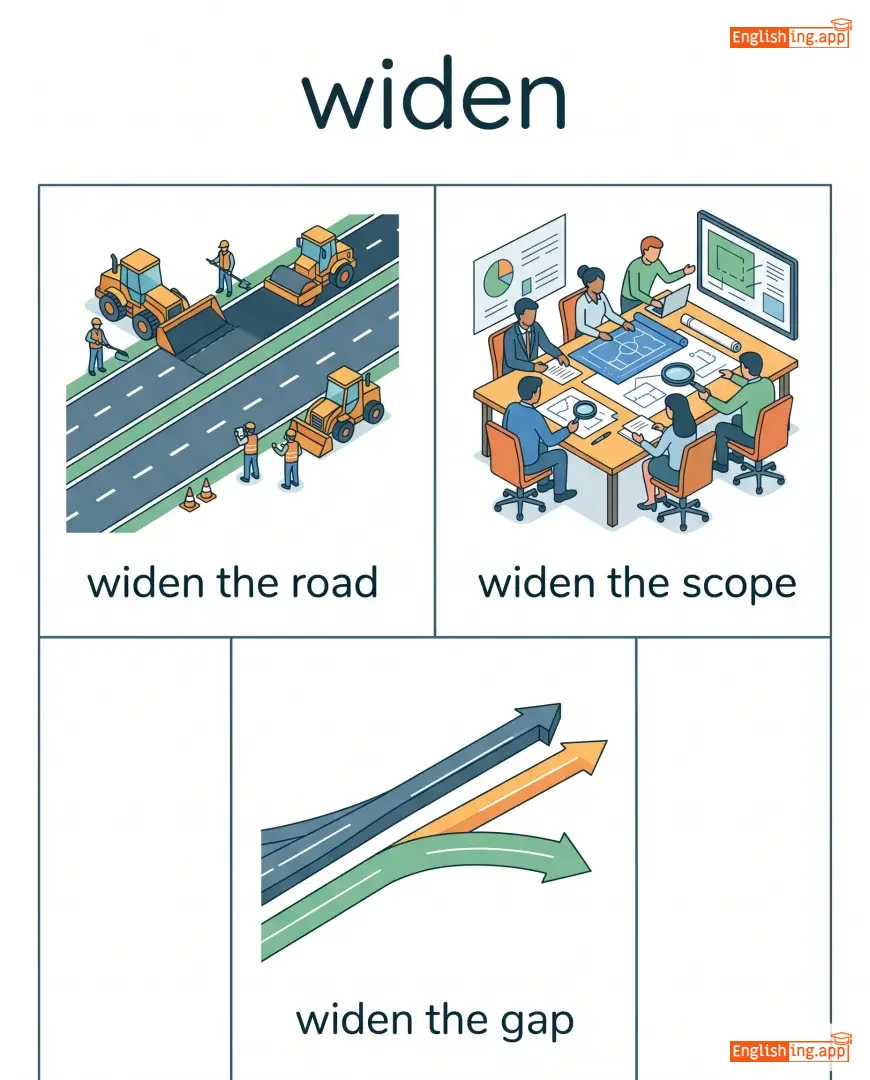
widen road, widen gap, widen range, gradually widen
••••••
|
वाइडन का मतलब है किसी चीज़ को चौड़ा करना।
••••••
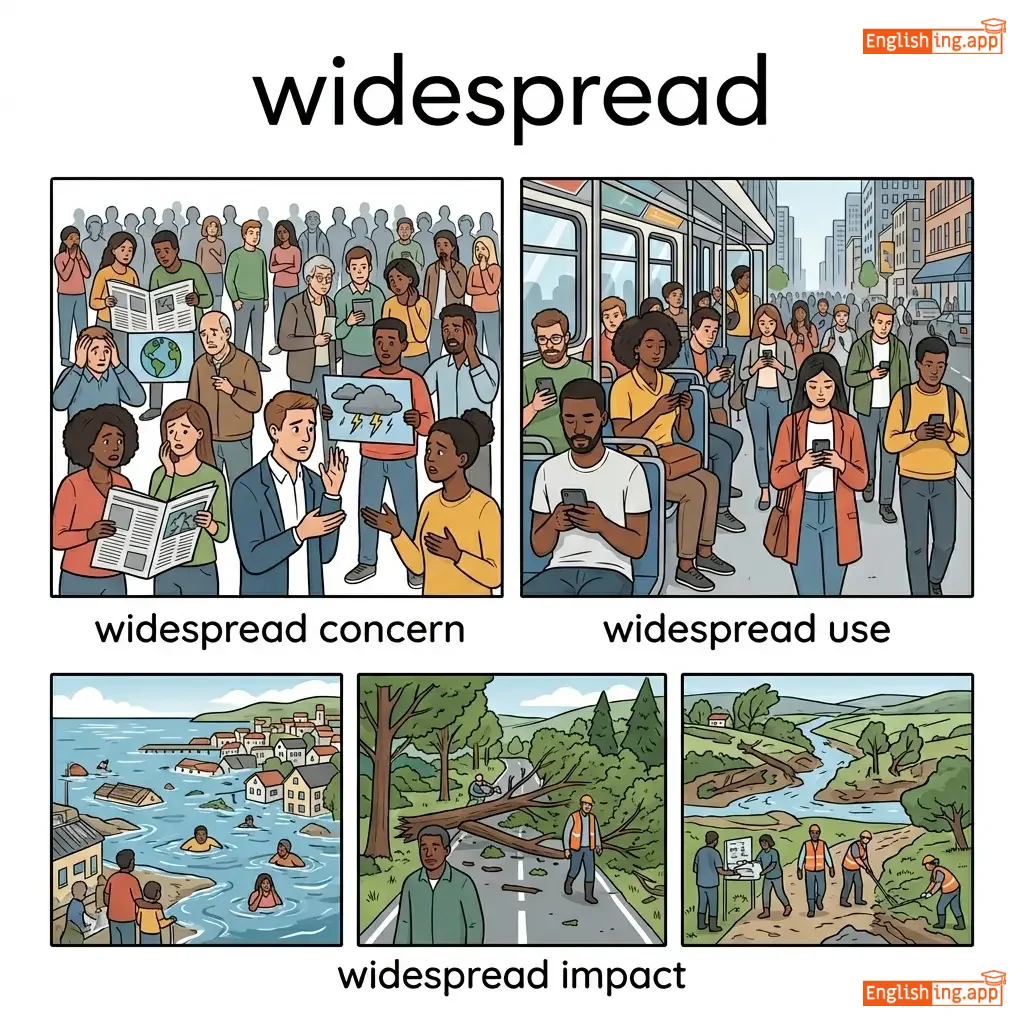
|
|
#5510
🌍
|
/ˈwaɪd.sprɛd/
adjective
(वाइडस्प्रेड)
••••••
|
|
व्यापक
vyapak
••••••
|
- •••••• | - •••••• | - •••••• | - •••••• |
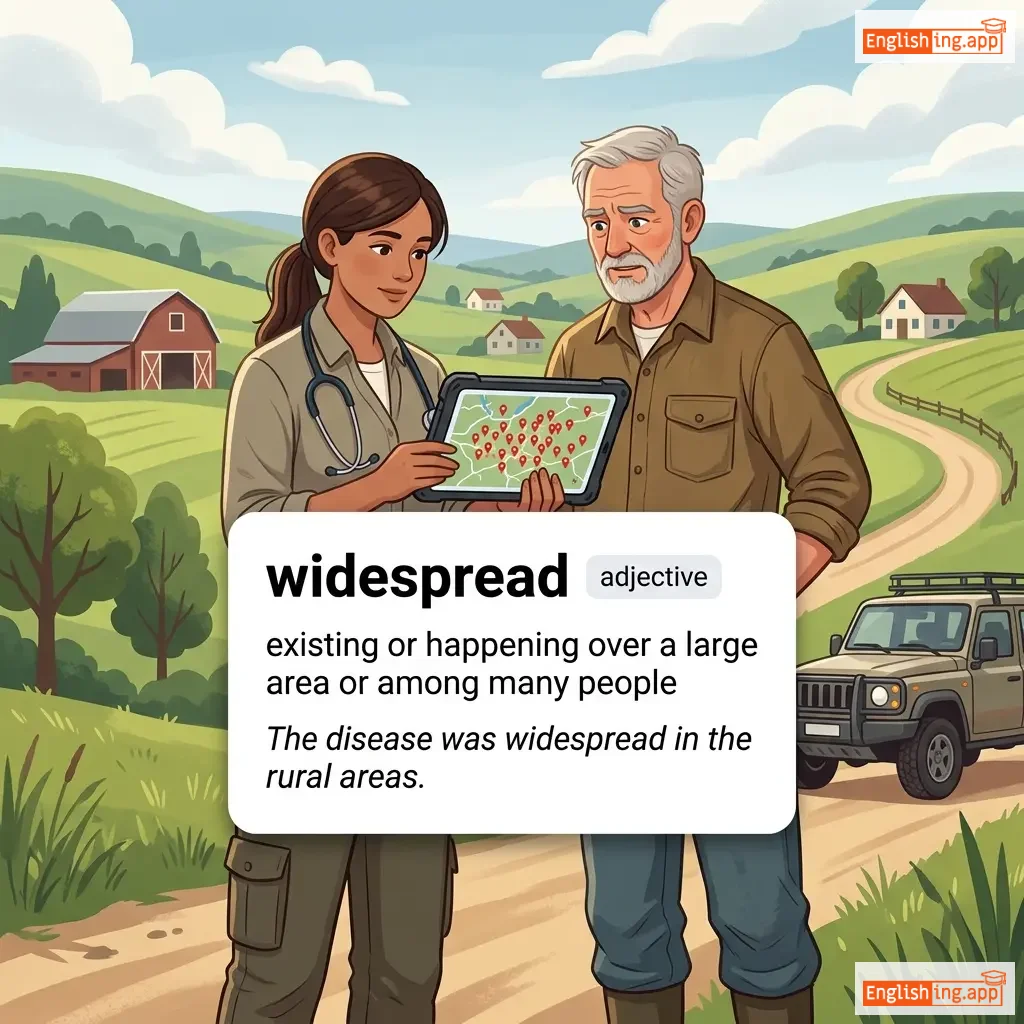
existing or happening in many places or among many people
••••••
|
There is widespread support for the new policy. |
नई नीति के लिए व्यापक समर्थन है।
nai niti ke liye vyapak samarthan hai.
••••••
|
- •••••• | - •••••• | - •••••• |
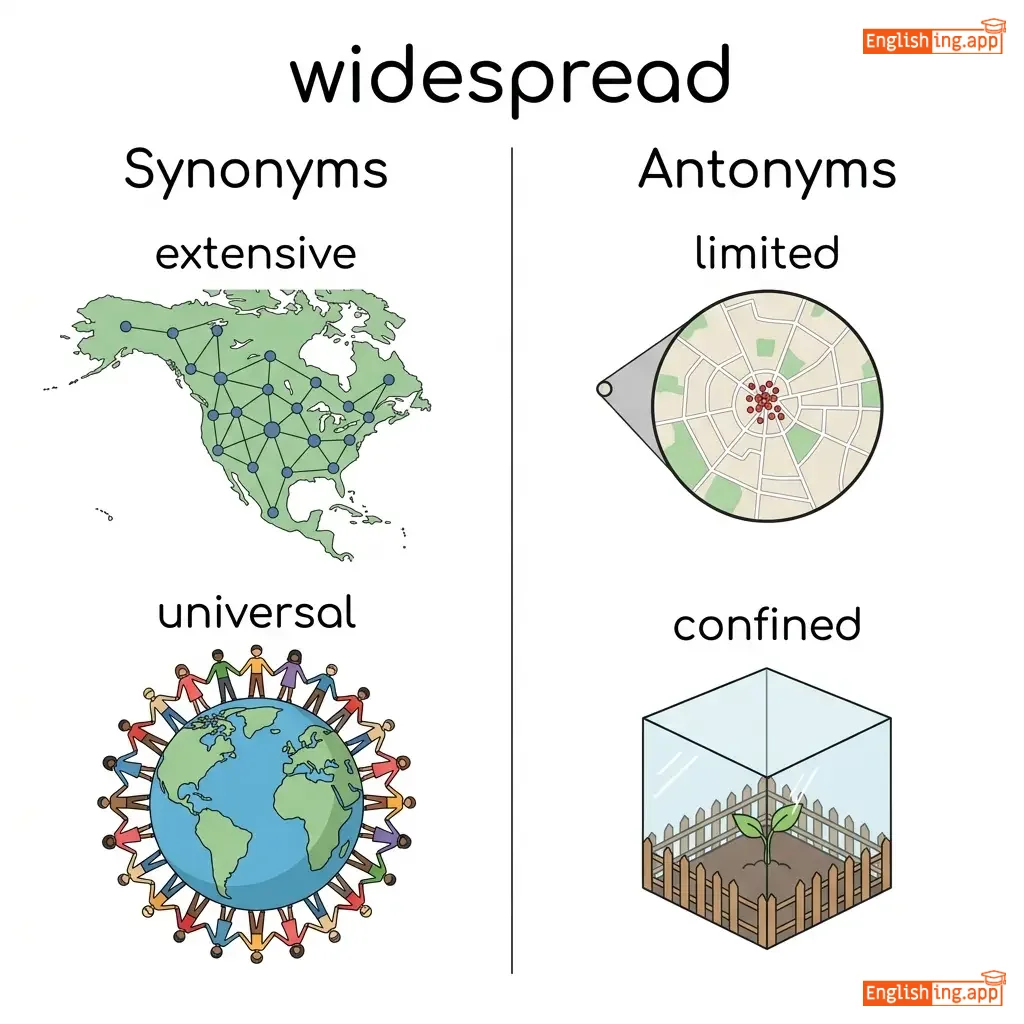
extensive, prevalent, universal, common
••••••
|
limited, localized, restricted, rare
••••••
|
widespread support, widespread use, widespread damage, widespread belief
••••••
|
Hindi 'व्यापक' sounds like English 'widespread'.
••••••
|
|
#5511
🖤
|
/ˈwɪdəʊ/
noun
(विधवा)
••••••
|
- •••••• |
विधवा
vidhwa
••••••
|
- •••••• | - •••••• | - •••••• | - •••••• |
a woman whose husband has died and who has not married again
••••••
|
She became a widow at a very young age.
वह बहुत छोटी उम्र में विधवा हो गई।
••••••
|
वह बहुत छोटी उम्र में विधवा हो गई।
Woh bahut chhoti umr mein vidhwa ho gayi.
••••••
|
grass widow
घास विधवा
••••••
|
a woman whose husband is temporarily away
••••••
|
घास विधवा
Ghaas vidhwa
••••••
|
bereaved woman, lone woman, wife left behind
••••••
|
wife, bride
••••••
|
young widow, war widow, become a widow, widow pension
••••••
|
Widow मतलब विधवा — 'We do' बोला था लेकिन अब ‘He’s gone’ 😢
••••••
|
|
#5512
↔️
|
/wɪdθ/
noun
(विध्थ)
••••••
|
- •••••• |
चौड़ाई; विस्तार
chaudai; vistaar
••••••
|
- •••••• | - •••••• | - •••••• | - •••••• |
the measurement or extent of something from side to side; breadth
••••••
|
The width of the river is about 50 meters.
द रिवर की विध्थ लगभग ५० मीटर है।
••••••
|
नदी की चौड़ाई लगभग ५० मीटर है।
nadi ki chaudai lagbhag pachaas meter hai.
••••••
|
- •••••• | - •••••• | - •••••• |
breadth, span, extent
••••••
|
length, height, narrowness
••••••
|
full width, average width, total width
••••••
|
Width ka matlab hai 'chaudai' jise hum river ke example se samajh sakte hain.
••••••
|
|
#5513
👩❤️👨
|
/waɪf/
noun
(वाइफ)
••••••
|
- •••••• |
पत्नी
patnī
••••••
|
- •••••• | - •••••• | - •••••• | - •••••• |
a woman who is married to someone
••••••
|
She is the wife of the famous author. |
वह प्रसिद्ध लेखक की पत्नी है।
vah prasiddh lekhak kī patnī hai。
••••••
|
- •••••• | - •••••• | - •••••• |
spouse, partner, better half
••••••
|
husband
••••••
|
wife and husband, loving wife, devoted wife
••••••
|
Wife means ‘wife’! Remembering it is simple.
••••••
|
|
#5514
🌿
|
/waɪld/
adjective
(वाइल्ड)
••••••
|
- •••••• |
जंगली
jangli
••••••
|
- •••••• | - •••••• | - •••••• | - •••••• |
living or growing in the natural environment; uncontrolled or untamed
••••••
|
The children ran wild in the park. |
बच्चे पार्क में जंगली दौड़ रहे थे।
Bacche park mein jangli daud rahe the.
••••••
|
run wild |
to behave without restraint or control
••••••
|
जंगली होना
jangli hona
••••••
|
untamed, feral, uncontrolled, savage, free
••••••
|
tame, domestic, controlled
••••••
|
wild animal, wild nature, wild guess, wild behavior
••••••
|
Wild यानी जंगली – जंगल में बेतहाशा दौड़ते जानवर
••••••
|
|
#5515
🦌
|
/ˈwaɪldˌlaɪf/
noun
(वाइल्डलाइफ)
••••••
|
- •••••• |
वन्यजीव
vanyajeev
••••••
|
- •••••• | - •••••• | - •••••• | - •••••• |
animals, birds, and plants living in their natural environment
••••••
|
The park is home to a wide variety of wildlife. |
उद्यान में वन्यजीवों की एक विस्तृत विविधता है।
Udyan mein vanyajeevon ki ek vistarit vidhata hai.
••••••
|
wildlife conservation |
the protection of wild animals and their habitats
••••••
|
वन्यजीव संरक्षण
vanyajeev sanrakshan
••••••
|
fauna, animals, creatures, nature, biosphere
••••••
|
domestic animals, pets
••••••
|
wildlife sanctuary, wildlife photographer, protect wildlife, wildlife reserve
••••••
|
Wild life का मतलब जंगल का life — यानी वन्यजीव जो जंगल में रहते हैं 🐯
••••••
|
|
#5516
✍️
|
/wɪl/
noun, verb
(विल)
••••••
|
- •••••• |
इच्छा
ichchha
••••••
|
- •••••• | - •••••• |
wills
विल्स
••••••
|
willing
विलिंग
••••••
|
expressing future tense or intention; a legal document
••••••
|
She will attend the meeting tomorrow.
वह कल बैठक में उपस्थित होगी।
••••••
|
वह कल बैठक में उपस्थित होगी।
vah kal baithak mein upasthit hogi.
••••••
|
Will to power
शक्ति की इच्छा
••••••
|
the drive to assert one's own will over others
••••••
|
शक्ति की इच्छा
shakti ki ichcha
••••••
|
intend, shall, want, determination
••••••
|
won't, unwilling
••••••
|
last will, will and testament, strong will
••••••
|
Will to power, will to future ✍️
••••••
|
|
#5517
🙋♂️
|
/ˈwɪl.ɪŋ/
adjective
(विलिंग)
••••••
|
- •••••• |
इच्छुक; तैयार;
ichchhuk; tayaar
••••••
|
- •••••• | - •••••• | - •••••• | - •••••• |
ready, eager, or prepared to do something
••••••
|
She is willing to help with the project. |
वह परियोजना में मदद करने के लिए इच्छुक है।
vah pariyojana mein madad karne ke liye ichchhuk hai.
••••••
|
- •••••• | - •••••• | - •••••• |
ready, eager, prepared, inclined
••••••
|
unwilling, reluctant, hesitant, resistant
••••••
|
willing to help, willing participant, willing cooperation, willing spirit
••••••
|
इच्छुक = willing, तैयार = ready
••••••
|
|
#5518
😊
|
/ˈwɪl.ɪŋ.li/
adverb
(विलिंग्ली)
••••••
|
- •••••• |
इच्छा से; स्वेच्छा से
ichchha se; swechchha se
••••••
|
- •••••• | - •••••• | - •••••• | - •••••• |
in a willing manner; voluntarily; with free will
••••••
|
She willingly helped her neighbors during the emergency. |
उसने आपातकाल के दौरान स्वेच्छा से अपने पड़ोसियों की मदद की।
usne aapatkal ke dauran swechchha se apne padosiyon ki madad ki
••••••
|
- •••••• | - •••••• | - •••••• |
voluntarily, eagerly, gladly, readily, freely
••••••
|
reluctantly, unwillingly, forcibly, involuntarily
••••••
|
willingly accept, willingly participate, willingly cooperate, willingly volunteer
••••••
|
इच्छा से मदद करना आसान होता है, जैसे 'मैं अपनी इच्छा से मदद करता हूँ'।
••••••
|
|
#5519
💪
|
/ˈwɪlɪŋnəs/
noun
(विलिंगनेस)
••••••
|
- •••••• |
इच्छा
ichchha
••••••
|
- •••••• | - •••••• | - •••••• | - •••••• |
the quality of being prepared or ready to do something
••••••
|
Her willingness to help others made her very popular. |
दूसरों की मदद करने की उसकी इच्छा ने उसे बहुत लोकप्रिय बना दिया।
Doosron ki madad karne ki uski ichchha ne use bahut lokpriya bana diya.
••••••
|
- •••••• | - •••••• | - •••••• |
readiness, eagerness, enthusiasm, consent, agreement
••••••
|
reluctance, unwillingness
••••••
|
show willingness, express willingness, willingness to cooperate, willingness to learn
••••••
|
Willingness मतलब इच्छाशक्ति, और willingness मतलब अपनी इच्छाओं को दिखाना!
••••••
|
|
#5520
🏆
|
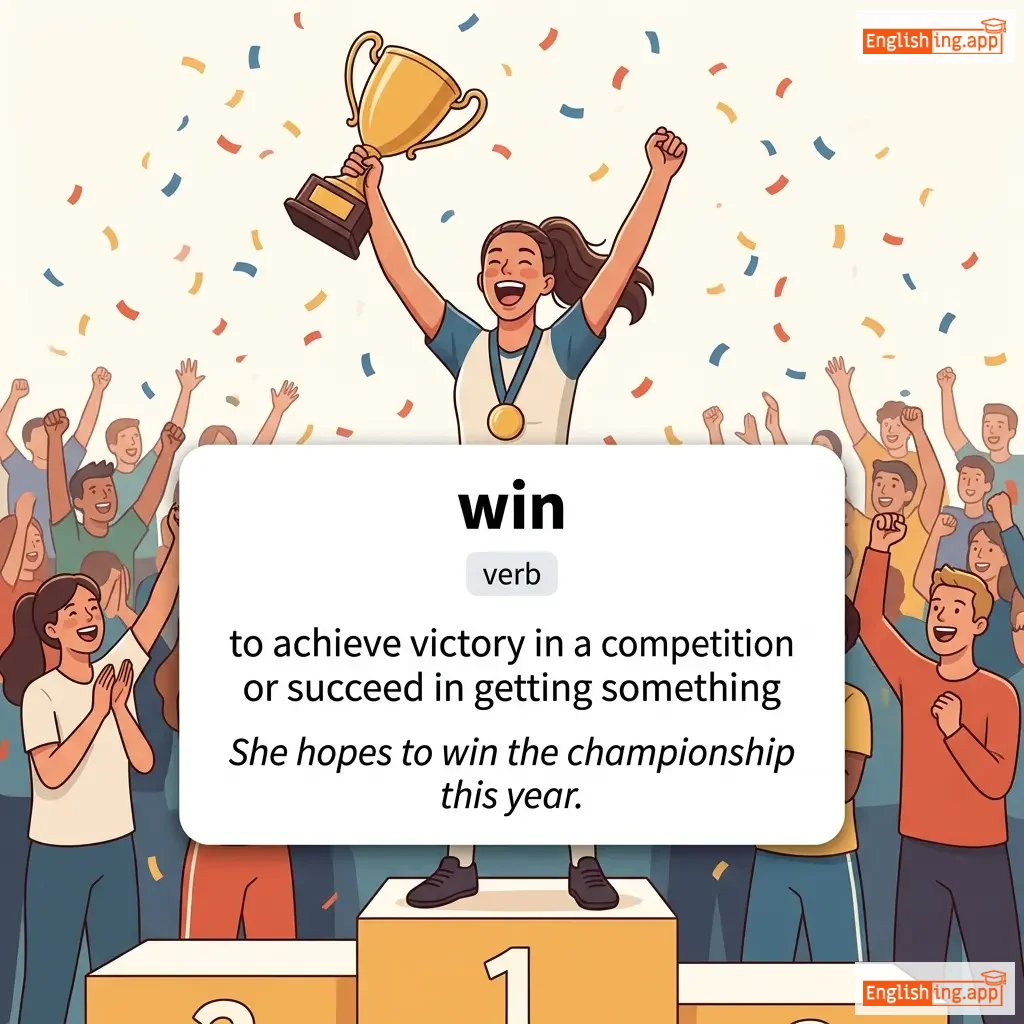
/wɪn/
verb
(विन)
••••••
|
|
जीतना
jeetna
••••••
|
won
वॉन
••••••
|
won
वॉन
••••••
|
wins
विन्स
••••••
|
winning
विनिंग
••••••
|
to achieve victory in a competition or succeed in getting something
••••••
|
She hopes to win the championship this year.
वह इस साल चैंपियनशिप जीतने की उम्मीद करती है।
••••••
|
वह इस साल चैंपियनशिप जीतने की उम्मीद करती है।
Vah is saal championship jeetne ki ummid karti hai.
••••••
|
win over
विन ओवर
••••••
|
to persuade or gain support
••••••
|
समर्थन प्राप्त करना
samarthan prapt karna
••••••
|
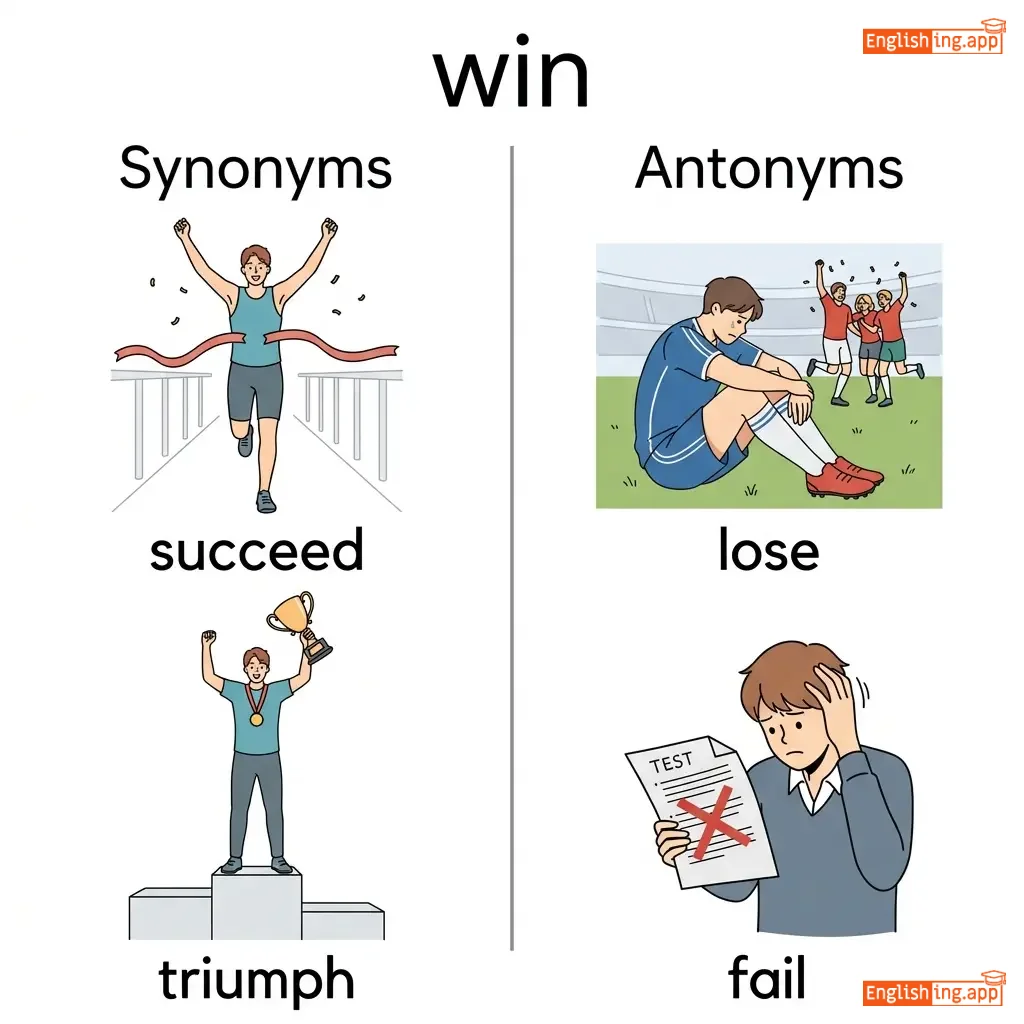
succeed, triumph, prevail, conquer
••••••
|
lose, fail, surrender
••••••
|
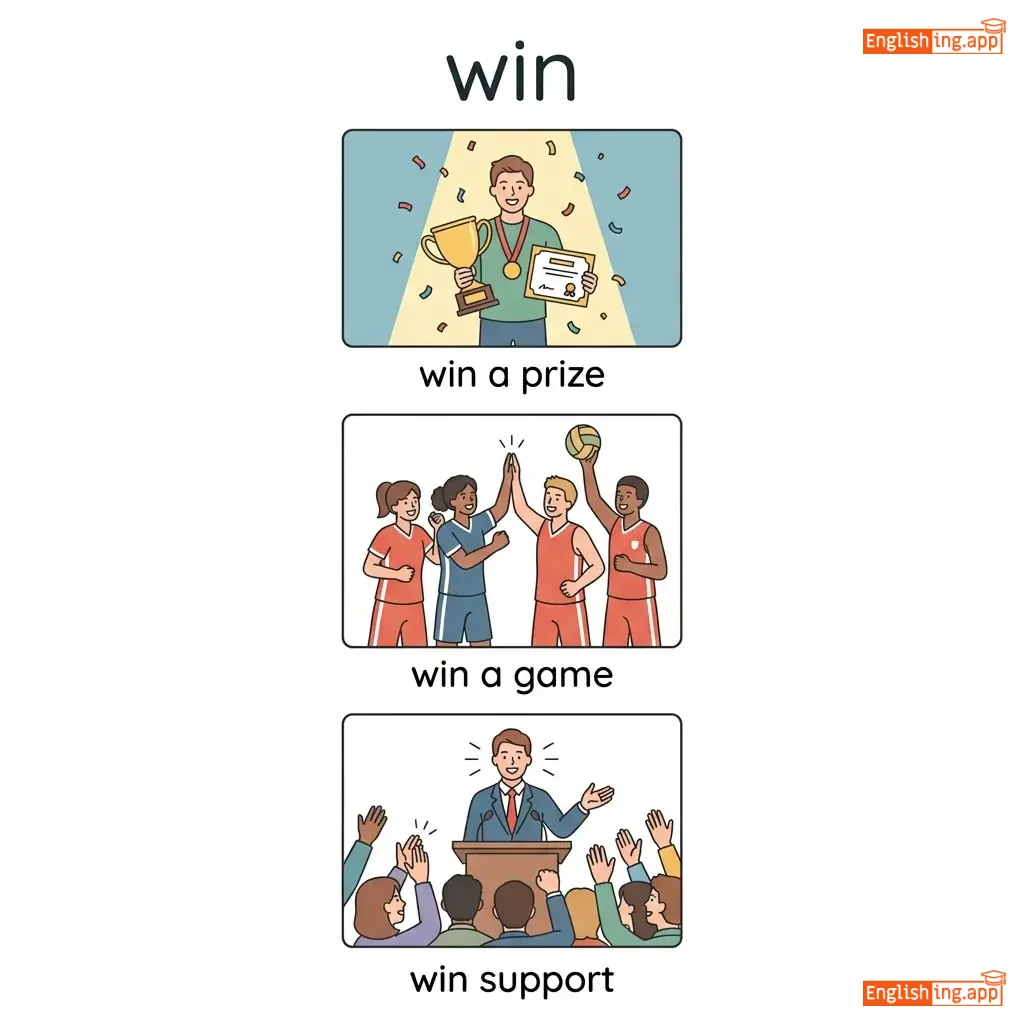
win a prize, win a game, win support, win the championship
••••••
|
Win मतलब जीतना – क्रिकेट में जीतने से खुशी मिलती है
••••••
|
|
#5521
🌬️
|
/wɪnd/
noun
(विंड)
••••••
|
- •••••• |
हवा
hawa
••••••
|
- •••••• | - •••••• | - •••••• | - •••••• |
the natural movement of air, especially in the form of a current of air blowing from a particular direction
••••••
|
The wind blew the leaves off the trees.
द विंड ब्लू द लीव्स ऑफ द ट्रीज़।
••••••
|
हवा ने पेड़ों से पत्तियां उड़ा दीं।
Hawa ne pedon se patte uda diye.
••••••
|
- •••••• | - •••••• | - •••••• |
breeze, gust, gale, draft
••••••
|
calm, stillness
••••••
|
strong wind, wind speed, wind direction, cold wind
••••••
|
हवा जैसे सर्दी में चलने वाली ठंडी हवा।
••••••
|
|
#5522
🪟
|
/ˈwɪn.doʊ/
noun
(विंडो)
••••••
|
- •••••• |
खिड़की
khidki
••••••
|
- •••••• | - •••••• | - •••••• | - •••••• |
an opening in a wall fitted with glass to let in light and air
••••••
|
Please open the window for fresh air.
कृपया ताजे हवा के लिए खिड़की खोलें।
••••••
|
कृपया ताजे हवा के लिए खिड़की खोलें।
kripya taje hawa ke liye khidki kholen
••••••
|
- •••••• | - •••••• | - •••••• |
casement, pane, opening
••••••
|
wall, barrier
••••••
|
window frame, window sill, bay window, window blinds
••••••
|
Remember, 'खिड़की' (khidki) is like 'hidden key' to fresh air!
••••••
|
|
#5523
🍷
|
/waɪn/
noun
(वाइन)
••••••
|
- •••••• |
शराब
sharab
••••••
|
- •••••• | - •••••• | - •••••• | - •••••• |
an alcoholic drink made from fermented grapes or other fruits
••••••
|
They served a glass of red wine at the dinner.
उन्होंने डिनर में एक गिलास रेड वाइन सर्व किया।
••••••
|
उन्होंने डिनर में एक गिलास रेड वाइन सर्व किया।
Unhone dinner mein ek gilas red wine serve kiya.
••••••
|
- •••••• | - •••••• | - •••••• |
vino, beverage, drink, alcohol
••••••
|
water, juice
••••••
|
red wine, white wine, glass of wine, bottle of wine
••••••
|
Wine pairs with dinner—सोचें एक गिलास रेड वाइन और एक शानदार भोजन!
••••••
|
|
#5524
🪶
|
/wɪŋ/
verb
(विंग)
••••••
|
|
पंखों से उड़ना
pankhon se udna
••••••
|
winged
विंग्ड
••••••
|
winged
विंग्ड
••••••
|
wings
विंग्स
••••••
|
winging
विंगिंग
••••••
|
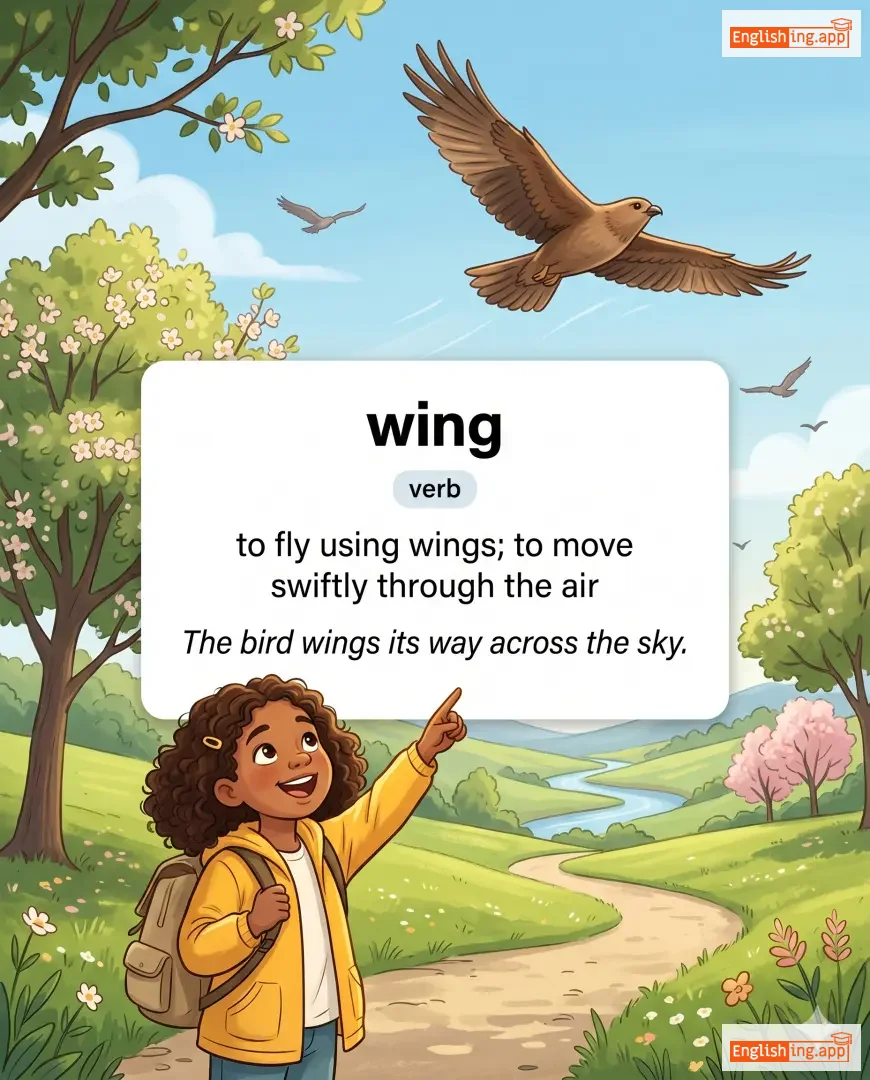
to fly using wings; to move swiftly through the air
••••••
|
The bird wings its way across the sky.
द बर्ड विंग्स इट्स वे अक्रॉस द स्काई।
••••••
|
पक्षी आकाश में अपनी दिशा में उड़ता है।
Pakshi aakash mein apni disha mein udta hai
••••••
|
- •••••• | - •••••• | - •••••• |
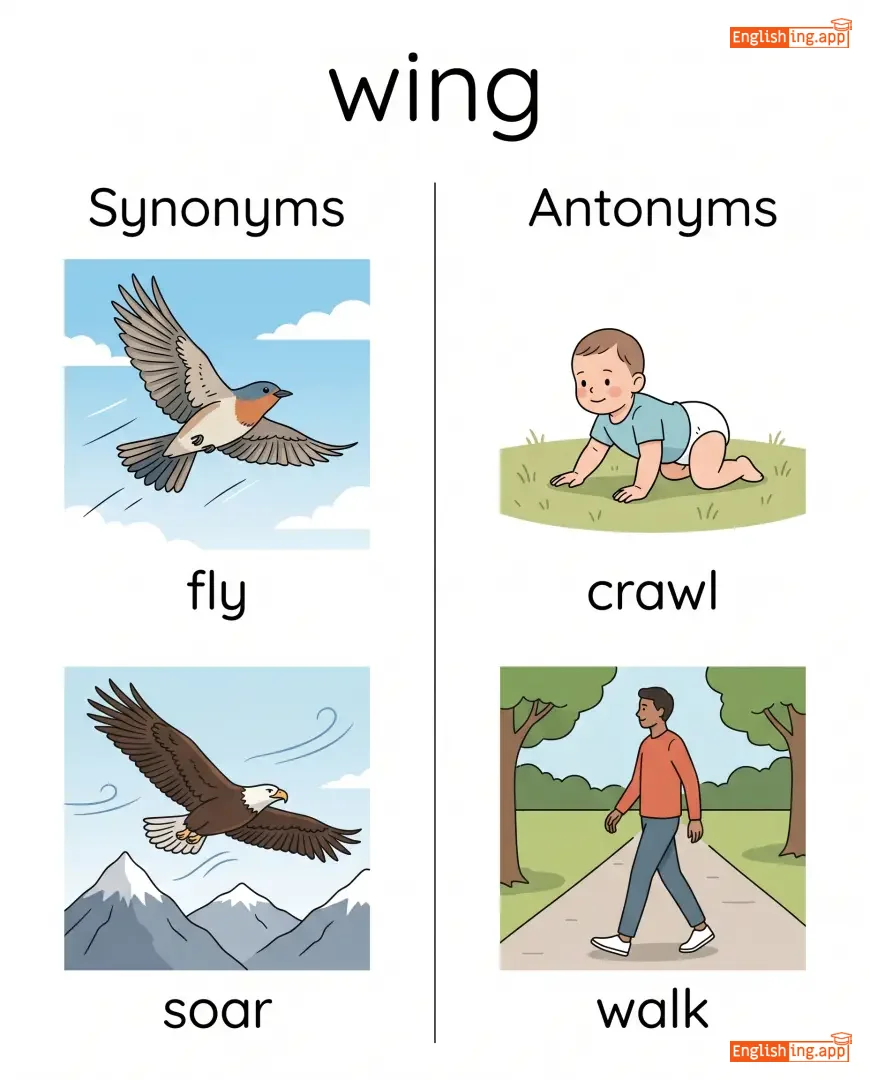
fly, soar, glide, flutter
••••••
|
crawl, walk, ground, land
••••••
|
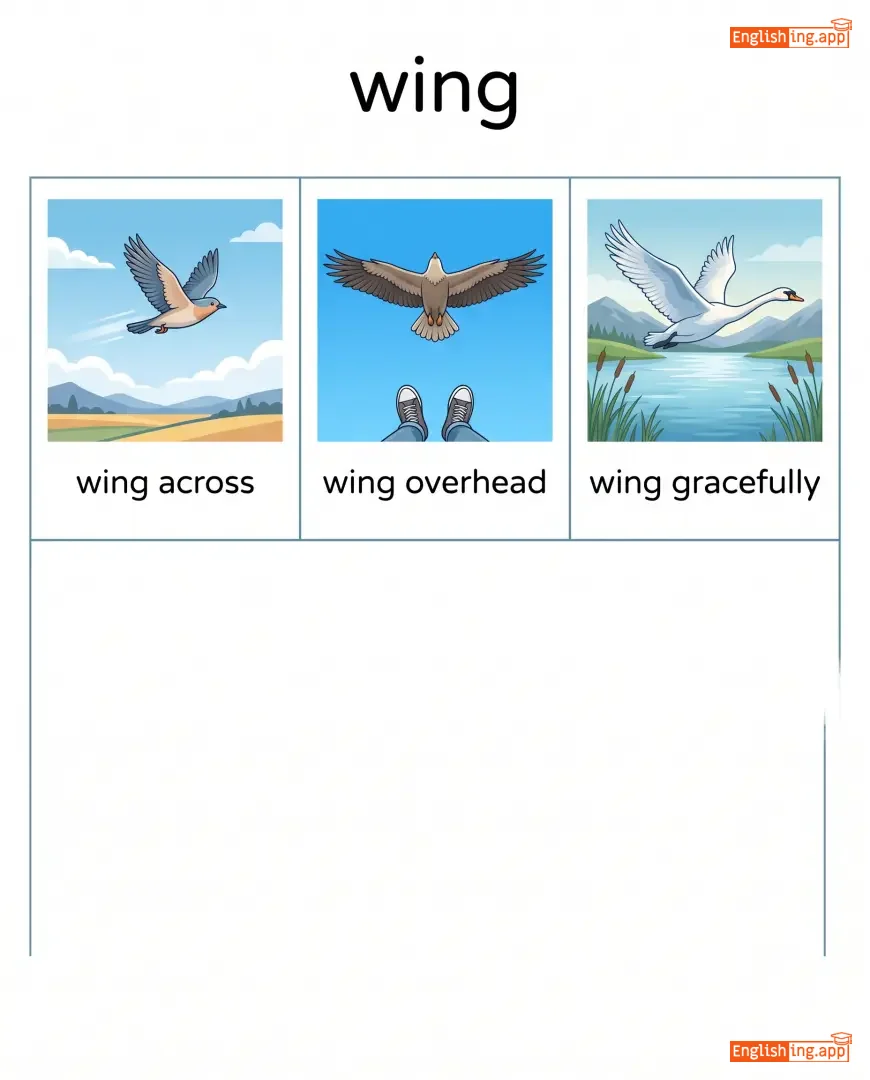
wing across, wing overhead, wing gracefully, wing swiftly
••••••
|
विंग = पंखों से उड़ना (wing se pankhon se udna)
••••••
|
Vocabulary Quiz
Test your vocabulary by matching words with their translations or meanings.
Login to take the quiz
Comments (0)
Share your thoughts and join the discussion.
Join the discussion by logging in
Login to CommentNo comments yet
Be the first to share your thoughts!