

Traducción
Pasado
Participio Pasado
Tercera Persona Singular
Gerundio
Meaning
Oración de Ejemplo
Traducción de Oración de Ejemplo
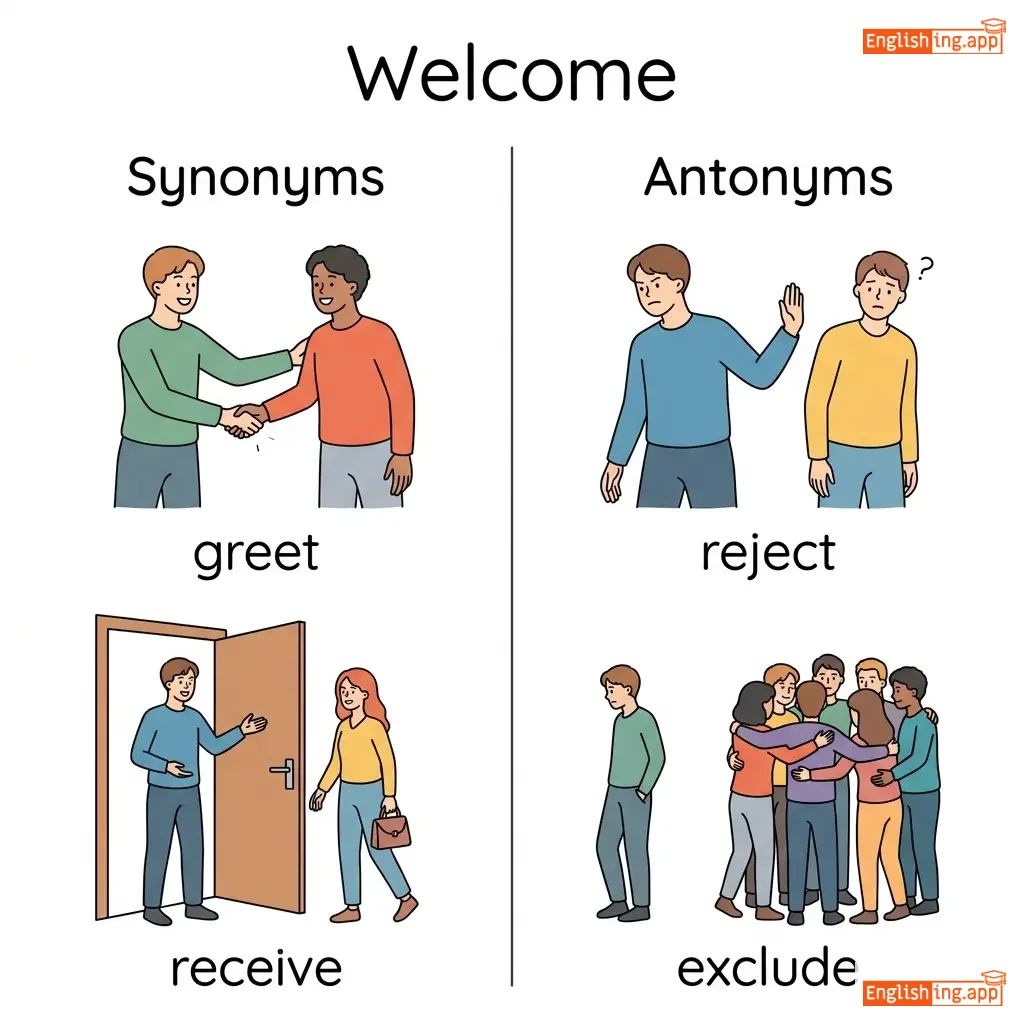
Synonyms
Antonyms
Colocaciones
Mnemotécnico

Swipe left or right, or use the buttons. Tap image to zoom.
Traducción de Oración de Ejemplo
Palabra
Lesson 115Lesson 115 - Alternar Máscara
|
Emoji
|
Palabra | Images | Traducción | Pasado | Participio Pasado | Tercera Persona Singular | Gerundio | Meaning | Oración de Ejemplo | Traducción de Oración de Ejemplo | Example Expression | Significado de Expresión de Ejemplo | Traducción de Expresión de Ejemplo | Synonyms | Antonyms | Colocaciones | Mnemotécnico |
|---|---|---|---|---|---|---|---|---|---|---|---|---|---|---|---|---|---|
|
#5475
🌀
|
/wɪrd/
adjective
(wird)
••••••
|
- •••••• |
extraño
extrano
••••••
|
- •••••• | - •••••• | - •••••• | - •••••• |
suggesting something supernatural or very strange; unusual
••••••
|
The movie had a weird ending that nobody expected. |
La película tenía un final extraño que nadie esperaba.
La pelicula tenia un final extrano que nadie esperaba.
••••••
|
weird out |
to make someone feel uncomfortable or strange
••••••
|
extrañar a alguien
extrañar a alguien
••••••
|
strange, odd, bizarre, unusual, peculiar
••••••
|
normal, ordinary, usual
••••••
|
weird feeling, weird dream, weird noise, weird behavior
••••••
|
Weird significa extraño, como una idea extraña en una película.
••••••
|
|
#5476
👋
|
/ˈwelkəm/
verb
(bienvenida)
••••••
|
|
dar la bienvenida
dar la bienvenida
••••••
|
welcomed
bienvenida
••••••
|
welcomed
bienvenida
••••••
|
welcomes
bienvenida
••••••
|
welcoming
bienvenida
••••••
|
to greet someone in a friendly way; to receive gladly
••••••
|
They welcome new students warmly.
Dieron una cálida bienvenida a los nuevos estudiantes.
••••••
|
Dieron una cálida bienvenida a los nuevos estudiantes.
Dieron una cálida bienvenida a los nuevos estudiantes.
••••••
|
- •••••• | - •••••• | - •••••• |
greet, receive, embrace, admit
••••••
|
reject, shun, dismiss, exclude
••••••
|
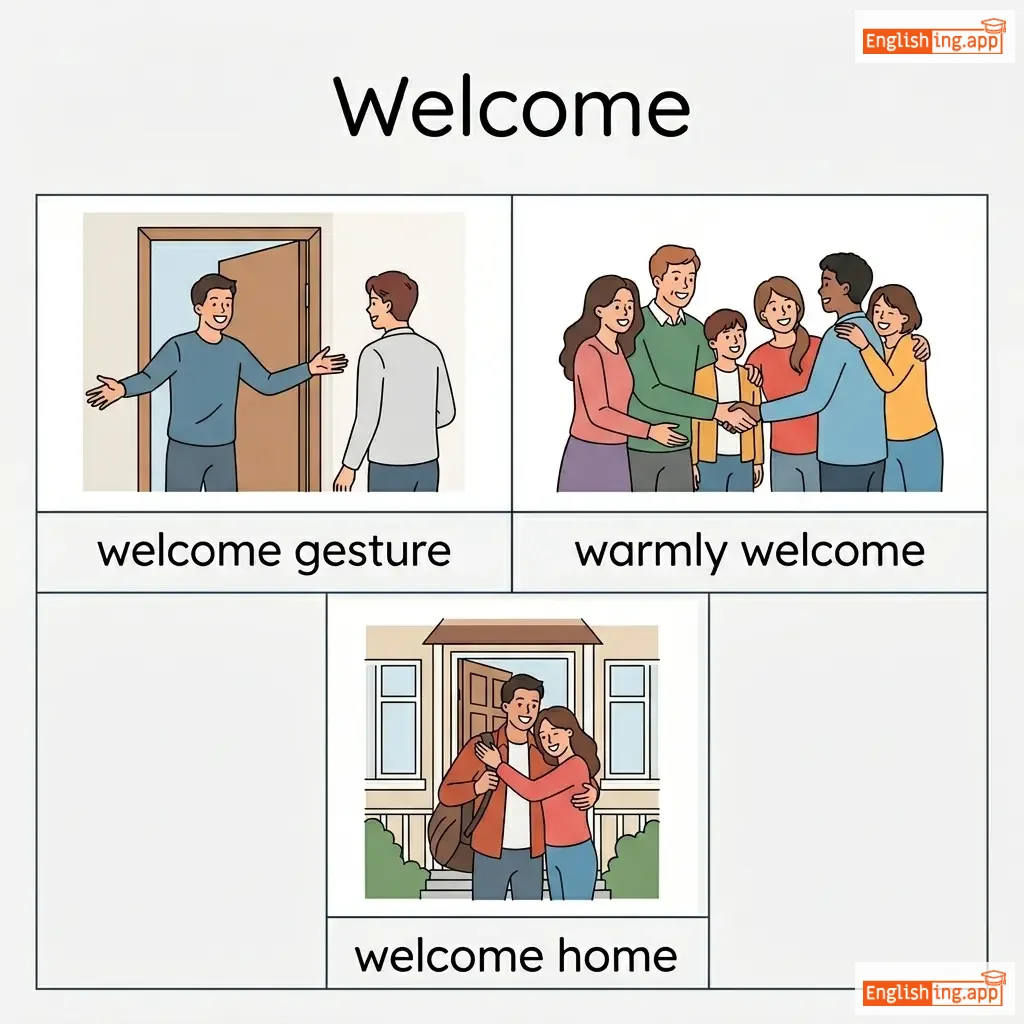
warmly welcome, welcome guests, welcome changes, welcome opportunity, welcome visitors
••••••
|
Dar bienvenida a alguien es siempre dar un abrazo cálido
••••••
|
|
#5477
🤝
|
/ˈwel.feər/
noun
(welfare)
••••••
|
- •••••• |
bienestar; prosperidad; salud
bienestar; prosperidad; salud
••••••
|
- •••••• | - •••••• | - •••••• | - •••••• |
the health, happiness, and fortunes of a person or group; care and support
••••••
|
The government is responsible for the welfare of its citizens. |
El gobierno es responsable del bienestar de sus ciudadanos.
El gobierno es responsable del bienestar de sus ciudadanos.
••••••
|
- •••••• | - •••••• | - •••••• |
well-being, benefit, good, prosperity
••••••
|
harm, disadvantage, detriment
••••••
|
social welfare, welfare state, welfare system
••••••
|
Bienestar = Bien (good) + estar (state) para recordar salud
••••••
|
|
#5478
🕳️
|
/wel/
noun
(wel)
••••••
|
- •••••• |
pozo; bienestar;
pozo; bienestar
••••••
|
- •••••• | - •••••• | - •••••• | - •••••• |
a deep hole in the ground from which water is obtained
••••••
|
The villagers get water from the old well in the center of town.
los aldeanos obtienen agua del viejo pozo en el centro del pueblo.
••••••
|
Los aldeanos obtienen agua del viejo pozo en el centro del pueblo.
Los aldeanos obtienen agua del viejo pozo en el centro del pueblo.
••••••
|
- •••••• | - •••••• | - •••••• |
water hole, spring, bore
••••••
|
hill, mound, elevation
••••••
|
water well, oil well, deep well
••••••
|
El pozo puede ser un símbolo de bienestar y agua para los aldeanos.
••••••
|
|
#5479
😊
|
/ˈwel.biː.ɪŋ/
noun
(wɛlˈbiɪŋ)
••••••
|
|
bienestar
bienestar
••••••
|
- •••••• | - •••••• | - •••••• | - •••••• |
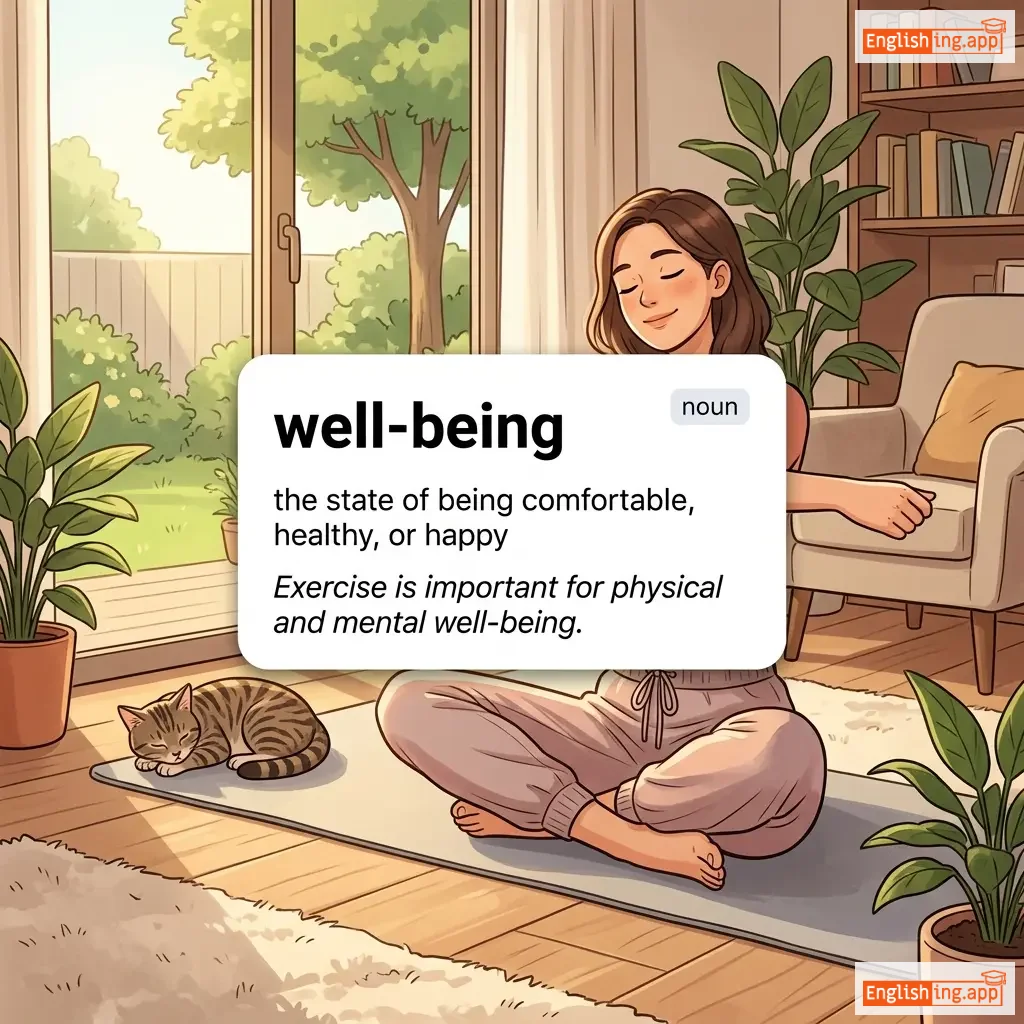
the state of being comfortable, healthy, or happy
••••••
|
Regular exercise contributes to physical and mental well-being. |
El ejercicio regular contribuye al bienestar físico y mental.
El ejercicio regular contribuye al bienestar fisico y mental.
••••••
|
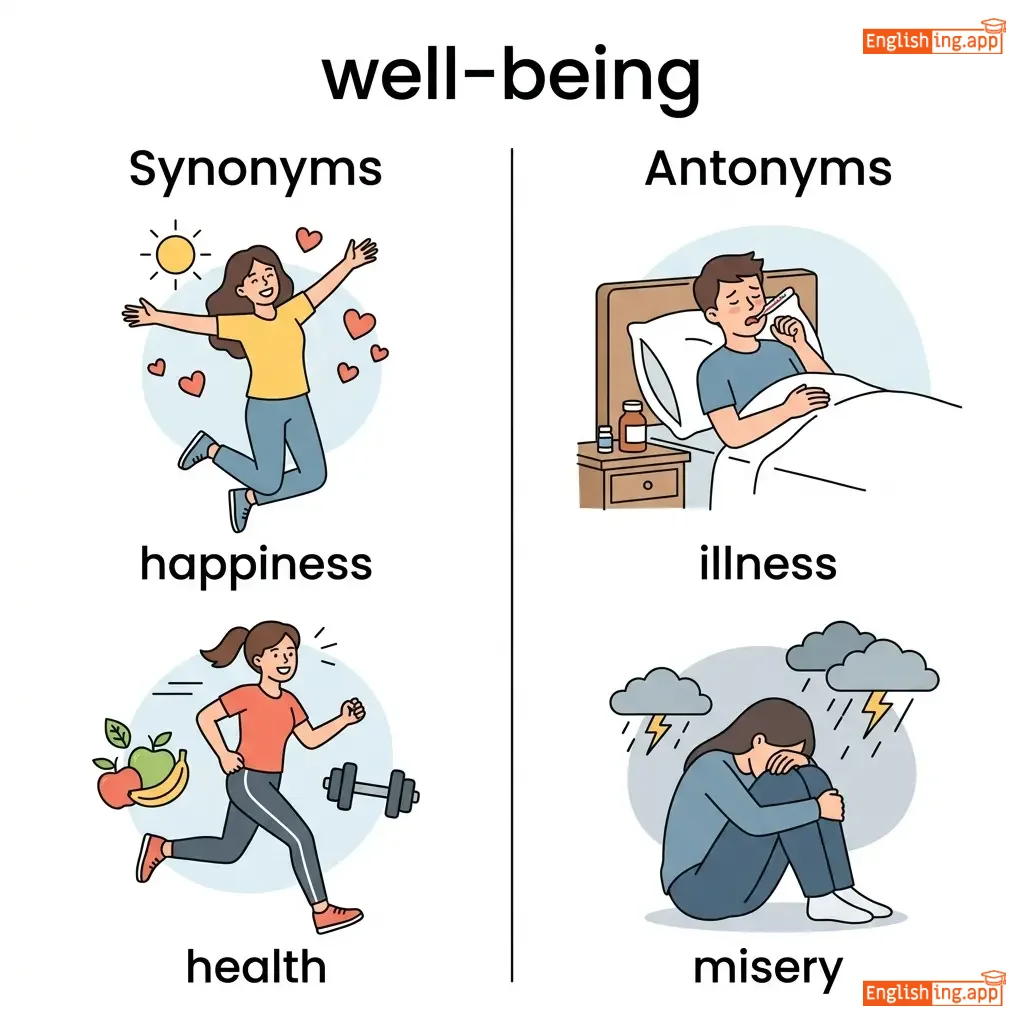
- •••••• | - •••••• | - •••••• |
welfare, health, happiness, comfort
••••••
|
suffering, distress, misery
••••••
|
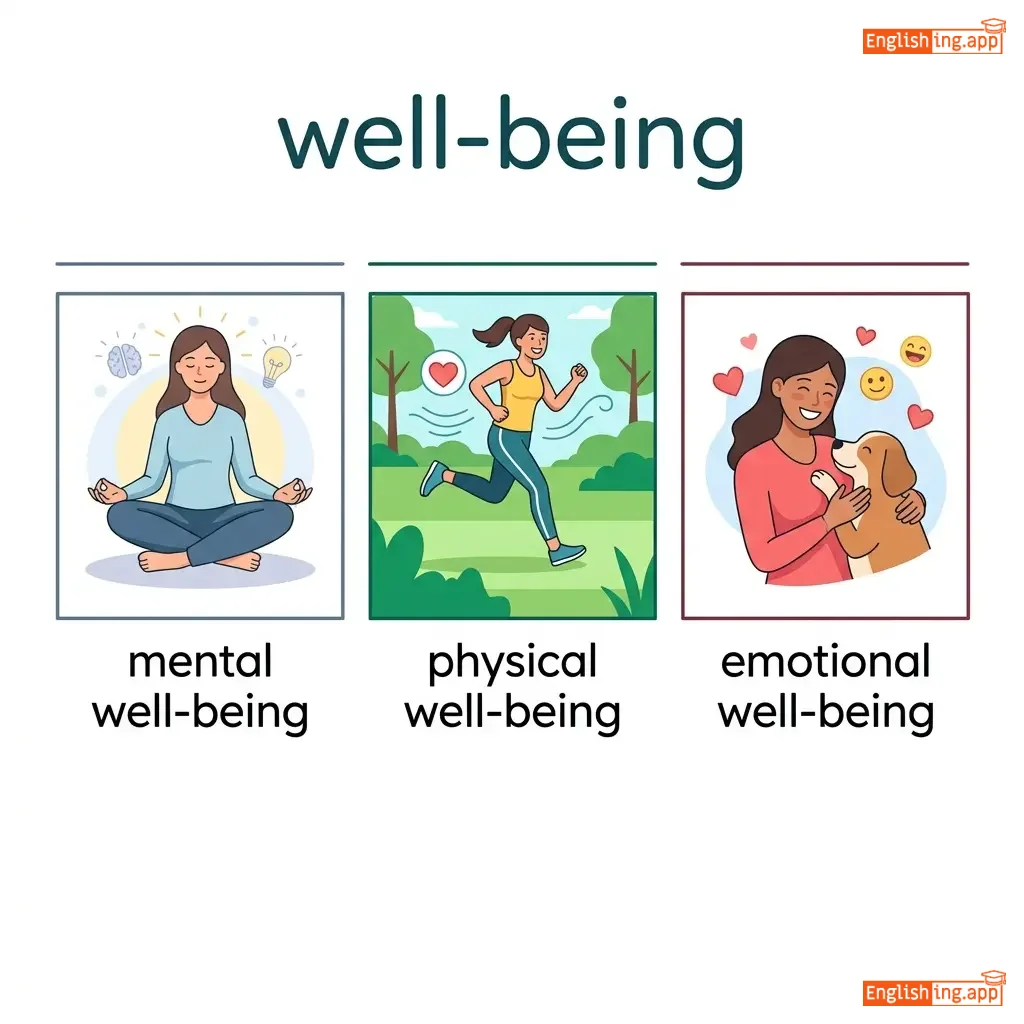
physical well-being, mental well-being, emotional well-being
••••••
|
Bienestar in Spanish is like 'well-being' in English, combining 'bien' (good) and 'estar' (to be).
••••••
|
|
#5480
🌟
|
/ˌwelˈnoʊn/
adjective
(wel-noun)
••••••
|
- •••••• |
famoso
famoso
••••••
|
- •••••• | - •••••• | - •••••• | - •••••• |
known by many people; famous or recognized
••••••
|
He is a well-known actor in his country. |
Él es un actor famoso en su país.
Él es un actor famoso en su país.
••••••
|
- •••••• | - •••••• | - •••••• |
famous, renowned, popular, prominent, recognized
••••••
|
unknown, obscure, unfamiliar
••••••
|
well-known fact, well-known person, well-known brand, well-known story
••••••
|
Well-known significa 'famoso' — ¡todo el mundo lo conoce!
••••••
|
|
#5481
🌅
|
/wɛst/
noun
(wɛst)
••••••
|
- •••••• |
oeste
oeste
••••••
|
- •••••• | - •••••• | - •••••• | - •••••• |
the direction to the left of the north and to the right of the south, typically associated with the sunset
••••••
|
The sun sets in the west. |
El sol se pone en el oeste.
El sol se pone en el oeste.
••••••
|
- •••••• | - •••••• | - •••••• |
sunset, occident
••••••
|
east, orient
••••••
|
west coast, west side, go west, western civilization
••••••
|
El sol se pone en el oeste - The sun sets in the west.
••••••
|
|
#5482
🌎
|
/ˈwɛstərn/
adjective
(wéstern)
••••••
|
- •••••• |
occidental
occidental
••••••
|
- •••••• | - •••••• | - •••••• | - •••••• |
relating to or characteristic of the West, especially Europe and the Americas
••••••
|
She loves western music and culture. |
A ella le encanta la música y la cultura occidental.
A ella le encanta la música y la cultura occidental.
••••••
|
- •••••• | - •••••• | - •••••• |
occidental, westernized
••••••
|
eastern, oriental
••••••
|
western culture, western philosophy, western world
••••••
|
La cultura occidental proviene del Oeste - Western culture comes from the West.
••••••
|
|
#5483
💧
|
/wet/
adjective
(wét)
••••••
|
- •••••• |
mojado; empapado;
mojado; empapado;
••••••
|
- •••••• | - •••••• | - •••••• | - •••••• |
covered or saturated with water or another liquid; not dry
••••••
|
My clothes are still wet from the rain.
Mis ropas todavía están mojadas de la lluvia.
••••••
|
Mis ropas todavía están mojadas de la lluvia.
Mis ropas todavia estan mojadas de la lluvia.
••••••
|
- •••••• | - •••••• | - •••••• |
damp, moist, soaked, drenched
••••••
|
dry, arid, parched, dehydrated
••••••
|
wet clothes, wet weather, get wet
••••••
|
La lluvia moja todo.
••••••
|
|
#5484
❓
|
/wɒt/
pronoun
(wot)
••••••
|
- •••••• |
qué
que
••••••
|
- •••••• | - •••••• | - •••••• | - •••••• |
used to ask for information about something
••••••
|
What is your name? |
¿Cuál es tu nombre?
¿Cuál es tu nombre?
••••••
|
- •••••• | - •••••• | - •••••• |
which, that
••••••
|
- •••••• |
what time, what happened, what are you doing
••••••
|
qué (que) se usa para hacer preguntas - 'What' se usa para preguntar.
••••••
|
|
#5485
🤷♂️
|
/wɒtˈɛvər/
pronoun
(watever)
••••••
|
- •••••• |
lo que sea
lo ke sea
••••••
|
- •••••• | - •••••• | - •••••• | - •••••• |
used to refer to anything or everything that is of the type mentioned
••••••
|
You can choose whatever you like. |
Puedes elegir lo que quieras.
Puedes elegir lo que quieras.
••••••
|
- •••••• | - •••••• | - •••••• |
anything, everything
••••••
|
- •••••• |
whatever you want, whatever happens
••••••
|
lo que sea - Whatever you want, you can have.
••••••
|
|
#5486
🌾
|
/wiːt/
noun
(wheat)
••••••
|
- •••••• |
trigo
trigo
••••••
|
- •••••• | - •••••• | - •••••• | - •••••• |
a cereal plant whose grain is used to make flour for bread and other foods
••••••
|
Farmers harvested the wheat in early summer. |
Los agricultores cosecharon el trigo a principios del verano.
Los agricultores cosecharon el trigo a principios del verano.
••••••
|
separate the wheat from the chaff |
to separate valuable things or people from those that are not
••••••
|
separar el trigo de la paja
separar el trigo de la paja
••••••
|
grain, cereal, barley, oat, corn
••••••
|
chaff, waste
••••••
|
wheat flour, wheat bread, wheat field, wheat grain, wheat harvest
••••••
|
Wheat significa trigo 🌾 — el trigo se usa para hacer pan, así que recuerda la conexión con la comida.
••••••
|
|
#5487
🚗
|
/wiːl/
noun
(wíil)
••••••
|
- •••••• |
rueda
rueda
••••••
|
- •••••• | - •••••• | - •••••• | - •••••• |
a circular object that revolves on an axle and is used to move or carry things
••••••
|
The wheel of the car broke down on the way. |
La rueda del coche se rompió en el camino.
La rueda del coche se rompió en el camino.
••••••
|
- •••••• | - •••••• | - •••••• |
disk, circle, rotor, rim
••••••
|
none
••••••
|
steering wheel, bicycle wheel, car wheel, turn the wheel
••••••
|
La rueda gira y mueve el coche (La rueda gira y mueve el coche)
••••••
|
|
#5488
⏰
|
/wɛn/
adverb
(jwen)
••••••
|
- •••••• |
cuándo
cuando
••••••
|
- •••••• | - •••••• | - •••••• | - •••••• |
at what time
••••••
|
Do you know when the train leaves? |
¿Sabes cuándo sale el tren?
¿Sabes cuando sale el tren?
••••••
|
- •••••• | - •••••• | - •••••• |
at what time, whenever
••••••
|
never, always
••••••
|
when will, when did, when does, when do
••••••
|
De 'cuando' a 'cuándo' (De 'cuando' a 'cuándo')
••••••
|
|
#5489
🕐
|
/wenˈevər/
adverb
(wenever)
••••••
|
- •••••• |
cuandoquiera
wenever
••••••
|
- •••••• | - •••••• | - •••••• | - •••••• |
at any time that; every time that; no matter when
••••••
|
Call me whenever you need help.
Col me wenever yu niid jelp.
••••••
|
Llámame cuando necesites ayuda.
Col me wenever yu niid jelp.
••••••
|
- •••••• | - •••••• | - •••••• |
anytime, every time, no matter when
••••••
|
never, at no time
••••••
|
whenever possible, whenever necessary, whenever you want
••••••
|
Mnemonic: when + ever = cuandoquiera; imagine a clock saying when and a key saying ever to unlock ayuda
••••••
|
|
#5490
📍
|
/weər/
adverb
(dónde)
••••••
|
- •••••• |
dónde
donde
••••••
|
- •••••• | - •••••• | - •••••• | - •••••• |
In or to what place or position; used to inquire about location
••••••
|
Where did you put my keys?
¿Dónde pusiste mis llaves?
••••••
|
¿Dónde pusiste mis llaves?
Donde pusiste mis llaves
••••••
|
- •••••• | - •••••• | - •••••• |
whereabouts, whither
••••••
|
here, there
••••••
|
where are you, where to go, where from
••••••
|
Where = Donde. Visualiza una puerta con un cartel que dice Donde y un llavero esperando, así cada vez recuerdas que 'donde' significa 'where' en español
••••••
|
|
#5491
⚖️
|
/wɛərˈæz/
conjunction
(wɛræz)
••••••
|
- •••••• |
mientras que
mientras que
••••••
|
- •••••• | - •••••• | - •••••• | - •••••• |
used to introduce a contrast or comparison between two facts
••••••
|
She prefers tea, whereas he likes coffee. |
A ella le gusta el té, mientras que a él le gusta el café.
A ella le gusta el té, mientras que a él le gusta el café.
••••••
|
- •••••• | - •••••• | - •••••• |
while, although, but, though
••••••
|
similarly, likewise
••••••
|
whereas clause, whereas statement, tea whereas coffee
••••••
|
Tea vs coffee comparación - español mientras que
••••••
|
|
#5492
🔗
|
/wɛərˈbaɪ/
adverb
(werbai)
••••••
|
- •••••• |
mediante
mediante
••••••
|
- •••••• | - •••••• | - •••••• | - •••••• |
by which; because of which
••••••
|
The company agreed to a contract whereby it would pay the penalty. |
La empresa acordó un contrato mediante el cual pagaría la multa.
La empresa acordó un contrato mediante el cual pagaría la multa.
••••••
|
- •••••• | - •••••• | - •••••• |
through which, by means of which, in which
••••••
|
- •••••• |
whereby agreement, whereby clause
••••••
|
Whereby sounds like 'werbai', which can be remembered as 'mediante' meaning by which.
••••••
|
|
#5493
🤔
|
/ˈwɛðər/
conjunction
(wéther)
••••••
|
- •••••• |
si
si
••••••
|
- •••••• | - •••••• | - •••••• | - •••••• |
used to express a doubt or choice between alternatives
••••••
|
I don’t know whether I should go.
No sé si debo ir.
••••••
|
No sé si debo ir.
No sé si debo ir.
••••••
|
- •••••• | - •••••• | - •••••• |
if, either
••••••
|
none
••••••
|
whether or not, whether to go, whether he will
••••••
|
si (si) no sabes, pregúntate a ti mismo
••••••
|
|
#5494
❓
|
/wɪtʃ/
pronoun
(wɪtʃ)
••••••
|
- •••••• |
cuál
cual
••••••
|
- •••••• | - •••••• | - •••••• | - •••••• |
used to ask about one or more items from a defined set
••••••
|
Which one do you prefer, the red or the blue? |
¿Cuál prefieres, el rojo o el azul?
¿Cuál prefieres, el rojo o el azul?
••••••
|
- •••••• | - •••••• | - •••••• |
what, that, who
••••••
|
none
••••••
|
which one, which way, which time
••••••
|
Which in Spanish is 'cuál', it helps you choose!
••••••
|
|
#5495
⏳
|
/waɪl/
conjunction
(wail)
••••••
|
- •••••• |
mientras
mientras
••••••
|
- •••••• | - •••••• | - •••••• | - •••••• |
during the time that something is happening
••••••
|
She was reading while waiting for the bus.
Ella estaba leyendo mientras esperaba el autobús.
••••••
|
Ella estaba leyendo mientras esperaba el autobús.
Ella estaba leyendo mientras esperaba el autobús.
••••••
|
- •••••• | - •••••• | - •••••• |
as, when, during
••••••
|
none
••••••
|
while waiting, while studying, while traveling
••••••
|
Mientras esperas, piensa en 'mientras' en español!
••••••
|
|
#5496
🥄
|
/wɪp/
verb
(wɪp)
••••••
|
- •••••• |
azotar
azotar
••••••
|
whipped
wɪpt
••••••
|
whipped
wɪpt
••••••
|
whips
wɪps
••••••
|
whipping
wɪpɪŋ
••••••
|
to strike or beat with a flexible instrument such as a rope or cord
••••••
|
The trainer whipped the horse to make it run faster.
El entrenador azotó al caballo para hacerlo correr más rápido.
••••••
|
El entrenador azotó al caballo para hacerlo correr más rápido.
El entrenador azotó al caballo para hacerlo correr más rápido.
••••••
|
whip up
whip up
••••••
|
to quickly prepare or create something
••••••
|
preparar rápidamente
preparar rapidamente
••••••
|
lash, beat, strike, thrash, flog
••••••
|
caress, soothe
••••••
|
whip cream, whip the horse, whip up enthusiasm, political whip
••••••
|
Whip significa azotar — ¡Whip para que el caballo corra más rápido!
••••••
|
|
#5497
🤫
|
/ˈwɪspər/
verb
(güísper)
••••••
|
|
susurrar
susurrar
••••••
|
whispered
güísperd
••••••
|
whispered
güísperd
••••••
|
whispers
güíspers
••••••
|
whispering
güíspering
••••••
|
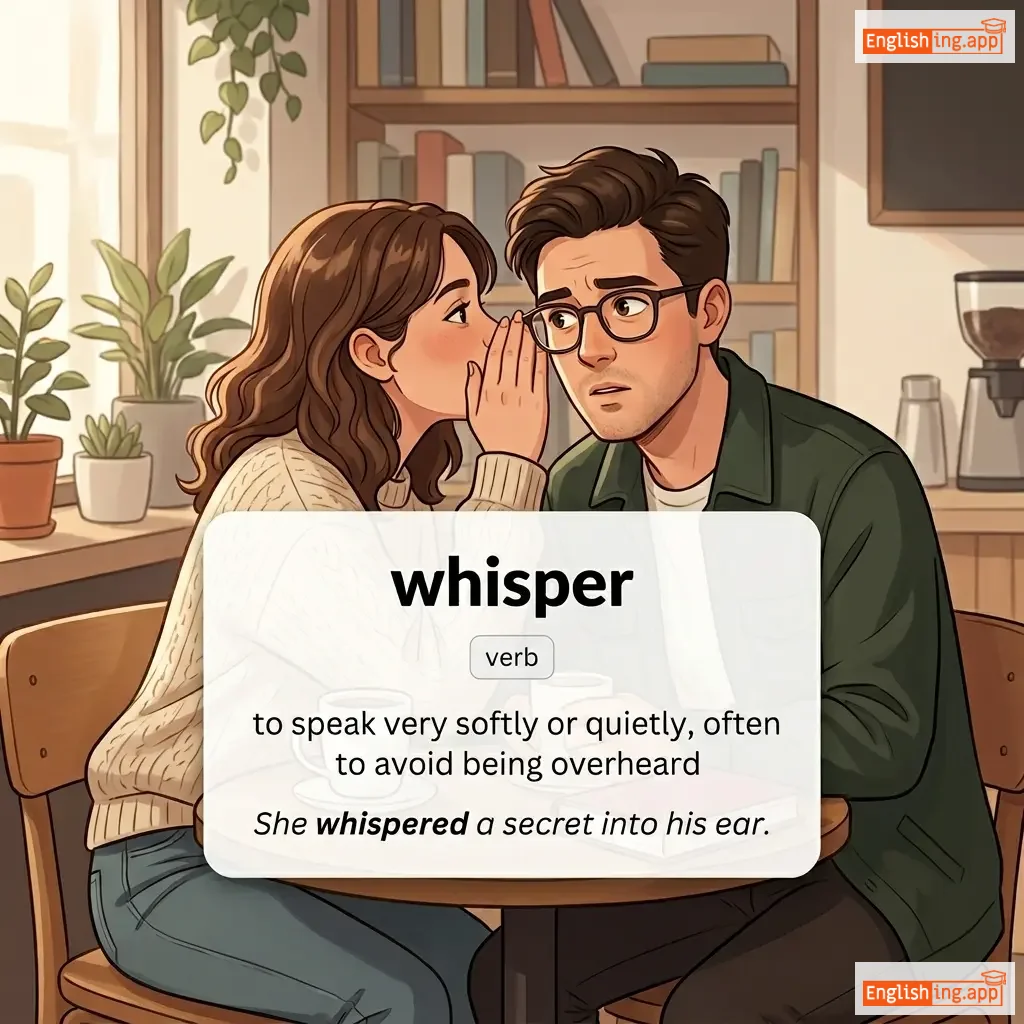
to speak very softly using one's breath without vocal cords
••••••
|
She whispered a secret in my ear.
Ella susurró un secreto en mi oído.
••••••
|
Ella susurró un secreto en mi oído.
Ella susurró un secreto en mi oído.
••••••
|
- •••••• | - •••••• | - •••••• |
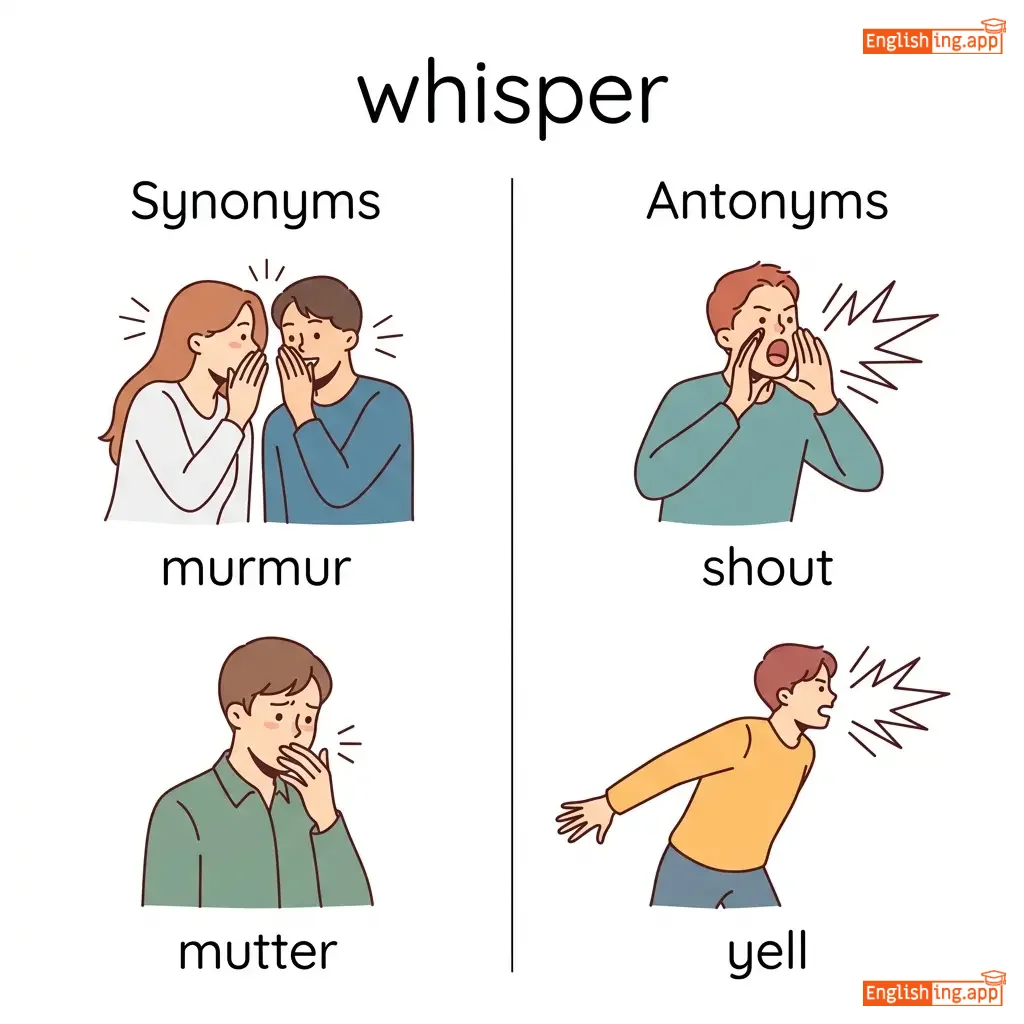
murmur, mumble, breathe, hiss
••••••
|
shout, yell, scream, roar
••••••
|
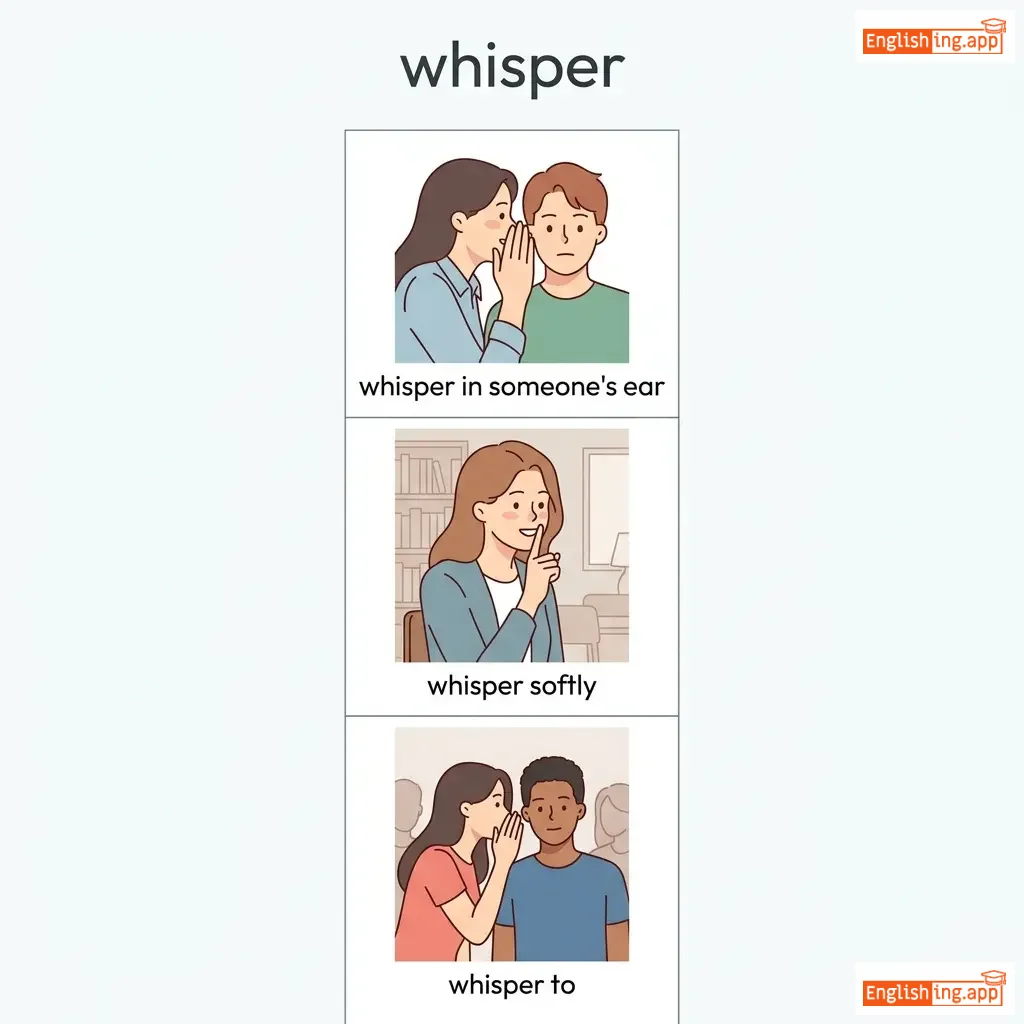
whisper secrets, whisper softly, whisper words, whisper quietly, whisper sweet, whisper prayers
••••••
|
En español, 'susurrar' es un verbo similar al inglés 'whisper'.
••••••
|
|
#5498
🎵
|
/ˈwɪsəl/
verb
(wísel)
••••••
|
|
silbar
silbar
••••••
|
whistled
wísteld
••••••
|
whistled
wísteld
••••••
|
whistles
wísels
••••••
|
whistling
wíseling
••••••
|
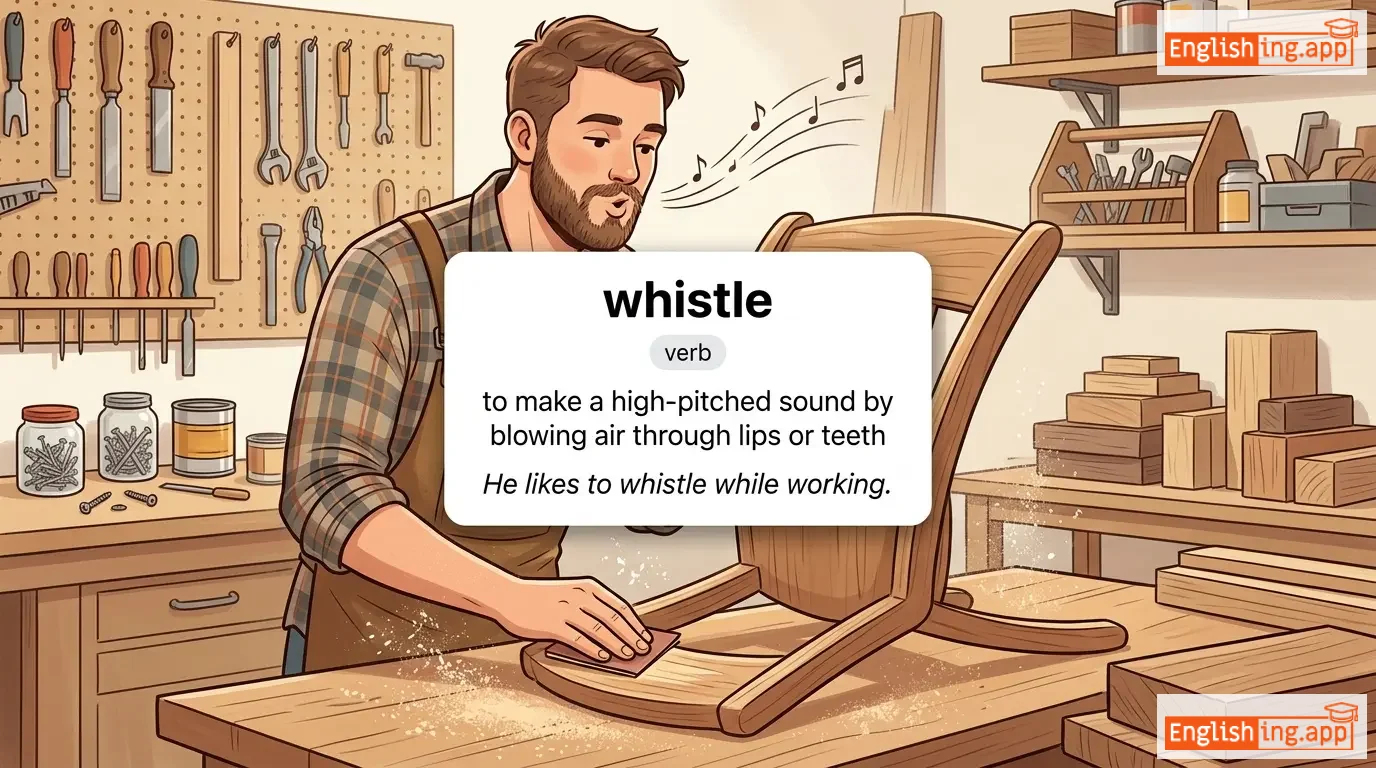
to make a high-pitched sound by blowing air through lips or teeth
••••••
|
He likes to whistle while working.
A él le gusta silbar mientras trabaja.
••••••
|
A él le gusta silbar mientras trabaja.
A él le gusta silbar mientras trabaja.
••••••
|
- •••••• | - •••••• | - •••••• |
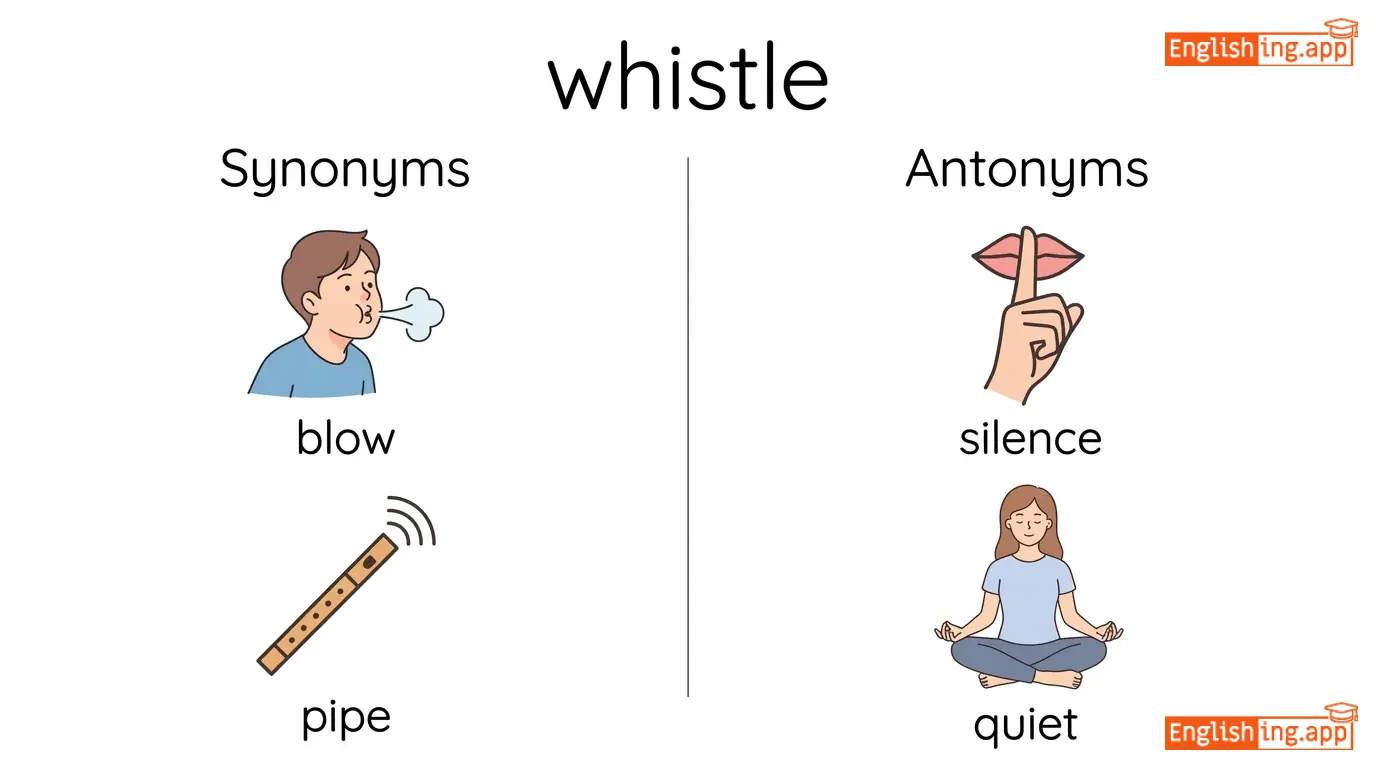
blow, pipe, toot, sound
••••••
|
silence, quiet, mute
••••••
|
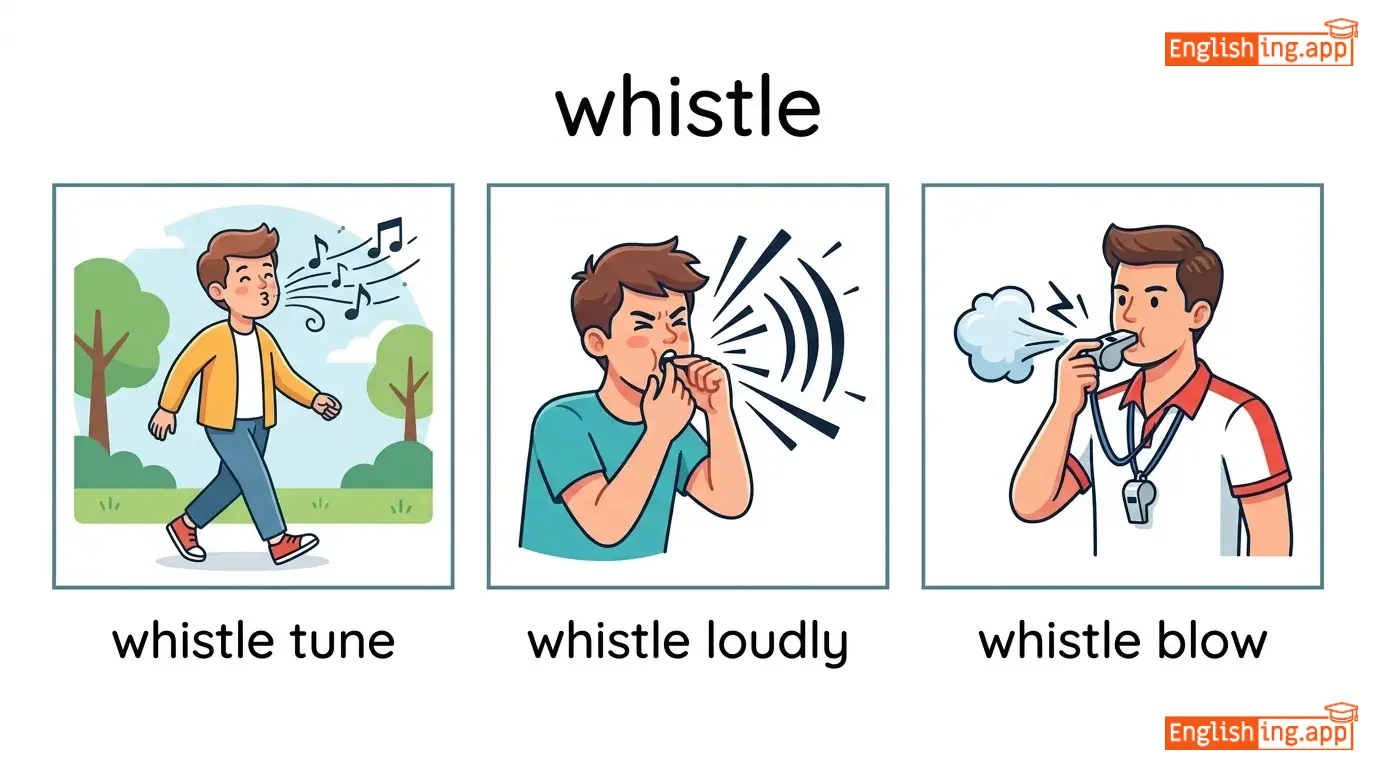
whistle tune, whistle loudly, whistle blow, train whistle
••••••
|
Silbar - El sonido de la 's' como una silbido.
••••••
|
|
#5499
⚪
|
/waɪt/
adjective
(wáit)
••••••
|
- •••••• |
blanco; puro
blanco; puro
••••••
|
- •••••• | - •••••• | - •••••• | - •••••• |
of the color of snow or milk; pale; pure
••••••
|
She wore a beautiful white dress to the wedding.
Ella usó un hermoso vestido blanco en la boda.
••••••
|
Ella usó un hermoso vestido blanco en la boda.
Ella usó un hermoso vestido blanco en la boda.
••••••
|
- •••••• | - •••••• | - •••••• |
pale, colorless, snow-white, ivory
••••••
|
black, dark, colored
••••••
|
white paper, white shirt, white house
••••••
|
In Spanish, 'blanco' is white, just like milk!
••••••
|
|
#5500
🤔
|
/huː/
pronoun
(quién)
••••••
|
- •••••• |
quién
kien
••••••
|
- •••••• | - •••••• | - •••••• | - •••••• |
used to ask about a person or people
••••••
|
Who is coming to the party tonight? |
¿Quién viene a la fiesta esta noche?
¿Quién viene a la fiesta esta noche?
••••••
|
- •••••• | - •••••• | - •••••• |
whoever, which person
••••••
|
none
••••••
|
who is, who are, who knows
••••••
|
Just ask 'quién' in Spanish to know who!
••••••
|
|
#5501
🙋♂️
|
/huːˈɛvər/
pronoun
(juːˈɛvər)
••••••
|
- •••••• |
quien sea
kien sea
••••••
|
- •••••• | - •••••• | - •••••• | - •••••• |
any person who; no matter who
••••••
|
Whoever wants to join the trip must register today. |
Quienquiera que quiera unirse al viaje debe registrarse hoy.
Kienkiera ke kiera unirse al viaje debe registrarse hoy.
••••••
|
- •••••• | - •••••• | - •••••• |
anyone, anybody, whosoever
••••••
|
none, nobody
••••••
|
whoever comes, whoever wants, whoever said, whoever did
••••••
|
Who + ever = quien sea — whoever means cualquier persona que
••••••
|
|
#5502
🔵
|
/hoʊl/
adjective
(joul)
••••••
|
- •••••• |
entero entera
entero entera
••••••
|
- •••••• | - •••••• | - •••••• | - •••••• |
complete; entire; all of something
••••••
|
He ate the whole pizza by himself.
Si comio toda la pizza el solo.
••••••
|
Se comió toda la pizza él solo.
se comio toda la pizza el solo
••••••
|
- •••••• | - •••••• | - •••••• |
complete, entire, total, full
••••••
|
partial, incomplete, broken, fragmented
••••••
|
whole story, whole family, whole day
••••••
|
Entender 'entero' = entire — piensa: entero pizza = whole pizza
••••••
|
|
#5503
💯
|
/ˈhoʊli/
adverb
(joli)
••••••
|
- •••••• |
totalmente; completamente
totalmente; completamente
••••••
|
- •••••• | - •••••• | - •••••• | - •••••• |
Entirely; completely; to the full extent
••••••
|
I am wholly committed to this project. |
Estoy completamente comprometido con este proyecto.
Estoy completamente comprometido con este proyecto.
••••••
|
- •••••• | - •••••• | - •••••• |
completely, entirely, totally, fully
••••••
|
partially, partly, incompletely
••••••
|
wholly owned, wholly responsible, wholly different
••••••
|
Totalmente comprometido, como cuando te entregas a algo
••••••
|
|
#5504
👤
|
/huːm/
pronoun
(jum)
••••••
|
- •••••• |
a quien
a quien
••••••
|
- •••••• | - •••••• | - •••••• | - •••••• |
used to refer to the person or people that something is done to
••••••
|
The man whom I met yesterday is my friend. |
El hombre a quien conocí ayer es mi amigo.
El hombre a quien conocí ayer es mi amigo.
••••••
|
- •••••• | - •••••• | - •••••• |
who, that, the person
••••••
|
none
••••••
|
whom I met, whom I saw, to whom it may concern
••••••
|
Whom sounds like 'A quien' - 'A quien' as in the person you met.
••••••
|
|
#5505
📱
|
/huːz/
pronoun
(juz)
••••••
|
- •••••• |
cuyo
cuyo
••••••
|
- •••••• | - •••••• | - •••••• | - •••••• |
used to ask or talk about the person or thing that owns something
••••••
|
The girl whose phone was stolen is my cousin. |
La chica cuyo teléfono fue robado es mi prima.
La chica cuyo teléfono fue robado es mi prima.
••••••
|
- •••••• | - •••••• | - •••••• |
who's, that person’s, of whom
••••••
|
none
••••••
|
whose phone, whose book, whose idea
••••••
|
Whose phone is this? – 'Whose' connects to 'Cuyo teléfono'.
••••••
|
|
#5506
❓
|
/waɪ/
adverb
(guái)
••••••
|
- •••••• |
por qué
por ke
••••••
|
- •••••• | - •••••• | - •••••• | - •••••• |
For what reason or purpose; used to ask about the cause of something
••••••
|
Why are you late today? |
¿Por qué llegaste tarde hoy?
por ke llegaste tarde hoy?
••••••
|
- •••••• | - •••••• | - •••••• |
wherefore, how come
••••••
|
because, therefore
••••••
|
why not, that's why, reason why
••••••
|
No •••••• |
|
#5507
↔️
|
/waɪd/
adjective
(wáid)
••••••
|
- •••••• |
ancho; amplio
ancho; amplio
••••••
|
- •••••• | - •••••• | - •••••• | - •••••• |
having a great distance from one side to the other; broad
••••••
|
The river is very wide at this point. |
El río es muy ancho en este punto.
El río es muy ancho en este punto.
••••••
|
- •••••• | - •••••• | - •••••• |
broad, extensive, spacious, vast
••••••
|
narrow, thin, restricted
••••••
|
wide range, wide variety, wide open, wide awake
••••••
|
Ancho río, amplio espacio.
••••••
|
|
#5508
🌍
|
/ˈwaɪdli/
adverb
(wáidli)
••••••
|
- •••••• |
ampliamente
ampliamente
••••••
|
- •••••• | - •••••• | - •••••• | - •••••• |
to a great extent or degree
••••••
|
The news of his promotion spread widely across the company. |
La noticia de su ascenso se extendió ampliamente por la empresa.
La noticia de su ascenso se extendió ampliamente por la empresa.
••••••
|
- •••••• | - •••••• | - •••••• |
extensively, broadly, widely, far
••••••
|
narrowly, limitedly
••••••
|
widely known, widely accepted, widely spread
••••••
|
Wide world 🌍 means a wide spread across everywhere!
••••••
|
|
#5509
↔️
|
/ˈwaɪdən/
verb
(widen)
••••••
|
|
ensanchar
ensanchar
••••••
|
widened
widened
••••••
|
widened
widened
••••••
|
widens
widens
••••••
|
widening
widening
••••••
|
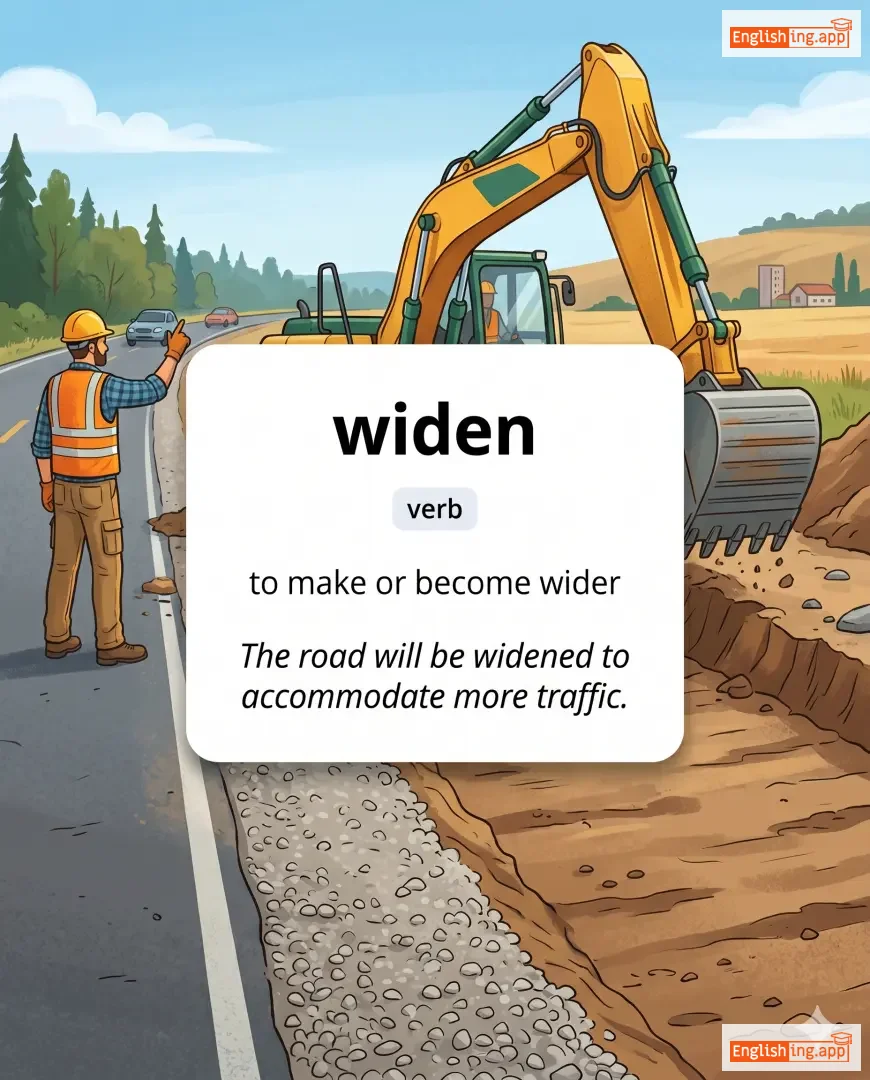
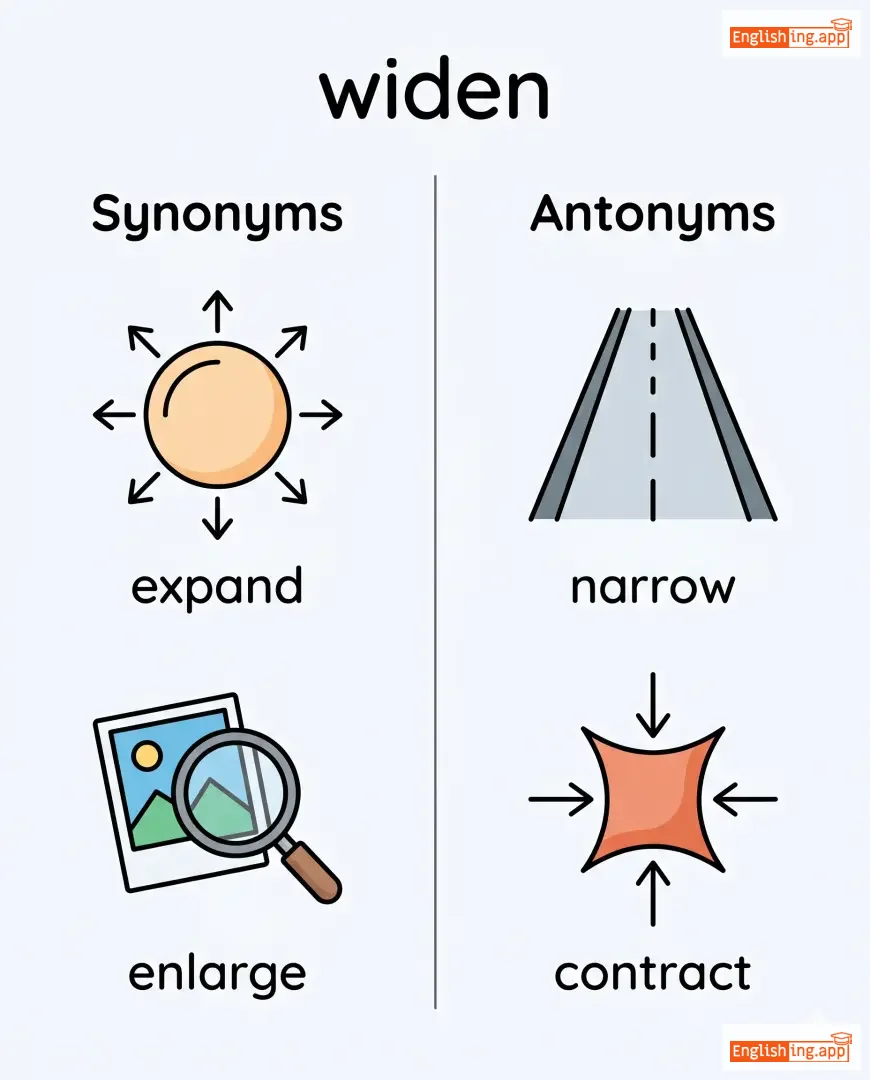
to make or become wider or broader
••••••
|
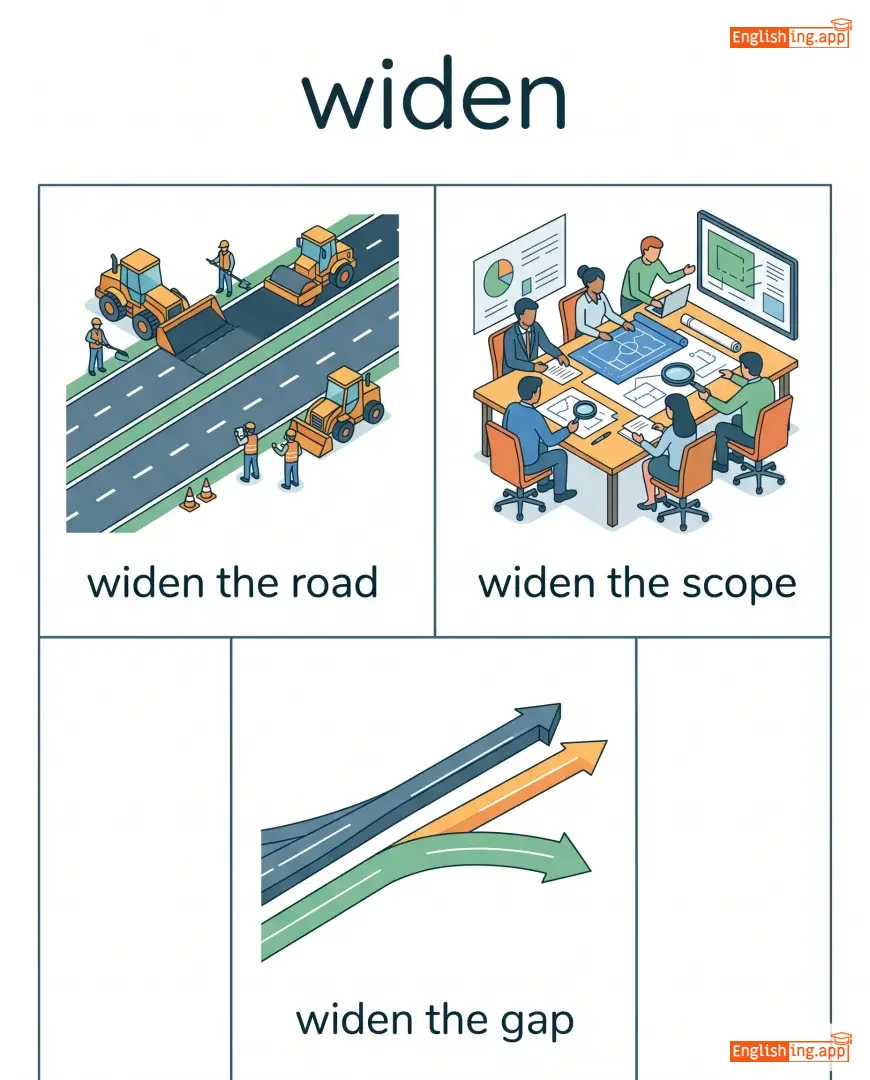
They plan to widen the road next year.
Ellos planean ensanchar la carretera el próximo año.
••••••
|
Ellos planean ensanchar la carretera el próximo año.
Ellos planean ensanchar la carretera el próximo año.
••••••
|
- •••••• | - •••••• | - •••••• |
broaden, expand, extend, enlarge
••••••
|
narrow, reduce, contract, shrink
••••••
|
widen road, widen gap, widen range, gradually widen
••••••
|
El verbo 'ensanchar' es como hacer algo más grande, como ensanchar una carretera.
••••••
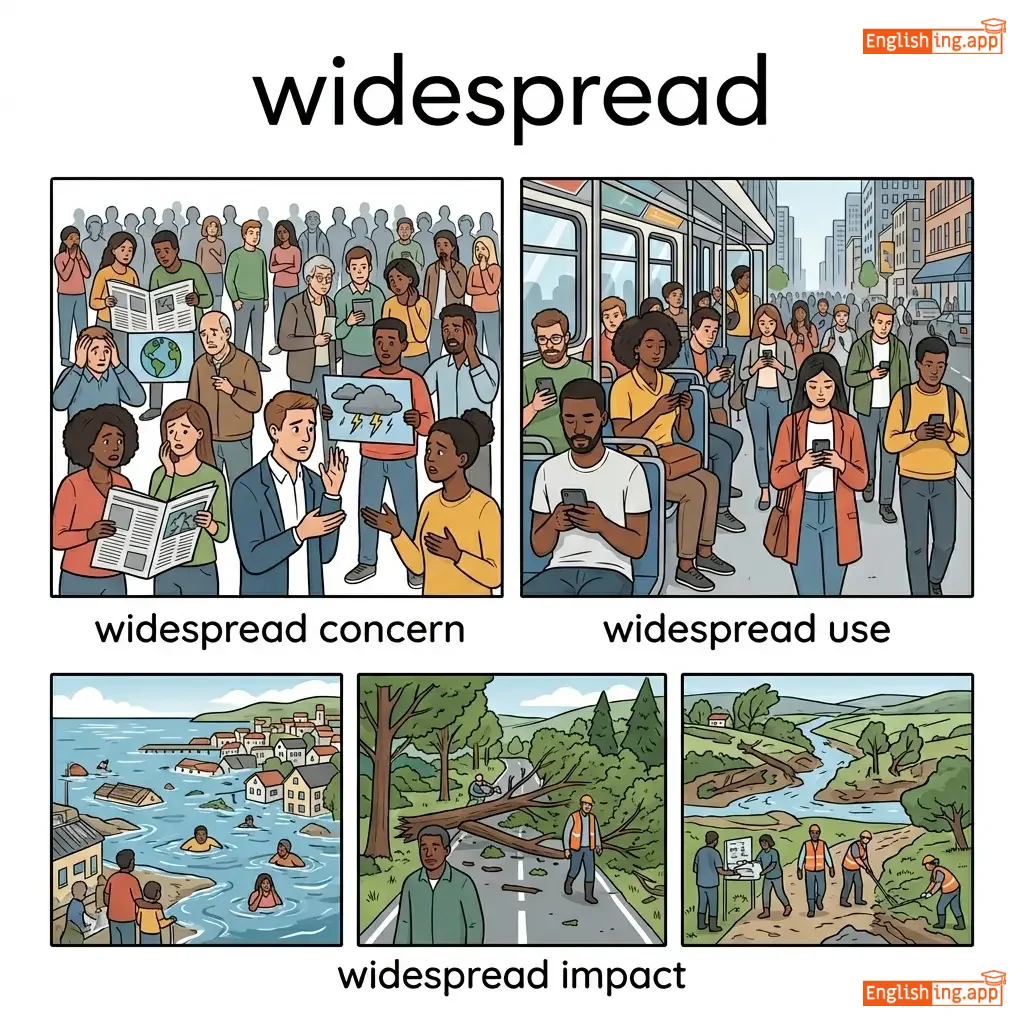
|
|
#5510
🌍
|
/ˈwaɪd.sprɛd/
adjective
(wáidspred)
••••••
|
|
generalizado
generalizado
••••••
|
- •••••• | - •••••• | - •••••• | - •••••• |
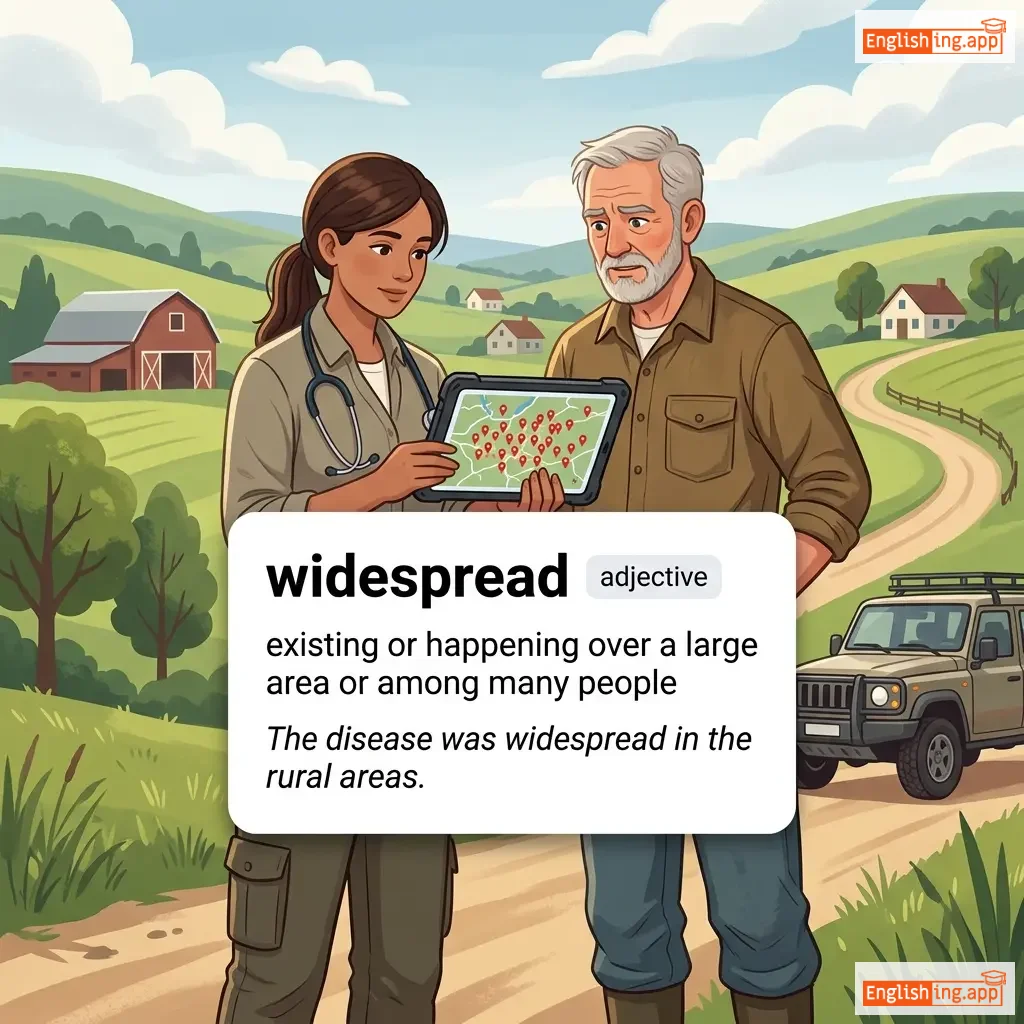
existing or happening in many places or among many people
••••••
|
There is widespread support for the new policy. |
Hay un apoyo generalizado para la nueva política.
Hay un apoyo generalizado para la nueva política.
••••••
|
- •••••• | - •••••• | - •••••• |
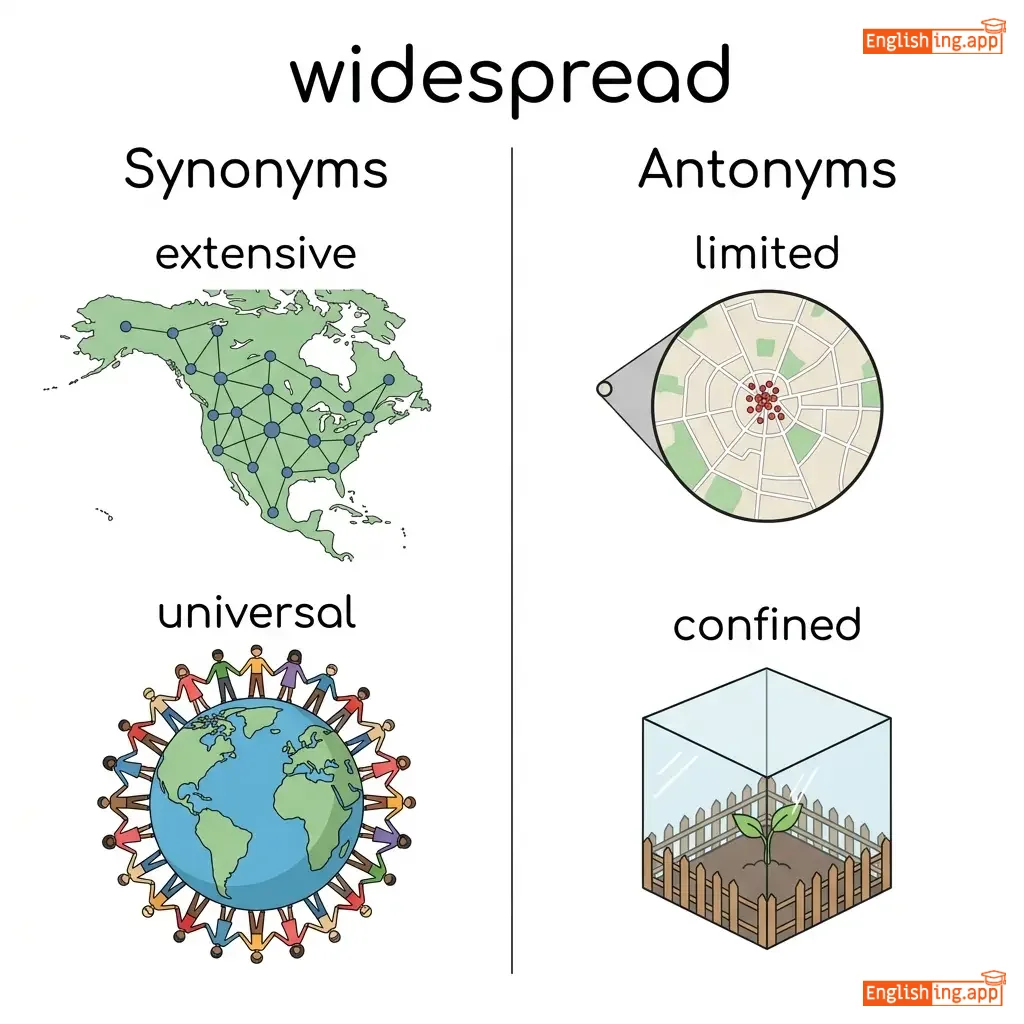
extensive, prevalent, universal, common
••••••
|
limited, localized, restricted, rare
••••••
|
widespread support, widespread use, widespread damage, widespread belief
••••••
|
Spanish 'generalizado' resembles 'widespread'.
••••••
|
|
#5511
🖤
|
/ˈwɪdəʊ/
noun
(vi-doh)
••••••
|
- •••••• |
viuda
viuda
••••••
|
- •••••• | - •••••• | - •••••• | - •••••• |
a woman whose husband has died and who has not married again
••••••
|
She became a widow at a very young age.
Se convirtió en viuda a una edad muy temprana.
••••••
|
Se convirtió en viuda a una edad muy temprana.
Se convirtio en viuda a una edad muy temprana.
••••••
|
grass widow
viuda de césped
••••••
|
a woman whose husband is temporarily away
••••••
|
viuda de césped
viuda de césped
••••••
|
bereaved woman, lone woman, wife left behind
••••••
|
wife, bride
••••••
|
young widow, war widow, become a widow, widow pension
••••••
|
Viuda significa viuda — 'We do' dijo pero ahora 'Él se fue' 😢
••••••
|
|
#5512
↔️
|
/wɪdθ/
noun
(widθ)
••••••
|
- •••••• |
ancho; amplitud
ancho; amplitud
••••••
|
- •••••• | - •••••• | - •••••• | - •••••• |
the measurement or extent of something from side to side; breadth
••••••
|
The width of the river is about 50 meters.
El ancho del río es aproximadamente 50 metros.
••••••
|
El ancho del río es aproximadamente 50 metros.
El ancho del rio es aproximadamente 50 metros.
••••••
|
- •••••• | - •••••• | - •••••• |
breadth, span, extent
••••••
|
length, height, narrowness
••••••
|
full width, average width, total width
••••••
|
Piensa en el ancho del río para recordar lo que significa 'width'.
••••••
|
|
#5513
👩❤️👨
|
/waɪf/
noun
(waif)
••••••
|
- •••••• |
esposa
esposa
••••••
|
- •••••• | - •••••• | - •••••• | - •••••• |
a woman who is married to someone
••••••
|
She is the wife of the famous author. |
Ella es la esposa del famoso autor.
Ella es la esposa del famoso autor.
••••••
|
- •••••• | - •••••• | - •••••• |
spouse, partner, better half
••••••
|
husband
••••••
|
wife and husband, loving wife, devoted wife
••••••
|
Wife is ‘esposa’ in Spanish! Easy to recall.
••••••
|
|
#5514
🌿
|
/waɪld/
adjective
(waild)
••••••
|
- •••••• |
salvaje
salvaje
••••••
|
- •••••• | - •••••• | - •••••• | - •••••• |
living or growing in the natural environment; uncontrolled or untamed
••••••
|
The children ran wild in the park. |
Los niños corrieron salvajemente en el parque.
Los niños corrieron salvajemente en el parque.
••••••
|
run wild |
to behave without restraint or control
••••••
|
correr salvajemente
correr salvajemente
••••••
|
untamed, feral, uncontrolled, savage, free
••••••
|
tame, domestic, controlled
••••••
|
wild animal, wild nature, wild guess, wild behavior
••••••
|
Wild significa salvaje – los animales en la selva corren sin control.
••••••
|
|
#5515
🦌
|
/ˈwaɪldˌlaɪf/
noun
(wáildlaif)
••••••
|
- •••••• |
vida silvestre
vida silvestre
••••••
|
- •••••• | - •••••• | - •••••• | - •••••• |
animals, birds, and plants living in their natural environment
••••••
|
The park is home to a wide variety of wildlife. |
El parque es hogar de una gran variedad de vida silvestre.
El parque es hogar de una gran variedad de vida silvestre.
••••••
|
wildlife conservation |
the protection of wild animals and their habitats
••••••
|
conservación de la vida silvestre
conservacion de la vida silvestre
••••••
|
fauna, animals, creatures, nature, biosphere
••••••
|
domestic animals, pets
••••••
|
wildlife sanctuary, wildlife photographer, protect wildlife, wildlife reserve
••••••
|
Life en el jungle, vida silvestre en su entorno natural 🌳
••••••
|
|
#5516
✍️
|
/wɪl/
noun, verb
(wɪl)
••••••
|
- •••••• |
voluntad
voluntad
••••••
|
- •••••• | - •••••• |
wills
wɪlz
••••••
|
willing
wɪlɪŋ
••••••
|
expressing future tense or intention; a legal document
••••••
|
She will attend the meeting tomorrow.
Ella asistirá a la reunión mañana.
••••••
|
Ella asistirá a la reunión mañana.
Ella asistira a la reunion manana.
••••••
|
Will to power
Voluntad de poder
••••••
|
the drive to assert one's own will over others
••••••
|
Voluntad de poder
Voluntad de poder
••••••
|
intend, shall, want, determination
••••••
|
won't, unwilling
••••••
|
last will, will and testament, strong will
••••••
|
Voluntad de poder, voluntad de futuro ✍️
••••••
|
|
#5517
🙋♂️
|
/ˈwɪl.ɪŋ/
adjective
(wílɪŋ)
••••••
|
- •••••• |
dispuesto; dispuesto a
dispuesto; dispuesto a
••••••
|
- •••••• | - •••••• | - •••••• | - •••••• |
ready, eager, or prepared to do something
••••••
|
She is willing to help with the project. |
Ella está dispuesta a ayudar con el proyecto.
Ella está dispuesta a ayudar con el proyecto.
••••••
|
- •••••• | - •••••• | - •••••• |
ready, eager, prepared, inclined
••••••
|
unwilling, reluctant, hesitant, resistant
••••••
|
willing to help, willing participant, willing cooperation, willing spirit
••••••
|
dispuesto = willing, ansioso = eager
••••••
|
|
#5518
😊
|
/ˈwɪl.ɪŋ.li/
adverb
(wí-ling-li)
••••••
|
- •••••• |
voluntariamente
voluntariamente
••••••
|
- •••••• | - •••••• | - •••••• | - •••••• |
in a willing manner; voluntarily; with free will
••••••
|
She willingly helped her neighbors during the emergency. |
Ella ayudó voluntariamente a sus vecinos durante la emergencia.
ella ayudo voluntariamente a sus vecinos durante la emergencia
••••••
|
- •••••• | - •••••• | - •••••• |
voluntarily, eagerly, gladly, readily, freely
••••••
|
reluctantly, unwillingly, forcibly, involuntarily
••••••
|
willingly accept, willingly participate, willingly cooperate, willingly volunteer
••••••
|
Voluntariamente es como dar ayuda sin que nadie te lo pida.
••••••
|
|
#5519
💪
|
/ˈwɪlɪŋnəs/
noun
(wilingnes)
••••••
|
- •••••• |
voluntad
voluntad
••••••
|
- •••••• | - •••••• | - •••••• | - •••••• |
the quality of being prepared or ready to do something
••••••
|
Her willingness to help others made her very popular. |
Su voluntad de ayudar a los demás la hizo muy popular.
Su voluntad de ayudar a los demás la hizo muy popular.
••••••
|
- •••••• | - •••••• | - •••••• |
readiness, eagerness, enthusiasm, consent, agreement
••••••
|
reluctance, unwillingness
••••••
|
show willingness, express willingness, willingness to cooperate, willingness to learn
••••••
|
Willingness significa estar dispuesto, y la voluntad significa hacer cosas con ganas!
••••••
|
|
#5520
🏆
|
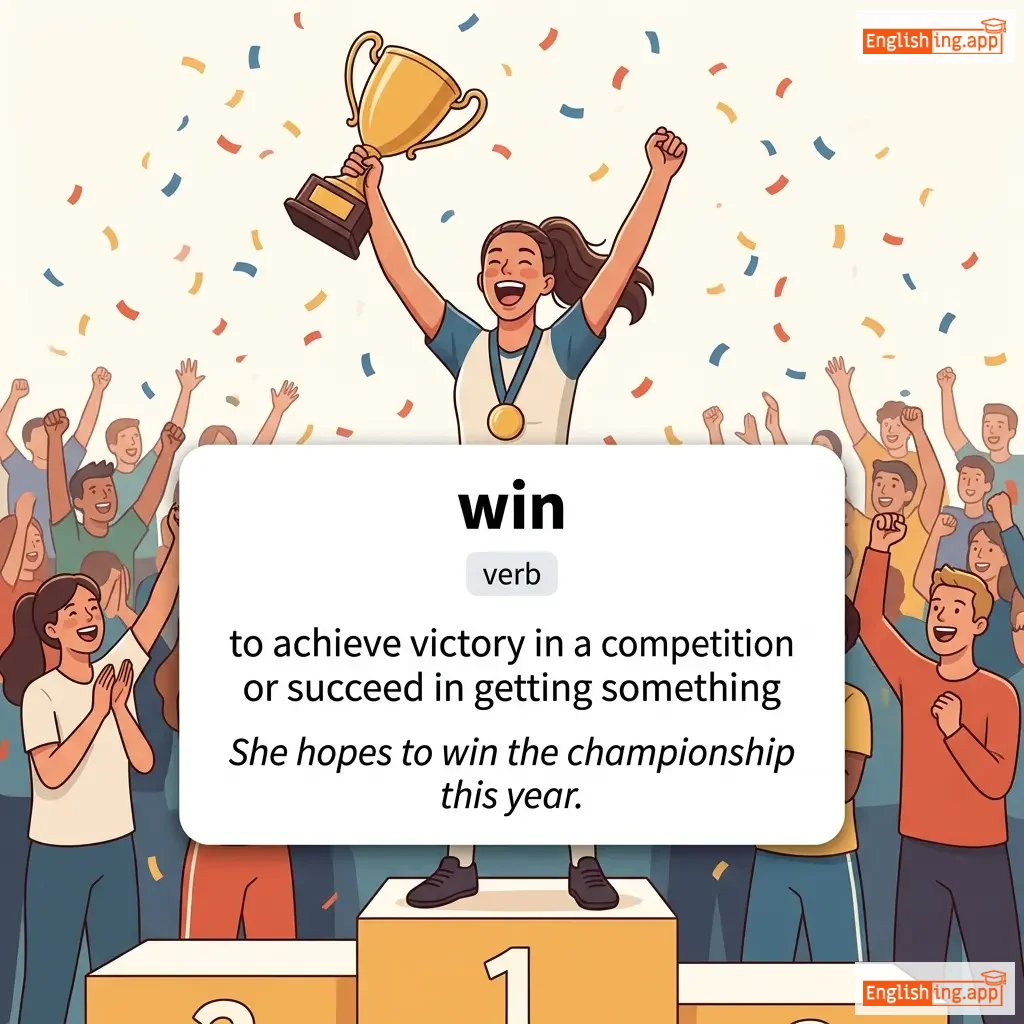
/wɪn/
verb
(wɪn)
••••••
|
|
ganar
ganar
••••••
|
won
wɒn
••••••
|
won
wɒn
••••••
|
wins
wɪnz
••••••
|
winning
wɪnɪŋ
••••••
|
to achieve victory in a competition or succeed in getting something
••••••
|
She hopes to win the championship this year.
ella espera ganar el campeonato este año.
••••••
|
ella espera ganar el campeonato este año.
Ella espera ganar el campeonato este año.
••••••
|
win over
ganar el apoyo
••••••
|
to persuade or gain support
••••••
|
ganar el apoyo
ganar el apoyo
••••••
|
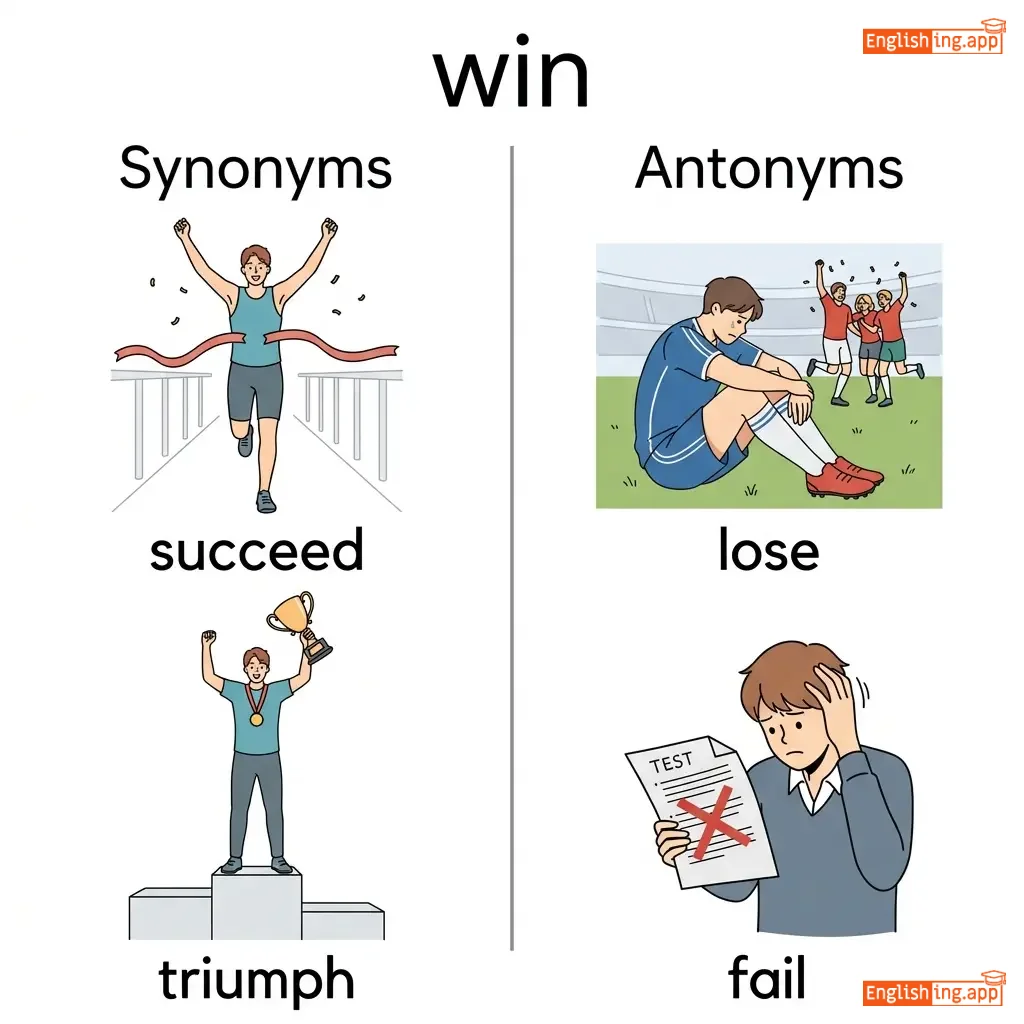
succeed, triumph, prevail, conquer
••••••
|
lose, fail, surrender
••••••
|
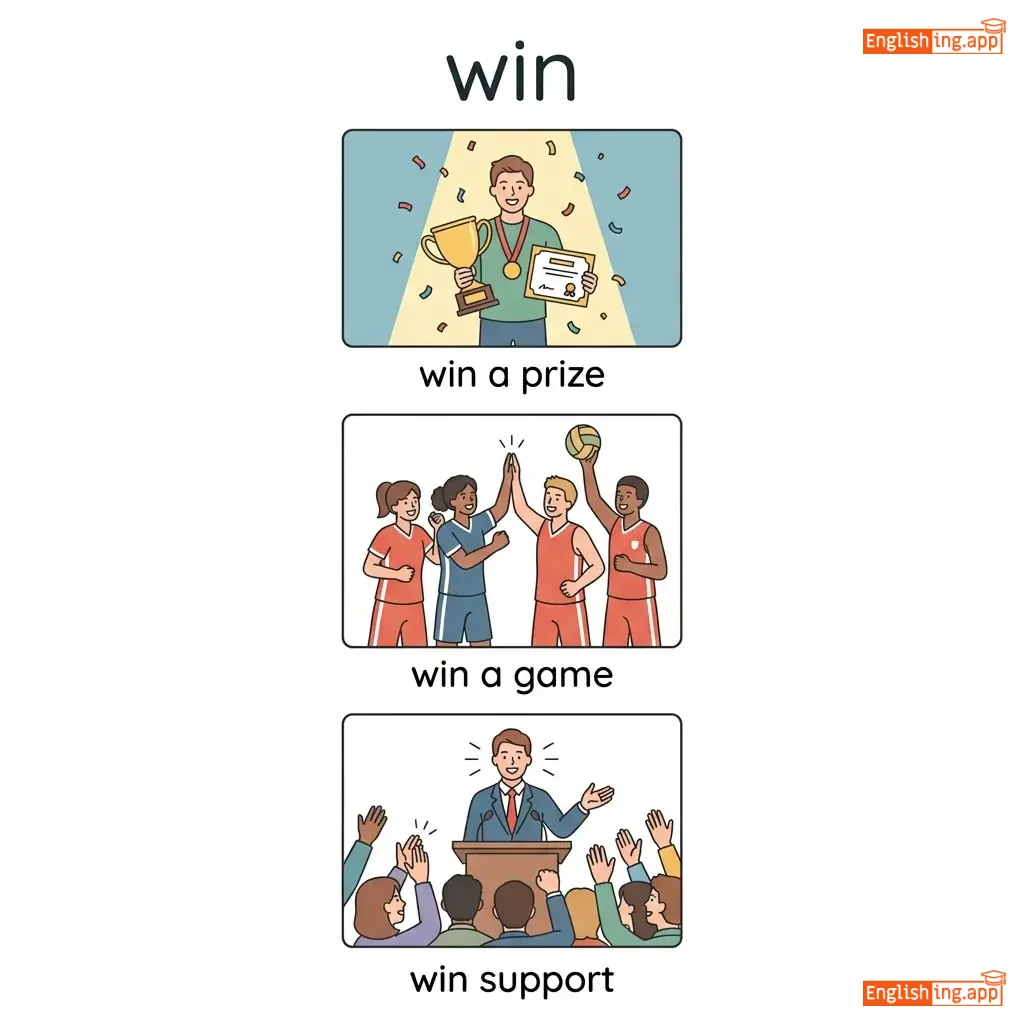
win a prize, win a game, win support, win the championship
••••••
|
Ganar es el deseo de lograr algo, como cuando en fútbol ganas un partido.
••••••
|
|
#5521
🌬️
|
/wɪnd/
noun
(wɪnd)
••••••
|
- •••••• |
viento
viento
••••••
|
- •••••• | - •••••• | - •••••• | - •••••• |
the natural movement of air, especially in the form of a current of air blowing from a particular direction
••••••
|
The wind blew the leaves off the trees.
la viento sopló las hojas de los árboles.
••••••
|
El viento sopló las hojas de los árboles.
El viento sopló las hojas de los árboles.
••••••
|
- •••••• | - •••••• | - •••••• |
breeze, gust, gale, draft
••••••
|
calm, stillness
••••••
|
strong wind, wind speed, wind direction, cold wind
••••••
|
Viento - como cuando hay una brisa ligera
••••••
|
|
#5522
🪟
|
/ˈwɪn.doʊ/
noun
(windo)
••••••
|
- •••••• |
ventana
ventana
••••••
|
- •••••• | - •••••• | - •••••• | - •••••• |
an opening in a wall fitted with glass to let in light and air
••••••
|
Please open the window for fresh air.
por favor abre la ventana para aire fresco.
••••••
|
por favor abre la ventana para aire fresco.
por favor abre la ventana para aire fresco
••••••
|
- •••••• | - •••••• | - •••••• |
casement, pane, opening
••••••
|
wall, barrier
••••••
|
window frame, window sill, bay window, window blinds
••••••
|
Ventana = 'vent' which is open for fresh air!
••••••
|
|
#5523
🍷
|
/waɪn/
noun
(wajn)
••••••
|
- •••••• |
vino
vino
••••••
|
- •••••• | - •••••• | - •••••• | - •••••• |
an alcoholic drink made from fermented grapes or other fruits
••••••
|
They served a glass of red wine at the dinner.
Ellos sirvieron una copa de vino tinto en la cena.
••••••
|
Ellos sirvieron una copa de vino tinto en la cena.
Ellos sirvieron una copa de vino tinto en la cena.
••••••
|
- •••••• | - •••••• | - •••••• |
vino, beverage, drink, alcohol
••••••
|
water, juice
••••••
|
red wine, white wine, glass of wine, bottle of wine
••••••
|
Wine pairs with dinner—imagine a glass of red wine with a fancy meal!
••••••
|
|
#5524
🪶
|
/wɪŋ/
verb
(uing)
••••••
|
|
volar con alas
volar con alas
••••••
|
winged
uinged
••••••
|
winged
uinged
••••••
|
wings
uings
••••••
|
winging
uinging
••••••
|
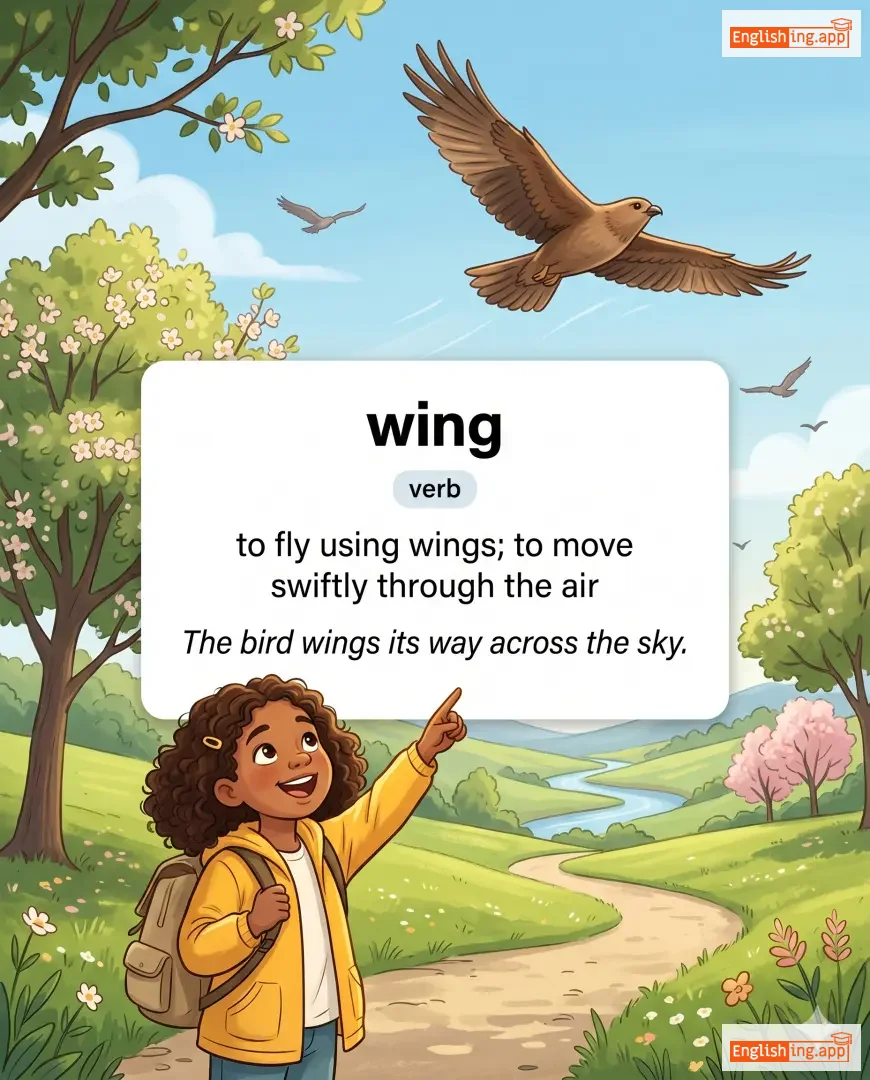
to fly using wings; to move swiftly through the air
••••••
|
The bird wings its way across the sky.
El pájaro vuela a través del cielo.
••••••
|
El pájaro vuela su camino a través del cielo.
El pájaro vuela su camino a través del cielo.
••••••
|
- •••••• | - •••••• | - •••••• |
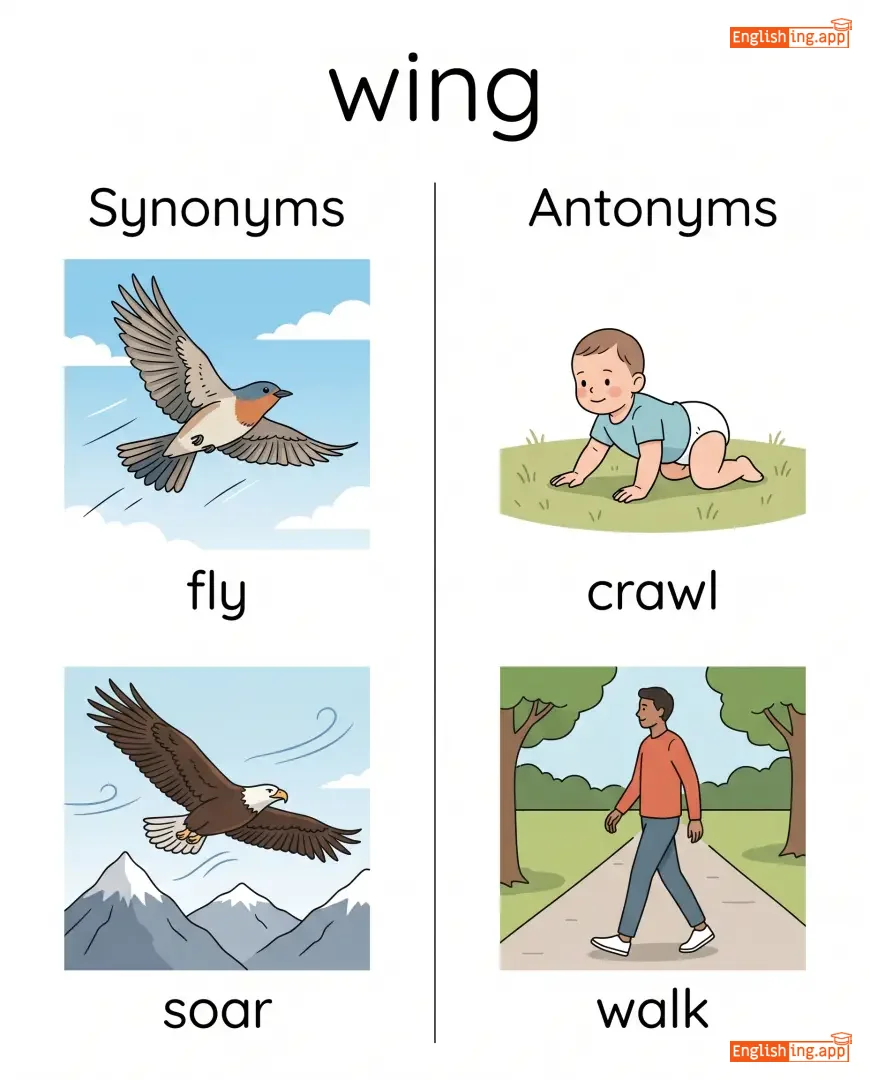
fly, soar, glide, flutter
••••••
|
crawl, walk, ground, land
••••••
|
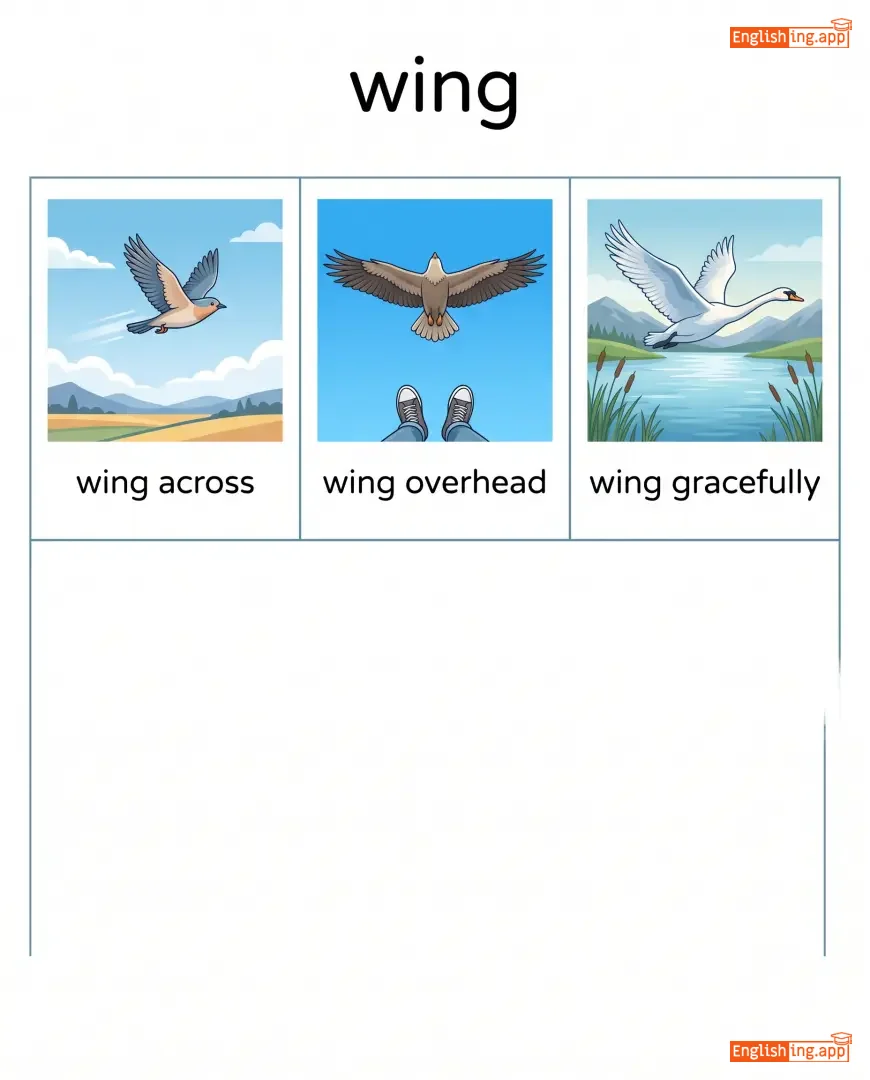
wing across, wing overhead, wing gracefully, wing swiftly
••••••
|
Vuela rápido con alas (volar con alas)
••••••
|
Vocabulary Quiz
Test your vocabulary by matching words with their translations or meanings.
Login to take the quiz
Comments (0)
Share your thoughts and join the discussion.
Join the discussion by logging in
Login to CommentNo comments yet
Be the first to share your thoughts!