

Upgrade für Zugriff auf alle Vokabeln
Erhalten Sie unbegrenzten Zugriff auf alle Vokabeln mit Pro-Mitgliedschaft
Upgrade auf ProÜbersetzung
Vergangenheit
Partizip Perfekt
Dritte Person Singular
Gerundium
Bedeutung
Beispielsatz
Übersetzung Beispielsatz
Synonyme
Antonyme
Kollokationen
Eselsbrücke

Swipe left or right, or use the buttons. Tap image to zoom.
Upgrade für Zugriff auf alle Sätze
Erhalten Sie unbegrenzten Zugriff auf alle Sätze mit Pro-Mitgliedschaft
Upgrade auf ProÜbersetzung Beispielsatz
Wort
Lesson 115Lesson 115 - Maske umschalten
|
Emoji
|
Wort | Images | Übersetzung | Vergangenheit | Partizip Perfekt | Dritte Person Singular | Gerundium | Bedeutung | Beispielsatz | Übersetzung Beispielsatz | Beispielausdruck | Bedeutung Beispielausdruck | Übersetzung Beispielausdruck | Synonyme | Antonyme | Kollokationen | Eselsbrücke |
|---|---|---|---|---|---|---|---|---|---|---|---|---|---|---|---|---|---|
|
#5475
🌀
|
/wɪrd/
adjective
(wird)
••••••
|
- •••••• |
seltsam
seltsam
••••••
|
- •••••• | - •••••• | - •••••• | - •••••• |
suggesting something supernatural or very strange; unusual
••••••
|
The movie had a weird ending that nobody expected. |
Der Film hatte ein seltsames Ende, das niemand erwartet hatte.
Der Film hatte ein seltsames Ende, das niemand erwartet hatte.
••••••
|
weird out |
to make someone feel uncomfortable or strange
••••••
|
jemanden aus der Fassung bringen
jemanden aus der fassung bringen
••••••
|
strange, odd, bizarre, unusual, peculiar
••••••
|
normal, ordinary, usual
••••••
|
weird feeling, weird dream, weird noise, weird behavior
••••••
|
Weird bedeutet seltsam, wie in einem seltsamen Film-Ende.
••••••
|
|
#5476
👋
|
/ˈwelkəm/
verb
(willkommen)
••••••
|
|
willkommen heißen
willkommen heißen
••••••
|
welcomed
willkommen
••••••
|
welcomed
willkommen
••••••
|
welcomes
willkommen
••••••
|
welcoming
willkommend
••••••
|
to greet someone in a friendly way; to receive gladly
••••••
|
They welcome new students warmly.
Sie haben die neuen Studenten herzlich willkommen geheißen.
••••••
|
Sie haben die neuen Studenten herzlich willkommen geheißen.
Sie haben die neuen Studenten herzlich willkommen geheißen.
••••••
|
- •••••• | - •••••• | - •••••• |
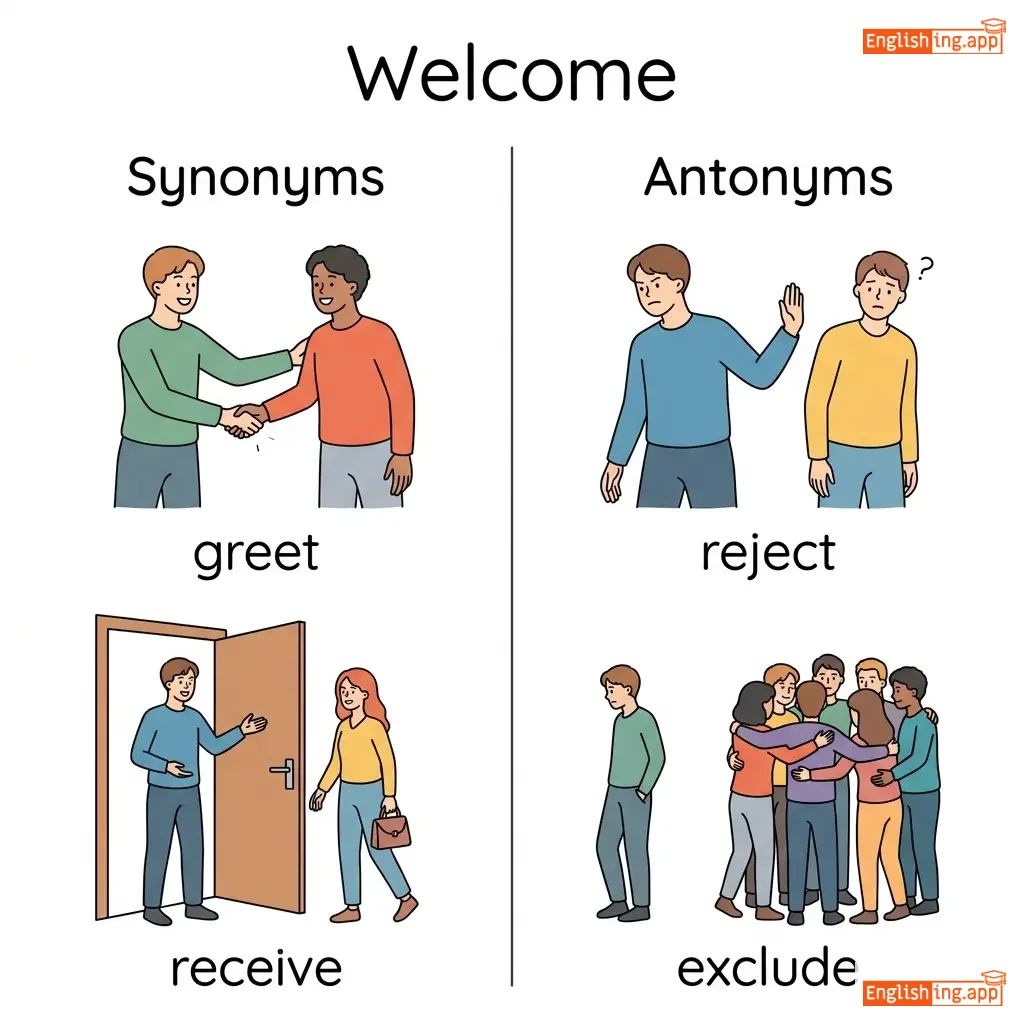
greet, receive, embrace, admit
••••••
|
reject, shun, dismiss, exclude
••••••
|
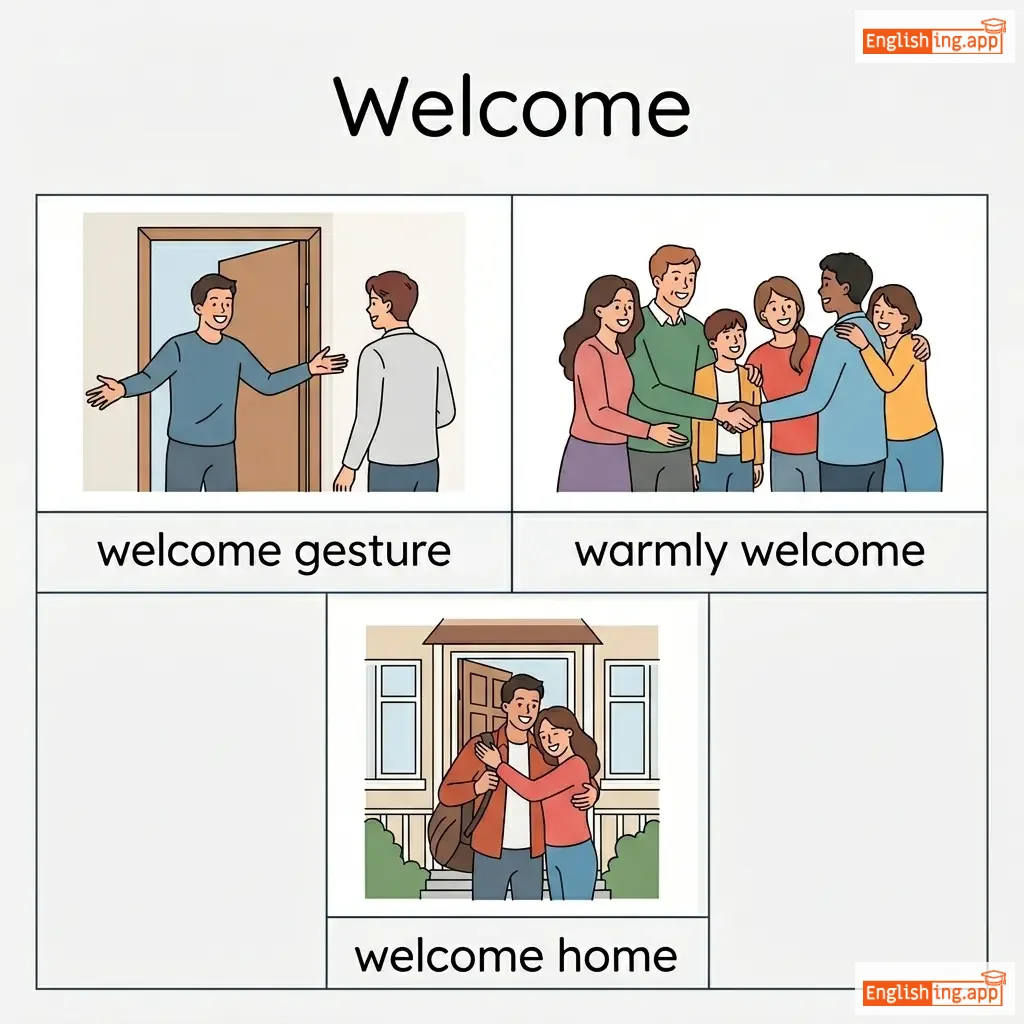
warmly welcome, welcome guests, welcome changes, welcome opportunity, welcome visitors
••••••
|
Willkommen heißen bedeutet immer ein warmes Lächeln
••••••
|
|
#5477
🤝
|
/ˈwel.feər/
noun
(welfare)
••••••
|
- •••••• |
Wohlergehen; Wohlstand; Gesundheit
Wohlergehen; Wohlstand; Gesundheit
••••••
|
- •••••• | - •••••• | - •••••• | - •••••• |
the health, happiness, and fortunes of a person or group; care and support
••••••
|
The government is responsible for the welfare of its citizens. |
Die Regierung ist für das Wohlergehen ihrer Bürger verantwortlich.
Die Regierung ist fur das Wohlergehen ihrer Burger verantwortlich.
••••••
|
- •••••• | - •••••• | - •••••• |
well-being, benefit, good, prosperity
••••••
|
harm, disadvantage, detriment
••••••
|
social welfare, welfare state, welfare system
••••••
|
Wohlergehen = Wohl (well) + ergehen (being)
••••••
|
|
#5478
🕳️
|
/wel/
noun
(wel)
••••••
|
- •••••• |
Brunnen; Wohlergehen;
brunnen; wohlergehen
••••••
|
- •••••• | - •••••• | - •••••• | - •••••• |
a deep hole in the ground from which water is obtained
••••••
|
The villagers get water from the old well in the center of town.
Die Dorfbewohner holen Wasser aus dem alten Brunnen im Zentrum des Dorfes.
••••••
|
Die Dorfbewohner holen Wasser aus dem alten Brunnen im Zentrum des Dorfes.
Die Dorfbewohner holen Wasser aus dem alten Brunnen im Zentrum des Dorfes.
••••••
|
- •••••• | - •••••• | - •••••• |
water hole, spring, bore
••••••
|
hill, mound, elevation
••••••
|
water well, oil well, deep well
••••••
|
Brunnen liefert Wasser, Wohlergehen für alle im Dorf.
••••••
|
|
#5479
😊
|
/ˈwel.biː.ɪŋ/
noun
(ˈwɛlˌbiɪŋ)
••••••
|
|
Wohlbefinden
Wohlbefinden
••••••
|
- •••••• | - •••••• | - •••••• | - •••••• |
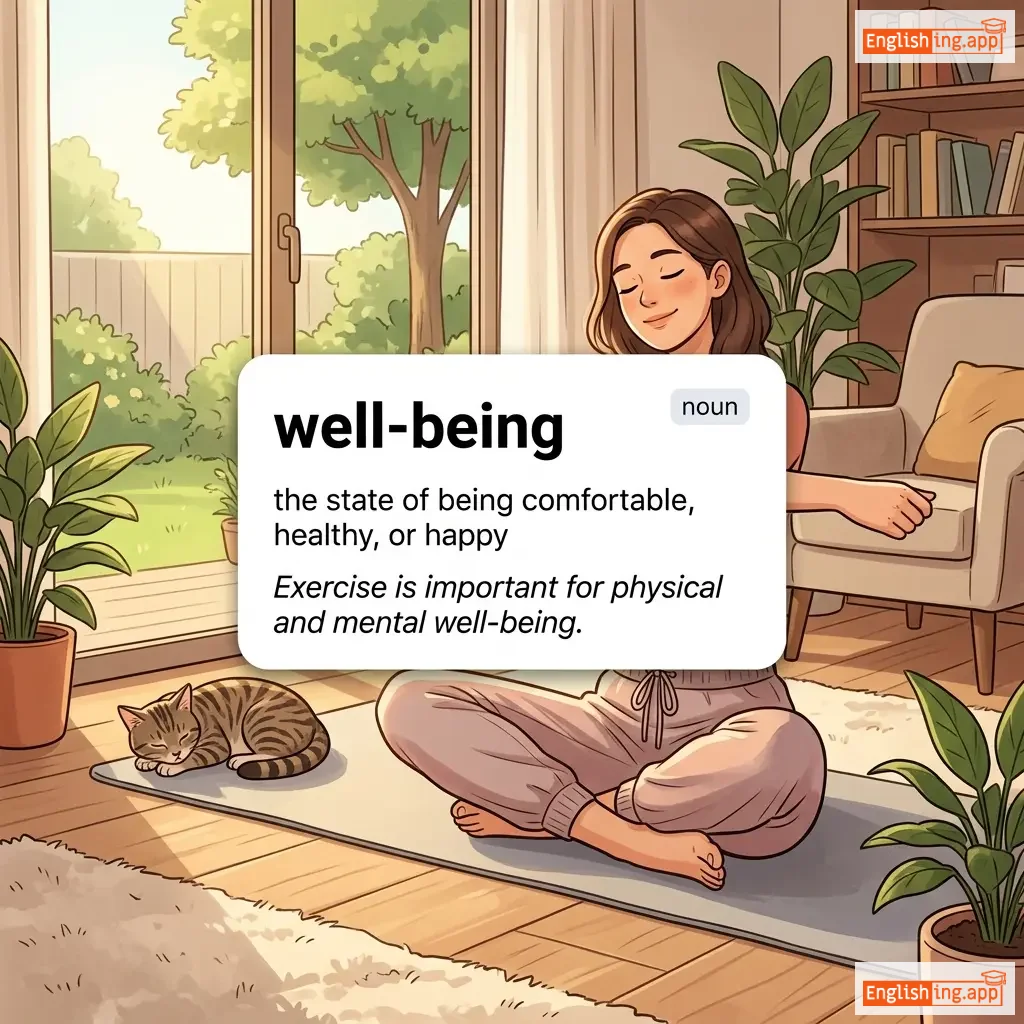
the state of being comfortable, healthy, or happy
••••••
|
Regular exercise contributes to physical and mental well-being. |
Regelmäßige Bewegung trägt zum physischen und mentalen Wohlbefinden bei.
Regelmaessige Bewegung traegt zum physischen und mentalen Wohlbefinden bei.
••••••
|
- •••••• | - •••••• | - •••••• |
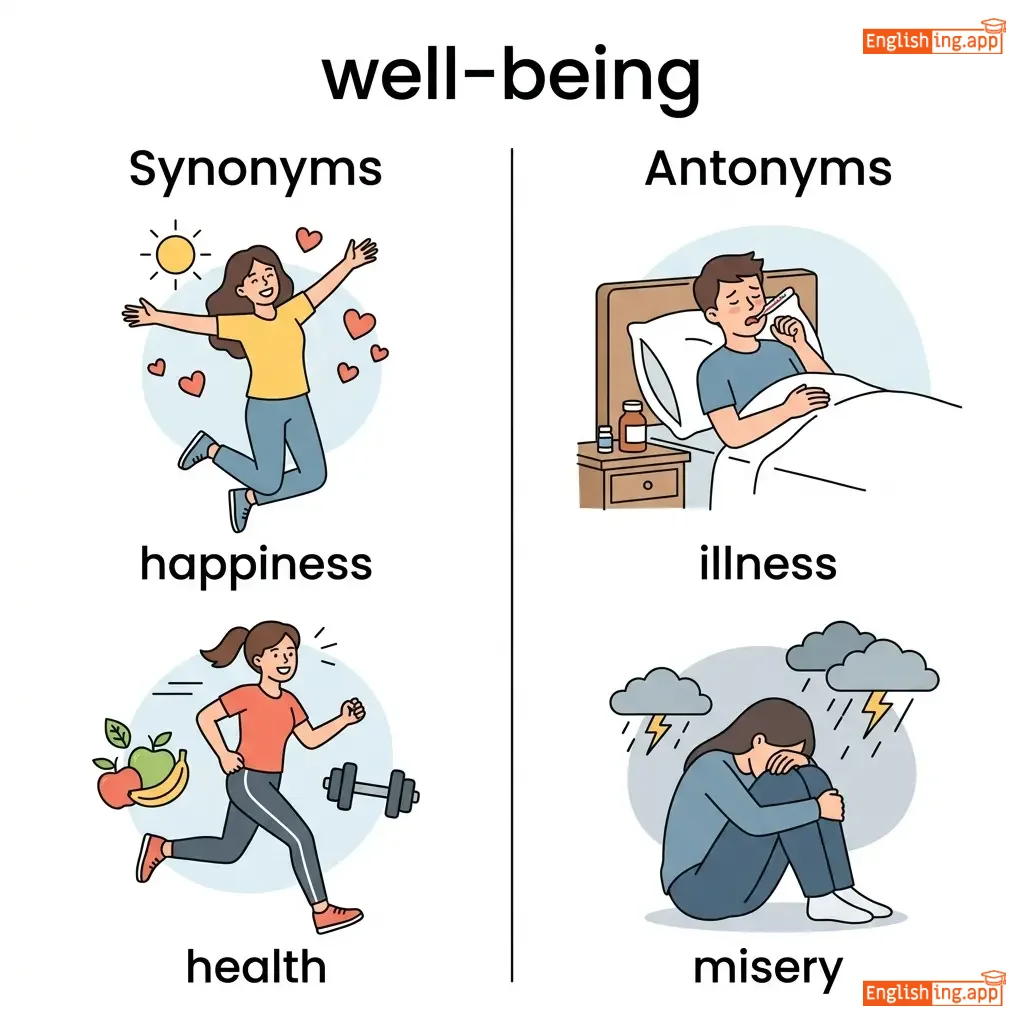
welfare, health, happiness, comfort
••••••
|
suffering, distress, misery
••••••
|
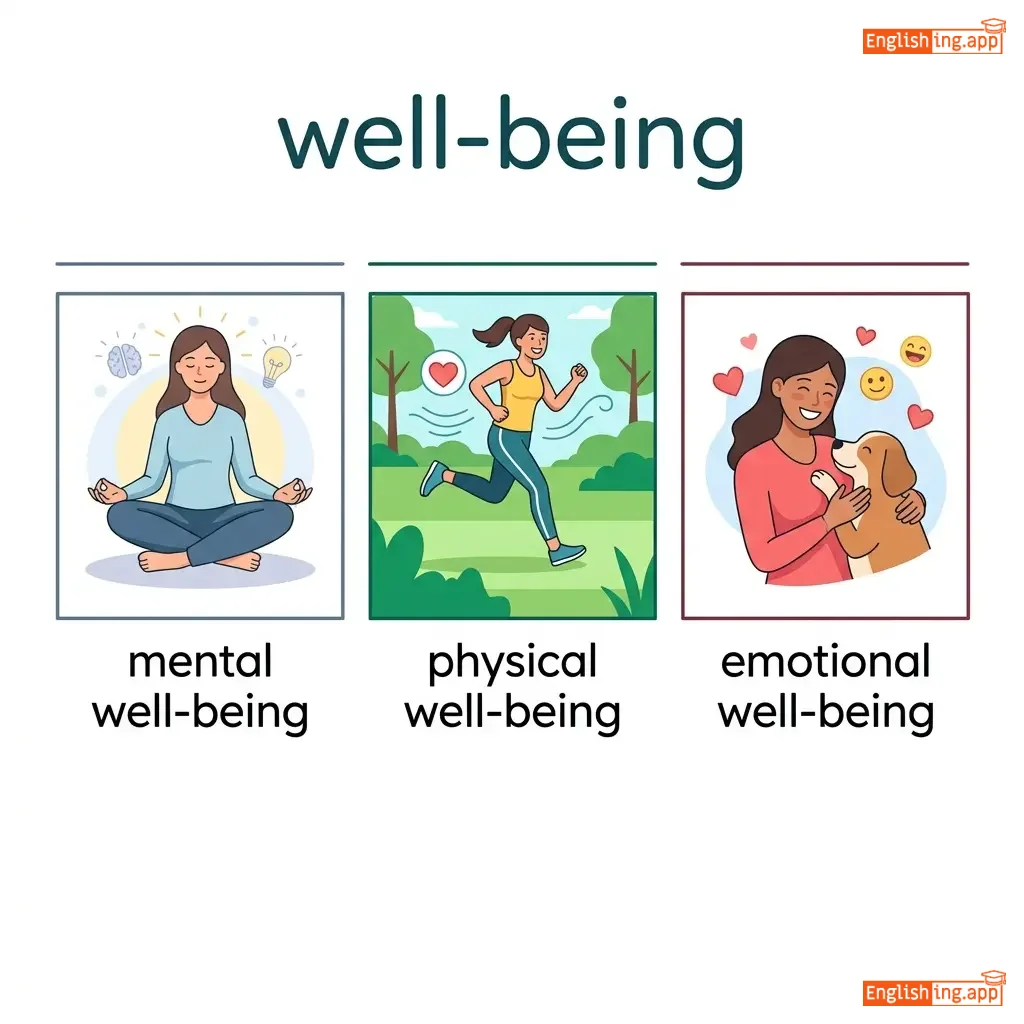
physical well-being, mental well-being, emotional well-being
••••••
|
Wohlbefinden in German combines 'wohl' (well) and 'befinden' (being), just like 'well-being' in English.
••••••
|
|
#5480
🌟
|
/ˌwelˈnoʊn/
adjective
(wɛl-nəʊn)
••••••
|
- •••••• |
bekannt
bekannt
••••••
|
- •••••• | - •••••• | - •••••• | - •••••• |
known by many people; famous or recognized
••••••
|
He is a well-known actor in his country. |
Er ist ein bekannter Schauspieler in seinem Land.
Er ist ein bekannter Schauspieler in seinem Land.
••••••
|
- •••••• | - •••••• | - •••••• |
famous, renowned, popular, prominent, recognized
••••••
|
unknown, obscure, unfamiliar
••••••
|
well-known fact, well-known person, well-known brand, well-known story
••••••
|
Well-known bedeutet 'bekannt' — jeder kennt ihn!
••••••
|
|
#5481
🌅
|
/wɛst/
noun
(wɛst)
••••••
|
- •••••• |
Westen
Westen
••••••
|
- •••••• | - •••••• | - •••••• | - •••••• |
the direction to the left of the north and to the right of the south, typically associated with the sunset
••••••
|
The sun sets in the west. |
Die Sonne geht im Westen unter.
Die Sonne geht im Westen unter.
••••••
|
- •••••• | - •••••• | - •••••• |
sunset, occident
••••••
|
east, orient
••••••
|
west coast, west side, go west, western civilization
••••••
|
Die Sonne geht im Westen unter - The sun sets in the west.
••••••
|
|
#5482
🌎
|
/ˈwɛstərn/
adjective
(wɛstɚn)
••••••
|
- •••••• |
westlich
westlich
••••••
|
- •••••• | - •••••• | - •••••• | - •••••• |
relating to or characteristic of the West, especially Europe and the Americas
••••••
|
She loves western music and culture. |
Sie liebt westliche Musik und Kultur.
Sie liebt westliche Musik und Kultur.
••••••
|
- •••••• | - •••••• | - •••••• |
occidental, westernized
••••••
|
eastern, oriental
••••••
|
western culture, western philosophy, western world
••••••
|
Westliche Kultur kommt aus dem Westen - Western culture comes from the West.
••••••
|
|
#5483
💧
|
/wet/
adjective
(wɛt)
••••••
|
- •••••• |
nass; durchnässt;
nass; durchnasst;
••••••
|
- •••••• | - •••••• | - •••••• | - •••••• |
covered or saturated with water or another liquid; not dry
••••••
|
My clothes are still wet from the rain.
Meine Kleidung ist immer noch nass vom Regen.
••••••
|
Meine Kleidung ist immer noch nass vom Regen.
Meine Kleidung ist immer noch nass vom Regen.
••••••
|
- •••••• | - •••••• | - •••••• |
damp, moist, soaked, drenched
••••••
|
dry, arid, parched, dehydrated
••••••
|
wet clothes, wet weather, get wet
••••••
|
Der Regen macht alles nass.
••••••
|
|
#5484
❓
|
/wɒt/
pronoun
(wɒt)
••••••
|
- •••••• |
was
was
••••••
|
- •••••• | - •••••• | - •••••• | - •••••• |
used to ask for information about something
••••••
|
What is your name? |
Wie heißt du?
Wie heißt du?
••••••
|
- •••••• | - •••••• | - •••••• |
which, that
••••••
|
- •••••• |
what time, what happened, what are you doing
••••••
|
was (was) wird verwendet, um Fragen zu stellen - 'What' wird verwendet, um zu fragen.
••••••
|
|
#5485
🤷♂️
|
/wɒtˈɛvər/
pronoun
(watever)
••••••
|
- •••••• |
was auch immer
vas auk imer
••••••
|
- •••••• | - •••••• | - •••••• | - •••••• |
used to refer to anything or everything that is of the type mentioned
••••••
|
You can choose whatever you like. |
Du kannst wählen, was immer du willst.
Du kannst wählen, was immer du willst.
••••••
|
- •••••• | - •••••• | - •••••• |
anything, everything
••••••
|
- •••••• |
whatever you want, whatever happens
••••••
|
was auch immer - Whatever you want, you can have.
••••••
|
|
#5486
🌾
|
/wiːt/
noun
(wheat)
••••••
|
- •••••• |
Weizen
Weizen
••••••
|
- •••••• | - •••••• | - •••••• | - •••••• |
a cereal plant whose grain is used to make flour for bread and other foods
••••••
|
Farmers harvested the wheat in early summer. |
Die Bauern ernteten den Weizen zu Beginn des Sommers.
Die Bauern ernteten den Weizen zu Beginn des Sommers.
••••••
|
separate the wheat from the chaff |
to separate valuable things or people from those that are not
••••••
|
das Weizen vom Spreu trennen
das Weizen vom Spreu trennen
••••••
|
grain, cereal, barley, oat, corn
••••••
|
chaff, waste
••••••
|
wheat flour, wheat bread, wheat field, wheat grain, wheat harvest
••••••
|
Wheat bedeutet Weizen 🌾 — Weizen wird für Brot verwendet, also denke an Essen.
••••••
|
|
#5487
🚗
|
/wiːl/
noun
(wiːl)
••••••
|
- •••••• |
Rad
rad
••••••
|
- •••••• | - •••••• | - •••••• | - •••••• |
a circular object that revolves on an axle and is used to move or carry things
••••••
|
The wheel of the car broke down on the way. |
Das Rad des Autos ist auf dem Weg kaputt gegangen.
Das Rad des Autos ist auf dem Weg kaputt gegangen.
••••••
|
- •••••• | - •••••• | - •••••• |
disk, circle, rotor, rim
••••••
|
none
••••••
|
steering wheel, bicycle wheel, car wheel, turn the wheel
••••••
|
Das Rad dreht sich und bewegt das Auto (Das Rad dreht sich und bewegt das Auto)
••••••
|
|
#5488
⏰
|
/wɛn/
adverb
(wɛn)
••••••
|
- •••••• |
wann
wann
••••••
|
- •••••• | - •••••• | - •••••• | - •••••• |
at what time
••••••
|
Do you know when the train leaves? |
Weißt du, wann der Zug abfährt?
Weißt du, wann der Zug abfährt?
••••••
|
- •••••• | - •••••• | - •••••• |
at what time, whenever
••••••
|
never, always
••••••
|
when will, when did, when does, when do
••••••
|
Wann von 'wann' (Wann von 'wann')
••••••
|
|
#5489
🕐
|
/wenˈevər/
adverb
(Whenever)
••••••
|
- •••••• |
wann immer
wann immer
••••••
|
- •••••• | - •••••• | - •••••• | - •••••• |
at any time that; every time that; no matter when
••••••
|
Call me whenever you need help.
Ruf mich an, wann immer du Hilfe brauchst.
••••••
|
Ruf mich an, wann immer du Hilfe brauchst.
Ruf mich an wann immer du Hilfe brauchst
••••••
|
- •••••• | - •••••• | - •••••• |
anytime, every time, no matter when
••••••
|
never, at no time
••••••
|
whenever possible, whenever necessary, whenever you want
••••••
|
Wann immer = when ever; imagine a clock with a german flag saying wann immer du Hilfe brauchst - I am there
••••••
|
|
#5490
📍
|
/weər/
adverb
(Where)
••••••
|
- •••••• |
Wo
Wo
••••••
|
- •••••• | - •••••• | - •••••• | - •••••• |
In or to what place or position; used to inquire about location
••••••
|
Where did you put my keys?
Wo hast du meine Schlüssel hingelegt?
••••••
|
Wo hast du meine Schlüssel hingelegt?
Wo hast du meine Schluessel hingelegt
••••••
|
- •••••• | - •••••• | - •••••• |
whereabouts, whither
••••••
|
here, there
••••••
|
where are you, where to go, where from
••••••
|
Where = Wo: zwei Buchstaben zeigen dir den Ort
••••••
|
|
#5491
⚖️
|
/wɛərˈæz/
conjunction
(wɛʁɛz)
••••••
|
- •••••• |
während
während
••••••
|
- •••••• | - •••••• | - •••••• | - •••••• |
used to introduce a contrast or comparison between two facts
••••••
|
She prefers tea, whereas he likes coffee. |
Sie bevorzugt Tee, während er Kaffee mag.
Sie bevorzugt Tee, während er Kaffee mag.
••••••
|
- •••••• | - •••••• | - •••••• |
while, although, but, though
••••••
|
similarly, likewise
••••••
|
whereas clause, whereas statement, tea whereas coffee
••••••
|
Tea vs coffee Vergleich - deutsch während
••••••
|
|
#5492
🔗
|
/wɛərˈbaɪ/
adverb
(wɛʁbaɪ)
••••••
|
- •••••• |
wodurch
wodurch
••••••
|
- •••••• | - •••••• | - •••••• | - •••••• |
by which; because of which
••••••
|
The company agreed to a contract whereby it would pay the penalty. |
Das Unternehmen stimmte einem Vertrag zu, wodurch es die Strafe zahlen würde.
Das Unternehmen stimmte einem Vertrag zu, wodurch es die Strafe zahlen würde.
••••••
|
- •••••• | - •••••• | - •••••• |
through which, by means of which, in which
••••••
|
- •••••• |
whereby agreement, whereby clause
••••••
|
Whereby sounds like 'wɛʁbaɪ', which can be remembered as 'wodurch' meaning by which.
••••••
|
|
#5493
🤔
|
/ˈwɛðər/
conjunction
(wɛðər)
••••••
|
- •••••• |
ob
ob
••••••
|
- •••••• | - •••••• | - •••••• | - •••••• |
used to express a doubt or choice between alternatives
••••••
|
I don’t know whether I should go.
Ich weiß nicht, ob ich gehen soll.
••••••
|
Ich weiß nicht, ob ich gehen soll.
Ich weiß nicht, ob ich gehen soll.
••••••
|
- •••••• | - •••••• | - •••••• |
if, either
••••••
|
none
••••••
|
whether or not, whether to go, whether he will
••••••
|
ob (ob) fragt, ob du eine Wahl treffen musst
••••••
|
|
#5494
❓
|
/wɪtʃ/
pronoun
(wɪtʃ)
••••••
|
- •••••• |
welcher
welcher
••••••
|
- •••••• | - •••••• | - •••••• | - •••••• |
used to ask about one or more items from a defined set
••••••
|
Which one do you prefer, the red or the blue? |
Welchen bevorzugst du, den roten oder den blauen?
Welchen bevorzugst du, den roten oder den blauen?
••••••
|
- •••••• | - •••••• | - •••••• |
what, that, who
••••••
|
none
••••••
|
which one, which way, which time
••••••
|
Which in German is 'welcher', helping you pick!
••••••
|
|
#5495
⏳
|
/waɪl/
conjunction
(wail)
••••••
|
- •••••• |
während
waehrend
••••••
|
- •••••• | - •••••• | - •••••• | - •••••• |
during the time that something is happening
••••••
|
She was reading while waiting for the bus.
Sie las, während sie auf den Bus wartete.
••••••
|
Sie las, während sie auf den Bus wartete.
Sie las, waehrend sie auf den Bus wartete.
••••••
|
- •••••• | - •••••• | - •••••• |
as, when, during
••••••
|
none
••••••
|
while waiting, while studying, while traveling
••••••
|
Während du wartest, denke an 'während' auf Deutsch!
••••••
|
|
#5496
🥄
|
/wɪp/
verb
(wɪp)
••••••
|
- •••••• |
peitschen
peitschen
••••••
|
whipped
wɪpt
••••••
|
whipped
wɪpt
••••••
|
whips
wɪps
••••••
|
whipping
wɪpɪŋ
••••••
|
to strike or beat with a flexible instrument such as a rope or cord
••••••
|
The trainer whipped the horse to make it run faster.
Der Trainer peitschte das Pferd, um es schneller rennen zu lassen.
••••••
|
Der Trainer peitschte das Pferd, um es schneller rennen zu lassen.
Der Trainer peitschte das Pferd, um es schneller rennen zu lassen.
••••••
|
whip up
whip up
••••••
|
to quickly prepare or create something
••••••
|
schnell zubereiten
schnell zubereiten
••••••
|
lash, beat, strike, thrash, flog
••••••
|
caress, soothe
••••••
|
whip cream, whip the horse, whip up enthusiasm, political whip
••••••
|
Whip bedeutet peitschen — Peitschen für ein schnelleres Pferd!
••••••
|
|
#5497
🤫
|
/ˈwɪspər/
verb
(wisper)
••••••
|
|
flüstern
fluestern
••••••
|
whispered
wisperd
••••••
|
whispered
wisperd
••••••
|
whispers
wispers
••••••
|
whispering
wispering
••••••
|
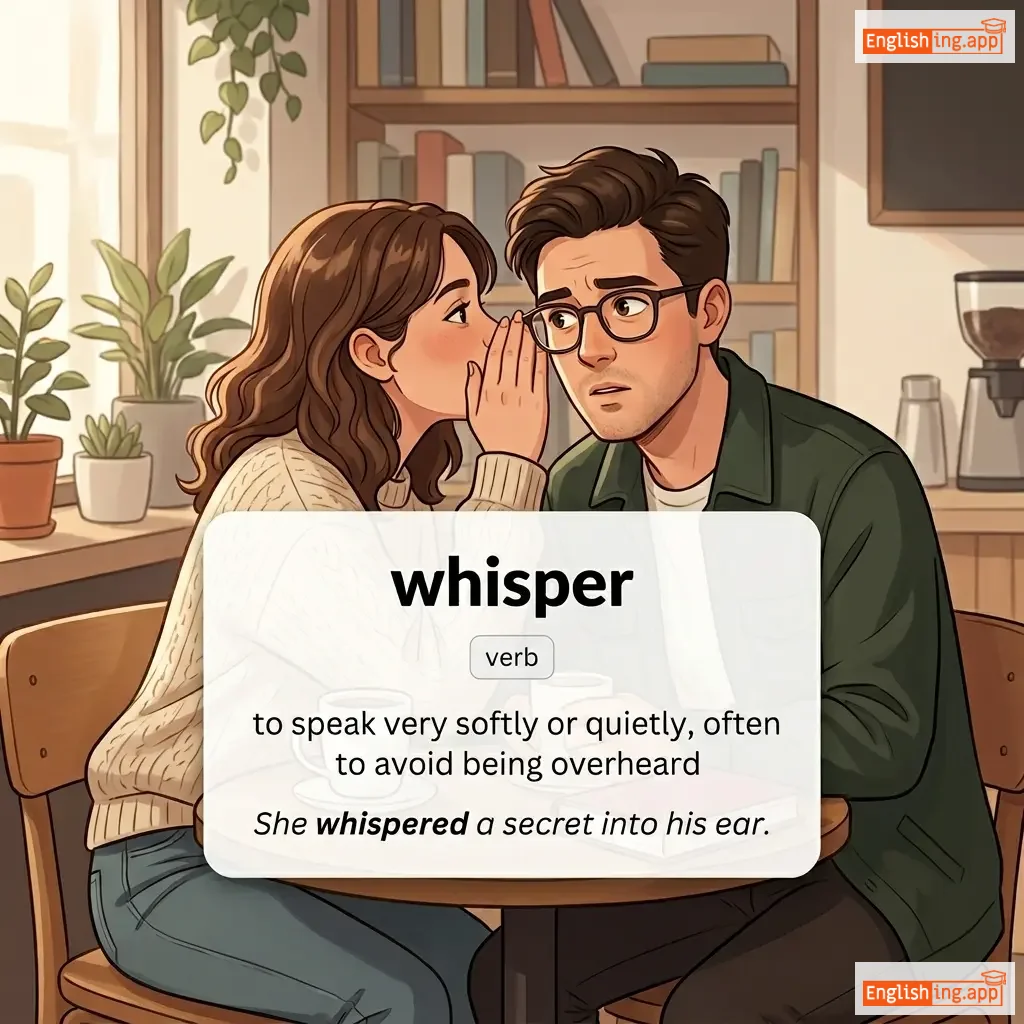
to speak very softly using one's breath without vocal cords
••••••
|
She whispered a secret in my ear.
Sie flüsterte ein Geheimnis in mein Ohr.
••••••
|
Sie flüsterte ein Geheimnis in mein Ohr.
Sie flüsterte ein Geheimnis in mein Ohr.
••••••
|
- •••••• | - •••••• | - •••••• |
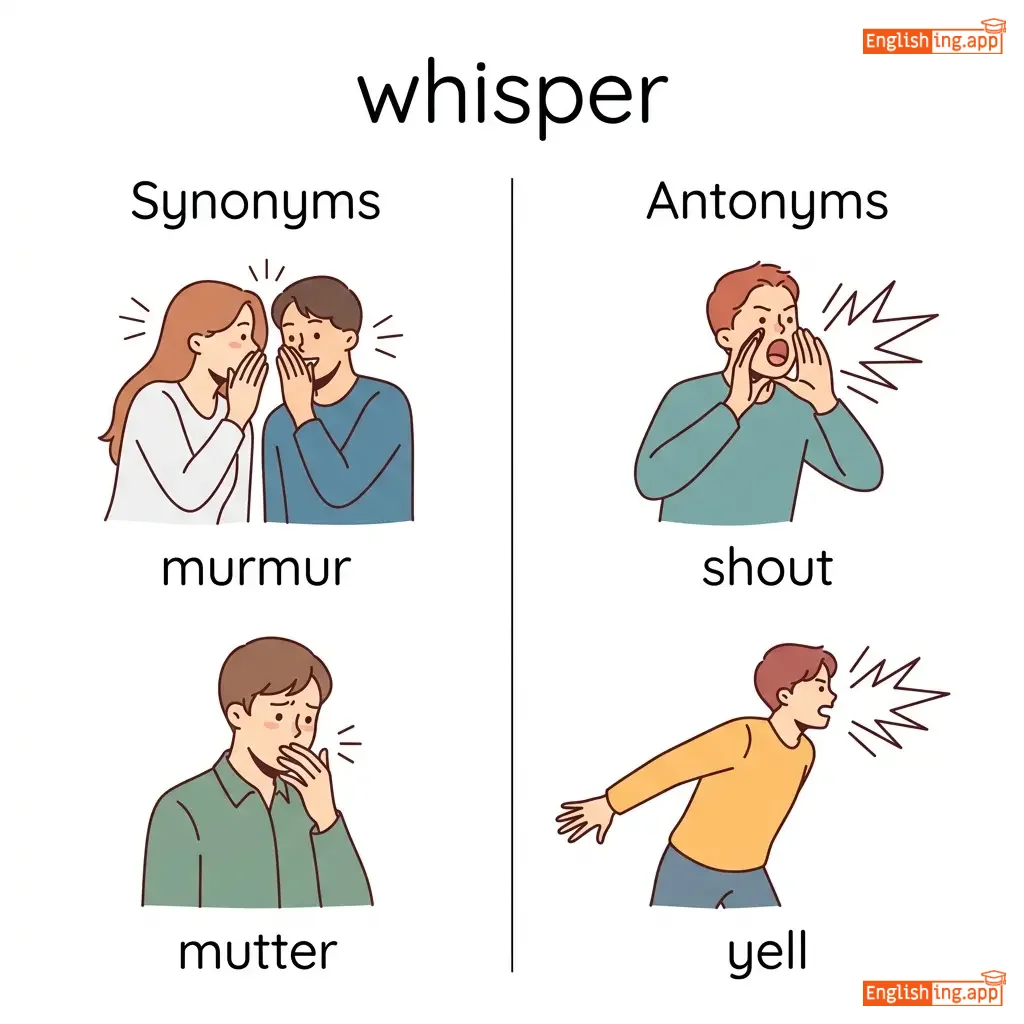
murmur, mumble, breathe, hiss
••••••
|
shout, yell, scream, roar
••••••
|
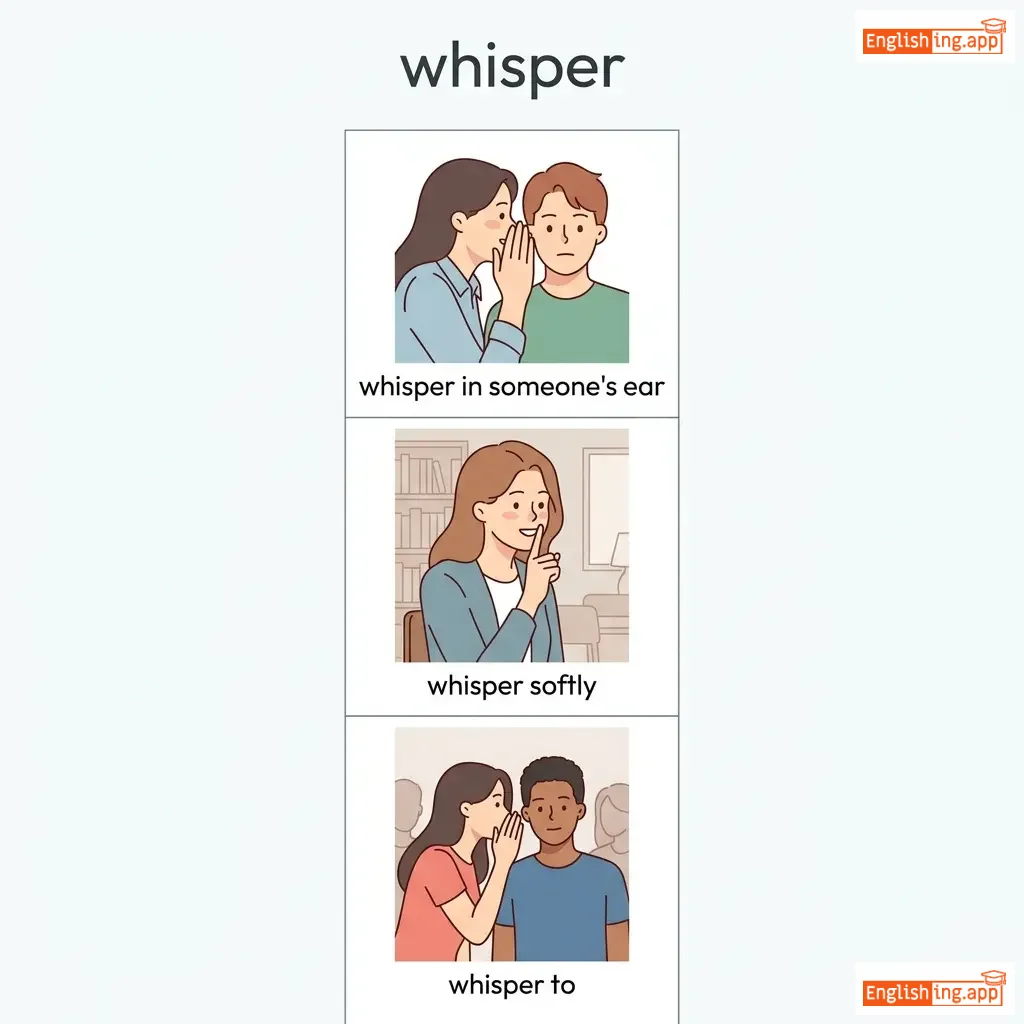
whisper secrets, whisper softly, whisper words, whisper quietly, whisper sweet, whisper prayers
••••••
|
Deutsch: 'flüstern' bedeutet das gleiche wie das englische 'whisper'.
••••••
|
|
#5498
🎵
|
/ˈwɪsəl/
verb
(wistle)
••••••
|
|
pfeifen
pfeifen
••••••
|
whistled
wiste-lt
••••••
|
whistled
wiste-lt
••••••
|
whistles
wistles
••••••
|
whistling
wistle-ing
••••••
|
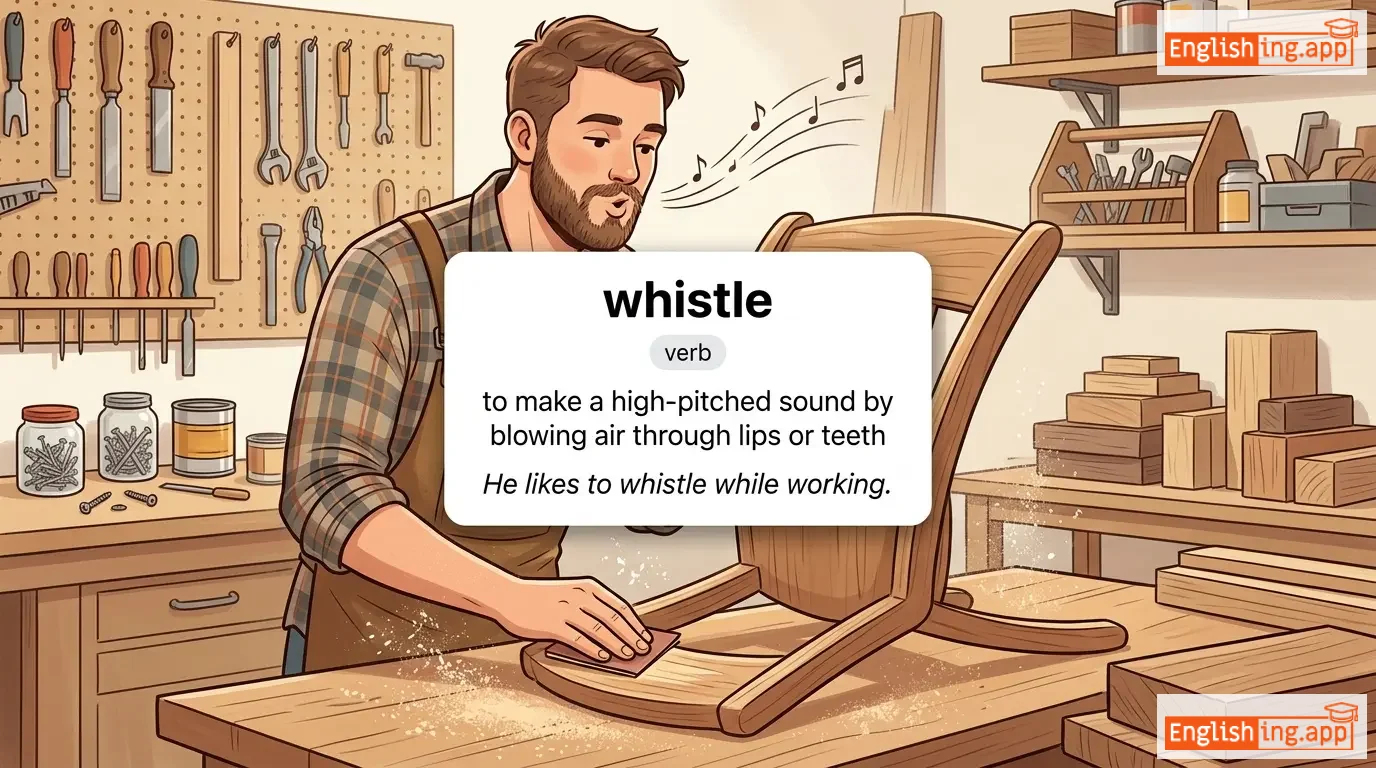
to make a high-pitched sound by blowing air through lips or teeth
••••••
|
He likes to whistle while working.
Er pfeift gern, während er arbeitet.
••••••
|
Er pfeift gern, während er arbeitet.
Er pfeift gern, während er arbeitet.
••••••
|
- •••••• | - •••••• | - •••••• |
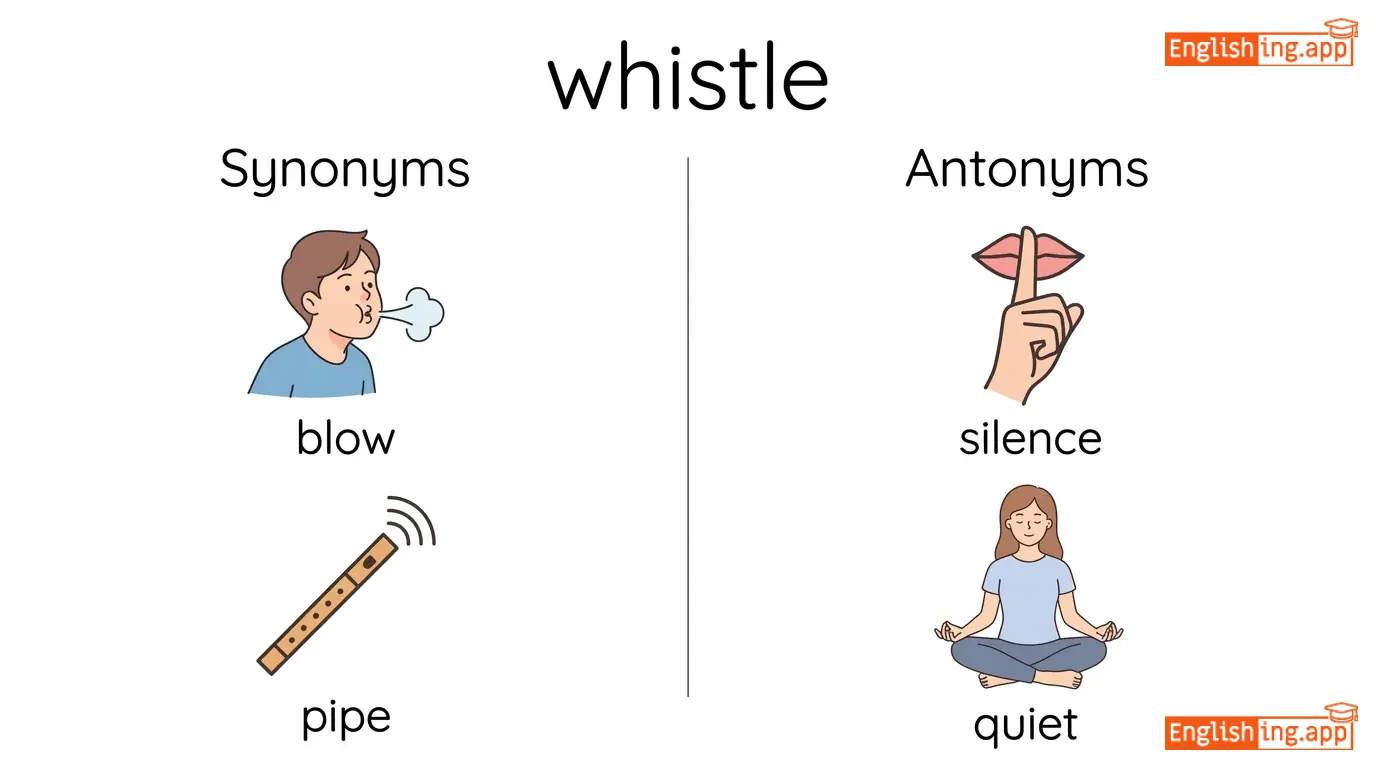
blow, pipe, toot, sound
••••••
|
silence, quiet, mute
••••••
|
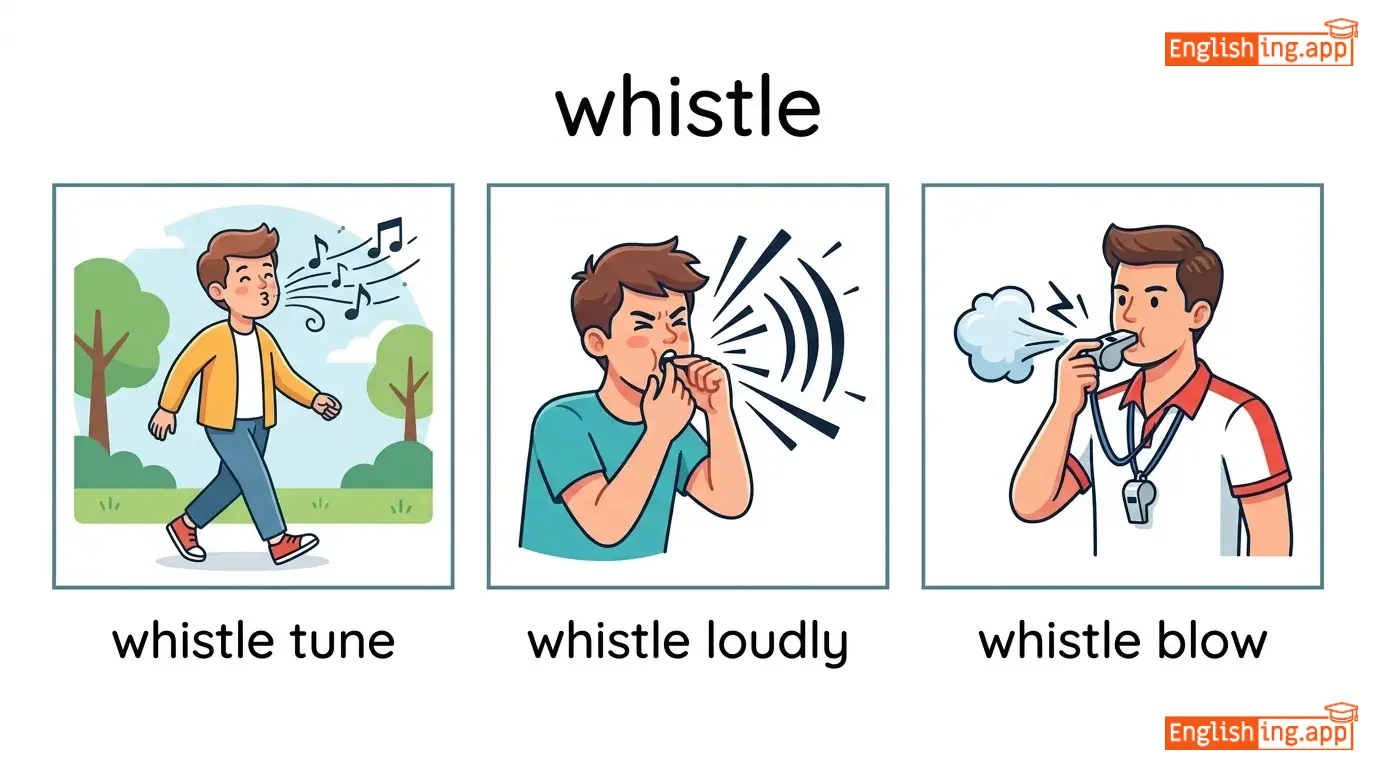
whistle tune, whistle loudly, whistle blow, train whistle
••••••
|
Pfeifen - Der hohe Ton erinnert an das Pfeifen.
••••••
|
|
#5499
⚪
|
/waɪt/
adjective
(waɪt)
••••••
|
- •••••• |
weiß; rein
weiss; rein
••••••
|
- •••••• | - •••••• | - •••••• | - •••••• |
of the color of snow or milk; pale; pure
••••••
|
She wore a beautiful white dress to the wedding.
Sie trug ein schönes weißes Kleid zur Hochzeit.
••••••
|
Sie trug ein schönes weißes Kleid zur Hochzeit.
Sie trug ein schönes weißes Kleid zur Hochzeit.
••••••
|
- •••••• | - •••••• | - •••••• |
pale, colorless, snow-white, ivory
••••••
|
black, dark, colored
••••••
|
white paper, white shirt, white house
••••••
|
In German, 'weiß' means 'white', just like snow!
••••••
|
|
#5500
🤔
|
/huː/
pronoun
(wer)
••••••
|
- •••••• |
wer
ver
••••••
|
- •••••• | - •••••• | - •••••• | - •••••• |
used to ask about a person or people
••••••
|
Who is coming to the party tonight? |
Wer kommt heute Abend zur Party?
Wer kommt heute Abend zur Party?
••••••
|
- •••••• | - •••••• | - •••••• |
whoever, which person
••••••
|
none
••••••
|
who is, who are, who knows
••••••
|
Ask 'wer' in German to know who!
••••••
|
|
#5501
🙋♂️
|
/huːˈɛvər/
pronoun
(huːˈɛvər)
••••••
|
- •••••• |
wer auch immer
ver auk immer
••••••
|
- •••••• | - •••••• | - •••••• | - •••••• |
any person who; no matter who
••••••
|
Whoever wants to join the trip must register today. |
Wer auch immer an der Reise teilnehmen möchte, muss sich heute anmelden.
Ver auk immer an der Reise teilnehmen mochte, muss sich heute anmelden.
••••••
|
- •••••• | - •••••• | - •••••• |
anyone, anybody, whosoever
••••••
|
none, nobody
••••••
|
whoever comes, whoever wants, whoever said, whoever did
••••••
|
Who + ever = wer auch immer — whoever means jede Person
••••••
|
|
#5502
🔵
|
/hoʊl/
adjective
(houl)
••••••
|
- •••••• |
ganz
ganz
••••••
|
- •••••• | - •••••• | - •••••• | - •••••• |
complete; entire; all of something
••••••
|
He ate the whole pizza by himself.
He aß die houl pizza by himself.
••••••
|
Er aß die ganze Pizza ganz allein.
er ass die ganze pizza ganz allein
••••••
|
- •••••• | - •••••• | - •••••• |
complete, entire, total, full
••••••
|
partial, incomplete, broken, fragmented
••••••
|
whole story, whole family, whole day
••••••
|
Ganz = whole — 'ganz Pizza' = ganze Pizza
••••••
|
|
#5503
💯
|
/ˈhoʊli/
adverb
(holli)
••••••
|
- •••••• |
vollständig; völlig
vollständig; völlig
••••••
|
- •••••• | - •••••• | - •••••• | - •••••• |
Entirely; completely; to the full extent
••••••
|
I am wholly committed to this project. |
Ich bin vollständig in dieses Projekt investiert.
Ich bin vollstandig in dieses Projekt investiert.
••••••
|
- •••••• | - •••••• | - •••••• |
completely, entirely, totally, fully
••••••
|
partially, partly, incompletely
••••••
|
wholly owned, wholly responsible, wholly different
••••••
|
Völlig, wie wenn du dich ganz in etwas hineinsetzt
••••••
|
|
#5504
👤
|
/huːm/
pronoun
(hum)
••••••
|
- •••••• |
wem
wem
••••••
|
- •••••• | - •••••• | - •••••• | - •••••• |
used to refer to the person or people that something is done to
••••••
|
The man whom I met yesterday is my friend. |
Der Mann, dem ich gestern begegnet bin, ist mein Freund.
Der Mann, dem ich gestern begegnet bin, ist mein Freund.
••••••
|
- •••••• | - •••••• | - •••••• |
who, that, the person
••••••
|
none
••••••
|
whom I met, whom I saw, to whom it may concern
••••••
|
Whom sounds like 'Wem' - 'Wem' as in the person you met.
••••••
|
|
#5505
📱
|
/huːz/
pronoun
(huːz)
••••••
|
- •••••• |
wessen
wessen
••••••
|
- •••••• | - •••••• | - •••••• | - •••••• |
used to ask or talk about the person or thing that owns something
••••••
|
The girl whose phone was stolen is my cousin. |
Das Mädchen, dessen Telefon gestohlen wurde, ist meine Cousine.
Das Mädchen, dessen Telefon gestohlen wurde, ist meine Cousine.
••••••
|
- •••••• | - •••••• | - •••••• |
who's, that person’s, of whom
••••••
|
none
••••••
|
whose phone, whose book, whose idea
••••••
|
Whose phone is this? – 'Whose' connects to 'Wessen Telefon'.
••••••
|
|
#5506
❓
|
/waɪ/
adverb
(wai)
••••••
|
- •••••• |
warum
varum
••••••
|
- •••••• | - •••••• | - •••••• | - •••••• |
For what reason or purpose; used to ask about the cause of something
••••••
|
Why are you late today? |
Warum bist du heute zu spät?
varum bist du hoyte tsu spät?
••••••
|
- •••••• | - •••••• | - •••••• |
wherefore, how come
••••••
|
because, therefore
••••••
|
why not, that's why, reason why
••••••
|
No •••••• |
|
#5507
↔️
|
/waɪd/
adjective
(waid)
••••••
|
- •••••• |
breit; weit
breit; weit
••••••
|
- •••••• | - •••••• | - •••••• | - •••••• |
having a great distance from one side to the other; broad
••••••
|
The river is very wide at this point. |
Der Fluss ist an dieser Stelle sehr breit.
Der Fluss ist an dieser Stelle sehr breit.
••••••
|
- •••••• | - •••••• | - •••••• |
broad, extensive, spacious, vast
••••••
|
narrow, thin, restricted
••••••
|
wide range, wide variety, wide open, wide awake
••••••
|
Breit Fluss, weit Raum.
••••••
|
|
#5508
🌍
|
/ˈwaɪdli/
adverb
(weidli)
••••••
|
- •••••• |
weit verbreitet
weit verbreitet
••••••
|
- •••••• | - •••••• | - •••••• | - •••••• |
to a great extent or degree
••••••
|
The news of his promotion spread widely across the company. |
Die Nachricht von seiner Beförderung verbreitete sich weit in der Firma.
Die Nachricht von seiner Beförderung verbreitete sich weit in der Firma.
••••••
|
- •••••• | - •••••• | - •••••• |
extensively, broadly, widely, far
••••••
|
narrowly, limitedly
••••••
|
widely known, widely accepted, widely spread
••••••
|
Wide world 🌍 means a wide spread across everywhere!
••••••
|
|
#5509
↔️
|
/ˈwaɪdən/
verb
(widen)
••••••
|
|
verbreitern
verbreitern
••••••
|
widened
widened
••••••
|
widened
widened
••••••
|
widens
widens
••••••
|
widening
widening
••••••
|
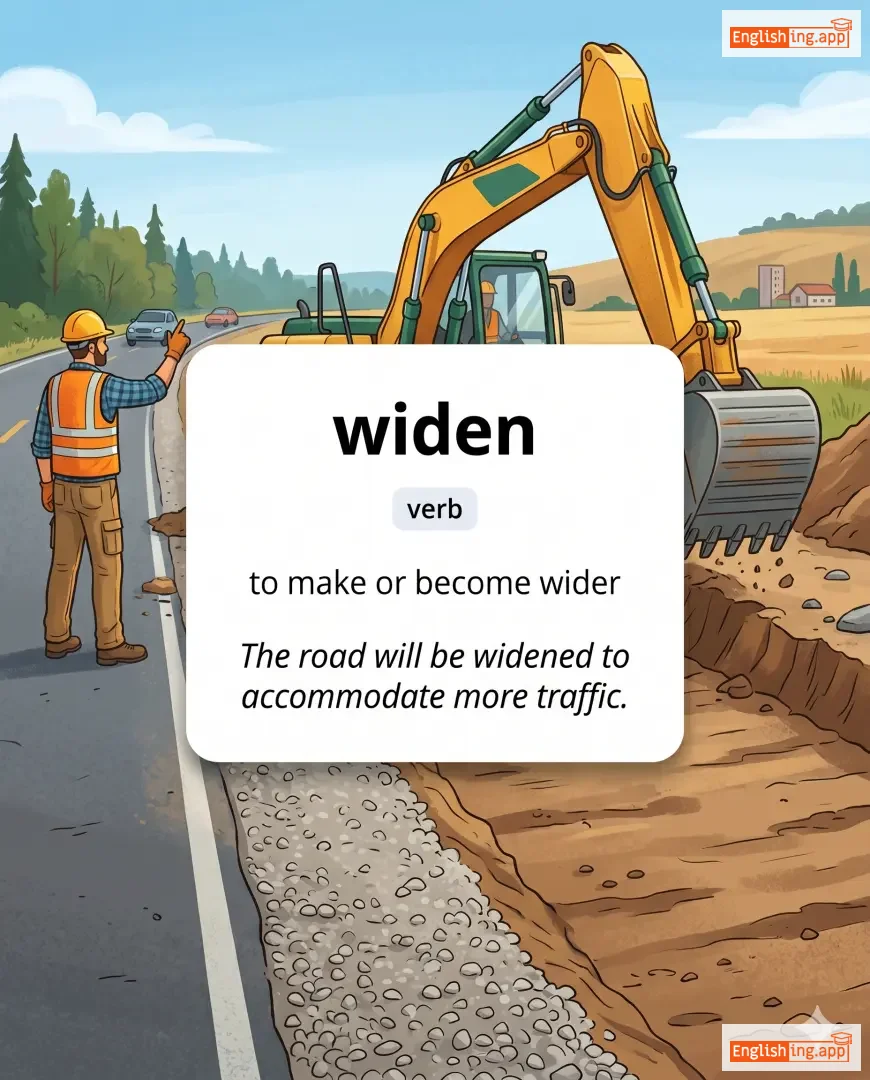
to make or become wider or broader
••••••
|
They plan to widen the road next year.
Sie planen, die Straße im nächsten Jahr zu verbreitern.
••••••
|
Sie planen, die Straße im nächsten Jahr zu verbreitern.
Sie planen, die Straße im nächsten Jahr zu verbreitern.
••••••
|
- •••••• | - •••••• | - •••••• |
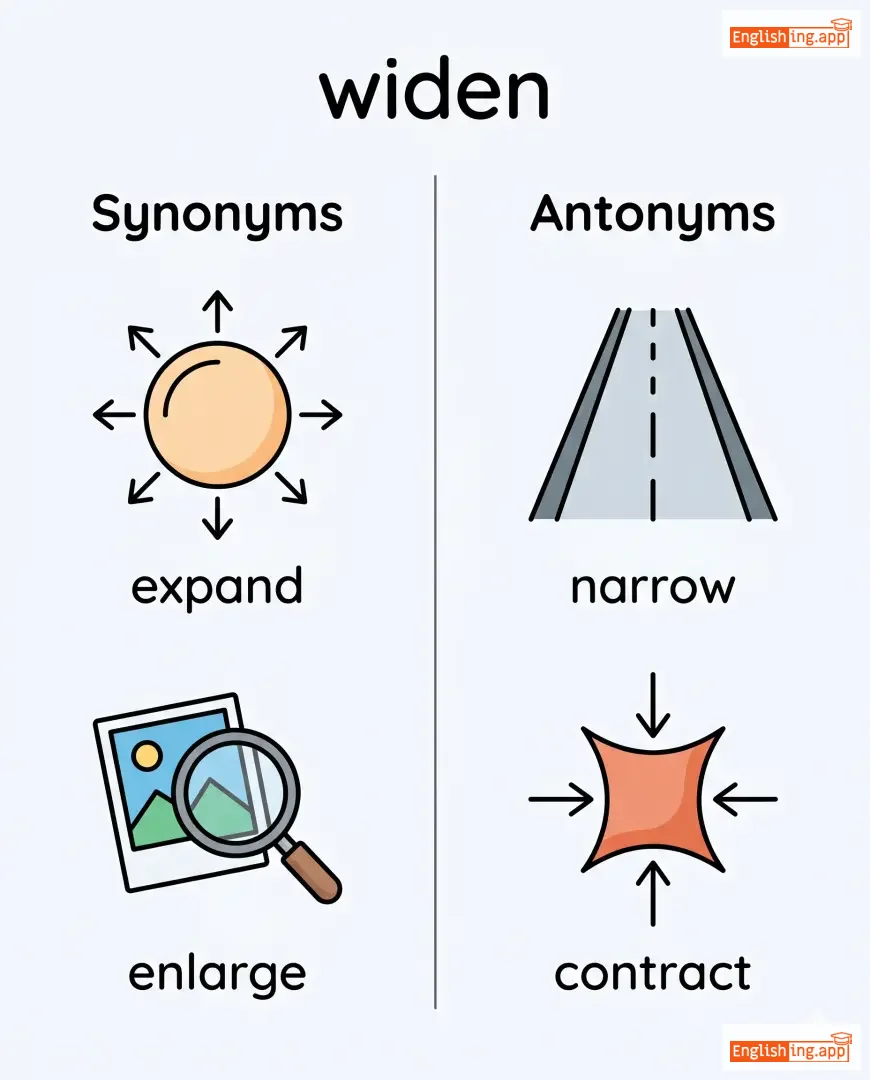
broaden, expand, extend, enlarge
••••••
|
narrow, reduce, contract, shrink
••••••
|
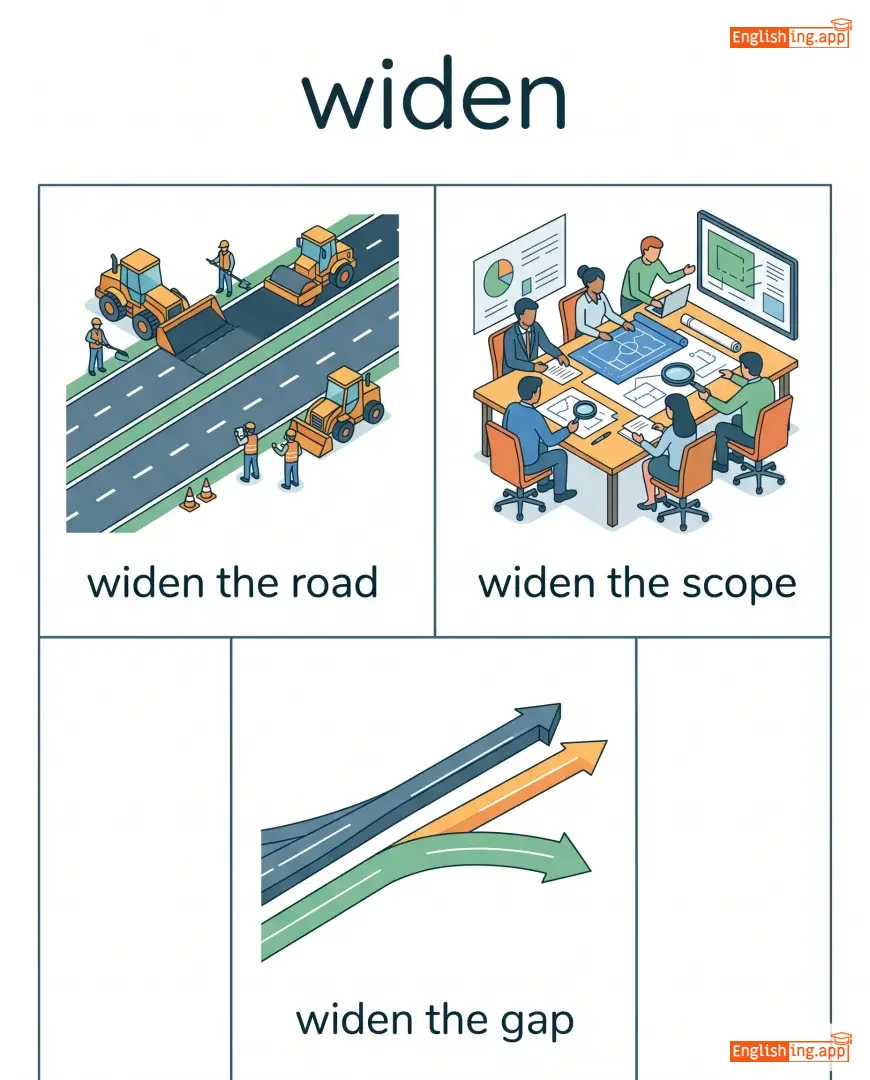
widen road, widen gap, widen range, gradually widen
••••••
|
Verbreitern, wie eine Straße, die breiter wird.
••••••
|
|
#5510
🌍
|
/ˈwaɪd.sprɛd/
adjective
(waidspred)
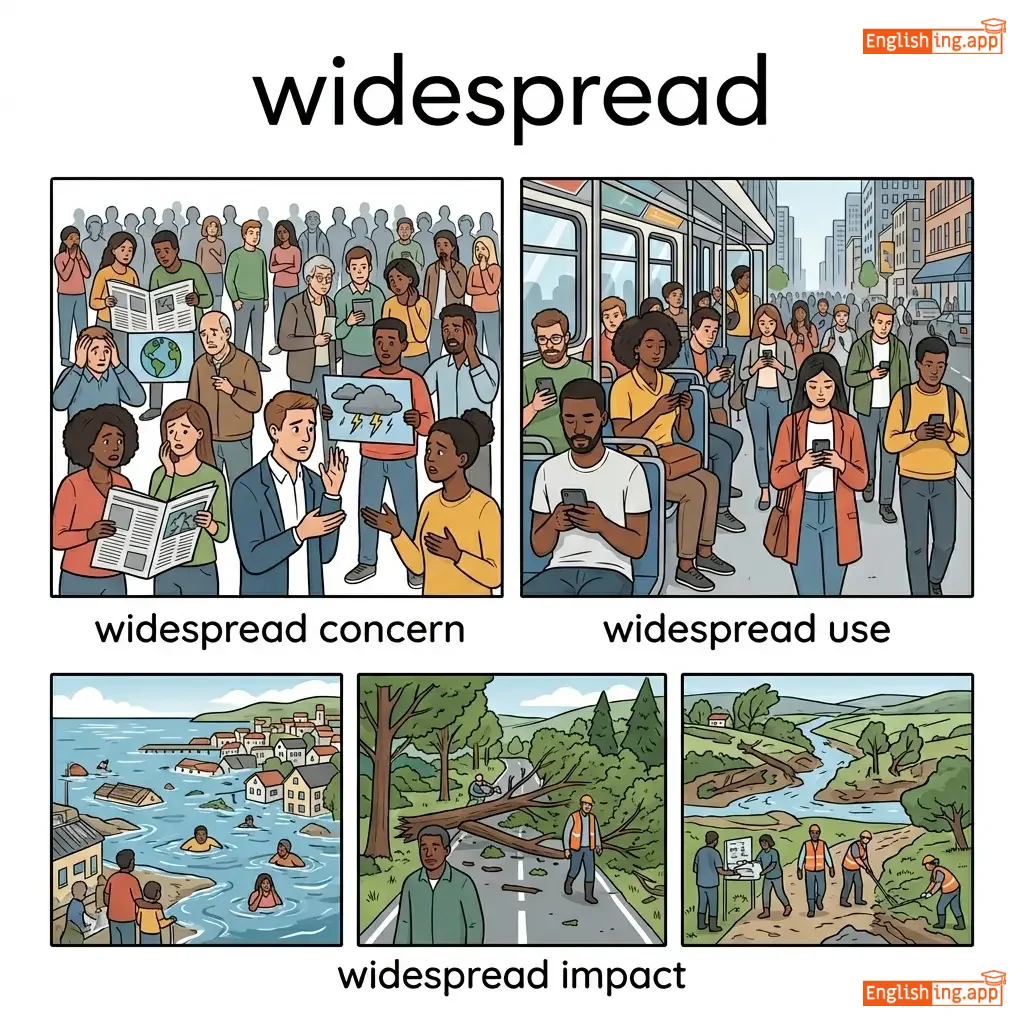
••••••
|
|
weit verbreitet
weit verbreitet
••••••
|
- •••••• | - •••••• | - •••••• | - •••••• |
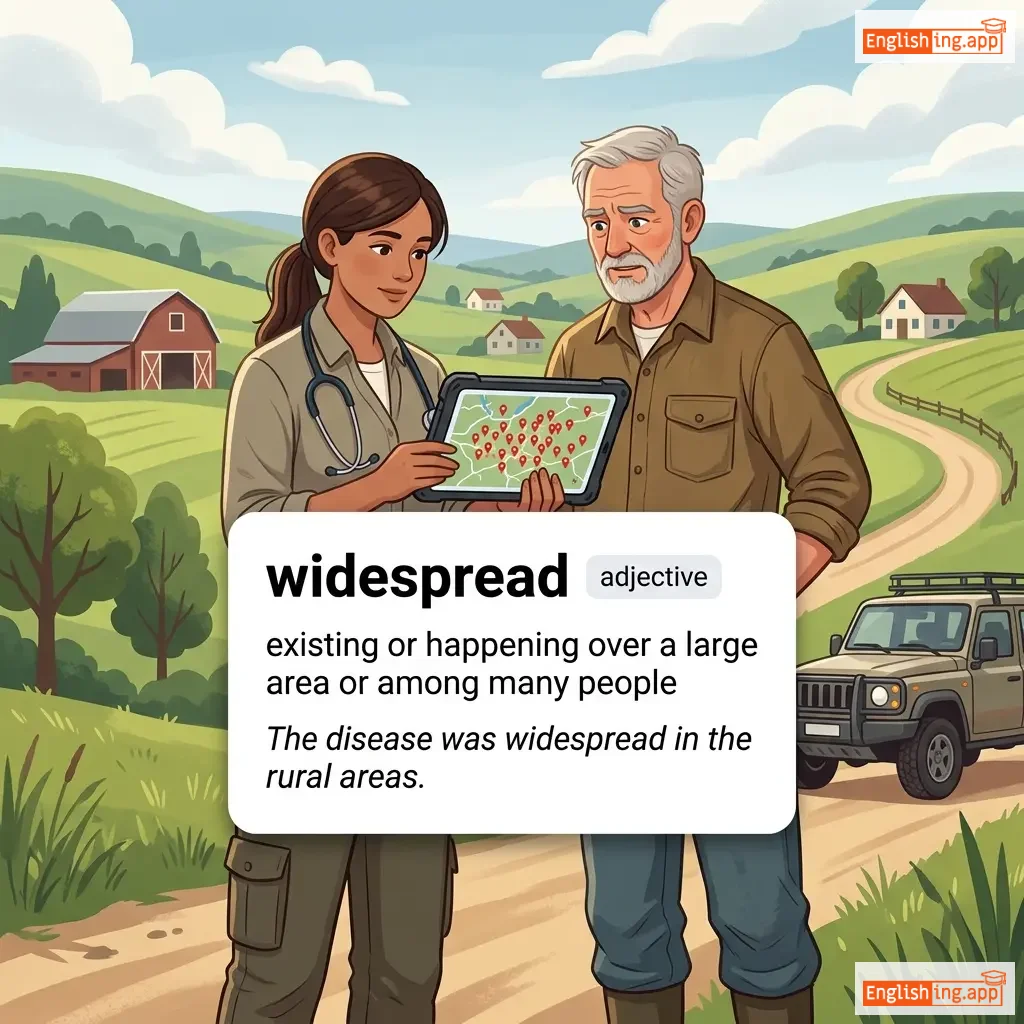
existing or happening in many places or among many people
••••••
|
There is widespread support for the new policy. |
Es gibt weit verbreitete Unterstützung für die neue Politik.
Es gibt weit verbreitete Unterstützung für die neue Politik.
••••••
|
- •••••• | - •••••• | - •••••• |
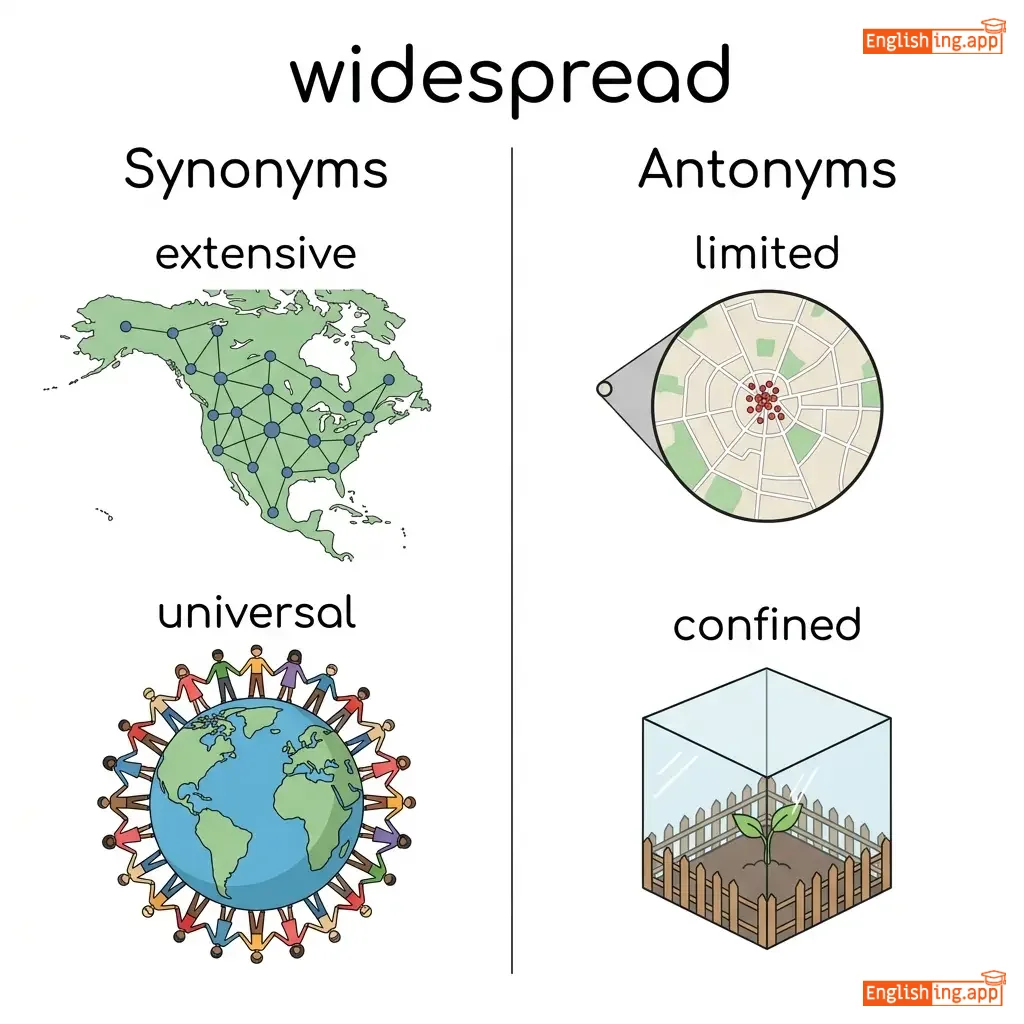
extensive, prevalent, universal, common
••••••
|
limited, localized, restricted, rare
••••••
|
widespread support, widespread use, widespread damage, widespread belief
••••••
|
German 'weit verbreitet' sounds like 'widespread'.
••••••
|
|
#5511
🖤
|
/ˈwɪdəʊ/
noun
(wido)
••••••
|
- •••••• |
Witwe
Witwe
••••••
|
- •••••• | - •••••• | - •••••• | - •••••• |
a woman whose husband has died and who has not married again
••••••
|
She became a widow at a very young age.
Sie wurde in sehr jungen Jahren Witwe.
••••••
|
Sie wurde in sehr jungen Jahren Witwe.
Sie wurde in sehr jungen Jahren Witwe.
••••••
|
grass widow
Graswitwe
••••••
|
a woman whose husband is temporarily away
••••••
|
Graswitwe
Graswitwe
••••••
|
bereaved woman, lone woman, wife left behind
••••••
|
wife, bride
••••••
|
young widow, war widow, become a widow, widow pension
••••••
|
Witwe bedeutet Witwe — 'We do' gesagt aber jetzt 'Er ist gegangen' 😢
••••••
|
|
#5512
↔️
|
/wɪdθ/
noun
(wɪdθ)
••••••
|
- •••••• |
Breite; Ausdehnung
breite; ausdehnung
••••••
|
- •••••• | - •••••• | - •••••• | - •••••• |
the measurement or extent of something from side to side; breadth
••••••
|
The width of the river is about 50 meters.
Die Breite des Flusses beträgt etwa 50 Meter.
••••••
|
Die Breite des Flusses beträgt etwa 50 Meter.
Die Breite des Flusses betraegt etwa 50 Meter.
••••••
|
- •••••• | - •••••• | - •••••• |
breadth, span, extent
••••••
|
length, height, narrowness
••••••
|
full width, average width, total width
••••••
|
Stellen Sie sich den Fluss vor, um sich an 'width' zu erinnern.
••••••
|
|
#5513
👩❤️👨
|
/waɪf/
noun
(waif)
••••••
|
- •••••• |
Ehefrau
Ehefrau
••••••
|
- •••••• | - •••••• | - •••••• | - •••••• |
a woman who is married to someone
••••••
|
She is the wife of the famous author. |
Sie ist die Ehefrau des berühmten Autors.
Sie ist die Ehefrau des berühmten Autors.
••••••
|
- •••••• | - •••••• | - •••••• |
spouse, partner, better half
••••••
|
husband
••••••
|
wife and husband, loving wife, devoted wife
••••••
|
‘Ehefrau’ means wife in German! Simple to remember.
••••••
|
|
#5514
🌿
|
/waɪld/
adjective
(waild)
••••••
|
- •••••• |
wild
wild
••••••
|
- •••••• | - •••••• | - •••••• | - •••••• |
living or growing in the natural environment; uncontrolled or untamed
••••••
|
The children ran wild in the park. |
Die Kinder rannten wild im Park.
Die Kinder rannten wild im Park.
••••••
|
run wild |
to behave without restraint or control
••••••
|
wild laufen
wild laufen
••••••
|
untamed, feral, uncontrolled, savage, free
••••••
|
tame, domestic, controlled
••••••
|
wild animal, wild nature, wild guess, wild behavior
••••••
|
Wild bedeutet wild – Tiere laufen frei und unkontrolliert im Wald.
••••••
|
|
#5515
🦌
|
/ˈwaɪldˌlaɪf/
noun
(waildlaif)
••••••
|
- •••••• |
Wildtierwelt
Wildtierwelt
••••••
|
- •••••• | - •••••• | - •••••• | - •••••• |
animals, birds, and plants living in their natural environment
••••••
|
The park is home to a wide variety of wildlife. |
Der Park ist Heimat einer großen Vielfalt an Wildtieren.
Der Park ist Heimat einer großen Vielfalt an Wildtieren.
••••••
|
wildlife conservation |
the protection of wild animals and their habitats
••••••
|
Wildtierschutz
Wildtierschutz
••••••
|
fauna, animals, creatures, nature, biosphere
••••••
|
domestic animals, pets
••••••
|
wildlife sanctuary, wildlife photographer, protect wildlife, wildlife reserve
••••••
|
Wild life ist die Wildtierwelt im natürlichen Lebensraum 🌲
••••••
|
|
#5516
✍️
|
/wɪl/
noun, verb
(wɪl)
••••••
|
- •••••• |
Wille
wille
••••••
|
- •••••• | - •••••• |
wills
wɪlz
••••••
|
willing
wɪlɪŋ
••••••
|
expressing future tense or intention; a legal document
••••••
|
She will attend the meeting tomorrow.
Sie wird morgen an dem Treffen teilnehmen.
••••••
|
Sie wird morgen an dem Treffen teilnehmen.
Sie wird morgen an dem Treffen teilnehmen.
••••••
|
Will to power
Wille zur Macht
••••••
|
the drive to assert one's own will over others
••••••
|
Wille zur Macht
Wille zur Macht
••••••
|
intend, shall, want, determination
••••••
|
won't, unwilling
••••••
|
last will, will and testament, strong will
••••••
|
Wille zur Macht, Wille zur Zukunft ✍️
••••••
|
|
#5517
🙋♂️
|
/ˈwɪl.ɪŋ/
adjective
(wɪlɪŋ)
••••••
|
- •••••• |
bereit; willens
bereit; willens
••••••
|
- •••••• | - •••••• | - •••••• | - •••••• |
ready, eager, or prepared to do something
••••••
|
She is willing to help with the project. |
Sie ist bereit, mit dem Projekt zu helfen.
Sie ist bereit, mit dem Projekt zu helfen.
••••••
|
- •••••• | - •••••• | - •••••• |
ready, eager, prepared, inclined
••••••
|
unwilling, reluctant, hesitant, resistant
••••••
|
willing to help, willing participant, willing cooperation, willing spirit
••••••
|
bereit = willing, willens = eager
••••••
|
|
#5518
😊
|
/ˈwɪl.ɪŋ.li/
adverb
(willingli)
••••••
|
- •••••• |
freiwillig
freiwillig
••••••
|
- •••••• | - •••••• | - •••••• | - •••••• |
in a willing manner; voluntarily; with free will
••••••
|
She willingly helped her neighbors during the emergency. |
Sie half freiwillig ihren Nachbarn während des Notfalls.
sie half freiwillig ihren nachbarn während des notfalls
••••••
|
- •••••• | - •••••• | - •••••• |
voluntarily, eagerly, gladly, readily, freely
••••••
|
reluctantly, unwillingly, forcibly, involuntarily
••••••
|
willingly accept, willingly participate, willingly cooperate, willingly volunteer
••••••
|
Freiwillig ist wie 'ich mache es gerne', ohne Zwang.
••••••
|
|
#5519
💪
|
/ˈwɪlɪŋnəs/
noun
(willingness)
••••••
|
- •••••• |
Bereitschaft
Bereitschaft
••••••
|
- •••••• | - •••••• | - •••••• | - •••••• |
the quality of being prepared or ready to do something
••••••
|
Her willingness to help others made her very popular. |
Ihre Bereitschaft, anderen zu helfen, machte sie sehr beliebt.
Ihre Bereitschaft, anderen zu helfen, machte sie sehr beliebt.
••••••
|
- •••••• | - •••••• | - •••••• |
readiness, eagerness, enthusiasm, consent, agreement
••••••
|
reluctance, unwillingness
••••••
|
show willingness, express willingness, willingness to cooperate, willingness to learn
••••••
|
Willingness bedeutet Bereitschaft, und Bereitschaft bedeutet, etwas zu tun!
••••••
|
|
#5520
🏆
|
/wɪn/
verb
(wɪn)
••••••
|
|
gewinnen
gewinnen
••••••
|
won
wɒn
••••••
|
won
wɒn
••••••
|
wins
wɪnz
••••••
|
winning
wɪnɪŋ
••••••
|
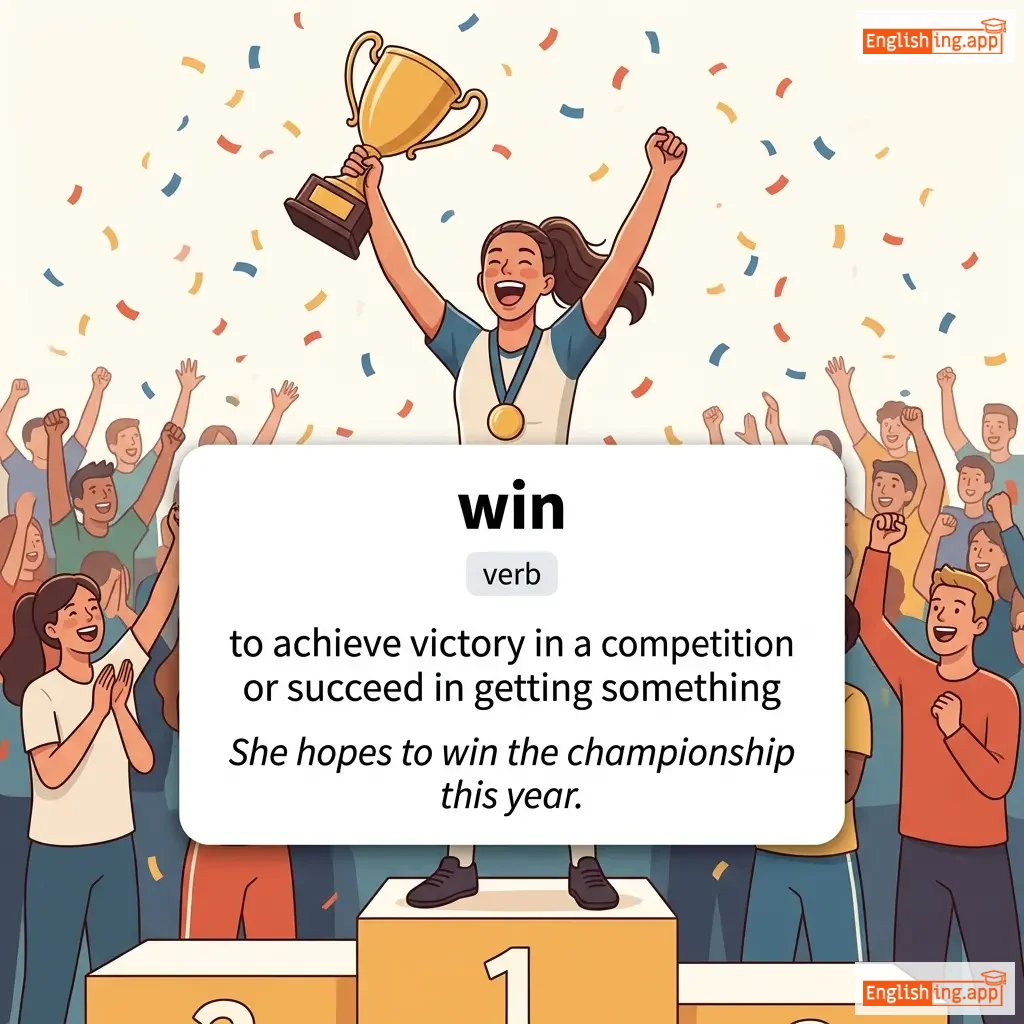
to achieve victory in a competition or succeed in getting something
••••••
|
She hopes to win the championship this year.
sie hofft, in diesem Jahr die Meisterschaft zu gewinnen.
••••••
|
sie hofft, in diesem Jahr die Meisterschaft zu gewinnen.
Sie hofft, in diesem Jahr die Meisterschaft zu gewinnen.
••••••
|
win over
überzeugen
••••••
|
to persuade or gain support
••••••
|
jemanden für sich gewinnen
jemanden für sich gewinnen
••••••
|
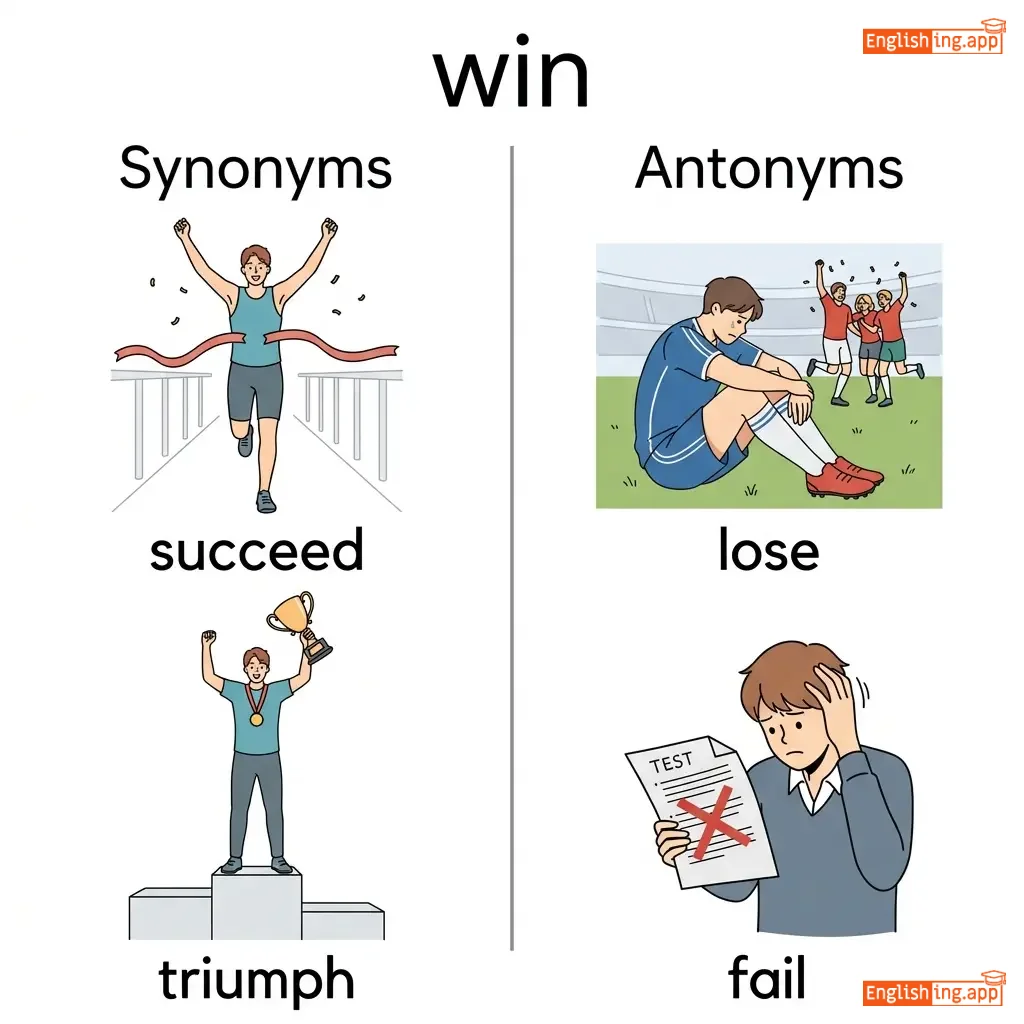
succeed, triumph, prevail, conquer
••••••
|
lose, fail, surrender
••••••
|
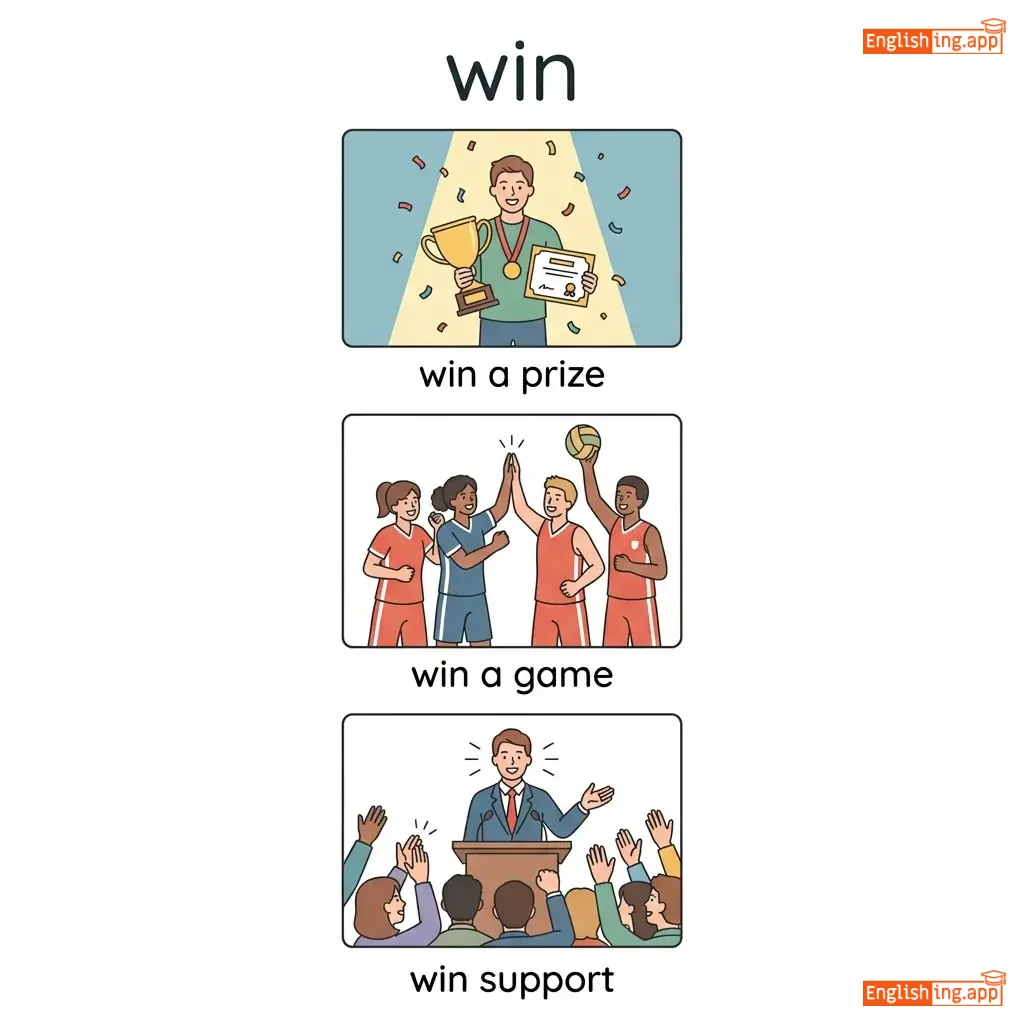
win a prize, win a game, win support, win the championship
••••••
|
Gewinnen ist der Traum eines jeden Sportlers, wie im Fußball, wenn du den Ball ins Tor schießt.
••••••
|
|
#5521
🌬️
|
/wɪnd/
noun
(vɪnd)
••••••
|
- •••••• |
wind
wind
••••••
|
- •••••• | - •••••• | - •••••• | - •••••• |
the natural movement of air, especially in the form of a current of air blowing from a particular direction
••••••
|
The wind blew the leaves off the trees.
der wind blies die blätter von den bäumen.
••••••
|
Der Wind blies die Blätter von den Bäumen.
Der Wind blies die Blätter von den Bäumen.
••••••
|
- •••••• | - •••••• | - •••••• |
breeze, gust, gale, draft
••••••
|
calm, stillness
••••••
|
strong wind, wind speed, wind direction, cold wind
••••••
|
Wind - wie eine kühle Brise an einem heißen Tag
••••••
|
|
#5522
🪟
|
/ˈwɪn.doʊ/
noun
(vindo)
••••••
|
- •••••• |
Fenster
fenster
••••••
|
- •••••• | - •••••• | - •••••• | - •••••• |
an opening in a wall fitted with glass to let in light and air
••••••
|
Please open the window for fresh air.
bitte öffnen Sie das Fenster für frische Luft.
••••••
|
bitte öffnen Sie das Fenster für frische Luft.
bitte oeffnen sie das fenster fuer frische luft
••••••
|
- •••••• | - •••••• | - •••••• |
casement, pane, opening
••••••
|
wall, barrier
••••••
|
window frame, window sill, bay window, window blinds
••••••
|
Fenster = fresh air 'fen' = window opening!
••••••
|
|
#5523
🍷
|
/waɪn/
noun
(wajn)
••••••
|
- •••••• |
Wein
Wein
••••••
|
- •••••• | - •••••• | - •••••• | - •••••• |
an alcoholic drink made from fermented grapes or other fruits
••••••
|
They served a glass of red wine at the dinner.
Sie haben ein Glas Rotwein zum Abendessen serviert.
••••••
|
Sie haben ein Glas Rotwein zum Abendessen serviert.
Sie haben ein Glas Rotwein zum Abendessen serviert.
••••••
|
- •••••• | - •••••• | - •••••• |
vino, beverage, drink, alcohol
••••••
|
water, juice
••••••
|
red wine, white wine, glass of wine, bottle of wine
••••••
|
Wine pairs with dinner—imagine a glass of red wine with a fancy meal!
••••••
|
|
#5524
🪶
|
/wɪŋ/
verb
(wing)
••••••
|
|
mit Flügeln fliegen
mit Flügeln fliegen
••••••
|
winged
winged
••••••
|
winged
winged
••••••
|
wings
wings
••••••
|
winging
winging
••••••
|
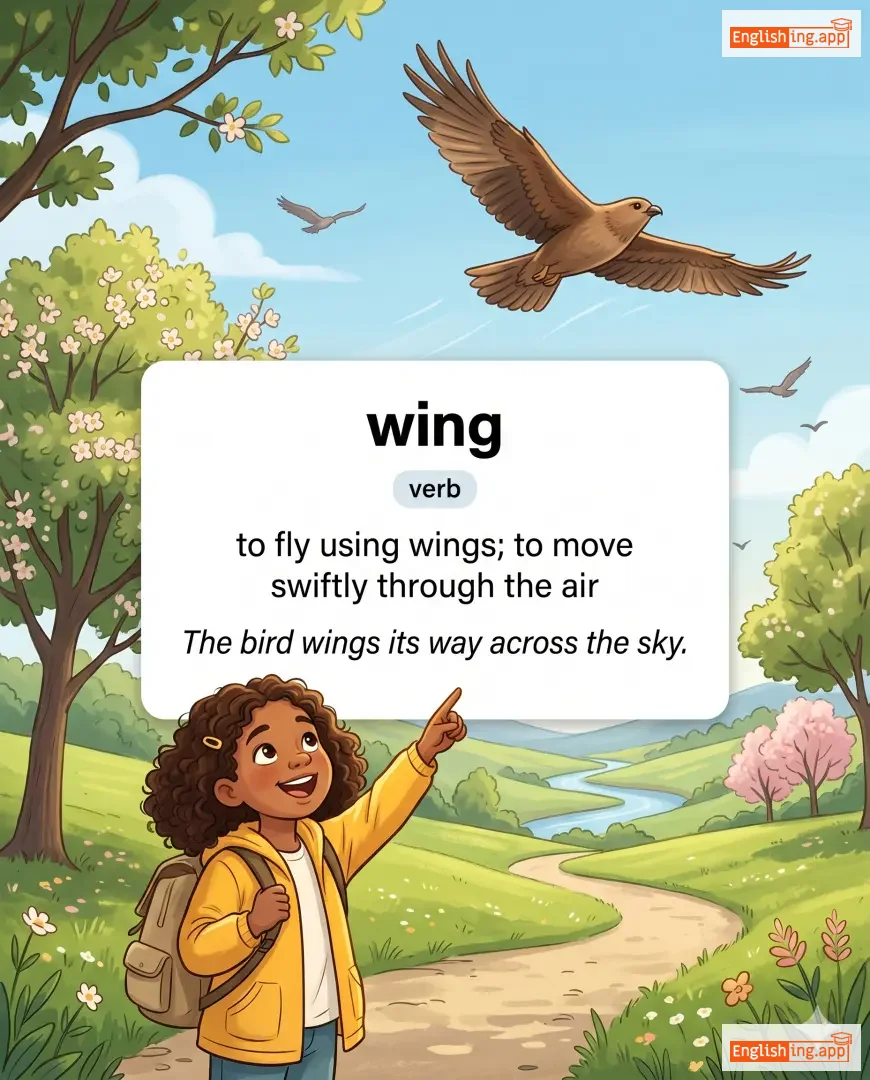
to fly using wings; to move swiftly through the air
••••••
|
The bird wings its way across the sky.
Der Vogel fliegt über den Himmel.
••••••
|
Der Vogel fliegt seinen Weg über den Himmel.
Der Vogel fliegt seinen Weg über den Himmel.
••••••
|
- •••••• | - •••••• | - •••••• |
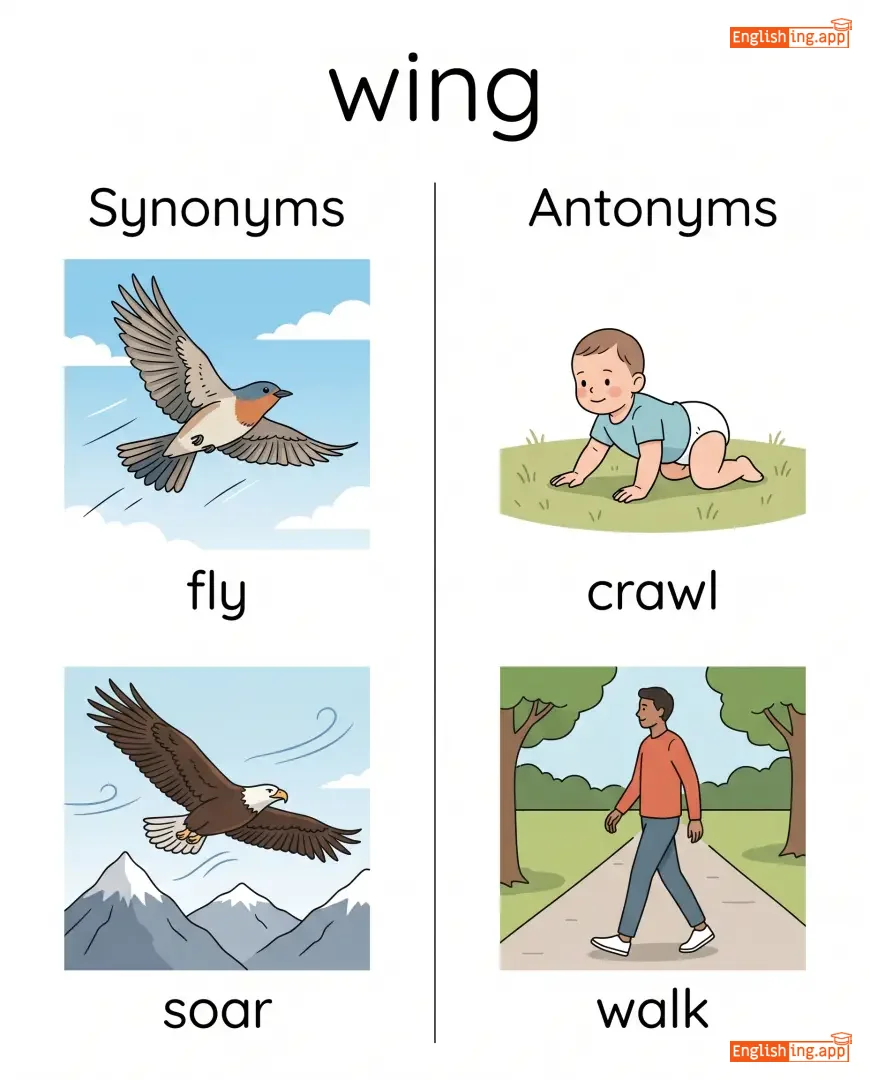
fly, soar, glide, flutter
••••••
|
crawl, walk, ground, land
••••••
|
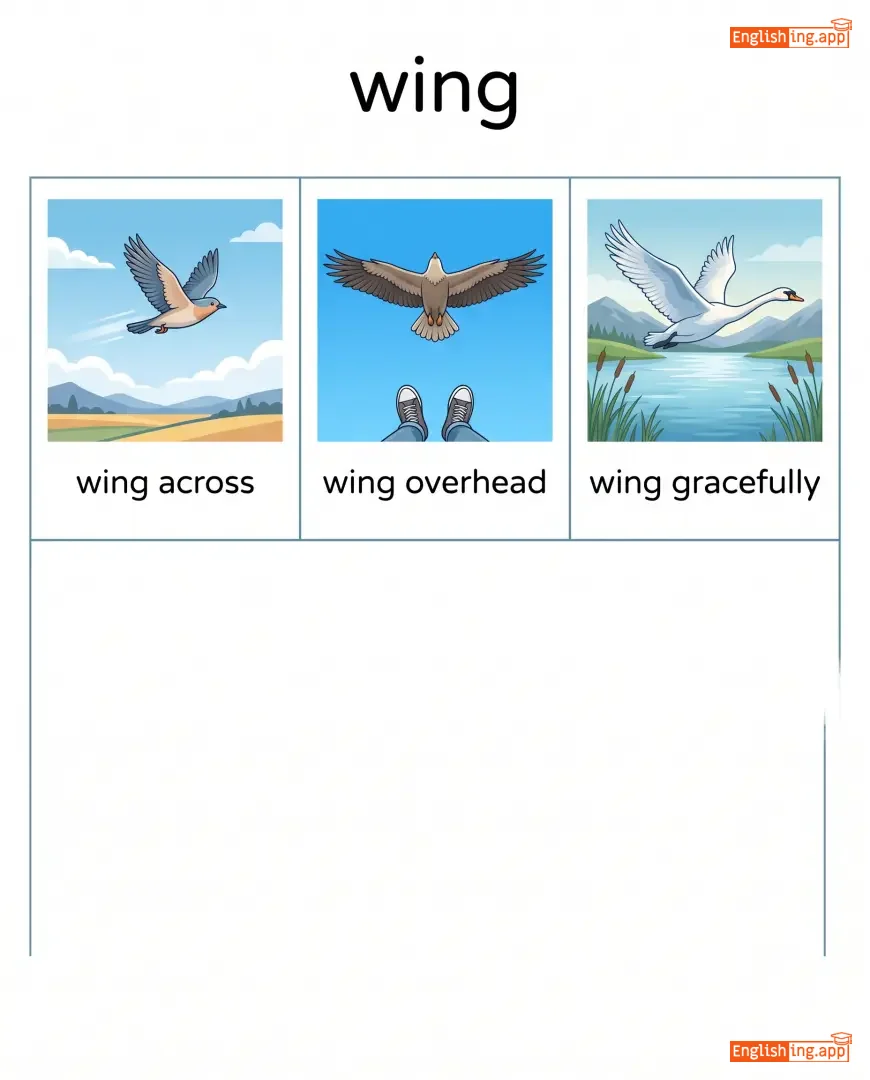
wing across, wing overhead, wing gracefully, wing swiftly
••••••
|
Flügel an, flieg los! (mit Flügeln fliegen)
••••••
|
Vocabulary Quiz
Test your vocabulary by matching words with their translations or meanings.
Login to take the quiz
Comments (0)
Share your thoughts and join the discussion.
Join the discussion by logging in
Login to CommentNo comments yet
Be the first to share your thoughts!